
GastonCanda
70 Posts
GastonCanda
Report
Block User
Worker & investor 🇦🇷 | Building wealth from a regular paycheck. 📈 TradFi • Crypto • Tech | Documenting the journey. X: @GastonCanda
Open Trade

BTC Holder
Frequent Trader
2.9 Years
6 Following
44 Followers
97 Liked
Posts
Portfolio
·
--
Everyone wants to invest in the robot.
I’m wondering who gets paid when it breaks.
I’m bullish on robotics + AI. But imagining humanoids working in factories, homes—and eventually beyond Earth—makes me think about everything they would need.
Repairs. Spare parts. Power. Software updates.
Selling a robot could be the first transaction in a much longer business relationship.
If my thesis plays out, I want to understand who earns money keeping those machines useful year after year.
Would manufacturers control that business? Could independent service companies emerge? Or would customers pay a monthly fee for the robot and its maintenance together?
I don’t have a ticker for every part of this idea yet. It’s a question I want to research before putting more of my salary behind the thesis.
Optimus gets me excited about the possibilities. The maintenance bill makes me curious about the business.
👇 If robots became as common as cars, what would you rather own: the manufacturer, the parts supplier, or the service network?
#Robotics #AI #Investing
Everyone wants to invest in the robot.
I’m wondering who gets paid when it breaks.
I’m bullish on robotics + AI. But imagining humanoids working in factories, homes—and eventually beyond Earth—makes me think about everything they would need.
Repairs. Spare parts. Power. Software updates.
Selling a robot could be the first transaction in a much longer business relationship.
If my thesis plays out, I want to understand who earns money keeping those machines useful year after year.
Would manufacturers control that business? Could independent service companies emerge? Or would customers pay a monthly fee for the robot and its maintenance together?
I don’t have a ticker for every part of this idea yet. It’s a question I want to research before putting more of my salary behind the thesis.
Optimus gets me excited about the possibilities. The maintenance bill makes me curious about the business.
👇 If robots became as common as cars, what would you rather own: the manufacturer, the parts supplier, or the service network?
#Robotics #AI #Investing
I’m wondering who gets paid when it breaks.
I’m bullish on robotics + AI. But imagining humanoids working in factories, homes—and eventually beyond Earth—makes me think about everything they would need.
Repairs. Spare parts. Power. Software updates.
Selling a robot could be the first transaction in a much longer business relationship.
If my thesis plays out, I want to understand who earns money keeping those machines useful year after year.
Would manufacturers control that business? Could independent service companies emerge? Or would customers pay a monthly fee for the robot and its maintenance together?
I don’t have a ticker for every part of this idea yet. It’s a question I want to research before putting more of my salary behind the thesis.
Optimus gets me excited about the possibilities. The maintenance bill makes me curious about the business.
👇 If robots became as common as cars, what would you rather own: the manufacturer, the parts supplier, or the service network?
#Robotics #AI #Investing

2
1.3k
·
--
Bullish
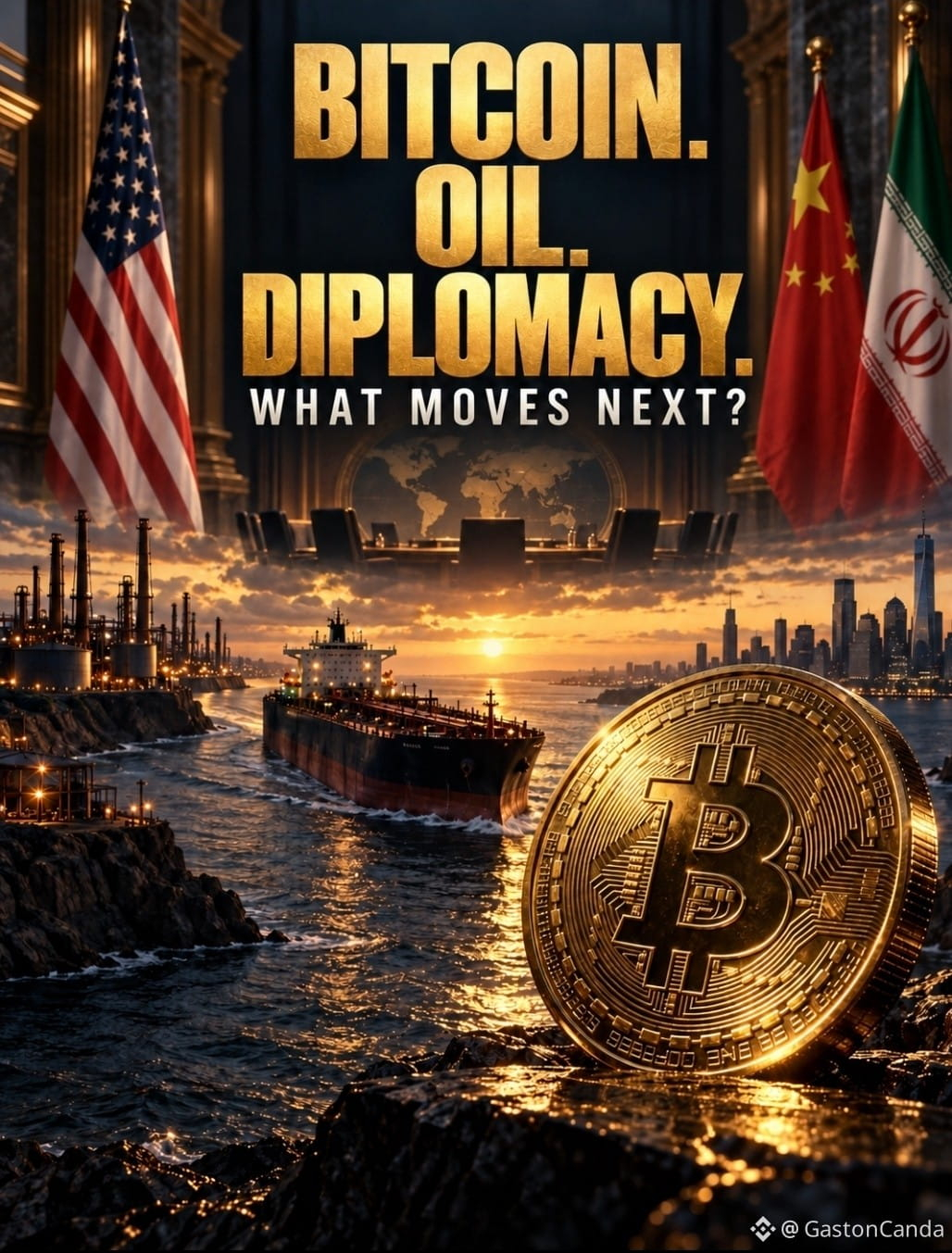
🚨 I hold Bitcoin, but today I’m watching oil and diplomacy.
Here’s what’s connecting global headlines to our portfolios 👇
🇺🇸🇮🇷 Trump says talks with Iran are ongoing. An Iranian official says Hormuz could reopen within days if U.S. conditions change. That’s a conditional proposal—not a signed deal.
🇺🇸🇨🇳 The upcoming U.S.–China meeting puts tariffs, AI and geopolitical tensions back in focus. I’m watching for concrete commitments.
📈 Wall Street is trading near record highs, supported by corporate earnings and enthusiasm around AI.
₿ Bitcoin traded around $86,000 in today’s reporting as lower oil prices helped risk appetite. But short covering also contributed to the rally.
Why am I connecting these dots?
Cheaper energy could ease inflation pressure. That could improve the backdrop for stocks and crypto, though it doesn’t guarantee lower rates or higher prices.
I’m building my portfolio from a salary. Before getting carried away by green screens, I want to see whether diplomatic headlines turn into actual progress.
👇 What matters more for the next move: easing tensions or stronger company earnings?
@GastonCanda
#bitcoin #StockMarket #Geopolitics
$BTC $BZ
{future}(BZUSDT)
{future}(BTCUSDT)
🚨 I hold Bitcoin, but today I’m watching oil and diplomacy.
Here’s what’s connecting global headlines to our portfolios 👇
🇺🇸🇮🇷 Trump says talks with Iran are ongoing. An Iranian official says Hormuz could reopen within days if U.S. conditions change. That’s a conditional proposal—not a signed deal.
🇺🇸🇨🇳 The upcoming U.S.–China meeting puts tariffs, AI and geopolitical tensions back in focus. I’m watching for concrete commitments.
📈 Wall Street is trading near record highs, supported by corporate earnings and enthusiasm around AI.
₿ Bitcoin traded around $86,000 in today’s reporting as lower oil prices helped risk appetite. But short covering also contributed to the rally.
Why am I connecting these dots?
Cheaper energy could ease inflation pressure. That could improve the backdrop for stocks and crypto, though it doesn’t guarantee lower rates or higher prices.
I’m building my portfolio from a salary. Before getting carried away by green screens, I want to see whether diplomatic headlines turn into actual progress.
👇 What matters more for the next move: easing tensions or stronger company earnings?
@GastonCanda
#bitcoin #StockMarket #Geopolitics
$BTC $BZ
Here’s what’s connecting global headlines to our portfolios 👇
🇺🇸🇮🇷 Trump says talks with Iran are ongoing. An Iranian official says Hormuz could reopen within days if U.S. conditions change. That’s a conditional proposal—not a signed deal.
🇺🇸🇨🇳 The upcoming U.S.–China meeting puts tariffs, AI and geopolitical tensions back in focus. I’m watching for concrete commitments.
📈 Wall Street is trading near record highs, supported by corporate earnings and enthusiasm around AI.
₿ Bitcoin traded around $86,000 in today’s reporting as lower oil prices helped risk appetite. But short covering also contributed to the rally.
Why am I connecting these dots?
Cheaper energy could ease inflation pressure. That could improve the backdrop for stocks and crypto, though it doesn’t guarantee lower rates or higher prices.
I’m building my portfolio from a salary. Before getting carried away by green screens, I want to see whether diplomatic headlines turn into actual progress.
👇 What matters more for the next move: easing tensions or stronger company earnings?
@GastonCanda
#bitcoin #StockMarket #Geopolitics
$BTC $BZ
1.4k
·
--
Bullish
Verified
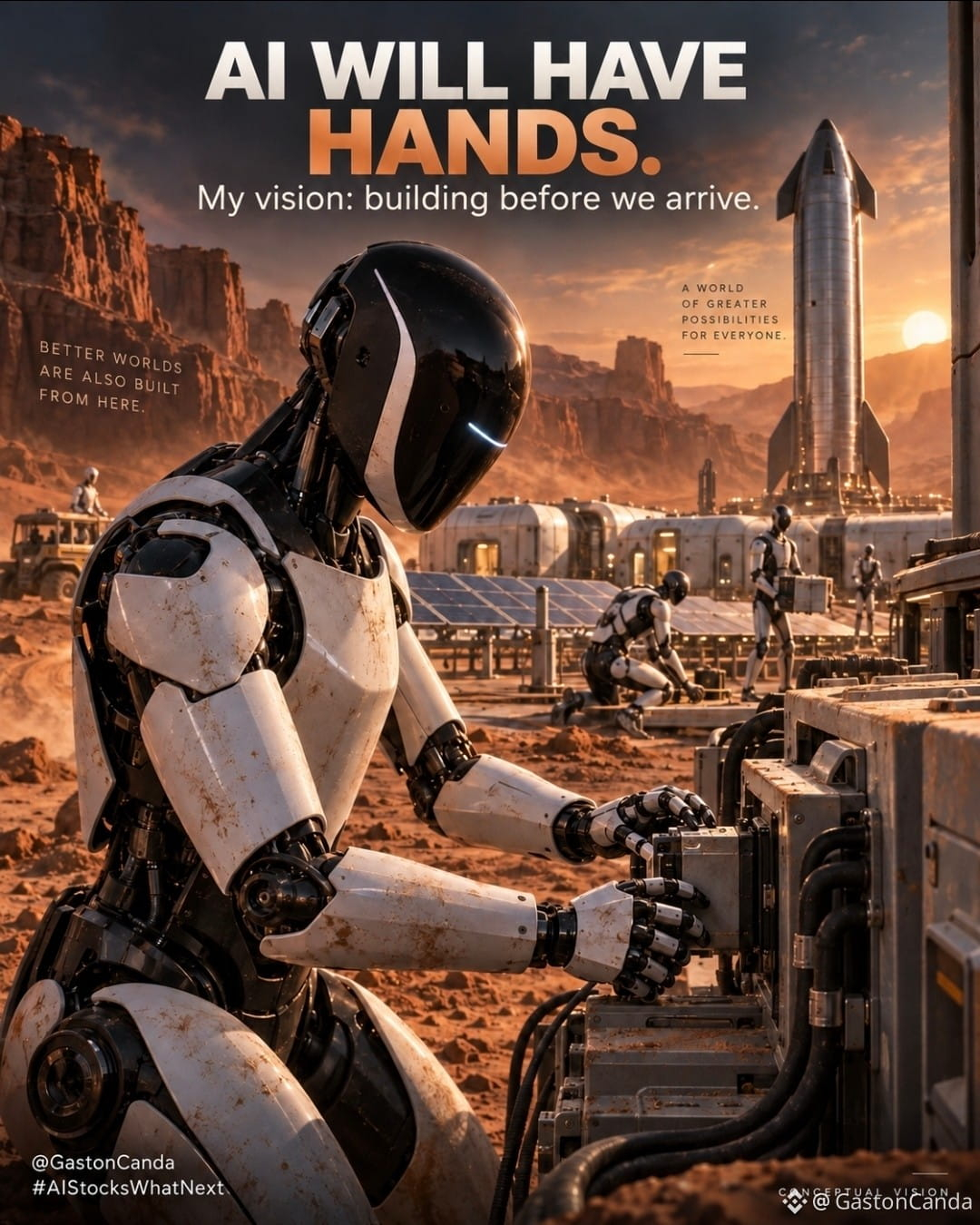
Everyone wants the next Nvidia. I’m asking what happens when AI gets a pair of hands.
I’m building my portfolio from a salary. I can’t buy every exciting story, so “what comes after the AI rally?” is a real question for me.
My answer: robotics and the infrastructure that makes it useful.
I’m bullish on AI over the long term. $NVDA reported roughly $89 billion in quarterly data-center revenue in its latest results, up 117% year over year. That’s real spending. But strong demand doesn’t automatically make every AI stock a good buy.
Tesla’s Optimus is what really gets my attention. Tesla describes its goal as an autonomous humanoid capable of handling unsafe, repetitive or boring tasks.
If robots can perform useful work reliably and at a competitive cost, I believe they could eventually become as indispensable as computers.
That’s the opportunity I’m watching beyond chips: machines turning intelligence into physical work, plus the power systems and components behind them.
It also connects to my longer-term space thesis. I can imagine robots preparing infrastructure before humans arrive. That’s my hypothesis—not a confirmed $TSLA or SpaceX deployment plan.
Before putting more of my salary behind this theme, I want evidence: useful autonomous work, production costs, paying customers and a valuation that leaves room for mistakes.
Musk’s ambition gets my attention. Execution will earn my conviction.
Which would you rather own for the next decade: the AI chips, the robots, or the companies supplying their power—and why?
@GastonCanda
#AIStocksWhatNext
$NVDA
{future}(NVDAUSDT)
Everyone wants the next Nvidia. I’m asking what happens when AI gets a pair of hands.
I’m building my portfolio from a salary. I can’t buy every exciting story, so “what comes after the AI rally?” is a real question for me.
My answer: robotics and the infrastructure that makes it useful.
I’m bullish on AI over the long term. $NVDA reported roughly $89 billion in quarterly data-center revenue in its latest results, up 117% year over year. That’s real spending. But strong demand doesn’t automatically make every AI stock a good buy.
Tesla’s Optimus is what really gets my attention. Tesla describes its goal as an autonomous humanoid capable of handling unsafe, repetitive or boring tasks.
If robots can perform useful work reliably and at a competitive cost, I believe they could eventually become as indispensable as computers.
That’s the opportunity I’m watching beyond chips: machines turning intelligence into physical work, plus the power systems and components behind them.
It also connects to my longer-term space thesis. I can imagine robots preparing infrastructure before humans arrive. That’s my hypothesis—not a confirmed $TSLA or SpaceX deployment plan.
Before putting more of my salary behind this theme, I want evidence: useful autonomous work, production costs, paying customers and a valuation that leaves room for mistakes.
Musk’s ambition gets my attention. Execution will earn my conviction.
Which would you rather own for the next decade: the AI chips, the robots, or the companies supplying their power—and why?
@GastonCanda
#AIStocksWhatNext
$NVDA
I’m building my portfolio from a salary. I can’t buy every exciting story, so “what comes after the AI rally?” is a real question for me.
My answer: robotics and the infrastructure that makes it useful.
I’m bullish on AI over the long term. $NVDA reported roughly $89 billion in quarterly data-center revenue in its latest results, up 117% year over year. That’s real spending. But strong demand doesn’t automatically make every AI stock a good buy.
Tesla’s Optimus is what really gets my attention. Tesla describes its goal as an autonomous humanoid capable of handling unsafe, repetitive or boring tasks.
If robots can perform useful work reliably and at a competitive cost, I believe they could eventually become as indispensable as computers.
That’s the opportunity I’m watching beyond chips: machines turning intelligence into physical work, plus the power systems and components behind them.
It also connects to my longer-term space thesis. I can imagine robots preparing infrastructure before humans arrive. That’s my hypothesis—not a confirmed $TSLA or SpaceX deployment plan.
Before putting more of my salary behind this theme, I want evidence: useful autonomous work, production costs, paying customers and a valuation that leaves room for mistakes.
Musk’s ambition gets my attention. Execution will earn my conviction.
Which would you rather own for the next decade: the AI chips, the robots, or the companies supplying their power—and why?
@GastonCanda
#AIStocksWhatNext
$NVDA
1
5
2.4k
·
--
Bullish
How far can AI demand grow? I believe part of the answer lies in robotics.
I’m bullish on robotics + AI over the long term. My thesis is that artificial intelligence will move beyond screens: I want to see it performing physical tasks and becoming useful in our everyday lives.
That’s why Tesla’s Optimus interests me so much. I strongly believe humanoid robots could spark a revolution and eventually become indispensable to us. If adoption reaches scale, it could drive another wave of demand for chips, software, and infrastructure.
But that conviction alone doesn’t mean every stock rally is sustainable. For me, the real test is building reliable, affordable robots with actual buyers. How much of that future is already priced in matters too.
Do you see humanoid robots as AI’s next major growth driver, or is the market paying too much, too soon for that promise?
@GastonCanda
#AIStocksWhatNext
$TSLA
{future}(TSLAUSDT)
How far can AI demand grow? I believe part of the answer lies in robotics.
I’m bullish on robotics + AI over the long term. My thesis is that artificial intelligence will move beyond screens: I want to see it performing physical tasks and becoming useful in our everyday lives.
That’s why Tesla’s Optimus interests me so much. I strongly believe humanoid robots could spark a revolution and eventually become indispensable to us. If adoption reaches scale, it could drive another wave of demand for chips, software, and infrastructure.
But that conviction alone doesn’t mean every stock rally is sustainable. For me, the real test is building reliable, affordable robots with actual buyers. How much of that future is already priced in matters too.
Do you see humanoid robots as AI’s next major growth driver, or is the market paying too much, too soon for that promise?
@GastonCanda
#AIStocksWhatNext
$TSLA
I’m bullish on robotics + AI over the long term. My thesis is that artificial intelligence will move beyond screens: I want to see it performing physical tasks and becoming useful in our everyday lives.
That’s why Tesla’s Optimus interests me so much. I strongly believe humanoid robots could spark a revolution and eventually become indispensable to us. If adoption reaches scale, it could drive another wave of demand for chips, software, and infrastructure.
But that conviction alone doesn’t mean every stock rally is sustainable. For me, the real test is building reliable, affordable robots with actual buyers. How much of that future is already priced in matters too.
Do you see humanoid robots as AI’s next major growth driver, or is the market paying too much, too soon for that promise?
@GastonCanda
#AIStocksWhatNext
$TSLA
1
1.1k
·
--
Bullish
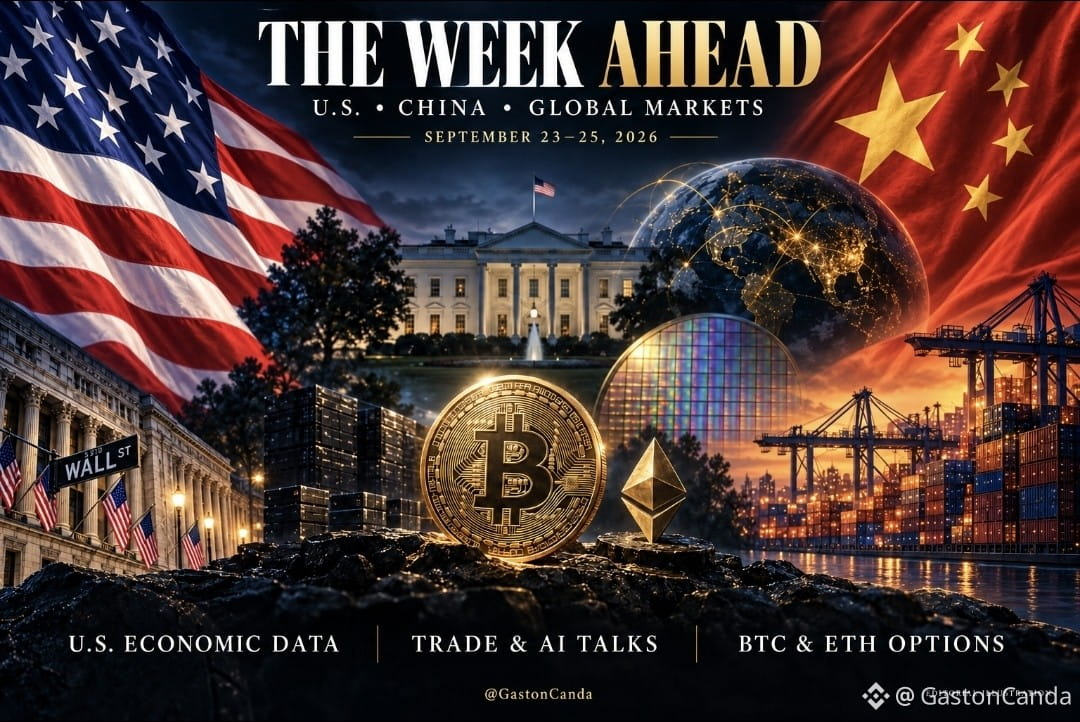
🌙 Three days that could move stocks AND crypto.
Here’s my September 23–25 watchlist 👇
📅 WEDNESDAY 23 — U.S. business activity
Flash manufacturing and services PMIs: are businesses still growing, and are price pressures easing?
I’ll also be watching headlines ahead of Thursday’s U.S.–China talks.
📅 THURSDAY 24 — U.S.–China relations
Trade, tariffs, rare earths and AI are key topics to watch around the Washington talks.
My read:
• Concrete trade progress could support companies exposed to China and improve risk appetite.
• New restrictions could pressure technology, automakers and global supply chains.
• BTC and ETH could react through changes in risk appetite, the dollar and market positioning. Diplomatic progress doesn’t automatically mean crypto inflows.
Weekly U.S. jobless claims and new home sales are also due.
📅 FRIDAY 25 — Economic data + crypto options
Durable goods orders and final Michigan consumer sentiment will offer more clues about the economy. Watch inflation expectations closely.
BTC and ETH quarterly options also expire on Deribit. Hedging adjustments could affect short-term trading, but expiry alone doesn’t predict market direction.
👀 My dashboard: Nasdaq, semiconductor stocks, Treasury yields, the dollar and BTC/ETH ETF flows.
A positive headline needs concrete follow-through. Even a deal can disappoint if markets expected more.
📌 Calendar reminder: U.S. PCE inflation and the next GDP update arrive September 30—NEXT week.
👇 What will move Bitcoin most: U.S.–China talks, economic data or Friday’s options expiry?
@GastonCanda
#bitcoin #Crypto #stockmarket
$BTC
{future}(BTCUSDT)
🌙 Three days that could move stocks AND crypto.
Here’s my September 23–25 watchlist 👇
📅 WEDNESDAY 23 — U.S. business activity
Flash manufacturing and services PMIs: are businesses still growing, and are price pressures easing?
I’ll also be watching headlines ahead of Thursday’s U.S.–China talks.
📅 THURSDAY 24 — U.S.–China relations
Trade, tariffs, rare earths and AI are key topics to watch around the Washington talks.
My read:
• Concrete trade progress could support companies exposed to China and improve risk appetite.
• New restrictions could pressure technology, automakers and global supply chains.
• BTC and ETH could react through changes in risk appetite, the dollar and market positioning. Diplomatic progress doesn’t automatically mean crypto inflows.
Weekly U.S. jobless claims and new home sales are also due.
📅 FRIDAY 25 — Economic data + crypto options
Durable goods orders and final Michigan consumer sentiment will offer more clues about the economy. Watch inflation expectations closely.
BTC and ETH quarterly options also expire on Deribit. Hedging adjustments could affect short-term trading, but expiry alone doesn’t predict market direction.
👀 My dashboard: Nasdaq, semiconductor stocks, Treasury yields, the dollar and BTC/ETH ETF flows.
A positive headline needs concrete follow-through. Even a deal can disappoint if markets expected more.
📌 Calendar reminder: U.S. PCE inflation and the next GDP update arrive September 30—NEXT week.
👇 What will move Bitcoin most: U.S.–China talks, economic data or Friday’s options expiry?
@GastonCanda
#bitcoin #Crypto #stockmarket
$BTC
Here’s my September 23–25 watchlist 👇
📅 WEDNESDAY 23 — U.S. business activity
Flash manufacturing and services PMIs: are businesses still growing, and are price pressures easing?
I’ll also be watching headlines ahead of Thursday’s U.S.–China talks.
📅 THURSDAY 24 — U.S.–China relations
Trade, tariffs, rare earths and AI are key topics to watch around the Washington talks.
My read:
• Concrete trade progress could support companies exposed to China and improve risk appetite.
• New restrictions could pressure technology, automakers and global supply chains.
• BTC and ETH could react through changes in risk appetite, the dollar and market positioning. Diplomatic progress doesn’t automatically mean crypto inflows.
Weekly U.S. jobless claims and new home sales are also due.
📅 FRIDAY 25 — Economic data + crypto options
Durable goods orders and final Michigan consumer sentiment will offer more clues about the economy. Watch inflation expectations closely.
BTC and ETH quarterly options also expire on Deribit. Hedging adjustments could affect short-term trading, but expiry alone doesn’t predict market direction.
👀 My dashboard: Nasdaq, semiconductor stocks, Treasury yields, the dollar and BTC/ETH ETF flows.
A positive headline needs concrete follow-through. Even a deal can disappoint if markets expected more.
📌 Calendar reminder: U.S. PCE inflation and the next GDP update arrive September 30—NEXT week.
👇 What will move Bitcoin most: U.S.–China talks, economic data or Friday’s options expiry?
@GastonCanda
#bitcoin #Crypto #stockmarket
$BTC
2
2.4k
·
--
Bullish
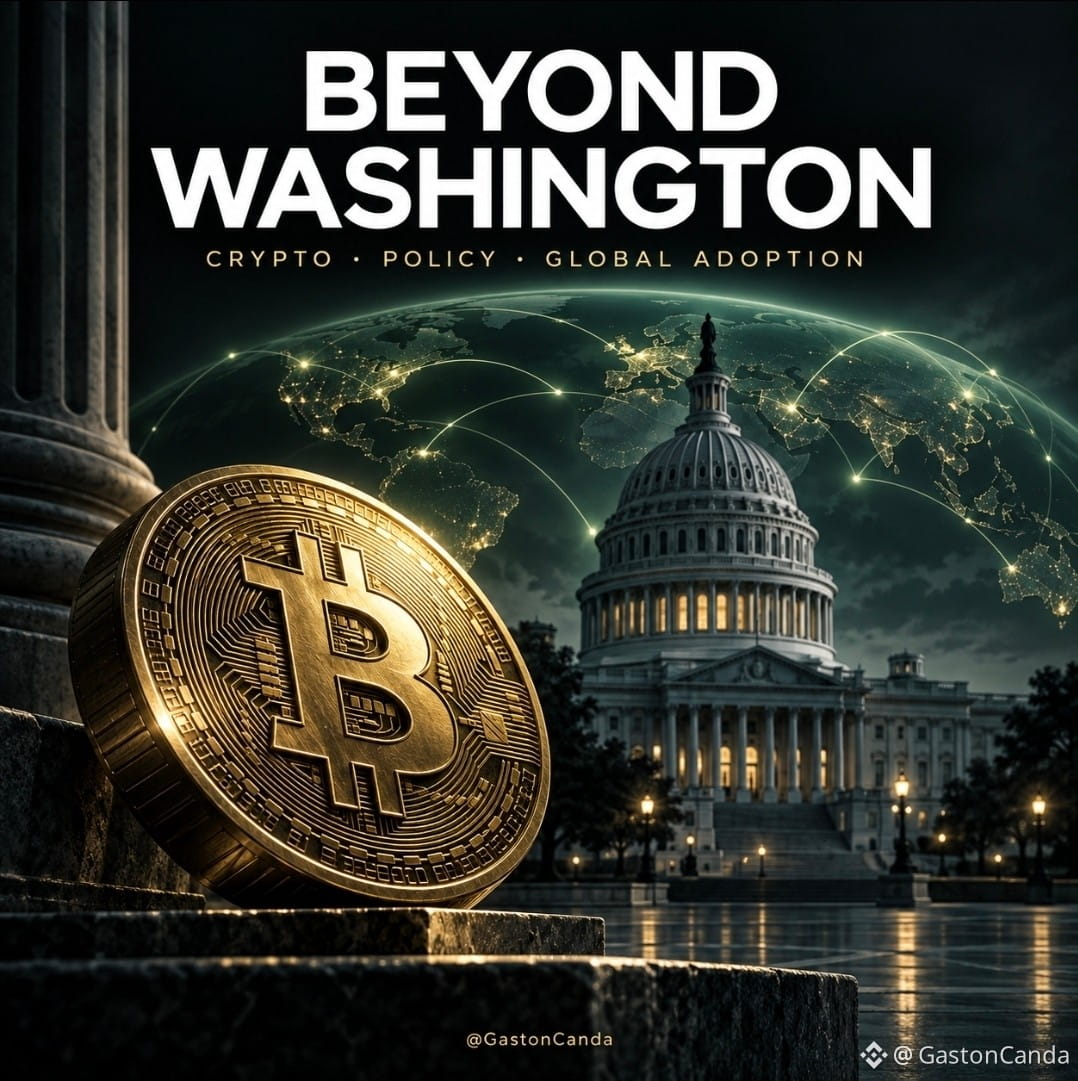
🚨 A setback for the CLARITY Act. A rally across crypto.
Reported gains following the setback:
🟢 $BTC: +14%
🟢 $ETH: +16%
🟢 $XRP: +18%
🟢 $SOL: +22%
🟢 $ADA: +27%
🟢 $LINK: +22%
🟢 $AVAX: +59%
These figures lack an exact measurement window and have not been independently verified.
Still, the broader question is worth discussing: how much of crypto’s future really depends on Washington?
Clear regulation matters. It gives businesses and investors more certainty. But crypto is a global market, and one U.S. bill isn’t the whole investment thesis.
For me, building a portfolio from a salary means learning to look beyond the headline—and remembering that green prices don’t make risk disappear.
👇 Does crypto need U.S. regulatory clarity to thrive, or does the U.S. need it to stay competitive?
@GastonCanda
#bitcoin #Binance
🚨 A setback for the CLARITY Act. A rally across crypto.
Reported gains following the setback:
🟢 $BTC: +14%
🟢 $ETH: +16%
🟢 $XRP: +18%
🟢 $SOL: +22%
🟢 $ADA: +27%
🟢 $LINK: +22%
🟢 $AVAX: +59%
These figures lack an exact measurement window and have not been independently verified.
Still, the broader question is worth discussing: how much of crypto’s future really depends on Washington?
Clear regulation matters. It gives businesses and investors more certainty. But crypto is a global market, and one U.S. bill isn’t the whole investment thesis.
For me, building a portfolio from a salary means learning to look beyond the headline—and remembering that green prices don’t make risk disappear.
👇 Does crypto need U.S. regulatory clarity to thrive, or does the U.S. need it to stay competitive?
@GastonCanda
#bitcoin #Binance
Reported gains following the setback:
🟢 $BTC: +14%
🟢 $ETH: +16%
🟢 $XRP: +18%
🟢 $SOL: +22%
🟢 $ADA: +27%
🟢 $LINK: +22%
🟢 $AVAX: +59%
These figures lack an exact measurement window and have not been independently verified.
Still, the broader question is worth discussing: how much of crypto’s future really depends on Washington?
Clear regulation matters. It gives businesses and investors more certainty. But crypto is a global market, and one U.S. bill isn’t the whole investment thesis.
For me, building a portfolio from a salary means learning to look beyond the headline—and remembering that green prices don’t make risk disappear.
👇 Does crypto need U.S. regulatory clarity to thrive, or does the U.S. need it to stay competitive?
@GastonCanda
#bitcoin #Binance
2
637
·
--
Bullish
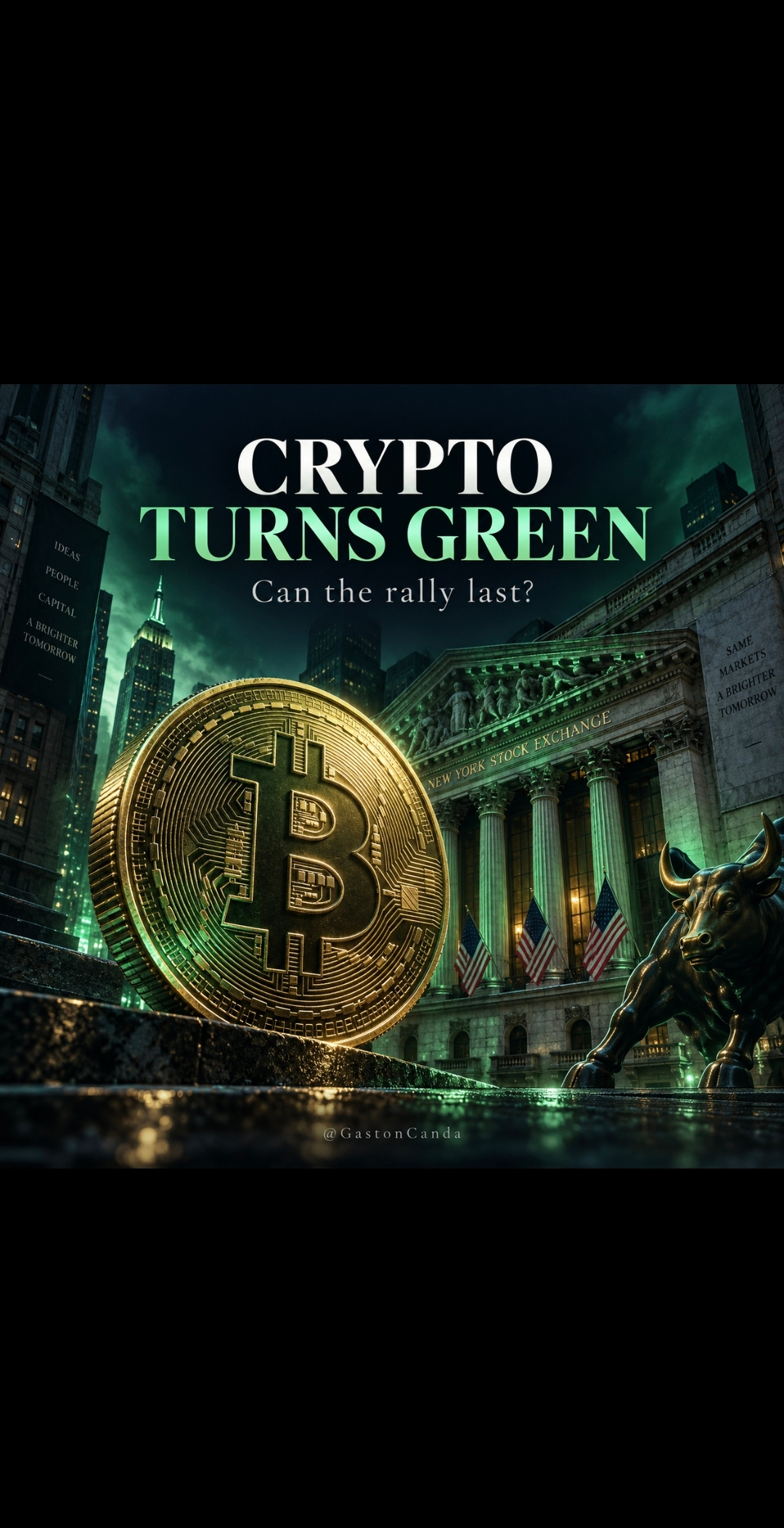
🟢 Bitcoin breaks $85,000. Does a green market make you feel relieved… or late?
U.S. stock futures are climbing too, while oil and Treasury yields are easing. This move extends beyond crypto.
My read: lower energy prices and easing yields give investors some breathing room. But one strong morning doesn’t settle the inflation outlook or guarantee that the rally will hold.
I’m building my portfolio from a regular salary. Seeing green feels good. It also brings that familiar thought: “I should have bought more.”
That’s the part I’m learning to manage. Every contribution takes work, and I want my decisions to reflect more than the mood on my screen.
Now I’m watching whether Bitcoin holds above $85K and whether stocks maintain their strength after Wall Street opens.
👇 Be honest: are you buying this rally, holding what you already own, or waiting for a pullback? What would change your mind?
I share what I’m learning as I build my portfolio, connecting crypto with traditional markets. Follow along if you’re on the same journey.
@GastonCanda
#bitcoin #crypto #Investing $BTC
🟢 Bitcoin breaks $85,000. Does a green market make you feel relieved… or late?
U.S. stock futures are climbing too, while oil and Treasury yields are easing. This move extends beyond crypto.
My read: lower energy prices and easing yields give investors some breathing room. But one strong morning doesn’t settle the inflation outlook or guarantee that the rally will hold.
I’m building my portfolio from a regular salary. Seeing green feels good. It also brings that familiar thought: “I should have bought more.”
That’s the part I’m learning to manage. Every contribution takes work, and I want my decisions to reflect more than the mood on my screen.
Now I’m watching whether Bitcoin holds above $85K and whether stocks maintain their strength after Wall Street opens.
👇 Be honest: are you buying this rally, holding what you already own, or waiting for a pullback? What would change your mind?
I share what I’m learning as I build my portfolio, connecting crypto with traditional markets. Follow along if you’re on the same journey.
@GastonCanda
#bitcoin #crypto #Investing $BTC
U.S. stock futures are climbing too, while oil and Treasury yields are easing. This move extends beyond crypto.
My read: lower energy prices and easing yields give investors some breathing room. But one strong morning doesn’t settle the inflation outlook or guarantee that the rally will hold.
I’m building my portfolio from a regular salary. Seeing green feels good. It also brings that familiar thought: “I should have bought more.”
That’s the part I’m learning to manage. Every contribution takes work, and I want my decisions to reflect more than the mood on my screen.
Now I’m watching whether Bitcoin holds above $85K and whether stocks maintain their strength after Wall Street opens.
👇 Be honest: are you buying this rally, holding what you already own, or waiting for a pullback? What would change your mind?
I share what I’m learning as I build my portfolio, connecting crypto with traditional markets. Follow along if you’re on the same journey.
@GastonCanda
#bitcoin #crypto #Investing $BTC
1
3
297
·
--
Bullish
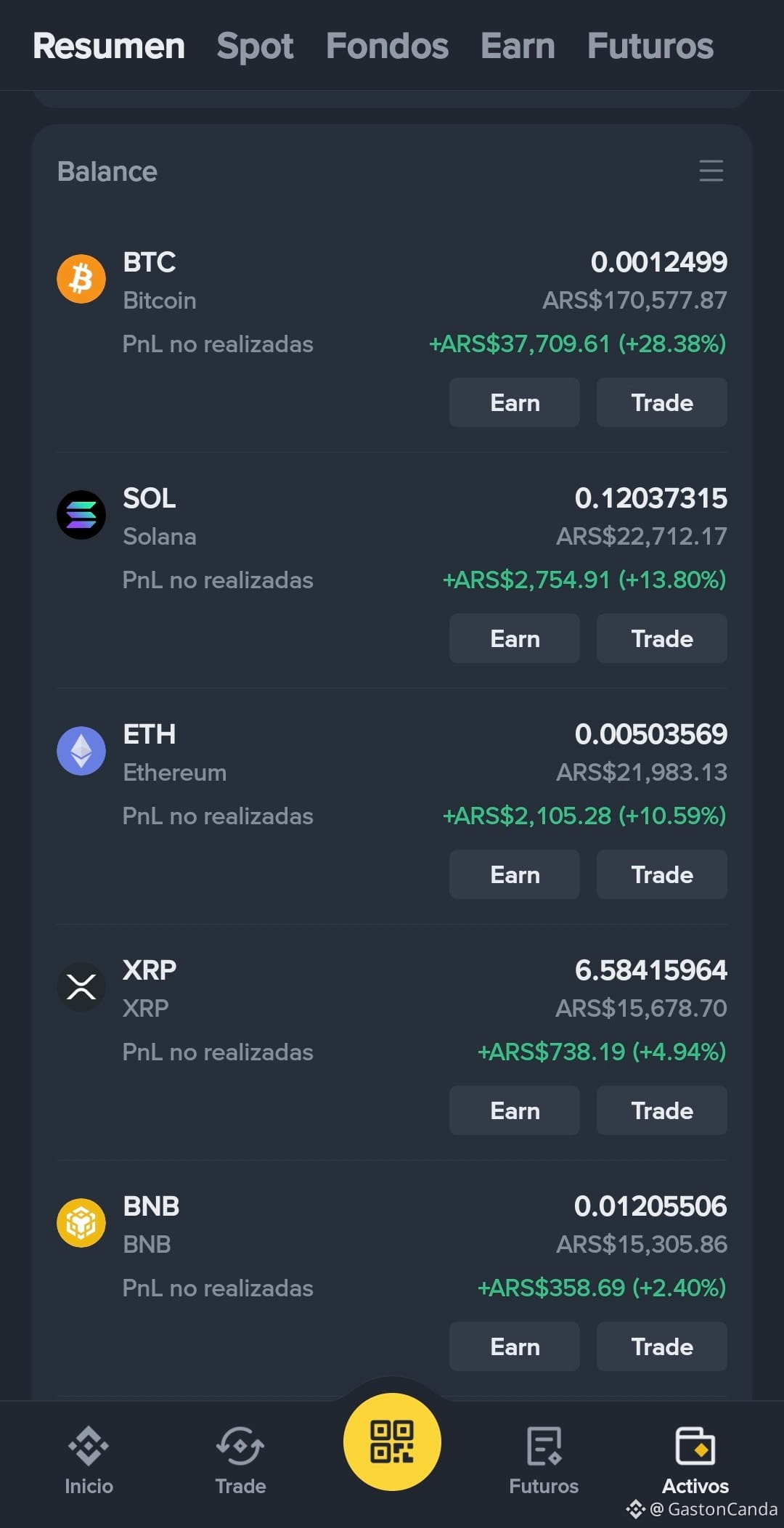
🟢 Bitcoin near $85K, SOL and XRP up over 8%. What’s behind the green?
I opened Binance this morning and saw gains across BTC, ETH, BNB, SOL and XRP.
My snapshot:
▪️ BTC: $84,824 | +5.43%
▪️ ETH: $2,727 | +5.88%
▪️ BNB: $792.83 | +5.47%
▪️ SOL: $117.16 | +8.09%
▪️ XRP: $1.4905 | +8.16%
All crypto changes above are over 24 hours, at the time of the screenshot.
The broader backdrop matters. Reuters reports falling oil prices, easing Treasury yields and stronger AI stocks. That combination can support demand for risk assets, including crypto.
Meanwhile, AP reports U.S.–China discussions on trade and AI ahead of the Trump–Xi meeting. Progress in talks helps sentiment, but an agreement still needs to materialize.
My read: this looks consistent with a broader improvement in risk appetite. It doesn’t establish how durable the rally will be.
I’m watching whether BTC holds above $84K, whether the strength extends through the U.S. stock session, and whether oil and yields remain supportive. $84K is a reference point here—not confirmed technical support.
I’m building my portfolio from a salary. Green mornings feel good, but one strong session doesn’t change my plan.
What would convince you this move has staying power?
@GastonCanda
#bitcoin #crypto #MarketSentimentToday
Sources: "Reuters" (https://www.reuters.com/business/wall-st-futures-rise-ai-stocks-gain-oil-prices-slide-2026-09-21/) · "AP" (https://apnews.com/article/2c7f54f07e755f506d9db9b91df282bd)
$BTC
{future}(BTCUSDT)
🟢 Bitcoin near $85K, SOL and XRP up over 8%. What’s behind the green?
I opened Binance this morning and saw gains across BTC, ETH, BNB, SOL and XRP.
My snapshot:
▪️ BTC: $84,824 | +5.43%
▪️ ETH: $2,727 | +5.88%
▪️ BNB: $792.83 | +5.47%
▪️ SOL: $117.16 | +8.09%
▪️ XRP: $1.4905 | +8.16%
All crypto changes above are over 24 hours, at the time of the screenshot.
The broader backdrop matters. Reuters reports falling oil prices, easing Treasury yields and stronger AI stocks. That combination can support demand for risk assets, including crypto.
Meanwhile, AP reports U.S.–China discussions on trade and AI ahead of the Trump–Xi meeting. Progress in talks helps sentiment, but an agreement still needs to materialize.
My read: this looks consistent with a broader improvement in risk appetite. It doesn’t establish how durable the rally will be.
I’m watching whether BTC holds above $84K, whether the strength extends through the U.S. stock session, and whether oil and yields remain supportive. $84K is a reference point here—not confirmed technical support.
I’m building my portfolio from a salary. Green mornings feel good, but one strong session doesn’t change my plan.
What would convince you this move has staying power?
@GastonCanda
#bitcoin #crypto #MarketSentimentToday
Sources: "Reuters" (https://www.reuters.com/business/wall-st-futures-rise-ai-stocks-gain-oil-prices-slide-2026-09-21/) · "AP" (https://apnews.com/article/2c7f54f07e755f506d9db9b91df282bd)
$BTC
I opened Binance this morning and saw gains across BTC, ETH, BNB, SOL and XRP.
My snapshot:
▪️ BTC: $84,824 | +5.43%
▪️ ETH: $2,727 | +5.88%
▪️ BNB: $792.83 | +5.47%
▪️ SOL: $117.16 | +8.09%
▪️ XRP: $1.4905 | +8.16%
All crypto changes above are over 24 hours, at the time of the screenshot.
The broader backdrop matters. Reuters reports falling oil prices, easing Treasury yields and stronger AI stocks. That combination can support demand for risk assets, including crypto.
Meanwhile, AP reports U.S.–China discussions on trade and AI ahead of the Trump–Xi meeting. Progress in talks helps sentiment, but an agreement still needs to materialize.
My read: this looks consistent with a broader improvement in risk appetite. It doesn’t establish how durable the rally will be.
I’m watching whether BTC holds above $84K, whether the strength extends through the U.S. stock session, and whether oil and yields remain supportive. $84K is a reference point here—not confirmed technical support.
I’m building my portfolio from a salary. Green mornings feel good, but one strong session doesn’t change my plan.
What would convince you this move has staying power?
@GastonCanda
#bitcoin #crypto #MarketSentimentToday
Sources: "Reuters" (https://www.reuters.com/business/wall-st-futures-rise-ai-stocks-gain-oil-prices-slide-2026-09-21/) · "AP" (https://apnews.com/article/2c7f54f07e755f506d9db9b91df282bd)
$BTC
3
2.3k
·
--
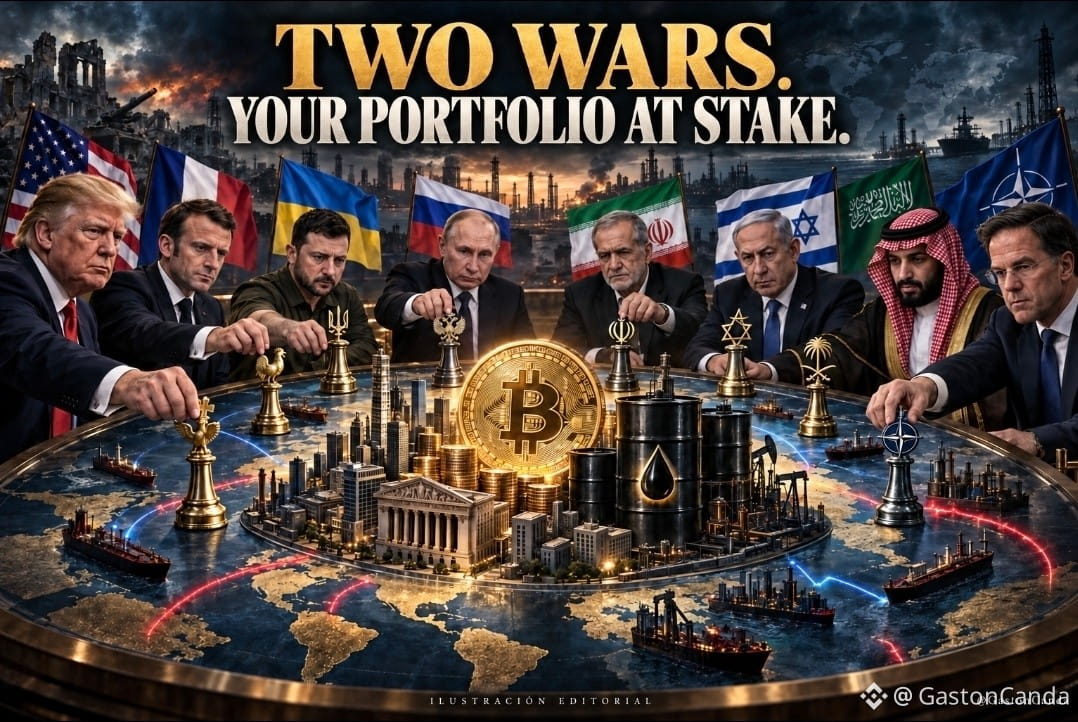
🚨 I hold Bitcoin. So why am I watching oil?
Because Russia’s war in Ukraine, the U.S.–Iran war and disruptions in the Strait of Hormuz can reach our portfolios through energy prices, inflation and interest rates.
Hormuz is the connection worth watching: restrictions on this crucial route can disrupt oil and LNG shipments, adding pressure to energy costs far beyond the Middle East.
Macron’s infrastructure warnings and NATO’s latest defence talks add to the picture. But every headline needs context before it becomes a trading decision.
My concern is simple: prolonged energy disruption could keep inflation stubborn and make rate cuts harder.
That matters for stocks. It matters for crypto. And even more when leverage is involved.
BTC’s limited supply doesn’t stop someone from being forced to sell it.
I’m building my portfolio from a salary. Every contribution takes work. That’s why I care about what happens beyond the chart.
I’m watching oil, Treasury yields and actual shipping through Hormuz. A lasting reopening or real de-escalation would change the picture too.
👇 If energy stays expensive, would you keep accumulating BTC, hold more cash or add energy stocks—and why?
@GastonCanda
#bitcoin #oil #Geopolitics
$BTC $BZ
{future}(BTCUSDT)
{future}(BZUSDT)
🚨 I hold Bitcoin. So why am I watching oil?
Because Russia’s war in Ukraine, the U.S.–Iran war and disruptions in the Strait of Hormuz can reach our portfolios through energy prices, inflation and interest rates.
Hormuz is the connection worth watching: restrictions on this crucial route can disrupt oil and LNG shipments, adding pressure to energy costs far beyond the Middle East.
Macron’s infrastructure warnings and NATO’s latest defence talks add to the picture. But every headline needs context before it becomes a trading decision.
My concern is simple: prolonged energy disruption could keep inflation stubborn and make rate cuts harder.
That matters for stocks. It matters for crypto. And even more when leverage is involved.
BTC’s limited supply doesn’t stop someone from being forced to sell it.
I’m building my portfolio from a salary. Every contribution takes work. That’s why I care about what happens beyond the chart.
I’m watching oil, Treasury yields and actual shipping through Hormuz. A lasting reopening or real de-escalation would change the picture too.
👇 If energy stays expensive, would you keep accumulating BTC, hold more cash or add energy stocks—and why?
@GastonCanda
#bitcoin #oil #Geopolitics
$BTC $BZ
Because Russia’s war in Ukraine, the U.S.–Iran war and disruptions in the Strait of Hormuz can reach our portfolios through energy prices, inflation and interest rates.
Hormuz is the connection worth watching: restrictions on this crucial route can disrupt oil and LNG shipments, adding pressure to energy costs far beyond the Middle East.
Macron’s infrastructure warnings and NATO’s latest defence talks add to the picture. But every headline needs context before it becomes a trading decision.
My concern is simple: prolonged energy disruption could keep inflation stubborn and make rate cuts harder.
That matters for stocks. It matters for crypto. And even more when leverage is involved.
BTC’s limited supply doesn’t stop someone from being forced to sell it.
I’m building my portfolio from a salary. Every contribution takes work. That’s why I care about what happens beyond the chart.
I’m watching oil, Treasury yields and actual shipping through Hormuz. A lasting reopening or real de-escalation would change the picture too.
👇 If energy stays expensive, would you keep accumulating BTC, hold more cash or add energy stocks—and why?
@GastonCanda
#bitcoin #oil #Geopolitics
$BTC $BZ
5
3.8k
·
--
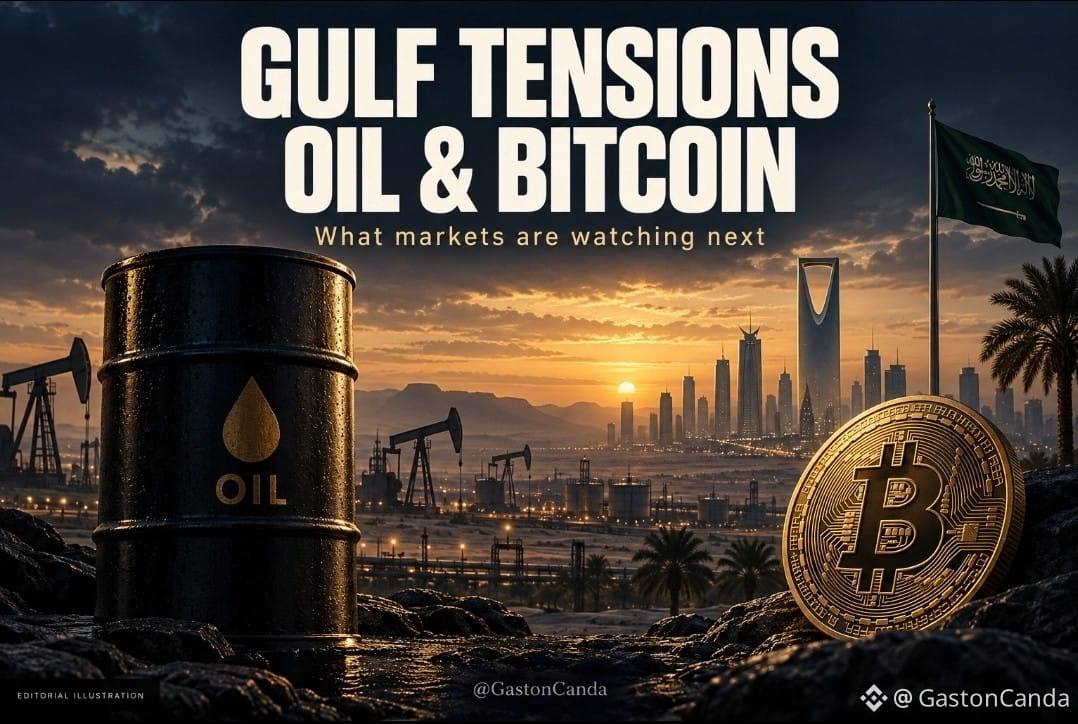
🚨 GULF STOCKS FALL AS RIYADH ATTACK CLAIMS PUT MARKETS ON ALERT
GM everyone ☀️ Wall Street is closed, but geopolitical risk isn’t taking the weekend off.
Reuters reports Saudi stocks fell 0.5% and Qatar’s index dropped 0.9% on Sunday after the Houthis claimed attacks on Riyadh. "Reuters" (https://www.reuters.com/world/middle-east/saudi-gulf-stocks-fall-after-houthis-claim-riyadh-attacks-2026-09-20/)
Saudi Arabia confirmed intercepting a missile. Claims of damage to oil facilities remain unverified, according to AP. That distinction matters. "AP" (https://apnews.com/article/b1286cad816dd3e553f50f6dd5205972)
Why am I watching this as a crypto investor?
My read: if escalation pushes oil prices higher and keeps them elevated, it could add inflation pressure and complicate the outlook for lower interest rates. That would be a potential headwind for both growth stocks and crypto.
👀 My watchlist:
• Brent when oil futures reopen.
• Treasury yields and the dollar as trading resumes.
• Whether BTC holds up if broader markets turn defensive.
The risk to that scenario: tensions ease, supply remains intact, and any oil premium fades.
I’m watching for confirmation before turning a geopolitical headline into a Bitcoin price prediction.
What’s your first signal this week: oil, the 10Y yield, or BTC?
@GastonCanda
#bitcoin #crypto #Macro
$BTC
{future}(BTCUSDT)
{future}(BZUSDT)
🚨 GULF STOCKS FALL AS RIYADH ATTACK CLAIMS PUT MARKETS ON ALERT
GM everyone ☀️ Wall Street is closed, but geopolitical risk isn’t taking the weekend off.
Reuters reports Saudi stocks fell 0.5% and Qatar’s index dropped 0.9% on Sunday after the Houthis claimed attacks on Riyadh. "Reuters" (https://www.reuters.com/world/middle-east/saudi-gulf-stocks-fall-after-houthis-claim-riyadh-attacks-2026-09-20/)
Saudi Arabia confirmed intercepting a missile. Claims of damage to oil facilities remain unverified, according to AP. That distinction matters. "AP" (https://apnews.com/article/b1286cad816dd3e553f50f6dd5205972)
Why am I watching this as a crypto investor?
My read: if escalation pushes oil prices higher and keeps them elevated, it could add inflation pressure and complicate the outlook for lower interest rates. That would be a potential headwind for both growth stocks and crypto.
👀 My watchlist:
• Brent when oil futures reopen.
• Treasury yields and the dollar as trading resumes.
• Whether BTC holds up if broader markets turn defensive.
The risk to that scenario: tensions ease, supply remains intact, and any oil premium fades.
I’m watching for confirmation before turning a geopolitical headline into a Bitcoin price prediction.
What’s your first signal this week: oil, the 10Y yield, or BTC?
@GastonCanda
#bitcoin #crypto #Macro
$BTC
GM everyone ☀️ Wall Street is closed, but geopolitical risk isn’t taking the weekend off.
Reuters reports Saudi stocks fell 0.5% and Qatar’s index dropped 0.9% on Sunday after the Houthis claimed attacks on Riyadh. "Reuters" (https://www.reuters.com/world/middle-east/saudi-gulf-stocks-fall-after-houthis-claim-riyadh-attacks-2026-09-20/)
Saudi Arabia confirmed intercepting a missile. Claims of damage to oil facilities remain unverified, according to AP. That distinction matters. "AP" (https://apnews.com/article/b1286cad816dd3e553f50f6dd5205972)
Why am I watching this as a crypto investor?
My read: if escalation pushes oil prices higher and keeps them elevated, it could add inflation pressure and complicate the outlook for lower interest rates. That would be a potential headwind for both growth stocks and crypto.
👀 My watchlist:
• Brent when oil futures reopen.
• Treasury yields and the dollar as trading resumes.
• Whether BTC holds up if broader markets turn defensive.
The risk to that scenario: tensions ease, supply remains intact, and any oil premium fades.
I’m watching for confirmation before turning a geopolitical headline into a Bitcoin price prediction.
What’s your first signal this week: oil, the 10Y yield, or BTC?
@GastonCanda
#bitcoin #crypto #Macro
$BTC
2
1.4k
·
--
Bullish
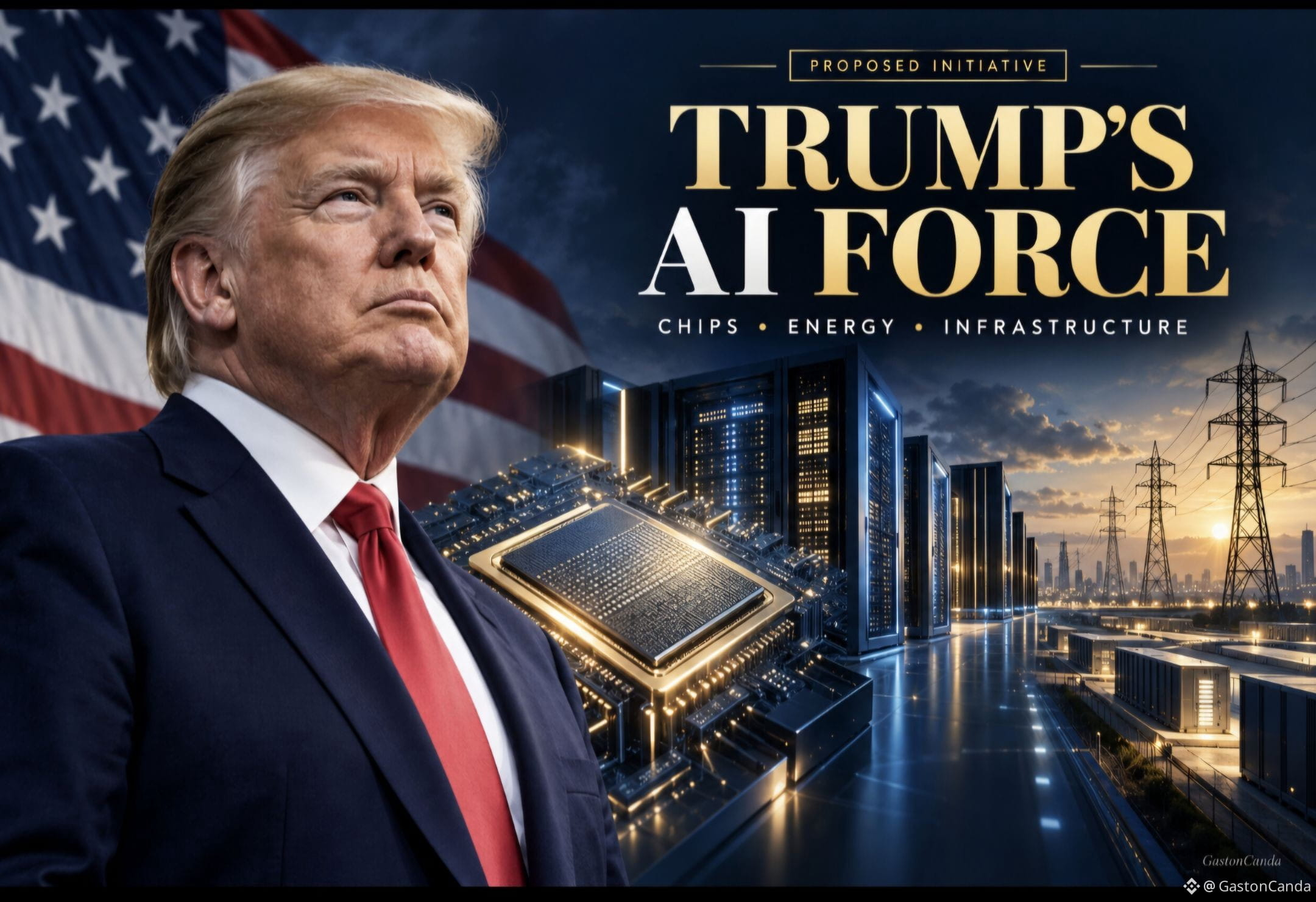
🇺🇸 Trump wants an “AI Force.” Investors should watch what comes after the announcement.
Trump has announced plans to create an “AI Force” and appoint a new AI czar. Details on how the initiative would operate remain unclear.
My take: this puts the AI investment story back in focus—and that story extends well beyond chatbots.
The areas I’m watching:
🔹 Chips and computing infrastructure.
🔹 Data centers, power supply and cooling.
🔹 Businesses turning AI into products customers actually pay for.
If political support translates into investment and deployment, those areas could benefit. But an announcement alone doesn’t create revenue or justify every valuation.
For crypto investors, the same discipline applies: an “AI” label on a token is no substitute for users, demand or a credible business model.
My long-term thesis remains focused on the infrastructure behind this transformation. The next evidence to watch is concrete policy, funding and execution.
Where do you see the strongest opportunity: chips, energy or AI applications?
#IA #TradFi
@GastonCanda
🇺🇸 Trump wants an “AI Force.” Investors should watch what comes after the announcement.
Trump has announced plans to create an “AI Force” and appoint a new AI czar. Details on how the initiative would operate remain unclear.
My take: this puts the AI investment story back in focus—and that story extends well beyond chatbots.
The areas I’m watching:
🔹 Chips and computing infrastructure.
🔹 Data centers, power supply and cooling.
🔹 Businesses turning AI into products customers actually pay for.
If political support translates into investment and deployment, those areas could benefit. But an announcement alone doesn’t create revenue or justify every valuation.
For crypto investors, the same discipline applies: an “AI” label on a token is no substitute for users, demand or a credible business model.
My long-term thesis remains focused on the infrastructure behind this transformation. The next evidence to watch is concrete policy, funding and execution.
Where do you see the strongest opportunity: chips, energy or AI applications?
#IA #TradFi
@GastonCanda
Trump has announced plans to create an “AI Force” and appoint a new AI czar. Details on how the initiative would operate remain unclear.
My take: this puts the AI investment story back in focus—and that story extends well beyond chatbots.
The areas I’m watching:
🔹 Chips and computing infrastructure.
🔹 Data centers, power supply and cooling.
🔹 Businesses turning AI into products customers actually pay for.
If political support translates into investment and deployment, those areas could benefit. But an announcement alone doesn’t create revenue or justify every valuation.
For crypto investors, the same discipline applies: an “AI” label on a token is no substitute for users, demand or a credible business model.
My long-term thesis remains focused on the infrastructure behind this transformation. The next evidence to watch is concrete policy, funding and execution.
Where do you see the strongest opportunity: chips, energy or AI applications?
#IA #TradFi
@GastonCanda
1
514
·
--
Article
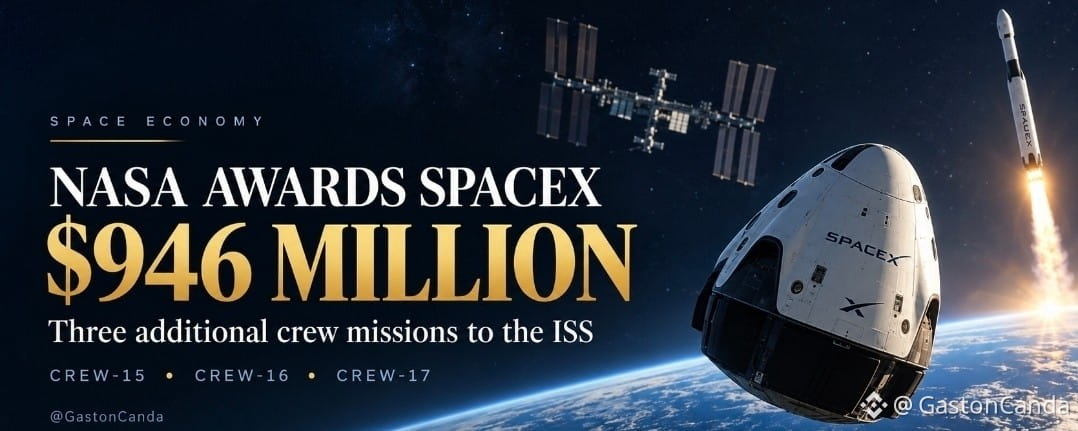
SpaceX Secures $946 Million NASA Contract Expansion for Three New ISS Crew Missions🚀 SpaceX Secures $946 Million NASA Contract Expansion for Three Additional Crew Missions
NASA has awarded SpaceX three additional crewed flights to the International Space Station (ISS), extending the company’s role in maintaining access to the orbital laboratory.
Announced on September 18, the missions—Crew-15, Crew-16 and Crew-17—will use Dragon spacecraft and Falcon 9 rockets. Mission readiness is planned for 2027 and 2028, with contract performance running through 2030. Exact launch dates have not been announced.
The $946 million covers all three missions and associated services, including ground operations, launch, cargo transportation, orbital operations, return and recovery. It also includes emergency evacuation capability while Dragon is docked at the ISS.
The expansion brings SpaceX’s Commercial Crew Transportation Capability (CCtCap) contract to 17 missions and a total value of $5.92 billion. NASA had announced its intention to purchase the additional flights in May.
🔎 Why it matters
The award expands a commercial relationship built around a critical responsibility: transporting astronauts to space and bringing them home safely.
From a business perspective, adding missions to an existing program provides operational continuity and greater visibility into future work. It also carries obligations: delivering the flights, maintaining reliability and managing costs. Contract value is not net profit.
For those following the space economy, the key development is how technological capability translates into services that a customer continues to purchase.
💬 My perspective as an investor
The space economy is part of my long-term investment thesis. This announcement adds a concrete development to track: more contracted work for SpaceX.
I’m interested in how that continuity translates into a sustainable business. Contracts provide evidence; execution and profitability complete the picture.
Source: "NASA — official September 18 announcement" (https://www.nasa.gov/missions/station/commercial-crew/nasa-awards-spacex-three-crew-flights-to-space-station/)
@GastonCanda
#SpaceX #NASA #SpaceEconomy $SPCXB
{spot}(SPCXBUSDT)
SpaceX Secures $946 Million NASA Contract Expansion for Three New ISS Crew Missions
🚀 SpaceX Secures $946 Million NASA Contract Expansion for Three Additional Crew Missions
NASA has awarded SpaceX three additional crewed flights to the International Space Station (ISS), extending the company’s role in maintaining access to the orbital laboratory.
Announced on September 18, the missions—Crew-15, Crew-16 and Crew-17—will use Dragon spacecraft and Falcon 9 rockets. Mission readiness is planned for 2027 and 2028, with contract performance running through 2030. Exact launch dates have not been announced.
The $946 million covers all three missions and associated services, including ground operations, launch, cargo transportation, orbital operations, return and recovery. It also includes emergency evacuation capability while Dragon is docked at the ISS.
The expansion brings SpaceX’s Commercial Crew Transportation Capability (CCtCap) contract to 17 missions and a total value of $5.92 billion. NASA had announced its intention to purchase the additional flights in May.
🔎 Why it matters
The award expands a commercial relationship built around a critical responsibility: transporting astronauts to space and bringing them home safely.
From a business perspective, adding missions to an existing program provides operational continuity and greater visibility into future work. It also carries obligations: delivering the flights, maintaining reliability and managing costs. Contract value is not net profit.
For those following the space economy, the key development is how technological capability translates into services that a customer continues to purchase.
💬 My perspective as an investor
The space economy is part of my long-term investment thesis. This announcement adds a concrete development to track: more contracted work for SpaceX.
I’m interested in how that continuity translates into a sustainable business. Contracts provide evidence; execution and profitability complete the picture.
Source: "NASA — official September 18 announcement" (https://www.nasa.gov/missions/station/commercial-crew/nasa-awards-spacex-three-crew-flights-to-space-station/)
@GastonCanda
#SpaceX #NASA #SpaceEconomy $SPCXB
NASA has awarded SpaceX three additional crewed flights to the International Space Station (ISS), extending the company’s role in maintaining access to the orbital laboratory.
Announced on September 18, the missions—Crew-15, Crew-16 and Crew-17—will use Dragon spacecraft and Falcon 9 rockets. Mission readiness is planned for 2027 and 2028, with contract performance running through 2030. Exact launch dates have not been announced.
The $946 million covers all three missions and associated services, including ground operations, launch, cargo transportation, orbital operations, return and recovery. It also includes emergency evacuation capability while Dragon is docked at the ISS.
The expansion brings SpaceX’s Commercial Crew Transportation Capability (CCtCap) contract to 17 missions and a total value of $5.92 billion. NASA had announced its intention to purchase the additional flights in May.
🔎 Why it matters
The award expands a commercial relationship built around a critical responsibility: transporting astronauts to space and bringing them home safely.
From a business perspective, adding missions to an existing program provides operational continuity and greater visibility into future work. It also carries obligations: delivering the flights, maintaining reliability and managing costs. Contract value is not net profit.
For those following the space economy, the key development is how technological capability translates into services that a customer continues to purchase.
💬 My perspective as an investor
The space economy is part of my long-term investment thesis. This announcement adds a concrete development to track: more contracted work for SpaceX.
I’m interested in how that continuity translates into a sustainable business. Contracts provide evidence; execution and profitability complete the picture.
Source: "NASA — official September 18 announcement" (https://www.nasa.gov/missions/station/commercial-crew/nasa-awards-spacex-three-crew-flights-to-space-station/)
@GastonCanda
#SpaceX #NASA #SpaceEconomy $SPCXB
3
432
·
--
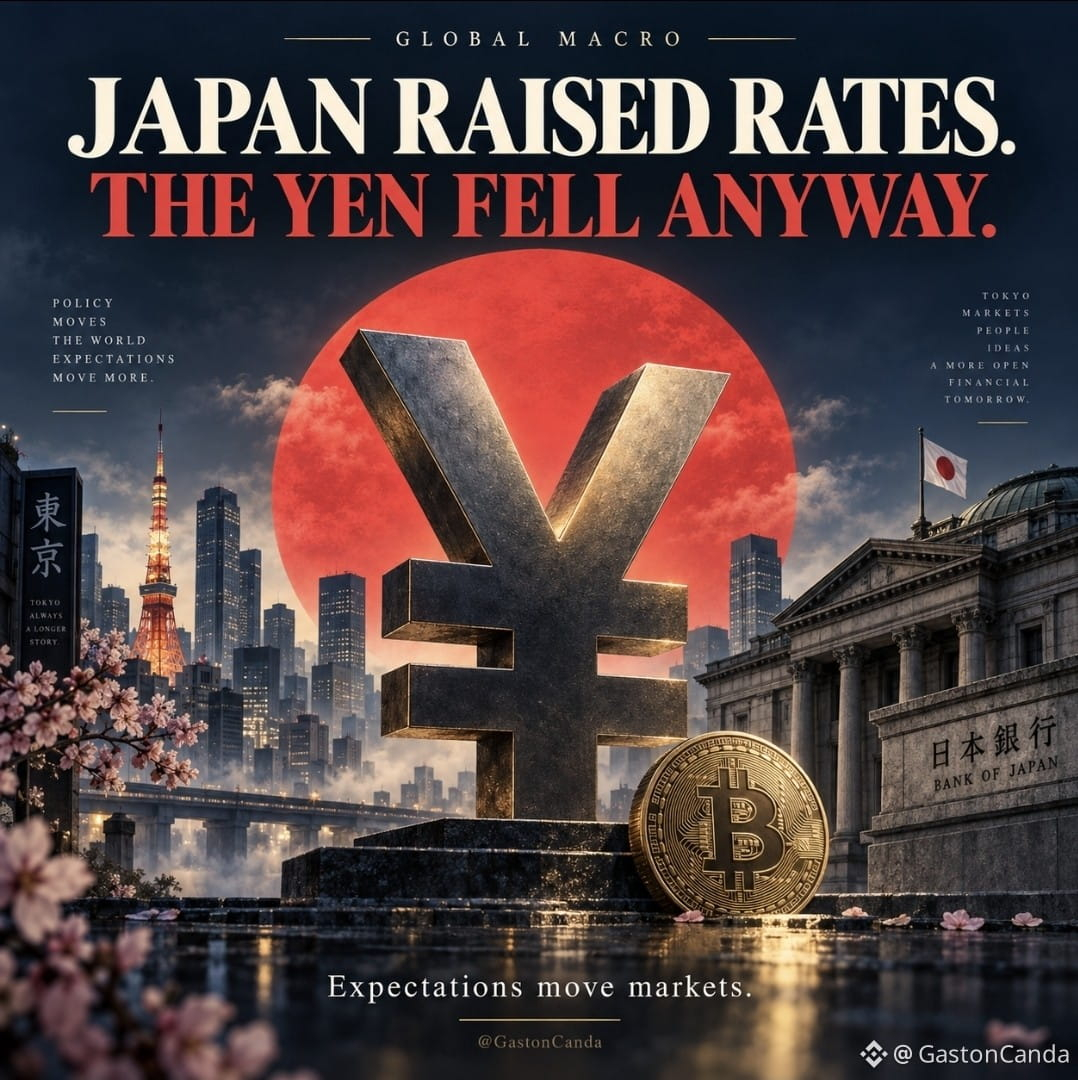
🇯🇵 Japan raised rates. The yen weakened anyway.
On September 18, the Bank of Japan raised its policy rate to 1.25%. Yet the yen fell against the dollar as guidance on further tightening disappointed expectations.
The lesson: markets trade the gap between expectations and reality.
Why should crypto investors care?
Borrowing in yen to buy other assets becomes more expensive as Japanese rates rise. If the yen also strengthens sharply, those leveraged positions can face additional pressure.
That’s a potential risk channel for stocks and crypto—not proof that a sell-off has started.
My watchlist: the yen, U.S. Treasury yields, and whether Bitcoin holds up when broader markets weaken.
When you check $BTC, do you also check what currencies and bonds are doing?
Source: WSJ, September 18.
@GastonCanda
#bitcoin #Macro
$BTC
{spot}(BTCUSDT)
🇯🇵 Japan raised rates. The yen weakened anyway.
On September 18, the Bank of Japan raised its policy rate to 1.25%. Yet the yen fell against the dollar as guidance on further tightening disappointed expectations.
The lesson: markets trade the gap between expectations and reality.
Why should crypto investors care?
Borrowing in yen to buy other assets becomes more expensive as Japanese rates rise. If the yen also strengthens sharply, those leveraged positions can face additional pressure.
That’s a potential risk channel for stocks and crypto—not proof that a sell-off has started.
My watchlist: the yen, U.S. Treasury yields, and whether Bitcoin holds up when broader markets weaken.
When you check $BTC , do you also check what currencies and bonds are doing?
Source: WSJ, September 18.
@GastonCanda
#bitcoin #Macro
$BTC
On September 18, the Bank of Japan raised its policy rate to 1.25%. Yet the yen fell against the dollar as guidance on further tightening disappointed expectations.
The lesson: markets trade the gap between expectations and reality.
Why should crypto investors care?
Borrowing in yen to buy other assets becomes more expensive as Japanese rates rise. If the yen also strengthens sharply, those leveraged positions can face additional pressure.
That’s a potential risk channel for stocks and crypto—not proof that a sell-off has started.
My watchlist: the yen, U.S. Treasury yields, and whether Bitcoin holds up when broader markets weaken.
When you check $BTC , do you also check what currencies and bonds are doing?
Source: WSJ, September 18.
@GastonCanda
#bitcoin #Macro
$BTC
1
102
·
--
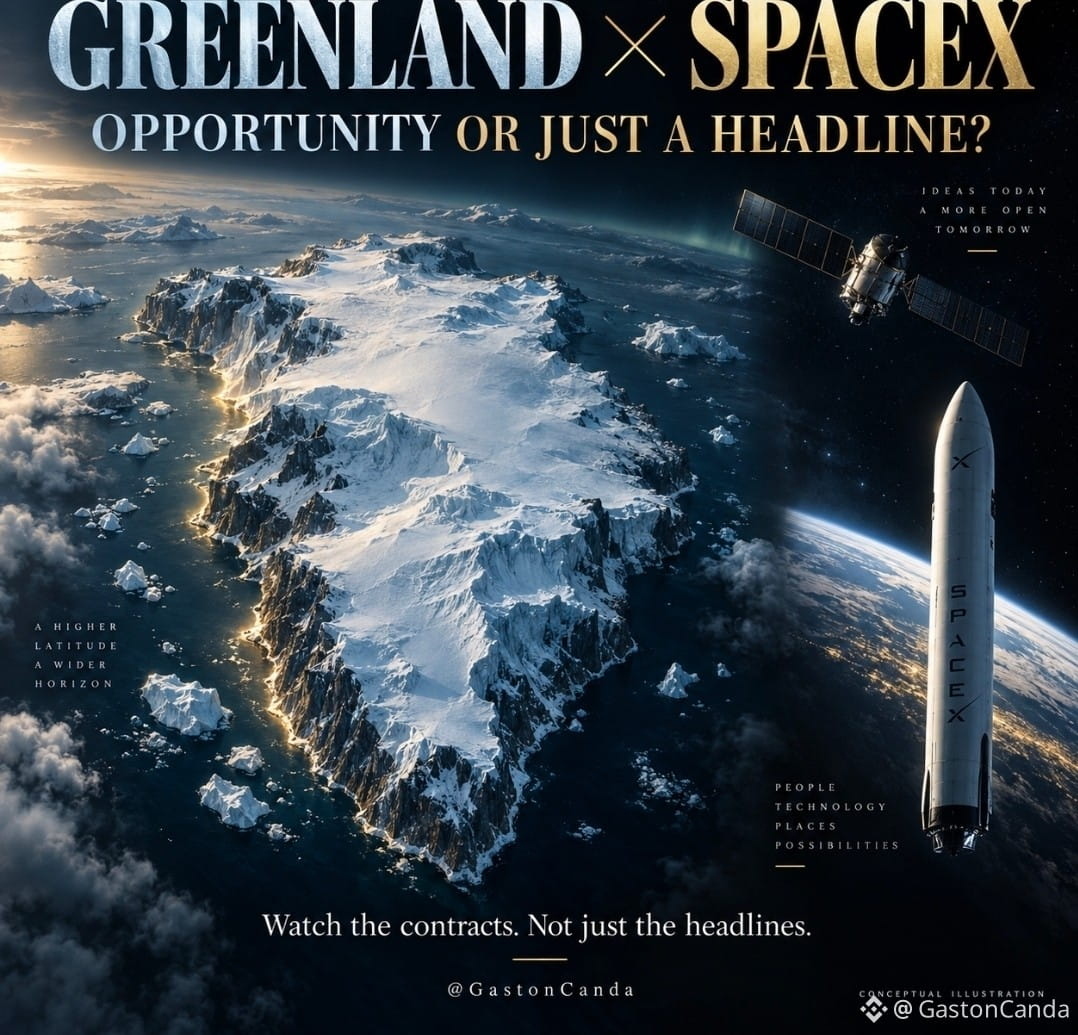
🚀 Could SpaceX benefit from Trump’s Greenland deal?
Potentially—but the investment story needs more than a headline.
A larger U.S. military presence could create demand for communications, surveillance and infrastructure.
SpaceX already has major military launch contracts. That makes it relevant to watch—not a confirmed winner from this agreement.
What I’m watching next: actual budgets, contract awards and who gets paid.
A strategic location doesn’t automatically make every related company a good investment.
Would you invest on the announcement—or wait for the first contract?
#SpaceX #GeopoliticsNow
{spot}(SPCXBUSDT)
🚀 Could SpaceX benefit from Trump’s Greenland deal?
Potentially—but the investment story needs more than a headline.
A larger U.S. military presence could create demand for communications, surveillance and infrastructure.
SpaceX already has major military launch contracts. That makes it relevant to watch—not a confirmed winner from this agreement.
What I’m watching next: actual budgets, contract awards and who gets paid.
A strategic location doesn’t automatically make every related company a good investment.
Would you invest on the announcement—or wait for the first contract?
#SpaceX #GeopoliticsNow
Potentially—but the investment story needs more than a headline.
A larger U.S. military presence could create demand for communications, surveillance and infrastructure.
SpaceX already has major military launch contracts. That makes it relevant to watch—not a confirmed winner from this agreement.
What I’m watching next: actual budgets, contract awards and who gets paid.
A strategic location doesn’t automatically make every related company a good investment.
Would you invest on the announcement—or wait for the first contract?
#SpaceX #GeopoliticsNow
2
1.4k
·
--
Bullish
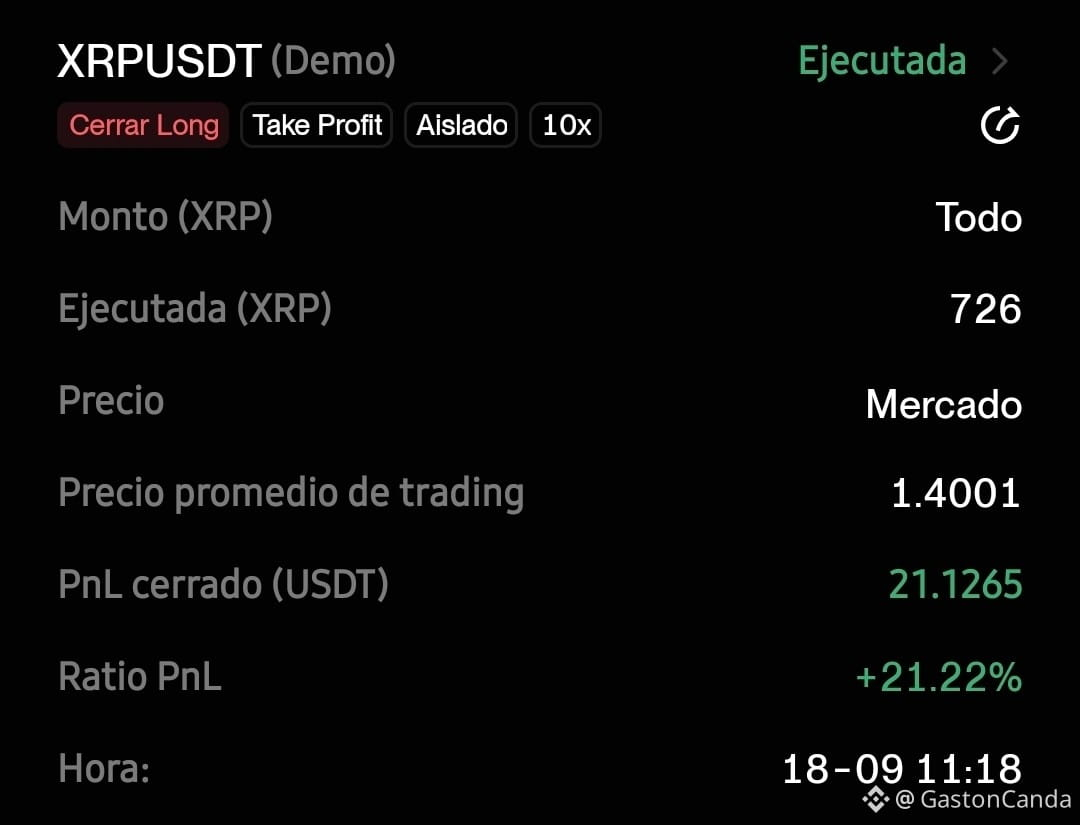
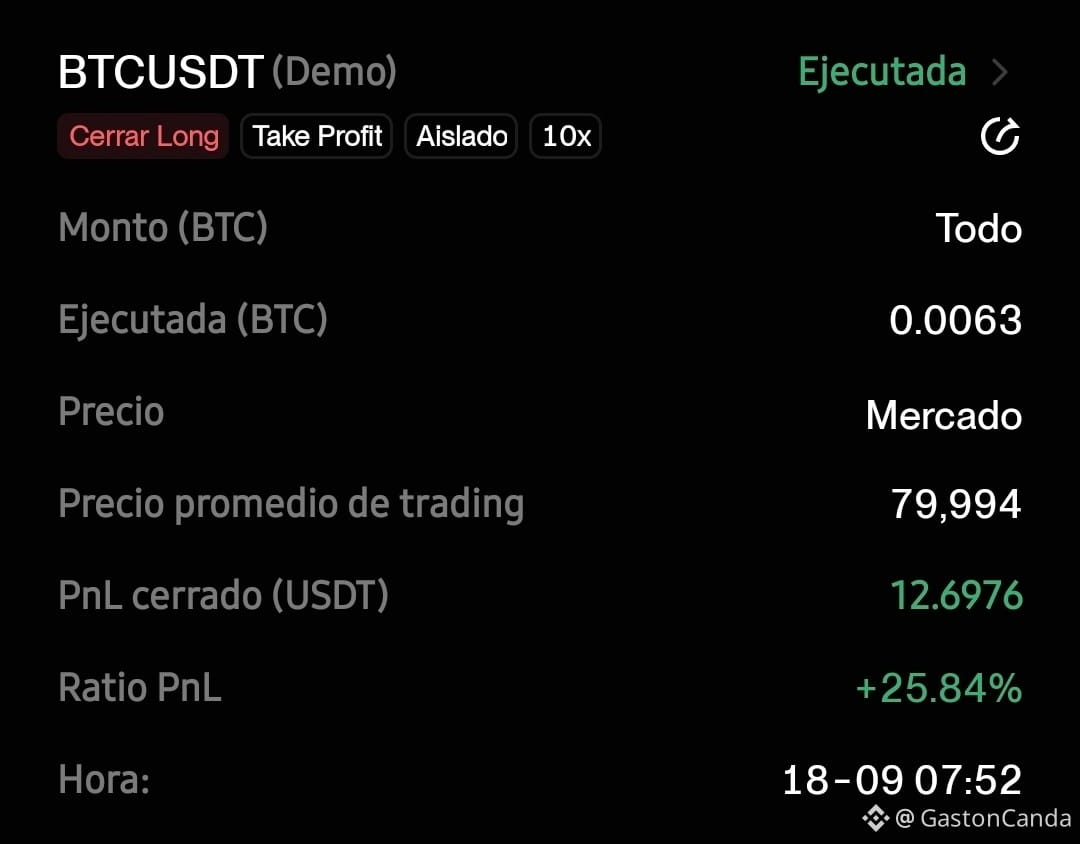
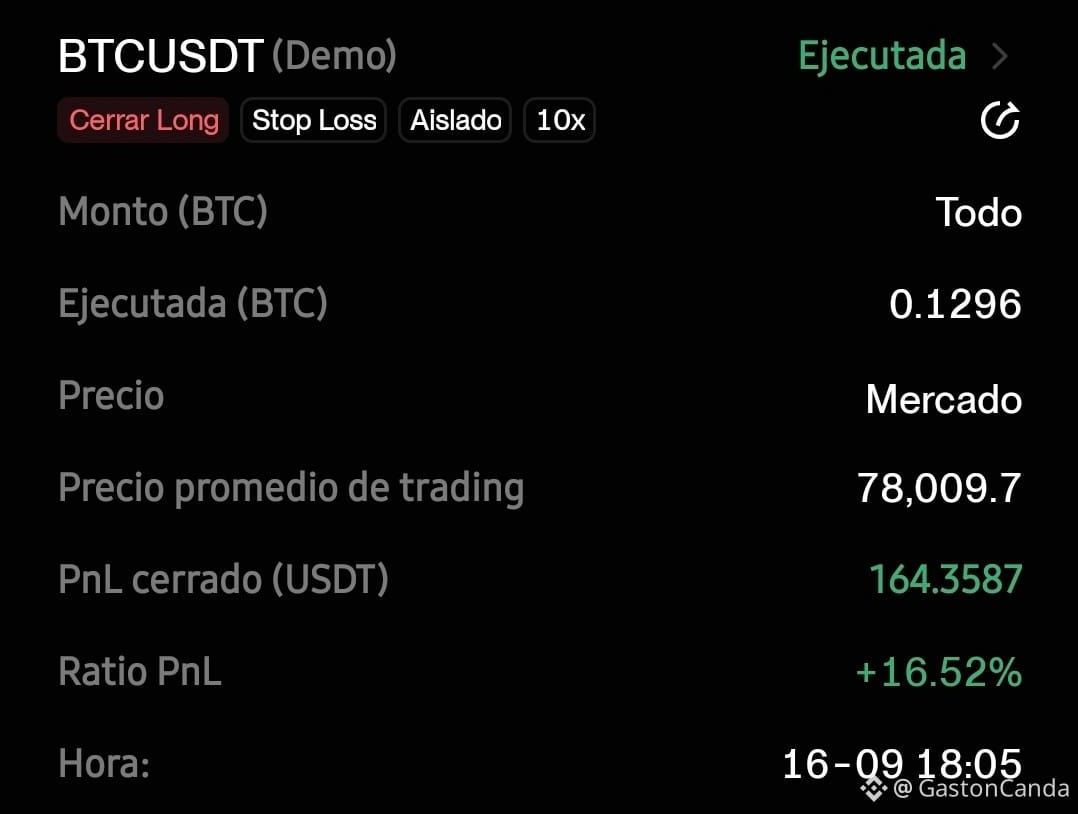
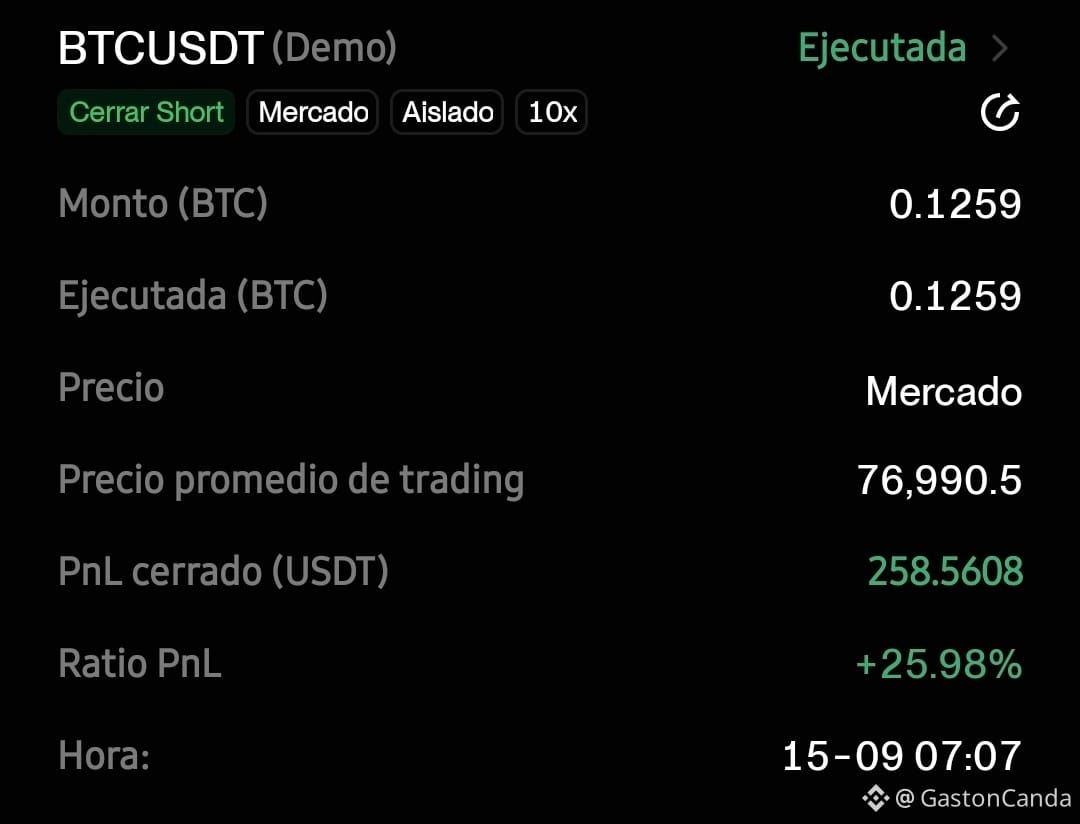
My first four demo trades. Four positive closes. And a little less fear of getting started. 🙌
For a long time, I was too afraid to trade. Then someone suggested trying a demo account, and I finally took that first step.
First win: “Beginner’s luck.”
Second: “Okay… probably still luck.”
Third: “Wait a minute.”
This morning, I closed my fourth trade in profit.
To be clear: this was all demo trading. No real money, and four wins don’t prove I have a winning strategy. But taking what I’ve been reading and learning and putting it into practice feels good.
I’m an everyday worker learning about investing and trading, one step at a time. Sharing the beginning matters to me, too.
My next goal is to keep practicing, record my trades, and learn from losses when they come. Build a stronger foundation before putting real money on the line.
If fear has kept you from starting, I get it. That was me. You don’t have to know everything to start learning.
What did your first demo trades teach you?
@GastonCanda $BTC $XRP
{future}(BTCUSDT)
{future}(XRPUSDT)
#BTC #xrp #crypto #trading
My first four demo trades. Four positive closes. And a little less fear of getting started. 🙌
For a long time, I was too afraid to trade. Then someone suggested trying a demo account, and I finally took that first step.
First win: “Beginner’s luck.”
Second: “Okay… probably still luck.”
Third: “Wait a minute.”
This morning, I closed my fourth trade in profit.
To be clear: this was all demo trading. No real money, and four wins don’t prove I have a winning strategy. But taking what I’ve been reading and learning and putting it into practice feels good.
I’m an everyday worker learning about investing and trading, one step at a time. Sharing the beginning matters to me, too.
My next goal is to keep practicing, record my trades, and learn from losses when they come. Build a stronger foundation before putting real money on the line.
If fear has kept you from starting, I get it. That was me. You don’t have to know everything to start learning.
What did your first demo trades teach you?
@GastonCanda $BTC $XRP
#BTC #xrp #crypto #trading
For a long time, I was too afraid to trade. Then someone suggested trying a demo account, and I finally took that first step.
First win: “Beginner’s luck.”
Second: “Okay… probably still luck.”
Third: “Wait a minute.”
This morning, I closed my fourth trade in profit.
To be clear: this was all demo trading. No real money, and four wins don’t prove I have a winning strategy. But taking what I’ve been reading and learning and putting it into practice feels good.
I’m an everyday worker learning about investing and trading, one step at a time. Sharing the beginning matters to me, too.
My next goal is to keep practicing, record my trades, and learn from losses when they come. Build a stronger foundation before putting real money on the line.
If fear has kept you from starting, I get it. That was me. You don’t have to know everything to start learning.
What did your first demo trades teach you?
@GastonCanda $BTC $XRP
#BTC #xrp #crypto #trading
1
2
208
·
--
Bullish
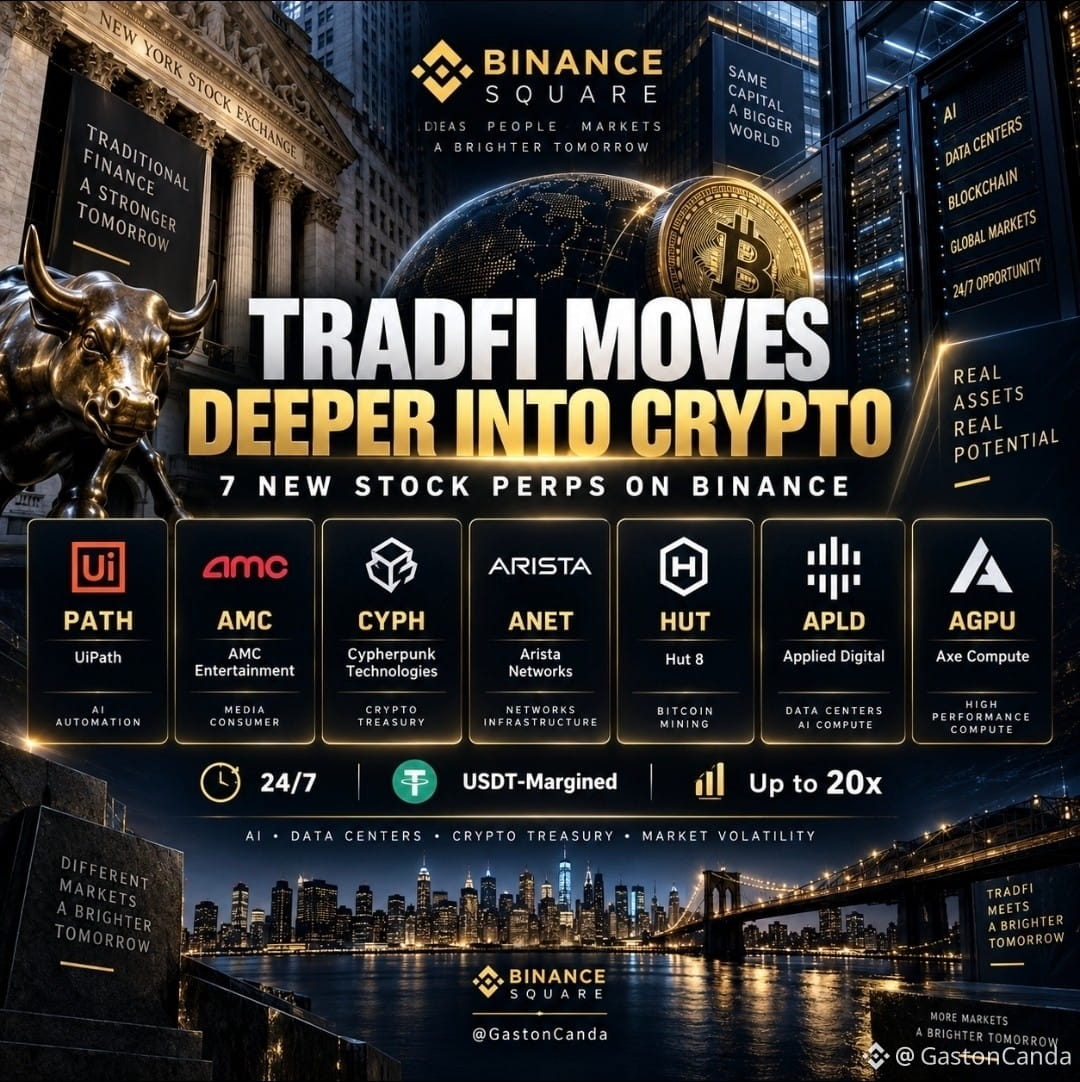
🚨 TradFi is moving deeper into crypto infrastructure.
Binance has launched 7 new USDT-margined stock perpetuals, all tradable 24/7 and with leverage up to 20x:
$PATH — UiPath
$AMC — AMC Entertainment
$CYPH — Cypherpunk Technologies
$ANET — Arista Networks
$HUT — Hut 8
$APLD — Applied Digital
$AGPU — Axe Compute
What caught my attention is not just the listings — it’s the mix.
Most of these names sit around some of the biggest capital themes in today’s market:
• AI automation
• Data centers
• GPU compute
• Bitcoin infrastructure
• Crypto treasury exposure
$PATH gives exposure to enterprise automation and AI agents.
$ANET sits at the networking layer of the AI buildout.
$HUT and $APLD connect to digital infrastructure and compute.
$CYPH brings a direct crypto-native angle through Zcash exposure.
$AMC adds a high-volatility meme-stock element to the lineup.
My takeaway:
This is bigger than “7 new tickers.”
Crypto exchanges are increasingly becoming another access layer for traditional markets — and that convergence between TradFi + AI + crypto infrastructure is one of the most interesting trends to watch.
Which one would you research first?
$PATH $AMC $CYPH $ANET $HUT $APLD $AGPU
#TradFi #CryptoMacro #BinanceSquare
🚨 TradFi is moving deeper into crypto infrastructure.
Binance has launched 7 new USDT-margined stock perpetuals, all tradable 24/7 and with leverage up to 20x:
$PATH — UiPath
$AMC — AMC Entertainment
$CYPH — Cypherpunk Technologies
$ANET — Arista Networks
$HUT — Hut 8
$APLD — Applied Digital
$AGPU — Axe Compute
What caught my attention is not just the listings — it’s the mix.
Most of these names sit around some of the biggest capital themes in today’s market:
• AI automation
• Data centers
• GPU compute
• Bitcoin infrastructure
• Crypto treasury exposure
$PATH gives exposure to enterprise automation and AI agents.
$ANET sits at the networking layer of the AI buildout.
$HUT and $APLD connect to digital infrastructure and compute.
$CYPH brings a direct crypto-native angle through Zcash exposure.
$AMC adds a high-volatility meme-stock element to the lineup.
My takeaway:
This is bigger than “7 new tickers.”
Crypto exchanges are increasingly becoming another access layer for traditional markets — and that convergence between TradFi + AI + crypto infrastructure is one of the most interesting trends to watch.
Which one would you research first?
$PATH $AMC $CYPH $ANET $HUT $APLD $AGPU
#TradFi #CryptoMacro #BinanceSquare
Binance has launched 7 new USDT-margined stock perpetuals, all tradable 24/7 and with leverage up to 20x:
$PATH — UiPath
$AMC — AMC Entertainment
$CYPH — Cypherpunk Technologies
$ANET — Arista Networks
$HUT — Hut 8
$APLD — Applied Digital
$AGPU — Axe Compute
What caught my attention is not just the listings — it’s the mix.
Most of these names sit around some of the biggest capital themes in today’s market:
• AI automation
• Data centers
• GPU compute
• Bitcoin infrastructure
• Crypto treasury exposure
$PATH gives exposure to enterprise automation and AI agents.
$ANET sits at the networking layer of the AI buildout.
$HUT and $APLD connect to digital infrastructure and compute.
$CYPH brings a direct crypto-native angle through Zcash exposure.
$AMC adds a high-volatility meme-stock element to the lineup.
My takeaway:
This is bigger than “7 new tickers.”
Crypto exchanges are increasingly becoming another access layer for traditional markets — and that convergence between TradFi + AI + crypto infrastructure is one of the most interesting trends to watch.
Which one would you research first?
$PATH $AMC $CYPH $ANET $HUT $APLD $AGPU
#TradFi #CryptoMacro #BinanceSquare
3
4.6k
·
--
Bullish
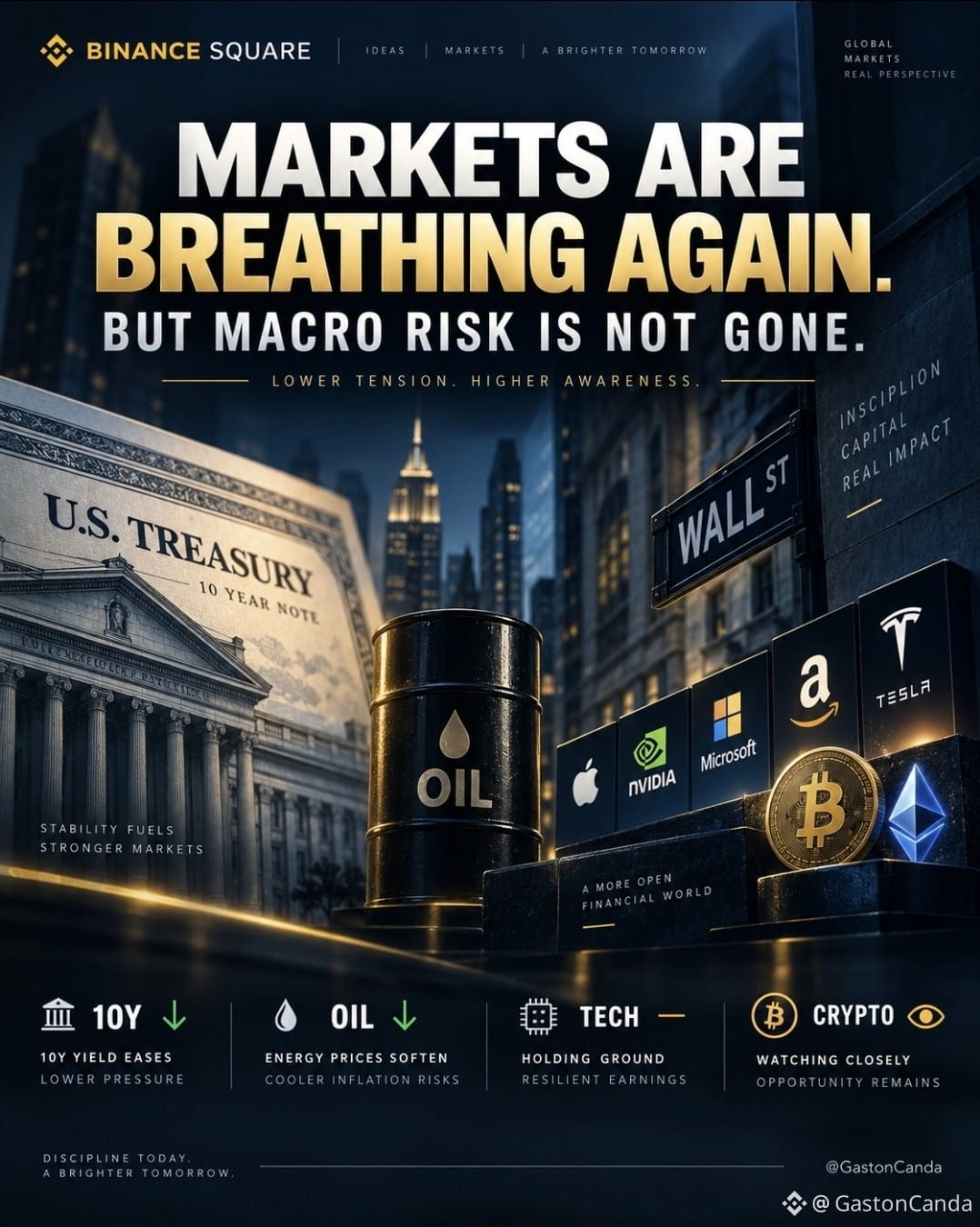
Markets are breathing again — but I wouldn’t call this risk-on yet.
Oil is pulling back.
The U.S. 10Y is easing from the 5% area.
Tech is holding up.
And that combination is giving risk assets some room to breathe.
But the bigger macro picture hasn’t changed.
The Fed just raised rates to 3.75%-4.00%, and policymakers still see room for further tightening this year.
So this market is not trading on “good news.”
It’s trading on less pressure.
That’s an important difference.
What I’m watching today:
• U.S. 10Y — can it stay below 5%?
• Oil — does the pullback continue?
• Nasdaq — does tech keep leading?
• $BTC $ETH $SOL — do they follow the improvement in risk sentiment?
My takeaway:
If yields and oil keep cooling, equities and crypto could keep finding support.
If either turns higher again, the pressure can return fast.
Relief is not the same as a full risk-on environment.
What are you watching more today: Treasuries, tech or crypto?
$BTC $ETH $SOL $NVDAB $META $TSLA
{spot}(BTCUSDT)
{spot}(QQQBUSDT)
#CryptoMacro #TradFi i #MarketUpdate
Markets are breathing again — but I wouldn’t call this risk-on yet.
Oil is pulling back.
The U.S. 10Y is easing from the 5% area.
Tech is holding up.
And that combination is giving risk assets some room to breathe.
But the bigger macro picture hasn’t changed.
The Fed just raised rates to 3.75%-4.00%, and policymakers still see room for further tightening this year.
So this market is not trading on “good news.”
It’s trading on less pressure.
That’s an important difference.
What I’m watching today:
• U.S. 10Y — can it stay below 5%?
• Oil — does the pullback continue?
• Nasdaq — does tech keep leading?
• $BTC $ETH $SOL — do they follow the improvement in risk sentiment?
My takeaway:
If yields and oil keep cooling, equities and crypto could keep finding support.
If either turns higher again, the pressure can return fast.
Relief is not the same as a full risk-on environment.
What are you watching more today: Treasuries, tech or crypto?
$BTC $ETH $SOL $NVDAB $META $TSLA
#CryptoMacro #TradFi i #MarketUpdate
Oil is pulling back.
The U.S. 10Y is easing from the 5% area.
Tech is holding up.
And that combination is giving risk assets some room to breathe.
But the bigger macro picture hasn’t changed.
The Fed just raised rates to 3.75%-4.00%, and policymakers still see room for further tightening this year.
So this market is not trading on “good news.”
It’s trading on less pressure.
That’s an important difference.
What I’m watching today:
• U.S. 10Y — can it stay below 5%?
• Oil — does the pullback continue?
• Nasdaq — does tech keep leading?
• $BTC $ETH $SOL — do they follow the improvement in risk sentiment?
My takeaway:
If yields and oil keep cooling, equities and crypto could keep finding support.
If either turns higher again, the pressure can return fast.
Relief is not the same as a full risk-on environment.
What are you watching more today: Treasuries, tech or crypto?
$BTC $ETH $SOL $NVDAB $META $TSLA
#CryptoMacro #TradFi i #MarketUpdate
3
2.6k
·
--
Bullish
My physical Binance Card is officially requested! 💳🟡
As someone building a portfolio from a regular salary, I’m curious about how crypto tools can fit into everyday life.
This time, I’m exploring Binance Card myself. Once it arrives, I’ll share my experience: the setup, my first purchase, and what I think of it in practice.
Curious too? Check your Binance app for availability and the terms that apply to you.
Have you tried it yet? What should I test first? 👇
#binanceCard #cryptoadoptioninasia
My physical Binance Card is officially requested! 💳🟡
As someone building a portfolio from a regular salary, I’m curious about how crypto tools can fit into everyday life.
This time, I’m exploring Binance Card myself. Once it arrives, I’ll share my experience: the setup, my first purchase, and what I think of it in practice.
Curious too? Check your Binance app for availability and the terms that apply to you.
Have you tried it yet? What should I test first? 👇
#binanceCard #cryptoadoptioninasia
As someone building a portfolio from a regular salary, I’m curious about how crypto tools can fit into everyday life.
This time, I’m exploring Binance Card myself. Once it arrives, I’ll share my experience: the setup, my first purchase, and what I think of it in practice.
Curious too? Check your Binance app for availability and the terms that apply to you.
Have you tried it yet? What should I test first? 👇
#binanceCard #cryptoadoptioninasia
4
5
2k
·
--
Bullish
Verified
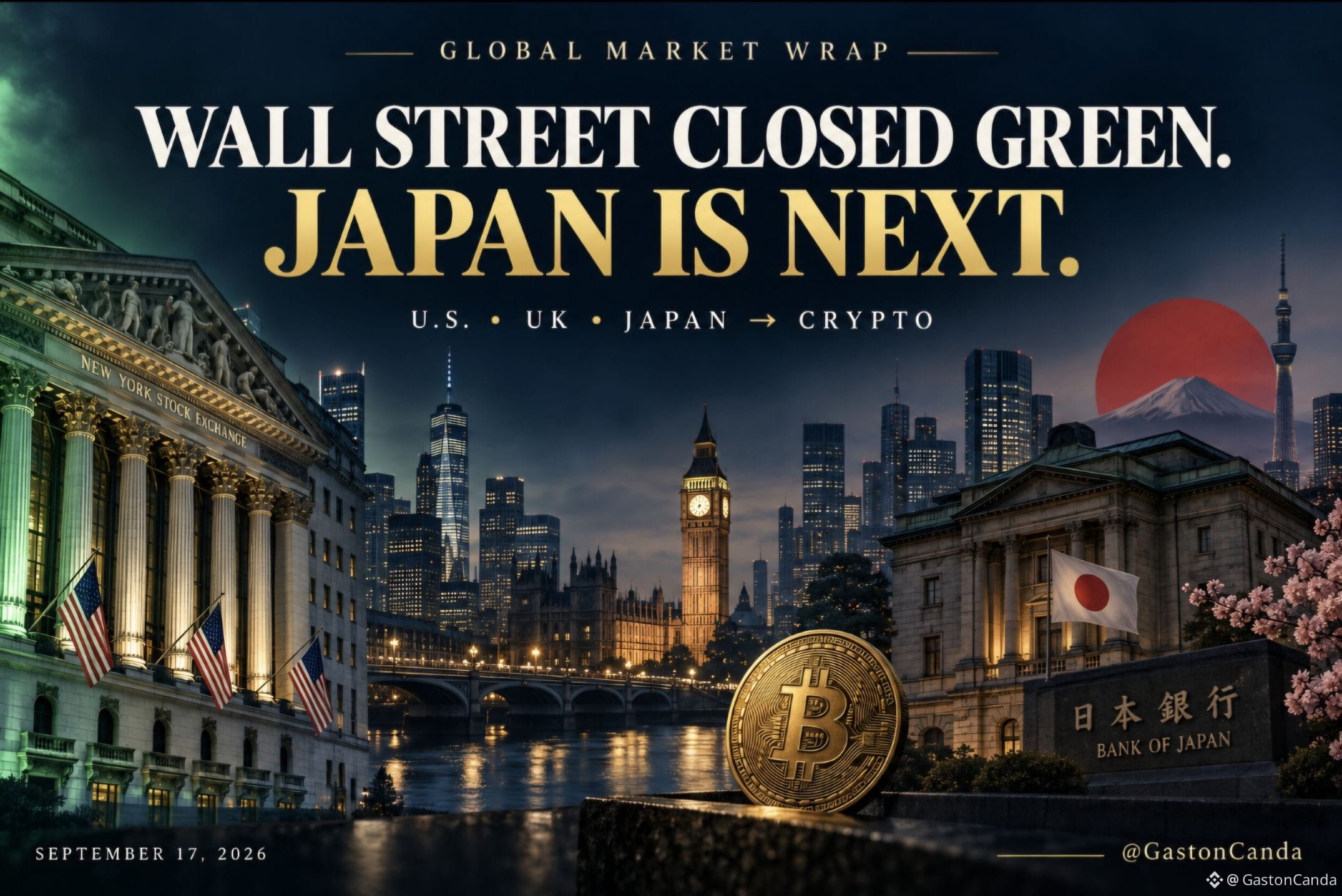
🌍 WALL STREET CLOSED GREEN. JAPAN IS NEXT.
September 17, 2026 | Market wrap
🇺🇸 U.S. stocks closed higher as lower oil prices and easing Treasury yields supported risk appetite. But yesterday’s Fed hike to 3.75%–4% remains part of the picture.
🇬🇧 The FTSE 100 gained 1.19%. The Bank of England held rates at 3.75%, with three policymakers voting for a hike.
🇯🇵 Next up: the Bank of Japan’s September 18 decision. A sharp yen rebound could pressure yen-funded leveraged positions, with potential spillovers into crypto.
₿ My take: today’s rally is encouraging, but it doesn’t prove financial conditions have improved for good.
I’m watching the U.S. 10-year yield, the dollar and whether BTC and ETH attract sustained spot demand.
Building a portfolio from a paycheck means keeping perspective—not chasing every green session.
What matters more for Bitcoin next: U.S. yields or Japan?
@GastonCanda
#bitcoin #Macro #TradFi
{spot}(SPYBUSDT)
{spot}(QQQBUSDT)
{spot}(BTCUSDT)
🌍 WALL STREET CLOSED GREEN. JAPAN IS NEXT.
September 17, 2026 | Market wrap
🇺🇸 U.S. stocks closed higher as lower oil prices and easing Treasury yields supported risk appetite. But yesterday’s Fed hike to 3.75%–4% remains part of the picture.
🇬🇧 The FTSE 100 gained 1.19%. The Bank of England held rates at 3.75%, with three policymakers voting for a hike.
🇯🇵 Next up: the Bank of Japan’s September 18 decision. A sharp yen rebound could pressure yen-funded leveraged positions, with potential spillovers into crypto.
₿ My take: today’s rally is encouraging, but it doesn’t prove financial conditions have improved for good.
I’m watching the U.S. 10-year yield, the dollar and whether BTC and ETH attract sustained spot demand.
Building a portfolio from a paycheck means keeping perspective—not chasing every green session.
What matters more for Bitcoin next: U.S. yields or Japan?
@GastonCanda
#bitcoin #Macro #TradFi
September 17, 2026 | Market wrap
🇺🇸 U.S. stocks closed higher as lower oil prices and easing Treasury yields supported risk appetite. But yesterday’s Fed hike to 3.75%–4% remains part of the picture.
🇬🇧 The FTSE 100 gained 1.19%. The Bank of England held rates at 3.75%, with three policymakers voting for a hike.
🇯🇵 Next up: the Bank of Japan’s September 18 decision. A sharp yen rebound could pressure yen-funded leveraged positions, with potential spillovers into crypto.
₿ My take: today’s rally is encouraging, but it doesn’t prove financial conditions have improved for good.
I’m watching the U.S. 10-year yield, the dollar and whether BTC and ETH attract sustained spot demand.
Building a portfolio from a paycheck means keeping perspective—not chasing every green session.
What matters more for Bitcoin next: U.S. yields or Japan?
@GastonCanda
#bitcoin #Macro #TradFi
1
1.3k
·
--
Article
Wall Street Meets Blockchain: What Tokenization Could Change for Investors🏛️ Wall Street is preparing for longer trading hours. Tokenization could change what happens behind every trade.
Imagine finishing your shift and accessing investments through markets that better fit your schedule.
For someone building a portfolio from a regular paycheck, that future is easy to relate to.
Two developments are bringing it closer.
🔎 What’s happening?
The SEC scheduled a September 17 roundtable to examine preparations for 24-hour trading in U.S. equities, including market readiness, operational resilience and the implications of longer trading hours. "Source: SEC" (https://www.sec.gov/newsroom/meetings-events/sunshine-act-notice-roundtable-preparations-24-hour-trading-091726)
Meanwhile, DTCC has already moved beyond planning: it reported transactions using DTC-tokenized securities on July 15, ahead of a planned October 2026 service launch. Its model allows securities held at DTC to move between traditional and tokenized forms. "Source: DTCC" (https://www.dtcc.com/press-releases/2026/dtcc-turns-tokenization-into-reality)
These are distinct developments, but together they point toward a more connected financial system.
⚙️ Why tokenization matters
Trading hours determine WHEN you can trade.
Tokenization changes how an asset can be represented and transferred.
DTCC says its service is designed to preserve the ownership rights, entitlements and investor protections of the underlying assets. The initial framework covers eligible securities, including Russell 1000 stocks, major index ETFs and U.S. Treasuries. "Source: DTCC" (https://www.dtcc.com/news/2026/may/04/dtcc-advances-development-of-new-tokenization-service)
That distinction matters: a tokenized security’s legal structure determines what you actually own. A token that tracks a stock’s price should never automatically be treated as equivalent to owning the stock.
🌐 Why this matters for crypto
My view: one of blockchain’s most consequential use cases could be helping traditional assets move through financial markets more efficiently.
Potential benefits include more flexible collateral transfers, better connectivity between platforms and fewer constraints on when assets can move.
But adoption does not automatically translate into higher prices for every blockchain token. Investors still need to ask where activity happens, who earns fees and whether a token captures any of that value.
⚠️ More access brings new challenges
Longer trading hours do not create liquidity by themselves. Overnight markets can have thinner order books, wider spreads and greater slippage.
And 24-hour trading does not necessarily mean 24/7 trading. Buying any U.S. stock on a Sunday at 3 a.m. remains a possible future scenario, not a conclusion we can draw from this roundtable.
Tokenization also leaves practical questions: custody, cybersecurity, settlement arrangements and how investor rights are enforced.
📌 What I’m watching next
• Whether DTCC delivers its planned October launch.
• Which assets and networks attract sustained usage.
• Whether overnight liquidity supports reliable execution.
• How much access reaches ordinary investors.
As someone building wealth from a paycheck, I want more flexibility and a clear understanding of what I own.
A market that stays open longer should give us more choice—not make us feel we need to trade constantly.
Would you use tokenized stocks and ETFs alongside crypto, or do you prefer keeping those investments separate?
@GastonCanda
#Tokenization #TradFi #RWA
Wall Street Meets Blockchain: What Tokenization Could Change for Investors
🏛️ Wall Street is preparing for longer trading hours. Tokenization could change what happens behind every trade.
Imagine finishing your shift and accessing investments through markets that better fit your schedule.
For someone building a portfolio from a regular paycheck, that future is easy to relate to.
Two developments are bringing it closer.
🔎 What’s happening?
The SEC scheduled a September 17 roundtable to examine preparations for 24-hour trading in U.S. equities, including market readiness, operational resilience and the implications of longer trading hours. "Source: SEC" (https://www.sec.gov/newsroom/meetings-events/sunshine-act-notice-roundtable-preparations-24-hour-trading-091726)
Meanwhile, DTCC has already moved beyond planning: it reported transactions using DTC-tokenized securities on July 15, ahead of a planned October 2026 service launch. Its model allows securities held at DTC to move between traditional and tokenized forms. "Source: DTCC" (https://www.dtcc.com/press-releases/2026/dtcc-turns-tokenization-into-reality)
These are distinct developments, but together they point toward a more connected financial system.
⚙️ Why tokenization matters
Trading hours determine WHEN you can trade.
Tokenization changes how an asset can be represented and transferred.
DTCC says its service is designed to preserve the ownership rights, entitlements and investor protections of the underlying assets. The initial framework covers eligible securities, including Russell 1000 stocks, major index ETFs and U.S. Treasuries. "Source: DTCC" (https://www.dtcc.com/news/2026/may/04/dtcc-advances-development-of-new-tokenization-service)
That distinction matters: a tokenized security’s legal structure determines what you actually own. A token that tracks a stock’s price should never automatically be treated as equivalent to owning the stock.
🌐 Why this matters for crypto
My view: one of blockchain’s most consequential use cases could be helping traditional assets move through financial markets more efficiently.
Potential benefits include more flexible collateral transfers, better connectivity between platforms and fewer constraints on when assets can move.
But adoption does not automatically translate into higher prices for every blockchain token. Investors still need to ask where activity happens, who earns fees and whether a token captures any of that value.
⚠️ More access brings new challenges
Longer trading hours do not create liquidity by themselves. Overnight markets can have thinner order books, wider spreads and greater slippage.
And 24-hour trading does not necessarily mean 24/7 trading. Buying any U.S. stock on a Sunday at 3 a.m. remains a possible future scenario, not a conclusion we can draw from this roundtable.
Tokenization also leaves practical questions: custody, cybersecurity, settlement arrangements and how investor rights are enforced.
📌 What I’m watching next
• Whether DTCC delivers its planned October launch.
• Which assets and networks attract sustained usage.
• Whether overnight liquidity supports reliable execution.
• How much access reaches ordinary investors.
As someone building wealth from a paycheck, I want more flexibility and a clear understanding of what I own.
A market that stays open longer should give us more choice—not make us feel we need to trade constantly.
Would you use tokenized stocks and ETFs alongside crypto, or do you prefer keeping those investments separate?
@GastonCanda
#Tokenization #TradFi #RWA
Imagine finishing your shift and accessing investments through markets that better fit your schedule.
For someone building a portfolio from a regular paycheck, that future is easy to relate to.
Two developments are bringing it closer.
🔎 What’s happening?
The SEC scheduled a September 17 roundtable to examine preparations for 24-hour trading in U.S. equities, including market readiness, operational resilience and the implications of longer trading hours. "Source: SEC" (https://www.sec.gov/newsroom/meetings-events/sunshine-act-notice-roundtable-preparations-24-hour-trading-091726)
Meanwhile, DTCC has already moved beyond planning: it reported transactions using DTC-tokenized securities on July 15, ahead of a planned October 2026 service launch. Its model allows securities held at DTC to move between traditional and tokenized forms. "Source: DTCC" (https://www.dtcc.com/press-releases/2026/dtcc-turns-tokenization-into-reality)
These are distinct developments, but together they point toward a more connected financial system.
⚙️ Why tokenization matters
Trading hours determine WHEN you can trade.
Tokenization changes how an asset can be represented and transferred.
DTCC says its service is designed to preserve the ownership rights, entitlements and investor protections of the underlying assets. The initial framework covers eligible securities, including Russell 1000 stocks, major index ETFs and U.S. Treasuries. "Source: DTCC" (https://www.dtcc.com/news/2026/may/04/dtcc-advances-development-of-new-tokenization-service)
That distinction matters: a tokenized security’s legal structure determines what you actually own. A token that tracks a stock’s price should never automatically be treated as equivalent to owning the stock.
🌐 Why this matters for crypto
My view: one of blockchain’s most consequential use cases could be helping traditional assets move through financial markets more efficiently.
Potential benefits include more flexible collateral transfers, better connectivity between platforms and fewer constraints on when assets can move.
But adoption does not automatically translate into higher prices for every blockchain token. Investors still need to ask where activity happens, who earns fees and whether a token captures any of that value.
⚠️ More access brings new challenges
Longer trading hours do not create liquidity by themselves. Overnight markets can have thinner order books, wider spreads and greater slippage.
And 24-hour trading does not necessarily mean 24/7 trading. Buying any U.S. stock on a Sunday at 3 a.m. remains a possible future scenario, not a conclusion we can draw from this roundtable.
Tokenization also leaves practical questions: custody, cybersecurity, settlement arrangements and how investor rights are enforced.
📌 What I’m watching next
• Whether DTCC delivers its planned October launch.
• Which assets and networks attract sustained usage.
• Whether overnight liquidity supports reliable execution.
• How much access reaches ordinary investors.
As someone building wealth from a paycheck, I want more flexibility and a clear understanding of what I own.
A market that stays open longer should give us more choice—not make us feel we need to trade constantly.
Would you use tokenized stocks and ETFs alongside crypto, or do you prefer keeping those investments separate?
@GastonCanda
#Tokenization #TradFi #RWA
1
1.8k
Log in to explore more content
Join global crypto users on Binance Square
⚡️ Get latest and useful information about crypto.
💬 Trusted by the world’s largest crypto exchange.
👍 Discover real insights from verified creators.
Email / Phone number
Trending Topics
AIStocksWhatNext
606,285 views
4,554 Discussing
Share & Win Traffic Reward in our Trending Hashtag Campaign
✨Topic: What Other Investment Opportunities Remain as AI Stocks Keep Rising?
👉How to Join:
Publish a short post or article with hashtag #AIStocksWhatNext
Share whether you’re bullish or bearish, and post your AI stock holdings or trade — using the trade widget may improve your eligibility.
You can also strengthen your post by sharing data or charts, and avoiding AI-generated images.
✍️Create content based on the below angles:
- Nvidia says chip sales will double next year, and top AI companies keep hitting record revenue, the compute spend behind it is just as staggering. Is AI demand really taking off? And how long can it last? AI stocks are up across the board. Is this a real breakout, or just a short-term bounce?
- Industry leaders are calling to slow down AI development, while Trump plans to build an “AI Force”, claiming AI could account for 25% of U.S. GDP in the future. Whose side are you on? Will state-level backing be a long-term win for AI stocks?
- Are you buying AI stocks? Share your AI-related trade/holdings with our trade sharing widget.
⏰Campaign Period:
- 2026-09-22 7:00 - 2026-09-24 4:00 UTC
🎁Reward:
- Qualified posts that comply with the above guidelines and contain more than 100 words will be reviewed and may receive a random traffic boost of 500 to 3,000 views. You will receive a notification from your feed secretary if your post is selected.
- Get a chance to have your article featured on Binance Square Official
Need ideas for your post? Visit the topic page #AIStocksWhatNext or the Square Guide on How to Post for Better Reach.
Binance Square Official
·464 Likes
·1.2M views
21SharesLaunchesEuropesFirstZcashETP
5,220 views
234 Discussing
CardanoJoinsX402PaymentStandard
4,213 views
196 Discussing