

#bitcoin
bitcoin
338.8M views
766,377 Discussing
Hot
Latest

·
--
Bearish
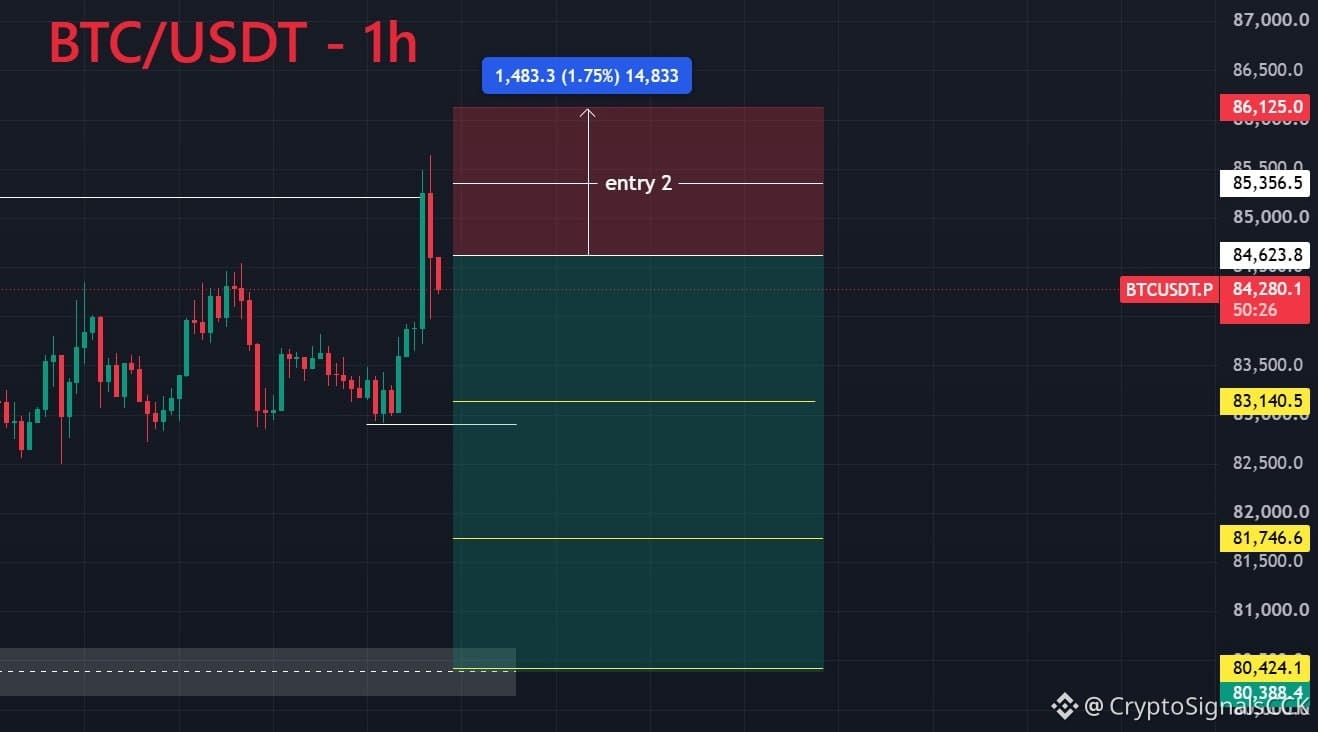
𝗕𝗶𝘁𝗰𝗼𝗶𝗻 𝗦𝗛𝗢𝗥𝗧 𝘁𝗼 𝟴𝟭𝗸 𝗳𝗶𝗻𝗮𝗹𝗹𝘆 𝗵𝗲𝗿𝗲. 𝗧𝗵𝗲 𝘄𝗮𝗶𝘁 𝗶𝘀 𝗼𝘃𝗲𝗿. 🔥
• TP1 83140
• TP2 81746
• TP3 80424
• SL 86125 (-1.7%)
$BTC has retested the swing high around 85K, while the correction plan toward 81K remains valid.
This BTCUSDT SHORT SCALP setup has solid potential to reach at least 1:3 RR if the move plays out clean.
#btcshort #btcupdates #bitcoin #CryptoSignalsCCK
𝗕𝗶𝘁𝗰𝗼𝗶𝗻 𝗦𝗛𝗢𝗥𝗧 𝘁𝗼 𝟴𝟭𝗸 𝗳𝗶𝗻𝗮𝗹𝗹𝘆 𝗵𝗲𝗿𝗲. 𝗧𝗵𝗲 𝘄𝗮𝗶𝘁 𝗶𝘀 𝗼𝘃𝗲𝗿. 🔥
• TP1 83140
• TP2 81746
• TP3 80424
• SL 86125 (-1.7%)
$BTC has retested the swing high around 85K, while the correction plan toward 81K remains valid.
This BTCUSDT SHORT SCALP setup has solid potential to reach at least 1:3 RR if the move plays out clean.
#btcshort #btcupdates #bitcoin #CryptoSignalsCCK
• TP1 83140
• TP2 81746
• TP3 80424
• SL 86125 (-1.7%)
$BTC has retested the swing high around 85K, while the correction plan toward 81K remains valid.
This BTCUSDT SHORT SCALP setup has solid potential to reach at least 1:3 RR if the move plays out clean.
#btcshort #btcupdates #bitcoin #CryptoSignalsCCK
AngelOfCrypto_-:
nice
4
4
2.9k


·
--
Bullish
$BTC
{spot}(BTCUSDT)
Open a long position on Bitcoin now, mate! Billionaire Michael Saylor reckons Bitcoin is enterin’ ‘hyper-growth mode’, sayin’: 'We’re in the gold rush for BTC
'Saylor reckons if Bitcoin captures just 10% of the world’s $900 trillion ($1.2k tn) worth of assets, its market cap could hit a whopping £90 trillion
$ETH
{spot}(ETHUSDT)
Imagine you opened a long trade today, and the price of Bitcoin shot right up to $1,200,000. Your profits would go properly sky-high with that sort of mental growth
The opportunity of a lifetime is right in front of you—buyin’ in now means gettin' stuck into the biggest financial shift of modern times. Don't miss out on the digital gold rush, innit!
$SOL
{spot}(SOLUSDT)
#AltcoinSeasonIndexHoldsAbove60For5Days #Saylor #bitcoin
$BTC
Open a long position on Bitcoin now, mate! Billionaire Michael Saylor reckons Bitcoin is enterin’ ‘hyper-growth mode’, sayin’: 'We’re in the gold rush for BTC
'Saylor reckons if Bitcoin captures just 10% of the world’s $900 trillion ($1.2k tn) worth of assets, its market cap could hit a whopping £90 trillion
$ETH
Imagine you opened a long trade today, and the price of Bitcoin shot right up to $1,200,000. Your profits would go properly sky-high with that sort of mental growth
The opportunity of a lifetime is right in front of you—buyin’ in now means gettin' stuck into the biggest financial shift of modern times. Don't miss out on the digital gold rush, innit!
$SOL
#AltcoinSeasonIndexHoldsAbove60For5Days #Saylor #bitcoin
Open a long position on Bitcoin now, mate! Billionaire Michael Saylor reckons Bitcoin is enterin’ ‘hyper-growth mode’, sayin’: 'We’re in the gold rush for BTC
'Saylor reckons if Bitcoin captures just 10% of the world’s $900 trillion ($1.2k tn) worth of assets, its market cap could hit a whopping £90 trillion
$ETH
Imagine you opened a long trade today, and the price of Bitcoin shot right up to $1,200,000. Your profits would go properly sky-high with that sort of mental growth
The opportunity of a lifetime is right in front of you—buyin’ in now means gettin' stuck into the biggest financial shift of modern times. Don't miss out on the digital gold rush, innit!
$SOL
#AltcoinSeasonIndexHoldsAbove60For5Days #Saylor #bitcoin

فن السيوله:
نعم صحيح جدا ولكن لازم تأخذه له بمعنى طويل المدى اما متوسط المدى راح نشهد تفاصيل التي تسوي عمليه ذبذبه
1
2
944

·
--
#altcoinseasonindexholdsabove60for5days
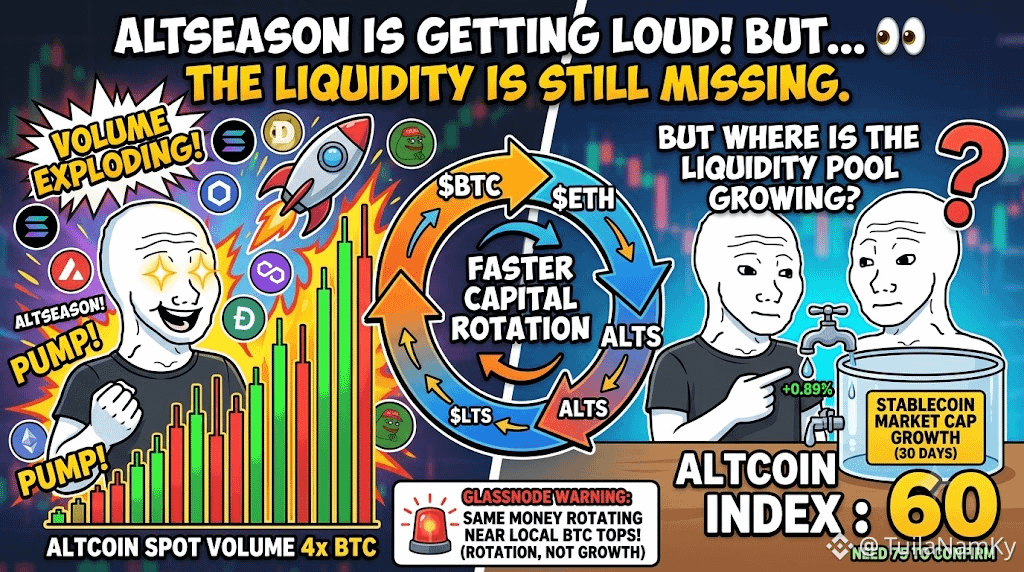
🚨 Altseason Is Getting Loud. But The Number That Matters Is Still Missing. 👀
The Altcoin Season Index has stayed above 60 for 5 straight days.
Altcoins are waking up.
But calling this “altseason” might be a little early. 😂
Here are the numbers:
📊 60 — current Altcoin Season Index
🎯 75 — level needed to confirm altseason
🔥 ~4x — altcoin spot volume vs. Bitcoin
💵 +0.89% — stablecoin market cap growth over 30 days
And here's the weird part.
Altcoin trading activity is exploding…
But the stablecoin pool isn't growing nearly as fast.
So where is the money coming from?
👀 Plot twist:
4x volume does NOT mean 4x new capital.
It can simply mean the same liquidity is rotating faster — from BTC into ETH, then into larger alts, then further down the risk curve.
And Glassnode has another warning:
Similar bursts of altcoin risk appetite have appeared around local BTC tops before.
So this might be the beginning of altseason.
Or it might simply be the market getting much more aggressive with the same pile of money.
🧠 Square Insight:
Volume tells you where traders are playing. Liquidity tells you how much fuel the game has.
Are we watching the start of altseason — or just a faster rotation?
#AltcoinSeason #CryptoMarket #Bitcoin $BTC
{future}(BTCUSDT)
$ETH
{future}(ETHUSDT)
#altcoinseasonindexholdsabove60for5days
🚨 Altseason Is Getting Loud. But The Number That Matters Is Still Missing. 👀
The Altcoin Season Index has stayed above 60 for 5 straight days.
Altcoins are waking up.
But calling this “altseason” might be a little early. 😂
Here are the numbers:
📊 60 — current Altcoin Season Index
🎯 75 — level needed to confirm altseason
🔥 ~4x — altcoin spot volume vs. Bitcoin
💵 +0.89% — stablecoin market cap growth over 30 days
And here's the weird part.
Altcoin trading activity is exploding…
But the stablecoin pool isn't growing nearly as fast.
So where is the money coming from?
👀 Plot twist:
4x volume does NOT mean 4x new capital.
It can simply mean the same liquidity is rotating faster — from BTC into ETH, then into larger alts, then further down the risk curve.
And Glassnode has another warning:
Similar bursts of altcoin risk appetite have appeared around local BTC tops before.
So this might be the beginning of altseason.
Or it might simply be the market getting much more aggressive with the same pile of money.
🧠 Square Insight:
Volume tells you where traders are playing. Liquidity tells you how much fuel the game has.
Are we watching the start of altseason — or just a faster rotation?
#AltcoinSeason #CryptoMarket #Bitcoin $BTC
$ETH
🚨 Altseason Is Getting Loud. But The Number That Matters Is Still Missing. 👀
The Altcoin Season Index has stayed above 60 for 5 straight days.
Altcoins are waking up.
But calling this “altseason” might be a little early. 😂
Here are the numbers:
📊 60 — current Altcoin Season Index
🎯 75 — level needed to confirm altseason
🔥 ~4x — altcoin spot volume vs. Bitcoin
💵 +0.89% — stablecoin market cap growth over 30 days
And here's the weird part.
Altcoin trading activity is exploding…
But the stablecoin pool isn't growing nearly as fast.
So where is the money coming from?
👀 Plot twist:
4x volume does NOT mean 4x new capital.
It can simply mean the same liquidity is rotating faster — from BTC into ETH, then into larger alts, then further down the risk curve.
And Glassnode has another warning:
Similar bursts of altcoin risk appetite have appeared around local BTC tops before.
So this might be the beginning of altseason.
Or it might simply be the market getting much more aggressive with the same pile of money.
🧠 Square Insight:
Volume tells you where traders are playing. Liquidity tells you how much fuel the game has.
Are we watching the start of altseason — or just a faster rotation?
#AltcoinSeason #CryptoMarket #Bitcoin $BTC
$ETH
1
2.7k



·
--
🚨 BTC HAS A STRANGE SIGNAL RIGHT NOW
Bitcoin is facing a major split between price action and institutional demand.
U.S. spot Bitcoin ETFs pulled in about $2.4B last week, their strongest weekly inflow since October 2025. That pushed their 2026 net flows back into positive territory.
But BTC has since pulled back from last week’s high, while rising Treasury yields are adding pressure to risk assets.
So the market is sending two different messages:
Institutional money is flowing in.
Price momentum is cooling.
That makes the next reaction especially important.
🚨 BTC UPDATE: Record ETF demand meets fresh macro pressure. Click the $BTC setup below 🫵🏻 to review the market structure and watch the next move.
$BTC
{future}(BTCUSDT)
.
.
#BTC #Bitcoin #Write2Earn
🚨 BTC HAS A STRANGE SIGNAL RIGHT NOW
Bitcoin is facing a major split between price action and institutional demand.
U.S. spot Bitcoin ETFs pulled in about $2.4B last week, their strongest weekly inflow since October 2025. That pushed their 2026 net flows back into positive territory.
But BTC has since pulled back from last week’s high, while rising Treasury yields are adding pressure to risk assets.
So the market is sending two different messages:
Institutional money is flowing in.
Price momentum is cooling.
That makes the next reaction especially important.
🚨 BTC UPDATE: Record ETF demand meets fresh macro pressure. Click the $BTC setup below 🫵🏻 to review the market structure and watch the next move.
$BTC
.
.
#BTC #Bitcoin #Write2Earn
Bitcoin is facing a major split between price action and institutional demand.
U.S. spot Bitcoin ETFs pulled in about $2.4B last week, their strongest weekly inflow since October 2025. That pushed their 2026 net flows back into positive territory.
But BTC has since pulled back from last week’s high, while rising Treasury yields are adding pressure to risk assets.
So the market is sending two different messages:
Institutional money is flowing in.
Price momentum is cooling.
That makes the next reaction especially important.
🚨 BTC UPDATE: Record ETF demand meets fresh macro pressure. Click the $BTC setup below 🫵🏻 to review the market structure and watch the next move.
$BTC
.
.
#BTC #Bitcoin #Write2Earn

190

$BTC led a market-wide liquidity sweep that wiped out 74,249 traders for $261 million in 24 hours.
Retail leverage got chopped from both sides, with $127 million in longs and $134 million in shorts erased.
The real damage occurred on the short side for Bitcoin, where smart money ran stops for $58.63 million compared to $24.00 million in longs.
Over on HTX, a single BTC-USDT order absorbed a $6.91 million liquidation in an instant imbalance fill.
Ethereum traders fared no better, losing $28.88 million in longs and $25.54 million in shorts as liquidity cleared out.
How much more equity are you willing to sacrifice before you stop placing market orders into obvious trap zones?
#bitcoin #crypto #Liquidations
$BTC led a market-wide liquidity sweep that wiped out 74,249 traders for $261 million in 24 hours.
Retail leverage got chopped from both sides, with $127 million in longs and $134 million in shorts erased.
The real damage occurred on the short side for Bitcoin, where smart money ran stops for $58.63 million compared to $24.00 million in longs.
Over on HTX, a single BTC-USDT order absorbed a $6.91 million liquidation in an instant imbalance fill.
Ethereum traders fared no better, losing $28.88 million in longs and $25.54 million in shorts as liquidity cleared out.
How much more equity are you willing to sacrifice before you stop placing market orders into obvious trap zones?
#bitcoin #crypto #Liquidations
Retail leverage got chopped from both sides, with $127 million in longs and $134 million in shorts erased.
The real damage occurred on the short side for Bitcoin, where smart money ran stops for $58.63 million compared to $24.00 million in longs.
Over on HTX, a single BTC-USDT order absorbed a $6.91 million liquidation in an instant imbalance fill.
Ethereum traders fared no better, losing $28.88 million in longs and $25.54 million in shorts as liquidity cleared out.
How much more equity are you willing to sacrifice before you stop placing market orders into obvious trap zones?
#bitcoin #crypto #Liquidations
65


Article
Bitcoin Holds Near $83K as Markets Digest Yields, ETF Flows & Key Data AheadThe crypto market is consolidating as September closes, with Bitcoin trading around the $83,000–$84,000 zone after briefly pushing toward $87,000 earlier in the month. Bulls remain in control of the broader structure, but the rally is showing some cracks amid rising U.S. Treasury yields and cooler institutional flows.
Market Snapshot (as of Sept 30, 2026)
Bitcoin $BTC : Hovering near $83K–$84K. Support is firm in the low $80Ks; a clean break above $85K would open the door for another leg higher. Analysts note the bull market is intact, though profit-taking has picked up and spot demand has cooled slightly.
{spot}(BTCUSDT)
Ethereum $ETH : Trading around $2,650–$2,700. Spot ETH ETFs just ended a seven-day inflow streak with a small outflow, while Bitcoin ETFs continued adding capital (though at a slower pace).
{spot}(ETHUSDT)
Broader market: Total crypto market cap sits near $3 trillion. Altcoins are mixed — Aave led DeFi gains on token-burn speculation, while several majors held steady despite macro headwinds.
What’s Driving Price Action
Elevated bond yields and a stronger dollar have kept risk appetite in check. At the same time, U.S. spot Bitcoin ETFs still posted positive (if reduced) inflows, and corporate treasuries continue accumulating. Strategy and other public companies remain active buyers, reinforcing the institutional bid that powered September’s gains.
On the security front, Bitget is still dealing with the fallout from a major ~$388 million breach. Withdrawals have resumed, but the incident is a reminder that exchange security remains a key risk factor for the industry.
What Traders Are Watching Next
U.S. PCE inflation data — the key report that could shift Fed rate expectations.
ETF flow trends — whether Bitcoin funds keep attracting capital and if Ethereum inflows resume.
$82K–$80K support zone on BTC — a clean hold keeps the higher-timeframe uptrend healthy heading into “Uptober.”
Volatility is likely to stay elevated as markets price in macro data and year-end positioning. Liquidity conditions and institutional demand still look constructive overall, but the easy part of the September rally may be behind us.
#Bitcoin #Ethereum #BTC #ETH
Bitcoin Holds Near $83K as Markets Digest Yields, ETF Flows & Key Data Ahead
The crypto market is consolidating as September closes, with Bitcoin trading around the $83,000–$84,000 zone after briefly pushing toward $87,000 earlier in the month. Bulls remain in control of the broader structure, but the rally is showing some cracks amid rising U.S. Treasury yields and cooler institutional flows.
Market Snapshot (as of Sept 30, 2026)
Bitcoin $BTC : Hovering near $83K–$84K. Support is firm in the low $80Ks; a clean break above $85K would open the door for another leg higher. Analysts note the bull market is intact, though profit-taking has picked up and spot demand has cooled slightly.
Ethereum $ETH : Trading around $2,650–$2,700. Spot ETH ETFs just ended a seven-day inflow streak with a small outflow, while Bitcoin ETFs continued adding capital (though at a slower pace).
Broader market: Total crypto market cap sits near $3 trillion. Altcoins are mixed — Aave led DeFi gains on token-burn speculation, while several majors held steady despite macro headwinds.
What’s Driving Price Action
Elevated bond yields and a stronger dollar have kept risk appetite in check. At the same time, U.S. spot Bitcoin ETFs still posted positive (if reduced) inflows, and corporate treasuries continue accumulating. Strategy and other public companies remain active buyers, reinforcing the institutional bid that powered September’s gains.
On the security front, Bitget is still dealing with the fallout from a major ~$388 million breach. Withdrawals have resumed, but the incident is a reminder that exchange security remains a key risk factor for the industry.
What Traders Are Watching Next
U.S. PCE inflation data — the key report that could shift Fed rate expectations.
ETF flow trends — whether Bitcoin funds keep attracting capital and if Ethereum inflows resume.
$82K–$80K support zone on BTC — a clean hold keeps the higher-timeframe uptrend healthy heading into “Uptober.”
Volatility is likely to stay elevated as markets price in macro data and year-end positioning. Liquidity conditions and institutional demand still look constructive overall, but the easy part of the September rally may be behind us.
#Bitcoin #Ethereum #BTC #ETH
Market Snapshot (as of Sept 30, 2026)
Bitcoin $BTC : Hovering near $83K–$84K. Support is firm in the low $80Ks; a clean break above $85K would open the door for another leg higher. Analysts note the bull market is intact, though profit-taking has picked up and spot demand has cooled slightly.
Ethereum $ETH : Trading around $2,650–$2,700. Spot ETH ETFs just ended a seven-day inflow streak with a small outflow, while Bitcoin ETFs continued adding capital (though at a slower pace).
Broader market: Total crypto market cap sits near $3 trillion. Altcoins are mixed — Aave led DeFi gains on token-burn speculation, while several majors held steady despite macro headwinds.
What’s Driving Price Action
Elevated bond yields and a stronger dollar have kept risk appetite in check. At the same time, U.S. spot Bitcoin ETFs still posted positive (if reduced) inflows, and corporate treasuries continue accumulating. Strategy and other public companies remain active buyers, reinforcing the institutional bid that powered September’s gains.
On the security front, Bitget is still dealing with the fallout from a major ~$388 million breach. Withdrawals have resumed, but the incident is a reminder that exchange security remains a key risk factor for the industry.
What Traders Are Watching Next
U.S. PCE inflation data — the key report that could shift Fed rate expectations.
ETF flow trends — whether Bitcoin funds keep attracting capital and if Ethereum inflows resume.
$82K–$80K support zone on BTC — a clean hold keeps the higher-timeframe uptrend healthy heading into “Uptober.”
Volatility is likely to stay elevated as markets price in macro data and year-end positioning. Liquidity conditions and institutional demand still look constructive overall, but the easy part of the September rally may be behind us.
#Bitcoin #Ethereum #BTC #ETH
1
35

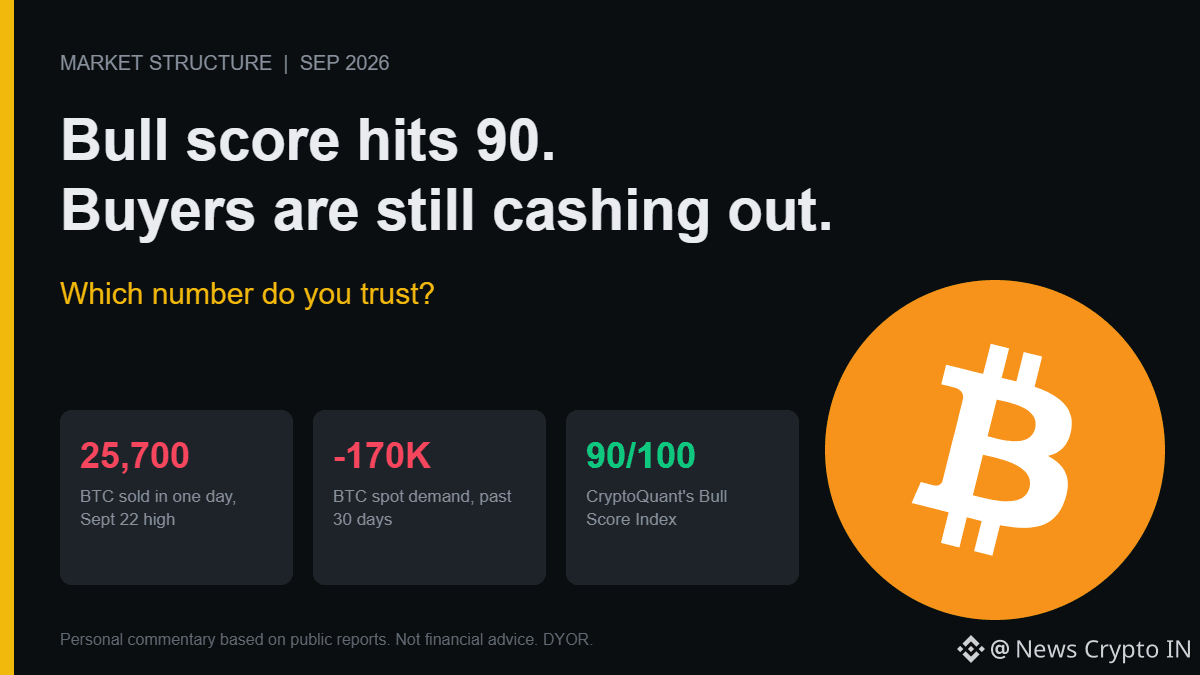
CryptoQuant's Bull Score Index for $BTC sits at 90 out of 100. That number alone would make you think this rally has room to run. Meanwhile, traders locked in 25,700 BTC of profit on Sept 22, the largest single-day realization this year, and recent buyers are sitting on 33% average unrealized profit, the widest cushion since December 2024.
Both facts are true at once, and that's exactly the problem with headline scores.
The Bull Score looks backward: BTC did close above its 365-day moving average, which historically confirms a new bull phase. But two other CryptoQuant metrics look forward, and they're flashing yellow. Spot demand contracted by about 170,000 BTC over the past 30 days. Futures demand growth, the speculative fuel for fast moves, collapsed 90% in 15 days.
BTC already gave back some of last week's gain, sliding from an eight-month high near $87,400 to about $83,300. That's not a crash. It's what happens when profit-taking outpaces fresh buying.
CryptoQuant's own read: "Without fresh demand, rallies struggle to extend." A score of 90 tells you the structure has been bullish. It doesn't tell you who's left to buy the next leg up.
If the people who bought this dip are already up 33% and start taking profit too, where does the next wave of demand come from?
#Bitcoin #CryptoQuant
CryptoQuant's Bull Score Index for $BTC sits at 90 out of 100. That number alone would make you think this rally has room to run. Meanwhile, traders locked in 25,700 BTC of profit on Sept 22, the largest single-day realization this year, and recent buyers are sitting on 33% average unrealized profit, the widest cushion since December 2024.
Both facts are true at once, and that's exactly the problem with headline scores.
The Bull Score looks backward: BTC did close above its 365-day moving average, which historically confirms a new bull phase. But two other CryptoQuant metrics look forward, and they're flashing yellow. Spot demand contracted by about 170,000 BTC over the past 30 days. Futures demand growth, the speculative fuel for fast moves, collapsed 90% in 15 days.
BTC already gave back some of last week's gain, sliding from an eight-month high near $87,400 to about $83,300. That's not a crash. It's what happens when profit-taking outpaces fresh buying.
CryptoQuant's own read: "Without fresh demand, rallies struggle to extend." A score of 90 tells you the structure has been bullish. It doesn't tell you who's left to buy the next leg up.
If the people who bought this dip are already up 33% and start taking profit too, where does the next wave of demand come from?
#Bitcoin #CryptoQuant
Both facts are true at once, and that's exactly the problem with headline scores.
The Bull Score looks backward: BTC did close above its 365-day moving average, which historically confirms a new bull phase. But two other CryptoQuant metrics look forward, and they're flashing yellow. Spot demand contracted by about 170,000 BTC over the past 30 days. Futures demand growth, the speculative fuel for fast moves, collapsed 90% in 15 days.
BTC already gave back some of last week's gain, sliding from an eight-month high near $87,400 to about $83,300. That's not a crash. It's what happens when profit-taking outpaces fresh buying.
CryptoQuant's own read: "Without fresh demand, rallies struggle to extend." A score of 90 tells you the structure has been bullish. It doesn't tell you who's left to buy the next leg up.
If the people who bought this dip are already up 33% and start taking profit too, where does the next wave of demand come from?
#Bitcoin #CryptoQuant
550

Article
Wall Street Goes All-In on Crypto: Citi, Goldman & ETF Boom Signal a New Era 🚀Bitcoin$BTC is consolidating around $83,000–$83,500 after testing highs near $87K earlier this month, but the real story isn’t the price action — it’s the flood of traditional finance money and infrastructure flowing into crypto.
{spot}(BTCUSDT)
Big Bank Moves This Week
Citi × Coinbase: The banking giant expanded its partnership so institutional clients can accept stablecoin payments at checkout via Spring by Citi. Merchants never touch crypto — Coinbase handles the rails and converts to fiat automatically. On the flip side, Coinbase Virtual Accounts (powered by Citi) now auto-convert incoming fiat to stablecoins and earn ~3.75% rewards. This is pure TradFi-DeFi plumbing for over 150 million potential stablecoin users.
Decrypt
Goldman Sachs: The bank opened its ~$100B Treasury fund (FTIXX) to institutional crypto firms through the Lynq settlement network (Avalanche-based) via tZERO — without tokenizing it. Crypto trading firms can now park cash in a classic money-market fund between trades and earn yield the traditional way.
Coindesk
$ETFT.ETF Momentum Keeps Building
{etf_us}(ETFT.ETF)
#U.S. spot Bitcoin ETFs just posted one of their strongest weeks in nearly a year with ~$2.4B inflows. Solana ETFs also set a record with $188M in a single week. And yesterday, Bitwise launched the first U.S. spot NEAR ETF (ticker: NRR) on NYSE Arca — complete with in-house staking aiming for ~5% rewards. NEAR has nearly tripled since August lows.
Meanwhile, Strategy (Michael Saylor’s firm) continues accumulating, adding another ~1,665 BTC last week to push holdings past 847,000 BTC. Corporate and institutional demand remains the quiet backbone of this market.
What It Means for Binance Square Traders
Higher Treasury yields and macro noise caused a pullback, but the infrastructure build-out is accelerating. Banks aren’t just “exploring” crypto anymore — they’re wiring their trillion-dollar networks into stablecoins and giving crypto firms direct access to traditional yield products.
This is the kind of quiet institutionalization that tends to precede the next leg up. Bitcoin holding the mid-$80Ks while TradFi builds the rails is a constructive setup.
#Bitcoin #CryptoNewss #ETFs #InstitutionalAdoption
Wall Street Goes All-In on Crypto: Citi, Goldman & ETF Boom Signal a New Era 🚀
Bitcoin$BTC is consolidating around $83,000–$83,500 after testing highs near $87K earlier this month, but the real story isn’t the price action — it’s the flood of traditional finance money and infrastructure flowing into crypto.
Big Bank Moves This Week
Citi × Coinbase: The banking giant expanded its partnership so institutional clients can accept stablecoin payments at checkout via Spring by Citi. Merchants never touch crypto — Coinbase handles the rails and converts to fiat automatically. On the flip side, Coinbase Virtual Accounts (powered by Citi) now auto-convert incoming fiat to stablecoins and earn ~3.75% rewards. This is pure TradFi-DeFi plumbing for over 150 million potential stablecoin users.
Decrypt
Goldman Sachs: The bank opened its ~$100B Treasury fund (FTIXX) to institutional crypto firms through the Lynq settlement network (Avalanche-based) via tZERO — without tokenizing it. Crypto trading firms can now park cash in a classic money-market fund between trades and earn yield the traditional way.
Coindesk
$ETFT.ETF Momentum Keeps Building
#U.S. spot Bitcoin ETFs just posted one of their strongest weeks in nearly a year with ~$2.4B inflows. Solana ETFs also set a record with $188M in a single week. And yesterday, Bitwise launched the first U.S. spot NEAR ETF (ticker: NRR) on NYSE Arca — complete with in-house staking aiming for ~5% rewards. NEAR has nearly tripled since August lows.
Meanwhile, Strategy (Michael Saylor’s firm) continues accumulating, adding another ~1,665 BTC last week to push holdings past 847,000 BTC. Corporate and institutional demand remains the quiet backbone of this market.
What It Means for Binance Square Traders
Higher Treasury yields and macro noise caused a pullback, but the infrastructure build-out is accelerating. Banks aren’t just “exploring” crypto anymore — they’re wiring their trillion-dollar networks into stablecoins and giving crypto firms direct access to traditional yield products.
This is the kind of quiet institutionalization that tends to precede the next leg up. Bitcoin holding the mid-$80Ks while TradFi builds the rails is a constructive setup.
#Bitcoin #CryptoNewss #ETFs #InstitutionalAdoption
Big Bank Moves This Week
Citi × Coinbase: The banking giant expanded its partnership so institutional clients can accept stablecoin payments at checkout via Spring by Citi. Merchants never touch crypto — Coinbase handles the rails and converts to fiat automatically. On the flip side, Coinbase Virtual Accounts (powered by Citi) now auto-convert incoming fiat to stablecoins and earn ~3.75% rewards. This is pure TradFi-DeFi plumbing for over 150 million potential stablecoin users.
Decrypt
Goldman Sachs: The bank opened its ~$100B Treasury fund (FTIXX) to institutional crypto firms through the Lynq settlement network (Avalanche-based) via tZERO — without tokenizing it. Crypto trading firms can now park cash in a classic money-market fund between trades and earn yield the traditional way.
Coindesk
$ETFT.ETF Momentum Keeps Building
#U.S. spot Bitcoin ETFs just posted one of their strongest weeks in nearly a year with ~$2.4B inflows. Solana ETFs also set a record with $188M in a single week. And yesterday, Bitwise launched the first U.S. spot NEAR ETF (ticker: NRR) on NYSE Arca — complete with in-house staking aiming for ~5% rewards. NEAR has nearly tripled since August lows.
Meanwhile, Strategy (Michael Saylor’s firm) continues accumulating, adding another ~1,665 BTC last week to push holdings past 847,000 BTC. Corporate and institutional demand remains the quiet backbone of this market.
What It Means for Binance Square Traders
Higher Treasury yields and macro noise caused a pullback, but the infrastructure build-out is accelerating. Banks aren’t just “exploring” crypto anymore — they’re wiring their trillion-dollar networks into stablecoins and giving crypto firms direct access to traditional yield products.
This is the kind of quiet institutionalization that tends to precede the next leg up. Bitcoin holding the mid-$80Ks while TradFi builds the rails is a constructive setup.
#Bitcoin #CryptoNewss #ETFs #InstitutionalAdoption
BTC+1.08%
ETFTETF+0.02%
1
121

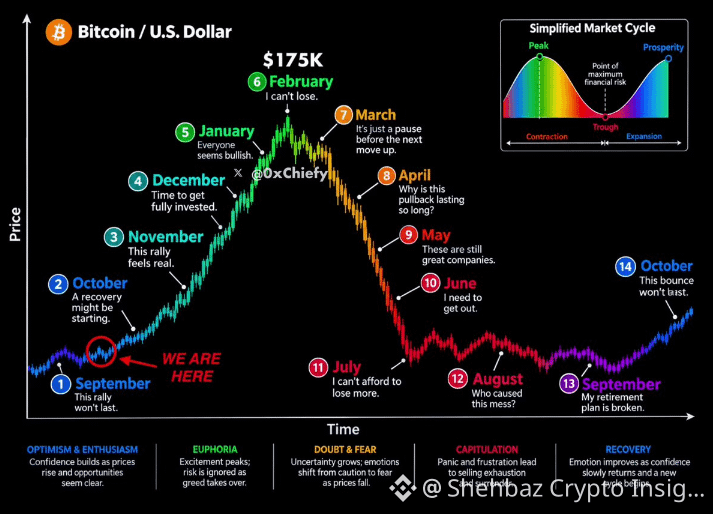
🚨 2026–2027 BULL RUN ROADMAP: WHAT COMES NEXT?
🚨 2026–2027 BULL RUN ROADMAP
Here’s the roadmap I’m watching:
📅 September → Relief Rally
📉 October → Final Dump
📈 November → Recovery
🚀 December → Euphoria
🔥 January → Altcoin Season
🏆 February → Bitcoin ATH
⚠️ March → Distribution
😰 April → Anxiety
💥 May → Capitulation
🐻 June → Bear Market
Save this chart and compare it later. 👀
I publicly predicted Bitcoin’s $17K bottom in 2022.
Then I publicly predicted the $126K top in 2025.
My next public prediction will be shared here first. 🚨
$BTC
{spot}(BTCUSDT)
Follow + turn on notifications 🔔
#Bitcoin #Crypto #BullRun
⚠️ For educational purposes only. Not financial advice. DYOR.
🚨 2026–2027 BULL RUN ROADMAP: WHAT COMES NEXT?
🚨 2026–2027 BULL RUN ROADMAP
Here’s the roadmap I’m watching:
📅 September → Relief Rally
📉 October → Final Dump
📈 November → Recovery
🚀 December → Euphoria
🔥 January → Altcoin Season
🏆 February → Bitcoin ATH
⚠️ March → Distribution
😰 April → Anxiety
💥 May → Capitulation
🐻 June → Bear Market
Save this chart and compare it later. 👀
I publicly predicted Bitcoin’s $17K bottom in 2022.
Then I publicly predicted the $126K top in 2025.
My next public prediction will be shared here first. 🚨
$BTC
Follow + turn on notifications 🔔
#Bitcoin #Crypto #BullRun
⚠️ For educational purposes only. Not financial advice. DYOR.
🚨 2026–2027 BULL RUN ROADMAP
Here’s the roadmap I’m watching:
📅 September → Relief Rally
📉 October → Final Dump
📈 November → Recovery
🚀 December → Euphoria
🔥 January → Altcoin Season
🏆 February → Bitcoin ATH
⚠️ March → Distribution
😰 April → Anxiety
💥 May → Capitulation
🐻 June → Bear Market
Save this chart and compare it later. 👀
I publicly predicted Bitcoin’s $17K bottom in 2022.
Then I publicly predicted the $126K top in 2025.
My next public prediction will be shared here first. 🚨
$BTC
Follow + turn on notifications 🔔
#Bitcoin #Crypto #BullRun
⚠️ For educational purposes only. Not financial advice. DYOR.
1
147

#CorePCE #bitcoin
🚀 Bitcoin Surpasses $85,000 Following US Inflation Data Release!
The Federal Reserve's key inflation indicator—the Core PCE index—came in lower than analysts' forecasts. This triggered an immediate market surge and a return of risk appetite among investors.
📊 Key Figures:
• Core PCE (excluding food and energy): +0.2% month-over-month (expected 0.3%) and +3% year-over-year (forecasted 3.3%).
• Headline PCE: +0.3% month-over-month, +3.4% year-over-year.
📈 Market Reaction:
• BTC jumped from $84,000 to $85,600 within just an hour of the report's release.
• Altcoins also moved into the green: $ETH +1.5%, $SOL +2.2%, $ZEC +3.6%, HYPE +1.1%.
⚠️ What Does This Mean?
Slowing inflation eases pressure on bond yields and offers hope that the Fed will refrain from further interest rate hikes at its October meeting. It is a positive signal for investors, with the crypto market responding to the news with confident growth.
{future}(ZECUSDT)
{future}(SOLUSDT)
{future}(ETHUSDT)
#CorePCE #bitcoin
🚀 Bitcoin Surpasses $85,000 Following US Inflation Data Release!
The Federal Reserve's key inflation indicator—the Core PCE index—came in lower than analysts' forecasts. This triggered an immediate market surge and a return of risk appetite among investors.
📊 Key Figures:
• Core PCE (excluding food and energy): +0.2% month-over-month (expected 0.3%) and +3% year-over-year (forecasted 3.3%).
• Headline PCE: +0.3% month-over-month, +3.4% year-over-year.
📈 Market Reaction:
• BTC jumped from $84,000 to $85,600 within just an hour of the report's release.
• Altcoins also moved into the green: $ETH +1.5%, $SOL +2.2%, $ZEC +3.6%, HYPE +1.1%.
⚠️ What Does This Mean?
Slowing inflation eases pressure on bond yields and offers hope that the Fed will refrain from further interest rate hikes at its October meeting. It is a positive signal for investors, with the crypto market responding to the news with confident growth.
🚀 Bitcoin Surpasses $85,000 Following US Inflation Data Release!
The Federal Reserve's key inflation indicator—the Core PCE index—came in lower than analysts' forecasts. This triggered an immediate market surge and a return of risk appetite among investors.
📊 Key Figures:
• Core PCE (excluding food and energy): +0.2% month-over-month (expected 0.3%) and +3% year-over-year (forecasted 3.3%).
• Headline PCE: +0.3% month-over-month, +3.4% year-over-year.
📈 Market Reaction:
• BTC jumped from $84,000 to $85,600 within just an hour of the report's release.
• Altcoins also moved into the green: $ETH +1.5%, $SOL +2.2%, $ZEC +3.6%, HYPE +1.1%.
⚠️ What Does This Mean?
Slowing inflation eases pressure on bond yields and offers hope that the Fed will refrain from further interest rate hikes at its October meeting. It is a positive signal for investors, with the crypto market responding to the news with confident growth.

96

·
--
The prediction market sector is heating up faster than anyone anticipated. Kalshi, a major player in the regulated prediction space, is reportedly in advanced talks to raise new funding at a staggering $40 billion valuation. This represents a massive 81% jump from its $22 billion valuation just four months ago, signaling explosive institutional confidence in the future of event-driven trading and decentralized finance infrastructure.
• 📈 **Valuation Surge:** From 22B to 40B in under 4 months.
• 🏛️ **Institutional Interest:** Advanced talks indicate serious capital is flowing into prediction markets.
• ⚡ **Market Momentum:** Confirms the sector is moving from niche to mainstream financial infrastructure.
This move highlights the growing convergence between traditional finance and blockchain-based prediction mechanisms. As BTC stabilizes around 83,384, the broader crypto ecosystem is seeing increased liquidity and interest in alternative DeFi narratives beyond simple token speculation. The rapid re-rating of Kalshi suggests that investors are betting on the utility of real-world data markets, potentially driving further adoption of on-chain verification and settlement layers.
Do you think prediction markets will become the next major pillar of DeFi? Drop your thoughts below! 👇
#BinanceSquare #CryptoNews #Bitcoin
The prediction market sector is heating up faster than anyone anticipated. Kalshi, a major player in the regulated prediction space, is reportedly in advanced talks to raise new funding at a staggering $40 billion valuation. This represents a massive 81% jump from its $22 billion valuation just four months ago, signaling explosive institutional confidence in the future of event-driven trading and decentralized finance infrastructure.
• 📈 **Valuation Surge:** From 22B to 40B in under 4 months.
• 🏛️ **Institutional Interest:** Advanced talks indicate serious capital is flowing into prediction markets.
• ⚡ **Market Momentum:** Confirms the sector is moving from niche to mainstream financial infrastructure.
This move highlights the growing convergence between traditional finance and blockchain-based prediction mechanisms. As BTC stabilizes around 83,384, the broader crypto ecosystem is seeing increased liquidity and interest in alternative DeFi narratives beyond simple token speculation. The rapid re-rating of Kalshi suggests that investors are betting on the utility of real-world data markets, potentially driving further adoption of on-chain verification and settlement layers.
Do you think prediction markets will become the next major pillar of DeFi? Drop your thoughts below! 👇
#BinanceSquare #CryptoNews #Bitcoin
• 📈 **Valuation Surge:** From 22B to 40B in under 4 months.
• 🏛️ **Institutional Interest:** Advanced talks indicate serious capital is flowing into prediction markets.
• ⚡ **Market Momentum:** Confirms the sector is moving from niche to mainstream financial infrastructure.
This move highlights the growing convergence between traditional finance and blockchain-based prediction mechanisms. As BTC stabilizes around 83,384, the broader crypto ecosystem is seeing increased liquidity and interest in alternative DeFi narratives beyond simple token speculation. The rapid re-rating of Kalshi suggests that investors are betting on the utility of real-world data markets, potentially driving further adoption of on-chain verification and settlement layers.
Do you think prediction markets will become the next major pillar of DeFi? Drop your thoughts below! 👇
#BinanceSquare #CryptoNews #Bitcoin

1.1k


·
--
🚨 $BTC PREPARES FOR ONE FINAL PUMP BEFORE A DEEP RESET TO $75K ⚡
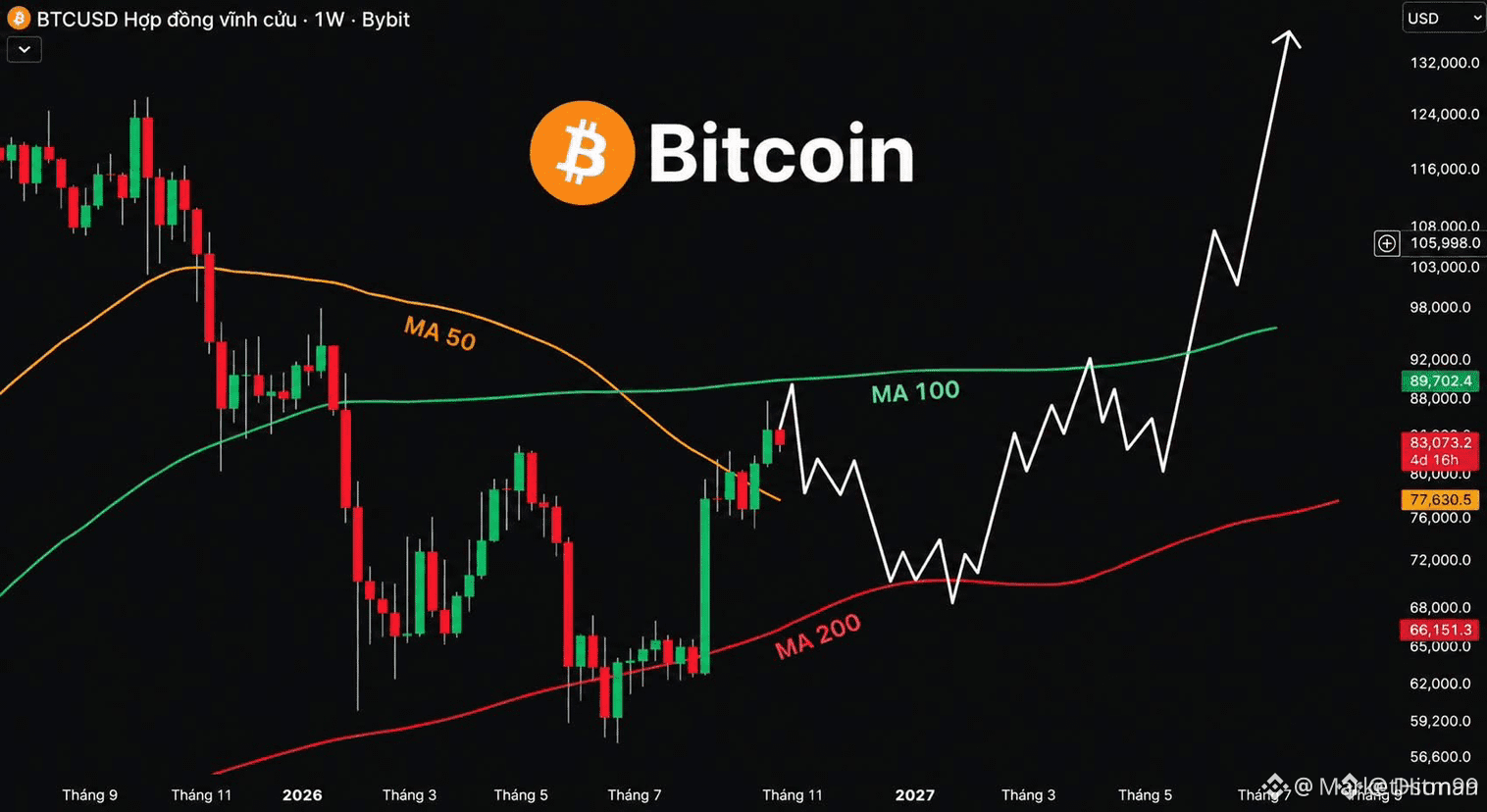
While consensus expects $BTC to drop directly toward $75,000, weekly market structure hints at a potential trap for impatient shorts. 📌 Price remains compressed between the 50-week MA at $77.6K and the 100-week MA at $89.7K.
📊 Flipping the 100 WMA could ignite a rapid liquidity sweep into the $90,000-$95,000 distribution zone before momentum exhausts. 💡 Once that upside engine cools, order flow suggests a severe retest of the $75,000-$77,000 support layer.
💬 Do you expect one last breakout to $90K+, or will sellers step in early? 👇
⚠️ Not financial advice. Always manage your risk. 🛡️
🏷️ #BTC #Bitcoin #MarketAnalysis #Crypto
⚡ 🎯
🚨 $BTC PREPARES FOR ONE FINAL PUMP BEFORE A DEEP RESET TO $75K ⚡
While consensus expects $BTC to drop directly toward $75,000, weekly market structure hints at a potential trap for impatient shorts. 📌 Price remains compressed between the 50-week MA at $77.6K and the 100-week MA at $89.7K.
📊 Flipping the 100 WMA could ignite a rapid liquidity sweep into the $90,000-$95,000 distribution zone before momentum exhausts. 💡 Once that upside engine cools, order flow suggests a severe retest of the $75,000-$77,000 support layer.
💬 Do you expect one last breakout to $90K+, or will sellers step in early? 👇
⚠️ Not financial advice. Always manage your risk. 🛡️
🏷️ #BTC #Bitcoin #MarketAnalysis #Crypto
⚡ 🎯
While consensus expects $BTC to drop directly toward $75,000, weekly market structure hints at a potential trap for impatient shorts. 📌 Price remains compressed between the 50-week MA at $77.6K and the 100-week MA at $89.7K.
📊 Flipping the 100 WMA could ignite a rapid liquidity sweep into the $90,000-$95,000 distribution zone before momentum exhausts. 💡 Once that upside engine cools, order flow suggests a severe retest of the $75,000-$77,000 support layer.
💬 Do you expect one last breakout to $90K+, or will sellers step in early? 👇
⚠️ Not financial advice. Always manage your risk. 🛡️
🏷️ #BTC #Bitcoin #MarketAnalysis #Crypto
⚡ 🎯
13

·
--
🚀 Bitcoin Hits $84,300: Are You Ready for "Uptober"? 📈
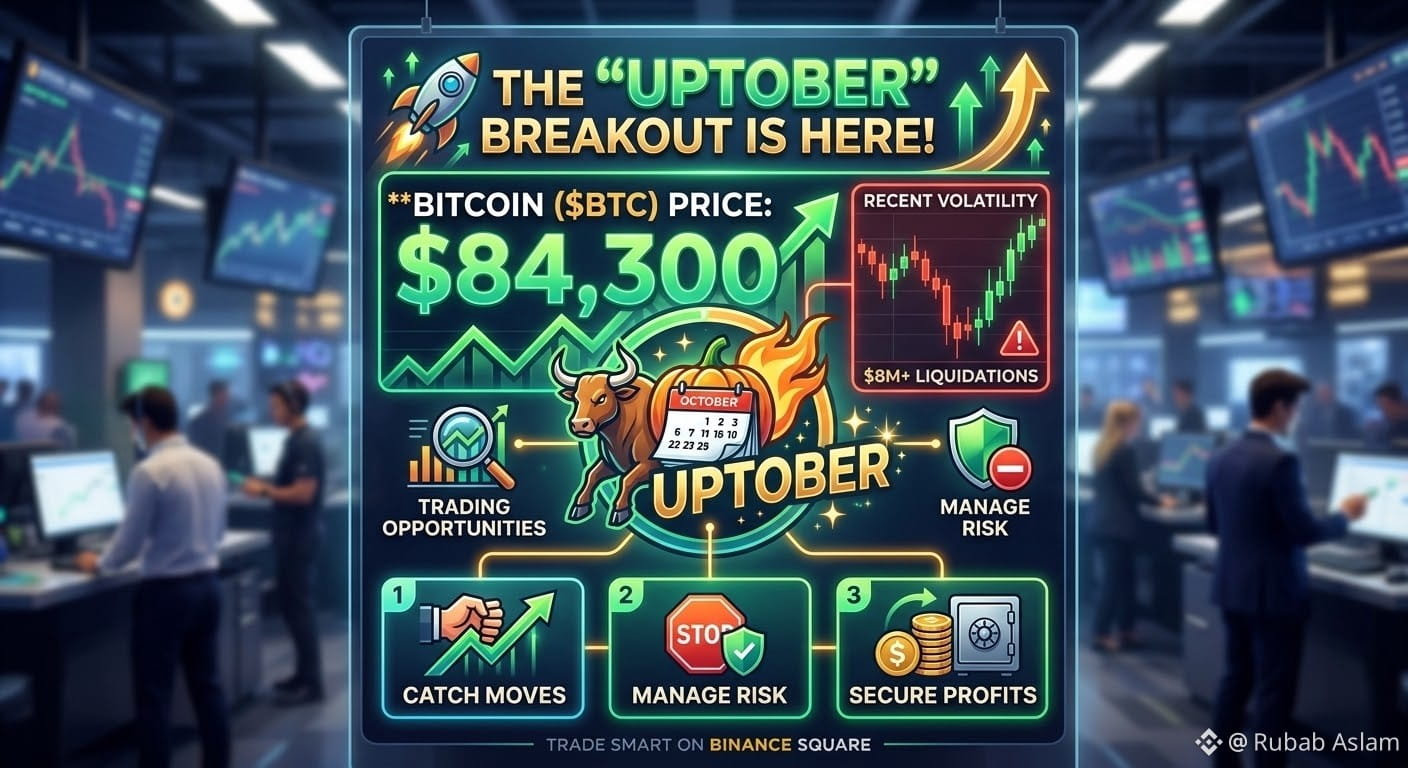
The crypto market is moving fast today! Bitcoin ($BTC) is currently trading around the $84,300 mark. We just saw a quick price dip that cleared out over $8 million in long liquidations across major exchanges.
What does this mean for you? High volatility creates the best trading opportunities!
Tomorrow is October 1st, kicking off what crypto traders call "Uptober". Historically, this is one of the strongest months for Bitcoin and altcoin rallies.
💡 How to trade today's market:
Catch the Moves: Watch for strong support levels on $BTC ,$ETH , and your favorite trending altcoins.
Manage Risk: The market is unpredictable right now with heavy liquidations. Always use a Stop-Loss to protect your capital.
Secure Profits: If you make a quick gain today, consider swapping some profits into a stablecoin like $USDC so you have funds ready for the next big drop.
The trading volume is pumping, and the market is highly active. Open your Binance trading view, check the charts, and position your trades before the next big breakout!
What is your top coin to buy before "Uptober" officially begins? Drop your picks in the comments below! 👇
#Write2Earn #Bitcoin #CryptoMarket #binancesquare
🚀 Bitcoin Hits $84,300: Are You Ready for "Uptober"? 📈
The crypto market is moving fast today! Bitcoin ($BTC ) is currently trading around the $84,300 mark. We just saw a quick price dip that cleared out over $8 million in long liquidations across major exchanges.
What does this mean for you? High volatility creates the best trading opportunities!
Tomorrow is October 1st, kicking off what crypto traders call "Uptober". Historically, this is one of the strongest months for Bitcoin and altcoin rallies.
💡 How to trade today's market:
Catch the Moves: Watch for strong support levels on $BTC ,$ETH , and your favorite trending altcoins.
Manage Risk: The market is unpredictable right now with heavy liquidations. Always use a Stop-Loss to protect your capital.
Secure Profits: If you make a quick gain today, consider swapping some profits into a stablecoin like $USDC so you have funds ready for the next big drop.
The trading volume is pumping, and the market is highly active. Open your Binance trading view, check the charts, and position your trades before the next big breakout!
What is your top coin to buy before "Uptober" officially begins? Drop your picks in the comments below! 👇
#Write2Earn #Bitcoin #CryptoMarket #binancesquare
The crypto market is moving fast today! Bitcoin ($BTC ) is currently trading around the $84,300 mark. We just saw a quick price dip that cleared out over $8 million in long liquidations across major exchanges.
What does this mean for you? High volatility creates the best trading opportunities!
Tomorrow is October 1st, kicking off what crypto traders call "Uptober". Historically, this is one of the strongest months for Bitcoin and altcoin rallies.
💡 How to trade today's market:
Catch the Moves: Watch for strong support levels on $BTC ,$ETH , and your favorite trending altcoins.
Manage Risk: The market is unpredictable right now with heavy liquidations. Always use a Stop-Loss to protect your capital.
Secure Profits: If you make a quick gain today, consider swapping some profits into a stablecoin like $USDC so you have funds ready for the next big drop.
The trading volume is pumping, and the market is highly active. Open your Binance trading view, check the charts, and position your trades before the next big breakout!
What is your top coin to buy before "Uptober" officially begins? Drop your picks in the comments below! 👇
#Write2Earn #Bitcoin #CryptoMarket #binancesquare
33

·
--
🚨 $BTC BREAKING UPDATE — $85,492
Bitcoin is pushing higher and reclaiming the $85K zone. 🔥
📈 Bullish trigger: Hold above $85K → next levels to watch $86K → $87K+
📉 Bearish trigger: Rejection from $85.5K–$86K and loss of $84K → momentum could weaken.
👀 Key question:
Is $BTC preparing for a breakout above $86K, or is this another rejection zone? 🚀🐻
#BTC #Bitcoin
🚨 $BTC BREAKING UPDATE — $85,492
Bitcoin is pushing higher and reclaiming the $85K zone. 🔥
📈 Bullish trigger: Hold above $85K → next levels to watch $86K → $87K+
📉 Bearish trigger: Rejection from $85.5K–$86K and loss of $84K → momentum could weaken.
👀 Key question:
Is $BTC preparing for a breakout above $86K, or is this another rejection zone? 🚀🐻
#BTC #Bitcoin
Bitcoin is pushing higher and reclaiming the $85K zone. 🔥
📈 Bullish trigger: Hold above $85K → next levels to watch $86K → $87K+
📉 Bearish trigger: Rejection from $85.5K–$86K and loss of $84K → momentum could weaken.
👀 Key question:
Is $BTC preparing for a breakout above $86K, or is this another rejection zone? 🚀🐻
#BTC #Bitcoin
1
26

·
--
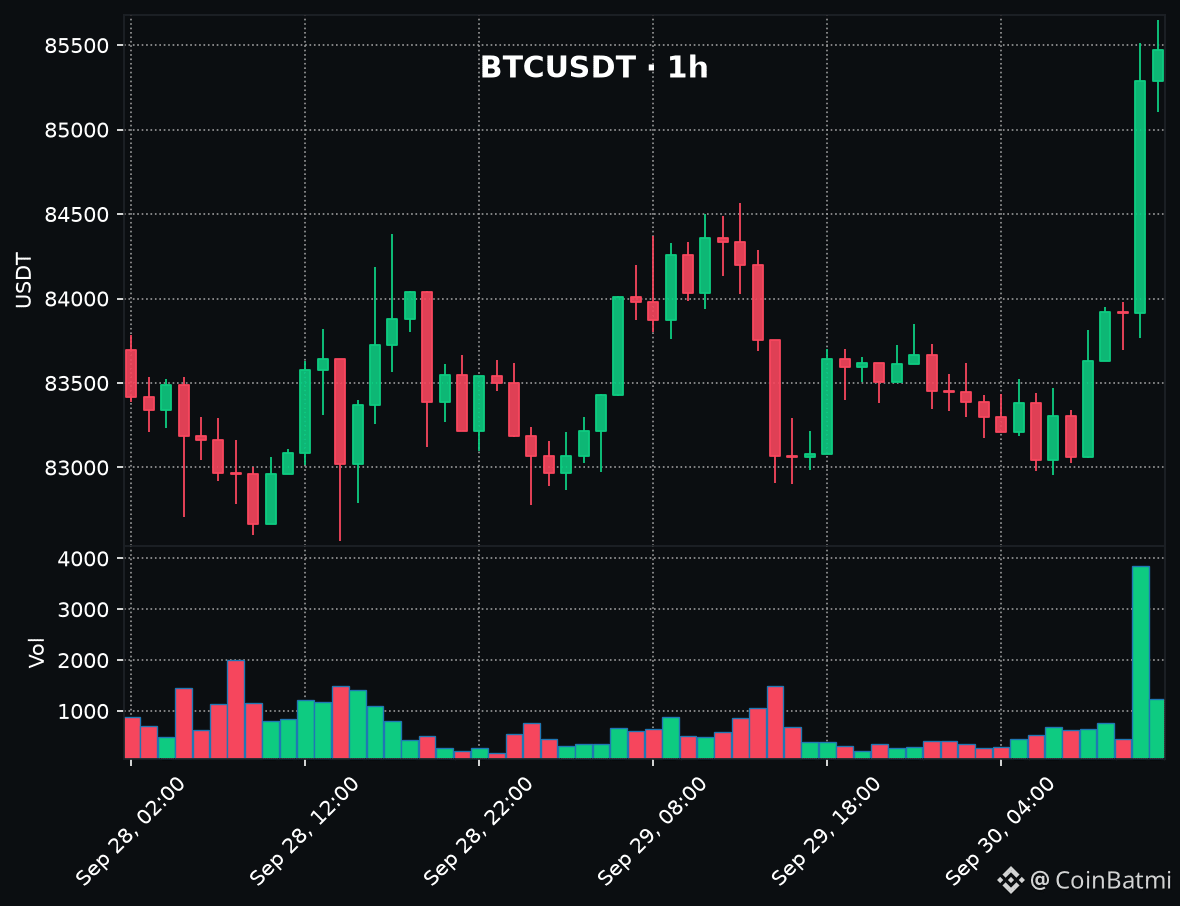
$BTC - Price action stalls while underlying demand fades.
AMBCrypto reports spot market demand weakening and ETF flows cooling.
Short-term holders adding sell-side supply increases retracement risk.
A deeper reset remains possible if current supply dynamics persist.
#Bitcoin #BTC
$BTC - Price action stalls while underlying demand fades.
AMBCrypto reports spot market demand weakening and ETF flows cooling.
Short-term holders adding sell-side supply increases retracement risk.
A deeper reset remains possible if current supply dynamics persist.
#Bitcoin #BTC
AMBCrypto reports spot market demand weakening and ETF flows cooling.
Short-term holders adding sell-side supply increases retracement risk.
A deeper reset remains possible if current supply dynamics persist.
#Bitcoin #BTC
221
·
--
The regulatory landscape for digital assets in the UK is shifting dramatically. The Financial Conduct Authority (FCA) has officially opened the authorization window for crypto businesses, setting the stage for a comprehensive new regime by 2027. This is a pivotal moment for the industry, signaling a move from informal registration to strict, full-scale authorization. For traders and investors, this clarity is often a precursor to institutional adoption, as major players seek legal certainty before entering the market. With $BTC currently trading at $85,319.08 (+1.18% in 24h), the market is watching closely to see how this regulatory maturity impacts liquidity and sentiment.
• **Deadline Alert:** Crypto firms must apply for FCA authorization by February 28, 2027.
• **No Automatic Conversion:** Existing money laundering registrations will NOT automatically convert into full FCA authorization.
• **Stricter Compliance:** This marks a significant step toward a robust, investor-protective framework in one of the world's largest financial hubs.
This regulatory clarity is a bullish signal for long-term market health. As the UK aligns its crypto laws with global standards, we can expect increased institutional participation, which often correlates with higher trading volumes and reduced volatility for major assets like $BTC. The transition from a 'wild west' to a regulated environment typically filters out bad actors, leaving a stronger, more resilient market for serious investors. The key question now is whether this regulatory push will accelerate the next leg up for Bitcoin or create short-term friction for smaller exchanges.
Do you think stricter UK regulations will boost confidence in $BTC or slow down adoption? Drop your thoughts below! 👇
#BinanceSquare #CryptoNews #Bitcoin
The regulatory landscape for digital assets in the UK is shifting dramatically. The Financial Conduct Authority (FCA) has officially opened the authorization window for crypto businesses, setting the stage for a comprehensive new regime by 2027. This is a pivotal moment for the industry, signaling a move from informal registration to strict, full-scale authorization. For traders and investors, this clarity is often a precursor to institutional adoption, as major players seek legal certainty before entering the market. With $BTC currently trading at $85,319.08 (+1.18% in 24h), the market is watching closely to see how this regulatory maturity impacts liquidity and sentiment.
• **Deadline Alert:** Crypto firms must apply for FCA authorization by February 28, 2027.
• **No Automatic Conversion:** Existing money laundering registrations will NOT automatically convert into full FCA authorization.
• **Stricter Compliance:** This marks a significant step toward a robust, investor-protective framework in one of the world's largest financial hubs.
This regulatory clarity is a bullish signal for long-term market health. As the UK aligns its crypto laws with global standards, we can expect increased institutional participation, which often correlates with higher trading volumes and reduced volatility for major assets like $BTC . The transition from a 'wild west' to a regulated environment typically filters out bad actors, leaving a stronger, more resilient market for serious investors. The key question now is whether this regulatory push will accelerate the next leg up for Bitcoin or create short-term friction for smaller exchanges.
Do you think stricter UK regulations will boost confidence in $BTC or slow down adoption? Drop your thoughts below! 👇
#BinanceSquare #CryptoNews #Bitcoin
• **Deadline Alert:** Crypto firms must apply for FCA authorization by February 28, 2027.
• **No Automatic Conversion:** Existing money laundering registrations will NOT automatically convert into full FCA authorization.
• **Stricter Compliance:** This marks a significant step toward a robust, investor-protective framework in one of the world's largest financial hubs.
This regulatory clarity is a bullish signal for long-term market health. As the UK aligns its crypto laws with global standards, we can expect increased institutional participation, which often correlates with higher trading volumes and reduced volatility for major assets like $BTC . The transition from a 'wild west' to a regulated environment typically filters out bad actors, leaving a stronger, more resilient market for serious investors. The key question now is whether this regulatory push will accelerate the next leg up for Bitcoin or create short-term friction for smaller exchanges.
Do you think stricter UK regulations will boost confidence in $BTC or slow down adoption? Drop your thoughts below! 👇
#BinanceSquare #CryptoNews #Bitcoin

1k
·
--
Institutional adoption just hit a new ceiling. Confirmed on September 29, 2026, Goldman Sachs has officially connected its massive $100 billion Treasury Fund to crypto institutional rails. This is not just a pilot program; it is a strategic pivot that integrates traditional finance’s deepest liquidity pools directly into the digital asset ecosystem. For traders and investors, this signals that the barrier to entry for blue-chip institutional capital is dissolving, potentially reshaping market dynamics for the coming quarter.
• **$100B Liquidity Injection:** Goldman’s treasury fund is now bridged to crypto infrastructure, signaling massive potential for collateral flows.
• **Compliance-First Integration:** The move emphasizes robust security and regulatory alignment, setting a precedent for other banks.
• **Market Stability Signal:** Analysts view this as a key driver for sustained user confidence and reduced volatility in institutional trading.
With BTC currently trading at 84,153.44 (+1.31% in 24h), this news provides a fundamental tailwind for the broader market. The integration of such a vast capital base suggests that liquidity signals will become more predictable, and collateral flows may accelerate as institutions seek yield in digital assets. This landmark event underscores the transition from speculative trading to scalable, transparent operational frameworks. As we watch the live price action, the correlation between traditional treasury management and crypto markets is becoming undeniable.
Do you think this $100B bridge will push BTC past new all-time highs, or is it just a long-term structural shift? Drop your thoughts below! 👇
#BinanceSquare #CryptoNews #Bitcoin
Institutional adoption just hit a new ceiling. Confirmed on September 29, 2026, Goldman Sachs has officially connected its massive $100 billion Treasury Fund to crypto institutional rails. This is not just a pilot program; it is a strategic pivot that integrates traditional finance’s deepest liquidity pools directly into the digital asset ecosystem. For traders and investors, this signals that the barrier to entry for blue-chip institutional capital is dissolving, potentially reshaping market dynamics for the coming quarter.
• **$100B Liquidity Injection:** Goldman’s treasury fund is now bridged to crypto infrastructure, signaling massive potential for collateral flows.
• **Compliance-First Integration:** The move emphasizes robust security and regulatory alignment, setting a precedent for other banks.
• **Market Stability Signal:** Analysts view this as a key driver for sustained user confidence and reduced volatility in institutional trading.
With BTC currently trading at 84,153.44 (+1.31% in 24h), this news provides a fundamental tailwind for the broader market. The integration of such a vast capital base suggests that liquidity signals will become more predictable, and collateral flows may accelerate as institutions seek yield in digital assets. This landmark event underscores the transition from speculative trading to scalable, transparent operational frameworks. As we watch the live price action, the correlation between traditional treasury management and crypto markets is becoming undeniable.
Do you think this $100B bridge will push BTC past new all-time highs, or is it just a long-term structural shift? Drop your thoughts below! 👇
#BinanceSquare #CryptoNews #Bitcoin
• **$100B Liquidity Injection:** Goldman’s treasury fund is now bridged to crypto infrastructure, signaling massive potential for collateral flows.
• **Compliance-First Integration:** The move emphasizes robust security and regulatory alignment, setting a precedent for other banks.
• **Market Stability Signal:** Analysts view this as a key driver for sustained user confidence and reduced volatility in institutional trading.
With BTC currently trading at 84,153.44 (+1.31% in 24h), this news provides a fundamental tailwind for the broader market. The integration of such a vast capital base suggests that liquidity signals will become more predictable, and collateral flows may accelerate as institutions seek yield in digital assets. This landmark event underscores the transition from speculative trading to scalable, transparent operational frameworks. As we watch the live price action, the correlation between traditional treasury management and crypto markets is becoming undeniable.
Do you think this $100B bridge will push BTC past new all-time highs, or is it just a long-term structural shift? Drop your thoughts below! 👇
#BinanceSquare #CryptoNews #Bitcoin

69

·
--
Here's what happened when $BTC held its last swing high through a 0.53 percent dip last week.
Traders keep getting burned on these setups because they have no idea when to actually exit, turning a small pullback into a full position wipeout.
The top 30-day profit traders were all over this. Holding that swing high isn't a bad sign if a volume push materializes to send $BTC back toward the previous highs.
Most people missed how straightforward the invalidation is here. Dropping under that high becomes a clean lower timeframe invalidation.
That's where the real risk sits. Without the volume, $ETH correlations and even $BNB flows could amplify a breakdown that catches late longs off guard.
Where do you think this goes from here if that volume never arrives?
#Bitcoin #CryptoTrading #RiskManagement
Here's what happened when $BTC held its last swing high through a 0.53 percent dip last week.
Traders keep getting burned on these setups because they have no idea when to actually exit, turning a small pullback into a full position wipeout.
The top 30-day profit traders were all over this. Holding that swing high isn't a bad sign if a volume push materializes to send $BTC back toward the previous highs.
Most people missed how straightforward the invalidation is here. Dropping under that high becomes a clean lower timeframe invalidation.
That's where the real risk sits. Without the volume, $ETH correlations and even $BNB flows could amplify a breakdown that catches late longs off guard.
Where do you think this goes from here if that volume never arrives?
#Bitcoin #CryptoTrading #RiskManagement
Traders keep getting burned on these setups because they have no idea when to actually exit, turning a small pullback into a full position wipeout.
The top 30-day profit traders were all over this. Holding that swing high isn't a bad sign if a volume push materializes to send $BTC back toward the previous highs.
Most people missed how straightforward the invalidation is here. Dropping under that high becomes a clean lower timeframe invalidation.
That's where the real risk sits. Without the volume, $ETH correlations and even $BNB flows could amplify a breakdown that catches late longs off guard.
Where do you think this goes from here if that volume never arrives?
#Bitcoin #CryptoTrading #RiskManagement

81
Log in to explore more content
Join global crypto users on Binance Square
⚡️ Get latest and useful information about crypto.
💬 Trusted by the world’s largest crypto exchange.
👍 Discover real insights from verified creators.
Email / Phone number
Trending Topics
1
#BitcoinClears$85200
3,358 views
119 Discussing
2
#AltcoinSeasonIndexHoldsAbove60For5Days
21,771 views
767 Discussing
3
#USADPAdds90000JobsInSeptember
8,136 views
423 Discussing
4
#USCorePCEEasesTo3%InAugust
6,879 views
355 Discussing
5
#KospiPostsWorstQuarterSince2020
5,893 views
374 Discussing
6
#SECToClarifyOnChainFundraisingRules
14,801 views
547 Discussing
7
#UKFCAOpensCryptoFirmAuthorization
17,314 views
481 Discussing
8
#JapanMOFStudyGroupOnTokenizedGovtBonds
14,925 views
386 Discussing
9
#QNTRises287%
66,135 views
812 Discussing
10
#TrumpRejectsAIRulesForVoluntaryAudits
40,669 views
721 Discussing