
#oil
oil
4.9M views
13,229 Discussing
Hot
Latest


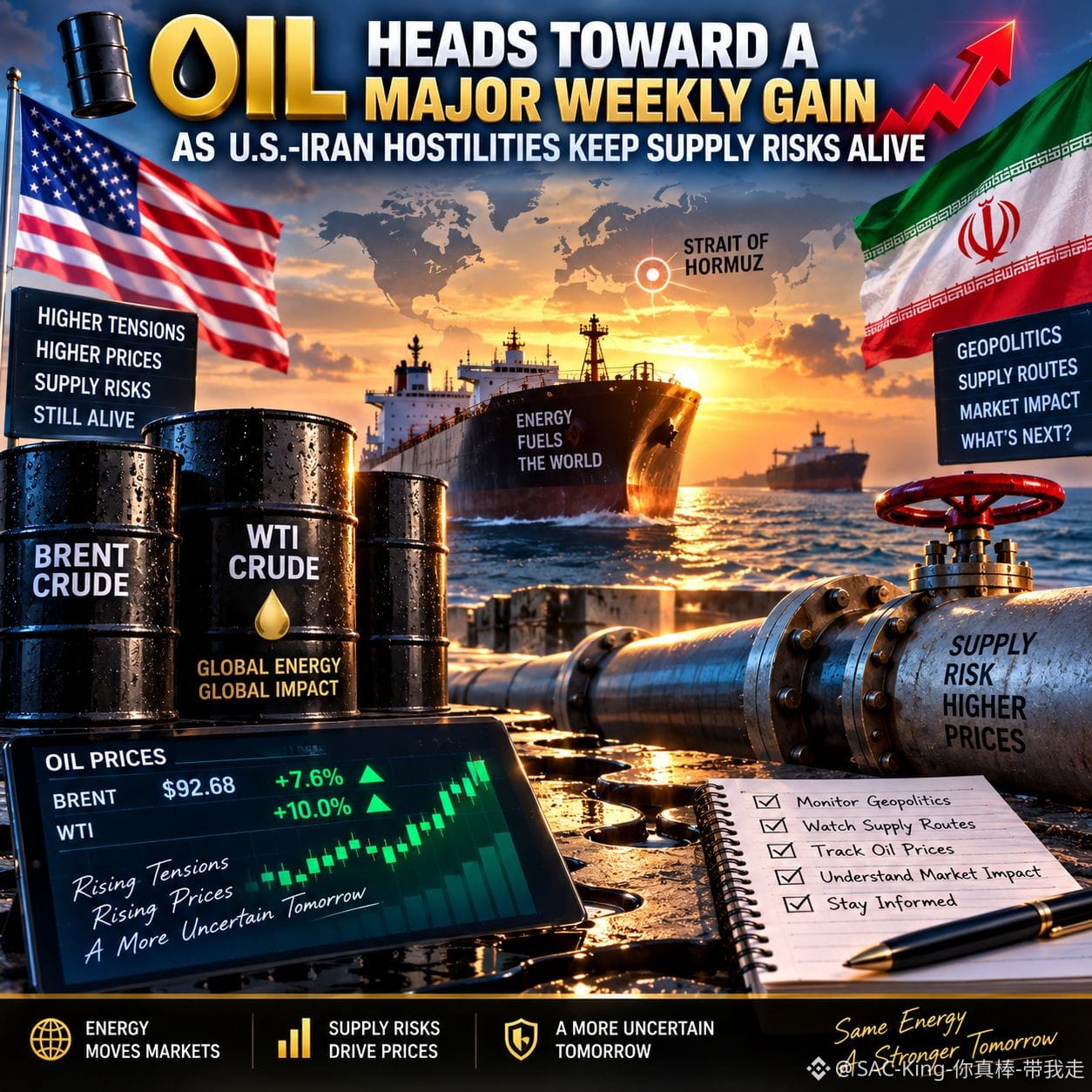
🚨🛢️ OIL HEADS TOWARD A MAJOR WEEKLY GAIN: U.S.-IRAN TENSIONS KEEP SUPPLY RISKS ALIVE 🔥
The market opened with a familiar calm, but underneath it, traders were watching the sea. One disrupted route, one fresh strike, and suddenly every barrel carries a little more uncertainty.
That uncertainty is now showing up in oil prices. Brent settled at $92.68 on Friday, gaining 7.6% for the week, while WTI climbed nearly 10%.
The bigger concern is not simply higher crude prices. It is the fragile movement of energy through the Middle East, especially the Strait of Hormuz, where only four commodity vessels crossed on Thursday versus a 10-day average of about 15.
Renewed U.S.-Iran hostilities are keeping traders alert to the possibility of deeper supply disruptions. Reports today that an Iranian tanker was struck near Kharg Island add another layer of uncertainty, although the incident has not been independently confirmed by U.S. authorities.
Higher oil prices can quickly become an inflation problem through transportation, fuel, and production costs. U.S. diesel has already reached a record average of $5.85 per gallon.
The key question now is whether this rally reflects genuine physical shortages or a growing geopolitical risk premium.
When supply routes remain vulnerable, oil traders are not just pricing today's barrels. They are pricing tomorrow's uncertainty.
❓If tensions continue escalating, do you think Brent can break decisively above $100?
Disclaimer: This content is for educational purposes only and is not financial advice.
#Oil #CrudeOil #Geopolitics #EnergyMarkets #GrowWithSAC $SOL $ETH $TRX
The market opened with a familiar calm, but underneath it, traders were watching the sea. One disrupted route, one fresh strike, and suddenly every barrel carries a little more uncertainty.
That uncertainty is now showing up in oil prices. Brent settled at $92.68 on Friday, gaining 7.6% for the week, while WTI climbed nearly 10%.
The bigger concern is not simply higher crude prices. It is the fragile movement of energy through the Middle East, especially the Strait of Hormuz, where only four commodity vessels crossed on Thursday versus a 10-day average of about 15.
Renewed U.S.-Iran hostilities are keeping traders alert to the possibility of deeper supply disruptions. Reports today that an Iranian tanker was struck near Kharg Island add another layer of uncertainty, although the incident has not been independently confirmed by U.S. authorities.
Higher oil prices can quickly become an inflation problem through transportation, fuel, and production costs. U.S. diesel has already reached a record average of $5.85 per gallon.
The key question now is whether this rally reflects genuine physical shortages or a growing geopolitical risk premium.
When supply routes remain vulnerable, oil traders are not just pricing today's barrels. They are pricing tomorrow's uncertainty.
❓If tensions continue escalating, do you think Brent can break decisively above $100?
Disclaimer: This content is for educational purposes only and is not financial advice.
#Oil #CrudeOil #Geopolitics #EnergyMarkets #GrowWithSAC $SOL $ETH $TRX

🌍🔥 Oil Gains Accelerate as Markets Watch the Next Move in the U.S.-Iran Conflict 🔥🌍
The screen was quiet for a moment, then another headline landed. Oil traders watched the Middle East, shipping routes, and Washington for one clue: is the conflict about to intensify again?
That uncertainty is now being reflected in crude prices. Brent ended Friday at $92.68, gaining 7.6% for the week, while WTI climbed nearly 10%.
The bigger concern is supply. The Strait of Hormuz remains under pressure, while recent attacks on tankers have increased fears around the movement of Middle Eastern energy.
Today, another development added to the tension: Iran accused the U.S. of striking an oil tanker near Kharg Island, a major Iranian export hub. The report has not been independently confirmed by U.S. authorities.
This is why oil's move matters beyond energy markets. Higher crude can feed into transportation, manufacturing, inflation expectations, bond yields, and ultimately central-bank decisions.
For crypto traders, the connection is indirect but important. A prolonged energy shock can strengthen risk-off sentiment, while any credible de-escalation could quickly remove part of oil's geopolitical premium.
The key question is not simply whether oil can rise further. It is whether the conflict creates a sustained physical supply disruption or merely keeps a temporary risk premium embedded in prices.
Watch the headlines, shipping conditions, crude inventories, and policy signals together rather than reacting to one sudden price spike.
When geopolitics can move oil this quickly, is the next major market catalyst more likely to come from the battlefield or the negotiating table?
Disclaimer: This is for educational purposes only, not financial advice.
#Oil #Iran #Geopolitics #CryptoMarket #GrowWithSAC $DASH $ZEN $XRP
The screen was quiet for a moment, then another headline landed. Oil traders watched the Middle East, shipping routes, and Washington for one clue: is the conflict about to intensify again?
That uncertainty is now being reflected in crude prices. Brent ended Friday at $92.68, gaining 7.6% for the week, while WTI climbed nearly 10%.
The bigger concern is supply. The Strait of Hormuz remains under pressure, while recent attacks on tankers have increased fears around the movement of Middle Eastern energy.
Today, another development added to the tension: Iran accused the U.S. of striking an oil tanker near Kharg Island, a major Iranian export hub. The report has not been independently confirmed by U.S. authorities.
This is why oil's move matters beyond energy markets. Higher crude can feed into transportation, manufacturing, inflation expectations, bond yields, and ultimately central-bank decisions.
For crypto traders, the connection is indirect but important. A prolonged energy shock can strengthen risk-off sentiment, while any credible de-escalation could quickly remove part of oil's geopolitical premium.
The key question is not simply whether oil can rise further. It is whether the conflict creates a sustained physical supply disruption or merely keeps a temporary risk premium embedded in prices.
Watch the headlines, shipping conditions, crude inventories, and policy signals together rather than reacting to one sudden price spike.
When geopolitics can move oil this quickly, is the next major market catalyst more likely to come from the battlefield or the negotiating table?
Disclaimer: This is for educational purposes only, not financial advice.
#Oil #Iran #Geopolitics #CryptoMarket #GrowWithSAC $DASH $ZEN $XRP

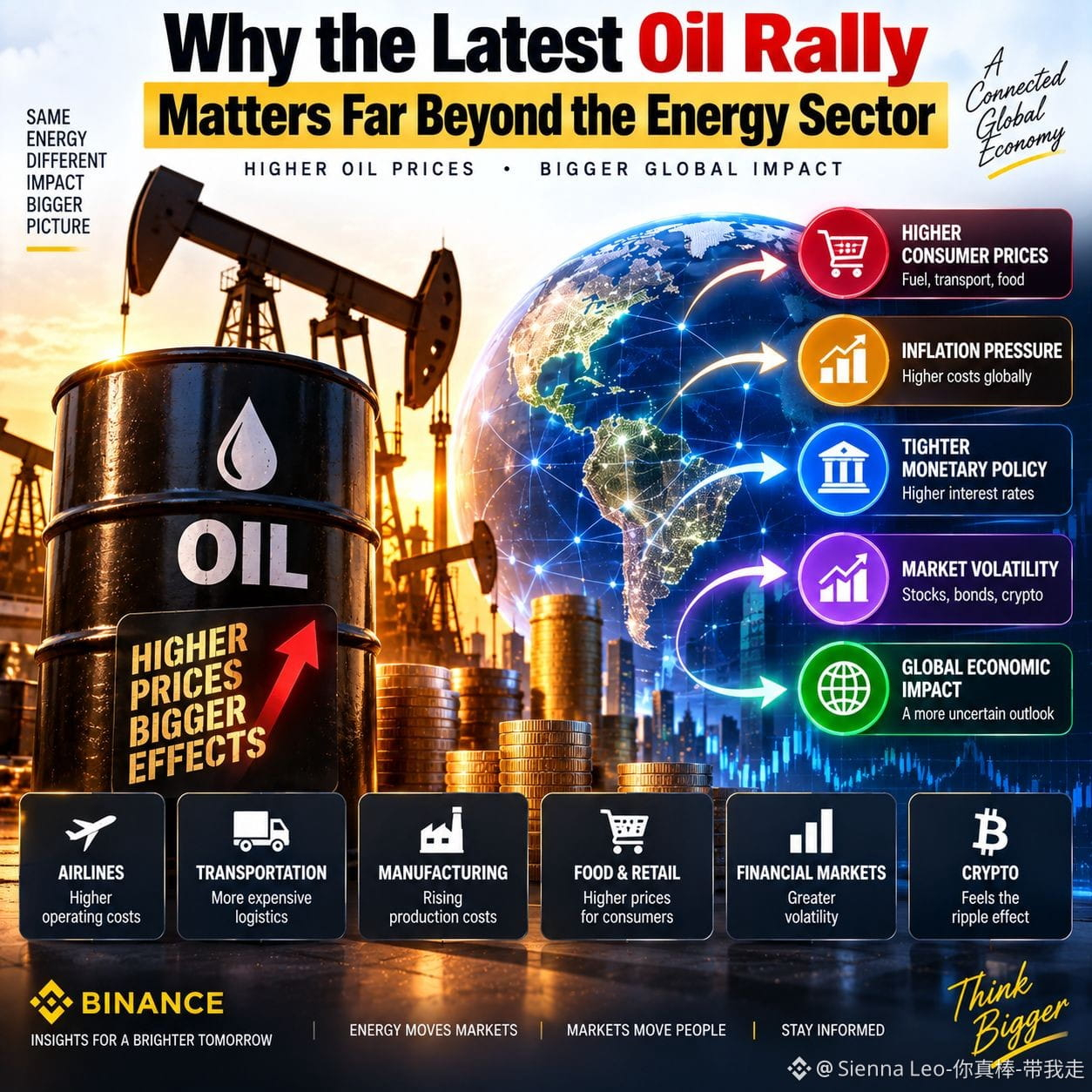
🛢️ Why the Latest Oil Rally Matters Far Beyond the Energy Sector ⚠️
Picture a driver filling the tank and suddenly realizing the number on the screen has changed again. That extra cost does not stay at the gas station. It quietly travels through trucks, airlines, factories, food prices, and eventually financial markets.
That is why the latest oil rally matters far beyond energy. Brent crude finished the week at $92.68, gaining 7.6%, while WTI rose nearly 10%, as renewed U.S.-Iran fighting intensified concerns around Middle East supply routes.
The pressure is already reaching consumers. U.S. diesel prices hit a record, while gasoline prices are also being pushed higher by elevated crude costs and supply constraints.
The next link is inflation. More expensive energy raises transportation and production costs, making it harder for central banks to ease monetary policy if price pressures remain persistent.
That creates a wider market chain: higher oil can lift inflation expectations, push bond yields higher, and reduce appetite for riskier assets. Reuters reported that rising crude and renewed inflation fears have already pressured stocks and increased concerns about tighter monetary policy.
Crypto is not isolated from this macro equation. Higher yields and tighter financial conditions can challenge speculative assets, although Bitcoin has shown resilience during recent oil-driven volatility.
The practical lesson is simple: when oil moves sharply, do not watch energy stocks alone. Watch inflation, Treasury yields, the dollar, equities and crypto together.
Oil is not just an energy price; it is a pressure gauge for the global economy.
❓If oil stays elevated, which market do you think feels the pressure first: stocks, bonds, or crypto?
Disclaimer: Educational content only, not financial advice. DYOR.
#Oil #Inflation #Macro #CryptoMarket #GrowWithSAC $SNXXB $USELESS $QUAD.US
Picture a driver filling the tank and suddenly realizing the number on the screen has changed again. That extra cost does not stay at the gas station. It quietly travels through trucks, airlines, factories, food prices, and eventually financial markets.
That is why the latest oil rally matters far beyond energy. Brent crude finished the week at $92.68, gaining 7.6%, while WTI rose nearly 10%, as renewed U.S.-Iran fighting intensified concerns around Middle East supply routes.
The pressure is already reaching consumers. U.S. diesel prices hit a record, while gasoline prices are also being pushed higher by elevated crude costs and supply constraints.
The next link is inflation. More expensive energy raises transportation and production costs, making it harder for central banks to ease monetary policy if price pressures remain persistent.
That creates a wider market chain: higher oil can lift inflation expectations, push bond yields higher, and reduce appetite for riskier assets. Reuters reported that rising crude and renewed inflation fears have already pressured stocks and increased concerns about tighter monetary policy.
Crypto is not isolated from this macro equation. Higher yields and tighter financial conditions can challenge speculative assets, although Bitcoin has shown resilience during recent oil-driven volatility.
The practical lesson is simple: when oil moves sharply, do not watch energy stocks alone. Watch inflation, Treasury yields, the dollar, equities and crypto together.
Oil is not just an energy price; it is a pressure gauge for the global economy.
❓If oil stays elevated, which market do you think feels the pressure first: stocks, bonds, or crypto?
Disclaimer: Educational content only, not financial advice. DYOR.
#Oil #Inflation #Macro #CryptoMarket #GrowWithSAC $SNXXB $USELESS $QUAD.US

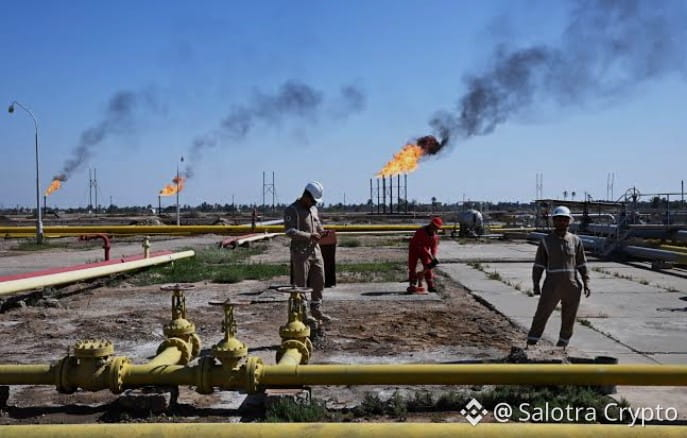
Tensions in the Middle East have escalated sharply following reports from Iranian news agency SNN that an Iranian oil tanker was struck by a missile near Kharg Island. While no casualties have been confirmed so far, the targeting of maritime infrastructure near Iran's primary oil export hub marks a significant military escalation.
Kharg Island handles roughly 90% of Iran's total crude oil exports, making it the single most critical chokepoint in the country's energy infrastructure. Any disruption or perceived vulnerability in this region immediately threatens supply routes across the Persian Gulf, intensifying fears of direct retaliatory strikes.
Global financial markets are reacting swiftly, with crude oil prices facing immediate upward pressure and gold seeing renewed safe-haven demand. Elevated energy costs risk complicating the broader disinflation trend, potentially delaying central bank rate-cut cycles if crude remains elevated.
For crypto markets, such geopolitical shocks usually trigger an initial risk-off pullback as liquidity retreats toward defensive assets, though $BTC often finds support once broader systemic impacts are absorbed.
#geopolitics #oil #iran
Kharg Island handles roughly 90% of Iran's total crude oil exports, making it the single most critical chokepoint in the country's energy infrastructure. Any disruption or perceived vulnerability in this region immediately threatens supply routes across the Persian Gulf, intensifying fears of direct retaliatory strikes.
Global financial markets are reacting swiftly, with crude oil prices facing immediate upward pressure and gold seeing renewed safe-haven demand. Elevated energy costs risk complicating the broader disinflation trend, potentially delaying central bank rate-cut cycles if crude remains elevated.
For crypto markets, such geopolitical shocks usually trigger an initial risk-off pullback as liquidity retreats toward defensive assets, though $BTC often finds support once broader systemic impacts are absorbed.
#geopolitics #oil #iran
According to the latest data released by the American Automobile Association (AAA) this Thursday, retail diesel prices in the United States have surged to a record high of $5.85 per gallon. This moves past the previous all-time peak of $5.76 set in June 2022, fueled by tightening global supply conditions and escalating energy market turmoil.
This spike represents a critical macro development because diesel serves as the primary fuel for freight logistics, agriculture, and industrial production. Sustained high fuel costs directly pass through the supply chain, threatening to reignite energy-driven inflation and complicating the Federal Reserve's rate trajectory ahead of its mid-September policy meeting.
Across traditional financial markets, rising fuel prices are reinforcing expectations of higher-for-longer benchmark interest rates. This dynamic typically props up Treasury yields and the US Dollar Index, while putting downside pressure on equities and traditional growth sectors.
For the crypto market, lingering inflationary pressures and tighter central bank policy constrain broad risk appetite. In the near term, elevated yields could weigh on $BTC and altcoins as institutional liquidity remains cautious, keeping digital assets in a defensive consolidation range.
#oil #inflation #fed
This spike represents a critical macro development because diesel serves as the primary fuel for freight logistics, agriculture, and industrial production. Sustained high fuel costs directly pass through the supply chain, threatening to reignite energy-driven inflation and complicating the Federal Reserve's rate trajectory ahead of its mid-September policy meeting.
Across traditional financial markets, rising fuel prices are reinforcing expectations of higher-for-longer benchmark interest rates. This dynamic typically props up Treasury yields and the US Dollar Index, while putting downside pressure on equities and traditional growth sectors.
For the crypto market, lingering inflationary pressures and tighter central bank policy constrain broad risk appetite. In the near term, elevated yields could weigh on $BTC and altcoins as institutional liquidity remains cautious, keeping digital assets in a defensive consolidation range.
#oil #inflation #fed
Tensions in the Middle East and escalating hostilities between the US and Iran pushed oil prices sharply higher on Friday, positioning crude for its largest weekly gain since mid-July. Brent crude surged 7.6% while WTI climbed 10.4% week-to-date, reflecting immediate market anxiety over potential disruption to key regional shipping routes and production infrastructure.
This aggressive rally highlights how quickly geopolitical risk premiums can reprice. Analysts at ANZ recently raised their short-term Brent target to $95 per barrel, warning that while high stockpiles initially cushioned supply shocks, depleting inventory buffers will leave the global energy balance increasingly vulnerable if conflict widens.
A sustained spike toward $95/barrel complicates the global disinflation narrative. Higher energy costs threaten to reignite headline CPI, potentially forcing major central banks to keep interest rates restrictive for longer and putting upward pressure on bond yields and the US Dollar.
For crypto, persistent geopolitical tension typically triggers a risk-off environment, draining liquidity away from speculative assets. If oil-driven inflation delays rate cuts, $BTC and the broader market may face continued consolidation until macro clarity returns. 🛢️
#oil #geopolitics #macro
This aggressive rally highlights how quickly geopolitical risk premiums can reprice. Analysts at ANZ recently raised their short-term Brent target to $95 per barrel, warning that while high stockpiles initially cushioned supply shocks, depleting inventory buffers will leave the global energy balance increasingly vulnerable if conflict widens.
A sustained spike toward $95/barrel complicates the global disinflation narrative. Higher energy costs threaten to reignite headline CPI, potentially forcing major central banks to keep interest rates restrictive for longer and putting upward pressure on bond yields and the US Dollar.
For crypto, persistent geopolitical tension typically triggers a risk-off environment, draining liquidity away from speculative assets. If oil-driven inflation delays rate cuts, $BTC and the broader market may face continued consolidation until macro clarity returns. 🛢️
#oil #geopolitics #macro

🚨 BREAKING: OIL SURGES TOWARD $100 — GLOBAL MARKETS UNDER PRESSURE! 🛢️📉
🌍 #OIL : Brent crude is hovering near $96.50/barrel as concerns over traffic through the Strait of Hormuz intensify.
🔥 Rising oil prices are fueling fears of a fresh inflation shock.
📉 Asian and global stock markets are facing renewed selling pressure as investors brace for higher energy costs.
⚠️ Oil up. Inflation fears rising. Risk assets under pressure.
👀 Could crypto be next?
Follow for daily updates ⚡
$MARSCOIN $CHIP
🌍 #OIL : Brent crude is hovering near $96.50/barrel as concerns over traffic through the Strait of Hormuz intensify.
🔥 Rising oil prices are fueling fears of a fresh inflation shock.
📉 Asian and global stock markets are facing renewed selling pressure as investors brace for higher energy costs.
⚠️ Oil up. Inflation fears rising. Risk assets under pressure.
👀 Could crypto be next?
Follow for daily updates ⚡
$MARSCOIN $CHIP

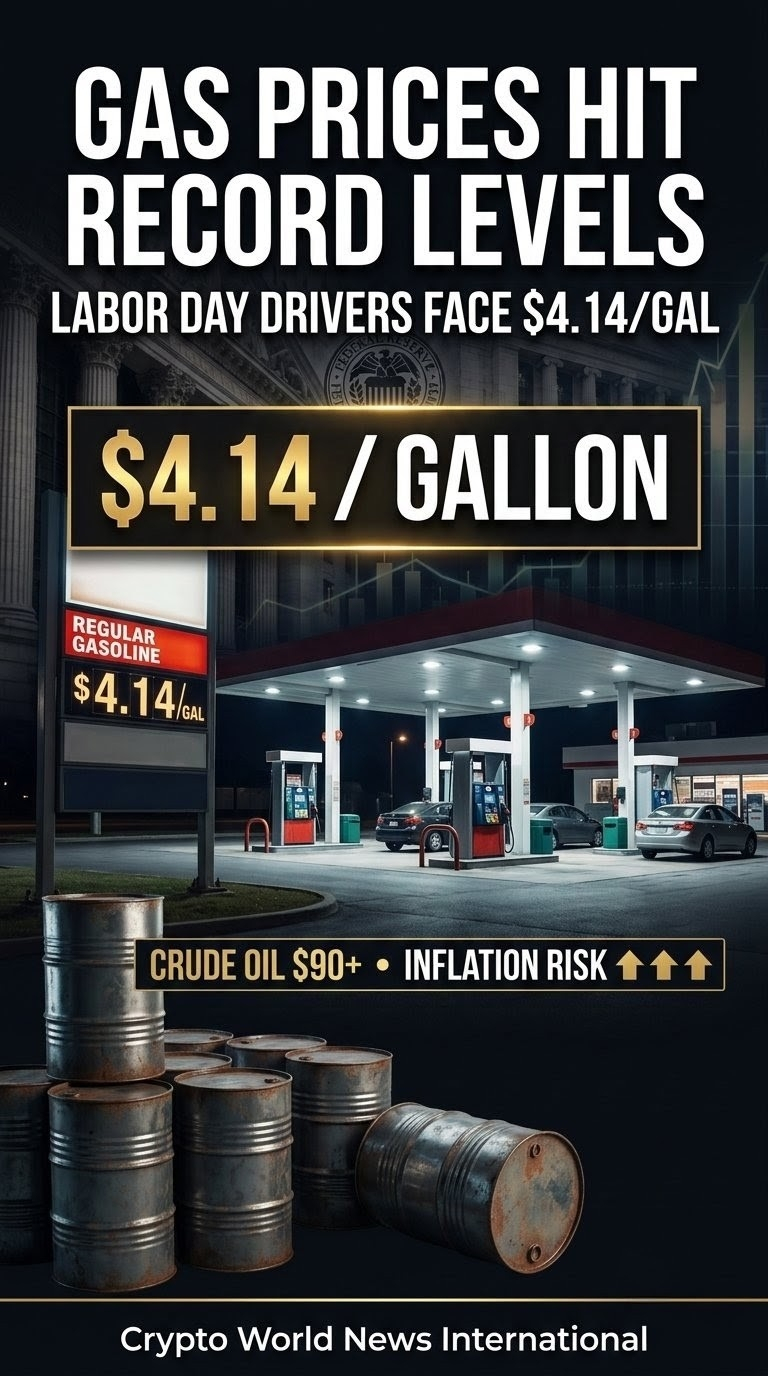
🚨 U.S. GAS PRICES HIT RECORD LEVELS AHEAD OF LABOR DAY
American drivers are facing record-high gasoline prices heading into the Labor Day weekend, with the national average reaching around $4.14 per gallon.
🔥 Key Points:
• U.S. national average: ~$4.14/gallon
• Highest Labor Day gas-price level ever recorded
• Crude oil is trading around the $90+ range
• Strait of Hormuz volatility is adding pressure to energy markets
• August already set a record for monthly gasoline prices
• Higher fuel costs could add pressure to inflation
📊 Market Insight:
Rising gasoline and crude prices can create a new inflation risk. If energy costs remain elevated, markets could reduce expectations for aggressive Fed easing.
That could become a headwind for risk assets, including Bitcoin, especially if higher inflation pushes Treasury yields and the U.S. dollar higher.
🎯 Bottom Line:
Record fuel prices are becoming a major macro signal. Watch crude oil, inflation expectations and Fed rate bets closely.
#oil #WTI #GasPrices #FederalReserve #EnergyMarkets $NATGAS $BZ $CL
American drivers are facing record-high gasoline prices heading into the Labor Day weekend, with the national average reaching around $4.14 per gallon.
🔥 Key Points:
• U.S. national average: ~$4.14/gallon
• Highest Labor Day gas-price level ever recorded
• Crude oil is trading around the $90+ range
• Strait of Hormuz volatility is adding pressure to energy markets
• August already set a record for monthly gasoline prices
• Higher fuel costs could add pressure to inflation
📊 Market Insight:
Rising gasoline and crude prices can create a new inflation risk. If energy costs remain elevated, markets could reduce expectations for aggressive Fed easing.
That could become a headwind for risk assets, including Bitcoin, especially if higher inflation pushes Treasury yields and the U.S. dollar higher.
🎯 Bottom Line:
Record fuel prices are becoming a major macro signal. Watch crude oil, inflation expectations and Fed rate bets closely.
#oil #WTI #GasPrices #FederalReserve #EnergyMarkets $NATGAS $BZ $CL

🇺🇸 TRUMP:
“We’ve controlled and we are controlling the Hormuz Strait. We are bringing lots of boats every day, millions of barrels of oil.” 👀
This is a major statement considering how important the Strait of Hormuz is for global oil flows. 🛢️🌍
Any disruption—or increased control—around this key route could quickly impact oil prices, global markets, and overall risk sentiment. 📈📉
Definitely a development worth watching closely. 👀🔥
#Trump #Oil #Crypto #Markets #Binance
“We’ve controlled and we are controlling the Hormuz Strait. We are bringing lots of boats every day, millions of barrels of oil.” 👀
This is a major statement considering how important the Strait of Hormuz is for global oil flows. 🛢️🌍
Any disruption—or increased control—around this key route could quickly impact oil prices, global markets, and overall risk sentiment. 📈📉
Definitely a development worth watching closely. 👀🔥
#Trump #Oil #Crypto #Markets #Binance

This Venezuela oil story is MUCH bigger than just oil. 🌎⛽
The White House says the U.S. has secured majority control over more than 65 billion barrels of proven Venezuelan oil reserves through a new private Venezuelan oil company, with governance and economic rights for the U.S. side.
$TRUMP
But here's an important distinction:
This isn't simply the U.S. government "owning Venezuela's oil."
The agreement is structured around a private company, with U.S.-managed governance and off-take arrangements, according to the White House.
$ARB
Why should crypto traders care?
Because energy affects:
⚡ inflation
⛽ transportation costs
💵 monetary policy
🌎 geopolitics
📈 risk appetite
And whenever energy prices, inflation expectations and U.S. foreign policy move together, financial markets pay attention.
For Bitcoin, the bigger question is whether this ultimately contributes to lower energy/inflation pressure or creates another geopolitical risk premium.
Oil isn't just an energy story anymore. It's a macro story.
#Bitcoin #Oil #Macro #Crypto
$WLFI
#USGainsControlOfVenezuelanOilFields
The White House says the U.S. has secured majority control over more than 65 billion barrels of proven Venezuelan oil reserves through a new private Venezuelan oil company, with governance and economic rights for the U.S. side.
$TRUMP
But here's an important distinction:
This isn't simply the U.S. government "owning Venezuela's oil."
The agreement is structured around a private company, with U.S.-managed governance and off-take arrangements, according to the White House.
$ARB
Why should crypto traders care?
Because energy affects:
⚡ inflation
⛽ transportation costs
💵 monetary policy
🌎 geopolitics
📈 risk appetite
And whenever energy prices, inflation expectations and U.S. foreign policy move together, financial markets pay attention.
For Bitcoin, the bigger question is whether this ultimately contributes to lower energy/inflation pressure or creates another geopolitical risk premium.
Oil isn't just an energy story anymore. It's a macro story.
#Bitcoin #Oil #Macro #Crypto
$WLFI
#USGainsControlOfVenezuelanOilFields

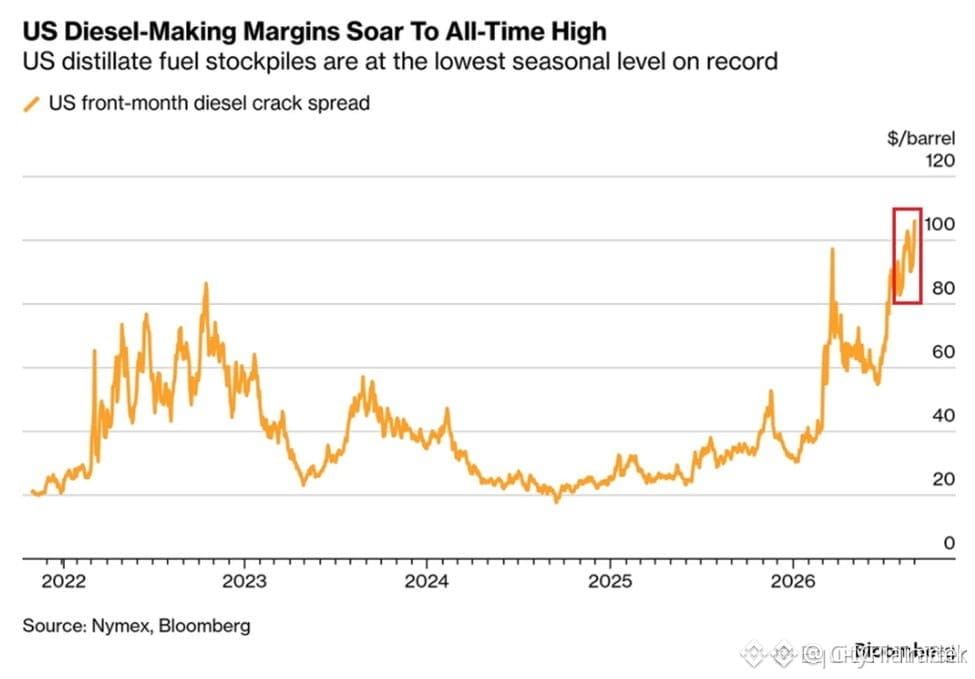
🚨 RECORD $106 REFINING MARGINS SIGNAL SEVERE LIQUIDITY SQUEEZE IN $OIL MARKET! 💥
US diesel refining crack spreads have shattered structural resistance, reaching an unprecedented $106 per barrel while inventories collapse to record lows of 103.4 million barrels. 📊 This supply deficit easily eclipses the 2022 energy crisis peak of $85 per barrel, driven by geopolitical friction and structural bottlenecks.
Because diesel fuels global commerce, this aggressive margin expansion creates an immediate cost-transmission vector across supply chains. ⚡ Elevated institutional energy costs consistently drain macro liquidity, generating headwinds for risk assets. 💡
💬 How are you structuring your portfolio to manage this incoming secondary inflation wave? 👇
⚠️ Not financial advice. Always manage your risk. 🛡️
🏷️ #OIL #Macro #Inflation #Energy #Liquidity
🎯 🦈
US diesel refining crack spreads have shattered structural resistance, reaching an unprecedented $106 per barrel while inventories collapse to record lows of 103.4 million barrels. 📊 This supply deficit easily eclipses the 2022 energy crisis peak of $85 per barrel, driven by geopolitical friction and structural bottlenecks.
Because diesel fuels global commerce, this aggressive margin expansion creates an immediate cost-transmission vector across supply chains. ⚡ Elevated institutional energy costs consistently drain macro liquidity, generating headwinds for risk assets. 💡
💬 How are you structuring your portfolio to manage this incoming secondary inflation wave? 👇
⚠️ Not financial advice. Always manage your risk. 🛡️
🏷️ #OIL #Macro #Inflation #Energy #Liquidity
🎯 🦈

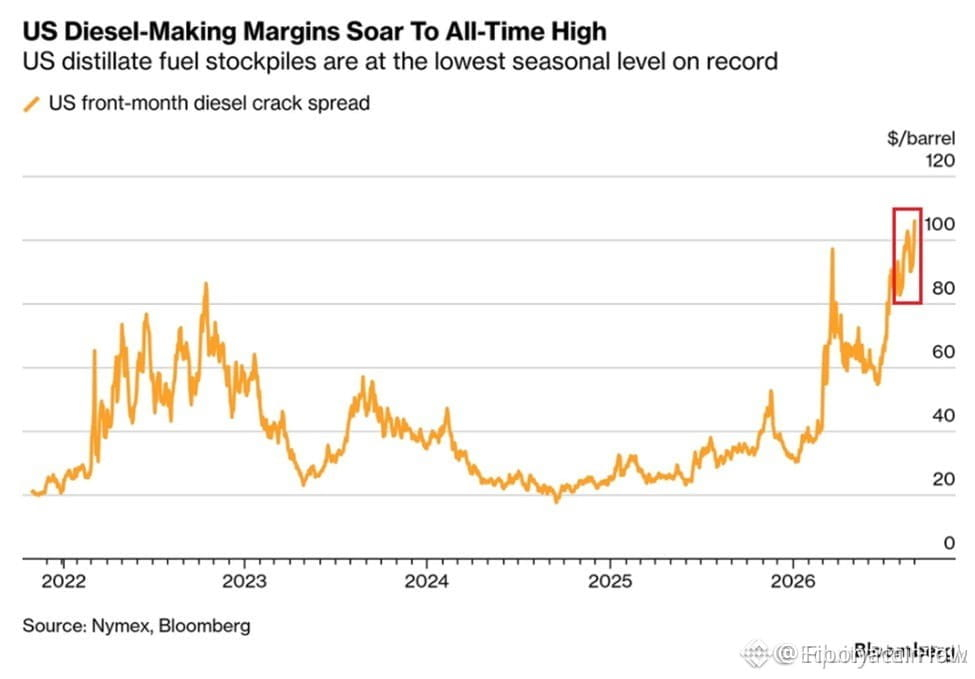
🚨 RECORD $106 DIESEL MARGINS FLASH MASSIVE MACRO INFLATION WARNING FOR $BTC AND $OIL ! 💥
📌 US diesel refining margins just shattered record highs at $106/barrel, eclipsing 2022 energy crisis levels while inventories sink to historic lows of 103.4M barrels. 📊 With retail prices sitting at $5.78/gallon and global supply squeezed by geopolitical friction, the core engine of global transport is running on empty.
⚡ Diesel fuels the supply chain, meaning this margin blow-off will inevitably cascade into broader inflation metrics and risk-asset volatility. 🌊 Smart capital is watching how this supply shock impacts broad liquidity across macro markets. 💬 Do you expect this supply crunch to trigger a broader inflation wave into crypto? 👇
⚠️ Not financial advice. Always manage your risk. 🛡️
🏷️ #OIL #BTC #Macro #Inflation #Crypto
🚨 ⚡
📌 US diesel refining margins just shattered record highs at $106/barrel, eclipsing 2022 energy crisis levels while inventories sink to historic lows of 103.4M barrels. 📊 With retail prices sitting at $5.78/gallon and global supply squeezed by geopolitical friction, the core engine of global transport is running on empty.
⚡ Diesel fuels the supply chain, meaning this margin blow-off will inevitably cascade into broader inflation metrics and risk-asset volatility. 🌊 Smart capital is watching how this supply shock impacts broad liquidity across macro markets. 💬 Do you expect this supply crunch to trigger a broader inflation wave into crypto? 👇
⚠️ Not financial advice. Always manage your risk. 🛡️
🏷️ #OIL #BTC #Macro #Inflation #Crypto
🚨 ⚡


The Venezuela Oil Story Could Become a Crypto Macro Story
The headline sounds like an oil story.
I think traders should look one layer deeper.
Reports describe a major U.S.-Venezuela arrangement involving 17 oil fields and roughly 65B barrels of proven reserves, with major investment needed to rebuild production infrastructure.
But here's the important part:
65B barrels does NOT mean 65B barrels suddenly enter the market.
Production depends on infrastructure, investment, technology and political stability.
So the short-term impact could be very different from the long-term impact.
If Venezuelan production eventually rises meaningfully:
→ More potential supply
→ Lower energy pressure
→ Potentially lower inflation pressure
→ Better conditions for risk assets
But if geopolitical risk keeps crude elevated, the opposite chain can develop.
So don't trade the headline.
Watch Brent + WTI + inflation expectations + BTC.
$JASMY
$WLD
$ONG
#Oil #Geopolitics #Bitcoin
#secnewcryptorulesaimtobringfirmsbacktous
The headline sounds like an oil story.
I think traders should look one layer deeper.
Reports describe a major U.S.-Venezuela arrangement involving 17 oil fields and roughly 65B barrels of proven reserves, with major investment needed to rebuild production infrastructure.
But here's the important part:
65B barrels does NOT mean 65B barrels suddenly enter the market.
Production depends on infrastructure, investment, technology and political stability.
So the short-term impact could be very different from the long-term impact.
If Venezuelan production eventually rises meaningfully:
→ More potential supply
→ Lower energy pressure
→ Potentially lower inflation pressure
→ Better conditions for risk assets
But if geopolitical risk keeps crude elevated, the opposite chain can develop.
So don't trade the headline.
Watch Brent + WTI + inflation expectations + BTC.
$JASMY
$WLD
$ONG
#Oil #Geopolitics #Bitcoin
#secnewcryptorulesaimtobringfirmsbacktous

Verified
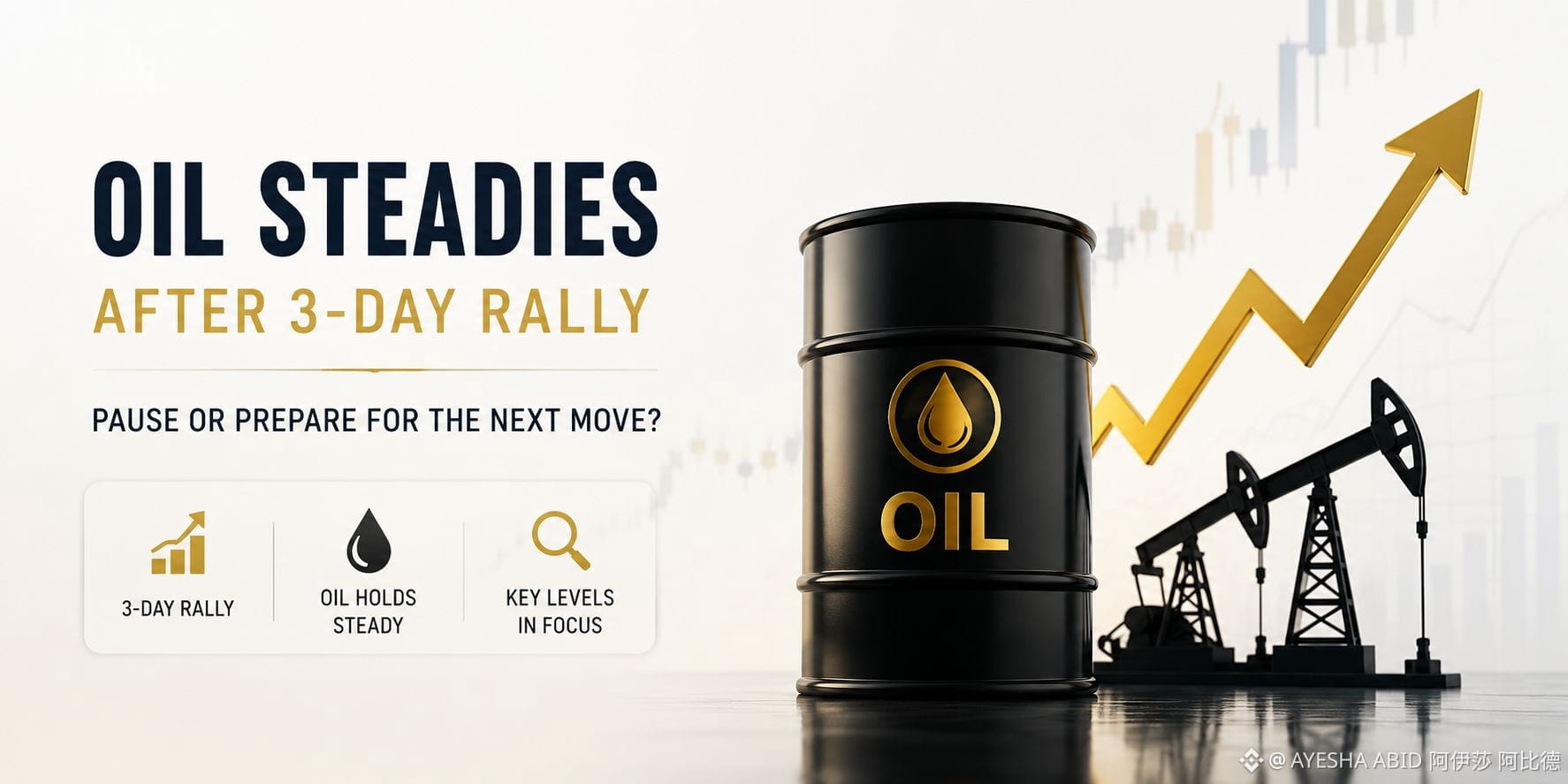
#OilSteadiesAfterThreeDayRally
Oil is pausing after a three day rally and the pause itself may be more important than another green candle.
Brent and WTI are steady after their recent climb, showing some hesitation as traders reassess whether the move still has enough momentum behind it. After three strong sessions, a period of consolidation is normal, especially near recent resistance.
From a market structure view, I’d watch whether buyers continue defending the latest breakout area. Holding above support would keep the short-term bullish structure intact, while a clean loss of that zone could trigger profit-taking and a deeper pullback.
Volume is also important here. If oil pushes higher with expanding volume, that would suggest stronger participation rather than a thin rally. On the other hand, fading volume near resistance could signal exhaustion.
My take: I’m not chasing the move at current levels. I’d rather see a clean breakout or a controlled retest before considering the next direction.
For crypto traders, this matters too higher energy prices can influence inflation expectations, bond yields, and ultimately liquidity across risk assets.
Do you think oil is preparing for another leg higher, or is this rally starting to lose momentum?
$SOL $CL #OIL #IranStrikesUSBaseInKuwait
Oil is pausing after a three day rally and the pause itself may be more important than another green candle.
Brent and WTI are steady after their recent climb, showing some hesitation as traders reassess whether the move still has enough momentum behind it. After three strong sessions, a period of consolidation is normal, especially near recent resistance.
From a market structure view, I’d watch whether buyers continue defending the latest breakout area. Holding above support would keep the short-term bullish structure intact, while a clean loss of that zone could trigger profit-taking and a deeper pullback.
Volume is also important here. If oil pushes higher with expanding volume, that would suggest stronger participation rather than a thin rally. On the other hand, fading volume near resistance could signal exhaustion.
My take: I’m not chasing the move at current levels. I’d rather see a clean breakout or a controlled retest before considering the next direction.
For crypto traders, this matters too higher energy prices can influence inflation expectations, bond yields, and ultimately liquidity across risk assets.
Do you think oil is preparing for another leg higher, or is this rally starting to lose momentum?
$SOL $CL #OIL #IranStrikesUSBaseInKuwait

Partly True
CRUDE $OIL BREAKS OUT AS WTI CLEARS $90 AND BRENT PUSHES PAST $95! 📈
Energy markets are showing undeniable heat as WTI crude oil pushes to $90.01 while Brent crude accelerates to $95.26, both locking in gains above 1%. 📊 When traditional energy commodities flex this kind of structural strength, global liquidity shifts and inflationary tailwinds usually spill directly into broader risk markets.
📌 Smart capital tracks these macro rotations closely because rising energy bids historically reprice market volatility across the board. 💡 Momentum buyers are stepping in fast, absorbing supply right at key psychological barriers. 💬 How are you hedging your risk portfolio as energy prices break into new local highs? 👇
⚠️ Not financial advice. Always manage your risk. 🛡️
🏷️ #OIL #Macro #CrudeOil #Trading #Markets
⚡ 📊
Energy markets are showing undeniable heat as WTI crude oil pushes to $90.01 while Brent crude accelerates to $95.26, both locking in gains above 1%. 📊 When traditional energy commodities flex this kind of structural strength, global liquidity shifts and inflationary tailwinds usually spill directly into broader risk markets.
📌 Smart capital tracks these macro rotations closely because rising energy bids historically reprice market volatility across the board. 💡 Momentum buyers are stepping in fast, absorbing supply right at key psychological barriers. 💬 How are you hedging your risk portfolio as energy prices break into new local highs? 👇
⚠️ Not financial advice. Always manage your risk. 🛡️
🏷️ #OIL #Macro #CrudeOil #Trading #Markets
⚡ 📊
Energy markets experienced a sharp upward surge today as WTI crude jumped over 2% to trade around $90.90 per barrel, while Brent crude climbed 1.81% to break above the $96 mark. This rapid escalation in benchmark crude highlights persistent tightness in global energy supplies and renewed bullish momentum across commodity desks.
The resurgence in oil prices poses a major challenge to the ongoing disinflation narrative. Higher energy costs directly feed into transportation and manufacturing expenses, raising concerns that headline inflation could remain sticky above central bank targets for longer than the market previously anticipated.
Across traditional finance, sustained high energy prices tend to push benchmark Treasury yields higher and strengthen the US dollar, as traders price in a more hawkish stance from the Federal Reserve to curb potential second-round inflation effects. This macro backdrop limits the room for near-term monetary easing.
For crypto assets like $BTC , rising yields and a stronger dollar typically constrain speculative liquidity and elevate risk-off sentiment. If elevated energy prices continue to weigh on macroeconomic conditions, digital assets may face near-term consolidation until global liquidity conditions improve.
#oil #inflation #macro
The resurgence in oil prices poses a major challenge to the ongoing disinflation narrative. Higher energy costs directly feed into transportation and manufacturing expenses, raising concerns that headline inflation could remain sticky above central bank targets for longer than the market previously anticipated.
Across traditional finance, sustained high energy prices tend to push benchmark Treasury yields higher and strengthen the US dollar, as traders price in a more hawkish stance from the Federal Reserve to curb potential second-round inflation effects. This macro backdrop limits the room for near-term monetary easing.
For crypto assets like $BTC , rising yields and a stronger dollar typically constrain speculative liquidity and elevate risk-off sentiment. If elevated energy prices continue to weigh on macroeconomic conditions, digital assets may face near-term consolidation until global liquidity conditions improve.
#oil #inflation #macro


Brent crude oil traded lower during today's session, sliding 1.00% to hover around $93.35 per barrel. This downward movement marks a notable intraday correction amid persistent volatility across global commodity benchmarks.
Energy prices remain one of the most critical inputs for headline inflation readings worldwide. A pullback in crude offers temporary breathing room for central banks, as easing oil pressures help alleviate sticky inflation concerns and temper the risk of a prolonged higher-for-longer interest rate regime.
For the broader financial landscape, softening crude prices typically help ease upward pressure on sovereign bond yields and stabilize currency markets. If oil continues its descent, reduced input costs could also provide a tailwind for traditional equity markets seeking macro stability.
In the crypto space, declining energy-driven inflation fears can bolster risk appetite across digital assets like $BTC . When macro liquidity conditions improve and systemic inflation risks cool off, capital often finds its way back into speculative and growth-oriented markets.
#oil #energy #macro
Energy prices remain one of the most critical inputs for headline inflation readings worldwide. A pullback in crude offers temporary breathing room for central banks, as easing oil pressures help alleviate sticky inflation concerns and temper the risk of a prolonged higher-for-longer interest rate regime.
For the broader financial landscape, softening crude prices typically help ease upward pressure on sovereign bond yields and stabilize currency markets. If oil continues its descent, reduced input costs could also provide a tailwind for traditional equity markets seeking macro stability.
In the crypto space, declining energy-driven inflation fears can bolster risk appetite across digital assets like $BTC . When macro liquidity conditions improve and systemic inflation risks cool off, capital often finds its way back into speculative and growth-oriented markets.
#oil #energy #macro

#oilsteadiesafterthreedayrally #Oil prices jumped about 4% to a one-week high on Tuesday as a resumption in fighting between the #US and #Iran
renewed fears of supply disruptions from the Middle East.
Brent futures rose $3.44, or 3.8%, to $93.93 a barrel at 1.10pm EDT (1710 GMT), while US West Texas Intermediate crude rose $3.72, or 4.3%, to $89.48.
That puts Brent on track for its highest close since August 20 and WTI on track for its highest close since July 23.$BR $SNOW $USELESS
renewed fears of supply disruptions from the Middle East.
Brent futures rose $3.44, or 3.8%, to $93.93 a barrel at 1.10pm EDT (1710 GMT), while US West Texas Intermediate crude rose $3.72, or 4.3%, to $89.48.
That puts Brent on track for its highest close since August 20 and WTI on track for its highest close since July 23.$BR $SNOW $USELESS
Log in to explore more content