

Wbe3数据
113 Posts

Wbe3数据
Report
Block User
行情分享数据
Open Trade
Occasional Trader
5.1 Years
72 Following
181 Followers
64 Liked
Posts
Portfolio
All
Quotes
·
--
Article
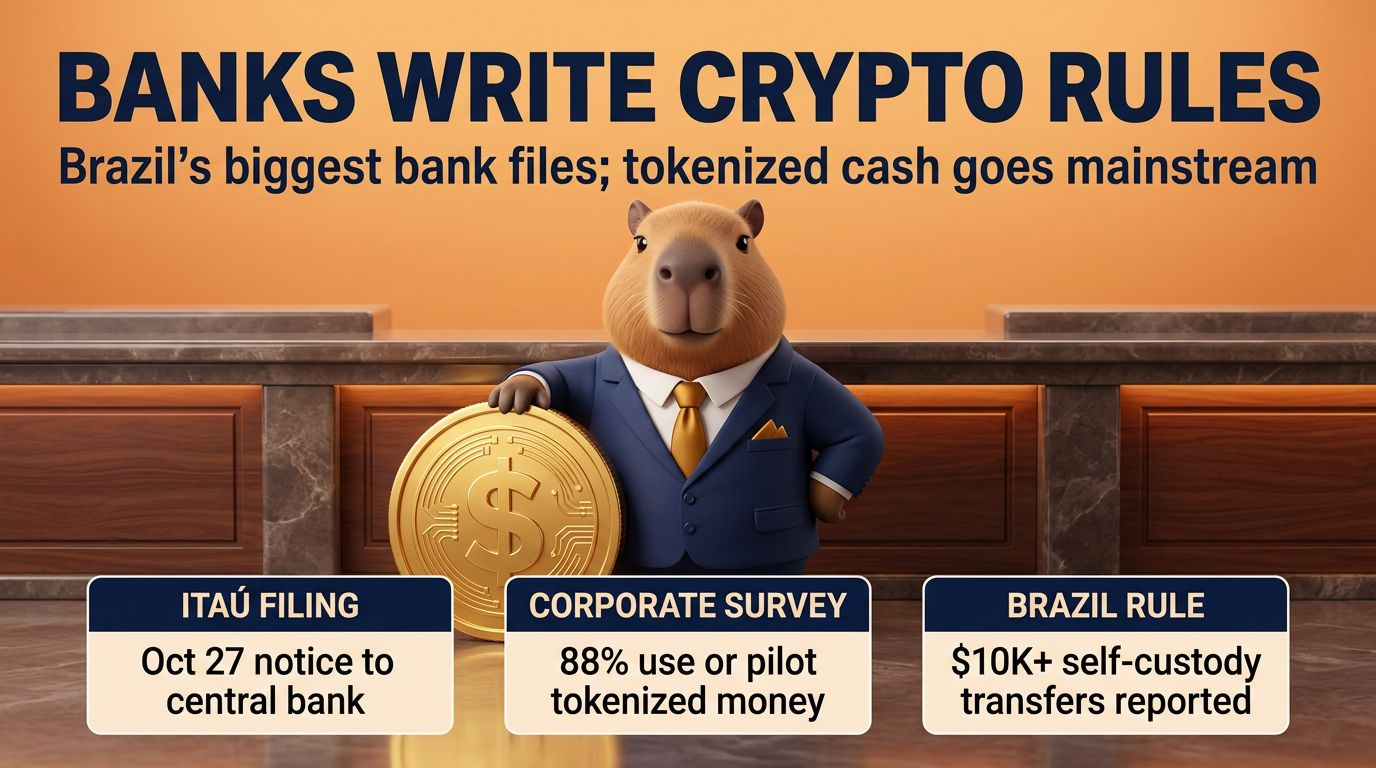
Banks Are Writing Crypto Into Their RulebooksCrypto is increasingly being written into the paperwork of mainstream finance. This week offered a clean example: Brazil's largest private bank formalized its crypto business with the central bank, while a survey of big corporate treasurers suggests tokenized money is already a working tool, not a lab experiment. Here is what actually happened, what it does not mean, and what to watch next.
1) What Itaú actually did
Itaú Unibanco said in an official notice dated October 27 that it formalized its crypto brokerage and custody activity with Banco Central do Brasil. According to reporting by Blockchain Reporter, this was a notification rather than a new license. Brazil built two tracks into its framework: dedicated virtual-asset providers must apply for authorization and wait for approval, while an already-licensed bank simply communicates its activity to the regulator and must meet the same conduct, governance and anti-money-laundering obligations.
The important nuance: this is not a product launch. The same report says Itaú has offered crypto purchases and sales since December 2023 and lists more than 14 virtual assets, including BTC, ETH and USDC. What changed is the legal footing underneath an existing business. The bank also declined to disclose client numbers or volumes, so the filing tells us little about how many Brazilians actually use bank-offered crypto.
2) The rulebook behind it
Brazil assembled its regime in stages. Law 14.478 of 2022 named the central bank as supervisor. Resolutions 519, 520 and 521 took effect on February 2, 2026 and created the formal provider categories: intermediary, custodian and broker. Resolutions 588 and 589, published September 23, tightened the framework and took effect October 1. October is also the final month for providers already operating to formalize their authorization requests.
One detail stands out for everyday users: transfers to or from self-custodied wallets worth the equivalent of US$10,000 or more must be reported to Coaf, Brazil's financial-intelligence unit. That is a concrete compliance cost, and it shows how regulators try to regain visibility when users hold their own keys.
The same regime is reshaping global platforms too. Blockchain Reporter notes that Binance restricted eight services and delisted 22 tokens in Brazil earlier this week to comply with the same central bank rules. Whatever your view on the rules, local licensing is becoming the price of admission in large markets.
3) Corporates are testing tokenized money
A separate data point, reported by CoinDesk and summarized in a daily digest: a DBS survey run by EY polled 422 business and finance leaders across 11 markets, all at companies with more than $500 million in annual revenue. 88% said they use or pilot tokenized money. Stablecoins led, with 63% using them or planning to, ahead of tokenized deposits at 53% and tokenized money market funds at 52%. And 71% said their cross-border payments have improved or will within two years.
Treat survey numbers with care. "Use or pilot" is a broad bucket, and a pilot can be tiny. But the direction is consistent with the rest of the month: banks, card networks and payment firms keep adding stablecoin and tokenization rails, and the most cited benefit is faster, cheaper cross-border settlement.
4) Why this matters for crypto users
First, regulated on-ramps expand the audience. When a household-name bank offers crypto inside its investment app, buying it becomes as ordinary as buying a fund. That can bring in a more cautious crowd.
Second, custody becomes the real question. Assets held by a bank sit under the bank's controls, subject to its compliance rules. Assets in your own wallet are yours to manage, along with every security responsibility that comes with it. Neither is automatically better; they are different trade-offs, and mainstream adoption will push more people to decide consciously.
Third, compliance moves from the edges to the center. Reporting thresholds, delistings and service restrictions are not bearish or bullish on their own. They change which products are available where, and who can offer them.
5) What it does not mean
It does not mean a price catalyst. Nothing in the filing changes supply or demand for any token overnight. It does not mean other banks will follow on a set schedule; reports point to peers such as Nubank and BTG Pactual as names to watch, but that is a thing to monitor, not a certainty. And it does not prove mass adoption, since the bank gave no usage figures.
6) What to watch next
• Whether other large Brazilian lenders file in the coming weeks, which the regulator's public registry should reveal.
• How providers handle the self-custody reporting rule, which could change how users move funds.
• Which more jurisdictions copy the two-track model: light notification for licensed banks, full authorization for crypto-native firms.
• Whether more corporate pilots turn into disclosed production volume.
The takeaway: the loudest crypto stories are often price moves, but the slow, structural ones are rules, licenses and rails. They decide who can reach crypto, how, and under whose supervision. Keep an eye on those, because they tend to outlast any single day's candle.
Which matters more to you: the convenience of a bank-held crypto account, or full control of your own keys? Tell me in the comments.
Sources: Blockchain Reporter, Zypto daily digest, CoinDesk (via digest). Facts as reported on Oct 29, 2026.
#CryptoRegulation #Stablecoins #Tokenization
Not financial advice.
Banks Are Writing Crypto Into Their Rulebooks
Crypto is increasingly being written into the paperwork of mainstream finance. This week offered a clean example: Brazil's largest private bank formalized its crypto business with the central bank, while a survey of big corporate treasurers suggests tokenized money is already a working tool, not a lab experiment. Here is what actually happened, what it does not mean, and what to watch next.
1) What Itaú actually did
Itaú Unibanco said in an official notice dated October 27 that it formalized its crypto brokerage and custody activity with Banco Central do Brasil. According to reporting by Blockchain Reporter, this was a notification rather than a new license. Brazil built two tracks into its framework: dedicated virtual-asset providers must apply for authorization and wait for approval, while an already-licensed bank simply communicates its activity to the regulator and must meet the same conduct, governance and anti-money-laundering obligations.
The important nuance: this is not a product launch. The same report says Itaú has offered crypto purchases and sales since December 2023 and lists more than 14 virtual assets, including BTC, ETH and USDC. What changed is the legal footing underneath an existing business. The bank also declined to disclose client numbers or volumes, so the filing tells us little about how many Brazilians actually use bank-offered crypto.
2) The rulebook behind it
Brazil assembled its regime in stages. Law 14.478 of 2022 named the central bank as supervisor. Resolutions 519, 520 and 521 took effect on February 2, 2026 and created the formal provider categories: intermediary, custodian and broker. Resolutions 588 and 589, published September 23, tightened the framework and took effect October 1. October is also the final month for providers already operating to formalize their authorization requests.
One detail stands out for everyday users: transfers to or from self-custodied wallets worth the equivalent of US$10,000 or more must be reported to Coaf, Brazil's financial-intelligence unit. That is a concrete compliance cost, and it shows how regulators try to regain visibility when users hold their own keys.
The same regime is reshaping global platforms too. Blockchain Reporter notes that Binance restricted eight services and delisted 22 tokens in Brazil earlier this week to comply with the same central bank rules. Whatever your view on the rules, local licensing is becoming the price of admission in large markets.
3) Corporates are testing tokenized money
A separate data point, reported by CoinDesk and summarized in a daily digest: a DBS survey run by EY polled 422 business and finance leaders across 11 markets, all at companies with more than $500 million in annual revenue. 88% said they use or pilot tokenized money. Stablecoins led, with 63% using them or planning to, ahead of tokenized deposits at 53% and tokenized money market funds at 52%. And 71% said their cross-border payments have improved or will within two years.
Treat survey numbers with care. "Use or pilot" is a broad bucket, and a pilot can be tiny. But the direction is consistent with the rest of the month: banks, card networks and payment firms keep adding stablecoin and tokenization rails, and the most cited benefit is faster, cheaper cross-border settlement.
4) Why this matters for crypto users
First, regulated on-ramps expand the audience. When a household-name bank offers crypto inside its investment app, buying it becomes as ordinary as buying a fund. That can bring in a more cautious crowd.
Second, custody becomes the real question. Assets held by a bank sit under the bank's controls, subject to its compliance rules. Assets in your own wallet are yours to manage, along with every security responsibility that comes with it. Neither is automatically better; they are different trade-offs, and mainstream adoption will push more people to decide consciously.
Third, compliance moves from the edges to the center. Reporting thresholds, delistings and service restrictions are not bearish or bullish on their own. They change which products are available where, and who can offer them.
5) What it does not mean
It does not mean a price catalyst. Nothing in the filing changes supply or demand for any token overnight. It does not mean other banks will follow on a set schedule; reports point to peers such as Nubank and BTG Pactual as names to watch, but that is a thing to monitor, not a certainty. And it does not prove mass adoption, since the bank gave no usage figures.
6) What to watch next
• Whether other large Brazilian lenders file in the coming weeks, which the regulator's public registry should reveal.
• How providers handle the self-custody reporting rule, which could change how users move funds.
• Which more jurisdictions copy the two-track model: light notification for licensed banks, full authorization for crypto-native firms.
• Whether more corporate pilots turn into disclosed production volume.
The takeaway: the loudest crypto stories are often price moves, but the slow, structural ones are rules, licenses and rails. They decide who can reach crypto, how, and under whose supervision. Keep an eye on those, because they tend to outlast any single day's candle.
Which matters more to you: the convenience of a bank-held crypto account, or full control of your own keys? Tell me in the comments.
Sources: Blockchain Reporter, Zypto daily digest, CoinDesk (via digest). Facts as reported on Oct 29, 2026.
#CryptoRegulation #Stablecoins #Tokenization
Not financial advice.
37
·
--
A stablecoin just got a credit rating, and it is not a small one.
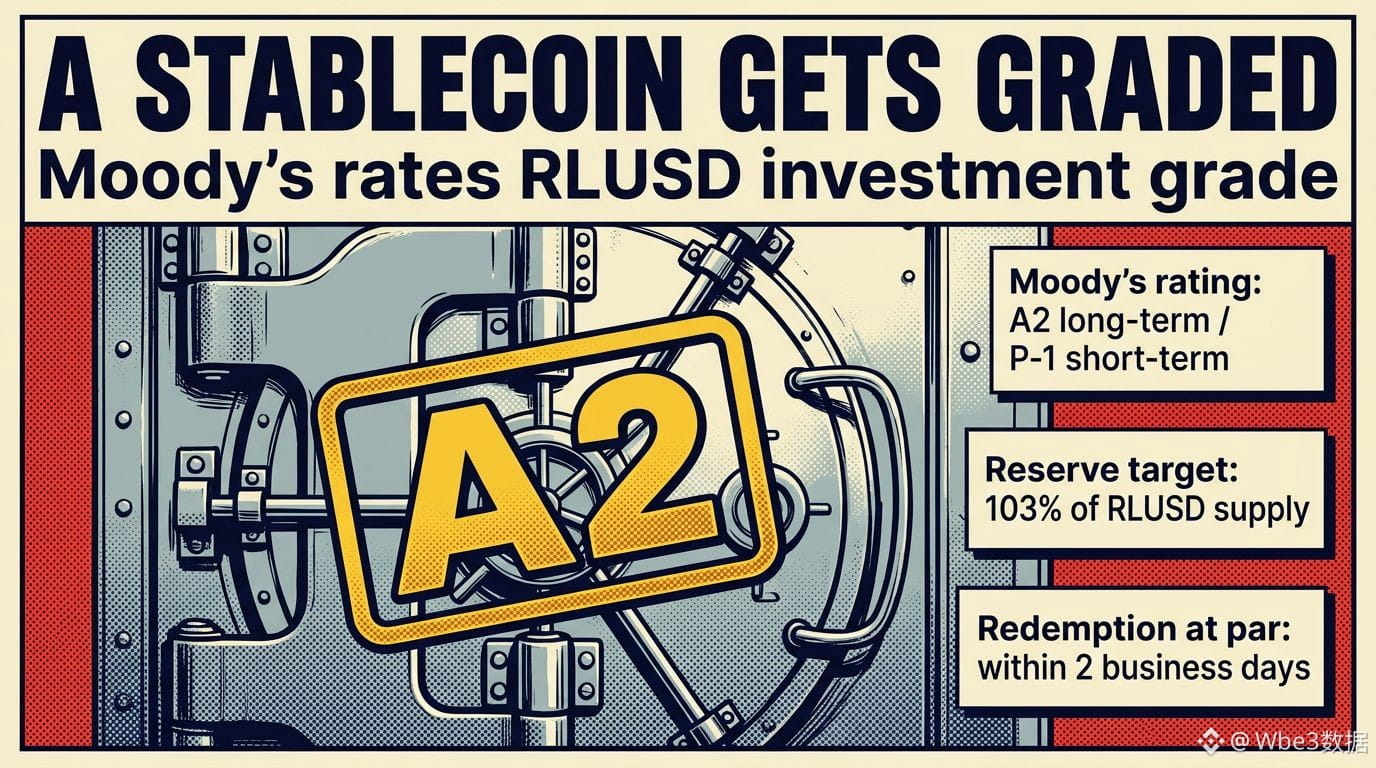
Moody's assigned Ripple's RLUSD an A2 long-term and P-1 short-term deposit rating on Oct 27. Ripple says it is the first stablecoin ever to receive an investment-grade rating from Moody's. For context, Moody's gave Sky Protocol, the team behind USDS and DAI, a B3 rating earlier this month, which sits in speculative territory. Note that was a rating of the protocol as an entity, not of the coins themselves.
What stands out in the details:
• The issuer targets 103% reserve coverage, mostly short-duration US government assets and cash, held mainly at BNY.
• Eligible institutions can redeem at par within two full business days.
• Distribution is widening fast: Coinbase added RLUSD across its app, Exchange and Prime on Oct 28, after Ripple won final OCC approval for a national trust bank.
Why it matters: stablecoin supply is roughly $305.5B, about 3.7% below May's record, so growth now depends on trust and regulation, not hype. With the GENIUS Act regime starting Jan 18, 2027, ratings from legacy agencies could become a real filter for banks, fintechs and payment firms choosing which coins to touch.
The catch: Moody's flagged issuer bankruptcy as a risk. An automatic stay could delay redemptions, and holders do not directly own the reserve assets. An A2 is a credit opinion, not a guarantee of the peg.
Do you think investment-grade ratings will decide which stablecoins institutions adopt, or will liquidity still win? Tell me below.
#Stablecoins #RLUSD #Ripple
Not financial advice.
53
·
--
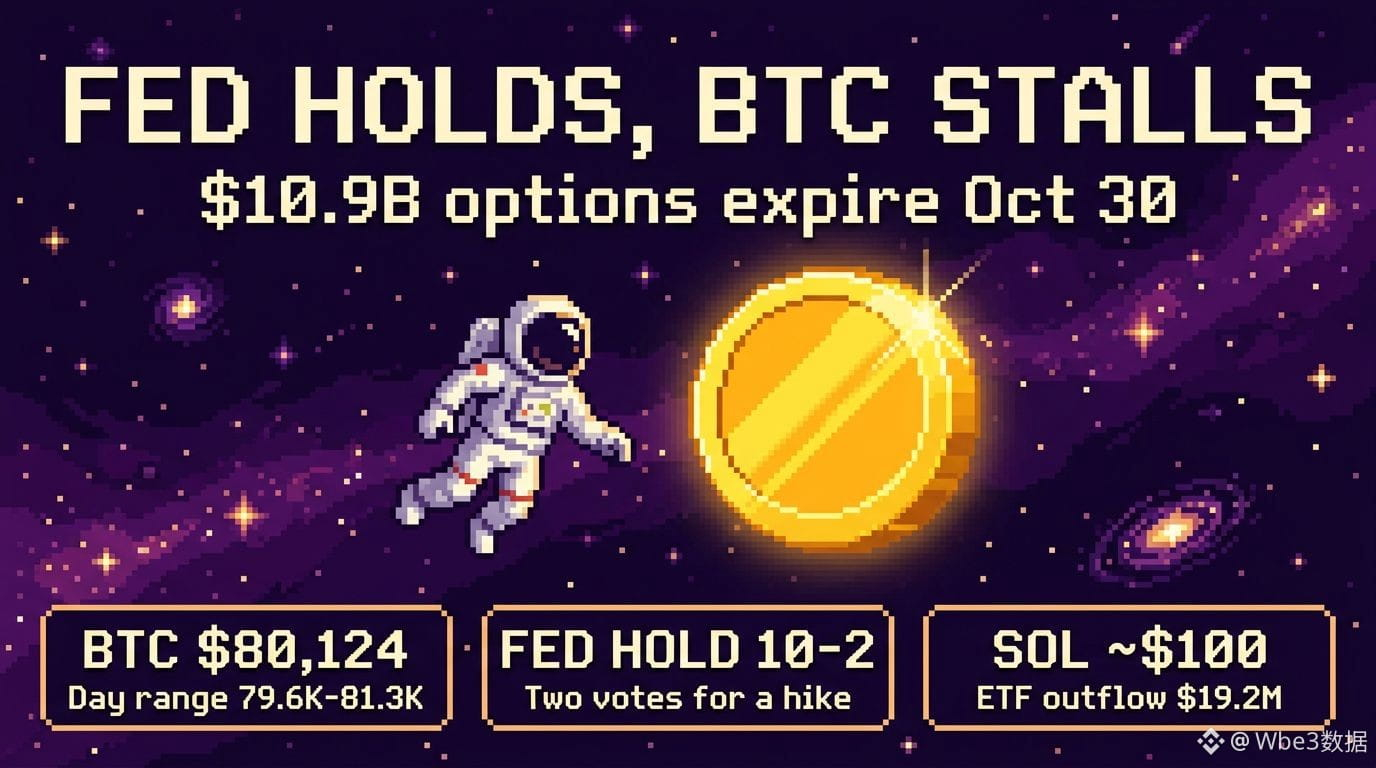
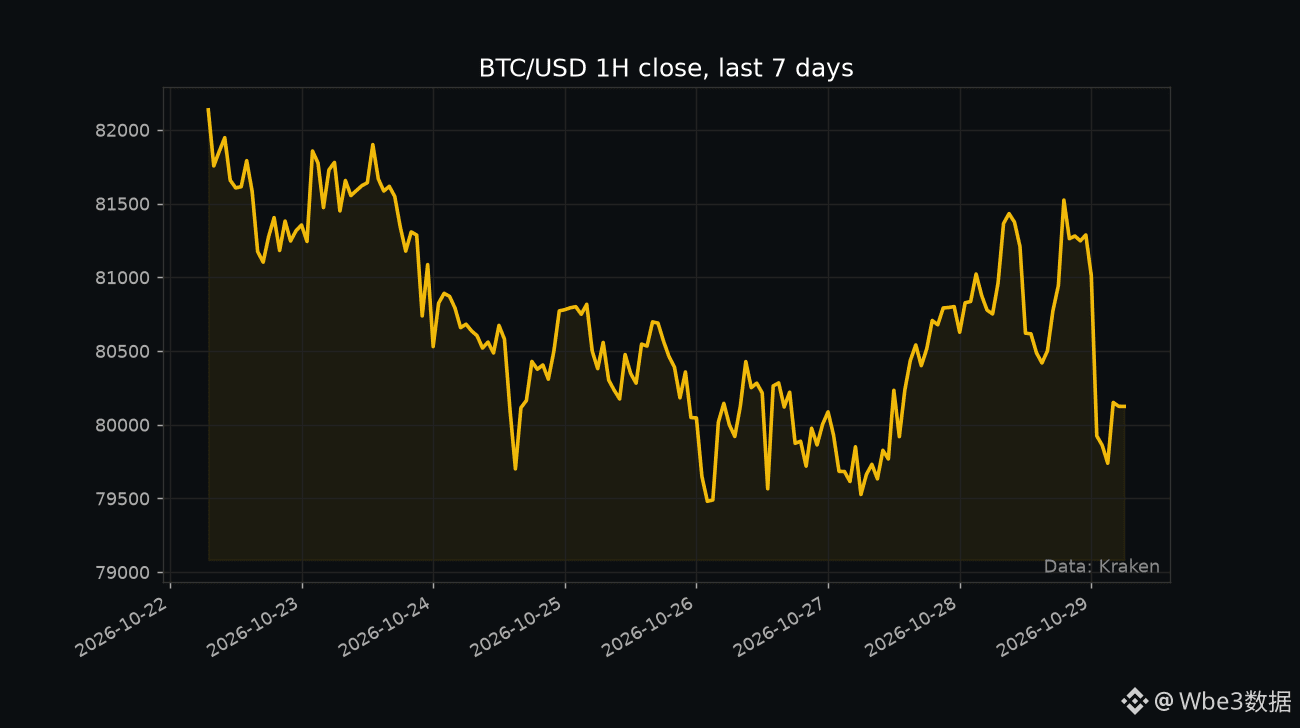
The Fed held at 3.75%-4.00% with a 10-2 vote, and both dissents wanted a hike. Bitcoin popped toward $81,500 after the decision, then gave it back. $BTC is now near $80,100, inside a $79.6K-$81.3K range today, and the chart shows a week of lower highs.
What I'm watching:
- Resistance: $81.5K-$82K. That's where the post-Fed bounce stalled.
- Support: ~$79.5K, which held twice this week (Oct 26 and Oct 27).
- Catalyst: about $10.9B in BTC options notional expires on Oct 30. Notional isn't volume, but hedging flows around expiry can thin liquidity and exaggerate moves.
- Macro: December is now the next real rate event, and markets are pricing a non-trivial chance of a hike. Hawkish dissents are why rallies keep fading.
$SOL is a quieter setup near $100. Spot SOL ETFs saw $19.16M of net outflows on Oct 27, while Jupiter and BitGo launched an institutional validator. Staking access is expanding, but that is not the same as new capital arriving. I'd want to see ETF flows turn positive before calling a trend.
Risks: a clean break below $79.5K would open the door to a deeper flush, and expiry-week volatility cuts both ways. A close above $82K would change the picture.
Where do you think BTC settles into expiry: stuck in this range, or a break?
#Bitcoin #Solana #FOMC
Data: Kraken, Coinbase, MEXC daily brief, Binance News. Not financial advice.
30
·
--
Banks are starting to issue their own stablecoins—and putting them directly into the payment apps ordinary people use every day.
According to CoinDesk, HSBC has launched RedCoin, its first stablecoin: a Hong Kong dollar stablecoin available in its PayMe app:
• More than 3.3 million users can use it to send money
• It can be used to pay at over 100,000 merchants
• HSBC says its next step is to launch tokenized investment products
That same week, another development moved forward: On October 21, the U.S. OCC issued the first final rule under the GENIUS Act. The federal regulatory framework for stablecoin issuers will take effect on January 18, 2027. JPMorgan’s deposit token, JPM Coin, has also opened access to the Ethereum network to institutional clients.
My take: The stablecoin narrative is shifting from “dollar substitutes on exchanges” to “the underlying settlement tools of banks and payment apps.” For users, it may simply feel like having one more way to pay. For the industry, there will be more compliant issuers and banks, and competition will intensify.
One thing to keep in mind: This is a compliant Hong Kong dollar stablecoin issued by a bank, and its risk profile differs from that of decentralized on-chain stablecoins. Check official announcements for the specific terms and scope of use.
Would you rather use a stablecoin issued by a bank, or stick with established on-chain stablecoins? Share your thoughts in the comments.
Source: CoinDesk (2026-10-28)
#稳定币 #汇丰 #Payments
Not investment advice

115
·
--
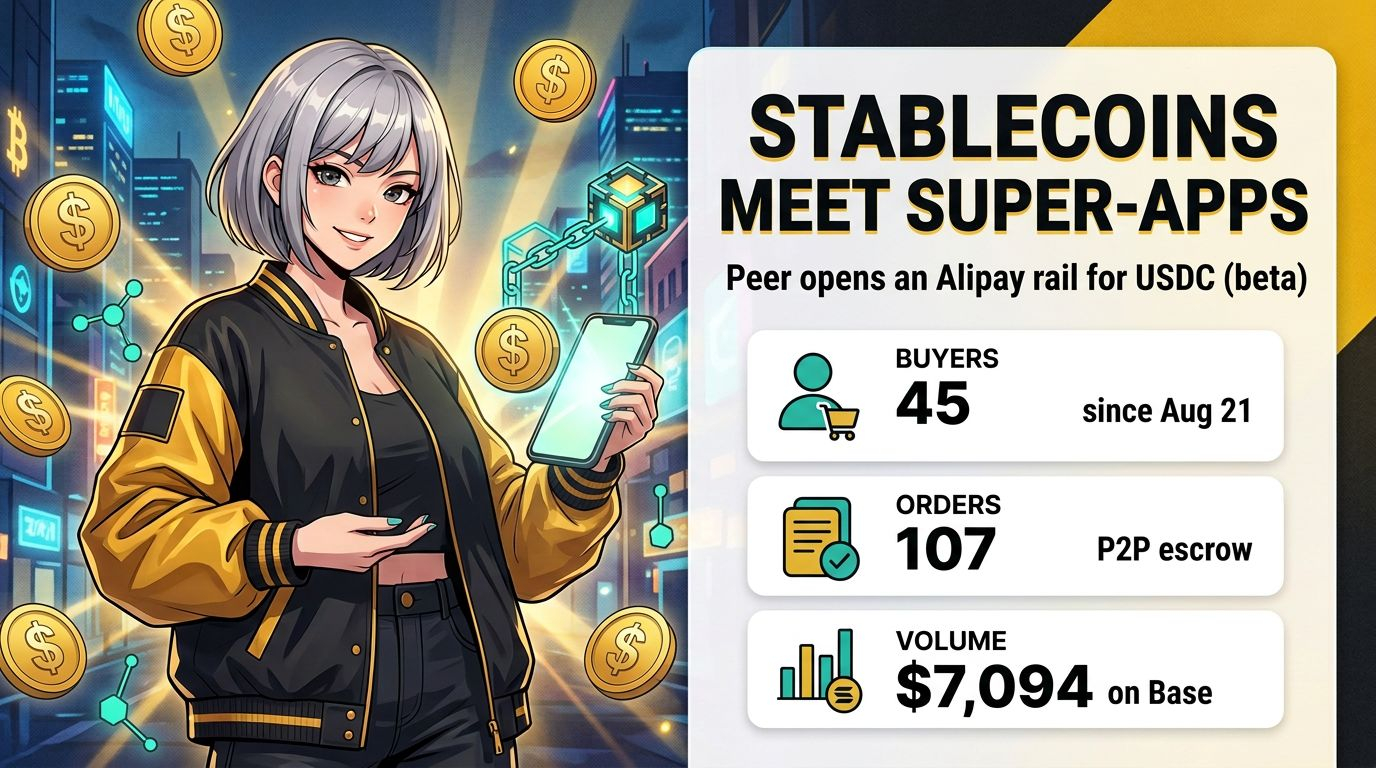
"Alipay now accepts USDC" is the headline going around today. The real story is smaller, and more interesting.
What actually happened: Peer, the peer-to-peer protocol formerly known as ZKP2P, opened a beta route where a buyer pays a seller in yuan through Alipay and receives $USDC on Base. Alipay itself has not announced anything. It is simply the payment rail between two users, while a smart contract holds the seller's USDC in escrow and releases it once the payment is proven.
The numbers so far, per Peer's official account:
• 45 buyers
• 107 orders
• about $7,094 in volume since Aug 21
That is tiny. But the design matters. Payment is verified with buyer-generated proofs or a trusted execution environment (TEE), so no exchange ever custodies the trade. Peer already supports Venmo, PayPal, Cash App, Zelle, Revolut and Wise, and adding the world's biggest mobile wallet as a rail is a notable step for on-ramps.
Context: stablecoins keep moving into mainstream payments this month. Visa Direct put USDC prefunding into production, and Mastercard launched a fiat-plus-stablecoin platform with BVNK.
Before you get excited:
• Limits, fees and regional availability for the Alipay beta are not public.
• Local rules on crypto and P2P trades differ a lot by country. Check yours.
• Peer's team has warned about impersonators asking for transfers or verification codes. Real P2P apps never need your codes.
Is this the start of stablecoins riding on super-apps, or a niche beta that stays niche?
#Stablecoins #USDC #Payments
Not financial advice.
7
·
--
Article
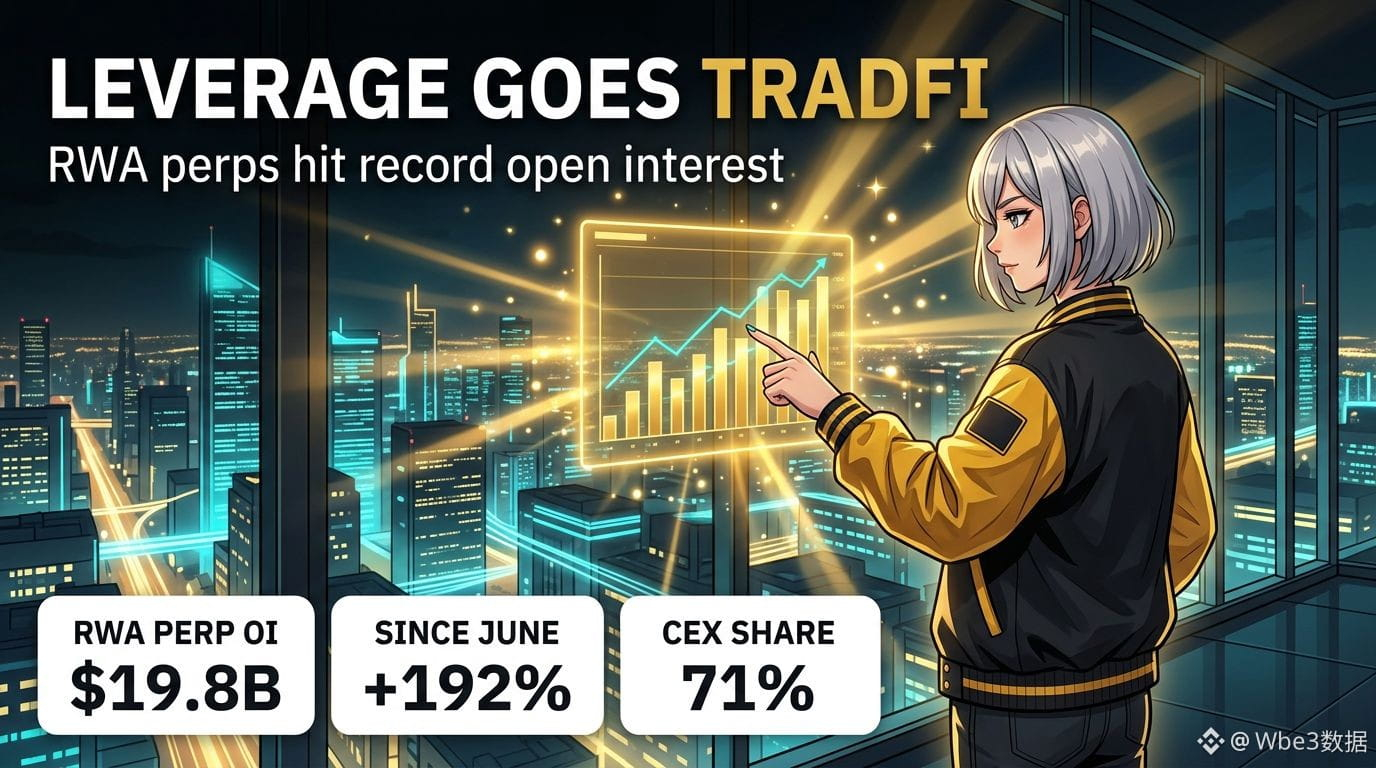
Crypto's Leverage Is Moving to Wall Street PricesCrypto's favorite product is perpetual futures. For years that meant one thing: leveraged bets on Bitcoin, Ether and a long tail of altcoins. This October, the story quietly changed. The fastest-growing corner of the perp market is no longer about crypto prices at all. It's about Wall Street prices.
Open interest in perpetual futures tied to real-world assets (RWA perps), meaning stocks, stock indexes, gold, silver and oil, has climbed to a record of roughly $19.8 billion, according to CryptoRank data dated October 26. That is up about 192% from $6.7 billion in June. Monthly snapshots tracked by the same data set read like a staircase: $4 billion in May, $8.8 billion in July, $9.9 billion in August, $14 billion in September, and now nearly $20 billion.
Why this matters: it shows where traders' appetite for leverage has been moving while crypto-native markets cool.
THE OTHER SIDE OF THE TRADE
Talos, an institutional trading infrastructure firm, put numbers on the mirror image. Total perpetual open interest it tracks fell from about $81 billion to about $67 billion over the past year. Bitcoin lost roughly $8 billion of open interest, Ether about $5 billion, and smaller tokens a combined $10 billion. Over the same stretch, RWA perps went from near zero to about $9 billion in Talos's tracking, around 14% of the total.
Notice that the two data sets measure different universes, so the exact figures don't line up (CryptoRank counts more venues). But they point the same direction: leverage did not disappear, it changed what it references.
A useful backdrop is the October 2025 deleveraging event, when roughly $19 billion in leveraged positions were wiped out in a single day. A year later, many crypto-native traders are still gun-shy, and the numbers on the retail side say the same. Robinhood reported this week that its crypto revenue fell 55% year over year in the third quarter to $120 million, while its event-contract business brought in $173 million. Attention is rotating.
WHO IS BUILDING THIS, AND WHERE
Two different kinds of venues are competing here.
Centralized exchanges hold about 71% of RWA perp open interest, leading in single stocks, precious metals and oil. Public equities are the largest category at around $9 billion, with metals and oil behind them. Binance, for example, now lists more than 200 TradFi instruments, according to Talos.
Decentralized venues hold the other 29%, and they dominate one niche: stock index perps, where DEXs account for about 89% of open interest. Hyperliquid has been the center of gravity for on-chain index exposure.
The market share picture is also moving quickly. A TokenPost analysis showed the largest on-chain venue in this niche, Trade[XYZ], seeing its share of tracked RWA perp open interest fall from 77% to 48% in the week of October 19, as Binance and Gate.io grew. Binance's tracked open interest jumped from about $150 million to about $1.54 billion in a few weeks, and Gate.io's from about $650 million to about $1.5 billion. Meanwhile Ripple Prime started offering RWA perpetual swaps to institutional clients on October 15. Everyone wants a seat.
A QUICK PRIMER FOR NEWER READERS
A perpetual future is a derivative with no expiry date. Traders can hold a leveraged position as long as they keep enough collateral, and a funding payment between longs and shorts keeps the contract price close to the underlying price.
An RWA perp is simply a perp whose underlying is not a crypto token. The contract tracks the price of, say, a stock index or an ounce of gold through an oracle, and it settles in stablecoins. Importantly, it is a price bet, not ownership. You don't hold the shares or the metal, and there is no on-chain custody of the real asset. That is different from tokenized stocks, where a token is meant to represent the actual security.
WHY THE BOOM MAY BE LESS SOLID THAN IT LOOKS
Three reasons to stay measured.
1. Demand may be thinner than the headline. Analysts reviewing Brent crude perp data on Hyperliquid and Binance found that weekend trading was only about 10% to 11% of total volume, even though weekends are about 29% of the week. In other words, the headline selling point, round-the-clock trading, seems to matter mostly in unusual news-heavy moments rather than every day.
2. Institutions are not clearly on board. Reports this year quoted a JPMorgan trading desk describing limited institutional demand for perpetuals, and CME's chief executive said in July that clients had never asked for such products. Whether that changes as Ripple Prime and others court institutions is an open question.
3. Part of this is migration, not new money. If open interest in BTC and ETH is shrinking while RWA perps grow, some of the growth is leverage moving from one product to another. The numbers also disagree on scale: CryptoRank's share estimate for RWA is much higher than Talos's 14%, because the datasets differ. Treat any single figure with caution.
There is also regulatory friction. Robinhood's CEO said on this week's earnings call that uncertainty about how long US tokenization rules will last could keep serious assets away from on-chain markets. That's about tokenized securities rather than perps, but it shows how unsettled the rulebook still is.
WHAT TO WATCH NEXT
• Whether RWA perp open interest keeps climbing if Bitcoin stabilizes. If leverage returns to crypto-native contracts, this share could shrink.
• Venue concentration: do centralized exchanges keep taking share from on-chain platforms?
• Funding rates and liquidation data when equity markets move sharply. A fast gap in a stock index can hit crypto-settled positions hard, especially off-hours.
• Any formal guidance from regulators on derivatives that reference stocks.
Today's market context: Bitcoin is around $80,600 and Ether around $2,335 ahead of the Federal Reserve decision. On-chain, DEX trading volume was about $7.06 billion over the past 24 hours, down roughly 16% on the day and 21% on the week according to DefiLlama, a reminder that spot-style activity is quiet while traders position for macro events.
THE TAKEAWAY
Crypto trading rails are becoming general-purpose leverage rails. That can broaden the user base, but it also means your risk may now depend on the Nasdaq, oil prices or a gold spike rather than on anything about blockchains. If you trade these products, understand the oracle, the funding mechanics, the margin rules and the liquidation price before sizing anything, and never use money you can't afford to lose.
Data sources: CryptoRank, Talos via Crypto Briefing, TokenPost, DefiLlama, Coinbase, Reuters, Cointelegraph.
Are you trading more crypto-native perps or TradFi-linked ones lately? Tell me what's driving your choice.
#RWA #Perpetuals #CryptoMarkets
Not financial advice.
Crypto's Leverage Is Moving to Wall Street Prices
Crypto's favorite product is perpetual futures. For years that meant one thing: leveraged bets on Bitcoin, Ether and a long tail of altcoins. This October, the story quietly changed. The fastest-growing corner of the perp market is no longer about crypto prices at all. It's about Wall Street prices.
Open interest in perpetual futures tied to real-world assets (RWA perps), meaning stocks, stock indexes, gold, silver and oil, has climbed to a record of roughly $19.8 billion, according to CryptoRank data dated October 26. That is up about 192% from $6.7 billion in June. Monthly snapshots tracked by the same data set read like a staircase: $4 billion in May, $8.8 billion in July, $9.9 billion in August, $14 billion in September, and now nearly $20 billion.
Why this matters: it shows where traders' appetite for leverage has been moving while crypto-native markets cool.
THE OTHER SIDE OF THE TRADE
Talos, an institutional trading infrastructure firm, put numbers on the mirror image. Total perpetual open interest it tracks fell from about $81 billion to about $67 billion over the past year. Bitcoin lost roughly $8 billion of open interest, Ether about $5 billion, and smaller tokens a combined $10 billion. Over the same stretch, RWA perps went from near zero to about $9 billion in Talos's tracking, around 14% of the total.
Notice that the two data sets measure different universes, so the exact figures don't line up (CryptoRank counts more venues). But they point the same direction: leverage did not disappear, it changed what it references.
A useful backdrop is the October 2025 deleveraging event, when roughly $19 billion in leveraged positions were wiped out in a single day. A year later, many crypto-native traders are still gun-shy, and the numbers on the retail side say the same. Robinhood reported this week that its crypto revenue fell 55% year over year in the third quarter to $120 million, while its event-contract business brought in $173 million. Attention is rotating.
WHO IS BUILDING THIS, AND WHERE
Two different kinds of venues are competing here.
Centralized exchanges hold about 71% of RWA perp open interest, leading in single stocks, precious metals and oil. Public equities are the largest category at around $9 billion, with metals and oil behind them. Binance, for example, now lists more than 200 TradFi instruments, according to Talos.
Decentralized venues hold the other 29%, and they dominate one niche: stock index perps, where DEXs account for about 89% of open interest. Hyperliquid has been the center of gravity for on-chain index exposure.
The market share picture is also moving quickly. A TokenPost analysis showed the largest on-chain venue in this niche, Trade[XYZ], seeing its share of tracked RWA perp open interest fall from 77% to 48% in the week of October 19, as Binance and Gate.io grew. Binance's tracked open interest jumped from about $150 million to about $1.54 billion in a few weeks, and Gate.io's from about $650 million to about $1.5 billion. Meanwhile Ripple Prime started offering RWA perpetual swaps to institutional clients on October 15. Everyone wants a seat.
A QUICK PRIMER FOR NEWER READERS
A perpetual future is a derivative with no expiry date. Traders can hold a leveraged position as long as they keep enough collateral, and a funding payment between longs and shorts keeps the contract price close to the underlying price.
An RWA perp is simply a perp whose underlying is not a crypto token. The contract tracks the price of, say, a stock index or an ounce of gold through an oracle, and it settles in stablecoins. Importantly, it is a price bet, not ownership. You don't hold the shares or the metal, and there is no on-chain custody of the real asset. That is different from tokenized stocks, where a token is meant to represent the actual security.
WHY THE BOOM MAY BE LESS SOLID THAN IT LOOKS
Three reasons to stay measured.
1. Demand may be thinner than the headline. Analysts reviewing Brent crude perp data on Hyperliquid and Binance found that weekend trading was only about 10% to 11% of total volume, even though weekends are about 29% of the week. In other words, the headline selling point, round-the-clock trading, seems to matter mostly in unusual news-heavy moments rather than every day.
2. Institutions are not clearly on board. Reports this year quoted a JPMorgan trading desk describing limited institutional demand for perpetuals, and CME's chief executive said in July that clients had never asked for such products. Whether that changes as Ripple Prime and others court institutions is an open question.
3. Part of this is migration, not new money. If open interest in BTC and ETH is shrinking while RWA perps grow, some of the growth is leverage moving from one product to another. The numbers also disagree on scale: CryptoRank's share estimate for RWA is much higher than Talos's 14%, because the datasets differ. Treat any single figure with caution.
There is also regulatory friction. Robinhood's CEO said on this week's earnings call that uncertainty about how long US tokenization rules will last could keep serious assets away from on-chain markets. That's about tokenized securities rather than perps, but it shows how unsettled the rulebook still is.
WHAT TO WATCH NEXT
• Whether RWA perp open interest keeps climbing if Bitcoin stabilizes. If leverage returns to crypto-native contracts, this share could shrink.
• Venue concentration: do centralized exchanges keep taking share from on-chain platforms?
• Funding rates and liquidation data when equity markets move sharply. A fast gap in a stock index can hit crypto-settled positions hard, especially off-hours.
• Any formal guidance from regulators on derivatives that reference stocks.
Today's market context: Bitcoin is around $80,600 and Ether around $2,335 ahead of the Federal Reserve decision. On-chain, DEX trading volume was about $7.06 billion over the past 24 hours, down roughly 16% on the day and 21% on the week according to DefiLlama, a reminder that spot-style activity is quiet while traders position for macro events.
THE TAKEAWAY
Crypto trading rails are becoming general-purpose leverage rails. That can broaden the user base, but it also means your risk may now depend on the Nasdaq, oil prices or a gold spike rather than on anything about blockchains. If you trade these products, understand the oracle, the funding mechanics, the margin rules and the liquidation price before sizing anything, and never use money you can't afford to lose.
Data sources: CryptoRank, Talos via Crypto Briefing, TokenPost, DefiLlama, Coinbase, Reuters, Cointelegraph.
Are you trading more crypto-native perps or TradFi-linked ones lately? Tell me what's driving your choice.
#RWA #Perpetuals #CryptoMarkets
Not financial advice.
283
·
--
Two exchange data scares in one day, and your coins aren't the real target. Your inbox is.
Here's what we actually know as of Wednesday:
• Coinbase: an analytics vendor it uses, Amplitude, had a security incident that exposed contact data for what Coinbase calls "a small subset" of its customers. Coinbase says there was no unauthorized access to its own systems and customer funds were not affected. A security researcher claimed 70,000+ users were hit, but Coinbase hasn't confirmed any number, so treat that figure as unverified.
• Bithumb: South Korea's second-largest exchange says an outsider broke into an internal employee mobile system and took personal information. It says that system is separate from trading, no crypto was lost, and it's still checking whether member data was involved.
• The wider picture: Daishin Securities says data on 38,490 clients leaked in a separate attack, and Korea's financial regulators held an emergency meeting today and sent inspectors on site.
Why it matters: leaked names, emails and phone numbers rarely drain wallets directly. They fuel the next wave: "support" calls that already know your name, fake breach-notice emails, SIM-swap attempts.
A calm checklist for this week:
1. Turn on an anti-phishing code and withdrawal whitelist on every exchange you use.
2. Swap SMS 2FA for a passkey or hardware key where possible.
3. Ask your carrier for a port-out PIN.
4. Assume anyone contacting you about a "security issue" is a scammer. Real support never asks for codes, passwords or seed phrases.
Have you ever received a phishing message that knew too much about you?
#CryptoSecurity #Phishing #DataBreach
Not financial advice.

52
·
--
Wall Street is buying Bitcoin and dumping Ether, and it's doing both just hours before the Fed speaks.
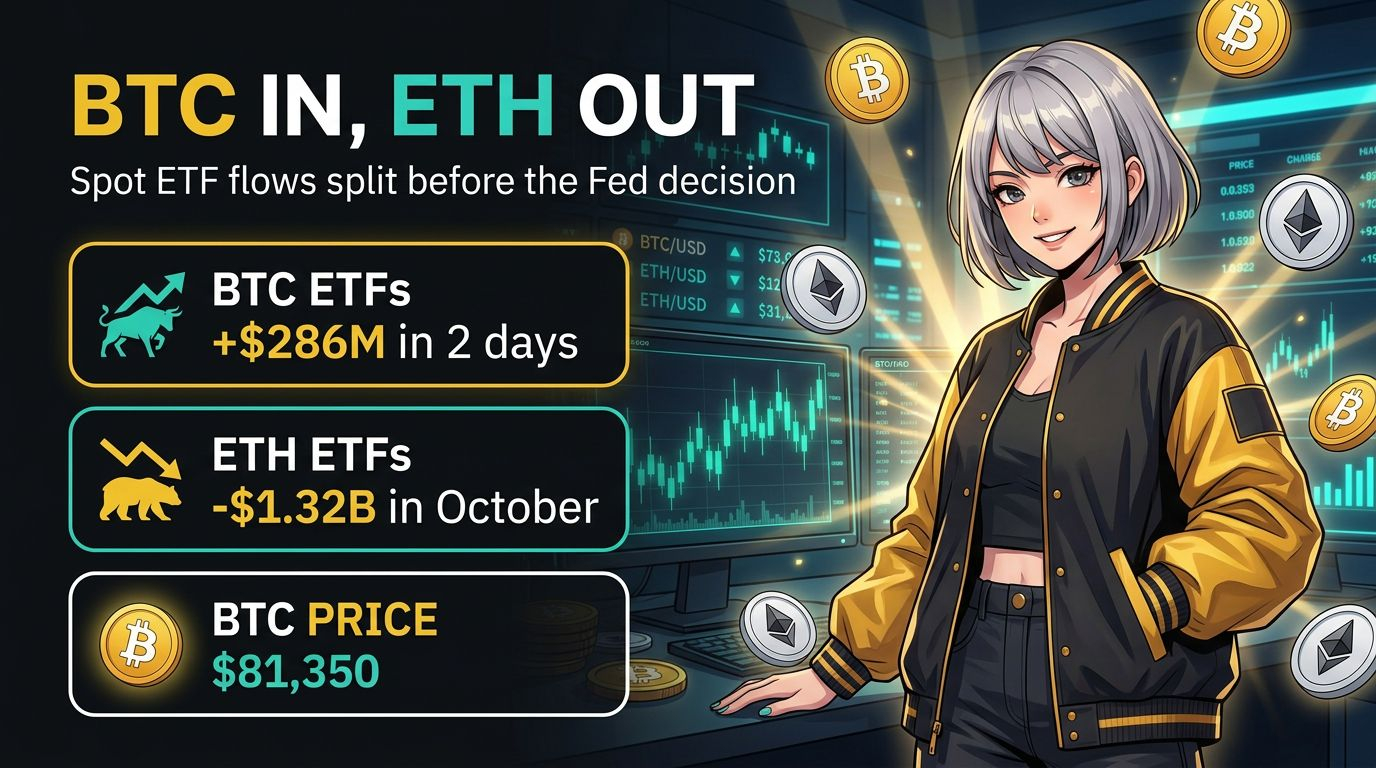
Here's the split. US spot Bitcoin ETFs pulled in about $286M over Monday and Tuesday, with $176M on Tuesday alone. That nearly erased the roughly $774M that left last Thursday and Friday, and October's net outflow is now only about $26M.
Spot Ether ETFs went the other way: around $149M out over the same two days, and about $1.32B out so far in October. That would be their worst month since November 2025.
Price tells the same story with less drama. $BTC is back near $81,350 after dipping to about $79,400 in the last 24 hours, while $ETH sits around $2,366.
Why it matters: when institutions pull back from risk, they usually keep the asset they understand best. Bitcoin gets treated as the "macro" trade, while Ether still has to prove its yield and growth story. If this rotation lasts, ETH/BTC strength may need more than a good Fed day.
The risk: the FOMC decision lands at 2 p.m. ET today. Markets mostly expect a hold, but the 10-year Treasury yield is still close to 5%, and a hawkish tone from Chair Warsh about a December hike could undo two days of inflows fast. ETF flows are also lagging data. They show what happened, not what comes next.
So is this a real rotation into Bitcoin, or just funds trimming ETH before a risky macro week? Tell me how you're reading it.
#Bitcoin #CryptoETF #FOMC
Not financial advice.
48
·
--
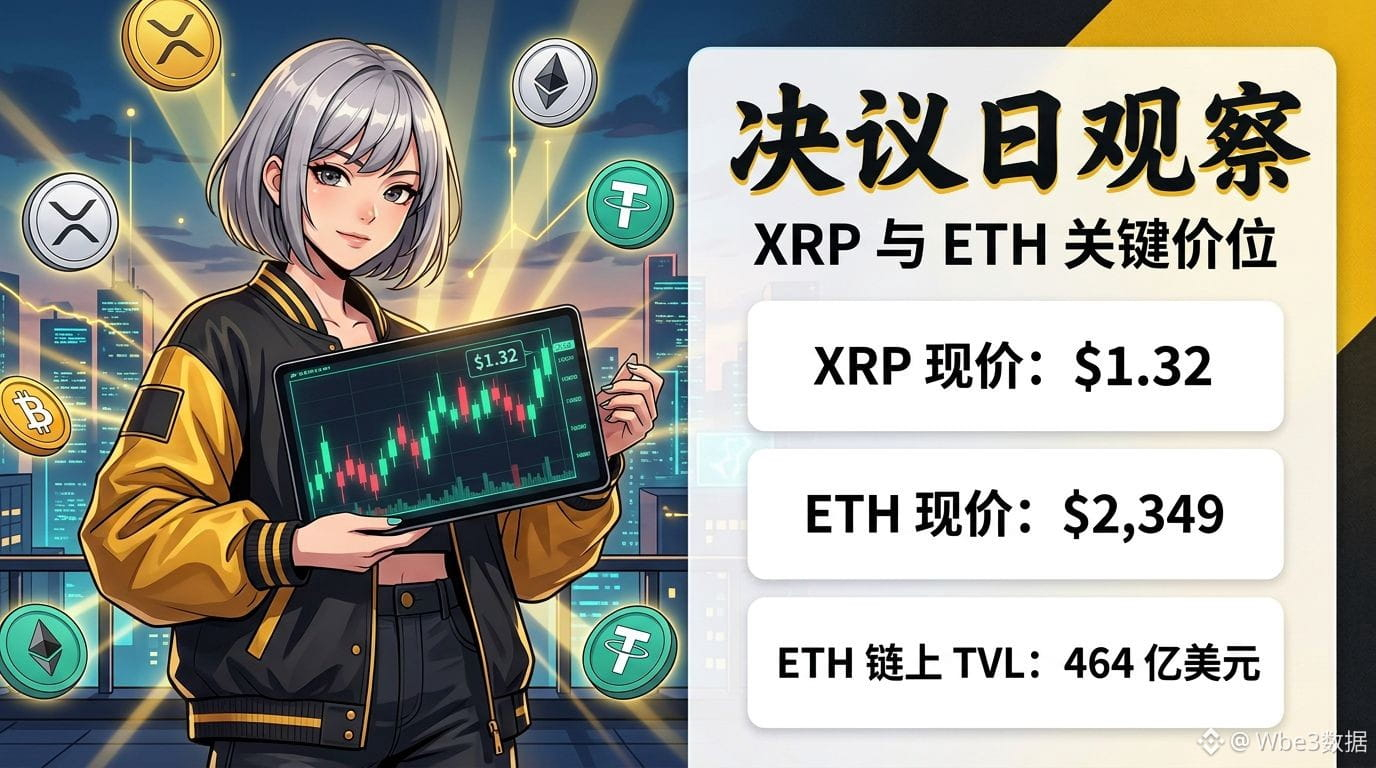
$XRP $ETH Fed Decision Day: Key Levels for Two Coins with an “Institutional Narrative”
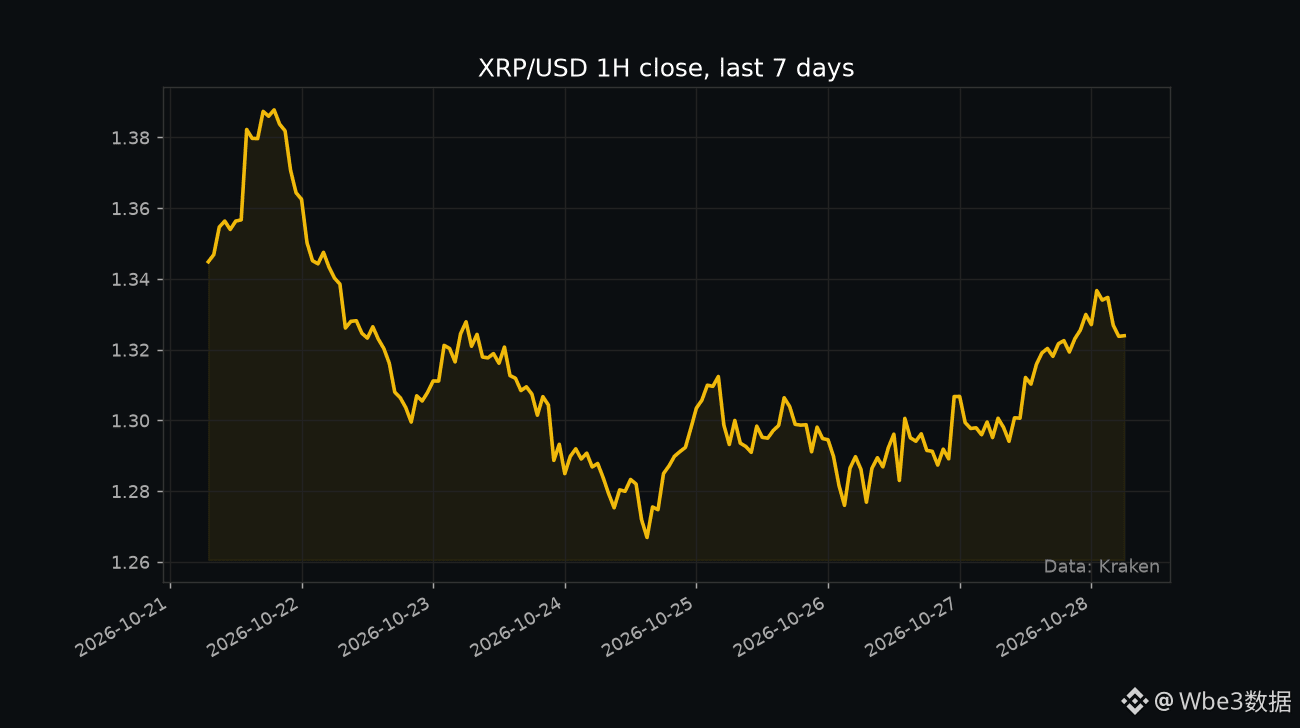
The Fed announces its rate decision today, while the broader market edges up slightly amid cautious trading. Kraken data: XRP is around $1.32, with a 7-day range of $1.253–$1.398; ETH is around $2,349, with a 7-day range of $2,280–$2,525.
【XRP】
• Catalysts: The Block reports that Ripple received final approval from the OCC to establish a national trust bank, allowing it to custody RLUSD reserves and provide institutional custody services. Santiment reports that wallets holding at least 10 million tokens account for about 68.5% of the supply, the highest level since 2022.
• Levels: Watch the $1.30 / $1.25 area below (this week’s low is $1.253), and $1.36–$1.40 above (the 7-day high is $1.398).
• Risks: XRP is down about 13.8% so far in October and remains below its major moving averages. Whale concentration also means selling pressure could be concentrated.
【ETH】
• Fundamentals: Ethereum’s on-chain TVL is around $46.4 billion (DefiLlama), but QCP reports that spot ETFs have seen net outflows for four consecutive weeks, totaling about $220 million.
• Levels: QCP points to $2,150 support and $2,500 resistance. The Glamsterdam testnet has been delayed, limiting near-term upgrade-related upside.
• Risks: If the rate signals are hawkish, volatile assets could come under pressure first.
Volatility may pick up around the announcement. Manage your position sizes and stop-losses accordingly.
Are you more bullish on XRP’s institutional narrative, or ETH’s more developed on-chain ecosystem? Share your thoughts in the comments.
#XRP #ETH #FederalReserve
Sources: Kraken, DefiLlama, The Block, Santiment, QCP. Not investment advice.
58
·
--
The capital ledger of Layer 2 networks: Is Base dominating?
According to the latest data from DefiLlama: Ethereum mainnet has a TVL of about $46.15 billion, Base about $6.13 billion, Arbitrum about $1.51 billion, and Polygon about $710 million.
A few interesting comparisons:
1) Base’s TVL is about 13.3% of Ethereum mainnet’s;
2) Arbitrum’s TVL is only about 25% of Base’s, highlighting the clear leader effect among L2s;
3) Capital is concentrated across a small number of chains, suggesting users care more about liquidity depth and application ecosystems than TPS alone.
For everyday users, the core value of L2s is lower gas fees. But TVL only represents the amount of assets locked up; it doesn’t indicate activity or security. Cross-chain bridge risks and the degree of sequencer centralization are also worth considering.
Data source: DefiLlama. This is for informational purposes only and does not constitute investment advice.
Which L2 do you use most often, and why?
#Layer2 #Base #DeFi

88
·
--

Article
Beginner Guide: Understanding the On-Chain Revenue Rankings — Who Is Really Making Money?Beginner Guide: Understanding the “On-Chain Revenue Rankings” Is Better Than Watching Candlestick Charts for Telling Who Is Really Making Money
Many beginners look at projects only by coin price and hype, but overlook a much more solid metric: protocol revenue (Fees/Revenue). It answers a simple question: Are users really paying for this product?
1. What Are On-Chain Fees and Revenue
Fees are the total costs users pay when using a protocol, such as trading fees, lending interest, and the spread from issuing stablecoins. Part of this goes to liquidity providers or reserves, and only part is the protocol’s own revenue. On-chain data is publicly available and verifiable, so it is harder to fake than a “roadmap” and does not rely on the project team’s own claims.
Beginner Guide: Understanding the On-Chain Revenue Rankings — Who Is Really Making Money?
Beginner Guide: Understanding the “On-Chain Revenue Rankings” Is Better Than Watching Candlestick Charts for Telling Who Is Really Making Money
Many beginners look at projects only by coin price and hype, but overlook a much more solid metric: protocol revenue (Fees/Revenue). It answers a simple question: Are users really paying for this product?
1. What Are On-Chain Fees and Revenue
Fees are the total costs users pay when using a protocol, such as trading fees, lending interest, and the spread from issuing stablecoins. Part of this goes to liquidity providers or reserves, and only part is the protocol’s own revenue. On-chain data is publicly available and verifiable, so it is harder to fake than a “roadmap” and does not rely on the project team’s own claims.
139
·
--
BNB is getting a new chain: 200 ms block times, but the price is still moving "sideways and waiting."
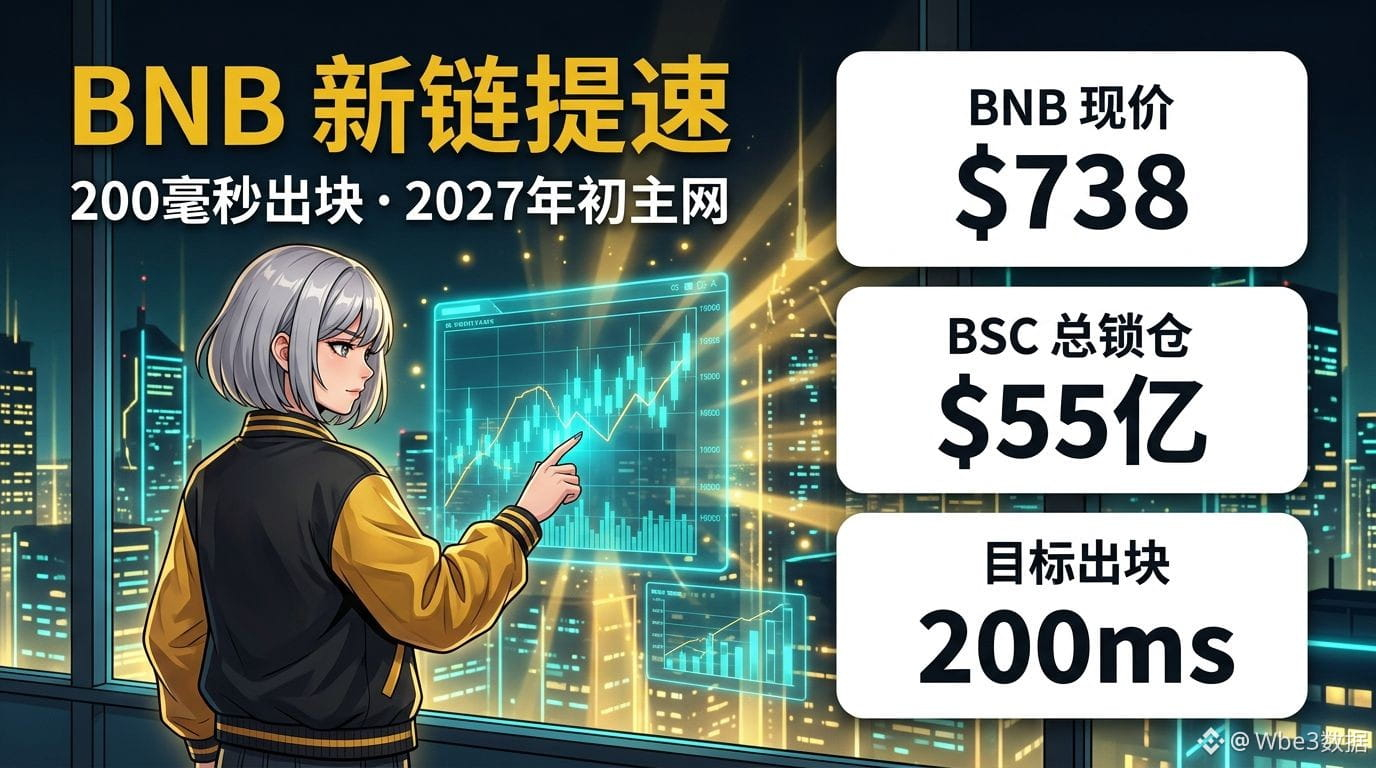
📌 Event: BNB Chain technical documentation (updated October 22) revealed a new EVM-compatible L1 running parallel to BSC, targeting 200 ms block times and around 20 ms pre-confirmations. It will not issue a new token; BNB will continue to be used for gas fees, staking, and governance. For now, there is only an internal multi-validator development network. A public testnet is planned for the end of 2026, with mainnet targeted for early 2027. Note: These are still target parameters, not measured results.
📊 Data (Kraken / DefiLlama, around 14:00 today):
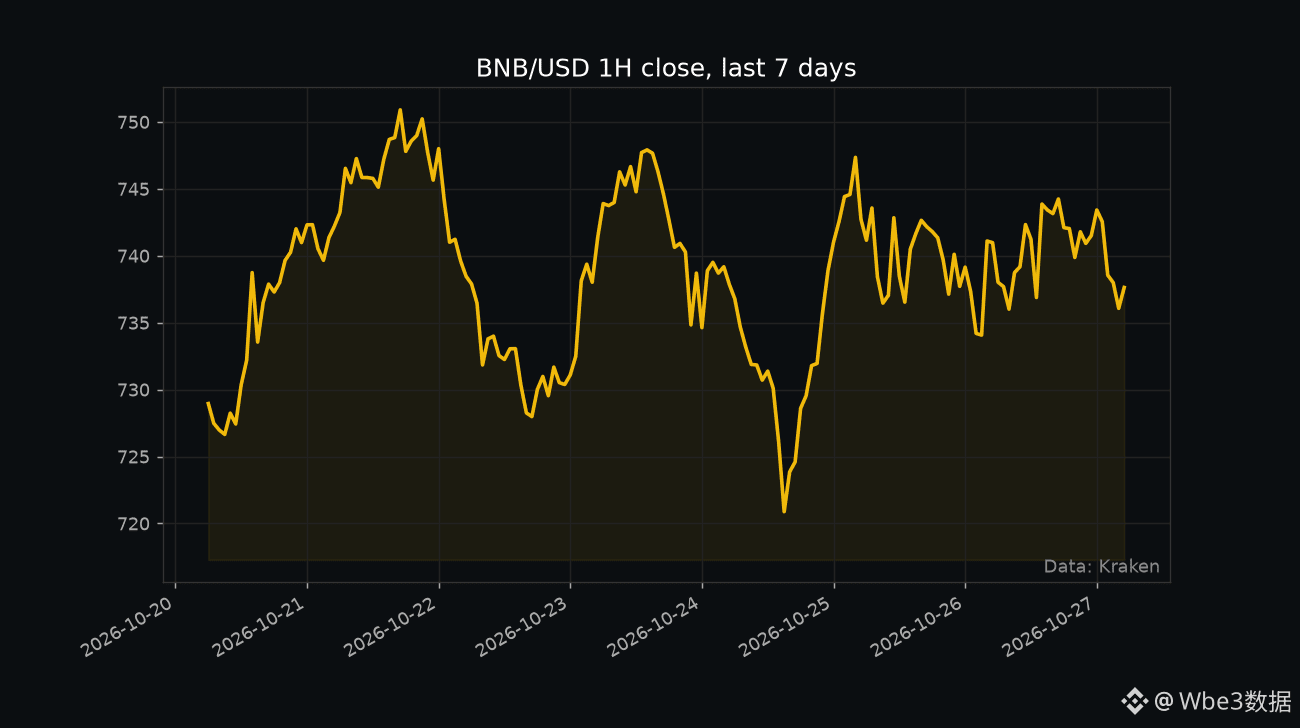
• $BNB at around $738, with a 24h range of $731.3–$746.1; the 1-hour closing range over the past 7 days was $720.9–$750.9, showing narrow-range volatility
• BSC TVL at around $5.496 billion, down 7.4% from 7 days ago ($5.934 billion) and 6.4% from 30 days ago
• BSC 24h fees at around $2.16 million, up 15% day over day; on-chain stablecoins at around $14.3 billion, largely unchanged
• $BTC at around $79,850, back below $80,000, with broader market sentiment cautious
🎯 Key price levels (for observation only, not a prediction):
• Upside: $746–$751 is the recent weekly high zone; only a sustained move above it on rising volume could put $760 in view
• Downside: $731 is the 24h low, followed by $725 and $720.9 (the 7-day low) as prior lows
• Catalysts: progress on the new L1 testnet, on-chain activity on BSC, and macro volatility stemming from this week’s Fed meeting
⚠️ Risks: The new chain is a long-term narrative, not a guarantee of short-term gains; the weekly decline in BSC TVL suggests funds have not poured in on the news; macro factors or a BTC decline could also weigh on BNB.
Data is for reference only. Please manage your own positions and stop-losses. Do you think "one coin across multiple chains" can generate real demand for BNB, or is it just a story for now? Share your thoughts in the comments.
#BNB #BNBChain #ContentMining
Data sources: Kraken, DefiLlama, and reports on official BNB Chain documentation. This is not investment advice.
146
·
--
The on-chain lending sector has cooled off a bit recently. Fresh data from DefiLlama: Aave V3 has around $16.36 billion in TVL, down 0.6% over the past 24 hours and 2.7% over the past 7 days; Morpho Blue has around $11.27 billion, up 1.3% over 7 days, making it one of the few top protocols bucking the trend; SparkLend has around $4.94 billion, down 2.7% over 7 days.
How should we read this? Lending TVL is affected by two things: token prices (the value of collateral; ETH is currently around $2,323) and whether users are willing to use leverage or deposit tokens to earn yield. The slight decline across leading protocols looks more like a pullback in risk appetite than a large-scale outflow of funds. Morpho’s growth suggests that funds are shifting toward a “vault-based, customizable risk parameters” model.
A quick reminder: lending yields aren’t risk-free. Pay attention to collateral ratios, liquidation thresholds, oracles, and smart contract risks.
Which lending model do you prefer: large pools like Aave, or segmented vaults like Morpho? Let’s discuss in the comments.
Data sources: DefiLlama, Coinbase. Not investment advice.
#DeFi #链上数据 #Aave

328
·
--
BNB took the stage at the Nasdaq opening bell for the first time, and CZ was there
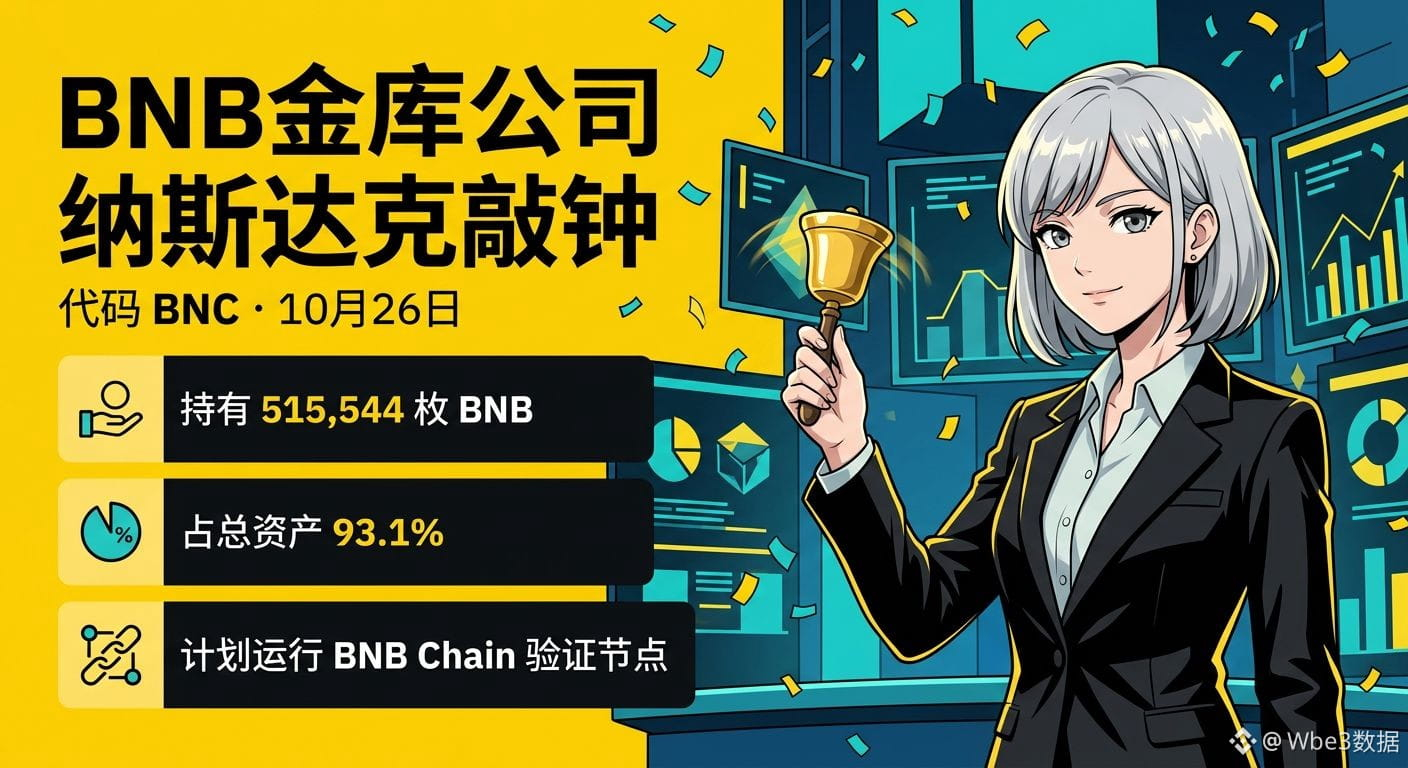
At 9:30 a.m. ET on October 26 (9:30 p.m. Beijing time), BNB Standard (Nasdaq ticker: BNC), the world’s largest corporate BNB treasury, rang the opening bell in Times Square, New York. CZ attended alongside the company’s board and management team, with people from YZi Labs and BNB Chain also present.
To be clear: this was not a new stock listing. BNC was formerly known as CEA Industries, and its shares have been traded on Nasdaq all along. It changed its name to BNB Standard on September 29 (selected by a community vote, with around 5,799 votes and about 47% of the vote), and Alex Odagiu officially became CEO on October 19. The bell-ringing ceremony celebrated the new name and management team.
A few key figures:
· Held 515,544 BNB as of July 31, worth about $302 million at the time
· BNB accounted for about 93.1% of the company’s total assets
· Plans to operate its own BNB Chain validator nodes and stake through a compliant custodian
· Launched its treasury strategy in July 2025, announcing a $500 million private placement at the time, with YZi Labs and 10X Capital participating
Why is this worth paying attention to?
Its model is similar to “Strategy for BNB”: raising funds in the U.S. stock market to hold BNB, giving institutions that can’t buy crypto directly exposure to BNB through shares. CZ also noted at the event that BNB Chain has around 3 million daily users and produces a block approximately every 0.5 seconds.
But it’s worth keeping a cool head: ringing the bell doesn’t mean the company has added to its treasury. The stock price is highly tied to BNB, and when the coin’s price falls, the stock usually falls even harder. $BNB is now around $741, and has been trading sideways between $736 and $750 all weekend.
Do you think BNB treasury companies will bring sustained buying pressure to BNB, the way Strategy did for BTC? Share your thoughts in the comments.
The information above comes from company announcements and public reports and does not constitute investment advice.
#BNB #BNC #Nasdaq
467
·
--
Binance Listing Roundup | October 26–28: Don’t Miss These Listings
1) PREDICT Pre-Market Perpetual Contract
The PREDICTUSDT Pre-Market Perpetual Contract went live on October 25 at 15:45 (UTC+8), with up to 5x leverage and funding fees settled every 4 hours. Its underlying asset is Predict.fun, a prediction market on BNB Chain. There’s no spot market yet. Note: A contract listing doesn’t guarantee a spot listing, and pre-market trading is typically more volatile.
2) Four TradFi USDT-Margined Perpetual Contracts
Starting October 26 at 17:00, these contracts will be listed one by one at 5-minute intervals: EIDOUSDT, EQTUSDT, STMUSDT, and ABBVUSDT. Trading is available 24/7. Traditional assets are making their way into derivatives, and Binance’s TradFi expansion is still gaining momentum.
3) USDC/AED Spot Trading Pair
Trading opens on October 28 at 16:00 (UTC+8), with spot algorithmic orders also supported. AED is the United Arab Emirates dirham, a fiat currency, giving users another way to deposit funds in the Middle East.
4) Alpha Trading Competition: Axis Robotics
The first round runs from October 26 at 21:00 to November 2 at 21:00 (UTC+8). Participants are ranked by buy volume, and the top 2,000 will share 386,000 AXIS, receiving 193 tokens each. Trading volume during the first two days will count 3x.
5) Alpha Delisting Reminder
PTB, AA, OWL, DORA, ELIZAOS, MEMES, and 哭哭马 have been removed from Alpha. If you hold any of these tokens, remember to plan your sale or withdrawal.
$BNB is currently worth about $741, with a 24-hour range of $731–$746. With platform promotions in full swing, BNB’s use cases continue to grow.
The information above is from Binance’s official announcements. Please refer to the original announcements for details. This is not investment advice.
Which update are you most interested in? Do you think PREDICT will get a spot listing soon? Let’s talk in the comments.
#币安上新 #BNB #Alpha

13
·
--

Article
Privacy-sector rising star Fhenix: $22 million raised and mainnet just launched—how can everyday users get involved?Many people think “airdrop farming” is just about interacting with projects, but what really matters is understanding the project first: who funded it, what it does, what you can do with it now, and where the risks lie. Today, we’re looking at Fhenix, a project in the privacy sector. The team has not yet issued a token, and the information below is based on public sources.
1. What does it do?
Fhenix builds infrastructure related to fully homomorphic encryption (FHE). Its core product is called CoFHE, which you can think of as an “encrypted computing coprocessor”: smart contracts send it encrypted data, it performs computations off-chain, and then returns the results—still encrypted—to the contract. This keeps sensitive information such as balances, positions, and trading strategies hidden throughout the process. Developers can integrate it simply by importing a library in Solidity. Fhenix also offers “dual-mode tokens”: the same token can have either a public balance or a confidential balance, with a one-click switch between the two.
Privacy-sector rising star Fhenix: $22 million raised and mainnet just launched—how can everyday users get involved?
Many people think “airdrop farming” is just about interacting with projects, but what really matters is understanding the project first: who funded it, what it does, what you can do with it now, and where the risks lie. Today, we’re looking at Fhenix, a project in the privacy sector. The team has not yet issued a token, and the information below is based on public sources.
1. What does it do?
Fhenix builds infrastructure related to fully homomorphic encryption (FHE). Its core product is called CoFHE, which you can think of as an “encrypted computing coprocessor”: smart contracts send it encrypted data, it performs computations off-chain, and then returns the results—still encrypted—to the contract. This keeps sensitive information such as balances, positions, and trading strategies hidden throughout the process. Developers can integrate it simply by importing a library in Solidity. Fhenix also offers “dual-mode tokens”: the same token can have either a public balance or a confidential balance, with a one-click switch between the two.
43
·
--
Verified
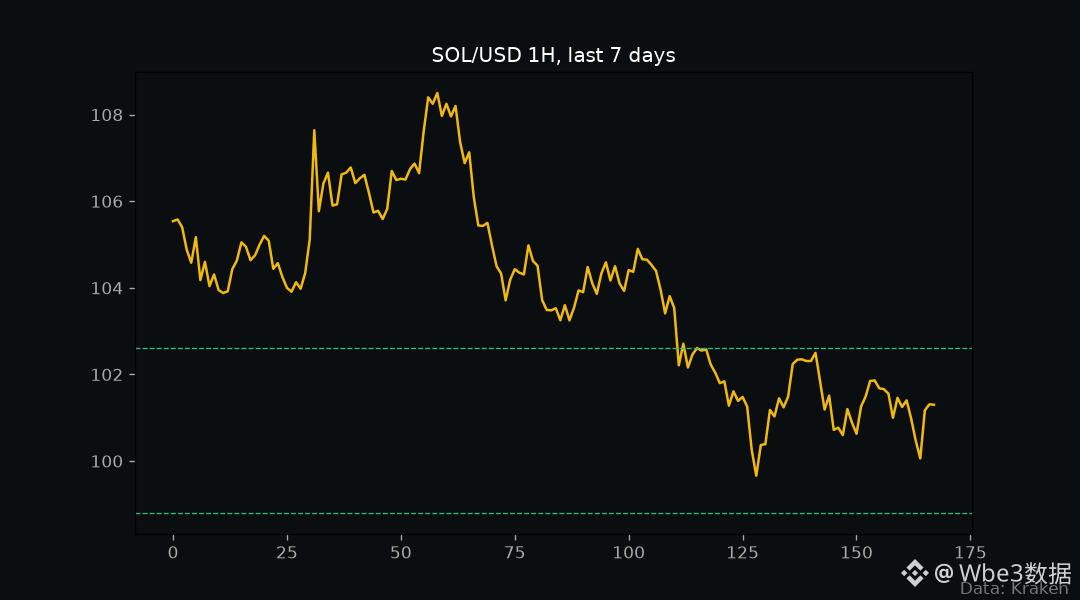
$SOL Day five after the upgrade: Alpenglow went live on mainnet on October 21. According to Anza, the finality time fell from about 12.8 seconds to around 150 milliseconds. The technology is a major positive, but the price is showing a “sell the news” reaction: Kraken data shows SOL at about $101.3, with a 7-day range of $99.7–$108.5. It briefly surged to near $109 after the upgrade, then pulled back.
Key levels (based on the past 7 days of hourly data, for observation only):
• Below: 98.8–99.7, the low zone for the past week. A break below it would signal weakening short-term sentiment.
• Above: 102.6 and 108.5. The former has repeatedly acted as recent resistance; the latter is the weekly high.
Catalysts: JPMorgan launched a tokenized money market fund on Solana, and Samsung Wallet has announced that it will support cross-border USDC transfers by the end of this month. Solana’s on-chain TVL is about $5.73 billion, and its stablecoin supply is about $15.8 billion. Fundamentals are improving, but capital flows are being weighed down by net outflows from spot ETFs.
Risks: Continued ETF outflows, rising Treasury yields weighing on altcoins, and some validator nodes still undergoing upgrades mean network performance remains to be seen.
Which do you think will get there first: the “technology upgrade” or the “price”?
Data: Kraken, DefiLlama. Not investment advice.
#Solana #Alpenglow

1
101
·
--
I took a look at DefiLlama’s public-chain TVL rankings, and the landscape is pretty interesting:
• Ethereum: about $48.56 billion, still far ahead
• Base: about $6.01 billion
• BSC: about $5.79 billion
• Solana: about $5.75 billion
• Tron: about $5.47 billion
• Bitcoin on-chain: about $4.29 billion
There’s less than $600 million separating second through fifth place, so the rankings could change at any moment. Looking at on-chain fees across the industry, the total was about $62.9 million over the past 24 hours, down 4.13% day over day. Tether contributed about $17.27 million and USDC about $6.84 million, so stablecoin issuers remain major fee earners.
TVL is just one way to measure the amount of capital locked up. It doesn’t equal activity, and you shouldn’t focus only on a single day’s figures. It’s a good idea to look at fees and user numbers too.
Data source: DefiLlama. Which public chain do you think will break into the top three next?
#链上数据 #DeFi
Not investment advice.
253
·
--
Article
Bitcoin hashrate back above 1 ZH/s: Miners pivot to AI, but the network gets more crowdedBitcoin hashrate back above 1 ZH/s: Miners are “pivoting to AI,” but the network is getting more crowded
Here’s the bottom line: publicly traded mining companies are shifting power and data centers toward AI/high-performance computing, while Bitcoin’s total network hashrate has returned to a 7-month high. These two things aren’t contradictory, and it’s worth taking a closer look.
1. What the data says
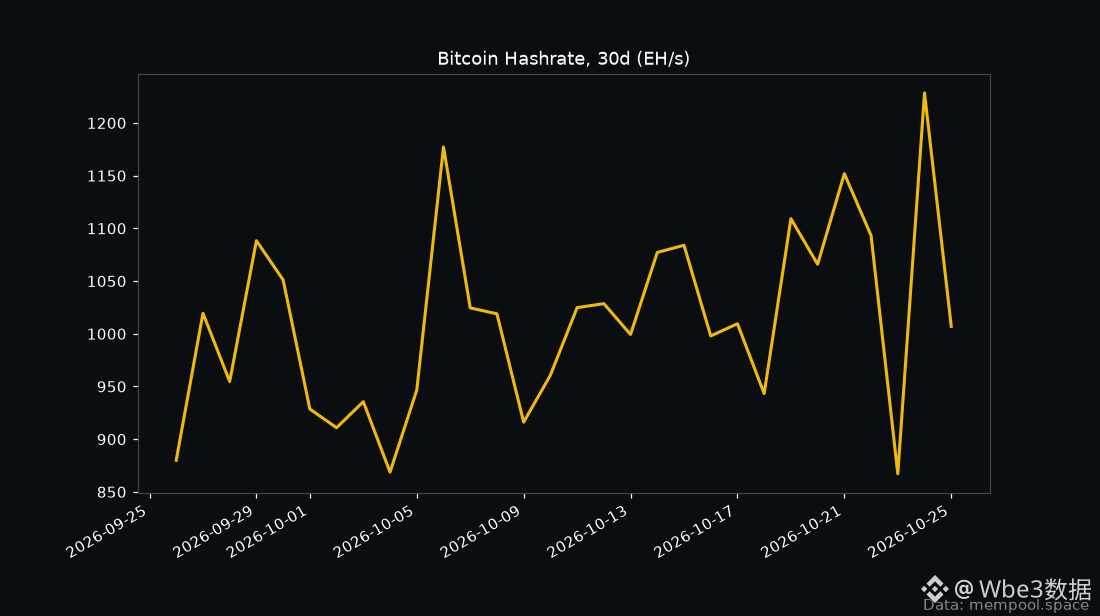
• According to BlocksBridge Miner Weekly, Bitcoin’s 7-day average hashrate has climbed back above 1 ZH/s (= 1,000 EH/s), its highest level since March 3.
• The October 16 difficulty adjustment was +5.92%, bringing difficulty to 140.58T.
• Current data from mempool.space: difficulty adjustment progress is about 67.6%, with the next adjustment estimated at around +4.9%, roughly around October 29 (depending on block production speed).
Bitcoin hashrate back above 1 ZH/s: Miners pivot to AI, but the network gets more crowded
Bitcoin hashrate back above 1 ZH/s: Miners are “pivoting to AI,” but the network is getting more crowded
Here’s the bottom line: publicly traded mining companies are shifting power and data centers toward AI/high-performance computing, while Bitcoin’s total network hashrate has returned to a 7-month high. These two things aren’t contradictory, and it’s worth taking a closer look.
1. What the data says
• According to BlocksBridge Miner Weekly, Bitcoin’s 7-day average hashrate has climbed back above 1 ZH/s (= 1,000 EH/s), its highest level since March 3.
• The October 16 difficulty adjustment was +5.92%, bringing difficulty to 140.58T.
• Current data from mempool.space: difficulty adjustment progress is about 67.6%, with the next adjustment estimated at around +4.9%, roughly around October 29 (depending on block production speed).
61
·
--
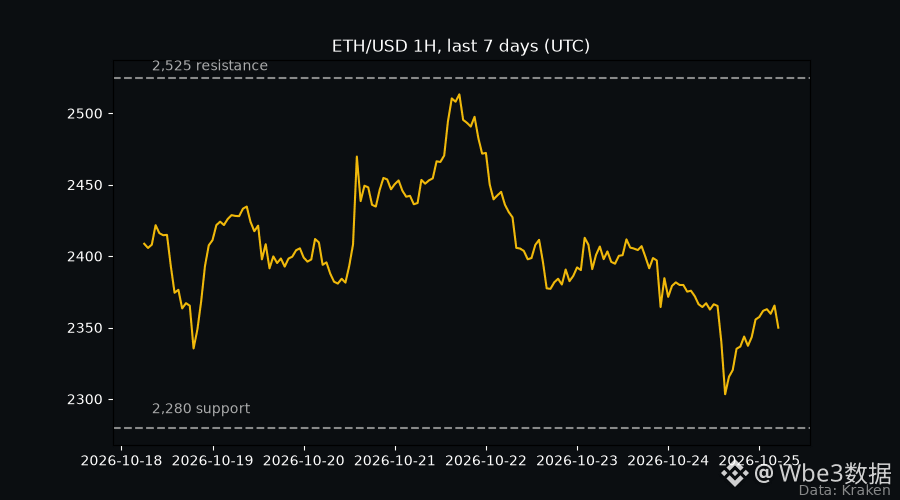
$ETH has traded in the $2,280–$2,525 range over the past 7 days and is currently around $2,350, down about 2.4% from $2,409 a week ago.
Key levels:
• $2,280 is this week's low; a high-volume break below it would signal a weaker short-term structure
• $2,525 is this week's high; a sustained move above it on strong volume would be needed to confirm a rebound
• Ethereum's on-chain TVL is about $49 billion (DefiLlama), making it the public blockchain with the largest concentration of DeFi funds
Catalysts: A recent pickup in DEX trading volume, on-chain stablecoin flows, and progress on upcoming network upgrades.
Risks: Tighter US dollar liquidity, continued stablecoin supply outflows, and a decline in overall market risk appetite could all weigh on the price.
These are price levels to watch, not a forecast. Please manage your position size and risk accordingly. Do you think ETH is more likely to hold $2,280 or fall below it this week?
Data sources: Kraken, DefiLlama. Not investment advice.
#ETH #以太坊 #OnChainData
153
Log in to explore more content
Join global crypto users on Binance Square
⚡️ Get latest and useful information about crypto.
💬 Trusted by the world’s largest crypto exchange.
👍 Discover real insights from verified creators.
Email / Phone number
Trending Topics
FedWatch
16.3M views
39,286 Discussing
🚨 🇺🇸 PETER SCHIFF JUST THREW A BIG WARNING AT THE FED!
Peter Schiff is calling Kevin Warsh’s tough talk on inflation a “bluff,” and his prediction could have major implications for the markets.
Schiff believes the Fed could eventually return to money printing through quantitative easing (QE) and even cut interest rates next year, despite inflation continuing to rise.
Think about that for a moment.
🔥 Inflation could remain a problem. 🔥 The Fed could still move toward easier monetary policy. 🔥 More liquidity could flow into financial markets.
If this scenario plays out, it could create a very different market environment for stocks, gold, Bitcoin, and the wider crypto market.
But there’s a catch: if inflation stays high, the Fed could face a difficult choice between fighting rising prices and supporting the economy.
Will Warsh stick to a tough inflation policy, or will the Fed eventually change direction?
The next move could matter a lot for investors.
#FedWatch #EarningsSeason #USMidtermElections #BrazilCryptoExchangesMustApplyForLicensesByFriday #StanDruckenmillerBecomesInvestorInTradeXYZ
Jackson Liam
·3 Likes
·7.9k views
EarningsSeason
6.4M views
31,993 Discussing
USMidtermElections
33,592 views
561 Discussing