
#stablecoins
stablecoins
7.4M views
26,724 Discussing
Hot
Latest

·
--
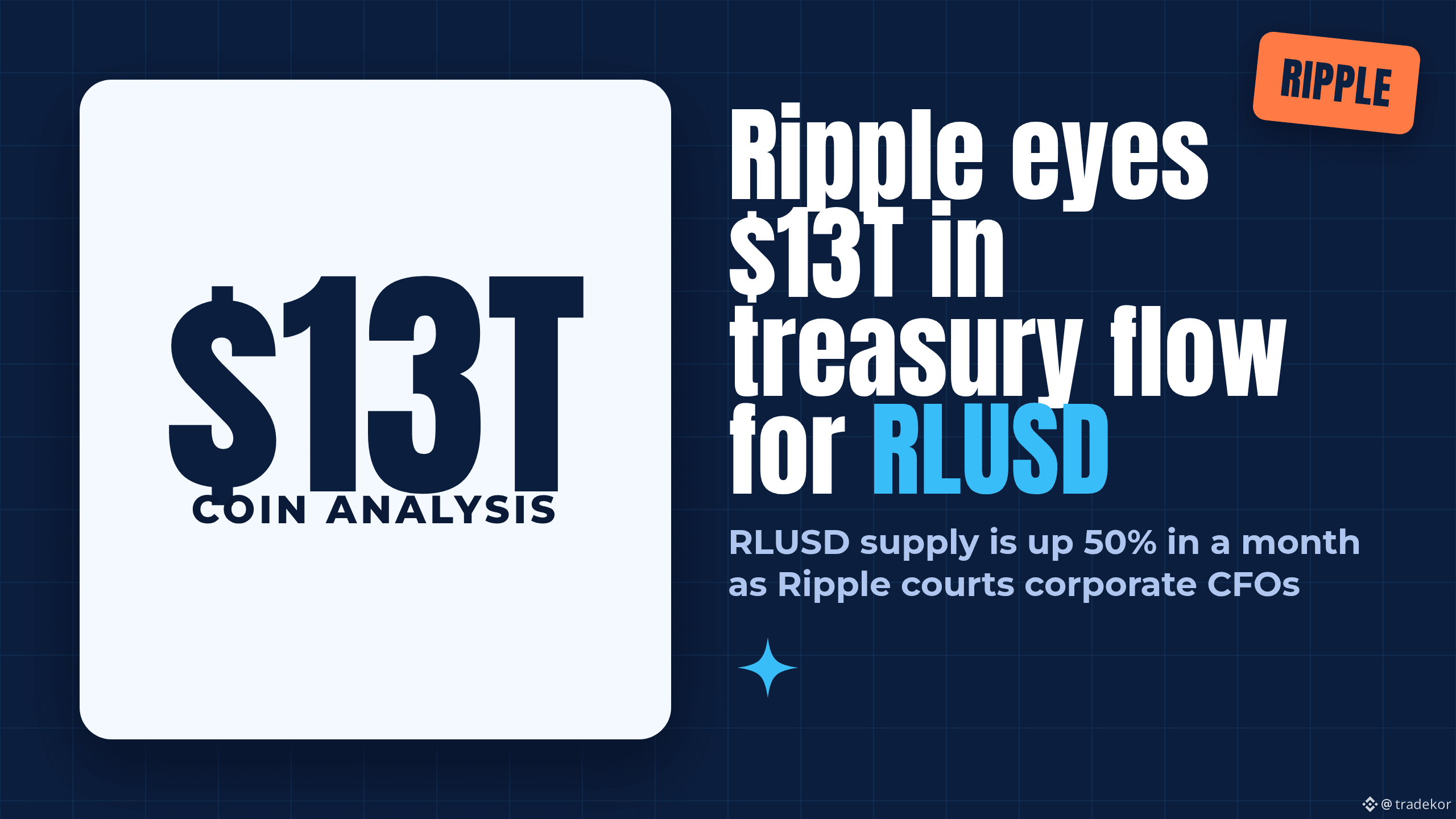
Ripple's own treasury customers already move $13 trillion a year, and the company wants to pull that flow through its stablecoin.
The news: Ripple's SVP of stablecoins, Jack McDonald, said Ripple Treasury's roughly 1,200 corporate treasurer and CFO customers already process about $13 trillion annually in cross-border, inter-subsidiary, and domestic transfers -- and Ripple now wants a meaningful share of that moving through RLUSD instead of traditional rails. RLUSD's circulating supply grew more than 50% in a month to $2.4B, with daily on-chain activity roughly tripling since January to about $750M. This builds on Ripple's $1B GTreasury acquisition and an April "Unified Treasury" dashboard letting CFOs manage RLUSD, XRP, and fiat side by side, plus a push toward MiCA-compliant dual issuance in Europe.
The catch: the $13T figure and the growth percentages are Ripple's own stated numbers from a company interview, not independently audited market data -- treat this as the company's opportunity sizing, not a verified external metric. Getting large corporate treasurers to actually move meaningful volume onto a stablecoin is a much slower, more conservative sales cycle than crypto-native adoption, and "$13T in addressable flow" says nothing yet about how much of it actually converts.
Our read: RLUSD's growth numbers (50%+ supply growth, on-chain volume tripling) are real and verifiable even if the $13T opportunity framing is Ripple's own pitch -- the GTreasury acquisition and Unified Treasury dashboard are concrete distribution infrastructure, not just marketing.
Is $13T in existing treasury flow a genuine RLUSD growth runway, or mostly a big number Ripple is using to frame a much smaller realistic conversion?
Not financial advice. DYOR.
$XRP #CryptoNews #Ripple #Stablecoins
Ripple's own treasury customers already move $13 trillion a year, and the company wants to pull that flow through its stablecoin.
The news: Ripple's SVP of stablecoins, Jack McDonald, said Ripple Treasury's roughly 1,200 corporate treasurer and CFO customers already process about $13 trillion annually in cross-border, inter-subsidiary, and domestic transfers -- and Ripple now wants a meaningful share of that moving through RLUSD instead of traditional rails. RLUSD's circulating supply grew more than 50% in a month to $2.4B, with daily on-chain activity roughly tripling since January to about $750M. This builds on Ripple's $1B GTreasury acquisition and an April "Unified Treasury" dashboard letting CFOs manage RLUSD, XRP, and fiat side by side, plus a push toward MiCA-compliant dual issuance in Europe.
The catch: the $13T figure and the growth percentages are Ripple's own stated numbers from a company interview, not independently audited market data -- treat this as the company's opportunity sizing, not a verified external metric. Getting large corporate treasurers to actually move meaningful volume onto a stablecoin is a much slower, more conservative sales cycle than crypto-native adoption, and "$13T in addressable flow" says nothing yet about how much of it actually converts.
Our read: RLUSD's growth numbers (50%+ supply growth, on-chain volume tripling) are real and verifiable even if the $13T opportunity framing is Ripple's own pitch -- the GTreasury acquisition and Unified Treasury dashboard are concrete distribution infrastructure, not just marketing.
Is $13T in existing treasury flow a genuine RLUSD growth runway, or mostly a big number Ripple is using to frame a much smaller realistic conversion?
Not financial advice. DYOR.
$XRP #CryptoNews #Ripple #Stablecoins
The news: Ripple's SVP of stablecoins, Jack McDonald, said Ripple Treasury's roughly 1,200 corporate treasurer and CFO customers already process about $13 trillion annually in cross-border, inter-subsidiary, and domestic transfers -- and Ripple now wants a meaningful share of that moving through RLUSD instead of traditional rails. RLUSD's circulating supply grew more than 50% in a month to $2.4B, with daily on-chain activity roughly tripling since January to about $750M. This builds on Ripple's $1B GTreasury acquisition and an April "Unified Treasury" dashboard letting CFOs manage RLUSD, XRP, and fiat side by side, plus a push toward MiCA-compliant dual issuance in Europe.
The catch: the $13T figure and the growth percentages are Ripple's own stated numbers from a company interview, not independently audited market data -- treat this as the company's opportunity sizing, not a verified external metric. Getting large corporate treasurers to actually move meaningful volume onto a stablecoin is a much slower, more conservative sales cycle than crypto-native adoption, and "$13T in addressable flow" says nothing yet about how much of it actually converts.
Our read: RLUSD's growth numbers (50%+ supply growth, on-chain volume tripling) are real and verifiable even if the $13T opportunity framing is Ripple's own pitch -- the GTreasury acquisition and Unified Treasury dashboard are concrete distribution infrastructure, not just marketing.
Is $13T in existing treasury flow a genuine RLUSD growth runway, or mostly a big number Ripple is using to frame a much smaller realistic conversion?
Not financial advice. DYOR.
$XRP #CryptoNews #Ripple #Stablecoins
195

🔥 Everyone dismissed stablecoins as a retail gimmick—Meta just handed them a $2 B corporate payroll.
📊 The timing hits a 61‑point Greed sentiment, BTC perched at $77,281 and ETH at $2,504, while on‑chain cash is already primed.
💡 Long‑biased BTC futures (OI $8.10 B, funding +0.0060%) and smart‑wallet inflows into Solana projects like BONERO signal capital lining up for a stablecoin‑driven liquidity wave #BTC #Stablecoins #CryptoAdoption.
💰 Watch the $78,100 BTC ceiling—break above it could channel creator payouts into USDC, spiking on‑chain volume and reinforcing the bullish funding tilt #DeFi.
❓ If Meta’s payroll pipeline starts converting billions of dollars into USDC, will we finally see a sustained bull run driven by corporate cash, or will the market absorb it and stay flat?
🔥 Everyone dismissed stablecoins as a retail gimmick—Meta just handed them a $2 B corporate payroll.
📊 The timing hits a 61‑point Greed sentiment, BTC perched at $77,281 and ETH at $2,504, while on‑chain cash is already primed.
💡 Long‑biased BTC futures (OI $8.10 B, funding +0.0060%) and smart‑wallet inflows into Solana projects like BONERO signal capital lining up for a stablecoin‑driven liquidity wave #BTC #Stablecoins #CryptoAdoption.
💰 Watch the $78,100 BTC ceiling—break above it could channel creator payouts into USDC, spiking on‑chain volume and reinforcing the bullish funding tilt #DeFi.
❓ If Meta’s payroll pipeline starts converting billions of dollars into USDC, will we finally see a sustained bull run driven by corporate cash, or will the market absorb it and stay flat?
📊 The timing hits a 61‑point Greed sentiment, BTC perched at $77,281 and ETH at $2,504, while on‑chain cash is already primed.
💡 Long‑biased BTC futures (OI $8.10 B, funding +0.0060%) and smart‑wallet inflows into Solana projects like BONERO signal capital lining up for a stablecoin‑driven liquidity wave #BTC #Stablecoins #CryptoAdoption.
💰 Watch the $78,100 BTC ceiling—break above it could channel creator payouts into USDC, spiking on‑chain volume and reinforcing the bullish funding tilt #DeFi.
❓ If Meta’s payroll pipeline starts converting billions of dollars into USDC, will we finally see a sustained bull run driven by corporate cash, or will the market absorb it and stay flat?
7

Ngl Circle dropping 400M dollars on Tazapay is huge 🚀 They are basically buying instant access to emerging markets where Tether has been dominating for years. Building these cross-border payment rails from scratch takes forever, so buying Tazapay gives $USDC a massive shortcut right into the real-world adoption arena 💡 Honestly the stablecoin wars are getting intense right now 🔥 Tether $USDT has had a firm grip on developing regions for a long time, but Circle is clearly not sitting back anymore. Watch out for how fast $USDC adoption picks up in these high-growth corridors over the coming months! #USDC #Stablecoins #CryptoNews #Write2Earn
Ngl Circle dropping 400M dollars on Tazapay is huge 🚀 They are basically buying instant access to emerging markets where Tether has been dominating for years. Building these cross-border payment rails from scratch takes forever, so buying Tazapay gives $USDC a massive shortcut right into the real-world adoption arena 💡 Honestly the stablecoin wars are getting intense right now 🔥 Tether $USDT has had a firm grip on developing regions for a long time, but Circle is clearly not sitting back anymore. Watch out for how fast $USDC adoption picks up in these high-growth corridors over the coming months! #USDC #Stablecoins #CryptoNews #Write2Earn

1
31

Payments and capital‑market activity are fueling Ripple's $2.4 billion digital dollar, according to chief Jack McDonald.
The firm says these two segments are the primary sources of RLUSD's recent growth.
With that momentum, Ripple plans to bring RLUSD to Europe under the MiCA regulatory regime. The European launch aims to give corporate treasuries a stable, blockchain‑based dollar alternative for cross‑border transactions. If successful, the stablecoin could tap into the massive $13 trillion corporate‑treasury market that is actively evaluating digital‑asset solutions. Ripple's focus on payments highlights the token's utility for everyday transactions, while capital‑market interest points to broader institutional adoption. Both factors together shape the strategy for European entry, where regulatory clarity under MiCA could accelerate uptake. The company believes that a regulated environment will make RLUSD a more attractive option for firms seeking to manage cash and reduce friction in international settlements. By targeting Europe, Ripple is not only expanding its geographic footprint but also testing a model that could be replicated elsewhere if corporate treasuries respond positively. The outcome will provide insight into how stablecoins can serve as a bridge between traditional finance and blockchain ecosystems.
#Ripple #Stablecoins #RLUSD #MiCA
Payments and capital‑market activity are fueling Ripple's $2.4 billion digital dollar, according to chief Jack McDonald.
The firm says these two segments are the primary sources of RLUSD's recent growth.
With that momentum, Ripple plans to bring RLUSD to Europe under the MiCA regulatory regime. The European launch aims to give corporate treasuries a stable, blockchain‑based dollar alternative for cross‑border transactions. If successful, the stablecoin could tap into the massive $13 trillion corporate‑treasury market that is actively evaluating digital‑asset solutions. Ripple's focus on payments highlights the token's utility for everyday transactions, while capital‑market interest points to broader institutional adoption. Both factors together shape the strategy for European entry, where regulatory clarity under MiCA could accelerate uptake. The company believes that a regulated environment will make RLUSD a more attractive option for firms seeking to manage cash and reduce friction in international settlements. By targeting Europe, Ripple is not only expanding its geographic footprint but also testing a model that could be replicated elsewhere if corporate treasuries respond positively. The outcome will provide insight into how stablecoins can serve as a bridge between traditional finance and blockchain ecosystems.
#Ripple #Stablecoins #RLUSD #MiCA
The firm says these two segments are the primary sources of RLUSD's recent growth.
With that momentum, Ripple plans to bring RLUSD to Europe under the MiCA regulatory regime. The European launch aims to give corporate treasuries a stable, blockchain‑based dollar alternative for cross‑border transactions. If successful, the stablecoin could tap into the massive $13 trillion corporate‑treasury market that is actively evaluating digital‑asset solutions. Ripple's focus on payments highlights the token's utility for everyday transactions, while capital‑market interest points to broader institutional adoption. Both factors together shape the strategy for European entry, where regulatory clarity under MiCA could accelerate uptake. The company believes that a regulated environment will make RLUSD a more attractive option for firms seeking to manage cash and reduce friction in international settlements. By targeting Europe, Ripple is not only expanding its geographic footprint but also testing a model that could be replicated elsewhere if corporate treasuries respond positively. The outcome will provide insight into how stablecoins can serve as a bridge between traditional finance and blockchain ecosystems.
#Ripple #Stablecoins #RLUSD #MiCA
51

·
--

Article
THAILAND SEC SLAMS $151K DAILY STABLECOIN CAP—WHAT THIS MEANS FOR YOUTHAILAND SEC SLAMS $151K DAILY STABLECOIN CAP—WHAT THIS MEANS FOR YOU
STOP! The Thai regulators just set a $151,000 daily cap on private wallet stablecoin transfers, and the ripple effect is already hitting the market. In a bold move that nobody saw coming, the SEC’s proposal could crush liquidity for the most popular stablecoins, forcing traders to rethink their strategies.
The proof is simple: the cap applies to every private wallet transaction, meaning that even the biggest players will hit a ceiling in a single day. The SEC’s comments are due Sept. 25, so the clock is ticking. #CryptoRegulation #Stablecoins #MarketImpact
What this means for the market is huge. If the cap is enacted, liquidity could dry up, slashing the ability to move large sums quickly. This could trigger a historic sell‑off in $USDT, $USDC, and other stablecoins, sending ripple effects through the entire crypto ecosystem. The flood of capital that once flowed freely is now under a hard stop, and traders are scrambling to adjust.
Don’t let this flood catch you off guard. Get ahead of the curve—monitor your stablecoin balances, diversify your holdings, and stay tuned for the SEC’s final decision. Are you ready to adapt before the next wave hits?
THAILAND SEC SLAMS $151K DAILY STABLECOIN CAP—WHAT THIS MEANS FOR YOU
THAILAND SEC SLAMS $151K DAILY STABLECOIN CAP—WHAT THIS MEANS FOR YOU
STOP! The Thai regulators just set a $151,000 daily cap on private wallet stablecoin transfers, and the ripple effect is already hitting the market. In a bold move that nobody saw coming, the SEC’s proposal could crush liquidity for the most popular stablecoins, forcing traders to rethink their strategies.
The proof is simple: the cap applies to every private wallet transaction, meaning that even the biggest players will hit a ceiling in a single day. The SEC’s comments are due Sept. 25, so the clock is ticking. #CryptoRegulation #Stablecoins #MarketImpact
What this means for the market is huge. If the cap is enacted, liquidity could dry up, slashing the ability to move large sums quickly. This could trigger a historic sell‑off in $USDT, $USDC , and other stablecoins, sending ripple effects through the entire crypto ecosystem. The flood of capital that once flowed freely is now under a hard stop, and traders are scrambling to adjust.
Don’t let this flood catch you off guard. Get ahead of the curve—monitor your stablecoin balances, diversify your holdings, and stay tuned for the SEC’s final decision. Are you ready to adapt before the next wave hits?
STOP! The Thai regulators just set a $151,000 daily cap on private wallet stablecoin transfers, and the ripple effect is already hitting the market. In a bold move that nobody saw coming, the SEC’s proposal could crush liquidity for the most popular stablecoins, forcing traders to rethink their strategies.
The proof is simple: the cap applies to every private wallet transaction, meaning that even the biggest players will hit a ceiling in a single day. The SEC’s comments are due Sept. 25, so the clock is ticking. #CryptoRegulation #Stablecoins #MarketImpact
What this means for the market is huge. If the cap is enacted, liquidity could dry up, slashing the ability to move large sums quickly. This could trigger a historic sell‑off in $USDT, $USDC , and other stablecoins, sending ripple effects through the entire crypto ecosystem. The flood of capital that once flowed freely is now under a hard stop, and traders are scrambling to adjust.
Don’t let this flood catch you off guard. Get ahead of the curve—monitor your stablecoin balances, diversify your holdings, and stay tuned for the SEC’s final decision. Are you ready to adapt before the next wave hits?
27

THAILAND SEC SHUTS THE DOOR ON THIRD-PARTY $USDT TRANSFERS FOR REGULATED PLATFORMS 🚨 ⚠️
Thailand's SEC is dropping a major compliance hammer on $USDT activity, proposing strict same-owner wallet restrictions for all licensed exchanges. Under this new framework, deposit and withdrawal channels get completely locked down to accounts verified under your own name. 🛡️
While off-exchange peer-to-peer volume remains untouched, regulated platforms will face a 5 million baht daily cap along with heavy friction for third-party liquidity flows. 📊 Smart money will naturally adapt by shifting private transactions on-chain to bypass exchange gateways entirely. 🔍
How do you see this regulatory squeeze impacting OTC volume and local exchange liquidity across Southeast Asia? 👇
⚠️ Not financial advice. Always manage your risk. 🛡️
🏷️ #USDT #Regulation #CryptoNews #Stablecoins
🎯 👁️
THAILAND SEC SHUTS THE DOOR ON THIRD-PARTY $USDT TRANSFERS FOR REGULATED PLATFORMS 🚨 ⚠️
Thailand's SEC is dropping a major compliance hammer on $USDT activity, proposing strict same-owner wallet restrictions for all licensed exchanges. Under this new framework, deposit and withdrawal channels get completely locked down to accounts verified under your own name. 🛡️
While off-exchange peer-to-peer volume remains untouched, regulated platforms will face a 5 million baht daily cap along with heavy friction for third-party liquidity flows. 📊 Smart money will naturally adapt by shifting private transactions on-chain to bypass exchange gateways entirely. 🔍
How do you see this regulatory squeeze impacting OTC volume and local exchange liquidity across Southeast Asia? 👇
⚠️ Not financial advice. Always manage your risk. 🛡️
🏷️ #USDT #Regulation #CryptoNews #Stablecoins
🎯 👁️
Thailand's SEC is dropping a major compliance hammer on $USDT activity, proposing strict same-owner wallet restrictions for all licensed exchanges. Under this new framework, deposit and withdrawal channels get completely locked down to accounts verified under your own name. 🛡️
While off-exchange peer-to-peer volume remains untouched, regulated platforms will face a 5 million baht daily cap along with heavy friction for third-party liquidity flows. 📊 Smart money will naturally adapt by shifting private transactions on-chain to bypass exchange gateways entirely. 🔍
How do you see this regulatory squeeze impacting OTC volume and local exchange liquidity across Southeast Asia? 👇
⚠️ Not financial advice. Always manage your risk. 🛡️
🏷️ #USDT #Regulation #CryptoNews #Stablecoins
🎯 👁️
11

·
--
Stablecoins Are Accidentally Building the Worlds Largest Shadow Dollar System
There are now over $100 billion in stablecoins circulating globally, and the irony is thick: crypto, born from a desire to escape fiat, has ended up extending USD dominance further than any monetary policy ever could.
This isnt theoretical. In Argentina, Turkey, Nigeria — economies with persistent currency depreciation — stablecoins arent crypto products. Theyre functioning dollar accounts. On-chain transferability means anyone with a smartphone can hold and send USD-denominated value without a bank, without Swift, without a correspondent banking chain, and without permission.
The implications cut three ways:
First, stablecoins are doing what correspondent banking failed to do for decades — real-time, 24/7, near-zero-fee dollar settlement. The B2B cross-border corridor alone is a $150T annual market. Even capturing 1% reshapes global trade flows.
Second, this creates a structural demand floor for crypto. Every stablecoin is backed by reserves — Treasuries, cash, commercial paper. Stablecoin growth means continuous demand for US debt instruments, which means the US Treasury has an accidental ally in crypto.
Third, the regulatory questions become existential, not operational. When stablecoin supply exceeds the monetary base of mid-sized countries, its no longer a crypto discussion. Its monetary policy.
The real takeaway: stablecoins have already won. The debate isnt whether they matter — its who controls the rails.
$BTC $ETH $BNB
#Stablecoins #CryptoAdoption #DigitalDollars #CrossBorderPayments #DeFi
Stablecoins Are Accidentally Building the Worlds Largest Shadow Dollar System
There are now over $100 billion in stablecoins circulating globally, and the irony is thick: crypto, born from a desire to escape fiat, has ended up extending USD dominance further than any monetary policy ever could.
This isnt theoretical. In Argentina, Turkey, Nigeria — economies with persistent currency depreciation — stablecoins arent crypto products. Theyre functioning dollar accounts. On-chain transferability means anyone with a smartphone can hold and send USD-denominated value without a bank, without Swift, without a correspondent banking chain, and without permission.
The implications cut three ways:
First, stablecoins are doing what correspondent banking failed to do for decades — real-time, 24/7, near-zero-fee dollar settlement. The B2B cross-border corridor alone is a $150T annual market. Even capturing 1% reshapes global trade flows.
Second, this creates a structural demand floor for crypto. Every stablecoin is backed by reserves — Treasuries, cash, commercial paper. Stablecoin growth means continuous demand for US debt instruments, which means the US Treasury has an accidental ally in crypto.
Third, the regulatory questions become existential, not operational. When stablecoin supply exceeds the monetary base of mid-sized countries, its no longer a crypto discussion. Its monetary policy.
The real takeaway: stablecoins have already won. The debate isnt whether they matter — its who controls the rails.
$BTC $ETH $BNB
#Stablecoins #CryptoAdoption #DigitalDollars #CrossBorderPayments #DeFi
There are now over $100 billion in stablecoins circulating globally, and the irony is thick: crypto, born from a desire to escape fiat, has ended up extending USD dominance further than any monetary policy ever could.
This isnt theoretical. In Argentina, Turkey, Nigeria — economies with persistent currency depreciation — stablecoins arent crypto products. Theyre functioning dollar accounts. On-chain transferability means anyone with a smartphone can hold and send USD-denominated value without a bank, without Swift, without a correspondent banking chain, and without permission.
The implications cut three ways:
First, stablecoins are doing what correspondent banking failed to do for decades — real-time, 24/7, near-zero-fee dollar settlement. The B2B cross-border corridor alone is a $150T annual market. Even capturing 1% reshapes global trade flows.
Second, this creates a structural demand floor for crypto. Every stablecoin is backed by reserves — Treasuries, cash, commercial paper. Stablecoin growth means continuous demand for US debt instruments, which means the US Treasury has an accidental ally in crypto.
Third, the regulatory questions become existential, not operational. When stablecoin supply exceeds the monetary base of mid-sized countries, its no longer a crypto discussion. Its monetary policy.
The real takeaway: stablecoins have already won. The debate isnt whether they matter — its who controls the rails.
$BTC $ETH $BNB
#Stablecoins #CryptoAdoption #DigitalDollars #CrossBorderPayments #DeFi
79

·
--
🔥 STABLECOINS CAN MOVE FAST BUT SPENDING THEM IS A DIFFERENT STORY
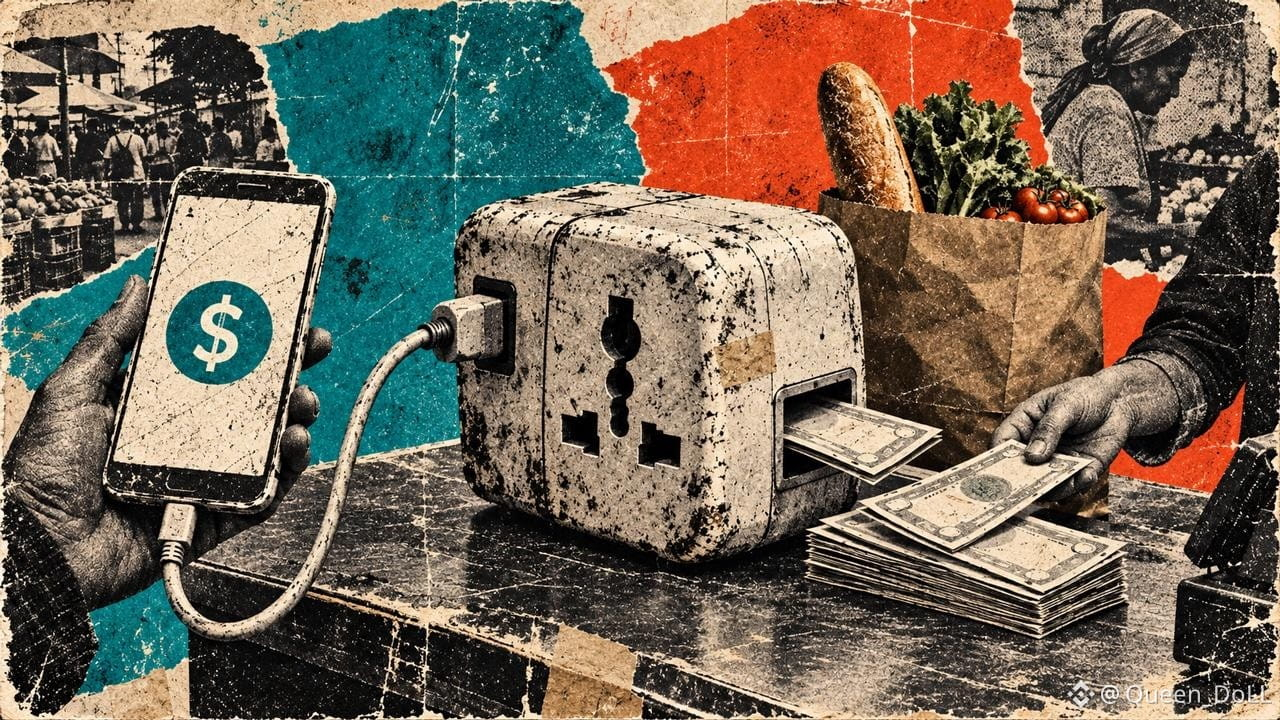
A stablecoin transfer can reach someone in seconds, but turning those funds into local currency can still take hours or even a full day.
Conversion fees, exchange rates, liquidity and withdrawal options all affect the real value a user receives.
The blockchain may make the transfer instant, but the last mile is where the real challenge begins. 👀
As stablecoin adoption grows, making crypto easy to actually spend could become just as important as making it easy to send.
#Binance #Stablecoins #Crypto #Web3 #CryptoNews
🔥 STABLECOINS CAN MOVE FAST BUT SPENDING THEM IS A DIFFERENT STORY
A stablecoin transfer can reach someone in seconds, but turning those funds into local currency can still take hours or even a full day.
Conversion fees, exchange rates, liquidity and withdrawal options all affect the real value a user receives.
The blockchain may make the transfer instant, but the last mile is where the real challenge begins. 👀
As stablecoin adoption grows, making crypto easy to actually spend could become just as important as making it easy to send.
#Binance #Stablecoins #Crypto #Web3 #CryptoNews
A stablecoin transfer can reach someone in seconds, but turning those funds into local currency can still take hours or even a full day.
Conversion fees, exchange rates, liquidity and withdrawal options all affect the real value a user receives.
The blockchain may make the transfer instant, but the last mile is where the real challenge begins. 👀
As stablecoin adoption grows, making crypto easy to actually spend could become just as important as making it easy to send.
#Binance #Stablecoins #Crypto #Web3 #CryptoNews
CryptoDC2:
Which coin to buy now and expect a good return? Like pepe doge or any safe coin
1
1
235

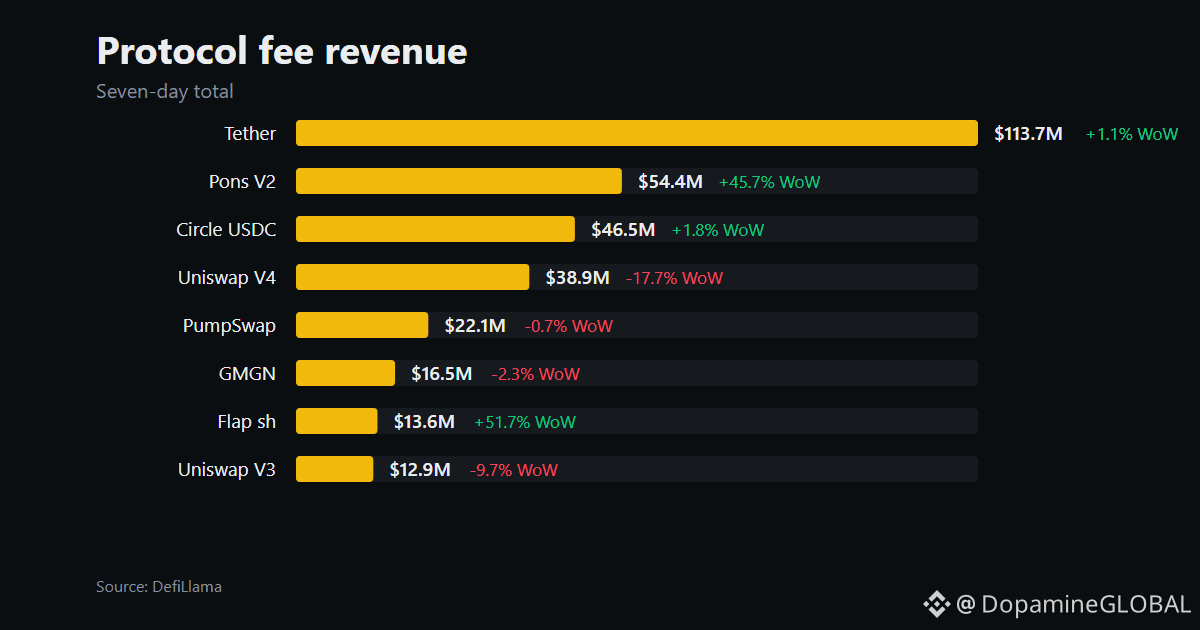
Stablecoin rails are doing more fee work than the biggest DEXs this week. Tether produced $113.75M in seven-day fees, while Circle USDC added $46.51M. Uniswap V4 came in at $38.91M, down 18% week over week.
That gap matters, but don’t read the leaderboard as a trading-volume ranking. It mixes issuer activity with DEX execution fees, so $USDT and $USDC can lead even when the market isn’t seeing a broad surge in speculative trading. The fee chart shows who monetised activity, not where traders’ risk appetite went.
Pons V2 is the outlier in the other direction: $54.36M, up 46%. That’s meaningful growth, but fees alone can’t tell us whether it came from organic usage, incentives, or a change in routing. The full sector reached $606.11M, up 8.89%, with stablecoin-related protocols taking a large share of the visible cash flow.
Fee leadership is real demand for blockspace or settlement, but it isn’t a clean proxy for bullish positioning.
Not financial advice. Do your own research.
#Stablecoins #DeFi #CryptoFees
Stablecoin rails are doing more fee work than the biggest DEXs this week. Tether produced $113.75M in seven-day fees, while Circle USDC added $46.51M. Uniswap V4 came in at $38.91M, down 18% week over week.
That gap matters, but don’t read the leaderboard as a trading-volume ranking. It mixes issuer activity with DEX execution fees, so $USDT and $USDC can lead even when the market isn’t seeing a broad surge in speculative trading. The fee chart shows who monetised activity, not where traders’ risk appetite went.
Pons V2 is the outlier in the other direction: $54.36M, up 46%. That’s meaningful growth, but fees alone can’t tell us whether it came from organic usage, incentives, or a change in routing. The full sector reached $606.11M, up 8.89%, with stablecoin-related protocols taking a large share of the visible cash flow.
Fee leadership is real demand for blockspace or settlement, but it isn’t a clean proxy for bullish positioning.
Not financial advice. Do your own research.
#Stablecoins #DeFi #CryptoFees
That gap matters, but don’t read the leaderboard as a trading-volume ranking. It mixes issuer activity with DEX execution fees, so $USDT and $USDC can lead even when the market isn’t seeing a broad surge in speculative trading. The fee chart shows who monetised activity, not where traders’ risk appetite went.
Pons V2 is the outlier in the other direction: $54.36M, up 46%. That’s meaningful growth, but fees alone can’t tell us whether it came from organic usage, incentives, or a change in routing. The full sector reached $606.11M, up 8.89%, with stablecoin-related protocols taking a large share of the visible cash flow.
Fee leadership is real demand for blockspace or settlement, but it isn’t a clean proxy for bullish positioning.
Not financial advice. Do your own research.
#Stablecoins #DeFi #CryptoFees
1

·
--
Bullish
Verified
#usbankcompletescrossborderpaymentpilotonstellar
U.S. Bank moved digital dollars between continents using Stellar.
On September 9, the bank announced a completed live payment pilot between its entities in North America and Europe. The transfer used USBDC, its proprietary dollar-backed stablecoin, on the public Stellar network.
The pilot also evaluates minting, redemption, freezing and clawback capabilities while connecting to the bank’s existing finance, risk and operational systems. The announcement gave no date for a wider client launch.
My view: the integration with everyday banking systems is what makes this worth following.
A payment product needs reliable accounting, clear redemption procedures and controls for handling problems. Testing those pieces together helps establish whether blockchain settlement can fit into a bank’s normal operations.
The next evidence I’d want is repeated transactions, measurable improvements in settlement and a clear path to client use. A successful internal transfer establishes a starting point; operating across more customers and payment routes introduces additional complexity.
For XLM, its network role includes transaction fees and minimum account balances. My interpretation is that payment growth needs to be assessed through those requirements: the dollar value transferred does not translate directly into equivalent XLM demand.
What would make this more significant to you: client access, recurring payment volume or proven cost savings?
#stellar #XLM #Stablecoins
{future}(XLMUSDT)
$LAB $VTHO $XLM
{future}(VTHOUSDT)
{future}(LABUSDT)
#usbankcompletescrossborderpaymentpilotonstellar
U.S. Bank moved digital dollars between continents using Stellar.
On September 9, the bank announced a completed live payment pilot between its entities in North America and Europe. The transfer used USBDC, its proprietary dollar-backed stablecoin, on the public Stellar network.
The pilot also evaluates minting, redemption, freezing and clawback capabilities while connecting to the bank’s existing finance, risk and operational systems. The announcement gave no date for a wider client launch.
My view: the integration with everyday banking systems is what makes this worth following.
A payment product needs reliable accounting, clear redemption procedures and controls for handling problems. Testing those pieces together helps establish whether blockchain settlement can fit into a bank’s normal operations.
The next evidence I’d want is repeated transactions, measurable improvements in settlement and a clear path to client use. A successful internal transfer establishes a starting point; operating across more customers and payment routes introduces additional complexity.
For XLM, its network role includes transaction fees and minimum account balances. My interpretation is that payment growth needs to be assessed through those requirements: the dollar value transferred does not translate directly into equivalent XLM demand.
What would make this more significant to you: client access, recurring payment volume or proven cost savings?
#stellar #XLM #Stablecoins
$LAB $VTHO $XLM
U.S. Bank moved digital dollars between continents using Stellar.
On September 9, the bank announced a completed live payment pilot between its entities in North America and Europe. The transfer used USBDC, its proprietary dollar-backed stablecoin, on the public Stellar network.
The pilot also evaluates minting, redemption, freezing and clawback capabilities while connecting to the bank’s existing finance, risk and operational systems. The announcement gave no date for a wider client launch.
My view: the integration with everyday banking systems is what makes this worth following.
A payment product needs reliable accounting, clear redemption procedures and controls for handling problems. Testing those pieces together helps establish whether blockchain settlement can fit into a bank’s normal operations.
The next evidence I’d want is repeated transactions, measurable improvements in settlement and a clear path to client use. A successful internal transfer establishes a starting point; operating across more customers and payment routes introduces additional complexity.
For XLM, its network role includes transaction fees and minimum account balances. My interpretation is that payment growth needs to be assessed through those requirements: the dollar value transferred does not translate directly into equivalent XLM demand.
What would make this more significant to you: client access, recurring payment volume or proven cost savings?
#stellar #XLM #Stablecoins
$LAB $VTHO $XLM

ABO3ZAM:
تحليل موفق، فالربط بين المؤسسات المالية والبلوكشين يمثل نقلة نوعية في تمركز الزخم طويل الأمد. لكن لا تغفل أن السيولة اللحظية تتبع الأخبار، لذا احذر من مطاردة السعر عند مناطق الرفض السعري، والتزم بإدارة المخاطر وتأمين الأرباح فور ظهور علامات تشبع الشراء.
1
3
2.5k

🚨 $USDT MONEY LAUNDERING TRAIL UNRAVELS AS SINGAPORE AUCTIONS MILLIONS IN SEIZED ASSETS! 🦈
The massive S$3 billion money laundering fallout in Singapore just hit the liquidation stage as authorities kick off auctions for seized millions. 🔍 Behind the scenes, tainted $USDT flows tied to collapsed platforms like Atom Asset Exchange are being scrubbed clean by enforcement officers.
When bad actors route illegal proceeds into stablecoins and cash out into luxury assets, regulators tighten the screws on off-ramps everywhere. 🛡️ Smart money watches these enforcement cycles closely because liquidity channels react instantly when dirty capital gets impounded. 💬 Do you think tighter stablecoin oversight will squeeze retail off-ramps or legitimize market flows? 👇
⚠️ Not financial advice. Always manage your risk. 🛡️
🏷️ #USDT #CryptoNews #Regulations #Stablecoins
🔍 🛡️
🚨 $USDT MONEY LAUNDERING TRAIL UNRAVELS AS SINGAPORE AUCTIONS MILLIONS IN SEIZED ASSETS! 🦈
The massive S$3 billion money laundering fallout in Singapore just hit the liquidation stage as authorities kick off auctions for seized millions. 🔍 Behind the scenes, tainted $USDT flows tied to collapsed platforms like Atom Asset Exchange are being scrubbed clean by enforcement officers.
When bad actors route illegal proceeds into stablecoins and cash out into luxury assets, regulators tighten the screws on off-ramps everywhere. 🛡️ Smart money watches these enforcement cycles closely because liquidity channels react instantly when dirty capital gets impounded. 💬 Do you think tighter stablecoin oversight will squeeze retail off-ramps or legitimize market flows? 👇
⚠️ Not financial advice. Always manage your risk. 🛡️
🏷️ #USDT #CryptoNews #Regulations #Stablecoins
🔍 🛡️
The massive S$3 billion money laundering fallout in Singapore just hit the liquidation stage as authorities kick off auctions for seized millions. 🔍 Behind the scenes, tainted $USDT flows tied to collapsed platforms like Atom Asset Exchange are being scrubbed clean by enforcement officers.
When bad actors route illegal proceeds into stablecoins and cash out into luxury assets, regulators tighten the screws on off-ramps everywhere. 🛡️ Smart money watches these enforcement cycles closely because liquidity channels react instantly when dirty capital gets impounded. 💬 Do you think tighter stablecoin oversight will squeeze retail off-ramps or legitimize market flows? 👇
⚠️ Not financial advice. Always manage your risk. 🛡️
🏷️ #USDT #CryptoNews #Regulations #Stablecoins
🔍 🛡️
12


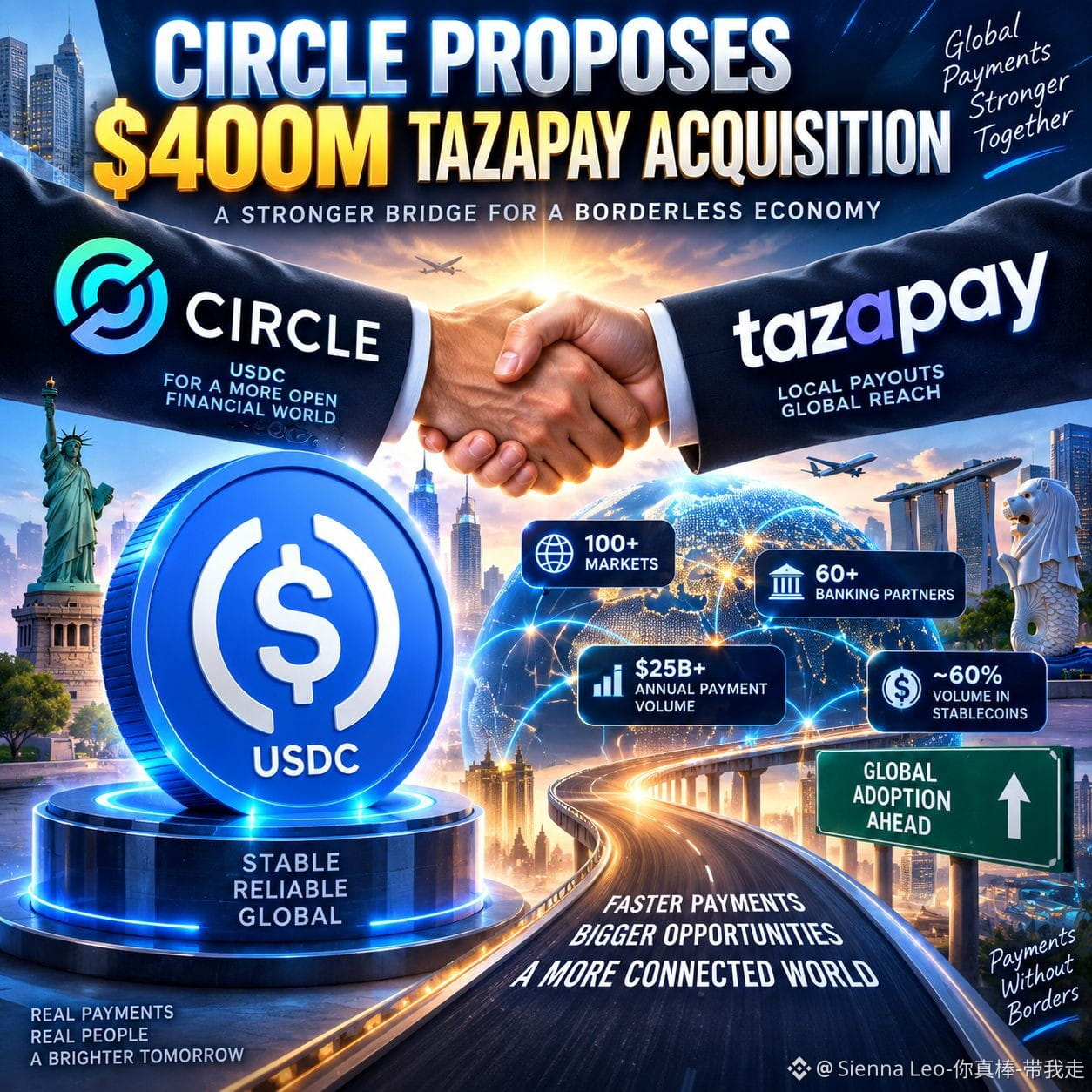
#CircleProposes$400MTazapayAcquisition
💥 Circle Targets Tazapay in $400M Deal: Is USDC Going After the Rails? 💥
Imagine a payment crossing borders in seconds, only to slow down when it reaches the traditional banking system. That bottleneck is exactly where Circle’s latest move gets interesting.
Circle has agreed to acquire Singapore-based cross-border payments firm Tazapay for $400 million in an all-stock transaction, with the deal expected to close in 2027 if regulatory approvals are secured.
The bigger story is not simply the price tag. Tazapay brings 60+ banking and fintech partners, local payout rails across 100+ markets, and more than $25 billion in annualized payment volume.
Even more revealing, around 60% of Tazapay’s transaction volume already involves stablecoins. That makes the acquisition look less like a conventional fintech expansion and more like Circle buying the missing connections between USDC and local financial systems.
My take: Circle is increasingly competing on infrastructure, not just stablecoin issuance. Owning distribution and payment rails could matter more than simply having a widely used digital dollar.
Still, the thesis is not guaranteed. Regulatory approval, integration, execution, and whether customers actually increase stablecoin usage will determine the real value of the deal.
If successful, this could strengthen USDC’s role in everyday cross-border commerce rather than keeping stablecoins primarily inside crypto markets.
❓Is Circle buying Tazapay mainly for growth, or is it building the payment rails that stablecoins have always needed?
In payments, the strongest currency may ultimately be the one with the strongest road beneath it.
Disclaimer: This post is for educational and informational purposes only, not financial advice. Always conduct your own research and manage risk carefully.
#USDC #Stablecoins #GrowWithSAC $USDC $RAY $AT
#CircleProposes$400MTazapayAcquisition
💥 Circle Targets Tazapay in $400M Deal: Is USDC Going After the Rails? 💥
Imagine a payment crossing borders in seconds, only to slow down when it reaches the traditional banking system. That bottleneck is exactly where Circle’s latest move gets interesting.
Circle has agreed to acquire Singapore-based cross-border payments firm Tazapay for $400 million in an all-stock transaction, with the deal expected to close in 2027 if regulatory approvals are secured.
The bigger story is not simply the price tag. Tazapay brings 60+ banking and fintech partners, local payout rails across 100+ markets, and more than $25 billion in annualized payment volume.
Even more revealing, around 60% of Tazapay’s transaction volume already involves stablecoins. That makes the acquisition look less like a conventional fintech expansion and more like Circle buying the missing connections between USDC and local financial systems.
My take: Circle is increasingly competing on infrastructure, not just stablecoin issuance. Owning distribution and payment rails could matter more than simply having a widely used digital dollar.
Still, the thesis is not guaranteed. Regulatory approval, integration, execution, and whether customers actually increase stablecoin usage will determine the real value of the deal.
If successful, this could strengthen USDC’s role in everyday cross-border commerce rather than keeping stablecoins primarily inside crypto markets.
❓Is Circle buying Tazapay mainly for growth, or is it building the payment rails that stablecoins have always needed?
In payments, the strongest currency may ultimately be the one with the strongest road beneath it.
Disclaimer: This post is for educational and informational purposes only, not financial advice. Always conduct your own research and manage risk carefully.
#USDC #Stablecoins #GrowWithSAC $USDC $RAY $AT
💥 Circle Targets Tazapay in $400M Deal: Is USDC Going After the Rails? 💥
Imagine a payment crossing borders in seconds, only to slow down when it reaches the traditional banking system. That bottleneck is exactly where Circle’s latest move gets interesting.
Circle has agreed to acquire Singapore-based cross-border payments firm Tazapay for $400 million in an all-stock transaction, with the deal expected to close in 2027 if regulatory approvals are secured.
The bigger story is not simply the price tag. Tazapay brings 60+ banking and fintech partners, local payout rails across 100+ markets, and more than $25 billion in annualized payment volume.
Even more revealing, around 60% of Tazapay’s transaction volume already involves stablecoins. That makes the acquisition look less like a conventional fintech expansion and more like Circle buying the missing connections between USDC and local financial systems.
My take: Circle is increasingly competing on infrastructure, not just stablecoin issuance. Owning distribution and payment rails could matter more than simply having a widely used digital dollar.
Still, the thesis is not guaranteed. Regulatory approval, integration, execution, and whether customers actually increase stablecoin usage will determine the real value of the deal.
If successful, this could strengthen USDC’s role in everyday cross-border commerce rather than keeping stablecoins primarily inside crypto markets.
❓Is Circle buying Tazapay mainly for growth, or is it building the payment rails that stablecoins have always needed?
In payments, the strongest currency may ultimately be the one with the strongest road beneath it.
Disclaimer: This post is for educational and informational purposes only, not financial advice. Always conduct your own research and manage risk carefully.
#USDC #Stablecoins #GrowWithSAC $USDC $RAY $AT
ABO3ZAM:
تحليل موفق. هذه الصفقة تهدف لتعزيز تمركز الزخم في البنية التحتية للمدفوعات، مما يمهد لسيولة مؤسسية طويلة الأجل. انصح دائما بمراقبة مناطق الرفض السعري عند مستويات المقاومة الرئيسية، والالتزام الصارم بإدارة المخاطر وتأمين الأرباح فور تأكيد الارتداد لضمان الحفاظ على رأس المال.
1
1
358

#CircleProposes$400MTazapayAcquisition
🔥 CIRCLE’S $400M BET: IS USDC BUILDING THE FUTURE OF GLOBAL PAYMENTS? 🔥
Borders once slowed the movement of money.
Now, the race is to make value move as freely as information.
Circle has agreed to acquire Singapore-based Tazapay for $400 million in an all-stock deal, with completion expected in 2027 pending regulatory approvals.
The real story is bigger than the acquisition price. Tazapay brings 60+ banking and fintech partners, payment rails across 100+ markets, and more than $25 billion in annualized payment volume.
Even more important, over 60% of Tazapay’s transaction volume already involved stablecoins as of July 31. That gives Circle something difficult to build quickly: real-world payment connectivity around USDC.
My Take: Circle is not simply buying another payments company. It is buying the “last mile” between stablecoins and traditional financial infrastructure.
If successful, this could strengthen USDC’s position in cross-border commerce by combining stablecoin settlement with local banking relationships and payout rails.
But the thesis still has execution risk. The transaction needs regulatory clearance, including approval from Singapore’s Monetary Authority, and the deal is not expected to close until 2027.
The bigger question is no longer whether stablecoins can move money. It is whether they can become the infrastructure businesses actually depend on.
Can Circle turn USDC into a truly global payment rail?
Disclaimer: This is for informational purposes only and not financial advice.
#USDC #Stablecoins #GrowWithSAC $USDC $TFUEL $METAB
#CircleProposes$400MTazapayAcquisition
🔥 CIRCLE’S $400M BET: IS USDC BUILDING THE FUTURE OF GLOBAL PAYMENTS? 🔥
Borders once slowed the movement of money.
Now, the race is to make value move as freely as information.
Circle has agreed to acquire Singapore-based Tazapay for $400 million in an all-stock deal, with completion expected in 2027 pending regulatory approvals.
The real story is bigger than the acquisition price. Tazapay brings 60+ banking and fintech partners, payment rails across 100+ markets, and more than $25 billion in annualized payment volume.
Even more important, over 60% of Tazapay’s transaction volume already involved stablecoins as of July 31. That gives Circle something difficult to build quickly: real-world payment connectivity around USDC.
My Take: Circle is not simply buying another payments company. It is buying the “last mile” between stablecoins and traditional financial infrastructure.
If successful, this could strengthen USDC’s position in cross-border commerce by combining stablecoin settlement with local banking relationships and payout rails.
But the thesis still has execution risk. The transaction needs regulatory clearance, including approval from Singapore’s Monetary Authority, and the deal is not expected to close until 2027.
The bigger question is no longer whether stablecoins can move money. It is whether they can become the infrastructure businesses actually depend on.
Can Circle turn USDC into a truly global payment rail?
Disclaimer: This is for informational purposes only and not financial advice.
#USDC #Stablecoins #GrowWithSAC $USDC $TFUEL $METAB
🔥 CIRCLE’S $400M BET: IS USDC BUILDING THE FUTURE OF GLOBAL PAYMENTS? 🔥
Borders once slowed the movement of money.
Now, the race is to make value move as freely as information.
Circle has agreed to acquire Singapore-based Tazapay for $400 million in an all-stock deal, with completion expected in 2027 pending regulatory approvals.
The real story is bigger than the acquisition price. Tazapay brings 60+ banking and fintech partners, payment rails across 100+ markets, and more than $25 billion in annualized payment volume.
Even more important, over 60% of Tazapay’s transaction volume already involved stablecoins as of July 31. That gives Circle something difficult to build quickly: real-world payment connectivity around USDC.
My Take: Circle is not simply buying another payments company. It is buying the “last mile” between stablecoins and traditional financial infrastructure.
If successful, this could strengthen USDC’s position in cross-border commerce by combining stablecoin settlement with local banking relationships and payout rails.
But the thesis still has execution risk. The transaction needs regulatory clearance, including approval from Singapore’s Monetary Authority, and the deal is not expected to close until 2027.
The bigger question is no longer whether stablecoins can move money. It is whether they can become the infrastructure businesses actually depend on.
Can Circle turn USDC into a truly global payment rail?
Disclaimer: This is for informational purposes only and not financial advice.
#USDC #Stablecoins #GrowWithSAC $USDC $TFUEL $METAB

476

·
--
What Stablecoin Reserves ProveStablecoin reserve evidence is often discussed as if every report proves the same thing. It does not.
An issuer-prepared reserve report describes claimed backing. An independent attestation can provide assurance over specified assertions and criteria. A financial-statement audit has a broader financial-reporting objective. Proof of reserves may demonstrate selected assets or control of custody addresses.
Each form of evidence has a boundary.
Assets without complete liabilities do not establish solvency. A month-end snapshot is not continuous assurance. On-chain balances do not independently prove ownership of bank deposits, Treasury securities or enforceable redemption rights. One-to-one backing also requires analysis of liquidity, maturity, custody, encumbrance and legal claim priority.
The strongest question is not simply whether assets exist. It is whether credible evidence shows that sufficient, liquid and legally available assets support the issuer’s actual redemption obligations.
Full guide:
https://tokentoolhub.com/stablecoin-reserve-attestation-audit-proof/
#Stablecoins #blockchain #CryptoResearch #Web3 #defi
What Stablecoin Reserves Prove
Stablecoin reserve evidence is often discussed as if every report proves the same thing. It does not.
An issuer-prepared reserve report describes claimed backing. An independent attestation can provide assurance over specified assertions and criteria. A financial-statement audit has a broader financial-reporting objective. Proof of reserves may demonstrate selected assets or control of custody addresses.
Each form of evidence has a boundary.
Assets without complete liabilities do not establish solvency. A month-end snapshot is not continuous assurance. On-chain balances do not independently prove ownership of bank deposits, Treasury securities or enforceable redemption rights. One-to-one backing also requires analysis of liquidity, maturity, custody, encumbrance and legal claim priority.
The strongest question is not simply whether assets exist. It is whether credible evidence shows that sufficient, liquid and legally available assets support the issuer’s actual redemption obligations.
Full guide:
https://tokentoolhub.com/stablecoin-reserve-attestation-audit-proof/
#Stablecoins #blockchain #CryptoResearch #Web3 #defi
An issuer-prepared reserve report describes claimed backing. An independent attestation can provide assurance over specified assertions and criteria. A financial-statement audit has a broader financial-reporting objective. Proof of reserves may demonstrate selected assets or control of custody addresses.
Each form of evidence has a boundary.
Assets without complete liabilities do not establish solvency. A month-end snapshot is not continuous assurance. On-chain balances do not independently prove ownership of bank deposits, Treasury securities or enforceable redemption rights. One-to-one backing also requires analysis of liquidity, maturity, custody, encumbrance and legal claim priority.
The strongest question is not simply whether assets exist. It is whether credible evidence shows that sufficient, liquid and legally available assets support the issuer’s actual redemption obligations.
Full guide:
https://tokentoolhub.com/stablecoin-reserve-attestation-audit-proof/
#Stablecoins #blockchain #CryptoResearch #Web3 #defi
68
·
--
Stablecoins have quietly crossed the line from crypto experiment to financial infrastructure.
The conversation about stablecoins always centers on market cap. The real story is settlement velocity — and it's accelerating in corridors most traders don't track.
Cross-border B2B payments settled on stablecoin rails are growing at a pace that makes the 2021 stablecoin bull run look like a warmup. Businesses aren't using USDT and USDC because they're crypto enthusiasts. They're using them because a 30-second settlement at $0.01 beats a 3-day SWIFT transfer at $25 with six intermediary banks taking a cut.
The correspondent banking model was built for a world without internet. Stablecoins are the internet's version of that system — faster, cheaper, and increasingly regulated. The GENIUS Act didn't create this trend. It validated what was already happening.
Here's what most people miss: stablecoin settlement volume now rivals some major payment networks on certain corridors — particularly Asia-to-Europe trade settlement and Latin American dollar access. The volume isn't coming from traders. It's coming from importers, exporters, and SMEs who need dollar liquidity without local banking access.
The chains that capture this flow aren't the ones with the highest TPS. They're the ones with the deepest liquidity, best compliance rails, and lowest settlement risk.
Watch settlement-to-market-cap ratios, not just market cap.
$ETH $SOL $BNB
#Stablecoins #CryptoPayments #CrossBorder #DeFi #FinancialInfrastructure
Stablecoins have quietly crossed the line from crypto experiment to financial infrastructure.
The conversation about stablecoins always centers on market cap. The real story is settlement velocity — and it's accelerating in corridors most traders don't track.
Cross-border B2B payments settled on stablecoin rails are growing at a pace that makes the 2021 stablecoin bull run look like a warmup. Businesses aren't using USDT and USDC because they're crypto enthusiasts. They're using them because a 30-second settlement at $0.01 beats a 3-day SWIFT transfer at $25 with six intermediary banks taking a cut.
The correspondent banking model was built for a world without internet. Stablecoins are the internet's version of that system — faster, cheaper, and increasingly regulated. The GENIUS Act didn't create this trend. It validated what was already happening.
Here's what most people miss: stablecoin settlement volume now rivals some major payment networks on certain corridors — particularly Asia-to-Europe trade settlement and Latin American dollar access. The volume isn't coming from traders. It's coming from importers, exporters, and SMEs who need dollar liquidity without local banking access.
The chains that capture this flow aren't the ones with the highest TPS. They're the ones with the deepest liquidity, best compliance rails, and lowest settlement risk.
Watch settlement-to-market-cap ratios, not just market cap.
$ETH $SOL $BNB
#Stablecoins #CryptoPayments #CrossBorder #DeFi #FinancialInfrastructure
The conversation about stablecoins always centers on market cap. The real story is settlement velocity — and it's accelerating in corridors most traders don't track.
Cross-border B2B payments settled on stablecoin rails are growing at a pace that makes the 2021 stablecoin bull run look like a warmup. Businesses aren't using USDT and USDC because they're crypto enthusiasts. They're using them because a 30-second settlement at $0.01 beats a 3-day SWIFT transfer at $25 with six intermediary banks taking a cut.
The correspondent banking model was built for a world without internet. Stablecoins are the internet's version of that system — faster, cheaper, and increasingly regulated. The GENIUS Act didn't create this trend. It validated what was already happening.
Here's what most people miss: stablecoin settlement volume now rivals some major payment networks on certain corridors — particularly Asia-to-Europe trade settlement and Latin American dollar access. The volume isn't coming from traders. It's coming from importers, exporters, and SMEs who need dollar liquidity without local banking access.
The chains that capture this flow aren't the ones with the highest TPS. They're the ones with the deepest liquidity, best compliance rails, and lowest settlement risk.
Watch settlement-to-market-cap ratios, not just market cap.
$ETH $SOL $BNB
#Stablecoins #CryptoPayments #CrossBorder #DeFi #FinancialInfrastructure
150
Ngl guys this is actually massive for real world adoption 💡 MoneyGram just announced they are rolling out a new Visa card that lets people hold dollars and directly spend from a stablecoin balance 💳 We always talk about crypto moving into everyday payments, but when a remittance giant like MoneyGram links up with Visa for stablecoins, that is huge.
It really shows how digital dollars like $USDT and $USDC are quietly becoming the backbone of global finance without retail users even noticing the complexity behind it 🚀 If this friction gets eliminated, mainstream users will be using stablecoins daily for coffee and groceries. Big step forward for crypto usability!
#Write2Earn #Stablecoins #CryptoAdoption #PayWithCrypto
Ngl guys this is actually massive for real world adoption 💡 MoneyGram just announced they are rolling out a new Visa card that lets people hold dollars and directly spend from a stablecoin balance 💳 We always talk about crypto moving into everyday payments, but when a remittance giant like MoneyGram links up with Visa for stablecoins, that is huge.
It really shows how digital dollars like $USDT and $USDC are quietly becoming the backbone of global finance without retail users even noticing the complexity behind it 🚀 If this friction gets eliminated, mainstream users will be using stablecoins daily for coffee and groceries. Big step forward for crypto usability!
#Write2Earn #Stablecoins #CryptoAdoption #PayWithCrypto
It really shows how digital dollars like $USDT and $USDC are quietly becoming the backbone of global finance without retail users even noticing the complexity behind it 🚀 If this friction gets eliminated, mainstream users will be using stablecoins daily for coffee and groceries. Big step forward for crypto usability!
#Write2Earn #Stablecoins #CryptoAdoption #PayWithCrypto

95
Breaking: MoneyGram just dropped a massive adoption bomb in Latin America. 💸
They just launched their very first stablecoin-backed Visa card in Colombia, partnering with fintech company Rain.
Here is what you need to know:
🚀 First-ever stablecoin card by MoneyGram
🇨🇴 Initially launching in Colombia
💳 Powered by Visa and developed with Rain
This is huge for bringing stablecoins like $USDC and $USDT into daily real-world purchases. Keep an eye on LATAM crypto adoption, it is moving incredibly fast.
#Stablecoins #Visa #Adoption #Write2Earn
Breaking: MoneyGram just dropped a massive adoption bomb in Latin America. 💸
They just launched their very first stablecoin-backed Visa card in Colombia, partnering with fintech company Rain.
Here is what you need to know:
🚀 First-ever stablecoin card by MoneyGram
🇨🇴 Initially launching in Colombia
💳 Powered by Visa and developed with Rain
This is huge for bringing stablecoins like $USDC and $USDT into daily real-world purchases. Keep an eye on LATAM crypto adoption, it is moving incredibly fast.
#Stablecoins #Visa #Adoption #Write2Earn
They just launched their very first stablecoin-backed Visa card in Colombia, partnering with fintech company Rain.
Here is what you need to know:
🚀 First-ever stablecoin card by MoneyGram
🇨🇴 Initially launching in Colombia
💳 Powered by Visa and developed with Rain
This is huge for bringing stablecoins like $USDC and $USDT into daily real-world purchases. Keep an eye on LATAM crypto adoption, it is moving incredibly fast.
#Stablecoins #Visa #Adoption #Write2Earn
52
·
--
Stablecoin Yield Under GENIUSA stablecoin can remain near $1 while the product paying 4%, 8% or 15% carries significant risk.
The GENIUS Act restricts permitted payment stablecoin issuers from paying interest or yield solely because a user holds, uses or retains the stablecoin. That does not make every external yield product risk-free or prohibited.
A platform can lend deposited stablecoins. A DeFi protocol can earn borrower interest. A liquidity pool can distribute trading fees and incentives. A tokenized fund can invest in Treasury securities. A wrapper can add several contracts and counterparties around the original stablecoin.
Each structure changes who owes the user money and what can fail.
The useful question is not only, what is the APY?
Ask where the return originates, who controls the assets, what collateral exists, how redemption works and whether the user still holds the original payment stablecoin or a new claim against another product.
Full guide:
https://tokentoolhub.com/genius-act-interest-bearing-stablecoins/
#Stablecoins #defi #CryptoRegulationBattle #blockchain #CryptoResearch
Stablecoin Yield Under GENIUS
A stablecoin can remain near $1 while the product paying 4%, 8% or 15% carries significant risk.
The GENIUS Act restricts permitted payment stablecoin issuers from paying interest or yield solely because a user holds, uses or retains the stablecoin. That does not make every external yield product risk-free or prohibited.
A platform can lend deposited stablecoins. A DeFi protocol can earn borrower interest. A liquidity pool can distribute trading fees and incentives. A tokenized fund can invest in Treasury securities. A wrapper can add several contracts and counterparties around the original stablecoin.
Each structure changes who owes the user money and what can fail.
The useful question is not only, what is the APY?
Ask where the return originates, who controls the assets, what collateral exists, how redemption works and whether the user still holds the original payment stablecoin or a new claim against another product.
Full guide:
https://tokentoolhub.com/genius-act-interest-bearing-stablecoins/
#Stablecoins #defi #CryptoRegulationBattle #blockchain #CryptoResearch
The GENIUS Act restricts permitted payment stablecoin issuers from paying interest or yield solely because a user holds, uses or retains the stablecoin. That does not make every external yield product risk-free or prohibited.
A platform can lend deposited stablecoins. A DeFi protocol can earn borrower interest. A liquidity pool can distribute trading fees and incentives. A tokenized fund can invest in Treasury securities. A wrapper can add several contracts and counterparties around the original stablecoin.
Each structure changes who owes the user money and what can fail.
The useful question is not only, what is the APY?
Ask where the return originates, who controls the assets, what collateral exists, how redemption works and whether the user still holds the original payment stablecoin or a new claim against another product.
Full guide:
https://tokentoolhub.com/genius-act-interest-bearing-stablecoins/
#Stablecoins #defi #CryptoRegulationBattle #blockchain #CryptoResearch
31

·
--
The crowd sees bank-issued stablecoins as the key to mass adoption, but $ETH liquidity providers smell systemic risk.
Retail wants convenience, yet pros fear legacy custody invites censorship. Bank assets use permissioned gateways that clash with the open spirit of $BNB. Watch the redemption terms for hidden exit constraints, as that is where the real danger sits.
$ETH #crypto #stablecoins #Payments
The crowd sees bank-issued stablecoins as the key to mass adoption, but $ETH liquidity providers smell systemic risk.
Retail wants convenience, yet pros fear legacy custody invites censorship. Bank assets use permissioned gateways that clash with the open spirit of $BNB . Watch the redemption terms for hidden exit constraints, as that is where the real danger sits.
$ETH #crypto #stablecoins #Payments
Retail wants convenience, yet pros fear legacy custody invites censorship. Bank assets use permissioned gateways that clash with the open spirit of $BNB . Watch the redemption terms for hidden exit constraints, as that is where the real danger sits.
$ETH #crypto #stablecoins #Payments

85

·
--
INSTITUTIONAL MONETARY FLOWS POINT TO A 5X EXPANSION FOR $SKY BY 2028 🦈
Entry: 0.065 ⚡
Target: 0.325 🚀
Standard Chartered digital asset research projects $SKY to lead the next evolution of institutional stablecoin infrastructure, targeting 0.325 from current accumulation levels. The structural catalyst lies in the architectural shift toward yield-bearing USDS demand, where real-world asset integration already backs over 5.5 billion in capital deployment. 📊
Unlike legacy non-yielding pegs, this model directly captures net interest margins across an expanding agent network. 🏦 With 45 percent of protocol revenue distributed to stakers and 10 percent driving automated buybacks, systemic cash flows compound directly as stablecoin market cap scales toward 2 trillion.
As legacy banking heavyweights construct competing settlement layers, smart money is positioning around protocols with proven on-chain liquidity capture. 💬 Do you expect yield-bearing stablecoins to completely cannibalize traditional non-yielding pegs during the next macro cycle? 👇
⚠️ Not financial advice. Always manage your risk. 🛡️
🏷️ #SKY #Stablecoins #DeFi #Crypto
🎯 🦈
INSTITUTIONAL MONETARY FLOWS POINT TO A 5X EXPANSION FOR $SKY BY 2028 🦈
Entry: 0.065 ⚡
Target: 0.325 🚀
Standard Chartered digital asset research projects $SKY to lead the next evolution of institutional stablecoin infrastructure, targeting 0.325 from current accumulation levels. The structural catalyst lies in the architectural shift toward yield-bearing USDS demand, where real-world asset integration already backs over 5.5 billion in capital deployment. 📊
Unlike legacy non-yielding pegs, this model directly captures net interest margins across an expanding agent network. 🏦 With 45 percent of protocol revenue distributed to stakers and 10 percent driving automated buybacks, systemic cash flows compound directly as stablecoin market cap scales toward 2 trillion.
As legacy banking heavyweights construct competing settlement layers, smart money is positioning around protocols with proven on-chain liquidity capture. 💬 Do you expect yield-bearing stablecoins to completely cannibalize traditional non-yielding pegs during the next macro cycle? 👇
⚠️ Not financial advice. Always manage your risk. 🛡️
🏷️ #SKY #Stablecoins #DeFi #Crypto
🎯 🦈
Entry: 0.065 ⚡
Target: 0.325 🚀
Standard Chartered digital asset research projects $SKY to lead the next evolution of institutional stablecoin infrastructure, targeting 0.325 from current accumulation levels. The structural catalyst lies in the architectural shift toward yield-bearing USDS demand, where real-world asset integration already backs over 5.5 billion in capital deployment. 📊
Unlike legacy non-yielding pegs, this model directly captures net interest margins across an expanding agent network. 🏦 With 45 percent of protocol revenue distributed to stakers and 10 percent driving automated buybacks, systemic cash flows compound directly as stablecoin market cap scales toward 2 trillion.
As legacy banking heavyweights construct competing settlement layers, smart money is positioning around protocols with proven on-chain liquidity capture. 💬 Do you expect yield-bearing stablecoins to completely cannibalize traditional non-yielding pegs during the next macro cycle? 👇
⚠️ Not financial advice. Always manage your risk. 🛡️
🏷️ #SKY #Stablecoins #DeFi #Crypto
🎯 🦈
25
Log in to explore more content
Join global crypto users on Binance Square
⚡️ Get latest and useful information about crypto.
💬 Trusted by the world’s largest crypto exchange.
👍 Discover real insights from verified creators.
Email / Phone number
Trending Topics
1
#AnthropicCEOCallsForAISlowdown
5,874 views
140 Discussing
2
#SECReceivesGrayscaleLitecoinTrustETFFiling
117,293 views
1,692 Discussing
3
#ClarityActFacesProceduralVoteSept15
244,199 views
2,580 Discussing
4
#US10YearTreasuryYieldNears5%
92,919 views
1,445 Discussing
5
#CryptoLiquidations$674MIn24H
23,704 views
212 Discussing
6
#TokenizedStockHoldersUp619.1%
73,949 views
1,180 Discussing
7
#RevolutConfirmsFakeGovEmailDataBreach
110,817 views
1,468 Discussing
8
#CanadaOSFISaysTokenizedDepositsEqualTraditionalDeposits
5,870 views
116 Discussing
9
#USBankCompletesCrossBorderPaymentPilotOnStellar
87,643 views
1,287 Discussing
10
#NvidiaInTalksToInvestUpTo$10BInAnthropicIPO
6,090 views
96 Discussing