
#usd1
usd1
7.1M views
10,099 Discussing
Hot
Latest

·
--
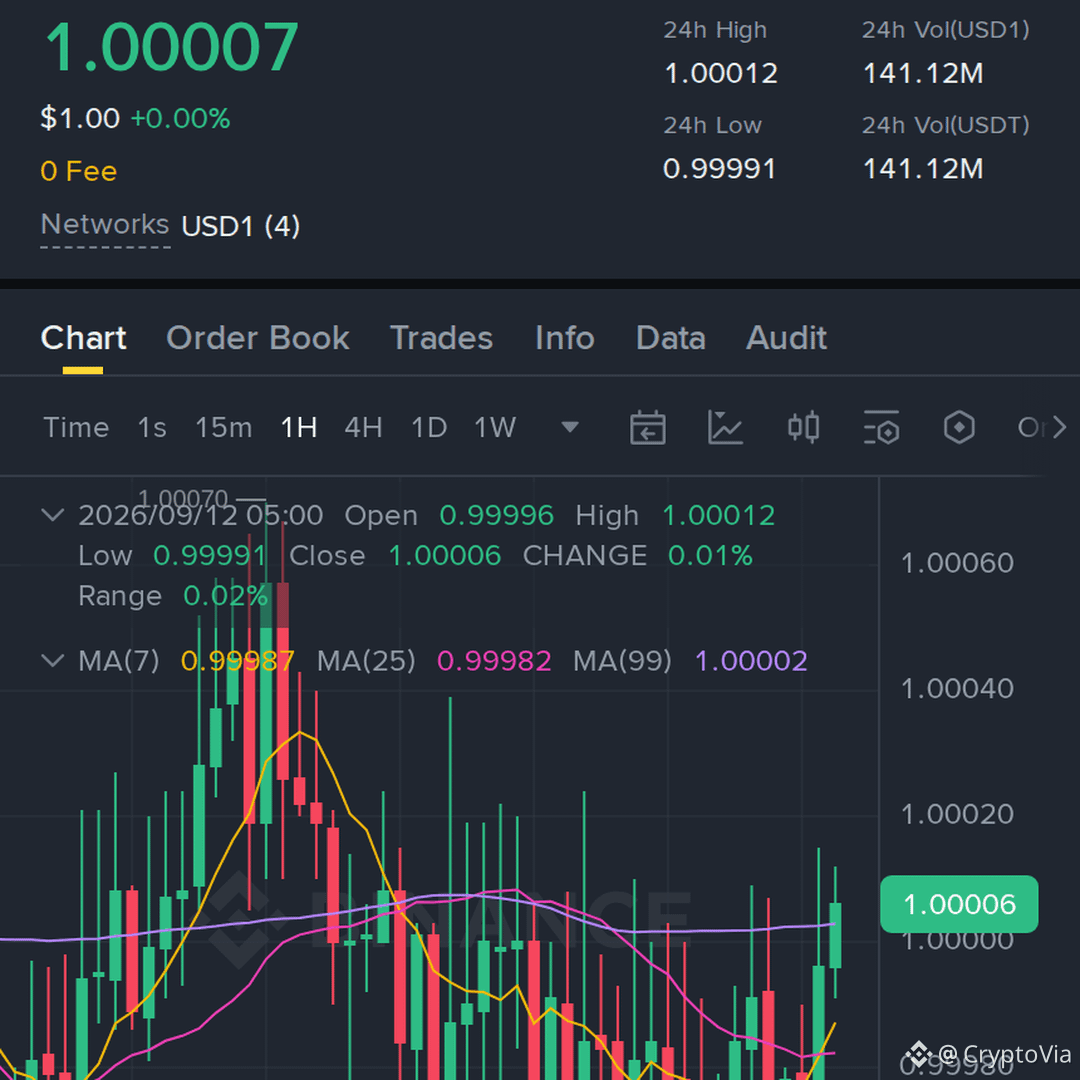
Flat volume often signals exhaustion, yet $USD1 is holding firm today.
Despite a negligible -0.02% shift, USD1 has sustained $184.22M in 24h volume. This level of participation at the $0.999830 mark suggests buyers are defending the status quo rather than capitulating.
Watch for a sustained volume spike above current levels to confirm a potential bullish breakout. Conversely, a sharp volume drop coupled with a price slide would suggest exhaustion of the current support.
Is this heavy volume a sign of quiet accumulation or a looming distribution phase?
Check the live chart for USD1 here
Tap $USD1 for the live chart. #USD1 #BinanceSquare
Flat volume often signals exhaustion, yet $USD1 is holding firm today.
Despite a negligible -0.02% shift, USD1 has sustained $184.22M in 24h volume. This level of participation at the $0.999830 mark suggests buyers are defending the status quo rather than capitulating.
Watch for a sustained volume spike above current levels to confirm a potential bullish breakout. Conversely, a sharp volume drop coupled with a price slide would suggest exhaustion of the current support.
Is this heavy volume a sign of quiet accumulation or a looming distribution phase?
Check the live chart for USD1 here
Tap $USD1 for the live chart. #USD1 #BinanceSquare
Despite a negligible -0.02% shift, USD1 has sustained $184.22M in 24h volume. This level of participation at the $0.999830 mark suggests buyers are defending the status quo rather than capitulating.
Watch for a sustained volume spike above current levels to confirm a potential bullish breakout. Conversely, a sharp volume drop coupled with a price slide would suggest exhaustion of the current support.
Is this heavy volume a sign of quiet accumulation or a looming distribution phase?
Check the live chart for USD1 here
Tap $USD1 for the live chart. #USD1 #BinanceSquare

·
--
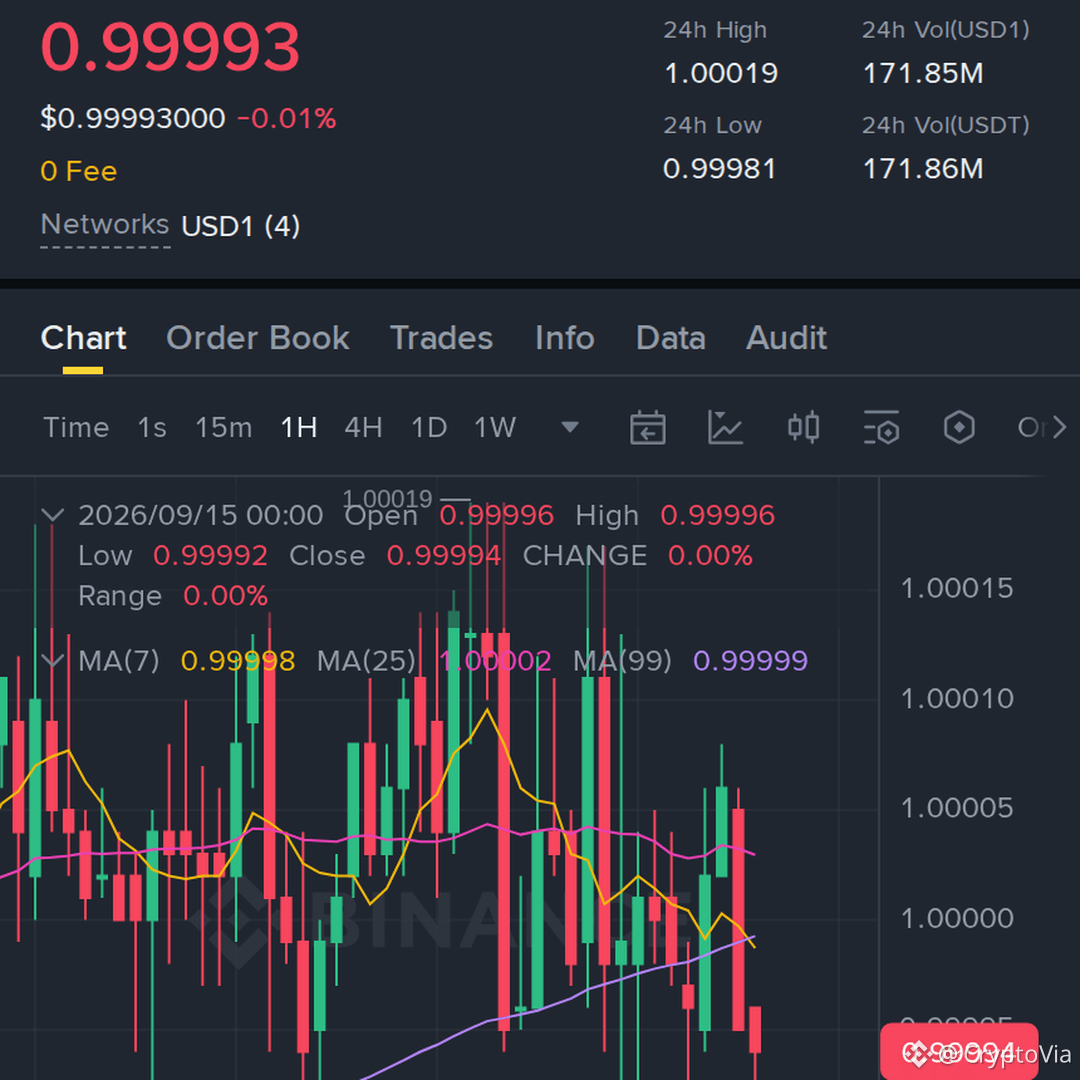
Volume is outpacing price action for $USD1 right now.
With $163.81M in 24h volume despite a flat -0.00% change, the market is currently in a high-interest consolidation phase. This heavy liquidity suggests traders are positioning ahead of a breakout.
Bullish momentum is likely if volume continues to climb alongside price. Conversely, should volume fade while the price drops below current levels, it may signal an exhaustion of buying interest, serving as an invalidation of the current consolidation structure.
Is this heavy USD1 volume a sign of accumulation or distribution before the next move?
Check the live chart for USD1 here
Tap $USD1 for the live chart. #USD1 #BinanceSquare
Volume is outpacing price action for $USD1 right now.
With $163.81M in 24h volume despite a flat -0.00% change, the market is currently in a high-interest consolidation phase. This heavy liquidity suggests traders are positioning ahead of a breakout.
Bullish momentum is likely if volume continues to climb alongside price. Conversely, should volume fade while the price drops below current levels, it may signal an exhaustion of buying interest, serving as an invalidation of the current consolidation structure.
Is this heavy USD1 volume a sign of accumulation or distribution before the next move?
Check the live chart for USD1 here
Tap $USD1 for the live chart. #USD1 #BinanceSquare
With $163.81M in 24h volume despite a flat -0.00% change, the market is currently in a high-interest consolidation phase. This heavy liquidity suggests traders are positioning ahead of a breakout.
Bullish momentum is likely if volume continues to climb alongside price. Conversely, should volume fade while the price drops below current levels, it may signal an exhaustion of buying interest, serving as an invalidation of the current consolidation structure.
Is this heavy USD1 volume a sign of accumulation or distribution before the next move?
Check the live chart for USD1 here
Tap $USD1 for the live chart. #USD1 #BinanceSquare
9

{spot}(USD1USDT)
$USD1 is emerging as a notable stablecoin, designed to maintain a 1:1 value with the U.S. dollar.
Built to bridge traditional finance and digital assets, it focuses on stability, liquidity, and compliance.
With growing ecosystem adoption, USD1 could become an important player in the stablecoin market.
#USD1
#Stablecoin
$USD1 is emerging as a notable stablecoin, designed to maintain a 1:1 value with the U.S. dollar.
Built to bridge traditional finance and digital assets, it focuses on stability, liquidity, and compliance.
With growing ecosystem adoption, USD1 could become an important player in the stablecoin market.
#USD1
#Stablecoin
Built to bridge traditional finance and digital assets, it focuses on stability, liquidity, and compliance.
With growing ecosystem adoption, USD1 could become an important player in the stablecoin market.
#USD1
#Stablecoin

86
·
--
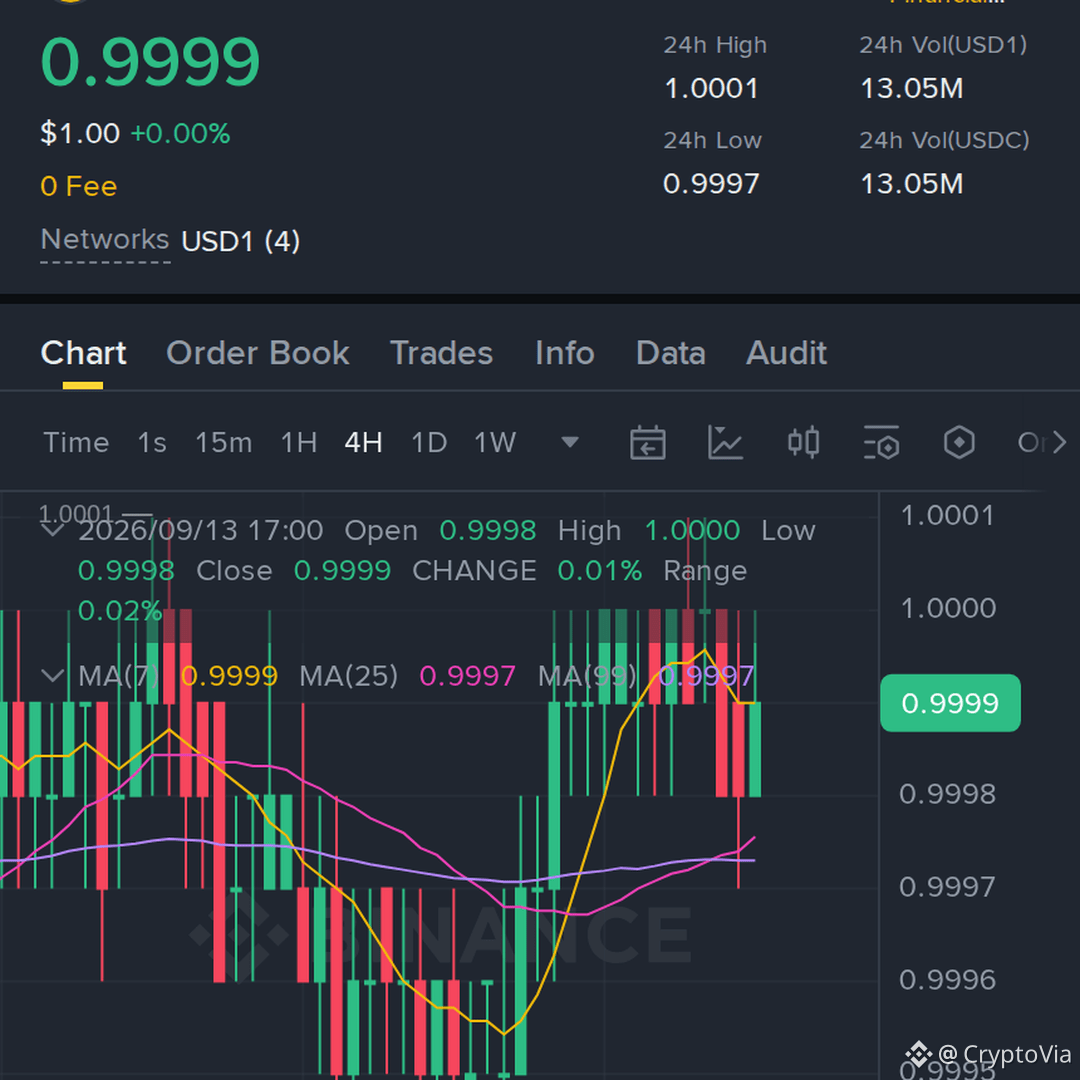
Is current $USD1 volume fueling a breakout or just noise?
With $85.25M in 24h volume against a flat +0.01% price move, liquidity is high but directional conviction remains absent. Here is what matters now:
* **Bullish Signal:** A sustained volume spike alongside a clear breakout above current consolidation could signal institutional accumulation.
* **Risk Invalidation:** If volume dries up while the price slips below the $1.00 support, expect a potential test of lower liquidity zones.
* **Market Reality:** High volume without price momentum often indicates a fierce battle between buyers and sellers.
Are you seeing more aggressive…
Tap $USD1 for the live chart. #USD1 #BinanceSquare
Is current $USD1 volume fueling a breakout or just noise?
With $85.25M in 24h volume against a flat +0.01% price move, liquidity is high but directional conviction remains absent. Here is what matters now:
* **Bullish Signal:** A sustained volume spike alongside a clear breakout above current consolidation could signal institutional accumulation.
* **Risk Invalidation:** If volume dries up while the price slips below the $1.00 support, expect a potential test of lower liquidity zones.
* **Market Reality:** High volume without price momentum often indicates a fierce battle between buyers and sellers.
Are you seeing more aggressive…
Tap $USD1 for the live chart. #USD1 #BinanceSquare
With $85.25M in 24h volume against a flat +0.01% price move, liquidity is high but directional conviction remains absent. Here is what matters now:
* **Bullish Signal:** A sustained volume spike alongside a clear breakout above current consolidation could signal institutional accumulation.
* **Risk Invalidation:** If volume dries up while the price slips below the $1.00 support, expect a potential test of lower liquidity zones.
* **Market Reality:** High volume without price momentum often indicates a fierce battle between buyers and sellers.
Are you seeing more aggressive…
Tap $USD1 for the live chart. #USD1 #BinanceSquare
26

·
--
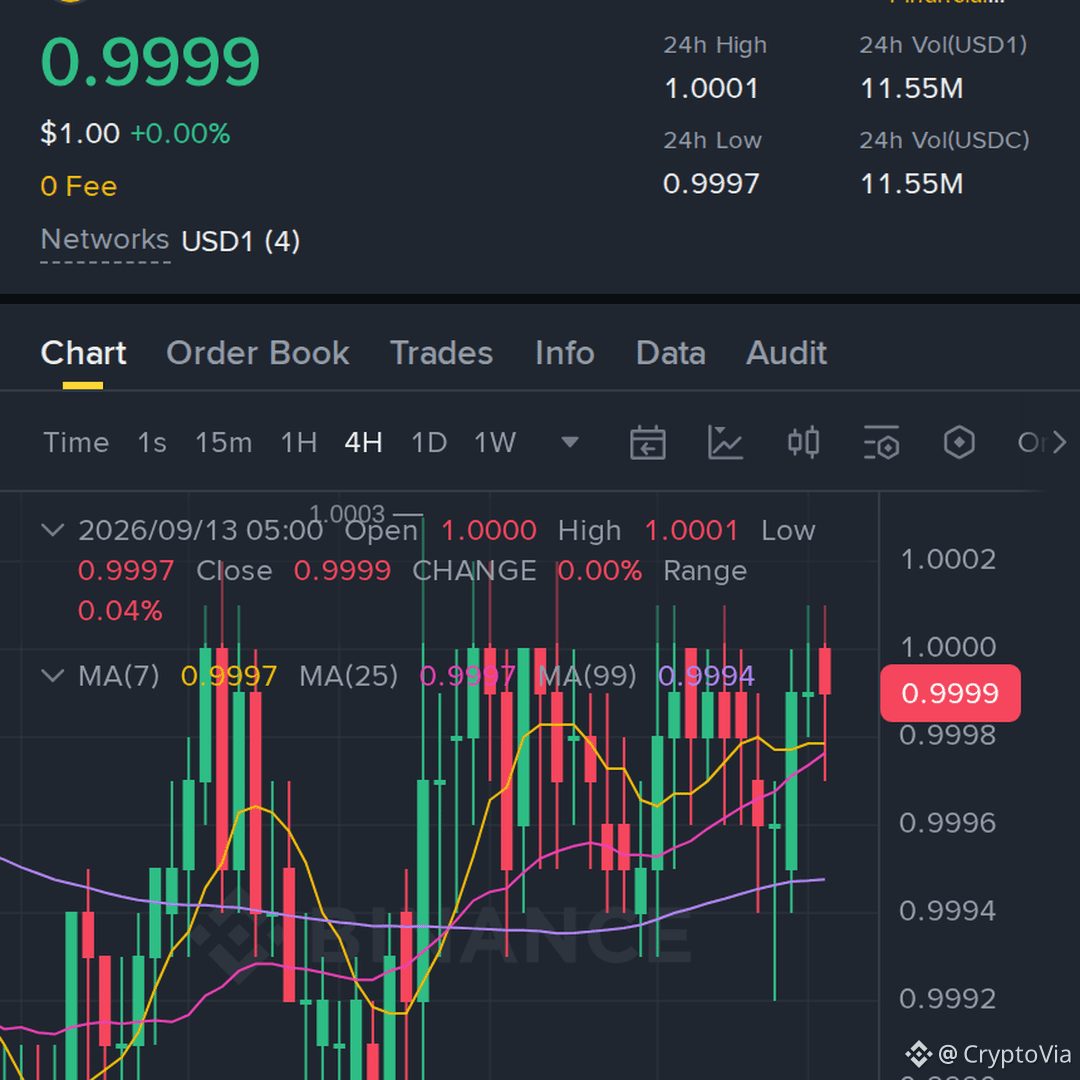
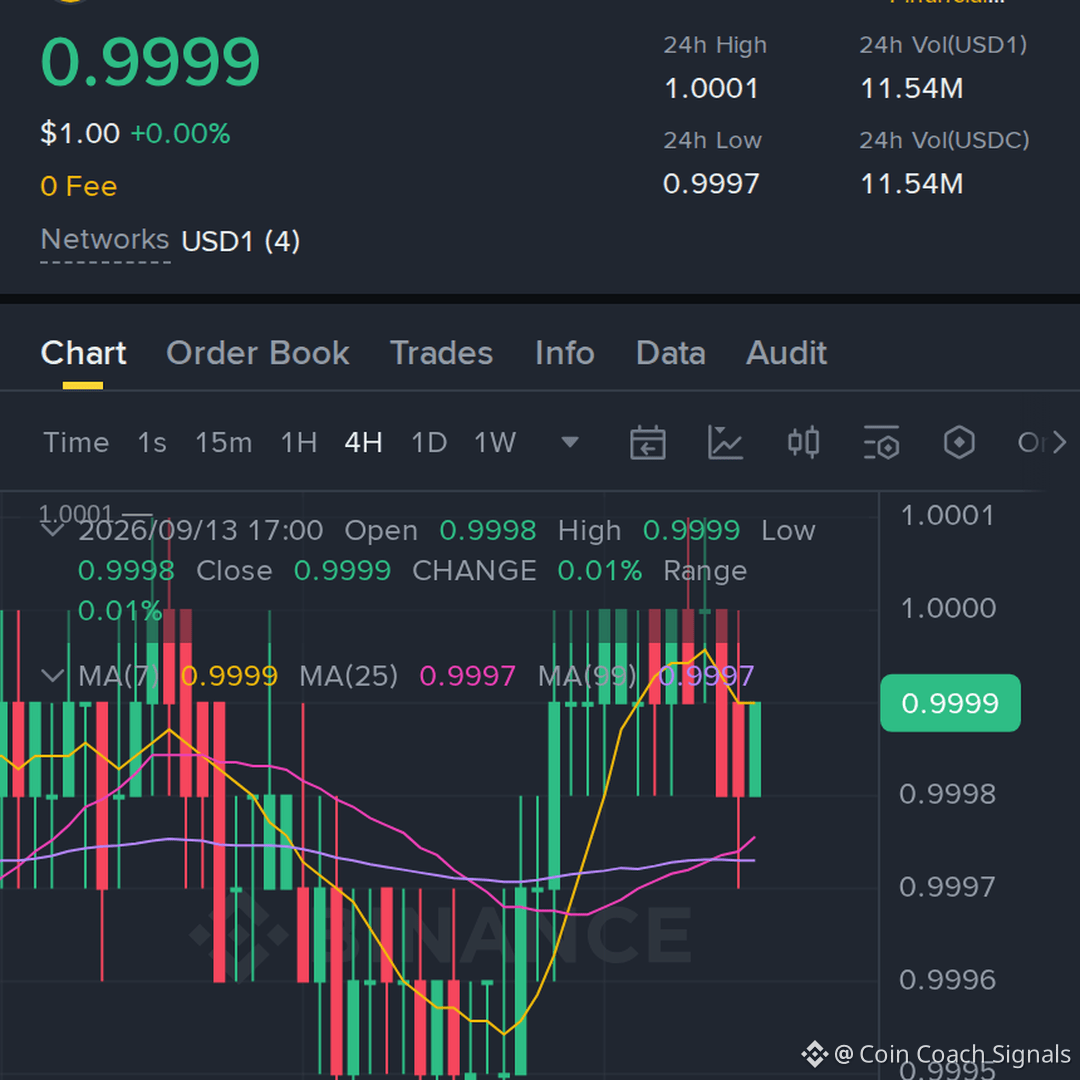
Is current $USD1 volume sustainable for a real breakout?
With $84.31M in 24h volume against a flat price of $1.00, market participation remains steady but directionless. Here is what to watch:
* **Bullish Trigger:** A sustained volume spike accompanying a move above $1.00 could signal fresh institutional interest.
* **Risk Signal:** Should volume dry up while price trends lower, it may indicate a lack of conviction from current holders.
* **The Reality:** Volume is the engine of price discovery; without it, the current level acts more like a magnet than a launchpad.
Are you seeing enough conviction in the order books to support a…
Tap $USD1 for the live chart. #USD1 #BinanceSquare
Is current $USD1 volume sustainable for a real breakout?
With $84.31M in 24h volume against a flat price of $1.00, market participation remains steady but directionless. Here is what to watch:
* **Bullish Trigger:** A sustained volume spike accompanying a move above $1.00 could signal fresh institutional interest.
* **Risk Signal:** Should volume dry up while price trends lower, it may indicate a lack of conviction from current holders.
* **The Reality:** Volume is the engine of price discovery; without it, the current level acts more like a magnet than a launchpad.
Are you seeing enough conviction in the order books to support a…
Tap $USD1 for the live chart. #USD1 #BinanceSquare
With $84.31M in 24h volume against a flat price of $1.00, market participation remains steady but directionless. Here is what to watch:
* **Bullish Trigger:** A sustained volume spike accompanying a move above $1.00 could signal fresh institutional interest.
* **Risk Signal:** Should volume dry up while price trends lower, it may indicate a lack of conviction from current holders.
* **The Reality:** Volume is the engine of price discovery; without it, the current level acts more like a magnet than a launchpad.
Are you seeing enough conviction in the order books to support a…
Tap $USD1 for the live chart. #USD1 #BinanceSquare
14
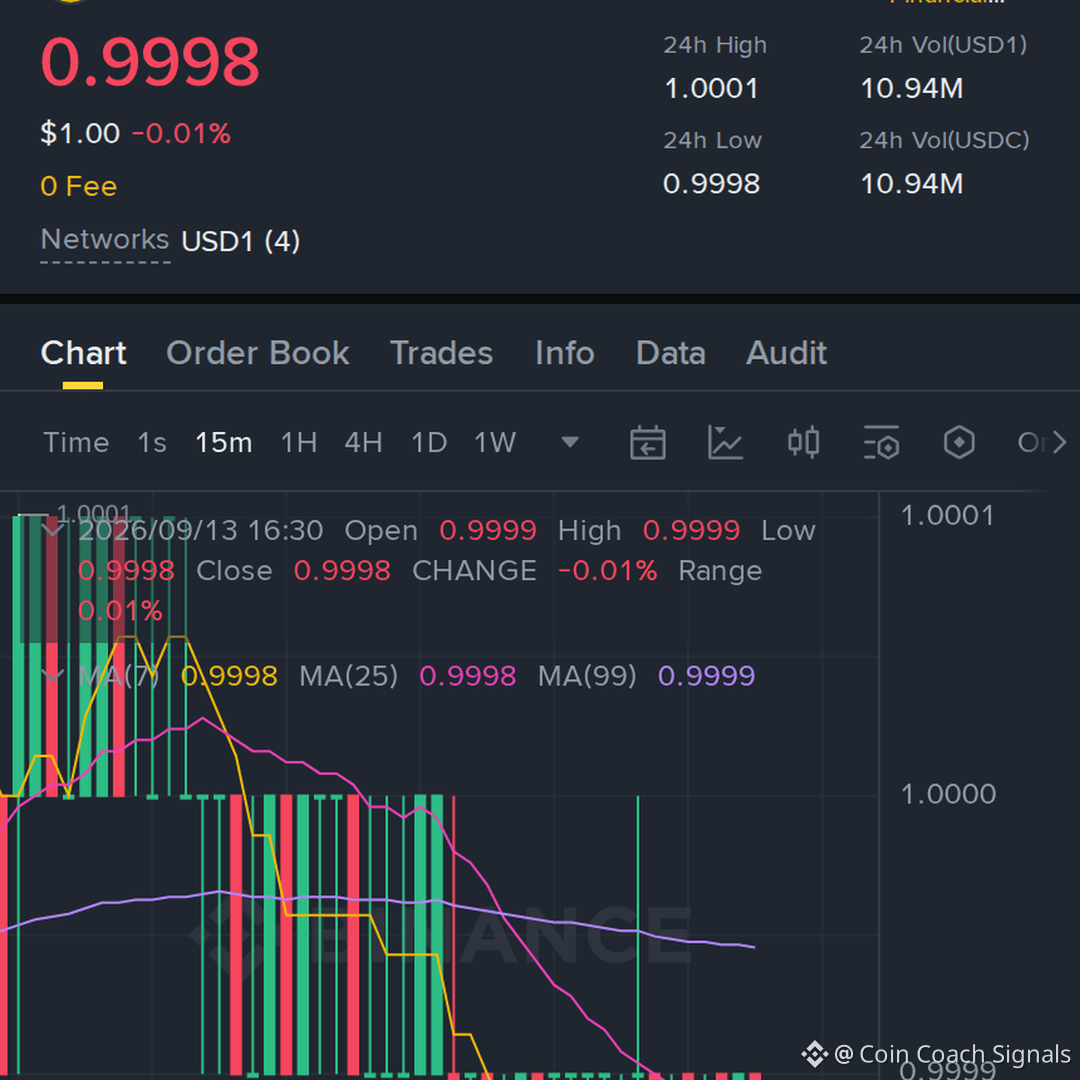

not gonna lie, $USD1 bounced into resistance and sellers showed up again, with this one around 26x
Entry: 1–1
TP1: 0.97705 | TP2: 0.95689 | TP3: 0.93142
Stop Loss: 1.016
#USD1 #Binance #Write2Earn #Crypto
not gonna lie, $USD1 bounced into resistance and sellers showed up again, with this one around 26x
Entry: 1–1
TP1: 0.97705 | TP2: 0.95689 | TP3: 0.93142
Stop Loss: 1.016
#USD1 #Binance #Write2Earn #Crypto
Entry: 1–1
TP1: 0.97705 | TP2: 0.95689 | TP3: 0.93142
Stop Loss: 1.016
#USD1 #Binance #Write2Earn #Crypto
69
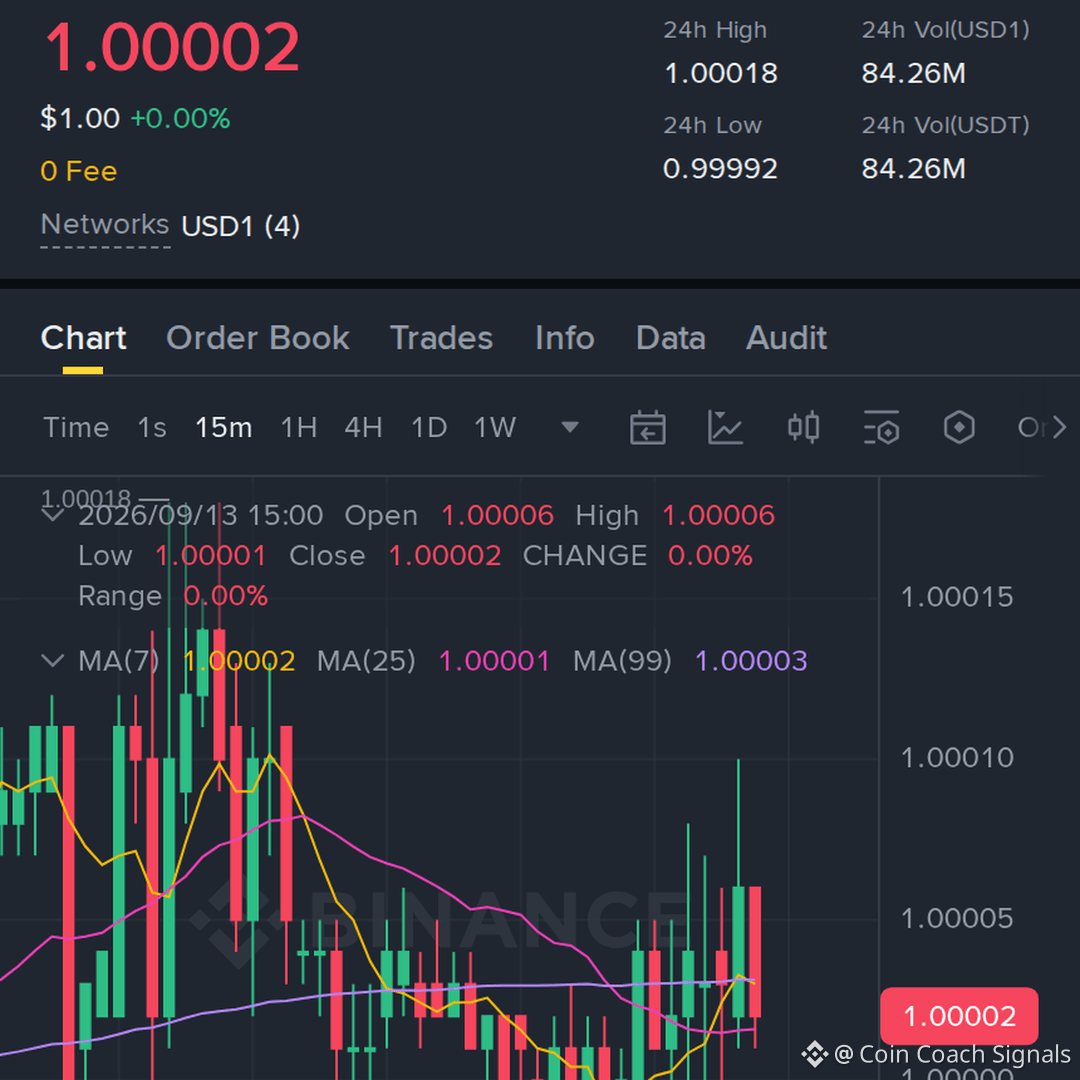
looking at this one, $USD1 tried to recover but the bounce is losing energy again, keeping the setup around 26x
Entry: 1–1
TP1: 0.97749 → TP2: 0.95699 → TP3: 0.93144
Stop Loss: 1.016
#USD1 #Write2Earn #Binance #Crypto
looking at this one, $USD1 tried to recover but the bounce is losing energy again, keeping the setup around 26x
Entry: 1–1
TP1: 0.97749 → TP2: 0.95699 → TP3: 0.93144
Stop Loss: 1.016
#USD1 #Write2Earn #Binance #Crypto
Entry: 1–1
TP1: 0.97749 → TP2: 0.95699 → TP3: 0.93144
Stop Loss: 1.016
#USD1 #Write2Earn #Binance #Crypto
1
73

·
--
$SOL -0.47% | $XRP -0.70% | $USD1 +0.00%
Solana leads this group with $255.9M in volume while edging down -0.47% to 101.83. The Layer 1 continues to see substantial turnover despite the mild price dip.
#XRP settles at 1.37 on a -0.70% slide, clocking $160.2M in 24-hour trading activity.
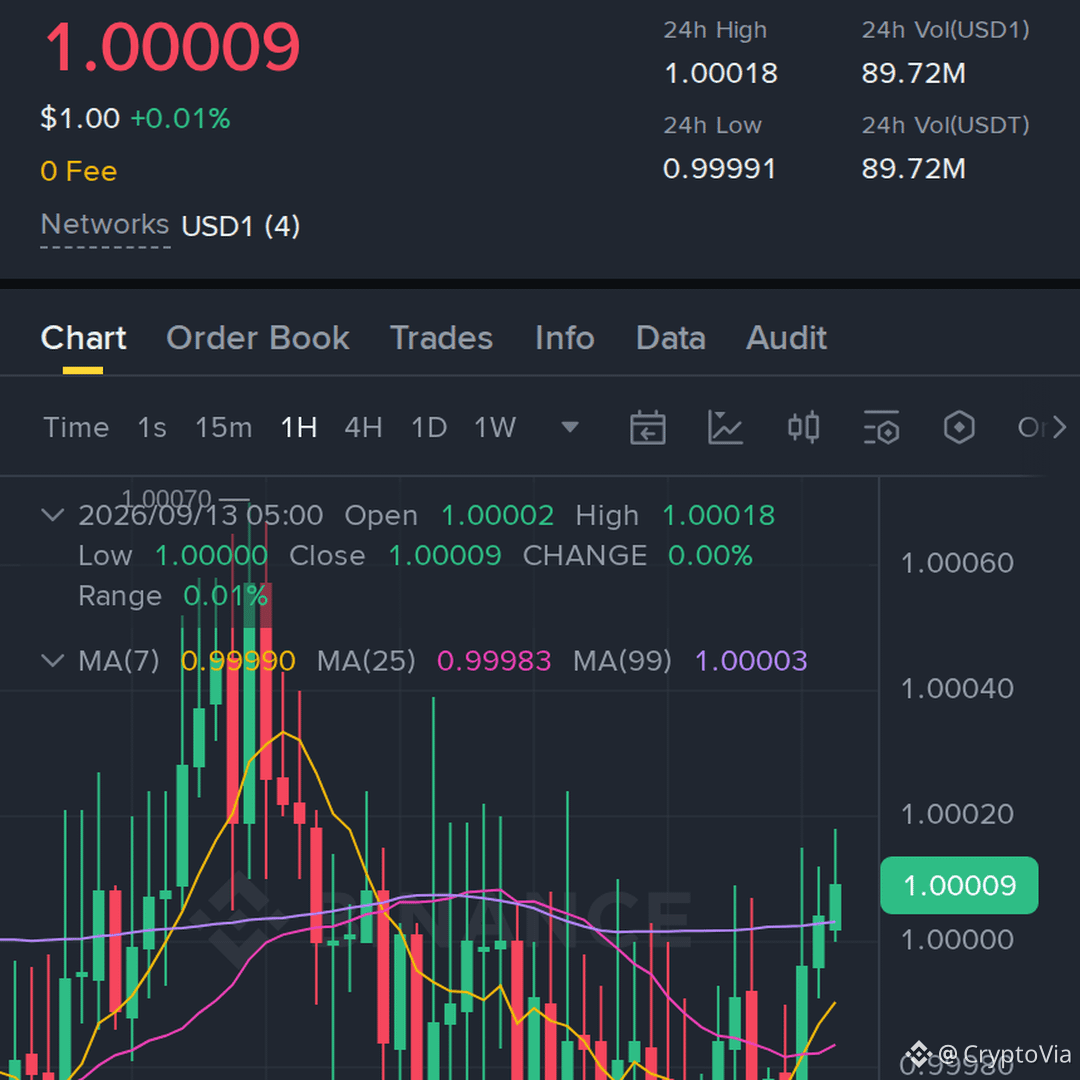
#USD1 holds completely steady at 1.00 (+0.00%) with $158.6M in volume, pulling in nearly the same flow as top altcoins.
USD1 matching XRP's volume indicates market participants may be leaning heavily into stable liquidity while price action stays quiet.
#Binance #Write2Earn
$SOL -0.47% | $XRP -0.70% | $USD1 +0.00%
Solana leads this group with $255.9M in volume while edging down -0.47% to 101.83. The Layer 1 continues to see substantial turnover despite the mild price dip.
#XRP settles at 1.37 on a -0.70% slide, clocking $160.2M in 24-hour trading activity.
#USD1 holds completely steady at 1.00 (+0.00%) with $158.6M in volume, pulling in nearly the same flow as top altcoins.
USD1 matching XRP's volume indicates market participants may be leaning heavily into stable liquidity while price action stays quiet.
#Binance #Write2Earn
Solana leads this group with $255.9M in volume while edging down -0.47% to 101.83. The Layer 1 continues to see substantial turnover despite the mild price dip.
#XRP settles at 1.37 on a -0.70% slide, clocking $160.2M in 24-hour trading activity.
#USD1 holds completely steady at 1.00 (+0.00%) with $158.6M in volume, pulling in nearly the same flow as top altcoins.
USD1 matching XRP's volume indicates market participants may be leaning heavily into stable liquidity while price action stays quiet.
#Binance #Write2Earn
1
50


·
--
$150M USD1 just flowed into Binance in 13 days.
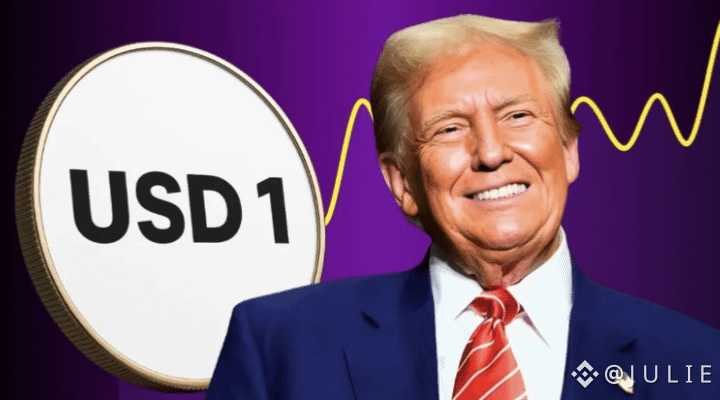
A Fireblocks custody wallet linked to Trump backed USD1 reportedly moved another ~$19.4M to Binance, pushing the estimated 13-day total to around $150M.
I’m watching this closely because that’s a serious amount of stablecoin liquidity moving through one exchange in a short window. 👀
Is this routine liquidity movement, or something bigger taking shape?
#USD1 #Binance
$USD1 $SC $1000XEC
$150M USD1 just flowed into Binance in 13 days.
A Fireblocks custody wallet linked to Trump backed USD1 reportedly moved another ~$19.4M to Binance, pushing the estimated 13-day total to around $150M.
I’m watching this closely because that’s a serious amount of stablecoin liquidity moving through one exchange in a short window. 👀
Is this routine liquidity movement, or something bigger taking shape?
#USD1 #Binance
$USD1 $SC $1000XEC
A Fireblocks custody wallet linked to Trump backed USD1 reportedly moved another ~$19.4M to Binance, pushing the estimated 13-day total to around $150M.
I’m watching this closely because that’s a serious amount of stablecoin liquidity moving through one exchange in a short window. 👀
Is this routine liquidity movement, or something bigger taking shape?
#USD1 #Binance
$USD1 $SC $1000XEC
1
309


·
--
$USD1 | Neutral intelligence reading
Reading: The activity of large holders is unusual, and the price reaction is neutral.
Key evidence: 8 large trades were observed. Trade pressure is leaning toward sellers at a value of 0. The reference price is 1.00 USDT.
Confirmation condition: The large trades continue and the price moves with them.
When does the reading weaken? When it gets absorbed without price progress.
Confidence level: High, and the reading remains conditional on the continuity of the same data.
#USD1 #ترند_العملات #الحيتان #تداول #digital_coins
$USD1 | Neutral intelligence reading
Reading: The activity of large holders is unusual, and the price reaction is neutral.
Key evidence: 8 large trades were observed. Trade pressure is leaning toward sellers at a value of 0. The reference price is 1.00 USDT.
Confirmation condition: The large trades continue and the price moves with them.
When does the reading weaken? When it gets absorbed without price progress.
Confidence level: High, and the reading remains conditional on the continuity of the same data.
#USD1 #ترند_العملات #الحيتان #تداول #digital_coins
Reading: The activity of large holders is unusual, and the price reaction is neutral.
Key evidence: 8 large trades were observed. Trade pressure is leaning toward sellers at a value of 0. The reference price is 1.00 USDT.
Confirmation condition: The large trades continue and the price moves with them.
When does the reading weaken? When it gets absorbed without price progress.
Confidence level: High, and the reading remains conditional on the continuity of the same data.
#USD1 #ترند_العملات #الحيتان #تداول #digital_coins
1

·
--
📌 USD1 Market Trend Analysis
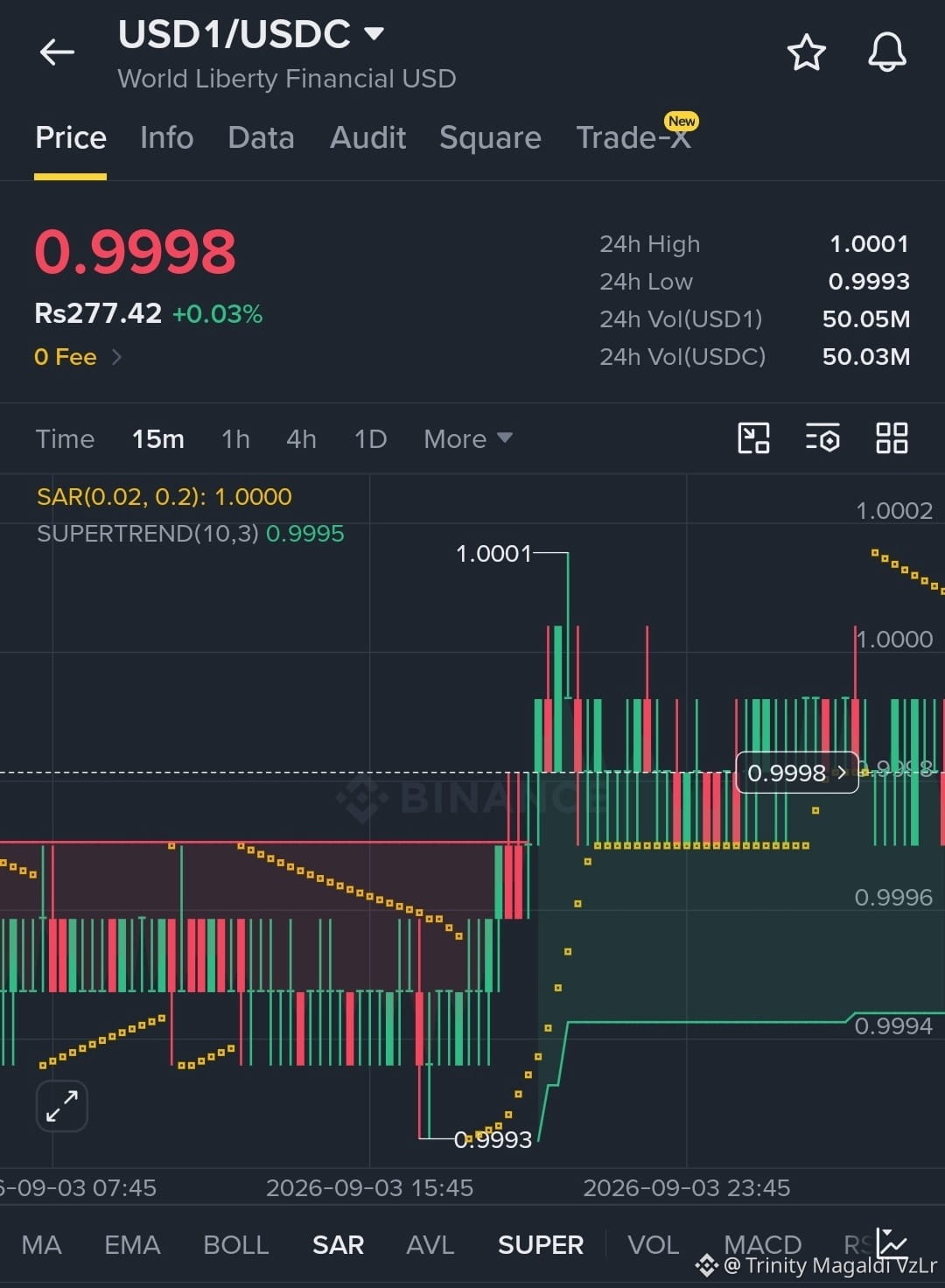
Over the past 7 days, USD1 has remained in an extremely tight range, trading just below 1.0000. The highest touched only 0.999912, while the lowest dipped to 0.999384. The overall amplitude is less than 0.06%.
The current price continues to hug the area around 0.9996, showing the typical characteristics of a stablecoin peg. However, the closing price is slightly lower than the opening price, indicating a very mild short-term bearish pressure.
Key resistance levels: 0.999700 to 0.999800.
Key support levels: 0.999400 to 0.999450.
If it breaks below the previous low of 0.999384, it may trigger a slight de-pegging sentiment. If it holds above 0.999700, it should return to a neutral range-bound consolidation.
🎯 Specific Trading Suggestions
This is an ultra-low-volatility stablecoin market, so high-leverage directional trading is not recommended.
Conservative traders should mainly stay on the sidelines and wait for price to deviate from the peg zone before considering a mean-reversion approach.
Aggressive traders may consider a small long position near the support area and a small short position near the resistance area, but must strictly control position size.
📍 Reference Levels
🔹 Long zone: 0.999450 to 0.999500
🔹 Take-profit targets: TP1 0.999650 / TP2 0.999750
🔹 Stop-loss: SL 0.999350
🔹 Short zone: 0.999700 to 0.999780
🔹 Take-profit targets: TP1 0.999550 / TP2 0.999450
🔹 Stop-loss: SL 0.999880
⏳ Time Validity
🔹 This trading strategy and the suggested levels are based on daily chart analysis and are expected to remain effective over the next 24 hours.
⚠️ Risk Control Reminder
USD1 is a pegged U.S. dollar asset with extremely low volatility. Be sure to keep leverage low and set stop-loss orders strictly to avoid unnecessary losses caused by temporary price spikes.
$USD1 #USD1 #加密交易 #技术分析 #BinanceSquare
📌 USD1 Market Trend Analysis
Over the past 7 days, USD1 has remained in an extremely tight range, trading just below 1.0000. The highest touched only 0.999912, while the lowest dipped to 0.999384. The overall amplitude is less than 0.06%.
The current price continues to hug the area around 0.9996, showing the typical characteristics of a stablecoin peg. However, the closing price is slightly lower than the opening price, indicating a very mild short-term bearish pressure.
Key resistance levels: 0.999700 to 0.999800.
Key support levels: 0.999400 to 0.999450.
If it breaks below the previous low of 0.999384, it may trigger a slight de-pegging sentiment. If it holds above 0.999700, it should return to a neutral range-bound consolidation.
🎯 Specific Trading Suggestions
This is an ultra-low-volatility stablecoin market, so high-leverage directional trading is not recommended.
Conservative traders should mainly stay on the sidelines and wait for price to deviate from the peg zone before considering a mean-reversion approach.
Aggressive traders may consider a small long position near the support area and a small short position near the resistance area, but must strictly control position size.
📍 Reference Levels
🔹 Long zone: 0.999450 to 0.999500
🔹 Take-profit targets: TP1 0.999650 / TP2 0.999750
🔹 Stop-loss: SL 0.999350
🔹 Short zone: 0.999700 to 0.999780
🔹 Take-profit targets: TP1 0.999550 / TP2 0.999450
🔹 Stop-loss: SL 0.999880
⏳ Time Validity
🔹 This trading strategy and the suggested levels are based on daily chart analysis and are expected to remain effective over the next 24 hours.
⚠️ Risk Control Reminder
USD1 is a pegged U.S. dollar asset with extremely low volatility. Be sure to keep leverage low and set stop-loss orders strictly to avoid unnecessary losses caused by temporary price spikes.
$USD1 #USD1 #加密交易 #技术分析 #BinanceSquare
Over the past 7 days, USD1 has remained in an extremely tight range, trading just below 1.0000. The highest touched only 0.999912, while the lowest dipped to 0.999384. The overall amplitude is less than 0.06%.
The current price continues to hug the area around 0.9996, showing the typical characteristics of a stablecoin peg. However, the closing price is slightly lower than the opening price, indicating a very mild short-term bearish pressure.
Key resistance levels: 0.999700 to 0.999800.
Key support levels: 0.999400 to 0.999450.
If it breaks below the previous low of 0.999384, it may trigger a slight de-pegging sentiment. If it holds above 0.999700, it should return to a neutral range-bound consolidation.
🎯 Specific Trading Suggestions
This is an ultra-low-volatility stablecoin market, so high-leverage directional trading is not recommended.
Conservative traders should mainly stay on the sidelines and wait for price to deviate from the peg zone before considering a mean-reversion approach.
Aggressive traders may consider a small long position near the support area and a small short position near the resistance area, but must strictly control position size.
📍 Reference Levels
🔹 Long zone: 0.999450 to 0.999500
🔹 Take-profit targets: TP1 0.999650 / TP2 0.999750
🔹 Stop-loss: SL 0.999350
🔹 Short zone: 0.999700 to 0.999780
🔹 Take-profit targets: TP1 0.999550 / TP2 0.999450
🔹 Stop-loss: SL 0.999880
⏳ Time Validity
🔹 This trading strategy and the suggested levels are based on daily chart analysis and are expected to remain effective over the next 24 hours.
⚠️ Risk Control Reminder
USD1 is a pegged U.S. dollar asset with extremely low volatility. Be sure to keep leverage low and set stop-loss orders strictly to avoid unnecessary losses caused by temporary price spikes.
$USD1 #USD1 #加密交易 #技术分析 #BinanceSquare
9
Log in to explore more content
Join global crypto users on Binance Square
⚡️ Get latest and useful information about crypto.
💬 Trusted by the world’s largest crypto exchange.
👍 Discover real insights from verified creators.
Email / Phone number
Trending Topics
1
#BitcoinReboundsTo$79K
188 views
25 Discussing
2
#FedHikeOddsRiseTo89%
43,525 views
785 Discussing
3
#RLUSDSupplyHitsRecord$2.442B
1,869 views
36 Discussing
4
#AvalancheIntegratesIntoUAEPassDigitalVault
50,202 views
838 Discussing
5
#UKSeeksViewsOnTokenizingGold
37,452 views
610 Discussing
6
#AnthropicCEOCallsForAISlowdown
208,971 views
3,137 Discussing
7
#RevolutDataLeakReportedlyPostedAttackersThreatenDailyReleases
3,922 views
81 Discussing
8
#BrazilCentralBankRaisesVASPCapitalRequirements
33,262 views
745 Discussing
9
#BitcoinThirdSingleBlockReorgInFourWeeks
81,190 views
1,548 Discussing
10
#EthereumFallsBelow$2500
6,532 views
91 Discussing