
#oildropsabout6%
oildropsabout6%
289,935 views
1,644 Discussing
Hot
Latest

$BTC
#OilDropsAbout6% Crude oil drops sharply when geopolitical tensions cool and conflict risk premiums rapidly unwind.
Hopes for diplomacy reduce fears of supply bottlenecks through key chokepoints like the Strait of Hormuz.
Rising global inventories or potential OPEC+ output increases add immediate downward pressure on prices.
While lower energy costs ease short-term inflation, oil remains volatile until long-term stability is secured.
$BTC
#OilDropsAbout6% Crude oil drops sharply when geopolitical tensions cool and conflict risk premiums rapidly unwind.
Hopes for diplomacy reduce fears of supply bottlenecks through key chokepoints like the Strait of Hormuz.
Rising global inventories or potential OPEC+ output increases add immediate downward pressure on prices.
While lower energy costs ease short-term inflation, oil remains volatile until long-term stability is secured.
#OilDropsAbout6% Crude oil drops sharply when geopolitical tensions cool and conflict risk premiums rapidly unwind.
Hopes for diplomacy reduce fears of supply bottlenecks through key chokepoints like the Strait of Hormuz.
Rising global inventories or potential OPEC+ output increases add immediate downward pressure on prices.
While lower energy costs ease short-term inflation, oil remains volatile until long-term stability is secured.
91

·
--
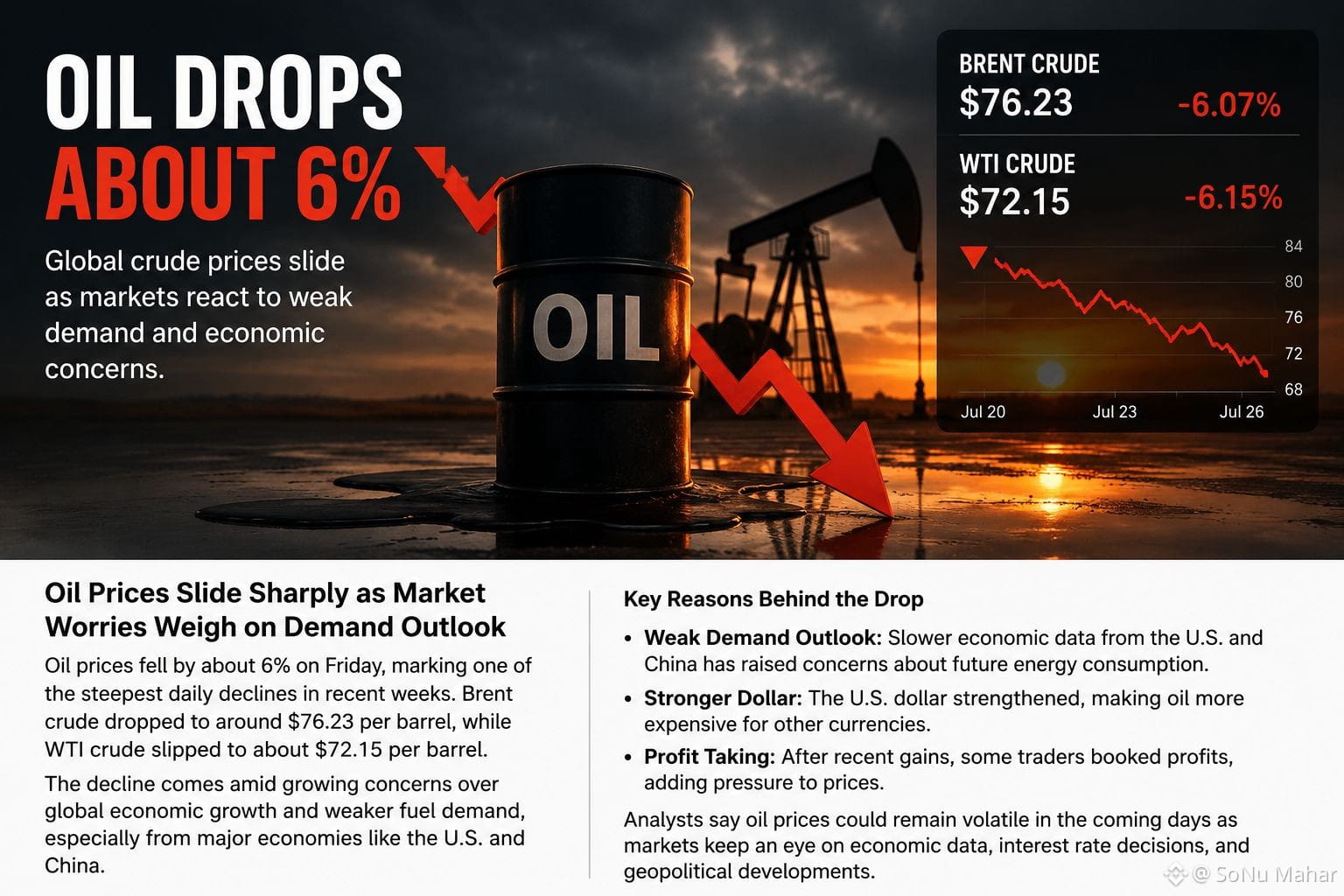
#OilDropsAbout6% Oil Prices Drop About 6% as Market Concerns Grow🛢️🚨🚨
Global oil prices fell by around 6%, putting renewed pressure on the energy market. The sharp decline reflects growing concerns over weaker demand, economic uncertainty, and the outlook for global growth.
Traders are closely watching economic data from major economies, currency movements, and expectations for future energy consumption. The drop also highlights how quickly sentiment can change in the oil market when investors become more cautious.
With global markets remaining sensitive to economic and geopolitical developments, oil prices could continue to experience significant volatility in the coming sessions. Investors will be watching closely for signs of stronger demand or further weakness in the global economy.$ETH $BTC
#OilDropsAbout6% Oil Prices Drop About 6% as Market Concerns Grow🛢️🚨🚨
Global oil prices fell by around 6%, putting renewed pressure on the energy market. The sharp decline reflects growing concerns over weaker demand, economic uncertainty, and the outlook for global growth.
Traders are closely watching economic data from major economies, currency movements, and expectations for future energy consumption. The drop also highlights how quickly sentiment can change in the oil market when investors become more cautious.
With global markets remaining sensitive to economic and geopolitical developments, oil prices could continue to experience significant volatility in the coming sessions. Investors will be watching closely for signs of stronger demand or further weakness in the global economy.$ETH $BTC
Global oil prices fell by around 6%, putting renewed pressure on the energy market. The sharp decline reflects growing concerns over weaker demand, economic uncertainty, and the outlook for global growth.
Traders are closely watching economic data from major economies, currency movements, and expectations for future energy consumption. The drop also highlights how quickly sentiment can change in the oil market when investors become more cautious.
With global markets remaining sensitive to economic and geopolitical developments, oil prices could continue to experience significant volatility in the coming sessions. Investors will be watching closely for signs of stronger demand or further weakness in the global economy.$ETH $BTC
80
·
--
Partly True
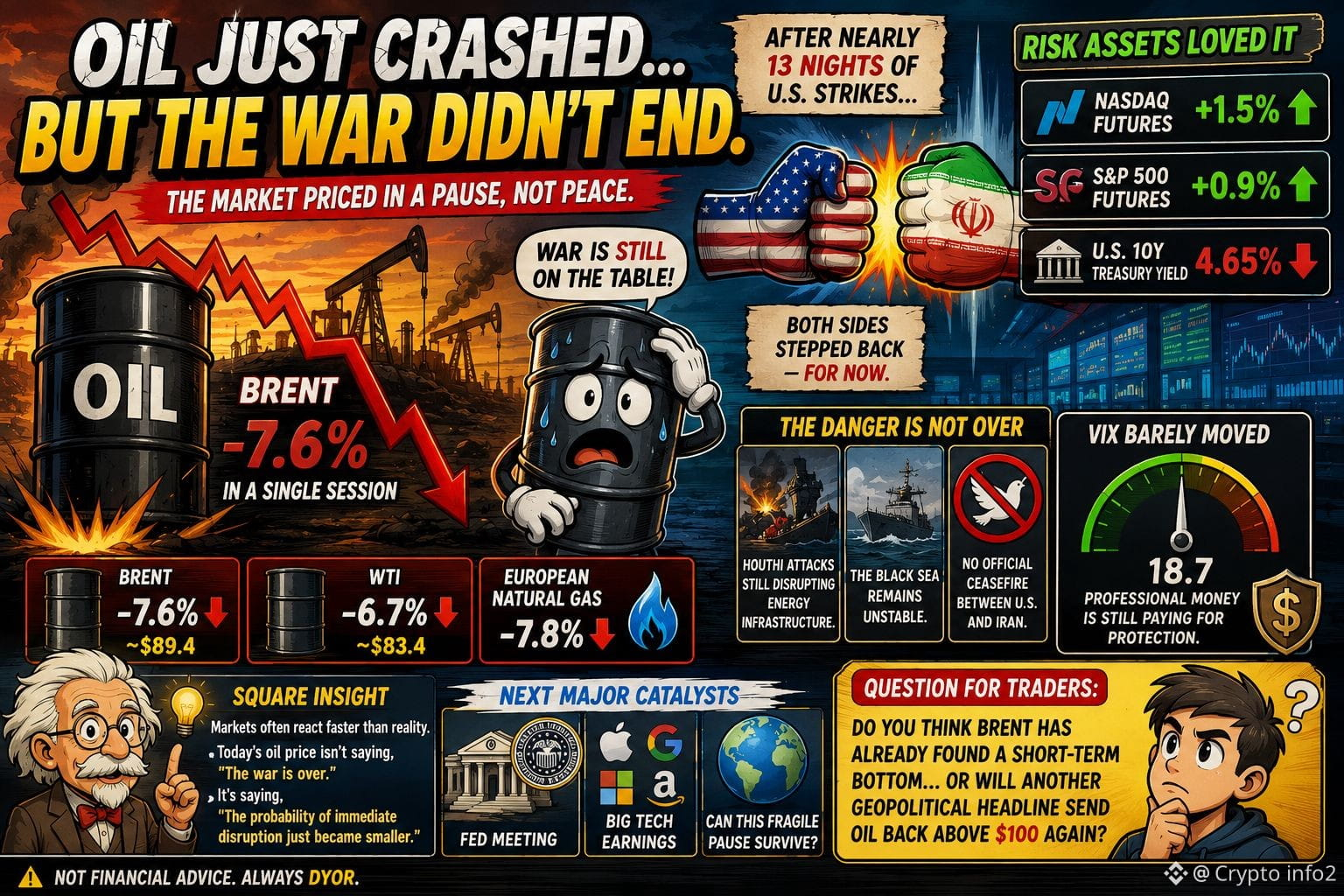
#oildropsabout6% 🛢️ OIL JUST CRASHED... BUT DON'T CONFUSE A PAUSE WITH PEACE.
Brent crude just suffered one of its biggest single-day drops of the year, falling 7.6% as traders rushed to unwind the geopolitical premium that had fueled oil's explosive rally.
Here's the scoreboard:
📉 Brent: ~$89.4 (-7.6%)
📉 WTI: ~$83.4 (-6.7%)
📉 European Natural Gas: -7.8%
Meanwhile, risk assets cheered:
📈 Nasdaq Futures: +1.5%
📈 S&P 500 Futures: +0.9%
📉 U.S. 10-Year Yield: ~4.65%
But let's be clear—the war didn't end.
• No formal ceasefire between Washington and Tehran.
• Regional energy infrastructure remains vulnerable.
• Shipping and security risks haven't disappeared.
What's fascinating is that while oil crashed and stocks rallied, volatility markets didn't fully relax. Smart money is still paying for protection.
🧠 Market Insight:
Markets don't trade headlines—they trade probabilities.
Today's move doesn't say, "The conflict is over."
It says, "The odds of an immediate supply shock are lower than they were yesterday."
That distinction matters.
The next big drivers may not be missiles at all. They could be:
➡️ Federal Reserve decisions
➡️ Big Tech earnings
➡️ The durability of this geopolitical pause
So here's the question for traders:
Will Brent establish a short-term bottom near $90, or is one unexpected headline enough to send oil back above $100?
⚠️ Not financial advice. Do your own research and manage risk.
#Oil #BrentCrude #WTI #Markets
CLICK TO BELOW TRADE👇
$CL $BZ $NATGAS
{future}(CLUSDT)
{future}(BZUSDT)
{future}(NATGASUSDT)
#oildropsabout6% 🛢️ OIL JUST CRASHED... BUT DON'T CONFUSE A PAUSE WITH PEACE.
Brent crude just suffered one of its biggest single-day drops of the year, falling 7.6% as traders rushed to unwind the geopolitical premium that had fueled oil's explosive rally.
Here's the scoreboard:
📉 Brent: ~$89.4 (-7.6%)
📉 WTI: ~$83.4 (-6.7%)
📉 European Natural Gas: -7.8%
Meanwhile, risk assets cheered:
📈 Nasdaq Futures: +1.5%
📈 S&P 500 Futures: +0.9%
📉 U.S. 10-Year Yield: ~4.65%
But let's be clear—the war didn't end.
• No formal ceasefire between Washington and Tehran.
• Regional energy infrastructure remains vulnerable.
• Shipping and security risks haven't disappeared.
What's fascinating is that while oil crashed and stocks rallied, volatility markets didn't fully relax. Smart money is still paying for protection.
🧠 Market Insight:
Markets don't trade headlines—they trade probabilities.
Today's move doesn't say, "The conflict is over."
It says, "The odds of an immediate supply shock are lower than they were yesterday."
That distinction matters.
The next big drivers may not be missiles at all. They could be:
➡️ Federal Reserve decisions
➡️ Big Tech earnings
➡️ The durability of this geopolitical pause
So here's the question for traders:
Will Brent establish a short-term bottom near $90, or is one unexpected headline enough to send oil back above $100?
⚠️ Not financial advice. Do your own research and manage risk.
#Oil #BrentCrude #WTI #Markets
CLICK TO BELOW TRADE👇
$CL $BZ $NATGAS
Brent crude just suffered one of its biggest single-day drops of the year, falling 7.6% as traders rushed to unwind the geopolitical premium that had fueled oil's explosive rally.
Here's the scoreboard:
📉 Brent: ~$89.4 (-7.6%)
📉 WTI: ~$83.4 (-6.7%)
📉 European Natural Gas: -7.8%
Meanwhile, risk assets cheered:
📈 Nasdaq Futures: +1.5%
📈 S&P 500 Futures: +0.9%
📉 U.S. 10-Year Yield: ~4.65%
But let's be clear—the war didn't end.
• No formal ceasefire between Washington and Tehran.
• Regional energy infrastructure remains vulnerable.
• Shipping and security risks haven't disappeared.
What's fascinating is that while oil crashed and stocks rallied, volatility markets didn't fully relax. Smart money is still paying for protection.
🧠 Market Insight:
Markets don't trade headlines—they trade probabilities.
Today's move doesn't say, "The conflict is over."
It says, "The odds of an immediate supply shock are lower than they were yesterday."
That distinction matters.
The next big drivers may not be missiles at all. They could be:
➡️ Federal Reserve decisions
➡️ Big Tech earnings
➡️ The durability of this geopolitical pause
So here's the question for traders:
Will Brent establish a short-term bottom near $90, or is one unexpected headline enough to send oil back above $100?
⚠️ Not financial advice. Do your own research and manage risk.
#Oil #BrentCrude #WTI #Markets
CLICK TO BELOW TRADE👇
$CL $BZ $NATGAS
1
1.7k

·
--
Bearish
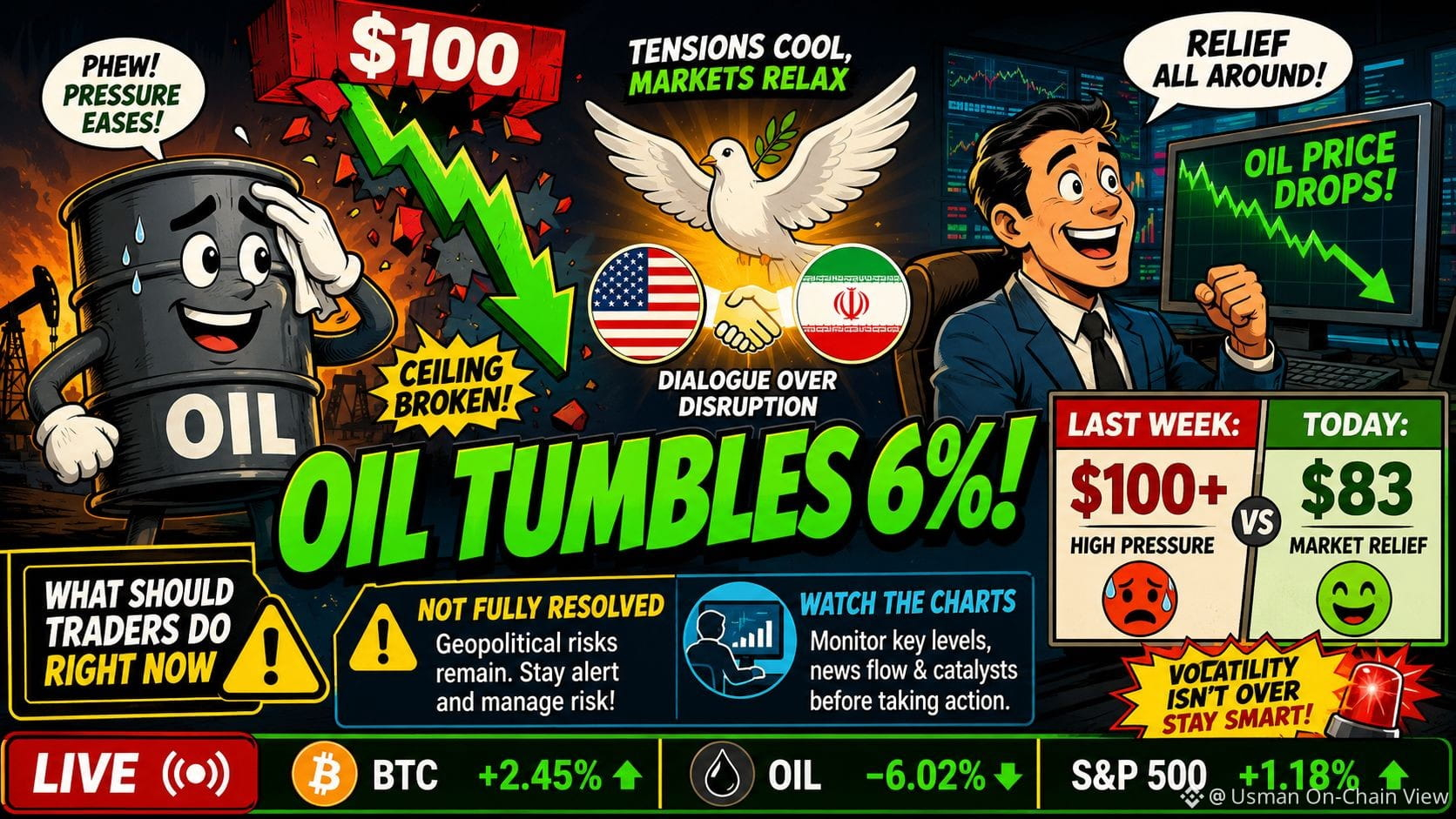
$NVDA.US 🚨 OIL DROPS ABOUT 6% — Ceasefire Hopes Erase Weeks of War-Driven Gains 📉🕊️
#OilDropsAbout6% is confirmed. Crude oil tumbled sharply today, now trading near $83.39 — down nearly 8% in a single session — as diplomatic progress between the US and Iran rapidly unwound the war-risk premium that had pushed prices past $100 just last week.
🔑 What's Driving the Drop:
✅ Caspian Pipeline Consortium resumed crude loadings at its Black Sea terminal — the same facility we covered after the drone attack
✅ Strait of Hormuz traffic accelerating again as peace negotiation progress firms up
✅ Easing US sanctions on Iran bringing additional barrels back into global supply
✅ Fresh domestic inventory build added extra selling pressure on top of the geopolitical unwind
⚡ The Scale of the Reversal:
Oil is still up roughly 25% year-over-year and 18% over the past month — this drop is a sharp correction within a bigger uptrend, not a full reversal. Just weeks ago Brent broke $100 for the first time since May; now it's giving much of that spike back.
⚠️ Not Fully Resolved Yet:
Iran-backed Houthi forces claimed fresh attacks on Saudi Aramco facilities at Jizan and Yanbu over the weekend — the underlying regional risk hasn't disappeared, just cooled temporarily.
🪙 Why Crypto Traders Should Watch:
This is a genuine risk-on signal — the S&P 500, Nasdaq, and Dow all rallied on the same news. A sustained oil cooldown reduces inflation pressure and could ease the Fed rate-hike odds we flagged earlier, which would be bullish for risk assets broadly, including BTC/ETH.
💬 Your take: Real de-escalation, or a dead-cat bounce before the next flare-up? Drop your view below 👇
Not financial advice — always DYOR.
$BTC
$NVDA.US 🚨 OIL DROPS ABOUT 6% — Ceasefire Hopes Erase Weeks of War-Driven Gains 📉🕊️
#OilDropsAbout6% is confirmed. Crude oil tumbled sharply today, now trading near $83.39 — down nearly 8% in a single session — as diplomatic progress between the US and Iran rapidly unwound the war-risk premium that had pushed prices past $100 just last week.
🔑 What's Driving the Drop:
✅ Caspian Pipeline Consortium resumed crude loadings at its Black Sea terminal — the same facility we covered after the drone attack
✅ Strait of Hormuz traffic accelerating again as peace negotiation progress firms up
✅ Easing US sanctions on Iran bringing additional barrels back into global supply
✅ Fresh domestic inventory build added extra selling pressure on top of the geopolitical unwind
⚡ The Scale of the Reversal:
Oil is still up roughly 25% year-over-year and 18% over the past month — this drop is a sharp correction within a bigger uptrend, not a full reversal. Just weeks ago Brent broke $100 for the first time since May; now it's giving much of that spike back.
⚠️ Not Fully Resolved Yet:
Iran-backed Houthi forces claimed fresh attacks on Saudi Aramco facilities at Jizan and Yanbu over the weekend — the underlying regional risk hasn't disappeared, just cooled temporarily.
🪙 Why Crypto Traders Should Watch:
This is a genuine risk-on signal — the S&P 500, Nasdaq, and Dow all rallied on the same news. A sustained oil cooldown reduces inflation pressure and could ease the Fed rate-hike odds we flagged earlier, which would be bullish for risk assets broadly, including BTC/ETH.
💬 Your take: Real de-escalation, or a dead-cat bounce before the next flare-up? Drop your view below 👇
Not financial advice — always DYOR.
$BTC
#OilDropsAbout6% is confirmed. Crude oil tumbled sharply today, now trading near $83.39 — down nearly 8% in a single session — as diplomatic progress between the US and Iran rapidly unwound the war-risk premium that had pushed prices past $100 just last week.
🔑 What's Driving the Drop:
✅ Caspian Pipeline Consortium resumed crude loadings at its Black Sea terminal — the same facility we covered after the drone attack
✅ Strait of Hormuz traffic accelerating again as peace negotiation progress firms up
✅ Easing US sanctions on Iran bringing additional barrels back into global supply
✅ Fresh domestic inventory build added extra selling pressure on top of the geopolitical unwind
⚡ The Scale of the Reversal:
Oil is still up roughly 25% year-over-year and 18% over the past month — this drop is a sharp correction within a bigger uptrend, not a full reversal. Just weeks ago Brent broke $100 for the first time since May; now it's giving much of that spike back.
⚠️ Not Fully Resolved Yet:
Iran-backed Houthi forces claimed fresh attacks on Saudi Aramco facilities at Jizan and Yanbu over the weekend — the underlying regional risk hasn't disappeared, just cooled temporarily.
🪙 Why Crypto Traders Should Watch:
This is a genuine risk-on signal — the S&P 500, Nasdaq, and Dow all rallied on the same news. A sustained oil cooldown reduces inflation pressure and could ease the Fed rate-hike odds we flagged earlier, which would be bullish for risk assets broadly, including BTC/ETH.
💬 Your take: Real de-escalation, or a dead-cat bounce before the next flare-up? Drop your view below 👇
Not financial advice — always DYOR.
$BTC
1
4
142

·
--
Bullish
#OilDropsAbout6%
Here is a clear breakdown of why oil prices dropped roughly 6% and what it means for global markets:
1. Core Drivers Behind the 6% Drop
Easing Geopolitical Risk Premium: A temporary pause in military tensions in key shipping lanes (e.g., around the Strait of Hormuz/Red Sea) quickly erased the risk premium that traders had priced into crude.
Supply Normalization Expectations: As fears of immediate supply disruptions subside, expectations that oil tanker traffic can move without major bottlenecks have flooded the market sentiment with downside pressure.
Shifting Macro Demand Sentiment: Macroeconomic indicators pointing toward cautious economic growth and changing demand outlooks contributed to short-term selling pressure.
2. Broader Market Impact
#OilDropsAbout6%
Here is a clear breakdown of why oil prices dropped roughly 6% and what it means for global markets:
1. Core Drivers Behind the 6% Drop
Easing Geopolitical Risk Premium: A temporary pause in military tensions in key shipping lanes (e.g., around the Strait of Hormuz/Red Sea) quickly erased the risk premium that traders had priced into crude.
Supply Normalization Expectations: As fears of immediate supply disruptions subside, expectations that oil tanker traffic can move without major bottlenecks have flooded the market sentiment with downside pressure.
Shifting Macro Demand Sentiment: Macroeconomic indicators pointing toward cautious economic growth and changing demand outlooks contributed to short-term selling pressure.
2. Broader Market Impact
Here is a clear breakdown of why oil prices dropped roughly 6% and what it means for global markets:
1. Core Drivers Behind the 6% Drop
Easing Geopolitical Risk Premium: A temporary pause in military tensions in key shipping lanes (e.g., around the Strait of Hormuz/Red Sea) quickly erased the risk premium that traders had priced into crude.
Supply Normalization Expectations: As fears of immediate supply disruptions subside, expectations that oil tanker traffic can move without major bottlenecks have flooded the market sentiment with downside pressure.
Shifting Macro Demand Sentiment: Macroeconomic indicators pointing toward cautious economic growth and changing demand outlooks contributed to short-term selling pressure.
2. Broader Market Impact
178

·
--
🚨 That 82% everyone is quoting was printed the day oil broke $100.
Oil is now $85.
Nobody has updated the number. 👇
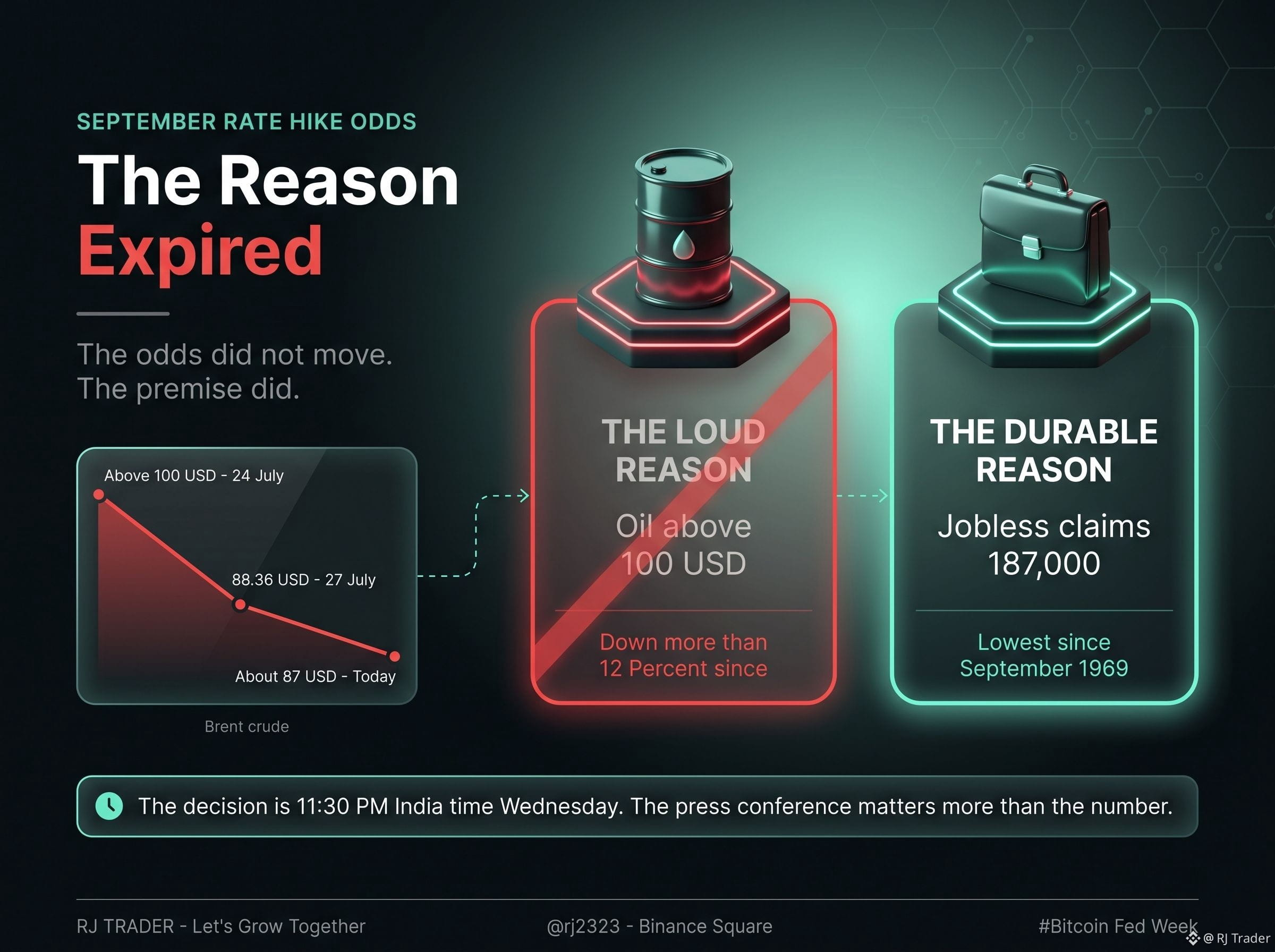
Go read the September rate-hike posts from last week. Every single one says the same thing: hike odds jumped to 82% BECAUSE Brent crossed 100 dollars.
They are all dated 25 and 26 July.
Since then:
📉 Brent fell 8.7% in a single session on Monday to 88.36 — its lowest close since 17 July
📉 It is down again today, near 85
📉 That is more than 14% below the level that built the 82%
Half the hawkish case evaporated in three days. The September number barely moved. 🤔
So either the market is slow — or it was never really about oil.
I think it's the second one. 🎯
Here is the leg nobody is talking about, and it did NOT break:
💼 US initial jobless claims came in at 187,000 for the week ending 18 July. Economists expected 212,000.
That is the lowest reading since September 1969. Not this cycle. Not this decade. Since 1969.
An economy that is not firing anyone is an economy the Fed cannot argue is cooling. Oil was the loud reason. The labour market is the durable one.
What this means for tomorrow night ⏰
The July meeting is close to a non-event: roughly 63% hold, 36% hike. The Fed decides at 11:30 PM IST.
The number will not move you. The press conference will. Watch whether they lean on energy — the "transitory oil spike" argument — or on the labour market. The first is dovish. The second means September is real regardless of what a barrel does.
Are you trading tomorrow's decision, or September's? 👇
NFA · DYOR
$BTC $ETH #OilDropsAbout6%
🚨 That 82% everyone is quoting was printed the day oil broke $100.
Oil is now $85.
Nobody has updated the number. 👇
Go read the September rate-hike posts from last week. Every single one says the same thing: hike odds jumped to 82% BECAUSE Brent crossed 100 dollars.
They are all dated 25 and 26 July.
Since then:
📉 Brent fell 8.7% in a single session on Monday to 88.36 — its lowest close since 17 July
📉 It is down again today, near 85
📉 That is more than 14% below the level that built the 82%
Half the hawkish case evaporated in three days. The September number barely moved. 🤔
So either the market is slow — or it was never really about oil.
I think it's the second one. 🎯
Here is the leg nobody is talking about, and it did NOT break:
💼 US initial jobless claims came in at 187,000 for the week ending 18 July. Economists expected 212,000.
That is the lowest reading since September 1969. Not this cycle. Not this decade. Since 1969.
An economy that is not firing anyone is an economy the Fed cannot argue is cooling. Oil was the loud reason. The labour market is the durable one.
What this means for tomorrow night ⏰
The July meeting is close to a non-event: roughly 63% hold, 36% hike. The Fed decides at 11:30 PM IST.
The number will not move you. The press conference will. Watch whether they lean on energy — the "transitory oil spike" argument — or on the labour market. The first is dovish. The second means September is real regardless of what a barrel does.
Are you trading tomorrow's decision, or September's? 👇
NFA · DYOR
$BTC $ETH #OilDropsAbout6%
Oil is now $85.
Nobody has updated the number. 👇
Go read the September rate-hike posts from last week. Every single one says the same thing: hike odds jumped to 82% BECAUSE Brent crossed 100 dollars.
They are all dated 25 and 26 July.
Since then:
📉 Brent fell 8.7% in a single session on Monday to 88.36 — its lowest close since 17 July
📉 It is down again today, near 85
📉 That is more than 14% below the level that built the 82%
Half the hawkish case evaporated in three days. The September number barely moved. 🤔
So either the market is slow — or it was never really about oil.
I think it's the second one. 🎯
Here is the leg nobody is talking about, and it did NOT break:
💼 US initial jobless claims came in at 187,000 for the week ending 18 July. Economists expected 212,000.
That is the lowest reading since September 1969. Not this cycle. Not this decade. Since 1969.
An economy that is not firing anyone is an economy the Fed cannot argue is cooling. Oil was the loud reason. The labour market is the durable one.
What this means for tomorrow night ⏰
The July meeting is close to a non-event: roughly 63% hold, 36% hike. The Fed decides at 11:30 PM IST.
The number will not move you. The press conference will. Watch whether they lean on energy — the "transitory oil spike" argument — or on the labour market. The first is dovish. The second means September is real regardless of what a barrel does.
Are you trading tomorrow's decision, or September's? 👇
NFA · DYOR
$BTC $ETH #OilDropsAbout6%
98

·
--
#OilDropsAbout6% 🛢️ Oil Slides 6% as Middle East Tensions Ease
⚠️ Hook
The war premium is fading. Is this just a temporary pullback, or the start of a bigger oil correction?
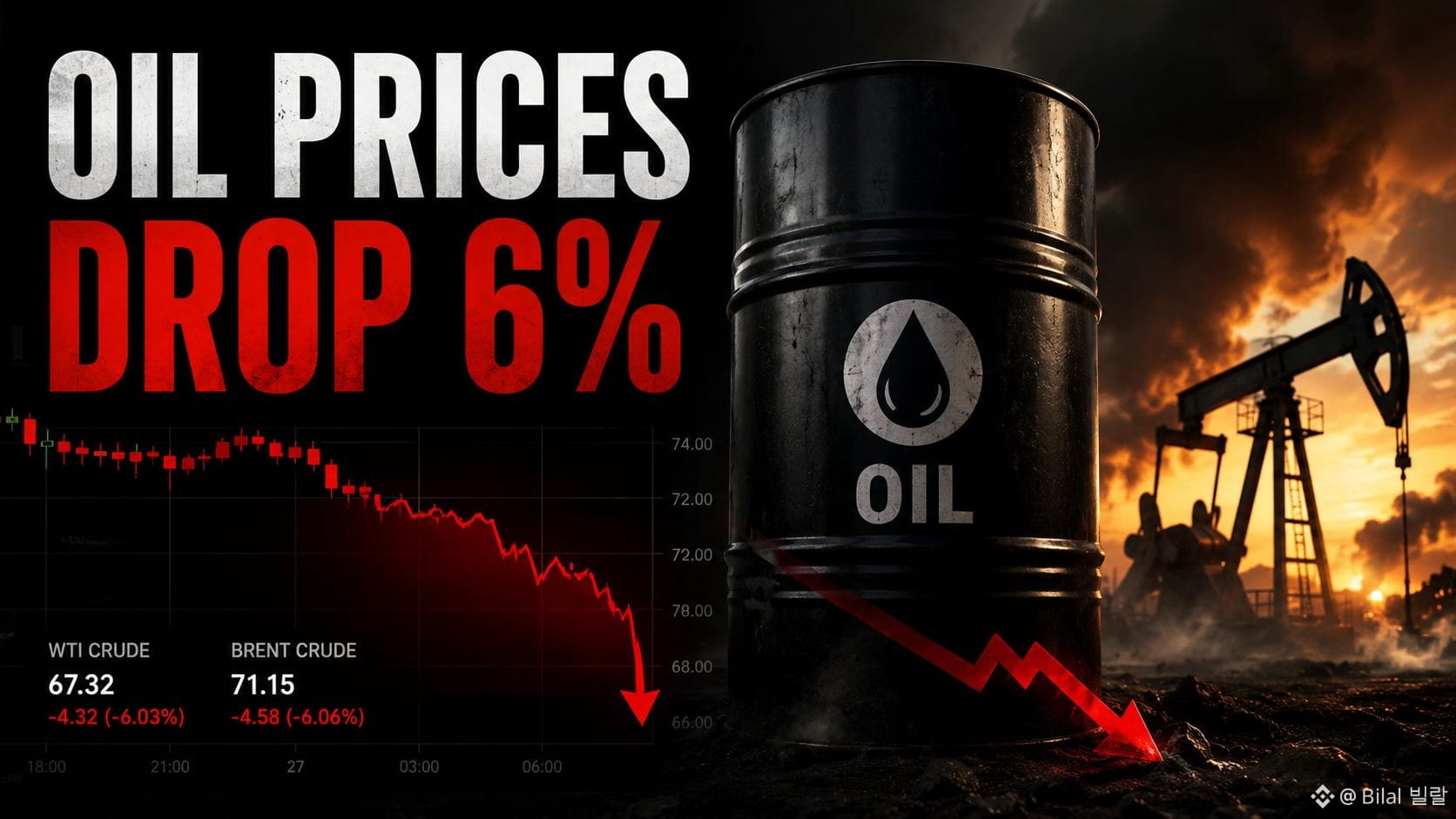
Oil prices fell nearly 6% after the U.S. and Iran paused military strikes, easing concerns about a major supply disruption in the Middle East.
As geopolitical tensions cooled, traders quickly removed the risk premium that had pushed crude prices higher in recent weeks. Concerns over possible disruptions in the Strait of Hormuz also eased, triggering broad selling across energy markets.
📉 Brent Crude dropped sharply from recent highs, while WTI Crude followed with a strong decline as investors shifted toward a lower-risk outlook.
If the ceasefire continues and diplomatic progress strengthens, oil prices could face additional downside pressure in the short term. However, any renewed escalation could quickly reverse the trend.
Market Impact: Bearish for oil prices in the near term, while easing energy costs may support broader financial markets.$BTC
{future}(BTCUSDT)
#OilCrash #BrentCrude #EnergyMarkets
#OilDropsAbout6% 🛢️ Oil Slides 6% as Middle East Tensions Ease
⚠️ Hook
The war premium is fading. Is this just a temporary pullback, or the start of a bigger oil correction?
Oil prices fell nearly 6% after the U.S. and Iran paused military strikes, easing concerns about a major supply disruption in the Middle East.
As geopolitical tensions cooled, traders quickly removed the risk premium that had pushed crude prices higher in recent weeks. Concerns over possible disruptions in the Strait of Hormuz also eased, triggering broad selling across energy markets.
📉 Brent Crude dropped sharply from recent highs, while WTI Crude followed with a strong decline as investors shifted toward a lower-risk outlook.
If the ceasefire continues and diplomatic progress strengthens, oil prices could face additional downside pressure in the short term. However, any renewed escalation could quickly reverse the trend.
Market Impact: Bearish for oil prices in the near term, while easing energy costs may support broader financial markets.$BTC
#OilCrash #BrentCrude #EnergyMarkets
⚠️ Hook
The war premium is fading. Is this just a temporary pullback, or the start of a bigger oil correction?
Oil prices fell nearly 6% after the U.S. and Iran paused military strikes, easing concerns about a major supply disruption in the Middle East.
As geopolitical tensions cooled, traders quickly removed the risk premium that had pushed crude prices higher in recent weeks. Concerns over possible disruptions in the Strait of Hormuz also eased, triggering broad selling across energy markets.
📉 Brent Crude dropped sharply from recent highs, while WTI Crude followed with a strong decline as investors shifted toward a lower-risk outlook.
If the ceasefire continues and diplomatic progress strengthens, oil prices could face additional downside pressure in the short term. However, any renewed escalation could quickly reverse the trend.
Market Impact: Bearish for oil prices in the near term, while easing energy costs may support broader financial markets.$BTC
#OilCrash #BrentCrude #EnergyMarkets
1
145

·
--
Bullish
Partly True
Urgent: Wall Street rebounds with falling oil prices… and the Dow gains more than 600 points
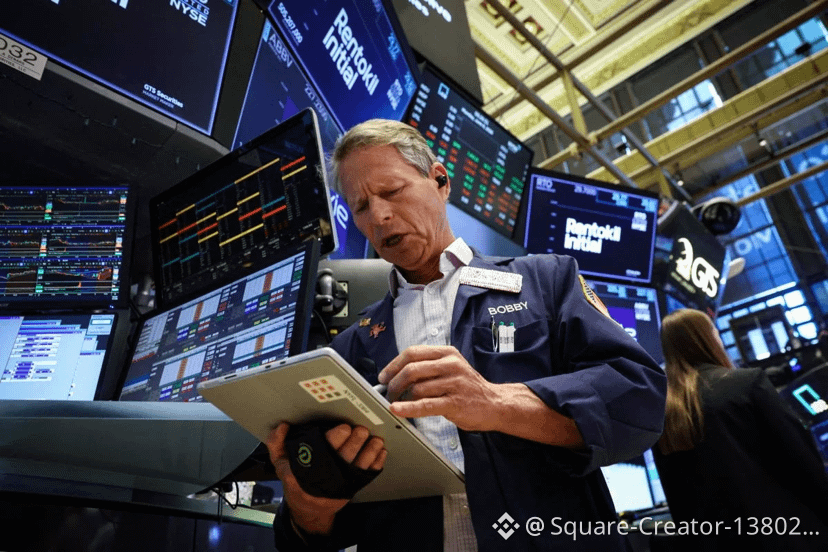
U.S. stocks kicked off Monday’s trading session with a strong rise, benefiting from lower oil prices following the suspension of fighting between the United States and Iran over the weekend. Meanwhile, investors are looking ahead to a busy week of major technology companies’ earnings announcements and the Federal Reserve meeting, which could hold surprises for the markets.
The Dow Jones Industrial Average rose by about 608 points, or 1.1%, while both the S&P 500 and the Nasdaq Composite climbed by 0.7%.
These gains came alongside the decline in oil prices, as tensions in the Middle East eased. September Brent crude futures fell 6.1% to trade near $90.85 per barrel, while West Texas Intermediate (WTI) crude futures dropped 5.8% to $84.16 per barrel.
#EtherApproaches$2000 #OilDropsAbout6% #CrudeBrieflyFallsBelow$90 #BrentCrudeFallsAbout6% #CXMTStarMarketIPORaises57.9BYuan $TRUMP
{future}(TRUMPUSDT)
$XAU
{future}(XAUUSDT)
Urgent: Wall Street rebounds with falling oil prices… and the Dow gains more than 600 points
U.S. stocks kicked off Monday’s trading session with a strong rise, benefiting from lower oil prices following the suspension of fighting between the United States and Iran over the weekend. Meanwhile, investors are looking ahead to a busy week of major technology companies’ earnings announcements and the Federal Reserve meeting, which could hold surprises for the markets.
The Dow Jones Industrial Average rose by about 608 points, or 1.1%, while both the S&P 500 and the Nasdaq Composite climbed by 0.7%.
These gains came alongside the decline in oil prices, as tensions in the Middle East eased. September Brent crude futures fell 6.1% to trade near $90.85 per barrel, while West Texas Intermediate (WTI) crude futures dropped 5.8% to $84.16 per barrel.
#EtherApproaches$2000 #OilDropsAbout6% #CrudeBrieflyFallsBelow$90 #BrentCrudeFallsAbout6% #CXMTStarMarketIPORaises57.9BYuan $TRUMP
$XAU
U.S. stocks kicked off Monday’s trading session with a strong rise, benefiting from lower oil prices following the suspension of fighting between the United States and Iran over the weekend. Meanwhile, investors are looking ahead to a busy week of major technology companies’ earnings announcements and the Federal Reserve meeting, which could hold surprises for the markets.
The Dow Jones Industrial Average rose by about 608 points, or 1.1%, while both the S&P 500 and the Nasdaq Composite climbed by 0.7%.
These gains came alongside the decline in oil prices, as tensions in the Middle East eased. September Brent crude futures fell 6.1% to trade near $90.85 per barrel, while West Texas Intermediate (WTI) crude futures dropped 5.8% to $84.16 per barrel.
#EtherApproaches$2000 #OilDropsAbout6% #CrudeBrieflyFallsBelow$90 #BrentCrudeFallsAbout6% #CXMTStarMarketIPORaises57.9BYuan $TRUMP
$XAU
2
119

·
--
Verified
#oildropsabout6%
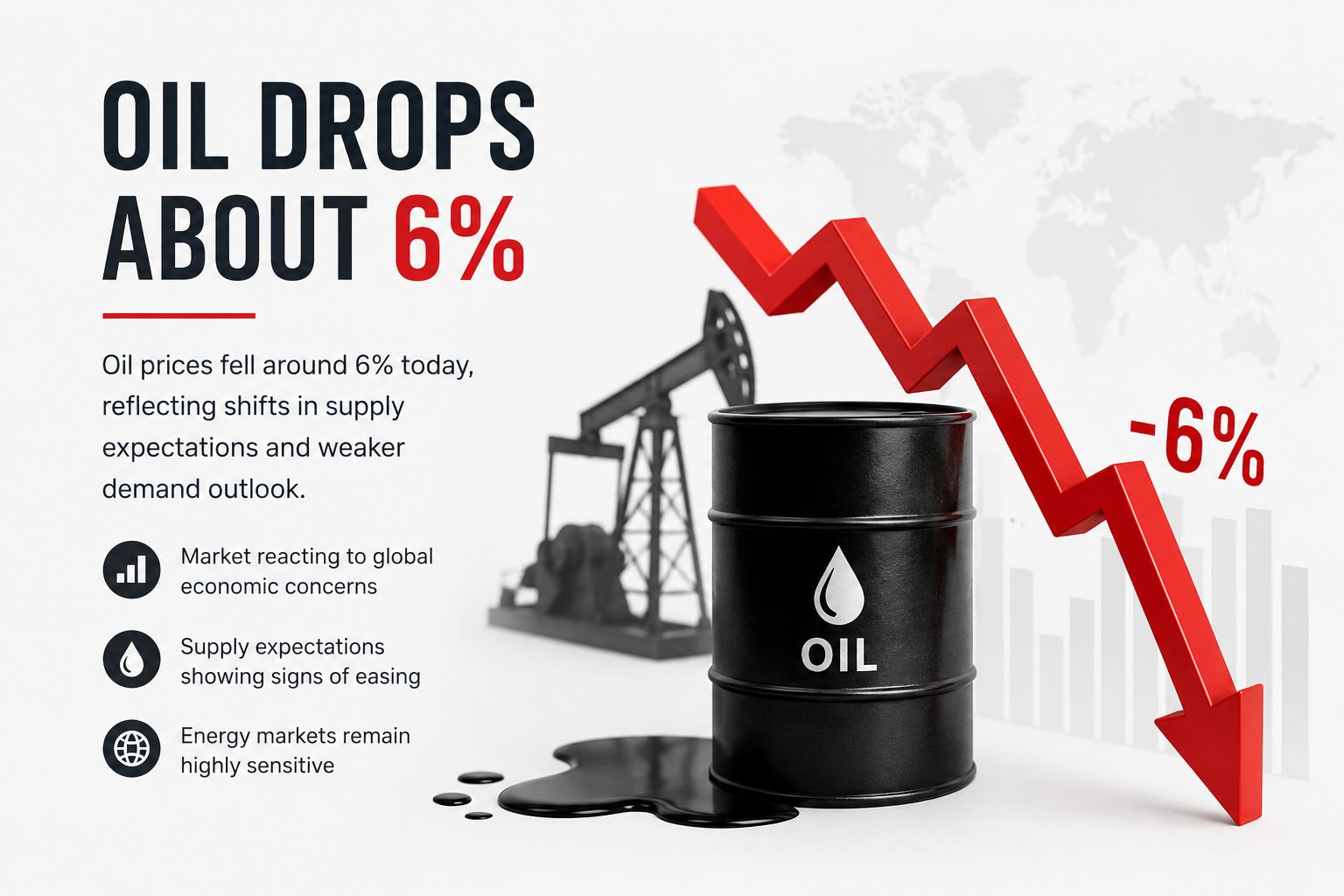
I wasn't expecting to see oil drop around 6% this quickly.
Whenever something this big happens, I try not to focus only on the headline. My first thought is always, what changed? Markets usually don't make moves like this without a reason.
Oil is one of those assets that quietly affects almost everything. It can influence transportation costs, inflation, business expenses, and even how investors feel about the broader economy. That's why I think it's worth paying attention, even if you don't trade commodities.
One thing I've learned is that every sharp move tells a story. Sometimes it's about demand slowing down. Other times it's supply expectations or changing market sentiment. The price itself is interesting, but the reason behind it is what teaches the most.
I'm not trying to predict where oil goes next. I just think moments like this are a good reminder that staying curious is often more valuable than reacting to every headline.
What do you think is behind this sudden drop?
#news #oil
#oildropsabout6%
I wasn't expecting to see oil drop around 6% this quickly.
Whenever something this big happens, I try not to focus only on the headline. My first thought is always, what changed? Markets usually don't make moves like this without a reason.
Oil is one of those assets that quietly affects almost everything. It can influence transportation costs, inflation, business expenses, and even how investors feel about the broader economy. That's why I think it's worth paying attention, even if you don't trade commodities.
One thing I've learned is that every sharp move tells a story. Sometimes it's about demand slowing down. Other times it's supply expectations or changing market sentiment. The price itself is interesting, but the reason behind it is what teaches the most.
I'm not trying to predict where oil goes next. I just think moments like this are a good reminder that staying curious is often more valuable than reacting to every headline.
What do you think is behind this sudden drop?
#news #oil
I wasn't expecting to see oil drop around 6% this quickly.
Whenever something this big happens, I try not to focus only on the headline. My first thought is always, what changed? Markets usually don't make moves like this without a reason.
Oil is one of those assets that quietly affects almost everything. It can influence transportation costs, inflation, business expenses, and even how investors feel about the broader economy. That's why I think it's worth paying attention, even if you don't trade commodities.
One thing I've learned is that every sharp move tells a story. Sometimes it's about demand slowing down. Other times it's supply expectations or changing market sentiment. The price itself is interesting, but the reason behind it is what teaches the most.
I'm not trying to predict where oil goes next. I just think moments like this are a good reminder that staying curious is often more valuable than reacting to every headline.
What do you think is behind this sudden drop?
#news #oil
2
4
1.1k

·
--
Verified
#OilDropsAbout6%
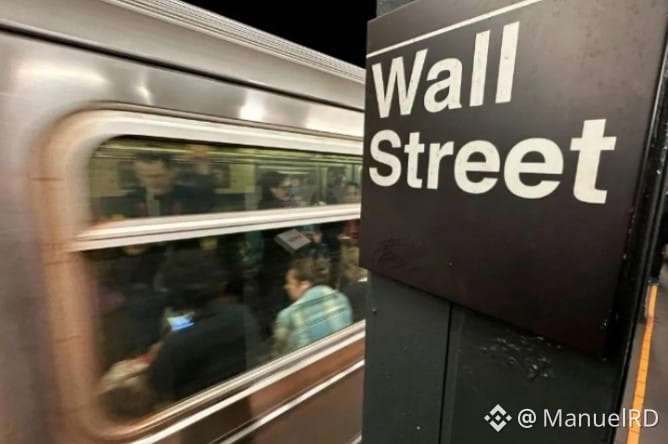
Stock markets fluctuate on Wall Street and crude oil prices fall by 5% as tensions in the Middle East ease.
Oil prices reversed course from the previous week, when a major escalation in fighting between the United States and Iran increased concerns about the global oil supply.
Oil prices fell after the United States and Iran stopped their attacks as work resumed to restart negotiations to end the war.
$AAPL.US
{stock_us}(AAPL.US)
$GOOG.US
{stock_us}(GOOG.US)
$ETH
{spot}(ETHUSDT)
#OilDropsAbout6%
Stock markets fluctuate on Wall Street and crude oil prices fall by 5% as tensions in the Middle East ease.
Oil prices reversed course from the previous week, when a major escalation in fighting between the United States and Iran increased concerns about the global oil supply.
Oil prices fell after the United States and Iran stopped their attacks as work resumed to restart negotiations to end the war.
$AAPL.US
$GOOG.US
$ETH
Stock markets fluctuate on Wall Street and crude oil prices fall by 5% as tensions in the Middle East ease.
Oil prices reversed course from the previous week, when a major escalation in fighting between the United States and Iran increased concerns about the global oil supply.
Oil prices fell after the United States and Iran stopped their attacks as work resumed to restart negotiations to end the war.
$AAPL.US
$GOOG.US
$ETH
1
1
522

·
--
#OilDropsAbout6%
{etf_us}(OILT.ETF)
Oil prices fell by about 6%, marking a sharp move lower as selling pressure increased across the energy market.
The decline was mainly linked to concerns over weaker demand and growing uncertainty in the global economic outlook.
Traders reacted quickly as fears of slower industrial activity and reduced fuel consumption weighed on sentiment.
At the same time, market participants also watched supply-related developments, which added more pressure to crude prices.
This sudden drop pushed oil into focus, as investors now expect continued volatility in the short term.
Energy stocks and related commodities may also feel the impact if weakness in oil prices continues.
Analysts say the next direction will depend on demand recovery, geopolitical developments, and inventory data.
For now, the sharp fall shows that the oil market remains highly sensitive to global economic news.
The move has created caution among traders, with many waiting for fresh signals before taking new positions.
Overall, the 6% drop in oil highlights rising uncertainty and a risk-off mood in the broader market.#oil #OilMarket #OILCAT #OilPrice
#OilDropsAbout6%
Oil prices fell by about 6%, marking a sharp move lower as selling pressure increased across the energy market.
The decline was mainly linked to concerns over weaker demand and growing uncertainty in the global economic outlook.
Traders reacted quickly as fears of slower industrial activity and reduced fuel consumption weighed on sentiment.
At the same time, market participants also watched supply-related developments, which added more pressure to crude prices.
This sudden drop pushed oil into focus, as investors now expect continued volatility in the short term.
Energy stocks and related commodities may also feel the impact if weakness in oil prices continues.
Analysts say the next direction will depend on demand recovery, geopolitical developments, and inventory data.
For now, the sharp fall shows that the oil market remains highly sensitive to global economic news.
The move has created caution among traders, with many waiting for fresh signals before taking new positions.
Overall, the 6% drop in oil highlights rising uncertainty and a risk-off mood in the broader market.#oil #OilMarket #OILCAT #OilPrice
Oil prices fell by about 6%, marking a sharp move lower as selling pressure increased across the energy market.
The decline was mainly linked to concerns over weaker demand and growing uncertainty in the global economic outlook.
Traders reacted quickly as fears of slower industrial activity and reduced fuel consumption weighed on sentiment.
At the same time, market participants also watched supply-related developments, which added more pressure to crude prices.
This sudden drop pushed oil into focus, as investors now expect continued volatility in the short term.
Energy stocks and related commodities may also feel the impact if weakness in oil prices continues.
Analysts say the next direction will depend on demand recovery, geopolitical developments, and inventory data.
For now, the sharp fall shows that the oil market remains highly sensitive to global economic news.
The move has created caution among traders, with many waiting for fresh signals before taking new positions.
Overall, the 6% drop in oil highlights rising uncertainty and a risk-off mood in the broader market.#oil #OilMarket #OILCAT #OilPrice
OILTETF-0.63%
46

#OilDropsAbout6%
: Energy Markets Slide Amid Heavy Sell-Off 🛢️
Crude oil markets are seeing massive volatility as prices tumble, sending #OilDropsAbout6% straight to the top of the trending lists with heavy community discussion!
As global supply shifts, economic data updates, and demand concerns weigh heavily on commodities, energy traders are reacting to sharp technical breakdowns.
The Sell-Off: A rapid 6% downward correction has caught traders off guard, breaking key support zones.
Market Reaction: Volatility across energy assets is spilling over into broader macro sentiment and risk assets.
#OilDropsAbout6% #oil #Commodities
With oil prices plunging roughly 6% and heavy sell-offs shaking up the energy markets, how are you positioning your portfolio right now? Cast your vote and let's discuss your strategy below! 👇
Drop your vote (A, B, C, or D) and share your target levels in the comments! 📊👇
#OilDropsAbout6%
: Energy Markets Slide Amid Heavy Sell-Off 🛢️
Crude oil markets are seeing massive volatility as prices tumble, sending #OilDropsAbout6% straight to the top of the trending lists with heavy community discussion!
As global supply shifts, economic data updates, and demand concerns weigh heavily on commodities, energy traders are reacting to sharp technical breakdowns.
The Sell-Off: A rapid 6% downward correction has caught traders off guard, breaking key support zones.
Market Reaction: Volatility across energy assets is spilling over into broader macro sentiment and risk assets.
#OilDropsAbout6% #oil #Commodities
With oil prices plunging roughly 6% and heavy sell-offs shaking up the energy markets, how are you positioning your portfolio right now? Cast your vote and let's discuss your strategy below! 👇
Drop your vote (A, B, C, or D) and share your target levels in the comments! 📊👇
: Energy Markets Slide Amid Heavy Sell-Off 🛢️
Crude oil markets are seeing massive volatility as prices tumble, sending #OilDropsAbout6% straight to the top of the trending lists with heavy community discussion!
As global supply shifts, economic data updates, and demand concerns weigh heavily on commodities, energy traders are reacting to sharp technical breakdowns.
The Sell-Off: A rapid 6% downward correction has caught traders off guard, breaking key support zones.
Market Reaction: Volatility across energy assets is spilling over into broader macro sentiment and risk assets.
#OilDropsAbout6% #oil #Commodities
With oil prices plunging roughly 6% and heavy sell-offs shaking up the energy markets, how are you positioning your portfolio right now? Cast your vote and let's discuss your strategy below! 👇
Drop your vote (A, B, C, or D) and share your target levels in the comments! 📊👇
Buying the Dip
0%
Staying Out
0%
Shorting the Trend
0%
Hedging
0%
0 votes • Voting closed
115

·
--
#oildropsabout6%
WTI crashing 6% to $83.30. Brent down 7% to $89.23. The trigger: US and Iran paused hostilities after 13 days of strikes. Trump suspended strikes. Iran and Oman discussing reopening the Strait of Hormuz.
{future}(BZUSDT)
The cross-asset read:
💥Nasdaq futures +1.5% — risk-on relief rally
💥10Y yield drops to 4.65% — bonds catch a bid, inflation premium fading
💥S&P 500 +1% — the soft-landing cocktail (cheaper energy + falling rates + rising stocks)
But VIX is only down 4%. Markets aren't fully convinced the uncertainty is over. Houthis just struck Saudi oil infrastructure in Yanbu. The truce is fragile.
The context: Oil was up 47% in 3 weeks on Hormuz fears. This is a tactical cool-off, not a structural breakdown. If negotiations hold, $80 WTI is next. If they collapse, $100 returns fast.
{future}(AMZNUSDT)
Big week ahead: Fed decision Wednesday + Mag7 earnings (MSFT, META, AAPL, AMZN). Lower oil = breathing room for the Fed. Markets are pricing that in.
{future}(AAPLUSDT)
$SPY | $QQQ | $CL
Not financial advice.
#EtherApproaches$2000 #CrudeBrieflyFallsBelow$90 #BrentCrudeFallsAbout6% #WTICrudeFuturesFall8%
#oildropsabout6%
WTI crashing 6% to $83.30. Brent down 7% to $89.23. The trigger: US and Iran paused hostilities after 13 days of strikes. Trump suspended strikes. Iran and Oman discussing reopening the Strait of Hormuz.
The cross-asset read:
💥Nasdaq futures +1.5% — risk-on relief rally
💥10Y yield drops to 4.65% — bonds catch a bid, inflation premium fading
💥S&P 500 +1% — the soft-landing cocktail (cheaper energy + falling rates + rising stocks)
But VIX is only down 4%. Markets aren't fully convinced the uncertainty is over. Houthis just struck Saudi oil infrastructure in Yanbu. The truce is fragile.
The context: Oil was up 47% in 3 weeks on Hormuz fears. This is a tactical cool-off, not a structural breakdown. If negotiations hold, $80 WTI is next. If they collapse, $100 returns fast.
Big week ahead: Fed decision Wednesday + Mag7 earnings (MSFT, META, AAPL, AMZN). Lower oil = breathing room for the Fed. Markets are pricing that in.
$SPY | $QQQ | $CL
Not financial advice.
#EtherApproaches$2000 #CrudeBrieflyFallsBelow$90 #BrentCrudeFallsAbout6% #WTICrudeFuturesFall8%
WTI crashing 6% to $83.30. Brent down 7% to $89.23. The trigger: US and Iran paused hostilities after 13 days of strikes. Trump suspended strikes. Iran and Oman discussing reopening the Strait of Hormuz.
The cross-asset read:
💥Nasdaq futures +1.5% — risk-on relief rally
💥10Y yield drops to 4.65% — bonds catch a bid, inflation premium fading
💥S&P 500 +1% — the soft-landing cocktail (cheaper energy + falling rates + rising stocks)
But VIX is only down 4%. Markets aren't fully convinced the uncertainty is over. Houthis just struck Saudi oil infrastructure in Yanbu. The truce is fragile.
The context: Oil was up 47% in 3 weeks on Hormuz fears. This is a tactical cool-off, not a structural breakdown. If negotiations hold, $80 WTI is next. If they collapse, $100 returns fast.
Big week ahead: Fed decision Wednesday + Mag7 earnings (MSFT, META, AAPL, AMZN). Lower oil = breathing room for the Fed. Markets are pricing that in.
$SPY | $QQQ | $CL
Not financial advice.
#EtherApproaches$2000 #CrudeBrieflyFallsBelow$90 #BrentCrudeFallsAbout6% #WTICrudeFuturesFall8%
1
1
1.2k
·
--
#oildropsabout6% - The $100-to-$84 Crash in 72 Hours
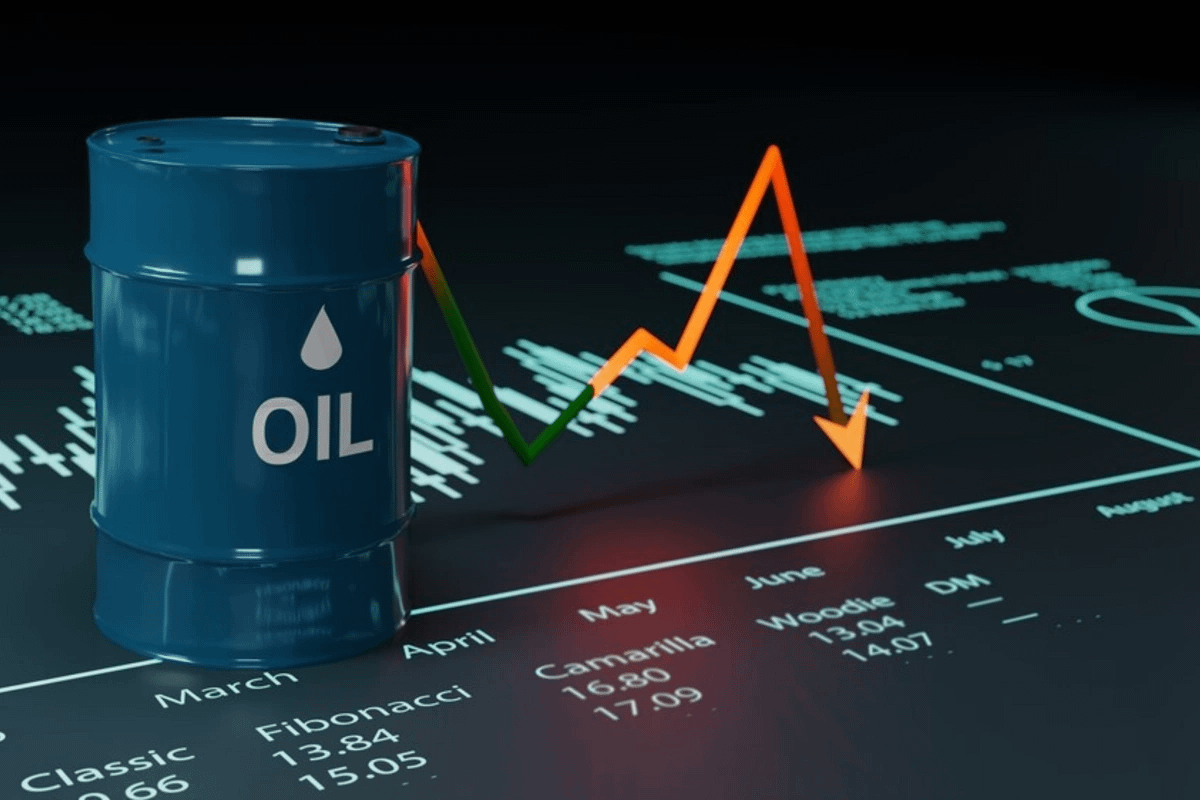
The move: WTI crude crashed from $100+ (Thursday) to ~$84 (Monday open) — a ~6%+ single-day drop that ranks among the largest one-day declines in Brent crude since 2000.
{future}(BZUSDT)
The catalyst: The US and Iran paused military strikes over the weekend — no US airstrikes for two consecutive nights, and Iran's military halted retaliatory attacks. Pakistan brokered the talks, backed by China. The "war premium" that had pumped oil 47% in three weeks is getting squeezed out — fast.
The ripple effects:
💥Brent crude briefly broke below $90/bbl, from $100+ on Thursday
💥European natural gas fell 7.8% in sympathy
💥US equity futures surged — Nasdaq +1.4%, S&P +0.8%, Dow +0.8%
💥10-year Treasury yield dropped 5bps to 4.65% as inflation fears cooled
💥Gold ($XAU ) bounced back above $4,100/oz
{future}(XAUUSDT)
💥$BTC held above $65K, $ETH surged to $1,967 (14-day high)
{future}(BTCUSDT)
💥$213M liquidated in 24h — 75%+ were shorts
The catch: The Houthis attacked Saudi Red Sea oil facilities on Saturday. Ukraine struck an Iranian merchant ship in the Caspian Sea. The "pause" is a prelude to talks, not peace. $90 Brent is the "ceasefire price" — if negotiations break down, $100 is back on the table faster than you can say "supply shock."
The broader context: Oil had surged 47% in three weeks on Strait of Hormuz disruption fears — losing ~20% of global oil shipments. JPMorgan estimates every additional month of conflict adds $7–$8 to Brent. China cut oil imports by ~5M barrels/day — the key variable keeping prices from going parabolic.
The play: This is a tactical reprieve, not a structural resolution. Watch the Houthis and the Fed (July 29 decision). If the ceasefire holds through the week, $80 WTI is the next target. If talks break down, the bid returns fast.
Not financial advice. Do your own research.
#CrudeBrieflyFallsBelow$90 #BrentCrudeFallsAbout6% #GoldRises #WTICrudeFuturesFall8%
#oildropsabout6% - The $100-to-$84 Crash in 72 Hours
The move: WTI crude crashed from $100+ (Thursday) to ~$84 (Monday open) — a ~6%+ single-day drop that ranks among the largest one-day declines in Brent crude since 2000.
The catalyst: The US and Iran paused military strikes over the weekend — no US airstrikes for two consecutive nights, and Iran's military halted retaliatory attacks. Pakistan brokered the talks, backed by China. The "war premium" that had pumped oil 47% in three weeks is getting squeezed out — fast.
The ripple effects:
💥Brent crude briefly broke below $90/bbl, from $100+ on Thursday
💥European natural gas fell 7.8% in sympathy
💥US equity futures surged — Nasdaq +1.4%, S&P +0.8%, Dow +0.8%
💥10-year Treasury yield dropped 5bps to 4.65% as inflation fears cooled
💥Gold ($XAU ) bounced back above $4,100/oz
💥$BTC held above $65K, $ETH surged to $1,967 (14-day high)
💥$213M liquidated in 24h — 75%+ were shorts
The catch: The Houthis attacked Saudi Red Sea oil facilities on Saturday. Ukraine struck an Iranian merchant ship in the Caspian Sea. The "pause" is a prelude to talks, not peace. $90 Brent is the "ceasefire price" — if negotiations break down, $100 is back on the table faster than you can say "supply shock."
The broader context: Oil had surged 47% in three weeks on Strait of Hormuz disruption fears — losing ~20% of global oil shipments. JPMorgan estimates every additional month of conflict adds $7–$8 to Brent. China cut oil imports by ~5M barrels/day — the key variable keeping prices from going parabolic.
The play: This is a tactical reprieve, not a structural resolution. Watch the Houthis and the Fed (July 29 decision). If the ceasefire holds through the week, $80 WTI is the next target. If talks break down, the bid returns fast.
Not financial advice. Do your own research.
#CrudeBrieflyFallsBelow$90 #BrentCrudeFallsAbout6% #GoldRises #WTICrudeFuturesFall8%
The move: WTI crude crashed from $100+ (Thursday) to ~$84 (Monday open) — a ~6%+ single-day drop that ranks among the largest one-day declines in Brent crude since 2000.
The catalyst: The US and Iran paused military strikes over the weekend — no US airstrikes for two consecutive nights, and Iran's military halted retaliatory attacks. Pakistan brokered the talks, backed by China. The "war premium" that had pumped oil 47% in three weeks is getting squeezed out — fast.
The ripple effects:
💥Brent crude briefly broke below $90/bbl, from $100+ on Thursday
💥European natural gas fell 7.8% in sympathy
💥US equity futures surged — Nasdaq +1.4%, S&P +0.8%, Dow +0.8%
💥10-year Treasury yield dropped 5bps to 4.65% as inflation fears cooled
💥Gold ($XAU ) bounced back above $4,100/oz
💥$BTC held above $65K, $ETH surged to $1,967 (14-day high)
💥$213M liquidated in 24h — 75%+ were shorts
The catch: The Houthis attacked Saudi Red Sea oil facilities on Saturday. Ukraine struck an Iranian merchant ship in the Caspian Sea. The "pause" is a prelude to talks, not peace. $90 Brent is the "ceasefire price" — if negotiations break down, $100 is back on the table faster than you can say "supply shock."
The broader context: Oil had surged 47% in three weeks on Strait of Hormuz disruption fears — losing ~20% of global oil shipments. JPMorgan estimates every additional month of conflict adds $7–$8 to Brent. China cut oil imports by ~5M barrels/day — the key variable keeping prices from going parabolic.
The play: This is a tactical reprieve, not a structural resolution. Watch the Houthis and the Fed (July 29 decision). If the ceasefire holds through the week, $80 WTI is the next target. If talks break down, the bid returns fast.
Not financial advice. Do your own research.
#CrudeBrieflyFallsBelow$90 #BrentCrudeFallsAbout6% #GoldRises #WTICrudeFuturesFall8%
5
1
1.4k

·
--
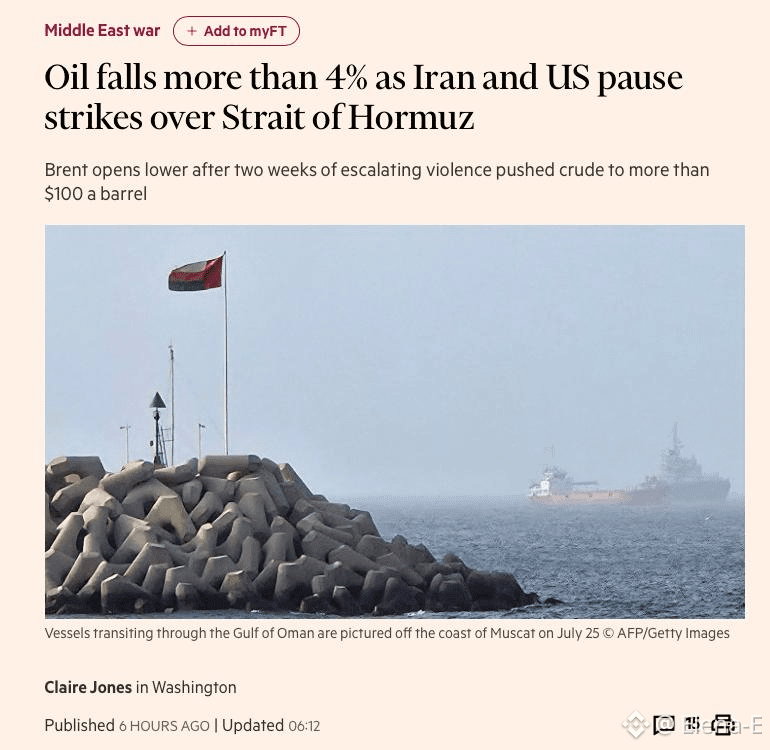
#OilDropsAbout6% 🚨 Oil Drops Over 4% as US–Iran Strikes Pause
Brent crude falls as immediate escalation fears ease, offering short-term relief to inflation and risk assets.
⚠️ But with the Strait of Hormuz still disrupted, renewed tensions could quickly reverse the move.
#oil #Crudoil #brent $CL $SNXXB $EUL
#OilDropsAbout6% 🚨 Oil Drops Over 4% as US–Iran Strikes Pause
Brent crude falls as immediate escalation fears ease, offering short-term relief to inflation and risk assets.
⚠️ But with the Strait of Hormuz still disrupted, renewed tensions could quickly reverse the move.
#oil #Crudoil #brent $CL $SNXXB $EUL
Brent crude falls as immediate escalation fears ease, offering short-term relief to inflation and risk assets.
⚠️ But with the Strait of Hormuz still disrupted, renewed tensions could quickly reverse the move.
#oil #Crudoil #brent $CL $SNXXB $EUL
57

·
--
Bullish
🛢️ Oil Didn’t Find Peace It Found a Pause.
Brent crude surged on geopolitical fears. Then Monday changed the narrative.
A shift in rhetoric suggesting military strikes could pause if both sides held back was enough to send traders rushing to lock in profits.
Brent fell around 7.5% to $89.42, while WTI slipped to about $84.33 as the market dialed back part of the geopolitical risk premium.
But here’s the key point:
This isn’t a peace agreement. It’s a fragile pause.
Supply risks haven’t disappeared. Shipping through the Strait of Hormuz remains heavily restricted, and analysts continue to warn that the threat to global oil supply is far from over.
So why did oil fall?
Because markets don’t just react to supply and demand—they react to expectations.
For weeks, crude prices reflected fears of:
* ⚠️ Escalating conflict
* 🚢 Shipping disruptions
* 📈 Higher inflation
When those fears eased, even slightly, the “war premium” began to unwind.
📊 Key Levels
🛢️ Brent: $89.42
🛢️ WTI: $84.33
⚠️ A pause in tensions—not a lasting resolution.
🧠 Square Insight
Oil prices don’t just reflect barrels.
They reflect uncertainty.
They reflect geopolitical risk.
They reflect inflation expectations.
And when fear fades—even temporarily—prices can reverse much faster than many expect.
👇 What’s your view?
Is this simply a short-term relief move for oil and broader markets, or has the biggest part of the oil shock already passed?
#OilDropsAbout6% #Inflation #Geopolitics #Markets
$BTC
{future}(BTCUSDT)
$BNB
{future}(BNBUSDT)
🛢️ Oil Didn’t Find Peace It Found a Pause.
Brent crude surged on geopolitical fears. Then Monday changed the narrative.
A shift in rhetoric suggesting military strikes could pause if both sides held back was enough to send traders rushing to lock in profits.
Brent fell around 7.5% to $89.42, while WTI slipped to about $84.33 as the market dialed back part of the geopolitical risk premium.
But here’s the key point:
This isn’t a peace agreement. It’s a fragile pause.
Supply risks haven’t disappeared. Shipping through the Strait of Hormuz remains heavily restricted, and analysts continue to warn that the threat to global oil supply is far from over.
So why did oil fall?
Because markets don’t just react to supply and demand—they react to expectations.
For weeks, crude prices reflected fears of:
* ⚠️ Escalating conflict
* 🚢 Shipping disruptions
* 📈 Higher inflation
When those fears eased, even slightly, the “war premium” began to unwind.
📊 Key Levels
🛢️ Brent: $89.42
🛢️ WTI: $84.33
⚠️ A pause in tensions—not a lasting resolution.
🧠 Square Insight
Oil prices don’t just reflect barrels.
They reflect uncertainty.
They reflect geopolitical risk.
They reflect inflation expectations.
And when fear fades—even temporarily—prices can reverse much faster than many expect.
👇 What’s your view?
Is this simply a short-term relief move for oil and broader markets, or has the biggest part of the oil shock already passed?
#OilDropsAbout6% #Inflation #Geopolitics #Markets
$BTC
$BNB
Brent crude surged on geopolitical fears. Then Monday changed the narrative.
A shift in rhetoric suggesting military strikes could pause if both sides held back was enough to send traders rushing to lock in profits.
Brent fell around 7.5% to $89.42, while WTI slipped to about $84.33 as the market dialed back part of the geopolitical risk premium.
But here’s the key point:
This isn’t a peace agreement. It’s a fragile pause.
Supply risks haven’t disappeared. Shipping through the Strait of Hormuz remains heavily restricted, and analysts continue to warn that the threat to global oil supply is far from over.
So why did oil fall?
Because markets don’t just react to supply and demand—they react to expectations.
For weeks, crude prices reflected fears of:
* ⚠️ Escalating conflict
* 🚢 Shipping disruptions
* 📈 Higher inflation
When those fears eased, even slightly, the “war premium” began to unwind.
📊 Key Levels
🛢️ Brent: $89.42
🛢️ WTI: $84.33
⚠️ A pause in tensions—not a lasting resolution.
🧠 Square Insight
Oil prices don’t just reflect barrels.
They reflect uncertainty.
They reflect geopolitical risk.
They reflect inflation expectations.
And when fear fades—even temporarily—prices can reverse much faster than many expect.
👇 What’s your view?
Is this simply a short-term relief move for oil and broader markets, or has the biggest part of the oil shock already passed?
#OilDropsAbout6% #Inflation #Geopolitics #Markets
$BTC
$BNB
1
147

·
--
Verified

Article
#OilDropsAbout6%: Sharp Decline in Crude Oil Prices and Future Trends#OilDropsAbout6% is a major trend and hashtag recently discussed in global financial and commodity markets. It refers to the **sudden and sharp decline of approximately 6% in crude oil prices**.
Key details regarding this include:
* **Easing Geopolitical Tensions:** The main reason for this drop is believed to be a temporary pause or news of potential peace talks regarding tensions between the US and Iran, which somewhat reduced the threat of oil supply disruptions in the Strait of Hormuz and the Red Sea.
* **Market Impact:** This sudden drop in oil prices sparked intense discussions regarding inflationary pressures and transportation costs globally. It also had a mixed impact on the stock market and cryptocurrency market, as investors viewed it as a major macroeconomic shift.
* **Social Media Trend:** This keyword or hashtag is trending heavily, especially on trading platforms (like Binance Square) and in financial discussions, where traders and analysts are debating whether crude oil prices will fall further or if this is just a temporary pause.
Whether crude oil prices will increase further or not depends on several global and economic factors. Based on current market conditions and expert estimates, both possibilities can be understood as follows:
### 1. Possibility of Price Increase (Upside Scenarios)
* **Resurgence of Geopolitical Tensions:** If ongoing tensions in the Middle East or peace talks face any hurdles, and disruptions occur again in the Strait of Hormuz or major supply routes, oil prices could spike sharply.
* **OPEC+ Decisions:** If the Organization of the Petroleum Exporting Countries (OPEC+) continues its production cuts or reduces output further, a supply squeeze in the market could drive prices upward.
* **Recovery in Demand:** If the global economy—particularly in major economies—grows faster than expected, fuel demand will rise, supporting higher prices.
### 2. Possibility of Price Decrease or Stagnation (Downside Scenarios)
* **Normalization of Supply:** If the situation remains calm on the geopolitical front and oil supplies from Gulf nations resume smoothly, prices may remain under pressure.
* **Weak Global Demand:** Many major financial institutions (such as JPMorgan and Goldman Sachs) suggest that global economic slowdowns or increased energy efficiency could limit oil demand, keeping prices lower or at moderate levels.
**Conclusion:**
It is difficult to predict which way the market will turn because the commodity market is highly sensitive. Currently, the market is passing through a phase of uncertainty, where **short-term volatility** is expected to be very high. If you are planning to trade or invest in it, keeping a close eye on global news and data is essential.
#CrudeBrieflyFallsBelow$90
#BrentCrudeFallsAbout6%
#OilDropsAbout6% $BNB
#OilDropsAbout6%: Sharp Decline in Crude Oil Prices and Future Trends
#OilDropsAbout6% is a major trend and hashtag recently discussed in global financial and commodity markets. It refers to the **sudden and sharp decline of approximately 6% in crude oil prices**.
Key details regarding this include:
* **Easing Geopolitical Tensions:** The main reason for this drop is believed to be a temporary pause or news of potential peace talks regarding tensions between the US and Iran, which somewhat reduced the threat of oil supply disruptions in the Strait of Hormuz and the Red Sea.
* **Market Impact:** This sudden drop in oil prices sparked intense discussions regarding inflationary pressures and transportation costs globally. It also had a mixed impact on the stock market and cryptocurrency market, as investors viewed it as a major macroeconomic shift.
* **Social Media Trend:** This keyword or hashtag is trending heavily, especially on trading platforms (like Binance Square) and in financial discussions, where traders and analysts are debating whether crude oil prices will fall further or if this is just a temporary pause.
Whether crude oil prices will increase further or not depends on several global and economic factors. Based on current market conditions and expert estimates, both possibilities can be understood as follows:
### 1. Possibility of Price Increase (Upside Scenarios)
* **Resurgence of Geopolitical Tensions:** If ongoing tensions in the Middle East or peace talks face any hurdles, and disruptions occur again in the Strait of Hormuz or major supply routes, oil prices could spike sharply.
* **OPEC+ Decisions:** If the Organization of the Petroleum Exporting Countries (OPEC+) continues its production cuts or reduces output further, a supply squeeze in the market could drive prices upward.
* **Recovery in Demand:** If the global economy—particularly in major economies—grows faster than expected, fuel demand will rise, supporting higher prices.
### 2. Possibility of Price Decrease or Stagnation (Downside Scenarios)
* **Normalization of Supply:** If the situation remains calm on the geopolitical front and oil supplies from Gulf nations resume smoothly, prices may remain under pressure.
* **Weak Global Demand:** Many major financial institutions (such as JPMorgan and Goldman Sachs) suggest that global economic slowdowns or increased energy efficiency could limit oil demand, keeping prices lower or at moderate levels.
**Conclusion:**
It is difficult to predict which way the market will turn because the commodity market is highly sensitive. Currently, the market is passing through a phase of uncertainty, where **short-term volatility** is expected to be very high. If you are planning to trade or invest in it, keeping a close eye on global news and data is essential.
#CrudeBrieflyFallsBelow$90
#BrentCrudeFallsAbout6%
#OilDropsAbout6% $BNB
Key details regarding this include:
* **Easing Geopolitical Tensions:** The main reason for this drop is believed to be a temporary pause or news of potential peace talks regarding tensions between the US and Iran, which somewhat reduced the threat of oil supply disruptions in the Strait of Hormuz and the Red Sea.
* **Market Impact:** This sudden drop in oil prices sparked intense discussions regarding inflationary pressures and transportation costs globally. It also had a mixed impact on the stock market and cryptocurrency market, as investors viewed it as a major macroeconomic shift.
* **Social Media Trend:** This keyword or hashtag is trending heavily, especially on trading platforms (like Binance Square) and in financial discussions, where traders and analysts are debating whether crude oil prices will fall further or if this is just a temporary pause.
Whether crude oil prices will increase further or not depends on several global and economic factors. Based on current market conditions and expert estimates, both possibilities can be understood as follows:
### 1. Possibility of Price Increase (Upside Scenarios)
* **Resurgence of Geopolitical Tensions:** If ongoing tensions in the Middle East or peace talks face any hurdles, and disruptions occur again in the Strait of Hormuz or major supply routes, oil prices could spike sharply.
* **OPEC+ Decisions:** If the Organization of the Petroleum Exporting Countries (OPEC+) continues its production cuts or reduces output further, a supply squeeze in the market could drive prices upward.
* **Recovery in Demand:** If the global economy—particularly in major economies—grows faster than expected, fuel demand will rise, supporting higher prices.
### 2. Possibility of Price Decrease or Stagnation (Downside Scenarios)
* **Normalization of Supply:** If the situation remains calm on the geopolitical front and oil supplies from Gulf nations resume smoothly, prices may remain under pressure.
* **Weak Global Demand:** Many major financial institutions (such as JPMorgan and Goldman Sachs) suggest that global economic slowdowns or increased energy efficiency could limit oil demand, keeping prices lower or at moderate levels.
**Conclusion:**
It is difficult to predict which way the market will turn because the commodity market is highly sensitive. Currently, the market is passing through a phase of uncertainty, where **short-term volatility** is expected to be very high. If you are planning to trade or invest in it, keeping a close eye on global news and data is essential.
#CrudeBrieflyFallsBelow$90
#BrentCrudeFallsAbout6%
#OilDropsAbout6% $BNB
1
288

·
--
#OilDropsAbout6%
Oil prices dropped about 6% today, reminding markets just how quickly sentiment can shift. A combination of easing geopolitical concerns, changing expectations around supply, and cautious demand forecasts weighed heavily on crude prices.
For consumers, lower oil prices can eventually translate into cheaper fuel and reduced transportation costs, though those benefits don't always appear immediately. For producers and energy companies, however, a sharp decline can put pressure on revenues and future investment plans.
Markets will now be watching upcoming economic data, global demand trends, and any new developments from major oil-producing nations to see whether this move marks the beginning of a broader trend or just a short-term correction.
#OilDropsAbout6% #globaleconomy #Crude #MarketUpdate
#OilDropsAbout6%
Oil prices dropped about 6% today, reminding markets just how quickly sentiment can shift. A combination of easing geopolitical concerns, changing expectations around supply, and cautious demand forecasts weighed heavily on crude prices.
For consumers, lower oil prices can eventually translate into cheaper fuel and reduced transportation costs, though those benefits don't always appear immediately. For producers and energy companies, however, a sharp decline can put pressure on revenues and future investment plans.
Markets will now be watching upcoming economic data, global demand trends, and any new developments from major oil-producing nations to see whether this move marks the beginning of a broader trend or just a short-term correction.
#OilDropsAbout6% #globaleconomy #Crude #MarketUpdate
Oil prices dropped about 6% today, reminding markets just how quickly sentiment can shift. A combination of easing geopolitical concerns, changing expectations around supply, and cautious demand forecasts weighed heavily on crude prices.
For consumers, lower oil prices can eventually translate into cheaper fuel and reduced transportation costs, though those benefits don't always appear immediately. For producers and energy companies, however, a sharp decline can put pressure on revenues and future investment plans.
Markets will now be watching upcoming economic data, global demand trends, and any new developments from major oil-producing nations to see whether this move marks the beginning of a broader trend or just a short-term correction.
#OilDropsAbout6% #globaleconomy #Crude #MarketUpdate
2
119

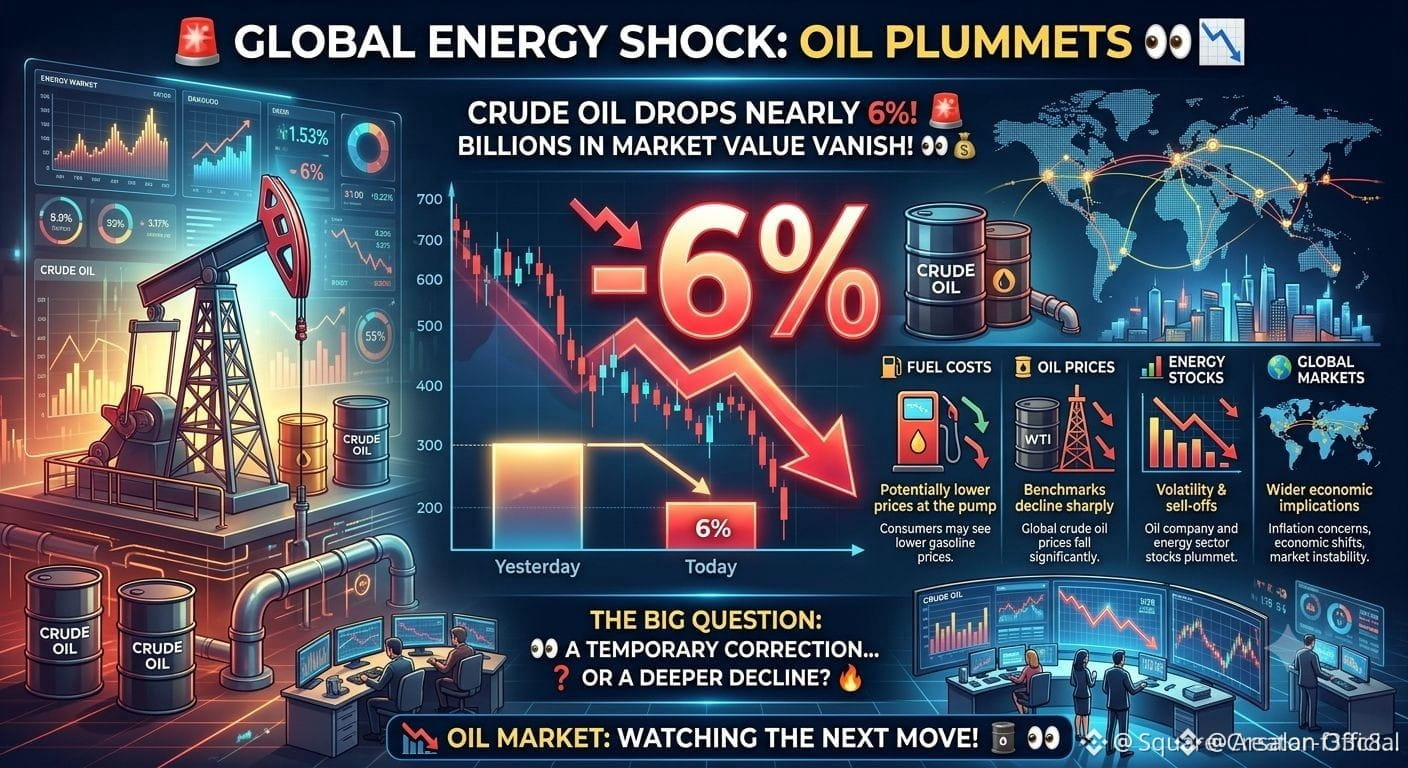
#OilDropsAbout6% OilDropsAbout6% likely means: oil prices fell by around 6%.
In plain English:
Oil = crude oil prices, usually WTI or Brent
Drops = goes down
About 6% = the price declined roughly six percent
So the hashtag is basically a short market headline saying oil had a sharp sell-off.
Common reasons this can happen:
weaker demand expectations
recession fears
higher supply or production news
geopolitical tensions easing
stronger dollar or broader risk-off market moves
If you want the actual story behind this hashtag today, I can look it up and summarize the cause.$CL
{future}(CLUSDT)
$BZ
{future}(BZUSDT)
$NATGAS
{future}(NATGASUSDT)
#OilDropsAbout6% OilDropsAbout6% likely means: oil prices fell by around 6%.
In plain English:
Oil = crude oil prices, usually WTI or Brent
Drops = goes down
About 6% = the price declined roughly six percent
So the hashtag is basically a short market headline saying oil had a sharp sell-off.
Common reasons this can happen:
weaker demand expectations
recession fears
higher supply or production news
geopolitical tensions easing
stronger dollar or broader risk-off market moves
If you want the actual story behind this hashtag today, I can look it up and summarize the cause.$CL
$BZ
$NATGAS
In plain English:
Oil = crude oil prices, usually WTI or Brent
Drops = goes down
About 6% = the price declined roughly six percent
So the hashtag is basically a short market headline saying oil had a sharp sell-off.
Common reasons this can happen:
weaker demand expectations
recession fears
higher supply or production news
geopolitical tensions easing
stronger dollar or broader risk-off market moves
If you want the actual story behind this hashtag today, I can look it up and summarize the cause.$CL
$BZ
$NATGAS
1
166

·
--
Bearish
#oildropsabout6%
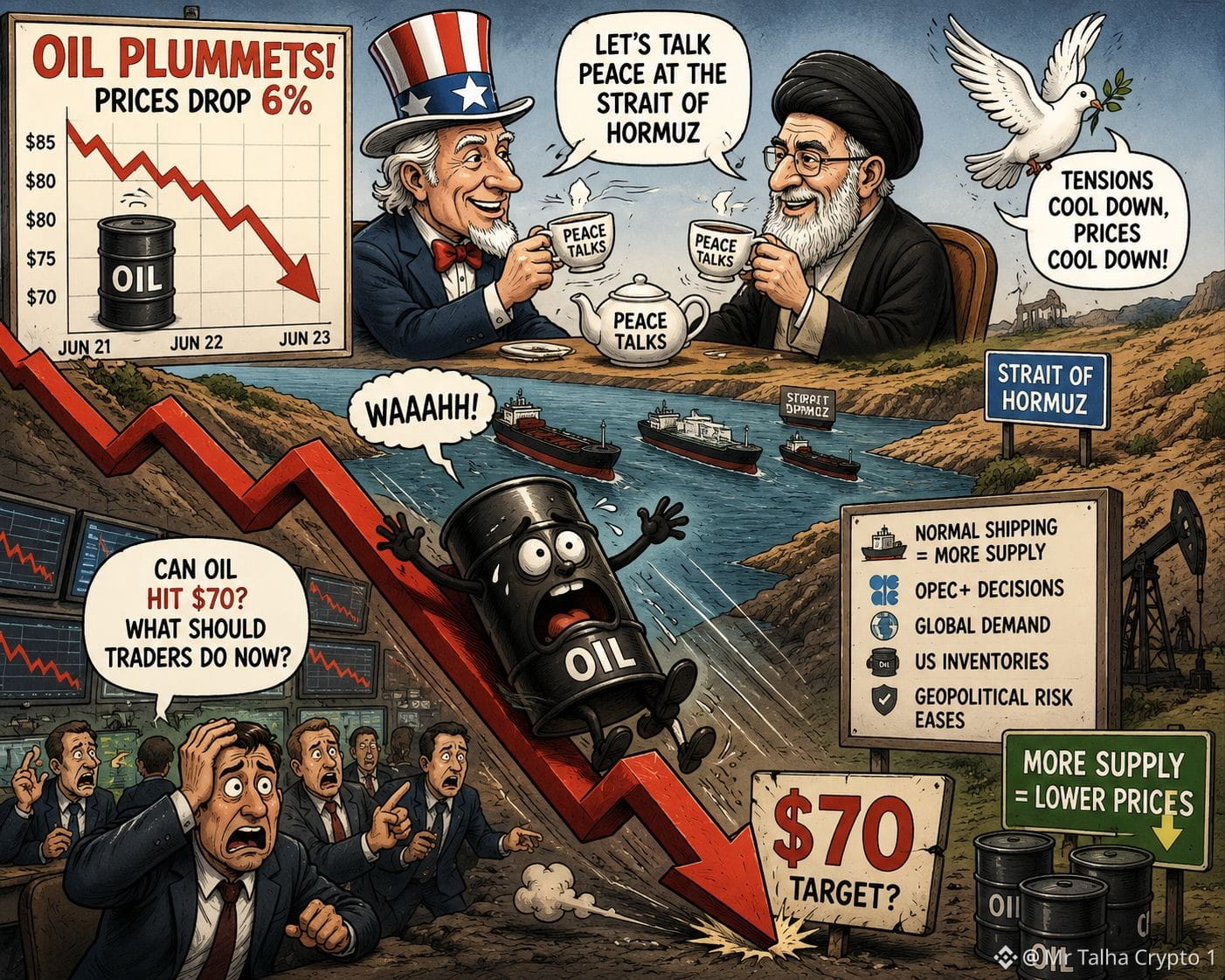
🛢️ #OilPlummets
📉 Crude Oil just took a massive hit!
A surprise pause in tensions between the U.S. and Iran has eased fears around the Strait of Hormuz, sending oil prices tumbling nearly 6% in a single move.
🌍 If shipping through the Red Sea and Strait of Hormuz returns to normal, global supply could improve significantly—raising one big question:
👉 Is $70 oil back on the table?
📊 What traders should watch:
🔹 Progress in U.S.–Iran diplomatic talks
🔹 Red Sea & Hormuz shipping activity
🔹 OPEC+ production decisions
🔹 U.S. crude inventory data
🔹 Global demand and economic outlook
⚠️ Peace talks can reduce the geopolitical risk premium, but any new escalation could reverse the drop just as quickly.
💬 What's your prediction?
👍 Oil drops to $70
❤️ Rebounds above $80
🔥 High volatility continues
#Oil #CrudeOil #WTI
$CL
$BZ
{future}(BZUSDT)
{future}(CLUSDT)
$NATGAS
{future}(NATGASUSDT)
#oildropsabout6%
🛢️ #OilPlummets
📉 Crude Oil just took a massive hit!
A surprise pause in tensions between the U.S. and Iran has eased fears around the Strait of Hormuz, sending oil prices tumbling nearly 6% in a single move.
🌍 If shipping through the Red Sea and Strait of Hormuz returns to normal, global supply could improve significantly—raising one big question:
👉 Is $70 oil back on the table?
📊 What traders should watch:
🔹 Progress in U.S.–Iran diplomatic talks
🔹 Red Sea & Hormuz shipping activity
🔹 OPEC+ production decisions
🔹 U.S. crude inventory data
🔹 Global demand and economic outlook
⚠️ Peace talks can reduce the geopolitical risk premium, but any new escalation could reverse the drop just as quickly.
💬 What's your prediction?
👍 Oil drops to $70
❤️ Rebounds above $80
🔥 High volatility continues
#Oil #CrudeOil #WTI
$CL
$BZ
$NATGAS
🛢️ #OilPlummets
📉 Crude Oil just took a massive hit!
A surprise pause in tensions between the U.S. and Iran has eased fears around the Strait of Hormuz, sending oil prices tumbling nearly 6% in a single move.
🌍 If shipping through the Red Sea and Strait of Hormuz returns to normal, global supply could improve significantly—raising one big question:
👉 Is $70 oil back on the table?
📊 What traders should watch:
🔹 Progress in U.S.–Iran diplomatic talks
🔹 Red Sea & Hormuz shipping activity
🔹 OPEC+ production decisions
🔹 U.S. crude inventory data
🔹 Global demand and economic outlook
⚠️ Peace talks can reduce the geopolitical risk premium, but any new escalation could reverse the drop just as quickly.
💬 What's your prediction?
👍 Oil drops to $70
❤️ Rebounds above $80
🔥 High volatility continues
#Oil #CrudeOil #WTI
$CL
$BZ
$NATGAS
1
3
263
Log in to explore more content
Join global crypto users on Binance Square
⚡️ Get latest and useful information about crypto.
💬 Trusted by the world’s largest crypto exchange.
👍 Discover real insights from verified creators.
Email / Phone number
Trending Topics
1
#CryptoLiquidations$674MIn24H
839 views
28 Discussing
2
#RevolutConfirmsFakeGovEmailDataBreach
8,475 views
257 Discussing
3
#CanadaOSFISaysTokenizedDepositsEqualTraditionalDeposits
713 views
35 Discussing
4
#USBankCompletesCrossBorderPaymentPilotOnStellar
18,699 views
526 Discussing
5
#NvidiaInTalksToInvestUpTo$10BInAnthropicIPO
1,499 views
52 Discussing
6
#EtherRalliesAsBearishBetsLiquidate
30,991 views
700 Discussing
7
#EthereumHits$2600FirstTimeInSevenMonths
3,646 views
80 Discussing
8
#OpticalCommsStocksRallyOver3%
34,274 views
461 Discussing
9
#USInflationHoldsAt3.4%InAugust
42,381 views
486 Discussing
10
#CircleProposes$400MTazapayAcquisition
2,086 views
42 Discussing