

币毒
2.5k Posts

币毒
 Square Verified
Report
Block User
非著名野生交易员/Web3投资人,推特:0xJustdu,微博:0x币毒,小红薯:cryptodu,永久8折手续费减免和补绑邀请码「AGAGAG」,凭邀请码可进策略&交易指导频道!

Top traders by profit in 30D

Top 30D Traders by Volume

2025 Blockchain 100 — Video and Live Creator
Open Trade

U Holder
High-Frequency Trader
8.9 Years
113 Following
52.9K+ Followers
33.8K+ Liked
6 Badges
Posts
Portfolio
All
Quotes
Videos
Live
·
--
Announcement 🪧: This account will stop trading at the end of this month and is expected to stay inactive for around three months. The livestreams will continue as usual, but if I place any trades, I’ll use another account for now.
Reason: This account isn’t linked to a rebate program, so the fees are pretty painful.
Just giving you a heads-up, so don’t come bitching at me later, saying I tell you all to trade while I don’t trade myself.
Reason: This account isn’t linked to a rebate program, so the fees are pretty painful.
Just giving you a heads-up, so don’t come bitching at me later, saying I tell you all to trade while I don’t trade myself.
1
2
612
·
--
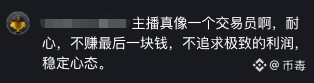
The streamer really is like a trader—patient,
doesn’t try to make every last dollar or chase maximum profits, and stays level-headed.
Listen, next time just drop the “like,” okay!
The streamer really is like a trader—patient,
doesn’t try to make every last dollar or chase maximum profits, and stays level-headed.
Listen, next time just drop the “like,” okay!
doesn’t try to make every last dollar or chase maximum profits, and stays level-headed.
Listen, next time just drop the “like,” okay!
1
907
·
--
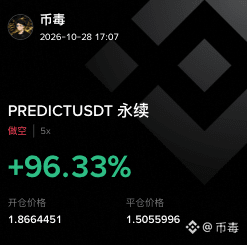
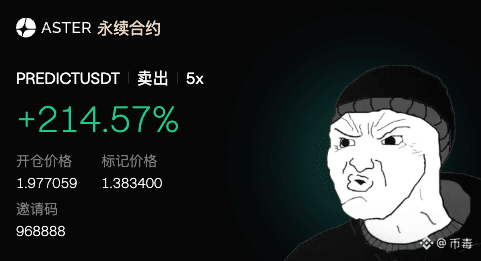
Thanks to Predict for giving me the chance to score a brace.
These high-confidence opportunities come around a few times each year.
No need to say more—just grateful. Thank you, Predict, and thank you, Polymarket 🙏
Thanks to Predict for giving me the chance to score a brace.
These high-confidence opportunities come around a few times each year.
No need to say more—just grateful. Thank you, Predict, and thank you, Polymarket 🙏
These high-confidence opportunities come around a few times each year.
No need to say more—just grateful. Thank you, Predict, and thank you, Polymarket 🙏
币毒
·
--
All signs point to Predict, the prediction market on BNB Chain, getting ready for its TGE. It was listed on Aster Pre and surged to a high of $5, before pulling back and trading between $1.50 and $2.
Prediction markets have lost a lot of their buzz since the World Cup, including Polymarket. Polymarket is focused on going public rather than holding a TGE, and even fired its CMO, who supported launching a token.
Also, pPOLY, previously issued by Paimon Finance, briefly fell below its issue price, with no sign of a rebound. The Pre-Access subscription price at the time was about $15.50.
A cold winter is coming for prediction markets. If Polymarket fails in its bid to go public, it will basically follow in OpenSea's footsteps. As for the TGEs of the remaining prediction-market projects, just short them at the listing highs—it's a surefire way to lose money.
Note: pPOLY is not the official Polymarket token, nor does it represent direct ownership of Polymarket shares. Essentially, it is a tokenized product issued by a third party that provides economic exposure related to Polymarket.
1
7
3.5k
·
--
I shared some insights on prediction markets last Saturday. I didn’t expect that today’s TGE news would give me another chance to make a little lunch money—not bad.
Also, when it comes to Predict’s airdrop, calculate it in USDT terms, not in token terms. That’s all I can do to help you; I’d better not say too much.
Also, when it comes to Predict’s airdrop, calculate it in USDT terms, not in token terms. That’s all I can do to help you; I’d better not say too much.
5
3k
·
--
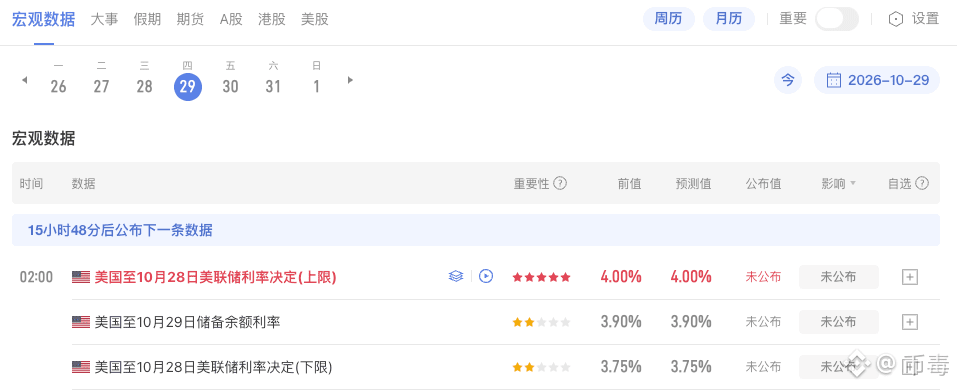
Something big is coming! Those of you who voted for me, post your screenshots in the comments. I’ll prioritize answering your questions during tonight’s livestream. Let’s go! Some people think I’m a bit behind in the rankings and should give up early, but I don’t think so. Just like tonight’s market, a day of great miracles is about to arrive!
Something big is coming! Those of you who voted for me, post your screenshots in the comments. I’ll prioritize answering your questions during tonight’s livestream. Let’s go! Some people think I’m a bit behind in the rankings and should give up early, but I don’t think so. Just like tonight’s market, a day of great miracles is about to arrive!
2
3
3.3k
·
--
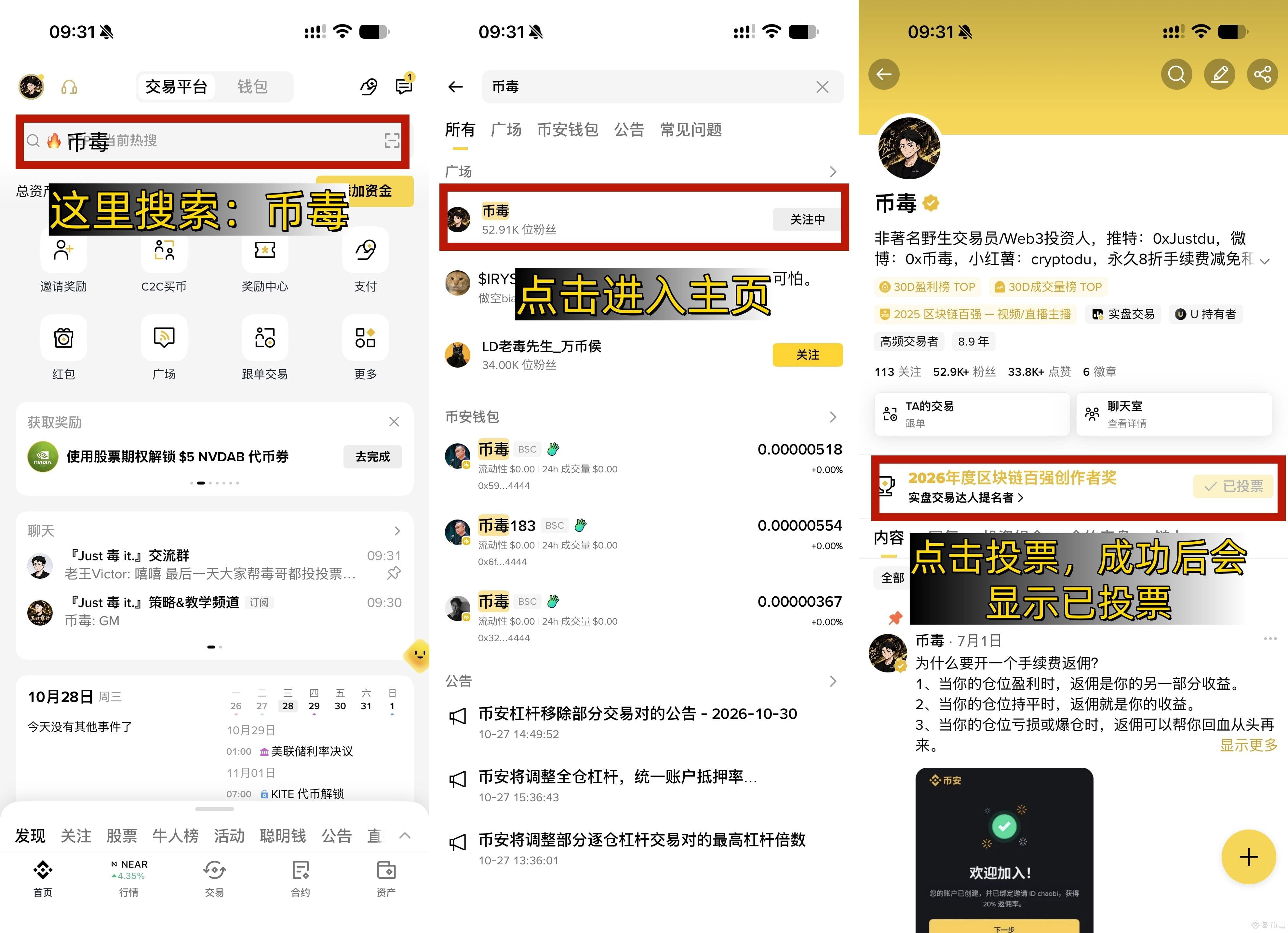
Today is the last day to vote 🗳️! Thanks, bros, for all your support over the past few days ⬆️
It’s the final day—if you’re passing by, give A-Du a vote with those lucky hands of yours 🎫
Today is the last day to vote 🗳️! Thanks, bros, for all your support over the past few days ⬆️
It’s the final day—if you’re passing by, give A-Du a vote with those lucky hands of yours 🎫
It’s the final day—if you’re passing by, give A-Du a vote with those lucky hands of yours 🎫
5
1.4k
·
--
🗓️ October 28|Crypto Daily Brief
Markets are waiting for the Fed to show its hand tonight: Bitcoin is back above $80,000, but total market cap is still shrinking. There’s a rebound, but not enough conviction yet.
📊 09:00 Market prices (Beijing time, CoinGecko)
BTC: $80,642, 24h +0.66%
ETH: $2,342.76, 24h +0.81%
SOL: $101.13, 24h +0.43%
Total market cap is about $2.72 trillion, down 1.94% over 24h; 24h trading volume is about $63 billion. BTC dominance is 59.44%, and the Fear & Greed Index is 47 (Neutral). The top three coins are slightly up, but the broader market is down. That suggests capital is still huddling around core assets, while smaller coins haven’t truly bounced back.
The key things to watch today:
1) The Fed announces its rate decision tonight. The market broadly expects rates to remain unchanged. The key question isn’t whether rates will be cut this time, but whether policy will tighten further in December. Crypto prices are clearly waiting for a signal to set the direction.
2) Ripple received final approval from the U.S. Office of the Comptroller of the Currency and will launch a nationwide trust bank. Crypto companies have taken another step toward entering the banking system.
3) Keystone’s website was accessed without authorization, exposing 25,964 buyer records. The company will destroy nearly 19,000 unsold hardware wallets. The hardware not being compromised doesn’t mean the security chain is intact—leaked addresses and identities are dangerous too.
4) Ethereum developers fixed a staking deposit vulnerability in the Glamsterdam upgrade. No funds were lost, but Hoodi testing has been delayed, and the mainnet launch date remains undecided.
5) Luxor raised $16 million to expand its AI business. Mining and computing-power companies are continuing to pivot toward AI, suggesting it’s getting harder to make a compelling case based on mining alone.
⏰ What to watch next:
• Tonight/early tomorrow: Fed rate decision and Chair’s press conference
• October 29: U.S. Q3 GDP and PCE, European Central Bank rate decision
• October 29: Coinbase and Strategy earnings
• October 30: Bank of Japan decision and monthly options expiry
My take: Reclaiming $80,000 is a positive sign, but with total market cap and trading volume still weak, this looks like a technical recovery in core assets for now. Ahead of tonight’s macro event, the market’s direction remains fragile. For a genuine strengthening trend, BTC needs to hold near $82,000 on rising volume and pull ETH and SOL higher along with it.
Trading strategy: Don’t chase news-driven spikes; stay lightly positioned and wait for confirmation. Follow a breakout, but step back if the price falls below $80,000 again.
⚠️ This is for market commentary only and is not investment advice. In highly volatile markets, be sure to manage leverage and position size.
4
1.7k
·
--
There are more and more shady tricks on the plaza these days...
Over the past few days, quite a few people have voted for me and then asked for a reward. Are you thinking I’ll just send you a few U, then you’ll screenshot it and report me for paying for votes?
Not happening. No way. Don’t even think about it.
Over the past few days, quite a few people have voted for me and then asked for a reward. Are you thinking I’ll just send you a few U, then you’ll screenshot it and report me for paying for votes?
Not happening. No way. Don’t even think about it.
8
1
12
6.7k
·
--
🗓️ October 27 | Crypto Daily
The market is stuck at a key level, waiting on the Fed: BTC is holding above $80,000. Major coins haven’t collapsed, but investors are clearly reluctant to place bets early.
As of 09:00 Beijing time:
• BTC: around $80,200, 24h +0.1%
• ETH: around $2,325, 24h -0.1%
• SOL: around $100.8, 24h -0.7%
Total market capitalization is around $2.71 trillion, down 1.5% over 24 hours. Trading volume is around $71.2 billion, up about 67% from the previous day. BTC dominance is around 59.4%, and the Fear & Greed Index is 44 (Fear). In short: volume is up, but money is still clustering in BTC, and altcoins haven’t truly strengthened.
A few things to watch today:
1) ETF flows remain mixed. The latest full public trading day was October 23: U.S. spot BTC ETFs saw net outflows of around $138 million that day, but still recorded net inflows of around $301 million for the week of October 19–23. ETH ETFs saw weekly net outflows of around $221 million over the same period. Note: these are October 23 figures, not today’s.
2) J.P. Morgan Asset Management is expanding its two tokenized money market funds, MONY and JLTXX, to Solana, targeting qualified U.S. investors. Traditional finance continues to move on-chain, adding to Solana’s institutional narrative, but the short-term price has yet to respond.
3) Standard Chartered has signed a definitive agreement to acquire digital asset custodian Zodia Custody, subject to regulatory approval. Big banks are moving from “testing the waters through partnerships” to directly acquiring infrastructure.
4) Switzerland’s FINMA has approved the country’s first exchange-traded fund aimed at retail investors that invests directly in BTC. Regulatory doors continue to open. These changes take time, but the direction matters more than one day’s price movement.
5) Don’t let your guard down on security: 49 wallets associated with the Solana trading bot Bloom were hacked, with around 9,408 SOL stolen, affecting 9 users. Third-party modules, bot permissions, and hot wallets remain the most vulnerable points.
Three things to watch next:
• U.S. September durable goods orders at 20:30 tonight, followed by consumer confidence and new home sales at 22:00;
• The Fed’s October meeting is underway, with its rate decision and press conference scheduled for the early hours of October 29 Beijing time;
• The ECB and BOJ rate decisions and Coinbase’s earnings are also due this week, so macro and industry volatility may coincide.
My take: $80,000 is currently a sentiment anchor, not a safety net. Until BTC holds above $81,000 with strong volume, I wouldn’t treat sideways trading as a reversal. ETH and SOL are relatively weak, suggesting risk appetite hasn’t returned. The real direction will probably emerge after the Fed has had its say.
Trading strategy: Keep positions small and leverage low. If BTC fails to hold $79,000, reduce risk first. Consider adding to positions in the direction of the trend only after it confirms a strong-volume hold above $81,000. Don’t bet on a one-way move ahead of the meeting.
Risk warning: Crypto assets are extremely volatile. The above is for market observation only and does not constitute investment advice.
3
2.3k
·
--
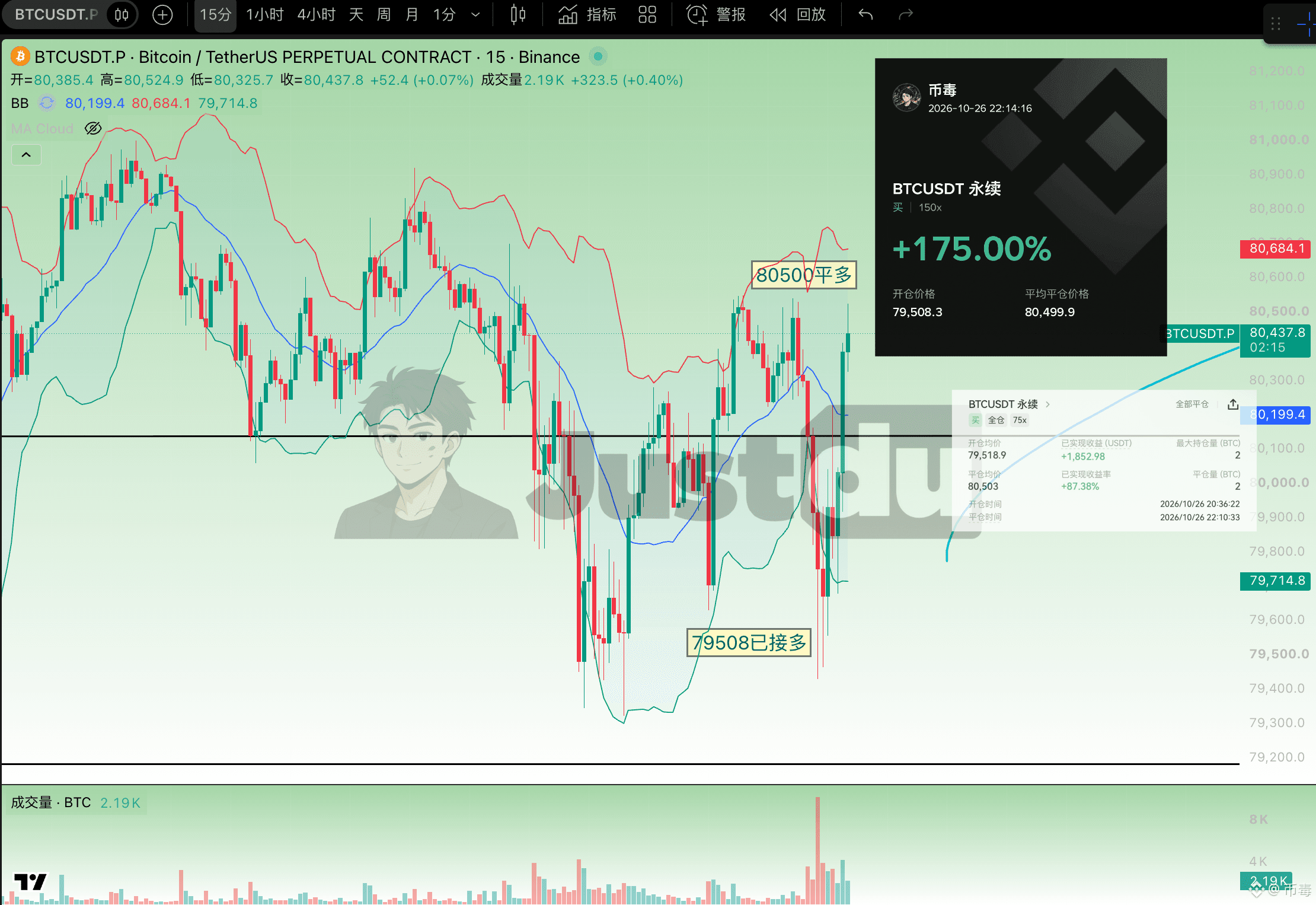
Just after I finished showering, I heard a ding, and the goal was achieved.
Went long at 79508, and when the target take-profit price of 80500 was reached, this week’s living expenses goal had been achieved ✅.
Tonight’s livestream goal: earn this week’s living expenses (earning this month’s living expenses is not possible with tonight’s market.
Also, congratulations to the brothers who joined the livestream tonight to watch the market together. Tonight was about right; the big move will come in the next couple of days. Take it slow, and brothers who haven’t entered the chatroom yet, remember to join the chatroom.
2
5
5.1k
·
--
Lecturing people is a bad habit, but some of the guys are really going further and further down that road.
Especially with the livestreams lately. Of course, I know people only turn back when they hit a wall.
So I’m just making an observation. A lot of people don’t lose because they lack trading skills, can’t spot a narrative, or pick the wrong direction. They lose because reality is so harsh that they can’t afford to be patient.
They wish they could place 800 trades a day, making money on both longs and shorts, fighting for their lives every single day.
Teacher Tony once said this about a lot of ordinary people: greed is just what you see on the surface; hardship is the root cause.
Because maybe they really do have a loan payment due tomorrow, or parents and kids to support. They don’t have time to get rich slowly. They can’t afford to let time work in their favor, so they seem overly eager for quick gains.
They’re hurting so much they can’t wait to make money slowly.
They’re hurting so much they can’t wait for a big opportunity.
They’re hurting so much they have to gamble their lives on the market.
Hardship makes you trade constantly, trying to seize every chance you can.
Hardship makes you go all in with a huge position, hoping to get rich in one shot.
They’re hurting so much that even knowing the odds are overwhelmingly against them, they still cling to the hope that they’re one in a million.
4
10
3.9k




·
--
Why do socks always go missing one at a time? Because if you lost both, you wouldn't notice.
Why can't you find bloggers who actually trade? Because only scammers can offer the guaranteed profits you're looking for.
I’ll keep livestreaming and trading seriously, and I also want to thank you for voting so thoughtfully.
I will keep working hard 💪
Why can't you find bloggers who actually trade? Because only scammers can offer the guaranteed profits you're looking for.
I’ll keep livestreaming and trading seriously, and I also want to thank you for voting so thoughtfully.
I will keep working hard 💪

3
9
4k
·
--
My strategy for growing my Plaza followers 🫣
My strategy for growing my Plaza followers 🫣


Yi He
·
--
My strategy for growing my Plaza followers 🫣
5
10
3.2k
·
--
🗓️ October 26 | Crypto Daily
One-line market summary: The broader market continues to weaken on shrinking volume. BTC is still holding on near $80,000, but capital is clearly defensive, and altcoins are having a tougher time than Bitcoin.
📊 Market snapshot (around 09:00 Beijing time)
BTC: $79,978, 24H -1.04%
ETH: $2,323.95, 24H -1.47%
SOL: $101.31, 24H -1.05%
Total crypto market capitalization is about $2.68 trillion, down 4.17% over 24 hours. 24-hour trading volume is about $42.3 billion, and BTC dominance is 60.0%. The Fear & Greed Index is at 40, in the “Fear” zone. The price decline may not look dramatic, but the larger drop in total market cap suggests that pressure is concentrated in small- and mid-cap coins, and market breadth is poor.
🔥 What really matters today
1) ETF flows have weakened again. The latest full trading day for U.S. spot BTC ETFs was October 23, with net outflows of $137.9 million. The previous day, October 22, saw even larger net outflows of $635.6 million. Note: Today is Monday, and ETFs do not trade over the weekend, so don’t present old data as “today’s outflows.”
2) Solana activated Alpenglow on October 21. The new consensus aims to reduce finality to around 150 milliseconds. This is a tangible underlying upgrade, but SOL’s price has not gained strength from it, suggesting that the market is currently more focused on capital flows and is in no rush to assign a premium to the technology narrative.
3) Ethereum’s Glamsterdam upgrade was originally scheduled to activate on the Hoodi testnet today, but the Foundation has announced a delay to further investigate interaction issues between EIP-8037 and mainnet contracts. A new date has not yet been set. A delay does not mean the upgrade has failed, but it does remove a near-term catalyst.
4) U.S. stablecoin rules continue to take shape, with the final rules related to the GENIUS Act expected to take effect on January 18, 2027. The direction is clear: compliance requirements are increasing, but the path is also becoming clearer for banks, payment companies, and major stablecoin issuers. This is a long-term positive for players with licenses and distribution channels.
5) Security remains a concern. NEAR Intents lost about $3.8 million this month due to a vulnerability in its cross-chain system and suspended some services. Recent attacks have continued to focus on cross-chain systems, custody, and access controls. Before using a small protocol, check its audits, permissions, and whether assets can be withdrawn—don’t look at APY alone.
⏰ Three upcoming points to watch
• Early October 28 (Beijing time): The Fed’s rate decision and press conference. Markets currently lean toward no change; the wording is what will really move prices.
• Evening of October 29: U.S. third-quarter GDP, September PCE, and initial jobless claims will be released together. These could trigger more immediate volatility than the rate decision itself.
• The new schedule for the Ethereum Hoodi testnet upgrade, and whether ETF flows return to net inflows this week.
My take: BTC holding near $80,000 does not mean the market has stabilized. BTC dominance at 60% alongside a deeper decline in total market cap shows that capital is still retreating to safer ground. This is not about who can buy the dip fastest; it’s about who can wait for ETF outflows to stop, macro expectations to settle, and trading volume to pick up again.
Trading strategy: Keep positions small and use less leverage. Don’t chase a rally until BTC has firmly reclaimed $81,000–$82,000. If it loses the area around $79,800, prioritize reducing risk rather than trying to talk yourself into believing in a weak market.
Risk warning: The above is for market commentary and reflects personal views only; it does not constitute investment advice. Crypto assets are extremely volatile. Please make your own assessment and manage your position size.
7
2.4k
·
--
Verified
U.S. earnings season continues this week, with big names like Microsoft, Google, and Amazon reporting results.
There’s really just one key question: after pouring so much money into AI, are they actually making money from it?
After all, the market has matured, and the AI narrative isn’t as easy to sell as it used to be. No matter how big the story, it ultimately comes down to revenue, profits, and cash flow.
Binance Square has put together a dedicated earnings season hub, bringing previews, analysis, and market views all in one place. It’s pretty handy for those of us who follow both crypto and U.S. stocks—we don’t have to keep switching between apps. Binance has it all.
There’s also Binance’s earnings prediction feature. We’re already guessing earnings and looking for surprises versus expectations, so we might as well put our predictions down while we’re at it—and get rewarded if we’re right. #股票财报季

1
3
37
66.5k
·
--
🗓️ October 25 | Crypto Daily
The weekend market has temporarily stopped falling, but that doesn’t mean it’s turning bullish: BTC is holding above $80,000, while flows and sentiment remain cautious. We’ll have to wait for next week’s macro events to play out for a clearer sense of direction.
As of 09:00 Beijing time:
• BTC: $80,818, 24h +0.33%
• ETH: $2,359, 24h -0.54%
• SOL: $102.40, 24h +0.21%
The total crypto market cap is around $2.73 trillion, with 24-hour trading volume of about $56.9 billion. BTC dominance is 59.5%, and the Fear & Greed Index is 46 (Neutral). Weekend liquidity is thin, so volatility looks muted on the surface. Yet total market cap is still down about 2.9% over 24 hours, suggesting smaller coins are under greater pressure.
Today’s key points:
1) The latest full trading day for U.S. spot BTC ETFs was October 23, with net outflows of about $138 million. However, they still recorded net inflows of about $301 million for the week to date. Don’t read too much into one day’s inflows or outflows—consistency matters more.
2) BTC briefly surged close to $85,000 earlier this week before quickly retreating to around $81,000. About $431 million in derivatives positions were liquidated over 24 hours, hitting both longs and shorts. This looks more like a high-volatility range than a one-way market.
3) The Ledger supply-chain attack caused losses of about $93 million. The company is reviewing its sales and anti-tampering procedures. Hardware wallets aren’t “absolutely safe just because you bought one”—you should verify the source, packaging, and setup process yourself.
4) Between October 20 and 21, the Drift attacker transferred about $122 million worth of ETH to Tornado Cash in multiple batches. Tracing and recovering the funds on-chain is becoming even harder, so stay alert around related addresses and interacting protocols.
Three upcoming events to watch:
• October 27–28: Federal Reserve FOMC meeting
• October 28: Rate decision and press conference
• October 29: U.S. Q3 GDP, PCE, and initial jobless claims data
My take: There’s some support at $80,000 for now, but I won’t treat this weekend’s modest rebound as a trend reversal unless BTC gets back above $84,000–$85,000. ETFs saw further outflows on Friday, and next week is packed with macro events—position sizing matters more than opinions.
Trading strategy: Scale into spot positions and reduce leverage on futures. If BTC holds above $80,000, consider a small position; if it breaks below, step aside and wait until after the FOMC meeting before taking a directional position.
Risk warning: Crypto assets are extremely volatile. The above is for market commentary and reflects personal views only; it is not investment advice.
5
2.5k
·
--
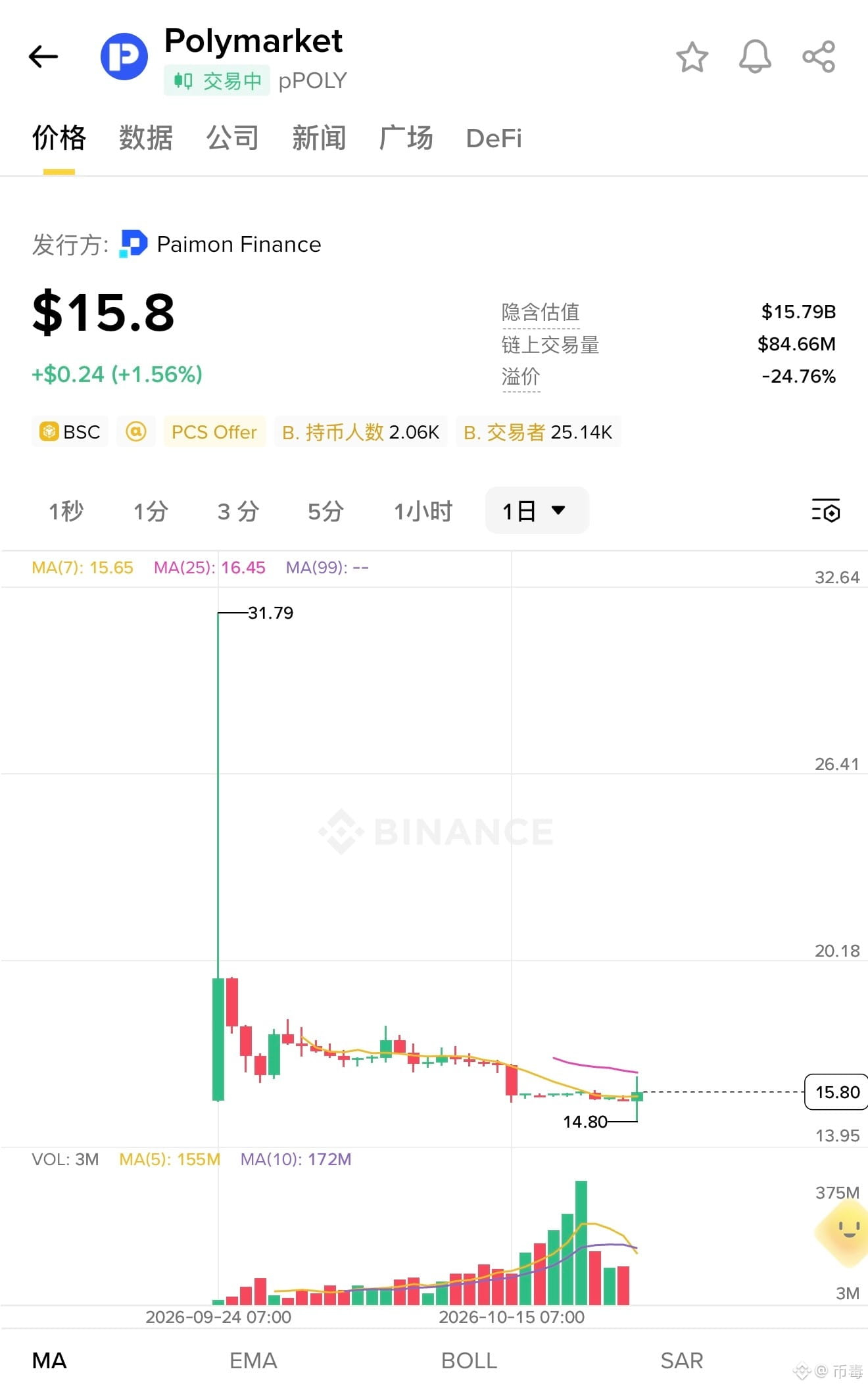
All signs point to Predict, the prediction market on BNB Chain, getting ready for its TGE. It was listed on Aster Pre and surged to a high of $5, before pulling back and trading between $1.50 and $2.
Prediction markets have lost a lot of their buzz since the World Cup, including Polymarket. Polymarket is focused on going public rather than holding a TGE, and even fired its CMO, who supported launching a token.
Also, pPOLY, previously issued by Paimon Finance, briefly fell below its issue price, with no sign of a rebound. The Pre-Access subscription price at the time was about $15.50.
A cold winter is coming for prediction markets. If Polymarket fails in its bid to go public, it will basically follow in OpenSea's footsteps. As for the TGEs of the remaining prediction-market projects, just short them at the listing highs—it's a surefire way to lose money.
Note: pPOLY is not the official Polymarket token, nor does it represent direct ownership of Polymarket shares. Essentially, it is a tokenized product issued by a third party that provides economic exposure related to Polymarket.
3
1
26
15.4k
·
--
🗓️ October 24|Crypto Daily
The market continues to pull back on declining volume. BTC is holding above $80,000, but investors are clearly cautious. For the weekend, focus on defense—there’s no need to rush into a dip-buy.
As of 09:00 Beijing time:
BTC $80,559, 24h -0.99%
ETH $2,371, 24h -0.85%
SOL $102.11, 24h -1.70%
Total crypto market capitalization is approximately $2.72 trillion, down 3.43% over 24 hours. Trading volume over the past 24 hours is about $67 billion, down 16.4% from the previous day. BTC dominance is 59.48%, with capital continuing to concentrate in the leading assets. The Fear & Greed Index is at 47, in neutral territory, though market sentiment feels weak.
The biggest developments today:
1. ETF flows have weakened again. The latest full public trading day was October 22—not today. U.S. spot BTC ETFs saw net outflows of about $636 million, while ETH ETFs saw net outflows of about $111 million. The inflows of the previous few days were quickly reversed, suggesting institutions are also managing short-term risk.
2. Solana’s Alpenglow has gone live on mainnet. It’s the biggest consensus upgrade since 2020, aiming to reduce finality to around 150 milliseconds. This is a meaningful technical improvement, but SOL is still underperforming BTC today, suggesting the positive news hasn’t yet attracted fresh capital.
3. Ethereum has postponed the Glamsterdam upgrade on the Hoodi testnet, originally scheduled for October 26. The delay follows security researchers’ discovery that the new gas rules could affect how existing contracts handle failed transactions. There’s no new date yet, and no mainnet upgrade date has been confirmed. This is a responsible decision—don’t misread it as “something has gone wrong with Ethereum.”
4. HSBC is rolling out its HKD stablecoin, RedCoin, in phases to more than 3.3 million PayMe users in Hong Kong. A major bank integrating a stablecoin directly into a retail payment channel carries more weight than a generic “institutions are entering the market” headline.
5. The U.S. crypto market structure bill remains stalled in Congress. Regulators can continue to ease institutional participation, but without a law on the books, there’s still a risk that policy could reverse with a change in government. That will continue to cap valuations.
Three things to watch next:
• Weekend liquidity is thin—can BTC hold above $80,000?
• The Fed’s October 27–28 policy meeting: its rate decision and messaging will directly affect risk assets.
• When Ethereum announces a new date for the Hoodi upgrade, and what its risk-mitigation plan will be.
My take: This doesn’t look like panic selling so much as investors proactively reducing exposure ahead of macro events. Until BTC gets back above $82,000–$84,000, I wouldn’t treat a bounce as a reversal. The SOL upgrade is positive for the medium to long term, but in the short term, it’s still following the broader market.
Trading strategy: Keep positions small and leverage low. Consider buying BTC in stages only after it holds above $80,000; if it breaks below, wait. You don’t need to put your principal at risk to prove your conviction.
Risk warning: The above is for market commentary and reflects my personal views only; it is not investment advice. Weekend market depth is limited, so watch out for sharp wicks and leveraged liquidations.
2
2.1k
·
--
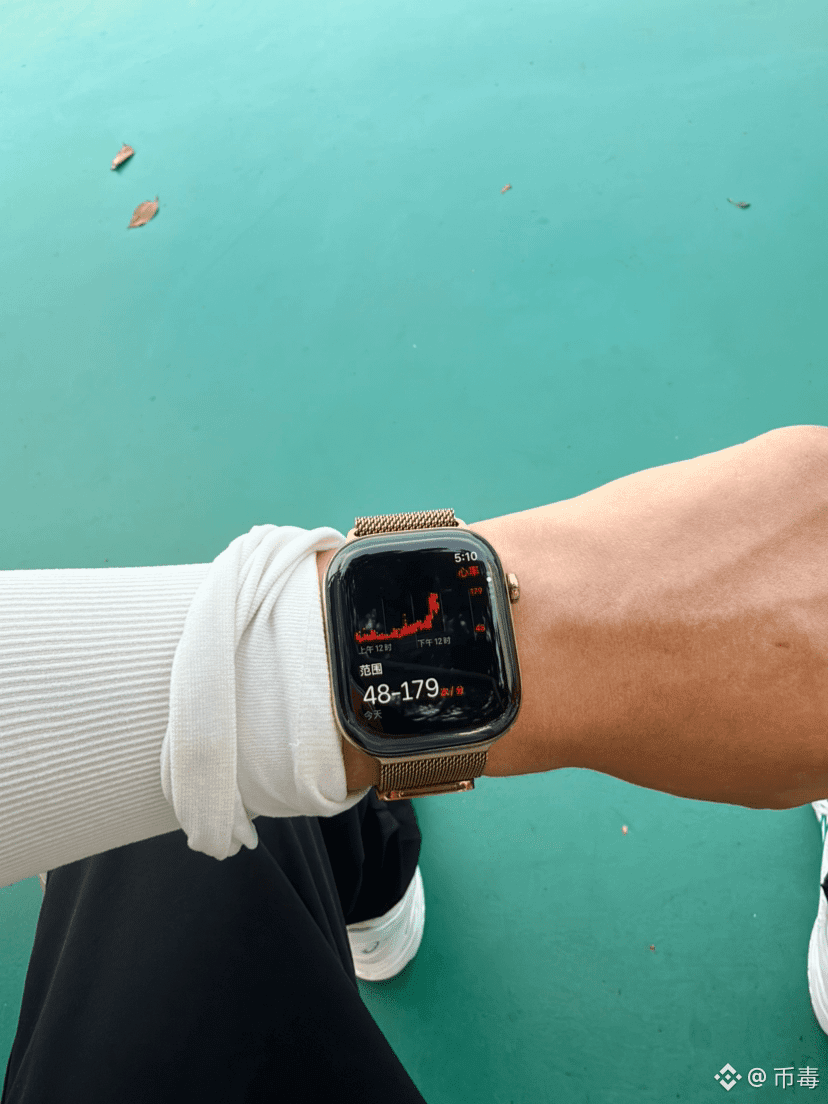
If only the candlestick chart looked like this.
If only the candlestick chart looked like this.
1
1
6.8k
Log in to explore more content
Join global crypto users on Binance Square
⚡️ Get latest and useful information about crypto.
💬 Trusted by the world’s largest crypto exchange.
👍 Discover real insights from verified creators.
Email / Phone number