

#pce
pce
462,640 views
1,117 Discussing
Hot
Latest

·
--
Verified
🚨 $BTC JUST SLIPPED BELOW 80,000 USD AGAIN — BUT TODAY'S PCE + GDP AT 17:30 PKT COULD FLIP THE SCRIPT! ⚠️
Yesterday's Fed hold lifted $BTC above 81,000 USD. This morning the bounce faded fast.
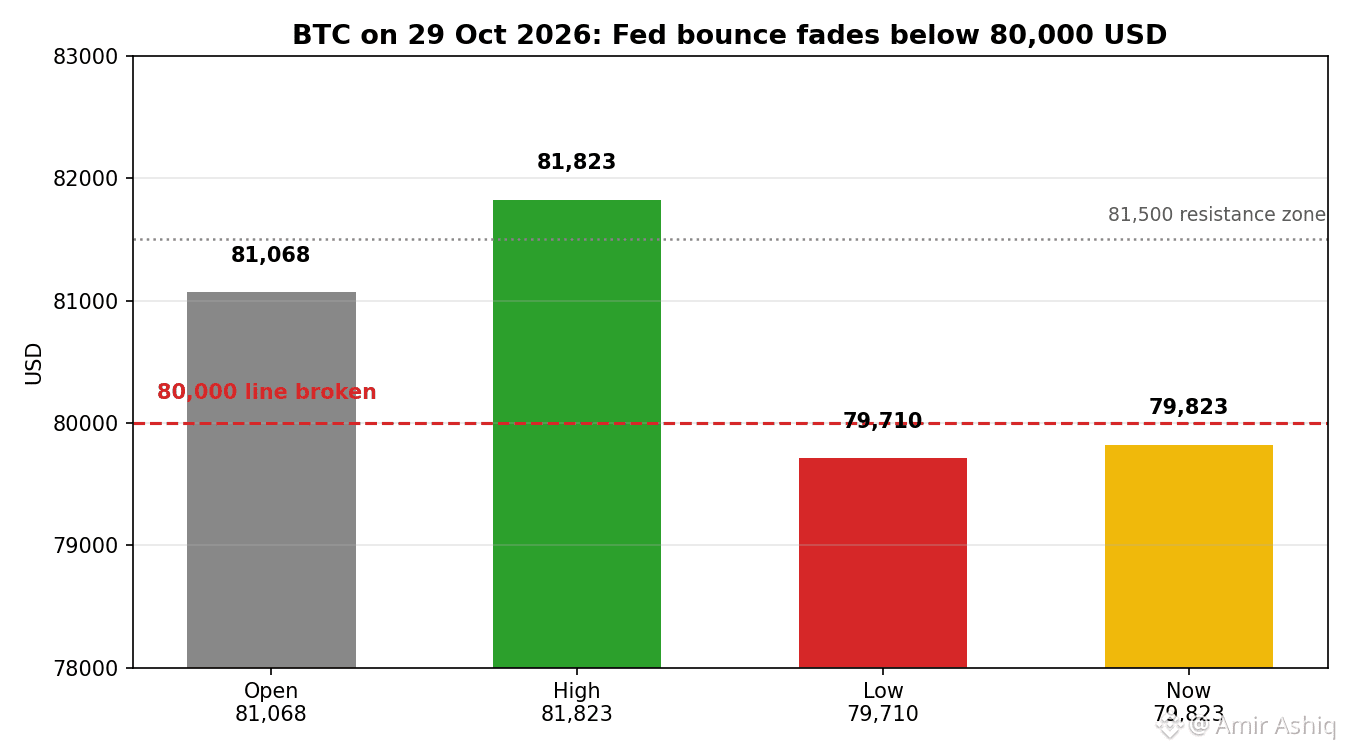
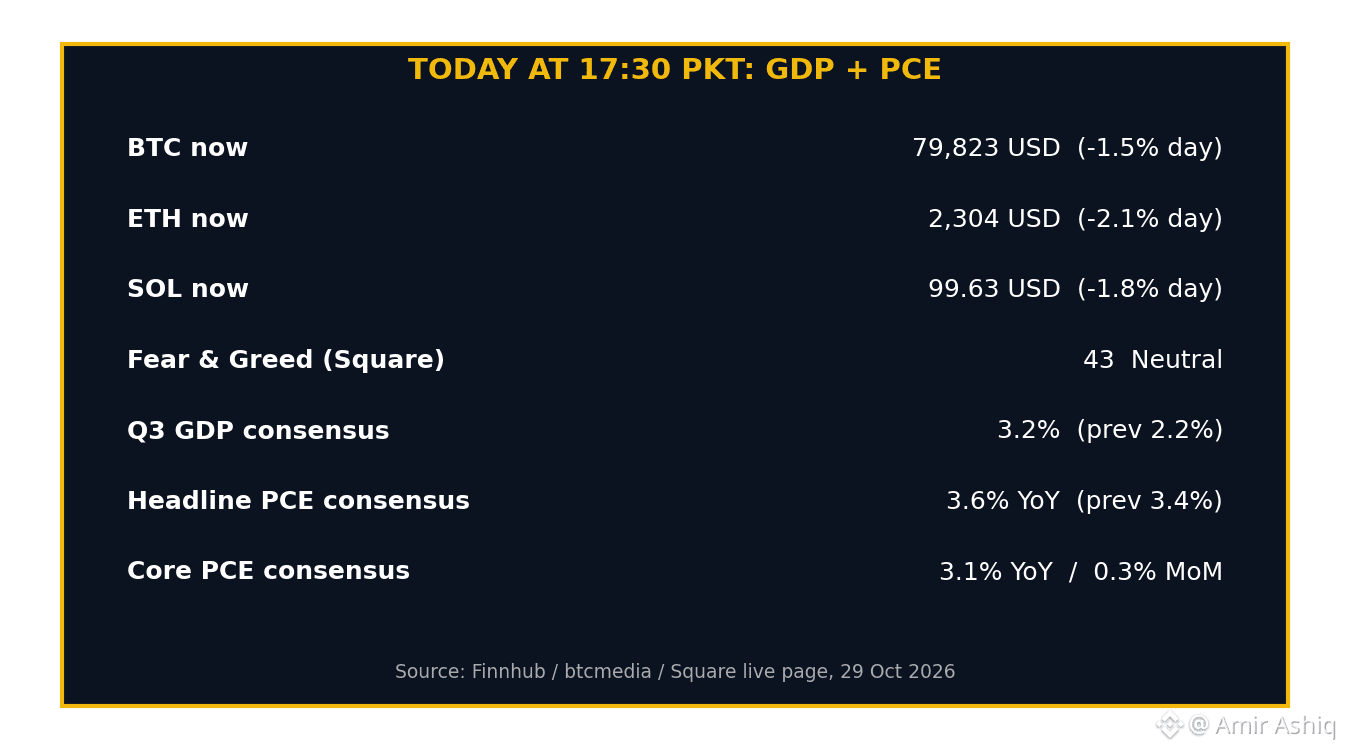
$BTC is now around 79,823 USD, down about 1.5% on the day, after touching 79,710 USD. $ETH is near 2,304 USD and $SOL has slipped under 100 USD.
Here's the catch:
📉 The day's range tells the story: open 81,068 USD, high 81,823 USD, then a slide straight through the 80,000 USD line.
📊 Sentiment is calm, not panicked: Fear and Greed reads 43 Neutral on Binance Square, down from 47 Neutral at the last run.
💧 Today's double print is the trigger: Q3 GDP consensus 3.2% (previous 2.2%) and headline PCE consensus 3.6% year on year (previous 3.4%), both at 17:30 PKT.
Takeaway: Hot inflation = tighter money expectations = thinner liquidity = bigger swings on data days.
Will today's GDP + PCE push $BTC back above 81,000 USD, or keep it under 80,000 USD? 👇
Not financial advice — educational purposes only.
#Bitcoin #crypto #FedWatch #PCE
raju1324:
Clear event map. I’d compare the actual GDP and PCE readings with consensus, then check Treasury yields and the dollar before attributing BTC’s move to macro; the first reaction can reverse. Are you watching core PCE or GDP revisions first?
1
894

·
--
Bullish
GM Market Briefing☕️
Thursday, October 29 2026
$BTC Outlook (GMT):
🟨00:00–09:00 → Slow => Asian session. Consolidation after yesterday's dovish FOMC bounce to 81k. Thin liquidity, no major catalysts.
🟨09:00–11:00 → Slow => London open. Markets wait for the US data dump. Range-bound with a slight bearish bias.
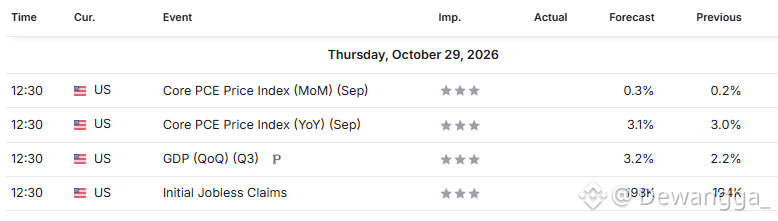
🟥11:00–15:00 → Down => US session. Core PCE, GDP, and Jobless Claims. Inflation and GDP are expected to print hot, which is hawkish and strengthens the dollar, pressuring Bitcoin.
🟥15:00–18:00 → Down => Afternoon US session. Continued selling pressure as the market digests the hot inflation data.
🟨18:00–00:00 → Slow => Late US close. Sideways drift into the overnight.
Bias: Bearish
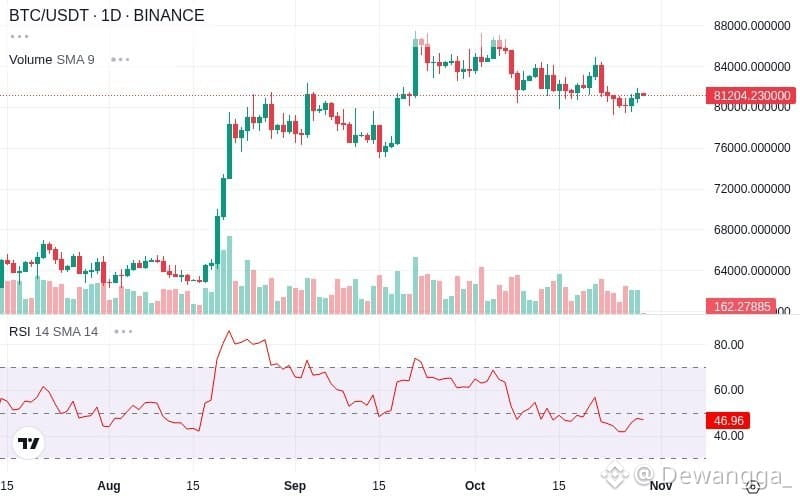
RSI: 46.94
NFA DYOR 🔥
Not a buy/sell signal🛑
Follow and tip if you find this helpful, unfollow and block if you are disturbed☕️
The FOMC held rates as expected and the tone was dovish, pushing Bitcoin to 81k. However, today the focus shifts to Core PCE, GDP, and Jobless Claims. Both inflation and economic growth are expected to print hot. This is hawkish for the dollar and will likely drag risk assets lower. Expect a red day as the market realises the Fed cannot easily cut rates with inflation still elevated.
📉 Core PCE and GDP expected hot. Hawkish for the dollar.
🏛 FOMC hold was dovish, but hot data will override the narrative.
📊 RSI at 46, bearish MACD. Downside momentum intact.
💎 Strategy: Do not chase the downside. If you are in profit, consider taking some off the table. If you are not positioned, wait for a clear signal. Manage your risk carefully.
$DOT $NEAR #GDP #PCE #EarningsSeason #$10.9BBitcoinOptionsExpireFriday #BitcoinSurpasses$81K
77

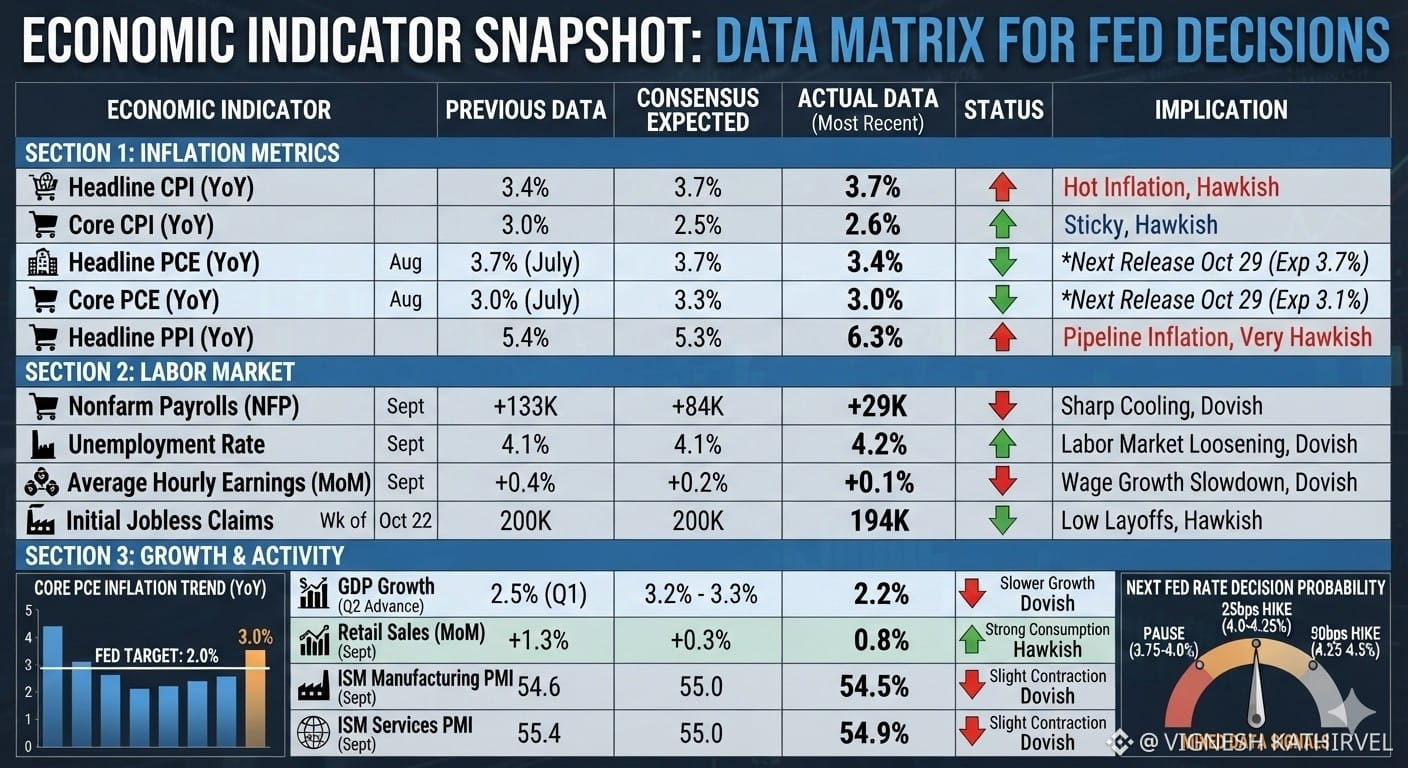
🚨 MATRIX FOR THE NEXT FED RATE DECISION: WHAT THE DATA TELLS US 🚨
The Fed is backed into a corner, caught between sticky inflation spikes and a cooling labor market. With the critical Q3 GDP and PCE prints dropping tomorrow (Oct 29), macro volatility is on the horizon.
Here is your quick cheat sheet of the data the Fed is looking at right now:
🔥 INFLATION PRESSURES (HAWKISH)
• Headline CPI (YoY): 3.7% (Expected 3.7% | Prev 3.4%) ➔ Fueled by energy/gas spikes.
• Core CPI (YoY): 2.6% (Expected 2.5% | Prev 3.0%) ➔ Sticky underlying pressures.
• Headline PPI (YoY): 6.3% (Expected 5.3% | Prev 5.4%) ➔ Wholesale inflation blew past expectations.
🛑 LABOR MARKET COOLING (DOVISH)
• Nonfarm Payrolls (NFP): +29K (Expected +84K | Prev +133K) ➔ Severe miss, hiring is freezing.
• Unemployment Rate: 4.2% (Expected 4.1% | Prev 4.1%) ➔ Ticking upward.
• Average Hourly Earnings (MoM): +0.1% (Expected +0.2% | Prev +0.4%) ➔ Wage growth down to 3.0% annually.
📈 GROWTH & CONSUMPTION (MIXED)
• Retail Sales (MoM): +0.8% (Expected +0.3% | Prev +1.3%) ➔ Consumers are still spending.
• GDP Growth: 2.2% in Q2 ➔ Advance Q3 GDP drops tomorrow (expected ~3.3%).
• PMIs: Both Manufacturing (54.5) and Services (54.9) show marginal slowdowns but remain in solid expansion territory.
💡 MARKET IMPLICATION
The mixed signals mean the Fed is facing an ultimate balancing act. Hot wholesale inflation screams "pause or hike," while the fracturing NFP numbers cry out for a pause or cut.
Eyes on tomorrow's PCE—the Fed's favorite inflation gauge. Expect heavy volatility across crypto and legacy markets.
What's your play? Are we getting a pause or a 25bps hike next? 👇
#MacroEconomics #FedRateDecisions $BTC
{spot}(BTCUSDT)
#Inflation #CryptoMarket #PCE
🚨 MATRIX FOR THE NEXT FED RATE DECISION: WHAT THE DATA TELLS US 🚨
The Fed is backed into a corner, caught between sticky inflation spikes and a cooling labor market. With the critical Q3 GDP and PCE prints dropping tomorrow (Oct 29), macro volatility is on the horizon.
Here is your quick cheat sheet of the data the Fed is looking at right now:
🔥 INFLATION PRESSURES (HAWKISH)
• Headline CPI (YoY): 3.7% (Expected 3.7% | Prev 3.4%) ➔ Fueled by energy/gas spikes.
• Core CPI (YoY): 2.6% (Expected 2.5% | Prev 3.0%) ➔ Sticky underlying pressures.
• Headline PPI (YoY): 6.3% (Expected 5.3% | Prev 5.4%) ➔ Wholesale inflation blew past expectations.
🛑 LABOR MARKET COOLING (DOVISH)
• Nonfarm Payrolls (NFP): +29K (Expected +84K | Prev +133K) ➔ Severe miss, hiring is freezing.
• Unemployment Rate: 4.2% (Expected 4.1% | Prev 4.1%) ➔ Ticking upward.
• Average Hourly Earnings (MoM): +0.1% (Expected +0.2% | Prev +0.4%) ➔ Wage growth down to 3.0% annually.
📈 GROWTH & CONSUMPTION (MIXED)
• Retail Sales (MoM): +0.8% (Expected +0.3% | Prev +1.3%) ➔ Consumers are still spending.
• GDP Growth: 2.2% in Q2 ➔ Advance Q3 GDP drops tomorrow (expected ~3.3%).
• PMIs: Both Manufacturing (54.5) and Services (54.9) show marginal slowdowns but remain in solid expansion territory.
💡 MARKET IMPLICATION
The mixed signals mean the Fed is facing an ultimate balancing act. Hot wholesale inflation screams "pause or hike," while the fracturing NFP numbers cry out for a pause or cut.
Eyes on tomorrow's PCE—the Fed's favorite inflation gauge. Expect heavy volatility across crypto and legacy markets.
What's your play? Are we getting a pause or a 25bps hike next? 👇
#MacroEconomics #FedRateDecisions $BTC
#Inflation #CryptoMarket #PCE
1
85

·
--
Three data releases are landing at the same time, 20:30. That’s the first hurdle to clear tonight.
At 20:30 Beijing time tonight, the US preliminary third-quarter GDP estimate, September PCE inflation, and weekly initial jobless claims will all be released. For a consistent set of consensus estimates, this uses AskTraders’ economic calendar for this week: annualized third-quarter GDP is expected at 3.2%, versus 2.2% in the second quarter; core PCE is expected to rise 3.1% year over year, versus 3.0% previously; headline PCE is expected to rise 3.6% year over year, versus 3.4% previously; and initial jobless claims are expected at 196,000, versus 194,000 previously. The first thing to watch at 20:30 is how far the actual figures diverge from these estimates.
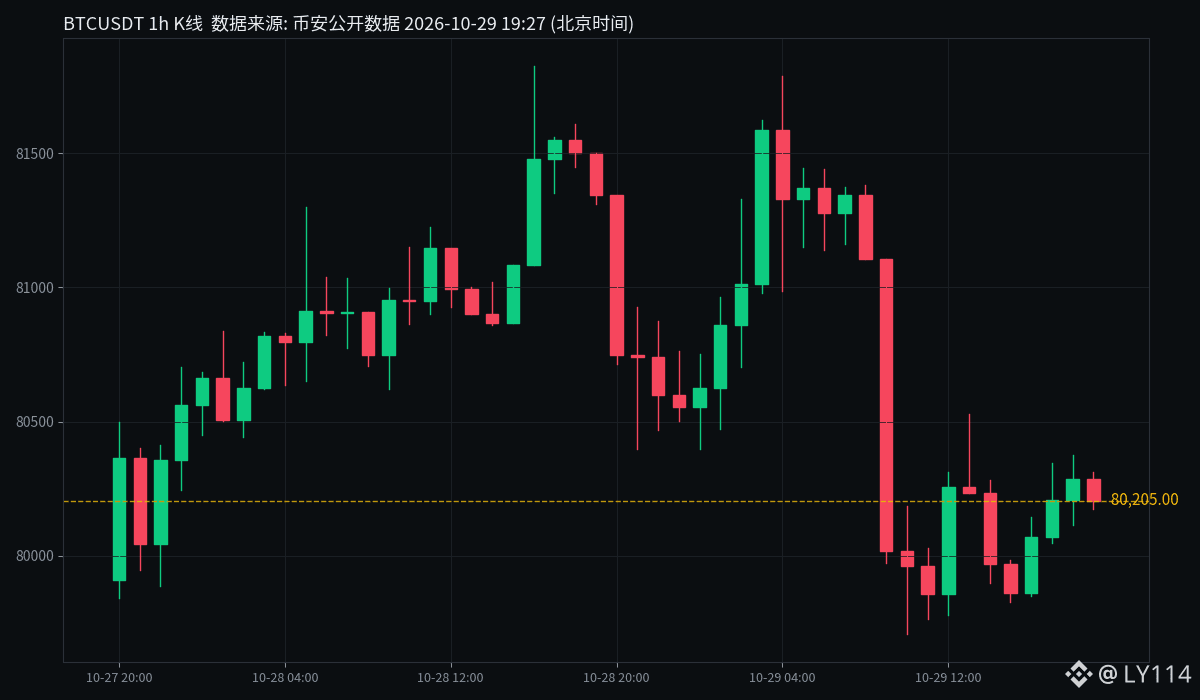
At around $80,192 now, down 1.5% over 24 hours, with a 24-hour range of $79,710 to $81,789 and about $1.143 billion in 24-hour spot trading volume. Over seven days, the range is $79,221 to $82,061, down 1.2%, with the current price in the lower half of the seven-day range.
Keep three levels in mind: to the upside, first watch the 24-hour high of $81,789, then the seven-day high of $82,061; to the downside, $79,710 is the 24-hour low, followed by the seven-day low of $79,221. If it holds above $81,789, the next level to watch is $82,061; if it falls below $79,221, the seven-day range will have a new floor.
To put it plainly, let’s be clear about the risks on both sides: if the data comes in stronger than expected, volatility may increase around the release, but a single data point can’t establish a trend. If the data is weaker than expected, volatility may also increase, alongside interpretations of weakening growth and inflation. Either way, until the range breaks, one release won’t change the seven-day picture. One more time to note: the European Central Bank announces its rate decision at 21:15. The 20:30 data releases are just tonight’s first hurdle.
After the data comes out, will you first look at how far it deviates from the 3.2% and 3.1% estimates, or at the $79,710 and $81,789 levels?
#宏观日历 #PCE
38

A magical moment is coming at 8:30 tonight: U.S. Q3 GDP is expected to come in at 3.2%, surging well above the previous 2.2%. Warsh just said the economy is strong, so if the data really is that good, we should be popping champagne.
But the crypto market may not be celebrating tonight—the September PCE data released at the same time is expected to hit 3.6%, hotter than the previous 3.4%, while core PCE is also moving up to 3.1%. That’s basically telling the Fed: the stronger the economy, the more reason it has to hike rates. The Fed just held rates steady at 3.75%–4%, and the market is still pricing in nearly an 80% chance of another hike in December.
So tonight’s a real split-personality moment: good data gives stocks a reason to rise; good data makes crypto even more worried about a hawkish Fed. $BTC has been grinding around $80,000 all day, just waiting for this final push to set the direction.
Time to pick a side: A. A strong economy is ultimately a good thing, and crypto will catch up sooner or later; B. The better the data, the more certain a rate hike becomes—stay bearish tonight. Which side are you on?
$ETH $SOL
#GDP #PCE #FederalReserve
3

·
--
Bearish
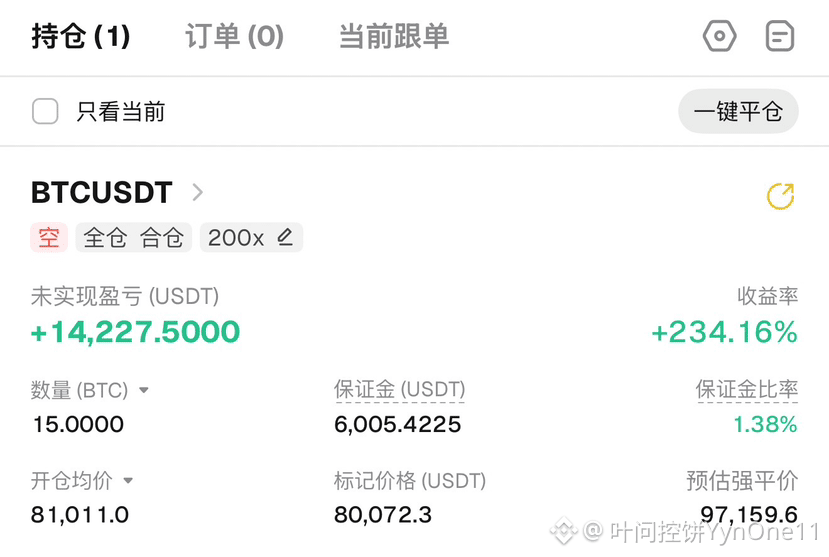
Three key data releases drop tonight—the volatility window for Bitcoin is here!
BTC is currently hovering around 80,000 and looks weak in the short term.
The Fed held steady last night, but two members favored a rate hike. Tonight’s PCE is the real test!
Master Ye’s take: watch for a short-term dip first!
If core PCE comes in hotter than expected and GDP is strong, rate-hike expectations will rise, potentially pushing Bitcoin below 79,700. Keep an eye on 79,000 and 78,500;
if inflation cools and the dollar and Treasury yields fall, BTC could rebound to 81,300. If it holds there, the next level to watch is 81,800.
Don’t just watch the data tonight—the market’s initial reaction is what matters!
A big move could happen at any time. Check the levels first, then wait for a signal.
Trend comes first; discipline is paramount.$BTC
{future}(BTCUSDT)
#PCE
Three key data releases drop tonight—the volatility window for Bitcoin is here!
BTC is currently hovering around 80,000 and looks weak in the short term.
The Fed held steady last night, but two members favored a rate hike. Tonight’s PCE is the real test!
Master Ye’s take: watch for a short-term dip first!
If core PCE comes in hotter than expected and GDP is strong, rate-hike expectations will rise, potentially pushing Bitcoin below 79,700. Keep an eye on 79,000 and 78,500;
if inflation cools and the dollar and Treasury yields fall, BTC could rebound to 81,300. If it holds there, the next level to watch is 81,800.
Don’t just watch the data tonight—the market’s initial reaction is what matters!
A big move could happen at any time. Check the levels first, then wait for a signal.
Trend comes first; discipline is paramount.$BTC
#PCE

56

·
--
Bullish
PCE is out tonight: What truly determines the direction of the crypto market isn’t just rate cuts, but when liquidity turns.
Markets are always waiting for the Fed to cut rates, but one question is worth considering: If inflation refuses to come down, how much room will the Fed have to signal an easing of policy—even as the economy begins to slow?
The U.S. will release its September PCE inflation data tonight. This is an inflation measure the Federal Reserve pays close attention to, especially core PCE, which better reflects price trends after excluding food and energy. Core PCE rose 3.0% year over year in August, still some distance from the 2% inflation target.
Next, the market will be watching three things:
First, whether core PCE continues to cool. If the monthly increase comes in below expectations, markets may reassess the scope for future rate cuts. The U.S. dollar and Treasury yields could also come under pressure, potentially benefiting risk assets.
Second, if inflation heats up again, expectations for rate cuts may have to be pushed back. This would affect not only U.S. stock valuations, but also put the crypto market to a dual test of funding costs and risk appetite.
Third, don’t overlook consumer spending and GDP. Cooling inflation alongside a resilient economy could be a more favorable combination for markets. But if consumer spending weakens sharply, markets will have to reassess the risk of a recession.
My view: Don’t reduce PCE to a simple bullish or bearish signal.
For the crypto market, what really matters is whether rate-cut expectations, the U.S. dollar, Treasury yields, and risk appetite all shift together after the data is released.
For ETH and highly volatile meme coins in particular, whether a rally can continue will ultimately depend on liquidity, leverage, and actual buying demand coming together.
Watch the data tonight; then watch where the money flows.
$BTC $ETH $BNB
#PCE
{web3_wallet_create}(10xcf91b70017eabde82c9671e30e5502d312ea6eb2)
PCE is out tonight: What truly determines the direction of the crypto market isn’t just rate cuts, but when liquidity turns.
Markets are always waiting for the Fed to cut rates, but one question is worth considering: If inflation refuses to come down, how much room will the Fed have to signal an easing of policy—even as the economy begins to slow?
The U.S. will release its September PCE inflation data tonight. This is an inflation measure the Federal Reserve pays close attention to, especially core PCE, which better reflects price trends after excluding food and energy. Core PCE rose 3.0% year over year in August, still some distance from the 2% inflation target.
Next, the market will be watching three things:
First, whether core PCE continues to cool. If the monthly increase comes in below expectations, markets may reassess the scope for future rate cuts. The U.S. dollar and Treasury yields could also come under pressure, potentially benefiting risk assets.
Second, if inflation heats up again, expectations for rate cuts may have to be pushed back. This would affect not only U.S. stock valuations, but also put the crypto market to a dual test of funding costs and risk appetite.
Third, don’t overlook consumer spending and GDP. Cooling inflation alongside a resilient economy could be a more favorable combination for markets. But if consumer spending weakens sharply, markets will have to reassess the risk of a recession.
My view: Don’t reduce PCE to a simple bullish or bearish signal.
For the crypto market, what really matters is whether rate-cut expectations, the U.S. dollar, Treasury yields, and risk appetite all shift together after the data is released.
For ETH and highly volatile meme coins in particular, whether a rally can continue will ultimately depend on liquidity, leverage, and actual buying demand coming together.
Watch the data tonight; then watch where the money flows.
$BTC $ETH $BNB
#PCE
341

·
--
$BTC
{future}(BTCUSDT)
#PCE Tonight at 20:30, initial jobless claims and September PCE data will be released at the same time.
Market expectations: initial claims around 198,000–200,000 (previous: 194,000), core PCE up 0.3% month over month and 3.1% year over year.
The logic is simple: for employment, watch whether layoffs are picking up; for inflation, watch whether its persistence is confirmed. As long as initial claims remain around 200,000, the impact will be limited. The real market driver is whether core PCE comes in at or above 0.3%.
My view: The data is more likely to be strong or in line with expectations, which would continue to support expectations of a December rate hike. In the short term, this would be neutral to bearish for risk assets, but it wouldn't push the probability of a rate hike directly to nearly 100%. The key is still the actual core PCE reading.
$BTC
#PCE Tonight at 20:30, initial jobless claims and September PCE data will be released at the same time.
Market expectations: initial claims around 198,000–200,000 (previous: 194,000), core PCE up 0.3% month over month and 3.1% year over year.
The logic is simple: for employment, watch whether layoffs are picking up; for inflation, watch whether its persistence is confirmed. As long as initial claims remain around 200,000, the impact will be limited. The real market driver is whether core PCE comes in at or above 0.3%.
My view: The data is more likely to be strong or in line with expectations, which would continue to support expectations of a December rate hike. In the short term, this would be neutral to bearish for risk assets, but it wouldn't push the probability of a rate hike directly to nearly 100%. The key is still the actual core PCE reading.

160

📊 The Fed just weighed in, and tomorrow night GDP + PCE deliver another blow. Will BTC pump then dump, or pick a direction right away?
At 20:30 Beijing time on October 29, the U.S. will release its initial Q3 GDP estimate and September PCE data at the same time—one day after the Fed’s October meeting decision (02:00 Beijing time on the 29th). The Fed will have to make its announcement without seeing either of these two reports.
🔢 Market expectations (estimates vary slightly by institution)
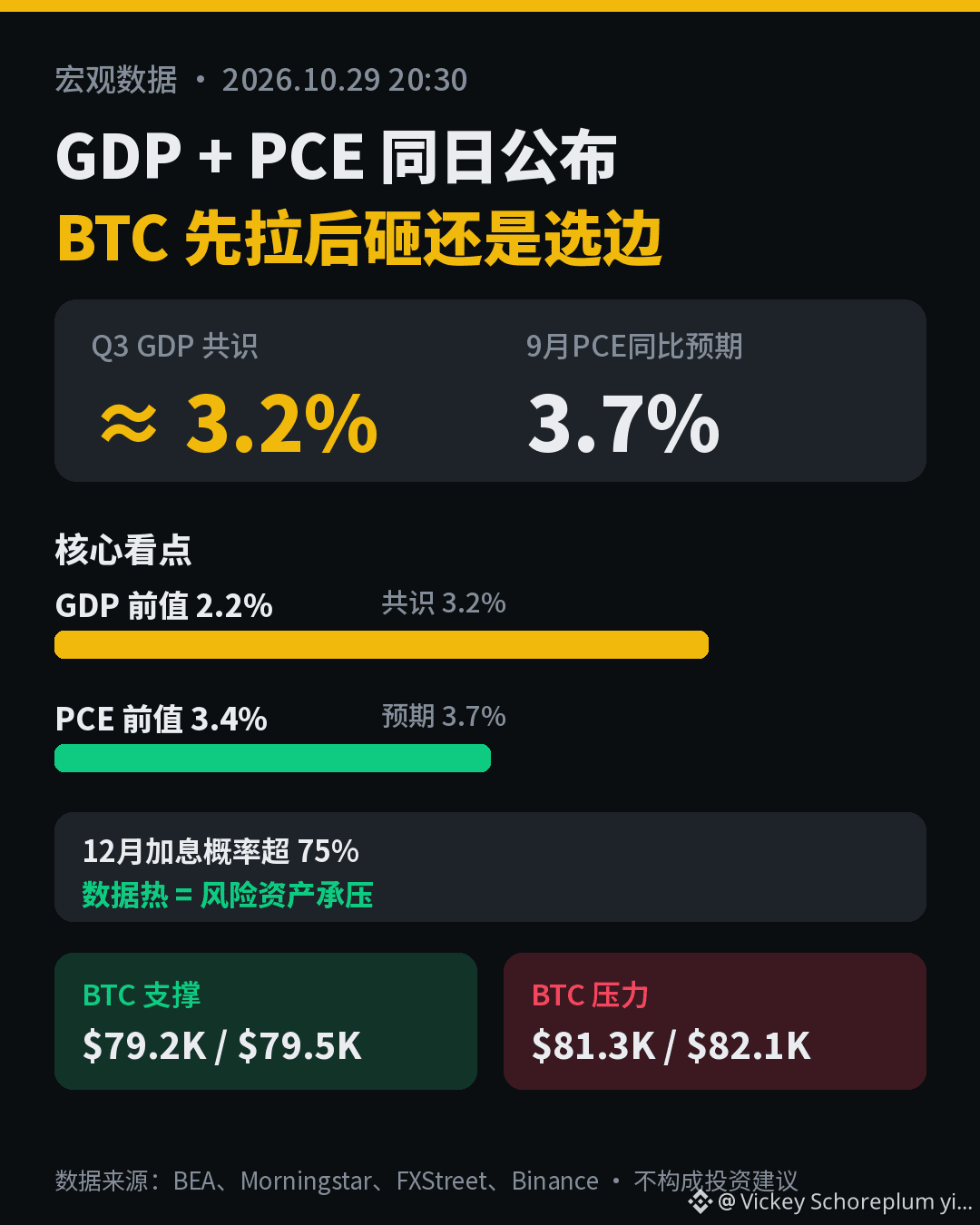
• Q3 annualized GDP: consensus around 3.2%, versus 2.2% previously (TD forecasts 2.5%; AP survey around 1.7%—a wide spread)
• September PCE year over year: expected at 3.6%–3.7%, versus 3.4% previously; around 0.5% month over month, driven mainly by higher oil prices
• Core PCE: expected at 3.1% year over year and 0.3% month over month, versus 3.0% / 0.2% previously
🧭 Three scenarios
• Strong growth + hot inflation: Rate-hike expectations continue to rise. The probability of a December hike is already above 75%, putting pressure on risk assets.
• Weak growth + hot inflation: A stagflation signal that leaves the Fed in a bind; volatility would be highest.
• Inflation below expectations: Could bring short-term relief and give BTC room to rebound.
📈 Market impact
BTC is currently around $80,800, up about 0.8% over 24 hours. It has traded between $79,200 and $84,100 over the past two weeks, and has clearly lacked direction after three straight weeks of declines. Key levels: support at $79,200–79,500 (recent lows), resistance at $81,300 / $82,100. Volatility often picks up in the hour before and after the data release, so be careful with leverage.
Do you think this data will make BTC pump then dump, or pick a direction right away? Share your thoughts in the comments 👇
👉 Trade BTC: https://www.binance.com/zh-CN/trade/BTC_USDT
#美国下周将公布Q3GDP和9月PCE #PCE #美联储 #BTC
⚠️ This is not investment advice. Please be aware of the risks.
94

·
--
#usq3gdpandseptemberpceduenextweek
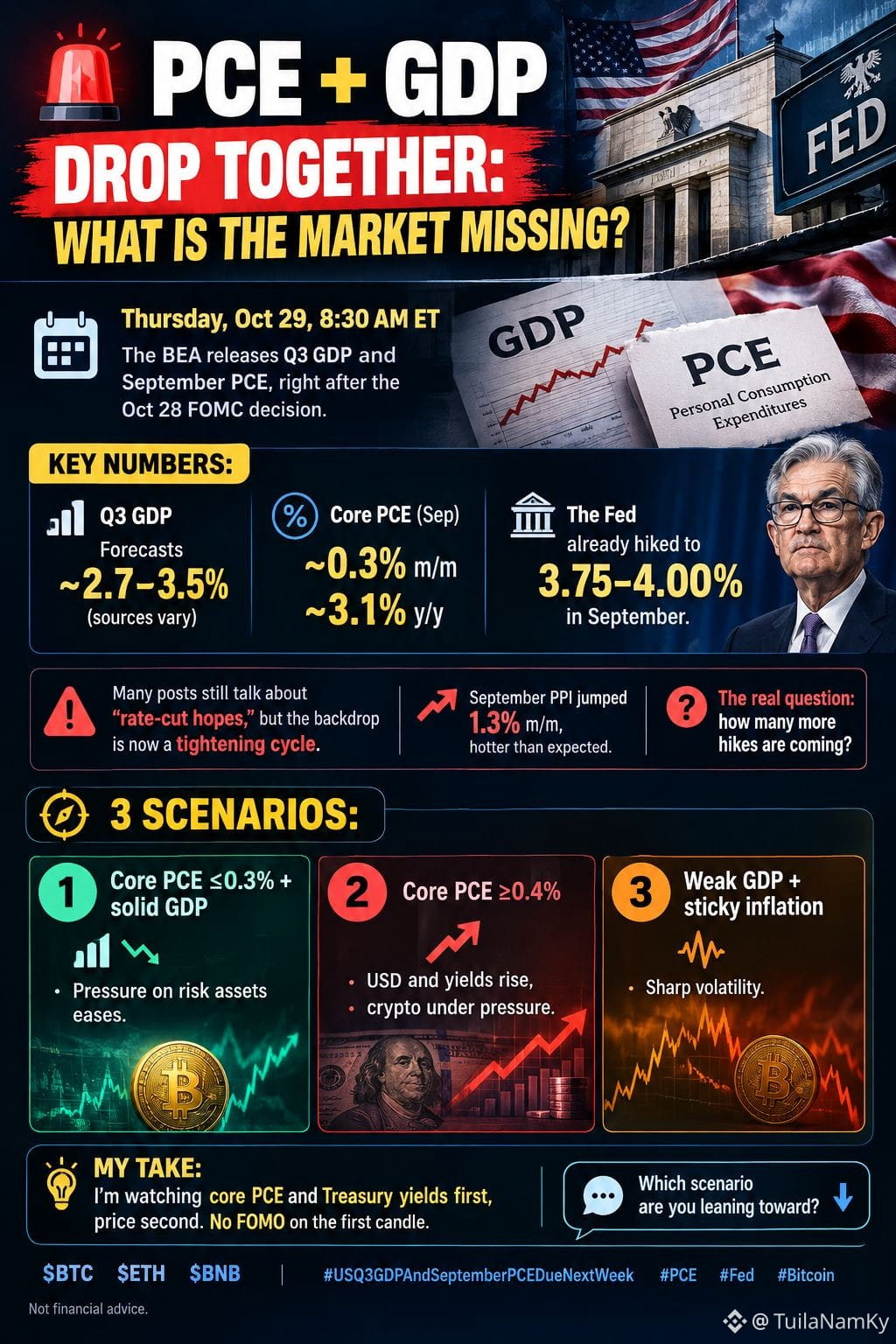
🚨 PCE + GDP drop together: what is the market missing?
Thursday, Oct 29, 8:30 AM ET: the BEA releases Q3 GDP and September PCE, right after the Oct 28 FOMC decision.
📊 Key numbers:
• Q3 GDP: forecasts ~2.7–3.5% (sources vary)
• Core PCE (Sep): ~0.3% m/m, ~3.1% y/y
• The Fed already hiked to 3.75–4.00% in September
⚠️ Many posts still talk about "rate-cut hopes," but the backdrop is now a tightening cycle. September PPI jumped 1.3% m/m, hotter than expected. The real question: how many more hikes are coming?
🧭 3 scenarios:
1️⃣ Core PCE ≤0.3% + solid GDP → pressure on risk assets eases
2️⃣ Core PCE ≥0.4% → USD and yields rise, crypto under pressure
3️⃣ Weak GDP + sticky inflation → sharp volatility
My take: I'm watching core PCE and Treasury yields first, price second. No FOMO on the first candle.
Which scenario are you leaning toward? 👇
$BTC
{future}(BTCUSDT)
$ETH
{future}(ETHUSDT)
$BNB
{future}(BNBUSDT)
#PCE #Fed #Bitcoin
Not financial advice.
#usq3gdpandseptemberpceduenextweek
🚨 PCE + GDP drop together: what is the market missing?
Thursday, Oct 29, 8:30 AM ET: the BEA releases Q3 GDP and September PCE, right after the Oct 28 FOMC decision.
📊 Key numbers:
• Q3 GDP: forecasts ~2.7–3.5% (sources vary)
• Core PCE (Sep): ~0.3% m/m, ~3.1% y/y
• The Fed already hiked to 3.75–4.00% in September
⚠️ Many posts still talk about "rate-cut hopes," but the backdrop is now a tightening cycle. September PPI jumped 1.3% m/m, hotter than expected. The real question: how many more hikes are coming?
🧭 3 scenarios:
1️⃣ Core PCE ≤0.3% + solid GDP → pressure on risk assets eases
2️⃣ Core PCE ≥0.4% → USD and yields rise, crypto under pressure
3️⃣ Weak GDP + sticky inflation → sharp volatility
My take: I'm watching core PCE and Treasury yields first, price second. No FOMO on the first candle.
Which scenario are you leaning toward? 👇
$BTC
$ETH
$BNB
#PCE #Fed #Bitcoin
Not financial advice.
797

·
--
Poll: Do you think BTC will hold steady or pull back next week? Share your reasoning.
This week, BTC seesawed around the $80,000 mark: It briefly fell below $80,000 intraday on Monday, then stabilized near $79,800. This is Fed decision week: The Fed meets on October 27–28, with its decision due in the early hours of October 29 Beijing time. Then, on the evening of October 29, we’ll get PCE data and the first estimate of Q3 GDP. The market is about to submit its answer on which direction it will take.
1. First, a look at the market: BTC has repeatedly battled around $80,000 this week, while ETH has also slipped to around $2,300. Last Thursday and Friday, U.S. spot BTC ETFs saw combined net outflows of about $773 million. Institutional investors chose to wait and see rather than chase the rally.
2. Next, the key variables: The Fed is widely expected to hold rates steady this week. The market’s real focus is on signals about whether there will be another rate hike in December. Combined with Thursday evening’s PCE inflation data, any remarks that come in above expectations could amplify volatility. Whether the $80,000 level holds depends on how these two cards are played.
3. Sentiment is also worth watching: Geopolitical risk premiums briefly pushed oil prices higher last week. Oil prices have pulled back this week, and risk sentiment has eased somewhat, but uncertainty over whether there will be further action after the midterm elections has not fully cleared. The market is still being driven by news.
My view: I’m neutral on $BTC in the short term, because the battle around the $80,000 mark has yet to be decided. The Fed decision and PCE data this week—not today’s candlestick—will really determine the direction.
#美联储 #BTC #PCE
$BTC
Which side are you on? Will BTC hold above $80,000 next week and continue to trade higher, or break below it and keep pulling back? Share your reasoning. Tap the tag to see real-time market data.
Sources: CoinDesk, the Fed’s meeting schedule, and Farside Investors ETF flow data. For informational purposes only; not investment advice.

96

·
--
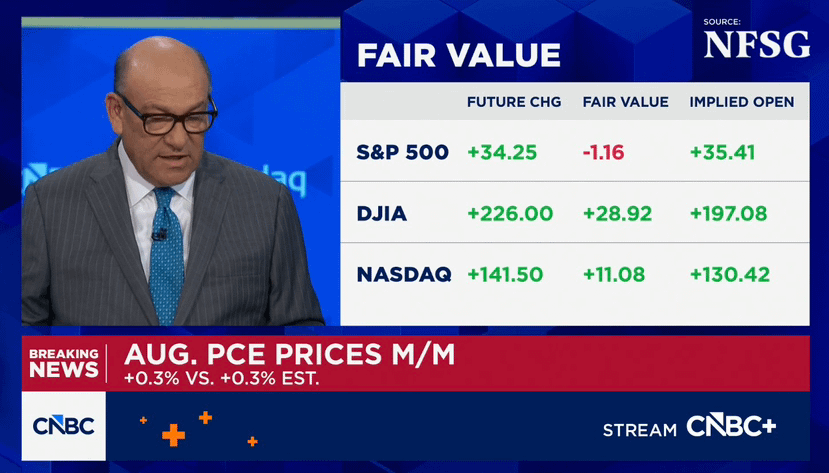
Amazon + PCE on Thursday: Two Big Tests in One DayThursday’s calendar is packed: advance GDP, core PCE, personal income and spending during the day, followed by Amazon’s earnings after the close. With macro data and a mega-cap company landing on the same day, sentiment around the indexes could easily get pulled in both directions—trading “inflation” in the morning and “cloud spending” late in the day.
PCE is the yardstick the Fed pays closer attention to. The market expects the month-over-month pace may ease a bit, while core inflation year over year could still remain slightly above 3%. Oil prices just moved higher on Friday, so energy-related noise is still in the mix; don’t focus on just one decimal point when interpreting the data. A “slightly better” number doesn’t mean risk appetite will immediately improve, especially the day after the Fed’s meeting.
Amazon + PCE on Thursday: Two Big Tests in One Day
Thursday’s calendar is packed: advance GDP, core PCE, personal income and spending during the day, followed by Amazon’s earnings after the close. With macro data and a mega-cap company landing on the same day, sentiment around the indexes could easily get pulled in both directions—trading “inflation” in the morning and “cloud spending” late in the day.
PCE is the yardstick the Fed pays closer attention to. The market expects the month-over-month pace may ease a bit, while core inflation year over year could still remain slightly above 3%. Oil prices just moved higher on Friday, so energy-related noise is still in the mix; don’t focus on just one decimal point when interpreting the data. A “slightly better” number doesn’t mean risk appetite will immediately improve, especially the day after the Fed’s meeting.
PCE is the yardstick the Fed pays closer attention to. The market expects the month-over-month pace may ease a bit, while core inflation year over year could still remain slightly above 3%. Oil prices just moved higher on Friday, so energy-related noise is still in the mix; don’t focus on just one decimal point when interpreting the data. A “slightly better” number doesn’t mean risk appetite will immediately improve, especially the day after the Fed’s meeting.
6

·
--

Article
The Fed makes its call blind; GDP and PCE land at the same second the next dayThe Fed has to make its call before September PCE is available, while growth and inflation figures won’t arrive together until the next morning.
The Fed will announce its rate decision on the afternoon of the 28th, with markets pricing in only about a 10% chance of a hike this week. The real report card comes at 8:30 a.m. ET on the 29th, when the third-quarter GDP estimate and September PCE are released at the same second. The Fed won’t have that inflation reading when it announces its decision, but the two reports the next day will immediately reshape how that statement is interpreted—and feed into the calculus for the December decision.
BTC was around $80,056 on Binance and $80,049 on OKX, down about 1% over 24 hours; ETH was around $2,324 on both. After wobbling near $80,000 over the weekend, the gap between “bidding blind first” and “checking the goods at the same second” is the pricing window.
The Fed makes its call blind; GDP and PCE land at the same second the next day
The Fed has to make its call before September PCE is available, while growth and inflation figures won’t arrive together until the next morning.
The Fed will announce its rate decision on the afternoon of the 28th, with markets pricing in only about a 10% chance of a hike this week. The real report card comes at 8:30 a.m. ET on the 29th, when the third-quarter GDP estimate and September PCE are released at the same second. The Fed won’t have that inflation reading when it announces its decision, but the two reports the next day will immediately reshape how that statement is interpreted—and feed into the calculus for the December decision.
BTC was around $80,056 on Binance and $80,049 on OKX, down about 1% over 24 hours; ETH was around $2,324 on both. After wobbling near $80,000 over the weekend, the gap between “bidding blind first” and “checking the goods at the same second” is the pricing window.
246
·
--

Article
Rate decision due in early hours, but PCE data won’t arrive for another eight hoursThe Fed is set to make its decision in the early hours of the 29th Beijing time, but Q3 GDP and September PCE data won’t be released for another eight hours or so.
The schedule is tight: the rate decision is due at around 2 a.m., followed by a press conference at 2:30 a.m.; growth and inflation figures won’t be revealed until around 8:30 p.m. that evening. Markets are pricing in only about a 10% chance of a rate hike this week, but the odds for December remain close to 70%. Expectations on the table are roughly 3.0%–3.3% growth in the third quarter (versus about 2.2% in the second quarter), September core PCE inflation of around 3.10% year over year, and a possible 0.5% monthly gain in headline PCE. Growth is picking up, while inflation remains stubborn—and the latest inflation figures won’t be available when the decision is announced.
Rate decision due in early hours, but PCE data won’t arrive for another eight hours
The Fed is set to make its decision in the early hours of the 29th Beijing time, but Q3 GDP and September PCE data won’t be released for another eight hours or so.
The schedule is tight: the rate decision is due at around 2 a.m., followed by a press conference at 2:30 a.m.; growth and inflation figures won’t be revealed until around 8:30 p.m. that evening. Markets are pricing in only about a 10% chance of a rate hike this week, but the odds for December remain close to 70%. Expectations on the table are roughly 3.0%–3.3% growth in the third quarter (versus about 2.2% in the second quarter), September core PCE inflation of around 3.10% year over year, and a possible 0.5% monthly gain in headline PCE. Growth is picking up, while inflation remains stubborn—and the latest inflation figures won’t be available when the decision is announced.
The schedule is tight: the rate decision is due at around 2 a.m., followed by a press conference at 2:30 a.m.; growth and inflation figures won’t be revealed until around 8:30 p.m. that evening. Markets are pricing in only about a 10% chance of a rate hike this week, but the odds for December remain close to 70%. Expectations on the table are roughly 3.0%–3.3% growth in the third quarter (versus about 2.2% in the second quarter), September core PCE inflation of around 3.10% year over year, and a possible 0.5% monthly gain in headline PCE. Growth is picking up, while inflation remains stubborn—and the latest inflation figures won’t be available when the decision is announced.
12

Here's what happened when U.S. PCE inflation came in at 3.4% and traders instantly started repricing the Fed's next move.
The frustrating part is how these numbers keep yanking people around. You size into $BTC on rate-cut hopes, then the sticky-inflation headline hits and the move reverses before you can even think.
This is a different movie than 2022. PCE was running above 6% back then and the Fed had a clear mandate to drain liquidity. $BTC and $ETH spent months getting crushed. A 3.4% print today is cooler than those peaks, but it is still well above the 2% target. That leaves markets in a gray zone. Not hot enough to panic, not cold enough to lock in cuts.
Compare that with late 2023, when PCE started rolling over from the 4% handle and Bitcoin climbed out of the $25k range as liquidity expectations improved. The pattern is familiar. Softening inflation supports easier policy, and easier policy has historically been a tailwind for risk assets.
The takeaway is that the headline number is less important than the direction. If PCE keeps cooling from 3.4%, the macro backdrop for $BTC gets cleaner. If it stalls, the waiting game continues.
What's your take on how the next prints shape risk appetite from here?
#PCE #Bitcoin #Macro
60

·
--
Most traders treated the 3.4% PCE inflation print like a green light for Fed cuts and a $BTC pump, but that's usually when the real pain starts.
You've been there. You FOMO in on the inflation-cooling narrative only to get dumped on when Powell stays hawkish and liquidity stays tight.
PCE is the Fed's preferred inflation measure, the one they actually use to set policy. At 3.4% it's still way above the 2% goal they keep talking about. Markets are already betting on easier money, which in theory supports $BTC, $ETH, and even $SOL through better risk appetite.
But if they cut rates while inflation is this sticky, we could see it heat back up and force a reversal into even tighter conditions. That's historically when crypto gets hit hardest, not when it rallies.
Where do you think this goes if the next prints don't cool further?
#PCE #Bitcoin #Macro
Most traders treated the 3.4% PCE inflation print like a green light for Fed cuts and a $BTC pump, but that's usually when the real pain starts.
You've been there. You FOMO in on the inflation-cooling narrative only to get dumped on when Powell stays hawkish and liquidity stays tight.
PCE is the Fed's preferred inflation measure, the one they actually use to set policy. At 3.4% it's still way above the 2% goal they keep talking about. Markets are already betting on easier money, which in theory supports $BTC , $ETH , and even $SOL through better risk appetite.
But if they cut rates while inflation is this sticky, we could see it heat back up and force a reversal into even tighter conditions. That's historically when crypto gets hit hardest, not when it rallies.
Where do you think this goes if the next prints don't cool further?
#PCE #Bitcoin #Macro

68
Have you noticed how every inflation print below expectations sends crypto traders into a frenzy that usually ends in red?
Most people pile into $BTC the second the number drops, then watch their position get liquidated when the actual Fed reaction comes in later. That FOMO cycle has cost more traders money than any rug pull this year.
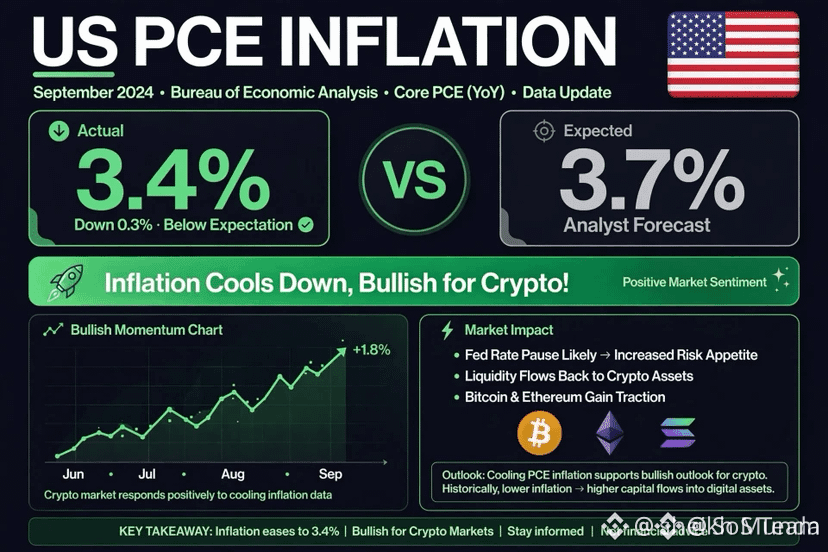
The PCE Price Index just printed 3.4% versus the 3.7% everyone expected. That's the lowest reading in six months and it looks bullish on paper.
Reality is different though. Markets already priced in cooling inflation weeks ago so this number changes very little about the Fed's next move.
If you bought the spike in $ETH or $BNB you are probably already underwater on the 15-minute chart. Fade that initial reaction instead. Wait for volume to dry up after the first 30 minutes then look for a retest of the pre-data levels.
Where do you think this goes from here?
#PCE #Inflation #Bitcoin

43
·
--
If you're still treating every inflation print like a crypto death sentence, stop now.
Too many traders panic-sold $BTC last year on hotter-than-expected data only to miss the entire rally that followed. The FOMO buybacks after the fact always hurt more than just sitting tight.
The latest US PCE came in at 3.4% versus the 3.7% everyone was bracing for. That's the lowest reading in six months.
We've seen this movie before. Similar cooling late last year sent $ETH ripping and $SOL breaking out as traders piled into the rate-cut trade while $BTC found its footing. This setup looks even cleaner this time around.
Where do you think this goes from here?
#PCE #Inflation #Bitcoin
48

📉 Slight dip in Bitcoin after U.S. inflation data
Bitcoin has returned to trading below the $86,000 level, retreating from the gains it made following the release of the U.S. Personal Consumption Expenditures (PCE) inflation data. Analysts said changes in the index calculation methodology affected the inflation reading, which came in lower than expected—triggering uncertainty in the market.
━━━━━━━━━━━━━━
📊 Impact: 📈 High
🏷️ BITCOIN
#Bitcoin #PCE #Inflation #MarketAnalysis #CryptoNews
📰 Source: cointelegraph.com
39

🇺🇸🔥 US inflation is lower than expected!
📊 PCE Inflation for August
• PCE: 3.4% YoY, lower than the forecast of 3.7%
• Core PCE: 3.0% YoY, lower than the forecast of 3.3%
🔥 The print came in below expectations → the market may see less pressure on the Fed to pause rate cuts
₿ Crypto catches a break!
If concerns about slowing inflation ease, risk assets like BTC could see improved sentiment.
⚠️ But Core PCE is still at 3.0%, above the Fed’s 2% target — we need to watch the next data closely.
👀 How do you think this news will affect BTC?
#PCE #bitcoin #crypto #Fed
{spot}(BTCUSDT)
{spot}(NVDABUSDT)
🇺🇸🔥 US inflation is lower than expected!
📊 PCE Inflation for August
• PCE: 3.4% YoY, lower than the forecast of 3.7%
• Core PCE: 3.0% YoY, lower than the forecast of 3.3%
🔥 The print came in below expectations → the market may see less pressure on the Fed to pause rate cuts
₿ Crypto catches a break!
If concerns about slowing inflation ease, risk assets like BTC could see improved sentiment.
⚠️ But Core PCE is still at 3.0%, above the Fed’s 2% target — we need to watch the next data closely.
👀 How do you think this news will affect BTC?
#PCE #bitcoin #crypto #Fed
2
191
Log in to explore more content
Join global crypto users on Binance Square
⚡️ Get latest and useful information about crypto.
💬 Trusted by the world’s largest crypto exchange.
👍 Discover real insights from verified creators.
Email / Phone number
Trending Topics
1
#FedWatch
16.1M views
37,690 Discussing
2
#Nasdaq100FuturesFall0.9%
682 views
41 Discussing
3
#BitcoinCore32.1RaisesPeerConnectionLimit
14,868 views
384 Discussing
4
#VisaStablecoinSettlementTops$25BAnnualized
187 views
8 Discussing
5
#WestpacToCapCryptoPaymentsAtAUD10KPerMonth
4,496 views
115 Discussing
6
#RussiaPlansStandardizedTestForCryptoInvestors
5,866 views
145 Discussing
7
#EarningsSeason
6.2M views
30,682 Discussing
8
#BitcoinCoreIdentifiesThreeVulnerabilities
21,811 views
406 Discussing
9
#CanGoogleDefindItsCore
435,352 views
3,188 Discussing
10
#CanMicrosoftDeliverOnAI
688,657 views
4,480 Discussing