

Ayyaakamaall
268 Publications

Ayyaakamaall
Signaler
Bloquer l’utilisateur
92 Suivis
632 Abonnés
2.3K+ J’aime
Publications
Tous
Citations
Vidéos
Direct
·
--
$188M flowed into Solana ETFs this week.
That makes it the second-highest weekly inflow since launch, according to SoSoValue data reported by Binance News.
But here’s what caught my attention:
$86.7M came in on September 25 alone.
So what does this actually tell us?
ETF inflows show that investors are putting money into these investment products.
But they don’t automatically mean SOL’s price has to go up.
Price can still be affected by liquidity, market sentiment, macro conditions, and activity across the broader crypto market.
So instead of asking:
“Is SOL going up?”
I’m more interested in:
“Is demand for crypto exposure expanding beyond BTC and ETH?”
Because that’s a much bigger trend to watch. 👀
What are you watching more closely right now:
SOL ETF flows or SOL on-chain activity?
#sol #solana #crypto #Binance
Educational content only. Not financial advice. DYOR. Crypto assets are volatile and involve risk.
$188M flowed into Solana ETFs this week.
That makes it the second-highest weekly inflow since launch, according to SoSoValue data reported by Binance News.
But here’s what caught my attention:
$86.7M came in on September 25 alone.
So what does this actually tell us?
ETF inflows show that investors are putting money into these investment products.
But they don’t automatically mean SOL’s price has to go up.
Price can still be affected by liquidity, market sentiment, macro conditions, and activity across the broader crypto market.
So instead of asking:
“Is SOL going up?”
I’m more interested in:
“Is demand for crypto exposure expanding beyond BTC and ETH?”
Because that’s a much bigger trend to watch. 👀
What are you watching more closely right now:
SOL ETF flows or SOL on-chain activity?
#sol #solana #crypto #Binance
Educational content only. Not financial advice. DYOR. Crypto assets are volatile and involve risk.
That makes it the second-highest weekly inflow since launch, according to SoSoValue data reported by Binance News.
But here’s what caught my attention:
$86.7M came in on September 25 alone.
So what does this actually tell us?
ETF inflows show that investors are putting money into these investment products.
But they don’t automatically mean SOL’s price has to go up.
Price can still be affected by liquidity, market sentiment, macro conditions, and activity across the broader crypto market.
So instead of asking:
“Is SOL going up?”
I’m more interested in:
“Is demand for crypto exposure expanding beyond BTC and ETH?”
Because that’s a much bigger trend to watch. 👀
What are you watching more closely right now:
SOL ETF flows or SOL on-chain activity?
#sol #solana #crypto #Binance
Educational content only. Not financial advice. DYOR. Crypto assets are volatile and involve risk.
3
86
·
--
2,305 BTC.
But the number isn’t the whole story. 👀
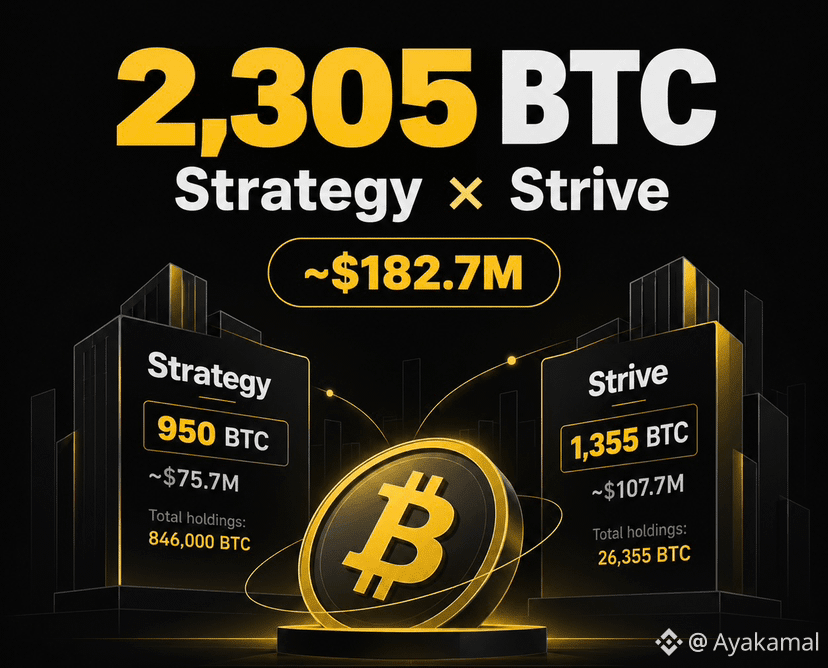
Strategy and Strive recently disclosed a combined 2,305 BTC purchase, worth about $182.7M.
Here’s the breakdown:
🟡 Strategy: +950 BTC
→ Total holdings: 846,000 BTC
🟡 Strive: +1,355 BTC
→ Total holdings: 26,355 BTC
Both purchases were made between September 14–20, with average purchase prices around $79.5K–$79.7K per BTC.
But here’s what I find more interesting:
Corporate Bitcoin buying isn’t happening evenly across the market.
Some companies are continuing to add BTC to their treasuries, while other corporate holders have reduced holdings or changed how they manage their balance sheets.
So the real question isn’t:
“Is 2,305 BTC bullish?”
It’s:
“Why are these companies still adding Bitcoin to their balance sheets?”
And that’s a much more interesting trend to watch.
What do you think is driving corporate BTC accumulation right now? 👀
#bitcoin #crypto #Binance #BinanceSquare #BitcoinTreasury
Educational content only. Not financial advice. DYOR. Crypto assets are volatile and involve risk.
2,305 BTC.
But the number isn’t the whole story. 👀
Strategy and Strive recently disclosed a combined 2,305 BTC purchase, worth about $182.7M.
Here’s the breakdown:
🟡 Strategy: +950 BTC
→ Total holdings: 846,000 BTC
🟡 Strive: +1,355 BTC
→ Total holdings: 26,355 BTC
Both purchases were made between September 14–20, with average purchase prices around $79.5K–$79.7K per BTC.
But here’s what I find more interesting:
Corporate Bitcoin buying isn’t happening evenly across the market.
Some companies are continuing to add BTC to their treasuries, while other corporate holders have reduced holdings or changed how they manage their balance sheets.
So the real question isn’t:
“Is 2,305 BTC bullish?”
It’s:
“Why are these companies still adding Bitcoin to their balance sheets?”
And that’s a much more interesting trend to watch.
What do you think is driving corporate BTC accumulation right now? 👀
#bitcoin #crypto #Binance #BinanceSquare #BitcoinTreasury
Educational content only. Not financial advice. DYOR. Crypto assets are volatile and involve risk.
But the number isn’t the whole story. 👀
Strategy and Strive recently disclosed a combined 2,305 BTC purchase, worth about $182.7M.
Here’s the breakdown:
🟡 Strategy: +950 BTC
→ Total holdings: 846,000 BTC
🟡 Strive: +1,355 BTC
→ Total holdings: 26,355 BTC
Both purchases were made between September 14–20, with average purchase prices around $79.5K–$79.7K per BTC.
But here’s what I find more interesting:
Corporate Bitcoin buying isn’t happening evenly across the market.
Some companies are continuing to add BTC to their treasuries, while other corporate holders have reduced holdings or changed how they manage their balance sheets.
So the real question isn’t:
“Is 2,305 BTC bullish?”
It’s:
“Why are these companies still adding Bitcoin to their balance sheets?”
And that’s a much more interesting trend to watch.
What do you think is driving corporate BTC accumulation right now? 👀
#bitcoin #crypto #Binance #BinanceSquare #BitcoinTreasury
Educational content only. Not financial advice. DYOR. Crypto assets are volatile and involve risk.
3
105
·
--
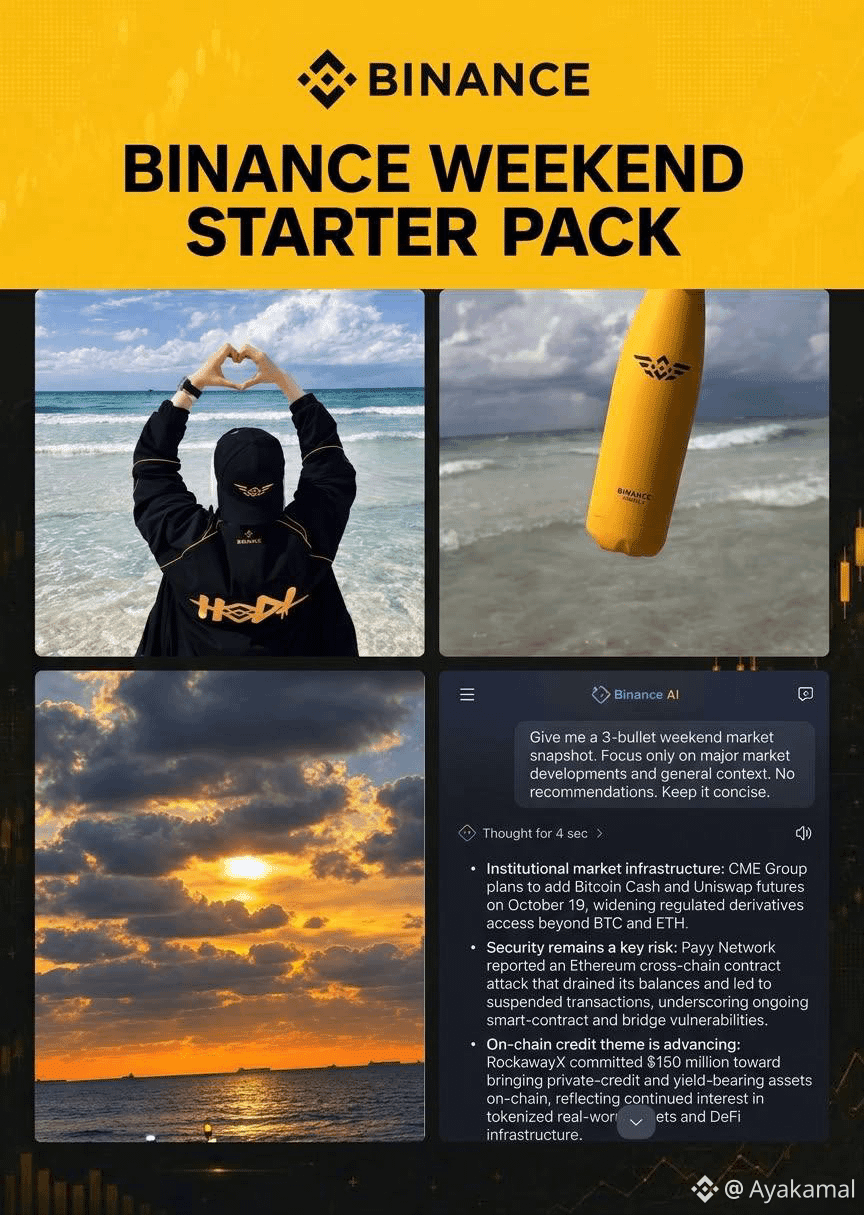
🌊💛 My Binance Weekend Starter Pack
Beach. Hydration. Sunset. And one quick market check. 👀
My weekend go-to is Binance AI.
I use it for a quick market snapshot — what happened, what matters, and what’s worth keeping an eye on — without spending my whole weekend scrolling through updates.
Quick check. Then back to the weekend. 🌅
What’s in your weekend starter pack?
#BinanceWeekend #Binance
🌊💛 My Binance Weekend Starter Pack
Beach. Hydration. Sunset. And one quick market check. 👀
My weekend go-to is Binance AI.
I use it for a quick market snapshot — what happened, what matters, and what’s worth keeping an eye on — without spending my whole weekend scrolling through updates.
Quick check. Then back to the weekend. 🌅
What’s in your weekend starter pack?
#BinanceWeekend #Binance
Beach. Hydration. Sunset. And one quick market check. 👀
My weekend go-to is Binance AI.
I use it for a quick market snapshot — what happened, what matters, and what’s worth keeping an eye on — without spending my whole weekend scrolling through updates.
Quick check. Then back to the weekend. 🌅
What’s in your weekend starter pack?
#BinanceWeekend #Binance
3
52
·
--
BTC is around $84K. But the interesting part isn’t just the price. 👀
Bitcoin has been moving in a relatively tight range lately, while traders are also watching institutional flows and market liquidity.
So what are ETF flows actually telling us?
ETF inflows can indicate that money is entering spot Bitcoin ETFs.
ETF outflows mean investors are withdrawing from those products.
But here’s the important part:
ETF flows ≠ guaranteed price direction.
Price can still move because of macro data, liquidity, derivatives positioning, market sentiment, and other factors.
That’s why looking at one metric alone can be misleading.
When BTC is moving sideways, I personally find it more useful to watch price + volume + ETF flows + major macro events together instead of chasing every candle. 📊
What are you watching right now: BTC price or ETF flows?
#bitcoin #BTC #BinanceSquare #MarketUpdate
Educational content only. Not financial advice. DYOR.
BTC is around $84K. But the interesting part isn’t just the price. 👀
Bitcoin has been moving in a relatively tight range lately, while traders are also watching institutional flows and market liquidity.
So what are ETF flows actually telling us?
ETF inflows can indicate that money is entering spot Bitcoin ETFs.
ETF outflows mean investors are withdrawing from those products.
But here’s the important part:
ETF flows ≠ guaranteed price direction.
Price can still move because of macro data, liquidity, derivatives positioning, market sentiment, and other factors.
That’s why looking at one metric alone can be misleading.
When BTC is moving sideways, I personally find it more useful to watch price + volume + ETF flows + major macro events together instead of chasing every candle. 📊
What are you watching right now: BTC price or ETF flows?
#bitcoin #BTC #BinanceSquare #MarketUpdate
Educational content only. Not financial advice. DYOR.
Bitcoin has been moving in a relatively tight range lately, while traders are also watching institutional flows and market liquidity.
So what are ETF flows actually telling us?
ETF inflows can indicate that money is entering spot Bitcoin ETFs.
ETF outflows mean investors are withdrawing from those products.
But here’s the important part:
ETF flows ≠ guaranteed price direction.
Price can still move because of macro data, liquidity, derivatives positioning, market sentiment, and other factors.
That’s why looking at one metric alone can be misleading.
When BTC is moving sideways, I personally find it more useful to watch price + volume + ETF flows + major macro events together instead of chasing every candle. 📊
What are you watching right now: BTC price or ETF flows?
#bitcoin #BTC #BinanceSquare #MarketUpdate
Educational content only. Not financial advice. DYOR.
3
97
·
--
Your Binance Funding Account is changing 👀
Starting September 29, Binance will begin gradually moving crypto assets from Funding Accounts to Spot Accounts.
So what happens to the Funding Account?
It will eventually become the Stocks Account, designed specifically for settlement of stock and stock options trading.
The transition is expected to run through January 2027, with specific migration dates announced separately.
What you need to know:
• Crypto in Funding → Spot
• Funding Account → Stocks Account
• Stocks Account will support stock & stock options settlement
• Supported settlement assets include USD, USDC, USDT, USD1, U, and BNB
• Your total asset value and fund safety are not affected by the migration.
So if you use Binance for both crypto and stocks, this is an update worth knowing before September 29.
Have you already checked your Binance account structure? 👀
#crypto #stocks #StockOptions #TradFi #BinanceSquare
Educational content only. Not financial advice. Product availability and eligibility vary by region.
Your Binance Funding Account is changing 👀
Starting September 29, Binance will begin gradually moving crypto assets from Funding Accounts to Spot Accounts.
So what happens to the Funding Account?
It will eventually become the Stocks Account, designed specifically for settlement of stock and stock options trading.
The transition is expected to run through January 2027, with specific migration dates announced separately.
What you need to know:
• Crypto in Funding → Spot
• Funding Account → Stocks Account
• Stocks Account will support stock & stock options settlement
• Supported settlement assets include USD, USDC, USDT, USD1, U, and BNB
• Your total asset value and fund safety are not affected by the migration.
So if you use Binance for both crypto and stocks, this is an update worth knowing before September 29.
Have you already checked your Binance account structure? 👀
#crypto #stocks #StockOptions #TradFi #BinanceSquare
Educational content only. Not financial advice. Product availability and eligibility vary by region.
Starting September 29, Binance will begin gradually moving crypto assets from Funding Accounts to Spot Accounts.
So what happens to the Funding Account?
It will eventually become the Stocks Account, designed specifically for settlement of stock and stock options trading.
The transition is expected to run through January 2027, with specific migration dates announced separately.
What you need to know:
• Crypto in Funding → Spot
• Funding Account → Stocks Account
• Stocks Account will support stock & stock options settlement
• Supported settlement assets include USD, USDC, USDT, USD1, U, and BNB
• Your total asset value and fund safety are not affected by the migration.
So if you use Binance for both crypto and stocks, this is an update worth knowing before September 29.
Have you already checked your Binance account structure? 👀
#crypto #stocks #StockOptions #TradFi #BinanceSquare
Educational content only. Not financial advice. Product availability and eligibility vary by region.
3
72
·
--
CRYPTO TERMS YOU’LL SEE EVERYWHERE — PART 2
Crypto has its own language.
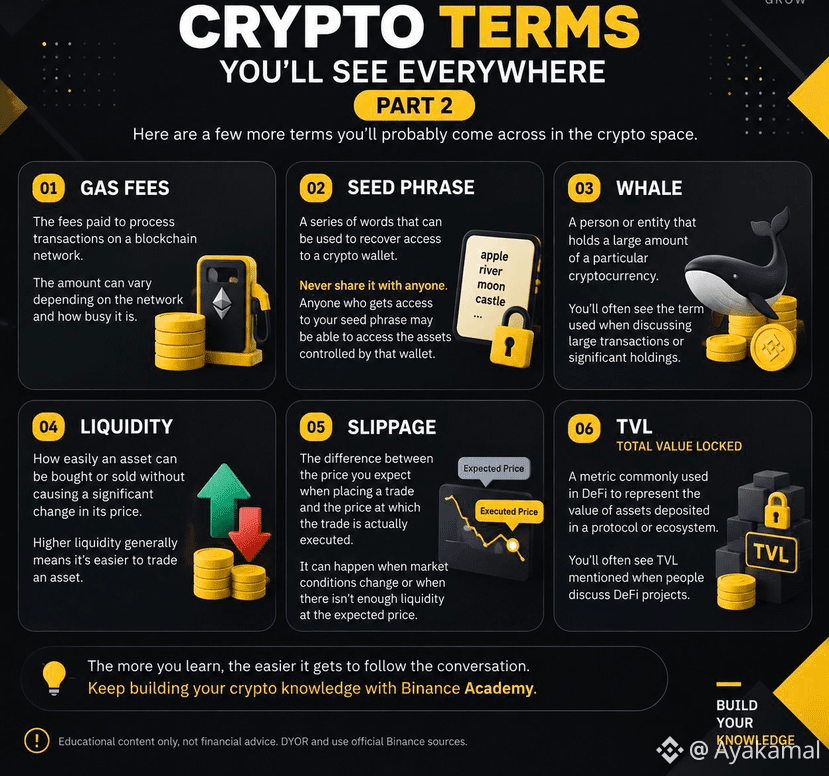
Here are 6 more terms you’ll come across as you explore trading, DeFi, and crypto wallets.
⛽ Gas Fees
Gas fees are payments made to cover the computing power needed to process and validate transactions on a blockchain.
On networks like Ethereum, gas fees are paid in ETH, and the cost can change depending on network demand.
🔐 Seed Phrase
A seed phrase is a set of 12 to 24 words that can be used to recover a crypto wallet.
Think of it as a master key to a self-custody wallet.
Never share your seed phrase or store it in screenshots, emails, or cloud storage.
🐋 Whale
A whale is an individual or entity holding a large amount of a particular cryptocurrency.
There’s no fixed amount that automatically makes someone a whale — it depends on the asset and its overall supply.
💧 Liquidity
Liquidity describes how easily an asset can be bought or sold without significantly affecting its price.
Markets with more liquidity generally have more active buyers and sellers and can have less price impact when trades are executed.
📉 Slippage
Slippage is the difference between the price you expect when placing a trade and the price at which it actually executes.
It can happen when liquidity is limited or when the market moves quickly while your order is being processed.
🔒 TVL — Total Value Locked
TVL is the total value of assets deposited in a DeFi protocol or across a blockchain ecosystem, usually measured in USD.
It’s commonly used as a metric for DeFi activity, but TVL alone doesn’t tell you whether a protocol is good or sustainable.
⸻
The more crypto terms you understand, the easier it becomes to follow the conversation.
Gas Fees • Seed Phrase • Whale • Liquidity • Slippage • TVL
📚 Keep learning with Binance Academy.
Educational content only, not financial advice. DYOR and use official Binance sources. Availability and requirements may vary by region.
#Binance #blockchain #CryptoEducation💡🚀
CRYPTO TERMS YOU’LL SEE EVERYWHERE — PART 2
Crypto has its own language.
Here are 6 more terms you’ll come across as you explore trading, DeFi, and crypto wallets.
⛽ Gas Fees
Gas fees are payments made to cover the computing power needed to process and validate transactions on a blockchain.
On networks like Ethereum, gas fees are paid in ETH, and the cost can change depending on network demand.
🔐 Seed Phrase
A seed phrase is a set of 12 to 24 words that can be used to recover a crypto wallet.
Think of it as a master key to a self-custody wallet.
Never share your seed phrase or store it in screenshots, emails, or cloud storage.
🐋 Whale
A whale is an individual or entity holding a large amount of a particular cryptocurrency.
There’s no fixed amount that automatically makes someone a whale — it depends on the asset and its overall supply.
💧 Liquidity
Liquidity describes how easily an asset can be bought or sold without significantly affecting its price.
Markets with more liquidity generally have more active buyers and sellers and can have less price impact when trades are executed.
📉 Slippage
Slippage is the difference between the price you expect when placing a trade and the price at which it actually executes.
It can happen when liquidity is limited or when the market moves quickly while your order is being processed.
🔒 TVL — Total Value Locked
TVL is the total value of assets deposited in a DeFi protocol or across a blockchain ecosystem, usually measured in USD.
It’s commonly used as a metric for DeFi activity, but TVL alone doesn’t tell you whether a protocol is good or sustainable.
⸻
The more crypto terms you understand, the easier it becomes to follow the conversation.
Gas Fees • Seed Phrase • Whale • Liquidity • Slippage • TVL
📚 Keep learning with Binance Academy.
Educational content only, not financial advice. DYOR and use official Binance sources. Availability and requirements may vary by region.
#Binance #blockchain #CryptoEducation💡🚀
Crypto has its own language.
Here are 6 more terms you’ll come across as you explore trading, DeFi, and crypto wallets.
⛽ Gas Fees
Gas fees are payments made to cover the computing power needed to process and validate transactions on a blockchain.
On networks like Ethereum, gas fees are paid in ETH, and the cost can change depending on network demand.
🔐 Seed Phrase
A seed phrase is a set of 12 to 24 words that can be used to recover a crypto wallet.
Think of it as a master key to a self-custody wallet.
Never share your seed phrase or store it in screenshots, emails, or cloud storage.
🐋 Whale
A whale is an individual or entity holding a large amount of a particular cryptocurrency.
There’s no fixed amount that automatically makes someone a whale — it depends on the asset and its overall supply.
💧 Liquidity
Liquidity describes how easily an asset can be bought or sold without significantly affecting its price.
Markets with more liquidity generally have more active buyers and sellers and can have less price impact when trades are executed.
📉 Slippage
Slippage is the difference between the price you expect when placing a trade and the price at which it actually executes.
It can happen when liquidity is limited or when the market moves quickly while your order is being processed.
🔒 TVL — Total Value Locked
TVL is the total value of assets deposited in a DeFi protocol or across a blockchain ecosystem, usually measured in USD.
It’s commonly used as a metric for DeFi activity, but TVL alone doesn’t tell you whether a protocol is good or sustainable.
⸻
The more crypto terms you understand, the easier it becomes to follow the conversation.
Gas Fees • Seed Phrase • Whale • Liquidity • Slippage • TVL
📚 Keep learning with Binance Academy.
Educational content only, not financial advice. DYOR and use official Binance sources. Availability and requirements may vary by region.
#Binance #blockchain #CryptoEducation💡🚀
3
4
·
--
Crypto Terms You’ll See Everywhere
You’ve learned some of the most common crypto terms.
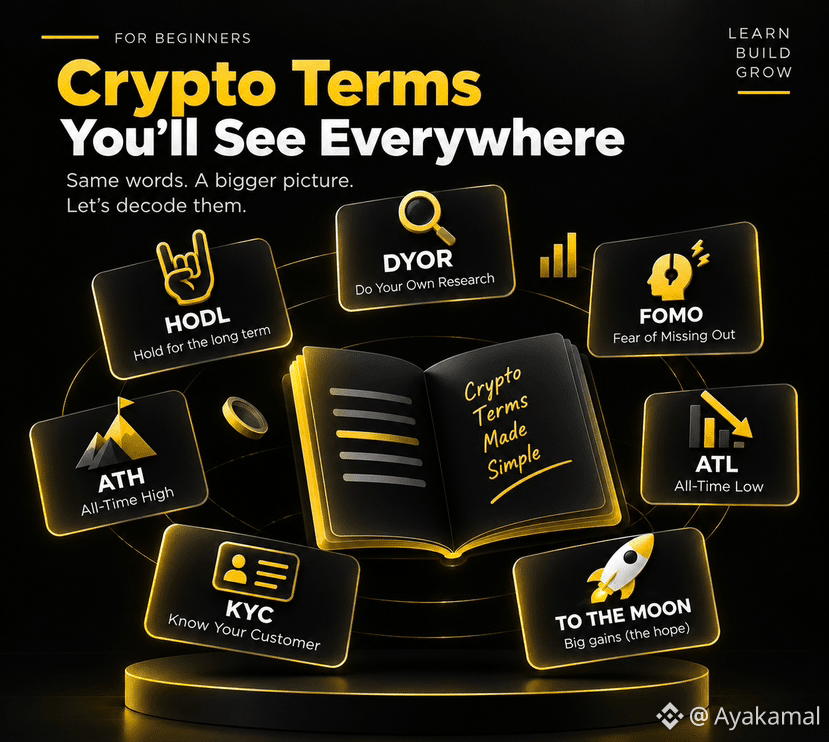
Now let’s decode a few more you’ll see everywhere — especially on Crypto X. 👀
🔎 DYOR — Do Your Own Research
A reminder to independently research and verify information before making a financial decision, rather than relying only on someone else’s opinion.
💎 HODL
Crypto slang for holding a digital asset for the long term instead of selling during short-term price swings.
The term originated from a misspelling of “HOLD” in a 2013 BitcoinTalk post.
😰 FOMO — Fear of Missing Out
That feeling that you’re missing an opportunity because everyone else seems to be getting involved.
In crypto, FOMO can lead people to make decisions based on emotion rather than research.
📈 ATH — All-Time High
The highest price an asset has ever reached in its trading history.
📉 ATL — All-Time Low
The lowest price an asset has ever reached.
🪪 KYC — Know Your Customer
KYC is the process used by financial platforms, including crypto exchanges, to verify a customer’s identity.
It can involve documents such as a government-issued ID or proof of address.
🚀 TO THE MOON
A popular crypto expression used when people expect — or hope for — a very large increase in an asset’s price.
It’s crypto slang, not a technical financial term.
These are just a few of the terms that make up the language of crypto.
DYOR • HODL • FOMO • ATH • ATL • KYC • TO THE MOON
📚 Keep learning with Binance Academy.
Educational content only, not financial advice. DYOR and use official Binance sources. Availability and requirements may vary by region.
#Binance #CryptoEducation
Crypto Terms You’ll See Everywhere
You’ve learned some of the most common crypto terms.
Now let’s decode a few more you’ll see everywhere — especially on Crypto X. 👀
🔎 DYOR — Do Your Own Research
A reminder to independently research and verify information before making a financial decision, rather than relying only on someone else’s opinion.
💎 HODL
Crypto slang for holding a digital asset for the long term instead of selling during short-term price swings.
The term originated from a misspelling of “HOLD” in a 2013 BitcoinTalk post.
😰 FOMO — Fear of Missing Out
That feeling that you’re missing an opportunity because everyone else seems to be getting involved.
In crypto, FOMO can lead people to make decisions based on emotion rather than research.
📈 ATH — All-Time High
The highest price an asset has ever reached in its trading history.
📉 ATL — All-Time Low
The lowest price an asset has ever reached.
🪪 KYC — Know Your Customer
KYC is the process used by financial platforms, including crypto exchanges, to verify a customer’s identity.
It can involve documents such as a government-issued ID or proof of address.
🚀 TO THE MOON
A popular crypto expression used when people expect — or hope for — a very large increase in an asset’s price.
It’s crypto slang, not a technical financial term.
These are just a few of the terms that make up the language of crypto.
DYOR • HODL • FOMO • ATH • ATL • KYC • TO THE MOON
📚 Keep learning with Binance Academy.
Educational content only, not financial advice. DYOR and use official Binance sources. Availability and requirements may vary by region.
#Binance #CryptoEducation
You’ve learned some of the most common crypto terms.
Now let’s decode a few more you’ll see everywhere — especially on Crypto X. 👀
🔎 DYOR — Do Your Own Research
A reminder to independently research and verify information before making a financial decision, rather than relying only on someone else’s opinion.
💎 HODL
Crypto slang for holding a digital asset for the long term instead of selling during short-term price swings.
The term originated from a misspelling of “HOLD” in a 2013 BitcoinTalk post.
😰 FOMO — Fear of Missing Out
That feeling that you’re missing an opportunity because everyone else seems to be getting involved.
In crypto, FOMO can lead people to make decisions based on emotion rather than research.
📈 ATH — All-Time High
The highest price an asset has ever reached in its trading history.
📉 ATL — All-Time Low
The lowest price an asset has ever reached.
🪪 KYC — Know Your Customer
KYC is the process used by financial platforms, including crypto exchanges, to verify a customer’s identity.
It can involve documents such as a government-issued ID or proof of address.
🚀 TO THE MOON
A popular crypto expression used when people expect — or hope for — a very large increase in an asset’s price.
It’s crypto slang, not a technical financial term.
These are just a few of the terms that make up the language of crypto.
DYOR • HODL • FOMO • ATH • ATL • KYC • TO THE MOON
📚 Keep learning with Binance Academy.
Educational content only, not financial advice. DYOR and use official Binance sources. Availability and requirements may vary by region.
#Binance #CryptoEducation
3
4
·
--
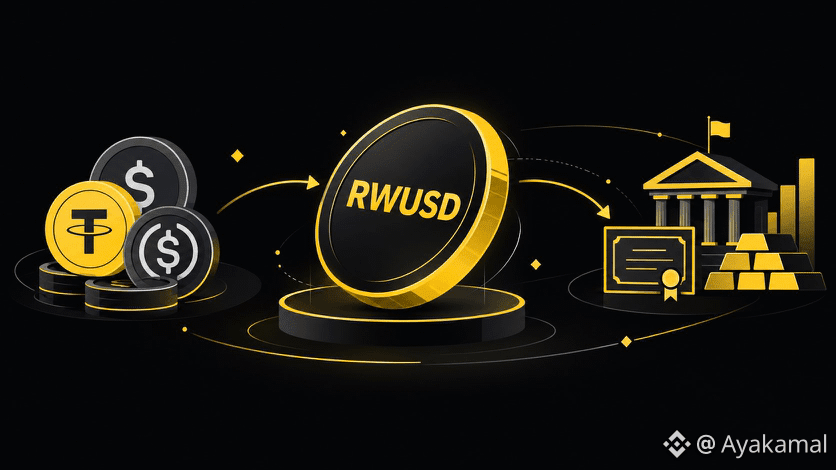
🌍 What if your stablecoins could be connected to Real-World Assets?
That’s the idea behind RWUSD on Binance Earn.
RWUSD is a principal-protected yield product that lets eligible users subscribe with USDT or USDC and receive an equivalent amount of RWUSD in their Spot Wallet.
The interesting part? Its rewards are supported by sources including Real-World Assets (RWAs) such as tokenized U.S. Treasury Bills, alongside yields from the Binance ecosystem.
The advertised rate can be up to 4.2% APR, with rewards calculated and distributed daily. The rate is variable and can change over time.
There’s also no trading involved. You subscribe, hold RWUSD, and rewards are automatically credited according to the product’s reward mechanism.
One important detail: RWUSD is not a stablecoin and doesn’t exist on-chain. It can’t be traded, transferred, or withdrawn like a regular crypto asset.
For redemption, users can choose between Standard and Fast Redemption, subject to the applicable fees, quotas, and terms.
💡 Why is RWUSD interesting?
It’s another example of how RWA tokenization is bringing traditional financial assets, such as U.S. Treasury Bills, closer to the crypto ecosystem.
If you’re exploring how RWAs are being used in crypto, RWUSD is definitely a product worth understanding.
📖 Read the full Binance article:
[https://binance.onelink.me/mL1z/bv22w3p8](https://binance.onelink.me/mL1z/bv22w3p8)
RWUSD Is Here: Earn up to 4.2% Daily Rewards
⚠️ Educational content only. APR is variable and subject to change. Product availability, features, fees, limits, and terms may vary by region. DYOR. This is not financial advice or an investment recommendation.
#Binance #blockchain #crypto
🌍 What if your stablecoins could be connected to Real-World Assets?
That’s the idea behind RWUSD on Binance Earn.
RWUSD is a principal-protected yield product that lets eligible users subscribe with USDT or USDC and receive an equivalent amount of RWUSD in their Spot Wallet.
The interesting part? Its rewards are supported by sources including Real-World Assets (RWAs) such as tokenized U.S. Treasury Bills, alongside yields from the Binance ecosystem.
The advertised rate can be up to 4.2% APR, with rewards calculated and distributed daily. The rate is variable and can change over time.
There’s also no trading involved. You subscribe, hold RWUSD, and rewards are automatically credited according to the product’s reward mechanism.
One important detail: RWUSD is not a stablecoin and doesn’t exist on-chain. It can’t be traded, transferred, or withdrawn like a regular crypto asset.
For redemption, users can choose between Standard and Fast Redemption, subject to the applicable fees, quotas, and terms.
💡 Why is RWUSD interesting?
It’s another example of how RWA tokenization is bringing traditional financial assets, such as U.S. Treasury Bills, closer to the crypto ecosystem.
If you’re exploring how RWAs are being used in crypto, RWUSD is definitely a product worth understanding.
📖 Read the full Binance article:
https://binance.onelink.me/mL1z/bv22w3p8
RWUSD Is Here: Earn up to 4.2% Daily Rewards
⚠️ Educational content only. APR is variable and subject to change. Product availability, features, fees, limits, and terms may vary by region. DYOR. This is not financial advice or an investment recommendation.
#Binance #blockchain #crypto
That’s the idea behind RWUSD on Binance Earn.
RWUSD is a principal-protected yield product that lets eligible users subscribe with USDT or USDC and receive an equivalent amount of RWUSD in their Spot Wallet.
The interesting part? Its rewards are supported by sources including Real-World Assets (RWAs) such as tokenized U.S. Treasury Bills, alongside yields from the Binance ecosystem.
The advertised rate can be up to 4.2% APR, with rewards calculated and distributed daily. The rate is variable and can change over time.
There’s also no trading involved. You subscribe, hold RWUSD, and rewards are automatically credited according to the product’s reward mechanism.
One important detail: RWUSD is not a stablecoin and doesn’t exist on-chain. It can’t be traded, transferred, or withdrawn like a regular crypto asset.
For redemption, users can choose between Standard and Fast Redemption, subject to the applicable fees, quotas, and terms.
💡 Why is RWUSD interesting?
It’s another example of how RWA tokenization is bringing traditional financial assets, such as U.S. Treasury Bills, closer to the crypto ecosystem.
If you’re exploring how RWAs are being used in crypto, RWUSD is definitely a product worth understanding.
📖 Read the full Binance article:
https://binance.onelink.me/mL1z/bv22w3p8
RWUSD Is Here: Earn up to 4.2% Daily Rewards
⚠️ Educational content only. APR is variable and subject to change. Product availability, features, fees, limits, and terms may vary by region. DYOR. This is not financial advice or an investment recommendation.
#Binance #blockchain #crypto
3
14
·
--
Your location can shape which financial markets you can access. 🌍
That’s one reason the expansion of financial products across digital platforms is worth paying attention to.
For users in emerging markets, accessing traditional markets can involve different brokers, accounts, funding methods and eligibility requirements.
A multi-asset platform can potentially make the experience more connected by bringing different products into one ecosystem.
Binance is expanding in this direction with products including direct U.S. stocks and ETFs, tokenized securities, and TradFi perpetuals.
But this is where the important part comes in:
MENA is not one regulatory market.
Dubai ≠ Riyadh ≠ Cairo.
Product availability and access can differ by country, regulatory framework and user eligibility.
So the right question isn’t:
“Can everyone in MENA access these products?”
It’s:
“Which products are actually available to me, in my jurisdiction?”
That’s the part every user should check before trading.
Educational content only. Not financial advice.
Availability varies by region and eligibility. DYOR.
#Binance #MENA #TradFi #crypto #SuperFinancialApp
Your location can shape which financial markets you can access. 🌍
That’s one reason the expansion of financial products across digital platforms is worth paying attention to.
For users in emerging markets, accessing traditional markets can involve different brokers, accounts, funding methods and eligibility requirements.
A multi-asset platform can potentially make the experience more connected by bringing different products into one ecosystem.
Binance is expanding in this direction with products including direct U.S. stocks and ETFs, tokenized securities, and TradFi perpetuals.
But this is where the important part comes in:
MENA is not one regulatory market.
Dubai ≠ Riyadh ≠ Cairo.
Product availability and access can differ by country, regulatory framework and user eligibility.
So the right question isn’t:
“Can everyone in MENA access these products?”
It’s:
“Which products are actually available to me, in my jurisdiction?”
That’s the part every user should check before trading.
Educational content only. Not financial advice.
Availability varies by region and eligibility. DYOR.
#Binance #MENA #TradFi #crypto #SuperFinancialApp
That’s one reason the expansion of financial products across digital platforms is worth paying attention to.
For users in emerging markets, accessing traditional markets can involve different brokers, accounts, funding methods and eligibility requirements.
A multi-asset platform can potentially make the experience more connected by bringing different products into one ecosystem.
Binance is expanding in this direction with products including direct U.S. stocks and ETFs, tokenized securities, and TradFi perpetuals.
But this is where the important part comes in:
MENA is not one regulatory market.
Dubai ≠ Riyadh ≠ Cairo.
Product availability and access can differ by country, regulatory framework and user eligibility.
So the right question isn’t:
“Can everyone in MENA access these products?”
It’s:
“Which products are actually available to me, in my jurisdiction?”
That’s the part every user should check before trading.
Educational content only. Not financial advice.
Availability varies by region and eligibility. DYOR.
#Binance #MENA #TradFi #crypto #SuperFinancialApp

3
37
·
--
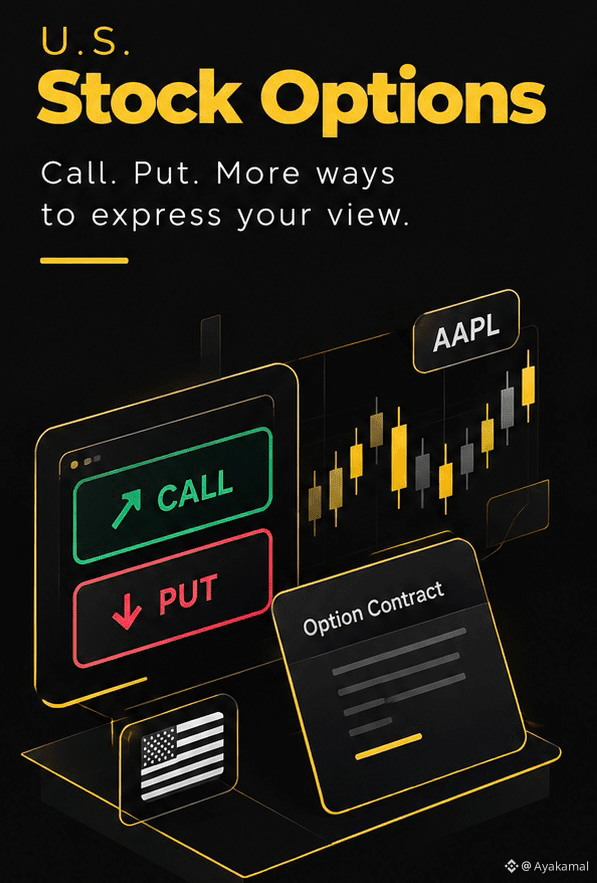
**“I’m bullish on this stock.”
That sentence can mean more than one thing. 👀
One way to express that view is through a Call Option.
A bearish view can be expressed through a Put Option.
But what exactly are you buying?
A stock option is a contract that gives the buyer the right, but not the obligation, to buy or sell an underlying security at a specified strike price by the relevant expiration date.
Binance launched Stock Options for eligible users on U.S.-listed stocks and ETFs in September 2026.
A few things matter here:
📌 Options have an expiration date.
📌 The buyer pays a premium for the option.
📌 The option itself does not represent ownership of the underlying stock.
📌 Binance’s current Stock Options are long-only: Buy Call or Buy Put.
📌 For option buyers, the maximum loss is the premium paid.
These options are physically settled, meaning the underlying shares can be delivered according to the contract and settlement terms if exercised.
And unlike perpetuals, options are not open-ended contracts.
Different product.
Different mechanics.
Different risks.
If you understand the stock but not the option, you don’t understand the trade yet.
Educational content only. Not financial advice.
Stock Options may not be available in your region. Check eligibility, contract terms and risk disclosures before trading. DYOR.
#Binance #StockOptions #TradFi #stocks #ETFs
**“I’m bullish on this stock.”
That sentence can mean more than one thing. 👀
One way to express that view is through a Call Option.
A bearish view can be expressed through a Put Option.
But what exactly are you buying?
A stock option is a contract that gives the buyer the right, but not the obligation, to buy or sell an underlying security at a specified strike price by the relevant expiration date.
Binance launched Stock Options for eligible users on U.S.-listed stocks and ETFs in September 2026.
A few things matter here:
📌 Options have an expiration date.
📌 The buyer pays a premium for the option.
📌 The option itself does not represent ownership of the underlying stock.
📌 Binance’s current Stock Options are long-only: Buy Call or Buy Put.
📌 For option buyers, the maximum loss is the premium paid.
These options are physically settled, meaning the underlying shares can be delivered according to the contract and settlement terms if exercised.
And unlike perpetuals, options are not open-ended contracts.
Different product.
Different mechanics.
Different risks.
If you understand the stock but not the option, you don’t understand the trade yet.
Educational content only. Not financial advice.
Stock Options may not be available in your region. Check eligibility, contract terms and risk disclosures before trading. DYOR.
#Binance #StockOptions #TradFi #stocks #ETFs
That sentence can mean more than one thing. 👀
One way to express that view is through a Call Option.
A bearish view can be expressed through a Put Option.
But what exactly are you buying?
A stock option is a contract that gives the buyer the right, but not the obligation, to buy or sell an underlying security at a specified strike price by the relevant expiration date.
Binance launched Stock Options for eligible users on U.S.-listed stocks and ETFs in September 2026.
A few things matter here:
📌 Options have an expiration date.
📌 The buyer pays a premium for the option.
📌 The option itself does not represent ownership of the underlying stock.
📌 Binance’s current Stock Options are long-only: Buy Call or Buy Put.
📌 For option buyers, the maximum loss is the premium paid.
These options are physically settled, meaning the underlying shares can be delivered according to the contract and settlement terms if exercised.
And unlike perpetuals, options are not open-ended contracts.
Different product.
Different mechanics.
Different risks.
If you understand the stock but not the option, you don’t understand the trade yet.
Educational content only. Not financial advice.
Stock Options may not be available in your region. Check eligibility, contract terms and risk disclosures before trading. DYOR.
#Binance #StockOptions #TradFi #stocks #ETFs
3
64
·
--
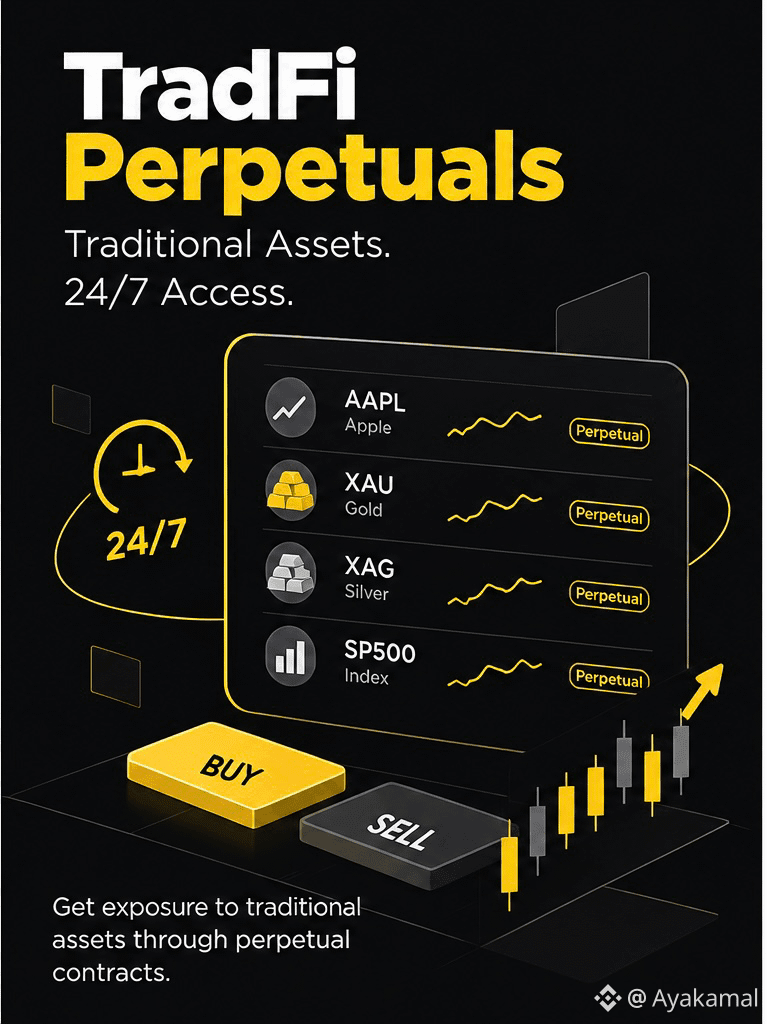
**A stock can trade during market hours.
But what if the contract tracking its price could trade 24/7? 👀**
That’s where TradFi Perpetuals come in.
A TradFi Perpetual is a derivative contract designed to track the price of an underlying traditional asset.
That can include:
📈 Selected stocks
🥇 Gold
🥈 Silver
📊 Selected ETFs and indices
The key point:
You’re trading the price movement — not buying the underlying asset itself.
Unlike traditional futures, perpetual contracts have no fixed expiry date.
On Binance, TradFi Perpetuals are USDT-settled and use funding mechanisms to help keep the contract price aligned with the underlying asset.
Some contracts also support leverage.
And that’s where the risk comes in:
Leverage can amplify both gains and losses, while funding costs and liquidation can affect your position.
So “24/7 access” doesn’t mean “lower risk.”
It means a different way of getting price exposure to traditional assets.
Understand the contract before you trade the ticker.
Educational content only. Not financial advice.
Product availability and trading parameters vary by region and may change. DYOR.
#Binance #TradFi #TradFiPerps #BİNANCEFUTURES #Crypto
**A stock can trade during market hours.
But what if the contract tracking its price could trade 24/7? 👀**
That’s where TradFi Perpetuals come in.
A TradFi Perpetual is a derivative contract designed to track the price of an underlying traditional asset.
That can include:
📈 Selected stocks
🥇 Gold
🥈 Silver
📊 Selected ETFs and indices
The key point:
You’re trading the price movement — not buying the underlying asset itself.
Unlike traditional futures, perpetual contracts have no fixed expiry date.
On Binance, TradFi Perpetuals are USDT-settled and use funding mechanisms to help keep the contract price aligned with the underlying asset.
Some contracts also support leverage.
And that’s where the risk comes in:
Leverage can amplify both gains and losses, while funding costs and liquidation can affect your position.
So “24/7 access” doesn’t mean “lower risk.”
It means a different way of getting price exposure to traditional assets.
Understand the contract before you trade the ticker.
Educational content only. Not financial advice.
Product availability and trading parameters vary by region and may change. DYOR.
#Binance #TradFi #TradFiPerps #BİNANCEFUTURES #Crypto
But what if the contract tracking its price could trade 24/7? 👀**
That’s where TradFi Perpetuals come in.
A TradFi Perpetual is a derivative contract designed to track the price of an underlying traditional asset.
That can include:
📈 Selected stocks
🥇 Gold
🥈 Silver
📊 Selected ETFs and indices
The key point:
You’re trading the price movement — not buying the underlying asset itself.
Unlike traditional futures, perpetual contracts have no fixed expiry date.
On Binance, TradFi Perpetuals are USDT-settled and use funding mechanisms to help keep the contract price aligned with the underlying asset.
Some contracts also support leverage.
And that’s where the risk comes in:
Leverage can amplify both gains and losses, while funding costs and liquidation can affect your position.
So “24/7 access” doesn’t mean “lower risk.”
It means a different way of getting price exposure to traditional assets.
Understand the contract before you trade the ticker.
Educational content only. Not financial advice.
Product availability and trading parameters vary by region and may change. DYOR.
#Binance #TradFi #TradFiPerps #BİNANCEFUTURES #Crypto
3
246
·
--
You see gold moving.
You open Binance.
You think: “I want exposure to gold.” 🥇
But here’s the question:
Are you buying gold… or trading a contract that tracks its price?
That distinction matters.
On Binance Futures, Gold and Silver are available through USDT-margined perpetual contracts:
🥇 XAUUSDT — Gold
🥈 XAGUSDT — Silver
These contracts track the price of the underlying metal, but they do not give you ownership of physical gold or silver.
No bars delivered to your door.
No physical storage.
You’re trading a derivative linked to the metal’s price.
That’s what price exposure means.
And because these are perpetual contracts, they don’t have a fixed expiry date. They also use funding mechanisms to help keep the contract price aligned with the underlying market.
But there’s another side to the story:
These are leveraged derivatives, so losses can be amplified and positions can be liquidated.
Understanding the product comes before trading it.
Price exposure ≠ ownership.
That’s probably the most important thing to remember.
Educational content only. Not financial advice.
TradFi products may not be available in your region. Always check eligibility and product availability. DYOR.
#GOLD #Silver #TradFi #BinanceFutures
You see gold moving.
You open Binance.
You think: “I want exposure to gold.” 🥇
But here’s the question:
Are you buying gold… or trading a contract that tracks its price?
That distinction matters.
On Binance Futures, Gold and Silver are available through USDT-margined perpetual contracts:
🥇 XAUUSDT — Gold
🥈 XAGUSDT — Silver
These contracts track the price of the underlying metal, but they do not give you ownership of physical gold or silver.
No bars delivered to your door.
No physical storage.
You’re trading a derivative linked to the metal’s price.
That’s what price exposure means.
And because these are perpetual contracts, they don’t have a fixed expiry date. They also use funding mechanisms to help keep the contract price aligned with the underlying market.
But there’s another side to the story:
These are leveraged derivatives, so losses can be amplified and positions can be liquidated.
Understanding the product comes before trading it.
Price exposure ≠ ownership.
That’s probably the most important thing to remember.
Educational content only. Not financial advice.
TradFi products may not be available in your region. Always check eligibility and product availability. DYOR.
#GOLD #Silver #TradFi #BinanceFutures
You open Binance.
You think: “I want exposure to gold.” 🥇
But here’s the question:
Are you buying gold… or trading a contract that tracks its price?
That distinction matters.
On Binance Futures, Gold and Silver are available through USDT-margined perpetual contracts:
🥇 XAUUSDT — Gold
🥈 XAGUSDT — Silver
These contracts track the price of the underlying metal, but they do not give you ownership of physical gold or silver.
No bars delivered to your door.
No physical storage.
You’re trading a derivative linked to the metal’s price.
That’s what price exposure means.
And because these are perpetual contracts, they don’t have a fixed expiry date. They also use funding mechanisms to help keep the contract price aligned with the underlying market.
But there’s another side to the story:
These are leveraged derivatives, so losses can be amplified and positions can be liquidated.
Understanding the product comes before trading it.
Price exposure ≠ ownership.
That’s probably the most important thing to remember.
Educational content only. Not financial advice.
TradFi products may not be available in your region. Always check eligibility and product availability. DYOR.
#GOLD #Silver #TradFi #BinanceFutures
3
204
·
--
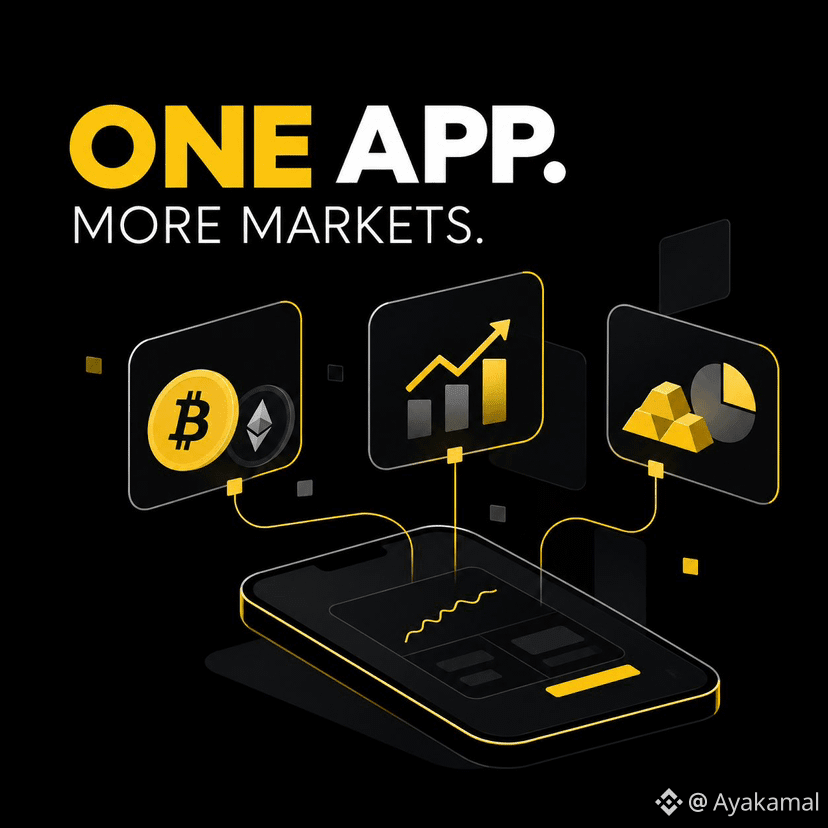
What happens when a crypto platform starts becoming much more than a crypto platform? 👀
Binance started with digital assets.
Today, its ecosystem is expanding into traditional-market products too — including direct U.S.-listed stocks and ETFs for eligible users in supported jurisdictions.
So what’s changing?
It’s not just about adding another product.
It’s about bringing different financial experiences closer together.
One Binance account can now connect eligible users to crypto, stocks, ETFs, tokenized securities, and TradFi perpetuals — depending on what’s available in their region.
That’s the idea behind Binance’s Financial Super App vision: a broader, multi-asset financial ecosystem rather than a platform focused on one asset class.
But there’s an important detail:
One account ≠ everything is available to everyone.
Product availability, features, and eligibility vary by jurisdiction and regulatory requirements.
So before using any product, always check what is actually available in your region.
What matters more to you in a financial app:
More products — or a more connected experience? 👀
Educational content only. Not financial advice.
Product availability varies by region and eligibility. DYOR.
#SuperFinancialApp #TradFi #stocks #ETH
What happens when a crypto platform starts becoming much more than a crypto platform? 👀
Binance started with digital assets.
Today, its ecosystem is expanding into traditional-market products too — including direct U.S.-listed stocks and ETFs for eligible users in supported jurisdictions.
So what’s changing?
It’s not just about adding another product.
It’s about bringing different financial experiences closer together.
One Binance account can now connect eligible users to crypto, stocks, ETFs, tokenized securities, and TradFi perpetuals — depending on what’s available in their region.
That’s the idea behind Binance’s Financial Super App vision: a broader, multi-asset financial ecosystem rather than a platform focused on one asset class.
But there’s an important detail:
One account ≠ everything is available to everyone.
Product availability, features, and eligibility vary by jurisdiction and regulatory requirements.
So before using any product, always check what is actually available in your region.
What matters more to you in a financial app:
More products — or a more connected experience? 👀
Educational content only. Not financial advice.
Product availability varies by region and eligibility. DYOR.
#SuperFinancialApp #TradFi #stocks #ETH
Binance started with digital assets.
Today, its ecosystem is expanding into traditional-market products too — including direct U.S.-listed stocks and ETFs for eligible users in supported jurisdictions.
So what’s changing?
It’s not just about adding another product.
It’s about bringing different financial experiences closer together.
One Binance account can now connect eligible users to crypto, stocks, ETFs, tokenized securities, and TradFi perpetuals — depending on what’s available in their region.
That’s the idea behind Binance’s Financial Super App vision: a broader, multi-asset financial ecosystem rather than a platform focused on one asset class.
But there’s an important detail:
One account ≠ everything is available to everyone.
Product availability, features, and eligibility vary by jurisdiction and regulatory requirements.
So before using any product, always check what is actually available in your region.
What matters more to you in a financial app:
More products — or a more connected experience? 👀
Educational content only. Not financial advice.
Product availability varies by region and eligibility. DYOR.
#SuperFinancialApp #TradFi #stocks #ETH
3
79
·
--
Crypto, TradFi, DeFi.
3 financial worlds — but why do we still treat them as completely separate? 👀
Think about it:
🪙 Crypto — digital assets like Bitcoin.
📈 TradFi — traditional markets and assets such as stocks and commodities.
🔗 DeFi — financial applications built on blockchain-based infrastructure.
And this is where TriFi comes in.
The idea is simple:
Crypto ↔️ TradFi ↔️ DeFi
Instead of looking at these as isolated worlds, TriFi is about how they can become increasingly connected within one financial ecosystem.
That’s also part of the idea behind the Super Financial App concept: bringing access to different financial products and markets into one ecosystem, where available.
Of course, availability isn’t the same for everyone — products and services can vary depending on your country of residence and eligibility.
If you had one app connecting all three worlds, which one would you explore first? 👀
🪙 Crypto
📈 TradFi
🔗 DeFi
Educational content only. Not financial advice.
Product availability varies by region and eligibility. Always DYOR.
#Binance #TradFi #crypto #Blockchain
Crypto, TradFi, DeFi.
3 financial worlds — but why do we still treat them as completely separate? 👀
Think about it:
🪙 Crypto — digital assets like Bitcoin.
📈 TradFi — traditional markets and assets such as stocks and commodities.
🔗 DeFi — financial applications built on blockchain-based infrastructure.
And this is where TriFi comes in.
The idea is simple:
Crypto ↔️ TradFi ↔️ DeFi
Instead of looking at these as isolated worlds, TriFi is about how they can become increasingly connected within one financial ecosystem.
That’s also part of the idea behind the Super Financial App concept: bringing access to different financial products and markets into one ecosystem, where available.
Of course, availability isn’t the same for everyone — products and services can vary depending on your country of residence and eligibility.
If you had one app connecting all three worlds, which one would you explore first? 👀
🪙 Crypto
📈 TradFi
🔗 DeFi
Educational content only. Not financial advice.
Product availability varies by region and eligibility. Always DYOR.
#Binance #TradFi #crypto #Blockchain
3 financial worlds — but why do we still treat them as completely separate? 👀
Think about it:
🪙 Crypto — digital assets like Bitcoin.
📈 TradFi — traditional markets and assets such as stocks and commodities.
🔗 DeFi — financial applications built on blockchain-based infrastructure.
And this is where TriFi comes in.
The idea is simple:
Crypto ↔️ TradFi ↔️ DeFi
Instead of looking at these as isolated worlds, TriFi is about how they can become increasingly connected within one financial ecosystem.
That’s also part of the idea behind the Super Financial App concept: bringing access to different financial products and markets into one ecosystem, where available.
Of course, availability isn’t the same for everyone — products and services can vary depending on your country of residence and eligibility.
If you had one app connecting all three worlds, which one would you explore first? 👀
🪙 Crypto
📈 TradFi
🔗 DeFi
Educational content only. Not financial advice.
Product availability varies by region and eligibility. Always DYOR.
#Binance #TradFi #crypto #Blockchain
3
57
·
--
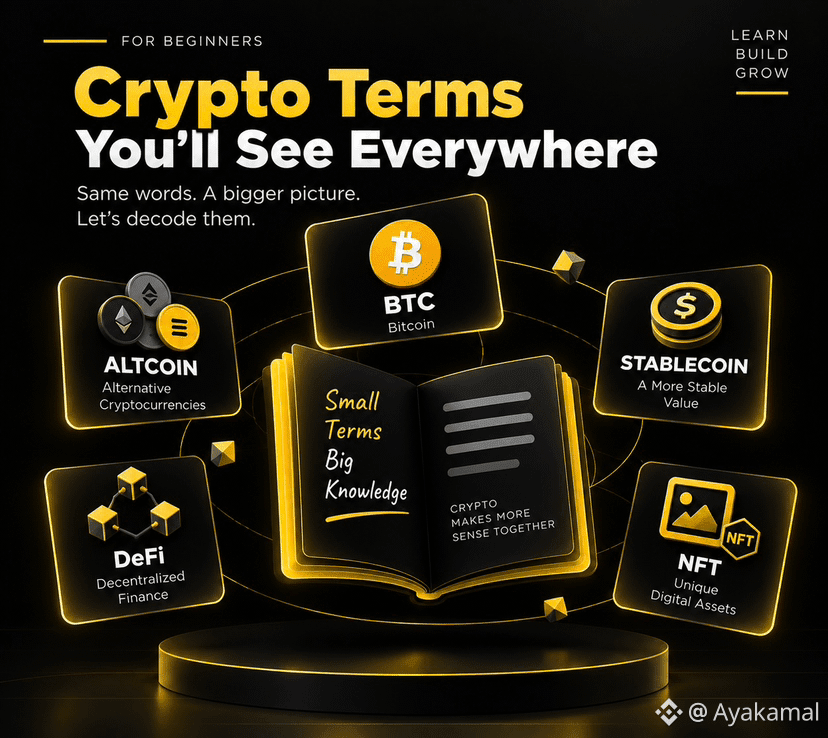
CRYPTO TERMS YOU’LL SEE EVERYWHERE
New to crypto? These are five terms you’ll come across again and again.
🟠 BTC — Bitcoin
Bitcoin was the first cryptocurrency, introduced in 2008 and launched in 2009. It operates on a decentralized network and enables peer-to-peer transfers without a central intermediary.
🔹 Altcoin
An altcoin generally refers to any cryptocurrency other than Bitcoin. Altcoins can have very different purposes, technologies, and supply designs.
💵 Stablecoin
A stablecoin is a crypto asset designed to maintain a relatively stable value, often by being linked to a reference asset such as a fiat currency.
🌐 DeFi — Decentralized Finance
DeFi refers to financial services built using blockchain technology and smart contracts. These can include activities such as decentralized trading, lending, and borrowing.
🖼️ NFT — Non-Fungible Token
An NFT is a unique digital asset recorded on a blockchain. Unlike interchangeable cryptocurrencies, NFTs have distinct properties and can be used for things such as digital art, collectibles, and gaming.
Why do these terms matter?
Because understanding crypto isn’t only about knowing how to buy or sell.
It starts with understanding the language of the ecosystem.
📚 Keep learning with Binance Academy.
Educational content only, not financial advice. DYOR and use official Binance sources.
#Binance #CryptoEducation #crypto #BTC
CRYPTO TERMS YOU’LL SEE EVERYWHERE
New to crypto? These are five terms you’ll come across again and again.
🟠 BTC — Bitcoin
Bitcoin was the first cryptocurrency, introduced in 2008 and launched in 2009. It operates on a decentralized network and enables peer-to-peer transfers without a central intermediary.
🔹 Altcoin
An altcoin generally refers to any cryptocurrency other than Bitcoin. Altcoins can have very different purposes, technologies, and supply designs.
💵 Stablecoin
A stablecoin is a crypto asset designed to maintain a relatively stable value, often by being linked to a reference asset such as a fiat currency.
🌐 DeFi — Decentralized Finance
DeFi refers to financial services built using blockchain technology and smart contracts. These can include activities such as decentralized trading, lending, and borrowing.
🖼️ NFT — Non-Fungible Token
An NFT is a unique digital asset recorded on a blockchain. Unlike interchangeable cryptocurrencies, NFTs have distinct properties and can be used for things such as digital art, collectibles, and gaming.
Why do these terms matter?
Because understanding crypto isn’t only about knowing how to buy or sell.
It starts with understanding the language of the ecosystem.
📚 Keep learning with Binance Academy.
Educational content only, not financial advice. DYOR and use official Binance sources.
#Binance #CryptoEducation #crypto #BTC
New to crypto? These are five terms you’ll come across again and again.
🟠 BTC — Bitcoin
Bitcoin was the first cryptocurrency, introduced in 2008 and launched in 2009. It operates on a decentralized network and enables peer-to-peer transfers without a central intermediary.
🔹 Altcoin
An altcoin generally refers to any cryptocurrency other than Bitcoin. Altcoins can have very different purposes, technologies, and supply designs.
💵 Stablecoin
A stablecoin is a crypto asset designed to maintain a relatively stable value, often by being linked to a reference asset such as a fiat currency.
🌐 DeFi — Decentralized Finance
DeFi refers to financial services built using blockchain technology and smart contracts. These can include activities such as decentralized trading, lending, and borrowing.
🖼️ NFT — Non-Fungible Token
An NFT is a unique digital asset recorded on a blockchain. Unlike interchangeable cryptocurrencies, NFTs have distinct properties and can be used for things such as digital art, collectibles, and gaming.
Why do these terms matter?
Because understanding crypto isn’t only about knowing how to buy or sell.
It starts with understanding the language of the ecosystem.
📚 Keep learning with Binance Academy.
Educational content only, not financial advice. DYOR and use official Binance sources.
#Binance #CryptoEducation #crypto #BTC
3
129
·
--
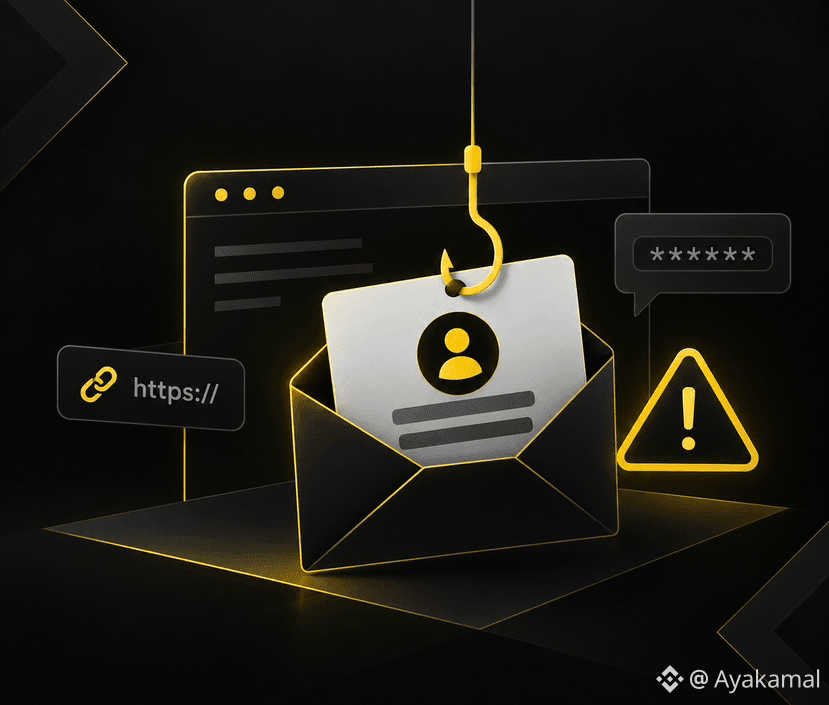
🔐 How to Spot a Crypto Phishing Scam
A message can look official.
A website can look almost identical to the real one.
And a scammer can create a lot of pressure to make you act quickly.
That’s why knowing the warning signs matters.
🔗 1. Check the URL
Before entering your login details, carefully verify the website address.
Don’t assume a familiar-looking link is safe.
When in doubt, navigate to the official website yourself instead of using an unexpected link.
🚨 2. Watch for Urgency
Messages like:
“Your account will be suspended!”
“Verify immediately!”
“You must act now!”
are designed to make you react before you have time to think.
Pause and verify the request through an official channel.
🔑 3. Never Share Your Sensitive Information
Phishing attacks can target:
* Passwords
* Login credentials
* Seed phrases
* Private keys
* Payment information
Your seed phrase and private keys should never be shared with anyone.
🛡️ 4. Add Extra Protection
Using 2FA, carefully checking URLs, and avoiding unsolicited links can help reduce your exposure to phishing attacks.
Remember:
Pause → Check → Verify
One extra minute of checking can make a big difference.
📚 Learn more with Binance Academy.
Educational content only, not financial advice. DYOR.
#Binance #CryptoSecurity
🔐 How to Spot a Crypto Phishing Scam
A message can look official.
A website can look almost identical to the real one.
And a scammer can create a lot of pressure to make you act quickly.
That’s why knowing the warning signs matters.
🔗 1. Check the URL
Before entering your login details, carefully verify the website address.
Don’t assume a familiar-looking link is safe.
When in doubt, navigate to the official website yourself instead of using an unexpected link.
🚨 2. Watch for Urgency
Messages like:
“Your account will be suspended!”
“Verify immediately!”
“You must act now!”
are designed to make you react before you have time to think.
Pause and verify the request through an official channel.
🔑 3. Never Share Your Sensitive Information
Phishing attacks can target:
* Passwords
* Login credentials
* Seed phrases
* Private keys
* Payment information
Your seed phrase and private keys should never be shared with anyone.
🛡️ 4. Add Extra Protection
Using 2FA, carefully checking URLs, and avoiding unsolicited links can help reduce your exposure to phishing attacks.
Remember:
Pause → Check → Verify
One extra minute of checking can make a big difference.
📚 Learn more with Binance Academy.
Educational content only, not financial advice. DYOR.
#Binance #CryptoSecurity
A message can look official.
A website can look almost identical to the real one.
And a scammer can create a lot of pressure to make you act quickly.
That’s why knowing the warning signs matters.
🔗 1. Check the URL
Before entering your login details, carefully verify the website address.
Don’t assume a familiar-looking link is safe.
When in doubt, navigate to the official website yourself instead of using an unexpected link.
🚨 2. Watch for Urgency
Messages like:
“Your account will be suspended!”
“Verify immediately!”
“You must act now!”
are designed to make you react before you have time to think.
Pause and verify the request through an official channel.
🔑 3. Never Share Your Sensitive Information
Phishing attacks can target:
* Passwords
* Login credentials
* Seed phrases
* Private keys
* Payment information
Your seed phrase and private keys should never be shared with anyone.
🛡️ 4. Add Extra Protection
Using 2FA, carefully checking URLs, and avoiding unsolicited links can help reduce your exposure to phishing attacks.
Remember:
Pause → Check → Verify
One extra minute of checking can make a big difference.
📚 Learn more with Binance Academy.
Educational content only, not financial advice. DYOR.
#Binance #CryptoSecurity
2
59
·
--
📄 Before You Research a Crypto Project, Read Its Whitepaper
You don’t need to be a developer to read a crypto whitepaper.
You just need to know what to look for.
A whitepaper is a document that explains a project’s goals, technology, tokenomics, and roadmap.
Here are a few things to check 👇
🔎 1. What Problem Is It Solving?
Start with the basics:
What problem does the project want to solve?
And more importantly:
What solution is it proposing?
If the idea isn’t clear, that’s worth investigating further.
🪙 2. Understand the Token
Look for information about:
* What the token is used for
* Its supply
* Distribution
* Incentive mechanisms
This can help you understand the token’s role within the project.
🗺️ 3. Check the Roadmap
What does the project say it plans to build?
And what has actually been delivered?
Comparing the roadmap with real development progress can give you additional context.
⚠️ One important thing
A whitepaper is a starting point, not proof that a project is legitimate or successful.
Whitepapers are not standardized, and they can contain vague promises, marketing language, or incomplete technical details.
Always combine the whitepaper with other research.
📚 Learn more with Binance Academy.
Educational content only, not financial advice. DYOR.
#Binance #crypto
#CryptoEducation
📄 Before You Research a Crypto Project, Read Its Whitepaper
You don’t need to be a developer to read a crypto whitepaper.
You just need to know what to look for.
A whitepaper is a document that explains a project’s goals, technology, tokenomics, and roadmap.
Here are a few things to check 👇
🔎 1. What Problem Is It Solving?
Start with the basics:
What problem does the project want to solve?
And more importantly:
What solution is it proposing?
If the idea isn’t clear, that’s worth investigating further.
🪙 2. Understand the Token
Look for information about:
* What the token is used for
* Its supply
* Distribution
* Incentive mechanisms
This can help you understand the token’s role within the project.
🗺️ 3. Check the Roadmap
What does the project say it plans to build?
And what has actually been delivered?
Comparing the roadmap with real development progress can give you additional context.
⚠️ One important thing
A whitepaper is a starting point, not proof that a project is legitimate or successful.
Whitepapers are not standardized, and they can contain vague promises, marketing language, or incomplete technical details.
Always combine the whitepaper with other research.
📚 Learn more with Binance Academy.
Educational content only, not financial advice. DYOR.
#Binance #crypto
#CryptoEducation
You don’t need to be a developer to read a crypto whitepaper.
You just need to know what to look for.
A whitepaper is a document that explains a project’s goals, technology, tokenomics, and roadmap.
Here are a few things to check 👇
🔎 1. What Problem Is It Solving?
Start with the basics:
What problem does the project want to solve?
And more importantly:
What solution is it proposing?
If the idea isn’t clear, that’s worth investigating further.
🪙 2. Understand the Token
Look for information about:
* What the token is used for
* Its supply
* Distribution
* Incentive mechanisms
This can help you understand the token’s role within the project.
🗺️ 3. Check the Roadmap
What does the project say it plans to build?
And what has actually been delivered?
Comparing the roadmap with real development progress can give you additional context.
⚠️ One important thing
A whitepaper is a starting point, not proof that a project is legitimate or successful.
Whitepapers are not standardized, and they can contain vague promises, marketing language, or incomplete technical details.
Always combine the whitepaper with other research.
📚 Learn more with Binance Academy.
Educational content only, not financial advice. DYOR.
#Binance #crypto
#CryptoEducation

2
79
·
--
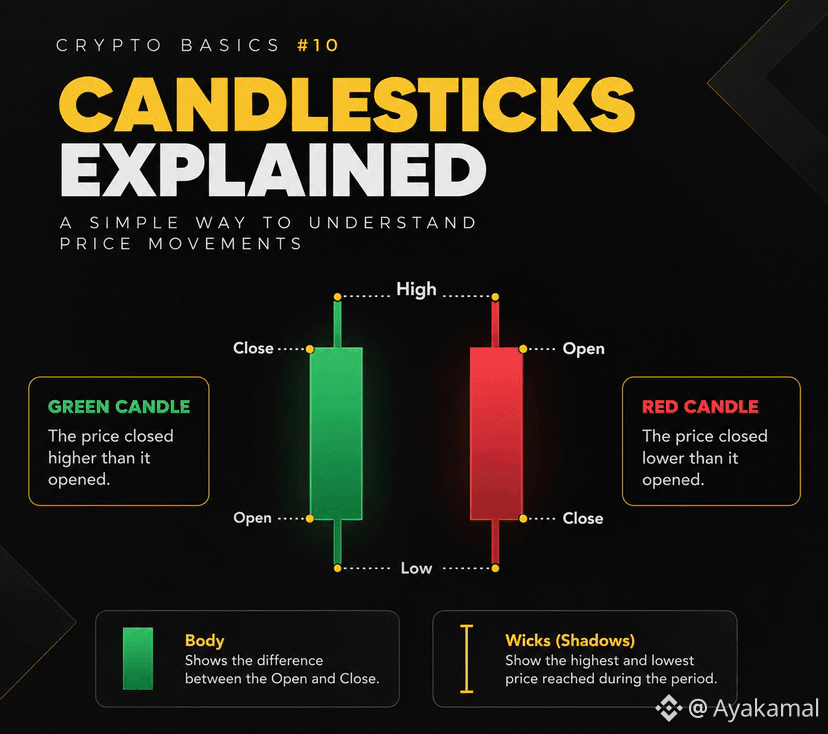
Ever wondered what a single candle on a crypto chart is actually telling you?
If you’ve already learned how to look at a crypto chart, the next step is understanding candlesticks.
A candlestick shows how an asset’s price moved during a specific period — and every candle is built from four key prices.
🔹 The 4 prices behind every candle
Open — the first recorded price during the period.
High — the highest price reached.
Low — the lowest price reached.
Close — the last recorded price.
Together, these are called OHLC data.
🕯️ Body vs. Wicks
The body shows the difference between the Open and Close.
The thin lines extending above and below the body are called wicks or shadows. They show the High and Low reached during that period.
🟢 Green vs. 🔴 Red
In most charting platforms:
🟢 Green candle → Close is higher than Open.
🔴 Red candle → Close is lower than Open.
The colors can be customized on some platforms, but the underlying logic stays the same.
⏱️ And what does one candle represent?
That depends on the timeframe you choose.
A candle can represent a short period such as a minute, or a much longer period such as a day.
So the same asset can look very different depending on the timeframe you’re viewing.
The simple way to remember it:
Open → High → Low → Close
Once you understand these four points, you have the basic language needed to start reading candlestick charts.
And remember: candlesticks show what happened during a period. They don’t guarantee what happens next.
📚 Keep learning with Binance Academy.
Educational content only, not financial advice. DYOR.
#Binance #CryptoEducation
Ever wondered what a single candle on a crypto chart is actually telling you?
If you’ve already learned how to look at a crypto chart, the next step is understanding candlesticks.
A candlestick shows how an asset’s price moved during a specific period — and every candle is built from four key prices.
🔹 The 4 prices behind every candle
Open — the first recorded price during the period.
High — the highest price reached.
Low — the lowest price reached.
Close — the last recorded price.
Together, these are called OHLC data.
🕯️ Body vs. Wicks
The body shows the difference between the Open and Close.
The thin lines extending above and below the body are called wicks or shadows. They show the High and Low reached during that period.
🟢 Green vs. 🔴 Red
In most charting platforms:
🟢 Green candle → Close is higher than Open.
🔴 Red candle → Close is lower than Open.
The colors can be customized on some platforms, but the underlying logic stays the same.
⏱️ And what does one candle represent?
That depends on the timeframe you choose.
A candle can represent a short period such as a minute, or a much longer period such as a day.
So the same asset can look very different depending on the timeframe you’re viewing.
The simple way to remember it:
Open → High → Low → Close
Once you understand these four points, you have the basic language needed to start reading candlestick charts.
And remember: candlesticks show what happened during a period. They don’t guarantee what happens next.
📚 Keep learning with Binance Academy.
Educational content only, not financial advice. DYOR.
#Binance #CryptoEducation
If you’ve already learned how to look at a crypto chart, the next step is understanding candlesticks.
A candlestick shows how an asset’s price moved during a specific period — and every candle is built from four key prices.
🔹 The 4 prices behind every candle
Open — the first recorded price during the period.
High — the highest price reached.
Low — the lowest price reached.
Close — the last recorded price.
Together, these are called OHLC data.
🕯️ Body vs. Wicks
The body shows the difference between the Open and Close.
The thin lines extending above and below the body are called wicks or shadows. They show the High and Low reached during that period.
🟢 Green vs. 🔴 Red
In most charting platforms:
🟢 Green candle → Close is higher than Open.
🔴 Red candle → Close is lower than Open.
The colors can be customized on some platforms, but the underlying logic stays the same.
⏱️ And what does one candle represent?
That depends on the timeframe you choose.
A candle can represent a short period such as a minute, or a much longer period such as a day.
So the same asset can look very different depending on the timeframe you’re viewing.
The simple way to remember it:
Open → High → Low → Close
Once you understand these four points, you have the basic language needed to start reading candlestick charts.
And remember: candlesticks show what happened during a period. They don’t guarantee what happens next.
📚 Keep learning with Binance Academy.
Educational content only, not financial advice. DYOR.
#Binance #CryptoEducation
2
88
·
--
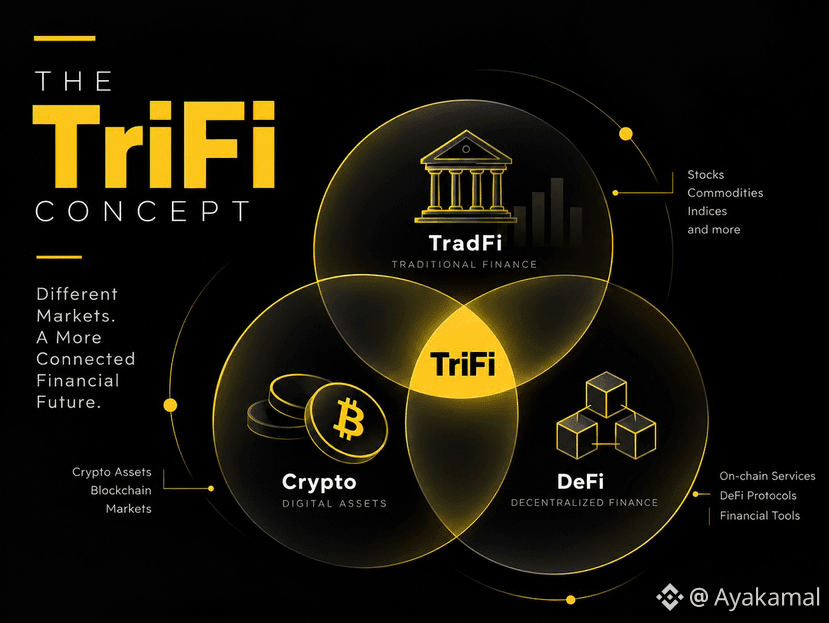
What if Crypto, TradFi, and DeFi could feel less like separate worlds? 🌍🔗
For years, different financial markets have often meant different platforms, products, and ways of accessing them.
The TriFi concept looks at a more connected financial landscape:
₿ Crypto
Digital assets and blockchain-based markets.
🏦 TradFi
Traditional financial markets, including stocks, commodities, and indices.
🔗 DeFi
Financial services and applications built on blockchain protocols.
These worlds work differently. They have different mechanics, risks, and use cases.
The idea isn’t to make them identical.
It’s about bringing different financial experiences closer together within one broader ecosystem.
And this is where Binance is expanding its financial ecosystem — moving beyond crypto trading to include more TradFi products and Web3 experiences alongside its existing crypto offerings, where available.
Different markets. Different mechanics. A more connected financial landscape. 🌍
Always understand how a product works, including its risks, costs, and availability, before using it.
Educational content only. Not financial advice. DYOR.
#Binance #TradFi #crypto #blockchain #SuperFinancialApp
What if Crypto, TradFi, and DeFi could feel less like separate worlds? 🌍🔗
For years, different financial markets have often meant different platforms, products, and ways of accessing them.
The TriFi concept looks at a more connected financial landscape:
₿ Crypto
Digital assets and blockchain-based markets.
🏦 TradFi
Traditional financial markets, including stocks, commodities, and indices.
🔗 DeFi
Financial services and applications built on blockchain protocols.
These worlds work differently. They have different mechanics, risks, and use cases.
The idea isn’t to make them identical.
It’s about bringing different financial experiences closer together within one broader ecosystem.
And this is where Binance is expanding its financial ecosystem — moving beyond crypto trading to include more TradFi products and Web3 experiences alongside its existing crypto offerings, where available.
Different markets. Different mechanics. A more connected financial landscape. 🌍
Always understand how a product works, including its risks, costs, and availability, before using it.
Educational content only. Not financial advice. DYOR.
#Binance #TradFi #crypto #blockchain #SuperFinancialApp
For years, different financial markets have often meant different platforms, products, and ways of accessing them.
The TriFi concept looks at a more connected financial landscape:
₿ Crypto
Digital assets and blockchain-based markets.
🏦 TradFi
Traditional financial markets, including stocks, commodities, and indices.
🔗 DeFi
Financial services and applications built on blockchain protocols.
These worlds work differently. They have different mechanics, risks, and use cases.
The idea isn’t to make them identical.
It’s about bringing different financial experiences closer together within one broader ecosystem.
And this is where Binance is expanding its financial ecosystem — moving beyond crypto trading to include more TradFi products and Web3 experiences alongside its existing crypto offerings, where available.
Different markets. Different mechanics. A more connected financial landscape. 🌍
Always understand how a product works, including its risks, costs, and availability, before using it.
Educational content only. Not financial advice. DYOR.
#Binance #TradFi #crypto #blockchain #SuperFinancialApp
3
58
·
--
What if global markets are closer than you think? 🌍
For users across MENA, accessing different financial markets has traditionally meant navigating different platforms, products, and systems.
That experience is changing.
Crypto, traditional markets, and DeFi are increasingly becoming part of a more connected financial landscape.
And Binance is expanding beyond crypto to bring more of these markets and financial products into one ecosystem.
The bigger idea isn’t about replacing one market with another.
It’s about having more financial tools within a single digital experience — where available and where you’re eligible.
More markets. More possibilities. One ecosystem.
Always understand the product, how it works, and the risks involved before using it.
Educational content only. Not financial advice. DYOR.
#Binance #TradFi #SuperFinancialApp #MENA #Crypto
What if global markets are closer than you think? 🌍
For users across MENA, accessing different financial markets has traditionally meant navigating different platforms, products, and systems.
That experience is changing.
Crypto, traditional markets, and DeFi are increasingly becoming part of a more connected financial landscape.
And Binance is expanding beyond crypto to bring more of these markets and financial products into one ecosystem.
The bigger idea isn’t about replacing one market with another.
It’s about having more financial tools within a single digital experience — where available and where you’re eligible.
More markets. More possibilities. One ecosystem.
Always understand the product, how it works, and the risks involved before using it.
Educational content only. Not financial advice. DYOR.
#Binance #TradFi #SuperFinancialApp #MENA #Crypto
For users across MENA, accessing different financial markets has traditionally meant navigating different platforms, products, and systems.
That experience is changing.
Crypto, traditional markets, and DeFi are increasingly becoming part of a more connected financial landscape.
And Binance is expanding beyond crypto to bring more of these markets and financial products into one ecosystem.
The bigger idea isn’t about replacing one market with another.
It’s about having more financial tools within a single digital experience — where available and where you’re eligible.
More markets. More possibilities. One ecosystem.
Always understand the product, how it works, and the risks involved before using it.
Educational content only. Not financial advice. DYOR.
#Binance #TradFi #SuperFinancialApp #MENA #Crypto
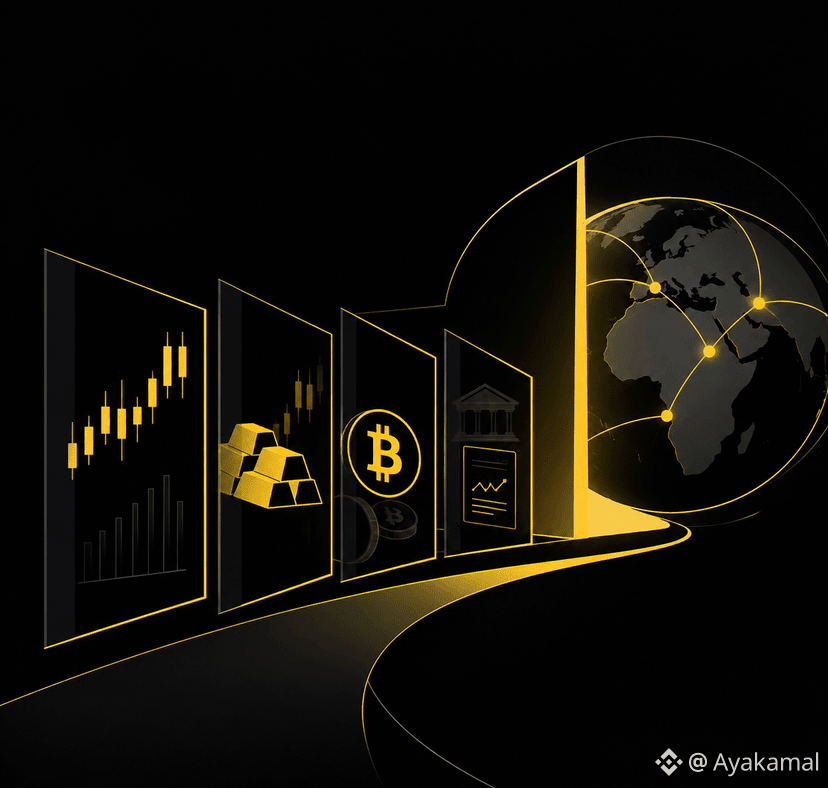
1
3
122
Connectez-vous pour découvrir plus de contenu
Rejoignez la communauté mondiale des adeptes de cryptomonnaies sur Binance Square
⚡️ Suviez les dernières informations importantes sur les cryptomonnaies.
💬 Jugé digne de confiance par la plus grande plateforme d’échange de cryptomonnaies au monde.
👍 Découvrez les connaissances que partagent les créateurs vérifiés.
Adresse e-mail/Nº de téléphone
Sujets d’actualité
UKFCAWinsCourtOrderToRecover851400Pounds
13,179 vues
567 mentions
🚨 CRYPTO REGULATION JUST ENTERED A NEW PHASE: THEY’RE NOT ONLY WRITING RULES — THEY’RE TAKING MONEY BACK.
The UK’s FCA has secured another court-backed asset recovery, reinforcing a broader enforcement push against unauthorized financial and crypto-related activity.
And look at what’s happening simultaneously:
🇬🇧 FCA → enforcement + asset recovery
🇺🇸 SEC → clearer rules for functional crypto assets
🇺🇸 Fed → formal stablecoin supervision under the GENIUS Act
That combination matters.
Regulators are no longer debating whether crypto belongs inside the financial system.
They’re increasingly deciding who gets access, what rules they follow, and what happens when those rules are broken.
The next crypto cycle may not be “regulation vs innovation.”
It may be regulated crypto vs everyone who can’t meet the standard. 👀
$COIN $CRCL $BTC
#ukfcawinscourtordertorecover851400pounds #ChainlinkLaunchesCCIP2WithEnterpriseVerification #GoldFallsTo$4144 #QNTFallsOver40%FromMorningHigh #USDTAdds845900HoldersInPast7Days
KimHotbae
·2 mentions J’aime
·4.1k vues
ChainlinkLaunchesCCIP2WithEnterpriseVerification
27,054 vues
774 mentions
GoldFallsTo$4144
10,491 vues
130 mentions