
#stockoptions
stockoptions
29,840 views
49 Discussing
Hot
Latest

·
--
Trading smarter starts with understanding the market.
Stock options offer traders more ways to manage opportunities and risk. Whether you’re exploring calls, puts, strikes, or expiry dates, learning the basics is the first step.
💡 Keep learning, stay disciplined, and always understand the risks before trading.
#Binance #StockOptions #trading #crypto #Web3
Trading smarter starts with understanding the market.
Stock options offer traders more ways to manage opportunities and risk. Whether you’re exploring calls, puts, strikes, or expiry dates, learning the basics is the first step.
💡 Keep learning, stay disciplined, and always understand the risks before trading.
#Binance #StockOptions #trading #crypto #Web3
Stock options offer traders more ways to manage opportunities and risk. Whether you’re exploring calls, puts, strikes, or expiry dates, learning the basics is the first step.
💡 Keep learning, stay disciplined, and always understand the risks before trading.
#Binance #StockOptions #trading #crypto #Web3
1
66

What are Binance Stock Options? 🚀
I just learned about BStock Options on Binance!
You can trade $AAPL $TSLA $NVDA options with crypto - no need for US stock account.
Key terms:
• CALL = bet price goes up
• PUT = bet price goes down
• STRIKE = your target price
• EXPIRY = when option ends
Perfect for this WOTD week! Theme is Binance Stock Options 📈
Who else is trading Stock Options on Binance?
$BTC #Binance #StockOptions #WOTD
What are Binance Stock Options? 🚀
I just learned about BStock Options on Binance!
You can trade $AAPL $TSLA $NVDA options with crypto - no need for US stock account.
Key terms:
• CALL = bet price goes up
• PUT = bet price goes down
• STRIKE = your target price
• EXPIRY = when option ends
Perfect for this WOTD week! Theme is Binance Stock Options 📈
Who else is trading Stock Options on Binance?
$BTC #Binance #StockOptions #WOTD
I just learned about BStock Options on Binance!
You can trade $AAPL $TSLA $NVDA options with crypto - no need for US stock account.
Key terms:
• CALL = bet price goes up
• PUT = bet price goes down
• STRIKE = your target price
• EXPIRY = when option ends
Perfect for this WOTD week! Theme is Binance Stock Options 📈
Who else is trading Stock Options on Binance?
$BTC #Binance #StockOptions #WOTD
238

·
--
[Haz Click Aquí](https://www.binance.com/activity/word-of-the-day/Binance-Stock-Options?ref=CPA_00LRK0OHT4)
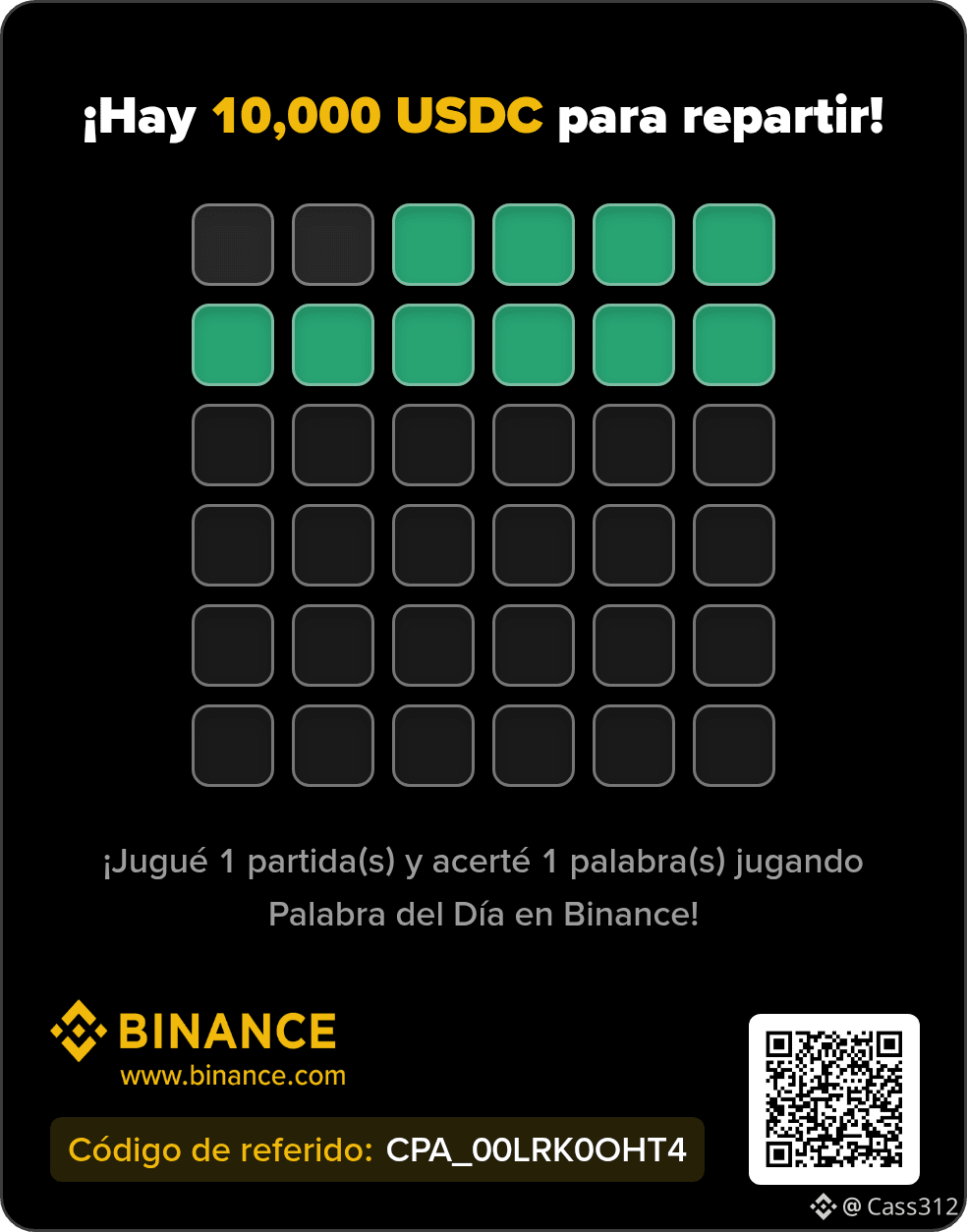
💡 Quick solutions for this week’s Binance WOTD!
If you’re looking to complete your achievements for the 10,000 $USDC pool, here are the key options on the Binance Stock Options topic:
🔸 6 Letters: OPTION, SETTLE, ASSETS, STOCKS, MARGIN
🔸 7 Letters: BULLISH, PREMIUM, TRADING, MARKETS
📌 Do you need to enable your second attempt today?
Tap my link below, leave your link in the comments, and we’ll help each other instantly 👇
#WOTD #BinanceSquare #StockOptions #CryptoTrading #Binance
Haz Click Aquí
💡 Quick solutions for this week’s Binance WOTD!
If you’re looking to complete your achievements for the 10,000 $USDC pool, here are the key options on the Binance Stock Options topic:
🔸 6 Letters: OPTION, SETTLE, ASSETS, STOCKS, MARGIN
🔸 7 Letters: BULLISH, PREMIUM, TRADING, MARKETS
📌 Do you need to enable your second attempt today?
Tap my link below, leave your link in the comments, and we’ll help each other instantly 👇
#WOTD #BinanceSquare #StockOptions #CryptoTrading #Binance
💡 Quick solutions for this week’s Binance WOTD!
If you’re looking to complete your achievements for the 10,000 $USDC pool, here are the key options on the Binance Stock Options topic:
🔸 6 Letters: OPTION, SETTLE, ASSETS, STOCKS, MARGIN
🔸 7 Letters: BULLISH, PREMIUM, TRADING, MARKETS
📌 Do you need to enable your second attempt today?
Tap my link below, leave your link in the comments, and we’ll help each other instantly 👇
#WOTD #BinanceSquare #StockOptions #CryptoTrading #Binance
28

·
--
Market doesn’t slip up; it tests...
90% of people take RISK by getting confused between PUT and CALL,
and the other 10% settle after misunderstanding PREMIUM.
Remember, Stock Options are not gambling,
Understand the CONTRACT and EXERCISE before EXPIRY.
The one who wins the trade is the one whose STRIKE has patience.
#BİNANCE #StockOptions #cryptotrading #WOTD
Market doesn’t slip up; it tests...
90% of people take RISK by getting confused between PUT and CALL,
and the other 10% settle after misunderstanding PREMIUM.
Remember, Stock Options are not gambling,
Understand the CONTRACT and EXERCISE before EXPIRY.
The one who wins the trade is the one whose STRIKE has patience.
#BİNANCE #StockOptions #cryptotrading #WOTD
90% of people take RISK by getting confused between PUT and CALL,
and the other 10% settle after misunderstanding PREMIUM.
Remember, Stock Options are not gambling,
Understand the CONTRACT and EXERCISE before EXPIRY.
The one who wins the trade is the one whose STRIKE has patience.
#BİNANCE #StockOptions #cryptotrading #WOTD
69

·
--
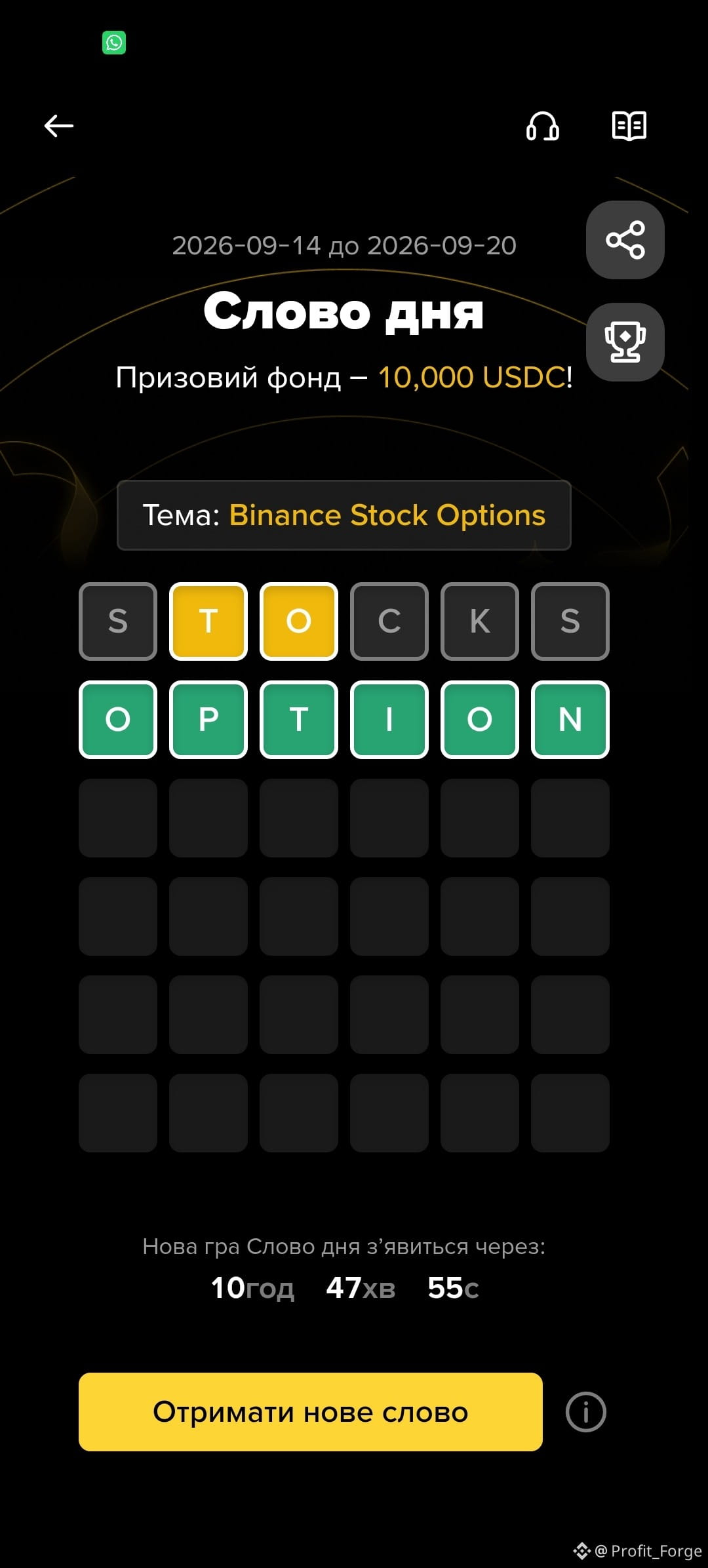
💡 WORD OF THE DAY BINANCE WOTD SOLVED! 🎯🔥
Today's 6-letter word in the WOTD quiz has been successfully guessed! 🥳✨
Word of the day: OPTION 🎯
Why this word?
This week's theme is Binance Stock Options (Stock options). The word OPTION (option) is a fundamental concept of this topic. It is a financial instrument that gives a trader the right (but not the obligation) to buy or sell an asset at a pre-agreed price in the future.
We’re learning the basics, solving the WOTD, and accumulating points to exchange for vouchers in the Rewards Hub! 🏆
💬 Have you already claimed your points for today? Write in the comments which attempt you got it on! 👇
#Binance #WOTD #WORDOFTHEDAY✅ #crypto #StockOptions
$BNB $BTC $SOL
💡 WORD OF THE DAY BINANCE WOTD SOLVED! 🎯🔥
Today's 6-letter word in the WOTD quiz has been successfully guessed! 🥳✨
Word of the day: OPTION 🎯
Why this word?
This week's theme is Binance Stock Options (Stock options). The word OPTION (option) is a fundamental concept of this topic. It is a financial instrument that gives a trader the right (but not the obligation) to buy or sell an asset at a pre-agreed price in the future.
We’re learning the basics, solving the WOTD, and accumulating points to exchange for vouchers in the Rewards Hub! 🏆
💬 Have you already claimed your points for today? Write in the comments which attempt you got it on! 👇
#Binance #WOTD #WORDOFTHEDAY✅ #crypto #StockOptions
$BNB $BTC $SOL
Today's 6-letter word in the WOTD quiz has been successfully guessed! 🥳✨
Word of the day: OPTION 🎯
Why this word?
This week's theme is Binance Stock Options (Stock options). The word OPTION (option) is a fundamental concept of this topic. It is a financial instrument that gives a trader the right (but not the obligation) to buy or sell an asset at a pre-agreed price in the future.
We’re learning the basics, solving the WOTD, and accumulating points to exchange for vouchers in the Rewards Hub! 🏆
💬 Have you already claimed your points for today? Write in the comments which attempt you got it on! 👇
#Binance #WOTD #WORDOFTHEDAY✅ #crypto #StockOptions
$BNB $BTC $SOL
4
769

·
--
Bullish
🚀 Master Binance Stock Options: Trade Top Stocks with Crypto! 📈
Did you know you can now get exposure to traditional stock markets directly through Binance? With Binance Stock Options, traders can speculate on price movements of top global stocks using crypto!
💡 Key Takeaways for Traders:
Flexibility: Trade Call & Put stock options seamlessly.
Risk Management: Hedge your crypto portfolio against broader equity market moves.
Liquidity: Deep liquidity and user-friendly interface for execution.
Whether you're looking to lock in a CONTRACT or execute a smart option STRATEGY, understanding option mechanics is key to boosting your trading edge.
What's your top stock option pick this week? Let’s discuss in the comments! 👇
#Binance #StockOptions #CryptoTrading. #WriteToEarn #TradingStrategy
🚀 Master Binance Stock Options: Trade Top Stocks with Crypto! 📈
Did you know you can now get exposure to traditional stock markets directly through Binance? With Binance Stock Options, traders can speculate on price movements of top global stocks using crypto!
💡 Key Takeaways for Traders:
Flexibility: Trade Call & Put stock options seamlessly.
Risk Management: Hedge your crypto portfolio against broader equity market moves.
Liquidity: Deep liquidity and user-friendly interface for execution.
Whether you're looking to lock in a CONTRACT or execute a smart option STRATEGY, understanding option mechanics is key to boosting your trading edge.
What's your top stock option pick this week? Let’s discuss in the comments! 👇
#Binance #StockOptions #CryptoTrading. #WriteToEarn #TradingStrategy
Did you know you can now get exposure to traditional stock markets directly through Binance? With Binance Stock Options, traders can speculate on price movements of top global stocks using crypto!
💡 Key Takeaways for Traders:
Flexibility: Trade Call & Put stock options seamlessly.
Risk Management: Hedge your crypto portfolio against broader equity market moves.
Liquidity: Deep liquidity and user-friendly interface for execution.
Whether you're looking to lock in a CONTRACT or execute a smart option STRATEGY, understanding option mechanics is key to boosting your trading edge.
What's your top stock option pick this week? Let’s discuss in the comments! 👇
#Binance #StockOptions #CryptoTrading. #WriteToEarn #TradingStrategy
53

Binance Stock Options: What should traders Know
Stock options give traders the right, but not the obligation, to buy or sell an underlying asset at a prodetermined price before or at experations.
Key Concepts:
strike Price - The predetermined price at which the underlying asset could be bought or sold.
Premium ‐The price paid to purchase an options Contract.
Call Option - Generally used when expecting the underlyimg asset to rise
Put Option - Generally used when expecting the undelying asset to fall
Risk Management - Options can provide flexibility, but leverage and market volatility can also magnify losses.
#Binance #StockOptions $BTC $ETH $BNB
{spot}(ETHUSDT)
{spot}(BTCUSDT)
Binance Stock Options: What should traders Know
Stock options give traders the right, but not the obligation, to buy or sell an underlying asset at a prodetermined price before or at experations.
Key Concepts:
strike Price - The predetermined price at which the underlying asset could be bought or sold.
Premium ‐The price paid to purchase an options Contract.
Call Option - Generally used when expecting the underlyimg asset to rise
Put Option - Generally used when expecting the undelying asset to fall
Risk Management - Options can provide flexibility, but leverage and market volatility can also magnify losses.
#Binance #StockOptions $BTC $ETH $BNB
Stock options give traders the right, but not the obligation, to buy or sell an underlying asset at a prodetermined price before or at experations.
Key Concepts:
strike Price - The predetermined price at which the underlying asset could be bought or sold.
Premium ‐The price paid to purchase an options Contract.
Call Option - Generally used when expecting the underlyimg asset to rise
Put Option - Generally used when expecting the undelying asset to fall
Risk Management - Options can provide flexibility, but leverage and market volatility can also magnify losses.
#Binance #StockOptions $BTC $ETH $BNB
71

·
--
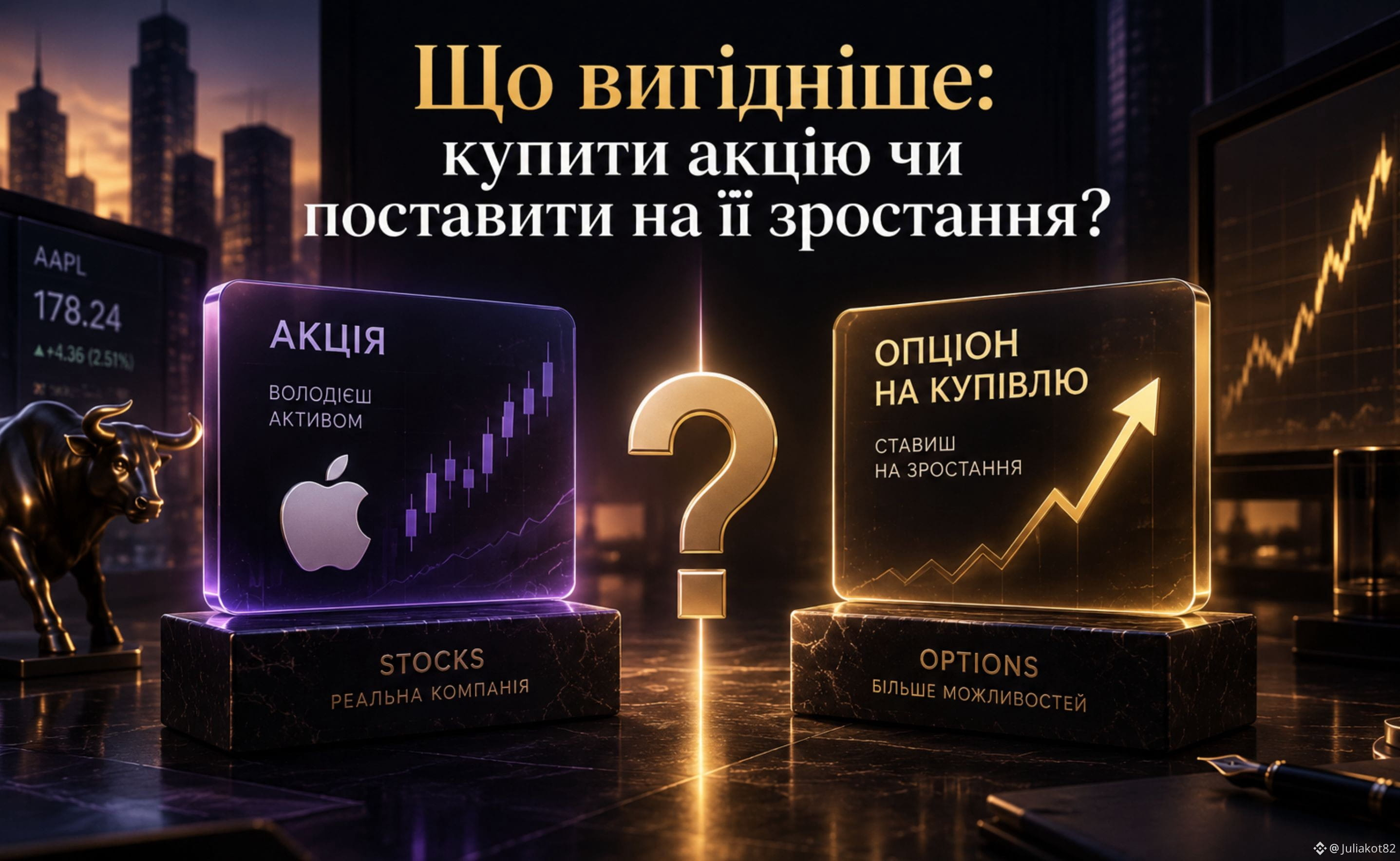
🔥 What is more profitable: buying a stock or betting on its rise?
At first glance, everything seems simple:
You think the stock will go up → you buy the stock.
But there is another option — a call option on buying the stock.
The difference is what exactly you get.
When you buy a stock, you get the underlying asset itself.
When you buy an option, you get the right to buy the stock at a specified price before the expiration date. A premium is paid for this.
📈 The stock rises
The stock’s value increases. The option may also become more expensive, but its outcome depends not only on the stock’s movement.
📉 The stock falls
The stock owner sees their position’s value decline. The option buyer risks losing the premium paid.
⏳ The stock hardly moves
For the stock, nothing critical happens — you can keep holding it. But the option has an expiration date, and time works against the buyer.
So the question is not only about what is more profitable.
A stock is a bet on the asset itself.
An option is a bet on the stock moving in the right direction at the right time.
And that’s the main difference:
when you buy a stock, you can wait.
When you buy an option, you’re limited by time.
#StockOptions #TradFi
🔥 What is more profitable: buying a stock or betting on its rise?
At first glance, everything seems simple:
You think the stock will go up → you buy the stock.
But there is another option — a call option on buying the stock.
The difference is what exactly you get.
When you buy a stock, you get the underlying asset itself.
When you buy an option, you get the right to buy the stock at a specified price before the expiration date. A premium is paid for this.
📈 The stock rises
The stock’s value increases. The option may also become more expensive, but its outcome depends not only on the stock’s movement.
📉 The stock falls
The stock owner sees their position’s value decline. The option buyer risks losing the premium paid.
⏳ The stock hardly moves
For the stock, nothing critical happens — you can keep holding it. But the option has an expiration date, and time works against the buyer.
So the question is not only about what is more profitable.
A stock is a bet on the asset itself.
An option is a bet on the stock moving in the right direction at the right time.
And that’s the main difference:
when you buy a stock, you can wait.
When you buy an option, you’re limited by time.
#StockOptions #TradFi
At first glance, everything seems simple:
You think the stock will go up → you buy the stock.
But there is another option — a call option on buying the stock.
The difference is what exactly you get.
When you buy a stock, you get the underlying asset itself.
When you buy an option, you get the right to buy the stock at a specified price before the expiration date. A premium is paid for this.
📈 The stock rises
The stock’s value increases. The option may also become more expensive, but its outcome depends not only on the stock’s movement.
📉 The stock falls
The stock owner sees their position’s value decline. The option buyer risks losing the premium paid.
⏳ The stock hardly moves
For the stock, nothing critical happens — you can keep holding it. But the option has an expiration date, and time works against the buyer.
So the question is not only about what is more profitable.
A stock is a bet on the asset itself.
An option is a bet on the stock moving in the right direction at the right time.
And that’s the main difference:
when you buy a stock, you can wait.
When you buy an option, you’re limited by time.
#StockOptions #TradFi
54

·
--
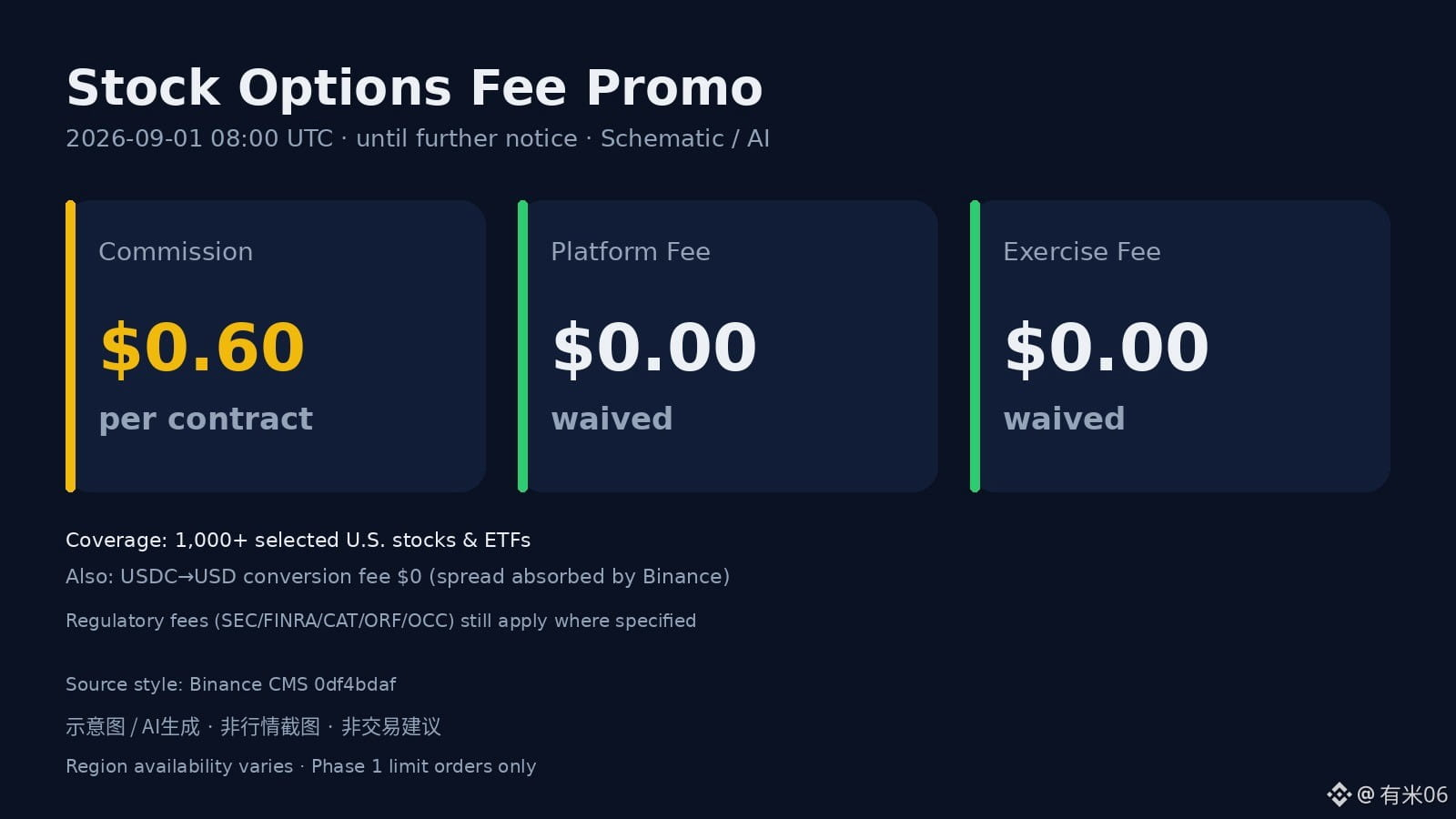
Instant conclusion: Binance US stock/ETF stock options and futures trading fees — commission is $0.60 per contract; platform fee and exercise fee are $0. The USDC to USD conversion fee is also $0.
According to Binance CMS announcement (code 0df4bdaf, effective from 2026-09-01 08:00 UTC until further notice): covers 1000+ selected US stocks and ETFs; during the promo period, commission is $0.60/contract, with all platform and exercise fees waived; the USDC→USD conversion fee is covered by Binance via the spread. Regulatory and clearing fees such as SEC/FINRA/CAT/ORF/OCC are still charged per the rules. This round only allows limit orders. Whether you can enable it varies by region—you must complete the suitability assessment and sign the disclaimer.
Independent review: Coinlive’s 2026-09-14 news bulletin restates the same details — $0.60 commission, platform fee at zero, USDC to USD conversion fee waived, and the start/end times and list of regulatory fees match.
The image is for illustration/AI-generated, not a screenshot of market quotes.
Data as of: 2026-09-14 (CMS promo terms; Coinlive rechecked on the same day)
For information sharing only and does not constitute investment advice.
#币安 #StockOptions
Instant conclusion: Binance US stock/ETF stock options and futures trading fees — commission is $0.60 per contract; platform fee and exercise fee are $0. The USDC to USD conversion fee is also $0.
According to Binance CMS announcement (code 0df4bdaf, effective from 2026-09-01 08:00 UTC until further notice): covers 1000+ selected US stocks and ETFs; during the promo period, commission is $0.60/contract, with all platform and exercise fees waived; the USDC→USD conversion fee is covered by Binance via the spread. Regulatory and clearing fees such as SEC/FINRA/CAT/ORF/OCC are still charged per the rules. This round only allows limit orders. Whether you can enable it varies by region—you must complete the suitability assessment and sign the disclaimer.
Independent review: Coinlive’s 2026-09-14 news bulletin restates the same details — $0.60 commission, platform fee at zero, USDC to USD conversion fee waived, and the start/end times and list of regulatory fees match.
The image is for illustration/AI-generated, not a screenshot of market quotes.
Data as of: 2026-09-14 (CMS promo terms; Coinlive rechecked on the same day)
For information sharing only and does not constitute investment advice.
#币安 #StockOptions
According to Binance CMS announcement (code 0df4bdaf, effective from 2026-09-01 08:00 UTC until further notice): covers 1000+ selected US stocks and ETFs; during the promo period, commission is $0.60/contract, with all platform and exercise fees waived; the USDC→USD conversion fee is covered by Binance via the spread. Regulatory and clearing fees such as SEC/FINRA/CAT/ORF/OCC are still charged per the rules. This round only allows limit orders. Whether you can enable it varies by region—you must complete the suitability assessment and sign the disclaimer.
Independent review: Coinlive’s 2026-09-14 news bulletin restates the same details — $0.60 commission, platform fee at zero, USDC to USD conversion fee waived, and the start/end times and list of regulatory fees match.
The image is for illustration/AI-generated, not a screenshot of market quotes.
Data as of: 2026-09-14 (CMS promo terms; Coinlive rechecked on the same day)
For information sharing only and does not constitute investment advice.
#币安 #StockOptions
13

What I learned from Binance Stock Options Theme:
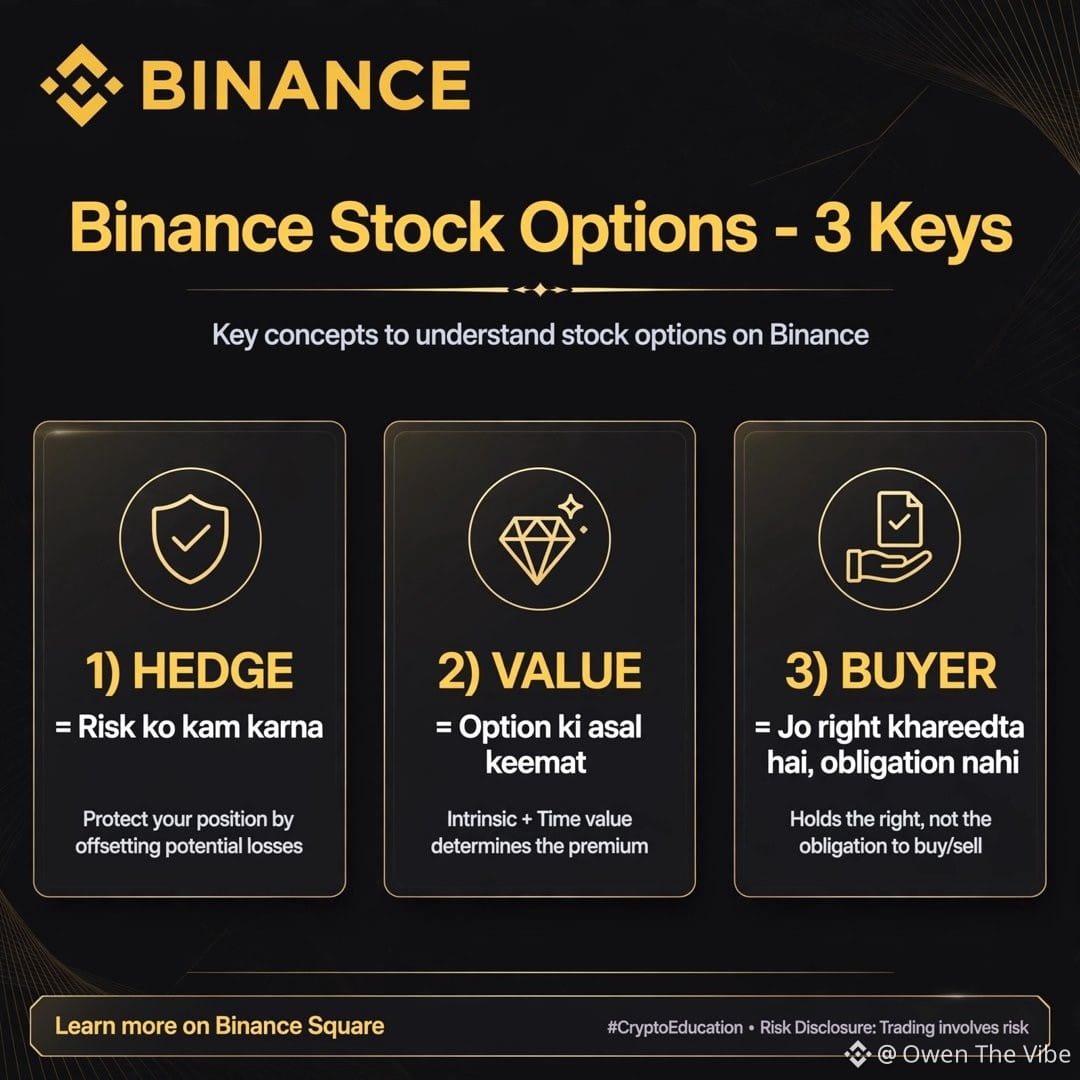
1. HEDGE = Risk ko kam karna
2. VALUE = Option ki asal keemat
3. BUYER = Jo right khareedta hai, obligation nahi
Crypto is not just BUY/SELL, it's about strategy.
Do you trade Stock Options on Binance? YES / NO?
#BinanceSquare #learnAndEarn #BinanceAcademy #StockOptions
What I learned from Binance Stock Options Theme:
1. HEDGE = Risk ko kam karna
2. VALUE = Option ki asal keemat
3. BUYER = Jo right khareedta hai, obligation nahi
Crypto is not just BUY/SELL, it's about strategy.
Do you trade Stock Options on Binance? YES / NO?
#BinanceSquare #learnAndEarn #BinanceAcademy #StockOptions
1. HEDGE = Risk ko kam karna
2. VALUE = Option ki asal keemat
3. BUYER = Jo right khareedta hai, obligation nahi
Crypto is not just BUY/SELL, it's about strategy.
Do you trade Stock Options on Binance? YES / NO?
#BinanceSquare #learnAndEarn #BinanceAcademy #StockOptions
1
70

I'm new to Binance and this week I finally understood what Stock Options are thanks to WOTD
I started not long ago and I’ll be honest—I was even scared to click on some tabs.
This week the Word of the Day topic was Binance Stock Options, so I looked it up to figure out what it was in order to get the word right. I ended up learning more than if I had watched 10 videos.
What I understood as a beginner (correct me if I’m wrong in the comments):
Stock Options is kind of like a contract where you have the RIGHT to buy or sell a stock at a set price, but not the OBLIGATION.
If it works, you exercise it; if it doesn’t, you let it expire. That’s why there are terms like PREMIUM, CALL, PUT, RISK...
It makes a lot of sense for people who want to protect themselves. Example: I’m afraid the $BTC might drop, but I don’t want to sell now. I can use an option like a "safety net".
I’m still pretty early on, learning the basics of HEDGE, EXPIRY, STRIKE... but it was already worth it just to understand that there’s a more "secure" way to trade than getting leveraged in the future.
Does anyone here already use Stock Options to protect themselves? How did you start studying it without getting lost?
#BinanceIniciante #StockOptions #WOTD #AprendendoCripto
{spot}(BTCUSDT)
I'm new to Binance and this week I finally understood what Stock Options are thanks to WOTD
I started not long ago and I’ll be honest—I was even scared to click on some tabs.
This week the Word of the Day topic was Binance Stock Options, so I looked it up to figure out what it was in order to get the word right. I ended up learning more than if I had watched 10 videos.
What I understood as a beginner (correct me if I’m wrong in the comments):
Stock Options is kind of like a contract where you have the RIGHT to buy or sell a stock at a set price, but not the OBLIGATION.
If it works, you exercise it; if it doesn’t, you let it expire. That’s why there are terms like PREMIUM, CALL, PUT, RISK...
It makes a lot of sense for people who want to protect themselves. Example: I’m afraid the $BTC might drop, but I don’t want to sell now. I can use an option like a "safety net".
I’m still pretty early on, learning the basics of HEDGE, EXPIRY, STRIKE... but it was already worth it just to understand that there’s a more "secure" way to trade than getting leveraged in the future.
Does anyone here already use Stock Options to protect themselves? How did you start studying it without getting lost?
#BinanceIniciante #StockOptions #WOTD #AprendendoCripto
I started not long ago and I’ll be honest—I was even scared to click on some tabs.
This week the Word of the Day topic was Binance Stock Options, so I looked it up to figure out what it was in order to get the word right. I ended up learning more than if I had watched 10 videos.
What I understood as a beginner (correct me if I’m wrong in the comments):
Stock Options is kind of like a contract where you have the RIGHT to buy or sell a stock at a set price, but not the OBLIGATION.
If it works, you exercise it; if it doesn’t, you let it expire. That’s why there are terms like PREMIUM, CALL, PUT, RISK...
It makes a lot of sense for people who want to protect themselves. Example: I’m afraid the $BTC might drop, but I don’t want to sell now. I can use an option like a "safety net".
I’m still pretty early on, learning the basics of HEDGE, EXPIRY, STRIKE... but it was already worth it just to understand that there’s a more "secure" way to trade than getting leveraged in the future.
Does anyone here already use Stock Options to protect themselves? How did you start studying it without getting lost?
#BinanceIniciante #StockOptions #WOTD #AprendendoCripto
1
425

·
--
📈 Understanding EQUITY in Options Trading on Binance
In options and stock trading, the value of your portfolio isn’t just your cash: it’s your EQUITY (shareholders’ equity) that reflects the true health of your account.
💡 Why monitor your EQUITY?
Real-time assessment:
It calculates the net value of your open positions (Call/Put) adjusted to the market price.
Margin management:
Strong equity helps you avoid the risk of liquidation during volatility spikes.
Informed decision-making:
Essential for balancing your risk/reward ratio.
Rigorous capital management is the key to performing over the long term.
💬 Which indicator do you prioritize before opening a position? Share your opinion in the comments! 👇
#BinanceSquare #StockOptions #TradingStrategy
📈 Understanding EQUITY in Options Trading on Binance
In options and stock trading, the value of your portfolio isn’t just your cash: it’s your EQUITY (shareholders’ equity) that reflects the true health of your account.
💡 Why monitor your EQUITY?
Real-time assessment:
It calculates the net value of your open positions (Call/Put) adjusted to the market price.
Margin management:
Strong equity helps you avoid the risk of liquidation during volatility spikes.
Informed decision-making:
Essential for balancing your risk/reward ratio.
Rigorous capital management is the key to performing over the long term.
💬 Which indicator do you prioritize before opening a position? Share your opinion in the comments! 👇
#BinanceSquare #StockOptions #TradingStrategy
In options and stock trading, the value of your portfolio isn’t just your cash: it’s your EQUITY (shareholders’ equity) that reflects the true health of your account.
💡 Why monitor your EQUITY?
Real-time assessment:
It calculates the net value of your open positions (Call/Put) adjusted to the market price.
Margin management:
Strong equity helps you avoid the risk of liquidation during volatility spikes.
Informed decision-making:
Essential for balancing your risk/reward ratio.
Rigorous capital management is the key to performing over the long term.
💬 Which indicator do you prioritize before opening a position? Share your opinion in the comments! 👇
#BinanceSquare #StockOptions #TradingStrategy
1
302

Binance officially launches stock options trading, covering over 1,000 US stocks and ETFs, and offering an ultra-low fee rate of $0.60 per contract. Liquidity continues to expand, which is positive for overall risk-asset trading sentiment.🚀 #Binance #StockOptions #OptionsTrading
Binance officially launches stock options trading, covering over 1,000 US stocks and ETFs, and offering an ultra-low fee rate of $0.60 per contract. Liquidity continues to expand, which is positive for overall risk-asset trading sentiment.🚀 #Binance #StockOptions #OptionsTrading
7
·
--
[Participa Aquí](https://www.binance.com/activity/word-of-the-day/Binance-Stock-Options?ref=CPA_00LRK0OHT4)
🎯 We keep adding in this week's Binance WOTD!
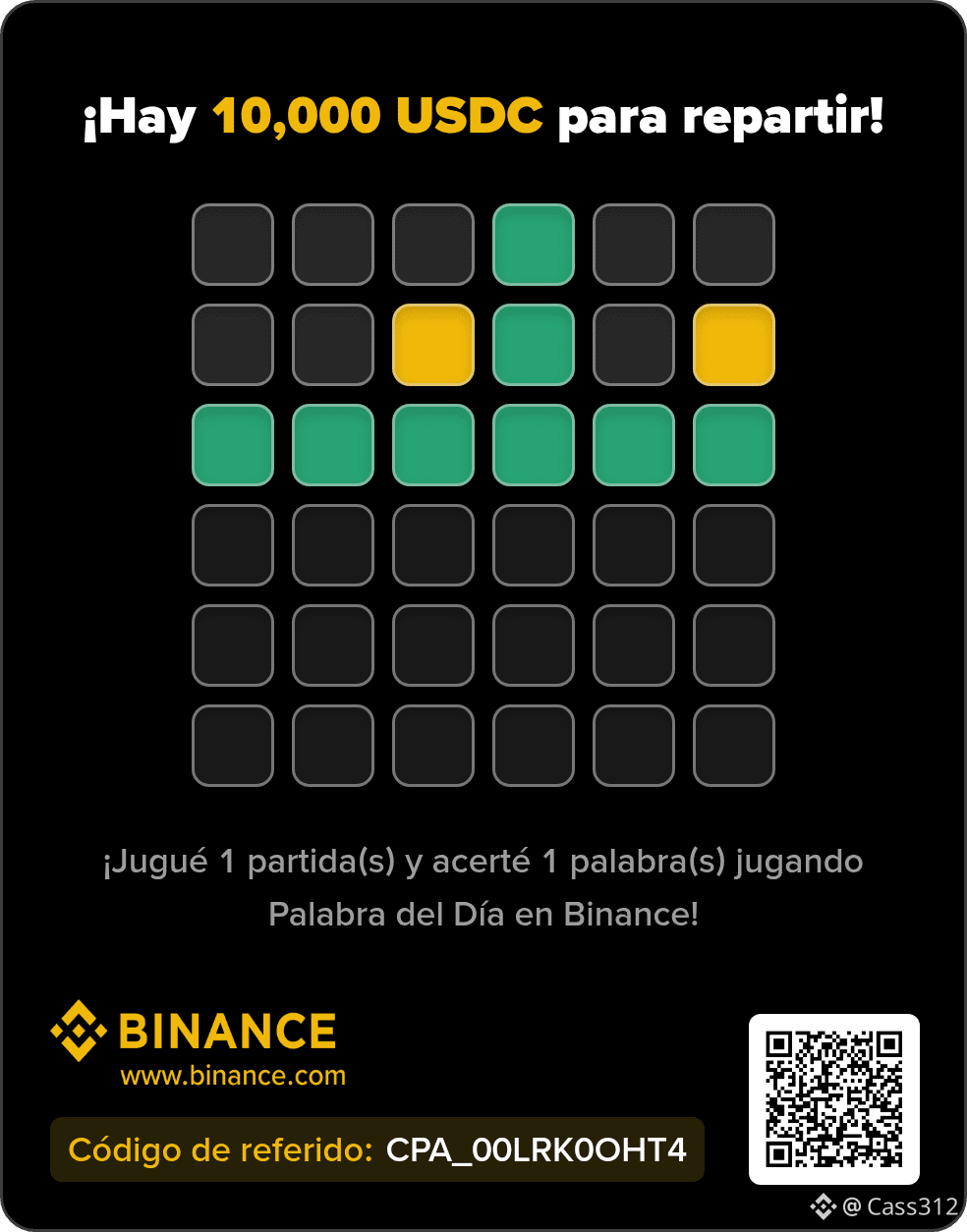
This round comes with the theme Binance Stock Options to distribute 10,000 $USDC 💰
Haven't you finished your second attempt of the day yet? Let's support each other: click my link to give me an attempt and leave yours in the comments so I can return the favor 👇
#WOTD #BinanceSquare #StockOptions #CryptoTrading #USDC
Participa Aquí
🎯 We keep adding in this week's Binance WOTD!
This round comes with the theme Binance Stock Options to distribute 10,000 $USDC 💰
Haven't you finished your second attempt of the day yet? Let's support each other: click my link to give me an attempt and leave yours in the comments so I can return the favor 👇
#WOTD #BinanceSquare #StockOptions #CryptoTrading #USDC
🎯 We keep adding in this week's Binance WOTD!
This round comes with the theme Binance Stock Options to distribute 10,000 $USDC 💰
Haven't you finished your second attempt of the day yet? Let's support each other: click my link to give me an attempt and leave yours in the comments so I can return the favor 👇
#WOTD #BinanceSquare #StockOptions #CryptoTrading #USDC
1
162
·
--
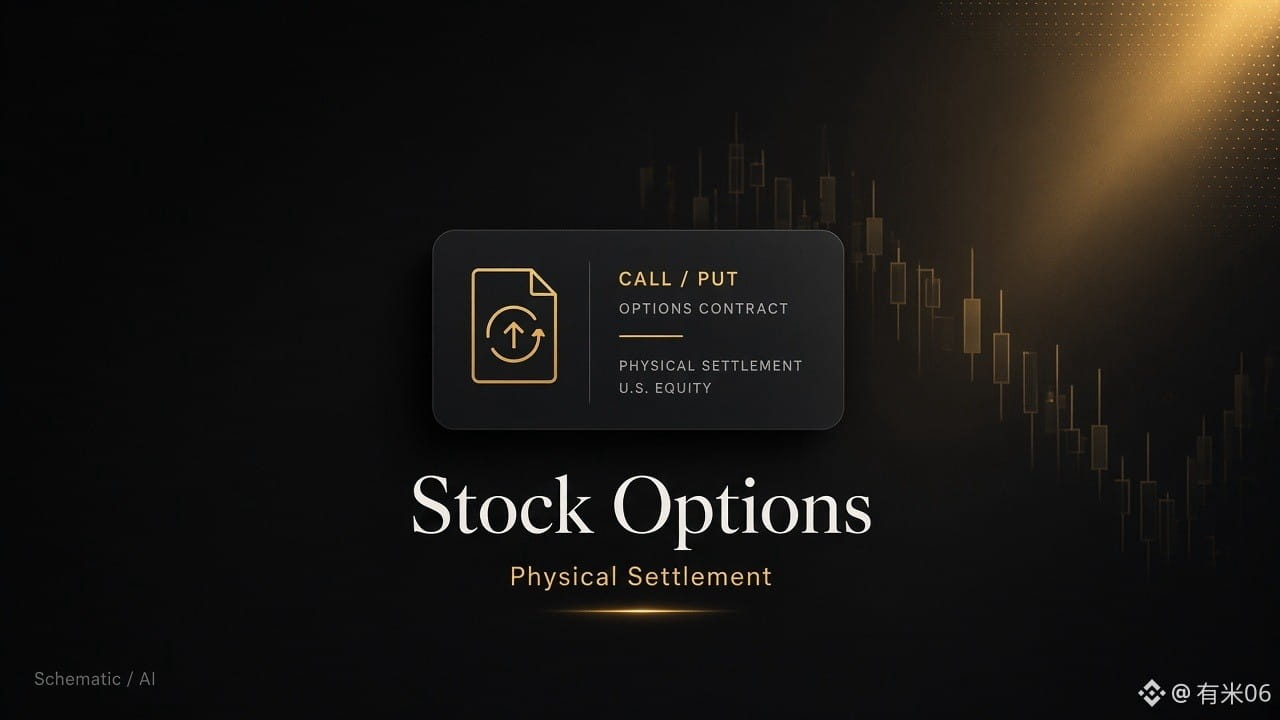
Binance has launched Stock Options for U.S. stocks and ETFs, with physical delivery.
According to the Binance official announcement and PR Newswire (2026-09-01): orders are routed through Nest Trading Limited (an ADGM-regulated broker) as introducing broker, with execution, clearing, and custody handled by Alpaca Securities; the underlying universe covers 1,000+ selected U.S. stocks/ETFs. At this stage, only Buy Call / Put is supported (no shorting / opening sell positions), and the buyer's maximum loss is limited to the premium paid; Phase 1 mainly uses limit orders. Regular trading hours are approximately 9:30–16:00 ET (some ETF/ETN options may extend to 16:15).
This, together with spot stocks, bStocks, and stock-related perpetuals, belongs to the TradFi product line and is not a futures-style trading signal. Availability varies by regional compliance; suitability assessment and risk acknowledgment must be completed before trading.
Data as of: 2026-09-01 (announcement released) | Organized: 2026-09-07 02:15 UTC
For information sharing only, not investment advice.
#币安 #StockOptions #TradFi
Binance has launched Stock Options for U.S. stocks and ETFs, with physical delivery.
According to the Binance official announcement and PR Newswire (2026-09-01): orders are routed through Nest Trading Limited (an ADGM-regulated broker) as introducing broker, with execution, clearing, and custody handled by Alpaca Securities; the underlying universe covers 1,000+ selected U.S. stocks/ETFs. At this stage, only Buy Call / Put is supported (no shorting / opening sell positions), and the buyer's maximum loss is limited to the premium paid; Phase 1 mainly uses limit orders. Regular trading hours are approximately 9:30–16:00 ET (some ETF/ETN options may extend to 16:15).
This, together with spot stocks, bStocks, and stock-related perpetuals, belongs to the TradFi product line and is not a futures-style trading signal. Availability varies by regional compliance; suitability assessment and risk acknowledgment must be completed before trading.
Data as of: 2026-09-01 (announcement released) | Organized: 2026-09-07 02:15 UTC
For information sharing only, not investment advice.
#币安 #StockOptions #TradFi
According to the Binance official announcement and PR Newswire (2026-09-01): orders are routed through Nest Trading Limited (an ADGM-regulated broker) as introducing broker, with execution, clearing, and custody handled by Alpaca Securities; the underlying universe covers 1,000+ selected U.S. stocks/ETFs. At this stage, only Buy Call / Put is supported (no shorting / opening sell positions), and the buyer's maximum loss is limited to the premium paid; Phase 1 mainly uses limit orders. Regular trading hours are approximately 9:30–16:00 ET (some ETF/ETN options may extend to 16:15).
This, together with spot stocks, bStocks, and stock-related perpetuals, belongs to the TradFi product line and is not a futures-style trading signal. Availability varies by regional compliance; suitability assessment and risk acknowledgment must be completed before trading.
Data as of: 2026-09-01 (announcement released) | Organized: 2026-09-07 02:15 UTC
For information sharing only, not investment advice.
#币安 #StockOptions #TradFi
59

Article
The Complete Loop: How Stock Options Complete Binance’s Crypto-and-TradFi StackWhat if your market view could start with crypto, extend into stocks, and still give you a way to reshape your risk without leaving the same account? That is essentially what Binance is building with the addition of Stock Options: a unified stack where Spot, bStocks, Perpetuals and now Stock Options can sit together, giving traders different tools for expressing, managing and adjusting the same conviction.
For years, crypto and traditional finance have existed in separate boxes. You would buy crypto on one platform, stocks on another, options somewhere else, and move money between them whenever your strategy changed. Binance is taking a very different approach: instead of making users move between financial ecosystems, it is bringing more of those instruments into one.
And the addition of Stock Options is important because options don't simply add another asset to the list. They add an entirely different way of thinking about risk.
The Missing Piece Wasn't Another Asset
Spot gives you direct exposure. Perpetuals allow you to trade directional moves with leverage. bStocks provide access to stock exposure. Stock Options introduce something different: non-linear exposure.
That sounds complicated, but the basic idea is actually straightforward.
With a traditional spot position, the relationship between the asset and your position is relatively direct. If an asset rises 10%, your position generally rises around 10%, before fees and other considerations. If it falls 10%, your position generally falls around 10%.
Options don't behave that way. The value of an option can change at a different rate depending on the underlying asset's price, time remaining until expiration, implied volatility and other factors. This creates a payoff profile that isn't simply a one-for-one reflection of the underlying asset. That is what makes options so powerful, and also why they require more understanding.
Calls and Puts: The Two Basic Building Blocks
At launch, Binance Stock Options support buying long calls and long puts. A call option gives the buyer the right, but not the obligation, to buy the underlying stock at a predetermined strike price before or at expiration, depending on the contract terms. A put option gives the buyer the right, but not the obligation, to sell the underlying stock at a predetermined strike price. You don't need to own the stock simply to buy a call or put. Instead, you pay a premium for the option contract. This premium is important because it defines the maximum loss for a long option position. If the option expires worthless, the buyer can lose the premium paid, but cannot lose more than that amount on the option itself. That is what makes long options particularly interesting from a risk-management perspective: the downside is defined before the trade is placed. Of course, defined risk doesn't mean low risk. An option can expire worthless, resulting in a 100% loss of the premium paid. Understanding the contract, strike, expiration and premium is therefore essential before entering the trade.
Why "Non-Linear" Matters
Let's make this practical. Imagine you are bullish on a particular stock but don't necessarily want to commit the same amount of capital required to buy the shares outright. A call option can give you exposure to an upside move by paying a premium rather than purchasing the full underlying position. But the important word here is can.
The option doesn't simply track the stock tick-for-tick. As the stock moves closer to or further away from the strike price, the option's sensitivity can change. Time also works against the option buyer as expiration approaches, all else being equal.
So you aren't just betting on direction. You are effectively taking a view on direction + timing + price movement, with volatility also playing an important role. That is why options are more sophisticated instruments than simply buying an asset and waiting for it to appreciate.
The Other Side of the Trade: Puts
The same concept works in the opposite direction. Suppose you have a bearish view on a stock. Instead of selling shares you already own, or using a leveraged product, buying a put can provide downside exposure through a defined-premium position. There is another interesting use case for puts, especially for investors who already have a portfolio. Imagine you have a long-term position that you still believe in, but you are concerned about a potential short-term drawdown.
Selling everything would eliminate your exposure, but it would also mean abandoning the conviction behind the original investment. A put can potentially serve as a form of downside protection, depending on its structure and how the position is managed. This is where the idea of an options overlay becomes relevant. You don't necessarily have to replace your core position with options. You can potentially use a modest options position alongside it to change the risk profile around your existing exposure.
Protecting Conviction Without Abandoning It
This is particularly interesting for crypto-native investors. Imagine you have built a portfolio around a long-term belief in crypto, but you also have exposure to companies connected to the broader digital-asset ecosystem. A sudden risk-off move in global markets could hit both crypto and equities. Your first instinct might be to close everything. But there is a third possibility: keep the core position while using another instrument to manage a specific risk. That is one of the most interesting characteristics of options. They can allow you to separate two decisions that are often treated as one: "Do I still believe in the asset?" and "Do I want to take all of the short-term risk associated with holding it right now?"
Those are not necessarily the same question. A long-term investor might remain bullish while being concerned about a near-term correction. An options overlay can potentially address the second concern without forcing the investor to completely abandon the first.
It isn't a magic hedge, and it comes at a cost, the premium paid and the possibility that the option expires worthless. But conceptually, it gives investors another lever between simply holding and completely exiting.
One Account, Four Different Tools
This is where the broader Binance story becomes more interesting than the options product itself. Think of the stack as four different ways to express a market view.
Spot gives you direct ownership or exposure to crypto assets.Perpetuals allow you to take leveraged long or short positions and express a directional view without owning the underlying asset.bStocks connect the platform to stock exposure, bringing selected traditional-market assets into the same environment.
And now
Stock Options add a defined-risk, non-linear instrument that can be used for directional strategies, tactical positioning or potential hedging.
These aren't interchangeable products. They serve different purposes. That distinction is important because a sophisticated portfolio isn't necessarily one where every position does the same thing. It can be one where different instruments are deliberately used for different jobs.
The Same View Can Have Different Expressions
Let's say your overall view is bullish. You could buy spot because you believe the underlying asset will appreciate. You could use a perpetual if you want leveraged directional exposure. You could buy a stock connected to a theme you believe will benefit from the same macro trend. Or you could use a call option if you want defined downside on the premium while maintaining upside exposure to a particular stock. The underlying conviction may be similar, but the expression is completely different. This is an important concept for anyone moving beyond simply asking, "What should I buy?" The more useful question becomes: "What is the most appropriate instrument for the risk I am willing to take?" That is where a unified platform starts becoming more than a convenience.
From Trading Products to a Financial Toolkit
Binance's broader strategy becomes easier to understand when you look at these products as pieces of one toolkit rather than isolated launches. A trader doesn't wake up every morning with only one possible market scenario. Sometimes the view is bullish. Sometimes it is bearish. Sometimes the trader is bullish long term but cautious in the short term. Sometimes the market is moving sideways and the best decision is simply to wait. Different market conditions call for different tools. The addition of Stock Options gives users another instrument to work with when their view becomes more nuanced than simply "up" or "down." And that is perhaps the biggest educational takeaway: financial instruments aren't just different ways of making money. They are different ways of taking risk.
Real Shares Behind the Options
There is another detail that makes Binance's Stock Options worth understanding. The contracts are physically settled rather than cash-settled. The underlying U.S.-listed shares are real shares custodied by Alpaca on behalf of Binance users.
For a call, exercising the option results in the underlying shares being delivered to the account. For a put, the relevant shares are delivered as part of the exercise process. That makes the product structurally connected to the underlying equity market rather than simply creating a cash-only payoff. Binance currently offers options on more than 1,000 selected U.S.-listed stocks and ETFs, with more expected to be added over time.
The Wallet Is Part of the Experience
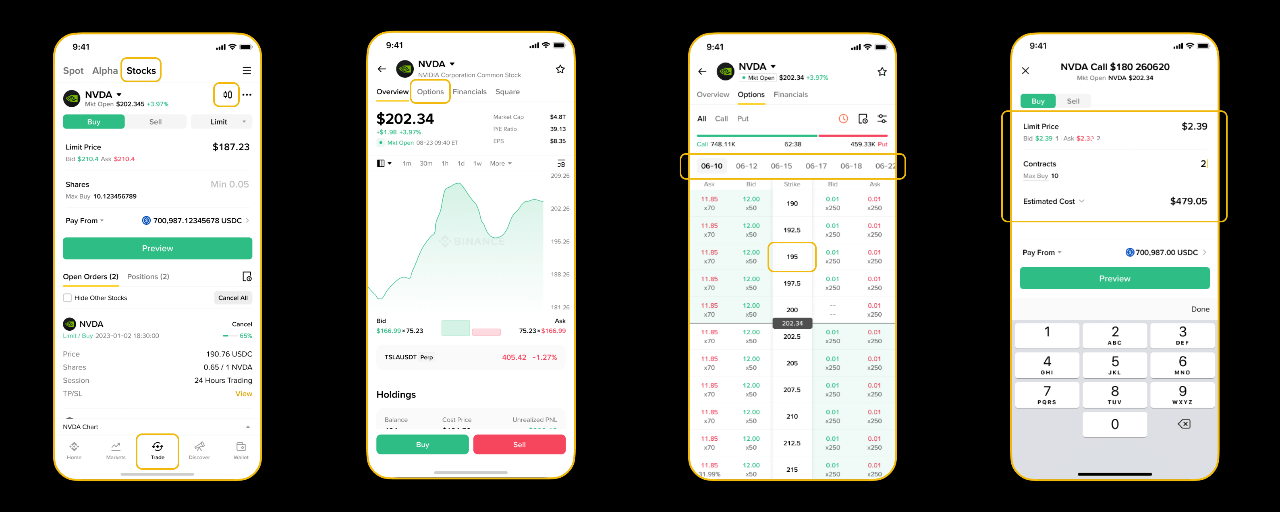
The other piece that may sound minor but becomes important in practice is where these trades live. Stock Options are funded and traded directly through the Funding Wallet, the same wallet used within the broader Binance ecosystem. That means there isn't a separate options wallet sitting somewhere outside your existing account. Supported quote currencies include BNB, USDT, USDC, U and USD1, while local fiat balances are converted at the point of trade. The result is a much simpler mental model: instead of thinking about where each asset class lives, you can think about the strategy you want to execute and then choose the instrument.
What Does It Cost?
Stock Options on Binance are priced at a commission of 0.60$ per contract, with no minimum fee or platform fee. Binance also states that exercise fees are absorbed by the platform and that there is no spread when converting between USDC and USD for the trade. As always, traders should check the latest fee schedule before trading because pricing and product terms can change. The important point isn't simply that the fee is relatively straightforward. Transparency matters more as products become more sophisticated. With options, understanding the premium, contract size, strike, expiration and transaction costs is part of understanding the actual trade.
Options Are Powerful. That's Exactly Why Education Matters.
There is a temptation whenever a new financial product launches to focus exclusively on what it can make. Options deserve the opposite approach. Before thinking about the upside, understand the mechanics. A long call can lose its entire premium if the option expires worthless. A long put can do the same. Time decay can work against option buyers. The underlying stock can move in the right direction but not far enough, or not quickly enough, for the option to become profitable after accounting for the premium paid. Being directionally correct is therefore not always enough. You can correctly predict that a stock will rise and still lose money on a call if the move doesn't happen sufficiently before expiration. That is one of the fundamental differences between options and simply holding the underlying asset.
Why This Completes the Loop
There is a bigger story underneath all of this. Binance started as a crypto-native platform. Over time, the toolkit expanded beyond Spot into derivatives, then into traditional-market exposure, commodities and now stock options. Each addition closes another gap between what crypto-native investors want to do and the tools traditionally available across separate financial platforms. Spot gives you the underlying. Perpetuals give you leverage and short exposure. bStocks connect you to traditional equities. Stock Options now add non-linear exposure and defined-risk positioning. Put all four together and you have something more interesting than a collection of products. You have a multi-instrument framework for expressing a market view. And that is why Stock Options feel less like another feature and more like the missing piece of the stack.
The Bigger Shift
The most interesting development in finance may not be the creation of another trading product. It may be the disappearance of the walls between products. Crypto investors increasingly think across markets. They watch Bitcoin, monitor the S&P 500, track interest rates, follow technology stocks and react to macroeconomic news, yet historically, expressing those views meant jumping between platforms. A unified account changes that experience. The technology doesn't eliminate market risk. It doesn't make options simple. It doesn't guarantee better returns. What it does is give traders more instruments with which to construct their own response to the market. And ultimately, that is what a complete financial toolkit should do. Not tell you what your view should be. Give you more precise ways to express it.
FAQs
What are Stock Options on Binance? Stock Options on Binance are options contracts on selected U.S.-listed stocks and ETFs. At launch, users can buy long calls and puts. The contracts are physically settled in real shares rather than settled purely in cash.
What is the difference between a call and a put? A call gives the buyer the right to purchase the underlying stock at the specified strike price, while a put gives the buyer the right to sell it. Traders generally use calls when they expect upside and puts when they expect downside or want potential protection against a decline.
What does "defined risk" mean with long options? For a long call or put, the maximum loss is generally limited to the premium paid for the contract, assuming no additional positions or obligations are involved. If the option expires worthless, the buyer can lose that premium.
What does "non-linear exposure" mean? It means the option's value does not necessarily move one-for-one with the underlying stock. Its sensitivity can change as the stock price moves, while factors such as time to expiration and implied volatility also affect the option's price.
Can Stock Options be used to hedge a portfolio? They can potentially be used as part of a hedging strategy. For example, an investor with a long position may buy a put to provide downside protection. However, hedging has a cost, and an option may expire worthless, so the strategy should be understood before being used.
Can I sell or write Stock Options on Binance? At launch, Binance Stock Options support buying long calls and puts. Writing and short-option exposure are planned for the future, but availability can change as the product develops.
How much does trading Stock Options on Binance cost? The current commission is 0.60$ per contract, with no minimum fee or platform fee. Binance also states that it absorbs exercise fees and does not charge a spread when converting between USDC and USD for stock-option trading. Always check the latest fee schedule before trading.
Where are Stock Options funded from? Stock Options are funded and traded directly through the Binance Funding Wallet, allowing users to manage them alongside their broader Binance assets without setting up a separate options wallet.
Are the shares behind Binance Stock Options real shares? Yes. The options are physically settled, with the underlying U.S.-listed shares custodied by Alpaca on behalf of Binance users.
Do Stock Options replace Spot or Perpetuals? No. They serve different purposes. Spot provides direct crypto exposure, Perpetuals provide leveraged directional exposure, bStocks provide stock exposure, and Stock Options add another layer through non-linear, defined-risk positioning. The value of the stack comes from having different tools for different strategies.
What is the biggest thing to understand before trading options? Don't think of an option as simply a cheaper way to buy a stock. You are also choosing a strike price and expiration, and the option's value is affected by time and volatility. You can be correct about the direction of the stock and still lose the premium if the move isn't large or fast enough.
The takeaway
The launch of Stock Options isn't just about adding another product to Binance. It completes a broader progression from crypto-native trading toward a unified multi-asset toolkit.
Spot · bStocks · Perps · Stock Options.
Four instruments. Different mechanics. Different risks. Different ways to express a view. And increasingly, one account, one engine and one wallet. The real advantage isn't having more buttons to press. It's having more ways to decide how much risk you actually want to take when you believe your market view is right.
#StockOptions #OptionsTrading #TradFi #cryptotrading #Binance
The Complete Loop: How Stock Options Complete Binance’s Crypto-and-TradFi Stack
What if your market view could start with crypto, extend into stocks, and still give you a way to reshape your risk without leaving the same account? That is essentially what Binance is building with the addition of Stock Options: a unified stack where Spot, bStocks, Perpetuals and now Stock Options can sit together, giving traders different tools for expressing, managing and adjusting the same conviction.
For years, crypto and traditional finance have existed in separate boxes. You would buy crypto on one platform, stocks on another, options somewhere else, and move money between them whenever your strategy changed. Binance is taking a very different approach: instead of making users move between financial ecosystems, it is bringing more of those instruments into one.
And the addition of Stock Options is important because options don't simply add another asset to the list. They add an entirely different way of thinking about risk.
The Missing Piece Wasn't Another Asset
Spot gives you direct exposure. Perpetuals allow you to trade directional moves with leverage. bStocks provide access to stock exposure. Stock Options introduce something different: non-linear exposure.
That sounds complicated, but the basic idea is actually straightforward.
With a traditional spot position, the relationship between the asset and your position is relatively direct. If an asset rises 10%, your position generally rises around 10%, before fees and other considerations. If it falls 10%, your position generally falls around 10%.
Options don't behave that way. The value of an option can change at a different rate depending on the underlying asset's price, time remaining until expiration, implied volatility and other factors. This creates a payoff profile that isn't simply a one-for-one reflection of the underlying asset. That is what makes options so powerful, and also why they require more understanding.
Calls and Puts: The Two Basic Building Blocks
At launch, Binance Stock Options support buying long calls and long puts. A call option gives the buyer the right, but not the obligation, to buy the underlying stock at a predetermined strike price before or at expiration, depending on the contract terms. A put option gives the buyer the right, but not the obligation, to sell the underlying stock at a predetermined strike price. You don't need to own the stock simply to buy a call or put. Instead, you pay a premium for the option contract. This premium is important because it defines the maximum loss for a long option position. If the option expires worthless, the buyer can lose the premium paid, but cannot lose more than that amount on the option itself. That is what makes long options particularly interesting from a risk-management perspective: the downside is defined before the trade is placed. Of course, defined risk doesn't mean low risk. An option can expire worthless, resulting in a 100% loss of the premium paid. Understanding the contract, strike, expiration and premium is therefore essential before entering the trade.
Why "Non-Linear" Matters
Let's make this practical. Imagine you are bullish on a particular stock but don't necessarily want to commit the same amount of capital required to buy the shares outright. A call option can give you exposure to an upside move by paying a premium rather than purchasing the full underlying position. But the important word here is can.
The option doesn't simply track the stock tick-for-tick. As the stock moves closer to or further away from the strike price, the option's sensitivity can change. Time also works against the option buyer as expiration approaches, all else being equal.
So you aren't just betting on direction. You are effectively taking a view on direction + timing + price movement, with volatility also playing an important role. That is why options are more sophisticated instruments than simply buying an asset and waiting for it to appreciate.
The Other Side of the Trade: Puts
The same concept works in the opposite direction. Suppose you have a bearish view on a stock. Instead of selling shares you already own, or using a leveraged product, buying a put can provide downside exposure through a defined-premium position. There is another interesting use case for puts, especially for investors who already have a portfolio. Imagine you have a long-term position that you still believe in, but you are concerned about a potential short-term drawdown.
Selling everything would eliminate your exposure, but it would also mean abandoning the conviction behind the original investment. A put can potentially serve as a form of downside protection, depending on its structure and how the position is managed. This is where the idea of an options overlay becomes relevant. You don't necessarily have to replace your core position with options. You can potentially use a modest options position alongside it to change the risk profile around your existing exposure.
Protecting Conviction Without Abandoning It
This is particularly interesting for crypto-native investors. Imagine you have built a portfolio around a long-term belief in crypto, but you also have exposure to companies connected to the broader digital-asset ecosystem. A sudden risk-off move in global markets could hit both crypto and equities. Your first instinct might be to close everything. But there is a third possibility: keep the core position while using another instrument to manage a specific risk. That is one of the most interesting characteristics of options. They can allow you to separate two decisions that are often treated as one: "Do I still believe in the asset?" and "Do I want to take all of the short-term risk associated with holding it right now?"
Those are not necessarily the same question. A long-term investor might remain bullish while being concerned about a near-term correction. An options overlay can potentially address the second concern without forcing the investor to completely abandon the first.
It isn't a magic hedge, and it comes at a cost, the premium paid and the possibility that the option expires worthless. But conceptually, it gives investors another lever between simply holding and completely exiting.
One Account, Four Different Tools
This is where the broader Binance story becomes more interesting than the options product itself. Think of the stack as four different ways to express a market view.
Spot gives you direct ownership or exposure to crypto assets.Perpetuals allow you to take leveraged long or short positions and express a directional view without owning the underlying asset.bStocks connect the platform to stock exposure, bringing selected traditional-market assets into the same environment.
And now
Stock Options add a defined-risk, non-linear instrument that can be used for directional strategies, tactical positioning or potential hedging.
These aren't interchangeable products. They serve different purposes. That distinction is important because a sophisticated portfolio isn't necessarily one where every position does the same thing. It can be one where different instruments are deliberately used for different jobs.
The Same View Can Have Different Expressions
Let's say your overall view is bullish. You could buy spot because you believe the underlying asset will appreciate. You could use a perpetual if you want leveraged directional exposure. You could buy a stock connected to a theme you believe will benefit from the same macro trend. Or you could use a call option if you want defined downside on the premium while maintaining upside exposure to a particular stock. The underlying conviction may be similar, but the expression is completely different. This is an important concept for anyone moving beyond simply asking, "What should I buy?" The more useful question becomes: "What is the most appropriate instrument for the risk I am willing to take?" That is where a unified platform starts becoming more than a convenience.
From Trading Products to a Financial Toolkit
Binance's broader strategy becomes easier to understand when you look at these products as pieces of one toolkit rather than isolated launches. A trader doesn't wake up every morning with only one possible market scenario. Sometimes the view is bullish. Sometimes it is bearish. Sometimes the trader is bullish long term but cautious in the short term. Sometimes the market is moving sideways and the best decision is simply to wait. Different market conditions call for different tools. The addition of Stock Options gives users another instrument to work with when their view becomes more nuanced than simply "up" or "down." And that is perhaps the biggest educational takeaway: financial instruments aren't just different ways of making money. They are different ways of taking risk.
Real Shares Behind the Options
There is another detail that makes Binance's Stock Options worth understanding. The contracts are physically settled rather than cash-settled. The underlying U.S.-listed shares are real shares custodied by Alpaca on behalf of Binance users.
For a call, exercising the option results in the underlying shares being delivered to the account. For a put, the relevant shares are delivered as part of the exercise process. That makes the product structurally connected to the underlying equity market rather than simply creating a cash-only payoff. Binance currently offers options on more than 1,000 selected U.S.-listed stocks and ETFs, with more expected to be added over time.
The Wallet Is Part of the Experience
The other piece that may sound minor but becomes important in practice is where these trades live. Stock Options are funded and traded directly through the Funding Wallet, the same wallet used within the broader Binance ecosystem. That means there isn't a separate options wallet sitting somewhere outside your existing account. Supported quote currencies include BNB, USDT, USDC, U and USD1, while local fiat balances are converted at the point of trade. The result is a much simpler mental model: instead of thinking about where each asset class lives, you can think about the strategy you want to execute and then choose the instrument.
What Does It Cost?
Stock Options on Binance are priced at a commission of 0.60$ per contract, with no minimum fee or platform fee. Binance also states that exercise fees are absorbed by the platform and that there is no spread when converting between USDC and USD for the trade. As always, traders should check the latest fee schedule before trading because pricing and product terms can change. The important point isn't simply that the fee is relatively straightforward. Transparency matters more as products become more sophisticated. With options, understanding the premium, contract size, strike, expiration and transaction costs is part of understanding the actual trade.
Options Are Powerful. That's Exactly Why Education Matters.
There is a temptation whenever a new financial product launches to focus exclusively on what it can make. Options deserve the opposite approach. Before thinking about the upside, understand the mechanics. A long call can lose its entire premium if the option expires worthless. A long put can do the same. Time decay can work against option buyers. The underlying stock can move in the right direction but not far enough, or not quickly enough, for the option to become profitable after accounting for the premium paid. Being directionally correct is therefore not always enough. You can correctly predict that a stock will rise and still lose money on a call if the move doesn't happen sufficiently before expiration. That is one of the fundamental differences between options and simply holding the underlying asset.
Why This Completes the Loop
There is a bigger story underneath all of this. Binance started as a crypto-native platform. Over time, the toolkit expanded beyond Spot into derivatives, then into traditional-market exposure, commodities and now stock options. Each addition closes another gap between what crypto-native investors want to do and the tools traditionally available across separate financial platforms. Spot gives you the underlying. Perpetuals give you leverage and short exposure. bStocks connect you to traditional equities. Stock Options now add non-linear exposure and defined-risk positioning. Put all four together and you have something more interesting than a collection of products. You have a multi-instrument framework for expressing a market view. And that is why Stock Options feel less like another feature and more like the missing piece of the stack.
The Bigger Shift
The most interesting development in finance may not be the creation of another trading product. It may be the disappearance of the walls between products. Crypto investors increasingly think across markets. They watch Bitcoin, monitor the S&P 500, track interest rates, follow technology stocks and react to macroeconomic news, yet historically, expressing those views meant jumping between platforms. A unified account changes that experience. The technology doesn't eliminate market risk. It doesn't make options simple. It doesn't guarantee better returns. What it does is give traders more instruments with which to construct their own response to the market. And ultimately, that is what a complete financial toolkit should do. Not tell you what your view should be. Give you more precise ways to express it.
FAQs
What are Stock Options on Binance? Stock Options on Binance are options contracts on selected U.S.-listed stocks and ETFs. At launch, users can buy long calls and puts. The contracts are physically settled in real shares rather than settled purely in cash.
What is the difference between a call and a put? A call gives the buyer the right to purchase the underlying stock at the specified strike price, while a put gives the buyer the right to sell it. Traders generally use calls when they expect upside and puts when they expect downside or want potential protection against a decline.
What does "defined risk" mean with long options? For a long call or put, the maximum loss is generally limited to the premium paid for the contract, assuming no additional positions or obligations are involved. If the option expires worthless, the buyer can lose that premium.
What does "non-linear exposure" mean? It means the option's value does not necessarily move one-for-one with the underlying stock. Its sensitivity can change as the stock price moves, while factors such as time to expiration and implied volatility also affect the option's price.
Can Stock Options be used to hedge a portfolio? They can potentially be used as part of a hedging strategy. For example, an investor with a long position may buy a put to provide downside protection. However, hedging has a cost, and an option may expire worthless, so the strategy should be understood before being used.
Can I sell or write Stock Options on Binance? At launch, Binance Stock Options support buying long calls and puts. Writing and short-option exposure are planned for the future, but availability can change as the product develops.
How much does trading Stock Options on Binance cost? The current commission is 0.60$ per contract, with no minimum fee or platform fee. Binance also states that it absorbs exercise fees and does not charge a spread when converting between USDC and USD for stock-option trading. Always check the latest fee schedule before trading.
Where are Stock Options funded from? Stock Options are funded and traded directly through the Binance Funding Wallet, allowing users to manage them alongside their broader Binance assets without setting up a separate options wallet.
Are the shares behind Binance Stock Options real shares? Yes. The options are physically settled, with the underlying U.S.-listed shares custodied by Alpaca on behalf of Binance users.
Do Stock Options replace Spot or Perpetuals? No. They serve different purposes. Spot provides direct crypto exposure, Perpetuals provide leveraged directional exposure, bStocks provide stock exposure, and Stock Options add another layer through non-linear, defined-risk positioning. The value of the stack comes from having different tools for different strategies.
What is the biggest thing to understand before trading options? Don't think of an option as simply a cheaper way to buy a stock. You are also choosing a strike price and expiration, and the option's value is affected by time and volatility. You can be correct about the direction of the stock and still lose the premium if the move isn't large or fast enough.
The takeaway
The launch of Stock Options isn't just about adding another product to Binance. It completes a broader progression from crypto-native trading toward a unified multi-asset toolkit.
Spot · bStocks · Perps · Stock Options.
Four instruments. Different mechanics. Different risks. Different ways to express a view. And increasingly, one account, one engine and one wallet. The real advantage isn't having more buttons to press. It's having more ways to decide how much risk you actually want to take when you believe your market view is right.
#StockOptions #OptionsTrading #TradFi #cryptotrading #Binance
For years, crypto and traditional finance have existed in separate boxes. You would buy crypto on one platform, stocks on another, options somewhere else, and move money between them whenever your strategy changed. Binance is taking a very different approach: instead of making users move between financial ecosystems, it is bringing more of those instruments into one.
And the addition of Stock Options is important because options don't simply add another asset to the list. They add an entirely different way of thinking about risk.
The Missing Piece Wasn't Another Asset
Spot gives you direct exposure. Perpetuals allow you to trade directional moves with leverage. bStocks provide access to stock exposure. Stock Options introduce something different: non-linear exposure.
That sounds complicated, but the basic idea is actually straightforward.
With a traditional spot position, the relationship between the asset and your position is relatively direct. If an asset rises 10%, your position generally rises around 10%, before fees and other considerations. If it falls 10%, your position generally falls around 10%.
Options don't behave that way. The value of an option can change at a different rate depending on the underlying asset's price, time remaining until expiration, implied volatility and other factors. This creates a payoff profile that isn't simply a one-for-one reflection of the underlying asset. That is what makes options so powerful, and also why they require more understanding.
Calls and Puts: The Two Basic Building Blocks
At launch, Binance Stock Options support buying long calls and long puts. A call option gives the buyer the right, but not the obligation, to buy the underlying stock at a predetermined strike price before or at expiration, depending on the contract terms. A put option gives the buyer the right, but not the obligation, to sell the underlying stock at a predetermined strike price. You don't need to own the stock simply to buy a call or put. Instead, you pay a premium for the option contract. This premium is important because it defines the maximum loss for a long option position. If the option expires worthless, the buyer can lose the premium paid, but cannot lose more than that amount on the option itself. That is what makes long options particularly interesting from a risk-management perspective: the downside is defined before the trade is placed. Of course, defined risk doesn't mean low risk. An option can expire worthless, resulting in a 100% loss of the premium paid. Understanding the contract, strike, expiration and premium is therefore essential before entering the trade.
Why "Non-Linear" Matters
Let's make this practical. Imagine you are bullish on a particular stock but don't necessarily want to commit the same amount of capital required to buy the shares outright. A call option can give you exposure to an upside move by paying a premium rather than purchasing the full underlying position. But the important word here is can.
The option doesn't simply track the stock tick-for-tick. As the stock moves closer to or further away from the strike price, the option's sensitivity can change. Time also works against the option buyer as expiration approaches, all else being equal.
So you aren't just betting on direction. You are effectively taking a view on direction + timing + price movement, with volatility also playing an important role. That is why options are more sophisticated instruments than simply buying an asset and waiting for it to appreciate.
The Other Side of the Trade: Puts
The same concept works in the opposite direction. Suppose you have a bearish view on a stock. Instead of selling shares you already own, or using a leveraged product, buying a put can provide downside exposure through a defined-premium position. There is another interesting use case for puts, especially for investors who already have a portfolio. Imagine you have a long-term position that you still believe in, but you are concerned about a potential short-term drawdown.
Selling everything would eliminate your exposure, but it would also mean abandoning the conviction behind the original investment. A put can potentially serve as a form of downside protection, depending on its structure and how the position is managed. This is where the idea of an options overlay becomes relevant. You don't necessarily have to replace your core position with options. You can potentially use a modest options position alongside it to change the risk profile around your existing exposure.
Protecting Conviction Without Abandoning It
This is particularly interesting for crypto-native investors. Imagine you have built a portfolio around a long-term belief in crypto, but you also have exposure to companies connected to the broader digital-asset ecosystem. A sudden risk-off move in global markets could hit both crypto and equities. Your first instinct might be to close everything. But there is a third possibility: keep the core position while using another instrument to manage a specific risk. That is one of the most interesting characteristics of options. They can allow you to separate two decisions that are often treated as one: "Do I still believe in the asset?" and "Do I want to take all of the short-term risk associated with holding it right now?"
Those are not necessarily the same question. A long-term investor might remain bullish while being concerned about a near-term correction. An options overlay can potentially address the second concern without forcing the investor to completely abandon the first.
It isn't a magic hedge, and it comes at a cost, the premium paid and the possibility that the option expires worthless. But conceptually, it gives investors another lever between simply holding and completely exiting.
One Account, Four Different Tools
This is where the broader Binance story becomes more interesting than the options product itself. Think of the stack as four different ways to express a market view.
Spot gives you direct ownership or exposure to crypto assets.Perpetuals allow you to take leveraged long or short positions and express a directional view without owning the underlying asset.bStocks connect the platform to stock exposure, bringing selected traditional-market assets into the same environment.
And now
Stock Options add a defined-risk, non-linear instrument that can be used for directional strategies, tactical positioning or potential hedging.
These aren't interchangeable products. They serve different purposes. That distinction is important because a sophisticated portfolio isn't necessarily one where every position does the same thing. It can be one where different instruments are deliberately used for different jobs.
The Same View Can Have Different Expressions
Let's say your overall view is bullish. You could buy spot because you believe the underlying asset will appreciate. You could use a perpetual if you want leveraged directional exposure. You could buy a stock connected to a theme you believe will benefit from the same macro trend. Or you could use a call option if you want defined downside on the premium while maintaining upside exposure to a particular stock. The underlying conviction may be similar, but the expression is completely different. This is an important concept for anyone moving beyond simply asking, "What should I buy?" The more useful question becomes: "What is the most appropriate instrument for the risk I am willing to take?" That is where a unified platform starts becoming more than a convenience.
From Trading Products to a Financial Toolkit
Binance's broader strategy becomes easier to understand when you look at these products as pieces of one toolkit rather than isolated launches. A trader doesn't wake up every morning with only one possible market scenario. Sometimes the view is bullish. Sometimes it is bearish. Sometimes the trader is bullish long term but cautious in the short term. Sometimes the market is moving sideways and the best decision is simply to wait. Different market conditions call for different tools. The addition of Stock Options gives users another instrument to work with when their view becomes more nuanced than simply "up" or "down." And that is perhaps the biggest educational takeaway: financial instruments aren't just different ways of making money. They are different ways of taking risk.
Real Shares Behind the Options
There is another detail that makes Binance's Stock Options worth understanding. The contracts are physically settled rather than cash-settled. The underlying U.S.-listed shares are real shares custodied by Alpaca on behalf of Binance users.
For a call, exercising the option results in the underlying shares being delivered to the account. For a put, the relevant shares are delivered as part of the exercise process. That makes the product structurally connected to the underlying equity market rather than simply creating a cash-only payoff. Binance currently offers options on more than 1,000 selected U.S.-listed stocks and ETFs, with more expected to be added over time.
The Wallet Is Part of the Experience
The other piece that may sound minor but becomes important in practice is where these trades live. Stock Options are funded and traded directly through the Funding Wallet, the same wallet used within the broader Binance ecosystem. That means there isn't a separate options wallet sitting somewhere outside your existing account. Supported quote currencies include BNB, USDT, USDC, U and USD1, while local fiat balances are converted at the point of trade. The result is a much simpler mental model: instead of thinking about where each asset class lives, you can think about the strategy you want to execute and then choose the instrument.
What Does It Cost?
Stock Options on Binance are priced at a commission of 0.60$ per contract, with no minimum fee or platform fee. Binance also states that exercise fees are absorbed by the platform and that there is no spread when converting between USDC and USD for the trade. As always, traders should check the latest fee schedule before trading because pricing and product terms can change. The important point isn't simply that the fee is relatively straightforward. Transparency matters more as products become more sophisticated. With options, understanding the premium, contract size, strike, expiration and transaction costs is part of understanding the actual trade.
Options Are Powerful. That's Exactly Why Education Matters.
There is a temptation whenever a new financial product launches to focus exclusively on what it can make. Options deserve the opposite approach. Before thinking about the upside, understand the mechanics. A long call can lose its entire premium if the option expires worthless. A long put can do the same. Time decay can work against option buyers. The underlying stock can move in the right direction but not far enough, or not quickly enough, for the option to become profitable after accounting for the premium paid. Being directionally correct is therefore not always enough. You can correctly predict that a stock will rise and still lose money on a call if the move doesn't happen sufficiently before expiration. That is one of the fundamental differences between options and simply holding the underlying asset.
Why This Completes the Loop
There is a bigger story underneath all of this. Binance started as a crypto-native platform. Over time, the toolkit expanded beyond Spot into derivatives, then into traditional-market exposure, commodities and now stock options. Each addition closes another gap between what crypto-native investors want to do and the tools traditionally available across separate financial platforms. Spot gives you the underlying. Perpetuals give you leverage and short exposure. bStocks connect you to traditional equities. Stock Options now add non-linear exposure and defined-risk positioning. Put all four together and you have something more interesting than a collection of products. You have a multi-instrument framework for expressing a market view. And that is why Stock Options feel less like another feature and more like the missing piece of the stack.
The Bigger Shift
The most interesting development in finance may not be the creation of another trading product. It may be the disappearance of the walls between products. Crypto investors increasingly think across markets. They watch Bitcoin, monitor the S&P 500, track interest rates, follow technology stocks and react to macroeconomic news, yet historically, expressing those views meant jumping between platforms. A unified account changes that experience. The technology doesn't eliminate market risk. It doesn't make options simple. It doesn't guarantee better returns. What it does is give traders more instruments with which to construct their own response to the market. And ultimately, that is what a complete financial toolkit should do. Not tell you what your view should be. Give you more precise ways to express it.
FAQs
What are Stock Options on Binance? Stock Options on Binance are options contracts on selected U.S.-listed stocks and ETFs. At launch, users can buy long calls and puts. The contracts are physically settled in real shares rather than settled purely in cash.
What is the difference between a call and a put? A call gives the buyer the right to purchase the underlying stock at the specified strike price, while a put gives the buyer the right to sell it. Traders generally use calls when they expect upside and puts when they expect downside or want potential protection against a decline.
What does "defined risk" mean with long options? For a long call or put, the maximum loss is generally limited to the premium paid for the contract, assuming no additional positions or obligations are involved. If the option expires worthless, the buyer can lose that premium.
What does "non-linear exposure" mean? It means the option's value does not necessarily move one-for-one with the underlying stock. Its sensitivity can change as the stock price moves, while factors such as time to expiration and implied volatility also affect the option's price.
Can Stock Options be used to hedge a portfolio? They can potentially be used as part of a hedging strategy. For example, an investor with a long position may buy a put to provide downside protection. However, hedging has a cost, and an option may expire worthless, so the strategy should be understood before being used.
Can I sell or write Stock Options on Binance? At launch, Binance Stock Options support buying long calls and puts. Writing and short-option exposure are planned for the future, but availability can change as the product develops.
How much does trading Stock Options on Binance cost? The current commission is 0.60$ per contract, with no minimum fee or platform fee. Binance also states that it absorbs exercise fees and does not charge a spread when converting between USDC and USD for stock-option trading. Always check the latest fee schedule before trading.
Where are Stock Options funded from? Stock Options are funded and traded directly through the Binance Funding Wallet, allowing users to manage them alongside their broader Binance assets without setting up a separate options wallet.
Are the shares behind Binance Stock Options real shares? Yes. The options are physically settled, with the underlying U.S.-listed shares custodied by Alpaca on behalf of Binance users.
Do Stock Options replace Spot or Perpetuals? No. They serve different purposes. Spot provides direct crypto exposure, Perpetuals provide leveraged directional exposure, bStocks provide stock exposure, and Stock Options add another layer through non-linear, defined-risk positioning. The value of the stack comes from having different tools for different strategies.
What is the biggest thing to understand before trading options? Don't think of an option as simply a cheaper way to buy a stock. You are also choosing a strike price and expiration, and the option's value is affected by time and volatility. You can be correct about the direction of the stock and still lose the premium if the move isn't large or fast enough.
The takeaway
The launch of Stock Options isn't just about adding another product to Binance. It completes a broader progression from crypto-native trading toward a unified multi-asset toolkit.
Spot · bStocks · Perps · Stock Options.
Four instruments. Different mechanics. Different risks. Different ways to express a view. And increasingly, one account, one engine and one wallet. The real advantage isn't having more buttons to press. It's having more ways to decide how much risk you actually want to take when you believe your market view is right.
#StockOptions #OptionsTrading #TradFi #cryptotrading #Binance
1
3
502

·
--
Bullish
🚨 BINANCE LAUNCHES STOCK OPTIONS TRADING
Binance is expanding beyond crypto with the launch of Stock Options Trading, allowing users to trade U.S. stock and ETF options with physical settlement.
📈 WHY IT MATTERS
This marks a major step toward bringing traditional finance and crypto closer together. Binance continues expanding its ecosystem beyond digital assets, potentially opening new opportunities for traders.
👀 BIG PICTURE
The gap between crypto platforms and traditional financial markets is getting smaller. Stock and ETF options could become another major growth area for global crypto exchanges.
🔥 Could this be the beginning of a new era for Binance?
#Binance #CryptoNews #StockOptions #Trading
🚨 BINANCE LAUNCHES STOCK OPTIONS TRADING
Binance is expanding beyond crypto with the launch of Stock Options Trading, allowing users to trade U.S. stock and ETF options with physical settlement.
📈 WHY IT MATTERS
This marks a major step toward bringing traditional finance and crypto closer together. Binance continues expanding its ecosystem beyond digital assets, potentially opening new opportunities for traders.
👀 BIG PICTURE
The gap between crypto platforms and traditional financial markets is getting smaller. Stock and ETF options could become another major growth area for global crypto exchanges.
🔥 Could this be the beginning of a new era for Binance?
#Binance #CryptoNews #StockOptions #Trading
Binance is expanding beyond crypto with the launch of Stock Options Trading, allowing users to trade U.S. stock and ETF options with physical settlement.
📈 WHY IT MATTERS
This marks a major step toward bringing traditional finance and crypto closer together. Binance continues expanding its ecosystem beyond digital assets, potentially opening new opportunities for traders.
👀 BIG PICTURE
The gap between crypto platforms and traditional financial markets is getting smaller. Stock and ETF options could become another major growth area for global crypto exchanges.
🔥 Could this be the beginning of a new era for Binance?
#Binance #CryptoNews #StockOptions #Trading

2
390

·
--
If Stock Perpetuals trade 24/7, why are Stock Options only during regular hours?
I’m used to the fact that on Binance, traditional assets can be found in an entirely different trading model.
For example, Stock Perpetuals trade 24/7.
So I became curious about what happens to Stock Options.
Binance launches options on U.S. stocks and ETFs, but they don’t move to a 24/7 mode. For most of these options, trading happens during regular U.S. market hours, without pre-market and after-hours.
If two TradFi instruments are available on the same platform, why can one be traded 24/7 while the other is still tied to traditional market hours?
For me, this is a good example of how crypto infrastructure ≠ crypto market structure.
Moving a financial instrument to a new environment doesn’t automatically mean all its operating rules change.
The logic of the financial instrument itself may still remain partly traditional.
So now I’m interested in looking at the development of TradFi on Binance a little differently:
what exactly changes when traditional financial instruments move into a crypto-native environment—and what still remains tied to the old market model?
#TradFi #StockOptions
If Stock Perpetuals trade 24/7, why are Stock Options only during regular hours?
I’m used to the fact that on Binance, traditional assets can be found in an entirely different trading model.
For example, Stock Perpetuals trade 24/7.
So I became curious about what happens to Stock Options.
Binance launches options on U.S. stocks and ETFs, but they don’t move to a 24/7 mode. For most of these options, trading happens during regular U.S. market hours, without pre-market and after-hours.
If two TradFi instruments are available on the same platform, why can one be traded 24/7 while the other is still tied to traditional market hours?
For me, this is a good example of how crypto infrastructure ≠ crypto market structure.
Moving a financial instrument to a new environment doesn’t automatically mean all its operating rules change.
The logic of the financial instrument itself may still remain partly traditional.
So now I’m interested in looking at the development of TradFi on Binance a little differently:
what exactly changes when traditional financial instruments move into a crypto-native environment—and what still remains tied to the old market model?
#TradFi #StockOptions
I’m used to the fact that on Binance, traditional assets can be found in an entirely different trading model.
For example, Stock Perpetuals trade 24/7.
So I became curious about what happens to Stock Options.
Binance launches options on U.S. stocks and ETFs, but they don’t move to a 24/7 mode. For most of these options, trading happens during regular U.S. market hours, without pre-market and after-hours.
If two TradFi instruments are available on the same platform, why can one be traded 24/7 while the other is still tied to traditional market hours?
For me, this is a good example of how crypto infrastructure ≠ crypto market structure.
Moving a financial instrument to a new environment doesn’t automatically mean all its operating rules change.
The logic of the financial instrument itself may still remain partly traditional.
So now I’m interested in looking at the development of TradFi on Binance a little differently:
what exactly changes when traditional financial instruments move into a crypto-native environment—and what still remains tied to the old market model?
#TradFi #StockOptions
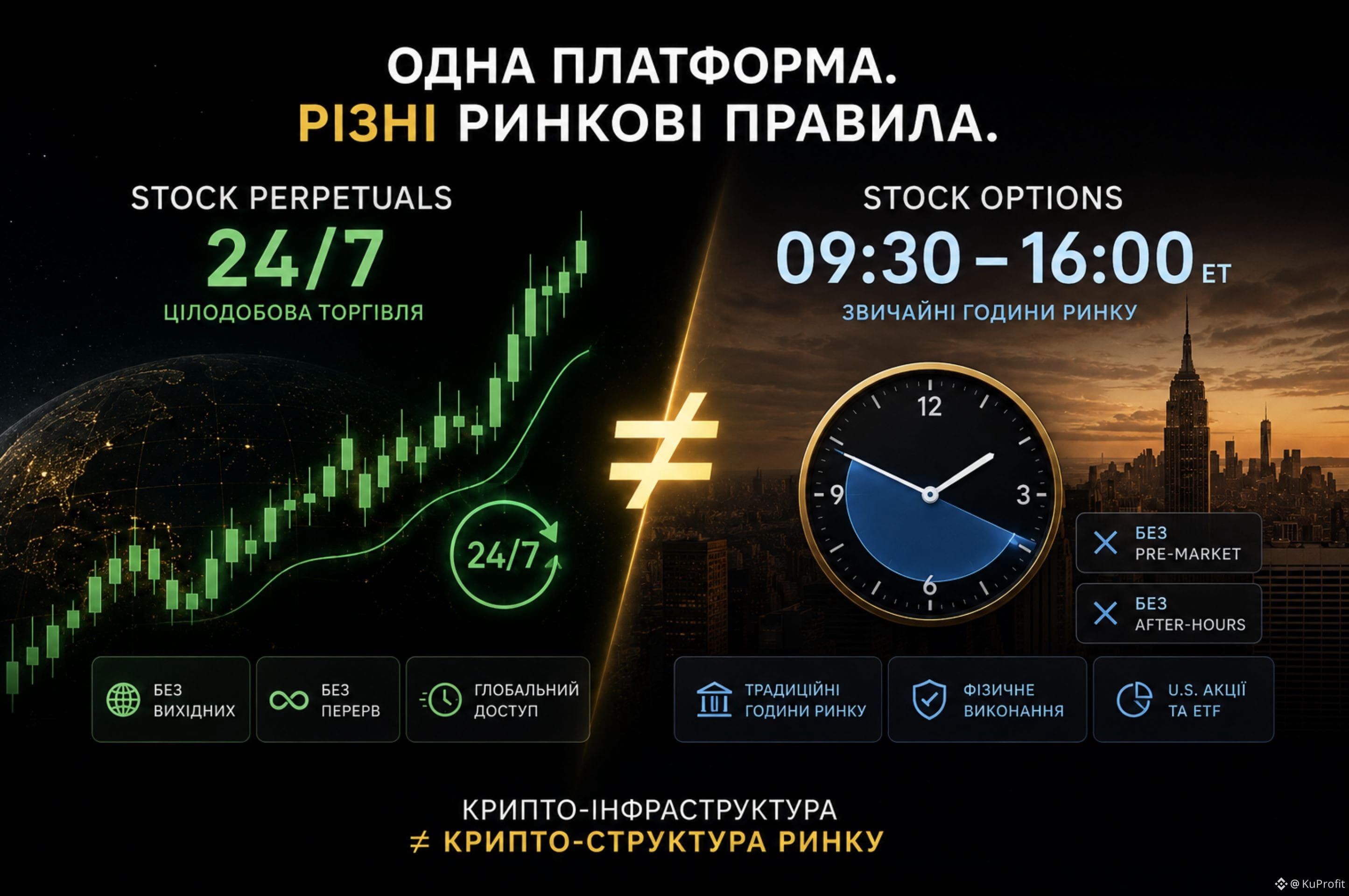
127

·
--
Binance has just enabled options on more than 1,000 U.S. stocks and ETFs.
Calls and puts with physical settlement, outside the U.S., via its entity in Abu Dhabi. Crypto, stocks, and now stock options… all in the same account.
The line between a crypto exchange and a traditional broker is getting thinner and thinner. How far do you think this convergence can go?
Source: [Binance Blog](https://www.binance.com/en/blog/markets/3413696947185733989)
#StockOptions $NVDA $TSLA
Binance has just enabled options on more than 1,000 U.S. stocks and ETFs.
Calls and puts with physical settlement, outside the U.S., via its entity in Abu Dhabi. Crypto, stocks, and now stock options… all in the same account.
The line between a crypto exchange and a traditional broker is getting thinner and thinner. How far do you think this convergence can go?
Source: Binance Blog
#StockOptions $NVDA $TSLA
Calls and puts with physical settlement, outside the U.S., via its entity in Abu Dhabi. Crypto, stocks, and now stock options… all in the same account.
The line between a crypto exchange and a traditional broker is getting thinner and thinner. How far do you think this convergence can go?
Source: Binance Blog
#StockOptions $NVDA $TSLA
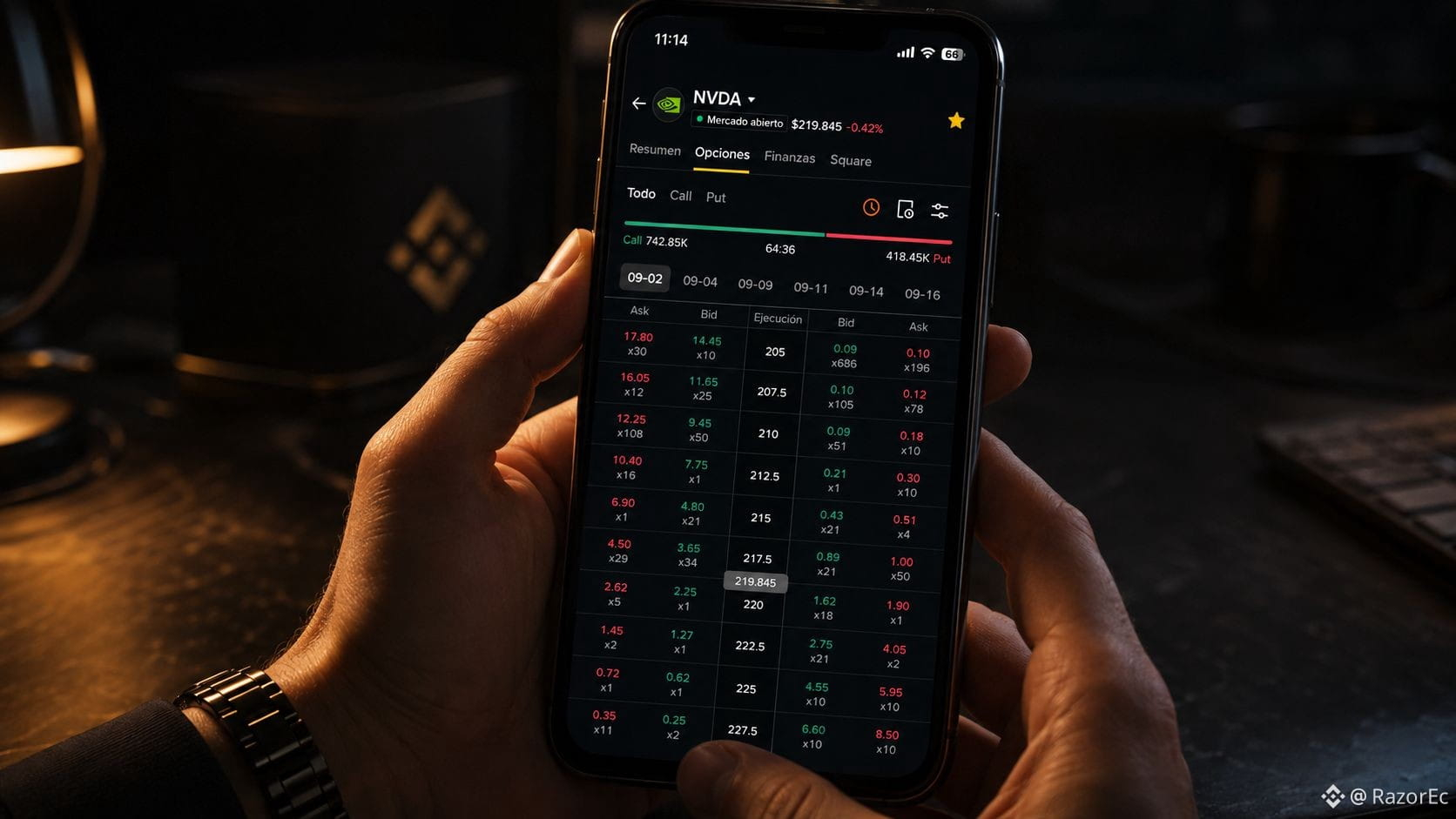
221

·
--
#SpaceXStockOptionsBeginTrading
SpaceX continues to push the boundaries of innovation, and the conversation surrounding its financial ecosystem is gaining significant momentum. As discussions amplify under
SpaceXStockOptionsBeginTrading, investor interest is peaking regarding market accessibility, liquidity, and the evolving landscape of private tech valuation. Navigating these emerging opportunities requires a strategic approach to risk and market dynamics.
What are your thoughts on the potential market impact?
#SpaceX #StockOptions FinancialMarkets #TechInvesting #SpaceEconomy
$SPCXB
{spot}(SPCXBUSDT)
$TSLAB
{spot}(TSLABUSDT)
$NVDAB
{spot}(NVDABUSDT)
#SpaceXStockOptionsBeginTrading
SpaceX continues to push the boundaries of innovation, and the conversation surrounding its financial ecosystem is gaining significant momentum. As discussions amplify under
SpaceXStockOptionsBeginTrading, investor interest is peaking regarding market accessibility, liquidity, and the evolving landscape of private tech valuation. Navigating these emerging opportunities requires a strategic approach to risk and market dynamics.
What are your thoughts on the potential market impact?
#SpaceX #StockOptions FinancialMarkets #TechInvesting #SpaceEconomy
$SPCXB
$TSLAB
$NVDAB
SpaceX continues to push the boundaries of innovation, and the conversation surrounding its financial ecosystem is gaining significant momentum. As discussions amplify under
SpaceXStockOptionsBeginTrading, investor interest is peaking regarding market accessibility, liquidity, and the evolving landscape of private tech valuation. Navigating these emerging opportunities requires a strategic approach to risk and market dynamics.
What are your thoughts on the potential market impact?
#SpaceX #StockOptions FinancialMarkets #TechInvesting #SpaceEconomy
$SPCXB
$TSLAB
$NVDAB
126
Log in to explore more content
Join global crypto users on Binance Square
⚡️ Get latest and useful information about crypto.
💬 Trusted by the world’s largest crypto exchange.
👍 Discover real insights from verified creators.
Email / Phone number
Trending Topics
1
#BTCBreaks80K
136,507 views
2,144 Discussing
2
#SOLJumpsAbout10%
3,355 views
128 Discussing
3
#EthereumReclaims$2600
371 views
27 Discussing
4
#SECReceivesAmendedInjectiveETFFiling
3,116 views
150 Discussing
5
#SanDiskToJoinSP100OnSep21
1,944 views
92 Discussing
6
#PolygonToDeployContractBurning100MPOL
1,699 views
80 Discussing
7
#TRMReportsYouTubeScamStole274.6ETH
232 views
18 Discussing
8
#YahooFinanceEndsPolymarketPartnership
877 views
25 Discussing
9
#BuffettBecomesBerkshireChairmanEmeritus
34,870 views
686 Discussing
10
#ZcashSpotETFTops$230MMonthlyInflow
7,773 views
86 Discussing