

#cryptosafety
cryptosafety
7.9M vues
4,801 mentions
Populaire
Récents
·
--
Baissier
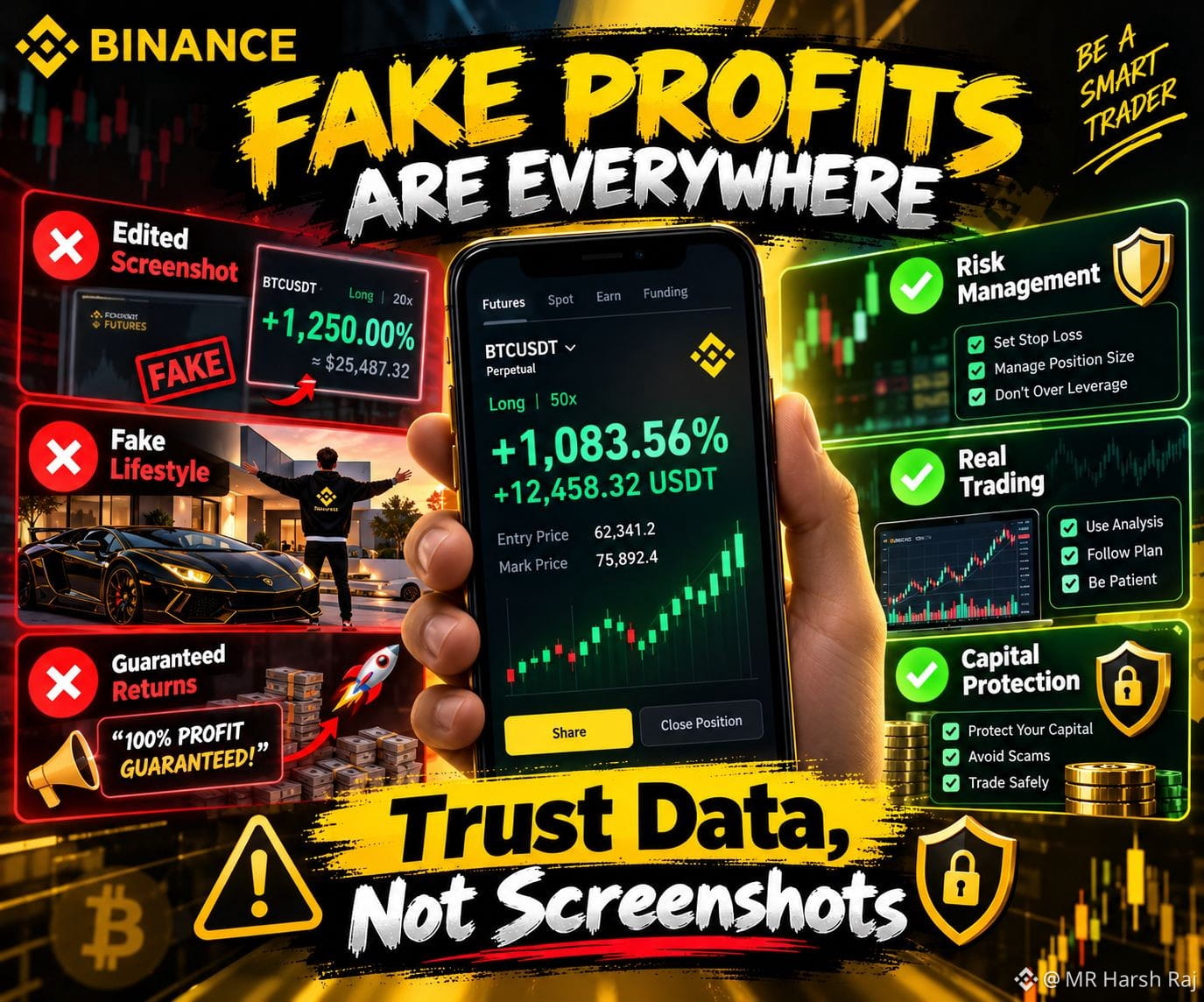
🚨 CRYPTO SAFETY SERIES #4
Never trust screenshots of profits.
Anyone can edit a screenshot.
Anyone can hide losses.
Anyone can fake a lifestyle.
What matters is:
✅ Risk Management
✅ Consistency
✅ Transparency
✅ Long-Term Results
If someone only shows wins and never losses, be careful.
Protect your capital first.
Opportunities will always come.
Have you ever seen a fake profit screenshot online? 👀
#CryptoSafety #BinanceSquare #CryptoEducation #RiskManagement #SafetyTips $MOVR
{future}(MOVRUSDT)
🚨 CRYPTO SAFETY SERIES #4
Never trust screenshots of profits.
Anyone can edit a screenshot.
Anyone can hide losses.
Anyone can fake a lifestyle.
What matters is:
✅ Risk Management
✅ Consistency
✅ Transparency
✅ Long-Term Results
If someone only shows wins and never losses, be careful.
Protect your capital first.
Opportunities will always come.
Have you ever seen a fake profit screenshot online? 👀
#CryptoSafety #BinanceSquare #CryptoEducation #RiskManagement #SafetyTips $MOVR
Never trust screenshots of profits.
Anyone can edit a screenshot.
Anyone can hide losses.
Anyone can fake a lifestyle.
What matters is:
✅ Risk Management
✅ Consistency
✅ Transparency
✅ Long-Term Results
If someone only shows wins and never losses, be careful.
Protect your capital first.
Opportunities will always come.
Have you ever seen a fake profit screenshot online? 👀
#CryptoSafety #BinanceSquare #CryptoEducation #RiskManagement #SafetyTips $MOVR
394
·
--
99% of crypto losses don’t happen during market crashes—they happen during quiet consolidation phases. When assets like $BTC and $BNB trade in tight ranges, trader boredom peaks. That is precisely when scammers strike with fake dApp giveaways, malicious phishing links, and absurd high-yield traps.
Losing your hard-earned capital usually takes just one unchecked blind signature. True security isn’t only about managing leverage on your trades; it’s about routinely revoking old smart contract approvals and verifying domain names before connecting your Web3 wallet.
Making a 10x return means nothing if a malicious link drains your account in seconds. Always protect your downside before chasing upside.
What is the single most important security habit you never compromise on?
#CryptoSafety #BinanceSquare
99% of crypto losses don’t happen during market crashes—they happen during quiet consolidation phases. When assets like $BTC and $BNB trade in tight ranges, trader boredom peaks. That is precisely when scammers strike with fake dApp giveaways, malicious phishing links, and absurd high-yield traps.
Losing your hard-earned capital usually takes just one unchecked blind signature. True security isn’t only about managing leverage on your trades; it’s about routinely revoking old smart contract approvals and verifying domain names before connecting your Web3 wallet.
Making a 10x return means nothing if a malicious link drains your account in seconds. Always protect your downside before chasing upside.
What is the single most important security habit you never compromise on?
#CryptoSafety #BinanceSquare
Losing your hard-earned capital usually takes just one unchecked blind signature. True security isn’t only about managing leverage on your trades; it’s about routinely revoking old smart contract approvals and verifying domain names before connecting your Web3 wallet.
Making a 10x return means nothing if a malicious link drains your account in seconds. Always protect your downside before chasing upside.
What is the single most important security habit you never compromise on?
#CryptoSafety #BinanceSquare
56
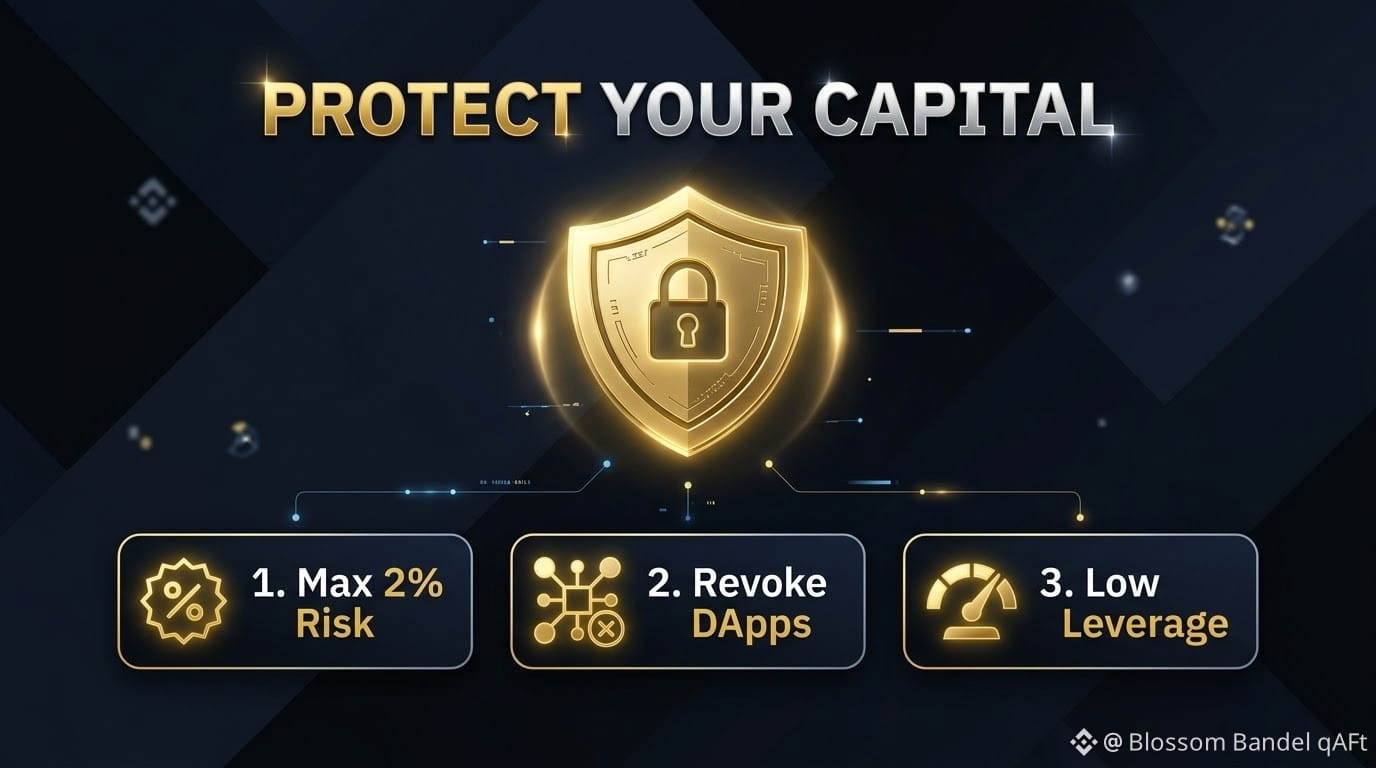
🚨 3 Rules to Protect Your Crypto Capital 🛡️💸
Most traders don't lose money to the market — they lose it to bad risk management.
1️⃣ Risk Max 2% Per Trade: Never risk more than 2% of your total portfolio on a single position.
2️⃣ Revoke Approvals: Regularly disconnect your wallet from old DApps on Revoke.cash.
3️⃣ Avoid Over-Leverage: Stick to Spot or 2x–5x leverage. 20x+ is gambling.
💡 Capital preservation comes before profits.
👇 Which rule do you never break? Comment below!
🙏 Found this helpful? Like, Share & drop an Award/Tip to support quality guides!
#CryptoSafety #TradingTips #Write2Earn #BinanceSquare #RiskManagement
🚨 3 Rules to Protect Your Crypto Capital 🛡️💸
Most traders don't lose money to the market — they lose it to bad risk management.
1️⃣ Risk Max 2% Per Trade: Never risk more than 2% of your total portfolio on a single position.
2️⃣ Revoke Approvals: Regularly disconnect your wallet from old DApps on Revoke.cash.
3️⃣ Avoid Over-Leverage: Stick to Spot or 2x–5x leverage. 20x+ is gambling.
💡 Capital preservation comes before profits.
👇 Which rule do you never break? Comment below!
🙏 Found this helpful? Like, Share & drop an Award/Tip to support quality guides!
#CryptoSafety #TradingTips #Write2Earn #BinanceSquare #RiskManagement
Most traders don't lose money to the market — they lose it to bad risk management.
1️⃣ Risk Max 2% Per Trade: Never risk more than 2% of your total portfolio on a single position.
2️⃣ Revoke Approvals: Regularly disconnect your wallet from old DApps on Revoke.cash.
3️⃣ Avoid Over-Leverage: Stick to Spot or 2x–5x leverage. 20x+ is gambling.
💡 Capital preservation comes before profits.
👇 Which rule do you never break? Comment below!
🙏 Found this helpful? Like, Share & drop an Award/Tip to support quality guides!
#CryptoSafety #TradingTips #Write2Earn #BinanceSquare #RiskManagement
55

🪙 CRYPTO BEGINNERS: 5 MISTAKES TO AVOID
If you're just starting your crypto journey, here are 5 mistakes that can cost you money:
❌ 1. Buying because a coin is trending
A coin going viral doesn't automatically mean it's a good investment.
❌ 2. Investing money you need
Crypto prices can move up and down quickly. Only use money you can afford to lose.
❌ 3. Using too much leverage
Leverage can magnify both profits and losses. Beginners should understand the risks before touching it.
❌ 4. Following every "100x" prediction
Nobody can guarantee that a coin will multiply 10x, 50x, or 100x. Always do your own research.
❌ 5. Forgetting security 🔐
Never share your seed phrase, private keys, or passwords with anyone. Even if they claim to be support.
💡 Remember: Crypto isn't a race. Learn the basics, start small, manage your risk, and protect your account.
📚 Learn first. Trade second.
👇 What's the biggest crypto mistake you've seen someone make?
#CryptoEducation💡🚀 #bitcoin #BTC #CryptoSafety #Binance #CryptoCommunity 🚀
🪙 CRYPTO BEGINNERS: 5 MISTAKES TO AVOID
If you're just starting your crypto journey, here are 5 mistakes that can cost you money:
❌ 1. Buying because a coin is trending
A coin going viral doesn't automatically mean it's a good investment.
❌ 2. Investing money you need
Crypto prices can move up and down quickly. Only use money you can afford to lose.
❌ 3. Using too much leverage
Leverage can magnify both profits and losses. Beginners should understand the risks before touching it.
❌ 4. Following every "100x" prediction
Nobody can guarantee that a coin will multiply 10x, 50x, or 100x. Always do your own research.
❌ 5. Forgetting security 🔐
Never share your seed phrase, private keys, or passwords with anyone. Even if they claim to be support.
💡 Remember: Crypto isn't a race. Learn the basics, start small, manage your risk, and protect your account.
📚 Learn first. Trade second.
👇 What's the biggest crypto mistake you've seen someone make?
#CryptoEducation💡🚀 #bitcoin #BTC #CryptoSafety #Binance #CryptoCommunity 🚀
If you're just starting your crypto journey, here are 5 mistakes that can cost you money:
❌ 1. Buying because a coin is trending
A coin going viral doesn't automatically mean it's a good investment.
❌ 2. Investing money you need
Crypto prices can move up and down quickly. Only use money you can afford to lose.
❌ 3. Using too much leverage
Leverage can magnify both profits and losses. Beginners should understand the risks before touching it.
❌ 4. Following every "100x" prediction
Nobody can guarantee that a coin will multiply 10x, 50x, or 100x. Always do your own research.
❌ 5. Forgetting security 🔐
Never share your seed phrase, private keys, or passwords with anyone. Even if they claim to be support.
💡 Remember: Crypto isn't a race. Learn the basics, start small, manage your risk, and protect your account.
📚 Learn first. Trade second.
👇 What's the biggest crypto mistake you've seen someone make?
#CryptoEducation💡🚀 #bitcoin #BTC #CryptoSafety #Binance #CryptoCommunity 🚀
AngelOfCrypto_-:
nice
2
1
288
·
--
🔐 5 Simple Crypto Safety Tips Every Beginner Should Know
If you are new to crypto, protecting your account should be your first priority—not making quick profits.
✅ 1. Never share your password or 2FA code
No legitimate Binance support agent will ask for your password, OTP, or 2FA code.
✅ 2. Double-check wallet addresses
Always verify the network and wallet address before sending crypto. A wrong transaction may be irreversible.
✅ 3. Beware of “guaranteed profit”
Crypto markets are risky. Anyone promising guaranteed returns should be treated with caution.
✅ 4. Use strong security
Enable 2FA and use a unique password for your Binance account.
✅ 5. Don't invest money you can't afford to lose
Learn first, start small, and never make decisions based only on hype.
💡 Remember: In crypto, security and knowledge come before profit.
Stay safe. Stay informed. 🚀
#Binance #crypto #CryptoSafety #Web3
🔐 5 Simple Crypto Safety Tips Every Beginner Should Know
If you are new to crypto, protecting your account should be your first priority—not making quick profits.
✅ 1. Never share your password or 2FA code
No legitimate Binance support agent will ask for your password, OTP, or 2FA code.
✅ 2. Double-check wallet addresses
Always verify the network and wallet address before sending crypto. A wrong transaction may be irreversible.
✅ 3. Beware of “guaranteed profit”
Crypto markets are risky. Anyone promising guaranteed returns should be treated with caution.
✅ 4. Use strong security
Enable 2FA and use a unique password for your Binance account.
✅ 5. Don't invest money you can't afford to lose
Learn first, start small, and never make decisions based only on hype.
💡 Remember: In crypto, security and knowledge come before profit.
Stay safe. Stay informed. 🚀
#Binance #crypto #CryptoSafety #Web3
If you are new to crypto, protecting your account should be your first priority—not making quick profits.
✅ 1. Never share your password or 2FA code
No legitimate Binance support agent will ask for your password, OTP, or 2FA code.
✅ 2. Double-check wallet addresses
Always verify the network and wallet address before sending crypto. A wrong transaction may be irreversible.
✅ 3. Beware of “guaranteed profit”
Crypto markets are risky. Anyone promising guaranteed returns should be treated with caution.
✅ 4. Use strong security
Enable 2FA and use a unique password for your Binance account.
✅ 5. Don't invest money you can't afford to lose
Learn first, start small, and never make decisions based only on hype.
💡 Remember: In crypto, security and knowledge come before profit.
Stay safe. Stay informed. 🚀
#Binance #crypto #CryptoSafety #Web3
99
·
--
🚨 Hack na Bitget (~US$ 387,5M): Invasor esteve oculto por quase 1 mês nos sistemas
Um relatório da empresa de cibersegurança SlowMist revelou detalhes críticos sobre o ataque à exchange Bitget. O invasor não agiu de surpresa: esteve presente na infraestrutura da plataforma desde 31 de agosto, executando o roubo apenas em 24/25 de setembro.
📌 Como ocorreu a invasão:
🔑 Vulnerabilidade Zero-Day (31/Ago): O hacker comprometeu softwares de segurança de terceiros (Produtos A e B) e obteve credenciais de bancos de dados da carteira.
🛠️ Ferramenta Sob Medida: O atacante recuperou/criou um script malicioso que burlou os controles internos de risco para aprovar e disparar saques automatizados.
💸 O Impacto: Foram movimentados cerca de US$ 387,5 milhões em diversas blockchains ao longo de quase 3 horas.
🛡️ Lições Fundamentais de Segurança na Web3
Risco de Terceiros e Centralização: Falhas em softwares parceiros mostram a complexidade e os riscos de manter grandes volumes em hot wallets (carteiras quentes) de exchanges.
Uso da Binance & Custódia: Investidores devem focar em plataformas com provas de reservas robustas (Proof-of-Reserves) e considerar o uso de custódia própria (cold wallets) para valores de longo prazo.
💡 Conclusão: O incidente reforça que a segurança em cripto exige monitoramento constante contra falhas zero-day e rigor extremo no gerenciamento de permissões internas.
$BTC
{spot}(BTCUSDT)
#Write2Earn!
#CryptoSafety
#Bitget
#CyberSecurity
#BinanceSquare
🚨 Hack na Bitget (~US$ 387,5M): Invasor esteve oculto por quase 1 mês nos sistemas
Um relatório da empresa de cibersegurança SlowMist revelou detalhes críticos sobre o ataque à exchange Bitget. O invasor não agiu de surpresa: esteve presente na infraestrutura da plataforma desde 31 de agosto, executando o roubo apenas em 24/25 de setembro.
📌 Como ocorreu a invasão:
🔑 Vulnerabilidade Zero-Day (31/Ago): O hacker comprometeu softwares de segurança de terceiros (Produtos A e B) e obteve credenciais de bancos de dados da carteira.
🛠️ Ferramenta Sob Medida: O atacante recuperou/criou um script malicioso que burlou os controles internos de risco para aprovar e disparar saques automatizados.
💸 O Impacto: Foram movimentados cerca de US$ 387,5 milhões em diversas blockchains ao longo de quase 3 horas.
🛡️ Lições Fundamentais de Segurança na Web3
Risco de Terceiros e Centralização: Falhas em softwares parceiros mostram a complexidade e os riscos de manter grandes volumes em hot wallets (carteiras quentes) de exchanges.
Uso da Binance & Custódia: Investidores devem focar em plataformas com provas de reservas robustas (Proof-of-Reserves) e considerar o uso de custódia própria (cold wallets) para valores de longo prazo.
💡 Conclusão: O incidente reforça que a segurança em cripto exige monitoramento constante contra falhas zero-day e rigor extremo no gerenciamento de permissões internas.
$BTC
#Write2Earn!
#CryptoSafety
#Bitget
#CyberSecurity
#BinanceSquare
Um relatório da empresa de cibersegurança SlowMist revelou detalhes críticos sobre o ataque à exchange Bitget. O invasor não agiu de surpresa: esteve presente na infraestrutura da plataforma desde 31 de agosto, executando o roubo apenas em 24/25 de setembro.
📌 Como ocorreu a invasão:
🔑 Vulnerabilidade Zero-Day (31/Ago): O hacker comprometeu softwares de segurança de terceiros (Produtos A e B) e obteve credenciais de bancos de dados da carteira.
🛠️ Ferramenta Sob Medida: O atacante recuperou/criou um script malicioso que burlou os controles internos de risco para aprovar e disparar saques automatizados.
💸 O Impacto: Foram movimentados cerca de US$ 387,5 milhões em diversas blockchains ao longo de quase 3 horas.
🛡️ Lições Fundamentais de Segurança na Web3
Risco de Terceiros e Centralização: Falhas em softwares parceiros mostram a complexidade e os riscos de manter grandes volumes em hot wallets (carteiras quentes) de exchanges.
Uso da Binance & Custódia: Investidores devem focar em plataformas com provas de reservas robustas (Proof-of-Reserves) e considerar o uso de custódia própria (cold wallets) para valores de longo prazo.
💡 Conclusão: O incidente reforça que a segurança em cripto exige monitoramento constante contra falhas zero-day e rigor extremo no gerenciamento de permissões internas.
$BTC
#Write2Earn!
#CryptoSafety
#Bitget
#CyberSecurity
#BinanceSquare
1
44
·
--
The biggest threat to your portfolio isn't a 20% market crash—it is a single click on a malicious link. While the market consolidates and major assets like $BTC and $BNB hold key support levels, scammers are actively targeting user fatigue.
Capital preservation always comes before capital growth. Are you revoking old wallet approvals regularly? Hidden smart contract permissions can drain your Web3 wallet silently, weeks after you interact with a hype project. Never trust unsolicited DMs offering technical support or surprise airdrops, and always bookmark official dApp URLs. Generating massive gains on Ethereum or Solana means nothing if your vault door is left unlocked.
Protect your principal first, trade second. What is the single most important security habit you swear by to keep your funds safe?
#CryptoSafety #BinanceSquare
The biggest threat to your portfolio isn't a 20% market crash—it is a single click on a malicious link. While the market consolidates and major assets like $BTC and $BNB hold key support levels, scammers are actively targeting user fatigue.
Capital preservation always comes before capital growth. Are you revoking old wallet approvals regularly? Hidden smart contract permissions can drain your Web3 wallet silently, weeks after you interact with a hype project. Never trust unsolicited DMs offering technical support or surprise airdrops, and always bookmark official dApp URLs. Generating massive gains on Ethereum or Solana means nothing if your vault door is left unlocked.
Protect your principal first, trade second. What is the single most important security habit you swear by to keep your funds safe?
#CryptoSafety #BinanceSquare
Capital preservation always comes before capital growth. Are you revoking old wallet approvals regularly? Hidden smart contract permissions can drain your Web3 wallet silently, weeks after you interact with a hype project. Never trust unsolicited DMs offering technical support or surprise airdrops, and always bookmark official dApp URLs. Generating massive gains on Ethereum or Solana means nothing if your vault door is left unlocked.
Protect your principal first, trade second. What is the single most important security habit you swear by to keep your funds safe?
#CryptoSafety #BinanceSquare
18
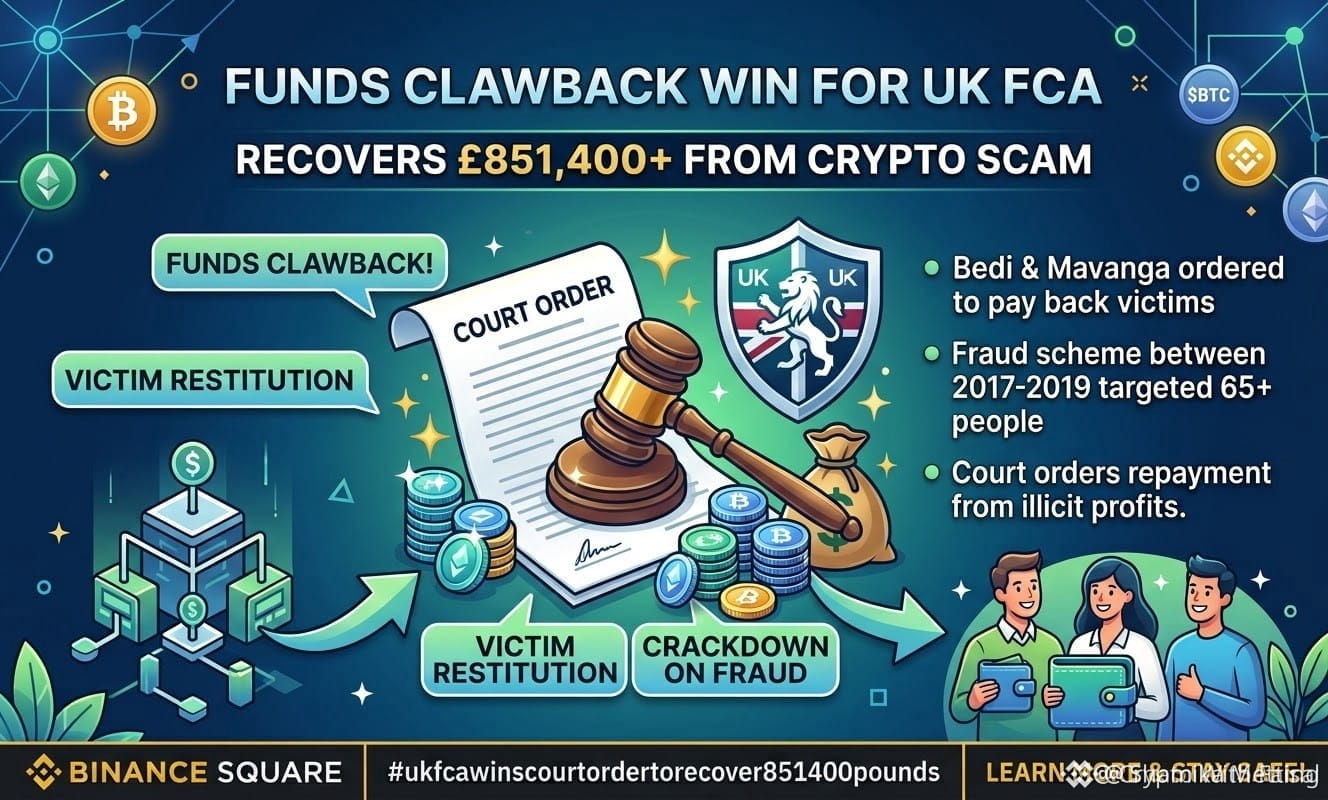
#ukfcawinscourtordertorecover851400pounds
حققَت هيئةُ السلوك المالي في المملكة المتحدة (FCA) للتوَّ انتصارًا قانونيًا كبيرًا، عبر الحصول على أمرٍ قضائي لاسترداد 851,402£ من مخطط استثماري للعملات المشفرة الاحتيالي.
إليك ما حدث فعليًا:
بين عامي 2017 و2019، نفّذ المحتالان رايموندِبيدي و باتريك ماڤانغا عمليةَ اتصالٍ بارد، حيث خدعوا الناس للشراء في استثمارات كريبتو مزيفة عبر كيانات تُعرف باسم "CCX Capital" و "Astaria Group". إجمالًا، تم خداع ما لا يقل عن 65 مستثمرًا أبرياء بمبلغٍ مذهل قدره 1.54 مليون£.
حكمُ المحكمة:
بفضل الحملة الشديدة التي تقودها هيئة FCA ضد المشغلين غير المُصرَّح لهم، أمرَت محكمة ساوثوارك كراون بدفع 603,404£ من قِبل بيدي، وبإعادة 247,998£ من قِبل ماڤانغا. أي 851,402£ تعود مباشرةً إلى الضحايا! وإذا فشل المحتالون في الدفع، فقد يواجهون حتى 5 سنوات إضافية خلف القضبان.
وعلى الرغم من أن هذا الاسترداد يغطي نحو نصف إجمالي 1.54 مليون£ التي خُسرت، فإنه يرسل رسالةً واضحة تمامًا للسوق: الجهات التنظيمية لم تعد تكتفي بكتابة القواعد—بل تعمل بنشاط على تعقّب المتورطين السيئين واستعادة الأموال المسروقة.
الاحتيال لا يدفع في Web3. ابقَ آمنًا في الخارج ودوائمًا أجْرِ بحثك بنفسك (DYOR) قبل تسليم أموالك! 🔐
متابعة من فضلكم
$BTC
$ETH
$BNB
#CryptoSafety #FCA #CryptoNews
#ukfcawinscourtordertorecover851400pounds
حققَت هيئةُ السلوك المالي في المملكة المتحدة (FCA) للتوَّ انتصارًا قانونيًا كبيرًا، عبر الحصول على أمرٍ قضائي لاسترداد 851,402£ من مخطط استثماري للعملات المشفرة الاحتيالي.
إليك ما حدث فعليًا:
بين عامي 2017 و2019، نفّذ المحتالان رايموندِبيدي و باتريك ماڤانغا عمليةَ اتصالٍ بارد، حيث خدعوا الناس للشراء في استثمارات كريبتو مزيفة عبر كيانات تُعرف باسم "CCX Capital" و "Astaria Group". إجمالًا، تم خداع ما لا يقل عن 65 مستثمرًا أبرياء بمبلغٍ مذهل قدره 1.54 مليون£.
حكمُ المحكمة:
بفضل الحملة الشديدة التي تقودها هيئة FCA ضد المشغلين غير المُصرَّح لهم، أمرَت محكمة ساوثوارك كراون بدفع 603,404£ من قِبل بيدي، وبإعادة 247,998£ من قِبل ماڤانغا. أي 851,402£ تعود مباشرةً إلى الضحايا! وإذا فشل المحتالون في الدفع، فقد يواجهون حتى 5 سنوات إضافية خلف القضبان.
وعلى الرغم من أن هذا الاسترداد يغطي نحو نصف إجمالي 1.54 مليون£ التي خُسرت، فإنه يرسل رسالةً واضحة تمامًا للسوق: الجهات التنظيمية لم تعد تكتفي بكتابة القواعد—بل تعمل بنشاط على تعقّب المتورطين السيئين واستعادة الأموال المسروقة.
الاحتيال لا يدفع في Web3. ابقَ آمنًا في الخارج ودوائمًا أجْرِ بحثك بنفسك (DYOR) قبل تسليم أموالك! 🔐
متابعة من فضلكم
$BTC
$ETH
$BNB
#CryptoSafety #FCA #CryptoNews
حققَت هيئةُ السلوك المالي في المملكة المتحدة (FCA) للتوَّ انتصارًا قانونيًا كبيرًا، عبر الحصول على أمرٍ قضائي لاسترداد 851,402£ من مخطط استثماري للعملات المشفرة الاحتيالي.
إليك ما حدث فعليًا:
بين عامي 2017 و2019، نفّذ المحتالان رايموندِبيدي و باتريك ماڤانغا عمليةَ اتصالٍ بارد، حيث خدعوا الناس للشراء في استثمارات كريبتو مزيفة عبر كيانات تُعرف باسم "CCX Capital" و "Astaria Group". إجمالًا، تم خداع ما لا يقل عن 65 مستثمرًا أبرياء بمبلغٍ مذهل قدره 1.54 مليون£.
حكمُ المحكمة:
بفضل الحملة الشديدة التي تقودها هيئة FCA ضد المشغلين غير المُصرَّح لهم، أمرَت محكمة ساوثوارك كراون بدفع 603,404£ من قِبل بيدي، وبإعادة 247,998£ من قِبل ماڤانغا. أي 851,402£ تعود مباشرةً إلى الضحايا! وإذا فشل المحتالون في الدفع، فقد يواجهون حتى 5 سنوات إضافية خلف القضبان.
وعلى الرغم من أن هذا الاسترداد يغطي نحو نصف إجمالي 1.54 مليون£ التي خُسرت، فإنه يرسل رسالةً واضحة تمامًا للسوق: الجهات التنظيمية لم تعد تكتفي بكتابة القواعد—بل تعمل بنشاط على تعقّب المتورطين السيئين واستعادة الأموال المسروقة.
الاحتيال لا يدفع في Web3. ابقَ آمنًا في الخارج ودوائمًا أجْرِ بحثك بنفسك (DYOR) قبل تسليم أموالك! 🔐
متابعة من فضلكم
$BTC
$ETH
$BNB
#CryptoSafety #FCA #CryptoNews
1
96

🚨 SOPHISTICATED RPC SPOOF TRIPS DEFI BRIDGES WHILE $DYOR MOBILIZES TREASURY RECOVERY! 🚨
Smart money operates on precision, but malicious actors just spoofed Chain ID 9134 to route unsuspecting traders onto a rogue network. 🔍 The exploit trapped substantial capital inside a fake bridge contract, exposing how deep order flow vulnerabilities can run when custom RPC parameters are manipulated.
🔍 Forensic security teams are currently mapping the on-chain fund flows and preserving critical chat evidence. 💡 In a strong show of project accountability, treasury funds are being deployed to compensate affected users once forensic verification completes. 💬 Are you double-checking your custom RPC settings before bridging capital into emerging networks? 👇
⚠️ Not financial advice. Always manage your risk. 🛡️
🏷️ #DYOR #CryptoSafety #DeFi #Security #OnChain
🛡️ 🔍
🚨 SOPHISTICATED RPC SPOOF TRIPS DEFI BRIDGES WHILE $DYOR MOBILIZES TREASURY RECOVERY! 🚨
Smart money operates on precision, but malicious actors just spoofed Chain ID 9134 to route unsuspecting traders onto a rogue network. 🔍 The exploit trapped substantial capital inside a fake bridge contract, exposing how deep order flow vulnerabilities can run when custom RPC parameters are manipulated.
🔍 Forensic security teams are currently mapping the on-chain fund flows and preserving critical chat evidence. 💡 In a strong show of project accountability, treasury funds are being deployed to compensate affected users once forensic verification completes. 💬 Are you double-checking your custom RPC settings before bridging capital into emerging networks? 👇
⚠️ Not financial advice. Always manage your risk. 🛡️
🏷️ #DYOR #CryptoSafety #DeFi #Security #OnChain
🛡️ 🔍
Smart money operates on precision, but malicious actors just spoofed Chain ID 9134 to route unsuspecting traders onto a rogue network. 🔍 The exploit trapped substantial capital inside a fake bridge contract, exposing how deep order flow vulnerabilities can run when custom RPC parameters are manipulated.
🔍 Forensic security teams are currently mapping the on-chain fund flows and preserving critical chat evidence. 💡 In a strong show of project accountability, treasury funds are being deployed to compensate affected users once forensic verification completes. 💬 Are you double-checking your custom RPC settings before bridging capital into emerging networks? 👇
⚠️ Not financial advice. Always manage your risk. 🛡️
🏷️ #DYOR #CryptoSafety #DeFi #Security #OnChain
🛡️ 🔍
15
·
--
90% of crypto losses don't happen during sudden market crashes—they happen during quiet, sideways markets.
When primary assets like $BTC and $BNB hold steady, impatience lures traders into deadly traps. High leverage becomes a risky shortcut, while sophisticated phishing scams exploit trader boredom with fake airdrop claims.
True wealth creation in Web3 isn't just about hunting massive gains; it’s about ruthless capital preservation. Before opening a high-leverage position or approving a blind smart contract signature out of frustration, remember that surviving quiet cycles is what funds your future bull run profits. Protect your private keys, double-check domain URLs, and treat risk management as your top edge.
What is the single most crucial security rule that has saved your portfolio from a total loss?
#CryptoSafety #BinanceSquare
90% of crypto losses don't happen during sudden market crashes—they happen during quiet, sideways markets.
When primary assets like $BTC and $BNB hold steady, impatience lures traders into deadly traps. High leverage becomes a risky shortcut, while sophisticated phishing scams exploit trader boredom with fake airdrop claims.
True wealth creation in Web3 isn't just about hunting massive gains; it’s about ruthless capital preservation. Before opening a high-leverage position or approving a blind smart contract signature out of frustration, remember that surviving quiet cycles is what funds your future bull run profits. Protect your private keys, double-check domain URLs, and treat risk management as your top edge.
What is the single most crucial security rule that has saved your portfolio from a total loss?
#CryptoSafety #BinanceSquare
When primary assets like $BTC and $BNB hold steady, impatience lures traders into deadly traps. High leverage becomes a risky shortcut, while sophisticated phishing scams exploit trader boredom with fake airdrop claims.
True wealth creation in Web3 isn't just about hunting massive gains; it’s about ruthless capital preservation. Before opening a high-leverage position or approving a blind smart contract signature out of frustration, remember that surviving quiet cycles is what funds your future bull run profits. Protect your private keys, double-check domain URLs, and treat risk management as your top edge.
What is the single most crucial security rule that has saved your portfolio from a total loss?
#CryptoSafety #BinanceSquare
30

·
--
Cảnh báo cộng đồng: Hiện đang xuất hiện các bài đăng quảng bá dịch vụ tài chính (như Nubank) kèm link giới thiệu không rõ nguồn gốc trên các nền tảng xã hội.
Người dùng cần thận trọng với các liên kết lạ, tránh truy cập để bảo mật thông tin cá nhân và tài sản số. Hãy luôn kiểm tra kỹ nguồn tin trước khi thực hiện bất kỳ thao tác nào.
👀 Market Watch: $BTC $ETH
#CryptoSafety #Blockchain
Cảnh báo cộng đồng: Hiện đang xuất hiện các bài đăng quảng bá dịch vụ tài chính (như Nubank) kèm link giới thiệu không rõ nguồn gốc trên các nền tảng xã hội.
Người dùng cần thận trọng với các liên kết lạ, tránh truy cập để bảo mật thông tin cá nhân và tài sản số. Hãy luôn kiểm tra kỹ nguồn tin trước khi thực hiện bất kỳ thao tác nào.
👀 Market Watch: $BTC $ETH
#CryptoSafety #Blockchain
Người dùng cần thận trọng với các liên kết lạ, tránh truy cập để bảo mật thông tin cá nhân và tài sản số. Hãy luôn kiểm tra kỹ nguồn tin trước khi thực hiện bất kỳ thao tác nào.
👀 Market Watch: $BTC $ETH
#CryptoSafety #Blockchain
116

·
--
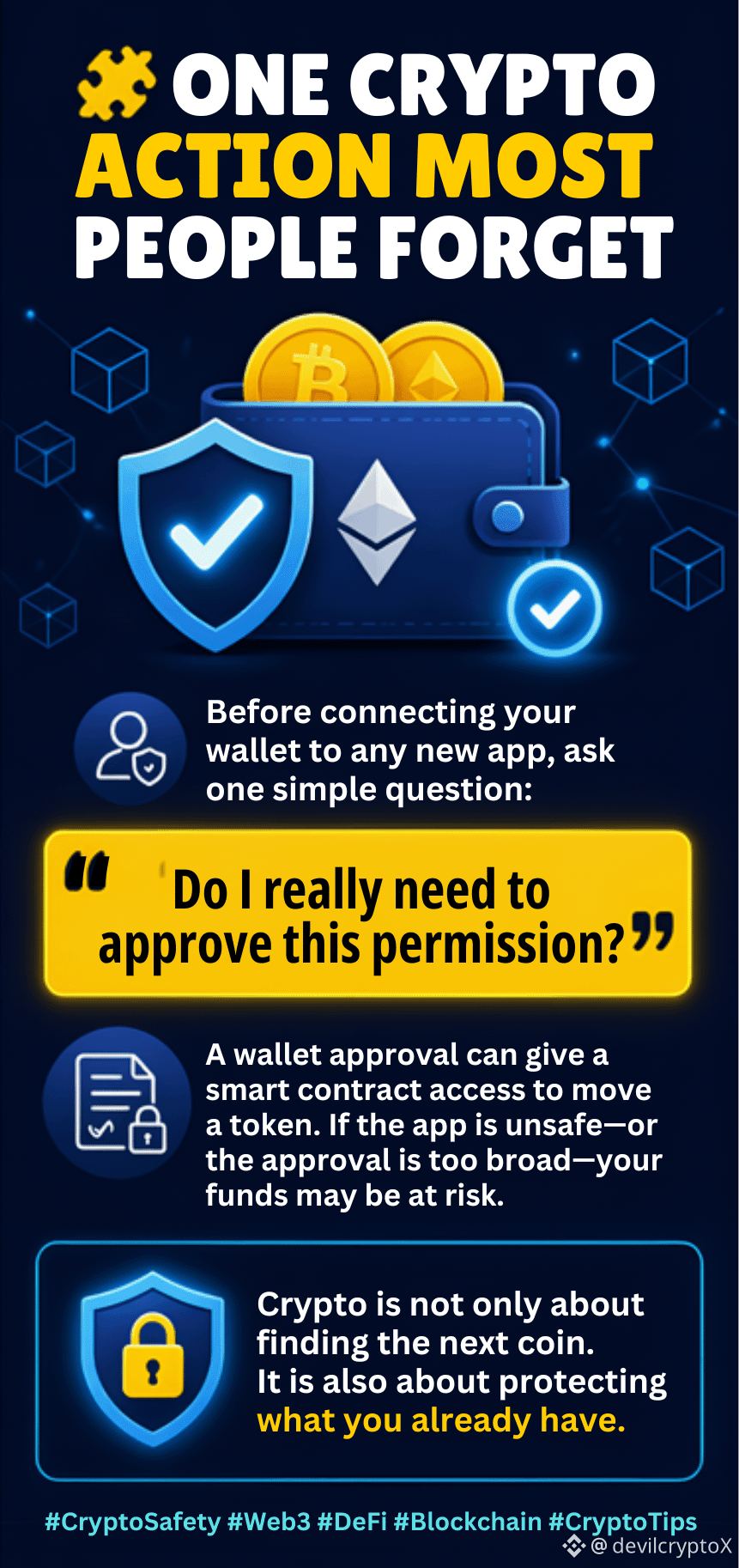
🧩 ONE CRYPTO ACTION MOST PEOPLE FORGET:
•Before connecting your wallet to any new app, ask one simple question:
“Do I really need to approve this permission?”
•A wallet approval can give a smart contract access to move a token. If the app is unsafe—or the approval is too broad—your funds may be at risk.
•Crypto is not only about finding the next coin. It is also about protecting what you already have.
$BTC
{spot}(BTCUSDT)
$ETH
{spot}(ETHUSDT)
$SOL
{spot}(SOLUSDT)
#CryptoSafety #Web3 #DeFi #Blockchain #CryptoTips
🧩 ONE CRYPTO ACTION MOST PEOPLE FORGET:
•Before connecting your wallet to any new app, ask one simple question:
“Do I really need to approve this permission?”
•A wallet approval can give a smart contract access to move a token. If the app is unsafe—or the approval is too broad—your funds may be at risk.
•Crypto is not only about finding the next coin. It is also about protecting what you already have.
$BTC
$ETH
$SOL
#CryptoSafety #Web3 #DeFi #Blockchain #CryptoTips
🧩 ONE CRYPTO ACTION MOST PEOPLE FORGET:
•Before connecting your wallet to any new app, ask one simple question:
“Do I really need to approve this permission?”
•A wallet approval can give a smart contract access to move a token. If the app is unsafe—or the approval is too broad—your funds may be at risk.
•Crypto is not only about finding the next coin. It is also about protecting what you already have.
$BTC
$ETH
$SOL
#CryptoSafety #Web3 #DeFi #Blockchain #CryptoTips
103

·
--
🔐 Trust is earned, not assumed.
💰 Before sending any crypto, always verify the wallet address, network, and receiver.
⚠️ One small mistake can put your funds at risk.
🛡️ Take a few extra seconds to verify before you send.
🚀 Stay smart. Stay safe. Protect your crypto!
#crypto #BinanceSquare #USDT #blockchain #CryptoSafety
🔐 Trust is earned, not assumed.
💰 Before sending any crypto, always verify the wallet address, network, and receiver.
⚠️ One small mistake can put your funds at risk.
🛡️ Take a few extra seconds to verify before you send.
🚀 Stay smart. Stay safe. Protect your crypto!
#crypto #BinanceSquare #USDT #blockchain #CryptoSafety
💰 Before sending any crypto, always verify the wallet address, network, and receiver.
⚠️ One small mistake can put your funds at risk.
🛡️ Take a few extra seconds to verify before you send.
🚀 Stay smart. Stay safe. Protect your crypto!
#crypto #BinanceSquare #USDT #blockchain #CryptoSafety
206 Atlas:
Verifying addresses is basic hygiene, not a strategy. This post offers zero trading value or market insight.
1
293
·
--
90% of crypto losses this year didn’t come from market crashes—they came from a single clicked link or an unchecked smart contract approval.
While macro trends keep $BTC and $BNB holding steady, silent wallet drainers are wiping out portfolios in seconds. Traders often focus entirely on chart patterns and high leverage, but capital preservation is the real secret to surviving this cycle.
Are you checking your active token allowances regularly? Scammers love targeting traders during quiet consolidation phases through fake air-drop links and phishing emails. Always verify signatures, set up anti-phishing codes, and keep long-term holdings isolated from daily dApp interactions. Winning big means nothing if you can’t protect what you earn.
What is your non-negotiable rule when it comes to keeping your crypto safe?
#CryptoSafety #BinanceS...
90% of crypto losses this year didn’t come from market crashes—they came from a single clicked link or an unchecked smart contract approval.
While macro trends keep $BTC and $BNB holding steady, silent wallet drainers are wiping out portfolios in seconds. Traders often focus entirely on chart patterns and high leverage, but capital preservation is the real secret to surviving this cycle.
Are you checking your active token allowances regularly? Scammers love targeting traders during quiet consolidation phases through fake air-drop links and phishing emails. Always verify signatures, set up anti-phishing codes, and keep long-term holdings isolated from daily dApp interactions. Winning big means nothing if you can’t protect what you earn.
What is your non-negotiable rule when it comes to keeping your crypto safe?
#CryptoSafety #BinanceS...
While macro trends keep $BTC and $BNB holding steady, silent wallet drainers are wiping out portfolios in seconds. Traders often focus entirely on chart patterns and high leverage, but capital preservation is the real secret to surviving this cycle.
Are you checking your active token allowances regularly? Scammers love targeting traders during quiet consolidation phases through fake air-drop links and phishing emails. Always verify signatures, set up anti-phishing codes, and keep long-term holdings isolated from daily dApp interactions. Winning big means nothing if you can’t protect what you earn.
What is your non-negotiable rule when it comes to keeping your crypto safe?
#CryptoSafety #BinanceS...
76
🚨 Exchange Security Reminder: $351.6M Drained in Bitget Hot Wallet Exploitation! 🛡️
The recent $351.6 million exploit of Bitget serves as a major wake-up call for active traders. While Bitget’s $464M Protection Fund safeguards user balances, and issuers like Tether/Circle froze $318K of stolen funds, the incident underscores key crypto risks.
💡 Trader Tip: Never keep all your funds on a single central exchange. Use hardware/cold wallets for long-term holdings!
Are you holding your long-term assets in cold storage or exchange wallets? Let us know below! 👇
#CryptoSecurity #Bitget #ColdWallet #BinanceSquare #CryptoSafety
🚨 Exchange Security Reminder: $351.6M Drained in Bitget Hot Wallet Exploitation! 🛡️
The recent $351.6 million exploit of Bitget serves as a major wake-up call for active traders. While Bitget’s $464M Protection Fund safeguards user balances, and issuers like Tether/Circle froze $318K of stolen funds, the incident underscores key crypto risks.
💡 Trader Tip: Never keep all your funds on a single central exchange. Use hardware/cold wallets for long-term holdings!
Are you holding your long-term assets in cold storage or exchange wallets? Let us know below! 👇
#CryptoSecurity #Bitget #ColdWallet #BinanceSquare #CryptoSafety
The recent $351.6 million exploit of Bitget serves as a major wake-up call for active traders. While Bitget’s $464M Protection Fund safeguards user balances, and issuers like Tether/Circle froze $318K of stolen funds, the incident underscores key crypto risks.
💡 Trader Tip: Never keep all your funds on a single central exchange. Use hardware/cold wallets for long-term holdings!
Are you holding your long-term assets in cold storage or exchange wallets? Let us know below! 👇
#CryptoSecurity #Bitget #ColdWallet #BinanceSquare #CryptoSafety
24

·
--
Коли користувачі заходять у розділ Binance Earn, погляд одразу падає на продукти з високими тризначними показниками прибутковості. Але за будь-яким високим відсотком завжди ховаються специфічні ризики, про які новачки часто забувають.
Найважливіше — розрізняти простий Simple Earn і складніші структуровані інструменти на кшталт бівалютних інвестицій або стейкінгу волатильних монет. Якщо у стейблкоїнах ви ризикуєте мінімально, то відправляючи в роботу альткоїни, можна зіткнутися з ринковою просадкою: отримані відсотки просто не перекриють падіння курсу самої монети. Крім того, у фіксованих продуктах є ризик упущеної вигоди — якщо ринок різко злетить, а ваші монети заблоковані, продати їх на локальному піку не вдасться без втрати нарахованого прибутку.
Освіта щодо ризиків починається з розуміння простого правила: дохідність завжди пропорційна небезпеці, і гнатися за максимальними цифрами без аналізу механіки продукту не варто.
А ви завжди детально вивчаєте умови підписки перед тим, як заморозити активи в Earn?
#BinanceEarn #CryptoSafety
Коли користувачі заходять у розділ Binance Earn, погляд одразу падає на продукти з високими тризначними показниками прибутковості. Але за будь-яким високим відсотком завжди ховаються специфічні ризики, про які новачки часто забувають.
Найважливіше — розрізняти простий Simple Earn і складніші структуровані інструменти на кшталт бівалютних інвестицій або стейкінгу волатильних монет. Якщо у стейблкоїнах ви ризикуєте мінімально, то відправляючи в роботу альткоїни, можна зіткнутися з ринковою просадкою: отримані відсотки просто не перекриють падіння курсу самої монети. Крім того, у фіксованих продуктах є ризик упущеної вигоди — якщо ринок різко злетить, а ваші монети заблоковані, продати їх на локальному піку не вдасться без втрати нарахованого прибутку.
Освіта щодо ризиків починається з розуміння простого правила: дохідність завжди пропорційна небезпеці, і гнатися за максимальними цифрами без аналізу механіки продукту не варто.
А ви завжди детально вивчаєте умови підписки перед тим, як заморозити активи в Earn?
#BinanceEarn #CryptoSafety
Найважливіше — розрізняти простий Simple Earn і складніші структуровані інструменти на кшталт бівалютних інвестицій або стейкінгу волатильних монет. Якщо у стейблкоїнах ви ризикуєте мінімально, то відправляючи в роботу альткоїни, можна зіткнутися з ринковою просадкою: отримані відсотки просто не перекриють падіння курсу самої монети. Крім того, у фіксованих продуктах є ризик упущеної вигоди — якщо ринок різко злетить, а ваші монети заблоковані, продати їх на локальному піку не вдасться без втрати нарахованого прибутку.
Освіта щодо ризиків починається з розуміння простого правила: дохідність завжди пропорційна небезпеці, і гнатися за максимальними цифрами без аналізу механіки продукту не варто.
А ви завжди детально вивчаєте умови підписки перед тим, як заморозити активи в Earn?
#BinanceEarn #CryptoSafety
2
108
·
--
Article
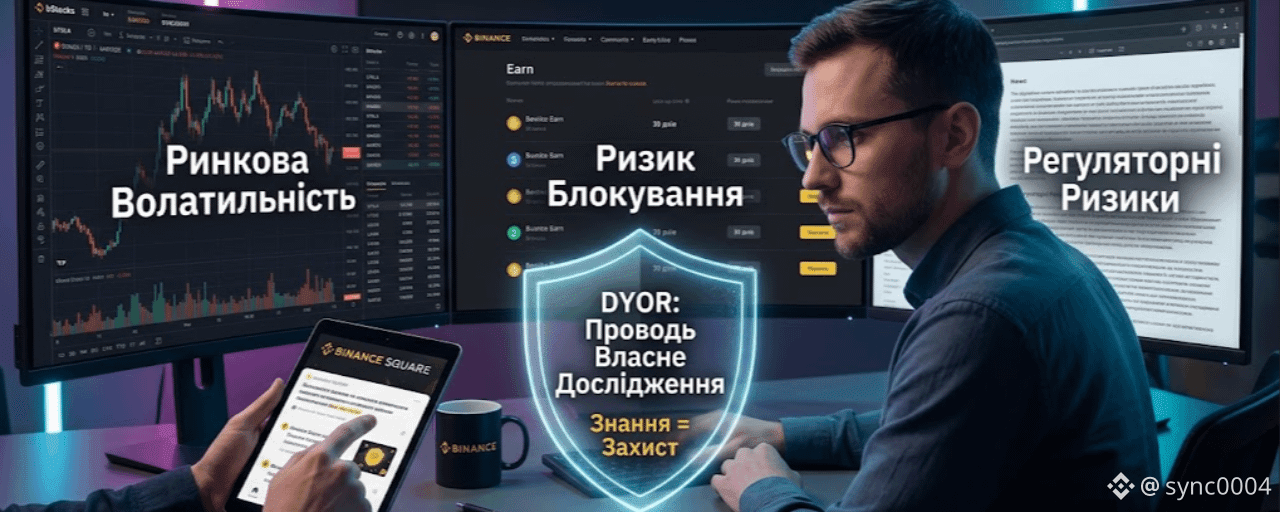
Інвестуй розумно: Які ризики приховують bStocks та продукти Earn?Високий дохід завжди супроводжується ризиками. Перш ніж інвестувати в bStocks, TradFi рішення на блокчейні або навіть у Binance Earn, важливо розуміти базові правила безпеки:
Ринкова волатильність: Якщо ви відправляєте в стейкінг волатильну монету (не стейблкоїн), її ціна може впасти. Отримані відсотки можуть не покрити курсову різницю.Ризики блокування: Деякі продукти Earn мають "фіксовані" умови (на 30, 60, 120 днів). Якщо ринок різко зміниться, ви не зможете миттєво продати актив без втрати накопичених винагород.Регуляторні ризики: Продукти, пов'язані з TradFi (традиційними фінансами) та токенізованими акціями (bStocks), сильно залежать від світового законодавства.
Золоте правило: Ніколи не вкладайте кошти, які не готові втратити. Диверсифікуйте портфель та завжди проводьте власне дослідження (DYOR)!
#BinanceUkraine #CryptoSafety #dyor
Інвестуй розумно: Які ризики приховують bStocks та продукти Earn?
Високий дохід завжди супроводжується ризиками. Перш ніж інвестувати в bStocks, TradFi рішення на блокчейні або навіть у Binance Earn, важливо розуміти базові правила безпеки:
Ринкова волатильність: Якщо ви відправляєте в стейкінг волатильну монету (не стейблкоїн), її ціна може впасти. Отримані відсотки можуть не покрити курсову різницю.Ризики блокування: Деякі продукти Earn мають "фіксовані" умови (на 30, 60, 120 днів). Якщо ринок різко зміниться, ви не зможете миттєво продати актив без втрати накопичених винагород.Регуляторні ризики: Продукти, пов'язані з TradFi (традиційними фінансами) та токенізованими акціями (bStocks), сильно залежать від світового законодавства.
Золоте правило: Ніколи не вкладайте кошти, які не готові втратити. Диверсифікуйте портфель та завжди проводьте власне дослідження (DYOR)!
#BinanceUkraine #CryptoSafety #dyor
Ринкова волатильність: Якщо ви відправляєте в стейкінг волатильну монету (не стейблкоїн), її ціна може впасти. Отримані відсотки можуть не покрити курсову різницю.Ризики блокування: Деякі продукти Earn мають "фіксовані" умови (на 30, 60, 120 днів). Якщо ринок різко зміниться, ви не зможете миттєво продати актив без втрати накопичених винагород.Регуляторні ризики: Продукти, пов'язані з TradFi (традиційними фінансами) та токенізованими акціями (bStocks), сильно залежать від світового законодавства.
Золоте правило: Ніколи не вкладайте кошти, які не готові втратити. Диверсифікуйте портфель та завжди проводьте власне дослідження (DYOR)!
#BinanceUkraine #CryptoSafety #dyor
128

·
--
5 red flags before you deposit crypto anywhere.
Read this before your next deposit. It takes 60 seconds.
1. No license info on the site. Anywhere. Not even in the footer.
2. Support only answers before you deposit. After that, silence.
3. Withdrawal "fees" that appear out of nowhere.
4. Bonus offers that lock your own money.
5. The app is not on the official store. Only an APK link.
One red flag is a warning.
Two is a pattern.
Three is a scam.
Save this list. Send it to that one friend who never checks.
Follow me for more posts like this. Let's be friends here. Share it so fewer people learn the hard way.
$BTC $BNB
#CryptoSafety #BinanceSquare #DYOR #CryptoCommunity #Web3
NFA. DYOR.
5 red flags before you deposit crypto anywhere.
Read this before your next deposit. It takes 60 seconds.
1. No license info on the site. Anywhere. Not even in the footer.
2. Support only answers before you deposit. After that, silence.
3. Withdrawal "fees" that appear out of nowhere.
4. Bonus offers that lock your own money.
5. The app is not on the official store. Only an APK link.
One red flag is a warning.
Two is a pattern.
Three is a scam.
Save this list. Send it to that one friend who never checks.
Follow me for more posts like this. Let's be friends here. Share it so fewer people learn the hard way.
$BTC $BNB
#CryptoSafety #BinanceSquare #DYOR #CryptoCommunity #Web3
NFA. DYOR.
Read this before your next deposit. It takes 60 seconds.
1. No license info on the site. Anywhere. Not even in the footer.
2. Support only answers before you deposit. After that, silence.
3. Withdrawal "fees" that appear out of nowhere.
4. Bonus offers that lock your own money.
5. The app is not on the official store. Only an APK link.
One red flag is a warning.
Two is a pattern.
Three is a scam.
Save this list. Send it to that one friend who never checks.
Follow me for more posts like this. Let's be friends here. Share it so fewer people learn the hard way.
$BTC $BNB
#CryptoSafety #BinanceSquare #DYOR #CryptoCommunity #Web3
NFA. DYOR.
69
·
--
DYOR is not a hashtag. It is a survival skill.
Everyone types it. Almost nobody does it.
Real DYOR takes 15 minutes:
1. Who is behind the project? Real names, real history.
2. Where is the liquidity? Locked or removable?
3. What do the holders look like? 10 wallets holding 90% is not a community.
4. Does the product exist, or only the promise?
5. What happens if the team disappears tomorrow?
The market does not reward the fastest buyer.
It rewards the one who checked.
Tag a friend who buys first and reads later.
Follow for the next one. Let's grow together. Share this to your feed.
$ETH $BTC
#CryptoSafety #BinanceSquare #DYOR #CryptoCommunity #Web3
NFA. DYOR. For real this time.
DYOR is not a hashtag. It is a survival skill.
Everyone types it. Almost nobody does it.
Real DYOR takes 15 minutes:
1. Who is behind the project? Real names, real history.
2. Where is the liquidity? Locked or removable?
3. What do the holders look like? 10 wallets holding 90% is not a community.
4. Does the product exist, or only the promise?
5. What happens if the team disappears tomorrow?
The market does not reward the fastest buyer.
It rewards the one who checked.
Tag a friend who buys first and reads later.
Follow for the next one. Let's grow together. Share this to your feed.
$ETH $BTC
#CryptoSafety #BinanceSquare #DYOR #CryptoCommunity #Web3
NFA. DYOR. For real this time.
Everyone types it. Almost nobody does it.
Real DYOR takes 15 minutes:
1. Who is behind the project? Real names, real history.
2. Where is the liquidity? Locked or removable?
3. What do the holders look like? 10 wallets holding 90% is not a community.
4. Does the product exist, or only the promise?
5. What happens if the team disappears tomorrow?
The market does not reward the fastest buyer.
It rewards the one who checked.
Tag a friend who buys first and reads later.
Follow for the next one. Let's grow together. Share this to your feed.
$ETH $BTC
#CryptoSafety #BinanceSquare #DYOR #CryptoCommunity #Web3
NFA. DYOR. For real this time.
46
·
--
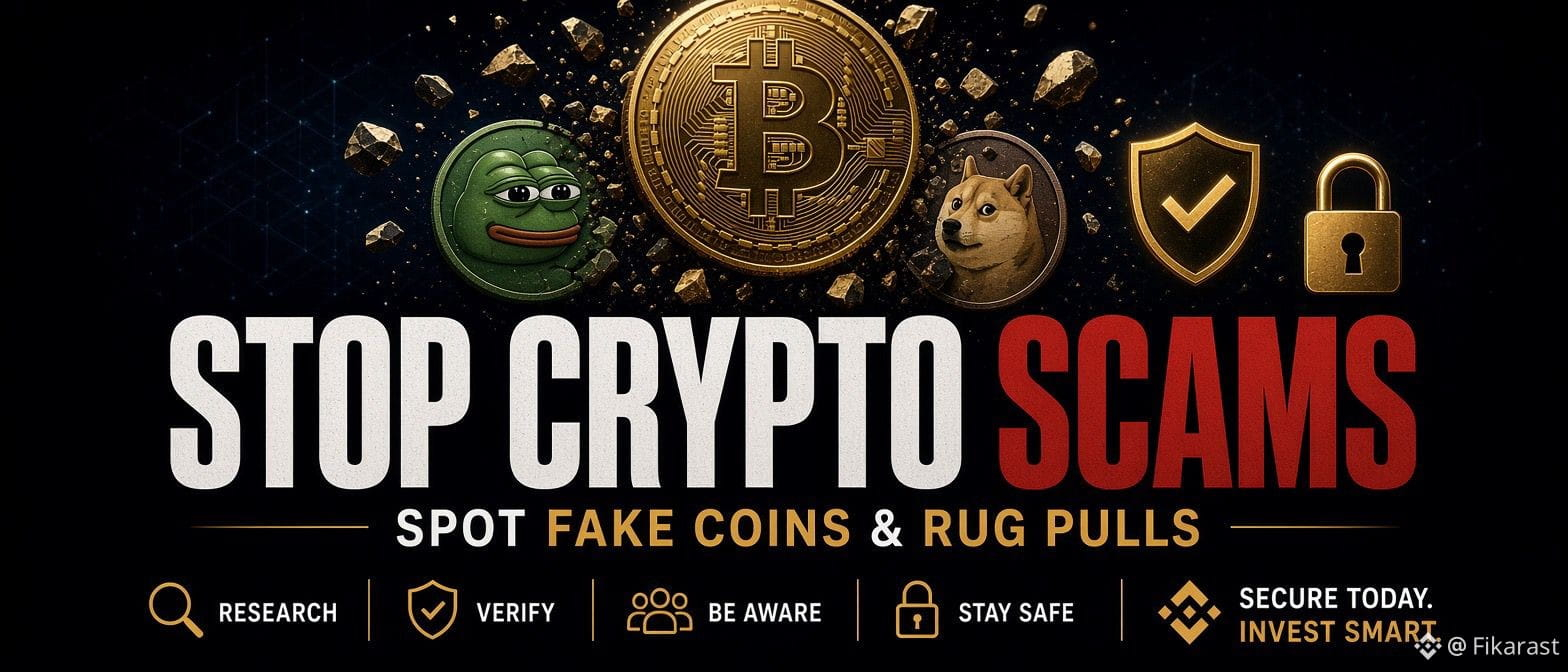
Crypto scams are exploding. Fake posts, deepfake videos, and rug-pull tokens target people who don’t know the market well enough. This has to stop.
Most new meme coins and “hot” tokens are designed to take your money. Historical examples include OneCoin, BitConnect, Squid Game (SQUID), LIBRA, HAWK, CatFi, and thousands of anonymous Solana & BNB Chain rugs that pump and disappear in hours.
Red flags:
• Anonymous team
• Locked or removed liquidity
• “Send crypto, get 2x back” promises
• Fake celebrity endorsements
• Extreme FOMO pressure
Protect yourself: Stick to well-known assets like BTC, ETC, and BNB. Always check contract addresses. Use tools like RugCheck or Token Sniffer. Never share your seed phrase. If it sounds too good to be true — it is a scam.
Educate. Verify. Protect. Knowledge is the best defense.
Not financial advice. DYOR. High risk of loss.
$BTC $ETH $BNB
#CryptoScams #RugPull #BinanceSquare #CryptoSafety #DYOR
Crypto scams are exploding. Fake posts, deepfake videos, and rug-pull tokens target people who don’t know the market well enough. This has to stop.
Most new meme coins and “hot” tokens are designed to take your money. Historical examples include OneCoin, BitConnect, Squid Game (SQUID), LIBRA, HAWK, CatFi, and thousands of anonymous Solana & BNB Chain rugs that pump and disappear in hours.
Red flags:
• Anonymous team
• Locked or removed liquidity
• “Send crypto, get 2x back” promises
• Fake celebrity endorsements
• Extreme FOMO pressure
Protect yourself: Stick to well-known assets like BTC, ETC, and BNB. Always check contract addresses. Use tools like RugCheck or Token Sniffer. Never share your seed phrase. If it sounds too good to be true — it is a scam.
Educate. Verify. Protect. Knowledge is the best defense.
Not financial advice. DYOR. High risk of loss.
$BTC $ETH $BNB
#CryptoScams #RugPull #BinanceSquare #CryptoSafety #DYOR
Most new meme coins and “hot” tokens are designed to take your money. Historical examples include OneCoin, BitConnect, Squid Game (SQUID), LIBRA, HAWK, CatFi, and thousands of anonymous Solana & BNB Chain rugs that pump and disappear in hours.
Red flags:
• Anonymous team
• Locked or removed liquidity
• “Send crypto, get 2x back” promises
• Fake celebrity endorsements
• Extreme FOMO pressure
Protect yourself: Stick to well-known assets like BTC, ETC, and BNB. Always check contract addresses. Use tools like RugCheck or Token Sniffer. Never share your seed phrase. If it sounds too good to be true — it is a scam.
Educate. Verify. Protect. Knowledge is the best defense.
Not financial advice. DYOR. High risk of loss.
$BTC $ETH $BNB
#CryptoScams #RugPull #BinanceSquare #CryptoSafety #DYOR
1
120
Connectez-vous pour découvrir plus de contenu
Rejoignez la communauté mondiale des adeptes de cryptomonnaies sur Binance Square
⚡️ Suviez les dernières informations importantes sur les cryptomonnaies.
💬 Jugé digne de confiance par la plus grande plateforme d’échange de cryptomonnaies au monde.
👍 Découvrez les connaissances que partagent les créateurs vérifiés.
Adresse e-mail/Nº de téléphone
Sujets d’actualité
1
#MetaMaskExitsLidoValidatorsAfterSecurityIncident
18,653 vues
451 mentions
2
#MicronBeatsEarningsLiftsGuidance
14,611 vues
393 mentions
3
#CFTCSubmitsTwoEventContractRulesToWhiteHouse
12,964 vues
360 mentions
4
#BitcoinClears$85200
28,750 vues
312 mentions
5
#AltcoinSeasonIndexHoldsAbove60For5Days
141,629 vues
1,858 mentions
6
#USADPAdds90000JobsInSeptember
65,465 vues
1,062 mentions
7
#USCorePCEEasesTo3%InAugust
44,824 vues
719 mentions
8
#KospiPostsWorstQuarterSince2020
25,398 vues
600 mentions
9
#SECToClarifyOnChainFundraisingRules
63,338 vues
797 mentions
10
#UKFCAOpensCryptoFirmAuthorization
59,412 vues
664 mentions