

meligamble
12.2k Publications

meligamble
Signaler
Bloquer l’utilisateur
Main call : t@me/meligamble
DM : @meliodas368
🔠 Content at chanel is for informational purposes only, not investment advice or solicitations 💰 | DYOR
315 Suivis
215 Abonnés
738 J’aime
Publications
Tous
Citations
Vidéos
·
--
Why is everyone panicking over routine wallet maintenance every single time on-chain alerts pop up?
Most retail traders keep losing money because they panic sell the second a whale address moves, only to buy back higher after the bounce. You cannot afford to let every sensational headline dictate your exit strategy.
The narrative that Michael Saylor is suddenly dumping $BTC just because MicroStrategy shifted $297M in Bitcoin completely ignores how institutional custody works. Large treasury holders constantly rebalance between cold storage setups, custodial partners, and collateral management vaults. Tracking transfers is useful, but assuming an immediate market dump without checking the destination address is the easiest way to get shaken out.
Before reacting to large whale alerts, follow a simple verification process. Always check whether the funds actually landed on a known exchange deposit address or simply transferred to a new multisig vault. Pairing that on-chain confirmation with order book depth gives you real clarity before you adjust your exposure to $MSTR or spot assets.
Where do you think the market heads next once this noise settles down?
#Bitcoin #CryptoTrading #OnChainAnalysis
Why is everyone panicking over routine wallet maintenance every single time on-chain alerts pop up?
Most retail traders keep losing money because they panic sell the second a whale address moves, only to buy back higher after the bounce. You cannot afford to let every sensational headline dictate your exit strategy.
The narrative that Michael Saylor is suddenly dumping $BTC just because MicroStrategy shifted $297M in Bitcoin completely ignores how institutional custody works. Large treasury holders constantly rebalance between cold storage setups, custodial partners, and collateral management vaults. Tracking transfers is useful, but assuming an immediate market dump without checking the destination address is the easiest way to get shaken out.
Before reacting to large whale alerts, follow a simple verification process. Always check whether the funds actually landed on a known exchange deposit address or simply transferred to a new multisig vault. Pairing that on-chain confirmation with order book depth gives you real clarity before you adjust your exposure to $MSTR or spot assets.
Where do you think the market heads next once this noise settles down?
#Bitcoin #CryptoTrading #OnChainAnalysis
Most retail traders keep losing money because they panic sell the second a whale address moves, only to buy back higher after the bounce. You cannot afford to let every sensational headline dictate your exit strategy.
The narrative that Michael Saylor is suddenly dumping $BTC just because MicroStrategy shifted $297M in Bitcoin completely ignores how institutional custody works. Large treasury holders constantly rebalance between cold storage setups, custodial partners, and collateral management vaults. Tracking transfers is useful, but assuming an immediate market dump without checking the destination address is the easiest way to get shaken out.
Before reacting to large whale alerts, follow a simple verification process. Always check whether the funds actually landed on a known exchange deposit address or simply transferred to a new multisig vault. Pairing that on-chain confirmation with order book depth gives you real clarity before you adjust your exposure to $MSTR or spot assets.
Where do you think the market heads next once this noise settles down?
#Bitcoin #CryptoTrading #OnChainAnalysis
40
·
--
Have you noticed how quietly the meme sector has been setting up while retail remains fixated on large caps?
Most traders end up chasing green candles after a breakout has already happened, only to become exit liquidity when momentum fades. Setting clear boundary rules before the volatility arrives is the only way to avoid that trap.
Take a look at how $DOGE is behaving right now. Price just established a solid higher low near 0.090, absorbing sell pressure while momentum indicators quietly pivot upward. When an expanding structure tightens like this, it rarely resolves sideways for long.
Instead of guessing the top or bottom, trade the trigger points. The key confirmation level sits at a clean push through 0.115, which marks the upper boundary where sellers are already getting squeezed. If buyers hold this level, momentum has open room to run alongside strength in $BTC. Your invalidation is equally straightforward: lose 0.090 and the entire setup fails, putting 0.075 in play fast.
Are you waiting for the 0.115 breakout confirmation or already positioning around support?
#DOGE #CryptoTrading #BinanceSquare
Have you noticed how quietly the meme sector has been setting up while retail remains fixated on large caps?
Most traders end up chasing green candles after a breakout has already happened, only to become exit liquidity when momentum fades. Setting clear boundary rules before the volatility arrives is the only way to avoid that trap.
Take a look at how $DOGE is behaving right now. Price just established a solid higher low near 0.090, absorbing sell pressure while momentum indicators quietly pivot upward. When an expanding structure tightens like this, it rarely resolves sideways for long.
Instead of guessing the top or bottom, trade the trigger points. The key confirmation level sits at a clean push through 0.115, which marks the upper boundary where sellers are already getting squeezed. If buyers hold this level, momentum has open room to run alongside strength in $BTC . Your invalidation is equally straightforward: lose 0.090 and the entire setup fails, putting 0.075 in play fast.
Are you waiting for the 0.115 breakout confirmation or already positioning around support?
#DOGE #CryptoTrading #BinanceSquare
Most traders end up chasing green candles after a breakout has already happened, only to become exit liquidity when momentum fades. Setting clear boundary rules before the volatility arrives is the only way to avoid that trap.
Take a look at how $DOGE is behaving right now. Price just established a solid higher low near 0.090, absorbing sell pressure while momentum indicators quietly pivot upward. When an expanding structure tightens like this, it rarely resolves sideways for long.
Instead of guessing the top or bottom, trade the trigger points. The key confirmation level sits at a clean push through 0.115, which marks the upper boundary where sellers are already getting squeezed. If buyers hold this level, momentum has open room to run alongside strength in $BTC . Your invalidation is equally straightforward: lose 0.090 and the entire setup fails, putting 0.075 in play fast.
Are you waiting for the 0.115 breakout confirmation or already positioning around support?
#DOGE #CryptoTrading #BinanceSquare

55
·
--
Picture this: you wake up, check the charts over morning coffee, and watch price action slice straight through your favorite technical setup.
Most traders get trapped right here, either panic-selling the local bottom or aggressively catching falling knives before the trend actually confirms.
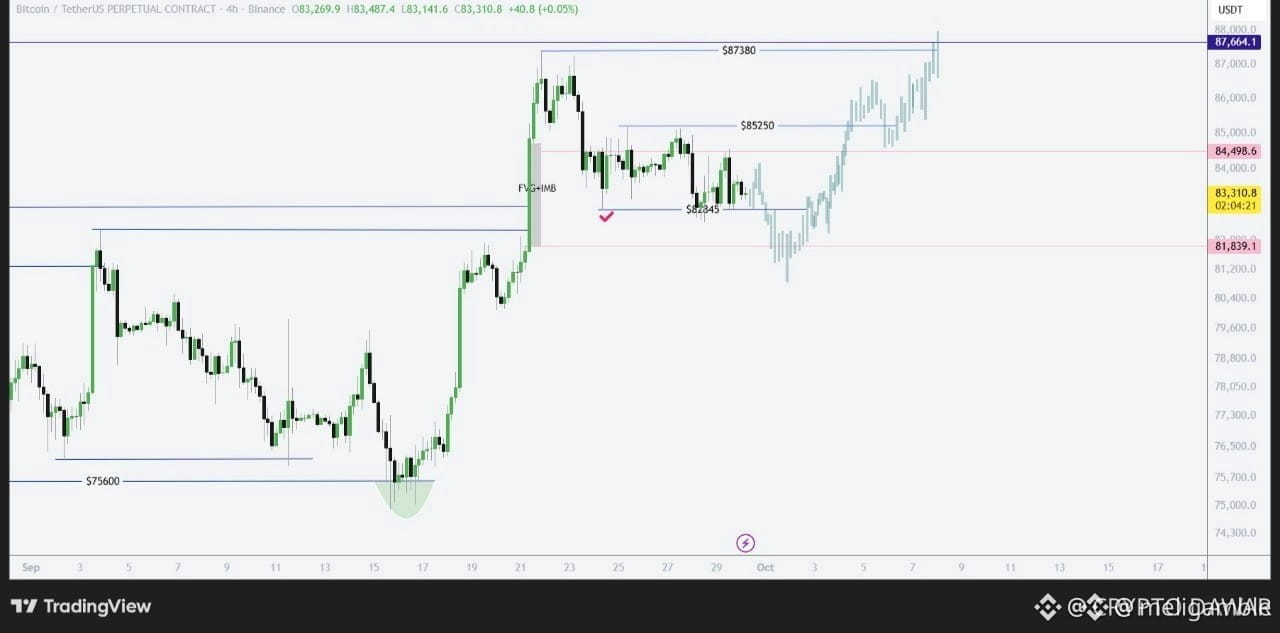
We just saw $BTC lose its footing in the classic golden pocket, dipping clean below the 0.5 to 0.618 Fibonacci retracement band where it had been bouncing. It feels a lot like the mid-cycle shakeouts we saw on $ETH and previous Bitcoin consolidation ranges, where losing the 0.5 level briefly flipped sentiment bearish and flushed out late long positions.
Right now, momentum stays heavy as long as we trade beneath that midpoint. The bulls need a clear 4-hour candle close above $85.2k to confirm a true reversal structure, which would open the door for another run toward the prior $87k highs instead of dragging $SOL and the broader market into a deeper retest.
Are you bidding this dip or waiting for that 4h reclaim before stepping in?
#Bitcoin #CryptoTrading #TechnicalAnalysis
Picture this: you wake up, check the charts over morning coffee, and watch price action slice straight through your favorite technical setup.
Most traders get trapped right here, either panic-selling the local bottom or aggressively catching falling knives before the trend actually confirms.
We just saw $BTC lose its footing in the classic golden pocket, dipping clean below the 0.5 to 0.618 Fibonacci retracement band where it had been bouncing. It feels a lot like the mid-cycle shakeouts we saw on $ETH and previous Bitcoin consolidation ranges, where losing the 0.5 level briefly flipped sentiment bearish and flushed out late long positions.
Right now, momentum stays heavy as long as we trade beneath that midpoint. The bulls need a clear 4-hour candle close above $85.2k to confirm a true reversal structure, which would open the door for another run toward the prior $87k highs instead of dragging $SOL and the broader market into a deeper retest.
Are you bidding this dip or waiting for that 4h reclaim before stepping in?
#Bitcoin #CryptoTrading #TechnicalAnalysis
Most traders get trapped right here, either panic-selling the local bottom or aggressively catching falling knives before the trend actually confirms.
We just saw $BTC lose its footing in the classic golden pocket, dipping clean below the 0.5 to 0.618 Fibonacci retracement band where it had been bouncing. It feels a lot like the mid-cycle shakeouts we saw on $ETH and previous Bitcoin consolidation ranges, where losing the 0.5 level briefly flipped sentiment bearish and flushed out late long positions.
Right now, momentum stays heavy as long as we trade beneath that midpoint. The bulls need a clear 4-hour candle close above $85.2k to confirm a true reversal structure, which would open the door for another run toward the prior $87k highs instead of dragging $SOL and the broader market into a deeper retest.
Are you bidding this dip or waiting for that 4h reclaim before stepping in?
#Bitcoin #CryptoTrading #TechnicalAnalysis

77
·
--
Picture this: you are glued to Capitol Hill headlines waiting for regulatory breakthroughs, only to watch crypto markets move in the exact opposite direction.
Most traders get trapped fixating on political drama and legislation delays, while completely ignoring the macro liquidity engine that actually decides where capital flows.
Back in 2020, everyone was debating regulatory crackdowns while global rate cuts silently triggered the biggest bull run in history. We are seeing that exact dynamic play out again today. While traders obsess over the stalled CLARITY Act, analysts like Sun point out that $BTC price action is still tethered directly to U.S. interest rate policy and global liquidity rather than single policy bills.
When central banks tighten liquidity, high-beta assets like $ETH and broader altcoins feel the squeeze regardless of how friendly local regulations look on paper. Regulatory clarity creates long-term rails, but short-term momentum has always answered to the cost of borrowing and dollar strength. Watching policy debates while ignoring rate cuts is like checking the weather forecast while the tide is going out.
Are you positioning around upcoming rate cuts, or do you think regulatory headlines will steal the show this quarter?
#Bitcoin #MacroEconomics #CryptoTrading
Picture this: you are glued to Capitol Hill headlines waiting for regulatory breakthroughs, only to watch crypto markets move in the exact opposite direction.
Most traders get trapped fixating on political drama and legislation delays, while completely ignoring the macro liquidity engine that actually decides where capital flows.
Back in 2020, everyone was debating regulatory crackdowns while global rate cuts silently triggered the biggest bull run in history. We are seeing that exact dynamic play out again today. While traders obsess over the stalled CLARITY Act, analysts like Sun point out that $BTC price action is still tethered directly to U.S. interest rate policy and global liquidity rather than single policy bills.
When central banks tighten liquidity, high-beta assets like $ETH and broader altcoins feel the squeeze regardless of how friendly local regulations look on paper. Regulatory clarity creates long-term rails, but short-term momentum has always answered to the cost of borrowing and dollar strength. Watching policy debates while ignoring rate cuts is like checking the weather forecast while the tide is going out.
Are you positioning around upcoming rate cuts, or do you think regulatory headlines will steal the show this quarter?
#Bitcoin #MacroEconomics #CryptoTrading
Most traders get trapped fixating on political drama and legislation delays, while completely ignoring the macro liquidity engine that actually decides where capital flows.
Back in 2020, everyone was debating regulatory crackdowns while global rate cuts silently triggered the biggest bull run in history. We are seeing that exact dynamic play out again today. While traders obsess over the stalled CLARITY Act, analysts like Sun point out that $BTC price action is still tethered directly to U.S. interest rate policy and global liquidity rather than single policy bills.
When central banks tighten liquidity, high-beta assets like $ETH and broader altcoins feel the squeeze regardless of how friendly local regulations look on paper. Regulatory clarity creates long-term rails, but short-term momentum has always answered to the cost of borrowing and dollar strength. Watching policy debates while ignoring rate cuts is like checking the weather forecast while the tide is going out.
Are you positioning around upcoming rate cuts, or do you think regulatory headlines will steal the show this quarter?
#Bitcoin #MacroEconomics #CryptoTrading

·
--
Have you noticed that everyone is still waiting on the CLARITY Act while $BTC is actually being driven by something else entirely?
Too many traders are losing money chasing regulatory FOMO instead of tracking the liquidity that really moves the market. That kind of misplaced focus is how you miss entries and get caught in the next dump.
Bitcoin's next move depends more on U.S. interest rates and overall liquidity than stalled legislation. The Fed rate remains at 3.75%,4.00% and the 10-year Treasury yield hit 5.20% on September 24. September PMI climbed to 58.4, showing the economy has not cooled enough.
Recent $BTC ETF inflows helped push the price toward $87K, providing the only real support. A potential October rate hike could pressure risk assets like $ETH and $SOL hard, even if ETF demand continues. The failed CLARITY vote is a distraction at this point.
Watch Treasury yields and ETF flows closely rather than betting on Congress. That's the practical way to stay ahead.
What's your take on the real catalyst here?
#Bitcoin #Macro #Crypto
Have you noticed that everyone is still waiting on the CLARITY Act while $BTC is actually being driven by something else entirely?
Too many traders are losing money chasing regulatory FOMO instead of tracking the liquidity that really moves the market. That kind of misplaced focus is how you miss entries and get caught in the next dump.
Bitcoin's next move depends more on U.S. interest rates and overall liquidity than stalled legislation. The Fed rate remains at 3.75%,4.00% and the 10-year Treasury yield hit 5.20% on September 24. September PMI climbed to 58.4, showing the economy has not cooled enough.
Recent $BTC ETF inflows helped push the price toward $87K, providing the only real support. A potential October rate hike could pressure risk assets like $ETH and $SOL hard, even if ETF demand continues. The failed CLARITY vote is a distraction at this point.
Watch Treasury yields and ETF flows closely rather than betting on Congress. That's the practical way to stay ahead.
What's your take on the real catalyst here?
#Bitcoin #Macro #Crypto
Too many traders are losing money chasing regulatory FOMO instead of tracking the liquidity that really moves the market. That kind of misplaced focus is how you miss entries and get caught in the next dump.
Bitcoin's next move depends more on U.S. interest rates and overall liquidity than stalled legislation. The Fed rate remains at 3.75%,4.00% and the 10-year Treasury yield hit 5.20% on September 24. September PMI climbed to 58.4, showing the economy has not cooled enough.
Recent $BTC ETF inflows helped push the price toward $87K, providing the only real support. A potential October rate hike could pressure risk assets like $ETH and $SOL hard, even if ETF demand continues. The failed CLARITY vote is a distraction at this point.
Watch Treasury yields and ETF flows closely rather than betting on Congress. That's the practical way to stay ahead.
What's your take on the real catalyst here?
#Bitcoin #Macro #Crypto
·
--
update $TFEX
did not expect $tfex to run 417k to 860k. x2
update $TFEX
did not expect $tfex to run 417k to 860k. x2
did not expect $tfex to run 417k to 860k. x2
1
·
--
Why is everyone rushing to chase green candles right before an inevitable cool-off?
Most traders get trapped buying the local top because they mistake short-term momentum for an uninterrupted moonshot, only to sit on heavy drawdowns when the market finally resets.
While the macro setup for $ZEC still looks solid with a realistic path toward 2,000 in Q4, longing resistance here is reckless. The recent rally has outpaced spot volume, making a corrective move across major privacy assets and $BTC pairs completely overdue.
Instead of chasing pumps, the smarter play is preparing for the retracement. We are far more likely to revisit 1,200 before making any sustained push above 1,700, which offers a much cleaner risk-reward window to build high-conviction positions.
Are you taking profits on this run or looking for a pullback to re-enter?
#CryptoTrading #ZEC #Altcoins
Why is everyone rushing to chase green candles right before an inevitable cool-off?
Most traders get trapped buying the local top because they mistake short-term momentum for an uninterrupted moonshot, only to sit on heavy drawdowns when the market finally resets.
While the macro setup for $ZEC still looks solid with a realistic path toward 2,000 in Q4, longing resistance here is reckless. The recent rally has outpaced spot volume, making a corrective move across major privacy assets and $BTC pairs completely overdue.
Instead of chasing pumps, the smarter play is preparing for the retracement. We are far more likely to revisit 1,200 before making any sustained push above 1,700, which offers a much cleaner risk-reward window to build high-conviction positions.
Are you taking profits on this run or looking for a pullback to re-enter?
#CryptoTrading #ZEC #Altcoins
Most traders get trapped buying the local top because they mistake short-term momentum for an uninterrupted moonshot, only to sit on heavy drawdowns when the market finally resets.
While the macro setup for $ZEC still looks solid with a realistic path toward 2,000 in Q4, longing resistance here is reckless. The recent rally has outpaced spot volume, making a corrective move across major privacy assets and $BTC pairs completely overdue.
Instead of chasing pumps, the smarter play is preparing for the retracement. We are far more likely to revisit 1,200 before making any sustained push above 1,700, which offers a much cleaner risk-reward window to build high-conviction positions.
Are you taking profits on this run or looking for a pullback to re-enter?
#CryptoTrading #ZEC #Altcoins
4
·
--
Most traders lose their shirt trying to copy leaderboard PnL screenshots right at local tops.
Watching a top wallet flaunt a +4,026 USDT unrealized gain on a long position usually triggers instant FOMO, but blindly chasing targets like $AAVE at 200 dollars while the token is already dipping -3.57% is the easiest way to get liquidated. You only see the winning snapshot, never their liquidation price, position sizing, or hedging strategy.
When top-ranked 30-day traders open leverage on majors like $BTC or DeFi leaders like $UNI, they often carry enough margin to absorb deep drawdowns that would wipe out a smaller retail account. Jumping into an open perp just because a leaderboard profile is in green leaves you holding the bag when market makers hunt high-leverage liquidity clusters.
Are you managing your own risk on these DeFi breakouts, or still following leaderboard positions?
#CryptoTrading #DeFi #RiskManagement
Most traders lose their shirt trying to copy leaderboard PnL screenshots right at local tops.
Watching a top wallet flaunt a +4,026 USDT unrealized gain on a long position usually triggers instant FOMO, but blindly chasing targets like $AAVE at 200 dollars while the token is already dipping -3.57% is the easiest way to get liquidated. You only see the winning snapshot, never their liquidation price, position sizing, or hedging strategy.
When top-ranked 30-day traders open leverage on majors like $BTC or DeFi leaders like $UNI , they often carry enough margin to absorb deep drawdowns that would wipe out a smaller retail account. Jumping into an open perp just because a leaderboard profile is in green leaves you holding the bag when market makers hunt high-leverage liquidity clusters.
Are you managing your own risk on these DeFi breakouts, or still following leaderboard positions?
#CryptoTrading #DeFi #RiskManagement
Watching a top wallet flaunt a +4,026 USDT unrealized gain on a long position usually triggers instant FOMO, but blindly chasing targets like $AAVE at 200 dollars while the token is already dipping -3.57% is the easiest way to get liquidated. You only see the winning snapshot, never their liquidation price, position sizing, or hedging strategy.
When top-ranked 30-day traders open leverage on majors like $BTC or DeFi leaders like $UNI , they often carry enough margin to absorb deep drawdowns that would wipe out a smaller retail account. Jumping into an open perp just because a leaderboard profile is in green leaves you holding the bag when market makers hunt high-leverage liquidity clusters.
Are you managing your own risk on these DeFi breakouts, or still following leaderboard positions?
#CryptoTrading #DeFi #RiskManagement

6
·
--
Picture this: a governance vote passes quietly in a legacy privacy protocol, and within hours, traders start front-running what they assume is an imminent liquidity surge.
Most market participants overlook how governance execution actually plays out, rushing into $ZEC positions during greed phases only to realize that protocol approvals often bring regulatory friction long before they deliver upside. When the crowd chases governance headlines without mapping the counterparty exposure, they usually end up holding bags right into a liquidity exit.
The recent movement under #ZcashApproves serves as a clear case study in structural risk. While passing key transition proposals signals developer momentum, it also places privacy-focused assets under renewed scrutiny from compliance desks and centralized exchanges that are already tightening listing criteria. We have seen similar rotations where assets like $QNT or older infrastructure plays absorbed speculative capital on governance updates, only to face severe slippage once broader market momentum stalled.
Real execution risk rarely shows up in the headline vote; it appears weeks later in order book depth and delisting rumors.
How are you managing the regulatory risk on privacy assets moving into the next quarter?
#ZcashApproves #QNTRises287
Picture this: a governance vote passes quietly in a legacy privacy protocol, and within hours, traders start front-running what they assume is an imminent liquidity surge.
Most market participants overlook how governance execution actually plays out, rushing into $ZEC positions during greed phases only to realize that protocol approvals often bring regulatory friction long before they deliver upside. When the crowd chases governance headlines without mapping the counterparty exposure, they usually end up holding bags right into a liquidity exit.
The recent movement under #ZcashApproves serves as a clear case study in structural risk. While passing key transition proposals signals developer momentum, it also places privacy-focused assets under renewed scrutiny from compliance desks and centralized exchanges that are already tightening listing criteria. We have seen similar rotations where assets like $QNT or older infrastructure plays absorbed speculative capital on governance updates, only to face severe slippage once broader market momentum stalled.
Real execution risk rarely shows up in the headline vote; it appears weeks later in order book depth and delisting rumors.
How are you managing the regulatory risk on privacy assets moving into the next quarter?
#ZcashApproves #QNTRises287
Most market participants overlook how governance execution actually plays out, rushing into $ZEC positions during greed phases only to realize that protocol approvals often bring regulatory friction long before they deliver upside. When the crowd chases governance headlines without mapping the counterparty exposure, they usually end up holding bags right into a liquidity exit.
The recent movement under #ZcashApproves serves as a clear case study in structural risk. While passing key transition proposals signals developer momentum, it also places privacy-focused assets under renewed scrutiny from compliance desks and centralized exchanges that are already tightening listing criteria. We have seen similar rotations where assets like $QNT or older infrastructure plays absorbed speculative capital on governance updates, only to face severe slippage once broader market momentum stalled.
Real execution risk rarely shows up in the headline vote; it appears weeks later in order book depth and delisting rumors.
How are you managing the regulatory risk on privacy assets moving into the next quarter?
#ZcashApproves #QNTRises287
1
·
--
If you are market buying enterprise infrastructure tokens after a vertical pump, stop right now.
Watching a breakout unfold while sitting on the sidelines hurts, but panic buying into resistance usually turns late entrants into exit liquidity for early positioning.
The debate around $QNT right now splits the market into two clear camps. Skeptics argue this rally is nothing more than temporary capital rotation into quiet mid-caps while $USDT liquidity waits on broader market clarity. They view sudden volume spikes as speculative noise that fades as fast as it appears.
However, the structural case looks noticeably different this cycle. With enterprise settlement and institutional interoperability returning to the spotlight, infrastructure built specifically for regulated financial rails carries genuine long-term demand rather than purely speculative momentum.
Institutional integration develops over quarters rather than hours, which means chasing an extended green candle rarely provides a favorable risk-reward entry.
Are you taking profits into this strength, or holding through the volatility?
#QNTRises287 #ChainlinkLaunchesBankSWIFTLedgerFramework
If you are market buying enterprise infrastructure tokens after a vertical pump, stop right now.
Watching a breakout unfold while sitting on the sidelines hurts, but panic buying into resistance usually turns late entrants into exit liquidity for early positioning.
The debate around $QNT right now splits the market into two clear camps. Skeptics argue this rally is nothing more than temporary capital rotation into quiet mid-caps while $USDT liquidity waits on broader market clarity. They view sudden volume spikes as speculative noise that fades as fast as it appears.
However, the structural case looks noticeably different this cycle. With enterprise settlement and institutional interoperability returning to the spotlight, infrastructure built specifically for regulated financial rails carries genuine long-term demand rather than purely speculative momentum.
Institutional integration develops over quarters rather than hours, which means chasing an extended green candle rarely provides a favorable risk-reward entry.
Are you taking profits into this strength, or holding through the volatility?
#QNTRises287 #ChainlinkLaunchesBankSWIFTLedgerFramework
Watching a breakout unfold while sitting on the sidelines hurts, but panic buying into resistance usually turns late entrants into exit liquidity for early positioning.
The debate around $QNT right now splits the market into two clear camps. Skeptics argue this rally is nothing more than temporary capital rotation into quiet mid-caps while $USDT liquidity waits on broader market clarity. They view sudden volume spikes as speculative noise that fades as fast as it appears.
However, the structural case looks noticeably different this cycle. With enterprise settlement and institutional interoperability returning to the spotlight, infrastructure built specifically for regulated financial rails carries genuine long-term demand rather than purely speculative momentum.
Institutional integration develops over quarters rather than hours, which means chasing an extended green candle rarely provides a favorable risk-reward entry.
Are you taking profits into this strength, or holding through the volatility?
#QNTRises287 #ChainlinkLaunchesBankSWIFTLedgerFramework
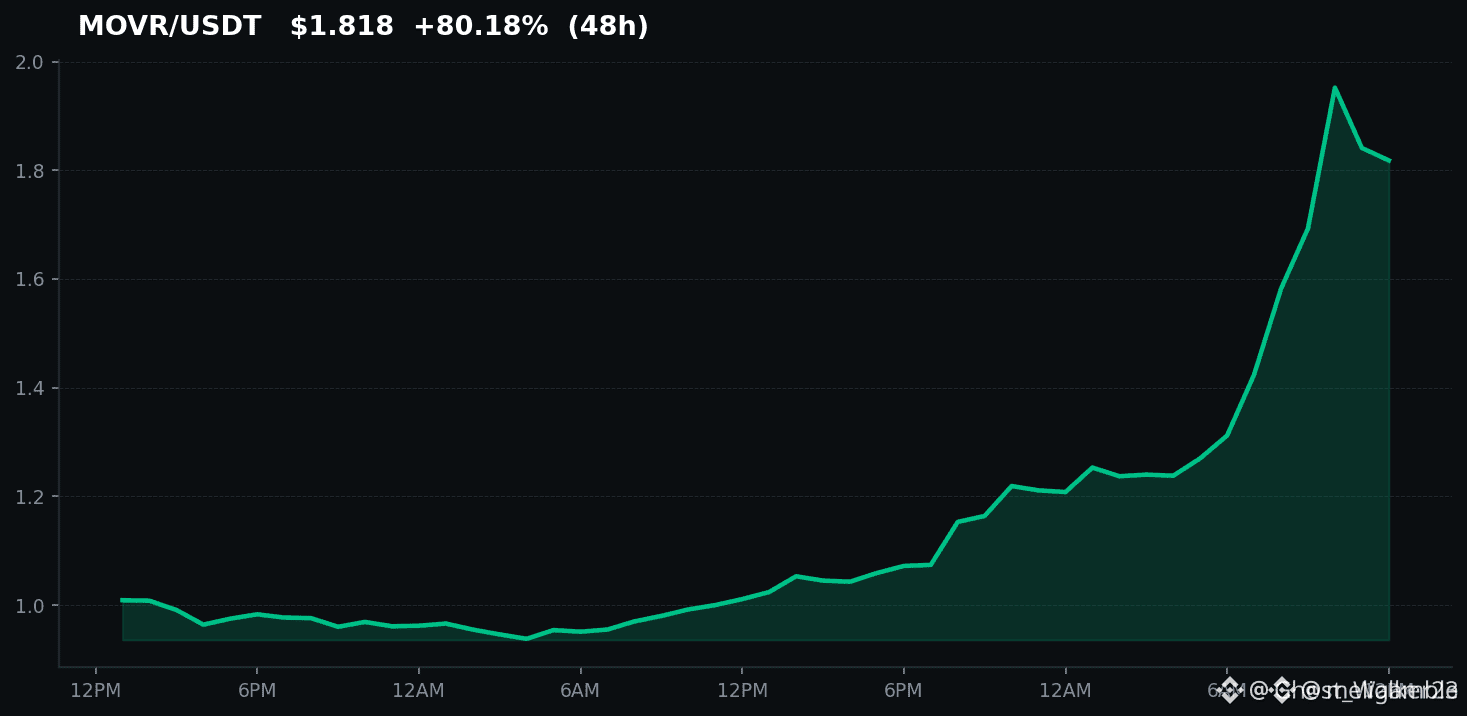
3
·
--
Picture this: a sovereign ministry steps in to pilot government debt onchain, and the retail market instantly treats it as an unbridled green light for every enterprise ledger asset in sight.
Most traders get trapped mistaking institutional exploration for immediate liquidity inflow, only to find themselves holding bags when regulatory perimeter walls suddenly go up. The Fear & Greed Index sits at 68, making it dangerously easy to overlook the fine print while chasing moves across tokens like $QNT or $TRB.
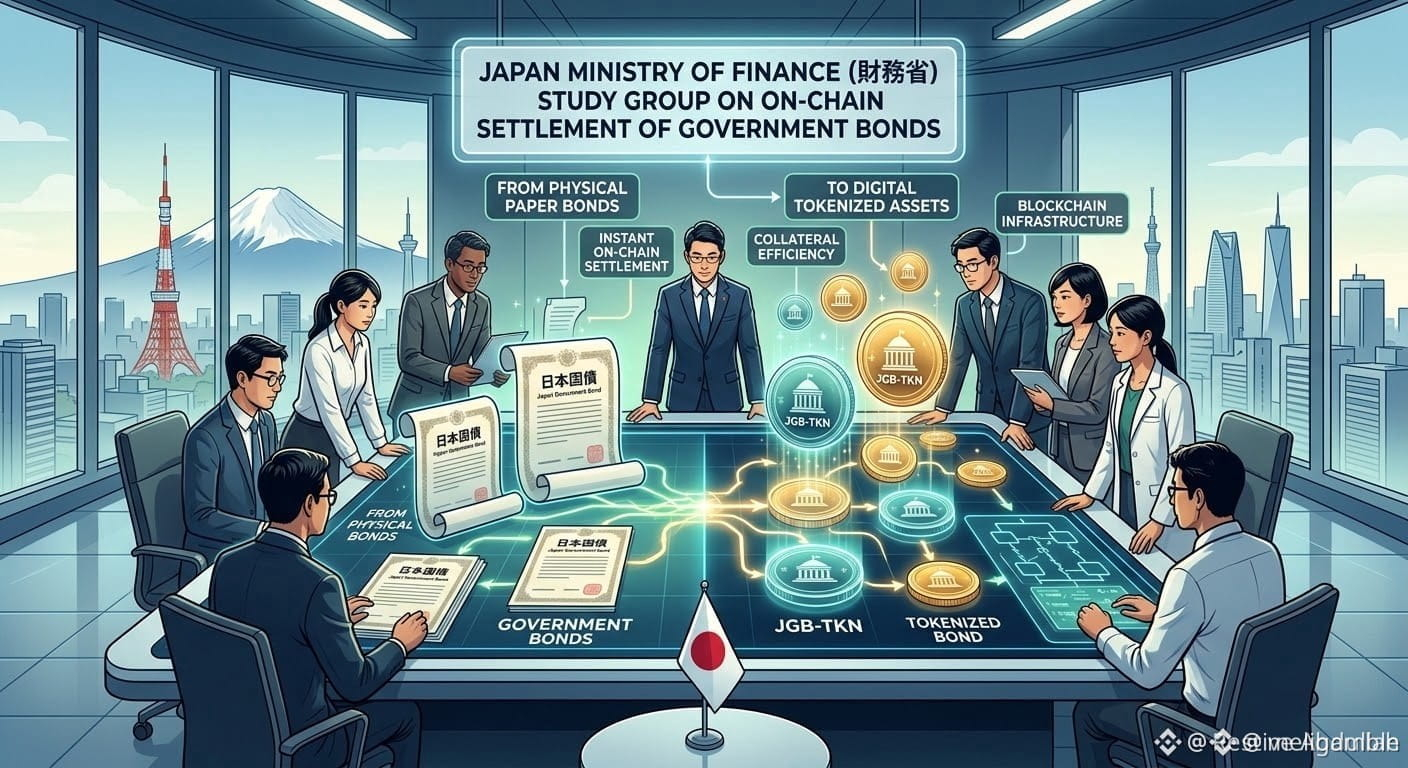
Japan's Ministry of Finance convening a study group on tokenized government bonds looks like textbook validation on the surface. But when governments tokenize sovereign debt, the primary objective is domestic settlement efficiency, tight control, and closed-loop compliance, not open liquidity pipelines for public ecosystems. If sovereign rails prioritize permissioned registries over public interoperability, the expected speculative tailwinds for public infrastructure can vanish overnight.
Treating sovereign pilots as broad market catalysts without assessing structural friction has repeatedly burned momentum traders. When sovereign debt meets tokenization, are we building genuine decentralized bridges or just reinforcing state-controlled private rails?
#JapanMOFStudyGroupOnTokenizedGovtBonds #QNTRises287 #ChainlinkLaunchesBankSWIFTLedgerFramework
Picture this: a sovereign ministry steps in to pilot government debt onchain, and the retail market instantly treats it as an unbridled green light for every enterprise ledger asset in sight.
Most traders get trapped mistaking institutional exploration for immediate liquidity inflow, only to find themselves holding bags when regulatory perimeter walls suddenly go up. The Fear & Greed Index sits at 68, making it dangerously easy to overlook the fine print while chasing moves across tokens like $QNT or $TRB .
Japan's Ministry of Finance convening a study group on tokenized government bonds looks like textbook validation on the surface. But when governments tokenize sovereign debt, the primary objective is domestic settlement efficiency, tight control, and closed-loop compliance, not open liquidity pipelines for public ecosystems. If sovereign rails prioritize permissioned registries over public interoperability, the expected speculative tailwinds for public infrastructure can vanish overnight.
Treating sovereign pilots as broad market catalysts without assessing structural friction has repeatedly burned momentum traders. When sovereign debt meets tokenization, are we building genuine decentralized bridges or just reinforcing state-controlled private rails?
#JapanMOFStudyGroupOnTokenizedGovtBonds #QNTRises287 #ChainlinkLaunchesBankSWIFTLedgerFramework
Most traders get trapped mistaking institutional exploration for immediate liquidity inflow, only to find themselves holding bags when regulatory perimeter walls suddenly go up. The Fear & Greed Index sits at 68, making it dangerously easy to overlook the fine print while chasing moves across tokens like $QNT or $TRB .
Japan's Ministry of Finance convening a study group on tokenized government bonds looks like textbook validation on the surface. But when governments tokenize sovereign debt, the primary objective is domestic settlement efficiency, tight control, and closed-loop compliance, not open liquidity pipelines for public ecosystems. If sovereign rails prioritize permissioned registries over public interoperability, the expected speculative tailwinds for public infrastructure can vanish overnight.
Treating sovereign pilots as broad market catalysts without assessing structural friction has repeatedly burned momentum traders. When sovereign debt meets tokenization, are we building genuine decentralized bridges or just reinforcing state-controlled private rails?
#JapanMOFStudyGroupOnTokenizedGovtBonds #QNTRises287 #ChainlinkLaunchesBankSWIFTLedgerFramework
4
·
--
The $26.70 resistance on $NMR looks like the start of a long-term rally until you remember how often 2-week breakouts reverse and trap the people who waited for confirmation.
You already missed buying in the $9.50 to $7.50 accumulation zone, so now the only "safe" looking trade is chasing a breakout. That is usually how traders turn a clean setup into a losing position.
$NMR is still sitting above a multi-year rising support trendline on the 2W, which keeps the bullish structure intact for now. Price bounced from that line and has not broken it. The problem is $26.70, the major resistance a lot of people are watching as the expansion trigger.
If it rejects there, the same trendline can send it grinding back toward $9.50,$7.50. Higher timeframe fakeouts hurt more because size piles in all at once. A weak tape in $BTC or $ETH can invalidate this whole structure without $NMR doing anything wrong on its own chart.
Even a real breakout still has to hold $26.70 on the first retest. Fail that and the people who bought the confirmation become the liquidity.
Where do you think this goes if $NMR loses that level on a retest?
#NMR #CryptoTA #Altcoins
The $26.70 resistance on $NMR looks like the start of a long-term rally until you remember how often 2-week breakouts reverse and trap the people who waited for confirmation.
You already missed buying in the $9.50 to $7.50 accumulation zone, so now the only "safe" looking trade is chasing a breakout. That is usually how traders turn a clean setup into a losing position.
$NMR is still sitting above a multi-year rising support trendline on the 2W, which keeps the bullish structure intact for now. Price bounced from that line and has not broken it. The problem is $26.70, the major resistance a lot of people are watching as the expansion trigger.
If it rejects there, the same trendline can send it grinding back toward $9.50,$7.50. Higher timeframe fakeouts hurt more because size piles in all at once. A weak tape in $BTC or $ETH can invalidate this whole structure without $NMR doing anything wrong on its own chart.
Even a real breakout still has to hold $26.70 on the first retest. Fail that and the people who bought the confirmation become the liquidity.
Where do you think this goes if $NMR loses that level on a retest?
#NMR #CryptoTA #Altcoins
You already missed buying in the $9.50 to $7.50 accumulation zone, so now the only "safe" looking trade is chasing a breakout. That is usually how traders turn a clean setup into a losing position.
$NMR is still sitting above a multi-year rising support trendline on the 2W, which keeps the bullish structure intact for now. Price bounced from that line and has not broken it. The problem is $26.70, the major resistance a lot of people are watching as the expansion trigger.
If it rejects there, the same trendline can send it grinding back toward $9.50,$7.50. Higher timeframe fakeouts hurt more because size piles in all at once. A weak tape in $BTC or $ETH can invalidate this whole structure without $NMR doing anything wrong on its own chart.
Even a real breakout still has to hold $26.70 on the first retest. Fail that and the people who bought the confirmation become the liquidity.
Where do you think this goes if $NMR loses that level on a retest?
#NMR #CryptoTA #Altcoins

8
·
--
Most crypto traders think stricter government licensing instantly protects their funds, but historically, regulatory gateway approvals often create a false sense of security right before liquidity traps snap shut.
When news breaks about major jurisdictions greenlighting registrations, people rush to park capital or chase enterprise tokens, forgetting that a compliance stamp does not equal solvency or protection against bad tokenomics. Most retail participants end up holding the bag because they confuse regulatory authorization with an audit of the actual on-chain mechanics.
Looking closely at the UK financial watchdog rolling out its crypto firm authorization framework, the real friction lies in execution risk. Compliance costs will likely squeeze smaller service providers, centralizing order flow around a few regulated entities while off-ramping liquidity from volatile assets like $ACT into safe havens like $USDT. In previous cycles, similar regulatory rollouts triggered sudden delistings or restricted feature sets for local users with zero advance notice.
If enterprise plays like $QNT capture institutional volume under compliant rails, smaller protocols operating in gray zones will face brutal liquidity drains. You can have all the regulatory clarity in the world, yet still get trapped in tokens where market makers suddenly lose their legal operational license overnight.
How do you think tighter UK licensing will reshape retail trading access over the next few quarters?
#UKFCAOpensCryptoFirmAuthorization #QNTRises287
Most crypto traders think stricter government licensing instantly protects their funds, but historically, regulatory gateway approvals often create a false sense of security right before liquidity traps snap shut.
When news breaks about major jurisdictions greenlighting registrations, people rush to park capital or chase enterprise tokens, forgetting that a compliance stamp does not equal solvency or protection against bad tokenomics. Most retail participants end up holding the bag because they confuse regulatory authorization with an audit of the actual on-chain mechanics.
Looking closely at the UK financial watchdog rolling out its crypto firm authorization framework, the real friction lies in execution risk. Compliance costs will likely squeeze smaller service providers, centralizing order flow around a few regulated entities while off-ramping liquidity from volatile assets like $ACT into safe havens like $USDT. In previous cycles, similar regulatory rollouts triggered sudden delistings or restricted feature sets for local users with zero advance notice.
If enterprise plays like $QNT capture institutional volume under compliant rails, smaller protocols operating in gray zones will face brutal liquidity drains. You can have all the regulatory clarity in the world, yet still get trapped in tokens where market makers suddenly lose their legal operational license overnight.
How do you think tighter UK licensing will reshape retail trading access over the next few quarters?
#UKFCAOpensCryptoFirmAuthorization #QNTRises287
When news breaks about major jurisdictions greenlighting registrations, people rush to park capital or chase enterprise tokens, forgetting that a compliance stamp does not equal solvency or protection against bad tokenomics. Most retail participants end up holding the bag because they confuse regulatory authorization with an audit of the actual on-chain mechanics.
Looking closely at the UK financial watchdog rolling out its crypto firm authorization framework, the real friction lies in execution risk. Compliance costs will likely squeeze smaller service providers, centralizing order flow around a few regulated entities while off-ramping liquidity from volatile assets like $ACT into safe havens like $USDT. In previous cycles, similar regulatory rollouts triggered sudden delistings or restricted feature sets for local users with zero advance notice.
If enterprise plays like $QNT capture institutional volume under compliant rails, smaller protocols operating in gray zones will face brutal liquidity drains. You can have all the regulatory clarity in the world, yet still get trapped in tokens where market makers suddenly lose their legal operational license overnight.
How do you think tighter UK licensing will reshape retail trading access over the next few quarters?
#UKFCAOpensCryptoFirmAuthorization #QNTRises287

8
·
--
If you're still waiting for a perfect entry on $NEAR after it already started moving, stop now.
Traders keep missing these early momentum shifts and then pile in late, watching their positions turn red when the move stalls. It's a painful cycle of FOMO and regret that repeats every cycle.
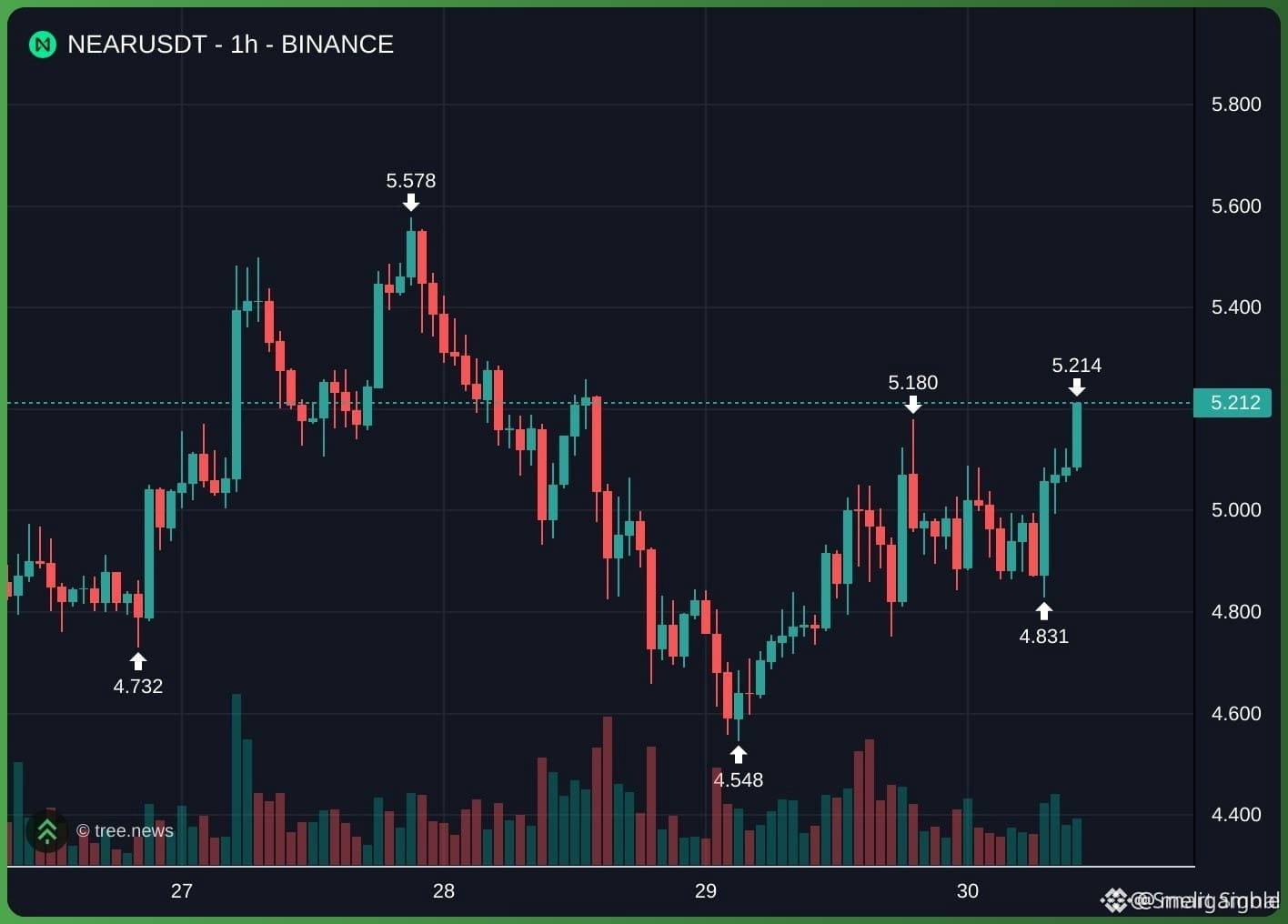
$NEAR is starting to wake up again and momentum is building nicely. Some traders see this as just another short-lived bounce in a weak market, ready to fade it at the first sign of resistance.
I think they're wrong this time. The way it's moving feels more sustained, and $QNT is echoing that strength while $BTC holds its ground.
What's your take on whether this $NEAR rally has real legs or if it's just another fakeout?
#NEAR #CryptoTrading #Altcoins
If you're still waiting for a perfect entry on $NEAR after it already started moving, stop now.
Traders keep missing these early momentum shifts and then pile in late, watching their positions turn red when the move stalls. It's a painful cycle of FOMO and regret that repeats every cycle.
$NEAR is starting to wake up again and momentum is building nicely. Some traders see this as just another short-lived bounce in a weak market, ready to fade it at the first sign of resistance.
I think they're wrong this time. The way it's moving feels more sustained, and $QNT is echoing that strength while $BTC holds its ground.
What's your take on whether this $NEAR rally has real legs or if it's just another fakeout?
#NEAR #CryptoTrading #Altcoins
Traders keep missing these early momentum shifts and then pile in late, watching their positions turn red when the move stalls. It's a painful cycle of FOMO and regret that repeats every cycle.
$NEAR is starting to wake up again and momentum is building nicely. Some traders see this as just another short-lived bounce in a weak market, ready to fade it at the first sign of resistance.
I think they're wrong this time. The way it's moving feels more sustained, and $QNT is echoing that strength while $BTC holds its ground.
What's your take on whether this $NEAR rally has real legs or if it's just another fakeout?
#NEAR #CryptoTrading #Altcoins
3
·
--
everyone thinks massive institutional utility news means you should market buy instantly, but actually that is how retail gets slaughtered as exit liquidity every single cycle.
most people see a token vertical and ape in at the top because they are terrified of missing the next multi-billion dollar enterprise play, only to watch their portfolio bleed out for months.
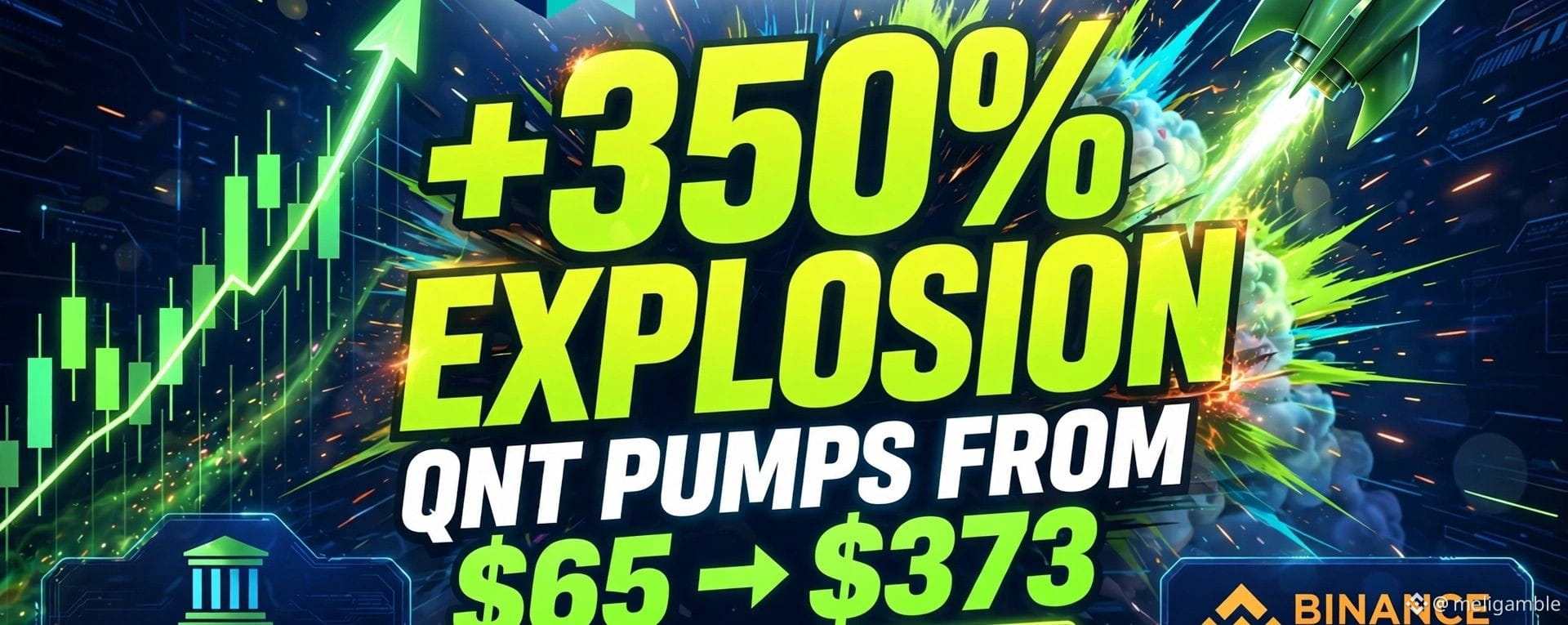
look at what just happened with $QNT as a prime case study. the token surged over 280% in the past week on headlines that Quant is prepping to power The Clearing House tokenized-deposit network. on paper that sounds crazy bullish, ngl.
but while timeline was euphoric and chasing green candles alongside large-cap moves in $BTC, a single entity wallet is still sitting on 600,000 QNT valued at roughly $160.39M. when supply concentration is that heavy after a parabolic pump, smart money rarely buys the news candle; they wait for the whales to distribute before looking for a safer re-entry.
are you buying the enterprise hype here or waiting for the pullback first?
#CryptoTrading #Quant #Altcoins
everyone thinks massive institutional utility news means you should market buy instantly, but actually that is how retail gets slaughtered as exit liquidity every single cycle.
most people see a token vertical and ape in at the top because they are terrified of missing the next multi-billion dollar enterprise play, only to watch their portfolio bleed out for months.
look at what just happened with $QNT as a prime case study. the token surged over 280% in the past week on headlines that Quant is prepping to power The Clearing House tokenized-deposit network. on paper that sounds crazy bullish, ngl.
but while timeline was euphoric and chasing green candles alongside large-cap moves in $BTC , a single entity wallet is still sitting on 600,000 QNT valued at roughly $160.39M. when supply concentration is that heavy after a parabolic pump, smart money rarely buys the news candle; they wait for the whales to distribute before looking for a safer re-entry.
are you buying the enterprise hype here or waiting for the pullback first?
#CryptoTrading #Quant #Altcoins
most people see a token vertical and ape in at the top because they are terrified of missing the next multi-billion dollar enterprise play, only to watch their portfolio bleed out for months.
look at what just happened with $QNT as a prime case study. the token surged over 280% in the past week on headlines that Quant is prepping to power The Clearing House tokenized-deposit network. on paper that sounds crazy bullish, ngl.
but while timeline was euphoric and chasing green candles alongside large-cap moves in $BTC , a single entity wallet is still sitting on 600,000 QNT valued at roughly $160.39M. when supply concentration is that heavy after a parabolic pump, smart money rarely buys the news candle; they wait for the whales to distribute before looking for a safer re-entry.
are you buying the enterprise hype here or waiting for the pullback first?
#CryptoTrading #Quant #Altcoins
·
--
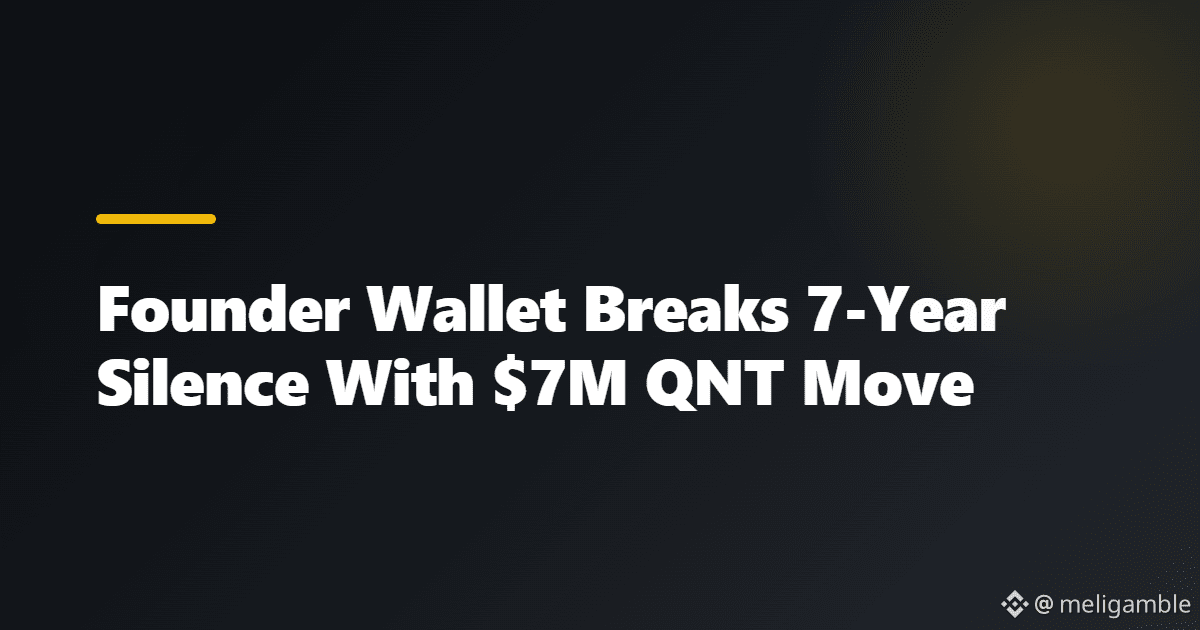
After seven years of complete silence, a founder-linked wallet just transferred 25,776 $QNT worth $6.97 million.
Traders always feel that sudden fear when an old wallet like this comes alive. You start questioning if the insiders know something you don't and whether you should sell before a potential dump, just like so many did at the wrong time in previous cycles.
I've seen this exact scenario play out more than once. In 2017 those early $BTC wallets that had been dormant for years started moving and created massive panic. The same happened with $ETH holders in 2021. Most of those transfers were not dumps. They were often just the original holders finally organizing their bags after riding the entire previous cycle. 25,776 $QNT sitting idle since 2018 now activating after seven years follows that same script. Founders who wait this long usually have a plan rather than an exit.
Watch where the tokens actually go instead of reacting to the headline. That's the difference between getting shaken out and staying positioned.
Where do you think this $QNT movement leads from here?
#QNT #Crypto #Whales
After seven years of complete silence, a founder-linked wallet just transferred 25,776 $QNT worth $6.97 million.
Traders always feel that sudden fear when an old wallet like this comes alive. You start questioning if the insiders know something you don't and whether you should sell before a potential dump, just like so many did at the wrong time in previous cycles.
I've seen this exact scenario play out more than once. In 2017 those early $BTC wallets that had been dormant for years started moving and created massive panic. The same happened with $ETH holders in 2021. Most of those transfers were not dumps. They were often just the original holders finally organizing their bags after riding the entire previous cycle. 25,776 $QNT sitting idle since 2018 now activating after seven years follows that same script. Founders who wait this long usually have a plan rather than an exit.
Watch where the tokens actually go instead of reacting to the headline. That's the difference between getting shaken out and staying positioned.
Where do you think this $QNT movement leads from here?
#QNT #Crypto #Whales
Traders always feel that sudden fear when an old wallet like this comes alive. You start questioning if the insiders know something you don't and whether you should sell before a potential dump, just like so many did at the wrong time in previous cycles.
I've seen this exact scenario play out more than once. In 2017 those early $BTC wallets that had been dormant for years started moving and created massive panic. The same happened with $ETH holders in 2021. Most of those transfers were not dumps. They were often just the original holders finally organizing their bags after riding the entire previous cycle. 25,776 $QNT sitting idle since 2018 now activating after seven years follows that same script. Founders who wait this long usually have a plan rather than an exit.
Watch where the tokens actually go instead of reacting to the headline. That's the difference between getting shaken out and staying positioned.
Where do you think this $QNT movement leads from here?
#QNT #Crypto #Whales
2
·
--
Picture this: a wallet tied to a project founder sits completely untouched for seven long years, only to wake up out of nowhere with a multi-million dollar transfer right at the peak of a rally.
Most traders panic the second they see whale movement like this, immediately rushing to dump their bags out of fear of getting dumped on first, often missing the bigger macro picture in the process.
Here is what actually unfolded. An early wallet linked to the founder moved 25,776 $QNT worth roughly $6.97 million after being dormant since 2019. While that kind of transfer usually triggers alarm bells, the address is still holding onto 600,000 $QNT valued at over $160 million, showing that this was far from a total exit.
We saw a very similar playbook back when legacy holders took partial profits during major utility announcements on networks like $LINK and Ethereum. The real catalyst here is institutional adoption, with the protocol preparing infrastructure to power The Clearing House tokenized-deposit network, which helped fuel a staggering 280% price surge over the past week alone.
When massive institutional catalysts hit, do you view founder profit-taking as a red flag or just standard liquidity management?
#Quant #CryptoNews #WhaleAlert
Picture this: a wallet tied to a project founder sits completely untouched for seven long years, only to wake up out of nowhere with a multi-million dollar transfer right at the peak of a rally.
Most traders panic the second they see whale movement like this, immediately rushing to dump their bags out of fear of getting dumped on first, often missing the bigger macro picture in the process.
Here is what actually unfolded. An early wallet linked to the founder moved 25,776 $QNT worth roughly $6.97 million after being dormant since 2019. While that kind of transfer usually triggers alarm bells, the address is still holding onto 600,000 $QNT valued at over $160 million, showing that this was far from a total exit.
We saw a very similar playbook back when legacy holders took partial profits during major utility announcements on networks like $LINK and Ethereum. The real catalyst here is institutional adoption, with the protocol preparing infrastructure to power The Clearing House tokenized-deposit network, which helped fuel a staggering 280% price surge over the past week alone.
When massive institutional catalysts hit, do you view founder profit-taking as a red flag or just standard liquidity management?
#Quant #CryptoNews #WhaleAlert
Most traders panic the second they see whale movement like this, immediately rushing to dump their bags out of fear of getting dumped on first, often missing the bigger macro picture in the process.
Here is what actually unfolded. An early wallet linked to the founder moved 25,776 $QNT worth roughly $6.97 million after being dormant since 2019. While that kind of transfer usually triggers alarm bells, the address is still holding onto 600,000 $QNT valued at over $160 million, showing that this was far from a total exit.
We saw a very similar playbook back when legacy holders took partial profits during major utility announcements on networks like $LINK and Ethereum. The real catalyst here is institutional adoption, with the protocol preparing infrastructure to power The Clearing House tokenized-deposit network, which helped fuel a staggering 280% price surge over the past week alone.
When massive institutional catalysts hit, do you view founder profit-taking as a red flag or just standard liquidity management?
#Quant #CryptoNews #WhaleAlert

·
--
If you are still ignoring founder wallet movements during a parabolic rally, stop now.
Most traders end up providing exit liquidity at the local peak because they confuse long-term enterprise adoption with immediate market price action.
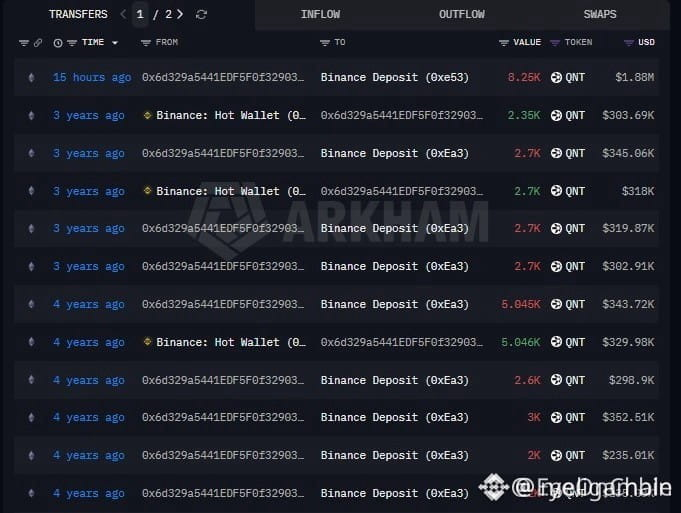
A wallet linked to the Quant founder just woke up after seven years of complete dormancy to transfer 25,776 $QNT worth roughly 6.97 million dollars. This movement comes right after the asset rallied over 280% in the past week on news of powering The Clearing House tokenized-deposit network. The wallet still holds 600,000 $QNT valued at over 160.39 million dollars, leaving the market to wonder if this transfer is simple operational rebalancing or the start of a larger distribution phase.
We have seen this exact dynamic play out with projects like $LINK and early treasury distributions on $ETH, where major institutional headlines provided the deep liquidity multi-year holders needed to take profits. Solid enterprise fundamentals build long-term value, but they never completely erase the short-term impact of legacy supply hitting the order books.
Do you see this transfer as standard operational management ahead of enterprise rollout, or a sign that the local top is already in?
#Quant #Altcoins #CryptoTrading
If you are still ignoring founder wallet movements during a parabolic rally, stop now.
Most traders end up providing exit liquidity at the local peak because they confuse long-term enterprise adoption with immediate market price action.
A wallet linked to the Quant founder just woke up after seven years of complete dormancy to transfer 25,776 $QNT worth roughly 6.97 million dollars. This movement comes right after the asset rallied over 280% in the past week on news of powering The Clearing House tokenized-deposit network. The wallet still holds 600,000 $QNT valued at over 160.39 million dollars, leaving the market to wonder if this transfer is simple operational rebalancing or the start of a larger distribution phase.
We have seen this exact dynamic play out with projects like $LINK and early treasury distributions on $ETH , where major institutional headlines provided the deep liquidity multi-year holders needed to take profits. Solid enterprise fundamentals build long-term value, but they never completely erase the short-term impact of legacy supply hitting the order books.
Do you see this transfer as standard operational management ahead of enterprise rollout, or a sign that the local top is already in?
#Quant #Altcoins #CryptoTrading
Most traders end up providing exit liquidity at the local peak because they confuse long-term enterprise adoption with immediate market price action.
A wallet linked to the Quant founder just woke up after seven years of complete dormancy to transfer 25,776 $QNT worth roughly 6.97 million dollars. This movement comes right after the asset rallied over 280% in the past week on news of powering The Clearing House tokenized-deposit network. The wallet still holds 600,000 $QNT valued at over 160.39 million dollars, leaving the market to wonder if this transfer is simple operational rebalancing or the start of a larger distribution phase.
We have seen this exact dynamic play out with projects like $LINK and early treasury distributions on $ETH , where major institutional headlines provided the deep liquidity multi-year holders needed to take profits. Solid enterprise fundamentals build long-term value, but they never completely erase the short-term impact of legacy supply hitting the order books.
Do you see this transfer as standard operational management ahead of enterprise rollout, or a sign that the local top is already in?
#Quant #Altcoins #CryptoTrading
6
Connectez-vous pour découvrir plus de contenu
Rejoignez la communauté mondiale des adeptes de cryptomonnaies sur Binance Square
⚡️ Suviez les dernières informations importantes sur les cryptomonnaies.
💬 Jugé digne de confiance par la plus grande plateforme d’échange de cryptomonnaies au monde.
👍 Découvrez les connaissances que partagent les créateurs vérifiés.
Adresse e-mail/Nº de téléphone
Sujets d’actualité
KoreaProposesTokenizingStocksAndBonds
11,643 vues
251 mentions
#koreaproposestokenizingstocksandbonds 🇰🇷 South Korea Proposes Roadmap to Tokenize Stocks and Bonds by 2027
Traditional finance is meeting blockchain at a national level. South Korea has unveiled a comprehensive regulatory framework to bring traditional securities on-chain.
📌 Core News:
• The FSC announced a 3-phase plan to expand tokenized securities to include stocks, bonds, and investment funds.
• The legal framework is officially set to take effect on February 4, 2027.
• Phase 1 focuses on private funds, corporate bonds, and unlisted equities before expanding to public markets.
• For investor protection, retail participants face an annual net purchase limit of 100 million KRW (~$74K) per OTC platform.
📊 Market Impact:
• RWA Validation: This provides regulatory clarity for the Real-World Asset (RWA) narrative, proving institutional appetite for efficient on-chain settlement.
• Infrastructure Growth: Expect accelerated development in compliant blockchain infrastructure, digital custody, and identity verification solutions.
• Stablecoin Utility: Phase 3 explicitly mentions integrating on-chain payment systems, which could significantly boost the real-world utility of regulated stablecoins.
💬 Join the Discussion:
Do you think tokenized traditional securities will be the main catalyst for the next wave of institutional crypto adoption? Let’s discuss below! 👇
#RWA #Tokenization #SouthKorea #CryptoRegulation #Blockchain This is for educational purposes only. Not Financial Advice (NFA). Always Do Your Own Research (DYOR).
$NOM $MOVR $NIGHT
珍妮丝 kgf
·1 mentions J’aime
·3.3k vues
MetaMaskExitsLidoValidatorsAfterSecurityIncident
77,431 vues
979 mentions
MicronBeatsEarningsLiftsGuidance
44,662 vues
749 mentions