

Ward Nasser
212 Posts

Ward Nasser
Report
Block User
Binance Angel | Years Market Experience
📊 Market Analysis & Insights
🎓 Educational Content
💡 No Financial Advice - But Knowledge
🚀 Let's Learn Together
Open Trade
High-Frequency Trader
3.6 Years
27 Following
349 Followers
831 Liked
Posts
Portfolio
All
Videos
Live
PINNED
·
--
🚀 Welcome to the journey of analysis and knowledge
✨ I am Ward Nasser
📊 Binance Angel for two years
🎓 Years of experience in crypto markets
💡 Here to learn together—not to give investment advice
In this space, you will find:
✅ In-depth market analyses
✅ Explaining cryptocurrency concepts
✅ Insights from my personal experience
✅ Lessons learned from many years in the market
❌ You won’t find: direct investment advice
(Everything here is analysis and education to help you make your own decisions)
🔔 Enable notifications to follow along
📈 Let’s learn and grow together!
1
7
212
·
--
🔶 Update from Binance regarding the potential security issue and withdrawals:
The platform says its team is urgently investigating the potential security issue and confirms that users’ funds are safe and protected by the SAFU fund.
It explained that some users are experiencing issues withdrawing cryptocurrency due to a technical error, and work is underway to restore normal service.
Watch out for fake links and messages, and don’t share your account information with any unofficial party. For assistance, contact Binance Support through the app or official website.
While waiting for verified updates, let’s distinguish confirmed information from rumors.
#Binance #أمن_الحساب

4
304

·
--
We’ve reached the halfway point of the DCA experiment! 📊
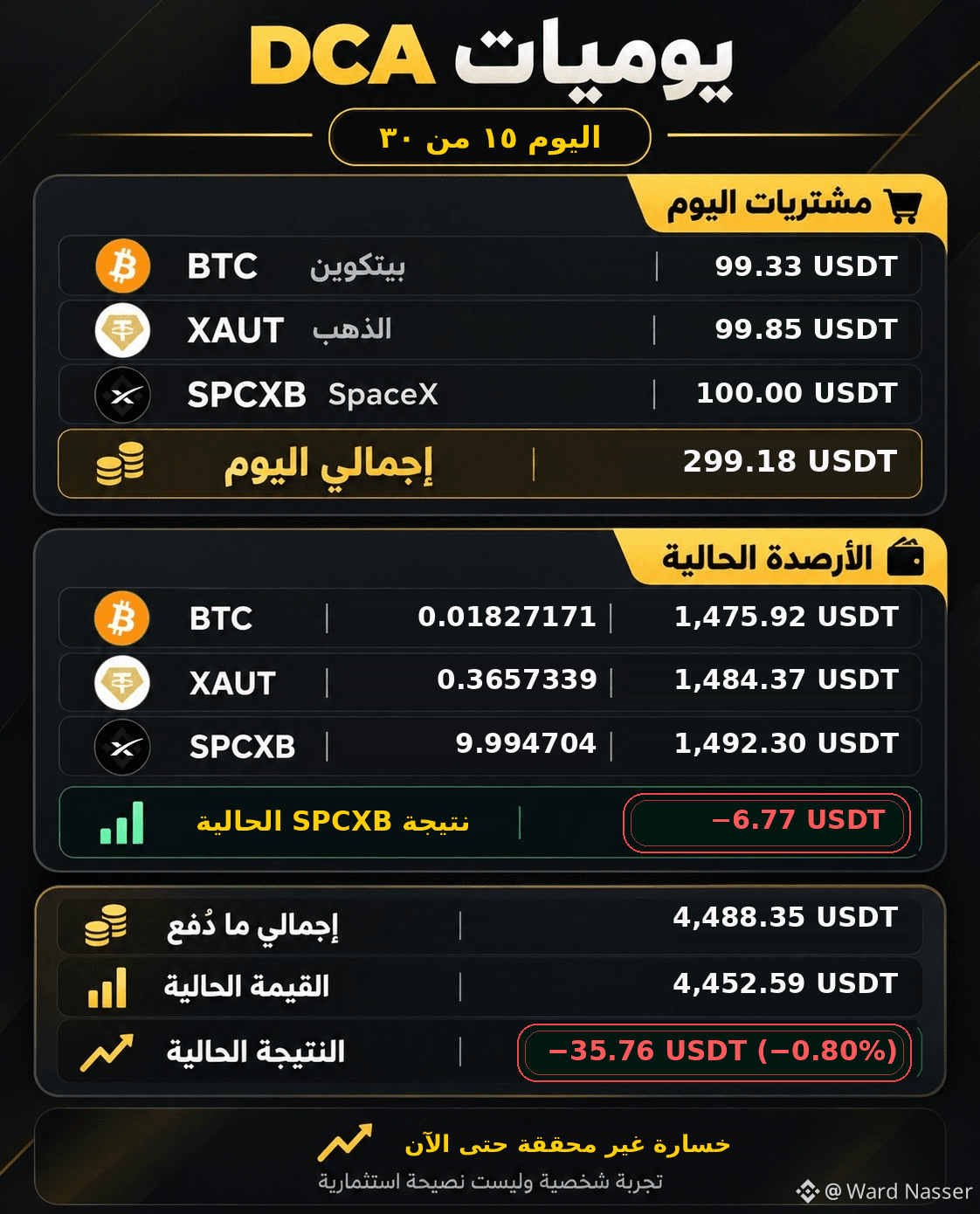
DCA Journal | Day 15 of 30
Today’s purchases:
BTC: 99.33 USDT
Gold XAUT: 99.85 USDT
SPCXB via bStocks: 100.00 USDT
Today’s total: 299.18 USDT
Total invested so far: 4,488.35 USDT
Current portfolio value: 4,452.59 USDT
Current result: −35.76 USDT (−0.80%)
I haven’t sold, and the experiment continues into the second half. The result is still unrealized.
This is a personal experiment, not investment advice. SPCXB provides tokenized exposure to SpaceX stock and does not mean direct ownership of it.
#يوميات_DCA #DCA #bitcoin
2
162
·
--
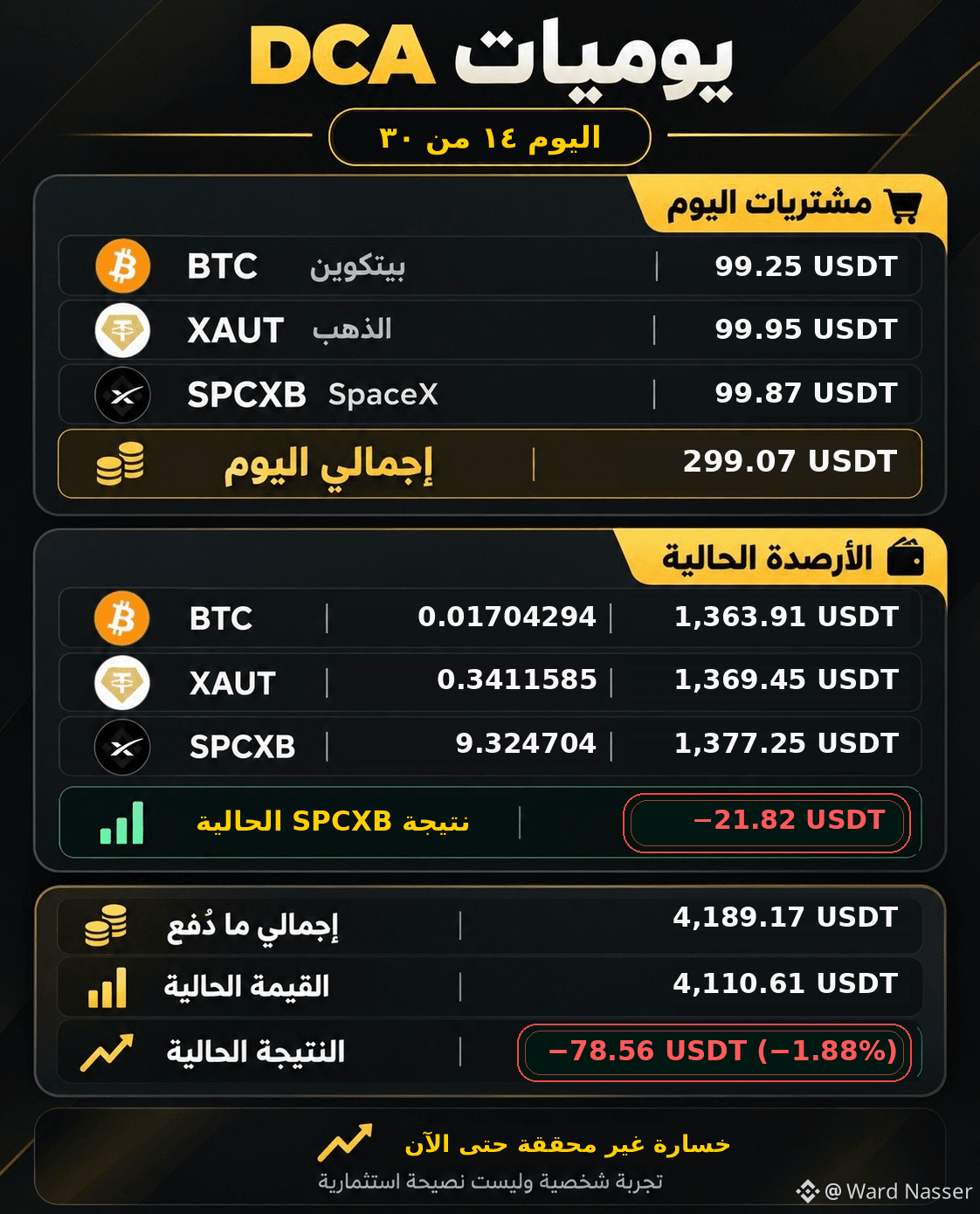
DCA Diary | Day 14 of 30
Some of today's orders were executed in batches, so I added up the amount for each asset:
₿ Bitcoin: 99.25 USDT
🥇 Gold XAUT: 99.95 USDT
SpaceX via bStocks: 99.87 USDT
Total purchases today: 299.07 USDT
Total paid so far: 4,189.17 USDT
Current asset value: 4,110.61 USDT
Current result: −78.56 USDT (−1.88%)
The loss is unrealized, and the experiment continues without selling.
Personal experiment, not investment advice.
#يوميات_DCA #DCA #bitcoin
2
132
·
--
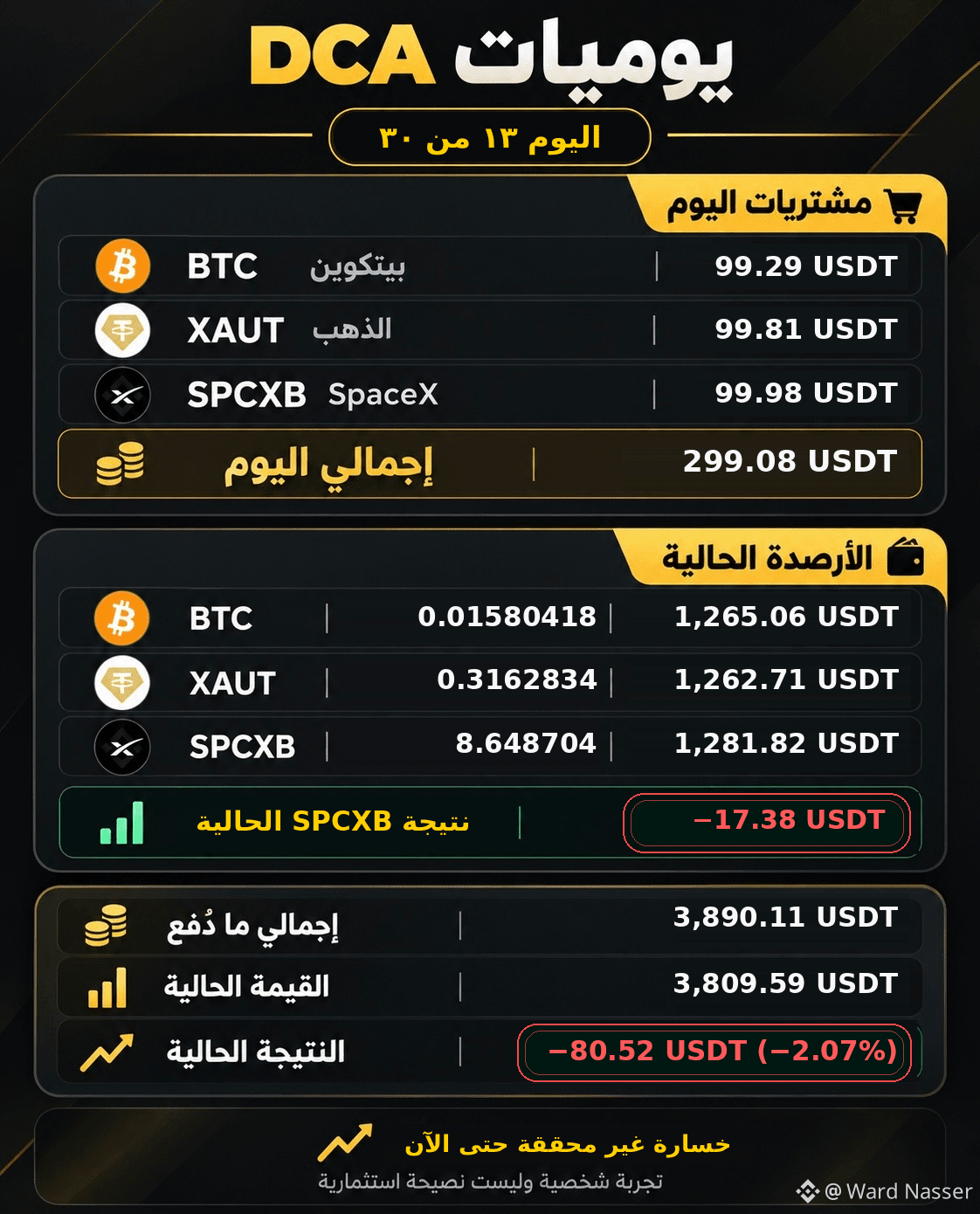
DCA Diary | Day 13 of 30
Today's purchases:
₿ Bitcoin: 99.29 USDT
🥇 Gold XAUT: 99.81 USDT
SpaceX via bStocks: 99.98 USDT
Total purchases today: 299.08 USDT
Total paid so far: 3,890.11 USDT
Current value of assets: 3,809.59 USDT
Current result: −80.52 USDT (−2.07%)
The loss is unrealized, and I'm continuing the experiment without selling.
Personal experiment, not investment advice.
#يوميات_DCA #DCA #bitcoin
3
75
·
--
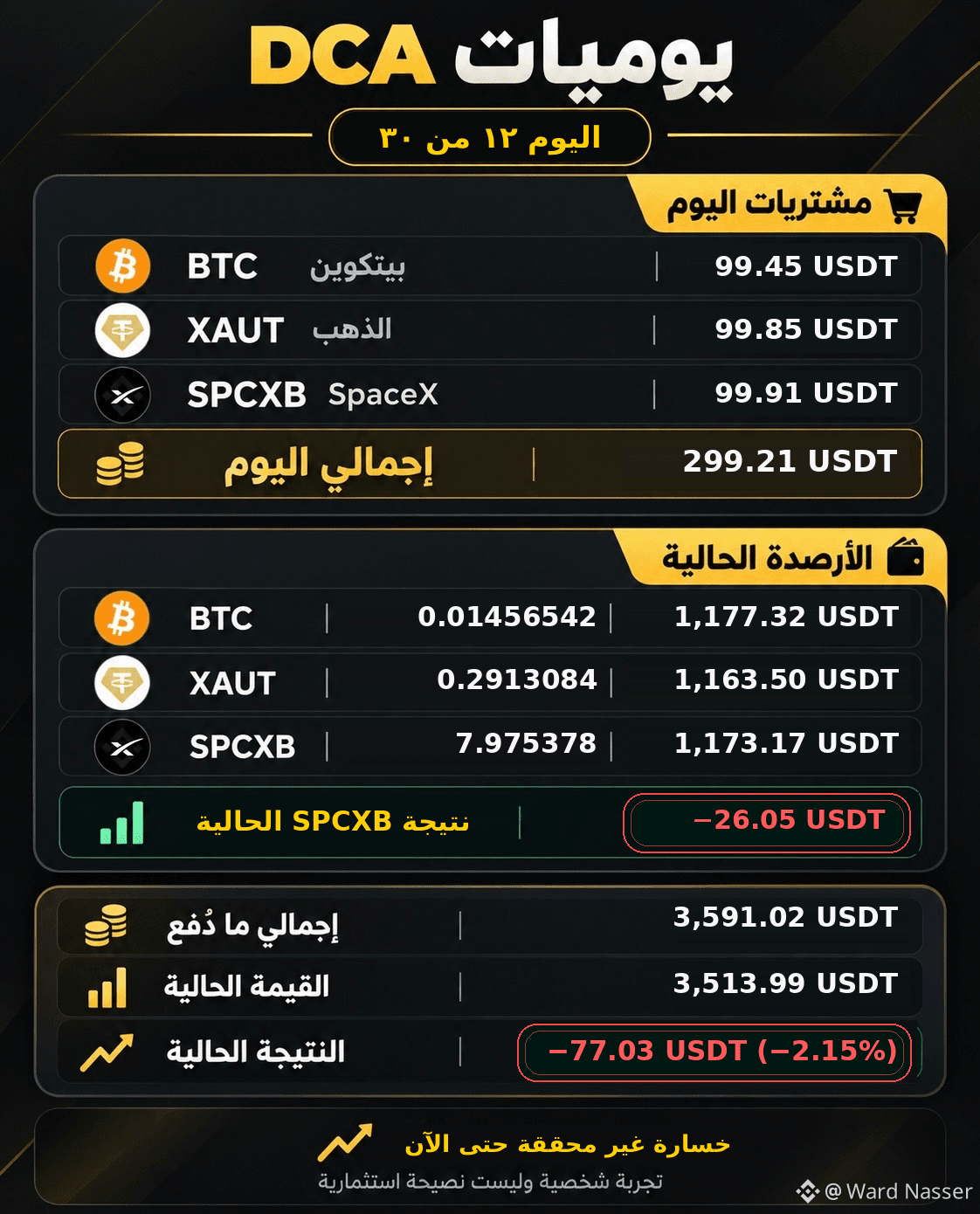
DCA Journal | Day 12 of 30
Today's purchases:
₿ Bitcoin: 99.45 USDT
🥇 Gold XAUT: 99.85 USDT
SpaceX via bStocks: 99.91 USDT
Total purchases today: 299.21 USDT
Total paid so far: 3,591.02 USDT
Current value: 3,513.99 USDT
Current result: −77.03 USDT (−2.15%)
The result is unrealized, and I'm continuing the experiment without selling.
Personal experiment, not investment advice.
#يوميات_DCA #DCA #bitcoin
1
2
212
·
--
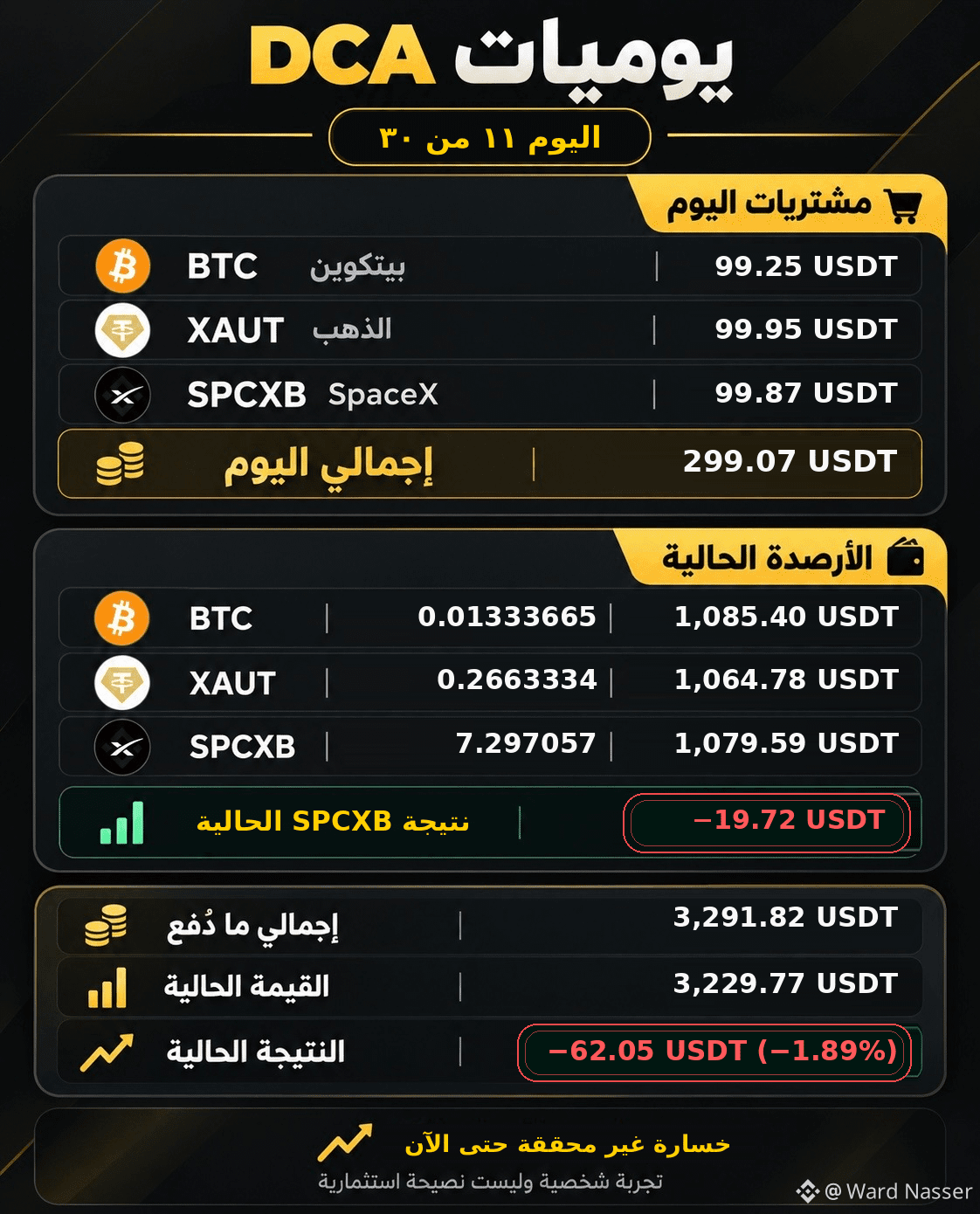
DCA Diary | Day 11 of 30 🧪
I made today’s purchases and am still continuing the experiment without selling any assets.
🛒 Today’s purchases:
₿ Bitcoin: 99.25 USDT
🥇 Gold XAUT: 99.95 USDT
🚀 SpaceX via bStocks: 99.87 USDT
Total purchases today: 299.07 USDT
📊 After 11 days:
Total amount invested: 3,291.82 USDT
Current value: 3,229.77 USDT
Result: −62.05 USDT (−1.89%)
This is an unrealized loss so far, and I’m continuing the experiment. Let’s see how the numbers change with regular daily purchases.
⚠️ Personal experiment, not investment advice.
#يوميات_DCA #DCA #bitcoin
1
4
1.9k
·
--
🚨 A billion dollars flows into Bitcoin... then millions start flowing out just days later!
Imagine a restaurant with people lining up to get in, then three days later you see a large group of them leave all at once!
Did the food suddenly get bad? Or did some customers decide to leave for other reasons?
That’s roughly what’s happening with U.S. spot Bitcoin exchange-traded funds (ETFs).
📈 Over three trading sessions, the funds recorded net inflows of more than $1 billion.
📉 Then came Thursday, October 22, when they recorded net outflows of about $635.6 million!
So the question is: Did institutions change their minds about Bitcoin that quickly?
Not necessarily!
Flows can be affected by profit-taking, portfolio rebalancing, changes in risk appetite, and even conditions in traditional markets.
💡 The most important lesson:
A $1 billion inflow doesn’t mean the price will keep rising, and hundreds of millions flowing out doesn’t mean Bitcoin is finished.
The market doesn’t move in just one direction, and institutions themselves may buy today and sell tomorrow.
🎯 If you’re watching these numbers, which do you give more weight to: daily institutional flows or Bitcoin’s long-term trend?
#BTC #BitcoinETF #ETFFlows
⚠️ Educational content, not financial advice.
4
313
·
--
🏦 Imagine your bank issuing its own digital currency!
Not Bitcoin, not a meme coin, but a stablecoin pegged to your country’s currency.
That’s the direction traditional banks are heading. And with the latest news from Hong Kong, HSBC has entered the picture through RedCoin, a stablecoin pegged to the Hong Kong dollar.
But why would a bank need a digital currency if it already has a money transfer system?
💡 Imagine the difference:
Today, you send money from one bank account to another, and the transaction may pass through several systems and intermediaries.
Stablecoins, on the other hand, make it possible to transfer value over programmable digital infrastructure, and may facilitate settlements and transfers when the appropriate regulatory framework is in place.
The most important thing here isn’t the name of the new currency...
It’s that banks are starting to view blockchain technology as a potential part of the future of financial services—not just a competitor.
But be careful!
Stablecoins are not risk-free. Their value depends on the issuer, reserves, redemption mechanism, and regulatory oversight.
🎯 My question for you:
If your bank issued a stablecoin pegged to your local currency, would you prefer to use it, or stick with USDT and USDC?
#HSBC #RedCoin #Stablecoins #HongKong
⚠️ Educational content, not financial advice.

3
127
·
--
Verified
🚨 Ethereum delays an important upgrade... but is a delay really bad news?
Imagine you’re about to launch a new airplane, and just minutes before takeoff, engineers discover a potential problem with one of its systems.
Do you take off on schedule to prove you’re sticking to the plan? Or delay the flight until you’re sure everyone is safe?
✈️ That’s roughly the situation Ethereum’s developers faced!
A test related to the Glamsterdam upgrade on the Hoodi testnet has been postponed due to technical concerns about the upgrade.
But there’s an important detail:
The delay doesn’t mean the Ethereum mainnet has stopped or been hacked.
Testing is there in the first place to catch problems before upgrades reach users.
💡 And here’s the irony:
In the tech world, we usually celebrate whoever launches their product first.
But in blockchain, the more responsible decision may be not to launch an upgrade until it’s ready.
A small error on a network managing billions of dollars in assets could cost far more than a delay of a few days.
🎯 What do you think: do delayed blockchain upgrades strengthen your confidence in a project, or make you doubt whether the development team is ready?
#EthereumHoodiTestnetGlamsterdamHardForkDelayed #ETH #Glamsterdam

1
4
1.1k
·
--
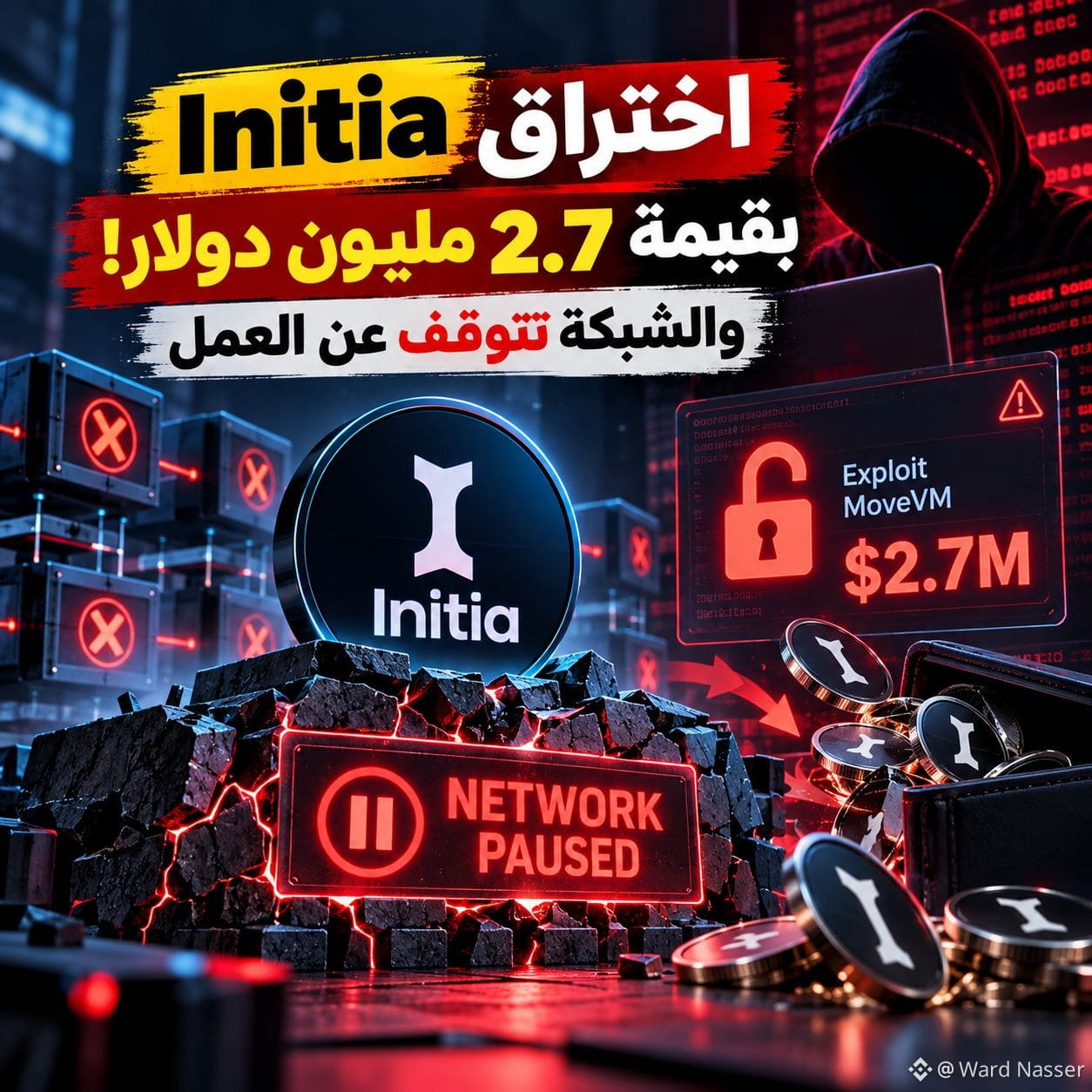
🚨 Imagine an entire bank shutting its doors because someone discovered a vulnerability in its system!
That’s almost what happened with the Initia network!
💥 The network was hacked in an attack targeting the MoveVM smart contract execution environment, with reports of losses estimated at around $2.7 million.
But the surprise isn’t just the amount stolen...
The network was forced to halt operations!
And that raises an important question:
If blockchains are designed to operate continuously, how can an entire network be stopped?
The answer is that some networks have emergency mechanisms that allow validators to coordinate and halt block production when a serious threat is detected.
🛡️ This presents us with an intriguing dilemma:
Is it better for the network to keep running no matter what, or to pause temporarily to prevent greater losses?
Decentralization isn’t just about distributing power. It also means considering who has the authority to stop the network, when they can do so, and under what circumstances.
🎯 In your opinion, does halting a blockchain after a hack demonstrate the strength of its security system, or is it a weakness in decentralization?
#Initia #INIT #CryptoSecurity #Blockchain
3
144
·
--
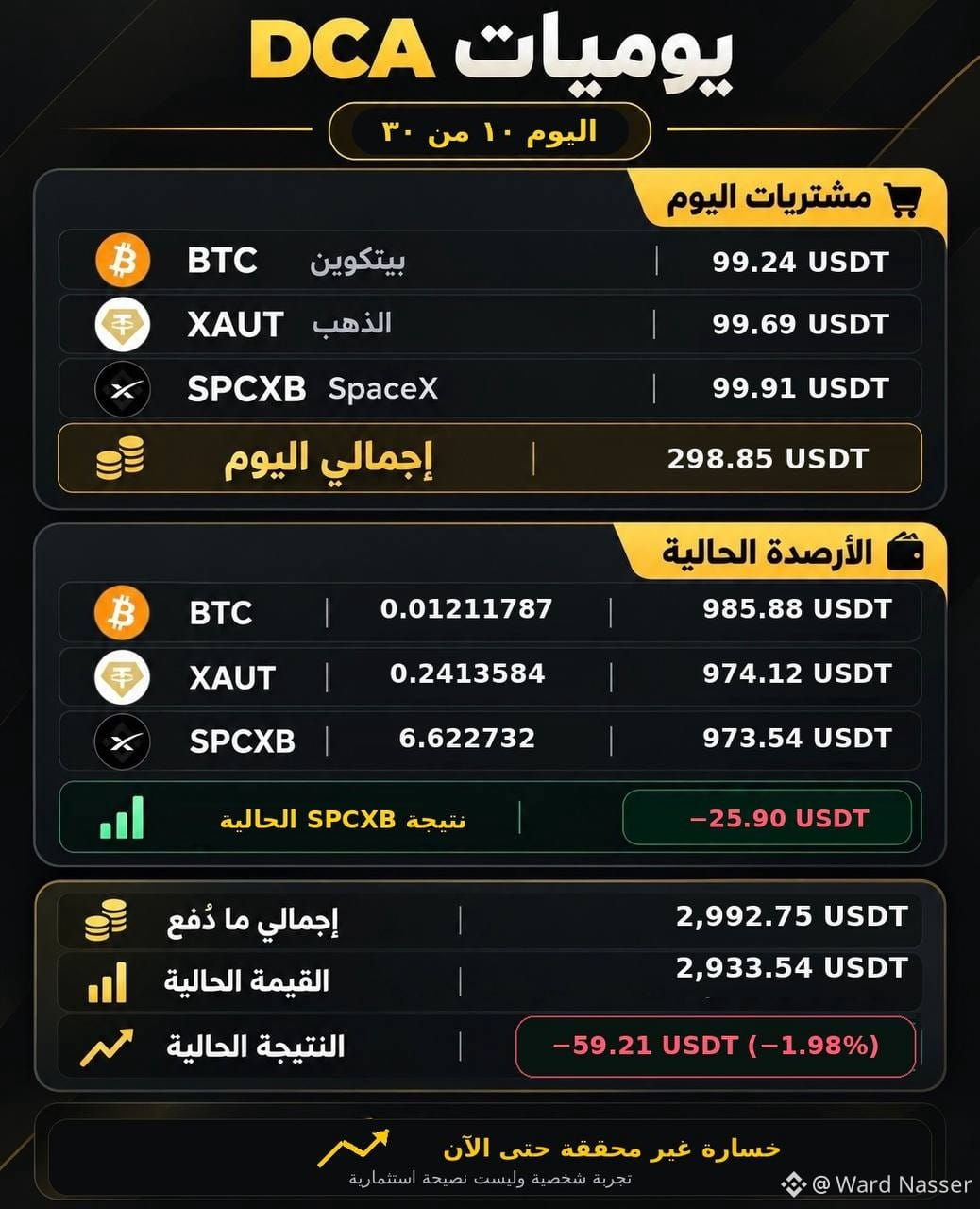
DCA Diary | Day 10 of 30 🧪
Ten days of regular buying… and today the portfolio value fell below the amount I’ve invested. Does that mean the experiment failed? It’s too early to tell.
I bought as usual today, around 100 USDT of each asset:
₿ Bitcoin: 99.24 USDT
🥇 Gold XAUT: 99.69 USDT
🚀 SpaceX via SPCXB: 99.91 USDT
Total bought today: 298.85 USDT
📊 Results after ten days so far:
Total invested: 2,992.75 USDT
Current portfolio value: 2,933.54 USDT
Unrealized result: a loss of 59.21 USDT, or about 1.98%
Current value breakdown:
₿ Bitcoin: 985.88 USDT
🥇 Gold: 974.12 USDT
🚀 SpaceX: 973.54 USDT
I didn’t sell any SpaceX, and I stuck to the plan as is. The experiment is ongoing, and the results will change with prices. We’ll see where we end up after 30 days.
⚠️ This is a personal experiment, not investment advice.
#يوميات_DCA #DCA #bitcoin
1
2
111
·
--
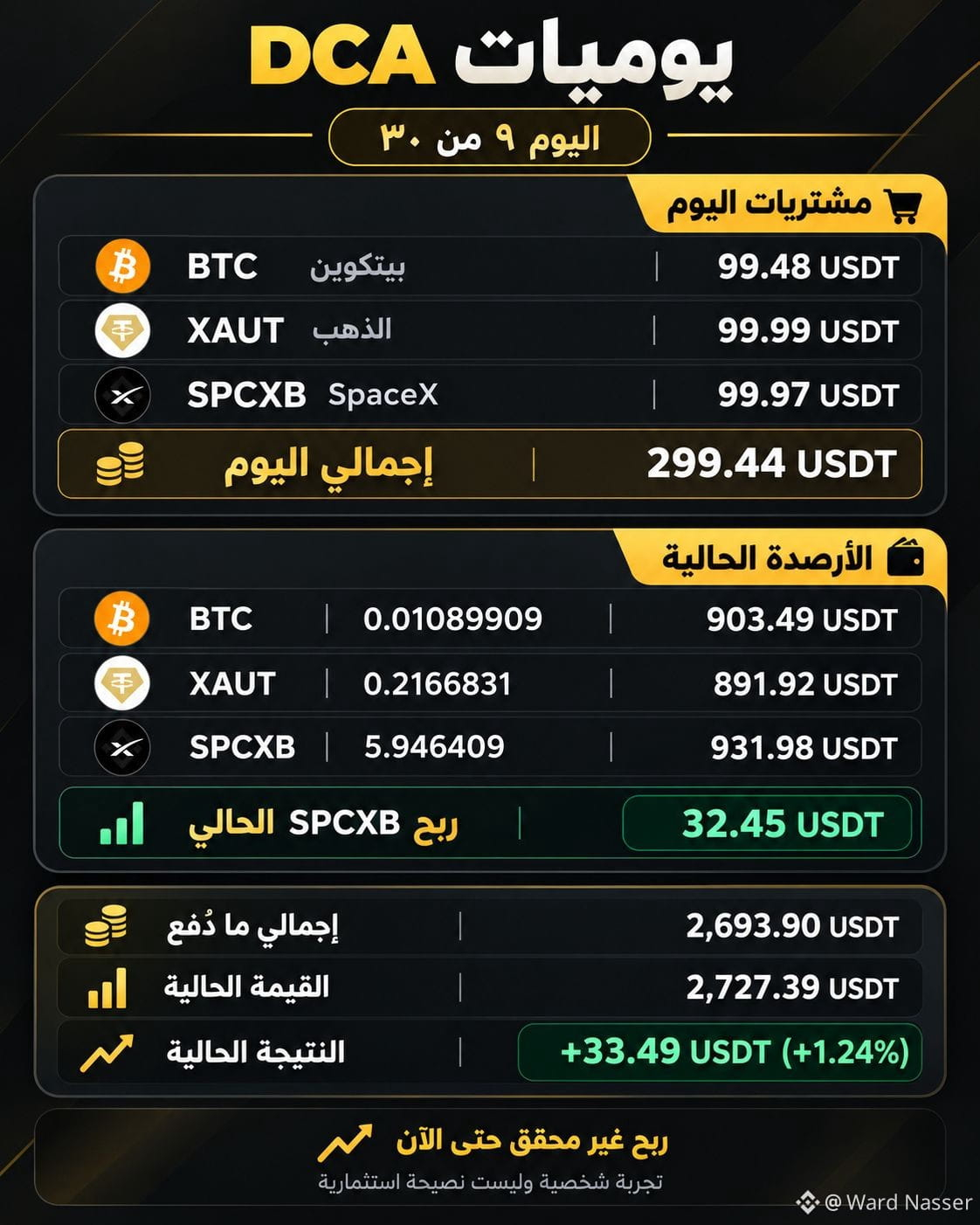
DCA Diary | Day 9 of 30
Yesterday, I asked you whether I should sell SpaceX after its unrealized profit reached around 43 dollars, or continue with the DCA plan.
I decided to continue the experiment and not sell. SpaceX’s current profit is now around 32.45 USDT, and the figure changes with the price. Today, I bought all three assets as usual.
Today’s purchases:
BTC: 99.48 USDT
XAUT: 99.99 USDT
SPCXB: 99.97 USDT
Total purchases today: 299.44 USDT.
After 9 days, I’ve spent a total of 2,693.90 USDT, and the current value of the assets is 2,727.39 USDT. Current result: an unrealized profit of 33.49 USDT, or around 1.24%.
Let’s continue to day 30 and see where the experiment takes us.
Figures are based on the balance snapshot. The profit is unrealized and may change with prices. This is a personal experiment, not investment advice.
#يوميات_DCA #DCA #bitcoin
2
202
·
--
🐋 XRP whales are on the move... Do they know something we don’t?
Imagine seeing dozens of trucks loaded with gold heading to the market all at once!
Are their owners getting ready to sell? Or are they just moving their stock?
That’s pretty much the question XRP traders are asking today.
📊 Reports indicate a rise in XRP transfers from large wallets to Binance, worth around $112.4 million—the highest level in seven months.
But pay attention to the most important detail!
Moving coins to an exchange doesn’t necessarily mean they’ve been sold.
The goal could be trading, reallocating liquidity, or managing portfolios.
💡 That’s why monitoring whales alone isn’t enough to make an investment decision. It’s also important to track trading volume, price movements, and what happens after the transfers.
🐋 Your turn:
If you saw XRP whales moving millions of dollars to exchanges, would you see it as a warning sign or a potential opportunity?
⚠️ Educational content, not financial advice.
#XRPWhaleActivitySurgesTo7MonthHigh #XRP #CryptoWhales

2
279
·
--
🚨 CZ warns: Sometimes, all it takes is a compromised website to put your data at risk!
Imagine visiting a website you know and trust, while behind the scenes, a vulnerability lets an attacker take control of its server!
That’s why Binance founder CZ warned about two serious vulnerabilities in PHP, the language used to run millions of websites.
⚠️ The vulnerabilities have a security rating of 9.2 out of 10 and could allow an attacker to run commands on unpatched servers without logging in.
And what’s the biggest risk for crypto users?
A compromised website could become a trap to steal your login details or trick you into connecting your wallet.
🛡️ How can you protect yourself?
✅ Avoid suspicious links, even if they look familiar.
✅ Don’t connect your wallet to untrusted websites.
✅ Never share your recovery phrase with any website.
✅ If you manage a website that uses PHP, install the security updates immediately.
The good news is that security updates were released on October 21.
Remember: Sometimes the most dangerous vulnerability isn’t in your wallet, but in the website you trust!
#CZ #PHP2Shell #CyberSecurity #Binance

3
407
·
--
🚀 SpaceX knows how to send rockets into space... but can it escape the gravity of costs?
While Elon Musk dreams of Mars, investors are watching something much closer: the budget! 💰
📉 SPCX stock is down 5.34%, amid concerns about massive funding needs.
Imagine you’re building a road to Mars...
Every step takes billions, and every success opens the door to a bigger, more expensive project!
And here’s the paradox:
🚀 Technical success: launching rockets and developing technologies that could change the future of humanity.
💸 The financial challenge: How do you fund all these ambitions without costs becoming a burden on investors?
💡 The important lesson:
A company can be an innovation leader, but that doesn’t mean investing in it is guaranteed to succeed.
And the real question isn’t just: Will SpaceX reach Mars?
It’s also: How much will it cost to get there, and when will these investments start generating returns?
🎯 If you were an investor, would you bet on SpaceX’s long-term vision, or would you rather wait for clearer financial results?
👇 Share your thoughts!
⚠️ This is educational content, not financial or investment advice. The decline percentage reflects the time of posting and may change.
#SpaceX #SPCX #bStocks

2
98
·
--
🚨 Meta is building the future of AI... but investors are asking: Who’s going to foot the bill? 🤖
Imagine you own a successful restaurant that’s making great profits.
Suddenly, you decide to build 100 new restaurants, buy the latest equipment, and hire thousands of employees!
Customers are excited, and the project looks promising...
But your shareholders ask you a simple question:
When will we see returns on all these investments? 💰
That’s pretty much the challenge Meta is facing!
The company is pouring huge sums into data centers, chips, and AI infrastructure, while investors grow increasingly concerned about costs and future returns.
📉 The result? Pressure on META’s stock, despite the strength of its core business.
💡 The fascinating paradox:
A company could be on the right technological path, yet its stock may fall because investors aren’t convinced by the cost of reaching the future!
And there’s an important lesson here:
Technological success doesn’t necessarily mean an investment will succeed at any price.
🎯 What do you think: Are tech companies building an AI revolution, or have they entered a spending race that may be difficult to justify with returns?
👇 Share your thoughts!
⚠️ Educational content only; not financial or investment advice.
#META #AI #TechStocks $METAB

4
101
·
--
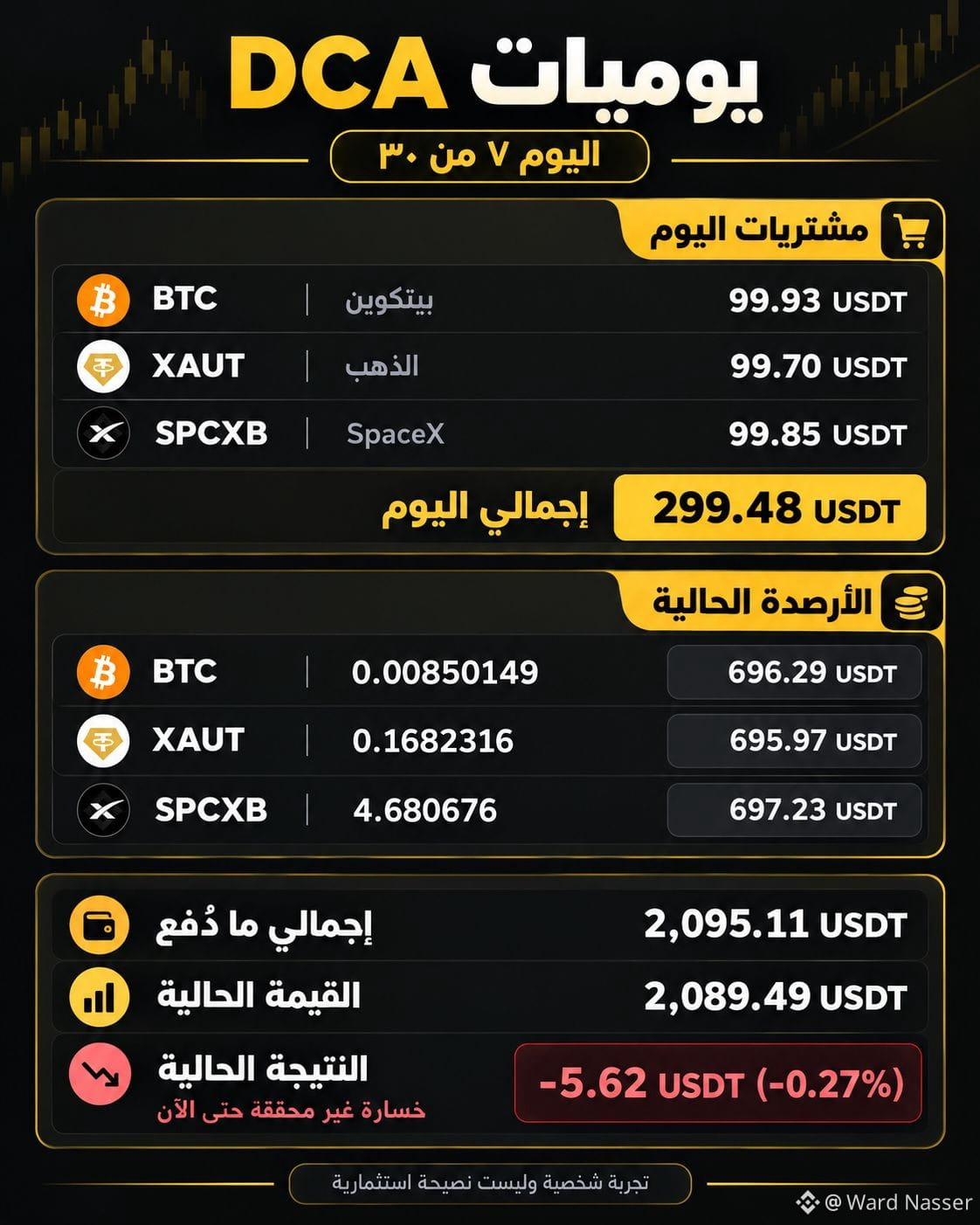
DCA Diary | Day 7 of 30
After a week of experimenting, the difference between the amount invested and the value of the assets is now less than $6.
Today's purchases:
₿ Bitcoin: 99.93 USDT
🥇 Gold XAUT: 99.70 USDT
🚀 SpaceX SPCXB: 99.85 USDT
Total purchases today: 299.48 USDT.
Total amount paid over 7 days: 2,095.11 USDT
Current asset value: 2,089.49 USDT
Current result: an unrealized loss of 5.62 USDT, about 0.27%.
Current quantities:
BTC: 0.00850149
XAUT: 0.1682316
SPCXB: 4.680676
A personal experiment, not investment advice.
#يوميات_DCA #DCA #Bitcoin
3
170
·
--
#USBitcoinETFsRecord$527MInflows
🚨 $527 million is flowing into Bitcoin funds... Do institutions see an opportunity we’re missing? 👀
Imagine the market is like a restaurant!
Small-time traders are standing at the door. Some are afraid to go in, while others are waiting for prices to drop further.
Suddenly, a group of big investors arrives and reserves tables worth hundreds of millions! 💰
📊 U.S. spot Bitcoin ETFs recorded net inflows of around $527 million.
But does that mean the price will go up?
Not necessarily!
🟢 Positive inflows reflect demand for the funds.
🟡 But they don’t guarantee that buying will continue in the coming days.
🔴 Even large institutions can get their market timing wrong.
💡 The most important lesson:
Not every inflow of money marks the beginning of a rally, but tracking ETF flows gives us an important window into investor appetite.
🎯 My question for you:
If you saw institutions buying hundreds of millions’ worth while the market hesitated, would you take it as a sign of confidence—or as an opportunity for institutions to buy Bitcoin at lower prices?
👇 Share your thoughts!
⚠️ Educational content only. Not financial or investment advice.
#BTC

2
144
Log in to explore more content
Join global crypto users on Binance Square
⚡️ Get latest and useful information about crypto.
💬 Trusted by the world’s largest crypto exchange.
👍 Discover real insights from verified creators.
Email / Phone number