
Sienna Leo-你真棒-带我走
9.9k Posts

Sienna Leo-你真棒-带我走
 Square Verified+
Report
Block User
内容创作者🔹积极思考者🔹高级分析者🔹高精准预测者🔹影响力人物🔹深度研究与高频现货交易策略🔹区块链 | WEB3 | 未来科技研究 | 🔹 ID#285783567 🔹X.@SiennaLeo80
800 Following
35.6K+ Followers
28.0K+ Liked
Posts
Portfolio
All
Quotes
Videos
Live
PINNED
Claim Reward
Claim Reward

SAC-King-你真棒-带我走
·
--
💥🌹💘 SAC-KING Square Family 🏡
✳️ Follow & 🔃🔃 REPOST
✳️ LIKE & COMMENT
✳️ SHARE
✳️ GO FAST ⏩ ➡️ ⏩ ➡️
#BinanceSquareFamily #GrowWithSAC #Write2Earn
✳️ Follow & 🔃🔃 REPOST
✳️ LIKE & COMMENT
✳️ SHARE
✳️ GO FAST ⏩ ➡️ ⏩ ➡️
#BinanceSquareFamily #GrowWithSAC #Write2Earn

2
167
·
--
Bullish
#saylorhintsstrategybitcoinbuy
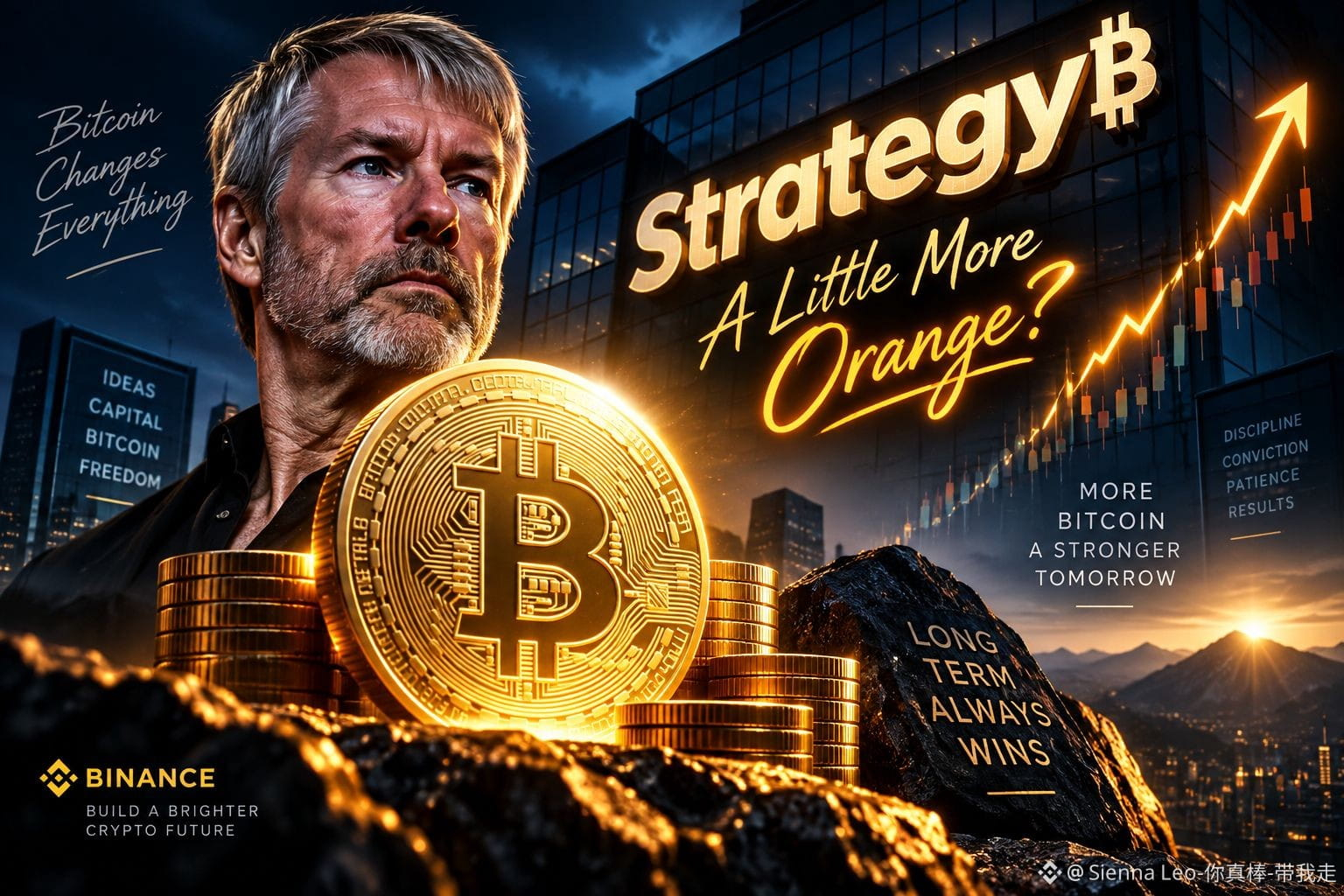
🟠 Saylor Hints Strategy Bitcoin Buy: Is Another BTC Move Coming? 🟠
Imagine watching a familiar signal appear again: Michael Saylor posts a Bitcoin accumulation chart, adds “A little more orange,” and suddenly the market starts asking the same question: is Strategy preparing to buy BTC again?
The timing matters. Strategy recently resumed Bitcoin accumulation after a lengthy pause, buying 4,603 BTC for about $369.7 million at an average of roughly $80,318.
Now Saylor’s latest post has reopened speculation. But a hint is not a purchase confirmation. Strategy’s most recent weekly report showed no new Bitcoin acquisition while the company allocated $139 million toward repurchasing STRC preferred shares.
That distinction is important. Saylor’s messaging can influence market expectations, but the real signal comes when Strategy discloses an actual transaction.
The bigger story is Strategy’s capital strategy. Bitcoin buying depends not only on conviction, but also on liquidity, financing conditions, preferred-share obligations and the company’s ability to raise capital.
For BTC holders, another purchase could reinforce the narrative of corporate accumulation. Yet traders should separate anticipation from confirmed demand and watch the filing, not just the orange dots.
My takeaway: Saylor may be signaling renewed interest, but the next confirmed purchase matters far more than the hint itself.
❓Do you think the next Strategy filing will confirm another BTC purchase, or is Saylor simply keeping the market watching?
Disclaimer: This is for educational purposes only and not financial advice. Crypto assets are highly volatile.
#Bitcoin #BTC #GrowWithSAC $BTC $ETH $XRP
#SaylorHintsStrategyBitcoinBuy
#saylorhintsstrategybitcoinbuy
🟠 Saylor Hints Strategy Bitcoin Buy: Is Another BTC Move Coming? 🟠
Imagine watching a familiar signal appear again: Michael Saylor posts a Bitcoin accumulation chart, adds “A little more orange,” and suddenly the market starts asking the same question: is Strategy preparing to buy BTC again?
The timing matters. Strategy recently resumed Bitcoin accumulation after a lengthy pause, buying 4,603 BTC for about $369.7 million at an average of roughly $80,318.
Now Saylor’s latest post has reopened speculation. But a hint is not a purchase confirmation. Strategy’s most recent weekly report showed no new Bitcoin acquisition while the company allocated $139 million toward repurchasing STRC preferred shares.
That distinction is important. Saylor’s messaging can influence market expectations, but the real signal comes when Strategy discloses an actual transaction.
The bigger story is Strategy’s capital strategy. Bitcoin buying depends not only on conviction, but also on liquidity, financing conditions, preferred-share obligations and the company’s ability to raise capital.
For BTC holders, another purchase could reinforce the narrative of corporate accumulation. Yet traders should separate anticipation from confirmed demand and watch the filing, not just the orange dots.
My takeaway: Saylor may be signaling renewed interest, but the next confirmed purchase matters far more than the hint itself.
❓Do you think the next Strategy filing will confirm another BTC purchase, or is Saylor simply keeping the market watching?
Disclaimer: This is for educational purposes only and not financial advice. Crypto assets are highly volatile.
#Bitcoin #BTC #GrowWithSAC $BTC $ETH $XRP
#SaylorHintsStrategyBitcoinBuy
🟠 Saylor Hints Strategy Bitcoin Buy: Is Another BTC Move Coming? 🟠
Imagine watching a familiar signal appear again: Michael Saylor posts a Bitcoin accumulation chart, adds “A little more orange,” and suddenly the market starts asking the same question: is Strategy preparing to buy BTC again?
The timing matters. Strategy recently resumed Bitcoin accumulation after a lengthy pause, buying 4,603 BTC for about $369.7 million at an average of roughly $80,318.
Now Saylor’s latest post has reopened speculation. But a hint is not a purchase confirmation. Strategy’s most recent weekly report showed no new Bitcoin acquisition while the company allocated $139 million toward repurchasing STRC preferred shares.
That distinction is important. Saylor’s messaging can influence market expectations, but the real signal comes when Strategy discloses an actual transaction.
The bigger story is Strategy’s capital strategy. Bitcoin buying depends not only on conviction, but also on liquidity, financing conditions, preferred-share obligations and the company’s ability to raise capital.
For BTC holders, another purchase could reinforce the narrative of corporate accumulation. Yet traders should separate anticipation from confirmed demand and watch the filing, not just the orange dots.
My takeaway: Saylor may be signaling renewed interest, but the next confirmed purchase matters far more than the hint itself.
❓Do you think the next Strategy filing will confirm another BTC purchase, or is Saylor simply keeping the market watching?
Disclaimer: This is for educational purposes only and not financial advice. Crypto assets are highly volatile.
#Bitcoin #BTC #GrowWithSAC $BTC $ETH $XRP
#SaylorHintsStrategyBitcoinBuy
2
192
#bojraisesratesto31yearhigh
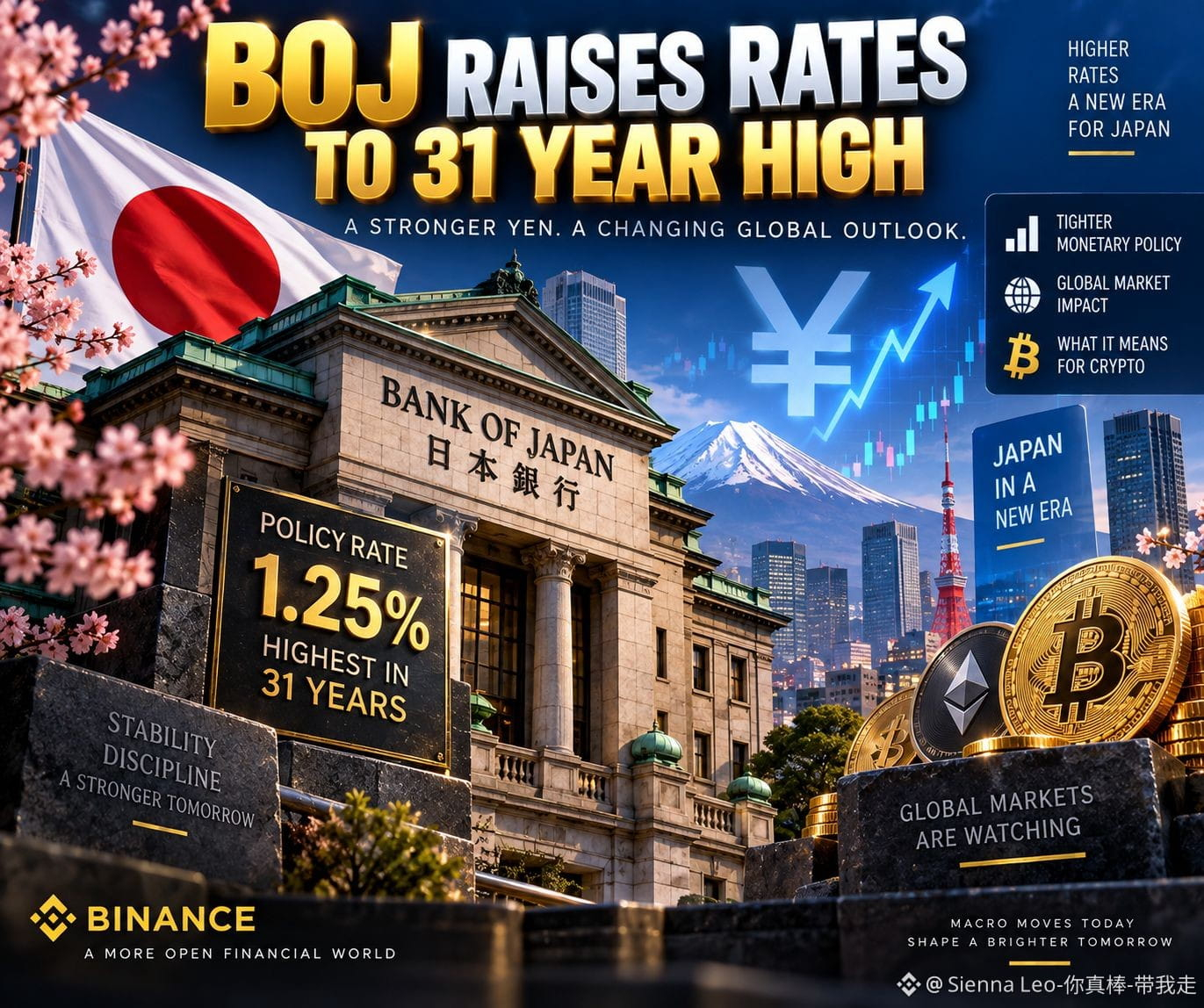
🌏 BOJ Raises Rates To 31-Year High: Why Crypto Traders Should Care 🌏
Tokyo wakes to a different financial landscape. A decision that once seemed almost unthinkable is now reality, and its consequences may travel far beyond Japan.
The Bank of Japan raised its policy rate from 1.00% to 1.25%, the highest level in 31 years, as officials focus on preventing inflation from overshooting their 2% target.
Yet the surprising part came next: the yen weakened after the decision. Two policymakers dissented, while investors viewed the guidance as less hawkish than expected.
For crypto, the bigger story is liquidity. Japan has long been associated with exceptionally low borrowing costs, so higher rates can influence funding conditions, currency flows and global appetite for risk.
But this is not automatically a bearish crypto signal. Markets react to the gap between expectations and reality, and this hike was widely anticipated.
The real variable to watch is what comes next. If the BOJ continues tightening while other major central banks also lean restrictive, global liquidity could become more selective.
My takeaway: the rate itself is only half the story. The future path of liquidity may matter far more.
When cheap money starts disappearing, every market eventually asks the same question: who is still willing to take risk?
❓ Do you think further BOJ tightening would materially change crypto liquidity, or has the market already absorbed it?
Disclaimer: This is educational content, not financial advice. Crypto markets remain highly volatile.
#Crypto #GrowWithSAC $LSK $REZ $PROM
#BOJRaisesRatesTo31YearHigh
#bojraisesratesto31yearhigh
🌏 BOJ Raises Rates To 31-Year High: Why Crypto Traders Should Care 🌏
Tokyo wakes to a different financial landscape. A decision that once seemed almost unthinkable is now reality, and its consequences may travel far beyond Japan.
The Bank of Japan raised its policy rate from 1.00% to 1.25%, the highest level in 31 years, as officials focus on preventing inflation from overshooting their 2% target.
Yet the surprising part came next: the yen weakened after the decision. Two policymakers dissented, while investors viewed the guidance as less hawkish than expected.
For crypto, the bigger story is liquidity. Japan has long been associated with exceptionally low borrowing costs, so higher rates can influence funding conditions, currency flows and global appetite for risk.
But this is not automatically a bearish crypto signal. Markets react to the gap between expectations and reality, and this hike was widely anticipated.
The real variable to watch is what comes next. If the BOJ continues tightening while other major central banks also lean restrictive, global liquidity could become more selective.
My takeaway: the rate itself is only half the story. The future path of liquidity may matter far more.
When cheap money starts disappearing, every market eventually asks the same question: who is still willing to take risk?
❓ Do you think further BOJ tightening would materially change crypto liquidity, or has the market already absorbed it?
Disclaimer: This is educational content, not financial advice. Crypto markets remain highly volatile.
#Crypto #GrowWithSAC $LSK $REZ $PROM
#BOJRaisesRatesTo31YearHigh
🌏 BOJ Raises Rates To 31-Year High: Why Crypto Traders Should Care 🌏
Tokyo wakes to a different financial landscape. A decision that once seemed almost unthinkable is now reality, and its consequences may travel far beyond Japan.
The Bank of Japan raised its policy rate from 1.00% to 1.25%, the highest level in 31 years, as officials focus on preventing inflation from overshooting their 2% target.
Yet the surprising part came next: the yen weakened after the decision. Two policymakers dissented, while investors viewed the guidance as less hawkish than expected.
For crypto, the bigger story is liquidity. Japan has long been associated with exceptionally low borrowing costs, so higher rates can influence funding conditions, currency flows and global appetite for risk.
But this is not automatically a bearish crypto signal. Markets react to the gap between expectations and reality, and this hike was widely anticipated.
The real variable to watch is what comes next. If the BOJ continues tightening while other major central banks also lean restrictive, global liquidity could become more selective.
My takeaway: the rate itself is only half the story. The future path of liquidity may matter far more.
When cheap money starts disappearing, every market eventually asks the same question: who is still willing to take risk?
❓ Do you think further BOJ tightening would materially change crypto liquidity, or has the market already absorbed it?
Disclaimer: This is educational content, not financial advice. Crypto markets remain highly volatile.
#Crypto #GrowWithSAC $LSK $REZ $PROM
#BOJRaisesRatesTo31YearHigh
1
10
5.5k
Verified
#buffettstepsdownasberkshirechairman
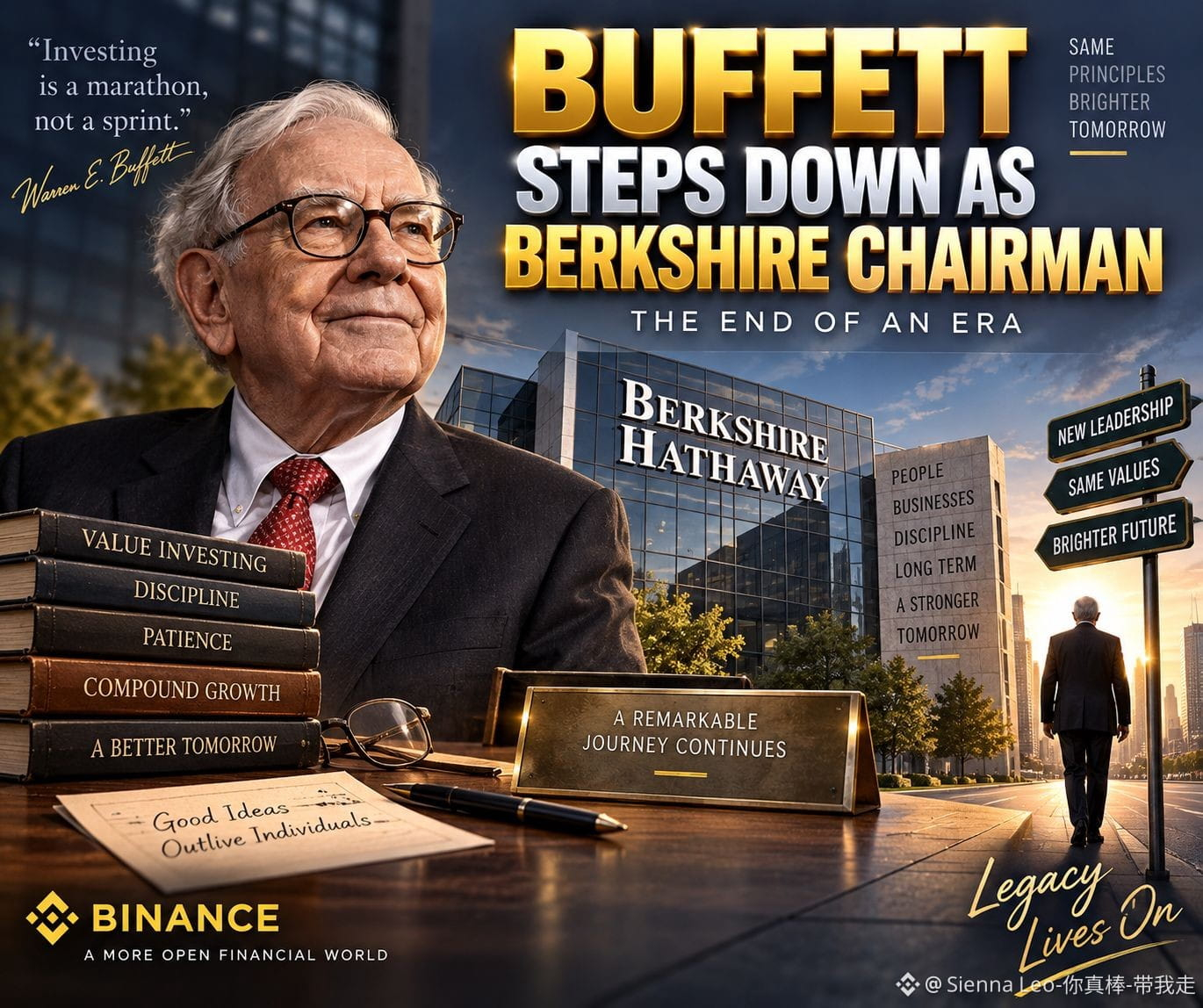
🌟 Warren Buffett Steps Down as Berkshire Chairman: The End of an Era 🌟
The room feels different when the person who shaped it for decades finally takes a step back. On September 18, Warren Buffett officially left Berkshire Hathaway’s chairmanship, closing a remarkable chapter in corporate history.
Buffett becomes chairman emeritus and remains on Berkshire’s board. His son, Howard Buffett, takes over as non-executive chairman, while Greg Abel continues leading the company as CEO.
What matters here is the structure of the transition. This is not simply a famous investor retiring from a company. Berkshire has deliberately separated operational leadership from cultural stewardship.
Greg Abel runs the business, while Howard Buffett’s role is centered on preserving the principles and culture built under Warren Buffett’s leadership.
For investors, the bigger question is no longer “What would Buffett buy?” It becomes “Can Berkshire maintain its discipline without Buffett sitting in the chairman’s seat?”
That question also resonates in crypto. Markets move quickly, but durable financial systems still depend on capital discipline, patience, transparency, and leadership continuity.
My takeaway: Buffett’s most important legacy may not be a stock pick. It may be proving that a long-term investment culture can outlast the individual who created it.
A great legacy is not measured by how long one person stays, but by what remains after they leave.
❓ Do you think Berkshire’s next chapter will be defined more by Buffett’s principles or by Greg Abel’s decisions?
Disclaimer: This is educational content, not financial advice. Markets involve substantial risk.
#Investing #WarrenBuffett #GrowWithSAC $F $G $STRK
#BuffettStepsDownAsBerkshireChairman
#buffettstepsdownasberkshirechairman
🌟 Warren Buffett Steps Down as Berkshire Chairman: The End of an Era 🌟
The room feels different when the person who shaped it for decades finally takes a step back. On September 18, Warren Buffett officially left Berkshire Hathaway’s chairmanship, closing a remarkable chapter in corporate history.
Buffett becomes chairman emeritus and remains on Berkshire’s board. His son, Howard Buffett, takes over as non-executive chairman, while Greg Abel continues leading the company as CEO.
What matters here is the structure of the transition. This is not simply a famous investor retiring from a company. Berkshire has deliberately separated operational leadership from cultural stewardship.
Greg Abel runs the business, while Howard Buffett’s role is centered on preserving the principles and culture built under Warren Buffett’s leadership.
For investors, the bigger question is no longer “What would Buffett buy?” It becomes “Can Berkshire maintain its discipline without Buffett sitting in the chairman’s seat?”
That question also resonates in crypto. Markets move quickly, but durable financial systems still depend on capital discipline, patience, transparency, and leadership continuity.
My takeaway: Buffett’s most important legacy may not be a stock pick. It may be proving that a long-term investment culture can outlast the individual who created it.
A great legacy is not measured by how long one person stays, but by what remains after they leave.
❓ Do you think Berkshire’s next chapter will be defined more by Buffett’s principles or by Greg Abel’s decisions?
Disclaimer: This is educational content, not financial advice. Markets involve substantial risk.
#Investing #WarrenBuffett #GrowWithSAC $F $G $STRK
#BuffettStepsDownAsBerkshireChairman
🌟 Warren Buffett Steps Down as Berkshire Chairman: The End of an Era 🌟
The room feels different when the person who shaped it for decades finally takes a step back. On September 18, Warren Buffett officially left Berkshire Hathaway’s chairmanship, closing a remarkable chapter in corporate history.
Buffett becomes chairman emeritus and remains on Berkshire’s board. His son, Howard Buffett, takes over as non-executive chairman, while Greg Abel continues leading the company as CEO.
What matters here is the structure of the transition. This is not simply a famous investor retiring from a company. Berkshire has deliberately separated operational leadership from cultural stewardship.
Greg Abel runs the business, while Howard Buffett’s role is centered on preserving the principles and culture built under Warren Buffett’s leadership.
For investors, the bigger question is no longer “What would Buffett buy?” It becomes “Can Berkshire maintain its discipline without Buffett sitting in the chairman’s seat?”
That question also resonates in crypto. Markets move quickly, but durable financial systems still depend on capital discipline, patience, transparency, and leadership continuity.
My takeaway: Buffett’s most important legacy may not be a stock pick. It may be proving that a long-term investment culture can outlast the individual who created it.
A great legacy is not measured by how long one person stays, but by what remains after they leave.
❓ Do you think Berkshire’s next chapter will be defined more by Buffett’s principles or by Greg Abel’s decisions?
Disclaimer: This is educational content, not financial advice. Markets involve substantial risk.
#Investing #WarrenBuffett #GrowWithSAC $F $G $STRK
#BuffettStepsDownAsBerkshireChairman
5
3.7k
#xrpexchangereserveshitsevenyearlow
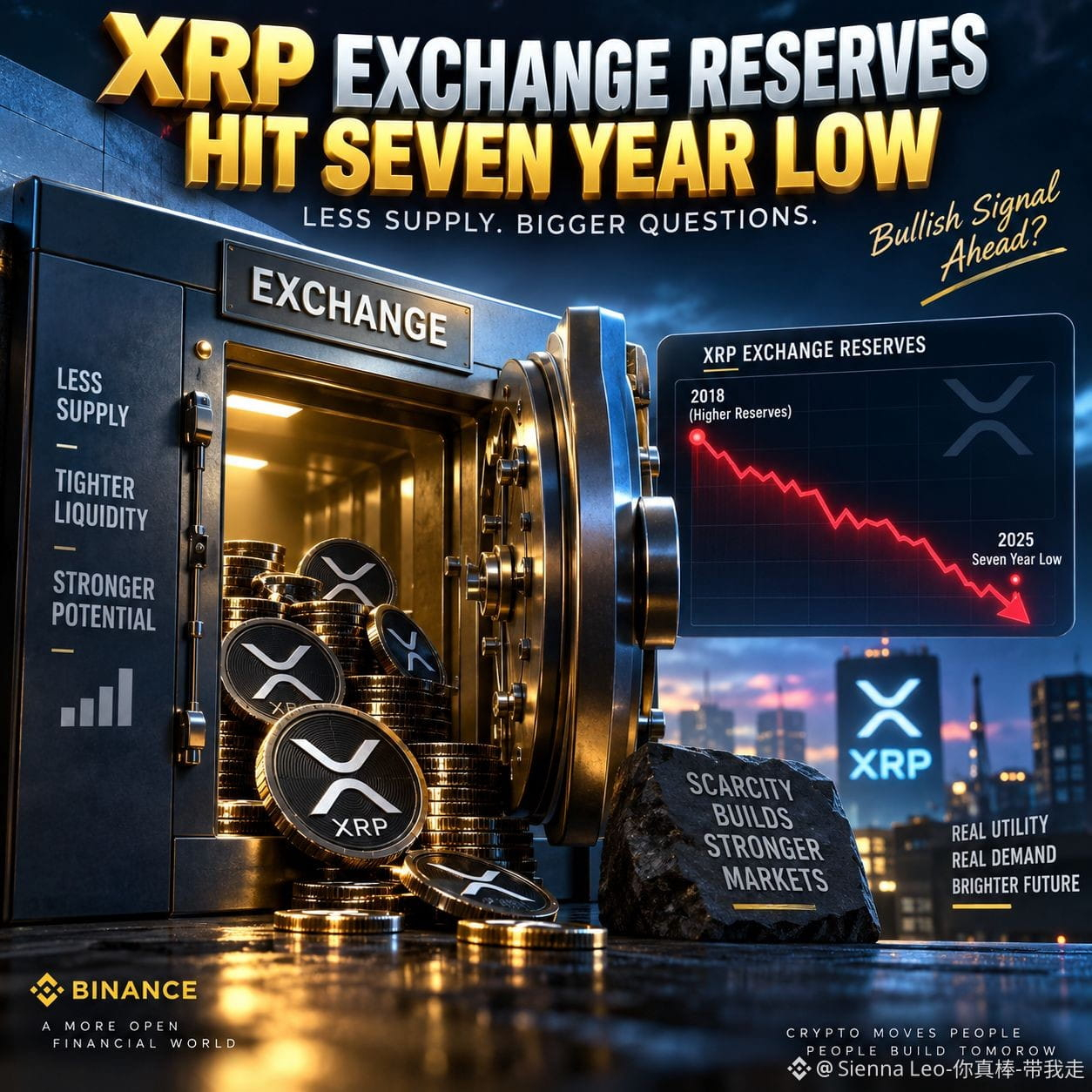
🚨 $XRP Exchange Reserves Hit a Seven-Year Low: What Is the Market Really Signaling? 🚨
Imagine watching a vault slowly empty while the crowd outside keeps getting louder. That is the unusual picture emerging around XRP, where exchange-held supply has fallen to a multi-year low.
Recent on-chain data places XRP exchange reserves near 1.6 billion tokens, roughly half the level seen around the late-2025 peak.
The important point is what this actually measures. Exchange reserves are a proxy for XRP immediately available to trade or sell, so declining balances indicate tighter readily accessible supply.
But scarcity alone does not guarantee a rally. Less exchange supply can amplify demand when buyers arrive, yet weak demand or renewed selling can still pressure price.
That makes the reserve metric more useful than simply saying “whales are accumulating.” Ownership concentration tells us who holds XRP; exchange reserves tell us how much supply is sitting directly on trading venues.
Recent market activity also shows the other side of the equation: derivatives activity and whale transfers remain elevated, meaning liquidity conditions can change quickly.
My takeaway: the seven-year reserve low is a market-structure signal, not a price prediction. If demand strengthens while available exchange supply remains compressed, XRP could become more sensitive to relatively large flows.
The quiet number may therefore matter more than the loud headline: watch supply, liquidity, and actual demand together.
❓ Do you think XRP’s shrinking exchange supply is becoming a meaningful market signal, or is demand still the missing piece?
Disclaimer: This is educational market analysis, not financial advice. Crypto assets are volatile and conditions can change rapidly.
#XRP #Crypto #GrowWithSAC $SUI $AAVE
{future}(XRPUSDT)
#XRPExchangeReservesHitSevenYearLow
#xrpexchangereserveshitsevenyearlow
🚨 $XRP Exchange Reserves Hit a Seven-Year Low: What Is the Market Really Signaling? 🚨
Imagine watching a vault slowly empty while the crowd outside keeps getting louder. That is the unusual picture emerging around XRP, where exchange-held supply has fallen to a multi-year low.
Recent on-chain data places XRP exchange reserves near 1.6 billion tokens, roughly half the level seen around the late-2025 peak.
The important point is what this actually measures. Exchange reserves are a proxy for XRP immediately available to trade or sell, so declining balances indicate tighter readily accessible supply.
But scarcity alone does not guarantee a rally. Less exchange supply can amplify demand when buyers arrive, yet weak demand or renewed selling can still pressure price.
That makes the reserve metric more useful than simply saying “whales are accumulating.” Ownership concentration tells us who holds XRP; exchange reserves tell us how much supply is sitting directly on trading venues.
Recent market activity also shows the other side of the equation: derivatives activity and whale transfers remain elevated, meaning liquidity conditions can change quickly.
My takeaway: the seven-year reserve low is a market-structure signal, not a price prediction. If demand strengthens while available exchange supply remains compressed, XRP could become more sensitive to relatively large flows.
The quiet number may therefore matter more than the loud headline: watch supply, liquidity, and actual demand together.
❓ Do you think XRP’s shrinking exchange supply is becoming a meaningful market signal, or is demand still the missing piece?
Disclaimer: This is educational market analysis, not financial advice. Crypto assets are volatile and conditions can change rapidly.
#XRP #Crypto #GrowWithSAC $SUI $AAVE
#XRPExchangeReservesHitSevenYearLow
🚨 $XRP Exchange Reserves Hit a Seven-Year Low: What Is the Market Really Signaling? 🚨
Imagine watching a vault slowly empty while the crowd outside keeps getting louder. That is the unusual picture emerging around XRP, where exchange-held supply has fallen to a multi-year low.
Recent on-chain data places XRP exchange reserves near 1.6 billion tokens, roughly half the level seen around the late-2025 peak.
The important point is what this actually measures. Exchange reserves are a proxy for XRP immediately available to trade or sell, so declining balances indicate tighter readily accessible supply.
But scarcity alone does not guarantee a rally. Less exchange supply can amplify demand when buyers arrive, yet weak demand or renewed selling can still pressure price.
That makes the reserve metric more useful than simply saying “whales are accumulating.” Ownership concentration tells us who holds XRP; exchange reserves tell us how much supply is sitting directly on trading venues.
Recent market activity also shows the other side of the equation: derivatives activity and whale transfers remain elevated, meaning liquidity conditions can change quickly.
My takeaway: the seven-year reserve low is a market-structure signal, not a price prediction. If demand strengthens while available exchange supply remains compressed, XRP could become more sensitive to relatively large flows.
The quiet number may therefore matter more than the loud headline: watch supply, liquidity, and actual demand together.
❓ Do you think XRP’s shrinking exchange supply is becoming a meaningful market signal, or is demand still the missing piece?
Disclaimer: This is educational market analysis, not financial advice. Crypto assets are volatile and conditions can change rapidly.
#XRP #Crypto #GrowWithSAC $SUI $AAVE
#XRPExchangeReservesHitSevenYearLow
1
449
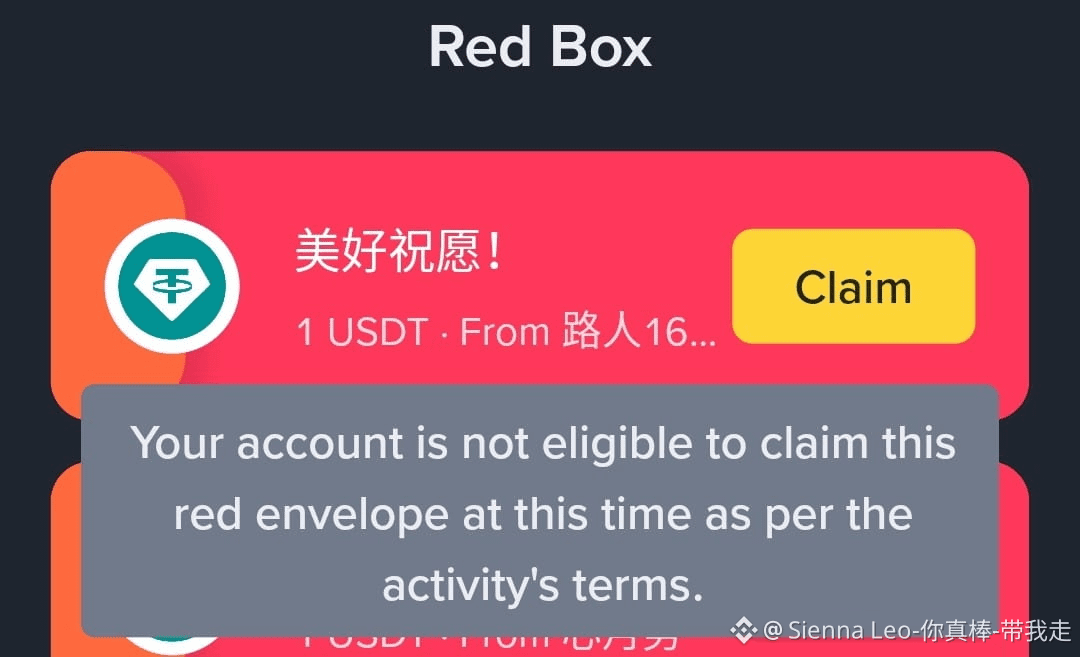
🚨 “NOT ELIGIBLE” AGAIN? Your Binance Red Envelope May Not Be the Problem! 🧧💔
Seeing “Your account is not eligible to claim this red envelope” again and again? 😔
Binance Red Packets can have activity-specific eligibility, regional limits, reward caps or other campaign conditions.
So before blaming your account, check the specific activity terms first. 🧧🔍
If you’re seeing this repeatedly, you’re definitely not alone. 👀
The real question: Why is your account suddenly ineligible? 🤔
#GrowWithSAC #Binance #RedPacket #BinanceSquare $AR $XTZ $ZAMA
🚨 “NOT ELIGIBLE” AGAIN? Your Binance Red Envelope May Not Be the Problem! 🧧💔
Seeing “Your account is not eligible to claim this red envelope” again and again? 😔
Binance Red Packets can have activity-specific eligibility, regional limits, reward caps or other campaign conditions.
So before blaming your account, check the specific activity terms first. 🧧🔍
If you’re seeing this repeatedly, you’re definitely not alone. 👀
The real question: Why is your account suddenly ineligible? 🤔
#GrowWithSAC #Binance #RedPacket #BinanceSquare $AR $XTZ $ZAMA
Seeing “Your account is not eligible to claim this red envelope” again and again? 😔
Binance Red Packets can have activity-specific eligibility, regional limits, reward caps or other campaign conditions.
So before blaming your account, check the specific activity terms first. 🧧🔍
If you’re seeing this repeatedly, you’re definitely not alone. 👀
The real question: Why is your account suddenly ineligible? 🤔
#GrowWithSAC #Binance #RedPacket #BinanceSquare $AR $XTZ $ZAMA
2
1
7
1.3k
Verified
#hkcompletesfirsthkdstablecoinusecase
🌏 Hong Kong Completes Its First HKD Stablecoin Use Case 🌏
A digital payment moves quietly across a trading screen. No dramatic price candle, no viral token launch, just money becoming programmable. That may be the more important crypto story.
Hong Kong has now completed an investment use case using HKDAP, a regulated Hong Kong dollar-backed stablecoin, to subscribe for and redeem units of ChinaAMC Hong Kong’s digital money market fund. The transaction was completed through OSL trading accounts.
HKDAP is issued by Anchorpoint Financial, a Hong Kong-licensed stablecoin issuer. Anchorpoint was established through a venture involving Standard Chartered, HKT and Animoca Brands.
What makes this interesting is the practical connection: regulated digital money was used to interact with a regulated investment product, rather than remaining a technology demonstration.
This is where stablecoins could become more than crypto trading tools. If similar infrastructure expands, HKD-denominated digital money could support faster settlement and broader access to tokenized financial products.
But one successful use case does not prove mass adoption. Liquidity, distribution, compliance, investor access and repeat usage will determine whether these experiments become everyday financial infrastructure.
My takeaway: the real stablecoin breakthrough may not be another token launch. It may be when digital money quietly starts doing the work traditional money already does.
❓ Will regulated HKD stablecoins become a meaningful bridge between traditional finance and digital assets?
Disclaimer: This is informational content, not financial advice. Crypto assets involve significant risk.
#Stablecoins #HongKong #GrowWithSAC $STRK $AR $C
#HKCompletesFirstHKDStablecoinUseCase
#hkcompletesfirsthkdstablecoinusecase
🌏 Hong Kong Completes Its First HKD Stablecoin Use Case 🌏
A digital payment moves quietly across a trading screen. No dramatic price candle, no viral token launch, just money becoming programmable. That may be the more important crypto story.
Hong Kong has now completed an investment use case using HKDAP, a regulated Hong Kong dollar-backed stablecoin, to subscribe for and redeem units of ChinaAMC Hong Kong’s digital money market fund. The transaction was completed through OSL trading accounts.
HKDAP is issued by Anchorpoint Financial, a Hong Kong-licensed stablecoin issuer. Anchorpoint was established through a venture involving Standard Chartered, HKT and Animoca Brands.
What makes this interesting is the practical connection: regulated digital money was used to interact with a regulated investment product, rather than remaining a technology demonstration.
This is where stablecoins could become more than crypto trading tools. If similar infrastructure expands, HKD-denominated digital money could support faster settlement and broader access to tokenized financial products.
But one successful use case does not prove mass adoption. Liquidity, distribution, compliance, investor access and repeat usage will determine whether these experiments become everyday financial infrastructure.
My takeaway: the real stablecoin breakthrough may not be another token launch. It may be when digital money quietly starts doing the work traditional money already does.
❓ Will regulated HKD stablecoins become a meaningful bridge between traditional finance and digital assets?
Disclaimer: This is informational content, not financial advice. Crypto assets involve significant risk.
#Stablecoins #HongKong #GrowWithSAC $STRK $AR $C
#HKCompletesFirstHKDStablecoinUseCase
🌏 Hong Kong Completes Its First HKD Stablecoin Use Case 🌏
A digital payment moves quietly across a trading screen. No dramatic price candle, no viral token launch, just money becoming programmable. That may be the more important crypto story.
Hong Kong has now completed an investment use case using HKDAP, a regulated Hong Kong dollar-backed stablecoin, to subscribe for and redeem units of ChinaAMC Hong Kong’s digital money market fund. The transaction was completed through OSL trading accounts.
HKDAP is issued by Anchorpoint Financial, a Hong Kong-licensed stablecoin issuer. Anchorpoint was established through a venture involving Standard Chartered, HKT and Animoca Brands.
What makes this interesting is the practical connection: regulated digital money was used to interact with a regulated investment product, rather than remaining a technology demonstration.
This is where stablecoins could become more than crypto trading tools. If similar infrastructure expands, HKD-denominated digital money could support faster settlement and broader access to tokenized financial products.
But one successful use case does not prove mass adoption. Liquidity, distribution, compliance, investor access and repeat usage will determine whether these experiments become everyday financial infrastructure.
My takeaway: the real stablecoin breakthrough may not be another token launch. It may be when digital money quietly starts doing the work traditional money already does.
❓ Will regulated HKD stablecoins become a meaningful bridge between traditional finance and digital assets?
Disclaimer: This is informational content, not financial advice. Crypto assets involve significant risk.
#Stablecoins #HongKong #GrowWithSAC $STRK $AR $C
#HKCompletesFirstHKDStablecoinUseCase

1
1.1k
#vietnamplansfirstcryptolicensesin2026
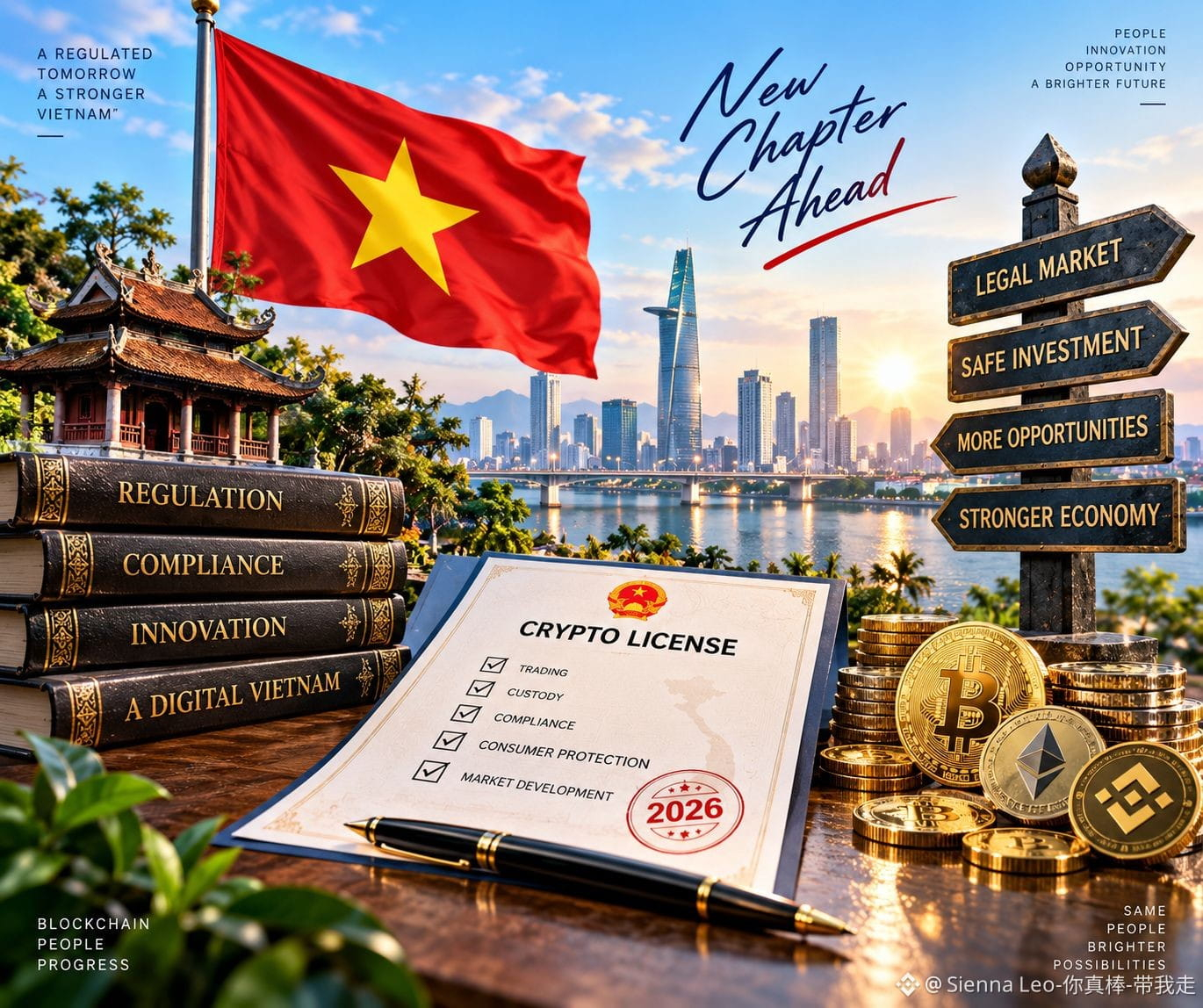
🌏 Vietnam Plans First Crypto Licenses In 2026 🌏
The doors are almost open. After years of operating in regulatory uncertainty, Vietnam is moving toward a market where crypto platforms may finally have to prove they can operate under formal rules.
Vietnam began accepting applications for crypto-asset trading licenses on January 20, 2026, under its five-year pilot framework. The government has created a formal process covering market operators, issuance, trading, and related services.
Seven applications were reportedly submitted, with five initially considered complete and valid. Yet as of September 2026, Vietnam's first crypto exchange license has still not been issued.
That delay is important. The story is no longer simply about whether Vietnam wants crypto regulation, but how carefully it will select the companies allowed to participate.
The framework also raises the bar for exchanges. Applicants must meet regulatory, financial, security, and compliance requirements, signaling that Vietnam is trying to build an organized market rather than simply legalize trading overnight.
For the wider crypto industry, licensing could change how Vietnamese users access digital assets and potentially create a clearer path for regulated local platforms. But until approvals are actually granted, the outcome remains uncertain.
My takeaway: regulatory clarity can create opportunity, but the real test begins after the first license is signed.
❓ Will Vietnam's licensing framework accelerate mainstream crypto adoption, or make the market more selective?
Disclaimer: This is informational content, not financial advice. Crypto assets involve significant risk.
#CryptoRegulation #Vietnam #GrowWithSAC $G $ONE $AR
#VietnamPlansFirstCryptoLicensesIn2026
#vietnamplansfirstcryptolicensesin2026
🌏 Vietnam Plans First Crypto Licenses In 2026 🌏
The doors are almost open. After years of operating in regulatory uncertainty, Vietnam is moving toward a market where crypto platforms may finally have to prove they can operate under formal rules.
Vietnam began accepting applications for crypto-asset trading licenses on January 20, 2026, under its five-year pilot framework. The government has created a formal process covering market operators, issuance, trading, and related services.
Seven applications were reportedly submitted, with five initially considered complete and valid. Yet as of September 2026, Vietnam's first crypto exchange license has still not been issued.
That delay is important. The story is no longer simply about whether Vietnam wants crypto regulation, but how carefully it will select the companies allowed to participate.
The framework also raises the bar for exchanges. Applicants must meet regulatory, financial, security, and compliance requirements, signaling that Vietnam is trying to build an organized market rather than simply legalize trading overnight.
For the wider crypto industry, licensing could change how Vietnamese users access digital assets and potentially create a clearer path for regulated local platforms. But until approvals are actually granted, the outcome remains uncertain.
My takeaway: regulatory clarity can create opportunity, but the real test begins after the first license is signed.
❓ Will Vietnam's licensing framework accelerate mainstream crypto adoption, or make the market more selective?
Disclaimer: This is informational content, not financial advice. Crypto assets involve significant risk.
#CryptoRegulation #Vietnam #GrowWithSAC $G $ONE $AR
#VietnamPlansFirstCryptoLicensesIn2026
🌏 Vietnam Plans First Crypto Licenses In 2026 🌏
The doors are almost open. After years of operating in regulatory uncertainty, Vietnam is moving toward a market where crypto platforms may finally have to prove they can operate under formal rules.
Vietnam began accepting applications for crypto-asset trading licenses on January 20, 2026, under its five-year pilot framework. The government has created a formal process covering market operators, issuance, trading, and related services.
Seven applications were reportedly submitted, with five initially considered complete and valid. Yet as of September 2026, Vietnam's first crypto exchange license has still not been issued.
That delay is important. The story is no longer simply about whether Vietnam wants crypto regulation, but how carefully it will select the companies allowed to participate.
The framework also raises the bar for exchanges. Applicants must meet regulatory, financial, security, and compliance requirements, signaling that Vietnam is trying to build an organized market rather than simply legalize trading overnight.
For the wider crypto industry, licensing could change how Vietnamese users access digital assets and potentially create a clearer path for regulated local platforms. But until approvals are actually granted, the outcome remains uncertain.
My takeaway: regulatory clarity can create opportunity, but the real test begins after the first license is signed.
❓ Will Vietnam's licensing framework accelerate mainstream crypto adoption, or make the market more selective?
Disclaimer: This is informational content, not financial advice. Crypto assets involve significant risk.
#CryptoRegulation #Vietnam #GrowWithSAC $G $ONE $AR
#VietnamPlansFirstCryptoLicensesIn2026
1
6
3k
Verified
#sandisktojoinsp100onsep21
📀 SanDisk Joins the S&P 100 on Sept. 21: Why This Matters 📈
Imagine the market opening Monday morning and a familiar name suddenly appearing inside one of Wall Street’s most closely watched large-cap indexes. For SanDisk, that moment arrives on September 21.
S&P Dow Jones Indices has confirmed that SanDisk (SNDK) will be added to the S&P 100 before trading opens Monday, alongside Dell Technologies, Palo Alto Networks, and Arista Networks.
The immediate significance is mechanical: funds that track the S&P 100 may need to adjust their holdings to reflect the new composition. That can create additional trading activity around the effective date, although it does not guarantee a lasting price move.
The bigger story is SanDisk’s exposure to the memory market. Its recent performance has benefited from strong memory pricing, making supply conditions, pricing power, and demand for storage important factors behind the stock’s fundamentals.
This distinction matters. Index inclusion can influence short-term flows, but longer-term valuation still depends on earnings, margins, memory prices, and the durability of demand.
SanDisk has already experienced substantial volatility this year, showing how quickly positioning and market expectations can amplify moves in either direction.
My takeaway: September 21 is an important milestone, but the index label is only one part of the story. The real test is whether SanDisk’s underlying business can sustain the momentum that brought it here.
❓Do you think index inclusion matters more for short-term flows or long-term investor perception?
Disclaimer: This is for educational purposes only and not financial advice. Markets carry significant risk.
#SanDisk #StockMarket #GrowWithSAC $AR $STRK $G
#SanDiskToJoinSP100OnSep21
#sandisktojoinsp100onsep21
📀 SanDisk Joins the S&P 100 on Sept. 21: Why This Matters 📈
Imagine the market opening Monday morning and a familiar name suddenly appearing inside one of Wall Street’s most closely watched large-cap indexes. For SanDisk, that moment arrives on September 21.
S&P Dow Jones Indices has confirmed that SanDisk (SNDK) will be added to the S&P 100 before trading opens Monday, alongside Dell Technologies, Palo Alto Networks, and Arista Networks.
The immediate significance is mechanical: funds that track the S&P 100 may need to adjust their holdings to reflect the new composition. That can create additional trading activity around the effective date, although it does not guarantee a lasting price move.
The bigger story is SanDisk’s exposure to the memory market. Its recent performance has benefited from strong memory pricing, making supply conditions, pricing power, and demand for storage important factors behind the stock’s fundamentals.
This distinction matters. Index inclusion can influence short-term flows, but longer-term valuation still depends on earnings, margins, memory prices, and the durability of demand.
SanDisk has already experienced substantial volatility this year, showing how quickly positioning and market expectations can amplify moves in either direction.
My takeaway: September 21 is an important milestone, but the index label is only one part of the story. The real test is whether SanDisk’s underlying business can sustain the momentum that brought it here.
❓Do you think index inclusion matters more for short-term flows or long-term investor perception?
Disclaimer: This is for educational purposes only and not financial advice. Markets carry significant risk.
#SanDisk #StockMarket #GrowWithSAC $AR $STRK $G
#SanDiskToJoinSP100OnSep21
📀 SanDisk Joins the S&P 100 on Sept. 21: Why This Matters 📈
Imagine the market opening Monday morning and a familiar name suddenly appearing inside one of Wall Street’s most closely watched large-cap indexes. For SanDisk, that moment arrives on September 21.
S&P Dow Jones Indices has confirmed that SanDisk (SNDK) will be added to the S&P 100 before trading opens Monday, alongside Dell Technologies, Palo Alto Networks, and Arista Networks.
The immediate significance is mechanical: funds that track the S&P 100 may need to adjust their holdings to reflect the new composition. That can create additional trading activity around the effective date, although it does not guarantee a lasting price move.
The bigger story is SanDisk’s exposure to the memory market. Its recent performance has benefited from strong memory pricing, making supply conditions, pricing power, and demand for storage important factors behind the stock’s fundamentals.
This distinction matters. Index inclusion can influence short-term flows, but longer-term valuation still depends on earnings, margins, memory prices, and the durability of demand.
SanDisk has already experienced substantial volatility this year, showing how quickly positioning and market expectations can amplify moves in either direction.
My takeaway: September 21 is an important milestone, but the index label is only one part of the story. The real test is whether SanDisk’s underlying business can sustain the momentum that brought it here.
❓Do you think index inclusion matters more for short-term flows or long-term investor perception?
Disclaimer: This is for educational purposes only and not financial advice. Markets carry significant risk.
#SanDisk #StockMarket #GrowWithSAC $AR $STRK $G
#SanDiskToJoinSP100OnSep21

3
2k
Verified
#linerashutsdownafterfundraisingfallsshort
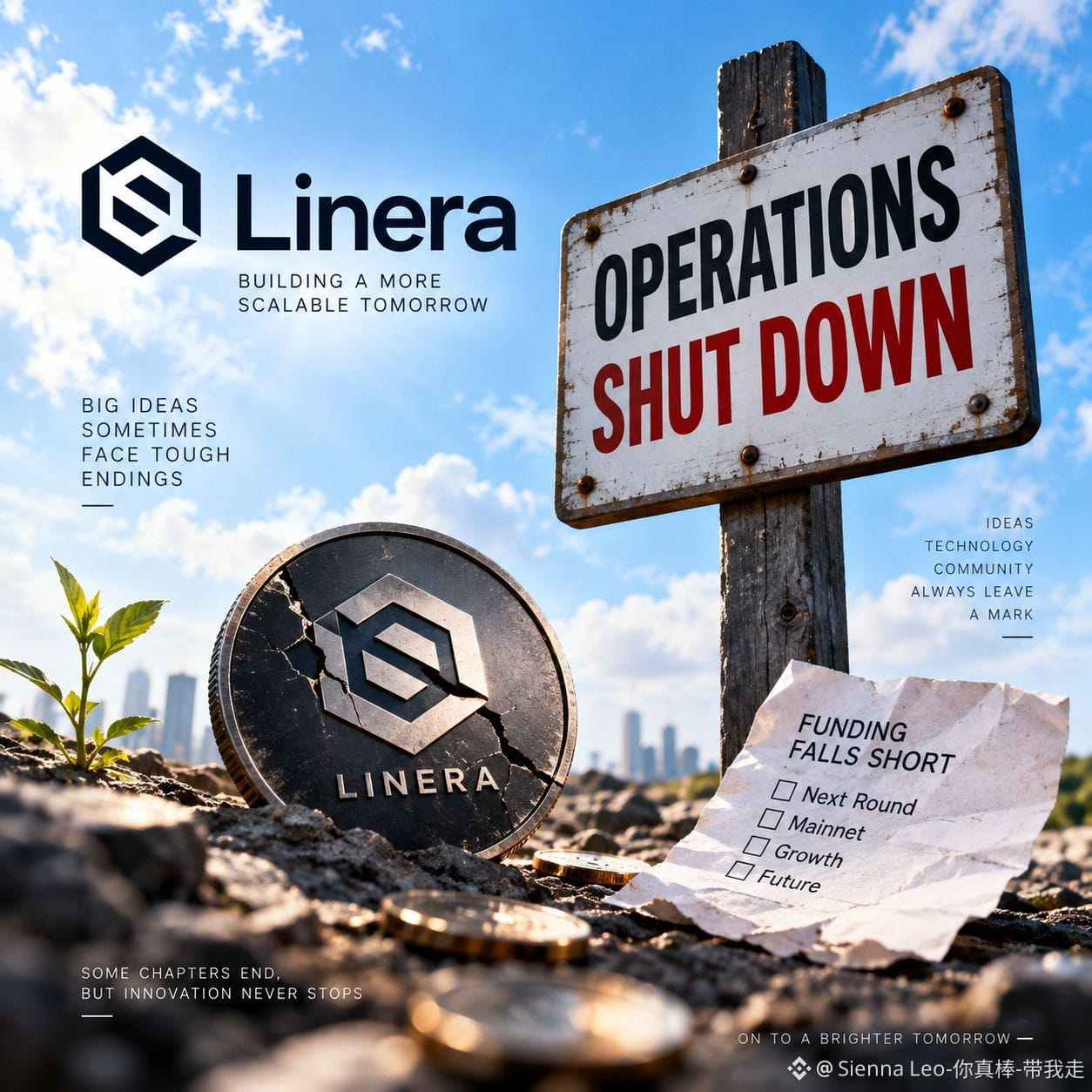
⚡ Linera Shuts Down After Fundraising Falls Short ⚡
Imagine building a blockchain for years, raising millions, getting close to mainnet, and then watching the runway disappear when the next funding round fails. That is where Linera finds itself today.
Linera has announced that it is ceasing operations after its LNRA community sale on Sonar failed to reach the minimum funding threshold. The sale attracted roughly $900,000 in commitments, while the required threshold was $1.5 million. Funds were refunded.
The striking part is that Linera had already raised about $12 million across earlier funding rounds. Yet previous capital was not enough to carry the project through to mainnet, and emergency financing efforts also failed.
This highlights a difficult reality in crypto infrastructure: strong technology, notable investors, and an active community do not automatically solve the problem of runway.
The immediate issue was not simply weak token-sale demand. The deeper problem was the inability to secure enough additional capital to bridge development toward mainnet.
Linera is now winding down its applications and community infrastructure. The team has indicated that the technology could potentially be completed later, but there is currently no confirmed timeline.
My takeaway: in crypto, surviving long enough to reach product-market fit can matter just as much as building impressive technology.
❓ Does Linera's shutdown reflect one project's funding gap, or a tougher environment for early-stage blockchain infrastructure?
Disclaimer: This is informational content, not financial advice. Crypto assets involve significant risk.
#Linera #CryptoNews #GrowWithSAC $G $ONE $AR
#LineraShutsDownAfterFundraisingFallsShort
#linerashutsdownafterfundraisingfallsshort
⚡ Linera Shuts Down After Fundraising Falls Short ⚡
Imagine building a blockchain for years, raising millions, getting close to mainnet, and then watching the runway disappear when the next funding round fails. That is where Linera finds itself today.
Linera has announced that it is ceasing operations after its LNRA community sale on Sonar failed to reach the minimum funding threshold. The sale attracted roughly $900,000 in commitments, while the required threshold was $1.5 million. Funds were refunded.
The striking part is that Linera had already raised about $12 million across earlier funding rounds. Yet previous capital was not enough to carry the project through to mainnet, and emergency financing efforts also failed.
This highlights a difficult reality in crypto infrastructure: strong technology, notable investors, and an active community do not automatically solve the problem of runway.
The immediate issue was not simply weak token-sale demand. The deeper problem was the inability to secure enough additional capital to bridge development toward mainnet.
Linera is now winding down its applications and community infrastructure. The team has indicated that the technology could potentially be completed later, but there is currently no confirmed timeline.
My takeaway: in crypto, surviving long enough to reach product-market fit can matter just as much as building impressive technology.
❓ Does Linera's shutdown reflect one project's funding gap, or a tougher environment for early-stage blockchain infrastructure?
Disclaimer: This is informational content, not financial advice. Crypto assets involve significant risk.
#Linera #CryptoNews #GrowWithSAC $G $ONE $AR
#LineraShutsDownAfterFundraisingFallsShort
⚡ Linera Shuts Down After Fundraising Falls Short ⚡
Imagine building a blockchain for years, raising millions, getting close to mainnet, and then watching the runway disappear when the next funding round fails. That is where Linera finds itself today.
Linera has announced that it is ceasing operations after its LNRA community sale on Sonar failed to reach the minimum funding threshold. The sale attracted roughly $900,000 in commitments, while the required threshold was $1.5 million. Funds were refunded.
The striking part is that Linera had already raised about $12 million across earlier funding rounds. Yet previous capital was not enough to carry the project through to mainnet, and emergency financing efforts also failed.
This highlights a difficult reality in crypto infrastructure: strong technology, notable investors, and an active community do not automatically solve the problem of runway.
The immediate issue was not simply weak token-sale demand. The deeper problem was the inability to secure enough additional capital to bridge development toward mainnet.
Linera is now winding down its applications and community infrastructure. The team has indicated that the technology could potentially be completed later, but there is currently no confirmed timeline.
My takeaway: in crypto, surviving long enough to reach product-market fit can matter just as much as building impressive technology.
❓ Does Linera's shutdown reflect one project's funding gap, or a tougher environment for early-stage blockchain infrastructure?
Disclaimer: This is informational content, not financial advice. Crypto assets involve significant risk.
#Linera #CryptoNews #GrowWithSAC $G $ONE $AR
#LineraShutsDownAfterFundraisingFallsShort
2
2.7k
Verified
#polygontodeploycontractburning100mpol
🔥 Polygon To Burn 100M $POL : Is Supply About To Get Scarcer? 🔥
Imagine watching a vault open, not to release tokens, but to permanently erase them. That is the unusual moment Polygon is preparing for.
Polygon has deployed the contract for a 100 million POL burn on testnet. The mainnet version is waiting for final Security Council signatures, after which anyone in the community can trigger the first burn.
The plan goes beyond one transaction. Polygon says the community will also be able to trigger POL burns quarterly, creating a recurring supply-reduction mechanism rather than a single headline event.
My Take: The important part is not simply the number being burned. It is the potential shift in POL economics toward repeatedly removing tokens generated through network activity.
But a burn does not automatically create price appreciation. The market still has to weigh demand, liquidity, network usage, emissions, and broader crypto conditions. A smaller supply matters most when real demand can absorb it.
POL is also currently trading higher over the past 24 hours, so the burn story is arriving alongside positive short-term market momentum.
The real test begins after deployment: can recurring burns become a meaningful part of Polygon's long-term token economics?
Would quarterly burns change how you evaluate POL, or is network demand still the bigger piece of the puzzle?
Disclaimer: This is informational content, not financial advice. Crypto assets remain volatile and risky.
#Polygon #POL #GrowWithSAC $UNI $NEAR
#PolygonToDeployContractBurning100MPOL
#polygontodeploycontractburning100mpol
🔥 Polygon To Burn 100M $POL : Is Supply About To Get Scarcer? 🔥
Imagine watching a vault open, not to release tokens, but to permanently erase them. That is the unusual moment Polygon is preparing for.
Polygon has deployed the contract for a 100 million POL burn on testnet. The mainnet version is waiting for final Security Council signatures, after which anyone in the community can trigger the first burn.
The plan goes beyond one transaction. Polygon says the community will also be able to trigger POL burns quarterly, creating a recurring supply-reduction mechanism rather than a single headline event.
My Take: The important part is not simply the number being burned. It is the potential shift in POL economics toward repeatedly removing tokens generated through network activity.
But a burn does not automatically create price appreciation. The market still has to weigh demand, liquidity, network usage, emissions, and broader crypto conditions. A smaller supply matters most when real demand can absorb it.
POL is also currently trading higher over the past 24 hours, so the burn story is arriving alongside positive short-term market momentum.
The real test begins after deployment: can recurring burns become a meaningful part of Polygon's long-term token economics?
Would quarterly burns change how you evaluate POL, or is network demand still the bigger piece of the puzzle?
Disclaimer: This is informational content, not financial advice. Crypto assets remain volatile and risky.
#Polygon #POL #GrowWithSAC $UNI $NEAR
#PolygonToDeployContractBurning100MPOL
🔥 Polygon To Burn 100M $POL : Is Supply About To Get Scarcer? 🔥
Imagine watching a vault open, not to release tokens, but to permanently erase them. That is the unusual moment Polygon is preparing for.
Polygon has deployed the contract for a 100 million POL burn on testnet. The mainnet version is waiting for final Security Council signatures, after which anyone in the community can trigger the first burn.
The plan goes beyond one transaction. Polygon says the community will also be able to trigger POL burns quarterly, creating a recurring supply-reduction mechanism rather than a single headline event.
My Take: The important part is not simply the number being burned. It is the potential shift in POL economics toward repeatedly removing tokens generated through network activity.
But a burn does not automatically create price appreciation. The market still has to weigh demand, liquidity, network usage, emissions, and broader crypto conditions. A smaller supply matters most when real demand can absorb it.
POL is also currently trading higher over the past 24 hours, so the burn story is arriving alongside positive short-term market momentum.
The real test begins after deployment: can recurring burns become a meaningful part of Polygon's long-term token economics?
Would quarterly burns change how you evaluate POL, or is network demand still the bigger piece of the puzzle?
Disclaimer: This is informational content, not financial advice. Crypto assets remain volatile and risky.
#Polygon #POL #GrowWithSAC $UNI $NEAR
#PolygonToDeployContractBurning100MPOL

7
3.4k
Verified
#buffettbecomesberkshirechairmanemeritus
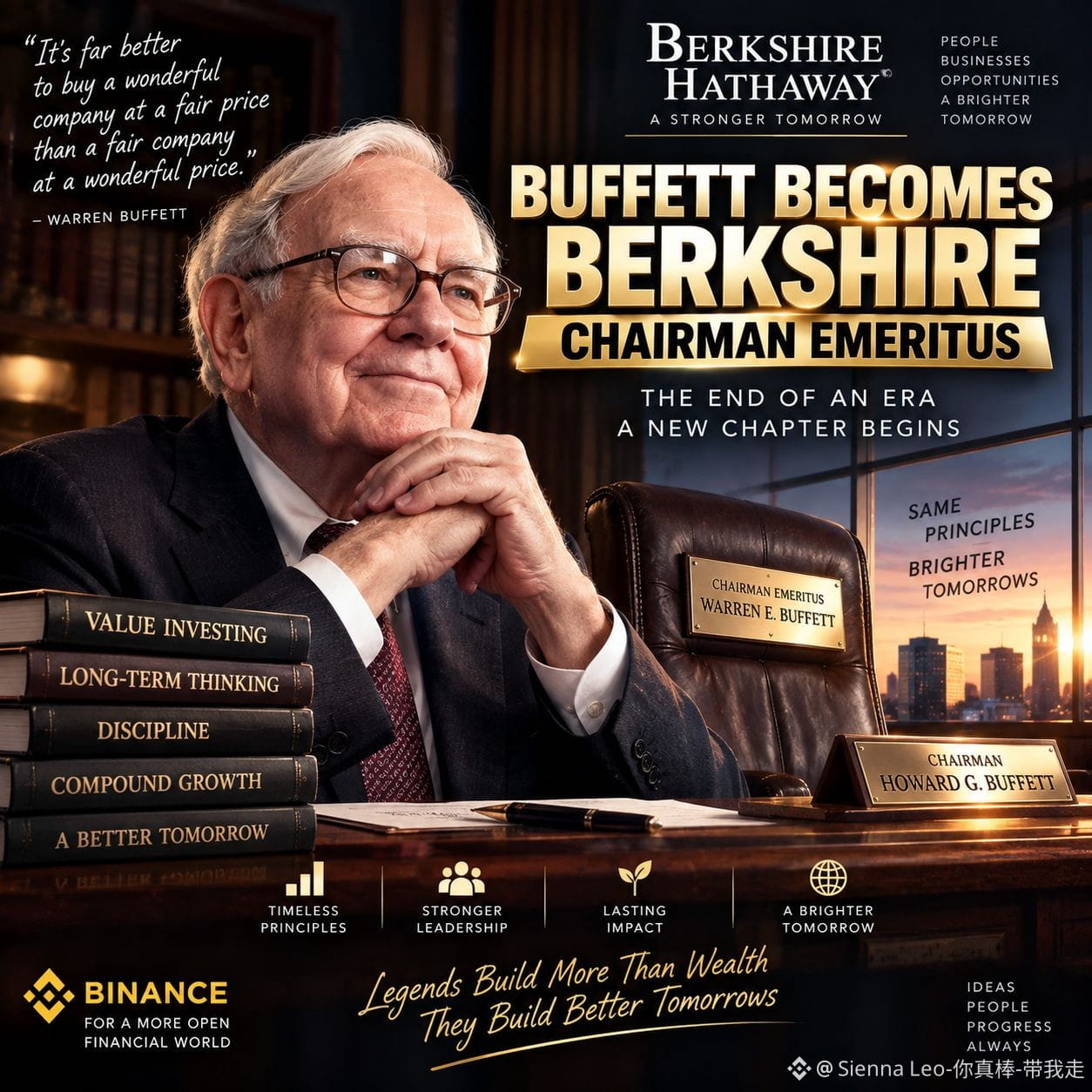
🧠🏛️ Buffett Becomes Berkshire Chairman Emeritus: The End of an Era 🏛️🧠
For decades, one name seemed inseparable from Berkshire Hathaway. Now the chair is changing, and the man behind that legacy is taking one final step away from the center of the boardroom.
Warren Buffett has become Berkshire Hathaway’s chairman emeritus, effective immediately, while remaining on the board. His son, Howard G. Buffett, has been elected chairman.
This is more than a title change. Greg Abel became CEO at the start of 2026, and Buffett’s move completes another major stage of Berkshire’s long-planned leadership transition.
My take: the fascinating part is not Buffett leaving the chair. It is whether Berkshire can preserve its decision-making culture when its most recognizable architect is no longer running the room.
Howard Buffett’s role is focused on the board and Berkshire’s culture, while Abel continues managing the company’s operations. That separation makes the transition structurally significant rather than simply symbolic.
For markets, the immediate lesson is about succession. Investors are no longer judging only what Buffett built, but how Berkshire operates without him in executive leadership.
Great businesses eventually face the same test: can the system survive the person who created it?
Buffett built the legacy. Now Berkshire must prove the legacy can stand on its own.
❓Do you think Berkshire’s next chapter will be defined more by Buffett’s principles or Abel’s decisions?
Disclaimer: Educational content only, not financial advice. Conduct your own research before making investment decisions.
#WarrenBuffett #BerkshireHathaway #GrowWithSAC $G $UNI $STRK
#BuffettBecomesBerkshireChairmanEmeritus
#buffettbecomesberkshirechairmanemeritus
🧠🏛️ Buffett Becomes Berkshire Chairman Emeritus: The End of an Era 🏛️🧠
For decades, one name seemed inseparable from Berkshire Hathaway. Now the chair is changing, and the man behind that legacy is taking one final step away from the center of the boardroom.
Warren Buffett has become Berkshire Hathaway’s chairman emeritus, effective immediately, while remaining on the board. His son, Howard G. Buffett, has been elected chairman.
This is more than a title change. Greg Abel became CEO at the start of 2026, and Buffett’s move completes another major stage of Berkshire’s long-planned leadership transition.
My take: the fascinating part is not Buffett leaving the chair. It is whether Berkshire can preserve its decision-making culture when its most recognizable architect is no longer running the room.
Howard Buffett’s role is focused on the board and Berkshire’s culture, while Abel continues managing the company’s operations. That separation makes the transition structurally significant rather than simply symbolic.
For markets, the immediate lesson is about succession. Investors are no longer judging only what Buffett built, but how Berkshire operates without him in executive leadership.
Great businesses eventually face the same test: can the system survive the person who created it?
Buffett built the legacy. Now Berkshire must prove the legacy can stand on its own.
❓Do you think Berkshire’s next chapter will be defined more by Buffett’s principles or Abel’s decisions?
Disclaimer: Educational content only, not financial advice. Conduct your own research before making investment decisions.
#WarrenBuffett #BerkshireHathaway #GrowWithSAC $G $UNI $STRK
#BuffettBecomesBerkshireChairmanEmeritus
🧠🏛️ Buffett Becomes Berkshire Chairman Emeritus: The End of an Era 🏛️🧠
For decades, one name seemed inseparable from Berkshire Hathaway. Now the chair is changing, and the man behind that legacy is taking one final step away from the center of the boardroom.
Warren Buffett has become Berkshire Hathaway’s chairman emeritus, effective immediately, while remaining on the board. His son, Howard G. Buffett, has been elected chairman.
This is more than a title change. Greg Abel became CEO at the start of 2026, and Buffett’s move completes another major stage of Berkshire’s long-planned leadership transition.
My take: the fascinating part is not Buffett leaving the chair. It is whether Berkshire can preserve its decision-making culture when its most recognizable architect is no longer running the room.
Howard Buffett’s role is focused on the board and Berkshire’s culture, while Abel continues managing the company’s operations. That separation makes the transition structurally significant rather than simply symbolic.
For markets, the immediate lesson is about succession. Investors are no longer judging only what Buffett built, but how Berkshire operates without him in executive leadership.
Great businesses eventually face the same test: can the system survive the person who created it?
Buffett built the legacy. Now Berkshire must prove the legacy can stand on its own.
❓Do you think Berkshire’s next chapter will be defined more by Buffett’s principles or Abel’s decisions?
Disclaimer: Educational content only, not financial advice. Conduct your own research before making investment decisions.
#WarrenBuffett #BerkshireHathaway #GrowWithSAC $G $UNI $STRK
#BuffettBecomesBerkshireChairmanEmeritus
1
6
4.2k
Verified
#zcashdeveloperstargetnu7mainnetactivationnov5
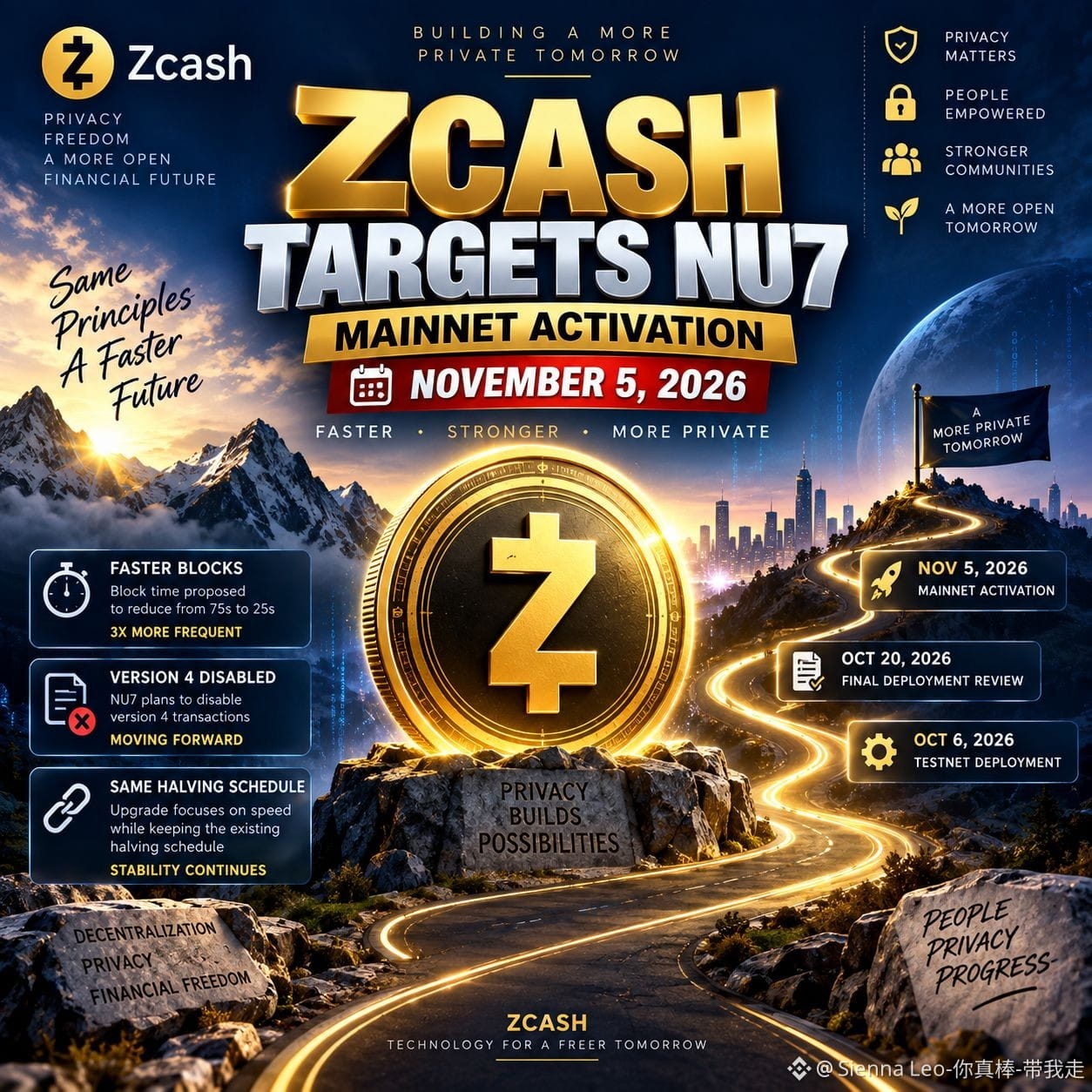
⚡🛡️ Zcash Targets November 5, 2026 for NU7 Mainnet Activation 🛡️⚡
The network is quiet, but something important is approaching. Behind the scenes, Zcash developers are preparing a change that could make every confirmation feel noticeably different.
Zcash developers have targeted November 5, 2026 for NU7 mainnet activation, following planned testnet deployment on October 6 and a final deployment review on October 20.
The headline technical change is striking: NU7 proposes cutting Zcash block time from 75 seconds to 25 seconds, potentially producing blocks three times more frequently while keeping the existing halving schedule.
NU7 also plans to disable version 4 transactions, reflecting Zcash's continued transition away from older Sprout-era infrastructure.
My take: the interesting part is not simply “faster blocks.” It is the attempt to improve confirmation speed without turning the upgrade into a complete redesign of Zcash's monetary framework.
That matters because faster block production can improve the user experience for payments, exchange deposits and applications that depend on confirmations. But higher block frequency also creates additional infrastructure demands, making testnet performance crucial.
October 6 is therefore more than another development milestone. It is where the proposed design meets real network conditions before developers decide whether November 5 remains appropriate.
And that distinction matters: November 5 is a target, not an unconditional guarantee. The October testing and review remain important checkpoints.
The real story is simple: Zcash is trying to make its network faster without losing the principles that define its next phase.
❓Will NU7's 25-second blocks become one of Zcash's most meaningful upgrades?
Disclaimer: This is educational content, not financial advice. Always conduct your own research and manage risk carefully.
#Zcash #CryptoNews #GrowWithSAC $ZEC $LSK $STEEM
#ZcashDevelopersTargetNU7MainnetActivationNov5
#zcashdeveloperstargetnu7mainnetactivationnov5
⚡🛡️ Zcash Targets November 5, 2026 for NU7 Mainnet Activation 🛡️⚡
The network is quiet, but something important is approaching. Behind the scenes, Zcash developers are preparing a change that could make every confirmation feel noticeably different.
Zcash developers have targeted November 5, 2026 for NU7 mainnet activation, following planned testnet deployment on October 6 and a final deployment review on October 20.
The headline technical change is striking: NU7 proposes cutting Zcash block time from 75 seconds to 25 seconds, potentially producing blocks three times more frequently while keeping the existing halving schedule.
NU7 also plans to disable version 4 transactions, reflecting Zcash's continued transition away from older Sprout-era infrastructure.
My take: the interesting part is not simply “faster blocks.” It is the attempt to improve confirmation speed without turning the upgrade into a complete redesign of Zcash's monetary framework.
That matters because faster block production can improve the user experience for payments, exchange deposits and applications that depend on confirmations. But higher block frequency also creates additional infrastructure demands, making testnet performance crucial.
October 6 is therefore more than another development milestone. It is where the proposed design meets real network conditions before developers decide whether November 5 remains appropriate.
And that distinction matters: November 5 is a target, not an unconditional guarantee. The October testing and review remain important checkpoints.
The real story is simple: Zcash is trying to make its network faster without losing the principles that define its next phase.
❓Will NU7's 25-second blocks become one of Zcash's most meaningful upgrades?
Disclaimer: This is educational content, not financial advice. Always conduct your own research and manage risk carefully.
#Zcash #CryptoNews #GrowWithSAC $ZEC $LSK $STEEM
#ZcashDevelopersTargetNU7MainnetActivationNov5
⚡🛡️ Zcash Targets November 5, 2026 for NU7 Mainnet Activation 🛡️⚡
The network is quiet, but something important is approaching. Behind the scenes, Zcash developers are preparing a change that could make every confirmation feel noticeably different.
Zcash developers have targeted November 5, 2026 for NU7 mainnet activation, following planned testnet deployment on October 6 and a final deployment review on October 20.
The headline technical change is striking: NU7 proposes cutting Zcash block time from 75 seconds to 25 seconds, potentially producing blocks three times more frequently while keeping the existing halving schedule.
NU7 also plans to disable version 4 transactions, reflecting Zcash's continued transition away from older Sprout-era infrastructure.
My take: the interesting part is not simply “faster blocks.” It is the attempt to improve confirmation speed without turning the upgrade into a complete redesign of Zcash's monetary framework.
That matters because faster block production can improve the user experience for payments, exchange deposits and applications that depend on confirmations. But higher block frequency also creates additional infrastructure demands, making testnet performance crucial.
October 6 is therefore more than another development milestone. It is where the proposed design meets real network conditions before developers decide whether November 5 remains appropriate.
And that distinction matters: November 5 is a target, not an unconditional guarantee. The October testing and review remain important checkpoints.
The real story is simple: Zcash is trying to make its network faster without losing the principles that define its next phase.
❓Will NU7's 25-second blocks become one of Zcash's most meaningful upgrades?
Disclaimer: This is educational content, not financial advice. Always conduct your own research and manage risk carefully.
#Zcash #CryptoNews #GrowWithSAC $ZEC $LSK $STEEM
#ZcashDevelopersTargetNU7MainnetActivationNov5
1
1
1.1k
Verified
#hypejumpsover11%
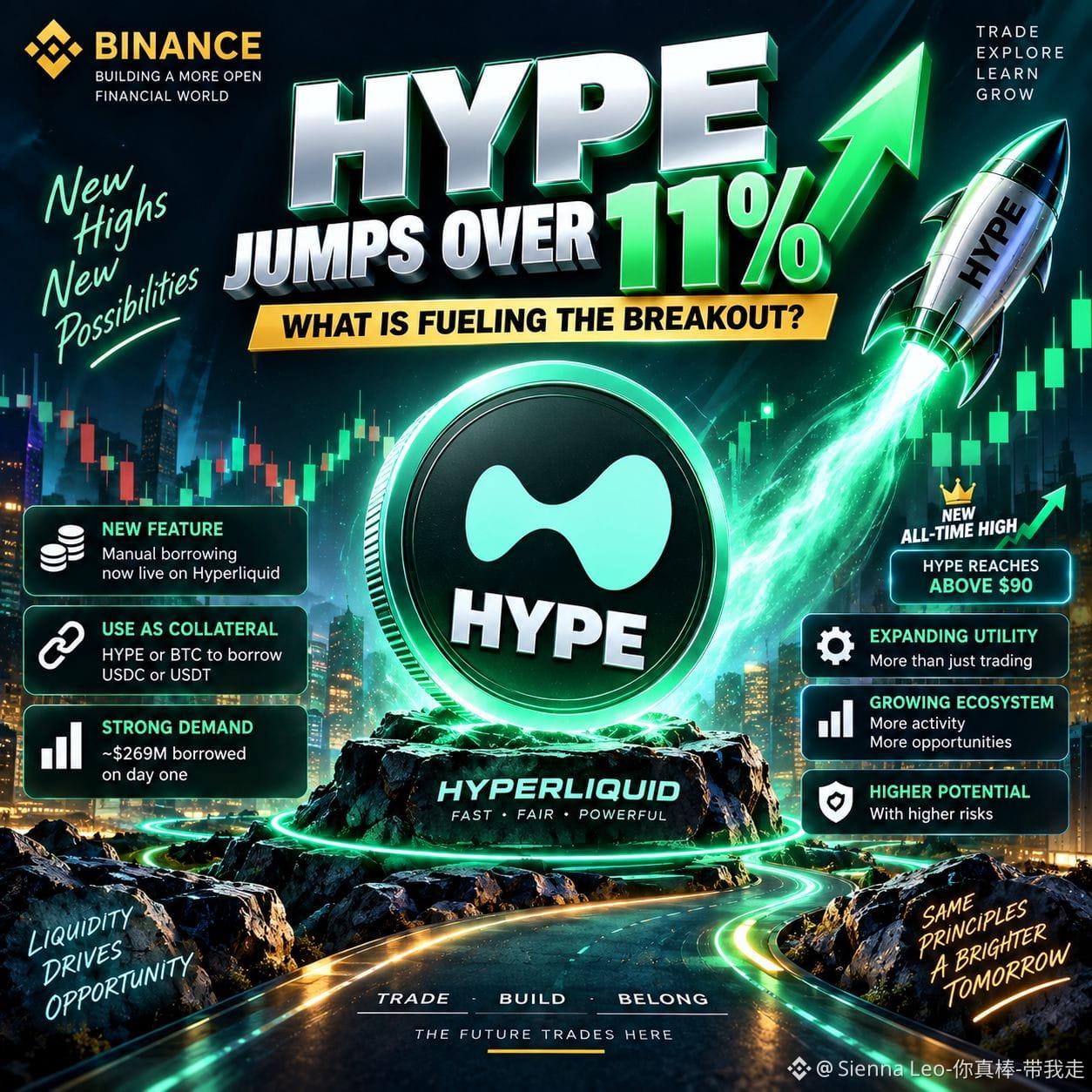
🔥📈 $HYPE Jumps Over 11%: What Is Fueling the Breakout? 📈🔥
The screen was quiet, then one candle suddenly changed the mood. HYPE pushed sharply higher, and traders had a new question: is this just momentum, or is something deeper happening?
Hyperliquid’s HYPE jumped more than 11% on September 18, reaching a fresh record above $90 as the broader crypto market also strengthened.
The standout catalyst is Hyperliquid’s new manual borrowing feature. Users can now use HYPE or BTC as collateral to borrow USDC or USDT directly through HyperCore.
The launch generated immediate activity, with Hyperliquid reporting about $269 million in assets borrowed on the first day. That gives HYPE another role beyond trading: it can now function directly as collateral inside the platform’s credit infrastructure.
My take: the 11% move matters, but the more interesting signal is utility expanding alongside price. A token gaining another financial use case has a different narrative from a rally driven purely by speculation.
Still, a breakout does not remove risk. New highs can attract momentum traders, while leverage and changing liquidity can amplify both upside and reversals.
The next thing I would watch is whether activity remains strong after the initial excitement. Sustainable usage matters more than one explosive session.
When price discovery meets expanding utility, the candle is only the beginning of the story.
❓Do you think HYPE’s new lending role can support this momentum beyond the breakout?
Disclaimer: Educational content only, not financial advice. Do your own research and manage risk carefully.
#Hyperliquid #CryptoNews #GrowWithSAC $UNI $STRK
#HYPEJumpsOver11%
#hypejumpsover11%
🔥📈 $HYPE Jumps Over 11%: What Is Fueling the Breakout? 📈🔥
The screen was quiet, then one candle suddenly changed the mood. HYPE pushed sharply higher, and traders had a new question: is this just momentum, or is something deeper happening?
Hyperliquid’s HYPE jumped more than 11% on September 18, reaching a fresh record above $90 as the broader crypto market also strengthened.
The standout catalyst is Hyperliquid’s new manual borrowing feature. Users can now use HYPE or BTC as collateral to borrow USDC or USDT directly through HyperCore.
The launch generated immediate activity, with Hyperliquid reporting about $269 million in assets borrowed on the first day. That gives HYPE another role beyond trading: it can now function directly as collateral inside the platform’s credit infrastructure.
My take: the 11% move matters, but the more interesting signal is utility expanding alongside price. A token gaining another financial use case has a different narrative from a rally driven purely by speculation.
Still, a breakout does not remove risk. New highs can attract momentum traders, while leverage and changing liquidity can amplify both upside and reversals.
The next thing I would watch is whether activity remains strong after the initial excitement. Sustainable usage matters more than one explosive session.
When price discovery meets expanding utility, the candle is only the beginning of the story.
❓Do you think HYPE’s new lending role can support this momentum beyond the breakout?
Disclaimer: Educational content only, not financial advice. Do your own research and manage risk carefully.
#Hyperliquid #CryptoNews #GrowWithSAC $UNI $STRK
#HYPEJumpsOver11%
🔥📈 $HYPE Jumps Over 11%: What Is Fueling the Breakout? 📈🔥
The screen was quiet, then one candle suddenly changed the mood. HYPE pushed sharply higher, and traders had a new question: is this just momentum, or is something deeper happening?
Hyperliquid’s HYPE jumped more than 11% on September 18, reaching a fresh record above $90 as the broader crypto market also strengthened.
The standout catalyst is Hyperliquid’s new manual borrowing feature. Users can now use HYPE or BTC as collateral to borrow USDC or USDT directly through HyperCore.
The launch generated immediate activity, with Hyperliquid reporting about $269 million in assets borrowed on the first day. That gives HYPE another role beyond trading: it can now function directly as collateral inside the platform’s credit infrastructure.
My take: the 11% move matters, but the more interesting signal is utility expanding alongside price. A token gaining another financial use case has a different narrative from a rally driven purely by speculation.
Still, a breakout does not remove risk. New highs can attract momentum traders, while leverage and changing liquidity can amplify both upside and reversals.
The next thing I would watch is whether activity remains strong after the initial excitement. Sustainable usage matters more than one explosive session.
When price discovery meets expanding utility, the candle is only the beginning of the story.
❓Do you think HYPE’s new lending role can support this momentum beyond the breakout?
Disclaimer: Educational content only, not financial advice. Do your own research and manage risk carefully.
#Hyperliquid #CryptoNews #GrowWithSAC $UNI $STRK
#HYPEJumpsOver11%
2
5.6k
Verified
#hkmaplanswholesalecbdcbyyearend
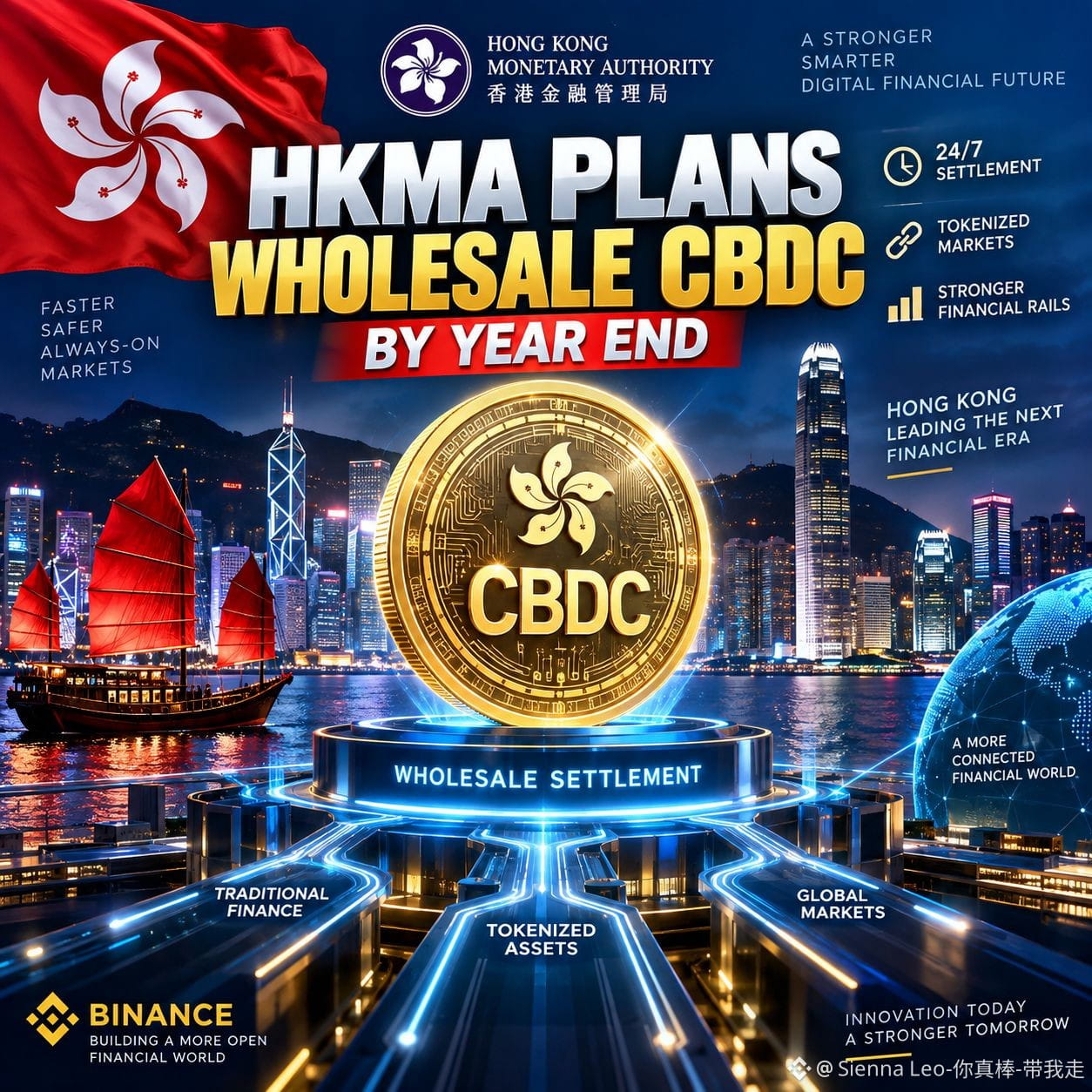
🏦🇭🇰 HKMA Plans Wholesale CBDC By Year End: The Settlement Clock Is About To Change 🇭🇰🏦
Imagine a financial market still moving, but the settlement window has already closed. A trade can happen instantly, yet the money behind it may still be waiting for the next business day. Hong Kong wants to change that.
The Hong Kong Monetary Authority plans to launch wholesale CBDC settlement by year-end 2026 through Project EnsembleTX, targeting 24-hour settlement for tokenized deposits.
The important detail is that this is wholesale infrastructure, not a retail digital currency for everyday consumers. Its focus is interbank settlement and financial-market use cases.
Why does that matter? Tokenized assets are only as efficient as the money used to settle them. If assets can move around the clock while settlement remains tied to traditional banking hours, the infrastructure has a built-in mismatch.
HKMA also plans to use the system for settlement related to derivatives traded outside normal Hong Kong Exchange hours, extending the potential role of central-bank money in tokenized markets.
My take: the headline is less about “another CBDC” and more about rebuilding the financial rails underneath tokenization. The real test will be whether institutions actually use the infrastructure and whether it delivers measurable settlement efficiency.
Technology alone does not guarantee adoption. Banks still need liquidity management, operational resilience, regulatory clarity, and reliable 24/7 processes.
The bigger story may be simple: when financial markets become always-on, settlement infrastructure has to catch up.
❓Could 24/7 wholesale settlement become a key building block for institutional tokenization?
Disclaimer: This is educational content, not financial advice. Always conduct your own research and manage risk carefully.
#HKMA #CBDC #GrowWithSAC $G $UNI $STRK
#HKMAPlansWholesaleCBDCByYearEnd
#hkmaplanswholesalecbdcbyyearend
🏦🇭🇰 HKMA Plans Wholesale CBDC By Year End: The Settlement Clock Is About To Change 🇭🇰🏦
Imagine a financial market still moving, but the settlement window has already closed. A trade can happen instantly, yet the money behind it may still be waiting for the next business day. Hong Kong wants to change that.
The Hong Kong Monetary Authority plans to launch wholesale CBDC settlement by year-end 2026 through Project EnsembleTX, targeting 24-hour settlement for tokenized deposits.
The important detail is that this is wholesale infrastructure, not a retail digital currency for everyday consumers. Its focus is interbank settlement and financial-market use cases.
Why does that matter? Tokenized assets are only as efficient as the money used to settle them. If assets can move around the clock while settlement remains tied to traditional banking hours, the infrastructure has a built-in mismatch.
HKMA also plans to use the system for settlement related to derivatives traded outside normal Hong Kong Exchange hours, extending the potential role of central-bank money in tokenized markets.
My take: the headline is less about “another CBDC” and more about rebuilding the financial rails underneath tokenization. The real test will be whether institutions actually use the infrastructure and whether it delivers measurable settlement efficiency.
Technology alone does not guarantee adoption. Banks still need liquidity management, operational resilience, regulatory clarity, and reliable 24/7 processes.
The bigger story may be simple: when financial markets become always-on, settlement infrastructure has to catch up.
❓Could 24/7 wholesale settlement become a key building block for institutional tokenization?
Disclaimer: This is educational content, not financial advice. Always conduct your own research and manage risk carefully.
#HKMA #CBDC #GrowWithSAC $G $UNI $STRK
#HKMAPlansWholesaleCBDCByYearEnd
🏦🇭🇰 HKMA Plans Wholesale CBDC By Year End: The Settlement Clock Is About To Change 🇭🇰🏦
Imagine a financial market still moving, but the settlement window has already closed. A trade can happen instantly, yet the money behind it may still be waiting for the next business day. Hong Kong wants to change that.
The Hong Kong Monetary Authority plans to launch wholesale CBDC settlement by year-end 2026 through Project EnsembleTX, targeting 24-hour settlement for tokenized deposits.
The important detail is that this is wholesale infrastructure, not a retail digital currency for everyday consumers. Its focus is interbank settlement and financial-market use cases.
Why does that matter? Tokenized assets are only as efficient as the money used to settle them. If assets can move around the clock while settlement remains tied to traditional banking hours, the infrastructure has a built-in mismatch.
HKMA also plans to use the system for settlement related to derivatives traded outside normal Hong Kong Exchange hours, extending the potential role of central-bank money in tokenized markets.
My take: the headline is less about “another CBDC” and more about rebuilding the financial rails underneath tokenization. The real test will be whether institutions actually use the infrastructure and whether it delivers measurable settlement efficiency.
Technology alone does not guarantee adoption. Banks still need liquidity management, operational resilience, regulatory clarity, and reliable 24/7 processes.
The bigger story may be simple: when financial markets become always-on, settlement infrastructure has to catch up.
❓Could 24/7 wholesale settlement become a key building block for institutional tokenization?
Disclaimer: This is educational content, not financial advice. Always conduct your own research and manage risk carefully.
#HKMA #CBDC #GrowWithSAC $G $UNI $STRK
#HKMAPlansWholesaleCBDCByYearEnd
3
4.3k
·
--
Bullish
Verified
#NEARSurges26%Past$3.45
🚀 $NEAR SURGES 26% PAST $3.45 🚀
One moment, NEAR was quietly trading below $3. The next, buyers pushed it through $3.45, turning a familiar altcoin into one of the market's biggest stories.
NEAR is currently around $3.49 on Binance, with the token showing roughly 29% 24-hour gains in the latest market data.
The move is not happening in isolation. NEAR's Confidential Intents TVL recently crossed $70 million, triggering the first snapshot of its NEAR@3.33 milestone incentive program.
That mechanism gives the rally an unusual narrative anchor. The first drop contains 333,333 locked milestone tokens, which can convert into NEAR only if its three-day VWAP reaches at least $3.33.
Beyond the headline, NEAR is increasingly positioning itself around cross-chain execution and confidential transactions. Its current infrastructure spans more than 30 chains, while Confidential Intents is designed to reduce public exposure of transaction activity.
My take: the strongest part of this move is not simply the percentage gain. It is the combination of price momentum, product activity, and a clearly defined ecosystem milestone attracting attention at the same time.
But sharp rallies can create equally sharp reactions. The market now has to prove that this momentum represents sustained demand rather than short-term excitement.
When price and product activity suddenly meet, the chart becomes only half the story.
❓Can NEAR sustain this momentum after the $3.33 incentive narrative cools?
Disclaimer: This content is for educational and informational purposes only, not financial advice.
#NEARProtocol #Altcoins #GrowWithSAC $BNCB $AERO
#NEARSurges26%Past$3.45
🚀 $NEAR SURGES 26% PAST $3.45 🚀
One moment, NEAR was quietly trading below $3. The next, buyers pushed it through $3.45, turning a familiar altcoin into one of the market's biggest stories.
NEAR is currently around $3.49 on Binance, with the token showing roughly 29% 24-hour gains in the latest market data.
The move is not happening in isolation. NEAR's Confidential Intents TVL recently crossed $70 million, triggering the first snapshot of its NEAR@3.33 milestone incentive program.
That mechanism gives the rally an unusual narrative anchor. The first drop contains 333,333 locked milestone tokens, which can convert into NEAR only if its three-day VWAP reaches at least $3.33.
Beyond the headline, NEAR is increasingly positioning itself around cross-chain execution and confidential transactions. Its current infrastructure spans more than 30 chains, while Confidential Intents is designed to reduce public exposure of transaction activity.
My take: the strongest part of this move is not simply the percentage gain. It is the combination of price momentum, product activity, and a clearly defined ecosystem milestone attracting attention at the same time.
But sharp rallies can create equally sharp reactions. The market now has to prove that this momentum represents sustained demand rather than short-term excitement.
When price and product activity suddenly meet, the chart becomes only half the story.
❓Can NEAR sustain this momentum after the $3.33 incentive narrative cools?
Disclaimer: This content is for educational and informational purposes only, not financial advice.
#NEARProtocol #Altcoins #GrowWithSAC $BNCB $AERO
🚀 $NEAR SURGES 26% PAST $3.45 🚀
One moment, NEAR was quietly trading below $3. The next, buyers pushed it through $3.45, turning a familiar altcoin into one of the market's biggest stories.
NEAR is currently around $3.49 on Binance, with the token showing roughly 29% 24-hour gains in the latest market data.
The move is not happening in isolation. NEAR's Confidential Intents TVL recently crossed $70 million, triggering the first snapshot of its NEAR@3.33 milestone incentive program.
That mechanism gives the rally an unusual narrative anchor. The first drop contains 333,333 locked milestone tokens, which can convert into NEAR only if its three-day VWAP reaches at least $3.33.
Beyond the headline, NEAR is increasingly positioning itself around cross-chain execution and confidential transactions. Its current infrastructure spans more than 30 chains, while Confidential Intents is designed to reduce public exposure of transaction activity.
My take: the strongest part of this move is not simply the percentage gain. It is the combination of price momentum, product activity, and a clearly defined ecosystem milestone attracting attention at the same time.
But sharp rallies can create equally sharp reactions. The market now has to prove that this momentum represents sustained demand rather than short-term excitement.
When price and product activity suddenly meet, the chart becomes only half the story.
❓Can NEAR sustain this momentum after the $3.33 incentive narrative cools?
Disclaimer: This content is for educational and informational purposes only, not financial advice.
#NEARProtocol #Altcoins #GrowWithSAC $BNCB $AERO
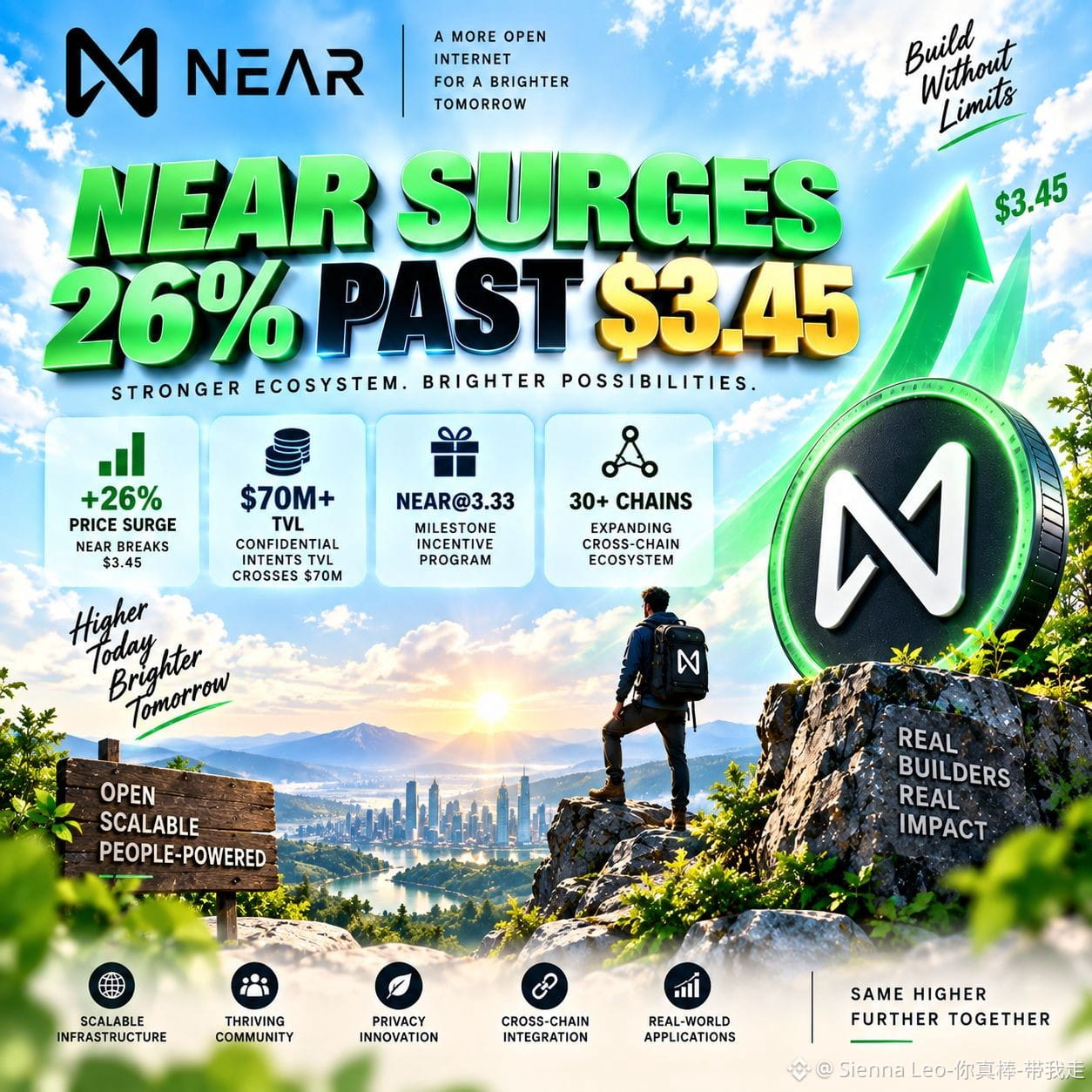
1
4
819
#bojhikesratesto31yearhigh
🔥 BOJ HIKES RATES TO 31 YEAR HIGH 🔥
Tokyo woke to a different financial landscape. A decision that once seemed almost unthinkable has now pushed Japan's benchmark rate to a level unseen in 31 years.
The Bank of Japan raised its policy rate from 1% to 1.25% in a 7-2 vote, marking its highest level since 1995. The move was widely expected, but the bigger story is what comes next.
Inflation pressure remains central to the decision. Rising energy costs and persistent price pressures are forcing Japan to move further away from its long era of ultra-loose monetary policy.
Yet markets delivered an interesting reaction. The yen weakened after the announcement, showing that a rate hike alone does not guarantee stronger currency demand. Investors are also watching the BOJ's future guidance and the pace of additional tightening.
For global markets, this matters because Japanese monetary policy can influence liquidity, currency flows, bonds, equities, and risk assets far beyond Tokyo.
My take: the headline is not simply "BOJ raises rates." It is a signal that one of the world's most important sources of cheap money is gradually changing direction.
That shift does not automatically mean crypto must fall or rise. The real question is how global liquidity responds as investors adjust to a higher-rate Japan.
When cheap money becomes more expensive, every market eventually has to rethink its price.
❓Could Japan's tightening become a bigger liquidity story for crypto than the rate hike itself?
Disclaimer: This is for informational and educational purposes only, not financial advice.
#BankOfJapan #BOJ #GrowWithSAC $G $NEAR $ARB
#BOJHikesRatesTo31YearHigh
#bojhikesratesto31yearhigh
🔥 BOJ HIKES RATES TO 31 YEAR HIGH 🔥
Tokyo woke to a different financial landscape. A decision that once seemed almost unthinkable has now pushed Japan's benchmark rate to a level unseen in 31 years.
The Bank of Japan raised its policy rate from 1% to 1.25% in a 7-2 vote, marking its highest level since 1995. The move was widely expected, but the bigger story is what comes next.
Inflation pressure remains central to the decision. Rising energy costs and persistent price pressures are forcing Japan to move further away from its long era of ultra-loose monetary policy.
Yet markets delivered an interesting reaction. The yen weakened after the announcement, showing that a rate hike alone does not guarantee stronger currency demand. Investors are also watching the BOJ's future guidance and the pace of additional tightening.
For global markets, this matters because Japanese monetary policy can influence liquidity, currency flows, bonds, equities, and risk assets far beyond Tokyo.
My take: the headline is not simply "BOJ raises rates." It is a signal that one of the world's most important sources of cheap money is gradually changing direction.
That shift does not automatically mean crypto must fall or rise. The real question is how global liquidity responds as investors adjust to a higher-rate Japan.
When cheap money becomes more expensive, every market eventually has to rethink its price.
❓Could Japan's tightening become a bigger liquidity story for crypto than the rate hike itself?
Disclaimer: This is for informational and educational purposes only, not financial advice.
#BankOfJapan #BOJ #GrowWithSAC $G $NEAR $ARB
#BOJHikesRatesTo31YearHigh
🔥 BOJ HIKES RATES TO 31 YEAR HIGH 🔥
Tokyo woke to a different financial landscape. A decision that once seemed almost unthinkable has now pushed Japan's benchmark rate to a level unseen in 31 years.
The Bank of Japan raised its policy rate from 1% to 1.25% in a 7-2 vote, marking its highest level since 1995. The move was widely expected, but the bigger story is what comes next.
Inflation pressure remains central to the decision. Rising energy costs and persistent price pressures are forcing Japan to move further away from its long era of ultra-loose monetary policy.
Yet markets delivered an interesting reaction. The yen weakened after the announcement, showing that a rate hike alone does not guarantee stronger currency demand. Investors are also watching the BOJ's future guidance and the pace of additional tightening.
For global markets, this matters because Japanese monetary policy can influence liquidity, currency flows, bonds, equities, and risk assets far beyond Tokyo.
My take: the headline is not simply "BOJ raises rates." It is a signal that one of the world's most important sources of cheap money is gradually changing direction.
That shift does not automatically mean crypto must fall or rise. The real question is how global liquidity responds as investors adjust to a higher-rate Japan.
When cheap money becomes more expensive, every market eventually has to rethink its price.
❓Could Japan's tightening become a bigger liquidity story for crypto than the rate hike itself?
Disclaimer: This is for informational and educational purposes only, not financial advice.
#BankOfJapan #BOJ #GrowWithSAC $G $NEAR $ARB
#BOJHikesRatesTo31YearHigh
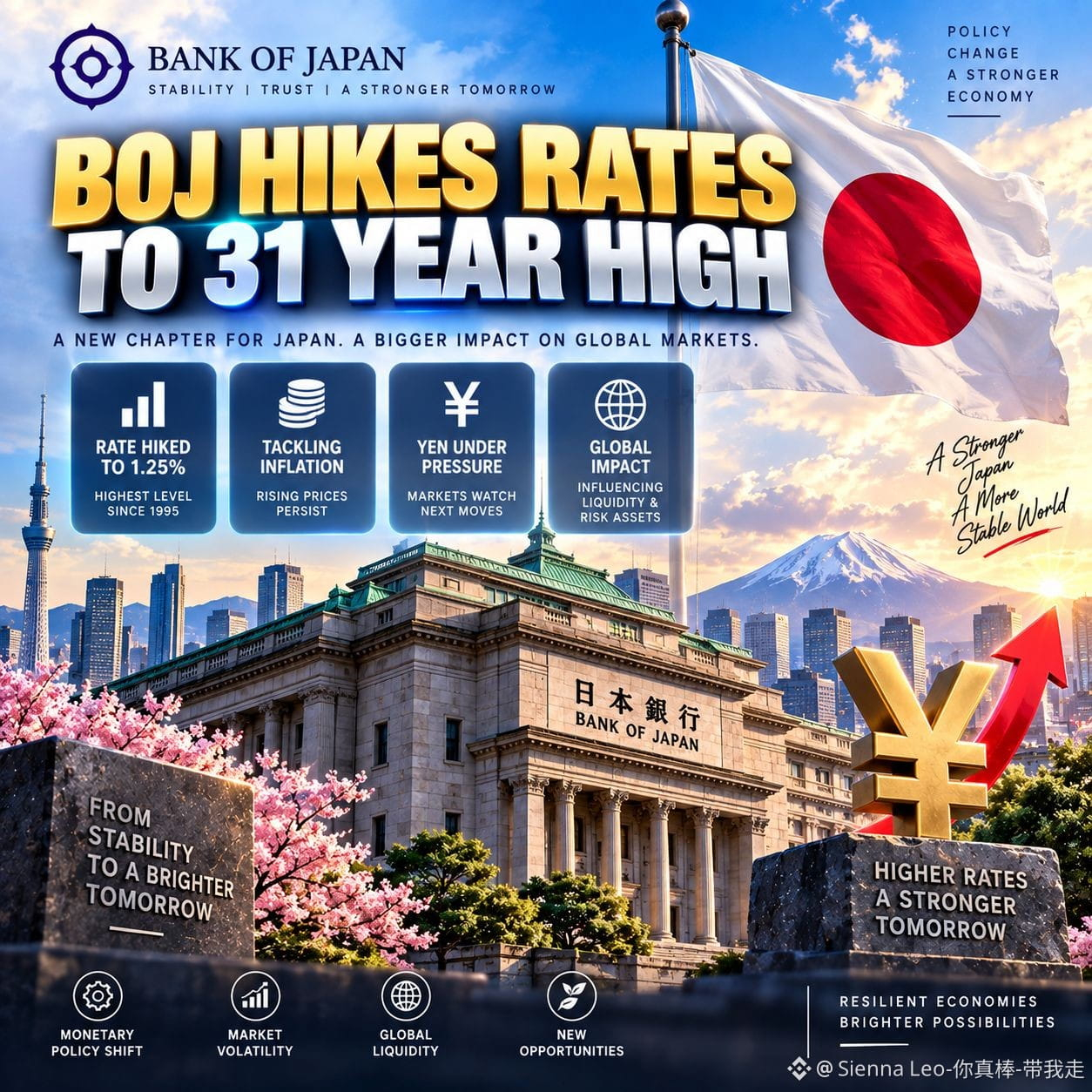
512
#secgrantsinnovationexemptionfortokenizedstocks
🚨📈 SEC Grants Innovation Exemption For Tokenized Stocks: Wall Street Moves Onchain 📈🚨
Imagine watching a familiar stock market open, but this time the trade settles on a blockchain. The screen looks different, yet the asset still carries the rights of traditional ownership.
On September 17, the SEC granted temporary, conditional relief allowing qualifying Tokenized Securities Venues to trade certain tokenized NMS stocks through permissioned automated market makers and liquidity pools.
This is bigger than simply putting stock tickers on a blockchain. The exemption creates a regulatory pathway for selected tokenized equities while requiring important safeguards, including equivalent shareholder rights, auditable smart contracts and trading limits.
My take: the real shift is regulatory acceptance of blockchain as potential market infrastructure. Tokenization can offer programmable settlement and broader digital access, but adoption still depends on liquidity, issuer participation and investor protection.
The exemption is temporary and scheduled to expire five years after publication, while the SEC seeks public comment. It also does not automatically approve synthetic stock tokens that merely track prices without representing equivalent ownership rights.
For crypto, this could strengthen the connection between traditional capital markets and onchain infrastructure. The next question is not whether stocks can become tokens, but how deeply tokenization can integrate with real financial markets.
When regulated stocks begin moving through blockchain rails, tokenization stops looking experimental and starts looking infrastructural.
Could tokenized equities become one of blockchain’s most important real-world use cases?
Disclaimer: Educational content only, not financial advice. Tokenized securities and digital assets involve regulatory and market risks.
#Tokenization #RWA #GrowWithSAC $AVAX $ONE $COTI
#SECGrantsInnovationExemptionForTokenizedStocks
#secgrantsinnovationexemptionfortokenizedstocks
🚨📈 SEC Grants Innovation Exemption For Tokenized Stocks: Wall Street Moves Onchain 📈🚨
Imagine watching a familiar stock market open, but this time the trade settles on a blockchain. The screen looks different, yet the asset still carries the rights of traditional ownership.
On September 17, the SEC granted temporary, conditional relief allowing qualifying Tokenized Securities Venues to trade certain tokenized NMS stocks through permissioned automated market makers and liquidity pools.
This is bigger than simply putting stock tickers on a blockchain. The exemption creates a regulatory pathway for selected tokenized equities while requiring important safeguards, including equivalent shareholder rights, auditable smart contracts and trading limits.
My take: the real shift is regulatory acceptance of blockchain as potential market infrastructure. Tokenization can offer programmable settlement and broader digital access, but adoption still depends on liquidity, issuer participation and investor protection.
The exemption is temporary and scheduled to expire five years after publication, while the SEC seeks public comment. It also does not automatically approve synthetic stock tokens that merely track prices without representing equivalent ownership rights.
For crypto, this could strengthen the connection between traditional capital markets and onchain infrastructure. The next question is not whether stocks can become tokens, but how deeply tokenization can integrate with real financial markets.
When regulated stocks begin moving through blockchain rails, tokenization stops looking experimental and starts looking infrastructural.
Could tokenized equities become one of blockchain’s most important real-world use cases?
Disclaimer: Educational content only, not financial advice. Tokenized securities and digital assets involve regulatory and market risks.
#Tokenization #RWA #GrowWithSAC $AVAX $ONE $COTI
#SECGrantsInnovationExemptionForTokenizedStocks
🚨📈 SEC Grants Innovation Exemption For Tokenized Stocks: Wall Street Moves Onchain 📈🚨
Imagine watching a familiar stock market open, but this time the trade settles on a blockchain. The screen looks different, yet the asset still carries the rights of traditional ownership.
On September 17, the SEC granted temporary, conditional relief allowing qualifying Tokenized Securities Venues to trade certain tokenized NMS stocks through permissioned automated market makers and liquidity pools.
This is bigger than simply putting stock tickers on a blockchain. The exemption creates a regulatory pathway for selected tokenized equities while requiring important safeguards, including equivalent shareholder rights, auditable smart contracts and trading limits.
My take: the real shift is regulatory acceptance of blockchain as potential market infrastructure. Tokenization can offer programmable settlement and broader digital access, but adoption still depends on liquidity, issuer participation and investor protection.
The exemption is temporary and scheduled to expire five years after publication, while the SEC seeks public comment. It also does not automatically approve synthetic stock tokens that merely track prices without representing equivalent ownership rights.
For crypto, this could strengthen the connection between traditional capital markets and onchain infrastructure. The next question is not whether stocks can become tokens, but how deeply tokenization can integrate with real financial markets.
When regulated stocks begin moving through blockchain rails, tokenization stops looking experimental and starts looking infrastructural.
Could tokenized equities become one of blockchain’s most important real-world use cases?
Disclaimer: Educational content only, not financial advice. Tokenized securities and digital assets involve regulatory and market risks.
#Tokenization #RWA #GrowWithSAC $AVAX $ONE $COTI
#SECGrantsInnovationExemptionForTokenizedStocks
1.5k
Verified
#spglobaltoacquireopenzeppelin
⚡🏦 S&P Global Moves Deeper Onchain: OpenZeppelin Acquisition Signals a New Era 🏦⚡
Imagine watching the walls between Wall Street and crypto quietly disappear. No dramatic announcement, just a major financial institution reaching for the security infrastructure underneath onchain finance.
That moment arrived on September 17, when S&P Global announced an agreement to acquire OpenZeppelin, a major provider of smart-contract security technology and open-source blockchain infrastructure.
The interesting part is not simply the acquisition. OpenZeppelin says its Contracts have supported more than $37 trillion in transferred value, while its security business has completed 900+ engagements.
For S&P Global, this adds an onchain technology-risk layer to its existing capabilities in financial data, benchmarks, and risk assessment. OpenZeppelin will continue operating under its own name, with CEO Demian Brener continuing to lead the business.
My take: this looks less like a traditional crypto acquisition and more like infrastructure convergence. As tokenized funds, stablecoins, and other financial products move onchain, security becomes part of the institutional investment conversation.
The deal is still subject to closing conditions, and financial terms were not disclosed. So the headline is significant, but its long-term impact will depend on execution.
When traditional finance starts buying the infrastructure of crypto, the boundary between the two becomes harder to see.
Do you think institutional adoption will increasingly be built around blockchain security infrastructure?
Disclaimer: This is educational content, not financial advice. Digital assets involve significant risk.
#Crypto #Blockchain #GrowWithSAC $ARB $UNI $NEAR
#SPGlobalToAcquireOpenZeppelin
#spglobaltoacquireopenzeppelin
⚡🏦 S&P Global Moves Deeper Onchain: OpenZeppelin Acquisition Signals a New Era 🏦⚡
Imagine watching the walls between Wall Street and crypto quietly disappear. No dramatic announcement, just a major financial institution reaching for the security infrastructure underneath onchain finance.
That moment arrived on September 17, when S&P Global announced an agreement to acquire OpenZeppelin, a major provider of smart-contract security technology and open-source blockchain infrastructure.
The interesting part is not simply the acquisition. OpenZeppelin says its Contracts have supported more than $37 trillion in transferred value, while its security business has completed 900+ engagements.
For S&P Global, this adds an onchain technology-risk layer to its existing capabilities in financial data, benchmarks, and risk assessment. OpenZeppelin will continue operating under its own name, with CEO Demian Brener continuing to lead the business.
My take: this looks less like a traditional crypto acquisition and more like infrastructure convergence. As tokenized funds, stablecoins, and other financial products move onchain, security becomes part of the institutional investment conversation.
The deal is still subject to closing conditions, and financial terms were not disclosed. So the headline is significant, but its long-term impact will depend on execution.
When traditional finance starts buying the infrastructure of crypto, the boundary between the two becomes harder to see.
Do you think institutional adoption will increasingly be built around blockchain security infrastructure?
Disclaimer: This is educational content, not financial advice. Digital assets involve significant risk.
#Crypto #Blockchain #GrowWithSAC $ARB $UNI $NEAR
#SPGlobalToAcquireOpenZeppelin
⚡🏦 S&P Global Moves Deeper Onchain: OpenZeppelin Acquisition Signals a New Era 🏦⚡
Imagine watching the walls between Wall Street and crypto quietly disappear. No dramatic announcement, just a major financial institution reaching for the security infrastructure underneath onchain finance.
That moment arrived on September 17, when S&P Global announced an agreement to acquire OpenZeppelin, a major provider of smart-contract security technology and open-source blockchain infrastructure.
The interesting part is not simply the acquisition. OpenZeppelin says its Contracts have supported more than $37 trillion in transferred value, while its security business has completed 900+ engagements.
For S&P Global, this adds an onchain technology-risk layer to its existing capabilities in financial data, benchmarks, and risk assessment. OpenZeppelin will continue operating under its own name, with CEO Demian Brener continuing to lead the business.
My take: this looks less like a traditional crypto acquisition and more like infrastructure convergence. As tokenized funds, stablecoins, and other financial products move onchain, security becomes part of the institutional investment conversation.
The deal is still subject to closing conditions, and financial terms were not disclosed. So the headline is significant, but its long-term impact will depend on execution.
When traditional finance starts buying the infrastructure of crypto, the boundary between the two becomes harder to see.
Do you think institutional adoption will increasingly be built around blockchain security infrastructure?
Disclaimer: This is educational content, not financial advice. Digital assets involve significant risk.
#Crypto #Blockchain #GrowWithSAC $ARB $UNI $NEAR
#SPGlobalToAcquireOpenZeppelin

5
5.4k
#chainlinkpowersbottomlinepaymentplatform
⚡🏦 CHAINLINK POWERS BOTTOMLINE PAYMENT PLATFORM 🏦⚡
Picture a bank payment leaving one country and arriving in another, while the infrastructure underneath quietly handles the complexity. Now imagine that bridge connecting traditional finance with multiple blockchain networks.
That is the idea behind Bottomline’s Global Pay Connect, a new platform powered by Chainlink and designed to connect more than 600 banks to blockchain-based payment networks through a single integration.
Bottomline says the platform is built to bridge existing payment rails with emerging blockchain networks, while adding interoperability, data insights and fraud controls. Its platforms process more than $16 trillion in payments annually.
The deeper story is not simply another Chainlink partnership. It is about reducing the friction between financial institutions and fragmented blockchain infrastructure.
Chainlink’s role matters because cross-chain connectivity becomes increasingly important when banks do not want to rebuild their payment systems for every individual network.
My take: this is where blockchain utility becomes easier to measure. Real financial infrastructure adopting interoperability tools can create a more practical path from traditional payments to onchain settlement.
Still, integration is not the same as mass adoption. Usage, transaction volumes, regulatory clarity and actual bank deployment will determine how meaningful this becomes.
The most important blockchain breakthroughs may happen quietly, inside the payment rails people already use.
Could Chainlink become a key interoperability layer between banks and the expanding onchain economy?
Disclaimer: Educational content only, not financial advice. Crypto assets remain volatile and involve risk.
#Chainlink #Blockchain #GrowWithSAC $LINK $AVA $COTI
#ChainlinkPowersBottomlinePaymentPlatform
#chainlinkpowersbottomlinepaymentplatform
⚡🏦 CHAINLINK POWERS BOTTOMLINE PAYMENT PLATFORM 🏦⚡
Picture a bank payment leaving one country and arriving in another, while the infrastructure underneath quietly handles the complexity. Now imagine that bridge connecting traditional finance with multiple blockchain networks.
That is the idea behind Bottomline’s Global Pay Connect, a new platform powered by Chainlink and designed to connect more than 600 banks to blockchain-based payment networks through a single integration.
Bottomline says the platform is built to bridge existing payment rails with emerging blockchain networks, while adding interoperability, data insights and fraud controls. Its platforms process more than $16 trillion in payments annually.
The deeper story is not simply another Chainlink partnership. It is about reducing the friction between financial institutions and fragmented blockchain infrastructure.
Chainlink’s role matters because cross-chain connectivity becomes increasingly important when banks do not want to rebuild their payment systems for every individual network.
My take: this is where blockchain utility becomes easier to measure. Real financial infrastructure adopting interoperability tools can create a more practical path from traditional payments to onchain settlement.
Still, integration is not the same as mass adoption. Usage, transaction volumes, regulatory clarity and actual bank deployment will determine how meaningful this becomes.
The most important blockchain breakthroughs may happen quietly, inside the payment rails people already use.
Could Chainlink become a key interoperability layer between banks and the expanding onchain economy?
Disclaimer: Educational content only, not financial advice. Crypto assets remain volatile and involve risk.
#Chainlink #Blockchain #GrowWithSAC $LINK $AVA $COTI
#ChainlinkPowersBottomlinePaymentPlatform
⚡🏦 CHAINLINK POWERS BOTTOMLINE PAYMENT PLATFORM 🏦⚡
Picture a bank payment leaving one country and arriving in another, while the infrastructure underneath quietly handles the complexity. Now imagine that bridge connecting traditional finance with multiple blockchain networks.
That is the idea behind Bottomline’s Global Pay Connect, a new platform powered by Chainlink and designed to connect more than 600 banks to blockchain-based payment networks through a single integration.
Bottomline says the platform is built to bridge existing payment rails with emerging blockchain networks, while adding interoperability, data insights and fraud controls. Its platforms process more than $16 trillion in payments annually.
The deeper story is not simply another Chainlink partnership. It is about reducing the friction between financial institutions and fragmented blockchain infrastructure.
Chainlink’s role matters because cross-chain connectivity becomes increasingly important when banks do not want to rebuild their payment systems for every individual network.
My take: this is where blockchain utility becomes easier to measure. Real financial infrastructure adopting interoperability tools can create a more practical path from traditional payments to onchain settlement.
Still, integration is not the same as mass adoption. Usage, transaction volumes, regulatory clarity and actual bank deployment will determine how meaningful this becomes.
The most important blockchain breakthroughs may happen quietly, inside the payment rails people already use.
Could Chainlink become a key interoperability layer between banks and the expanding onchain economy?
Disclaimer: Educational content only, not financial advice. Crypto assets remain volatile and involve risk.
#Chainlink #Blockchain #GrowWithSAC $LINK $AVA $COTI
#ChainlinkPowersBottomlinePaymentPlatform
1
224
Log in to explore more content
Join global crypto users on Binance Square
⚡️ Get latest and useful information about crypto.
💬 Trusted by the world’s largest crypto exchange.
👍 Discover real insights from verified creators.
Email / Phone number
Trending Topics
SaylorHintsStrategyBitcoinBuy
2.3M views
12,495 Discussing
#SaylorHintsStrategyBitcoinBuy
#SaylorHintsStrategyBitcoinBuy 👀
Michael Saylor’s latest comments have once again put Strategy and Bitcoin accumulation in the spotlight. The market is watching closely for any potential move from the company, especially as institutional interest in Bitcoin continues to attract attention. 📈
If Strategy adds more BTC, it could reinforce the narrative of long-term corporate Bitcoin adoption and potentially create fresh momentum across the crypto market. However, traders should remember that headlines can drive short-term volatility in both directions.
Will Strategy make another Bitcoin purchase soon? The crypto community is watching every move. 🚀₿
maqsoodahmed1
·1 Likes
·127 views
BOJRaisesRatesTo31YearHigh
262,299 views
3,308 Discussing
BuffettStepsDownAsBerkshireChairman
127,798 views
1,778 Discussing