
Crypto Insight EN
116 Posts

Crypto Insight EN
0 Following
8 Followers
16 Liked
Posts
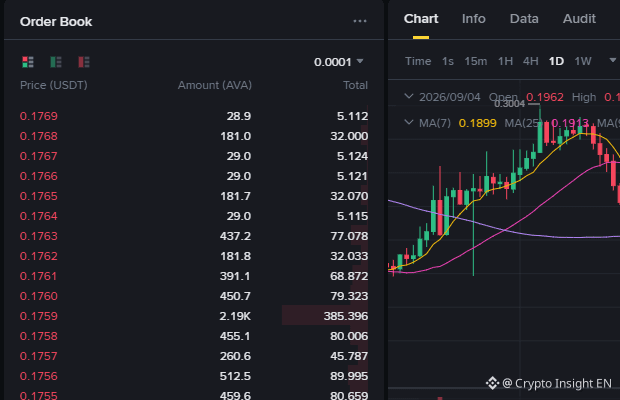
Binance Alpha will remove several tokens including $MTP, $BDXN, and $SAROS on 2026-09-04 at 08:30 UTC. Withdrawals and selling remain open. ⚠️ #Binance #Delisting
Ahead of the official US Non-Farm Payrolls report scheduled for release tonight at 20:30, market anxiety is visibly mounting. Crude oil benchmarks are easing in tandem, with WTI dropping 1.00% to $88.74 per barrel and Brent falling 1.00% to $93.66 per barrel, reflecting a cautious stance across global trading desks.
This labor print is pivotal following July's evident softening and surprising volatility in this week's ADP data. While consensus forecasts an addition of roughly 56,000 jobs, the unusually wide projection band signals deep uncertainty. Any sharp divergence could quickly upend the fragile market stability recently reinforced by Federal Reserve Governor Christopher Waller's commentary.
Across traditional finance, a cooler-than-expected print would intensify concerns over US economic momentum, likely weighing on Treasury yields and dampening the US Dollar Index. Conversely, an upside surprise would immediately revive higher-for-longer rate bets, putting pressure on equities and tightening broader liquidity.
For crypto markets, elevated macro tension typically triggers choppy price action for $BTC and major altcoins ahead of the data. A weaker job print could pave the way for looser monetary conditions down the road, while a hot reading may spark short-term liquidations.
#nfp #macro #crypto
This labor print is pivotal following July's evident softening and surprising volatility in this week's ADP data. While consensus forecasts an addition of roughly 56,000 jobs, the unusually wide projection band signals deep uncertainty. Any sharp divergence could quickly upend the fragile market stability recently reinforced by Federal Reserve Governor Christopher Waller's commentary.
Across traditional finance, a cooler-than-expected print would intensify concerns over US economic momentum, likely weighing on Treasury yields and dampening the US Dollar Index. Conversely, an upside surprise would immediately revive higher-for-longer rate bets, putting pressure on equities and tightening broader liquidity.
For crypto markets, elevated macro tension typically triggers choppy price action for $BTC and major altcoins ahead of the data. A weaker job print could pave the way for looser monetary conditions down the road, while a hot reading may spark short-term liquidations.
#nfp #macro #crypto
According to the latest data released by the American Automobile Association (AAA) this Thursday, retail diesel prices in the United States have surged to a record high of $5.85 per gallon. This moves past the previous all-time peak of $5.76 set in June 2022, fueled by tightening global supply conditions and escalating energy market turmoil.
This spike represents a critical macro development because diesel serves as the primary fuel for freight logistics, agriculture, and industrial production. Sustained high fuel costs directly pass through the supply chain, threatening to reignite energy-driven inflation and complicating the Federal Reserve's rate trajectory ahead of its mid-September policy meeting.
Across traditional financial markets, rising fuel prices are reinforcing expectations of higher-for-longer benchmark interest rates. This dynamic typically props up Treasury yields and the US Dollar Index, while putting downside pressure on equities and traditional growth sectors.
For the crypto market, lingering inflationary pressures and tighter central bank policy constrain broad risk appetite. In the near term, elevated yields could weigh on $BTC and altcoins as institutional liquidity remains cautious, keeping digital assets in a defensive consolidation range.
#oil #inflation #fed
This spike represents a critical macro development because diesel serves as the primary fuel for freight logistics, agriculture, and industrial production. Sustained high fuel costs directly pass through the supply chain, threatening to reignite energy-driven inflation and complicating the Federal Reserve's rate trajectory ahead of its mid-September policy meeting.
Across traditional financial markets, rising fuel prices are reinforcing expectations of higher-for-longer benchmark interest rates. This dynamic typically props up Treasury yields and the US Dollar Index, while putting downside pressure on equities and traditional growth sectors.
For the crypto market, lingering inflationary pressures and tighter central bank policy constrain broad risk appetite. In the near term, elevated yields could weigh on $BTC and altcoins as institutional liquidity remains cautious, keeping digital assets in a defensive consolidation range.
#oil #inflation #fed
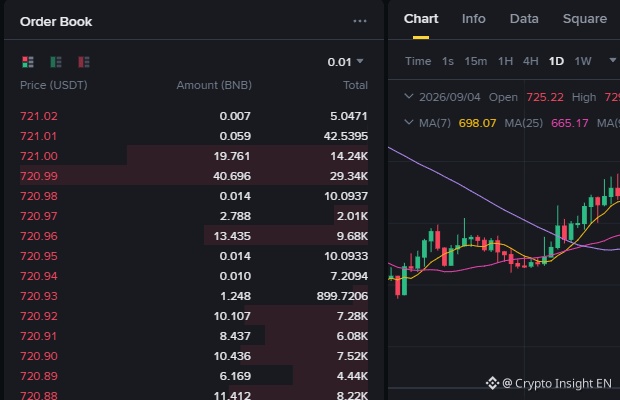
European benchmark natural gas futures swung wildly on Friday, locking in a weekly gain of over 7% and heading for a fourth consecutive weekly advance. Following intensified military strikes between the United States and Iran in the Middle East, growing supply disruption fears have pushed European and Asian natural gas prices to their highest levels in over three years.
This supply shock comes at an exceptionally vulnerable moment for Europe ahead of the winter heating season. European gas storage capacity currently sits at roughly 66%—the lowest historical level for this period—while Germany’s reserves are languishing at just 54%, turning localized geopolitical tensions into severe structural energy deficit risks.
Sustained energy price spikes directly threaten the global disinflation narrative. Higher utility and industrial input costs risk reigniting headline inflation across developed economies, complicating rate-cut paths for both the ECB and the Fed while keeping sovereign bond yields volatile.
For the crypto market, resurgent energy inflation dampens macro liquidity expectations and pushes broader sentiment into risk-off mode. While $BTC continues to solidify its status as a non-sovereign macro hedge over the long run, immediate liquidity tightening from sticky inflation could constrain risk-asset upside in the near term.
#geopolitics #energy #inflation
This supply shock comes at an exceptionally vulnerable moment for Europe ahead of the winter heating season. European gas storage capacity currently sits at roughly 66%—the lowest historical level for this period—while Germany’s reserves are languishing at just 54%, turning localized geopolitical tensions into severe structural energy deficit risks.
Sustained energy price spikes directly threaten the global disinflation narrative. Higher utility and industrial input costs risk reigniting headline inflation across developed economies, complicating rate-cut paths for both the ECB and the Fed while keeping sovereign bond yields volatile.
For the crypto market, resurgent energy inflation dampens macro liquidity expectations and pushes broader sentiment into risk-off mode. While $BTC continues to solidify its status as a non-sovereign macro hedge over the long run, immediate liquidity tightening from sticky inflation could constrain risk-asset upside in the near term.
#geopolitics #energy #inflation
Binance will support the cash dividend distribution for Western Digital ($WDC ) and NVIDIA ($NVDA ) via bStocks. #Binance #bStocks
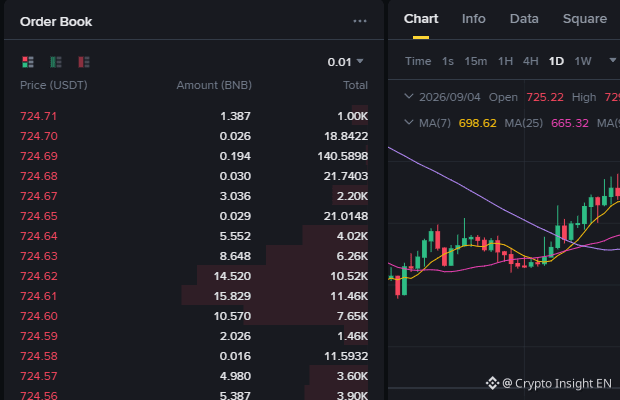
Tensions in the Middle East and escalating hostilities between the US and Iran pushed oil prices sharply higher on Friday, positioning crude for its largest weekly gain since mid-July. Brent crude surged 7.6% while WTI climbed 10.4% week-to-date, reflecting immediate market anxiety over potential disruption to key regional shipping routes and production infrastructure.
This aggressive rally highlights how quickly geopolitical risk premiums can reprice. Analysts at ANZ recently raised their short-term Brent target to $95 per barrel, warning that while high stockpiles initially cushioned supply shocks, depleting inventory buffers will leave the global energy balance increasingly vulnerable if conflict widens.
A sustained spike toward $95/barrel complicates the global disinflation narrative. Higher energy costs threaten to reignite headline CPI, potentially forcing major central banks to keep interest rates restrictive for longer and putting upward pressure on bond yields and the US Dollar.
For crypto, persistent geopolitical tension typically triggers a risk-off environment, draining liquidity away from speculative assets. If oil-driven inflation delays rate cuts, $BTC and the broader market may face continued consolidation until macro clarity returns. 🛢️
#oil #geopolitics #macro
This aggressive rally highlights how quickly geopolitical risk premiums can reprice. Analysts at ANZ recently raised their short-term Brent target to $95 per barrel, warning that while high stockpiles initially cushioned supply shocks, depleting inventory buffers will leave the global energy balance increasingly vulnerable if conflict widens.
A sustained spike toward $95/barrel complicates the global disinflation narrative. Higher energy costs threaten to reignite headline CPI, potentially forcing major central banks to keep interest rates restrictive for longer and putting upward pressure on bond yields and the US Dollar.
For crypto, persistent geopolitical tension typically triggers a risk-off environment, draining liquidity away from speculative assets. If oil-driven inflation delays rate cuts, $BTC and the broader market may face continued consolidation until macro clarity returns. 🛢️
#oil #geopolitics #macro
According to a report by the Financial Times, Norway's Government Pension Fund Global—the world's largest sovereign wealth fund—is evaluating plans to reduce its holdings of U.S. government bonds by approximately $80 billion.
This potential divestment represents a significant shift in reserve allocation strategy. For decades, major global funds have treated U.S. Treasuries as the default bedrock of sovereign wealth, making a planned scale-back of this size a clear signal of growing caution around U.S. debt issuance and concentration risks.
Across traditional finance, sustained selling pressure from institutional titans risks pushing U.S. bond yields higher, adding upward pressure on borrowing costs and complicating balance sheet management for global central banks. Rising yields could also weigh on equities and test the resilience of the U.S. dollar.
For digital assets, elevated yields often pose short-term headwinds for liquidity in $BTC and altcoins. However, the broader trend of global institutions diversifying away from sovereign debt strengthens the structural macro thesis for decentralized, hard-capped assets over the long run. 🌐
#treasuries #macro #crypto
This potential divestment represents a significant shift in reserve allocation strategy. For decades, major global funds have treated U.S. Treasuries as the default bedrock of sovereign wealth, making a planned scale-back of this size a clear signal of growing caution around U.S. debt issuance and concentration risks.
Across traditional finance, sustained selling pressure from institutional titans risks pushing U.S. bond yields higher, adding upward pressure on borrowing costs and complicating balance sheet management for global central banks. Rising yields could also weigh on equities and test the resilience of the U.S. dollar.
For digital assets, elevated yields often pose short-term headwinds for liquidity in $BTC and altcoins. However, the broader trend of global institutions diversifying away from sovereign debt strengthens the structural macro thesis for decentralized, hard-capped assets over the long run. 🌐
#treasuries #macro #crypto
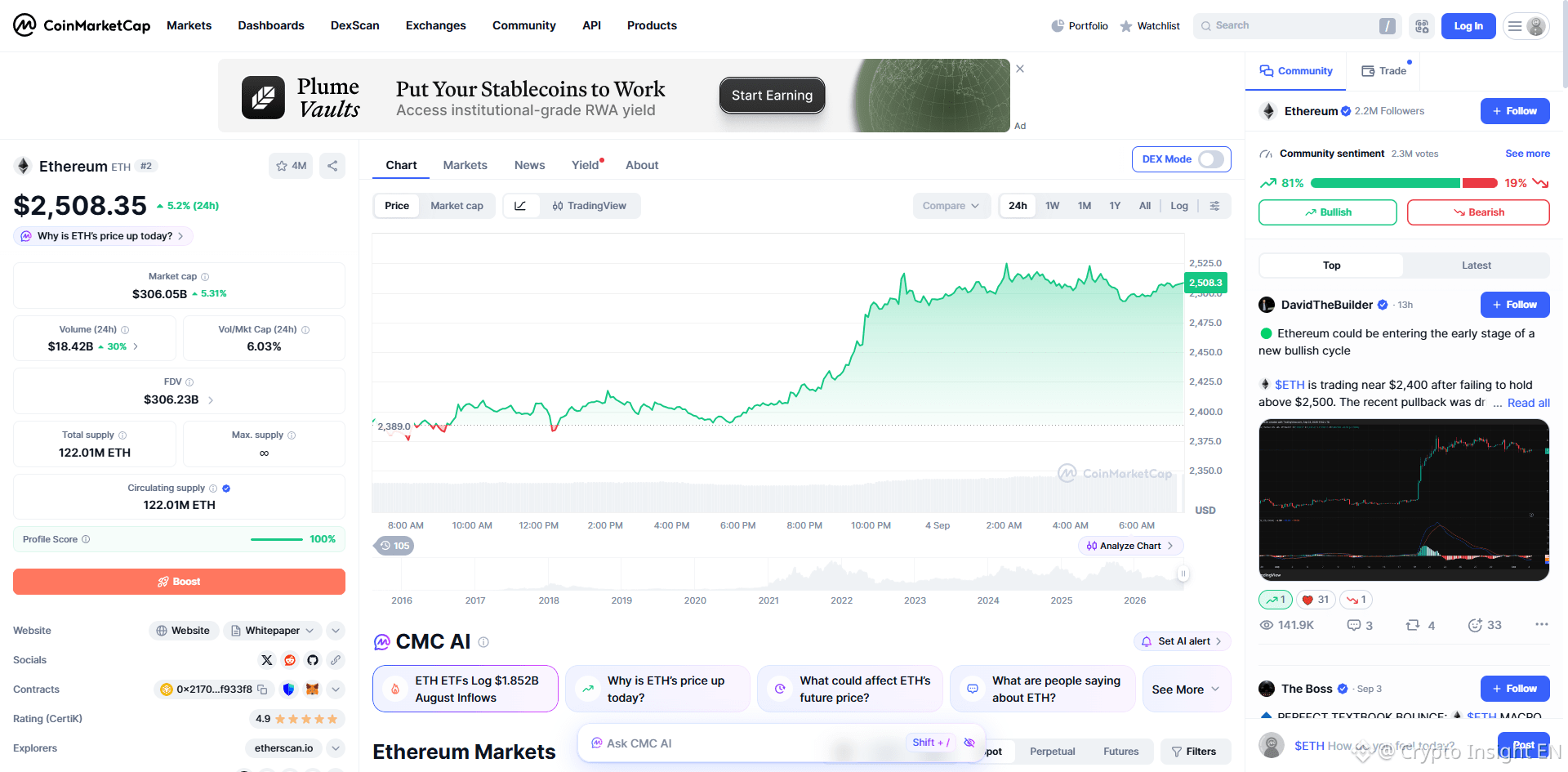
The US House of Representatives, led by Speaker Mike Johnson, has temporarily paused a major Russia sanctions bill over concerns regarding broad tariff powers and energy market disruptions. The legislation, originally championed by Senator Lindsey Graham and passed by the Senate, aimed to grant President Donald Trump authority to impose tariffs up to 100% on buyers of Russian oil and gas, as well as nations facilitating sanctions evasion.
This delay highlights growing domestic anxiety over inflation risks and expanding executive trade powers. House Foreign Affairs Committee Chairman Brian Mast noted that lawmakers are assessing how diverting Russian energy buyers could strain global supplies. Lawmakers from both parties fear that aggressive secondary tariffs could trigger an immediate spike in crude oil prices, complicating Washington's broader economic agenda.
For traditional markets, the legislative pause eases immediate fears of an oil supply shock. Unchecked energy costs would have reignited headline inflation, putting upward pressure on Treasury yields and forcing the Fed to maintain restrictive interest rates longer. A more measured approach helps stabilize crude benchmarks and prevents further dollar volatility.
For crypto, avoiding a sudden surge in energy-driven inflation preserves market liquidity. Slower policy escalation provides breathing room for risk assets, allowing $BTC to trade without the direct headwind of spiking bond yields.
This delay highlights growing domestic anxiety over inflation risks and expanding executive trade powers. House Foreign Affairs Committee Chairman Brian Mast noted that lawmakers are assessing how diverting Russian energy buyers could strain global supplies. Lawmakers from both parties fear that aggressive secondary tariffs could trigger an immediate spike in crude oil prices, complicating Washington's broader economic agenda.
For traditional markets, the legislative pause eases immediate fears of an oil supply shock. Unchecked energy costs would have reignited headline inflation, putting upward pressure on Treasury yields and forcing the Fed to maintain restrictive interest rates longer. A more measured approach helps stabilize crude benchmarks and prevents further dollar volatility.
For crypto, avoiding a sudden surge in energy-driven inflation preserves market liquidity. Slower policy escalation provides breathing room for risk assets, allowing $BTC to trade without the direct headwind of spiking bond yields.
Ukrainian President Volodymyr Zelensky revealed on social media that US envoys representing President Donald Trump will visit both Kyiv and Moscow in the coming days. Following recent coordination involving White House envoy Steve Biegun and Jared Kushner, this direct shuttle diplomacy marks a concerted push from Washington to restart bilateral peace negotiations that have largely remained stalled since February.
This renewed engagement comes at a pivotal tactical juncture. While Ukraine has intensified long-range drone strikes against Russian energy infrastructure, acute shortages of air defense ammunition leave key Ukrainian urban centers vulnerable. The diplomatic push signals that Washington is aggressively testing the waters for a negotiated framework amid shifting leverage on the battlefield.
For broader financial markets, tangible progress toward de-escalation would likely compress the geopolitical risk premium embedded in global energy markets, particularly crude oil and European natural gas. Lower headline supply risks could further ease global inflationary concerns, stabilizing bond yields and dampening safe-haven demand for gold and the US dollar.
In the crypto sector, reduced geopolitical tension generally fosters a favorable risk-on environment. A potential cooling of the conflict helps unlock sidelined capital, encouraging institutional inflows back into liquid risk assets like $BTC .
This renewed engagement comes at a pivotal tactical juncture. While Ukraine has intensified long-range drone strikes against Russian energy infrastructure, acute shortages of air defense ammunition leave key Ukrainian urban centers vulnerable. The diplomatic push signals that Washington is aggressively testing the waters for a negotiated framework amid shifting leverage on the battlefield.
For broader financial markets, tangible progress toward de-escalation would likely compress the geopolitical risk premium embedded in global energy markets, particularly crude oil and European natural gas. Lower headline supply risks could further ease global inflationary concerns, stabilizing bond yields and dampening safe-haven demand for gold and the US dollar.
In the crypto sector, reduced geopolitical tension generally fosters a favorable risk-on environment. A potential cooling of the conflict helps unlock sidelined capital, encouraging institutional inflows back into liquid risk assets like $BTC .
Spot silver surged 3% intraday to reach $67.28 per ounce during today's trading session, marking another aggressive leg up for precious metals. The sharp move reflects accelerating momentum in commodity markets as capital actively rotates toward hard assets.
This explosive rally highlights deepening investor appetite for tangible hedges amid persistent macroeconomic uncertainties and shifting global monetary policy expectations. Silver continues to outperform broader commodities, driven by a powerful blend of safe-haven demand and robust industrial consumption.
Across traditional finance, sustained strength in metals typically exerts downward pressure on the US dollar while signaling broader inflationary hedges. A breakout of this scale in silver often triggers cross-asset reallocations, prompting traders to rebalance commodity desks and closely monitor real yields.
For crypto markets, precious metal rallies often share a dual narrative with $BTC as decentralized stores of value. While immediate liquidity may concentrate in commodities, renewed hedging behavior historically expands risk-on appetites into digital assets as macro liquidity conditions ease. 📊
#silver #commodities #macroeconomics
This explosive rally highlights deepening investor appetite for tangible hedges amid persistent macroeconomic uncertainties and shifting global monetary policy expectations. Silver continues to outperform broader commodities, driven by a powerful blend of safe-haven demand and robust industrial consumption.
Across traditional finance, sustained strength in metals typically exerts downward pressure on the US dollar while signaling broader inflationary hedges. A breakout of this scale in silver often triggers cross-asset reallocations, prompting traders to rebalance commodity desks and closely monitor real yields.
For crypto markets, precious metal rallies often share a dual narrative with $BTC as decentralized stores of value. While immediate liquidity may concentrate in commodities, renewed hedging behavior historically expands risk-on appetites into digital assets as macro liquidity conditions ease. 📊
#silver #commodities #macroeconomics
During today's trading session, spot gold made an unprecedented breakout above $4,500 per ounce, surging 2.57% intraday. At the same time, Wall Street opened with strong bullish momentum, seeing the Nasdaq advance by 1%, the Dow Jones rise nearly 1%, and the S&P 500 climb 0.73%.
This dual surge in both traditional safe-haven assets and growth equities highlights a macro environment driven heavily by liquidity. Investors are actively chasing risk while simultaneously hedging against currency debasement and broader economic uncertainty, breaking conventional market correlations.
Across traditional finance, this aggressive expansion across asset classes suggests sustained downward pressure on real yields and growing skepticism toward fiat purchasing power. Capital allocators are decisively rotating away from cash into scarce stores of value and high-growth sectors.
For the crypto market, this setup provides a powerful macroeconomic tailwind for $BTC . As the digital store-of-value thesis strengthens alongside physical gold's historic run, spillover liquidity into risk assets typically fuels sustained upside momentum across digital assets.
#gold #macro #stocks
This dual surge in both traditional safe-haven assets and growth equities highlights a macro environment driven heavily by liquidity. Investors are actively chasing risk while simultaneously hedging against currency debasement and broader economic uncertainty, breaking conventional market correlations.
Across traditional finance, this aggressive expansion across asset classes suggests sustained downward pressure on real yields and growing skepticism toward fiat purchasing power. Capital allocators are decisively rotating away from cash into scarce stores of value and high-growth sectors.
For the crypto market, this setup provides a powerful macroeconomic tailwind for $BTC . As the digital store-of-value thesis strengthens alongside physical gold's historic run, spillover liquidity into risk assets typically fuels sustained upside momentum across digital assets.
#gold #macro #stocks
Fresh macroeconomic data released on September 3 reveals a notable acceleration in the United States service sector for August. The US Services PMI rose sharply from 54.6 to 56.5, recording its strongest expansion since December 2024, while the ISM Services index climbed from 54.1 to 55.4, easily beating expectations. As highlighted by S&P Global Market Intelligence economist Usamah Bhatti, private sector activity is regaining significant momentum despite ongoing supply chain bottlenecks and elevated price pressures.
This robust rebound underscores the resilient foundation of the US economy compared to other global peers, diminishing immediate recession fears. However, persistent cost pressures embedded in the services sector complicate the inflation trajectory, suggesting that price stability might take longer to achieve than previously anticipated.
For traditional markets, such strong economic readings typically reduce the urgency for aggressive Federal Reserve rate cuts. Treasury yields and the US Dollar Index often find support in this backdrop, creating short-term headwinds for non-yielding assets like gold.
In crypto markets, resilient growth reduces systemic economic risks, but persistent yields and delayed monetary easing could temporarily limit speculative liquidity for $BTC and altcoins. Investors should watch whether steady growth eventually transitions into renewed risk-on appetite.
#macro #PMI #economy
This robust rebound underscores the resilient foundation of the US economy compared to other global peers, diminishing immediate recession fears. However, persistent cost pressures embedded in the services sector complicate the inflation trajectory, suggesting that price stability might take longer to achieve than previously anticipated.
For traditional markets, such strong economic readings typically reduce the urgency for aggressive Federal Reserve rate cuts. Treasury yields and the US Dollar Index often find support in this backdrop, creating short-term headwinds for non-yielding assets like gold.
In crypto markets, resilient growth reduces systemic economic risks, but persistent yields and delayed monetary easing could temporarily limit speculative liquidity for $BTC and altcoins. Investors should watch whether steady growth eventually transitions into renewed risk-on appetite.
#macro #PMI #economy
The US Institute for Supply Management (ISM) released its August Non-Manufacturing PMI data today, printing at 55.4. This figure comfortably surpassed both the prior month's reading of 54.1 and consensus expectations of 54.2, signaling robust continued expansion in the dominant services sector of the American economy.
This upside surprise is pivotal because the services sector accounts for over two-thirds of US economic output. A resilient reading above 50 not only cools recent recession fears but also underscores persistent underlying economic momentum, which may give the Federal Reserve less urgency to enact aggressive, front-loaded monetary easing.
Across broader financial markets, stronger-than-expected services activity typically bolsters the US Dollar Index (DXY) and puts upward pressure on Treasury yields. As rate-cut bets are dialed back toward a more measured pace, traditional risk assets face a slight headwind from tighter financial conditions in the near term.
For the crypto market, this resilient macro backdrop is a double-edged sword. While it diminishes hard-landing panic and supports broader economic health, higher yields and a firmer dollar could constrain speculative liquidity flows into $BTC and altcoins temporarily. Expect chop until the upcoming FOMC rate decision provides clearer policy guidance. 📊
#PMI #economy #fed
This upside surprise is pivotal because the services sector accounts for over two-thirds of US economic output. A resilient reading above 50 not only cools recent recession fears but also underscores persistent underlying economic momentum, which may give the Federal Reserve less urgency to enact aggressive, front-loaded monetary easing.
Across broader financial markets, stronger-than-expected services activity typically bolsters the US Dollar Index (DXY) and puts upward pressure on Treasury yields. As rate-cut bets are dialed back toward a more measured pace, traditional risk assets face a slight headwind from tighter financial conditions in the near term.
For the crypto market, this resilient macro backdrop is a double-edged sword. While it diminishes hard-landing panic and supports broader economic health, higher yields and a firmer dollar could constrain speculative liquidity flows into $BTC and altcoins temporarily. Expect chop until the upcoming FOMC rate decision provides clearer policy guidance. 📊
#PMI #economy #fed
Spot gold staged a massive rally today, surging over $100 in a single session to trade at $4,487.56 per ounce, up 2.28%, while spot silver followed closely with a 2.00% gain to $66.64 per ounce. This aggressive surge in precious metals coincides with fresh commentary from Fed Governor Christopher Waller, reported by WSJ's Nick Timiraos, signaling a shift toward cautious optimism and holding rates steady heading into the upcoming September policy meeting, contingent on incoming inflation prints.
This aggressive bid in hard assets highlights growing institutional hedging against lingering inflationary pressures and shifting interest rate expectations. With Waller noting that capital demand from AI expansion and fiscal dynamics keeps structural rates elevated, markets are aggressively repricing safe-haven premiums.
The broader macro landscape is witnessing a strong rotation into real assets, pressuring the US dollar and signaling potential turbulence for traditional fixed income as investors front-run central bank policy pivots.
For digital assets, gold's explosive upside often serves as a leading indicator for liquidity rotation into $BTC and the wider crypto market. As physical hard assets break into new territory, macro capital typically spills over into high-beta decentralized stores of value once volatility stabilizes.
#Gold #Fed #MacroEconomics
This aggressive bid in hard assets highlights growing institutional hedging against lingering inflationary pressures and shifting interest rate expectations. With Waller noting that capital demand from AI expansion and fiscal dynamics keeps structural rates elevated, markets are aggressively repricing safe-haven premiums.
The broader macro landscape is witnessing a strong rotation into real assets, pressuring the US dollar and signaling potential turbulence for traditional fixed income as investors front-run central bank policy pivots.
For digital assets, gold's explosive upside often serves as a leading indicator for liquidity rotation into $BTC and the wider crypto market. As physical hard assets break into new territory, macro capital typically spills over into high-beta decentralized stores of value once volatility stabilizes.
#Gold #Fed #MacroEconomics
Binance Futures is set to launch the $GPROUSDT perpetual contract soon. Stay tuned for trading! 🚀 #Binance #GPRO
Log in to explore more content