
#mas
mas
70,645 views
79 Discussing
Hot
Latest

Article
Singapore & Germany Trial Cross-Border CBDC Settlement with Zero-Knowledge ProofsSingapore and Germany have just completed a cross-border CBDC settlement test using zero-knowledge proofs, offering a glimpse into the future of secure digital payments without intermediaries.
The core of this experiment is the use of zero-knowledge proofs. This cryptographic tool lets each central bank prove its currency is locked for settlement, without exposing or integrating their systems. The result: no euro or Singapore dollar settles unless both sides confirm, sharply reducing counterparty risk for traders.
This pilot is part of Project Simbolon, launched under a memorandum of understanding dated November 2025 between MAS and Deutsche Bundesbank. Unlike other blockchain pilots, this test did not use a shared ledger or third-party. Each bank ran its own digital currency ledger, maintaining full control and privacy while still achieving atomic settlement.
The project focused on euro, Singapore dollar trades, targeting large-value foreign exchange settlements handled by financial institutions. By using wholesale CBDCs instead of retail or commercial bank money, the aim is to modernize cross-border transactions and set a new standard for global payment systems.
Payment-versus-payment (PvP) logic was key: transfers only happen if both sides are ready, minimizing principal risk. The structure contrasts with other initiatives like Project Meridian FX APAC, where interoperability relied on shared platforms. Here, Singapore and Germany proved that secure, atomic settlement is possible even with siloed systems.
While the technical success is clear, it’s still unknown how quickly these methods will move beyond pilots or be adopted by other central banks. The memorandum dates from November 2025, and more milestones are expected in the coming year, but the exact timeline remains uncertain.
Could this approach change the way cross-border settlements are handled worldwide? What challenges do you see for wider adoption?
#MAS #Bundesbank #CBDC #Singapore
Singapore & Germany Trial Cross-Border CBDC Settlement with Zero-Knowledge Proofs
Singapore and Germany have just completed a cross-border CBDC settlement test using zero-knowledge proofs, offering a glimpse into the future of secure digital payments without intermediaries.
The core of this experiment is the use of zero-knowledge proofs. This cryptographic tool lets each central bank prove its currency is locked for settlement, without exposing or integrating their systems. The result: no euro or Singapore dollar settles unless both sides confirm, sharply reducing counterparty risk for traders.
This pilot is part of Project Simbolon, launched under a memorandum of understanding dated November 2025 between MAS and Deutsche Bundesbank. Unlike other blockchain pilots, this test did not use a shared ledger or third-party. Each bank ran its own digital currency ledger, maintaining full control and privacy while still achieving atomic settlement.
The project focused on euro, Singapore dollar trades, targeting large-value foreign exchange settlements handled by financial institutions. By using wholesale CBDCs instead of retail or commercial bank money, the aim is to modernize cross-border transactions and set a new standard for global payment systems.
Payment-versus-payment (PvP) logic was key: transfers only happen if both sides are ready, minimizing principal risk. The structure contrasts with other initiatives like Project Meridian FX APAC, where interoperability relied on shared platforms. Here, Singapore and Germany proved that secure, atomic settlement is possible even with siloed systems.
While the technical success is clear, it’s still unknown how quickly these methods will move beyond pilots or be adopted by other central banks. The memorandum dates from November 2025, and more milestones are expected in the coming year, but the exact timeline remains uncertain.
Could this approach change the way cross-border settlements are handled worldwide? What challenges do you see for wider adoption?
#MAS #Bundesbank #CBDC #Singapore
67

·
--
Meanwhile, $BTC crashed to around $61K, while Singapore’s central bank has actually moved on-chain. Pretty ironic, right? 😅
MAS (Singapore’s central bank) officially announced the SG Digital Ledger at the Singapore FinTech Festival yesterday.
The gist: their Singapore dollar testnet is leveling up into real settlement infrastructure for institutions.
Here’s what’s happened:
- MAS issued S$100 million (~$77.5 million) in tokenized MAS Bills, with a 4-week tenor, maturing on December 4
- Settlement uses wholesale CBDC, directly on the ledger, with no intermediaries
- 5 major banks are participating: DBS, HSBC, OCBC, Standard Chartered, UOB — bids came in at up to 2x the amount on offer
- The plan is to expand it in 2027: more banks, and use it for collateral too
There’s also a “Know Your Agent” plan — a protocol to verify AI agents transacting at financial institutions. Wild, central banks are already thinking about AI agents.
Meanwhile, our market: $BTC ~$61.995, Fear & Greed at 10, aka Extreme Fear, and spot BTC ETFs have seen $2.89 billion in outflows throughout November.
So the “serious” players are getting more involved in blockchain, while retail is getting more scared. What do you think—is this a sign that institutions aren’t waiting for prices to rise first, or are they just taking advantage of the quiet to build in stealth?
Drop a comment—which side are you on: institutions accumulating infrastructure, or is this just a gimmick?
#MAS #RWA
58

·
--
Singapore issues S$100 million in tokenised bills: an interbank trial, not digital currency for you
The Monetary Authority of Singapore (MAS) announced today (November 19) that it issued S$100 million worth of tokenised MAS bills with a four-week tenor on November 6, and settled them using wholesale central bank digital currency. This is a trial for financial institutions, not a retail digital currency available to the public, nor a new token that can be traded on exchanges.
The bills were issued natively on the “Singapore Dollar Test Network” operated by MAS, without first being issued through traditional means and then tokenised. Five primary dealers—DBS, HSBC Singapore, OCBC, Standard Chartered Singapore and UOB—participated in the auction. Applications exceeded twice the issuance amount, and the bills will mature on December 4. The official website also states that only institutional investors may subscribe; applications from non-institutions will be rejected.
MAS said the next steps will be to expand issuance, bring in more financial institutions, and use these bills for collateral management. The next phase of field trials is planned for 2027. The test network will later be renamed SG Digital Ledger.
Have you recently seen anyone using this news to promote a so-called “MAS coin,” or claiming that Singapore’s digital currency is already available for ordinary people to use?
Not investment advice.
Sources: MAS press release “MAS Announces Successful Issuance of Tokenised MAS Bills on the Singapore Dollar Test Network Using Wholesale Central Bank Digital Currency” (2026-11-19, https://www.mas.gov.sg/news/media-releases/2026/mas-announces-successful-issuance-of-tokenised-mas-bills-on-the-singapore-dollar-test-network); Wu Blockchain (2026-11-19 13:58 Hong Kong time, https://x.com/wublockchain12/status/2123294914293215253); Cointelegraph (2026-11-19 13:53 Hong Kong time, https://x.com/Cointelegraph/status/2123293623684899045) · 2026-11-19 Hong Kong time
#MAS #CBDC #代币化 #HangB Media

112

·
--
Ondo has just joined the Monetary Authority of Singapore (MAS)’s Guardian programme, making a major push into the global asset tokenization space.
MAS’s endorsement gives RWA a compliance moat. Institutions fear black swan events, but they fear a lack of regulation even more. This move directly lowers the “cost of trust.” Compliance is ultimately RWA’s safeguard. Don’t be distracted by short-term volatility—the fundamentals of the sector have changed.
Ondo
#RWA #Tokenization #DeFi #MAS
19

·
--
HSBC, J.P. Morgan’s Kinexys, MUFG, SocGen-FORGE and Standard Chartered just stood up a Singapore non-profit for tokenisation standards.
• On Nov 4, 2026 the five banks announced Global Layer One Organisation (GL1 Org) in Singapore
• GL1 Org builds on MAS’s Global Layer One initiative and will push MI and Programmable Compliance toolkits
Why it matters: Major banks are institutionalising MAS-era tokenisation standards so tokenised assets can move across infrastructures more consistently.
Source: Joint bank statement / The Asian Banker
Not financial advice.
💬 Will bank-led GL1 Org standards speed cross-border tokenised settlement?
#Tokenization #Singapore #MAS
HSBCUS-1.54%
MUFGUS-2.64%
SGUS-6.73%
23

Three central banks just agreed to make stablecoins actually usable across borders.
Malaysia's Bank Negara and the Bank of Thailand joined Singapore's BLOOM initiative on Friday as policymaker members, working with the Monetary Authority of Singapore to standardize how regulated stablecoins and tokenized deposits get accepted, exchanged and settled across borders.
BLOOM — Borderless, Liquid, Open, Online, Multi-currency — launched in October 2025. Its roster now includes Mastercard, Visa, Ripple, Airwallex and the World Bank Group, all working on three fronts: cross-border acceptance and settlement, interoperability between digital money systems, and programmable controls covering identity verification and sanctions screening.
The honest caveat: this is a standards exercise, not a product launch — frameworks like this take years to become real.
But it's the part people underestimate. Stablecoin volume is huge, yet settling across different digital money systems and jurisdictions is still friction-heavy. Common frameworks could cut costs and speed deployment. Malaysia has already announced ringgit stablecoin tests for 2026 — will more central banks follow Singapore's lead?
#CryptoNews #Stablecoins #MAS #BLOOM

·
--
Singapore issues a “crypto scam” alert, Indonesia targets fintech influencers: Asia’s crypto regulation takes another step forward
Singapore’s MAS has added Hyperliquid to its investor alert list—not a ban, but a reminder: this platform has no license, so if something goes wrong, nobody is there to back it up. Hyperliquid responded: we are an unlicensed infrastructure provider; we didn’t apply for a license in the first place. On-chain trading continues as normal. Meanwhile, Indonesia’s OJK has issued new rules: crypto-finance influencers promoting coins must verify licenses, only promote coins listed on licensed exchanges, and advertisements must go through the company’s official channels. With Singapore focusing on the DeFi front end and Indonesia focusing on social promotion, the net of Asia’s crypto regulation is getting tighter. DYOR 🧐 #MAS #Hyperliquid #FinFluencer #OJK
$HYPE $BTC $ETH
136

·
--

Article
Singapore’s Stablecoin Shakeup: Full Reserves, No Interest, and a New Playbook for $BTCGM fam, while the rest of the crypto world is still trying to figure out if stablecoins are a “shitcoin” or a “shit‑coin,” Singapore is dropping a new rulebook that’s going to make us all look like we’re playing a new game of Monopoly with actual money in the bank.
The Alpha: Singapore’s Monetary Authority (MAS) has announced a proposal to license stablecoin issuers under a new framework that demands full reserves and par redemption. In plain English, if you’re issuing a stablecoin, you must hold 1:1 backing in fiat or equivalent assets, and you can’t offer interest tied to token holdings. This is a big move toward treating stablecoins like regulated financial instruments, not just digital “memes.” #StablecoinRegulation #MAS #CryptoCompliance
The Punchline Insight: Think of it as the crypto equivalent of a “no free lunch” policy. By forcing full reserves, Singapore is basically saying, “If you want to mint a stablecoin, you better have the cash to back it up, or you’re out of the game.” And by banning interest on token holdings, it’s cutting out the “you’ll earn $X per day just for holding” hype that’s been a staple of many DeFi projects. The net effect? A more trustworthy stablecoin ecosystem that could attract institutional players who have been wary of the “reserve mystery” and “interest‑spam” pitfalls.
Engagement Bait: So, would you be more comfortable using a stablecoin that’s fully backed and interest‑free, or do you still love the thrill of earning passive income from holding? Drop your thoughts below and let’s see who’s ready to trade the meme for real alpha.
Singapore’s Stablecoin Shakeup: Full Reserves, No Interest, and a New Playbook for $BTC
GM fam, while the rest of the crypto world is still trying to figure out if stablecoins are a “shitcoin” or a “shit‑coin,” Singapore is dropping a new rulebook that’s going to make us all look like we’re playing a new game of Monopoly with actual money in the bank.
The Alpha: Singapore’s Monetary Authority (MAS) has announced a proposal to license stablecoin issuers under a new framework that demands full reserves and par redemption. In plain English, if you’re issuing a stablecoin, you must hold 1:1 backing in fiat or equivalent assets, and you can’t offer interest tied to token holdings. This is a big move toward treating stablecoins like regulated financial instruments, not just digital “memes.” #StablecoinRegulation #MAS #CryptoCompliance
The Punchline Insight: Think of it as the crypto equivalent of a “no free lunch” policy. By forcing full reserves, Singapore is basically saying, “If you want to mint a stablecoin, you better have the cash to back it up, or you’re out of the game.” And by banning interest on token holdings, it’s cutting out the “you’ll earn $X per day just for holding” hype that’s been a staple of many DeFi projects. The net effect? A more trustworthy stablecoin ecosystem that could attract institutional players who have been wary of the “reserve mystery” and “interest‑spam” pitfalls.
Engagement Bait: So, would you be more comfortable using a stablecoin that’s fully backed and interest‑free, or do you still love the thrill of earning passive income from holding? Drop your thoughts below and let’s see who’s ready to trade the meme for real alpha.
23

·
--
Bullish
Where does Hyperliquid live? The company says: Singapore. The Singapore regulator says: not with us
Hyperliquid Labs confirmed its registered headquarters in Singapore, where the team of about 11 people moved in back in 2024
MAS responds to FT: "We are not aware that Hyperliquid is regulated in any major jurisdiction". And, according to the press, it does not consider its platform a regulated one because it is decentralized
On June 26, MAS added Hyperliquid to the Investor Alert List—an alert, not a ban. And starting June 30, 2025, the Singapore firm that serves only clients abroad cannot operate without a license
In my opinion, this is the most honest answer about Hyperliquid: there is no regulator over it anywhere. For everyone holding $HYPE {future}(HYPEUSDT) or trading on it—while it all works, it’s convenient. When it breaks, there will be no one to complain to. For you, is "decentralized" here an honest word or a convenient excuse?
#Hyperliquid #MAS #регуляція
Where does Hyperliquid live? The company says: Singapore. The Singapore regulator says: not with us
Hyperliquid Labs confirmed its registered headquarters in Singapore, where the team of about 11 people moved in back in 2024
MAS responds to FT: "We are not aware that Hyperliquid is regulated in any major jurisdiction". And, according to the press, it does not consider its platform a regulated one because it is decentralized
On June 26, MAS added Hyperliquid to the Investor Alert List—an alert, not a ban. And starting June 30, 2025, the Singapore firm that serves only clients abroad cannot operate without a license
In my opinion, this is the most honest answer about Hyperliquid: there is no regulator over it anywhere. For everyone holding $HYPE or trading on it—while it all works, it’s convenient. When it breaks, there will be no one to complain to. For you, is "decentralized" here an honest word or a convenient excuse?
#Hyperliquid #MAS #регуляція

1
3
88
$HEI ADDED TO MAS ALERT LIST – PERCEPTION SHIFT INCOMING? ⚡
MAS placing Hyperliquid on its Investor Alert List introduces a regulatory overhang that could tighten liquidity depth on top-tier exchanges. Permissionless infrastructure often remains unaffected operationally, but institutional sentiment and order flow may rotate toward clearer jurisdictional standing. Volume patterns on $HEI will be the real tell in the coming sessions.
How does this regulatory layer affect your conviction in the current structure?
Not financial advice. Always manage your risk.
#HEI #RegulatoryRisk #CryptoAlert #MAS
⚡

91

Hyperliquid is headquartered in Singapore, but regulator says it is not under its supervision
An official statement from Hyperliquid Labs confirms that the project’s registered headquarters is in Singapore. However, the Monetary Authority of Singapore (MAS) says the decentralized trading platform does not fall within its regulatory purview.
Key points:
First, MAS does not know whether Hyperliquid is regulated by any major legal authority anywhere in the world. Hyperliquid, for its part, has also acknowledged that it is currently unlicensed and has never claimed to hold an operating license from MAS.
Second, Hyperliquid was added to Singapore’s Investor Alert List in June. However, the project says this was not a ban, a penalty, or a finding of wrongdoing.
Third, the incident highlights an important reality in the crypto industry: registering a business in a country does not mean the platform has been licensed or approved by that country’s financial regulator.
In short, as decentralized derivatives exchanges continue to grow rapidly, questions about legal responsibility and which authorities actually oversee their operations remain a major challenge for the entire crypto industry.
This article is just for keeping up with entertaining news and is absolutely not investment advice. If you accidentally place a derivatives trade on Hyperliquid, blow up your account, and then go looking for MAS to demand compensation, please just hail yourself a taxi to Singapore—your admin here doesn’t hold a license from any regulator.
#Hyperliquid #CryptoRegulation #MAS #CryptoNews #DeFi
180

·
--
Singapore's central bank MAS proposes stablecoin issuers hold 100% reserves
The Monetary Authority of Singapore (MAS)' latest proposal sets two hard requirements for stablecoins: first, issuers must hold reserve assets of at least 100%, and these assets must be kept in separate accounts, not mixed with the issuer's own funds; second, it explicitly prohibits paying interest or any benefits tied to holding stablecoins to stablecoin holders.
MAS's reasoning is straightforward: stablecoins should not be treated by the public as investment products or yield-bearing tools. They should be more like bank demand deposits—a payment medium, not a wealth-management product.
This direction is actually consistent with the U.S. GENIUS Act and the EU's MiCA: major regulators around the world are reaching a consensus on stablecoins—they can be compliant and can serve as payment infrastructure, but they cannot become products that indirectly attract deposits and generate yield. That is why countries are also tightening the line on whether stablecoins can pay interest.
The consultation period runs until October 16. In addition, MAS said it will grant a few foreign stablecoins "limited recognition," but the details are still undecided—if overseas issuers like Circle and Tether can enter the Singapore market through this channel, it could become a variable for the local stablecoin landscape.
#新加坡封禁 #MAS #稳定币 #GENIUS法案 #加密监管
70

·
--
Hyperliquid has established its headquarters in Singapore, and the Monetary Authority of Singapore (MAS) said it falls outside its regulatory remit.
#Hyperliquid #新加坡 #MAS #Crypto
Hyperliquid has established its headquarters in Singapore, and the Monetary Authority of Singapore (MAS) said it falls outside its regulatory remit.
#Hyperliquid #新加坡 #MAS #Crypto
#Hyperliquid #新加坡 #MAS #Crypto
1
1
260
#MASToUpgradeSGDTestnetToSGDigitalLedger
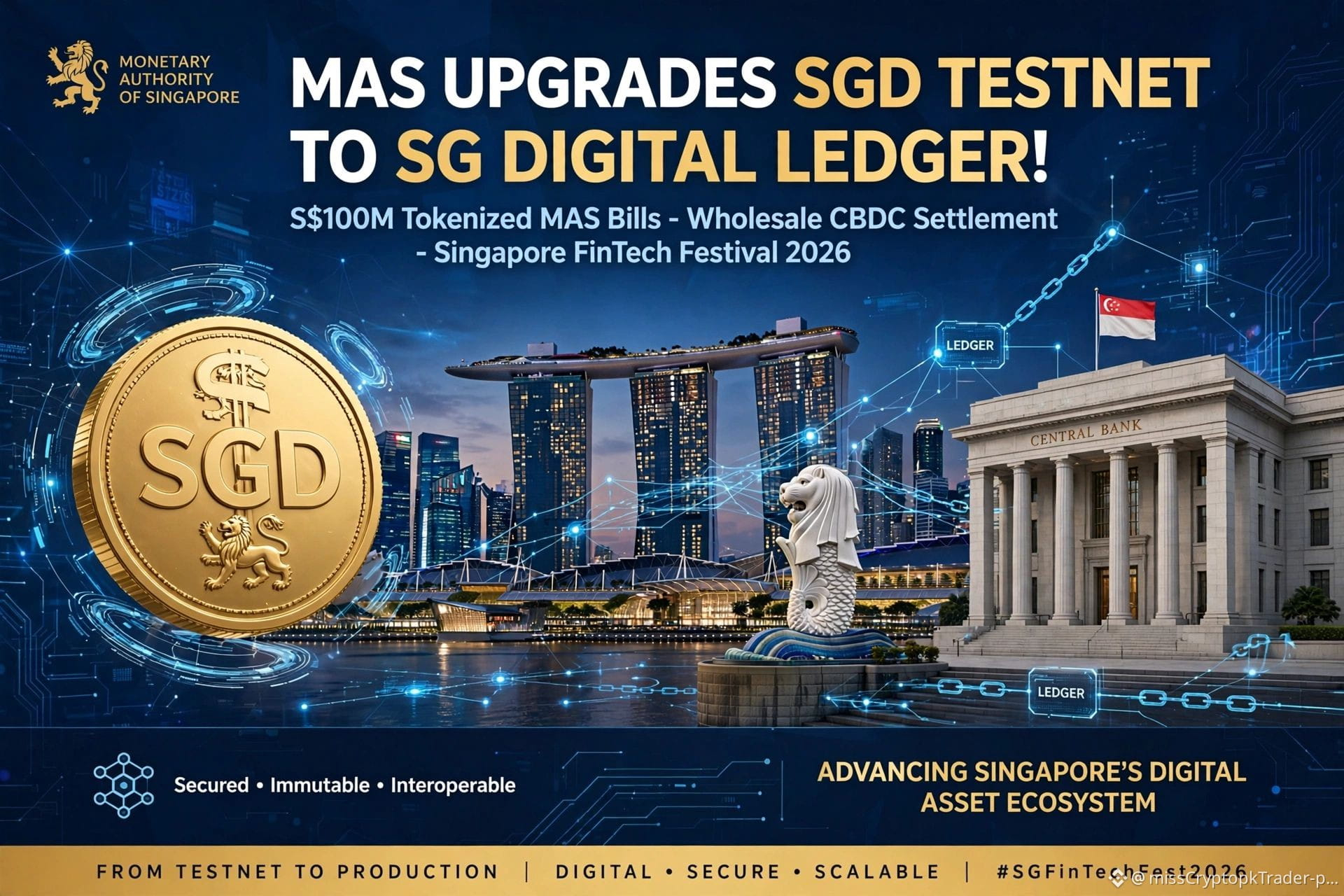
🇸🇬 MAS TO UPGRADE SGD TESTNET TO SG DIGITAL LEDGER!
Singapore Goes From Test To LIVE!
🔄 SGD Testnet → SG Digital Ledger!
🏦 Operational Settlement For Institutions + Tokenized Assets!
💰 Proof: S$100M = $77.5M Tokenized MAS Bills Issued Nov 6!
🏦 Settled In Wholesale CBDC!
📈 Demand: 2x Oversubscribed — 5 Banks Participated!
📅 Matures: Dec 4, 2026!
📅 Announced: Nov 19, Singapore FinTech Festival!
👨💼 By: MAS MD Chia Der Jiun!
📜 2027: More Bills + More Banks + Collateral Use!
Your call? 👇
SINGAPORE LEADS 🇸🇬
USA NEXT 🇺🇸
TOO EARLY 🟡
$SG.US $MAS.US
#MAS #SingaporeCryptoTrend #CBDC #TokenizationOfRWA
2
115
Verified
Article
ASIA'S BIGGEST BANK JUST WENT ALL-IN ON USDC!🚨 ASIA'S BIGGEST BANK JUST WENT ALL-IN ON USDC!
DBS x Circle — Institutions Can Now Mint & Redeem USDC Directly!
24/7 — NO Banking Hours, NO Cut-Offs!
Announced Today — Nov 18, 2026 — Singapore
THE PARTNERS:
🏦 DBS — Southeast Asia's LARGEST Bank by Assets!
Safest Bank in Asia for 18 CONSECUTIVE Years!
🪙 Circle (NYSE: $CRCL) — Issuer of USDC via regulated entities
USDC = $1 = $1 USD, fully backed, regulated!
WHAT CHANGED? — THIS IS HUGE!
Before: Institutions had to BUY USDC on secondary market (exchanges, OTC)
After: Eligible institutions can MINT & REDEEM USDC DIRECTLY through DBS!
Direct Mint = Create new USDC with USD via DBS
Direct Redeem = Burn USDC, get USD back via DBS
No middlemen, no slippage, no exchange risk!
24/7 NEAR-INSTANT SETTLEMENT!
⚡ USD ↔ USDC Settlement: 24/7, Near-Instant!
⚡ No more waiting for banking hours!
⚡ No more cut-off timings!
⚡ Manage liquidity across fiat + digital assets SEAMLESSLY!
WHY INSTITUTIONS CARE?
✅ Treasury Management — Hold USD or USDC anytime
✅ Settlement — Pay suppliers in USDC instantly
✅ Liquidity Management — Switch USD ↔ USDC in minutes
✅ Certainty — Bank-grade channel, not just exchange
KASH RAZZAGHI, Chief Commercial Officer, Circle:
"By combining Circle's regulated stablecoin infrastructure with DBS' institutional banking and liquidity capabilities, our partnership represents an important step in expanding institutional access to USDC across Asia, while strengthening the banking infrastructure supporting its global adoption."
EVY THEUNIS, Head of Digital Assets, DBS Institutional Banking:
Supporting multiple trusted tokenized money instruments like USDC gives institutions MORE options in fund transfers and management!
PROJECT BLOOM — MAS CONNECTION!
This builds on DBS + Circle participation in Project BLOOM!
BLOOM = Borderless, Liquid, Open, Online, Multi-currency
Led by Monetary Authority of Singapore (MAS)
Goal: Safe, seamless, scalable use of tokenized money!
Now they will improve interoperability between tokenized money + financial networks!
DBS IS ON A ROLL THIS WEEK!
Nov 16: DBS + JPMorgan Kinexys launched 24/7 USD transfers
Between blockchain bank accounts in Singapore ↔ US!
Nov 18: DBS + Circle launches 24/7 USD ↔ USDC!
DBS is becoming THE tokenized money bank of Asia!
THE BIGGER TREND:
📊 DBS Survey: 88% of large corporations are deploying or piloting tokenized money use cases!
Circle also partnered with Standard Chartered for G-SIB-led USDC minting!
Circle Singapore has Major Payment Institution license!
USDC vs USDT IN ASIA?
Tether just invested in Stables for USDT payments in Asia + MENA!
Circle just partnered with DBS for USDC in Asia!
THE STABLECOIN WAR IN ASIA IS HEATING UP!
WHO CAN USE IT?
Only ELIGIBLE institutional clients — Not retail yet!
Countries / eligibility / go-live date NOT disclosed yet!
Circle Mint Singapore already live since Nov 2023!
THE BIG QUESTION:
Will USDC become the #1 institutional stablecoin in Asia?
Your call? 👇
YES — DBS + Regulation = Trust wins 🟢
NO — USDT still dominates Asia volume 🔴
BOTH — USDT for retail, USDC for institutions 🟡
#DBSAndCirclePartnerToExpandAsianInstitutionsUSDCAccess
#DBS #CRCL #Stablecoin #MAS
ASIA'S BIGGEST BANK JUST WENT ALL-IN ON USDC!
🚨 ASIA'S BIGGEST BANK JUST WENT ALL-IN ON USDC!
DBS x Circle — Institutions Can Now Mint & Redeem USDC Directly!
24/7 — NO Banking Hours, NO Cut-Offs!
Announced Today — Nov 18, 2026 — Singapore
THE PARTNERS:
🏦 DBS — Southeast Asia's LARGEST Bank by Assets!
Safest Bank in Asia for 18 CONSECUTIVE Years!
🪙 Circle (NYSE: $CRCL) — Issuer of USDC via regulated entities
USDC = $1 = $1 USD, fully backed, regulated!
WHAT CHANGED? — THIS IS HUGE!
Before: Institutions had to BUY USDC on secondary market (exchanges, OTC)
After: Eligible institutions can MINT & REDEEM USDC DIRECTLY through DBS!
Direct Mint = Create new USDC with USD via DBS
Direct Redeem = Burn USDC, get USD back via DBS
No middlemen, no slippage, no exchange risk!
24/7 NEAR-INSTANT SETTLEMENT!
⚡ USD ↔ USDC Settlement: 24/7, Near-Instant!
⚡ No more waiting for banking hours!
⚡ No more cut-off timings!
⚡ Manage liquidity across fiat + digital assets SEAMLESSLY!
WHY INSTITUTIONS CARE?
✅ Treasury Management — Hold USD or USDC anytime
✅ Settlement — Pay suppliers in USDC instantly
✅ Liquidity Management — Switch USD ↔ USDC in minutes
✅ Certainty — Bank-grade channel, not just exchange
KASH RAZZAGHI, Chief Commercial Officer, Circle:
"By combining Circle's regulated stablecoin infrastructure with DBS' institutional banking and liquidity capabilities, our partnership represents an important step in expanding institutional access to USDC across Asia, while strengthening the banking infrastructure supporting its global adoption."
EVY THEUNIS, Head of Digital Assets, DBS Institutional Banking:
Supporting multiple trusted tokenized money instruments like USDC gives institutions MORE options in fund transfers and management!
PROJECT BLOOM — MAS CONNECTION!
This builds on DBS + Circle participation in Project BLOOM!
BLOOM = Borderless, Liquid, Open, Online, Multi-currency
Led by Monetary Authority of Singapore (MAS)
Goal: Safe, seamless, scalable use of tokenized money!
Now they will improve interoperability between tokenized money + financial networks!
DBS IS ON A ROLL THIS WEEK!
Nov 16: DBS + JPMorgan Kinexys launched 24/7 USD transfers
Between blockchain bank accounts in Singapore ↔ US!
Nov 18: DBS + Circle launches 24/7 USD ↔ USDC!
DBS is becoming THE tokenized money bank of Asia!
THE BIGGER TREND:
📊 DBS Survey: 88% of large corporations are deploying or piloting tokenized money use cases!
Circle also partnered with Standard Chartered for G-SIB-led USDC minting!
Circle Singapore has Major Payment Institution license!
USDC vs USDT IN ASIA?
Tether just invested in Stables for USDT payments in Asia + MENA!
Circle just partnered with DBS for USDC in Asia!
THE STABLECOIN WAR IN ASIA IS HEATING UP!
WHO CAN USE IT?
Only ELIGIBLE institutional clients — Not retail yet!
Countries / eligibility / go-live date NOT disclosed yet!
Circle Mint Singapore already live since Nov 2023!
THE BIG QUESTION:
Will USDC become the #1 institutional stablecoin in Asia?
Your call? 👇
YES — DBS + Regulation = Trust wins 🟢
NO — USDT still dominates Asia volume 🔴
BOTH — USDT for retail, USDC for institutions 🟡
#DBSAndCirclePartnerToExpandAsianInstitutionsUSDCAccess
#DBS #CRCL #Stablecoin #MAS
8
1.1k

·
--
Bullish
Verified
🇸🇬 NEWS: $ONDO Finance joins the Guardian initiative by MAS, Singapore’s regulator, to promote the global tokenization of assets.
$MMT $PIPPIN 👀👀👀
{future}(PIPPINUSDT)
{future}(ONDOUSDT)
{spot}(MMTUSDT)
#NewsAboutCrypto #ONDO #MAS #tokenización #CanNvidia’sDataCenterGrowthContinue?
🇸🇬 NEWS: $ONDO Finance joins the Guardian initiative by MAS, Singapore’s regulator, to promote the global tokenization of assets.
$MMT $PIPPIN 👀👀👀
#NewsAboutCrypto #ONDO #MAS #tokenización #CanNvidia’sDataCenterGrowthContinue?
$MMT $PIPPIN 👀👀👀
#NewsAboutCrypto #ONDO #MAS #tokenización #CanNvidia’sDataCenterGrowthContinue?
1
398

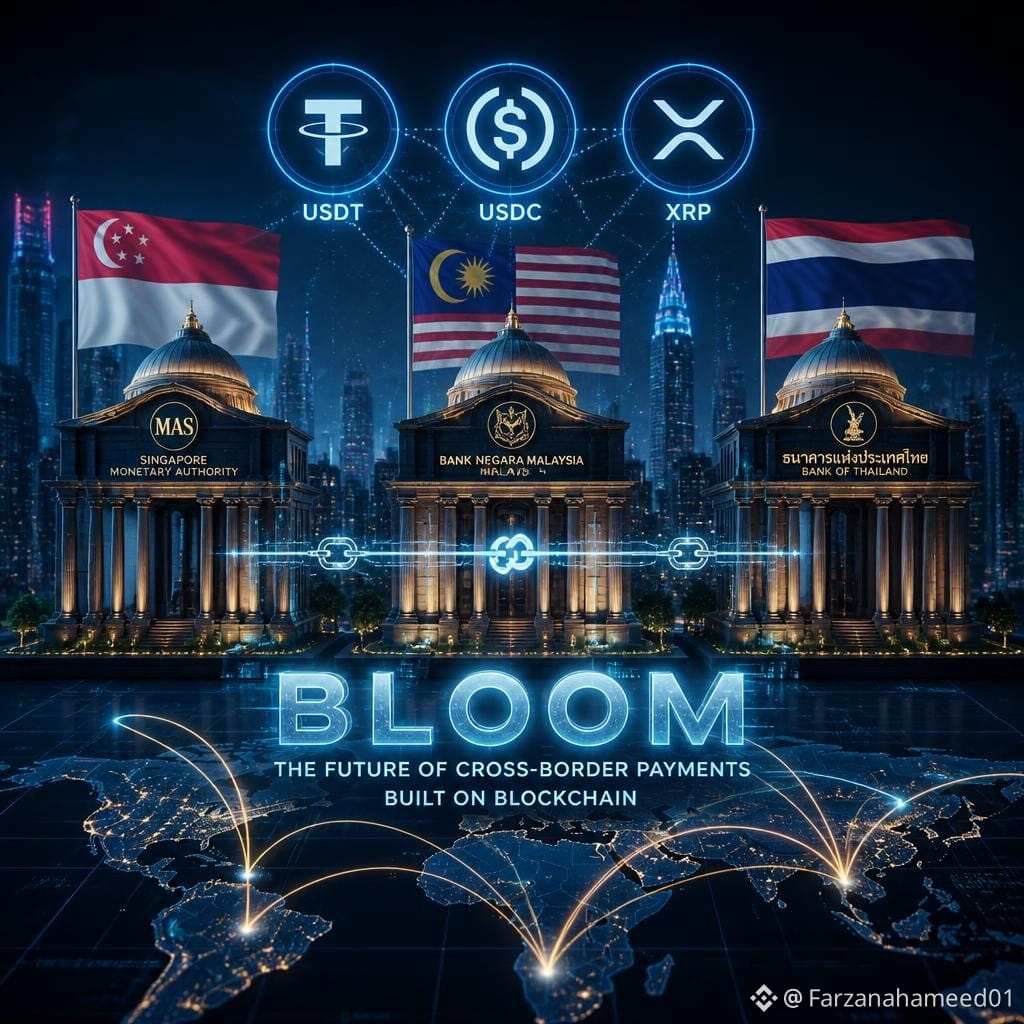
🚨 3 CENTRAL BANKS JUST BET ON STABLECOINS! 🚨
This is MASSIVE for crypto!
Malaysia & Thailand's Central Banks have officially joined Singapore's BLOOM Initiative - led by MAS.
What is BLOOM?
Borderless Liquid Open Online Multi-currency
A public-private initiative to power cross-border payments using Regulated Stablecoins & Tokenized Deposits.
And look who else just joined 👇
Visa, Mastercard, Ripple, JPMorgan, Coinbase, Circle, World Bank Group, Standard Chartered & Stripe.
This isn't just another partnership. This is Asia's top central banks building the future of money ON stablecoins.
SWIFT is being challenged. Stablecoins are no longer the alternative - they are becoming THE SYSTEM.
Bullish on the future of payments. 🚀
Are you bullish on Stablecoins?
$USDT $USDC $XRP
#BLOOM #Stablecoin #MAS #BreakingNews #CryptoAdoption
3
167

·
--
$BNB I am a beginner #mas if there is someone to give me a tip here I thank you very much
{spot}(BNBUSDT)
$BNB I am a beginner #mas if there is someone to give me a tip here I thank you very much
1
9
167

🚨 SINGAPORE PUTS HYPERLIQUID ON THE ALERT LIST — TODAY.
But before panic spreads, read this. 👀
MAS added both the Hyper Foundation website and the Hyperliquid trading app to its Investor Alert List — and made it clear that this is not a ban, an enforcement action, or a finding of irregularities ⚠️ CoinDesk
The list has existed since 2004 as a consumer protection tool — Binance has been on it since 2021, followed by KuCoin, Bitget, and Bybit (added on June 17). Hyperliquid is simply the latest Yahoo Finance
Hyperliquid responded immediately: it never claimed a MAS license, its permissionless infrastructure hasn’t changed, users retain self-custody, and all transactions continue to settle on-chain 🔐 Investing.com
The market reaction said it all: HYPE fell by just about 3% on the news — the ecosystem isn’t scared. 📊 CoinDesk
⚠️ What DOES matter: Singapore is signaling that regulation will also reach DeFi permissionless. Not today. But it will.
Do you think this regulatory pressure will ultimately strengthen or weaken Hyperliquid in the long run? 👇
#Hyperliquid #hype #MAS #Singapore #defi
1
655

Bybit has just been added to the investor warning list by MAS Singapore — a move that's not really surprising but definitely worth noting for traders. This means Bybit is not licensed to operate in Singapore, and investors might misunderstand the legal status of the exchange.
For futures traders, this is a familiar reminder of legal risks. Being added to the list isn't necessarily a sign that the exchange is about to collapse, but it does impact credibility and the flow of capital from this region. If you're using Bybit, make sure to stay updated on the exchange's statements and assess your risk tolerance.
MAS is generally quite open to crypto but extremely strict about licensing. This move underscores that compliance is no joke. Even though the exchange continues to operate strongly in many other areas, this warning is a red flag to keep an eye on.
Do your own research before placing trades, don’t rely on gut feelings. In a constantly shifting regulatory environment, a small adjustment from the authorities can create significant disruptions.
#Pháplý #Sàngiaodịch #Bybit #MAS #CryptoNews
55
Log in to explore more content
Join global crypto users on Binance Square
⚡️ Get latest and useful information about crypto.
💬 Trusted by the world’s largest crypto exchange.
👍 Discover real insights from verified creators.
Email / Phone number
Trending Topics
1
#IsAnthropic’s$1.5TMarketCapJustified?
20,231 views
118 Discussing
2
#13FInstitutionsBitcoinSpotETPHoldingsHitRecord
0 views
4 Discussing
3
#BTCRemainsUnderPressureAfterHawkishFOMCMinutes
286,812 views
2,200 Discussing
4
#NvidiaBoardReportedlySplitOverHuang’sReturn
141,338 views
1,197 Discussing
5
#StrategySTRCPreferredSlips3.65%Below$100Par
9,884 views
90 Discussing
6
#MASToUpgradeSGDTestnetToSGDigitalLedger
30,366 views
312 Discussing
7
#CanGTA6'sLaunchLiftTTWOShares?
105,686 views
856 Discussing
8
#Solana2027RoadmapTargetsDoubleComputeCapacity
12,932 views
164 Discussing
9
#InjectiveTokenizedRealEstateMortgagesTop$1.5B
1,391 views
31 Discussing
10
#TetherMakesStrategicInvestmentInSCRYPT
10,118 views
118 Discussing