
#federalreserve
federalreserve
5.6M views
11,950 Discussing
Hot
Latest

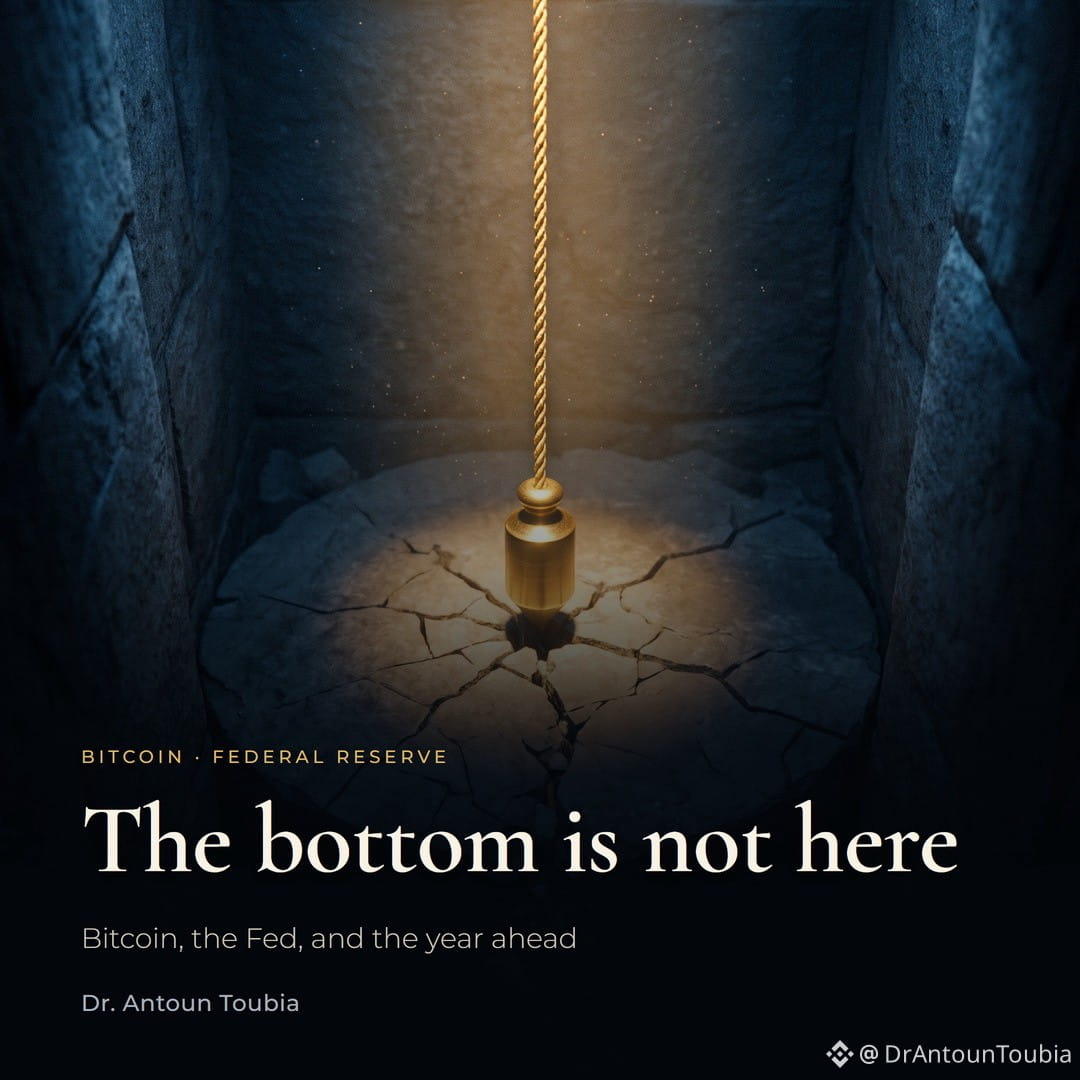
The bottom is not here.
Bitcoin fell from 126,200 dollars in October 2025 to 55,130 on 21 November. It bounced to about 61,000 this week and the messages arrived as if the war was over. It is not over.
The seller is not a frightened retail investor. It is an American institution leaving an asset that is expensive to finance. Coinbase carried about 634 million dollars of net spot selling in a single week, roughly 80 percent of the net selling across the major venues. Spot bitcoin funds lost 3.74 billion dollars between 3 and 20 November, including a 544.7 million dollar day from BlackRock.
The policy rate is still 3.75 to 4.00 percent, and futures price another hike on 9 December at about 86 percent. Valuation is not at a cycle low either: MVRV is 1.15, which puts the market 15 percent above the average cost basis of every holder, near 53,206 dollars.
My view is simple. The low will be decided when the Federal Reserve stops hiking, not by a chart pattern. If tightening runs another year, the sequence is credit, then commercial property, then jobs, then a global recession. And in a liquidity event, bitcoin is sold first.
The full analysis, with the levels, the onchain data and what another year of hikes would do to gold, silver, stocks and crypto:
https://www.doctorantoun.com/bitcoin-bottom-not-in-en.html
Dr. Antoun Toubia. This is my official Binance Square account.
$BTC #Bitcoin #FederalReserve #Macro
Mario Hitt YlzR:
So where is the bottom?
3
14
8.4k

FINANCIAL STABILITY PUT WALL STREET UNDER PRESSUREFED SOUNDS ALARM: INFLATION, AI DEBT AND FINANCIAL#FederalReserve 🌍 #PositiveMindsGlobalResults
BINANCE SQUARE | INVEST • LEARN • GROW • TOGETHER
NOVEMBER 24, 2026 | FEDERAL RESERVE • AI ECONOMY • WALL STREET
FEDERAL RESERVE SOUNDS NEW ALARM: INFLATION, AI DEBT AND FINANCIAL STABILITY PUT WALL STREET UNDER PRESSURE
A NEW CHALLENGE FOR THE US ECONOMY
Wall Street is facing a new wave of uncertainty as Federal Reserve officials warn that persistent inflation, rising AI-related borrowing and growing financial market vulnerabilities could create additional pressure on the US economy.
The latest warning comes from New York Federal Reserve President John Williams, who said on November 23 that inflation remains too high and that further monetary tightening may be necessary to bring price growth sustainably back to the central bank's 2% target.
With the Federal Reserve's December 8–9 meeting approaching, investors are increasingly reassessing the possibility of additional interest-rate increases.
1. INFLATION REMAINS THE FED'S BIGGEST CONCERN
Williams expects inflation to finish 2026 at approximately 3.5%, before moderating next year and returning to the Fed's 2% target in 2028.
He also highlighted elevated energy prices and uncertainty surrounding the inflation outlook.
His comments reinforce a growing concern among policymakers: cutting inflation too slowly could force the central bank to implement more aggressive measures later.
The current federal funds target range remains 3.75%–4.00%.
2. THE AI BOOM IS BECOMING A FINANCIAL STABILITY CONCERN
One of the most significant developments is the Federal Reserve's growing concern about the financial risks associated with artificial intelligence investment.
Minutes from the October policy meeting revealed that policymakers were increasingly concerned about rapidly expanding AI-related debt, complex financing arrangements and concentrated exposure among a relatively small number of companies.
The concern is straightforward: if AI companies fail to generate the returns investors expect, falling valuations could trigger losses across lenders, investment funds and other financial institutions.
The Fed also highlighted circular financing arrangements, in which companies invest in or provide financing to businesses that purchase their products and services.
This creates additional questions about the true financial exposure behind the AI infrastructure boom.
3. WALL STREET FACES A DOUBLE PRESSURE
Investors are now balancing two major risks:
Higher interest rates: More expensive borrowing could pressure corporate earnings, business expansion and stock valuations.AI investment uncertainty: Heavy infrastructure spending may become difficult to justify if commercial returns fail to meet expectations.
Technology companies, semiconductor manufacturers, cloud providers and data-centre developers could face greater scrutiny over capital expenditure and profitability.
The next stage of AI competition may depend not only on technological leadership but also on the ability to convert enormous investments into sustainable cash flow.
4. THE DECEMBER FED MEETING COULD BECOME A MAJOR MARKET CATALYST
Federal Reserve policymakers remain divided over the pace and size of further tightening.
Some officials favour gradual increases, while others have argued that stronger action may be required to control persistent inflation.
Markets are increasingly focused on the December 8–9 meeting, with expectations of a quarter-point increase.
However, the final decision will depend on incoming inflation, employment and economic activity data.
5. WHAT INVESTORS SHOULD WATCH
The next important signals will come from:
US inflation and employment reports.Federal Reserve interest-rate guidance.Treasury yields and US dollar movements.AI company earnings and capital expenditure.Corporate borrowing costs and credit market conditions.Bitcoin, gold and broader equity market reactions.
Higher interest rates could create additional pressure on speculative assets, while persistent uncertainty may increase demand for defensive investment strategies.
FINAL MARKET OUTLOOK: THE AI BOOM AND INFLATION ARE TESTING THE FED
The Federal Reserve is confronting an increasingly complicated economic environment. Inflation remains above target, AI investment continues to reshape the economy, and financial institutions are becoming more exposed to complex technology-related financing.For Wall Street, the challenge is no longer simply predicting the next interest-rate decision. Investors must also evaluate whether the extraordinary AI investment cycle can deliver sustainable economic returns without creating excessive financial risks.The critical question heading into December is whether the Federal Reserve can control inflation without triggering a broader financial slowdown.
Market Risk Disclaimer: This article is for educational and informational purposes only. Economic forecasts and market scenarios are not guaranteed. Financial markets involve risks. Always conduct independent research (DYOR). This is not financial advice.
#FederalReserve #WallStreet #Inflation #InterestRates #ArtificialIntelligence #AIDebt #FinancialStability #USEconomy #StockMarket #Nvidia #Bitcoin #Gold #GlobalMarkets #PositiveMindsGlobalResults
{spot}(BNBUSDT)
{spot}(BTCUSDT)
FINANCIAL STABILITY PUT WALL STREET UNDER PRESSUREFED SOUNDS ALARM: INFLATION, AI DEBT AND FINANCIAL
#FederalReserve 🌍 #PositiveMindsGlobalResults
BINANCE SQUARE | INVEST • LEARN • GROW • TOGETHER
NOVEMBER 24, 2026 | FEDERAL RESERVE • AI ECONOMY • WALL STREET
FEDERAL RESERVE SOUNDS NEW ALARM: INFLATION, AI DEBT AND FINANCIAL STABILITY PUT WALL STREET UNDER PRESSURE
A NEW CHALLENGE FOR THE US ECONOMY
Wall Street is facing a new wave of uncertainty as Federal Reserve officials warn that persistent inflation, rising AI-related borrowing and growing financial market vulnerabilities could create additional pressure on the US economy.
The latest warning comes from New York Federal Reserve President John Williams, who said on November 23 that inflation remains too high and that further monetary tightening may be necessary to bring price growth sustainably back to the central bank's 2% target.
With the Federal Reserve's December 8–9 meeting approaching, investors are increasingly reassessing the possibility of additional interest-rate increases.
1. INFLATION REMAINS THE FED'S BIGGEST CONCERN
Williams expects inflation to finish 2026 at approximately 3.5%, before moderating next year and returning to the Fed's 2% target in 2028.
He also highlighted elevated energy prices and uncertainty surrounding the inflation outlook.
His comments reinforce a growing concern among policymakers: cutting inflation too slowly could force the central bank to implement more aggressive measures later.
The current federal funds target range remains 3.75%–4.00%.
2. THE AI BOOM IS BECOMING A FINANCIAL STABILITY CONCERN
One of the most significant developments is the Federal Reserve's growing concern about the financial risks associated with artificial intelligence investment.
Minutes from the October policy meeting revealed that policymakers were increasingly concerned about rapidly expanding AI-related debt, complex financing arrangements and concentrated exposure among a relatively small number of companies.
The concern is straightforward: if AI companies fail to generate the returns investors expect, falling valuations could trigger losses across lenders, investment funds and other financial institutions.
The Fed also highlighted circular financing arrangements, in which companies invest in or provide financing to businesses that purchase their products and services.
This creates additional questions about the true financial exposure behind the AI infrastructure boom.
3. WALL STREET FACES A DOUBLE PRESSURE
Investors are now balancing two major risks:
Higher interest rates: More expensive borrowing could pressure corporate earnings, business expansion and stock valuations.AI investment uncertainty: Heavy infrastructure spending may become difficult to justify if commercial returns fail to meet expectations.
Technology companies, semiconductor manufacturers, cloud providers and data-centre developers could face greater scrutiny over capital expenditure and profitability.
The next stage of AI competition may depend not only on technological leadership but also on the ability to convert enormous investments into sustainable cash flow.
4. THE DECEMBER FED MEETING COULD BECOME A MAJOR MARKET CATALYST
Federal Reserve policymakers remain divided over the pace and size of further tightening.
Some officials favour gradual increases, while others have argued that stronger action may be required to control persistent inflation.
Markets are increasingly focused on the December 8–9 meeting, with expectations of a quarter-point increase.
However, the final decision will depend on incoming inflation, employment and economic activity data.
5. WHAT INVESTORS SHOULD WATCH
The next important signals will come from:
US inflation and employment reports.Federal Reserve interest-rate guidance.Treasury yields and US dollar movements.AI company earnings and capital expenditure.Corporate borrowing costs and credit market conditions.Bitcoin, gold and broader equity market reactions.
Higher interest rates could create additional pressure on speculative assets, while persistent uncertainty may increase demand for defensive investment strategies.
FINAL MARKET OUTLOOK: THE AI BOOM AND INFLATION ARE TESTING THE FED
The Federal Reserve is confronting an increasingly complicated economic environment. Inflation remains above target, AI investment continues to reshape the economy, and financial institutions are becoming more exposed to complex technology-related financing.For Wall Street, the challenge is no longer simply predicting the next interest-rate decision. Investors must also evaluate whether the extraordinary AI investment cycle can deliver sustainable economic returns without creating excessive financial risks.The critical question heading into December is whether the Federal Reserve can control inflation without triggering a broader financial slowdown.
Market Risk Disclaimer: This article is for educational and informational purposes only. Economic forecasts and market scenarios are not guaranteed. Financial markets involve risks. Always conduct independent research (DYOR). This is not financial advice.
#FederalReserve #WallStreet #Inflation #InterestRates #ArtificialIntelligence #AIDebt #FinancialStability #USEconomy #StockMarket #Nvidia #Bitcoin #Gold #GlobalMarkets #PositiveMindsGlobalResults
248


·
--
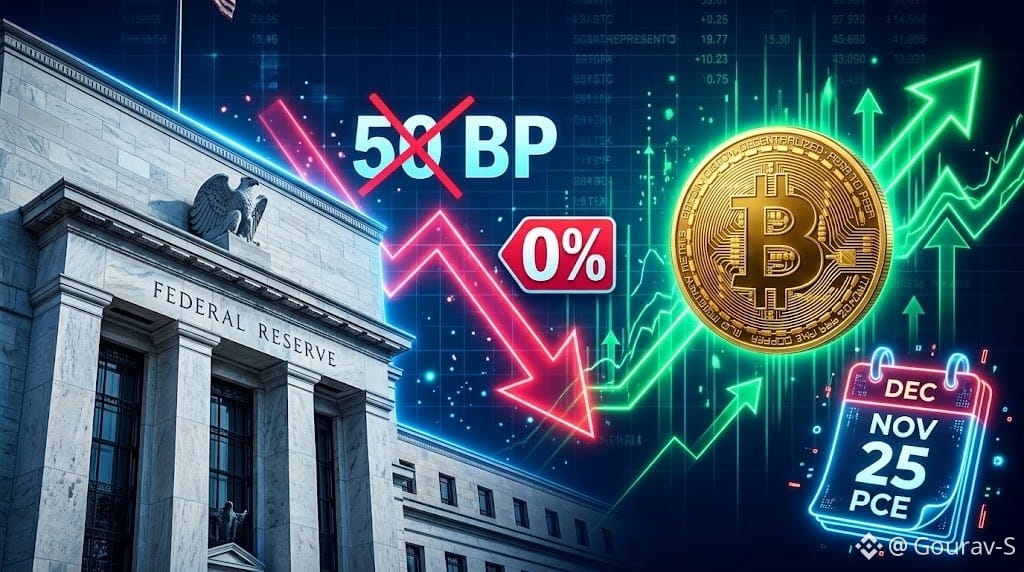
Traders Drop Bets on a 50bp December Fed Hike. Is Risk Sentiment Getting Some Relief? 📉
Expectations for an aggressive Federal Reserve rate increase are changing after last week's sharp market sell-off.
According to CME FedWatch data reported on November 23, traders have priced out the possibility of a 50-basis-point December hike, down from roughly 10% probability about ten days earlier.
However, a 25bp increase remains the expected outcome, while the possibility of the Fed holding rates steady has started to reappear.
My perspective: This shift could ease some pressure on risk assets, including Bitcoin, equities and gold. But it doesn't mean monetary policy is becoming less restrictive.
The next major test will be October's US PCE inflation report on November 25.
Markets may have ruled out a bigger hike, but inflation will determine what happens next.
#FederalReserve
#TradersPriceOut50bpDecemberFedHike
6
175

🚨 $BTC RECLAIMS $60,000! A CRITICAL MACROECONOMIC WEEK AHEAD — VOLATILITY COULD BE COMING!
Bitcoin is showing signs of recovery, surging approximately 5.34% in the past 24 hours to $60,876, climbing back above the psychologically important $60,000 level after briefly falling into the high-$50,000s.
But the real test may be just beginning.
📊 THIS WEEK'S KEY ECONOMIC EVENTS TO WATCH:
🔹 MONDAY – Manufacturing & Services PMI
- November Flash Manufacturing PMI (previous: 56)
- November Flash Services PMI (previous: 57.9)
- New York Fed President John Williams speaks at 4:00 PM ET.
- OCC comment period related to GENIUS Act stablecoin applications closes.
🔹 WEDNESDAY – THE BIGGEST DAY FOR MARKETS
- 8:30 AM ET: October PCE Inflation Report.
- Q3 GDP second estimate.
- Federal Reserve Beige Book later in the afternoon.
Inflation expectations:
- Headline PCE: 3.8% YoY (previously 3.6%).
- Core PCE: 3.2% YoY (previously 3.1%).
- Both expected to increase 0.3% month over month.
- Q3 GDP expected to be revised upward to 3.6% from 3.4%.
🔹 THURSDAY – THANKSGIVING
US markets will be closed, with no scheduled economic data releases.
🔹 FRIDAY – TRADE & INVENTORY DATA
- October advance US goods trade balance.
- Retail inventories.
- Wholesale inventories.
🔥 WHY THIS MATTERS FOR BITCOIN:
Bitcoin's recovery above $60K is encouraging, but upcoming inflation and GDP figures could significantly influence expectations surrounding Federal Reserve policy and broader market sentiment.
Higher-than-expected inflation could put pressure on risk assets, while softer inflation data could potentially support a broader market recovery.
⚠️ THE BOTTOM LINE:
Bitcoin has recovered an important psychological level, but the sustainability of this rebound remains uncertain.
This week's economic releases could become the next major catalyst for cryptocurrency volatility.
Will BTC extend its recovery, or will macroeconomic pressure trigger another sell-off?
#bitcoin #CryptoMarkets #GDP $BTC
#FederalReserve #CryptoNews
{future}(BTCUSDT)
🚨 $BTC RECLAIMS $60,000! A CRITICAL MACROECONOMIC WEEK AHEAD — VOLATILITY COULD BE COMING!
Bitcoin is showing signs of recovery, surging approximately 5.34% in the past 24 hours to $60,876, climbing back above the psychologically important $60,000 level after briefly falling into the high-$50,000s.
But the real test may be just beginning.
📊 THIS WEEK'S KEY ECONOMIC EVENTS TO WATCH:
🔹 MONDAY – Manufacturing & Services PMI
- November Flash Manufacturing PMI (previous: 56)
- November Flash Services PMI (previous: 57.9)
- New York Fed President John Williams speaks at 4:00 PM ET.
- OCC comment period related to GENIUS Act stablecoin applications closes.
🔹 WEDNESDAY – THE BIGGEST DAY FOR MARKETS
- 8:30 AM ET: October PCE Inflation Report.
- Q3 GDP second estimate.
- Federal Reserve Beige Book later in the afternoon.
Inflation expectations:
- Headline PCE: 3.8% YoY (previously 3.6%).
- Core PCE: 3.2% YoY (previously 3.1%).
- Both expected to increase 0.3% month over month.
- Q3 GDP expected to be revised upward to 3.6% from 3.4%.
🔹 THURSDAY – THANKSGIVING
US markets will be closed, with no scheduled economic data releases.
🔹 FRIDAY – TRADE & INVENTORY DATA
- October advance US goods trade balance.
- Retail inventories.
- Wholesale inventories.
🔥 WHY THIS MATTERS FOR BITCOIN:
Bitcoin's recovery above $60K is encouraging, but upcoming inflation and GDP figures could significantly influence expectations surrounding Federal Reserve policy and broader market sentiment.
Higher-than-expected inflation could put pressure on risk assets, while softer inflation data could potentially support a broader market recovery.
⚠️ THE BOTTOM LINE:
Bitcoin has recovered an important psychological level, but the sustainability of this rebound remains uncertain.
This week's economic releases could become the next major catalyst for cryptocurrency volatility.
Will BTC extend its recovery, or will macroeconomic pressure trigger another sell-off?
#bitcoin #CryptoMarkets #GDP $BTC
#FederalReserve #CryptoNews
125

·
--
🔴 Bearish
🚨 Federal Reserve Signals Higher For Longer Rates!
The latest FOMC minutes indicate a stronger-than-expected commitment to fighting inflation, even amidst slowing economic growth. This hawkish stance surprised some analysts.
📊 Market Impact: Expect short-term volatility in risk assets like crypto. Potential for downward pressure on $BTC and altcoins as liquidity tightens.
#FederalReserve #Macro
3
·
--
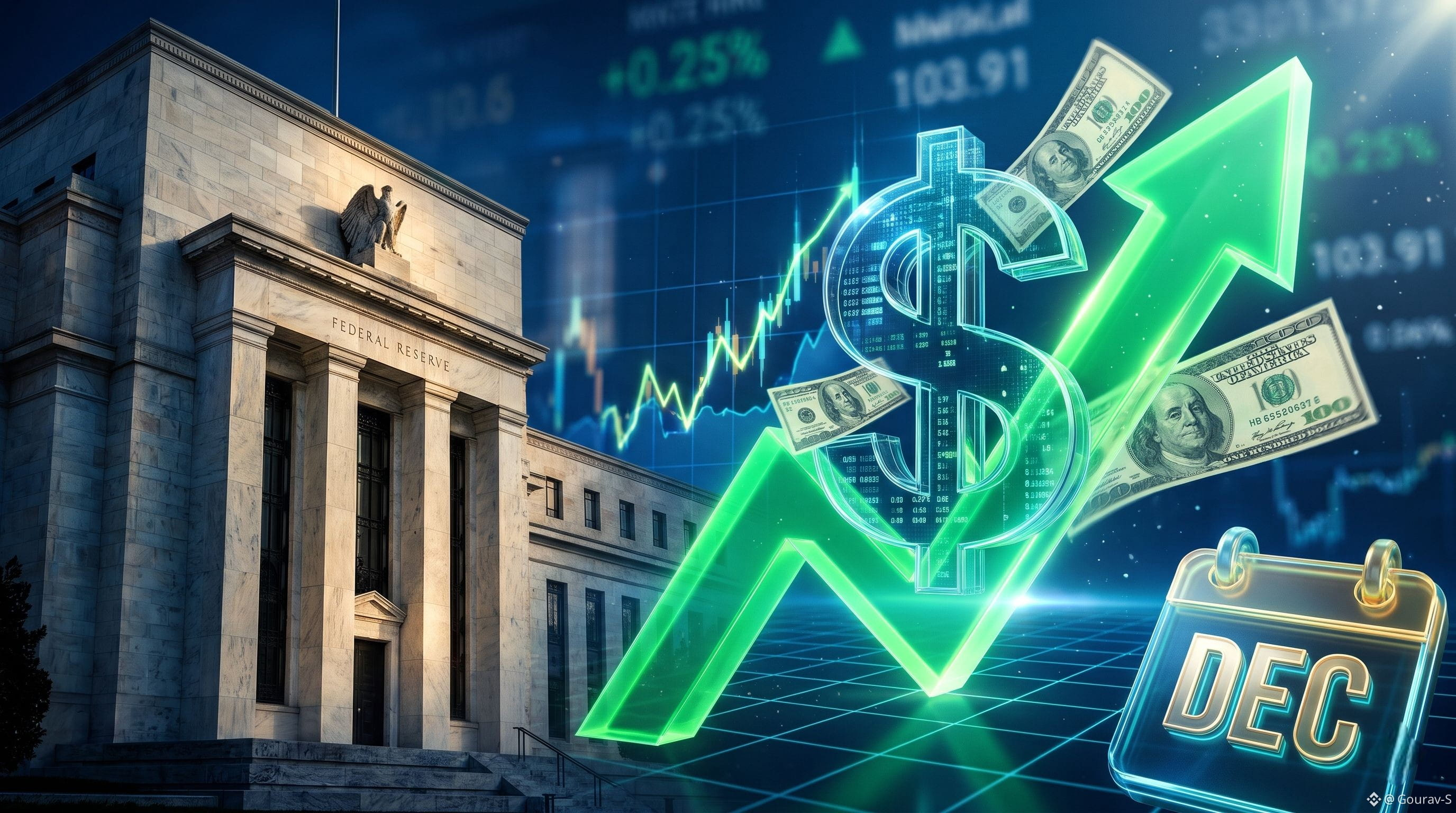
US Dollar: Fed Rate-Hike Bets Support Dollar Outlook 💵
The US dollar is finding fresh support as markets increasingly expect the Federal Reserve to raise interest rates in December.
Recent inflation data and hawkish comments from Fed officials have strengthened expectations for tighter monetary policy. On November 22, the dollar index traded near 103.91, close to a 19-month high, while markets priced in a 96% probability of a 25-basis-point rate hike.
My perspective: Higher US interest rates can make dollar-denominated assets more attractive, potentially keeping the greenback supported against major currencies.
However, much of this expectation may already be reflected in the market. Upcoming inflation data and Treasury yields will be crucial in determining whether the dollar can extend its rally.
A stronger dollar could also create additional pressure on gold, commodities and crypto markets.
The key question is whether the Fed delivers what markets are already pricing in.
#usd #FederalReserve #Binance #BinanceSquare
4
74

·
--
Bullish
#willoctcorepceshiftfedhikeexpectations?
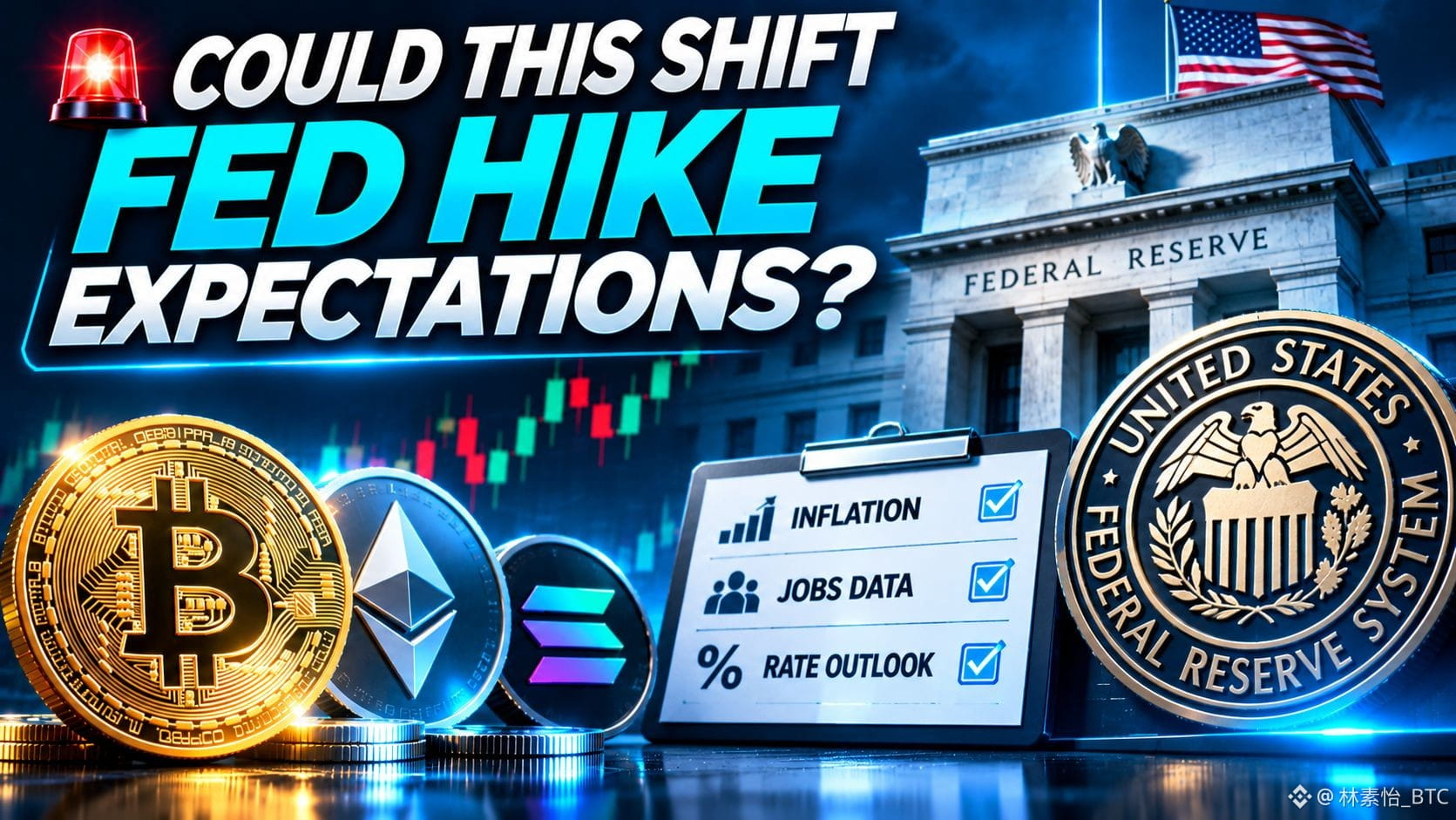
🚨 Could This Shift Fed Hike Expectations?
Markets are closely watching incoming U.S. economic data for signals on the Federal Reserve’s next policy move. Any meaningful change in inflation or labor-market conditions could influence expectations around future rate decisions.
For crypto traders, the key factor is liquidity. A less hawkish Fed outlook could support risk assets, while stronger inflation or economic data could keep monetary policy tighter for longer and weigh on crypto sentiment.
📌 Bottom line: Fed expectations remain a major macro driver for Bitcoin and the broader crypto market. Traders will likely focus on upcoming economic data before making stronger directional bets.
#Bitcoin #Crypto #FederalReserve #BTC
$AVA $CYS $MUU
{future}(MUUUSDT)
{future}(CYSUSDT)
{future}(AVAUSDT)
#willoctcorepceshiftfedhikeexpectations?
🚨 Could This Shift Fed Hike Expectations?
Markets are closely watching incoming U.S. economic data for signals on the Federal Reserve’s next policy move. Any meaningful change in inflation or labor-market conditions could influence expectations around future rate decisions.
For crypto traders, the key factor is liquidity. A less hawkish Fed outlook could support risk assets, while stronger inflation or economic data could keep monetary policy tighter for longer and weigh on crypto sentiment.
📌 Bottom line: Fed expectations remain a major macro driver for Bitcoin and the broader crypto market. Traders will likely focus on upcoming economic data before making stronger directional bets.
#Bitcoin #Crypto #FederalReserve #BTC
$AVA $CYS $MUU
2
366

Article
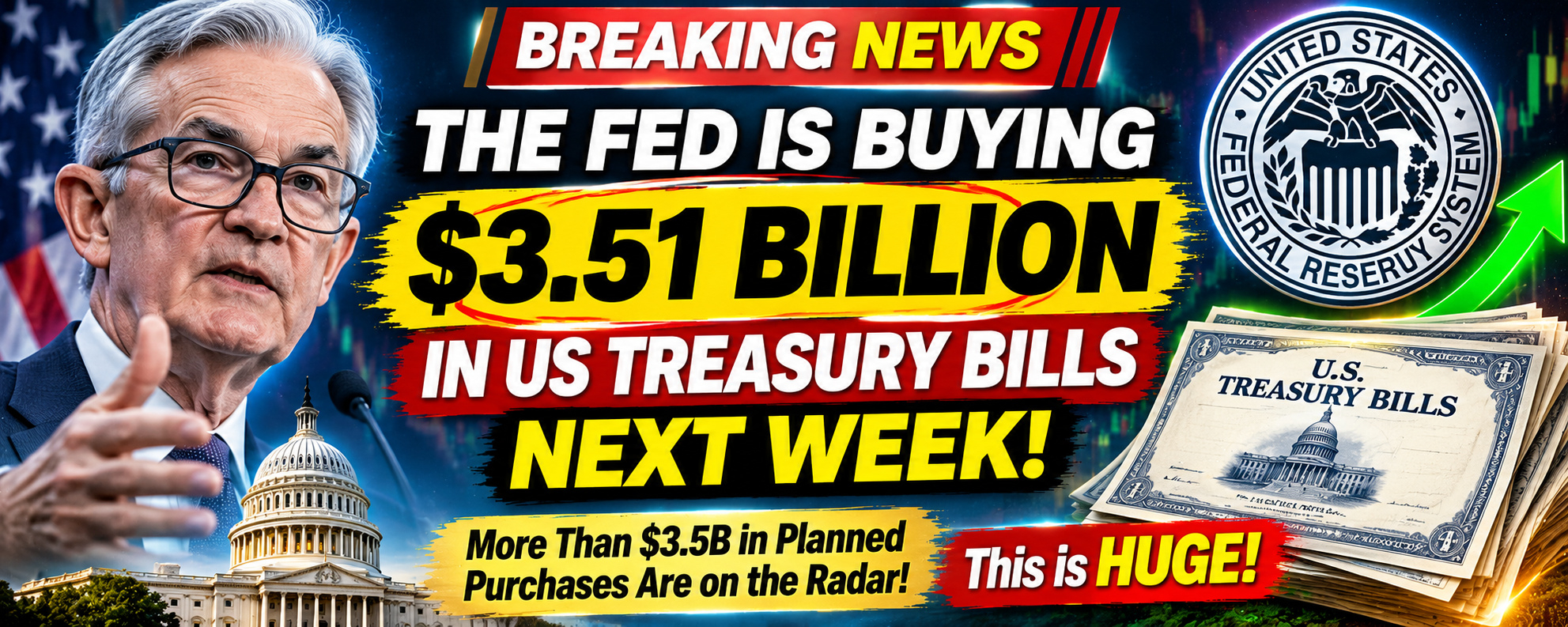
🚨 BREAKING: FED PLANS $3.51 BILLION IN US TREASURY BILL PURCHASES NEXT WEEKA major development is drawing attention across financial markets as the US Federal Reserve is reportedly preparing to purchase approximately $3.51 billion in US Treasury bills next week.
The planned purchases are putting liquidity conditions back in the spotlight, with investors closely watching what this could mean for the broader financial system.
Why does this matter?
Treasury bill purchases can influence short-term liquidity conditions and money-market operations. While these transactions do not automatically mean the Fed is launching a new round of quantitative easing (QE), they remain important for understanding the central bank's balance-sheet activity.
Markets will be watching closely to see how these purchases affect liquidity, Treasury yields, the US dollar, and risk assets.
For cryptocurrency investors, including $Bitcoin and $XRP holders, any changes in financial liquidity could become an important factor in market sentiment.
More than $3.5 billion in planned purchases are on the radar. Could this become another important liquidity signal for the markets?
Keep your eyes on the Fed! 🇺🇸
#FederalReserve #FED #TreasuryBills #Liquidity #bitcoin #CryptoNews #BTC #XRP #FinancialMarkets #USMarkets
🚨 BREAKING: FED PLANS $3.51 BILLION IN US TREASURY BILL PURCHASES NEXT WEEK
A major development is drawing attention across financial markets as the US Federal Reserve is reportedly preparing to purchase approximately $3.51 billion in US Treasury bills next week.
The planned purchases are putting liquidity conditions back in the spotlight, with investors closely watching what this could mean for the broader financial system.
Why does this matter?
Treasury bill purchases can influence short-term liquidity conditions and money-market operations. While these transactions do not automatically mean the Fed is launching a new round of quantitative easing (QE), they remain important for understanding the central bank's balance-sheet activity.
Markets will be watching closely to see how these purchases affect liquidity, Treasury yields, the US dollar, and risk assets.
For cryptocurrency investors, including $Bitcoin and $XRP holders, any changes in financial liquidity could become an important factor in market sentiment.
More than $3.5 billion in planned purchases are on the radar. Could this become another important liquidity signal for the markets?
Keep your eyes on the Fed! 🇺🇸
#FederalReserve #FED #TreasuryBills #Liquidity #bitcoin #CryptoNews #BTC #XRP #FinancialMarkets #USMarkets
149

·
--
Article
**50-BPS FED RATE HIKE? MARKETS SAY NO!🚨 50-BPS FED RATE HIKE? MARKETS SAY NO!
A major shift is happening in December rate expectations!
Traders have completely priced out the possibility of a 50-basis-point Fed rate hike.
📊 What's priced in now?
• 50-bps hike: 0%
• 25-bps hike: Around 94–96%
• December Fed decision: December 9
🔥 Why does this matter?
Reduced fears of aggressive tightening could offer relief to Bitcoin, stocks and other risk assets.
⚠️ BUT THE NEXT TEST IS COMING!
Wednesday's Core PCE inflation report could reshape the entire outlook.
Will softer inflation trigger a major market recovery, or will the Fed remain hawkish?
👇 What's your prediction?
#FederalReserve #bitcoin #BTC
25-bps hike: approximately 94–96% probability.
**50-BPS FED RATE HIKE? MARKETS SAY NO!
🚨 50-BPS FED RATE HIKE? MARKETS SAY NO!
A major shift is happening in December rate expectations!
Traders have completely priced out the possibility of a 50-basis-point Fed rate hike.
📊 What's priced in now?
• 50-bps hike: 0%
• 25-bps hike: Around 94–96%
• December Fed decision: December 9
🔥 Why does this matter?
Reduced fears of aggressive tightening could offer relief to Bitcoin, stocks and other risk assets.
⚠️ BUT THE NEXT TEST IS COMING!
Wednesday's Core PCE inflation report could reshape the entire outlook.
Will softer inflation trigger a major market recovery, or will the Fed remain hawkish?
👇 What's your prediction?
#FederalReserve #bitcoin #BTC
25-bps hike: approximately 94–96% probability.
66

·
--
Bullish
Verified
#TradersPriceOut50bpDecemberFedHike
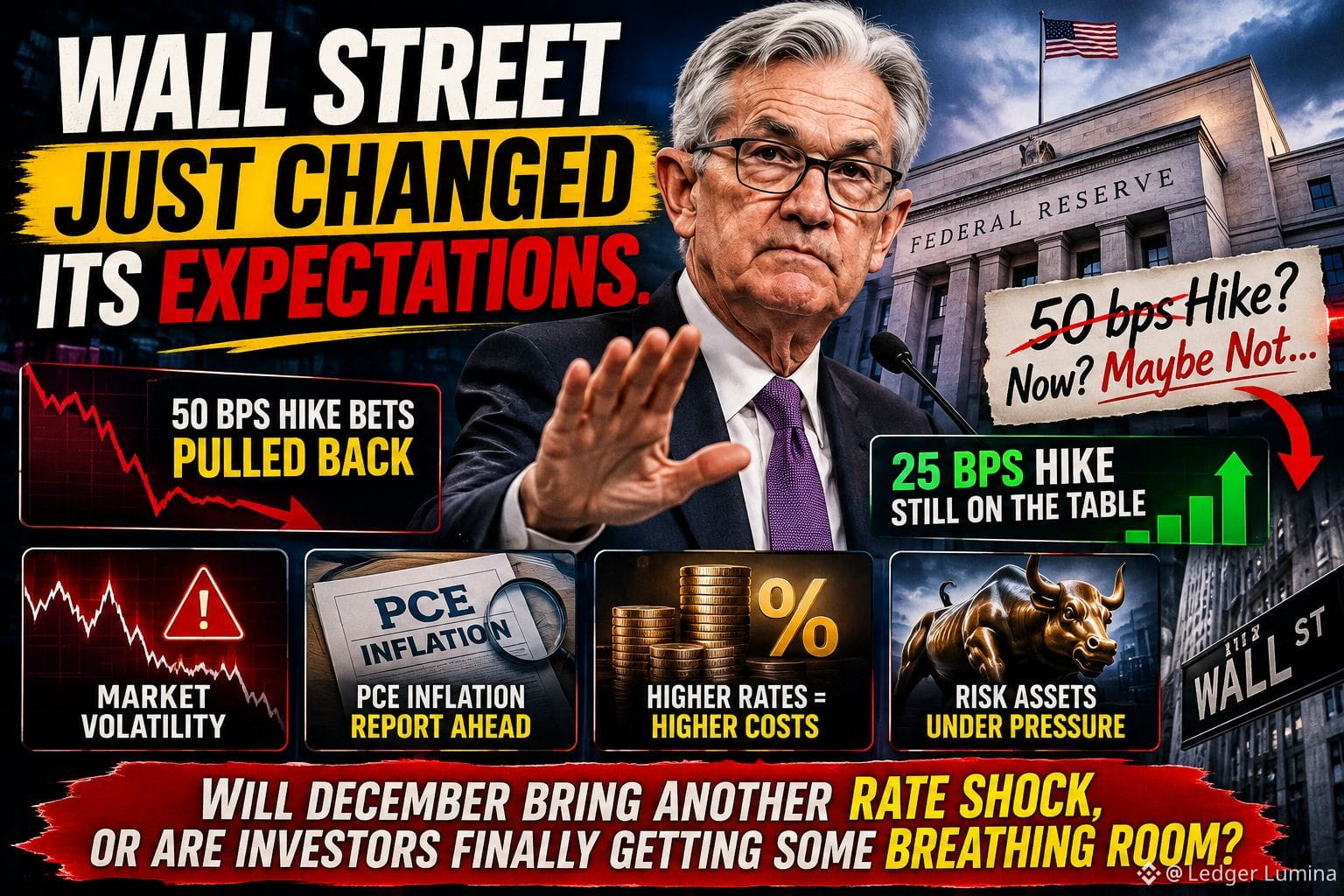
🚨 WALL STREET JUST CHANGED ITS EXPECTATIONS.
Traders are pulling back their bets on a massive 50-basis-point Federal Reserve rate hike in December.
But that doesn't mean the pressure is over.
{spot}(SPCXBUSDT)
{future}(NVDAUSDT)
{future}(TSLAUSDT)
📉 Market volatility has forced investors to reassess their expectations.
🏦 A 25-basis-point hike remains the dominant market expectation.
📊 The upcoming PCE inflation report could influence the Fed's next move.
💵 Higher interest rates could keep borrowing costs elevated and challenge risk assets.
Here's the interesting part:
Markets are not just betting on what the Fed will do. They're trying to anticipate what happens next.
Will December bring another rate shock, or are investors finally getting some breathing room?
The next inflation report could change everything. 👀
#FederalReserve #WallStreet $BTC $SPCXB $TRUMP #LearnWithLedgerLumina
#TradersPriceOut50bpDecemberFedHike
🚨 WALL STREET JUST CHANGED ITS EXPECTATIONS.
Traders are pulling back their bets on a massive 50-basis-point Federal Reserve rate hike in December.
But that doesn't mean the pressure is over.
📉 Market volatility has forced investors to reassess their expectations.
🏦 A 25-basis-point hike remains the dominant market expectation.
📊 The upcoming PCE inflation report could influence the Fed's next move.
💵 Higher interest rates could keep borrowing costs elevated and challenge risk assets.
Here's the interesting part:
Markets are not just betting on what the Fed will do. They're trying to anticipate what happens next.
Will December bring another rate shock, or are investors finally getting some breathing room?
The next inflation report could change everything. 👀
#FederalReserve #WallStreet $BTC $SPCXB $TRUMP #LearnWithLedgerLumina
1
233
THE FED'S NEW WARNING: AI DEBT COULD BECOME A HIDDEN THREAT TO GLOBAL FINANCIAL MARKETS#BinanceNews 🌍#PositiveMindsGlobalResults
BINANCE SQUARE | INVEST • LEARN • GROW • TOGETHER
NOVEMBER 23, 2026 | GLOBAL MARKET INTELLIGENCE
Wall Street's Biggest Growth Opportunity Could Also Become Its Biggest Financial Risk
The artificial intelligence revolution has become one of the strongest forces driving global financial markets. However, a new concern is emerging from an unexpected place: the Federal Reserve.
Federal Reserve Chair Kevin Warsh and the Federal Open Market Committee (FOMC) are examining the financial risks associated with the enormous investment and borrowing supporting the artificial intelligence (AI) infrastructure boom.
According to the Federal Reserve's October 27–28 meeting minutes, released on November 18, policymakers discussed how rapidly growing AI-related debt, complicated financing arrangements and interconnected corporate investments could amplify financial losses if expected returns from AI infrastructure fail to materialize.
This warning introduces a new dimension to the global AI investment story.
Until now, investors have largely focused on how quickly artificial intelligence could transform businesses, increase productivity and generate enormous profits. Now, the Federal Reserve is highlighting another important question:
What happens if the financial returns from the AI revolution fail to justify the billions of dollars being invested?
The concern is not that artificial intelligence itself is failing. It is that the financing structures supporting its rapid expansion could create vulnerabilities across the financial system.
1. WHY IS THE FEDERAL RESERVE CONCERNED ABOUT AI DEBT?
Building the infrastructure required to support advanced artificial intelligence is extraordinarily expensive.
Major technology companies are committing enormous amounts of capital to data centres, advanced processors, high-bandwidth memory, networking equipment, electricity generation and cloud computing infrastructure.
However, the Federal Reserve has identified several financial vulnerabilities associated with this expansion.
Rapidly growing AI-related debt: Borrowing connected to AI infrastructure has expanded significantly, increasing the financial exposure of companies involved in the industry.
Complex financing arrangements: Some investments involve complicated and less transparent financing structures, making it harder for investors to understand the full extent of financial obligations.
Off-balance-sheet commitments: Leasing arrangements can create substantial future payment obligations that may not be immediately visible when examining conventional balance-sheet debt.
Circular financing arrangements: Financial relationships between interconnected AI companies could increase exposure if one company experiences financial difficulties.
The Federal Reserve's concern is that disappointing AI investment returns could trigger losses that spread beyond individual companies and potentially amplify broader economic shocks.
Importantly, policymakers did not conclude that a financial crisis was inevitable. They identified vulnerabilities that deserve closer monitoring.
2. THE AI BOOM: FROM INVESTMENT OPPORTUNITY TO FINANCIAL RISK
Artificial intelligence has transformed the investment landscape.
Companies such as Nvidia, Microsoft, Amazon, Alphabet and Meta are investing heavily in AI infrastructure to compete for leadership in the next generation of computing.
This spending has created significant opportunities for semiconductor manufacturers, cloud providers, technology suppliers and data-centre operators.
However, the growing scale of investment raises a critical question:
Can the revenue generated by artificial intelligence justify the enormous cost of building its infrastructure?
If AI adoption accelerates and businesses successfully commercialize their technology, today's infrastructure investments could generate substantial long-term economic value.
But if demand slows, borrowing costs increase or expected profits disappoint, companies could face excess computing capacity, weaker returns and growing debt obligations.
This is the financial risk that investors must now consider alongside the enormous technological opportunities.
3. WHAT COULD THIS MEAN FOR THE US STOCK MARKET?
The Federal Reserve's warning could influence investor sentiment across Wall Street, particularly in technology stocks and companies with significant exposure to AI infrastructure.
Technology stocks: High-growth companies could face valuation pressure if investors begin questioning future earnings and investment returns.
Semiconductor companies: Reduced AI infrastructure spending could affect demand for processors, advanced memory and semiconductor manufacturing.
Cloud computing companies: Major cloud providers may face greater pressure to demonstrate that their AI investments can generate sustainable profits.
Corporate bond markets: Investors could demand higher returns for financing companies with significant AI-related debt exposure.
Nasdaq and S&P 500: A reassessment of AI valuations could increase volatility across major US stock indices.
The biggest risk is a change in investor expectations. If the market begins questioning the profitability of the AI infrastructure boom, companies with expensive valuations could experience significant corrections.
4. NVIDIA AND THE GLOBAL SEMICONDUCTOR INDUSTRY: WHAT IS AT STAKE?
Nvidia occupies a central position in the global AI infrastructure ecosystem.
Its graphics processing units (GPUs) power many of the world's advanced AI systems, making the company one of the biggest beneficiaries of increasing investment in artificial intelligence.
However, its success is also connected to the financial strength and investment decisions of its customers.
If major technology companies reduce capital expenditure, demand for AI processors could weaken.
Other companies potentially affected include:
Nvidia: Demand for advanced AI processors and computing platforms.AMD: Competition in AI accelerators and data-centre processors.Broadcom: AI networking and custom semiconductor solutions.TSMC: Advanced semiconductor manufacturing demand.Micron: High-bandwidth memory and data-centre memory requirements.ASML: Long-term demand for advanced semiconductor manufacturing equipment.
These companies have different business models and financial exposures. Therefore, a slowdown in AI investment would not necessarily affect all of them equally.
The key issue is whether the industry can maintain strong demand while generating sufficient financial returns to justify continued expansion.
5. COULD THIS WARNING AFFECT BITCOIN AND CRYPTOCURRENCY MARKETS?
Although the Federal Reserve's concerns focus primarily on financial stability and AI-related borrowing, the consequences could extend into cryptocurrency markets.
Digital assets are sensitive to changes in global liquidity, interest-rate expectations and institutional risk appetite.
If concerns about AI-related debt trigger broader financial market uncertainty, investors could reduce exposure to more volatile assets.
Potential consequences include:
Bitcoin facing additional selling pressure.Ethereum and altcoins experiencing greater volatility.Institutional investors becoming more cautious about speculative investments.Increased demand for liquidity and lower-risk assets.Greater sensitivity to Federal Reserve monetary policy decisions.
However, a different outcome is also possible.
If AI investment remains profitable and financial stability risks stay contained, technology market confidence could improve, supporting broader risk appetite.
Bitcoin's direction will also depend on ETF flows, institutional demand, dollar movements and wider economic conditions.
6. THREE POSSIBLE SCENARIOS FOR THE COMING WEEKS
BULLISH SCENARIO — AI GROWTH REMAINS STRONG
AI companies demonstrate sustainable revenue growth, infrastructure investments generate attractive returns and financing risks remain manageable.
Technology stocks and semiconductor companies could regain momentum as investors maintain confidence in the long-term AI opportunity.
NEUTRAL SCENARIO — INVESTORS BECOME MORE SELECTIVE
AI investment continues expanding, but financial markets increasingly distinguish between companies with sustainable business models and those carrying greater financing risks.
This could result in sector rotation, selective buying and continued volatility.
BEARISH SCENARIO — AI INVESTMENT RETURNS DISAPPOINT
If AI revenues fail to meet expectations while financing costs and debt obligations increase, companies could reduce investment spending.
Such a development could put pressure on semiconductor demand, technology valuations, corporate bonds and cryptocurrency markets.
These are possible market scenarios, not predictions or guaranteed outcomes.
7. MY MARKET OUTLOOK: THE AI REVOLUTION FACES A NEW FINANCIAL TEST
The Federal Reserve's latest assessment highlights an important change in the AI investment narrative.
The market is no longer evaluating artificial intelligence solely through technological innovation and future growth potential. Investors must also examine how this expansion is financed, how much debt is accumulating and whether expected returns can support the enormous capital commitments.
One important detail should not be overlooked: the Federal Reserve staff assessed that the financial system remained resilient, supported by well-capitalized banks and relatively strong household balance sheets.
Nevertheless, elevated asset valuations, hedge-fund leverage and growing AI-related financial exposures remain important vulnerabilities.
The December 8–9 Federal Reserve meeting and upcoming corporate earnings will provide further information about the direction of monetary policy, financing conditions and AI investment demand.
My expectation: AI-related stocks and semiconductor companies may remain sensitive to financing conditions and earnings expectations. The long-term AI opportunity remains substantial, but investors could become increasingly selective about companies capable of turning massive infrastructure investments into sustainable profits.
FINAL THOUGHT: IS THE AI BOOM STRONG ENOUGH TO SUPPORT ITS OWN FINANCIAL WEIGHT?Artificial intelligence could become one of the most transformative technologies in modern economic history.However, technological progress does not eliminate financial risk.The Federal Reserve's warning highlights a fundamental challenge facing the global economy: the difference between investing in a revolutionary technology and financing that investment sustainably.The next major test for the AI industry may not simply be how powerful its technology becomes, but whether the companies building it can generate enough real economic value to justify the enormous cost.
THE BIG QUESTION: Could the world's biggest AI investment boom become a source of financial instability if debt grows faster than the profits generated by artificial intelligence?The answer could have significant implications for Nvidia, global semiconductor manufacturers, Wall Street, institutional investors and the cryptocurrency market.
DISCLAIMER: This article is for educational and informational purposes only and does not constitute financial advice. Market scenarios are possibilities, not guarantees. Always conduct your own research (DYOR), assess your risk tolerance and make informed investment decisions.
#FederalReserve #KevinWarsh #fomc #ArtificialIntelligence #AIDebt #Nvidia #Semiconductor #StockMarket #WallStreet #AIInvestment #Bitcoin #CryptoMarket #GlobalFinancialMarkets #PositiveMindsGlobalResults
THE FED'S NEW WARNING: AI DEBT COULD BECOME A HIDDEN THREAT TO GLOBAL FINANCIAL MARKETS
#BinanceNews 🌍#PositiveMindsGlobalResults
BINANCE SQUARE | INVEST • LEARN • GROW • TOGETHER
NOVEMBER 23, 2026 | GLOBAL MARKET INTELLIGENCE
Wall Street's Biggest Growth Opportunity Could Also Become Its Biggest Financial Risk
The artificial intelligence revolution has become one of the strongest forces driving global financial markets. However, a new concern is emerging from an unexpected place: the Federal Reserve.
Federal Reserve Chair Kevin Warsh and the Federal Open Market Committee (FOMC) are examining the financial risks associated with the enormous investment and borrowing supporting the artificial intelligence (AI) infrastructure boom.
According to the Federal Reserve's October 27–28 meeting minutes, released on November 18, policymakers discussed how rapidly growing AI-related debt, complicated financing arrangements and interconnected corporate investments could amplify financial losses if expected returns from AI infrastructure fail to materialize.
This warning introduces a new dimension to the global AI investment story.
Until now, investors have largely focused on how quickly artificial intelligence could transform businesses, increase productivity and generate enormous profits. Now, the Federal Reserve is highlighting another important question:
What happens if the financial returns from the AI revolution fail to justify the billions of dollars being invested?
The concern is not that artificial intelligence itself is failing. It is that the financing structures supporting its rapid expansion could create vulnerabilities across the financial system.
1. WHY IS THE FEDERAL RESERVE CONCERNED ABOUT AI DEBT?
Building the infrastructure required to support advanced artificial intelligence is extraordinarily expensive.
Major technology companies are committing enormous amounts of capital to data centres, advanced processors, high-bandwidth memory, networking equipment, electricity generation and cloud computing infrastructure.
However, the Federal Reserve has identified several financial vulnerabilities associated with this expansion.
Rapidly growing AI-related debt: Borrowing connected to AI infrastructure has expanded significantly, increasing the financial exposure of companies involved in the industry.
Complex financing arrangements: Some investments involve complicated and less transparent financing structures, making it harder for investors to understand the full extent of financial obligations.
Off-balance-sheet commitments: Leasing arrangements can create substantial future payment obligations that may not be immediately visible when examining conventional balance-sheet debt.
Circular financing arrangements: Financial relationships between interconnected AI companies could increase exposure if one company experiences financial difficulties.
The Federal Reserve's concern is that disappointing AI investment returns could trigger losses that spread beyond individual companies and potentially amplify broader economic shocks.
Importantly, policymakers did not conclude that a financial crisis was inevitable. They identified vulnerabilities that deserve closer monitoring.
2. THE AI BOOM: FROM INVESTMENT OPPORTUNITY TO FINANCIAL RISK
Artificial intelligence has transformed the investment landscape.
Companies such as Nvidia, Microsoft, Amazon, Alphabet and Meta are investing heavily in AI infrastructure to compete for leadership in the next generation of computing.
This spending has created significant opportunities for semiconductor manufacturers, cloud providers, technology suppliers and data-centre operators.
However, the growing scale of investment raises a critical question:
Can the revenue generated by artificial intelligence justify the enormous cost of building its infrastructure?
If AI adoption accelerates and businesses successfully commercialize their technology, today's infrastructure investments could generate substantial long-term economic value.
But if demand slows, borrowing costs increase or expected profits disappoint, companies could face excess computing capacity, weaker returns and growing debt obligations.
This is the financial risk that investors must now consider alongside the enormous technological opportunities.
3. WHAT COULD THIS MEAN FOR THE US STOCK MARKET?
The Federal Reserve's warning could influence investor sentiment across Wall Street, particularly in technology stocks and companies with significant exposure to AI infrastructure.
Technology stocks: High-growth companies could face valuation pressure if investors begin questioning future earnings and investment returns.
Semiconductor companies: Reduced AI infrastructure spending could affect demand for processors, advanced memory and semiconductor manufacturing.
Cloud computing companies: Major cloud providers may face greater pressure to demonstrate that their AI investments can generate sustainable profits.
Corporate bond markets: Investors could demand higher returns for financing companies with significant AI-related debt exposure.
Nasdaq and S&P 500: A reassessment of AI valuations could increase volatility across major US stock indices.
The biggest risk is a change in investor expectations. If the market begins questioning the profitability of the AI infrastructure boom, companies with expensive valuations could experience significant corrections.
4. NVIDIA AND THE GLOBAL SEMICONDUCTOR INDUSTRY: WHAT IS AT STAKE?
Nvidia occupies a central position in the global AI infrastructure ecosystem.
Its graphics processing units (GPUs) power many of the world's advanced AI systems, making the company one of the biggest beneficiaries of increasing investment in artificial intelligence.
However, its success is also connected to the financial strength and investment decisions of its customers.
If major technology companies reduce capital expenditure, demand for AI processors could weaken.
Other companies potentially affected include:
Nvidia: Demand for advanced AI processors and computing platforms.AMD: Competition in AI accelerators and data-centre processors.Broadcom: AI networking and custom semiconductor solutions.TSMC: Advanced semiconductor manufacturing demand.Micron: High-bandwidth memory and data-centre memory requirements.ASML: Long-term demand for advanced semiconductor manufacturing equipment.
These companies have different business models and financial exposures. Therefore, a slowdown in AI investment would not necessarily affect all of them equally.
The key issue is whether the industry can maintain strong demand while generating sufficient financial returns to justify continued expansion.
5. COULD THIS WARNING AFFECT BITCOIN AND CRYPTOCURRENCY MARKETS?
Although the Federal Reserve's concerns focus primarily on financial stability and AI-related borrowing, the consequences could extend into cryptocurrency markets.
Digital assets are sensitive to changes in global liquidity, interest-rate expectations and institutional risk appetite.
If concerns about AI-related debt trigger broader financial market uncertainty, investors could reduce exposure to more volatile assets.
Potential consequences include:
Bitcoin facing additional selling pressure.Ethereum and altcoins experiencing greater volatility.Institutional investors becoming more cautious about speculative investments.Increased demand for liquidity and lower-risk assets.Greater sensitivity to Federal Reserve monetary policy decisions.
However, a different outcome is also possible.
If AI investment remains profitable and financial stability risks stay contained, technology market confidence could improve, supporting broader risk appetite.
Bitcoin's direction will also depend on ETF flows, institutional demand, dollar movements and wider economic conditions.
6. THREE POSSIBLE SCENARIOS FOR THE COMING WEEKS
BULLISH SCENARIO — AI GROWTH REMAINS STRONG
AI companies demonstrate sustainable revenue growth, infrastructure investments generate attractive returns and financing risks remain manageable.
Technology stocks and semiconductor companies could regain momentum as investors maintain confidence in the long-term AI opportunity.
NEUTRAL SCENARIO — INVESTORS BECOME MORE SELECTIVE
AI investment continues expanding, but financial markets increasingly distinguish between companies with sustainable business models and those carrying greater financing risks.
This could result in sector rotation, selective buying and continued volatility.
BEARISH SCENARIO — AI INVESTMENT RETURNS DISAPPOINT
If AI revenues fail to meet expectations while financing costs and debt obligations increase, companies could reduce investment spending.
Such a development could put pressure on semiconductor demand, technology valuations, corporate bonds and cryptocurrency markets.
These are possible market scenarios, not predictions or guaranteed outcomes.
7. MY MARKET OUTLOOK: THE AI REVOLUTION FACES A NEW FINANCIAL TEST
The Federal Reserve's latest assessment highlights an important change in the AI investment narrative.
The market is no longer evaluating artificial intelligence solely through technological innovation and future growth potential. Investors must also examine how this expansion is financed, how much debt is accumulating and whether expected returns can support the enormous capital commitments.
One important detail should not be overlooked: the Federal Reserve staff assessed that the financial system remained resilient, supported by well-capitalized banks and relatively strong household balance sheets.
Nevertheless, elevated asset valuations, hedge-fund leverage and growing AI-related financial exposures remain important vulnerabilities.
The December 8–9 Federal Reserve meeting and upcoming corporate earnings will provide further information about the direction of monetary policy, financing conditions and AI investment demand.
My expectation: AI-related stocks and semiconductor companies may remain sensitive to financing conditions and earnings expectations. The long-term AI opportunity remains substantial, but investors could become increasingly selective about companies capable of turning massive infrastructure investments into sustainable profits.
FINAL THOUGHT: IS THE AI BOOM STRONG ENOUGH TO SUPPORT ITS OWN FINANCIAL WEIGHT?Artificial intelligence could become one of the most transformative technologies in modern economic history.However, technological progress does not eliminate financial risk.The Federal Reserve's warning highlights a fundamental challenge facing the global economy: the difference between investing in a revolutionary technology and financing that investment sustainably.The next major test for the AI industry may not simply be how powerful its technology becomes, but whether the companies building it can generate enough real economic value to justify the enormous cost.
THE BIG QUESTION: Could the world's biggest AI investment boom become a source of financial instability if debt grows faster than the profits generated by artificial intelligence?The answer could have significant implications for Nvidia, global semiconductor manufacturers, Wall Street, institutional investors and the cryptocurrency market.
DISCLAIMER: This article is for educational and informational purposes only and does not constitute financial advice. Market scenarios are possibilities, not guarantees. Always conduct your own research (DYOR), assess your risk tolerance and make informed investment decisions.
#FederalReserve #KevinWarsh #fomc #ArtificialIntelligence #AIDebt #Nvidia #Semiconductor #StockMarket #WallStreet #AIInvestment #Bitcoin #CryptoMarket #GlobalFinancialMarkets #PositiveMindsGlobalResults
1
142
BILL ACKMAN WARNS: ANOTHER FED RATE HIKE COULD PUSH THE US ECONOMY INTO RECESSION#willoctcorepceshiftfedhikeexpectations? 🌍 #PositiveMindsGlobalResults
BINANCE SQUARE | INVEST • LEARN • GROW • TOGETHER
NOVEMBER 23, 2026 | GLOBAL MARKET INTELLIGENCE
A Dangerous Balancing Act: Fighting Inflation or Protecting Economic Growth?
Billionaire hedge-fund manager Bill Ackman has issued a significant warning to financial markets, arguing that further Federal Reserve interest-rate increases could push the United States and the global economy towards recession.
Ackman believes the Fed's continued pursuit of its 2% inflation target could become economically damaging if policymakers ignore how sharply financial conditions have already tightened.
Instead, he argues that a 3% inflation target may be more realistic in today's economic environment, pointing to geopolitical tensions, tariffs, rising military expenditure and enormous investments in artificial intelligence infrastructure and energy.
His warning comes at a particularly sensitive moment for investors, as markets prepare for the Federal Reserve's next policy decision on December 9.
1. Why Is Ackman Concerned?
Ackman's central argument is that higher borrowing costs are already putting pressure on businesses and financial markets.
He highlighted SpaceX's recent secured debt financing at approximately 8.259%, compared with borrowing costs below 6% for its earlier unsecured bonds around its IPO.
He also pointed to falling stock prices, which increase the cost of raising equity capital.
His concern is straightforward: another rate increase could further restrict business investment, consumer spending and economic activity.
2. What Does This Mean for the Stock Market?
A further Fed rate increase could create additional pressure across US equity markets.
Technology stocks: Higher borrowing costs can reduce the present value of future earnings, particularly for high-growth companies.AI companies: Expensive financing could slow data-centre construction and infrastructure investment.Banking sector: Higher rates may support lending margins, but weaker economic activity could increase credit risks.Consumer companies: Higher mortgage, credit-card and borrowing costs could weaken consumer demand.
However, some financial institutions and companies may benefit from higher interest rates. Market reactions will depend on earnings, valuations and economic conditions.
3. Could Bitcoin and Cryptocurrency Markets Be Affected?
The Federal Reserve's decisions are also important for cryptocurrency markets.
If interest rates rise further, investors may become more cautious about holding volatile assets such as Bitcoin and Ethereum.
Potential consequences include:
Reduced appetite for speculative investments.Stronger demand for cash and lower-risk assets.Pressure on cryptocurrency valuations.Greater volatility in Bitcoin and altcoins.
Conversely, if the Fed signals that it will avoid excessive tightening, risk appetite could improve and support a recovery in digital assets.
Nevertheless, Bitcoin's direction will also depend on ETF flows, institutional demand, liquidity and broader investor sentiment.
4. The December 9 Fed Decision: A Critical Turning Point
The Federal Reserve's next meeting could become a major catalyst for global financial markets.
At its October meeting, the Fed maintained its benchmark interest-rate range at 3.75%–4.00%. However, policymakers remain divided over whether further tightening is necessary to control inflation.
Markets are pricing in a substantial probability of another 25-basis-point increase, although expectations can change as new economic data emerge.
The decision will depend heavily on inflation, employment, economic growth and financial conditions.
5. Three Possible Market Scenarios
Bullish scenario: If the Fed avoids another increase and signals a more cautious approach, stocks, technology shares and cryptocurrencies could benefit from improving investor confidence.
Neutral scenario: If policymakers maintain rates while keeping future increases on the table, markets could remain volatile as investors assess incoming economic data.
Bearish scenario: Another rate increase could strengthen concerns about economic slowdown, putting additional pressure on equities, AI investments, Bitcoin and other risk-sensitive assets.
6. My Market Outlook: Inflation Versus Recession
The central issue is no longer simply whether inflation can return to 2%. It is whether the Federal Reserve can achieve that objective without causing unnecessary damage to economic growth.
Ackman's proposal to accept 3% inflation deserves attention, but it also carries risks. A higher target could weaken the Fed's inflation-fighting credibility and potentially influence inflation expectations.
There is no guarantee that accepting higher inflation would prevent a recession.
For investors, the coming weeks could be particularly important. The relationship between interest rates, corporate borrowing costs, technology investment and global liquidity will remain central to market direction.
My expectation: Markets could experience increased volatility ahead of the December 9 decision. Technology stocks and cryptocurrencies may remain sensitive to changes in interest-rate expectations. A pause could support risk appetite, while further tightening could intensify economic concerns.
FINAL THOUGHT
Bill Ackman's warning highlights a difficult challenge facing the global economy: controlling inflation without sacrificing economic growth.
The Federal Reserve must balance price stability, employment and financial stability. Getting that balance wrong could have consequences extending far beyond Wall Street.
THE BIG QUESTION: Is the Federal Reserve fighting inflation at the risk of triggering a recession, or is another rate increase necessary to protect long-term economic stability?
Market analysis and scenarios are for educational purposes only, not financial advice. Forecasts are not guarantees. Always conduct your own research (DYOR).
#BillAckman #FederalReserve #FedRates #USRecession #Inflation #InterestRates #StockMarket #Bitcoin #CryptoMarket #GlobalEconomy #AIInvestment #FinancialMarkets #PositiveMindsGlobalResults
BILL ACKMAN WARNS: ANOTHER FED RATE HIKE COULD PUSH THE US ECONOMY INTO RECESSION
#willoctcorepceshiftfedhikeexpectations? 🌍 #PositiveMindsGlobalResults
BINANCE SQUARE | INVEST • LEARN • GROW • TOGETHER
NOVEMBER 23, 2026 | GLOBAL MARKET INTELLIGENCE
A Dangerous Balancing Act: Fighting Inflation or Protecting Economic Growth?
Billionaire hedge-fund manager Bill Ackman has issued a significant warning to financial markets, arguing that further Federal Reserve interest-rate increases could push the United States and the global economy towards recession.
Ackman believes the Fed's continued pursuit of its 2% inflation target could become economically damaging if policymakers ignore how sharply financial conditions have already tightened.
Instead, he argues that a 3% inflation target may be more realistic in today's economic environment, pointing to geopolitical tensions, tariffs, rising military expenditure and enormous investments in artificial intelligence infrastructure and energy.
His warning comes at a particularly sensitive moment for investors, as markets prepare for the Federal Reserve's next policy decision on December 9.
1. Why Is Ackman Concerned?
Ackman's central argument is that higher borrowing costs are already putting pressure on businesses and financial markets.
He highlighted SpaceX's recent secured debt financing at approximately 8.259%, compared with borrowing costs below 6% for its earlier unsecured bonds around its IPO.
He also pointed to falling stock prices, which increase the cost of raising equity capital.
His concern is straightforward: another rate increase could further restrict business investment, consumer spending and economic activity.
2. What Does This Mean for the Stock Market?
A further Fed rate increase could create additional pressure across US equity markets.
Technology stocks: Higher borrowing costs can reduce the present value of future earnings, particularly for high-growth companies.AI companies: Expensive financing could slow data-centre construction and infrastructure investment.Banking sector: Higher rates may support lending margins, but weaker economic activity could increase credit risks.Consumer companies: Higher mortgage, credit-card and borrowing costs could weaken consumer demand.
However, some financial institutions and companies may benefit from higher interest rates. Market reactions will depend on earnings, valuations and economic conditions.
3. Could Bitcoin and Cryptocurrency Markets Be Affected?
The Federal Reserve's decisions are also important for cryptocurrency markets.
If interest rates rise further, investors may become more cautious about holding volatile assets such as Bitcoin and Ethereum.
Potential consequences include:
Reduced appetite for speculative investments.Stronger demand for cash and lower-risk assets.Pressure on cryptocurrency valuations.Greater volatility in Bitcoin and altcoins.
Conversely, if the Fed signals that it will avoid excessive tightening, risk appetite could improve and support a recovery in digital assets.
Nevertheless, Bitcoin's direction will also depend on ETF flows, institutional demand, liquidity and broader investor sentiment.
4. The December 9 Fed Decision: A Critical Turning Point
The Federal Reserve's next meeting could become a major catalyst for global financial markets.
At its October meeting, the Fed maintained its benchmark interest-rate range at 3.75%–4.00%. However, policymakers remain divided over whether further tightening is necessary to control inflation.
Markets are pricing in a substantial probability of another 25-basis-point increase, although expectations can change as new economic data emerge.
The decision will depend heavily on inflation, employment, economic growth and financial conditions.
5. Three Possible Market Scenarios
Bullish scenario: If the Fed avoids another increase and signals a more cautious approach, stocks, technology shares and cryptocurrencies could benefit from improving investor confidence.
Neutral scenario: If policymakers maintain rates while keeping future increases on the table, markets could remain volatile as investors assess incoming economic data.
Bearish scenario: Another rate increase could strengthen concerns about economic slowdown, putting additional pressure on equities, AI investments, Bitcoin and other risk-sensitive assets.
6. My Market Outlook: Inflation Versus Recession
The central issue is no longer simply whether inflation can return to 2%. It is whether the Federal Reserve can achieve that objective without causing unnecessary damage to economic growth.
Ackman's proposal to accept 3% inflation deserves attention, but it also carries risks. A higher target could weaken the Fed's inflation-fighting credibility and potentially influence inflation expectations.
There is no guarantee that accepting higher inflation would prevent a recession.
For investors, the coming weeks could be particularly important. The relationship between interest rates, corporate borrowing costs, technology investment and global liquidity will remain central to market direction.
My expectation: Markets could experience increased volatility ahead of the December 9 decision. Technology stocks and cryptocurrencies may remain sensitive to changes in interest-rate expectations. A pause could support risk appetite, while further tightening could intensify economic concerns.
FINAL THOUGHT
Bill Ackman's warning highlights a difficult challenge facing the global economy: controlling inflation without sacrificing economic growth.
The Federal Reserve must balance price stability, employment and financial stability. Getting that balance wrong could have consequences extending far beyond Wall Street.
THE BIG QUESTION: Is the Federal Reserve fighting inflation at the risk of triggering a recession, or is another rate increase necessary to protect long-term economic stability?
Market analysis and scenarios are for educational purposes only, not financial advice. Forecasts are not guarantees. Always conduct your own research (DYOR).
#BillAckman #FederalReserve #FedRates #USRecession #Inflation #InterestRates #StockMarket #Bitcoin #CryptoMarket #GlobalEconomy #AIInvestment #FinancialMarkets #PositiveMindsGlobalResults
1
228

·
--
🚨 BREAKING: THE FED IS BACK IN ACTION! 🇺🇸💰
$BTC $ETH $HYPE $PARTI
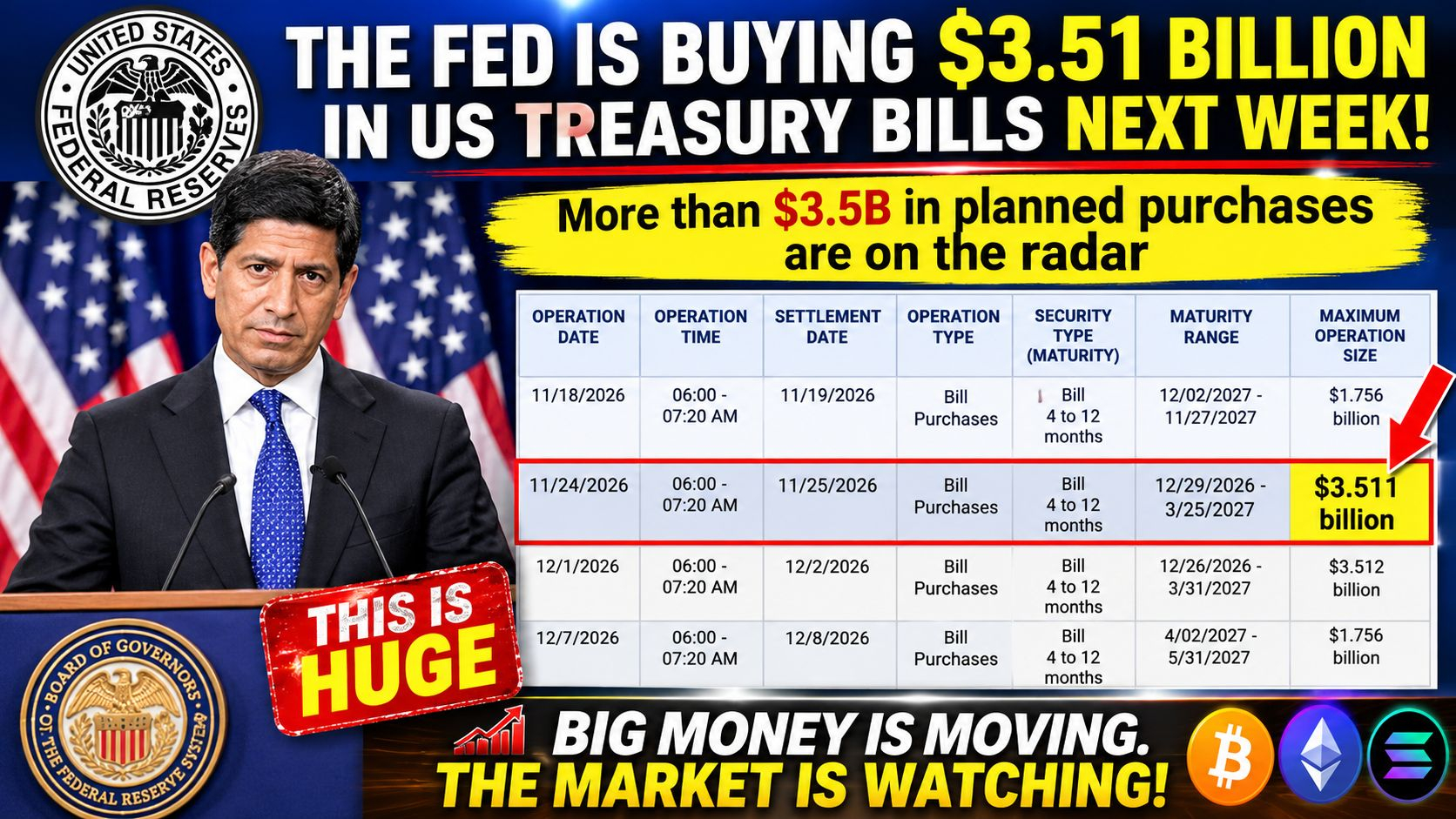
🔥 THE FED PLANS TO BUY $3.51 BILLION IN U.S. TREASURY BILLS NEXT WEEK!
Over $3.5 BILLION in planned Treasury purchases are now on the radar.
📊 Here's why this matters:
💵 Massive liquidity activity
🏦 Increased attention on U.S. financial markets
📈 Potential implications for risk assets
₿ Crypto traders are watching closely!
Could this be another major signal for the crypto market?
BIG MONEY IS MOVING. THE MARKET IS WATCHING! 👀
Do you think BTC will benefit from this move? 🚀
#Bitcoin #BTC #CryptoNews #FederalReserve #FED #CryptoMarket #HYPE #PARTI #Ethereum #USMarkets #TreasuryBills #CryptoUpdate
217

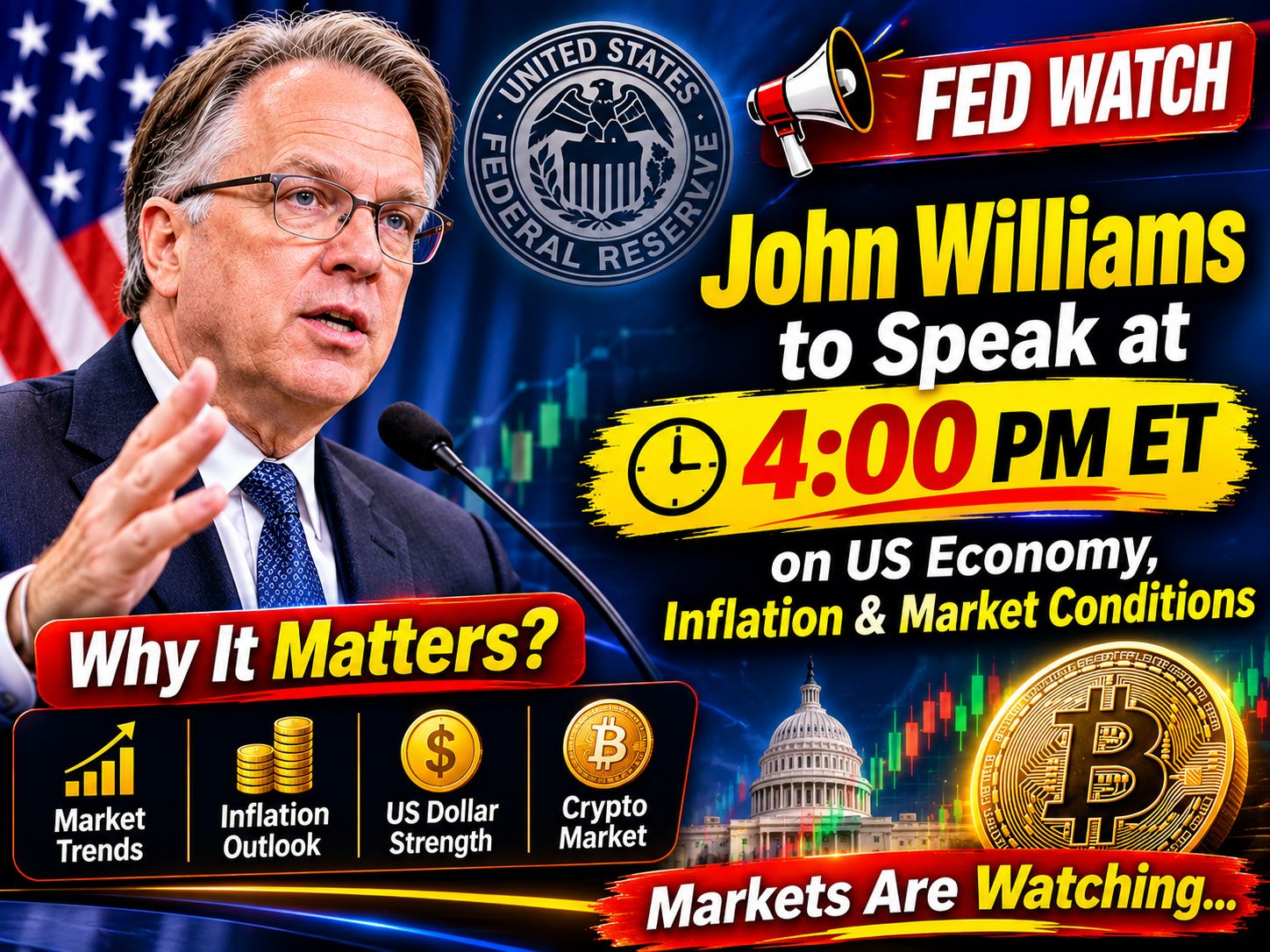
🚨 FED WATCH: JOHN WILLIAMS' SPEECH COULD DRAW MARKET ATTENTION
🇺🇸 Federal Reserve President John Williams is scheduled to speak at 4:00 PM ET, addressing three major topics:
• US Economic Outlook
• Inflation Trends
• Current Financial Market Conditions
Why should investors pay attention?
The Federal Reserve's perspective on inflation and economic growth can influence expectations around future interest-rate decisions.
Markets will be watching closely for any signals regarding:
📊 The direction of inflation
📉 Future monetary policy
💵 US Dollar strength
₿ Potential implications for Bitcoin$BTC and the broader crypto market
{spot}(BTCUSDT)
My Market Perspective:
Rather than reacting to headlines, investors should focus on the actual message, market expectations, and how financial markets respond after the speech.
No speech guarantees a bullish or bearish move. The real opportunity is understanding the data before making assumptions.
#FederalReserve #JohnWilliams #bitcoin #CryptoMarket #Inflation #USMarkets
🚨 FED WATCH: JOHN WILLIAMS' SPEECH COULD DRAW MARKET ATTENTION
🇺🇸 Federal Reserve President John Williams is scheduled to speak at 4:00 PM ET, addressing three major topics:
• US Economic Outlook
• Inflation Trends
• Current Financial Market Conditions
Why should investors pay attention?
The Federal Reserve's perspective on inflation and economic growth can influence expectations around future interest-rate decisions.
Markets will be watching closely for any signals regarding:
📊 The direction of inflation
📉 Future monetary policy
💵 US Dollar strength
₿ Potential implications for Bitcoin$BTC and the broader crypto market
My Market Perspective:
Rather than reacting to headlines, investors should focus on the actual message, market expectations, and how financial markets respond after the speech.
No speech guarantees a bullish or bearish move. The real opportunity is understanding the data before making assumptions.
#FederalReserve #JohnWilliams #bitcoin #CryptoMarket #Inflation #USMarkets
104

·
--
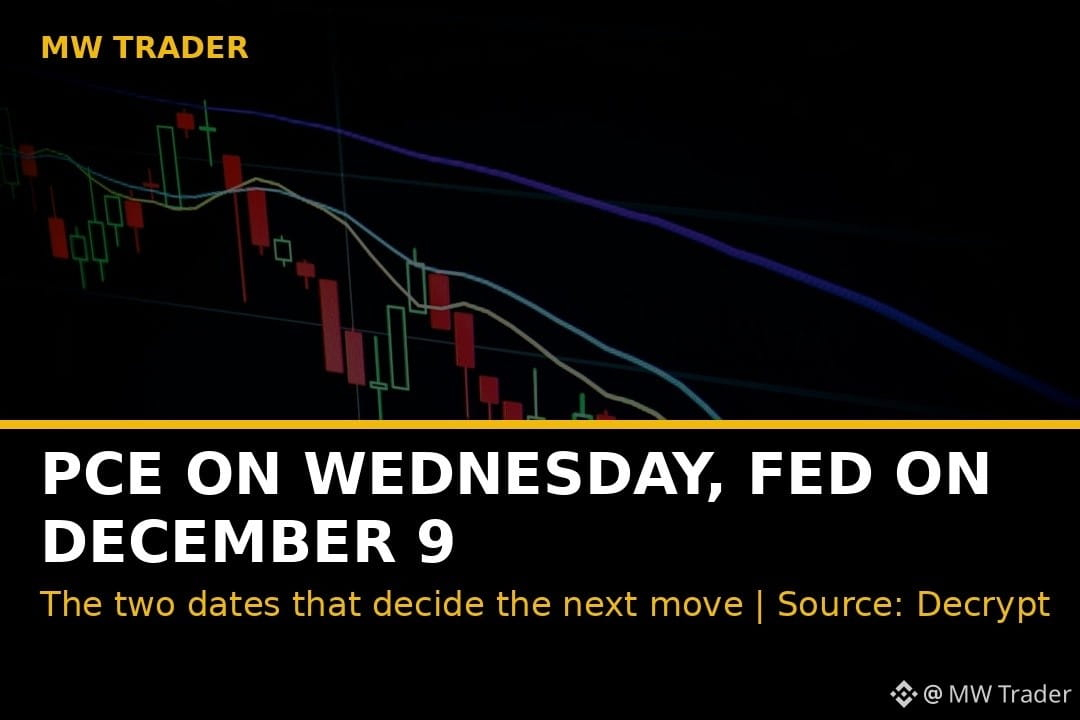
Wednesday brings PCE, then the Fed meets December 9. These two dates decide the next move. 📰
Decrypt reports traders now turn to October personal consumption expenditures inflation data due on Wednesday, followed by the November jobs report on December 4 and the Federal Reserve December 9 meeting. Bitcoin is trading at $61,386 after a weekend swing of more than $6,000, and cooler inflation plus steadier stocks could support a more sustainable recovery, while hotter inflation and further tech losses could send Bitcoin back to its prior lows. My view is that the bounce has no reason to run before Wednesday, so I trade small until the PCE number lands. ⚠️
Do you hold through Wednesday PCE, or sit out until the number is known? 🤔
Source: Decrypt.
Futures trading is risky, trade small and manage risk. ⚠️
Follow for more trades.
#Crypto #Bitcoin #FuturesTrading #TradingSignals #FederalReserve
1

·
--
Bullish
#willoctcorepceshiftfedhikeexpectations?
Will October Core PCE Shift Fed Hike Expectations?
Wall Street is preparing for a major inflation test as October’s Core PCE report approaches. With markets already watching the Federal Reserve’s next move, this data could influence expectations for another rate hike.
Core PCE is one of the Fed’s preferred inflation measures, making it especially important for investors tracking monetary policy.
What to Watch?
Core PCE: A hotter-than-expected reading could strengthen expectations for tighter monetary policy.
Inflation Trend: Persistent price pressure may keep the Fed focused on controlling inflation.
Interest Rates: Higher-rate expectations could put pressure on stocks and crypto.
Market Reaction: Bitcoin, the Nasdaq, gold, and bond yields could respond sharply to the release.
Why It Matters for Crypto
When markets expect higher interest rates, investors may become more cautious toward risk assets. This can reduce demand for cryptocurrencies and technology stocks.
A softer inflation reading, however, could ease some pressure and support a short-term recovery.
Market Outlook: The key is not just the headline number, but whether Core PCE comes in above or below expectations. Traders should watch the actual data, market reaction, and Fed commentary before making decisions.
One inflation report could reshape the market narrative—but will it bring relief or renewed pressure?
#CorePCE #FederalReserve #CryptoMarket $BTC
76
·
--
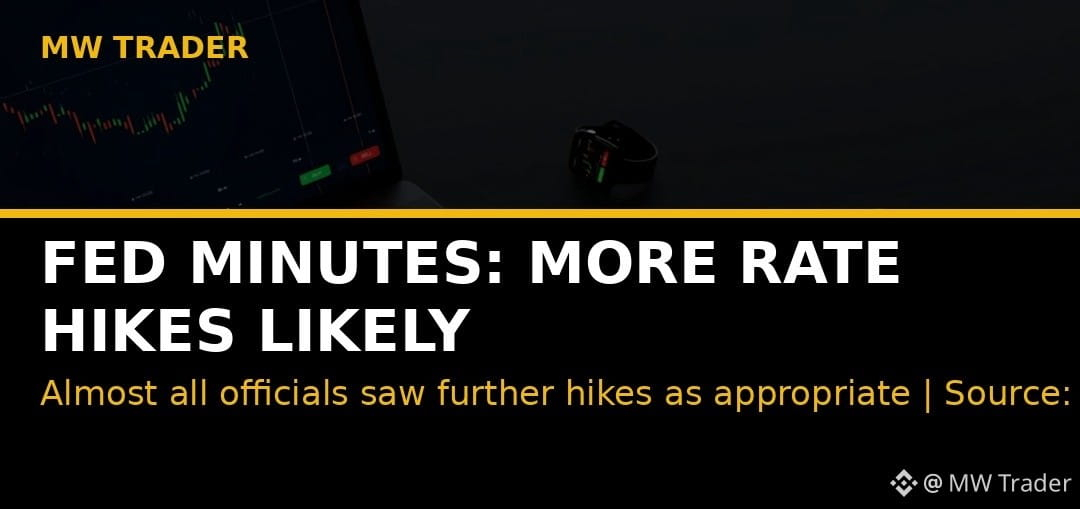
The Fed minutes say more rate hikes are likely. That is the macro wall Bitcoin is climbing. ⚠️
BlockchainReporter reports the minutes of the Federal Reserve meeting of October 27 and 28 showed almost all officials judged further rate increases likely appropriate. Bitcoin is trading at $61,434 on CoinGecko, up 2.94 percent in 24 hours, and APA credits easing forced selling and growing demand for cheap coins for the rebound from the two year low of $55,251.60 on November 21. My view is that rate hike talk is exactly what capped the last rally, so this bounce has to prove it can hold $61,000 while the macro news stays hostile, and a daily close above $62,900 is the first real proof. 📉
Does the Fed talking hikes kill this bounce, or does Bitcoin ignore the Fed this time? 🤔
Source: BlockchainReporter, APA.
Futures trading is risky, trade small and manage risk. ⚠️
Follow for more trades.
#Crypto #Bitcoin #FuturesTrading #TradingSignals #FederalReserve

·
--
Bullish
🚨 WILL OCTOBER CORE PCE CHANGE THE FED'S RATE HIKE PLANS?
All eyes are now on the October Core PCE inflation report, expected on November 25.
This report could influence the Federal Reserve's next interest-rate decision.
Here are three possible scenarios:
📈 Hot Inflation: Higher-than-expected numbers could increase pressure on the Fed to raise interest rates.
📊 Expected Inflation: A reading around 0.3% could keep the current rate-hike expectations alive.
🟢 Cooling Inflation: Lower inflation could bring some relief to financial markets.
Why does it matter for crypto?
Higher interest rates can reduce investors' appetite for risky assets like Bitcoin and altcoins. Lower inflation could improve market sentiment.
The big question is: Will this report bring relief or create another wave of market uncertainty?
$BTC $ETH $SOL
What is your prediction?
#bitcoin #BTC #CryptoMarket #FederalReserve #PCE
{spot}(BTCUSDT)
{spot}(ETHUSDT)
{spot}(SOLUSDT)
🚨 WILL OCTOBER CORE PCE CHANGE THE FED'S RATE HIKE PLANS?
All eyes are now on the October Core PCE inflation report, expected on November 25.
This report could influence the Federal Reserve's next interest-rate decision.
Here are three possible scenarios:
📈 Hot Inflation: Higher-than-expected numbers could increase pressure on the Fed to raise interest rates.
📊 Expected Inflation: A reading around 0.3% could keep the current rate-hike expectations alive.
🟢 Cooling Inflation: Lower inflation could bring some relief to financial markets.
Why does it matter for crypto?
Higher interest rates can reduce investors' appetite for risky assets like Bitcoin and altcoins. Lower inflation could improve market sentiment.
The big question is: Will this report bring relief or create another wave of market uncertainty?
$BTC $ETH $SOL
What is your prediction?
#bitcoin #BTC #CryptoMarket #FederalReserve #PCE
1
55
🌍#PositiveMindsGlobalResults | Binance Square | November 23, 2026
⚠️ BILL ACKMAN: 2% INFLATION TARGET COULD PUSH THE WORLD INTO RECESSION
Billionaire investor Bill Ackman is challenging the Federal Reserve’s long-standing 2% inflation target, arguing that 3% may be a more realistic target in today’s economic environment.
Ackman warns that aggressively forcing inflation back to 2% through further interest-rate hikes could tighten financial conditions too severely, potentially triggering a recession in the U.S. and globally.
He points to rising borrowing costs, geopolitical tensions, tariffs, deglobalization, massive AI infrastructure spending, and SpaceX’s reportedly higher debt financing costs as evidence of growing financial pressure.
The debate is becoming increasingly important for investors. Higher rates could pressure technology stocks, AI investments, businesses, real estate, and crypto, while a less aggressive Fed policy could potentially support risk assets.
The critical question: Will the Fed prioritize its 2% inflation target, or risk slowing the global economy to achieve it?
Markets are now watching the December Fed decision closely.
Source: November 23, 2026, market reporting and Bill Ackman’s inflation-policy remarks.
images.investinglive.com+1
#FederalReserve #Inflation #InterestRates #RecessionRisk #GlobalMarkets #AI #Crypto #MarketIntelligence
{spot}(BNBUSDT)
{spot}(BTCUSDT)
🌍#PositiveMindsGlobalResults | Binance Square | November 23, 2026
⚠️ BILL ACKMAN: 2% INFLATION TARGET COULD PUSH THE WORLD INTO RECESSION
Billionaire investor Bill Ackman is challenging the Federal Reserve’s long-standing 2% inflation target, arguing that 3% may be a more realistic target in today’s economic environment.
Ackman warns that aggressively forcing inflation back to 2% through further interest-rate hikes could tighten financial conditions too severely, potentially triggering a recession in the U.S. and globally.
He points to rising borrowing costs, geopolitical tensions, tariffs, deglobalization, massive AI infrastructure spending, and SpaceX’s reportedly higher debt financing costs as evidence of growing financial pressure.
The debate is becoming increasingly important for investors. Higher rates could pressure technology stocks, AI investments, businesses, real estate, and crypto, while a less aggressive Fed policy could potentially support risk assets.
The critical question: Will the Fed prioritize its 2% inflation target, or risk slowing the global economy to achieve it?
Markets are now watching the December Fed decision closely.
Source: November 23, 2026, market reporting and Bill Ackman’s inflation-policy remarks.
images.investinglive.com+1
#FederalReserve #Inflation #InterestRates #RecessionRisk #GlobalMarkets #AI #Crypto #MarketIntelligence
125

A sudden market rout has effectively eliminated trader expectations for a 50 basis point rate hike in December.
#FederalReserve #MacroEconomy
A sudden market rout has effectively eliminated trader expectations for a 50 basis point rate hike in December.
#FederalReserve #MacroEconomy
#FederalReserve #MacroEconomy
59
Log in to explore more content
Join global crypto users on Binance Square
⚡️ Get latest and useful information about crypto.
💬 Trusted by the world’s largest crypto exchange.
👍 Discover real insights from verified creators.
Email / Phone number
Trending Topics
1
#AnthropicBreaksBelowIPOPriceAmidAISlump
26,960 views
361 Discussing
2
#Bitcoin'sReboundFadesBelow$60K
78,086 views
331 Discussing
3
#WillMarketsStageAThanksgivingReliefRally?
520,329 views
3,333 Discussing
4
#EthereumFoundationPlansShiftToHashBasedSignaturesBy2028
3,093 views
89 Discussing
5
#ADPWeeklyPrivatePayrollsSlowTo21000
6,912 views
136 Discussing
6
#WillOctCorePCEShiftFedHikeExpectations?
209,122 views
1,756 Discussing
7
#USReportedlyPreparesNewTariffsOn16TradingPartners
8,328 views
108 Discussing
8
#SouthKoreaDigitalAssetBillProposes20%ShareholderCap
1,273 views
14 Discussing
9
#SouthKoreaProposesBanksHoldOver50%OfStablecoinIssuers
497 views
11 Discussing
10
#EvolveAtBinanceBlockchainWeek
363,243 views
2,110 Discussing