
#southkoreaproposesmandatorydigitalassettransactiondisclosure
southkoreaproposesmandatorydigitalassettransactiondisclosure
Hot
Latest


#SouthKoreaProposesMandatoryDigitalAssetTransactionDisclosure
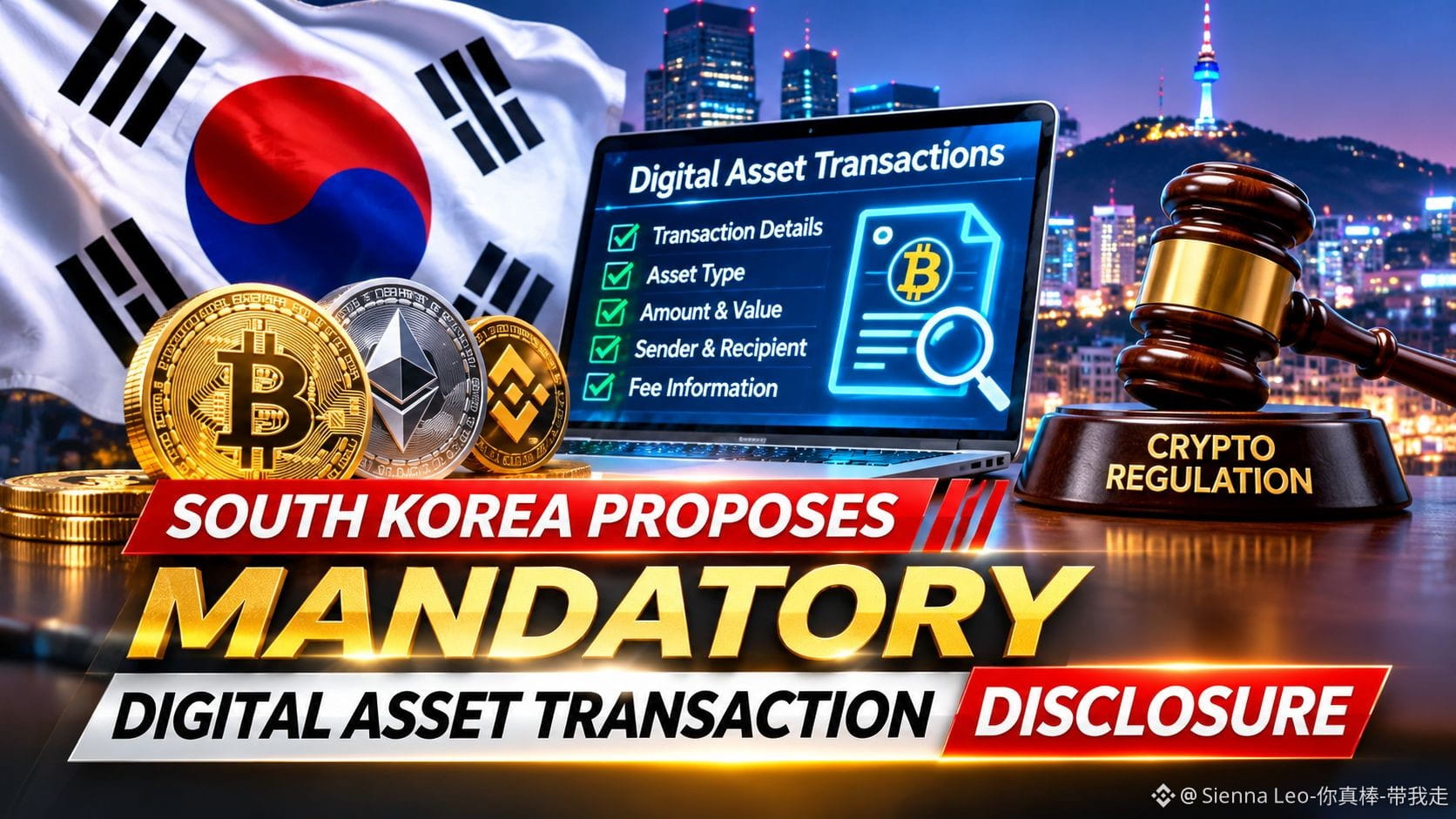
🇰🇷 South Korea Moves Toward Mandatory Crypto Transaction Disclosure: What Investors Should Know 🇰🇷
Imagine moving your crypto from a domestic exchange to a personal wallet, only to discover that the transaction has become part of a formal reporting system.
South Korea is taking another significant step toward tighter digital asset oversight. Under its revised Foreign Exchange Transactions Act, mandatory reporting of cross-border crypto transfers is scheduled to begin on December 3, 2026.
The Bank of Korea will receive transaction-level information from domestic service providers, including transaction dates, asset types, quantities, converted values, fees, and sender and recipient details.
The proposed reporting framework also includes monthly customer balance reports. However, the exact scope of these additional reports has faced industry criticism and remains subject to regulatory adjustments.
The government's primary objective is to close loopholes in cross-border financial activity and improve monitoring of potentially illegal money transfers.
But there is a bigger question: where does financial transparency end and excessive data collection begin?
My take: Better oversight can strengthen market integrity, but privacy and proportionality must remain central. If compliance becomes unnecessarily burdensome, investors may reconsider how they access domestic exchanges.
South Korea's approach could become an important test of how governments regulate crypto without discouraging participation.
Can stronger transaction monitoring protect investors without compromising their financial privacy?
Disclaimer: This content is for educational purposes only, not financial advice.
#CryptoRegulation #SouthKoreaCrypto #GrowWithSAC $INIT $SSV $TFUEL
1
849

BREAKING: South Korea Wants ZERO Secrets in Crypto!
FSC's draft Digital Asset Act would force issuers + exchanges to disclose WITHOUT DELAY:
🔥 Large transactions
🎁 Airdrops
🔥 Token burns
🛡️ Hacks & system failures
❌ No disclosure / False disclosure = fine up to 100M won (∼$72,000)
🚫 Manipulation-suspected accounts = payment suspension up to 1 YEAR
No more hidden dumps. No more silent burns.
Is this Bullish for trust, or Bearish for privacy?
A) Bullish — Transparency = Trust 📈
B) Bearish — Too much control 📉
C) Neutral — Need full details first 👀
Drop A, B or C 👇
#SouthKoreaProposesMandatoryDigitalAssetTransactionDisclosure #SouthKorea #CryptoRegulation
40

·
--

Article
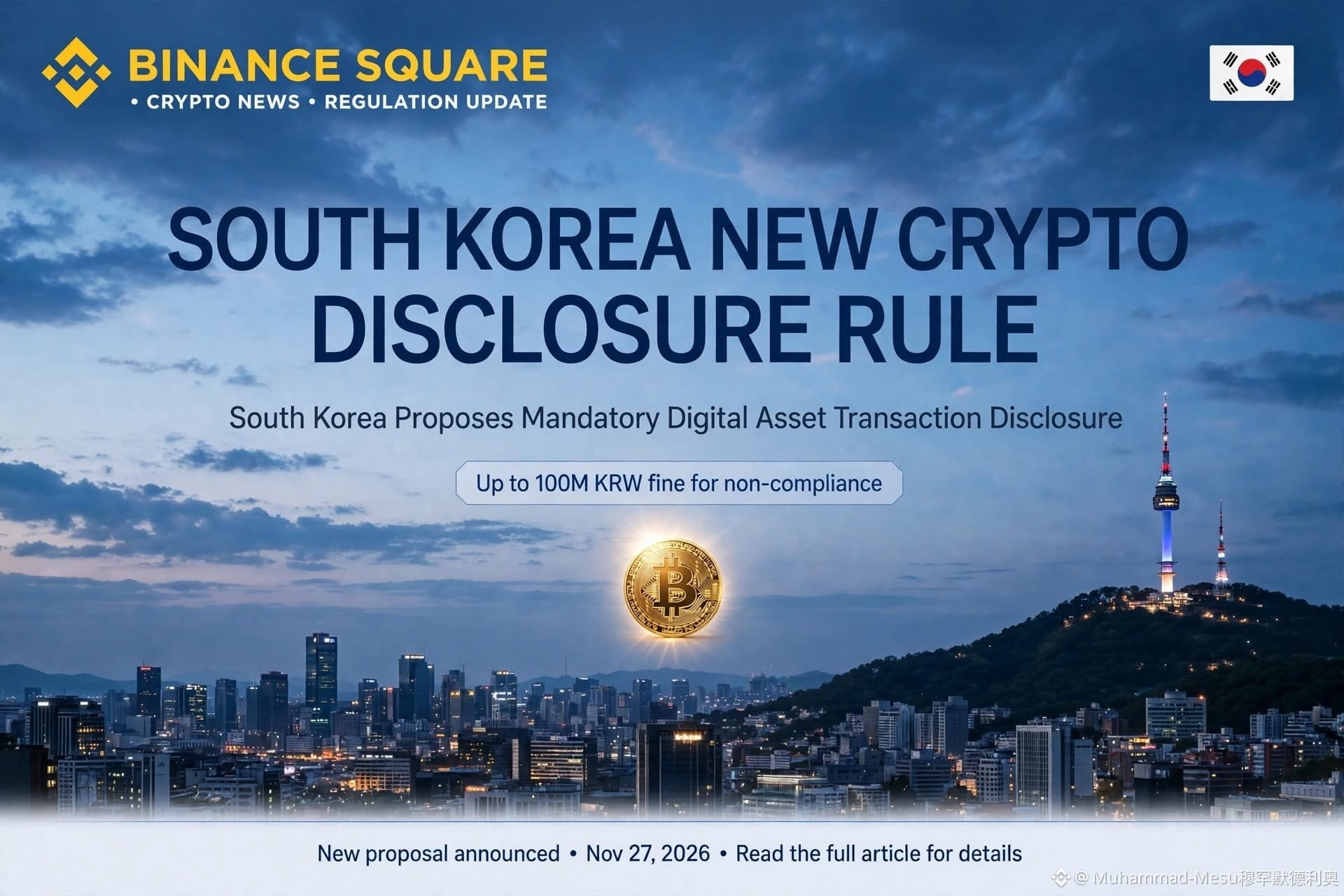
South Korea Tightens Crypto Transfer Reporting: What Investors Should Know
👀 Your Transfer May Soo#SouthKoreaProposesMandatoryDigitalAssetTransactionDisclosure
💸 Imagine moving crypto from a Korean exchange to your personal wallet and knowing the details will go to the central bank. That is where South Korea is heading.
📅 Starting December 3, 2026, cross-border crypto transfer reporting becomes mandatory under the revised Foreign Exchange Transactions Act.
🏛️ The goal is to give authorities a clearer view of money moving across borders and help detect illegal foreign exchange transactions. 🔍
📋 What Will Be Reported?
🏦 Domestic crypto service providers will file the reports with the Bank of Korea. Under its draft manual, completed transfers are due by 11 a.m. the next business day.
The details include:
• 🕒 Transaction date and time
• 🪙 Crypto type and quantity
• 💱 Value converted into Korean won
• 🧾 Fees
• 👤 Sender and recipient information
🔄 Which Transfers Matter?
• ✅ Domestic exchange to an overseas exchange
• ✅ Domestic service provider to a personal wallet
• ❌ Direct wallet-to-wallet transfers with no service provider involved
🤝 Reported data is expected to be shared with tax, customs and financial authorities.
⚖️ The Monthly Balance Debate
📊 The draft also proposed monthly balance reports, due on the 10th of the following month. They would cover dormant accounts, delisted tokens and staked assets.
👥 The initial plan reached users with at least one cross-border transfer since July 19, 2024. At the five largest exchanges, about 1.27 million users had such a record through September 30.
😟 Critics call the plan excessive and difficult to implement. Exchanges also raised a legal problem: what happens if a user refuses consent for balance reporting?
🔧 The Bank of Korea said it was considering a much narrower scope and a possible start from December 3 instead of looking back to 2024. It aimed to finalize details in November. I found no final announcement as of November 27.
🧭 What Should Investors Do?
• 🗂️ Keep records of transfers, fees and wallet addresses
• 🔐 Check that recipient details are accurate
• 📢 Follow official notices from your exchange and the Bank of Korea
• 🧮 Review your tax and foreign exchange obligations with a qualified professional
🎯 Final Thoughts
🚦 This is not a ban on crypto transfers. It is a major increase in transparency and compliance.
🛡️ Supporters can point to stronger monitoring of illegal fund flows. The big concern is how much personal data authorities really need, especially for monthly balances.
🌍 South Korea's approach could become an important test of the balance between oversight and privacy.
💬 Would these rules increase your trust in crypto, or raise your privacy concerns? Tell us below! 👇
⚠️ #EvolveAtBinanceBlockchainWeek #CanMarketsReboundAfterThanksgiving? #CouldSpaceX’sOrbitalDataCentersBoostAIChipDemand? #CorePCEBeatLiftsFedHikeOdds
#SouthKorea #CryptoRegulation #BankOfKorea #CryptoNews #Blockchain
Sources (checked November 27, 2026): Seoul Economic Daily, Oct 23 · Seoul Economic Daily, Oct 26 · CoinGeek
South Korea Tightens Crypto Transfer Reporting: What Investors Should Know 👀 Your Transfer May Soo
#SouthKoreaProposesMandatoryDigitalAssetTransactionDisclosure
💸 Imagine moving crypto from a Korean exchange to your personal wallet and knowing the details will go to the central bank. That is where South Korea is heading.
📅 Starting December 3, 2026, cross-border crypto transfer reporting becomes mandatory under the revised Foreign Exchange Transactions Act.
🏛️ The goal is to give authorities a clearer view of money moving across borders and help detect illegal foreign exchange transactions. 🔍
📋 What Will Be Reported?
🏦 Domestic crypto service providers will file the reports with the Bank of Korea. Under its draft manual, completed transfers are due by 11 a.m. the next business day.
The details include:
• 🕒 Transaction date and time
• 🪙 Crypto type and quantity
• 💱 Value converted into Korean won
• 🧾 Fees
• 👤 Sender and recipient information
🔄 Which Transfers Matter?
• ✅ Domestic exchange to an overseas exchange
• ✅ Domestic service provider to a personal wallet
• ❌ Direct wallet-to-wallet transfers with no service provider involved
🤝 Reported data is expected to be shared with tax, customs and financial authorities.
⚖️ The Monthly Balance Debate
📊 The draft also proposed monthly balance reports, due on the 10th of the following month. They would cover dormant accounts, delisted tokens and staked assets.
👥 The initial plan reached users with at least one cross-border transfer since July 19, 2024. At the five largest exchanges, about 1.27 million users had such a record through September 30.
😟 Critics call the plan excessive and difficult to implement. Exchanges also raised a legal problem: what happens if a user refuses consent for balance reporting?
🔧 The Bank of Korea said it was considering a much narrower scope and a possible start from December 3 instead of looking back to 2024. It aimed to finalize details in November. I found no final announcement as of November 27.
🧭 What Should Investors Do?
• 🗂️ Keep records of transfers, fees and wallet addresses
• 🔐 Check that recipient details are accurate
• 📢 Follow official notices from your exchange and the Bank of Korea
• 🧮 Review your tax and foreign exchange obligations with a qualified professional
🎯 Final Thoughts
🚦 This is not a ban on crypto transfers. It is a major increase in transparency and compliance.
🛡️ Supporters can point to stronger monitoring of illegal fund flows. The big concern is how much personal data authorities really need, especially for monthly balances.
🌍 South Korea's approach could become an important test of the balance between oversight and privacy.
💬 Would these rules increase your trust in crypto, or raise your privacy concerns? Tell us below! 👇
⚠️ #EvolveAtBinanceBlockchainWeek #CanMarketsReboundAfterThanksgiving? #CouldSpaceX’sOrbitalDataCentersBoostAIChipDemand? #CorePCEBeatLiftsFedHikeOdds
#SouthKorea #CryptoRegulation #BankOfKorea #CryptoNews #Blockchain
Sources (checked November 27, 2026): Seoul Economic Daily, Oct 23 · Seoul Economic Daily, Oct 26 · CoinGeek
1
35

·
--
Bearish
South Korea Targets Silent Token Sales: ₩100M Fines, 1-Year Freezes
A project moves a pile of tokens. Price bleeds. The explanation arrives days later, if ever.
South Korea's Financial Services Commission (FSC) wants to end that routine.
Its draft bill, reported on Nov. 26, proposes:
📌 Who must disclose
FSC white paper filers AND exchanges listing the asset.
Both must report relevant information without delay.
📌 What must be disclosed
Large issuer-side transactions.
Airdrops and burns that significantly affect supply.
Hacks, system failures, core tech changes and other trade-relevant information.
📌 Penalties
Non-disclosure or false disclosure could trigger administrative fines up to ₩100M (~$72,000).
📌 Account freezes
Where there are substantial grounds to suspect unfair trading and a risk of hiding illicit gains, the FSC can request exchange and bank account freezes.
The freeze can last up to six months, with one extension of up to six more months.
This doesn't ban teams from selling.
It makes staying silent about major supply moves a legal risk.
The bill is still a draft. Lawmakers must pass it, and disclosure procedures will be set by decree.
The trade-off: Stock-market-style transparency could better protect retail, but heavier compliance may slow new token listings in Korea.
Square Insight: Supply transparency can help prevent exit-liquidity traps. But "without delay" doesn't mean "before the dump."
Check team wallets on-chain instead of waiting for the official memo.
Is ₩100M enough to deter a team holding millions in tokens — or just another business expense?
$BTC
{future}(BTCUSDT)
$ETH
{future}(ETHUSDT)
$XRP
{future}(XRPUSDT)
#SouthKoreaProposesMandatoryDigitalAssetTransactionDisclosure
NFA / DYOR
South Korea Targets Silent Token Sales: ₩100M Fines, 1-Year Freezes
A project moves a pile of tokens. Price bleeds. The explanation arrives days later, if ever.
South Korea's Financial Services Commission (FSC) wants to end that routine.
Its draft bill, reported on Nov. 26, proposes:
📌 Who must disclose
FSC white paper filers AND exchanges listing the asset.
Both must report relevant information without delay.
📌 What must be disclosed
Large issuer-side transactions.
Airdrops and burns that significantly affect supply.
Hacks, system failures, core tech changes and other trade-relevant information.
📌 Penalties
Non-disclosure or false disclosure could trigger administrative fines up to ₩100M (~$72,000).
📌 Account freezes
Where there are substantial grounds to suspect unfair trading and a risk of hiding illicit gains, the FSC can request exchange and bank account freezes.
The freeze can last up to six months, with one extension of up to six more months.
This doesn't ban teams from selling.
It makes staying silent about major supply moves a legal risk.
The bill is still a draft. Lawmakers must pass it, and disclosure procedures will be set by decree.
The trade-off: Stock-market-style transparency could better protect retail, but heavier compliance may slow new token listings in Korea.
Square Insight: Supply transparency can help prevent exit-liquidity traps. But "without delay" doesn't mean "before the dump."
Check team wallets on-chain instead of waiting for the official memo.
Is ₩100M enough to deter a team holding millions in tokens — or just another business expense?
$BTC
$ETH
$XRP
#SouthKoreaProposesMandatoryDigitalAssetTransactionDisclosure
NFA / DYOR

120

·
--

Article
SOUTH KOREA JUST ENDED ITS 9-YEAR ICO BAN — WHAT SHOULD TRADERS WATCH?Let's be honest.
While everyone watched ETF flows and tariff headlines, South Korea just quietly rewrote its crypto rulebook.
On November 24, the Financial Services Commission unveiled its Digital Asset Act. For the first time since September 2017, Korean companies will be allowed to raise money by selling new tokens. But this is not the wild ICO era coming back — it comes with rules stricter than most markets have today.
1. WHAT ACTUALLY CHANGED
Issuers must file a digital asset white paper with the FSC — project details, token supply, use of funds, investment risks — and wait about 7 days after disclosure before asking the public to buy. Exchanges face the same duty: disclose hacks, supply changes, and anything material about listed tokens.
2. THE TEETH IN THE LAW
False or missing disclosure carries fines of up to 100 million won — about $72,000. And accounts suspected of market manipulation or fraud can have payments suspended for up to a year: six months, extendable by another six.
3. WHY IT MATTERS BEYOND KOREA
Seoul is trying to pull crypto fundraising back onshore — the jobs, investment, and tax revenue that left for Singapore and elsewhere after the 2017 ban. If the National Assembly approves it, Korea becomes one of the few major markets with a formal, IPO-style path for token sales.
NOW, LET'S TALK ABOUT THE OTHER SIDE
This is a proposal, not a law yet. Parliament still has to pass it, and the disclosure burden could push small teams to launch elsewhere anyway. A regulated ICO is still an ICO — most new tokens lose value, paperwork or not.
MY TAKE
I like the direction more than the detail. A market that forces issuers to show their supply, their team, and their risks before taking retail money is a market that gets fewer rug pulls. Korea is not reopening the casino — it is building a door with a guard on it.
One thing to watch: whether the Assembly passes this before year-end, and which exchange lists the first regulated ICO.
So what do you think — do IPO-style rules make ICOs safer, or just slower? 👇
$BTC
#SouthKoreaProposesMandatoryDigitalAssetTransactionDisclosure
SOUTH KOREA JUST ENDED ITS 9-YEAR ICO BAN — WHAT SHOULD TRADERS WATCH?
Let's be honest.
While everyone watched ETF flows and tariff headlines, South Korea just quietly rewrote its crypto rulebook.
On November 24, the Financial Services Commission unveiled its Digital Asset Act. For the first time since September 2017, Korean companies will be allowed to raise money by selling new tokens. But this is not the wild ICO era coming back — it comes with rules stricter than most markets have today.
1. WHAT ACTUALLY CHANGED
Issuers must file a digital asset white paper with the FSC — project details, token supply, use of funds, investment risks — and wait about 7 days after disclosure before asking the public to buy. Exchanges face the same duty: disclose hacks, supply changes, and anything material about listed tokens.
2. THE TEETH IN THE LAW
False or missing disclosure carries fines of up to 100 million won — about $72,000. And accounts suspected of market manipulation or fraud can have payments suspended for up to a year: six months, extendable by another six.
3. WHY IT MATTERS BEYOND KOREA
Seoul is trying to pull crypto fundraising back onshore — the jobs, investment, and tax revenue that left for Singapore and elsewhere after the 2017 ban. If the National Assembly approves it, Korea becomes one of the few major markets with a formal, IPO-style path for token sales.
NOW, LET'S TALK ABOUT THE OTHER SIDE
This is a proposal, not a law yet. Parliament still has to pass it, and the disclosure burden could push small teams to launch elsewhere anyway. A regulated ICO is still an ICO — most new tokens lose value, paperwork or not.
MY TAKE
I like the direction more than the detail. A market that forces issuers to show their supply, their team, and their risks before taking retail money is a market that gets fewer rug pulls. Korea is not reopening the casino — it is building a door with a guard on it.
One thing to watch: whether the Assembly passes this before year-end, and which exchange lists the first regulated ICO.
So what do you think — do IPO-style rules make ICOs safer, or just slower? 👇
$BTC
#SouthKoreaProposesMandatoryDigitalAssetTransactionDisclosure
87

·
--
#SouthKoreaProposesMandatoryDigitalAssetTransactionDisclosure South Korea is tightening crypto rules to fight money laundering. Starting February 19, 2027, exchanges must share sender and recipient details on crypto transfers of any amount, dropping the old 1 million won limit. Officials also announced stricter checks and mandatory reporting on risky and overseas transfers.
$BTC $ETH $RENDER
{spot}(RENDERUSDT)
{spot}(ETHUSDT)
{spot}(BTCUSDT)
#SouthKoreaProposesMandatoryDigitalAssetTransactionDisclosure South Korea is tightening crypto rules to fight money laundering. Starting February 19, 2027, exchanges must share sender and recipient details on crypto transfers of any amount, dropping the old 1 million won limit. Officials also announced stricter checks and mandatory reporting on risky and overseas transfers.
$BTC $ETH $RENDER
$BTC $ETH $RENDER

106

·
--
Bullish
#SouthKoreaProposesMandatoryDigitalAssetTransactionDisclosure
South Korea Is Bringing More Transparency to Crypto! 🇰🇷
A major regulatory shift could be coming to South Korea’s crypto market!
The country’s Financial Services Commission has proposed a new Digital Asset Act that would require crypto issuers and exchanges to disclose important information about digital assets.
Under the proposal, projects may need to publish detailed white papers covering token supply, project details, how raised funds will be used, and potential investment risks. Exchanges could also be required to report major developments, including token supply changes, hacks, and other events that may influence market prices.
The goal is to help investors make better-informed decisions and reduce the risk of misleading information.
For crypto traders, transparency matters. Better disclosures could strengthen confidence in digital assets, while stricter rules may bring additional responsibilities for exchanges and projects.
The big question: Will stronger disclosure rules make South Korea a safer crypto market—or create new challenges for the industry?
The proposal still requires the legislative process before becoming law.
#CryptoNews #SouthKorea #DigitalAssets
22
·
--
#SouthKoreaProposesMandatoryDigitalAssetTransactionDisclosure South Korea is moving to require strict checks and mandatory reporting on digital asset transfers. Officials recently reinforced plans to scrap the old transfer size limit so sender and recipient details apply to every move, regardless of amount. Transfers to risky foreign exchanges and personal wallets will face tighter screening, extra reporting, or bans. The goal is to stop financial crime, though users may see slower moves and stricter checks.
$BTC $ETH $U
{spot}(UUSDT)
{spot}(ETHUSDT)
{spot}(BTCUSDT)
#SouthKoreaProposesMandatoryDigitalAssetTransactionDisclosure South Korea is moving to require strict checks and mandatory reporting on digital asset transfers. Officials recently reinforced plans to scrap the old transfer size limit so sender and recipient details apply to every move, regardless of amount. Transfers to risky foreign exchanges and personal wallets will face tighter screening, extra reporting, or bans. The goal is to stop financial crime, though users may see slower moves and stricter checks.
$BTC $ETH $U
$BTC $ETH $U

131

·
--
Article
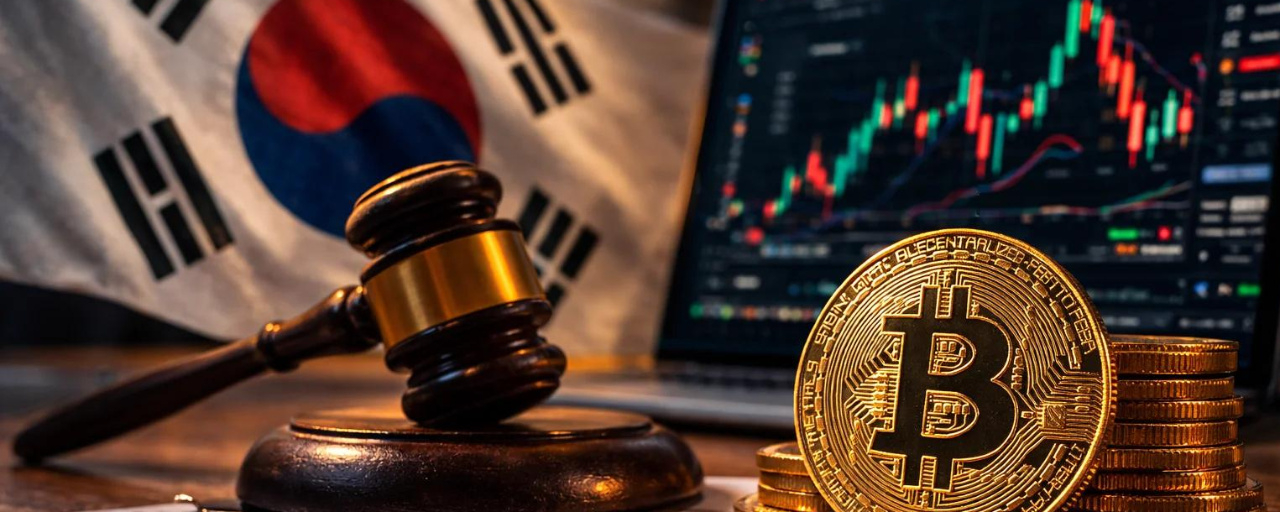
SOUTH KOREA PROPOSES MANDATORY CRYPTO TRANSACTION DISCLOSURE!#SouthKoreaProposesMandatoryDigitalAssetTransactionDisclosure South Korea is moving toward tighter crypto transparency, and the new proposal could change how digital asset projects operate.
🇰🇷 The Financial Services Commission (FSC) has introduced a proposed Digital Asset Act with major requirements:
🔍 Mandatory Disclosure: Token issuers must reveal supply, project details and how funds are used.
📊 Exchange Accountability: Platforms must disclose information about listed tokens and their circulation.
⚠️ Real-Time Updates: Major events, including token burns, supply changes and hacking incidents, could trigger immediate disclosure.
💰 Investor Protection: False or misleading disclosures could lead to financial penalties and legal consequences.
🔥 The Bigger Picture: South Korea wants to create a more transparent crypto market while opening the door to regulated token offerings and innovation.
My Take: Greater transparency could strengthen institutional confidence, but stricter compliance may increase costs for crypto projects and exchanges.
💬 Your Opinion: Will mandatory crypto disclosures make the market safer, or will excessive regulation slow innovation?
#CryptoRegulation #bitcoin #DigitalAssets #CryptoNews
SOUTH KOREA PROPOSES MANDATORY CRYPTO TRANSACTION DISCLOSURE!
#SouthKoreaProposesMandatoryDigitalAssetTransactionDisclosure South Korea is moving toward tighter crypto transparency, and the new proposal could change how digital asset projects operate.
🇰🇷 The Financial Services Commission (FSC) has introduced a proposed Digital Asset Act with major requirements:
🔍 Mandatory Disclosure: Token issuers must reveal supply, project details and how funds are used.
📊 Exchange Accountability: Platforms must disclose information about listed tokens and their circulation.
⚠️ Real-Time Updates: Major events, including token burns, supply changes and hacking incidents, could trigger immediate disclosure.
💰 Investor Protection: False or misleading disclosures could lead to financial penalties and legal consequences.
🔥 The Bigger Picture: South Korea wants to create a more transparent crypto market while opening the door to regulated token offerings and innovation.
My Take: Greater transparency could strengthen institutional confidence, but stricter compliance may increase costs for crypto projects and exchanges.
💬 Your Opinion: Will mandatory crypto disclosures make the market safer, or will excessive regulation slow innovation?
#CryptoRegulation #bitcoin #DigitalAssets #CryptoNews
61

#SouthKoreaProposesMandatoryDigitalAssetTransactionDisclosure
🇰🇷 South Korea Proposes Mandatory Digital Asset Transaction Disclosure: A New Era of Crypto Transparency? 🇰🇷
Imagine buying a cryptocurrency without knowing how many tokens exist, who controls its supply, or whether a major security incident has occurred. That information gap could soon become harder to ignore in South Korea.
On November 24, South Korea's Financial Services Commission (FSC) introduced a proposed Digital Asset Act designed to strengthen transparency, market fairness, and investor protection.
Under the proposal, digital asset issuers would need to submit detailed white papers covering token supply, project information, fundraising purposes, and associated risks.
Exchanges would also face disclosure obligations before listing assets, including information about issuers, circulating supply, and project risks. Significant developments, including hacking incidents and changes in token circulation, would require prompt disclosure.
Here is the bigger picture: this is not simply about collecting more information. It is about making crypto projects more accountable for the information investors rely on.
However, transparency comes with responsibilities. Stronger compliance could increase operational costs, particularly for smaller projects. Poorly designed rules could also discourage innovation.
One important distinction: this is a legislative proposal, not an enacted law. Its final requirements will depend on the legislative process.
Crypto markets need more than liquidity. They need information investors can trust.
❓ Will stronger disclosure rules make South Korea's crypto market more attractive to institutional investors?
Disclaimer: This content is for educational purposes only, not financial advice.
#CryptoRegulation #SouthKorea #GrowWithSAC $SEI $MOVE $SOXLB
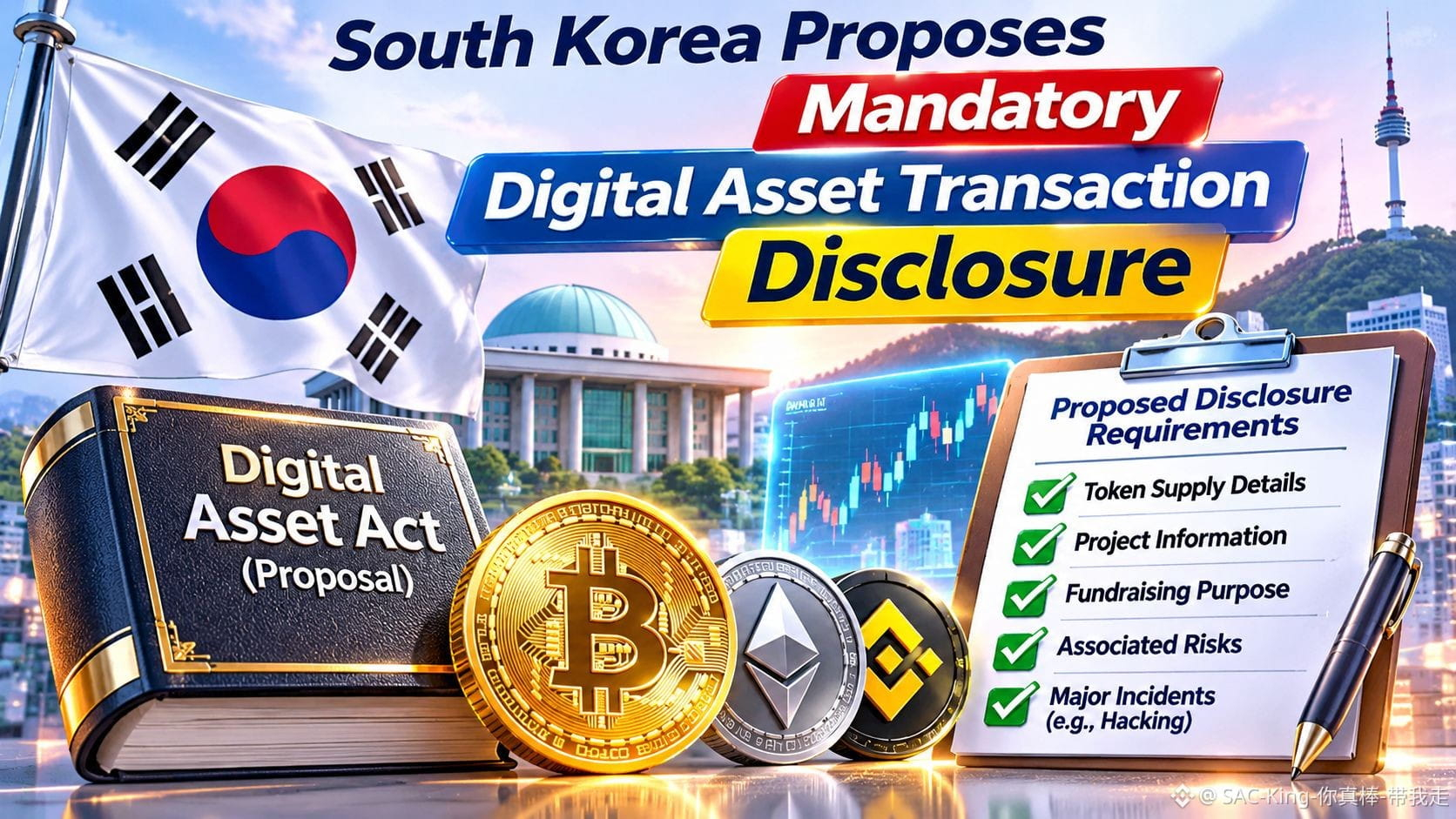
722

·
--
Bullish
#SouthKoreaProposesMandatoryDigitalAssetTransactionDisclosure South Korea is pushing a major transparency overhaul—proposing mandatory disclosures for major digital asset transactions alongside tighter transfer reporting and upcoming Digital Asset Basic Act rules. While stricter oversight, penalties, and tracking aim to curb illicit flows and boost investor protection, heavy compliance hurdles could test local exchange liquidity and push activity offshore. Will tighter Korean reporting rules strengthen market trust or drive liquidity away? $BTC $ETH $SOL
{spot}(SOLUSDT)
{spot}(ETHUSDT)
{spot}(BTCUSDT)
#SouthKoreaProposesMandatoryDigitalAssetTransactionDisclosure South Korea is pushing a major transparency overhaul—proposing mandatory disclosures for major digital asset transactions alongside tighter transfer reporting and upcoming Digital Asset Basic Act rules. While stricter oversight, penalties, and tracking aim to curb illicit flows and boost investor protection, heavy compliance hurdles could test local exchange liquidity and push activity offshore. Will tighter Korean reporting rules strengthen market trust or drive liquidity away? $BTC $ETH $SOL
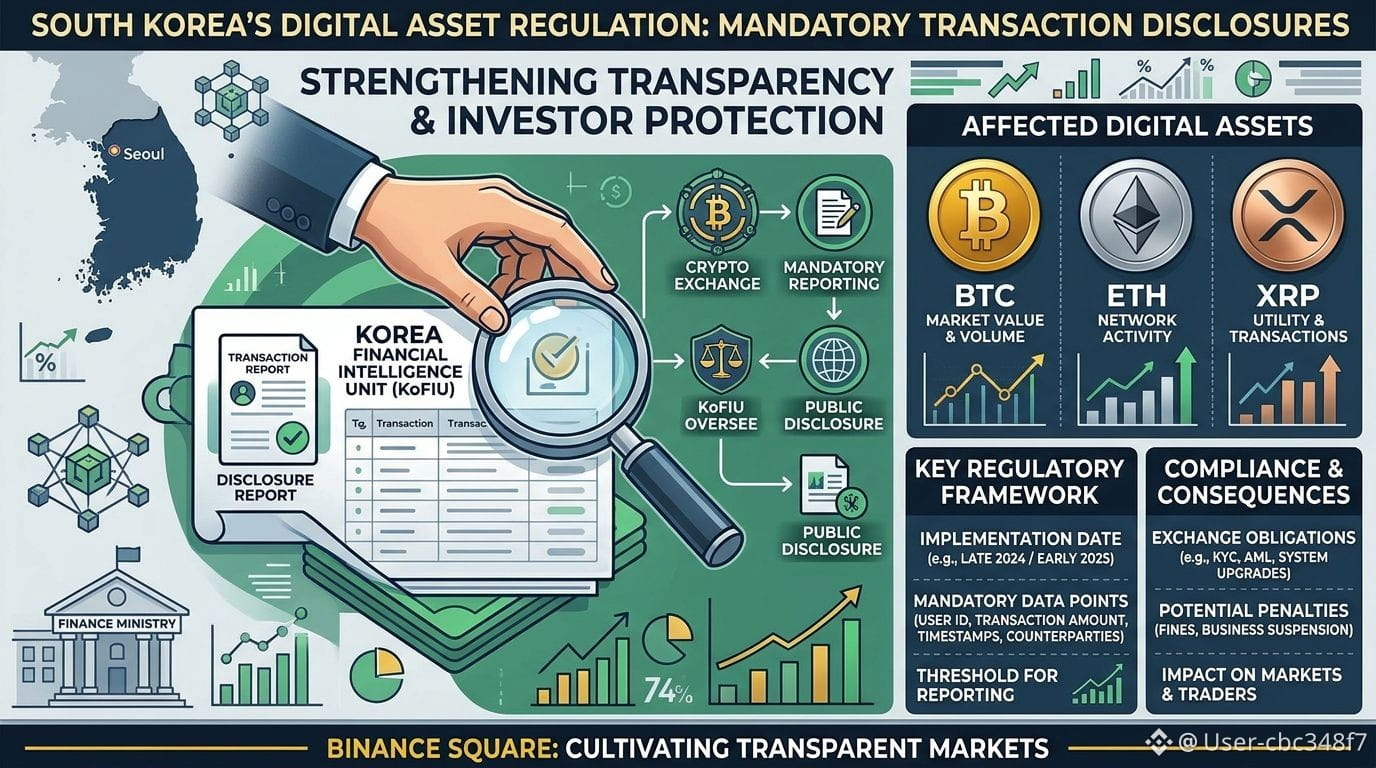
71

·
--
South korea proposal for transaction disclosure is actually bullish for real volume
privacy gets squeezed hard here
retail panic sells the rumor instantly
smart money stops guessing and just trades the tape
im sitting on my hands until the dust settles completely
a mass exodus of liquidity from the region proves me wrong
good idea
#SouthKoreaProposesMandatoryDigitalAssetTransactionDisclosure #CryptoNews
25

·
--
South Korea Wants Crypto Projects to Be More Transparent 🇰🇷#SouthKoreaProposesMandatoryDigitalAssetTransactionDisclosure
South Korea is proposing mandatory disclosure rules for digital assets as part of its new Digital Asset Act.
Under the proposal, issuers and brokers would have to submit white papers covering token supply, project details, use of funds and potential risks. Exchanges would also need to publish listing reports and immediately disclose major changes, including hacks or changes in token circulation.
Personally, I see this as an important step towards building trust in crypto. Investors should not have to rely on social media promises or incomplete project information to make decisions.
But transparency must come with accountability. False disclosures should have real consequences.
My expectation is simple: more reliable information, stronger investor protection and fewer unpleasant surprises.
The proposal still needs to go through South Korea’s legislative process.
South Korea Wants Crypto Projects to Be More Transparent 🇰🇷
#SouthKoreaProposesMandatoryDigitalAssetTransactionDisclosure
South Korea is proposing mandatory disclosure rules for digital assets as part of its new Digital Asset Act.
Under the proposal, issuers and brokers would have to submit white papers covering token supply, project details, use of funds and potential risks. Exchanges would also need to publish listing reports and immediately disclose major changes, including hacks or changes in token circulation.
Personally, I see this as an important step towards building trust in crypto. Investors should not have to rely on social media promises or incomplete project information to make decisions.
But transparency must come with accountability. False disclosures should have real consequences.
My expectation is simple: more reliable information, stronger investor protection and fewer unpleasant surprises.
The proposal still needs to go through South Korea’s legislative process.
6
129

·
--
South Korea just proposed the strictest transparency rule crypto has seen — and it comes with a freeze button.
The Financial Services Commission's draft Digital Asset Industry Innovation and User Protection Act, reported November 26, would force issuers and listing exchanges to publicly disclose anything that materially affects a token's circulating supply: large issuer transactions, airdrops, token burns, hacks, system failures and core technology changes. Miss a disclosure — or file a false one — and the fine runs up to 100 million won (about $72,000).
The sharper edge: the FSC could request payment suspensions of up to one year — six months, extendable once — on exchange and bank accounts suspected of insider trading, market manipulation or fraud.
Korea is one of the world's largest crypto markets, so this is not a footnote. Disclosure of issuer dumps and burns is genuinely pro-investor — no more silent supply shocks. But a regulator freezing accounts for a year on "reasonable grounds" is a big power, and the line between protecting users and overreach is thin.
Bitcoin ($BTC), meanwhile, holds its Thanksgiving rebound at $60,541 (+3.4% in 24 hours), still in the lower third of its 14-day range ($55,130–$71,514) and down 11.4% over two weeks, with fear stuck at Extreme Fear 10 and $7 billion of options expiring tomorrow.
Would mandatory disclosure of issuer dumps and burns make you trust a token more — or is this regulators overreaching? And should other countries copy Korea's one-year freeze power?
Not financial advice — DYOR.
#SouthKoreaProposesMandatoryDigitalAssetTransactionDisclosure #CryptoNews #ExtremeFear
South Korea just proposed the strictest transparency rule crypto has seen — and it comes with a freeze button.
The Financial Services Commission's draft Digital Asset Industry Innovation and User Protection Act, reported November 26, would force issuers and listing exchanges to publicly disclose anything that materially affects a token's circulating supply: large issuer transactions, airdrops, token burns, hacks, system failures and core technology changes. Miss a disclosure — or file a false one — and the fine runs up to 100 million won (about $72,000).
The sharper edge: the FSC could request payment suspensions of up to one year — six months, extendable once — on exchange and bank accounts suspected of insider trading, market manipulation or fraud.
Korea is one of the world's largest crypto markets, so this is not a footnote. Disclosure of issuer dumps and burns is genuinely pro-investor — no more silent supply shocks. But a regulator freezing accounts for a year on "reasonable grounds" is a big power, and the line between protecting users and overreach is thin.
Bitcoin ($BTC ), meanwhile, holds its Thanksgiving rebound at $60,541 (+3.4% in 24 hours), still in the lower third of its 14-day range ($55,130–$71,514) and down 11.4% over two weeks, with fear stuck at Extreme Fear 10 and $7 billion of options expiring tomorrow.
Would mandatory disclosure of issuer dumps and burns make you trust a token more — or is this regulators overreaching? And should other countries copy Korea's one-year freeze power?
Not financial advice — DYOR.
#SouthKoreaProposesMandatoryDigitalAssetTransactionDisclosure #CryptoNews #ExtremeFear
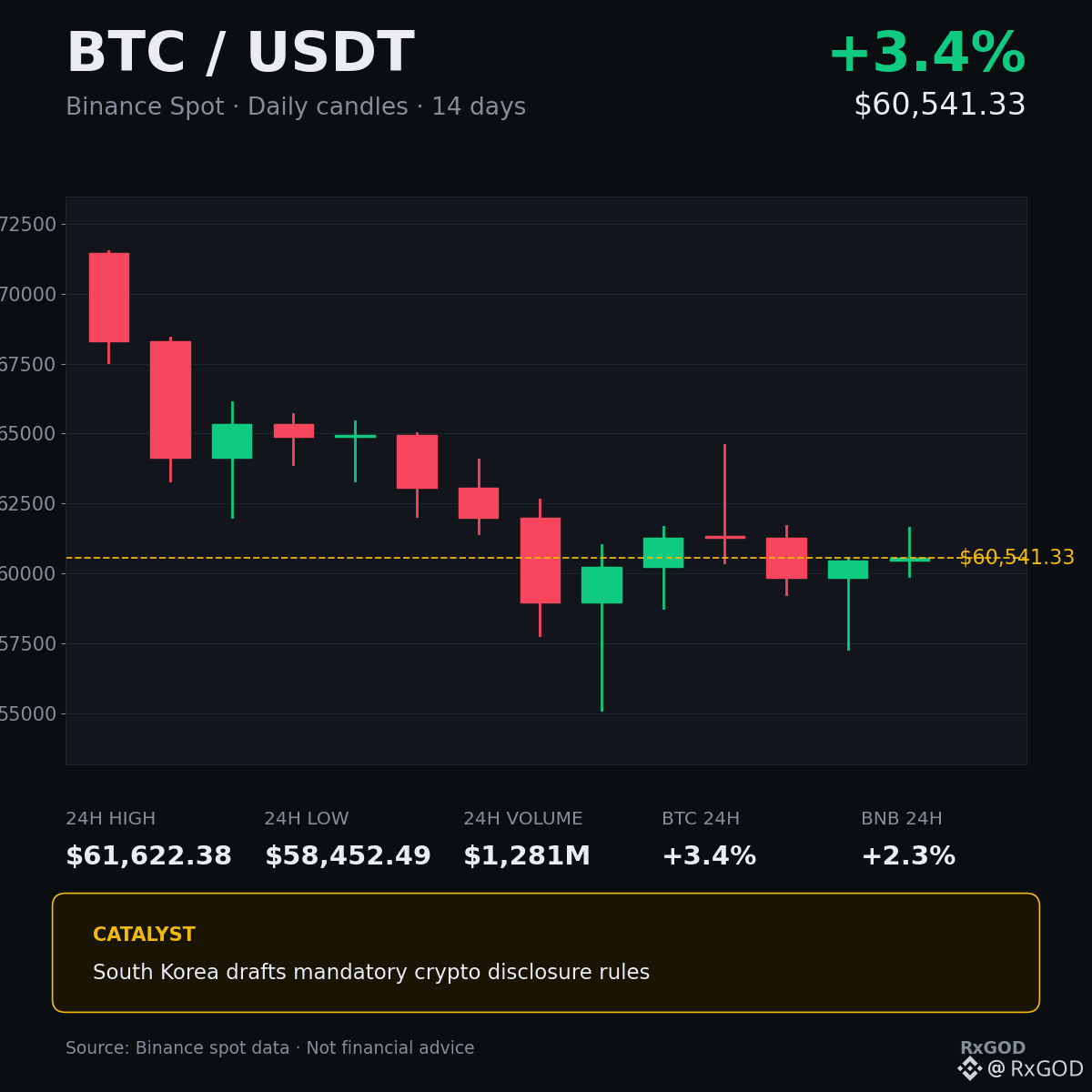
36

·
--
Bullish
#SouthKoreaProposesMandatoryDigitalAssetTransactionDisclosure
🚨 South Korea Proposes Mandatory Disclosure of Major Crypto Transactions 🇰🇷⚡
$ZEC
{future}(ZECUSDT)
📜 Strict Transparency Rule: FSC draft bill mandates real-time disclosure of events impacting token circulation.
🔍 Who Must Report: Applies directly to token issuers filing white papers and exchanges listing those assets.
⚠️ What Triggers Disclosure: Covers large issuer transactions, token burns, airdrops, hacks, and system outages.
💸 Heavy Penalties: Non-disclosure or false reporting carries fines up to 100M won (~$72,000) plus civil liability.
🧊 1-Year Account Freezes: FSC gains power to freeze bank and exchange accounts suspected of market manipulation.
🛡️ Investor Protection: Designed to eliminate hidden whale dumps and bring stock-market transparency to crypto.
💬 Your Take: Will strict token disclosure rules make crypto safer—or slow down new project launches?
$BTC
{future}(BTCUSDT)
$ETH
{future}(ETHUSDT)
#SouthKoreaPlansToRequireTetherCircleLocalReserves #CanMarketsReboundAfterThanksgiving? #CryptoNewss #BinanceSquareTalks
#SouthKoreaProposesMandatoryDigitalAssetTransactionDisclosure
🚨 South Korea Proposes Mandatory Disclosure of Major Crypto Transactions 🇰🇷⚡
$ZEC
📜 Strict Transparency Rule: FSC draft bill mandates real-time disclosure of events impacting token circulation.
🔍 Who Must Report: Applies directly to token issuers filing white papers and exchanges listing those assets.
⚠️ What Triggers Disclosure: Covers large issuer transactions, token burns, airdrops, hacks, and system outages.
💸 Heavy Penalties: Non-disclosure or false reporting carries fines up to 100M won (~$72,000) plus civil liability.
🧊 1-Year Account Freezes: FSC gains power to freeze bank and exchange accounts suspected of market manipulation.
🛡️ Investor Protection: Designed to eliminate hidden whale dumps and bring stock-market transparency to crypto.
💬 Your Take: Will strict token disclosure rules make crypto safer—or slow down new project launches?
$BTC
$ETH
#SouthKoreaPlansToRequireTetherCircleLocalReserves #CanMarketsReboundAfterThanksgiving? #CryptoNewss #BinanceSquareTalks
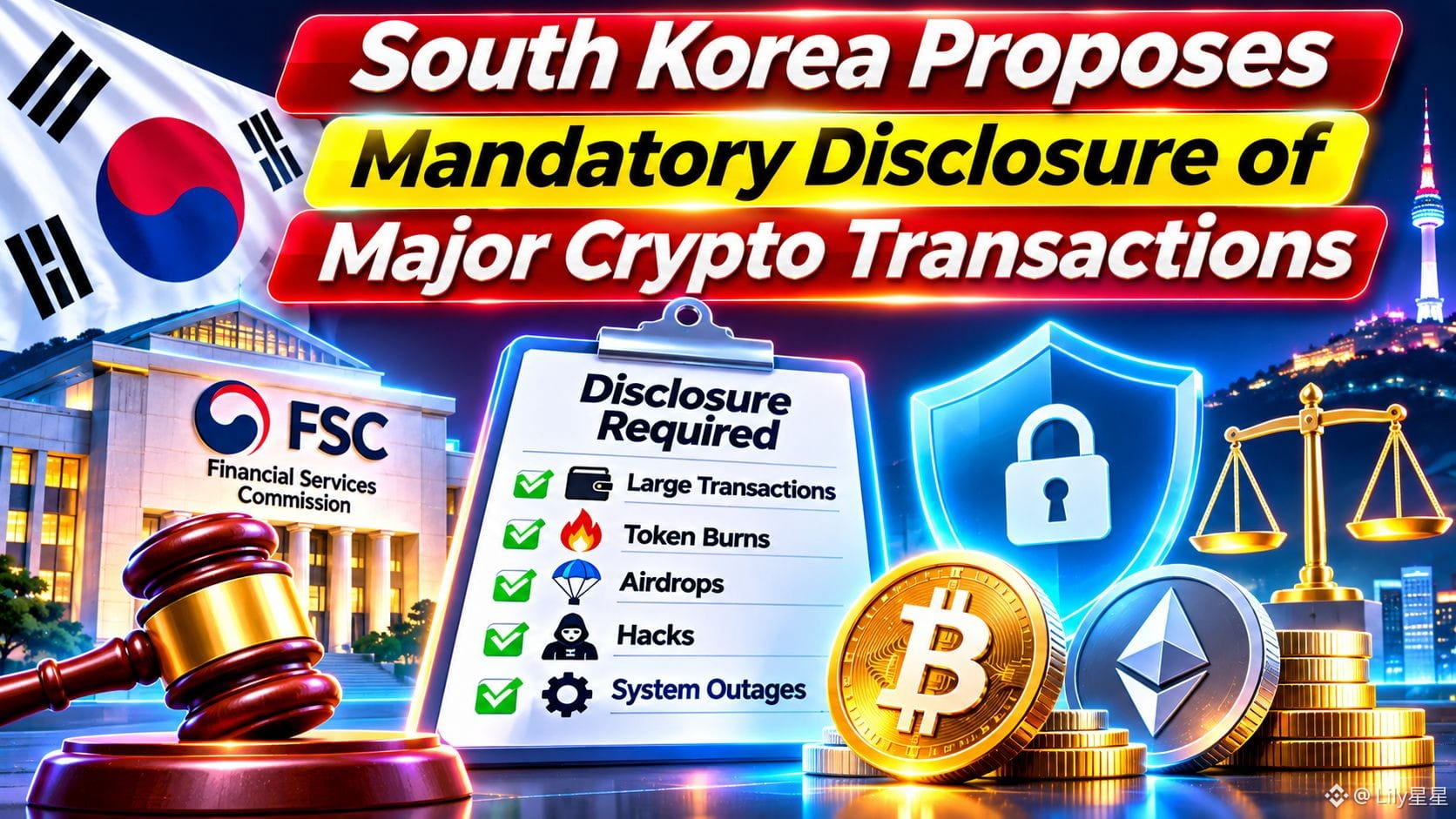
2
282

·
--

Article
🇰🇷 South Korea's Crypto Regulatory Push: A New Turning Point for the Digital Asset Market
South K🇰🇷 South Korea's Crypto Regulatory Push: A New Turning Point for the Digital Asset Market
South Korea is moving toward a stricter and more transparent cryptocurrency regulatory framework, signaling another important development for the global digital asset industry.
The proposed measures focus on mandatory disclosures and stronger oversight of digital asset activities. These include major transactions, token supply changes, airdrops, token burns, security incidents and other events that could influence investor decisions.
🔍 Why Does This Matter?
Transparency is one of the biggest challenges facing cryptocurrency markets. Investors need reliable information to understand what is happening behind the projects and digital assets they hold.
Stronger disclosure requirements could help address information gaps, improve accountability and reduce the risk of misleading market participants.
South Korea's approach also highlights a growing global trend: governments are increasingly recognizing that cryptocurrency markets need clearer rules and stronger investor protection.
📊 Bitcoin and the Wider Crypto Market
The regulatory developments come at an interesting time for the market.
According to the Binance Square snapshot:
🟢 BTC community sentiment: 56% Bullish
🔴 Bearish sentiment: 44%
⚠️ Fear & Greed Index: 10 — Extreme Fear
📈 Total Crypto Market Cap: +3.02%
📉 24-hour Trading Volume: -11.20%
These figures reveal an unusual combination: positive community sentiment alongside extreme market fear.
Bitcoin's next move will be important for the broader market. Ethereum, BNB, Solana and XRP also remain key assets to watch as traders evaluate market direction.
🌍 The Bigger Picture
Clearer regulations do not automatically guarantee higher cryptocurrency prices. However, a transparent regulatory environment can contribute to long-term confidence, responsible participation and stronger market infrastructure.
South Korea's regulatory direction deserves attention because its decisions could influence how other markets approach digital asset oversight.
My final thought: Crypto's future will not be shaped by price movements alone. Transparency, investor protection and trust will be equally important.
Do you believe stronger crypto regulations will attract more investors, or will they create additional pressure on the market?
Share your opinion, like and follow for more meaningful crypto analysis.
#Bitcoin #CryptoRegulation #비트코인 #加密货币 #韩国
{spot}(BTCUSDT)
#CouldSpaceX’sOrbitalDataCentersBoostAIChipDemand? #SouthKoreaProposesMandatoryDigitalAssetTransactionDisclosure #KoreaFSCSeeksPowerToSuspendCryptoListings #SouthKoreaPlansToRequireTetherCircleLocalReserves #UKFCAReportedlyPlansDeFiAuthorizationRules $
🇰🇷 South Korea's Crypto Regulatory Push: A New Turning Point for the Digital Asset Market South K
🇰🇷 South Korea's Crypto Regulatory Push: A New Turning Point for the Digital Asset Market
South Korea is moving toward a stricter and more transparent cryptocurrency regulatory framework, signaling another important development for the global digital asset industry.
The proposed measures focus on mandatory disclosures and stronger oversight of digital asset activities. These include major transactions, token supply changes, airdrops, token burns, security incidents and other events that could influence investor decisions.
🔍 Why Does This Matter?
Transparency is one of the biggest challenges facing cryptocurrency markets. Investors need reliable information to understand what is happening behind the projects and digital assets they hold.
Stronger disclosure requirements could help address information gaps, improve accountability and reduce the risk of misleading market participants.
South Korea's approach also highlights a growing global trend: governments are increasingly recognizing that cryptocurrency markets need clearer rules and stronger investor protection.
📊 Bitcoin and the Wider Crypto Market
The regulatory developments come at an interesting time for the market.
According to the Binance Square snapshot:
🟢 BTC community sentiment: 56% Bullish
🔴 Bearish sentiment: 44%
⚠️ Fear & Greed Index: 10 — Extreme Fear
📈 Total Crypto Market Cap: +3.02%
📉 24-hour Trading Volume: -11.20%
These figures reveal an unusual combination: positive community sentiment alongside extreme market fear.
Bitcoin's next move will be important for the broader market. Ethereum, BNB, Solana and XRP also remain key assets to watch as traders evaluate market direction.
🌍 The Bigger Picture
Clearer regulations do not automatically guarantee higher cryptocurrency prices. However, a transparent regulatory environment can contribute to long-term confidence, responsible participation and stronger market infrastructure.
South Korea's regulatory direction deserves attention because its decisions could influence how other markets approach digital asset oversight.
My final thought: Crypto's future will not be shaped by price movements alone. Transparency, investor protection and trust will be equally important.
Do you believe stronger crypto regulations will attract more investors, or will they create additional pressure on the market?
Share your opinion, like and follow for more meaningful crypto analysis.
#Bitcoin #CryptoRegulation #비트코인 #加密货币 #韩国
#CouldSpaceX’sOrbitalDataCentersBoostAIChipDemand? #SouthKoreaProposesMandatoryDigitalAssetTransactionDisclosure #KoreaFSCSeeksPowerToSuspendCryptoListings #SouthKoreaPlansToRequireTetherCircleLocalReserves #UKFCAReportedlyPlansDeFiAuthorizationRules $
2
107

·
--

Article
🚨 CRYPTO'S TRANSPARENCY ERA MAY BE BEGINNING 🇰🇷🚨 CRYPTO'S TRANSPARENCY ERA MAY BE BEGINNING 🇰🇷 😱
South Korea is proposing mandatory disclosure rules that could change how crypto projects operate.
Under the proposed framework:
🔹 Projects must disclose token supply, risks & use of funds.
🔹 Exchanges face stronger disclosure obligations.
🔹 Major developments, including hacks, must be reported.
🔹 Misleading disclosures could bring serious penalties.
This isn't just another regulation update.
It's a potential turning point for investor transparency.
Will this become the new global standard? 👀
#Crypto #SouthKorea #Bitcoin
#SouthKoreaProposesMandatoryDigitalAssetTransactionDisclosure
#SouthKoreaPlansToRequireTetherCircleLocalReserves
#CanMarketsReboundAfterThanksgiving? #EvolveAtBinanceBlockchainWeek #CorePCEBeatLiftsFedHikeOdds
🚨 CRYPTO'S TRANSPARENCY ERA MAY BE BEGINNING 🇰🇷
🚨 CRYPTO'S TRANSPARENCY ERA MAY BE BEGINNING 🇰🇷 😱
South Korea is proposing mandatory disclosure rules that could change how crypto projects operate.
Under the proposed framework:
🔹 Projects must disclose token supply, risks & use of funds.
🔹 Exchanges face stronger disclosure obligations.
🔹 Major developments, including hacks, must be reported.
🔹 Misleading disclosures could bring serious penalties.
This isn't just another regulation update.
It's a potential turning point for investor transparency.
Will this become the new global standard? 👀
#Crypto #SouthKorea #Bitcoin
#SouthKoreaProposesMandatoryDigitalAssetTransactionDisclosure
#SouthKoreaPlansToRequireTetherCircleLocalReserves
#CanMarketsReboundAfterThanksgiving? #EvolveAtBinanceBlockchainWeek #CorePCEBeatLiftsFedHikeOdds
2
1
29

·
--
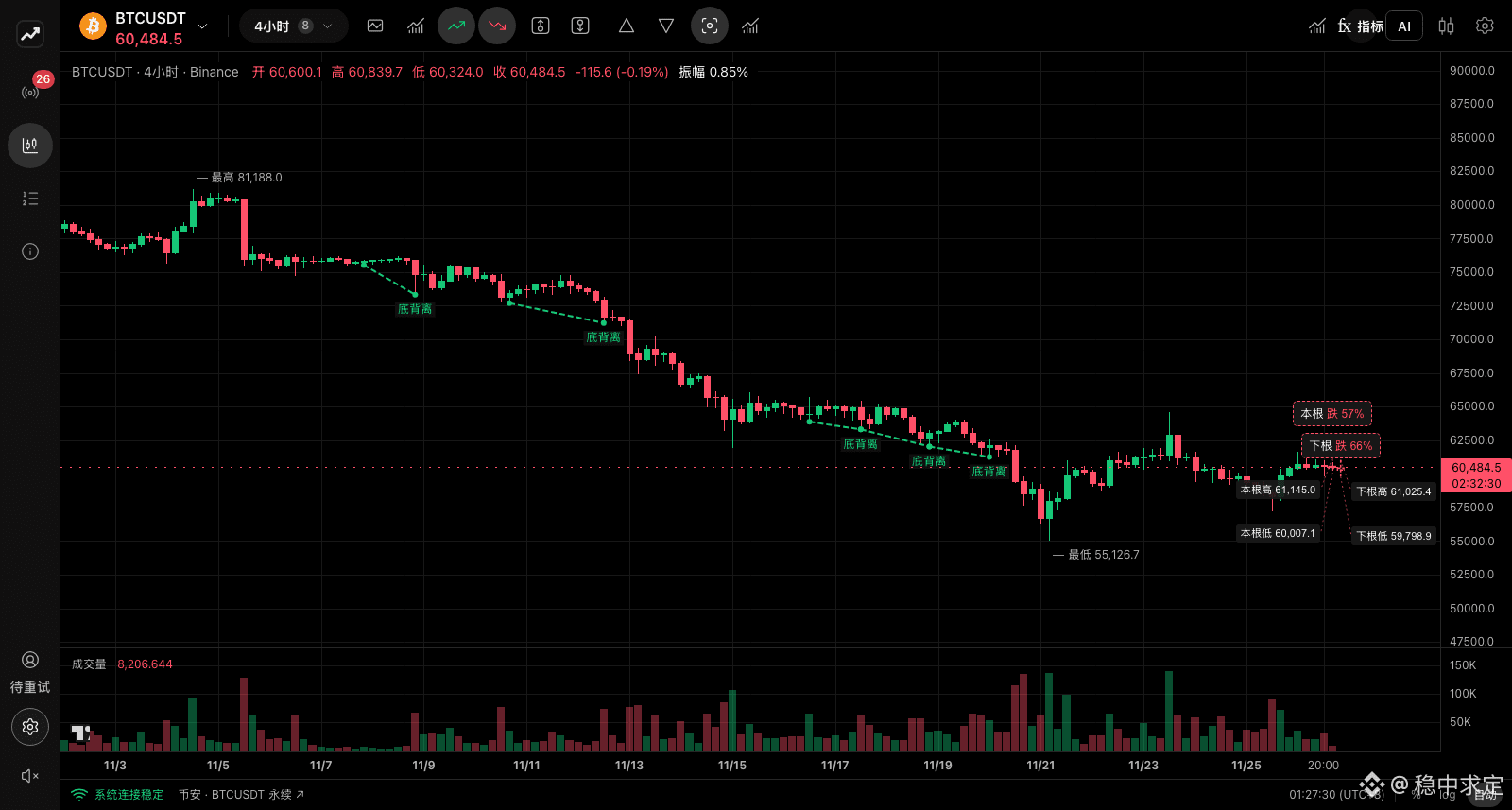
Article
South Korea proposes mandatory disclosure of digital asset transactions: transparency is positive, but BTC has yet to show proof of buying demandSouth Korea proposes mandatory disclosure of digital asset transactions: transparency is positive, but BTC has yet to show proof of buying demand
The Binance Square trending list currently features `#SouthKoreaProposesMandatoryDigitalAssetTransactionDisclosure`, with 18 people discussing it on the page; the topic page shows 515 views and 18 people discussing it. This topic matters not because South Korea has already enacted a new law, but because the digital asset legislative framework proposed by South Korea’s Financial Services Commission is beginning to bring “what happened to a project” and “whether the market can find out in time” under the same set of rules.
South Korea proposes mandatory disclosure of digital asset transactions: transparency is positive, but BTC has yet to show proof of buying demand
South Korea proposes mandatory disclosure of digital asset transactions: transparency is positive, but BTC has yet to show proof of buying demand
The Binance Square trending list currently features `#SouthKoreaProposesMandatoryDigitalAssetTransactionDisclosure`, with 18 people discussing it on the page; the topic page shows 515 views and 18 people discussing it. This topic matters not because South Korea has already enacted a new law, but because the digital asset legislative framework proposed by South Korea’s Financial Services Commission is beginning to bring “what happened to a project” and “whether the market can find out in time” under the same set of rules.
The Binance Square trending list currently features `#SouthKoreaProposesMandatoryDigitalAssetTransactionDisclosure`, with 18 people discussing it on the page; the topic page shows 515 views and 18 people discussing it. This topic matters not because South Korea has already enacted a new law, but because the digital asset legislative framework proposed by South Korea’s Financial Services Commission is beginning to bring “what happened to a project” and “whether the market can find out in time” under the same set of rules.
656

·
--
The South Korean government’s latest proposal requires cryptocurrency traders to disclose transaction information, aiming to crack down on money laundering and illegal activities. I believe this proposal is necessary because the anonymity of cryptocurrencies has long posed a regulatory challenge. According to South Korea’s Financial Intelligence Unit, suspicious transactions involving cryptocurrencies increased by 150% year over year in the first half of 2023. Mandatory disclosure will help track the flow of illicit funds and maintain financial order. Of course, this could also increase compliance costs, so regulation must be balanced with industry development. Overall, greater transparency is essential for the healthy development of the cryptocurrency market. #SouthKoreaProposesMandatoryDigitalAssetTransactionDisclosure
$BTC
$BTC
102

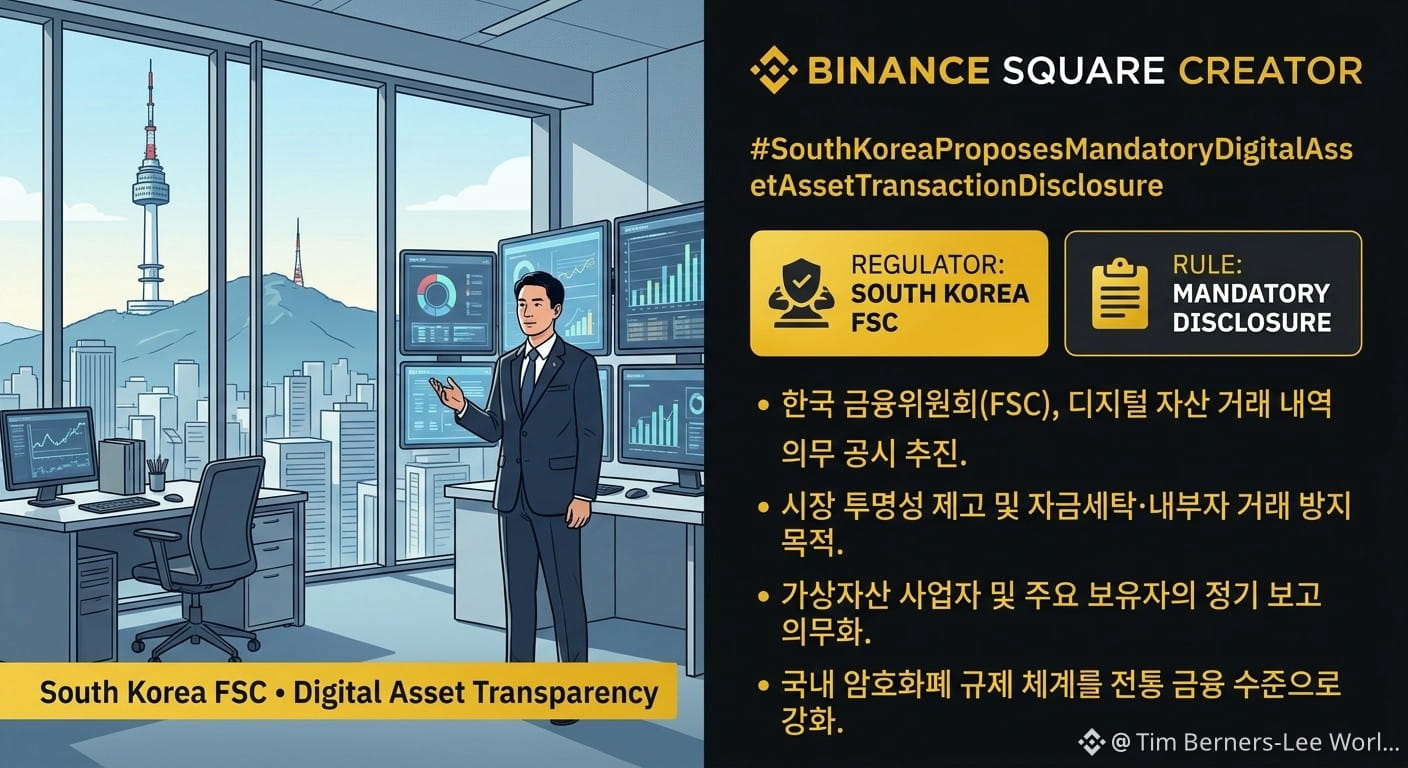
#SouthKoreaProposesMandatoryDigitalAssetTransactionDisclosure South Korea’s Financial Services Commission (FSC) has formally submitted the draft Digital Asset Innovation and User Protection Act, a comprehensive reform requiring disclosure of significant transactions and events affecting the circulating supply of cryptocurrencies. Under this legislative proposal—introduced after a nine-year ban on initial coin offerings (ICOs)—token issuers will have to submit detailed white papers and summary prospectuses for retail investors before any issuance. Developers and trading platforms will also be required to promptly report major movements in issuers’ wallets, airdrops, token burns, technical failures, or cyberattacks that could influence trading decisions.
#SouthKoreaProposesMandatoryDigitalAssetTransactionDisclosure South Korea’s Financial Services Commission (FSC) has formally submitted the draft Digital Asset Innovation and User Protection Act, a comprehensive reform requiring disclosure of significant transactions and events affecting the circulating supply of cryptocurrencies. Under this legislative proposal—introduced after a nine-year ban on initial coin offerings (ICOs)—token issuers will have to submit detailed white papers and summary prospectuses for retail investors before any issuance. Developers and trading platforms will also be required to promptly report major movements in issuers’ wallets, airdrops, token burns, technical failures, or cyberattacks that could influence trading decisions.
1
133
Log in to explore more content
Join global crypto users on Binance Square
⚡️ Get latest and useful information about crypto.
💬 Trusted by the world’s largest crypto exchange.
👍 Discover real insights from verified creators.
Email / Phone number
Trending Topics
1
#CanMarketsReboundAfterThanksgiving?
213,204 views
2,050 Discussing
2
#CouldSpaceX’sOrbitalDataCentersBoostAIChipDemand?
105,300 views
1,232 Discussing
3
#TradFiForBeginners
1.2M views
6,275 Discussing
4
#StellarAdds$80.4MTokenizedFundsInOneDay
198 views
5 Discussing
5
#SouthKoreaProposesMandatoryDigitalAssetTransactionDisclosure
5,714 views
117 Discussing
6
#EvolveAtBinanceBlockchainWeek
861,634 views
10,695 Discussing
7
#KoreaFSCSeeksPowerToSuspendCryptoListings
23,764 views
360 Discussing
8
#SouthKoreaPlansToRequireTetherCircleLocalReserves
22,302 views
251 Discussing
9
#UKFCAReportedlyPlansDeFiAuthorizationRules
16,543 views
149 Discussing
10
#ZcashDevelopersUrgeZECMoveToIronwood
37,397 views
181 Discussing