
Gourav-S
31.8k Posts

Gourav-S
 Square Verified+
Report
Block User
Exploring the crypto world with smart trading, learning,and growing. Focused on building a diversified portfolio.Join me on this exciting digital asset journey!
Frequent Trader
3.3 Years
1.3K+ Following
34.6K+ Followers
76.6K+ Liked
Posts
All
Quotes
Videos
Live
·
--
Verified
#ParadigmDisclosesZECHolding
Paradigm Reveals ZEC Holding - Zcash Gets Another Institutional Signal
Paradigm co-founder Matt Huang has disclosed that Paradigm is not only an investor in the Zcash Open Development Lab (ZODL), but also holds $ZEC.
The disclosure came on September 16 and quickly caught the market’s attention. ZEC jumped roughly 20% over 24 hours, with reports showing it trading around $1,338–$1,369 during the move.
What makes this interesting is the bigger picture. Paradigm had already backed ZODL’s $25M+ seed round earlier this year, but this is a much clearer confirmation of direct exposure to the token.
Huang also described Zcash as a privacy complement to Bitcoin and highlighted the importance of long-term developer funding.
One important detail: Paradigm has not disclosed how much ZEC it holds.
#zcash #ZEC #BinanceSquare
#ParadigmDisclosesZECHolding
Paradigm Reveals ZEC Holding - Zcash Gets Another Institutional Signal
Paradigm co-founder Matt Huang has disclosed that Paradigm is not only an investor in the Zcash Open Development Lab (ZODL), but also holds $ZEC.
The disclosure came on September 16 and quickly caught the market’s attention. ZEC jumped roughly 20% over 24 hours, with reports showing it trading around $1,338–$1,369 during the move.
What makes this interesting is the bigger picture. Paradigm had already backed ZODL’s $25M+ seed round earlier this year, but this is a much clearer confirmation of direct exposure to the token.
Huang also described Zcash as a privacy complement to Bitcoin and highlighted the importance of long-term developer funding.
One important detail: Paradigm has not disclosed how much ZEC it holds.
#zcash #ZEC #BinanceSquare
Paradigm Reveals ZEC Holding - Zcash Gets Another Institutional Signal
Paradigm co-founder Matt Huang has disclosed that Paradigm is not only an investor in the Zcash Open Development Lab (ZODL), but also holds $ZEC.
The disclosure came on September 16 and quickly caught the market’s attention. ZEC jumped roughly 20% over 24 hours, with reports showing it trading around $1,338–$1,369 during the move.
What makes this interesting is the bigger picture. Paradigm had already backed ZODL’s $25M+ seed round earlier this year, but this is a much clearer confirmation of direct exposure to the token.
Huang also described Zcash as a privacy complement to Bitcoin and highlighted the importance of long-term developer funding.
One important detail: Paradigm has not disclosed how much ZEC it holds.
#zcash #ZEC #BinanceSquare
1
1
606
·
--
Verified
Gold Update: Pullback or Invalidation? Here’s What the Daily Chart is Saying
After an aggressive run-up from the $4,000 baseline straight to the $4,700 resistance zone, XAUUSDT is taking a breath, currently printing a minor red candle around $4,623 (-0.73%).
Is this the start of a trend reversal, or just a routine retest of the ascending structure? Here is the exact breakdown.
The Macro Drivers in Play
- Central Bank Appetite: Ongoing institutional buying continues to provide macro support beneath dips.
- Macro Data Flow: Heavy US economic data (Q2 GDP, Core PCE, Durable Goods) and the Jackson Hole Symposium are driving short-term volatility.
- Dollar Dynamics: Broad softness in the US Dollar Index remains the primary driver behind bullion's extended bullish leg.
Key Technical Zones to Watch
- Current Action: Price faced rejection near the $4,700 local peak (24h High: ~$4,694) and is consolidating around $4,623.
- Immediate Resistance: A daily close above $4,700 confirms continuation toward the $4,780 – $4,800 technical target.
- Primary Support: The active ascending trendline provides the first line of defense. A decisive breakdown below the trendline opens up a pullback toward key horizontal support near $4,320 – $4,330.
Execution Strategy
- For Spot & Long-Term Accumulators: Avoid chasing green candles into major overhead resistance. Stagger entries using a Dollar-Cost Averaging (SIP / Buy-on-Dips) approach rather than a lump-sum entry.
- For Active Traders: Protect your capital around high-impact macro news. Watch the daily candle close: wait for a clear bounce off the trendline or a confirmed breakout past $4,700 before taking directional leverage.
What’s your move here—buying the dip at $4,620, waiting for $4,330, or playing the breakout above $4,700? Drop your view below! 👇
#XAU
$XAU
Gold Update: Pullback or Invalidation? Here’s What the Daily Chart is Saying
After an aggressive run-up from the $4,000 baseline straight to the $4,700 resistance zone, XAUUSDT is taking a breath, currently printing a minor red candle around $4,623 (-0.73%).
Is this the start of a trend reversal, or just a routine retest of the ascending structure? Here is the exact breakdown.
The Macro Drivers in Play
- Central Bank Appetite: Ongoing institutional buying continues to provide macro support beneath dips.
- Macro Data Flow: Heavy US economic data (Q2 GDP, Core PCE, Durable Goods) and the Jackson Hole Symposium are driving short-term volatility.
- Dollar Dynamics: Broad softness in the US Dollar Index remains the primary driver behind bullion's extended bullish leg.
Key Technical Zones to Watch
- Current Action: Price faced rejection near the $4,700 local peak (24h High: ~$4,694) and is consolidating around $4,623.
- Immediate Resistance: A daily close above $4,700 confirms continuation toward the $4,780 – $4,800 technical target.
- Primary Support: The active ascending trendline provides the first line of defense. A decisive breakdown below the trendline opens up a pullback toward key horizontal support near $4,320 – $4,330.
Execution Strategy
- For Spot & Long-Term Accumulators: Avoid chasing green candles into major overhead resistance. Stagger entries using a Dollar-Cost Averaging (SIP / Buy-on-Dips) approach rather than a lump-sum entry.
- For Active Traders: Protect your capital around high-impact macro news. Watch the daily candle close: wait for a clear bounce off the trendline or a confirmed breakout past $4,700 before taking directional leverage.
What’s your move here—buying the dip at $4,620, waiting for $4,330, or playing the breakout above $4,700? Drop your view below! 👇
#XAU
$XAU
After an aggressive run-up from the $4,000 baseline straight to the $4,700 resistance zone, XAUUSDT is taking a breath, currently printing a minor red candle around $4,623 (-0.73%).
Is this the start of a trend reversal, or just a routine retest of the ascending structure? Here is the exact breakdown.
The Macro Drivers in Play
- Central Bank Appetite: Ongoing institutional buying continues to provide macro support beneath dips.
- Macro Data Flow: Heavy US economic data (Q2 GDP, Core PCE, Durable Goods) and the Jackson Hole Symposium are driving short-term volatility.
- Dollar Dynamics: Broad softness in the US Dollar Index remains the primary driver behind bullion's extended bullish leg.
Key Technical Zones to Watch
- Current Action: Price faced rejection near the $4,700 local peak (24h High: ~$4,694) and is consolidating around $4,623.
- Immediate Resistance: A daily close above $4,700 confirms continuation toward the $4,780 – $4,800 technical target.
- Primary Support: The active ascending trendline provides the first line of defense. A decisive breakdown below the trendline opens up a pullback toward key horizontal support near $4,320 – $4,330.
Execution Strategy
- For Spot & Long-Term Accumulators: Avoid chasing green candles into major overhead resistance. Stagger entries using a Dollar-Cost Averaging (SIP / Buy-on-Dips) approach rather than a lump-sum entry.
- For Active Traders: Protect your capital around high-impact macro news. Watch the daily candle close: wait for a clear bounce off the trendline or a confirmed breakout past $4,700 before taking directional leverage.
What’s your move here—buying the dip at $4,620, waiting for $4,330, or playing the breakout above $4,700? Drop your view below! 👇
#XAU
$XAU
3
635
·
--
August 26 Could Be a Big Day for BTC, Gold & Silver
Markets are heading into an important macro event on August 26. The U.S. will release the Q2 GDP second estimate and July Personal Income & Outlays, including the PCE inflation data, one of the Fed’s preferred inflation gauges. Both are scheduled for 8:30 AM ET.
The first Q2 GDP estimate showed 1.5% annualized growth, down from 2.1% in Q1. The revision could therefore give markets another clue about how strong the U.S. economy really is.
But the bigger market mover may be Core PCE.
Here’s how I’m looking at it:
🟢 Weak GDP + softer PCE
This could increase expectations for easier Fed policy. The dollar and Treasury yields could come under pressure, potentially creating a bullish setup for BTC, gold and silver.
🟡 Strong GDP + softer PCE
Probably the most interesting combination. Growth remains healthy while inflation cools. That could support risk assets while also keeping precious metals attractive.
🔴 Strong GDP + hotter PCE
This could push rate-cut expectations lower. A stronger dollar and higher yields could create short-term pressure on BTC, gold and silver.
⚠️ Weak GDP + hotter PCE
This is the tricky scenario. Growth slows, but inflation remains sticky. Markets could become highly volatile because the Fed would have less room to ease policy.
And there’s another major event right after this: the Jackson Hole symposium runs August 27–29, making Fed commentary especially important for the next move.
My view: don’t trade the headline alone. Watch GDP + Core PCE + DXY + Treasury yields together.
The reaction could be sharp, especially after the recent moves in precious metals and crypto.
#BTC #Gold #Silver #FederalReserve #BinanceSquare
$BTC
{spot}(BTCUSDT)
$XAUT
{spot}(XAUTUSDT)
$XAG
{future}(XAGUSDT)
August 26 Could Be a Big Day for BTC, Gold & Silver
Markets are heading into an important macro event on August 26. The U.S. will release the Q2 GDP second estimate and July Personal Income & Outlays, including the PCE inflation data, one of the Fed’s preferred inflation gauges. Both are scheduled for 8:30 AM ET.
The first Q2 GDP estimate showed 1.5% annualized growth, down from 2.1% in Q1. The revision could therefore give markets another clue about how strong the U.S. economy really is.
But the bigger market mover may be Core PCE.
Here’s how I’m looking at it:
🟢 Weak GDP + softer PCE
This could increase expectations for easier Fed policy. The dollar and Treasury yields could come under pressure, potentially creating a bullish setup for BTC, gold and silver.
🟡 Strong GDP + softer PCE
Probably the most interesting combination. Growth remains healthy while inflation cools. That could support risk assets while also keeping precious metals attractive.
🔴 Strong GDP + hotter PCE
This could push rate-cut expectations lower. A stronger dollar and higher yields could create short-term pressure on BTC, gold and silver.
⚠️ Weak GDP + hotter PCE
This is the tricky scenario. Growth slows, but inflation remains sticky. Markets could become highly volatile because the Fed would have less room to ease policy.
And there’s another major event right after this: the Jackson Hole symposium runs August 27–29, making Fed commentary especially important for the next move.
My view: don’t trade the headline alone. Watch GDP + Core PCE + DXY + Treasury yields together.
The reaction could be sharp, especially after the recent moves in precious metals and crypto.
#BTC #Gold #Silver #FederalReserve #BinanceSquare
$BTC
$XAUT
$XAG
Markets are heading into an important macro event on August 26. The U.S. will release the Q2 GDP second estimate and July Personal Income & Outlays, including the PCE inflation data, one of the Fed’s preferred inflation gauges. Both are scheduled for 8:30 AM ET.
The first Q2 GDP estimate showed 1.5% annualized growth, down from 2.1% in Q1. The revision could therefore give markets another clue about how strong the U.S. economy really is.
But the bigger market mover may be Core PCE.
Here’s how I’m looking at it:
🟢 Weak GDP + softer PCE
This could increase expectations for easier Fed policy. The dollar and Treasury yields could come under pressure, potentially creating a bullish setup for BTC, gold and silver.
🟡 Strong GDP + softer PCE
Probably the most interesting combination. Growth remains healthy while inflation cools. That could support risk assets while also keeping precious metals attractive.
🔴 Strong GDP + hotter PCE
This could push rate-cut expectations lower. A stronger dollar and higher yields could create short-term pressure on BTC, gold and silver.
⚠️ Weak GDP + hotter PCE
This is the tricky scenario. Growth slows, but inflation remains sticky. Markets could become highly volatile because the Fed would have less room to ease policy.
And there’s another major event right after this: the Jackson Hole symposium runs August 27–29, making Fed commentary especially important for the next move.
My view: don’t trade the headline alone. Watch GDP + Core PCE + DXY + Treasury yields together.
The reaction could be sharp, especially after the recent moves in precious metals and crypto.
#BTC #Gold #Silver #FederalReserve #BinanceSquare
$BTC
$XAUT
$XAG
2
296
·
--
Bitcoin’s Next Big Rally: Reality or Just Hype?
There’s a lot of talk about Bitcoin getting ready for an explosive rally because of U.S. crypto bills, national reserves and governments holding BTC.
But let’s separate the facts from the hype.
🇺🇸 The U.S. Bitcoin Reserve:
The idea of the U.S. building a strategic Bitcoin reserve is real, but claims that the government has already approved buying 1 million BTC are misleading. The 1-million-BTC target comes from a proposed bill, not an order that has already been fully implemented.
📜 U.S. Crypto Regulation:
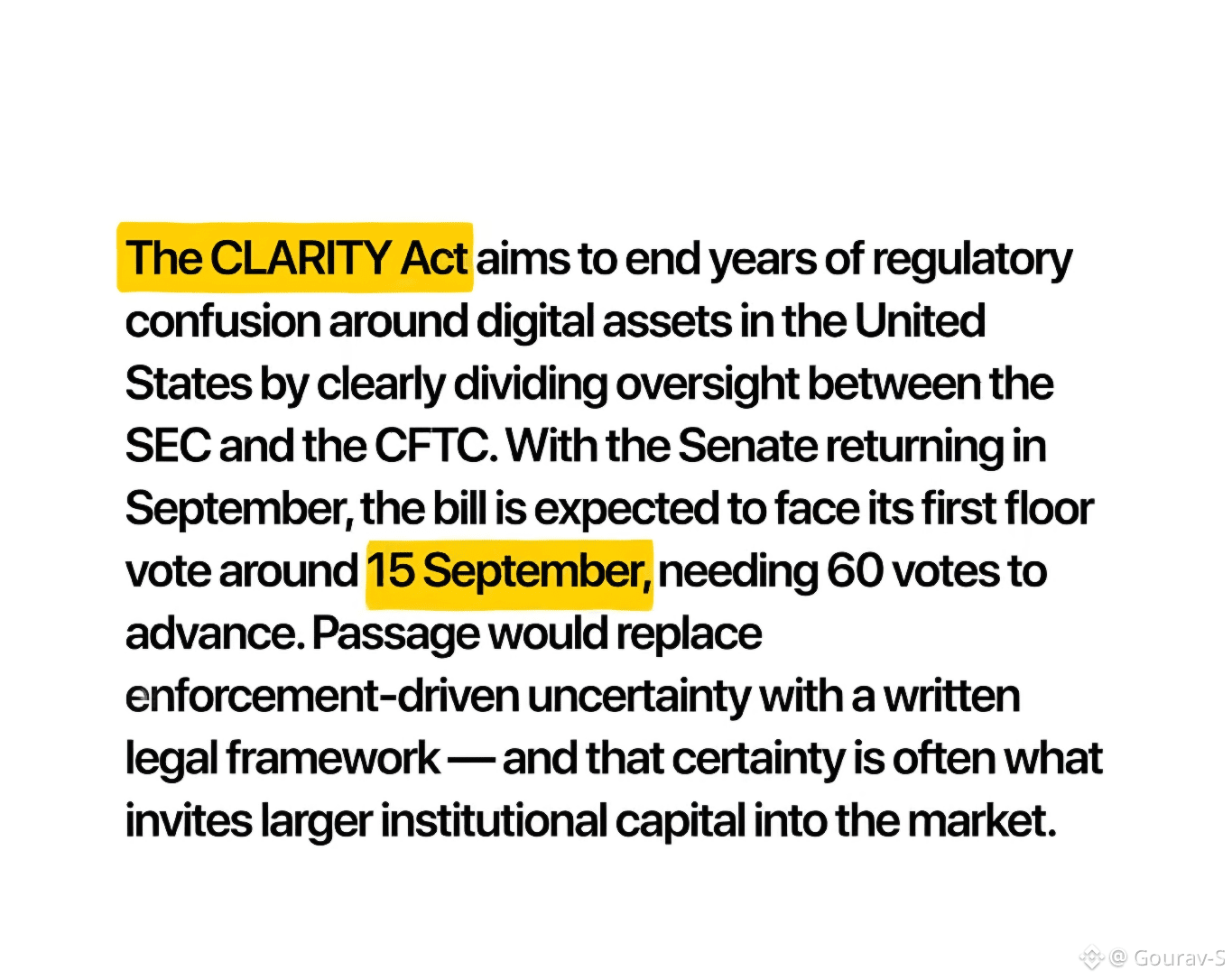
Bills such as CLARITY and other market-structure proposals could provide clearer rules for crypto. That would be positive for institutional adoption, but a proposed law isn't an instant Bitcoin price catalyst.
🌍 Governments Holding BTC:
The U.S., China and other governments hold large amounts of Bitcoin, but much of it came from criminal asset seizures, not deliberate purchases. Bhutan is different—it has been mining Bitcoin using its hydropower resources.
🇮🇳 And India?
Crypto adoption is huge, but India's taxation remains a major consideration, including 30% tax on applicable crypto gains and 1% TDS.
So, is Bitcoin's long-term story getting stronger? Absolutely.
But don't confuse a proposed bill, a headline or a social-media prediction with actual government buying.
The Bitcoin narrative is powerful. The hype is even louder. Always check the facts before making a trade.
What do you think, will sovereign Bitcoin reserves become normal in the next few years? 👇
#bitcoin #BTC #BinanceSquare
$BTC
{spot}(BTCUSDT)
Bitcoin’s Next Big Rally: Reality or Just Hype?
There’s a lot of talk about Bitcoin getting ready for an explosive rally because of U.S. crypto bills, national reserves and governments holding BTC.
But let’s separate the facts from the hype.
🇺🇸 The U.S. Bitcoin Reserve:
The idea of the U.S. building a strategic Bitcoin reserve is real, but claims that the government has already approved buying 1 million BTC are misleading. The 1-million-BTC target comes from a proposed bill, not an order that has already been fully implemented.
📜 U.S. Crypto Regulation:
Bills such as CLARITY and other market-structure proposals could provide clearer rules for crypto. That would be positive for institutional adoption, but a proposed law isn't an instant Bitcoin price catalyst.
🌍 Governments Holding BTC:
The U.S., China and other governments hold large amounts of Bitcoin, but much of it came from criminal asset seizures, not deliberate purchases. Bhutan is different—it has been mining Bitcoin using its hydropower resources.
🇮🇳 And India?
Crypto adoption is huge, but India's taxation remains a major consideration, including 30% tax on applicable crypto gains and 1% TDS.
So, is Bitcoin's long-term story getting stronger? Absolutely.
But don't confuse a proposed bill, a headline or a social-media prediction with actual government buying.
The Bitcoin narrative is powerful. The hype is even louder. Always check the facts before making a trade.
What do you think, will sovereign Bitcoin reserves become normal in the next few years? 👇
#bitcoin #BTC #BinanceSquare
$BTC
There’s a lot of talk about Bitcoin getting ready for an explosive rally because of U.S. crypto bills, national reserves and governments holding BTC.
But let’s separate the facts from the hype.
🇺🇸 The U.S. Bitcoin Reserve:
The idea of the U.S. building a strategic Bitcoin reserve is real, but claims that the government has already approved buying 1 million BTC are misleading. The 1-million-BTC target comes from a proposed bill, not an order that has already been fully implemented.
📜 U.S. Crypto Regulation:
Bills such as CLARITY and other market-structure proposals could provide clearer rules for crypto. That would be positive for institutional adoption, but a proposed law isn't an instant Bitcoin price catalyst.
🌍 Governments Holding BTC:
The U.S., China and other governments hold large amounts of Bitcoin, but much of it came from criminal asset seizures, not deliberate purchases. Bhutan is different—it has been mining Bitcoin using its hydropower resources.
🇮🇳 And India?
Crypto adoption is huge, but India's taxation remains a major consideration, including 30% tax on applicable crypto gains and 1% TDS.
So, is Bitcoin's long-term story getting stronger? Absolutely.
But don't confuse a proposed bill, a headline or a social-media prediction with actual government buying.
The Bitcoin narrative is powerful. The hype is even louder. Always check the facts before making a trade.
What do you think, will sovereign Bitcoin reserves become normal in the next few years? 👇
#bitcoin #BTC #BinanceSquare
$BTC
2
1.1k
·
--
A $47M SOL Bet Is Getting Attention
One whale is making a very aggressive bet on Solana.
According to on-chain analyst Ai Yi, the wallet is holding around 517,000 SOL in a 20x leveraged long, with the position valued near $47 million and an unrealized profit of roughly $6.3 million.
What makes this interesting is the way the whale has managed the position. After opening the trade on August 10, it reportedly closed part of the position for about $475K profit, then added exposure again around $82.
That tells us one thing: this isn't a small speculative trade. Someone is willing to take significant leveraged risk on SOL.
But there's another side to the story. 20x leverage cuts both ways. A relatively small move against the position can quickly turn a large unrealized profit into a loss.
Whale activity can be useful to watch, but it shouldn't be treated as a signal to blindly follow.
Big position. Big conviction. And even bigger risk.
#Solana #SOL #altcoins #BinanceSquare
$SOL
{spot}(SOLUSDT)
A $47M SOL Bet Is Getting Attention
One whale is making a very aggressive bet on Solana.
According to on-chain analyst Ai Yi, the wallet is holding around 517,000 SOL in a 20x leveraged long, with the position valued near $47 million and an unrealized profit of roughly $6.3 million.
What makes this interesting is the way the whale has managed the position. After opening the trade on August 10, it reportedly closed part of the position for about $475K profit, then added exposure again around $82.
That tells us one thing: this isn't a small speculative trade. Someone is willing to take significant leveraged risk on SOL.
But there's another side to the story. 20x leverage cuts both ways. A relatively small move against the position can quickly turn a large unrealized profit into a loss.
Whale activity can be useful to watch, but it shouldn't be treated as a signal to blindly follow.
Big position. Big conviction. And even bigger risk.
#Solana #SOL #altcoins #BinanceSquare
$SOL
One whale is making a very aggressive bet on Solana.
According to on-chain analyst Ai Yi, the wallet is holding around 517,000 SOL in a 20x leveraged long, with the position valued near $47 million and an unrealized profit of roughly $6.3 million.
What makes this interesting is the way the whale has managed the position. After opening the trade on August 10, it reportedly closed part of the position for about $475K profit, then added exposure again around $82.
That tells us one thing: this isn't a small speculative trade. Someone is willing to take significant leveraged risk on SOL.
But there's another side to the story. 20x leverage cuts both ways. A relatively small move against the position can quickly turn a large unrealized profit into a loss.
Whale activity can be useful to watch, but it shouldn't be treated as a signal to blindly follow.
Big position. Big conviction. And even bigger risk.
#Solana #SOL #altcoins #BinanceSquare
$SOL


Binance News
·
--
Whale Holds 517,000 SOL Long Position With $6.3 Million Unrealized Profit
According to on-chain analyst Ai Yi, a whale is holding a 20x leveraged long position on 517,000 SOL with an unrealized profit of $6.3 million. According to Odaily, the position is valued at $47.09 million, with an average entry price of $79.3222.
On August 10, the whale opened the position and became the largest holder. On August 19, it closed half of the position for a profit of $475,000, then added back to that portion of the position at $82.16 later that evening.
On August 10, the whale opened the position and became the largest holder. On August 19, it closed half of the position for a profit of $475,000, then added back to that portion of the position at $82.16 later that evening.
1
394
·
--
Verified
HSBC Just Raised Its Nvidia Target, But Here’s What Really Matters
HSBC has raised its price target for Nvidia ($NVDA ) from $325 to $360, keeping its Buy rating.
At first glance, it’s just another analyst target upgrade. But there’s a bigger story behind it.
Nvidia has become one of the biggest beneficiaries of the global AI boom. Companies are spending heavily on AI infrastructure, and Nvidia’s GPUs remain at the center of that buildout. A higher target from HSBC suggests the bank still sees room for Nvidia to grow despite the huge rally the stock has already delivered.
But a price target isn't a guarantee. Nvidia’s valuation is already demanding, so the company will need to keep delivering strong revenue, earnings and AI-related demand to justify higher prices.
For me, the interesting part isn't the $360 number itself.
It’s whether Nvidia can continue turning the massive AI spending cycle into sustainable earnings growth.
AI demand is strong. Now the market wants execution.
#Nvidia #NVDA #AI #BinanceSquare $NVDA.US
{stock_us}(NVDA.US)
HSBC Just Raised Its Nvidia Target, But Here’s What Really Matters
HSBC has raised its price target for Nvidia ($NVDA ) from $325 to $360, keeping its Buy rating.
At first glance, it’s just another analyst target upgrade. But there’s a bigger story behind it.
Nvidia has become one of the biggest beneficiaries of the global AI boom. Companies are spending heavily on AI infrastructure, and Nvidia’s GPUs remain at the center of that buildout. A higher target from HSBC suggests the bank still sees room for Nvidia to grow despite the huge rally the stock has already delivered.
But a price target isn't a guarantee. Nvidia’s valuation is already demanding, so the company will need to keep delivering strong revenue, earnings and AI-related demand to justify higher prices.
For me, the interesting part isn't the $360 number itself.
It’s whether Nvidia can continue turning the massive AI spending cycle into sustainable earnings growth.
AI demand is strong. Now the market wants execution.
#Nvidia #NVDA #AI #BinanceSquare $NVDA.US
HSBC has raised its price target for Nvidia ($NVDA ) from $325 to $360, keeping its Buy rating.
At first glance, it’s just another analyst target upgrade. But there’s a bigger story behind it.
Nvidia has become one of the biggest beneficiaries of the global AI boom. Companies are spending heavily on AI infrastructure, and Nvidia’s GPUs remain at the center of that buildout. A higher target from HSBC suggests the bank still sees room for Nvidia to grow despite the huge rally the stock has already delivered.
But a price target isn't a guarantee. Nvidia’s valuation is already demanding, so the company will need to keep delivering strong revenue, earnings and AI-related demand to justify higher prices.
For me, the interesting part isn't the $360 number itself.
It’s whether Nvidia can continue turning the massive AI spending cycle into sustainable earnings growth.
AI demand is strong. Now the market wants execution.
#Nvidia #NVDA #AI #BinanceSquare $NVDA.US
Binance News
·
--
HSBC Raises Nvidia Price Target to $360 From $325
HSBC raised its price target for Nvidia to $360 from $325. According to ChainCatcher, the bank made the adjustment in a brief note without providing additional details.
NVDAUS+1.53%
2
654
·
--
Verified
Your First bStock: Stocks, But On-Chain
Ever wondered what it would look like if traditional stocks and crypto trading came together?
Binance’s new bStocks are designed to make that experience much simpler.
A bStock is a token backed 1:1 by a real share held with a regulated broker. So instead of opening a separate brokerage account, eligible users can buy bStocks directly with USDT on Binance Spot.
And the interesting part? 👇
- 24/7 trading — no waiting for the U.S. market to open
- From just $5 — fractional access instead of needing the full share price
- T+1 settlement
- BNB Smart Chain — bStocks can be moved to self-custody and used across DeFi
- Dividends automatically reinvested after applicable withholding tax
For example, NVIDIA’s bStock is NVDAB, while Apple’s is AAPLB.
The process is straightforward: find the bStock → choose Market or Limit → enter your amount → confirm.
What I find most interesting isn't simply the ability to buy a tokenized stock.
It's the idea of bringing traditional equity exposure into an on-chain environment, where trading is available around the clock and assets can potentially interact with DeFi.
If you're new to bStocks, the “Your First bStock: A Quick Guide” shown in the Binance app is a good place to start.
Traditional markets are becoming more programmable.
bStocks could be another step in that direction.
#Binance #TokenizedStocks #BNBChain #crypto #stocks
Your First bStock: Stocks, But On-Chain
Ever wondered what it would look like if traditional stocks and crypto trading came together?
Binance’s new bStocks are designed to make that experience much simpler.
A bStock is a token backed 1:1 by a real share held with a regulated broker. So instead of opening a separate brokerage account, eligible users can buy bStocks directly with USDT on Binance Spot.
And the interesting part? 👇
- 24/7 trading — no waiting for the U.S. market to open
- From just $5 — fractional access instead of needing the full share price
- T+1 settlement
- BNB Smart Chain — bStocks can be moved to self-custody and used across DeFi
- Dividends automatically reinvested after applicable withholding tax
For example, NVIDIA’s bStock is NVDAB, while Apple’s is AAPLB.
The process is straightforward: find the bStock → choose Market or Limit → enter your amount → confirm.
What I find most interesting isn't simply the ability to buy a tokenized stock.
It's the idea of bringing traditional equity exposure into an on-chain environment, where trading is available around the clock and assets can potentially interact with DeFi.
If you're new to bStocks, the “Your First bStock: A Quick Guide” shown in the Binance app is a good place to start.
Traditional markets are becoming more programmable.
bStocks could be another step in that direction.
#Binance #TokenizedStocks #BNBChain #crypto #stocks
Ever wondered what it would look like if traditional stocks and crypto trading came together?
Binance’s new bStocks are designed to make that experience much simpler.
A bStock is a token backed 1:1 by a real share held with a regulated broker. So instead of opening a separate brokerage account, eligible users can buy bStocks directly with USDT on Binance Spot.
And the interesting part? 👇
- 24/7 trading — no waiting for the U.S. market to open
- From just $5 — fractional access instead of needing the full share price
- T+1 settlement
- BNB Smart Chain — bStocks can be moved to self-custody and used across DeFi
- Dividends automatically reinvested after applicable withholding tax
For example, NVIDIA’s bStock is NVDAB, while Apple’s is AAPLB.
The process is straightforward: find the bStock → choose Market or Limit → enter your amount → confirm.
What I find most interesting isn't simply the ability to buy a tokenized stock.
It's the idea of bringing traditional equity exposure into an on-chain environment, where trading is available around the clock and assets can potentially interact with DeFi.
If you're new to bStocks, the “Your First bStock: A Quick Guide” shown in the Binance app is a good place to start.
Traditional markets are becoming more programmable.
bStocks could be another step in that direction.
#Binance #TokenizedStocks #BNBChain #crypto #stocks
1
282
·
--
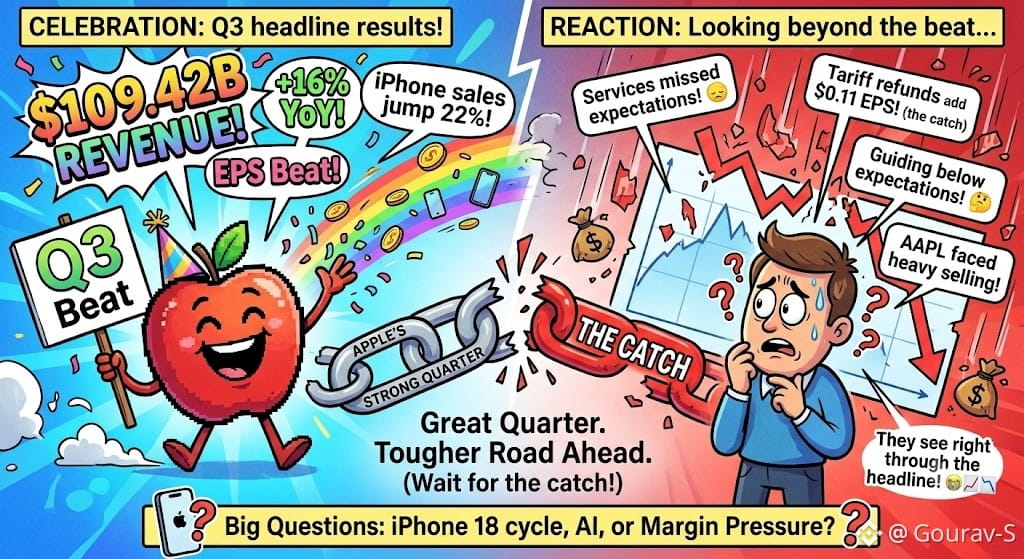
🍎 Apple’s Strong Quarter Comes With a Catch
Apple delivered a powerful fiscal Q3, with $109.42B revenue (+16% YoY) and $2.02 EPS. iPhone sales jumped 22% to $54.25B, while Services reached $30.74B. On the surface, the numbers look excellent.
But investors are looking beyond the headline beat. Tariff refunds added around $0.11 to EPS and roughly 2 percentage points to gross margin, while Services missed expectations. Apple also guided for just 9–11% Q4 revenue growth, below Wall Street expectations.
That explains why $AAPL faced heavy selling despite strong results.
Now the big question is whether the iPhone 18 cycle, AI progress and Services growth can deliver another leg higher, or whether margin pressure keeps weighing on the stock.
Great quarter. Tougher road ahead.
#Apple #AAPL #iPhone18 #AI #BinanceSquare
🍎 Apple’s Strong Quarter Comes With a Catch
Apple delivered a powerful fiscal Q3, with $109.42B revenue (+16% YoY) and $2.02 EPS. iPhone sales jumped 22% to $54.25B, while Services reached $30.74B. On the surface, the numbers look excellent.
But investors are looking beyond the headline beat. Tariff refunds added around $0.11 to EPS and roughly 2 percentage points to gross margin, while Services missed expectations. Apple also guided for just 9–11% Q4 revenue growth, below Wall Street expectations.
That explains why $AAPL faced heavy selling despite strong results.
Now the big question is whether the iPhone 18 cycle, AI progress and Services growth can deliver another leg higher, or whether margin pressure keeps weighing on the stock.
Great quarter. Tougher road ahead.
#Apple #AAPL #iPhone18 #AI #BinanceSquare
Apple delivered a powerful fiscal Q3, with $109.42B revenue (+16% YoY) and $2.02 EPS. iPhone sales jumped 22% to $54.25B, while Services reached $30.74B. On the surface, the numbers look excellent.
But investors are looking beyond the headline beat. Tariff refunds added around $0.11 to EPS and roughly 2 percentage points to gross margin, while Services missed expectations. Apple also guided for just 9–11% Q4 revenue growth, below Wall Street expectations.
That explains why $AAPL faced heavy selling despite strong results.
Now the big question is whether the iPhone 18 cycle, AI progress and Services growth can deliver another leg higher, or whether margin pressure keeps weighing on the stock.
Great quarter. Tougher road ahead.
#Apple #AAPL #iPhone18 #AI #BinanceSquare
1
449
·
--
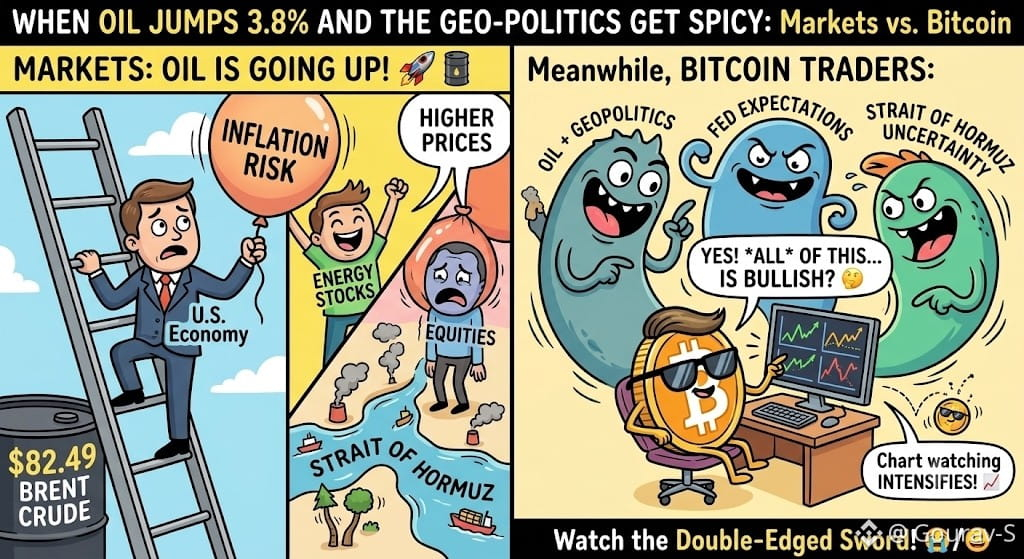
#BrentClimbs3.8%To$82.49
Brent crude jumped 3.8% to $82.49 a barrel, as markets reacted to renewed uncertainty around a possible deal to reopen the Strait of Hormuz. The move came even as diplomatic efforts continued, with Iran and Oman agreeing on a proposed shipping route. However, no final U.S.-Iran agreement has been reached, keeping supply and shipping risks elevated.
For markets, higher oil prices are a double-edged sword. They can support energy stocks but also raise inflation concerns and potentially pressure equities and crypto if the move continues.
For Bitcoin traders, oil + geopolitics + Fed expectations are worth watching closely.
#BrentCrude #Oil #Hormuz #Markets #BinanceSquare
#BrentClimbs3.8%To$82.49
Brent crude jumped 3.8% to $82.49 a barrel, as markets reacted to renewed uncertainty around a possible deal to reopen the Strait of Hormuz. The move came even as diplomatic efforts continued, with Iran and Oman agreeing on a proposed shipping route. However, no final U.S.-Iran agreement has been reached, keeping supply and shipping risks elevated.
For markets, higher oil prices are a double-edged sword. They can support energy stocks but also raise inflation concerns and potentially pressure equities and crypto if the move continues.
For Bitcoin traders, oil + geopolitics + Fed expectations are worth watching closely.
#BrentCrude #Oil #Hormuz #Markets #BinanceSquare
Brent crude jumped 3.8% to $82.49 a barrel, as markets reacted to renewed uncertainty around a possible deal to reopen the Strait of Hormuz. The move came even as diplomatic efforts continued, with Iran and Oman agreeing on a proposed shipping route. However, no final U.S.-Iran agreement has been reached, keeping supply and shipping risks elevated.
For markets, higher oil prices are a double-edged sword. They can support energy stocks but also raise inflation concerns and potentially pressure equities and crypto if the move continues.
For Bitcoin traders, oil + geopolitics + Fed expectations are worth watching closely.
#BrentCrude #Oil #Hormuz #Markets #BinanceSquare
1
275
·
--
Verified
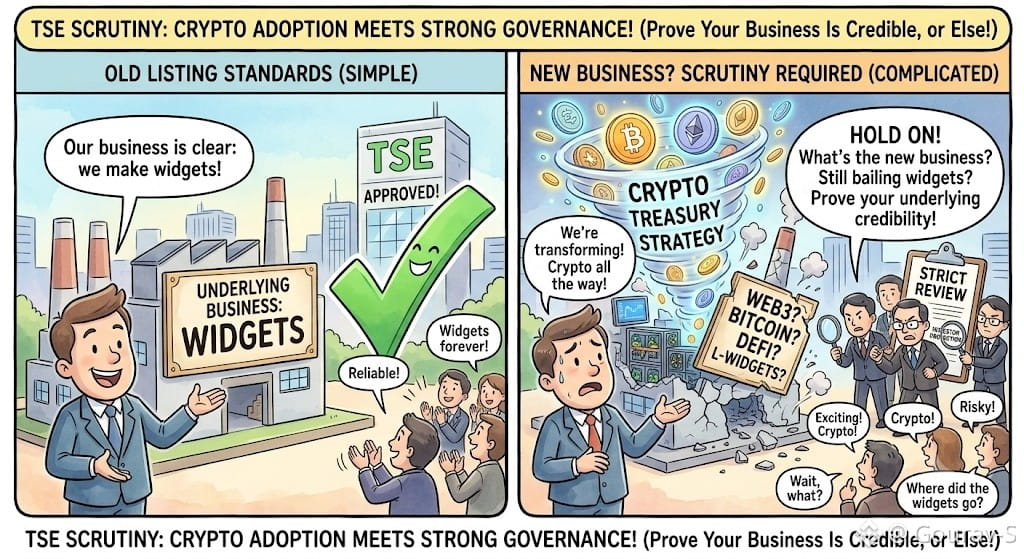
#TSEPlansReReviewForMajorBusinessChanges
Japan’s Tokyo Stock Exchange (TSE) is looking at tighter scrutiny when listed companies make major changes to their core business. The discussion is particularly relevant to companies shifting toward cryptocurrency treasury strategies, where the new business can look very different from the one originally reviewed at listing.
The idea is to protect investors and prevent companies from effectively bypassing the exchange’s original listing standards through a drastic business transformation.
For crypto markets, this is an important development. Japan appears to be moving toward greater crypto adoption while simultaneously demanding stronger corporate governance and investor protection.
The message is clear: crypto exposure may be welcomed, but listed companies still need a credible underlying business.
#Japan #crypto #stockmarket #BinanceSquare
#TSEPlansReReviewForMajorBusinessChanges
Japan’s Tokyo Stock Exchange (TSE) is looking at tighter scrutiny when listed companies make major changes to their core business. The discussion is particularly relevant to companies shifting toward cryptocurrency treasury strategies, where the new business can look very different from the one originally reviewed at listing.
The idea is to protect investors and prevent companies from effectively bypassing the exchange’s original listing standards through a drastic business transformation.
For crypto markets, this is an important development. Japan appears to be moving toward greater crypto adoption while simultaneously demanding stronger corporate governance and investor protection.
The message is clear: crypto exposure may be welcomed, but listed companies still need a credible underlying business.
#Japan #crypto #stockmarket #BinanceSquare
Japan’s Tokyo Stock Exchange (TSE) is looking at tighter scrutiny when listed companies make major changes to their core business. The discussion is particularly relevant to companies shifting toward cryptocurrency treasury strategies, where the new business can look very different from the one originally reviewed at listing.
The idea is to protect investors and prevent companies from effectively bypassing the exchange’s original listing standards through a drastic business transformation.
For crypto markets, this is an important development. Japan appears to be moving toward greater crypto adoption while simultaneously demanding stronger corporate governance and investor protection.
The message is clear: crypto exposure may be welcomed, but listed companies still need a credible underlying business.
#Japan #crypto #stockmarket #BinanceSquare
1
4
216
·
--
Bullish
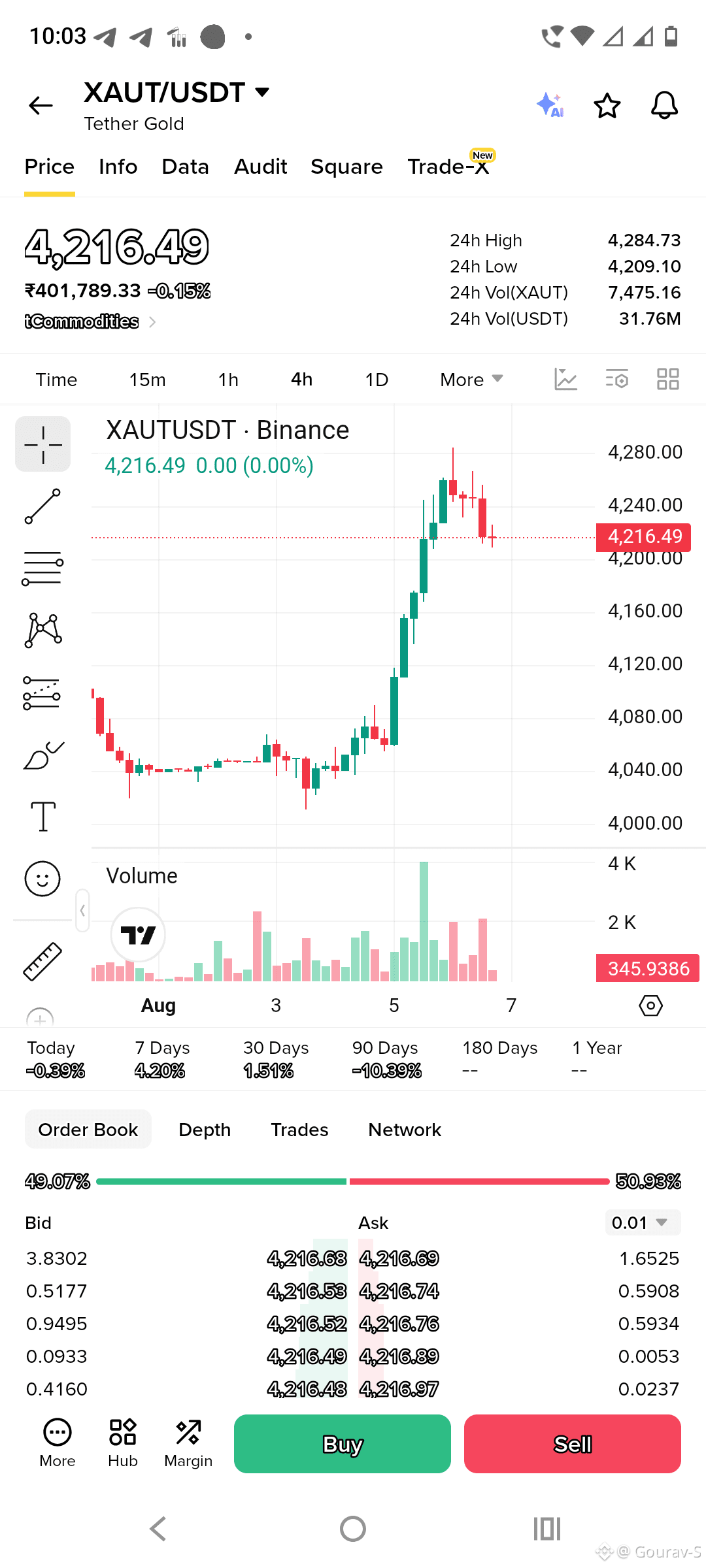
Trade View: Bullish, but wait for confirmation
The chart shows:
A strong impulsive breakout from around 4,060 to 4,260+, confirming strong buying momentum.
Price is now pulling back to around 4,216, which looks like a healthy correction rather than a trend reversal.
The recent red candles indicate profit-taking after the rally, but no clear bearish breakdown is visible yet.
Trade Plan (Higher Probability)
Bias: Bullish
Entry: 4,210–4,220 (only if buyers defend this zone)
Target 1: 4,245
Target 2: 4,275–4,285
Stop Loss: Below 4,195
Invalidation:
If the 4H candle closes below 4,195, the pullback could deepen toward the 4,170–4,180 support area before buyers return.
Keep an eye on upcoming U.S. macro events (Fed expectations, jobs data, and Treasury yields), as they often have a strong influence on gold prices. A stronger U.S. dollar or rising yields can pressure gold, while weaker economic data can support it.
#XAU #GOLD #BinanceSquare #singaurav9
$XAUT
{spot}(XAUTUSDT)
{future}(XAUUSDT)
Trade View: Bullish, but wait for confirmation
The chart shows:
A strong impulsive breakout from around 4,060 to 4,260+, confirming strong buying momentum.
Price is now pulling back to around 4,216, which looks like a healthy correction rather than a trend reversal.
The recent red candles indicate profit-taking after the rally, but no clear bearish breakdown is visible yet.
Trade Plan (Higher Probability)
Bias: Bullish
Entry: 4,210–4,220 (only if buyers defend this zone)
Target 1: 4,245
Target 2: 4,275–4,285
Stop Loss: Below 4,195
Invalidation:
If the 4H candle closes below 4,195, the pullback could deepen toward the 4,170–4,180 support area before buyers return.
Keep an eye on upcoming U.S. macro events (Fed expectations, jobs data, and Treasury yields), as they often have a strong influence on gold prices. A stronger U.S. dollar or rising yields can pressure gold, while weaker economic data can support it.
#XAU #GOLD #BinanceSquare #singaurav9
$XAUT
The chart shows:
A strong impulsive breakout from around 4,060 to 4,260+, confirming strong buying momentum.
Price is now pulling back to around 4,216, which looks like a healthy correction rather than a trend reversal.
The recent red candles indicate profit-taking after the rally, but no clear bearish breakdown is visible yet.
Trade Plan (Higher Probability)
Bias: Bullish
Entry: 4,210–4,220 (only if buyers defend this zone)
Target 1: 4,245
Target 2: 4,275–4,285
Stop Loss: Below 4,195
Invalidation:
If the 4H candle closes below 4,195, the pullback could deepen toward the 4,170–4,180 support area before buyers return.
Keep an eye on upcoming U.S. macro events (Fed expectations, jobs data, and Treasury yields), as they often have a strong influence on gold prices. A stronger U.S. dollar or rising yields can pressure gold, while weaker economic data can support it.
#XAU #GOLD #BinanceSquare #singaurav9
$XAUT
1
345
·
--
#KospiFalls4.58%
South Korea's KOSPI dropped 4.58%, giving back much of its recent gains as heavy selling hit major semiconductor stocks, including Samsung Electronics and SK Hynix. The decline followed renewed concerns over AI-related valuations and weakness in global chip stocks, prompting investors to lock in profits after a strong rally.
This sharp pullback is a reminder that even the strongest markets can experience sudden corrections. For crypto investors, weakness in equity markets, especially in the tech sector, can temporarily weigh on risk sentiment, although it doesn't necessarily change the long-term outlook.
The key now is to watch whether buyers step back in or if broader risk-off sentiment spreads across global markets.
#KOSPI #SouthKorea #BinanceSquare
#KospiFalls4.58%
South Korea's KOSPI dropped 4.58%, giving back much of its recent gains as heavy selling hit major semiconductor stocks, including Samsung Electronics and SK Hynix. The decline followed renewed concerns over AI-related valuations and weakness in global chip stocks, prompting investors to lock in profits after a strong rally.
This sharp pullback is a reminder that even the strongest markets can experience sudden corrections. For crypto investors, weakness in equity markets, especially in the tech sector, can temporarily weigh on risk sentiment, although it doesn't necessarily change the long-term outlook.
The key now is to watch whether buyers step back in or if broader risk-off sentiment spreads across global markets.
#KOSPI #SouthKorea #BinanceSquare
South Korea's KOSPI dropped 4.58%, giving back much of its recent gains as heavy selling hit major semiconductor stocks, including Samsung Electronics and SK Hynix. The decline followed renewed concerns over AI-related valuations and weakness in global chip stocks, prompting investors to lock in profits after a strong rally.
This sharp pullback is a reminder that even the strongest markets can experience sudden corrections. For crypto investors, weakness in equity markets, especially in the tech sector, can temporarily weigh on risk sentiment, although it doesn't necessarily change the long-term outlook.
The key now is to watch whether buyers step back in or if broader risk-off sentiment spreads across global markets.
#KOSPI #SouthKorea #BinanceSquare
1
147
·
--
#HYPEGains79%InQ2
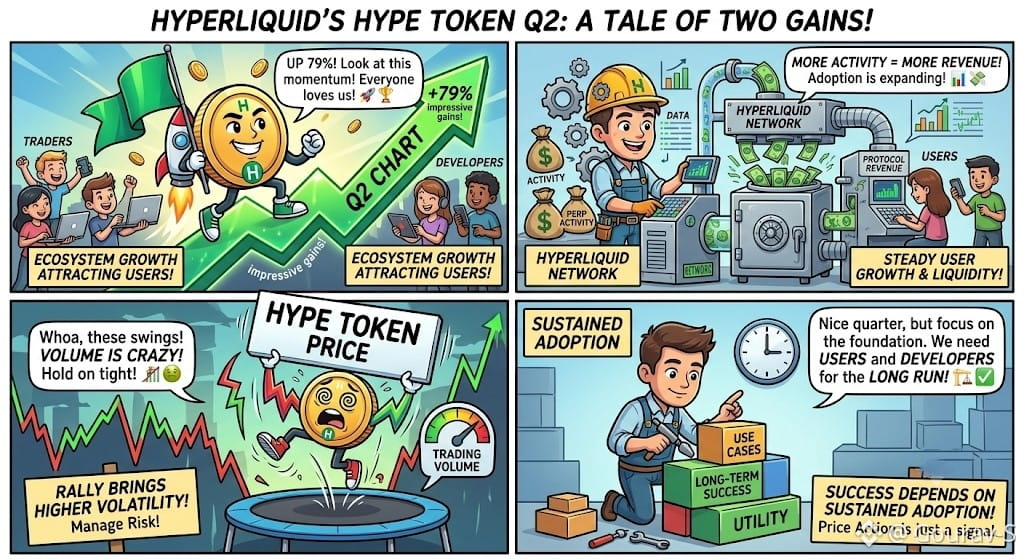
Hyperliquid's HYPE token had an impressive second quarter, climbing 79% as strong ecosystem growth continued to attract traders and developers. The rally was supported by higher perpetual futures trading activity, growing protocol revenue, and increasing adoption across the Hyperliquid network. Recent market reports also highlight steady user growth and expanding on-chain liquidity, reinforcing confidence in the ecosystem.
While HYPE has clearly outperformed many major crypto assets over the past quarter, investors should remember that strong rallies often bring higher volatility. Watching trading volume, ecosystem activity, and overall market sentiment will be key to judging whether the momentum can continue.
A strong quarter is encouraging, but long-term success will depend on sustained adoption, not just price action.
#HYPE #DeFi #Crypto #BinanceSquare
{future}(HYPEUSDT)
#HYPEGains79%InQ2
Hyperliquid's HYPE token had an impressive second quarter, climbing 79% as strong ecosystem growth continued to attract traders and developers. The rally was supported by higher perpetual futures trading activity, growing protocol revenue, and increasing adoption across the Hyperliquid network. Recent market reports also highlight steady user growth and expanding on-chain liquidity, reinforcing confidence in the ecosystem.
While HYPE has clearly outperformed many major crypto assets over the past quarter, investors should remember that strong rallies often bring higher volatility. Watching trading volume, ecosystem activity, and overall market sentiment will be key to judging whether the momentum can continue.
A strong quarter is encouraging, but long-term success will depend on sustained adoption, not just price action.
#HYPE #DeFi #Crypto #BinanceSquare
Hyperliquid's HYPE token had an impressive second quarter, climbing 79% as strong ecosystem growth continued to attract traders and developers. The rally was supported by higher perpetual futures trading activity, growing protocol revenue, and increasing adoption across the Hyperliquid network. Recent market reports also highlight steady user growth and expanding on-chain liquidity, reinforcing confidence in the ecosystem.
While HYPE has clearly outperformed many major crypto assets over the past quarter, investors should remember that strong rallies often bring higher volatility. Watching trading volume, ecosystem activity, and overall market sentiment will be key to judging whether the momentum can continue.
A strong quarter is encouraging, but long-term success will depend on sustained adoption, not just price action.
#HYPE #DeFi #Crypto #BinanceSquare
1
367
·
--
#ChinaLaunchesBroadestTradeRetaliationOnUSFirms
Trade tensions between the U.S. and China are heating up again. China has announced one of its broadest rounds of retaliatory measures, targeting several U.S. companies, tightening export controls on drones and related technologies, and limiting the role of U.S. agencies in parts of its certification process. The move comes after Washington expanded restrictions on Chinese tech firms and added more Chinese entities to its trade blacklist.
For global markets, this is a reminder that geopolitical risks remain a key driver of volatility. Any escalation could affect supply chains, technology stocks, and overall investor sentiment. Crypto may also see short-term swings as traders react to broader macro uncertainty.
The trade dispute is far from over, so staying informed is just as important as watching the charts.
#china #TradeWar #Crypto #BinanceSquare
#ChinaLaunchesBroadestTradeRetaliationOnUSFirms
Trade tensions between the U.S. and China are heating up again. China has announced one of its broadest rounds of retaliatory measures, targeting several U.S. companies, tightening export controls on drones and related technologies, and limiting the role of U.S. agencies in parts of its certification process. The move comes after Washington expanded restrictions on Chinese tech firms and added more Chinese entities to its trade blacklist.
For global markets, this is a reminder that geopolitical risks remain a key driver of volatility. Any escalation could affect supply chains, technology stocks, and overall investor sentiment. Crypto may also see short-term swings as traders react to broader macro uncertainty.
The trade dispute is far from over, so staying informed is just as important as watching the charts.
#china #TradeWar #Crypto #BinanceSquare
Trade tensions between the U.S. and China are heating up again. China has announced one of its broadest rounds of retaliatory measures, targeting several U.S. companies, tightening export controls on drones and related technologies, and limiting the role of U.S. agencies in parts of its certification process. The move comes after Washington expanded restrictions on Chinese tech firms and added more Chinese entities to its trade blacklist.
For global markets, this is a reminder that geopolitical risks remain a key driver of volatility. Any escalation could affect supply chains, technology stocks, and overall investor sentiment. Crypto may also see short-term swings as traders react to broader macro uncertainty.
The trade dispute is far from over, so staying informed is just as important as watching the charts.
#china #TradeWar #Crypto #BinanceSquare
1
2
248
·
--
If you were forced to pick only 3 crypto assets to hold untouched for the next 2 years... which ones are making your cut? 👇
If you ask me, here is my top 3 selection:
1. Bitcoin ($BTC ) – The Ultimate Safety & Digital Gold. No matter how chaotic the market gets, BTC remains the anchor of the portfolio...
2. Ethereum ($ETH ) – The Ecosystem Powerhouse. The backbone of DeFi, L2s, and smart contracts. The market’s engine simply doesn't run without it..
3. Solana ($SOL ) – High-Speed & Adoption Beast. Unmatched transaction speed, massive retail adoption, and a booming ecosystem that keeps driving massive long-term volume..
Real crypto wealth isn't built overnight, it’s built on patience and smart asset allocation....
Now over to you: Drop your TOP 3 picks below! Let’s see which tokens the community trusts the most right now.👇
#BinanceSquare #bitcoin #ETH #solana #singaurav9
{spot}(BTCUSDT)
{spot}(ETHUSDT)
{spot}(SOLUSDT)
If you were forced to pick only 3 crypto assets to hold untouched for the next 2 years... which ones are making your cut? 👇
If you ask me, here is my top 3 selection:
1. Bitcoin ($BTC ) – The Ultimate Safety & Digital Gold. No matter how chaotic the market gets, BTC remains the anchor of the portfolio...
2. Ethereum ($ETH ) – The Ecosystem Powerhouse. The backbone of DeFi, L2s, and smart contracts. The market’s engine simply doesn't run without it..
3. Solana ($SOL ) – High-Speed & Adoption Beast. Unmatched transaction speed, massive retail adoption, and a booming ecosystem that keeps driving massive long-term volume..
Real crypto wealth isn't built overnight, it’s built on patience and smart asset allocation....
Now over to you: Drop your TOP 3 picks below! Let’s see which tokens the community trusts the most right now.👇
#BinanceSquare #bitcoin #ETH #solana #singaurav9
If you ask me, here is my top 3 selection:
1. Bitcoin ($BTC ) – The Ultimate Safety & Digital Gold. No matter how chaotic the market gets, BTC remains the anchor of the portfolio...
2. Ethereum ($ETH ) – The Ecosystem Powerhouse. The backbone of DeFi, L2s, and smart contracts. The market’s engine simply doesn't run without it..
3. Solana ($SOL ) – High-Speed & Adoption Beast. Unmatched transaction speed, massive retail adoption, and a booming ecosystem that keeps driving massive long-term volume..
Real crypto wealth isn't built overnight, it’s built on patience and smart asset allocation....
Now over to you: Drop your TOP 3 picks below! Let’s see which tokens the community trusts the most right now.👇
#BinanceSquare #bitcoin #ETH #solana #singaurav9

2
2
710
·
--
Verified
#USISMServicesIndexRisesTo54.1
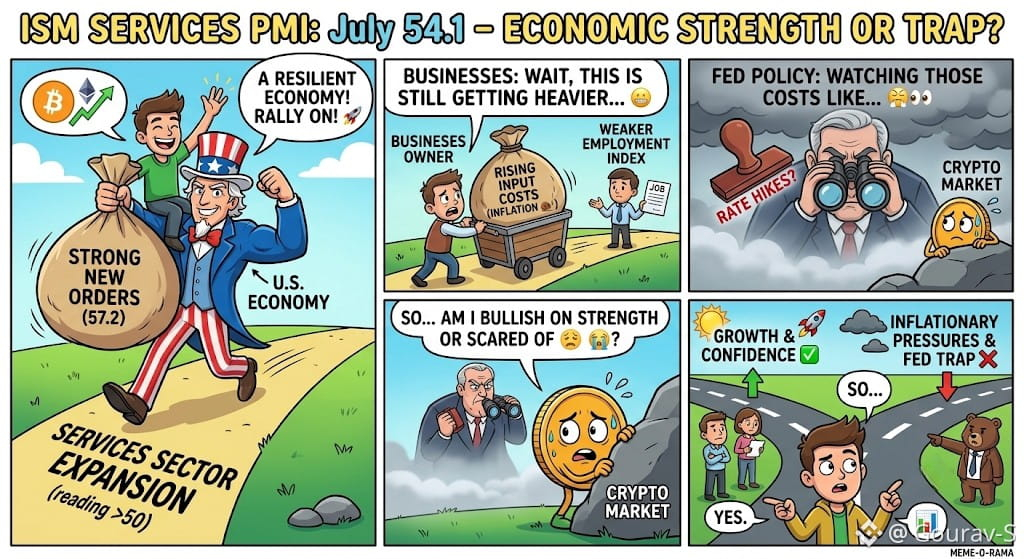
The U.S. ISM Services PMI edged up to 54.1 in July, from 54.0 in June, signaling that the services sector continues to expand. Stronger new orders (57.2) highlighted resilient demand, but rising input costs and a weaker employment index showed businesses remain cautious about hiring. Since a reading above 50 indicates expansion, the report suggests the U.S. economy is still growing despite inflationary pressures.
For crypto markets, a resilient economy supports investor confidence, but persistent inflation could influence future Federal Reserve policy. Traders should watch upcoming inflation and labor data for clues on the next market move.
Strong growth, rising costs, macro trends still matter for crypto.
#USEconomy #bitcoin #Crypto #BinanceSquare
#USISMServicesIndexRisesTo54.1
The U.S. ISM Services PMI edged up to 54.1 in July, from 54.0 in June, signaling that the services sector continues to expand. Stronger new orders (57.2) highlighted resilient demand, but rising input costs and a weaker employment index showed businesses remain cautious about hiring. Since a reading above 50 indicates expansion, the report suggests the U.S. economy is still growing despite inflationary pressures.
For crypto markets, a resilient economy supports investor confidence, but persistent inflation could influence future Federal Reserve policy. Traders should watch upcoming inflation and labor data for clues on the next market move.
Strong growth, rising costs, macro trends still matter for crypto.
#USEconomy #bitcoin #Crypto #BinanceSquare
The U.S. ISM Services PMI edged up to 54.1 in July, from 54.0 in June, signaling that the services sector continues to expand. Stronger new orders (57.2) highlighted resilient demand, but rising input costs and a weaker employment index showed businesses remain cautious about hiring. Since a reading above 50 indicates expansion, the report suggests the U.S. economy is still growing despite inflationary pressures.
For crypto markets, a resilient economy supports investor confidence, but persistent inflation could influence future Federal Reserve policy. Traders should watch upcoming inflation and labor data for clues on the next market move.
Strong growth, rising costs, macro trends still matter for crypto.
#USEconomy #bitcoin #Crypto #BinanceSquare
2
224
·
--
#ADPJulyPrivatePayrollsMissedExpectations
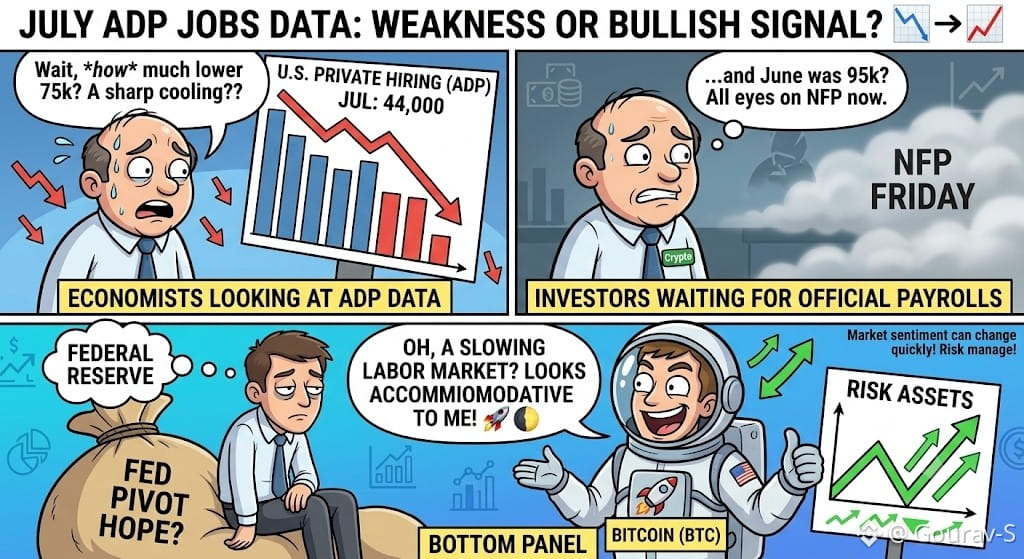
U.S. private hiring cooled sharply in July, with the ADP Employment Report showing 44,000 new jobs, well below market expectations of around 75,000 and down from June's revised 95,000. The weaker-than-expected data points to a slowing labor market, while investors now await the official Nonfarm Payrolls (NFP) report for a clearer picture.
For crypto markets, softer employment data could strengthen expectations that the Federal Reserve may adopt a more accommodative policy if economic weakness persists. That may support risk assets like Bitcoin, but volatility is likely to increase ahead of the NFP release.
Watch macro data closely, market sentiment can change quickly.
#USJobs #FederalReserve #BinanceSquare #singaurav9
#ADPJulyPrivatePayrollsMissedExpectations
U.S. private hiring cooled sharply in July, with the ADP Employment Report showing 44,000 new jobs, well below market expectations of around 75,000 and down from June's revised 95,000. The weaker-than-expected data points to a slowing labor market, while investors now await the official Nonfarm Payrolls (NFP) report for a clearer picture.
For crypto markets, softer employment data could strengthen expectations that the Federal Reserve may adopt a more accommodative policy if economic weakness persists. That may support risk assets like Bitcoin, but volatility is likely to increase ahead of the NFP release.
Watch macro data closely, market sentiment can change quickly.
#USJobs #FederalReserve #BinanceSquare #singaurav9
U.S. private hiring cooled sharply in July, with the ADP Employment Report showing 44,000 new jobs, well below market expectations of around 75,000 and down from June's revised 95,000. The weaker-than-expected data points to a slowing labor market, while investors now await the official Nonfarm Payrolls (NFP) report for a clearer picture.
For crypto markets, softer employment data could strengthen expectations that the Federal Reserve may adopt a more accommodative policy if economic weakness persists. That may support risk assets like Bitcoin, but volatility is likely to increase ahead of the NFP release.
Watch macro data closely, market sentiment can change quickly.
#USJobs #FederalReserve #BinanceSquare #singaurav9
2
175
·
--
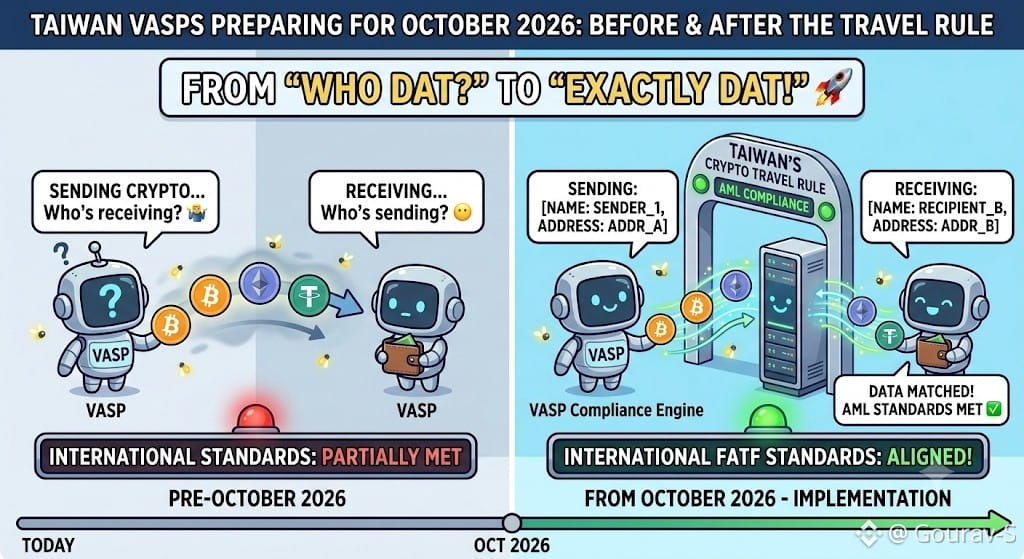
Taiwan is preparing to implement the Crypto Travel Rule from October 2026, marking another major step in strengthening anti-money laundering (AML) compliance. The rule will require Virtual Asset Service Providers (VASPs) to exchange sender and recipient information for eligible crypto transfers, aligning Taiwan more closely with international FATF standards. This follows the country's recently approved crypto regulatory framework, which introduced licensing requirements for exchanges and stablecoin issuers.
For the crypto industry, stronger compliance could boost institutional confidence while increasing transparency for cross-border transactions. Although compliance requirements will become stricter, regulatory clarity is generally viewed as a positive sign for long-term market growth.
Regulation is evolving, successful investors adapt early.
#Bitcoin #TaiwanPlansCryptoTravelRuleFromOctober #BinanceSquare #singaurav9
Taiwan is preparing to implement the Crypto Travel Rule from October 2026, marking another major step in strengthening anti-money laundering (AML) compliance. The rule will require Virtual Asset Service Providers (VASPs) to exchange sender and recipient information for eligible crypto transfers, aligning Taiwan more closely with international FATF standards. This follows the country's recently approved crypto regulatory framework, which introduced licensing requirements for exchanges and stablecoin issuers.
For the crypto industry, stronger compliance could boost institutional confidence while increasing transparency for cross-border transactions. Although compliance requirements will become stricter, regulatory clarity is generally viewed as a positive sign for long-term market growth.
Regulation is evolving, successful investors adapt early.
#Bitcoin #TaiwanPlansCryptoTravelRuleFromOctober #BinanceSquare #singaurav9
For the crypto industry, stronger compliance could boost institutional confidence while increasing transparency for cross-border transactions. Although compliance requirements will become stricter, regulatory clarity is generally viewed as a positive sign for long-term market growth.
Regulation is evolving, successful investors adapt early.
#Bitcoin #TaiwanPlansCryptoTravelRuleFromOctober #BinanceSquare #singaurav9
1
4
219
·
--
Binance Wallet Launches Squid (QUID) Trading Competition!
Binance Wallet has introduced a new Squid (QUID) Trading Competition on Binance Alpha, giving eligible users a chance to earn QUID token rewards. The campaign runs in two phases from Aug. 5–12 and Aug. 12–19, 2026 (UTC).
The top 2,500 traders in each phase, ranked by total QUID purchase volume, will share 925,000 QUID, with 370 QUID awarded per eligible winner. Early participation matters most, thanks to the Early Bird Boost, which starts at 3.5× on Day 1 and gradually declines to 1.0× on the final day. Newer participants may also receive a 1.2× Rising Trader Boost, increasing their effective trading volume.
If you're planning to join, trading earlier in the campaign could significantly improve your ranking.
#BinanceAlpha #QUID #CryptoRewards #Airdrop #BinanceSquare
$QUID
{alpha}(84530x1a44233fae8d50f1aeb3a5d58dd426ff4814cb53)
Binance Wallet Launches Squid (QUID) Trading Competition!
Binance Wallet has introduced a new Squid (QUID) Trading Competition on Binance Alpha, giving eligible users a chance to earn QUID token rewards. The campaign runs in two phases from Aug. 5–12 and Aug. 12–19, 2026 (UTC).
The top 2,500 traders in each phase, ranked by total QUID purchase volume, will share 925,000 QUID, with 370 QUID awarded per eligible winner. Early participation matters most, thanks to the Early Bird Boost, which starts at 3.5× on Day 1 and gradually declines to 1.0× on the final day. Newer participants may also receive a 1.2× Rising Trader Boost, increasing their effective trading volume.
If you're planning to join, trading earlier in the campaign could significantly improve your ranking.
#BinanceAlpha #QUID #CryptoRewards #Airdrop #BinanceSquare
$QUID
Binance Wallet has introduced a new Squid (QUID) Trading Competition on Binance Alpha, giving eligible users a chance to earn QUID token rewards. The campaign runs in two phases from Aug. 5–12 and Aug. 12–19, 2026 (UTC).
The top 2,500 traders in each phase, ranked by total QUID purchase volume, will share 925,000 QUID, with 370 QUID awarded per eligible winner. Early participation matters most, thanks to the Early Bird Boost, which starts at 3.5× on Day 1 and gradually declines to 1.0× on the final day. Newer participants may also receive a 1.2× Rising Trader Boost, increasing their effective trading volume.
If you're planning to join, trading earlier in the campaign could significantly improve your ranking.
#BinanceAlpha #QUID #CryptoRewards #Airdrop #BinanceSquare
$QUID
Binance News
·
--
Binance Wallet to Launch Squid Trading Competition for QUID Rewards
According to the announcement from Binance, Binance Wallet will launch the Squid Trading Competition on Binance Alpha, with eligible users able to trade Squid (QUID) in Binance Wallet (Keyless) or via Binance Alpha to compete for token rewards. The competition will run across two promotion periods: 2026-08-05 13:00 (UTC) to 2026-08-12 13:00 (UTC), and 2026-08-12 13:00 (UTC) to 2026-08-19 13:00 (UTC). Users eligible to trade Binance Alpha tokens may participate. Rankings will be based on total QUID purchase volume during each promotion period, and the top 2,500 users will share 925,000 QUID tokens equally, or 370 QUID per user. The announcement said the reward structure is intended to place greater emphasis on early trading and consistent participation during the promotion period.
Early participation will be weighted through the Early Bird Boost Multiplier, which gives higher multipliers to earlier trades when calculating daily effective trading volume. The multiplier starts at 3.5x for the first trading day and then decreases across the promotion period to 3.0x, 2.5x, 2.0x, 1.8x, 1.3x, and 1.0x on the final trading day. Binance Wallet is also introducing the Rising Trader Boost Multiplier for users who, as of three days before the promotion begins, have won any rewards in fewer than 3 previous Binance Wallet’s Alpha trading competitions. Eligible Rising Traders will receive a 1.2x boost on their actual trading volume during the promotion period, subject to a cap. If both boosts apply, effective trading volume will be calculated using both the early trading multiplier and the remaining Rising Trader Boost Cap. Rewards will be distributed in QUID and made available to eligible users before 2026-09-02 13:00:00 (UTC), with claims required within 14 days after rewards become claimable.
Early participation will be weighted through the Early Bird Boost Multiplier, which gives higher multipliers to earlier trades when calculating daily effective trading volume. The multiplier starts at 3.5x for the first trading day and then decreases across the promotion period to 3.0x, 2.5x, 2.0x, 1.8x, 1.3x, and 1.0x on the final trading day. Binance Wallet is also introducing the Rising Trader Boost Multiplier for users who, as of three days before the promotion begins, have won any rewards in fewer than 3 previous Binance Wallet’s Alpha trading competitions. Eligible Rising Traders will receive a 1.2x boost on their actual trading volume during the promotion period, subject to a cap. If both boosts apply, effective trading volume will be calculated using both the early trading multiplier and the remaining Rising Trader Boost Cap. Rewards will be distributed in QUID and made available to eligible users before 2026-09-02 13:00:00 (UTC), with claims required within 14 days after rewards become claimable.
1
196
·
--
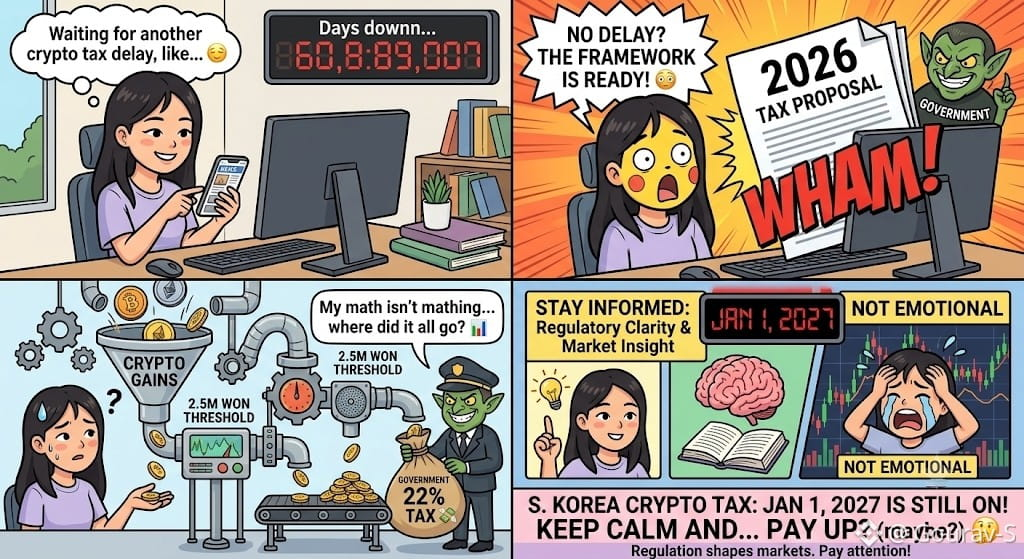
South Korea's 2026 tax proposal does not include another delay to crypto taxation, meaning the planned tax on virtual asset gains is still set to begin on January 1, 2027, if approved by parliament. Under the current plan, annual crypto gains above 2.5 million won will face an effective 22% tax (including local tax). While lawmakers could still amend the proposal, the government signaled that its crypto tax framework is now ready.
For crypto investors, this marks a step toward stronger regulatory clarity in one of Asia's largest digital asset markets. Keep an eye on parliamentary discussions, as they could still influence the final implementation.
Regulation shapes markets—stay informed, not emotional.
#SouthKorea #Bitcoin #BinanceSquare
#SouthKoreaTaxPlanOmitsCryptoTaxDelay
South Korea's 2026 tax proposal does not include another delay to crypto taxation, meaning the planned tax on virtual asset gains is still set to begin on January 1, 2027, if approved by parliament. Under the current plan, annual crypto gains above 2.5 million won will face an effective 22% tax (including local tax). While lawmakers could still amend the proposal, the government signaled that its crypto tax framework is now ready.
For crypto investors, this marks a step toward stronger regulatory clarity in one of Asia's largest digital asset markets. Keep an eye on parliamentary discussions, as they could still influence the final implementation.
Regulation shapes markets—stay informed, not emotional.
#SouthKorea #Bitcoin #BinanceSquare
#SouthKoreaTaxPlanOmitsCryptoTaxDelay
For crypto investors, this marks a step toward stronger regulatory clarity in one of Asia's largest digital asset markets. Keep an eye on parliamentary discussions, as they could still influence the final implementation.
Regulation shapes markets—stay informed, not emotional.
#SouthKorea #Bitcoin #BinanceSquare
#SouthKoreaTaxPlanOmitsCryptoTaxDelay
1
191
Log in to explore more content
Join global crypto users on Binance Square
⚡️ Get latest and useful information about crypto.
💬 Trusted by the world’s largest crypto exchange.
👍 Discover real insights from verified creators.
Email / Phone number
Trending Topics
SaylorHintsStrategyBitcoinBuy
2.3M views
12,444 Discussing
#saylorhintsstrategybitcoinbuy
🚨 SAYLOR JUST DROPPED THE SUNDAY $BTC HINT 👀
Michael Saylor reposted his usual Bitcoin chart again.
If history repeats, those orange dots could be signaling another Strategy BTC purchase is coming. 🟠
And when Saylor buys, the market watches.
🐋 Massive BTC holdings
💰 Continued accumulation strategy
📈 Potential short-term sentiment boost
But here’s the key:
A repost is NOT confirmation of a purchase.
The real signal comes when Strategy officially reports the transaction.
🔥 If another major BTC buy is announced, will the market react this time?
Or is Saylor’s accumulation becoming so routine that traders barely react anymore?
👀 Watch the announcement.
$MSTRB
#BTC #strategy #crypto #BitcoinNews
sdatta
·5 Likes
·6.6k views
BOJRaisesRatesTo31YearHigh
258,135 views
3,281 Discussing
BuffettStepsDownAsBerkshireChairman
125,391 views
1,758 Discussing