

#pumpswap
pumpswap
27,791 views
72 Discussing
Hot
Latest


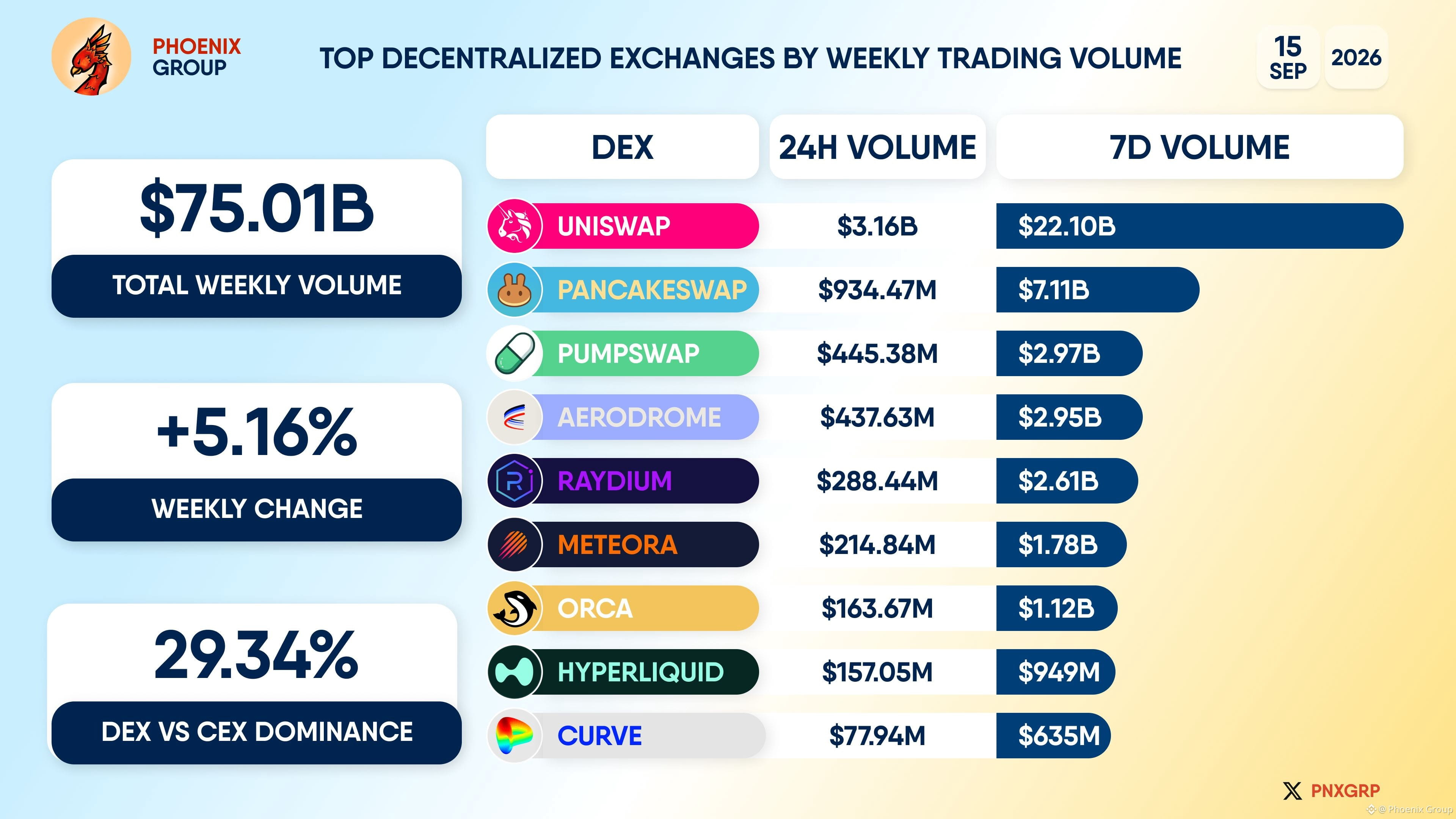
TOP DECENTRALIZED EXCHANGES BY WEEKLY TRADING VOLUME
#Uniswap #PancakeSwap #PumpSwap #Aerodrome #Raydium #Meteora #Orca #Hyperliquid #Curve
TOP DECENTRALIZED EXCHANGES BY WEEKLY TRADING VOLUME
#Uniswap #PancakeSwap #PumpSwap #Aerodrome #Raydium #Meteora #Orca #Hyperliquid #Curve
#Uniswap #PancakeSwap #PumpSwap #Aerodrome #Raydium #Meteora #Orca #Hyperliquid #Curve
854
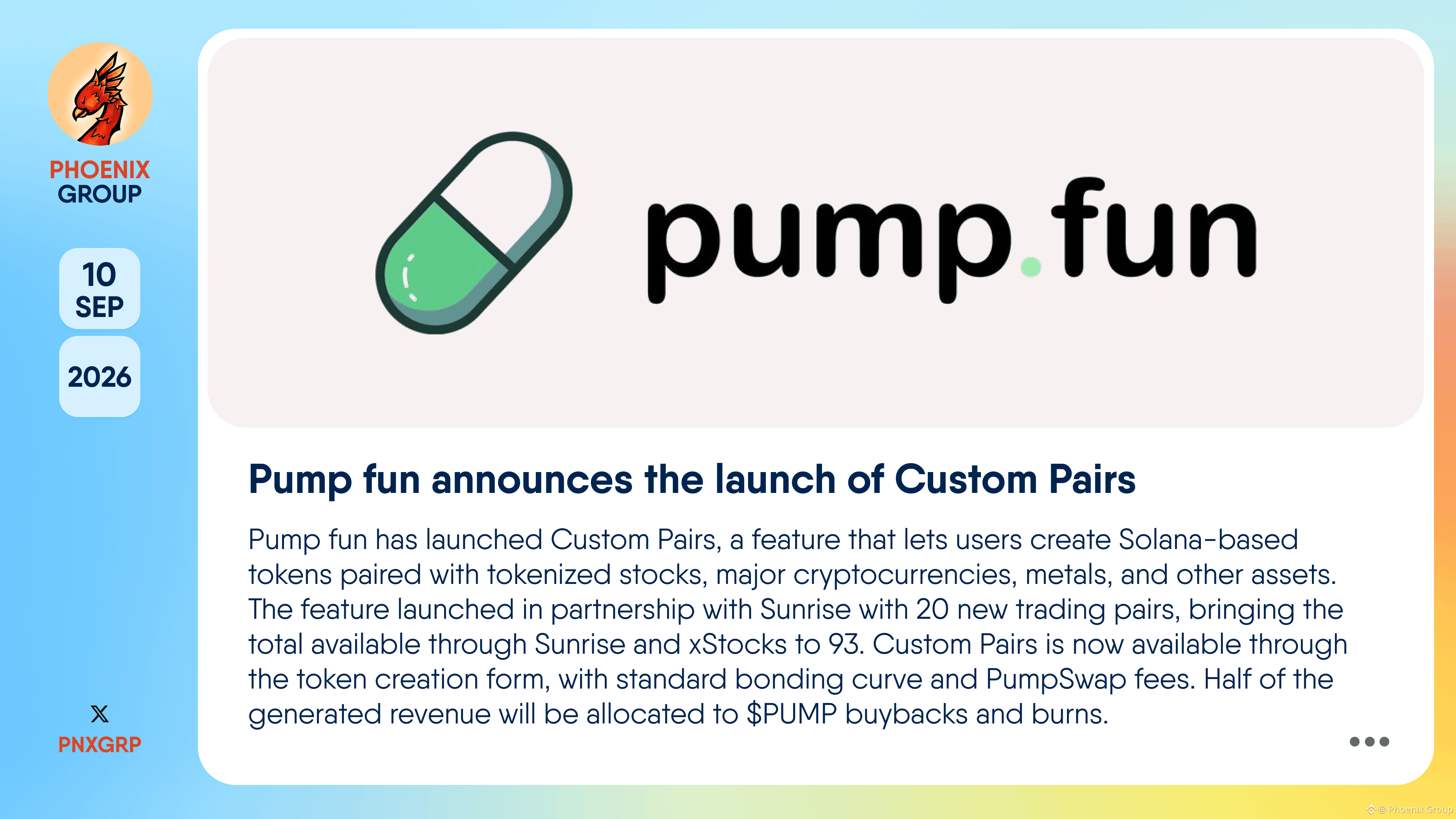
Pump fun announces the launch of Custom Pairs
#Pumpfun has launched Custom Pairs, a feature that lets users create #Solana -based tokens paired with tokenized stocks, major cryptocurrencies, metals, and other assets. The feature launched in partnership with #Sunrise with 20 new trading pairs, bringing the total available through Sunrise and #xStocks to 93. Custom Pairs is now available through the token creation form, with standard bonding curve and #PumpSwap fees. Half of the generated revenue will be allocated to $PUMP buybacks and burns.
👉 x.com/Pumpfun/status/2097785975434846285
Pump fun announces the launch of Custom Pairs
#Pumpfun has launched Custom Pairs, a feature that lets users create #Solana -based tokens paired with tokenized stocks, major cryptocurrencies, metals, and other assets. The feature launched in partnership with #Sunrise with 20 new trading pairs, bringing the total available through Sunrise and #xStocks to 93. Custom Pairs is now available through the token creation form, with standard bonding curve and #PumpSwap fees. Half of the generated revenue will be allocated to $PUMP buybacks and burns.
👉 x.com/Pumpfun/status/2097785975434846285
#Pumpfun has launched Custom Pairs, a feature that lets users create #Solana -based tokens paired with tokenized stocks, major cryptocurrencies, metals, and other assets. The feature launched in partnership with #Sunrise with 20 new trading pairs, bringing the total available through Sunrise and #xStocks to 93. Custom Pairs is now available through the token creation form, with standard bonding curve and #PumpSwap fees. Half of the generated revenue will be allocated to $PUMP buybacks and burns.
👉 x.com/Pumpfun/status/2097785975434846285
1
385
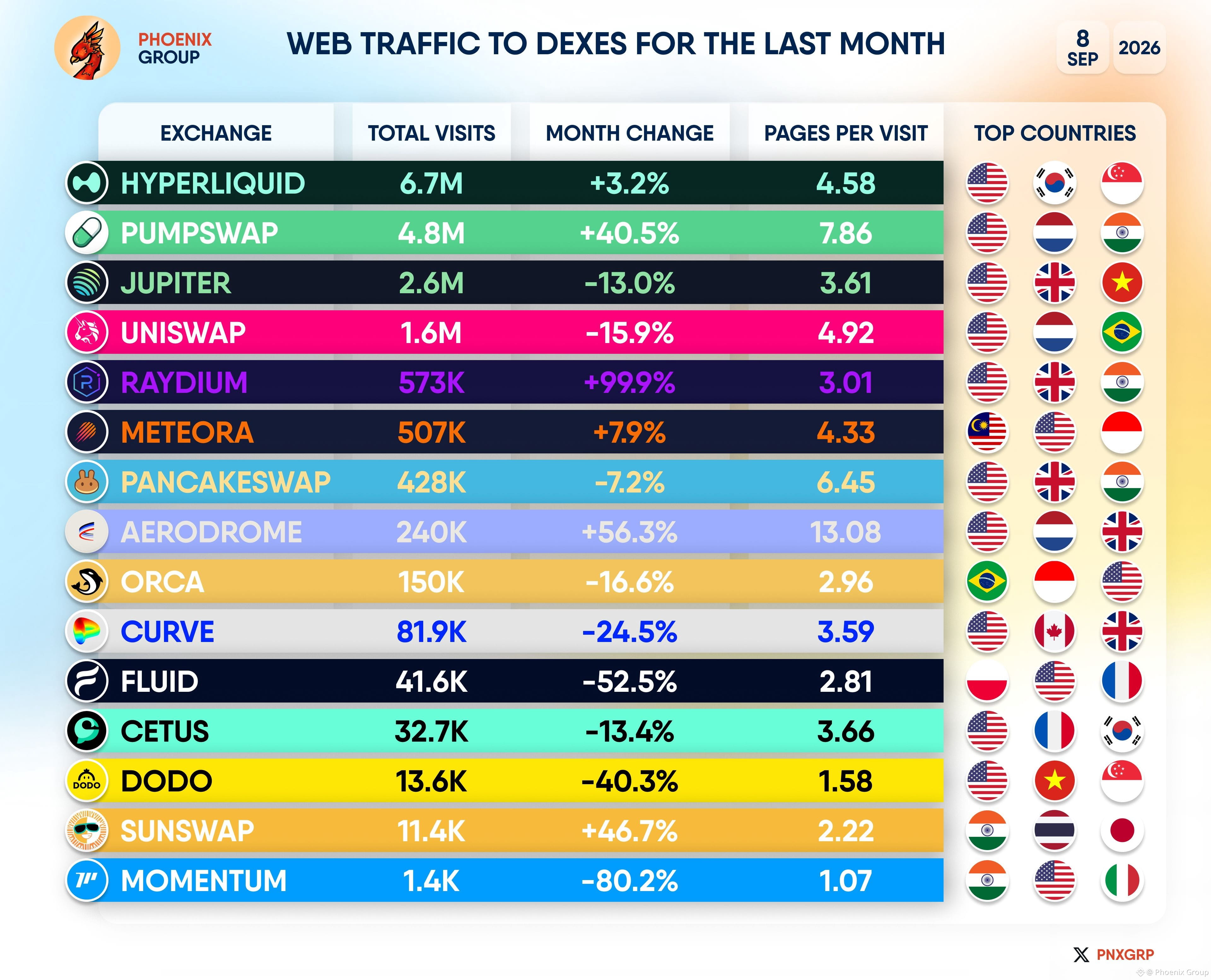
WEB TRAFFIC TO DEXES FOR THE LAST MONTH
#Hyperliquid #PumpSwap #Jupiter #Uniswap #Raydium #Meteora #PancakeSwap #Aerodrome #Orca #Curve #Fluid #Cetus #DODO #SunSwap #Momentum
WEB TRAFFIC TO DEXES FOR THE LAST MONTH
#Hyperliquid #PumpSwap #Jupiter #Uniswap #Raydium #Meteora #PancakeSwap #Aerodrome #Orca #Curve #Fluid #Cetus #DODO #SunSwap #Momentum
#Hyperliquid #PumpSwap #Jupiter #Uniswap #Raydium #Meteora #PancakeSwap #Aerodrome #Orca #Curve #Fluid #Cetus #DODO #SunSwap #Momentum
1
1
2
1.4k
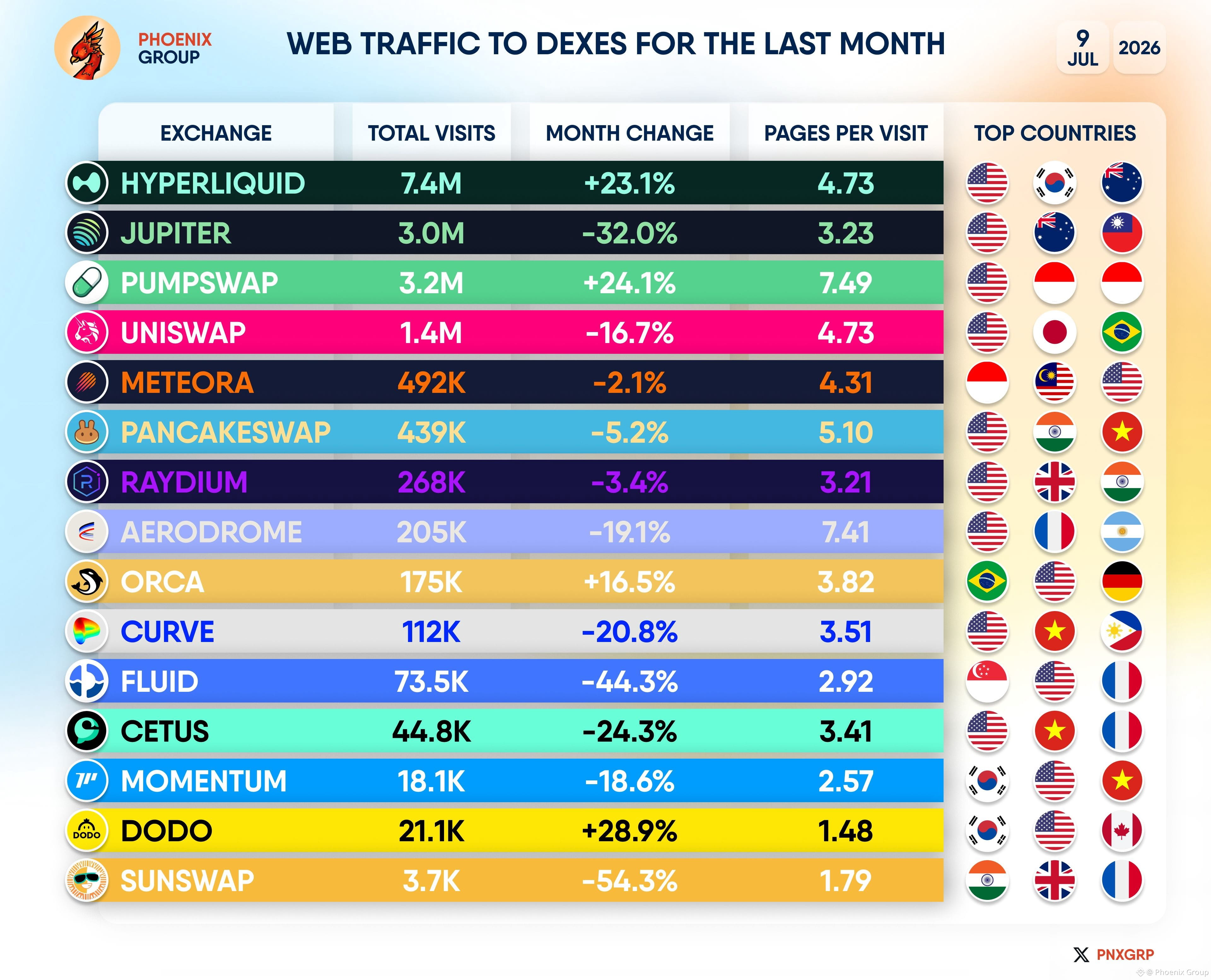
#WEB TRAFFIC TO DEXES FOR THE LAST MONTH
#Hyperliquid #Jupiter #PumpSwap #Uniswap #Meteora #PancakeSwap #Raydium #Aerodrome #Orca #Curve #Fluid #Cetus #Momentum #DODO #SunSwap
#WEB TRAFFIC TO DEXES FOR THE LAST MONTH
#Hyperliquid #Jupiter #PumpSwap #Uniswap #Meteora #PancakeSwap #Raydium #Aerodrome #Orca #Curve #Fluid #Cetus #Momentum #DODO #SunSwap
#Hyperliquid #Jupiter #PumpSwap #Uniswap #Meteora #PancakeSwap #Raydium #Aerodrome #Orca #Curve #Fluid #Cetus #Momentum #DODO #SunSwap
1
635
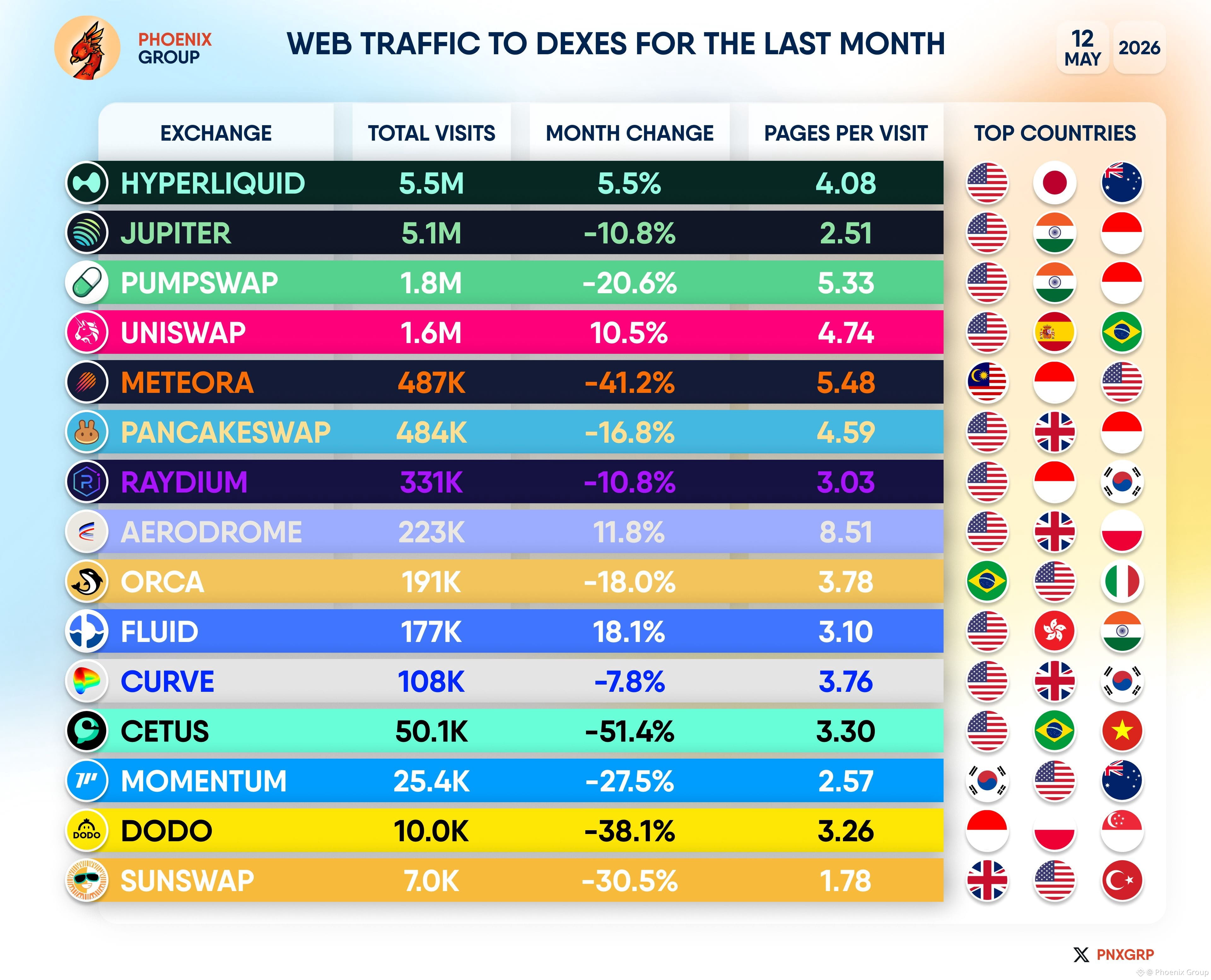
#WEB TRAFFIC TO DEXES FOR THE LAST MONTH
#Hyperliquid #Jupiter #PumpSwap #Uniswap #Meteora #PancakeSwap #Raydium #Aerodrome #Orca #Fluid #Curve #Cetus #Momentum #DODO #SunSwap
#WEB TRAFFIC TO DEXES FOR THE LAST MONTH
#Hyperliquid #Jupiter #PumpSwap #Uniswap #Meteora #PancakeSwap #Raydium #Aerodrome #Orca #Fluid #Curve #Cetus #Momentum #DODO #SunSwap
#Hyperliquid #Jupiter #PumpSwap #Uniswap #Meteora #PancakeSwap #Raydium #Aerodrome #Orca #Fluid #Curve #Cetus #Momentum #DODO #SunSwap
121
·
--
$PUMP 🔥 Burn $370 Million in Tokens and Announce New Rewards Model 😲
The memecoin launch platform PumpFun announced the burn of its accumulated tokens and the implementation of a programmatic buyback mechanism.
Key Details:
Massive Burn: PumpFun removed approximately $370 million worth of PUMP tokens from circulation, representing 36% of the circulating supply, burning all tokens it had previously accumulated.
Automated Mechanism: The company will implement an irrevocable smart contract that will automatically burn 50% of its net revenue (from Bonding Curve, #Pumpswap and Terminal) over the next year.
Transparency and Trust: This move aims to address the uncertainties and lack of trust that arose in the last nine months when the platform allocated nearly 100% of its revenue to buybacks without a clear burn mechanism.
Use of Funds: The remaining 50% of revenue will be allocated to operational sustainability, product development, marketing, and strategic investments, avoiding an exclusively burn-focused model that could undermine long-term growth.
Conclusion: PumpFun seeks to reaffirm community trust through a more transparent and predictable tokenomic deflation policy, balancing supply reduction with the need for funding future growth of the platform.
But how does the new token burn affect trust?
{spot}(PUMPUSDT)
#MEME #pump
$PUMP 🔥 Burn $370 Million in Tokens and Announce New Rewards Model 😲
The memecoin launch platform PumpFun announced the burn of its accumulated tokens and the implementation of a programmatic buyback mechanism.
Key Details:
Massive Burn: PumpFun removed approximately $370 million worth of PUMP tokens from circulation, representing 36% of the circulating supply, burning all tokens it had previously accumulated.
Automated Mechanism: The company will implement an irrevocable smart contract that will automatically burn 50% of its net revenue (from Bonding Curve, #Pumpswap and Terminal) over the next year.
Transparency and Trust: This move aims to address the uncertainties and lack of trust that arose in the last nine months when the platform allocated nearly 100% of its revenue to buybacks without a clear burn mechanism.
Use of Funds: The remaining 50% of revenue will be allocated to operational sustainability, product development, marketing, and strategic investments, avoiding an exclusively burn-focused model that could undermine long-term growth.
Conclusion: PumpFun seeks to reaffirm community trust through a more transparent and predictable tokenomic deflation policy, balancing supply reduction with the need for funding future growth of the platform.
But how does the new token burn affect trust?
#MEME #pump
The memecoin launch platform PumpFun announced the burn of its accumulated tokens and the implementation of a programmatic buyback mechanism.
Key Details:
Massive Burn: PumpFun removed approximately $370 million worth of PUMP tokens from circulation, representing 36% of the circulating supply, burning all tokens it had previously accumulated.
Automated Mechanism: The company will implement an irrevocable smart contract that will automatically burn 50% of its net revenue (from Bonding Curve, #Pumpswap and Terminal) over the next year.
Transparency and Trust: This move aims to address the uncertainties and lack of trust that arose in the last nine months when the platform allocated nearly 100% of its revenue to buybacks without a clear burn mechanism.
Use of Funds: The remaining 50% of revenue will be allocated to operational sustainability, product development, marketing, and strategic investments, avoiding an exclusively burn-focused model that could undermine long-term growth.
Conclusion: PumpFun seeks to reaffirm community trust through a more transparent and predictable tokenomic deflation policy, balancing supply reduction with the need for funding future growth of the platform.
But how does the new token burn affect trust?
#MEME #pump
2
1
392
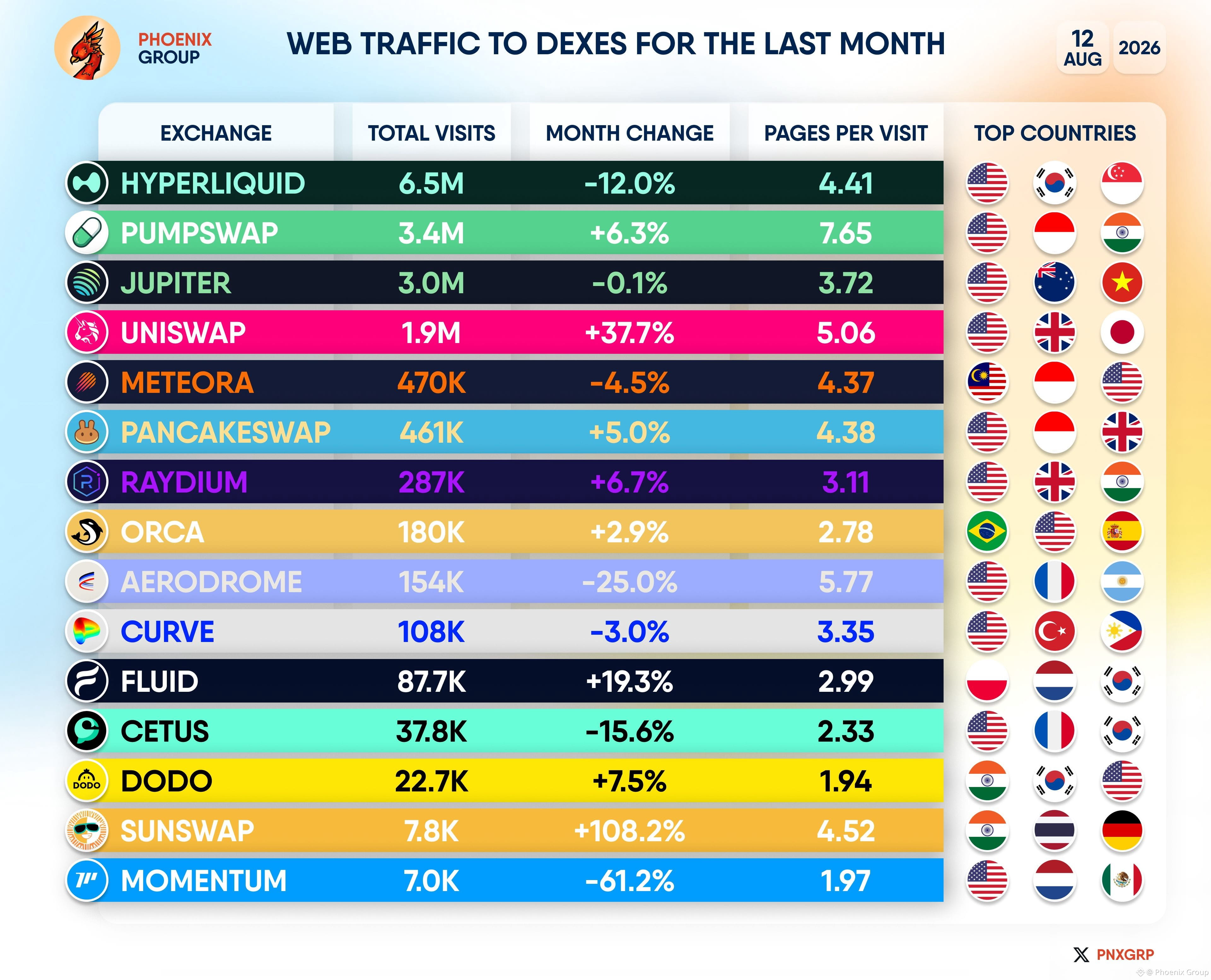
#WEB TRAFFIC TO DEXES FOR THE LAST MONTH
#Hyperliquid #PumpSwap #Jupiter #Uniswap #Meteora #PancakeSwap #Raydium #Orca #Aerodrome #Curve #Fluid #Cetus #DODO #SunSwap #Momentum
#WEB TRAFFIC TO DEXES FOR THE LAST MONTH
#Hyperliquid #PumpSwap #Jupiter #Uniswap #Meteora #PancakeSwap #Raydium #Orca #Aerodrome #Curve #Fluid #Cetus #DODO #SunSwap #Momentum
#Hyperliquid #PumpSwap #Jupiter #Uniswap #Meteora #PancakeSwap #Raydium #Orca #Aerodrome #Curve #Fluid #Cetus #DODO #SunSwap #Momentum
1
748
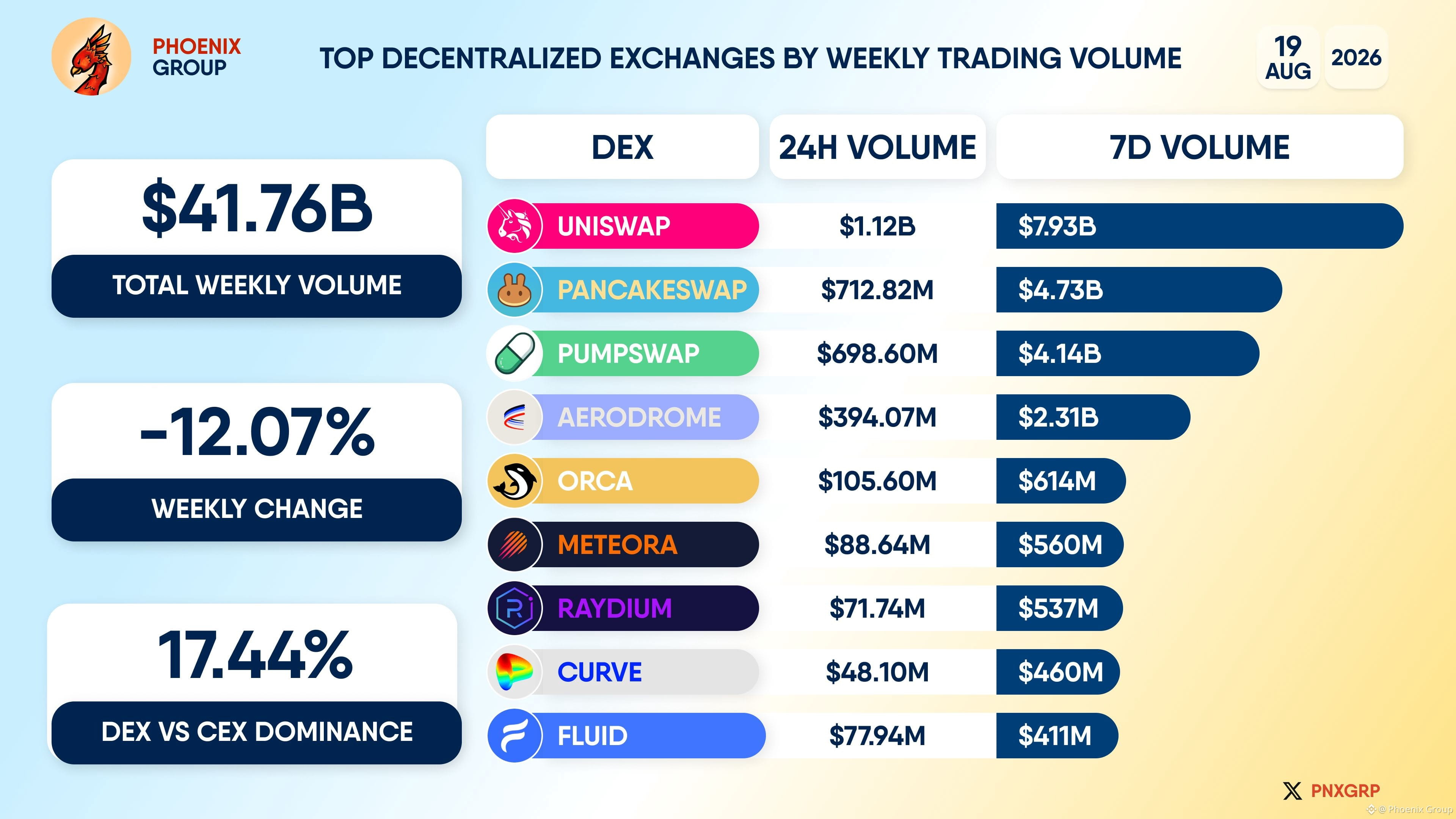
TOP DECENTRALIZED EXCHANGES BY WEEKLY TRADING VOLUME
#Uniswap #PancakeSwap #PumpSwap #Aerodrome #Orca #Meteora #Raydium #Curve #Fluid
TOP DECENTRALIZED EXCHANGES BY WEEKLY TRADING VOLUME
#Uniswap #PancakeSwap #PumpSwap #Aerodrome #Orca #Meteora #Raydium #Curve #Fluid
#Uniswap #PancakeSwap #PumpSwap #Aerodrome #Orca #Meteora #Raydium #Curve #Fluid
1.2k
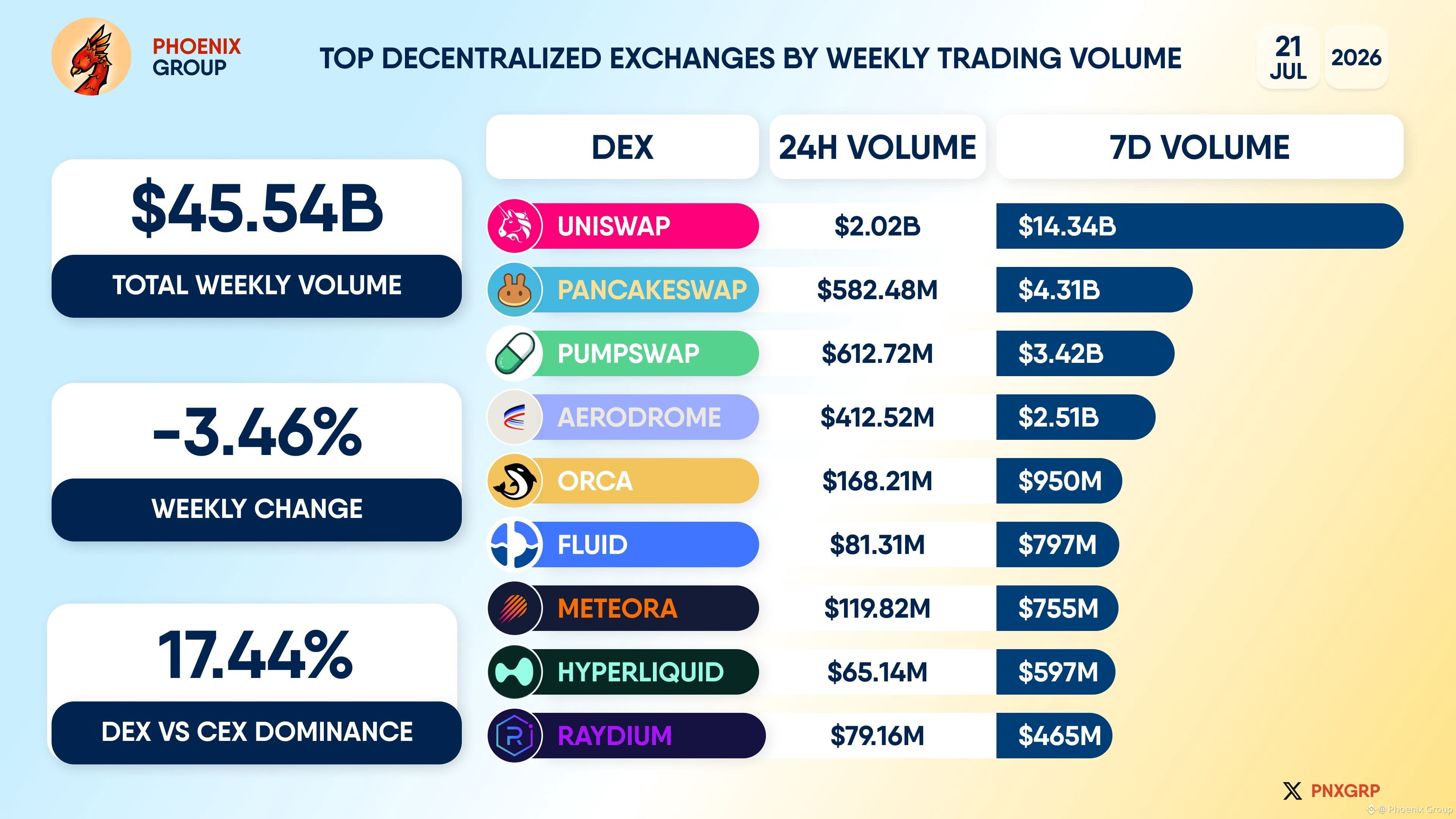
TOP DECENTRALIZED EXCHANGES BY WEEKLY TRADING VOLUME
#Uniswap #PancakeSwap #PumpSwap #Aerodrome #Orca #Fluid #Meteora #Hyperliquid #Raydium
TOP DECENTRALIZED EXCHANGES BY WEEKLY TRADING VOLUME
#Uniswap #PancakeSwap #PumpSwap #Aerodrome #Orca #Fluid #Meteora #Hyperliquid #Raydium
#Uniswap #PancakeSwap #PumpSwap #Aerodrome #Orca #Fluid #Meteora #Hyperliquid #Raydium
1
566

·
--
Bullish
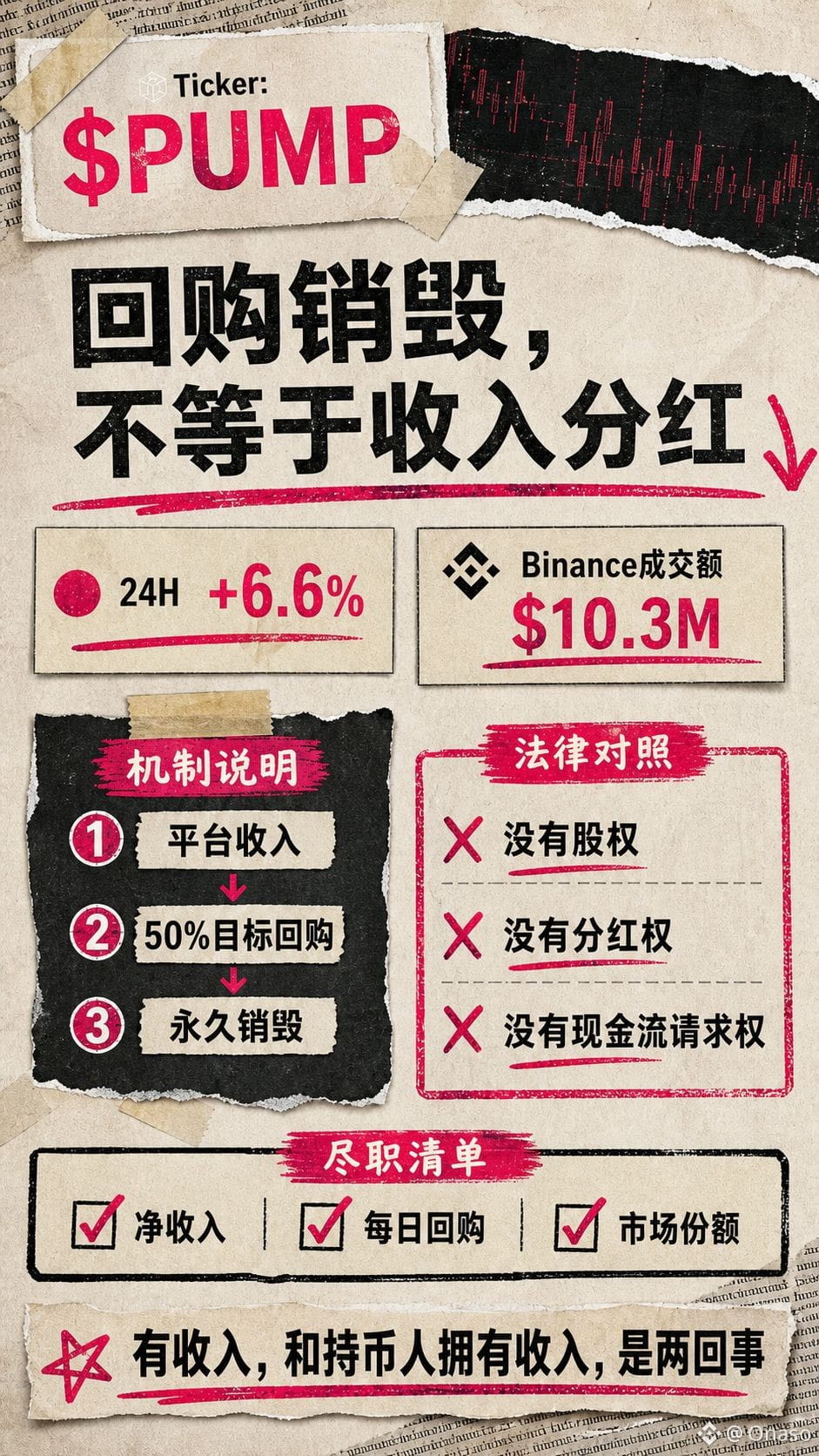
$PUMP Today we’re back into CoinGecko’s trending search list. As of the time of this report, PUMP/USDT is up about 6.6% over the past 24 hours on Binance, with trading volume of roughly $10.28 million. The total market trading volume compiled by CoinGecko is close to $96.5 million. Compared with meme-driven pumps of dozens of percentage points seen in projects like HOME and CYS, PUMP’s increase isn’t particularly extreme—but both attention and liquidity are stronger. The reason is also quite straightforward: it turns the Meme platform’s revenue, buybacks, and burns into a narrative that anyone can understand.
On Pump.fun’s official page, the platform’s goal is to use 50% of daily revenue to buy PUMP on the market, and permanently burn the tokens that are bought back. This structure is compelling because the more active the platform trading is, the more—at least in theory—will be used for purchases and burns, which continually reduces the token supply. Compared with many projects that only talk about “future utility,” PUMP at least links platform revenue and token supply in an observable way, and buyback records can also be verified on-chain.
But we must draw a very clear line here: buyback-and-burn does not mean token holders have any claim to platform revenue. The official legal disclosure explicitly states that PUMP does not represent equity, debt, or give holders any right to demand revenue, profits, dividends, or cash flows. Apart from portions that are already arranged in advance via smart contracts, future purchase behavior may also be modified, paused, or terminated. Therefore, you can’t simply multiply platform revenue by some factor and treat it as a traditional company’s stock valuation.
Another risk comes from the business itself. Pump.fun’s advantage is that anyone can quickly create a token, trade it, and get attention—but the low barrier also means many tokens have extremely short lifecycles. Sniping bots, associated wallets, and creators dumping are common. The platform can continuously collect trading fees from high-frequency speculation, but whether users benefit long-term is another question. For PUMP, the most important thing isn’t how many new Memes are created every day; it’s whether platform revenue can hold up as competition increases, and whether the proportion of revenue spent on buybacks continues to be executed.
I’m watching four indicators: the platform’s net revenue, the actual daily buyback amount, changes in circulating supply after burns, and #PumpSwap ’s share in Meme trading. If revenue declines while the market still prices it as though buybacks will stay high, the risk will quickly compound.
$PUMP Today we’re back into CoinGecko’s trending search list. As of the time of this report, PUMP/USDT is up about 6.6% over the past 24 hours on Binance, with trading volume of roughly $10.28 million. The total market trading volume compiled by CoinGecko is close to $96.5 million. Compared with meme-driven pumps of dozens of percentage points seen in projects like HOME and CYS, PUMP’s increase isn’t particularly extreme—but both attention and liquidity are stronger. The reason is also quite straightforward: it turns the Meme platform’s revenue, buybacks, and burns into a narrative that anyone can understand.
On Pump.fun’s official page, the platform’s goal is to use 50% of daily revenue to buy PUMP on the market, and permanently burn the tokens that are bought back. This structure is compelling because the more active the platform trading is, the more—at least in theory—will be used for purchases and burns, which continually reduces the token supply. Compared with many projects that only talk about “future utility,” PUMP at least links platform revenue and token supply in an observable way, and buyback records can also be verified on-chain.
But we must draw a very clear line here: buyback-and-burn does not mean token holders have any claim to platform revenue. The official legal disclosure explicitly states that PUMP does not represent equity, debt, or give holders any right to demand revenue, profits, dividends, or cash flows. Apart from portions that are already arranged in advance via smart contracts, future purchase behavior may also be modified, paused, or terminated. Therefore, you can’t simply multiply platform revenue by some factor and treat it as a traditional company’s stock valuation.
Another risk comes from the business itself. Pump.fun’s advantage is that anyone can quickly create a token, trade it, and get attention—but the low barrier also means many tokens have extremely short lifecycles. Sniping bots, associated wallets, and creators dumping are common. The platform can continuously collect trading fees from high-frequency speculation, but whether users benefit long-term is another question. For PUMP, the most important thing isn’t how many new Memes are created every day; it’s whether platform revenue can hold up as competition increases, and whether the proportion of revenue spent on buybacks continues to be executed.
I’m watching four indicators: the platform’s net revenue, the actual daily buyback amount, changes in circulating supply after burns, and #PumpSwap ’s share in Meme trading. If revenue declines while the market still prices it as though buybacks will stay high, the risk will quickly compound.
On Pump.fun’s official page, the platform’s goal is to use 50% of daily revenue to buy PUMP on the market, and permanently burn the tokens that are bought back. This structure is compelling because the more active the platform trading is, the more—at least in theory—will be used for purchases and burns, which continually reduces the token supply. Compared with many projects that only talk about “future utility,” PUMP at least links platform revenue and token supply in an observable way, and buyback records can also be verified on-chain.
But we must draw a very clear line here: buyback-and-burn does not mean token holders have any claim to platform revenue. The official legal disclosure explicitly states that PUMP does not represent equity, debt, or give holders any right to demand revenue, profits, dividends, or cash flows. Apart from portions that are already arranged in advance via smart contracts, future purchase behavior may also be modified, paused, or terminated. Therefore, you can’t simply multiply platform revenue by some factor and treat it as a traditional company’s stock valuation.
Another risk comes from the business itself. Pump.fun’s advantage is that anyone can quickly create a token, trade it, and get attention—but the low barrier also means many tokens have extremely short lifecycles. Sniping bots, associated wallets, and creators dumping are common. The platform can continuously collect trading fees from high-frequency speculation, but whether users benefit long-term is another question. For PUMP, the most important thing isn’t how many new Memes are created every day; it’s whether platform revenue can hold up as competition increases, and whether the proportion of revenue spent on buybacks continues to be executed.
I’m watching four indicators: the platform’s net revenue, the actual daily buyback amount, changes in circulating supply after burns, and #PumpSwap ’s share in Meme trading. If revenue declines while the market still prices it as though buybacks will stay high, the risk will quickly compound.
177
Partly True
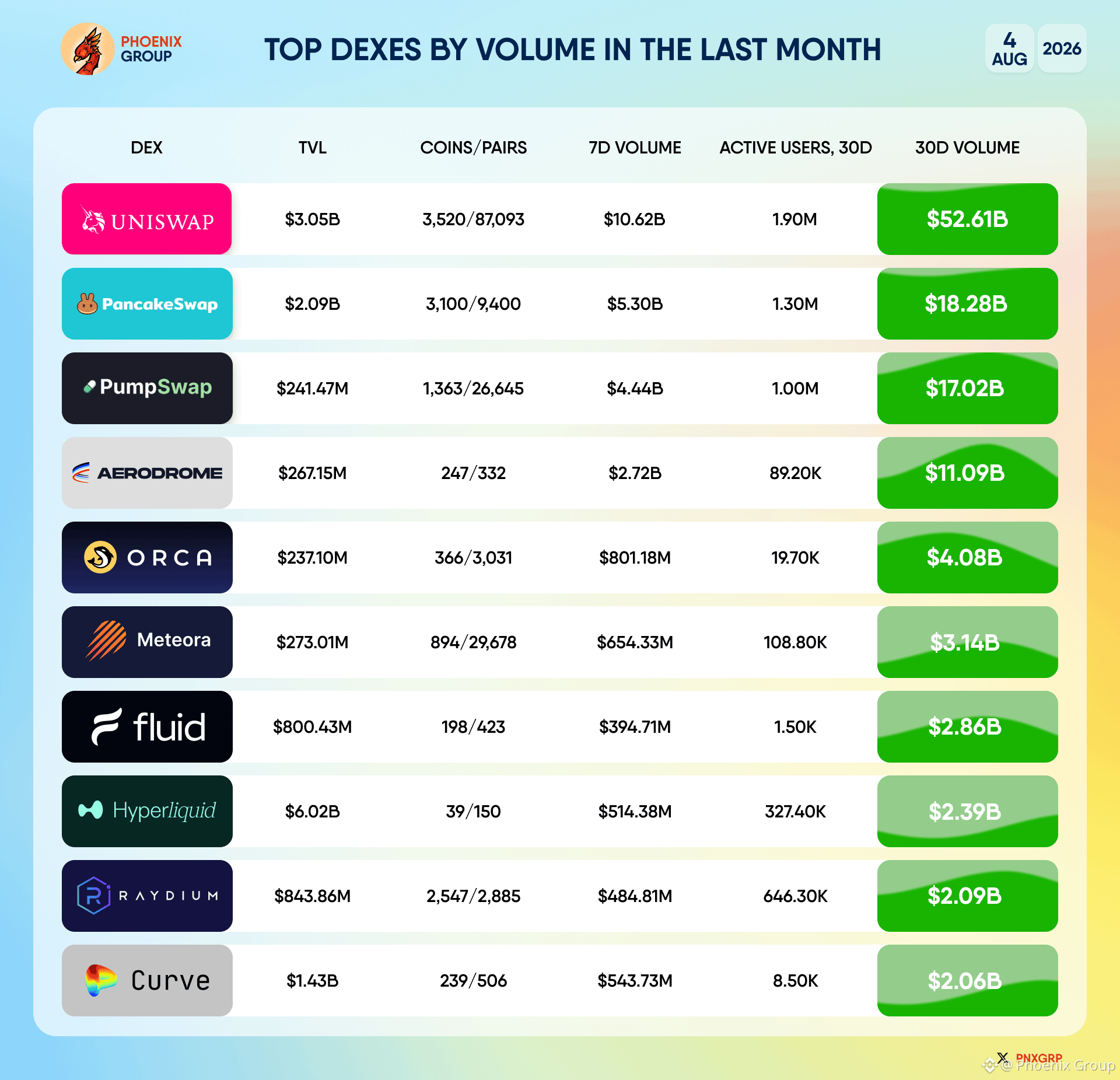
TOP DEXES BY VOLUME IN THE LAST MONTH
#Uniswap - $52.61B
#PancakeSwap - $18.28B
#PumpSwap - $17.02B
#Aerodrome - $11.09B
#Orca - $4.08B
#Meteora - $3.14B
#Fluid - $2.86B
#Hyperliquid - $2.39B
#Raydium - $2.09B
#Curve - $2.06B
TOP DEXES BY VOLUME IN THE LAST MONTH
#Uniswap - $52.61B
#PancakeSwap - $18.28B
#PumpSwap - $17.02B
#Aerodrome - $11.09B
#Orca - $4.08B
#Meteora - $3.14B
#Fluid - $2.86B
#Hyperliquid - $2.39B
#Raydium - $2.09B
#Curve - $2.06B
#Uniswap - $52.61B
#PancakeSwap - $18.28B
#PumpSwap - $17.02B
#Aerodrome - $11.09B
#Orca - $4.08B
#Meteora - $3.14B
#Fluid - $2.86B
#Hyperliquid - $2.39B
#Raydium - $2.09B
#Curve - $2.06B
651
Log in to explore more content
Join global crypto users on Binance Square
⚡️ Get latest and useful information about crypto.
💬 Trusted by the world’s largest crypto exchange.
👍 Discover real insights from verified creators.
Email / Phone number
Trending Topics
1
#BitgetHackerMoves$83MStolenXRP
0 views
0 Discussing
2
#SOLSpotETFWeeklyInflow$188M
35 views
19 Discussing
3
#StrategyStriveAdd2305BitcoinThisWeek
21,487 views
695 Discussing
4
#TrumpRejectsIranHormuzReopening
24,582 views
603 Discussing
5
#CircleTetherFreezeBitgetHackerWallet
43,549 views
696 Discussing
6
#SECSaysTokenBuybacksNotAutoSecurities
20,472 views
362 Discussing
7
#ChinaUSAgreeOn$30BTariffCut
915 views
25 Discussing
8
#CoinMarketCapCompletesCoinglassAcquisition
38,094 views
528 Discussing
9
#CircleMints500MUSDCOnSolana
210,570 views
3,078 Discussing
10
#PolymarketBankFailureBetsDrawFDICConcern
180,751 views
2,361 Discussing