

#li̇nk
li̇nk
666,219 views
755 Discussing
Hot
Latest

·
--
$LINK is trading around $14.4, after a strong 10% jump on Sep 28 followed by profit-taking. Today’s pullback is relatively low-volume, suggesting momentum has cooled rather than a confirmed trend breakdown.
#LİNK #LINK #SECChairWantsStockMarketsOnChain #EarningsSeason #TrumpRejectsAIRulesForVoluntaryAudits
$LINK is trading around $14.4, after a strong 10% jump on Sep 28 followed by profit-taking. Today’s pullback is relatively low-volume, suggesting momentum has cooled rather than a confirmed trend breakdown.
#LİNK #LINK #SECChairWantsStockMarketsOnChain #EarningsSeason #TrumpRejectsAIRulesForVoluntaryAudits
#LİNK #LINK #SECChairWantsStockMarketsOnChain #EarningsSeason #TrumpRejectsAIRulesForVoluntaryAudits
44

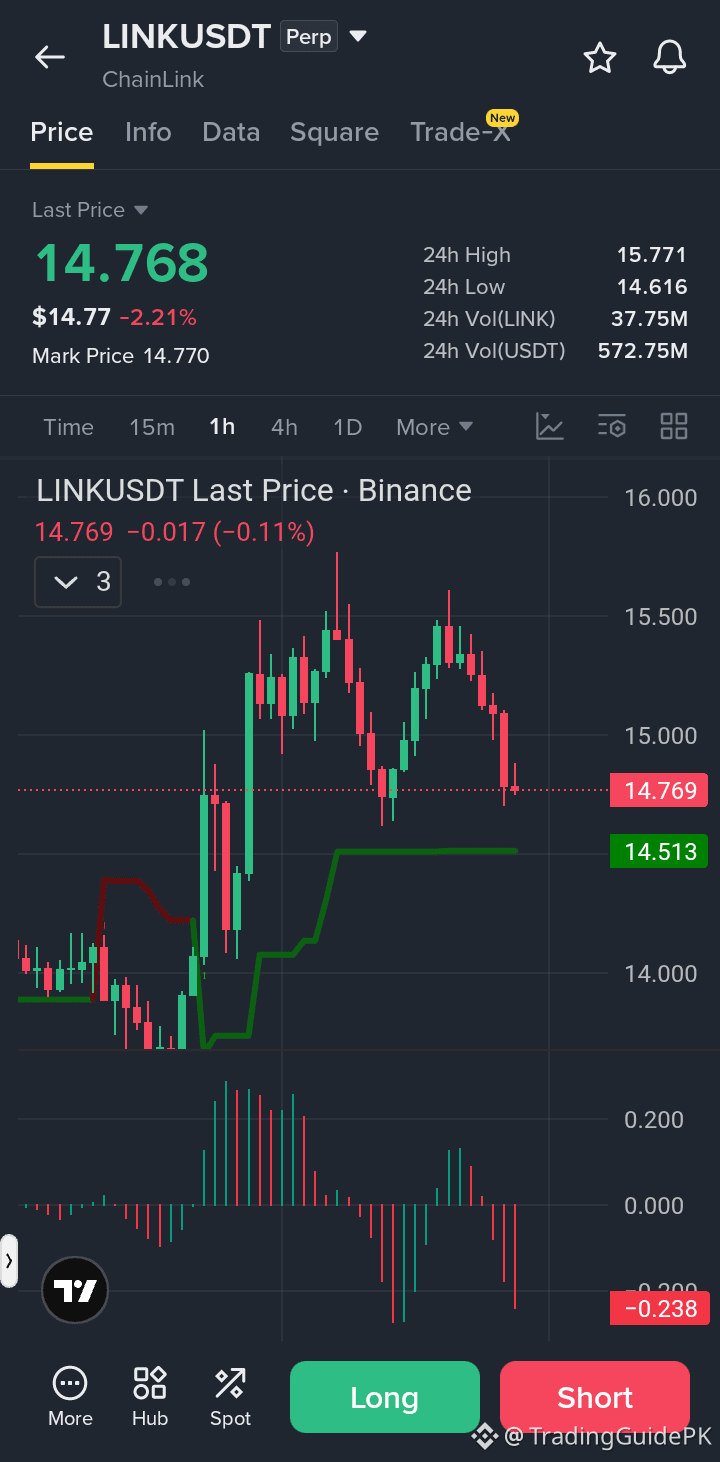
$LINK is stuck in a tight spot right now.
Price is sitting at 14.76, down about 2% today. We tried to break 15.50 twice and got rejected both times. That is a clear sign sellers are defending that level.
Right now, 14.51 is the key support to watch. If we lose that green line, expect a quick drop toward 14.00. If it holds, we probably chop around here for a bit.
Volume is showing more red than green, so short term momentum is leaning bearish.
My plan: Wait for a clean break above 15.50 or a bounce off 14.51. No need to rush in here.
What are you watching on LINK today?
#LİNK #TradingTales
$LINK is stuck in a tight spot right now.
Price is sitting at 14.76, down about 2% today. We tried to break 15.50 twice and got rejected both times. That is a clear sign sellers are defending that level.
Right now, 14.51 is the key support to watch. If we lose that green line, expect a quick drop toward 14.00. If it holds, we probably chop around here for a bit.
Volume is showing more red than green, so short term momentum is leaning bearish.
My plan: Wait for a clean break above 15.50 or a bounce off 14.51. No need to rush in here.
What are you watching on LINK today?
#LİNK #TradingTales
Price is sitting at 14.76, down about 2% today. We tried to break 15.50 twice and got rejected both times. That is a clear sign sellers are defending that level.
Right now, 14.51 is the key support to watch. If we lose that green line, expect a quick drop toward 14.00. If it holds, we probably chop around here for a bit.
Volume is showing more red than green, so short term momentum is leaning bearish.
My plan: Wait for a clean break above 15.50 or a bounce off 14.51. No need to rush in here.
What are you watching on LINK today?
#LİNK #TradingTales
49

·
--
Bullish
Verified
🚨 BITWISE JUST PUT $LINK IN THE SPOTLIGHT! 🔥
🏦 Bitwise Chainlink ETF filing adds fresh institutional attention to $LINK.
📈 From ~$7 to ~$15 — the rebound is getting interesting!
🎯 Resistance: $16.33
🚀 Target zone: $21.60–$30.94
🛡️ Support: $11.06
⚡ Bitwise + ETF narrative + strong technical rebound = $LINK WATCH! 🔗🚀
👀 Are you holding $LINK?
#Chainlink #LİNK #Bitwise #Crypto #Altcoins
{spot}(LINKUSDT)
🚨 BITWISE JUST PUT $LINK IN THE SPOTLIGHT! 🔥
🏦 Bitwise Chainlink ETF filing adds fresh institutional attention to $LINK .
📈 From ~$7 to ~$15 — the rebound is getting interesting!
🎯 Resistance: $16.33
🚀 Target zone: $21.60–$30.94
🛡️ Support: $11.06
⚡ Bitwise + ETF narrative + strong technical rebound = $LINK WATCH! 🔗🚀
👀 Are you holding $LINK ?
#Chainlink #LİNK #Bitwise #Crypto #Altcoins
🏦 Bitwise Chainlink ETF filing adds fresh institutional attention to $LINK .
📈 From ~$7 to ~$15 — the rebound is getting interesting!
🎯 Resistance: $16.33
🚀 Target zone: $21.60–$30.94
🛡️ Support: $11.06
⚡ Bitwise + ETF narrative + strong technical rebound = $LINK WATCH! 🔗🚀
👀 Are you holding $LINK ?
#Chainlink #LİNK #Bitwise #Crypto #Altcoins
88

·
--
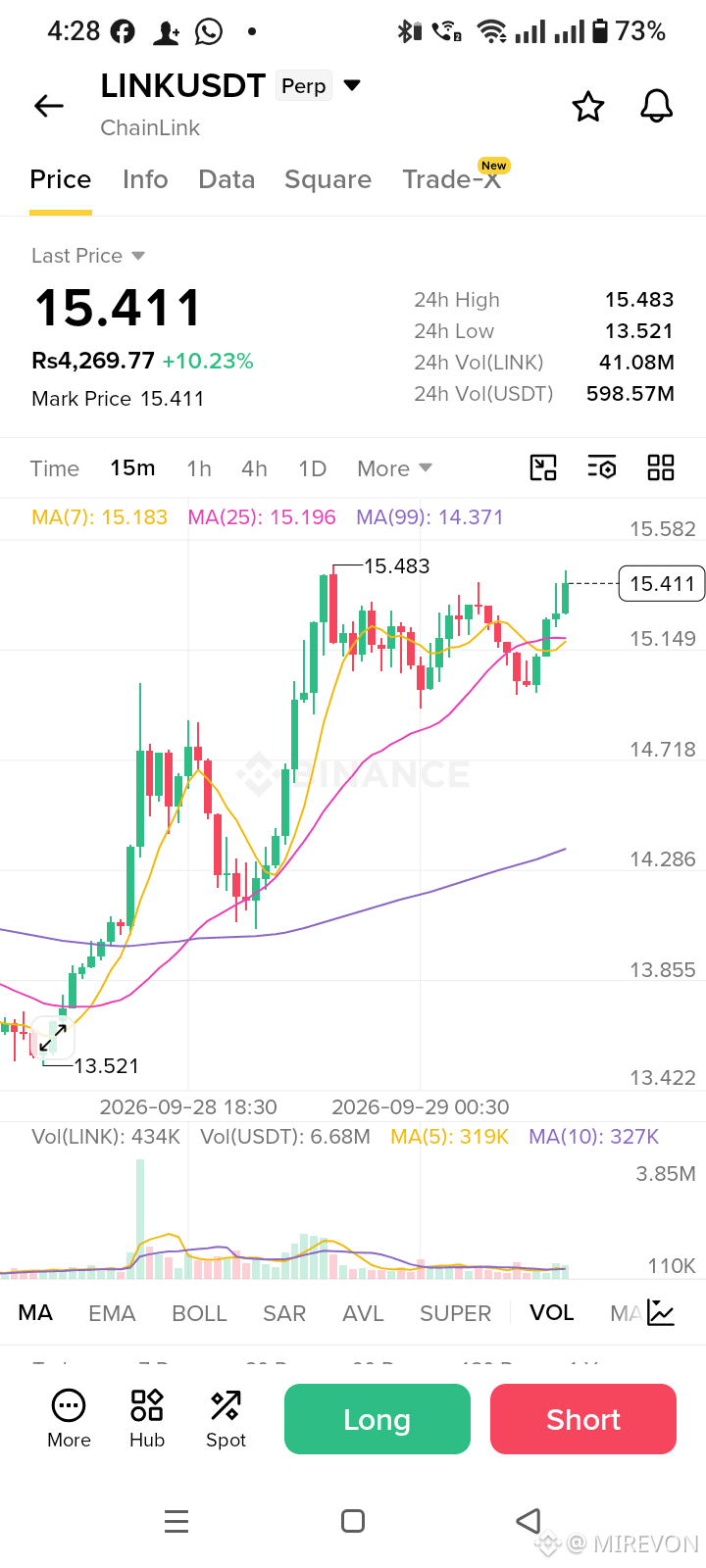
$LINK is quietly showing strength 🔗
#Chainlink is trading at 15.411 USDT (+10.23%) after bouncing from the 13.521 low, with price now sitting just below the 24h high of 15.483.
A few things stand out on the 15m chart:
📈 MA(7) and MA(25) are curling up again after a small dip
🛡️ MA(99) at 14.371 is trending higher, keeping the bigger picture bullish
💰 Around 598M USDT in 24h volume shows solid interest
A clean break above 15.483 could open the door toward 15.58+, while 15.15 and 14.72 are the levels to watch on any pullback.
Patience over FOMO. Let the breakout confirm first. 👀
#Binance #CryptoAnalysis📈📉🐋📅🚀 #
#LİNK
{spot}(LINKUSDT)
$LINK is quietly showing strength 🔗
#Chainlink is trading at 15.411 USDT (+10.23%) after bouncing from the 13.521 low, with price now sitting just below the 24h high of 15.483.
A few things stand out on the 15m chart:
📈 MA(7) and MA(25) are curling up again after a small dip
🛡️ MA(99) at 14.371 is trending higher, keeping the bigger picture bullish
💰 Around 598M USDT in 24h volume shows solid interest
A clean break above 15.483 could open the door toward 15.58+, while 15.15 and 14.72 are the levels to watch on any pullback.
Patience over FOMO. Let the breakout confirm first. 👀
#Binance #CryptoAnalysis📈📉🐋📅🚀 #
#LİNK
#Chainlink is trading at 15.411 USDT (+10.23%) after bouncing from the 13.521 low, with price now sitting just below the 24h high of 15.483.
A few things stand out on the 15m chart:
📈 MA(7) and MA(25) are curling up again after a small dip
🛡️ MA(99) at 14.371 is trending higher, keeping the bigger picture bullish
💰 Around 598M USDT in 24h volume shows solid interest
A clean break above 15.483 could open the door toward 15.58+, while 15.15 and 14.72 are the levels to watch on any pullback.
Patience over FOMO. Let the breakout confirm first. 👀
#Binance #CryptoAnalysis📈📉🐋📅🚀 #
#LİNK
57

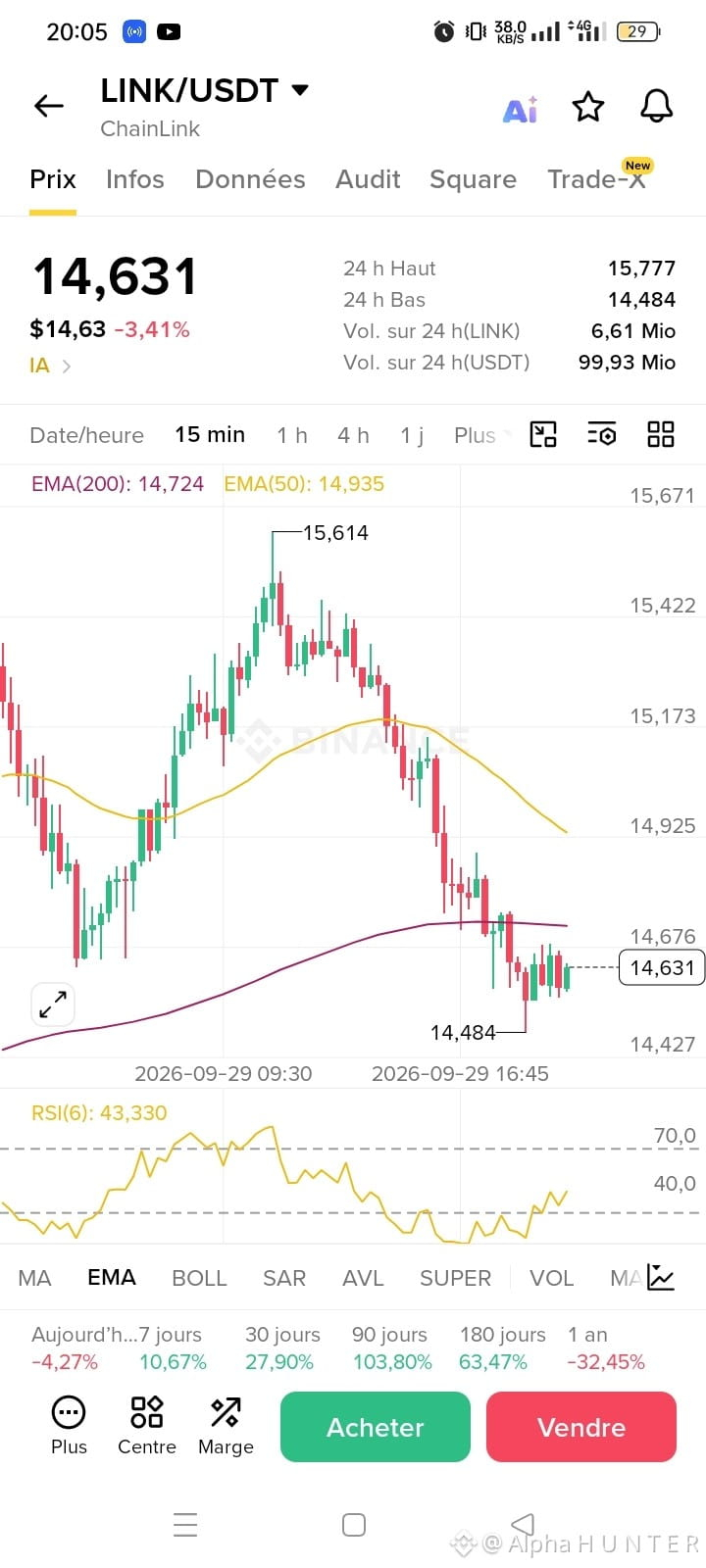
$LINK SHORT
{future}(LINKUSDT)
Main course : 14.58 $–14.68 $
Objectives : 14.40 $ / 14.20 $ / 14.00 $
Stop : 14.85 $
$BTW $0G
{future}(BTWUSDT)
#dyor #LİNK #BinanceSquareTalks
$LINK SHORT
Main course : 14.58 $–14.68 $
Objectives : 14.40 $ / 14.20 $ / 14.00 $
Stop : 14.85 $
$BTW $0G
#dyor #LİNK #BinanceSquareTalks
Main course : 14.58 $–14.68 $
Objectives : 14.40 $ / 14.20 $ / 14.00 $
Stop : 14.85 $
$BTW $0G
#dyor #LİNK #BinanceSquareTalks
40
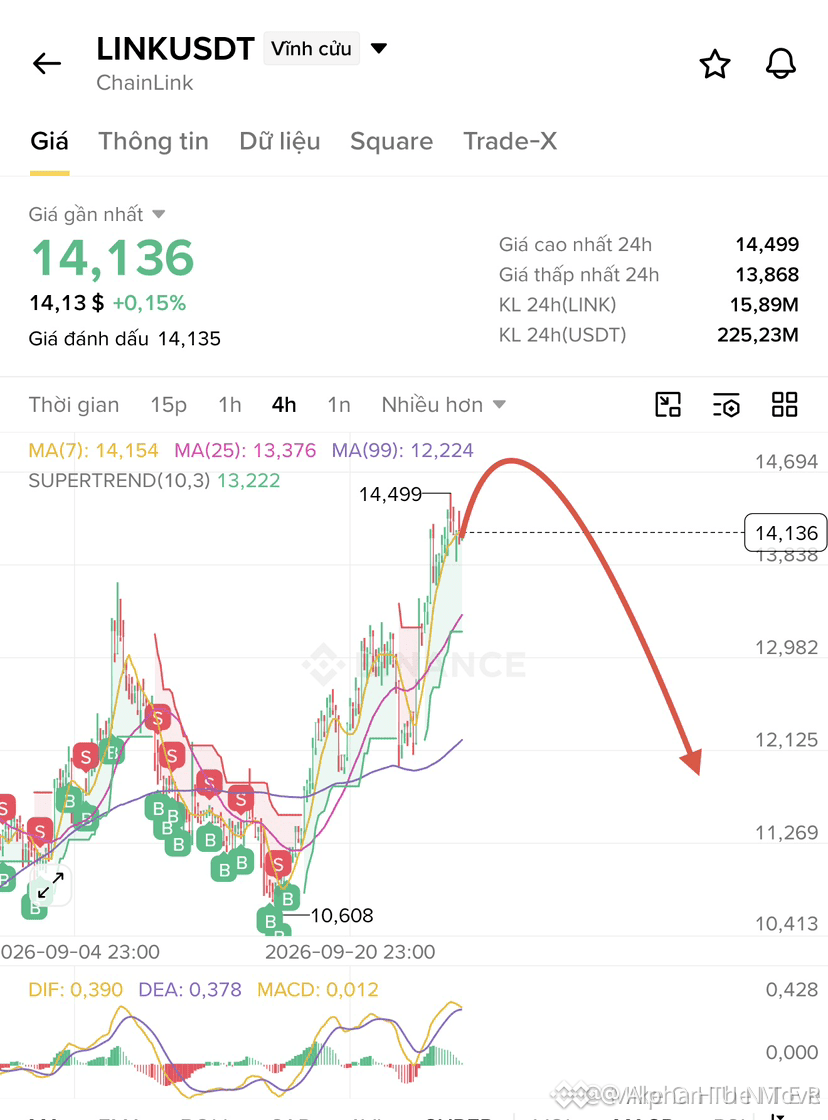
$LINK SHORT
{future}(LINKUSDT)
Entrée : 13,89 - 14,31
SL : 15,30
TP1 : 13,75
TP2 : 13,20
TP3 : 12,85
$QNT
{future}(QNTUSDT)
#dyor #LİNK #BearishAlert
$LINK SHORT
Entrée : 13,89 - 14,31
SL : 15,30
TP1 : 13,75
TP2 : 13,20
TP3 : 12,85
$QNT
#dyor #LİNK #BearishAlert
Entrée : 13,89 - 14,31
SL : 15,30
TP1 : 13,75
TP2 : 13,20
TP3 : 12,85
$QNT
#dyor #LİNK #BearishAlert
161
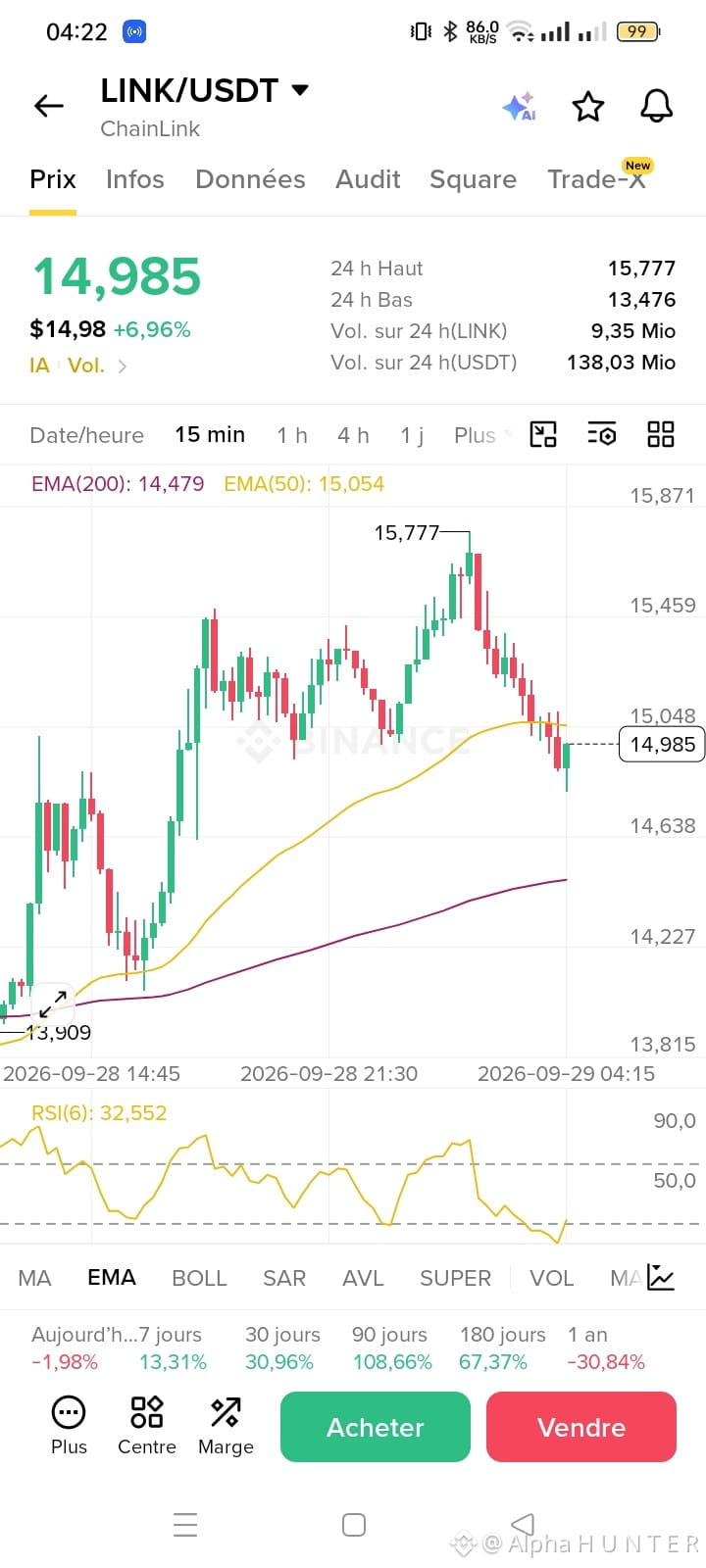
$LINK SHORT
{future}(LINKUSDT)
Entree : 14,95 $ – 15,10 $
TP1 : 14,50 $
TP2 : 14,00 $
TP3 : 13,45 $
SL : 15,55 $
$NMR $MARSCOIN
{future}(NMRUSDT)
#dyor #LİNK #BinanceSquareTalks
$LINK SHORT
Entree : 14,95 $ – 15,10 $
TP1 : 14,50 $
TP2 : 14,00 $
TP3 : 13,45 $
SL : 15,55 $
$NMR $MARSCOIN
#dyor #LİNK #BinanceSquareTalks
Entree : 14,95 $ – 15,10 $
TP1 : 14,50 $
TP2 : 14,00 $
TP3 : 13,45 $
SL : 15,55 $
$NMR $MARSCOIN
#dyor #LİNK #BinanceSquareTalks
43
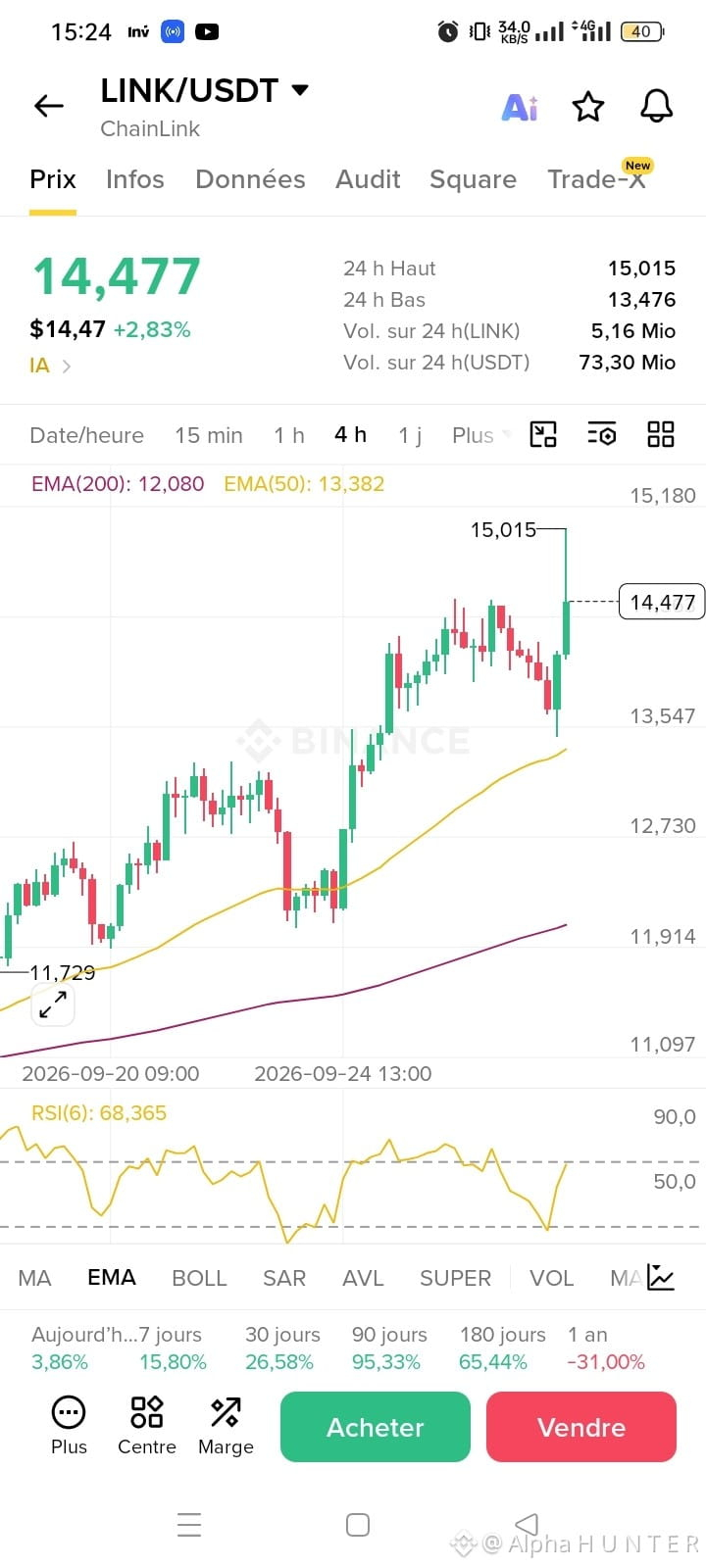

$LINK isn’t just another crypto. 👀
It sits at the intersection of blockchain data, interoperability and the growing tokenization narrative.
Could infrastructure become the next big crypto story?
$LINK #LİNK
{future}(LINKUSDT)
$LINK isn’t just another crypto. 👀
It sits at the intersection of blockchain data, interoperability and the growing tokenization narrative.
Could infrastructure become the next big crypto story?
$LINK #LİNK
It sits at the intersection of blockchain data, interoperability and the growing tokenization narrative.
Could infrastructure become the next big crypto story?
$LINK #LİNK
84

·
--
Bullish
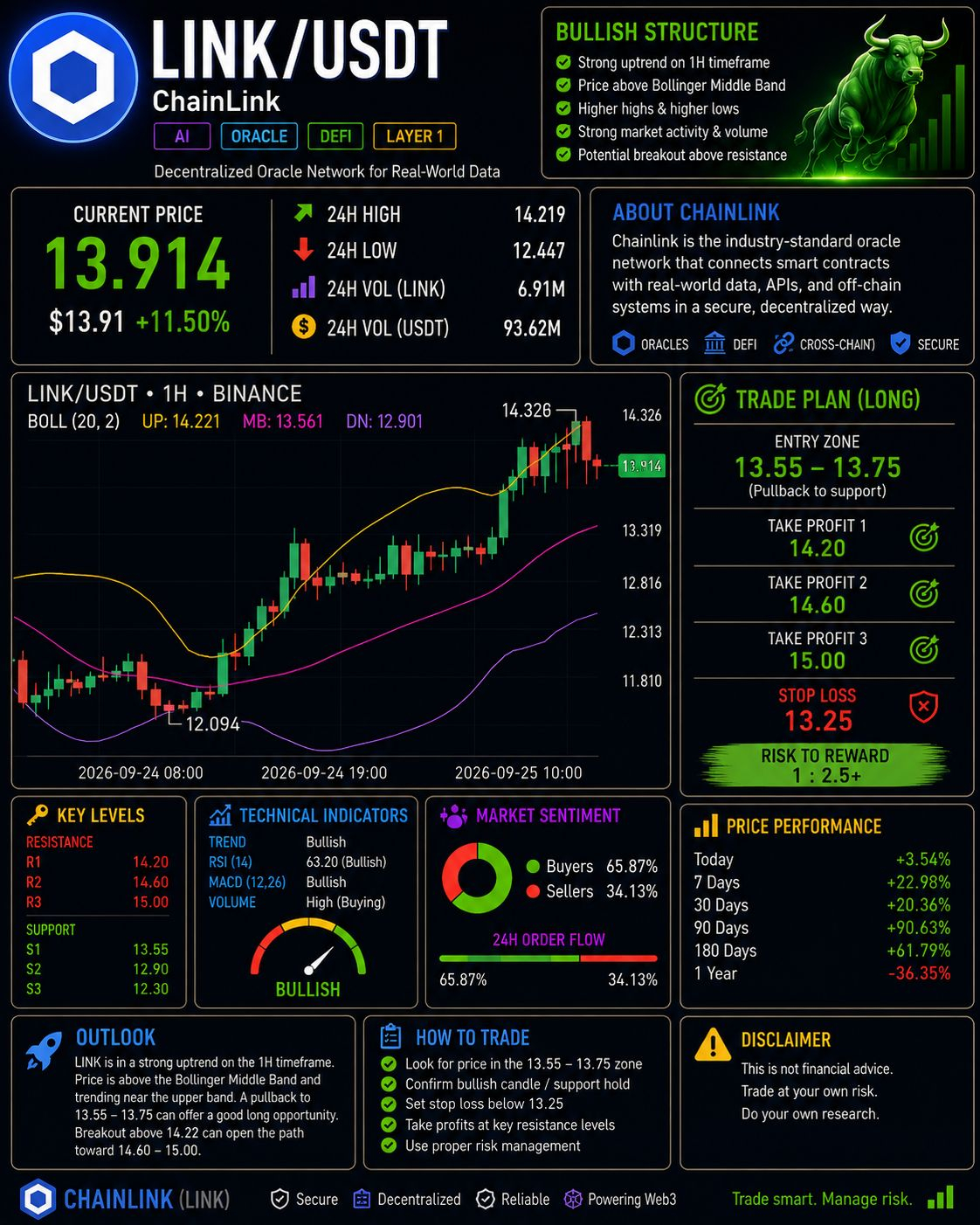
$LINK
Long Entry: $13.55–$13.75 on a successful hold/retest
🎯 TP1: $14.20
🎯 TP2: $14.60
🎯 TP3: $15.00
🛑 Stop Loss: $13.25
Key levels
Resistance: $14.20–$14.22
Support: $13.55, then $12.90
A clean 1H close above $14.22 would strengthen the breakout structure.
A break below $13.55 weakens the immediate bullish setup.
Recent market reporting also shows LINK trading around the $13–14 area with increased activity, while $14.25 has been identified as a nearby breakout level. �
coinstats.app +1
{future}(LINKUSDT)
#LİNK
#LINK🔥🔥🔥
#LINK.
#LINKUSD
#LINKPrice
$LINK
Long Entry: $13.55–$13.75 on a successful hold/retest
🎯 TP1: $14.20
🎯 TP2: $14.60
🎯 TP3: $15.00
🛑 Stop Loss: $13.25
Key levels
Resistance: $14.20–$14.22
Support: $13.55, then $12.90
A clean 1H close above $14.22 would strengthen the breakout structure.
A break below $13.55 weakens the immediate bullish setup.
Recent market reporting also shows LINK trading around the $13–14 area with increased activity, while $14.25 has been identified as a nearby breakout level. �
coinstats.app +1
#LİNK
#LINK🔥🔥🔥
#LINK.
#LINKUSD
#LINKPrice
Long Entry: $13.55–$13.75 on a successful hold/retest
🎯 TP1: $14.20
🎯 TP2: $14.60
🎯 TP3: $15.00
🛑 Stop Loss: $13.25
Key levels
Resistance: $14.20–$14.22
Support: $13.55, then $12.90
A clean 1H close above $14.22 would strengthen the breakout structure.
A break below $13.55 weakens the immediate bullish setup.
Recent market reporting also shows LINK trading around the $13–14 area with increased activity, while $14.25 has been identified as a nearby breakout level. �
coinstats.app +1
#LİNK
#LINK🔥🔥🔥
#LINK.
#LINKUSD
#LINKPrice
66

·
--
🔥 3 COINS TO WATCH TODAY —
Based on today’s market momentum, these three are worth keeping on the radar:
🟢 1. $ONDO
• Up around 30% today in Indian-market data
• Strong trading volume
• RWA narrative remains a key catalyst
🟢 2. $QNT
• Up around 27% today
• Strong momentum and increased activity
• One of today’s major gainers
🟢 3. $LINK
• Up around 9% today
• High liquidity compared with many smaller alts
• Moving with the broader altcoin strength
📈 Watchlist: ONDO • QNT • LINK
These are momentum watchlist picks, not a guarantee they will rise. After a large pump, waiting for confirmation can matter more than chasing the move.
#crypto #altcoins #LİNK #BinanceSquareTalks
{future}(LINKUSDT)
{future}(ONDOUSDT)
{future}(QNTUSDT)
🔥 3 COINS TO WATCH TODAY —
Based on today’s market momentum, these three are worth keeping on the radar:
🟢 1. $ONDO
• Up around 30% today in Indian-market data
• Strong trading volume
• RWA narrative remains a key catalyst
🟢 2. $QNT
• Up around 27% today
• Strong momentum and increased activity
• One of today’s major gainers
🟢 3. $LINK
• Up around 9% today
• High liquidity compared with many smaller alts
• Moving with the broader altcoin strength
📈 Watchlist: ONDO • QNT • LINK
These are momentum watchlist picks, not a guarantee they will rise. After a large pump, waiting for confirmation can matter more than chasing the move.
#crypto #altcoins #LİNK #BinanceSquareTalks
Based on today’s market momentum, these three are worth keeping on the radar:
🟢 1. $ONDO
• Up around 30% today in Indian-market data
• Strong trading volume
• RWA narrative remains a key catalyst
🟢 2. $QNT
• Up around 27% today
• Strong momentum and increased activity
• One of today’s major gainers
🟢 3. $LINK
• Up around 9% today
• High liquidity compared with many smaller alts
• Moving with the broader altcoin strength
📈 Watchlist: ONDO • QNT • LINK
These are momentum watchlist picks, not a guarantee they will rise. After a large pump, waiting for confirmation can matter more than chasing the move.
#crypto #altcoins #LİNK #BinanceSquareTalks
Link
58%
Ondo
17%
Qnt
25%
12 votes • Voting closed
625

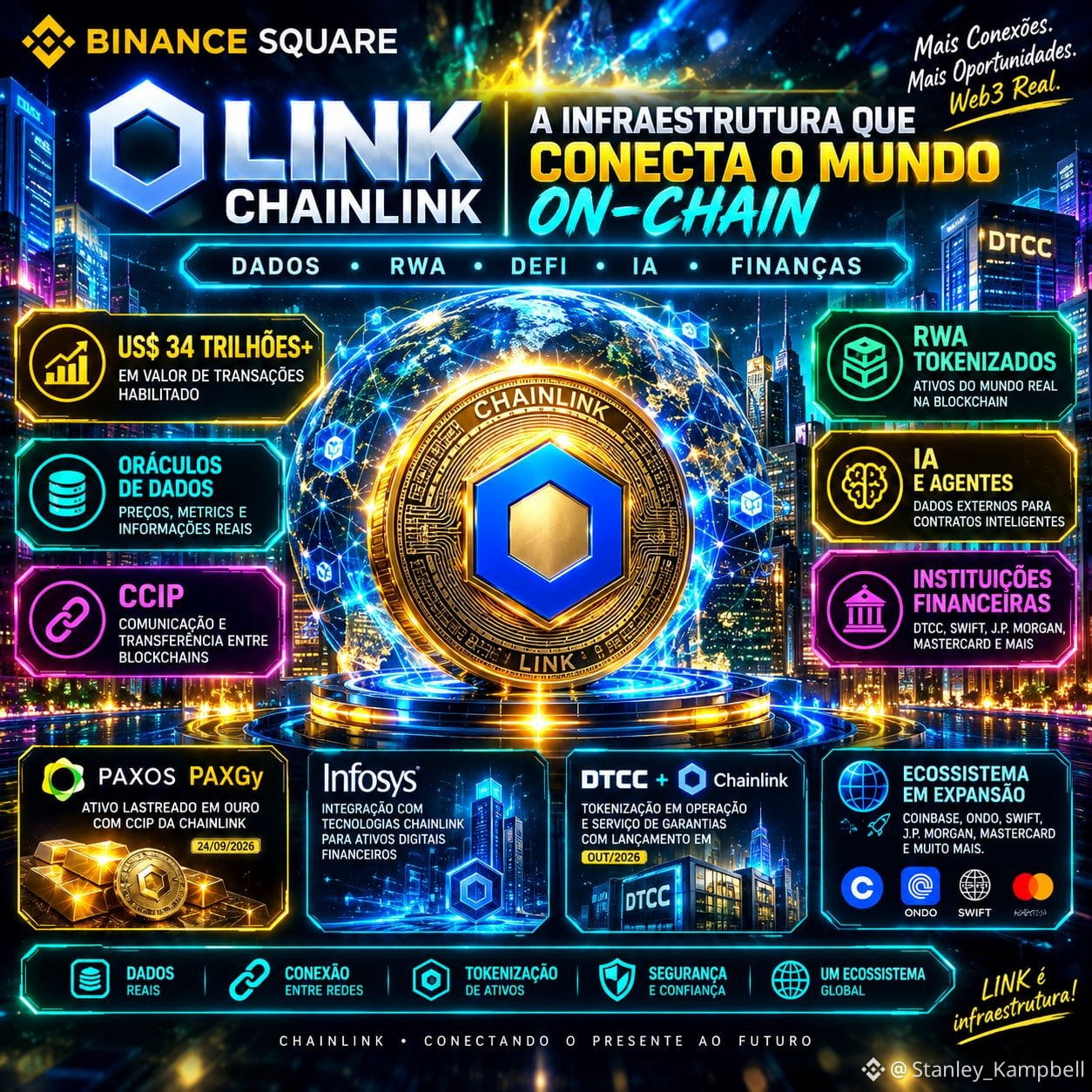
$LINK | CHAINLINK: THE INFRASTRUCTURE THAT CONNECTS THE ON-CHAIN WORLD
.
.
Chainlink is expanding its role in the crypto market: from oracles to an infrastructure that connects data, blockchains, tokenized assets, and financial institutions.
And recent developments show this expansion.
On 24/09, Paxos Labs launched PAXGy, a gold-backed asset that uses Chainlink CCIP as its exclusive cross-chain communication layer, allowing positions to be moved between networks without needing to unwind the position first.
Another important point is Infosys, which is integrating Chainlink technologies—including the Runtime Environment—into its infrastructure for financial digital assets. The idea is to bring blockchain applications closer to the traditional financial system.
And there is also DTCC + Chainlink: the DTCC has already completed real transactions with tokenized assets and is preparing its tokenization service for October 2026. Chainlink is also integrated into the DTCC’s collateral infrastructure project, aimed at near real-time operations.
Where does #LİNK come in?
RWA: data and infrastructure for real-world assets.
DeFi: prices, collateral, loans, and liquidations.
CCIP: communication and transfer between blockchains.
AI: connecting external data with smart contracts.
TradFi: infrastructure for banks, funds, and capital markets.
Chainlink itself reports more than US$34 trillion in transaction value enabled—an updated metric for September 2026.
And the ecosystem keeps growing: Coinbase, Ondo, DTCC, Swift, J.P. Morgan, Mastercard, and other institutions/protocols are already showing up among the integrations and use cases of Chainlink’s infrastructure.
But there’s an important detail: adoption of the infrastructure doesn’t automatically mean an increase in the value of $LINK . The point that deserves monitoring is how much of this growth actually turns into usage, revenue, demand, and value capture by the token...conT
{spot}(LINKUSDT)
$LINK | CHAINLINK: THE INFRASTRUCTURE THAT CONNECTS THE ON-CHAIN WORLD
.
.
Chainlink is expanding its role in the crypto market: from oracles to an infrastructure that connects data, blockchains, tokenized assets, and financial institutions.
And recent developments show this expansion.
On 24/09, Paxos Labs launched PAXGy, a gold-backed asset that uses Chainlink CCIP as its exclusive cross-chain communication layer, allowing positions to be moved between networks without needing to unwind the position first.
Another important point is Infosys, which is integrating Chainlink technologies—including the Runtime Environment—into its infrastructure for financial digital assets. The idea is to bring blockchain applications closer to the traditional financial system.
And there is also DTCC + Chainlink: the DTCC has already completed real transactions with tokenized assets and is preparing its tokenization service for October 2026. Chainlink is also integrated into the DTCC’s collateral infrastructure project, aimed at near real-time operations.
Where does #LİNK come in?
RWA: data and infrastructure for real-world assets.
DeFi: prices, collateral, loans, and liquidations.
CCIP: communication and transfer between blockchains.
AI: connecting external data with smart contracts.
TradFi: infrastructure for banks, funds, and capital markets.
Chainlink itself reports more than US$34 trillion in transaction value enabled—an updated metric for September 2026.
And the ecosystem keeps growing: Coinbase, Ondo, DTCC, Swift, J.P. Morgan, Mastercard, and other institutions/protocols are already showing up among the integrations and use cases of Chainlink’s infrastructure.
But there’s an important detail: adoption of the infrastructure doesn’t automatically mean an increase in the value of $LINK . The point that deserves monitoring is how much of this growth actually turns into usage, revenue, demand, and value capture by the token...conT
.
.
Chainlink is expanding its role in the crypto market: from oracles to an infrastructure that connects data, blockchains, tokenized assets, and financial institutions.
And recent developments show this expansion.
On 24/09, Paxos Labs launched PAXGy, a gold-backed asset that uses Chainlink CCIP as its exclusive cross-chain communication layer, allowing positions to be moved between networks without needing to unwind the position first.
Another important point is Infosys, which is integrating Chainlink technologies—including the Runtime Environment—into its infrastructure for financial digital assets. The idea is to bring blockchain applications closer to the traditional financial system.
And there is also DTCC + Chainlink: the DTCC has already completed real transactions with tokenized assets and is preparing its tokenization service for October 2026. Chainlink is also integrated into the DTCC’s collateral infrastructure project, aimed at near real-time operations.
Where does #LİNK come in?
RWA: data and infrastructure for real-world assets.
DeFi: prices, collateral, loans, and liquidations.
CCIP: communication and transfer between blockchains.
AI: connecting external data with smart contracts.
TradFi: infrastructure for banks, funds, and capital markets.
Chainlink itself reports more than US$34 trillion in transaction value enabled—an updated metric for September 2026.
And the ecosystem keeps growing: Coinbase, Ondo, DTCC, Swift, J.P. Morgan, Mastercard, and other institutions/protocols are already showing up among the integrations and use cases of Chainlink’s infrastructure.
But there’s an important detail: adoption of the infrastructure doesn’t automatically mean an increase in the value of $LINK . The point that deserves monitoring is how much of this growth actually turns into usage, revenue, demand, and value capture by the token...conT
novato000:
Alguém pode me ajudar ? eu vender na alta o que comprei na baixa pode alterar o lucro daqui a uns 3 anos ou não ? se eu deixar o dinheiro parado sem vender, eu retiro um lucro maior nos próximos anos ou não ? mais lucrativo é eu vender sempre que houver altas ?
2
1
2
137

·
--
Bearish
LINK longs were forced out around $12.789.
The $9.6K sweep adds another downside pressure point.
$LINK
{future}(LINKUSDT)
$TAKE
{future}(TAKEUSDT)
$MET
{future}(METUSDT)
🔴 LIQUIDITY ZONE HIT 🔴
Long liquidation spotted 🧨
$9.5918K cleared at $12.789
Downside liquidity swept — watch reaction 👀
🎯 TP Targets:
TP1: ~$12.725
TP2: ~$12.661
TP3: ~$12.597
#LİNK
LINK longs were forced out around $12.789.
The $9.6K sweep adds another downside pressure point.
$LINK
$TAKE
$MET
🔴 LIQUIDITY ZONE HIT 🔴
Long liquidation spotted 🧨
$9.5918K cleared at $12.789
Downside liquidity swept — watch reaction 👀
🎯 TP Targets:
TP1: ~$12.725
TP2: ~$12.661
TP3: ~$12.597
#LİNK
The $9.6K sweep adds another downside pressure point.
$LINK
$TAKE
$MET
🔴 LIQUIDITY ZONE HIT 🔴
Long liquidation spotted 🧨
$9.5918K cleared at $12.789
Downside liquidity swept — watch reaction 👀
🎯 TP Targets:
TP1: ~$12.725
TP2: ~$12.661
TP3: ~$12.597
#LİNK
199

·
--
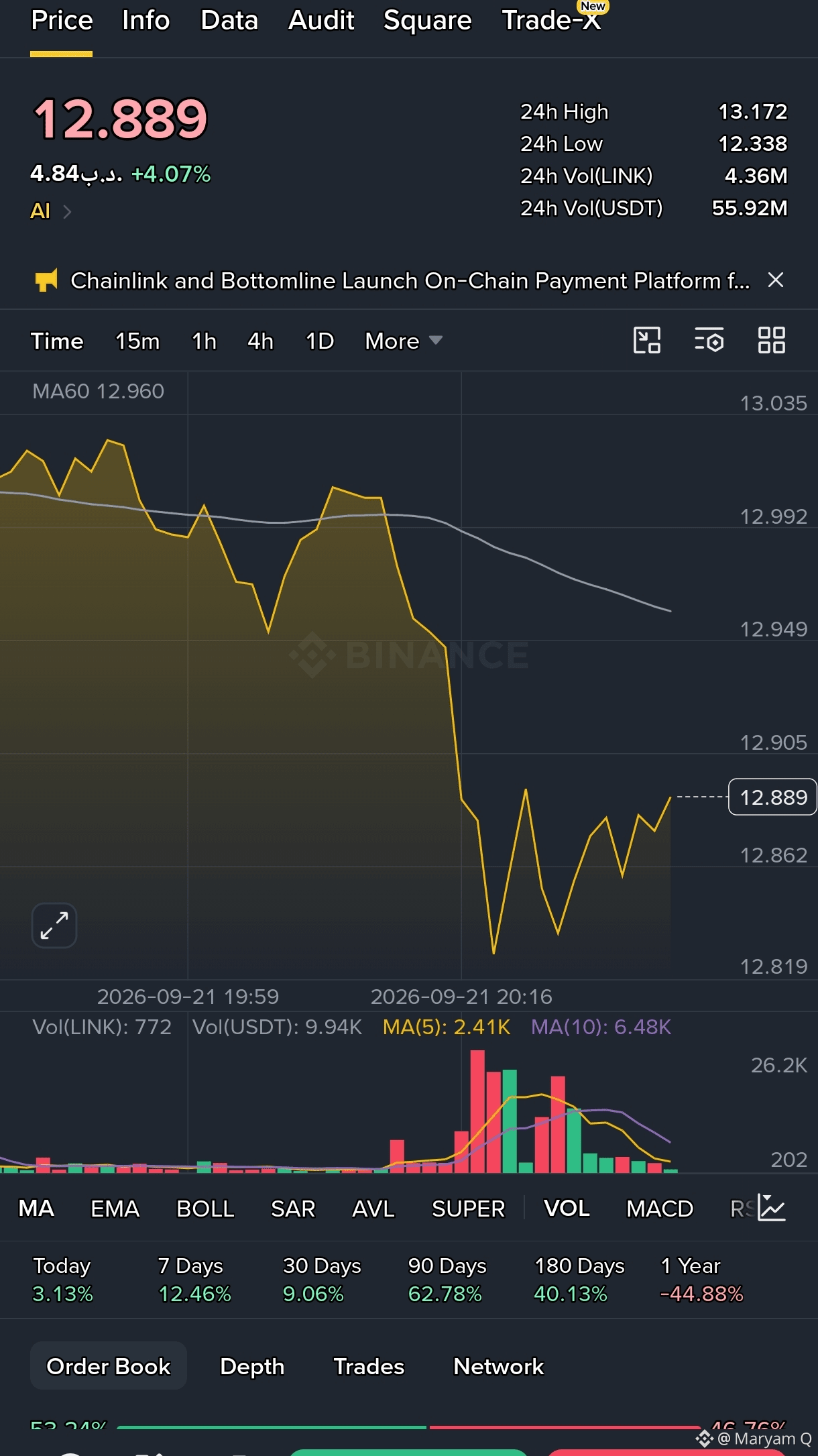
🚨LINK/USDT Update & Bullish Momentum! 🔗
Chainlink ($LINK) is showing strong price action and holding key levels! 📈
📊 Market Highlights:
Current Price: $12.889 (+4.07%)
24h High: $13.172
24h Low: $12.338
24h Volume: 4.36M LINK (~55.92M USDT)
🔥 Key News:
Chainlink and Bottomline have launched an On-Chain Payment Platform, driving fundamental adoption and momentum! 🌐💳
Are you holding or buying the dip on $LINK? Let us know in the comments below! 👇
#Chainlink #LINK #Crypto #Trading #Binance #CryptoNews
$LINK
#LİNK #LINK🔥🔥🔥
🚨LINK/USDT Update & Bullish Momentum! 🔗
Chainlink ($LINK ) is showing strong price action and holding key levels! 📈
📊 Market Highlights:
Current Price: $12.889 (+4.07%)
24h High: $13.172
24h Low: $12.338
24h Volume: 4.36M LINK (~55.92M USDT)
🔥 Key News:
Chainlink and Bottomline have launched an On-Chain Payment Platform, driving fundamental adoption and momentum! 🌐💳
Are you holding or buying the dip on $LINK ? Let us know in the comments below! 👇
#Chainlink #LINK #Crypto #Trading #Binance #CryptoNews
$LINK
#LİNK #LINK🔥🔥🔥
Chainlink ($LINK ) is showing strong price action and holding key levels! 📈
📊 Market Highlights:
Current Price: $12.889 (+4.07%)
24h High: $13.172
24h Low: $12.338
24h Volume: 4.36M LINK (~55.92M USDT)
🔥 Key News:
Chainlink and Bottomline have launched an On-Chain Payment Platform, driving fundamental adoption and momentum! 🌐💳
Are you holding or buying the dip on $LINK ? Let us know in the comments below! 👇
#Chainlink #LINK #Crypto #Trading #Binance #CryptoNews
$LINK
#LİNK #LINK🔥🔥🔥
83

·
--
Partly True
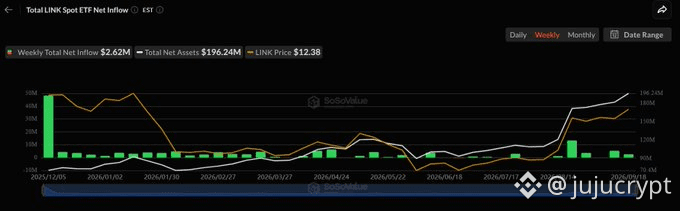
$LINK is seeing some steady ETF inflows lately.
Spot Chainlink ETFs pulled in $2.62M over the past week, marking the fifth straight week of multi-million-dollar inflows since early August.
Nothing crazy, but the consistency is interesting.
I’ll be watching to see if this trend continues and whether it starts showing up in $LINK price action.
#LİNK
$LINK is seeing some steady ETF inflows lately.
Spot Chainlink ETFs pulled in $2.62M over the past week, marking the fifth straight week of multi-million-dollar inflows since early August.
Nothing crazy, but the consistency is interesting.
I’ll be watching to see if this trend continues and whether it starts showing up in $LINK price action.
#LİNK
Spot Chainlink ETFs pulled in $2.62M over the past week, marking the fifth straight week of multi-million-dollar inflows since early August.
Nothing crazy, but the consistency is interesting.
I’ll be watching to see if this trend continues and whether it starts showing up in $LINK price action.
#LİNK
2
2.7k

·
--
LINK — BREAKOUT WATCH 🔗
$LINK is another major altcoin worth keeping on the radar.
📍 Entry: Retest of breakout area
✅ Confirmation: Price holds above resistance
🛑 SL: Below breakout zone
🎯 TP1: Previous high
🎯 TP2: Next resistance
❌ Invalidation: Close back below breakout
Structure first. Entry second.
#LİNK #ChainlinkUpdate #Crypto
{spot}(LINKUSDT)
LINK — BREAKOUT WATCH 🔗
$LINK is another major altcoin worth keeping on the radar.
📍 Entry: Retest of breakout area
✅ Confirmation: Price holds above resistance
🛑 SL: Below breakout zone
🎯 TP1: Previous high
🎯 TP2: Next resistance
❌ Invalidation: Close back below breakout
Structure first. Entry second.
#LİNK #ChainlinkUpdate #Crypto
$LINK is another major altcoin worth keeping on the radar.
📍 Entry: Retest of breakout area
✅ Confirmation: Price holds above resistance
🛑 SL: Below breakout zone
🎯 TP1: Previous high
🎯 TP2: Next resistance
❌ Invalidation: Close back below breakout
Structure first. Entry second.
#LİNK #ChainlinkUpdate #Crypto
7


·
--
Circle's new Layer-1 chain, Arc — built for institutional stablecoin settlement — goes live on mainnet today, with validators including BlackRock, Visa, Mastercard, and DTCC. $LINK is the chain's official oracle partner. $LINK is sitting near $10.77 right now, which looks disconnected from a launch with that kind of institutional weight behind it. Does the market catch up, or is this already priced in? $LINK #LİNK
{future}(LINKUSDT)
Circle's new Layer-1 chain, Arc — built for institutional stablecoin settlement — goes live on mainnet today, with validators including BlackRock, Visa, Mastercard, and DTCC. $LINK is the chain's official oracle partner. $LINK is sitting near $10.77 right now, which looks disconnected from a launch with that kind of institutional weight behind it. Does the market catch up, or is this already priced in? $LINK #LİNK
69

·
--
Bullish
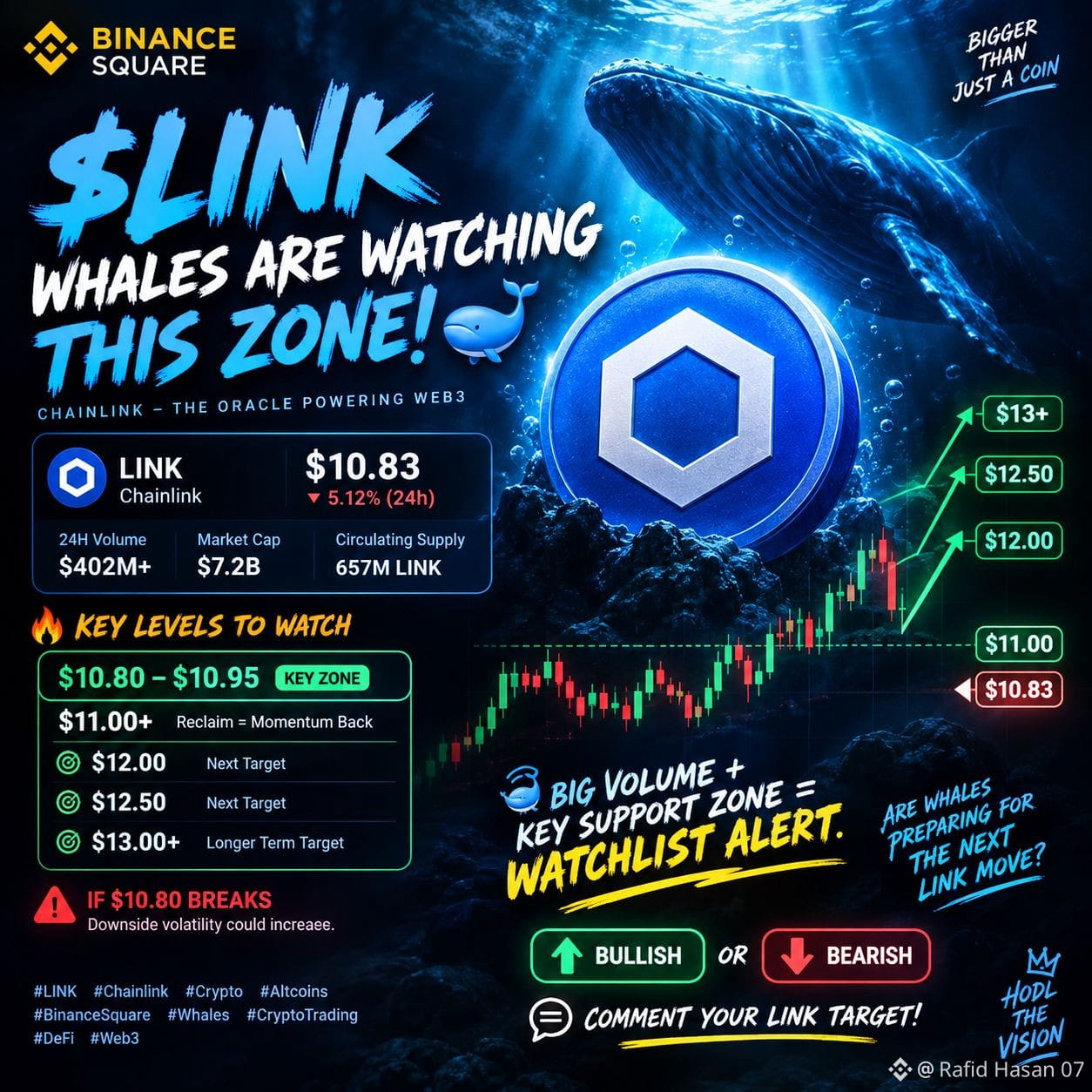
$LINK WHALES ARE WATCHING THIS ZONE!
LINK is hovering around $10.83, down roughly 5% in 24H, with about $400M+ in 24H volume.
OKX +1
The interesting part?
$10.80–$10.95 = key zone
Reclaim $11.00+ → momentum could return
Next areas traders may watch: $12 → $12.50 → $13+
But if $10.80 breaks decisively, downside volatility could increase.
Big volume + a key support zone = WATCHLIST ALERT.
Are whales preparing for the next LINK move?
#LİNK #Chainlink #crypto #BinanceSquare
{spot}(LINKUSDT)
$LINK WHALES ARE WATCHING THIS ZONE!
LINK is hovering around $10.83, down roughly 5% in 24H, with about $400M+ in 24H volume.
OKX +1
The interesting part?
$10.80–$10.95 = key zone
Reclaim $11.00+ → momentum could return
Next areas traders may watch: $12 → $12.50 → $13+
But if $10.80 breaks decisively, downside volatility could increase.
Big volume + a key support zone = WATCHLIST ALERT.
Are whales preparing for the next LINK move?
#LİNK #Chainlink #crypto #BinanceSquare
LINK is hovering around $10.83, down roughly 5% in 24H, with about $400M+ in 24H volume.
OKX +1
The interesting part?
$10.80–$10.95 = key zone
Reclaim $11.00+ → momentum could return
Next areas traders may watch: $12 → $12.50 → $13+
But if $10.80 breaks decisively, downside volatility could increase.
Big volume + a key support zone = WATCHLIST ALERT.
Are whales preparing for the next LINK move?
#LİNK #Chainlink #crypto #BinanceSquare
116

·
--
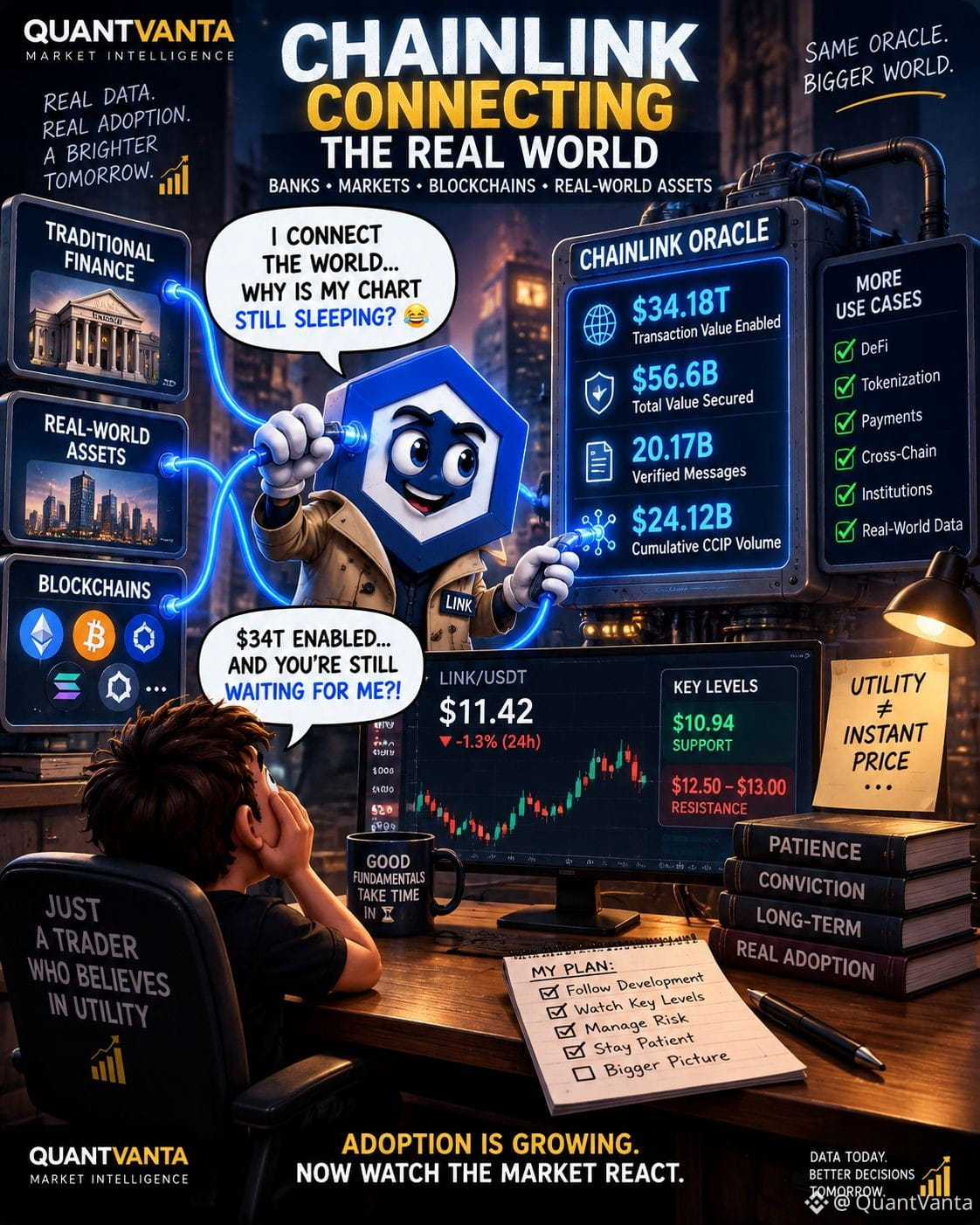
🚨 $LINK HAS A WEIRD PROBLEM
Chainlink’s network metrics keep getting bigger.
But the price is still trading around $11.4.
Chainlink’s own September metrics show:
💰 $34.18T transaction value enabled
🔐 $56.6B total value secured
🔗 $24.12B cumulative CCIP transfer volume
That’s serious infrastructure adoption.
But here’s the part I’m watching:
Utility growth doesn’t automatically mean token price goes up.
$LINK recently broke out of a multi month range, but price is now consolidating below the $12.50–$13.00 resistance zone.
📊 Key levels:
🟢 $10.94 → Major support
🔴 $12.50–$13.00 → Resistance
🚨 $13.75 → September swing high
For me, the next signal is whether adoption keeps accelerating while LINK reclaims resistance.
Fundamentals are improving.
Now the market has to prove it cares. 👀
Is LINK’s real world adoption finally going to translate into stronger price momentum?
Follow QuantVanta for daily crypto market updates.
$LINK
{future}(LINKUSDT)
#Chainlink #LİNK #Crypto #defi #CryptoMarket
🚨 $LINK HAS A WEIRD PROBLEM
Chainlink’s network metrics keep getting bigger.
But the price is still trading around $11.4.
Chainlink’s own September metrics show:
💰 $34.18T transaction value enabled
🔐 $56.6B total value secured
🔗 $24.12B cumulative CCIP transfer volume
That’s serious infrastructure adoption.
But here’s the part I’m watching:
Utility growth doesn’t automatically mean token price goes up.
$LINK recently broke out of a multi month range, but price is now consolidating below the $12.50–$13.00 resistance zone.
📊 Key levels:
🟢 $10.94 → Major support
🔴 $12.50–$13.00 → Resistance
🚨 $13.75 → September swing high
For me, the next signal is whether adoption keeps accelerating while LINK reclaims resistance.
Fundamentals are improving.
Now the market has to prove it cares. 👀
Is LINK’s real world adoption finally going to translate into stronger price momentum?
Follow QuantVanta for daily crypto market updates.
$LINK
#Chainlink #LİNK #Crypto #defi #CryptoMarket
Chainlink’s network metrics keep getting bigger.
But the price is still trading around $11.4.
Chainlink’s own September metrics show:
💰 $34.18T transaction value enabled
🔐 $56.6B total value secured
🔗 $24.12B cumulative CCIP transfer volume
That’s serious infrastructure adoption.
But here’s the part I’m watching:
Utility growth doesn’t automatically mean token price goes up.
$LINK recently broke out of a multi month range, but price is now consolidating below the $12.50–$13.00 resistance zone.
📊 Key levels:
🟢 $10.94 → Major support
🔴 $12.50–$13.00 → Resistance
🚨 $13.75 → September swing high
For me, the next signal is whether adoption keeps accelerating while LINK reclaims resistance.
Fundamentals are improving.
Now the market has to prove it cares. 👀
Is LINK’s real world adoption finally going to translate into stronger price momentum?
Follow QuantVanta for daily crypto market updates.
$LINK
#Chainlink #LİNK #Crypto #defi #CryptoMarket
3
959
Log in to explore more content
Join global crypto users on Binance Square
⚡️ Get latest and useful information about crypto.
💬 Trusted by the world’s largest crypto exchange.
👍 Discover real insights from verified creators.
Email / Phone number
Trending Topics
1
#BitcoinSlipsBelow$84000
140 views
34 Discussing
2
#SECToClarifyOnChainFundraisingRules
2,622 views
133 Discussing
3
#UKFCAOpensCryptoFirmAuthorization
5,309 views
153 Discussing
4
#JapanMOFStudyGroupOnTokenizedGovtBonds
5,235 views
169 Discussing
5
#QNTRises287%
34,335 views
489 Discussing
6
#TrumpRejectsAIRulesForVoluntaryAudits
24,330 views
546 Discussing
7
#BitgetHotWalletBreachTiedToThirdPartySecurityFlaw
13,697 views
359 Discussing
8
#OpenAIUnveilsAlwaysOnAgentDots
11,261 views
372 Discussing
9
#ChainlinkLaunchesBankSWIFTLedgerFramework
11,548 views
290 Discussing
10
#EarningsSeason
557,315 views
3,909 Discussing