

#grayscalezcashetfhits
grayscalezcashetfhits
539 views
10 Discussing
Hot
Latest

Grayscale's Zcash Investment Trust has officially crossed the $1 billion mark in net assets. This significant milestone reflects growing institutional interest and confidence in Zcash as an asset class. The performance of this ETF could signal broader trends in how traditional finance views and allocates capital towards digital assets beyond Bitcoin and Ethereum. Investors will be watching closely to see if this success prompts further product development and adoption within the crypto ETF space.
Disclaimer: This content is for informational purposes only and does not constitute investment advice.
#GrayscaleZcashETFHits$1BNetAssets $BTC $ETH
Grayscale's Zcash Investment Trust has officially crossed the $1 billion mark in net assets. This significant milestone reflects growing institutional interest and confidence in Zcash as an asset class. The performance of this ETF could signal broader trends in how traditional finance views and allocates capital towards digital assets beyond Bitcoin and Ethereum. Investors will be watching closely to see if this success prompts further product development and adoption within the crypto ETF space.
Disclaimer: This content is for informational purposes only and does not constitute investment advice.
#GrayscaleZcashETFHits$1BNetAssets $BTC $ETH
Disclaimer: This content is for informational purposes only and does not constitute investment advice.
#GrayscaleZcashETFHits$1BNetAssets $BTC $ETH
201

·
--
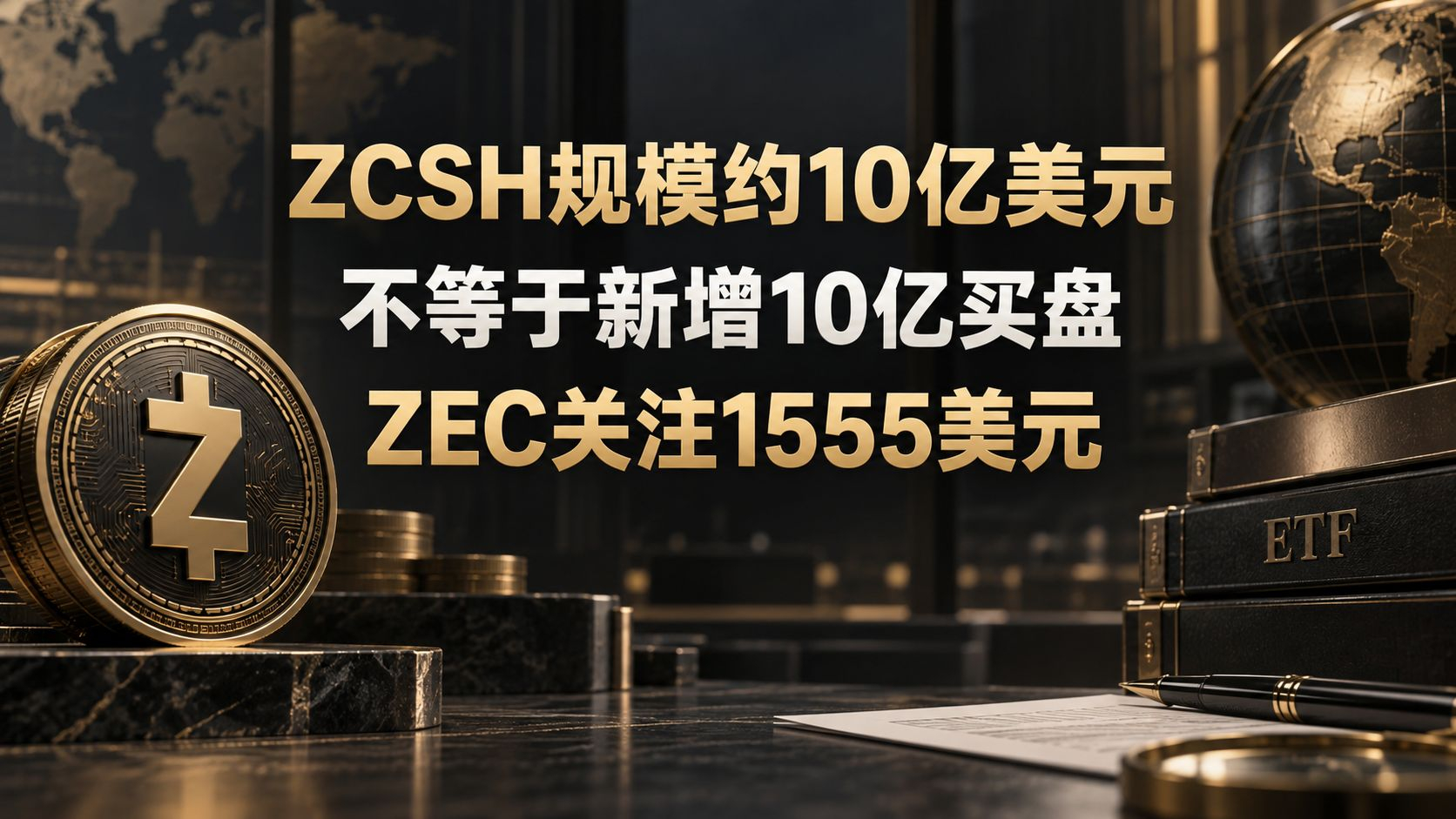
ZCSH scale reaches $1B|Not equal to adding $1B in fresh buy orders|ZEC at 1533—I'll first look at the fund quality
My attitude is cautious: I don’t treat an asset-size milestone as a direct signal to chase. On Binance Square’s trending list, the hashtag #GrayscaleZcashETFHits$1BNetAssets appeared. Multiple reports cited data as of September 24, saying Grayscale’s Zcash ETF (ZCSH) has net assets of roughly $1B, while cumulative net inflows are about $306.12M. These two metrics are not the same. Net assets will move with the price of ZEC held in the fund, and they also include assets that were already present when the trust was converted to a listed ETF. Net inflows are much closer to the scale of capital entering after listing. Therefore, “the ETF has $1B in assets” must never be rewritten as “there is $1B of new money buying ZEC today.”
The primary documents can also calibrate the source of funds. SEC disclosures show that ZCSH was renamed from the original Grayscale Zcash Trust and listed on the NYSE Arca. On September 8, Grayscale disclosed that its affiliated entity DCG, via authorized participants, exchanged 85,705.32563297 ZEC for about $100M in fund shares. That share-exchange action is real, but it’s not the same as cash “sweeping up” in the public market on the same day. The September 18 disclosure about a 1-to-3 split plan changes the number of shares and the unit price; it does not magically increase the fund’s underlying ZEC holdings or total ZEC demand. To me, institutional products widen the channel for traditional accounts to access ZEC—that’s a structural positive. But to judge marginal buying, you still need to look at ongoing net subscriptions and the actual incremental increase in shares held, not a single AUM headline.
Market reaction also depends on price evidence. Check Kraken’s ZEC/USD around $1533.24: the 24-hour high is $1623.99, the low is $1513, and the open is $1555.59. The current price is below the open and has clearly pulled back from the daily high, which indicates that the hot narrative has not eliminated short-term risks. I can’t attribute all this volatility solely to ETF news. The $1500–$1513 area is the near-term defense zone. First, I’ll see whether price can return to the open around $1555. Only around $1624 is the 24-hour upper limit. If funding disclosures slow down and price continues to break below recent lows, the assumption that “scale expansion will keep pushing up the coin price” should be overturned.
If I were trading it myself, I would not chase. My direction would only consider a light long on ZEC spot, keeping cash on hand. Only if the 4-hour close gets back above 1555 and the pullback holds it would I allocate at most 2% of investable funds. First target: 1600—when reached, cut half. Second target: 1624—when hit, close the remaining position, not treating the target as already realized profit. If after entering price falls back below 1510, I would stop out immediately and fully exit. If it breaks below 1500 first, I’d cancel this round’s long plan, stay in cash, and wait for new capital and price confirmation to align. For coins with high volatility, position sizing and exit discipline matter more than the headline news.
Source: SEC documents on ZCSH listing, the September 8 affiliated share exchange; and the September 18 split filing; Binance Square trending board and public fund capital-flow reports; Kraken spot price data. #GrayscaleZcashETFHits$1BNetAssets #ZEC
The above is only my personal market observation and does not constitute investment advice.
ZCSH scale reaches $1B|Not equal to adding $1B in fresh buy orders|ZEC at 1533—I'll first look at the fund quality
My attitude is cautious: I don’t treat an asset-size milestone as a direct signal to chase. On Binance Square’s trending list, the hashtag #GrayscaleZcashETFHits$1BNetAssets appeared. Multiple reports cited data as of September 24, saying Grayscale’s Zcash ETF (ZCSH) has net assets of roughly $1B, while cumulative net inflows are about $306.12M. These two metrics are not the same. Net assets will move with the price of ZEC held in the fund, and they also include assets that were already present when the trust was converted to a listed ETF. Net inflows are much closer to the scale of capital entering after listing. Therefore, “the ETF has $1B in assets” must never be rewritten as “there is $1B of new money buying ZEC today.”
The primary documents can also calibrate the source of funds. SEC disclosures show that ZCSH was renamed from the original Grayscale Zcash Trust and listed on the NYSE Arca. On September 8, Grayscale disclosed that its affiliated entity DCG, via authorized participants, exchanged 85,705.32563297 ZEC for about $100M in fund shares. That share-exchange action is real, but it’s not the same as cash “sweeping up” in the public market on the same day. The September 18 disclosure about a 1-to-3 split plan changes the number of shares and the unit price; it does not magically increase the fund’s underlying ZEC holdings or total ZEC demand. To me, institutional products widen the channel for traditional accounts to access ZEC—that’s a structural positive. But to judge marginal buying, you still need to look at ongoing net subscriptions and the actual incremental increase in shares held, not a single AUM headline.
Market reaction also depends on price evidence. Check Kraken’s ZEC/USD around $1533.24: the 24-hour high is $1623.99, the low is $1513, and the open is $1555.59. The current price is below the open and has clearly pulled back from the daily high, which indicates that the hot narrative has not eliminated short-term risks. I can’t attribute all this volatility solely to ETF news. The $1500–$1513 area is the near-term defense zone. First, I’ll see whether price can return to the open around $1555. Only around $1624 is the 24-hour upper limit. If funding disclosures slow down and price continues to break below recent lows, the assumption that “scale expansion will keep pushing up the coin price” should be overturned.
If I were trading it myself, I would not chase. My direction would only consider a light long on ZEC spot, keeping cash on hand. Only if the 4-hour close gets back above 1555 and the pullback holds it would I allocate at most 2% of investable funds. First target: 1600—when reached, cut half. Second target: 1624—when hit, close the remaining position, not treating the target as already realized profit. If after entering price falls back below 1510, I would stop out immediately and fully exit. If it breaks below 1500 first, I’d cancel this round’s long plan, stay in cash, and wait for new capital and price confirmation to align. For coins with high volatility, position sizing and exit discipline matter more than the headline news.
Source: SEC documents on ZCSH listing, the September 8 affiliated share exchange; and the September 18 split filing; Binance Square trending board and public fund capital-flow reports; Kraken spot price data. #GrayscaleZcashETFHits$1BNetAssets #ZEC
The above is only my personal market observation and does not constitute investment advice.
My attitude is cautious: I don’t treat an asset-size milestone as a direct signal to chase. On Binance Square’s trending list, the hashtag #GrayscaleZcashETFHits$1BNetAssets appeared. Multiple reports cited data as of September 24, saying Grayscale’s Zcash ETF (ZCSH) has net assets of roughly $1B, while cumulative net inflows are about $306.12M. These two metrics are not the same. Net assets will move with the price of ZEC held in the fund, and they also include assets that were already present when the trust was converted to a listed ETF. Net inflows are much closer to the scale of capital entering after listing. Therefore, “the ETF has $1B in assets” must never be rewritten as “there is $1B of new money buying ZEC today.”
The primary documents can also calibrate the source of funds. SEC disclosures show that ZCSH was renamed from the original Grayscale Zcash Trust and listed on the NYSE Arca. On September 8, Grayscale disclosed that its affiliated entity DCG, via authorized participants, exchanged 85,705.32563297 ZEC for about $100M in fund shares. That share-exchange action is real, but it’s not the same as cash “sweeping up” in the public market on the same day. The September 18 disclosure about a 1-to-3 split plan changes the number of shares and the unit price; it does not magically increase the fund’s underlying ZEC holdings or total ZEC demand. To me, institutional products widen the channel for traditional accounts to access ZEC—that’s a structural positive. But to judge marginal buying, you still need to look at ongoing net subscriptions and the actual incremental increase in shares held, not a single AUM headline.
Market reaction also depends on price evidence. Check Kraken’s ZEC/USD around $1533.24: the 24-hour high is $1623.99, the low is $1513, and the open is $1555.59. The current price is below the open and has clearly pulled back from the daily high, which indicates that the hot narrative has not eliminated short-term risks. I can’t attribute all this volatility solely to ETF news. The $1500–$1513 area is the near-term defense zone. First, I’ll see whether price can return to the open around $1555. Only around $1624 is the 24-hour upper limit. If funding disclosures slow down and price continues to break below recent lows, the assumption that “scale expansion will keep pushing up the coin price” should be overturned.
If I were trading it myself, I would not chase. My direction would only consider a light long on ZEC spot, keeping cash on hand. Only if the 4-hour close gets back above 1555 and the pullback holds it would I allocate at most 2% of investable funds. First target: 1600—when reached, cut half. Second target: 1624—when hit, close the remaining position, not treating the target as already realized profit. If after entering price falls back below 1510, I would stop out immediately and fully exit. If it breaks below 1500 first, I’d cancel this round’s long plan, stay in cash, and wait for new capital and price confirmation to align. For coins with high volatility, position sizing and exit discipline matter more than the headline news.
Source: SEC documents on ZCSH listing, the September 8 affiliated share exchange; and the September 18 split filing; Binance Square trending board and public fund capital-flow reports; Kraken spot price data. #GrayscaleZcashETFHits$1BNetAssets #ZEC
The above is only my personal market observation and does not constitute investment advice.
8
·
--
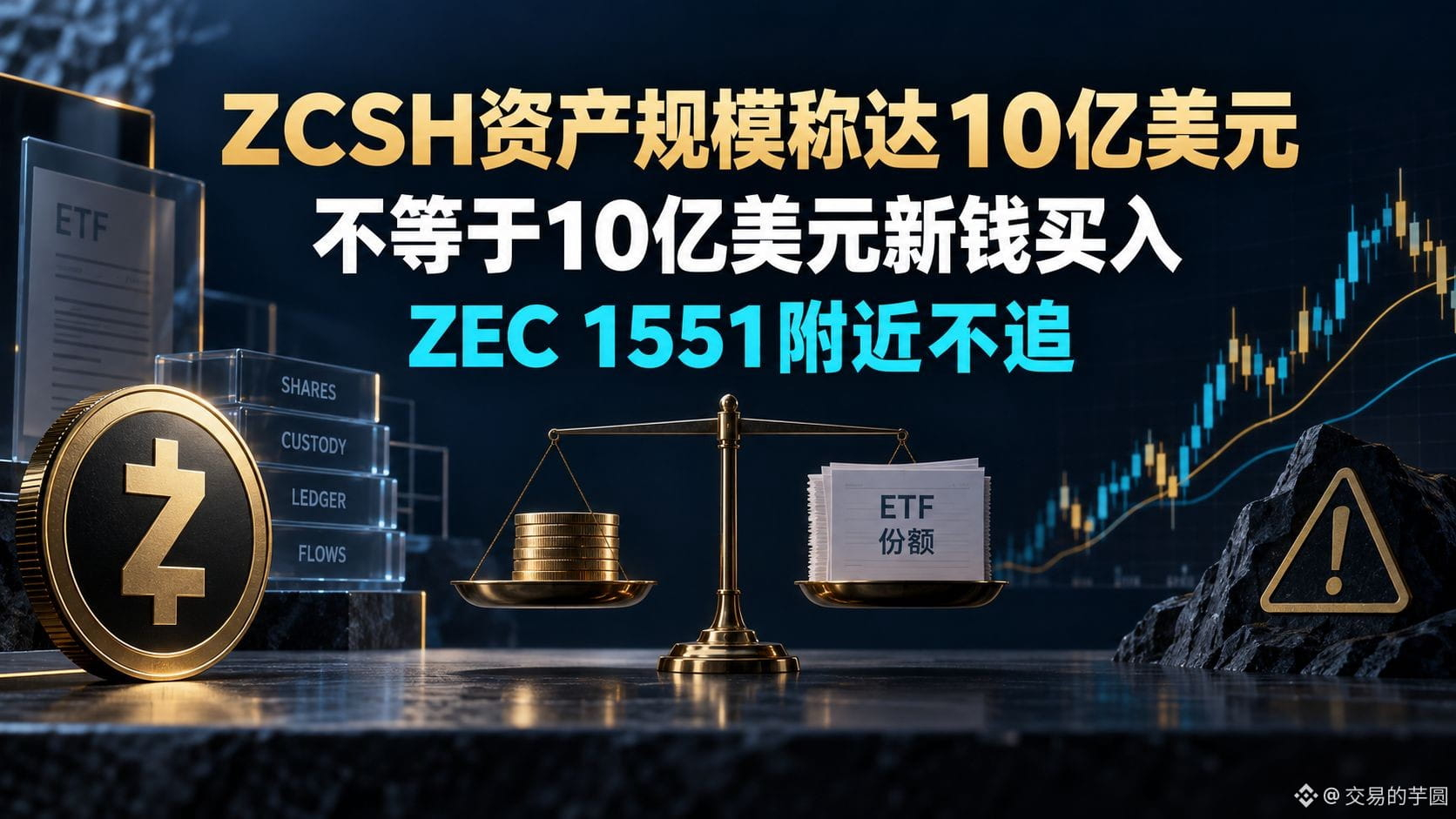
ZCSH asset size reportedly reaches $1B|Not $1B of new money buying|ZEC around 1551, I’m not chasing
My take: This trending topic is worth watching, but you can’t directly translate the fund’s assets under management into same-day spot buy orders. Binance Square is discussing #GrayscaleZcashETFHits$1BNetAssets. Grayscale’s official account says its ZCSH has $1B in assets under management; that’s the scale metric disclosed by the issuer. It is not real-time fund flow independently audited by me, and it is certainly not “$1B flowing in today.” ZCSH originally came from the conversion of an older Zcash trust, and the account already holds ZEC. The fund’s asset value will rise as ZEC’s price increases, so the increase in new shares and the repricing must be separated. Mixing the two easily leads to overestimating marginal buying demand.
Another key transaction must be accounted for clearly. On September 8, ZCSH filed an 8-K with the US SEC confirming that related party DCG exchanged 85,705.32563297 ZEC, via an authorized participant, for approximately $100 million worth of fund shares. This is an in-kind exchange for shares, not sweeping $100 million in cash into the public spot market on the same day. If posts call it direct external cash inflow, I won’t simply accept that at face value. On September 18, another 8-K disclosed a 1-for-3 structure change: record date September 28, allocation September 29, and the split-and-trade after September 30. Shares triple, and net value per share drops by roughly one-third. That doesn’t magically create assets or demand. Institutional product expansion may indeed improve ZEC’s investable channels, but it can’t guarantee a sustained short-term uptrend.
How has the market reacted? When I wrote this, KuCoin’s ZEC/USDT was around $1550.6; over the past 24 hours the high was $1624.8 and the low $1515.2, with price already pulling back from the high. This range suggests that attention and volatility both increased; you can’t claim that every candlestick is ETF buying just based on the fund’s headline. Next, I’m watching two things: whether the issuer’s subsequent asset and share data can verify that the scale continues, and whether ZEC can regain and hold above 1625. If it breaks below 1515 and the fund data is revised, the bullish case based on that thesis gets invalidated. The Bitget incident is still under investigation; if the exchange’s deposits/withdrawals aren’t smooth, I’ll also raise my liquidity discount requirement and won’t frame platform risk as a “Zcash chain malfunction.”
If I were trading myself: I’m not entering at the moment. I would only plan a small spot long position after predefined conditions are met, without leverage. I’ll wait until ZEC closes two consecutive complete 15-minute candles above 1625, then retests 1605—1625 without breaking it, and confirm that the platform’s ZEC deposits/withdrawals are functioning normally. Only then would I build a position using at most 0.2% of total capital. If conditions aren’t triggered, I stay at 0 exposure. If I enter and the price reaches 1670, I’ll cut the position in half; at 1710 I’ll close any remaining shares. If it falls to 1585, I’ll cut the position in half first; if it touches 1560, I’ll fully stop out and close the position. If, before entry, price breaks below 1515, I’ll cancel the whole plan and recheck the fund share details and the market situation. Separating scale, actual inflows, and execution conditions matters more than chasing a “nice round number.”
#GrayscaleZcashETFHits$1BNetAssets #ZEC
The above is only my personal market observation and does not constitute investment advice.
ZCSH asset size reportedly reaches $1B|Not $1B of new money buying|ZEC around 1551, I’m not chasing
My take: This trending topic is worth watching, but you can’t directly translate the fund’s assets under management into same-day spot buy orders. Binance Square is discussing #GrayscaleZcashETFHits$1BNetAssets. Grayscale’s official account says its ZCSH has $1B in assets under management; that’s the scale metric disclosed by the issuer. It is not real-time fund flow independently audited by me, and it is certainly not “$1B flowing in today.” ZCSH originally came from the conversion of an older Zcash trust, and the account already holds ZEC. The fund’s asset value will rise as ZEC’s price increases, so the increase in new shares and the repricing must be separated. Mixing the two easily leads to overestimating marginal buying demand.
Another key transaction must be accounted for clearly. On September 8, ZCSH filed an 8-K with the US SEC confirming that related party DCG exchanged 85,705.32563297 ZEC, via an authorized participant, for approximately $100 million worth of fund shares. This is an in-kind exchange for shares, not sweeping $100 million in cash into the public spot market on the same day. If posts call it direct external cash inflow, I won’t simply accept that at face value. On September 18, another 8-K disclosed a 1-for-3 structure change: record date September 28, allocation September 29, and the split-and-trade after September 30. Shares triple, and net value per share drops by roughly one-third. That doesn’t magically create assets or demand. Institutional product expansion may indeed improve ZEC’s investable channels, but it can’t guarantee a sustained short-term uptrend.
How has the market reacted? When I wrote this, KuCoin’s ZEC/USDT was around $1550.6; over the past 24 hours the high was $1624.8 and the low $1515.2, with price already pulling back from the high. This range suggests that attention and volatility both increased; you can’t claim that every candlestick is ETF buying just based on the fund’s headline. Next, I’m watching two things: whether the issuer’s subsequent asset and share data can verify that the scale continues, and whether ZEC can regain and hold above 1625. If it breaks below 1515 and the fund data is revised, the bullish case based on that thesis gets invalidated. The Bitget incident is still under investigation; if the exchange’s deposits/withdrawals aren’t smooth, I’ll also raise my liquidity discount requirement and won’t frame platform risk as a “Zcash chain malfunction.”
If I were trading myself: I’m not entering at the moment. I would only plan a small spot long position after predefined conditions are met, without leverage. I’ll wait until ZEC closes two consecutive complete 15-minute candles above 1625, then retests 1605—1625 without breaking it, and confirm that the platform’s ZEC deposits/withdrawals are functioning normally. Only then would I build a position using at most 0.2% of total capital. If conditions aren’t triggered, I stay at 0 exposure. If I enter and the price reaches 1670, I’ll cut the position in half; at 1710 I’ll close any remaining shares. If it falls to 1585, I’ll cut the position in half first; if it touches 1560, I’ll fully stop out and close the position. If, before entry, price breaks below 1515, I’ll cancel the whole plan and recheck the fund share details and the market situation. Separating scale, actual inflows, and execution conditions matters more than chasing a “nice round number.”
#GrayscaleZcashETFHits$1BNetAssets #ZEC
The above is only my personal market observation and does not constitute investment advice.
My take: This trending topic is worth watching, but you can’t directly translate the fund’s assets under management into same-day spot buy orders. Binance Square is discussing #GrayscaleZcashETFHits$1BNetAssets. Grayscale’s official account says its ZCSH has $1B in assets under management; that’s the scale metric disclosed by the issuer. It is not real-time fund flow independently audited by me, and it is certainly not “$1B flowing in today.” ZCSH originally came from the conversion of an older Zcash trust, and the account already holds ZEC. The fund’s asset value will rise as ZEC’s price increases, so the increase in new shares and the repricing must be separated. Mixing the two easily leads to overestimating marginal buying demand.
Another key transaction must be accounted for clearly. On September 8, ZCSH filed an 8-K with the US SEC confirming that related party DCG exchanged 85,705.32563297 ZEC, via an authorized participant, for approximately $100 million worth of fund shares. This is an in-kind exchange for shares, not sweeping $100 million in cash into the public spot market on the same day. If posts call it direct external cash inflow, I won’t simply accept that at face value. On September 18, another 8-K disclosed a 1-for-3 structure change: record date September 28, allocation September 29, and the split-and-trade after September 30. Shares triple, and net value per share drops by roughly one-third. That doesn’t magically create assets or demand. Institutional product expansion may indeed improve ZEC’s investable channels, but it can’t guarantee a sustained short-term uptrend.
How has the market reacted? When I wrote this, KuCoin’s ZEC/USDT was around $1550.6; over the past 24 hours the high was $1624.8 and the low $1515.2, with price already pulling back from the high. This range suggests that attention and volatility both increased; you can’t claim that every candlestick is ETF buying just based on the fund’s headline. Next, I’m watching two things: whether the issuer’s subsequent asset and share data can verify that the scale continues, and whether ZEC can regain and hold above 1625. If it breaks below 1515 and the fund data is revised, the bullish case based on that thesis gets invalidated. The Bitget incident is still under investigation; if the exchange’s deposits/withdrawals aren’t smooth, I’ll also raise my liquidity discount requirement and won’t frame platform risk as a “Zcash chain malfunction.”
If I were trading myself: I’m not entering at the moment. I would only plan a small spot long position after predefined conditions are met, without leverage. I’ll wait until ZEC closes two consecutive complete 15-minute candles above 1625, then retests 1605—1625 without breaking it, and confirm that the platform’s ZEC deposits/withdrawals are functioning normally. Only then would I build a position using at most 0.2% of total capital. If conditions aren’t triggered, I stay at 0 exposure. If I enter and the price reaches 1670, I’ll cut the position in half; at 1710 I’ll close any remaining shares. If it falls to 1585, I’ll cut the position in half first; if it touches 1560, I’ll fully stop out and close the position. If, before entry, price breaks below 1515, I’ll cancel the whole plan and recheck the fund share details and the market situation. Separating scale, actual inflows, and execution conditions matters more than chasing a “nice round number.”
#GrayscaleZcashETFHits$1BNetAssets #ZEC
The above is only my personal market observation and does not constitute investment advice.
54

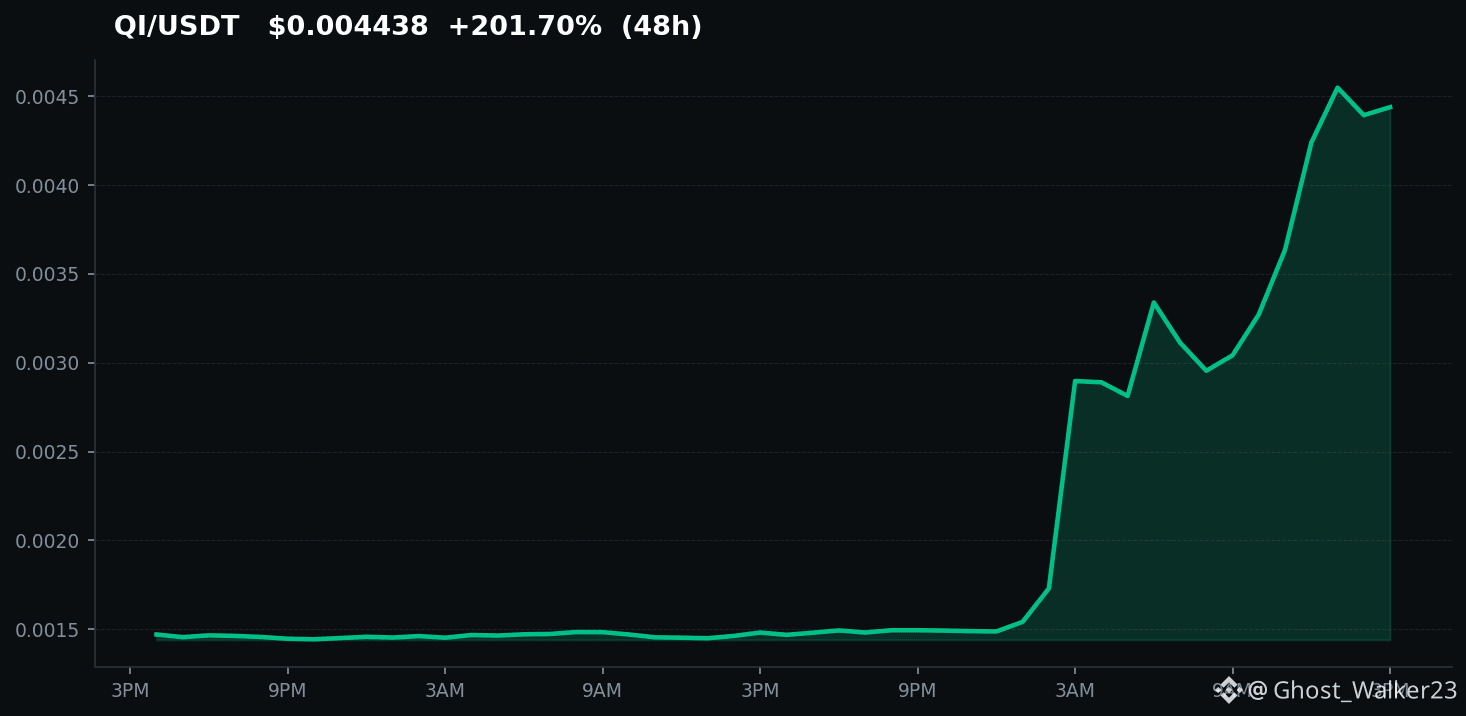
🚀 The #GrayscaleZcashETFHits$1BNetAssets milestone is a game changer! This could signal a new era for privacy coins as institutional interest peaks. With $QI surging +201.1%, is this the moment for altcoins to shine? What’s your take on Zcash’s future? 💰 #Zcash
💬 Únete y síguenos, seguimos analizando el mercado por ti.
🚀 The #GrayscaleZcashETFHits$1BNetAssets milestone is a game changer! This could signal a new era for privacy coins as institutional interest peaks. With $QI surging +201.1%, is this the moment for altcoins to shine? What’s your take on Zcash’s future? 💰 #Zcash
💬 Únete y síguenos, seguimos analizando el mercado por ti.
💬 Únete y síguenos, seguimos analizando el mercado por ti.
141

·
--
Bullish
#GrayscaleZcashETFHits$1BNetAssets
(Zcash / Privacy Coin Surge)
#GrayscaleZcashETFHits
🔒 GRAYSCALE ZCASH ETF REACHES $1 BILLION! PRIVACY COINS BACK IN THE SPOTLIGHT? 🛡️
Grayscale's Zcash ($ZEC ) product hitting $1 Billion is a major milestone for privacy-focused crypto assets! Despite regulatory scrutiny, institutional interest in decentralized privacy tools is clearly growing. 🌐🔥
Will privacy coins like ZEC andXMR lead the next utility wave?
{future}(ZECUSDT)
💬 DROP YOUR COMMENT: What's your take on Zcash and the future of privacy in Web3? Share your thoughts below! 🗣️
#zcash #zec #PrivacyCoins #Grayscale
#GrayscaleZcashETFHits$1BNetAssets
(Zcash / Privacy Coin Surge)
#GrayscaleZcashETFHits
🔒 GRAYSCALE ZCASH ETF REACHES $1 BILLION! PRIVACY COINS BACK IN THE SPOTLIGHT? 🛡️
Grayscale's Zcash ($ZEC ) product hitting $1 Billion is a major milestone for privacy-focused crypto assets! Despite regulatory scrutiny, institutional interest in decentralized privacy tools is clearly growing. 🌐🔥
Will privacy coins like ZEC andXMR lead the next utility wave?
💬 DROP YOUR COMMENT: What's your take on Zcash and the future of privacy in Web3? Share your thoughts below! 🗣️
#zcash #zec #PrivacyCoins #Grayscale
(Zcash / Privacy Coin Surge)
#GrayscaleZcashETFHits
🔒 GRAYSCALE ZCASH ETF REACHES $1 BILLION! PRIVACY COINS BACK IN THE SPOTLIGHT? 🛡️
Grayscale's Zcash ($ZEC ) product hitting $1 Billion is a major milestone for privacy-focused crypto assets! Despite regulatory scrutiny, institutional interest in decentralized privacy tools is clearly growing. 🌐🔥
Will privacy coins like ZEC andXMR lead the next utility wave?
💬 DROP YOUR COMMENT: What's your take on Zcash and the future of privacy in Web3? Share your thoughts below! 🗣️
#zcash #zec #PrivacyCoins #Grayscale
177

·
--
Bullish
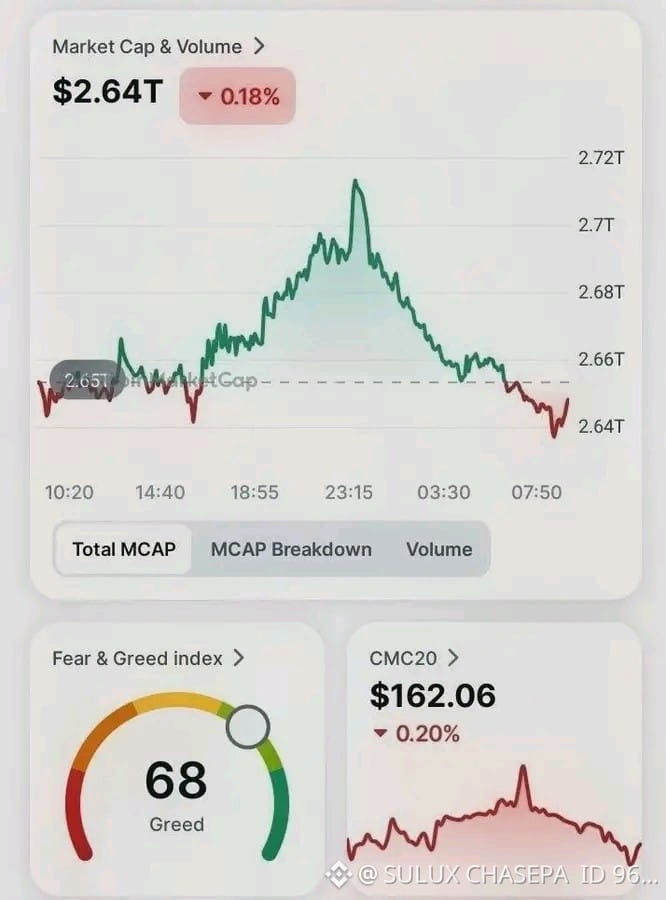
Market Overview
Total market cap: $2.88T
24-hour volume: ~$95B to $106B
Bitcoin dominance: ~57.1% [1, 2, 3]
📌 Major Asset Prices
Bitcoin (BTC): Trades near $84,000, pulling back from recent highs above $87,000. [1, 2]
Ethereum (ETH): Slips below $2,700 amid cooling short-term momentum. [1, 2]
XRP: Extends its recovery, ticking up past $1.54. [1, 2]
Solana (SOL): Holds steady around $116–$118. [1, 2]
$NVDAB $AAPLB $GOOGL.US
{future}(SOLUSDT)
{etf_us}(XRPC.ETF)
{spot}(BTCUSDT)
#GrayscaleZcashETFHits #NYAndPolymarketSueEachOther #OndoFinanceSoughtSaleAfterFoundersDeath #CFTCUpdatesGuidanceOnTokenizedAssets #FedOctoberRateHikeOddsRiseTo69.7%
Market Overview
Total market cap: $2.88T
24-hour volume: ~$95B to $106B
Bitcoin dominance: ~57.1% [1, 2, 3]
📌 Major Asset Prices
Bitcoin (BTC): Trades near $84,000, pulling back from recent highs above $87,000. [1, 2]
Ethereum (ETH): Slips below $2,700 amid cooling short-term momentum. [1, 2]
XRP: Extends its recovery, ticking up past $1.54. [1, 2]
Solana (SOL): Holds steady around $116–$118. [1, 2]
$NVDAB $AAPLB $GOOGL.US
#GrayscaleZcashETFHits #NYAndPolymarketSueEachOther #OndoFinanceSoughtSaleAfterFoundersDeath #CFTCUpdatesGuidanceOnTokenizedAssets #FedOctoberRateHikeOddsRiseTo69.7%
Total market cap: $2.88T
24-hour volume: ~$95B to $106B
Bitcoin dominance: ~57.1% [1, 2, 3]
📌 Major Asset Prices
Bitcoin (BTC): Trades near $84,000, pulling back from recent highs above $87,000. [1, 2]
Ethereum (ETH): Slips below $2,700 amid cooling short-term momentum. [1, 2]
XRP: Extends its recovery, ticking up past $1.54. [1, 2]
Solana (SOL): Holds steady around $116–$118. [1, 2]
$NVDAB $AAPLB $GOOGL.US
#GrayscaleZcashETFHits #NYAndPolymarketSueEachOther #OndoFinanceSoughtSaleAfterFoundersDeath #CFTCUpdatesGuidanceOnTokenizedAssets #FedOctoberRateHikeOddsRiseTo69.7%
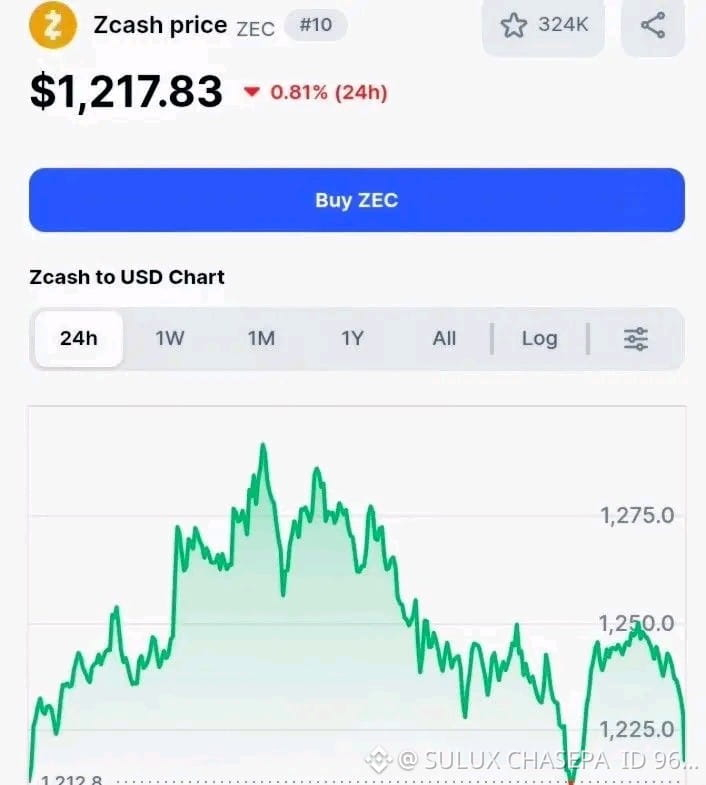
5
460

·
--
Bullish
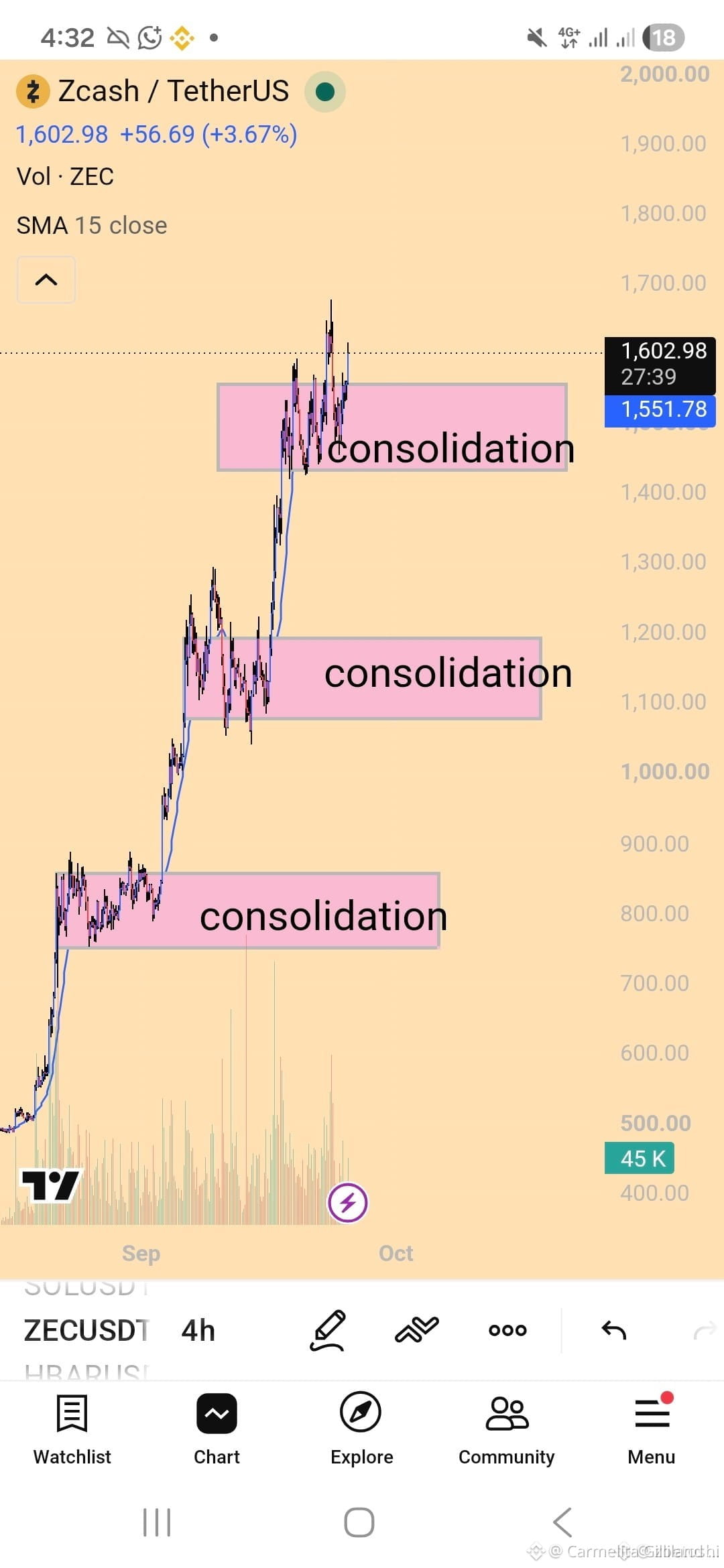
$ZEC is following a pattern
bombs and then consolidate
based on this pattern we are probably in the $1900-$2K range
i am long
#GrayscaleZcashETFHits ts$1BNetAssets
{future}(ZECUSDT)
$ZEC is following a pattern
bombs and then consolidate
based on this pattern we are probably in the $1900-$2K range
i am long
#GrayscaleZcashETFHits ts$1BNetAssets
bombs and then consolidate
based on this pattern we are probably in the $1900-$2K range
i am long
#GrayscaleZcashETFHits ts$1BNetAssets
289
U.S. Treasury yields surge to a 19-year high, regulatory thaw for tokenized assets begins
September 25, 2026, global financial markets are undergoing a profound transformation. U.S. 10-year Treasury yields jumped above 5.20%, marking the highest level since 2007. Strong employment data, oil prices edging toward $100 per barrel, and the Fed’s hawkish signals have all driven this trend. Meanwhile, U.S. regulators have released major positive signals in the stablecoin and tokenized-asset space, as the boundaries between traditional finance and the crypto world continue to rapidly blur.
1. High interest rates reshape the crypto market landscape
The surge in Treasury yields has created significant pressure on crypto assets. After the data release, Bitcoin briefly fell below $83,000, then rebounded to around $84,000. Analysts warn that in a prolonged high-rate environment, assets without yield will continue to face sustained pressure. However, the market has not fallen into total pessimism. According to Binance Square, in the past 24 hours Bitcoin was mentioned more than 21,000 times, with 970 bullish posts versus 283 bearish ones, suggesting the community still has confidence in the long- to mid-term outlook.
The Solana ecosystem has been especially active. SOL leads the heat list with 22,661 mentions, and has 7,357 independent authors. Ethereum recorded 5,778 mentions, with a bullish-to-bearish ratio of 470 to 20, indicating an overall optimistic sentiment. This kind of structural divergence shows that capital is shifting from overvalued assets toward ecosystems with real-world application value.
2. A regulatory thaw: the Fed and CFTC team up to advance tokenization rules
Against the backdrop of high interest rates, U.S. regulators brought encouraging news. The Fed, based on the GENIUS Act, proposed two new rules requiring that stablecoins issued by banks be backed 1:1 with liquidity assets and allow redemptions within two days. At the same time, the U.S. Commodity Futures Trading Commission updated its guidance to allow registered entities to invest client funds in tokenized assets.
These two policies mark the formal inclusion of on-chain finance into the regulatory framework. For the industry, compliance is no longer an obstacle to growth—it is a key pass for institutions to enter the market. Stablecoin reserve requirements improve safety, while the legalization of tokenized assets lays the institutional groundwork for a breakout in the RWA track.
3. Ondo teams up with BlackRock to launch a tokenized investment portfolio
Regulatory tailwinds quickly translate into product innovation. Ondo Finance announced the launch of a smart investment portfolio: three tokenized investment strategies built on BlackRock’s investment framework, offered to eligible non-U.S. investors in the form of a single transferable on-chain token. After the announcement, the ONDO token broke above $0.50, reaching a new year-to-date high. Analysts have begun discussing its potential push toward $1.
The significance of this collaboration is that BlackRock, the world’s largest asset manager, is exporting investment capabilities via on-chain channels—meaning tokenization is no longer an edge experiment, but a strategic choice for mainstream financial institutions.
4. Binance accelerates traditional finance expansion
On the platform side, Binance announced it added 25 stocks to spot trading and introduced custom price alerts, upgraded charts, and the use of bStocks as margin collateral. This move integrates cryptocurrencies with traditional stock markets within a unified account, directly addressing strong user demand for diversified asset allocation.
Meanwhile, Binance Wallet added a feature enabling users to pay Gas fees in USDT. Users no longer need to hold native tokens such as BNB or ETH to complete transactions, dramatically lowering the barrier for new users to enter the on-chain world.
5. Safety warnings sound on long
As the industry develops rapidly, security risks cannot be ignored. Bitget confirmed losses of $351.6 million due to unauthorized transfers resulting from compromised hot wallets and warm wallets, and the CEO said the IP model points to the North Korean hacker group Lazarus. Although cold wallets are secure and the platform claims it has user protection funds exceeding $464 million, this incident once again reminds the industry that infrastructure security must evolve in step with product innovation.
6. Market outlook
The market is currently at a turning point where traditional finance and the crypto world are deeply converging. While the high interest-rate environment is still creating short-term pressure, regulatory formalization and innovation in tokenized products are opening up long-term growth space. Data showing a single-day net inflow of $191 million into spot Bitcoin ETFs indicates that institutional capital has not fully retreated due to rising rates—it is instead seeking a compliant, transparent way to enter.
For investors, focusing on developments in the RWA track, the rollout pace of regulatory policies, and capital flows in major ecosystems will be key to capturing upcoming market opportunities.
#BitcoinSpotETFsNetInflow$191M #GrayscaleZcashETFHits$1BNetAssets #TokenizedNewEraOfU.S. Stocks
U.S. Treasury yields surge to a 19-year high, regulatory thaw for tokenized assets begins
September 25, 2026, global financial markets are undergoing a profound transformation. U.S. 10-year Treasury yields jumped above 5.20%, marking the highest level since 2007. Strong employment data, oil prices edging toward $100 per barrel, and the Fed’s hawkish signals have all driven this trend. Meanwhile, U.S. regulators have released major positive signals in the stablecoin and tokenized-asset space, as the boundaries between traditional finance and the crypto world continue to rapidly blur.
1. High interest rates reshape the crypto market landscape
The surge in Treasury yields has created significant pressure on crypto assets. After the data release, Bitcoin briefly fell below $83,000, then rebounded to around $84,000. Analysts warn that in a prolonged high-rate environment, assets without yield will continue to face sustained pressure. However, the market has not fallen into total pessimism. According to Binance Square, in the past 24 hours Bitcoin was mentioned more than 21,000 times, with 970 bullish posts versus 283 bearish ones, suggesting the community still has confidence in the long- to mid-term outlook.
The Solana ecosystem has been especially active. SOL leads the heat list with 22,661 mentions, and has 7,357 independent authors. Ethereum recorded 5,778 mentions, with a bullish-to-bearish ratio of 470 to 20, indicating an overall optimistic sentiment. This kind of structural divergence shows that capital is shifting from overvalued assets toward ecosystems with real-world application value.
2. A regulatory thaw: the Fed and CFTC team up to advance tokenization rules
Against the backdrop of high interest rates, U.S. regulators brought encouraging news. The Fed, based on the GENIUS Act, proposed two new rules requiring that stablecoins issued by banks be backed 1:1 with liquidity assets and allow redemptions within two days. At the same time, the U.S. Commodity Futures Trading Commission updated its guidance to allow registered entities to invest client funds in tokenized assets.
These two policies mark the formal inclusion of on-chain finance into the regulatory framework. For the industry, compliance is no longer an obstacle to growth—it is a key pass for institutions to enter the market. Stablecoin reserve requirements improve safety, while the legalization of tokenized assets lays the institutional groundwork for a breakout in the RWA track.
3. Ondo teams up with BlackRock to launch a tokenized investment portfolio
Regulatory tailwinds quickly translate into product innovation. Ondo Finance announced the launch of a smart investment portfolio: three tokenized investment strategies built on BlackRock’s investment framework, offered to eligible non-U.S. investors in the form of a single transferable on-chain token. After the announcement, the ONDO token broke above $0.50, reaching a new year-to-date high. Analysts have begun discussing its potential push toward $1.
The significance of this collaboration is that BlackRock, the world’s largest asset manager, is exporting investment capabilities via on-chain channels—meaning tokenization is no longer an edge experiment, but a strategic choice for mainstream financial institutions.
4. Binance accelerates traditional finance expansion
On the platform side, Binance announced it added 25 stocks to spot trading and introduced custom price alerts, upgraded charts, and the use of bStocks as margin collateral. This move integrates cryptocurrencies with traditional stock markets within a unified account, directly addressing strong user demand for diversified asset allocation.
Meanwhile, Binance Wallet added a feature enabling users to pay Gas fees in USDT. Users no longer need to hold native tokens such as BNB or ETH to complete transactions, dramatically lowering the barrier for new users to enter the on-chain world.
5. Safety warnings sound on long
As the industry develops rapidly, security risks cannot be ignored. Bitget confirmed losses of $351.6 million due to unauthorized transfers resulting from compromised hot wallets and warm wallets, and the CEO said the IP model points to the North Korean hacker group Lazarus. Although cold wallets are secure and the platform claims it has user protection funds exceeding $464 million, this incident once again reminds the industry that infrastructure security must evolve in step with product innovation.
6. Market outlook
The market is currently at a turning point where traditional finance and the crypto world are deeply converging. While the high interest-rate environment is still creating short-term pressure, regulatory formalization and innovation in tokenized products are opening up long-term growth space. Data showing a single-day net inflow of $191 million into spot Bitcoin ETFs indicates that institutional capital has not fully retreated due to rising rates—it is instead seeking a compliant, transparent way to enter.
For investors, focusing on developments in the RWA track, the rollout pace of regulatory policies, and capital flows in major ecosystems will be key to capturing upcoming market opportunities.
#BitcoinSpotETFsNetInflow$191M #GrayscaleZcashETFHits$1BNetAssets #TokenizedNewEraOfU.S. Stocks
September 25, 2026, global financial markets are undergoing a profound transformation. U.S. 10-year Treasury yields jumped above 5.20%, marking the highest level since 2007. Strong employment data, oil prices edging toward $100 per barrel, and the Fed’s hawkish signals have all driven this trend. Meanwhile, U.S. regulators have released major positive signals in the stablecoin and tokenized-asset space, as the boundaries between traditional finance and the crypto world continue to rapidly blur.
1. High interest rates reshape the crypto market landscape
The surge in Treasury yields has created significant pressure on crypto assets. After the data release, Bitcoin briefly fell below $83,000, then rebounded to around $84,000. Analysts warn that in a prolonged high-rate environment, assets without yield will continue to face sustained pressure. However, the market has not fallen into total pessimism. According to Binance Square, in the past 24 hours Bitcoin was mentioned more than 21,000 times, with 970 bullish posts versus 283 bearish ones, suggesting the community still has confidence in the long- to mid-term outlook.
The Solana ecosystem has been especially active. SOL leads the heat list with 22,661 mentions, and has 7,357 independent authors. Ethereum recorded 5,778 mentions, with a bullish-to-bearish ratio of 470 to 20, indicating an overall optimistic sentiment. This kind of structural divergence shows that capital is shifting from overvalued assets toward ecosystems with real-world application value.
2. A regulatory thaw: the Fed and CFTC team up to advance tokenization rules
Against the backdrop of high interest rates, U.S. regulators brought encouraging news. The Fed, based on the GENIUS Act, proposed two new rules requiring that stablecoins issued by banks be backed 1:1 with liquidity assets and allow redemptions within two days. At the same time, the U.S. Commodity Futures Trading Commission updated its guidance to allow registered entities to invest client funds in tokenized assets.
These two policies mark the formal inclusion of on-chain finance into the regulatory framework. For the industry, compliance is no longer an obstacle to growth—it is a key pass for institutions to enter the market. Stablecoin reserve requirements improve safety, while the legalization of tokenized assets lays the institutional groundwork for a breakout in the RWA track.
3. Ondo teams up with BlackRock to launch a tokenized investment portfolio
Regulatory tailwinds quickly translate into product innovation. Ondo Finance announced the launch of a smart investment portfolio: three tokenized investment strategies built on BlackRock’s investment framework, offered to eligible non-U.S. investors in the form of a single transferable on-chain token. After the announcement, the ONDO token broke above $0.50, reaching a new year-to-date high. Analysts have begun discussing its potential push toward $1.
The significance of this collaboration is that BlackRock, the world’s largest asset manager, is exporting investment capabilities via on-chain channels—meaning tokenization is no longer an edge experiment, but a strategic choice for mainstream financial institutions.
4. Binance accelerates traditional finance expansion
On the platform side, Binance announced it added 25 stocks to spot trading and introduced custom price alerts, upgraded charts, and the use of bStocks as margin collateral. This move integrates cryptocurrencies with traditional stock markets within a unified account, directly addressing strong user demand for diversified asset allocation.
Meanwhile, Binance Wallet added a feature enabling users to pay Gas fees in USDT. Users no longer need to hold native tokens such as BNB or ETH to complete transactions, dramatically lowering the barrier for new users to enter the on-chain world.
5. Safety warnings sound on long
As the industry develops rapidly, security risks cannot be ignored. Bitget confirmed losses of $351.6 million due to unauthorized transfers resulting from compromised hot wallets and warm wallets, and the CEO said the IP model points to the North Korean hacker group Lazarus. Although cold wallets are secure and the platform claims it has user protection funds exceeding $464 million, this incident once again reminds the industry that infrastructure security must evolve in step with product innovation.
6. Market outlook
The market is currently at a turning point where traditional finance and the crypto world are deeply converging. While the high interest-rate environment is still creating short-term pressure, regulatory formalization and innovation in tokenized products are opening up long-term growth space. Data showing a single-day net inflow of $191 million into spot Bitcoin ETFs indicates that institutional capital has not fully retreated due to rising rates—it is instead seeking a compliant, transparent way to enter.
For investors, focusing on developments in the RWA track, the rollout pace of regulatory policies, and capital flows in major ecosystems will be key to capturing upcoming market opportunities.
#BitcoinSpotETFsNetInflow$191M #GrayscaleZcashETFHits$1BNetAssets #TokenizedNewEraOfU.S. Stocks
76
Log in to explore more content
Join global crypto users on Binance Square
⚡️ Get latest and useful information about crypto.
💬 Trusted by the world’s largest crypto exchange.
👍 Discover real insights from verified creators.
Email / Phone number
Trending Topics
1
#CircleMints500MUSDCOnSolana
29,154 views
819 Discussing
2
#PolymarketBankFailureBetsDrawFDICConcern
43,301 views
984 Discussing
3
#BlackRockBuildsTokenizedPortfoliosForOndo
35,737 views
660 Discussing
4
#BitwiseFilesToListNEARETFOnNYSEArca
34,426 views
598 Discussing
5
#SECCommissionerPeirceToLeaveOct2
32,953 views
483 Discussing
6
#SECSaysBuybacksUpgradesDontMakeTokenSecurity
30,768 views
405 Discussing
7
#StrategyProposesDailyDividendsForPreferreds
4,838 views
122 Discussing
8
#CircleTetherFreezeBitgetHackerWallet
4,384 views
71 Discussing
9
#CoinMarketCapCompletesCoinglassAcquisition
7,391 views
104 Discussing
10
#QNTRises39%
91,332 views
1,488 Discussing