
#eurozone
eurozone
860,311 views
235 Discussing
Hot
Latest

The European statistical office today released key macroeconomic revision data for the euro area’s second quarter. The data show that the euro area’s GDP year-on-year final figure for the second quarter came in at 1.2%, higher than the market-wide expectation of 1.00% and the previous reading of 1.00%. At the same time, second-quarter seasonally adjusted employment levels recorded 0.1% quarter-on-quarter, matching both expectations and the prior figure. On the surface, despite multiple geopolitical pressures and a high interest-rate environment, Europe’s economy still displays a certain degree of resilience and has not slipped into a technical recession.
However, when examining the deeper macroeconomic logic, this seemingly upbeat set of economic and employment data is not entirely beneficial for the current macro liquidity environment. GDP’s upside rebound to 1.2%, alongside a sluggish but ongoing expansion in the labor market, suggests that the risk of sticky underlying inflation facing the European Central Bank (ECB) remains a concern that cannot be ignored. The market’s prior optimistic pricing that the ECB will enter a continuous, rapid rate-cutting cycle is very likely to be revised in the face of such resilience-favoring data, further compressing the space for a shift toward easier policy.
In traditional financial markets, the stronger-than-expected economic data would support a strengthening of the euro exchange rate and provide upward support to yields on Europe’s core sovereign bonds. Against the complex backdrop of the policy tug-of-war between the U.S. and European central banks, if the ECB slows the pace of easing due to economic resilience, the downward headwind for global long-end risk-free rates would become significantly stronger. For risk assets whose valuations are already elevated and that rely extremely heavily on abundant global liquidity, overheated or overly resilient macro data can instead create potential pressure from higher discount rates.
For the crypto market, this implies that in the short term, there is little sign of incremental liquidity arising from large-scale, coordinated easing by global central banks. With the tail effects of macro tightening likely to persist, risk assets such as $BTC will continue to face suppression from tighter macro liquidity, and bulls’ positioning lacks strong catalysts. Investors, when confronted with seemingly optimistic economic data, should therefore be more alert to the risk of liquidity contraction caused by interest rates staying in restrictive territory for longer.
#eurozone #GDP #ECB
However, when examining the deeper macroeconomic logic, this seemingly upbeat set of economic and employment data is not entirely beneficial for the current macro liquidity environment. GDP’s upside rebound to 1.2%, alongside a sluggish but ongoing expansion in the labor market, suggests that the risk of sticky underlying inflation facing the European Central Bank (ECB) remains a concern that cannot be ignored. The market’s prior optimistic pricing that the ECB will enter a continuous, rapid rate-cutting cycle is very likely to be revised in the face of such resilience-favoring data, further compressing the space for a shift toward easier policy.
In traditional financial markets, the stronger-than-expected economic data would support a strengthening of the euro exchange rate and provide upward support to yields on Europe’s core sovereign bonds. Against the complex backdrop of the policy tug-of-war between the U.S. and European central banks, if the ECB slows the pace of easing due to economic resilience, the downward headwind for global long-end risk-free rates would become significantly stronger. For risk assets whose valuations are already elevated and that rely extremely heavily on abundant global liquidity, overheated or overly resilient macro data can instead create potential pressure from higher discount rates.
For the crypto market, this implies that in the short term, there is little sign of incremental liquidity arising from large-scale, coordinated easing by global central banks. With the tail effects of macro tightening likely to persist, risk assets such as $BTC will continue to face suppression from tighter macro liquidity, and bulls’ positioning lacks strong catalysts. Investors, when confronted with seemingly optimistic economic data, should therefore be more alert to the risk of liquidity contraction caused by interest rates staying in restrictive territory for longer.
#eurozone #GDP #ECB

Eurostat released the Eurozone retail sales data for July, revealing a sharp drop of -0.6% month-over-month. This performance significantly missed market expectations of a +0.3% rebound, even after the previous reading was revised upward from -0.3% to +0.2%.
The unexpected contraction highlights persistent fragility in European consumer demand amid sustained pressure from elevated borrowing costs. Instead of demonstrating consumer resilience, the data signals that household spending remains heavily constrained across the euro area, reinforcing broader growth concerns.
Across traditional financial markets, this downturn puts fresh pressure on the Euro and solidifies expectations for further monetary policy easing from the European Central Bank. Yields on European government bonds face downward momentum as traders increasingly position for more aggressive rate cuts to stimulate a sluggish economy.
For the crypto market, weakening macroeconomic fundamentals in major economic blocs present a mixed backdrop. While near-term risk appetite may stay cautious, the growing anticipation of coordinated global liquidity easing continues to offer structural support for risk assets, including $BTC , over the medium term.
#eurozone #ecb #macro
The unexpected contraction highlights persistent fragility in European consumer demand amid sustained pressure from elevated borrowing costs. Instead of demonstrating consumer resilience, the data signals that household spending remains heavily constrained across the euro area, reinforcing broader growth concerns.
Across traditional financial markets, this downturn puts fresh pressure on the Euro and solidifies expectations for further monetary policy easing from the European Central Bank. Yields on European government bonds face downward momentum as traders increasingly position for more aggressive rate cuts to stimulate a sluggish economy.
For the crypto market, weakening macroeconomic fundamentals in major economic blocs present a mixed backdrop. While near-term risk appetite may stay cautious, the growing anticipation of coordinated global liquidity easing continues to offer structural support for risk assets, including $BTC , over the medium term.
#eurozone #ecb #macro

The latest data released by the EU’s statistics office shows retail sales in the euro area for July. The figures indicate that in July, euro area retail sales fell by 0.6% month-on-month, significantly worse than the market’s expected increase of 0.3%. At the same time, the prior figure, which had been revised from the initial -0.30%, was adjusted to 0.2%. Judging by the abrupt shift from a positive trend to negative territory, the cooling pace of Europe’s overall final consumer demand has clearly exceeded the market’s earlier, relatively optimistic model projections.
This sharp weakening of a major macro indicator reflects, at a deeper level, the structural weakness of the European economy under the delayed effects of high interest rates and sticky inflation. As an indicator that measures a key driver of domestic demand, the contraction in retail consumption directly strengthens the market’s reassessment of the European Central Bank (ECB) policy path. This forces the central bank to accelerate its shift toward easing as it balances anti-inflation efforts with preventing a recession, and it may even push forward a more aggressive window for rate cuts.
From a technical-market perspective, weak data exerts downward pressure on the EUR/USD exchange rate. However, the rapid rebound in European government bond yields quickly reverses liquidity expectations. The bond market’s yield curve steepens, alongside the trend of capital flowing out from Europe’s traditional assets. Together, these developments are creating a more accommodative “reflationary” macro environment worldwide, opening up room for a valuation recovery in risk assets.
For crypto assets, the acceleration in expectations for ECB easing is a clear signal of a liquidity tailwind. When traditional fiat assets’ real yields decline as policy turns, global investors’ risk appetite (Risk-on) is bound to rise. On technical charts, mainstream crypto such as $BTC demonstrates strong resilience against falling prices at key liquidity support levels. The gradual loosening of global central bank liquidity “gates” will become an important catalyst driving the next leg of a bullish uptrend. 🚀
#eurozone #宏观经济 #rate-cut expectations
This sharp weakening of a major macro indicator reflects, at a deeper level, the structural weakness of the European economy under the delayed effects of high interest rates and sticky inflation. As an indicator that measures a key driver of domestic demand, the contraction in retail consumption directly strengthens the market’s reassessment of the European Central Bank (ECB) policy path. This forces the central bank to accelerate its shift toward easing as it balances anti-inflation efforts with preventing a recession, and it may even push forward a more aggressive window for rate cuts.
From a technical-market perspective, weak data exerts downward pressure on the EUR/USD exchange rate. However, the rapid rebound in European government bond yields quickly reverses liquidity expectations. The bond market’s yield curve steepens, alongside the trend of capital flowing out from Europe’s traditional assets. Together, these developments are creating a more accommodative “reflationary” macro environment worldwide, opening up room for a valuation recovery in risk assets.
For crypto assets, the acceleration in expectations for ECB easing is a clear signal of a liquidity tailwind. When traditional fiat assets’ real yields decline as policy turns, global investors’ risk appetite (Risk-on) is bound to rise. On technical charts, mainstream crypto such as $BTC demonstrates strong resilience against falling prices at key liquidity support levels. The gradual loosening of global central bank liquidity “gates” will become an important catalyst driving the next leg of a bullish uptrend. 🚀
#eurozone #宏观经济 #rate-cut expectations
According to the latest data released by S&P Global in August, the eurozone’s August services PMI final reading came in at 51.6, slightly below the prior value and the market expectation of 51.7. The composite PMI was 52.0, remaining in the expansion zone above the 50 breakeven level. Although the expansion slope for the services sector eased modestly to a two-month low, the overall fundamentals of the private sector still hold up a steady growth trend.
From a macro structural perspective, the 51.6 figure indicates that overall demand in the eurozone remains resilient and has not suffered a sudden and sharp weakening. S&P senior economist Joe Hayes said the economic growth logic for the third quarter still stands: the rebound in industry and the services sector’s ability to resist downturns effectively offset pressure from energy price volatility. While the data came in slightly short of expectations, it essentially gives the European Central Bank greater room to cut rates and implement further easing.
In terms of macro financial asset reactions, the economy is in the “sweet spot” of moderate expansion with easing inflation. This directly suppresses excessive upward pressure on core eurozone government bond yields, and limits the upside momentum of the U.S. dollar index. Expectations that liquidity at the margin is becoming looser are strengthening, creating an excellent technical “bottom support” for a price repair in risk assets.
For the crypto market, improved expectations for macro liquidity support is favorable for a rebound in risk appetite. $BTC and the market’s mainstream assets currently show strong acceptances/holding power around key technical moving averages. With no major macro negative shocks hitting the market, the positioning structure is further stabilized. As market pricing of the global rate-cutting cycle deepens, capital is expected to gradually shift from waiting on the sidelines to returning to the market, driving the crypto assets into a new round of technical bullish rebounds.
#eurozone #PMI #Macroeconomic Analysis
From a macro structural perspective, the 51.6 figure indicates that overall demand in the eurozone remains resilient and has not suffered a sudden and sharp weakening. S&P senior economist Joe Hayes said the economic growth logic for the third quarter still stands: the rebound in industry and the services sector’s ability to resist downturns effectively offset pressure from energy price volatility. While the data came in slightly short of expectations, it essentially gives the European Central Bank greater room to cut rates and implement further easing.
In terms of macro financial asset reactions, the economy is in the “sweet spot” of moderate expansion with easing inflation. This directly suppresses excessive upward pressure on core eurozone government bond yields, and limits the upside momentum of the U.S. dollar index. Expectations that liquidity at the margin is becoming looser are strengthening, creating an excellent technical “bottom support” for a price repair in risk assets.
For the crypto market, improved expectations for macro liquidity support is favorable for a rebound in risk appetite. $BTC and the market’s mainstream assets currently show strong acceptances/holding power around key technical moving averages. With no major macro negative shocks hitting the market, the positioning structure is further stabilized. As market pricing of the global rate-cutting cycle deepens, capital is expected to gradually shift from waiting on the sidelines to returning to the market, driving the crypto assets into a new round of technical bullish rebounds.
#eurozone #PMI #Macroeconomic Analysis

Eurozone inflation rises to 3.3% as energy shock drives consumer prices higher
📈 Eurozone inflation rose to 3.3% YoY in August from 2.9% in July, marking the highest level since September 2023, according to Eurostat’s flash estimate.
⚡ Energy was the main driver, with prices rising 14.3% YoY, up sharply from 10.3% previously. The increase reflects pressure from higher oil and gas prices amid Middle East tensions and disruptions around the Strait of Hormuz.
📉 However, price pressures have not broadened across the economy. Core inflation eased to 2.4% from 2.5%, while services inflation slowed from 3.3% to 3.0%.
🏦 The data further supports expectations for a 25-basis-point ECB rate hike at its September 10 meeting. The larger risk is that a prolonged energy shock could spill over into transport, food and services during the fourth quarter.
#Eurozone $BNB
📈 Eurozone inflation rose to 3.3% YoY in August from 2.9% in July, marking the highest level since September 2023, according to Eurostat’s flash estimate.
⚡ Energy was the main driver, with prices rising 14.3% YoY, up sharply from 10.3% previously. The increase reflects pressure from higher oil and gas prices amid Middle East tensions and disruptions around the Strait of Hormuz.
📉 However, price pressures have not broadened across the economy. Core inflation eased to 2.4% from 2.5%, while services inflation slowed from 3.3% to 3.0%.
🏦 The data further supports expectations for a 25-basis-point ECB rate hike at its September 10 meeting. The larger risk is that a prolonged energy shock could spill over into transport, food and services during the fourth quarter.
#Eurozone $BNB



Verified
🚨 Eurozone Manufacturing Is Finally Picking Up 🔥
A small number can tell a big story.
Eurozone manufacturing PMI climbed to 51.9 in July, according to S&P Global, as reported on August 3. The reading is important because 50 separates expansion from contraction meaning the sector moved further into growth territory.
After a long period of manufacturing weakness, this improvement could signal that factory activity across the euro area is gaining momentum.
A stronger manufacturing sector can support business confidence, hiring, exports, and overall economic growth. It may also influence how markets view the European Central Bank’s future policy decisions.
The big question now: Is this the start of a sustained recovery, or just a temporary bounce?
For traders and investors, upcoming PMI readings, inflation data, and #ECB signals will be worth watching closely.
Eurozone manufacturing is showing signs of life.
#Eurozone #PMI #Manufacturing #Europe
$EUR
$BLESS
$BANK
A small number can tell a big story.
Eurozone manufacturing PMI climbed to 51.9 in July, according to S&P Global, as reported on August 3. The reading is important because 50 separates expansion from contraction meaning the sector moved further into growth territory.
After a long period of manufacturing weakness, this improvement could signal that factory activity across the euro area is gaining momentum.
A stronger manufacturing sector can support business confidence, hiring, exports, and overall economic growth. It may also influence how markets view the European Central Bank’s future policy decisions.
The big question now: Is this the start of a sustained recovery, or just a temporary bounce?
For traders and investors, upcoming PMI readings, inflation data, and #ECB signals will be worth watching closely.
Eurozone manufacturing is showing signs of life.
#Eurozone #PMI #Manufacturing #Europe
$EUR
$BLESS
$BANK



Binance News
·
--
Eurozone Manufacturing PMI Rises to 51.9 in July
S&P Global said on August 3 that the eurozone manufacturing purchasing managers' index came in at 51.9 in July, according to Jiemian News.

ECH Rate Hike Boosts Euro
The ECB raised interest rates by 25 basis points for the first time in three years, aiming to prevent energy-driven inflation from becoming persistent across the eurozone, while also revising its 2026 inflation forecast higher to 3.0% — this has strengthened the EURUSD; meanwhile, AUDCAD is showing local short opportunities, GBPUSD and AUDUSD are trending upward, USDJPY is expected to reverse from strong resistance near 160.50, and EURAUD is anticipated to rebound from demand levels. Must Share your Experience in comments Thanks.
#ECB #eurozone
The ECB raised interest rates by 25 basis points for the first time in three years, aiming to prevent energy-driven inflation from becoming persistent across the eurozone, while also revising its 2026 inflation forecast higher to 3.0% — this has strengthened the EURUSD; meanwhile, AUDCAD is showing local short opportunities, GBPUSD and AUDUSD are trending upward, USDJPY is expected to reverse from strong resistance near 160.50, and EURAUD is anticipated to rebound from demand levels. Must Share your Experience in comments Thanks.
#ECB #eurozone
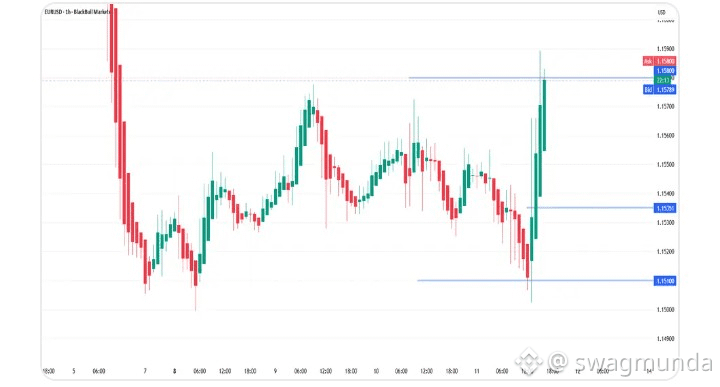

Eurostat released the final economic readings for the Eurozone's second quarter, confirming seasonally adjusted employment growth at 0.1% QoQ, while annual GDP growth beat expectations, printing at 1.2% YoY compared to the forecasted 1.0%.
This modest outperformance in GDP signals underlying economic resilience across the bloc despite tight monetary policy. Meanwhile, steady employment figures show the European labor market is holding up without overheating, offering policymakers a slightly wider runway as they balance growth risks against disinflation targets.
For broader financial markets, stronger Eurozone growth provides a mild boost to the euro against the US dollar and pushes European sovereign bond yields marginally higher. Equities gain subtle footing on reduced recessionary fears, though the persistence of growth may temper aggressive rate-cut expectations from the ECB in the near term.
For crypto assets like $BTC , stable macro fundamentals in Europe help support broader risk appetite. While not an immediate liquidity catalyst, reduced macroeconomic downside risk in major global economies keeps liquidity flows steady and mitigates sudden risk-off cascades across digital assets. #Eurozone #GDP #MacroEconomics
This modest outperformance in GDP signals underlying economic resilience across the bloc despite tight monetary policy. Meanwhile, steady employment figures show the European labor market is holding up without overheating, offering policymakers a slightly wider runway as they balance growth risks against disinflation targets.
For broader financial markets, stronger Eurozone growth provides a mild boost to the euro against the US dollar and pushes European sovereign bond yields marginally higher. Equities gain subtle footing on reduced recessionary fears, though the persistence of growth may temper aggressive rate-cut expectations from the ECB in the near term.
For crypto assets like $BTC , stable macro fundamentals in Europe help support broader risk appetite. While not an immediate liquidity catalyst, reduced macroeconomic downside risk in major global economies keeps liquidity flows steady and mitigates sudden risk-off cascades across digital assets. #Eurozone #GDP #MacroEconomics

The European Union’s statistical office (Eurostat) has just released official economic data for the Eurozone area for Q2, recording GDP growth of 1.2% year-on-year, surpassing both market forecasts and the previous figure of 1.0%. At the same time, the seasonally adjusted employment rate rose by 0.1%, exactly matching market expectations.
The positive GDP figures, stronger than expected, indicate that the Eurozone economy is showing better resilience than previously feared regarding a downturn. Although the labor market grew modestly by just 0.1%, the overall picture suggests that economic contraction pressure has not reached alarming levels, providing additional room for the European Central Bank (ECB) to consider its next steps.
For financial markets, solid GDP growth may reduce expectations that the ECB will have to ease monetary policy in a drastic, sudden manner. This helps the EUR maintain its position versus the USD, while keeping European government bond yields stable in the near term.
For the crypto market, stable macroeconomic data from Europe helps reinforce overall sentiment, reducing the risk of sell-offs driven by concerns about a global slowdown. When the macro outlook remains mildly positive, capital flows into $BTC and risky assets tend to stay steady rather than face sudden withdrawal pressure.
#eurozone #GDP #kinhte
The positive GDP figures, stronger than expected, indicate that the Eurozone economy is showing better resilience than previously feared regarding a downturn. Although the labor market grew modestly by just 0.1%, the overall picture suggests that economic contraction pressure has not reached alarming levels, providing additional room for the European Central Bank (ECB) to consider its next steps.
For financial markets, solid GDP growth may reduce expectations that the ECB will have to ease monetary policy in a drastic, sudden manner. This helps the EUR maintain its position versus the USD, while keeping European government bond yields stable in the near term.
For the crypto market, stable macroeconomic data from Europe helps reinforce overall sentiment, reducing the risk of sell-offs driven by concerns about a global slowdown. When the macro outlook remains mildly positive, capital flows into $BTC and risky assets tend to stay steady rather than face sudden withdrawal pressure.
#eurozone #GDP #kinhte

According to the latest data released by the European Union’s statistics office, retail sales in the euro area fell 0.6% month-on-month in July, after recording a 0.2% increase in the previous month. In terms of the overall retail volume, the total in July declined 0.4% month-on-month; however, compared with the same period last year, it still showed a 0.6% increase (with the entire EU up 1.0%). The current decline was mainly driven by weaker demand for non-food items. In particular, demand in the German market was notably soft. Sales of automobile fuels also fell by 0.8%. Only consumption in the categories of food, beverages, and tobacco recorded a modest increase of 0.4%, providing some support.
This data clearly reflects that consumer sentiment in Europe is cooling. Overall consumer willingness is becoming more cautious, but the slight year-on-year increase indicates that demand is slowing rather than experiencing a sudden drop-off. From the perspective of macro fundamentals, economic growth is under pressure; however, the current data does not materially change the policy trajectory of the European Central Bank (ECB). The market continues to widely expect the ECB to raise rates by 25 basis points at its upcoming meeting, pushing the policy rate to 2.50%.
For traditional financial markets, soft retail data further confirms the current state of weak economic growth in Europe. This weighs on the euro exchange rate and also keeps the bond market continuing to balance between fighting inflation and preventing economic slowdown. Global liquidity expectations remain tightly balanced overall, and the high interest-rate environment continues to objectively suppress risk appetite.
Turning to the crypto market, a softer macro backdrop typically keeps incremental off-exchange capital in a wait-and-see mode. For $BTC and the broader market, without any clear improvement in liquidity, price action is likely to follow macro sentiment, resulting in relatively narrow range trading. Investors should closely monitor the subsequent rate decisions of major central banks as they come to fruition.
#eurozone #ECB #crypto
This data clearly reflects that consumer sentiment in Europe is cooling. Overall consumer willingness is becoming more cautious, but the slight year-on-year increase indicates that demand is slowing rather than experiencing a sudden drop-off. From the perspective of macro fundamentals, economic growth is under pressure; however, the current data does not materially change the policy trajectory of the European Central Bank (ECB). The market continues to widely expect the ECB to raise rates by 25 basis points at its upcoming meeting, pushing the policy rate to 2.50%.
For traditional financial markets, soft retail data further confirms the current state of weak economic growth in Europe. This weighs on the euro exchange rate and also keeps the bond market continuing to balance between fighting inflation and preventing economic slowdown. Global liquidity expectations remain tightly balanced overall, and the high interest-rate environment continues to objectively suppress risk appetite.
Turning to the crypto market, a softer macro backdrop typically keeps incremental off-exchange capital in a wait-and-see mode. For $BTC and the broader market, without any clear improvement in liquidity, price action is likely to follow macro sentiment, resulting in relatively narrow range trading. Investors should closely monitor the subsequent rate decisions of major central banks as they come to fruition.
#eurozone #ECB #crypto
The latest data released by the EU’s statistical office shows that in July, retail sales in the eurozone fell 0.6% month-on-month, after rising 0.2% in the previous month. Overall retail turnover turned from an increase of 0.4% the prior month to a decline. However, on a year-on-year basis, retail sales in the eurozone are still up 0.6%, while the EU overall also recorded a 1.0% increase. By component, weak sales of non-food products are the main factor dragging the figures down: car fuel sales fell 0.8%, while consumption of food, beverages, and tobacco grew 0.4%, providing some support at the bottom.
From the perspective of how macro technical factors and fundamentals intertwine, the month-on-month decline does not necessarily imply a sudden collapse in consumer demand. Year-on-year growth staying positive indicates that the underlying demand remains solid. Market consensus is that the ECB will, at its upcoming policy meeting, continue with rate hikes in an orderly manner by another 25 basis points, lifting the policy rate to 2.50%. This suggests that the observed cooling in consumption after policy fine-tuning is fully within a controllable range of policy digestion and regulation.
In the traditional financial asset space, economic resilience accompanied by a mild cooldown has effectively released the tail risk of stagflation. After the data was released, the euro exchange rate and euro bond yields did not see panic-driven selloffs; instead, they helped the US dollar index form a top in its prior resistance range through consolidation. With greater certainty in the overall financial environment, risk assets receive solid valuation support at the bottom.
For the crypto market, the early realization of macro expectations is typically a signal that long positions are regrouping. As traditional macro headwinds have played out and the marginal tightening of global liquidity is entering its final phase, high-beta digital assets such as $BTC are likely to present an opportunity to buy on dips. Overall market sentiment is expected to break free from suppression and move into a technically driven rebound and recovery.📈
#eurozone #ECB #Macroeconomic Analysis
From the perspective of how macro technical factors and fundamentals intertwine, the month-on-month decline does not necessarily imply a sudden collapse in consumer demand. Year-on-year growth staying positive indicates that the underlying demand remains solid. Market consensus is that the ECB will, at its upcoming policy meeting, continue with rate hikes in an orderly manner by another 25 basis points, lifting the policy rate to 2.50%. This suggests that the observed cooling in consumption after policy fine-tuning is fully within a controllable range of policy digestion and regulation.
In the traditional financial asset space, economic resilience accompanied by a mild cooldown has effectively released the tail risk of stagflation. After the data was released, the euro exchange rate and euro bond yields did not see panic-driven selloffs; instead, they helped the US dollar index form a top in its prior resistance range through consolidation. With greater certainty in the overall financial environment, risk assets receive solid valuation support at the bottom.
For the crypto market, the early realization of macro expectations is typically a signal that long positions are regrouping. As traditional macro headwinds have played out and the marginal tightening of global liquidity is entering its final phase, high-beta digital assets such as $BTC are likely to present an opportunity to buy on dips. Overall market sentiment is expected to break free from suppression and move into a technically driven rebound and recovery.📈
#eurozone #ECB #Macroeconomic Analysis

French Economy Contracts 0.1% in Q1 📉
The French economy experienced a slight contraction in the first quarter, with a 0.1% decline in GDP. This unexpected downturn is largely attributed to a decrease in household spending and a slowdown in industrial activity. The market impact is expected to be moderate, with potential repercussions on the European economy as a whole. Investors are closely monitoring the situation, as a decline in one of the EU's largest economies could have far-reaching effects on trade and investment. The contraction may also influence monetary policy decisions, potentially leading to changes in interest rates. As the global economy continues to navigate uncertainty, this development is likely to be closely watched by market participants. #Economy #Markets #GDP #Eurozone
The French economy experienced a slight contraction in the first quarter, with a 0.1% decline in GDP. This unexpected downturn is largely attributed to a decrease in household spending and a slowdown in industrial activity. The market impact is expected to be moderate, with potential repercussions on the European economy as a whole. Investors are closely monitoring the situation, as a decline in one of the EU's largest economies could have far-reaching effects on trade and investment. The contraction may also influence monetary policy decisions, potentially leading to changes in interest rates. As the global economy continues to navigate uncertainty, this development is likely to be closely watched by market participants. #Economy #Markets #GDP #Eurozone

🔴 In line with the consensus forecast, annual Eurozone inflation rose from 2.9% in July to 3.3% in August, its highest level since September 2023.
While core and services inflation were more contained—both falling somewhat—this headline print solidifies market expectations of an interest rate hike when the ECB’s Governing Council meets next week.
#economy #Market_Update #Inflation #ECB #eurozone
$NVDA.US
While core and services inflation were more contained—both falling somewhat—this headline print solidifies market expectations of an interest rate hike when the ECB’s Governing Council meets next week.
#economy #Market_Update #Inflation #ECB #eurozone
$NVDA.US
NVDAUS-1.61%

The Eurozone’s Productivity Trap: A Growing Economic Challenge
The latest analysis from ING’s Ruben Dewitt and Peter Vanden Houte paints a challenging picture for the Eurozone. Without a major shift, potential GDP growth could fall below 1%.
The Core Issue:
While the U.S. has leveraged productivity to drive economic growth, the Eurozone is lagging significantly.
The Productivity Slump: Productivity remains weak across the bloc, with Italy and Germany notably recording negative growth during 2024-25.
The Labor Dilemma: While immigration-led labor force expansion has worked for countries like Spain, political resistance makes it an unlikely "quick fix" for the rest of Europe.
The Road Ahead: Revitalizing growth will require ambitious structural reforms, but progress is expected to be slow.
Is structural reform the missing link to Europe’s long-term prosperity, or are there other levers we’re missing?
$PRL $BSB $PRL
#eurozone #economy #GDP #Productivity #StructuralReform #INGEconomics
The latest analysis from ING’s Ruben Dewitt and Peter Vanden Houte paints a challenging picture for the Eurozone. Without a major shift, potential GDP growth could fall below 1%.
The Core Issue:
While the U.S. has leveraged productivity to drive economic growth, the Eurozone is lagging significantly.
The Productivity Slump: Productivity remains weak across the bloc, with Italy and Germany notably recording negative growth during 2024-25.
The Labor Dilemma: While immigration-led labor force expansion has worked for countries like Spain, political resistance makes it an unlikely "quick fix" for the rest of Europe.
The Road Ahead: Revitalizing growth will require ambitious structural reforms, but progress is expected to be slow.
Is structural reform the missing link to Europe’s long-term prosperity, or are there other levers we’re missing?
$PRL $BSB $PRL
#eurozone #economy #GDP #Productivity #StructuralReform #INGEconomics

Partly True
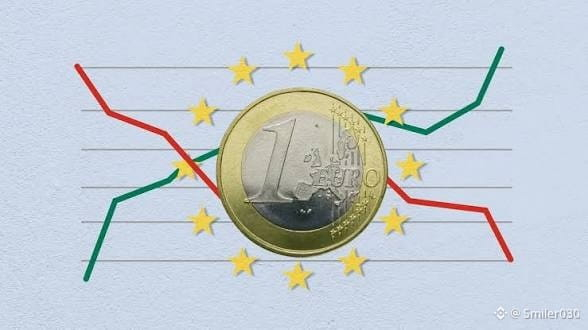
A 20% decline in bond issuance in the Eurozone does not necessarily mean what traders think. Despite total issuance falling in the third quarter to €323 billion, the net figures tell a completely different story.
This contradiction between declining totals and rising net issuance by 5% suggests that governments are managing their liquidity with extreme caution right now. Markets often misread this gap and expect opposite moves in monetary policy. Remember that net liquidity is what drives the decisions of big players in $EUR, not broad headlines.
During periods of market volatility, I’ve noticed that ignoring net flows versus total issuance is the biggest mistake beginners make when analyzing macro.
How will this funding gap affect risk appetite in financial markets over the coming months?
#Eurozone #BondMarkets #MacroEconomics #Trading #Finance
This contradiction between declining totals and rising net issuance by 5% suggests that governments are managing their liquidity with extreme caution right now. Markets often misread this gap and expect opposite moves in monetary policy. Remember that net liquidity is what drives the decisions of big players in $EUR, not broad headlines.
During periods of market volatility, I’ve noticed that ignoring net flows versus total issuance is the biggest mistake beginners make when analyzing macro.
How will this funding gap affect risk appetite in financial markets over the coming months?
#Eurozone #BondMarkets #MacroEconomics #Trading #Finance


📉 Europe GDP Slowdown: Negative for EUR
The Eurozone’s GDP data is out, and it’s weaker than expected! Growth slowed to 0.8%, missing the 0.9% forecast. This bearish signal reflects rising economic pressure.
Actual: 0.8% 🔴
Forecast: 0.9%
Previous: 1.2%
#EURUSD #ForexNews #Eurozone #GDP #TradingSignals $EUR
The Eurozone’s GDP data is out, and it’s weaker than expected! Growth slowed to 0.8%, missing the 0.9% forecast. This bearish signal reflects rising economic pressure.
Actual: 0.8% 🔴
Forecast: 0.9%
Previous: 1.2%
#EURUSD #ForexNews #Eurozone #GDP #TradingSignals $EUR

🚨The European Central Bank has raised interest rates by 25 basis points to 2.25%, marking its first hike since 2023 as inflation pressures intensify across the eurozone.
Policymakers pointed to soaring energy costs linked to the Iran conflict, which have pushed inflation above the ECB's 2% target and increased concerns about longer-term price stability.
Higher borrowing costs could weigh on economic growth and risk assets in the short term, while markets closely watch whether other major central banks follow a similar path. With energy prices remaining elevated and inflation forecasts revised higher, investors should expect continued volatility across global markets. 📈🌍
#ECB #Inflation #InterestRates #Eurozone #Economy #Markets #CryptoNews 🚨📊
Policymakers pointed to soaring energy costs linked to the Iran conflict, which have pushed inflation above the ECB's 2% target and increased concerns about longer-term price stability.
Higher borrowing costs could weigh on economic growth and risk assets in the short term, while markets closely watch whether other major central banks follow a similar path. With energy prices remaining elevated and inflation forecasts revised higher, investors should expect continued volatility across global markets. 📈🌍
#ECB #Inflation #InterestRates #Eurozone #Economy #Markets #CryptoNews 🚨📊




Eurozone inflation just shot up to 3.2% in May, breaking that 3% barrier for the first time since 2023. Core inflation also climbed to 2.5%, while service prices remain stubbornly high at 3.5%.
This trend is making the market increasingly believe that the European Central Bank (ECB) will have to hike rates in the upcoming meeting to curb price pressures, especially with ongoing Middle Eastern tensions impacting the global economy.
Inflation isn’t showing any signs of "cooling off"; the ECB might have to get more aggressive with interest rates. Prices want to rise, the central bank wants to pull them down, while everyday folks just hope their wallets don’t get too thin too fast.
This article is just for sharing info, not investment advice or economic forecasts. If the ECB raises rates as expected, it’s just a coincidence; if they don’t, the market gets another lesson in unpredictability.
#Eurozone #Inflation #ECB #InterestRates #globaleconomy
This trend is making the market increasingly believe that the European Central Bank (ECB) will have to hike rates in the upcoming meeting to curb price pressures, especially with ongoing Middle Eastern tensions impacting the global economy.
Inflation isn’t showing any signs of "cooling off"; the ECB might have to get more aggressive with interest rates. Prices want to rise, the central bank wants to pull them down, while everyday folks just hope their wallets don’t get too thin too fast.
This article is just for sharing info, not investment advice or economic forecasts. If the ECB raises rates as expected, it’s just a coincidence; if they don’t, the market gets another lesson in unpredictability.
#Eurozone #Inflation #ECB #InterestRates #globaleconomy

France’s Economic Slump: The Crypto Hedge 🇫🇷
Fresh data from April 23, 2026, shows France’s private sector activity is contracting at its fastest pace in 14 months. With the Services PMI falling to 46.5, the Eurozone’s second-largest economy is trembling. Historically, when European fiat economies stall, liquidity rotates into decentralized assets. We are seeing a "de-correlation" where the worse the EU data gets, the stronger the Bitcoin "Safe Haven" narrative becomes.
$ETH
$KAT
References:
S&P Global Market Intelligence – France Flash PMI Report.
$TAO
Reuters – Eurozone Economic Contraction & Inflationary Pressure.
Follow me for more Alpha!
#Eurozone #Economy #BitcoinSafeHaven #JustinSunSuesWorldLibertyFinancial #KelpDAOExploitFreeze
Fresh data from April 23, 2026, shows France’s private sector activity is contracting at its fastest pace in 14 months. With the Services PMI falling to 46.5, the Eurozone’s second-largest economy is trembling. Historically, when European fiat economies stall, liquidity rotates into decentralized assets. We are seeing a "de-correlation" where the worse the EU data gets, the stronger the Bitcoin "Safe Haven" narrative becomes.
$ETH
$KAT
References:
S&P Global Market Intelligence – France Flash PMI Report.
$TAO
Reuters – Eurozone Economic Contraction & Inflationary Pressure.
Follow me for more Alpha!
#Eurozone #Economy #BitcoinSafeHaven #JustinSunSuesWorldLibertyFinancial #KelpDAOExploitFreeze


France's HICP inflation hits 2.8% year-over-year in May 2026
• EU-harmonised inflation rate (HICP) reached 2.8% YoY in May 2026
• Signals continued upward trend in consumer prices for the French economy
• Persistent inflation could influence the European Central Bank's monetary policy decisions
#CryptoNews #MarketUpdate #BinanceSquare #Inflation #Eurozone
• EU-harmonised inflation rate (HICP) reached 2.8% YoY in May 2026
• Signals continued upward trend in consumer prices for the French economy
• Persistent inflation could influence the European Central Bank's monetary policy decisions
#CryptoNews #MarketUpdate #BinanceSquare #Inflation #Eurozone
Log in to explore more content