
ScalpingX
14.1k Posts

ScalpingX
Report
Block User
A short-term trader who embraces high-risk, high-reward strategies with an unconventional mindset.
44 Following
1.7K+ Followers
10.3K+ Liked
Posts
All
Quotes
·
--
Bullish
Crypto Absorbs Fed and CLARITY Shocks as BTC Tests $81,000
📈 Bitcoin closed the September 14–18 week with a strong rebound, briefly breaking above $81,000 and reaching its highest level in roughly two weeks. Total crypto market capitalization held around $2.73–2.77 trillion, while BTC remained dominant with market share near 55–57%.
🏛️ Policy pressure emerged after the U.S. Senate failed to advance the CLARITY Act through cloture. However, the SEC and CFTC continued moving forward with separate frameworks covering tokenized securities, digital assets and certain DeFi activities, signaling that regulatory development is still progressing despite the lack of congressional consensus.
🏦 The Fed also raised rates by 25 basis points to 3.75–4.00%, its first increase since July 2023. BTC briefly fell toward the $75,000–76,000 area but avoided a deeper breakdown, before recovering as policy concerns eased and spot Bitcoin ETF flows shifted from withdrawals to renewed inflows during the final two sessions of the week.
⚙️ The late-week rally still came with elevated leverage. BTC funding remained positive, open interest expanded, and roughly $238 million in short positions were liquidated as price moved above $80,000. This suggests the rebound was driven not only by spot demand but also amplified by short covering.
🪙 Altcoin flows remained selective, with SOL, HYPE and ZEC outperforming while the altseason index stayed low. For BTC, the $81,000–82,000 area remains a key zone requiring further confirmation, while $76,000–77,000 represents nearby support. Sustaining levels above $80,000 will likely depend more on continued ETF inflows and stable spot demand than on a short-lived squeeze.
#CryptoMarket $GRAM
Crypto Absorbs Fed and CLARITY Shocks as BTC Tests $81,000
📈 Bitcoin closed the September 14–18 week with a strong rebound, briefly breaking above $81,000 and reaching its highest level in roughly two weeks. Total crypto market capitalization held around $2.73–2.77 trillion, while BTC remained dominant with market share near 55–57%.
🏛️ Policy pressure emerged after the U.S. Senate failed to advance the CLARITY Act through cloture. However, the SEC and CFTC continued moving forward with separate frameworks covering tokenized securities, digital assets and certain DeFi activities, signaling that regulatory development is still progressing despite the lack of congressional consensus.
🏦 The Fed also raised rates by 25 basis points to 3.75–4.00%, its first increase since July 2023. BTC briefly fell toward the $75,000–76,000 area but avoided a deeper breakdown, before recovering as policy concerns eased and spot Bitcoin ETF flows shifted from withdrawals to renewed inflows during the final two sessions of the week.
⚙️ The late-week rally still came with elevated leverage. BTC funding remained positive, open interest expanded, and roughly $238 million in short positions were liquidated as price moved above $80,000. This suggests the rebound was driven not only by spot demand but also amplified by short covering.
🪙 Altcoin flows remained selective, with SOL, HYPE and ZEC outperforming while the altseason index stayed low. For BTC, the $81,000–82,000 area remains a key zone requiring further confirmation, while $76,000–77,000 represents nearby support. Sustaining levels above $80,000 will likely depend more on continued ETF inflows and stable spot demand than on a short-lived squeeze.
#CryptoMarket $GRAM
📈 Bitcoin closed the September 14–18 week with a strong rebound, briefly breaking above $81,000 and reaching its highest level in roughly two weeks. Total crypto market capitalization held around $2.73–2.77 trillion, while BTC remained dominant with market share near 55–57%.
🏛️ Policy pressure emerged after the U.S. Senate failed to advance the CLARITY Act through cloture. However, the SEC and CFTC continued moving forward with separate frameworks covering tokenized securities, digital assets and certain DeFi activities, signaling that regulatory development is still progressing despite the lack of congressional consensus.
🏦 The Fed also raised rates by 25 basis points to 3.75–4.00%, its first increase since July 2023. BTC briefly fell toward the $75,000–76,000 area but avoided a deeper breakdown, before recovering as policy concerns eased and spot Bitcoin ETF flows shifted from withdrawals to renewed inflows during the final two sessions of the week.
⚙️ The late-week rally still came with elevated leverage. BTC funding remained positive, open interest expanded, and roughly $238 million in short positions were liquidated as price moved above $80,000. This suggests the rebound was driven not only by spot demand but also amplified by short covering.
🪙 Altcoin flows remained selective, with SOL, HYPE and ZEC outperforming while the altseason index stayed low. For BTC, the $81,000–82,000 area remains a key zone requiring further confirmation, while $76,000–77,000 represents nearby support. Sustaining levels above $80,000 will likely depend more on continued ETF inflows and stable spot demand than on a short-lived squeeze.
#CryptoMarket $GRAM

2
1.5k
·
--
Bullish
Global Chemicals Diverge as Oil Stays High but Downstream Demand Remains Weak
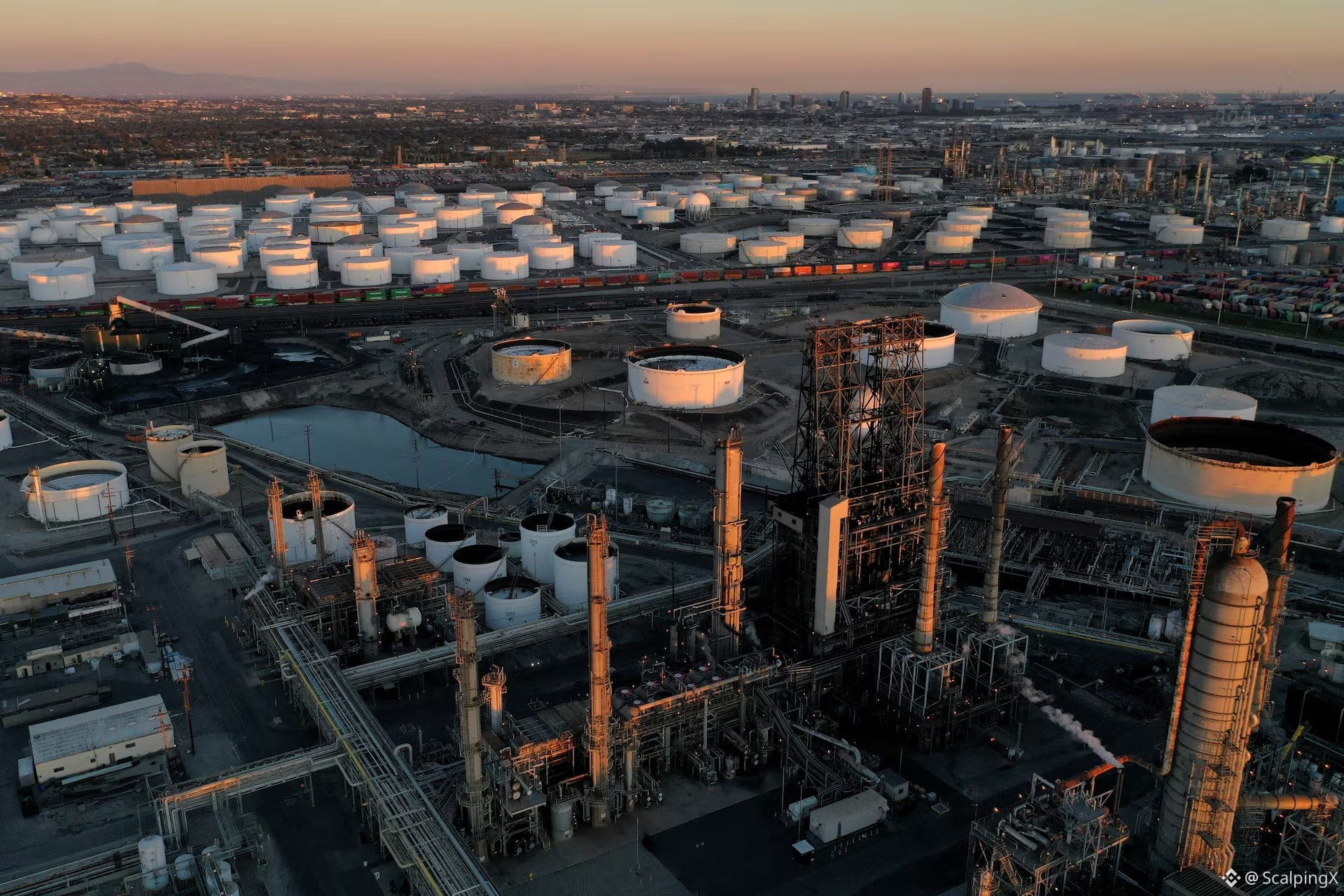
🧪 The week of September 14–18 showed that oil near $100 did not lift the entire chemicals complex uniformly. In China, PX, PTA, MEG and PVC weakened into the end of the week as Brent eased, while products such as acetic acid and methanol still posted notable gains.
🏭 Europe remained a weak link. Cracker operating rates stayed around 65–70% even as Middle Eastern ethylene supply was disrupted by the conflict. Naphtha therefore continued to lag diesel and jet fuel, pointing more to weak cracker demand than to a simple shortage of feedstock.
⚙️ The divergence was also clear between the US and Asia. US Gulf crackers rely heavily on ethane, whose cost remained relatively stable, providing room for ethylene margins to improve. In contrast, Asian PDH operators faced greater pressure as propane and LPG prices rose alongside Middle East supply risks.
🌾 US fertilizers also moved in different directions. Retail urea rose more than 24% over the week and ammonium sulfate gained over 27%, while anhydrous ammonia fell more than 10%. Logistics, seasonality and product-specific supply conditions are creating very different price paths.
🇪🇺 Against this backdrop, France and the Netherlands convened 15 EU countries to discuss support for the chemicals sector. EU27 capacity utilization remains near 74%, while gas costs are still far higher than in the US and Chinese chemical imports into Europe continue to increase.
📊 A weekly decline in Brent therefore does not mean pressure across the chemicals sector has eased. Feedstocks, monomers, polymers and fertilizers are still responding to different drivers, keeping dispersion elevated into next week.
#Chemicals $CL $NATGAS
Global Chemicals Diverge as Oil Stays High but Downstream Demand Remains Weak
🧪 The week of September 14–18 showed that oil near $100 did not lift the entire chemicals complex uniformly. In China, PX, PTA, MEG and PVC weakened into the end of the week as Brent eased, while products such as acetic acid and methanol still posted notable gains.
🏭 Europe remained a weak link. Cracker operating rates stayed around 65–70% even as Middle Eastern ethylene supply was disrupted by the conflict. Naphtha therefore continued to lag diesel and jet fuel, pointing more to weak cracker demand than to a simple shortage of feedstock.
⚙️ The divergence was also clear between the US and Asia. US Gulf crackers rely heavily on ethane, whose cost remained relatively stable, providing room for ethylene margins to improve. In contrast, Asian PDH operators faced greater pressure as propane and LPG prices rose alongside Middle East supply risks.
🌾 US fertilizers also moved in different directions. Retail urea rose more than 24% over the week and ammonium sulfate gained over 27%, while anhydrous ammonia fell more than 10%. Logistics, seasonality and product-specific supply conditions are creating very different price paths.
🇪🇺 Against this backdrop, France and the Netherlands convened 15 EU countries to discuss support for the chemicals sector. EU27 capacity utilization remains near 74%, while gas costs are still far higher than in the US and Chinese chemical imports into Europe continue to increase.
📊 A weekly decline in Brent therefore does not mean pressure across the chemicals sector has eased. Feedstocks, monomers, polymers and fertilizers are still responding to different drivers, keeping dispersion elevated into next week.
#Chemicals $CL $NATGAS
🧪 The week of September 14–18 showed that oil near $100 did not lift the entire chemicals complex uniformly. In China, PX, PTA, MEG and PVC weakened into the end of the week as Brent eased, while products such as acetic acid and methanol still posted notable gains.
🏭 Europe remained a weak link. Cracker operating rates stayed around 65–70% even as Middle Eastern ethylene supply was disrupted by the conflict. Naphtha therefore continued to lag diesel and jet fuel, pointing more to weak cracker demand than to a simple shortage of feedstock.
⚙️ The divergence was also clear between the US and Asia. US Gulf crackers rely heavily on ethane, whose cost remained relatively stable, providing room for ethylene margins to improve. In contrast, Asian PDH operators faced greater pressure as propane and LPG prices rose alongside Middle East supply risks.
🌾 US fertilizers also moved in different directions. Retail urea rose more than 24% over the week and ammonium sulfate gained over 27%, while anhydrous ammonia fell more than 10%. Logistics, seasonality and product-specific supply conditions are creating very different price paths.
🇪🇺 Against this backdrop, France and the Netherlands convened 15 EU countries to discuss support for the chemicals sector. EU27 capacity utilization remains near 74%, while gas costs are still far higher than in the US and Chinese chemical imports into Europe continue to increase.
📊 A weekly decline in Brent therefore does not mean pressure across the chemicals sector has eased. Feedstocks, monomers, polymers and fertilizers are still responding to different drivers, keeping dispersion elevated into next week.
#Chemicals $CL $NATGAS
1
2
·
--
Bullish
Crude Oil Cools, but Diesel, LNG and Logistics Stay Tight
🛢 Brent ended the September 14–18 week lower for the first time in three weeks after briefly approaching $110 per barrel. WTI remained above $100 and posted a modest weekly gain, with price action driven mainly by shifting Middle East logistics risks.
🚢 Early in the week, disruptions to the East–West pipeline and Yanbu loadings pushed crude higher. By Friday, Saudi Arabia had increased transfers through Oman and moved toward restoring around 50% of pipeline capacity, easing part of the crude risk premium.
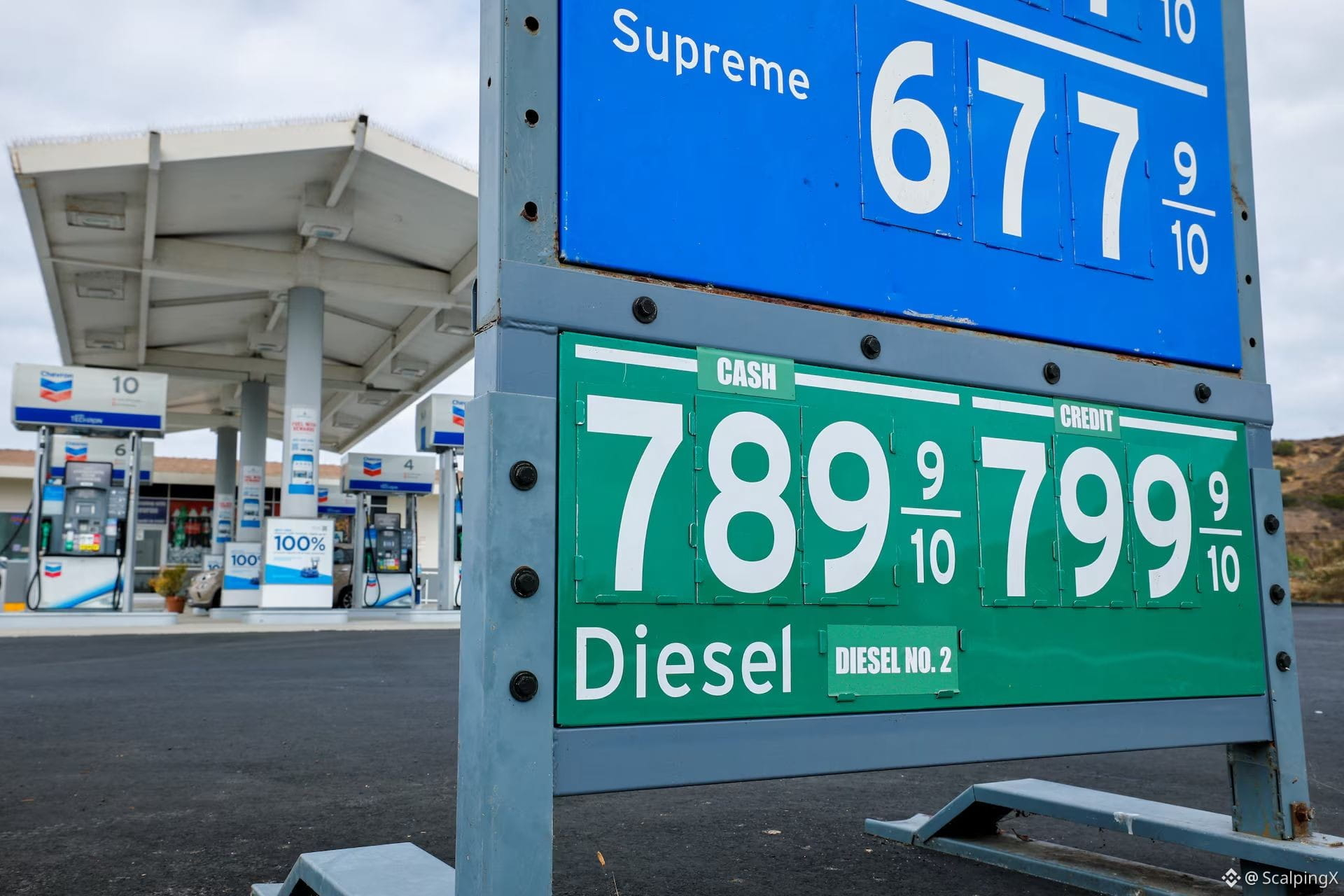
⛽ Refined products remain much tighter. Diesel cracks across several regions are still near $80–100 per barrel, while U.S. distillate inventories remain roughly 13% below the five-year average. Supply pressure is therefore more visible in diesel and middle distillates than in crude itself.
🌍 Regional conditions are also diverging. Aramco continues redirecting significant volumes through Ras Tanura and Sohar toward Asian buyers, while some European term customers received no Saudi crude allocation for October. Paper crude can weaken even as physical European premiums stay elevated.
🚛 Shipping costs remain extreme, with VLCC rates on the Oman–China route near $0.9 million per day and some Gulf-to-Asia routes above 1 million. Delivered import costs therefore remain high despite softer Brent prices.
🔥 Gas markets show a similar split. Henry Hub stays near $2.90/MMBtu, while JKM and TTF remain around $26 as Qatari LNG supply and Hormuz flows have not fully normalized.
📌 Next week, the focus remains on the East–West pipeline, Hormuz and whether diesel can sustain its premium. Crude stress has eased, but the broader energy market remains tight.
#EnergyMarkets $CL $NATGAS
Crude Oil Cools, but Diesel, LNG and Logistics Stay Tight
🛢 Brent ended the September 14–18 week lower for the first time in three weeks after briefly approaching $110 per barrel. WTI remained above $100 and posted a modest weekly gain, with price action driven mainly by shifting Middle East logistics risks.
🚢 Early in the week, disruptions to the East–West pipeline and Yanbu loadings pushed crude higher. By Friday, Saudi Arabia had increased transfers through Oman and moved toward restoring around 50% of pipeline capacity, easing part of the crude risk premium.
⛽ Refined products remain much tighter. Diesel cracks across several regions are still near $80–100 per barrel, while U.S. distillate inventories remain roughly 13% below the five-year average. Supply pressure is therefore more visible in diesel and middle distillates than in crude itself.
🌍 Regional conditions are also diverging. Aramco continues redirecting significant volumes through Ras Tanura and Sohar toward Asian buyers, while some European term customers received no Saudi crude allocation for October. Paper crude can weaken even as physical European premiums stay elevated.
🚛 Shipping costs remain extreme, with VLCC rates on the Oman–China route near $0.9 million per day and some Gulf-to-Asia routes above 1 million. Delivered import costs therefore remain high despite softer Brent prices.
🔥 Gas markets show a similar split. Henry Hub stays near $2.90/MMBtu, while JKM and TTF remain around $26 as Qatari LNG supply and Hormuz flows have not fully normalized.
📌 Next week, the focus remains on the East–West pipeline, Hormuz and whether diesel can sustain its premium. Crude stress has eased, but the broader energy market remains tight.
#EnergyMarkets $CL $NATGAS
🛢 Brent ended the September 14–18 week lower for the first time in three weeks after briefly approaching $110 per barrel. WTI remained above $100 and posted a modest weekly gain, with price action driven mainly by shifting Middle East logistics risks.
🚢 Early in the week, disruptions to the East–West pipeline and Yanbu loadings pushed crude higher. By Friday, Saudi Arabia had increased transfers through Oman and moved toward restoring around 50% of pipeline capacity, easing part of the crude risk premium.
⛽ Refined products remain much tighter. Diesel cracks across several regions are still near $80–100 per barrel, while U.S. distillate inventories remain roughly 13% below the five-year average. Supply pressure is therefore more visible in diesel and middle distillates than in crude itself.
🌍 Regional conditions are also diverging. Aramco continues redirecting significant volumes through Ras Tanura and Sohar toward Asian buyers, while some European term customers received no Saudi crude allocation for October. Paper crude can weaken even as physical European premiums stay elevated.
🚛 Shipping costs remain extreme, with VLCC rates on the Oman–China route near $0.9 million per day and some Gulf-to-Asia routes above 1 million. Delivered import costs therefore remain high despite softer Brent prices.
🔥 Gas markets show a similar split. Henry Hub stays near $2.90/MMBtu, while JKM and TTF remain around $26 as Qatari LNG supply and Hormuz flows have not fully normalized.
📌 Next week, the focus remains on the East–West pipeline, Hormuz and whether diesel can sustain its premium. Crude stress has eased, but the broader energy market remains tight.
#EnergyMarkets $CL $NATGAS
139
·
--
Bullish
Agricultural markets diverge as cocoa tumbles while soybeans hold firm
🌾 Agricultural markets showed mixed performance during the week of September 14–18, with U.S. soybeans still posting a weekly gain while corn and wheat came under pressure from faster harvest progress and fund positioning adjustments.
🌱 Soybeans continued to receive support from Chinese demand, with around 1 million tonnes of U.S. supplies purchased during the week and another 111,000 tonnes reported by the USDA on September 18. Despite a pullback in the final session, the market continues to benefit from the seasonal window before Brazil’s new crop becomes available.
🌽 Corn faced pressure as the U.S. harvest reached around 8% of planted area, ahead of the five-year average. Wheat remained weaker as funds reduced exposure while competitively priced Black Sea supplies continued to limit the market’s response to slower exports from Russia and Ukraine.
🍫 Cocoa recorded the sharpest move, with the ICE December contract falling 7.7% in the final session to around $5,330 per tonne. Alongside technical pressure, financial strains within Ghana’s cocoa purchasing chain continue to add uncertainty to the market.
☕ Coffee also had a weak week as favorable Brazilian weather and an improving crop outlook weighed on prices before a late-week rebound. Sugar remained under pressure near multi-week lows as weaker crude oil reduced the incentive to divert more cane toward ethanol production.
🌴 Malaysian palm oil declined on Friday but still gained around 1.7% for the week. Going into the new week, markets will continue to watch U.S. harvest progress, Chinese soybean demand, Brazilian weather conditions, and Black Sea supply developments.
#Agriculture $BTC $ETH $SOL
Agricultural markets diverge as cocoa tumbles while soybeans hold firm
🌾 Agricultural markets showed mixed performance during the week of September 14–18, with U.S. soybeans still posting a weekly gain while corn and wheat came under pressure from faster harvest progress and fund positioning adjustments.
🌱 Soybeans continued to receive support from Chinese demand, with around 1 million tonnes of U.S. supplies purchased during the week and another 111,000 tonnes reported by the USDA on September 18. Despite a pullback in the final session, the market continues to benefit from the seasonal window before Brazil’s new crop becomes available.
🌽 Corn faced pressure as the U.S. harvest reached around 8% of planted area, ahead of the five-year average. Wheat remained weaker as funds reduced exposure while competitively priced Black Sea supplies continued to limit the market’s response to slower exports from Russia and Ukraine.
🍫 Cocoa recorded the sharpest move, with the ICE December contract falling 7.7% in the final session to around $5,330 per tonne. Alongside technical pressure, financial strains within Ghana’s cocoa purchasing chain continue to add uncertainty to the market.
☕ Coffee also had a weak week as favorable Brazilian weather and an improving crop outlook weighed on prices before a late-week rebound. Sugar remained under pressure near multi-week lows as weaker crude oil reduced the incentive to divert more cane toward ethanol production.
🌴 Malaysian palm oil declined on Friday but still gained around 1.7% for the week. Going into the new week, markets will continue to watch U.S. harvest progress, Chinese soybean demand, Brazilian weather conditions, and Black Sea supply developments.
#Agriculture $BTC $ETH $SOL
🌾 Agricultural markets showed mixed performance during the week of September 14–18, with U.S. soybeans still posting a weekly gain while corn and wheat came under pressure from faster harvest progress and fund positioning adjustments.
🌱 Soybeans continued to receive support from Chinese demand, with around 1 million tonnes of U.S. supplies purchased during the week and another 111,000 tonnes reported by the USDA on September 18. Despite a pullback in the final session, the market continues to benefit from the seasonal window before Brazil’s new crop becomes available.
🌽 Corn faced pressure as the U.S. harvest reached around 8% of planted area, ahead of the five-year average. Wheat remained weaker as funds reduced exposure while competitively priced Black Sea supplies continued to limit the market’s response to slower exports from Russia and Ukraine.
🍫 Cocoa recorded the sharpest move, with the ICE December contract falling 7.7% in the final session to around $5,330 per tonne. Alongside technical pressure, financial strains within Ghana’s cocoa purchasing chain continue to add uncertainty to the market.
☕ Coffee also had a weak week as favorable Brazilian weather and an improving crop outlook weighed on prices before a late-week rebound. Sugar remained under pressure near multi-week lows as weaker crude oil reduced the incentive to divert more cane toward ethanol production.
🌴 Malaysian palm oil declined on Friday but still gained around 1.7% for the week. Going into the new week, markets will continue to watch U.S. harvest progress, Chinese soybean demand, Brazilian weather conditions, and Black Sea supply developments.
#Agriculture $BTC $ETH $SOL

27
·
--
Bullish
Global Equities Diverge After the Fed as Tech Keeps Markets Supported
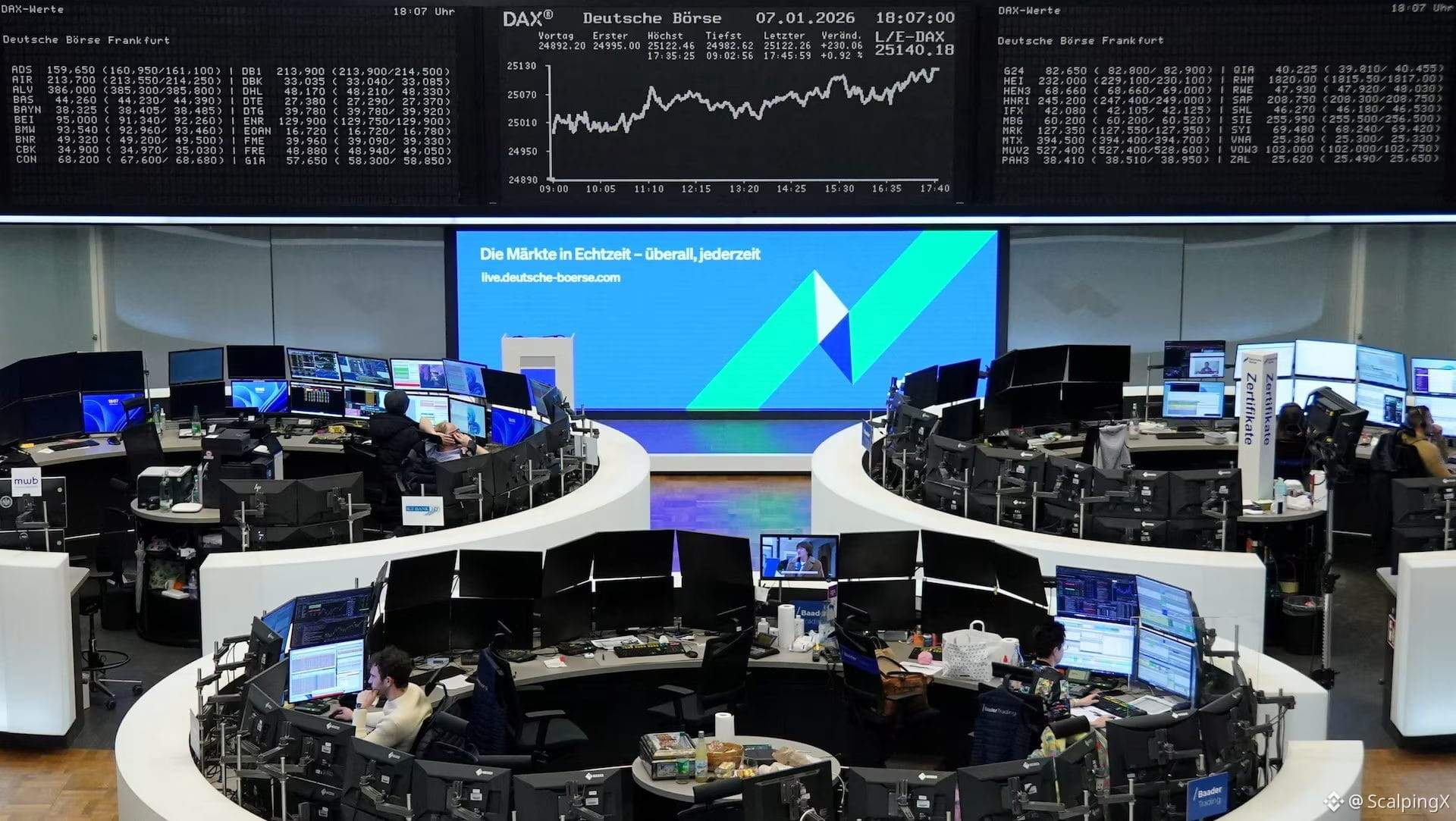
📊 Global equities ended the Sept. 14–18 week with a clear divergence on Wall Street. The S&P 500 was nearly flat, slipping 0.1%, while the Nasdaq gained 0.7%. In contrast, the Dow fell 1.7% and the Russell 2000 lost 1.5%, showing greater pressure on rate-sensitive segments.
💻 Technology rose about 1.0% for the week and healthcare gained 1.8%, while utilities dropped 3.1%, financials fell 2.4%, and real estate declined 2.1%. The U.S. 10-year Treasury yield returning to around 5% continued to weigh on sectors more exposed to financing costs.
🔎 Market breadth also remained cautious. On Friday, the S&P 500 edged higher even as most of its components declined, suggesting that gains remained concentrated in a relatively small group of large-cap stocks. Semiconductors rebounded strongly late in the week after a sharp early-week selloff, helping support the Nasdaq.
🌏 In Asia, the Nikkei, Kospi, and TAIEX finished higher, with South Korea and Taiwan supported by renewed inflows into memory and semiconductor stocks. European equities also improved, with the STOXX 600 heading for its first weekly gain in three weeks, although banks and other cyclical sectors remained under pressure.
📉 Notably, the VIX fell below 15 even as U.S. yields stayed elevated. This suggests markets have not shifted into a broad risk-off phase, with the latest moves looking more like portfolio repositioning following the Fed’s rate decision.
🧭 The broader picture points to sector rotation rather than a widespread selloff. Technology and selected growth areas are still providing enough support for major indices, but if the 10-year yield remains near 5%, market breadth is likely to remain an important signal to watch in the coming week.
#GlobalMarkets $NVDAB $AAPLB $GOOGL.US
Global Equities Diverge After the Fed as Tech Keeps Markets Supported
📊 Global equities ended the Sept. 14–18 week with a clear divergence on Wall Street. The S&P 500 was nearly flat, slipping 0.1%, while the Nasdaq gained 0.7%. In contrast, the Dow fell 1.7% and the Russell 2000 lost 1.5%, showing greater pressure on rate-sensitive segments.
💻 Technology rose about 1.0% for the week and healthcare gained 1.8%, while utilities dropped 3.1%, financials fell 2.4%, and real estate declined 2.1%. The U.S. 10-year Treasury yield returning to around 5% continued to weigh on sectors more exposed to financing costs.
🔎 Market breadth also remained cautious. On Friday, the S&P 500 edged higher even as most of its components declined, suggesting that gains remained concentrated in a relatively small group of large-cap stocks. Semiconductors rebounded strongly late in the week after a sharp early-week selloff, helping support the Nasdaq.
🌏 In Asia, the Nikkei, Kospi, and TAIEX finished higher, with South Korea and Taiwan supported by renewed inflows into memory and semiconductor stocks. European equities also improved, with the STOXX 600 heading for its first weekly gain in three weeks, although banks and other cyclical sectors remained under pressure.
📉 Notably, the VIX fell below 15 even as U.S. yields stayed elevated. This suggests markets have not shifted into a broad risk-off phase, with the latest moves looking more like portfolio repositioning following the Fed’s rate decision.
🧭 The broader picture points to sector rotation rather than a widespread selloff. Technology and selected growth areas are still providing enough support for major indices, but if the 10-year yield remains near 5%, market breadth is likely to remain an important signal to watch in the coming week.
#GlobalMarkets $NVDAB $AAPLB $GOOGL.US
📊 Global equities ended the Sept. 14–18 week with a clear divergence on Wall Street. The S&P 500 was nearly flat, slipping 0.1%, while the Nasdaq gained 0.7%. In contrast, the Dow fell 1.7% and the Russell 2000 lost 1.5%, showing greater pressure on rate-sensitive segments.
💻 Technology rose about 1.0% for the week and healthcare gained 1.8%, while utilities dropped 3.1%, financials fell 2.4%, and real estate declined 2.1%. The U.S. 10-year Treasury yield returning to around 5% continued to weigh on sectors more exposed to financing costs.
🔎 Market breadth also remained cautious. On Friday, the S&P 500 edged higher even as most of its components declined, suggesting that gains remained concentrated in a relatively small group of large-cap stocks. Semiconductors rebounded strongly late in the week after a sharp early-week selloff, helping support the Nasdaq.
🌏 In Asia, the Nikkei, Kospi, and TAIEX finished higher, with South Korea and Taiwan supported by renewed inflows into memory and semiconductor stocks. European equities also improved, with the STOXX 600 heading for its first weekly gain in three weeks, although banks and other cyclical sectors remained under pressure.
📉 Notably, the VIX fell below 15 even as U.S. yields stayed elevated. This suggests markets have not shifted into a broad risk-off phase, with the latest moves looking more like portfolio repositioning following the Fed’s rate decision.
🧭 The broader picture points to sector rotation rather than a widespread selloff. Technology and selected growth areas are still providing enough support for major indices, but if the 10-year yield remains near 5%, market breadth is likely to remain an important signal to watch in the coming week.
#GlobalMarkets $NVDAB $AAPLB $GOOGL.US
46
·
--
Bullish
Metals rise despite the Fed, with copper supported by strong physical demand from China
📊 Metals ended the September 14–19 week on a positive note despite the Fed raising interest rates for the first time since 2023. Gold recovered from its post-FOMC selloff, while silver, platinum and palladium outperformed. Copper also gained more than 2%, showing that a stronger dollar and tighter monetary policy did not dominate the entire commodities complex.
🥇 Gold posted its first weekly gain after four consecutive declines. Prices briefly fell to their lowest level in nearly two months following the Fed decision, then recovered as oil prices eased and U.S. Treasury yields cooled. The DXY holding above 100 continued to cap upside, while silver outperformed on support from both precious-metal demand and improving sentiment toward industrial metals.
🔶 Copper was the main standout, rising around 2–2.25% during the week even as speculative funds cut long positions sharply on COMEX. Yangshan premiums climbed to their highest level in nearly four years, refined copper inventories in China remained well below post-Lunar New Year levels, and concentrate treatment charges stayed deeply negative. These signals suggest the rally was driven more by physical demand and tight raw-material availability than by speculative flows.
🏭 Aluminum remained supported by LME inventories falling to a 19-year low, pointing to relatively tight physical supply. In contrast, iron ore stayed below $100 per ton despite stronger Chinese buying ahead of the National Day holiday, suggesting steel demand was not strong enough to lift the entire metals complex evenly.
👀 Next week, markets will watch whether U.S. yields and oil continue to ease, while assessing the strength of Chinese demand after the pre-holiday restocking period. For copper, inventory trends and import premiums remain key indicators of whether the current rally can be sustained.
#MetalsInsight $XAUT $XAG $COPPER
Metals rise despite the Fed, with copper supported by strong physical demand from China
📊 Metals ended the September 14–19 week on a positive note despite the Fed raising interest rates for the first time since 2023. Gold recovered from its post-FOMC selloff, while silver, platinum and palladium outperformed. Copper also gained more than 2%, showing that a stronger dollar and tighter monetary policy did not dominate the entire commodities complex.
🥇 Gold posted its first weekly gain after four consecutive declines. Prices briefly fell to their lowest level in nearly two months following the Fed decision, then recovered as oil prices eased and U.S. Treasury yields cooled. The DXY holding above 100 continued to cap upside, while silver outperformed on support from both precious-metal demand and improving sentiment toward industrial metals.
🔶 Copper was the main standout, rising around 2–2.25% during the week even as speculative funds cut long positions sharply on COMEX. Yangshan premiums climbed to their highest level in nearly four years, refined copper inventories in China remained well below post-Lunar New Year levels, and concentrate treatment charges stayed deeply negative. These signals suggest the rally was driven more by physical demand and tight raw-material availability than by speculative flows.
🏭 Aluminum remained supported by LME inventories falling to a 19-year low, pointing to relatively tight physical supply. In contrast, iron ore stayed below $100 per ton despite stronger Chinese buying ahead of the National Day holiday, suggesting steel demand was not strong enough to lift the entire metals complex evenly.
👀 Next week, markets will watch whether U.S. yields and oil continue to ease, while assessing the strength of Chinese demand after the pre-holiday restocking period. For copper, inventory trends and import premiums remain key indicators of whether the current rally can be sustained.
#MetalsInsight $XAUT $XAG $COPPER
📊 Metals ended the September 14–19 week on a positive note despite the Fed raising interest rates for the first time since 2023. Gold recovered from its post-FOMC selloff, while silver, platinum and palladium outperformed. Copper also gained more than 2%, showing that a stronger dollar and tighter monetary policy did not dominate the entire commodities complex.
🥇 Gold posted its first weekly gain after four consecutive declines. Prices briefly fell to their lowest level in nearly two months following the Fed decision, then recovered as oil prices eased and U.S. Treasury yields cooled. The DXY holding above 100 continued to cap upside, while silver outperformed on support from both precious-metal demand and improving sentiment toward industrial metals.
🔶 Copper was the main standout, rising around 2–2.25% during the week even as speculative funds cut long positions sharply on COMEX. Yangshan premiums climbed to their highest level in nearly four years, refined copper inventories in China remained well below post-Lunar New Year levels, and concentrate treatment charges stayed deeply negative. These signals suggest the rally was driven more by physical demand and tight raw-material availability than by speculative flows.
🏭 Aluminum remained supported by LME inventories falling to a 19-year low, pointing to relatively tight physical supply. In contrast, iron ore stayed below $100 per ton despite stronger Chinese buying ahead of the National Day holiday, suggesting steel demand was not strong enough to lift the entire metals complex evenly.
👀 Next week, markets will watch whether U.S. yields and oil continue to ease, while assessing the strength of Chinese demand after the pre-holiday restocking period. For copper, inventory trends and import premiums remain key indicators of whether the current rally can be sustained.
#MetalsInsight $XAUT $XAG $COPPER

1
87
·
--
Bullish
Verified
USD Leads FX Markets After a Week of Policy Divergence
💵 The US dollar ended the week of September 14–19 as one of the strongest G10 currencies, with the DXY breaking above 100 and reaching its highest level in around seven weeks. The move was mainly driven by the Fed’s return to rate hikes, relatively resilient US economic data, and elevated Treasury yields.
🏦 The Fed raised rates by 25 basis points to 3.75–4.00% and kept the door open to further tightening if inflation does not cool sufficiently. Meanwhile, the BoE held rates at 3.75% while warning about energy-driven inflation risks, and the BoJ lifted rates to 1.25%, although its cautious guidance left the yen under pressure.
📉 This policy divergence was clearly reflected across major FX pairs. EUR/USD fell toward 1.145, GBP/USD traded around 1.33, while USD/JPY briefly moved above 158 despite Japan’s latest rate increase. The yield gap with the US remains a significant headwind for the euro, pound and especially the yen.
🛢 Oil prices remaining above $100 per barrel continue to add to global inflation pressure. For the US, high energy prices combined with resilient economic data are reinforcing expectations that rates may stay elevated for longer, while energy-importing economies such as the Eurozone and Japan face greater pressure.
📊 During September 21–25, attention will shift toward preliminary September PMI data and fresh signals from trade and policy developments. If US data remain firm and yields stay elevated, the dollar could continue to find support. Conversely, weaker PMI readings or a meaningful decline in oil prices could trigger a technical correction after the dollar’s strong weekly advance.
#ForexInsights $USDC
USD Leads FX Markets After a Week of Policy Divergence
💵 The US dollar ended the week of September 14–19 as one of the strongest G10 currencies, with the DXY breaking above 100 and reaching its highest level in around seven weeks. The move was mainly driven by the Fed’s return to rate hikes, relatively resilient US economic data, and elevated Treasury yields.
🏦 The Fed raised rates by 25 basis points to 3.75–4.00% and kept the door open to further tightening if inflation does not cool sufficiently. Meanwhile, the BoE held rates at 3.75% while warning about energy-driven inflation risks, and the BoJ lifted rates to 1.25%, although its cautious guidance left the yen under pressure.
📉 This policy divergence was clearly reflected across major FX pairs. EUR/USD fell toward 1.145, GBP/USD traded around 1.33, while USD/JPY briefly moved above 158 despite Japan’s latest rate increase. The yield gap with the US remains a significant headwind for the euro, pound and especially the yen.
🛢 Oil prices remaining above $100 per barrel continue to add to global inflation pressure. For the US, high energy prices combined with resilient economic data are reinforcing expectations that rates may stay elevated for longer, while energy-importing economies such as the Eurozone and Japan face greater pressure.
📊 During September 21–25, attention will shift toward preliminary September PMI data and fresh signals from trade and policy developments. If US data remain firm and yields stay elevated, the dollar could continue to find support. Conversely, weaker PMI readings or a meaningful decline in oil prices could trigger a technical correction after the dollar’s strong weekly advance.
#ForexInsights $USDC
💵 The US dollar ended the week of September 14–19 as one of the strongest G10 currencies, with the DXY breaking above 100 and reaching its highest level in around seven weeks. The move was mainly driven by the Fed’s return to rate hikes, relatively resilient US economic data, and elevated Treasury yields.
🏦 The Fed raised rates by 25 basis points to 3.75–4.00% and kept the door open to further tightening if inflation does not cool sufficiently. Meanwhile, the BoE held rates at 3.75% while warning about energy-driven inflation risks, and the BoJ lifted rates to 1.25%, although its cautious guidance left the yen under pressure.
📉 This policy divergence was clearly reflected across major FX pairs. EUR/USD fell toward 1.145, GBP/USD traded around 1.33, while USD/JPY briefly moved above 158 despite Japan’s latest rate increase. The yield gap with the US remains a significant headwind for the euro, pound and especially the yen.
🛢 Oil prices remaining above $100 per barrel continue to add to global inflation pressure. For the US, high energy prices combined with resilient economic data are reinforcing expectations that rates may stay elevated for longer, while energy-importing economies such as the Eurozone and Japan face greater pressure.
📊 During September 21–25, attention will shift toward preliminary September PMI data and fresh signals from trade and policy developments. If US data remain firm and yields stay elevated, the dollar could continue to find support. Conversely, weaker PMI readings or a meaningful decline in oil prices could trigger a technical correction after the dollar’s strong weekly advance.
#ForexInsights $USDC

1
626
·
--
Bullish
Trump signs new Russia sanctions law, opening the door to sweeping tariffs
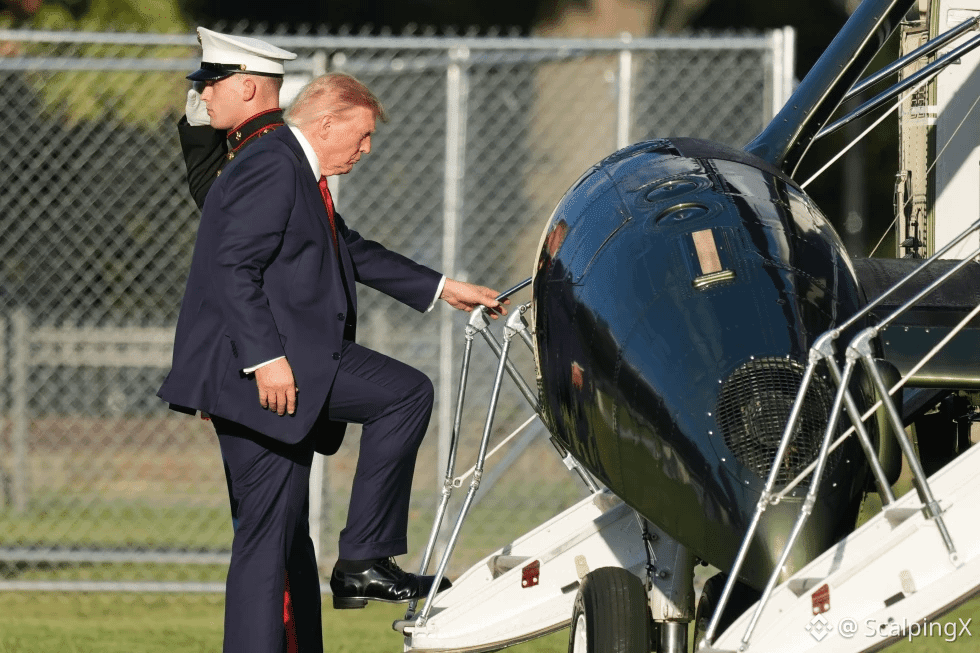
🇺🇸 President Donald Trump has signed H.R. 5334 into law, expanding sanctions on Russia while extending certain measures related to Iran.
📊 The law allows tariffs on Russian imports to rise as high as 500%, while also opening the door to tariffs of up to 100% on goods from certain countries among the largest buyers of Russian oil or gas if they continue making new purchases after the specified deadline.
🌏 China and India are being closely watched due to the scale of their Russian energy imports. However, the signing does not mean the maximum tariffs take effect immediately, as specific rates and possible waivers will depend on implementation.
⏳ Over the next 30 days, attention will shift to enforcement guidance, the countries covered, and the tariff levels ultimately selected, which will determine the broader impact on trade and energy markets.
#MarketInsight $CL $NATGAS
Trump signs new Russia sanctions law, opening the door to sweeping tariffs
🇺🇸 President Donald Trump has signed H.R. 5334 into law, expanding sanctions on Russia while extending certain measures related to Iran.
📊 The law allows tariffs on Russian imports to rise as high as 500%, while also opening the door to tariffs of up to 100% on goods from certain countries among the largest buyers of Russian oil or gas if they continue making new purchases after the specified deadline.
🌏 China and India are being closely watched due to the scale of their Russian energy imports. However, the signing does not mean the maximum tariffs take effect immediately, as specific rates and possible waivers will depend on implementation.
⏳ Over the next 30 days, attention will shift to enforcement guidance, the countries covered, and the tariff levels ultimately selected, which will determine the broader impact on trade and energy markets.
#MarketInsight $CL $NATGAS
🇺🇸 President Donald Trump has signed H.R. 5334 into law, expanding sanctions on Russia while extending certain measures related to Iran.
📊 The law allows tariffs on Russian imports to rise as high as 500%, while also opening the door to tariffs of up to 100% on goods from certain countries among the largest buyers of Russian oil or gas if they continue making new purchases after the specified deadline.
🌏 China and India are being closely watched due to the scale of their Russian energy imports. However, the signing does not mean the maximum tariffs take effect immediately, as specific rates and possible waivers will depend on implementation.
⏳ Over the next 30 days, attention will shift to enforcement guidance, the countries covered, and the tariff levels ultimately selected, which will determine the broader impact on trade and energy markets.
#MarketInsight $CL $NATGAS
236
·
--
Bullish
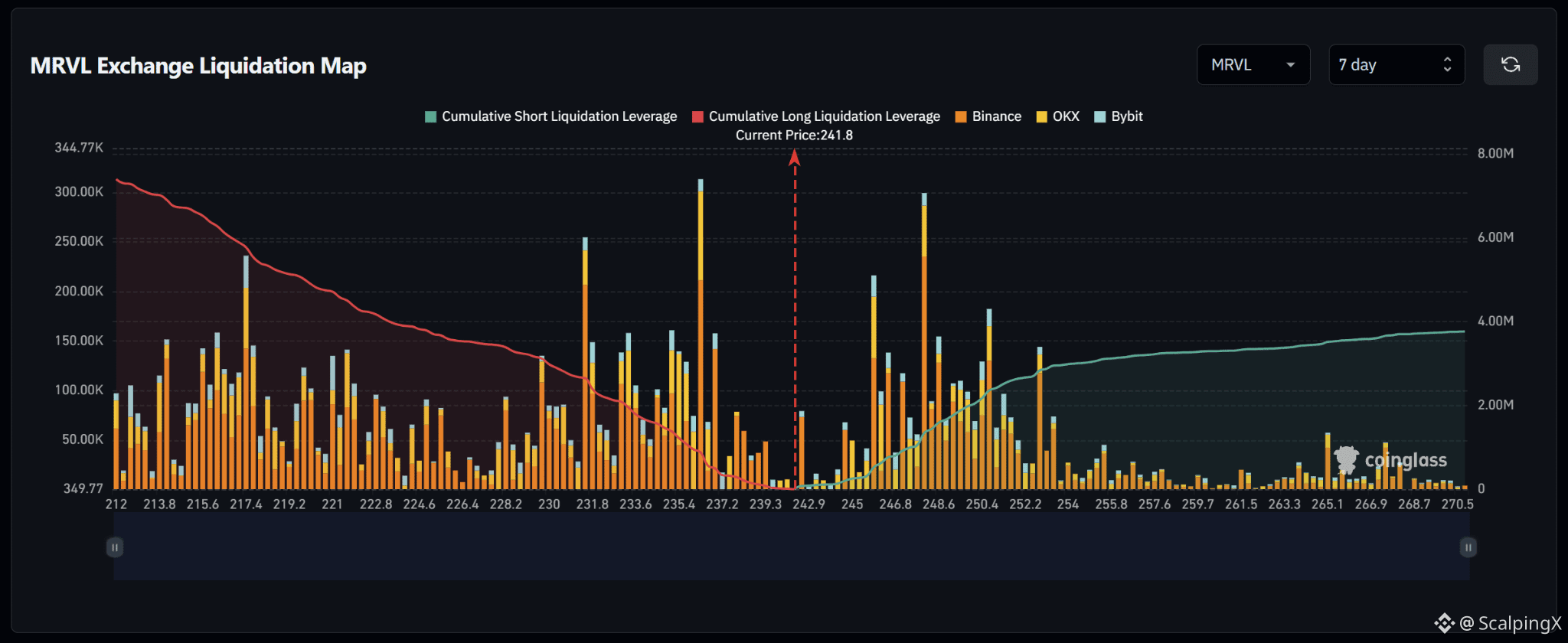
$MRVL – Liquidation Map (7 Days) – Current Price 241.8
🔎 The 7-day liquidation map shows roughly $7.1–7.3 million in long liquidations below the current price, clearly exceeding approximately $3.7–3.9 million in short liquidations above. The liquidity structure therefore strongly favors the downside, with nearly 1.9 times more cumulative liquidity below the market.
📉 Below the market, long-liquidation liquidity is concentrated heavily across 230–237. Major clusters appear near 231.8 with a bar around $250,000 and around 235.5–236.0 with the largest bar above $300,000. Further down, the 217–218 area also contains a bar near $230,000. Losing 239–240 would shift attention toward 236–235 and then 232–230.
📈 Above the market, short-liquidation liquidity begins building clearly from 245 and becomes densest across 245–252. A major cluster sits around 245.5–246 with a bar above $210,000, while 248–249 contains a bar close to $300,000. The 250–252 area also holds several bars around $130,000–180,000.
🧭 The broader setup favors the downside because long-liquidation exposure below is nearly 1.9 times larger. Losing 239–240 would increase the probability of a sweep toward 236–235, followed by 232–230. Breaking above 245 would instead shift attention toward 248–249 and then 250–252.
$MRVL – Liquidation Map (7 Days) – Current Price 241.8
🔎 The 7-day liquidation map shows roughly $7.1–7.3 million in long liquidations below the current price, clearly exceeding approximately $3.7–3.9 million in short liquidations above. The liquidity structure therefore strongly favors the downside, with nearly 1.9 times more cumulative liquidity below the market.
📉 Below the market, long-liquidation liquidity is concentrated heavily across 230–237. Major clusters appear near 231.8 with a bar around $250,000 and around 235.5–236.0 with the largest bar above $300,000. Further down, the 217–218 area also contains a bar near $230,000. Losing 239–240 would shift attention toward 236–235 and then 232–230.
📈 Above the market, short-liquidation liquidity begins building clearly from 245 and becomes densest across 245–252. A major cluster sits around 245.5–246 with a bar above $210,000, while 248–249 contains a bar close to $300,000. The 250–252 area also holds several bars around $130,000–180,000.
🧭 The broader setup favors the downside because long-liquidation exposure below is nearly 1.9 times larger. Losing 239–240 would increase the probability of a sweep toward 236–235, followed by 232–230. Breaking above 245 would instead shift attention toward 248–249 and then 250–252.
🔎 The 7-day liquidation map shows roughly $7.1–7.3 million in long liquidations below the current price, clearly exceeding approximately $3.7–3.9 million in short liquidations above. The liquidity structure therefore strongly favors the downside, with nearly 1.9 times more cumulative liquidity below the market.
📉 Below the market, long-liquidation liquidity is concentrated heavily across 230–237. Major clusters appear near 231.8 with a bar around $250,000 and around 235.5–236.0 with the largest bar above $300,000. Further down, the 217–218 area also contains a bar near $230,000. Losing 239–240 would shift attention toward 236–235 and then 232–230.
📈 Above the market, short-liquidation liquidity begins building clearly from 245 and becomes densest across 245–252. A major cluster sits around 245.5–246 with a bar above $210,000, while 248–249 contains a bar close to $300,000. The 250–252 area also holds several bars around $130,000–180,000.
🧭 The broader setup favors the downside because long-liquidation exposure below is nearly 1.9 times larger. Losing 239–240 would increase the probability of a sweep toward 236–235, followed by 232–230. Breaking above 245 would instead shift attention toward 248–249 and then 250–252.
44
·
--
Bullish
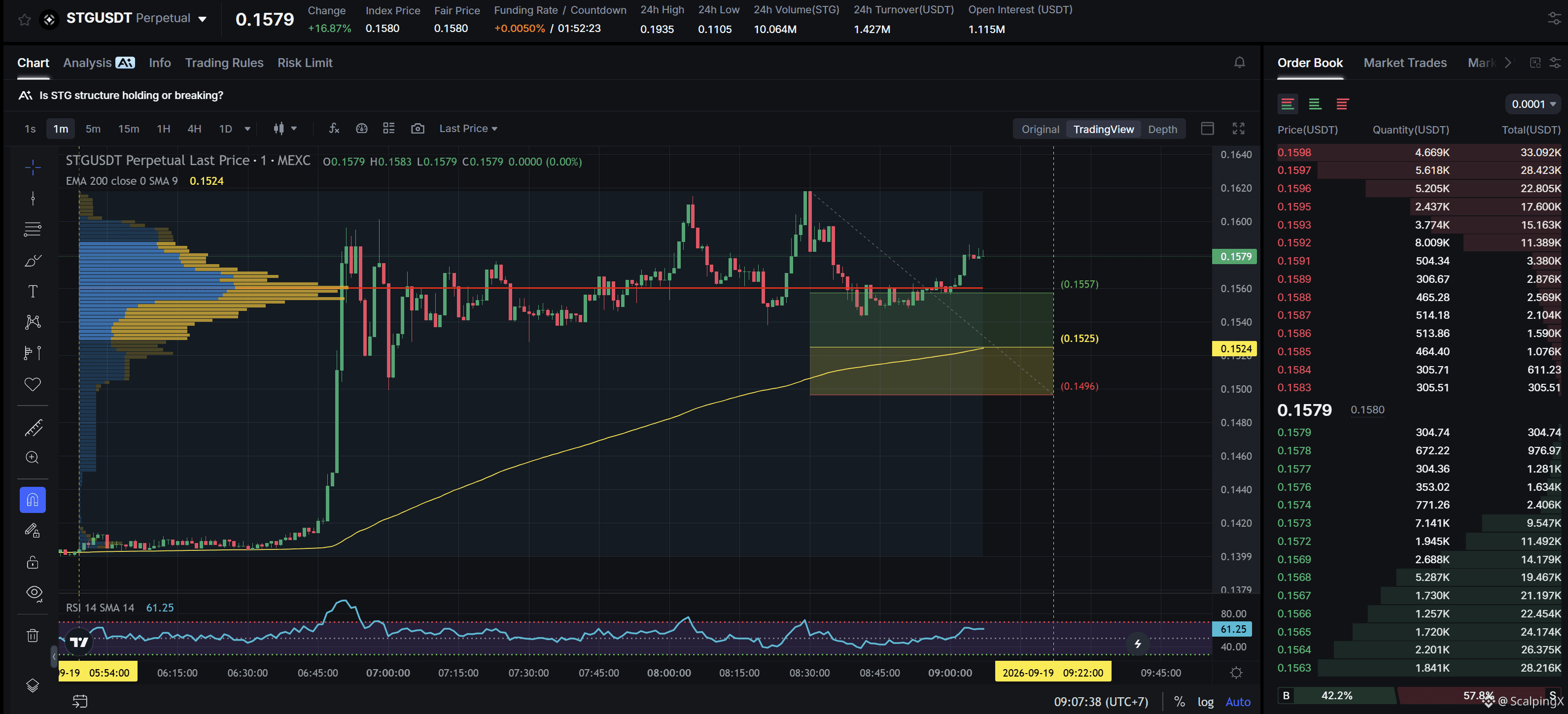
$STG - Mcap 21.99M$ - 24h Sentiment -1.84 Bearish
SC02 M1 - pending Long order. Entry lies within LVN + not affected by any weak zone, the current support zone is approximately 1.82% wide. The uptrend has lasted 3 hours 14 minutes, with a maximum recorded price increase of 15.42%. If price loses this support zone, the trend is highly likely to reverse downward.
$STG - Mcap 21.99M$ - 24h Sentiment -1.84 Bearish
SC02 M1 - pending Long order. Entry lies within LVN + not affected by any weak zone, the current support zone is approximately 1.82% wide. The uptrend has lasted 3 hours 14 minutes, with a maximum recorded price increase of 15.42%. If price loses this support zone, the trend is highly likely to reverse downward.
SC02 M1 - pending Long order. Entry lies within LVN + not affected by any weak zone, the current support zone is approximately 1.82% wide. The uptrend has lasted 3 hours 14 minutes, with a maximum recorded price increase of 15.42%. If price loses this support zone, the trend is highly likely to reverse downward.
86
·
--
Bullish
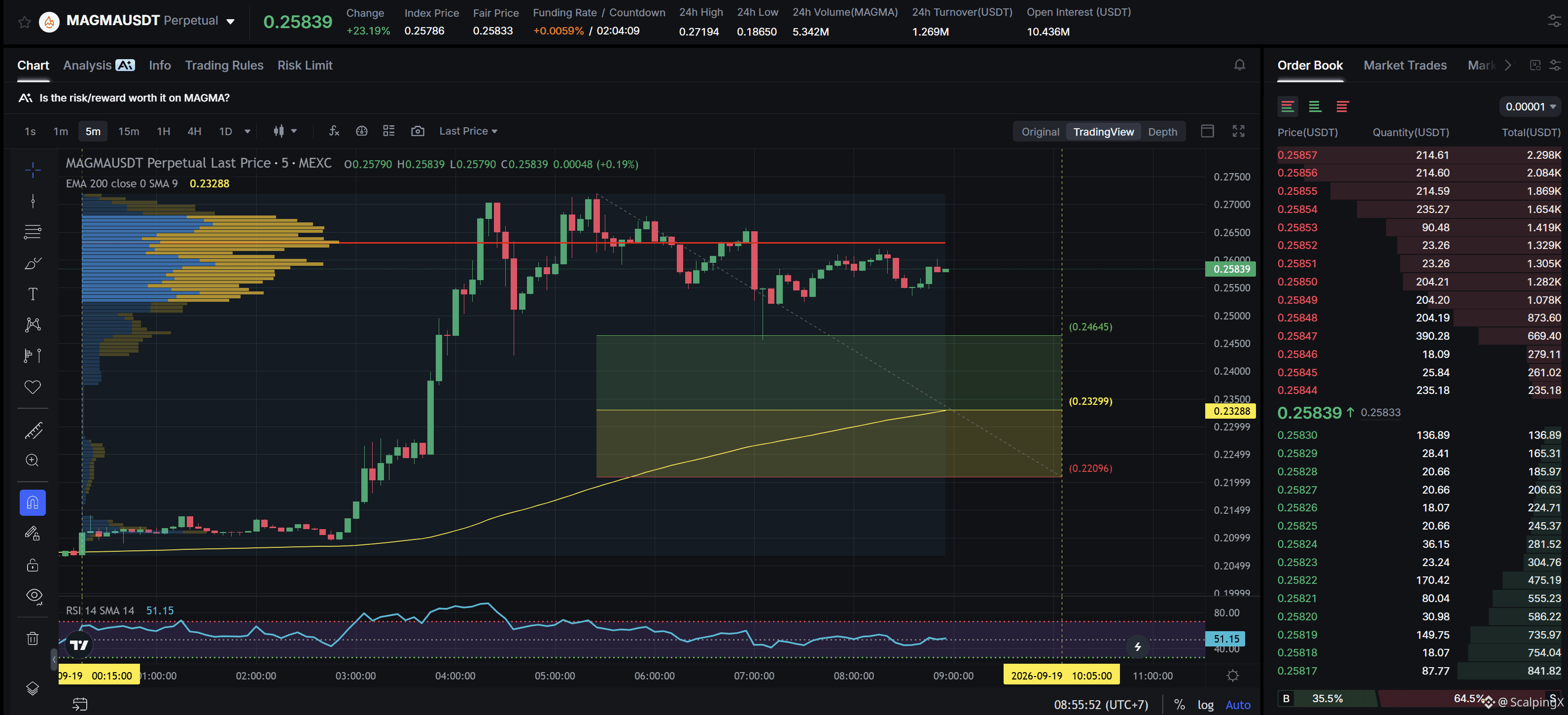
$MAGMA - Mcap 48.46M$ - 24h Sentiment +1.14 Bullish
SC02 M5 - pending Long order. Entry lies within LVN + not affected by any weak zone, the current support zone is approximately 5.07% wide. The uptrend has lasted 8 hours 40 minutes, with a maximum recorded price increase of 30.87%. If price loses this support zone, the trend is highly likely to reverse downward.
$MAGMA - Mcap 48.46M$ - 24h Sentiment +1.14 Bullish
SC02 M5 - pending Long order. Entry lies within LVN + not affected by any weak zone, the current support zone is approximately 5.07% wide. The uptrend has lasted 8 hours 40 minutes, with a maximum recorded price increase of 30.87%. If price loses this support zone, the trend is highly likely to reverse downward.
SC02 M5 - pending Long order. Entry lies within LVN + not affected by any weak zone, the current support zone is approximately 5.07% wide. The uptrend has lasted 8 hours 40 minutes, with a maximum recorded price increase of 30.87%. If price loses this support zone, the trend is highly likely to reverse downward.
138
·
--
Bullish
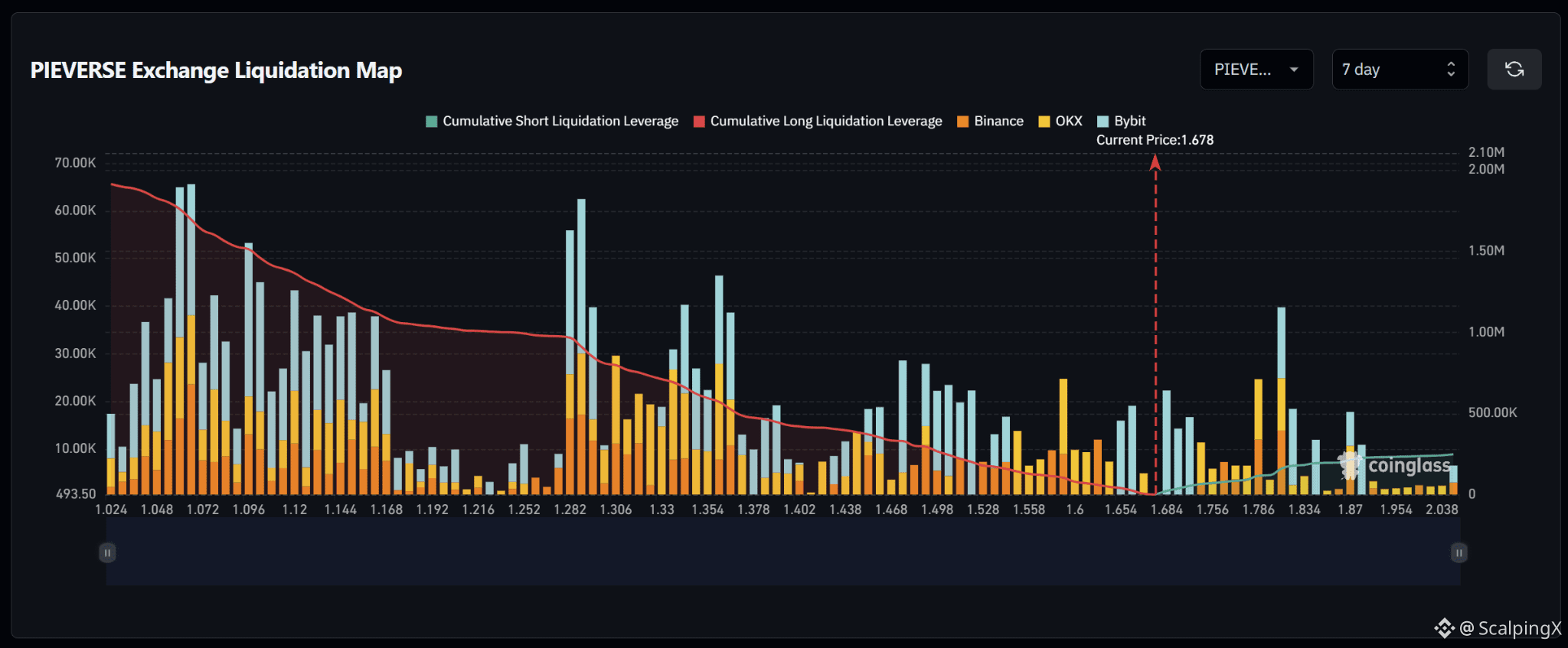
$PIEVERSE – Liquidation Map (7 Days) – Current Price 1.678
🔎 The 7-day liquidation map shows roughly $1.9–2.0 million in long liquidations below the current price, far exceeding only about $0.25–0.30 million in short liquidations above. The liquidity structure therefore strongly favors the downside, with roughly 6–7 times more cumulative liquidity below the market.
📉 Below the market, long-liquidation liquidity is broadly distributed but concentrated heavily across 1.02–1.17 and 1.28–1.38. The largest bars sit around 1.06–1.07 near $65,000 and around 1.28–1.29 above $60,000. Closer to price, 1.47–1.60 still holds several small-to-medium clusters. Losing 1.65 would shift attention toward 1.60–1.55 and then 1.50–1.47.
📈 Above the market, short-liquidation liquidity is relatively thin. The nearest clusters sit around 1.68–1.70, followed by 1.78–1.82 where a notable bar reaches roughly $40,000. Further out, 1.87 also contains a visible cluster, but total upside liquidity remains much smaller than the downside pool.
🧭 The broader setup strongly favors the downside because long-liquidation exposure below is roughly 6–7 times larger. Losing 1.65 would increase the probability of a sweep toward 1.60–1.55; if pressure continues, 1.50–1.47 becomes the next liquidity zone. On the upside, price would need to clear 1.70 and then 1.78–1.82 to open more room higher.
$PIEVERSE – Liquidation Map (7 Days) – Current Price 1.678
🔎 The 7-day liquidation map shows roughly $1.9–2.0 million in long liquidations below the current price, far exceeding only about $0.25–0.30 million in short liquidations above. The liquidity structure therefore strongly favors the downside, with roughly 6–7 times more cumulative liquidity below the market.
📉 Below the market, long-liquidation liquidity is broadly distributed but concentrated heavily across 1.02–1.17 and 1.28–1.38. The largest bars sit around 1.06–1.07 near $65,000 and around 1.28–1.29 above $60,000. Closer to price, 1.47–1.60 still holds several small-to-medium clusters. Losing 1.65 would shift attention toward 1.60–1.55 and then 1.50–1.47.
📈 Above the market, short-liquidation liquidity is relatively thin. The nearest clusters sit around 1.68–1.70, followed by 1.78–1.82 where a notable bar reaches roughly $40,000. Further out, 1.87 also contains a visible cluster, but total upside liquidity remains much smaller than the downside pool.
🧭 The broader setup strongly favors the downside because long-liquidation exposure below is roughly 6–7 times larger. Losing 1.65 would increase the probability of a sweep toward 1.60–1.55; if pressure continues, 1.50–1.47 becomes the next liquidity zone. On the upside, price would need to clear 1.70 and then 1.78–1.82 to open more room higher.
🔎 The 7-day liquidation map shows roughly $1.9–2.0 million in long liquidations below the current price, far exceeding only about $0.25–0.30 million in short liquidations above. The liquidity structure therefore strongly favors the downside, with roughly 6–7 times more cumulative liquidity below the market.
📉 Below the market, long-liquidation liquidity is broadly distributed but concentrated heavily across 1.02–1.17 and 1.28–1.38. The largest bars sit around 1.06–1.07 near $65,000 and around 1.28–1.29 above $60,000. Closer to price, 1.47–1.60 still holds several small-to-medium clusters. Losing 1.65 would shift attention toward 1.60–1.55 and then 1.50–1.47.
📈 Above the market, short-liquidation liquidity is relatively thin. The nearest clusters sit around 1.68–1.70, followed by 1.78–1.82 where a notable bar reaches roughly $40,000. Further out, 1.87 also contains a visible cluster, but total upside liquidity remains much smaller than the downside pool.
🧭 The broader setup strongly favors the downside because long-liquidation exposure below is roughly 6–7 times larger. Losing 1.65 would increase the probability of a sweep toward 1.60–1.55; if pressure continues, 1.50–1.47 becomes the next liquidity zone. On the upside, price would need to clear 1.70 and then 1.78–1.82 to open more room higher.
6
·
--
Bullish
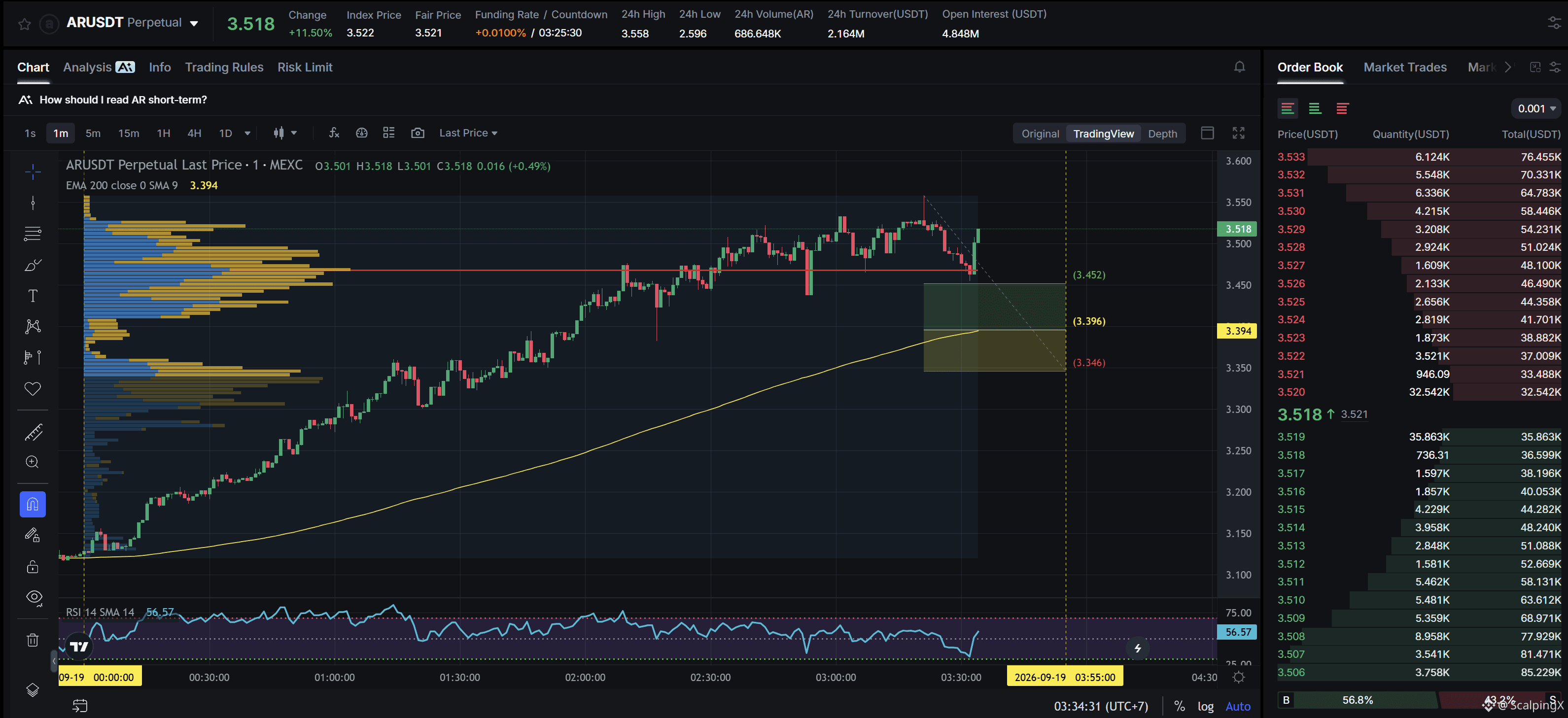
$AR - Mcap 228.84M$ - 24h Sentiment +4.93 Bullish
SC02 M1 - pending Long order. Entry lies within HVN + not affected by any weak zone, the current support zone is approximately 1.47% wide. The uptrend has lasted 3 hours 35 minutes, with a maximum recorded price increase of 13.94%. If price loses this support zone, the trend is highly likely to reverse downward.
$AR - Mcap 228.84M$ - 24h Sentiment +4.93 Bullish
SC02 M1 - pending Long order. Entry lies within HVN + not affected by any weak zone, the current support zone is approximately 1.47% wide. The uptrend has lasted 3 hours 35 minutes, with a maximum recorded price increase of 13.94%. If price loses this support zone, the trend is highly likely to reverse downward.
SC02 M1 - pending Long order. Entry lies within HVN + not affected by any weak zone, the current support zone is approximately 1.47% wide. The uptrend has lasted 3 hours 35 minutes, with a maximum recorded price increase of 13.94%. If price loses this support zone, the trend is highly likely to reverse downward.
3
·
--
Bearish
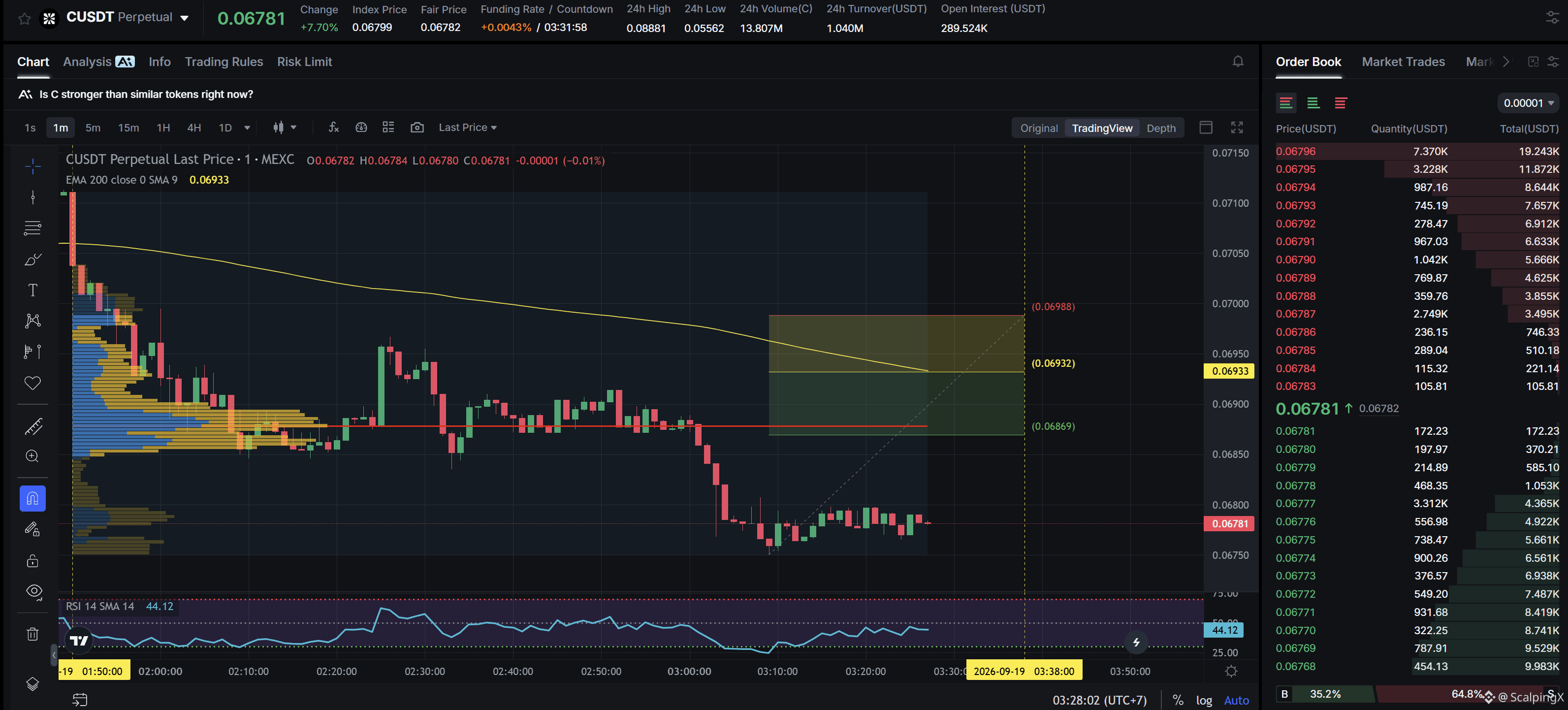
$C - Mcap 29.61M$ - 24h Sentiment +5.63 Bullish
SC02 M1 - pending Short order. Entry lies within HVN + not affected by any weak zone, the current resistance zone is approximately 0.82% wide. The downtrend has lasted 1 hour 39 minutes, with a maximum recorded price decline of 4.42%. If price breaks above this resistance zone, the trend is highly likely to reverse upward.
$C - Mcap 29.61M$ - 24h Sentiment +5.63 Bullish
SC02 M1 - pending Short order. Entry lies within HVN + not affected by any weak zone, the current resistance zone is approximately 0.82% wide. The downtrend has lasted 1 hour 39 minutes, with a maximum recorded price decline of 4.42%. If price breaks above this resistance zone, the trend is highly likely to reverse upward.
SC02 M1 - pending Short order. Entry lies within HVN + not affected by any weak zone, the current resistance zone is approximately 0.82% wide. The downtrend has lasted 1 hour 39 minutes, with a maximum recorded price decline of 4.42%. If price breaks above this resistance zone, the trend is highly likely to reverse upward.
28
·
--
Bullish
Germany agrees on €2.5 billion fuel relief package, targeting a cut of around 17 cents per liter
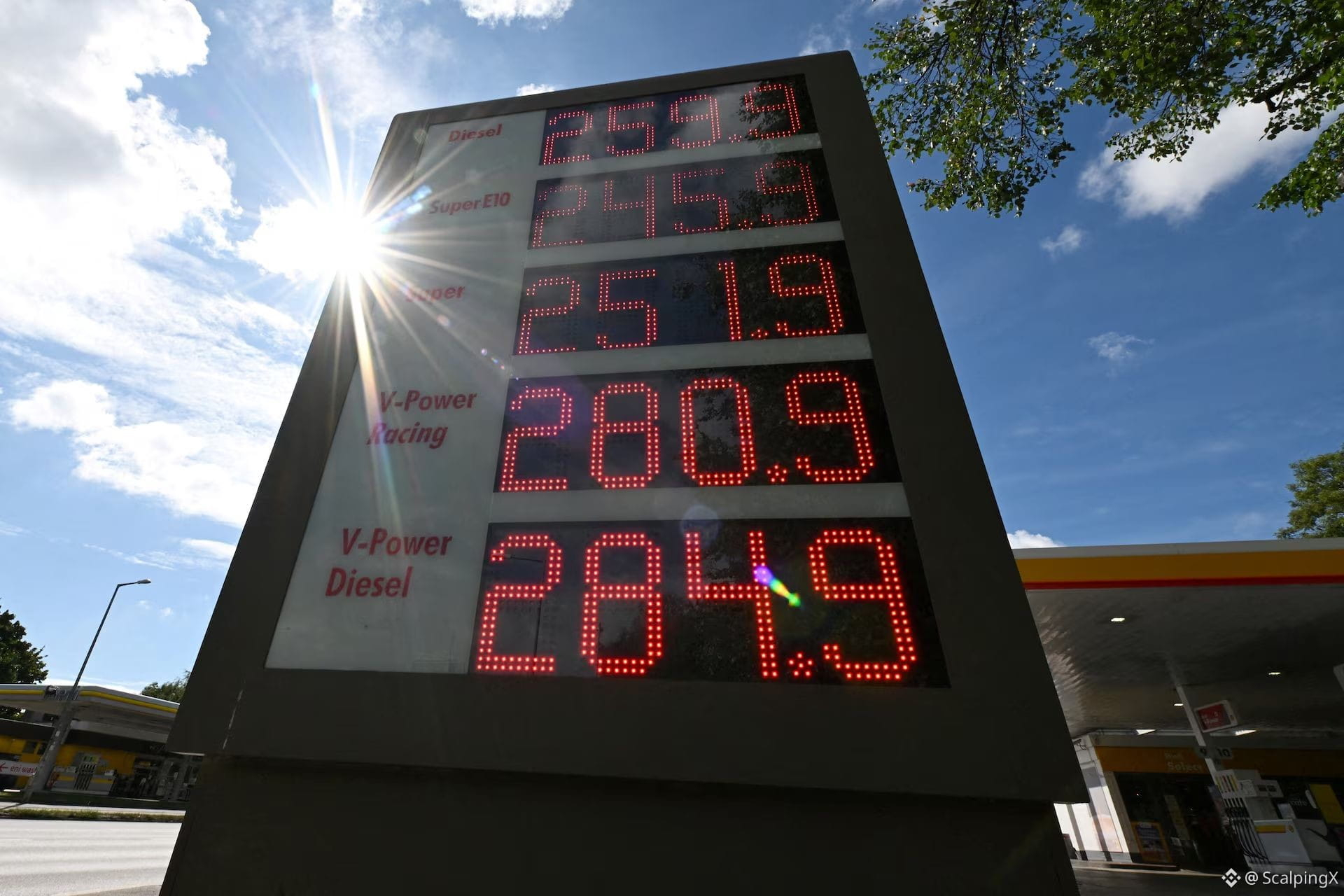
⛽ Germany’s federal government and states have agreed to cut energy taxes by 14 cents per liter for both gasoline and diesel. Including the VAT effect, the reduction at the pump could reach around 17 cents per liter, with implementation planned from October 1 through the end of 2026.
📉 The move comes as fuel prices in Germany remain elevated, with diesel near €2.47 per liter and Super E10 around €2.31. The relief package is worth roughly €2.5 billion, with costs shared between the federal government and the states.
🏛 Germany also agreed in principle on a fuel price cap mechanism, though it will not be introduced immediately. The agreement still needs to complete the necessary legal steps before taking effect.
📊 The tax cut could ease energy costs and inflation pressure in Q4, but the actual benefit for consumers will depend on how fully the tax reduction is passed through to retail prices.
#Germany $CL $NATGAS
Germany agrees on €2.5 billion fuel relief package, targeting a cut of around 17 cents per liter
⛽ Germany’s federal government and states have agreed to cut energy taxes by 14 cents per liter for both gasoline and diesel. Including the VAT effect, the reduction at the pump could reach around 17 cents per liter, with implementation planned from October 1 through the end of 2026.
📉 The move comes as fuel prices in Germany remain elevated, with diesel near €2.47 per liter and Super E10 around €2.31. The relief package is worth roughly €2.5 billion, with costs shared between the federal government and the states.
🏛 Germany also agreed in principle on a fuel price cap mechanism, though it will not be introduced immediately. The agreement still needs to complete the necessary legal steps before taking effect.
📊 The tax cut could ease energy costs and inflation pressure in Q4, but the actual benefit for consumers will depend on how fully the tax reduction is passed through to retail prices.
#Germany $CL $NATGAS
⛽ Germany’s federal government and states have agreed to cut energy taxes by 14 cents per liter for both gasoline and diesel. Including the VAT effect, the reduction at the pump could reach around 17 cents per liter, with implementation planned from October 1 through the end of 2026.
📉 The move comes as fuel prices in Germany remain elevated, with diesel near €2.47 per liter and Super E10 around €2.31. The relief package is worth roughly €2.5 billion, with costs shared between the federal government and the states.
🏛 Germany also agreed in principle on a fuel price cap mechanism, though it will not be introduced immediately. The agreement still needs to complete the necessary legal steps before taking effect.
📊 The tax cut could ease energy costs and inflation pressure in Q4, but the actual benefit for consumers will depend on how fully the tax reduction is passed through to retail prices.
#Germany $CL $NATGAS
21
·
--
Bullish
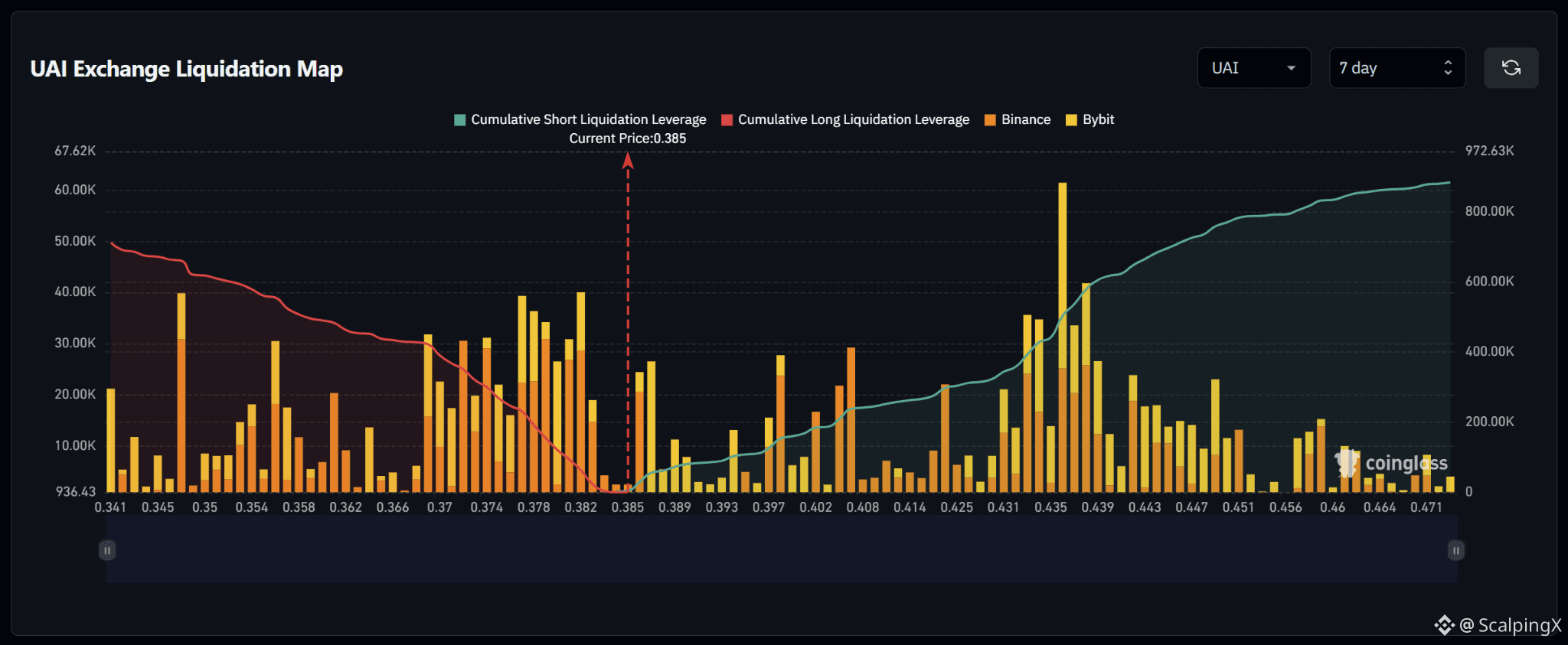
$UAI – Liquidation Map (7 Days) – Current Price 0.385
🔎 The 7-day liquidation map shows roughly $0.85–0.90 million in short liquidations above the current price, exceeding approximately $0.70–0.75 million in long liquidations below. The overall structure is therefore fairly balanced with a mild upside tilt, with around 1.2 times more cumulative liquidity above the market.
📉 Below the market, long-liquidation liquidity is concentrated heavily across 0.369–0.382. The strongest clusters sit around 0.377–0.382 with several bars near $30,000–40,000; further out, 0.347 and 0.355 also contain notable liquidation bars. Losing 0.382 would shift attention toward 0.377–0.369 and then 0.355.
📈 Above the market, short-liquidation liquidity begins building from 0.397 and becomes densest across 0.431–0.439. The strongest cluster sits around 0.435–0.439, with the largest bar above $60,000; the 0.431–0.434 area also contains several bars around $30,000–35,000. Further out, 0.443–0.449 continues to hold notable liquidity.
🧭 The current setup slightly favors the upside because short-liquidation exposure above is larger. Breaking above 0.397 would increase the probability of a sweep toward 0.407 and then 0.431–0.439; if momentum continues, 0.443–0.449 becomes the next liquidity zone. Losing 0.382 would instead shift attention toward 0.377–0.369.
$UAI – Liquidation Map (7 Days) – Current Price 0.385
🔎 The 7-day liquidation map shows roughly $0.85–0.90 million in short liquidations above the current price, exceeding approximately $0.70–0.75 million in long liquidations below. The overall structure is therefore fairly balanced with a mild upside tilt, with around 1.2 times more cumulative liquidity above the market.
📉 Below the market, long-liquidation liquidity is concentrated heavily across 0.369–0.382. The strongest clusters sit around 0.377–0.382 with several bars near $30,000–40,000; further out, 0.347 and 0.355 also contain notable liquidation bars. Losing 0.382 would shift attention toward 0.377–0.369 and then 0.355.
📈 Above the market, short-liquidation liquidity begins building from 0.397 and becomes densest across 0.431–0.439. The strongest cluster sits around 0.435–0.439, with the largest bar above $60,000; the 0.431–0.434 area also contains several bars around $30,000–35,000. Further out, 0.443–0.449 continues to hold notable liquidity.
🧭 The current setup slightly favors the upside because short-liquidation exposure above is larger. Breaking above 0.397 would increase the probability of a sweep toward 0.407 and then 0.431–0.439; if momentum continues, 0.443–0.449 becomes the next liquidity zone. Losing 0.382 would instead shift attention toward 0.377–0.369.
🔎 The 7-day liquidation map shows roughly $0.85–0.90 million in short liquidations above the current price, exceeding approximately $0.70–0.75 million in long liquidations below. The overall structure is therefore fairly balanced with a mild upside tilt, with around 1.2 times more cumulative liquidity above the market.
📉 Below the market, long-liquidation liquidity is concentrated heavily across 0.369–0.382. The strongest clusters sit around 0.377–0.382 with several bars near $30,000–40,000; further out, 0.347 and 0.355 also contain notable liquidation bars. Losing 0.382 would shift attention toward 0.377–0.369 and then 0.355.
📈 Above the market, short-liquidation liquidity begins building from 0.397 and becomes densest across 0.431–0.439. The strongest cluster sits around 0.435–0.439, with the largest bar above $60,000; the 0.431–0.434 area also contains several bars around $30,000–35,000. Further out, 0.443–0.449 continues to hold notable liquidity.
🧭 The current setup slightly favors the upside because short-liquidation exposure above is larger. Breaking above 0.397 would increase the probability of a sweep toward 0.407 and then 0.431–0.439; if momentum continues, 0.443–0.449 becomes the next liquidity zone. Losing 0.382 would instead shift attention toward 0.377–0.369.
12
·
--
Bullish
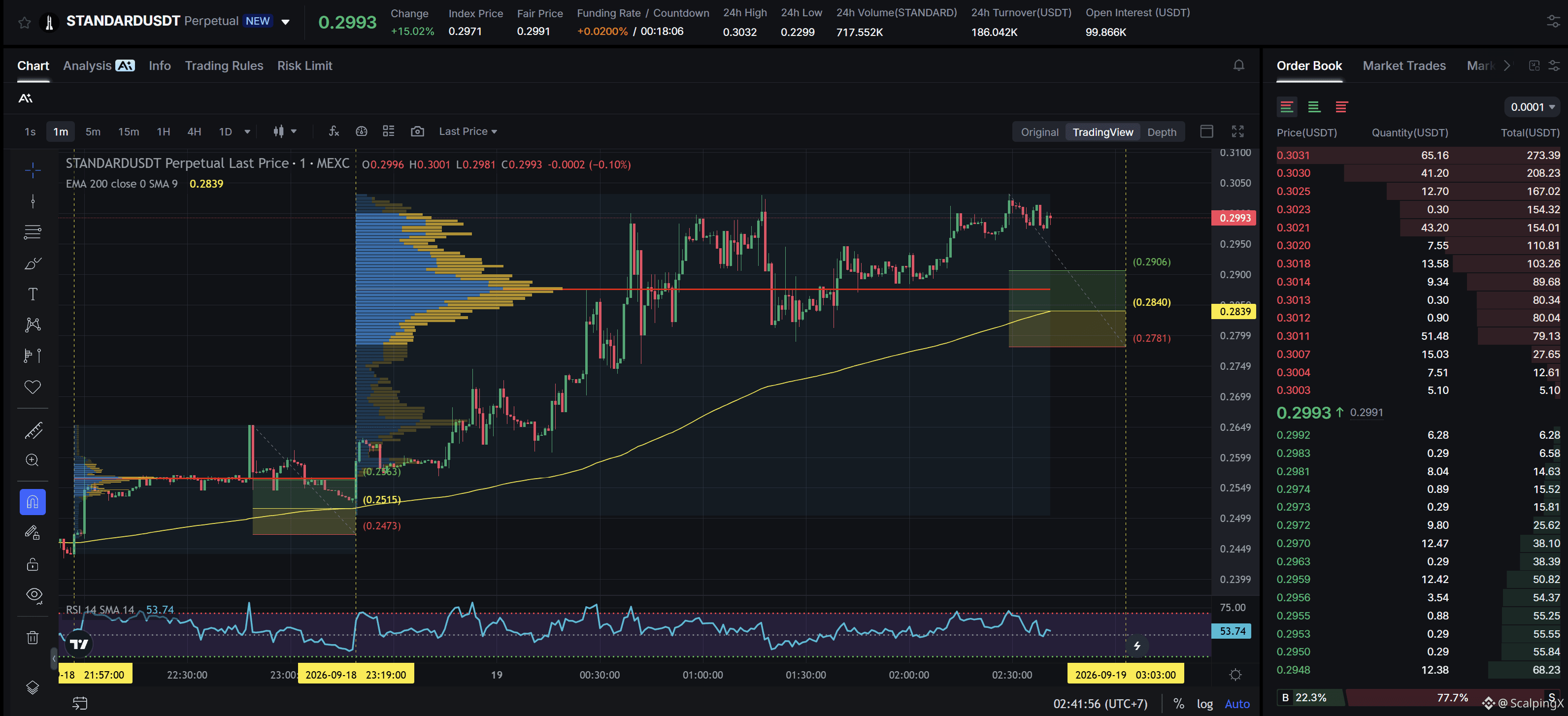
$STANDARD - FDV 27.2M$
SC02 M1 - pending Long order. Entry lies within HVN + meets positive simplification with a previously highly profitable Long order, the current support zone is approximately 2.09% wide. The uptrend has lasted 3 hours 25 minutes, with a maximum recorded price increase of 20.46%. If price loses this support zone, the trend is highly likely to reverse downward.
$STANDARD - FDV 27.2M$
SC02 M1 - pending Long order. Entry lies within HVN + meets positive simplification with a previously highly profitable Long order, the current support zone is approximately 2.09% wide. The uptrend has lasted 3 hours 25 minutes, with a maximum recorded price increase of 20.46%. If price loses this support zone, the trend is highly likely to reverse downward.
SC02 M1 - pending Long order. Entry lies within HVN + meets positive simplification with a previously highly profitable Long order, the current support zone is approximately 2.09% wide. The uptrend has lasted 3 hours 25 minutes, with a maximum recorded price increase of 20.46%. If price loses this support zone, the trend is highly likely to reverse downward.
6
·
--
Bullish
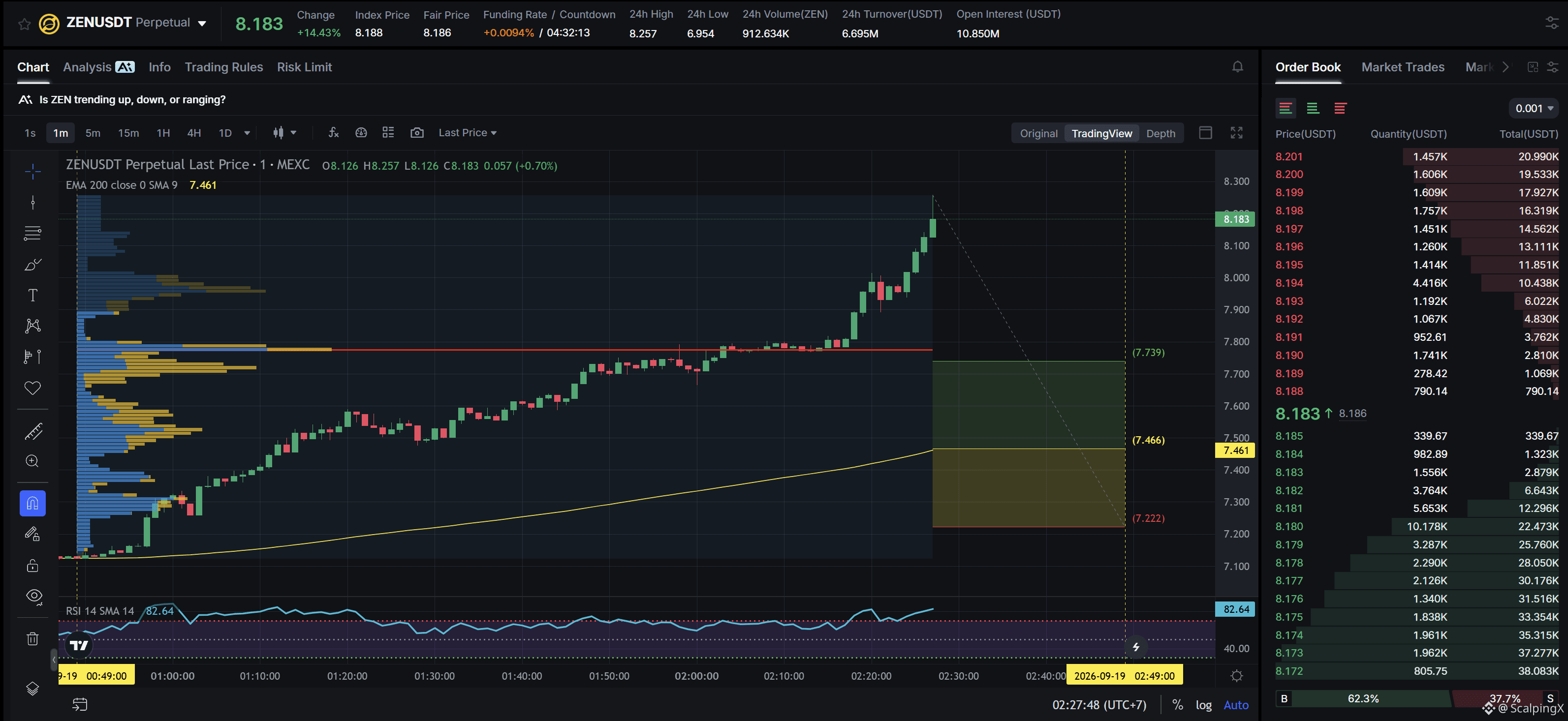
$ZEN - Mcap 145.88M$ - 24h Sentiment +5.39 Bullish
SC02 M1 - pending Long order. Entry lies within HVN + not affected by any weak zone, the current support zone is approximately 3.27% wide. The uptrend has lasted 1 hour 39 minutes, with a maximum recorded price increase of 15.87%. If price loses this support zone, the trend is highly likely to reverse downward.
$ZEN - Mcap 145.88M$ - 24h Sentiment +5.39 Bullish
SC02 M1 - pending Long order. Entry lies within HVN + not affected by any weak zone, the current support zone is approximately 3.27% wide. The uptrend has lasted 1 hour 39 minutes, with a maximum recorded price increase of 15.87%. If price loses this support zone, the trend is highly likely to reverse downward.
SC02 M1 - pending Long order. Entry lies within HVN + not affected by any weak zone, the current support zone is approximately 3.27% wide. The uptrend has lasted 1 hour 39 minutes, with a maximum recorded price increase of 15.87%. If price loses this support zone, the trend is highly likely to reverse downward.
19
·
--
Bullish
Berkshire completes its succession plan after Warren Buffett
🏛 Warren Buffett, 96, has officially stepped down as Chairman of Berkshire Hathaway and become Chairman Emeritus, while remaining on the board. His son Howard Buffett has been elected Chairman, with Greg Abel continuing as CEO.
🔄 The move marks another step in a succession plan Berkshire has prepared for years. The new structure separates oversight from day-to-day management, with Abel responsible for operations and capital allocation while Howard focuses on preserving the group’s culture and core values.
📉 Berkshire shares moved only slightly after the announcement, suggesting investors did not view the transition as a leadership shock. Attention will now increasingly shift to how Abel runs Berkshire and deploys its large capital base as Buffett’s direct role continues to diminish.
#BerkshireHathaway $BRKB
Berkshire completes its succession plan after Warren Buffett
🏛 Warren Buffett, 96, has officially stepped down as Chairman of Berkshire Hathaway and become Chairman Emeritus, while remaining on the board. His son Howard Buffett has been elected Chairman, with Greg Abel continuing as CEO.
🔄 The move marks another step in a succession plan Berkshire has prepared for years. The new structure separates oversight from day-to-day management, with Abel responsible for operations and capital allocation while Howard focuses on preserving the group’s culture and core values.
📉 Berkshire shares moved only slightly after the announcement, suggesting investors did not view the transition as a leadership shock. Attention will now increasingly shift to how Abel runs Berkshire and deploys its large capital base as Buffett’s direct role continues to diminish.
#BerkshireHathaway $BRKB
🏛 Warren Buffett, 96, has officially stepped down as Chairman of Berkshire Hathaway and become Chairman Emeritus, while remaining on the board. His son Howard Buffett has been elected Chairman, with Greg Abel continuing as CEO.
🔄 The move marks another step in a succession plan Berkshire has prepared for years. The new structure separates oversight from day-to-day management, with Abel responsible for operations and capital allocation while Howard focuses on preserving the group’s culture and core values.
📉 Berkshire shares moved only slightly after the announcement, suggesting investors did not view the transition as a leadership shock. Attention will now increasingly shift to how Abel runs Berkshire and deploys its large capital base as Buffett’s direct role continues to diminish.
#BerkshireHathaway $BRKB

62
·
--
Bullish
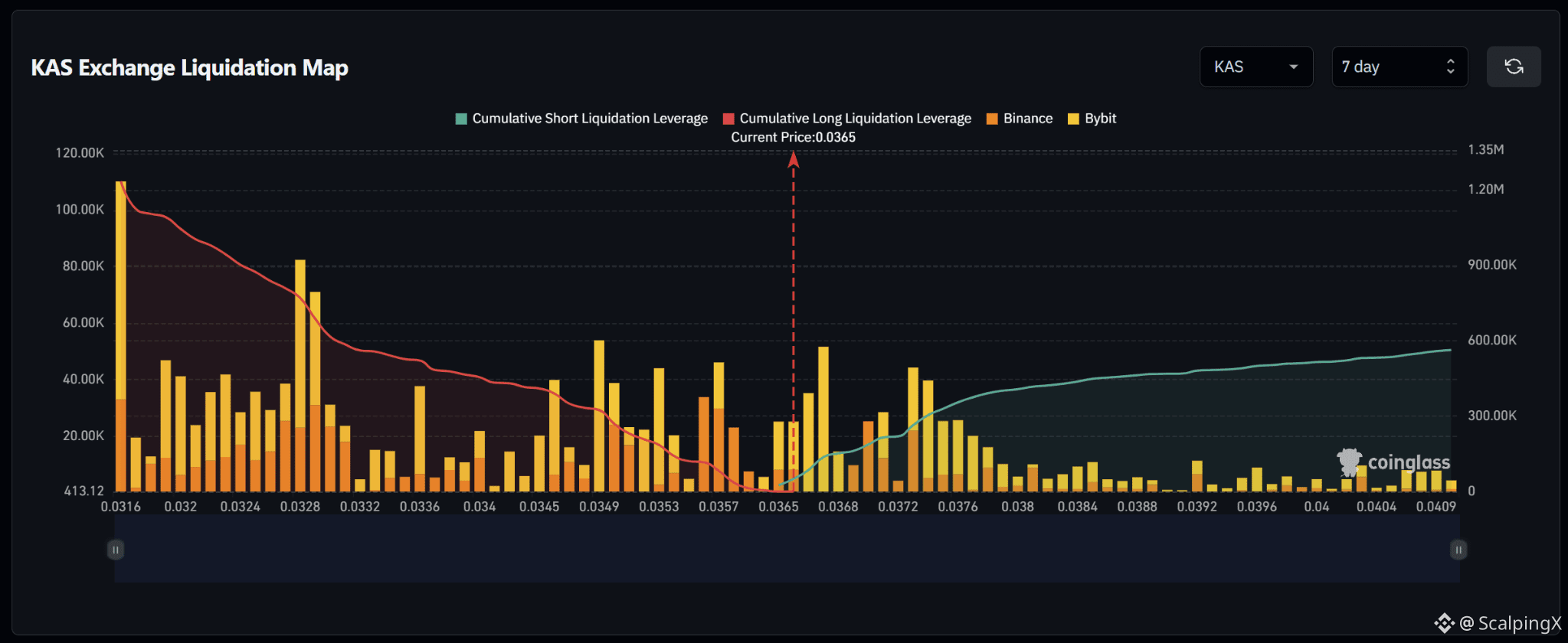
$KAS – Liquidation Map (7 Days)
🔎 The 7-day liquidation map shows roughly $1.2 million of long-liquidation liquidity below the current price, versus around $0.55–0.60 million of short-liquidation liquidity above. That keeps the overall structure tilted to the downside, with the lower-side liquidity pool being about 2x larger.
📉 The largest downside cluster sits at 0.0316, which stands out as the biggest liquidation bar on the map. Other notable downside pockets are located around 0.0327–0.0329 and 0.0349–0.0357. If price loses 0.0360 and then 0.0357, the probability of a liquidity sweep toward 0.0350 and potentially 0.0328 rises materially.
📈 On the upside, short-liquidation liquidity starts building from 0.0366–0.0368, followed by another visible cluster around 0.0372–0.0376. If price holds above the current zone and breaks through 0.0368, it could get pulled toward 0.0373–0.0376 before meeting a thinner liquidity field higher up.
🧭 The near-term bias remains cautiously bearish because the downside liquidity pool is still clearly larger. Only a solid reclaim of the 0.0368–0.0372 zone would improve balance, while slipping back below 0.0360 would increase the risk of another move lower into the next liquidity pockets.
$KAS – Liquidation Map (7 Days)
🔎 The 7-day liquidation map shows roughly $1.2 million of long-liquidation liquidity below the current price, versus around $0.55–0.60 million of short-liquidation liquidity above. That keeps the overall structure tilted to the downside, with the lower-side liquidity pool being about 2x larger.
📉 The largest downside cluster sits at 0.0316, which stands out as the biggest liquidation bar on the map. Other notable downside pockets are located around 0.0327–0.0329 and 0.0349–0.0357. If price loses 0.0360 and then 0.0357, the probability of a liquidity sweep toward 0.0350 and potentially 0.0328 rises materially.
📈 On the upside, short-liquidation liquidity starts building from 0.0366–0.0368, followed by another visible cluster around 0.0372–0.0376. If price holds above the current zone and breaks through 0.0368, it could get pulled toward 0.0373–0.0376 before meeting a thinner liquidity field higher up.
🧭 The near-term bias remains cautiously bearish because the downside liquidity pool is still clearly larger. Only a solid reclaim of the 0.0368–0.0372 zone would improve balance, while slipping back below 0.0360 would increase the risk of another move lower into the next liquidity pockets.
🔎 The 7-day liquidation map shows roughly $1.2 million of long-liquidation liquidity below the current price, versus around $0.55–0.60 million of short-liquidation liquidity above. That keeps the overall structure tilted to the downside, with the lower-side liquidity pool being about 2x larger.
📉 The largest downside cluster sits at 0.0316, which stands out as the biggest liquidation bar on the map. Other notable downside pockets are located around 0.0327–0.0329 and 0.0349–0.0357. If price loses 0.0360 and then 0.0357, the probability of a liquidity sweep toward 0.0350 and potentially 0.0328 rises materially.
📈 On the upside, short-liquidation liquidity starts building from 0.0366–0.0368, followed by another visible cluster around 0.0372–0.0376. If price holds above the current zone and breaks through 0.0368, it could get pulled toward 0.0373–0.0376 before meeting a thinner liquidity field higher up.
🧭 The near-term bias remains cautiously bearish because the downside liquidity pool is still clearly larger. Only a solid reclaim of the 0.0368–0.0372 zone would improve balance, while slipping back below 0.0360 would increase the risk of another move lower into the next liquidity pockets.
17
Log in to explore more content
Join global crypto users on Binance Square
⚡️ Get latest and useful information about crypto.
💬 Trusted by the world’s largest crypto exchange.
👍 Discover real insights from verified creators.
Email / Phone number
Trending Topics
HKCompletesFirstHKDStablecoinUseCase
855 views
69 Discussing
#hkcompletesfirsthkdstablecoinusecase
Key Highlights of the Transaction
The Asset: $HKDA
P is an $HKD.US -referenced stablecoin issued by Anchorpoint Financial, a joint venture backed by Standard Chartered Bank (Hong Kong), HKT, and Animoca Brands. Anchorpoint was granted one of Hong Kong's very first stablecoin licenses by the Hong Kong Monetary Authority (HKMA) under the city's new Stablecoins Ordinance.
The Use Case: Investors utilized HKDAP via trading accounts on the licensed OSL HK exchange to seamlessly handle subscriptions and redemptions for units in ChinaAMC’s Digital Currency Money Market Fund. Standard Chartered served as the custodian for the pilot. $
Regulatory Milestone: This milestone bridges the gap between traditional finance (TradFi) and decentralized infrastructure. It provides a blueprint for how fully compliant, regulated stablecoins can be legally integrated into programmable finance and tokenized asset settlements under Hong Kong's strict regulatory guardrails.
boxbo
·0 Likes
·3 views
VietnamPlansFirstCryptoLicensesIn2026
552 views
44 Discussing
BTCBreaks80K
190,626 views
3,102 Discussing