
A Y L A A
10.3k Posts

A Y L A A
 Square Verified+
Report
Block User
Don't be Perfect,be real 🤞X:Kainat64640
Open Trade
Frequent Trader
8.9 Months
574 Following
30.0K+ Followers
9.9K+ Liked
Posts
Portfolio
All
Quotes
Live
·
--
Bullish
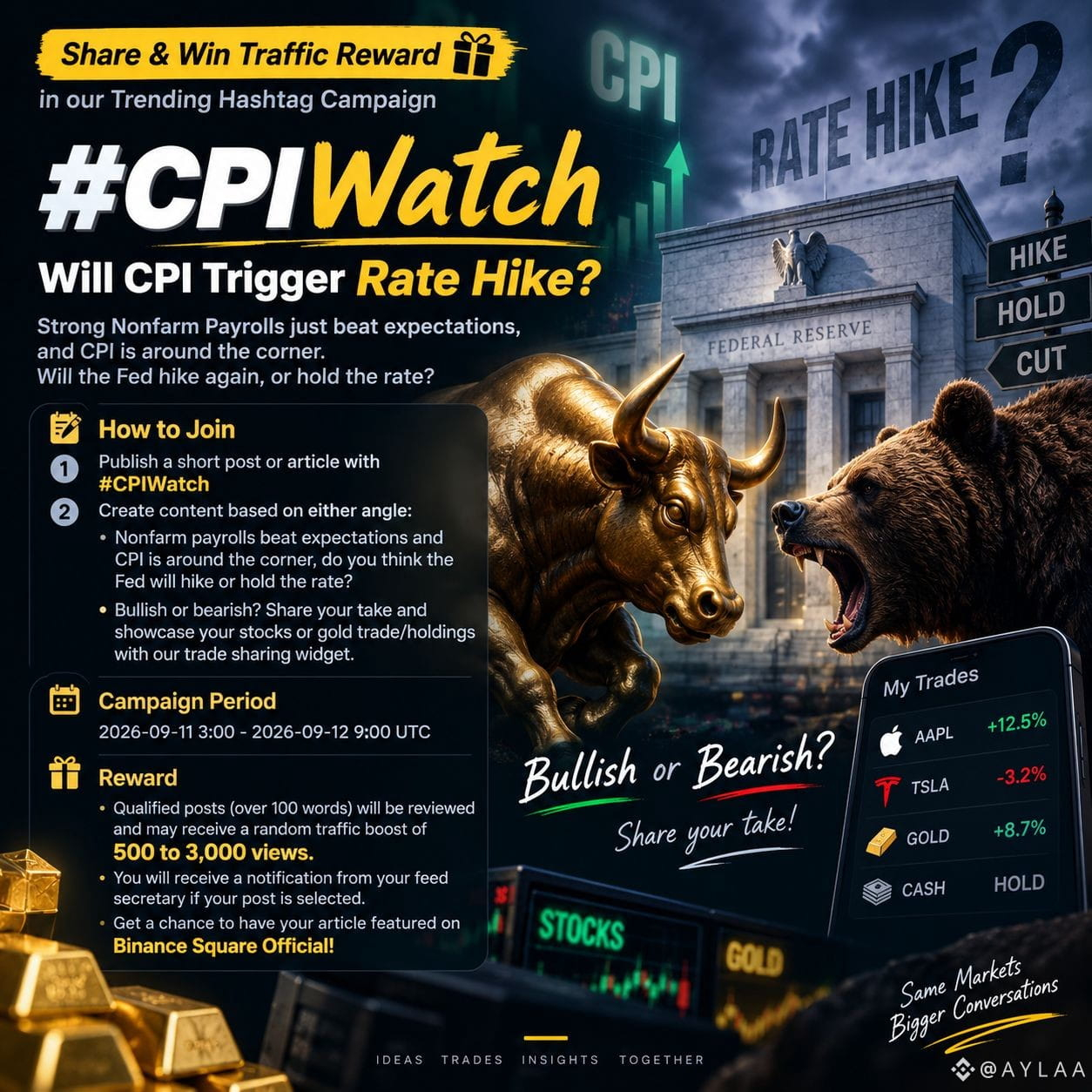
#CPIWatch
CPI Is the Real Test for Stocks
A strong jobs report has kept a September Fed hike firmly on the table, but one payroll number alone probably won’t settle the decision. The next big signal is inflation.
That’s where core CPI matters. If monthly core inflation stays around 0.2%, the case for rushing into another hike is less convincing. Services remain relatively sticky, while moves in oil can create plenty of noise without telling the whole inflation story.
For stocks, the setup is straightforward:
Hot CPI around 0.3%:
Higher yields could pressure long-duration assets first, with names like potentially feeling the move. The broader bid could also weaken as rate expectations adjust.
Soft CPI around 0.2%:
A Fed hold becomes easier to defend, which could support quality growth and mega-cap names.
And don’t ignore gold. A sharp jump in real yields can quickly take some of the hedge premium out of . Recent market action has already shown how higher yields and inflation fears can weigh on both equities and gold.
My approach: less prediction, more process.
Keep exposure controlled. Don’t chase the headline. Let the CPI print confirm the setup before adding risk.
Soft CPI → consider adding.
Hot CPI → step back and wait.
CPI week rewards patience. Getting positioned too early is often how traders end up buying the top of the narrative.
#CPIWatch
$GAIB
{alpha}(560xc19d38925f9f645337b1d1f37baf3c0647a48e50)
$RAYSOL
{future}(RAYSOLUSDT)
$LSK
{future}(LSKUSDT)
#CPIWatch
CPI Is the Real Test for Stocks
A strong jobs report has kept a September Fed hike firmly on the table, but one payroll number alone probably won’t settle the decision. The next big signal is inflation.
That’s where core CPI matters. If monthly core inflation stays around 0.2%, the case for rushing into another hike is less convincing. Services remain relatively sticky, while moves in oil can create plenty of noise without telling the whole inflation story.
For stocks, the setup is straightforward:
Hot CPI around 0.3%:
Higher yields could pressure long-duration assets first, with names like potentially feeling the move. The broader bid could also weaken as rate expectations adjust.
Soft CPI around 0.2%:
A Fed hold becomes easier to defend, which could support quality growth and mega-cap names.
And don’t ignore gold. A sharp jump in real yields can quickly take some of the hedge premium out of . Recent market action has already shown how higher yields and inflation fears can weigh on both equities and gold.
My approach: less prediction, more process.
Keep exposure controlled. Don’t chase the headline. Let the CPI print confirm the setup before adding risk.
Soft CPI → consider adding.
Hot CPI → step back and wait.
CPI week rewards patience. Getting positioned too early is often how traders end up buying the top of the narrative.
#CPIWatch
$GAIB
$RAYSOL
$LSK
CPI Is the Real Test for Stocks
A strong jobs report has kept a September Fed hike firmly on the table, but one payroll number alone probably won’t settle the decision. The next big signal is inflation.
That’s where core CPI matters. If monthly core inflation stays around 0.2%, the case for rushing into another hike is less convincing. Services remain relatively sticky, while moves in oil can create plenty of noise without telling the whole inflation story.
For stocks, the setup is straightforward:
Hot CPI around 0.3%:
Higher yields could pressure long-duration assets first, with names like potentially feeling the move. The broader bid could also weaken as rate expectations adjust.
Soft CPI around 0.2%:
A Fed hold becomes easier to defend, which could support quality growth and mega-cap names.
And don’t ignore gold. A sharp jump in real yields can quickly take some of the hedge premium out of . Recent market action has already shown how higher yields and inflation fears can weigh on both equities and gold.
My approach: less prediction, more process.
Keep exposure controlled. Don’t chase the headline. Let the CPI print confirm the setup before adding risk.
Soft CPI → consider adding.
Hot CPI → step back and wait.
CPI week rewards patience. Getting positioned too early is often how traders end up buying the top of the narrative.
#CPIWatch
$GAIB
$RAYSOL
$LSK
2
396
·
--
Bullish
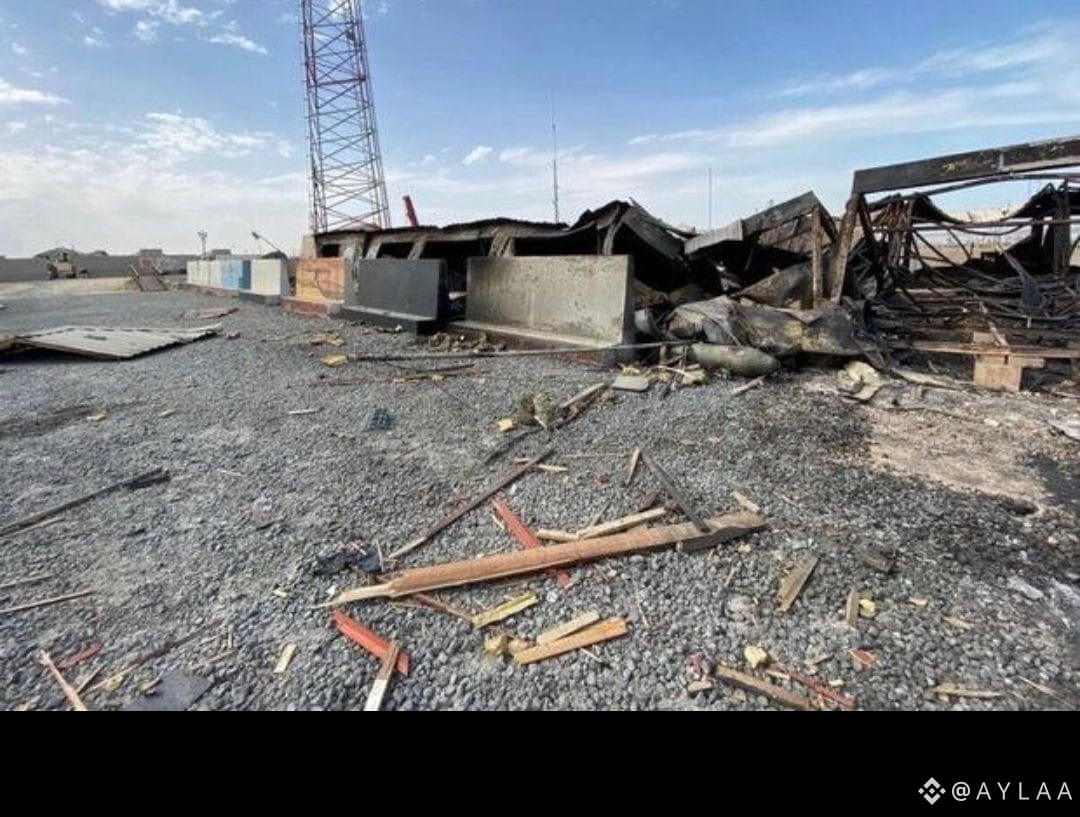
🇮🇷🇺🇸 Iran Strikes U.S. Base in Kuwait
#IranStrikesUSBaseInKuwait
Iran has launched missile and drone attacks targeting U.S. military facilities in Kuwait, including Ali Al Salem Air Base, according to Iranian and regional reports. Kuwait says its air defenses confronted hostile missiles and drones, while some Iranian claims about damage and U.S. casualties remain unverified.
The strikes mark another dangerous escalation in the widening U.S.–Iran conflict, raising fresh concerns about regional security and the stability of the Gulf.
#Iran #Kuwait #US #MiddleEast #IranStrikesUSBaseInKuwait #BreakingNews
🇮🇷🇺🇸 Iran Strikes U.S. Base in Kuwait
#IranStrikesUSBaseInKuwait
Iran has launched missile and drone attacks targeting U.S. military facilities in Kuwait, including Ali Al Salem Air Base, according to Iranian and regional reports. Kuwait says its air defenses confronted hostile missiles and drones, while some Iranian claims about damage and U.S. casualties remain unverified.
The strikes mark another dangerous escalation in the widening U.S.–Iran conflict, raising fresh concerns about regional security and the stability of the Gulf.
#Iran #Kuwait #US #MiddleEast #IranStrikesUSBaseInKuwait #BreakingNews
#IranStrikesUSBaseInKuwait
Iran has launched missile and drone attacks targeting U.S. military facilities in Kuwait, including Ali Al Salem Air Base, according to Iranian and regional reports. Kuwait says its air defenses confronted hostile missiles and drones, while some Iranian claims about damage and U.S. casualties remain unverified.
The strikes mark another dangerous escalation in the widening U.S.–Iran conflict, raising fresh concerns about regional security and the stability of the Gulf.
#Iran #Kuwait #US #MiddleEast #IranStrikesUSBaseInKuwait #BreakingNews
1
2
176
·
--
Bullish
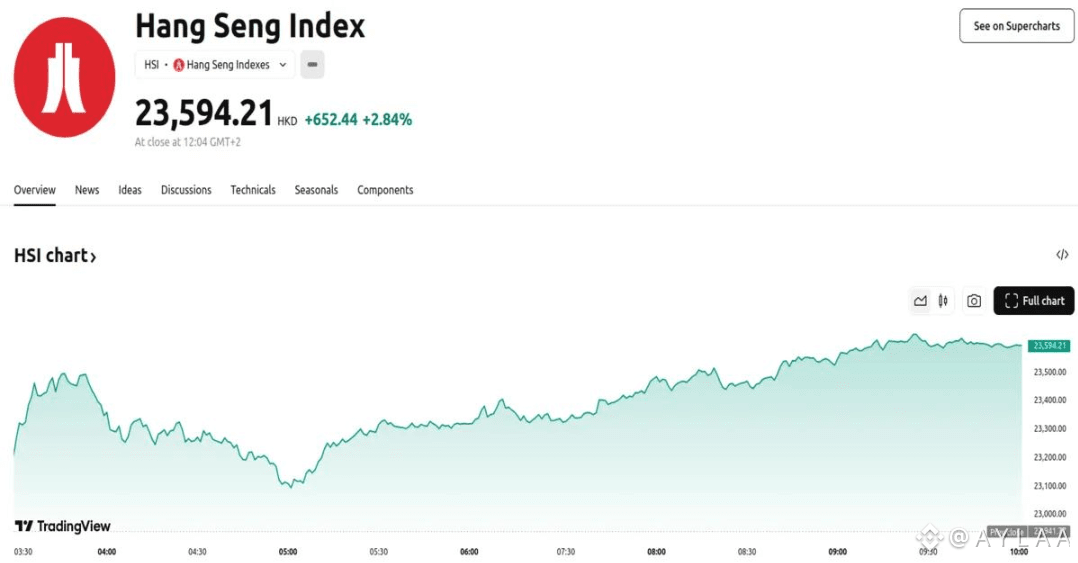
📉 #HangSengCloses18PointsLower
Hong Kong stocks ended slightly lower, with the Hang Seng Index slipping 18 points, reflecting cautious investor sentiment and subdued trading. Investors continue to watch global interest rates, China’s economic outlook and technology stocks for the next market direction.
#HangSeng #HongKongStocks #StockMarket #Markets #Investing
📉 #HangSengCloses18PointsLower
Hong Kong stocks ended slightly lower, with the Hang Seng Index slipping 18 points, reflecting cautious investor sentiment and subdued trading. Investors continue to watch global interest rates, China’s economic outlook and technology stocks for the next market direction.
#HangSeng #HongKongStocks #StockMarket #Markets #Investing
Hong Kong stocks ended slightly lower, with the Hang Seng Index slipping 18 points, reflecting cautious investor sentiment and subdued trading. Investors continue to watch global interest rates, China’s economic outlook and technology stocks for the next market direction.
#HangSeng #HongKongStocks #StockMarket #Markets #Investing

1
407
·
--
Bullish
ARB Surges 30% as Robinhood Chain Revenue Soars
Arbitrum (ARB) jumped more than 30% on September 1, as growing activity on Robinhood Chain boosted sentiment around the ecosystem. Robinhood Chain recorded more than $2 million in 24-hour transaction revenue, with a portion of protocol revenue flowing back to the Arbitrum ecosystem.
The rally highlights growing demand for Arbitrum-based infrastructure as Robinhood expands its on-chain financial products. However, traders should expect volatility as leveraged positions increase and an upcoming ARB token unlock could add selling pressure.
#ARBRises30%OnRobinhoodChainRevenue
ARB Surges 30% as Robinhood Chain Revenue Soars
Arbitrum (ARB) jumped more than 30% on September 1, as growing activity on Robinhood Chain boosted sentiment around the ecosystem. Robinhood Chain recorded more than $2 million in 24-hour transaction revenue, with a portion of protocol revenue flowing back to the Arbitrum ecosystem.
The rally highlights growing demand for Arbitrum-based infrastructure as Robinhood expands its on-chain financial products. However, traders should expect volatility as leveraged positions increase and an upcoming ARB token unlock could add selling pressure.
#ARBRises30%OnRobinhoodChainRevenue
Arbitrum (ARB) jumped more than 30% on September 1, as growing activity on Robinhood Chain boosted sentiment around the ecosystem. Robinhood Chain recorded more than $2 million in 24-hour transaction revenue, with a portion of protocol revenue flowing back to the Arbitrum ecosystem.
The rally highlights growing demand for Arbitrum-based infrastructure as Robinhood expands its on-chain financial products. However, traders should expect volatility as leveraged positions increase and an upcoming ARB token unlock could add selling pressure.
#ARBRises30%OnRobinhoodChainRevenue

109
·
--
Bullish
📉 Hang Seng Falls 1% as Risk-Off Mood Hits Hong Kong
#HangSengFalls1%
Hong Kong stocks came under pressure on September 1, 2026, with the Hang Seng Index falling about 1% to around 25,324 points. The decline reflected a broader risk-off mood across global markets.
What’s weighing on stocks?
Renewed U.S.-Iran tensions have pushed oil prices higher, raising concerns about inflation and the possibility of tighter monetary policy. At the same time, rising global bond yields are adding pressure to equities, particularly technology and other growth-sensitive shares.
The weakness was also visible among major Hong Kong-listed companies, with Tencent falling around 2.1% and Meituan down about 1.1% in the latest market data.
📊 Key takeaway
The Hang Seng's decline highlights how quickly geopolitical risk, higher energy prices and interest-rate expectations can affect Asian equities. Investors will now watch oil prices, global bond yields and developments in the Middle East for clues about whether the selling pressure persists.
*Market movements are volatile and this post is for informational purposes only.*
📉 Hang Seng Falls 1% as Risk-Off Mood Hits Hong Kong
#HangSengFalls1%
Hong Kong stocks came under pressure on September 1, 2026, with the Hang Seng Index falling about 1% to around 25,324 points. The decline reflected a broader risk-off mood across global markets.
What’s weighing on stocks?
Renewed U.S.-Iran tensions have pushed oil prices higher, raising concerns about inflation and the possibility of tighter monetary policy. At the same time, rising global bond yields are adding pressure to equities, particularly technology and other growth-sensitive shares.
The weakness was also visible among major Hong Kong-listed companies, with Tencent falling around 2.1% and Meituan down about 1.1% in the latest market data.
📊 Key takeaway
The Hang Seng's decline highlights how quickly geopolitical risk, higher energy prices and interest-rate expectations can affect Asian equities. Investors will now watch oil prices, global bond yields and developments in the Middle East for clues about whether the selling pressure persists.
*Market movements are volatile and this post is for informational purposes only.*
#HangSengFalls1%
Hong Kong stocks came under pressure on September 1, 2026, with the Hang Seng Index falling about 1% to around 25,324 points. The decline reflected a broader risk-off mood across global markets.
What’s weighing on stocks?
Renewed U.S.-Iran tensions have pushed oil prices higher, raising concerns about inflation and the possibility of tighter monetary policy. At the same time, rising global bond yields are adding pressure to equities, particularly technology and other growth-sensitive shares.
The weakness was also visible among major Hong Kong-listed companies, with Tencent falling around 2.1% and Meituan down about 1.1% in the latest market data.
📊 Key takeaway
The Hang Seng's decline highlights how quickly geopolitical risk, higher energy prices and interest-rate expectations can affect Asian equities. Investors will now watch oil prices, global bond yields and developments in the Middle East for clues about whether the selling pressure persists.
*Market movements are volatile and this post is for informational purposes only.*
379
·
--
Article
XRP Rises 40% in Two Weeks as Open Interest Falls#XRPRises40%InTwoWeeksAsOpenInterestFalls
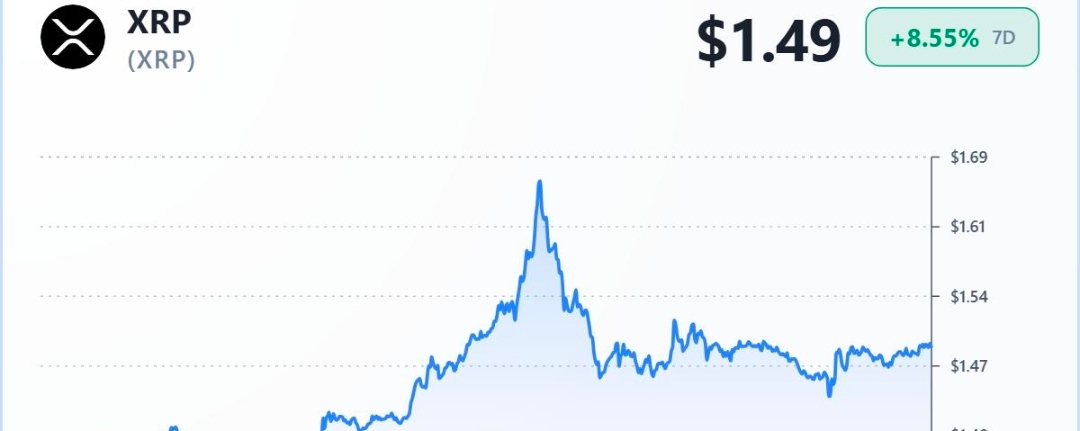
XRP has delivered a striking rally, climbing from roughly $0.99 on August 17 to $1.38 on August 31, a gain of nearly 40% in two weeks. What makes the move particularly interesting is that it happened while overall XRP futures open interest declined rather than increased.
A rally without rising leverage
According to CoinGlass data cited by CoinDesk, total XRP futures open interest fell about 16%, from 2.77 billion XRP to 2.34 billion XRP between August 17 and August 31. Positions outside CME dropped by more than 500 million XRP, suggesting traders were reducing leveraged exposure as the price advanced.
That divergence can be significant. When prices rise while open interest falls, the rally may be driven less by the buildup of new leveraged bets and more by position closing, spot demand, or deleveraging. In other words, traders may be taking profits or covering positions rather than aggressively adding futures exposure.
CME stands apart
CME was an important exception. XRP futures open interest on the regulated U.S. exchange increased about 36%, from 284 million to 387 million XRP, raising CME's share of total outstanding exposure from around 10% to 17%.
The shift suggests that some of the activity is moving toward a more regulated market even as traders reduce exposure elsewhere. CFTC data also showed leveraged funds had a net-short position equivalent to about 116 million XRP, while dealers and asset managers increased their net-long exposure.
What it could mean for XRP
The combination of a sharp price increase and falling overall open interest points to a rally that is not simply being fueled by rising leverage. That can be viewed positively from a risk perspective, although it does not guarantee that the rally will continue.
With XRP approaching the $1.40 area and the market watching developments around U.S. crypto legislation, traders are likely to keep a close eye on whether open interest begins rising alongside price.
Bottom line: XRP's 40% surge is notable not only because of its size, but because it occurred as much of the futures market was actually reducing exposure. The growing share of XRP futures activity at CME adds another layer to the story, pointing to a changing mix of participants in the market.
XRP Rises 40% in Two Weeks as Open Interest Falls
#XRPRises40%InTwoWeeksAsOpenInterestFalls
XRP has delivered a striking rally, climbing from roughly $0.99 on August 17 to $1.38 on August 31, a gain of nearly 40% in two weeks. What makes the move particularly interesting is that it happened while overall XRP futures open interest declined rather than increased.
A rally without rising leverage
According to CoinGlass data cited by CoinDesk, total XRP futures open interest fell about 16%, from 2.77 billion XRP to 2.34 billion XRP between August 17 and August 31. Positions outside CME dropped by more than 500 million XRP, suggesting traders were reducing leveraged exposure as the price advanced.
That divergence can be significant. When prices rise while open interest falls, the rally may be driven less by the buildup of new leveraged bets and more by position closing, spot demand, or deleveraging. In other words, traders may be taking profits or covering positions rather than aggressively adding futures exposure.
CME stands apart
CME was an important exception. XRP futures open interest on the regulated U.S. exchange increased about 36%, from 284 million to 387 million XRP, raising CME's share of total outstanding exposure from around 10% to 17%.
The shift suggests that some of the activity is moving toward a more regulated market even as traders reduce exposure elsewhere. CFTC data also showed leveraged funds had a net-short position equivalent to about 116 million XRP, while dealers and asset managers increased their net-long exposure.
What it could mean for XRP
The combination of a sharp price increase and falling overall open interest points to a rally that is not simply being fueled by rising leverage. That can be viewed positively from a risk perspective, although it does not guarantee that the rally will continue.
With XRP approaching the $1.40 area and the market watching developments around U.S. crypto legislation, traders are likely to keep a close eye on whether open interest begins rising alongside price.
Bottom line: XRP's 40% surge is notable not only because of its size, but because it occurred as much of the futures market was actually reducing exposure. The growing share of XRP futures activity at CME adds another layer to the story, pointing to a changing mix of participants in the market.
XRP has delivered a striking rally, climbing from roughly $0.99 on August 17 to $1.38 on August 31, a gain of nearly 40% in two weeks. What makes the move particularly interesting is that it happened while overall XRP futures open interest declined rather than increased.
A rally without rising leverage
According to CoinGlass data cited by CoinDesk, total XRP futures open interest fell about 16%, from 2.77 billion XRP to 2.34 billion XRP between August 17 and August 31. Positions outside CME dropped by more than 500 million XRP, suggesting traders were reducing leveraged exposure as the price advanced.
That divergence can be significant. When prices rise while open interest falls, the rally may be driven less by the buildup of new leveraged bets and more by position closing, spot demand, or deleveraging. In other words, traders may be taking profits or covering positions rather than aggressively adding futures exposure.
CME stands apart
CME was an important exception. XRP futures open interest on the regulated U.S. exchange increased about 36%, from 284 million to 387 million XRP, raising CME's share of total outstanding exposure from around 10% to 17%.
The shift suggests that some of the activity is moving toward a more regulated market even as traders reduce exposure elsewhere. CFTC data also showed leveraged funds had a net-short position equivalent to about 116 million XRP, while dealers and asset managers increased their net-long exposure.
What it could mean for XRP
The combination of a sharp price increase and falling overall open interest points to a rally that is not simply being fueled by rising leverage. That can be viewed positively from a risk perspective, although it does not guarantee that the rally will continue.
With XRP approaching the $1.40 area and the market watching developments around U.S. crypto legislation, traders are likely to keep a close eye on whether open interest begins rising alongside price.
Bottom line: XRP's 40% surge is notable not only because of its size, but because it occurred as much of the futures market was actually reducing exposure. The growing share of XRP futures activity at CME adds another layer to the story, pointing to a changing mix of participants in the market.
160
·
--

Article
Russia Starts Large-Scale Digital Ruble Rollout on September 1#RussiaStartsLargeScaleDigitalRubleRolloutSep1
Russia is set to begin the large-scale rollout of its digital ruble on September 1, 2026, moving the central bank digital currency beyond its pilot phase and into broader public use. The Bank of Russia says major banks will begin offering customers digital-ruble services, including opening digital-ruble accounts, transfers and payments.
The first stage also covers major retail companies. Businesses that are clients of major banks and had annual revenue above 120 million rubles will be required to accept digital-ruble payments from September 1. The rollout will then expand to other banks and retailers in 2027 and 2028.
For consumers, the digital ruble will exist alongside cash and ordinary bank money rather than replacing them. Individuals will decide whether to use it, and accounts will not be opened automatically. The Bank of Russia also states that digital-ruble transactions for individuals will be free.
The launch marks a major step in Russia’s effort to establish a national digital form of its currency, with wider adoption expected to develop gradually over the next several years.
Russia Starts Large-Scale Digital Ruble Rollout on September 1
#RussiaStartsLargeScaleDigitalRubleRolloutSep1
Russia is set to begin the large-scale rollout of its digital ruble on September 1, 2026, moving the central bank digital currency beyond its pilot phase and into broader public use. The Bank of Russia says major banks will begin offering customers digital-ruble services, including opening digital-ruble accounts, transfers and payments.
The first stage also covers major retail companies. Businesses that are clients of major banks and had annual revenue above 120 million rubles will be required to accept digital-ruble payments from September 1. The rollout will then expand to other banks and retailers in 2027 and 2028.
For consumers, the digital ruble will exist alongside cash and ordinary bank money rather than replacing them. Individuals will decide whether to use it, and accounts will not be opened automatically. The Bank of Russia also states that digital-ruble transactions for individuals will be free.
The launch marks a major step in Russia’s effort to establish a national digital form of its currency, with wider adoption expected to develop gradually over the next several years.
Russia is set to begin the large-scale rollout of its digital ruble on September 1, 2026, moving the central bank digital currency beyond its pilot phase and into broader public use. The Bank of Russia says major banks will begin offering customers digital-ruble services, including opening digital-ruble accounts, transfers and payments.
The first stage also covers major retail companies. Businesses that are clients of major banks and had annual revenue above 120 million rubles will be required to accept digital-ruble payments from September 1. The rollout will then expand to other banks and retailers in 2027 and 2028.
For consumers, the digital ruble will exist alongside cash and ordinary bank money rather than replacing them. Individuals will decide whether to use it, and accounts will not be opened automatically. The Bank of Russia also states that digital-ruble transactions for individuals will be free.
The launch marks a major step in Russia’s effort to establish a national digital form of its currency, with wider adoption expected to develop gradually over the next several years.
2
323
·
--
Bullish
🚀 Green on the board! $DEBIT , $CLO , and $UAI are all showing strong gains, with DEBIT leading at +14.79%. 📈🔥
Small moves today can turn into big stories tomorrow. Keep watching, keep learning, and stay consistent. 💪💰
#Crypto #BNBChain #DeFi #Altcoins #CryptoMarket
🚀 Green on the board! $DEBIT , $CLO , and $UAI are all showing strong gains, with DEBIT leading at +14.79%. 📈🔥
Small moves today can turn into big stories tomorrow. Keep watching, keep learning, and stay consistent. 💪💰
#Crypto #BNBChain #DeFi #Altcoins #CryptoMarket
Small moves today can turn into big stories tomorrow. Keep watching, keep learning, and stay consistent. 💪💰
#Crypto #BNBChain #DeFi #Altcoins #CryptoMarket
Bullish 💚
74%
bearish ♥️
21%
keep watching 👀
5%
39 votes • Voting closed
1
1
1.2k
·
--
Bullish
🇯🇵 $97 BILLION… AND THE YEN IS STILL FALLING
Japan has spent roughly $97B to support the yen — but the currency continues to struggle against the U.S. dollar.
💴 Intervention can slow the decline, but it can’t easily overcome a persistent interest-rate gap.
📉 The big question now: How much more can Japan do before the market pushes back again?
This isn’t just a currency story. It’s a major test of Japan’s economic policy — and global investors are watching closely.
#Japan #Yen #USDJPY #Forex #Markets #Economy #Currency #YenFallsDespite$97BJapanSupport
🇯🇵 $97 BILLION… AND THE YEN IS STILL FALLING
Japan has spent roughly $97B to support the yen — but the currency continues to struggle against the U.S. dollar.
💴 Intervention can slow the decline, but it can’t easily overcome a persistent interest-rate gap.
📉 The big question now: How much more can Japan do before the market pushes back again?
This isn’t just a currency story. It’s a major test of Japan’s economic policy — and global investors are watching closely.
#Japan #Yen #USDJPY #Forex #Markets #Economy #Currency #YenFallsDespite$97BJapanSupport
Japan has spent roughly $97B to support the yen — but the currency continues to struggle against the U.S. dollar.
💴 Intervention can slow the decline, but it can’t easily overcome a persistent interest-rate gap.
📉 The big question now: How much more can Japan do before the market pushes back again?
This isn’t just a currency story. It’s a major test of Japan’s economic policy — and global investors are watching closely.
#Japan #Yen #USDJPY #Forex #Markets #Economy #Currency #YenFallsDespite$97BJapanSupport
120
·
--
Bullish
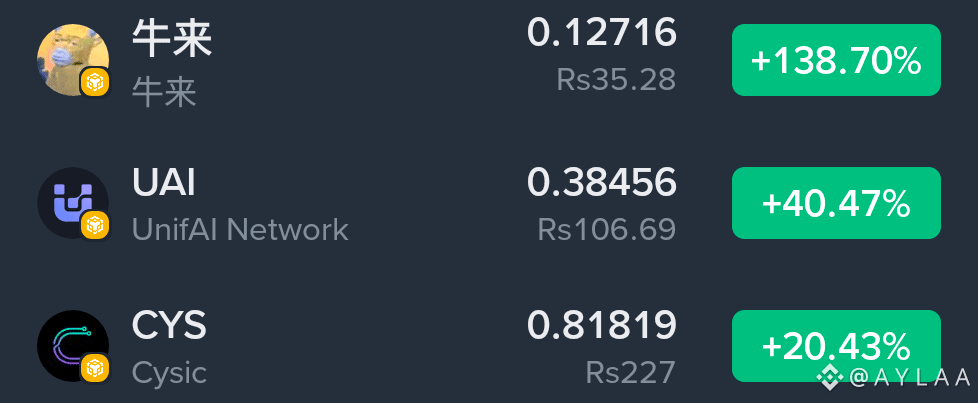
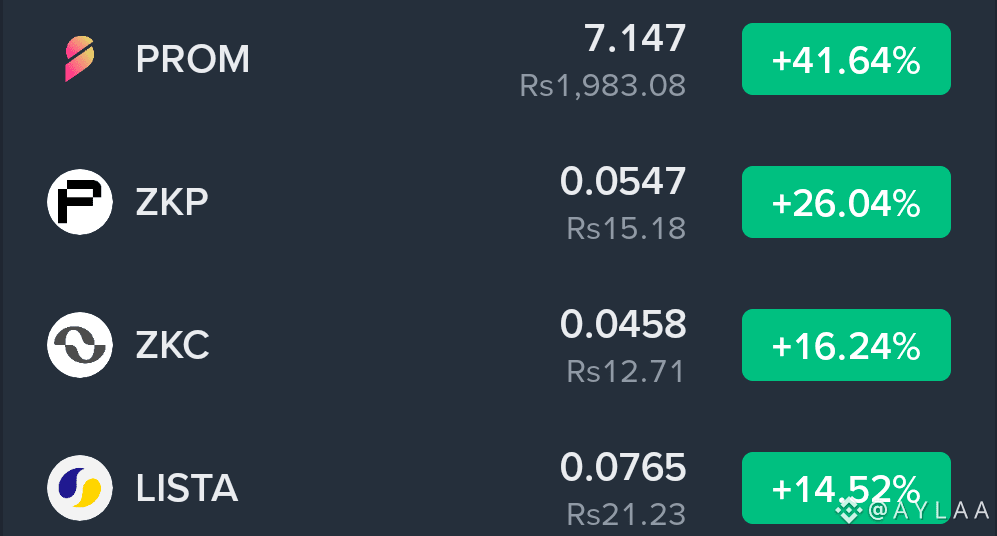
🚀 Altcoins are waking up!
$牛来 +138.70% 🔥
$UAI +40.47% 📈
$CYS +20.43% ⚡
Momentum is building—keep an eye on the charts and manage risk wisely. DYOR. 💎📊
{alpha}(560x0c69199c1562233640e0db5ce2c399a88eb507c7)
🚀 Altcoins are waking up!
$牛来 +138.70% 🔥
$UAI +40.47% 📈
$CYS +20.43% ⚡
Momentum is building—keep an eye on the charts and manage risk wisely. DYOR. 💎📊
$牛来 +138.70% 🔥
$UAI +40.47% 📈
$CYS +20.43% ⚡
Momentum is building—keep an eye on the charts and manage risk wisely. DYOR. 💎📊
525
·
--
Bullish
594
·
--
Bullish
#BitcoinSpotETFEnds9DayInflowStreak
After nine consecutive days of inflows, Bitcoin spot ETFs have finally seen the streak come to an end. 📉₿
It’s a small shift, but ETF flows remain one of the key indicators of institutional appetite for Bitcoin. The bigger question: temporary pause or a change in momentum?
#Bitcoin #BTC #BitcoinETF #Crypto #Markets
#BitcoinSpotETFEnds9DayInflowStreak
After nine consecutive days of inflows, Bitcoin spot ETFs have finally seen the streak come to an end. 📉₿
It’s a small shift, but ETF flows remain one of the key indicators of institutional appetite for Bitcoin. The bigger question: temporary pause or a change in momentum?
#Bitcoin #BTC #BitcoinETF #Crypto #Markets
After nine consecutive days of inflows, Bitcoin spot ETFs have finally seen the streak come to an end. 📉₿
It’s a small shift, but ETF flows remain one of the key indicators of institutional appetite for Bitcoin. The bigger question: temporary pause or a change in momentum?
#Bitcoin #BTC #BitcoinETF #Crypto #Markets

179
·
--
Bullish
#AntiQuantumBitcoinTransactionMinedOnMainnet
A major milestone for Bitcoin’s long-term security: an anti-quantum transaction has reportedly been mined on mainnet.
As quantum computing advances, protecting digital assets against future quantum attacks is becoming increasingly important. This is a reminder that Bitcoin’s security must evolve alongside technology. 🔐₿
#Bitcoin #QuantumComputing #Crypto #Blockchain
#AntiQuantumBitcoinTransactionMinedOnMainnet
A major milestone for Bitcoin’s long-term security: an anti-quantum transaction has reportedly been mined on mainnet.
As quantum computing advances, protecting digital assets against future quantum attacks is becoming increasingly important. This is a reminder that Bitcoin’s security must evolve alongside technology. 🔐₿
#Bitcoin #QuantumComputing #Crypto #Blockchain
A major milestone for Bitcoin’s long-term security: an anti-quantum transaction has reportedly been mined on mainnet.
As quantum computing advances, protecting digital assets against future quantum attacks is becoming increasingly important. This is a reminder that Bitcoin’s security must evolve alongside technology. 🔐₿
#Bitcoin #QuantumComputing #Crypto #Blockchain
2
224
·
--
Bullish
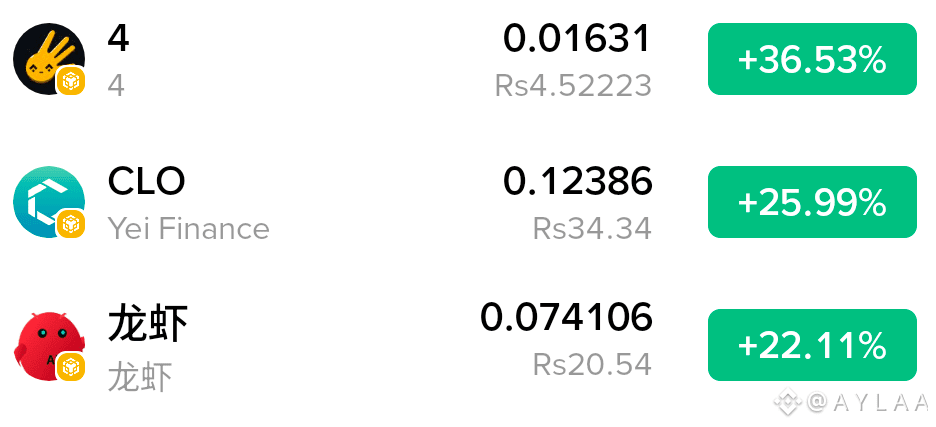
Today Top Alpha
$龙虾 $DEBIT $4
{alpha}(560x0a43fc31a73013089df59194872ecae4cae14444)
Today Top Alpha
$龙虾 $DEBIT $4
$龙虾 $DEBIT $4

1
1
970
·
--
Bullish
30K FOLLOWERS! 🎉
30,000 people and every single one means a lot. 🫶💛
A huge THANK YOU to everyone who has supported, followed, liked, shared, and been part of this journey.
Your love & support motivate me to keep learning, sharing and growing with this amazing crypto community. 🚀
#BinanceSquareTalks #Binanace #CZ #Thanks
30K FOLLOWERS! 🎉
30,000 people and every single one means a lot. 🫶💛
A huge THANK YOU to everyone who has supported, followed, liked, shared, and been part of this journey.
Your love & support motivate me to keep learning, sharing and growing with this amazing crypto community. 🚀
#BinanceSquareTalks #Binanace #CZ #Thanks
30,000 people and every single one means a lot. 🫶💛
A huge THANK YOU to everyone who has supported, followed, liked, shared, and been part of this journey.
Your love & support motivate me to keep learning, sharing and growing with this amazing crypto community. 🚀
#BinanceSquareTalks #Binanace #CZ #Thanks

1
1
3
278
·
--
Bullish
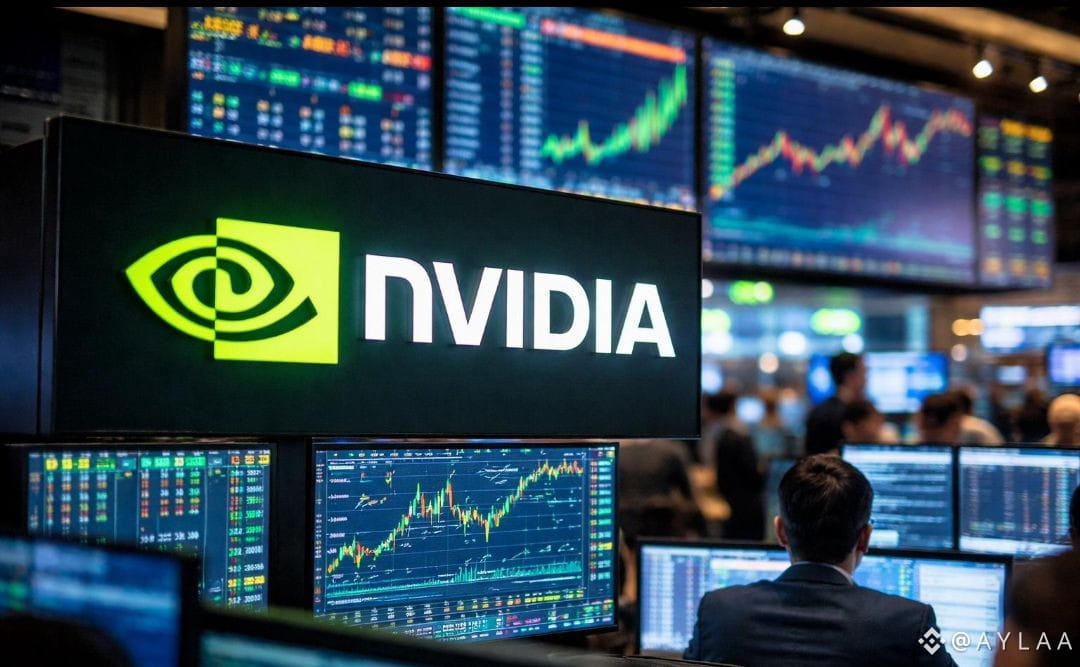
🚨 $NVDA Trading Explosion!
Nvidia reportedly traded $33.5B in just 140 minutes. 🤯
That’s an incredible level of market attention on the AI giant.
#NVDA #Nvidia #AI #Stocks #NvidiaRises8.74%AfterEarnings
🚨 $NVDA Trading Explosion!
Nvidia reportedly traded $33.5B in just 140 minutes. 🤯
That’s an incredible level of market attention on the AI giant.
#NVDA #Nvidia #AI #Stocks #NvidiaRises8.74%AfterEarnings
Nvidia reportedly traded $33.5B in just 140 minutes. 🤯
That’s an incredible level of market attention on the AI giant.
#NVDA #Nvidia #AI #Stocks #NvidiaRises8.74%AfterEarnings
1
243
·
--
Bullish
📈 Okta & CrowdStrike Surge on Earnings Beat!
Strong earnings results are sending both cybersecurity stocks higher as investors react to better-than-expected performance. 🔥
Is this the start of another cybersecurity rally? 👀
#Okta #CrowdStrike #Stocks #Cybersecurity #Earnings #OktaCrowdStrikeSurgeOnEarningsBeat
📈 Okta & CrowdStrike Surge on Earnings Beat!
Strong earnings results are sending both cybersecurity stocks higher as investors react to better-than-expected performance. 🔥
Is this the start of another cybersecurity rally? 👀
#Okta #CrowdStrike #Stocks #Cybersecurity #Earnings #OktaCrowdStrikeSurgeOnEarningsBeat
Strong earnings results are sending both cybersecurity stocks higher as investors react to better-than-expected performance. 🔥
Is this the start of another cybersecurity rally? 👀
#Okta #CrowdStrike #Stocks #Cybersecurity #Earnings #OktaCrowdStrikeSurgeOnEarningsBeat
408
Log in to explore more content
Join global crypto users on Binance Square
⚡️ Get latest and useful information about crypto.
💬 Trusted by the world’s largest crypto exchange.
👍 Discover real insights from verified creators.
Email / Phone number
Trending Topics
CanadaOSFISaysTokenizedDepositsEqualTraditionalDeposits
0 views
15 Discussing
👀 Don't ignore the institutional signal
Canada’s OSFI treatment of tokenized deposits shows blockchain technology is increasingly being discussed inside mainstream financial regulation.
For spot traders, the key is following adoption, liquidity and confirmed price action rather than chasing headlines.
Watch $BTC, $ETH, $BNB and $SOL. 📈 #CanadaOSFISaysTokenizedDepositsEqualTraditionalDeposits
CryptoMahibaloch
·0 Likes
·6 views
USBankCompletesCrossBorderPaymentPilotOnStellar
8,836 views
329 Discussing
NvidiaInTalksToInvestUpTo$10BInAnthropicIPO
599 views
36 Discussing