

#eurozone
eurozone
860,977 views
257 Discussing
Hot
Latest

·
--
Europe’s bond market saw a landmark disturbance today. The yield spread between France and Germany’s 10-year government bonds officially widened to 150 basis points—an all-time high for this spread since January 2012.
This spread indicator has long been regarded as a gauge of fiscal and political risk in the euro area’s core countries. The surge to a peak not seen in more than 14 years suggests that market concerns about France’s fiscal sustainability and the direction of its political situation are rapidly intensifying, with investors’ required risk-hedging premium clearly rising.
In traditional financial markets, when the France-Germany spread widens, it often exerts temporary downward pressure on the euro exchange rate and triggers a repricing across the European sovereign debt market. Capital becomes more inclined to flow into safer “haven” assets such as German bonds, putting the broader European liquidity environment to some uncertainty.
For the crypto market, the incubation of sovereign credit risk at the macro level often leads to cross-market funds reassessing asset allocations. Crypto assets represented by $BTC may face volatility as global risk-avoidance sentiment rises, or may be viewed by some investors as alternative, non-sovereign exposure amid concerns over fiat credit. The subsequent outlook still needs close monitoring in light of changes in overall liquidity. 👀
#BondYields #Eurozone #MacroEconomy
Europe’s bond market saw a landmark disturbance today. The yield spread between France and Germany’s 10-year government bonds officially widened to 150 basis points—an all-time high for this spread since January 2012.
This spread indicator has long been regarded as a gauge of fiscal and political risk in the euro area’s core countries. The surge to a peak not seen in more than 14 years suggests that market concerns about France’s fiscal sustainability and the direction of its political situation are rapidly intensifying, with investors’ required risk-hedging premium clearly rising.
In traditional financial markets, when the France-Germany spread widens, it often exerts temporary downward pressure on the euro exchange rate and triggers a repricing across the European sovereign debt market. Capital becomes more inclined to flow into safer “haven” assets such as German bonds, putting the broader European liquidity environment to some uncertainty.
For the crypto market, the incubation of sovereign credit risk at the macro level often leads to cross-market funds reassessing asset allocations. Crypto assets represented by $BTC may face volatility as global risk-avoidance sentiment rises, or may be viewed by some investors as alternative, non-sovereign exposure amid concerns over fiat credit. The subsequent outlook still needs close monitoring in light of changes in overall liquidity. 👀
#BondYields #Eurozone #MacroEconomy
This spread indicator has long been regarded as a gauge of fiscal and political risk in the euro area’s core countries. The surge to a peak not seen in more than 14 years suggests that market concerns about France’s fiscal sustainability and the direction of its political situation are rapidly intensifying, with investors’ required risk-hedging premium clearly rising.
In traditional financial markets, when the France-Germany spread widens, it often exerts temporary downward pressure on the euro exchange rate and triggers a repricing across the European sovereign debt market. Capital becomes more inclined to flow into safer “haven” assets such as German bonds, putting the broader European liquidity environment to some uncertainty.
For the crypto market, the incubation of sovereign credit risk at the macro level often leads to cross-market funds reassessing asset allocations. Crypto assets represented by $BTC may face volatility as global risk-avoidance sentiment rises, or may be viewed by some investors as alternative, non-sovereign exposure amid concerns over fiat credit. The subsequent outlook still needs close monitoring in light of changes in overall liquidity. 👀
#BondYields #Eurozone #MacroEconomy

Today’s European sovereign debt market has seen a major shift. According to the latest trading data, during the current European daytime session, the spread between the 10-year government bond yields of France and Germany has continued to widen, with a strong intraday break above the key 150-basis-point integer threshold. This crucial spread indicator directly sets a new record highest since the Eurozone sovereign debt crisis in January 2012, signaling that the core sovereign credit risk premium in the Eurozone is entering an extreme level of volatility unseen in more than a decade.
From a macro backdrop and technical indicators perspective, this widening spread is largely driven by the market’s concentrated pricing of uncertainty regarding France’s fiscal budget deficit and political gamesmanship. However, from a quantitative analysis standpoint, 150 basis points precisely corresponds to a dense strong-resistance zone on long-cycle charts. Momentum indicators have already deeply entered an extreme overbought state; historical experience suggests that when panic-driven premia are released within extreme ranges, it typically means that negative sentiment is moving into the final acceleration phase of topping exhaustion.
At the cross-asset macro level, this move is reshaping capital flow patterns. Although the surge in the spread exerts near-term technical downside pressure on the EUR/USD exchange rate and triggers a defensive rotation in European equities, it also accelerates the concentrated release of sovereign debt risk. As the most pessimistic market expectations are fully digested, once the spread is capped and falls back from the technical resistance level, cross-market arbitrage capital is likely to step in and effectively boost overall risk appetite.
For the crypto market, the renewed visibility of traditional fiat sovereign debt and fiscal stress further highlights the resilience of decentralized digital assets in asset allocation. When the sovereign credit spread tops out and traditional safe-haven sentiment begins to ease at the margin, macro liquidity will likely tilt again toward more high-beta, risk-on assets. Technical support for core assets such as $BTC will be further reinforced and attract additional inflows.🚀
#BondMarket #Eurozone #MacroEconomy
Today’s European sovereign debt market has seen a major shift. According to the latest trading data, during the current European daytime session, the spread between the 10-year government bond yields of France and Germany has continued to widen, with a strong intraday break above the key 150-basis-point integer threshold. This crucial spread indicator directly sets a new record highest since the Eurozone sovereign debt crisis in January 2012, signaling that the core sovereign credit risk premium in the Eurozone is entering an extreme level of volatility unseen in more than a decade.
From a macro backdrop and technical indicators perspective, this widening spread is largely driven by the market’s concentrated pricing of uncertainty regarding France’s fiscal budget deficit and political gamesmanship. However, from a quantitative analysis standpoint, 150 basis points precisely corresponds to a dense strong-resistance zone on long-cycle charts. Momentum indicators have already deeply entered an extreme overbought state; historical experience suggests that when panic-driven premia are released within extreme ranges, it typically means that negative sentiment is moving into the final acceleration phase of topping exhaustion.
At the cross-asset macro level, this move is reshaping capital flow patterns. Although the surge in the spread exerts near-term technical downside pressure on the EUR/USD exchange rate and triggers a defensive rotation in European equities, it also accelerates the concentrated release of sovereign debt risk. As the most pessimistic market expectations are fully digested, once the spread is capped and falls back from the technical resistance level, cross-market arbitrage capital is likely to step in and effectively boost overall risk appetite.
For the crypto market, the renewed visibility of traditional fiat sovereign debt and fiscal stress further highlights the resilience of decentralized digital assets in asset allocation. When the sovereign credit spread tops out and traditional safe-haven sentiment begins to ease at the margin, macro liquidity will likely tilt again toward more high-beta, risk-on assets. Technical support for core assets such as $BTC will be further reinforced and attract additional inflows.🚀
#BondMarket #Eurozone #MacroEconomy
From a macro backdrop and technical indicators perspective, this widening spread is largely driven by the market’s concentrated pricing of uncertainty regarding France’s fiscal budget deficit and political gamesmanship. However, from a quantitative analysis standpoint, 150 basis points precisely corresponds to a dense strong-resistance zone on long-cycle charts. Momentum indicators have already deeply entered an extreme overbought state; historical experience suggests that when panic-driven premia are released within extreme ranges, it typically means that negative sentiment is moving into the final acceleration phase of topping exhaustion.
At the cross-asset macro level, this move is reshaping capital flow patterns. Although the surge in the spread exerts near-term technical downside pressure on the EUR/USD exchange rate and triggers a defensive rotation in European equities, it also accelerates the concentrated release of sovereign debt risk. As the most pessimistic market expectations are fully digested, once the spread is capped and falls back from the technical resistance level, cross-market arbitrage capital is likely to step in and effectively boost overall risk appetite.
For the crypto market, the renewed visibility of traditional fiat sovereign debt and fiscal stress further highlights the resilience of decentralized digital assets in asset allocation. When the sovereign credit spread tops out and traditional safe-haven sentiment begins to ease at the margin, macro liquidity will likely tilt again toward more high-beta, risk-on assets. Technical support for core assets such as $BTC will be further reinforced and attract additional inflows.🚀
#BondMarket #Eurozone #MacroEconomy
80

European bond markets have recently experienced extreme volatility, with the spread between the 10-year French and German government bond yields widening sharply to 150 basis points. This spread level marks the highest record since the peak of the eurozone sovereign debt crisis in January 2012, indicating that the credit differentiation among the eurozone’s core member states is rapidly worsening.
This disruption is extremely dangerous and has gone far beyond the market’s widely held prior expectations. The France–Germany spread has long been seen as a barometer of European sovereign credit risk and fiscal health. The surge to a more than 14-year high suggests that investors are seriously concerned about France’s expansion of its fiscal deficit and political stability, and that the safe-haven premium on Europe’s core assets is being repriced.
From a traditional financial market perspective, an out-of-control sovereign bond spread would intensify the European Central Bank’s policy dilemma, suppress the euro’s exchange rate performance, and may force the ECB into a difficult trade-off between curbing inflation and preventing debt fragmentation. As Europe’s risk premium rises, global liquidity conditions face pressure to tighten passively, and safe-haven capital may accelerate its return to U.S. dollar assets.
For crypto assets, the rekindling of European sovereign debt risk will hit overall risk appetite in the short term. Under the macro gloom of deleveraging and tighter liquidity, risk assets such as $BTC face selling pressure and are unlikely to be able to insulate themselves in the near term; investors should be highly alert to the impact of macro black swans on liquidity. #SovereignDebt #Eurozone #MacroEconomics
European bond markets have recently experienced extreme volatility, with the spread between the 10-year French and German government bond yields widening sharply to 150 basis points. This spread level marks the highest record since the peak of the eurozone sovereign debt crisis in January 2012, indicating that the credit differentiation among the eurozone’s core member states is rapidly worsening.
This disruption is extremely dangerous and has gone far beyond the market’s widely held prior expectations. The France–Germany spread has long been seen as a barometer of European sovereign credit risk and fiscal health. The surge to a more than 14-year high suggests that investors are seriously concerned about France’s expansion of its fiscal deficit and political stability, and that the safe-haven premium on Europe’s core assets is being repriced.
From a traditional financial market perspective, an out-of-control sovereign bond spread would intensify the European Central Bank’s policy dilemma, suppress the euro’s exchange rate performance, and may force the ECB into a difficult trade-off between curbing inflation and preventing debt fragmentation. As Europe’s risk premium rises, global liquidity conditions face pressure to tighten passively, and safe-haven capital may accelerate its return to U.S. dollar assets.
For crypto assets, the rekindling of European sovereign debt risk will hit overall risk appetite in the short term. Under the macro gloom of deleveraging and tighter liquidity, risk assets such as $BTC face selling pressure and are unlikely to be able to insulate themselves in the near term; investors should be highly alert to the impact of macro black swans on liquidity. #SovereignDebt #Eurozone #MacroEconomics
This disruption is extremely dangerous and has gone far beyond the market’s widely held prior expectations. The France–Germany spread has long been seen as a barometer of European sovereign credit risk and fiscal health. The surge to a more than 14-year high suggests that investors are seriously concerned about France’s expansion of its fiscal deficit and political stability, and that the safe-haven premium on Europe’s core assets is being repriced.
From a traditional financial market perspective, an out-of-control sovereign bond spread would intensify the European Central Bank’s policy dilemma, suppress the euro’s exchange rate performance, and may force the ECB into a difficult trade-off between curbing inflation and preventing debt fragmentation. As Europe’s risk premium rises, global liquidity conditions face pressure to tighten passively, and safe-haven capital may accelerate its return to U.S. dollar assets.
For crypto assets, the rekindling of European sovereign debt risk will hit overall risk appetite in the short term. Under the macro gloom of deleveraging and tighter liquidity, risk assets such as $BTC face selling pressure and are unlikely to be able to insulate themselves in the near term; investors should be highly alert to the impact of macro black swans on liquidity. #SovereignDebt #Eurozone #MacroEconomics
5

·
--
The European bond market has just seen strong fluctuations as the yield spread on 10-year government bonds between France and Germany widened to 150 basis points. This is the widest spread recorded since January 2012 to date.
This record spread is raising concerns about financial fragmentation similar to the period of the Eurozone sovereign debt crisis. Investors have been continuously selling French bonds due to ongoing budget deficit pressure and unresolved domestic political instability.
These developments are putting direct downward pressure on the EUR and increasing the cost of raising capital across the bloc. Large inflows are trending toward safer assets such as German bonds or the US dollar.
For the crypto market, macroeconomic uncertainty in Europe may boost demand for decentralized assets like $BTC to hedge against systemic currency risk. However, short-term cautious sentiment may still limit new capital flowing into riskier markets.
#Eurozone #BondYields #MacroEconomics
The European bond market has just seen strong fluctuations as the yield spread on 10-year government bonds between France and Germany widened to 150 basis points. This is the widest spread recorded since January 2012 to date.
This record spread is raising concerns about financial fragmentation similar to the period of the Eurozone sovereign debt crisis. Investors have been continuously selling French bonds due to ongoing budget deficit pressure and unresolved domestic political instability.
These developments are putting direct downward pressure on the EUR and increasing the cost of raising capital across the bloc. Large inflows are trending toward safer assets such as German bonds or the US dollar.
For the crypto market, macroeconomic uncertainty in Europe may boost demand for decentralized assets like $BTC to hedge against systemic currency risk. However, short-term cautious sentiment may still limit new capital flowing into riskier markets.
#Eurozone #BondYields #MacroEconomics
This record spread is raising concerns about financial fragmentation similar to the period of the Eurozone sovereign debt crisis. Investors have been continuously selling French bonds due to ongoing budget deficit pressure and unresolved domestic political instability.
These developments are putting direct downward pressure on the EUR and increasing the cost of raising capital across the bloc. Large inflows are trending toward safer assets such as German bonds or the US dollar.
For the crypto market, macroeconomic uncertainty in Europe may boost demand for decentralized assets like $BTC to hedge against systemic currency risk. However, short-term cautious sentiment may still limit new capital flowing into riskier markets.
#Eurozone #BondYields #MacroEconomics
16
·
--
In today’s European financial markets, widespread selling pressure has pushed major stock indexes sharply lower into the red. Most notably, the spread in yields on 10-year government bonds between France and Germany has widened to 128 basis points, reaching its highest level since 2012.
This development reflects a sudden spike in risk premia for France’s public debt amid rising concerns about escalating fiscal instability across the region. The record spread over the past decade-plus brings back pressures from the Eurozone sovereign debt crisis period, making global investors particularly cautious.
A wave of risk aversion is weighing on financial markets as UK’s FTSE 100 falls 1.1% and Germany’s DAX drops 0.7%. Money flows tend to flee European risk assets in search of safer havens, putting pressure on a weakening EUR and supporting the strength of the USD.
For the cryptocurrency market, macro risk-averse sentiment could tighten liquidity in the short term, creating adjustment pressure on $BTC. However, if fiscal tensions in Europe continue to spread, the defensive, decentralized asset position of crypto could attract shifting capital flows over the medium term.
#Eurozone #BondYields #GlobalEconomy
In today’s European financial markets, widespread selling pressure has pushed major stock indexes sharply lower into the red. Most notably, the spread in yields on 10-year government bonds between France and Germany has widened to 128 basis points, reaching its highest level since 2012.
This development reflects a sudden spike in risk premia for France’s public debt amid rising concerns about escalating fiscal instability across the region. The record spread over the past decade-plus brings back pressures from the Eurozone sovereign debt crisis period, making global investors particularly cautious.
A wave of risk aversion is weighing on financial markets as UK’s FTSE 100 falls 1.1% and Germany’s DAX drops 0.7%. Money flows tend to flee European risk assets in search of safer havens, putting pressure on a weakening EUR and supporting the strength of the USD.
For the cryptocurrency market, macro risk-averse sentiment could tighten liquidity in the short term, creating adjustment pressure on $BTC . However, if fiscal tensions in Europe continue to spread, the defensive, decentralized asset position of crypto could attract shifting capital flows over the medium term.
#Eurozone #BondYields #GlobalEconomy
This development reflects a sudden spike in risk premia for France’s public debt amid rising concerns about escalating fiscal instability across the region. The record spread over the past decade-plus brings back pressures from the Eurozone sovereign debt crisis period, making global investors particularly cautious.
A wave of risk aversion is weighing on financial markets as UK’s FTSE 100 falls 1.1% and Germany’s DAX drops 0.7%. Money flows tend to flee European risk assets in search of safer havens, putting pressure on a weakening EUR and supporting the strength of the USD.
For the cryptocurrency market, macro risk-averse sentiment could tighten liquidity in the short term, creating adjustment pressure on $BTC . However, if fiscal tensions in Europe continue to spread, the defensive, decentralized asset position of crypto could attract shifting capital flows over the medium term.
#Eurozone #BondYields #GlobalEconomy
108

·
--
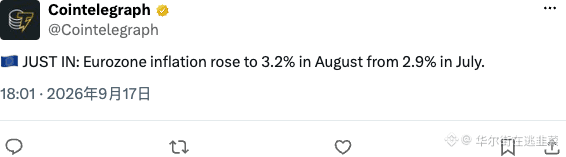
The ECB has just shown some breathing room: in August, inflation rebounded directly to 3.2%, up from the prior 2.9%. Rate-cut expectations now have to be pushed further back again; the euro strengthens and the dollar faces pressure, and risk assets will likely wobble in the short term. Don’t rush to bottom-fish—inflation is something that cures all kinds of defiance.
$BTC $ETH #Eurozone #Inflation #ECB #BTC
The ECB has just shown some breathing room: in August, inflation rebounded directly to 3.2%, up from the prior 2.9%. Rate-cut expectations now have to be pushed further back again; the euro strengthens and the dollar faces pressure, and risk assets will likely wobble in the short term. Don’t rush to bottom-fish—inflation is something that cures all kinds of defiance.
$BTC $ETH #Eurozone #Inflation #ECB #BTC
$BTC $ETH #Eurozone #Inflation #ECB #BTC
226
·
--
The European Economic Research Centre (ZEW) will release the German and Eurozone economic sentiment indices for September in just a few minutes, and the European Union’s statistics office will simultaneously publish the Eurozone’s July seasonally adjusted trade balance data. As the locomotive of the European economy, Germany’s recent leading indicators have been closely watched by global markets.
These figures are worth paying attention to because the market is currently placing high focus on the European Central Bank’s subsequent rate-cut path. If Germany and the Eurozone’s economic sentiment indices continue to remain in a weak range, it would further solidify expectations of a sluggish European economic recovery; conversely, if the data shows an upside surprise and warms beyond expectations, it could help correct the previously overly pessimistic recession sentiment.
From a macro backdrop perspective, fluctuations in European economic data often feed directly into the EUR/USD exchange rate, which in turn can lead to short-term repricing in the U.S. Dollar Index (DXY) and yields on European core government bonds. During the key standoff periods across the policy cycles in Europe and the U.S., even minor FX market adjustments can indirectly affect global risk appetite in both commodities and equities.
For the crypto market $BTC , while this kind of European macro data is not the core engine that determines the larger trend, if it triggers sharp swings in FX and U.S. dollar liquidity, it can still set off a chain reaction in traders’ risk-off sentiment and leveraged positions in the short term. Price action may attempt a pulse-like probe, so it’s advisable to watch more and act less—observe rationally.📊
#Eurozone #ZEWIndex #MacroEconomy
The European Economic Research Centre (ZEW) will release the German and Eurozone economic sentiment indices for September in just a few minutes, and the European Union’s statistics office will simultaneously publish the Eurozone’s July seasonally adjusted trade balance data. As the locomotive of the European economy, Germany’s recent leading indicators have been closely watched by global markets.
These figures are worth paying attention to because the market is currently placing high focus on the European Central Bank’s subsequent rate-cut path. If Germany and the Eurozone’s economic sentiment indices continue to remain in a weak range, it would further solidify expectations of a sluggish European economic recovery; conversely, if the data shows an upside surprise and warms beyond expectations, it could help correct the previously overly pessimistic recession sentiment.
From a macro backdrop perspective, fluctuations in European economic data often feed directly into the EUR/USD exchange rate, which in turn can lead to short-term repricing in the U.S. Dollar Index (DXY) and yields on European core government bonds. During the key standoff periods across the policy cycles in Europe and the U.S., even minor FX market adjustments can indirectly affect global risk appetite in both commodities and equities.
For the crypto market $BTC , while this kind of European macro data is not the core engine that determines the larger trend, if it triggers sharp swings in FX and U.S. dollar liquidity, it can still set off a chain reaction in traders’ risk-off sentiment and leveraged positions in the short term. Price action may attempt a pulse-like probe, so it’s advisable to watch more and act less—observe rationally.📊
#Eurozone #ZEWIndex #MacroEconomy
These figures are worth paying attention to because the market is currently placing high focus on the European Central Bank’s subsequent rate-cut path. If Germany and the Eurozone’s economic sentiment indices continue to remain in a weak range, it would further solidify expectations of a sluggish European economic recovery; conversely, if the data shows an upside surprise and warms beyond expectations, it could help correct the previously overly pessimistic recession sentiment.
From a macro backdrop perspective, fluctuations in European economic data often feed directly into the EUR/USD exchange rate, which in turn can lead to short-term repricing in the U.S. Dollar Index (DXY) and yields on European core government bonds. During the key standoff periods across the policy cycles in Europe and the U.S., even minor FX market adjustments can indirectly affect global risk appetite in both commodities and equities.
For the crypto market $BTC , while this kind of European macro data is not the core engine that determines the larger trend, if it triggers sharp swings in FX and U.S. dollar liquidity, it can still set off a chain reaction in traders’ risk-off sentiment and leveraged positions in the short term. Price action may attempt a pulse-like probe, so it’s advisable to watch more and act less—observe rationally.📊
#Eurozone #ZEWIndex #MacroEconomy
5
The European Economic Research Centre (ZEW) will release today Germany’s and the euro zone’s economic sentiment index for September, and at the same time, the euro zone’s trade data for July after seasonal adjustment will also be published. As the locomotive of the European economy, Germany’s recent leading indicators have been a key reference for measuring the growth momentum across the European continent.
The market is generally cautious about the outlook for the European economy. Continued pressure on the manufacturing sector and weak external demand pose severe challenges to the euro zone’s fundamentals. If the ZEW economic sentiment index released this time declines further, it will reinforce market concerns that the German—and even the entire euro zone—economy could fall into stagnation or even an outright recession cycle. It would also place the European Central Bank in a tougher dilemma when deciding on its subsequent interest-rate path.
From a cross-asset performance perspective, soft macro data typically weighs on the euro’s exchange rate, prompting safe-haven funds to return to the US dollar and thereby pushing up the US Dollar Index. Against the backdrop of insufficient growth momentum in Europe and repeated bouts of tug-of-war over global liquidity expectations, bond yields may see unexpected fluctuations. Uncertainty at the macro level will directly suppress the upside potential for risk-asset valuation recovery.
For the crypto market, if European macro data keeps deteriorating and causes the US dollar to remain strong, crypto assets in the short term will face pressure from tighter liquidity. Investors should be alert to market risk appetite being knocked back and triggering passive selling pressure. In the absence of a fresh liquidity injection, major assets such as $BTC may continue to trade in a choppy, pressured range. It is recommended to maintain a cautious position size.
#MacroEconomics #Eurozone #ZEWIndex
The European Economic Research Centre (ZEW) will release today Germany’s and the euro zone’s economic sentiment index for September, and at the same time, the euro zone’s trade data for July after seasonal adjustment will also be published. As the locomotive of the European economy, Germany’s recent leading indicators have been a key reference for measuring the growth momentum across the European continent.
The market is generally cautious about the outlook for the European economy. Continued pressure on the manufacturing sector and weak external demand pose severe challenges to the euro zone’s fundamentals. If the ZEW economic sentiment index released this time declines further, it will reinforce market concerns that the German—and even the entire euro zone—economy could fall into stagnation or even an outright recession cycle. It would also place the European Central Bank in a tougher dilemma when deciding on its subsequent interest-rate path.
From a cross-asset performance perspective, soft macro data typically weighs on the euro’s exchange rate, prompting safe-haven funds to return to the US dollar and thereby pushing up the US Dollar Index. Against the backdrop of insufficient growth momentum in Europe and repeated bouts of tug-of-war over global liquidity expectations, bond yields may see unexpected fluctuations. Uncertainty at the macro level will directly suppress the upside potential for risk-asset valuation recovery.
For the crypto market, if European macro data keeps deteriorating and causes the US dollar to remain strong, crypto assets in the short term will face pressure from tighter liquidity. Investors should be alert to market risk appetite being knocked back and triggering passive selling pressure. In the absence of a fresh liquidity injection, major assets such as $BTC may continue to trade in a choppy, pressured range. It is recommended to maintain a cautious position size.
#MacroEconomics #Eurozone #ZEWIndex
The market is generally cautious about the outlook for the European economy. Continued pressure on the manufacturing sector and weak external demand pose severe challenges to the euro zone’s fundamentals. If the ZEW economic sentiment index released this time declines further, it will reinforce market concerns that the German—and even the entire euro zone—economy could fall into stagnation or even an outright recession cycle. It would also place the European Central Bank in a tougher dilemma when deciding on its subsequent interest-rate path.
From a cross-asset performance perspective, soft macro data typically weighs on the euro’s exchange rate, prompting safe-haven funds to return to the US dollar and thereby pushing up the US Dollar Index. Against the backdrop of insufficient growth momentum in Europe and repeated bouts of tug-of-war over global liquidity expectations, bond yields may see unexpected fluctuations. Uncertainty at the macro level will directly suppress the upside potential for risk-asset valuation recovery.
For the crypto market, if European macro data keeps deteriorating and causes the US dollar to remain strong, crypto assets in the short term will face pressure from tighter liquidity. Investors should be alert to market risk appetite being knocked back and triggering passive selling pressure. In the absence of a fresh liquidity injection, major assets such as $BTC may continue to trade in a choppy, pressured range. It is recommended to maintain a cautious position size.
#MacroEconomics #Eurozone #ZEWIndex
59
German think tank ZEW will soon release, in Central European Time in the morning, Germany’s and the euro area’s economic sentiment indices for September. Meanwhile, the European Central Bank and Eurostat will also publish the euro area’s revised July trade balance data. As the locomotive of the European economy, Germany’s forward-looking sentiment data has long been a key barometer for assessing the overall rebound momentum across Europe.
From a technical and macro-expectations perspective, the market has already priced in a slowdown in the European economy. If the ZEW index shows signs of bottoming and recovery at low levels, it would directly validate the logic that negative fundamentals in Europe have played out. With the marginal improvement in trade data as support, this can help bolster market confidence in a soft landing for non-USD economies, breaking the suppressive environment created by the one-way strengthening of the U.S. dollar.
On the current trading tape, if the data come in better than expected, the EUR/USD exchange rate could start a technical rebound around key support levels, which in turn would weigh on the upside momentum of the U.S. Dollar Index (DXY) at elevated levels. A phase of easing expectations for U.S. dollar liquidity often triggers a synchronized rebound in traditional risk assets and commodities, providing stronger support for global cross-market risk appetite.
For the crypto market, a pullback in the U.S. dollar index directly opens the path of least resistance for risk assets led by $BTC to move higher. On-chain capital and bullish momentum are building in a critical zone dense with key moving averages. Once the macro risk premium fades, liquidity is likely to quickly flow back into crypto, driving major coins to break above the upper bound of their consolidation range and extend the uptrend.
#ZEW #Eurozone #MacroEconomics
German think tank ZEW will soon release, in Central European Time in the morning, Germany’s and the euro area’s economic sentiment indices for September. Meanwhile, the European Central Bank and Eurostat will also publish the euro area’s revised July trade balance data. As the locomotive of the European economy, Germany’s forward-looking sentiment data has long been a key barometer for assessing the overall rebound momentum across Europe.
From a technical and macro-expectations perspective, the market has already priced in a slowdown in the European economy. If the ZEW index shows signs of bottoming and recovery at low levels, it would directly validate the logic that negative fundamentals in Europe have played out. With the marginal improvement in trade data as support, this can help bolster market confidence in a soft landing for non-USD economies, breaking the suppressive environment created by the one-way strengthening of the U.S. dollar.
On the current trading tape, if the data come in better than expected, the EUR/USD exchange rate could start a technical rebound around key support levels, which in turn would weigh on the upside momentum of the U.S. Dollar Index (DXY) at elevated levels. A phase of easing expectations for U.S. dollar liquidity often triggers a synchronized rebound in traditional risk assets and commodities, providing stronger support for global cross-market risk appetite.
For the crypto market, a pullback in the U.S. dollar index directly opens the path of least resistance for risk assets led by $BTC to move higher. On-chain capital and bullish momentum are building in a critical zone dense with key moving averages. Once the macro risk premium fades, liquidity is likely to quickly flow back into crypto, driving major coins to break above the upper bound of their consolidation range and extend the uptrend.
#ZEW #Eurozone #MacroEconomics
From a technical and macro-expectations perspective, the market has already priced in a slowdown in the European economy. If the ZEW index shows signs of bottoming and recovery at low levels, it would directly validate the logic that negative fundamentals in Europe have played out. With the marginal improvement in trade data as support, this can help bolster market confidence in a soft landing for non-USD economies, breaking the suppressive environment created by the one-way strengthening of the U.S. dollar.
On the current trading tape, if the data come in better than expected, the EUR/USD exchange rate could start a technical rebound around key support levels, which in turn would weigh on the upside momentum of the U.S. Dollar Index (DXY) at elevated levels. A phase of easing expectations for U.S. dollar liquidity often triggers a synchronized rebound in traditional risk assets and commodities, providing stronger support for global cross-market risk appetite.
For the crypto market, a pullback in the U.S. dollar index directly opens the path of least resistance for risk assets led by $BTC to move higher. On-chain capital and bullish momentum are building in a critical zone dense with key moving averages. Once the macro risk premium fades, liquidity is likely to quickly flow back into crypto, driving major coins to break above the upper bound of their consolidation range and extend the uptrend.
#ZEW #Eurozone #MacroEconomics
62
·
--
The European financial market is focusing attention on key economic data to be released today, including Germany’s ZEW Economic Sentiment index for September and the Eurozone region, along with the bloc’s adjusted trade balance for July.
Germany has long been the economic engine of Europe, but it is currently facing significant downturn pressures from manufacturing and energy costs. As a result, the ZEW index serves as an early indicator of expectations for growth among experts and institutional investors. Any weakness beyond forecasts would further reinforce concerns about the Eurozone’s worsening slowdown.
For traditional markets, this outcome could directly affect the EUR and expectations of ECB rate cuts in upcoming meetings. If bearish sentiment increases, the EUR may come under downward pressure, prompting capital flows to seek safety in the USD or government bonds.
For the crypto market, the strength of the US dollar (DXY) is always a crucial macro factor shaping risk-driven capital flows. When a weakening European economy helps keep the USD in a dominant position, liquidity for assets such as $BTC c could face obstacles in the short term before genuine policy easing releases catalysts. 📊
#Eurozone #ZEW #MacroEconomy
The European financial market is focusing attention on key economic data to be released today, including Germany’s ZEW Economic Sentiment index for September and the Eurozone region, along with the bloc’s adjusted trade balance for July.
Germany has long been the economic engine of Europe, but it is currently facing significant downturn pressures from manufacturing and energy costs. As a result, the ZEW index serves as an early indicator of expectations for growth among experts and institutional investors. Any weakness beyond forecasts would further reinforce concerns about the Eurozone’s worsening slowdown.
For traditional markets, this outcome could directly affect the EUR and expectations of ECB rate cuts in upcoming meetings. If bearish sentiment increases, the EUR may come under downward pressure, prompting capital flows to seek safety in the USD or government bonds.
For the crypto market, the strength of the US dollar (DXY) is always a crucial macro factor shaping risk-driven capital flows. When a weakening European economy helps keep the USD in a dominant position, liquidity for assets such as $BTC c could face obstacles in the short term before genuine policy easing releases catalysts. 📊
#Eurozone #ZEW #MacroEconomy
Germany has long been the economic engine of Europe, but it is currently facing significant downturn pressures from manufacturing and energy costs. As a result, the ZEW index serves as an early indicator of expectations for growth among experts and institutional investors. Any weakness beyond forecasts would further reinforce concerns about the Eurozone’s worsening slowdown.
For traditional markets, this outcome could directly affect the EUR and expectations of ECB rate cuts in upcoming meetings. If bearish sentiment increases, the EUR may come under downward pressure, prompting capital flows to seek safety in the USD or government bonds.
For the crypto market, the strength of the US dollar (DXY) is always a crucial macro factor shaping risk-driven capital flows. When a weakening European economy helps keep the USD in a dominant position, liquidity for assets such as $BTC c could face obstacles in the short term before genuine policy easing releases catalysts. 📊
#Eurozone #ZEW #MacroEconomy
76
European bond yields saw dramatic fluctuations. During the trading day, the German 10-year government bond yield—serving as a benchmark for Europe—rose sharply by 40 basis points to 3.5723%, immediately setting a new record high since June 2009. This key indicator breaking the level reached in the past fifteen years shows that Europe’s core sovereign debt market is under heavy sell-off pressure, with interest-rate expectations undergoing a significant repricing.
The main logic behind this move is that market pricing of the European Central Bank maintaining a prolonged high-interest-rate environment has become increasingly firm. Even though long-term capital expenditures in sectors such as technology are still moving forward, macro factors—persistent inflation resilience and pressure from sovereign debt supply—are forcing the yield center of gravity higher. Earlier expectations for an overly rapid rate cut clearly proved too optimistic. Benchmark yields hitting their highest level in more than a decade indicates that global capital costs will likely remain high for a considerable period.
From the perspective of traditional financial markets, the surge in Germany’s benchmark yield will directly lift borrowing costs across Europe and even globally, further weighing on valuation room for risk assets such as stocks. With the risk-free rate staying elevated, the trend of liquidity shifting out of high-valuation growth segments is accelerating. Meanwhile, widening credit spreads face the risk of further deterioration, and the macro liquidity environment is in a phase of genuine tightening.
For the cryptocurrency market, the strong performance of Europe’s benchmark rates is a macro headwind worth watching closely. When traditional fixed-income assets can deliver a rare, risk-free return seen over the past decade or more, the spillover of institutional capital into high-volatility risk assets such as crypto will be severely suppressed. If global liquidity continues to come under pressure, core assets such as $BTC may face severe tests in the near term, including liquidity depletion and valuation stress.
#BondYields #MacroEconomy #Eurozone
European bond yields saw dramatic fluctuations. During the trading day, the German 10-year government bond yield—serving as a benchmark for Europe—rose sharply by 40 basis points to 3.5723%, immediately setting a new record high since June 2009. This key indicator breaking the level reached in the past fifteen years shows that Europe’s core sovereign debt market is under heavy sell-off pressure, with interest-rate expectations undergoing a significant repricing.
The main logic behind this move is that market pricing of the European Central Bank maintaining a prolonged high-interest-rate environment has become increasingly firm. Even though long-term capital expenditures in sectors such as technology are still moving forward, macro factors—persistent inflation resilience and pressure from sovereign debt supply—are forcing the yield center of gravity higher. Earlier expectations for an overly rapid rate cut clearly proved too optimistic. Benchmark yields hitting their highest level in more than a decade indicates that global capital costs will likely remain high for a considerable period.
From the perspective of traditional financial markets, the surge in Germany’s benchmark yield will directly lift borrowing costs across Europe and even globally, further weighing on valuation room for risk assets such as stocks. With the risk-free rate staying elevated, the trend of liquidity shifting out of high-valuation growth segments is accelerating. Meanwhile, widening credit spreads face the risk of further deterioration, and the macro liquidity environment is in a phase of genuine tightening.
For the cryptocurrency market, the strong performance of Europe’s benchmark rates is a macro headwind worth watching closely. When traditional fixed-income assets can deliver a rare, risk-free return seen over the past decade or more, the spillover of institutional capital into high-volatility risk assets such as crypto will be severely suppressed. If global liquidity continues to come under pressure, core assets such as $BTC may face severe tests in the near term, including liquidity depletion and valuation stress.
#BondYields #MacroEconomy #Eurozone
The main logic behind this move is that market pricing of the European Central Bank maintaining a prolonged high-interest-rate environment has become increasingly firm. Even though long-term capital expenditures in sectors such as technology are still moving forward, macro factors—persistent inflation resilience and pressure from sovereign debt supply—are forcing the yield center of gravity higher. Earlier expectations for an overly rapid rate cut clearly proved too optimistic. Benchmark yields hitting their highest level in more than a decade indicates that global capital costs will likely remain high for a considerable period.
From the perspective of traditional financial markets, the surge in Germany’s benchmark yield will directly lift borrowing costs across Europe and even globally, further weighing on valuation room for risk assets such as stocks. With the risk-free rate staying elevated, the trend of liquidity shifting out of high-valuation growth segments is accelerating. Meanwhile, widening credit spreads face the risk of further deterioration, and the macro liquidity environment is in a phase of genuine tightening.
For the cryptocurrency market, the strong performance of Europe’s benchmark rates is a macro headwind worth watching closely. When traditional fixed-income assets can deliver a rare, risk-free return seen over the past decade or more, the spillover of institutional capital into high-volatility risk assets such as crypto will be severely suppressed. If global liquidity continues to come under pressure, core assets such as $BTC may face severe tests in the near term, including liquidity depletion and valuation stress.
#BondYields #MacroEconomy #Eurozone
8
·
--
The European bond market has just recorded a sharp fluctuation as the German government bond yield with a 10-year maturity increased by 40 basis points, reaching 3.5723%. This is the highest yield level for the region's debt benchmark (Eurozone) since June 2009.
This development is especially important because German bonds play the role of a risk pricing reference asset for the entire European financial market. The 15-year fixed-income yield reflects expectations for a persistently higher yield environment, lasting longer than what the European Central Bank (ECB) projects, amid the backdrop of inflation pressures that cannot yet be fully cooled to the target level.
The jump in yields puts direct pressure on global stock markets and increases financing costs for businesses. The USD and EUR exchange rates may swing sharply due to interest-rate differentials, while capital seeking “safe-haven” tends to favor the bond market instead of other traditional investment channels.
For crypto, rising interest-rate pressure in major economies continually creates barriers for riskier capital such as Bitcoin and Altcoins ($BTC and Altcoin). Low macro liquidity—meaning new money flowing into the market is more limited—causes crypto prices to face short-term adjustment shocks before new growth momentum is found.
#Eurozone #BondYields #ECB
The European bond market has just recorded a sharp fluctuation as the German government bond yield with a 10-year maturity increased by 40 basis points, reaching 3.5723%. This is the highest yield level for the region's debt benchmark (Eurozone) since June 2009.
This development is especially important because German bonds play the role of a risk pricing reference asset for the entire European financial market. The 15-year fixed-income yield reflects expectations for a persistently higher yield environment, lasting longer than what the European Central Bank (ECB) projects, amid the backdrop of inflation pressures that cannot yet be fully cooled to the target level.
The jump in yields puts direct pressure on global stock markets and increases financing costs for businesses. The USD and EUR exchange rates may swing sharply due to interest-rate differentials, while capital seeking “safe-haven” tends to favor the bond market instead of other traditional investment channels.
For crypto, rising interest-rate pressure in major economies continually creates barriers for riskier capital such as Bitcoin and Altcoins ($BTC and Altcoin). Low macro liquidity—meaning new money flowing into the market is more limited—causes crypto prices to face short-term adjustment shocks before new growth momentum is found.
#Eurozone #BondYields #ECB
This development is especially important because German bonds play the role of a risk pricing reference asset for the entire European financial market. The 15-year fixed-income yield reflects expectations for a persistently higher yield environment, lasting longer than what the European Central Bank (ECB) projects, amid the backdrop of inflation pressures that cannot yet be fully cooled to the target level.
The jump in yields puts direct pressure on global stock markets and increases financing costs for businesses. The USD and EUR exchange rates may swing sharply due to interest-rate differentials, while capital seeking “safe-haven” tends to favor the bond market instead of other traditional investment channels.
For crypto, rising interest-rate pressure in major economies continually creates barriers for riskier capital such as Bitcoin and Altcoins ($BTC and Altcoin). Low macro liquidity—meaning new money flowing into the market is more limited—causes crypto prices to face short-term adjustment shocks before new growth momentum is found.
#Eurozone #BondYields #ECB
3
The European statistical office today released key macroeconomic revision data for the euro area’s second quarter. The data show that the euro area’s GDP year-on-year final figure for the second quarter came in at 1.2%, higher than the market-wide expectation of 1.00% and the previous reading of 1.00%. At the same time, second-quarter seasonally adjusted employment levels recorded 0.1% quarter-on-quarter, matching both expectations and the prior figure. On the surface, despite multiple geopolitical pressures and a high interest-rate environment, Europe’s economy still displays a certain degree of resilience and has not slipped into a technical recession.
However, when examining the deeper macroeconomic logic, this seemingly upbeat set of economic and employment data is not entirely beneficial for the current macro liquidity environment. GDP’s upside rebound to 1.2%, alongside a sluggish but ongoing expansion in the labor market, suggests that the risk of sticky underlying inflation facing the European Central Bank (ECB) remains a concern that cannot be ignored. The market’s prior optimistic pricing that the ECB will enter a continuous, rapid rate-cutting cycle is very likely to be revised in the face of such resilience-favoring data, further compressing the space for a shift toward easier policy.
In traditional financial markets, the stronger-than-expected economic data would support a strengthening of the euro exchange rate and provide upward support to yields on Europe’s core sovereign bonds. Against the complex backdrop of the policy tug-of-war between the U.S. and European central banks, if the ECB slows the pace of easing due to economic resilience, the downward headwind for global long-end risk-free rates would become significantly stronger. For risk assets whose valuations are already elevated and that rely extremely heavily on abundant global liquidity, overheated or overly resilient macro data can instead create potential pressure from higher discount rates.
For the crypto market, this implies that in the short term, there is little sign of incremental liquidity arising from large-scale, coordinated easing by global central banks. With the tail effects of macro tightening likely to persist, risk assets such as $BTC will continue to face suppression from tighter macro liquidity, and bulls’ positioning lacks strong catalysts. Investors, when confronted with seemingly optimistic economic data, should therefore be more alert to the risk of liquidity contraction caused by interest rates staying in restrictive territory for longer.
#eurozone #GDP #ECB
The European statistical office today released key macroeconomic revision data for the euro area’s second quarter. The data show that the euro area’s GDP year-on-year final figure for the second quarter came in at 1.2%, higher than the market-wide expectation of 1.00% and the previous reading of 1.00%. At the same time, second-quarter seasonally adjusted employment levels recorded 0.1% quarter-on-quarter, matching both expectations and the prior figure. On the surface, despite multiple geopolitical pressures and a high interest-rate environment, Europe’s economy still displays a certain degree of resilience and has not slipped into a technical recession.
However, when examining the deeper macroeconomic logic, this seemingly upbeat set of economic and employment data is not entirely beneficial for the current macro liquidity environment. GDP’s upside rebound to 1.2%, alongside a sluggish but ongoing expansion in the labor market, suggests that the risk of sticky underlying inflation facing the European Central Bank (ECB) remains a concern that cannot be ignored. The market’s prior optimistic pricing that the ECB will enter a continuous, rapid rate-cutting cycle is very likely to be revised in the face of such resilience-favoring data, further compressing the space for a shift toward easier policy.
In traditional financial markets, the stronger-than-expected economic data would support a strengthening of the euro exchange rate and provide upward support to yields on Europe’s core sovereign bonds. Against the complex backdrop of the policy tug-of-war between the U.S. and European central banks, if the ECB slows the pace of easing due to economic resilience, the downward headwind for global long-end risk-free rates would become significantly stronger. For risk assets whose valuations are already elevated and that rely extremely heavily on abundant global liquidity, overheated or overly resilient macro data can instead create potential pressure from higher discount rates.
For the crypto market, this implies that in the short term, there is little sign of incremental liquidity arising from large-scale, coordinated easing by global central banks. With the tail effects of macro tightening likely to persist, risk assets such as $BTC will continue to face suppression from tighter macro liquidity, and bulls’ positioning lacks strong catalysts. Investors, when confronted with seemingly optimistic economic data, should therefore be more alert to the risk of liquidity contraction caused by interest rates staying in restrictive territory for longer.
#eurozone #GDP #ECB
However, when examining the deeper macroeconomic logic, this seemingly upbeat set of economic and employment data is not entirely beneficial for the current macro liquidity environment. GDP’s upside rebound to 1.2%, alongside a sluggish but ongoing expansion in the labor market, suggests that the risk of sticky underlying inflation facing the European Central Bank (ECB) remains a concern that cannot be ignored. The market’s prior optimistic pricing that the ECB will enter a continuous, rapid rate-cutting cycle is very likely to be revised in the face of such resilience-favoring data, further compressing the space for a shift toward easier policy.
In traditional financial markets, the stronger-than-expected economic data would support a strengthening of the euro exchange rate and provide upward support to yields on Europe’s core sovereign bonds. Against the complex backdrop of the policy tug-of-war between the U.S. and European central banks, if the ECB slows the pace of easing due to economic resilience, the downward headwind for global long-end risk-free rates would become significantly stronger. For risk assets whose valuations are already elevated and that rely extremely heavily on abundant global liquidity, overheated or overly resilient macro data can instead create potential pressure from higher discount rates.
For the crypto market, this implies that in the short term, there is little sign of incremental liquidity arising from large-scale, coordinated easing by global central banks. With the tail effects of macro tightening likely to persist, risk assets such as $BTC will continue to face suppression from tighter macro liquidity, and bulls’ positioning lacks strong catalysts. Investors, when confronted with seemingly optimistic economic data, should therefore be more alert to the risk of liquidity contraction caused by interest rates staying in restrictive territory for longer.
#eurozone #GDP #ECB
11

Eurostat released the Eurozone retail sales data for July, revealing a sharp drop of -0.6% month-over-month. This performance significantly missed market expectations of a +0.3% rebound, even after the previous reading was revised upward from -0.3% to +0.2%.
The unexpected contraction highlights persistent fragility in European consumer demand amid sustained pressure from elevated borrowing costs. Instead of demonstrating consumer resilience, the data signals that household spending remains heavily constrained across the euro area, reinforcing broader growth concerns.
Across traditional financial markets, this downturn puts fresh pressure on the Euro and solidifies expectations for further monetary policy easing from the European Central Bank. Yields on European government bonds face downward momentum as traders increasingly position for more aggressive rate cuts to stimulate a sluggish economy.
For the crypto market, weakening macroeconomic fundamentals in major economic blocs present a mixed backdrop. While near-term risk appetite may stay cautious, the growing anticipation of coordinated global liquidity easing continues to offer structural support for risk assets, including $BTC, over the medium term.
#eurozone #ecb #macro
Eurostat released the Eurozone retail sales data for July, revealing a sharp drop of -0.6% month-over-month. This performance significantly missed market expectations of a +0.3% rebound, even after the previous reading was revised upward from -0.3% to +0.2%.
The unexpected contraction highlights persistent fragility in European consumer demand amid sustained pressure from elevated borrowing costs. Instead of demonstrating consumer resilience, the data signals that household spending remains heavily constrained across the euro area, reinforcing broader growth concerns.
Across traditional financial markets, this downturn puts fresh pressure on the Euro and solidifies expectations for further monetary policy easing from the European Central Bank. Yields on European government bonds face downward momentum as traders increasingly position for more aggressive rate cuts to stimulate a sluggish economy.
For the crypto market, weakening macroeconomic fundamentals in major economic blocs present a mixed backdrop. While near-term risk appetite may stay cautious, the growing anticipation of coordinated global liquidity easing continues to offer structural support for risk assets, including $BTC , over the medium term.
#eurozone #ecb #macro
The unexpected contraction highlights persistent fragility in European consumer demand amid sustained pressure from elevated borrowing costs. Instead of demonstrating consumer resilience, the data signals that household spending remains heavily constrained across the euro area, reinforcing broader growth concerns.
Across traditional financial markets, this downturn puts fresh pressure on the Euro and solidifies expectations for further monetary policy easing from the European Central Bank. Yields on European government bonds face downward momentum as traders increasingly position for more aggressive rate cuts to stimulate a sluggish economy.
For the crypto market, weakening macroeconomic fundamentals in major economic blocs present a mixed backdrop. While near-term risk appetite may stay cautious, the growing anticipation of coordinated global liquidity easing continues to offer structural support for risk assets, including $BTC , over the medium term.
#eurozone #ecb #macro
7
The latest data released by the EU’s statistics office shows retail sales in the euro area for July. The figures indicate that in July, euro area retail sales fell by 0.6% month-on-month, significantly worse than the market’s expected increase of 0.3%. At the same time, the prior figure, which had been revised from the initial -0.30%, was adjusted to 0.2%. Judging by the abrupt shift from a positive trend to negative territory, the cooling pace of Europe’s overall final consumer demand has clearly exceeded the market’s earlier, relatively optimistic model projections.
This sharp weakening of a major macro indicator reflects, at a deeper level, the structural weakness of the European economy under the delayed effects of high interest rates and sticky inflation. As an indicator that measures a key driver of domestic demand, the contraction in retail consumption directly strengthens the market’s reassessment of the European Central Bank (ECB) policy path. This forces the central bank to accelerate its shift toward easing as it balances anti-inflation efforts with preventing a recession, and it may even push forward a more aggressive window for rate cuts.
From a technical-market perspective, weak data exerts downward pressure on the EUR/USD exchange rate. However, the rapid rebound in European government bond yields quickly reverses liquidity expectations. The bond market’s yield curve steepens, alongside the trend of capital flowing out from Europe’s traditional assets. Together, these developments are creating a more accommodative “reflationary” macro environment worldwide, opening up room for a valuation recovery in risk assets.
For crypto assets, the acceleration in expectations for ECB easing is a clear signal of a liquidity tailwind. When traditional fiat assets’ real yields decline as policy turns, global investors’ risk appetite (Risk-on) is bound to rise. On technical charts, mainstream crypto such as $BTC demonstrates strong resilience against falling prices at key liquidity support levels. The gradual loosening of global central bank liquidity “gates” will become an important catalyst driving the next leg of a bullish uptrend. 🚀
#eurozone #宏观经济 #rate-cut expectations
The latest data released by the EU’s statistics office shows retail sales in the euro area for July. The figures indicate that in July, euro area retail sales fell by 0.6% month-on-month, significantly worse than the market’s expected increase of 0.3%. At the same time, the prior figure, which had been revised from the initial -0.30%, was adjusted to 0.2%. Judging by the abrupt shift from a positive trend to negative territory, the cooling pace of Europe’s overall final consumer demand has clearly exceeded the market’s earlier, relatively optimistic model projections.
This sharp weakening of a major macro indicator reflects, at a deeper level, the structural weakness of the European economy under the delayed effects of high interest rates and sticky inflation. As an indicator that measures a key driver of domestic demand, the contraction in retail consumption directly strengthens the market’s reassessment of the European Central Bank (ECB) policy path. This forces the central bank to accelerate its shift toward easing as it balances anti-inflation efforts with preventing a recession, and it may even push forward a more aggressive window for rate cuts.
From a technical-market perspective, weak data exerts downward pressure on the EUR/USD exchange rate. However, the rapid rebound in European government bond yields quickly reverses liquidity expectations. The bond market’s yield curve steepens, alongside the trend of capital flowing out from Europe’s traditional assets. Together, these developments are creating a more accommodative “reflationary” macro environment worldwide, opening up room for a valuation recovery in risk assets.
For crypto assets, the acceleration in expectations for ECB easing is a clear signal of a liquidity tailwind. When traditional fiat assets’ real yields decline as policy turns, global investors’ risk appetite (Risk-on) is bound to rise. On technical charts, mainstream crypto such as $BTC demonstrates strong resilience against falling prices at key liquidity support levels. The gradual loosening of global central bank liquidity “gates” will become an important catalyst driving the next leg of a bullish uptrend. 🚀
#eurozone #宏观经济 #rate-cut expectations
This sharp weakening of a major macro indicator reflects, at a deeper level, the structural weakness of the European economy under the delayed effects of high interest rates and sticky inflation. As an indicator that measures a key driver of domestic demand, the contraction in retail consumption directly strengthens the market’s reassessment of the European Central Bank (ECB) policy path. This forces the central bank to accelerate its shift toward easing as it balances anti-inflation efforts with preventing a recession, and it may even push forward a more aggressive window for rate cuts.
From a technical-market perspective, weak data exerts downward pressure on the EUR/USD exchange rate. However, the rapid rebound in European government bond yields quickly reverses liquidity expectations. The bond market’s yield curve steepens, alongside the trend of capital flowing out from Europe’s traditional assets. Together, these developments are creating a more accommodative “reflationary” macro environment worldwide, opening up room for a valuation recovery in risk assets.
For crypto assets, the acceleration in expectations for ECB easing is a clear signal of a liquidity tailwind. When traditional fiat assets’ real yields decline as policy turns, global investors’ risk appetite (Risk-on) is bound to rise. On technical charts, mainstream crypto such as $BTC demonstrates strong resilience against falling prices at key liquidity support levels. The gradual loosening of global central bank liquidity “gates” will become an important catalyst driving the next leg of a bullish uptrend. 🚀
#eurozone #宏观经济 #rate-cut expectations
34
According to the latest data released by S&P Global in August, the eurozone’s August services PMI final reading came in at 51.6, slightly below the prior value and the market expectation of 51.7. The composite PMI was 52.0, remaining in the expansion zone above the 50 breakeven level. Although the expansion slope for the services sector eased modestly to a two-month low, the overall fundamentals of the private sector still hold up a steady growth trend.
From a macro structural perspective, the 51.6 figure indicates that overall demand in the eurozone remains resilient and has not suffered a sudden and sharp weakening. S&P senior economist Joe Hayes said the economic growth logic for the third quarter still stands: the rebound in industry and the services sector’s ability to resist downturns effectively offset pressure from energy price volatility. While the data came in slightly short of expectations, it essentially gives the European Central Bank greater room to cut rates and implement further easing.
In terms of macro financial asset reactions, the economy is in the “sweet spot” of moderate expansion with easing inflation. This directly suppresses excessive upward pressure on core eurozone government bond yields, and limits the upside momentum of the U.S. dollar index. Expectations that liquidity at the margin is becoming looser are strengthening, creating an excellent technical “bottom support” for a price repair in risk assets.
For the crypto market, improved expectations for macro liquidity support is favorable for a rebound in risk appetite. $BTC and the market’s mainstream assets currently show strong acceptances/holding power around key technical moving averages. With no major macro negative shocks hitting the market, the positioning structure is further stabilized. As market pricing of the global rate-cutting cycle deepens, capital is expected to gradually shift from waiting on the sidelines to returning to the market, driving the crypto assets into a new round of technical bullish rebounds.
#eurozone #PMI #Macroeconomic Analysis
According to the latest data released by S&P Global in August, the eurozone’s August services PMI final reading came in at 51.6, slightly below the prior value and the market expectation of 51.7. The composite PMI was 52.0, remaining in the expansion zone above the 50 breakeven level. Although the expansion slope for the services sector eased modestly to a two-month low, the overall fundamentals of the private sector still hold up a steady growth trend.
From a macro structural perspective, the 51.6 figure indicates that overall demand in the eurozone remains resilient and has not suffered a sudden and sharp weakening. S&P senior economist Joe Hayes said the economic growth logic for the third quarter still stands: the rebound in industry and the services sector’s ability to resist downturns effectively offset pressure from energy price volatility. While the data came in slightly short of expectations, it essentially gives the European Central Bank greater room to cut rates and implement further easing.
In terms of macro financial asset reactions, the economy is in the “sweet spot” of moderate expansion with easing inflation. This directly suppresses excessive upward pressure on core eurozone government bond yields, and limits the upside momentum of the U.S. dollar index. Expectations that liquidity at the margin is becoming looser are strengthening, creating an excellent technical “bottom support” for a price repair in risk assets.
For the crypto market, improved expectations for macro liquidity support is favorable for a rebound in risk appetite. $BTC and the market’s mainstream assets currently show strong acceptances/holding power around key technical moving averages. With no major macro negative shocks hitting the market, the positioning structure is further stabilized. As market pricing of the global rate-cutting cycle deepens, capital is expected to gradually shift from waiting on the sidelines to returning to the market, driving the crypto assets into a new round of technical bullish rebounds.
#eurozone #PMI #Macroeconomic Analysis
From a macro structural perspective, the 51.6 figure indicates that overall demand in the eurozone remains resilient and has not suffered a sudden and sharp weakening. S&P senior economist Joe Hayes said the economic growth logic for the third quarter still stands: the rebound in industry and the services sector’s ability to resist downturns effectively offset pressure from energy price volatility. While the data came in slightly short of expectations, it essentially gives the European Central Bank greater room to cut rates and implement further easing.
In terms of macro financial asset reactions, the economy is in the “sweet spot” of moderate expansion with easing inflation. This directly suppresses excessive upward pressure on core eurozone government bond yields, and limits the upside momentum of the U.S. dollar index. Expectations that liquidity at the margin is becoming looser are strengthening, creating an excellent technical “bottom support” for a price repair in risk assets.
For the crypto market, improved expectations for macro liquidity support is favorable for a rebound in risk appetite. $BTC and the market’s mainstream assets currently show strong acceptances/holding power around key technical moving averages. With no major macro negative shocks hitting the market, the positioning structure is further stabilized. As market pricing of the global rate-cutting cycle deepens, capital is expected to gradually shift from waiting on the sidelines to returning to the market, driving the crypto assets into a new round of technical bullish rebounds.
#eurozone #PMI #Macroeconomic Analysis
55

·
--
Bullish
Eurozone inflation rises to 3.3% as energy shock drives consumer prices higher
📈 Eurozone inflation rose to 3.3% YoY in August from 2.9% in July, marking the highest level since September 2023, according to Eurostat’s flash estimate.
⚡ Energy was the main driver, with prices rising 14.3% YoY, up sharply from 10.3% previously. The increase reflects pressure from higher oil and gas prices amid Middle East tensions and disruptions around the Strait of Hormuz.
📉 However, price pressures have not broadened across the economy. Core inflation eased to 2.4% from 2.5%, while services inflation slowed from 3.3% to 3.0%.
🏦 The data further supports expectations for a 25-basis-point ECB rate hike at its September 10 meeting. The larger risk is that a prolonged energy shock could spill over into transport, food and services during the fourth quarter.
#Eurozone $BNB
Eurozone inflation rises to 3.3% as energy shock drives consumer prices higher
📈 Eurozone inflation rose to 3.3% YoY in August from 2.9% in July, marking the highest level since September 2023, according to Eurostat’s flash estimate.
⚡ Energy was the main driver, with prices rising 14.3% YoY, up sharply from 10.3% previously. The increase reflects pressure from higher oil and gas prices amid Middle East tensions and disruptions around the Strait of Hormuz.
📉 However, price pressures have not broadened across the economy. Core inflation eased to 2.4% from 2.5%, while services inflation slowed from 3.3% to 3.0%.
🏦 The data further supports expectations for a 25-basis-point ECB rate hike at its September 10 meeting. The larger risk is that a prolonged energy shock could spill over into transport, food and services during the fourth quarter.
#Eurozone $BNB
📈 Eurozone inflation rose to 3.3% YoY in August from 2.9% in July, marking the highest level since September 2023, according to Eurostat’s flash estimate.
⚡ Energy was the main driver, with prices rising 14.3% YoY, up sharply from 10.3% previously. The increase reflects pressure from higher oil and gas prices amid Middle East tensions and disruptions around the Strait of Hormuz.
📉 However, price pressures have not broadened across the economy. Core inflation eased to 2.4% from 2.5%, while services inflation slowed from 3.3% to 3.0%.
🏦 The data further supports expectations for a 25-basis-point ECB rate hike at its September 10 meeting. The larger risk is that a prolonged energy shock could spill over into transport, food and services during the fourth quarter.
#Eurozone $BNB

14


·
--
Bullish
Verified
🚨 Eurozone Manufacturing Is Finally Picking Up 🔥
A small number can tell a big story.
Eurozone manufacturing PMI climbed to 51.9 in July, according to S&P Global, as reported on August 3. The reading is important because 50 separates expansion from contraction meaning the sector moved further into growth territory.
After a long period of manufacturing weakness, this improvement could signal that factory activity across the euro area is gaining momentum.
A stronger manufacturing sector can support business confidence, hiring, exports, and overall economic growth. It may also influence how markets view the European Central Bank’s future policy decisions.
The big question now: Is this the start of a sustained recovery, or just a temporary bounce?
For traders and investors, upcoming PMI readings, inflation data, and #ECB signals will be worth watching closely.
Eurozone manufacturing is showing signs of life.
#Eurozone #PMI #Manufacturing #Europe
$EUR
{spot}(EURUSDT)
$BLESS
{alpha}(560x7c8217517ed4711fe2deccdfeffe8d906b9ae11f)
$BANK
{future}(BANKUSDT)
🚨 Eurozone Manufacturing Is Finally Picking Up 🔥
A small number can tell a big story.
Eurozone manufacturing PMI climbed to 51.9 in July, according to S&P Global, as reported on August 3. The reading is important because 50 separates expansion from contraction meaning the sector moved further into growth territory.
After a long period of manufacturing weakness, this improvement could signal that factory activity across the euro area is gaining momentum.
A stronger manufacturing sector can support business confidence, hiring, exports, and overall economic growth. It may also influence how markets view the European Central Bank’s future policy decisions.
The big question now: Is this the start of a sustained recovery, or just a temporary bounce?
For traders and investors, upcoming PMI readings, inflation data, and #ECB signals will be worth watching closely.
Eurozone manufacturing is showing signs of life.
#Eurozone #PMI #Manufacturing #Europe
$EUR
$BLESS
$BANK
A small number can tell a big story.
Eurozone manufacturing PMI climbed to 51.9 in July, according to S&P Global, as reported on August 3. The reading is important because 50 separates expansion from contraction meaning the sector moved further into growth territory.
After a long period of manufacturing weakness, this improvement could signal that factory activity across the euro area is gaining momentum.
A stronger manufacturing sector can support business confidence, hiring, exports, and overall economic growth. It may also influence how markets view the European Central Bank’s future policy decisions.
The big question now: Is this the start of a sustained recovery, or just a temporary bounce?
For traders and investors, upcoming PMI readings, inflation data, and #ECB signals will be worth watching closely.
Eurozone manufacturing is showing signs of life.
#Eurozone #PMI #Manufacturing #Europe
$EUR
$BLESS
$BANK



Binance News
·
--
Eurozone Manufacturing PMI Rises to 51.9 in July
S&P Global said on August 3 that the eurozone manufacturing purchasing managers' index came in at 51.9 in July, according to Jiemian News.
2
759

·
--
ECH Rate Hike Boosts Euro
The ECB raised interest rates by 25 basis points for the first time in three years, aiming to prevent energy-driven inflation from becoming persistent across the eurozone, while also revising its 2026 inflation forecast higher to 3.0% — this has strengthened the EURUSD; meanwhile, AUDCAD is showing local short opportunities, GBPUSD and AUDUSD are trending upward, USDJPY is expected to reverse from strong resistance near 160.50, and EURAUD is anticipated to rebound from demand levels. Must Share your Experience in comments Thanks.
#ECB #eurozone
ECH Rate Hike Boosts Euro
The ECB raised interest rates by 25 basis points for the first time in three years, aiming to prevent energy-driven inflation from becoming persistent across the eurozone, while also revising its 2026 inflation forecast higher to 3.0% — this has strengthened the EURUSD; meanwhile, AUDCAD is showing local short opportunities, GBPUSD and AUDUSD are trending upward, USDJPY is expected to reverse from strong resistance near 160.50, and EURAUD is anticipated to rebound from demand levels. Must Share your Experience in comments Thanks.
#ECB #eurozone
The ECB raised interest rates by 25 basis points for the first time in three years, aiming to prevent energy-driven inflation from becoming persistent across the eurozone, while also revising its 2026 inflation forecast higher to 3.0% — this has strengthened the EURUSD; meanwhile, AUDCAD is showing local short opportunities, GBPUSD and AUDUSD are trending upward, USDJPY is expected to reverse from strong resistance near 160.50, and EURAUD is anticipated to rebound from demand levels. Must Share your Experience in comments Thanks.
#ECB #eurozone
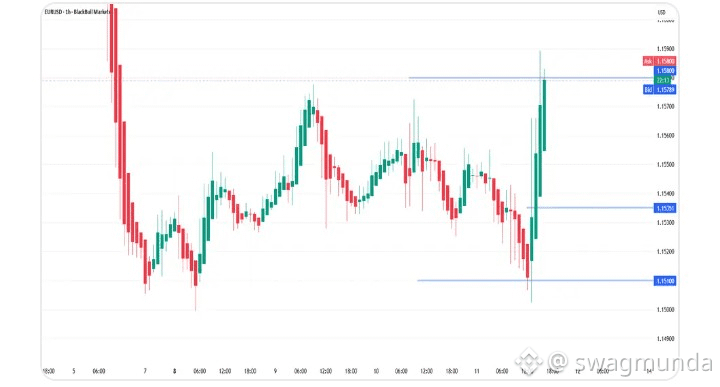

102
Eurostat released preliminary inflation data for September today, revealing that the Eurozone headline CPI accelerated sharply to 3.8% year-on-year. This reading surpassed market expectations of 3.6% and marked a significant jump from 3.2% recorded in the previous month, while the month-on-month rate advanced 0.6%.
This broad re-acceleration in consumer prices complicates the macroeconomic landscape for European policymakers. With persistent cost pressures in energy, gas, and services, inflation remains well above the European Central Bank's 2.0% medium-term target, reinforcing expectations of tighter monetary conditions ahead.
The data is likely to push global bond yields higher and provide immediate support for the Euro against major currencies. Persistently elevated inflation and lingering high interest rates continue to fuel risk-off sentiment, prompting institutions to favor defensive cash positions and safe-haven assets over growth-sensitive equities.
For digital asset markets, tighter liquidity conditions and prolonged hawkish central bank policies generally suppress speculative capital inflows. Unless broader macroeconomic pressures ease, $BTC and the wider crypto sector may continue experiencing range-bound volatility and cautious institutional demand. 📊
#Inflation #Eurozone #MacroEconomics
Eurostat released preliminary inflation data for September today, revealing that the Eurozone headline CPI accelerated sharply to 3.8% year-on-year. This reading surpassed market expectations of 3.6% and marked a significant jump from 3.2% recorded in the previous month, while the month-on-month rate advanced 0.6%.
This broad re-acceleration in consumer prices complicates the macroeconomic landscape for European policymakers. With persistent cost pressures in energy, gas, and services, inflation remains well above the European Central Bank's 2.0% medium-term target, reinforcing expectations of tighter monetary conditions ahead.
The data is likely to push global bond yields higher and provide immediate support for the Euro against major currencies. Persistently elevated inflation and lingering high interest rates continue to fuel risk-off sentiment, prompting institutions to favor defensive cash positions and safe-haven assets over growth-sensitive equities.
For digital asset markets, tighter liquidity conditions and prolonged hawkish central bank policies generally suppress speculative capital inflows. Unless broader macroeconomic pressures ease, $BTC and the wider crypto sector may continue experiencing range-bound volatility and cautious institutional demand. 📊
#Inflation #Eurozone #MacroEconomics
This broad re-acceleration in consumer prices complicates the macroeconomic landscape for European policymakers. With persistent cost pressures in energy, gas, and services, inflation remains well above the European Central Bank's 2.0% medium-term target, reinforcing expectations of tighter monetary conditions ahead.
The data is likely to push global bond yields higher and provide immediate support for the Euro against major currencies. Persistently elevated inflation and lingering high interest rates continue to fuel risk-off sentiment, prompting institutions to favor defensive cash positions and safe-haven assets over growth-sensitive equities.
For digital asset markets, tighter liquidity conditions and prolonged hawkish central bank policies generally suppress speculative capital inflows. Unless broader macroeconomic pressures ease, $BTC and the wider crypto sector may continue experiencing range-bound volatility and cautious institutional demand. 📊
#Inflation #Eurozone #MacroEconomics
36
Log in to explore more content
Join global crypto users on Binance Square
⚡️ Get latest and useful information about crypto.
💬 Trusted by the world’s largest crypto exchange.
👍 Discover real insights from verified creators.
Email / Phone number
Trending Topics
1
#SECHaltsCryptoETFReviewsAmidFundingLapse
112,572 views
955 Discussing
2
#ZcashETFPostsFirstWeeklyOutflow$93.6M
70,580 views
222 Discussing
3
#GreekPoliceBustCryptoScamRingArrest17
257,306 views
1,729 Discussing
4
#BitcoinRejectedAt$87K
177,439 views
280 Discussing
5
#FedOctoberRateHikeOddsFallTo17%
266,474 views
1,875 Discussing
6
#NvidiaHitsRecordHighUp2.4%
180,543 views
1,280 Discussing
7
#CanaryFilesAmendedS1ForPEPEETF
57,564 views
857 Discussing
8
#BitcoinParesGainsAfterRallyTo$86.5K
61,859 views
187 Discussing
9
#CerebrasSinksNearly20%OnReportNvidiaToPowerOpenAI
167,553 views
1,429 Discussing
10
#SECProposesCryptoCustodyRules
246,811 views
1,778 Discussing