
The Buzzing Bee
7.1k Posts

The Buzzing Bee
 Square Verified+
Report
Block User
Words matter!🔥 Facts matter! Truths matter!🔥 Crypto news from all over the world 👩💻 Twitter: @Aby71721

#BinanceTurns7 task 2

#BinanceTurns7

Creator of the Year
Open Trade
Occasional Trader
7.9 Years
8 Following
144.1K+ Followers
214.3K+ Liked
6 Badges
Posts
Portfolio
All
Quotes
Videos
Live
PINNED
Dear Friends 😊
All of my coins analysis contents provided are for educational purposes only and should not be followed PLEASE always #dyor
Dear Friends 😊
All of my coins analysis contents provided are for educational purposes only and should not be followed PLEASE always #dyor
All of my coins analysis contents provided are for educational purposes only and should not be followed PLEASE always #dyor
225
15
581
1.8k
✨️ Could $XRP Really Reach $15–$50? David Schwartz Just Put the Flippening Debate Back in Focus!
Ripple CTO David Schwartz says XRP could eventually overtake $BTC in market value through its own growth, not because Bitcoin collapses. Analyst Zach Rector ran the numbers, and the implied XRP prices get big very quickly.
At a $1.5 trillion valuation, XRP would sit near $23.91 based on today’s circulating supply, or around $15 using the full 100 billion token supply. If Bitcoin’s market cap eventually reaches $3–$5 trillion and XRP scales with it, Rector’s bullish scenario puts XRP above $50.
✅️ FOLLOW FOR MORE ✅️
$XRP
{future}(XRPUSDT)
$ADA
{future}(ADAUSDT)
✨️ Could $XRP Really Reach $15–$50? David Schwartz Just Put the Flippening Debate Back in Focus!
Ripple CTO David Schwartz says XRP could eventually overtake $BTC in market value through its own growth, not because Bitcoin collapses. Analyst Zach Rector ran the numbers, and the implied XRP prices get big very quickly.
At a $1.5 trillion valuation, XRP would sit near $23.91 based on today’s circulating supply, or around $15 using the full 100 billion token supply. If Bitcoin’s market cap eventually reaches $3–$5 trillion and XRP scales with it, Rector’s bullish scenario puts XRP above $50.
✅️ FOLLOW FOR MORE ✅️
$XRP
$ADA
Ripple CTO David Schwartz says XRP could eventually overtake $BTC in market value through its own growth, not because Bitcoin collapses. Analyst Zach Rector ran the numbers, and the implied XRP prices get big very quickly.
At a $1.5 trillion valuation, XRP would sit near $23.91 based on today’s circulating supply, or around $15 using the full 100 billion token supply. If Bitcoin’s market cap eventually reaches $3–$5 trillion and XRP scales with it, Rector’s bullish scenario puts XRP above $50.
✅️ FOLLOW FOR MORE ✅️
$XRP
$ADA
2
166
Bitcoin ETFs and Ethereum ETFs Record $312.6 Million in Outflows
Btc spot ETFs recorded $282.70 million in ouflows, while Eth spot ETFs recorded $29.90 million in outflows.
$BTC
{future}(BTCUSDT)
$ETH
{future}(ETHUSDT)
Bitcoin ETFs and Ethereum ETFs Record $312.6 Million in Outflows
Btc spot ETFs recorded $282.70 million in ouflows, while Eth spot ETFs recorded $29.90 million in outflows.
$BTC
$ETH
Btc spot ETFs recorded $282.70 million in ouflows, while Eth spot ETFs recorded $29.90 million in outflows.
$BTC
$ETH
199
$BTC is grinding around the $76.2K previous weekly low ahead of CPI.
Honestly, this range feels pretty dead right now, and I wouldn’t be surprised if it stays this way until after the CPI release.
OI also shows that the last dump attracted a lot of shorts, while this small pump looks largely driven by aggressive short covering.
For longs, I’m watching two scenarios today, both likely playing out after CPI.
First, if we sweep the $76.2K PWL, that could trigger more selling and flush out buyers. If that happens, I’ll be watching for a long trigger after the sweep.
The second scenario is the one I prefer: CPI sends BTC into a sharp flash wick below $75.5K.
That could wipe out the buyers trapped in this range and bring aggressive sellers into the market. From there, a strong reclaim could give a much better setup for higher-timeframe longs.
The $80K and $81K short POIs are still valid, but I don’t expect price to reach them today.
$BTC
{future}(BTCUSDT)
$BTC is grinding around the $76.2K previous weekly low ahead of CPI.
Honestly, this range feels pretty dead right now, and I wouldn’t be surprised if it stays this way until after the CPI release.
OI also shows that the last dump attracted a lot of shorts, while this small pump looks largely driven by aggressive short covering.
For longs, I’m watching two scenarios today, both likely playing out after CPI.
First, if we sweep the $76.2K PWL, that could trigger more selling and flush out buyers. If that happens, I’ll be watching for a long trigger after the sweep.
The second scenario is the one I prefer: CPI sends BTC into a sharp flash wick below $75.5K.
That could wipe out the buyers trapped in this range and bring aggressive sellers into the market. From there, a strong reclaim could give a much better setup for higher-timeframe longs.
The $80K and $81K short POIs are still valid, but I don’t expect price to reach them today.
$BTC
Honestly, this range feels pretty dead right now, and I wouldn’t be surprised if it stays this way until after the CPI release.
OI also shows that the last dump attracted a lot of shorts, while this small pump looks largely driven by aggressive short covering.
For longs, I’m watching two scenarios today, both likely playing out after CPI.
First, if we sweep the $76.2K PWL, that could trigger more selling and flush out buyers. If that happens, I’ll be watching for a long trigger after the sweep.
The second scenario is the one I prefer: CPI sends BTC into a sharp flash wick below $75.5K.
That could wipe out the buyers trapped in this range and bring aggressive sellers into the market. From there, a strong reclaim could give a much better setup for higher-timeframe longs.
The $80K and $81K short POIs are still valid, but I don’t expect price to reach them today.
$BTC

174
💫✨️ ETHUSDT is trading around 2,476 USDT, continuing to form lower highs beneath the resistance trendline. The price also remains below the EMA34-EMA89 cluster (approx. 2,483-2,484), indicating that the rebound lacks the strength to reverse the short-term structure.
The 2,485-2,510 range is a critical area to watch. If ETH rallies to this zone but faces rejection at the trendline and EMA cluster, I lean towards a scenario where the price drops back to 2,440, subsequently extending toward the 2,390 USDT target.
Macro factors today also slightly support a corrective scenario. Brent crude remains above $100/barrel, and US Treasury yields stay elevated due to inflation concerns as investors await US CPI data; a high-yield environment is typically unfavorable for risk assets like crypto.
✅️ FOLLOW FOR MORE ✅️
$ETH
{future}(ETHUSDT)
💫✨️ ETHUSDT is trading around 2,476 USDT, continuing to form lower highs beneath the resistance trendline. The price also remains below the EMA34-EMA89 cluster (approx. 2,483-2,484), indicating that the rebound lacks the strength to reverse the short-term structure.
The 2,485-2,510 range is a critical area to watch. If ETH rallies to this zone but faces rejection at the trendline and EMA cluster, I lean towards a scenario where the price drops back to 2,440, subsequently extending toward the 2,390 USDT target.
Macro factors today also slightly support a corrective scenario. Brent crude remains above $100/barrel, and US Treasury yields stay elevated due to inflation concerns as investors await US CPI data; a high-yield environment is typically unfavorable for risk assets like crypto.
✅️ FOLLOW FOR MORE ✅️
$ETH
The 2,485-2,510 range is a critical area to watch. If ETH rallies to this zone but faces rejection at the trendline and EMA cluster, I lean towards a scenario where the price drops back to 2,440, subsequently extending toward the 2,390 USDT target.
Macro factors today also slightly support a corrective scenario. Brent crude remains above $100/barrel, and US Treasury yields stay elevated due to inflation concerns as investors await US CPI data; a high-yield environment is typically unfavorable for risk assets like crypto.
✅️ FOLLOW FOR MORE ✅️
$ETH

1
1
367
✨️ $RUNE looked ready to fade after that spike, but this level is interesting
Price pushed to $0.531 and pulled back hard, now sitting around $0.492 while still holding above the Supertrend at $0.484.
Support: $0.484 and $0.476
Resistance: $0.505 and $0.531
TP1: $0.505
TP2: $0.520
TP3: $0.531
The 24h volume is around $10.7M, and the order book is slightly bid-heavy at 55%.
If $0.484 keeps holding, I'd watch for another push toward $0.505 first. Lose that Supertrend and the setup gets weaker fast.
$RUNE
{future}(RUNEUSDT)
✨️ $RUNE looked ready to fade after that spike, but this level is interesting
Price pushed to $0.531 and pulled back hard, now sitting around $0.492 while still holding above the Supertrend at $0.484.
Support: $0.484 and $0.476
Resistance: $0.505 and $0.531
TP1: $0.505
TP2: $0.520
TP3: $0.531
The 24h volume is around $10.7M, and the order book is slightly bid-heavy at 55%.
If $0.484 keeps holding, I'd watch for another push toward $0.505 first. Lose that Supertrend and the setup gets weaker fast.
$RUNE
Price pushed to $0.531 and pulled back hard, now sitting around $0.492 while still holding above the Supertrend at $0.484.
Support: $0.484 and $0.476
Resistance: $0.505 and $0.531
TP1: $0.505
TP2: $0.520
TP3: $0.531
The 24h volume is around $10.7M, and the order book is slightly bid-heavy at 55%.
If $0.484 keeps holding, I'd watch for another push toward $0.505 first. Lose that Supertrend and the setup gets weaker fast.
$RUNE

2
419
BTC is back around $78K.
PPI drops today, while CPI follows tomorrow. 📊
If inflation comes in hotter, Bitcoin could lose the 50W EMA.
But if inflation continues cooling, a weekly close above the 50W MA could finally be within reach.
Macro is about to decide the next move. 👀
$BTC
{future}(BTCUSDT)
BTC is back around $78K.
PPI drops today, while CPI follows tomorrow. 📊
If inflation comes in hotter, Bitcoin could lose the 50W EMA.
But if inflation continues cooling, a weekly close above the 50W MA could finally be within reach.
Macro is about to decide the next move. 👀
$BTC
PPI drops today, while CPI follows tomorrow. 📊
If inflation comes in hotter, Bitcoin could lose the 50W EMA.
But if inflation continues cooling, a weekly close above the 50W MA could finally be within reach.
Macro is about to decide the next move. 👀
$BTC
2
201
✨️ ADA - $0.224 IS THE TARGET
#ADAUSDT is pulling back inside a large contracting wedge after another rejection from its upper boundary. The rising lower trendline has already produced several strong reactions, making the next test important. If buyers defend it again, the structure keeps a rebound toward the upper wedge boundary in play.
ADA funding is -0.0058% - shorts are leaning into the pullback.
Short-liquidation exposure is $13.5M vs $7.0M long - a rebound could squeeze shorts.
Key Levels
Resistance: $0.223-$0.225
Support: $0.203-$0.205
$ADA
{future}(ADAUSDT)
$ZEC
{future}(ZECUSDT)
$ALGO
{future}(ALGOUSDT)
✨️ ADA - $0.224 IS THE TARGET
#ADAUSDT is pulling back inside a large contracting wedge after another rejection from its upper boundary. The rising lower trendline has already produced several strong reactions, making the next test important. If buyers defend it again, the structure keeps a rebound toward the upper wedge boundary in play.
ADA funding is -0.0058% - shorts are leaning into the pullback.
Short-liquidation exposure is $13.5M vs $7.0M long - a rebound could squeeze shorts.
Key Levels
Resistance: $0.223-$0.225
Support: $0.203-$0.205
$ADA
$ZEC
$ALGO
#ADAUSDT is pulling back inside a large contracting wedge after another rejection from its upper boundary. The rising lower trendline has already produced several strong reactions, making the next test important. If buyers defend it again, the structure keeps a rebound toward the upper wedge boundary in play.
ADA funding is -0.0058% - shorts are leaning into the pullback.
Short-liquidation exposure is $13.5M vs $7.0M long - a rebound could squeeze shorts.
Key Levels
Resistance: $0.223-$0.225
Support: $0.203-$0.205
$ADA
$ZEC
$ALGO
1
548
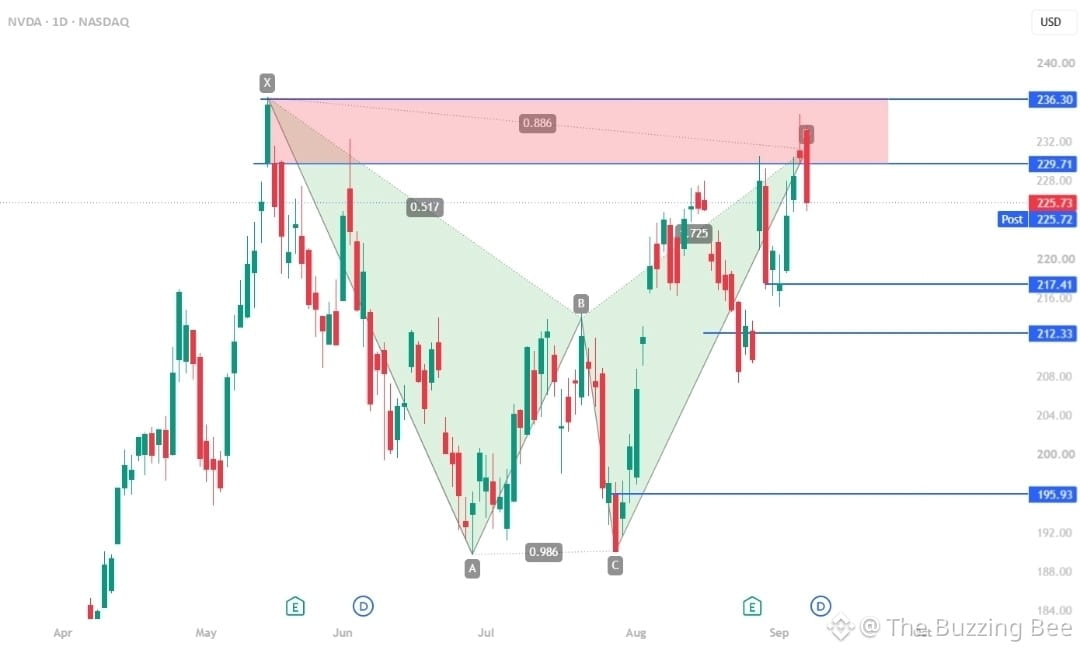
✨️NVDA is showing a potential bearish setup after reaching a major resistance zone between 229.71 and 236.30.
Price is currently showing rejection near the upper resistance area, which could indicate a possible shift in short-term momentum.
Key Levels
236.30 - Major resistance / invalidation
area
229.71 - Key resistance
217.41 - First downside target
212.33 - Second downside target
195.93 - Extended downside target Bearish Scenario
If NVDA fails to reclaim and hold above the 229.71-236.30 resistance zone, the next potential downside levels to watch are:
217.41→ 212.33→ 195.93
A sustained move above the resistance zone would weaken or invalidate this bearish scenario.
This is a technical-analysis scenario, not financial advice. Always manage risk and wait for confirmation before taking a position.
$NVDA
{future}(NVDAUSDT)
✨️NVDA is showing a potential bearish setup after reaching a major resistance zone between 229.71 and 236.30.
Price is currently showing rejection near the upper resistance area, which could indicate a possible shift in short-term momentum.
Key Levels
236.30 - Major resistance / invalidation
area
229.71 - Key resistance
217.41 - First downside target
212.33 - Second downside target
195.93 - Extended downside target Bearish Scenario
If NVDA fails to reclaim and hold above the 229.71-236.30 resistance zone, the next potential downside levels to watch are:
217.41→ 212.33→ 195.93
A sustained move above the resistance zone would weaken or invalidate this bearish scenario.
This is a technical-analysis scenario, not financial advice. Always manage risk and wait for confirmation before taking a position.
$NVDA
Price is currently showing rejection near the upper resistance area, which could indicate a possible shift in short-term momentum.
Key Levels
236.30 - Major resistance / invalidation
area
229.71 - Key resistance
217.41 - First downside target
212.33 - Second downside target
195.93 - Extended downside target Bearish Scenario
If NVDA fails to reclaim and hold above the 229.71-236.30 resistance zone, the next potential downside levels to watch are:
217.41→ 212.33→ 195.93
A sustained move above the resistance zone would weaken or invalidate this bearish scenario.
This is a technical-analysis scenario, not financial advice. Always manage risk and wait for confirmation before taking a position.
$NVDA
4
968
$BTC BULLISH SETUP IS GETTING SERIOUS!
The 2022 cycle bottom was followed by a massive Bitcoin rally after the Golden Cross.
Now, another Golden Cross could be forming in 2026.
If this pattern repeats, we could be looking at the beginning of the next major BTC bull run. 🚀
Bears might be running out of time.
$BTC
{future}(BTCUSDT)
$ETH
{future}(ETHUSDT)
$BTC BULLISH SETUP IS GETTING SERIOUS!
The 2022 cycle bottom was followed by a massive Bitcoin rally after the Golden Cross.
Now, another Golden Cross could be forming in 2026.
If this pattern repeats, we could be looking at the beginning of the next major BTC bull run. 🚀
Bears might be running out of time.
$BTC
$ETH
The 2022 cycle bottom was followed by a massive Bitcoin rally after the Golden Cross.
Now, another Golden Cross could be forming in 2026.
If this pattern repeats, we could be looking at the beginning of the next major BTC bull run. 🚀
Bears might be running out of time.
$BTC
$ETH
291
Strategy held off on buying more bitcoin last week, keeping its holdings steady at 845,050 BTC .
Instead, the company spent $176.3 million repurchasing 1.81 million shares of STRC stock.
The board also doubled the size of its approved digital credit securities buyback program, raising the limit from $1 billion to $2 billion. For now, the message is clear:
Strategy is taking a brief pause on bitcoin accumulation while putting more firepower behind its broader capital strategy.
$BTC
{future}(BTCUSDT)
Strategy held off on buying more bitcoin last week, keeping its holdings steady at 845,050 BTC .
Instead, the company spent $176.3 million repurchasing 1.81 million shares of STRC stock.
The board also doubled the size of its approved digital credit securities buyback program, raising the limit from $1 billion to $2 billion. For now, the message is clear:
Strategy is taking a brief pause on bitcoin accumulation while putting more firepower behind its broader capital strategy.
$BTC
Instead, the company spent $176.3 million repurchasing 1.81 million shares of STRC stock.
The board also doubled the size of its approved digital credit securities buyback program, raising the limit from $1 billion to $2 billion. For now, the message is clear:
Strategy is taking a brief pause on bitcoin accumulation while putting more firepower behind its broader capital strategy.
$BTC
343
ETH is currently sitting at a very important zone. This was previously a supply zone, but after breaking above it, the area has now turned into demand.
So far, price is holding this zone well. A clean break above $2,570 could add more fuel to the move and trigger a quick upside rally.
Keep watching ETH closely, if it moves, alts could follow in the same direction.
$ETH
{future}(ETHUSDT)
ETH is currently sitting at a very important zone. This was previously a supply zone, but after breaking above it, the area has now turned into demand.
So far, price is holding this zone well. A clean break above $2,570 could add more fuel to the move and trigger a quick upside rally.
Keep watching ETH closely, if it moves, alts could follow in the same direction.
$ETH
So far, price is holding this zone well. A clean break above $2,570 could add more fuel to the move and trigger a quick upside rally.
Keep watching ETH closely, if it moves, alts could follow in the same direction.
$ETH
361
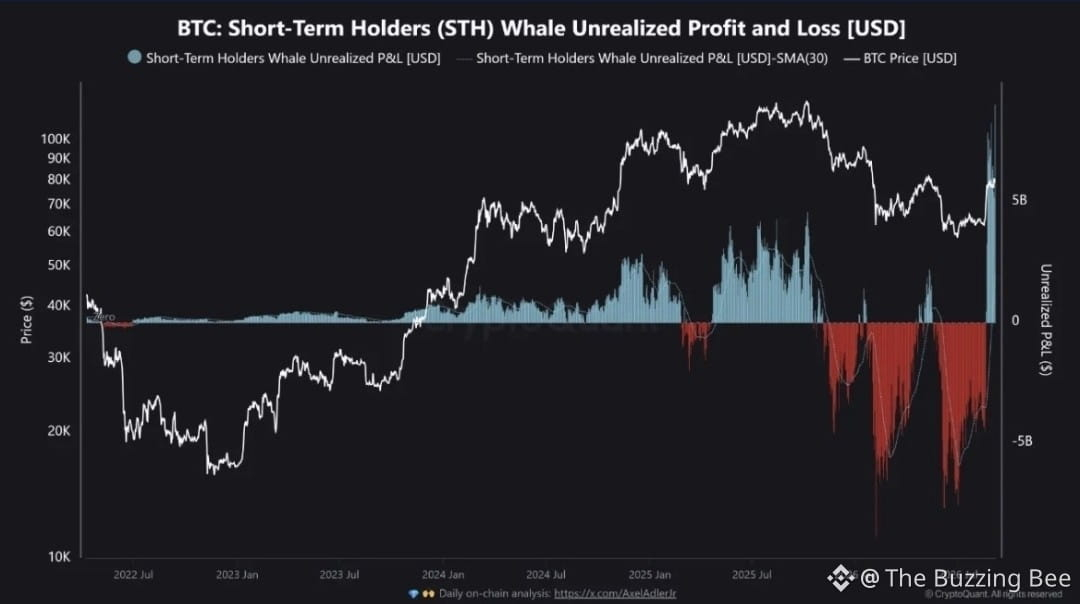
✨️Short-term Bitcoin whales are sitting on the most paper profit in years.
This CryptoQuant chart tracks unrealized P&L for short-term holder whales — big wallets that bought in the last ~155 days and have not sold yet.
• Blue bars = they are in profit
• Red bars = they are underwater
• White line = Bitcoin’s price
Through 2026 those whales spent long stretches in deep red (billions in paper losses) while $BTC chopped from six figures down toward $60k. The latest bounce flipped them hard into the green. The print cited: about $9.07 billion in unrealized profit — the highest since 2016 on this series.
That is paper profit. Nothing is sold until they click sell.
Why analysts flag it: short-term whales have often been quick to take gains when price stalls. A $9B cushion can support a trend — or become supply if BTC rejects $81k and they lock in.
Watch whether that blue spike fades (they sell) or holds (they ride). PPI and Friday CPI can force that choice.
Record paper profit is a warning light, not a sell button by itself. NFA
$BTC
{future}(BTCUSDT)
$AAVE
{future}(AAVEUSDT)
✨️Short-term Bitcoin whales are sitting on the most paper profit in years.
This CryptoQuant chart tracks unrealized P&L for short-term holder whales — big wallets that bought in the last ~155 days and have not sold yet.
• Blue bars = they are in profit
• Red bars = they are underwater
• White line = Bitcoin’s price
Through 2026 those whales spent long stretches in deep red (billions in paper losses) while $BTC chopped from six figures down toward $60k. The latest bounce flipped them hard into the green. The print cited: about $9.07 billion in unrealized profit — the highest since 2016 on this series.
That is paper profit. Nothing is sold until they click sell.
Why analysts flag it: short-term whales have often been quick to take gains when price stalls. A $9B cushion can support a trend — or become supply if BTC rejects $81k and they lock in.
Watch whether that blue spike fades (they sell) or holds (they ride). PPI and Friday CPI can force that choice.
Record paper profit is a warning light, not a sell button by itself. NFA
$BTC
$AAVE
This CryptoQuant chart tracks unrealized P&L for short-term holder whales — big wallets that bought in the last ~155 days and have not sold yet.
• Blue bars = they are in profit
• Red bars = they are underwater
• White line = Bitcoin’s price
Through 2026 those whales spent long stretches in deep red (billions in paper losses) while $BTC chopped from six figures down toward $60k. The latest bounce flipped them hard into the green. The print cited: about $9.07 billion in unrealized profit — the highest since 2016 on this series.
That is paper profit. Nothing is sold until they click sell.
Why analysts flag it: short-term whales have often been quick to take gains when price stalls. A $9B cushion can support a trend — or become supply if BTC rejects $81k and they lock in.
Watch whether that blue spike fades (they sell) or holds (they ride). PPI and Friday CPI can force that choice.
Record paper profit is a warning light, not a sell button by itself. NFA
$BTC
$AAVE
254
✨️💥 XRP - IS LOSING MOMENTUM - $1.31 IN FOCUS
Xrp usdt is weakening below the $1.42-$1.44 local resistance after failing to hold the latest rebound. Price is now near $1.40, while the broader wedge structure still points lower. If sellers keep control, the next move could extend toward $1.35 first and then the major $1.30-$1.32 support area shown on the chart.
XRP is down about 1.1% today - buyers are struggling to hold recent gains.
XRP derivatives saw nearly $15M in long liquidations - leveraged buyers are being forced out.
ETF creation flows have recently cooled - reducing one source of consistent spot demand.
$XRP
{future}(XRPUSDT)
✨️💥 XRP - IS LOSING MOMENTUM - $1.31 IN FOCUS
Xrp usdt is weakening below the $1.42-$1.44 local resistance after failing to hold the latest rebound. Price is now near $1.40, while the broader wedge structure still points lower. If sellers keep control, the next move could extend toward $1.35 first and then the major $1.30-$1.32 support area shown on the chart.
XRP is down about 1.1% today - buyers are struggling to hold recent gains.
XRP derivatives saw nearly $15M in long liquidations - leveraged buyers are being forced out.
ETF creation flows have recently cooled - reducing one source of consistent spot demand.
$XRP
Xrp usdt is weakening below the $1.42-$1.44 local resistance after failing to hold the latest rebound. Price is now near $1.40, while the broader wedge structure still points lower. If sellers keep control, the next move could extend toward $1.35 first and then the major $1.30-$1.32 support area shown on the chart.
XRP is down about 1.1% today - buyers are struggling to hold recent gains.
XRP derivatives saw nearly $15M in long liquidations - leveraged buyers are being forced out.
ETF creation flows have recently cooled - reducing one source of consistent spot demand.
$XRP
1
476
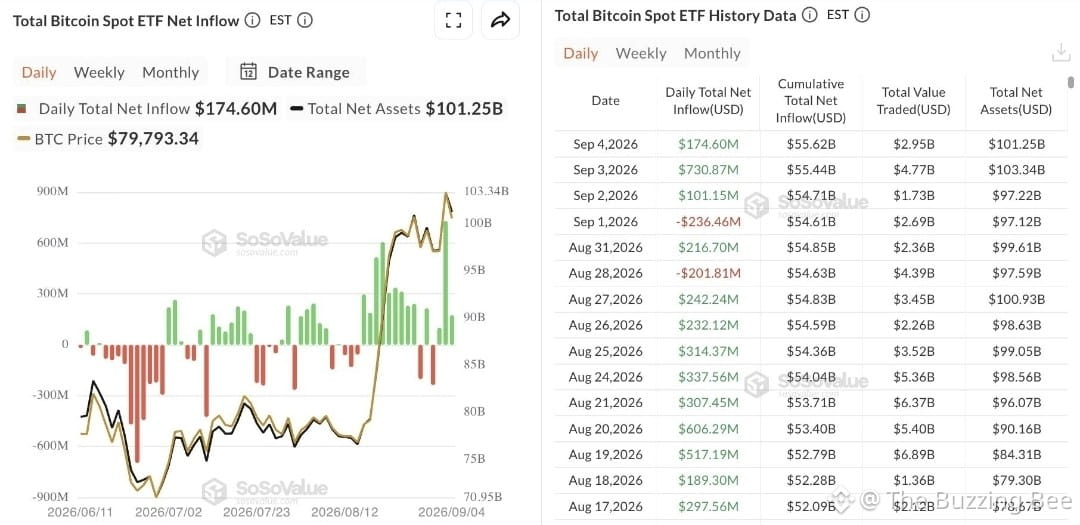
BTC ETFs attract nearly $1B for the third straight week
U.S. spot Bitcoin ETFs recorded ~$987M in net inflows, led by BlackRock with $691.5M.
This matters 👇
BTC ETFs: 3 consecutive weeks of inflows
ETH ETFs added another $218M
August saw $3.52B flow into Bitcoin ETFs
BTC continues holding around $79.5K
Institutional demand is steadily returning — giving BTC real spot buying support instead of leverage-driven momentum.
$BTC
{future}(BTCUSDT)
$ETH
{future}(ETHUSDT)
$AAVE
{future}(AAVEUSDT)
BTC ETFs attract nearly $1B for the third straight week
U.S. spot Bitcoin ETFs recorded ~$987M in net inflows, led by BlackRock with $691.5M.
This matters 👇
BTC ETFs: 3 consecutive weeks of inflows
ETH ETFs added another $218M
August saw $3.52B flow into Bitcoin ETFs
BTC continues holding around $79.5K
Institutional demand is steadily returning — giving BTC real spot buying support instead of leverage-driven momentum.
$BTC
$ETH
$AAVE
U.S. spot Bitcoin ETFs recorded ~$987M in net inflows, led by BlackRock with $691.5M.
This matters 👇
BTC ETFs: 3 consecutive weeks of inflows
ETH ETFs added another $218M
August saw $3.52B flow into Bitcoin ETFs
BTC continues holding around $79.5K
Institutional demand is steadily returning — giving BTC real spot buying support instead of leverage-driven momentum.
$BTC
$ETH
$AAVE
1.5k
XRP is catching attention! 👀⚡
Now we wait to see whether price holds support or pushes through resistance.
🔥 Price action
📊 Volume
🧱 Key levels
🎯 Confirmation
💎 No emotional entries — trade the setup, not the hype! 👑
👇 What’s YOUR call on XRP?
🟢 Bullish 🚀
🔴 Bearish 📉
👀 Waiting
$XRP
{future}(XRPUSDT)
XRP is catching attention! 👀⚡
Now we wait to see whether price holds support or pushes through resistance.
🔥 Price action
📊 Volume
🧱 Key levels
🎯 Confirmation
💎 No emotional entries — trade the setup, not the hype! 👑
👇 What’s YOUR call on XRP?
🟢 Bullish 🚀
🔴 Bearish 📉
👀 Waiting
$XRP
Now we wait to see whether price holds support or pushes through resistance.
🔥 Price action
📊 Volume
🧱 Key levels
🎯 Confirmation
💎 No emotional entries — trade the setup, not the hype! 👑
👇 What’s YOUR call on XRP?
🟢 Bullish 🚀
🔴 Bearish 📉
👀 Waiting
$XRP
2
3
740
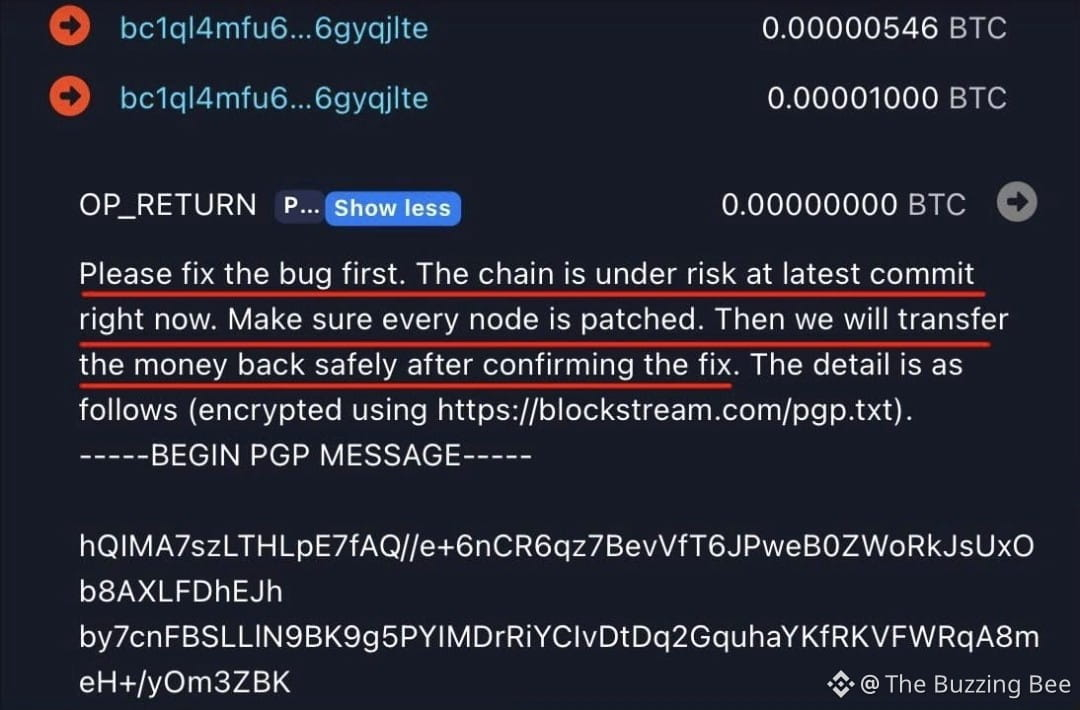
Liquid Network has seen nearly 4,000 btc worth about $320 million withdrawn after a security vulnerability was exploited.
Certain network operations have been paused while developers focus on fixing the issue.
In an unusual twist, the hacker has been using Bitcoin transactions to send messages to Liquid’s team while claiming to be a white-hat hacker.
According to the hacker, the Bitcoin will be returned once the security issue is resolved, but the claim has not yet been independently confirmed.
$BTC
{future}(BTCUSDT)
$XRP
{future}(XRPUSDT)
$ZIL
{future}(ZILUSDT)
Liquid Network has seen nearly 4,000 btc worth about $320 million withdrawn after a security vulnerability was exploited.
Certain network operations have been paused while developers focus on fixing the issue.
In an unusual twist, the hacker has been using Bitcoin transactions to send messages to Liquid’s team while claiming to be a white-hat hacker.
According to the hacker, the Bitcoin will be returned once the security issue is resolved, but the claim has not yet been independently confirmed.
$BTC
$XRP
$ZIL
Certain network operations have been paused while developers focus on fixing the issue.
In an unusual twist, the hacker has been using Bitcoin transactions to send messages to Liquid’s team while claiming to be a white-hat hacker.
According to the hacker, the Bitcoin will be returned once the security issue is resolved, but the claim has not yet been independently confirmed.
$BTC
$XRP
$ZIL
223
✨️💫 Bitcoin & Ethereum Face a Big Macro Test Next Week
While BTC is trading near $79,600 and ETH around $2,455, both are slipping as traders prepare for two major central-bank events.
US CPI arrives September 11, with inflation expected to stay at 3.4% as markets remain split 50/50 on whether the Fed hikes rates by 25 bps on September 16.
At the same time, markets are pricing in a 100% chance of a 25 bps ECB hike on September 10, adding another layer of pressure on risk assets.
That puts Bitcoin and eth between two macro catalysts: hotter inflation or more hawkish central banks could push prices lower, while softer data could quickly change the rate outlook.
$BTC
{future}(BTCUSDT)
$ETH
{future}(ETHUSDT)
✨️💫 Bitcoin & Ethereum Face a Big Macro Test Next Week
While BTC is trading near $79,600 and ETH around $2,455, both are slipping as traders prepare for two major central-bank events.
US CPI arrives September 11, with inflation expected to stay at 3.4% as markets remain split 50/50 on whether the Fed hikes rates by 25 bps on September 16.
At the same time, markets are pricing in a 100% chance of a 25 bps ECB hike on September 10, adding another layer of pressure on risk assets.
That puts Bitcoin and eth between two macro catalysts: hotter inflation or more hawkish central banks could push prices lower, while softer data could quickly change the rate outlook.
$BTC
$ETH
While BTC is trading near $79,600 and ETH around $2,455, both are slipping as traders prepare for two major central-bank events.
US CPI arrives September 11, with inflation expected to stay at 3.4% as markets remain split 50/50 on whether the Fed hikes rates by 25 bps on September 16.
At the same time, markets are pricing in a 100% chance of a 25 bps ECB hike on September 10, adding another layer of pressure on risk assets.
That puts Bitcoin and eth between two macro catalysts: hotter inflation or more hawkish central banks could push prices lower, while softer data could quickly change the rate outlook.
$BTC
$ETH

5
372
✨️ Solana and XRP ETFs entered September with both products nearing $1.5 billion in assets.
For the first time, non-Bitcoin and non-Ethereum funds have reached this kind of scale, with both products running almost neck and neck.
If adoption and inflows continue, Solana and Ripple could be positioned for significant growth in the next market cycle. SOL and XRP could have serious upside.
$XRP
{future}(XRPUSDT)
$SOL
{future}(SOLUSDT)
$BTC
{future}(BTCUSDT)
✨️ Solana and XRP ETFs entered September with both products nearing $1.5 billion in assets.
For the first time, non-Bitcoin and non-Ethereum funds have reached this kind of scale, with both products running almost neck and neck.
If adoption and inflows continue, Solana and Ripple could be positioned for significant growth in the next market cycle. SOL and XRP could have serious upside.
$XRP
$SOL
$BTC
For the first time, non-Bitcoin and non-Ethereum funds have reached this kind of scale, with both products running almost neck and neck.
If adoption and inflows continue, Solana and Ripple could be positioned for significant growth in the next market cycle. SOL and XRP could have serious upside.
$XRP
$SOL
$BTC
317
🚨 Can ETH/USDT Break $2,523 Resistance and Push Toward $2,560? 👀Important
ETH LONG
Enter Between: $2,485 – $2,500
Take Your Money At: $2,560
Guys.
ETH is holding around $2,507, with RSI near 66–67 showing strong momentum. The key resistance is $2,523, while support sits around $2,457.
Buddiesssssss.....For a safer entry, wait for ETH to pull back into the $2,485–$2,500 zone and show buyers stepping in. If ETH gets a strong 1H close above $2,523 with rising volume, bullish momentum can strengthen toward $2,560.
Pro Tip: If ETH rejects $2,523, don’t chase the price. Wait for a pullback toward $2,485–$2,500 and only consider the long if buyers defend that zone.
DYOR.
$ETH
{future}(ETHUSDT)
$ZEC
{future}(ZECUSDT)
$SUI
{future}(SUIUSDT)
🚨 Can ETH/USDT Break $2,523 Resistance and Push Toward $2,560? 👀Important
ETH LONG
Enter Between: $2,485 – $2,500
Take Your Money At: $2,560
Guys.
ETH is holding around $2,507, with RSI near 66–67 showing strong momentum. The key resistance is $2,523, while support sits around $2,457.
Buddiesssssss.....For a safer entry, wait for ETH to pull back into the $2,485–$2,500 zone and show buyers stepping in. If ETH gets a strong 1H close above $2,523 with rising volume, bullish momentum can strengthen toward $2,560.
Pro Tip: If ETH rejects $2,523, don’t chase the price. Wait for a pullback toward $2,485–$2,500 and only consider the long if buyers defend that zone.
DYOR.
$ETH
$ZEC
$SUI
ETH LONG
Enter Between: $2,485 – $2,500
Take Your Money At: $2,560
Guys.
ETH is holding around $2,507, with RSI near 66–67 showing strong momentum. The key resistance is $2,523, while support sits around $2,457.
Buddiesssssss.....For a safer entry, wait for ETH to pull back into the $2,485–$2,500 zone and show buyers stepping in. If ETH gets a strong 1H close above $2,523 with rising volume, bullish momentum can strengthen toward $2,560.
Pro Tip: If ETH rejects $2,523, don’t chase the price. Wait for a pullback toward $2,485–$2,500 and only consider the long if buyers defend that zone.
DYOR.
$ETH
$ZEC
$SUI
3
493
Log in to explore more content
Join global crypto users on Binance Square
⚡️ Get latest and useful information about crypto.
💬 Trusted by the world’s largest crypto exchange.
👍 Discover real insights from verified creators.
Email / Phone number
Trending Topics
CPIWatch
87.1M views
503,269 Discussing
Share & Win Traffic Reward in our Trending Hashtag Campaign
✨Topic: Will CPI Trigger Rate Hike?
👉How to Join:
Publish a short post or article with hashtag #CPIWatch
Create content based on the below two angles:
- Nonfarm payrolls beat expectations and CPI is around the corner, do you think the Fed will hike or hold the rate?
- Bullish or bearish? Share your take and showcase your stocks or gold trade/holdings with our trade sharing widget.
🚀Campaign Period:
- 2026-09-11 3:00 - 2026-09-12 9:00 UTC
🎁Reward:
- Qualified posts that comply with the above guidelines and contain more than 100 words will be reviewed and may receive a random traffic boost of 500 to 3,000 views. You will receive a notification from your feed secretary if your post is selected.
- Get a chance to have your article featured on Binance Square Official
Need ideas for your post? Visit the topic page #CPIWatch or the Square Guide on How to Post for Better Reach.
Binance Square Official
·577 Likes
·1.6M views
EtherRalliesAsBearishBetsLiquidate
840 views
62 Discussing
EthereumHits$2600FirstTimeInSevenMonths
512 views
9 Discussing