
Rafiullah Fayyaz
25 Posts

Rafiullah Fayyaz
Tracking crypto before the crowd notices. Market analysis • Narratives • Research No paid calls. No unnecessary hype.
2 Following
2 Followers
18 Liked
Posts
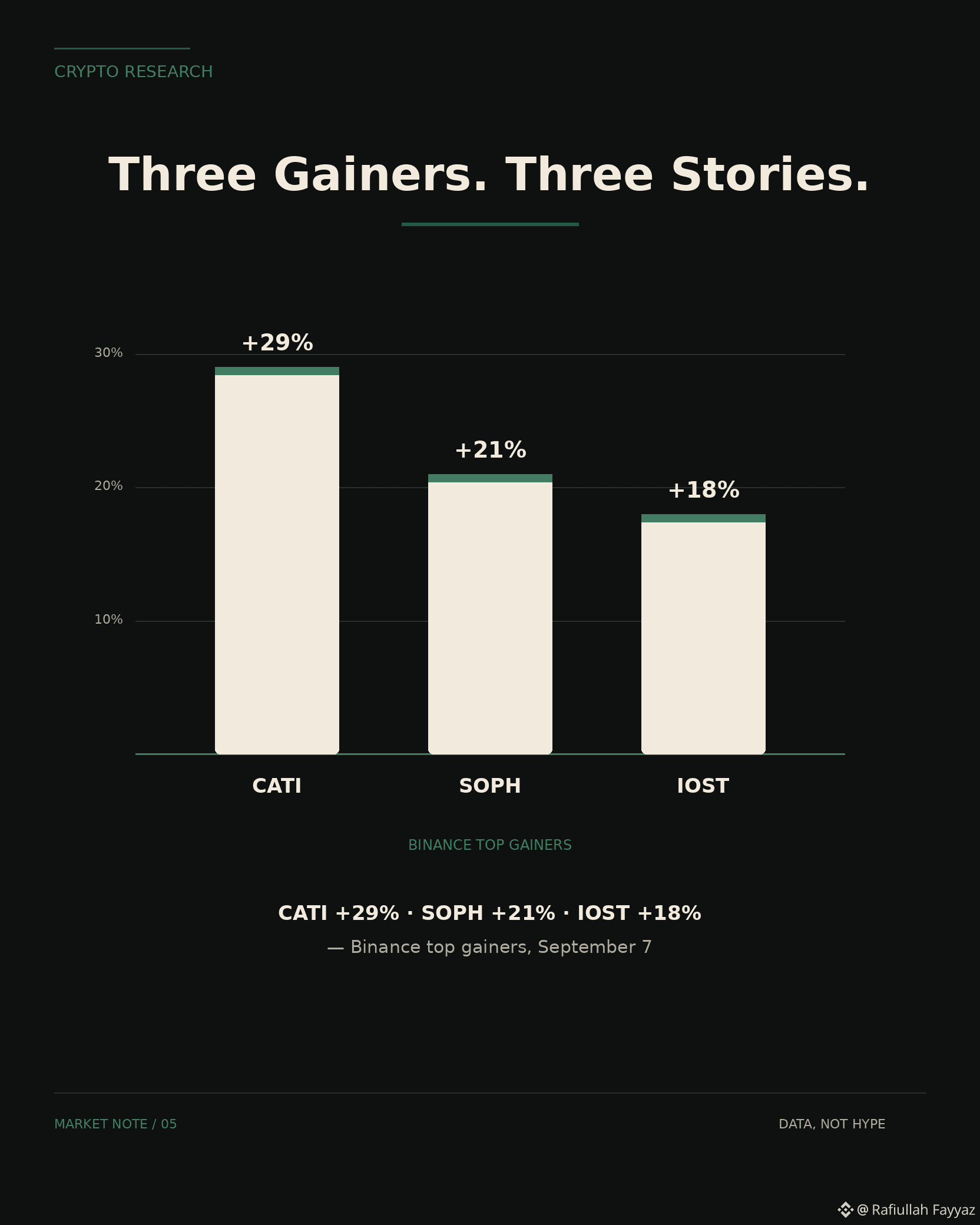
Yesterday's Binance top gainers tell an interesting story.
CATI/USDT climbed 29%. SOPH/USDT added 21%. IOST/USDT gained 18%.
Three very different coins. CATI is gaming. SOPH is AI-infrastructure. IOST is an established L1 that's been around for years.
What connects them? Not a shared narrative. Not a sector rotation. Just momentum flowing into different corners of the market.
CATI and SOPH are smaller caps — easier to move when attention picks up. IOST is older and larger, yet still caught the wave.
This is what a "risk-on" day looks like in altcoins. Not one big story. Multiple small stories moving at once.
I'm not buying any of these. I'm watching how long the momentum lasts — and whether it spreads to other coins in their respective sectors.
$CATI $SOPH $IOST
#Binance #altcoins #MarketPulse #BinanceSquareFamily #EducationalContent
CATI/USDT climbed 29%. SOPH/USDT added 21%. IOST/USDT gained 18%.
Three very different coins. CATI is gaming. SOPH is AI-infrastructure. IOST is an established L1 that's been around for years.
What connects them? Not a shared narrative. Not a sector rotation. Just momentum flowing into different corners of the market.
CATI and SOPH are smaller caps — easier to move when attention picks up. IOST is older and larger, yet still caught the wave.
This is what a "risk-on" day looks like in altcoins. Not one big story. Multiple small stories moving at once.
I'm not buying any of these. I'm watching how long the momentum lasts — and whether it spreads to other coins in their respective sectors.
$CATI $SOPH $IOST
#Binance #altcoins #MarketPulse #BinanceSquareFamily #EducationalContent
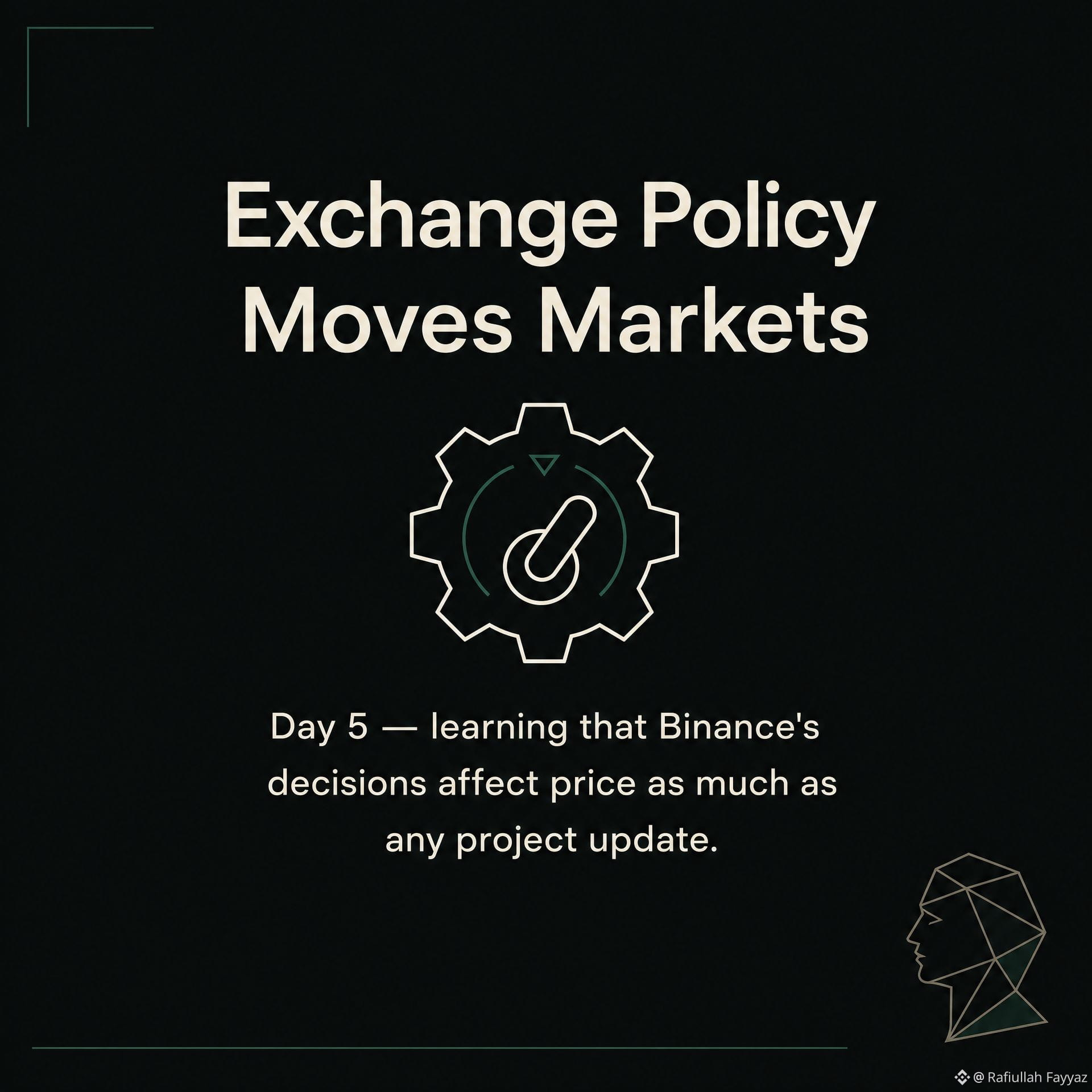
I'm starting to notice that exchange-level signals move markets more than I expected.
Not price. Not narratives. Exchange policy.
Binance adds a Monitoring Tag → tokens drop within minutes.
Binance lists a coin → attention floods in.
Binance removes a token → liquidity disappears.
The exchange isn't just a venue for trading. It's an active participant in what gets attention, what gets liquidity, and what gets forgotten.
This changes how I think about "market moves." Sometimes the move isn't about the project at all. It's about what the exchange decided.
Learning to separate project fundamentals from exchange mechanics is becoming a recurring theme.
Day 5. Still watching. Still learning.
#CryptoJourney #learning #BinanceSquare #EducationalContent
Not price. Not narratives. Exchange policy.
Binance adds a Monitoring Tag → tokens drop within minutes.
Binance lists a coin → attention floods in.
Binance removes a token → liquidity disappears.
The exchange isn't just a venue for trading. It's an active participant in what gets attention, what gets liquidity, and what gets forgotten.
This changes how I think about "market moves." Sometimes the move isn't about the project at all. It's about what the exchange decided.
Learning to separate project fundamentals from exchange mechanics is becoming a recurring theme.
Day 5. Still watching. Still learning.
#CryptoJourney #learning #BinanceSquare #EducationalContent
Verified
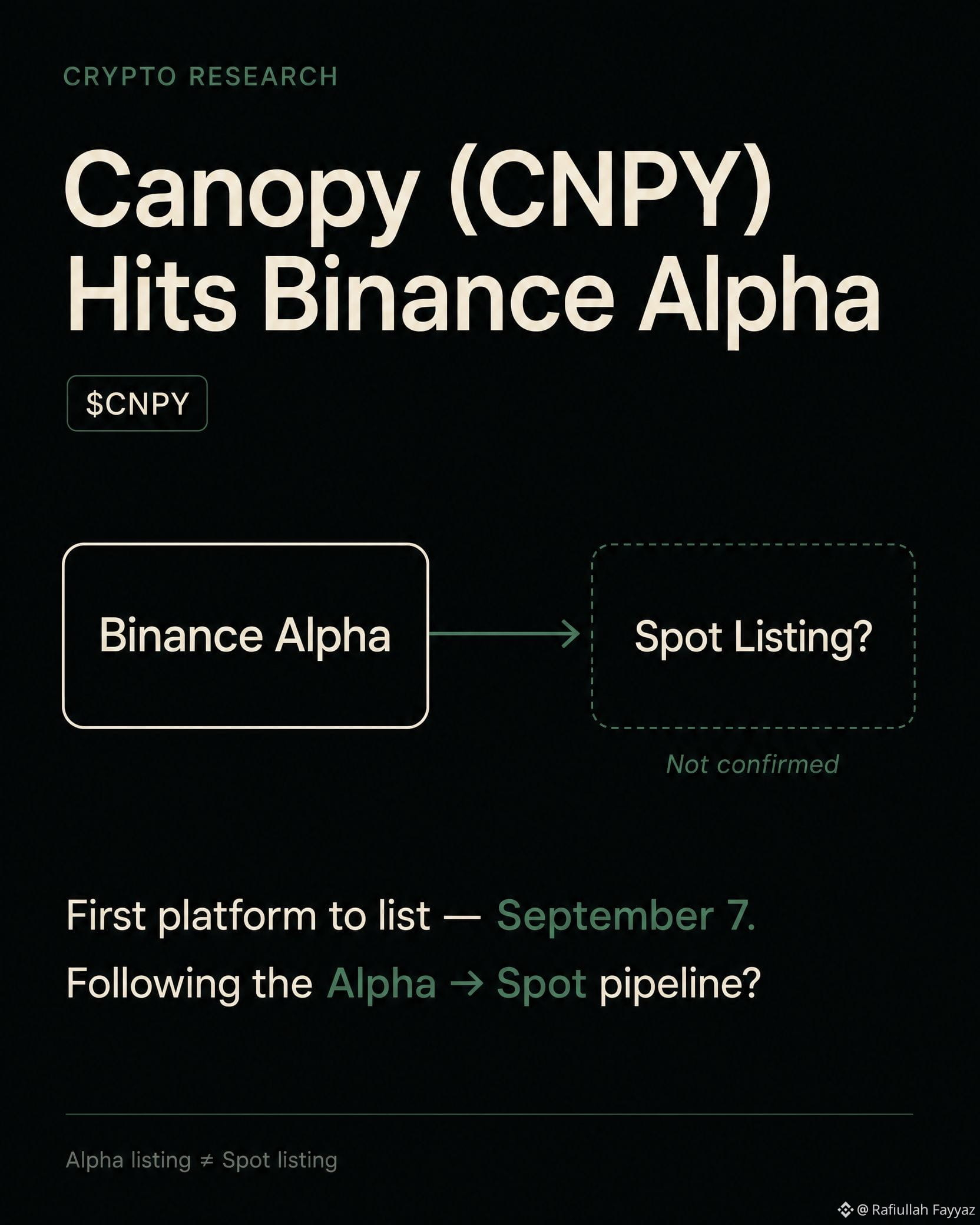
Binance Alpha is listing Canopy ( $CNPY ) on September 7 — the first platform to list it.
Binance Alpha is Binance's early-stage project section. It's not the same as a Binance Spot listing. But Alpha listings often precede Spot listings, as we saw with MARSCOIN.
Eligible users can claim an airdrop using Binance Alpha Points on the Alpha Events page.
Why is this worth watching? Because the Binance Alpha → Spot pipeline is becoming more defined. MARSCOIN went from Alpha to Spot in days.
The question isn't whether CNPY is a good project. The question is: does this follow the pattern?
If Canopy eventually moves to Spot, it tells us something about how Binance selects projects for the next tier. If it doesn't, that's also useful information.
I'm watching this not as a trading opportunity — but as a case study in Binance's listing pipeline.
$CNPY
#Binance #BinanceAlpha #altcoins #EducationalContent #binanacesquare
Binance Alpha is Binance's early-stage project section. It's not the same as a Binance Spot listing. But Alpha listings often precede Spot listings, as we saw with MARSCOIN.
Eligible users can claim an airdrop using Binance Alpha Points on the Alpha Events page.
Why is this worth watching? Because the Binance Alpha → Spot pipeline is becoming more defined. MARSCOIN went from Alpha to Spot in days.
The question isn't whether CNPY is a good project. The question is: does this follow the pattern?
If Canopy eventually moves to Spot, it tells us something about how Binance selects projects for the next tier. If it doesn't, that's also useful information.
I'm watching this not as a trading opportunity — but as a case study in Binance's listing pipeline.
$CNPY
#Binance #BinanceAlpha #altcoins #EducationalContent #binanacesquare
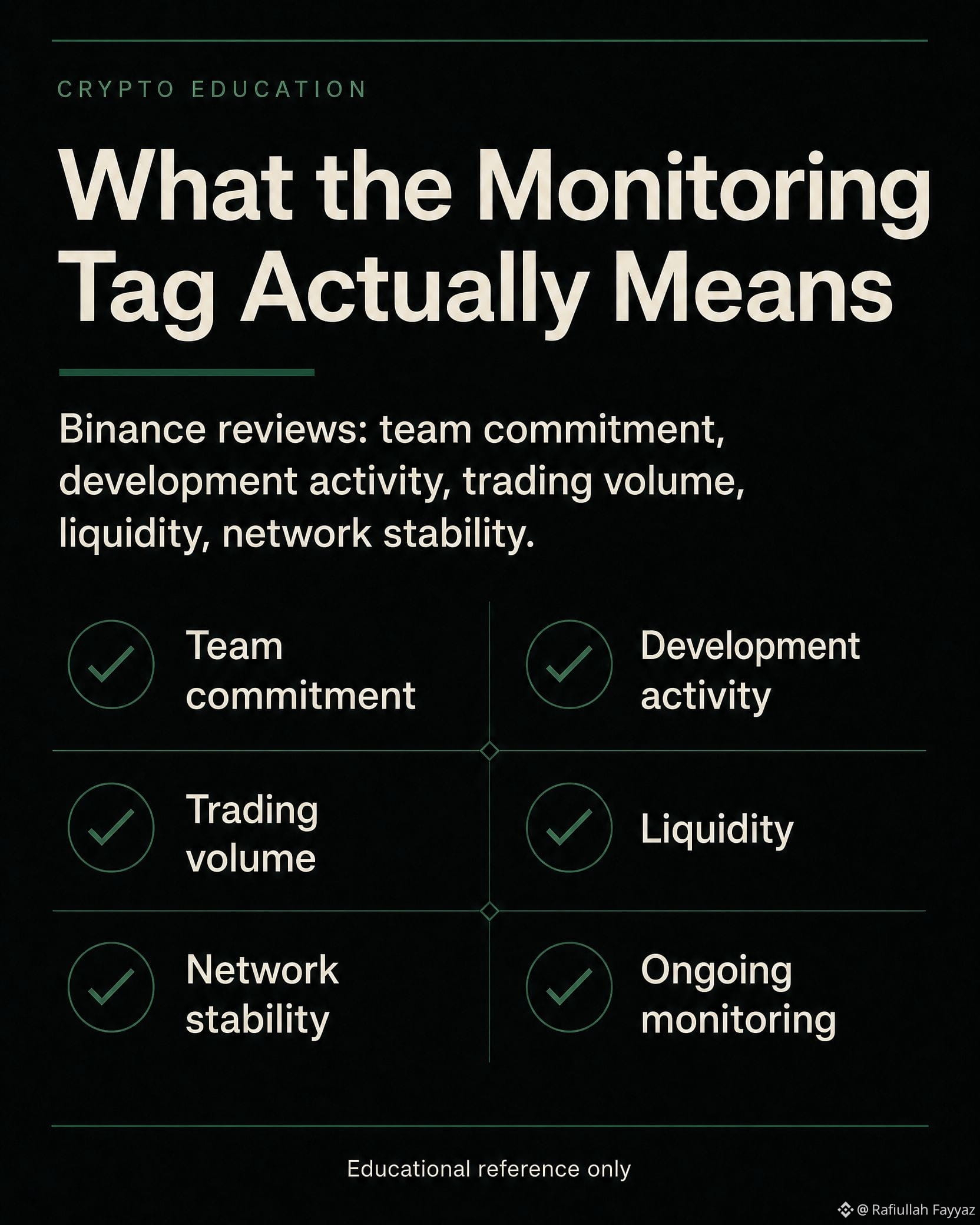
Binance's Monitoring Tag isn't just a label. It's a signal that a token is under review for potentially being delisted.
What gets reviewed?
· Team commitment to the project
· Development activity level and quality
· Trading volume and liquidity
· Network stability and security
· Public communication responsiveness
· Evidence of unethical conduct
These aren't arbitrary. Binance is effectively saying: "This token isn't meeting our standards in one or more of these areas."
If a token stays on the Monitoring Tag too long, delisting becomes more likely. Binance removed ICX, SCRT, and STORJ from spot trading on September 3 — all had been tagged.
The tag itself doesn't kill a token. But it changes how the market perceives it. And perception affects volume, liquidity, and price.
Understanding what the tag actually measures helps you read the signal rather than just reacting to the fear.
#CryptoEducation #Binance #Tokenomics #EducationalContent #BinanceSquareTalks
What gets reviewed?
· Team commitment to the project
· Development activity level and quality
· Trading volume and liquidity
· Network stability and security
· Public communication responsiveness
· Evidence of unethical conduct
These aren't arbitrary. Binance is effectively saying: "This token isn't meeting our standards in one or more of these areas."
If a token stays on the Monitoring Tag too long, delisting becomes more likely. Binance removed ICX, SCRT, and STORJ from spot trading on September 3 — all had been tagged.
The tag itself doesn't kill a token. But it changes how the market perceives it. And perception affects volume, liquidity, and price.
Understanding what the tag actually measures helps you read the signal rather than just reacting to the fear.
#CryptoEducation #Binance #Tokenomics #EducationalContent #BinanceSquareTalks
Verified
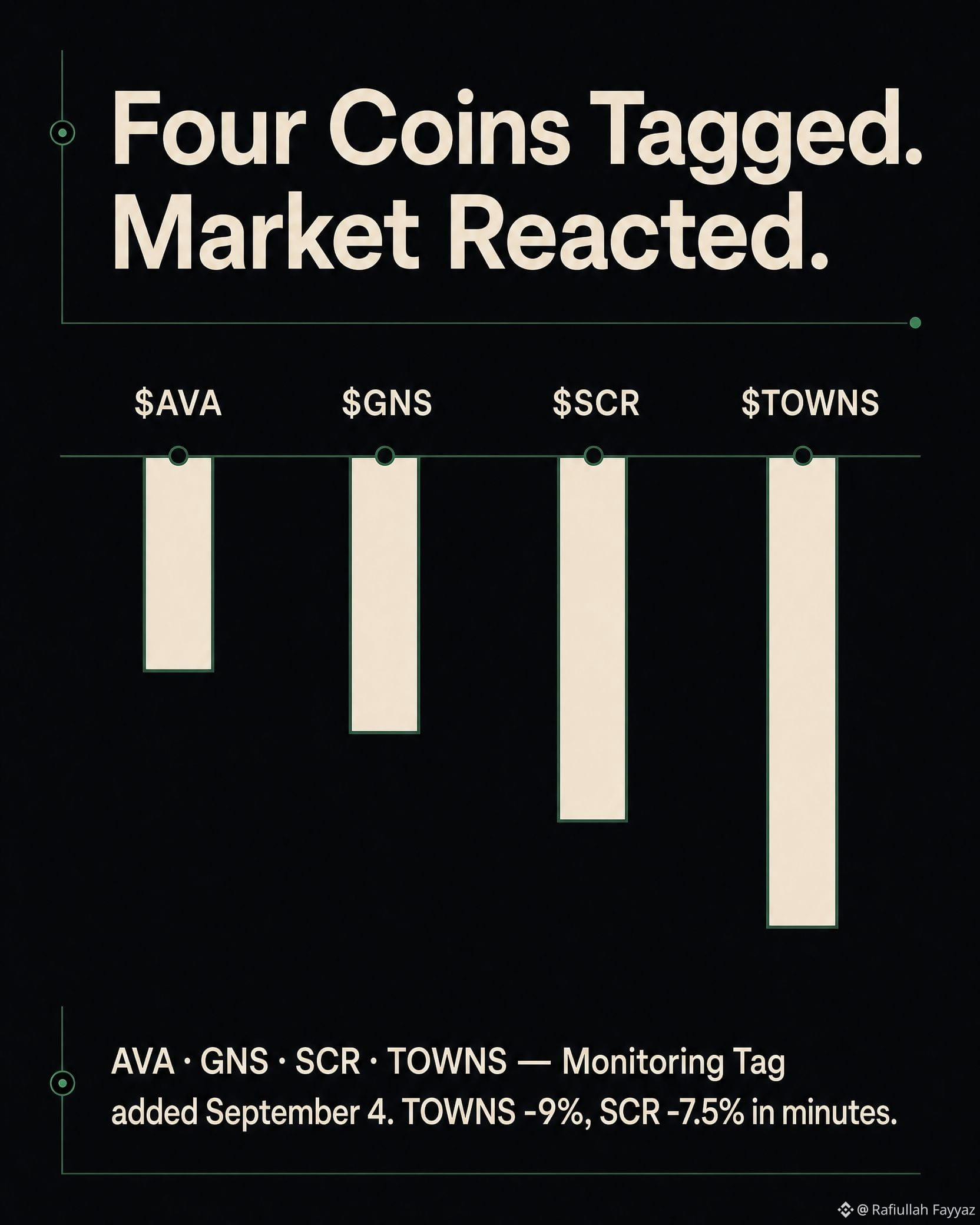
Binance added AVA, GNS, SCR, and TOWNS to the Monitoring Tag list on September 4. The market reacted quickly.
TOWNS dropped over 9% in minutes. SCR fell 7.5% to around $0.0214. AVA slid nearly 5%. GNS recovered better — down only 0.38%.
Why does this matter? Because Monitoring Tags often precede delistings. Binance removed ICON, Secret, and Storj from spot trading on September 3 — all had received the tag first.
The pattern is clear enough that the market prices it in almost immediately now.
I'm not predicting which of these four gets delisted. I'm watching how the market digests exchange-level signals. Each tag tells a story about what Binance's review process values — development activity, liquidity, team communication.
Watching these four over the coming weeks will teach more about exchange dynamics than any price chart alone.
$AVA $GNS $SCR $TOWNS
#Binance #Altcoin #Tokenomics #EducationalContent #BinanceSquareTalks
TOWNS dropped over 9% in minutes. SCR fell 7.5% to around $0.0214. AVA slid nearly 5%. GNS recovered better — down only 0.38%.
Why does this matter? Because Monitoring Tags often precede delistings. Binance removed ICON, Secret, and Storj from spot trading on September 3 — all had received the tag first.
The pattern is clear enough that the market prices it in almost immediately now.
I'm not predicting which of these four gets delisted. I'm watching how the market digests exchange-level signals. Each tag tells a story about what Binance's review process values — development activity, liquidity, team communication.
Watching these four over the coming weeks will teach more about exchange dynamics than any price chart alone.
$AVA $GNS $SCR $TOWNS
#Binance #Altcoin #Tokenomics #EducationalContent #BinanceSquareTalks
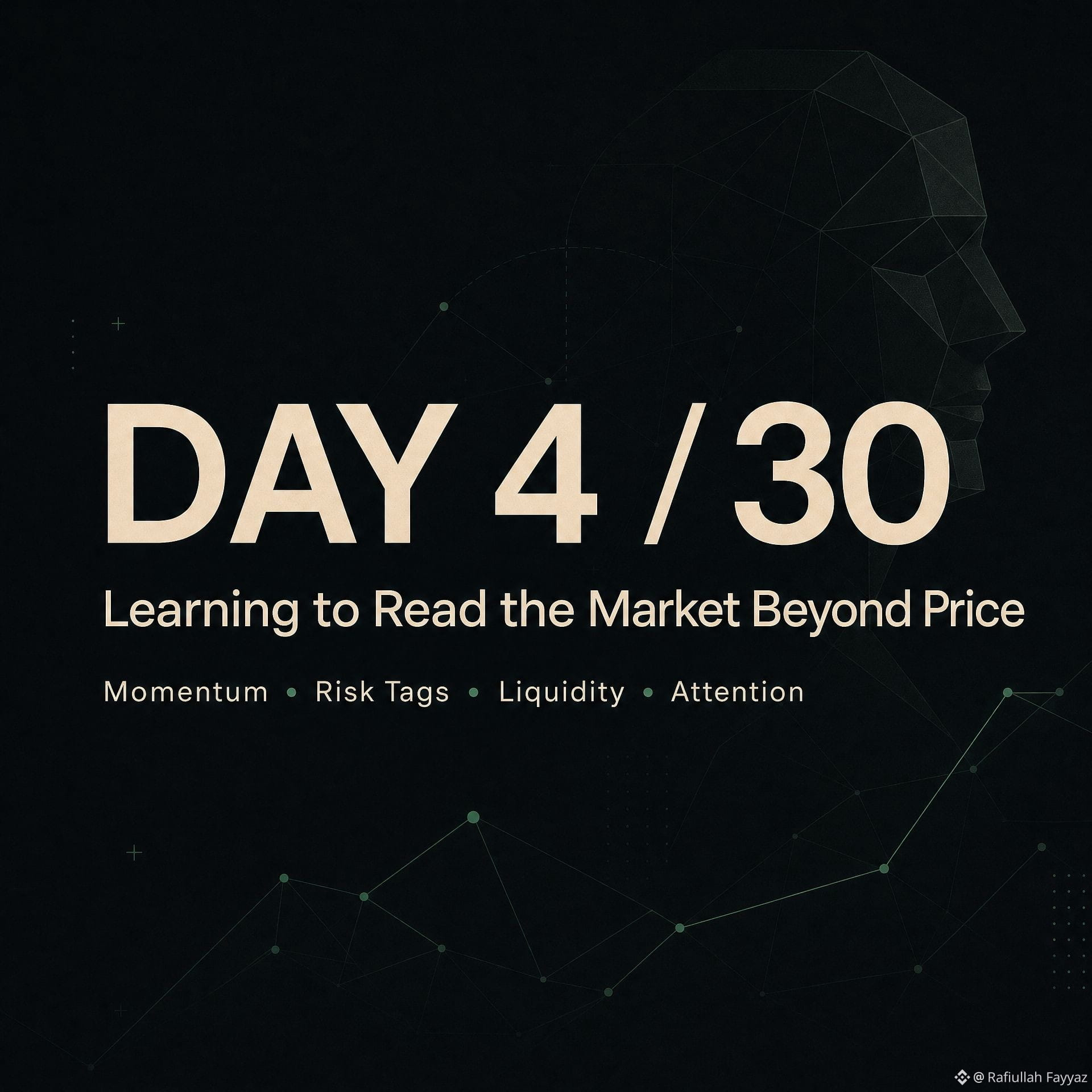
Day 4/30.
I’m starting to understand that crypto research isn't just:
Coin went up → post about it.
There are layers behind every move.
Today I looked at:
• Market momentum
• Sector rotation
• Exchange risk labels
• Trading campaigns
• Liquidity and attention
The more I research, the more I realize how easy it is to look at one green candle and miss the actual story.
My rule for this 30-day journey:
Don't post the move until I understand why the move deserves attention.
Research → Explain → Publish → Learn.
#crypto #Binanace #BinanceSquareFamily #EducationalContent
I’m starting to understand that crypto research isn't just:
Coin went up → post about it.
There are layers behind every move.
Today I looked at:
• Market momentum
• Sector rotation
• Exchange risk labels
• Trading campaigns
• Liquidity and attention
The more I research, the more I realize how easy it is to look at one green candle and miss the actual story.
My rule for this 30-day journey:
Don't post the move until I understand why the move deserves attention.
Research → Explain → Publish → Learn.
#crypto #Binanace #BinanceSquareFamily #EducationalContent
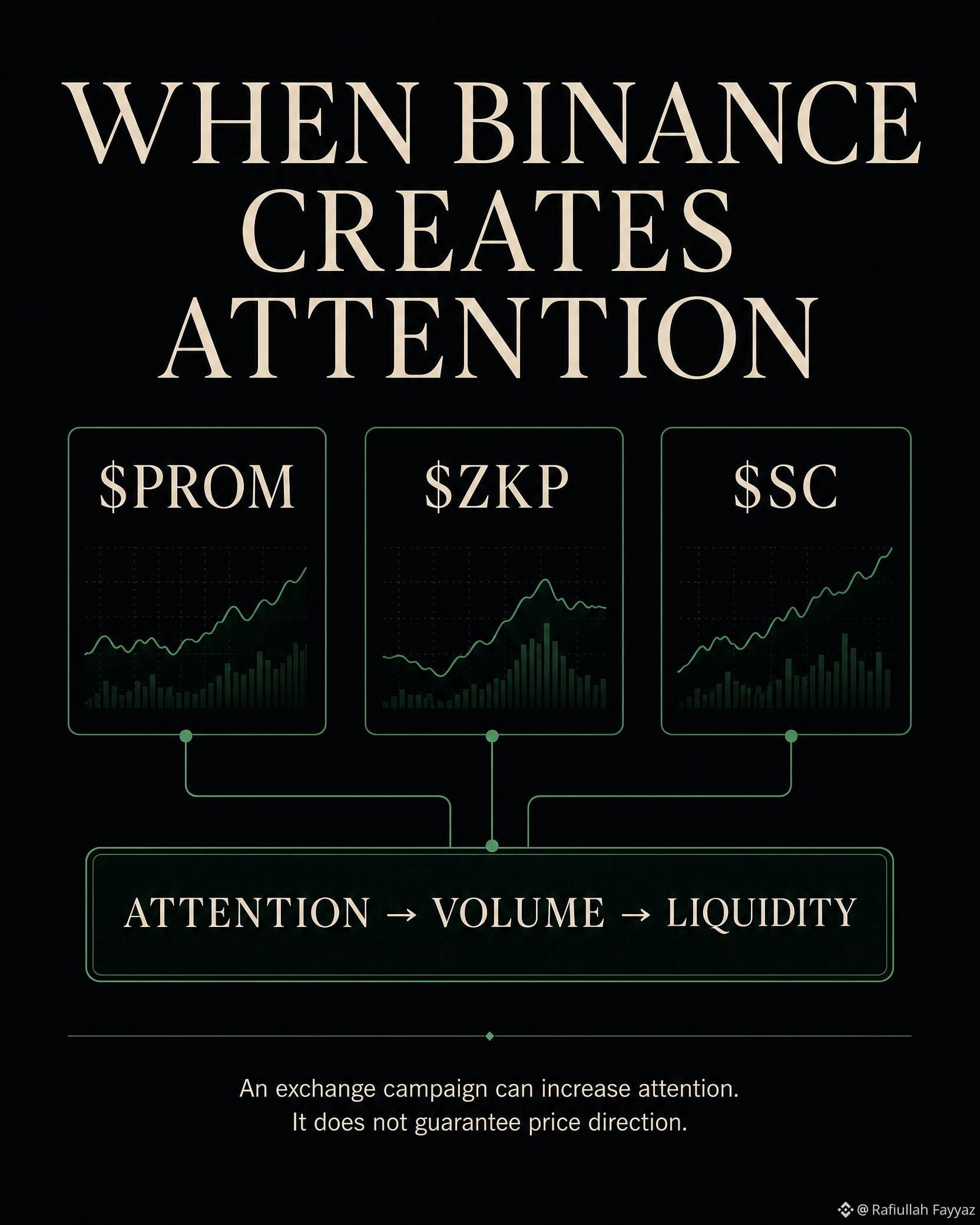
Something else caught my attention on Binance this week.
The current Altcoin Trading Festival includes:
$PROM
$ZKP
$SC
with designated Binance Spot trading pairs.
That doesn't automatically make these tokens bullish.
But it creates something worth studying:
attention + trading activity + liquidity.
Exchange campaigns can temporarily put certain assets in front of more traders.
So when researching an altcoin, I’m adding another question:
“Is there anything happening on the exchange that could change attention or volume?”
A catalyst doesn't guarantee price appreciation.
It simply gives you a reason to investigate further.
#Crypto #altcoins #BinanceSquare #EducationalContent
The current Altcoin Trading Festival includes:
$PROM
$ZKP
$SC
with designated Binance Spot trading pairs.
That doesn't automatically make these tokens bullish.
But it creates something worth studying:
attention + trading activity + liquidity.
Exchange campaigns can temporarily put certain assets in front of more traders.
So when researching an altcoin, I’m adding another question:
“Is there anything happening on the exchange that could change attention or volume?”
A catalyst doesn't guarantee price appreciation.
It simply gives you a reason to investigate further.
#Crypto #altcoins #BinanceSquare #EducationalContent
Verified
One thing I learned today:
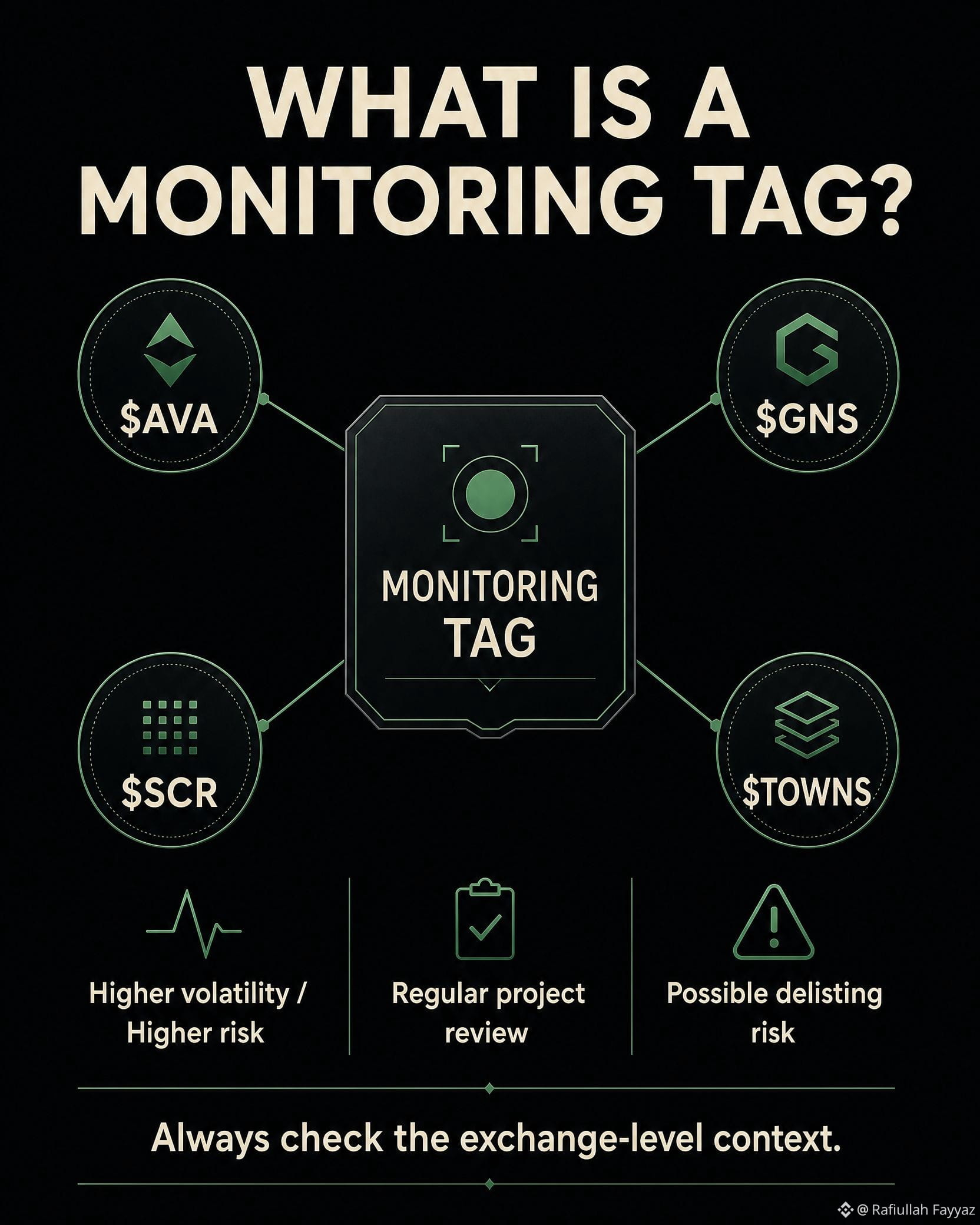
A Binance “Monitoring Tag” is not the same thing as a normal market label.
Binance recently added:
$AVA
$GNS
$TOWNS
$SCR
to its Monitoring Tag list.
According to Binance, these tokens can have higher volatility and risk than other listed assets and are subject to regular review.
The lesson:
Before researching a coin, check whether there are exchange-level risk flags attached to it.
Price tells you what the market is doing.
Exchange information can tell you what risks deserve more attention.
That extra 30 seconds of research can change how you interpret a chart.
#cryptoeducation #BİNANCE #altcoins #BinanceSquareTalks #EducationalContent
A Binance “Monitoring Tag” is not the same thing as a normal market label.
Binance recently added:
$AVA
$GNS
$TOWNS
$SCR
to its Monitoring Tag list.
According to Binance, these tokens can have higher volatility and risk than other listed assets and are subject to regular review.
The lesson:
Before researching a coin, check whether there are exchange-level risk flags attached to it.
Price tells you what the market is doing.
Exchange information can tell you what risks deserve more attention.
That extra 30 seconds of research can change how you interpret a chart.
#cryptoeducation #BİNANCE #altcoins #BinanceSquareTalks #EducationalContent
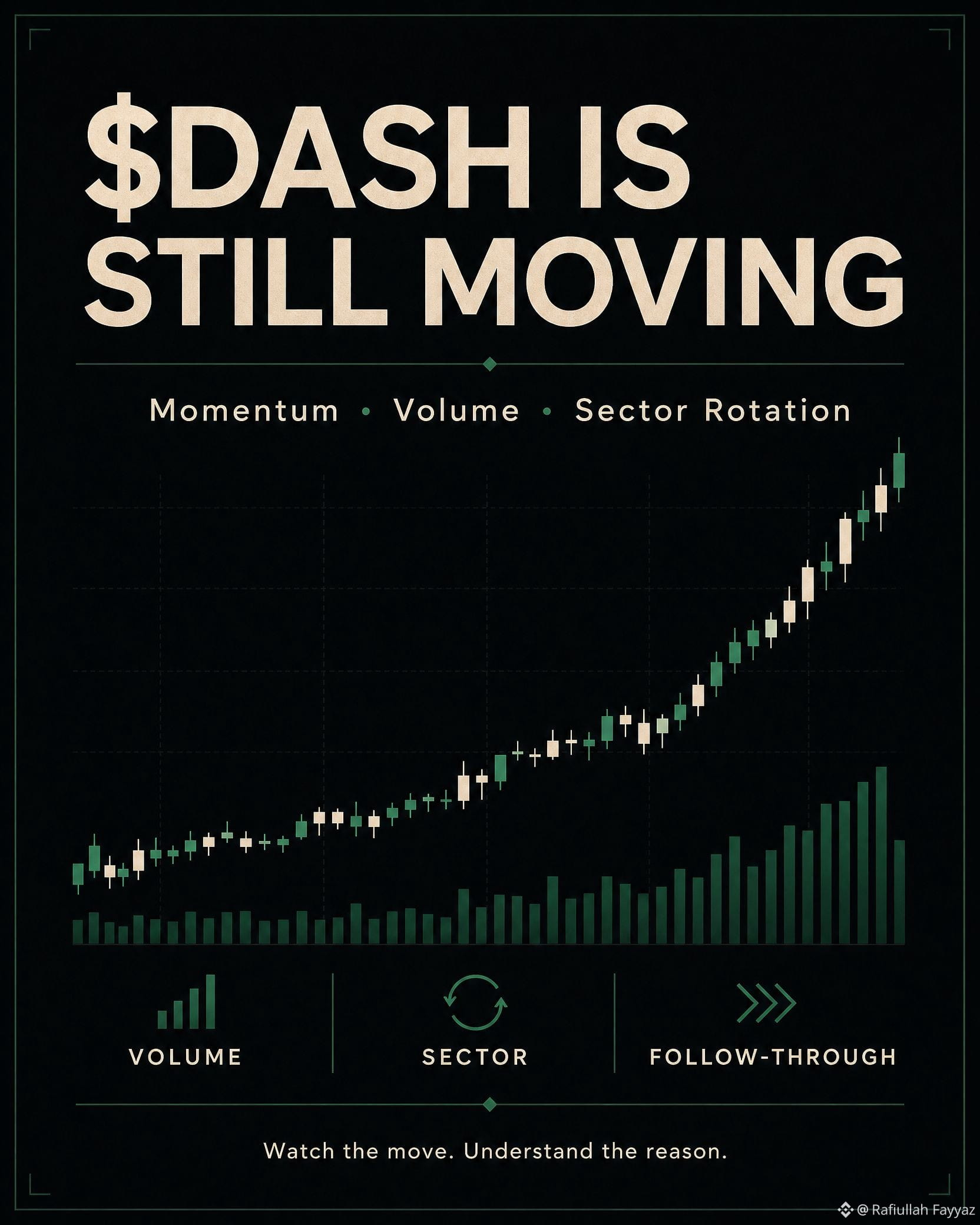
$DASH is still one of the altcoins I’m watching closely.
Binance’s latest market update showed DASH among the strongest Binance movers, with a roughly 26% gain in the latest 24-hour snapshot.
But a big green candle isn't the whole story.
The question now is:
Is this a short burst of momentum, or is the privacy-coin narrative strong enough to keep attracting attention?
I’m watching three things:
→ Volume
→ Whether other privacy coins follow
→ Whether the move holds after the initial spike
A coin moving 25% is interesting.
A whole sector moving together is much more interesting.
$ZEC $ZEN
#crypto #altcoins #BinamceSquareFamily #EducationalContent
Binance’s latest market update showed DASH among the strongest Binance movers, with a roughly 26% gain in the latest 24-hour snapshot.
But a big green candle isn't the whole story.
The question now is:
Is this a short burst of momentum, or is the privacy-coin narrative strong enough to keep attracting attention?
I’m watching three things:
→ Volume
→ Whether other privacy coins follow
→ Whether the move holds after the initial spike
A coin moving 25% is interesting.
A whole sector moving together is much more interesting.
$ZEC $ZEN
#crypto #altcoins #BinamceSquareFamily #EducationalContent
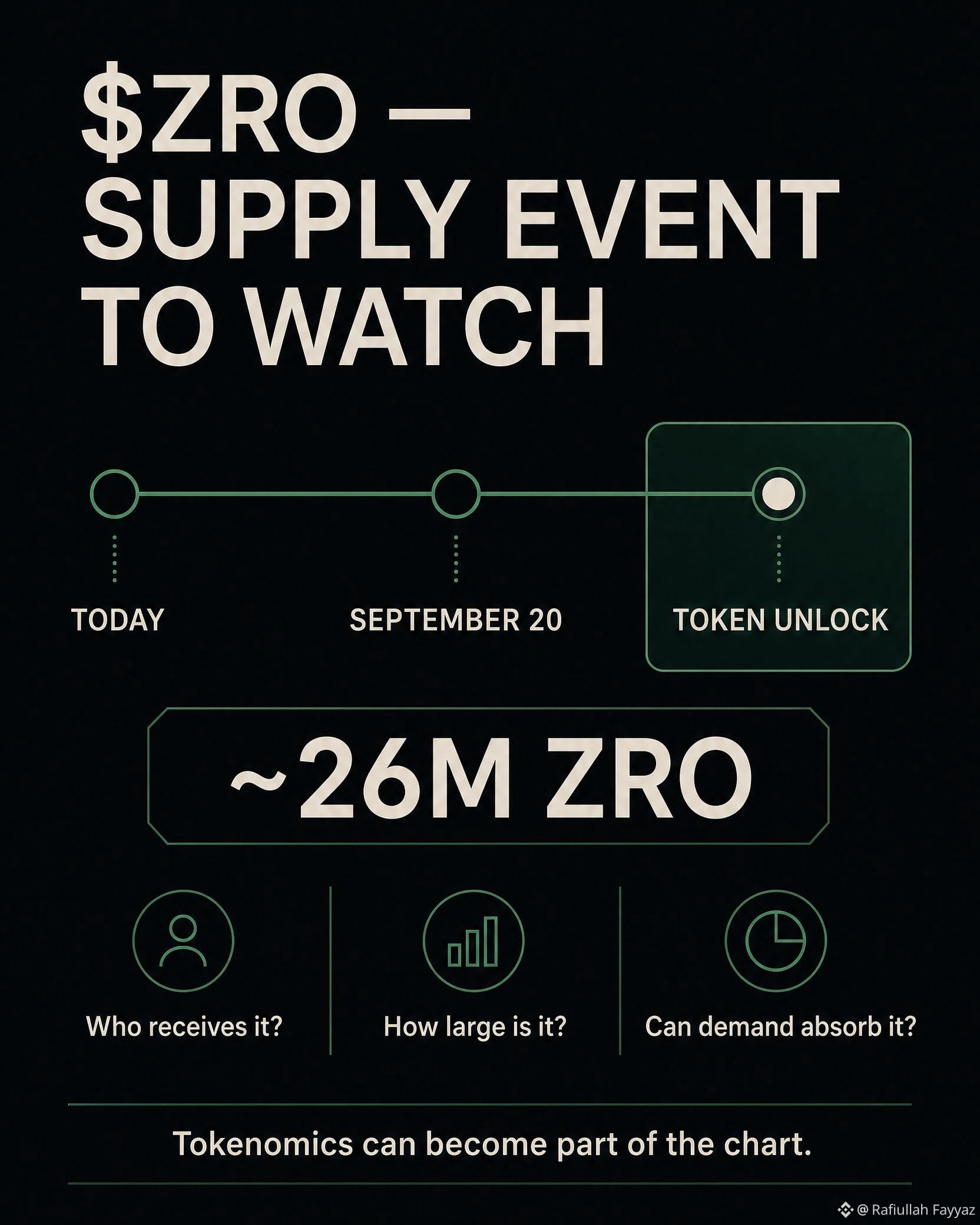
$ZRO has something traders should have on their calendar.
A token unlock is scheduled for September 20.
Current estimates put the release at roughly 26M ZRO.
That's not automatically bearish.
But it does create a potential supply event worth watching.
The questions I'd ask:
1.Who receives the unlocked tokens?
2.How much of the circulating supply does it represent?
3.Is demand growing fast enough to absorb the new supply?
4.How does $ZRO behave as the unlock approaches?
This is why I don't look at charts alone.
Tokenomics can become part of the chart.
$ZRO #LayerZero #Tokenomics #BinanceSquareTalks #EducationalContent
A token unlock is scheduled for September 20.
Current estimates put the release at roughly 26M ZRO.
That's not automatically bearish.
But it does create a potential supply event worth watching.
The questions I'd ask:
1.Who receives the unlocked tokens?
2.How much of the circulating supply does it represent?
3.Is demand growing fast enough to absorb the new supply?
4.How does $ZRO behave as the unlock approaches?
This is why I don't look at charts alone.
Tokenomics can become part of the chart.
$ZRO #LayerZero #Tokenomics #BinanceSquareTalks #EducationalContent
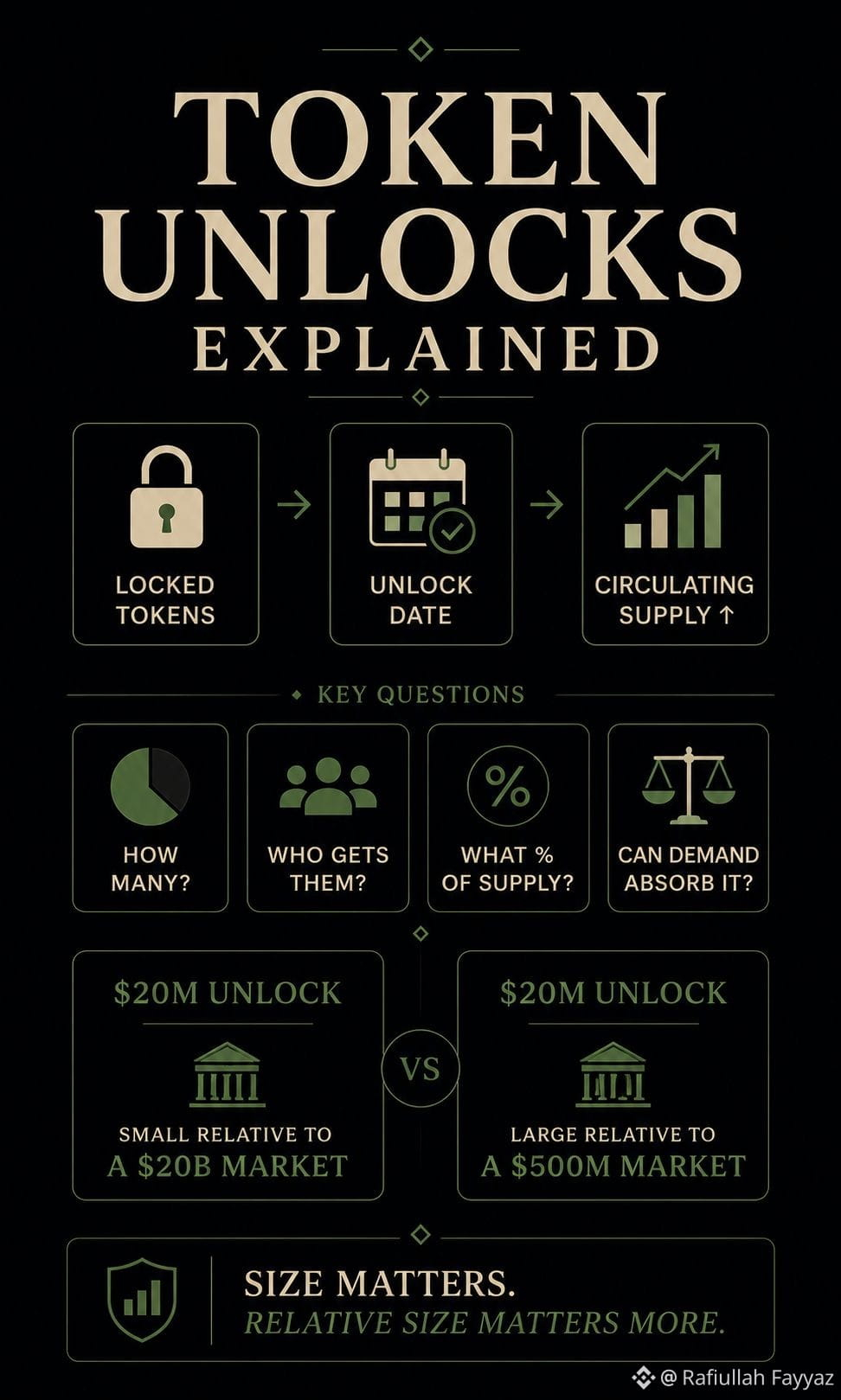
A token unlock can create selling pressure. But it's not automatically bearish.
Here's the simple idea:
A project has tokens that aren't currently circulating.
At the unlock date, some of those tokens become available.
More supply can enter the market.
The important questions are:
→ How many tokens are being unlocked? → Who receives them? → What percentage of circulating supply is that? → Is there enough demand to absorb them?
A $20M unlock means something very different for a $500M token than for a $20B token.
Don't just look at the dollar value.
Look at the unlock relative to the circulating supply.
#cryptoeducation #Tokenomics #altcoins #EducationalContent #BinanceSquareTalks
Here's the simple idea:
A project has tokens that aren't currently circulating.
At the unlock date, some of those tokens become available.
More supply can enter the market.
The important questions are:
→ How many tokens are being unlocked? → Who receives them? → What percentage of circulating supply is that? → Is there enough demand to absorb them?
A $20M unlock means something very different for a $500M token than for a $20B token.
Don't just look at the dollar value.
Look at the unlock relative to the circulating supply.
#cryptoeducation #Tokenomics #altcoins #EducationalContent #BinanceSquareTalks
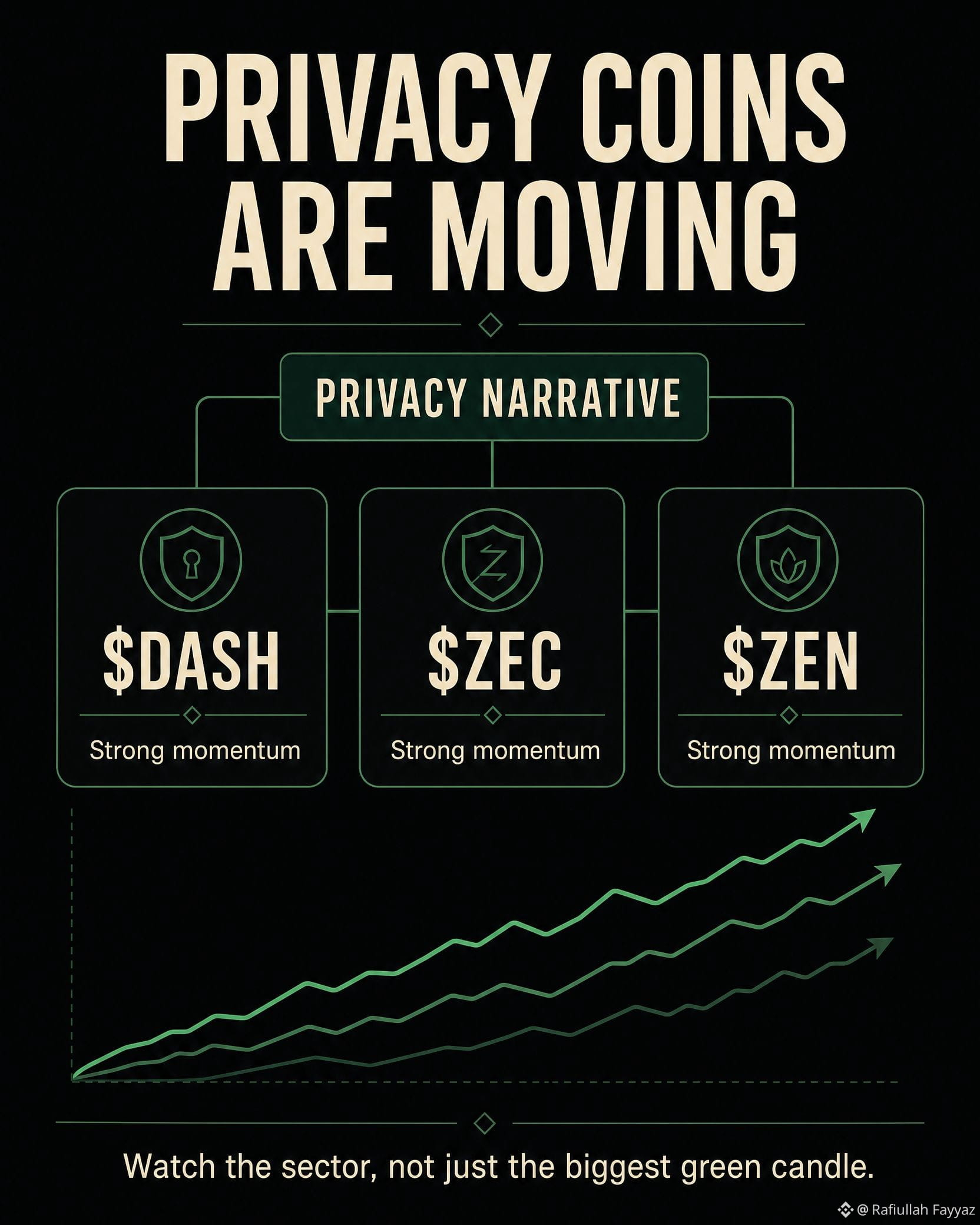
Something interesting is happening in privacy coins.
$DASH , $ZEC and $ZEN have all been moving strongly.
When multiple coins from the same sector start moving together, I pay attention.
It can mean the market is trading a narrative, rather than one isolated coin.
Right now, the privacy narrative is getting attention again.
But here's the part I'm watching:
Does the strength spread, or does it stay concentrated in a few names?
If more privacy coins start showing strong volume and relative strength, the sector becomes more interesting.
If only one or two coins keep moving, it may just be individual momentum.
I'm learning to watch the group, not just the biggest green candle.
#crypto #altcoins #EducationalContent #Binance #zec
$DASH , $ZEC and $ZEN have all been moving strongly.
When multiple coins from the same sector start moving together, I pay attention.
It can mean the market is trading a narrative, rather than one isolated coin.
Right now, the privacy narrative is getting attention again.
But here's the part I'm watching:
Does the strength spread, or does it stay concentrated in a few names?
If more privacy coins start showing strong volume and relative strength, the sector becomes more interesting.
If only one or two coins keep moving, it may just be individual momentum.
I'm learning to watch the group, not just the biggest green candle.
#crypto #altcoins #EducationalContent #Binance #zec
Day 2/30
Yesterday I started this account from zero.
Today I'm changing one thing:
I'm going deeper into the coins actually moving on Binance.
Instead of posting the same 3–4 large caps every day, I'm going to look for:
→ unusual volume
→ strong momentum
→ interesting narratives
→ major breakouts
→ coins traders are suddenly paying attention to
Then I'll try to understand why they're moving.
Not every pump deserves a post.
That's something I'm learning already.
Research → explain → publish → learn.
#crypto #BinanceSquareFamily #EducationalContent
Yesterday I started this account from zero.
Today I'm changing one thing:
I'm going deeper into the coins actually moving on Binance.
Instead of posting the same 3–4 large caps every day, I'm going to look for:
→ unusual volume
→ strong momentum
→ interesting narratives
→ major breakouts
→ coins traders are suddenly paying attention to
Then I'll try to understand why they're moving.
Not every pump deserves a post.
That's something I'm learning already.
Research → explain → publish → learn.
#crypto #BinanceSquareFamily #EducationalContent
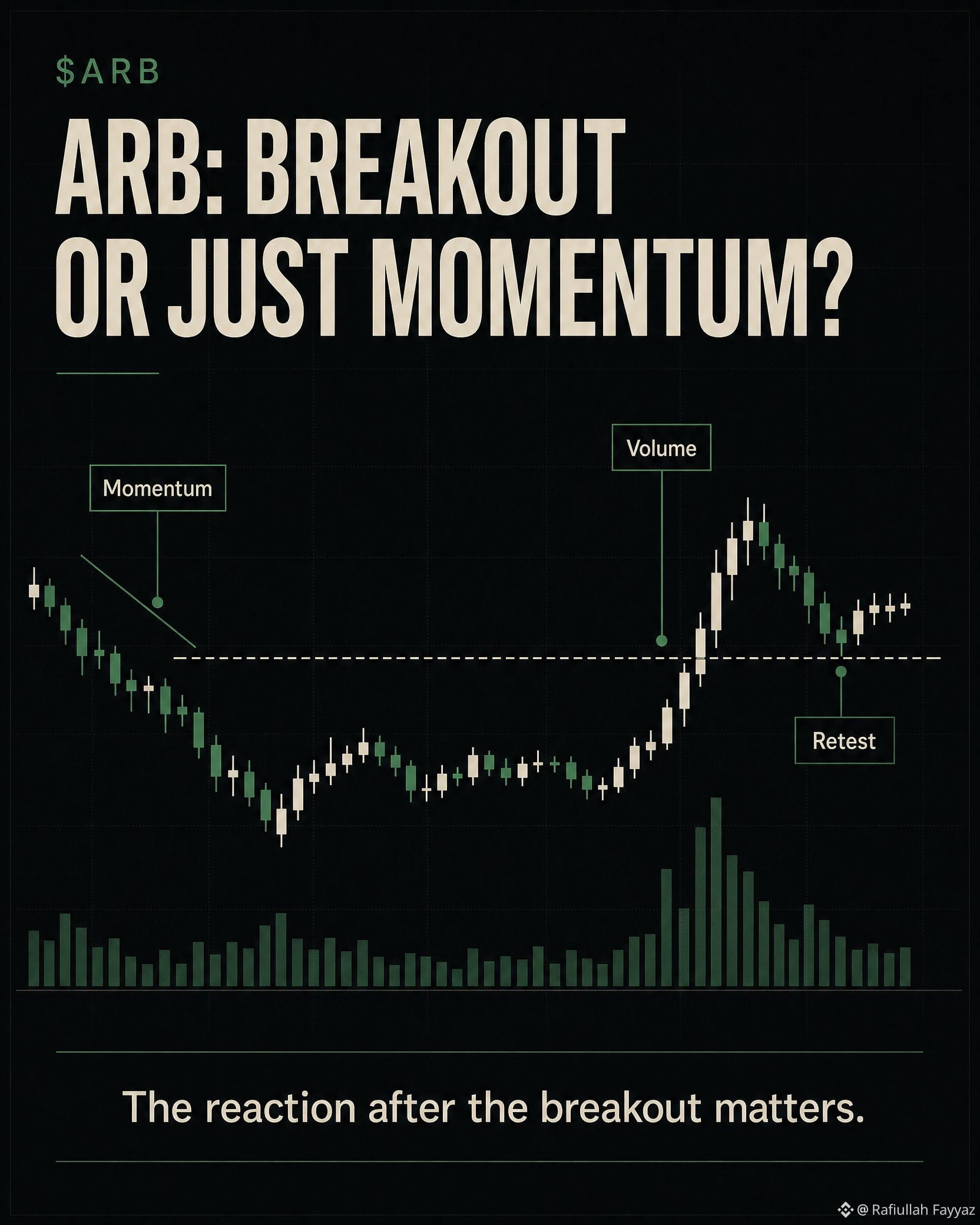
$ARB is one of the Binance-listed alts catching momentum today.
What caught my attention:
$ARB has been pushing higher while trading activity has picked up.
But after a fast move, I don't like chasing the candle.
I'd rather watch three things:
Does momentum continue?
Does volume stay elevated?
Does the breakout area hold if price pulls back?
If all three happen, the move becomes more interesting.
If momentum disappears immediately, today's green candle may have been the easy part.
The reaction after a breakout tells you more than the breakout itself.
$ARB #Arbitrum #crypto #EducationalContent
What caught my attention:
$ARB has been pushing higher while trading activity has picked up.
But after a fast move, I don't like chasing the candle.
I'd rather watch three things:
Does momentum continue?
Does volume stay elevated?
Does the breakout area hold if price pulls back?
If all three happen, the move becomes more interesting.
If momentum disappears immediately, today's green candle may have been the easy part.
The reaction after a breakout tells you more than the breakout itself.
$ARB #Arbitrum #crypto #EducationalContent
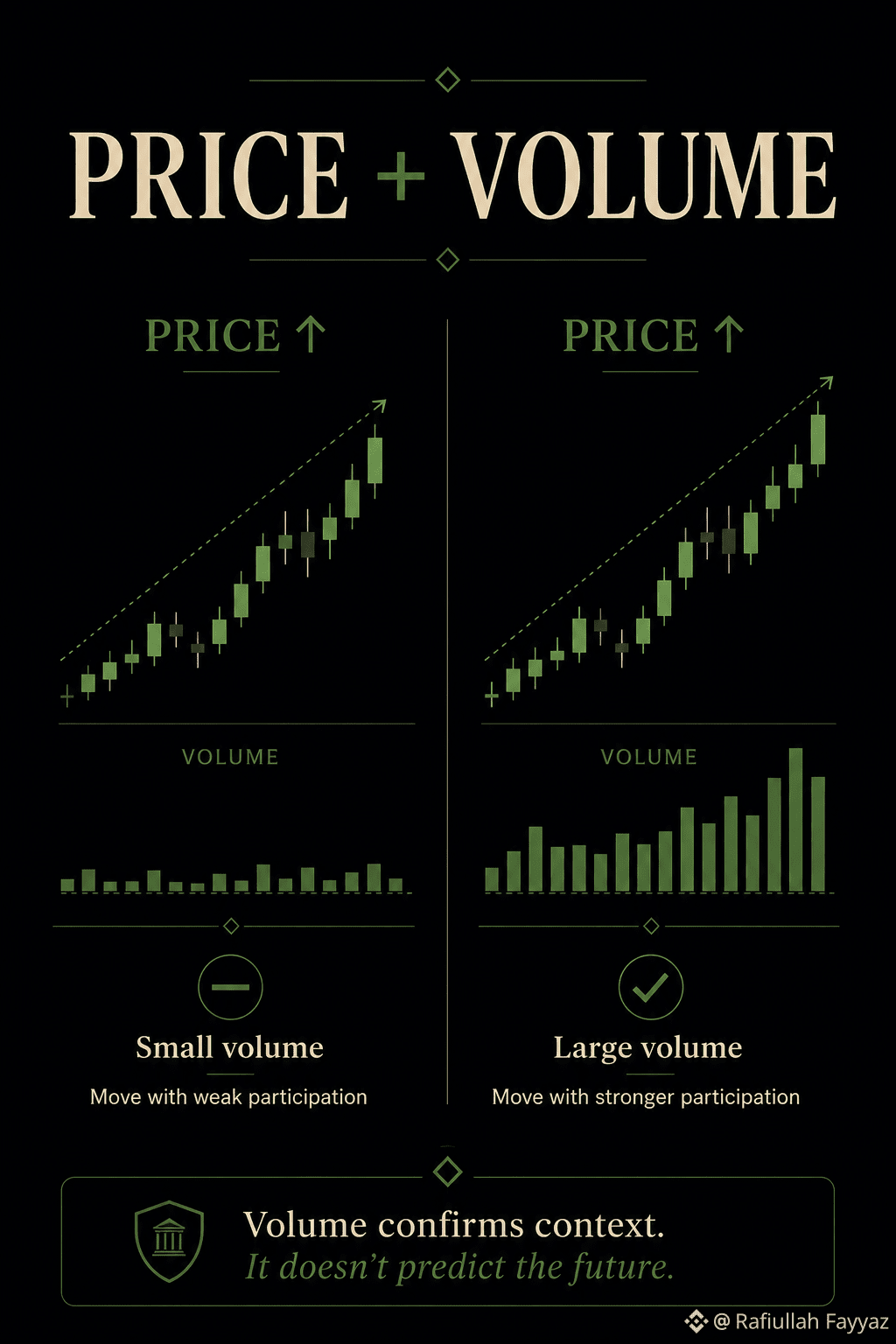
A price pump without volume deserves a closer look.
Here's the simple version:
Price tells you what happened.
Volume tells you how much activity was behind it.
Imagine two coins both rise 10%.
Coin A does it with very little volume.
Coin B does it while trading volume explodes.
Those aren't necessarily the same setup.
High volume can show that more market participants are involved.
But volume alone doesn't tell you whether the move will continue.
That's the part many beginners miss.
Volume is evidence. Not a crystal ball.
#crypto #EducationalContent #VolumeTrade #BTC
Here's the simple version:
Price tells you what happened.
Volume tells you how much activity was behind it.
Imagine two coins both rise 10%.
Coin A does it with very little volume.
Coin B does it while trading volume explodes.
Those aren't necessarily the same setup.
High volume can show that more market participants are involved.
But volume alone doesn't tell you whether the move will continue.
That's the part many beginners miss.
Volume is evidence. Not a crystal ball.
#crypto #EducationalContent #VolumeTrade #BTC
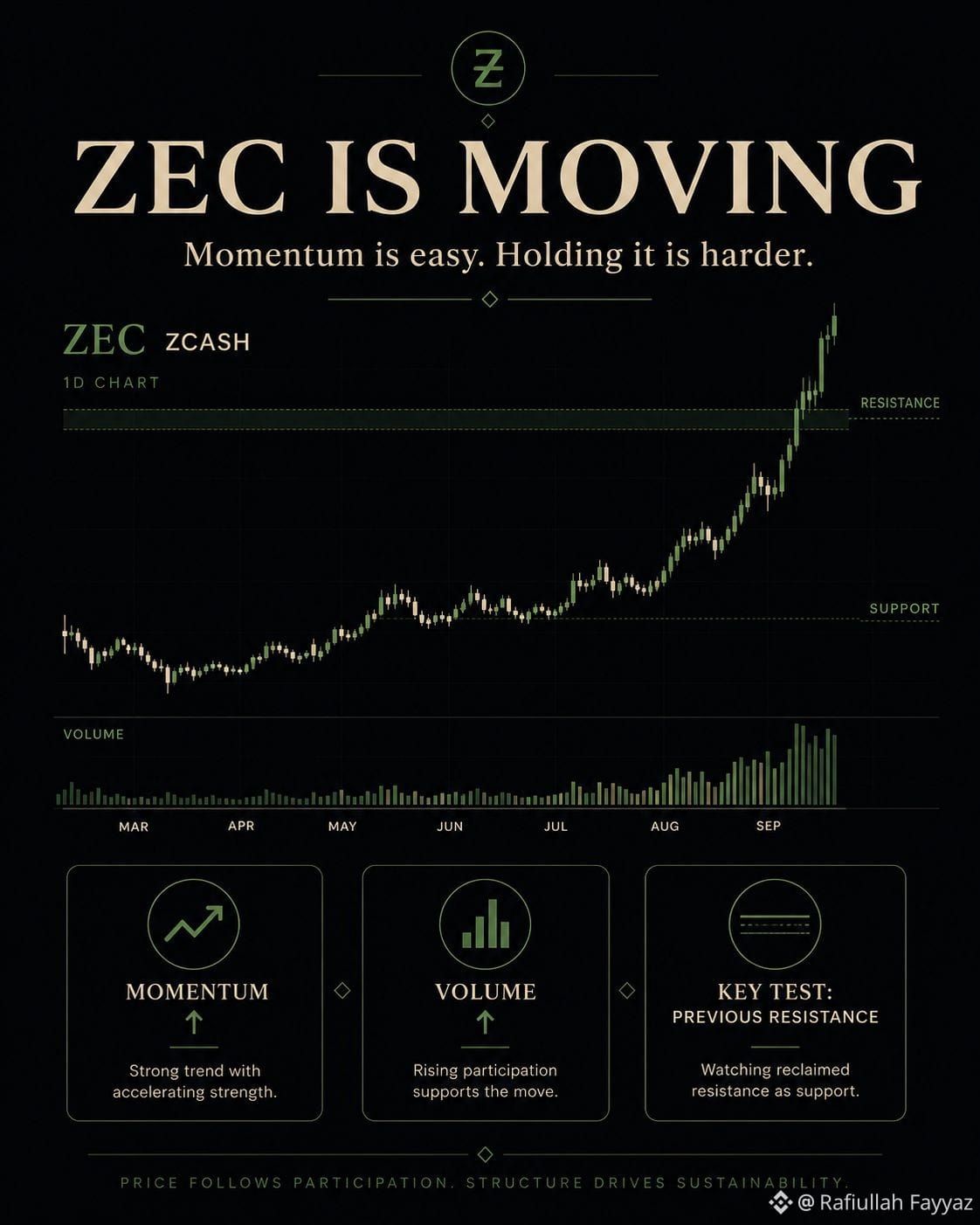
$ZEC just had one of the biggest moves on my Binance watchlist.
$ZEC is trading around the $830 area after a sharp move higher.
What makes this interesting isn't simply the green candle.
It's the combination of:
→ Strong momentum
→ High trading activity
→ A much larger move than most major alts
The question now isn't "how high can it go?"
It's:
Can buyers keep the momentum after the initial move?
I'll be watching volume and whether previous resistance turns into support.
Momentum gets attention.
Holding the move is what makes it interesting.
#ZEC #crypto #EducationalContent
$ZEC is trading around the $830 area after a sharp move higher.
What makes this interesting isn't simply the green candle.
It's the combination of:
→ Strong momentum
→ High trading activity
→ A much larger move than most major alts
The question now isn't "how high can it go?"
It's:
Can buyers keep the momentum after the initial move?
I'll be watching volume and whether previous resistance turns into support.
Momentum gets attention.
Holding the move is what makes it interesting.
#ZEC #crypto #EducationalContent
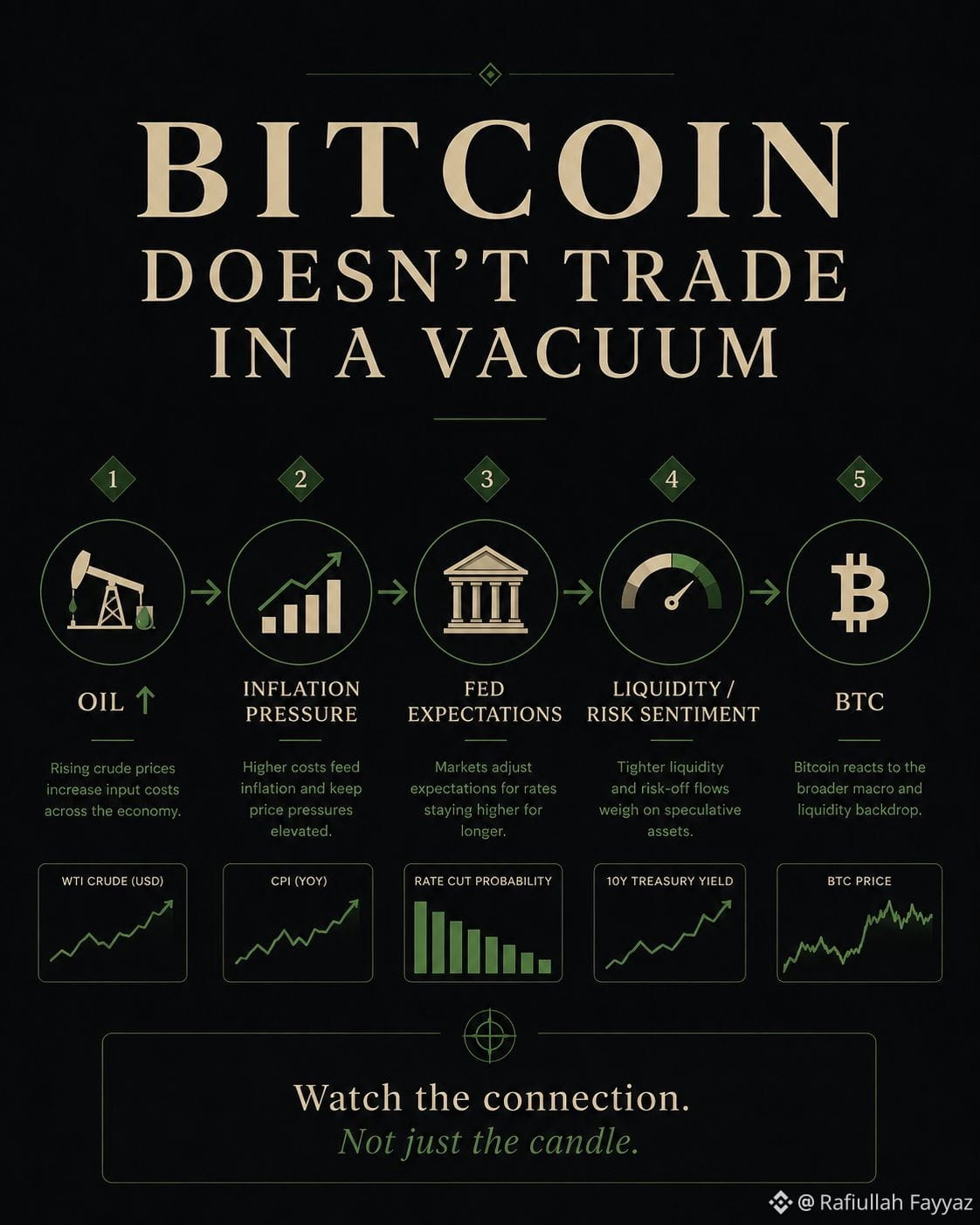
Why is everyone suddenly talking about oil when looking at Bitcoin?
Because markets are connected.
Higher oil prices can increase inflation pressure.
Higher inflation expectations can make investors worry about tighter monetary policy.
Tighter financial conditions can put pressure on risk assets.
And Bitcoin is still treated as a risk asset by many parts of the market.
That's why today's BTC story isn't just:
"Bitcoin went up."
The better question is:
What is happening around Bitcoin?
Right now I'm watching:
• Oil • Treasury yields • US employment data • Fed expectations • BTC's reaction
Sometimes the most useful crypto research starts outside crypto.
$BTC #crypto #bitcoin
Because markets are connected.
Higher oil prices can increase inflation pressure.
Higher inflation expectations can make investors worry about tighter monetary policy.
Tighter financial conditions can put pressure on risk assets.
And Bitcoin is still treated as a risk asset by many parts of the market.
That's why today's BTC story isn't just:
"Bitcoin went up."
The better question is:
What is happening around Bitcoin?
Right now I'm watching:
• Oil • Treasury yields • US employment data • Fed expectations • BTC's reaction
Sometimes the most useful crypto research starts outside crypto.
$BTC #crypto #bitcoin
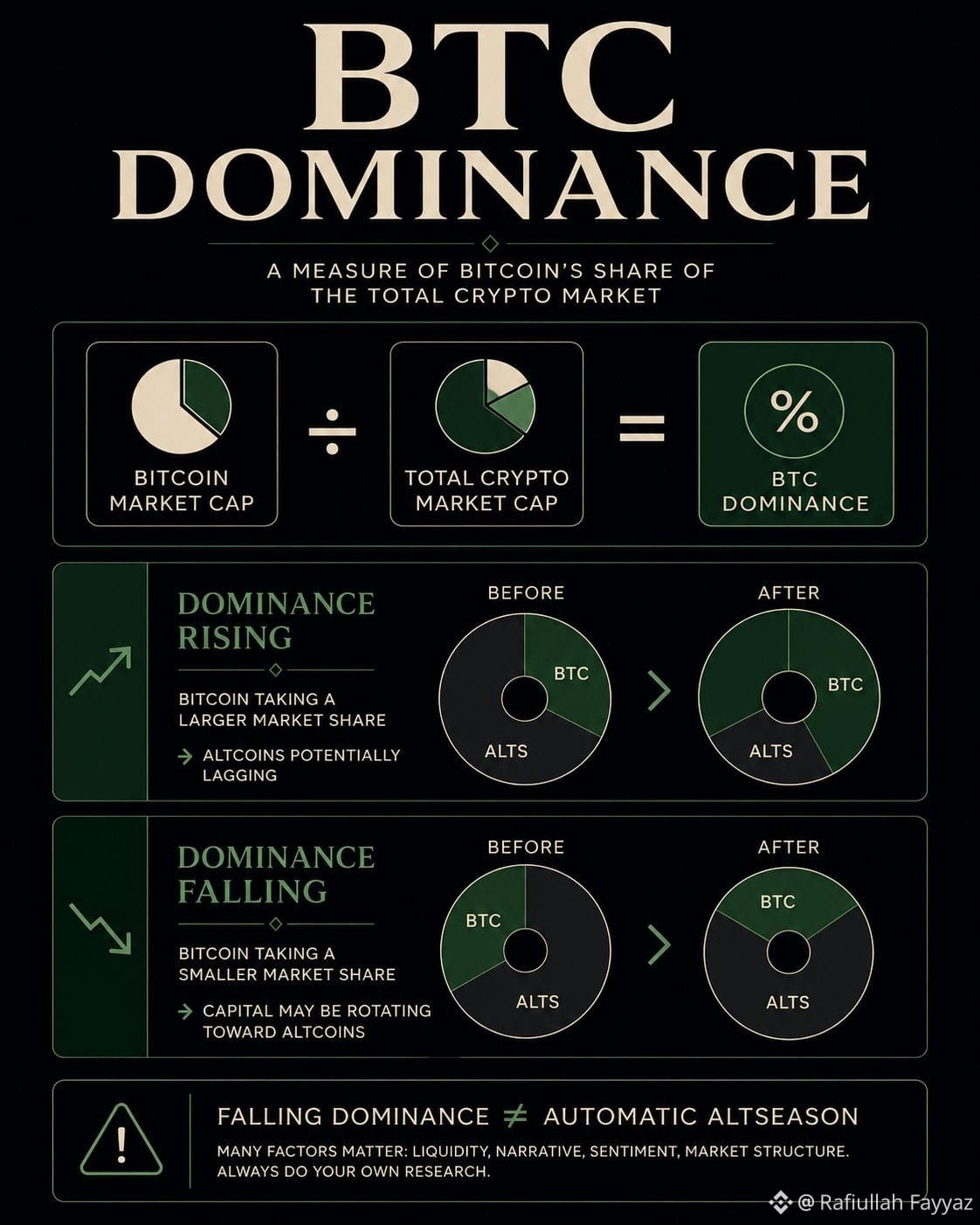
If you're new to crypto, learn this number: $BTC dominance.
BTC dominance measures Bitcoin's share of the total crypto market capitalization.
If dominance rises:
→ Bitcoin is taking a larger share of the market → Altcoins may be lagging
If dominance falls:
→ Capital may be rotating toward altcoins → Altcoins may outperform BTC
But there's an important catch:
Falling BTC dominance doesn't automatically mean "altseason."
You need to look at price, volume and market conditions too.
One metric can give you a clue.
It shouldn't become your entire thesis.
$BTC #CryptoExpert #altcoins
BTC dominance measures Bitcoin's share of the total crypto market capitalization.
If dominance rises:
→ Bitcoin is taking a larger share of the market → Altcoins may be lagging
If dominance falls:
→ Capital may be rotating toward altcoins → Altcoins may outperform BTC
But there's an important catch:
Falling BTC dominance doesn't automatically mean "altseason."
You need to look at price, volume and market conditions too.
One metric can give you a clue.
It shouldn't become your entire thesis.
$BTC #CryptoExpert #altcoins
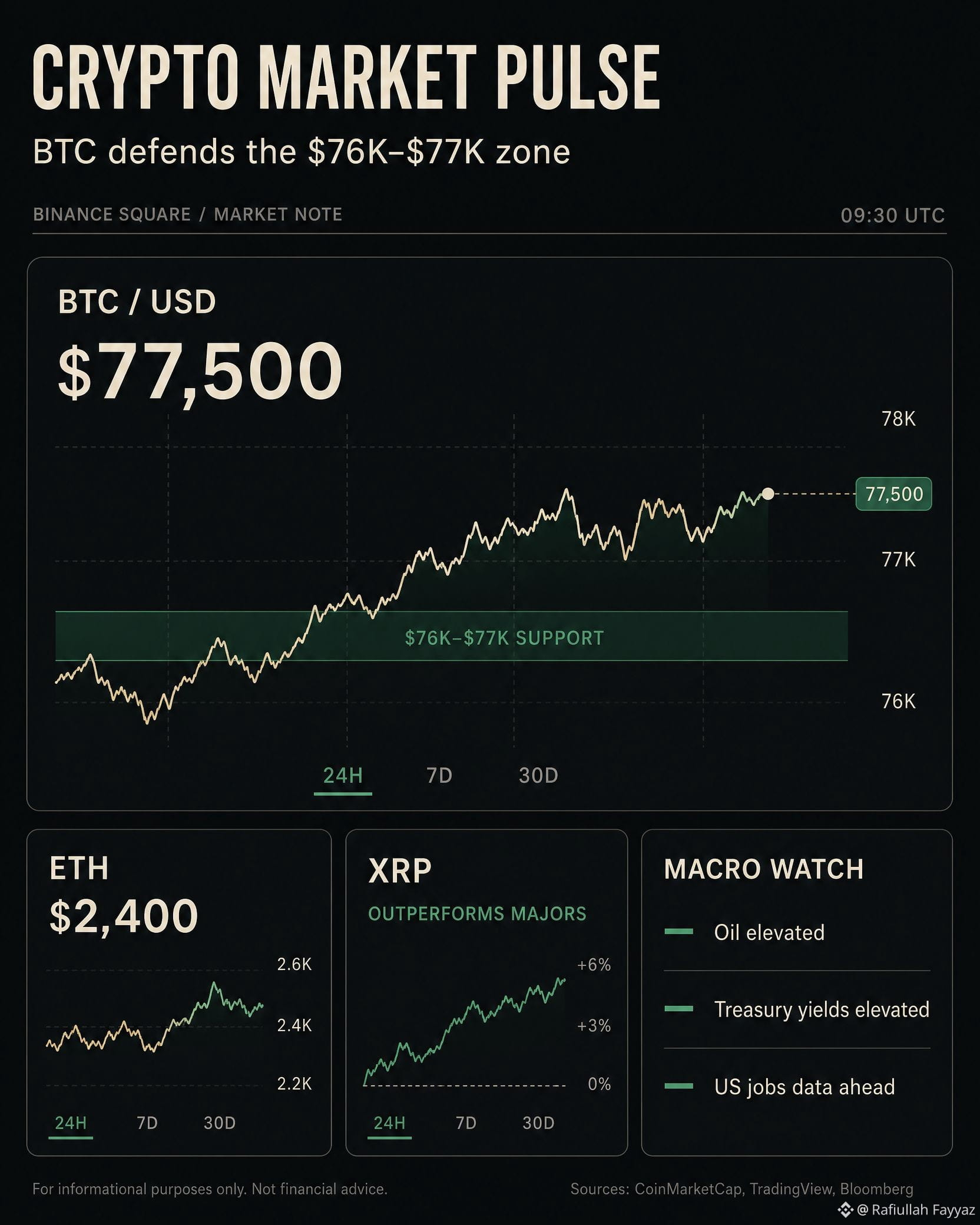
Crypto is starting September with a lot of uncertainty.
$BTC is back around $77.5K after buyers defended the $76K area.
$ETH TH is hovering around $2.4K.
$XRP RP is currently outperforming the major coins over the last 24h.
The bigger story isn't just crypto.
Oil remains elevated, bond yields are high, and markets are watching upcoming US jobs data for clues about the Fed.
For me, the interesting question is simple:
Can BTC hold the $76K–$77K area while macro pressure stays high?
That's what I'm watching today.
Not chasing candles. Watching the reaction.
#
$BTC is back around $77.5K after buyers defended the $76K area.
$ETH TH is hovering around $2.4K.
$XRP RP is currently outperforming the major coins over the last 24h.
The bigger story isn't just crypto.
Oil remains elevated, bond yields are high, and markets are watching upcoming US jobs data for clues about the Fed.
For me, the interesting question is simple:
Can BTC hold the $76K–$77K area while macro pressure stays high?
That's what I'm watching today.
Not chasing candles. Watching the reaction.
#
Log in to explore more content