
AlphaInsightX
262 Posts

AlphaInsightX
Report
Block User
🚀 CryptoInsightLab | Sharing crypto insights, market analysis, trading strategies, blockchain trends, and Web3 updates to help you stay informed. 📈🔗💡
11 Following
249 Followers
679 Liked
Posts
All
Videos
Article
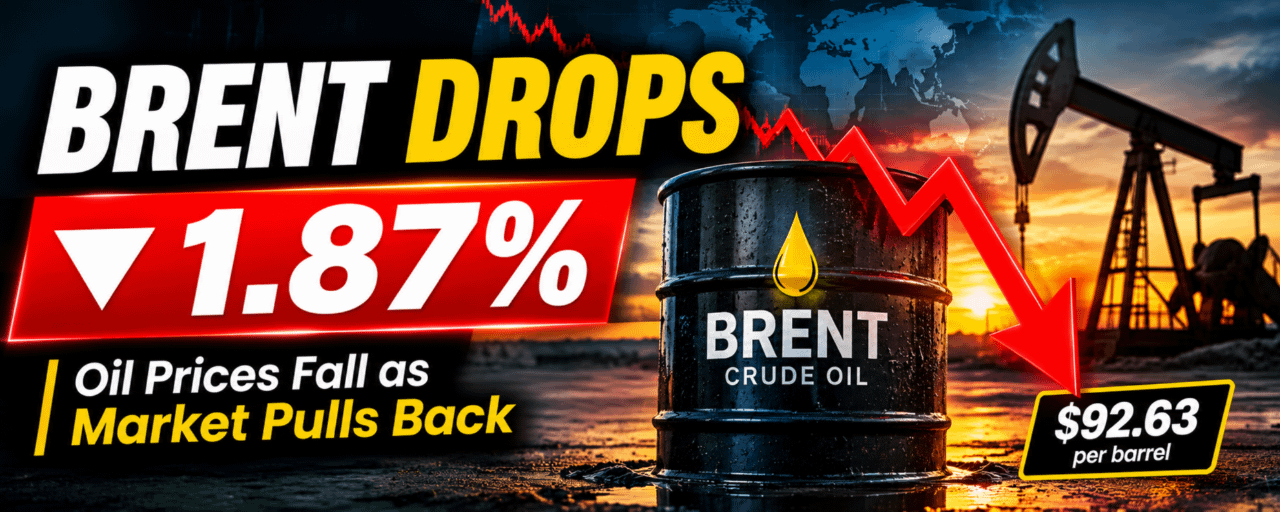
Brent Crude Drops 1.87% as Oil Market Pulls Back#brentdrops1.87%
$PROVE $CL $BZ
Brent crude oil fell 1.87% to around $92.63 per barrel, marking a notable pullback after a strong recent rally.
📉 Why Is Brent Falling?
The decline comes as traders take profits and reassess supply risks. Investors are closely watching developments around U.S. sanctions on Iran and the flow of crude through the Strait of Hormuz. Easing concerns about short-term supply bottlenecks have also reduced some of the risk premium in oil prices.
🌍 What It Means for Markets
Lower oil prices could ease some inflation pressure if the decline continues, while energy stocks may face additional pressure. However, geopolitical risks remain significant, meaning crude prices could stay volatile.
Key takeaway: Brent's 1.87% drop signals a short-term cooling in the oil market, but traders remain focused on Iran sanctions, Hormuz shipping activity, and global supply conditions.
#brent #crudeoil #energy #markets
Brent Crude Drops 1.87% as Oil Market Pulls Back
#brentdrops1.87%
$PROVE $CL $BZ
Brent crude oil fell 1.87% to around $92.63 per barrel, marking a notable pullback after a strong recent rally.
📉 Why Is Brent Falling?
The decline comes as traders take profits and reassess supply risks. Investors are closely watching developments around U.S. sanctions on Iran and the flow of crude through the Strait of Hormuz. Easing concerns about short-term supply bottlenecks have also reduced some of the risk premium in oil prices.
🌍 What It Means for Markets
Lower oil prices could ease some inflation pressure if the decline continues, while energy stocks may face additional pressure. However, geopolitical risks remain significant, meaning crude prices could stay volatile.
Key takeaway: Brent's 1.87% drop signals a short-term cooling in the oil market, but traders remain focused on Iran sanctions, Hormuz shipping activity, and global supply conditions.
#brent #crudeoil #energy #markets
$PROVE $CL $BZ
Brent crude oil fell 1.87% to around $92.63 per barrel, marking a notable pullback after a strong recent rally.
📉 Why Is Brent Falling?
The decline comes as traders take profits and reassess supply risks. Investors are closely watching developments around U.S. sanctions on Iran and the flow of crude through the Strait of Hormuz. Easing concerns about short-term supply bottlenecks have also reduced some of the risk premium in oil prices.
🌍 What It Means for Markets
Lower oil prices could ease some inflation pressure if the decline continues, while energy stocks may face additional pressure. However, geopolitical risks remain significant, meaning crude prices could stay volatile.
Key takeaway: Brent's 1.87% drop signals a short-term cooling in the oil market, but traders remain focused on Iran sanctions, Hormuz shipping activity, and global supply conditions.
#brent #crudeoil #energy #markets
96
Verified
Article
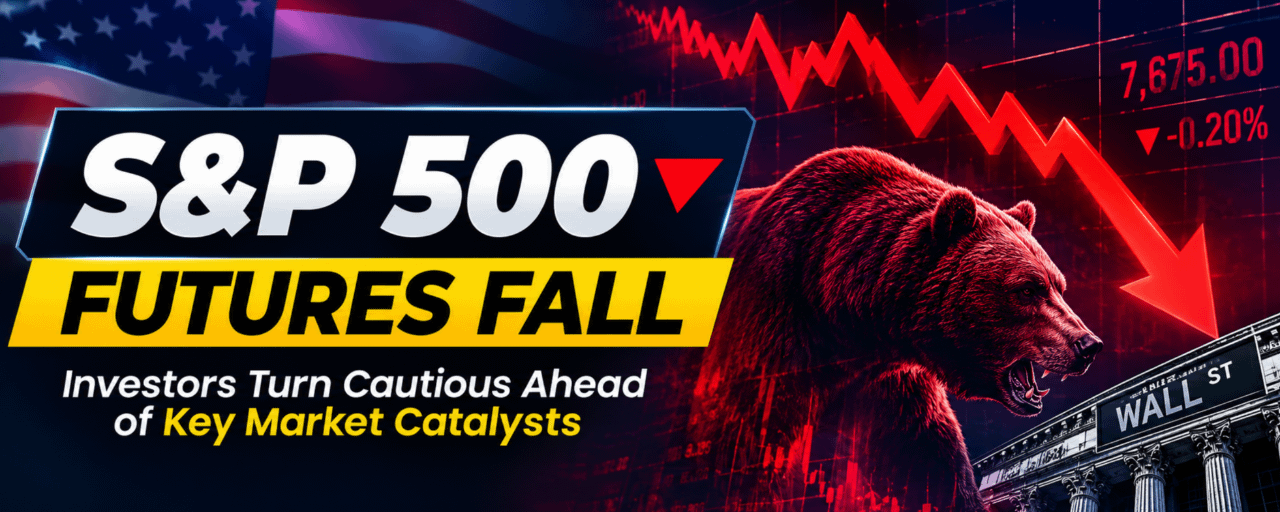
S&P 500 Futures Fall as Investors Turn Cautious#sp500futuresfall
$SPYB $HEI $COTI
S&P 500 futures slipped on Monday as investors adopted a more cautious stance ahead of several major market catalysts. The futures contract was recently around 7,675, down roughly 0.2%, according to market data.
🔎 What’s Driving the Move?
Market sentiment is being pressured by elevated U.S. Treasury yields, renewed geopolitical uncertainty, and growing trade tensions. Investors are also watching upcoming developments from the Federal Reserve’s Jackson Hole meeting for clues about the future path of interest rates.
Another major focus is Nvidia’s upcoming earnings report, which could have a significant impact on technology stocks and the broader S&P 500 because of the company’s importance to the AI sector.
📊 Market Outlook
The decline in futures suggests a cautious start for Wall Street. Traders may remain sensitive to bond yields, economic policy signals, geopolitical developments, and major corporate earnings throughout the week.
For crypto investors, weakness in U.S. equities is also worth watching because shifts in broader risk sentiment can influence Bitcoin and other risk assets.
Key takeaway: S&P 500 futures are starting the week lower as investors prepare for a potentially volatile week of earnings, Fed signals, and geopolitical developments.
#SP500 #stockmarket #WallStreet #Investing
S&P 500 Futures Fall as Investors Turn Cautious
#sp500futuresfall
$SPYB $HEI $COTI
S&P 500 futures slipped on Monday as investors adopted a more cautious stance ahead of several major market catalysts. The futures contract was recently around 7,675, down roughly 0.2%, according to market data.
🔎 What’s Driving the Move?
Market sentiment is being pressured by elevated U.S. Treasury yields, renewed geopolitical uncertainty, and growing trade tensions. Investors are also watching upcoming developments from the Federal Reserve’s Jackson Hole meeting for clues about the future path of interest rates.
Another major focus is Nvidia’s upcoming earnings report, which could have a significant impact on technology stocks and the broader S&P 500 because of the company’s importance to the AI sector.
📊 Market Outlook
The decline in futures suggests a cautious start for Wall Street. Traders may remain sensitive to bond yields, economic policy signals, geopolitical developments, and major corporate earnings throughout the week.
For crypto investors, weakness in U.S. equities is also worth watching because shifts in broader risk sentiment can influence Bitcoin and other risk assets.
Key takeaway: S&P 500 futures are starting the week lower as investors prepare for a potentially volatile week of earnings, Fed signals, and geopolitical developments.
#SP500 #stockmarket #WallStreet #Investing
$SPYB $HEI $COTI
S&P 500 futures slipped on Monday as investors adopted a more cautious stance ahead of several major market catalysts. The futures contract was recently around 7,675, down roughly 0.2%, according to market data.
🔎 What’s Driving the Move?
Market sentiment is being pressured by elevated U.S. Treasury yields, renewed geopolitical uncertainty, and growing trade tensions. Investors are also watching upcoming developments from the Federal Reserve’s Jackson Hole meeting for clues about the future path of interest rates.
Another major focus is Nvidia’s upcoming earnings report, which could have a significant impact on technology stocks and the broader S&P 500 because of the company’s importance to the AI sector.
📊 Market Outlook
The decline in futures suggests a cautious start for Wall Street. Traders may remain sensitive to bond yields, economic policy signals, geopolitical developments, and major corporate earnings throughout the week.
For crypto investors, weakness in U.S. equities is also worth watching because shifts in broader risk sentiment can influence Bitcoin and other risk assets.
Key takeaway: S&P 500 futures are starting the week lower as investors prepare for a potentially volatile week of earnings, Fed signals, and geopolitical developments.
#SP500 #stockmarket #WallStreet #Investing
758

Article
Gold Rebounds Nearly 5% as Safe-Haven Demand Returns#goldreboundsnearly5%
$XAU
{future}(XAUUSDT)
Gold staged a powerful rebound, rising nearly 5% as investors moved back toward the traditional safe-haven asset.
The sharp recovery comes as markets reassess economic and geopolitical risks, with uncertainty increasing demand for assets that can protect portfolios during periods of volatility.
Gold's move also highlights the metal's sensitivity to changes in interest-rate expectations, the U.S. dollar and global risk sentiment. When investors expect easier monetary policy or become more concerned about economic stability, gold can attract stronger buying interest.
The latest rebound may also encourage traders to watch whether gold can hold its gains and build momentum toward new resistance levels. A sustained move higher could signal that bullish sentiment is returning to the precious-metals market.
However, after such a strong rally, short-term profit-taking and volatility remain possible. Traders should closely monitor price action, Treasury yields, the dollar and upcoming economic data.
Bottom line: Gold's nearly 5% rebound puts the precious metal back in focus. If safe-haven demand remains strong, gold could continue to attract buyers, but traders should be prepared for increased volatility following the sharp move.
#GOLD #goldprice #XAUUSD #PreciousMetals
Gold Rebounds Nearly 5% as Safe-Haven Demand Returns
#goldreboundsnearly5%
$XAU
Gold staged a powerful rebound, rising nearly 5% as investors moved back toward the traditional safe-haven asset.
The sharp recovery comes as markets reassess economic and geopolitical risks, with uncertainty increasing demand for assets that can protect portfolios during periods of volatility.
Gold's move also highlights the metal's sensitivity to changes in interest-rate expectations, the U.S. dollar and global risk sentiment. When investors expect easier monetary policy or become more concerned about economic stability, gold can attract stronger buying interest.
The latest rebound may also encourage traders to watch whether gold can hold its gains and build momentum toward new resistance levels. A sustained move higher could signal that bullish sentiment is returning to the precious-metals market.
However, after such a strong rally, short-term profit-taking and volatility remain possible. Traders should closely monitor price action, Treasury yields, the dollar and upcoming economic data.
Bottom line: Gold's nearly 5% rebound puts the precious metal back in focus. If safe-haven demand remains strong, gold could continue to attract buyers, but traders should be prepared for increased volatility following the sharp move.
#GOLD #goldprice #XAUUSD #PreciousMetals
$XAU
Gold staged a powerful rebound, rising nearly 5% as investors moved back toward the traditional safe-haven asset.
The sharp recovery comes as markets reassess economic and geopolitical risks, with uncertainty increasing demand for assets that can protect portfolios during periods of volatility.
Gold's move also highlights the metal's sensitivity to changes in interest-rate expectations, the U.S. dollar and global risk sentiment. When investors expect easier monetary policy or become more concerned about economic stability, gold can attract stronger buying interest.
The latest rebound may also encourage traders to watch whether gold can hold its gains and build momentum toward new resistance levels. A sustained move higher could signal that bullish sentiment is returning to the precious-metals market.
However, after such a strong rally, short-term profit-taking and volatility remain possible. Traders should closely monitor price action, Treasury yields, the dollar and upcoming economic data.
Bottom line: Gold's nearly 5% rebound puts the precious metal back in focus. If safe-haven demand remains strong, gold could continue to attract buyers, but traders should be prepared for increased volatility following the sharp move.
#GOLD #goldprice #XAUUSD #PreciousMetals
1
412

Article
U.S. Refiners Face Looming Crude Supply Drop#usrefinersfaceloomingcrudesupplydrop
U.S. refiners may be heading into a tighter crude supply environment as concerns grow over declining production, lower inventories and shifting global oil flows.
A potential reduction in available crude could put additional pressure on refiners, particularly those that rely heavily on domestic supplies. If crude availability tightens while refinery demand remains strong, refiners could face higher feedstock costs and narrower profit margins.
The situation is also being watched closely by energy traders. Changes in U.S. crude production, refinery utilization and inventories can quickly influence oil prices and refined-product markets.
For consumers, tighter crude supplies could eventually translate into higher gasoline and diesel prices if refiners pass increased costs through the supply chain.
However, the outlook remains dependent on several factors, including U.S. production trends, global supply disruptions, OPEC+ policy and seasonal refinery demand.
Bottom line: A looming drop in U.S. crude availability could become an important factor for both oil prices and refining margins in the weeks ahead. Traders will be watching inventory and production data closely for confirmation of the supply tightening.
$CL $BEAT
{future}(BEATUSDT)
#crudeoil #energy #WTI
U.S. Refiners Face Looming Crude Supply Drop
#usrefinersfaceloomingcrudesupplydrop
U.S. refiners may be heading into a tighter crude supply environment as concerns grow over declining production, lower inventories and shifting global oil flows.
A potential reduction in available crude could put additional pressure on refiners, particularly those that rely heavily on domestic supplies. If crude availability tightens while refinery demand remains strong, refiners could face higher feedstock costs and narrower profit margins.
The situation is also being watched closely by energy traders. Changes in U.S. crude production, refinery utilization and inventories can quickly influence oil prices and refined-product markets.
For consumers, tighter crude supplies could eventually translate into higher gasoline and diesel prices if refiners pass increased costs through the supply chain.
However, the outlook remains dependent on several factors, including U.S. production trends, global supply disruptions, OPEC+ policy and seasonal refinery demand.
Bottom line: A looming drop in U.S. crude availability could become an important factor for both oil prices and refining margins in the weeks ahead. Traders will be watching inventory and production data closely for confirmation of the supply tightening.
$CL $BEAT
#crudeoil #energy #WTI
U.S. refiners may be heading into a tighter crude supply environment as concerns grow over declining production, lower inventories and shifting global oil flows.
A potential reduction in available crude could put additional pressure on refiners, particularly those that rely heavily on domestic supplies. If crude availability tightens while refinery demand remains strong, refiners could face higher feedstock costs and narrower profit margins.
The situation is also being watched closely by energy traders. Changes in U.S. crude production, refinery utilization and inventories can quickly influence oil prices and refined-product markets.
For consumers, tighter crude supplies could eventually translate into higher gasoline and diesel prices if refiners pass increased costs through the supply chain.
However, the outlook remains dependent on several factors, including U.S. production trends, global supply disruptions, OPEC+ policy and seasonal refinery demand.
Bottom line: A looming drop in U.S. crude availability could become an important factor for both oil prices and refining margins in the weeks ahead. Traders will be watching inventory and production data closely for confirmation of the supply tightening.
$CL $BEAT
#crudeoil #energy #WTI
1
1
1.1k
Article
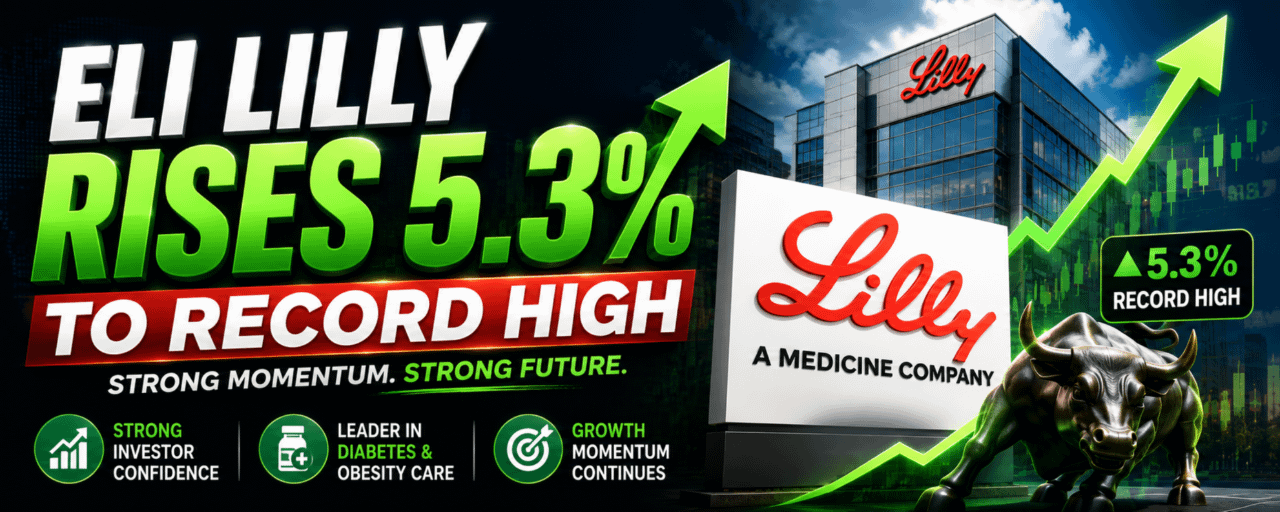
Eli Lilly Surges 5.3% to Record High as Investors Rush Into Pharma Giant#elilillyrises5.3%torecordhigh
$HEI $LAB $LLY
Eli Lilly (LLY) shares jumped 5.3% to a record high, putting the pharmaceutical giant back in the spotlight as investors showed renewed confidence in the company’s growth outlook.
The sharp move higher reflects strong market interest in Lilly and its position in the rapidly expanding weight-loss and diabetes treatment market.
📈 Why Eli Lilly Is Rising
Eli Lilly has become one of the biggest names in the pharmaceutical industry thanks to strong demand for its GLP-1 medicines, particularly treatments targeting diabetes and obesity.
The company’s growing presence in the weight-management market has made LLY a closely watched stock among investors looking for exposure to the next major growth area in healthcare.
🔥 Record High Signals Strong Momentum
A move to a new record high is technically significant. Breaking into uncharted territory means there are fewer historical resistance levels above the current price, potentially allowing momentum to continue if buying pressure remains strong.
The 5.3% gain also highlights how quickly sentiment can shift when investors become more optimistic about earnings growth and future demand.
👀 What Investors Are Watching Next
Markets will now focus on whether Eli Lilly can maintain its momentum following the record-breaking move.
Key factors include future earnings, demand for obesity treatments, competition within the GLP-1 market, regulatory developments, and the company’s ability to expand production.
A sustained move above the record level could attract additional momentum-focused buyers, while profit-taking could create short-term volatility.
Eli Lilly has officially entered record territory — and investors are watching closely to see whether this rally has further room to run. 🚀📊
#EliLilly #LLY #stocks #Pharma
Eli Lilly Surges 5.3% to Record High as Investors Rush Into Pharma Giant
#elilillyrises5.3%torecordhigh
$HEI $LAB $LLY
Eli Lilly (LLY) shares jumped 5.3% to a record high, putting the pharmaceutical giant back in the spotlight as investors showed renewed confidence in the company’s growth outlook.
The sharp move higher reflects strong market interest in Lilly and its position in the rapidly expanding weight-loss and diabetes treatment market.
📈 Why Eli Lilly Is Rising
Eli Lilly has become one of the biggest names in the pharmaceutical industry thanks to strong demand for its GLP-1 medicines, particularly treatments targeting diabetes and obesity.
The company’s growing presence in the weight-management market has made LLY a closely watched stock among investors looking for exposure to the next major growth area in healthcare.
🔥 Record High Signals Strong Momentum
A move to a new record high is technically significant. Breaking into uncharted territory means there are fewer historical resistance levels above the current price, potentially allowing momentum to continue if buying pressure remains strong.
The 5.3% gain also highlights how quickly sentiment can shift when investors become more optimistic about earnings growth and future demand.
👀 What Investors Are Watching Next
Markets will now focus on whether Eli Lilly can maintain its momentum following the record-breaking move.
Key factors include future earnings, demand for obesity treatments, competition within the GLP-1 market, regulatory developments, and the company’s ability to expand production.
A sustained move above the record level could attract additional momentum-focused buyers, while profit-taking could create short-term volatility.
Eli Lilly has officially entered record territory — and investors are watching closely to see whether this rally has further room to run. 🚀📊
#EliLilly #LLY #stocks #Pharma
$HEI $LAB $LLY
Eli Lilly (LLY) shares jumped 5.3% to a record high, putting the pharmaceutical giant back in the spotlight as investors showed renewed confidence in the company’s growth outlook.
The sharp move higher reflects strong market interest in Lilly and its position in the rapidly expanding weight-loss and diabetes treatment market.
📈 Why Eli Lilly Is Rising
Eli Lilly has become one of the biggest names in the pharmaceutical industry thanks to strong demand for its GLP-1 medicines, particularly treatments targeting diabetes and obesity.
The company’s growing presence in the weight-management market has made LLY a closely watched stock among investors looking for exposure to the next major growth area in healthcare.
🔥 Record High Signals Strong Momentum
A move to a new record high is technically significant. Breaking into uncharted territory means there are fewer historical resistance levels above the current price, potentially allowing momentum to continue if buying pressure remains strong.
The 5.3% gain also highlights how quickly sentiment can shift when investors become more optimistic about earnings growth and future demand.
👀 What Investors Are Watching Next
Markets will now focus on whether Eli Lilly can maintain its momentum following the record-breaking move.
Key factors include future earnings, demand for obesity treatments, competition within the GLP-1 market, regulatory developments, and the company’s ability to expand production.
A sustained move above the record level could attract additional momentum-focused buyers, while profit-taking could create short-term volatility.
Eli Lilly has officially entered record territory — and investors are watching closely to see whether this rally has further room to run. 🚀📊
#EliLilly #LLY #stocks #Pharma
529
Article
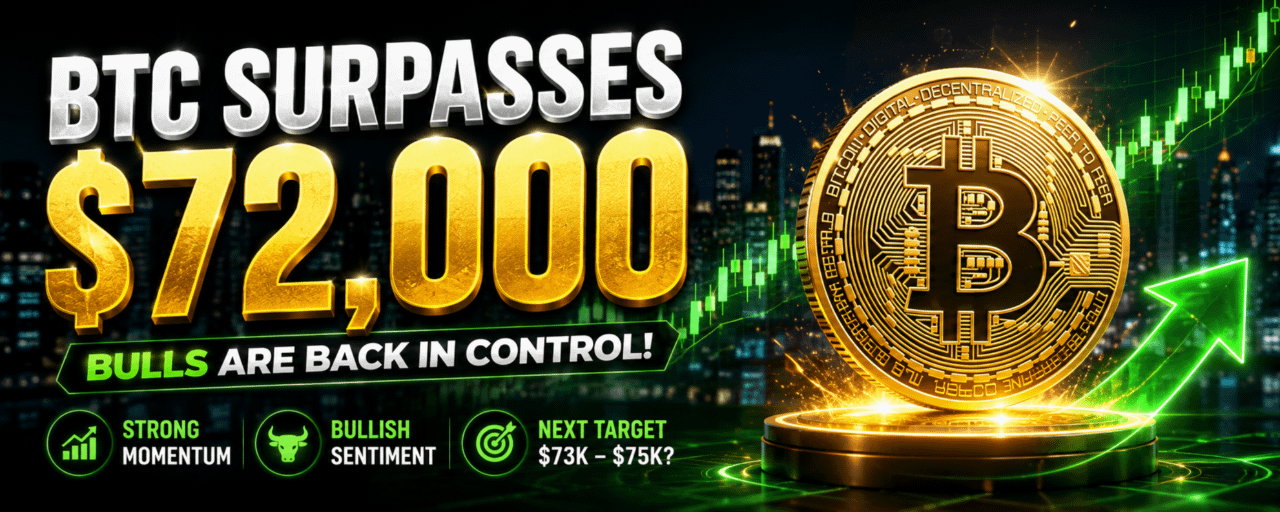
Bitcoin Surpasses $72,000 as Bulls Regain Control#BTCSurpasses$72000
$BTC
Bitcoin has climbed above the $72,000 level, marking another strong move for the world’s largest cryptocurrency and reigniting bullish sentiment across the digital-asset market.
The move above $72K puts Bitcoin back in a key technical zone that traders are closely watching. A sustained hold above this level could strengthen the short-term bullish structure and potentially open the door toward higher resistance areas.
{future}(BTCUSDT)
🚀 Why $72K Matters
The $72,000 area represents an important psychological and technical milestone. Breaking above it suggests that buyers are willing to step in at higher prices and could signal increasing confidence across the market.
If BTC can maintain momentum above $72K, traders may begin watching the $73,000–$75,000 region as the next potential resistance zone.
📈 Market Sentiment Turns Stronger
Bitcoin's latest move could also provide a positive boost to altcoins and broader crypto sentiment. Increased Bitcoin strength often attracts fresh attention and liquidity into the cryptocurrency market.
However, traders should remain cautious. A sharp rally can be followed by profit-taking and short-term volatility, particularly around major resistance levels.
🔥 What Comes Next?
The key question now is whether Bitcoin can hold above $72,000 rather than simply break through it temporarily.
A successful retest of $72K as support could strengthen the bullish case, while a rejection and move back below the level could lead to consolidation or a deeper pullback.
Bitcoin is back above $72K — and the bulls are making their presence known. 🚀
#bitcoin #BTC走势分析 #crypto #cryptotrading
Bitcoin Surpasses $72,000 as Bulls Regain Control
#BTCSurpasses$72000
$BTC
Bitcoin has climbed above the $72,000 level, marking another strong move for the world’s largest cryptocurrency and reigniting bullish sentiment across the digital-asset market.
The move above $72K puts Bitcoin back in a key technical zone that traders are closely watching. A sustained hold above this level could strengthen the short-term bullish structure and potentially open the door toward higher resistance areas.
🚀 Why $72K Matters
The $72,000 area represents an important psychological and technical milestone. Breaking above it suggests that buyers are willing to step in at higher prices and could signal increasing confidence across the market.
If BTC can maintain momentum above $72K, traders may begin watching the $73,000–$75,000 region as the next potential resistance zone.
📈 Market Sentiment Turns Stronger
Bitcoin's latest move could also provide a positive boost to altcoins and broader crypto sentiment. Increased Bitcoin strength often attracts fresh attention and liquidity into the cryptocurrency market.
However, traders should remain cautious. A sharp rally can be followed by profit-taking and short-term volatility, particularly around major resistance levels.
🔥 What Comes Next?
The key question now is whether Bitcoin can hold above $72,000 rather than simply break through it temporarily.
A successful retest of $72K as support could strengthen the bullish case, while a rejection and move back below the level could lead to consolidation or a deeper pullback.
Bitcoin is back above $72K — and the bulls are making their presence known. 🚀
#bitcoin #BTC走势分析 #crypto #cryptotrading
$BTC
Bitcoin has climbed above the $72,000 level, marking another strong move for the world’s largest cryptocurrency and reigniting bullish sentiment across the digital-asset market.
The move above $72K puts Bitcoin back in a key technical zone that traders are closely watching. A sustained hold above this level could strengthen the short-term bullish structure and potentially open the door toward higher resistance areas.
🚀 Why $72K Matters
The $72,000 area represents an important psychological and technical milestone. Breaking above it suggests that buyers are willing to step in at higher prices and could signal increasing confidence across the market.
If BTC can maintain momentum above $72K, traders may begin watching the $73,000–$75,000 region as the next potential resistance zone.
📈 Market Sentiment Turns Stronger
Bitcoin's latest move could also provide a positive boost to altcoins and broader crypto sentiment. Increased Bitcoin strength often attracts fresh attention and liquidity into the cryptocurrency market.
However, traders should remain cautious. A sharp rally can be followed by profit-taking and short-term volatility, particularly around major resistance levels.
🔥 What Comes Next?
The key question now is whether Bitcoin can hold above $72,000 rather than simply break through it temporarily.
A successful retest of $72K as support could strengthen the bullish case, while a rejection and move back below the level could lead to consolidation or a deeper pullback.
Bitcoin is back above $72K — and the bulls are making their presence known. 🚀
#bitcoin #BTC走势分析 #crypto #cryptotrading
1
211

Article
BREAKING: Iran Army Chief Reportedly Offers $30,000 Bounty for U.S. Forces$CL $TRUMP
Tensions between Iran and the United States are escalating after reports claimed that Iranian Army Chief Amir Hatami announced a $30,000 bounty for anyone who kills or captures a U.S. service member described as an “invading” American soldier.
According to the reports, the alleged reward would be doubled if the act were carried out by an Iranian woman, adding another provocative dimension to the statement.
The reported announcement comes amid heightened tensions surrounding the Strait of Hormuz, one of the world's most strategically important energy corridors. President Donald Trump has declared that the U.S. Navy has “full control” of the waterway, while Iran has continued to issue strong warnings regarding foreign military activity in the region.
⚠️ Why the Strait of Hormuz Matters
The Strait of Hormuz connects the Persian Gulf with the Gulf of Oman and is a critical route for global energy shipments. Any prolonged disruption could have significant consequences for oil prices, shipping costs, inflation and global financial markets.
Markets are therefore watching developments between Washington and Tehran closely. A further escalation could trigger increased demand for traditional safe-haven assets such as gold, while also creating volatility across equities, currencies and cryptocurrencies.
🌍 Geopolitical Risk Rises
A bounty targeting U.S. personnel would represent a serious escalation in rhetoric if independently confirmed. It could increase concerns about the safety of American forces and raise the risk of further confrontation in an already tense region.
However, claims circulating during rapidly developing geopolitical events should be independently verified through reliable sources before being treated as confirmed facts.
📈 What Markets Could Watch Next
Traders should pay close attention to:
🇮🇷🇺🇸 Any further military statements from Iran or the United States🚢 Developments involving commercial shipping through the Strait of Hormuz🛢️ Oil-price reactions to geopolitical developments🥇 Gold and other safe-haven assets📊 Broader risk sentiment across global markets and crypto
Bottom line: The reported bounty announcement adds to an already tense U.S.-Iran confrontation. Any further escalation around the Strait of Hormuz could have consequences far beyond the region, particularly for global energy markets and investor sentiment.
⚠️ This is a developing geopolitical story. Claims and figures should be verified against authoritative sources as more information becomes available.
#iran #usa #TRUMP #StraitOfHormuz #breakingnews
BREAKING: Iran Army Chief Reportedly Offers $30,000 Bounty for U.S. Forces
$CL $TRUMP
Tensions between Iran and the United States are escalating after reports claimed that Iranian Army Chief Amir Hatami announced a $30,000 bounty for anyone who kills or captures a U.S. service member described as an “invading” American soldier.
According to the reports, the alleged reward would be doubled if the act were carried out by an Iranian woman, adding another provocative dimension to the statement.
The reported announcement comes amid heightened tensions surrounding the Strait of Hormuz, one of the world's most strategically important energy corridors. President Donald Trump has declared that the U.S. Navy has “full control” of the waterway, while Iran has continued to issue strong warnings regarding foreign military activity in the region.
⚠️ Why the Strait of Hormuz Matters
The Strait of Hormuz connects the Persian Gulf with the Gulf of Oman and is a critical route for global energy shipments. Any prolonged disruption could have significant consequences for oil prices, shipping costs, inflation and global financial markets.
Markets are therefore watching developments between Washington and Tehran closely. A further escalation could trigger increased demand for traditional safe-haven assets such as gold, while also creating volatility across equities, currencies and cryptocurrencies.
🌍 Geopolitical Risk Rises
A bounty targeting U.S. personnel would represent a serious escalation in rhetoric if independently confirmed. It could increase concerns about the safety of American forces and raise the risk of further confrontation in an already tense region.
However, claims circulating during rapidly developing geopolitical events should be independently verified through reliable sources before being treated as confirmed facts.
📈 What Markets Could Watch Next
Traders should pay close attention to:
🇮🇷🇺🇸 Any further military statements from Iran or the United States🚢 Developments involving commercial shipping through the Strait of Hormuz🛢️ Oil-price reactions to geopolitical developments🥇 Gold and other safe-haven assets📊 Broader risk sentiment across global markets and crypto
Bottom line: The reported bounty announcement adds to an already tense U.S.-Iran confrontation. Any further escalation around the Strait of Hormuz could have consequences far beyond the region, particularly for global energy markets and investor sentiment.
⚠️ This is a developing geopolitical story. Claims and figures should be verified against authoritative sources as more information becomes available.
#iran #usa #TRUMP #StraitOfHormuz #breakingnews
Tensions between Iran and the United States are escalating after reports claimed that Iranian Army Chief Amir Hatami announced a $30,000 bounty for anyone who kills or captures a U.S. service member described as an “invading” American soldier.
According to the reports, the alleged reward would be doubled if the act were carried out by an Iranian woman, adding another provocative dimension to the statement.
The reported announcement comes amid heightened tensions surrounding the Strait of Hormuz, one of the world's most strategically important energy corridors. President Donald Trump has declared that the U.S. Navy has “full control” of the waterway, while Iran has continued to issue strong warnings regarding foreign military activity in the region.
⚠️ Why the Strait of Hormuz Matters
The Strait of Hormuz connects the Persian Gulf with the Gulf of Oman and is a critical route for global energy shipments. Any prolonged disruption could have significant consequences for oil prices, shipping costs, inflation and global financial markets.
Markets are therefore watching developments between Washington and Tehran closely. A further escalation could trigger increased demand for traditional safe-haven assets such as gold, while also creating volatility across equities, currencies and cryptocurrencies.
🌍 Geopolitical Risk Rises
A bounty targeting U.S. personnel would represent a serious escalation in rhetoric if independently confirmed. It could increase concerns about the safety of American forces and raise the risk of further confrontation in an already tense region.
However, claims circulating during rapidly developing geopolitical events should be independently verified through reliable sources before being treated as confirmed facts.
📈 What Markets Could Watch Next
Traders should pay close attention to:
🇮🇷🇺🇸 Any further military statements from Iran or the United States🚢 Developments involving commercial shipping through the Strait of Hormuz🛢️ Oil-price reactions to geopolitical developments🥇 Gold and other safe-haven assets📊 Broader risk sentiment across global markets and crypto
Bottom line: The reported bounty announcement adds to an already tense U.S.-Iran confrontation. Any further escalation around the Strait of Hormuz could have consequences far beyond the region, particularly for global energy markets and investor sentiment.
⚠️ This is a developing geopolitical story. Claims and figures should be verified against authoritative sources as more information becomes available.
#iran #usa #TRUMP #StraitOfHormuz #breakingnews
54
Article
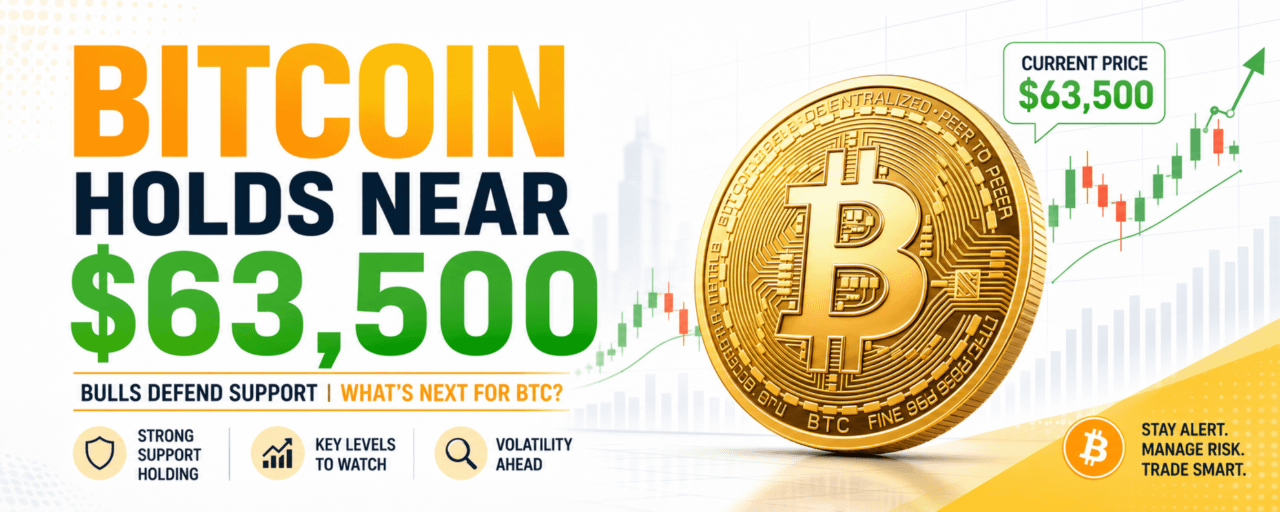
Bitcoin Holds Near $63,500 as Traders Watch for the Next Move#BitcoinHoldsNear$63500
Bitcoin is holding around the $63,500 level as traders assess whether the market can build enough momentum for another move higher.
The latest price action shows a period of consolidation, with buyers defending the current area while sellers remain active near short-term resistance. After recent volatility, the ability of $BTC to maintain support could be important for determining its next major direction.
📊 Key Levels to Watch
Support: $62,000–$63,000
Current Zone: Around $63,500
Resistance: $65,000–$66,000
A sustained move above $65,000 could improve bullish sentiment and potentially open the door toward higher resistance levels. On the other hand, a break below the $62,000–$63,000 support area could increase selling pressure and lead to a deeper correction.
{future}(BTCUSDT)
🔎 What Traders Are Watching
Market participants are closely monitoring trading volume, momentum indicators, and broader risk sentiment. Bitcoin's ability to remain above key support while trading near $63,500 suggests that bulls have not given up control, but confirmation is still needed before assuming a stronger breakout.
For short-term traders, volatility around the $63,500–$65,000 range could create opportunities—but risk management remains essential.
🚀 Bottom Line
Bitcoin holding near $63,500 keeps the market at an important decision point. Bulls will want to see BTC reclaim $65,000 with strong volume, while bears may target the $62,000 area if support fails.
Stay patient, manage risk, and watch the key levels before making a trade.
#bitcoin #BTC #crypto #BinanceSquare
Bitcoin Holds Near $63,500 as Traders Watch for the Next Move
#BitcoinHoldsNear$63500
Bitcoin is holding around the $63,500 level as traders assess whether the market can build enough momentum for another move higher.
The latest price action shows a period of consolidation, with buyers defending the current area while sellers remain active near short-term resistance. After recent volatility, the ability of $BTC to maintain support could be important for determining its next major direction.
📊 Key Levels to Watch
Support: $62,000–$63,000
Current Zone: Around $63,500
Resistance: $65,000–$66,000
A sustained move above $65,000 could improve bullish sentiment and potentially open the door toward higher resistance levels. On the other hand, a break below the $62,000–$63,000 support area could increase selling pressure and lead to a deeper correction.
🔎 What Traders Are Watching
Market participants are closely monitoring trading volume, momentum indicators, and broader risk sentiment. Bitcoin's ability to remain above key support while trading near $63,500 suggests that bulls have not given up control, but confirmation is still needed before assuming a stronger breakout.
For short-term traders, volatility around the $63,500–$65,000 range could create opportunities—but risk management remains essential.
🚀 Bottom Line
Bitcoin holding near $63,500 keeps the market at an important decision point. Bulls will want to see BTC reclaim $65,000 with strong volume, while bears may target the $62,000 area if support fails.
Stay patient, manage risk, and watch the key levels before making a trade.
#bitcoin #BTC #crypto #BinanceSquare
Bitcoin is holding around the $63,500 level as traders assess whether the market can build enough momentum for another move higher.
The latest price action shows a period of consolidation, with buyers defending the current area while sellers remain active near short-term resistance. After recent volatility, the ability of $BTC to maintain support could be important for determining its next major direction.
📊 Key Levels to Watch
Support: $62,000–$63,000
Current Zone: Around $63,500
Resistance: $65,000–$66,000
A sustained move above $65,000 could improve bullish sentiment and potentially open the door toward higher resistance levels. On the other hand, a break below the $62,000–$63,000 support area could increase selling pressure and lead to a deeper correction.
🔎 What Traders Are Watching
Market participants are closely monitoring trading volume, momentum indicators, and broader risk sentiment. Bitcoin's ability to remain above key support while trading near $63,500 suggests that bulls have not given up control, but confirmation is still needed before assuming a stronger breakout.
For short-term traders, volatility around the $63,500–$65,000 range could create opportunities—but risk management remains essential.
🚀 Bottom Line
Bitcoin holding near $63,500 keeps the market at an important decision point. Bulls will want to see BTC reclaim $65,000 with strong volume, while bears may target the $62,000 area if support fails.
Stay patient, manage risk, and watch the key levels before making a trade.
#bitcoin #BTC #crypto #BinanceSquare
151
Verified
Article
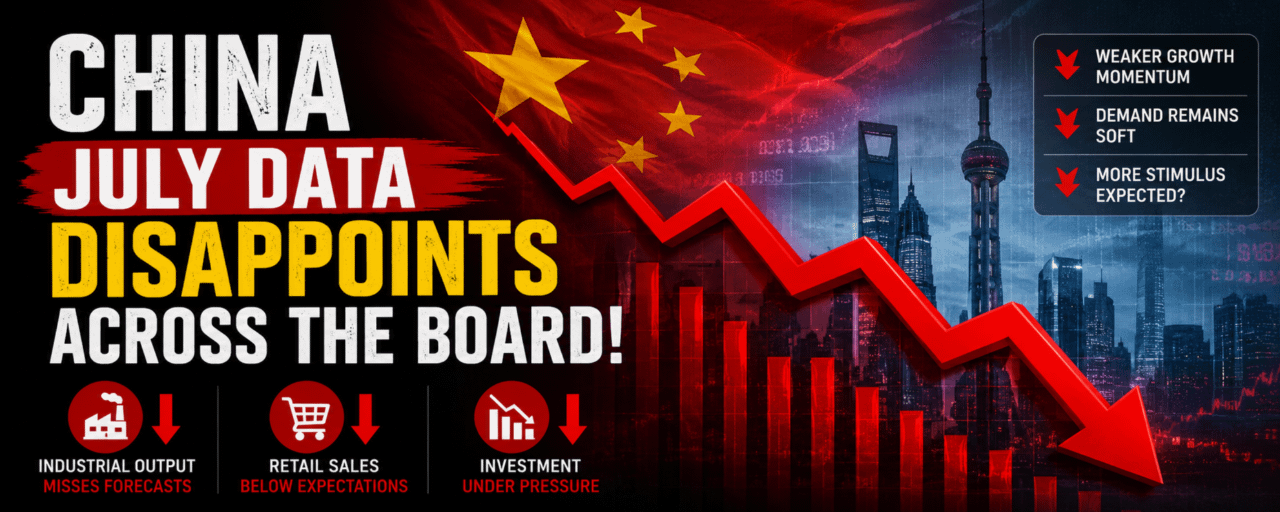
China’s July Output, Retail Sales and Investment All Miss Expectations#chinajulyoutputretailinvestmentallmiss
$BTC $HEI $XRP
China’s latest July economic data has delivered a broad-based disappointment, with industrial output, retail sales and fixed-asset investment all coming in below market expectations. The weaker figures highlight growing concerns about the pace of China’s economic recovery and could increase pressure on policymakers to introduce additional stimulus measures.
📉 Industrial Output Falls Short
China’s industrial production growth slowed more than economists expected in July, suggesting that manufacturers are facing weaker domestic demand and a more challenging external environment.
Industrial activity remains an important indicator for the world’s second-largest economy. A softer reading can signal reduced factory orders, weaker corporate investment and slower overall economic momentum.
🛍️ Retail Sales Miss Expectations
Consumer spending also disappointed. July retail sales growth came in below forecasts, indicating that household demand remains relatively cautious.
Despite ongoing efforts to encourage consumption, Chinese consumers continue to face uncertainty around employment, income growth and the property market. A sustained improvement in consumer confidence will be crucial for China to achieve stronger, more balanced economic growth.
🏗️ Investment Remains Under Pressure
Fixed-asset investment also missed expectations, adding another layer of concern. Weak investment growth reflects continued challenges in areas such as property and private-sector spending.
The property sector remains one of the biggest obstacles to a stronger recovery. Until confidence in real estate and household finances improves, businesses and consumers may remain reluctant to increase spending aggressively.
💰 What Could Policymakers Do?
The disappointing July data could strengthen expectations for additional economic support from Chinese authorities.
Potential measures could include:
Lower borrowing costsAdditional liquidity supportMeasures to stimulate consumer spendingFurther property-sector assistanceIncreased fiscal spending and infrastructure investment
However, policymakers must balance short-term stimulus with longer-term efforts to address structural economic challenges.
🌏 Why Markets Are Watching
China is a major driver of global demand for commodities, manufacturing goods and consumer products. A weaker-than-expected economic recovery could therefore have implications beyond Chinese markets.
Commodity prices, Asian equities, industrial companies and currencies linked to Chinese demand may all react to changes in expectations for the Chinese economy.
For crypto investors, weaker Chinese economic data can also influence broader risk sentiment and global liquidity expectations, although the direct impact on Bitcoin and other digital assets is less predictable.
🔎 Key Takeaway
China’s July data sends a clear warning: the economic recovery is facing persistent pressure from weak consumption, slower industrial activity and subdued investment.
If weakness continues, markets may increasingly focus on whether Beijing is prepared to deliver stronger policy support. The next few months will be important in determining whether stimulus can revive domestic demand or whether China’s growth slowdown becomes more persistent.
Not financial advice. Always conduct your own research before making investment decisions.
#china #ChinaEconomy #EconomicData #RetailSales
China’s July Output, Retail Sales and Investment All Miss Expectations
#chinajulyoutputretailinvestmentallmiss
$BTC $HEI $XRP
China’s latest July economic data has delivered a broad-based disappointment, with industrial output, retail sales and fixed-asset investment all coming in below market expectations. The weaker figures highlight growing concerns about the pace of China’s economic recovery and could increase pressure on policymakers to introduce additional stimulus measures.
📉 Industrial Output Falls Short
China’s industrial production growth slowed more than economists expected in July, suggesting that manufacturers are facing weaker domestic demand and a more challenging external environment.
Industrial activity remains an important indicator for the world’s second-largest economy. A softer reading can signal reduced factory orders, weaker corporate investment and slower overall economic momentum.
🛍️ Retail Sales Miss Expectations
Consumer spending also disappointed. July retail sales growth came in below forecasts, indicating that household demand remains relatively cautious.
Despite ongoing efforts to encourage consumption, Chinese consumers continue to face uncertainty around employment, income growth and the property market. A sustained improvement in consumer confidence will be crucial for China to achieve stronger, more balanced economic growth.
🏗️ Investment Remains Under Pressure
Fixed-asset investment also missed expectations, adding another layer of concern. Weak investment growth reflects continued challenges in areas such as property and private-sector spending.
The property sector remains one of the biggest obstacles to a stronger recovery. Until confidence in real estate and household finances improves, businesses and consumers may remain reluctant to increase spending aggressively.
💰 What Could Policymakers Do?
The disappointing July data could strengthen expectations for additional economic support from Chinese authorities.
Potential measures could include:
Lower borrowing costsAdditional liquidity supportMeasures to stimulate consumer spendingFurther property-sector assistanceIncreased fiscal spending and infrastructure investment
However, policymakers must balance short-term stimulus with longer-term efforts to address structural economic challenges.
🌏 Why Markets Are Watching
China is a major driver of global demand for commodities, manufacturing goods and consumer products. A weaker-than-expected economic recovery could therefore have implications beyond Chinese markets.
Commodity prices, Asian equities, industrial companies and currencies linked to Chinese demand may all react to changes in expectations for the Chinese economy.
For crypto investors, weaker Chinese economic data can also influence broader risk sentiment and global liquidity expectations, although the direct impact on Bitcoin and other digital assets is less predictable.
🔎 Key Takeaway
China’s July data sends a clear warning: the economic recovery is facing persistent pressure from weak consumption, slower industrial activity and subdued investment.
If weakness continues, markets may increasingly focus on whether Beijing is prepared to deliver stronger policy support. The next few months will be important in determining whether stimulus can revive domestic demand or whether China’s growth slowdown becomes more persistent.
Not financial advice. Always conduct your own research before making investment decisions.
#china #ChinaEconomy #EconomicData #RetailSales
$BTC $HEI $XRP
China’s latest July economic data has delivered a broad-based disappointment, with industrial output, retail sales and fixed-asset investment all coming in below market expectations. The weaker figures highlight growing concerns about the pace of China’s economic recovery and could increase pressure on policymakers to introduce additional stimulus measures.
📉 Industrial Output Falls Short
China’s industrial production growth slowed more than economists expected in July, suggesting that manufacturers are facing weaker domestic demand and a more challenging external environment.
Industrial activity remains an important indicator for the world’s second-largest economy. A softer reading can signal reduced factory orders, weaker corporate investment and slower overall economic momentum.
🛍️ Retail Sales Miss Expectations
Consumer spending also disappointed. July retail sales growth came in below forecasts, indicating that household demand remains relatively cautious.
Despite ongoing efforts to encourage consumption, Chinese consumers continue to face uncertainty around employment, income growth and the property market. A sustained improvement in consumer confidence will be crucial for China to achieve stronger, more balanced economic growth.
🏗️ Investment Remains Under Pressure
Fixed-asset investment also missed expectations, adding another layer of concern. Weak investment growth reflects continued challenges in areas such as property and private-sector spending.
The property sector remains one of the biggest obstacles to a stronger recovery. Until confidence in real estate and household finances improves, businesses and consumers may remain reluctant to increase spending aggressively.
💰 What Could Policymakers Do?
The disappointing July data could strengthen expectations for additional economic support from Chinese authorities.
Potential measures could include:
Lower borrowing costsAdditional liquidity supportMeasures to stimulate consumer spendingFurther property-sector assistanceIncreased fiscal spending and infrastructure investment
However, policymakers must balance short-term stimulus with longer-term efforts to address structural economic challenges.
🌏 Why Markets Are Watching
China is a major driver of global demand for commodities, manufacturing goods and consumer products. A weaker-than-expected economic recovery could therefore have implications beyond Chinese markets.
Commodity prices, Asian equities, industrial companies and currencies linked to Chinese demand may all react to changes in expectations for the Chinese economy.
For crypto investors, weaker Chinese economic data can also influence broader risk sentiment and global liquidity expectations, although the direct impact on Bitcoin and other digital assets is less predictable.
🔎 Key Takeaway
China’s July data sends a clear warning: the economic recovery is facing persistent pressure from weak consumption, slower industrial activity and subdued investment.
If weakness continues, markets may increasingly focus on whether Beijing is prepared to deliver stronger policy support. The next few months will be important in determining whether stimulus can revive domestic demand or whether China’s growth slowdown becomes more persistent.
Not financial advice. Always conduct your own research before making investment decisions.
#china #ChinaEconomy #EconomicData #RetailSales
2
679

Article
Israel Strikes Southern Lebanon, Hezbollah Commander Killed Amid Rising Tensions#israelstrikeslebanonkillshezbollahcommander
Tensions between Israel and Hezbollah have risen again after Israeli airstrikes hit southern Lebanon, with Israel saying a senior Hezbollah commander was killed in one of the attacks.
The Israeli military said the strike on Deir al-Zahrani killed Ali Mohammad Fakhreddine, also known as Abu Hassan Alaa, who was described as a senior commander of Hezbollah’s Badr division. Israel said the operation was carried out in response to a Hezbollah drone attack that seriously wounded three Israeli soldiers.
The strikes have also caused civilian casualties. Lebanon's Health Ministry reported that the wider Israeli strikes in southern Lebanon killed at least 11 people and wounded 19, making the attacks among the deadliest since the June ceasefire between Israel and Hezbollah.
Lebanese officials have condemned the attacks, warning that continued military action could undermine efforts to stabilize the border and advance negotiations. Israel, meanwhile, has maintained that its strikes are aimed at Hezbollah military activity and preventing further attacks against Israeli troops and communities.
The latest escalation highlights how fragile the current truce remains. Any further Hezbollah attacks or Israeli retaliatory strikes could increase fears of a broader confrontation and make diplomatic efforts even more difficult.
Key Takeaways
🇮🇱 Israel says it killed senior Hezbollah commander Abu Hassan Alaa.🇱🇧 At least 11 people were killed in the latest southern Lebanon strikes.⚠️ The strikes followed a Hezbollah drone attack that wounded three Israeli soldiers.🕊️ The escalation puts additional pressure on the fragile Israel-Hezbollah truce.🌍 Further fighting could increase regional instability and complicate ongoing negotiations.
Disclaimer: This article summarizes publicly reported claims from Israeli and Lebanese sources. Details surrounding the strikes and casualties may continue to change as investigations and reporting develop.
$MEGA $AIGENSYN $GENIUS
Israel Strikes Southern Lebanon, Hezbollah Commander Killed Amid Rising Tensions
#israelstrikeslebanonkillshezbollahcommander
Tensions between Israel and Hezbollah have risen again after Israeli airstrikes hit southern Lebanon, with Israel saying a senior Hezbollah commander was killed in one of the attacks.
The Israeli military said the strike on Deir al-Zahrani killed Ali Mohammad Fakhreddine, also known as Abu Hassan Alaa, who was described as a senior commander of Hezbollah’s Badr division. Israel said the operation was carried out in response to a Hezbollah drone attack that seriously wounded three Israeli soldiers.
The strikes have also caused civilian casualties. Lebanon's Health Ministry reported that the wider Israeli strikes in southern Lebanon killed at least 11 people and wounded 19, making the attacks among the deadliest since the June ceasefire between Israel and Hezbollah.
Lebanese officials have condemned the attacks, warning that continued military action could undermine efforts to stabilize the border and advance negotiations. Israel, meanwhile, has maintained that its strikes are aimed at Hezbollah military activity and preventing further attacks against Israeli troops and communities.
The latest escalation highlights how fragile the current truce remains. Any further Hezbollah attacks or Israeli retaliatory strikes could increase fears of a broader confrontation and make diplomatic efforts even more difficult.
Key Takeaways
🇮🇱 Israel says it killed senior Hezbollah commander Abu Hassan Alaa.🇱🇧 At least 11 people were killed in the latest southern Lebanon strikes.⚠️ The strikes followed a Hezbollah drone attack that wounded three Israeli soldiers.🕊️ The escalation puts additional pressure on the fragile Israel-Hezbollah truce.🌍 Further fighting could increase regional instability and complicate ongoing negotiations.
Disclaimer: This article summarizes publicly reported claims from Israeli and Lebanese sources. Details surrounding the strikes and casualties may continue to change as investigations and reporting develop.
$MEGA $AIGENSYN $GENIUS
Tensions between Israel and Hezbollah have risen again after Israeli airstrikes hit southern Lebanon, with Israel saying a senior Hezbollah commander was killed in one of the attacks.
The Israeli military said the strike on Deir al-Zahrani killed Ali Mohammad Fakhreddine, also known as Abu Hassan Alaa, who was described as a senior commander of Hezbollah’s Badr division. Israel said the operation was carried out in response to a Hezbollah drone attack that seriously wounded three Israeli soldiers.
The strikes have also caused civilian casualties. Lebanon's Health Ministry reported that the wider Israeli strikes in southern Lebanon killed at least 11 people and wounded 19, making the attacks among the deadliest since the June ceasefire between Israel and Hezbollah.
Lebanese officials have condemned the attacks, warning that continued military action could undermine efforts to stabilize the border and advance negotiations. Israel, meanwhile, has maintained that its strikes are aimed at Hezbollah military activity and preventing further attacks against Israeli troops and communities.
The latest escalation highlights how fragile the current truce remains. Any further Hezbollah attacks or Israeli retaliatory strikes could increase fears of a broader confrontation and make diplomatic efforts even more difficult.
Key Takeaways
🇮🇱 Israel says it killed senior Hezbollah commander Abu Hassan Alaa.🇱🇧 At least 11 people were killed in the latest southern Lebanon strikes.⚠️ The strikes followed a Hezbollah drone attack that wounded three Israeli soldiers.🕊️ The escalation puts additional pressure on the fragile Israel-Hezbollah truce.🌍 Further fighting could increase regional instability and complicate ongoing negotiations.
Disclaimer: This article summarizes publicly reported claims from Israeli and Lebanese sources. Details surrounding the strikes and casualties may continue to change as investigations and reporting develop.
$MEGA $AIGENSYN $GENIUS
122
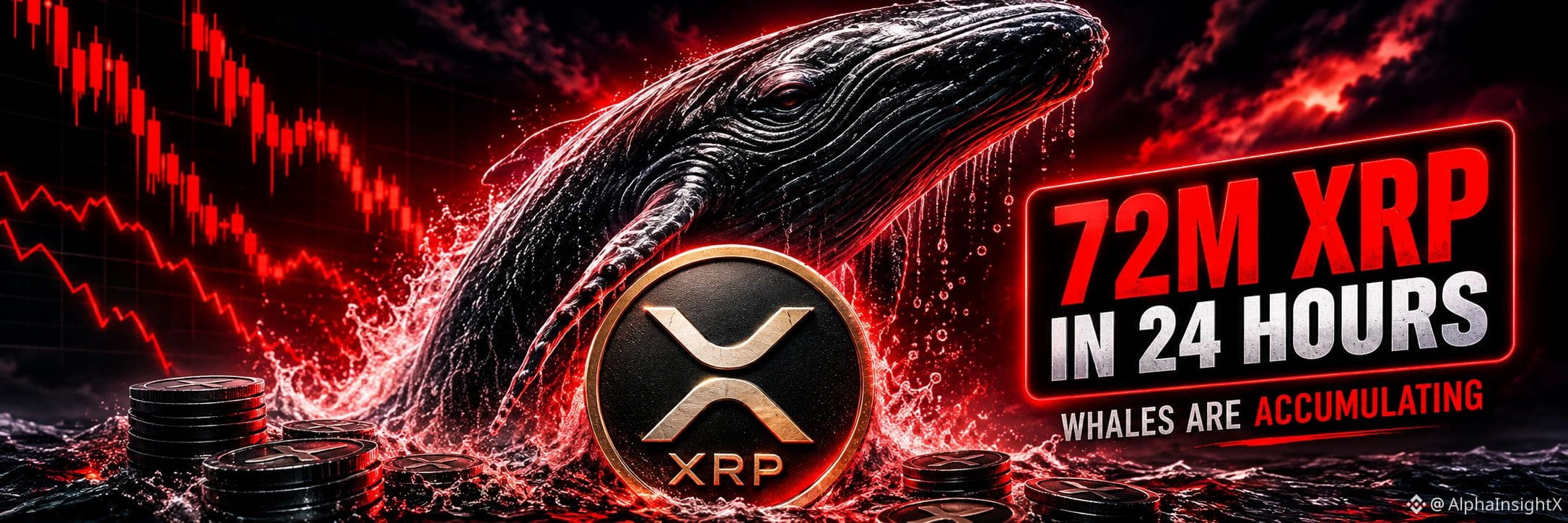
🚨XRP WHALES ARE BUYING THE FEAR🐋
While $XRP
records its WEAKEST CLOSE since November 2024, whales accumulated 72 MILLION XRP in just 24 hours.
Retail sees weakness.
Whales see an opportunity.
WHO DO YOU THINK KNOWS SOMETHING?👀
🚨XRP WHALES ARE BUYING THE FEAR🐋
While $XRP
records its WEAKEST CLOSE since November 2024, whales accumulated 72 MILLION XRP in just 24 hours.
Retail sees weakness.
Whales see an opportunity.
WHO DO YOU THINK KNOWS SOMETHING?👀
While $XRP
records its WEAKEST CLOSE since November 2024, whales accumulated 72 MILLION XRP in just 24 hours.
Retail sees weakness.
Whales see an opportunity.
WHO DO YOU THINK KNOWS SOMETHING?👀
22

Article
SpaceX Shares Rise to $140: Private-Market Valuation Draws Investor Attention#SpaceXSharesRiseTo$140
$SPCX $DOGE
SpaceX shares are reportedly trading around $140, putting the private aerospace company back in focus as investors closely watch its valuation and long-term growth prospects.
The move highlights growing interest in SpaceX’s expanding business ecosystem, which includes Starlink satellite internet, rocket launches, satellite communications, and future space technologies.
🚀 Why SpaceX Matters to Investors
SpaceX has increasingly become one of the most closely watched private companies in the world. Its Starlink division continues to expand its global footprint, while the company’s launch business remains a major force in the commercial space industry.
A higher implied share price can reflect investor expectations for continued revenue growth, Starlink expansion, and future developments in SpaceX’s launch and space infrastructure businesses.
📈 $140 Share Price in Focus
At around $140 per share, market participants are paying close attention to whether the valuation can continue climbing.
Because SpaceX is privately held, its shares do not trade on a traditional public stock exchange like Tesla, Nvidia, or Apple. Private-market transactions can also differ significantly from public-market pricing because of limited liquidity, transaction structure, and the specific terms attached to shares.
{future}(SPCXUSDT)
🌐 Starlink Remains a Major Catalyst
One of the biggest potential drivers behind SpaceX’s valuation is Starlink.
The satellite internet network has been expanding its customer base and geographic coverage, creating the potential for recurring subscription revenue. Continued improvements in satellite technology and launch capacity could further strengthen the business.
⚠️ What Investors Should Watch
Despite the optimism surrounding SpaceX, investors should remember that private-company valuations can change quickly. Share availability is limited, and private transactions may not provide the same price discovery or liquidity as public markets.
Future valuation will depend on factors including Starlink growth, launch activity, regulatory developments, capital requirements, and the company's ability to execute its ambitious space projects.
🔥 Bottom Line
The reported $140 SpaceX share price underscores the enormous investor interest surrounding one of the world's most valuable private technology and aerospace companies.
If Starlink continues scaling and SpaceX maintains its leadership in commercial launches, investors may continue to view the company as a major long-term growth story.
Disclaimer: This article is for informational purposes only and is not financial advice. Private-market share prices and valuations can vary by transaction and may not represent an official public-market price.
#SpaceX #starlink #Tesla #DOGE
SpaceX Shares Rise to $140: Private-Market Valuation Draws Investor Attention
#SpaceXSharesRiseTo$140
$SPCX $DOGE
SpaceX shares are reportedly trading around $140, putting the private aerospace company back in focus as investors closely watch its valuation and long-term growth prospects.
The move highlights growing interest in SpaceX’s expanding business ecosystem, which includes Starlink satellite internet, rocket launches, satellite communications, and future space technologies.
🚀 Why SpaceX Matters to Investors
SpaceX has increasingly become one of the most closely watched private companies in the world. Its Starlink division continues to expand its global footprint, while the company’s launch business remains a major force in the commercial space industry.
A higher implied share price can reflect investor expectations for continued revenue growth, Starlink expansion, and future developments in SpaceX’s launch and space infrastructure businesses.
📈 $140 Share Price in Focus
At around $140 per share, market participants are paying close attention to whether the valuation can continue climbing.
Because SpaceX is privately held, its shares do not trade on a traditional public stock exchange like Tesla, Nvidia, or Apple. Private-market transactions can also differ significantly from public-market pricing because of limited liquidity, transaction structure, and the specific terms attached to shares.
🌐 Starlink Remains a Major Catalyst
One of the biggest potential drivers behind SpaceX’s valuation is Starlink.
The satellite internet network has been expanding its customer base and geographic coverage, creating the potential for recurring subscription revenue. Continued improvements in satellite technology and launch capacity could further strengthen the business.
⚠️ What Investors Should Watch
Despite the optimism surrounding SpaceX, investors should remember that private-company valuations can change quickly. Share availability is limited, and private transactions may not provide the same price discovery or liquidity as public markets.
Future valuation will depend on factors including Starlink growth, launch activity, regulatory developments, capital requirements, and the company's ability to execute its ambitious space projects.
🔥 Bottom Line
The reported $140 SpaceX share price underscores the enormous investor interest surrounding one of the world's most valuable private technology and aerospace companies.
If Starlink continues scaling and SpaceX maintains its leadership in commercial launches, investors may continue to view the company as a major long-term growth story.
Disclaimer: This article is for informational purposes only and is not financial advice. Private-market share prices and valuations can vary by transaction and may not represent an official public-market price.
#SpaceX #starlink #Tesla #DOGE
$SPCX $DOGE
SpaceX shares are reportedly trading around $140, putting the private aerospace company back in focus as investors closely watch its valuation and long-term growth prospects.
The move highlights growing interest in SpaceX’s expanding business ecosystem, which includes Starlink satellite internet, rocket launches, satellite communications, and future space technologies.
🚀 Why SpaceX Matters to Investors
SpaceX has increasingly become one of the most closely watched private companies in the world. Its Starlink division continues to expand its global footprint, while the company’s launch business remains a major force in the commercial space industry.
A higher implied share price can reflect investor expectations for continued revenue growth, Starlink expansion, and future developments in SpaceX’s launch and space infrastructure businesses.
📈 $140 Share Price in Focus
At around $140 per share, market participants are paying close attention to whether the valuation can continue climbing.
Because SpaceX is privately held, its shares do not trade on a traditional public stock exchange like Tesla, Nvidia, or Apple. Private-market transactions can also differ significantly from public-market pricing because of limited liquidity, transaction structure, and the specific terms attached to shares.
🌐 Starlink Remains a Major Catalyst
One of the biggest potential drivers behind SpaceX’s valuation is Starlink.
The satellite internet network has been expanding its customer base and geographic coverage, creating the potential for recurring subscription revenue. Continued improvements in satellite technology and launch capacity could further strengthen the business.
⚠️ What Investors Should Watch
Despite the optimism surrounding SpaceX, investors should remember that private-company valuations can change quickly. Share availability is limited, and private transactions may not provide the same price discovery or liquidity as public markets.
Future valuation will depend on factors including Starlink growth, launch activity, regulatory developments, capital requirements, and the company's ability to execute its ambitious space projects.
🔥 Bottom Line
The reported $140 SpaceX share price underscores the enormous investor interest surrounding one of the world's most valuable private technology and aerospace companies.
If Starlink continues scaling and SpaceX maintains its leadership in commercial launches, investors may continue to view the company as a major long-term growth story.
Disclaimer: This article is for informational purposes only and is not financial advice. Private-market share prices and valuations can vary by transaction and may not represent an official public-market price.
#SpaceX #starlink #Tesla #DOGE
3
867
Article
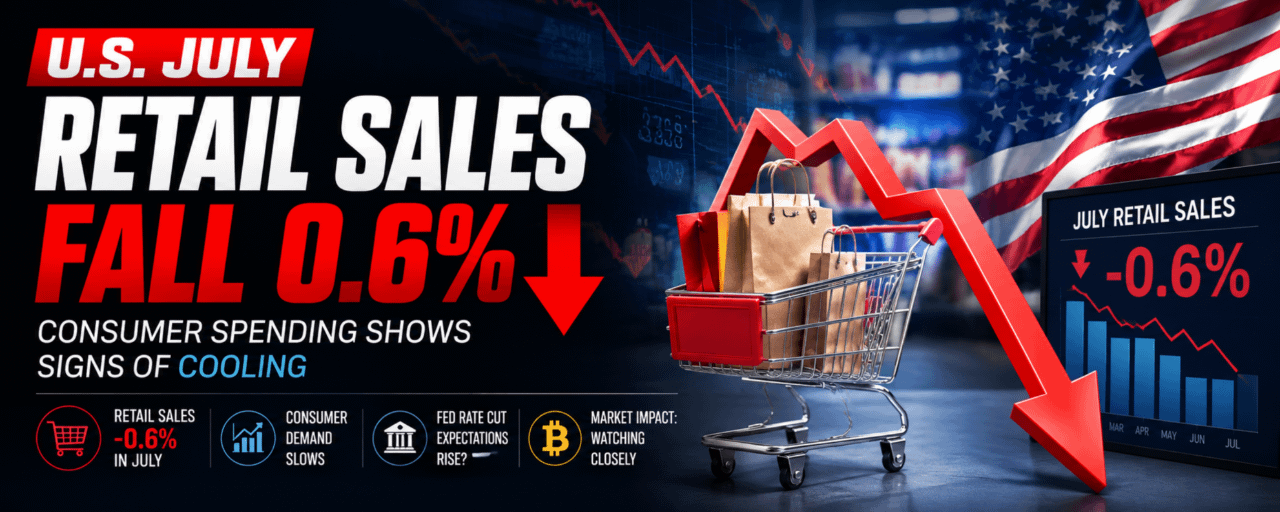
U.S. July Retail Sales Fall 0.6%: Consumer Spending Shows Signs of Cooling#usjulyretailsalesfall0.6%
U.S. retail sales fell 0.6% in July, signaling a noticeable slowdown in consumer spending and raising fresh questions about the strength of the world’s largest economy.
The decline comes as markets closely watch U.S. economic data for clues about inflation, household demand, and the Federal Reserve’s next policy moves.
$BTC
📉 A Sharp Monthly Decline
The 0.6% monthly drop in retail sales suggests consumers became more cautious in July. Retail spending is an important indicator of economic momentum because consumer activity accounts for a large share of U.S. economic growth.
A sustained slowdown could indicate that higher borrowing costs and elevated living expenses are beginning to weigh more heavily on households.
💵 Why Markets Care
Weak retail sales can have a significant impact across financial markets.
If consumer demand continues to cool, investors may increase expectations for a more accommodative Federal Reserve. Lower interest-rate expectations can potentially support risk assets, including Bitcoin and other cryptocurrencies, although the initial market reaction can vary.
At the same time, weaker consumer spending could raise concerns about slower economic growth. This creates a delicate balance for investors:
📉 Weak spending → weaker growth concerns
📉 Cooling demand → potentially lower inflation pressure
🏦 Lower inflation → greater room for Fed easing
₿ Easier financial conditions → potentially supportive for crypto
🔍 What Comes Next?
One month of weaker retail sales does not necessarily confirm a major economic slowdown. Traders will be watching upcoming employment, inflation, consumer confidence, and GDP-related data to determine whether July's decline represents a temporary pullback or the beginning of a broader trend.
For crypto traders, the key takeaway is that U.S. macroeconomic data remains extremely important. A combination of cooling inflation and weakening consumer demand could change expectations for Federal Reserve policy and influence liquidity across global markets.
🚨 Bottom Line
The 0.6% decline in U.S. July retail sales is a warning sign that American consumers may be losing some momentum. Markets will now focus on whether spending rebounds or continues to weaken in the months ahead.
For Bitcoin and crypto investors, the Fed reaction may ultimately matter more than the retail-sales number itself. 📊₿
What do you think — is this a temporary slowdown or the beginning of a bigger U.S. consumer weakness?
#bitcoin #economy #Inflation #trading
U.S. July Retail Sales Fall 0.6%: Consumer Spending Shows Signs of Cooling
#usjulyretailsalesfall0.6%
U.S. retail sales fell 0.6% in July, signaling a noticeable slowdown in consumer spending and raising fresh questions about the strength of the world’s largest economy.
The decline comes as markets closely watch U.S. economic data for clues about inflation, household demand, and the Federal Reserve’s next policy moves.
$BTC
📉 A Sharp Monthly Decline
The 0.6% monthly drop in retail sales suggests consumers became more cautious in July. Retail spending is an important indicator of economic momentum because consumer activity accounts for a large share of U.S. economic growth.
A sustained slowdown could indicate that higher borrowing costs and elevated living expenses are beginning to weigh more heavily on households.
💵 Why Markets Care
Weak retail sales can have a significant impact across financial markets.
If consumer demand continues to cool, investors may increase expectations for a more accommodative Federal Reserve. Lower interest-rate expectations can potentially support risk assets, including Bitcoin and other cryptocurrencies, although the initial market reaction can vary.
At the same time, weaker consumer spending could raise concerns about slower economic growth. This creates a delicate balance for investors:
📉 Weak spending → weaker growth concerns
📉 Cooling demand → potentially lower inflation pressure
🏦 Lower inflation → greater room for Fed easing
₿ Easier financial conditions → potentially supportive for crypto
🔍 What Comes Next?
One month of weaker retail sales does not necessarily confirm a major economic slowdown. Traders will be watching upcoming employment, inflation, consumer confidence, and GDP-related data to determine whether July's decline represents a temporary pullback or the beginning of a broader trend.
For crypto traders, the key takeaway is that U.S. macroeconomic data remains extremely important. A combination of cooling inflation and weakening consumer demand could change expectations for Federal Reserve policy and influence liquidity across global markets.
🚨 Bottom Line
The 0.6% decline in U.S. July retail sales is a warning sign that American consumers may be losing some momentum. Markets will now focus on whether spending rebounds or continues to weaken in the months ahead.
For Bitcoin and crypto investors, the Fed reaction may ultimately matter more than the retail-sales number itself. 📊₿
What do you think — is this a temporary slowdown or the beginning of a bigger U.S. consumer weakness?
#bitcoin #economy #Inflation #trading
U.S. retail sales fell 0.6% in July, signaling a noticeable slowdown in consumer spending and raising fresh questions about the strength of the world’s largest economy.
The decline comes as markets closely watch U.S. economic data for clues about inflation, household demand, and the Federal Reserve’s next policy moves.
$BTC
📉 A Sharp Monthly Decline
The 0.6% monthly drop in retail sales suggests consumers became more cautious in July. Retail spending is an important indicator of economic momentum because consumer activity accounts for a large share of U.S. economic growth.
A sustained slowdown could indicate that higher borrowing costs and elevated living expenses are beginning to weigh more heavily on households.
💵 Why Markets Care
Weak retail sales can have a significant impact across financial markets.
If consumer demand continues to cool, investors may increase expectations for a more accommodative Federal Reserve. Lower interest-rate expectations can potentially support risk assets, including Bitcoin and other cryptocurrencies, although the initial market reaction can vary.
At the same time, weaker consumer spending could raise concerns about slower economic growth. This creates a delicate balance for investors:
📉 Weak spending → weaker growth concerns
📉 Cooling demand → potentially lower inflation pressure
🏦 Lower inflation → greater room for Fed easing
₿ Easier financial conditions → potentially supportive for crypto
🔍 What Comes Next?
One month of weaker retail sales does not necessarily confirm a major economic slowdown. Traders will be watching upcoming employment, inflation, consumer confidence, and GDP-related data to determine whether July's decline represents a temporary pullback or the beginning of a broader trend.
For crypto traders, the key takeaway is that U.S. macroeconomic data remains extremely important. A combination of cooling inflation and weakening consumer demand could change expectations for Federal Reserve policy and influence liquidity across global markets.
🚨 Bottom Line
The 0.6% decline in U.S. July retail sales is a warning sign that American consumers may be losing some momentum. Markets will now focus on whether spending rebounds or continues to weaken in the months ahead.
For Bitcoin and crypto investors, the Fed reaction may ultimately matter more than the retail-sales number itself. 📊₿
What do you think — is this a temporary slowdown or the beginning of a bigger U.S. consumer weakness?
#bitcoin #economy #Inflation #trading
76
Article
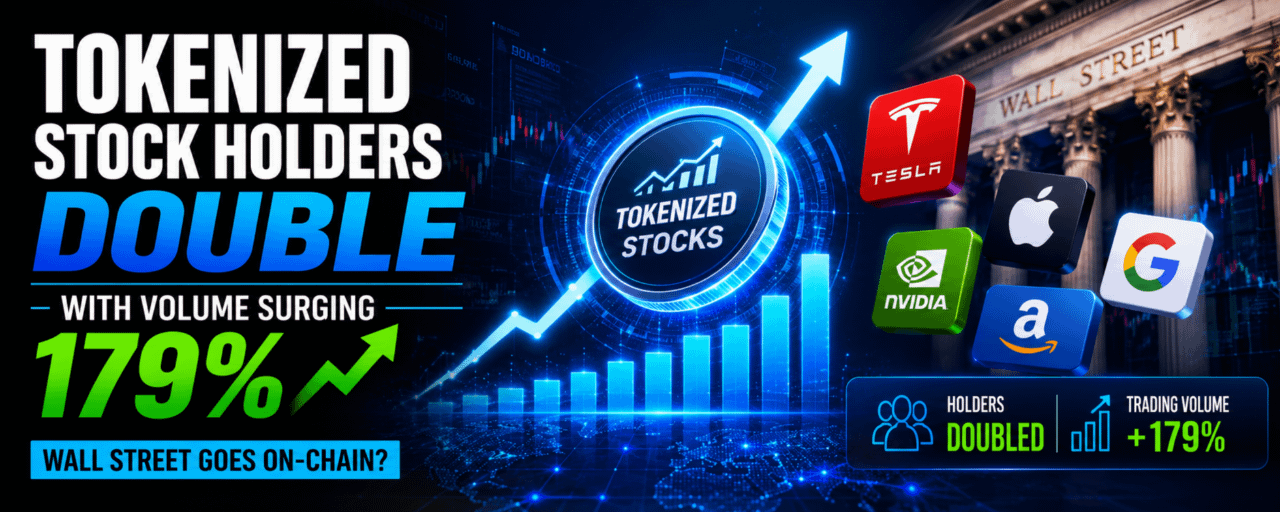
Tokenized Stock Holders Double as Trading Volume Surges 179%$SOL $METAB
The tokenized stock market is gaining momentum as more investors turn to blockchain-based versions of traditional equities.
Recent market activity shows tokenized stock holders have doubled, while trading volume has surged by an impressive 179%. The growth highlights increasing interest in bringing traditional financial assets onto blockchain networks.
📈 Strong Growth in Tokenized Equities
The sharp increase in holders suggests that tokenized stocks are attracting a broader investor base. Unlike traditional shares, tokenized equities can potentially offer blockchain-based access, faster settlement, and greater flexibility for digital-asset users.
At the same time, the 179% jump in trading volume indicates that existing holders are becoming more active, rather than growth coming solely from new accounts.
🌐 Why It Matters
Tokenized stocks sit at the intersection of traditional finance and crypto. Investors who already use digital-asset platforms can gain exposure to stock-market assets through blockchain infrastructure, potentially creating a more seamless connection between the two markets.
The rapid growth could also encourage exchanges, financial institutions, and blockchain platforms to expand their tokenized-asset offerings.
⚠️ Risks Remain
Despite the strong growth, tokenized stocks are still an emerging market. Investors should consider liquidity, regulatory requirements, platform risks, custody arrangements, and the exact rights attached to each token before investing.
A surge in volume can demonstrate growing interest, but it does not guarantee that the trend will continue.
🔥 Bottom Line
Tokenized stock holders doubling and trading volume climbing 179% are major signals of growing demand for blockchain-based financial assets.
If adoption continues, tokenized equities could become an increasingly important bridge between Wall Street and the digital-asset economy.
This article is for informational purposes only and does not constitute financial advice.
#stocks #blockchains #sol #TokenizedStockMarketCap1.6B
Tokenized Stock Holders Double as Trading Volume Surges 179%
$SOL $METAB
The tokenized stock market is gaining momentum as more investors turn to blockchain-based versions of traditional equities.
Recent market activity shows tokenized stock holders have doubled, while trading volume has surged by an impressive 179%. The growth highlights increasing interest in bringing traditional financial assets onto blockchain networks.
📈 Strong Growth in Tokenized Equities
The sharp increase in holders suggests that tokenized stocks are attracting a broader investor base. Unlike traditional shares, tokenized equities can potentially offer blockchain-based access, faster settlement, and greater flexibility for digital-asset users.
At the same time, the 179% jump in trading volume indicates that existing holders are becoming more active, rather than growth coming solely from new accounts.
🌐 Why It Matters
Tokenized stocks sit at the intersection of traditional finance and crypto. Investors who already use digital-asset platforms can gain exposure to stock-market assets through blockchain infrastructure, potentially creating a more seamless connection between the two markets.
The rapid growth could also encourage exchanges, financial institutions, and blockchain platforms to expand their tokenized-asset offerings.
⚠️ Risks Remain
Despite the strong growth, tokenized stocks are still an emerging market. Investors should consider liquidity, regulatory requirements, platform risks, custody arrangements, and the exact rights attached to each token before investing.
A surge in volume can demonstrate growing interest, but it does not guarantee that the trend will continue.
🔥 Bottom Line
Tokenized stock holders doubling and trading volume climbing 179% are major signals of growing demand for blockchain-based financial assets.
If adoption continues, tokenized equities could become an increasingly important bridge between Wall Street and the digital-asset economy.
This article is for informational purposes only and does not constitute financial advice.
#stocks #blockchains #sol #TokenizedStockMarketCap1.6B
The tokenized stock market is gaining momentum as more investors turn to blockchain-based versions of traditional equities.
Recent market activity shows tokenized stock holders have doubled, while trading volume has surged by an impressive 179%. The growth highlights increasing interest in bringing traditional financial assets onto blockchain networks.
📈 Strong Growth in Tokenized Equities
The sharp increase in holders suggests that tokenized stocks are attracting a broader investor base. Unlike traditional shares, tokenized equities can potentially offer blockchain-based access, faster settlement, and greater flexibility for digital-asset users.
At the same time, the 179% jump in trading volume indicates that existing holders are becoming more active, rather than growth coming solely from new accounts.
🌐 Why It Matters
Tokenized stocks sit at the intersection of traditional finance and crypto. Investors who already use digital-asset platforms can gain exposure to stock-market assets through blockchain infrastructure, potentially creating a more seamless connection between the two markets.
The rapid growth could also encourage exchanges, financial institutions, and blockchain platforms to expand their tokenized-asset offerings.
⚠️ Risks Remain
Despite the strong growth, tokenized stocks are still an emerging market. Investors should consider liquidity, regulatory requirements, platform risks, custody arrangements, and the exact rights attached to each token before investing.
A surge in volume can demonstrate growing interest, but it does not guarantee that the trend will continue.
🔥 Bottom Line
Tokenized stock holders doubling and trading volume climbing 179% are major signals of growing demand for blockchain-based financial assets.
If adoption continues, tokenized equities could become an increasingly important bridge between Wall Street and the digital-asset economy.
This article is for informational purposes only and does not constitute financial advice.
#stocks #blockchains #sol #TokenizedStockMarketCap1.6B
65
🚨NEXT WEEK COULD DECIDE THE NEXT MOVE.
Three things land in 72 hours, and they hit markets from completely different directions.
🇺🇸 MONDAY · 4:00 PM ET · US Foreign Portfolio Flows
→ Did Japan and China keep dumping Treasuries?
🇺🇸 WEDNESDAY · 2:00 PM ET · FOMC Minutes
IF more members pushed for cuts → risk on
IF inflation worry dominates → risk off
🇯🇵 THURSDAY · 7:30 PM ET · Japan CPI
→ Decides whether the BOJ hikes
→ A hot print puts the carry trade back in play
I'll cover all of them. Which one are you watching?
🚨NEXT WEEK COULD DECIDE THE NEXT MOVE.
Three things land in 72 hours, and they hit markets from completely different directions.
🇺🇸 MONDAY · 4:00 PM ET · US Foreign Portfolio Flows
→ Did Japan and China keep dumping Treasuries?
🇺🇸 WEDNESDAY · 2:00 PM ET · FOMC Minutes
IF more members pushed for cuts → risk on
IF inflation worry dominates → risk off
🇯🇵 THURSDAY · 7:30 PM ET · Japan CPI
→ Decides whether the BOJ hikes
→ A hot print puts the carry trade back in play
I'll cover all of them. Which one are you watching?
Three things land in 72 hours, and they hit markets from completely different directions.
🇺🇸 MONDAY · 4:00 PM ET · US Foreign Portfolio Flows
→ Did Japan and China keep dumping Treasuries?
🇺🇸 WEDNESDAY · 2:00 PM ET · FOMC Minutes
IF more members pushed for cuts → risk on
IF inflation worry dominates → risk off
🇯🇵 THURSDAY · 7:30 PM ET · Japan CPI
→ Decides whether the BOJ hikes
→ A hot print puts the carry trade back in play
I'll cover all of them. Which one are you watching?
1
58
Partly True
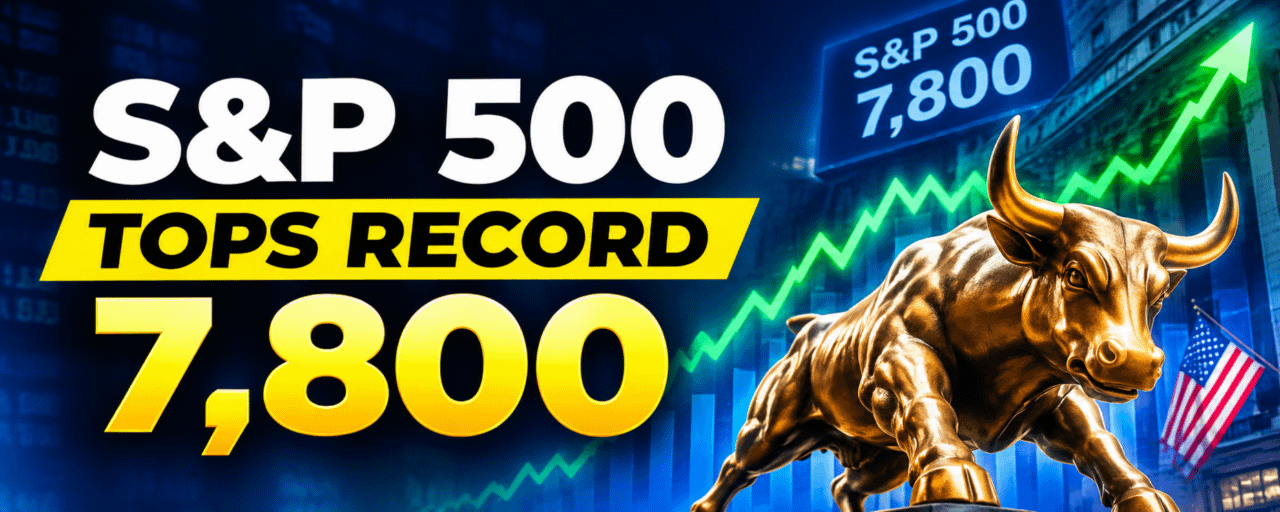
Article
S&P 500 Tops 7,800 as Wall Street Hits Another Record#sp500topsrecord7800
$BTC $ETH $HEI
The S&P 500 has climbed above the 7,800 level, marking another milestone for U.S. equities and highlighting the continued strength of the broader stock market.
The fresh record reflects strong investor confidence in large-cap U.S. companies, with technology and other growth-focused sectors continuing to attract attention. The move also comes as traders closely monitor economic data, corporate earnings and expectations for future interest-rate policy.
📈 Why It Matters
Breaking above 7,800 is an important psychological milestone for the S&P 500. Continued gains could signal that investors remain willing to take on risk despite ongoing concerns about inflation, interest rates and global economic conditions.
Technology stocks and companies linked to artificial intelligence remain key drivers of market sentiment, while strong corporate earnings could provide additional support for valuations.
🔎 What Investors Are Watching
Markets will now focus on whether the index can hold above the 7,800 area and build momentum toward new highs. Upcoming economic reports, Federal Reserve policy signals and earnings results could play an important role in determining the next direction.
A sustained move above 7,800 would reinforce the bullish trend, while a sharp rejection could trigger profit-taking and short-term volatility.
🚨 Bottom Line
The S&P 500 crossing 7,800 is another major milestone for Wall Street. While momentum remains strong, investors should remain cautious as record-high markets can also become more sensitive to negative economic or corporate news.
#SP500 #stocks #stockmarket #WallStreet
S&P 500 Tops 7,800 as Wall Street Hits Another Record
#sp500topsrecord7800
$BTC $ETH $HEI
The S&P 500 has climbed above the 7,800 level, marking another milestone for U.S. equities and highlighting the continued strength of the broader stock market.
The fresh record reflects strong investor confidence in large-cap U.S. companies, with technology and other growth-focused sectors continuing to attract attention. The move also comes as traders closely monitor economic data, corporate earnings and expectations for future interest-rate policy.
📈 Why It Matters
Breaking above 7,800 is an important psychological milestone for the S&P 500. Continued gains could signal that investors remain willing to take on risk despite ongoing concerns about inflation, interest rates and global economic conditions.
Technology stocks and companies linked to artificial intelligence remain key drivers of market sentiment, while strong corporate earnings could provide additional support for valuations.
🔎 What Investors Are Watching
Markets will now focus on whether the index can hold above the 7,800 area and build momentum toward new highs. Upcoming economic reports, Federal Reserve policy signals and earnings results could play an important role in determining the next direction.
A sustained move above 7,800 would reinforce the bullish trend, while a sharp rejection could trigger profit-taking and short-term volatility.
🚨 Bottom Line
The S&P 500 crossing 7,800 is another major milestone for Wall Street. While momentum remains strong, investors should remain cautious as record-high markets can also become more sensitive to negative economic or corporate news.
#SP500 #stocks #stockmarket #WallStreet
$BTC $ETH $HEI
The S&P 500 has climbed above the 7,800 level, marking another milestone for U.S. equities and highlighting the continued strength of the broader stock market.
The fresh record reflects strong investor confidence in large-cap U.S. companies, with technology and other growth-focused sectors continuing to attract attention. The move also comes as traders closely monitor economic data, corporate earnings and expectations for future interest-rate policy.
📈 Why It Matters
Breaking above 7,800 is an important psychological milestone for the S&P 500. Continued gains could signal that investors remain willing to take on risk despite ongoing concerns about inflation, interest rates and global economic conditions.
Technology stocks and companies linked to artificial intelligence remain key drivers of market sentiment, while strong corporate earnings could provide additional support for valuations.
🔎 What Investors Are Watching
Markets will now focus on whether the index can hold above the 7,800 area and build momentum toward new highs. Upcoming economic reports, Federal Reserve policy signals and earnings results could play an important role in determining the next direction.
A sustained move above 7,800 would reinforce the bullish trend, while a sharp rejection could trigger profit-taking and short-term volatility.
🚨 Bottom Line
The S&P 500 crossing 7,800 is another major milestone for Wall Street. While momentum remains strong, investors should remain cautious as record-high markets can also become more sensitive to negative economic or corporate news.
#SP500 #stocks #stockmarket #WallStreet
2
1.7k
Article
🏛️🇺🇸 Trump's World Liberty Gets OCC Bank Charter$LAB $BTC
In a headline that would instantly spark debate across both Wall Street and the crypto world, Trump’s World Liberty reportedly getting an OCC bank charter would mark a major moment at the intersection of digital assets, traditional banking, and U.S. politics.
If confirmed, this would not be just another corporate licensing story. It would represent something much bigger: a sign that the line between crypto-native finance and federally regulated banking is getting thinner — and faster — than many expected. 🚀
What Is an OCC Bank Charter? 🏦
The Office of the Comptroller of the Currency (OCC) is the U.S. regulator responsible for chartering, regulating, and supervising national banks. An OCC bank charter can allow a financial institution to operate under a federal banking framework, rather than relying only on state-by-state permissions.
That matters because a charter can bring:
Greater regulatory legitimacy
Access to a clearer compliance structure
Broader trust among institutions and users
Potential expansion of banking-style services
For any company with ambitions in payments, digital finance, or asset infrastructure, an OCC charter is a serious milestone. ✅
Why This Story Is Drawing Attention 👀
The name “World Liberty” alone already carries political and media gravity if it is associated with former U.S. President Donald Trump. Add a federal banking charter into the mix, and the result is a story with implications far beyond one business entity.
There are three reasons this development would stand out:
1. Politics Meets Financial Infrastructure 🇺🇸⚖️
Trump-related business moves are never viewed in a vacuum. Supporters may see this as a sign of pro-business momentum and financial innovation, while critics may raise concerns about influence, oversight, and regulatory optics.
Either way, a charter of this kind would likely become part of a much broader public conversation about:
regulatory consistency,
political affiliation in finance,
and the future direction of U.S. banking policy.
2. Crypto’s March Toward the Mainstream ₿🌍
If World Liberty has any connection to digital assets, stablecoins, tokenization, or blockchain-based payments, an OCC charter could be interpreted as another signal that crypto-linked financial models are moving closer to the traditional banking core.
Over the past few years, the biggest challenge for many crypto businesses has not only been product-market fit — it has been regulatory credibility. A federally recognized banking framework can change how partners, investors, and customers evaluate a company.
3. A New Kind of Hybrid Institution 🔄
A chartered entity with ties to a politically visible brand and possible digital-asset ambitions could become a hybrid model:
part fintech,
part compliance-first institution,
part symbolic test case for the future of regulated innovation.
That kind of structure would draw intense attention from competitors, policymakers, and the public. 📈
What Could This Mean for the Market? 💹
Even without jumping to conclusions, such a development could influence sentiment in several ways.
For Crypto Markets
It may strengthen the narrative that regulated financial rails for digital assets are expanding. That could be viewed positively by investors who believe mainstream adoption depends on stronger legal and institutional foundations.
For Traditional Finance
Banks and payment firms may watch closely to see whether this creates a precedent for other politically connected, fintech-driven, or crypto-adjacent entities to seek similar regulatory standing.
For Regulators
This could intensify discussion around how regulators should handle:
digital asset custody,
tokenized deposits,
stablecoin activity,
consumer protections,
and the separation between political influence and financial supervision.
The Key Questions Everyone Will Be Asking ❓
If this report is accurate, the real analysis starts after the headline. Important questions include:
What exactly is the scope of the charter?
What services will World Liberty be allowed to provide?
Is the business model crypto-related, banking-related, or both?
How will compliance, capital, and risk controls be structured?
Will this trigger political scrutiny or legal challenges?
Those details matter far more than the headline alone.
Why This Matters Beyond One Company 🌐
This story is about more than Trump, and more than one institution.
It reflects a broader shift in global finance:
the future may belong to firms that can combine innovation with regulation, speed with trust, and digital-first products with institutional-grade oversight.
If World Liberty truly has secured an OCC bank charter, it could become a case study in how new financial power centers are built in the modern era — not just through technology, but through regulatory access and public visibility.
Final Take ✍️
Trump’s World Liberty getting an OCC bank charter would be a symbolically powerful and strategically significant development. It would sit at the crossroads of finance, regulation, branding, and politics — a place where headlines can quickly turn into market narratives.
Whether one sees it as a breakthrough, a controversy, or simply a sign of changing times, one thing is clear:
bank charters are no longer just boring regulatory paperwork — they are becoming strategic assets in the race to shape the future of money. 💼⚡
#TrumpNFT #crypto #BinanceSquareTalks
🏛️🇺🇸 Trump's World Liberty Gets OCC Bank Charter
$LAB $BTC
In a headline that would instantly spark debate across both Wall Street and the crypto world, Trump’s World Liberty reportedly getting an OCC bank charter would mark a major moment at the intersection of digital assets, traditional banking, and U.S. politics.
If confirmed, this would not be just another corporate licensing story. It would represent something much bigger: a sign that the line between crypto-native finance and federally regulated banking is getting thinner — and faster — than many expected. 🚀
What Is an OCC Bank Charter? 🏦
The Office of the Comptroller of the Currency (OCC) is the U.S. regulator responsible for chartering, regulating, and supervising national banks. An OCC bank charter can allow a financial institution to operate under a federal banking framework, rather than relying only on state-by-state permissions.
That matters because a charter can bring:
Greater regulatory legitimacy
Access to a clearer compliance structure
Broader trust among institutions and users
Potential expansion of banking-style services
For any company with ambitions in payments, digital finance, or asset infrastructure, an OCC charter is a serious milestone. ✅
Why This Story Is Drawing Attention 👀
The name “World Liberty” alone already carries political and media gravity if it is associated with former U.S. President Donald Trump. Add a federal banking charter into the mix, and the result is a story with implications far beyond one business entity.
There are three reasons this development would stand out:
1. Politics Meets Financial Infrastructure 🇺🇸⚖️
Trump-related business moves are never viewed in a vacuum. Supporters may see this as a sign of pro-business momentum and financial innovation, while critics may raise concerns about influence, oversight, and regulatory optics.
Either way, a charter of this kind would likely become part of a much broader public conversation about:
regulatory consistency,
political affiliation in finance,
and the future direction of U.S. banking policy.
2. Crypto’s March Toward the Mainstream ₿🌍
If World Liberty has any connection to digital assets, stablecoins, tokenization, or blockchain-based payments, an OCC charter could be interpreted as another signal that crypto-linked financial models are moving closer to the traditional banking core.
Over the past few years, the biggest challenge for many crypto businesses has not only been product-market fit — it has been regulatory credibility. A federally recognized banking framework can change how partners, investors, and customers evaluate a company.
3. A New Kind of Hybrid Institution 🔄
A chartered entity with ties to a politically visible brand and possible digital-asset ambitions could become a hybrid model:
part fintech,
part compliance-first institution,
part symbolic test case for the future of regulated innovation.
That kind of structure would draw intense attention from competitors, policymakers, and the public. 📈
What Could This Mean for the Market? 💹
Even without jumping to conclusions, such a development could influence sentiment in several ways.
For Crypto Markets
It may strengthen the narrative that regulated financial rails for digital assets are expanding. That could be viewed positively by investors who believe mainstream adoption depends on stronger legal and institutional foundations.
For Traditional Finance
Banks and payment firms may watch closely to see whether this creates a precedent for other politically connected, fintech-driven, or crypto-adjacent entities to seek similar regulatory standing.
For Regulators
This could intensify discussion around how regulators should handle:
digital asset custody,
tokenized deposits,
stablecoin activity,
consumer protections,
and the separation between political influence and financial supervision.
The Key Questions Everyone Will Be Asking ❓
If this report is accurate, the real analysis starts after the headline. Important questions include:
What exactly is the scope of the charter?
What services will World Liberty be allowed to provide?
Is the business model crypto-related, banking-related, or both?
How will compliance, capital, and risk controls be structured?
Will this trigger political scrutiny or legal challenges?
Those details matter far more than the headline alone.
Why This Matters Beyond One Company 🌐
This story is about more than Trump, and more than one institution.
It reflects a broader shift in global finance:
the future may belong to firms that can combine innovation with regulation, speed with trust, and digital-first products with institutional-grade oversight.
If World Liberty truly has secured an OCC bank charter, it could become a case study in how new financial power centers are built in the modern era — not just through technology, but through regulatory access and public visibility.
Final Take ✍️
Trump’s World Liberty getting an OCC bank charter would be a symbolically powerful and strategically significant development. It would sit at the crossroads of finance, regulation, branding, and politics — a place where headlines can quickly turn into market narratives.
Whether one sees it as a breakthrough, a controversy, or simply a sign of changing times, one thing is clear:
bank charters are no longer just boring regulatory paperwork — they are becoming strategic assets in the race to shape the future of money. 💼⚡
#TrumpNFT #crypto #BinanceSquareTalks
In a headline that would instantly spark debate across both Wall Street and the crypto world, Trump’s World Liberty reportedly getting an OCC bank charter would mark a major moment at the intersection of digital assets, traditional banking, and U.S. politics.
If confirmed, this would not be just another corporate licensing story. It would represent something much bigger: a sign that the line between crypto-native finance and federally regulated banking is getting thinner — and faster — than many expected. 🚀
What Is an OCC Bank Charter? 🏦
The Office of the Comptroller of the Currency (OCC) is the U.S. regulator responsible for chartering, regulating, and supervising national banks. An OCC bank charter can allow a financial institution to operate under a federal banking framework, rather than relying only on state-by-state permissions.
That matters because a charter can bring:
Greater regulatory legitimacy
Access to a clearer compliance structure
Broader trust among institutions and users
Potential expansion of banking-style services
For any company with ambitions in payments, digital finance, or asset infrastructure, an OCC charter is a serious milestone. ✅
Why This Story Is Drawing Attention 👀
The name “World Liberty” alone already carries political and media gravity if it is associated with former U.S. President Donald Trump. Add a federal banking charter into the mix, and the result is a story with implications far beyond one business entity.
There are three reasons this development would stand out:
1. Politics Meets Financial Infrastructure 🇺🇸⚖️
Trump-related business moves are never viewed in a vacuum. Supporters may see this as a sign of pro-business momentum and financial innovation, while critics may raise concerns about influence, oversight, and regulatory optics.
Either way, a charter of this kind would likely become part of a much broader public conversation about:
regulatory consistency,
political affiliation in finance,
and the future direction of U.S. banking policy.
2. Crypto’s March Toward the Mainstream ₿🌍
If World Liberty has any connection to digital assets, stablecoins, tokenization, or blockchain-based payments, an OCC charter could be interpreted as another signal that crypto-linked financial models are moving closer to the traditional banking core.
Over the past few years, the biggest challenge for many crypto businesses has not only been product-market fit — it has been regulatory credibility. A federally recognized banking framework can change how partners, investors, and customers evaluate a company.
3. A New Kind of Hybrid Institution 🔄
A chartered entity with ties to a politically visible brand and possible digital-asset ambitions could become a hybrid model:
part fintech,
part compliance-first institution,
part symbolic test case for the future of regulated innovation.
That kind of structure would draw intense attention from competitors, policymakers, and the public. 📈
What Could This Mean for the Market? 💹
Even without jumping to conclusions, such a development could influence sentiment in several ways.
For Crypto Markets
It may strengthen the narrative that regulated financial rails for digital assets are expanding. That could be viewed positively by investors who believe mainstream adoption depends on stronger legal and institutional foundations.
For Traditional Finance
Banks and payment firms may watch closely to see whether this creates a precedent for other politically connected, fintech-driven, or crypto-adjacent entities to seek similar regulatory standing.
For Regulators
This could intensify discussion around how regulators should handle:
digital asset custody,
tokenized deposits,
stablecoin activity,
consumer protections,
and the separation between political influence and financial supervision.
The Key Questions Everyone Will Be Asking ❓
If this report is accurate, the real analysis starts after the headline. Important questions include:
What exactly is the scope of the charter?
What services will World Liberty be allowed to provide?
Is the business model crypto-related, banking-related, or both?
How will compliance, capital, and risk controls be structured?
Will this trigger political scrutiny or legal challenges?
Those details matter far more than the headline alone.
Why This Matters Beyond One Company 🌐
This story is about more than Trump, and more than one institution.
It reflects a broader shift in global finance:
the future may belong to firms that can combine innovation with regulation, speed with trust, and digital-first products with institutional-grade oversight.
If World Liberty truly has secured an OCC bank charter, it could become a case study in how new financial power centers are built in the modern era — not just through technology, but through regulatory access and public visibility.
Final Take ✍️
Trump’s World Liberty getting an OCC bank charter would be a symbolically powerful and strategically significant development. It would sit at the crossroads of finance, regulation, branding, and politics — a place where headlines can quickly turn into market narratives.
Whether one sees it as a breakthrough, a controversy, or simply a sign of changing times, one thing is clear:
bank charters are no longer just boring regulatory paperwork — they are becoming strategic assets in the race to shape the future of money. 💼⚡
#TrumpNFT #crypto #BinanceSquareTalks
457

Article
Saudi PIF Discloses 154.1 Million SpaceX Shares#saudipifdiscloses154.1mspacexshares
$XAU $LAB $SPCX
Saudi Arabia’s Public Investment Fund (PIF) has disclosed that it holds 154.1 million shares of SpaceX, highlighting the sovereign wealth fund’s significant exposure to one of the world’s most closely watched space and technology companies.
The disclosure places PIF among SpaceX’s largest institutional shareholders. According to recent reporting, Alphabet holds about 551.2 million shares, while Fidelity Investments holds approximately 302.6 million. PIF’s 154.1 million-share position ranks it among the major institutional investors in SpaceX.
A Major SpaceX Stake
SpaceX completed its initial public offering in June 2026, with shares beginning to trade on Nasdaq under the ticker SPCX. The company priced its IPO at $135 per share and raised approximately $85.7 billion in gross proceeds.
The Saudi disclosure provides investors with a clearer picture of institutional ownership following the historic listing.
Saudi-linked investment in SpaceX has also attracted attention through Kingdom Holding Company, which separately disclosed a stake of 42.4 million SpaceX shares. The company valued that investment at approximately $6.83 billion based on SpaceX’s first-day closing price of $160.95.
Why It Matters
PIF’s large position underlines Saudi Arabia’s growing interest in global technology, artificial intelligence, space infrastructure and next-generation industries.
For SpaceX, strong institutional ownership could also reinforce investor confidence as the company moves into its next phase as a publicly traded business.
However, SpaceX remains a high-profile and potentially volatile investment. Its valuation can be influenced by launch activity, satellite expansion, Starlink growth, regulatory developments and expectations surrounding future technologies.
Bottom Line
The disclosure of 154.1 million SpaceX shares by Saudi Arabia’s PIF puts the sovereign wealth fund firmly among the company’s major institutional investors.
With SpaceX now publicly traded, investors will be watching closely how large shareholders manage their positions and how the company’s market valuation develops.
#SpaceX #SPCX #SaudiArabia #Technology
Saudi PIF Discloses 154.1 Million SpaceX Shares
#saudipifdiscloses154.1mspacexshares
$XAU $LAB $SPCX
Saudi Arabia’s Public Investment Fund (PIF) has disclosed that it holds 154.1 million shares of SpaceX, highlighting the sovereign wealth fund’s significant exposure to one of the world’s most closely watched space and technology companies.
The disclosure places PIF among SpaceX’s largest institutional shareholders. According to recent reporting, Alphabet holds about 551.2 million shares, while Fidelity Investments holds approximately 302.6 million. PIF’s 154.1 million-share position ranks it among the major institutional investors in SpaceX.
A Major SpaceX Stake
SpaceX completed its initial public offering in June 2026, with shares beginning to trade on Nasdaq under the ticker SPCX. The company priced its IPO at $135 per share and raised approximately $85.7 billion in gross proceeds.
The Saudi disclosure provides investors with a clearer picture of institutional ownership following the historic listing.
Saudi-linked investment in SpaceX has also attracted attention through Kingdom Holding Company, which separately disclosed a stake of 42.4 million SpaceX shares. The company valued that investment at approximately $6.83 billion based on SpaceX’s first-day closing price of $160.95.
Why It Matters
PIF’s large position underlines Saudi Arabia’s growing interest in global technology, artificial intelligence, space infrastructure and next-generation industries.
For SpaceX, strong institutional ownership could also reinforce investor confidence as the company moves into its next phase as a publicly traded business.
However, SpaceX remains a high-profile and potentially volatile investment. Its valuation can be influenced by launch activity, satellite expansion, Starlink growth, regulatory developments and expectations surrounding future technologies.
Bottom Line
The disclosure of 154.1 million SpaceX shares by Saudi Arabia’s PIF puts the sovereign wealth fund firmly among the company’s major institutional investors.
With SpaceX now publicly traded, investors will be watching closely how large shareholders manage their positions and how the company’s market valuation develops.
#SpaceX #SPCX #SaudiArabia #Technology
$XAU $LAB $SPCX
Saudi Arabia’s Public Investment Fund (PIF) has disclosed that it holds 154.1 million shares of SpaceX, highlighting the sovereign wealth fund’s significant exposure to one of the world’s most closely watched space and technology companies.
The disclosure places PIF among SpaceX’s largest institutional shareholders. According to recent reporting, Alphabet holds about 551.2 million shares, while Fidelity Investments holds approximately 302.6 million. PIF’s 154.1 million-share position ranks it among the major institutional investors in SpaceX.
A Major SpaceX Stake
SpaceX completed its initial public offering in June 2026, with shares beginning to trade on Nasdaq under the ticker SPCX. The company priced its IPO at $135 per share and raised approximately $85.7 billion in gross proceeds.
The Saudi disclosure provides investors with a clearer picture of institutional ownership following the historic listing.
Saudi-linked investment in SpaceX has also attracted attention through Kingdom Holding Company, which separately disclosed a stake of 42.4 million SpaceX shares. The company valued that investment at approximately $6.83 billion based on SpaceX’s first-day closing price of $160.95.
Why It Matters
PIF’s large position underlines Saudi Arabia’s growing interest in global technology, artificial intelligence, space infrastructure and next-generation industries.
For SpaceX, strong institutional ownership could also reinforce investor confidence as the company moves into its next phase as a publicly traded business.
However, SpaceX remains a high-profile and potentially volatile investment. Its valuation can be influenced by launch activity, satellite expansion, Starlink growth, regulatory developments and expectations surrounding future technologies.
Bottom Line
The disclosure of 154.1 million SpaceX shares by Saudi Arabia’s PIF puts the sovereign wealth fund firmly among the company’s major institutional investors.
With SpaceX now publicly traded, investors will be watching closely how large shareholders manage their positions and how the company’s market valuation develops.
#SpaceX #SPCX #SaudiArabia #Technology
1
2k
Verified
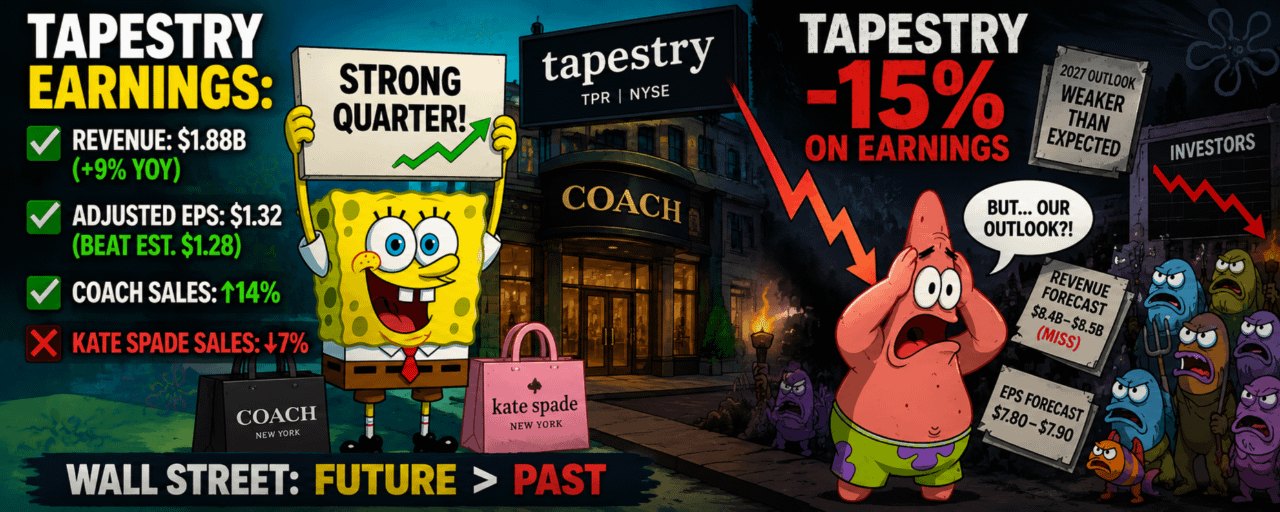
Article
Tapestry Falls Nearly 15% After Earnings Despite Strong Results#tapestryfallsnearly15%onearnings
Shares of Tapestry (NYSE: TPR) plunged nearly 15% after the luxury fashion company reported its latest earnings, as investors focused more on the outlook for future growth than on the strong quarterly results.
The sell-off pushed Tapestry shares to around $130, marking a sharp reversal after the stock had recently traded near record highs.
📊 Strong Earnings, Weak Reaction
Tapestry delivered better-than-expected fiscal fourth-quarter results. Revenue increased 9% to $1.88 billion, while adjusted earnings reached $1.32 per share, above the roughly $1.28 analyst consensus.
The company's main growth engine, Coach, performed strongly, with quarterly sales rising about 15%. Coach's popularity among younger shoppers and demand for products such as the Tabby and Belted Ergo bags helped drive the brand's performance.
⚠️ Kate Spade Remains a Problem
The biggest concern for investors was Kate Spade.
Sales at the brand declined 7% during the quarter, highlighting continued challenges as Tapestry works to turn the business around. The weakness is particularly important because Coach is currently doing much of the heavy lifting for the overall company.
🔮 Fiscal 2027 Outlook Disappoints
The main reason behind the stock's sharp decline was Tapestry's forward guidance.
For fiscal 2027, the company expects revenue of approximately $8.4 billion to $8.5 billion and adjusted earnings of $7.80 to $7.90 per share. While the profit outlook was relatively solid, the revenue forecast was viewed as cautious compared with investor expectations.
Investors appear concerned that Coach's rapid growth could begin to slow while Kate Spade continues to struggle.
🌏 International Growth Offers Some Support
There were also positive signs outside the United States. Tapestry reported strong growth in China and Europe, helping offset weaker areas of the business.
The company is also increasing its shareholder returns, including a 16% dividend increase and plans for substantial share repurchases.
📌 What Investors Are Watching
The sharp decline shows that strong earnings alone are not always enough to support a stock price. For Tapestry, investors now want to see whether Coach can maintain its momentum and whether Kate Spade can return to growth.
TPR's next major test will be whether management can turn its cautious outlook into stronger-than-expected results during fiscal 2027.
For now, the market's message is clear: the earnings were strong, but expectations for future growth were even higher.
Not financial advice. Always do your own research before making investment decisions.
$AKE $VELVET $TUT
#earnings #stocks #stockmarket #WallStreet
Tapestry Falls Nearly 15% After Earnings Despite Strong Results
#tapestryfallsnearly15%onearnings
Shares of Tapestry (NYSE: TPR) plunged nearly 15% after the luxury fashion company reported its latest earnings, as investors focused more on the outlook for future growth than on the strong quarterly results.
The sell-off pushed Tapestry shares to around $130, marking a sharp reversal after the stock had recently traded near record highs.
📊 Strong Earnings, Weak Reaction
Tapestry delivered better-than-expected fiscal fourth-quarter results. Revenue increased 9% to $1.88 billion, while adjusted earnings reached $1.32 per share, above the roughly $1.28 analyst consensus.
The company's main growth engine, Coach, performed strongly, with quarterly sales rising about 15%. Coach's popularity among younger shoppers and demand for products such as the Tabby and Belted Ergo bags helped drive the brand's performance.
⚠️ Kate Spade Remains a Problem
The biggest concern for investors was Kate Spade.
Sales at the brand declined 7% during the quarter, highlighting continued challenges as Tapestry works to turn the business around. The weakness is particularly important because Coach is currently doing much of the heavy lifting for the overall company.
🔮 Fiscal 2027 Outlook Disappoints
The main reason behind the stock's sharp decline was Tapestry's forward guidance.
For fiscal 2027, the company expects revenue of approximately $8.4 billion to $8.5 billion and adjusted earnings of $7.80 to $7.90 per share. While the profit outlook was relatively solid, the revenue forecast was viewed as cautious compared with investor expectations.
Investors appear concerned that Coach's rapid growth could begin to slow while Kate Spade continues to struggle.
🌏 International Growth Offers Some Support
There were also positive signs outside the United States. Tapestry reported strong growth in China and Europe, helping offset weaker areas of the business.
The company is also increasing its shareholder returns, including a 16% dividend increase and plans for substantial share repurchases.
📌 What Investors Are Watching
The sharp decline shows that strong earnings alone are not always enough to support a stock price. For Tapestry, investors now want to see whether Coach can maintain its momentum and whether Kate Spade can return to growth.
TPR's next major test will be whether management can turn its cautious outlook into stronger-than-expected results during fiscal 2027.
For now, the market's message is clear: the earnings were strong, but expectations for future growth were even higher.
Not financial advice. Always do your own research before making investment decisions.
$AKE $VELVET $TUT
#earnings #stocks #stockmarket #WallStreet
Shares of Tapestry (NYSE: TPR) plunged nearly 15% after the luxury fashion company reported its latest earnings, as investors focused more on the outlook for future growth than on the strong quarterly results.
The sell-off pushed Tapestry shares to around $130, marking a sharp reversal after the stock had recently traded near record highs.
📊 Strong Earnings, Weak Reaction
Tapestry delivered better-than-expected fiscal fourth-quarter results. Revenue increased 9% to $1.88 billion, while adjusted earnings reached $1.32 per share, above the roughly $1.28 analyst consensus.
The company's main growth engine, Coach, performed strongly, with quarterly sales rising about 15%. Coach's popularity among younger shoppers and demand for products such as the Tabby and Belted Ergo bags helped drive the brand's performance.
⚠️ Kate Spade Remains a Problem
The biggest concern for investors was Kate Spade.
Sales at the brand declined 7% during the quarter, highlighting continued challenges as Tapestry works to turn the business around. The weakness is particularly important because Coach is currently doing much of the heavy lifting for the overall company.
🔮 Fiscal 2027 Outlook Disappoints
The main reason behind the stock's sharp decline was Tapestry's forward guidance.
For fiscal 2027, the company expects revenue of approximately $8.4 billion to $8.5 billion and adjusted earnings of $7.80 to $7.90 per share. While the profit outlook was relatively solid, the revenue forecast was viewed as cautious compared with investor expectations.
Investors appear concerned that Coach's rapid growth could begin to slow while Kate Spade continues to struggle.
🌏 International Growth Offers Some Support
There were also positive signs outside the United States. Tapestry reported strong growth in China and Europe, helping offset weaker areas of the business.
The company is also increasing its shareholder returns, including a 16% dividend increase and plans for substantial share repurchases.
📌 What Investors Are Watching
The sharp decline shows that strong earnings alone are not always enough to support a stock price. For Tapestry, investors now want to see whether Coach can maintain its momentum and whether Kate Spade can return to growth.
TPR's next major test will be whether management can turn its cautious outlook into stronger-than-expected results during fiscal 2027.
For now, the market's message is clear: the earnings were strong, but expectations for future growth were even higher.
Not financial advice. Always do your own research before making investment decisions.
$AKE $VELVET $TUT
#earnings #stocks #stockmarket #WallStreet
TPRUS-0.91%
1
302
Log in to explore more content
Join global crypto users on Binance Square
⚡️ Get latest and useful information about crypto.
💬 Trusted by the world’s largest crypto exchange.
👍 Discover real insights from verified creators.
Email / Phone number
Trending Topics
BTCBreaks80K
166,951 views
2,689 Discussing
🚨₿ $BTC RECLAIMS $80K — BUT THE REAL BATTLE STARTS NOW! 🔥👀
#Bitcoin has pushed above $80,000, reaching around $80,703 in recent trading as market sentiment recovered despite rate-hike and regulatory concerns.
MarketWatch
+1
💥 BREAKOUT OR TRAP?
The $80K level is now a key area for traders to watch. Strong follow-through could sustain momentum, while profit-taking, leverage, and macroeconomic uncertainty may fuel sharp reversals.
🌊 THE RIPPLE EFFECT:
₿ BTC momentum may influence ETH and altcoin sentiment, but a broad rally isn't guaranteed.
🎯 THE BIG QUESTION: Is Bitcoin preparing for its next major move, or will the market demand a deeper correction first?
🔥 DON'T CHASE THE CANDLE — WATCH VOLUME, LIQUIDITY & MARKET STRUCTURE!
👑 MFI CRYPTO 🚀
💬 BTC ABOVE $85K NEXT? OR A SURPRISE PULLBACK?
#Bitcoin #BTC #Crypto #Altcoins #Ethereum #Trading #Binance #MFiCrypto
#btcbreaks80k
MFI crypto
·5 Likes
·2.8k views
BitcoinMarketCapTopsTesla
4,984 views
239 Discussing
SOLJumpsAbout10%
13,042 views
351 Discussing