

#zeusincrypto
zeusincrypto
13.4M views
1,616 Discussing
Hot
Latest

·
--
Bullish
249

$ZEC
{spot}(ZECUSDT)
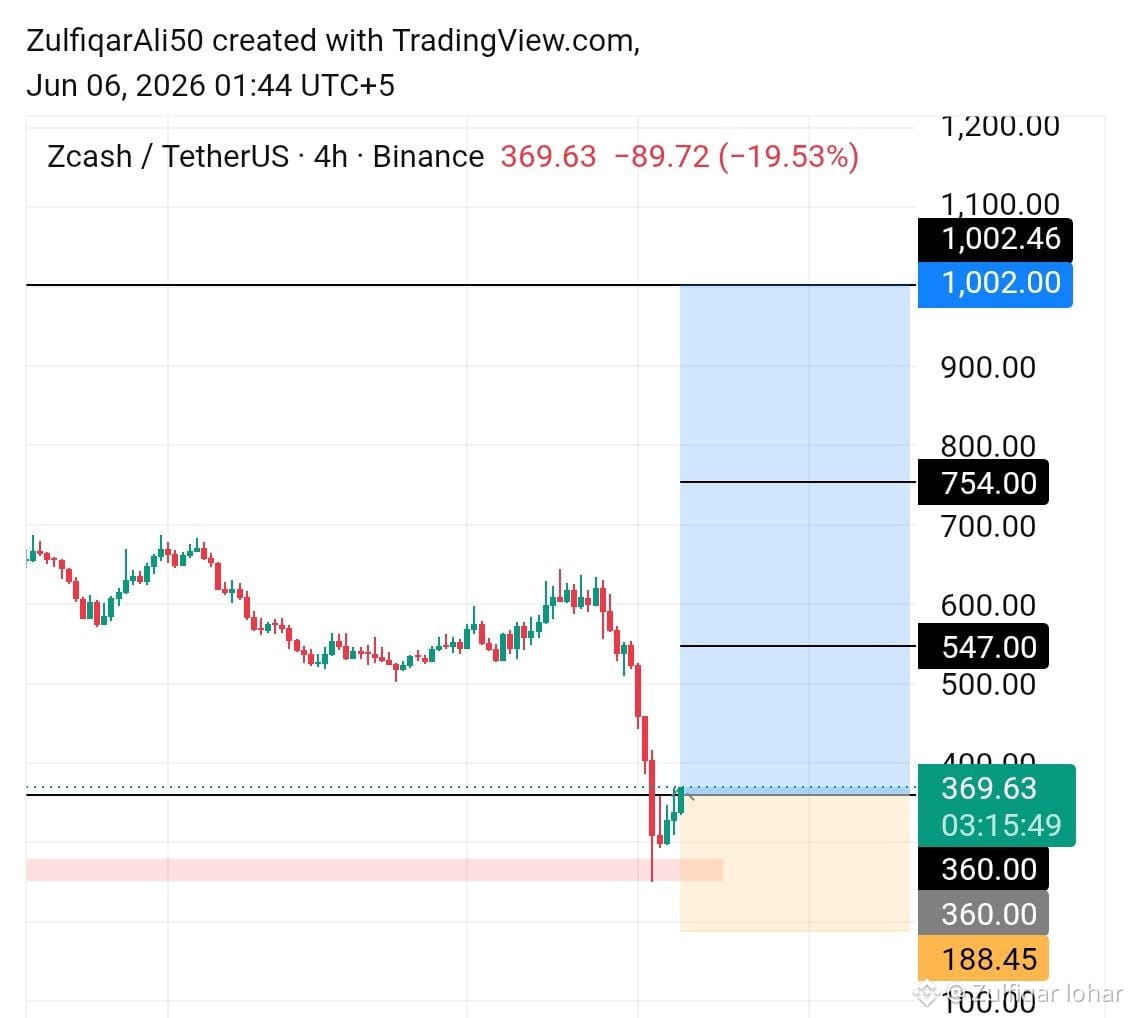
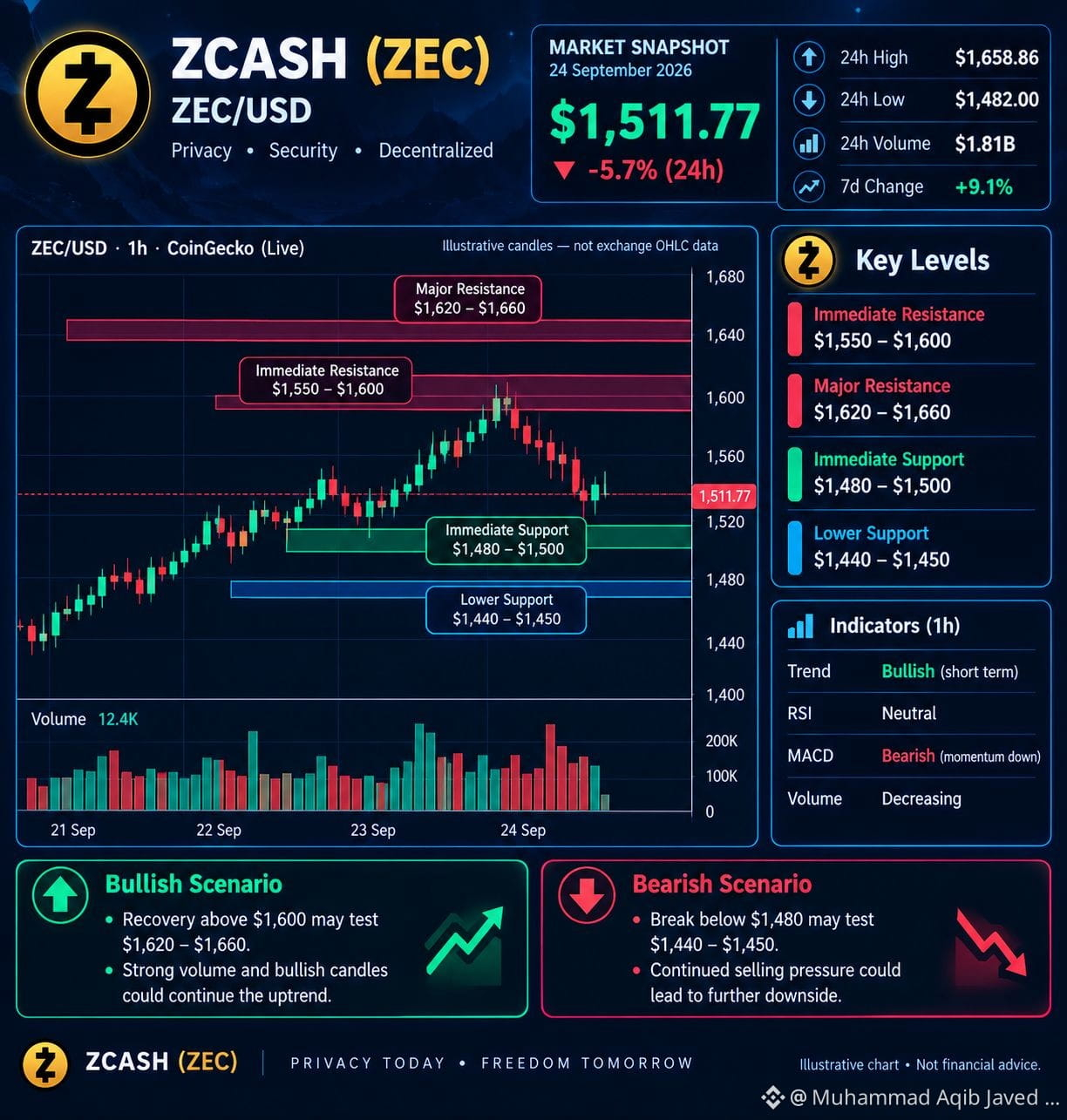
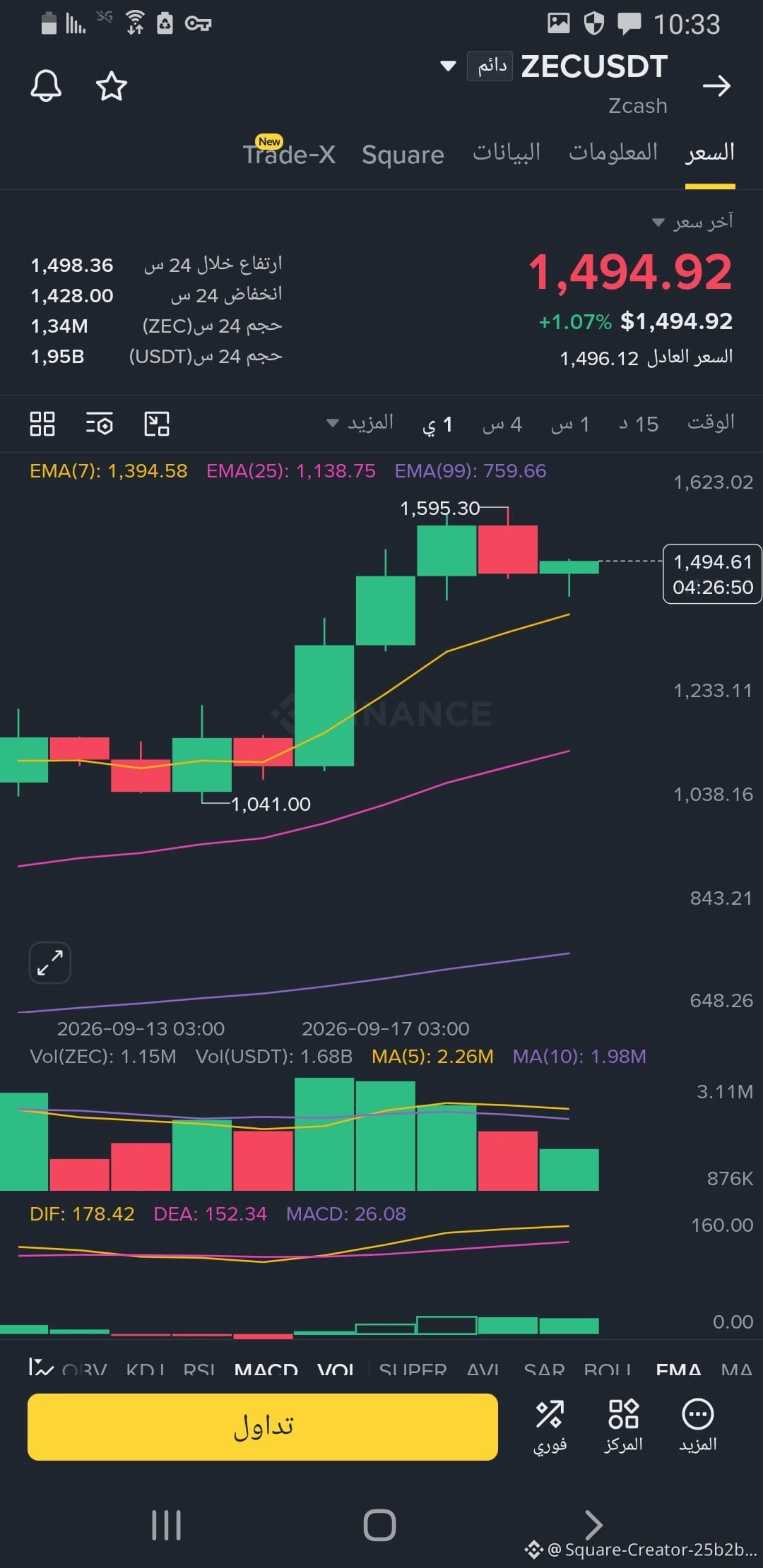
Market outlook: ZEC is experiencing a short-term pullback following its recent rally. Despite today's decline, its seven-day performance remains positive. The $1,482 area is an important near-term level to watch.
Technical level Price
Immediate resistance $1,550–$1,600
Major resistance $1,620–$1,660
Immediate support $1,480–$1,500
Lower support $1,440–$1,450
Bullish scenario: A sustained recovery above $1,600 could bring the $1,620–$1,660 resistance zone back into focus.
Bearish scenario: A break below $1,480 could expose the $1,440–$1,450 support area.
These are indicative technical zones, not guaranteed price targets.
#BinanceWillListHyperliquid(HYPE) #BCHJumps28%OnCMEFuturesListing #zec #ZeusInCrypto #USWeighsPromotingDollarStablecoinsAbroad
$ZEC
Market outlook: ZEC is experiencing a short-term pullback following its recent rally. Despite today's decline, its seven-day performance remains positive. The $1,482 area is an important near-term level to watch.
Technical level Price
Immediate resistance $1,550–$1,600
Major resistance $1,620–$1,660
Immediate support $1,480–$1,500
Lower support $1,440–$1,450
Bullish scenario: A sustained recovery above $1,600 could bring the $1,620–$1,660 resistance zone back into focus.
Bearish scenario: A break below $1,480 could expose the $1,440–$1,450 support area.
These are indicative technical zones, not guaranteed price targets.
#BinanceWillListHyperliquid(HYPE) #BCHJumps28%OnCMEFuturesListing #zec #ZeusInCrypto #USWeighsPromotingDollarStablecoinsAbroad
Market outlook: ZEC is experiencing a short-term pullback following its recent rally. Despite today's decline, its seven-day performance remains positive. The $1,482 area is an important near-term level to watch.
Technical level Price
Immediate resistance $1,550–$1,600
Major resistance $1,620–$1,660
Immediate support $1,480–$1,500
Lower support $1,440–$1,450
Bullish scenario: A sustained recovery above $1,600 could bring the $1,620–$1,660 resistance zone back into focus.
Bearish scenario: A break below $1,480 could expose the $1,440–$1,450 support area.
These are indicative technical zones, not guaranteed price targets.
#BinanceWillListHyperliquid(HYPE) #BCHJumps28%OnCMEFuturesListing #zec #ZeusInCrypto #USWeighsPromotingDollarStablecoinsAbroad
89

·
--
🔥 $SUPER
{future}(SUPERUSDT)
| #superusdt — Strong buying momentum! 🚀
• Trend: Strong Bullish 🟢
• Entry: 0.1980 - 0.2020
• Stop loss: 0.1920
🎯 Targets:
1️⃣ 0.2080
2️⃣ 0.2150
3️⃣ 0.2250
📊 Analysis:
A massive buying liquidity of 94% in one minute, reflecting very high trader confidence. The daily volume (2.2 million USDT) supports this rally. Be careful of sharp fluctuations caused by this quick surge.
$ALGO
{future}(ALGOUSDT)
$FIL
{future}(FILUSDT)
#ETH(二饼) #ETH🔥🔥🔥🔥🔥🔥 #ZKS以太坊空投 #ZeusInCrypto
🔥 $SUPER
| #superusdt — Strong buying momentum! 🚀
• Trend: Strong Bullish 🟢
• Entry: 0.1980 - 0.2020
• Stop loss: 0.1920
🎯 Targets:
1️⃣ 0.2080
2️⃣ 0.2150
3️⃣ 0.2250
📊 Analysis:
A massive buying liquidity of 94% in one minute, reflecting very high trader confidence. The daily volume (2.2 million USDT) supports this rally. Be careful of sharp fluctuations caused by this quick surge.
$ALGO
$FIL
#ETH(二饼) #ETH🔥🔥🔥🔥🔥🔥 #ZKS以太坊空投 #ZeusInCrypto
| #superusdt — Strong buying momentum! 🚀
• Trend: Strong Bullish 🟢
• Entry: 0.1980 - 0.2020
• Stop loss: 0.1920
🎯 Targets:
1️⃣ 0.2080
2️⃣ 0.2150
3️⃣ 0.2250
📊 Analysis:
A massive buying liquidity of 94% in one minute, reflecting very high trader confidence. The daily volume (2.2 million USDT) supports this rally. Be careful of sharp fluctuations caused by this quick surge.
$ALGO
$FIL
#ETH(二饼) #ETH🔥🔥🔥🔥🔥🔥 #ZKS以太坊空投 #ZeusInCrypto
2
59

·
--
✨️✨️ Grayscale’s Exchange-Traded Fund for Zcash just surpassed $1 billion in assets under management
Grayscale’s exchange-traded fund for Zcash, ZCSH, has now crossed the $1 billion assets under management threshold just one month after its launch on NYSE Arca.
This milestone comes alongside a sharp rise in ZEC, which has driven a strong increase in the value of the fund’s current holdings, alongside new inflows.
Grayscale says Zcash is among the “assets that are shaping the next era of digital finance,” pointing to growing institutional interest in privacy-focused assets.
But there’s an important detail: the number of assets under management is not the same as the $ coming from new investors’ money. The fund already had existing ZEC holdings when it converted into an exchange-traded fund, and the increase in ZEC’s price significantly boosted the value of its assets.
$Assets under management over the month. Zcash is officially receiving serious institutional attention.
$ZEC
{spot}(ZECUSDT)
#ZECUSDT #ZeusInCrypto
✨️✨️ Grayscale’s Exchange-Traded Fund for Zcash just surpassed $1 billion in assets under management
Grayscale’s exchange-traded fund for Zcash, ZCSH, has now crossed the $1 billion assets under management threshold just one month after its launch on NYSE Arca.
This milestone comes alongside a sharp rise in ZEC, which has driven a strong increase in the value of the fund’s current holdings, alongside new inflows.
Grayscale says Zcash is among the “assets that are shaping the next era of digital finance,” pointing to growing institutional interest in privacy-focused assets.
But there’s an important detail: the number of assets under management is not the same as the $ coming from new investors’ money. The fund already had existing ZEC holdings when it converted into an exchange-traded fund, and the increase in ZEC’s price significantly boosted the value of its assets.
$Assets under management over the month. Zcash is officially receiving serious institutional attention.
$ZEC
#ZECUSDT #ZeusInCrypto
Grayscale’s exchange-traded fund for Zcash, ZCSH, has now crossed the $1 billion assets under management threshold just one month after its launch on NYSE Arca.
This milestone comes alongside a sharp rise in ZEC, which has driven a strong increase in the value of the fund’s current holdings, alongside new inflows.
Grayscale says Zcash is among the “assets that are shaping the next era of digital finance,” pointing to growing institutional interest in privacy-focused assets.
But there’s an important detail: the number of assets under management is not the same as the $ coming from new investors’ money. The fund already had existing ZEC holdings when it converted into an exchange-traded fund, and the increase in ZEC’s price significantly boosted the value of its assets.
$Assets under management over the month. Zcash is officially receiving serious institutional attention.
$ZEC
#ZECUSDT #ZeusInCrypto
151

URGENT: Crypto market news
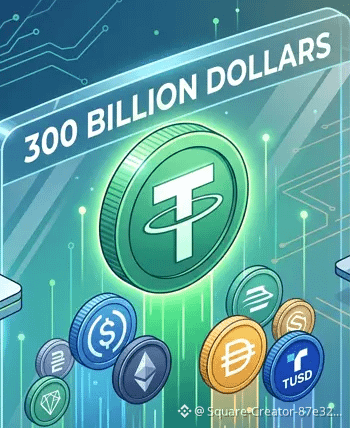
Stablecoin market hits $300 billion: historic figure and major shift in the world of crypto
Stablecoin market hits $300 billion! This figure alone has been enough to draw the attention of investors and analysts in recent weeks, after the total market value of stablecoins surpassed this level for the first time in the history of the digital assets market.
While followers have become accustomed to linking crypto news to Bitcoin price rallies or the launch of new projects, the most important news right now may not be about a speculative coin or a temporary investment wave, but rather about a category of digital assets that is playing an increasingly important role in the global economy.
Reaching $300 billion is not just another record number, but reflects a major shift in how digital currencies are being used around the world.
#solana #Write2Earn #altcoins #FIT21 #ZeusInCrypto
URGENT: Crypto market news
Stablecoin market hits $300 billion: historic figure and major shift in the world of crypto
Stablecoin market hits $300 billion! This figure alone has been enough to draw the attention of investors and analysts in recent weeks, after the total market value of stablecoins surpassed this level for the first time in the history of the digital assets market.
While followers have become accustomed to linking crypto news to Bitcoin price rallies or the launch of new projects, the most important news right now may not be about a speculative coin or a temporary investment wave, but rather about a category of digital assets that is playing an increasingly important role in the global economy.
Reaching $300 billion is not just another record number, but reflects a major shift in how digital currencies are being used around the world.
#solana #Write2Earn #altcoins #FIT21 #ZeusInCrypto
Stablecoin market hits $300 billion: historic figure and major shift in the world of crypto
Stablecoin market hits $300 billion! This figure alone has been enough to draw the attention of investors and analysts in recent weeks, after the total market value of stablecoins surpassed this level for the first time in the history of the digital assets market.
While followers have become accustomed to linking crypto news to Bitcoin price rallies or the launch of new projects, the most important news right now may not be about a speculative coin or a temporary investment wave, but rather about a category of digital assets that is playing an increasingly important role in the global economy.
Reaching $300 billion is not just another record number, but reflects a major shift in how digital currencies are being used around the world.
#solana #Write2Earn #altcoins #FIT21 #ZeusInCrypto
111
·
--
🔥 **$BB
{future}(BBUSDT)
#bbusdt — a strong start with buying momentum taking full control! 💥**
• **Direction:** Long 🟢
• **Entry:** 0.01050 - 0.01070
• **Stop Loss:** 0.00980
🎯 **Targets:**
1️⃣ 0.01120
2️⃣ 0.01180
3️⃣ 0.01250
📊 **Quick Analysis:** Excellent daily uptrend (+14.9%) with ongoing momentum (+2.2% in 15 minutes). Strong buying dominance at 74% (70.0k USDT), reflecting traders’ confidence in the continuation of the rise amid active daily trading volume reaching 5.3 million.
$SOL
{future}(SOLUSDT)
$LSK
{future}(LSKUSDT)
#LSK从0 #Jasmyusdt⚠️⚠️ #ZeusInCrypto
🔥 **$BB
#bbusdt — a strong start with buying momentum taking full control! 💥**
• **Direction:** Long 🟢
• **Entry:** 0.01050 - 0.01070
• **Stop Loss:** 0.00980
🎯 **Targets:**
1️⃣ 0.01120
2️⃣ 0.01180
3️⃣ 0.01250
📊 **Quick Analysis:** Excellent daily uptrend (+14.9%) with ongoing momentum (+2.2% in 15 minutes). Strong buying dominance at 74% (70.0k USDT), reflecting traders’ confidence in the continuation of the rise amid active daily trading volume reaching 5.3 million.
$SOL
$LSK
#LSK从0 #Jasmyusdt⚠️⚠️ #ZeusInCrypto
#bbusdt — a strong start with buying momentum taking full control! 💥**
• **Direction:** Long 🟢
• **Entry:** 0.01050 - 0.01070
• **Stop Loss:** 0.00980
🎯 **Targets:**
1️⃣ 0.01120
2️⃣ 0.01180
3️⃣ 0.01250
📊 **Quick Analysis:** Excellent daily uptrend (+14.9%) with ongoing momentum (+2.2% in 15 minutes). Strong buying dominance at 74% (70.0k USDT), reflecting traders’ confidence in the continuation of the rise amid active daily trading volume reaching 5.3 million.
$SOL
$LSK
#LSK从0 #Jasmyusdt⚠️⚠️ #ZeusInCrypto
2
29

·
--
$ZETA
{future}(ZETAUSDT)
is gaining attention as market activity and community interest continue to build.
The token remains on traders’ watchlists due to its strong connection with cross-chain infrastructure.
ZetaChain’s focus on interoperability keeps ZETA relevant in the broader blockchain narrative.
Recent sentiment appears mixed but active, with traders closely watching volume expansion.
Higher volume can signal stronger participation, while low volume may reflect short-term consolidation.
The market is also monitoring whether momentum can hold during broader crypto volatility.
Key attention is on buyer strength, liquidity, and reaction around recent price zones.
Positive ecosystem updates and growing on-chain activity may support market interest.
At the same time, sharp price swings remain possible in volatile market conditions.
Traders should track volume, trend direction, and overall Bitcoin market sentiment.
ZETA remains a high-attention altcoin, but confirmation from sustained activity is important.
Always manage risk carefully—crypto markets can change quickly.
Market data for ZETAUSDT was unavailable on Binance Spot at the time of checking. Above is a general market-update post, not a live price report.
#ZETAUSDT #ZeusInCrypto
#ZECUSDT #ZEN/USDT
$ZETA
is gaining attention as market activity and community interest continue to build.
The token remains on traders’ watchlists due to its strong connection with cross-chain infrastructure.
ZetaChain’s focus on interoperability keeps ZETA relevant in the broader blockchain narrative.
Recent sentiment appears mixed but active, with traders closely watching volume expansion.
Higher volume can signal stronger participation, while low volume may reflect short-term consolidation.
The market is also monitoring whether momentum can hold during broader crypto volatility.
Key attention is on buyer strength, liquidity, and reaction around recent price zones.
Positive ecosystem updates and growing on-chain activity may support market interest.
At the same time, sharp price swings remain possible in volatile market conditions.
Traders should track volume, trend direction, and overall Bitcoin market sentiment.
ZETA remains a high-attention altcoin, but confirmation from sustained activity is important.
Always manage risk carefully—crypto markets can change quickly.
Market data for ZETAUSDT was unavailable on Binance Spot at the time of checking. Above is a general market-update post, not a live price report.
#ZETAUSDT #ZeusInCrypto
#ZECUSDT #ZEN/USDT
is gaining attention as market activity and community interest continue to build.
The token remains on traders’ watchlists due to its strong connection with cross-chain infrastructure.
ZetaChain’s focus on interoperability keeps ZETA relevant in the broader blockchain narrative.
Recent sentiment appears mixed but active, with traders closely watching volume expansion.
Higher volume can signal stronger participation, while low volume may reflect short-term consolidation.
The market is also monitoring whether momentum can hold during broader crypto volatility.
Key attention is on buyer strength, liquidity, and reaction around recent price zones.
Positive ecosystem updates and growing on-chain activity may support market interest.
At the same time, sharp price swings remain possible in volatile market conditions.
Traders should track volume, trend direction, and overall Bitcoin market sentiment.
ZETA remains a high-attention altcoin, but confirmation from sustained activity is important.
Always manage risk carefully—crypto markets can change quickly.
Market data for ZETAUSDT was unavailable on Binance Spot at the time of checking. Above is a general market-update post, not a live price report.
#ZETAUSDT #ZeusInCrypto
#ZECUSDT #ZEN/USDT
227

·
--
Bearish
#شارك_أفكارك_حول_BTC
Currently, Bitcoin (BTC) is moving near $84–86k after a strong rise from the $80k zone, but it pulled back from today’s peak near $87.3k.
Educational technical reading:
Resistance: $87,000–$87,300
Key support: $83,500–$84,000
Stronger support: around $82,000
If BTC holds the $85,000 area, it may retest $87,000 and then move to higher levels.
A break below $83,500 may mean the price enters a deeper correction toward $82,000.
Also, US spot Bitcoin fund flows have been strong recently, with a flow of nearly $999 million on September 21, which is a supportive factor for institutional demand.
Summary: The short-term trend is still strong, but after a rapid move from $80k to $87k, volatility and profit-taking are possible. This is an educational reading, not a buy or sell recommendation.
#AIStocksWhatNext #btc70k #bnb一輩子 #ZeusInCrypto $BTC $NEAR $ZEC
#شارك_أفكارك_حول_BTC
Currently, Bitcoin (BTC) is moving near $84–86k after a strong rise from the $80k zone, but it pulled back from today’s peak near $87.3k.
Educational technical reading:
Resistance: $87,000–$87,300
Key support: $83,500–$84,000
Stronger support: around $82,000
If BTC holds the $85,000 area, it may retest $87,000 and then move to higher levels.
A break below $83,500 may mean the price enters a deeper correction toward $82,000.
Also, US spot Bitcoin fund flows have been strong recently, with a flow of nearly $999 million on September 21, which is a supportive factor for institutional demand.
Summary: The short-term trend is still strong, but after a rapid move from $80k to $87k, volatility and profit-taking are possible. This is an educational reading, not a buy or sell recommendation.
#AIStocksWhatNext #btc70k #bnb一輩子 #ZeusInCrypto $BTC $NEAR $ZEC
Currently, Bitcoin (BTC) is moving near $84–86k after a strong rise from the $80k zone, but it pulled back from today’s peak near $87.3k.
Educational technical reading:
Resistance: $87,000–$87,300
Key support: $83,500–$84,000
Stronger support: around $82,000
If BTC holds the $85,000 area, it may retest $87,000 and then move to higher levels.
A break below $83,500 may mean the price enters a deeper correction toward $82,000.
Also, US spot Bitcoin fund flows have been strong recently, with a flow of nearly $999 million on September 21, which is a supportive factor for institutional demand.
Summary: The short-term trend is still strong, but after a rapid move from $80k to $87k, volatility and profit-taking are possible. This is an educational reading, not a buy or sell recommendation.
#AIStocksWhatNext #btc70k #bnb一輩子 #ZeusInCrypto $BTC $NEAR $ZEC

1
5
128

·
--
Bullish
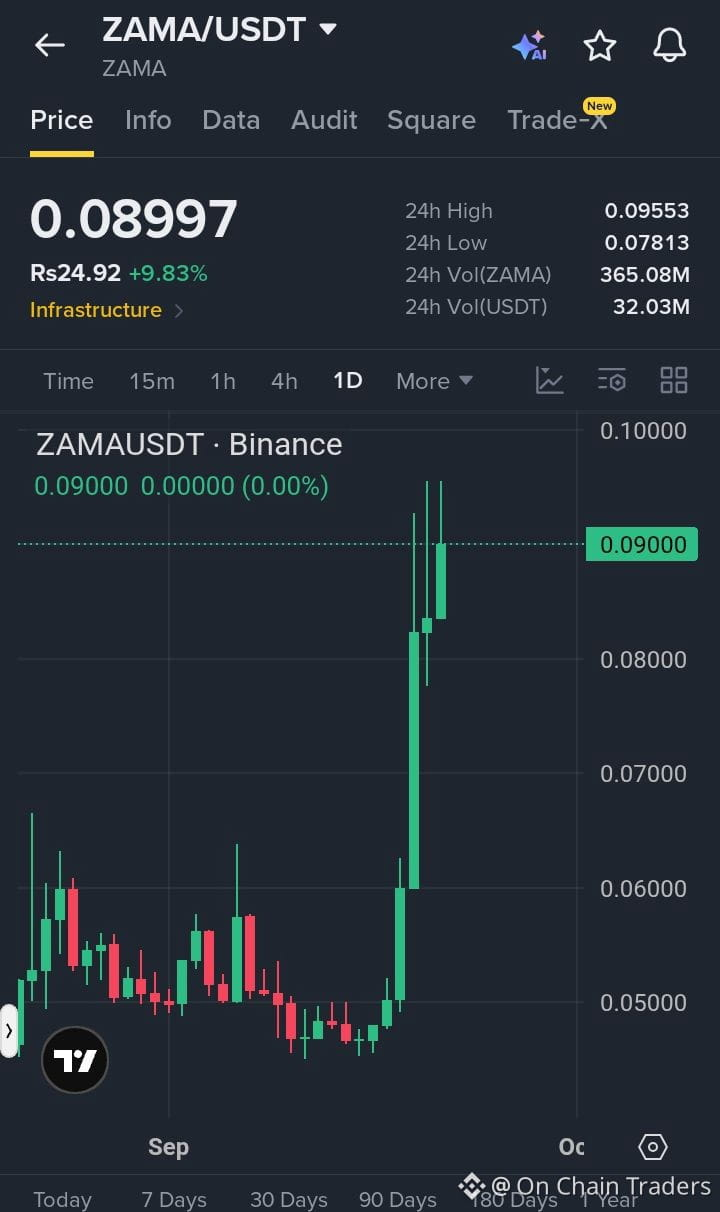
$NVDAB ZAMA is holding strong after a sharp breakout from the $0.078 zone.
Entry: $0.0860–$0.0890
TP1: $0.0955 | TP2: $0.1000 | TP3: $0.1080
SL: $0.0815
Pattern: Higher highs + strong volume = bullish continuation above $0.0900.
#ZeusInCrypto
{spot}(NVDABUSDT)
#BinancePizzaVN #Cryptocurrencies: .
$NVDAB ZAMA is holding strong after a sharp breakout from the $0.078 zone.
Entry: $0.0860–$0.0890
TP1: $0.0955 | TP2: $0.1000 | TP3: $0.1080
SL: $0.0815
Pattern: Higher highs + strong volume = bullish continuation above $0.0900.
#ZeusInCrypto
#BinancePizzaVN #Cryptocurrencies: .
Entry: $0.0860–$0.0890
TP1: $0.0955 | TP2: $0.1000 | TP3: $0.1080
SL: $0.0815
Pattern: Higher highs + strong volume = bullish continuation above $0.0900.
#ZeusInCrypto
#BinancePizzaVN #Cryptocurrencies: .
1
154

$ZEC
{spot}(ZECUSDT)
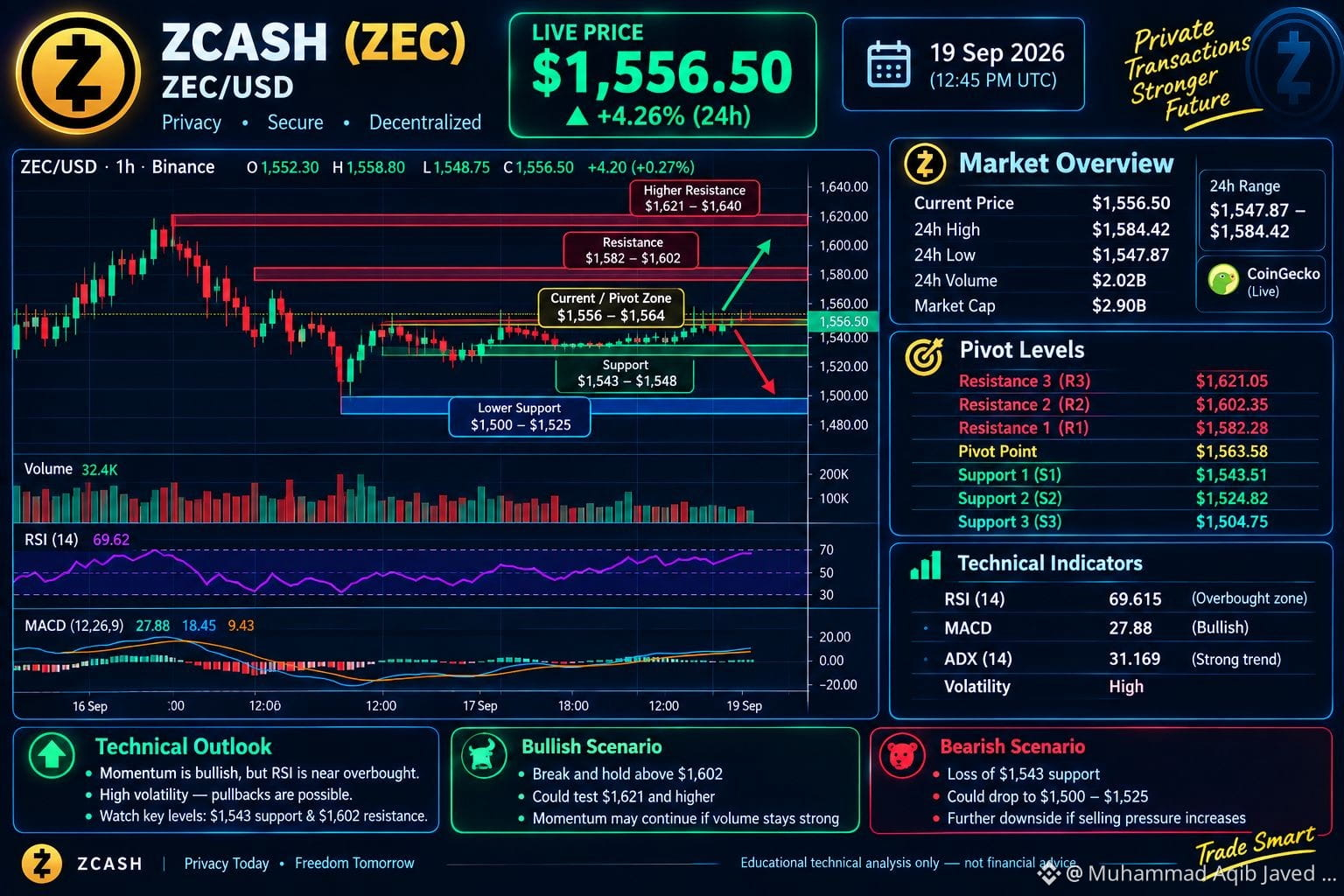
ZEC/USD — LIVE Coin Analysis | 19 Sep 2026
Live price: ~$1,556.50, around +4.26% (24h). �
Investing.com
Trend: Bullish, but highly volatile
Support: $1,543–$1,548
Lower support: $1,500–$1,525
Resistance: $1,582–$1,602
Higher resistance: $1,621–$1,640
RSI: 69.6 — near overbought
MACD: Bullish
Pivot: ~$1,563.6 �
Investing.com India
Bullish scenario: Break and hold above $1,602 → possible test of $1,621–$1,640.
Bearish scenario: Lose $1,543 support → possible pullback toward $1,500–$1,525.
ZEC has recently made a strong move, with the Sep. 18 daily session closing around $1,562 after reaching $1,582.98. �
ca.investing.com
Candle chart is above.
*Technical analysis only — not financial advice.*
#zec #ZECUSDT #ZeusInCrypto #ZeroLend #SECReceivesAmendedInjectiveETFFiling
$ZEC
ZEC/USD — LIVE Coin Analysis | 19 Sep 2026
Live price: ~$1,556.50, around +4.26% (24h). �
Investing.com
Trend: Bullish, but highly volatile
Support: $1,543–$1,548
Lower support: $1,500–$1,525
Resistance: $1,582–$1,602
Higher resistance: $1,621–$1,640
RSI: 69.6 — near overbought
MACD: Bullish
Pivot: ~$1,563.6 �
Investing.com India
Bullish scenario: Break and hold above $1,602 → possible test of $1,621–$1,640.
Bearish scenario: Lose $1,543 support → possible pullback toward $1,500–$1,525.
ZEC has recently made a strong move, with the Sep. 18 daily session closing around $1,562 after reaching $1,582.98. �
ca.investing.com
Candle chart is above.
*Technical analysis only — not financial advice.*
#zec #ZECUSDT #ZeusInCrypto #ZeroLend #SECReceivesAmendedInjectiveETFFiling
ZEC/USD — LIVE Coin Analysis | 19 Sep 2026
Live price: ~$1,556.50, around +4.26% (24h). �
Investing.com
Trend: Bullish, but highly volatile
Support: $1,543–$1,548
Lower support: $1,500–$1,525
Resistance: $1,582–$1,602
Higher resistance: $1,621–$1,640
RSI: 69.6 — near overbought
MACD: Bullish
Pivot: ~$1,563.6 �
Investing.com India
Bullish scenario: Break and hold above $1,602 → possible test of $1,621–$1,640.
Bearish scenario: Lose $1,543 support → possible pullback toward $1,500–$1,525.
ZEC has recently made a strong move, with the Sep. 18 daily session closing around $1,562 after reaching $1,582.98. �
ca.investing.com
Candle chart is above.
*Technical analysis only — not financial advice.*
#zec #ZECUSDT #ZeusInCrypto #ZeroLend #SECReceivesAmendedInjectiveETFFiling
260

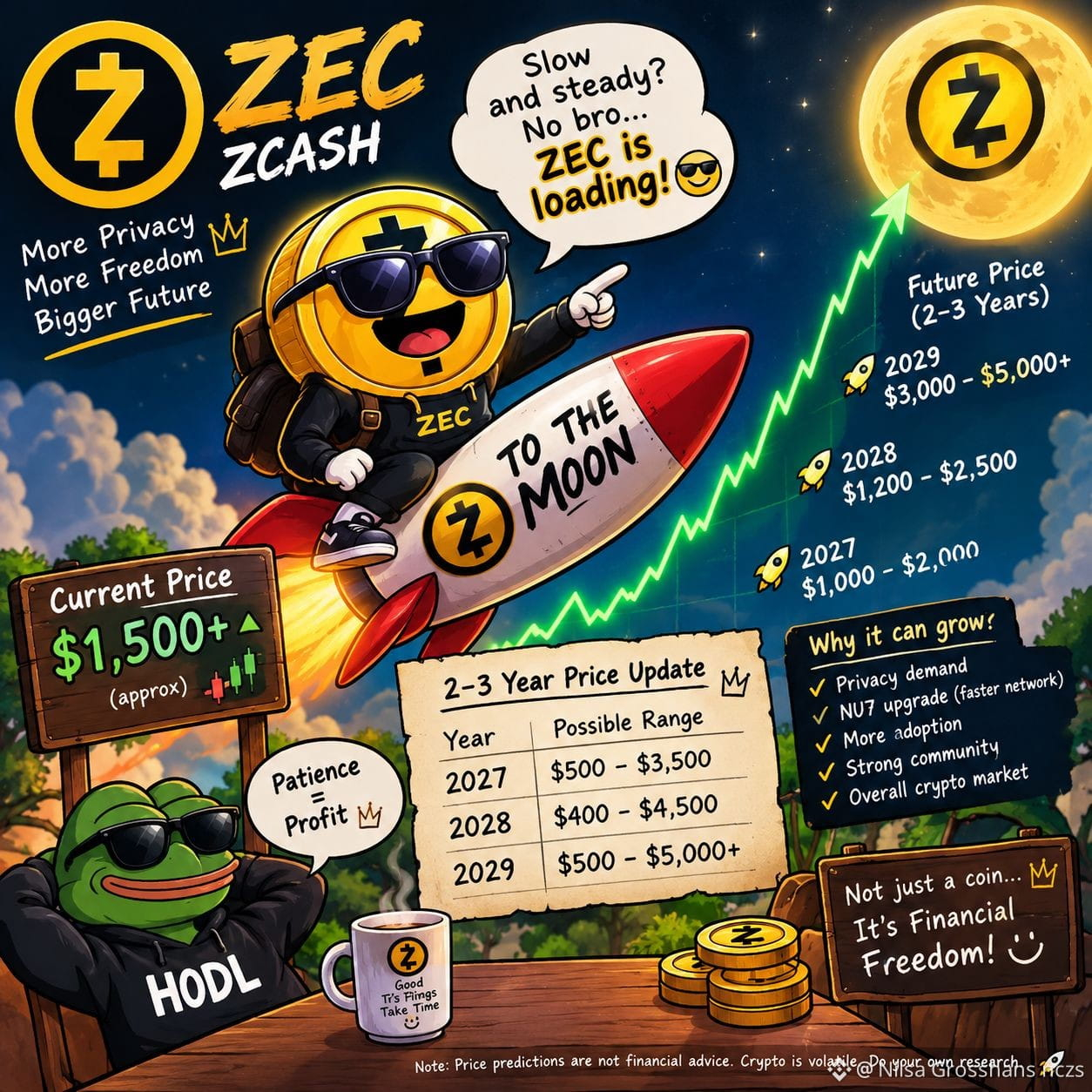
ZEC (Zcash) has been moving very strongly in 2026, so a 2–3 year estimate has very high uncertainty. Recent reporting puts the current price around the mid-$1,500s, while the network is preparing for the NU7 upgrade targeted for November 2026. The upgrade is designed to reduce block time from 75 seconds to 25 seconds. �
CoinDesk +1
Possible 2–3 year price ranges
These are scenario ranges, not predictions or guaranteed targets:
Period
Lower/stress scenario
Middle scenario
Strong-market scenario
2027
$500–$900
$1,000–$2,000
$2,000–$3,500
2028
$400–$1,000
$1,200–$2,500
$2,500–$4,500
2029
$500–$1,200
$1,500–$3,000
$3,000–$5,000+
The biggest factors to watch are privacy-coin regulation, adoption of shielded ZEC, network security, the NU7 upgrade, and overall Bitcoin/crypto-market conditions. Zcash also experienced a significant security-related issue earlier in 2026, followed by the Ironwood upgrade, so technical/security risk remains important. �
#zec
#ZeusInCrypto
#ZECUSDT
ZEC (Zcash) has been moving very strongly in 2026, so a 2–3 year estimate has very high uncertainty. Recent reporting puts the current price around the mid-$1,500s, while the network is preparing for the NU7 upgrade targeted for November 2026. The upgrade is designed to reduce block time from 75 seconds to 25 seconds. �
CoinDesk +1
Possible 2–3 year price ranges
These are scenario ranges, not predictions or guaranteed targets:
Period
Lower/stress scenario
Middle scenario
Strong-market scenario
2027
$500–$900
$1,000–$2,000
$2,000–$3,500
2028
$400–$1,000
$1,200–$2,500
$2,500–$4,500
2029
$500–$1,200
$1,500–$3,000
$3,000–$5,000+
The biggest factors to watch are privacy-coin regulation, adoption of shielded ZEC, network security, the NU7 upgrade, and overall Bitcoin/crypto-market conditions. Zcash also experienced a significant security-related issue earlier in 2026, followed by the Ironwood upgrade, so technical/security risk remains important. �
#zec
#ZeusInCrypto
#ZECUSDT
CoinDesk +1
Possible 2–3 year price ranges
These are scenario ranges, not predictions or guaranteed targets:
Period
Lower/stress scenario
Middle scenario
Strong-market scenario
2027
$500–$900
$1,000–$2,000
$2,000–$3,500
2028
$400–$1,000
$1,200–$2,500
$2,500–$4,500
2029
$500–$1,200
$1,500–$3,000
$3,000–$5,000+
The biggest factors to watch are privacy-coin regulation, adoption of shielded ZEC, network security, the NU7 upgrade, and overall Bitcoin/crypto-market conditions. Zcash also experienced a significant security-related issue earlier in 2026, followed by the Ironwood upgrade, so technical/security risk remains important. �
#zec
#ZeusInCrypto
#ZECUSDT
340

HAMZA BEN TAHAR
·
--
🚨 BITCOIN UPDATE 🚨
Is BTC preparing for another big move? 👀📈
The crypto market is moving fast, and the next opportunity could come when you least expect it. 🔥
🟠 BTC
🔷 ETH
🟡 BNB
🟢 USDT
What do you think — BULLISH 🚀 or BEARISH 📉?
Follow HAMZA BEN TAHAR for more crypto updates. 🔥
#BTC #btc走勢 #USDT🔥🔥🔥 #Geopolitics #HalvingHorizons
Is BTC preparing for another big move? 👀📈
The crypto market is moving fast, and the next opportunity could come when you least expect it. 🔥
🟠 BTC
🔷 ETH
🟡 BNB
🟢 USDT
What do you think — BULLISH 🚀 or BEARISH 📉?
Follow HAMZA BEN TAHAR for more crypto updates. 🔥
#BTC #btc走勢 #USDT🔥🔥🔥 #Geopolitics #HalvingHorizons
16



$LSK
{spot}(LSKUSDT)
*Analysis:*
LSK after moving to Layer 2 on Optimism wakes up again. Broke 0.44$ today - strong signal.
- *Entry:* 0.425$ - 0.43526$
- *TP1:* 0.441$ | *TP2:* 0.455$ | *TP3:* 0.48$
- *SL:* 0.4189$
Breaking 0.44120 = 0.48$ quickly
#ZeusInCrypto #xmucan #VTHO #Write2Earn #BTC $BTC $BNB
$LSK
*Analysis:*
LSK after moving to Layer 2 on Optimism wakes up again. Broke 0.44$ today - strong signal.
- *Entry:* 0.425$ - 0.43526$
- *TP1:* 0.441$ | *TP2:* 0.455$ | *TP3:* 0.48$
- *SL:* 0.4189$
Breaking 0.44120 = 0.48$ quickly
#ZeusInCrypto #xmucan #VTHO #Write2Earn #BTC $BTC $BNB
*Analysis:*
LSK after moving to Layer 2 on Optimism wakes up again. Broke 0.44$ today - strong signal.
- *Entry:* 0.425$ - 0.43526$
- *TP1:* 0.441$ | *TP2:* 0.455$ | *TP3:* 0.48$
- *SL:* 0.4189$
Breaking 0.44120 = 0.48$ quickly
#ZeusInCrypto #xmucan #VTHO #Write2Earn #BTC $BTC $BNB
1
246

·
--
Bullish

100
From FirojBD71
12
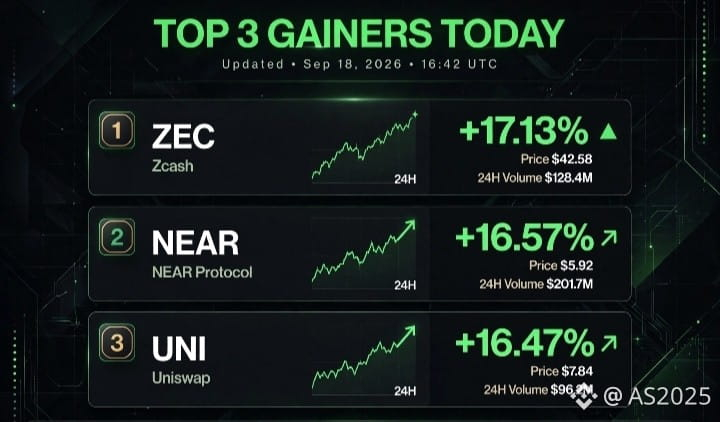
🚀 *The market is healthy all of a sudden.. and 3 beasts are driving the flight*
Today, September 18, total market +3.2% with a clear upward trend—but these stole the spotlight:
*🥇 1- $ZEC
{future}(ZECUSDT)
ZEC - Zcash | +17.13%*
Privacy is back strong. Price $42.58 with volume $128.4M—the highest volume in weeks.
*Why did it fly?* The privacy-coin narrative returned after talk about regulatory crackdowns + whales accumulating. A daily-timeframe reversal model that’s been trapped for months finally broke out.
*Levels:* Support $38.5 - resistance $45, then $52. Staying above 42.58 opens $45.
*🥈 2- $NEAR
{future}(NEARUSDT)
Protocol | +16.57%*
$5.92 with volume $201.7M—the biggest volume in the Top 3, meaning institutional entry.
*Why did it fly?* AI updates across the NEAR ecosystem + rumors of a new partnership + breaking a 4-month downtrend. NEAR has always been a coin that likes to get ahead of the market.
*Levels:* Support $5.40 - resistance $6.20, then $6.85. Breaking 6.20 = takeoff.
*🥉 3- $UNI
{future}(UNIUSDT)
- Uniswap | +16.47%*
The surprise.. the unicorn $7.84 with volume $96.2M.
*Why did it fly?* A proposal to distribute part of protocol fees to UNI holders + a spike in DEX trading volume while fear hits CEX. This news has been delayed for a year—if it’s officially activated, it’s a Game Changer.
*Levels:* Support $7.10 - resistance $8.20. Breaking 8.20 takes us to $9.5.
*🎯 My takeaway as a trader:*
This isn’t random pumping—it’s a rotation of liquidity into strong coins. ZEC for quick trading, NEAR for swing, UNI for medium-term investing if the fee news is confirmed.
*Buying late at these peaks is suicide—wait for a retest. Which one do you think will keep going tomorrow?* 👇*
#بيتكوين #ZeusInCrypto #كر #UNI
🚀 *The market is healthy all of a sudden.. and 3 beasts are driving the flight*
Today, September 18, total market +3.2% with a clear upward trend—but these stole the spotlight:
*🥇 1- $ZEC
ZEC - Zcash | +17.13%*
Privacy is back strong. Price $42.58 with volume $128.4M—the highest volume in weeks.
*Why did it fly?* The privacy-coin narrative returned after talk about regulatory crackdowns + whales accumulating. A daily-timeframe reversal model that’s been trapped for months finally broke out.
*Levels:* Support $38.5 - resistance $45, then $52. Staying above 42.58 opens $45.
*🥈 2- $NEAR
Protocol | +16.57%*
$5.92 with volume $201.7M—the biggest volume in the Top 3, meaning institutional entry.
*Why did it fly?* AI updates across the NEAR ecosystem + rumors of a new partnership + breaking a 4-month downtrend. NEAR has always been a coin that likes to get ahead of the market.
*Levels:* Support $5.40 - resistance $6.20, then $6.85. Breaking 6.20 = takeoff.
*🥉 3- $UNI
- Uniswap | +16.47%*
The surprise.. the unicorn $7.84 with volume $96.2M.
*Why did it fly?* A proposal to distribute part of protocol fees to UNI holders + a spike in DEX trading volume while fear hits CEX. This news has been delayed for a year—if it’s officially activated, it’s a Game Changer.
*Levels:* Support $7.10 - resistance $8.20. Breaking 8.20 takes us to $9.5.
*🎯 My takeaway as a trader:*
This isn’t random pumping—it’s a rotation of liquidity into strong coins. ZEC for quick trading, NEAR for swing, UNI for medium-term investing if the fee news is confirmed.
*Buying late at these peaks is suicide—wait for a retest. Which one do you think will keep going tomorrow?* 👇*
#بيتكوين #ZeusInCrypto #كر #UNI
Today, September 18, total market +3.2% with a clear upward trend—but these stole the spotlight:
*🥇 1- $ZEC
ZEC - Zcash | +17.13%*
Privacy is back strong. Price $42.58 with volume $128.4M—the highest volume in weeks.
*Why did it fly?* The privacy-coin narrative returned after talk about regulatory crackdowns + whales accumulating. A daily-timeframe reversal model that’s been trapped for months finally broke out.
*Levels:* Support $38.5 - resistance $45, then $52. Staying above 42.58 opens $45.
*🥈 2- $NEAR
Protocol | +16.57%*
$5.92 with volume $201.7M—the biggest volume in the Top 3, meaning institutional entry.
*Why did it fly?* AI updates across the NEAR ecosystem + rumors of a new partnership + breaking a 4-month downtrend. NEAR has always been a coin that likes to get ahead of the market.
*Levels:* Support $5.40 - resistance $6.20, then $6.85. Breaking 6.20 = takeoff.
*🥉 3- $UNI
- Uniswap | +16.47%*
The surprise.. the unicorn $7.84 with volume $96.2M.
*Why did it fly?* A proposal to distribute part of protocol fees to UNI holders + a spike in DEX trading volume while fear hits CEX. This news has been delayed for a year—if it’s officially activated, it’s a Game Changer.
*Levels:* Support $7.10 - resistance $8.20. Breaking 8.20 takes us to $9.5.
*🎯 My takeaway as a trader:*
This isn’t random pumping—it’s a rotation of liquidity into strong coins. ZEC for quick trading, NEAR for swing, UNI for medium-term investing if the fee news is confirmed.
*Buying late at these peaks is suicide—wait for a retest. Which one do you think will keep going tomorrow?* 👇*
#بيتكوين #ZeusInCrypto #كر #UNI
1
79

BREAKING: TRUMP CALLS FOR 1% RATES AFTER FED HIKE 🚨🚨 BREAKING: TRUMP CALLS FOR 1% RATES AFTER FED HIKE 🚨
U.S. President Donald Trump has sharply criticized the latest Federal Reserve rate decision, calling for U.S. interest rates to fall to **1% or lower**.
The comments came just hours after the Fed unanimously raised its benchmark rate by **25 basis points to 3.75%–4.00%**—the first hike since 2023.
Trump said U.S. rates should be **“1%, or less”**, arguing that the country has the strongest credit in the world.
He also described the Fed board as **“very hostile”** and **“very political,”** while saying he still has confidence in Fed Chair Kevin Warsh.
Meanwhile, Warsh defended the hike, saying inflation remains too high and has persisted for too long. Fed projections also indicated that many policymakers see at least one more hike this year.
📊 WHY THIS MATTERS FOR CRYPTO:
Higher rates can tighten financial conditions and affect liquidity across risk assets, while expectations of future rate cuts can have the opposite effect.
So the big question for crypto traders is:
🔥 Will the Trump–Fed rate conflict create more volatility in BTC and altcoins?
👀 Watch liquidity, Fed signals and the next inflation data closely.
$ONE $LSK K $ZEC
#crypto #bitcoin oin #ALT coins #Fed #InterestRates #Trump #ONE #BitcoinSurpasses$77000 LSK #ZeusInCrypto C #BinanceSquare
BREAKING: TRUMP CALLS FOR 1% RATES AFTER FED HIKE 🚨
🚨 BREAKING: TRUMP CALLS FOR 1% RATES AFTER FED HIKE 🚨
U.S. President Donald Trump has sharply criticized the latest Federal Reserve rate decision, calling for U.S. interest rates to fall to **1% or lower**.
The comments came just hours after the Fed unanimously raised its benchmark rate by **25 basis points to 3.75%–4.00%**—the first hike since 2023.
Trump said U.S. rates should be **“1%, or less”**, arguing that the country has the strongest credit in the world.
He also described the Fed board as **“very hostile”** and **“very political,”** while saying he still has confidence in Fed Chair Kevin Warsh.
Meanwhile, Warsh defended the hike, saying inflation remains too high and has persisted for too long. Fed projections also indicated that many policymakers see at least one more hike this year.
📊 WHY THIS MATTERS FOR CRYPTO:
Higher rates can tighten financial conditions and affect liquidity across risk assets, while expectations of future rate cuts can have the opposite effect.
So the big question for crypto traders is:
🔥 Will the Trump–Fed rate conflict create more volatility in BTC and altcoins?
👀 Watch liquidity, Fed signals and the next inflation data closely.
$ONE $LSK K $ZEC
#crypto #bitcoin oin #ALT coins #Fed #InterestRates #Trump #ONE #BitcoinSurpasses$77000 LSK #ZeusInCrypto C #BinanceSquare
U.S. President Donald Trump has sharply criticized the latest Federal Reserve rate decision, calling for U.S. interest rates to fall to **1% or lower**.
The comments came just hours after the Fed unanimously raised its benchmark rate by **25 basis points to 3.75%–4.00%**—the first hike since 2023.
Trump said U.S. rates should be **“1%, or less”**, arguing that the country has the strongest credit in the world.
He also described the Fed board as **“very hostile”** and **“very political,”** while saying he still has confidence in Fed Chair Kevin Warsh.
Meanwhile, Warsh defended the hike, saying inflation remains too high and has persisted for too long. Fed projections also indicated that many policymakers see at least one more hike this year.
📊 WHY THIS MATTERS FOR CRYPTO:
Higher rates can tighten financial conditions and affect liquidity across risk assets, while expectations of future rate cuts can have the opposite effect.
So the big question for crypto traders is:
🔥 Will the Trump–Fed rate conflict create more volatility in BTC and altcoins?
👀 Watch liquidity, Fed signals and the next inflation data closely.
$ONE $LSK K $ZEC
#crypto #bitcoin oin #ALT coins #Fed #InterestRates #Trump #ONE #BitcoinSurpasses$77000 LSK #ZeusInCrypto C #BinanceSquare
1
72

·
--
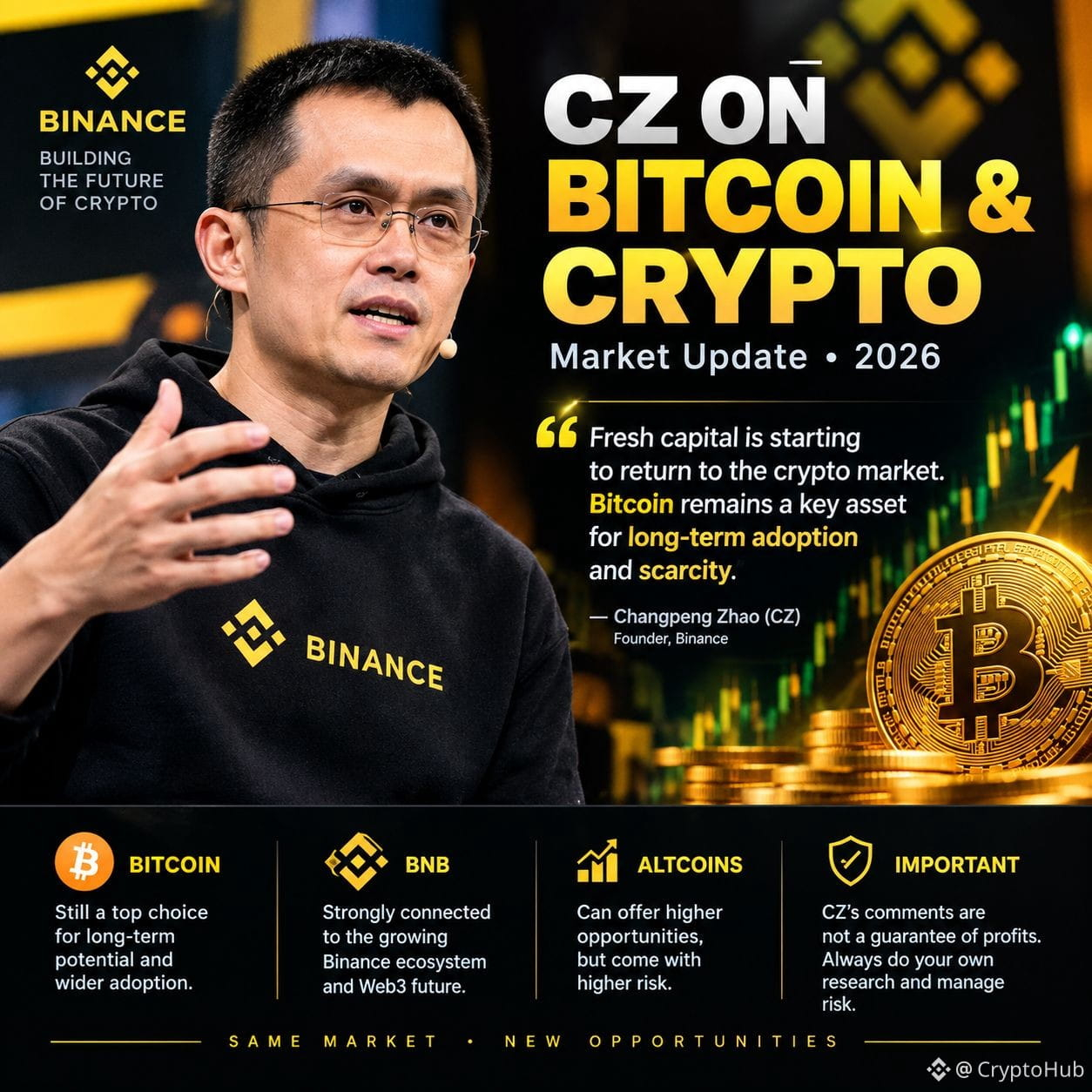
$ZEC 🚀 Binance founder CZ says fresh capital is starting to return to the crypto market, putting Bitcoin and major assets back in focus.
₿ Bitcoin remains one of the key coins CZ has highlighted for long-term crypto adoption and scarcity.
🔥 BNB also remains closely connected to the growing Binance ecosystem, while other altcoins can offer higher potential—but with higher risk.
📈 CZ’s comments may attract attention, but they are not a guarantee that any particular coin will generate profits.
⚠️ Crypto prices can move sharply, so always research the project and risk before investing.$AAPLB $BITO #ParadigmDisclosesZECHolding #USWeeklyJoblessClaimsFallTo196K #ParadigmDisclosesZECHolding #ZeusInCrypto
$ZEC 🚀 Binance founder CZ says fresh capital is starting to return to the crypto market, putting Bitcoin and major assets back in focus.
₿ Bitcoin remains one of the key coins CZ has highlighted for long-term crypto adoption and scarcity.
🔥 BNB also remains closely connected to the growing Binance ecosystem, while other altcoins can offer higher potential—but with higher risk.
📈 CZ’s comments may attract attention, but they are not a guarantee that any particular coin will generate profits.
⚠️ Crypto prices can move sharply, so always research the project and risk before investing.$AAPLB $BITO #ParadigmDisclosesZECHolding #USWeeklyJoblessClaimsFallTo196K #ParadigmDisclosesZECHolding #ZeusInCrypto
₿ Bitcoin remains one of the key coins CZ has highlighted for long-term crypto adoption and scarcity.
🔥 BNB also remains closely connected to the growing Binance ecosystem, while other altcoins can offer higher potential—but with higher risk.
📈 CZ’s comments may attract attention, but they are not a guarantee that any particular coin will generate profits.
⚠️ Crypto prices can move sharply, so always research the project and risk before investing.$AAPLB $BITO #ParadigmDisclosesZECHolding #USWeeklyJoblessClaimsFallTo196K #ParadigmDisclosesZECHolding #ZeusInCrypto
1
237

$ZEC
{spot}(ZECUSDT)
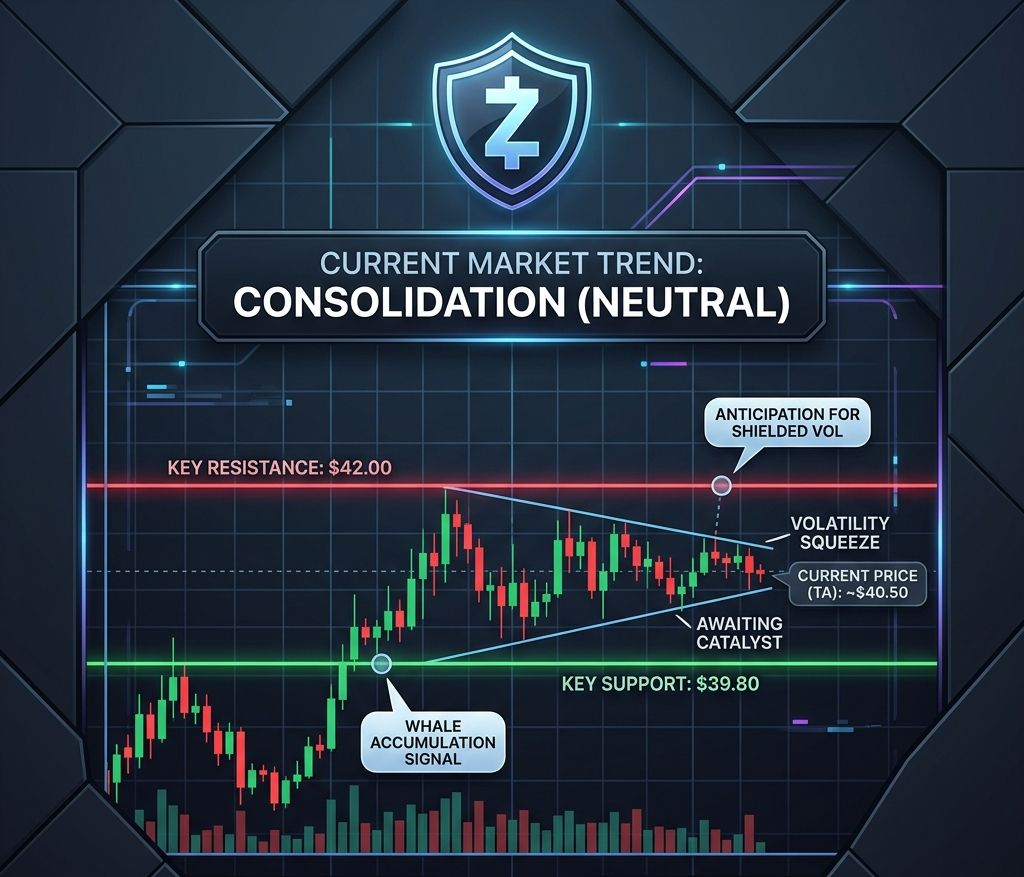
📊 ZCASH (ZEC) TECHNICAL ANALYSIS & MARKET STRUCTURE
Here is a technical analysis break-down of the current market structure and key price levels for Zcash ($ZEC):
Current Price: $40.20 – $40.50
Trend: Neutral / Tight Consolidation Range
Key Support: $39.80
Key Resistance: $42.00
Market Drivers & On-Chain Dynamics
Privacy Token Sector Pressure: $ZEC continues to consolidate within a narrow range as privacy-focused crypto assets face mixed global regulatory signals and shifting institutional focus.
Volume Squeeze: Daily trading volume has compressed significantly between the $39.80 support floor and $42.00 overhead resistance, signaling an impending volatility squeeze and breakout opportunity.
On-Chain Shielded Volume: On-chain data indicates steady growth in shielded transactions and pool accumulation, reflecting underlying holding conviction despite range-bound price action.#zec #ZeusInCrypto #ElSalvadorBTCHoldingsRiseTo7777 #MemeLaunchpads82%OfArcDayOneVolume $ZEC
$ZEC
📊 ZCASH (ZEC) TECHNICAL ANALYSIS & MARKET STRUCTURE
Here is a technical analysis break-down of the current market structure and key price levels for Zcash ($ZEC ):
Current Price: $40.20 – $40.50
Trend: Neutral / Tight Consolidation Range
Key Support: $39.80
Key Resistance: $42.00
Market Drivers & On-Chain Dynamics
Privacy Token Sector Pressure: $ZEC continues to consolidate within a narrow range as privacy-focused crypto assets face mixed global regulatory signals and shifting institutional focus.
Volume Squeeze: Daily trading volume has compressed significantly between the $39.80 support floor and $42.00 overhead resistance, signaling an impending volatility squeeze and breakout opportunity.
On-Chain Shielded Volume: On-chain data indicates steady growth in shielded transactions and pool accumulation, reflecting underlying holding conviction despite range-bound price action.#zec #ZeusInCrypto #ElSalvadorBTCHoldingsRiseTo7777 #MemeLaunchpads82%OfArcDayOneVolume $ZEC
📊 ZCASH (ZEC) TECHNICAL ANALYSIS & MARKET STRUCTURE
Here is a technical analysis break-down of the current market structure and key price levels for Zcash ($ZEC ):
Current Price: $40.20 – $40.50
Trend: Neutral / Tight Consolidation Range
Key Support: $39.80
Key Resistance: $42.00
Market Drivers & On-Chain Dynamics
Privacy Token Sector Pressure: $ZEC continues to consolidate within a narrow range as privacy-focused crypto assets face mixed global regulatory signals and shifting institutional focus.
Volume Squeeze: Daily trading volume has compressed significantly between the $39.80 support floor and $42.00 overhead resistance, signaling an impending volatility squeeze and breakout opportunity.
On-Chain Shielded Volume: On-chain data indicates steady growth in shielded transactions and pool accumulation, reflecting underlying holding conviction despite range-bound price action.#zec #ZeusInCrypto #ElSalvadorBTCHoldingsRiseTo7777 #MemeLaunchpads82%OfArcDayOneVolume $ZEC
85
Log in to explore more content
Join global crypto users on Binance Square
⚡️ Get latest and useful information about crypto.
💬 Trusted by the world’s largest crypto exchange.
👍 Discover real insights from verified creators.
Email / Phone number
Trending Topics
1
#CircleTetherFreezeBitgetHackerWallet
17,697 views
180 Discussing
2
#SECSaysTokenBuybacksNotAutoSecurities
1,310 views
67 Discussing
3
#ChinaUSAgreeOn$30BTariffCut
140 views
3 Discussing
4
#CoinMarketCapCompletesCoinglassAcquisition
21,706 views
228 Discussing
5
#CircleMints500MUSDCOnSolana
154,408 views
2,713 Discussing
6
#PolymarketBankFailureBetsDrawFDICConcern
136,762 views
2,191 Discussing
7
#BlackRockBuildsTokenizedPortfoliosForOndo
130,897 views
1,581 Discussing
8
#BitwiseFilesToListNEARETFOnNYSEArca
90,789 views
1,242 Discussing
9
#SECSaysBuybacksUpgradesDontMakeTokenSecurity
73,458 views
719 Discussing
10
#StrategyProposesDailyDividendsForPreferreds
20,615 views
263 Discussing