

#bstocks
bstocks
1.1M views
4,855 Discussing
Hot
Latest

·
--
Article
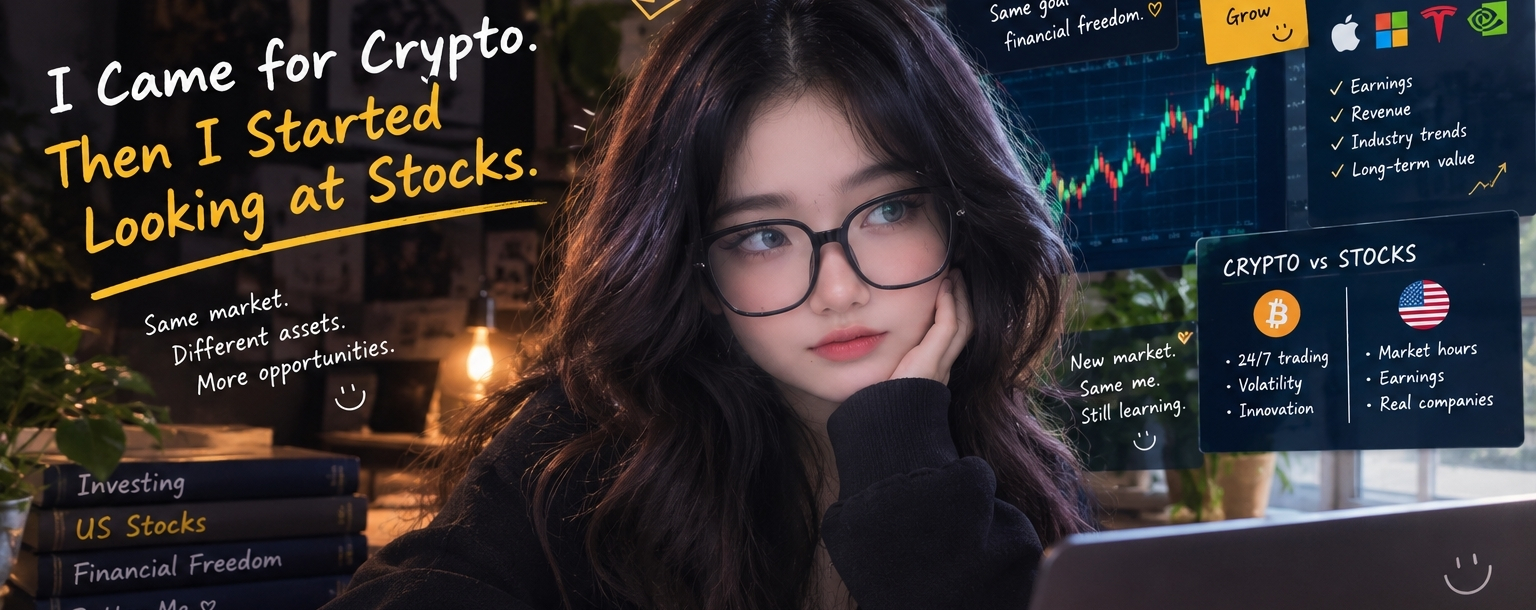
I Came for Crypto. Then I Started Looking at Stocks. 📈I Came for Crypto. Then I Started Looking at Stocks.
When I first got into crypto, I thought I already understood investing.
Charts going up.
Charts going down.
Green candles. Red candles.
Buy the dip. Don’t FOMO.
Then I started paying attention to the stock market.
And honestly, I realized something:
Stocks and crypto may look completely different, but the biggest challenge is still the same — knowing what you’re actually buying.
That’s what made me interested in Stocks and BStocks on Binance.
If you’re a crypto user who has never seriously looked at US stocks before, this might be a good time to start learning.
Not necessarily to rush into buying anything.
Just to understand another side of the market.
So, what exactly is a Stock?
In simple terms, when you buy a company’s stock, you’re buying a share of that business.
Think about companies you already use or hear about every day — technology companies, car companies, semiconductor companies, banks, retailers, and so on.
Their stock prices can move based on many things:
Company earnings.
Revenue growth.
New products.
Competition.
Interest rates.
Economic conditions.
Market expectations.
And, of course, investor sentiment.
This is one thing I find interesting about stocks.
You’re not just looking at a chart.
Sometimes, you’re looking at an actual business and asking:
“Is this company really worth what the market says it is?”
That question can lead you down a much deeper rabbit hole.
But isn’t crypto enough?
Maybe.
It depends on what you’re trying to learn and what kind of exposure you want.
Crypto and stocks are different asset classes, and neither one is automatically “better.”
Crypto markets operate differently from traditional stock markets. Crypto can trade 24/7, while traditional US stock markets operate during defined market hours.
The reasons prices move can also be very different.
For crypto, you might pay attention to network activity, adoption, token supply, regulations, ecosystem developments and market sentiment.
For stocks, you might spend more time looking at earnings, revenue, profit, debt, valuation and the company’s future growth.
So if you already understand crypto, learning stocks can actually give you a different perspective on markets.
And you may start noticing something interesting:
Market psychology is everywhere.
FOMO exists in stocks.
Panic selling exists in stocks.
Overconfidence exists in stocks.
People chasing something just because it has already gone up?
Yep. That happens too.
If you’re new to US Stocks, start here
Don’t start with:
“Which stock will make me rich?”
Start with:
“What am I actually looking at?”
Here’s the checklist I would use.
1. Understand the company
Before looking at the price, understand the business.
What does the company sell?
How does it make money?
Who are its competitors?
Is its industry growing or shrinking?
You don’t need to become a Wall Street analyst overnight. You just need to understand what you’re putting your money into.
2. Look beyond the price chart
A stock going up doesn’t automatically mean the company is becoming a better investment.
And a stock going down doesn’t automatically mean it’s a bargain.
Try to understand what is happening behind the chart.
Read company updates. Look at financial results. Follow important news.
The more context you have, the less likely you are to make decisions based purely on a green candle.
3. Learn the basic numbers
Revenue.
Profit.
Debt.
Earnings.
Valuation.
You don’t need to memorize every financial ratio on day one.
Start with the basics and slowly build your knowledge.
4. Don’t confuse hype with research
This is probably one of the biggest lessons for anyone coming from crypto.
When everyone is talking about the same asset, it can feel like you’re missing out if you don’t buy.
But popularity isn’t research.
A viral post isn’t a financial statement.
And someone saying “this is going to 10x” isn’t a guarantee.
Do your own research before making a decision.
5. Know your risk
This part is boring until it suddenly becomes very important.
Stocks can go down.
Sometimes they can go down much faster than expected.
So before thinking about potential returns, think about how much risk you’re actually comfortable taking.
Never invest money you can’t afford to lose, and don’t assume that past performance guarantees future results.
Why BStocks caught my attention
For someone already spending time on Binance, the idea of being able to learn more about Stocks alongside crypto is interesting.
It creates an opportunity to look at markets from another angle instead of putting everything into one category.
And personally, I think that’s the more interesting part.
You don’t have to choose an identity.
You don’t have to be “a crypto person” or “a stock person.”
You can simply be someone who wants to understand financial markets better.
The more you learn, the more questions you start asking.
Why did this stock move today?
Why did earnings matter?
Why are interest rates affecting technology companies?
Why does one company have a much higher valuation than another?
Those questions are where the real learning starts.
One last thought
If you’re a crypto user who has never explored US Stocks, don’t feel like you need to understand everything before you begin.
Start small.
Pick one company you already know.
Learn what the business does.
Read its latest results.
Watch how its stock reacts to major news.
Compare what you expected with what actually happened.
Do that repeatedly and eventually the stock market starts to make a lot more sense.
For me, the biggest takeaway is simple:
The goal isn’t to chase every opportunity. The goal is to understand the opportunities you’re looking at.
Crypto introduced many of us to a completely new way of thinking about money and markets.
Stocks can introduce us to another one.
And with platforms like Binance continuing to bring different parts of the financial world closer together, there’s never been a better reason to keep learning.
Research first. Understand the risk. Make your own decision.
That’s a much better starting point than simply asking, “What should I buy?” 🚀
@BinanceBurmese
#SEABstock #BStocks #Investing #stockmarket
I Came for Crypto. Then I Started Looking at Stocks. 📈
I Came for Crypto. Then I Started Looking at Stocks.
When I first got into crypto, I thought I already understood investing.
Charts going up.
Charts going down.
Green candles. Red candles.
Buy the dip. Don’t FOMO.
Then I started paying attention to the stock market.
And honestly, I realized something:
Stocks and crypto may look completely different, but the biggest challenge is still the same — knowing what you’re actually buying.
That’s what made me interested in Stocks and BStocks on Binance.
If you’re a crypto user who has never seriously looked at US stocks before, this might be a good time to start learning.
Not necessarily to rush into buying anything.
Just to understand another side of the market.
So, what exactly is a Stock?
In simple terms, when you buy a company’s stock, you’re buying a share of that business.
Think about companies you already use or hear about every day — technology companies, car companies, semiconductor companies, banks, retailers, and so on.
Their stock prices can move based on many things:
Company earnings.
Revenue growth.
New products.
Competition.
Interest rates.
Economic conditions.
Market expectations.
And, of course, investor sentiment.
This is one thing I find interesting about stocks.
You’re not just looking at a chart.
Sometimes, you’re looking at an actual business and asking:
“Is this company really worth what the market says it is?”
That question can lead you down a much deeper rabbit hole.
But isn’t crypto enough?
Maybe.
It depends on what you’re trying to learn and what kind of exposure you want.
Crypto and stocks are different asset classes, and neither one is automatically “better.”
Crypto markets operate differently from traditional stock markets. Crypto can trade 24/7, while traditional US stock markets operate during defined market hours.
The reasons prices move can also be very different.
For crypto, you might pay attention to network activity, adoption, token supply, regulations, ecosystem developments and market sentiment.
For stocks, you might spend more time looking at earnings, revenue, profit, debt, valuation and the company’s future growth.
So if you already understand crypto, learning stocks can actually give you a different perspective on markets.
And you may start noticing something interesting:
Market psychology is everywhere.
FOMO exists in stocks.
Panic selling exists in stocks.
Overconfidence exists in stocks.
People chasing something just because it has already gone up?
Yep. That happens too.
If you’re new to US Stocks, start here
Don’t start with:
“Which stock will make me rich?”
Start with:
“What am I actually looking at?”
Here’s the checklist I would use.
1. Understand the company
Before looking at the price, understand the business.
What does the company sell?
How does it make money?
Who are its competitors?
Is its industry growing or shrinking?
You don’t need to become a Wall Street analyst overnight. You just need to understand what you’re putting your money into.
2. Look beyond the price chart
A stock going up doesn’t automatically mean the company is becoming a better investment.
And a stock going down doesn’t automatically mean it’s a bargain.
Try to understand what is happening behind the chart.
Read company updates. Look at financial results. Follow important news.
The more context you have, the less likely you are to make decisions based purely on a green candle.
3. Learn the basic numbers
Revenue.
Profit.
Debt.
Earnings.
Valuation.
You don’t need to memorize every financial ratio on day one.
Start with the basics and slowly build your knowledge.
4. Don’t confuse hype with research
This is probably one of the biggest lessons for anyone coming from crypto.
When everyone is talking about the same asset, it can feel like you’re missing out if you don’t buy.
But popularity isn’t research.
A viral post isn’t a financial statement.
And someone saying “this is going to 10x” isn’t a guarantee.
Do your own research before making a decision.
5. Know your risk
This part is boring until it suddenly becomes very important.
Stocks can go down.
Sometimes they can go down much faster than expected.
So before thinking about potential returns, think about how much risk you’re actually comfortable taking.
Never invest money you can’t afford to lose, and don’t assume that past performance guarantees future results.
Why BStocks caught my attention
For someone already spending time on Binance, the idea of being able to learn more about Stocks alongside crypto is interesting.
It creates an opportunity to look at markets from another angle instead of putting everything into one category.
And personally, I think that’s the more interesting part.
You don’t have to choose an identity.
You don’t have to be “a crypto person” or “a stock person.”
You can simply be someone who wants to understand financial markets better.
The more you learn, the more questions you start asking.
Why did this stock move today?
Why did earnings matter?
Why are interest rates affecting technology companies?
Why does one company have a much higher valuation than another?
Those questions are where the real learning starts.
One last thought
If you’re a crypto user who has never explored US Stocks, don’t feel like you need to understand everything before you begin.
Start small.
Pick one company you already know.
Learn what the business does.
Read its latest results.
Watch how its stock reacts to major news.
Compare what you expected with what actually happened.
Do that repeatedly and eventually the stock market starts to make a lot more sense.
For me, the biggest takeaway is simple:
The goal isn’t to chase every opportunity. The goal is to understand the opportunities you’re looking at.
Crypto introduced many of us to a completely new way of thinking about money and markets.
Stocks can introduce us to another one.
And with platforms like Binance continuing to bring different parts of the financial world closer together, there’s never been a better reason to keep learning.
Research first. Understand the risk. Make your own decision.
That’s a much better starting point than simply asking, “What should I buy?” 🚀
@Binance Burmese
#SEABstock #BStocks #Investing #stockmarket
When I first got into crypto, I thought I already understood investing.
Charts going up.
Charts going down.
Green candles. Red candles.
Buy the dip. Don’t FOMO.
Then I started paying attention to the stock market.
And honestly, I realized something:
Stocks and crypto may look completely different, but the biggest challenge is still the same — knowing what you’re actually buying.
That’s what made me interested in Stocks and BStocks on Binance.
If you’re a crypto user who has never seriously looked at US stocks before, this might be a good time to start learning.
Not necessarily to rush into buying anything.
Just to understand another side of the market.
So, what exactly is a Stock?
In simple terms, when you buy a company’s stock, you’re buying a share of that business.
Think about companies you already use or hear about every day — technology companies, car companies, semiconductor companies, banks, retailers, and so on.
Their stock prices can move based on many things:
Company earnings.
Revenue growth.
New products.
Competition.
Interest rates.
Economic conditions.
Market expectations.
And, of course, investor sentiment.
This is one thing I find interesting about stocks.
You’re not just looking at a chart.
Sometimes, you’re looking at an actual business and asking:
“Is this company really worth what the market says it is?”
That question can lead you down a much deeper rabbit hole.
But isn’t crypto enough?
Maybe.
It depends on what you’re trying to learn and what kind of exposure you want.
Crypto and stocks are different asset classes, and neither one is automatically “better.”
Crypto markets operate differently from traditional stock markets. Crypto can trade 24/7, while traditional US stock markets operate during defined market hours.
The reasons prices move can also be very different.
For crypto, you might pay attention to network activity, adoption, token supply, regulations, ecosystem developments and market sentiment.
For stocks, you might spend more time looking at earnings, revenue, profit, debt, valuation and the company’s future growth.
So if you already understand crypto, learning stocks can actually give you a different perspective on markets.
And you may start noticing something interesting:
Market psychology is everywhere.
FOMO exists in stocks.
Panic selling exists in stocks.
Overconfidence exists in stocks.
People chasing something just because it has already gone up?
Yep. That happens too.
If you’re new to US Stocks, start here
Don’t start with:
“Which stock will make me rich?”
Start with:
“What am I actually looking at?”
Here’s the checklist I would use.
1. Understand the company
Before looking at the price, understand the business.
What does the company sell?
How does it make money?
Who are its competitors?
Is its industry growing or shrinking?
You don’t need to become a Wall Street analyst overnight. You just need to understand what you’re putting your money into.
2. Look beyond the price chart
A stock going up doesn’t automatically mean the company is becoming a better investment.
And a stock going down doesn’t automatically mean it’s a bargain.
Try to understand what is happening behind the chart.
Read company updates. Look at financial results. Follow important news.
The more context you have, the less likely you are to make decisions based purely on a green candle.
3. Learn the basic numbers
Revenue.
Profit.
Debt.
Earnings.
Valuation.
You don’t need to memorize every financial ratio on day one.
Start with the basics and slowly build your knowledge.
4. Don’t confuse hype with research
This is probably one of the biggest lessons for anyone coming from crypto.
When everyone is talking about the same asset, it can feel like you’re missing out if you don’t buy.
But popularity isn’t research.
A viral post isn’t a financial statement.
And someone saying “this is going to 10x” isn’t a guarantee.
Do your own research before making a decision.
5. Know your risk
This part is boring until it suddenly becomes very important.
Stocks can go down.
Sometimes they can go down much faster than expected.
So before thinking about potential returns, think about how much risk you’re actually comfortable taking.
Never invest money you can’t afford to lose, and don’t assume that past performance guarantees future results.
Why BStocks caught my attention
For someone already spending time on Binance, the idea of being able to learn more about Stocks alongside crypto is interesting.
It creates an opportunity to look at markets from another angle instead of putting everything into one category.
And personally, I think that’s the more interesting part.
You don’t have to choose an identity.
You don’t have to be “a crypto person” or “a stock person.”
You can simply be someone who wants to understand financial markets better.
The more you learn, the more questions you start asking.
Why did this stock move today?
Why did earnings matter?
Why are interest rates affecting technology companies?
Why does one company have a much higher valuation than another?
Those questions are where the real learning starts.
One last thought
If you’re a crypto user who has never explored US Stocks, don’t feel like you need to understand everything before you begin.
Start small.
Pick one company you already know.
Learn what the business does.
Read its latest results.
Watch how its stock reacts to major news.
Compare what you expected with what actually happened.
Do that repeatedly and eventually the stock market starts to make a lot more sense.
For me, the biggest takeaway is simple:
The goal isn’t to chase every opportunity. The goal is to understand the opportunities you’re looking at.
Crypto introduced many of us to a completely new way of thinking about money and markets.
Stocks can introduce us to another one.
And with platforms like Binance continuing to bring different parts of the financial world closer together, there’s never been a better reason to keep learning.
Research first. Understand the risk. Make your own decision.
That’s a much better starting point than simply asking, “What should I buy?” 🚀
@Binance Burmese
#SEABstock #BStocks #Investing #stockmarket
Htet Htet Lay:
💯💯👏
4
4
5
224

·
--
cksHow Are Stocks Different from Crypto?
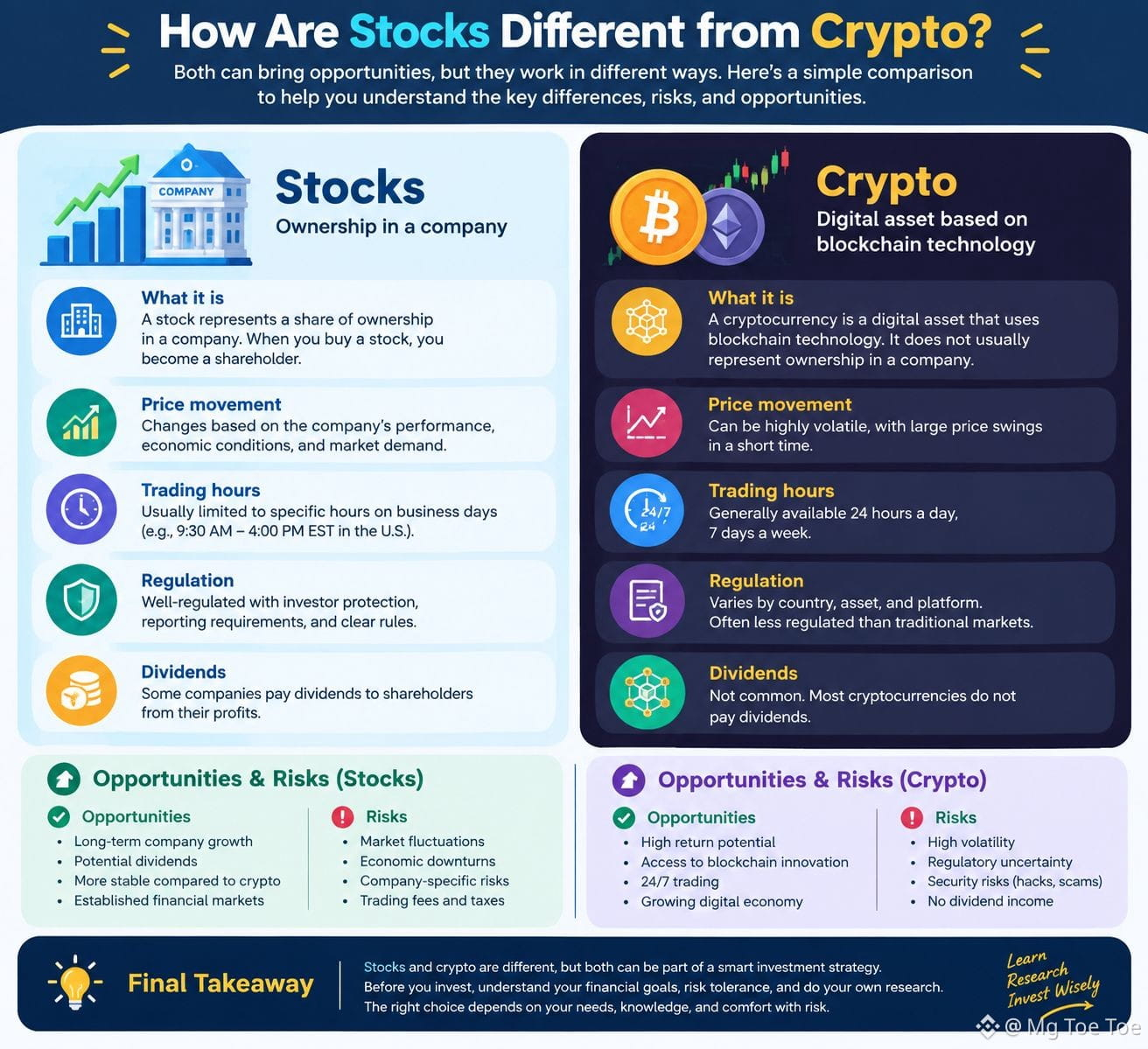
Stocks and cryptocurrencies are both popular investment options, but they work differently.
Stocks represent ownership in a company. When you buy shares, you become a shareholder. Stock prices can rise or fall depending on the company’s performance, economic conditions, and market demand. Some companies also pay dividends. Stock markets usually operate during specific trading hours and are regulated by financial authorities.
Cryptocurrency, such as Bitcoin and Ethereum, is a digital asset based on blockchain technology. Crypto does not usually represent ownership of a company. Its prices can change very quickly, making it more volatile than many traditional investments. Crypto markets are generally available 24 hours a day, seven days a week.
There are also differences in regulation. Stock markets generally have established rules and investor protections, while cryptocurrency regulations can vary depending on the country, asset, and platform.
Both stocks and crypto offer opportunities and risks. Stocks can provide long-term growth and, in some cases, dividend income. Crypto provides access to digital assets and blockchain technology but can involve higher price volatility and other risks.
Before investing, beginners should understand how each asset works, consider their financial goals and risk tolerance, and do their own research. Neither stocks nor crypto guarantees a profit, so investing without understanding the risks can lead to financial losses.
In conclusion, stocks are mainly connected to ownership in companies, while crypto is a form of digital asset. Understanding their differences can help investors make more informed decisions.#AIStocksWhatNext #SEABstock #BStocks # @BinanceBurmese #USstock
cksHow Are Stocks Different from Crypto?
Stocks and cryptocurrencies are both popular investment options, but they work differently.
Stocks represent ownership in a company. When you buy shares, you become a shareholder. Stock prices can rise or fall depending on the company’s performance, economic conditions, and market demand. Some companies also pay dividends. Stock markets usually operate during specific trading hours and are regulated by financial authorities.
Cryptocurrency, such as Bitcoin and Ethereum, is a digital asset based on blockchain technology. Crypto does not usually represent ownership of a company. Its prices can change very quickly, making it more volatile than many traditional investments. Crypto markets are generally available 24 hours a day, seven days a week.
There are also differences in regulation. Stock markets generally have established rules and investor protections, while cryptocurrency regulations can vary depending on the country, asset, and platform.
Both stocks and crypto offer opportunities and risks. Stocks can provide long-term growth and, in some cases, dividend income. Crypto provides access to digital assets and blockchain technology but can involve higher price volatility and other risks.
Before investing, beginners should understand how each asset works, consider their financial goals and risk tolerance, and do their own research. Neither stocks nor crypto guarantees a profit, so investing without understanding the risks can lead to financial losses.
In conclusion, stocks are mainly connected to ownership in companies, while crypto is a form of digital asset. Understanding their differences can help investors make more informed decisions.#AIStocksWhatNext #SEABstock #BStocks # @Binance Burmese #USstock
Stocks and cryptocurrencies are both popular investment options, but they work differently.
Stocks represent ownership in a company. When you buy shares, you become a shareholder. Stock prices can rise or fall depending on the company’s performance, economic conditions, and market demand. Some companies also pay dividends. Stock markets usually operate during specific trading hours and are regulated by financial authorities.
Cryptocurrency, such as Bitcoin and Ethereum, is a digital asset based on blockchain technology. Crypto does not usually represent ownership of a company. Its prices can change very quickly, making it more volatile than many traditional investments. Crypto markets are generally available 24 hours a day, seven days a week.
There are also differences in regulation. Stock markets generally have established rules and investor protections, while cryptocurrency regulations can vary depending on the country, asset, and platform.
Both stocks and crypto offer opportunities and risks. Stocks can provide long-term growth and, in some cases, dividend income. Crypto provides access to digital assets and blockchain technology but can involve higher price volatility and other risks.
Before investing, beginners should understand how each asset works, consider their financial goals and risk tolerance, and do their own research. Neither stocks nor crypto guarantees a profit, so investing without understanding the risks can lead to financial losses.
In conclusion, stocks are mainly connected to ownership in companies, while crypto is a form of digital asset. Understanding their differences can help investors make more informed decisions.#AIStocksWhatNext #SEABstock #BStocks # @Binance Burmese #USstock
A_1_1:
Nice
21
18
340

·
--
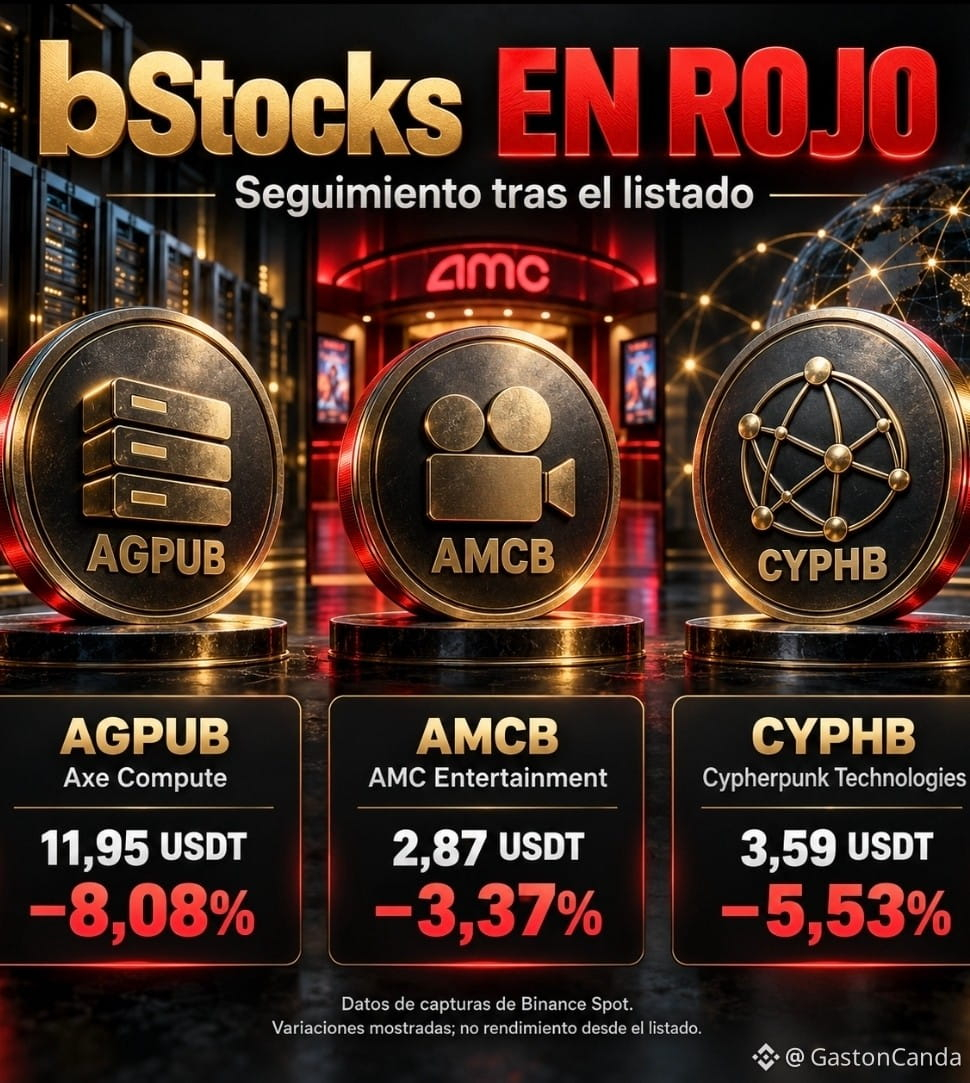
🔴 I covered their Binance listing. Here’s the follow-up with all three showing red.
The Spot quotes in my screenshots:
• AGPUB — Axe Compute: 11.95 USDT | −8.08%
• AMCB — AMC Entertainment: 2.87 USDT | −3.37%
• CYPHB — Cypherpunk Technologies: 3.59 USDT | −5.53%
These are the changes displayed when I took the screenshots, not confirmed returns since listing.
Announcing new listings is only part of the story. I want to follow what happens afterward, too—even when the numbers aren’t green.
My takeaway: the listing alone isn’t enough to build an investment thesis. And a red percentage alone doesn’t tell us whether something is cheap.
Were any of these three on your watchlist? What made you interested in the company behind the ticker?
#BStocks #Tokenization
🔴 I covered their Binance listing. Here’s the follow-up with all three showing red.
The Spot quotes in my screenshots:
• AGPUB — Axe Compute: 11.95 USDT | −8.08%
• AMCB — AMC Entertainment: 2.87 USDT | −3.37%
• CYPHB — Cypherpunk Technologies: 3.59 USDT | −5.53%
These are the changes displayed when I took the screenshots, not confirmed returns since listing.
Announcing new listings is only part of the story. I want to follow what happens afterward, too—even when the numbers aren’t green.
My takeaway: the listing alone isn’t enough to build an investment thesis. And a red percentage alone doesn’t tell us whether something is cheap.
Were any of these three on your watchlist? What made you interested in the company behind the ticker?
#BStocks #Tokenization
The Spot quotes in my screenshots:
• AGPUB — Axe Compute: 11.95 USDT | −8.08%
• AMCB — AMC Entertainment: 2.87 USDT | −3.37%
• CYPHB — Cypherpunk Technologies: 3.59 USDT | −5.53%
These are the changes displayed when I took the screenshots, not confirmed returns since listing.
Announcing new listings is only part of the story. I want to follow what happens afterward, too—even when the numbers aren’t green.
My takeaway: the listing alone isn’t enough to build an investment thesis. And a red percentage alone doesn’t tell us whether something is cheap.
Were any of these three on your watchlist? What made you interested in the company behind the ticker?
#BStocks #Tokenization
1
731

·
--
Bullish
🚨$PLTRB just exploded +2.16% out of nowhere and then dumped? 👀*
{spot}(PLTRBUSDT)
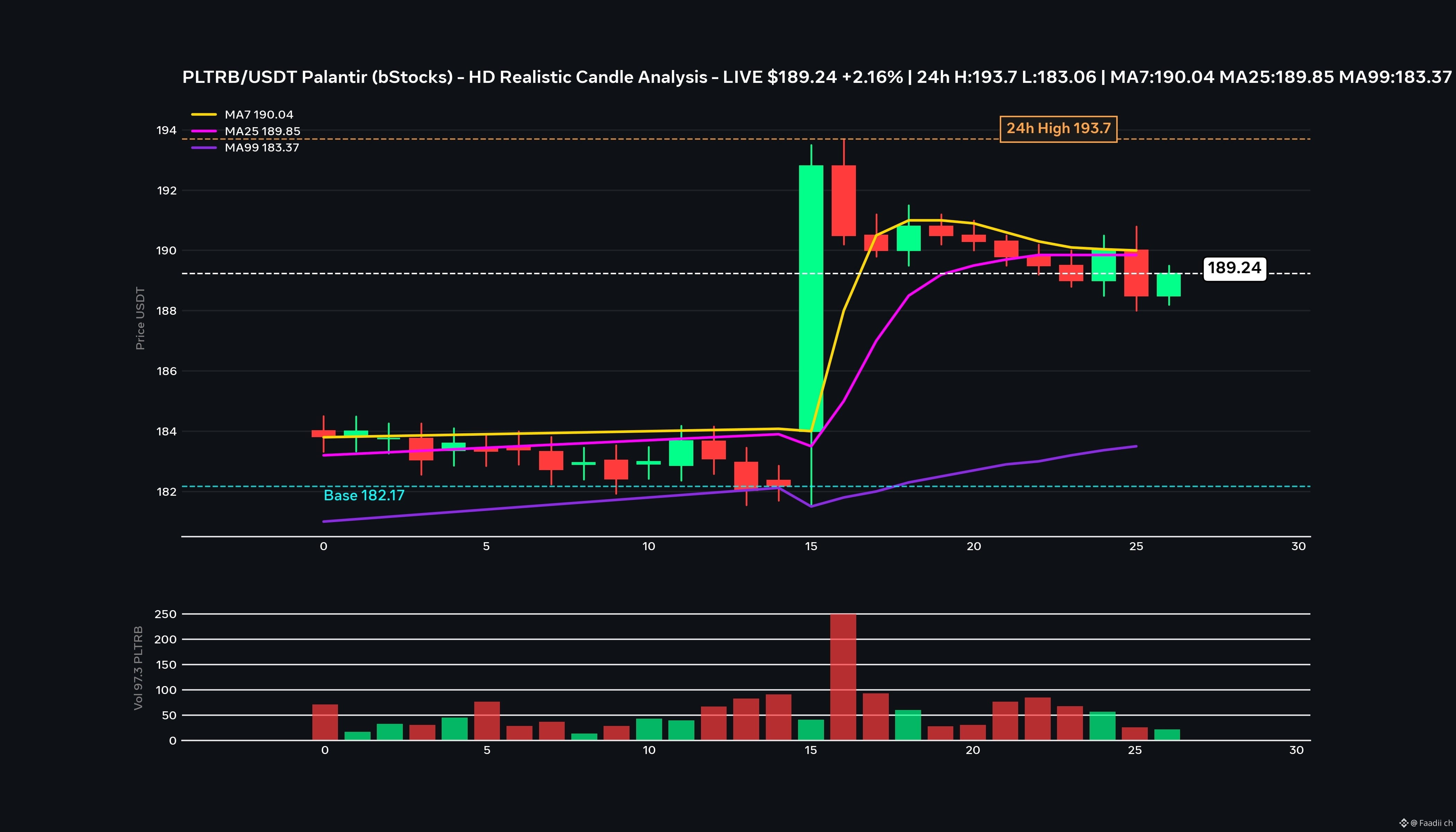
Palantir (bStocks) was sleeping around $182.17 then BOOM - straight to $193.70 in one candle! Now cooling off at $189.24.
$PLTRB : Price pumped hard above all MAs then started fading. Now it's sitting right under MA7 $190.04 and MA25 $189.85. MA99 way down at $183.37. RSI(6) at 34.22 - getting close to oversold, so selling might be slowing down.
Levels that matter:
🔴 Resistance: $190.04 (MA7) then $193.70 (24h high) - break that and pump continues
🟢 Support: $189.85 (MA25) immediate, then $183.37 (MA99) and $183.06 (24h low) - if $183 holds, this could be a higher low
Classic pump then healthy pullback setup.
You think $PLTRB holds $183 or we go lower? 👇
#PLTRB #Palantir #bStocks #Binance
🚨$PLTRB just exploded +2.16% out of nowhere and then dumped? 👀*
Palantir (bStocks) was sleeping around $182.17 then BOOM - straight to $193.70 in one candle! Now cooling off at $189.24.
$PLTRB : Price pumped hard above all MAs then started fading. Now it's sitting right under MA7 $190.04 and MA25 $189.85. MA99 way down at $183.37. RSI(6) at 34.22 - getting close to oversold, so selling might be slowing down.
Levels that matter:
🔴 Resistance: $190.04 (MA7) then $193.70 (24h high) - break that and pump continues
🟢 Support: $189.85 (MA25) immediate, then $183.37 (MA99) and $183.06 (24h low) - if $183 holds, this could be a higher low
Classic pump then healthy pullback setup.
You think $PLTRB holds $183 or we go lower? 👇
#PLTRB #Palantir #bStocks #Binance
Palantir (bStocks) was sleeping around $182.17 then BOOM - straight to $193.70 in one candle! Now cooling off at $189.24.
$PLTRB : Price pumped hard above all MAs then started fading. Now it's sitting right under MA7 $190.04 and MA25 $189.85. MA99 way down at $183.37. RSI(6) at 34.22 - getting close to oversold, so selling might be slowing down.
Levels that matter:
🔴 Resistance: $190.04 (MA7) then $193.70 (24h high) - break that and pump continues
🟢 Support: $189.85 (MA25) immediate, then $183.37 (MA99) and $183.06 (24h low) - if $183 holds, this could be a higher low
Classic pump then healthy pullback setup.
You think $PLTRB holds $183 or we go lower? 👇
#PLTRB #Palantir #bStocks #Binance
63

·
--
Article
Binance BStocks: A New Way to Access Stocks on BlockchainThe financial world is changing rapidly as traditional markets and blockchain technology become increasingly connected. One of the newer developments in this space is Binance BStocks, which aims to provide users with blockchain-based access to stock-related investment products.
What Are Binance BStocks?
Binance BStocks are blockchain-based products designed to provide exposure to the performance of traditional stocks. Instead of buying a traditional share through a conventional stockbroker, users can access a tokenized representation through a supported blockchain platform.
This brings together two different financial worlds: traditional equities and digital assets.
How Does It Work?
The basic concept is simple:
Choose a supported BStock → Buy the token → Track the underlying stock → Sell when you decide.
The value of a BStock is generally connected to the performance of its underlying asset. If the underlying stock increases in value, the BStock may also increase. If the stock falls, the BStock can lose value as well.
However, users should always check the specific terms, structure, fees, and rights of each product before investing.
Why Are BStocks Interesting?
One potential advantage is accessibility. Blockchain-based products can make it easier for eligible users to interact with financial assets through a digital-asset ecosystem.
Other potential features may include:
- Blockchain-based transactions
- Digital ownership or exposure to traditional assets
- Access through a crypto-focused platform
- Potentially simpler portfolio management
- Integration between traditional finance and blockchain technology
What Are the Risks?
BStocks are not risk-free.
The underlying stock can lose value because of company performance, economic conditions, interest rates, market sentiment, or other factors. There can also be additional risks related to tokenization, liquidity, fees, regulations, and the platform providing the product.
For this reason, users should understand exactly what they are buying rather than assuming that a tokenized stock is identical to owning a conventional share.
BStocks vs. Traditional Stocks
Traditional stocks are normally purchased through a regulated stockbroker and can provide shareholder rights depending on the type of security.
BStocks, on the other hand, are blockchain-based products. Their exact structure and investor rights depend on the specific product and its legal framework.
Therefore, investors should read the product documentation before making a decision.
Final Thoughts
Binance BStocks represent an interesting development at the intersection of traditional finance and blockchain technology. They could make stock-market exposure more accessible within a digital-asset environment, but they also introduce risks that investors need to understand.
Before investing, always check the supported assets, fees, availability in your country, regulatory status, and the exact rights associated with the product.
The future of finance may not be purely traditional or purely digital—it could be a combination of both.
#Binance #BStocks #viralpost
Binance BStocks: A New Way to Access Stocks on Blockchain
The financial world is changing rapidly as traditional markets and blockchain technology become increasingly connected. One of the newer developments in this space is Binance BStocks, which aims to provide users with blockchain-based access to stock-related investment products.
What Are Binance BStocks?
Binance BStocks are blockchain-based products designed to provide exposure to the performance of traditional stocks. Instead of buying a traditional share through a conventional stockbroker, users can access a tokenized representation through a supported blockchain platform.
This brings together two different financial worlds: traditional equities and digital assets.
How Does It Work?
The basic concept is simple:
Choose a supported BStock → Buy the token → Track the underlying stock → Sell when you decide.
The value of a BStock is generally connected to the performance of its underlying asset. If the underlying stock increases in value, the BStock may also increase. If the stock falls, the BStock can lose value as well.
However, users should always check the specific terms, structure, fees, and rights of each product before investing.
Why Are BStocks Interesting?
One potential advantage is accessibility. Blockchain-based products can make it easier for eligible users to interact with financial assets through a digital-asset ecosystem.
Other potential features may include:
- Blockchain-based transactions
- Digital ownership or exposure to traditional assets
- Access through a crypto-focused platform
- Potentially simpler portfolio management
- Integration between traditional finance and blockchain technology
What Are the Risks?
BStocks are not risk-free.
The underlying stock can lose value because of company performance, economic conditions, interest rates, market sentiment, or other factors. There can also be additional risks related to tokenization, liquidity, fees, regulations, and the platform providing the product.
For this reason, users should understand exactly what they are buying rather than assuming that a tokenized stock is identical to owning a conventional share.
BStocks vs. Traditional Stocks
Traditional stocks are normally purchased through a regulated stockbroker and can provide shareholder rights depending on the type of security.
BStocks, on the other hand, are blockchain-based products. Their exact structure and investor rights depend on the specific product and its legal framework.
Therefore, investors should read the product documentation before making a decision.
Final Thoughts
Binance BStocks represent an interesting development at the intersection of traditional finance and blockchain technology. They could make stock-market exposure more accessible within a digital-asset environment, but they also introduce risks that investors need to understand.
Before investing, always check the supported assets, fees, availability in your country, regulatory status, and the exact rights associated with the product.
The future of finance may not be purely traditional or purely digital—it could be a combination of both.
#Binance #BStocks #viralpost
What Are Binance BStocks?
Binance BStocks are blockchain-based products designed to provide exposure to the performance of traditional stocks. Instead of buying a traditional share through a conventional stockbroker, users can access a tokenized representation through a supported blockchain platform.
This brings together two different financial worlds: traditional equities and digital assets.
How Does It Work?
The basic concept is simple:
Choose a supported BStock → Buy the token → Track the underlying stock → Sell when you decide.
The value of a BStock is generally connected to the performance of its underlying asset. If the underlying stock increases in value, the BStock may also increase. If the stock falls, the BStock can lose value as well.
However, users should always check the specific terms, structure, fees, and rights of each product before investing.
Why Are BStocks Interesting?
One potential advantage is accessibility. Blockchain-based products can make it easier for eligible users to interact with financial assets through a digital-asset ecosystem.
Other potential features may include:
- Blockchain-based transactions
- Digital ownership or exposure to traditional assets
- Access through a crypto-focused platform
- Potentially simpler portfolio management
- Integration between traditional finance and blockchain technology
What Are the Risks?
BStocks are not risk-free.
The underlying stock can lose value because of company performance, economic conditions, interest rates, market sentiment, or other factors. There can also be additional risks related to tokenization, liquidity, fees, regulations, and the platform providing the product.
For this reason, users should understand exactly what they are buying rather than assuming that a tokenized stock is identical to owning a conventional share.
BStocks vs. Traditional Stocks
Traditional stocks are normally purchased through a regulated stockbroker and can provide shareholder rights depending on the type of security.
BStocks, on the other hand, are blockchain-based products. Their exact structure and investor rights depend on the specific product and its legal framework.
Therefore, investors should read the product documentation before making a decision.
Final Thoughts
Binance BStocks represent an interesting development at the intersection of traditional finance and blockchain technology. They could make stock-market exposure more accessible within a digital-asset environment, but they also introduce risks that investors need to understand.
Before investing, always check the supported assets, fees, availability in your country, regulatory status, and the exact rights associated with the product.
The future of finance may not be purely traditional or purely digital—it could be a combination of both.
#Binance #BStocks #viralpost
1
57

·
--
Bullish
$TSLAB $STXB bStocks ALERT! 🚀
TSLAB (Tesla Tokenized) $378.63 +0.57% — 7D +4.12% ATH $429.99 tak gaya tha. Market -2.8% gir rahi hai lekin TSLAB abhi bhi $380 pe strong hai. Real Tesla stock ki backing hai!
$STXB bhi same RWA family ka hai, abhi low cap pe accumulation ho raha hai. Tokenized stocks ka season start ho gaya hai.
BNB Chain RWA narrative is back! Don't miss.
#TSLAB #STXB #RWA #bStocks 👇👇
{spot}(TSLABUSDT)
{spot}(STXBUSDT)
$TSLAB $STXB bStocks ALERT! 🚀
TSLAB (Tesla Tokenized) $378.63 +0.57% — 7D +4.12% ATH $429.99 tak gaya tha. Market -2.8% gir rahi hai lekin TSLAB abhi bhi $380 pe strong hai. Real Tesla stock ki backing hai!
$STXB bhi same RWA family ka hai, abhi low cap pe accumulation ho raha hai. Tokenized stocks ka season start ho gaya hai.
BNB Chain RWA narrative is back! Don't miss.
#TSLAB #STXB #RWA #bStocks 👇👇
TSLAB (Tesla Tokenized) $378.63 +0.57% — 7D +4.12% ATH $429.99 tak gaya tha. Market -2.8% gir rahi hai lekin TSLAB abhi bhi $380 pe strong hai. Real Tesla stock ki backing hai!
$STXB bhi same RWA family ka hai, abhi low cap pe accumulation ho raha hai. Tokenized stocks ka season start ho gaya hai.
BNB Chain RWA narrative is back! Don't miss.
#TSLAB #STXB #RWA #bStocks 👇👇
2
110

🚀🚀🚀 bStocks Focus 🚀🚀🚀
bStocks offer a different workflow from holding shares through a broker: access and settlement may feel familiar to crypto users, while price and product rules still matter.
$TSLA $NVDA $MSTR
#bStocks #TokenizedStocks #StockMarket #TradFi #Binance
🚀🚀🚀 bStocks Focus 🚀🚀🚀
bStocks offer a different workflow from holding shares through a broker: access and settlement may feel familiar to crypto users, while price and product rules still matter.
$TSLA $NVDA $MSTR
#bStocks #TokenizedStocks #StockMarket #TradFi #Binance
bStocks offer a different workflow from holding shares through a broker: access and settlement may feel familiar to crypto users, while price and product rules still matter.
$TSLA $NVDA $MSTR
#bStocks #TokenizedStocks #StockMarket #TradFi #Binance
69

·
--
Article
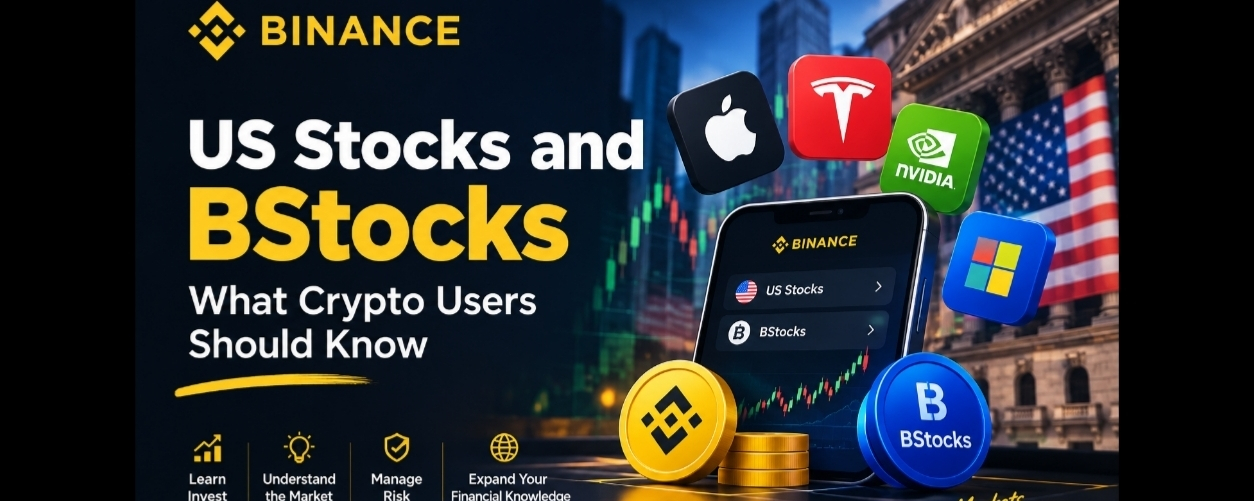
US Stocks and BStocks: What Crypto Users Should Know 📈US Stocks have become an interesting topic for many crypto users. People who are familiar with digital assets may also want to understand traditional financial markets and how stock investing works.
A stock represents ownership in a publicly traded company. When investors buy shares, the value of their investment can change depending on the company’s performance, earnings, business growth, economic conditions, interest rates and overall market sentiment.
For crypto users, one important difference is that stocks are connected to real companies and their financial performance. Crypto assets can have very different purposes and structures, while stocks represent equity in a business.
BStocks are also an interesting product for people who want to learn more about the connection between traditional finance and digital platforms. Before using any BStocks product, users should understand the specific product structure, availability, fees and risks.
One useful lesson for beginners is that investing should start with research rather than simply following price movements. Before considering a stock, it can be useful to learn what the company does, how it generates revenue, its financial results, competitors and the factors that could affect its future performance.
Risk management is also important. Stock prices can fall as well as rise, and past performance does not guarantee future results. Investors should understand their own risk tolerance and avoid using money they cannot afford to lose.
Crypto users already understand that markets can move quickly because of news, sentiment and global events. Stock markets are also affected by major economic developments such as inflation, interest-rate decisions, employment data and company earnings.
Learning about both markets can therefore be useful. Crypto provides exposure to digital assets and blockchain technology, while stocks provide exposure to businesses and traditional financial markets. Understanding the differences can help users become more familiar with the wider financial ecosystem.
For me, the most interesting part of learning about Stocks and BStocks is the opportunity to understand how traditional finance and digital platforms can work together. Instead of looking only at whether a price is going up or down, beginners can focus on learning how the underlying asset works and what risks are involved.
Binance Square can also be a useful place for users to share what they learn, discuss financial topics and exchange different perspectives with the community.
Whether you are already a crypto user or completely new to stocks, learning the basics is an important first step. Research, risk awareness and understanding the product should come before making any financial decision.
What do you think about US Stocks and BStocks? Are you interested in learning more about traditional markets as a crypto user?
@Binance Burmese
#SEABstock
#SEAstock
#BStocks
#USStocks
#BinanceSquare
US Stocks and BStocks: What Crypto Users Should Know 📈
US Stocks have become an interesting topic for many crypto users. People who are familiar with digital assets may also want to understand traditional financial markets and how stock investing works.
A stock represents ownership in a publicly traded company. When investors buy shares, the value of their investment can change depending on the company’s performance, earnings, business growth, economic conditions, interest rates and overall market sentiment.
For crypto users, one important difference is that stocks are connected to real companies and their financial performance. Crypto assets can have very different purposes and structures, while stocks represent equity in a business.
BStocks are also an interesting product for people who want to learn more about the connection between traditional finance and digital platforms. Before using any BStocks product, users should understand the specific product structure, availability, fees and risks.
One useful lesson for beginners is that investing should start with research rather than simply following price movements. Before considering a stock, it can be useful to learn what the company does, how it generates revenue, its financial results, competitors and the factors that could affect its future performance.
Risk management is also important. Stock prices can fall as well as rise, and past performance does not guarantee future results. Investors should understand their own risk tolerance and avoid using money they cannot afford to lose.
Crypto users already understand that markets can move quickly because of news, sentiment and global events. Stock markets are also affected by major economic developments such as inflation, interest-rate decisions, employment data and company earnings.
Learning about both markets can therefore be useful. Crypto provides exposure to digital assets and blockchain technology, while stocks provide exposure to businesses and traditional financial markets. Understanding the differences can help users become more familiar with the wider financial ecosystem.
For me, the most interesting part of learning about Stocks and BStocks is the opportunity to understand how traditional finance and digital platforms can work together. Instead of looking only at whether a price is going up or down, beginners can focus on learning how the underlying asset works and what risks are involved.
Binance Square can also be a useful place for users to share what they learn, discuss financial topics and exchange different perspectives with the community.
Whether you are already a crypto user or completely new to stocks, learning the basics is an important first step. Research, risk awareness and understanding the product should come before making any financial decision.
What do you think about US Stocks and BStocks? Are you interested in learning more about traditional markets as a crypto user?
@Binance Burmese
#SEABstock
#SEAstock
#BStocks
#USStocks
#BinanceSquare
A stock represents ownership in a publicly traded company. When investors buy shares, the value of their investment can change depending on the company’s performance, earnings, business growth, economic conditions, interest rates and overall market sentiment.
For crypto users, one important difference is that stocks are connected to real companies and their financial performance. Crypto assets can have very different purposes and structures, while stocks represent equity in a business.
BStocks are also an interesting product for people who want to learn more about the connection between traditional finance and digital platforms. Before using any BStocks product, users should understand the specific product structure, availability, fees and risks.
One useful lesson for beginners is that investing should start with research rather than simply following price movements. Before considering a stock, it can be useful to learn what the company does, how it generates revenue, its financial results, competitors and the factors that could affect its future performance.
Risk management is also important. Stock prices can fall as well as rise, and past performance does not guarantee future results. Investors should understand their own risk tolerance and avoid using money they cannot afford to lose.
Crypto users already understand that markets can move quickly because of news, sentiment and global events. Stock markets are also affected by major economic developments such as inflation, interest-rate decisions, employment data and company earnings.
Learning about both markets can therefore be useful. Crypto provides exposure to digital assets and blockchain technology, while stocks provide exposure to businesses and traditional financial markets. Understanding the differences can help users become more familiar with the wider financial ecosystem.
For me, the most interesting part of learning about Stocks and BStocks is the opportunity to understand how traditional finance and digital platforms can work together. Instead of looking only at whether a price is going up or down, beginners can focus on learning how the underlying asset works and what risks are involved.
Binance Square can also be a useful place for users to share what they learn, discuss financial topics and exchange different perspectives with the community.
Whether you are already a crypto user or completely new to stocks, learning the basics is an important first step. Research, risk awareness and understanding the product should come before making any financial decision.
What do you think about US Stocks and BStocks? Are you interested in learning more about traditional markets as a crypto user?
@Binance Burmese
#SEABstock
#SEAstock
#BStocks
#USStocks
#BinanceSquare
101


·
--
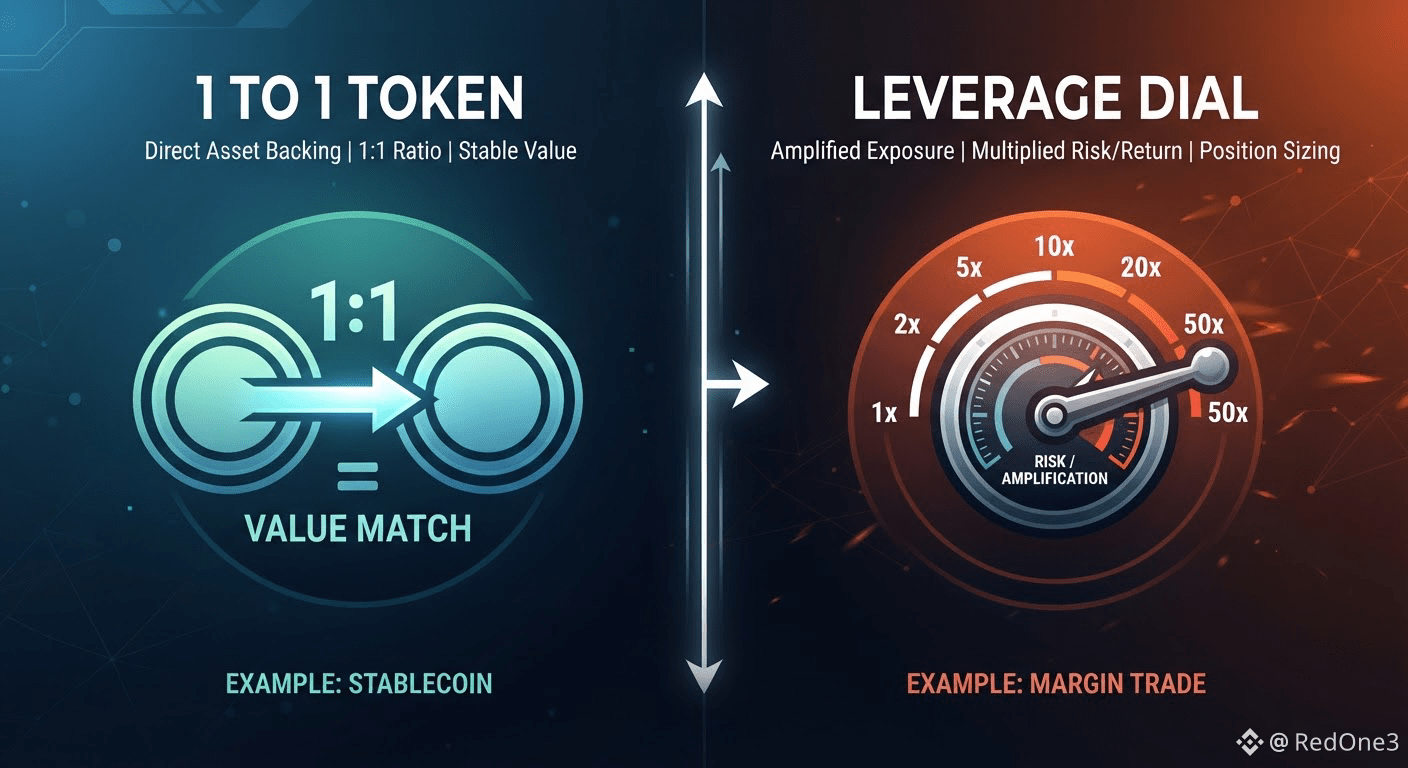
bStocks vs TradFi Perpetual Futures
bStocks aim to track a stock's price 1:1 without leverage; TradFi Perpetuals let you speculate on gold, silver, or stock prices using leveraged, USDT-settled contracts. One aims for direct price-tracking exposure; the other is a leveraged derivatives product with amplified risk and reward.
#bStocks #TradebStocks .
bStocks vs TradFi Perpetual Futures
bStocks aim to track a stock's price 1:1 without leverage; TradFi Perpetuals let you speculate on gold, silver, or stock prices using leveraged, USDT-settled contracts. One aims for direct price-tracking exposure; the other is a leveraged derivatives product with amplified risk and reward.
#bStocks #TradebStocks .
bStocks aim to track a stock's price 1:1 without leverage; TradFi Perpetuals let you speculate on gold, silver, or stock prices using leveraged, USDT-settled contracts. One aims for direct price-tracking exposure; the other is a leveraged derivatives product with amplified risk and reward.
#bStocks #TradebStocks .
2
1
188

·
--
Verified
BINANCE WALLET OPENS 15-MINUTE STOCK PREDICTION MARKETS
Binance Wallet is adding a new market category where traders can predict whether major stocks move UP or DOWN over the next 15 minutes.
Powered by Predict, the new markets currently cover:
$AMZN · $AVGO · $GOOGL · $META
$MSFT · $MU · $NVDA · $TSM
More stocks are coming soon.
The markets are now tradable during U.S. market hours: 13:30–20:00 UTC, giving users a short-window way to trade their view on major tech and AI names.
You can access them through:
Binance App → Markets → Prediction → Up/Down → Stock
or
Binance Wallet → Prediction → Up/Down → Stock
Binance says Prediction Markets are provided through third-party providers, with Predict currently serving as the primary provider. Availability also depends on your region.
Would you trade a 15-minute prediction on $NVDA or $TSM ? 👀
#Binance #PredictionMarkets #bStocks
{future}(NVDAUSDT)
BINANCE WALLET OPENS 15-MINUTE STOCK PREDICTION MARKETS
Binance Wallet is adding a new market category where traders can predict whether major stocks move UP or DOWN over the next 15 minutes.
Powered by Predict, the new markets currently cover:
$AMZN · $AVGO · $GOOGL · $META
$MSFT · $MU · $NVDA · $TSM
More stocks are coming soon.
The markets are now tradable during U.S. market hours: 13:30–20:00 UTC, giving users a short-window way to trade their view on major tech and AI names.
You can access them through:
Binance App → Markets → Prediction → Up/Down → Stock
or
Binance Wallet → Prediction → Up/Down → Stock
Binance says Prediction Markets are provided through third-party providers, with Predict currently serving as the primary provider. Availability also depends on your region.
Would you trade a 15-minute prediction on $NVDA or $TSM ? 👀
#Binance #PredictionMarkets #bStocks
Binance Wallet is adding a new market category where traders can predict whether major stocks move UP or DOWN over the next 15 minutes.
Powered by Predict, the new markets currently cover:
$AMZN · $AVGO · $GOOGL · $META
$MSFT · $MU · $NVDA · $TSM
More stocks are coming soon.
The markets are now tradable during U.S. market hours: 13:30–20:00 UTC, giving users a short-window way to trade their view on major tech and AI names.
You can access them through:
Binance App → Markets → Prediction → Up/Down → Stock
or
Binance Wallet → Prediction → Up/Down → Stock
Binance says Prediction Markets are provided through third-party providers, with Predict currently serving as the primary provider. Availability also depends on your region.
Would you trade a 15-minute prediction on $NVDA or $TSM ? 👀
#Binance #PredictionMarkets #bStocks

1
513

·
--
Bullish
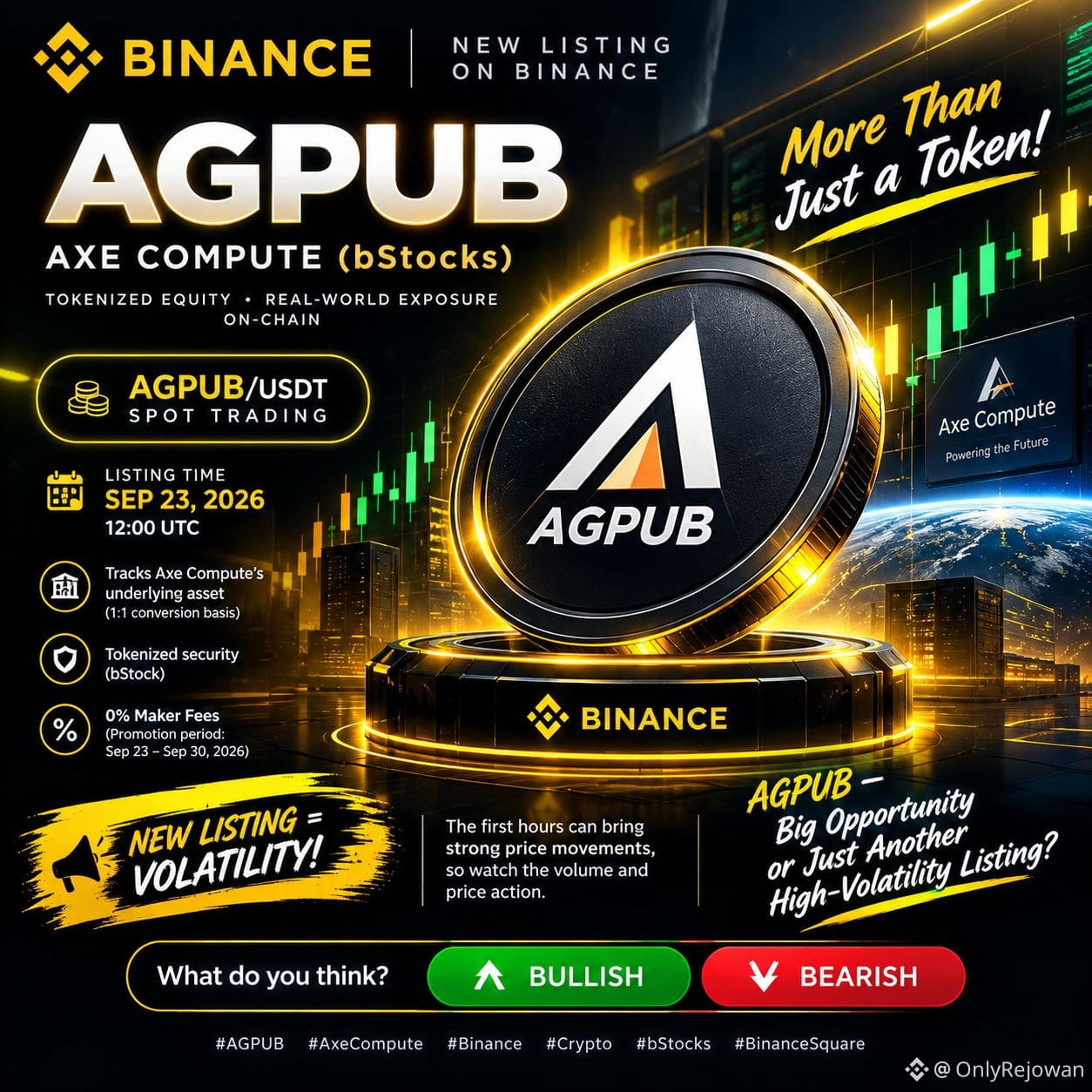
🚨 $AGPUB JUST ARRIVED ON BINANCE!
Axe Compute’s $AGPUB bStock is now available on Binance Spot with the AGPUB/USDT trading pair. Binance opened trading on September 23, 2026 at 12:00 UTC.
Unlike a normal crypto token, $AGPUB is a tokenized security (bStock) designed to track the underlying asset on a 1:1 conversion basis. Binance also announced zero maker fees for the promotional period through September 30, 2026.
🔥 New listing = volatility!
The first hours can bring strong price movements, so watching volume and price action is important.
👀 AGPUB — Big opportunity or just another high-volatility listing?
What do you think?
🟢 Bullish
🔴 Bearish
#AGPUB #AxeCompute #Binance #bStocks #BinanceSquare
{spot}(AGPUBUSDT)
🚨 $AGPUB JUST ARRIVED ON BINANCE!
Axe Compute’s $AGPUB bStock is now available on Binance Spot with the AGPUB/USDT trading pair. Binance opened trading on September 23, 2026 at 12:00 UTC.
Unlike a normal crypto token, $AGPUB is a tokenized security (bStock) designed to track the underlying asset on a 1:1 conversion basis. Binance also announced zero maker fees for the promotional period through September 30, 2026.
🔥 New listing = volatility!
The first hours can bring strong price movements, so watching volume and price action is important.
👀 AGPUB — Big opportunity or just another high-volatility listing?
What do you think?
🟢 Bullish
🔴 Bearish
#AGPUB #AxeCompute #Binance #bStocks #BinanceSquare
Axe Compute’s $AGPUB bStock is now available on Binance Spot with the AGPUB/USDT trading pair. Binance opened trading on September 23, 2026 at 12:00 UTC.
Unlike a normal crypto token, $AGPUB is a tokenized security (bStock) designed to track the underlying asset on a 1:1 conversion basis. Binance also announced zero maker fees for the promotional period through September 30, 2026.
🔥 New listing = volatility!
The first hours can bring strong price movements, so watching volume and price action is important.
👀 AGPUB — Big opportunity or just another high-volatility listing?
What do you think?
🟢 Bullish
🔴 Bearish
#AGPUB #AxeCompute #Binance #bStocks #BinanceSquare
208

·
--
From Crypto Futures to US Stocks: A Myanmar Seafarer’s Investment JourneyHello everyone! I am a seafarer from Myanmar, spending most of my months out in the middle of the ocean. Life on a ship is tough, demanding, and keeps you away from home for a long time. But during my rest hours in my cabin, my absolute favorite thing to do is open my laptop and trade on Binance Futures. I strongly prefer using a laptop over a mobile phone because looking at trading charts on a wider screen gives me a much clearer view of the market trends, support lines, and resistance levels. A clean chart on a big screen is a trader's best friend!
For a long time, the high volatility of the cryptocurrency market has given me both incredible excitement and good profits. However, as I grow older and think more deeply about my financial future, I realized that trading only crypto futures might be too risky for my long-term wealth goals. I wanted to diversify my portfolio. I wanted to invest in world-leading, traditional companies like Apple, Microsoft, Amazon, and Tesla. I wanted to hold real, physical-world assets that grow steadily over the years.
But here is the reality: for a Myanmar citizen, and especially for a seafarer who is always traveling across different oceans, opening a traditional US brokerage account is almost impossible. There is too much paperwork, complex identity verification processes, and strict banking restrictions. It was a massive headache, and I almost gave up on my dream of holding US stocks.
Just when I was feeling stuck, I discovered the perfect solution right inside the application I already use every single day: BStocks on Binance.
What is BStocks? Simply put, BStocks is a powerful feature that allows users to invest in traditional US stocks directly through their existing Binance account. There is absolutely no need to go through the painful and tiring process of opening another foreign broker account. You can manage everything in one single place. For someone like me who is already very comfortable with the Binance platform, this is a total game-changer. It is a convenient one-stop shop for both crypto and traditional stock investments.
Crypto vs. Stocks: What I Learned As a dedicated crypto trader moving into the stock market, here are the main differences I have noticed:
Market Hours: We are used to the crypto market that never sleeps (24/7). But the US Stock market has fixed trading hours. Since we are in the Asian time zone, the US market opens at night for us. Surprisingly, this fits perfectly with my off-duty night hours on the ship!Volatility vs. Stability: Crypto can easily pump or dump 20% in a single day. The stock market is much more stable and calm. Stock prices move based on real-world company earnings, quarterly reports, and global economic news. This stability gives me peace of mind for long-term holding.Risk Management: Putting all your hard-earned money in high-leveraged crypto futures is dangerous. By moving some of my crypto profits into US Stocks, I am actively balancing my risk. Stocks provide steady, long-term growth, while crypto provides high-reward trading opportunities.
A Beginner’s Checklist for BStocks If you want to start buying US stocks on Binance, here is my simple checklist based on my own experience:
Do Your Own Research (DYOR): Don't just buy a stock because the name is famous. Read about what the company actually produces and check their future plans.Start Small: You don't need thousands of dollars to start your journey. Buy a small amount first to understand how the stock market moves.Use the Right Tools: If you can, use a laptop to analyze the price history before you buy. It is much better than squinting at a small phone screen.Be Patient: Stock trading is not a get-rich-quick scheme. It is about building long-term wealth safely. Buy shares of good companies and hold them patiently.
Right now, I am preparing for my next sea voyage. On one side of my laptop screen, I will have my crypto charts open for daily trades. On the other side, I will be slowly building my safe portfolio of US tech stocks through BStocks. Binance has truly built a bridge for ordinary people like us to enter the global financial markets easily.
Are you ready to expand your investment journey from crypto to traditional stocks? Try BStocks today, educate yourself, and let's grow our wealth together!
@BinanceBurmese #BinanceSquare #InvestmentJourney #MyanmarTrader #BStocks
From Crypto Futures to US Stocks: A Myanmar Seafarer’s Investment Journey
Hello everyone! I am a seafarer from Myanmar, spending most of my months out in the middle of the ocean. Life on a ship is tough, demanding, and keeps you away from home for a long time. But during my rest hours in my cabin, my absolute favorite thing to do is open my laptop and trade on Binance Futures. I strongly prefer using a laptop over a mobile phone because looking at trading charts on a wider screen gives me a much clearer view of the market trends, support lines, and resistance levels. A clean chart on a big screen is a trader's best friend!
For a long time, the high volatility of the cryptocurrency market has given me both incredible excitement and good profits. However, as I grow older and think more deeply about my financial future, I realized that trading only crypto futures might be too risky for my long-term wealth goals. I wanted to diversify my portfolio. I wanted to invest in world-leading, traditional companies like Apple, Microsoft, Amazon, and Tesla. I wanted to hold real, physical-world assets that grow steadily over the years.
But here is the reality: for a Myanmar citizen, and especially for a seafarer who is always traveling across different oceans, opening a traditional US brokerage account is almost impossible. There is too much paperwork, complex identity verification processes, and strict banking restrictions. It was a massive headache, and I almost gave up on my dream of holding US stocks.
Just when I was feeling stuck, I discovered the perfect solution right inside the application I already use every single day: BStocks on Binance.
What is BStocks? Simply put, BStocks is a powerful feature that allows users to invest in traditional US stocks directly through their existing Binance account. There is absolutely no need to go through the painful and tiring process of opening another foreign broker account. You can manage everything in one single place. For someone like me who is already very comfortable with the Binance platform, this is a total game-changer. It is a convenient one-stop shop for both crypto and traditional stock investments.
Crypto vs. Stocks: What I Learned As a dedicated crypto trader moving into the stock market, here are the main differences I have noticed:
Market Hours: We are used to the crypto market that never sleeps (24/7). But the US Stock market has fixed trading hours. Since we are in the Asian time zone, the US market opens at night for us. Surprisingly, this fits perfectly with my off-duty night hours on the ship!Volatility vs. Stability: Crypto can easily pump or dump 20% in a single day. The stock market is much more stable and calm. Stock prices move based on real-world company earnings, quarterly reports, and global economic news. This stability gives me peace of mind for long-term holding.Risk Management: Putting all your hard-earned money in high-leveraged crypto futures is dangerous. By moving some of my crypto profits into US Stocks, I am actively balancing my risk. Stocks provide steady, long-term growth, while crypto provides high-reward trading opportunities.
A Beginner’s Checklist for BStocks If you want to start buying US stocks on Binance, here is my simple checklist based on my own experience:
Do Your Own Research (DYOR): Don't just buy a stock because the name is famous. Read about what the company actually produces and check their future plans.Start Small: You don't need thousands of dollars to start your journey. Buy a small amount first to understand how the stock market moves.Use the Right Tools: If you can, use a laptop to analyze the price history before you buy. It is much better than squinting at a small phone screen.Be Patient: Stock trading is not a get-rich-quick scheme. It is about building long-term wealth safely. Buy shares of good companies and hold them patiently.
Right now, I am preparing for my next sea voyage. On one side of my laptop screen, I will have my crypto charts open for daily trades. On the other side, I will be slowly building my safe portfolio of US tech stocks through BStocks. Binance has truly built a bridge for ordinary people like us to enter the global financial markets easily.
Are you ready to expand your investment journey from crypto to traditional stocks? Try BStocks today, educate yourself, and let's grow our wealth together!
@Binance Burmese #BinanceSquare #InvestmentJourney #MyanmarTrader #BStocks
For a long time, the high volatility of the cryptocurrency market has given me both incredible excitement and good profits. However, as I grow older and think more deeply about my financial future, I realized that trading only crypto futures might be too risky for my long-term wealth goals. I wanted to diversify my portfolio. I wanted to invest in world-leading, traditional companies like Apple, Microsoft, Amazon, and Tesla. I wanted to hold real, physical-world assets that grow steadily over the years.
But here is the reality: for a Myanmar citizen, and especially for a seafarer who is always traveling across different oceans, opening a traditional US brokerage account is almost impossible. There is too much paperwork, complex identity verification processes, and strict banking restrictions. It was a massive headache, and I almost gave up on my dream of holding US stocks.
Just when I was feeling stuck, I discovered the perfect solution right inside the application I already use every single day: BStocks on Binance.
What is BStocks? Simply put, BStocks is a powerful feature that allows users to invest in traditional US stocks directly through their existing Binance account. There is absolutely no need to go through the painful and tiring process of opening another foreign broker account. You can manage everything in one single place. For someone like me who is already very comfortable with the Binance platform, this is a total game-changer. It is a convenient one-stop shop for both crypto and traditional stock investments.
Crypto vs. Stocks: What I Learned As a dedicated crypto trader moving into the stock market, here are the main differences I have noticed:
Market Hours: We are used to the crypto market that never sleeps (24/7). But the US Stock market has fixed trading hours. Since we are in the Asian time zone, the US market opens at night for us. Surprisingly, this fits perfectly with my off-duty night hours on the ship!Volatility vs. Stability: Crypto can easily pump or dump 20% in a single day. The stock market is much more stable and calm. Stock prices move based on real-world company earnings, quarterly reports, and global economic news. This stability gives me peace of mind for long-term holding.Risk Management: Putting all your hard-earned money in high-leveraged crypto futures is dangerous. By moving some of my crypto profits into US Stocks, I am actively balancing my risk. Stocks provide steady, long-term growth, while crypto provides high-reward trading opportunities.
A Beginner’s Checklist for BStocks If you want to start buying US stocks on Binance, here is my simple checklist based on my own experience:
Do Your Own Research (DYOR): Don't just buy a stock because the name is famous. Read about what the company actually produces and check their future plans.Start Small: You don't need thousands of dollars to start your journey. Buy a small amount first to understand how the stock market moves.Use the Right Tools: If you can, use a laptop to analyze the price history before you buy. It is much better than squinting at a small phone screen.Be Patient: Stock trading is not a get-rich-quick scheme. It is about building long-term wealth safely. Buy shares of good companies and hold them patiently.
Right now, I am preparing for my next sea voyage. On one side of my laptop screen, I will have my crypto charts open for daily trades. On the other side, I will be slowly building my safe portfolio of US tech stocks through BStocks. Binance has truly built a bridge for ordinary people like us to enter the global financial markets easily.
Are you ready to expand your investment journey from crypto to traditional stocks? Try BStocks today, educate yourself, and let's grow our wealth together!
@Binance Burmese #BinanceSquare #InvestmentJourney #MyanmarTrader #BStocks
1
1
1
337

Binance made two TradFi moves today that connect to a bigger picture.
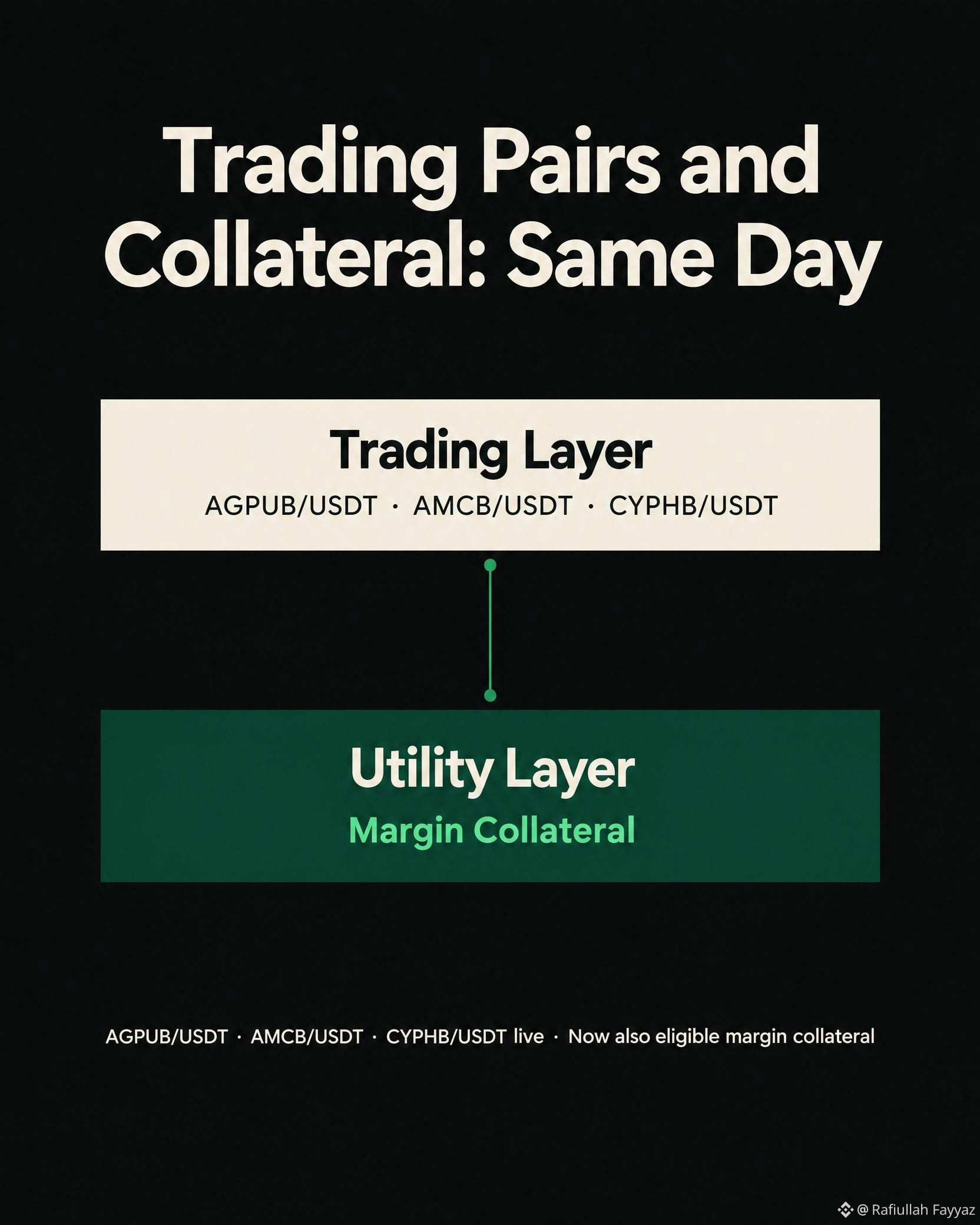
First: Three bStocks trading pairs went live at 20:00 UTC+8 — AGPUB/USDT, AMCB/USDT, and CYPHB/USDT. Zero maker fees until October 1. Spot algo trading bots enabled. Users can convert bStocks to BTC or USDT within an hour of listing, fee-free.
Second: Those same three bStocks were added as margin collateral at 12:00 UTC. VIP 3+ users can now post tokenized AMC Entertainment, Axe Compute, and Cypherpunk Technologies stock to back leveraged positions.
This is the same day. Binance launched the trading pairs and the collateral feature simultaneously. That's not accidental.
The strategy is clear: build the trading layer first (spot pairs), then add the utility layer (collateral). Tokenized securities aren't just for speculation — they're becoming part of the margin infrastructure.
Whether this attracts traditional stock traders or just gives crypto traders more instruments to speculate on is the question. But the infrastructure is being built either way.
$AMCB $AGPUB
#Binance #bStocks #TradFi
{spot}(AMCBUSDT)
{spot}(AGPUBUSDT)
Binance made two TradFi moves today that connect to a bigger picture.
First: Three bStocks trading pairs went live at 20:00 UTC+8 — AGPUB/USDT, AMCB/USDT, and CYPHB/USDT. Zero maker fees until October 1. Spot algo trading bots enabled. Users can convert bStocks to BTC or USDT within an hour of listing, fee-free.
Second: Those same three bStocks were added as margin collateral at 12:00 UTC. VIP 3+ users can now post tokenized AMC Entertainment, Axe Compute, and Cypherpunk Technologies stock to back leveraged positions.
This is the same day. Binance launched the trading pairs and the collateral feature simultaneously. That's not accidental.
The strategy is clear: build the trading layer first (spot pairs), then add the utility layer (collateral). Tokenized securities aren't just for speculation — they're becoming part of the margin infrastructure.
Whether this attracts traditional stock traders or just gives crypto traders more instruments to speculate on is the question. But the infrastructure is being built either way.
$AMCB $AGPUB
#Binance #bStocks #TradFi
First: Three bStocks trading pairs went live at 20:00 UTC+8 — AGPUB/USDT, AMCB/USDT, and CYPHB/USDT. Zero maker fees until October 1. Spot algo trading bots enabled. Users can convert bStocks to BTC or USDT within an hour of listing, fee-free.
Second: Those same three bStocks were added as margin collateral at 12:00 UTC. VIP 3+ users can now post tokenized AMC Entertainment, Axe Compute, and Cypherpunk Technologies stock to back leveraged positions.
This is the same day. Binance launched the trading pairs and the collateral feature simultaneously. That's not accidental.
The strategy is clear: build the trading layer first (spot pairs), then add the utility layer (collateral). Tokenized securities aren't just for speculation — they're becoming part of the margin infrastructure.
Whether this attracts traditional stock traders or just gives crypto traders more instruments to speculate on is the question. But the infrastructure is being built either way.
$AMCB $AGPUB
#Binance #bStocks #TradFi
306
bStocks are now collateral on Binance. That's a bigger deal than it sounds.
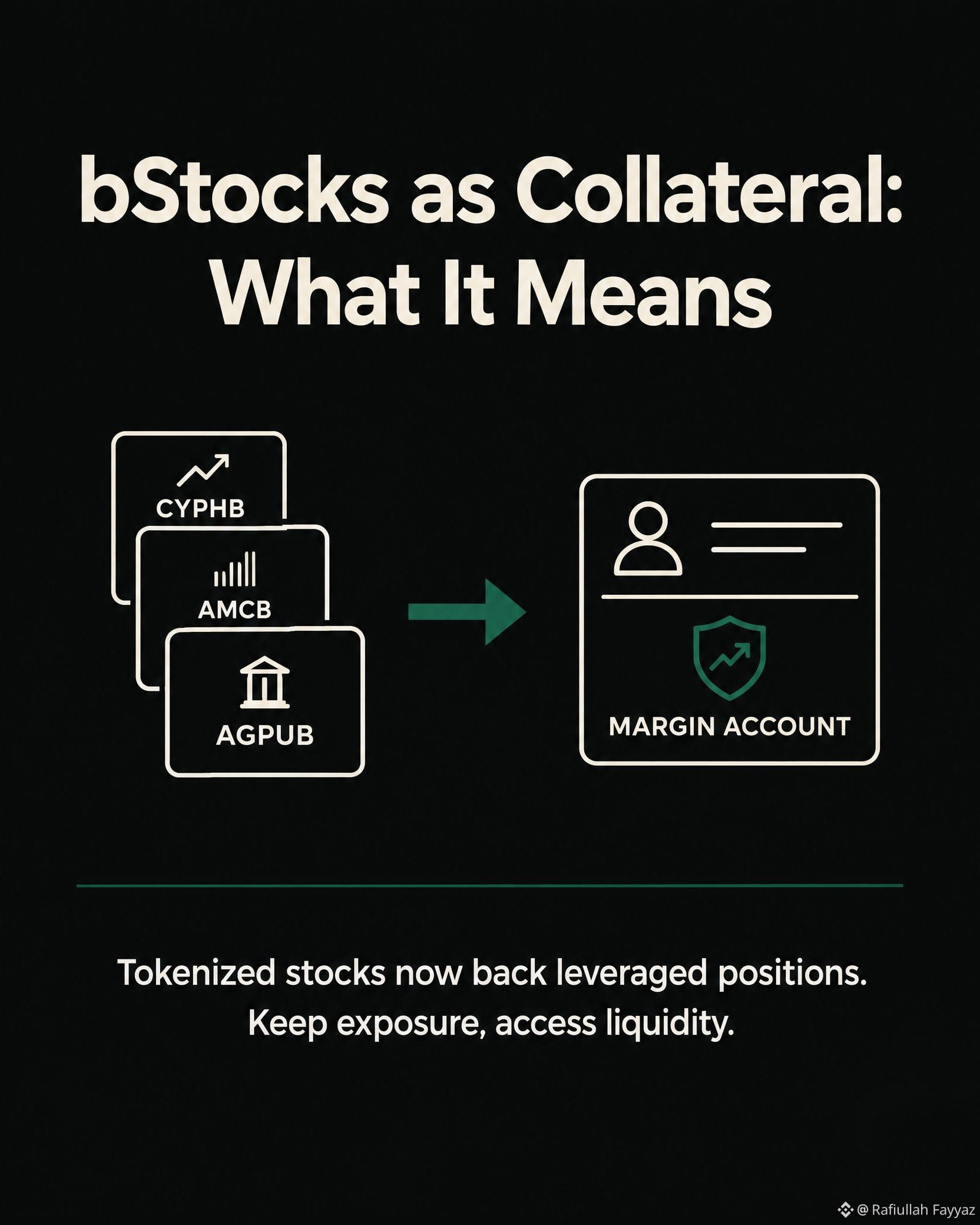
Here's what happened: Binance added three tokenized stocks — Cypherpunk Technologies (CYPHB), AMC Entertainment (AMCB), and Axe Compute (AGPUB) — as eligible collateral for Cross Margin, Portfolio Margin, and Portfolio Margin Pro. VIP 3+ users can now use these tokenized securities to back leveraged positions.
Why this matters: collateral is the foundation of leverage. If you can post tokenized stocks as collateral, you don't need to sell them to access liquidity. You can keep exposure to AMC while borrowing against it to trade crypto.
bStocks are tokenized securities issued through an approved prospectus in ADGM. Each bStock represents 1:1 exposure to the underlying stock. They're not shares — you don't get voting rights. But they track the price.
The margin feature launched today at 12:00 UTC. Borrowing isn't supported yet — these are collateral-only for now.
This is a step toward blending traditional assets with crypto market infrastructure. If it works, it opens a new category of cross-asset collateral.
#CryptoEducation #bStocks #Binance
bStocks are now collateral on Binance. That's a bigger deal than it sounds.
Here's what happened: Binance added three tokenized stocks — Cypherpunk Technologies (CYPHB), AMC Entertainment (AMCB), and Axe Compute (AGPUB) — as eligible collateral for Cross Margin, Portfolio Margin, and Portfolio Margin Pro. VIP 3+ users can now use these tokenized securities to back leveraged positions.
Why this matters: collateral is the foundation of leverage. If you can post tokenized stocks as collateral, you don't need to sell them to access liquidity. You can keep exposure to AMC while borrowing against it to trade crypto.
bStocks are tokenized securities issued through an approved prospectus in ADGM. Each bStock represents 1:1 exposure to the underlying stock. They're not shares — you don't get voting rights. But they track the price.
The margin feature launched today at 12:00 UTC. Borrowing isn't supported yet — these are collateral-only for now.
This is a step toward blending traditional assets with crypto market infrastructure. If it works, it opens a new category of cross-asset collateral.
#CryptoEducation #bStocks #Binance
Here's what happened: Binance added three tokenized stocks — Cypherpunk Technologies (CYPHB), AMC Entertainment (AMCB), and Axe Compute (AGPUB) — as eligible collateral for Cross Margin, Portfolio Margin, and Portfolio Margin Pro. VIP 3+ users can now use these tokenized securities to back leveraged positions.
Why this matters: collateral is the foundation of leverage. If you can post tokenized stocks as collateral, you don't need to sell them to access liquidity. You can keep exposure to AMC while borrowing against it to trade crypto.
bStocks are tokenized securities issued through an approved prospectus in ADGM. Each bStock represents 1:1 exposure to the underlying stock. They're not shares — you don't get voting rights. But they track the price.
The margin feature launched today at 12:00 UTC. Borrowing isn't supported yet — these are collateral-only for now.
This is a step toward blending traditional assets with crypto market infrastructure. If it works, it opens a new category of cross-asset collateral.
#CryptoEducation #bStocks #Binance
398
·
--
bStocks vs Buying the Actual Stock via a Broker
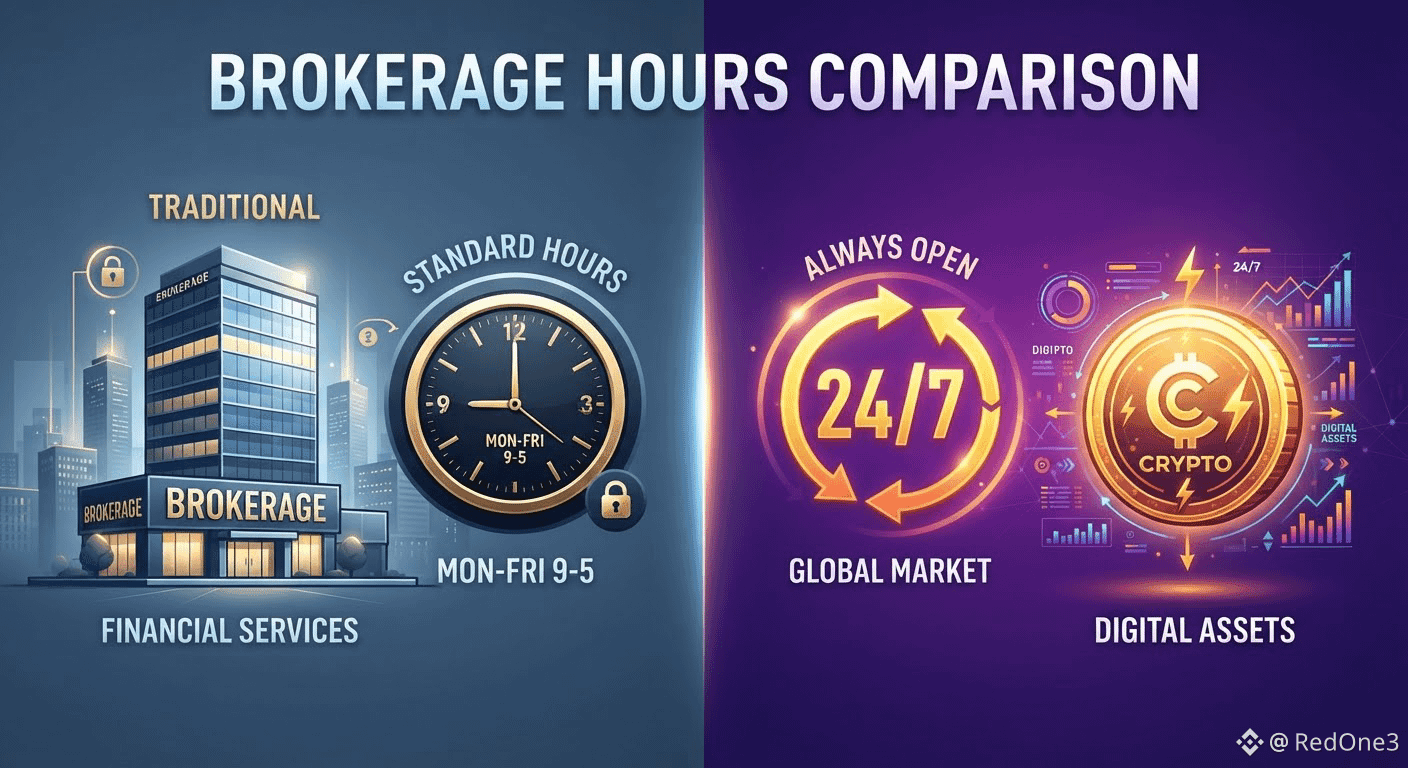
Buying an actual stock via a broker gives direct ownership and standard investor protections, but is tied to market hours and account requirements. A bStock offers 24/7 tokenized exposure to the price movement and can move on-chain, at the cost of not being the same legal ownership structure.
#bStocks #TradebStocks .
bStocks vs Buying the Actual Stock via a Broker
Buying an actual stock via a broker gives direct ownership and standard investor protections, but is tied to market hours and account requirements. A bStock offers 24/7 tokenized exposure to the price movement and can move on-chain, at the cost of not being the same legal ownership structure.
#bStocks #TradebStocks .
Buying an actual stock via a broker gives direct ownership and standard investor protections, but is tied to market hours and account requirements. A bStock offers 24/7 tokenized exposure to the price movement and can move on-chain, at the cost of not being the same legal ownership structure.
#bStocks #TradebStocks .
1
119

📈 Why Understanding BStocks Matters for Crypto UsersMany people enter the financial world through cryptocurrency. After learning about digital assets, some may become interested in traditional financial markets and want to understand stocks as well.
BStocks can be an interesting way to explore stock-related exposure within the Binance ecosystem. But before using any financial product, it is important to understand how it works, what you are actually exposed to, and what risks may be involved.
🔹 1. Learn about the underlying company
Before researching a stock, look at the company’s business model, revenue, earnings, industry, competition, and future plans.
🔹 2. Understand what moves prices
Stock prices can react to earnings reports, economic data, interest rates, company announcements, industry developments, and market sentiment.
🔹 3. Don't compare stocks and crypto too simply
Stocks and cryptocurrencies have different structures and market drivers. Crypto can be highly sensitive to sentiment and liquidity, while stocks are closely connected to company performance and broader economic conditions.
🔹 4. Risk management is important
Every investment involves risk. A rising price does not guarantee that the trend will continue, and a popular asset can still experience significant losses.
🔹 5. DYOR 📚
Do your own research before making a decision. Check official information, fees, product conditions, eligibility requirements, and risk disclosures.
For me, the most valuable part of learning about Stocks & BStocks is financial education. The goal is not to predict every market movement. The goal is to understand different markets and make decisions based on knowledge rather than emotion.
📚 Learn. Research. Understand. Manage Risk.
What are you currently learning about—Stocks, BStocks, or Crypto? 👇
@BinanceBurmese
#SEABstock #SEAstock #BStocks #BinanceSquare #StockMarket
⚠️ Disclaimer: This content is for educational purposes only and is not financial or investment advice. Investing involves risk, including possible loss of capital. Always do your own research and review the latest official information before making any investment decision.
📈 Why Understanding BStocks Matters for Crypto Users
Many people enter the financial world through cryptocurrency. After learning about digital assets, some may become interested in traditional financial markets and want to understand stocks as well.
BStocks can be an interesting way to explore stock-related exposure within the Binance ecosystem. But before using any financial product, it is important to understand how it works, what you are actually exposed to, and what risks may be involved.
🔹 1. Learn about the underlying company
Before researching a stock, look at the company’s business model, revenue, earnings, industry, competition, and future plans.
🔹 2. Understand what moves prices
Stock prices can react to earnings reports, economic data, interest rates, company announcements, industry developments, and market sentiment.
🔹 3. Don't compare stocks and crypto too simply
Stocks and cryptocurrencies have different structures and market drivers. Crypto can be highly sensitive to sentiment and liquidity, while stocks are closely connected to company performance and broader economic conditions.
🔹 4. Risk management is important
Every investment involves risk. A rising price does not guarantee that the trend will continue, and a popular asset can still experience significant losses.
🔹 5. DYOR 📚
Do your own research before making a decision. Check official information, fees, product conditions, eligibility requirements, and risk disclosures.
For me, the most valuable part of learning about Stocks & BStocks is financial education. The goal is not to predict every market movement. The goal is to understand different markets and make decisions based on knowledge rather than emotion.
📚 Learn. Research. Understand. Manage Risk.
What are you currently learning about—Stocks, BStocks, or Crypto? 👇
@Binance Burmese
#SEABstock #SEAstock #BStocks #BinanceSquare #StockMarket
⚠️ Disclaimer: This content is for educational purposes only and is not financial or investment advice. Investing involves risk, including possible loss of capital. Always do your own research and review the latest official information before making any investment decision.
BStocks can be an interesting way to explore stock-related exposure within the Binance ecosystem. But before using any financial product, it is important to understand how it works, what you are actually exposed to, and what risks may be involved.
🔹 1. Learn about the underlying company
Before researching a stock, look at the company’s business model, revenue, earnings, industry, competition, and future plans.
🔹 2. Understand what moves prices
Stock prices can react to earnings reports, economic data, interest rates, company announcements, industry developments, and market sentiment.
🔹 3. Don't compare stocks and crypto too simply
Stocks and cryptocurrencies have different structures and market drivers. Crypto can be highly sensitive to sentiment and liquidity, while stocks are closely connected to company performance and broader economic conditions.
🔹 4. Risk management is important
Every investment involves risk. A rising price does not guarantee that the trend will continue, and a popular asset can still experience significant losses.
🔹 5. DYOR 📚
Do your own research before making a decision. Check official information, fees, product conditions, eligibility requirements, and risk disclosures.
For me, the most valuable part of learning about Stocks & BStocks is financial education. The goal is not to predict every market movement. The goal is to understand different markets and make decisions based on knowledge rather than emotion.
📚 Learn. Research. Understand. Manage Risk.
What are you currently learning about—Stocks, BStocks, or Crypto? 👇
@Binance Burmese
#SEABstock #SEAstock #BStocks #BinanceSquare #StockMarket
⚠️ Disclaimer: This content is for educational purposes only and is not financial or investment advice. Investing involves risk, including possible loss of capital. Always do your own research and review the latest official information before making any investment decision.
1
76

·
--
How Can Beginners Build Wealth with US Stocks? A Simple Guide to Getting StartedMany people want to build an additional source of income, but they may not know where to start. US Stocks can be one option to explore, especially for people who want to learn about investing and potentially build long-term wealth.
For beginners, the most important thing is not trying to make money quickly. It is understanding how the stock market works, choosing an approach that matches your goals, and managing risk carefully.
1. What does “making money from Stocks” mean?
There are generally two ways investors can potentially benefit from stocks:
Capital appreciation: You buy a stock and its market price increases. If you later sell it at a higher price, you may make a profit.
Dividends: Some companies distribute part of their profits to shareholders through dividends. However, not every company pays dividends, and dividend payments can change.
For example, if you invest $500 in a stock and its value later increases to $550, the unrealized gain would be $50 before considering fees, taxes, and other costs. But the price can also fall, meaning you could lose money.
2. Start with Knowledge, Not Money
Before putting money into the market, beginners should understand some basic concepts:
• What is a stock?
• How does a company make money?
• What is market capitalization?
• What are earnings and revenue?
• What is a dividend?
• Why do stock prices move?
• What are the risks of investing?
Learning these basics can help investors make decisions based on information rather than emotions.
3. Think Long Term
One common mistake beginners make is focusing only on short-term price movements.
The stock market can move up and down because of company results, economic conditions, interest rates, market sentiment, and global events.
A long-term approach means focusing on the underlying business and your investment objective instead of reacting emotionally to every daily price change.
4. Don't Put Everything Into One Stock
Diversification is another important concept.
Instead of putting all your available money into one company, investors can learn about different companies, sectors, and asset classes. Diversification does not eliminate risk, but it can help reduce the impact of one investment performing poorly.
5. How Can BStocks Help Beginners Explore Stocks?
For people who already use Binance and are interested in learning about traditional markets, BStocks can provide another way to explore US Stocks through the Binance ecosystem, where available.
However, availability, products, fees, eligibility, and other conditions can vary by location and product. Always check the latest information available on Binance before making any investment decision.
6. My Beginner Checklist
Before buying a stock, I would ask myself:
☑ Do I understand what the company does?
☑ Have I researched the company?
☑ Am I investing or simply chasing a price increase?
☑ How much money can I afford to risk?
☑ Do I have a clear investment goal?
☑ Have I considered diversification?
☑ Do I understand the risks?
☑ Am I prepared for the possibility of losing money?
Final Thoughts
Building wealth through Stocks is not a shortcut to getting rich. It is a process of learning, researching, managing risk, and making decisions based on your own financial situation.
For beginners, the goal should be to understand the market first and invest responsibly rather than chasing quick profits.
I am also continuing to learn about US Stocks and BStocks, and I hope this guide can help other beginners in the community start their learning journey.
Always do your own research and understand the risks before investing.
@BinanceLaotian
#SEABstock
#SEAstock #BStocks #USStocks #Investing
How Can Beginners Build Wealth with US Stocks? A Simple Guide to Getting Started
Many people want to build an additional source of income, but they may not know where to start. US Stocks can be one option to explore, especially for people who want to learn about investing and potentially build long-term wealth.
For beginners, the most important thing is not trying to make money quickly. It is understanding how the stock market works, choosing an approach that matches your goals, and managing risk carefully.
1. What does “making money from Stocks” mean?
There are generally two ways investors can potentially benefit from stocks:
Capital appreciation: You buy a stock and its market price increases. If you later sell it at a higher price, you may make a profit.
Dividends: Some companies distribute part of their profits to shareholders through dividends. However, not every company pays dividends, and dividend payments can change.
For example, if you invest $500 in a stock and its value later increases to $550, the unrealized gain would be $50 before considering fees, taxes, and other costs. But the price can also fall, meaning you could lose money.
2. Start with Knowledge, Not Money
Before putting money into the market, beginners should understand some basic concepts:
• What is a stock?
• How does a company make money?
• What is market capitalization?
• What are earnings and revenue?
• What is a dividend?
• Why do stock prices move?
• What are the risks of investing?
Learning these basics can help investors make decisions based on information rather than emotions.
3. Think Long Term
One common mistake beginners make is focusing only on short-term price movements.
The stock market can move up and down because of company results, economic conditions, interest rates, market sentiment, and global events.
A long-term approach means focusing on the underlying business and your investment objective instead of reacting emotionally to every daily price change.
4. Don't Put Everything Into One Stock
Diversification is another important concept.
Instead of putting all your available money into one company, investors can learn about different companies, sectors, and asset classes. Diversification does not eliminate risk, but it can help reduce the impact of one investment performing poorly.
5. How Can BStocks Help Beginners Explore Stocks?
For people who already use Binance and are interested in learning about traditional markets, BStocks can provide another way to explore US Stocks through the Binance ecosystem, where available.
However, availability, products, fees, eligibility, and other conditions can vary by location and product. Always check the latest information available on Binance before making any investment decision.
6. My Beginner Checklist
Before buying a stock, I would ask myself:
☑ Do I understand what the company does?
☑ Have I researched the company?
☑ Am I investing or simply chasing a price increase?
☑ How much money can I afford to risk?
☑ Do I have a clear investment goal?
☑ Have I considered diversification?
☑ Do I understand the risks?
☑ Am I prepared for the possibility of losing money?
Final Thoughts
Building wealth through Stocks is not a shortcut to getting rich. It is a process of learning, researching, managing risk, and making decisions based on your own financial situation.
For beginners, the goal should be to understand the market first and invest responsibly rather than chasing quick profits.
I am also continuing to learn about US Stocks and BStocks, and I hope this guide can help other beginners in the community start their learning journey.
Always do your own research and understand the risks before investing.
@Binance Laotian
#SEABstock
#SEAstock #BStocks #USStocks #Investing
For beginners, the most important thing is not trying to make money quickly. It is understanding how the stock market works, choosing an approach that matches your goals, and managing risk carefully.
1. What does “making money from Stocks” mean?
There are generally two ways investors can potentially benefit from stocks:
Capital appreciation: You buy a stock and its market price increases. If you later sell it at a higher price, you may make a profit.
Dividends: Some companies distribute part of their profits to shareholders through dividends. However, not every company pays dividends, and dividend payments can change.
For example, if you invest $500 in a stock and its value later increases to $550, the unrealized gain would be $50 before considering fees, taxes, and other costs. But the price can also fall, meaning you could lose money.
2. Start with Knowledge, Not Money
Before putting money into the market, beginners should understand some basic concepts:
• What is a stock?
• How does a company make money?
• What is market capitalization?
• What are earnings and revenue?
• What is a dividend?
• Why do stock prices move?
• What are the risks of investing?
Learning these basics can help investors make decisions based on information rather than emotions.
3. Think Long Term
One common mistake beginners make is focusing only on short-term price movements.
The stock market can move up and down because of company results, economic conditions, interest rates, market sentiment, and global events.
A long-term approach means focusing on the underlying business and your investment objective instead of reacting emotionally to every daily price change.
4. Don't Put Everything Into One Stock
Diversification is another important concept.
Instead of putting all your available money into one company, investors can learn about different companies, sectors, and asset classes. Diversification does not eliminate risk, but it can help reduce the impact of one investment performing poorly.
5. How Can BStocks Help Beginners Explore Stocks?
For people who already use Binance and are interested in learning about traditional markets, BStocks can provide another way to explore US Stocks through the Binance ecosystem, where available.
However, availability, products, fees, eligibility, and other conditions can vary by location and product. Always check the latest information available on Binance before making any investment decision.
6. My Beginner Checklist
Before buying a stock, I would ask myself:
☑ Do I understand what the company does?
☑ Have I researched the company?
☑ Am I investing or simply chasing a price increase?
☑ How much money can I afford to risk?
☑ Do I have a clear investment goal?
☑ Have I considered diversification?
☑ Do I understand the risks?
☑ Am I prepared for the possibility of losing money?
Final Thoughts
Building wealth through Stocks is not a shortcut to getting rich. It is a process of learning, researching, managing risk, and making decisions based on your own financial situation.
For beginners, the goal should be to understand the market first and invest responsibly rather than chasing quick profits.
I am also continuing to learn about US Stocks and BStocks, and I hope this guide can help other beginners in the community start their learning journey.
Always do your own research and understand the risks before investing.
@Binance Laotian
#SEABstock
#SEAstock #BStocks #USStocks #Investing
98
·
--
BINANCE JUST ADDED 3 BSTOCKS AS COLLATERAL FOR MARGIN TRADING
Binance is expanding the list of tokenized securities that can be used as collateral.
Starting September 23, 2026 at 12:00 UTC, three bStocks tokens will become eligible collateral assets across:
• Cross Margin
• Portfolio Margin
• Portfolio Margin Pro
The newly added assets are:
$CYPHB - Cypherpunk Technologies
$AMCB - AMC Entertainment Holdings
$AGPUB - Axe Compute
This means eligible users can now use these bStocks positions as collateral within Binance’s supported margin frameworks.
It’s another step toward bringing tokenized securities deeper into Binance’s trading infrastructure.
#Binance #bStocks
BINANCE JUST ADDED 3 BSTOCKS AS COLLATERAL FOR MARGIN TRADING
Binance is expanding the list of tokenized securities that can be used as collateral.
Starting September 23, 2026 at 12:00 UTC, three bStocks tokens will become eligible collateral assets across:
• Cross Margin
• Portfolio Margin
• Portfolio Margin Pro
The newly added assets are:
$CYPHB - Cypherpunk Technologies
$AMCB - AMC Entertainment Holdings
$AGPUB - Axe Compute
This means eligible users can now use these bStocks positions as collateral within Binance’s supported margin frameworks.
It’s another step toward bringing tokenized securities deeper into Binance’s trading infrastructure.
#Binance #bStocks
Binance is expanding the list of tokenized securities that can be used as collateral.
Starting September 23, 2026 at 12:00 UTC, three bStocks tokens will become eligible collateral assets across:
• Cross Margin
• Portfolio Margin
• Portfolio Margin Pro
The newly added assets are:
$CYPHB - Cypherpunk Technologies
$AMCB - AMC Entertainment Holdings
$AGPUB - Axe Compute
This means eligible users can now use these bStocks positions as collateral within Binance’s supported margin frameworks.
It’s another step toward bringing tokenized securities deeper into Binance’s trading infrastructure.
#Binance #bStocks
2
245
·
--
A Trader Using bStocks for After-Hours Exposure
A trader wants to react to news about a company that breaks after the traditional stock market has closed for the day.
Using the corresponding bStock lets them take a position immediately rather than waiting for the next trading session - illustrating the practical use case for 24/7 tokenized stock exposure.
#DYOR
#bStocks #TradebStocks .
A Trader Using bStocks for After-Hours Exposure
A trader wants to react to news about a company that breaks after the traditional stock market has closed for the day.
Using the corresponding bStock lets them take a position immediately rather than waiting for the next trading session - illustrating the practical use case for 24/7 tokenized stock exposure.
#DYOR
#bStocks #TradebStocks .
A trader wants to react to news about a company that breaks after the traditional stock market has closed for the day.
Using the corresponding bStock lets them take a position immediately rather than waiting for the next trading session - illustrating the practical use case for 24/7 tokenized stock exposure.
#DYOR
#bStocks #TradebStocks .
1
339

·
--

Article
Can You Buy U.S. Stocks Through a Crypto Exchange in Cambodia?Yes, eligible users in Cambodia can buy and sell more than 7,000 U.S.-listed stocks and ETFs through Binance using crypto balances. Orders are routed through Nest Trading to Alpaca Securities for execution, clearing, settlement and custody.
Can you buy U.S Stocks on Binance in Cambodia?
Yes, eligible users with an existing Binance account can start with a minimum investment of 5 USD. Stock purchases are primarily made using USDC. Other crypto assets such as BNB, USDT, U, and USD1 are also supported. These assets will be automatically converted to USDC upon order submission, the converted USDC amount will be used to complete the order. All assets must be held in the Funding or Spot Account. All stock sale proceeds will be credited as USDC to users’ Funding Accounts.
How does stock trading on Binance works?
Binance Stock Trading is a service on the Binance platform provided by Nest Trading Limited. It allows users to access a selection of listed stocks and ETFs. In collaboration with an external brokerage.
Which U.S. Stocks and ETFs Can You Trade on Binance?
Binance is currently offering access to more than 7,000 listed stocks and ETFs.
Which U.S. Stocks Can You Trade Through Binance?
You simply go through Binance app => hit Trade -> Stocks -> TradeFi -> stocks
Then you will all available U.S Stocks to trade.
On web binance.com => Trade -> stocks and you will see all available listed U.S stocks to trade with.
Can you buy Binance bStocks in Cambodia?
Yes, eligible users who has Binance account can buy Binance bStocks in Cambodia with their Binance account with their USDT balance.
[bStocks](https://www.binance.com/en/support/announcement/detail/2c0c92ed15ac42d1b14bb1eac00d22bb) are tokenized securities issued by BTech Holdings Limited, a Binance group affiliate. They are classified as Certificates representing certain Financial Instruments (paragraph 92, Schedule 1 to FSMR) and represent an interest in underlying securities held by the issuer.
Each bStock is backed 1:1 by the corresponding US share held at a regulated custodian. Eligible users can convert between stocks and the corresponding bStocks at a 1:1 ratio with no conversion fees. This service is arranged by Nest Trading Limited and is generally available 24/7, though it may be paused temporarily during corporate action processing or maintenance.
FAQs:
Are Binance bStocks available in Cambodia? - YES, eligible Binance who has Binance account can buy bStocks with their USDT balance.
Are bStocks the same as U.S. shares? - Every bStock is fully backed by a US share held at a regulated custodian, verifiable at any time via the [Proof of Collateral](https://www.binance.com/en/proof-of-collateral/bstocks) page. Converting between your equities and bStocks is always 1:1, with zero conversion fees.
Can you buy US Stocks on Binance using USDT? - YES, Binance U.S stocks fund trading supported USDT, USDC, BNB, USD1, U.
#Binance #stocks #BStocks #Cambodia
$NVDAB $NVDA.US $AAPL
{future}(AAPLUSDT)
{stock_us}(NVDA.US)
{spot}(NVDABUSDT)
Can You Buy U.S. Stocks Through a Crypto Exchange in Cambodia?
Yes, eligible users in Cambodia can buy and sell more than 7,000 U.S.-listed stocks and ETFs through Binance using crypto balances. Orders are routed through Nest Trading to Alpaca Securities for execution, clearing, settlement and custody.
Can you buy U.S Stocks on Binance in Cambodia?
Yes, eligible users with an existing Binance account can start with a minimum investment of 5 USD. Stock purchases are primarily made using USDC. Other crypto assets such as BNB, USDT, U, and USD1 are also supported. These assets will be automatically converted to USDC upon order submission, the converted USDC amount will be used to complete the order. All assets must be held in the Funding or Spot Account. All stock sale proceeds will be credited as USDC to users’ Funding Accounts.
How does stock trading on Binance works?
Binance Stock Trading is a service on the Binance platform provided by Nest Trading Limited. It allows users to access a selection of listed stocks and ETFs. In collaboration with an external brokerage.
Which U.S. Stocks and ETFs Can You Trade on Binance?
Binance is currently offering access to more than 7,000 listed stocks and ETFs.
Which U.S. Stocks Can You Trade Through Binance?
You simply go through Binance app => hit Trade -> Stocks -> TradeFi -> stocks
Then you will all available U.S Stocks to trade.
On web binance.com => Trade -> stocks and you will see all available listed U.S stocks to trade with.
Can you buy Binance bStocks in Cambodia?
Yes, eligible users who has Binance account can buy Binance bStocks in Cambodia with their Binance account with their USDT balance.
bStocks are tokenized securities issued by BTech Holdings Limited, a Binance group affiliate. They are classified as Certificates representing certain Financial Instruments (paragraph 92, Schedule 1 to FSMR) and represent an interest in underlying securities held by the issuer.
Each bStock is backed 1:1 by the corresponding US share held at a regulated custodian. Eligible users can convert between stocks and the corresponding bStocks at a 1:1 ratio with no conversion fees. This service is arranged by Nest Trading Limited and is generally available 24/7, though it may be paused temporarily during corporate action processing or maintenance.
FAQs:
Are Binance bStocks available in Cambodia? - YES, eligible Binance who has Binance account can buy bStocks with their USDT balance.
Are bStocks the same as U.S. shares? - Every bStock is fully backed by a US share held at a regulated custodian, verifiable at any time via the Proof of Collateral page. Converting between your equities and bStocks is always 1:1, with zero conversion fees.
Can you buy US Stocks on Binance using USDT? - YES, Binance U.S stocks fund trading supported USDT, USDC, BNB, USD1, U.
#Binance #stocks #BStocks #Cambodia
$NVDAB $NVDA.US $AAPL
Can you buy U.S Stocks on Binance in Cambodia?
Yes, eligible users with an existing Binance account can start with a minimum investment of 5 USD. Stock purchases are primarily made using USDC. Other crypto assets such as BNB, USDT, U, and USD1 are also supported. These assets will be automatically converted to USDC upon order submission, the converted USDC amount will be used to complete the order. All assets must be held in the Funding or Spot Account. All stock sale proceeds will be credited as USDC to users’ Funding Accounts.
How does stock trading on Binance works?
Binance Stock Trading is a service on the Binance platform provided by Nest Trading Limited. It allows users to access a selection of listed stocks and ETFs. In collaboration with an external brokerage.
Which U.S. Stocks and ETFs Can You Trade on Binance?
Binance is currently offering access to more than 7,000 listed stocks and ETFs.
Which U.S. Stocks Can You Trade Through Binance?
You simply go through Binance app => hit Trade -> Stocks -> TradeFi -> stocks
Then you will all available U.S Stocks to trade.
On web binance.com => Trade -> stocks and you will see all available listed U.S stocks to trade with.
Can you buy Binance bStocks in Cambodia?
Yes, eligible users who has Binance account can buy Binance bStocks in Cambodia with their Binance account with their USDT balance.
bStocks are tokenized securities issued by BTech Holdings Limited, a Binance group affiliate. They are classified as Certificates representing certain Financial Instruments (paragraph 92, Schedule 1 to FSMR) and represent an interest in underlying securities held by the issuer.
Each bStock is backed 1:1 by the corresponding US share held at a regulated custodian. Eligible users can convert between stocks and the corresponding bStocks at a 1:1 ratio with no conversion fees. This service is arranged by Nest Trading Limited and is generally available 24/7, though it may be paused temporarily during corporate action processing or maintenance.
FAQs:
Are Binance bStocks available in Cambodia? - YES, eligible Binance who has Binance account can buy bStocks with their USDT balance.
Are bStocks the same as U.S. shares? - Every bStock is fully backed by a US share held at a regulated custodian, verifiable at any time via the Proof of Collateral page. Converting between your equities and bStocks is always 1:1, with zero conversion fees.
Can you buy US Stocks on Binance using USDT? - YES, Binance U.S stocks fund trading supported USDT, USDC, BNB, USD1, U.
#Binance #stocks #BStocks #Cambodia
$NVDAB $NVDA.US $AAPL
2
343
Log in to explore more content
Join global crypto users on Binance Square
⚡️ Get latest and useful information about crypto.
💬 Trusted by the world’s largest crypto exchange.
👍 Discover real insights from verified creators.
Email / Phone number
Trending Topics
1
#BinanceWillListHyperliquid(HYPE)
26,689 views
746 Discussing
2
#FedOctoberRateHikeOddsRiseTo69.7%
678 views
80 Discussing
3
#BitcoinFallsBelow$83,000
1,317 views
20 Discussing
4
#BitcoinFallsToAround$84,600ThisWeek
0 views
0 Discussing
5
#US30YearYieldHighestSince2004
3,623 views
145 Discussing
6
#ETHBreaksAbove$2,700
730 views
20 Discussing
7
#USWeighsPromotingDollarStablecoinsAbroad
29,173 views
963 Discussing
8
#US10YTreasuryYieldHits19YearHigh
26,800 views
737 Discussing
9
#SpotBitcoinETFsInflow$2.31BInFourDays
4,043 views
59 Discussing
10
#BitcoinRejectedAt$87,300Twice
0 views
0 Discussing