
#msci
msci
143,870 views
678 Discussing
Hot
Latest

·
--
Bitcoin's biggest corporate holder gets cut from MSCI's indexes on Nov 30. The bigger problem for $BTC holders is already here.
Per The Motley Fool (Nov 21), MSCI drops Strategy and Metaplanet at the Nov 30 close, so funds tracking those indexes must sell the shares.
Strategy held about 851K BTC as of Nov 20. It built that pile by selling stock for more than its Bitcoin was worth, then buying more coins.
That premium is gone. After debt, the stock trades at a slight discount to its Bitcoin, so printing shares to buy coins no longer works 🧊
The buying machine has stalled, even as $BTC is up about 7% in 24h with Fear & Greed in extreme fear 🔍
Today Bitcoin is bouncing while its steadiest corporate buyer loses both its index funds and the premium that paid for its buying.
#BTC #Strategy #MSCI #BitcoinTreasury
122


Article
GLOBAL STOCKS: 7 STRAIGHT LOSSES — WORST STREAK SINCE 2023!The #MSCI All Country World Index has recorded seven consecutive losing sessions, raising fears of a broader market correction.
⚡ THOR Market Watch
🌍 Global equities: 7 consecutive down sessions💸 Nearly $9T erased from global stock values since August.📉 Taiwan stocks: -17% this week🔥 VIX: 30, highest since late March.💵 US dollar: Highest level in 19 months.
🧠 THOR Analysis: AI valuation concerns, doubts over massive data-center spending and expectations of further Fed rate hikes are driving investors away from risk assets.
⚡ THOR Edge: This is no longer just a technology selloff. Pressure is spreading across global markets, while investors seek safety in government bonds.
⚖️ THOR Verdict: Global risk appetite is weakening. A sustainable recovery needs renewed confidence in AI returns and easing interest-rate pressure.
⚡ THOR Signal: Watch VIX, Treasury yields, dollar strength and AI-sector earnings guidance.
👇 What's next?
🟢 Market rebound
🟡 Extended correction
🔴 Global risk-off intensifies
#CanBTCReboundAfterFallingBelow60K? #GlobalStocksFaceLongestLosingStreakSince2023 #CFTCStaffInvestigatedTrumpMemeCoinThenBackedOff #EVAA
$EVAA
{future}(EVAAUSDT)
$SOL
{future}(SOLUSDT)
$NEAR
{future}(NEARUSDT)
GLOBAL STOCKS: 7 STRAIGHT LOSSES — WORST STREAK SINCE 2023!
The #MSCI All Country World Index has recorded seven consecutive losing sessions, raising fears of a broader market correction.
⚡ THOR Market Watch
🌍 Global equities: 7 consecutive down sessions💸 Nearly $9T erased from global stock values since August.📉 Taiwan stocks: -17% this week🔥 VIX: 30, highest since late March.💵 US dollar: Highest level in 19 months.
🧠 THOR Analysis: AI valuation concerns, doubts over massive data-center spending and expectations of further Fed rate hikes are driving investors away from risk assets.
⚡ THOR Edge: This is no longer just a technology selloff. Pressure is spreading across global markets, while investors seek safety in government bonds.
⚖️ THOR Verdict: Global risk appetite is weakening. A sustainable recovery needs renewed confidence in AI returns and easing interest-rate pressure.
⚡ THOR Signal: Watch VIX, Treasury yields, dollar strength and AI-sector earnings guidance.
👇 What's next?
🟢 Market rebound
🟡 Extended correction
🔴 Global risk-off intensifies
#CanBTCReboundAfterFallingBelow60K? #GlobalStocksFaceLongestLosingStreakSince2023 #CFTCStaffInvestigatedTrumpMemeCoinThenBackedOff #EVAA
$EVAA
$SOL
$NEAR
456

·
--
“At the November 30 Close, MSCI Kicks Strategy Out of Its Index: Passive Selling Is Just 13 Million Shares—the Real Story Is Elsewhere”Bottom line first: After the market close on November 30, Strategy (MSTR) officially leaves the MSCI USA Index. This is not a delisting, and it won’t force the company to sell a single Bitcoin. What’s really being taken away is the fuel it has used to buy Bitcoin over the past five years: its stock-price premium to Bitcoin.
The backstory fits into just three dates. On October 15, MSCI announced new screening rules for “non-operating companies”: companies whose assets are mostly investments rather than operating businesses, and that fail to meet most of five financial-ratio thresholds, will no longer be eligible for inclusion in the Global Investable Market Indexes. Five companies, including Strategy, Metaplanet, and Upexi, were directly flagged for potential removal. After the market close on November 11, MSCI published the final list for its November index review, confirming the removal of Strategy’s Class A shares, effective after the market close on November 30. Also removed in the same round were Japan’s Metaplanet (from the Japan Small Cap Index) and Upexi, while ether treasury company SharpLink was temporarily kept on the watchlist. Strategy itself had already said in its third-quarter earnings report that it “expects to be excluded”—this isn’t breaking news, but a farewell scripted 45 days in advance.
“At the November 30 Close, MSCI Kicks Strategy Out of Its Index: Passive Selling Is Just 13 Million Shares—the Real Story Is Elsewhere”
Bottom line first: After the market close on November 30, Strategy (MSTR) officially leaves the MSCI USA Index. This is not a delisting, and it won’t force the company to sell a single Bitcoin. What’s really being taken away is the fuel it has used to buy Bitcoin over the past five years: its stock-price premium to Bitcoin.
The backstory fits into just three dates. On October 15, MSCI announced new screening rules for “non-operating companies”: companies whose assets are mostly investments rather than operating businesses, and that fail to meet most of five financial-ratio thresholds, will no longer be eligible for inclusion in the Global Investable Market Indexes. Five companies, including Strategy, Metaplanet, and Upexi, were directly flagged for potential removal. After the market close on November 11, MSCI published the final list for its November index review, confirming the removal of Strategy’s Class A shares, effective after the market close on November 30. Also removed in the same round were Japan’s Metaplanet (from the Japan Small Cap Index) and Upexi, while ether treasury company SharpLink was temporarily kept on the watchlist. Strategy itself had already said in its third-quarter earnings report that it “expects to be excluded”—this isn’t breaking news, but a farewell scripted 45 days in advance.
The backstory fits into just three dates. On October 15, MSCI announced new screening rules for “non-operating companies”: companies whose assets are mostly investments rather than operating businesses, and that fail to meet most of five financial-ratio thresholds, will no longer be eligible for inclusion in the Global Investable Market Indexes. Five companies, including Strategy, Metaplanet, and Upexi, were directly flagged for potential removal. After the market close on November 11, MSCI published the final list for its November index review, confirming the removal of Strategy’s Class A shares, effective after the market close on November 30. Also removed in the same round were Japan’s Metaplanet (from the Japan Small Cap Index) and Upexi, while ether treasury company SharpLink was temporarily kept on the watchlist. Strategy itself had already said in its third-quarter earnings report that it “expects to be excluded”—this isn’t breaking news, but a farewell scripted 45 days in advance.
116

·
--
28 billion dollars “forced to sell” is an old number. The real problem with MSTR is not the day of November 30 — its money-printing machine had already stopped first.
On November 11, MSCI confirmed: after the close on November 30, it will remove Strategy ($MSTR) from the MSCI USA Index, and under the new rules it counts as a “non-operating company.”
JPMorgan’s 2.8 billion dollars was an estimate from last November based on the old scheme; Strategy itself calculated that funds tracking MSCI hold only about 13 million shares. At Friday’s closing price of 77.80 dollars, that is about 1 billion dollars, less than half of Friday’s daily trading volume of 35.7 million shares.
On Friday, MSTR closed at 77.80 dollars, down 9.7% in one day, down 30% in five days, and down 47% in one month. Its holdings of 850,849 BTC cost 64.2 billion dollars, with an average price of 75,452 dollars; at the current price of about 60,800 dollars, they are worth only about 51.7 billion dollars, with an unrealized loss on the books of about 12.5 billion dollars.
Its 12% preferred stock STRC closed on Friday at 93.60 dollars, falling below the 100-dollar par value.
My view is that the key is not the forced selling on November 30, but mNAV: based on Friday’s close, the enterprise-value-based mNAV is about 0.95x, already below 1; and the management team’s own share-issuance Bitcoin-buying break-even line set in May is 1.22x — below this number, every share issued to buy Bitcoin dilutes existing shareholders.
Last week’s actions already show the problem: that week, 244.7 million dollars of common stock was sold, while buying back STRC cost 228 million dollars and only 485 BTC were bought (33.4 million dollars). ATM proceeds are first going to plug the hole in preferred stock, no longer ammunition for buying Bitcoin.
Next, watch two variables: first, whether other index providers will follow MSCI (JPMorgan’s old estimate said that if they do, it would add another 8.8 billion dollars), and second, whether mNAV can get back above 1.22x — if not, November 30 is only the beginning.
Do you think MSTR now looks more like a wrongly sold-off BTC leveraged play, or a financing machine that has already stopped turning? If BTC returns above 70,000 dollars and mNAV returns to 1.22x, can Saylor’s strategy still get going again?
$BTC $MSTR
#比特币 #Strategy #MSCI #mNAV
The above is only a summary of market information and does not constitute investment advice.
28 billion dollars “forced to sell” is an old number. The real problem with MSTR is not the day of November 30 — its money-printing machine had already stopped first.
On November 11, MSCI confirmed: after the close on November 30, it will remove Strategy ($MSTR ) from the MSCI USA Index, and under the new rules it counts as a “non-operating company.”
JPMorgan’s 2.8 billion dollars was an estimate from last November based on the old scheme; Strategy itself calculated that funds tracking MSCI hold only about 13 million shares. At Friday’s closing price of 77.80 dollars, that is about 1 billion dollars, less than half of Friday’s daily trading volume of 35.7 million shares.
On Friday, MSTR closed at 77.80 dollars, down 9.7% in one day, down 30% in five days, and down 47% in one month. Its holdings of 850,849 BTC cost 64.2 billion dollars, with an average price of 75,452 dollars; at the current price of about 60,800 dollars, they are worth only about 51.7 billion dollars, with an unrealized loss on the books of about 12.5 billion dollars.
Its 12% preferred stock STRC closed on Friday at 93.60 dollars, falling below the 100-dollar par value.
My view is that the key is not the forced selling on November 30, but mNAV: based on Friday’s close, the enterprise-value-based mNAV is about 0.95x, already below 1; and the management team’s own share-issuance Bitcoin-buying break-even line set in May is 1.22x — below this number, every share issued to buy Bitcoin dilutes existing shareholders.
Last week’s actions already show the problem: that week, 244.7 million dollars of common stock was sold, while buying back STRC cost 228 million dollars and only 485 BTC were bought (33.4 million dollars). ATM proceeds are first going to plug the hole in preferred stock, no longer ammunition for buying Bitcoin.
Next, watch two variables: first, whether other index providers will follow MSCI (JPMorgan’s old estimate said that if they do, it would add another 8.8 billion dollars), and second, whether mNAV can get back above 1.22x — if not, November 30 is only the beginning.
Do you think MSTR now looks more like a wrongly sold-off BTC leveraged play, or a financing machine that has already stopped turning? If BTC returns above 70,000 dollars and mNAV returns to 1.22x, can Saylor’s strategy still get going again?
$BTC $MSTR
#比特币 #Strategy #MSCI #mNAV
The above is only a summary of market information and does not constitute investment advice.
7
·
--
On November 30, MSCI will kick MSTR out. The real killer isn’t the forced $2.8 billion in selling—it’s that Saylor’s machine for issuing shares to buy bitcoin has stopped turning.
On November 11, MSCI confirmed that it would remove MSTR from the MSCI USA Index after the market close on November 30, requiring index-tracking funds to sell before the close. Last year, JPMorgan estimated that the forced selling would amount to about $2.8 billion.
But Strategy itself says that funds tracking MSCI hold only about 13 million shares, or 3.1% of the total. At Friday’s closing price of $77.80, those shares are worth only about $1 billion—the $2.8 billion figure was an old estimate from last year, and the stock’s decline has already wiped out more than half of it.
MSTR closed Friday at $77.80, down 9.67% for the day, 32% over five trading days, and 49% over the past month. $BTC is currently around $59,531, up about 2.9% in 24 hours.
By today’s measure, MSTR’s market cap is only about 0.71 times the value of the bitcoin it holds—its market cap is about 29% below the value of its bitcoin.
My view: The key issue isn’t the MSCI move itself. It’s that once mNAV falls below 1, the business of issuing shares to buy bitcoin goes into reverse: the money raised by issuing a new share is no longer enough to cover the value of the bitcoin backing it, so every new issuance causes more dilution.
The week of November 2–8 is proof: the company raised $283.8 million by selling shares, but only $81.9 million (less than a third) went toward buying 1,036 bitcoin. The remaining $188.3 million went to repurchasing 12% of its STRC preferred stock—the preferred shares came first, and bitcoin buying took a back seat.
MSCI’s removal won’t force Strategy to sell a single bitcoin; it puts pressure on the stock price. The stock price puts pressure on its financing premium. Without that premium, the money to buy bitcoin dries up.
Keep an eye on three numbers next: MSTR’s trading volume and closing price around the November 30 close; whether STRC keeps sliding (it has already fallen below $96, versus its $100 par value); and whether the share of ATM proceeds going toward bitcoin purchases recovers in next week’s announcement.
If mNAV can’t get back above 1, Saylor’s roughly $4.9 billion in cash-like assets will cover only 3.4 years of interest and dividends, and bitcoin purchases will have to stop. At that point, MSTR will no longer be a “bitcoin amplifier,” but a leveraged bitcoin stock trading at a discount.
Do you think MSTR is “discounted bitcoin” right now, or “leveraged bitcoin liabilities”? If mNAV stays below 1 for a long time, should Saylor keep issuing shares to buy bitcoin?
#比特币 #MSTR #MSCI #US Stocks
The above is for informational purposes only and does not constitute investment advice.
1
51
·
--
Everyone was calculating how much selling pressure MSCI kicking MSTR out on November 30 would force, and got the math wrong—the real killer isn’t that day; it’s that the coin-buying flywheel has already stopped.
MSCI confirmed on November 11: Strategy will be removed from the MSCI USA Index after the market close on November 30. Metaplanet is out too, while SharpLink is on the watchlist.
JPMorgan’s $2.8 billion forced-selling estimate was an old calculation from last November, based on a different version of the proposal. The figure Strategy itself gave in its response was this: funds tracking MSCI hold only about 13 million shares, or 3.1% of total shares outstanding. At Friday’s closing price, that’s about $1 billion—less than 40% of Friday’s 35.7 million shares traded.
MSTR closed Friday at $77.80, down 9.67% for the day and more than 30% for the week; meanwhile, $BTC rebounded today to around $60,795, up 5% in 24 hours—the shadow stock has stopped following the original.
The key isn’t the selling pressure; it’s that the math behind issuing shares to buy coins no longer works. Saylor’s own threshold is that issuing shares to buy coins only makes sense when mNAV is 1.29x. It’s now just 0.98x.
So far this quarter, Strategy has bought only 3,183 BTC, less than a tenth of the 32,470 it bought in the fourth quarter last year. The week of November 9 was even more telling: it used $206 million raised from share sales to buy back STRC preferred shares, and spent just $33.4 million on 485 BTC.
My take: November 30 is a one-off event; a day’s trading volume can absorb it. The real turning point is that Strategy has gone from a “coin-buying machine” to a “preferred-stock defender.” As long as mNAV doesn’t get back above 1.29x, it’s no longer a BTC amplifier.
Next, keep an eye on three things: the actual selling pressure at the November 30 close, whether coin purchases resume in the weekly 8-K filings, and whether STRC can return to its $100 par value. Whichever changes first will point the way for MSTR’s investment thesis.
Do you think MSTR still deserves to be called a “Bitcoin shadow stock,” or has it become a preferred-stock defense play?
#MSTR #MSCI #Bitcoin
The above is only a summary of market information and does not constitute investment advice.
129

·
--
Passive funds may have to pull out too.
After the market close on November 30, MSCI will remove Strategy and Metaplanet from its indexes.
JPMorgan estimates that Strategy alone could trigger around $2.8 billion in passive selling.
Index funds have no choice: if an index excludes it, they have to sell.
Meanwhile, U.S. spot $BTC ETFs saw net outflows of around $3.59 billion in November, with net outflows on 13 of the first 15 trading days.
$BTC just climbed above 60,000, then fell back to around 59,000. The current price is about $59,078, and $61,000 has become a ceiling.
On Friday, it rebounded nearly 9% from a low of 55,000, driven by short covering—not fresh money coming in.
Do you think November 30 marks the end of the bad news, or the beginning of selling pressure?
Personal opinion only; not investment advice.
#BTCReboundsAbove$60KAmidWhaleDipBuying #Bitcoin #MSCI
3
·
--
On November 30, what was forced to be sold wasn’t BTC, but MSTR shares—and the real problem isn’t that day. It’s that Saylor’s money-printing machine has stopped working.
MSCI has decided: at the close on November 30, Strategy will be removed from the MSCI USA Index, Metaplanet will also be dropped, and SharpLink will be placed on the watchlist. JPMorgan estimates that index funds will be forced to sell about $2.8 billion worth of MSTR; Strategy itself says MSCI-linked funds hold only 3.1% of its shares.
MSTR closed at $77.80 on Friday, down 9.67% for the day—its lowest closing price since February 2024—and about 84% below its record high in November 2024.
Strategy holds 850,849 BTC at an average cost of $75,452. At the current price of about $59,181, the holdings are worth about $50.4 billion, with an unrealized loss of about $13.8 billion.
mNAV is just 0.98x, while Saylor himself has said that the business of issuing stock to buy BTC only makes sense above 1.29x.
Preferred stock STRC fell to $93.60, below its $100 par value. Last week, Saylor said that if necessary, he could even sell BTC to protect the preferred stock.
BTC is currently around $59,181, up 5.2% over 24 hours, but it has already fallen back below $60,000 after reclaiming that level last night. The weekly candle closes today at 16:00, and the current price is about 6% below last week’s close of roughly $62,997, making an eighth consecutive weekly decline all but certain.
My take: The key point is that MSCI’s removal triggers the sale of shares, not BTC directly, so November 30 itself isn’t a BTC selling-pressure event. The real transmission channel lies elsewhere: with mNAV below 1, Strategy issuing new shares to buy coins amounts to buying at a loss. The crypto market’s largest corporate buyer has effectively stepped aside.
Saylor still has cards to play: $35 billion in net reserves, all BTC unencumbered, and $4.7 billion in cash—enough to cover about 3.4 years of interest and dividends. No one can force him to sell coins in the short term. But the moment he says “sell coins to protect the preferred stock,” the line has already shifted from “never sell coins” to “we’ll see.”
Watch three figures next: how the actual forced selling on November 30 compares with JPMorgan’s $2.8 billion estimate; whether STRC can climb back above $100; and whether mNAV can return above 1.29x. If none of the three turn around, MSTR remains a drag on BTC, not an amplifier.
Do you think Strategy will sell coins first, or let its preferred stock keep falling? Before mNAV gets back above 1x, is MSTR a boost or a burden for BTC?
$BTC
#比特币 #Strategy #MSCI #US stocks
The above is a summary of market information only and does not constitute investment advice.
161

·
--
Strategy is about to be kicked out of the MSCI indexes, and passive funds will have to sell. 📰
MSCI will remove Strategy from its USA and global indexes after the close on November 30, under rules for companies that mainly hold digital assets, according to the Calebandbrown weekly rollup. 📉 My reading is that this is a forced seller story, not a Bitcoin story, because index funds that track MSCI must sell the stock whether they like Bitcoin or not, and that selling lands right when the market is already at extreme fear. The stock is not Bitcoin, but the selling pressure around it is real. ⚠️
Does the MSCI removal push Strategy lower into November 30, or is the selling already priced in? 🤔
Follow for more trades.
#Crypto #Bitcoin #FuturesTrading #TradingSignals #MSCI
5

·
--
MSCI confirmed that after market close on November 30, it will remove Strategy from its global equity indexes. Japan's Metaplanet is also on the removal list.
This won't force the companies to sell Bitcoin. What may change next is that funds tracking these indexes may have to sell their shares.
Strategy itself has said that the relevant funds hold around 13 million shares, about 3.1% of its basic share capital.
An index constituent adjustment doesn't mean the coins held have already been sold.
$MSTR $BTC #MSCI
131

MSCI has kicked Strategy out of its index, effective at the close on November 30.
This is not a delisting, nor is it forcing the company to sell its coins—Strategy won’t touch a single one of its 850,364 BTC, bought at an average price of about $75,456, for a total cost of $64.16 billion. But index funds holding about 13 million shares (3.1%) must sell them by December 1. JPMorgan estimates selling pressure of about $2.8 billion, potentially rising to $8.8 billion if Nasdaq follows suit.
The real damage comes from another direction: Strategy’s cycle of issuing shares and debt to buy coins is built on its stock trading at a premium to its net asset value. That premium peaked at 3.4 times in November 2024; now it’s down to about 1.08 times. Once it’s kicked out of the index, the premium could shrink further, leaving its coin-buying machine unable to keep running.
Japan’s Metaplanet has also been kicked out. MSCI’s new rule is straightforward: companies whose balance sheets make them look like funds don’t belong in stock indexes.
$BTC holders haven’t changed; what’s changed is the pipeline funding it.
#MSCI #Strategy

45

·
--
🎯 Bitcoin’s biggest buyer gets kicked out of the index
📰 Strategy fell more than 7% in premarket trading and will be removed from the MSCI index after the market closes on November 30. The company buying up crypto has vanished overnight from the list of holdings in passive funds.
💬 This is the hidden thread behind this round of declines. Index funds have to sell mechanically—not because they’re bearish, but because the rules won’t let them hold it. I was stunned for a couple of seconds after reading this. This kind of selling pressure leaves no room for negotiation; wait for it to finish before buying the dip.
🏷️ #Strategy #MSCI #被动资金 #ETF
49

·
--
**MSCI drops MSTR – forced selling could hit both the stock and Bitcoin.**
Passive funds tracking MSCI indexes must rebalance after the November 30 close, potentially triggering **$2 billion‑$3 billion** of MSTR share sell‑offs.
The sell‑off may compress MSTR’s premium to its Bitcoin holdings, making equity financing less attractive and potentially limiting future BTC purchases.
While the removal does not require Strategy to liquidate its Bitcoin reserves, reduced passive demand could reshape digital‑asset treasury models if other crypto‑heavy firms face similar index exclusions.
**What’s your view: will the MSCI exclusion accelerate a feedback loop between MSTR’s stock pressure and Bitcoin’s price?**
#MSCI #MSTR #Bitcoin #DigitalAssets #PassiveInvesting
1
95

Strategy's MSCI exit: what index selling means
MSCI's November review lists Strategy for removal from its USA Index at the close on November 30, 2026.
Index funds aim to follow a benchmark's holdings. Removing a company can therefore create selling pressure on its shares as funds adjust their portfolios. This does not automatically require Strategy to sell Bitcoin from its treasury.
Separately, JPMorgan's September 30 disclosure lists 848,932 Strategy common shares, up about 36% from June 30, alongside 11,408,930 IBIT shares.
These are quarter-end holdings. They do not reveal current positions, purchase costs or the full picture of hedging. The filing also lists Strategy put and call options, so the common shares alone cannot establish a simple bullish bet.
Index membership, corporate financing and $BTC holdings are connected, but they are different things. Selling pressure on MSTR could matter for future fundraising; its scale and duration should not be assumed.
#strategy #MSCI #bitcoin

367

·
--
Is Strategy's Bitcoin-buying machine about to lose its fuel? ⛽
📰 What happened
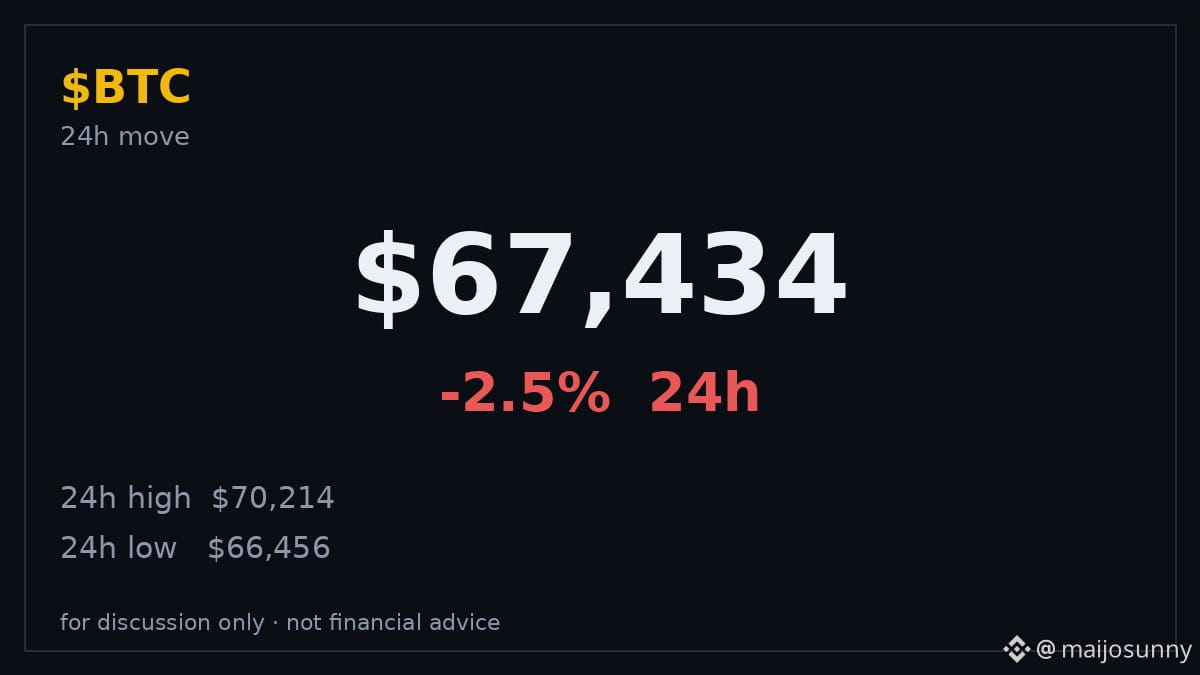
MSCI confirmed Nov 11 it will drop Strategy (MSTR) from its indexes at the Nov 30 close, calling it a "non-operating company" under a new rule. JPMorgan estimates ~$2.8B in forced selling from index funds. Meanwhile $BTC at $67,434 sits ~11% below Strategy's $75,456 average cost, putting its 850,364 BTC stack ~$6.85B underwater on paper (CryptoTimes calc, based on the Nov 9 SEC 8-K).
🤔 Why it matters
Strategy buys BTC by selling shares at a premium. That premium has compressed from 3.4x a year ago to about 1.08x (CoinDesk). Removal does NOT force Strategy to sell any BTC, but a thinner premium means thinner fuel for the next buy.
👀 What to watch
Monday's 8-K (Nov 16): did Strategy buy, sell, or pause? And Nov 30: how much of the $2.8B actually exits.
Is MSCI's call the end of the treasury-company trade, or a dip to buy before Monday's filing? 🐂🐻
Not financial advice. DYOR.
#Strategy #Bitcoin #MSCI #crypto
99

·
--
Verified
$2.8 billion, forced selling on November 30.
JPMorgan estimates that index funds will have to dump this much MSTR stock by then.
In the same rebalancing, MSCI added another Bitcoin-hoarding company, SWC, to the index.
SWC holds only 2,850 bitcoins.
I don't think the index is rejecting Bitcoin; it's rejecting the business model of making hoarding Bitcoin your main business.
Which side are you on: has the Bitcoin-hoarding model run its course, or has the index got it wrong?
@Binance_News $BTC #BTC #MSCI


407
·
--
MSCI kicked Strategy out of its index, but what really got knocked out wasn’t the 850,000 coins it holds—not a single one will be forced onto the market.
What got knocked out was the money-printing machine of “issuing stock to buy coins.”
On November 11, MSCI confirmed that after the market close on November 30, it would remove Strategy from the MSCI USA/World/ACWI indexes. Index funds will have to sell about 13 million shares (3.1% of the float), which JPMorgan estimates at around $2.8 billion. If Nasdaq follows suit, the total could reach $8.8 billion.
BTC is currently around $65,500, and has closed below Strategy’s average cost of $75,500 for several days in a row. Its 850,000-coin holdings are sitting on about $8.4 billion in unrealized losses.
MSTR closed Friday at $111.62, down 13.67% over five days and 26.22% over the past month. The company’s market cap is $51.68 billion, already below the roughly $55.7 billion value of the coins it holds—the stock is cheaper than the value of its coins on the books.
My take: when the stock trades below the value of its coins, issuing new shares to buy more coins just means losing more with every purchase. Strategy’s biggest strength in this bull market—issuing stock at a premium to acquire coins—has stalled. As recently as November 2–8, it bought 1,036 coins at an average price of $79,000. It hasn’t sold a single coin this week, but whether it can keep buying next week depends on whether the premium returns.
The real risk isn’t the $2.8 billion in forced selling on November 30 (Strategy itself says that’s less than a day’s trading volume). It’s that if the index world classifies “companies that hoard coins” as non-operating companies, this financing channel will systematically narrow.
Watch three variables next: forced selling at the November 30 close, whether Nasdaq launches a similar consultation, and whether MSTR’s discount to the value of its coins narrows. If the discount doesn’t narrow, Strategy will likely first slow its weekly coin purchases, or even stop them altogether.
Do you think Strategy will be completely “expelled” from the index world, or could a rebound in the coin price to its $75,000 cost basis restore its premium?
$BTC
#比特币 #MSCI #Strategy
The above is for market information only and does not constitute investment advice.
432

·
--
Is Bitcoin about to be dumped? Strategy is being removed from MSCI indexes—first, understand the difference between selling stock, selling coins, and delisting
Being removed from an index does not mean Bitcoin has to be sold.
MSCI announced the results of its November index review on November 11, with all changes taking effect at the close on November 30. According to the removal list cited by media reports, Strategy (MSTR) is being removed from the MSCI USA Index, and consequently from the MSCI World and ACWI indexes. In this round alone, ACWI is adding 13 stocks and removing 100.
Why is it being removed? Under the new “non-operating companies” rules MSCI set on October 15:
1. First, MSCI checks whether a company has enough operating assets.
2. If not, it is assessed using five financial ratios. A company fails if it meets four or more of the criteria.
3. Companies already in the index are removed only if they fail in two consecutive annual reporting periods, giving them a buffer.
On November 11, MSCI also confirmed that these rules apply to the MSCI USA Index Series. The temporary freeze, introduced on October 10, 2025, for companies with “digital assets accounting for more than 50% of total assets” is being discontinued as of this review. All companies will be assessed under the new rules.
Three common misconceptions:
- “It’s going to be delisted”: No. An index is a list that funds use to select stocks, not a stock exchange. The shares will continue trading as usual.
- “The company has to sell its coins”: The rules only determine whether a company can be included in the index; they do not require it to sell any assets.
- “This has nothing to do with the coins I hold”: There is an indirect connection. Passive funds tracking these indexes will have to remove MSTR when the changes take effect. Companies like this raise funds by issuing shares to buy coins; if the share price weakens, issuing the same number of shares brings in less money.
A quick self-check you can use: If you hold shares in a “crypto treasury company” or related funds, check two figures first—the share of total assets made up by digital assets, and how much revenue comes from the company’s main business. The higher the first figure and the smaller the main business, the more likely the company is to fall under the new screening rules. Go by MSCI’s official announcement, and don’t trust screenshots claiming “so-and-so is also getting removed.”
Follow me. I’ll explain the original rules behind institutional news first, then discuss whether it has anything to do with the coins you hold.
#比特币 #MSCI #Strategy #币股 $BTC

267

·
--
Verified
For the past couple of days, everyone’s been saying “Strategy will be forced to sell $2.8 billion worth,” which sounds pretty scary, so I looked into where that came from 🤡
The $2.8 billion figure was calculated by JPMorgan last November, based on the old version of MSCI’s proposal at the time. That version never went into effect. This year, MSCI switched to a new rule for “non-operating companies.” Strategy is indeed still being kicked out, effective after the close on November 30, but MSCI itself has never said exactly how much passive funds would have to sell.
Strategy says that funds tracking MSCI indexes hold around 13 million shares, or 3.1% of its total shares outstanding. Using Friday’s close of $MSTR at $111.62, that comes to just over $1.4 billion. 17.9 million shares traded on Friday alone.
So just looking at index-related selling pressure, one day’s trading volume could absorb it. It’s not as dramatic as people make it sound.
What I’m more concerned about is another calculation. BTC is around $67,700 right now, and Strategy’s average cost for its more than 850,000 coins is $75,456, so the price is about 10% below its cost. It buys coins by issuing common and preferred stock. When the share price falls and its premium shrinks, each share it sells buys fewer coins, so the accelerator on this coin-buying machine naturally lets up.
After the 30th, keep an eye on its weekly 8-K filings to see whether it’s still buying and how much. That’s more reliable than news headlines.
#MSTR #BTC #MSCI #USStocks
$MSTR $BTC
803

·
--
Bearish
$BTC 🤔
🚨 MSCI EXCLUDES STRATEGY (MSTR) — IS BITCOIN IN TROUBLE?
A major development has put Michael Saylor's Bitcoin strategy under the spotlight.
MSCI's decision to exclude Strategy from its indexes could trigger significant institutional selling pressure.
💰 Potential index-related outflows could reach billions of dollars.
📉 Could this affect Strategy's ability to raise capital and continue accumulating Bitcoin?
🐋 Institutional money plays a major role in today's crypto market.
THE BIG QUESTION:
Is this a warning sign for Bitcoin, or just another temporary market shake-up?
👇 What's your take?
@followers
#Bitcoin #BTC #MichaelSaylor #strategyinvest #CryptoNews #MSCI
#WhatWillDriveCryptoandStocks’NextRebound?

1
311
Log in to explore more content
Join global crypto users on Binance Square
⚡️ Get latest and useful information about crypto.
💬 Trusted by the world’s largest crypto exchange.
👍 Discover real insights from verified creators.
Email / Phone number
Trending Topics
1
#WillMarketsStageAThanksgivingReliefRally?
72,782 views
1,152 Discussing
2
#WillOctCorePCEShiftFedHikeExpectations?
19,766 views
378 Discussing
3
#BessentSoftensStanceOnHuang’sNvidiaReturn
48,722 views
746 Discussing
4
#EvolveAtBinanceBlockchainWeek
66,171 views
680 Discussing
5
#TrumpBackedAmericanBitcoinRaisesHoldingsToOver8500BTC
0 views
4 Discussing
6
#MuskWarnsOfAICashCrunch
36,212 views
544 Discussing
7
#SkyPSMUSDCLiquidityReboundsTo$1.77B
170 views
6 Discussing
8
#SouthKoreaPlansToReleaseDigitalAssetBasicActDraft
3,969 views
69 Discussing
9
#ChinaKoreaTaiwanPrepareStockRescuesAheadOfMonday
9,000 views
76 Discussing
10
#SouthKoreaToTightenOversightOfCryptoTransfersAbroad
4,504 views
43 Discussing