

#marketcap
marketcap
743,498 views
2,798 Discussing
Hot
Latest

🌌 HISTORIC MILESTONE: SpaceX Hits $2.22 Trillion Valuation!
#SpaceXMarketCapSurpassesTSMC
In an unprecedented market move, SpaceX's market capitalization has officially reached a staggering $2.22 Trillion, officially surpassing semiconductor titan TSMC! 🚀
Following a massive post-earnings rally, Elon Musk’s aerospace giant continues to redefine industry standards. From commercial spaceflight to global satellite connectivity via Starlink, SpaceX is proving that the sky is no longer the limit—it’s just the starting line.
💡 Do you think SpaceX will eventually become the world's most valuable company? Let’s discuss! ⚡
#SpaceX #marketcap #stockmarket $SPCXB
{spot}(SPCXBUSDT)
🌌 HISTORIC MILESTONE: SpaceX Hits $2.22 Trillion Valuation!
#SpaceXMarketCapSurpassesTSMC
In an unprecedented market move, SpaceX's market capitalization has officially reached a staggering $2.22 Trillion, officially surpassing semiconductor titan TSMC! 🚀
Following a massive post-earnings rally, Elon Musk’s aerospace giant continues to redefine industry standards. From commercial spaceflight to global satellite connectivity via Starlink, SpaceX is proving that the sky is no longer the limit—it’s just the starting line.
💡 Do you think SpaceX will eventually become the world's most valuable company? Let’s discuss! ⚡
#SpaceX #marketcap #stockmarket $SPCXB
#SpaceXMarketCapSurpassesTSMC
In an unprecedented market move, SpaceX's market capitalization has officially reached a staggering $2.22 Trillion, officially surpassing semiconductor titan TSMC! 🚀
Following a massive post-earnings rally, Elon Musk’s aerospace giant continues to redefine industry standards. From commercial spaceflight to global satellite connectivity via Starlink, SpaceX is proving that the sky is no longer the limit—it’s just the starting line.
💡 Do you think SpaceX will eventually become the world's most valuable company? Let’s discuss! ⚡
#SpaceX #marketcap #stockmarket $SPCXB
128

·
--
Article
Is a Cheap Coin Really Cheap? Price vs Market Cap ExplainedDay 6 of my crypto learning series
When I started learning crypto, one idea felt obvious: a coin priced at $0.01 must be cheap, and a coin priced at $50,000 must be expensive. It turns out this is one of the most common beginner mistakes. The price of one coin does not tell you how big or how valuable the whole coin is. Here is what I learned, in simple words.
What is price?
Price is simply what one coin costs right now. If a coin is priced at $2, then buying one coin costs $2. That is all it tells you.
What is market cap?
Market cap is short for market capitalization. It shows the total size of a coin, and it is calculated like this:
Market cap = price × circulating supply
Circulating supply means the number of coins that are available and trading right now.
A simple example (made-up numbers)
Imagine two coins:
Coin A: price $0.01, with 100 billion coins in circulation. Market cap = $1 billion.Coin B: price $0.50, with 2 billion coins in circulation. Market cap = $1 billion.
Both coins have the same market cap. They are the same size. But Coin A looks “cheap” because each coin costs just one cent. Coin A is not cheaper. It just has many more coins. This is why a low price alone does not mean cheap.
Think of it like pizza
Imagine two pizzas of the same size. One is cut into 4 big slices, and the other into 100 tiny slices. A tiny slice costs less, but you are not getting a better deal. The whole pizza is the same size. Price is the price of one slice. Market cap is the price of the whole pizza.
Other numbers to read next to price
Circulating supply. The coins available now. It affects market cap directly.
Max supply. The most coins that can ever exist. Bitcoin has a maximum of 21 million. Ethereum has no fixed maximum, as we learned on Day 2.
Fully diluted valuation (FDV). This is the value if all future coins already existed at today’s price. If there is a big gap between market cap and FDV, many coins have not been released yet. More coins entering the market later could affect the price. FDV is a theoretical number, so treat it as a warning sign, not a prediction.
24-hour trading volume. How much of the coin was bought and sold in the last day. It shows how active the market is. A coin with very low volume can be hard to sell at the price you see.
What market cap does not tell you
It is not money invested. Market cap is just the last price multiplied by supply. Nobody put that full amount in.It does not mean a coin is a good buy. It helps you compare size, not decide value.It can be shaky for small coins. Small coins can move a lot, even on small trades.Supply numbers can differ. Different sites may count “circulating supply” slightly differently, so compare more than one source.
A simple checklist before you judge any coin
Don’t judge by price alone.Check the market cap.Check circulating supply and max supply.Compare market cap with FDV.Look at 24-hour volume.Check the same numbers on more than one source.
Final thoughts
Price is one small piece of the picture. Market cap, supply, and volume help you see the rest. Understanding them will not tell you what will happen next, because nobody can predict that. But it will stop you from making the “cheap coin” mistake. I am not recommending any coin in this series. Please do your own research.
This is learning, not financial advice. Crypto prices can swing a lot, and you can lose money.
Question for you: Did you ever think a coin was “cheap” because of its price? Tell me below 👇
Day 7 is about how to research a coin before you trust it.
#Crypto #MarketCap #LearnCrypto #Beginners
Is a Cheap Coin Really Cheap? Price vs Market Cap Explained
Day 6 of my crypto learning series
When I started learning crypto, one idea felt obvious: a coin priced at $0.01 must be cheap, and a coin priced at $50,000 must be expensive. It turns out this is one of the most common beginner mistakes. The price of one coin does not tell you how big or how valuable the whole coin is. Here is what I learned, in simple words.
What is price?
Price is simply what one coin costs right now. If a coin is priced at $2, then buying one coin costs $2. That is all it tells you.
What is market cap?
Market cap is short for market capitalization. It shows the total size of a coin, and it is calculated like this:
Market cap = price × circulating supply
Circulating supply means the number of coins that are available and trading right now.
A simple example (made-up numbers)
Imagine two coins:
Coin A: price $0.01, with 100 billion coins in circulation. Market cap = $1 billion.Coin B: price $0.50, with 2 billion coins in circulation. Market cap = $1 billion.
Both coins have the same market cap. They are the same size. But Coin A looks “cheap” because each coin costs just one cent. Coin A is not cheaper. It just has many more coins. This is why a low price alone does not mean cheap.
Think of it like pizza
Imagine two pizzas of the same size. One is cut into 4 big slices, and the other into 100 tiny slices. A tiny slice costs less, but you are not getting a better deal. The whole pizza is the same size. Price is the price of one slice. Market cap is the price of the whole pizza.
Other numbers to read next to price
Circulating supply. The coins available now. It affects market cap directly.
Max supply. The most coins that can ever exist. Bitcoin has a maximum of 21 million. Ethereum has no fixed maximum, as we learned on Day 2.
Fully diluted valuation (FDV). This is the value if all future coins already existed at today’s price. If there is a big gap between market cap and FDV, many coins have not been released yet. More coins entering the market later could affect the price. FDV is a theoretical number, so treat it as a warning sign, not a prediction.
24-hour trading volume. How much of the coin was bought and sold in the last day. It shows how active the market is. A coin with very low volume can be hard to sell at the price you see.
What market cap does not tell you
It is not money invested. Market cap is just the last price multiplied by supply. Nobody put that full amount in.It does not mean a coin is a good buy. It helps you compare size, not decide value.It can be shaky for small coins. Small coins can move a lot, even on small trades.Supply numbers can differ. Different sites may count “circulating supply” slightly differently, so compare more than one source.
A simple checklist before you judge any coin
Don’t judge by price alone.Check the market cap.Check circulating supply and max supply.Compare market cap with FDV.Look at 24-hour volume.Check the same numbers on more than one source.
Final thoughts
Price is one small piece of the picture. Market cap, supply, and volume help you see the rest. Understanding them will not tell you what will happen next, because nobody can predict that. But it will stop you from making the “cheap coin” mistake. I am not recommending any coin in this series. Please do your own research.
This is learning, not financial advice. Crypto prices can swing a lot, and you can lose money.
Question for you: Did you ever think a coin was “cheap” because of its price? Tell me below 👇
Day 7 is about how to research a coin before you trust it.
#Crypto #MarketCap #LearnCrypto #Beginners
When I started learning crypto, one idea felt obvious: a coin priced at $0.01 must be cheap, and a coin priced at $50,000 must be expensive. It turns out this is one of the most common beginner mistakes. The price of one coin does not tell you how big or how valuable the whole coin is. Here is what I learned, in simple words.
What is price?
Price is simply what one coin costs right now. If a coin is priced at $2, then buying one coin costs $2. That is all it tells you.
What is market cap?
Market cap is short for market capitalization. It shows the total size of a coin, and it is calculated like this:
Market cap = price × circulating supply
Circulating supply means the number of coins that are available and trading right now.
A simple example (made-up numbers)
Imagine two coins:
Coin A: price $0.01, with 100 billion coins in circulation. Market cap = $1 billion.Coin B: price $0.50, with 2 billion coins in circulation. Market cap = $1 billion.
Both coins have the same market cap. They are the same size. But Coin A looks “cheap” because each coin costs just one cent. Coin A is not cheaper. It just has many more coins. This is why a low price alone does not mean cheap.
Think of it like pizza
Imagine two pizzas of the same size. One is cut into 4 big slices, and the other into 100 tiny slices. A tiny slice costs less, but you are not getting a better deal. The whole pizza is the same size. Price is the price of one slice. Market cap is the price of the whole pizza.
Other numbers to read next to price
Circulating supply. The coins available now. It affects market cap directly.
Max supply. The most coins that can ever exist. Bitcoin has a maximum of 21 million. Ethereum has no fixed maximum, as we learned on Day 2.
Fully diluted valuation (FDV). This is the value if all future coins already existed at today’s price. If there is a big gap between market cap and FDV, many coins have not been released yet. More coins entering the market later could affect the price. FDV is a theoretical number, so treat it as a warning sign, not a prediction.
24-hour trading volume. How much of the coin was bought and sold in the last day. It shows how active the market is. A coin with very low volume can be hard to sell at the price you see.
What market cap does not tell you
It is not money invested. Market cap is just the last price multiplied by supply. Nobody put that full amount in.It does not mean a coin is a good buy. It helps you compare size, not decide value.It can be shaky for small coins. Small coins can move a lot, even on small trades.Supply numbers can differ. Different sites may count “circulating supply” slightly differently, so compare more than one source.
A simple checklist before you judge any coin
Don’t judge by price alone.Check the market cap.Check circulating supply and max supply.Compare market cap with FDV.Look at 24-hour volume.Check the same numbers on more than one source.
Final thoughts
Price is one small piece of the picture. Market cap, supply, and volume help you see the rest. Understanding them will not tell you what will happen next, because nobody can predict that. But it will stop you from making the “cheap coin” mistake. I am not recommending any coin in this series. Please do your own research.
This is learning, not financial advice. Crypto prices can swing a lot, and you can lose money.
Question for you: Did you ever think a coin was “cheap” because of its price? Tell me below 👇
Day 7 is about how to research a coin before you trust it.
#Crypto #MarketCap #LearnCrypto #Beginners
115

One cohort's market cap has climbed 41% since late August while $BTC managed about 7%.
That kind of gap is where accounts get emotional. You either chase what already moved because missing it feels worse than being wrong, or you stay loyal to a Bitcoin-only plan and watch the rest of the tape make the wait feel expensive.
Market cap is just price multiplied by supply, so this is not a mood survey. CryptoQuant's comparison says capital showed up in that cohort several times faster than it did in Bitcoin, 41% against 7%.
I've seen this shape in earlier cycles, usually after the first $BTC leg goes quiet. Relative strength leaks elsewhere, attention stays glued to Bitcoin, and anyone still trading last cycle's $ETH or $SOL playbook waits until the move looks obvious. Obvious is often when the risk flips. A spread that wide can keep running if fresh money is still rotating, and it can also be the stretch that punishes late greed.
Where do you think this gap goes from here?
#Bitcoin #Crypto #MarketCap
One cohort's market cap has climbed 41% since late August while $BTC managed about 7%.
That kind of gap is where accounts get emotional. You either chase what already moved because missing it feels worse than being wrong, or you stay loyal to a Bitcoin-only plan and watch the rest of the tape make the wait feel expensive.
Market cap is just price multiplied by supply, so this is not a mood survey. CryptoQuant's comparison says capital showed up in that cohort several times faster than it did in Bitcoin, 41% against 7%.
I've seen this shape in earlier cycles, usually after the first $BTC leg goes quiet. Relative strength leaks elsewhere, attention stays glued to Bitcoin, and anyone still trading last cycle's $ETH or $SOL playbook waits until the move looks obvious. Obvious is often when the risk flips. A spread that wide can keep running if fresh money is still rotating, and it can also be the stretch that punishes late greed.
Where do you think this gap goes from here?
#Bitcoin #Crypto #MarketCap
That kind of gap is where accounts get emotional. You either chase what already moved because missing it feels worse than being wrong, or you stay loyal to a Bitcoin-only plan and watch the rest of the tape make the wait feel expensive.
Market cap is just price multiplied by supply, so this is not a mood survey. CryptoQuant's comparison says capital showed up in that cohort several times faster than it did in Bitcoin, 41% against 7%.
I've seen this shape in earlier cycles, usually after the first $BTC leg goes quiet. Relative strength leaks elsewhere, attention stays glued to Bitcoin, and anyone still trading last cycle's $ETH or $SOL playbook waits until the move looks obvious. Obvious is often when the risk flips. A spread that wide can keep running if fresh money is still rotating, and it can also be the stretch that punishes late greed.
Where do you think this gap goes from here?
#Bitcoin #Crypto #MarketCap
2

·
--
A $0.10 crypto coin isn't always cheaper than a $1,000 coin.
Why? Because a coin’s price doesn’t tell the whole story.
📊 Market Cap = Price × Circulating Supply
Learn how crypto market cap works, how it compares with FDV, and what to check before judging a cryptocurrency.
Read the full guide: Scan the QR code:
Question: When comparing crypto coins, do you check the price or market cap first?
#cryptomarketcap #marketcap #blocakchain
A $0.10 crypto coin isn't always cheaper than a $1,000 coin.
Why? Because a coin’s price doesn’t tell the whole story.
📊 Market Cap = Price × Circulating Supply
Learn how crypto market cap works, how it compares with FDV, and what to check before judging a cryptocurrency.
Read the full guide: Scan the QR code:
Question: When comparing crypto coins, do you check the price or market cap first?
#cryptomarketcap #marketcap #blocakchain
Why? Because a coin’s price doesn’t tell the whole story.
📊 Market Cap = Price × Circulating Supply
Learn how crypto market cap works, how it compares with FDV, and what to check before judging a cryptocurrency.
Read the full guide: Scan the QR code:
Question: When comparing crypto coins, do you check the price or market cap first?
#cryptomarketcap #marketcap #blocakchain
99

·
--
A coin trading at $0.10 is not automatically cheaper than a coin trading at $10.
Market capitalization changes the entire picture.
Consider these projects:
$GRT — Blockchain data indexing
$SAND — Gaming and virtual worlds
$MANA — Virtual-world ecosystem
Before setting a future price target, I would calculate:
* Current market cap
* Circulating token supply
* Market cap required at the target price
* Possible future token dilution
A price target without a valuation model is just a number.
Which coin do you think is most misunderstood by the market?
#MarketCap #CryptoEducation #altcoins
A coin trading at $0.10 is not automatically cheaper than a coin trading at $10.
Market capitalization changes the entire picture.
Consider these projects:
$GRT — Blockchain data indexing
$SAND — Gaming and virtual worlds
$MANA — Virtual-world ecosystem
Before setting a future price target, I would calculate:
* Current market cap
* Circulating token supply
* Market cap required at the target price
* Possible future token dilution
A price target without a valuation model is just a number.
Which coin do you think is most misunderstood by the market?
#MarketCap #CryptoEducation #altcoins
Market capitalization changes the entire picture.
Consider these projects:
$GRT — Blockchain data indexing
$SAND — Gaming and virtual worlds
$MANA — Virtual-world ecosystem
Before setting a future price target, I would calculate:
* Current market cap
* Circulating token supply
* Market cap required at the target price
* Possible future token dilution
A price target without a valuation model is just a number.
Which coin do you think is most misunderstood by the market?
#MarketCap #CryptoEducation #altcoins
468

·
--
Beyond speculation: The long-term macro curve of the crypto market
When we analyze daily noises and short-term volatility, it is easy to lose sight of the long-term structural trend. The total market capitalization chart (TOTAL) shows a clear pattern of increasingly higher fund consolidation throughout the halving cycles and global liquidity expansion.
💡 3 Pillars of the Sector Growth Projection:
- Increase in Historical Minimums (Higher Lows):
With each market cycle, the minimum value of the crypto market consolidates at levels significantly higher than the previous cycle. This reflects the retention of capital and permanent infrastructure in the ecosystem.
- Maturation of Liquidity Composition:
Solid infrastructure assets (Bitcoin, Ethereum, BNB) and stablecoins maintain the value of the network, while speculative liquidity gradually migrates to new operating theses (RWA, IA and L2s).
- Direct Institutional Capital Entry:
With the consolidation of spot ETFs and institutional custody infrastructure, the crypto market transitions from a purely retail-driven ecosystem to an asset class integrated with global finance.
{spot}(BTCUSDT)
#marketcap #BTC走势分析
Beyond speculation: The long-term macro curve of the crypto market
When we analyze daily noises and short-term volatility, it is easy to lose sight of the long-term structural trend. The total market capitalization chart (TOTAL) shows a clear pattern of increasingly higher fund consolidation throughout the halving cycles and global liquidity expansion.
💡 3 Pillars of the Sector Growth Projection:
- Increase in Historical Minimums (Higher Lows):
With each market cycle, the minimum value of the crypto market consolidates at levels significantly higher than the previous cycle. This reflects the retention of capital and permanent infrastructure in the ecosystem.
- Maturation of Liquidity Composition:
Solid infrastructure assets (Bitcoin, Ethereum, BNB) and stablecoins maintain the value of the network, while speculative liquidity gradually migrates to new operating theses (RWA, IA and L2s).
- Direct Institutional Capital Entry:
With the consolidation of spot ETFs and institutional custody infrastructure, the crypto market transitions from a purely retail-driven ecosystem to an asset class integrated with global finance.
#marketcap #BTC走势分析
When we analyze daily noises and short-term volatility, it is easy to lose sight of the long-term structural trend. The total market capitalization chart (TOTAL) shows a clear pattern of increasingly higher fund consolidation throughout the halving cycles and global liquidity expansion.
💡 3 Pillars of the Sector Growth Projection:
- Increase in Historical Minimums (Higher Lows):
With each market cycle, the minimum value of the crypto market consolidates at levels significantly higher than the previous cycle. This reflects the retention of capital and permanent infrastructure in the ecosystem.
- Maturation of Liquidity Composition:
Solid infrastructure assets (Bitcoin, Ethereum, BNB) and stablecoins maintain the value of the network, while speculative liquidity gradually migrates to new operating theses (RWA, IA and L2s).
- Direct Institutional Capital Entry:
With the consolidation of spot ETFs and institutional custody infrastructure, the crypto market transitions from a purely retail-driven ecosystem to an asset class integrated with global finance.
#marketcap #BTC走势分析
89

·
--
Can $LUNC Reach ₹10? Breaking Down the Trillion-Rupee Math! 📉🚀
Is it mathematically possible for Terra Classic ($LUNC) to hit ₹10 INR? Let’s analyze the current supply data directly from the charts!
🔢 The Market Cap Calculation:
Circulating Supply: 5.52 Trillion LUNC
Target Price: ₹10 INR
Required Market Cap: ₹55.2 Trillion INR (~$660+ Billion USD)
💡 The Reality Check:
At a valuation of ₹55.2 Trillion, LUNC’s market cap would become massive—surpassing many top global tech giants and claiming a huge percentage of the entire cryptocurrency market.
🔥 What Needs to Happen for ₹10?
Aggressive Supply Burns: With 5.52 Trillion tokens currently in circulation, reaching ₹10 requires a monumental, long-term reduction in supply through continuous community burns and utility-driven deflation.
Unprecedented Market Influx: A multi-trillion-dollar global crypto super-cycle would be needed to inject this level of capital into legacy meme/recovery tokens.
What is your long-term outlook for Terra Classic? Can community burns make the impossible possible? Drop your predictions below! 👇
#LUNC #TerraClassic #CryptoAnalysis #BinanceSquare #marketcap
{spot}(LUNCUSDT)
Can $LUNC Reach ₹10? Breaking Down the Trillion-Rupee Math! 📉🚀
Is it mathematically possible for Terra Classic ($LUNC ) to hit ₹10 INR? Let’s analyze the current supply data directly from the charts!
🔢 The Market Cap Calculation:
Circulating Supply: 5.52 Trillion LUNC
Target Price: ₹10 INR
Required Market Cap: ₹55.2 Trillion INR (~$660+ Billion USD)
💡 The Reality Check:
At a valuation of ₹55.2 Trillion, LUNC’s market cap would become massive—surpassing many top global tech giants and claiming a huge percentage of the entire cryptocurrency market.
🔥 What Needs to Happen for ₹10?
Aggressive Supply Burns: With 5.52 Trillion tokens currently in circulation, reaching ₹10 requires a monumental, long-term reduction in supply through continuous community burns and utility-driven deflation.
Unprecedented Market Influx: A multi-trillion-dollar global crypto super-cycle would be needed to inject this level of capital into legacy meme/recovery tokens.
What is your long-term outlook for Terra Classic? Can community burns make the impossible possible? Drop your predictions below! 👇
#LUNC #TerraClassic #CryptoAnalysis #BinanceSquare #marketcap
Is it mathematically possible for Terra Classic ($LUNC ) to hit ₹10 INR? Let’s analyze the current supply data directly from the charts!
🔢 The Market Cap Calculation:
Circulating Supply: 5.52 Trillion LUNC
Target Price: ₹10 INR
Required Market Cap: ₹55.2 Trillion INR (~$660+ Billion USD)
💡 The Reality Check:
At a valuation of ₹55.2 Trillion, LUNC’s market cap would become massive—surpassing many top global tech giants and claiming a huge percentage of the entire cryptocurrency market.
🔥 What Needs to Happen for ₹10?
Aggressive Supply Burns: With 5.52 Trillion tokens currently in circulation, reaching ₹10 requires a monumental, long-term reduction in supply through continuous community burns and utility-driven deflation.
Unprecedented Market Influx: A multi-trillion-dollar global crypto super-cycle would be needed to inject this level of capital into legacy meme/recovery tokens.
What is your long-term outlook for Terra Classic? Can community burns make the impossible possible? Drop your predictions below! 👇
#LUNC #TerraClassic #CryptoAnalysis #BinanceSquare #marketcap
11
1.3k

·
--
Crypto market caps rebound 39% in Q3, ending three‑quarter decline.
Total crypto market cap rose $840 billion, or 39.6%, to $3 trillion — the largest quarterly gain since Q4 2024. It peaked near $3 trillion on Sep 21 and closed the quarter at $2.96 trillion, still 4% lower year‑to‑date.
August delivered the bulk of the gain, jumping 21.8% (+$490 billion) after the US Treasury doubled its long‑dated bond buybacks and steady net inflows into spot Bitcoin ETFs. Ethereum surged 71% to $2,684, supported by $3.1 billion net inflows into US spot ETH funds.
Average daily volume fell 8.6% to $73.3 billion; spot volume on the top ten centralized exchanges dropped 14.2% to $1.65 trillion. Open interest on perpetual futures rose 40.6% to just over $100 billion, the first time since Q3 2025. Binance’s spot share expanded to 42.7% from 38.7% in Q2.
Which metric—market‑cap growth, trading volume, or open interest—will drive the next quarter’s price trends?
#Crypto #Bitcoin #Ethereum #MarketCap #FinTech
Crypto market caps rebound 39% in Q3, ending three‑quarter decline.
Total crypto market cap rose $840 billion, or 39.6%, to $3 trillion — the largest quarterly gain since Q4 2024. It peaked near $3 trillion on Sep 21 and closed the quarter at $2.96 trillion, still 4% lower year‑to‑date.
August delivered the bulk of the gain, jumping 21.8% (+$490 billion) after the US Treasury doubled its long‑dated bond buybacks and steady net inflows into spot Bitcoin ETFs. Ethereum surged 71% to $2,684, supported by $3.1 billion net inflows into US spot ETH funds.
Average daily volume fell 8.6% to $73.3 billion; spot volume on the top ten centralized exchanges dropped 14.2% to $1.65 trillion. Open interest on perpetual futures rose 40.6% to just over $100 billion, the first time since Q3 2025. Binance’s spot share expanded to 42.7% from 38.7% in Q2.
Which metric—market‑cap growth, trading volume, or open interest—will drive the next quarter’s price trends?
#Crypto #Bitcoin #Ethereum #MarketCap #FinTech
Total crypto market cap rose $840 billion, or 39.6%, to $3 trillion — the largest quarterly gain since Q4 2024. It peaked near $3 trillion on Sep 21 and closed the quarter at $2.96 trillion, still 4% lower year‑to‑date.
August delivered the bulk of the gain, jumping 21.8% (+$490 billion) after the US Treasury doubled its long‑dated bond buybacks and steady net inflows into spot Bitcoin ETFs. Ethereum surged 71% to $2,684, supported by $3.1 billion net inflows into US spot ETH funds.
Average daily volume fell 8.6% to $73.3 billion; spot volume on the top ten centralized exchanges dropped 14.2% to $1.65 trillion. Open interest on perpetual futures rose 40.6% to just over $100 billion, the first time since Q3 2025. Binance’s spot share expanded to 42.7% from 38.7% in Q2.
Which metric—market‑cap growth, trading volume, or open interest—will drive the next quarter’s price trends?
#Crypto #Bitcoin #Ethereum #MarketCap #FinTech
1
54

THE CRYPTO MARKET ISN'T MOVING AS ONE!
An October 18 market snapshot placed total crypto market capitalization near $2.7 trillion.
But market cap alone doesn't tell the full story.
Check:
• How many coins are advancing?
• Is trading volume increasing or falling?
• Are gains concentrated in just a few tokens?
A green headline can hide a weak broader market.
💬 Do you check total market cap or BTC dominance first?
#CryptoMarket #MarketCap #Bitcoin #TradingInsights
THE CRYPTO MARKET ISN'T MOVING AS ONE!
An October 18 market snapshot placed total crypto market capitalization near $2.7 trillion.
But market cap alone doesn't tell the full story.
Check:
• How many coins are advancing?
• Is trading volume increasing or falling?
• Are gains concentrated in just a few tokens?
A green headline can hide a weak broader market.
💬 Do you check total market cap or BTC dominance first?
#CryptoMarket #MarketCap #Bitcoin #TradingInsights
An October 18 market snapshot placed total crypto market capitalization near $2.7 trillion.
But market cap alone doesn't tell the full story.
Check:
• How many coins are advancing?
• Is trading volume increasing or falling?
• Are gains concentrated in just a few tokens?
A green headline can hide a weak broader market.
💬 Do you check total market cap or BTC dominance first?
#CryptoMarket #MarketCap #Bitcoin #TradingInsights
47
·
--
Can $PEPE Reach ₹1? Breaking Down the Trillion-Dollar Math! 🐸📊
Is it mathematically possible for Pepe Coin ($PEPE ) to reach ₹1 INR? Let's analyze the exact circulating supply and market cap dynamics!
🔢 The Market Cap Calculation:
Circulating Supply: 413.77 Trillion PEPE
Target Price: ₹1 INR
Required Market Cap: ₹413.77 Trillion INR (~$5 Trillion USD)
💡 Market Comparison:
At ₹413.77 Trillion, PEPE's valuation would be nearly 3x the size of Bitcoin's ($BTC) current market cap!
🚀 What Makes It Possible?
Aggressive Token Burning: If significant supply burns occur over time, the required market cap to hit ₹1 drops drastically.
Exponential Crypto Expansion: As global crypto adoption surges into multi-trillion-dollar territory, top meme assets could reach unprecedented valuations.
What's your long-term price target for $PEPE ? Drop your predictions below! 👇
#PEPE #pepecoin #CryptoAnalysis
#memecoins #marketcap
{spot}(PEPEUSDT)
Can $PEPE Reach ₹1? Breaking Down the Trillion-Dollar Math! 🐸📊
Is it mathematically possible for Pepe Coin ($PEPE ) to reach ₹1 INR? Let's analyze the exact circulating supply and market cap dynamics!
🔢 The Market Cap Calculation:
Circulating Supply: 413.77 Trillion PEPE
Target Price: ₹1 INR
Required Market Cap: ₹413.77 Trillion INR (~$5 Trillion USD)
💡 Market Comparison:
At ₹413.77 Trillion, PEPE's valuation would be nearly 3x the size of Bitcoin's ($BTC) current market cap!
🚀 What Makes It Possible?
Aggressive Token Burning: If significant supply burns occur over time, the required market cap to hit ₹1 drops drastically.
Exponential Crypto Expansion: As global crypto adoption surges into multi-trillion-dollar territory, top meme assets could reach unprecedented valuations.
What's your long-term price target for $PEPE ? Drop your predictions below! 👇
#PEPE #pepecoin #CryptoAnalysis
#memecoins #marketcap
Is it mathematically possible for Pepe Coin ($PEPE ) to reach ₹1 INR? Let's analyze the exact circulating supply and market cap dynamics!
🔢 The Market Cap Calculation:
Circulating Supply: 413.77 Trillion PEPE
Target Price: ₹1 INR
Required Market Cap: ₹413.77 Trillion INR (~$5 Trillion USD)
💡 Market Comparison:
At ₹413.77 Trillion, PEPE's valuation would be nearly 3x the size of Bitcoin's ($BTC) current market cap!
🚀 What Makes It Possible?
Aggressive Token Burning: If significant supply burns occur over time, the required market cap to hit ₹1 drops drastically.
Exponential Crypto Expansion: As global crypto adoption surges into multi-trillion-dollar territory, top meme assets could reach unprecedented valuations.
What's your long-term price target for $PEPE ? Drop your predictions below! 👇
#PEPE #pepecoin #CryptoAnalysis
#memecoins #marketcap
1
190
If you're still buying $BTC just because it hit a trillion faster than anything else, stop now.
That headline is how traders talk themselves into late entries and then have no plan for the exit. You feel the story, you chase it, and the position turns into a bag you cannot explain.
Bitcoin reached a $1 trillion market cap faster than any other asset in history. No venture capital, no board of directors, no marketing budget. A decentralized network did that while traditional assets needed companies, governments, and decades of promotion. One camp treats this as proof the old system is finished and that $BTC is the only serious allocation left. The other camp calls the trillion a vanity number that says nothing about valuation, timing, or whether rotating some exposure into $ETH would have been the more honest trade once the milestone was already public.
Both sides are staring at the same fact and drawing opposite trades. I think the achievement holds up and the trade does not. Getting there with no marketing department is a genuine break from every asset that came before it. Using that fact as your entry thesis is how people donate money to whoever sold them the headline.
Where do you think this goes from here?
#Bitcoin #BTC #MarketCap
If you're still buying $BTC just because it hit a trillion faster than anything else, stop now.
That headline is how traders talk themselves into late entries and then have no plan for the exit. You feel the story, you chase it, and the position turns into a bag you cannot explain.
Bitcoin reached a $1 trillion market cap faster than any other asset in history. No venture capital, no board of directors, no marketing budget. A decentralized network did that while traditional assets needed companies, governments, and decades of promotion. One camp treats this as proof the old system is finished and that $BTC is the only serious allocation left. The other camp calls the trillion a vanity number that says nothing about valuation, timing, or whether rotating some exposure into $ETH would have been the more honest trade once the milestone was already public.
Both sides are staring at the same fact and drawing opposite trades. I think the achievement holds up and the trade does not. Getting there with no marketing department is a genuine break from every asset that came before it. Using that fact as your entry thesis is how people donate money to whoever sold them the headline.
Where do you think this goes from here?
#Bitcoin #BTC #MarketCap
That headline is how traders talk themselves into late entries and then have no plan for the exit. You feel the story, you chase it, and the position turns into a bag you cannot explain.
Bitcoin reached a $1 trillion market cap faster than any other asset in history. No venture capital, no board of directors, no marketing budget. A decentralized network did that while traditional assets needed companies, governments, and decades of promotion. One camp treats this as proof the old system is finished and that $BTC is the only serious allocation left. The other camp calls the trillion a vanity number that says nothing about valuation, timing, or whether rotating some exposure into $ETH would have been the more honest trade once the milestone was already public.
Both sides are staring at the same fact and drawing opposite trades. I think the achievement holds up and the trade does not. Getting there with no marketing department is a genuine break from every asset that came before it. Using that fact as your entry thesis is how people donate money to whoever sold them the headline.
Where do you think this goes from here?
#Bitcoin #BTC #MarketCap
6
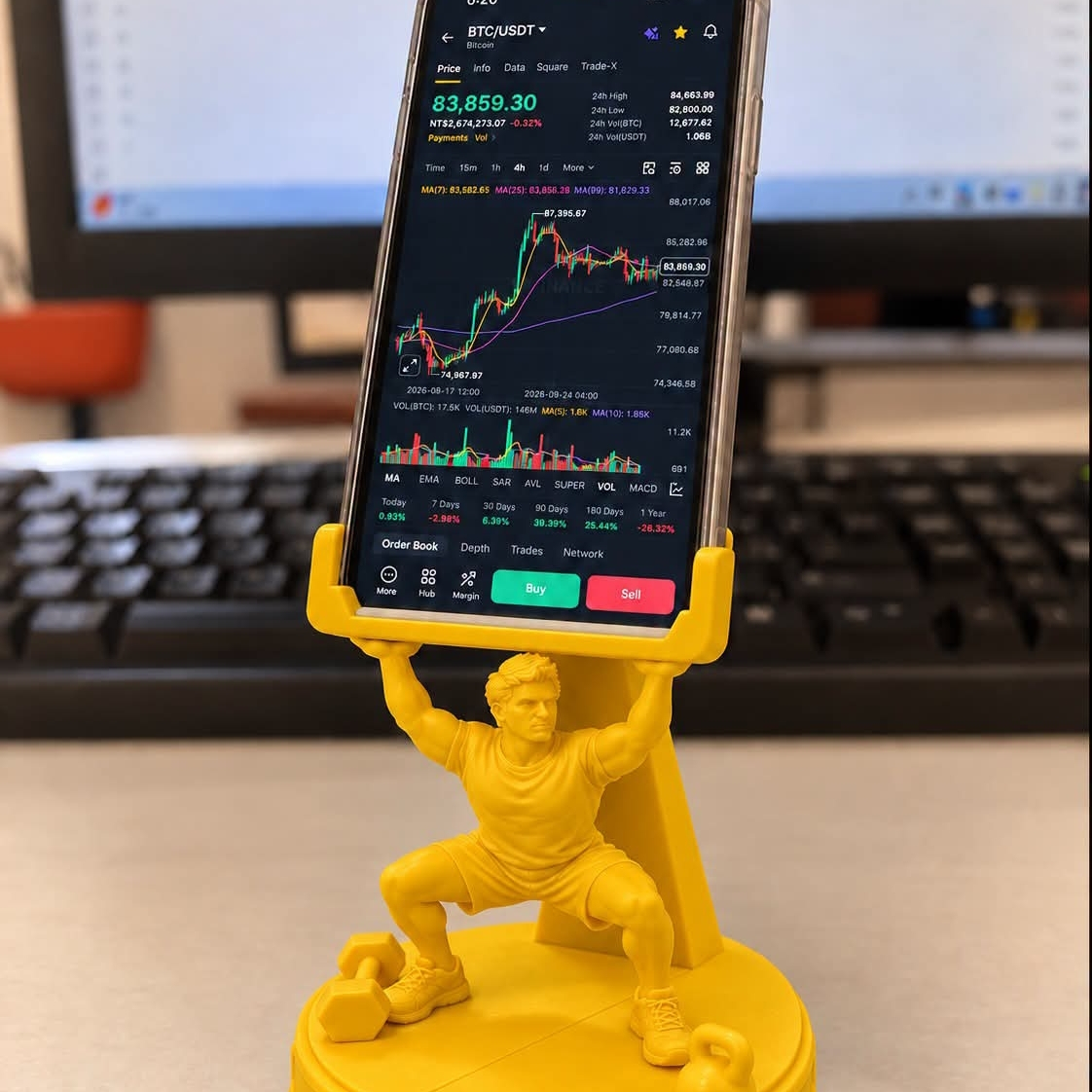
🔥 CRYPTO MARKET RECLAIMS $3T — BULLS ARE BACK? 🚀
After 3 consecutive quarters of decline, Q3 2026 delivered a powerful recovery! 📈
💰 +39.6% quarterly growth
📊 $840.1B added to market cap
🚀 September peak: $3.0T
📍 Q3 close: $2.96T
From July’s reported $2.1T low to a $3T September peak — crypto staged a major comeback!
But can the momentum survive Q4 volatility? 👀
Is $4T the next milestone, or will bears strike back? 🐂🐻
#Crypto #Bitcoin #MarketCap #CoinGecko #CryptoNews
$BTC $ETH $XRP
🔥 CRYPTO MARKET RECLAIMS $3T — BULLS ARE BACK? 🚀
After 3 consecutive quarters of decline, Q3 2026 delivered a powerful recovery! 📈
💰 +39.6% quarterly growth
📊 $840.1B added to market cap
🚀 September peak: $3.0T
📍 Q3 close: $2.96T
From July’s reported $2.1T low to a $3T September peak — crypto staged a major comeback!
But can the momentum survive Q4 volatility? 👀
Is $4T the next milestone, or will bears strike back? 🐂🐻
#Crypto #Bitcoin #MarketCap #CoinGecko #CryptoNews
$BTC $ETH $XRP
After 3 consecutive quarters of decline, Q3 2026 delivered a powerful recovery! 📈
💰 +39.6% quarterly growth
📊 $840.1B added to market cap
🚀 September peak: $3.0T
📍 Q3 close: $2.96T
From July’s reported $2.1T low to a $3T September peak — crypto staged a major comeback!
But can the momentum survive Q4 volatility? 👀
Is $4T the next milestone, or will bears strike back? 🐂🐻
#Crypto #Bitcoin #MarketCap #CoinGecko #CryptoNews
$BTC $ETH $XRP
1
1
97

Why a “cheap” coin isn’t a bargain
Classic beginner mistake: seeing a coin at $0.01 and thinking, “It’s cheap—if it reaches $1, I’ll be a millionaire.” What matters isn’t the price, it’s the market cap: price × tokens in circulation. A coin at $0.01 with one trillion tokens is already worth $10 billion— for it to reach $1, it would need to be worth $1 trillion, more than all of Bitcoin. Save this post before your next purchase. Have you ever bought a coin just because it was “cheap”? Comment below 👇
#marketcap
{spot}(BTCUSDT)
{spot}(NVDABUSDT)
{spot}(AAPLBUSDT)
Why a “cheap” coin isn’t a bargain
Classic beginner mistake: seeing a coin at $0.01 and thinking, “It’s cheap—if it reaches $1, I’ll be a millionaire.” What matters isn’t the price, it’s the market cap: price × tokens in circulation. A coin at $0.01 with one trillion tokens is already worth $10 billion— for it to reach $1, it would need to be worth $1 trillion, more than all of Bitcoin. Save this post before your next purchase. Have you ever bought a coin just because it was “cheap”? Comment below 👇
#marketcap
Classic beginner mistake: seeing a coin at $0.01 and thinking, “It’s cheap—if it reaches $1, I’ll be a millionaire.” What matters isn’t the price, it’s the market cap: price × tokens in circulation. A coin at $0.01 with one trillion tokens is already worth $10 billion— for it to reach $1, it would need to be worth $1 trillion, more than all of Bitcoin. Save this post before your next purchase. Have you ever bought a coin just because it was “cheap”? Comment below 👇
#marketcap
264

·
--
$SOL HOLDERS, LOOK AT THE MATH. 👀
2021: $259 meant roughly $78B.
Today: 589M circulating SOL.
January bull case: $135 ≈ $79.5B.
April: $150 ≈ $88.4B.
Same valuation, very different price—if demand returns. 📊
$SOL #solana #MarketCap
{spot}(SOLUSDT)
$SOL HOLDERS, LOOK AT THE MATH. 👀
2021: $259 meant roughly $78B.
Today: 589M circulating SOL.
January bull case: $135 ≈ $79.5B.
April: $150 ≈ $88.4B.
Same valuation, very different price—if demand returns. 📊
$SOL #solana #MarketCap
2021: $259 meant roughly $78B.
Today: 589M circulating SOL.
January bull case: $135 ≈ $79.5B.
April: $150 ≈ $88.4B.
Same valuation, very different price—if demand returns. 📊
$SOL #solana #MarketCap
13

What Is the Market Cap of a Cryptocurrency?
Market cap (market capitalization) is calculated by multiplying a cryptocurrency’s current price by the total number of coins in circulation.
Example: if Bitcoin is priced at $82,840 and there are 20.1 million BTC in circulation, its market cap is approximately $1.66 trillion.
What it is NOT:
It’s not the money invested in the project. A single buyer can move the price and, with it, the entire market cap.
What is it useful for?
It gives you a sense of scale. It helps you compare projects and assess how much room they have to grow. A coin worth $100 million can double more easily than one worth $100 billion.
Categories:
• Large cap (> $10 billion): less volatile, with lower potential for explosive returns.
• Mid cap ($1–10 billion): a balance between risk and potential.
• Small cap (< $1 billion): high risk, high returns.
Market cap doesn’t tell you whether to buy, but it does ground you in the asset’s reality. And in crypto, that grounding matters.
Follow us for more guides like this.
#MarketCap
What Is the Market Cap of a Cryptocurrency?
Market cap (market capitalization) is calculated by multiplying a cryptocurrency’s current price by the total number of coins in circulation.
Example: if Bitcoin is priced at $82,840 and there are 20.1 million BTC in circulation, its market cap is approximately $1.66 trillion.
What it is NOT:
It’s not the money invested in the project. A single buyer can move the price and, with it, the entire market cap.
What is it useful for?
It gives you a sense of scale. It helps you compare projects and assess how much room they have to grow. A coin worth $100 million can double more easily than one worth $100 billion.
Categories:
• Large cap (> $10 billion): less volatile, with lower potential for explosive returns.
• Mid cap ($1–10 billion): a balance between risk and potential.
• Small cap (< $1 billion): high risk, high returns.
Market cap doesn’t tell you whether to buy, but it does ground you in the asset’s reality. And in crypto, that grounding matters.
Follow us for more guides like this.
#MarketCap
Market cap (market capitalization) is calculated by multiplying a cryptocurrency’s current price by the total number of coins in circulation.
Example: if Bitcoin is priced at $82,840 and there are 20.1 million BTC in circulation, its market cap is approximately $1.66 trillion.
What it is NOT:
It’s not the money invested in the project. A single buyer can move the price and, with it, the entire market cap.
What is it useful for?
It gives you a sense of scale. It helps you compare projects and assess how much room they have to grow. A coin worth $100 million can double more easily than one worth $100 billion.
Categories:
• Large cap (> $10 billion): less volatile, with lower potential for explosive returns.
• Mid cap ($1–10 billion): a balance between risk and potential.
• Small cap (< $1 billion): high risk, high returns.
Market cap doesn’t tell you whether to buy, but it does ground you in the asset’s reality. And in crypto, that grounding matters.
Follow us for more guides like this.
#MarketCap
74

·
--
🚨 TOTAL MARKET CAP RECLAIMS CRUCIAL STRUCTURE AS $BTC LEADS THE INSTITUTIONAL ROTATION! 💥
📌 The top-tier market capitalization metrics are signaling a structural regime shift across major assets. 🦈 Smart money is actively sweeping resting sell-side liquidity at range highs while establishing dense order blocks beneath current valuation clusters.
📊 Volume distribution shows massive absorption, proving institutional players are building long-term positioning rather than chasing momentum. 💡 As dominance consolidates, capital efficiency suggests a major structural expansion is loading across dominant sector leaders.
💬 Are you tracking institutional order flow across top caps or waiting for confirmation on the lower timeframes? 👇
⚠️ Not financial advice. Always manage your risk. 🛡️
🏷️ #BTC #MarketCap #Crypto #Altcoins
🎯 🦈
🚨 TOTAL MARKET CAP RECLAIMS CRUCIAL STRUCTURE AS $BTC LEADS THE INSTITUTIONAL ROTATION! 💥
📌 The top-tier market capitalization metrics are signaling a structural regime shift across major assets. 🦈 Smart money is actively sweeping resting sell-side liquidity at range highs while establishing dense order blocks beneath current valuation clusters.
📊 Volume distribution shows massive absorption, proving institutional players are building long-term positioning rather than chasing momentum. 💡 As dominance consolidates, capital efficiency suggests a major structural expansion is loading across dominant sector leaders.
💬 Are you tracking institutional order flow across top caps or waiting for confirmation on the lower timeframes? 👇
⚠️ Not financial advice. Always manage your risk. 🛡️
🏷️ #BTC #MarketCap #Crypto #Altcoins
🎯 🦈
📌 The top-tier market capitalization metrics are signaling a structural regime shift across major assets. 🦈 Smart money is actively sweeping resting sell-side liquidity at range highs while establishing dense order blocks beneath current valuation clusters.
📊 Volume distribution shows massive absorption, proving institutional players are building long-term positioning rather than chasing momentum. 💡 As dominance consolidates, capital efficiency suggests a major structural expansion is loading across dominant sector leaders.
💬 Are you tracking institutional order flow across top caps or waiting for confirmation on the lower timeframes? 👇
⚠️ Not financial advice. Always manage your risk. 🛡️
🏷️ #BTC #MarketCap #Crypto #Altcoins
🎯 🦈
25
·
--
Bitcoin slides below $83K, wiping $110 B from crypto markets in 36 hours.
Bitcoin hit a 17‑day low at $82,200, with its market cap at $1.660 trillion on CoinMarketCap and dominance steady at 59%.
Most large‑cap altcoins are in the red: ZEC fell 6% to $1,240, XRP dropped to $1.41 after a $1.50 rejection, Ethereum slipped to $2,560, while SOL is at $115. BTW bucked the trend with an 11% gain.
The total cryptocurrency market cap fell from $2.920 trillion to $2.810 trillion, shedding just over $100 million in the last 36 hours.
What do you think this rapid $110 B contraction means for investor sentiment in the crypto space?
#Bitcoin #Cryptocurrency #Altcoins #MarketCap #Crypto
Bitcoin slides below $83K, wiping $110 B from crypto markets in 36 hours.
Bitcoin hit a 17‑day low at $82,200, with its market cap at $1.660 trillion on CoinMarketCap and dominance steady at 59%.
Most large‑cap altcoins are in the red: ZEC fell 6% to $1,240, XRP dropped to $1.41 after a $1.50 rejection, Ethereum slipped to $2,560, while SOL is at $115. BTW bucked the trend with an 11% gain.
The total cryptocurrency market cap fell from $2.920 trillion to $2.810 trillion, shedding just over $100 million in the last 36 hours.
What do you think this rapid $110 B contraction means for investor sentiment in the crypto space?
#Bitcoin #Cryptocurrency #Altcoins #MarketCap #Crypto
Bitcoin hit a 17‑day low at $82,200, with its market cap at $1.660 trillion on CoinMarketCap and dominance steady at 59%.
Most large‑cap altcoins are in the red: ZEC fell 6% to $1,240, XRP dropped to $1.41 after a $1.50 rejection, Ethereum slipped to $2,560, while SOL is at $115. BTW bucked the trend with an 11% gain.
The total cryptocurrency market cap fell from $2.920 trillion to $2.810 trillion, shedding just over $100 million in the last 36 hours.
What do you think this rapid $110 B contraction means for investor sentiment in the crypto space?
#Bitcoin #Cryptocurrency #Altcoins #MarketCap #Crypto
1
42

·
--
What does “market cap” mean in crypto?
Market cap is the total value of a coin or token. You can think of it like the market’s “price tag” for the whole project.
Simple formula:
Price per coin × number of coins in circulation = market cap
Example: if a token costs $2 and there are 100 million tokens circulating, the market cap is $200 million.
Why it matters:
It helps you compare projects by size, but it does not tell you everything about risk, utility, or future results.
A higher market cap usually means a larger project, but always look deeper than the headline number.
#CryptoBasics #MarketCap
What does “market cap” mean in crypto?
Market cap is the total value of a coin or token. You can think of it like the market’s “price tag” for the whole project.
Simple formula:
Price per coin × number of coins in circulation = market cap
Example: if a token costs $2 and there are 100 million tokens circulating, the market cap is $200 million.
Why it matters:
It helps you compare projects by size, but it does not tell you everything about risk, utility, or future results.
A higher market cap usually means a larger project, but always look deeper than the headline number.
#CryptoBasics #MarketCap
Market cap is the total value of a coin or token. You can think of it like the market’s “price tag” for the whole project.
Simple formula:
Price per coin × number of coins in circulation = market cap
Example: if a token costs $2 and there are 100 million tokens circulating, the market cap is $200 million.
Why it matters:
It helps you compare projects by size, but it does not tell you everything about risk, utility, or future results.
A higher market cap usually means a larger project, but always look deeper than the headline number.
#CryptoBasics #MarketCap
79

·
--
🔍 Market Cap vs. Coin Price: How to Choose Your Investment Wisely?
Some new investors expect a coin priced at $0.0001 to reach $100 and easily make them millionaires! But this is a misconception caused by overlooking a key factor: market cap.
How do you calculate market cap?
\text{Market Cap} = \text{Current Coin Price} \times \text{Number of Coins Available for Trading (Circulating Supply)}
Why is market cap more important than price?
• Large-cap coins: such as Bitcoin and Ethereum. They are relatively stable and carry lower risks compared to others.
• Mid- and low-cap coins: offer significant growth opportunities, but come with extremely high volatility risks.
💡 Bottom line: Don’t look at a coin’s price in isolation. Consider the total supply and market cap to determine whether its price growth is realistic or impossible.
#CryptoEducation #MarketCap #InvestSmart #BinanceSquare
🔍 Market Cap vs. Coin Price: How to Choose Your Investment Wisely?
Some new investors expect a coin priced at $0.0001 to reach $100 and easily make them millionaires! But this is a misconception caused by overlooking a key factor: market cap.
How do you calculate market cap?
\text{Market Cap} = \text{Current Coin Price} \times \text{Number of Coins Available for Trading (Circulating Supply)}
Why is market cap more important than price?
• Large-cap coins: such as Bitcoin and Ethereum. They are relatively stable and carry lower risks compared to others.
• Mid- and low-cap coins: offer significant growth opportunities, but come with extremely high volatility risks.
💡 Bottom line: Don’t look at a coin’s price in isolation. Consider the total supply and market cap to determine whether its price growth is realistic or impossible.
#CryptoEducation #MarketCap #InvestSmart #BinanceSquare
Some new investors expect a coin priced at $0.0001 to reach $100 and easily make them millionaires! But this is a misconception caused by overlooking a key factor: market cap.
How do you calculate market cap?
\text{Market Cap} = \text{Current Coin Price} \times \text{Number of Coins Available for Trading (Circulating Supply)}
Why is market cap more important than price?
• Large-cap coins: such as Bitcoin and Ethereum. They are relatively stable and carry lower risks compared to others.
• Mid- and low-cap coins: offer significant growth opportunities, but come with extremely high volatility risks.
💡 Bottom line: Don’t look at a coin’s price in isolation. Consider the total supply and market cap to determine whether its price growth is realistic or impossible.
#CryptoEducation #MarketCap #InvestSmart #BinanceSquare
44
·
--
Bullish
🚨Top 5 Most Valuable Crypto Assets
Crypto’s biggest names continue to dominate the digital-asset market. 🔥
According to the infographic, Bitcoin leads at $1.55T, followed by Ethereum ($297B), $BNB ($93B), $XRP ($89B) and Solana ($56B) in estimated market capitalization.
One market. Five giants. Which crypto has the strongest future?
#crypto #currency #bitcoin #Ethereum #marketcap
🚨Top 5 Most Valuable Crypto Assets
Crypto’s biggest names continue to dominate the digital-asset market. 🔥
According to the infographic, Bitcoin leads at $1.55T, followed by Ethereum ($297B), $BNB ($93B), $XRP ($89B) and Solana ($56B) in estimated market capitalization.
One market. Five giants. Which crypto has the strongest future?
#crypto #currency #bitcoin #Ethereum #marketcap
Crypto’s biggest names continue to dominate the digital-asset market. 🔥
According to the infographic, Bitcoin leads at $1.55T, followed by Ethereum ($297B), $BNB ($93B), $XRP ($89B) and Solana ($56B) in estimated market capitalization.
One market. Five giants. Which crypto has the strongest future?
#crypto #currency #bitcoin #Ethereum #marketcap
79
Log in to explore more content
Join global crypto users on Binance Square
⚡️ Get latest and useful information about crypto.
💬 Trusted by the world’s largest crypto exchange.
👍 Discover real insights from verified creators.
Email / Phone number
Trending Topics
1
#BinancePick
2.1M views
119,588 Discussing
2
#EarningsSeason
4.6M views
22,223 Discussing
3
#USQ3GDPAndSeptemberPCEDueNextWeek
21,502 views
483 Discussing
4
#SouthKoreaDelaysCryptoIncomeTax
63,006 views
580 Discussing
5
#ElectrumFixesHighRiskExploitInVersionsBefore4.8.3
30,271 views
470 Discussing
6
#SouthKoreaPlansToRegulateStablecoinsUnderFXLaw
31,486 views
472 Discussing
7
#UKAlgorithmicCryptoTradingAppsMayNeedFCAAuthorization
6,659 views
151 Discussing
8
#DowDrops653Points
140,383 views
1,277 Discussing
9
#MarketsPriceJust10%ChanceOfFedHikeNextWeek
90,383 views
899 Discussing
10
#OCCRemovesStablecoinSevenDayRedemptionExtension
42,724 views
603 Discussing