
#macroeconomics
macroeconomics
828,264 views
3,780 Discussing
Hot
Latest

📅 Key Economic Events to Watch This Week (UTC+0):
🇺🇸 24/09 12:30 (UTC+0) - Unemployment Claims (Forecast: 201K, Previous: 196K)
🇺🇸 25/09 14:00 (UTC+0) - Revised UoM Consumer Sentiment (Forecast: 47.5, Previous: 47.8)
🇺🇸 25/09 14:00 (UTC+0) - Revised UoM Inflation Expectations (Forecast: N/A, Previous: 4.6%)
Forecasts point to a slight uptick in jobless claims and softer consumer sentiment, suggesting minor cooling in the US economy. Watch for potential market volatility around these key macroeconomic releases.
#MacroEconomics #UnemploymentClaims
📅 Key Economic Events to Watch This Week (UTC+0):
🇺🇸 24/09 12:30 (UTC+0) - Unemployment Claims (Forecast: 201K, Previous: 196K)
🇺🇸 25/09 14:00 (UTC+0) - Revised UoM Consumer Sentiment (Forecast: 47.5, Previous: 47.8)
🇺🇸 25/09 14:00 (UTC+0) - Revised UoM Inflation Expectations (Forecast: N/A, Previous: 4.6%)
Forecasts point to a slight uptick in jobless claims and softer consumer sentiment, suggesting minor cooling in the US economy. Watch for potential market volatility around these key macroeconomic releases.
#MacroEconomics #UnemploymentClaims
🇺🇸 24/09 12:30 (UTC+0) - Unemployment Claims (Forecast: 201K, Previous: 196K)
🇺🇸 25/09 14:00 (UTC+0) - Revised UoM Consumer Sentiment (Forecast: 47.5, Previous: 47.8)
🇺🇸 25/09 14:00 (UTC+0) - Revised UoM Inflation Expectations (Forecast: N/A, Previous: 4.6%)
Forecasts point to a slight uptick in jobless claims and softer consumer sentiment, suggesting minor cooling in the US economy. Watch for potential market volatility around these key macroeconomic releases.
#MacroEconomics #UnemploymentClaims
45


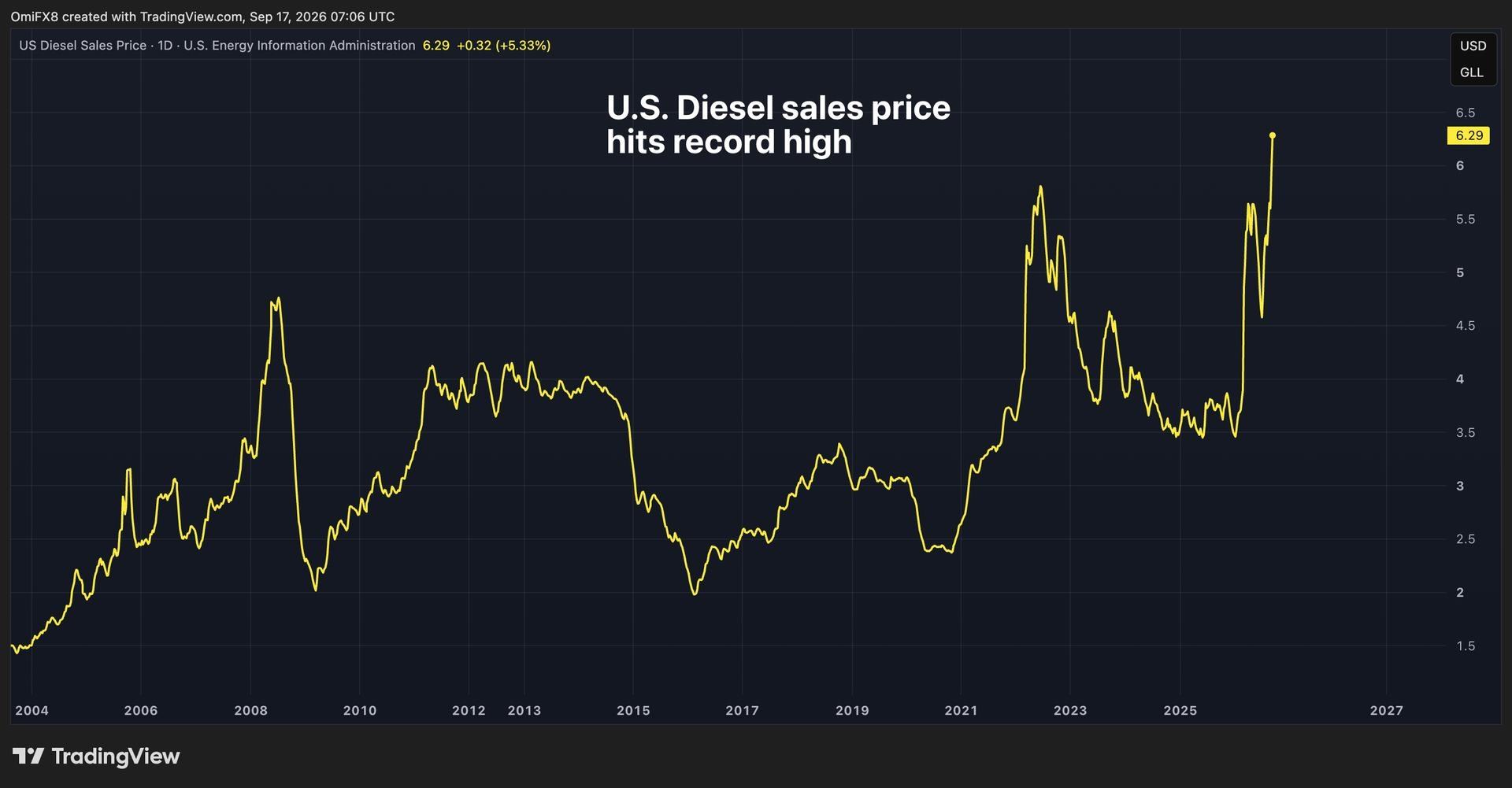
RECORD HIGH US DIESEL PRICES ARE TEARING THROUGH THE MACRO LANDSCAPE
According to reports from CoinDesk, surging fuel costs are threatening to trigger another wave of consumer price inflation. This leaves the Federal Reserve in a tight spot, seemingly determined to push interest rates even higher despite dealing with a major oil supply shock. As a result, safe havens and risk assets alike are feeling the heat, with $BTC and gold struggling to find solid ground.
🚀 Diesel prices hitting historic peaks could directly push CPI inflation higher in the coming months.
🦅 The Fed remains aggressive, signalling rate hikes even as energy markets face supply-side shocks.
📉 Traditional hedges are taking a hit, causing short-term pressure on $BTC price action.
Watching the charts closely because this macro storm is far from over.
#MacroEconomics #Inflation #BTC #Write2Earn
RECORD HIGH US DIESEL PRICES ARE TEARING THROUGH THE MACRO LANDSCAPE
According to reports from CoinDesk, surging fuel costs are threatening to trigger another wave of consumer price inflation. This leaves the Federal Reserve in a tight spot, seemingly determined to push interest rates even higher despite dealing with a major oil supply shock. As a result, safe havens and risk assets alike are feeling the heat, with $BTC and gold struggling to find solid ground.
🚀 Diesel prices hitting historic peaks could directly push CPI inflation higher in the coming months.
🦅 The Fed remains aggressive, signalling rate hikes even as energy markets face supply-side shocks.
📉 Traditional hedges are taking a hit, causing short-term pressure on $BTC price action.
Watching the charts closely because this macro storm is far from over.
#MacroEconomics #Inflation #BTC #Write2Earn
According to reports from CoinDesk, surging fuel costs are threatening to trigger another wave of consumer price inflation. This leaves the Federal Reserve in a tight spot, seemingly determined to push interest rates even higher despite dealing with a major oil supply shock. As a result, safe havens and risk assets alike are feeling the heat, with $BTC and gold struggling to find solid ground.
🚀 Diesel prices hitting historic peaks could directly push CPI inflation higher in the coming months.
🦅 The Fed remains aggressive, signalling rate hikes even as energy markets face supply-side shocks.
📉 Traditional hedges are taking a hit, causing short-term pressure on $BTC price action.
Watching the charts closely because this macro storm is far from over.
#MacroEconomics #Inflation #BTC #Write2Earn
1.4k
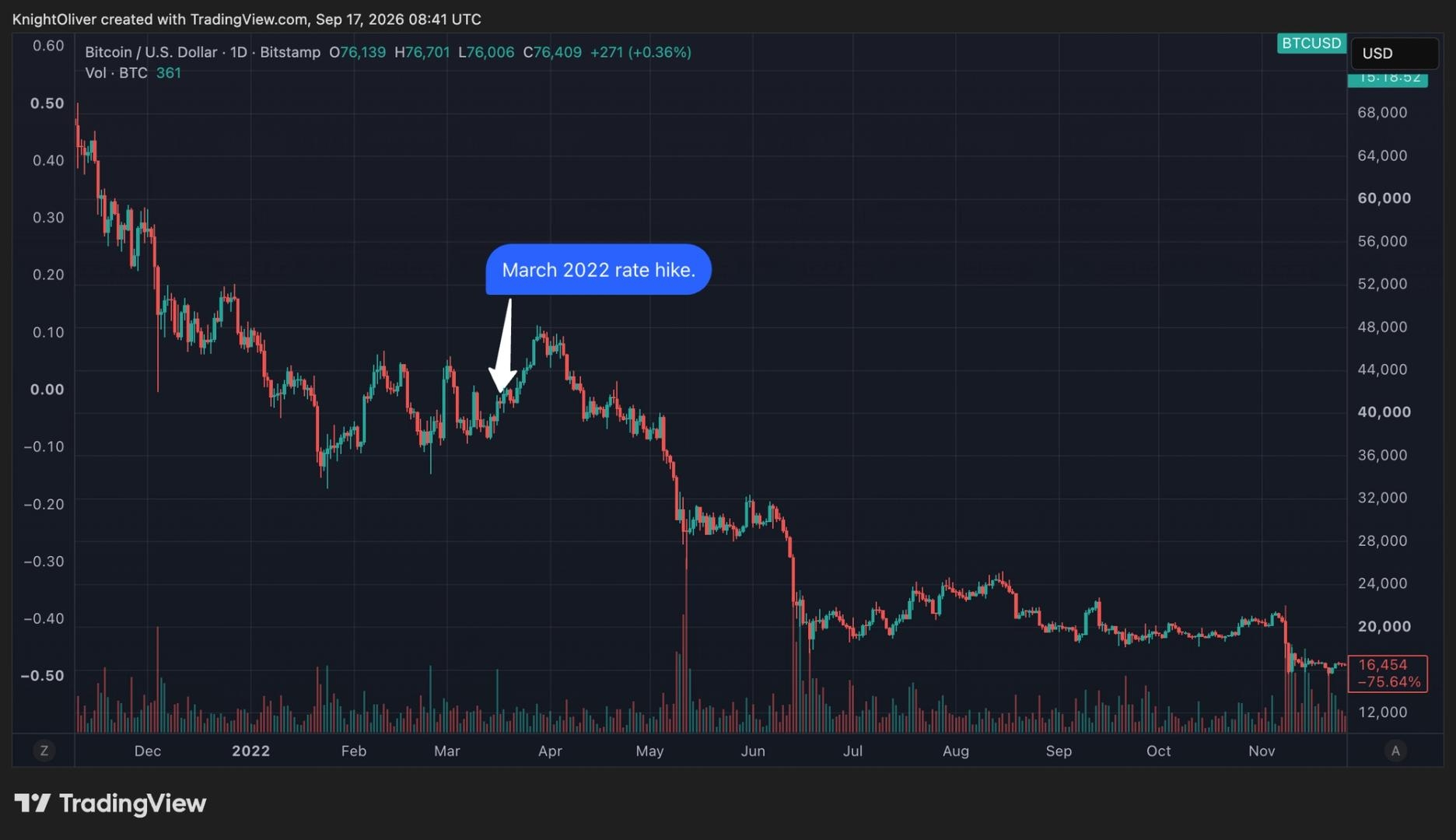
Remember what happened when we took a massive hit back in early 2022? We are looking at almost the exact same pre-hike pattern right now. History has a weird way of repeating itself, and the macro indicators are flashing some serious warning signs. The Federal Reserve is gearing up to resume rate hikes, leaving $BTC in a very familiar, yet tense position. Are we about to witness a temporary relief rally before another drop, or is this time actually different? Here is what you need to keep on your radar: 📍 Bitcoin drawdown is currently mirroring its exact position before the Fed first hiked rates in March 2022. 📍 Back then, macro tightening triggered a massive bearish phase, and now the Fed is restarting the rate hikes. 📍 Analysts are debating whether we will see a short-term bounce to trap late bulls before the real pain begins. Honestly, my plan is to just sit tight, keep a close eye on the charts, and not make any emotional moves. Stay safe out there, friends! #Bitcoin #MacroEconomics #Write2Earn #CryptoNews
Remember what happened when we took a massive hit back in early 2022? We are looking at almost the exact same pre-hike pattern right now. History has a weird way of repeating itself, and the macro indicators are flashing some serious warning signs. The Federal Reserve is gearing up to resume rate hikes, leaving $BTC in a very familiar, yet tense position. Are we about to witness a temporary relief rally before another drop, or is this time actually different? Here is what you need to keep on your radar: 📍 Bitcoin drawdown is currently mirroring its exact position before the Fed first hiked rates in March 2022. 📍 Back then, macro tightening triggered a massive bearish phase, and now the Fed is restarting the rate hikes. 📍 Analysts are debating whether we will see a short-term bounce to trap late bulls before the real pain begins. Honestly, my plan is to just sit tight, keep a close eye on the charts, and not make any emotional moves. Stay safe out there, friends! #Bitcoin #MacroEconomics #Write2Earn #CryptoNews
84
Wall Street shifts its stance.
It looks like the macroeconomic landscape is shifting again. Major Wall Street banks are now placing their bets on a Federal Reserve rate hike, which would be the first one in three years. While many analysts argue this move is already priced in, the broader implications for the crypto market could still trigger some volatility.
Here is what you need to keep an eye on:
1️⃣ The Fed rate hike expectation has united major banking giants, signaling a tighter monetary policy ahead.
2️⃣ Bitcoin has historically shown sensitivity to interest rate changes, although current markets seem to have absorbed the initial shock.
3️⃣ Beyond the numbers, the political fallout and government policies under the Trump administration could create deeper waves.
We might see some short-term shaking, but the long-term resilience of $BTC remains the real story. How the market reacts to actual policy changes will define the next big crypto trend.
#Bitcoin #MacroEconomics #Write2Earn
Wall Street shifts its stance.
It looks like the macroeconomic landscape is shifting again. Major Wall Street banks are now placing their bets on a Federal Reserve rate hike, which would be the first one in three years. While many analysts argue this move is already priced in, the broader implications for the crypto market could still trigger some volatility.
Here is what you need to keep an eye on:
1️⃣ The Fed rate hike expectation has united major banking giants, signaling a tighter monetary policy ahead.
2️⃣ Bitcoin has historically shown sensitivity to interest rate changes, although current markets seem to have absorbed the initial shock.
3️⃣ Beyond the numbers, the political fallout and government policies under the Trump administration could create deeper waves.
We might see some short-term shaking, but the long-term resilience of $BTC remains the real story. How the market reacts to actual policy changes will define the next big crypto trend.
#Bitcoin #MacroEconomics #Write2Earn
It looks like the macroeconomic landscape is shifting again. Major Wall Street banks are now placing their bets on a Federal Reserve rate hike, which would be the first one in three years. While many analysts argue this move is already priced in, the broader implications for the crypto market could still trigger some volatility.
Here is what you need to keep an eye on:
1️⃣ The Fed rate hike expectation has united major banking giants, signaling a tighter monetary policy ahead.
2️⃣ Bitcoin has historically shown sensitivity to interest rate changes, although current markets seem to have absorbed the initial shock.
3️⃣ Beyond the numbers, the political fallout and government policies under the Trump administration could create deeper waves.
We might see some short-term shaking, but the long-term resilience of $BTC remains the real story. How the market reacts to actual policy changes will define the next big crypto trend.
#Bitcoin #MacroEconomics #Write2Earn

867
Are we actually giving too much credit to political news while ignoring the real driver behind this rally? 👀 I have been watching $BTC hover around the 76K mark, and while everyone is hyped about the Clarity Act and regulatory shifts, some smart analysts are pointing at something much bigger: Fed liquidity. I honestly think they are right because at the end of the day, global liquidity is what fuels this engine. 🚀
It is wild to see how much we focus on Congress when the macro picture is doing the heavy lifting. If the dollar liquidity starts flowing, it sets a solid floor for Bitcoin regardless of what happens in Washington. I am keeping my eyes on the central bank moves next week rather than just regulatory headlines. What do you think is the bigger driver right now? 📈
#Bitcoin #MacroEconomics #CryptoNews #Write2Earn
Are we actually giving too much credit to political news while ignoring the real driver behind this rally? 👀 I have been watching $BTC hover around the 76K mark, and while everyone is hyped about the Clarity Act and regulatory shifts, some smart analysts are pointing at something much bigger: Fed liquidity. I honestly think they are right because at the end of the day, global liquidity is what fuels this engine. 🚀
It is wild to see how much we focus on Congress when the macro picture is doing the heavy lifting. If the dollar liquidity starts flowing, it sets a solid floor for Bitcoin regardless of what happens in Washington. I am keeping my eyes on the central bank moves next week rather than just regulatory headlines. What do you think is the bigger driver right now? 📈
#Bitcoin #MacroEconomics #CryptoNews #Write2Earn
It is wild to see how much we focus on Congress when the macro picture is doing the heavy lifting. If the dollar liquidity starts flowing, it sets a solid floor for Bitcoin regardless of what happens in Washington. I am keeping my eyes on the central bank moves next week rather than just regulatory headlines. What do you think is the bigger driver right now? 📈
#Bitcoin #MacroEconomics #CryptoNews #Write2Earn

154

·
--
According to the latest monitoring data released by the American Automobile Association (AAA) as of last Saturday, the national average price of diesel in the U.S. has, for the first time in history, broken through the $6.50 mark, hitting a new high of $6.505 per gallon. Less than 10 days ago, diesel prices had just surpassed $6.00; and in just one month in September alone, diesel prices jumped by more than 87 cents, showing an almost day-by-day upward trend. The increase has not only been swift, but has also directly refreshed the record peak level last seen in 2022.
Diesel prices are often viewed as a thermometer for the temperature of real economic activity. Their impact goes far beyond that of ordinary gasoline. Diesel is the primary fuel powering truck freight, agricultural harvesting, heavy manufacturing, and global shipping. This time, supply shortages and price surges triggered by factors such as geopolitical conflicts have shattered the market’s earlier optimistic expectations that energy-driven inflation would cool. The result is a direct rise in the hard transportation and warehousing costs across every link in the supply chain.
At the macro-financial level, the rapid pass-through of logistics costs can easily create stickier “second-round” inflation, putting upward rebound pressure on the CPI data to come. This may well force the Federal Reserve to take a more cautious stance in the formulation of subsequent monetary policy, and could even disrupt the interest-rate-cut schedule that the market had originally priced in. In the short term, U.S. Treasury yields and the U.S. dollar index may receive some support, while risk assets such as U.S. stocks may enter a period of volatility as investors reassess macro inflation risk premia.
For the crypto market, the repeated shifting of expectations for macro liquidity has long been a key variable affecting investors’ risk appetite. If inflation concerns lead to a lengthening of the rate-cut cycle, the pace of new incremental off-exchange capital entering the market may slow down, creating headwinds for mainstream assets such as $BTC to stabilize and consolidate amidst turbulence; however, some capital may continue to watch for safe-haven demand and alternative-asset demand amid energy-related geopolitical turbulence. The market is currently in a stand-off phase of competing bullish and bearish views. Going forward, it will be necessary to closely track how macro data actually evolves. ⛽
#EnergyPrices #Inflation #MacroEconomics
According to the latest monitoring data released by the American Automobile Association (AAA) as of last Saturday, the national average price of diesel in the U.S. has, for the first time in history, broken through the $6.50 mark, hitting a new high of $6.505 per gallon. Less than 10 days ago, diesel prices had just surpassed $6.00; and in just one month in September alone, diesel prices jumped by more than 87 cents, showing an almost day-by-day upward trend. The increase has not only been swift, but has also directly refreshed the record peak level last seen in 2022.
Diesel prices are often viewed as a thermometer for the temperature of real economic activity. Their impact goes far beyond that of ordinary gasoline. Diesel is the primary fuel powering truck freight, agricultural harvesting, heavy manufacturing, and global shipping. This time, supply shortages and price surges triggered by factors such as geopolitical conflicts have shattered the market’s earlier optimistic expectations that energy-driven inflation would cool. The result is a direct rise in the hard transportation and warehousing costs across every link in the supply chain.
At the macro-financial level, the rapid pass-through of logistics costs can easily create stickier “second-round” inflation, putting upward rebound pressure on the CPI data to come. This may well force the Federal Reserve to take a more cautious stance in the formulation of subsequent monetary policy, and could even disrupt the interest-rate-cut schedule that the market had originally priced in. In the short term, U.S. Treasury yields and the U.S. dollar index may receive some support, while risk assets such as U.S. stocks may enter a period of volatility as investors reassess macro inflation risk premia.
For the crypto market, the repeated shifting of expectations for macro liquidity has long been a key variable affecting investors’ risk appetite. If inflation concerns lead to a lengthening of the rate-cut cycle, the pace of new incremental off-exchange capital entering the market may slow down, creating headwinds for mainstream assets such as $BTC to stabilize and consolidate amidst turbulence; however, some capital may continue to watch for safe-haven demand and alternative-asset demand amid energy-related geopolitical turbulence. The market is currently in a stand-off phase of competing bullish and bearish views. Going forward, it will be necessary to closely track how macro data actually evolves. ⛽
#EnergyPrices #Inflation #MacroEconomics
Diesel prices are often viewed as a thermometer for the temperature of real economic activity. Their impact goes far beyond that of ordinary gasoline. Diesel is the primary fuel powering truck freight, agricultural harvesting, heavy manufacturing, and global shipping. This time, supply shortages and price surges triggered by factors such as geopolitical conflicts have shattered the market’s earlier optimistic expectations that energy-driven inflation would cool. The result is a direct rise in the hard transportation and warehousing costs across every link in the supply chain.
At the macro-financial level, the rapid pass-through of logistics costs can easily create stickier “second-round” inflation, putting upward rebound pressure on the CPI data to come. This may well force the Federal Reserve to take a more cautious stance in the formulation of subsequent monetary policy, and could even disrupt the interest-rate-cut schedule that the market had originally priced in. In the short term, U.S. Treasury yields and the U.S. dollar index may receive some support, while risk assets such as U.S. stocks may enter a period of volatility as investors reassess macro inflation risk premia.
For the crypto market, the repeated shifting of expectations for macro liquidity has long been a key variable affecting investors’ risk appetite. If inflation concerns lead to a lengthening of the rate-cut cycle, the pace of new incremental off-exchange capital entering the market may slow down, creating headwinds for mainstream assets such as $BTC to stabilize and consolidate amidst turbulence; however, some capital may continue to watch for safe-haven demand and alternative-asset demand amid energy-related geopolitical turbulence. The market is currently in a stand-off phase of competing bullish and bearish views. Going forward, it will be necessary to closely track how macro data actually evolves. ⛽
#EnergyPrices #Inflation #MacroEconomics
50

·
--
In the first trading session of Monday, global energy markets saw a sharp rebound as WTI crude oil rose by 1.24% to 96.5 USD per barrel, while Brent also increased by more than 1%, officially surpassing the psychological level of 100.94 USD per barrel.
Brent’s price recovering and staying above the 100 USD per barrel level carries extremely important implications for the macroeconomic picture. Rising energy costs directly threaten efforts to cool global inflation, while casting a shadow over expectations of an early easing of monetary policy by major central banks.
For traditional financial markets, this uptrend immediately triggers a wave of concerns that inflation may return. Government bond yields tend to edge higher, the US dollar strengthens as a safe-haven, and the stock market faces adjustment pressure due to fears that corporate profit margins will be eroded by rising input costs.
For the crypto market, this development creates short-term headwinds for risk assets such as $BTC. As inflation concerns grow and macro liquidity tightens, speculative capital often turns defensive or stays on the sidelines, leaving the digital asset market at risk of accumulating pullbacks before a clearer trend is determined. 📊
#CrudeOil #MacroEconomics #EnergyMarkets
In the first trading session of Monday, global energy markets saw a sharp rebound as WTI crude oil rose by 1.24% to 96.5 USD per barrel, while Brent also increased by more than 1%, officially surpassing the psychological level of 100.94 USD per barrel.
Brent’s price recovering and staying above the 100 USD per barrel level carries extremely important implications for the macroeconomic picture. Rising energy costs directly threaten efforts to cool global inflation, while casting a shadow over expectations of an early easing of monetary policy by major central banks.
For traditional financial markets, this uptrend immediately triggers a wave of concerns that inflation may return. Government bond yields tend to edge higher, the US dollar strengthens as a safe-haven, and the stock market faces adjustment pressure due to fears that corporate profit margins will be eroded by rising input costs.
For the crypto market, this development creates short-term headwinds for risk assets such as $BTC . As inflation concerns grow and macro liquidity tightens, speculative capital often turns defensive or stays on the sidelines, leaving the digital asset market at risk of accumulating pullbacks before a clearer trend is determined. 📊
#CrudeOil #MacroEconomics #EnergyMarkets
Brent’s price recovering and staying above the 100 USD per barrel level carries extremely important implications for the macroeconomic picture. Rising energy costs directly threaten efforts to cool global inflation, while casting a shadow over expectations of an early easing of monetary policy by major central banks.
For traditional financial markets, this uptrend immediately triggers a wave of concerns that inflation may return. Government bond yields tend to edge higher, the US dollar strengthens as a safe-haven, and the stock market faces adjustment pressure due to fears that corporate profit margins will be eroded by rising input costs.
For the crypto market, this development creates short-term headwinds for risk assets such as $BTC . As inflation concerns grow and macro liquidity tightens, speculative capital often turns defensive or stays on the sidelines, leaving the digital asset market at risk of accumulating pullbacks before a clearer trend is determined. 📊
#CrudeOil #MacroEconomics #EnergyMarkets
371
Japan's Statistics Bureau reported today that the country's national Core Consumer Price Index (CPI) for August rose 1.7% year-on-year, coming in below market forecasts of 1.80% and cooling down from the previous reading of 1.80%.
This slowdown in underlying inflation is crucial because it directly tests the Bank of Japan's rate-hiking timeline. Markets had been bracing for persistent price pressures that would force Governor Kazuo Ueda to tighten monetary policy more aggressively, but a cooler print gives the central bank breathing room to delay subsequent rate increases.
Across traditional markets, the immediate effect is a slight relief on the Japanese Yen and sovereign bond yields. Lower pressure on the BOJ reduces the risk of another sudden unwinding of the global Yen carry trade, which famously triggered widespread liquidity shocks across risk assets in early August.
For the crypto sector, this macroeconomic reprieve provides a stabilizing backdrop for $BTC and the broader digital asset market. With less immediate risk of a carry-trade liquidation cascade, global risk appetite can catch a breath, supporting consolidation rather than forced selling. #JapanCPI #BankOfJapan #MacroEconomics
Japan's Statistics Bureau reported today that the country's national Core Consumer Price Index (CPI) for August rose 1.7% year-on-year, coming in below market forecasts of 1.80% and cooling down from the previous reading of 1.80%.
This slowdown in underlying inflation is crucial because it directly tests the Bank of Japan's rate-hiking timeline. Markets had been bracing for persistent price pressures that would force Governor Kazuo Ueda to tighten monetary policy more aggressively, but a cooler print gives the central bank breathing room to delay subsequent rate increases.
Across traditional markets, the immediate effect is a slight relief on the Japanese Yen and sovereign bond yields. Lower pressure on the BOJ reduces the risk of another sudden unwinding of the global Yen carry trade, which famously triggered widespread liquidity shocks across risk assets in early August.
For the crypto sector, this macroeconomic reprieve provides a stabilizing backdrop for $BTC and the broader digital asset market. With less immediate risk of a carry-trade liquidation cascade, global risk appetite can catch a breath, supporting consolidation rather than forced selling. #JapanCPI #BankOfJapan #MacroEconomics
This slowdown in underlying inflation is crucial because it directly tests the Bank of Japan's rate-hiking timeline. Markets had been bracing for persistent price pressures that would force Governor Kazuo Ueda to tighten monetary policy more aggressively, but a cooler print gives the central bank breathing room to delay subsequent rate increases.
Across traditional markets, the immediate effect is a slight relief on the Japanese Yen and sovereign bond yields. Lower pressure on the BOJ reduces the risk of another sudden unwinding of the global Yen carry trade, which famously triggered widespread liquidity shocks across risk assets in early August.
For the crypto sector, this macroeconomic reprieve provides a stabilizing backdrop for $BTC and the broader digital asset market. With less immediate risk of a carry-trade liquidation cascade, global risk appetite can catch a breath, supporting consolidation rather than forced selling. #JapanCPI #BankOfJapan #MacroEconomics
11

According to the latest data released by the People’s Bank of China, as of September 21, the one-year Loan Prime Rate (LPR) in China remained at 3.00%, fully in line with market expectations and unchanged from the previous level. By choosing to hold steady at key time points, the central bank demonstrates a precise balance between steady growth and risk prevention, with a very strong degree of resolve and policy continuity.
From a macro fundamentals perspective, the one-year LPR holding at 3.00% did not bring any unexpected fluctuations. With the benchmark interest rate remaining within a historically low range, it continues to provide a low-cost liquidity environment for the real economy. With expectations fully met, the market has eliminated short-term uncertainty about a policy shift, laying a solid macro liquidity foundation for building momentum at the bottom of risk assets.
From a technical and cross-asset macro perspective, stabilizing rates has effectively eased volatility pressure on the FX side. The RMB has been trading in a range above key technical support levels, which helps fortify the risk buffer for equity assets across the entire Asia-Pacific market. As the global liquidity easing cycle gradually unfolds, China’s low-interest-rate environment supports the retention and rotation of funds into risk assets, restraining bond yields from surging too sharply.
For the crypto market, confirming the bottoming of macro liquidity is an extremely positive technical signal. With fiat borrowing costs staying stable at low levels, $BTC and the broader mainstream market assets are in a phase of chip accumulation within key support zones. Under the resonance of external liquidity spillover and global expectations for easing, a rebound in risk appetite could help crypto assets break out of their current structure and kick off a new upward cycle.📈
#ChinaEconomy #LPR #MacroEconomics
According to the latest data released by the People’s Bank of China, as of September 21, the one-year Loan Prime Rate (LPR) in China remained at 3.00%, fully in line with market expectations and unchanged from the previous level. By choosing to hold steady at key time points, the central bank demonstrates a precise balance between steady growth and risk prevention, with a very strong degree of resolve and policy continuity.
From a macro fundamentals perspective, the one-year LPR holding at 3.00% did not bring any unexpected fluctuations. With the benchmark interest rate remaining within a historically low range, it continues to provide a low-cost liquidity environment for the real economy. With expectations fully met, the market has eliminated short-term uncertainty about a policy shift, laying a solid macro liquidity foundation for building momentum at the bottom of risk assets.
From a technical and cross-asset macro perspective, stabilizing rates has effectively eased volatility pressure on the FX side. The RMB has been trading in a range above key technical support levels, which helps fortify the risk buffer for equity assets across the entire Asia-Pacific market. As the global liquidity easing cycle gradually unfolds, China’s low-interest-rate environment supports the retention and rotation of funds into risk assets, restraining bond yields from surging too sharply.
For the crypto market, confirming the bottoming of macro liquidity is an extremely positive technical signal. With fiat borrowing costs staying stable at low levels, $BTC and the broader mainstream market assets are in a phase of chip accumulation within key support zones. Under the resonance of external liquidity spillover and global expectations for easing, a rebound in risk appetite could help crypto assets break out of their current structure and kick off a new upward cycle.📈
#ChinaEconomy #LPR #MacroEconomics
From a macro fundamentals perspective, the one-year LPR holding at 3.00% did not bring any unexpected fluctuations. With the benchmark interest rate remaining within a historically low range, it continues to provide a low-cost liquidity environment for the real economy. With expectations fully met, the market has eliminated short-term uncertainty about a policy shift, laying a solid macro liquidity foundation for building momentum at the bottom of risk assets.
From a technical and cross-asset macro perspective, stabilizing rates has effectively eased volatility pressure on the FX side. The RMB has been trading in a range above key technical support levels, which helps fortify the risk buffer for equity assets across the entire Asia-Pacific market. As the global liquidity easing cycle gradually unfolds, China’s low-interest-rate environment supports the retention and rotation of funds into risk assets, restraining bond yields from surging too sharply.
For the crypto market, confirming the bottoming of macro liquidity is an extremely positive technical signal. With fiat borrowing costs staying stable at low levels, $BTC and the broader mainstream market assets are in a phase of chip accumulation within key support zones. Under the resonance of external liquidity spillover and global expectations for easing, a rebound in risk appetite could help crypto assets break out of their current structure and kick off a new upward cycle.📈
#ChinaEconomy #LPR #MacroEconomics
138
Eurostat released the finalized August Consumer Price Index (CPI) data for the Eurozone today, showing annual inflation cooling slightly to 3.2%, coming in below the forecast and previous reading of 3.3%. On a monthly basis, CPI held steady at 0.4%, matching market expectations.
This downward revision in the headline annual rate confirms that disinflationary trends across the bloc remain intact despite lingering energy supply uncertainties, such as Gassco's planned Norwegian gas export curtailments. For the European Central Bank, softer inflation prints relieve aggressive tightening pressure, aligning with market expectations for a more accommodative monetary path.
Across traditional markets, the lower-than-expected print puts slight downward pressure on Euro yields and trims EUR strength against the USD. Bond markets are breathing a sigh of relief as cooling inflation solidifies the case for sustained rate cuts, keeping broader financial conditions from tightening further.
For crypto assets, stable European disinflation combined with a softer global rate trajectory creates a favorable macro liquidity backdrop. If central banks continue easing monetary conditions without triggering recession fears, risk-on capital will likely rotate steadily into major assets like $BTC and broader altcoins. 📊
#EurozoneCPI #Inflation #MacroEconomics
Eurostat released the finalized August Consumer Price Index (CPI) data for the Eurozone today, showing annual inflation cooling slightly to 3.2%, coming in below the forecast and previous reading of 3.3%. On a monthly basis, CPI held steady at 0.4%, matching market expectations.
This downward revision in the headline annual rate confirms that disinflationary trends across the bloc remain intact despite lingering energy supply uncertainties, such as Gassco's planned Norwegian gas export curtailments. For the European Central Bank, softer inflation prints relieve aggressive tightening pressure, aligning with market expectations for a more accommodative monetary path.
Across traditional markets, the lower-than-expected print puts slight downward pressure on Euro yields and trims EUR strength against the USD. Bond markets are breathing a sigh of relief as cooling inflation solidifies the case for sustained rate cuts, keeping broader financial conditions from tightening further.
For crypto assets, stable European disinflation combined with a softer global rate trajectory creates a favorable macro liquidity backdrop. If central banks continue easing monetary conditions without triggering recession fears, risk-on capital will likely rotate steadily into major assets like $BTC and broader altcoins. 📊
#EurozoneCPI #Inflation #MacroEconomics
This downward revision in the headline annual rate confirms that disinflationary trends across the bloc remain intact despite lingering energy supply uncertainties, such as Gassco's planned Norwegian gas export curtailments. For the European Central Bank, softer inflation prints relieve aggressive tightening pressure, aligning with market expectations for a more accommodative monetary path.
Across traditional markets, the lower-than-expected print puts slight downward pressure on Euro yields and trims EUR strength against the USD. Bond markets are breathing a sigh of relief as cooling inflation solidifies the case for sustained rate cuts, keeping broader financial conditions from tightening further.
For crypto assets, stable European disinflation combined with a softer global rate trajectory creates a favorable macro liquidity backdrop. If central banks continue easing monetary conditions without triggering recession fears, risk-on capital will likely rotate steadily into major assets like $BTC and broader altcoins. 📊
#EurozoneCPI #Inflation #MacroEconomics
7

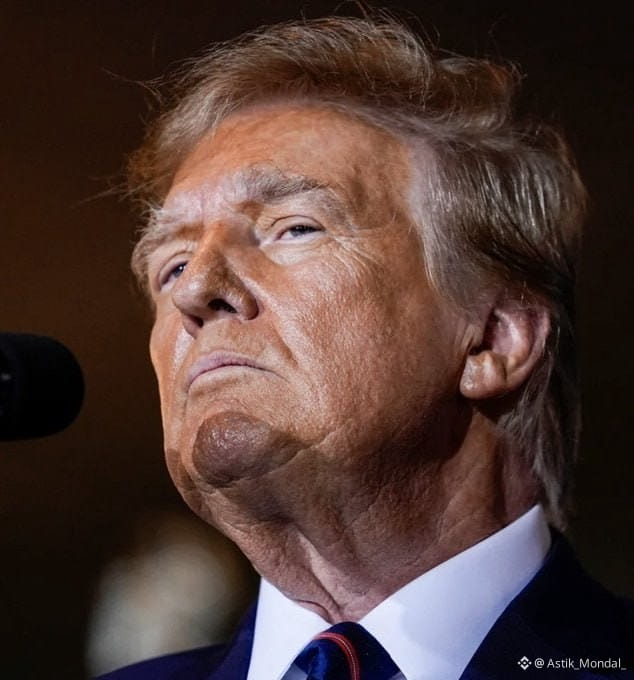
🚨 A massive high-stakes war between the White House and the Federal Reserve just broke out.
Hours after the Fed raised rates to 3.75%-4.00%, President Trump issued an urgent ultimatum: "LOWER THE INTEREST RATES... AND FAST!"
Here is what this historic 275 bps power clash means for the economy:
The central bank and the Executive Branch are operating on two completely different wavelengths. While Fed Chair Kevin Warsh is hiking rates to crush sticky inflation, Trump is demanding emergency cuts down to 1% or lower, arguing the U.S. deserves the world's lowest borrowing costs.
A 275 basis point gap isn't a small policy disagreement it's an economic earthquake. Slashing rates to 1% in an inflationary environment would flood the market with cheap capital, risking hyper-inflation while driving bond yields into chaos.
Trump is framing high rates as an unfair tax on American growth, maintaining that top credit status and record incoming investment justify cheap debt. Meanwhile, the Fed's unanimous 12-0 hike shows central bankers remain terrified of runaway consumer prices.
Institutional independence is heading for its ultimate test. Markets are now caught directly in the crossfire between monetary tightening and political pressure for rapid stimulus.
Volatilty isn't just coming back it's about to hit overdrive.
#Fed #Trump #InterestRates #Economy #MacroEconomics
🚨 A massive high-stakes war between the White House and the Federal Reserve just broke out.
Hours after the Fed raised rates to 3.75%-4.00%, President Trump issued an urgent ultimatum: "LOWER THE INTEREST RATES... AND FAST!"
Here is what this historic 275 bps power clash means for the economy:
The central bank and the Executive Branch are operating on two completely different wavelengths. While Fed Chair Kevin Warsh is hiking rates to crush sticky inflation, Trump is demanding emergency cuts down to 1% or lower, arguing the U.S. deserves the world's lowest borrowing costs.
A 275 basis point gap isn't a small policy disagreement it's an economic earthquake. Slashing rates to 1% in an inflationary environment would flood the market with cheap capital, risking hyper-inflation while driving bond yields into chaos.
Trump is framing high rates as an unfair tax on American growth, maintaining that top credit status and record incoming investment justify cheap debt. Meanwhile, the Fed's unanimous 12-0 hike shows central bankers remain terrified of runaway consumer prices.
Institutional independence is heading for its ultimate test. Markets are now caught directly in the crossfire between monetary tightening and political pressure for rapid stimulus.
Volatilty isn't just coming back it's about to hit overdrive.
#Fed #Trump #InterestRates #Economy #MacroEconomics
Hours after the Fed raised rates to 3.75%-4.00%, President Trump issued an urgent ultimatum: "LOWER THE INTEREST RATES... AND FAST!"
Here is what this historic 275 bps power clash means for the economy:
The central bank and the Executive Branch are operating on two completely different wavelengths. While Fed Chair Kevin Warsh is hiking rates to crush sticky inflation, Trump is demanding emergency cuts down to 1% or lower, arguing the U.S. deserves the world's lowest borrowing costs.
A 275 basis point gap isn't a small policy disagreement it's an economic earthquake. Slashing rates to 1% in an inflationary environment would flood the market with cheap capital, risking hyper-inflation while driving bond yields into chaos.
Trump is framing high rates as an unfair tax on American growth, maintaining that top credit status and record incoming investment justify cheap debt. Meanwhile, the Fed's unanimous 12-0 hike shows central bankers remain terrified of runaway consumer prices.
Institutional independence is heading for its ultimate test. Markets are now caught directly in the crossfire between monetary tightening and political pressure for rapid stimulus.
Volatilty isn't just coming back it's about to hit overdrive.
#Fed #Trump #InterestRates #Economy #MacroEconomics

1
49
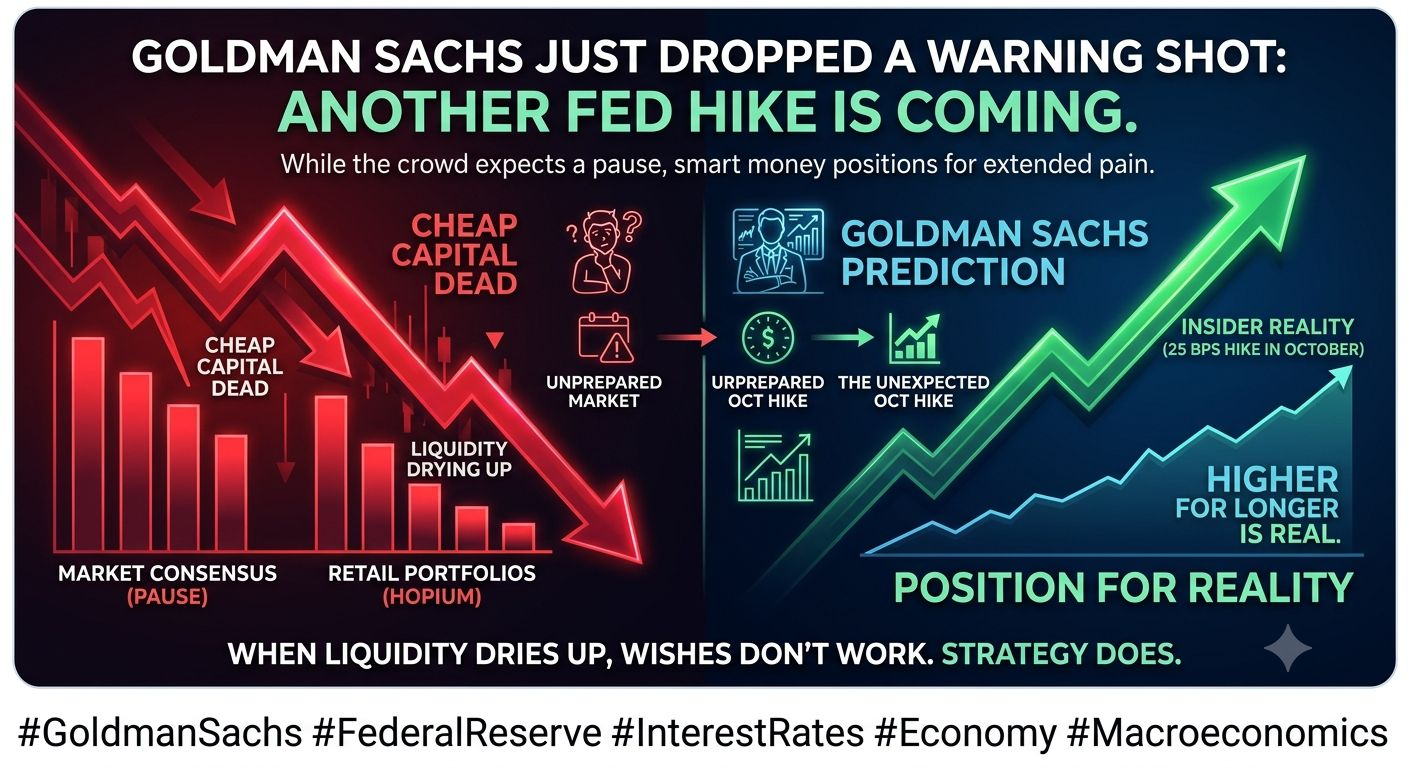
Goldman Sachs just dropped a warning shot most investors are completely sleeping on.
While the market is pricing in a rate pause, Wall Street's biggest powerhouse expects another 25 basis point hike this October. The crowd is positioning for a soft landing, but smart money is already rebalancing for extended pain.
Higher for longer isn’t a narrative anymore. It is the baseline reality.
Cheap capital died two years ago, yet founders and traders are still waiting for a rescue package that isn't coming.
When the Fed squeezes another 25 bps out of the system, liquidity dries up in the assets retail loves most.
The biggest risk right now isn't inflation. It is portfolio positioning built on pure hopium.
If your strategy relies on the central bank saving your assets, you don't have a strategy) you have a wish list.
Position for reality, not consensus.
#GoldmanSachs #FederalReserve #InterestRates #Economy #Macroeconomics
Goldman Sachs just dropped a warning shot most investors are completely sleeping on.
While the market is pricing in a rate pause, Wall Street's biggest powerhouse expects another 25 basis point hike this October. The crowd is positioning for a soft landing, but smart money is already rebalancing for extended pain.
Higher for longer isn’t a narrative anymore. It is the baseline reality.
Cheap capital died two years ago, yet founders and traders are still waiting for a rescue package that isn't coming.
When the Fed squeezes another 25 bps out of the system, liquidity dries up in the assets retail loves most.
The biggest risk right now isn't inflation. It is portfolio positioning built on pure hopium.
If your strategy relies on the central bank saving your assets, you don't have a strategy) you have a wish list.
Position for reality, not consensus.
#GoldmanSachs #FederalReserve #InterestRates #Economy #Macroeconomics
While the market is pricing in a rate pause, Wall Street's biggest powerhouse expects another 25 basis point hike this October. The crowd is positioning for a soft landing, but smart money is already rebalancing for extended pain.
Higher for longer isn’t a narrative anymore. It is the baseline reality.
Cheap capital died two years ago, yet founders and traders are still waiting for a rescue package that isn't coming.
When the Fed squeezes another 25 bps out of the system, liquidity dries up in the assets retail loves most.
The biggest risk right now isn't inflation. It is portfolio positioning built on pure hopium.
If your strategy relies on the central bank saving your assets, you don't have a strategy) you have a wish list.
Position for reality, not consensus.
#GoldmanSachs #FederalReserve #InterestRates #Economy #Macroeconomics
1
3
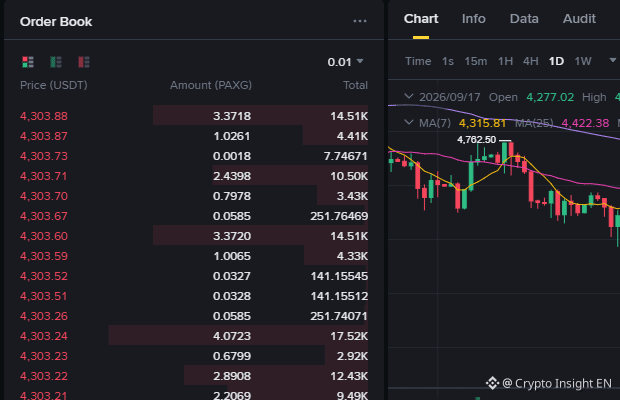
Spot gold surged by 1.00% today, reaching an impressive $4,306.80 per ounce in the latest trading session. This sharp upward move pushes the precious metal deeper into historic territory as institutional demand for traditional hedges accelerates.
This aggressive rally highlights mounting macroeconomic and geopolitical anxiety across global markets. Investors are actively pricing in lingering inflation risks alongside broader fiscal uncertainties, driving sustained capital allocation into hard assets rather than fiat reserves despite prevailing interest rate conditions.
The strength in bullion continues to put pressure on the US Dollar index while signaling persistent risk-off sentiment in broader financial markets. Bond yields and equities face headwinds as defensive positioning dominates institutional portfolios looking for capital preservation amidst elevated volatility.
For the crypto landscape, this massive breakout in gold reinforces the broader 'debasement hedge' narrative. While short-term capital may momentarily prioritize traditional safe havens over risk-on assets, a prolonged surge in hard commodities often creates a powerful macro tailwind for $BTC as digital gold gains traction among institutional allocators seeking scarce, non-sovereign stores of value.
#Gold #MacroEconomics #Bitcoin
Spot gold surged by 1.00% today, reaching an impressive $4,306.80 per ounce in the latest trading session. This sharp upward move pushes the precious metal deeper into historic territory as institutional demand for traditional hedges accelerates.
This aggressive rally highlights mounting macroeconomic and geopolitical anxiety across global markets. Investors are actively pricing in lingering inflation risks alongside broader fiscal uncertainties, driving sustained capital allocation into hard assets rather than fiat reserves despite prevailing interest rate conditions.
The strength in bullion continues to put pressure on the US Dollar index while signaling persistent risk-off sentiment in broader financial markets. Bond yields and equities face headwinds as defensive positioning dominates institutional portfolios looking for capital preservation amidst elevated volatility.
For the crypto landscape, this massive breakout in gold reinforces the broader 'debasement hedge' narrative. While short-term capital may momentarily prioritize traditional safe havens over risk-on assets, a prolonged surge in hard commodities often creates a powerful macro tailwind for $BTC as digital gold gains traction among institutional allocators seeking scarce, non-sovereign stores of value.
#Gold #MacroEconomics #Bitcoin
This aggressive rally highlights mounting macroeconomic and geopolitical anxiety across global markets. Investors are actively pricing in lingering inflation risks alongside broader fiscal uncertainties, driving sustained capital allocation into hard assets rather than fiat reserves despite prevailing interest rate conditions.
The strength in bullion continues to put pressure on the US Dollar index while signaling persistent risk-off sentiment in broader financial markets. Bond yields and equities face headwinds as defensive positioning dominates institutional portfolios looking for capital preservation amidst elevated volatility.
For the crypto landscape, this massive breakout in gold reinforces the broader 'debasement hedge' narrative. While short-term capital may momentarily prioritize traditional safe havens over risk-on assets, a prolonged surge in hard commodities often creates a powerful macro tailwind for $BTC as digital gold gains traction among institutional allocators seeking scarce, non-sovereign stores of value.
#Gold #MacroEconomics #Bitcoin
153

The Bank of Japan officially announced a 25-basis-point rate hike at its latest monetary policy meeting. However, after the decision was released, the yen not only failed to strengthen—it instead staged a dramatic broad-based weakening across the FX market. The U.S. dollar versus the Japanese yen jumped by more than 70 points in the short term; the euro versus the Japanese yen rose by over 80 points; and the pound versus the Japanese yen saw gains of more than 90 points. The Australian dollar, Canadian dollar, and Swiss franc versus the Japanese yen also generally posted rises of 50 to 80 points or so.
On the surface, a rate hike would usually support the domestic currency, but this time the market’s intense reaction actually confirms the classic “buy the expectation, sell the fact” game mechanism. The market had already priced in this tightening quite thoroughly beforehand. Once the policy action was effectively in place, traders quickly began to doubt the pace of further tightening. Given the fragility of Japan’s economic fundamentals, uncertainty remains high over whether the Bank of Japan will have the confidence to continue tightening consistently.
From a broader financial macro perspective, the yen’s failure to rise and tendency to weaken reflects that global carry trades have not fully exited. Instead, they have shown short-term reversals due to the absence of a hawkish tone that exceeded expectations in the policy guidance. The dramatic FX swings not only widen volatility across cross-asset markets, but also serve as a warning to various risk assets during liquidity-tightening cycles. The potential risk of unwinding spread/carry trades remains the sword of Damocles hanging over the market.
For the cryptocurrency market, this kind of macro uncertainty is by no means a clear positive. While the yen’s temporary weakening has delayed panic over a passive pullback in liquidity, the underlying signal of a policy shift is indisputable. As the global turning point toward cheaper liquidity is gradually confirmed, risk assets—including $BTC —will face more stringent liquidity tests. Investors should remain cautious even during short-term rebounds and be alert to the risk that volatility may intensify further.
#BankOfJapan #InterestRates #MacroEconomics
The Bank of Japan officially announced a 25-basis-point rate hike at its latest monetary policy meeting. However, after the decision was released, the yen not only failed to strengthen—it instead staged a dramatic broad-based weakening across the FX market. The U.S. dollar versus the Japanese yen jumped by more than 70 points in the short term; the euro versus the Japanese yen rose by over 80 points; and the pound versus the Japanese yen saw gains of more than 90 points. The Australian dollar, Canadian dollar, and Swiss franc versus the Japanese yen also generally posted rises of 50 to 80 points or so.
On the surface, a rate hike would usually support the domestic currency, but this time the market’s intense reaction actually confirms the classic “buy the expectation, sell the fact” game mechanism. The market had already priced in this tightening quite thoroughly beforehand. Once the policy action was effectively in place, traders quickly began to doubt the pace of further tightening. Given the fragility of Japan’s economic fundamentals, uncertainty remains high over whether the Bank of Japan will have the confidence to continue tightening consistently.
From a broader financial macro perspective, the yen’s failure to rise and tendency to weaken reflects that global carry trades have not fully exited. Instead, they have shown short-term reversals due to the absence of a hawkish tone that exceeded expectations in the policy guidance. The dramatic FX swings not only widen volatility across cross-asset markets, but also serve as a warning to various risk assets during liquidity-tightening cycles. The potential risk of unwinding spread/carry trades remains the sword of Damocles hanging over the market.
For the cryptocurrency market, this kind of macro uncertainty is by no means a clear positive. While the yen’s temporary weakening has delayed panic over a passive pullback in liquidity, the underlying signal of a policy shift is indisputable. As the global turning point toward cheaper liquidity is gradually confirmed, risk assets—including $BTC —will face more stringent liquidity tests. Investors should remain cautious even during short-term rebounds and be alert to the risk that volatility may intensify further.
#BankOfJapan #InterestRates #MacroEconomics
On the surface, a rate hike would usually support the domestic currency, but this time the market’s intense reaction actually confirms the classic “buy the expectation, sell the fact” game mechanism. The market had already priced in this tightening quite thoroughly beforehand. Once the policy action was effectively in place, traders quickly began to doubt the pace of further tightening. Given the fragility of Japan’s economic fundamentals, uncertainty remains high over whether the Bank of Japan will have the confidence to continue tightening consistently.
From a broader financial macro perspective, the yen’s failure to rise and tendency to weaken reflects that global carry trades have not fully exited. Instead, they have shown short-term reversals due to the absence of a hawkish tone that exceeded expectations in the policy guidance. The dramatic FX swings not only widen volatility across cross-asset markets, but also serve as a warning to various risk assets during liquidity-tightening cycles. The potential risk of unwinding spread/carry trades remains the sword of Damocles hanging over the market.
For the cryptocurrency market, this kind of macro uncertainty is by no means a clear positive. While the yen’s temporary weakening has delayed panic over a passive pullback in liquidity, the underlying signal of a policy shift is indisputable. As the global turning point toward cheaper liquidity is gradually confirmed, risk assets—including $BTC —will face more stringent liquidity tests. Investors should remain cautious even during short-term rebounds and be alert to the risk that volatility may intensify further.
#BankOfJapan #InterestRates #MacroEconomics
104
·
--
Japan’s Ministry of Internal Affairs and Communications has most recently released the latest nationwide Core Consumer Price Index (Core CPI) data for August. The figures show that Japan’s core CPI rose 1.7% year over year in August, which is slightly below the broadly expected 1.80% by the market, and also lower than the prior value of 1.80%. The modest cooling in inflation readings has given outside observers a new entry point for assessing whether domestic prices in Japan will continue to rise.
This data has drawn close attention from global traders mainly because it directly relates to the Bank of Japan’s (BOJ) subsequent pace of interest-rate hikes. Previously, the market had been speculating that the BOJ might continue tightening monetary policy later this year. However, with core inflation falling back to 1.7%, slightly below the BOJ’s 2% long-term target, the urgency for further rate hikes in the near term appears to have eased. Policymakers may therefore need more time to determine whether the favorable cycle of wage growth and consumption is truly firmly established.
Judging by the immediate market reaction to macro financial assets, the slower inflation growth has relieved near-term pressure for a sharp, one-way appreciation of the yen. It has also allowed global liquidity to breathe a little more easily for the time being. The biggest concern previously was that a rapid yen rise could trigger large-scale unwinding of “yen carry trades (Carry Trade),” thereby hitting global risk assets such as U.S. Treasuries and equities. With the current data being comparatively mild, the FX and bond markets have entered a relatively stable observation period, and the USD/JPY exchange rate is also showing phase-based back-and-forth.
For our cryptocurrency market, the cooling in expectations for yen rate hikes objectively reduces one layer of potential liquidity-drain risk. At present, Bitcoin $BTC and the broader crypto market are still moving with fluctuations in the overall macro environment, and the fact that liquidity has not suddenly tightened is a neutral-to-stable signal. However, market sentiment remains cautious and inclined to wait-and-see. Going forward, everyone should focus on how the actual divergence in policy between the U.S. Federal Reserve and the BOJ evolves—watch more, move less, and respond rationally to market volatility is the key.
#JapanCPI #BOJ #MacroEconomics
Japan’s Ministry of Internal Affairs and Communications has most recently released the latest nationwide Core Consumer Price Index (Core CPI) data for August. The figures show that Japan’s core CPI rose 1.7% year over year in August, which is slightly below the broadly expected 1.80% by the market, and also lower than the prior value of 1.80%. The modest cooling in inflation readings has given outside observers a new entry point for assessing whether domestic prices in Japan will continue to rise.
This data has drawn close attention from global traders mainly because it directly relates to the Bank of Japan’s (BOJ) subsequent pace of interest-rate hikes. Previously, the market had been speculating that the BOJ might continue tightening monetary policy later this year. However, with core inflation falling back to 1.7%, slightly below the BOJ’s 2% long-term target, the urgency for further rate hikes in the near term appears to have eased. Policymakers may therefore need more time to determine whether the favorable cycle of wage growth and consumption is truly firmly established.
Judging by the immediate market reaction to macro financial assets, the slower inflation growth has relieved near-term pressure for a sharp, one-way appreciation of the yen. It has also allowed global liquidity to breathe a little more easily for the time being. The biggest concern previously was that a rapid yen rise could trigger large-scale unwinding of “yen carry trades (Carry Trade),” thereby hitting global risk assets such as U.S. Treasuries and equities. With the current data being comparatively mild, the FX and bond markets have entered a relatively stable observation period, and the USD/JPY exchange rate is also showing phase-based back-and-forth.
For our cryptocurrency market, the cooling in expectations for yen rate hikes objectively reduces one layer of potential liquidity-drain risk. At present, Bitcoin $BTC and the broader crypto market are still moving with fluctuations in the overall macro environment, and the fact that liquidity has not suddenly tightened is a neutral-to-stable signal. However, market sentiment remains cautious and inclined to wait-and-see. Going forward, everyone should focus on how the actual divergence in policy between the U.S. Federal Reserve and the BOJ evolves—watch more, move less, and respond rationally to market volatility is the key.
#JapanCPI #BOJ #MacroEconomics
This data has drawn close attention from global traders mainly because it directly relates to the Bank of Japan’s (BOJ) subsequent pace of interest-rate hikes. Previously, the market had been speculating that the BOJ might continue tightening monetary policy later this year. However, with core inflation falling back to 1.7%, slightly below the BOJ’s 2% long-term target, the urgency for further rate hikes in the near term appears to have eased. Policymakers may therefore need more time to determine whether the favorable cycle of wage growth and consumption is truly firmly established.
Judging by the immediate market reaction to macro financial assets, the slower inflation growth has relieved near-term pressure for a sharp, one-way appreciation of the yen. It has also allowed global liquidity to breathe a little more easily for the time being. The biggest concern previously was that a rapid yen rise could trigger large-scale unwinding of “yen carry trades (Carry Trade),” thereby hitting global risk assets such as U.S. Treasuries and equities. With the current data being comparatively mild, the FX and bond markets have entered a relatively stable observation period, and the USD/JPY exchange rate is also showing phase-based back-and-forth.
For our cryptocurrency market, the cooling in expectations for yen rate hikes objectively reduces one layer of potential liquidity-drain risk. At present, Bitcoin $BTC and the broader crypto market are still moving with fluctuations in the overall macro environment, and the fact that liquidity has not suddenly tightened is a neutral-to-stable signal. However, market sentiment remains cautious and inclined to wait-and-see. Going forward, everyone should focus on how the actual divergence in policy between the U.S. Federal Reserve and the BOJ evolves—watch more, move less, and respond rationally to market volatility is the key.
#JapanCPI #BOJ #MacroEconomics
According to data reported by Reuters on Tuesday, Russian Urals crude oil has surged above $110 per barrel, propelled by resilient international demand and firm benchmark Brent prices. This notable climb reflects persistent physical tightness in global energy markets despite ongoing geopolitical friction.
This move is critical because Urals trading comfortably above $110 highlights the structural resilience of crude demand across key import hubs and illustrates the diminishing bite of Western price-cap mechanisms. Sustained energy strength threatens to reignite cost-push inflation, complicating monetary policy pathways globally.
For traditional financial markets, elevated oil prices inject fresh uncertainty into headline inflation prints. Higher fuel costs typically drive government bond yields upward as central banks are forced to maintain restrictive policy settings longer, creating a firmer US Dollar and pressuring broader risk assets.
In the crypto sector, persistent macro inflation headwinds restrict speculative liquidity expansion. As long as energy-driven rate cut delays linger, broader digital assets like $BTC may experience consolidation before sustainable liquidity inflows return.
#CrudeOil #MacroEconomics #EnergyMarkets
According to data reported by Reuters on Tuesday, Russian Urals crude oil has surged above $110 per barrel, propelled by resilient international demand and firm benchmark Brent prices. This notable climb reflects persistent physical tightness in global energy markets despite ongoing geopolitical friction.
This move is critical because Urals trading comfortably above $110 highlights the structural resilience of crude demand across key import hubs and illustrates the diminishing bite of Western price-cap mechanisms. Sustained energy strength threatens to reignite cost-push inflation, complicating monetary policy pathways globally.
For traditional financial markets, elevated oil prices inject fresh uncertainty into headline inflation prints. Higher fuel costs typically drive government bond yields upward as central banks are forced to maintain restrictive policy settings longer, creating a firmer US Dollar and pressuring broader risk assets.
In the crypto sector, persistent macro inflation headwinds restrict speculative liquidity expansion. As long as energy-driven rate cut delays linger, broader digital assets like $BTC may experience consolidation before sustainable liquidity inflows return.
#CrudeOil #MacroEconomics #EnergyMarkets
This move is critical because Urals trading comfortably above $110 highlights the structural resilience of crude demand across key import hubs and illustrates the diminishing bite of Western price-cap mechanisms. Sustained energy strength threatens to reignite cost-push inflation, complicating monetary policy pathways globally.
For traditional financial markets, elevated oil prices inject fresh uncertainty into headline inflation prints. Higher fuel costs typically drive government bond yields upward as central banks are forced to maintain restrictive policy settings longer, creating a firmer US Dollar and pressuring broader risk assets.
In the crypto sector, persistent macro inflation headwinds restrict speculative liquidity expansion. As long as energy-driven rate cut delays linger, broader digital assets like $BTC may experience consolidation before sustainable liquidity inflows return.
#CrudeOil #MacroEconomics #EnergyMarkets
178

·
--
Picture this: you wake up to a sudden red candle just hours before Jerome Powell takes the podium.
Most retail traders get caught completely off guard by macro decisions, watching hard-earned gains vanish in minutes. It feels exhausting trying to time entries when interest rate anxiety dominates every single chart.
Right now, interest rate markets are pricing in an 87% chance of a 25bp rate hike at the upcoming meeting. That level of overwhelming conviction suggests tighter monetary policy is already baked into current valuations, yet traders still treat each announcement like an unpredictable shock.
We saw a similar story play out throughout the 2022 tightening cycle. Back then, every quarter-point increase drained risk-on liquidity and sent $BTC tumbling alongside traditional equities. While crypto has developed deeper institutional support since then, assets like $BTC and $ETH remain heavily sensitive to central bank policy shifts whenever borrowing costs stay elevated.
Do you think the market has truly priced this in, or are we heading into another volatility trap?
#Bitcoin #CryptoTrading #MacroEconomics
Picture this: you wake up to a sudden red candle just hours before Jerome Powell takes the podium.
Most retail traders get caught completely off guard by macro decisions, watching hard-earned gains vanish in minutes. It feels exhausting trying to time entries when interest rate anxiety dominates every single chart.
Right now, interest rate markets are pricing in an 87% chance of a 25bp rate hike at the upcoming meeting. That level of overwhelming conviction suggests tighter monetary policy is already baked into current valuations, yet traders still treat each announcement like an unpredictable shock.
We saw a similar story play out throughout the 2022 tightening cycle. Back then, every quarter-point increase drained risk-on liquidity and sent $BTC tumbling alongside traditional equities. While crypto has developed deeper institutional support since then, assets like $BTC and $ETH remain heavily sensitive to central bank policy shifts whenever borrowing costs stay elevated.
Do you think the market has truly priced this in, or are we heading into another volatility trap?
#Bitcoin #CryptoTrading #MacroEconomics
Most retail traders get caught completely off guard by macro decisions, watching hard-earned gains vanish in minutes. It feels exhausting trying to time entries when interest rate anxiety dominates every single chart.
Right now, interest rate markets are pricing in an 87% chance of a 25bp rate hike at the upcoming meeting. That level of overwhelming conviction suggests tighter monetary policy is already baked into current valuations, yet traders still treat each announcement like an unpredictable shock.
We saw a similar story play out throughout the 2022 tightening cycle. Back then, every quarter-point increase drained risk-on liquidity and sent $BTC tumbling alongside traditional equities. While crypto has developed deeper institutional support since then, assets like $BTC and $ETH remain heavily sensitive to central bank policy shifts whenever borrowing costs stay elevated.
Do you think the market has truly priced this in, or are we heading into another volatility trap?
#Bitcoin #CryptoTrading #MacroEconomics

58

Why is nobody talking about what happens when a macro risk is already completely priced in?
Too many traders get chopped up panic selling their spot positions every time the Fed opens their mouth, only to chase the green candles when the relief rally kicks in.
The market is currently pricing an 87% probability of a 25bp rate hike at the upcoming meeting. When conviction reaches that level, tighter monetary policy is no longer a surprise shock. It is baseline reality already baked into current valuations.
Instead of dumping your $BTC on the actual announcement day, watch how liquidity behaves around the event. Smart money usually steps in once uncertainty clears, while retail gets trapped waiting for deeper dips on assets like $ETH that never materialize. The play here is simple: stop trading backward-looking headlines and start positioning for the post-decision reaction.
Where do you think this goes from here?
#Bitcoin #CryptoTrading #MacroEconomics
Why is nobody talking about what happens when a macro risk is already completely priced in?
Too many traders get chopped up panic selling their spot positions every time the Fed opens their mouth, only to chase the green candles when the relief rally kicks in.
The market is currently pricing an 87% probability of a 25bp rate hike at the upcoming meeting. When conviction reaches that level, tighter monetary policy is no longer a surprise shock. It is baseline reality already baked into current valuations.
Instead of dumping your $BTC on the actual announcement day, watch how liquidity behaves around the event. Smart money usually steps in once uncertainty clears, while retail gets trapped waiting for deeper dips on assets like $ETH that never materialize. The play here is simple: stop trading backward-looking headlines and start positioning for the post-decision reaction.
Where do you think this goes from here?
#Bitcoin #CryptoTrading #MacroEconomics
Too many traders get chopped up panic selling their spot positions every time the Fed opens their mouth, only to chase the green candles when the relief rally kicks in.
The market is currently pricing an 87% probability of a 25bp rate hike at the upcoming meeting. When conviction reaches that level, tighter monetary policy is no longer a surprise shock. It is baseline reality already baked into current valuations.
Instead of dumping your $BTC on the actual announcement day, watch how liquidity behaves around the event. Smart money usually steps in once uncertainty clears, while retail gets trapped waiting for deeper dips on assets like $ETH that never materialize. The play here is simple: stop trading backward-looking headlines and start positioning for the post-decision reaction.
Where do you think this goes from here?
#Bitcoin #CryptoTrading #MacroEconomics

9
The latest data released by the EU’s statistical office shows the final Eurozone CPI figures for August. The data indicates that the Eurozone’s August CPI annual rate final value actually came in at 3.2%, below the market’s prior expectation of 3.3%. Meanwhile, the August CPI month-on-month final value was 0.4%, fully matching market expectations and in line with the previous figure. The inflation data showed an unexpectedly cooling trend, giving the European Central Bank more room to maneuver for its future monetary policy.
From a macro technical perspective, the decline in the inflation annual rate to 3.2% suggests that price pressures in the Eurozone are steadily easing. Although Norwegian gas operator Gassco increased the amount of supply disruption for September 18–19 to 55.1 million cubic meters, raising short-term concerns on the energy front, the overall downward trend in inflation has not been disrupted, and the previously feared risk of a second-round inflationary surge has been further discredited.
This data is directly positive for global risk assets. The easing of Eurozone inflation strengthens the market’s expectations that the ECB will continue to adopt a more accommodative stance in the future, limiting the upside space for yields on European sovereign bonds. The global liquidity environment is expected to remain marginally loose, and the upward momentum of the U.S. dollar index is also somewhat constrained, providing support for commodities and equity markets.
As for the crypto market, $BTC and the technical setup of major risk assets are currently in a buildup phase. The continued slowdown in macro inflation is providing rebound momentum for crypto assets from the liquidity base layer. As the ECB’s rate-cut path becomes clearer, off-exchange capital is expected to flow back into Risk-on assets; in the short term, the crypto market may seize the opportunity to launch a new round of upside breakout tests.📈
#EurozoneCPI #Inflation #MacroEconomics
The latest data released by the EU’s statistical office shows the final Eurozone CPI figures for August. The data indicates that the Eurozone’s August CPI annual rate final value actually came in at 3.2%, below the market’s prior expectation of 3.3%. Meanwhile, the August CPI month-on-month final value was 0.4%, fully matching market expectations and in line with the previous figure. The inflation data showed an unexpectedly cooling trend, giving the European Central Bank more room to maneuver for its future monetary policy.
From a macro technical perspective, the decline in the inflation annual rate to 3.2% suggests that price pressures in the Eurozone are steadily easing. Although Norwegian gas operator Gassco increased the amount of supply disruption for September 18–19 to 55.1 million cubic meters, raising short-term concerns on the energy front, the overall downward trend in inflation has not been disrupted, and the previously feared risk of a second-round inflationary surge has been further discredited.
This data is directly positive for global risk assets. The easing of Eurozone inflation strengthens the market’s expectations that the ECB will continue to adopt a more accommodative stance in the future, limiting the upside space for yields on European sovereign bonds. The global liquidity environment is expected to remain marginally loose, and the upward momentum of the U.S. dollar index is also somewhat constrained, providing support for commodities and equity markets.
As for the crypto market, $BTC and the technical setup of major risk assets are currently in a buildup phase. The continued slowdown in macro inflation is providing rebound momentum for crypto assets from the liquidity base layer. As the ECB’s rate-cut path becomes clearer, off-exchange capital is expected to flow back into Risk-on assets; in the short term, the crypto market may seize the opportunity to launch a new round of upside breakout tests.📈
#EurozoneCPI #Inflation #MacroEconomics
From a macro technical perspective, the decline in the inflation annual rate to 3.2% suggests that price pressures in the Eurozone are steadily easing. Although Norwegian gas operator Gassco increased the amount of supply disruption for September 18–19 to 55.1 million cubic meters, raising short-term concerns on the energy front, the overall downward trend in inflation has not been disrupted, and the previously feared risk of a second-round inflationary surge has been further discredited.
This data is directly positive for global risk assets. The easing of Eurozone inflation strengthens the market’s expectations that the ECB will continue to adopt a more accommodative stance in the future, limiting the upside space for yields on European sovereign bonds. The global liquidity environment is expected to remain marginally loose, and the upward momentum of the U.S. dollar index is also somewhat constrained, providing support for commodities and equity markets.
As for the crypto market, $BTC and the technical setup of major risk assets are currently in a buildup phase. The continued slowdown in macro inflation is providing rebound momentum for crypto assets from the liquidity base layer. As the ECB’s rate-cut path becomes clearer, off-exchange capital is expected to flow back into Risk-on assets; in the short term, the crypto market may seize the opportunity to launch a new round of upside breakout tests.📈
#EurozoneCPI #Inflation #MacroEconomics
69

·
--
🚨 #FedRateWatch | The FOMC Showdown: One-Off Hike or a New Tightening Cycle?
With August core CPI ticking up by 0.3% month-over-month and market pricing for a 25bp rate hike sitting close to 90%, the September FOMC meeting is front and center.
1. The Rate Hike Outlook: One-Off or New Cycle?
The data forces the Fed's hand. Sticky core prints mean a 25bp hike this week is nearly fully priced in. However, this is unlikely to be a isolated "one-off." If the dot plot shifts higher, it signals a "higher-for-longer" tightening path to combat persistent inflation.
2. Market Impact: BTC, Tech Stocks, and Gold
Bitcoin (BTC): Bearish short-term. Higher yields and tighter liquidity create headwinds for risk-on crypto assets, testing macro supports.
Tech Stocks: Bearish to Neutral. Higher borrowing costs squeeze growth-stock valuations and compress high P/E multiples.
Gold: Bullish / Resilient. Sticky inflation keeps demand for hard-asset hedges strong, keeping gold well-bid as a safe haven.
3. Portfolio & Trade Strategy
Capital preservation and tactical positioning are key right now. Here is my current positioning:
Bitcoin (BTC): Light long and spot hedges. Accumulating incrementally on macro dips while maintaining dry powder below key supports.
Equities: Defensive tech trim and energy overweight. Rotating out of high-beta growth stocks into cash equivalents and short-duration yield instruments.
Gold: Core safe-haven allocation. Holding steady as a structural hedge against sticky inflation shocks.
How are you positioning your portfolio for this week's FOMC decision? Drop your thoughts and trades below!
$XAUT
{future}(XAUTUSDT)
#FedRateWatch #Crypto #MacroEconomics #TradingStrategy
🚨 #FedRateWatch | The FOMC Showdown: One-Off Hike or a New Tightening Cycle?
With August core CPI ticking up by 0.3% month-over-month and market pricing for a 25bp rate hike sitting close to 90%, the September FOMC meeting is front and center.
1. The Rate Hike Outlook: One-Off or New Cycle?
The data forces the Fed's hand. Sticky core prints mean a 25bp hike this week is nearly fully priced in. However, this is unlikely to be a isolated "one-off." If the dot plot shifts higher, it signals a "higher-for-longer" tightening path to combat persistent inflation.
2. Market Impact: BTC, Tech Stocks, and Gold
Bitcoin (BTC): Bearish short-term. Higher yields and tighter liquidity create headwinds for risk-on crypto assets, testing macro supports.
Tech Stocks: Bearish to Neutral. Higher borrowing costs squeeze growth-stock valuations and compress high P/E multiples.
Gold: Bullish / Resilient. Sticky inflation keeps demand for hard-asset hedges strong, keeping gold well-bid as a safe haven.
3. Portfolio & Trade Strategy
Capital preservation and tactical positioning are key right now. Here is my current positioning:
Bitcoin (BTC): Light long and spot hedges. Accumulating incrementally on macro dips while maintaining dry powder below key supports.
Equities: Defensive tech trim and energy overweight. Rotating out of high-beta growth stocks into cash equivalents and short-duration yield instruments.
Gold: Core safe-haven allocation. Holding steady as a structural hedge against sticky inflation shocks.
How are you positioning your portfolio for this week's FOMC decision? Drop your thoughts and trades below!
$XAUT
#FedRateWatch #Crypto #MacroEconomics #TradingStrategy
With August core CPI ticking up by 0.3% month-over-month and market pricing for a 25bp rate hike sitting close to 90%, the September FOMC meeting is front and center.
1. The Rate Hike Outlook: One-Off or New Cycle?
The data forces the Fed's hand. Sticky core prints mean a 25bp hike this week is nearly fully priced in. However, this is unlikely to be a isolated "one-off." If the dot plot shifts higher, it signals a "higher-for-longer" tightening path to combat persistent inflation.
2. Market Impact: BTC, Tech Stocks, and Gold
Bitcoin (BTC): Bearish short-term. Higher yields and tighter liquidity create headwinds for risk-on crypto assets, testing macro supports.
Tech Stocks: Bearish to Neutral. Higher borrowing costs squeeze growth-stock valuations and compress high P/E multiples.
Gold: Bullish / Resilient. Sticky inflation keeps demand for hard-asset hedges strong, keeping gold well-bid as a safe haven.
3. Portfolio & Trade Strategy
Capital preservation and tactical positioning are key right now. Here is my current positioning:
Bitcoin (BTC): Light long and spot hedges. Accumulating incrementally on macro dips while maintaining dry powder below key supports.
Equities: Defensive tech trim and energy overweight. Rotating out of high-beta growth stocks into cash equivalents and short-duration yield instruments.
Gold: Core safe-haven allocation. Holding steady as a structural hedge against sticky inflation shocks.
How are you positioning your portfolio for this week's FOMC decision? Drop your thoughts and trades below!
$XAUT
#FedRateWatch #Crypto #MacroEconomics #TradingStrategy
131
Log in to explore more content
Join global crypto users on Binance Square
⚡️ Get latest and useful information about crypto.
💬 Trusted by the world’s largest crypto exchange.
👍 Discover real insights from verified creators.
Email / Phone number
Trending Topics
1
#EthereumSurpasses$2700
3,645 views
103 Discussing
2
#CanaryFilesSecondAmendmentForStakedSEIETF
16,500 views
399 Discussing
3
#SaylorHintsStrategyBitcoinBuy
2.3M views
13,127 Discussing
4
#BOJRaisesRatesTo31YearHigh
311,897 views
3,678 Discussing
5
#BuffettStepsDownAsBerkshireChairman
150,988 views
2,009 Discussing
6
#XRPExchangeReservesHitSevenYearLow
171,668 views
1,821 Discussing
7
#HKCompletesFirstHKDStablecoinUseCase
176,137 views
2,071 Discussing
8
#VietnamPlansFirstCryptoLicensesIn2026
113,467 views
1,394 Discussing
9
#BTCBreaks80K
585,056 views
6,036 Discussing
10
#BitcoinMarketCapTopsTesla
150,106 views
1,521 Discussing