
#tradingpsychology
tradingpsychology
3.3M views
36,590 Discussing
Share your insights on managing emotions, biases, and maintaining discipline while trading. How do you handle fear, greed, or FOMO during volatility, overcome cognitive biases, and stick to your trading plan?
Hot
Latest


Introducing the fourth topic of our Risk Management Deep Dive – #TradingPsychology
Emotions, biases and discipline can play a crucial role in the long-term success of your trading strategies. Understanding and managing these aspects can enhance your decision-making to optimize your trading behavior and trading outcomes.
👉 Your post can include:
• How do you manage emotions like fear, greed, or FOMO (Fear of Missing Out) during periods of extreme volatility?
• What strategies do you use to overcome cognitive biases like ?
• Share how you stay disciplined and stick to your trading plan.
E.g. of a post - “I maintain a disciplined trading schedule and set clear rules for entering and exiting trades, which helps me prevent emotional and impulsive decisions driven by market noise. I also regularly review my trades to identify any bias patterns and reflect on how to avoid them. #TradingPsychology "
📢 Create a post with #TradingPsychology and share your insights to earn Binance points! (Press the “+” on the App homepage and click on Task Center)
Full campaign details [here](https://www.binance.com/en/square/post/22460231593642).
Introducing the fourth topic of our Risk Management Deep Dive – #TradingPsychology
Emotions, biases and discipline can play a crucial role in the long-term success of your trading strategies. Understanding and managing these aspects can enhance your decision-making to optimize your trading behavior and trading outcomes.
👉 Your post can include:
• How do you manage emotions like fear, greed, or FOMO (Fear of Missing Out) during periods of extreme volatility?
• What strategies do you use to overcome cognitive biases like ?
• Share how you stay disciplined and stick to your trading plan.
E.g. of a post - “I maintain a disciplined trading schedule and set clear rules for entering and exiting trades, which helps me prevent emotional and impulsive decisions driven by market noise. I also regularly review my trades to identify any bias patterns and reflect on how to avoid them. #TradingPsychology "
📢 Create a post with #TradingPsychology and share your insights to earn Binance points! (Press the “+” on the App homepage and click on Task Center)
Full campaign details here.
Emotions, biases and discipline can play a crucial role in the long-term success of your trading strategies. Understanding and managing these aspects can enhance your decision-making to optimize your trading behavior and trading outcomes.
👉 Your post can include:
• How do you manage emotions like fear, greed, or FOMO (Fear of Missing Out) during periods of extreme volatility?
• What strategies do you use to overcome cognitive biases like ?
• Share how you stay disciplined and stick to your trading plan.
E.g. of a post - “I maintain a disciplined trading schedule and set clear rules for entering and exiting trades, which helps me prevent emotional and impulsive decisions driven by market noise. I also regularly review my trades to identify any bias patterns and reflect on how to avoid them. #TradingPsychology "
📢 Create a post with #TradingPsychology and share your insights to earn Binance points! (Press the “+” on the App homepage and click on Task Center)
Full campaign details here.
12
18
152
60.8k

·
--
🧠 Crypto Market Psychology
Markets often move between:
😱 Fear → selling pressure 😐 Uncertainty → sideways movement 😊 Optimism → buying interest 🚀 Euphoria → excessive risk-taking
Understanding your own emotions can be just as important as understanding charts.
Never let FOMO control your decisions.
#Crypto $AAPL.US $NVDAB #TradingPsychology #bitcoin $AAPLB #Binance
🧠 Crypto Market Psychology
Markets often move between:
😱 Fear → selling pressure 😐 Uncertainty → sideways movement 😊 Optimism → buying interest 🚀 Euphoria → excessive risk-taking
Understanding your own emotions can be just as important as understanding charts.
Never let FOMO control your decisions.
#Crypto $AAPL.US $NVDAB #TradingPsychology #bitcoin $AAPLB #Binance
Markets often move between:
😱 Fear → selling pressure 😐 Uncertainty → sideways movement 😊 Optimism → buying interest 🚀 Euphoria → excessive risk-taking
Understanding your own emotions can be just as important as understanding charts.
Never let FOMO control your decisions.
#Crypto $AAPL.US $NVDAB #TradingPsychology #bitcoin $AAPLB #Binance
NVDAB-1.44%
AAPLUS+0.61%
12

·
--
🚨 $190K POSITION — ONE PHONE CALL, ONE BIG LESSON
$HYMC.US
A trader shared a painful trading lesson after answering a phone call during an open crypto position.
💥 $30,000 loss
📈 Position had grown to nearly $190,000
❌ The stop/position was not managed in time.
The lesson is simple: in crypto, discipline can disappear in seconds.
📵 His new rule: “When I trade crypto, the phone stays OFF.”
With crypto volatility currently elevated and nearly $246M in positions liquidated in the past 24 hours, risk management matters more than ever.
One distraction can cost more than one bad trade. Protect the position. Protect the capital.
{stock_us}(HYMC.US)
#Crypto #Trading #RiskManagement #TradingPsychology
🚨 $190K POSITION — ONE PHONE CALL, ONE BIG LESSON
$HYMC.US
A trader shared a painful trading lesson after answering a phone call during an open crypto position.
💥 $30,000 loss
📈 Position had grown to nearly $190,000
❌ The stop/position was not managed in time.
The lesson is simple: in crypto, discipline can disappear in seconds.
📵 His new rule: “When I trade crypto, the phone stays OFF.”
With crypto volatility currently elevated and nearly $246M in positions liquidated in the past 24 hours, risk management matters more than ever.
One distraction can cost more than one bad trade. Protect the position. Protect the capital.
#Crypto #Trading #RiskManagement #TradingPsychology
$HYMC.US
A trader shared a painful trading lesson after answering a phone call during an open crypto position.
💥 $30,000 loss
📈 Position had grown to nearly $190,000
❌ The stop/position was not managed in time.
The lesson is simple: in crypto, discipline can disappear in seconds.
📵 His new rule: “When I trade crypto, the phone stays OFF.”
With crypto volatility currently elevated and nearly $246M in positions liquidated in the past 24 hours, risk management matters more than ever.
One distraction can cost more than one bad trade. Protect the position. Protect the capital.
#Crypto #Trading #RiskManagement #TradingPsychology
HYMCUS+1.40%
4

·
--
Bullish
The hardest part of trading MUBARAK isn’t finding the coin.
It’s controlling yourself when the candle suddenly turns green. 😂
Everyone wants the perfect entry.
But disciplined traders know: Waiting is also a position.
#MUBARAK #cryptotrader #TradingPsychology #BinanceSquare $TUT $MUBARAK
The hardest part of trading MUBARAK isn’t finding the coin.
It’s controlling yourself when the candle suddenly turns green. 😂
Everyone wants the perfect entry.
But disciplined traders know: Waiting is also a position.
#MUBARAK #cryptotrader #TradingPsychology #BinanceSquare $TUT $MUBARAK
It’s controlling yourself when the candle suddenly turns green. 😂
Everyone wants the perfect entry.
But disciplined traders know: Waiting is also a position.
#MUBARAK #cryptotrader #TradingPsychology #BinanceSquare $TUT $MUBARAK
1
193

🎨 Trading is an Art, and You Are the Artist! 📉📈
Have you ever seen a master painter create a masterpiece on their very first try? Absolutely not. They start with messy brushstrokes, ruined canvases, and countless mistakes before they ever create something beautiful.
Trading is exactly the same. It is a fine art that takes time to master.
❌ If you hit your stop-loss today, or if you are sitting on a loss, it does not mean you have failed. Those losses are just the messy brushstrokes on your journey to becoming a master trader.
The market is your canvas, and every single trade is a lesson.
💡 Remember this:
• A bad day, a bad week, or even a bad month does not define your future success.
• The market will always be here, and new opportunities arrive with every single candle.
• Giving up is the only permanent failure. Learning from your mistakes and trying again is where true skill is born.
Control your emotions, refine your risk management, and step back up with a clear mind. Every single successful trader you look up to today has walked this exact same path of losses and comebacks.
Your story isn't over yet. Analyze the charts, trust the process, and try again! 💪🚀
#tradingtechnique #BinanceSquareFamily #CryptoMotivation #nevergiveup #TradingPsychology
🎨 Trading is an Art, and You Are the Artist! 📉📈
Have you ever seen a master painter create a masterpiece on their very first try? Absolutely not. They start with messy brushstrokes, ruined canvases, and countless mistakes before they ever create something beautiful.
Trading is exactly the same. It is a fine art that takes time to master.
❌ If you hit your stop-loss today, or if you are sitting on a loss, it does not mean you have failed. Those losses are just the messy brushstrokes on your journey to becoming a master trader.
The market is your canvas, and every single trade is a lesson.
💡 Remember this:
• A bad day, a bad week, or even a bad month does not define your future success.
• The market will always be here, and new opportunities arrive with every single candle.
• Giving up is the only permanent failure. Learning from your mistakes and trying again is where true skill is born.
Control your emotions, refine your risk management, and step back up with a clear mind. Every single successful trader you look up to today has walked this exact same path of losses and comebacks.
Your story isn't over yet. Analyze the charts, trust the process, and try again! 💪🚀
#tradingtechnique #BinanceSquareFamily #CryptoMotivation #nevergiveup #TradingPsychology
Have you ever seen a master painter create a masterpiece on their very first try? Absolutely not. They start with messy brushstrokes, ruined canvases, and countless mistakes before they ever create something beautiful.
Trading is exactly the same. It is a fine art that takes time to master.
❌ If you hit your stop-loss today, or if you are sitting on a loss, it does not mean you have failed. Those losses are just the messy brushstrokes on your journey to becoming a master trader.
The market is your canvas, and every single trade is a lesson.
💡 Remember this:
• A bad day, a bad week, or even a bad month does not define your future success.
• The market will always be here, and new opportunities arrive with every single candle.
• Giving up is the only permanent failure. Learning from your mistakes and trying again is where true skill is born.
Control your emotions, refine your risk management, and step back up with a clear mind. Every single successful trader you look up to today has walked this exact same path of losses and comebacks.
Your story isn't over yet. Analyze the charts, trust the process, and try again! 💪🚀
#tradingtechnique #BinanceSquareFamily #CryptoMotivation #nevergiveup #TradingPsychology

101
·
--
🧠 The market doesn’t need to beat you. Your emotions can do it for you.
One of the biggest mistakes traders make is entering a position after a huge move has already happened—and then exiting when fear is at its peak.
Why?
🚀 During strong rallies
Green candles dominate the screen.
Social media fills with winning trades.
People start talking about the “next big move.”
$BTC pushes higher, $ETH gains momentum, and suddenly staying out feels like a mistake.
That feeling can turn into FOMO—buying because you’re afraid of missing the opportunity rather than because your strategy says to enter.
🧊 During sharp declines
The mood changes quickly.
Red candles appear.
Confidence disappears.
Every negative headline feels more important.
When $BTC falls and altcoins weaken, traders may abandon their original plan simply because the short-term pain becomes difficult to tolerate.
That’s where panic selling can happen.
🎯 The real skill
The solution isn’t simply “do the opposite of everyone.”
Markets are more complicated than that.
A better approach is to have a plan before emotions become intense:
• Define your entry conditions
• Know what would invalidate your idea
• Avoid chasing sudden pumps
• Don’t make decisions purely from fear
• Consider the broader market trend and key levels
Even major assets such as $BTC, $ETH
ofand $BNB can move unpredictably.
Your biggest advantage may not be predicting every move—it may be staying disciplined when everyone else is emotional. 🧠📊
What usually affects your decisions more: FOMO or fear? 👇
$BNB $ETH
#Crypto #TradingPsychology #MarketAnalysis #Bitcoin #Ethereum
⚠️ NFA. DYOR. Educational content only.
{future}(ETHUSDT)
{future}(BTCUSDT)
{future}(BNBUSDT)
🧠 The market doesn’t need to beat you. Your emotions can do it for you.
One of the biggest mistakes traders make is entering a position after a huge move has already happened—and then exiting when fear is at its peak.
Why?
🚀 During strong rallies
Green candles dominate the screen.
Social media fills with winning trades.
People start talking about the “next big move.”
$BTC pushes higher, $ETH gains momentum, and suddenly staying out feels like a mistake.
That feeling can turn into FOMO—buying because you’re afraid of missing the opportunity rather than because your strategy says to enter.
🧊 During sharp declines
The mood changes quickly.
Red candles appear.
Confidence disappears.
Every negative headline feels more important.
When $BTC falls and altcoins weaken, traders may abandon their original plan simply because the short-term pain becomes difficult to tolerate.
That’s where panic selling can happen.
🎯 The real skill
The solution isn’t simply “do the opposite of everyone.”
Markets are more complicated than that.
A better approach is to have a plan before emotions become intense:
• Define your entry conditions
• Know what would invalidate your idea
• Avoid chasing sudden pumps
• Don’t make decisions purely from fear
• Consider the broader market trend and key levels
Even major assets such as $BTC , $ETH
ofand $BNB can move unpredictably.
Your biggest advantage may not be predicting every move—it may be staying disciplined when everyone else is emotional. 🧠📊
What usually affects your decisions more: FOMO or fear? 👇
$BNB $ETH
#Crypto #TradingPsychology #MarketAnalysis #Bitcoin #Ethereum
⚠️ NFA. DYOR. Educational content only.
One of the biggest mistakes traders make is entering a position after a huge move has already happened—and then exiting when fear is at its peak.
Why?
🚀 During strong rallies
Green candles dominate the screen.
Social media fills with winning trades.
People start talking about the “next big move.”
$BTC pushes higher, $ETH gains momentum, and suddenly staying out feels like a mistake.
That feeling can turn into FOMO—buying because you’re afraid of missing the opportunity rather than because your strategy says to enter.
🧊 During sharp declines
The mood changes quickly.
Red candles appear.
Confidence disappears.
Every negative headline feels more important.
When $BTC falls and altcoins weaken, traders may abandon their original plan simply because the short-term pain becomes difficult to tolerate.
That’s where panic selling can happen.
🎯 The real skill
The solution isn’t simply “do the opposite of everyone.”
Markets are more complicated than that.
A better approach is to have a plan before emotions become intense:
• Define your entry conditions
• Know what would invalidate your idea
• Avoid chasing sudden pumps
• Don’t make decisions purely from fear
• Consider the broader market trend and key levels
Even major assets such as $BTC , $ETH
ofand $BNB can move unpredictably.
Your biggest advantage may not be predicting every move—it may be staying disciplined when everyone else is emotional. 🧠📊
What usually affects your decisions more: FOMO or fear? 👇
$BNB $ETH
#Crypto #TradingPsychology #MarketAnalysis #Bitcoin #Ethereum
⚠️ NFA. DYOR. Educational content only.

1
64
🧠 YOUR BIGGEST TRADING ENEMY MAY NOT BE THE MARKET
It might be impatience.
You wait 30 minutes…
Nothing happens. 😴
You wait another hour…
Still nothing.
Then suddenly:
“Let me take a trade anyway.” 😬
That’s how bad entries happen.
Professional thinking is simple:
⏳ No setup → Wait
📊 No confirmation → Wait
🎯 Good setup → Execute
🛑 Risk too high → Walk away
You don’t need more trades.
You need better trades.
Can you stay patient when BTC is doing nothing? 👇
$BTC
{future}(BTCUSDT)
$ETH
{future}(ETHUSDT)
$BNB
{future}(BNBUSDT)
#BTC #Crypto #Trading #TradingPsychology #BinanceSquare
🧠 YOUR BIGGEST TRADING ENEMY MAY NOT BE THE MARKET
It might be impatience.
You wait 30 minutes…
Nothing happens. 😴
You wait another hour…
Still nothing.
Then suddenly:
“Let me take a trade anyway.” 😬
That’s how bad entries happen.
Professional thinking is simple:
⏳ No setup → Wait
📊 No confirmation → Wait
🎯 Good setup → Execute
🛑 Risk too high → Walk away
You don’t need more trades.
You need better trades.
Can you stay patient when BTC is doing nothing? 👇
$BTC
$ETH
$BNB
#BTC #Crypto #Trading #TradingPsychology #BinanceSquare
It might be impatience.
You wait 30 minutes…
Nothing happens. 😴
You wait another hour…
Still nothing.
Then suddenly:
“Let me take a trade anyway.” 😬
That’s how bad entries happen.
Professional thinking is simple:
⏳ No setup → Wait
📊 No confirmation → Wait
🎯 Good setup → Execute
🛑 Risk too high → Walk away
You don’t need more trades.
You need better trades.
Can you stay patient when BTC is doing nothing? 👇
$BTC
$ETH
$BNB
#BTC #Crypto #Trading #TradingPsychology #BinanceSquare
77
🚨 $BTC TRADERS KNOW THE HARD TRUTH: WHAT MATTERS MOST? 💥
📊 The battlefield between discipline and timing decides who rides the wave and who gets washed out. 🦈 Smart money isn’t chasing hype; they’re locking in risk‑reward ratios before the next liquidity sweep. ⚡ When you prioritize capital preservation, every upside becomes a bonus, not a gamble.
💡 Ask yourself: are you sharpening your edge on risk controls or chasing the next breakout hype? 🤔💬
⚠️ Not financial advice. Always manage your risk. 🛡️
🏷️ #BTC #TradingPsychology #MarketEdge #Crypto
🔥 💎
🚨 $BTC TRADERS KNOW THE HARD TRUTH: WHAT MATTERS MOST? 💥
📊 The battlefield between discipline and timing decides who rides the wave and who gets washed out. 🦈 Smart money isn’t chasing hype; they’re locking in risk‑reward ratios before the next liquidity sweep. ⚡ When you prioritize capital preservation, every upside becomes a bonus, not a gamble.
💡 Ask yourself: are you sharpening your edge on risk controls or chasing the next breakout hype? 🤔💬
⚠️ Not financial advice. Always manage your risk. 🛡️
🏷️ #BTC #TradingPsychology #MarketEdge #Crypto
🔥 💎
📊 The battlefield between discipline and timing decides who rides the wave and who gets washed out. 🦈 Smart money isn’t chasing hype; they’re locking in risk‑reward ratios before the next liquidity sweep. ⚡ When you prioritize capital preservation, every upside becomes a bonus, not a gamble.
💡 Ask yourself: are you sharpening your edge on risk controls or chasing the next breakout hype? 🤔💬
⚠️ Not financial advice. Always manage your risk. 🛡️
🏷️ #BTC #TradingPsychology #MarketEdge #Crypto
🔥 💎
115
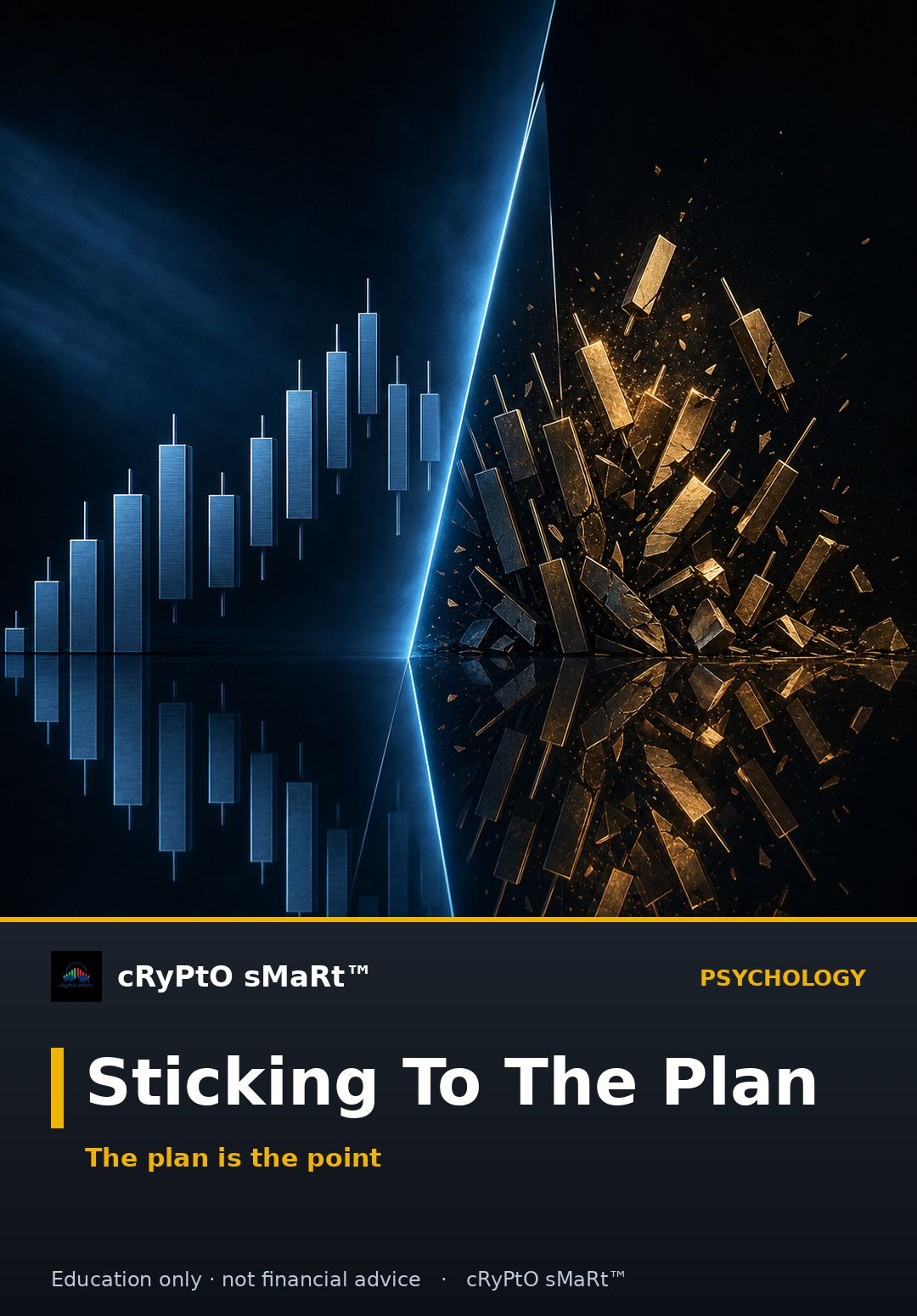
The plan felt solid before the trade opened, then price wiggled and suddenly the exits moved with it. That's like setting a GPS route, then swerving lanes every time traffic looks scary. The destination doesn't change, but the panicked driver arrives late, rattled, or not at all. This happens because a live position turns calm logic into a threat response, and the cost is consistency, the one edge traders actually control. Next time, write the exit and invalidation point before entering, then treat any mid-trade urge to edit it as information, not instruction. What usually triggers you to rewrite the plan once you're already in?
$BTC $ETH $BNB #TradingPsychology #Mindset #Crypto #Trading
Follow for daily trading education · Education only, not financial advice.
The plan felt solid before the trade opened, then price wiggled and suddenly the exits moved with it. That's like setting a GPS route, then swerving lanes every time traffic looks scary. The destination doesn't change, but the panicked driver arrives late, rattled, or not at all. This happens because a live position turns calm logic into a threat response, and the cost is consistency, the one edge traders actually control. Next time, write the exit and invalidation point before entering, then treat any mid-trade urge to edit it as information, not instruction. What usually triggers you to rewrite the plan once you're already in?
$BTC $ETH $BNB #TradingPsychology #Mindset #Crypto #Trading
Follow for daily trading education · Education only, not financial advice.
$BTC $ETH $BNB #TradingPsychology #Mindset #Crypto #Trading
Follow for daily trading education · Education only, not financial advice.
39

TRADING PSYCHOLOGY & EMOTIONAL TRAPS
Even with a solid setup, emotional reactions can quietly creep in and destroy your discipline.
Watch out for these 4 psychological traps:
1. FOMO & rushed entries: Entering a trade before your conditions are confirmed out of fear of missing the move.
2. Revenge trading: Instantly opening a larger position after a loss to recover capital, driven by frustration rather than logic.
3. Widening stop-losses: Moving your stop further away when price moves against you, reacting to discomfort instead of sticking to your plan.
4. Overtrading: Trading continuously in a 24/7 market, which lowers trade quality and increases fee costs.
The Solution? Hard rules & circuit breakers:
Set a daily loss limit. When hit, activate your circuit breaker and walk away.
Enforce a mandatory cooling-off period after consecutive losses or rule violations.
Keep a trading journal and track Rule Compliance, not just profit. A profitable trade that broke your rules is still a bad trade!
Master your mindset, follow your plan, and preserve your capital!
✉️ Which emotional mistake has been the hardest for you to overcome?
#TradingPsychology #RiskManagement
TRADING PSYCHOLOGY & EMOTIONAL TRAPS
Even with a solid setup, emotional reactions can quietly creep in and destroy your discipline.
Watch out for these 4 psychological traps:
1. FOMO & rushed entries: Entering a trade before your conditions are confirmed out of fear of missing the move.
2. Revenge trading: Instantly opening a larger position after a loss to recover capital, driven by frustration rather than logic.
3. Widening stop-losses: Moving your stop further away when price moves against you, reacting to discomfort instead of sticking to your plan.
4. Overtrading: Trading continuously in a 24/7 market, which lowers trade quality and increases fee costs.
The Solution? Hard rules & circuit breakers:
Set a daily loss limit. When hit, activate your circuit breaker and walk away.
Enforce a mandatory cooling-off period after consecutive losses or rule violations.
Keep a trading journal and track Rule Compliance, not just profit. A profitable trade that broke your rules is still a bad trade!
Master your mindset, follow your plan, and preserve your capital!
✉️ Which emotional mistake has been the hardest for you to overcome?
#TradingPsychology #RiskManagement
Even with a solid setup, emotional reactions can quietly creep in and destroy your discipline.
Watch out for these 4 psychological traps:
1. FOMO & rushed entries: Entering a trade before your conditions are confirmed out of fear of missing the move.
2. Revenge trading: Instantly opening a larger position after a loss to recover capital, driven by frustration rather than logic.
3. Widening stop-losses: Moving your stop further away when price moves against you, reacting to discomfort instead of sticking to your plan.
4. Overtrading: Trading continuously in a 24/7 market, which lowers trade quality and increases fee costs.
The Solution? Hard rules & circuit breakers:
Set a daily loss limit. When hit, activate your circuit breaker and walk away.
Enforce a mandatory cooling-off period after consecutive losses or rule violations.
Keep a trading journal and track Rule Compliance, not just profit. A profitable trade that broke your rules is still a bad trade!
Master your mindset, follow your plan, and preserve your capital!
✉️ Which emotional mistake has been the hardest for you to overcome?
#TradingPsychology #RiskManagement
6

·
--
Staying Disciplined During Market Consolidations
Sideways markets test trader patience. Avoid forcing trades in low-volume range-bound markets; let key levels break first.
#TradingPsychology #BinanceSquare
Staying Disciplined During Market Consolidations
Sideways markets test trader patience. Avoid forcing trades in low-volume range-bound markets; let key levels break first.
#TradingPsychology #BinanceSquare
Sideways markets test trader patience. Avoid forcing trades in low-volume range-bound markets; let key levels break first.
#TradingPsychology #BinanceSquare

Trader Psychology & Hard Truth 💯
Most people don’t lose money in crypto because the market is bad. They lose money because they have zero patience for boring charts.
Be honest with yourself:
When a coin is pumping +15% with massive green candles, your fingers start itching to buy. You tell yourself, "It’s going to pump another 20%."
Then you click buy at the local top, the candle flips red, and you spend the next 4 days praying to break even.
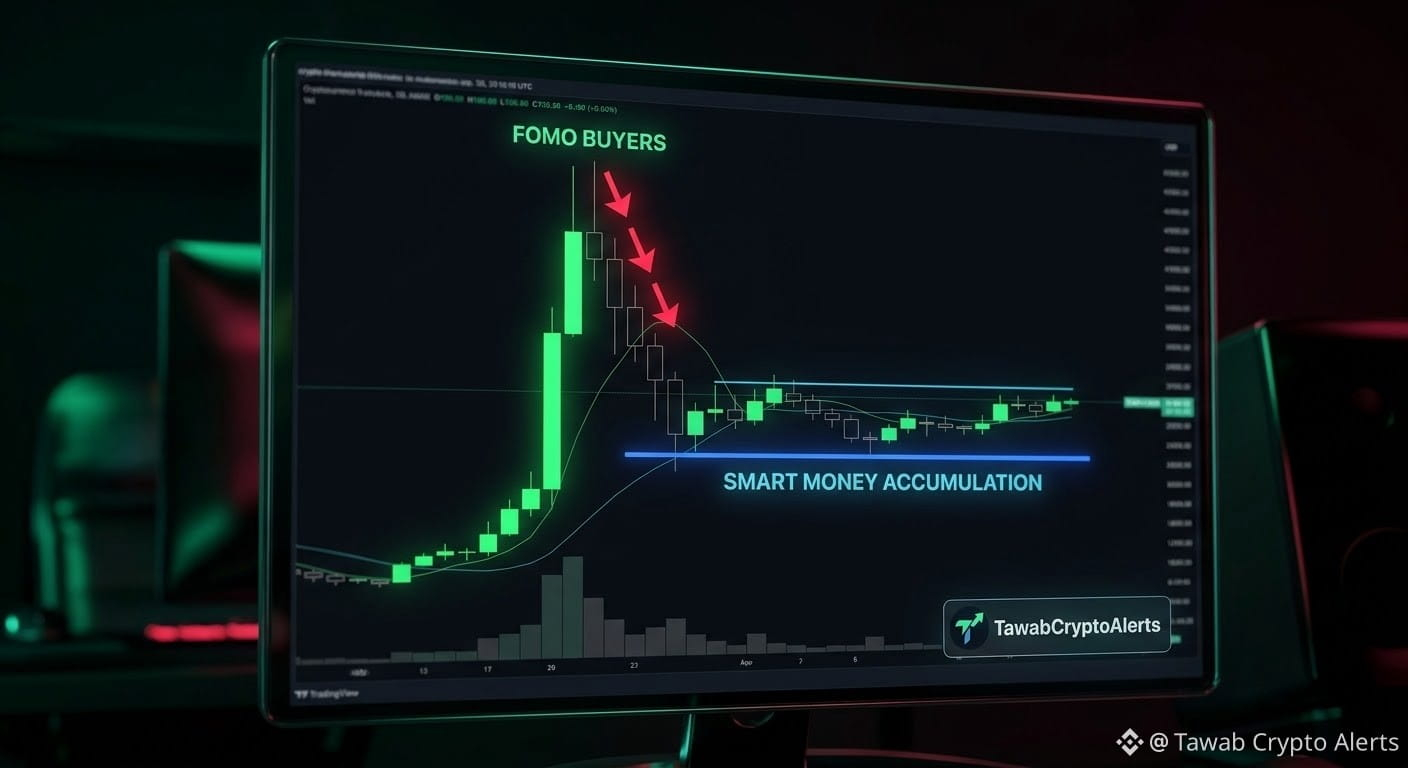
Meanwhile, when that exact same coin was sitting quietly at a 4-hour support floor, consolidating with low volume for 24 hours... you completely ignored it because it looked "dead."
Smart traders don’t chase green candles.
They set limit orders at strong support floors while nobody is looking, and let the breakout traders buy their bags at the top.
Stop buying green. Start respecting support wicks.
Drop a 🧠 if you learned this lesson the hard way.
$BTC $ETH $BNB
#cryptotrading #TradingPsychology #BinanceSquare #TawabCryptoAlerts
Trader Psychology & Hard Truth 💯
Most people don’t lose money in crypto because the market is bad. They lose money because they have zero patience for boring charts.
Be honest with yourself:
When a coin is pumping +15% with massive green candles, your fingers start itching to buy. You tell yourself, "It’s going to pump another 20%."
Then you click buy at the local top, the candle flips red, and you spend the next 4 days praying to break even.
Meanwhile, when that exact same coin was sitting quietly at a 4-hour support floor, consolidating with low volume for 24 hours... you completely ignored it because it looked "dead."
Smart traders don’t chase green candles.
They set limit orders at strong support floors while nobody is looking, and let the breakout traders buy their bags at the top.
Stop buying green. Start respecting support wicks.
Drop a 🧠 if you learned this lesson the hard way.
$BTC $ETH $BNB
#cryptotrading #TradingPsychology #BinanceSquare #TawabCryptoAlerts
Most people don’t lose money in crypto because the market is bad. They lose money because they have zero patience for boring charts.
Be honest with yourself:
When a coin is pumping +15% with massive green candles, your fingers start itching to buy. You tell yourself, "It’s going to pump another 20%."
Then you click buy at the local top, the candle flips red, and you spend the next 4 days praying to break even.
Meanwhile, when that exact same coin was sitting quietly at a 4-hour support floor, consolidating with low volume for 24 hours... you completely ignored it because it looked "dead."
Smart traders don’t chase green candles.
They set limit orders at strong support floors while nobody is looking, and let the breakout traders buy their bags at the top.
Stop buying green. Start respecting support wicks.
Drop a 🧠 if you learned this lesson the hard way.
$BTC $ETH $BNB
#cryptotrading #TradingPsychology #BinanceSquare #TawabCryptoAlerts
55
·
--
The Golden Rule of FOMO Prevention
If you missed a +30% breakout candle, let it go. Chasing green spikes usually makes you exit liquidity for early buyers. Wait for the retest of support.
#RiskManagement #tradingpsychology
The Golden Rule of FOMO Prevention
If you missed a +30% breakout candle, let it go. Chasing green spikes usually makes you exit liquidity for early buyers. Wait for the retest of support.
#RiskManagement #tradingpsychology
If you missed a +30% breakout candle, let it go. Chasing green spikes usually makes you exit liquidity for early buyers. Wait for the retest of support.
#RiskManagement #tradingpsychology

Reminder for every trader today 💡
Protect your capital: Never risk more than 1–2% on a single trade.
Control leverage: High leverage magnifies both gains and losses.
Trade the plan: Don't let FOMO or panic guide your entries.
Profitable trading is a marathon, not a sprint. What’s your main strategy for this week?
#CryptoTips #tradingpsychology
Reminder for every trader today 💡
Protect your capital: Never risk more than 1–2% on a single trade.
Control leverage: High leverage magnifies both gains and losses.
Trade the plan: Don't let FOMO or panic guide your entries.
Profitable trading is a marathon, not a sprint. What’s your main strategy for this week?
#CryptoTips #tradingpsychology
Protect your capital: Never risk more than 1–2% on a single trade.
Control leverage: High leverage magnifies both gains and losses.
Trade the plan: Don't let FOMO or panic guide your entries.
Profitable trading is a marathon, not a sprint. What’s your main strategy for this week?
#CryptoTips #tradingpsychology
35

·
--
Control your emotions, control your profits.
The market doesn't care about your feelings.
Trade the chart, not your hopes or fears.
Discipline is your edge.
Stick to your plan. Cut losses short. Let winners run.
Master your mind, master the market.
#TradingPsychology #Mindset
Control your emotions, control your profits.
The market doesn't care about your feelings.
Trade the chart, not your hopes or fears.
Discipline is your edge.
Stick to your plan. Cut losses short. Let winners run.
Master your mind, master the market.
#TradingPsychology #Mindset
The market doesn't care about your feelings.
Trade the chart, not your hopes or fears.
Discipline is your edge.
Stick to your plan. Cut losses short. Let winners run.
Master your mind, master the market.
#TradingPsychology #Mindset
29

·
--
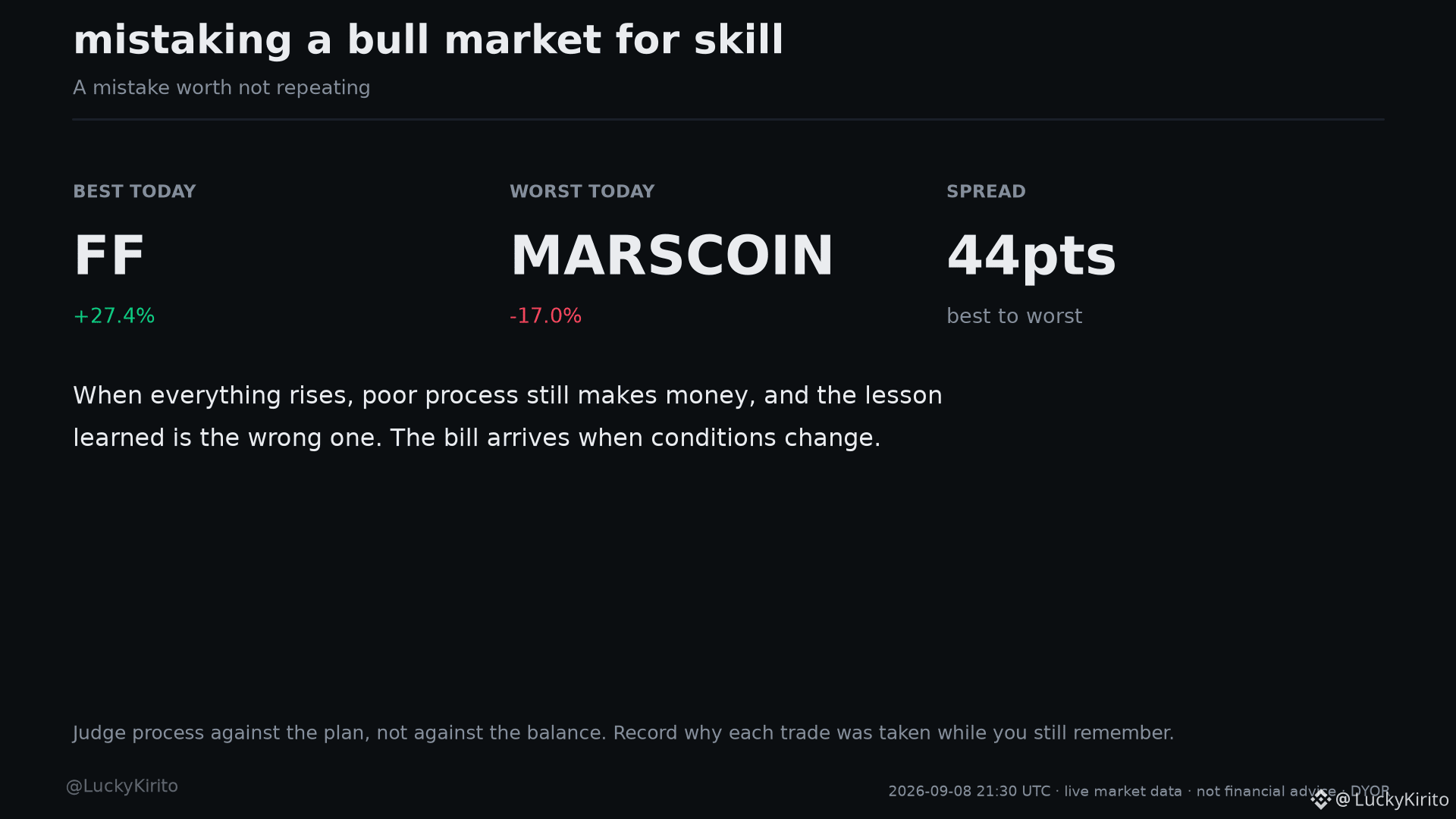
mistaking a bull market for skill. Most people learn this one the expensive way.
When everything rises, poor process still makes money, and the lesson learned is the wrong one. The bill arrives when conditions change.
Judge process against the plan, not against the balance. Record why each trade was taken while you still remember.
Today's market makes the point: FF is +27.4% while MARSCOIN is -17.0%, a spread of 44 points across the same 60 liquid pairs on the same day.
#Write2Earn #TradingStrategy #LearnCrypto #TradingPsychology
Automated technical analysis, not financial advice. I am not responsible for your trades. DYOR.
mistaking a bull market for skill. Most people learn this one the expensive way.
When everything rises, poor process still makes money, and the lesson learned is the wrong one. The bill arrives when conditions change.
Judge process against the plan, not against the balance. Record why each trade was taken while you still remember.
Today's market makes the point: FF is +27.4% while MARSCOIN is -17.0%, a spread of 44 points across the same 60 liquid pairs on the same day.
#Write2Earn #TradingStrategy #LearnCrypto #TradingPsychology
Automated technical analysis, not financial advice. I am not responsible for your trades. DYOR.
When everything rises, poor process still makes money, and the lesson learned is the wrong one. The bill arrives when conditions change.
Judge process against the plan, not against the balance. Record why each trade was taken while you still remember.
Today's market makes the point: FF is +27.4% while MARSCOIN is -17.0%, a spread of 44 points across the same 60 liquid pairs on the same day.
#Write2Earn #TradingStrategy #LearnCrypto #TradingPsychology
Automated technical analysis, not financial advice. I am not responsible for your trades. DYOR.
263

·
--
🧠 One Trading Rule That Changed My Mindset
You don't need to win every trade.
You need to: ✅ Protect your capital
✅ Wait for good setups
✅ Follow your strategy
✅ Control your emotions
✅ Learn from every loss
A losing trade doesn't mean you're a bad trader.
But repeating the same mistake without learning from it can be expensive. 📉
What is the #1 rule you follow when trading? 👇
#CryptoTrading. ng #tradingpsychology ology #Bitcoin❗ n #BTC #BinanceSquare
🧠 One Trading Rule That Changed My Mindset
You don't need to win every trade.
You need to: ✅ Protect your capital
✅ Wait for good setups
✅ Follow your strategy
✅ Control your emotions
✅ Learn from every loss
A losing trade doesn't mean you're a bad trader.
But repeating the same mistake without learning from it can be expensive. 📉
What is the #1 rule you follow when trading? 👇
#CryptoTrading. ng #tradingpsychology ology #Bitcoin❗ n #BTC #BinanceSquare
You don't need to win every trade.
You need to: ✅ Protect your capital
✅ Wait for good setups
✅ Follow your strategy
✅ Control your emotions
✅ Learn from every loss
A losing trade doesn't mean you're a bad trader.
But repeating the same mistake without learning from it can be expensive. 📉
What is the #1 rule you follow when trading? 👇
#CryptoTrading. ng #tradingpsychology ology #Bitcoin❗ n #BTC #BinanceSquare
42

90% of traders lose money because of 1 reason:
EMOTIONS 😤
Buy in FOMO
Sell in Fear
Make a plan before you trade.
Control your mind, not just the chart.
What's your #1 Trading Rule? Comment below 👇
#TradingTips #Binance #Crypto #Mindset #tradingpsychology
90% of traders lose money because of 1 reason:
EMOTIONS 😤
Buy in FOMO
Sell in Fear
Make a plan before you trade.
Control your mind, not just the chart.
What's your #1 Trading Rule? Comment below 👇
#TradingTips #Binance #Crypto #Mindset #tradingpsychology
EMOTIONS 😤
Buy in FOMO
Sell in Fear
Make a plan before you trade.
Control your mind, not just the chart.
What's your #1 Trading Rule? Comment below 👇
#TradingTips #Binance #Crypto #Mindset #tradingpsychology
40
Ever notice how the trade you barely thought through printed money, while the one you researched for hours got stopped out?
That gap messes with people because the brain wants outcomes to prove decisions right or wrong. But markets are probabilistic — a sound decision can still lose, and a reckless one can still win, purely on variance. Grading yourself by results alone teaches the wrong lessons and quietly builds bad habits that feel justified until they aren't.
Instead, keep a simple log: what setup, what reasoning, what risk, before you know the result. Review the decision quality separately from the outcome.
What would your last week look like if you graded process instead of profit?
$XRP $ADA $DOGE #TradingPsychology #Mindset #Crypto #Trading
Follow for daily trading education · Education only, not financial advice.
Ever notice how the trade you barely thought through printed money, while the one you researched for hours got stopped out?
That gap messes with people because the brain wants outcomes to prove decisions right or wrong. But markets are probabilistic — a sound decision can still lose, and a reckless one can still win, purely on variance. Grading yourself by results alone teaches the wrong lessons and quietly builds bad habits that feel justified until they aren't.
Instead, keep a simple log: what setup, what reasoning, what risk, before you know the result. Review the decision quality separately from the outcome.
What would your last week look like if you graded process instead of profit?
$XRP $ADA $DOGE #TradingPsychology #Mindset #Crypto #Trading
Follow for daily trading education · Education only, not financial advice.
That gap messes with people because the brain wants outcomes to prove decisions right or wrong. But markets are probabilistic — a sound decision can still lose, and a reckless one can still win, purely on variance. Grading yourself by results alone teaches the wrong lessons and quietly builds bad habits that feel justified until they aren't.
Instead, keep a simple log: what setup, what reasoning, what risk, before you know the result. Review the decision quality separately from the outcome.
What would your last week look like if you graded process instead of profit?
$XRP $ADA $DOGE #TradingPsychology #Mindset #Crypto #Trading
Follow for daily trading education · Education only, not financial advice.
203
·
--
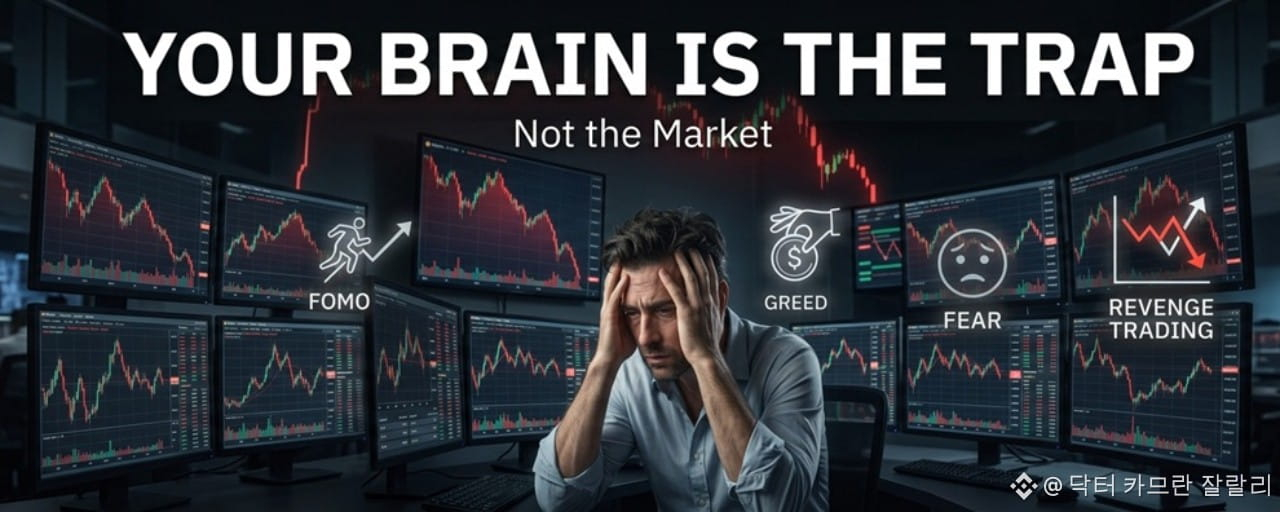
Article
Why Most Crypto Traders Lose Money, And It Usually Starts in Their HeadYour biggest trading enemy might not be the market.
It might be the voice in your head telling you:
"Just hold a little longer."
"It will bounce."
"I need to recover that loss."
"Everyone is buying this coin. I can't miss it."
"One more trade and I'll make it back."
Sound familiar?
Then you already understand the real problem.
Most traders don't lose because they know nothing about crypto.
They lose because they know what they should do, then do something completely different when money is on the line.
That's the uncomfortable part of trading.
You can understand support and resistance.
You can study liquidity.
You can learn technical analysis.
You can follow Bitcoin, Ethereum, altcoins, funding rates and market sentiment every day.
But when a position suddenly moves against you, knowledge can disappear surprisingly fast.
Fear takes over.
Greed takes over.
Hope takes over.
And suddenly, the trading plan you created five minutes ago means nothing.
That is where many losses begin.
The Market Isn't Your Enemy
Crypto is undeniably risky.
Prices can move violently, liquidity can change quickly, and leverage can turn relatively small market movements into much larger gains or losses. Regulators have repeatedly highlighted volatility and the additional risks associated with leveraged products.
But here's the mistake traders often make:
They blame the market for decisions they made themselves.
Bitcoin didn't force you to enter after a 20% pump.
A meme coin didn't force you to increase leverage after three winning trades.
The chart didn't force you to move your stop-loss because you couldn't accept being wrong.
You made those decisions.
And that's actually good news.
Because if the problem is completely outside your control, there is nothing you can do.
But if part of the problem is your behavior, you can change it.
1. Loss Aversion Makes You Hold Bad Trades
Imagine this.
You buy a coin at $100.
It drops to $90.
You think:
"I'll wait. It will probably recover."
Then it drops to $80.
Now selling feels painful.
At $70, you become emotionally attached to the idea of getting back to $100.
At $60, you're no longer asking:
"Is this trade still valid?"
You're asking:
"How can I avoid accepting this loss?"
That's loss aversion.
The brain doesn't treat gains and losses equally. The psychological pain of losing can be powerful enough to distort decision-making.
And this creates one of the most dangerous habits in trading:
Turning a small planned loss into a large unplanned loss.
The fix
Decide where you're wrong before entering.
Your stop-loss should not be something you invent after the trade starts hurting.
If the trade reaches your invalidation level, accept the loss.
A small loss is a trading expense.
A loss that keeps growing because you refuse to admit you're wrong can become account damage.
2. One Winning Streak Can Make You Dangerous
Here's another trap.
You take three trades.
You win all three.
Suddenly, you feel different.
Your confidence increases.
Your position size increases.
Your leverage increases.
You start taking setups you would have ignored last week.
Then the fourth trade loses.
Instead of accepting it, you think:
"That was just bad luck."
You enter again.
Another loss.
Now you're trying to recover.
This is how a profitable session can turn into a disastrous one.
Winning can be just as dangerous as losing when it changes your behavior.
Research on trading behavior has repeatedly examined overconfidence as a factor that can increase trading activity and distort decision-making. Behavioral research also identifies biases such as overconfidence, herding and the disposition effect in investment decisions.
The fix
Don't increase your risk simply because you've had a good day.
Your risk rules should remain the same when you're winning and when you're losing.
That's what makes them rules.
3. FOMO Turns Traders Into Exit Liquidity
You open your phone.
A coin is up 15%.
Then 25%.
Then 40%.
Social media is full of rocket emojis.
Everyone is talking about it.
You weren't interested two hours ago.
Now suddenly you need to own it.
You enter.
The chart reverses.
The excitement disappears.
Panic arrives.
You sell.
The market rebounds.
Now you're angry.
So you enter again.
This cycle can repeat for months.
The problem isn't that you missed the opportunity.
The problem is that you allowed someone else's opportunity to become your trade.
Try this rule
If a coin makes an explosive move, don't chase it simply because everyone else is talking about it.
Let the market come to you.
Look for a structured setup.
Wait for confirmation.
If the opportunity disappears, let it go.
There will be another trade.
You don't need to catch every pump to become a better trader.
4. Confirmation Bias Makes You Trade Your Own Opinion
This one is subtle.
You open a long position on Bitcoin.
Now you start searching for bullish information.
Bitcoin ETF inflows?
Bullish.
Whale accumulation?
Bullish.
Someone predicts $150K?
Bullish.
But when you see bearish information?
You suddenly become skeptical.
"That analyst is always bearish."
"They're just trying to scare people."
"Bitcoin will prove them wrong."
You're no longer analyzing the market.
You're defending your position.
The fix
Before entering a trade, ask yourself:
"What would prove me wrong?"
Then actively search for it.
If you cannot explain the bearish case for your long trade, you probably haven't tested your thesis properly.
A strong trader doesn't need the market to agree with them.
They need a plan for when they're wrong.
5. The Disposition Effect: Why Traders Cut Winners and Protect Losers
Here's a painful pattern:
You take a trade.
You're up 5%.
You close because you're afraid the profit will disappear.
Then the coin continues another 15%.
You feel frustrated.
Later, you're down 5% on another trade.
You refuse to close because:
"It will come back."
So you protect the losing position while abandoning the winning one.
That's backwards.
You're essentially saying:
"I want guaranteed small wins and unlimited chances for large losses."
The solution
Create rules before entering.
For example:
Where is the trade invalidated?Where will you take partial profit?Where will you move the stop?What conditions justify staying in the trade?
Don't improvise when your emotions are at their highest.
6. Leverage Can Turn an Ordinary Move Into a Disaster
Leverage feels attractive because it makes small moves look enormous.
A 1% move suddenly feels important.
But leverage doesn't make your strategy better.
It makes mistakes more expensive.
This is particularly dangerous in crypto because volatility can be substantial and leveraged products can amplify losses during stressed market conditions.
Think about the difference:
Trader A
Uses reasonable position sizing.
Takes a loss.
Reviews it.
Moves on.
Trader B
Uses excessive leverage.
Takes the same market move.
Gets liquidated or suffers a huge drawdown.
Now they need several successful trades just to recover.
The second trader doesn't necessarily have a worse market analysis.
They have worse risk management.
Remember this:
Your first job isn't to make money.
Your first job is to stay in the game.
7. Stop-Losses Aren't an Admission of Failure
Some traders hate stop-losses.
They believe a stop means admitting they were wrong.
But that's not what a stop-loss means.
It means:
"I already know how much I'm willing to lose if this idea fails."
That's discipline.
And there's another important distinction.
A stop shouldn't simply be placed at an arbitrary round number because "that's where everyone puts their stop."
Your invalidation should make sense relative to the trade structure and volatility.
The goal isn't to avoid every losing trade.
That's impossible.
The goal is to prevent one losing trade from becoming a catastrophic one.
8. The Most Dangerous Trade Is Often the Revenge Trade
You lose $100.
You become annoyed.
You enter again.
You lose $150.
Now you want your $250 back.
You increase the position.
You lose $300.
Now you're trading emotionally rather than analytically.
This is revenge trading.
And the market doesn't know you lost money.
It doesn't care.
It isn't going to give your money back because you feel frustrated.
Use a circuit breaker
After a predefined number of consecutive losses, stop trading.
For example:
3 losses = trading session over.
Go away from the chart.
Review what happened.
Come back later.
Your goal isn't to win back today's loss.
Your goal is to protect tomorrow's capital.
The 5-Minute Pre-Trade Test
Before opening your next position, answer these five questions.
1. Why am I entering?
Give one clear reason.
Not:
"It looks good."
Instead:
"Price reclaimed resistance with volume and confirmed the higher-timeframe trend."
2. Where am I wrong?
Know your invalidation level before entering.
3. How much can I lose?
Calculate the risk.
Don't guess.
4. Am I chasing?
If the asset just exploded upward and you're entering because you're afraid of missing it, stop.
5. Would I take this trade if nobody knew about it?
This is my favorite question.
Because sometimes we don't trade the chart.
We trade our ego.
We want to post the winning screenshot.
We want people to know we caught the move.
We want to be right.
And that desire can be expensive.
Your Trading Journal Should Expose Your Weaknesses
You don't need a complicated spreadsheet.
After every trade, record:
Entry:
Why did I enter?
Exit:
Why did I exit?
Risk:
How much was at risk?
Emotion:
Calm, excited, fearful, impatient?
Mistake:
Did I break one of my rules?
Lesson:
What will I do differently next time?
After 20 or 30 trades, patterns start appearing.
Maybe you lose most often after large pumps.
Maybe your worst trades happen late at night.
Maybe you increase leverage after winning.
Maybe you move stop-losses when trades go against you.
That's valuable information.
Because now you're no longer guessing what your weakness is.
You have evidence.
The 1% Rule Isn't Magic, But the Principle Matters
A commonly used risk-management framework is to keep the amount at risk on an individual trade relatively small compared with total capital.
For example, with a $10,000 account, risking 1% means putting approximately $100 at risk if the stop is hit.
The exact percentage isn't sacred.
Some traders may choose less.
The important principle is this:
One trade should not have the power to destroy your account.
If losing one trade makes you desperate to recover it immediately, your position is probably too large.
A Simple Trader Personality Test
Be honest.
A coin you're watching suddenly jumps 30%. You:
A: Buy because it might keep running.
B: Wait for a pullback or confirmation.
C: Ignore it because it wasn't part of your plan.
Your trade falls 10%. You:
A: Buy more because it's cheaper.
B: Recheck the original thesis.
C: Close because the trade isn't behaving as expected.
You win five trades in a row. You:
A: Increase position size.
B: Keep the same risk.
C: Reduce risk because the market may be changing.
You lose three trades in a row. You:
A: Increase size to recover.
B: Stop and review.
C: Continue trading normally.
If you frequently choose A, watch for FOMO and overconfidence.
If you frequently choose B, you may have stronger process discipline.
If you frequently choose C, you may be more cautious, but excessive caution can also prevent good opportunities.
The point isn't to label yourself.
The point is to discover how you behave when money is involved.
Here's the Real Shift
The goal of trading isn't to become someone who never feels fear.
You will feel fear.
You will feel greed.
You will feel frustration.
You will want to chase.
You will want to move your stop.
You will want to revenge trade after a loss.
The professional difference is what happens next.
You notice the emotion.
Then you follow the process anyway.
That's discipline.
Not having no emotions.
Having emotions without allowing them to control the trade.
The Market Will Always Give You Another Opportunity
This is something every trader eventually needs to understand.
You will miss pumps.
You will take losses.
You will exit before the biggest move.
You will sometimes make the perfect analysis and still lose.
That's normal.
The market doesn't owe you a winning trade.
And you don't need to predict every move.
You need to manage the moves you participate in.
So the next time you lose a trade, don't immediately ask:
"How do I make this money back?"
Ask:
"What did this trade teach me about myself?"
That question can be worth far more than the loss.
Because once you understand your own behavior, you can start building rules around it.
And those rules can protect you when the market gets emotional.
One Final Challenge
Before your next trade, write these three sentences somewhere you can see them:
I don't need to catch every move.
I don't need to win every trade.
I only need to protect my capital and follow my process.
If you can actually live by those three rules, your trading may start looking very different.
The market isn't going anywhere.
There will always be another setup.
Another breakout.
Another pullback.
Another opportunity.
You don't need to chase the market.
You need to survive long enough to take advantage of it.
If this article described one of your trading habits, tell me which one in the comments: FOMO, revenge trading, overconfidence, holding losers, or taking profits too early?
And if you want more practical crypto trading psychology and market insights, follow me. I’ll keep breaking down the mistakes traders make before those mistakes become expensive lessons.
#cryptotrading #tradingpsychology
Why Most Crypto Traders Lose Money, And It Usually Starts in Their Head
Your biggest trading enemy might not be the market.
It might be the voice in your head telling you:
"Just hold a little longer."
"It will bounce."
"I need to recover that loss."
"Everyone is buying this coin. I can't miss it."
"One more trade and I'll make it back."
Sound familiar?
Then you already understand the real problem.
Most traders don't lose because they know nothing about crypto.
They lose because they know what they should do, then do something completely different when money is on the line.
That's the uncomfortable part of trading.
You can understand support and resistance.
You can study liquidity.
You can learn technical analysis.
You can follow Bitcoin, Ethereum, altcoins, funding rates and market sentiment every day.
But when a position suddenly moves against you, knowledge can disappear surprisingly fast.
Fear takes over.
Greed takes over.
Hope takes over.
And suddenly, the trading plan you created five minutes ago means nothing.
That is where many losses begin.
The Market Isn't Your Enemy
Crypto is undeniably risky.
Prices can move violently, liquidity can change quickly, and leverage can turn relatively small market movements into much larger gains or losses. Regulators have repeatedly highlighted volatility and the additional risks associated with leveraged products.
But here's the mistake traders often make:
They blame the market for decisions they made themselves.
Bitcoin didn't force you to enter after a 20% pump.
A meme coin didn't force you to increase leverage after three winning trades.
The chart didn't force you to move your stop-loss because you couldn't accept being wrong.
You made those decisions.
And that's actually good news.
Because if the problem is completely outside your control, there is nothing you can do.
But if part of the problem is your behavior, you can change it.
1. Loss Aversion Makes You Hold Bad Trades
Imagine this.
You buy a coin at $100.
It drops to $90.
You think:
"I'll wait. It will probably recover."
Then it drops to $80.
Now selling feels painful.
At $70, you become emotionally attached to the idea of getting back to $100.
At $60, you're no longer asking:
"Is this trade still valid?"
You're asking:
"How can I avoid accepting this loss?"
That's loss aversion.
The brain doesn't treat gains and losses equally. The psychological pain of losing can be powerful enough to distort decision-making.
And this creates one of the most dangerous habits in trading:
Turning a small planned loss into a large unplanned loss.
The fix
Decide where you're wrong before entering.
Your stop-loss should not be something you invent after the trade starts hurting.
If the trade reaches your invalidation level, accept the loss.
A small loss is a trading expense.
A loss that keeps growing because you refuse to admit you're wrong can become account damage.
2. One Winning Streak Can Make You Dangerous
Here's another trap.
You take three trades.
You win all three.
Suddenly, you feel different.
Your confidence increases.
Your position size increases.
Your leverage increases.
You start taking setups you would have ignored last week.
Then the fourth trade loses.
Instead of accepting it, you think:
"That was just bad luck."
You enter again.
Another loss.
Now you're trying to recover.
This is how a profitable session can turn into a disastrous one.
Winning can be just as dangerous as losing when it changes your behavior.
Research on trading behavior has repeatedly examined overconfidence as a factor that can increase trading activity and distort decision-making. Behavioral research also identifies biases such as overconfidence, herding and the disposition effect in investment decisions.
The fix
Don't increase your risk simply because you've had a good day.
Your risk rules should remain the same when you're winning and when you're losing.
That's what makes them rules.
3. FOMO Turns Traders Into Exit Liquidity
You open your phone.
A coin is up 15%.
Then 25%.
Then 40%.
Social media is full of rocket emojis.
Everyone is talking about it.
You weren't interested two hours ago.
Now suddenly you need to own it.
You enter.
The chart reverses.
The excitement disappears.
Panic arrives.
You sell.
The market rebounds.
Now you're angry.
So you enter again.
This cycle can repeat for months.
The problem isn't that you missed the opportunity.
The problem is that you allowed someone else's opportunity to become your trade.
Try this rule
If a coin makes an explosive move, don't chase it simply because everyone else is talking about it.
Let the market come to you.
Look for a structured setup.
Wait for confirmation.
If the opportunity disappears, let it go.
There will be another trade.
You don't need to catch every pump to become a better trader.
4. Confirmation Bias Makes You Trade Your Own Opinion
This one is subtle.
You open a long position on Bitcoin.
Now you start searching for bullish information.
Bitcoin ETF inflows?
Bullish.
Whale accumulation?
Bullish.
Someone predicts $150K?
Bullish.
But when you see bearish information?
You suddenly become skeptical.
"That analyst is always bearish."
"They're just trying to scare people."
"Bitcoin will prove them wrong."
You're no longer analyzing the market.
You're defending your position.
The fix
Before entering a trade, ask yourself:
"What would prove me wrong?"
Then actively search for it.
If you cannot explain the bearish case for your long trade, you probably haven't tested your thesis properly.
A strong trader doesn't need the market to agree with them.
They need a plan for when they're wrong.
5. The Disposition Effect: Why Traders Cut Winners and Protect Losers
Here's a painful pattern:
You take a trade.
You're up 5%.
You close because you're afraid the profit will disappear.
Then the coin continues another 15%.
You feel frustrated.
Later, you're down 5% on another trade.
You refuse to close because:
"It will come back."
So you protect the losing position while abandoning the winning one.
That's backwards.
You're essentially saying:
"I want guaranteed small wins and unlimited chances for large losses."
The solution
Create rules before entering.
For example:
Where is the trade invalidated?Where will you take partial profit?Where will you move the stop?What conditions justify staying in the trade?
Don't improvise when your emotions are at their highest.
6. Leverage Can Turn an Ordinary Move Into a Disaster
Leverage feels attractive because it makes small moves look enormous.
A 1% move suddenly feels important.
But leverage doesn't make your strategy better.
It makes mistakes more expensive.
This is particularly dangerous in crypto because volatility can be substantial and leveraged products can amplify losses during stressed market conditions.
Think about the difference:
Trader A
Uses reasonable position sizing.
Takes a loss.
Reviews it.
Moves on.
Trader B
Uses excessive leverage.
Takes the same market move.
Gets liquidated or suffers a huge drawdown.
Now they need several successful trades just to recover.
The second trader doesn't necessarily have a worse market analysis.
They have worse risk management.
Remember this:
Your first job isn't to make money.
Your first job is to stay in the game.
7. Stop-Losses Aren't an Admission of Failure
Some traders hate stop-losses.
They believe a stop means admitting they were wrong.
But that's not what a stop-loss means.
It means:
"I already know how much I'm willing to lose if this idea fails."
That's discipline.
And there's another important distinction.
A stop shouldn't simply be placed at an arbitrary round number because "that's where everyone puts their stop."
Your invalidation should make sense relative to the trade structure and volatility.
The goal isn't to avoid every losing trade.
That's impossible.
The goal is to prevent one losing trade from becoming a catastrophic one.
8. The Most Dangerous Trade Is Often the Revenge Trade
You lose $100.
You become annoyed.
You enter again.
You lose $150.
Now you want your $250 back.
You increase the position.
You lose $300.
Now you're trading emotionally rather than analytically.
This is revenge trading.
And the market doesn't know you lost money.
It doesn't care.
It isn't going to give your money back because you feel frustrated.
Use a circuit breaker
After a predefined number of consecutive losses, stop trading.
For example:
3 losses = trading session over.
Go away from the chart.
Review what happened.
Come back later.
Your goal isn't to win back today's loss.
Your goal is to protect tomorrow's capital.
The 5-Minute Pre-Trade Test
Before opening your next position, answer these five questions.
1. Why am I entering?
Give one clear reason.
Not:
"It looks good."
Instead:
"Price reclaimed resistance with volume and confirmed the higher-timeframe trend."
2. Where am I wrong?
Know your invalidation level before entering.
3. How much can I lose?
Calculate the risk.
Don't guess.
4. Am I chasing?
If the asset just exploded upward and you're entering because you're afraid of missing it, stop.
5. Would I take this trade if nobody knew about it?
This is my favorite question.
Because sometimes we don't trade the chart.
We trade our ego.
We want to post the winning screenshot.
We want people to know we caught the move.
We want to be right.
And that desire can be expensive.
Your Trading Journal Should Expose Your Weaknesses
You don't need a complicated spreadsheet.
After every trade, record:
Entry:
Why did I enter?
Exit:
Why did I exit?
Risk:
How much was at risk?
Emotion:
Calm, excited, fearful, impatient?
Mistake:
Did I break one of my rules?
Lesson:
What will I do differently next time?
After 20 or 30 trades, patterns start appearing.
Maybe you lose most often after large pumps.
Maybe your worst trades happen late at night.
Maybe you increase leverage after winning.
Maybe you move stop-losses when trades go against you.
That's valuable information.
Because now you're no longer guessing what your weakness is.
You have evidence.
The 1% Rule Isn't Magic, But the Principle Matters
A commonly used risk-management framework is to keep the amount at risk on an individual trade relatively small compared with total capital.
For example, with a $10,000 account, risking 1% means putting approximately $100 at risk if the stop is hit.
The exact percentage isn't sacred.
Some traders may choose less.
The important principle is this:
One trade should not have the power to destroy your account.
If losing one trade makes you desperate to recover it immediately, your position is probably too large.
A Simple Trader Personality Test
Be honest.
A coin you're watching suddenly jumps 30%. You:
A: Buy because it might keep running.
B: Wait for a pullback or confirmation.
C: Ignore it because it wasn't part of your plan.
Your trade falls 10%. You:
A: Buy more because it's cheaper.
B: Recheck the original thesis.
C: Close because the trade isn't behaving as expected.
You win five trades in a row. You:
A: Increase position size.
B: Keep the same risk.
C: Reduce risk because the market may be changing.
You lose three trades in a row. You:
A: Increase size to recover.
B: Stop and review.
C: Continue trading normally.
If you frequently choose A, watch for FOMO and overconfidence.
If you frequently choose B, you may have stronger process discipline.
If you frequently choose C, you may be more cautious, but excessive caution can also prevent good opportunities.
The point isn't to label yourself.
The point is to discover how you behave when money is involved.
Here's the Real Shift
The goal of trading isn't to become someone who never feels fear.
You will feel fear.
You will feel greed.
You will feel frustration.
You will want to chase.
You will want to move your stop.
You will want to revenge trade after a loss.
The professional difference is what happens next.
You notice the emotion.
Then you follow the process anyway.
That's discipline.
Not having no emotions.
Having emotions without allowing them to control the trade.
The Market Will Always Give You Another Opportunity
This is something every trader eventually needs to understand.
You will miss pumps.
You will take losses.
You will exit before the biggest move.
You will sometimes make the perfect analysis and still lose.
That's normal.
The market doesn't owe you a winning trade.
And you don't need to predict every move.
You need to manage the moves you participate in.
So the next time you lose a trade, don't immediately ask:
"How do I make this money back?"
Ask:
"What did this trade teach me about myself?"
That question can be worth far more than the loss.
Because once you understand your own behavior, you can start building rules around it.
And those rules can protect you when the market gets emotional.
One Final Challenge
Before your next trade, write these three sentences somewhere you can see them:
I don't need to catch every move.
I don't need to win every trade.
I only need to protect my capital and follow my process.
If you can actually live by those three rules, your trading may start looking very different.
The market isn't going anywhere.
There will always be another setup.
Another breakout.
Another pullback.
Another opportunity.
You don't need to chase the market.
You need to survive long enough to take advantage of it.
If this article described one of your trading habits, tell me which one in the comments: FOMO, revenge trading, overconfidence, holding losers, or taking profits too early?
And if you want more practical crypto trading psychology and market insights, follow me. I’ll keep breaking down the mistakes traders make before those mistakes become expensive lessons.
#cryptotrading #tradingpsychology
It might be the voice in your head telling you:
"Just hold a little longer."
"It will bounce."
"I need to recover that loss."
"Everyone is buying this coin. I can't miss it."
"One more trade and I'll make it back."
Sound familiar?
Then you already understand the real problem.
Most traders don't lose because they know nothing about crypto.
They lose because they know what they should do, then do something completely different when money is on the line.
That's the uncomfortable part of trading.
You can understand support and resistance.
You can study liquidity.
You can learn technical analysis.
You can follow Bitcoin, Ethereum, altcoins, funding rates and market sentiment every day.
But when a position suddenly moves against you, knowledge can disappear surprisingly fast.
Fear takes over.
Greed takes over.
Hope takes over.
And suddenly, the trading plan you created five minutes ago means nothing.
That is where many losses begin.
The Market Isn't Your Enemy
Crypto is undeniably risky.
Prices can move violently, liquidity can change quickly, and leverage can turn relatively small market movements into much larger gains or losses. Regulators have repeatedly highlighted volatility and the additional risks associated with leveraged products.
But here's the mistake traders often make:
They blame the market for decisions they made themselves.
Bitcoin didn't force you to enter after a 20% pump.
A meme coin didn't force you to increase leverage after three winning trades.
The chart didn't force you to move your stop-loss because you couldn't accept being wrong.
You made those decisions.
And that's actually good news.
Because if the problem is completely outside your control, there is nothing you can do.
But if part of the problem is your behavior, you can change it.
1. Loss Aversion Makes You Hold Bad Trades
Imagine this.
You buy a coin at $100.
It drops to $90.
You think:
"I'll wait. It will probably recover."
Then it drops to $80.
Now selling feels painful.
At $70, you become emotionally attached to the idea of getting back to $100.
At $60, you're no longer asking:
"Is this trade still valid?"
You're asking:
"How can I avoid accepting this loss?"
That's loss aversion.
The brain doesn't treat gains and losses equally. The psychological pain of losing can be powerful enough to distort decision-making.
And this creates one of the most dangerous habits in trading:
Turning a small planned loss into a large unplanned loss.
The fix
Decide where you're wrong before entering.
Your stop-loss should not be something you invent after the trade starts hurting.
If the trade reaches your invalidation level, accept the loss.
A small loss is a trading expense.
A loss that keeps growing because you refuse to admit you're wrong can become account damage.
2. One Winning Streak Can Make You Dangerous
Here's another trap.
You take three trades.
You win all three.
Suddenly, you feel different.
Your confidence increases.
Your position size increases.
Your leverage increases.
You start taking setups you would have ignored last week.
Then the fourth trade loses.
Instead of accepting it, you think:
"That was just bad luck."
You enter again.
Another loss.
Now you're trying to recover.
This is how a profitable session can turn into a disastrous one.
Winning can be just as dangerous as losing when it changes your behavior.
Research on trading behavior has repeatedly examined overconfidence as a factor that can increase trading activity and distort decision-making. Behavioral research also identifies biases such as overconfidence, herding and the disposition effect in investment decisions.
The fix
Don't increase your risk simply because you've had a good day.
Your risk rules should remain the same when you're winning and when you're losing.
That's what makes them rules.
3. FOMO Turns Traders Into Exit Liquidity
You open your phone.
A coin is up 15%.
Then 25%.
Then 40%.
Social media is full of rocket emojis.
Everyone is talking about it.
You weren't interested two hours ago.
Now suddenly you need to own it.
You enter.
The chart reverses.
The excitement disappears.
Panic arrives.
You sell.
The market rebounds.
Now you're angry.
So you enter again.
This cycle can repeat for months.
The problem isn't that you missed the opportunity.
The problem is that you allowed someone else's opportunity to become your trade.
Try this rule
If a coin makes an explosive move, don't chase it simply because everyone else is talking about it.
Let the market come to you.
Look for a structured setup.
Wait for confirmation.
If the opportunity disappears, let it go.
There will be another trade.
You don't need to catch every pump to become a better trader.
4. Confirmation Bias Makes You Trade Your Own Opinion
This one is subtle.
You open a long position on Bitcoin.
Now you start searching for bullish information.
Bitcoin ETF inflows?
Bullish.
Whale accumulation?
Bullish.
Someone predicts $150K?
Bullish.
But when you see bearish information?
You suddenly become skeptical.
"That analyst is always bearish."
"They're just trying to scare people."
"Bitcoin will prove them wrong."
You're no longer analyzing the market.
You're defending your position.
The fix
Before entering a trade, ask yourself:
"What would prove me wrong?"
Then actively search for it.
If you cannot explain the bearish case for your long trade, you probably haven't tested your thesis properly.
A strong trader doesn't need the market to agree with them.
They need a plan for when they're wrong.
5. The Disposition Effect: Why Traders Cut Winners and Protect Losers
Here's a painful pattern:
You take a trade.
You're up 5%.
You close because you're afraid the profit will disappear.
Then the coin continues another 15%.
You feel frustrated.
Later, you're down 5% on another trade.
You refuse to close because:
"It will come back."
So you protect the losing position while abandoning the winning one.
That's backwards.
You're essentially saying:
"I want guaranteed small wins and unlimited chances for large losses."
The solution
Create rules before entering.
For example:
Where is the trade invalidated?Where will you take partial profit?Where will you move the stop?What conditions justify staying in the trade?
Don't improvise when your emotions are at their highest.
6. Leverage Can Turn an Ordinary Move Into a Disaster
Leverage feels attractive because it makes small moves look enormous.
A 1% move suddenly feels important.
But leverage doesn't make your strategy better.
It makes mistakes more expensive.
This is particularly dangerous in crypto because volatility can be substantial and leveraged products can amplify losses during stressed market conditions.
Think about the difference:
Trader A
Uses reasonable position sizing.
Takes a loss.
Reviews it.
Moves on.
Trader B
Uses excessive leverage.
Takes the same market move.
Gets liquidated or suffers a huge drawdown.
Now they need several successful trades just to recover.
The second trader doesn't necessarily have a worse market analysis.
They have worse risk management.
Remember this:
Your first job isn't to make money.
Your first job is to stay in the game.
7. Stop-Losses Aren't an Admission of Failure
Some traders hate stop-losses.
They believe a stop means admitting they were wrong.
But that's not what a stop-loss means.
It means:
"I already know how much I'm willing to lose if this idea fails."
That's discipline.
And there's another important distinction.
A stop shouldn't simply be placed at an arbitrary round number because "that's where everyone puts their stop."
Your invalidation should make sense relative to the trade structure and volatility.
The goal isn't to avoid every losing trade.
That's impossible.
The goal is to prevent one losing trade from becoming a catastrophic one.
8. The Most Dangerous Trade Is Often the Revenge Trade
You lose $100.
You become annoyed.
You enter again.
You lose $150.
Now you want your $250 back.
You increase the position.
You lose $300.
Now you're trading emotionally rather than analytically.
This is revenge trading.
And the market doesn't know you lost money.
It doesn't care.
It isn't going to give your money back because you feel frustrated.
Use a circuit breaker
After a predefined number of consecutive losses, stop trading.
For example:
3 losses = trading session over.
Go away from the chart.
Review what happened.
Come back later.
Your goal isn't to win back today's loss.
Your goal is to protect tomorrow's capital.
The 5-Minute Pre-Trade Test
Before opening your next position, answer these five questions.
1. Why am I entering?
Give one clear reason.
Not:
"It looks good."
Instead:
"Price reclaimed resistance with volume and confirmed the higher-timeframe trend."
2. Where am I wrong?
Know your invalidation level before entering.
3. How much can I lose?
Calculate the risk.
Don't guess.
4. Am I chasing?
If the asset just exploded upward and you're entering because you're afraid of missing it, stop.
5. Would I take this trade if nobody knew about it?
This is my favorite question.
Because sometimes we don't trade the chart.
We trade our ego.
We want to post the winning screenshot.
We want people to know we caught the move.
We want to be right.
And that desire can be expensive.
Your Trading Journal Should Expose Your Weaknesses
You don't need a complicated spreadsheet.
After every trade, record:
Entry:
Why did I enter?
Exit:
Why did I exit?
Risk:
How much was at risk?
Emotion:
Calm, excited, fearful, impatient?
Mistake:
Did I break one of my rules?
Lesson:
What will I do differently next time?
After 20 or 30 trades, patterns start appearing.
Maybe you lose most often after large pumps.
Maybe your worst trades happen late at night.
Maybe you increase leverage after winning.
Maybe you move stop-losses when trades go against you.
That's valuable information.
Because now you're no longer guessing what your weakness is.
You have evidence.
The 1% Rule Isn't Magic, But the Principle Matters
A commonly used risk-management framework is to keep the amount at risk on an individual trade relatively small compared with total capital.
For example, with a $10,000 account, risking 1% means putting approximately $100 at risk if the stop is hit.
The exact percentage isn't sacred.
Some traders may choose less.
The important principle is this:
One trade should not have the power to destroy your account.
If losing one trade makes you desperate to recover it immediately, your position is probably too large.
A Simple Trader Personality Test
Be honest.
A coin you're watching suddenly jumps 30%. You:
A: Buy because it might keep running.
B: Wait for a pullback or confirmation.
C: Ignore it because it wasn't part of your plan.
Your trade falls 10%. You:
A: Buy more because it's cheaper.
B: Recheck the original thesis.
C: Close because the trade isn't behaving as expected.
You win five trades in a row. You:
A: Increase position size.
B: Keep the same risk.
C: Reduce risk because the market may be changing.
You lose three trades in a row. You:
A: Increase size to recover.
B: Stop and review.
C: Continue trading normally.
If you frequently choose A, watch for FOMO and overconfidence.
If you frequently choose B, you may have stronger process discipline.
If you frequently choose C, you may be more cautious, but excessive caution can also prevent good opportunities.
The point isn't to label yourself.
The point is to discover how you behave when money is involved.
Here's the Real Shift
The goal of trading isn't to become someone who never feels fear.
You will feel fear.
You will feel greed.
You will feel frustration.
You will want to chase.
You will want to move your stop.
You will want to revenge trade after a loss.
The professional difference is what happens next.
You notice the emotion.
Then you follow the process anyway.
That's discipline.
Not having no emotions.
Having emotions without allowing them to control the trade.
The Market Will Always Give You Another Opportunity
This is something every trader eventually needs to understand.
You will miss pumps.
You will take losses.
You will exit before the biggest move.
You will sometimes make the perfect analysis and still lose.
That's normal.
The market doesn't owe you a winning trade.
And you don't need to predict every move.
You need to manage the moves you participate in.
So the next time you lose a trade, don't immediately ask:
"How do I make this money back?"
Ask:
"What did this trade teach me about myself?"
That question can be worth far more than the loss.
Because once you understand your own behavior, you can start building rules around it.
And those rules can protect you when the market gets emotional.
One Final Challenge
Before your next trade, write these three sentences somewhere you can see them:
I don't need to catch every move.
I don't need to win every trade.
I only need to protect my capital and follow my process.
If you can actually live by those three rules, your trading may start looking very different.
The market isn't going anywhere.
There will always be another setup.
Another breakout.
Another pullback.
Another opportunity.
You don't need to chase the market.
You need to survive long enough to take advantage of it.
If this article described one of your trading habits, tell me which one in the comments: FOMO, revenge trading, overconfidence, holding losers, or taking profits too early?
And if you want more practical crypto trading psychology and market insights, follow me. I’ll keep breaking down the mistakes traders make before those mistakes become expensive lessons.
#cryptotrading #tradingpsychology
MIJU BRAND:
Good 👍 Post
1
1
40

·
--
3am. My $ADA long was screaming red, down $400 in minutes. My thumb hovered over the "market close" button, heart hammering, ready to bail and stop the pain. Two years ago, I would have panic-sold, then FOMO-bought the bounce. Instead, I stood up, walked to the kitchen, and drank a glass of water. I stared at the chart until my breathing slowed. The trade hit my pre-planned stop loss later, and I didn't care. I hadn't lost my mind, just a controlled amount. What’s the price of your peace?
#tradingpsychology #crypto #riskmanagement #discipline #daytrading
3am. My $ADA long was screaming red, down $400 in minutes. My thumb hovered over the "market close" button, heart hammering, ready to bail and stop the pain. Two years ago, I would have panic-sold, then FOMO-bought the bounce. Instead, I stood up, walked to the kitchen, and drank a glass of water. I stared at the chart until my breathing slowed. The trade hit my pre-planned stop loss later, and I didn't care. I hadn't lost my mind, just a controlled amount. What’s the price of your peace?
#tradingpsychology #crypto #riskmanagement #discipline #daytrading
#tradingpsychology #crypto #riskmanagement #discipline #daytrading
34
Log in to explore more content
Join global crypto users on Binance Square
⚡️ Get latest and useful information about crypto.
💬 Trusted by the world’s largest crypto exchange.
👍 Discover real insights from verified creators.
Email / Phone number
Trending Topics
1
#AppleDebutsFoldablePhone
14,913 views
323 Discussing
2
#EUExtendsCentralContactPointToCASPs
1,882 views
83 Discussing
3
#US10YTreasuryYieldHitsHighestSinceNov2023
17,212 views
306 Discussing
4
#USTreasuryToBuyBackUpTo$6BLongDatedDebt
13,155 views
156 Discussing
5
#BitcoinSurpasses$79K
62,260 views
270 Discussing
6
#BrentCrudeTops$100
118,186 views
393 Discussing
7
#USADPWeeklyEmploymentRises12000
99,602 views
1,208 Discussing
8
#BankOfAmericaGroupPilotsUSBDCStablecoin
72,876 views
985 Discussing
9
#RippleLobbiesToAdvanceCLARITYActVote
108,036 views
1,266 Discussing
10
#GrayscaleZcashETFTops$500M
18,801 views
126 Discussing