
#swift
swift
1.3M views
1,040 Discussing
Hot
Latest

·
--
🚨 GLOBAL PAYMENTS JUST GOT FASTER
DBS and Citi have successfully completed a weekend USD cross-border payment between Singapore 🇸🇬 and the U.S. 🇺🇸 through the Swift Digital Ledger.
⚡ Settlement took only minutes
⏳ Traditional cross-border payments can take up to 2 business days
This is another sign that blockchain technology is moving into real-world financial infrastructure. 🌐
The big question:
Could blockchain make traditional international payments obsolete? 👀
#Swift #blockchain #crypto #fintech #Payments
🚨 GLOBAL PAYMENTS JUST GOT FASTER
DBS and Citi have successfully completed a weekend USD cross-border payment between Singapore 🇸🇬 and the U.S. 🇺🇸 through the Swift Digital Ledger.
⚡ Settlement took only minutes
⏳ Traditional cross-border payments can take up to 2 business days
This is another sign that blockchain technology is moving into real-world financial infrastructure. 🌐
The big question:
Could blockchain make traditional international payments obsolete? 👀
#Swift #blockchain #crypto #fintech #Payments
DBS and Citi have successfully completed a weekend USD cross-border payment between Singapore 🇸🇬 and the U.S. 🇺🇸 through the Swift Digital Ledger.
⚡ Settlement took only minutes
⏳ Traditional cross-border payments can take up to 2 business days
This is another sign that blockchain technology is moving into real-world financial infrastructure. 🌐
The big question:
Could blockchain make traditional international payments obsolete? 👀
#Swift #blockchain #crypto #fintech #Payments
69

🌐 Massive TradFi Leap: DBS and Citi Complete Weekend USD Payments via Swift's Blockchain!
Major banking giants DBS and Citi have successfully executed instant, 24/7 cross-border USD transactions using tokenized deposits on Swift’s Digital Ledger, CoinDesk reports. This marks a critical milestone in the race between traditional finance networks and native crypto rails.
🔹 **Real-World Utility:** This transaction represents the second confirmed live use of Swift's blockchain ledger.
🔹 **Challenging Crypto:** Swift is actively upgrading its network to prove it can compete with digital payment rails that never close.
🔹 **Tokenization Power:** The use of tokenized deposits shows how commercial bank money is evolving to fit digital economies.
As blockchain technology bridges the gap with traditional banking, the line between TradFi and DeFi continues to blur.
$BTC $XRP #Swift #Tokenization #TradFi #Write2Earn
🌐 Massive TradFi Leap: DBS and Citi Complete Weekend USD Payments via Swift's Blockchain!
Major banking giants DBS and Citi have successfully executed instant, 24/7 cross-border USD transactions using tokenized deposits on Swift’s Digital Ledger, CoinDesk reports. This marks a critical milestone in the race between traditional finance networks and native crypto rails.
🔹 **Real-World Utility:** This transaction represents the second confirmed live use of Swift's blockchain ledger.
🔹 **Challenging Crypto:** Swift is actively upgrading its network to prove it can compete with digital payment rails that never close.
🔹 **Tokenization Power:** The use of tokenized deposits shows how commercial bank money is evolving to fit digital economies.
As blockchain technology bridges the gap with traditional banking, the line between TradFi and DeFi continues to blur.
$BTC $XRP #Swift #Tokenization #TradFi #Write2Earn
Major banking giants DBS and Citi have successfully executed instant, 24/7 cross-border USD transactions using tokenized deposits on Swift’s Digital Ledger, CoinDesk reports. This marks a critical milestone in the race between traditional finance networks and native crypto rails.
🔹 **Real-World Utility:** This transaction represents the second confirmed live use of Swift's blockchain ledger.
🔹 **Challenging Crypto:** Swift is actively upgrading its network to prove it can compete with digital payment rails that never close.
🔹 **Tokenization Power:** The use of tokenized deposits shows how commercial bank money is evolving to fit digital economies.
As blockchain technology bridges the gap with traditional banking, the line between TradFi and DeFi continues to blur.
$BTC $XRP #Swift #Tokenization #TradFi #Write2Earn
76

·
--
🚨 Complete DBS and Citi’s first cross-border payment in US dollars over the weekend using encoded deposits on the SWIFT blockchain block. The Digital SWIFT record is not a general settlement ledger, nor does it represent a stablecoin platform. Rather, it is a licensed orchestration layer built on an infrastructure compatible with the Ethereum Virtual Machine (EVM) and based on Hyperledger Besu. The payment from Singapore to the United States was settled within minutes instead of up to two business days.
#DBSBANK #evm #blockchain #Swift
🚨 Complete DBS and Citi’s first cross-border payment in US dollars over the weekend using encoded deposits on the SWIFT blockchain block. The Digital SWIFT record is not a general settlement ledger, nor does it represent a stablecoin platform. Rather, it is a licensed orchestration layer built on an infrastructure compatible with the Ethereum Virtual Machine (EVM) and based on Hyperledger Besu. The payment from Singapore to the United States was settled within minutes instead of up to two business days.
#DBSBANK #evm #blockchain #Swift
#DBSBANK #evm #blockchain #Swift

1
16

Article
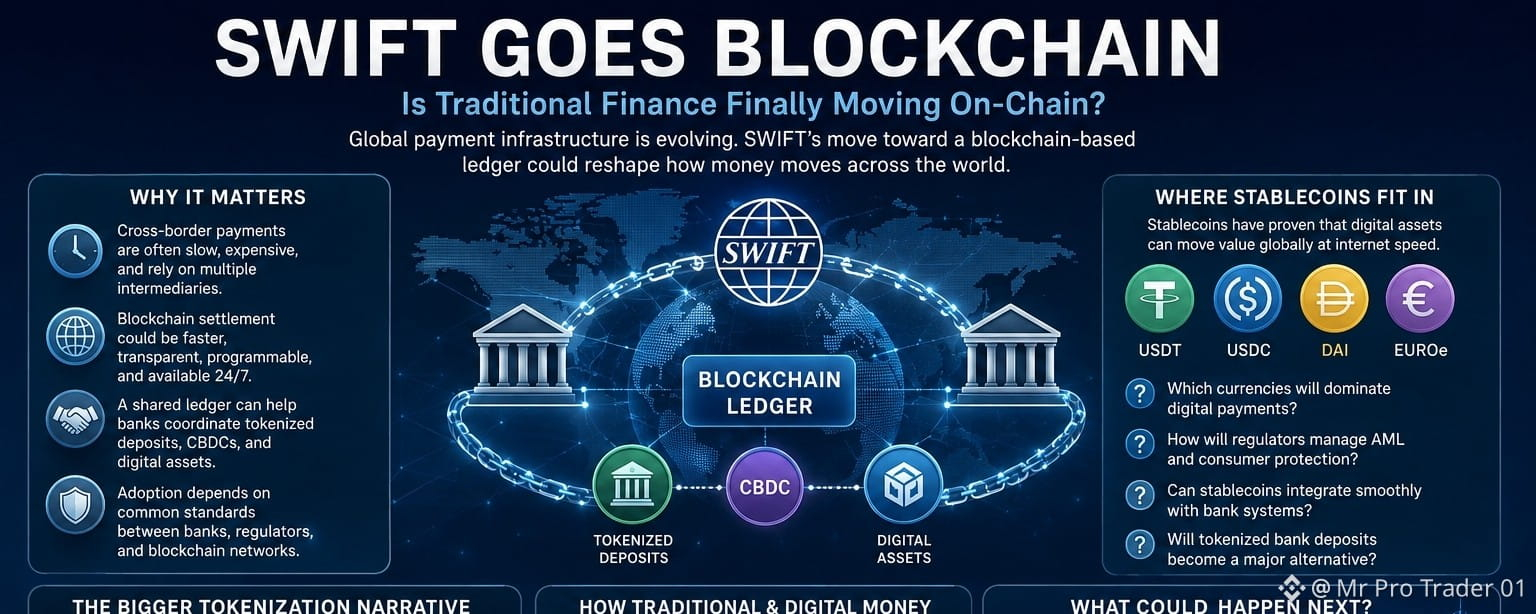
SWIFT Goes Blockchain: Is Traditional Finance Finally Moving On-Chain?SWIFT’s move toward a blockchain-based ledger could be one of the strongest signals yet that global payment infrastructure is getting closer to on-chain settlement.
For decades, SWIFT has been a core part of cross-border banking communication. Now, as blockchain technology, tokenized assets, and stablecoins gain attention, the question is no longer whether traditional finance will explore blockchain it is how quickly real-world payment systems can adopt it at scale.
Why This Matters
Cross-border payments are often slow, expensive, and dependent on multiple intermediaries. Blockchain-based settlement could potentially make transactions more transparent, programmable, and available around the clock.
A shared ledger may help financial institutions coordinate tokenized deposits, central bank digital currencies, and other digital assets across different networks. In theory, this could reduce settlement friction while improving visibility between participating institutions.
However, adoption will depend on whether banks, regulators, and blockchain networks can agree on common standards.
Where Stablecoins Fit In
Stablecoins have already shown that digital assets can move value globally at internet speed. They are widely used in crypto markets, trading, remittances, and decentralized finance.
But stablecoins also raise important questions:
- Which currencies will dominate global digital payments?
- How will regulators manage anti-money-laundering and consumer-protection rules?
- Can stablecoins work smoothly with bank-led payment systems?
- Will tokenized bank deposits become a major alternative?
The answer may not be one system replacing another. Instead, the future could involve stablecoins, tokenized deposits, CBDCs, and traditional bank infrastructure operating together.
The Bigger Tokenization Narrative
SWIFT’s blockchain direction also supports the broader tokenization theme.
Tokenization refers to representing real-world assets—such as bonds, funds, real estate, commodities, or cash equivalents on a blockchain. Supporters believe it could improve settlement speed, automate processes, and create more efficient financial markets.
Yet the path is not risk-free. Interoperability, cybersecurity, liquidity fragmentation, privacy, regulation, and governance remain major challenges.
What Could Happen Next?
If blockchain-based payment rails become more widely integrated, we may see:
- Faster cross-border settlement
- More experiments with tokenized deposits and tokenized funds
- Greater institutional demand for interoperable blockchain infrastructure
- New competition between bank-led networks, public blockchains, and stablecoin issuers
- More regulatory focus on digital money and cross-border capital flows
Still, this is an evolving story not a guaranteed outcome. Technology adoption in global finance usually takes time, especially when regulation, banking infrastructure, and national currencies are involved.
Final Thought
SWIFT exploring blockchain is not simply a crypto headline. It is part of a larger shift: traditional financial institutions are testing how digital ledgers could reshape the movement of money and assets.
The key question is not whether finance will become more digital. It is whether the next generation of financial infrastructure will be open, interoperable, and accessible or mainly controlled by existing institutions.
What do you think: will stablecoins, tokenized bank deposits, or CBDCs lead the next era of global payments?
#SWIFT #Stablecoins #Tokenization #BinanceSquare #crypto
SWIFT Goes Blockchain: Is Traditional Finance Finally Moving On-Chain?
SWIFT’s move toward a blockchain-based ledger could be one of the strongest signals yet that global payment infrastructure is getting closer to on-chain settlement.
For decades, SWIFT has been a core part of cross-border banking communication. Now, as blockchain technology, tokenized assets, and stablecoins gain attention, the question is no longer whether traditional finance will explore blockchain it is how quickly real-world payment systems can adopt it at scale.
Why This Matters
Cross-border payments are often slow, expensive, and dependent on multiple intermediaries. Blockchain-based settlement could potentially make transactions more transparent, programmable, and available around the clock.
A shared ledger may help financial institutions coordinate tokenized deposits, central bank digital currencies, and other digital assets across different networks. In theory, this could reduce settlement friction while improving visibility between participating institutions.
However, adoption will depend on whether banks, regulators, and blockchain networks can agree on common standards.
Where Stablecoins Fit In
Stablecoins have already shown that digital assets can move value globally at internet speed. They are widely used in crypto markets, trading, remittances, and decentralized finance.
But stablecoins also raise important questions:
- Which currencies will dominate global digital payments?
- How will regulators manage anti-money-laundering and consumer-protection rules?
- Can stablecoins work smoothly with bank-led payment systems?
- Will tokenized bank deposits become a major alternative?
The answer may not be one system replacing another. Instead, the future could involve stablecoins, tokenized deposits, CBDCs, and traditional bank infrastructure operating together.
The Bigger Tokenization Narrative
SWIFT’s blockchain direction also supports the broader tokenization theme.
Tokenization refers to representing real-world assets—such as bonds, funds, real estate, commodities, or cash equivalents on a blockchain. Supporters believe it could improve settlement speed, automate processes, and create more efficient financial markets.
Yet the path is not risk-free. Interoperability, cybersecurity, liquidity fragmentation, privacy, regulation, and governance remain major challenges.
What Could Happen Next?
If blockchain-based payment rails become more widely integrated, we may see:
- Faster cross-border settlement
- More experiments with tokenized deposits and tokenized funds
- Greater institutional demand for interoperable blockchain infrastructure
- New competition between bank-led networks, public blockchains, and stablecoin issuers
- More regulatory focus on digital money and cross-border capital flows
Still, this is an evolving story not a guaranteed outcome. Technology adoption in global finance usually takes time, especially when regulation, banking infrastructure, and national currencies are involved.
Final Thought
SWIFT exploring blockchain is not simply a crypto headline. It is part of a larger shift: traditional financial institutions are testing how digital ledgers could reshape the movement of money and assets.
The key question is not whether finance will become more digital. It is whether the next generation of financial infrastructure will be open, interoperable, and accessible or mainly controlled by existing institutions.
What do you think: will stablecoins, tokenized bank deposits, or CBDCs lead the next era of global payments?
#SWIFT #Stablecoins #Tokenization #BinanceSquare #crypto
For decades, SWIFT has been a core part of cross-border banking communication. Now, as blockchain technology, tokenized assets, and stablecoins gain attention, the question is no longer whether traditional finance will explore blockchain it is how quickly real-world payment systems can adopt it at scale.
Why This Matters
Cross-border payments are often slow, expensive, and dependent on multiple intermediaries. Blockchain-based settlement could potentially make transactions more transparent, programmable, and available around the clock.
A shared ledger may help financial institutions coordinate tokenized deposits, central bank digital currencies, and other digital assets across different networks. In theory, this could reduce settlement friction while improving visibility between participating institutions.
However, adoption will depend on whether banks, regulators, and blockchain networks can agree on common standards.
Where Stablecoins Fit In
Stablecoins have already shown that digital assets can move value globally at internet speed. They are widely used in crypto markets, trading, remittances, and decentralized finance.
But stablecoins also raise important questions:
- Which currencies will dominate global digital payments?
- How will regulators manage anti-money-laundering and consumer-protection rules?
- Can stablecoins work smoothly with bank-led payment systems?
- Will tokenized bank deposits become a major alternative?
The answer may not be one system replacing another. Instead, the future could involve stablecoins, tokenized deposits, CBDCs, and traditional bank infrastructure operating together.
The Bigger Tokenization Narrative
SWIFT’s blockchain direction also supports the broader tokenization theme.
Tokenization refers to representing real-world assets—such as bonds, funds, real estate, commodities, or cash equivalents on a blockchain. Supporters believe it could improve settlement speed, automate processes, and create more efficient financial markets.
Yet the path is not risk-free. Interoperability, cybersecurity, liquidity fragmentation, privacy, regulation, and governance remain major challenges.
What Could Happen Next?
If blockchain-based payment rails become more widely integrated, we may see:
- Faster cross-border settlement
- More experiments with tokenized deposits and tokenized funds
- Greater institutional demand for interoperable blockchain infrastructure
- New competition between bank-led networks, public blockchains, and stablecoin issuers
- More regulatory focus on digital money and cross-border capital flows
Still, this is an evolving story not a guaranteed outcome. Technology adoption in global finance usually takes time, especially when regulation, banking infrastructure, and national currencies are involved.
Final Thought
SWIFT exploring blockchain is not simply a crypto headline. It is part of a larger shift: traditional financial institutions are testing how digital ledgers could reshape the movement of money and assets.
The key question is not whether finance will become more digital. It is whether the next generation of financial infrastructure will be open, interoperable, and accessible or mainly controlled by existing institutions.
What do you think: will stablecoins, tokenized bank deposits, or CBDCs lead the next era of global payments?
#SWIFT #Stablecoins #Tokenization #BinanceSquare #crypto
5
2
283

·
--
⚡ SWIFT’S BLOCKCHAIN LEDGER GOES LIVE FOR CROSS-BORDER BANK PAYMENTS 🌍🔗
Swift’s blockchain ledger announcement
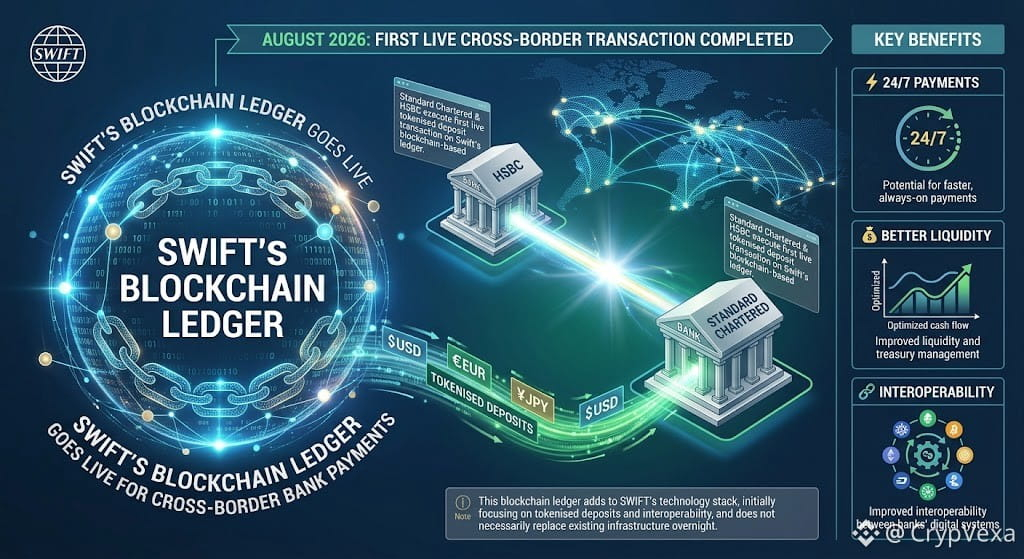
SWIFT has moved its blockchain-based ledger into initial live use, marking a major step toward 24/7 cross-border payments using tokenised bank deposits. (Swift)
🏦 Major milestone: HSBC and Standard Chartered completed the first live cross-border transaction on the ledger in August 2026. The system connected the banks' tokenised-deposit infrastructure and helped match and net obligations before final settlement through existing systems. (Standard Chartered Bank)
💡 Why it matters:
• ⚡ Potential for faster, always-on cross-border payments
• 💰 Better liquidity and treasury management
• 🔗 Improved interoperability between banks' digital systems
• 🏦 Keeps regulated bank money connected to emerging blockchain infrastructure
⚠️ Important clarification: This does not necessarily replace SWIFT's existing payment infrastructure overnight. The blockchain ledger is being added to SWIFT's technology stack and initially focuses on tokenised deposits and interoperability. (Swift)
#SWIFT #Blockchain #Payments #Tokenization
⚡ SWIFT’S BLOCKCHAIN LEDGER GOES LIVE FOR CROSS-BORDER BANK PAYMENTS 🌍🔗
Swift’s blockchain ledger announcement
SWIFT has moved its blockchain-based ledger into initial live use, marking a major step toward 24/7 cross-border payments using tokenised bank deposits. (Swift)
🏦 Major milestone: HSBC and Standard Chartered completed the first live cross-border transaction on the ledger in August 2026. The system connected the banks' tokenised-deposit infrastructure and helped match and net obligations before final settlement through existing systems. (Standard Chartered Bank)
💡 Why it matters:
• ⚡ Potential for faster, always-on cross-border payments
• 💰 Better liquidity and treasury management
• 🔗 Improved interoperability between banks' digital systems
• 🏦 Keeps regulated bank money connected to emerging blockchain infrastructure
⚠️ Important clarification: This does not necessarily replace SWIFT's existing payment infrastructure overnight. The blockchain ledger is being added to SWIFT's technology stack and initially focuses on tokenised deposits and interoperability. (Swift)
#SWIFT #Blockchain #Payments #Tokenization
Swift’s blockchain ledger announcement
SWIFT has moved its blockchain-based ledger into initial live use, marking a major step toward 24/7 cross-border payments using tokenised bank deposits. (Swift)
🏦 Major milestone: HSBC and Standard Chartered completed the first live cross-border transaction on the ledger in August 2026. The system connected the banks' tokenised-deposit infrastructure and helped match and net obligations before final settlement through existing systems. (Standard Chartered Bank)
💡 Why it matters:
• ⚡ Potential for faster, always-on cross-border payments
• 💰 Better liquidity and treasury management
• 🔗 Improved interoperability between banks' digital systems
• 🏦 Keeps regulated bank money connected to emerging blockchain infrastructure
⚠️ Important clarification: This does not necessarily replace SWIFT's existing payment infrastructure overnight. The blockchain ledger is being added to SWIFT's technology stack and initially focuses on tokenised deposits and interoperability. (Swift)
#SWIFT #Blockchain #Payments #Tokenization
HSBCUS-1.59%
103

·
--
The battle between crypto and the traditional system has become serious.
Several executives in the crypto industry say the new blockchain infrastructure will make Swift obsolete.
On the other side, the bankers have a different view.
They believe their network of 11,500 institutions has the strength needed to absorb this technology.
It’s a clash of worlds where each side thinks it has the upper hand.
Who do you think will end up winning this round?
$BTC
#Blockchain #Swift #Cryptocurrencies
The battle between crypto and the traditional system has become serious.
Several executives in the crypto industry say the new blockchain infrastructure will make Swift obsolete.
On the other side, the bankers have a different view.
They believe their network of 11,500 institutions has the strength needed to absorb this technology.
It’s a clash of worlds where each side thinks it has the upper hand.
Who do you think will end up winning this round?
$BTC
#Blockchain #Swift #Cryptocurrencies
Several executives in the crypto industry say the new blockchain infrastructure will make Swift obsolete.
On the other side, the bankers have a different view.
They believe their network of 11,500 institutions has the strength needed to absorb this technology.
It’s a clash of worlds where each side thinks it has the upper hand.
Who do you think will end up winning this round?
$BTC
#Blockchain #Swift #Cryptocurrencies
373

·
--
Swift’s 1.5 quadrillion network is being put to a blockchain test. Crypto execs say a new blockchain payment infrastructure could make Swift obsolete, while bankers argue its 11,500-institution network gives it the power to absorb the tech. The coming shift could redefine cross-border settlements and liquidity. What’s your take? $BTC #Swift #Blockchain
Swift’s 1.5 quadrillion network is being put to a blockchain test. Crypto execs say a new blockchain payment infrastructure could make Swift obsolete, while bankers argue its 11,500-institution network gives it the power to absorb the tech. The coming shift could redefine cross-border settlements and liquidity. What’s your take? $BTC #Swift #Blockchain
36

·
--
Bullish
🤷 𝗪𝗵𝗬 𝗔𝗥𝗘 𝗧𝗛𝗘 𝗪𝗛𝗜𝗧𝗘 𝗕𝗔𝗡𝗞𝗦 𝗦𝗢 𝗤𝗨𝗜𝗖𝗞 𝗧𝗢 𝗔𝗕𝗔𝗡𝗗𝗢𝗡 𝗦𝗪𝗜𝗙𝗧❓
⚡ 𝘈 𝘤𝘳𝘺𝘱𝘵𝘰 $XRP 𝗚𝗔𝗡𝗛𝗔𝗥𝗜𝗔 𝗘𝗦𝗣𝗔𝗖̧𝗢❔🤔
🌟A question has returned to stir up the XRP community👇
What would happen to XRP if big banks started reducing their reliance on SWIFT?
The thesis is simple: the global financial system is looking for international payments that are faster, cheaper, and available 24/7. In this scenario, blockchain technologies focused on settlement and moving value could gain more attention.
🔥 This is exactly where crypto $XRP enters the discussion.
Ripple has spent years developing infrastructure for international payments, liquidity, and the movement of digital assets. That’s why any major transformation in global banking architecture tends to rekindle expectations around XRP.
But there’s a fundamental point:
Banks moving away from SWIFT doesn’t automatically mean they will adopt XRP.
The future may include different solutions:
▸Institutional blockchains
▸Stablecoins
▸Tokenized deposits
▸CBDCs
▸New banking rails
▸XRPL and other public networks
In addition, #Swift itself is modernizing its infrastructure and exploring integration with digital assets.
👀 Therefore, the Real Dispute Is Not Simply👇
SWIFT 🆚 XRP
It’s a much bigger competition over who will provide the infrastructure capable of connecting banks, currencies, and assets in an increasingly on-chain global economy.
For those who believe in XRP, the thesis becomes interesting if institutions truly start looking for alternatives that combine fast settlement, interoperability, and global liquidity.
🔥 If the international financial system changes rails, will $XRP be ready to capture part of that flow?
👇 If banks reduce their use of SWIFT, what technology do you think will gain more space?
💡✨📚
#XRPUSDT🚨 #RippleXRP
🤷 𝗪𝗵𝗬 𝗔𝗥𝗘 𝗧𝗛𝗘 𝗪𝗛𝗜𝗧𝗘 𝗕𝗔𝗡𝗞𝗦 𝗦𝗢 𝗤𝗨𝗜𝗖𝗞 𝗧𝗢 𝗔𝗕𝗔𝗡𝗗𝗢𝗡 𝗦𝗪𝗜𝗙𝗧❓
⚡ 𝘈 𝘤𝘳𝘺𝘱𝘵𝘰 $XRP 𝗚𝗔𝗡𝗛𝗔𝗥𝗜𝗔 𝗘𝗦𝗣𝗔𝗖̧𝗢❔🤔
🌟A question has returned to stir up the XRP community👇
What would happen to XRP if big banks started reducing their reliance on SWIFT?
The thesis is simple: the global financial system is looking for international payments that are faster, cheaper, and available 24/7. In this scenario, blockchain technologies focused on settlement and moving value could gain more attention.
🔥 This is exactly where crypto $XRP enters the discussion.
Ripple has spent years developing infrastructure for international payments, liquidity, and the movement of digital assets. That’s why any major transformation in global banking architecture tends to rekindle expectations around XRP.
But there’s a fundamental point:
Banks moving away from SWIFT doesn’t automatically mean they will adopt XRP.
The future may include different solutions:
▸Institutional blockchains
▸Stablecoins
▸Tokenized deposits
▸CBDCs
▸New banking rails
▸XRPL and other public networks
In addition, #Swift itself is modernizing its infrastructure and exploring integration with digital assets.
👀 Therefore, the Real Dispute Is Not Simply👇
SWIFT 🆚 XRP
It’s a much bigger competition over who will provide the infrastructure capable of connecting banks, currencies, and assets in an increasingly on-chain global economy.
For those who believe in XRP, the thesis becomes interesting if institutions truly start looking for alternatives that combine fast settlement, interoperability, and global liquidity.
🔥 If the international financial system changes rails, will $XRP be ready to capture part of that flow?
👇 If banks reduce their use of SWIFT, what technology do you think will gain more space?
💡✨📚
#XRPUSDT🚨 #RippleXRP
⚡ 𝘈 𝘤𝘳𝘺𝘱𝘵𝘰 $XRP 𝗚𝗔𝗡𝗛𝗔𝗥𝗜𝗔 𝗘𝗦𝗣𝗔𝗖̧𝗢❔🤔
🌟A question has returned to stir up the XRP community👇
What would happen to XRP if big banks started reducing their reliance on SWIFT?
The thesis is simple: the global financial system is looking for international payments that are faster, cheaper, and available 24/7. In this scenario, blockchain technologies focused on settlement and moving value could gain more attention.
🔥 This is exactly where crypto $XRP enters the discussion.
Ripple has spent years developing infrastructure for international payments, liquidity, and the movement of digital assets. That’s why any major transformation in global banking architecture tends to rekindle expectations around XRP.
But there’s a fundamental point:
Banks moving away from SWIFT doesn’t automatically mean they will adopt XRP.
The future may include different solutions:
▸Institutional blockchains
▸Stablecoins
▸Tokenized deposits
▸CBDCs
▸New banking rails
▸XRPL and other public networks
In addition, #Swift itself is modernizing its infrastructure and exploring integration with digital assets.
👀 Therefore, the Real Dispute Is Not Simply👇
SWIFT 🆚 XRP
It’s a much bigger competition over who will provide the infrastructure capable of connecting banks, currencies, and assets in an increasingly on-chain global economy.
For those who believe in XRP, the thesis becomes interesting if institutions truly start looking for alternatives that combine fast settlement, interoperability, and global liquidity.
🔥 If the international financial system changes rails, will $XRP be ready to capture part of that flow?
👇 If banks reduce their use of SWIFT, what technology do you think will gain more space?
💡✨📚
#XRPUSDT🚨 #RippleXRP

4
948

·
--
Institutional Adoption on the Rise: TradFi Connects with Blockchain 🌐
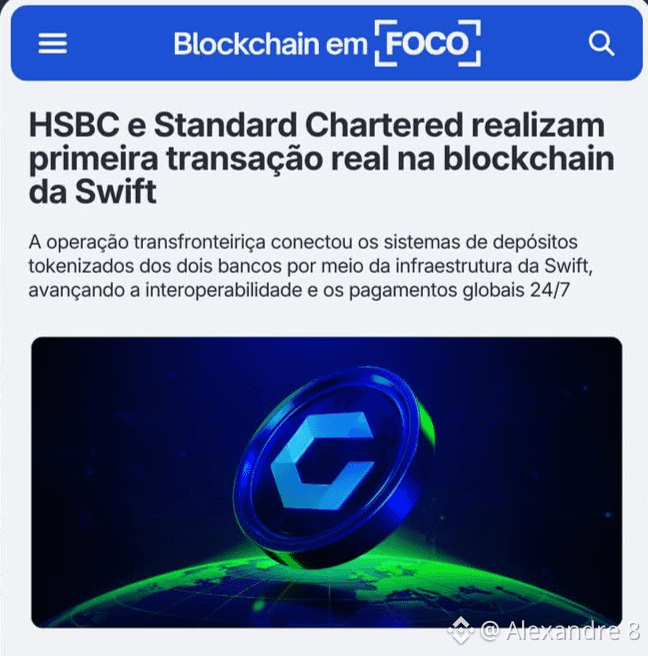
The integration between the traditional financial market and blockchain technology has taken another decisive step. HSBC and Standard Chartered have completed the first real cross-border transaction using Swift’s ledger, directly connecting their tokenized deposit systems.
Why does this matter for the market?
24/7 Operations: Global payments without interruption and instant settlement.
Interoperability: Swift’s infrastructure connecting different tokenized banking networks.
Tokenization in practice: The world’s largest banks moving beyond the testing phase and applying the technology in everyday operations.
Blockchain is not just the future—it’s the infrastructure of the present.
What do you think about major banks entering the tokenization space? Comment below! 👇
#Tokenizacao #CryptoNews #TradFi #BinanceSquare #Swift
Institutional Adoption on the Rise: TradFi Connects with Blockchain 🌐
The integration between the traditional financial market and blockchain technology has taken another decisive step. HSBC and Standard Chartered have completed the first real cross-border transaction using Swift’s ledger, directly connecting their tokenized deposit systems.
Why does this matter for the market?
24/7 Operations: Global payments without interruption and instant settlement.
Interoperability: Swift’s infrastructure connecting different tokenized banking networks.
Tokenization in practice: The world’s largest banks moving beyond the testing phase and applying the technology in everyday operations.
Blockchain is not just the future—it’s the infrastructure of the present.
What do you think about major banks entering the tokenization space? Comment below! 👇
#Tokenizacao #CryptoNews #TradFi #BinanceSquare #Swift
The integration between the traditional financial market and blockchain technology has taken another decisive step. HSBC and Standard Chartered have completed the first real cross-border transaction using Swift’s ledger, directly connecting their tokenized deposit systems.
Why does this matter for the market?
24/7 Operations: Global payments without interruption and instant settlement.
Interoperability: Swift’s infrastructure connecting different tokenized banking networks.
Tokenization in practice: The world’s largest banks moving beyond the testing phase and applying the technology in everyday operations.
Blockchain is not just the future—it’s the infrastructure of the present.
What do you think about major banks entering the tokenization space? Comment below! 👇
#Tokenizacao #CryptoNews #TradFi #BinanceSquare #Swift
1
403

·
--
Verified
Standard Chartered and HSBC complete their first real transaction on Swift blockchain ledgers
International banking giants Standard Chartered and HSBC have successfully run a real transaction for the first time on Swift’s blockchain ledger. Cross-border settlement is moving from traditional message networks onto the chain—this is a substantive step forward.
In the banking world, it’s the old-school tradition: they talk about blockchain as hype, but their actions are honest—quietly moving core business operations onto the chain. The longstanding headache of cross-border payments being slow and expensive may finally have a solution. The days of cross-border remittances taking three to five days could genuinely be coming to an end.
For the crypto industry, this is the best possible endorsement. Traditional finance giants are personally stepping in to validate it. This shows that on-chain settlement isn’t a toy—it’s the infrastructure for the next decade. The trend is already clear. Who still says blockchain has no real-world scenarios? You can slap that person in the face with this news.
But if you look deeper, the real protagonist here is Swift. It’s a global banking messaging network serving tens of thousands of financial institutions, and every move it makes affects cross-border payments worldwide. Now that it has moved the ledger onto the chain, it’s effectively pointing the way for the entire industry. Traditional finance isn’t rejecting blockchain—it’s been waiting for it to mature. Now, the timing is right.
If you think further: once cross-border settlement goes on-chain, opportunities for stablecoins and tokenized dollars also emerge. When banks settle on-chain with each other, the final leg is likely still powered by stablecoins. Traditional finance and the crypto world are building roads from both ends toward the middle.
Still, don’t get too excited yet. When big banks go on-chain, they use their own permissioned consortium chains—still a different playbook from public-chain ecosystems. In the short term they may be complementary, but in the long run it becomes competition. If crypto payments want a slice of this pie, they’ll have to achieve a speed-and-cost advantage that’s truly crushing.
Will banks going on-chain take away the route for crypto payments? What do you think?
Click the avatar to watch the live stream.
Every day, I’ll take you through cross-border payment hotspots—not just what happens in the news, but also the logic and opportunities behind it 👉🦖
#SWIFT #Cross-border payments
Standard Chartered and HSBC complete their first real transaction on Swift blockchain ledgers
International banking giants Standard Chartered and HSBC have successfully run a real transaction for the first time on Swift’s blockchain ledger. Cross-border settlement is moving from traditional message networks onto the chain—this is a substantive step forward.
In the banking world, it’s the old-school tradition: they talk about blockchain as hype, but their actions are honest—quietly moving core business operations onto the chain. The longstanding headache of cross-border payments being slow and expensive may finally have a solution. The days of cross-border remittances taking three to five days could genuinely be coming to an end.
For the crypto industry, this is the best possible endorsement. Traditional finance giants are personally stepping in to validate it. This shows that on-chain settlement isn’t a toy—it’s the infrastructure for the next decade. The trend is already clear. Who still says blockchain has no real-world scenarios? You can slap that person in the face with this news.
But if you look deeper, the real protagonist here is Swift. It’s a global banking messaging network serving tens of thousands of financial institutions, and every move it makes affects cross-border payments worldwide. Now that it has moved the ledger onto the chain, it’s effectively pointing the way for the entire industry. Traditional finance isn’t rejecting blockchain—it’s been waiting for it to mature. Now, the timing is right.
If you think further: once cross-border settlement goes on-chain, opportunities for stablecoins and tokenized dollars also emerge. When banks settle on-chain with each other, the final leg is likely still powered by stablecoins. Traditional finance and the crypto world are building roads from both ends toward the middle.
Still, don’t get too excited yet. When big banks go on-chain, they use their own permissioned consortium chains—still a different playbook from public-chain ecosystems. In the short term they may be complementary, but in the long run it becomes competition. If crypto payments want a slice of this pie, they’ll have to achieve a speed-and-cost advantage that’s truly crushing.
Will banks going on-chain take away the route for crypto payments? What do you think?
Click the avatar to watch the live stream.
Every day, I’ll take you through cross-border payment hotspots—not just what happens in the news, but also the logic and opportunities behind it 👉🦖
#SWIFT #Cross-border payments
International banking giants Standard Chartered and HSBC have successfully run a real transaction for the first time on Swift’s blockchain ledger. Cross-border settlement is moving from traditional message networks onto the chain—this is a substantive step forward.
In the banking world, it’s the old-school tradition: they talk about blockchain as hype, but their actions are honest—quietly moving core business operations onto the chain. The longstanding headache of cross-border payments being slow and expensive may finally have a solution. The days of cross-border remittances taking three to five days could genuinely be coming to an end.
For the crypto industry, this is the best possible endorsement. Traditional finance giants are personally stepping in to validate it. This shows that on-chain settlement isn’t a toy—it’s the infrastructure for the next decade. The trend is already clear. Who still says blockchain has no real-world scenarios? You can slap that person in the face with this news.
But if you look deeper, the real protagonist here is Swift. It’s a global banking messaging network serving tens of thousands of financial institutions, and every move it makes affects cross-border payments worldwide. Now that it has moved the ledger onto the chain, it’s effectively pointing the way for the entire industry. Traditional finance isn’t rejecting blockchain—it’s been waiting for it to mature. Now, the timing is right.
If you think further: once cross-border settlement goes on-chain, opportunities for stablecoins and tokenized dollars also emerge. When banks settle on-chain with each other, the final leg is likely still powered by stablecoins. Traditional finance and the crypto world are building roads from both ends toward the middle.
Still, don’t get too excited yet. When big banks go on-chain, they use their own permissioned consortium chains—still a different playbook from public-chain ecosystems. In the short term they may be complementary, but in the long run it becomes competition. If crypto payments want a slice of this pie, they’ll have to achieve a speed-and-cost advantage that’s truly crushing.
Will banks going on-chain take away the route for crypto payments? What do you think?
Click the avatar to watch the live stream.
Every day, I’ll take you through cross-border payment hotspots—not just what happens in the news, but also the logic and opportunities behind it 👉🦖
#SWIFT #Cross-border payments

670
·
--
Swift has just completed its first real live banking transaction.
HSBC and Standard Chartered were responsible for carrying out this move.
What’s interesting is that this pilot project aims to speed up international settlements.
It’s a clear step to remain relevant as stablecoins and tokenized deposits grow.
It seems that the traditional financial system is moving fast.
Do you think this will help them compete with cryptocurrencies?
$BTC #Swift #Fintech
Swift has just completed its first real live banking transaction.
HSBC and Standard Chartered were responsible for carrying out this move.
What’s interesting is that this pilot project aims to speed up international settlements.
It’s a clear step to remain relevant as stablecoins and tokenized deposits grow.
It seems that the traditional financial system is moving fast.
Do you think this will help them compete with cryptocurrencies?
$BTC #Swift #Fintech
HSBC and Standard Chartered were responsible for carrying out this move.
What’s interesting is that this pilot project aims to speed up international settlements.
It’s a clear step to remain relevant as stablecoins and tokenized deposits grow.
It seems that the traditional financial system is moving fast.
Do you think this will help them compete with cryptocurrencies?
$BTC #Swift #Fintech
203

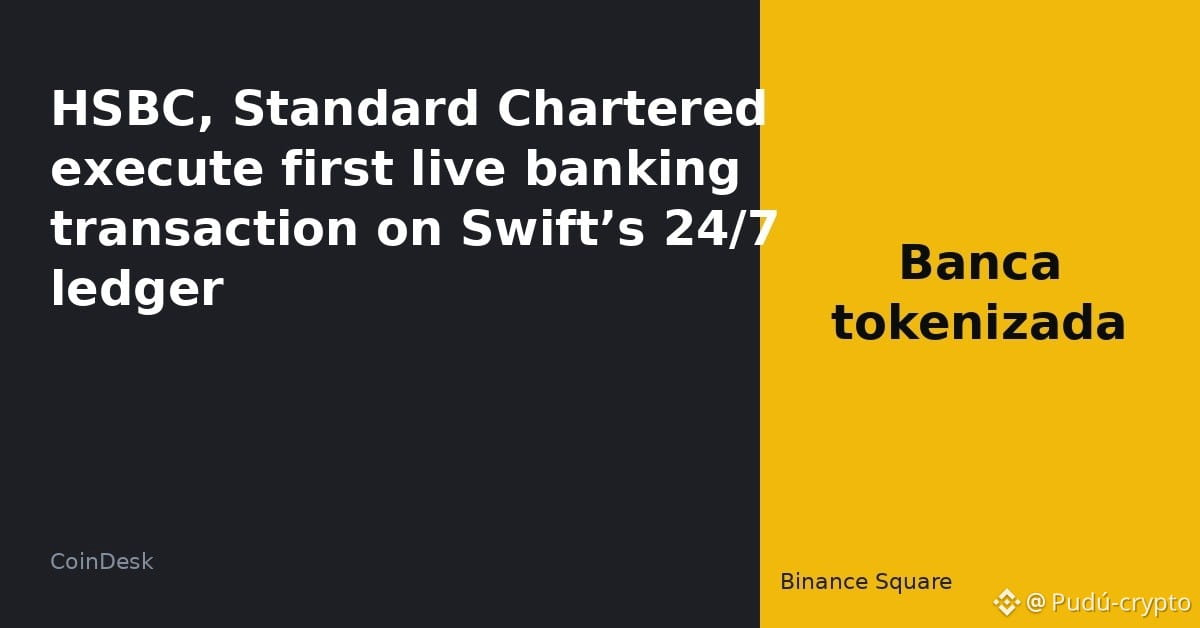
StanChart, HSBC record the first transaction on Swift blockchain ledger
- StanChart and HSBC carry out their first cryptocurrency transaction through Swift’s blockchain ledger
- The trading system connects two separate token custody platforms
- A step forward for 24/7 cross-border payments, compatible with interbank networks
- The RSS source has not provided technical details or development statistics
#BinanceSquare #CryptoNews #Swift #Blockchain
$btc $eth
#vlikevn Titanbot
Source: CoinTelegraph
StanChart, HSBC record the first transaction on Swift blockchain ledger
- StanChart and HSBC carry out their first cryptocurrency transaction through Swift’s blockchain ledger
- The trading system connects two separate token custody platforms
- A step forward for 24/7 cross-border payments, compatible with interbank networks
- The RSS source has not provided technical details or development statistics
#BinanceSquare #CryptoNews #Swift #Blockchain
$btc $eth
#vlikevn Titanbot
Source: CoinTelegraph
- StanChart and HSBC carry out their first cryptocurrency transaction through Swift’s blockchain ledger
- The trading system connects two separate token custody platforms
- A step forward for 24/7 cross-border payments, compatible with interbank networks
- The RSS source has not provided technical details or development statistics
#BinanceSquare #CryptoNews #Swift #Blockchain
$btc $eth
#vlikevn Titanbot
Source: CoinTelegraph
253

·
--
SWIFT LAUNCHES BLOCKCHAIN LEDGER FOR CROSS-BORDER PAYMENTS $MITO 🚀
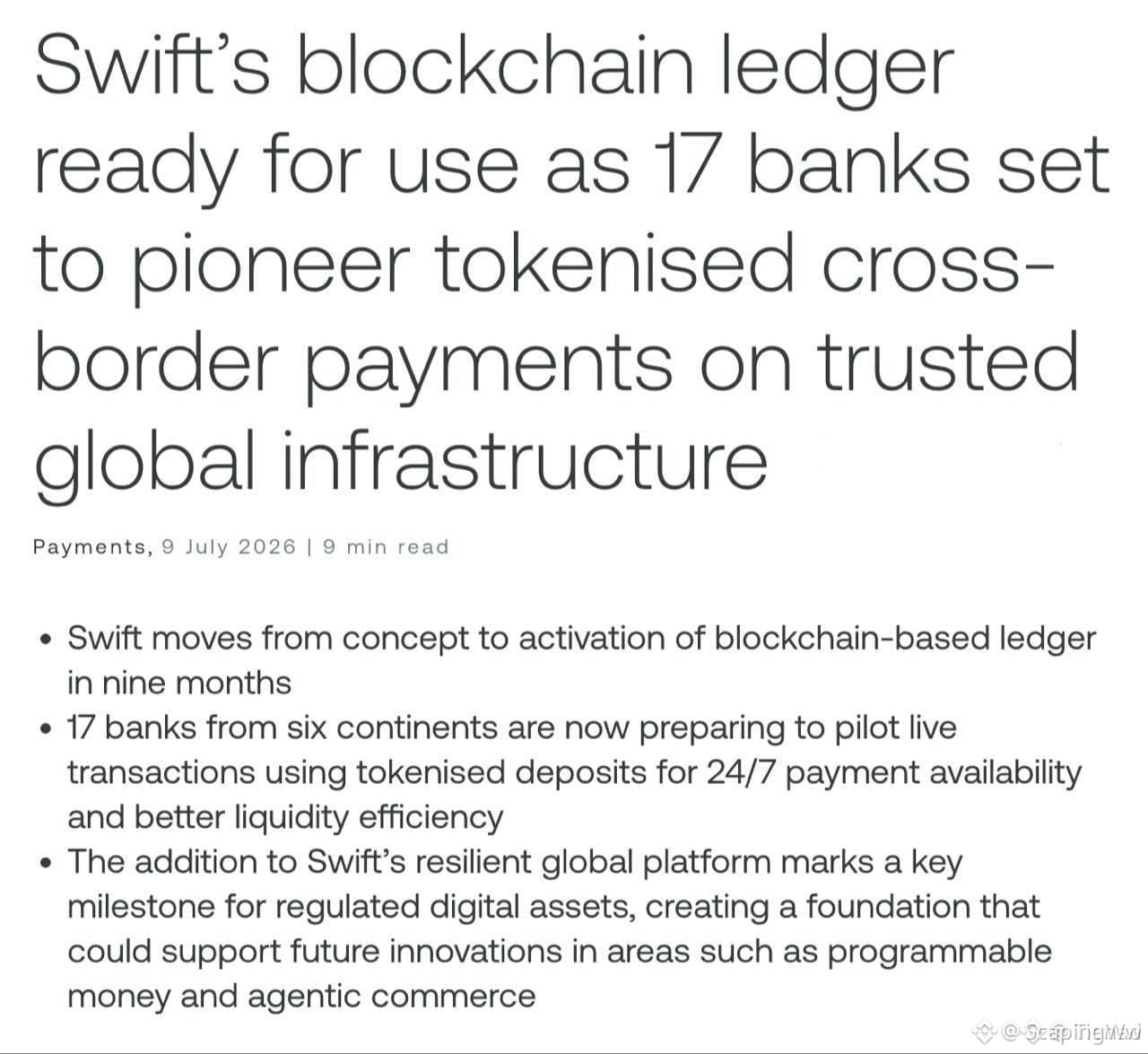
This is a paradigm shift that doesn't come around often. SWIFT just deployed its own blockchain for tokenized deposits — aimed at cutting settlement times and boosting liquidity efficiency across the global payment system.
The reaction is split. Some see faster rails as a green light for institutional crypto adoption. Others read it as a direct competitor to existing blockchain networks. Either way, volume and attention are about to spike in this conversation.
Do you see this as a positive for crypto or a threat?
Not financial advice. Always manage your risk.
#MITO #BlockchainPayments #SWIFT #CryptoNews
⚡
SWIFT LAUNCHES BLOCKCHAIN LEDGER FOR CROSS-BORDER PAYMENTS $MITO 🚀
This is a paradigm shift that doesn't come around often. SWIFT just deployed its own blockchain for tokenized deposits — aimed at cutting settlement times and boosting liquidity efficiency across the global payment system.
The reaction is split. Some see faster rails as a green light for institutional crypto adoption. Others read it as a direct competitor to existing blockchain networks. Either way, volume and attention are about to spike in this conversation.
Do you see this as a positive for crypto or a threat?
Not financial advice. Always manage your risk.
#MITO #BlockchainPayments #SWIFT #CryptoNews
⚡
This is a paradigm shift that doesn't come around often. SWIFT just deployed its own blockchain for tokenized deposits — aimed at cutting settlement times and boosting liquidity efficiency across the global payment system.
The reaction is split. Some see faster rails as a green light for institutional crypto adoption. Others read it as a direct competitor to existing blockchain networks. Either way, volume and attention are about to spike in this conversation.
Do you see this as a positive for crypto or a threat?
Not financial advice. Always manage your risk.
#MITO #BlockchainPayments #SWIFT #CryptoNews
⚡
51

·
--
Swift announces that it has partnered with 17 global banks to launch a blockchain ledger pilot, aiming to enable cross-border payments around the clock. Traditional financial giants are entering the market.
Participating banks: HSBC, UBS, BNP Paribas, Citigroup, Bank of New York Mellon, Wells Fargo, and others, covering six continents.
Core features: 24/7 cross-border payments via tokenized deposits, allowing funds to be transferred even at night and on weekends. Swift says this is meant to supplement, not replace, existing systems.
Key takeaway: Traditional finance is not fighting blockchain—it’s embracing it in its own way. Tokenized deposits circulate only within Swift’s banking network, not using stablecoins such as USDT/USDC.
What do you think? Is Swift’s blockchain innovation or defense?
#Swift #区块链 #跨境支付 #传统金融 #Tokenized deposits
Swift announces that it has partnered with 17 global banks to launch a blockchain ledger pilot, aiming to enable cross-border payments around the clock. Traditional financial giants are entering the market.
Participating banks: HSBC, UBS, BNP Paribas, Citigroup, Bank of New York Mellon, Wells Fargo, and others, covering six continents.
Core features: 24/7 cross-border payments via tokenized deposits, allowing funds to be transferred even at night and on weekends. Swift says this is meant to supplement, not replace, existing systems.
Key takeaway: Traditional finance is not fighting blockchain—it’s embracing it in its own way. Tokenized deposits circulate only within Swift’s banking network, not using stablecoins such as USDT/USDC.
What do you think? Is Swift’s blockchain innovation or defense?
#Swift #区块链 #跨境支付 #传统金融 #Tokenized deposits
Participating banks: HSBC, UBS, BNP Paribas, Citigroup, Bank of New York Mellon, Wells Fargo, and others, covering six continents.
Core features: 24/7 cross-border payments via tokenized deposits, allowing funds to be transferred even at night and on weekends. Swift says this is meant to supplement, not replace, existing systems.
Key takeaway: Traditional finance is not fighting blockchain—it’s embracing it in its own way. Tokenized deposits circulate only within Swift’s banking network, not using stablecoins such as USDT/USDC.
What do you think? Is Swift’s blockchain innovation or defense?
#Swift #区块链 #跨境支付 #传统金融 #Tokenized deposits
70

Swift blockchain ledger officially enters an early usable stage—within just 9 months, it moved from concept to deployment. Seventeen global banks covering six continents became the first pilot partners—Australia & New Zealand, BNP Paribas (France), BNY Mellon, Citigroup, DBS, HSBC, Standard Chartered, UBS, Wells Fargo, and others are all on the list.
The core of this pilot is to connect 24/7 cross-border payments using tokenized deposits. Before traditional settlement systems complete final clearing, funds can move in real time or during non-business hours, while still preserving the existing compliance, credit, and risk-control frameworks.
Notably, Swift explicitly positions this ledger as an "orchestration layer." In the future, it will extend to the underlying infrastructure for programmable money and agentic commerce. This means traditional cross-border financial infrastructure is actively moving toward the on-chain world, rather than being passively replaced.
The market signal is equally clear: institutional-grade tokenization is no longer confined to whitepapers. The long-term narratives around stablecoins, RWAs, and payment-oriented public chains will all receive renewed endorsement.
#Swift #代币化 #cross-border payments
Swift blockchain ledger officially enters an early usable stage—within just 9 months, it moved from concept to deployment. Seventeen global banks covering six continents became the first pilot partners—Australia & New Zealand, BNP Paribas (France), BNY Mellon, Citigroup, DBS, HSBC, Standard Chartered, UBS, Wells Fargo, and others are all on the list.
The core of this pilot is to connect 24/7 cross-border payments using tokenized deposits. Before traditional settlement systems complete final clearing, funds can move in real time or during non-business hours, while still preserving the existing compliance, credit, and risk-control frameworks.
Notably, Swift explicitly positions this ledger as an "orchestration layer." In the future, it will extend to the underlying infrastructure for programmable money and agentic commerce. This means traditional cross-border financial infrastructure is actively moving toward the on-chain world, rather than being passively replaced.
The market signal is equally clear: institutional-grade tokenization is no longer confined to whitepapers. The long-term narratives around stablecoins, RWAs, and payment-oriented public chains will all receive renewed endorsement.
#Swift #代币化 #cross-border payments
The core of this pilot is to connect 24/7 cross-border payments using tokenized deposits. Before traditional settlement systems complete final clearing, funds can move in real time or during non-business hours, while still preserving the existing compliance, credit, and risk-control frameworks.
Notably, Swift explicitly positions this ledger as an "orchestration layer." In the future, it will extend to the underlying infrastructure for programmable money and agentic commerce. This means traditional cross-border financial infrastructure is actively moving toward the on-chain world, rather than being passively replaced.
The market signal is equally clear: institutional-grade tokenization is no longer confined to whitepapers. The long-term narratives around stablecoins, RWAs, and payment-oriented public chains will all receive renewed endorsement.
#Swift #代币化 #cross-border payments
15
#USJoblessClaimsFallTo215K 🚨 SWIFT Takes a Major Step Toward Blockchain-Powered Banking
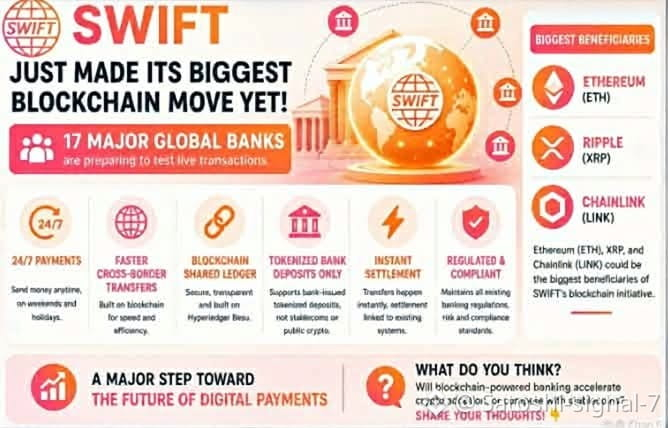
SWIFT is advancing its payment infrastructure by testing a blockchain-based ledger with 17 major global banks. The goal is to enable faster, more efficient cross-border payments while remaining fully compliant with existing banking regulations.
If successful, this upgrade could support 24/7 international transfers, including weekends and holidays, reducing delays that have long affected traditional banking.
Although this system is designed for bank-issued digital assets rather than public cryptocurrencies, it represents another strong signal that blockchain technology is becoming a core part of global finance.
📈 This development could increase attention on blockchain infrastructure projects such as $ETH, $XRP, and $LINK, which are often associated with enterprise payment and interoperability solutions.
As financial institutions continue to embrace blockchain, the gap between traditional finance and digital assets may become even smaller.
💬 What do you think?
Will blockchain adoption by major banks accelerate the growth of the crypto industry, or create stronger competition for public digital assets?
#SWIFT #Blockchain #XRP
$ETH $XRP $LINK
{future}(ETHUSDT)
{future}(XRPUSDT)
{future}(LINKUSDT)
#USJoblessClaimsFallTo215K 🚨 SWIFT Takes a Major Step Toward Blockchain-Powered Banking
SWIFT is advancing its payment infrastructure by testing a blockchain-based ledger with 17 major global banks. The goal is to enable faster, more efficient cross-border payments while remaining fully compliant with existing banking regulations.
If successful, this upgrade could support 24/7 international transfers, including weekends and holidays, reducing delays that have long affected traditional banking.
Although this system is designed for bank-issued digital assets rather than public cryptocurrencies, it represents another strong signal that blockchain technology is becoming a core part of global finance.
📈 This development could increase attention on blockchain infrastructure projects such as $ETH , $XRP , and $LINK , which are often associated with enterprise payment and interoperability solutions.
As financial institutions continue to embrace blockchain, the gap between traditional finance and digital assets may become even smaller.
💬 What do you think?
Will blockchain adoption by major banks accelerate the growth of the crypto industry, or create stronger competition for public digital assets?
#SWIFT #Blockchain #XRP
$ETH $XRP $LINK
SWIFT is advancing its payment infrastructure by testing a blockchain-based ledger with 17 major global banks. The goal is to enable faster, more efficient cross-border payments while remaining fully compliant with existing banking regulations.
If successful, this upgrade could support 24/7 international transfers, including weekends and holidays, reducing delays that have long affected traditional banking.
Although this system is designed for bank-issued digital assets rather than public cryptocurrencies, it represents another strong signal that blockchain technology is becoming a core part of global finance.
📈 This development could increase attention on blockchain infrastructure projects such as $ETH , $XRP , and $LINK , which are often associated with enterprise payment and interoperability solutions.
As financial institutions continue to embrace blockchain, the gap between traditional finance and digital assets may become even smaller.
💬 What do you think?
Will blockchain adoption by major banks accelerate the growth of the crypto industry, or create stronger competition for public digital assets?
#SWIFT #Blockchain #XRP
$ETH $XRP $LINK
13

·
--
SWIFT XRP Speculation Hits Wall
Former SWIFT Chief Innovation Officer Tom Zschach has dismissed claims that SWIFT plans to support #XRP .
Responding on X, Zschach said the rumored integration is "not happening."
The comments follow viral posts claiming #Swift would support $XRP instead of launching its own digital asset, a claim presented without evidence.
SWIFT XRP Speculation Hits Wall
Former SWIFT Chief Innovation Officer Tom Zschach has dismissed claims that SWIFT plans to support #XRP .
Responding on X, Zschach said the rumored integration is "not happening."
The comments follow viral posts claiming #Swift would support $XRP instead of launching its own digital asset, a claim presented without evidence.
Former SWIFT Chief Innovation Officer Tom Zschach has dismissed claims that SWIFT plans to support #XRP .
Responding on X, Zschach said the rumored integration is "not happening."
The comments follow viral posts claiming #Swift would support $XRP instead of launching its own digital asset, a claim presented without evidence.
90


Verified
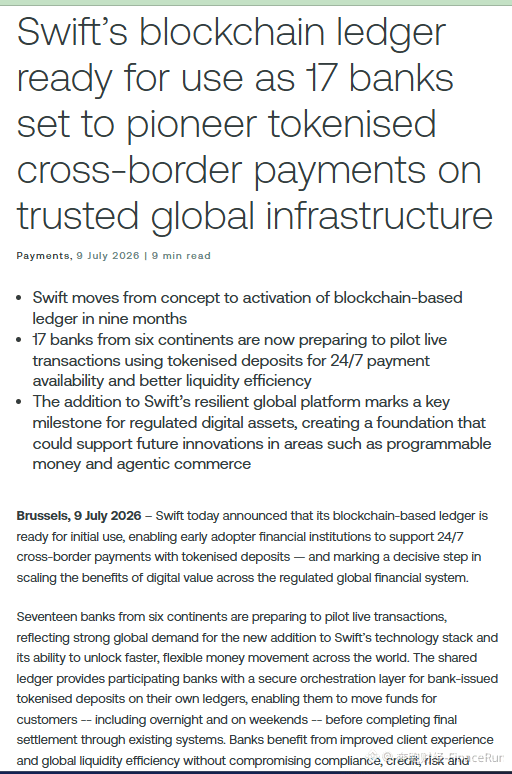
SWIFT Announces Its Blockchain Ledger Is Ready, With 17 Banks Set to Pilot Tokenized Cross-Border Payments
According to SWIFT’s official announcement today, the blockchain-based shared ledger has been officially prepared. Seventeen banks from six continents will be the first to launch real-time operations as part of a pilot program. This move marks a key step toward the scalable adoption of digital value within regulated financial systems.
The ledger provides participating banks with a secure, encoded layer and enables them to issue tokenized deposits on their own ledgers. This helps banks, through existing settlement systems, support round-the-clock payment and cross-border transaction activities.
Notably, while the scheme significantly enhances customer experience and global liquidity efficiency, it does not compromise the embedded compliance, credit, risk, and control standards within existing payment processing systems.
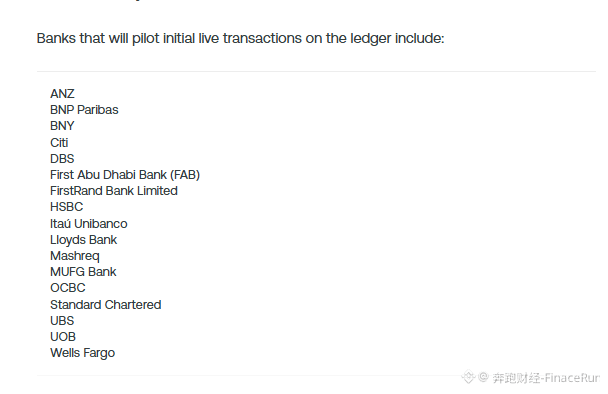
The first batch of pilot banks includes: Australia and New Zealand Banking Group, BNP Paribas, Bank of New York Mellon, Citibank, DBS Bank, HSBC, Mitsubishi UFJ Bank, Standard Chartered Bank, UBS, and several others—including a total of 17 globally renowned financial institutions such as Wells Fargo.
Thierry Chilosi, SWIFT’s Chief Business Officer, said that with the new ledger capability, SWIFT will extend the trust and stability of traditional finance to the forefront of digital currencies—enabling tokenized value to move across borders with the speed and flexibility modern business requires.
At present, up to 75% of transactions on the SWIFT network reach the receiving bank within 10 minutes, and most transfers take only a few seconds. SWIFT also plans to expand and upgrade this ledger functionality to lay the groundwork for innovations in areas such as programmable money and agent-based commerce.
#SWIFT #区块链的共享账本
SWIFT Announces Its Blockchain Ledger Is Ready, With 17 Banks Set to Pilot Tokenized Cross-Border Payments
According to SWIFT’s official announcement today, the blockchain-based shared ledger has been officially prepared. Seventeen banks from six continents will be the first to launch real-time operations as part of a pilot program. This move marks a key step toward the scalable adoption of digital value within regulated financial systems.
The ledger provides participating banks with a secure, encoded layer and enables them to issue tokenized deposits on their own ledgers. This helps banks, through existing settlement systems, support round-the-clock payment and cross-border transaction activities.
Notably, while the scheme significantly enhances customer experience and global liquidity efficiency, it does not compromise the embedded compliance, credit, risk, and control standards within existing payment processing systems.
The first batch of pilot banks includes: Australia and New Zealand Banking Group, BNP Paribas, Bank of New York Mellon, Citibank, DBS Bank, HSBC, Mitsubishi UFJ Bank, Standard Chartered Bank, UBS, and several others—including a total of 17 globally renowned financial institutions such as Wells Fargo.
Thierry Chilosi, SWIFT’s Chief Business Officer, said that with the new ledger capability, SWIFT will extend the trust and stability of traditional finance to the forefront of digital currencies—enabling tokenized value to move across borders with the speed and flexibility modern business requires.
At present, up to 75% of transactions on the SWIFT network reach the receiving bank within 10 minutes, and most transfers take only a few seconds. SWIFT also plans to expand and upgrade this ledger functionality to lay the groundwork for innovations in areas such as programmable money and agent-based commerce.
#SWIFT #区块链的共享账本
According to SWIFT’s official announcement today, the blockchain-based shared ledger has been officially prepared. Seventeen banks from six continents will be the first to launch real-time operations as part of a pilot program. This move marks a key step toward the scalable adoption of digital value within regulated financial systems.
The ledger provides participating banks with a secure, encoded layer and enables them to issue tokenized deposits on their own ledgers. This helps banks, through existing settlement systems, support round-the-clock payment and cross-border transaction activities.
Notably, while the scheme significantly enhances customer experience and global liquidity efficiency, it does not compromise the embedded compliance, credit, risk, and control standards within existing payment processing systems.
The first batch of pilot banks includes: Australia and New Zealand Banking Group, BNP Paribas, Bank of New York Mellon, Citibank, DBS Bank, HSBC, Mitsubishi UFJ Bank, Standard Chartered Bank, UBS, and several others—including a total of 17 globally renowned financial institutions such as Wells Fargo.
Thierry Chilosi, SWIFT’s Chief Business Officer, said that with the new ledger capability, SWIFT will extend the trust and stability of traditional finance to the forefront of digital currencies—enabling tokenized value to move across borders with the speed and flexibility modern business requires.
At present, up to 75% of transactions on the SWIFT network reach the receiving bank within 10 minutes, and most transfers take only a few seconds. SWIFT also plans to expand and upgrade this ledger functionality to lay the groundwork for innovations in areas such as programmable money and agent-based commerce.
#SWIFT #区块链的共享账本
1
1
1.9k

·
--
Bullish
Ripple’s GTreasury is listed as a Certified Partner on SWIFT’s Business Solutions Providers Directory.
Specifically listed under North America, GTreasury is recognized as compliant with SWIFT’s 2025 release, which means the treasury management company is also compliant with ISO 20022. That’s particularly significant for Ripple, as the San Francisco-based tech behemoth acquired GTreasury on October 16, 2025.
The fundamental news keeps on growing for Ripple💪🏼
#Ripple #Swift
Ripple’s GTreasury is listed as a Certified Partner on SWIFT’s Business Solutions Providers Directory.
Specifically listed under North America, GTreasury is recognized as compliant with SWIFT’s 2025 release, which means the treasury management company is also compliant with ISO 20022. That’s particularly significant for Ripple, as the San Francisco-based tech behemoth acquired GTreasury on October 16, 2025.
The fundamental news keeps on growing for Ripple💪🏼
#Ripple #Swift
Specifically listed under North America, GTreasury is recognized as compliant with SWIFT’s 2025 release, which means the treasury management company is also compliant with ISO 20022. That’s particularly significant for Ripple, as the San Francisco-based tech behemoth acquired GTreasury on October 16, 2025.
The fundamental news keeps on growing for Ripple💪🏼
#Ripple #Swift
3
792

·
--
Swift officially announced that its blockchain ledger is entering the early operational phase—moving from concept to implementation in just nine months. Seventeen global banks have teamed up to lead the way: Australia and New Zealand Banking Group (ANZ), BNP Paribas, Bank of New York Mellon, Citigroup, DBS, HSBC, Standard Chartered, UBS, and the U.S. Bank of; plus others are all on the roster.
The pilot’s core is to run 7×24-hour cross-border payments using tokenized deposits. Before the final settlement in existing clearing and settlement systems, it enables the real-time—or non-business-hours—transfer of funds, while keeping the compliance, credit, and risk-control framework unchanged.
One-sentence interpretation: This isn’t about issuing a token. It’s about bringing “USD and EUR deposits” from the banking system onto a shared ledger, directly filling the gaps caused by traditional cross-border payments shutting down at night and over weekends. Going forward, the ledger will also expand to support programmable money and agentic commerce—effectively creating a parallel track from the banking side for the stablecoin and RWA narrative.
The clearing and settlement infrastructure of traditional finance is being rewritten, and the imagination of on-chain finance no longer belongs only to crypto-native players.
#Swift #跨境支付 #RWA
Swift officially announced that its blockchain ledger is entering the early operational phase—moving from concept to implementation in just nine months. Seventeen global banks have teamed up to lead the way: Australia and New Zealand Banking Group (ANZ), BNP Paribas, Bank of New York Mellon, Citigroup, DBS, HSBC, Standard Chartered, UBS, and the U.S. Bank of; plus others are all on the roster.
The pilot’s core is to run 7×24-hour cross-border payments using tokenized deposits. Before the final settlement in existing clearing and settlement systems, it enables the real-time—or non-business-hours—transfer of funds, while keeping the compliance, credit, and risk-control framework unchanged.
One-sentence interpretation: This isn’t about issuing a token. It’s about bringing “USD and EUR deposits” from the banking system onto a shared ledger, directly filling the gaps caused by traditional cross-border payments shutting down at night and over weekends. Going forward, the ledger will also expand to support programmable money and agentic commerce—effectively creating a parallel track from the banking side for the stablecoin and RWA narrative.
The clearing and settlement infrastructure of traditional finance is being rewritten, and the imagination of on-chain finance no longer belongs only to crypto-native players.
#Swift #跨境支付 #RWA
The pilot’s core is to run 7×24-hour cross-border payments using tokenized deposits. Before the final settlement in existing clearing and settlement systems, it enables the real-time—or non-business-hours—transfer of funds, while keeping the compliance, credit, and risk-control framework unchanged.
One-sentence interpretation: This isn’t about issuing a token. It’s about bringing “USD and EUR deposits” from the banking system onto a shared ledger, directly filling the gaps caused by traditional cross-border payments shutting down at night and over weekends. Going forward, the ledger will also expand to support programmable money and agentic commerce—effectively creating a parallel track from the banking side for the stablecoin and RWA narrative.
The clearing and settlement infrastructure of traditional finance is being rewritten, and the imagination of on-chain finance no longer belongs only to crypto-native players.
#Swift #跨境支付 #RWA
10
Log in to explore more content
Join global crypto users on Binance Square
⚡️ Get latest and useful information about crypto.
💬 Trusted by the world’s largest crypto exchange.
👍 Discover real insights from verified creators.
Email / Phone number
Trending Topics
1
#AppleDebutsFoldablePhone
51,215 views
999 Discussing
2
#TSMCAugustRevenueUp53.3%YoY
12,563 views
364 Discussing
3
#IranSaysReadyToEscalateWarWithUS
16,139 views
363 Discussing
4
#EUExtendsCentralContactPointToCASPs
15,539 views
397 Discussing
5
#US10YTreasuryYieldHitsHighestSinceNov2023
39,571 views
616 Discussing
6
#USTreasuryToBuyBackUpTo$6BLongDatedDebt
22,413 views
187 Discussing
7
#BitcoinSurpasses$79K
77,158 views
297 Discussing
8
#BrentCrudeTops$100
136,502 views
426 Discussing
9
#USADPWeeklyEmploymentRises12000
130,310 views
1,554 Discussing
10
#BankOfAmericaGroupPilotsUSBDCStablecoin
95,100 views
1,215 Discussing