

#stinkmeanerinsights
stinkmeanerinsights
5,001 views
13 Discussing
Hot
Latest

·
--
Verified
🐸 Canary just amended its PEPE ETF filing. The filing itself reveals the real risk...
#canaryfilesamendeds1forpepeetf
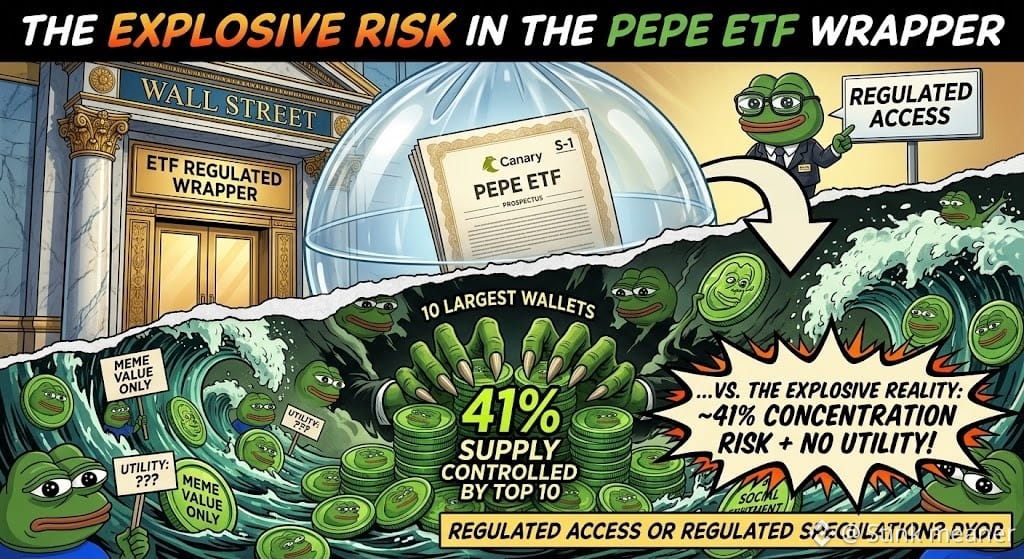
Canary filed a Pre-Effective Amendment to its S-1 on Oct. 2 for a proposed spot PEPE ETF. It would hold PEPE directly and seek a Cboe BZX listing — but it has not been approved or launched.
Now read what Canary's own filing says.
The ten largest PEPE addresses held roughly 41% of circulating supply as of April 2026. The filing notes that much of this may be exchange omnibus wallets, so it isn't equivalent to 41% controlled by ten individuals.
It also says PEPE has no identified blockchain utility beyond its meme/cultural association, with value heavily influenced by community and social sentiment.
That's the contradiction:
Wall Street access is becoming easier while the asset's own prospectus emphasizes concentration + sentiment risk.
So what actually drives the next phase?
New regulated demand — or simply a regulated wrapper around speculation?
The S-1 amendment is a filing, not SEC approval, and ETF access does not establish future PEPE demand or price appreciation.DYOR
$PEPE $ETH
#CanaryFilesAmendedS1ForPEPEETF #MASKHitsRecordMarketCapAbove$35M #memecoins #Stinkmeanerinsights
🐸 Canary just amended its PEPE ETF filing. The filing itself reveals the real risk...
#canaryfilesamendeds1forpepeetf
Canary filed a Pre-Effective Amendment to its S-1 on Oct. 2 for a proposed spot PEPE ETF. It would hold PEPE directly and seek a Cboe BZX listing — but it has not been approved or launched.
Now read what Canary's own filing says.
The ten largest PEPE addresses held roughly 41% of circulating supply as of April 2026. The filing notes that much of this may be exchange omnibus wallets, so it isn't equivalent to 41% controlled by ten individuals.
It also says PEPE has no identified blockchain utility beyond its meme/cultural association, with value heavily influenced by community and social sentiment.
That's the contradiction:
Wall Street access is becoming easier while the asset's own prospectus emphasizes concentration + sentiment risk.
So what actually drives the next phase?
New regulated demand — or simply a regulated wrapper around speculation?
The S-1 amendment is a filing, not SEC approval, and ETF access does not establish future PEPE demand or price appreciation.DYOR
$PEPE $ETH
#CanaryFilesAmendedS1ForPEPEETF #MASKHitsRecordMarketCapAbove$35M #memecoins #Stinkmeanerinsights
#canaryfilesamendeds1forpepeetf
Canary filed a Pre-Effective Amendment to its S-1 on Oct. 2 for a proposed spot PEPE ETF. It would hold PEPE directly and seek a Cboe BZX listing — but it has not been approved or launched.
Now read what Canary's own filing says.
The ten largest PEPE addresses held roughly 41% of circulating supply as of April 2026. The filing notes that much of this may be exchange omnibus wallets, so it isn't equivalent to 41% controlled by ten individuals.
It also says PEPE has no identified blockchain utility beyond its meme/cultural association, with value heavily influenced by community and social sentiment.
That's the contradiction:
Wall Street access is becoming easier while the asset's own prospectus emphasizes concentration + sentiment risk.
So what actually drives the next phase?
New regulated demand — or simply a regulated wrapper around speculation?
The S-1 amendment is a filing, not SEC approval, and ETF access does not establish future PEPE demand or price appreciation.DYOR
$PEPE $ETH
#CanaryFilesAmendedS1ForPEPEETF #MASKHitsRecordMarketCapAbove$35M #memecoins #Stinkmeanerinsights
1
99
·
--
🚨 Bitcoin crossed $86K. But $86,000 isn’t the number I’m watching.
#bitcoinfundingratetriplesto10%
It’s 10%.
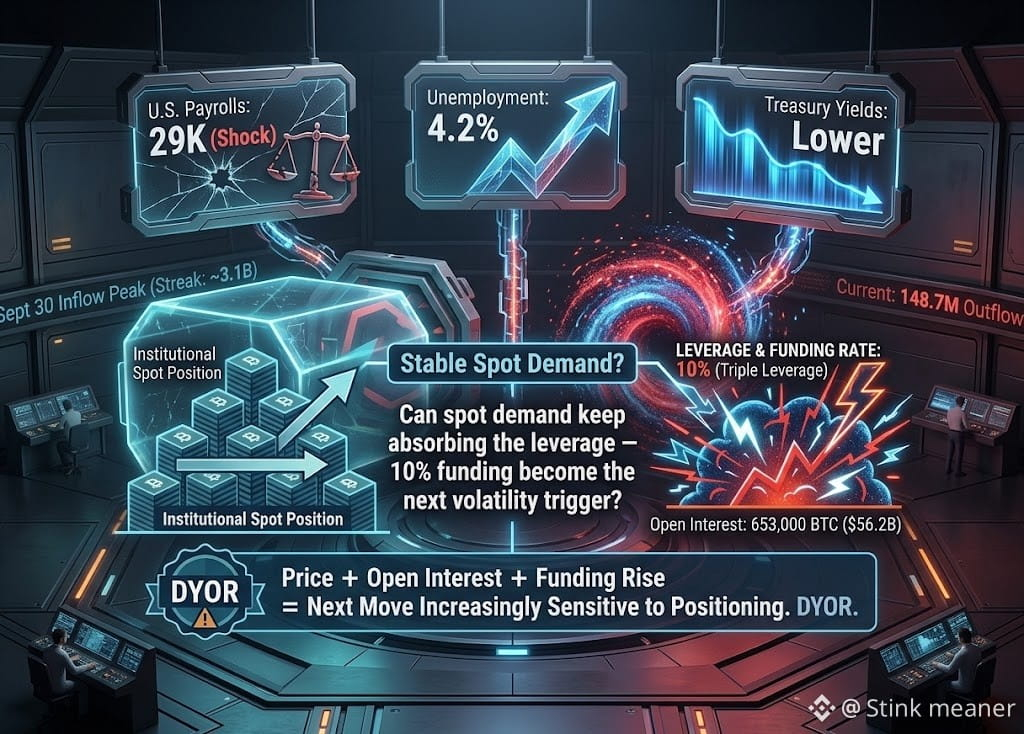
BTC funding has roughly tripled from 3% to 10% since Sept. 30, while open interest jumped 27,000 BTC to ~653,000 BTC ($56.2B).
That means the rally is no longer just about spot momentum.
Leverage is coming back.
And today’s macro catalyst gave bulls fuel: U.S. payrolls rose only 29K vs. 90K expected, while unemployment climbed to 4.2%. The weaker report pushed Treasury yields lower and reduced expectations for another Fed hike.
But here’s the contradiction:
U.S. spot Bitcoin ETFs attracted $2.65B in September, yet their nine-day, ~$3.1B inflow streak just ended with a $148.7M outflow.
So BTC now has macro fuel + institutional demand + rapidly rebuilding leverage.
The question is:
Can spot demand keep absorbing the leverage — or does 10% funding become the next volatility trigger?
Nugget: when price, open interest and funding rise together, the next move becomes increasingly sensitive to positioning.DYOR
$BTC
{future}(BTCUSDT)
#BitcoinFundingRateTriplesTo10%
#BitcoinSurpasses$86KUp2.99%
#bitcoin #Stinkmeanerinsights
🚨 Bitcoin crossed $86K. But $86,000 isn’t the number I’m watching.
#bitcoinfundingratetriplesto10%
It’s 10%.
BTC funding has roughly tripled from 3% to 10% since Sept. 30, while open interest jumped 27,000 BTC to ~653,000 BTC ($56.2B).
That means the rally is no longer just about spot momentum.
Leverage is coming back.
And today’s macro catalyst gave bulls fuel: U.S. payrolls rose only 29K vs. 90K expected, while unemployment climbed to 4.2%. The weaker report pushed Treasury yields lower and reduced expectations for another Fed hike.
But here’s the contradiction:
U.S. spot Bitcoin ETFs attracted $2.65B in September, yet their nine-day, ~$3.1B inflow streak just ended with a $148.7M outflow.
So BTC now has macro fuel + institutional demand + rapidly rebuilding leverage.
The question is:
Can spot demand keep absorbing the leverage — or does 10% funding become the next volatility trigger?
Nugget: when price, open interest and funding rise together, the next move becomes increasingly sensitive to positioning.DYOR
$BTC
#BitcoinFundingRateTriplesTo10%
#BitcoinSurpasses$86KUp2.99%
#bitcoin #Stinkmeanerinsights
#bitcoinfundingratetriplesto10%
It’s 10%.
BTC funding has roughly tripled from 3% to 10% since Sept. 30, while open interest jumped 27,000 BTC to ~653,000 BTC ($56.2B).
That means the rally is no longer just about spot momentum.
Leverage is coming back.
And today’s macro catalyst gave bulls fuel: U.S. payrolls rose only 29K vs. 90K expected, while unemployment climbed to 4.2%. The weaker report pushed Treasury yields lower and reduced expectations for another Fed hike.
But here’s the contradiction:
U.S. spot Bitcoin ETFs attracted $2.65B in September, yet their nine-day, ~$3.1B inflow streak just ended with a $148.7M outflow.
So BTC now has macro fuel + institutional demand + rapidly rebuilding leverage.
The question is:
Can spot demand keep absorbing the leverage — or does 10% funding become the next volatility trigger?
Nugget: when price, open interest and funding rise together, the next move becomes increasingly sensitive to positioning.DYOR
$BTC
#BitcoinFundingRateTriplesTo10%
#BitcoinSurpasses$86KUp2.99%
#bitcoin #Stinkmeanerinsights
9
3.9k
·
--
🔥 The institutional crypto trade is getting wider — not just bigger...
#Stinkmeanerinsights
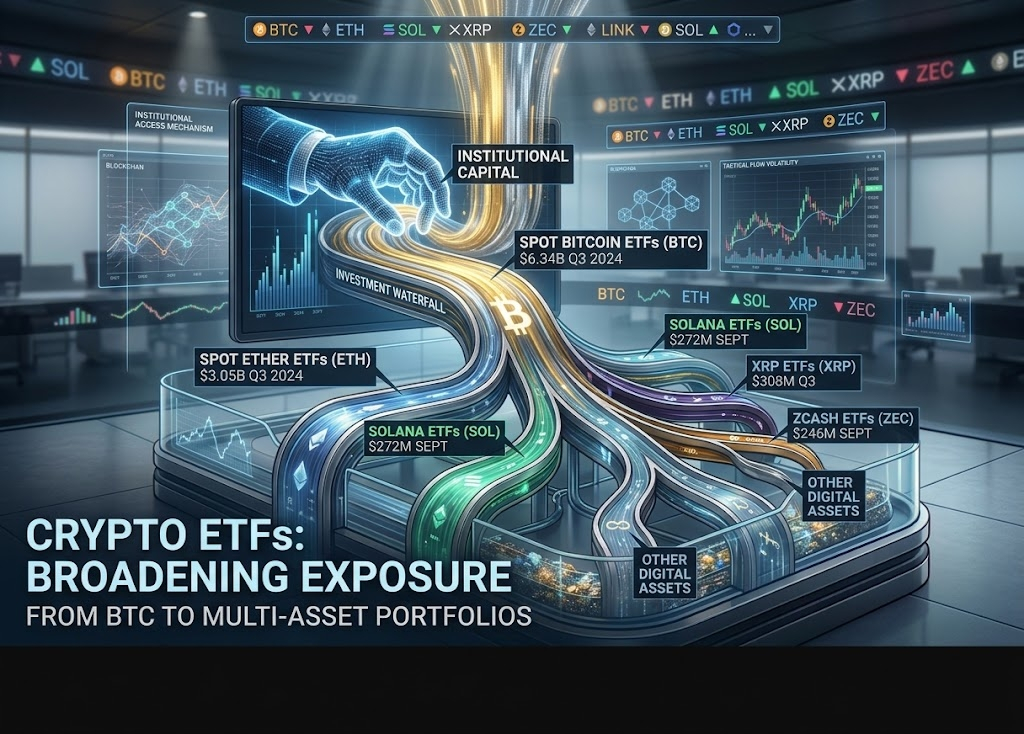
U.S. spot Bitcoin ETFs pulled $6.34B in Q3.
But Bitcoin wasn't alone.
Spot Ether ETFs absorbed another $3.05B during the quarter, while XRP ETFs added $308M. September alone saw roughly $272M flow into Solana ETFs and $246M into Zcash ETFs.
That changes the signal.
The ETF pipeline is evolving from:
“Give me Bitcoin exposure”
to:
“Give me regulated exposure to different pieces of crypto.”
The hidden mechanism is access.
An investor who previously needed an exchange account, wallet, custody setup and operational knowledge can increasingly express a crypto thesis through a familiar brokerage structure.
But there is a warning.
September ended with $148.7M leaving Bitcoin ETFs on September 30, while Ether ETFs also saw a $59.6M outflow.
So the structural demand story is strengthening.
The tactical flow can still reverse violently.
Q4 question: does ETF expansion create a broader crypto demand base — or simply more vehicles for capital rotation?
DYOR: ETF inflows are evidence of fund flows, not proof that every dollar came from institutions or that the buyer is permanently bullish.
$BTC $ETH $SOL
#bitcoin #BitcoinETFsTake$6.34BillionInQ3 #EtherGains70.9%InQ3 #CryptoMarket
🔥 The institutional crypto trade is getting wider — not just bigger...
#Stinkmeanerinsights
U.S. spot Bitcoin ETFs pulled $6.34B in Q3.
But Bitcoin wasn't alone.
Spot Ether ETFs absorbed another $3.05B during the quarter, while XRP ETFs added $308M. September alone saw roughly $272M flow into Solana ETFs and $246M into Zcash ETFs.
That changes the signal.
The ETF pipeline is evolving from:
“Give me Bitcoin exposure”
to:
“Give me regulated exposure to different pieces of crypto.”
The hidden mechanism is access.
An investor who previously needed an exchange account, wallet, custody setup and operational knowledge can increasingly express a crypto thesis through a familiar brokerage structure.
But there is a warning.
September ended with $148.7M leaving Bitcoin ETFs on September 30, while Ether ETFs also saw a $59.6M outflow.
So the structural demand story is strengthening.
The tactical flow can still reverse violently.
Q4 question: does ETF expansion create a broader crypto demand base — or simply more vehicles for capital rotation?
DYOR: ETF inflows are evidence of fund flows, not proof that every dollar came from institutions or that the buyer is permanently bullish.
$BTC $ETH $SOL
#bitcoin #BitcoinETFsTake$6.34BillionInQ3 #EtherGains70.9%InQ3 #CryptoMarket
#Stinkmeanerinsights
U.S. spot Bitcoin ETFs pulled $6.34B in Q3.
But Bitcoin wasn't alone.
Spot Ether ETFs absorbed another $3.05B during the quarter, while XRP ETFs added $308M. September alone saw roughly $272M flow into Solana ETFs and $246M into Zcash ETFs.
That changes the signal.
The ETF pipeline is evolving from:
“Give me Bitcoin exposure”
to:
“Give me regulated exposure to different pieces of crypto.”
The hidden mechanism is access.
An investor who previously needed an exchange account, wallet, custody setup and operational knowledge can increasingly express a crypto thesis through a familiar brokerage structure.
But there is a warning.
September ended with $148.7M leaving Bitcoin ETFs on September 30, while Ether ETFs also saw a $59.6M outflow.
So the structural demand story is strengthening.
The tactical flow can still reverse violently.
Q4 question: does ETF expansion create a broader crypto demand base — or simply more vehicles for capital rotation?
DYOR: ETF inflows are evidence of fund flows, not proof that every dollar came from institutions or that the buyer is permanently bullish.
$BTC $ETH $SOL
#bitcoin #BitcoinETFsTake$6.34BillionInQ3 #EtherGains70.9%InQ3 #CryptoMarket
2
140
·
--
Verified
🏦 Injective is turning RWA from “tokenized assets” into tradable markets.
#Stinkmeanerinsights
As of September 1, Injective had 135 RWA perpetual markets:
111 equities • 11 FX • 9 commodities
RWA perps have already generated $5.3B+ cumulative volume.
And monthly volume accelerated:
$61M → $96M → $187M → $210M from May through August.
That is the bigger story.
Tokenization isn't just about putting assets onchain.
It's about making their exposure 24/7 tradable, collateralizable and programmable.
The question for $INJ isn't how many RWA markets exist.
It's whether volume becomes durable fee-generating activity.
Not financial advice. Do your own research.
$INJ
{future}(INJUSDT)
#injective #RWA #DollarIndexHitsHighestSinceMay2025 #CryptoMarketMoves
🏦 Injective is turning RWA from “tokenized assets” into tradable markets.
#Stinkmeanerinsights
As of September 1, Injective had 135 RWA perpetual markets:
111 equities • 11 FX • 9 commodities
RWA perps have already generated $5.3B+ cumulative volume.
And monthly volume accelerated:
$61M → $96M → $187M → $210M from May through August.
That is the bigger story.
Tokenization isn't just about putting assets onchain.
It's about making their exposure 24/7 tradable, collateralizable and programmable.
The question for $INJ isn't how many RWA markets exist.
It's whether volume becomes durable fee-generating activity.
Not financial advice. Do your own research.
$INJ
#injective #RWA #DollarIndexHitsHighestSinceMay2025 #CryptoMarketMoves
#Stinkmeanerinsights
As of September 1, Injective had 135 RWA perpetual markets:
111 equities • 11 FX • 9 commodities
RWA perps have already generated $5.3B+ cumulative volume.
And monthly volume accelerated:
$61M → $96M → $187M → $210M from May through August.
That is the bigger story.
Tokenization isn't just about putting assets onchain.
It's about making their exposure 24/7 tradable, collateralizable and programmable.
The question for $INJ isn't how many RWA markets exist.
It's whether volume becomes durable fee-generating activity.
Not financial advice. Do your own research.
$INJ
#injective #RWA #DollarIndexHitsHighestSinceMay2025 #CryptoMarketMoves
1
137
·
--
⚠️ Solana is doing something Ethereum isn't.
#Stinkmeanerinsights
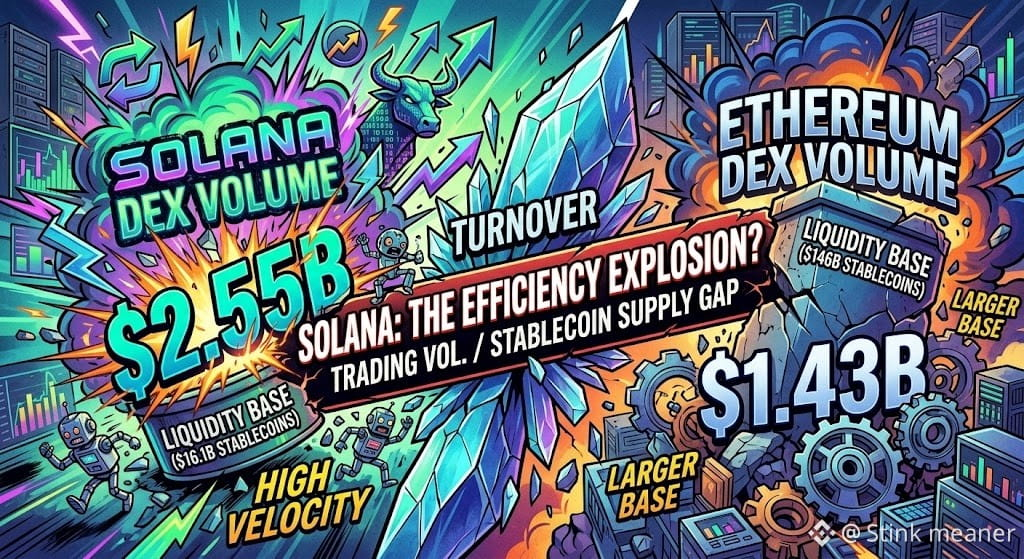
Solana has only ~$16.1B in stablecoins, versus Ethereum's ~$146B.
Yet daily DEX volume is roughly:
SOL: $2.55B
ETH: $1.43B
That means Solana is generating far more trading activity from a much smaller liquidity base.
Rough proxy:
SOL ≈ 15.8% daily DEX volume/stablecoin supply
ETH ≈ 1.0%
That's an enormous gap.
But don't confuse turnover with organic adoption—bots, arbitrage and speculation can inflate volume.
The real question:
Can Solana convert high capital velocity into durable economic activity?
Heed: this ratio is a proxy, not a direct measure of liquidity efficiency.
DYOR.
$SOL $ETH
#solana #BinanceSquareFamily #CryptoMarkets #MarketInsights
⚠️ Solana is doing something Ethereum isn't.
#Stinkmeanerinsights
Solana has only ~$16.1B in stablecoins, versus Ethereum's ~$146B.
Yet daily DEX volume is roughly:
SOL: $2.55B
ETH: $1.43B
That means Solana is generating far more trading activity from a much smaller liquidity base.
Rough proxy:
SOL ≈ 15.8% daily DEX volume/stablecoin supply
ETH ≈ 1.0%
That's an enormous gap.
But don't confuse turnover with organic adoption—bots, arbitrage and speculation can inflate volume.
The real question:
Can Solana convert high capital velocity into durable economic activity?
Heed: this ratio is a proxy, not a direct measure of liquidity efficiency.
DYOR.
$SOL $ETH
#solana #BinanceSquareFamily #CryptoMarkets #MarketInsights
#Stinkmeanerinsights
Solana has only ~$16.1B in stablecoins, versus Ethereum's ~$146B.
Yet daily DEX volume is roughly:
SOL: $2.55B
ETH: $1.43B
That means Solana is generating far more trading activity from a much smaller liquidity base.
Rough proxy:
SOL ≈ 15.8% daily DEX volume/stablecoin supply
ETH ≈ 1.0%
That's an enormous gap.
But don't confuse turnover with organic adoption—bots, arbitrage and speculation can inflate volume.
The real question:
Can Solana convert high capital velocity into durable economic activity?
Heed: this ratio is a proxy, not a direct measure of liquidity efficiency.
DYOR.
$SOL $ETH
#solana #BinanceSquareFamily #CryptoMarkets #MarketInsights
1
31
·
--
💵 Something strange is happening inside crypto liquidity.
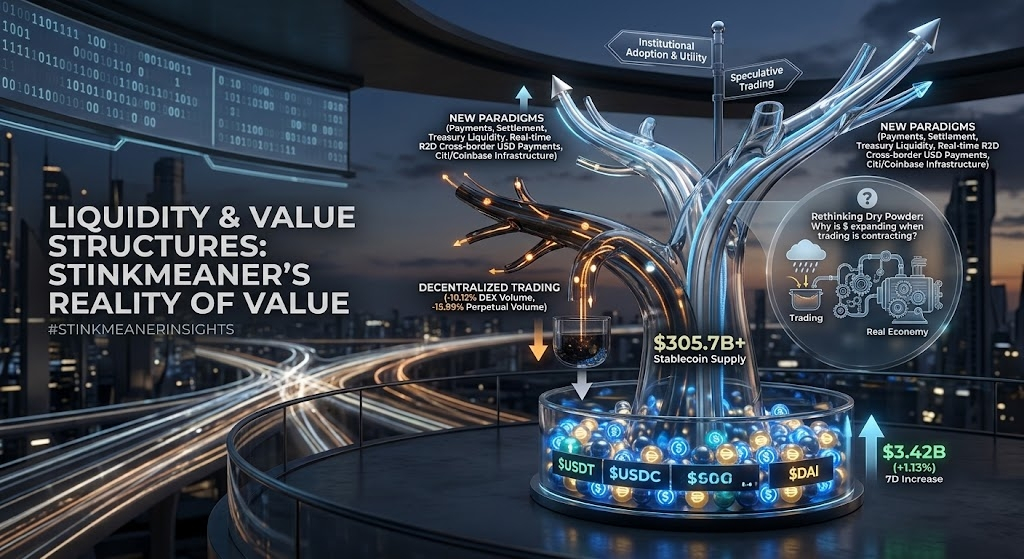
Stablecoins just crossed $305.7B...
#Stinkmeanerinsights
Over the last 7 days, supply increased by roughly $3.42B (+1.13%).
Yet decentralized trading is moving the other way:
DEX volume: -10.12% weekly
Perpetual volume: -15.99% weekly
That's the contradiction.
The crypto-dollar base is expanding while speculative turnover is contracting.
Which means we should stop automatically reading new stablecoin supply as “traders loading dry powder.”
The market is developing another possibility:
stablecoins → payments → settlement → treasury liquidity → trading collateral
And traditional finance is now building around that rail.
On September 30, Citi and Coinbase announced expanded infrastructure connecting fiat and stablecoin payments, including stablecoin acceptance and automated movement between fiat and digital assets. Citi says its integrated services are designed for real-time, round-the-clock cross-border USD payments.
The next crypto cycle may therefore be less about how many dollars enter crypto...
and more about what those dollars are actually being used for.
💡 Nugget: stablecoin supply growth does NOT automatically equal bullish spot demand.
Not financial advice. Do your own research.
$ETH $BNB
#Stablecoins #Ethereum #DollarIndexHitsHighestSinceMay2025 #Binance
💵 Something strange is happening inside crypto liquidity.
Stablecoins just crossed $305.7B...
#Stinkmeanerinsights
Over the last 7 days, supply increased by roughly $3.42B (+1.13%).
Yet decentralized trading is moving the other way:
DEX volume: -10.12% weekly
Perpetual volume: -15.99% weekly
That's the contradiction.
The crypto-dollar base is expanding while speculative turnover is contracting.
Which means we should stop automatically reading new stablecoin supply as “traders loading dry powder.”
The market is developing another possibility:
stablecoins → payments → settlement → treasury liquidity → trading collateral
And traditional finance is now building around that rail.
On September 30, Citi and Coinbase announced expanded infrastructure connecting fiat and stablecoin payments, including stablecoin acceptance and automated movement between fiat and digital assets. Citi says its integrated services are designed for real-time, round-the-clock cross-border USD payments.
The next crypto cycle may therefore be less about how many dollars enter crypto...
and more about what those dollars are actually being used for.
💡 Nugget: stablecoin supply growth does NOT automatically equal bullish spot demand.
Not financial advice. Do your own research.
$ETH $BNB
#Stablecoins #Ethereum #DollarIndexHitsHighestSinceMay2025 #Binance
Stablecoins just crossed $305.7B...
#Stinkmeanerinsights
Over the last 7 days, supply increased by roughly $3.42B (+1.13%).
Yet decentralized trading is moving the other way:
DEX volume: -10.12% weekly
Perpetual volume: -15.99% weekly
That's the contradiction.
The crypto-dollar base is expanding while speculative turnover is contracting.
Which means we should stop automatically reading new stablecoin supply as “traders loading dry powder.”
The market is developing another possibility:
stablecoins → payments → settlement → treasury liquidity → trading collateral
And traditional finance is now building around that rail.
On September 30, Citi and Coinbase announced expanded infrastructure connecting fiat and stablecoin payments, including stablecoin acceptance and automated movement between fiat and digital assets. Citi says its integrated services are designed for real-time, round-the-clock cross-border USD payments.
The next crypto cycle may therefore be less about how many dollars enter crypto...
and more about what those dollars are actually being used for.
💡 Nugget: stablecoin supply growth does NOT automatically equal bullish spot demand.
Not financial advice. Do your own research.
$ETH $BNB
#Stablecoins #Ethereum #DollarIndexHitsHighestSinceMay2025 #Binance
1
72
·
--
Verified
🚨NEAR just got its first U.S. spot ETF. But the ETF may not be what started this rally.
#AltcoinSeasonIndexHoldsAbove60For5Days
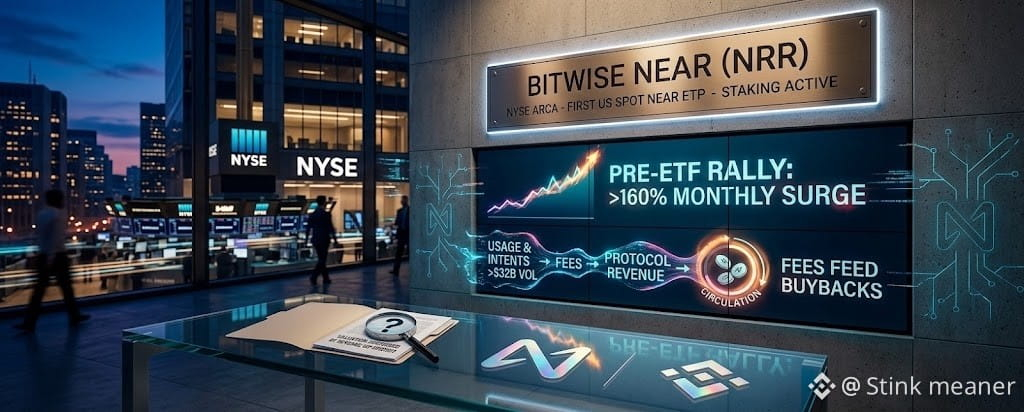
Bitwise launched NRR on NYSE Arca on Sept. 29 — the first U.S. spot NEAR ETP, holding NEAR directly and planning to stake the fund’s tokens.
But look at the timing.
NEAR had already surged more than 160% over the previous month before NRR began trading. At the same time, NEAR Intents had processed more than $32B in volume, according to Bitwise.
That creates a more interesting loop than:
ETF → NEAR rises.
It could become:
Usage → fees → protocol revenue → buybacks → institutional access.
NEAR's revenue dashboard says captured fees can feed buybacks that remove NEAR from circulation.
So the question isn't whether an ETF is bullish.
Can actual network revenue keep validating the valuation after the ETF makes NEAR easier to own?
DYOR. NRR is newly launched, so sustained institutional demand has not yet been established; the recent price surge also predates the ETF.
$NEAR $ETH $SOL
{future}(NEARUSDT)
{future}(ETHUSDT)
{future}(SOLUSDT)
#Near #AltcoinSeasonIndexHoldsAbove60For5Days #MicronBeatsEarningsLiftsGuidance #Stinkmeanerinsights
🚨NEAR just got its first U.S. spot ETF. But the ETF may not be what started this rally.
#AltcoinSeasonIndexHoldsAbove60For5Days
Bitwise launched NRR on NYSE Arca on Sept. 29 — the first U.S. spot NEAR ETP, holding NEAR directly and planning to stake the fund’s tokens.
But look at the timing.
NEAR had already surged more than 160% over the previous month before NRR began trading. At the same time, NEAR Intents had processed more than $32B in volume, according to Bitwise.
That creates a more interesting loop than:
ETF → NEAR rises.
It could become:
Usage → fees → protocol revenue → buybacks → institutional access.
NEAR's revenue dashboard says captured fees can feed buybacks that remove NEAR from circulation.
So the question isn't whether an ETF is bullish.
Can actual network revenue keep validating the valuation after the ETF makes NEAR easier to own?
DYOR. NRR is newly launched, so sustained institutional demand has not yet been established; the recent price surge also predates the ETF.
$NEAR $ETH $SOL
#Near #AltcoinSeasonIndexHoldsAbove60For5Days #MicronBeatsEarningsLiftsGuidance #Stinkmeanerinsights
#AltcoinSeasonIndexHoldsAbove60For5Days
Bitwise launched NRR on NYSE Arca on Sept. 29 — the first U.S. spot NEAR ETP, holding NEAR directly and planning to stake the fund’s tokens.
But look at the timing.
NEAR had already surged more than 160% over the previous month before NRR began trading. At the same time, NEAR Intents had processed more than $32B in volume, according to Bitwise.
That creates a more interesting loop than:
ETF → NEAR rises.
It could become:
Usage → fees → protocol revenue → buybacks → institutional access.
NEAR's revenue dashboard says captured fees can feed buybacks that remove NEAR from circulation.
So the question isn't whether an ETF is bullish.
Can actual network revenue keep validating the valuation after the ETF makes NEAR easier to own?
DYOR. NRR is newly launched, so sustained institutional demand has not yet been established; the recent price surge also predates the ETF.
$NEAR $ETH $SOL
#Near #AltcoinSeasonIndexHoldsAbove60For5Days #MicronBeatsEarningsLiftsGuidance #Stinkmeanerinsights
2
201
·
--
🚨 The SEC’s $75M crypto-fundraising headline hides the part that could matter more...
#sectoclarifyonchainfundraisingrules
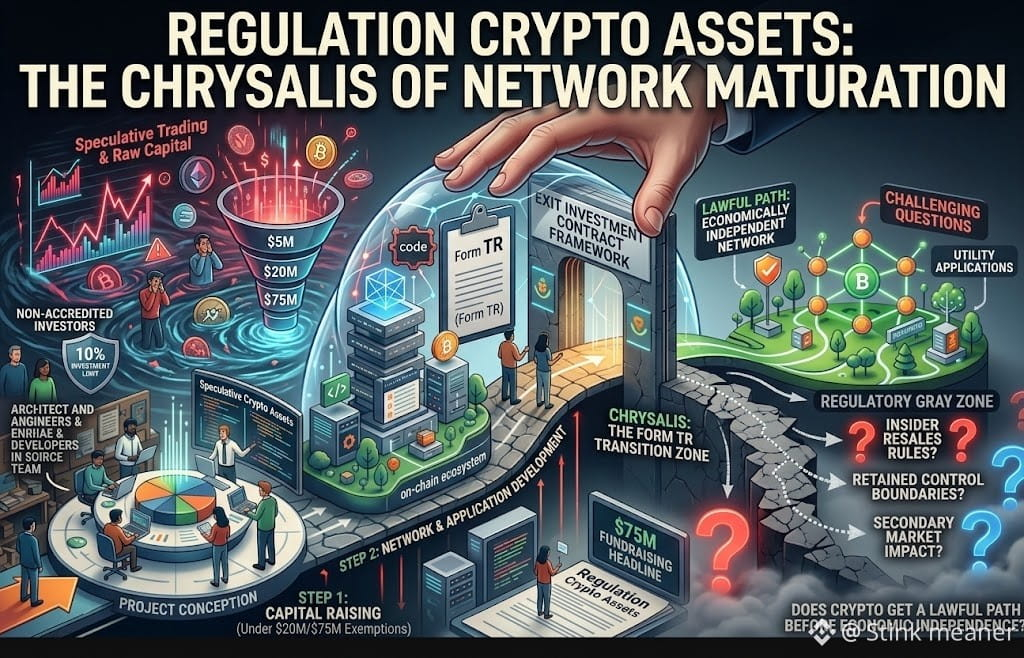
On Aug. 18, the SEC proposed Regulation Crypto Assets — but this is not yet a final rule. Comments are open until Oct. 20.
The headline: projects could potentially raise $5M over four years through a startup exemption, or $20M/$75M over 12 months under Tier 1/2 fundraising exemptions. Non-accredited investors would generally face a 10% of income-or-net-worth purchase limit.
But the deeper mechanism is a regulatory lifecycle:
Raise capital → build the network/application → complete or permanently cease promised “essential managerial efforts” → file Form TR → potentially exit the investment-contract framework.
And the SEC isn't treating crypto like ordinary securities paperwork. Proposed disclosures specifically address source code, network security, token supply/allocation, governance, ecosystem and ways to verify transaction history.
That could turn token launches from a legal gray zone into a defined capital-formation process — while leaving difficult questions around insider resales, retained control and secondary markets. Recent SEC comments are already challenging those gaps.
The real question: does crypto finally get a lawful path to fund a network before it becomes economically independent?
DYOR. This remains a proposal, not law, and any transition out of the investment-contract framework would depend on satisfying the SEC’s proposed conditions
$ETH $SOL $BNB
{future}(SOLUSDT)
#SECToClarifyOnChainFundraisingRules #CryptoRegulation #Stinkmeanerinsights #blockchain
🚨 The SEC’s $75M crypto-fundraising headline hides the part that could matter more...
#sectoclarifyonchainfundraisingrules
On Aug. 18, the SEC proposed Regulation Crypto Assets — but this is not yet a final rule. Comments are open until Oct. 20.
The headline: projects could potentially raise $5M over four years through a startup exemption, or $20M/$75M over 12 months under Tier 1/2 fundraising exemptions. Non-accredited investors would generally face a 10% of income-or-net-worth purchase limit.
But the deeper mechanism is a regulatory lifecycle:
Raise capital → build the network/application → complete or permanently cease promised “essential managerial efforts” → file Form TR → potentially exit the investment-contract framework.
And the SEC isn't treating crypto like ordinary securities paperwork. Proposed disclosures specifically address source code, network security, token supply/allocation, governance, ecosystem and ways to verify transaction history.
That could turn token launches from a legal gray zone into a defined capital-formation process — while leaving difficult questions around insider resales, retained control and secondary markets. Recent SEC comments are already challenging those gaps.
The real question: does crypto finally get a lawful path to fund a network before it becomes economically independent?
DYOR. This remains a proposal, not law, and any transition out of the investment-contract framework would depend on satisfying the SEC’s proposed conditions
$ETH $SOL $BNB
#SECToClarifyOnChainFundraisingRules #CryptoRegulation #Stinkmeanerinsights #blockchain
#sectoclarifyonchainfundraisingrules
On Aug. 18, the SEC proposed Regulation Crypto Assets — but this is not yet a final rule. Comments are open until Oct. 20.
The headline: projects could potentially raise $5M over four years through a startup exemption, or $20M/$75M over 12 months under Tier 1/2 fundraising exemptions. Non-accredited investors would generally face a 10% of income-or-net-worth purchase limit.
But the deeper mechanism is a regulatory lifecycle:
Raise capital → build the network/application → complete or permanently cease promised “essential managerial efforts” → file Form TR → potentially exit the investment-contract framework.
And the SEC isn't treating crypto like ordinary securities paperwork. Proposed disclosures specifically address source code, network security, token supply/allocation, governance, ecosystem and ways to verify transaction history.
That could turn token launches from a legal gray zone into a defined capital-formation process — while leaving difficult questions around insider resales, retained control and secondary markets. Recent SEC comments are already challenging those gaps.
The real question: does crypto finally get a lawful path to fund a network before it becomes economically independent?
DYOR. This remains a proposal, not law, and any transition out of the investment-contract framework would depend on satisfying the SEC’s proposed conditions
$ETH $SOL $BNB
#SECToClarifyOnChainFundraisingRules #CryptoRegulation #Stinkmeanerinsights #blockchain
3
2.3k

🚨 Bitcoin broke above $86,000. But $86,000 isn’t the number I’m watching.
#bitcoinfundingratetriplesto10%
It’s 10%.
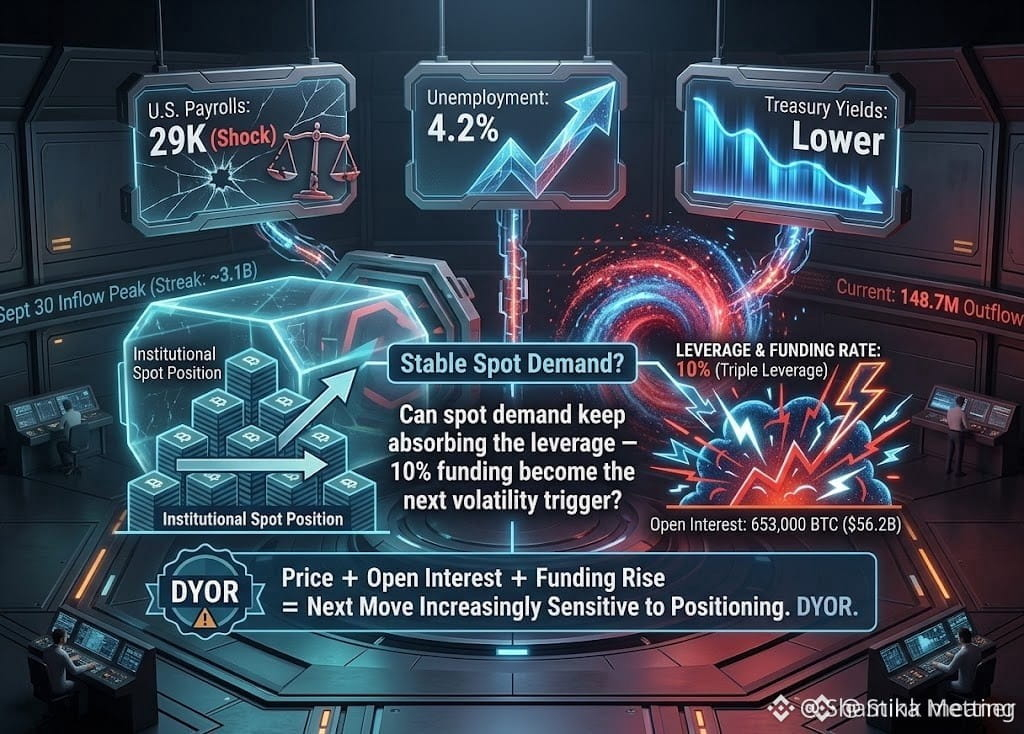
Funding for BTC has roughly tripled since September 30—rising from 3% to 10%—while open interest jumped by 27,000 BTC to ~653,000 BTC ($56.2B).
This means the rally is no longer tied only to immediate market momentum.
Today, the macro catalyst supplied fuel for the bulls: U.S. private-sector jobs rose by only 29K versus 90K expected, while the unemployment rate climbed to 4.2%.
The weaker report pushed Treasury yields lower and reduced expectations for an additional rate hike.
Spot Bitcoin ETFs in the U.S. recorded $2.65B in inflows in September; however, the nine-day inflow streak—about ~3.1B—ended with a $148.7M outflow.
So BTC now has macro fuel + institutional demand + leverage being rebuilt quickly.
Can spot demand continue absorbing leverage—or will 10% funding become the next trigger for volatility?
The gem: When price, open interest, and funding rise together, the next move becomes more sensitive to positioning.
Please follow up
$BTC
{future}(BTCUSDT)
#BitcoinFundingRateTriplesTo10%
#BitcoinSurpasses$86KUp2.99%
#bitcoin #Stinkmeanerinsights
🚨 Bitcoin broke above $86,000. But $86,000 isn’t the number I’m watching.
#bitcoinfundingratetriplesto10%
It’s 10%.
Funding for BTC has roughly tripled since September 30—rising from 3% to 10%—while open interest jumped by 27,000 BTC to ~653,000 BTC ($56.2B).
This means the rally is no longer tied only to immediate market momentum.
Today, the macro catalyst supplied fuel for the bulls: U.S. private-sector jobs rose by only 29K versus 90K expected, while the unemployment rate climbed to 4.2%.
The weaker report pushed Treasury yields lower and reduced expectations for an additional rate hike.
Spot Bitcoin ETFs in the U.S. recorded $2.65B in inflows in September; however, the nine-day inflow streak—about ~3.1B—ended with a $148.7M outflow.
So BTC now has macro fuel + institutional demand + leverage being rebuilt quickly.
Can spot demand continue absorbing leverage—or will 10% funding become the next trigger for volatility?
The gem: When price, open interest, and funding rise together, the next move becomes more sensitive to positioning.
Please follow up
$BTC
#BitcoinFundingRateTriplesTo10%
#BitcoinSurpasses$86KUp2.99%
#bitcoin #Stinkmeanerinsights
#bitcoinfundingratetriplesto10%
It’s 10%.
Funding for BTC has roughly tripled since September 30—rising from 3% to 10%—while open interest jumped by 27,000 BTC to ~653,000 BTC ($56.2B).
This means the rally is no longer tied only to immediate market momentum.
Today, the macro catalyst supplied fuel for the bulls: U.S. private-sector jobs rose by only 29K versus 90K expected, while the unemployment rate climbed to 4.2%.
The weaker report pushed Treasury yields lower and reduced expectations for an additional rate hike.
Spot Bitcoin ETFs in the U.S. recorded $2.65B in inflows in September; however, the nine-day inflow streak—about ~3.1B—ended with a $148.7M outflow.
So BTC now has macro fuel + institutional demand + leverage being rebuilt quickly.
Can spot demand continue absorbing leverage—or will 10% funding become the next trigger for volatility?
The gem: When price, open interest, and funding rise together, the next move becomes more sensitive to positioning.
Please follow up
$BTC
#BitcoinFundingRateTriplesTo10%
#BitcoinSurpasses$86KUp2.99%
#bitcoin #Stinkmeanerinsights
1
50
·
--
🍾🎇We are growing.
I earned 1.85 USDC in profits from Write to Earn last week.
Thank you fam🙏
$QNT $LINK $GRASS
{future}(GRASSUSDT)
{future}(LINKUSDT)
{future}(QNTUSDT)
#Stinkmeaner #Stinkmeanerinsights #Binance #binancesquarefamily
🍾🎇We are growing.
I earned 1.85 USDC in profits from Write to Earn last week.
Thank you fam🙏
$QNT $LINK $GRASS
#Stinkmeaner #Stinkmeanerinsights #Binance #binancesquarefamily
I earned 1.85 USDC in profits from Write to Earn last week.
Thank you fam🙏
$QNT $LINK $GRASS
#Stinkmeaner #Stinkmeanerinsights #Binance #binancesquarefamily

From Write to Earn
5
117
·
--
Verified
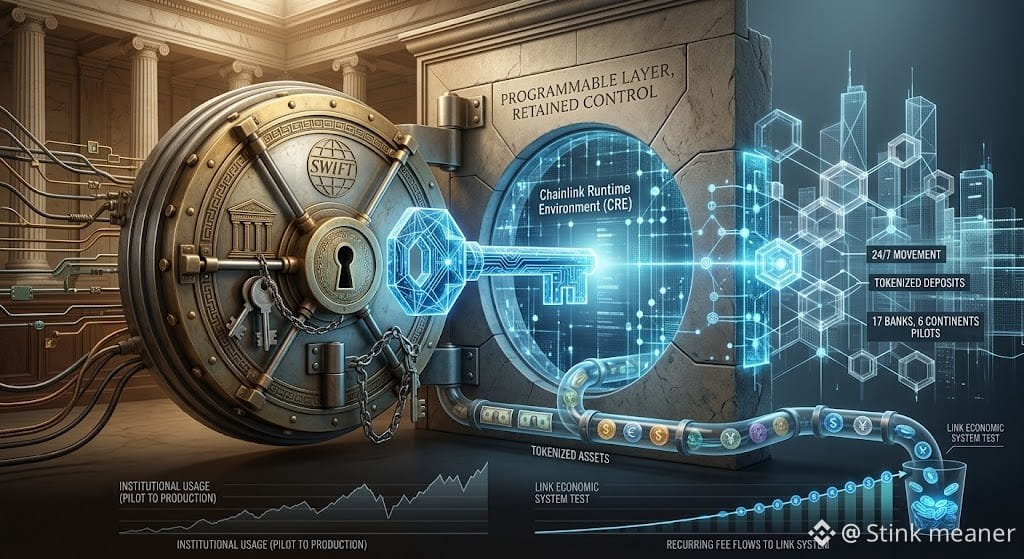
🏦 The interesting part of SWIFT going on-chain isn't the blockchain. It's the control banks refuse to surrender...#chainlinklaunchesbankswiftledgerframework
A new Chainlink framework uses its Chainlink Runtime Environment (CRE) to let financial institutions connect to SWIFT's blockchain ledger while retaining control of the keys used to sign transactions.
That's important because SWIFT's ledger is designed for 24/7 movement of tokenized bank deposits, with 17 banks across six continents preparing pilot transactions. Final settlement can still occur through existing payment infrastructure.
In other words, banks aren't being asked to abandon the system they trust.
They're adding a programmable layer to it.
And that's where $LINK gets interesting — but don't confuse integration with automatic token demand.
Chainlink says enterprise and on-chain service revenue can be programmatically converted into LINK through Payment Abstraction and accumulated in the Chainlink Reserve.
So the real test isn't another partnership announcement.
Does institutional usage produce recurring fee flows that actually reach the LINK economic system?
That's the number I'd watch as tokenized finance moves from pilot to production.
Not financial advice. SWIFT's ledger and Chainlink's connection framework are still part of an evolving institutional rollout; this does not establish guaranteed LINK demand or value capture.
$LINK $ONDO
{future}(ONDOUSDT)
{future}(LINKUSDT)
#ChainlinkLaunchesBankSWIFTLedgerFramework #TokenizedDeposits #Stinkmeanerinsights #EarningsSeason
🏦 The interesting part of SWIFT going on-chain isn't the blockchain. It's the control banks refuse to surrender...#chainlinklaunchesbankswiftledgerframework
A new Chainlink framework uses its Chainlink Runtime Environment (CRE) to let financial institutions connect to SWIFT's blockchain ledger while retaining control of the keys used to sign transactions.
That's important because SWIFT's ledger is designed for 24/7 movement of tokenized bank deposits, with 17 banks across six continents preparing pilot transactions. Final settlement can still occur through existing payment infrastructure.
In other words, banks aren't being asked to abandon the system they trust.
They're adding a programmable layer to it.
And that's where $LINK gets interesting — but don't confuse integration with automatic token demand.
Chainlink says enterprise and on-chain service revenue can be programmatically converted into LINK through Payment Abstraction and accumulated in the Chainlink Reserve.
So the real test isn't another partnership announcement.
Does institutional usage produce recurring fee flows that actually reach the LINK economic system?
That's the number I'd watch as tokenized finance moves from pilot to production.
Not financial advice. SWIFT's ledger and Chainlink's connection framework are still part of an evolving institutional rollout; this does not establish guaranteed LINK demand or value capture.
$LINK $ONDO
#ChainlinkLaunchesBankSWIFTLedgerFramework #TokenizedDeposits #Stinkmeanerinsights #EarningsSeason
A new Chainlink framework uses its Chainlink Runtime Environment (CRE) to let financial institutions connect to SWIFT's blockchain ledger while retaining control of the keys used to sign transactions.
That's important because SWIFT's ledger is designed for 24/7 movement of tokenized bank deposits, with 17 banks across six continents preparing pilot transactions. Final settlement can still occur through existing payment infrastructure.
In other words, banks aren't being asked to abandon the system they trust.
They're adding a programmable layer to it.
And that's where $LINK gets interesting — but don't confuse integration with automatic token demand.
Chainlink says enterprise and on-chain service revenue can be programmatically converted into LINK through Payment Abstraction and accumulated in the Chainlink Reserve.
So the real test isn't another partnership announcement.
Does institutional usage produce recurring fee flows that actually reach the LINK economic system?
That's the number I'd watch as tokenized finance moves from pilot to production.
Not financial advice. SWIFT's ledger and Chainlink's connection framework are still part of an evolving institutional rollout; this does not establish guaranteed LINK demand or value capture.
$LINK $ONDO
#ChainlinkLaunchesBankSWIFTLedgerFramework #TokenizedDeposits #Stinkmeanerinsights #EarningsSeason
2
3.1k
·
--
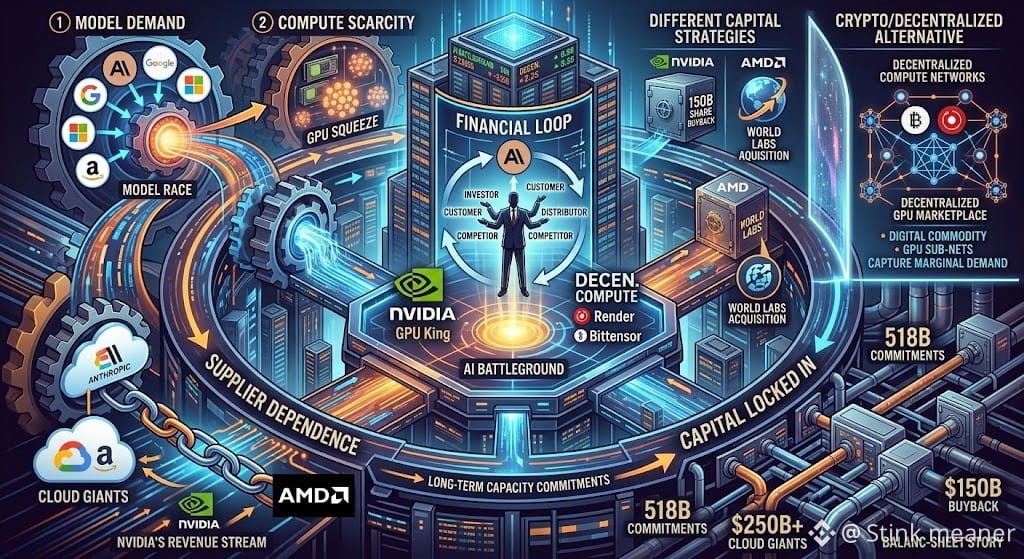
📊 AI is no longer just an earnings story. It's becoming a balance-sheet story...
#earningsseason
Anthropic's latest IPO filing reveals at least $518B of infrastructure commitments over the next decade, with roughly 80% non-cancelable or payable regardless of usage.
Google, Amazon and Microsoft alone account for more than $250B of those commitments.
And here's the uncomfortable part:
Anthropic says those same companies can simultaneously be investors, customers, cloud providers, distributors and competitors.
The AI race is therefore creating a strange financial loop:
model demand → compute scarcity → long-term capacity commitments → supplier dependence → more capital locked into the ecosystem.
Meanwhile, NVIDIA just authorized another $150B share-repurchase program, taking remaining authorization to $235B through fiscal 2028.
AMD, meanwhile, agreed to acquire World Labs for $8.2B in stock to deepen its position in physical AI and shape future hardware/software requirements.
So different winners are using radically different capital strategies:
lock in compute → acquire intelligence → return capital.
For crypto, the question is whether decentralized compute networks can capture some marginal demand without requiring the same enormous fixed commitments. Bittensor already treats compute as a digital commodity produced by subnets, while Render operates a decentralized GPU marketplace for AI and other workloads.
The AI opportunity may be expanding from models into the economics of compute itself.
Not financial advice. Decentralized compute is not a direct substitute for Anthropic's contracted infrastructure today; this is a forward-looking market-structure thesis.
$TAO $RENDER $MU
{future}(MUUSDT)
{future}(RENDERUSDT)
{future}(TAOUSDT)
#EarningsSeason #Binance #Stinkmeanerinsights #CryptoMarkets
📊 AI is no longer just an earnings story. It's becoming a balance-sheet story...
#earningsseason
Anthropic's latest IPO filing reveals at least $518B of infrastructure commitments over the next decade, with roughly 80% non-cancelable or payable regardless of usage.
Google, Amazon and Microsoft alone account for more than $250B of those commitments.
And here's the uncomfortable part:
Anthropic says those same companies can simultaneously be investors, customers, cloud providers, distributors and competitors.
The AI race is therefore creating a strange financial loop:
model demand → compute scarcity → long-term capacity commitments → supplier dependence → more capital locked into the ecosystem.
Meanwhile, NVIDIA just authorized another $150B share-repurchase program, taking remaining authorization to $235B through fiscal 2028.
AMD, meanwhile, agreed to acquire World Labs for $8.2B in stock to deepen its position in physical AI and shape future hardware/software requirements.
So different winners are using radically different capital strategies:
lock in compute → acquire intelligence → return capital.
For crypto, the question is whether decentralized compute networks can capture some marginal demand without requiring the same enormous fixed commitments. Bittensor already treats compute as a digital commodity produced by subnets, while Render operates a decentralized GPU marketplace for AI and other workloads.
The AI opportunity may be expanding from models into the economics of compute itself.
Not financial advice. Decentralized compute is not a direct substitute for Anthropic's contracted infrastructure today; this is a forward-looking market-structure thesis.
$TAO $RENDER $MU
#EarningsSeason #Binance #Stinkmeanerinsights #CryptoMarkets
#earningsseason
Anthropic's latest IPO filing reveals at least $518B of infrastructure commitments over the next decade, with roughly 80% non-cancelable or payable regardless of usage.
Google, Amazon and Microsoft alone account for more than $250B of those commitments.
And here's the uncomfortable part:
Anthropic says those same companies can simultaneously be investors, customers, cloud providers, distributors and competitors.
The AI race is therefore creating a strange financial loop:
model demand → compute scarcity → long-term capacity commitments → supplier dependence → more capital locked into the ecosystem.
Meanwhile, NVIDIA just authorized another $150B share-repurchase program, taking remaining authorization to $235B through fiscal 2028.
AMD, meanwhile, agreed to acquire World Labs for $8.2B in stock to deepen its position in physical AI and shape future hardware/software requirements.
So different winners are using radically different capital strategies:
lock in compute → acquire intelligence → return capital.
For crypto, the question is whether decentralized compute networks can capture some marginal demand without requiring the same enormous fixed commitments. Bittensor already treats compute as a digital commodity produced by subnets, while Render operates a decentralized GPU marketplace for AI and other workloads.
The AI opportunity may be expanding from models into the economics of compute itself.
Not financial advice. Decentralized compute is not a direct substitute for Anthropic's contracted infrastructure today; this is a forward-looking market-structure thesis.
$TAO $RENDER $MU
#EarningsSeason #Binance #Stinkmeanerinsights #CryptoMarkets
AngelOfCrypto_-:
nice
1
1
660
Log in to explore more content
Join global crypto users on Binance Square
⚡️ Get latest and useful information about crypto.
💬 Trusted by the world’s largest crypto exchange.
👍 Discover real insights from verified creators.
Email / Phone number
Trending Topics
1
#ZcashETFPostsFirstWeeklyOutflow$93.6M
38,598 views
129 Discussing
2
#GreekPoliceBustCryptoScamRingArrest17
90,353 views
758 Discussing
3
#BitcoinRejectedAt$87K
129,204 views
186 Discussing
4
#FedOctoberRateHikeOddsFallTo17%
115,375 views
1,028 Discussing
5
#NvidiaHitsRecordHighUp2.4%
80,103 views
745 Discussing
6
#CanaryFilesAmendedS1ForPEPEETF
21,872 views
523 Discussing
7
#USRussiaUkraineTalksReportedlyIncludeLukoilOilDeal
33,325 views
505 Discussing
8
#BitcoinParesGainsAfterRallyTo$86.5K
48,906 views
168 Discussing
9
#CerebrasSinksNearly20%OnReportNvidiaToPowerOpenAI
121,229 views
1,137 Discussing
10
#SECProposesCryptoCustodyRules
165,047 views
1,414 Discussing