
#rwa
rwa
185.2M views
1.5M Discussing
Hot
Latest

·
--
Verified
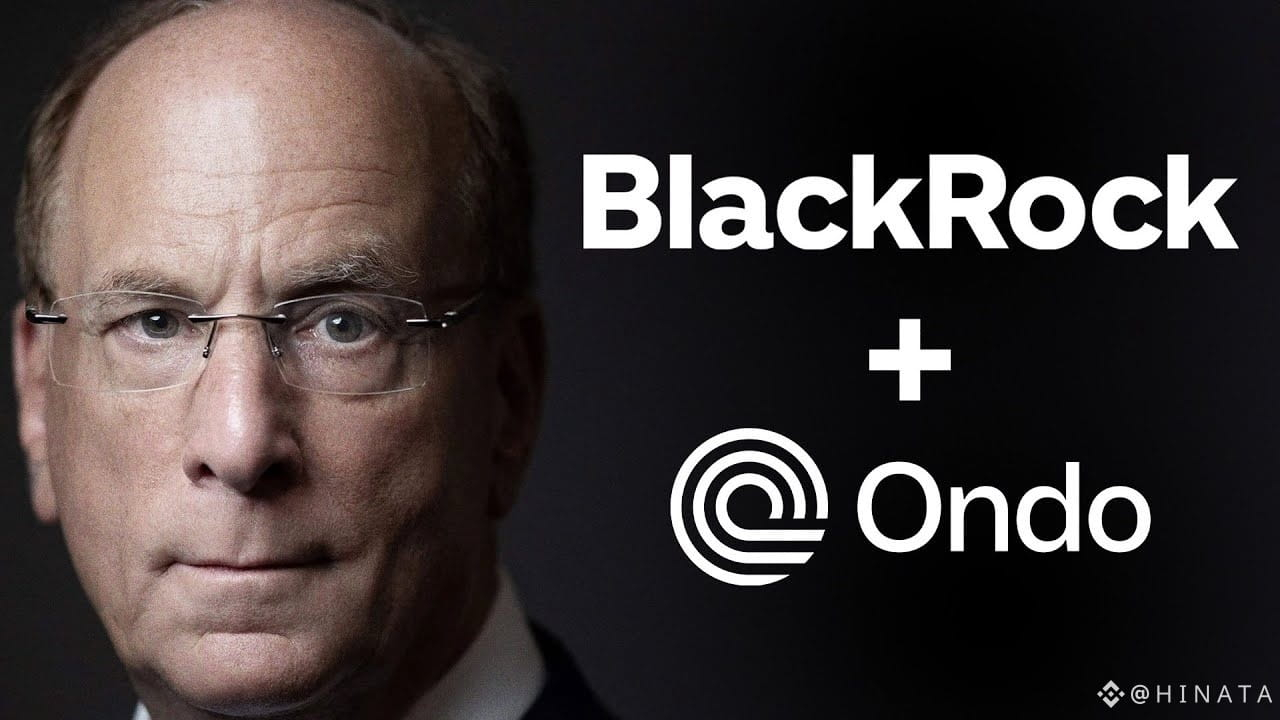
🍁 $ONDO : ONDO JOINS SINGAPORE'S MAJOR FINANCE INITIATIVE!
A significant institutional development just arrived:
- Project Guardian: Ondo Finance officially joined Singapore's MAS-led initiative on November 18.
- Global tokenization: The collaboration focuses on bringing traditional financial assets on-chain.
- Investor protection: Ondo will contribute expertise in safeguards and cross-border market access.
- $70M+ TVL: Ondo Intelligent Portfolios crossed this milestone on November 17.
- New portfolio: Its first S&P 500 downside-buffer strategy has launched.
Could this bring tokenized finance closer to mainstream adoption?
$ONDO
{future}(ONDOUSDT)
.
.
.
#ONDO #RWA #crypto
Not financial advice. DYOR.
🍁 $ONDO : ONDO JOINS SINGAPORE'S MAJOR FINANCE INITIATIVE!
A significant institutional development just arrived:
- Project Guardian: Ondo Finance officially joined Singapore's MAS-led initiative on November 18.
- Global tokenization: The collaboration focuses on bringing traditional financial assets on-chain.
- Investor protection: Ondo will contribute expertise in safeguards and cross-border market access.
- $70M+ TVL: Ondo Intelligent Portfolios crossed this milestone on November 17.
- New portfolio: Its first S&P 500 downside-buffer strategy has launched.
Could this bring tokenized finance closer to mainstream adoption?
$ONDO
.
.
.
#ONDO #RWA #crypto
Not financial advice. DYOR.
1
1
497

The infrastructure behind tokenized finance
Chainlink
Investment thesis
As tokenization expands, blockchain infrastructure becomes increasingly important.
Tokenized financial assets need reliable connections between traditional financial systems and blockchain networks.
This is where Chainlink’s technology becomes relevant.
Three important areas:
1. CCIP
Cross-Chain Interoperability Protocol enables communication and asset transfers between different blockchain networks.
2. Data infrastructure
Reliable market data is essential for tokenized financial products.
3. Institutional connectivity
Financial institutions need infrastructure capable of connecting traditional systems with blockchain environments.
My perspective
I see LINK as an infrastructure investment thesis rather than simply another speculative altcoin.
However, adoption of Chainlink technology must eventually translate into measurable economic value for the LINK ecosystem.
Technology adoption and token value are two different things.
#Chainlink #LINK #CCIP #RWA
76
·
--
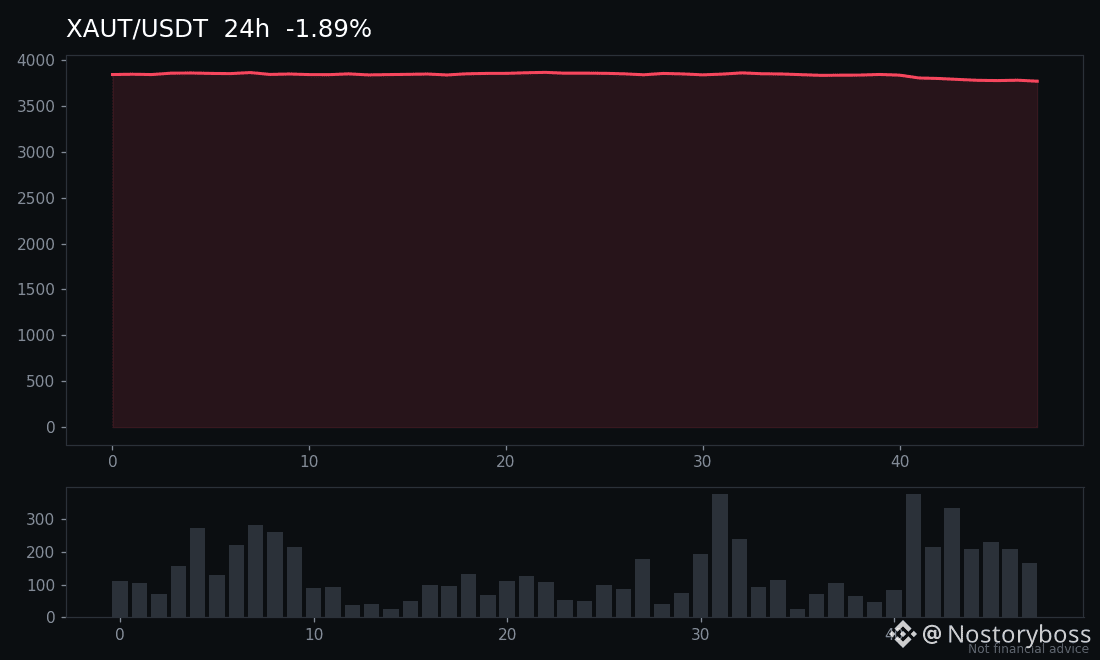
Tokenised gold is the RWA story I keep coming back to. $XAUT is down 2.27% today, tracking gold's own pullback, and that is exactly the point: on-chain gold moves like gold, not like a meme coin. Real-world assets on-chain give DeFi something it has always lacked — boring, honest collateral. The narrative is not hype; it is plumbing. #XAUT #RWA #BinanceSquare Not financial advice.
Tokenised gold is the RWA story I keep coming back to. $XAUT is down 2.27% today, tracking gold's own pullback, and that is exactly the point: on-chain gold moves like gold, not like a meme coin. Real-world assets on-chain give DeFi something it has always lacked — boring, honest collateral. The narrative is not hype; it is plumbing. #XAUT #RWA #BinanceSquare Not financial advice.
60

·
--
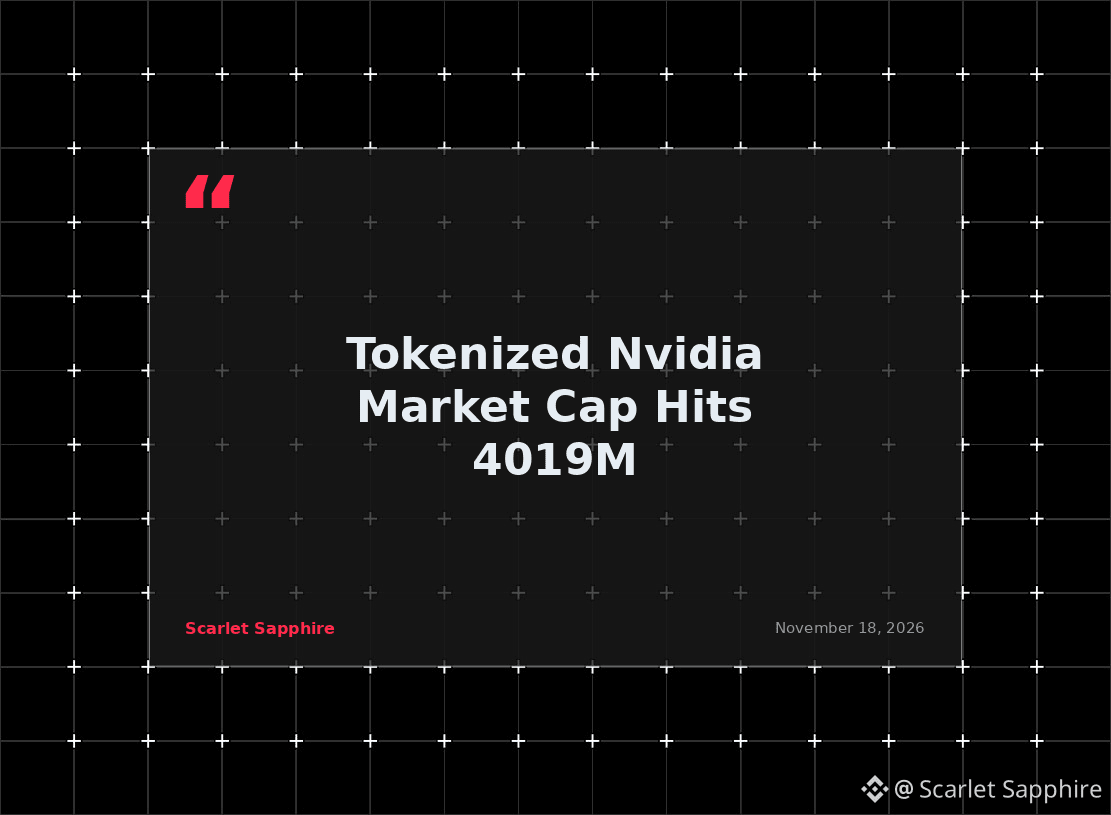
Tokenized Nvidia grew 159% while Nvidia stock fell. Same week, opposite lines.
• Nvidia token market value: $155M (Nov 8) to $401.9M (Tuesday), Token Terminal via Cointelegraph
• Nasdaq NVDA shares: down nearly 17% from the Nov 6 close, about $750B in market value shed (Yahoo Finance)
• Nvidia Q3 revenue: $115.8B, up 103% year over year, a record
• Board says it does not intend to reinstate Jensen Huang
The catch: token market value rises when more tokens are minted, so it measures supply and demand for the wrapper, not the share price. Still, holders reaching for 24/7 exposure on crypto rails during a CEO shock is a real signal for tokenized stocks, and a different bet from $ETH or $SOL.
Would you rather trade stock exposure on-chain, or keep it in a brokerage? #TokenizedStocks #RWA
Disclosure: Write to Earn may pay me a commission on cashtag trades.
Tokenized Nvidia grew 159% while Nvidia stock fell. Same week, opposite lines.
• Nvidia token market value: $155M (Nov 8) to $401.9M (Tuesday), Token Terminal via Cointelegraph
• Nasdaq NVDA shares: down nearly 17% from the Nov 6 close, about $750B in market value shed (Yahoo Finance)
• Nvidia Q3 revenue: $115.8B, up 103% year over year, a record
• Board says it does not intend to reinstate Jensen Huang
The catch: token market value rises when more tokens are minted, so it measures supply and demand for the wrapper, not the share price. Still, holders reaching for 24/7 exposure on crypto rails during a CEO shock is a real signal for tokenized stocks, and a different bet from $ETH or $SOL .
Would you rather trade stock exposure on-chain, or keep it in a brokerage? #TokenizedStocks #RWA
Disclosure: Write to Earn may pay me a commission on cashtag trades.
318

·
--
🌍 $ONDO : ONDO JOINS SINGAPORE'S MAS GUARDIAN INITIATIVE!
A major institutional milestone for Ondo:
- November 18: Ondo officially joined the Monetary Authority of Singapore's Guardian initiative.
- Global finance: The initiative focuses on tokenized assets and cross-border financial markets.
- $4B+ milestone: Ondo previously reported over $4 billion in tokenized real-world assets.
- New portfolios: Ondo Intelligent Portfolios surpassed $70M TVL on November 17.
Important: This is ecosystem progress, not a guarantee of increased $ONDO token demand.
Can Ondo help bring traditional finance onchain?
$ONDO
{future}(ONDOUSDT)
.
.
.
.
#ONDO #OndoFinance #RWA
Not financial advice. DYOR.
🌍 $ONDO : ONDO JOINS SINGAPORE'S MAS GUARDIAN INITIATIVE!
A major institutional milestone for Ondo:
- November 18: Ondo officially joined the Monetary Authority of Singapore's Guardian initiative.
- Global finance: The initiative focuses on tokenized assets and cross-border financial markets.
- $4B+ milestone: Ondo previously reported over $4 billion in tokenized real-world assets.
- New portfolios: Ondo Intelligent Portfolios surpassed $70M TVL on November 17.
Important: This is ecosystem progress, not a guarantee of increased $ONDO token demand.
Can Ondo help bring traditional finance onchain?
$ONDO
.
.
.
.
#ONDO #OndoFinance #RWA
Not financial advice. DYOR.
35

Article
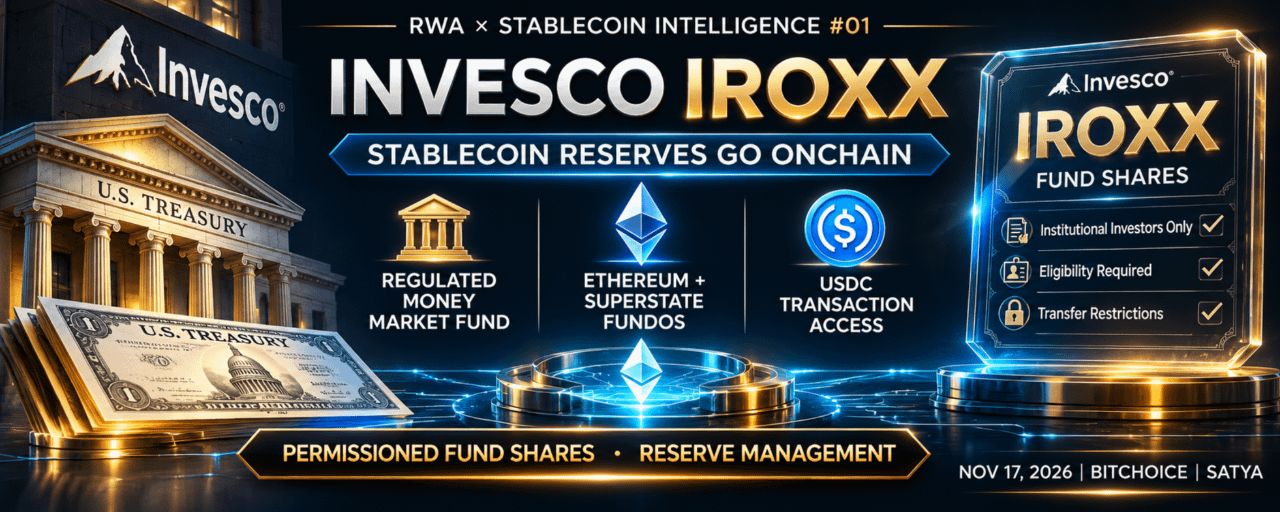
RWA × STABLECOIN INTELLIGENCE 01INVESCO BRINGS STABLECOIN RESERVES ONCHAIN: WHY IROXX MATTERS FOR THE FUTURE OF DIGITAL DOLLARS
The next major stablecoin competition may not be about payment volume.
It may be about who manages the assets behind every digital dollar.
On November 17, 2026, Invesco launched the Stablecoin Reserves Onchain Fund, known as IROXX.
The fund combines institutional money-market management with blockchain-based share records using Superstate FundOS.
Ethereum serves as the initial blockchain infrastructure.
USDC provides an additional digital-dollar transaction route.
But this is not another stablecoin launch.
IROXX is a regulated investment fund designed for institutions, including stablecoin issuers managing reserve assets.
WHAT IS IROXX?
IROXX is an actively managed U.S. government money-market fund operating under the Investment Company Act of 1940 and Rule 2a-7.
Its portfolio strategy focuses on liquid, high-quality U.S. dollar-denominated assets eligible under the U.S. GENIUS Act framework.
The investment objective prioritizes current income while seeking capital preservation and liquidity.
Invesco manages the portfolio.
Superstate provides blockchain-integrated transfer agency infrastructure through FundOS.
Ethereum records tokenized fund-share ownership.
The result is a connection between traditional fund management and digital asset operations.
WHY STABLECOIN RESERVES ARE IMPORTANT
A dollar-backed stablecoin depends on the ability of its issuer to meet redemption obligations.
That means reserve assets must be evaluated for quality, liquidity, legal structure and operational accessibility.
A strong reserve portfolio is not defined only by its yield.
It must also provide dependable access to dollar liquidity, particularly during periods of concentrated redemptions.
IROXX is designed around that institutional requirement.
Instead of building an entirely new speculative token economy, it brings established reserve-management practices into a blockchain-integrated format.
WHAT DOES ONCHAIN TRANSPARENCY ACTUALLY PROVE?
Blockchain observers may verify relevant movements and records of tokenized fund shares.
But that does not mean every underlying Treasury security or cash position is independently verified by the blockchain.
Three different layers must be distinguished:
Onchain records of fund ownershipLegal ownership and eligibility requirementsIndependent reporting and verification of the underlying portfolio
The first can improve transparency.
The other two remain essential.
A transparent token ledger is not a substitute for regulated reporting and financial due diligence.
PUBLIC ETHEREUM, RESTRICTED OWNERSHIP
IROXX uses a public blockchain.
However, its shares are not available for unrestricted transfers between arbitrary wallets.
Superstate maintains an allowlist and applies investor identification and eligibility rules.
Authorized transfers operate within a regulated securities framework.
This is one of the most important features of institutional RWA adoption.
Public blockchain infrastructure does not automatically mean permissionless financial products.
THE USDC CONNECTION
IROXX supports transactions using U.S. dollars or USDC, subject to applicable rules.
That creates an operational bridge between traditional investment products and blockchain-based dollar infrastructure.
But USDC compatibility is not equivalent to unlimited instant redemption.
Fund processing, settlement schedules, liquidity availability and compliance controls still matter.
Moving a token and receiving usable cash are different financial events.
WHAT ABOUT RETURNS?
The fund offers daily reinvestment of dividends.
However, money-market yields change with interest rates, portfolio holdings and fund expenses.
IROXX does not provide a guaranteed yield or guaranteed preservation of principal.
The structure should be judged primarily through reserve quality, liquidity and operational reliability.
THE ETHEREUM INVESTMENT QUESTION
Launching institutional fund shares on Ethereum strengthens the network's position in RWA infrastructure.
But network adoption should not be confused with proportional investment demand for ETH.
Institutions can hold tokenized fund shares and use stablecoins without maintaining large speculative ETH positions.
Ethereum benefits as a technical settlement and recordkeeping environment.
Whether that produces sustained ETH monetary demand is a separate question.
FIVE METRICS TO WATCH
• Actual IROXX assets under management
• Adoption by payment stablecoin issuers
• Portfolio reporting and reserve verification
• Redemption performance during market stress
• Operational efficiency of blockchain-based fund administration
OUR ASSESSMENT
Invesco IROXX illustrates an important evolution.
Institutional tokenization is moving from demonstrations of digital asset ownership toward practical financial infrastructure.
The most valuable applications may be invisible to ordinary users.
Behind a simple stablecoin payment lies a system of reserve assets, investment management, custody, settlement and redemption obligations.
IROXX aims to modernize part of that system.
But it remains a regulated investment fund with restricted access, investment risks and operational conditions.
Tokenization does not remove traditional financial responsibilities.
It makes them potentially easier to integrate with digital financial networks.
The next competition in stablecoins may be decided as much by reserve infrastructure as by transaction volume.
What matters most to you: stablecoin payment adoption, reserve transparency or reliable redemption liquidity?
BITCHOICE | SATYA
RWA × Stablecoin Intelligence #01
Sources: Invesco launch announcement, November 17, 2026; SEC IROXX prospectus, November 13, 2026.
#RWA #Stablecoins #Tokenization #Ethereum #CapitalMarkets $ETH
$USDC
{spot}(USDCUSDT)
RWA × STABLECOIN INTELLIGENCE 01
INVESCO BRINGS STABLECOIN RESERVES ONCHAIN: WHY IROXX MATTERS FOR THE FUTURE OF DIGITAL DOLLARS
The next major stablecoin competition may not be about payment volume.
It may be about who manages the assets behind every digital dollar.
On November 17, 2026, Invesco launched the Stablecoin Reserves Onchain Fund, known as IROXX.
The fund combines institutional money-market management with blockchain-based share records using Superstate FundOS.
Ethereum serves as the initial blockchain infrastructure.
USDC provides an additional digital-dollar transaction route.
But this is not another stablecoin launch.
IROXX is a regulated investment fund designed for institutions, including stablecoin issuers managing reserve assets.
WHAT IS IROXX?
IROXX is an actively managed U.S. government money-market fund operating under the Investment Company Act of 1940 and Rule 2a-7.
Its portfolio strategy focuses on liquid, high-quality U.S. dollar-denominated assets eligible under the U.S. GENIUS Act framework.
The investment objective prioritizes current income while seeking capital preservation and liquidity.
Invesco manages the portfolio.
Superstate provides blockchain-integrated transfer agency infrastructure through FundOS.
Ethereum records tokenized fund-share ownership.
The result is a connection between traditional fund management and digital asset operations.
WHY STABLECOIN RESERVES ARE IMPORTANT
A dollar-backed stablecoin depends on the ability of its issuer to meet redemption obligations.
That means reserve assets must be evaluated for quality, liquidity, legal structure and operational accessibility.
A strong reserve portfolio is not defined only by its yield.
It must also provide dependable access to dollar liquidity, particularly during periods of concentrated redemptions.
IROXX is designed around that institutional requirement.
Instead of building an entirely new speculative token economy, it brings established reserve-management practices into a blockchain-integrated format.
WHAT DOES ONCHAIN TRANSPARENCY ACTUALLY PROVE?
Blockchain observers may verify relevant movements and records of tokenized fund shares.
But that does not mean every underlying Treasury security or cash position is independently verified by the blockchain.
Three different layers must be distinguished:
Onchain records of fund ownershipLegal ownership and eligibility requirementsIndependent reporting and verification of the underlying portfolio
The first can improve transparency.
The other two remain essential.
A transparent token ledger is not a substitute for regulated reporting and financial due diligence.
PUBLIC ETHEREUM, RESTRICTED OWNERSHIP
IROXX uses a public blockchain.
However, its shares are not available for unrestricted transfers between arbitrary wallets.
Superstate maintains an allowlist and applies investor identification and eligibility rules.
Authorized transfers operate within a regulated securities framework.
This is one of the most important features of institutional RWA adoption.
Public blockchain infrastructure does not automatically mean permissionless financial products.
THE USDC CONNECTION
IROXX supports transactions using U.S. dollars or USDC, subject to applicable rules.
That creates an operational bridge between traditional investment products and blockchain-based dollar infrastructure.
But USDC compatibility is not equivalent to unlimited instant redemption.
Fund processing, settlement schedules, liquidity availability and compliance controls still matter.
Moving a token and receiving usable cash are different financial events.
WHAT ABOUT RETURNS?
The fund offers daily reinvestment of dividends.
However, money-market yields change with interest rates, portfolio holdings and fund expenses.
IROXX does not provide a guaranteed yield or guaranteed preservation of principal.
The structure should be judged primarily through reserve quality, liquidity and operational reliability.
THE ETHEREUM INVESTMENT QUESTION
Launching institutional fund shares on Ethereum strengthens the network's position in RWA infrastructure.
But network adoption should not be confused with proportional investment demand for ETH.
Institutions can hold tokenized fund shares and use stablecoins without maintaining large speculative ETH positions.
Ethereum benefits as a technical settlement and recordkeeping environment.
Whether that produces sustained ETH monetary demand is a separate question.
FIVE METRICS TO WATCH
• Actual IROXX assets under management
• Adoption by payment stablecoin issuers
• Portfolio reporting and reserve verification
• Redemption performance during market stress
• Operational efficiency of blockchain-based fund administration
OUR ASSESSMENT
Invesco IROXX illustrates an important evolution.
Institutional tokenization is moving from demonstrations of digital asset ownership toward practical financial infrastructure.
The most valuable applications may be invisible to ordinary users.
Behind a simple stablecoin payment lies a system of reserve assets, investment management, custody, settlement and redemption obligations.
IROXX aims to modernize part of that system.
But it remains a regulated investment fund with restricted access, investment risks and operational conditions.
Tokenization does not remove traditional financial responsibilities.
It makes them potentially easier to integrate with digital financial networks.
The next competition in stablecoins may be decided as much by reserve infrastructure as by transaction volume.
What matters most to you: stablecoin payment adoption, reserve transparency or reliable redemption liquidity?
BITCHOICE | SATYA
RWA × Stablecoin Intelligence #01
Sources: Invesco launch announcement, November 17, 2026; SEC IROXX prospectus, November 13, 2026.
#RWA #Stablecoins #Tokenization #Ethereum #CapitalMarkets $ETH
$USDC
91

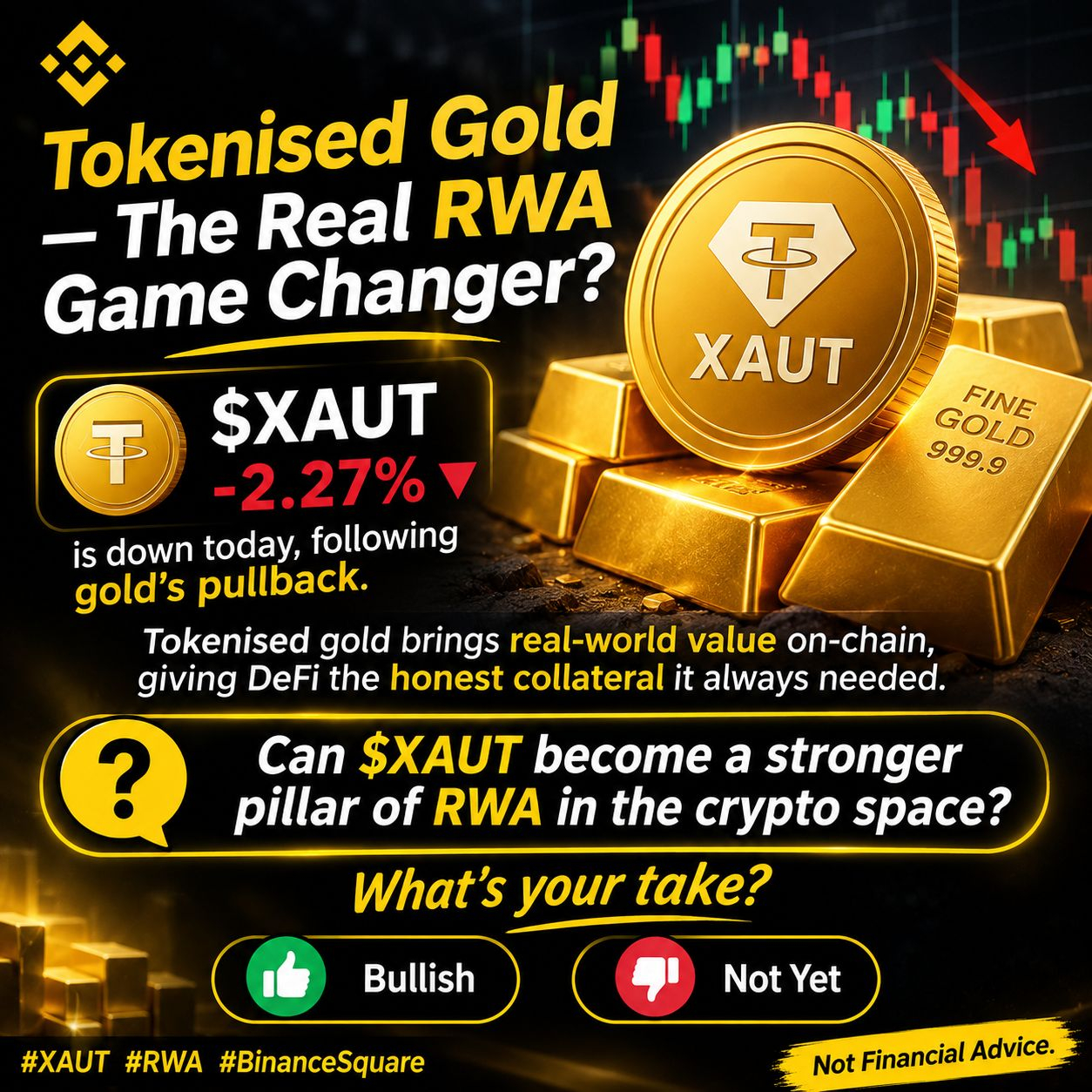
🪙 Is $XAUT becoming one of the most interesting RWA assets?
Tokenised gold is gaining attention as traditional gold moves onto the blockchain.
$XAUT is down 2.27% today, following gold's recent pullback. But its real value is the connection between physical gold and DeFi.
Real-world assets could bring more stability and utility to the crypto ecosystem.
🤔 Do you think tokenised gold will become a major part of DeFi in the future?
{spot}(XAUTUSDT)
#XAUT #RWA #BinanceSquare #Crypto
🪙 Is $XAUT becoming one of the most interesting RWA assets?
Tokenised gold is gaining attention as traditional gold moves onto the blockchain.
$XAUT is down 2.27% today, following gold's recent pullback. But its real value is the connection between physical gold and DeFi.
Real-world assets could bring more stability and utility to the crypto ecosystem.
🤔 Do you think tokenised gold will become a major part of DeFi in the future?
#XAUT #RWA #BinanceSquare #Crypto
195
·
--
🚨 $PLUME INFRASTRUCTURE EXPANDS WITH SEC AND FINRA APPROVAL FOR ONCHAIN SECURITIES! 💥
Institutional-grade liquidity infrastructure is quietly shifting onto public ledgers. 🏦 The recent regulatory approvals secured by the Plume ecosystem mark a structural pivot, bridging traditional Depository Trust Company rails directly with self-custodial onchain vaults.
Instead of synthetic wrappers, eligible equities and bonds will settle as legally recognized security entitlements by the first half of 2027. 💡 This setup eliminates intermediary friction and unlocks institutional capital deployment at scale.
💬 How will native yield bearing applications capitalize on tokenized traditional equities once these institutional rails go live? 👇
⚠️ Not financial advice. Always manage your risk. 🛡️
🏷️ #PLUME #RWA #Tokenization #Crypto
🔥 💎
4

Maple Finance is setting the bar high with a bold target of $15B in assets by late 2027. By bridging tokenized lending with TradFi, platforms like this are actively accelerating institutional adoption in crypto. As real-world asset tokenization gains unstoppable momentum, watching how liquidity scales across these hybrid financial ecosystems will be fascinating for the entire market moving forward. $MPL #RWA #DeFi #TradFi
Maple Finance is setting the bar high with a bold target of $15B in assets by late 2027. By bridging tokenized lending with TradFi, platforms like this are actively accelerating institutional adoption in crypto. As real-world asset tokenization gains unstoppable momentum, watching how liquidity scales across these hybrid financial ecosystems will be fascinating for the entire market moving forward. $MPL #RWA #DeFi #TradFi
84

·
--
Bullish
Trending Narrative Spotlight (Tokenized Assets & On-Chain Growth)
Best for tapping into fresh Binance ecosystem trends.
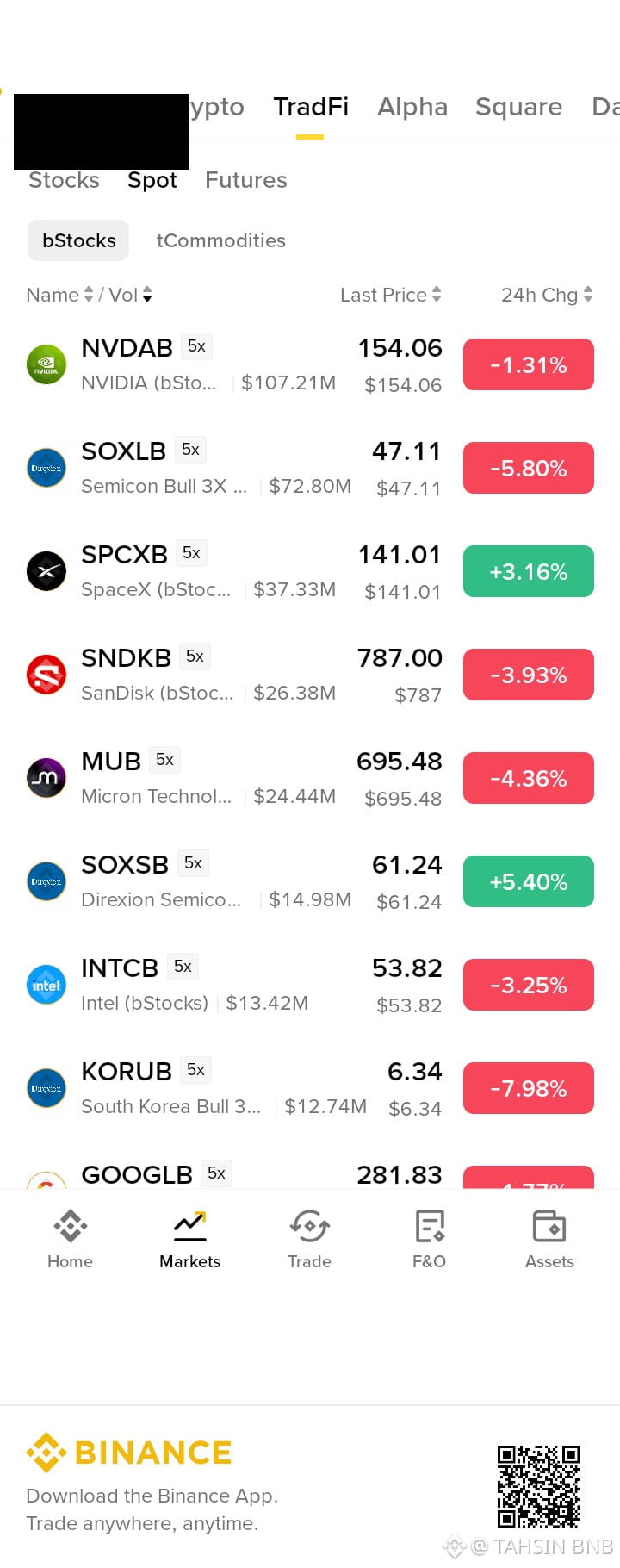
One sector is quietly thriving despite the market pullback: Tokenized Stocks 📈
While broader crypto prices cooled off this month, Binance bStocks just crossed $1 Billion in AUM in only 125 days—with on-chain utilization hitting 18.5% (well above the industry average).
Real-world assets (RWAs) bridging traditional equities like TSLA andNVDA directly onto crypto rails is proving to be one of the stickiest trends of 2026.
Have you traded tokenized equities yet, or are you sticking strictly to crypto-native tokens? Let’s discuss! 💬
#RWA #bStocks #CryptoTrends2024 #Web3 $BNB $NVDAB
$TSLA
{future}(TSLAUSDT)
Trending Narrative Spotlight (Tokenized Assets & On-Chain Growth)
Best for tapping into fresh Binance ecosystem trends.
One sector is quietly thriving despite the market pullback: Tokenized Stocks 📈
While broader crypto prices cooled off this month, Binance bStocks just crossed $1 Billion in AUM in only 125 days—with on-chain utilization hitting 18.5% (well above the industry average).
Real-world assets (RWAs) bridging traditional equities like TSLA andNVDA directly onto crypto rails is proving to be one of the stickiest trends of 2026.
Have you traded tokenized equities yet, or are you sticking strictly to crypto-native tokens? Let’s discuss! 💬
#RWA #bStocks #CryptoTrends2024 #Web3 $BNB $NVDAB
$TSLA
1
72
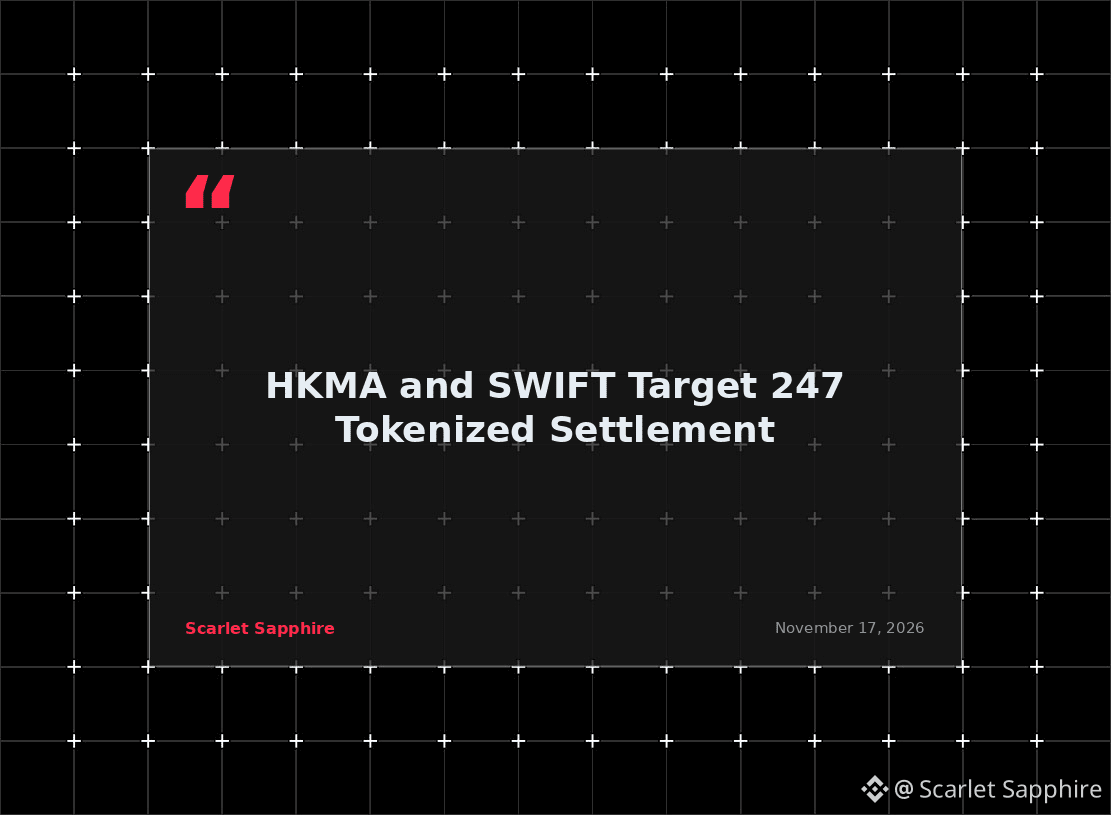
Traditional banking giants are not sitting out the tokenization wave. By teaming up with Swift to test cross-border tokenized deposits, Hong Kong is pushing commercial banks to match the instant, 24/7 settlement speeds of stablecoins. If traditional finance successfully bridges legacy infrastructure with distributed ledgers, we could see fierce competition for digital asset liquidity. The race for institutional blockchain adoption is heating up fast. #RWA #Tokenization #Banking
Traditional banking giants are not sitting out the tokenization wave. By teaming up with Swift to test cross-border tokenized deposits, Hong Kong is pushing commercial banks to match the instant, 24/7 settlement speeds of stablecoins. If traditional finance successfully bridges legacy infrastructure with distributed ledgers, we could see fierce competition for digital asset liquidity. The race for institutional blockchain adoption is heating up fast. #RWA #Tokenization #Banking
·
--
Verified
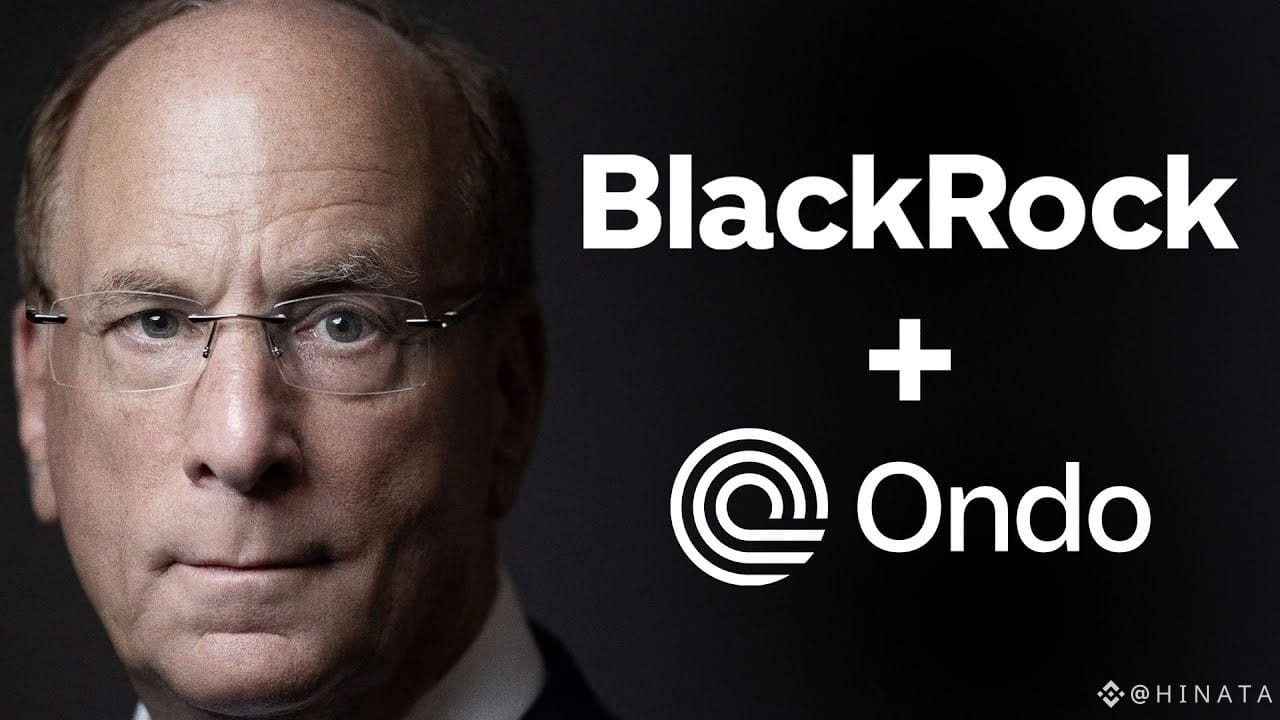
🏆 $ONDO JUST CROSSED $4 BILLION IN TOKENIZED ASSETS — A MAJOR RWA MILESTONE!
Ondo Finance is strengthening its position in the real-world asset (RWA) sector:
- $4B+ in tokenized assets: Ondo announced this milestone on November 5.
- 565,000+ holders: Its tokenized products now reach more than half a million onchain holders.
- 484 tokenized assets: The platform covers U.S. Treasuries, stocks, ETFs and other financial products.
- New DeFi utility: On November 12, Ondo Stocks announced support for Spout Finance's interest-free borrowing product.
- Institutional expansion: Ondo continues building infrastructure to bring traditional financial assets onchain.
Important: These figures describe Ondo's platform growth, not guaranteed demand for the $ONDO token.
Can Ondo become a major force in tokenized finance?
$ONDO
{future}(ONDOUSDT)
.
.
.
#ONDO #OndoFinance #RWA
Not financial advice. DYOR.
🏆 $ONDO JUST CROSSED $4 BILLION IN TOKENIZED ASSETS — A MAJOR RWA MILESTONE!
Ondo Finance is strengthening its position in the real-world asset (RWA) sector:
- $4B+ in tokenized assets: Ondo announced this milestone on November 5.
- 565,000+ holders: Its tokenized products now reach more than half a million onchain holders.
- 484 tokenized assets: The platform covers U.S. Treasuries, stocks, ETFs and other financial products.
- New DeFi utility: On November 12, Ondo Stocks announced support for Spout Finance's interest-free borrowing product.
- Institutional expansion: Ondo continues building infrastructure to bring traditional financial assets onchain.
Important: These figures describe Ondo's platform growth, not guaranteed demand for the $ONDO token.
Can Ondo become a major force in tokenized finance?
$ONDO
.
.
.
#ONDO #OndoFinance #RWA
Not financial advice. DYOR.
ONDO-1.14%
BLKUS-0.47%
1
739

MRJ_Token:
24/7 settlement is the easy part on-chain. The hard part is the bank side keeping up at 3am on a holiday. Curious whether this pilot covers weekend conversion back to fiat, or only token-to-token transfers between participating banks?
1
28
honestly, the Alpaca Instant Tokenization Network reached $10B in cumulative minting and redemption volume. This scale validates the expansion of RWA infrastructure.
#RWA #Tokenization
honestly, the Alpaca Instant Tokenization Network reached $10B in cumulative minting and redemption volume. This scale validates the expansion of RWA infrastructure.
#RWA #Tokenization
#RWA #Tokenization
1

·
--
Bullish
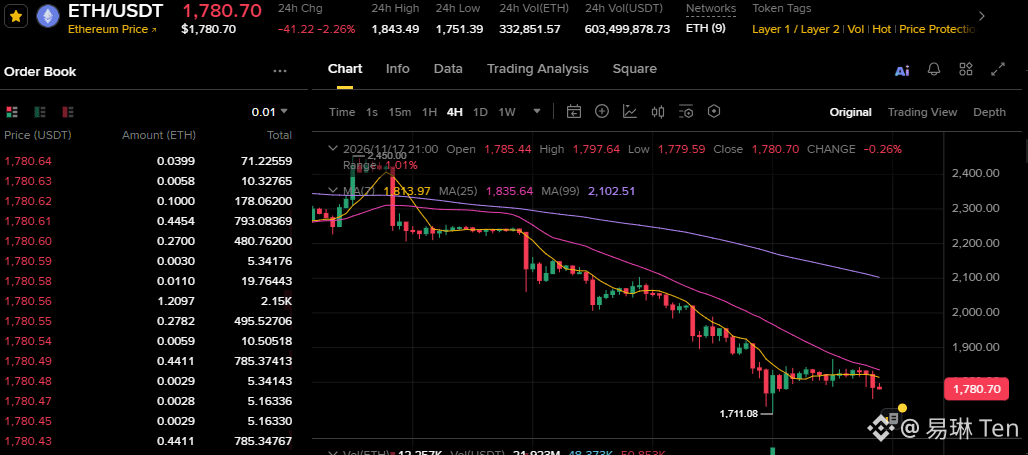
Ethereum ($ETH) — Institutional RWA & Tokenization
Post: Wall Street continues building on Ethereum ($ETH)—Invesco’s on-chain Stablecoin Reserves Fund just went live on ETH, joining JPMorgan in bringing institutional liquidity on-chain.
Price action is steady, but fundamentals are compounding daily.
🔥 Bullish on $ETH leading the RWA wave? Tap $ETH to check the live order book & share your thoughts! #Ethereum #ETH #RWA #BinanceSquare
Ethereum ($ETH ) — Institutional RWA & Tokenization
Post: Wall Street continues building on Ethereum ($ETH )—Invesco’s on-chain Stablecoin Reserves Fund just went live on ETH, joining JPMorgan in bringing institutional liquidity on-chain.
Price action is steady, but fundamentals are compounding daily.
🔥 Bullish on $ETH leading the RWA wave? Tap $ETH to check the live order book & share your thoughts! #Ethereum #ETH #RWA #BinanceSquare
1
11
Verified
Article
RWA × DEFI INTELLIGENCE 02BLACKROCK BUIDL GETS 24/7 LIQUIDITY: THE $100M PROMISE AND THE $50M REALITY
A tokenized asset can move on a blockchain at any hour.
But can its owner convert it into liquid dollars on a Sunday?
That question exposes one of the most important limitations of real-world asset tokenization.
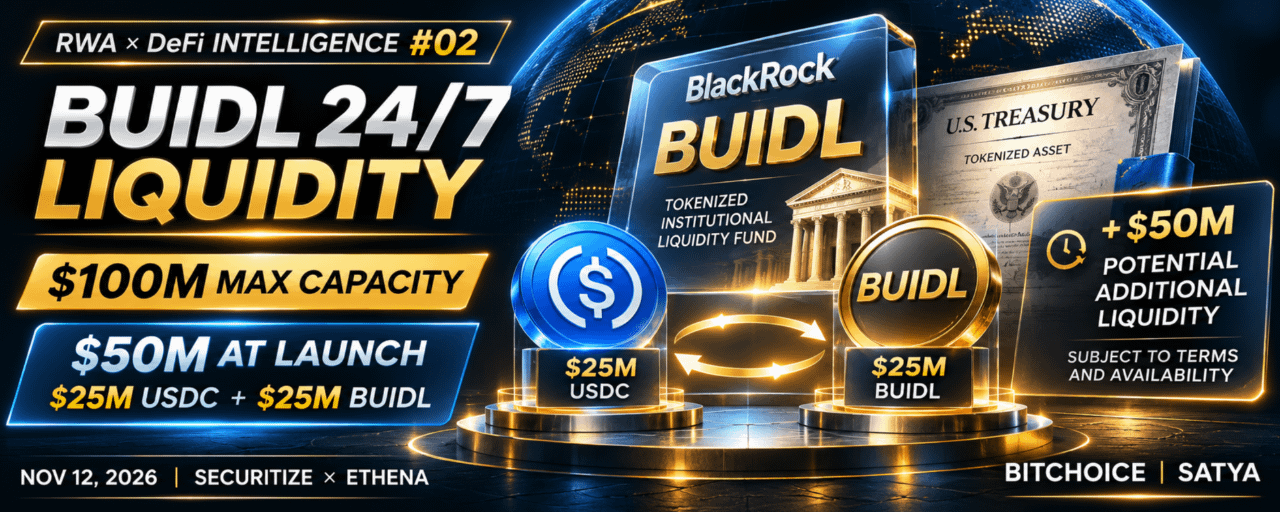
On November 12, 2026, Securitize and Ethena Labs launched a 24/7 liquidity facility for BlackRock's USD Institutional Digital Liquidity Fund, known as BUIDL.
The headline figure is $100 million.
The launch details are more revealing.
WHAT THE FACILITY ACTUALLY PROVIDES
According to the announcement:
• Maximum stated capacity: $100M
• Initial funded liquidity: $50M
• Initial USDC allocation: $25M
• Initial BUIDL allocation: $25M
• Potential additional capacity: $50M
• Indicative replenishment time: approximately one hour
• Access: eligible investors
• Operating model: 24/7
The facility is supported by Ethena and operated through Securitize.
It enables eligible participants to exchange BUIDL and supported stablecoins, including USDC, outside traditional market hours.
But $100 million in maximum capacity does not mean $100 million in USDC was immediately available at launch.
The disclosed starting USDC inventory was $25 million.
That distinction is particularly important during periods when several investors may simultaneously seek dollar liquidity.
THE PROBLEM TOKENIZATION HAS NOT SOLVED
Blockchain settlement infrastructure operates continuously.
Traditional securities markets, banks, fund administrators and payment systems still have operating schedules and regulatory constraints.
A tokenized security may be transferable over a weekend while its underlying financial ecosystem cannot deliver immediate cash conversion.
This creates a structural mismatch.
24/7 token transferability is not equivalent to 24/7 executable liquidity.
For institutional investors, the second capability can matter more than the first.
A digital representation of ownership is useful.
An asset that can also be converted into dependable settlement liquidity is considerably more useful.
WHY BUIDL MATTERS
BUIDL is BlackRock's tokenized institutional digital liquidity fund.
It connects regulated investment infrastructure with blockchain-based asset ownership and transfer.
However, the roles of the participating organizations must be distinguished.
BlackRock manages the underlying fund.
Securitize operates the announced liquidity facility.
Ethena supports the liquidity arrangement.
This should not be interpreted as an unconditional BlackRock guarantee of instant redemption for every token holder.
Eligibility, fund terms, liquidity availability and operational conditions remain relevant.
THE ETHENA CONNECTION
Ethena brings an important digital-dollar dimension to the story.
Its products include USDe and USDtb, which have different economic structures.
USDtb is especially relevant because its backing is closely connected to BUIDL.
This creates a broader relationship between tokenized institutional assets and digital-dollar liquidity infrastructure.
A tokenized fund is no longer merely an asset recorded onchain.
It can become part of an interconnected system involving stablecoins, collateral management and liquidity conversion.
Yet the details still matter.
Stablecoin liquidity is not identical to bank deposits.
Operational access is not necessarily permissionless.
And the ability to exchange tokens depends on specific rules, counterparties and available inventory.
WHAT THIS MEANS FOR DEFI
Real-world assets are often promoted as the bridge between traditional finance and decentralized finance.
But the bridge has several separate layers.
First, a real financial instrument must be represented onchain.
Second, ownership and transfer rights must remain legally enforceable.
Third, investors must be able to access usable liquidity.
Fourth, collateral and settlement systems must recognize the asset under clear conditions.
The Securitize–Ethena facility advances the liquidity layer.
It does not automatically make BUIDL unrestricted collateral in every decentralized lending protocol.
That difference matters.
Permissioned institutional tokenization and open DeFi are connected markets, but they are not interchangeable.
THE STRESS TEST
The real test will not be a quiet weekend.
It will be a period when many eligible participants want USDC simultaneously.
Three questions become critical.
Is enough USDC available for the requested conversions?Can additional liquidity actually arrive within the indicated timeframe?What execution terms apply when demand increases sharply?
Announced capacity matters.
Executable liquidity matters more.
And replenishment reliability may matter most when markets are under stress.
FIVE METRICS TO WATCH
• Available stablecoin inventory
• Replenishment speed and reliability
• Conversion pricing and transaction costs
• Investor eligibility and settlement restrictions
• Performance during concentrated redemption demand
These indicators can tell investors far more about the facility's practical value than its maximum advertised capacity alone.
OUR ASSESSMENT
The BUIDL liquidity facility represents a meaningful evolution in RWA infrastructure.
Tokenization is moving beyond digitizing ownership toward solving operational problems in institutional finance.
But precision matters.
The facility launched with $50M in combined liquidity.
Only $25M of that initial inventory was USDC.
The additional $50M is conditional capacity rather than guaranteed immediately available cash.
And access remains subject to investor eligibility.
The central question for the next stage of tokenization is not simply how many assets exist onchain.
It is how effectively those assets can be used, financed and converted into liquidity when needed.
What matters more for the RWA market: total tokenized assets or liquidity available during market stress?
BITCHOICE | SATYA
RWA × DeFi Intelligence #02
Source: Securitize and Ethena Labs, November 12, 2026.
#RWA #DeFi #BUIDL #Tokenization #Stablecoins $USDC
$ENA
$USDE
{spot}(USDEUSDT)
RWA × DEFI INTELLIGENCE 02
BLACKROCK BUIDL GETS 24/7 LIQUIDITY: THE $100M PROMISE AND THE $50M REALITY
A tokenized asset can move on a blockchain at any hour.
But can its owner convert it into liquid dollars on a Sunday?
That question exposes one of the most important limitations of real-world asset tokenization.
On November 12, 2026, Securitize and Ethena Labs launched a 24/7 liquidity facility for BlackRock's USD Institutional Digital Liquidity Fund, known as BUIDL.
The headline figure is $100 million.
The launch details are more revealing.
WHAT THE FACILITY ACTUALLY PROVIDES
According to the announcement:
• Maximum stated capacity: $100M
• Initial funded liquidity: $50M
• Initial USDC allocation: $25M
• Initial BUIDL allocation: $25M
• Potential additional capacity: $50M
• Indicative replenishment time: approximately one hour
• Access: eligible investors
• Operating model: 24/7
The facility is supported by Ethena and operated through Securitize.
It enables eligible participants to exchange BUIDL and supported stablecoins, including USDC, outside traditional market hours.
But $100 million in maximum capacity does not mean $100 million in USDC was immediately available at launch.
The disclosed starting USDC inventory was $25 million.
That distinction is particularly important during periods when several investors may simultaneously seek dollar liquidity.
THE PROBLEM TOKENIZATION HAS NOT SOLVED
Blockchain settlement infrastructure operates continuously.
Traditional securities markets, banks, fund administrators and payment systems still have operating schedules and regulatory constraints.
A tokenized security may be transferable over a weekend while its underlying financial ecosystem cannot deliver immediate cash conversion.
This creates a structural mismatch.
24/7 token transferability is not equivalent to 24/7 executable liquidity.
For institutional investors, the second capability can matter more than the first.
A digital representation of ownership is useful.
An asset that can also be converted into dependable settlement liquidity is considerably more useful.
WHY BUIDL MATTERS
BUIDL is BlackRock's tokenized institutional digital liquidity fund.
It connects regulated investment infrastructure with blockchain-based asset ownership and transfer.
However, the roles of the participating organizations must be distinguished.
BlackRock manages the underlying fund.
Securitize operates the announced liquidity facility.
Ethena supports the liquidity arrangement.
This should not be interpreted as an unconditional BlackRock guarantee of instant redemption for every token holder.
Eligibility, fund terms, liquidity availability and operational conditions remain relevant.
THE ETHENA CONNECTION
Ethena brings an important digital-dollar dimension to the story.
Its products include USDe and USDtb, which have different economic structures.
USDtb is especially relevant because its backing is closely connected to BUIDL.
This creates a broader relationship between tokenized institutional assets and digital-dollar liquidity infrastructure.
A tokenized fund is no longer merely an asset recorded onchain.
It can become part of an interconnected system involving stablecoins, collateral management and liquidity conversion.
Yet the details still matter.
Stablecoin liquidity is not identical to bank deposits.
Operational access is not necessarily permissionless.
And the ability to exchange tokens depends on specific rules, counterparties and available inventory.
WHAT THIS MEANS FOR DEFI
Real-world assets are often promoted as the bridge between traditional finance and decentralized finance.
But the bridge has several separate layers.
First, a real financial instrument must be represented onchain.
Second, ownership and transfer rights must remain legally enforceable.
Third, investors must be able to access usable liquidity.
Fourth, collateral and settlement systems must recognize the asset under clear conditions.
The Securitize–Ethena facility advances the liquidity layer.
It does not automatically make BUIDL unrestricted collateral in every decentralized lending protocol.
That difference matters.
Permissioned institutional tokenization and open DeFi are connected markets, but they are not interchangeable.
THE STRESS TEST
The real test will not be a quiet weekend.
It will be a period when many eligible participants want USDC simultaneously.
Three questions become critical.
Is enough USDC available for the requested conversions?Can additional liquidity actually arrive within the indicated timeframe?What execution terms apply when demand increases sharply?
Announced capacity matters.
Executable liquidity matters more.
And replenishment reliability may matter most when markets are under stress.
FIVE METRICS TO WATCH
• Available stablecoin inventory
• Replenishment speed and reliability
• Conversion pricing and transaction costs
• Investor eligibility and settlement restrictions
• Performance during concentrated redemption demand
These indicators can tell investors far more about the facility's practical value than its maximum advertised capacity alone.
OUR ASSESSMENT
The BUIDL liquidity facility represents a meaningful evolution in RWA infrastructure.
Tokenization is moving beyond digitizing ownership toward solving operational problems in institutional finance.
But precision matters.
The facility launched with $50M in combined liquidity.
Only $25M of that initial inventory was USDC.
The additional $50M is conditional capacity rather than guaranteed immediately available cash.
And access remains subject to investor eligibility.
The central question for the next stage of tokenization is not simply how many assets exist onchain.
It is how effectively those assets can be used, financed and converted into liquidity when needed.
What matters more for the RWA market: total tokenized assets or liquidity available during market stress?
BITCHOICE | SATYA
RWA × DeFi Intelligence #02
Source: Securitize and Ethena Labs, November 12, 2026.
#RWA #DeFi #BUIDL #Tokenization #Stablecoins $USDC
$ENA
$USDE
MRJ_Token:
Liquidity under stress, for me. Total tokenized value is a headline; what holders feel is whether they can actually redeem on a bad Sunday. Clear eligibility rules and real inventory numbers, shared upfront, build more trust than a big max-capacity figure. Great breakdown.
2
1
301

·
--
🚨 Standard Life Chair Sir Nicholas Lyons advocates for tokenized UK Gilts to open government bonds to retail investors via Solana.
Market Implication: Institutional adoption of RWAs could drive long-term SOL demand as the infrastructure layer for tokenized assets.
Will Solana become the default settlement layer for global government bonds? #Solana #RWA
$SOL #TradingSignal #CryptoAnalysis
Market Implication: Institutional adoption of RWAs could drive long-term SOL demand as the infrastructure layer for tokenized assets.
Will Solana become the default settlement layer for global government bonds? #Solana #RWA
$SOL #TradingSignal #CryptoAnalysis
7
Standard Life Chair Nicholas Lyons suggests tokenized UK government bonds should serve retail savers instead of being limited to wholesale institutions.
#RWA #Tokenization
Standard Life Chair Nicholas Lyons suggests tokenized UK government bonds should serve retail savers instead of being limited to wholesale institutions.
#RWA #Tokenization
#RWA #Tokenization
5
Log in to explore more content
Join global crypto users on Binance Square
⚡️ Get latest and useful information about crypto.
💬 Trusted by the world’s largest crypto exchange.
👍 Discover real insights from verified creators.
Email / Phone number
Trending Topics
1
#NvidiaBeatsEstimatesWith$130BQ4Outlook
33,099 views
231 Discussing
2
#AnthropicIPOPriceCouldExceed$80
22,019 views
200 Discussing
3
#RussiaCentralBankAddsAlfaBankToCryptoExchangeRegister
1,015 views
20 Discussing
4
#RussianCentralBankPlansToAllowFundsToHoldCryptoIn2027
663 views
16 Discussing
5
#VisaPlansStablecoinPrefundingForAPACCrossBorderPayments
767 views
17 Discussing
6
#CanNvidia’sDataCenterGrowthContinue?
96,529 views
1,148 Discussing
7
#CanadaAndUSLaunchOperationNiagaraAgainstApprovalPhishing
18,530 views
52 Discussing
8
#BankOfEnglandUnveilsClearingHousePathwayCoveringDLTFirms
3,335 views
60 Discussing
9
#DBSAndCirclePartnerToExpandAsianInstitutionsUSDCAccess
3,856 views
60 Discussing
10
#LedgerHardwareImplantReportsExtendToDubai
52,866 views
605 Discussing