
MannequinCrypto
1.6k Posts

MannequinCrypto
Report
Block User
Crypto Analyst & Investor BTC | ETH | AI | DeFi | Altcoins Technical Analysis • Market Insights • Trading Education Discipline beats émotions
Open Trade
Occasional Trader
4.2 Years
78 Following
119 Followers
481 Liked
Posts
Portfolio
All
Quotes
Videos
PINNED
Verified
$ZEC HAS ENTERED A DIFFERENT LEAGUE. 🛡️
Zcash recently broke above $1,000, reaching around $1,023 and recording roughly +94% monthly gains. The move has been supported by strong inflows into Grayscale’s Zcash ETF, which had already attracted at least $34.4M in net inflows since its August 25 launch. (The Block)
But this is exactly where investors need to become more disciplined.
A parabolic move creates opportunity AND risk.
The privacy narrative is returning to the spotlight, while institutional access through an ETF gives ZEC a catalyst that previous cycles didn’t have.
The key now isn’t chasing green candles.
Watch:
→ ETF flows
→ volume after the breakout
→ whether $1,000 becomes support
→ BTC stability
→ profit-taking pressure
A strong narrative can start a rally.
Sustained demand is what keeps it alive.
📊 POLL:
Where do you think ZEC goes next?
#zec #Zcash #Privacy #crypto #Altcoins
{spot}(ZECUSDT)
$ZEC HAS ENTERED A DIFFERENT LEAGUE. 🛡️
Zcash recently broke above $1,000, reaching around $1,023 and recording roughly +94% monthly gains. The move has been supported by strong inflows into Grayscale’s Zcash ETF, which had already attracted at least $34.4M in net inflows since its August 25 launch. (The Block)
But this is exactly where investors need to become more disciplined.
A parabolic move creates opportunity AND risk.
The privacy narrative is returning to the spotlight, while institutional access through an ETF gives ZEC a catalyst that previous cycles didn’t have.
The key now isn’t chasing green candles.
Watch:
→ ETF flows
→ volume after the breakout
→ whether $1,000 becomes support
→ BTC stability
→ profit-taking pressure
A strong narrative can start a rally.
Sustained demand is what keeps it alive.
📊 POLL:
Where do you think ZEC goes next?
#zec #Zcash #Privacy #crypto #Altcoins
Zcash recently broke above $1,000, reaching around $1,023 and recording roughly +94% monthly gains. The move has been supported by strong inflows into Grayscale’s Zcash ETF, which had already attracted at least $34.4M in net inflows since its August 25 launch. (The Block)
But this is exactly where investors need to become more disciplined.
A parabolic move creates opportunity AND risk.
The privacy narrative is returning to the spotlight, while institutional access through an ETF gives ZEC a catalyst that previous cycles didn’t have.
The key now isn’t chasing green candles.
Watch:
→ ETF flows
→ volume after the breakout
→ whether $1,000 becomes support
→ BTC stability
→ profit-taking pressure
A strong narrative can start a rally.
Sustained demand is what keeps it alive.
📊 POLL:
Where do you think ZEC goes next?
#zec #Zcash #Privacy #crypto #Altcoins
🟢 $1,200+
59%
🟡 Consolidation
6%
🔴 Major correction
35%
110 votes • Voting closed
5.3k
Crypto loves narratives.
But ecosystems are built through boring things:
Users.
Transactions.
Liquidity.
Developers.
Applications.
Stablecoins.
$BNB is interesting because its long-term performance is increasingly connected to the health of a broader ecosystem rather than just exchange speculation.
The market can pump a token for weeks.
It cannot fake sustainable usage forever.
So instead of asking:
“Where can BNB go?”
Ask:
“Is the ecosystem becoming more useful?”
That question is less exciting—but potentially much more valuable.
#bnb #BNBChain #CryptoInvesting
Crypto loves narratives.
But ecosystems are built through boring things:
Users.
Transactions.
Liquidity.
Developers.
Applications.
Stablecoins.
$BNB is interesting because its long-term performance is increasingly connected to the health of a broader ecosystem rather than just exchange speculation.
The market can pump a token for weeks.
It cannot fake sustainable usage forever.
So instead of asking:
“Where can BNB go?”
Ask:
“Is the ecosystem becoming more useful?”
That question is less exciting—but potentially much more valuable.
#bnb #BNBChain #CryptoInvesting
But ecosystems are built through boring things:
Users.
Transactions.
Liquidity.
Developers.
Applications.
Stablecoins.
$BNB is interesting because its long-term performance is increasingly connected to the health of a broader ecosystem rather than just exchange speculation.
The market can pump a token for weeks.
It cannot fake sustainable usage forever.
So instead of asking:
“Where can BNB go?”
Ask:
“Is the ecosystem becoming more useful?”
That question is less exciting—but potentially much more valuable.
#bnb #BNBChain #CryptoInvesting
7
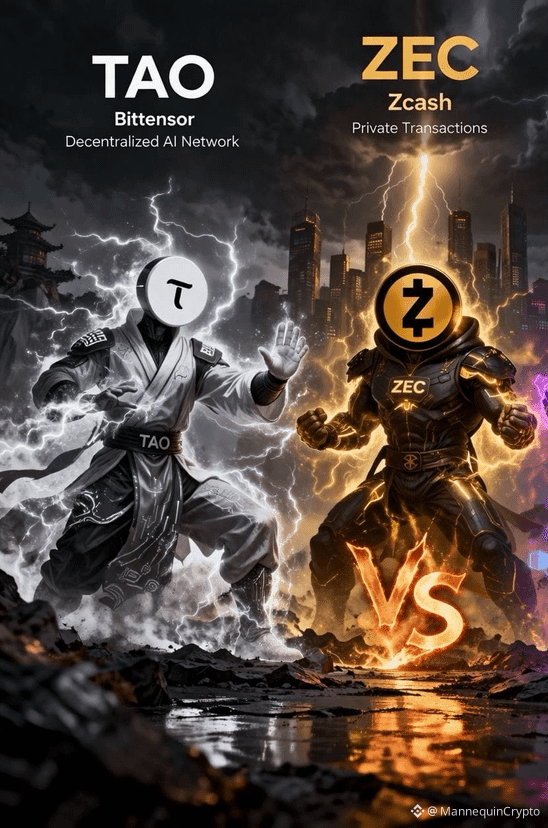
$TAO and $ZEC couldn’t have more different narratives.
TAO is betting on the future of decentralized intelligence.
ZEC is betting on the future of financial privacy.
Yet both share something important:
They are trying to solve problems beyond simple payments.
TAO asks:
“How can intelligence be coordinated openly?”
ZEC asks:
“How can digital money preserve financial privacy?”
The market may rotate between narratives, but the strongest projects often survive because their underlying problem remains relevant.
That’s why I don’t only watch price.
I watch the problem each protocol is trying to solve.
#TAO #zec #Bittensor #zcash #Crypto
$TAO and $ZEC couldn’t have more different narratives.
TAO is betting on the future of decentralized intelligence.
ZEC is betting on the future of financial privacy.
Yet both share something important:
They are trying to solve problems beyond simple payments.
TAO asks:
“How can intelligence be coordinated openly?”
ZEC asks:
“How can digital money preserve financial privacy?”
The market may rotate between narratives, but the strongest projects often survive because their underlying problem remains relevant.
That’s why I don’t only watch price.
I watch the problem each protocol is trying to solve.
#TAO #zec #Bittensor #zcash #Crypto
TAO is betting on the future of decentralized intelligence.
ZEC is betting on the future of financial privacy.
Yet both share something important:
They are trying to solve problems beyond simple payments.
TAO asks:
“How can intelligence be coordinated openly?”
ZEC asks:
“How can digital money preserve financial privacy?”
The market may rotate between narratives, but the strongest projects often survive because their underlying problem remains relevant.
That’s why I don’t only watch price.
I watch the problem each protocol is trying to solve.
#TAO #zec #Bittensor #zcash #Crypto
217
The easy trade is always the popular narrative.
The harder question is what happens when the narrative nobody cared about suddenly becomes important.
$ZEC sits directly inside that debate.
Bitcoin made financial sovereignty popular.
Ethereum made programmable finance popular.
Privacy-focused networks are asking another question:
Should every financial transaction permanently expose your economic history?
There are legitimate regulatory and compliance challenges around privacy.
But there is also a legitimate demand for financial confidentiality.
That tension isn’t disappearing.
For ZEC, the long-term thesis depends on whether privacy becomes a niche feature or an essential part of digital finance.
#zec #zcash #PrivacyCoins #Crypto
The easy trade is always the popular narrative.
The harder question is what happens when the narrative nobody cared about suddenly becomes important.
$ZEC sits directly inside that debate.
Bitcoin made financial sovereignty popular.
Ethereum made programmable finance popular.
Privacy-focused networks are asking another question:
Should every financial transaction permanently expose your economic history?
There are legitimate regulatory and compliance challenges around privacy.
But there is also a legitimate demand for financial confidentiality.
That tension isn’t disappearing.
For ZEC, the long-term thesis depends on whether privacy becomes a niche feature or an essential part of digital finance.
#zec #zcash #PrivacyCoins #Crypto
The harder question is what happens when the narrative nobody cared about suddenly becomes important.
$ZEC sits directly inside that debate.
Bitcoin made financial sovereignty popular.
Ethereum made programmable finance popular.
Privacy-focused networks are asking another question:
Should every financial transaction permanently expose your economic history?
There are legitimate regulatory and compliance challenges around privacy.
But there is also a legitimate demand for financial confidentiality.
That tension isn’t disappearing.
For ZEC, the long-term thesis depends on whether privacy becomes a niche feature or an essential part of digital finance.
#zec #zcash #PrivacyCoins #Crypto
285
The AI race has mostly been dominated by centralized companies.
$TAO represents a different experiment:
Can intelligence itself become an open, competitive network?
Bittensor’s model attempts to coordinate different participants around machine intelligence through decentralized incentives.
That creates an intriguing investment thesis.
But decentralization also creates a harder question:
Can an open network produce intelligence that is competitive with heavily funded centralized systems?
If the answer becomes yes, TAO could represent more than an AI narrative.
It could represent a new model for coordinating AI resources.
That is the thesis worth watching.
#TAO #bittensor #artificialintelligence #Web3
The AI race has mostly been dominated by centralized companies.
$TAO represents a different experiment:
Can intelligence itself become an open, competitive network?
Bittensor’s model attempts to coordinate different participants around machine intelligence through decentralized incentives.
That creates an intriguing investment thesis.
But decentralization also creates a harder question:
Can an open network produce intelligence that is competitive with heavily funded centralized systems?
If the answer becomes yes, TAO could represent more than an AI narrative.
It could represent a new model for coordinating AI resources.
That is the thesis worth watching.
#TAO #bittensor #artificialintelligence #Web3
$TAO represents a different experiment:
Can intelligence itself become an open, competitive network?
Bittensor’s model attempts to coordinate different participants around machine intelligence through decentralized incentives.
That creates an intriguing investment thesis.
But decentralization also creates a harder question:
Can an open network produce intelligence that is competitive with heavily funded centralized systems?
If the answer becomes yes, TAO could represent more than an AI narrative.
It could represent a new model for coordinating AI resources.
That is the thesis worth watching.
#TAO #bittensor #artificialintelligence #Web3
29
$AAVE deserves attention for a reason that has little to do with short-term price targets.
Lending is one of the most fundamental functions in finance.
Aave has spent years building decentralized lending infrastructure where users can supply assets, borrow against collateral and interact without traditional intermediaries.
The bigger opportunity may come if DeFi moves from speculation toward actual financial infrastructure.
But there is a catch:
More TVL doesn’t automatically mean more sustainable value.
The important metrics are revenue, borrowers, liquidity quality, risk management and protocol growth.
The future of DeFi won’t be measured only in billions of dollars locked.
It will be measured by how much real financial activity happens on-chain.
#AAVE #DeFi
$AAVE deserves attention for a reason that has little to do with short-term price targets.
Lending is one of the most fundamental functions in finance.
Aave has spent years building decentralized lending infrastructure where users can supply assets, borrow against collateral and interact without traditional intermediaries.
The bigger opportunity may come if DeFi moves from speculation toward actual financial infrastructure.
But there is a catch:
More TVL doesn’t automatically mean more sustainable value.
The important metrics are revenue, borrowers, liquidity quality, risk management and protocol growth.
The future of DeFi won’t be measured only in billions of dollars locked.
It will be measured by how much real financial activity happens on-chain.
#AAVE #DeFi
Lending is one of the most fundamental functions in finance.
Aave has spent years building decentralized lending infrastructure where users can supply assets, borrow against collateral and interact without traditional intermediaries.
The bigger opportunity may come if DeFi moves from speculation toward actual financial infrastructure.
But there is a catch:
More TVL doesn’t automatically mean more sustainable value.
The important metrics are revenue, borrowers, liquidity quality, risk management and protocol growth.
The future of DeFi won’t be measured only in billions of dollars locked.
It will be measured by how much real financial activity happens on-chain.
#AAVE #DeFi
43
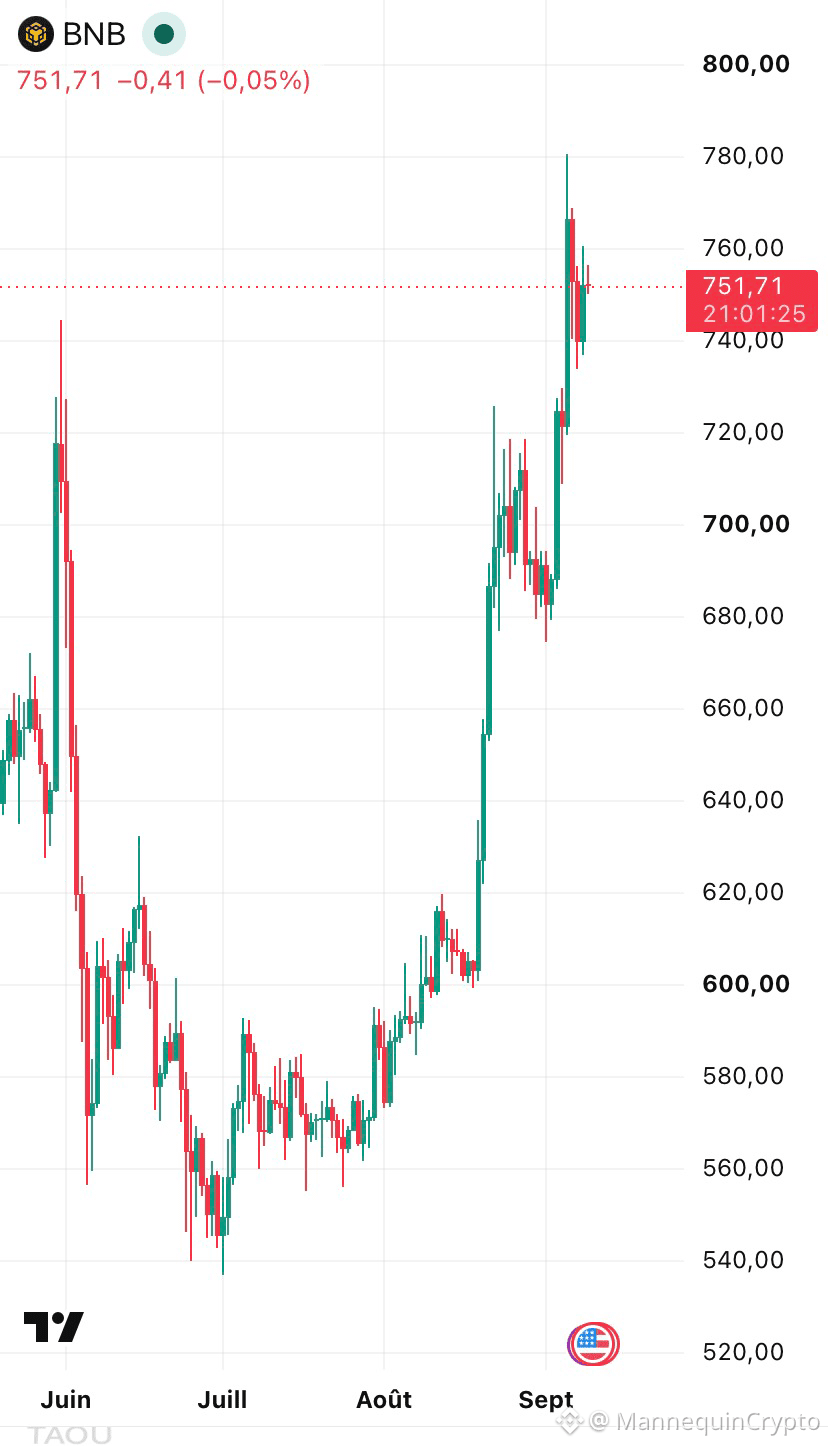
Everyone watches $BNB price.
Fewer people watch what happens underneath it.
The real question is whether activity across the BNB Chain ecosystem can continue generating sustainable demand for blockspace, applications and liquidity.
A strong token can survive speculation.
A strong ecosystem creates reasons for people to keep using the network.
That’s why I prefer tracking:
• Network activity
• DeFi liquidity
• Stablecoin flows
• DApp usage
• Developer activity
• BNB utility
Price tells you what the market thinks today.
On-chain activity can tell you why.
#bnb #Binance #BNBChain #DeFi
Everyone watches $BNB price.
Fewer people watch what happens underneath it.
The real question is whether activity across the BNB Chain ecosystem can continue generating sustainable demand for blockspace, applications and liquidity.
A strong token can survive speculation.
A strong ecosystem creates reasons for people to keep using the network.
That’s why I prefer tracking:
• Network activity
• DeFi liquidity
• Stablecoin flows
• DApp usage
• Developer activity
• BNB utility
Price tells you what the market thinks today.
On-chain activity can tell you why.
#bnb #Binance #BNBChain #DeFi
Fewer people watch what happens underneath it.
The real question is whether activity across the BNB Chain ecosystem can continue generating sustainable demand for blockspace, applications and liquidity.
A strong token can survive speculation.
A strong ecosystem creates reasons for people to keep using the network.
That’s why I prefer tracking:
• Network activity
• DeFi liquidity
• Stablecoin flows
• DApp usage
• Developer activity
• BNB utility
Price tells you what the market thinks today.
On-chain activity can tell you why.
#bnb #Binance #BNBChain #DeFi
29
$ZEC is an interesting reminder that crypto narratives move in cycles.
For years, privacy was treated almost like a niche sector.
Today, the conversation around financial sovereignty, on-chain transparency and programmable money is becoming much bigger.
Zcash’s technology gives users the option of shielded transactions while preserving a public blockchain.
But here’s the important part:
A privacy narrative is not enough to justify a valuation.
Adoption, liquidity, regulatory developments and actual usage will determine whether ZEC’s current attention becomes a lasting trend.
The smartest investors watch the technology and the market structure.
#zec #zcash #Privacy #Crypto
{spot}(ZECUSDT)
$ZEC is an interesting reminder that crypto narratives move in cycles.
For years, privacy was treated almost like a niche sector.
Today, the conversation around financial sovereignty, on-chain transparency and programmable money is becoming much bigger.
Zcash’s technology gives users the option of shielded transactions while preserving a public blockchain.
But here’s the important part:
A privacy narrative is not enough to justify a valuation.
Adoption, liquidity, regulatory developments and actual usage will determine whether ZEC’s current attention becomes a lasting trend.
The smartest investors watch the technology and the market structure.
#zec #zcash #Privacy #Crypto
For years, privacy was treated almost like a niche sector.
Today, the conversation around financial sovereignty, on-chain transparency and programmable money is becoming much bigger.
Zcash’s technology gives users the option of shielded transactions while preserving a public blockchain.
But here’s the important part:
A privacy narrative is not enough to justify a valuation.
Adoption, liquidity, regulatory developments and actual usage will determine whether ZEC’s current attention becomes a lasting trend.
The smartest investors watch the technology and the market structure.
#zec #zcash #Privacy #Crypto
291
$AAVE demonstrates both the power and danger of decentralized finance.
Lending markets can operate 24/7, globally and without traditional banks.
But smart contracts don’t eliminate risk.
They transform it.
Instead of trusting a bank’s balance sheet, users must consider:
→ Collateral volatility
→ Liquidation mechanisms
→ Oracle risk
→ Smart-contract vulnerabilities
→ Liquidity conditions
This is why DeFi investors should never look at APY alone.
Yield is the reward for taking risk not proof that the risk is low.
The next generation of DeFi will be built by protocols that manage risk as seriously as they pursue growth.
#AAVE #DEFİ #Ethereum #Crypto
{spot}(AAVEUSDT)
$AAVE demonstrates both the power and danger of decentralized finance.
Lending markets can operate 24/7, globally and without traditional banks.
But smart contracts don’t eliminate risk.
They transform it.
Instead of trusting a bank’s balance sheet, users must consider:
→ Collateral volatility
→ Liquidation mechanisms
→ Oracle risk
→ Smart-contract vulnerabilities
→ Liquidity conditions
This is why DeFi investors should never look at APY alone.
Yield is the reward for taking risk not proof that the risk is low.
The next generation of DeFi will be built by protocols that manage risk as seriously as they pursue growth.
#AAVE #DEFİ #Ethereum #Crypto
Lending markets can operate 24/7, globally and without traditional banks.
But smart contracts don’t eliminate risk.
They transform it.
Instead of trusting a bank’s balance sheet, users must consider:
→ Collateral volatility
→ Liquidation mechanisms
→ Oracle risk
→ Smart-contract vulnerabilities
→ Liquidity conditions
This is why DeFi investors should never look at APY alone.
Yield is the reward for taking risk not proof that the risk is low.
The next generation of DeFi will be built by protocols that manage risk as seriously as they pursue growth.
#AAVE #DEFİ #Ethereum #Crypto
45
$TAO is often judged by price action alone.
But the more interesting question is: is decentralized AI becoming a real market category?
Bittensor is trying to create an open network where participants compete to provide useful machine intelligence rather than simply running another AI-themed token.
That distinction matters.
If decentralized AI gains adoption, TAO’s value proposition could evolve beyond speculation. But if subnet activity fails to translate into sustainable demand, narratives alone won’t be enough.
The next phase may be less about “TAO to $X” and more about measuring real network utility.
#TAO #bittensor #AI #Crypto
{spot}(TAOUSDT)
$TAO is often judged by price action alone.
But the more interesting question is: is decentralized AI becoming a real market category?
Bittensor is trying to create an open network where participants compete to provide useful machine intelligence rather than simply running another AI-themed token.
That distinction matters.
If decentralized AI gains adoption, TAO’s value proposition could evolve beyond speculation. But if subnet activity fails to translate into sustainable demand, narratives alone won’t be enough.
The next phase may be less about “TAO to $X” and more about measuring real network utility.
#TAO #bittensor #AI #Crypto
But the more interesting question is: is decentralized AI becoming a real market category?
Bittensor is trying to create an open network where participants compete to provide useful machine intelligence rather than simply running another AI-themed token.
That distinction matters.
If decentralized AI gains adoption, TAO’s value proposition could evolve beyond speculation. But if subnet activity fails to translate into sustainable demand, narratives alone won’t be enough.
The next phase may be less about “TAO to $X” and more about measuring real network utility.
#TAO #bittensor #AI #Crypto
157
Verified
$ONDO : Tokenization Advances, Price Lags Behind
🏦 ONDO FINANCE: THE FUNDAMENTALS vs TECHNICALS PARADOX
ONDO is a textbook case in September 2026: the RWA (Real-World Assets) thesis has never been stronger, yet price remains stuck in a pattern of lower highs since May. A key level to watch: $0.31 a break of the descending trendline would be the first technical signal of a reversal.
Why fundamentals remain strong:
• 💰 Ondo Global Markets has crossed $1.5 billion in TVL, with approval across 30 European markets and SEC licenses via the Oasis Pro acquisition
• 🤝 Institutional partnerships multiplying: Mastercard (Multi-Token Network), Fidelity (OUSG integration), PayPal ($25M facility with PYUSD)
• 🏆 Over 70% market share in tokenized equities, ~$3.7 billion TVL
• ⚖️ Regulatory clarity improving: the Senate advancing market-structure legislation post-CLARITY Act, and the SEC closed its investigation into Ondo without charges
The structural risk to know: only 4.87 billion tokens circulating out of a 10 billion max supply ongoing unlock pressure weighs on price even as usage metrics improve. Competition is also intensifying (BlackRock’s BUIDL, Franklin Templeton’s BENJI).
The real lesson here: fundamentals and price can diverge for a long time. A classic reminder from Trading in the Zone the market isn’t obligated to reward good news immediately.
📊 POLL: Facing this fundamentals/price gap, what’s your read on ONDO?
#ONDO #RWA #crypto
$ONDO : Tokenization Advances, Price Lags Behind
🏦 ONDO FINANCE: THE FUNDAMENTALS vs TECHNICALS PARADOX
ONDO is a textbook case in September 2026: the RWA (Real-World Assets) thesis has never been stronger, yet price remains stuck in a pattern of lower highs since May. A key level to watch: $0.31 a break of the descending trendline would be the first technical signal of a reversal.
Why fundamentals remain strong:
• 💰 Ondo Global Markets has crossed $1.5 billion in TVL, with approval across 30 European markets and SEC licenses via the Oasis Pro acquisition
• 🤝 Institutional partnerships multiplying: Mastercard (Multi-Token Network), Fidelity (OUSG integration), PayPal ($25M facility with PYUSD)
• 🏆 Over 70% market share in tokenized equities, ~$3.7 billion TVL
• ⚖️ Regulatory clarity improving: the Senate advancing market-structure legislation post-CLARITY Act, and the SEC closed its investigation into Ondo without charges
The structural risk to know: only 4.87 billion tokens circulating out of a 10 billion max supply ongoing unlock pressure weighs on price even as usage metrics improve. Competition is also intensifying (BlackRock’s BUIDL, Franklin Templeton’s BENJI).
The real lesson here: fundamentals and price can diverge for a long time. A classic reminder from Trading in the Zone the market isn’t obligated to reward good news immediately.
📊 POLL: Facing this fundamentals/price gap, what’s your read on ONDO?
#ONDO #RWA #crypto
🏦 ONDO FINANCE: THE FUNDAMENTALS vs TECHNICALS PARADOX
ONDO is a textbook case in September 2026: the RWA (Real-World Assets) thesis has never been stronger, yet price remains stuck in a pattern of lower highs since May. A key level to watch: $0.31 a break of the descending trendline would be the first technical signal of a reversal.
Why fundamentals remain strong:
• 💰 Ondo Global Markets has crossed $1.5 billion in TVL, with approval across 30 European markets and SEC licenses via the Oasis Pro acquisition
• 🤝 Institutional partnerships multiplying: Mastercard (Multi-Token Network), Fidelity (OUSG integration), PayPal ($25M facility with PYUSD)
• 🏆 Over 70% market share in tokenized equities, ~$3.7 billion TVL
• ⚖️ Regulatory clarity improving: the Senate advancing market-structure legislation post-CLARITY Act, and the SEC closed its investigation into Ondo without charges
The structural risk to know: only 4.87 billion tokens circulating out of a 10 billion max supply ongoing unlock pressure weighs on price even as usage metrics improve. Competition is also intensifying (BlackRock’s BUIDL, Franklin Templeton’s BENJI).
The real lesson here: fundamentals and price can diverge for a long time. A classic reminder from Trading in the Zone the market isn’t obligated to reward good news immediately.
📊 POLL: Facing this fundamentals/price gap, what’s your read on ONDO?
#ONDO #RWA #crypto
📈 Accumulation opportunity
100%
⏳Waiting for a confirmed break
0%
🚫 Passing
0%
🔍 Watching the competition
0%
3 votes • Voting closed
1
742
Verified
$TAO (Bittensor): The $300 Psychological Test
🧠 BITTENSOR: MARKET TESTS THE $300 RESISTANCE
TAO is having its strongest week in months: +16% in one week, then +12% in a single session, pushing the price above $270 to a two-month high. Futures open interest has jumped to over $433M (up from $200-250M through most of July-August) a sign of fresh capital, not just short-covering.
What’s fueling the momentum:
• 🔗 Integration with Base (Coinbase’s L2) via Chainlink’s cross-chain protocol — Bittensor’s AI subnets now connect to Base’s DeFi liquidity
• 🏛️ Growing institutional interest: Grayscale Bittensor Trust open for private placement, Safello ETP launched in Europe
• ⚙️ Network now counts 128+ active subnets (up from ~32 in early 2025)
The point to watch: proof through revenue. One major subnet receives $52M in emissions but generates only $2.4M in external revenue. The rally leans as much on the AI narrative as on proven fundamentals governance was also tested in April with Covenant AI’s departure over centralization concerns.
📊 POLL: Will TAO confirm a daily close above $300 this week?
$TAO (Bittensor): The $300 Psychological Test
🧠 BITTENSOR: MARKET TESTS THE $300 RESISTANCE
TAO is having its strongest week in months: +16% in one week, then +12% in a single session, pushing the price above $270 to a two-month high. Futures open interest has jumped to over $433M (up from $200-250M through most of July-August) a sign of fresh capital, not just short-covering.
What’s fueling the momentum:
• 🔗 Integration with Base (Coinbase’s L2) via Chainlink’s cross-chain protocol — Bittensor’s AI subnets now connect to Base’s DeFi liquidity
• 🏛️ Growing institutional interest: Grayscale Bittensor Trust open for private placement, Safello ETP launched in Europe
• ⚙️ Network now counts 128+ active subnets (up from ~32 in early 2025)
The point to watch: proof through revenue. One major subnet receives $52M in emissions but generates only $2.4M in external revenue. The rally leans as much on the AI narrative as on proven fundamentals governance was also tested in April with Covenant AI’s departure over centralization concerns.
📊 POLL: Will TAO confirm a daily close above $300 this week?
🧠 BITTENSOR: MARKET TESTS THE $300 RESISTANCE
TAO is having its strongest week in months: +16% in one week, then +12% in a single session, pushing the price above $270 to a two-month high. Futures open interest has jumped to over $433M (up from $200-250M through most of July-August) a sign of fresh capital, not just short-covering.
What’s fueling the momentum:
• 🔗 Integration with Base (Coinbase’s L2) via Chainlink’s cross-chain protocol — Bittensor’s AI subnets now connect to Base’s DeFi liquidity
• 🏛️ Growing institutional interest: Grayscale Bittensor Trust open for private placement, Safello ETP launched in Europe
• ⚙️ Network now counts 128+ active subnets (up from ~32 in early 2025)
The point to watch: proof through revenue. One major subnet receives $52M in emissions but generates only $2.4M in external revenue. The rally leans as much on the AI narrative as on proven fundamentals governance was also tested in April with Covenant AI’s departure over centralization concerns.
📊 POLL: Will TAO confirm a daily close above $300 this week?
🟢 Yes
78%
🔴 No
11%
🟡 Sideways
11%
27 votes • Voting closed
1
684
$ZEC (Zcash): Privacy Reclaims the Throne
🔒 ZCASH: THE PRIVACY COIN COMEBACK OF THE DECADE
ZEC touched $1,200 on September 6 a level not seen in nearly a decade completing a 370% rally in three months. The immediate catalyst: the launch of the first US spot ETF on a privacy coin (Grayscale’s ZCSH, August 25) combined with a massive short squeeze over $46M in short positions liquidated in 24 hours.
The rally’s mechanics, step by step:
1. July: the Ironwood upgrade patches a critical flaw in the Orchard protocol and introduces total supply verification a decisive argument for cautious institutional allocators
2. Mid-August: ZEC crosses $500
3. August 25: ETF launch → ZEC surpasses $850
4. Early September: three straight sessions of short liquidations → $1,200
The privacy sector as a whole is outperforming: +213% since Bitcoin’s October 2025 peak, the only crypto segment above that level (DeFi -27%, gaming -74% over the same period). And even excluding ZEC, the privacy basket is up 85% over the past year this isn’t just an isolated ZEC story.
The institutional narrative taking shape: ZEC positioned as “AI-proof private money,” a thesis echoed by figures like Balaji Srinivasan.
📊 POLL: Is the “privacy coin” narrative a durable cycle or a sector rotation bubble?
#Zec #crypto
$ZEC (Zcash): Privacy Reclaims the Throne
🔒 ZCASH: THE PRIVACY COIN COMEBACK OF THE DECADE
ZEC touched $1,200 on September 6 a level not seen in nearly a decade completing a 370% rally in three months. The immediate catalyst: the launch of the first US spot ETF on a privacy coin (Grayscale’s ZCSH, August 25) combined with a massive short squeeze over $46M in short positions liquidated in 24 hours.
The rally’s mechanics, step by step:
1. July: the Ironwood upgrade patches a critical flaw in the Orchard protocol and introduces total supply verification a decisive argument for cautious institutional allocators
2. Mid-August: ZEC crosses $500
3. August 25: ETF launch → ZEC surpasses $850
4. Early September: three straight sessions of short liquidations → $1,200
The privacy sector as a whole is outperforming: +213% since Bitcoin’s October 2025 peak, the only crypto segment above that level (DeFi -27%, gaming -74% over the same period). And even excluding ZEC, the privacy basket is up 85% over the past year this isn’t just an isolated ZEC story.
The institutional narrative taking shape: ZEC positioned as “AI-proof private money,” a thesis echoed by figures like Balaji Srinivasan.
📊 POLL: Is the “privacy coin” narrative a durable cycle or a sector rotation bubble?
#Zec #crypto
🔒 ZCASH: THE PRIVACY COIN COMEBACK OF THE DECADE
ZEC touched $1,200 on September 6 a level not seen in nearly a decade completing a 370% rally in three months. The immediate catalyst: the launch of the first US spot ETF on a privacy coin (Grayscale’s ZCSH, August 25) combined with a massive short squeeze over $46M in short positions liquidated in 24 hours.
The rally’s mechanics, step by step:
1. July: the Ironwood upgrade patches a critical flaw in the Orchard protocol and introduces total supply verification a decisive argument for cautious institutional allocators
2. Mid-August: ZEC crosses $500
3. August 25: ETF launch → ZEC surpasses $850
4. Early September: three straight sessions of short liquidations → $1,200
The privacy sector as a whole is outperforming: +213% since Bitcoin’s October 2025 peak, the only crypto segment above that level (DeFi -27%, gaming -74% over the same period). And even excluding ZEC, the privacy basket is up 85% over the past year this isn’t just an isolated ZEC story.
The institutional narrative taking shape: ZEC positioned as “AI-proof private money,” a thesis echoed by figures like Balaji Srinivasan.
📊 POLL: Is the “privacy coin” narrative a durable cycle or a sector rotation bubble?
#Zec #crypto
🔒 Durable
100%
📉 Rotation bubble
0%
⚖️ Both
0%
🧐 Waiting to see
0%
5 votes • Voting closed
354
Everyone wants exposure to AI.
Very few ask where the economic infrastructure of decentralized AI could actually live.
That’s what makes Bittensor interesting.
Instead of simply being an “AI token,” Bittensor is building an open network where independent subnets produce digital commodities such as compute, inference, storage and prediction, with contributors rewarded through TAO. (Bittensor)
That distinction matters.
The thesis isn’t:
AI will grow → TAO goes up.
It’s:
AI demand grows → decentralized machine intelligence becomes more useful → subnet activity and economic incentives expand → TAO becomes increasingly important to the network.
That is a much harder thesis to prove.
But it is also much more interesting.
With the ecosystem expanding and major community developments ahead in September, $TAO remains one of the assets I’d watch for fundamental adoption rather than short-term AI hype. (CoinMarketCap)
The next AI cycle may not be about who has the loudest narrative.
It may be about who owns the rails.
#TAO #bittensor #AI #DePIN #Crypto
Everyone wants exposure to AI.
Very few ask where the economic infrastructure of decentralized AI could actually live.
That’s what makes Bittensor interesting.
Instead of simply being an “AI token,” Bittensor is building an open network where independent subnets produce digital commodities such as compute, inference, storage and prediction, with contributors rewarded through TAO. (Bittensor)
That distinction matters.
The thesis isn’t:
AI will grow → TAO goes up.
It’s:
AI demand grows → decentralized machine intelligence becomes more useful → subnet activity and economic incentives expand → TAO becomes increasingly important to the network.
That is a much harder thesis to prove.
But it is also much more interesting.
With the ecosystem expanding and major community developments ahead in September, $TAO remains one of the assets I’d watch for fundamental adoption rather than short-term AI hype. (CoinMarketCap)
The next AI cycle may not be about who has the loudest narrative.
It may be about who owns the rails.
#TAO #bittensor #AI #DePIN #Crypto
Very few ask where the economic infrastructure of decentralized AI could actually live.
That’s what makes Bittensor interesting.
Instead of simply being an “AI token,” Bittensor is building an open network where independent subnets produce digital commodities such as compute, inference, storage and prediction, with contributors rewarded through TAO. (Bittensor)
That distinction matters.
The thesis isn’t:
AI will grow → TAO goes up.
It’s:
AI demand grows → decentralized machine intelligence becomes more useful → subnet activity and economic incentives expand → TAO becomes increasingly important to the network.
That is a much harder thesis to prove.
But it is also much more interesting.
With the ecosystem expanding and major community developments ahead in September, $TAO remains one of the assets I’d watch for fundamental adoption rather than short-term AI hype. (CoinMarketCap)
The next AI cycle may not be about who has the loudest narrative.
It may be about who owns the rails.
#TAO #bittensor #AI #DePIN #Crypto
73
Ethereum doesn’t have a technology problem.
It has a value-capture question.
The network continues to evolve around scaling, UX and a broader roadmap designed to make Ethereum more efficient and accessible. (Ethereum)
But investors eventually ask:
“If Ethereum processes more activity, where does the economic value actually accrue?”
That question matters.
More users.
More transactions.
More Layer-2 activity.
More tokenized assets.
All of it sounds bullish.
But ETH holders ultimately need the ecosystem’s growth to translate into sustainable demand for ETH.
That’s why I’m watching Ethereum differently in this cycle.
Not simply:
“Can ETH reach a new ATH?”
But:
“Can Ethereum turn network dominance into stronger value capture?”
If the answer becomes clearer, ETH’s next repricing could be much more fundamental than speculative.
#ETH #Ethereum #crypto #defi #RWA
Ethereum doesn’t have a technology problem.
It has a value-capture question.
The network continues to evolve around scaling, UX and a broader roadmap designed to make Ethereum more efficient and accessible. (Ethereum)
But investors eventually ask:
“If Ethereum processes more activity, where does the economic value actually accrue?”
That question matters.
More users.
More transactions.
More Layer-2 activity.
More tokenized assets.
All of it sounds bullish.
But ETH holders ultimately need the ecosystem’s growth to translate into sustainable demand for ETH.
That’s why I’m watching Ethereum differently in this cycle.
Not simply:
“Can ETH reach a new ATH?”
But:
“Can Ethereum turn network dominance into stronger value capture?”
If the answer becomes clearer, ETH’s next repricing could be much more fundamental than speculative.
#ETH #Ethereum #crypto #defi #RWA
It has a value-capture question.
The network continues to evolve around scaling, UX and a broader roadmap designed to make Ethereum more efficient and accessible. (Ethereum)
But investors eventually ask:
“If Ethereum processes more activity, where does the economic value actually accrue?”
That question matters.
More users.
More transactions.
More Layer-2 activity.
More tokenized assets.
All of it sounds bullish.
But ETH holders ultimately need the ecosystem’s growth to translate into sustainable demand for ETH.
That’s why I’m watching Ethereum differently in this cycle.
Not simply:
“Can ETH reach a new ATH?”
But:
“Can Ethereum turn network dominance into stronger value capture?”
If the answer becomes clearer, ETH’s next repricing could be much more fundamental than speculative.
#ETH #Ethereum #crypto #defi #RWA
41
📖 INVESTOR’S JOURNAL
There is something interesting happening in crypto right now.
Not a crash.
Not a confirmed breakout.
Something more dangerous:
indecision.
Bitcoin recently pushed above $80K, only to slip back below it. Meanwhile, the broader market is watching inflation, oil prices, geopolitical tensions and the Fed for the next directional catalyst. (Reuters)
And this is where emotions become the real market indicator.
When BTC rises, people feel FOMO.
When BTC stalls, they become impatient.
When it drops 3–5%, fear suddenly becomes “analysis.”
But markets don’t reward the strongest emotion.
They reward the investor who can observe emotion without becoming its prisoner.
The current sentiment tells an interesting story: after moving into extreme greed during the late-August rally, sentiment cooled but remained in greed territory. (Ansflow)
That tells me one thing:
The market is optimistic but not comfortable.
And uncomfortable optimism is often where volatility begins.
So my question today isn’t:
“Will Bitcoin go up or down?”
It’s:
“What would make me change my mind?”
That is the mindset I want to keep in this journal.
Because a thesis without an invalidation level is not conviction.
It’s attachment.
🧠 Investor rule:
When emotions get louder, make your process quieter.
#crypto #BTC #Investing #InvestorJournal
📖 INVESTOR’S JOURNAL
There is something interesting happening in crypto right now.
Not a crash.
Not a confirmed breakout.
Something more dangerous:
indecision.
Bitcoin recently pushed above $80K, only to slip back below it. Meanwhile, the broader market is watching inflation, oil prices, geopolitical tensions and the Fed for the next directional catalyst. (Reuters)
And this is where emotions become the real market indicator.
When BTC rises, people feel FOMO.
When BTC stalls, they become impatient.
When it drops 3–5%, fear suddenly becomes “analysis.”
But markets don’t reward the strongest emotion.
They reward the investor who can observe emotion without becoming its prisoner.
The current sentiment tells an interesting story: after moving into extreme greed during the late-August rally, sentiment cooled but remained in greed territory. (Ansflow)
That tells me one thing:
The market is optimistic but not comfortable.
And uncomfortable optimism is often where volatility begins.
So my question today isn’t:
“Will Bitcoin go up or down?”
It’s:
“What would make me change my mind?”
That is the mindset I want to keep in this journal.
Because a thesis without an invalidation level is not conviction.
It’s attachment.
🧠 Investor rule:
When emotions get louder, make your process quieter.
#crypto #BTC #Investing #InvestorJournal
There is something interesting happening in crypto right now.
Not a crash.
Not a confirmed breakout.
Something more dangerous:
indecision.
Bitcoin recently pushed above $80K, only to slip back below it. Meanwhile, the broader market is watching inflation, oil prices, geopolitical tensions and the Fed for the next directional catalyst. (Reuters)
And this is where emotions become the real market indicator.
When BTC rises, people feel FOMO.
When BTC stalls, they become impatient.
When it drops 3–5%, fear suddenly becomes “analysis.”
But markets don’t reward the strongest emotion.
They reward the investor who can observe emotion without becoming its prisoner.
The current sentiment tells an interesting story: after moving into extreme greed during the late-August rally, sentiment cooled but remained in greed territory. (Ansflow)
That tells me one thing:
The market is optimistic but not comfortable.
And uncomfortable optimism is often where volatility begins.
So my question today isn’t:
“Will Bitcoin go up or down?”
It’s:
“What would make me change my mind?”
That is the mindset I want to keep in this journal.
Because a thesis without an invalidation level is not conviction.
It’s attachment.
🧠 Investor rule:
When emotions get louder, make your process quieter.
#crypto #BTC #Investing #InvestorJournal
32
The most interesting part of the RWA narrative isn’t tokenized assets.
It’s what happens when financial infrastructure starts moving onchain.
$ONDO sits directly inside that transition.
Ondo has been expanding its tokenized-equity and institutional RWA ecosystem, while its broader infrastructure is increasingly focused on bringing traditional financial products onto blockchain rails. (Ondo Finance)
That creates a different investment question:
Not “Can ONDO pump?”
But:
How much financial activity can eventually flow through this infrastructure?
Because tokenization isn’t about replacing Wall Street overnight.
It’s about making assets programmable, transferable and globally accessible.
If that transition continues, the real opportunity may be measured in volume, users and assets under management not just chart candles.
$ONDO is therefore one of those tokens I’d rather understand fundamentally before judging technically.
The RWA narrative is still young.
The infrastructure race may be even younger.
#ONDO #RWA #Tokenization #Crypto
The most interesting part of the RWA narrative isn’t tokenized assets.
It’s what happens when financial infrastructure starts moving onchain.
$ONDO sits directly inside that transition.
Ondo has been expanding its tokenized-equity and institutional RWA ecosystem, while its broader infrastructure is increasingly focused on bringing traditional financial products onto blockchain rails. (Ondo Finance)
That creates a different investment question:
Not “Can ONDO pump?”
But:
How much financial activity can eventually flow through this infrastructure?
Because tokenization isn’t about replacing Wall Street overnight.
It’s about making assets programmable, transferable and globally accessible.
If that transition continues, the real opportunity may be measured in volume, users and assets under management not just chart candles.
$ONDO is therefore one of those tokens I’d rather understand fundamentally before judging technically.
The RWA narrative is still young.
The infrastructure race may be even younger.
#ONDO #RWA #Tokenization #Crypto
It’s what happens when financial infrastructure starts moving onchain.
$ONDO sits directly inside that transition.
Ondo has been expanding its tokenized-equity and institutional RWA ecosystem, while its broader infrastructure is increasingly focused on bringing traditional financial products onto blockchain rails. (Ondo Finance)
That creates a different investment question:
Not “Can ONDO pump?”
But:
How much financial activity can eventually flow through this infrastructure?
Because tokenization isn’t about replacing Wall Street overnight.
It’s about making assets programmable, transferable and globally accessible.
If that transition continues, the real opportunity may be measured in volume, users and assets under management not just chart candles.
$ONDO is therefore one of those tokens I’d rather understand fundamentally before judging technically.
The RWA narrative is still young.
The infrastructure race may be even younger.
#ONDO #RWA #Tokenization #Crypto
164
Verified
A few months ago, Zcash was easy to ignore.
Too old.
Too niche.
Too volatile.
Then the market changed.
$ZEC started moving while most traders were still watching Bitcoin. The move accelerated dramatically, with ZEC recently reaching around $1,200 a level it hadn’t seen in years. (CoinMarketCap)
But the interesting part isn’t the number.
It’s the narrative shift.
Privacy went from being treated as a forgotten crypto sector to becoming a serious market theme again. The launch of a U.S. spot Zcash ETF has also given institutional investors a new way to access the asset. (The Cryptonomist)
And this is where I start asking a different question:
Is ZEC simply experiencing a massive speculative rotation…
or is the market repricing privacy as an essential part of crypto?
Because if privacy becomes a bigger narrative, Zcash may no longer be trading only on hype.
It may be trading on relevance.
The danger? Vertical moves create equally violent corrections.
So I’m watching the next phase more than the last pump.
DYOR
POLL 👇
What do you think ZEC is becoming?
#zcash #zec #crypto #Privacy #BinanceSquare
{spot}(ZECUSDT)
A few months ago, Zcash was easy to ignore.
Too old.
Too niche.
Too volatile.
Then the market changed.
$ZEC started moving while most traders were still watching Bitcoin. The move accelerated dramatically, with ZEC recently reaching around $1,200 a level it hadn’t seen in years. (CoinMarketCap)
But the interesting part isn’t the number.
It’s the narrative shift.
Privacy went from being treated as a forgotten crypto sector to becoming a serious market theme again. The launch of a U.S. spot Zcash ETF has also given institutional investors a new way to access the asset. (The Cryptonomist)
And this is where I start asking a different question:
Is ZEC simply experiencing a massive speculative rotation…
or is the market repricing privacy as an essential part of crypto?
Because if privacy becomes a bigger narrative, Zcash may no longer be trading only on hype.
It may be trading on relevance.
The danger? Vertical moves create equally violent corrections.
So I’m watching the next phase more than the last pump.
DYOR
POLL 👇
What do you think ZEC is becoming?
#zcash #zec #crypto #Privacy #BinanceSquare
Too old.
Too niche.
Too volatile.
Then the market changed.
$ZEC started moving while most traders were still watching Bitcoin. The move accelerated dramatically, with ZEC recently reaching around $1,200 a level it hadn’t seen in years. (CoinMarketCap)
But the interesting part isn’t the number.
It’s the narrative shift.
Privacy went from being treated as a forgotten crypto sector to becoming a serious market theme again. The launch of a U.S. spot Zcash ETF has also given institutional investors a new way to access the asset. (The Cryptonomist)
And this is where I start asking a different question:
Is ZEC simply experiencing a massive speculative rotation…
or is the market repricing privacy as an essential part of crypto?
Because if privacy becomes a bigger narrative, Zcash may no longer be trading only on hype.
It may be trading on relevance.
The danger? Vertical moves create equally violent corrections.
So I’m watching the next phase more than the last pump.
DYOR
POLL 👇
What do you think ZEC is becoming?
#zcash #zec #crypto #Privacy #BinanceSquare
🟢 A temporary hype cycle
37%
🔵 A long-term privacy leader
27%
🔴 Too overextended to chase
36%
22 votes • Voting closed
3.4k
📓 INVESTOR JOURNAL | THE PHASE WE ARE IN
Crypto doesn’t always move from fear → greed → euphoria in a straight line.
Right now, I believe we are in the transition phase where the market is trying to decide whether this is a healthy reset or the beginning of something deeper.
The interesting part?
Most investors are looking for confirmation.
They want BTC to break higher before buying.
They want altcoins to pump before believing in the cycle.
They want certainty before taking risk.
But markets rarely reward certainty.
They reward positioning before consensus.
This is the phase where volatility increases, narratives rotate quickly, weak hands get shaken out, and patience becomes an actual advantage.
My focus isn’t predicting the next candle.
It’s identifying:
→ Where liquidity is accumulating
→ Which narratives are gaining real strength
→ Which assets are being ignored despite improving fundamentals
→ Where the risk/reward becomes asymmetric
The biggest mistake right now may not be buying too early.
It may be waiting until everyone agrees.
#crypto #Investing #altcoins #InvestorInsights
📓 INVESTOR JOURNAL | THE PHASE WE ARE IN
Crypto doesn’t always move from fear → greed → euphoria in a straight line.
Right now, I believe we are in the transition phase where the market is trying to decide whether this is a healthy reset or the beginning of something deeper.
The interesting part?
Most investors are looking for confirmation.
They want BTC to break higher before buying.
They want altcoins to pump before believing in the cycle.
They want certainty before taking risk.
But markets rarely reward certainty.
They reward positioning before consensus.
This is the phase where volatility increases, narratives rotate quickly, weak hands get shaken out, and patience becomes an actual advantage.
My focus isn’t predicting the next candle.
It’s identifying:
→ Where liquidity is accumulating
→ Which narratives are gaining real strength
→ Which assets are being ignored despite improving fundamentals
→ Where the risk/reward becomes asymmetric
The biggest mistake right now may not be buying too early.
It may be waiting until everyone agrees.
#crypto #Investing #altcoins #InvestorInsights
Crypto doesn’t always move from fear → greed → euphoria in a straight line.
Right now, I believe we are in the transition phase where the market is trying to decide whether this is a healthy reset or the beginning of something deeper.
The interesting part?
Most investors are looking for confirmation.
They want BTC to break higher before buying.
They want altcoins to pump before believing in the cycle.
They want certainty before taking risk.
But markets rarely reward certainty.
They reward positioning before consensus.
This is the phase where volatility increases, narratives rotate quickly, weak hands get shaken out, and patience becomes an actual advantage.
My focus isn’t predicting the next candle.
It’s identifying:
→ Where liquidity is accumulating
→ Which narratives are gaining real strength
→ Which assets are being ignored despite improving fundamentals
→ Where the risk/reward becomes asymmetric
The biggest mistake right now may not be buying too early.
It may be waiting until everyone agrees.
#crypto #Investing #altcoins #InvestorInsights
1
50
Verified
$ONDO IS ONE OF THE MOST INTERESTING RWA PLAYS TO WATCH RIGHT NOW. 🏦
While traders focus on short-term altcoin pumps, Ondo is building around a much bigger narrative: bringing traditional financial assets on-chain.
Ondo’s tokenized equities platform recently surpassed $1B in TVL, with more than $27B in cumulative volume and over 200,000 holders. (CoinMarketCap)
Its USDY product has also surpassed $2.1B in assets, giving the ecosystem exposure to tokenized yield and U.S. Treasury-backed assets. (CoinMarketCap)
That’s why ONDO deserves attention beyond price action.
The RWA sector could become one of crypto’s biggest bridges to institutional capital.
But remember:
Adoption ≠ automatic token appreciation.
The market still needs to determine how much ecosystem growth translates into sustainable value for $ONDO .
📊 POLL:
Is RWA the next major crypto narrative?
#ONDO #RWA #Tokenization #Crypto #DeFi
$ONDO IS ONE OF THE MOST INTERESTING RWA PLAYS TO WATCH RIGHT NOW. 🏦
While traders focus on short-term altcoin pumps, Ondo is building around a much bigger narrative: bringing traditional financial assets on-chain.
Ondo’s tokenized equities platform recently surpassed $1B in TVL, with more than $27B in cumulative volume and over 200,000 holders. (CoinMarketCap)
Its USDY product has also surpassed $2.1B in assets, giving the ecosystem exposure to tokenized yield and U.S. Treasury-backed assets. (CoinMarketCap)
That’s why ONDO deserves attention beyond price action.
The RWA sector could become one of crypto’s biggest bridges to institutional capital.
But remember:
Adoption ≠ automatic token appreciation.
The market still needs to determine how much ecosystem growth translates into sustainable value for $ONDO .
📊 POLL:
Is RWA the next major crypto narrative?
#ONDO #RWA #Tokenization #Crypto #DeFi
While traders focus on short-term altcoin pumps, Ondo is building around a much bigger narrative: bringing traditional financial assets on-chain.
Ondo’s tokenized equities platform recently surpassed $1B in TVL, with more than $27B in cumulative volume and over 200,000 holders. (CoinMarketCap)
Its USDY product has also surpassed $2.1B in assets, giving the ecosystem exposure to tokenized yield and U.S. Treasury-backed assets. (CoinMarketCap)
That’s why ONDO deserves attention beyond price action.
The RWA sector could become one of crypto’s biggest bridges to institutional capital.
But remember:
Adoption ≠ automatic token appreciation.
The market still needs to determine how much ecosystem growth translates into sustainable value for $ONDO .
📊 POLL:
Is RWA the next major crypto narrative?
#ONDO #RWA #Tokenization #Crypto #DeFi
🟢 Absolutely
47%
🔵 One of the biggest
20%
🟡 Too early
13%
🔴 Overhyped
20%
15 votes • Voting closed
1k
Log in to explore more content
Join global crypto users on Binance Square
⚡️ Get latest and useful information about crypto.
💬 Trusted by the world’s largest crypto exchange.
👍 Discover real insights from verified creators.
Email / Phone number
Trending Topics
USAugustPPIRisesLessThanExpected
42,592 views
738 Discussing
🚨 US AUG PPI: Rises LESS Than Expected! Bullish for Crypto? 🚀
PPI +0.4% MoM as expected, but CORE PPI only +0.2% vs +0.3% expected - cooling!
What it means:
• Wholesale inflation softer than feared
• Fed rate hike chance now 62% - but dovish signals coming
• Core PCE revisions expected downward - bullish
• BTC usually pumps on softer PPI
Fed meeting Sep 15-16 - Market now expects pause, not hike?
Is this the green light for Q4 rally?
#Bitcoin #PPI #Fed #CryptoNews #BTC#usaugustppiriseslessthanexpected
True News
·1 Likes
·1.3k views
SECApprovesNasdaqTexasCommodityTrustRule
24,739 views
546 Discussing
ECBRaisesRatesSecondTimeTo2.5%
22,334 views
396 Discussing