

#omancrudeseptemberospfalls
omancrudeseptemberospfalls
54,534 views
507 Discussing
Hot
Latest

#OmanCrudeSeptemberOSPFalls That headline means the official selling price (OSP) for Oman crude for September loading was cut versus the previous month.
In plain English:
OSP is the benchmark price formula producers use when selling crude to term buyers.
If Oman crude September OSP falls, it usually means the producer priced those barrels more cheaply relative to the benchmark than before.
That can reflect softer regional demand, changing refining margins, competition from other grades, or broader market conditions — but the headline alone does not prove any single cause.
Why it matters:
A lower OSP can signal weaker pricing power for that grade in the current month.
It may influence how refiners compare Middle East crude versus alternatives.
It can affect sentiment around nearby oil pricing, though it does not automatically mean global crude prices must fall.
If you want, I can help interpret whether this is bearish for oil overall, or explain what OSP means with a simple example.$OSPN.US
{stock_us}(OSPN.US)
$CL
{future}(CLUSDT)
$WTI.US
{stock_us}(WTI.US)
#OmanCrudeSeptemberOSPFalls That headline means the official selling price (OSP) for Oman crude for September loading was cut versus the previous month.
In plain English:
OSP is the benchmark price formula producers use when selling crude to term buyers.
If Oman crude September OSP falls, it usually means the producer priced those barrels more cheaply relative to the benchmark than before.
That can reflect softer regional demand, changing refining margins, competition from other grades, or broader market conditions — but the headline alone does not prove any single cause.
Why it matters:
A lower OSP can signal weaker pricing power for that grade in the current month.
It may influence how refiners compare Middle East crude versus alternatives.
It can affect sentiment around nearby oil pricing, though it does not automatically mean global crude prices must fall.
If you want, I can help interpret whether this is bearish for oil overall, or explain what OSP means with a simple example.$OSPN.US
$CL
$WTI.US
In plain English:
OSP is the benchmark price formula producers use when selling crude to term buyers.
If Oman crude September OSP falls, it usually means the producer priced those barrels more cheaply relative to the benchmark than before.
That can reflect softer regional demand, changing refining margins, competition from other grades, or broader market conditions — but the headline alone does not prove any single cause.
Why it matters:
A lower OSP can signal weaker pricing power for that grade in the current month.
It may influence how refiners compare Middle East crude versus alternatives.
It can affect sentiment around nearby oil pricing, though it does not automatically mean global crude prices must fall.
If you want, I can help interpret whether this is bearish for oil overall, or explain what OSP means with a simple example.$OSPN.US
$CL
$WTI.US
1
100

#omancrudeseptemberospfalls
🚨 Oman Crude Sends a Warning Signal to Energy Markets! 🛢️📉
Oman Crude September prices are under pressure as caution spreads across global oil markets.
But the big question is… 👀
Is this just a temporary correction?
Or are energy markets preparing for a deeper move? 🔥
📌 Traders are watching:
⚡ Global demand trends
⚡ Supply and production decisions
⚡ The health of the global economy
Oil is more than just a commodity… it’s a key indicator of the world’s economic direction 🌍
The next move could shape the market narrative. Stay alert. 📊🚀
#OilMarket #CrudeOil #Energy
#omancrudeseptemberospfalls
🚨 Oman Crude Sends a Warning Signal to Energy Markets! 🛢️📉
Oman Crude September prices are under pressure as caution spreads across global oil markets.
But the big question is… 👀
Is this just a temporary correction?
Or are energy markets preparing for a deeper move? 🔥
📌 Traders are watching:
⚡ Global demand trends
⚡ Supply and production decisions
⚡ The health of the global economy
Oil is more than just a commodity… it’s a key indicator of the world’s economic direction 🌍
The next move could shape the market narrative. Stay alert. 📊🚀
#OilMarket #CrudeOil #Energy
🚨 Oman Crude Sends a Warning Signal to Energy Markets! 🛢️📉
Oman Crude September prices are under pressure as caution spreads across global oil markets.
But the big question is… 👀
Is this just a temporary correction?
Or are energy markets preparing for a deeper move? 🔥
📌 Traders are watching:
⚡ Global demand trends
⚡ Supply and production decisions
⚡ The health of the global economy
Oil is more than just a commodity… it’s a key indicator of the world’s economic direction 🌍
The next move could shape the market narrative. Stay alert. 📊🚀
#OilMarket #CrudeOil #Energy
1
572

🛢️📉 Oman Lowers September Crude OSP
Oman's September Official Selling Price (OSP) has moved lower, reflecting changing conditions in the regional oil market. Energy traders are now watching whether demand or supply becomes the bigger driver in the coming weeks, while $BTC and $BNB remain sensitive to broader macro sentiment.
#omancrudeseptemberospfalls
🛢️📉 Oman Lowers September Crude OSP
Oman's September Official Selling Price (OSP) has moved lower, reflecting changing conditions in the regional oil market. Energy traders are now watching whether demand or supply becomes the bigger driver in the coming weeks, while $BTC and $BNB remain sensitive to broader macro sentiment.
#omancrudeseptemberospfalls
Oman's September Official Selling Price (OSP) has moved lower, reflecting changing conditions in the regional oil market. Energy traders are now watching whether demand or supply becomes the bigger driver in the coming weeks, while $BTC and $BNB remain sensitive to broader macro sentiment.
#omancrudeseptemberospfalls
237

·
--
Bullish
Verified
#omancrudeseptemberospfalls → Pricing Benchmark Breaking
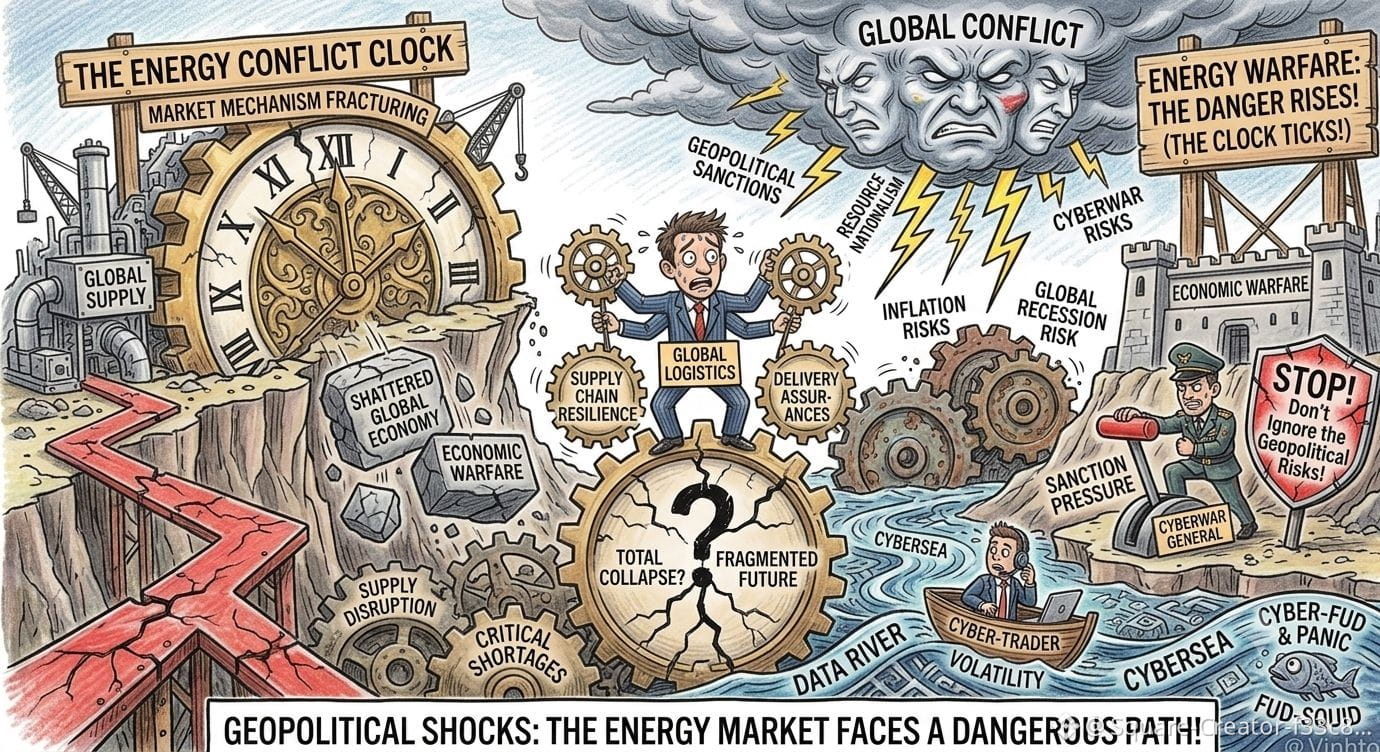
ADNOC just announced a complete overhaul of its crude pricing system after wild swings in the Oman/Dubai benchmark — the bedrock of Middle East crude pricing to Asia.
{future}(CLUSDT)
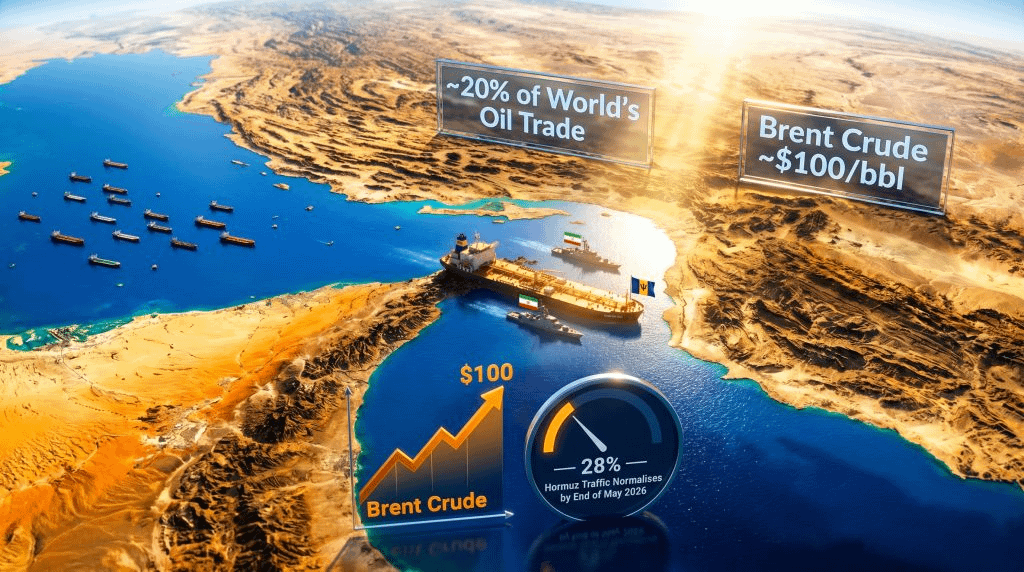
The context: Hormuz closed July 31. Saudi tankers rerouting. Iran's Bitcoin insurance scheme sanctioned. Buyers can't clear SWIFT letters of credit in time, insurance costs 4x, and the benchmark is gyrating too fast for anyone to price a cargo.
{future}(BZUSDT)
When the national oil company that sets the benchmark says it's broken, the entire pricing architecture of global oil trade is being rewritten.
Bloomberg: UAE to overhaul crude pricing.
$BTC $XAU $CL #USQ2GDPGrows1.5% #SaudiOilTankersRerouteAroundAfrica #CitadelBuysSituationalAwarenessEquities #NasdaqRebounds2.8%EndingSixDaySlide
#omancrudeseptemberospfalls → Pricing Benchmark Breaking
ADNOC just announced a complete overhaul of its crude pricing system after wild swings in the Oman/Dubai benchmark — the bedrock of Middle East crude pricing to Asia.
The context: Hormuz closed July 31. Saudi tankers rerouting. Iran's Bitcoin insurance scheme sanctioned. Buyers can't clear SWIFT letters of credit in time, insurance costs 4x, and the benchmark is gyrating too fast for anyone to price a cargo.
When the national oil company that sets the benchmark says it's broken, the entire pricing architecture of global oil trade is being rewritten.
Bloomberg: UAE to overhaul crude pricing.
$BTC $XAU $CL #USQ2GDPGrows1.5% #SaudiOilTankersRerouteAroundAfrica #CitadelBuysSituationalAwarenessEquities #NasdaqRebounds2.8%EndingSixDaySlide
ADNOC just announced a complete overhaul of its crude pricing system after wild swings in the Oman/Dubai benchmark — the bedrock of Middle East crude pricing to Asia.
The context: Hormuz closed July 31. Saudi tankers rerouting. Iran's Bitcoin insurance scheme sanctioned. Buyers can't clear SWIFT letters of credit in time, insurance costs 4x, and the benchmark is gyrating too fast for anyone to price a cargo.
When the national oil company that sets the benchmark says it's broken, the entire pricing architecture of global oil trade is being rewritten.
Bloomberg: UAE to overhaul crude pricing.
$BTC $XAU $CL #USQ2GDPGrows1.5% #SaudiOilTankersRerouteAroundAfrica #CitadelBuysSituationalAwarenessEquities #NasdaqRebounds2.8%EndingSixDaySlide
2
1.4k
Disputed
💹🛢️ Oil Traders Watch Demand Signals
Oman's decision to reduce its September crude selling price comes as energy markets continue assessing global demand. The next few weeks could be important for commodities and risk assets alike, including $BTC and $XRP.
#omancrudeseptemberospfalls
💹🛢️ Oil Traders Watch Demand Signals
Oman's decision to reduce its September crude selling price comes as energy markets continue assessing global demand. The next few weeks could be important for commodities and risk assets alike, including $BTC and $XRP.
#omancrudeseptemberospfalls
Oman's decision to reduce its September crude selling price comes as energy markets continue assessing global demand. The next few weeks could be important for commodities and risk assets alike, including $BTC and $XRP.
#omancrudeseptemberospfalls
1
952
📉 Oman Lowers September Crude OSP
Oman's September Official Selling Price (OSP) has been reduced, reflecting changing conditions in regional crude pricing. OSP adjustments are a pricing mechanism and do not necessarily indicate changes in production or export volumes.
$BTC $BNB $XRP
#omancrudeseptemberospfalls
📉 Oman Lowers September Crude OSP
Oman's September Official Selling Price (OSP) has been reduced, reflecting changing conditions in regional crude pricing. OSP adjustments are a pricing mechanism and do not necessarily indicate changes in production or export volumes.
$BTC $BNB $XRP
#omancrudeseptemberospfalls
Oman's September Official Selling Price (OSP) has been reduced, reflecting changing conditions in regional crude pricing. OSP adjustments are a pricing mechanism and do not necessarily indicate changes in production or export volumes.
$BTC $BNB $XRP
#omancrudeseptemberospfalls
42

·
--
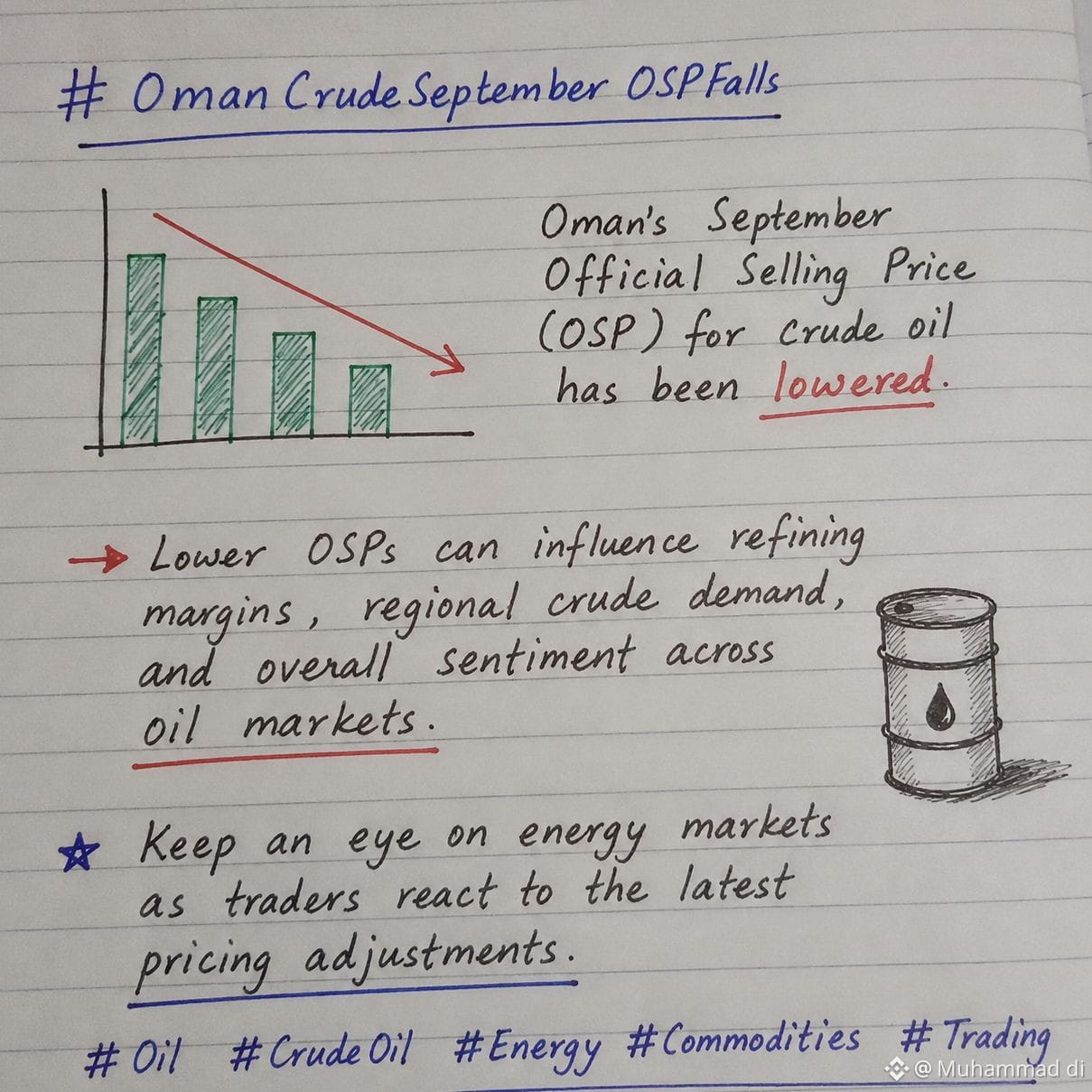
#OmanCrudeSeptemberOSPFalls 🛢️ #OmanCrudeSeptemberOSPFalls
Oman's September Official Selling Price (OSP) for crude oil has been lowered, reflecting changing market conditions and pricing dynamics in the global energy market.
📉 Lower OSPs can influence refining margins, regional crude demand, and overall sentiment across oil markets.
Keep an eye on energy markets as traders react to the latest pricing adjustments.
#Oil #CrudeOil #Energy #Commodities #trading.
#OmanCrudeSeptemberOSPFalls 🛢️ #OmanCrudeSeptemberOSPFalls
Oman's September Official Selling Price (OSP) for crude oil has been lowered, reflecting changing market conditions and pricing dynamics in the global energy market.
📉 Lower OSPs can influence refining margins, regional crude demand, and overall sentiment across oil markets.
Keep an eye on energy markets as traders react to the latest pricing adjustments.
#Oil #CrudeOil #Energy #Commodities #trading.
Oman's September Official Selling Price (OSP) for crude oil has been lowered, reflecting changing market conditions and pricing dynamics in the global energy market.
📉 Lower OSPs can influence refining margins, regional crude demand, and overall sentiment across oil markets.
Keep an eye on energy markets as traders react to the latest pricing adjustments.
#Oil #CrudeOil #Energy #Commodities #trading.
104

·
--
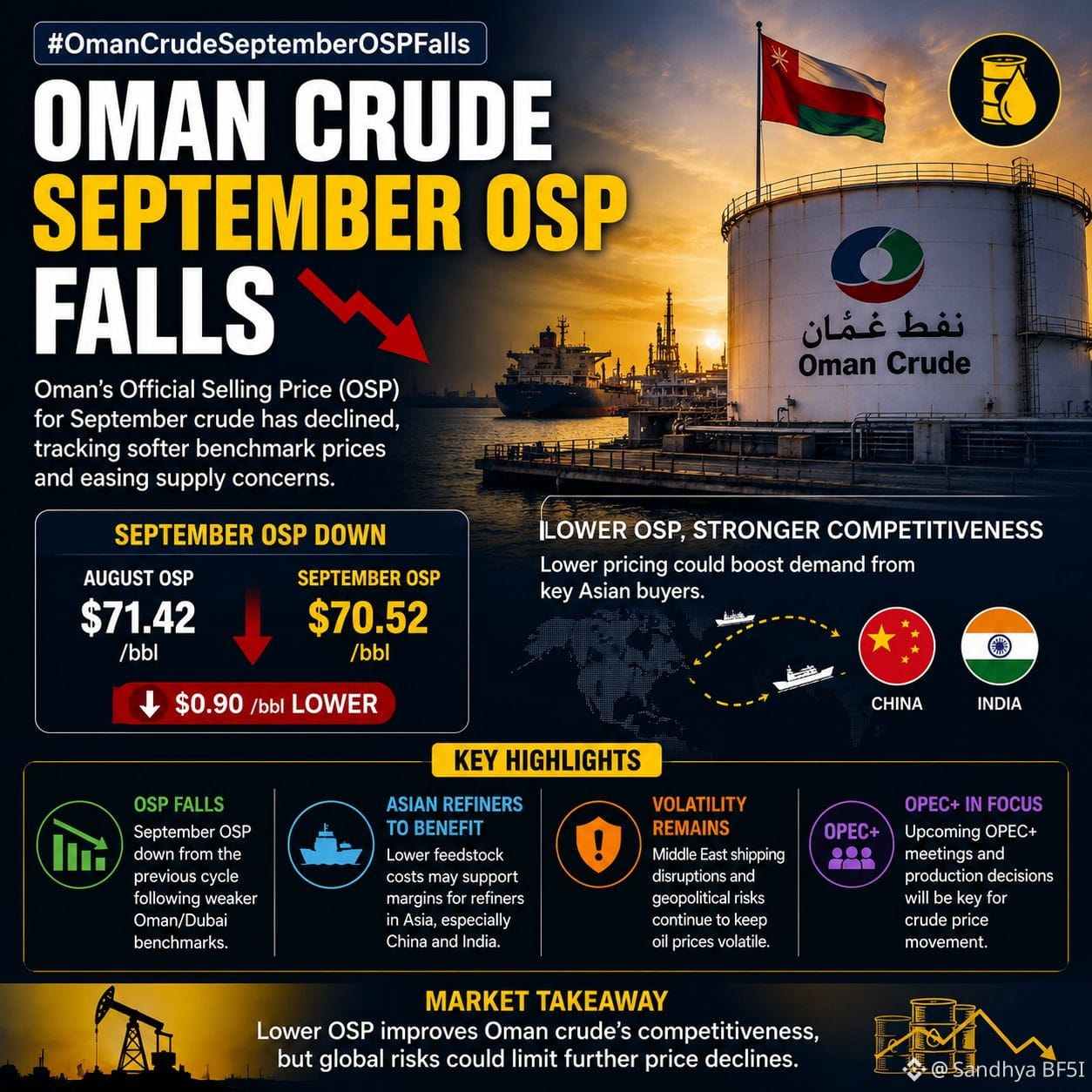
#OmanCrudeSeptemberOSPFalls Oman's Official Selling Price (OSP) for September crude has declined, reflecting softer benchmark pricing after recent market volatility and easing regional supply concerns. The lower OSP may help make Omani crude more attractive for Asian refiners. �
TradingView +1
Key highlights:
📉 September OSP decreased from the previous pricing cycle, tracking weaker Oman/Dubai benchmark values. �
TradingView +1
🇨🇳 Asian refiners, especially in China and India, could benefit from lower feedstock costs if the trend continues. �
reuters.com +1
⚖️ Oil prices remain highly volatile due to ongoing Middle East shipping disruptions and geopolitical risks, limiting the scope for deeper price declines. �
reuters.com +1
👀 Markets are also watching the upcoming OPEC+ production decisions, which could influence crude pricing in the coming weeks. �#OmanCrudeSeptemberOSPFalls #AppleChipShortageHurtsSalesForecast #USStocksOpenHigherStorageSharesRebound #AnthropicClaudeModelsGainedUnauthorizedAccess $AAPL.US $BTC $BTTC
#OmanCrudeSeptemberOSPFalls Oman's Official Selling Price (OSP) for September crude has declined, reflecting softer benchmark pricing after recent market volatility and easing regional supply concerns. The lower OSP may help make Omani crude more attractive for Asian refiners. �
TradingView +1
Key highlights:
📉 September OSP decreased from the previous pricing cycle, tracking weaker Oman/Dubai benchmark values. �
TradingView +1
🇨🇳 Asian refiners, especially in China and India, could benefit from lower feedstock costs if the trend continues. �
reuters.com +1
⚖️ Oil prices remain highly volatile due to ongoing Middle East shipping disruptions and geopolitical risks, limiting the scope for deeper price declines. �
reuters.com +1
👀 Markets are also watching the upcoming OPEC+ production decisions, which could influence crude pricing in the coming weeks. �#OmanCrudeSeptemberOSPFalls #AppleChipShortageHurtsSalesForecast #USStocksOpenHigherStorageSharesRebound #AnthropicClaudeModelsGainedUnauthorizedAccess $AAPL.US $BTC $BTTC
TradingView +1
Key highlights:
📉 September OSP decreased from the previous pricing cycle, tracking weaker Oman/Dubai benchmark values. �
TradingView +1
🇨🇳 Asian refiners, especially in China and India, could benefit from lower feedstock costs if the trend continues. �
reuters.com +1
⚖️ Oil prices remain highly volatile due to ongoing Middle East shipping disruptions and geopolitical risks, limiting the scope for deeper price declines. �
reuters.com +1
👀 Markets are also watching the upcoming OPEC+ production decisions, which could influence crude pricing in the coming weeks. �#OmanCrudeSeptemberOSPFalls #AppleChipShortageHurtsSalesForecast #USStocksOpenHigherStorageSharesRebound #AnthropicClaudeModelsGainedUnauthorizedAccess $AAPL.US $BTC $BTTC
1
504

Disputed
#omancrudeseptemberospfalls
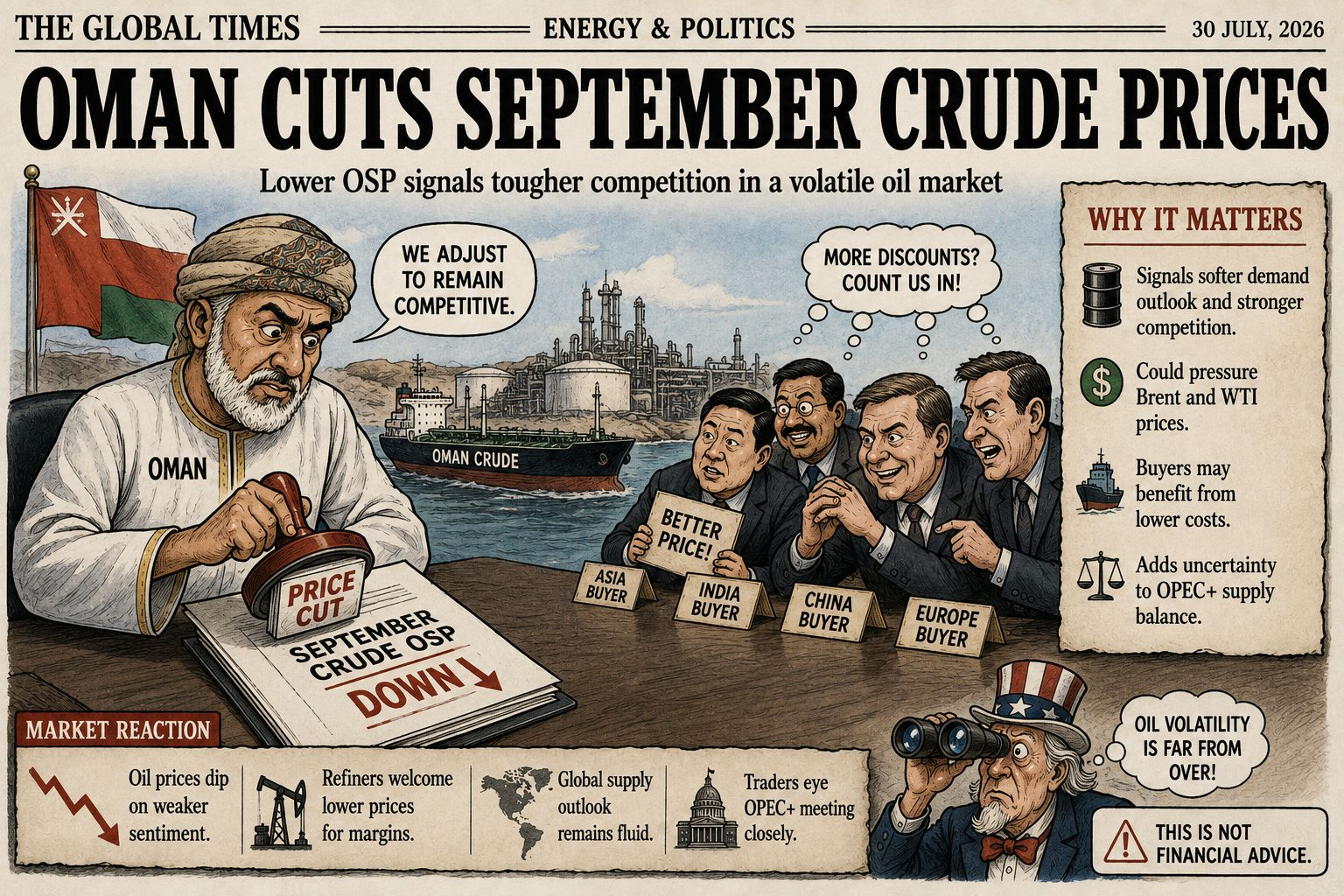
🛢️ Oman Cuts September Crude Prices! 📉
Oman has lowered its September Official Selling Price (OSP), reflecting softer market sentiment and shifting demand across the global oil market.
Lower OSPs can signal increasing competition among oil exporters as they adjust pricing to attract buyers in a volatile energy environment.
📊 What traders should watch:
• Brent & WTI price reaction
• Middle East crude demand
• Asian refinery buying activity
• OPEC+ supply decisions
The energy market remains highly sensitive to geopolitical developments and changes in global demand. Stay alert—oil volatility could create both risks and opportunities.
This is not financial advice. 🚫
#Oman #CrudeOil #OilMarket #OSP
$BTC
$XRP
$LINK
{spot}(LINKUSDT)
{spot}(XRPUSDT)
{spot}(BTCUSDT)
#omancrudeseptemberospfalls
🛢️ Oman Cuts September Crude Prices! 📉
Oman has lowered its September Official Selling Price (OSP), reflecting softer market sentiment and shifting demand across the global oil market.
Lower OSPs can signal increasing competition among oil exporters as they adjust pricing to attract buyers in a volatile energy environment.
📊 What traders should watch:
• Brent & WTI price reaction
• Middle East crude demand
• Asian refinery buying activity
• OPEC+ supply decisions
The energy market remains highly sensitive to geopolitical developments and changes in global demand. Stay alert—oil volatility could create both risks and opportunities.
This is not financial advice. 🚫
#Oman #CrudeOil #OilMarket #OSP
$BTC
$XRP
$LINK
🛢️ Oman Cuts September Crude Prices! 📉
Oman has lowered its September Official Selling Price (OSP), reflecting softer market sentiment and shifting demand across the global oil market.
Lower OSPs can signal increasing competition among oil exporters as they adjust pricing to attract buyers in a volatile energy environment.
📊 What traders should watch:
• Brent & WTI price reaction
• Middle East crude demand
• Asian refinery buying activity
• OPEC+ supply decisions
The energy market remains highly sensitive to geopolitical developments and changes in global demand. Stay alert—oil volatility could create both risks and opportunities.
This is not financial advice. 🚫
#Oman #CrudeOil #OilMarket #OSP
$BTC
$XRP
$LINK
2
5
1.2k
Partly True
🌍🛢️ Oil Pricing Adjusts for September
The latest reduction in Oman's September crude OSP highlights how oil exporters continue adjusting prices as market conditions evolve. Commodity trends remain an important macro factor for investors tracking $BTC and $ETH.
#omancrudeseptemberospfalls
🌍🛢️ Oil Pricing Adjusts for September
The latest reduction in Oman's September crude OSP highlights how oil exporters continue adjusting prices as market conditions evolve. Commodity trends remain an important macro factor for investors tracking $BTC and $ETH.
#omancrudeseptemberospfalls
The latest reduction in Oman's September crude OSP highlights how oil exporters continue adjusting prices as market conditions evolve. Commodity trends remain an important macro factor for investors tracking $BTC and $ETH.
#omancrudeseptemberospfalls
2
562

·
--
Bullish
Verified
#OmanCrudeSeptemberOSPFalls
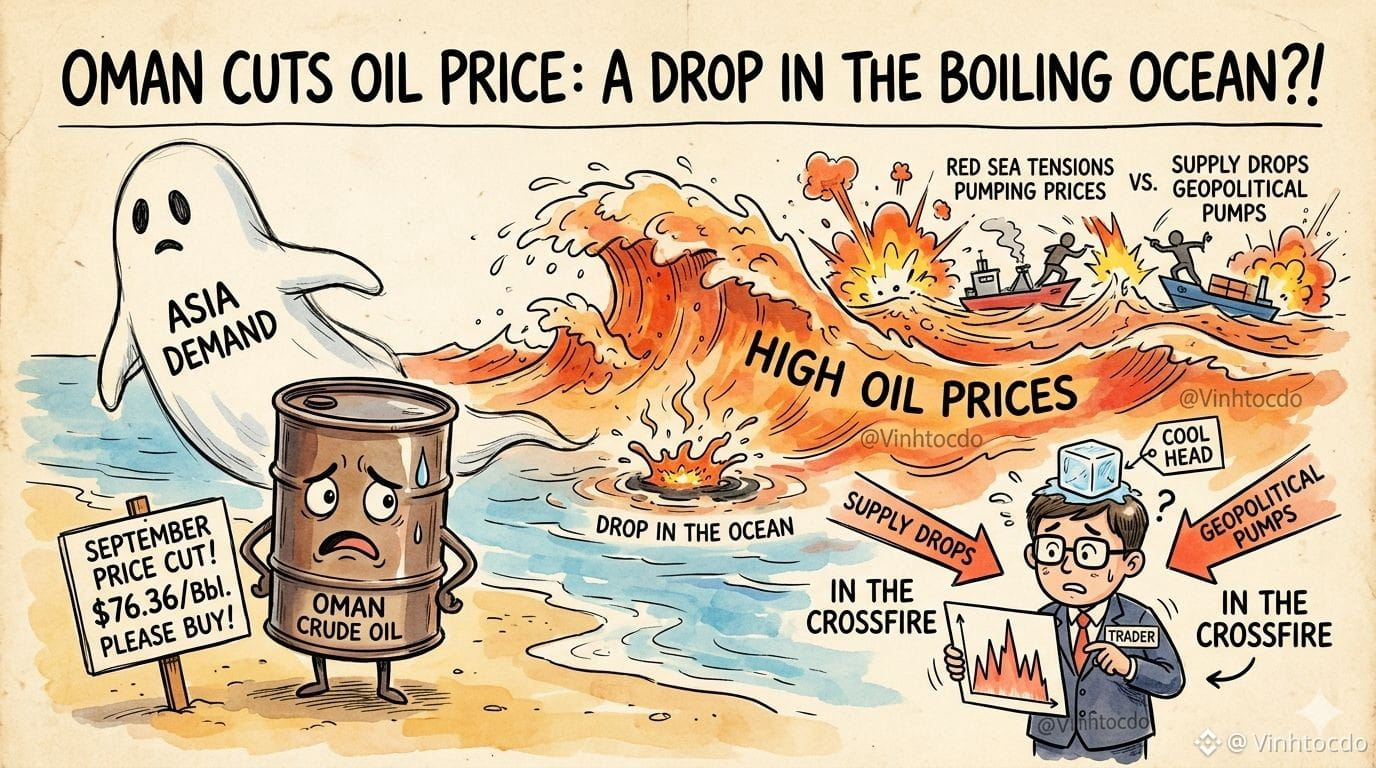
Oman just cut its September oil price to $76.36! 📉 Did they run out of buyers, or is Asia just ghosting them? 😂
With Red Sea tensions pumping prices, will this cut even matter, or is it just a drop in a boiling ocean of high oil prices? 🌊🔥
Traders: Don't get caught in the crossfire between supply drops and geopolitical pumps. Watch the charts, manage your risk, and keep a cool head! 📊🧠
This isn’t financial advice! 🚫
Join me on Binance with code: VINHTOCDO ⚡
#Oman #OilPrice #OilTrading #VINHTOCDO
$CL
{future}(CLUSDT)
$BZ
{future}(BZUSDT)
$NATGAS
{future}(NATGASUSDT)
#OmanCrudeSeptemberOSPFalls
Oman just cut its September oil price to $76.36! 📉 Did they run out of buyers, or is Asia just ghosting them? 😂
With Red Sea tensions pumping prices, will this cut even matter, or is it just a drop in a boiling ocean of high oil prices? 🌊🔥
Traders: Don't get caught in the crossfire between supply drops and geopolitical pumps. Watch the charts, manage your risk, and keep a cool head! 📊🧠
This isn’t financial advice! 🚫
Join me on Binance with code: VINHTOCDO ⚡
#Oman #OilPrice #OilTrading #VINHTOCDO
$CL
$BZ
$NATGAS
Oman just cut its September oil price to $76.36! 📉 Did they run out of buyers, or is Asia just ghosting them? 😂
With Red Sea tensions pumping prices, will this cut even matter, or is it just a drop in a boiling ocean of high oil prices? 🌊🔥
Traders: Don't get caught in the crossfire between supply drops and geopolitical pumps. Watch the charts, manage your risk, and keep a cool head! 📊🧠
This isn’t financial advice! 🚫
Join me on Binance with code: VINHTOCDO ⚡
#Oman #OilPrice #OilTrading #VINHTOCDO
$CL
$BZ
$NATGAS
381

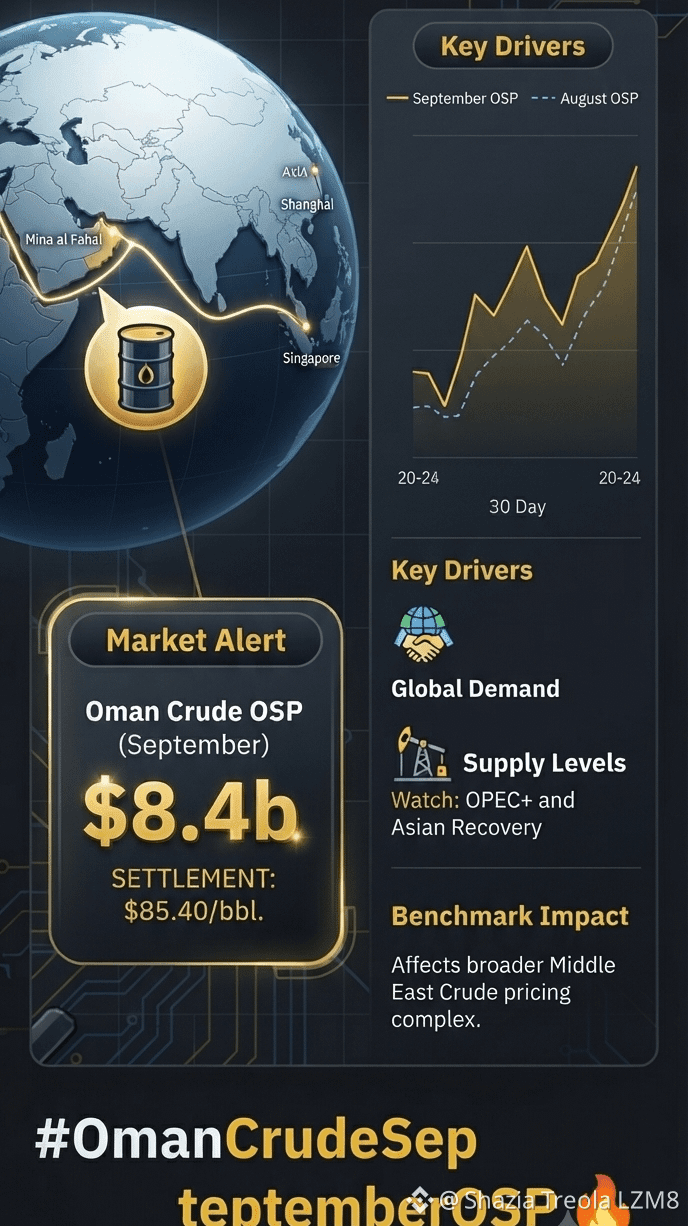
#OmanCrudeSeptemberOSPFalls Cracking the Benchmark: Major Overhauls in Crude Pricing
Energy markets are buzzing as structural shifts hit Middle Eastern benchmarks, highlighted by discussions around Oman Crude September OSP and broader pricing architecture updates.
Why It Matters: Benchmark adjustments directly influence how physical crude cargoes are priced for Asian buyers, affecting broader commodity indexes.
Trader Focus: Volatility in oil and energy benchmarks often sets the tone for broader inflation expectations, filtering down into equities, forex, and digital assets.
Are you tracking commodity volatility right now? Let me know your market outlook! 💬
$BTC $ETH $BNB
{future}(BTCUSDT)
{future}(ETHUSDT)
{future}(BNBUSDT)
#OmanCrudeSeptemberOSPFalls #OilMarket #trading #MacroTrends
#OmanCrudeSeptemberOSPFalls Cracking the Benchmark: Major Overhauls in Crude Pricing
Energy markets are buzzing as structural shifts hit Middle Eastern benchmarks, highlighted by discussions around Oman Crude September OSP and broader pricing architecture updates.
Why It Matters: Benchmark adjustments directly influence how physical crude cargoes are priced for Asian buyers, affecting broader commodity indexes.
Trader Focus: Volatility in oil and energy benchmarks often sets the tone for broader inflation expectations, filtering down into equities, forex, and digital assets.
Are you tracking commodity volatility right now? Let me know your market outlook! 💬
$BTC $ETH $BNB
#OmanCrudeSeptemberOSPFalls #OilMarket #trading #MacroTrends
Energy markets are buzzing as structural shifts hit Middle Eastern benchmarks, highlighted by discussions around Oman Crude September OSP and broader pricing architecture updates.
Why It Matters: Benchmark adjustments directly influence how physical crude cargoes are priced for Asian buyers, affecting broader commodity indexes.
Trader Focus: Volatility in oil and energy benchmarks often sets the tone for broader inflation expectations, filtering down into equities, forex, and digital assets.
Are you tracking commodity volatility right now? Let me know your market outlook! 💬
$BTC $ETH $BNB
#OmanCrudeSeptemberOSPFalls #OilMarket #trading #MacroTrends
99

·
--
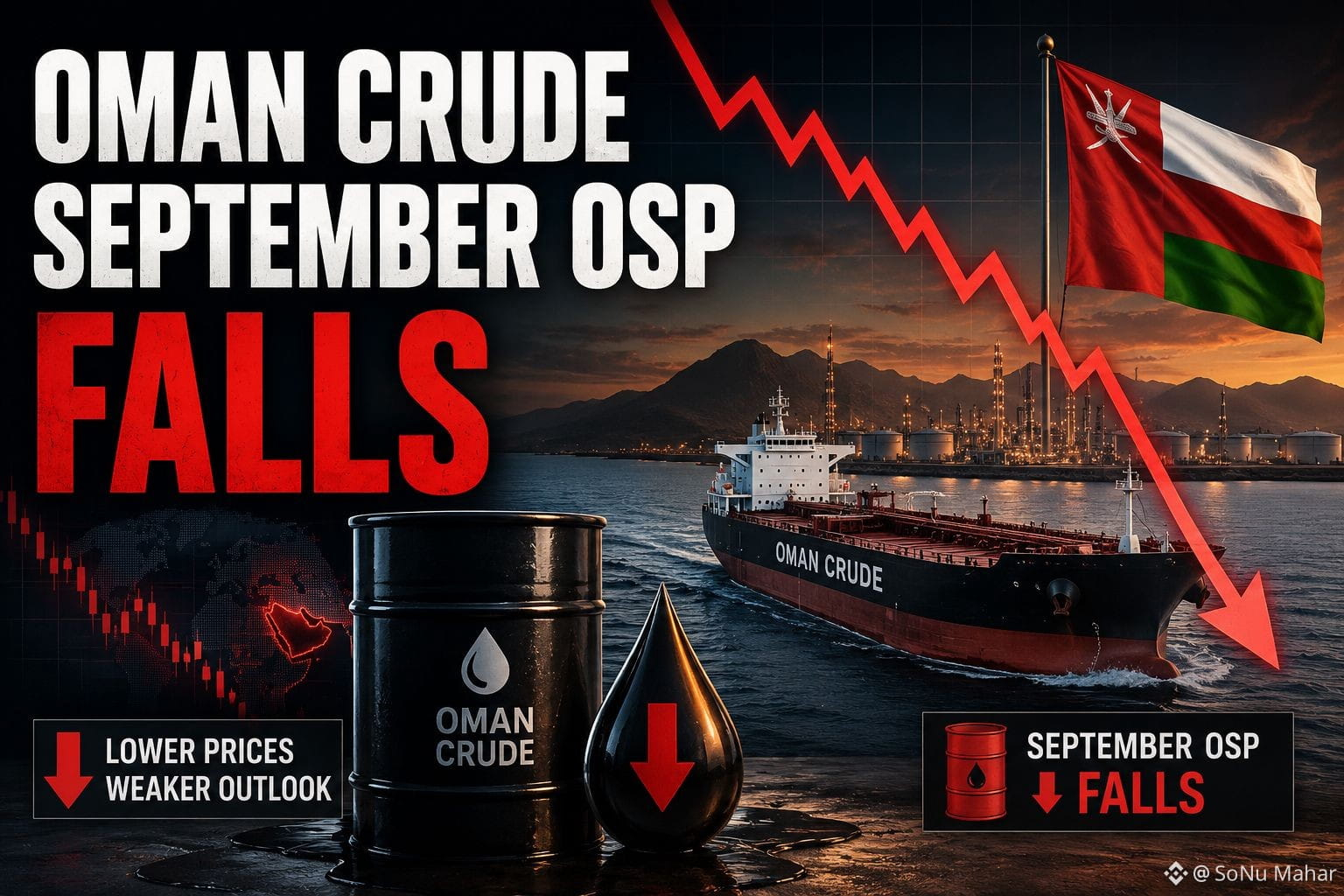
#OmanCrudeSeptemberOSPFalls Oman Crude September OSP Falls, Signaling Softer 🚨🛢️Oil Market
Oman's Official Selling Price (OSP) for September crude has declined, reflecting changing conditions in the global oil market. The lower pricing comes as demand expectations soften and traders closely monitor global economic growth, refinery activity, and supply trends.
A reduced OSP can make Oman crude more attractive to international buyers, particularly in Asia, where many refiners rely on Middle Eastern oil supplies. However, the price cut also highlights increasing uncertainty in the energy sector as markets react to fluctuating demand and geopolitical developments.
Energy analysts believe that future oil prices will depend on production decisions by major exporters, global fuel consumption, and the overall economic outlook. Investors are expected to watch upcoming market data closely for signs of stronger demand or further price adjustments.
The decline in September's Oman crude OSP underscores the ongoing volatility in global energy markets, where pricing decisions continue to influence trading strategies and regional oil flows.$SKHY $BTC $ETH
#OmanCrudeSeptemberOSPFalls Oman Crude September OSP Falls, Signaling Softer 🚨🛢️Oil Market
Oman's Official Selling Price (OSP) for September crude has declined, reflecting changing conditions in the global oil market. The lower pricing comes as demand expectations soften and traders closely monitor global economic growth, refinery activity, and supply trends.
A reduced OSP can make Oman crude more attractive to international buyers, particularly in Asia, where many refiners rely on Middle Eastern oil supplies. However, the price cut also highlights increasing uncertainty in the energy sector as markets react to fluctuating demand and geopolitical developments.
Energy analysts believe that future oil prices will depend on production decisions by major exporters, global fuel consumption, and the overall economic outlook. Investors are expected to watch upcoming market data closely for signs of stronger demand or further price adjustments.
The decline in September's Oman crude OSP underscores the ongoing volatility in global energy markets, where pricing decisions continue to influence trading strategies and regional oil flows.$SKHY $BTC $ETH
Oman's Official Selling Price (OSP) for September crude has declined, reflecting changing conditions in the global oil market. The lower pricing comes as demand expectations soften and traders closely monitor global economic growth, refinery activity, and supply trends.
A reduced OSP can make Oman crude more attractive to international buyers, particularly in Asia, where many refiners rely on Middle Eastern oil supplies. However, the price cut also highlights increasing uncertainty in the energy sector as markets react to fluctuating demand and geopolitical developments.
Energy analysts believe that future oil prices will depend on production decisions by major exporters, global fuel consumption, and the overall economic outlook. Investors are expected to watch upcoming market data closely for signs of stronger demand or further price adjustments.
The decline in September's Oman crude OSP underscores the ongoing volatility in global energy markets, where pricing decisions continue to influence trading strategies and regional oil flows.$SKHY $BTC $ETH
65
📊 Energy Markets Track More Than Spot Prices
While daily oil prices attract headlines, Official Selling Prices play a key role in physical crude trade. Oman's lower September OSP reflects adjustments in contract pricing rather than immediate changes in global supply.
$BTC $BNB $ADA
#omancrudeseptemberospfalls
📊 Energy Markets Track More Than Spot Prices
While daily oil prices attract headlines, Official Selling Prices play a key role in physical crude trade. Oman's lower September OSP reflects adjustments in contract pricing rather than immediate changes in global supply.
$BTC $BNB $ADA
#omancrudeseptemberospfalls
While daily oil prices attract headlines, Official Selling Prices play a key role in physical crude trade. Oman's lower September OSP reflects adjustments in contract pricing rather than immediate changes in global supply.
$BTC $BNB $ADA
#omancrudeseptemberospfalls
69

·
--
Bearish
Verified
🛢️ Oman's official selling price for oil cargoes for September declines
The official selling price (OSP) for Omani crude for September cargoes fell, indicating a relative decrease in crude pricing in the Asian market.
This comes amid volatility in global oil markets, as markets continue to monitor global supply, geopolitical developments in the Middle East region, and movements in energy demand.
⚠️ The decline in the OSP may reflect pressures on crude prices, but any sudden developments in supply or navigation could quickly reignite oil price volatility.
Oil remains one of the most sensitive markets to geopolitical events.
{future}(BZUSDT)
{future}(CLUSDT)
#OmanCrudeSeptemberOSPFalls
🛢️ Oman's official selling price for oil cargoes for September declines
The official selling price (OSP) for Omani crude for September cargoes fell, indicating a relative decrease in crude pricing in the Asian market.
This comes amid volatility in global oil markets, as markets continue to monitor global supply, geopolitical developments in the Middle East region, and movements in energy demand.
⚠️ The decline in the OSP may reflect pressures on crude prices, but any sudden developments in supply or navigation could quickly reignite oil price volatility.
Oil remains one of the most sensitive markets to geopolitical events.
#OmanCrudeSeptemberOSPFalls
The official selling price (OSP) for Omani crude for September cargoes fell, indicating a relative decrease in crude pricing in the Asian market.
This comes amid volatility in global oil markets, as markets continue to monitor global supply, geopolitical developments in the Middle East region, and movements in energy demand.
⚠️ The decline in the OSP may reflect pressures on crude prices, but any sudden developments in supply or navigation could quickly reignite oil price volatility.
Oil remains one of the most sensitive markets to geopolitical events.
#OmanCrudeSeptemberOSPFalls
1
2
967
🌍 Crude Pricing Responds to Market Conditions
A decline in Oman's September crude OSP highlights how official selling prices are periodically adjusted to reflect shifts in regional demand, benchmark movements, and refining margins.
$BTC $ETH $BNB
#omancrudeseptemberospfalls
🌍 Crude Pricing Responds to Market Conditions
A decline in Oman's September crude OSP highlights how official selling prices are periodically adjusted to reflect shifts in regional demand, benchmark movements, and refining margins.
$BTC $ETH $BNB
#omancrudeseptemberospfalls
A decline in Oman's September crude OSP highlights how official selling prices are periodically adjusted to reflect shifts in regional demand, benchmark movements, and refining margins.
$BTC $ETH $BNB
#omancrudeseptemberospfalls
134

·
--
#OmanCrudeSeptemberOSPFalls
Option 1 — Market Update
🚨 Oman's September Official Selling Price (OSP) has moved lower, signaling softer sentiment across the crude market.
With oil traders closely watching OPEC+ policy, global demand trends, and geopolitical risks, this decline could influence energy prices in the weeks ahead.
Will crude stabilize here, or is more downside coming?
👇 Share your thoughts below!
#Oil #CrudeOil #OPEC #EnergyMarkets
#OmanCrudeSeptemberOSPFalls
Option 1 — Market Update
🚨 Oman's September Official Selling Price (OSP) has moved lower, signaling softer sentiment across the crude market.
With oil traders closely watching OPEC+ policy, global demand trends, and geopolitical risks, this decline could influence energy prices in the weeks ahead.
Will crude stabilize here, or is more downside coming?
👇 Share your thoughts below!
#Oil #CrudeOil #OPEC #EnergyMarkets
Option 1 — Market Update
🚨 Oman's September Official Selling Price (OSP) has moved lower, signaling softer sentiment across the crude market.
With oil traders closely watching OPEC+ policy, global demand trends, and geopolitical risks, this decline could influence energy prices in the weeks ahead.
Will crude stabilize here, or is more downside coming?
👇 Share your thoughts below!
#Oil #CrudeOil #OPEC #EnergyMarkets
1
219

·
--
Partly True
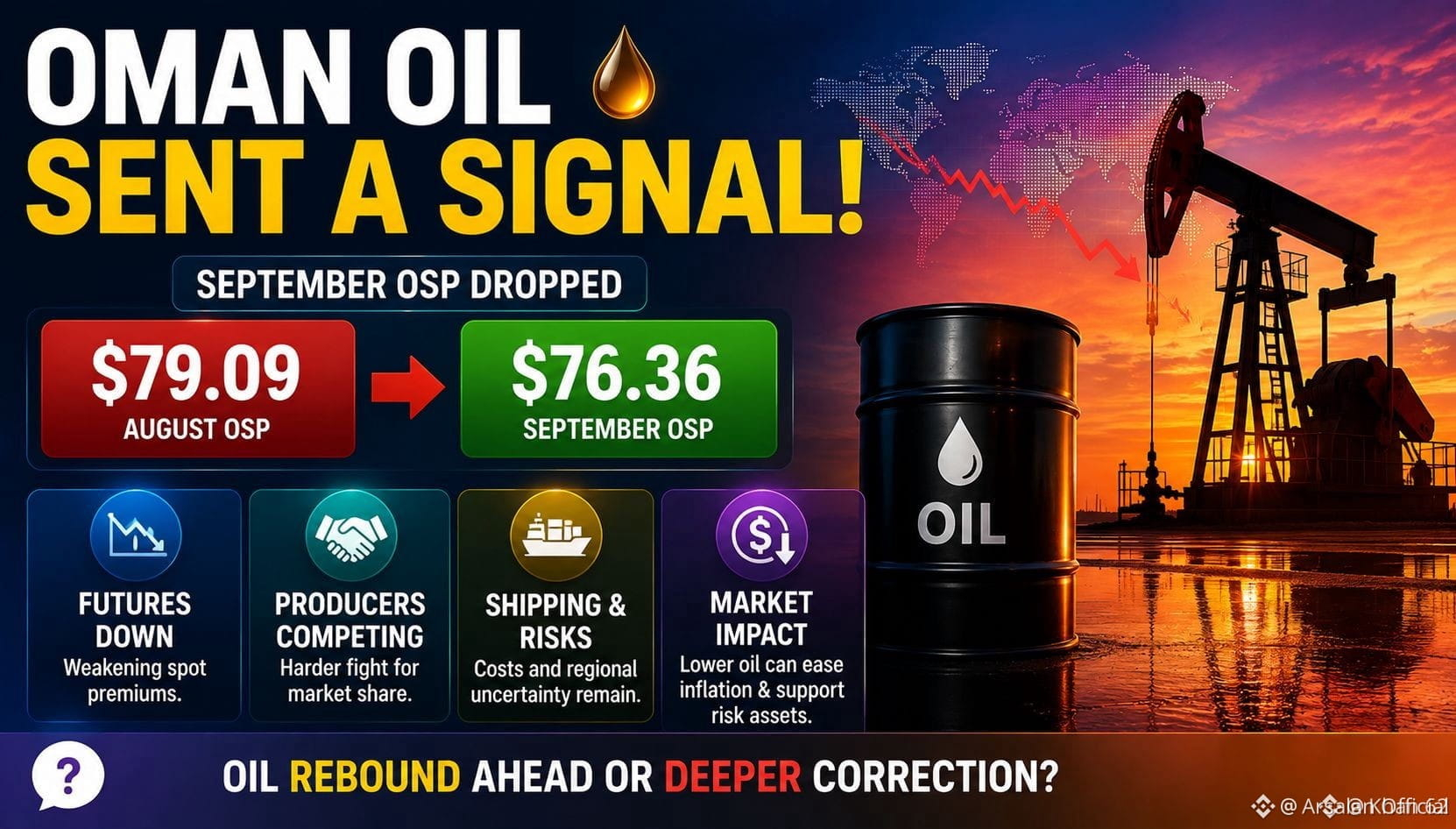
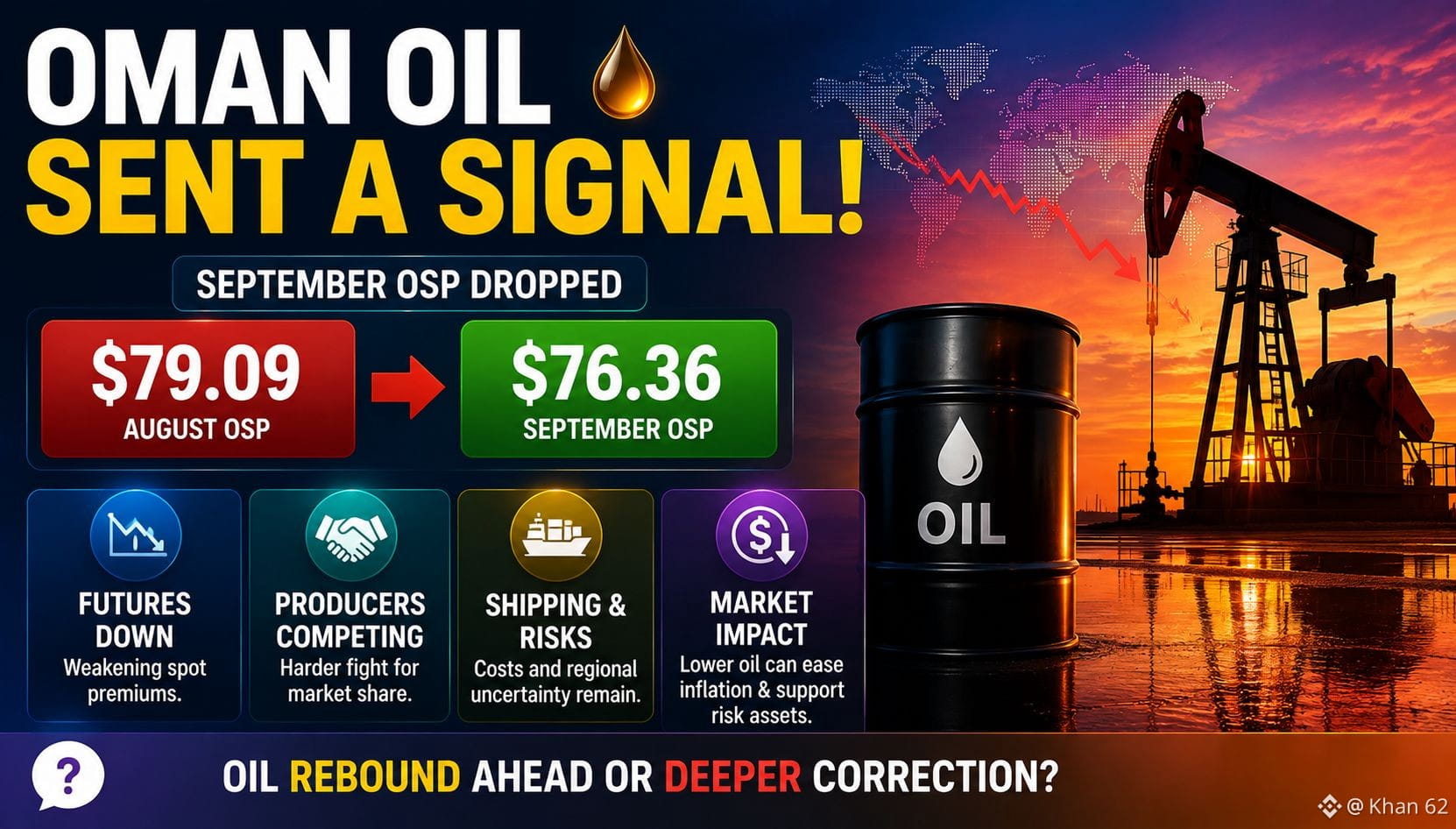
#omancrudeseptemberospfalls 🛢️ Oman Oil Just Sent a Signal to Global Markets!
🍋Oil traders, don't ignore this move. Oman crude's official price dropped, hinting that energy markets may be entering a new phase.
🔥• OSP fell to approximate $76.36 from $79.09.
• Oman crude futures also declined.
• Shipping costs and regional uncertainty continue influencing prices.
🍋Lower oil prices can affect inflation, central bank expectations, and risk assets, including crypto. Smart traders watch energy alongside financial markets.
🍋Do you expect oil to rebound, or is this the start of a deeper correction?
#OilMarket #crudeoil #Khan62 #GlobalMarkets
$CL
{future}(CLUSDT)
$BRENT
{future}(BZUSDT)
$WTI.US
{stock_us}(WTI.US)
#omancrudeseptemberospfalls 🛢️ Oman Oil Just Sent a Signal to Global Markets!
🍋Oil traders, don't ignore this move. Oman crude's official price dropped, hinting that energy markets may be entering a new phase.
🔥• OSP fell to approximate $76.36 from $79.09.
• Oman crude futures also declined.
• Shipping costs and regional uncertainty continue influencing prices.
🍋Lower oil prices can affect inflation, central bank expectations, and risk assets, including crypto. Smart traders watch energy alongside financial markets.
🍋Do you expect oil to rebound, or is this the start of a deeper correction?
#OilMarket #crudeoil #Khan62 #GlobalMarkets
$CL
$BRENT
$WTI.US
🍋Oil traders, don't ignore this move. Oman crude's official price dropped, hinting that energy markets may be entering a new phase.
🔥• OSP fell to approximate $76.36 from $79.09.
• Oman crude futures also declined.
• Shipping costs and regional uncertainty continue influencing prices.
🍋Lower oil prices can affect inflation, central bank expectations, and risk assets, including crypto. Smart traders watch energy alongside financial markets.
🍋Do you expect oil to rebound, or is this the start of a deeper correction?
#OilMarket #crudeoil #Khan62 #GlobalMarkets
$CL
$BRENT
$WTI.US
4
5.8k


·
--
#OmanCrudeSeptemberOSPFalls : A Quiet Pricing Signal That Oil Traders Shouldn't Ignore
One development that caught my attention wasn't a headline about production cuts, it was Oman's September Official Selling Price (OSP).
A lower OSP usually tells us that producers are responding to changing market conditions rather than expecting stronger near-term demand. When benchmark pricing for Middle Eastern crude softens, it often reflects improving supply availability, weaker refining demand, or increased competition among regional exporters for Asian buyers.
What's interesting is that Oman crude serves as an important pricing benchmark across Asia. Changes in its OSP don't just affect Oman, they influence how refiners evaluate cargoes from the wider Gulf region and can shape buying decisions for the months ahead. That makes the move more significant than it may appear at first glance.
At the same time, geopolitical risks remain elevated, meaning physical supply concerns haven't disappeared. This creates an unusual market environment where pricing is softening even as geopolitical uncertainty persists, suggesting that traders currently believe supply will remain sufficient despite ongoing regional tensions.
My View:
For me, a lower Oman OSP is less about today's oil price and more about market expectations. It suggests buyers have gained negotiating power, while producers are becoming more competitive to protect market share. I'll be watching Asian crude demand, refinery margins, and future OSP adjustments to see whether this is the start of a broader pricing trend or simply a short-term response to changing market dynamics.
#OmanCrudeSeptemberOSPFalls : A Quiet Pricing Signal That Oil Traders Shouldn't Ignore
One development that caught my attention wasn't a headline about production cuts, it was Oman's September Official Selling Price (OSP).
A lower OSP usually tells us that producers are responding to changing market conditions rather than expecting stronger near-term demand. When benchmark pricing for Middle Eastern crude softens, it often reflects improving supply availability, weaker refining demand, or increased competition among regional exporters for Asian buyers.
What's interesting is that Oman crude serves as an important pricing benchmark across Asia. Changes in its OSP don't just affect Oman, they influence how refiners evaluate cargoes from the wider Gulf region and can shape buying decisions for the months ahead. That makes the move more significant than it may appear at first glance.
At the same time, geopolitical risks remain elevated, meaning physical supply concerns haven't disappeared. This creates an unusual market environment where pricing is softening even as geopolitical uncertainty persists, suggesting that traders currently believe supply will remain sufficient despite ongoing regional tensions.
My View:
For me, a lower Oman OSP is less about today's oil price and more about market expectations. It suggests buyers have gained negotiating power, while producers are becoming more competitive to protect market share. I'll be watching Asian crude demand, refinery margins, and future OSP adjustments to see whether this is the start of a broader pricing trend or simply a short-term response to changing market dynamics.
One development that caught my attention wasn't a headline about production cuts, it was Oman's September Official Selling Price (OSP).
A lower OSP usually tells us that producers are responding to changing market conditions rather than expecting stronger near-term demand. When benchmark pricing for Middle Eastern crude softens, it often reflects improving supply availability, weaker refining demand, or increased competition among regional exporters for Asian buyers.
What's interesting is that Oman crude serves as an important pricing benchmark across Asia. Changes in its OSP don't just affect Oman, they influence how refiners evaluate cargoes from the wider Gulf region and can shape buying decisions for the months ahead. That makes the move more significant than it may appear at first glance.
At the same time, geopolitical risks remain elevated, meaning physical supply concerns haven't disappeared. This creates an unusual market environment where pricing is softening even as geopolitical uncertainty persists, suggesting that traders currently believe supply will remain sufficient despite ongoing regional tensions.
My View:
For me, a lower Oman OSP is less about today's oil price and more about market expectations. It suggests buyers have gained negotiating power, while producers are becoming more competitive to protect market share. I'll be watching Asian crude demand, refinery margins, and future OSP adjustments to see whether this is the start of a broader pricing trend or simply a short-term response to changing market dynamics.
2
398
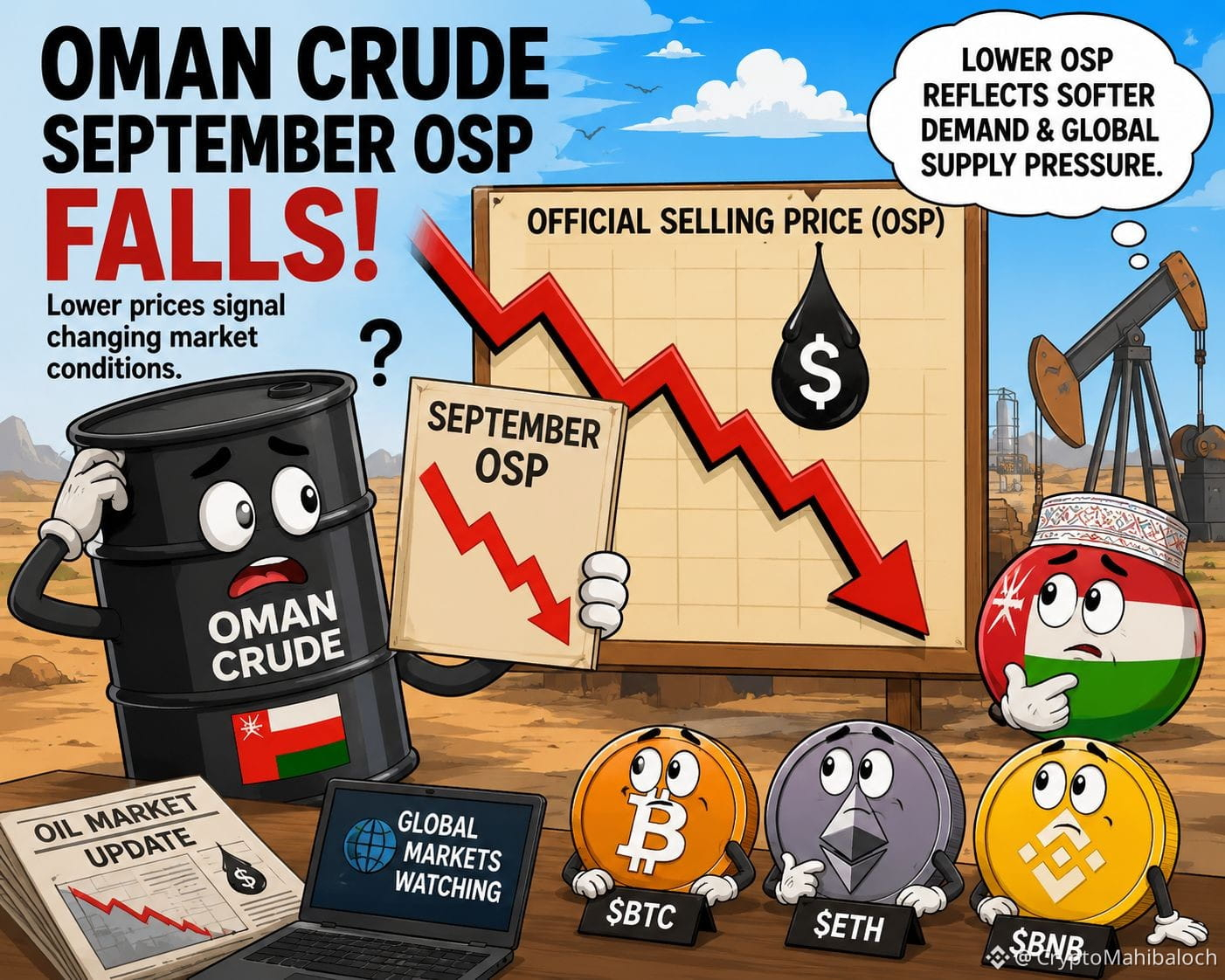
🛢️📉 Oman Crude September OSP Falls
Oman's lower September Official Selling Price reflects changing conditions in the oil market as traders reassess supply, demand, and regional pricing trends. Commodity markets remain sensitive to every major macro development.
Meanwhile, crypto investors are also keeping an eye on $BTC $BNB $ETH as broader market sentiment continues to evolve.
#omancrudeseptemberospfalls
🛢️📉 Oman Crude September OSP Falls
Oman's lower September Official Selling Price reflects changing conditions in the oil market as traders reassess supply, demand, and regional pricing trends. Commodity markets remain sensitive to every major macro development.
Meanwhile, crypto investors are also keeping an eye on $BTC $BNB $ETH as broader market sentiment continues to evolve.
#omancrudeseptemberospfalls
Oman's lower September Official Selling Price reflects changing conditions in the oil market as traders reassess supply, demand, and regional pricing trends. Commodity markets remain sensitive to every major macro development.
Meanwhile, crypto investors are also keeping an eye on $BTC $BNB $ETH as broader market sentiment continues to evolve.
#omancrudeseptemberospfalls
1
57
Log in to explore more content
Join global crypto users on Binance Square
⚡️ Get latest and useful information about crypto.
💬 Trusted by the world’s largest crypto exchange.
👍 Discover real insights from verified creators.
Email / Phone number
Trending Topics
1
#EarningsSeason
244,812 views
2,184 Discussing
2
#BitwiseLaunchesFirstSpotNEARETF
14,147 views
403 Discussing
3
#USJobOpeningsFallToFiveMonthLow
19,789 views
301 Discussing
4
#ECBToTestAIAgentsInDigitalEuroPayments
17,635 views
446 Discussing
5
#JapanFSABacksFourthStablecoinTradeSettlementPilot
20,795 views
483 Discussing
6
#BitgetHackerFailsToMoveStolenFunds
36,273 views
585 Discussing
7
#BitMineETHHoldingsTop6Million
30,589 views
689 Discussing
8
#StrategyAdds1666BTCHoldingsReach847666
26,485 views
479 Discussing
9
#NvidiaApproves$150BBuyback
4,806 views
72 Discussing
10
#OpenAIDelaysGPT6.1OverSafetyIssues
39,178 views
857 Discussing