

#housingmarket
housingmarket
38,955 views
171 Discussing
Hot
Latest

The National Association of Realtors (NAR) released its pending home sales report today for September, revealing a sharp monthly plunge of 7.3%. This marks a severe deterioration compared to the previous month's 0.3% gain and widely missed market expectations of a modest 0.5% decline, bringing the pending home sales index down to 66 from 71.2.
This steep drop highlights intensified strain across the interest-rate-sensitive US housing sector. High borrowing costs continue to suppress buyer affordability and transaction momentum far more aggressively than consensus forecasts anticipated.
Broader financial markets responded cautiously to the signs of cooling economic activity, with the Nasdaq-100 dropping 1% during regular trading. Meanwhile, precious metals saw safe-haven support, with spot silver climbing 1.00% to $57.67 per ounce amid broader macroeconomic recalibration.
For digital asset markets, weakening real-economy indicators reinforce expectations of potential monetary policy easing further down the line. However, short-term risk aversion could keep crypto assets like $BTC moving sideways until broader macroeconomic liquidity conditions stabilize. 📉
#HousingMarket #MacroEconomy #PendingHomeSales
213


·
--
Lennar Q2 EPS misses at $1.24 vs $1.25 estimate
• Revenue came in at $7.9B, below the $8B consensus
• Home deliveries up 2% YoY, but average sales price fell 5%
• Company lowered its full-year 2026 home delivery target
#CryptoNews #MarketUpdate #BinanceSquare #HousingMarket #Stocks
Lennar Q2 EPS misses at $1.24 vs $1.25 estimate
• Revenue came in at $7.9B, below the $8B consensus
• Home deliveries up 2% YoY, but average sales price fell 5%
• Company lowered its full-year 2026 home delivery target
#CryptoNews #MarketUpdate #BinanceSquare #HousingMarket #Stocks
• Revenue came in at $7.9B, below the $8B consensus
• Home deliveries up 2% YoY, but average sales price fell 5%
• Company lowered its full-year 2026 home delivery target
#CryptoNews #MarketUpdate #BinanceSquare #HousingMarket #Stocks
29

·
--
Verified
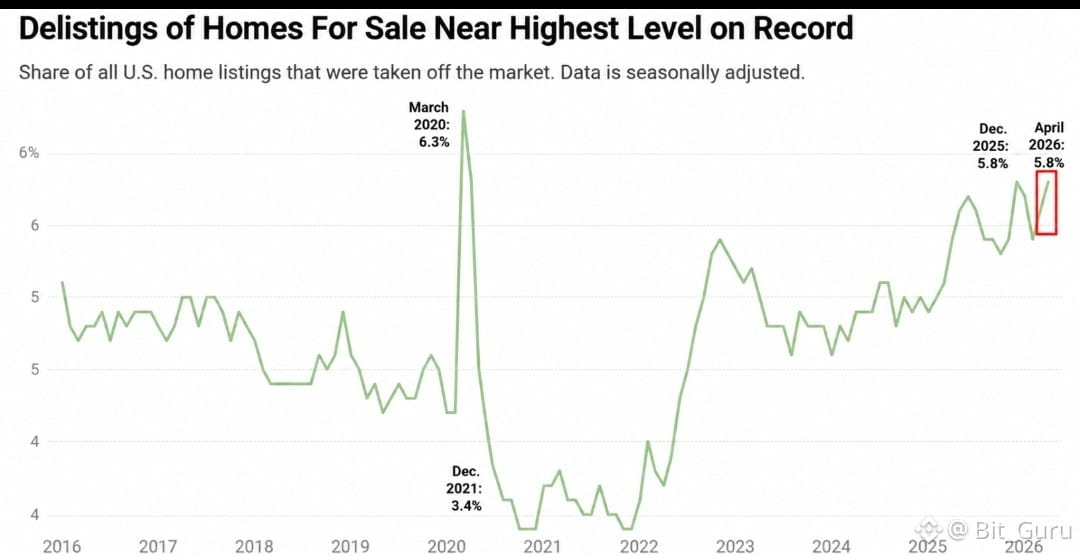
🏠 Housing Market Is Sending a Clear Signal
More homeowners are pulling their listings instead of accepting lower offers.
Buyers now have the upper hand, with more room to negotiate prices, request inspections, and secure better deals.
When sellers refuse to adjust their expectations, many choose to delist and wait for better market conditions rather than sell at a discount.
A major shift is happening — the market is slowly moving from seller control to buyer control. #RealEstate #HousingMarket $BTC
{spot}(BTCUSDT)
🏠 Housing Market Is Sending a Clear Signal
More homeowners are pulling their listings instead of accepting lower offers.
Buyers now have the upper hand, with more room to negotiate prices, request inspections, and secure better deals.
When sellers refuse to adjust their expectations, many choose to delist and wait for better market conditions rather than sell at a discount.
A major shift is happening — the market is slowly moving from seller control to buyer control. #RealEstate #HousingMarket $BTC
1
469

·
--
Finally seeing some movement on this!
If the US House actually follows through on limiting large investors from hoarding single-family homes, it could be a game-changer for regular families trying to buy.
Long overdue step for affordability.
#HousingMarket #rsshanto #RealEstate #AffordableHousing
Finally seeing some movement on this!
If the US House actually follows through on limiting large investors from hoarding single-family homes, it could be a game-changer for regular families trying to buy.
Long overdue step for affordability.
#HousingMarket #rsshanto #RealEstate #AffordableHousing
If the US House actually follows through on limiting large investors from hoarding single-family homes, it could be a game-changer for regular families trying to buy.
Long overdue step for affordability.
#HousingMarket #rsshanto #RealEstate #AffordableHousing

169

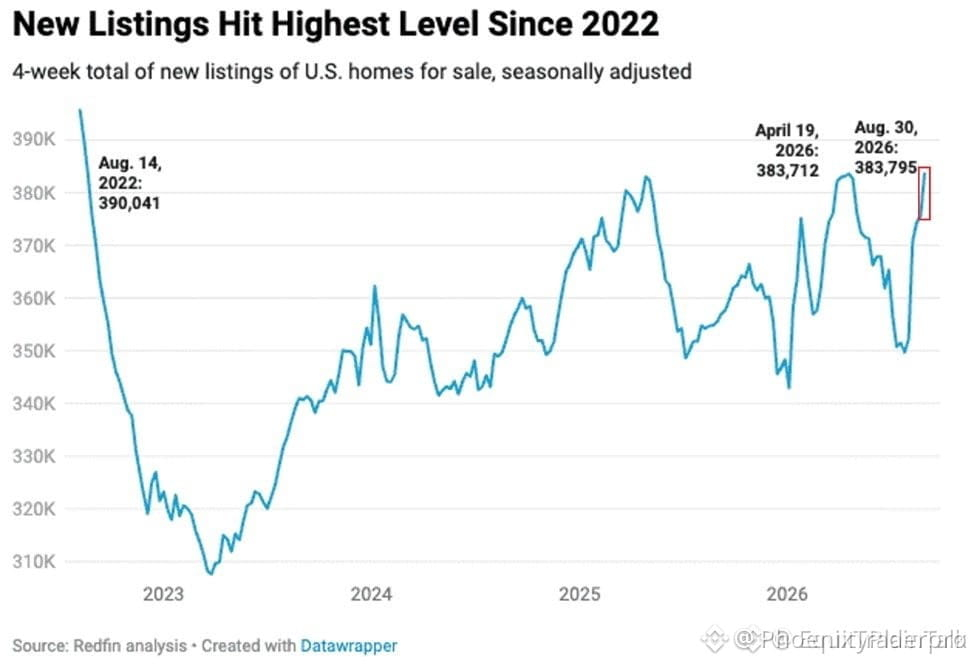
🚨 $REIT FACES SUPPLY SURGE AS US HOUSING INVENTORY HITS 2-YEAR HIGH! 📈
📊 US listings jumped to 383,795 in late August, the biggest lift since summer 2022, while pending sales slumped to February lows. The market’s a classic standoff—sellers testing the floor, buyers holding back as 30‑year mortgage rates linger at 6.66%. ⚡ That imbalance mirrors crypto liquidity sweeps: excess supply hunts for a buyer’s bite before price can rebound. 🦈 Smart money may start pricing in a dip, but a sudden demand flash could flip the script fast.
💬 Will the next wave of buyers finally step in, or will prices keep cooling as inventory climbs? 👇
⚠️ Not financial advice. Always manage your risk. 🛡️
🏷️ #REIT #SupplyDemand #HousingMarket #CryptoInsights
🔥 💎
36

·
--
Bullish
U.S. new home sales fall sharply as supply rises to 9.6 months
🏠 U.S. new home sales fell 10.5% month over month in July to a seasonally adjusted annual rate of 607,000 units, below expectations of around 620,000 and down 6.3% from a year earlier.
📦 New home inventory increased to 488,000 units, equivalent to 9.6 months of supply versus 8.5 months in June. This remains well above the roughly 6-month level often associated with a balanced market, indicating supply is outpacing demand.
💵 The median sales price declined to $393,800, down 2.3% from the previous month and 0.9% year over year. Borrowing costs remain a key constraint, with 30-year mortgage rates holding around 6.7–6.8%.
📉 If rates do not ease meaningfully, elevated inventory could keep pressure on builders to offer more incentives or adjust prices, while any recovery in demand will continue to depend largely on affordability.
#HousingMarket $HOME $BTC $BNB

278

·
--

Article
Manhattan Rents Hit Record High as Listings ShrinkManhattan’s rental market reached a new high in July, driven by a significant decline in available listings during the peak summer leasing season. According to data from Miller Samuel Inc. and The Real Deal, the median rent for new leases in Manhattan climbed to $5,000, marking a 6.4% increase compared to the same period last year.
This surge in rental prices coincides with a record-low number of listings on the market, highlighting the tight supply conditions that have developed in recent months. The limited availability of rental units has contributed to the upward pressure on prices, making Manhattan one of the most expensive rental markets in the country.
The broader housing market context shows a gradual increase in prices nationwide, with the U.S. Bureau of Labor Statistics reporting a 3.2% rise in the national housing price index year-over-year. However, Manhattan’s rental market is experiencing a unique set of dynamics, driven by high demand and scarce supply, which continue to push prices upward.
The combination of rising rents and shrinking listings indicates a challenging environment for prospective tenants, especially during a time when many are still adjusting to post-pandemic norms. This trend is likely to persist as the city’s housing market remains resilient amid ongoing economic uncertainties.
More details are available in the official Binance Square post. #RealEstate #Manhattan #HousingMarket
Manhattan Rents Hit Record High as Listings Shrink
Manhattan’s rental market reached a new high in July, driven by a significant decline in available listings during the peak summer leasing season. According to data from Miller Samuel Inc. and The Real Deal, the median rent for new leases in Manhattan climbed to $5,000, marking a 6.4% increase compared to the same period last year.
This surge in rental prices coincides with a record-low number of listings on the market, highlighting the tight supply conditions that have developed in recent months. The limited availability of rental units has contributed to the upward pressure on prices, making Manhattan one of the most expensive rental markets in the country.
The broader housing market context shows a gradual increase in prices nationwide, with the U.S. Bureau of Labor Statistics reporting a 3.2% rise in the national housing price index year-over-year. However, Manhattan’s rental market is experiencing a unique set of dynamics, driven by high demand and scarce supply, which continue to push prices upward.
The combination of rising rents and shrinking listings indicates a challenging environment for prospective tenants, especially during a time when many are still adjusting to post-pandemic norms. This trend is likely to persist as the city’s housing market remains resilient amid ongoing economic uncertainties.
More details are available in the official Binance Square post. #RealEstate #Manhattan #HousingMarket
68

·
--
Bearish
Verified
🚨 JUST IN: 🇺🇸 Mortgage rates have climbed to their highest level in more than a year, adding fresh pressure to the U.S. housing market.
Higher borrowing costs could slow home purchases, reduce refinancing activity, and keep affordability under pressure for buyers.
With markets closely watching inflation and Federal Reserve policy, mortgage rates remain a key indicator for the broader economy.
$BTC
#MortgageRates #HousingMarket #FederalReserve #Economy #BreakingNews

2
651

·
--
The latest housing data for August released by Lizzy Ryley, Chief Executive Officer of the Real Estate Institute of New Zealand (REINZ), shows a clear cooling trend in the overall market. The data indicates that the New Zealand national median house price fell by 1.3% month-on-month in August, and it also declined by 1.3% year-on-year. Meanwhile, national house sales dropped by 1.9% month-on-month, with the year-on-year decline coming close to 10%.
This set of figures suggests that buyer sentiment is extremely cautious. Lizzy Ryley noted that the current market is not seeing dramatic price swings; rather, the overall pace is slowing down, with transaction volumes shrinking and closing timelines lengthening. The current average time to sell a home is 51 days, which is 3 days longer than a year earlier—also the fourth-highest level on record.
From a macro-financial perspective, as real estate is an asset class most sensitive to interest rates, the slowdown in New Zealand’s housing market further confirms the weakness in global household consumption and credit demand under a high-rate environment. This may provide reference for the Reserve Bank’s future monetary policy timetable, while foreign exchange and bond markets continue to monitor how the global easing cycle is transmitted.
For the crypto market, slower liquidity in traditional real assets is a reflection of broader global macro cycles. Some investors may reassess how they allocate capital when the realization cycle for physical assets becomes longer, but overall, the impact of shifts in the macro liquidity environment on crypto participants’ preferences is still evolving. The market’s ongoing balance between bulls and bears remains stable.📊
#HousingMarket #NewZealand #MacroEconomy
33

According to the latest data released by the Canadian Real Estate Association (CREA), in August Canada’s national home sales fell 0.7% year over year, directly ending the previous streak of modest rebounds that had lasted four months. Senior economist Shaun Cathcart noted that the overall macroeconomic environment has shifted: the Bank of Canada has recently warned several times about upside inflation risks, and has expressed doubts about the durability of economic growth. As a result, the sideways, stagnant housing market since May has been further broken.
This weakening data reflects deeper macro stagflation pressure. Although the job market had improved and household consumption and business investment saw slight recovery, July GDP growth came to a standstill, and the consumer price index (CPI) inflation rate has been at the upper end of the central bank’s 1% to 3% target range for two consecutive months. With growth momentum fading while inflation rebounds, the market is once again pricing in tighter policy, and the fundamental environment is clearly deteriorating.
From the perspective of traditional financial markets, rising bond yields have directly pushed up fixed mortgage rates, while expectations in financial markets that the central bank may continue raising interest rates have also weighed on variable rates. Multiple headwinds working in tandem not only suppress expectations for a real estate recovery through 2027, but also intensify concerns that global central bank liquidity may remain constrained for the long term. The lagged transmission effect of a high-interest-rate environment to the real economy is gradually becoming apparent, and rising risk premia will put downward pressure on traditional credit and stock markets.
For the crypto asset market, repeated reinforcement from the anti-inflation camp among major central banks has strengthened the global macro backdrop of “long-term high interest rates.” When economic fundamentals show signs of stagflation fatigue, liquidity spillover effects will be significantly reduced. Risk-off and deleveraging sentiment are likely to intensify, which is not conducive to sustained one-way upside momentum in risk assets such as $BTC . Until the liquidity bottleneck is resolved, the market should be more alert to the risk of valuation pullbacks triggered by a macro downturn.
#MacroEconomics #HousingMarket #InterestRates
39
U.S. President Trump recently signed an executive order aimed at lowering homebuying and housing costs for American taxpayers through a package of policies. The order specifically directs the director of the Federal Housing Finance Agency to develop a pilot program allowing lenders to automatically cancel mortgage insurance based on current market values. It also requires the Department of Agriculture and the Department of Veterans Affairs to work on lowering interest rates for relevant home loans, while establishing a dedicated task force to advance innovation in manufactured housing and reduce construction costs. This direct intervention in credit and housing supply indicates that the White House is seeking to ease the worsening housing affordability crisis amid high interest rates.
From a macroeconomic perspective, the policy seeks to force down household borrowing costs amid the Federal Reserve’s tightening cycle and persistent inflation. However, lowering interest rates on certain loans through executive directives and loosening mortgage insurance requirements essentially injects additional credit stimulus into the housing market. With housing supply constraints still unresolved, artificially stimulating demand could provide more persistent support for asset prices in the short term, raising the risk of a resurgence in longer-term inflation. This could potentially conflict with the central bank’s macroeconomic goal of curbing demand.
In traditional financial markets, such administratively driven credit easing could prompt bond markets to reprice the risk of reflation. The Treasury yield curve may face pressure to steepen at the long end as investors weigh the secondary impact of fiscal intervention on inflation expectations. At the same time, disruptions to credit default risks and expectations for prepayments on mortgage-backed securities could weaken the return certainty of U.S. assets and increase volatility in capital markets.
For risk assets such as cryptocurrencies, although credit easing is often seen as a short-term liquidity boost, if the policy deepens inflation persistence and delays the onset of an easing cycle, risk assets will face longer-lasting pressure from discount rates. As the tug-of-war between macroeconomic policy and the monetary cycle intensifies, speculative capital tends to become more cautious. Investors should be highly alert to the risk that interest rates staying higher for longer could trigger valuation declines for $BTC and the broader digital asset ecosystem.📉
#MacroEconomics #HousingMarket #InterestRates
1

U.S. President Donald Trump has officially signed a new executive order aimed at broadly reducing housing costs for American homebuyers and lowering certain mortgage rates. The order directs Federal Housing Finance Agency Director Bill Polet to develop a pilot program allowing lenders to automatically cancel mortgage insurance once borrowers meet the required equity threshold. It also calls on the Department of Agriculture and the Department of Veterans Affairs to meaningfully lower the interest rates on the home loans they oversee.
From a macroeconomic perspective, the policy uses direct executive action to ease the interest burden on households, bypassing traditional monetary policy transmission channels. This targeted release of liquidity to households effectively offsets the pressure that previously high borrowing costs placed on consumer credit markets, injecting positive liquidity expectations into the broader economy.
In traditional financial markets, targeted reductions in mortgage costs could boost trading activity across the real estate sector and related financial assets. Structural improvements in credit conditions could help ease the liquidity tightening pressure caused by elevated long-term yields and lift overall risk appetite for risk assets, providing a solid floor for equity markets such as U.S. stocks.
For crypto markets, lower household debt costs often release more incremental liquidity from outside the market. As the market builds momentum near the key resistance level of $BTC , marginal improvements in credit conditions could catalyze a rotation of funds into crypto assets. The potential for a rebound in risk assets is worth watching.📈
#Trump #InterestRates #HousingMarket
63
The latest data released by the National Association of Realtors (NAR) showed that the Pending Home Sales Index plunged 7.3% month over month in September, reversing sharply from the previous month’s 0.30% increase and falling far short of market expectations of -0.50%. The year-over-year decline on an unadjusted basis also widened to 12.6%, underscoring the sharp contraction in the housing market amid high interest rates.
As a leading indicator of how sensitive the real economy is to borrowing costs, the rare plunge in pending home sales shows that high interest rates are putting substantial pressure on end-consumer spending and credit expansion. Markets had broadly underestimated the damaging effects of the lagged impact of the tightening cycle, and weakness across the housing sector is rapidly becoming direct evidence of a macroeconomic slowdown.
Macro assets priced in the news quickly: the Nasdaq 100’s intraday loss widened to 1%, while safe-haven sentiment lifted precious metals. Housing is a key engine of credit expansion, and its loss of momentum means the risk of a hard landing has risen significantly. Concerns about liquidity conditions could prompt safe-haven capital to accelerate its exit from richly valued risk assets.
For crypto markets, constrained macro liquidity and weakening economic fundamentals are weighing on risk appetite. With traditional equity markets under pressure and economic indicators deteriorating, capital is more inclined to stay on the defensive. In the short term, major digital assets such as $BTC are unlikely to stage a bull market of their own on the strength of internal narratives alone, and investors should be alert to the risk of a second bottom triggered by tighter liquidity.
#HousingMarket #MacroEconomics #CryptoLiquidity
182
Data released in October by the National Association of Home Builders (NAHB) showed that the U.S. NAHB Housing Market Index fell to 29 in October, below both the previous reading and market expectations of 32, and down to its lowest level since 2012. Builder confidence deteriorated more sharply than expected, directly reflecting the heavy pressure weighing on the foundations of the U.S. real economy.
The housing market has long been one of the forward-looking indicators most sensitive to the transmission of interest rates. Squeezed by high borrowing costs and sticky inflation, momentum in new home sales has rapidly dried up, while inventories have piled up and prospective buyers have become increasingly cautious. The sharp decline in this reading shows that the damage restrictive policy is inflicting on real demand is becoming increasingly evident, and recession concerns have not truly faded.
Traditional financial markets are on high alert in response to this signal. Housing activity has fallen to a more-than-decade low. Although this has lowered expectations for long-term Treasury yields in the short term, it has, in substance, heightened concerns about a “hard landing” for the economy. Tighter credit and the potential risk of corporate defaults could weigh on risk assets and drive demand for the U.S. dollar as a safe haven.
For crypto assets, deteriorating economic fundamentals are not an unequivocal positive. Although markets may price in a policy shift toward easing in advance, liquidity tends to flow out of high-risk assets first when risk aversion rises. Investors should be alert to the risk of a deep correction in major tokens such as $BTC amid liquidity pressures.
#HousingMarket #MacroEconomy #InterestRates
102
Freddie Mac disclosed in its latest weekly report that the average U.S. 30-year fixed mortgage rate remains elevated at 7.4%, with no decline for eight consecutive weeks. This level is nearing a recent peak, after a cumulative increase of 75 basis points, and the effects of high interest rates on the real economy are accelerating in earnest.
Persistently high borrowing costs are significantly suppressing end-user demand in the housing market. Data shows that pending home sales in the U.S. fell 4% month over month in September, the largest decline in more than three years and the lowest level since 2014, excluding the early months of 2020. This reflects a lagged impact of monetary tightening on asset turnover that has far exceeded expectations.
At the macro level, high interest rates and sticky inflation continue to raise the cost of capital and bolster the dollar, limiting room for monetary easing. The freeze in the housing market signals mounting risks of slower economic growth, while the discount rates used to value risk assets in traditional financial markets face continued reassessment.
For crypto markets, marginal tightening in macro liquidity remains the key headwind. With both the real economy and financial conditions under pressure, speculative capital is more inclined to stay on the sidelines. In the short term, $BTC and crypto assets overall are unlikely to chart an independent course without an influx of new liquidity, and the risk of downside volatility warrants caution.
#InterestRates #MacroEconomics #HousingMarket
125

#usmortgageratesriseto7.49%
📈 U.S. 30-Year Mortgage Rates Tap 7.49%: Macro Implications for Crypto
U.S. home borrowing costs have pushed up to 7.49%, tightening consumer credit and ramping up pressure on the broader housing sector.
Key transmission channels to monitor:
Consumer Liquidity: Rising monthly debt-service costs directly reduce discretionary household capital.
Credit Contraction: Sustained high borrowing rates slow real-economy velocity and dampen risk tolerance across speculative markets.
The Fed Dilemma: Persistent credit stress in housing could eventually accelerate economic cooling, shaping the timeline for any future monetary easing or liquidity pivot.
High rates keep liquidity tight in the short term, but prolonged financial friction often sets the stage for macro policy shifts. Track DXY and Treasury yields alongside risk assets as financial conditions evolve.
(Educational analysis only. Not financial advice—manage risk accordingly.)
$BTC
{future}(BTCUSDT)
#MortgageRates #HousingMarket #MacroEconomy
#usmortgageratesriseto7.49%
📈 U.S. 30-Year Mortgage Rates Tap 7.49%: Macro Implications for Crypto
U.S. home borrowing costs have pushed up to 7.49%, tightening consumer credit and ramping up pressure on the broader housing sector.
Key transmission channels to monitor:
Consumer Liquidity: Rising monthly debt-service costs directly reduce discretionary household capital.
Credit Contraction: Sustained high borrowing rates slow real-economy velocity and dampen risk tolerance across speculative markets.
The Fed Dilemma: Persistent credit stress in housing could eventually accelerate economic cooling, shaping the timeline for any future monetary easing or liquidity pivot.
High rates keep liquidity tight in the short term, but prolonged financial friction often sets the stage for macro policy shifts. Track DXY and Treasury yields alongside risk assets as financial conditions evolve.
(Educational analysis only. Not financial advice—manage risk accordingly.)
$BTC
#MortgageRates #HousingMarket #MacroEconomy

164
According to data released by the Mortgage Bankers Association (MBA) on Wednesday for the week ending October 2, the U.S. 30-year fixed mortgage rate surged 19 basis points to 7.49%. This marks the seventh consecutive weekly gain, reaching its highest level since November 2023.
The sharp rise of roughly 0.5 percentage points in three weeks reflects persistent inflationary pressures. Combined with high home prices, rising borrowing costs caused purchase loan applications to drop 2.1% and refinancing activity to fall 7.5%.
In broader financial markets, soaring borrowing costs align with rising long-term Treasury yields and a strong dollar. This trend squeezes household budgets and dampens general risk appetite across equities.
For crypto, restrictive borrowing conditions and tighter liquidity limit speculative capital inflows. Major assets like $BTC may face continued consolidation until macro liquidity indicators signal sustained monetary easing. 📊
#MortgageRates #MacroEconomy #HousingMarket
34

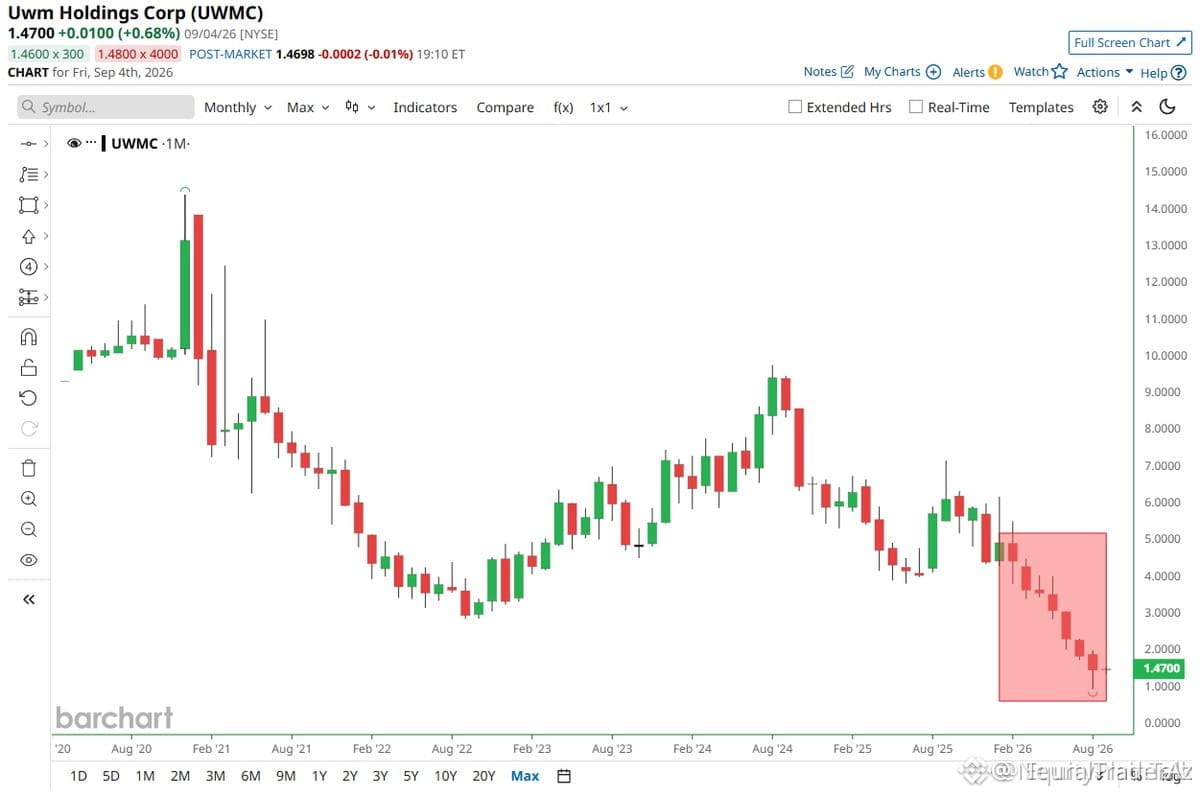
🚨 $UWM SLIDES INTO HISTORIC 7‑MONTH RED STREAK! 📉
📊 Institutional lenders are feeling the squeeze as mortgage volumes evaporate and rates cling high. A seven‑month red streak for $UWM marks a clear liquidity drain that smart‑money analysts flag as a bearish order‑block breach.
🦈 The August single‑day plunge carved a fresh demand void, exposing early cracks in the lending ecosystem and raising concerns over housing affordability.
💬 Is this the opening of a broader sector correction or merely a temporary dip? 👇
⚠️ Not financial advice. Always manage your risk. 🛡️
🏷️ #UWM #MortgageStress #HousingMarket #Liquidity
🔥 💎
20
·
--
The latest data released by the Canadian Real Estate Association (CREA) shows that in August this year, total home sales across Canada fell 0.7% year over year, directly wiping out the slight rebound momentum that had been building for the previous four months. Since May, transaction activity across the real estate market has been largely at a standstill. Shaun Cathcart, CREA’s senior economist, noted that the broader macroeconomic environment is changing. The Bank of Canada has issued a warning about the risks of inflation returning, causing the market to doubt the durability of economic growth.
These data are worth paying attention to because they reflect a deepening transmission of high interest rates into the real economy. Although there had been some improvement in the labor market and business investment, GDP growth stalled in July, and CPI inflation has been at the upper end of the central bank’s 1% to 3% target range for two consecutive months. As rising bond yields have pushed up fixed mortgage rates, the market has begun to reprice expectations for further rate hikes, once again casting a shadow over the outlook for the real estate sector.
From the perspective of traditional financial markets, real estate—one of the most interest-rate-sensitive sectors—tends to cool when macro liquidity tightens further. When the central bank’s policy stance oscillates between fighting inflation and preventing a downturn, volatility in government bond yields will continue to weigh on valuation headroom for risk assets. Meanwhile, the appeal of U.S. dollar-denominated assets and safe-haven instruments is relatively maintained, and the overall investment environment remains cautious.
For the crypto market, the lack of any real easing in macro liquidity suggests that new incremental capital entering from outside the market is likely to remain slow. Core assets such as $BTC will, in all probability in the near term, continue to trade in a range in line with global liquidity expectations. In your operations, it may also be wise to keep an extra measure of patience—objectively observe how the liquidity cycle evolves, and manage the overall position timing and sizing well.
#MacroEconomics #HousingMarket #InterestRates
80
According to the latest data released by the Canadian Real Estate Association (CREA), Canada’s national home sales in August fell 0.7% year over year, wiping out the slight upticks recorded over the previous four months. This reflects the direct impact of increasing macroeconomic uncertainty on the traditional real-asset segment.
CREA Chief Economist Shaun Cathcart said that the overall economic environment has changed. The Bank of Canada has recently issued multiple warnings about upside risks to inflation, and the July GDP data was stagnant. Meanwhile, the CPI has remained at the upper end of the 1%–3% target range for two consecutive months. Combined with higher bond-market yields that have pushed up fixed mortgage rates, the appeal of traditional physical real estate to borrowers is undergoing a structural decline.
From a macro-asset pricing perspective, illiquid, heavy real assets such as physical property face severe pressure under high interest rates and tightening expectations. Capital will therefore inevitably look for alternatives with better liquidity and greater resilience against fiat-currency inflation. The spike in government bond yields in both the US and Canada is actually accelerating capital outflows from traditional heavy real-asset markets and prompting a rebalancing of risk-asset positions.
For the crypto market, stress in the traditional real estate market creates an excellent opportunity for high-liquidity digital assets to capture liquidity overflow. As capital seeks higher beta returns and inflation-hedging properties amid macro headwinds, crypto assets represented by $BTC —backed by transparent on-chain supply and demand and immediate liquidity—are more likely to form a bottom and rebound in the current cycle, bringing stronger allocation demand.📈
#HousingMarket #MacroEconomy #CanadaEconomy #CryptoLiquidity
57
Log in to explore more content
Join global crypto users on Binance Square
⚡️ Get latest and useful information about crypto.
💬 Trusted by the world’s largest crypto exchange.
👍 Discover real insights from verified creators.
Email / Phone number
Trending Topics
1
#$1.5BInLeveragedCryptoBetsLiquidated
2,241 views
44 Discussing
2
#KOSPIFalls3.53%BackBelow6000
5,017 views
213 Discussing
3
#USMidtermElections
112,755 views
1,465 Discussing
4
#StrategySTRCReaches$99.95ForFirstTimeIn165Days
1,797 views
56 Discussing
5
#BinanceWillListPredictPREDICT
28,634 views
662 Discussing
6
#SwitzerlandFirstSpotBitcoinETFExpectedToTradeInNovember
1,201 views
68 Discussing
7
#StrategyReports$21BQ3OperatingProfit
1,267 views
41 Discussing
8
#TwoAddressesHoldingAbout1.28BUSDTFrozen
14,432 views
379 Discussing
9
#FirstDigitalBlacklistsAttackerAddressHoldingAbout3.4MFDUSD
501 views
16 Discussing
10
#BitcoinDropsBelow$80K
70,292 views
169 Discussing