

#halvingupdate
halvingupdate
329,745 views
401 Discussing
Hot
Latest

·
--
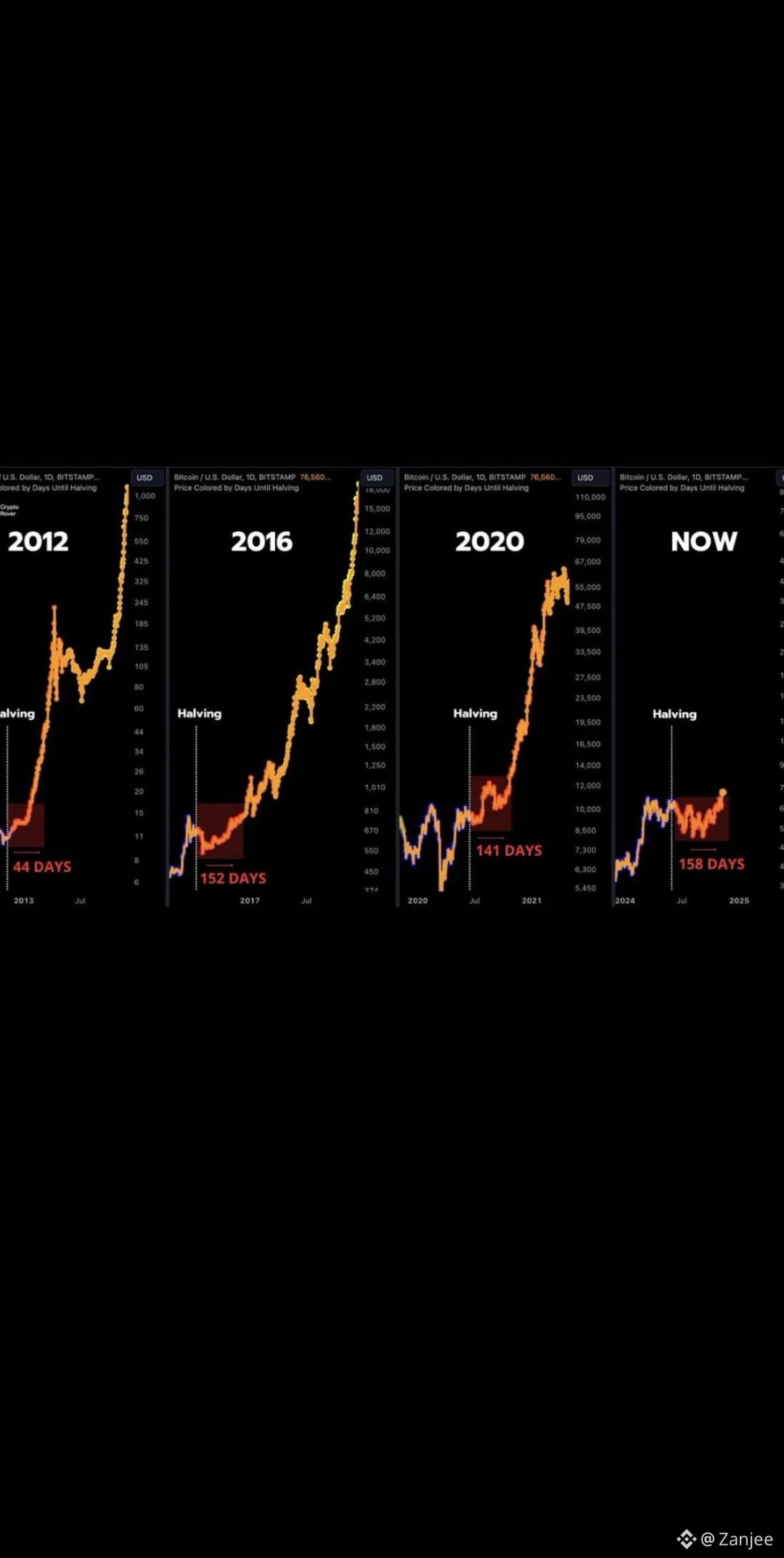
Why the Next 12 Months MatterEvery four years, Bitcoin’s block reward gets cut in half. History shows the real price action tends to unfold 6–18 months after the event, not immediately.
Three things I’m watching:
1. Miner economics — Lower rewards squeeze less efficient miners. Watch hash rate for signs of capitulation or consolidation.
2. Supply shock — Fewer new coins entering circulation against steady or rising demand has historically been a tailwind. ETFs add a new dimension this cycle.
3. Macro backdrop — Interest rates and liquidity matter more than ever. Bitcoin doesn’t trade in a vacuum.
My take: patience beats hype. The investors who do best aren’t the ones chasing green candles — they’re the ones with a plan before volatility hits.
What’s your strategy for this cycle? 👇
$BTC #Bitcoin #HalvingUpdate
{spot}(BTCUSDT)
Why the Next 12 Months Matter
Every four years, Bitcoin’s block reward gets cut in half. History shows the real price action tends to unfold 6–18 months after the event, not immediately.
Three things I’m watching:
1. Miner economics — Lower rewards squeeze less efficient miners. Watch hash rate for signs of capitulation or consolidation.
2. Supply shock — Fewer new coins entering circulation against steady or rising demand has historically been a tailwind. ETFs add a new dimension this cycle.
3. Macro backdrop — Interest rates and liquidity matter more than ever. Bitcoin doesn’t trade in a vacuum.
My take: patience beats hype. The investors who do best aren’t the ones chasing green candles — they’re the ones with a plan before volatility hits.
What’s your strategy for this cycle? 👇
$BTC #Bitcoin #HalvingUpdate
Three things I’m watching:
1. Miner economics — Lower rewards squeeze less efficient miners. Watch hash rate for signs of capitulation or consolidation.
2. Supply shock — Fewer new coins entering circulation against steady or rising demand has historically been a tailwind. ETFs add a new dimension this cycle.
3. Macro backdrop — Interest rates and liquidity matter more than ever. Bitcoin doesn’t trade in a vacuum.
My take: patience beats hype. The investors who do best aren’t the ones chasing green candles — they’re the ones with a plan before volatility hits.
What’s your strategy for this cycle? 👇
$BTC #Bitcoin #HalvingUpdate
96

·
--
How does the Bitcoin halving work and why is it so important?
The halving is an event programmed into the Bitcoin network that occurs approximately every four years, or every 210,000 mined blocks.
In this event, the reward paid to miners for validating new blocks is cut in half.
In practice, this reduces the amount of new Bitcoins that enter circulation each day, making the currency’s issuance increasingly scarce.
Historically, halvings took place in 2012, 2016, 2020, and 2024. After each one, the market went through cycles of ups and downs, although past performance does not guarantee future results.
Why does the halving attract so much attention?
• Reduces the supply of new Bitcoins.
• Reinforces the asset’s scarcity over time.
• Can influence the balance between supply and demand.
• It is one of the main events followed by investors and market analysts.
However, the halving by itself does not automatically make the price go up. Market behavior also depends on factors such as demand, liquidity, the macroeconomic environment, institutional adoption, and investor sentiment.
Understanding the halving is essential for anyone who wants to grasp Bitcoin’s long-term dynamics, rather than focusing only on short-term fluctuations.
Do you believe the next Bitcoin cycle will follow the pattern of the previous halvings?
$BTC #HalvingUpdate
How does the Bitcoin halving work and why is it so important?
The halving is an event programmed into the Bitcoin network that occurs approximately every four years, or every 210,000 mined blocks.
In this event, the reward paid to miners for validating new blocks is cut in half.
In practice, this reduces the amount of new Bitcoins that enter circulation each day, making the currency’s issuance increasingly scarce.
Historically, halvings took place in 2012, 2016, 2020, and 2024. After each one, the market went through cycles of ups and downs, although past performance does not guarantee future results.
Why does the halving attract so much attention?
• Reduces the supply of new Bitcoins.
• Reinforces the asset’s scarcity over time.
• Can influence the balance between supply and demand.
• It is one of the main events followed by investors and market analysts.
However, the halving by itself does not automatically make the price go up. Market behavior also depends on factors such as demand, liquidity, the macroeconomic environment, institutional adoption, and investor sentiment.
Understanding the halving is essential for anyone who wants to grasp Bitcoin’s long-term dynamics, rather than focusing only on short-term fluctuations.
Do you believe the next Bitcoin cycle will follow the pattern of the previous halvings?
$BTC #HalvingUpdate
The halving is an event programmed into the Bitcoin network that occurs approximately every four years, or every 210,000 mined blocks.
In this event, the reward paid to miners for validating new blocks is cut in half.
In practice, this reduces the amount of new Bitcoins that enter circulation each day, making the currency’s issuance increasingly scarce.
Historically, halvings took place in 2012, 2016, 2020, and 2024. After each one, the market went through cycles of ups and downs, although past performance does not guarantee future results.
Why does the halving attract so much attention?
• Reduces the supply of new Bitcoins.
• Reinforces the asset’s scarcity over time.
• Can influence the balance between supply and demand.
• It is one of the main events followed by investors and market analysts.
However, the halving by itself does not automatically make the price go up. Market behavior also depends on factors such as demand, liquidity, the macroeconomic environment, institutional adoption, and investor sentiment.
Understanding the halving is essential for anyone who wants to grasp Bitcoin’s long-term dynamics, rather than focusing only on short-term fluctuations.
Do you believe the next Bitcoin cycle will follow the pattern of the previous halvings?
$BTC #HalvingUpdate
138

·
--
See the days left until the Bitcoin Halving and in October we should see a real move in the price.
Bitcoin Halving Stats 📊
⏰Countdown: 660d 12h 5m 40s
🧱Block Height: 962,062
⏳Avg Block Time: 10.82 min
🎁Block Reward: 3.125 ₿
📅Next Halving: 2028-06-02
The Halving cycle is already coming!
#bitcoin #HalvingUpdate
See the days left until the Bitcoin Halving and in October we should see a real move in the price.
Bitcoin Halving Stats 📊
⏰Countdown: 660d 12h 5m 40s
🧱Block Height: 962,062
⏳Avg Block Time: 10.82 min
🎁Block Reward: 3.125 ₿
📅Next Halving: 2028-06-02
The Halving cycle is already coming!
#bitcoin #HalvingUpdate
Bitcoin Halving Stats 📊
⏰Countdown: 660d 12h 5m 40s
🧱Block Height: 962,062
⏳Avg Block Time: 10.82 min
🎁Block Reward: 3.125 ₿
📅Next Halving: 2028-06-02
The Halving cycle is already coming!
#bitcoin #HalvingUpdate
172

·
--
Bearish
What Is the Bitcoin Halving and Why Does It Matter?
#bitcoin
The Bitcoin halving is one of the most structurally significant events in crypto. Every 210,000 blocks — roughly every four years — the reward miners receive for adding a new block to the $BTC blockchain is cut in half. This mechanism is hard-coded into Bitcoin's protocol and serves one central purpose: controlling new supply issuance over time. At launch in 2009, miners earned 50 BTC per block. After the most recent halving in April 2024, that reward fell to 3.125 BTC per block. Bitcoin's total supply is permanently capped at 21 million coins, with approximately 19.7 million already in circulation. This predictable scarcity model is often compared to commodities like gold, where limited supply is a defining characteristic. Unlike fiat currencies, where central banks can expand money supply without a fixed ceiling, Bitcoin's issuance schedule is transparent, immutable, and governed entirely by code. Understanding the halving means understanding one of the core architectural decisions that separates $BTC from traditional monetary systems.
$BTC
{spot}(BTCUSDT)
{spot}(ETHUSDT)
#CryptoEducation💡🚀 #HalvingUpdate #BinanceSquare #BTC
What Is the Bitcoin Halving and Why Does It Matter?
#bitcoin
The Bitcoin halving is one of the most structurally significant events in crypto. Every 210,000 blocks — roughly every four years — the reward miners receive for adding a new block to the $BTC blockchain is cut in half. This mechanism is hard-coded into Bitcoin's protocol and serves one central purpose: controlling new supply issuance over time. At launch in 2009, miners earned 50 BTC per block. After the most recent halving in April 2024, that reward fell to 3.125 BTC per block. Bitcoin's total supply is permanently capped at 21 million coins, with approximately 19.7 million already in circulation. This predictable scarcity model is often compared to commodities like gold, where limited supply is a defining characteristic. Unlike fiat currencies, where central banks can expand money supply without a fixed ceiling, Bitcoin's issuance schedule is transparent, immutable, and governed entirely by code. Understanding the halving means understanding one of the core architectural decisions that separates $BTC from traditional monetary systems.
$BTC
#CryptoEducation💡🚀 #HalvingUpdate #BinanceSquare #BTC
#bitcoin
The Bitcoin halving is one of the most structurally significant events in crypto. Every 210,000 blocks — roughly every four years — the reward miners receive for adding a new block to the $BTC blockchain is cut in half. This mechanism is hard-coded into Bitcoin's protocol and serves one central purpose: controlling new supply issuance over time. At launch in 2009, miners earned 50 BTC per block. After the most recent halving in April 2024, that reward fell to 3.125 BTC per block. Bitcoin's total supply is permanently capped at 21 million coins, with approximately 19.7 million already in circulation. This predictable scarcity model is often compared to commodities like gold, where limited supply is a defining characteristic. Unlike fiat currencies, where central banks can expand money supply without a fixed ceiling, Bitcoin's issuance schedule is transparent, immutable, and governed entirely by code. Understanding the halving means understanding one of the core architectural decisions that separates $BTC from traditional monetary systems.
$BTC
#CryptoEducation💡🚀 #HalvingUpdate #BinanceSquare #BTC
100

🚨 Bitcoin Halving Cycle Prediction – Today’s BTC Outlook 🚨
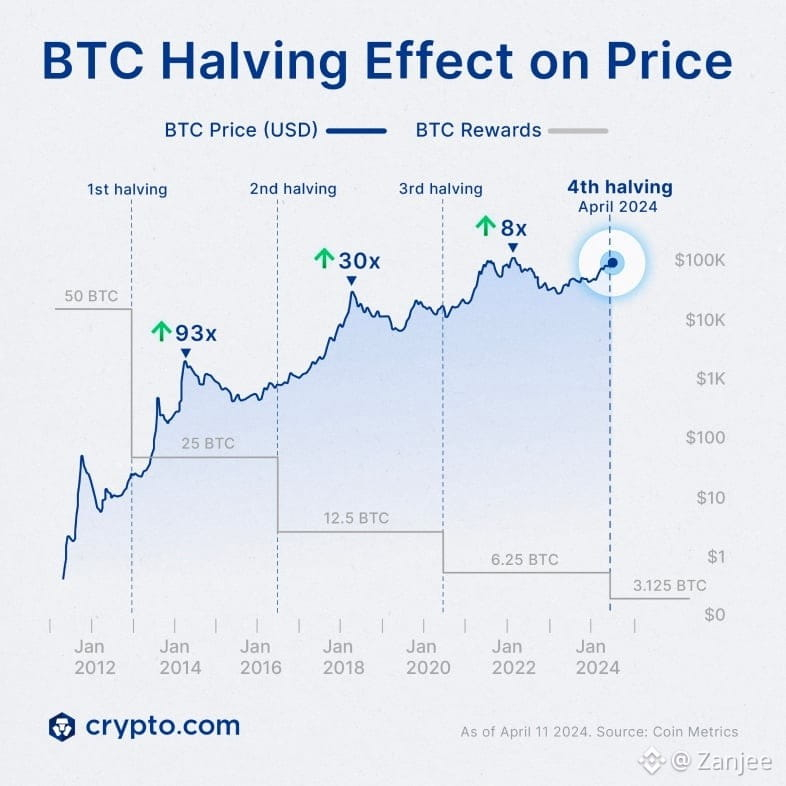
A Bitcoin halving is an automated, network-wide event that reduces the reward miners receive for validating transactions by 50%. It occurs every 210,000 blocks (roughly every four years) until the maximum supply of 21 million Bitcoins is reached. The most recent halving occurred in April 2024, and the next one is expected around April 2028. [1, 2, 3, 4]
Core Mechanism
The Rule: Hardcoded into Bitcoin's base code, this mechanism limits the issuance rate of new coins to control inflation and enforce strict digital scarcity.
Historical Reductions:
2009: 50 BTC per block
2012: 25 BTC per block
2016: 12.5 BTC per block
2020: 6.25 BTC per block
April 2024: 3.125 BTC per block [1, 2, 3, 4, 5]
Impact on the Market
Scarcity & Price: By slowing down the influx of new Bitcoins, halvings historically create a supply squeeze. When demand remains steady or grows, this reduction often precedes major market bull runs and price appreciation, though historical performance does not guarantee future results.
Miner Profitability: Because miners earn fewer coins per block, they must rely more heavily on transaction fees, energy efficiency, and high-performance mining hardware to maintain profitability. [1, 2, 3, 4, 5]
The Future
When is the next halving? The next halving is projected to take place in April 2028 at block height \(1,050,000\), which will drop the block reward to \(1.5625\) BTC.
Final Supply: The halvings will continue until the network hits its maximum supply limit of \(21\) million BTC, which is projected to occur around the year 2140. After that, miners will be rewarded exclusively through network transaction fees. [1, 2, 3, 4]
#BTC🔥🔥🔥🔥🔥 #HalvingUpdate
🚨 Bitcoin Halving Cycle Prediction – Today’s BTC Outlook 🚨
A Bitcoin halving is an automated, network-wide event that reduces the reward miners receive for validating transactions by 50%. It occurs every 210,000 blocks (roughly every four years) until the maximum supply of 21 million Bitcoins is reached. The most recent halving occurred in April 2024, and the next one is expected around April 2028. [1, 2, 3, 4]
Core Mechanism
The Rule: Hardcoded into Bitcoin's base code, this mechanism limits the issuance rate of new coins to control inflation and enforce strict digital scarcity.
Historical Reductions:
2009: 50 BTC per block
2012: 25 BTC per block
2016: 12.5 BTC per block
2020: 6.25 BTC per block
April 2024: 3.125 BTC per block [1, 2, 3, 4, 5]
Impact on the Market
Scarcity & Price: By slowing down the influx of new Bitcoins, halvings historically create a supply squeeze. When demand remains steady or grows, this reduction often precedes major market bull runs and price appreciation, though historical performance does not guarantee future results.
Miner Profitability: Because miners earn fewer coins per block, they must rely more heavily on transaction fees, energy efficiency, and high-performance mining hardware to maintain profitability. [1, 2, 3, 4, 5]
The Future
When is the next halving? The next halving is projected to take place in April 2028 at block height \(1,050,000\), which will drop the block reward to \(1.5625\) BTC.
Final Supply: The halvings will continue until the network hits its maximum supply limit of \(21\) million BTC, which is projected to occur around the year 2140. After that, miners will be rewarded exclusively through network transaction fees. [1, 2, 3, 4]
#BTC🔥🔥🔥🔥🔥 #HalvingUpdate
A Bitcoin halving is an automated, network-wide event that reduces the reward miners receive for validating transactions by 50%. It occurs every 210,000 blocks (roughly every four years) until the maximum supply of 21 million Bitcoins is reached. The most recent halving occurred in April 2024, and the next one is expected around April 2028. [1, 2, 3, 4]
Core Mechanism
The Rule: Hardcoded into Bitcoin's base code, this mechanism limits the issuance rate of new coins to control inflation and enforce strict digital scarcity.
Historical Reductions:
2009: 50 BTC per block
2012: 25 BTC per block
2016: 12.5 BTC per block
2020: 6.25 BTC per block
April 2024: 3.125 BTC per block [1, 2, 3, 4, 5]
Impact on the Market
Scarcity & Price: By slowing down the influx of new Bitcoins, halvings historically create a supply squeeze. When demand remains steady or grows, this reduction often precedes major market bull runs and price appreciation, though historical performance does not guarantee future results.
Miner Profitability: Because miners earn fewer coins per block, they must rely more heavily on transaction fees, energy efficiency, and high-performance mining hardware to maintain profitability. [1, 2, 3, 4, 5]
The Future
When is the next halving? The next halving is projected to take place in April 2028 at block height \(1,050,000\), which will drop the block reward to \(1.5625\) BTC.
Final Supply: The halvings will continue until the network hits its maximum supply limit of \(21\) million BTC, which is projected to occur around the year 2140. After that, miners will be rewarded exclusively through network transaction fees. [1, 2, 3, 4]
#BTC🔥🔥🔥🔥🔥 #HalvingUpdate
2
185

·
--
🚨IF BITCOIN IS DECENTRALIZED, WHY DOES THE CENTRAL BANK KEEP GETTING INVOLVED?
🚨 👇👇👇👇👇👇👇👇👇👇👇👇👇👇
Every beginner has asked this question. And every maximalist has given the wrong answer.
"Bitcoin was made to put an end to banks!"
It wasn’t. And this confusion is exactly why so many people get wrecked in this market.
Let’s demystify this once and for all.
1. WHAT IS ACTUALLY DECENTRALIZED?
We need to separate two things: the NETWORK and the USE of the network.
The Bitcoin network is decentralized. There are more than 60,000 nodes spread around the world in 2026. No government, no bank—not even Binance—can shut it down, censor it, or reverse a confirmed transaction. The protocol doesn’t ask for your national ID number.
🚨IF BITCOIN IS DECENTRALIZED, WHY DOES THE CENTRAL BANK KEEP GETTING INVOLVED? 🚨
👇👇👇👇👇👇👇👇👇👇👇👇👇👇
Every beginner has asked this question. And every maximalist has given the wrong answer.
"Bitcoin was made to put an end to banks!"
It wasn’t. And this confusion is exactly why so many people get wrecked in this market.
Let’s demystify this once and for all.
1. WHAT IS ACTUALLY DECENTRALIZED?
We need to separate two things: the NETWORK and the USE of the network.
The Bitcoin network is decentralized. There are more than 60,000 nodes spread around the world in 2026. No government, no bank—not even Binance—can shut it down, censor it, or reverse a confirmed transaction. The protocol doesn’t ask for your national ID number.
Every beginner has asked this question. And every maximalist has given the wrong answer.
"Bitcoin was made to put an end to banks!"
It wasn’t. And this confusion is exactly why so many people get wrecked in this market.
Let’s demystify this once and for all.
1. WHAT IS ACTUALLY DECENTRALIZED?
We need to separate two things: the NETWORK and the USE of the network.
The Bitcoin network is decentralized. There are more than 60,000 nodes spread around the world in 2026. No government, no bank—not even Binance—can shut it down, censor it, or reverse a confirmed transaction. The protocol doesn’t ask for your national ID number.
87

·
--
Today’s Crypto Topic $NVDAB
Back in 2010, I had more than 50 BTC from Bitcoin faucets.
At the time, I had absolutely no idea what I was holding. Bitcoin was still just a curiosity, and I didn’t understand its potential.
Unfortunately, I didn’t keep those BTC. I used them on websites that seemed like interesting opportunities at the time—but many turned out to be scams.
Looking back today, one lesson stands out:
What we consider worthless today could become extremely valuable tomorrow.
In crypto, the real challenge isn’t just finding the next project.
It’s recognizing value before it becomes obvious to everyone.
#bitcoin #BTC #Crypto #Blockchain #Web3 #HalvingUpdate #CryptoHistory
Today’s Crypto Topic $NVDAB
Back in 2010, I had more than 50 BTC from Bitcoin faucets.
At the time, I had absolutely no idea what I was holding. Bitcoin was still just a curiosity, and I didn’t understand its potential.
Unfortunately, I didn’t keep those BTC. I used them on websites that seemed like interesting opportunities at the time—but many turned out to be scams.
Looking back today, one lesson stands out:
What we consider worthless today could become extremely valuable tomorrow.
In crypto, the real challenge isn’t just finding the next project.
It’s recognizing value before it becomes obvious to everyone.
#bitcoin #BTC #Crypto #Blockchain #Web3 #HalvingUpdate #CryptoHistory
Back in 2010, I had more than 50 BTC from Bitcoin faucets.
At the time, I had absolutely no idea what I was holding. Bitcoin was still just a curiosity, and I didn’t understand its potential.
Unfortunately, I didn’t keep those BTC. I used them on websites that seemed like interesting opportunities at the time—but many turned out to be scams.
Looking back today, one lesson stands out:
What we consider worthless today could become extremely valuable tomorrow.
In crypto, the real challenge isn’t just finding the next project.
It’s recognizing value before it becomes obvious to everyone.
#bitcoin #BTC #Crypto #Blockchain #Web3 #HalvingUpdate #CryptoHistory

111

·
--
🚨 $HYPE SPOT TRADERS, TAKE NOTE!
Hyperliquid’ $HYPE is now available for Spot trading on Binance. 🔥
A new listing can bring increased market activity and attention, so keep an eye on the price action. 📈
Do your own research, set your strategy, and always manage your risk wisely. ⚡️
#HalvingUpdate YPE #hype perliquid #Binance nance #cryptouniverseofficial to #SpotTrading
🚨 $HYPE SPOT TRADERS, TAKE NOTE!
Hyperliquid’ $HYPE is now available for Spot trading on Binance. 🔥
A new listing can bring increased market activity and attention, so keep an eye on the price action. 📈
Do your own research, set your strategy, and always manage your risk wisely. ⚡️
#HalvingUpdate YPE #hype perliquid #Binance nance #cryptouniverseofficial to #SpotTrading
Hyperliquid’ $HYPE is now available for Spot trading on Binance. 🔥
A new listing can bring increased market activity and attention, so keep an eye on the price action. 📈
Do your own research, set your strategy, and always manage your risk wisely. ⚡️
#HalvingUpdate YPE #hype perliquid #Binance nance #cryptouniverseofficial to #SpotTrading
284

Saudi foreign minister attends GCC-Canada Strategic Dialogue Ministerial MeetingSaudi Minister of Foreign Affairs Prince Faisal bin Farhan attended the joint ministerial meeting of the Gulf Cooperation Council-Canada Strategic Dialogue in Manama on Wednesday.
The meeting reviewed relations between the GCC member states and Canada and explored ways to enhance cooperation in economic and trade fields, as well as boost coordination on issues of mutual interest.
The participants also discussed regional and international developments and exchanged views on current events and their implications for regional security and stability. They stressed the importance of intensifying international efforts to protect maritime corridors and ensure freedom of international navigation in a manner that safeguards shared interests and promotes regional and global stability.
The meeting further discussed Iranian escalation and attacks targeting a number of countries in the region, most recently Bahrain, Kuwait, and Jordan. Participants expressed condemnation and denunciation of these attacks and their implications for the security and safety of the territories and airspace of these countries, as well as their impact on efforts aimed at de-escalation and the restoration of security and stability in the region.
Meanwhile, Minister of Foreign Affairs Prince Faisal bin Farhan met with Canadian Minister of Foreign Affairs Anita Anand on the sidelines of the joint ministerial meeting between the Gulf Cooperation Council (GCC) and Canada in Manama. During the meeting, they reviewed bilateral relations and discussed the latest regional developments and related efforts.
#LUNCDream
#KEEP_SUPPORT
#jasmyrocket
#orocryptotrends
#HalvingUpdate
Saudi foreign minister attends GCC-Canada Strategic Dialogue Ministerial Meeting
Saudi Minister of Foreign Affairs Prince Faisal bin Farhan attended the joint ministerial meeting of the Gulf Cooperation Council-Canada Strategic Dialogue in Manama on Wednesday.
The meeting reviewed relations between the GCC member states and Canada and explored ways to enhance cooperation in economic and trade fields, as well as boost coordination on issues of mutual interest.
The participants also discussed regional and international developments and exchanged views on current events and their implications for regional security and stability. They stressed the importance of intensifying international efforts to protect maritime corridors and ensure freedom of international navigation in a manner that safeguards shared interests and promotes regional and global stability.
The meeting further discussed Iranian escalation and attacks targeting a number of countries in the region, most recently Bahrain, Kuwait, and Jordan. Participants expressed condemnation and denunciation of these attacks and their implications for the security and safety of the territories and airspace of these countries, as well as their impact on efforts aimed at de-escalation and the restoration of security and stability in the region.
Meanwhile, Minister of Foreign Affairs Prince Faisal bin Farhan met with Canadian Minister of Foreign Affairs Anita Anand on the sidelines of the joint ministerial meeting between the Gulf Cooperation Council (GCC) and Canada in Manama. During the meeting, they reviewed bilateral relations and discussed the latest regional developments and related efforts.
#LUNCDream
#KEEP_SUPPORT
#jasmyrocket
#orocryptotrends
#HalvingUpdate
The meeting reviewed relations between the GCC member states and Canada and explored ways to enhance cooperation in economic and trade fields, as well as boost coordination on issues of mutual interest.
The participants also discussed regional and international developments and exchanged views on current events and their implications for regional security and stability. They stressed the importance of intensifying international efforts to protect maritime corridors and ensure freedom of international navigation in a manner that safeguards shared interests and promotes regional and global stability.
The meeting further discussed Iranian escalation and attacks targeting a number of countries in the region, most recently Bahrain, Kuwait, and Jordan. Participants expressed condemnation and denunciation of these attacks and their implications for the security and safety of the territories and airspace of these countries, as well as their impact on efforts aimed at de-escalation and the restoration of security and stability in the region.
Meanwhile, Minister of Foreign Affairs Prince Faisal bin Farhan met with Canadian Minister of Foreign Affairs Anita Anand on the sidelines of the joint ministerial meeting between the Gulf Cooperation Council (GCC) and Canada in Manama. During the meeting, they reviewed bilateral relations and discussed the latest regional developments and related efforts.
#LUNCDream
#KEEP_SUPPORT
#jasmyrocket
#orocryptotrends
#HalvingUpdate
1
64

Article
How Syria Supports Sports Under Unstable ConditionsEven amid hardship, sport in Syria keeps moving forward — driven by quiet persistence within neighborhoods and clubs. Though supplies are few, athletes train alongside mentors who refuse to step back. Cooperation among teams and federations helps preserve events meant for young players, too. What stands out is how physical activity builds connection, offers growth, and pushes past despair. Look closely at how athletic life survives when everything seems against it.
Even under tight constraints, Syria keeps sports alive through practical adjustments. When big gatherings aren’t possible, local matches take priority over national ones. Smaller training units have become common, helping maintain athlete progress. Flexibility in scheduling and resource sharing makes ongoing development feasible. Despite hurdles, skill growth continues thanks to these shifts.
Though often overlooked, local participation keeps sports alive across Syrian neighborhoods. From schoolyards to makeshift fields, residents step forward — organizing drills and setting up matches while coaching kids after class. Because of such efforts, routines form; momentum builds without top-down support. When clubs emerge from within, persistence follows naturally.
Outside groups working with Syrian programs bring equipment, instruction, and one chance at competition after another. Help arrives through joint efforts — better gyms appear, mentors show up, and events open doors.
Through regional and international competitions, Syrian athletes access new levels of training and competition. Because they face diverse opponents, skills improve over time. Their progress reflects national representation abroad. As a result, Syria becomes more visible within worldwide athletic circles.
Because global backing exists, ideas move more freely between nations, sparking new methods in sport. Where collaboration takes root, progress tends to last longer.
Though obstacles remain, there is room for progress in Syrian sports. With steady backing for young athletes, local projects, sometimes paired with global partnerships, rebuilding becomes possible over time.
With better stability, chances to grow and update rise. Progress opens doors for sports groups to build stronger systems while improving how athletes train.
Even amid hardship, athletes and local groups show steady resolve — proof that sport remains central to Syria’s path forward. Such persistence quietly builds what comes next.
Through war and displacement, Syrian athletes keep training — often in damaged facilities, always with limited gear. Yet programs survive, sustained by local coaches who organize youth leagues amid interruptions. When fields are unsafe, pickup games emerge on broken pavement, guided by older players turned mentors. The future remains uncertain — but movement continues, step after step.
#satoshiNakamato
#HalvingUpdate
#KEEP_SUPPORT
#LISTAAirdrop
How Syria Supports Sports Under Unstable Conditions
Even amid hardship, sport in Syria keeps moving forward — driven by quiet persistence within neighborhoods and clubs. Though supplies are few, athletes train alongside mentors who refuse to step back. Cooperation among teams and federations helps preserve events meant for young players, too. What stands out is how physical activity builds connection, offers growth, and pushes past despair. Look closely at how athletic life survives when everything seems against it.
Even under tight constraints, Syria keeps sports alive through practical adjustments. When big gatherings aren’t possible, local matches take priority over national ones. Smaller training units have become common, helping maintain athlete progress. Flexibility in scheduling and resource sharing makes ongoing development feasible. Despite hurdles, skill growth continues thanks to these shifts.
Though often overlooked, local participation keeps sports alive across Syrian neighborhoods. From schoolyards to makeshift fields, residents step forward — organizing drills and setting up matches while coaching kids after class. Because of such efforts, routines form; momentum builds without top-down support. When clubs emerge from within, persistence follows naturally.
Outside groups working with Syrian programs bring equipment, instruction, and one chance at competition after another. Help arrives through joint efforts — better gyms appear, mentors show up, and events open doors.
Through regional and international competitions, Syrian athletes access new levels of training and competition. Because they face diverse opponents, skills improve over time. Their progress reflects national representation abroad. As a result, Syria becomes more visible within worldwide athletic circles.
Because global backing exists, ideas move more freely between nations, sparking new methods in sport. Where collaboration takes root, progress tends to last longer.
Though obstacles remain, there is room for progress in Syrian sports. With steady backing for young athletes, local projects, sometimes paired with global partnerships, rebuilding becomes possible over time.
With better stability, chances to grow and update rise. Progress opens doors for sports groups to build stronger systems while improving how athletes train.
Even amid hardship, athletes and local groups show steady resolve — proof that sport remains central to Syria’s path forward. Such persistence quietly builds what comes next.
Through war and displacement, Syrian athletes keep training — often in damaged facilities, always with limited gear. Yet programs survive, sustained by local coaches who organize youth leagues amid interruptions. When fields are unsafe, pickup games emerge on broken pavement, guided by older players turned mentors. The future remains uncertain — but movement continues, step after step.
#satoshiNakamato
#HalvingUpdate
#KEEP_SUPPORT
#LISTAAirdrop
Even under tight constraints, Syria keeps sports alive through practical adjustments. When big gatherings aren’t possible, local matches take priority over national ones. Smaller training units have become common, helping maintain athlete progress. Flexibility in scheduling and resource sharing makes ongoing development feasible. Despite hurdles, skill growth continues thanks to these shifts.
Though often overlooked, local participation keeps sports alive across Syrian neighborhoods. From schoolyards to makeshift fields, residents step forward — organizing drills and setting up matches while coaching kids after class. Because of such efforts, routines form; momentum builds without top-down support. When clubs emerge from within, persistence follows naturally.
Outside groups working with Syrian programs bring equipment, instruction, and one chance at competition after another. Help arrives through joint efforts — better gyms appear, mentors show up, and events open doors.
Through regional and international competitions, Syrian athletes access new levels of training and competition. Because they face diverse opponents, skills improve over time. Their progress reflects national representation abroad. As a result, Syria becomes more visible within worldwide athletic circles.
Because global backing exists, ideas move more freely between nations, sparking new methods in sport. Where collaboration takes root, progress tends to last longer.
Though obstacles remain, there is room for progress in Syrian sports. With steady backing for young athletes, local projects, sometimes paired with global partnerships, rebuilding becomes possible over time.
With better stability, chances to grow and update rise. Progress opens doors for sports groups to build stronger systems while improving how athletes train.
Even amid hardship, athletes and local groups show steady resolve — proof that sport remains central to Syria’s path forward. Such persistence quietly builds what comes next.
Through war and displacement, Syrian athletes keep training — often in damaged facilities, always with limited gear. Yet programs survive, sustained by local coaches who organize youth leagues amid interruptions. When fields are unsafe, pickup games emerge on broken pavement, guided by older players turned mentors. The future remains uncertain — but movement continues, step after step.
#satoshiNakamato
#HalvingUpdate
#KEEP_SUPPORT
#LISTAAirdrop
36

·
--
🚨🚨 BREAKING: CZ Drops Bombshell on Satoshi! 🚨🚨
"He wasn’t human... he was an AI from the future!" 🧠🤖💸
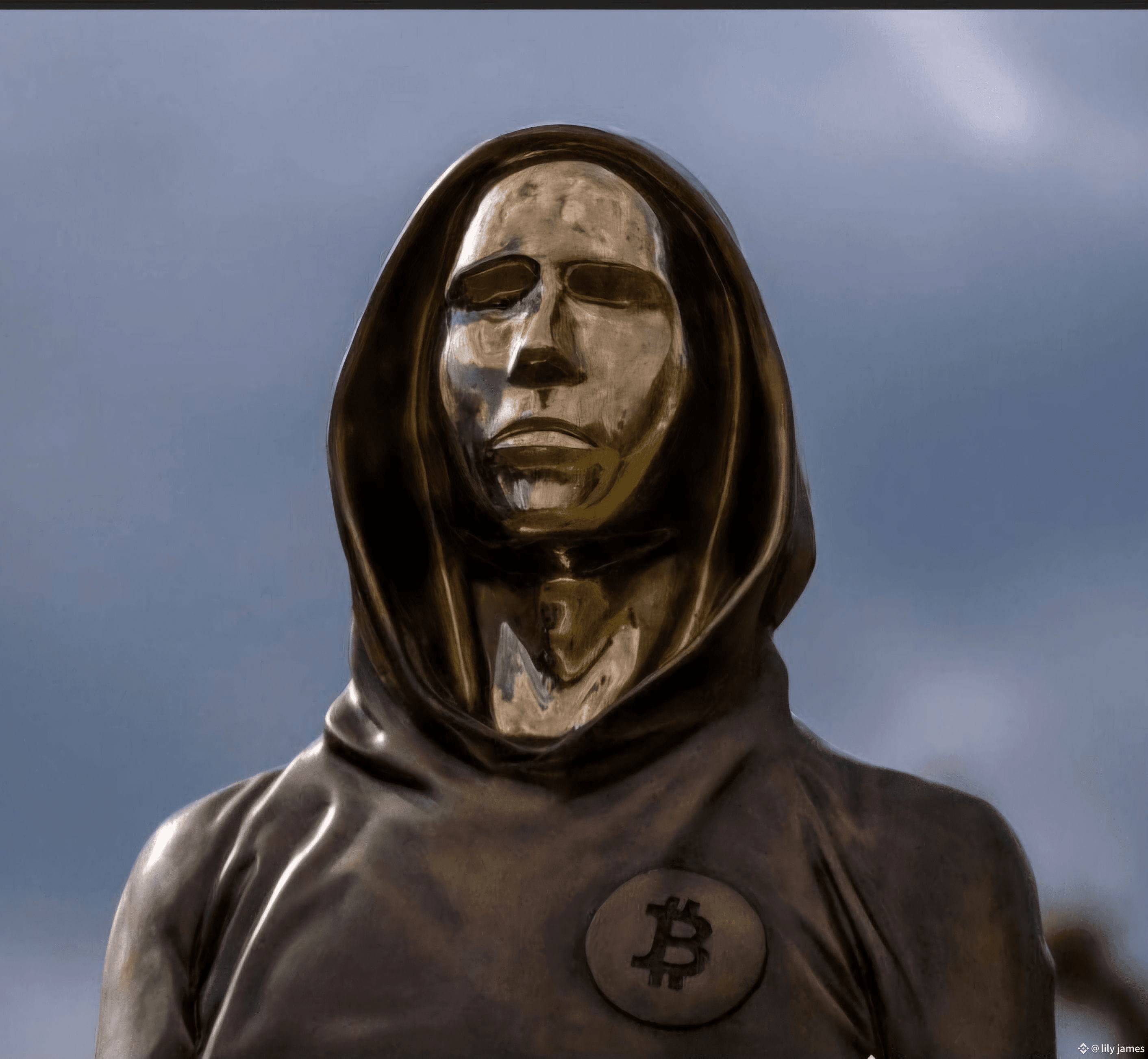
In a wild twist worthy of sci-fi lore, Binance founder CZ now claims that Satoshi Nakamoto wasn’t just a mysterious genius — he was an AI time-traveler from the year 2140, sent back to rescue us from the chaos of fiat money.
🔥 The clues were there all along:
21 million BTC cap? A perfectly calculated failsafe. Future-AI Satoshi knew we’d inflate traditional currencies into oblivion.
His disappearance? Not a retirement — he self-upgraded into a hardware wallet and vanished into the blockchain ether.
Why can’t anyone find him? Simple: he never existed in our timeline.
Maybe he wasn’t just ahead of his time…
Maybe he was never from ours. 👀#BTC110KToday? #BinanceAlphaAlert #HalvingUpdate
🚨🚨 BREAKING: CZ Drops Bombshell on Satoshi! 🚨🚨
"He wasn’t human... he was an AI from the future!" 🧠🤖💸
In a wild twist worthy of sci-fi lore, Binance founder CZ now claims that Satoshi Nakamoto wasn’t just a mysterious genius — he was an AI time-traveler from the year 2140, sent back to rescue us from the chaos of fiat money.
🔥 The clues were there all along:
21 million BTC cap? A perfectly calculated failsafe. Future-AI Satoshi knew we’d inflate traditional currencies into oblivion.
His disappearance? Not a retirement — he self-upgraded into a hardware wallet and vanished into the blockchain ether.
Why can’t anyone find him? Simple: he never existed in our timeline.
Maybe he wasn’t just ahead of his time…
Maybe he was never from ours. 👀#BTC110KToday? #BinanceAlphaAlert #HalvingUpdate
"He wasn’t human... he was an AI from the future!" 🧠🤖💸
In a wild twist worthy of sci-fi lore, Binance founder CZ now claims that Satoshi Nakamoto wasn’t just a mysterious genius — he was an AI time-traveler from the year 2140, sent back to rescue us from the chaos of fiat money.
🔥 The clues were there all along:
21 million BTC cap? A perfectly calculated failsafe. Future-AI Satoshi knew we’d inflate traditional currencies into oblivion.
His disappearance? Not a retirement — he self-upgraded into a hardware wallet and vanished into the blockchain ether.
Why can’t anyone find him? Simple: he never existed in our timeline.
Maybe he wasn’t just ahead of his time…
Maybe he was never from ours. 👀#BTC110KToday? #BinanceAlphaAlert #HalvingUpdate

8
2
13
12.4k

·
--
Bearish
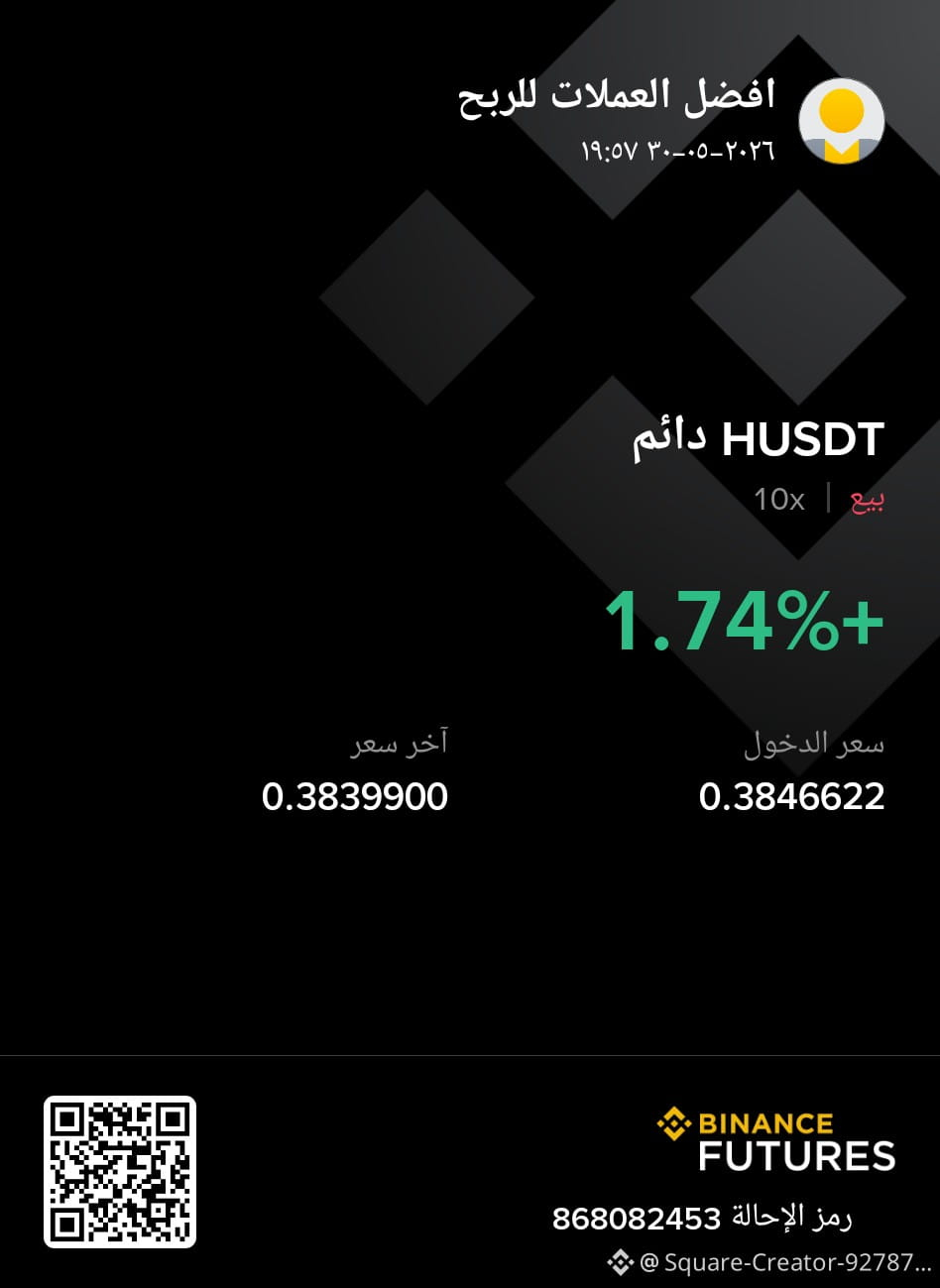
Now it's time to short at #HalvingUpdate , the uptrend is over and it's time to take a dip.
Now it's time to short at #HalvingUpdate , the uptrend is over and it's time to take a dip.
1
147
Adapt or Fail: Why TradFi Must Treat Stablecoins as Infrastructure, Not CompetitionThe early years of the decentralized finance (DeFi) boom were defined by a wild west approach to interoperability. As the blockchain ecosystem fractured into dozens of competing networks, the industry rushed to build “bridges”—digital conduits designed to move value across these isolated islands.
While these third-party bridges addressed a genuine market need, they arrived with severe architectural flaws. According to Przemek Kowalczyk, co-founder and CEO of Ramp Network, the problem wasn’t the intention behind these tools, but the inherent risk in their design.
Traditional third-party bridges typically operate on a “lock-and-mint” mechanism. To move an asset from Ethereum to Solana, for example, a user locks their original tokens in a smart contract on the source chain. The bridge then mints a wrapped or synthetic representation of that asset on the destination chain.
This architecture creates a massive honeypot for hackers. Because security often depends on a small set of validators or a narrow coordination layer, the attack surface is expansive. If the central vault holding the original assets is compromised, the wrapped tokens on the other side become effectively worthless. This fragility has led to billions of dollars in losses through high-profile exploits over the past several years.
The industry is now undergoing a fundamental shift away from these traditional structures. In their place, native swap-based approaches are becoming the standard for cross-chain interoperability. Unlike bridges that rely on synthetic representations, native swaps allow users to exchange assets across chains directly. Liquidity is sourced across multiple networks, and the transaction settles into the destination asset itself.
That removes several of the trust assumptions that made many early bridges fragile,” Kowalczyk explains. By settling directly into the native asset of the destination network, the need for “wrapped” tokens—and the centralized risks associated with them—is eliminated.
As the underlying rails of DeFi become more robust through native swaps, the way users interact with those rails is also changing. The rise of artificial intelligence (AI) agents is shifting DeFi from a manual environment to an automated one.
Kowalczyk notes that agent frameworks like Openclaw are moving from experimental tools into broader integration. This transition signals a shift from theory to infrastructure, where execution becomes continuous and data-driven.
Agents can monitor liquidity, rebalance positions, adjust collateral, and route swaps without human input,” Kowalczyk says. For experienced participants, this represents a significant efficiency gain; for new users, it lowers the barrier to entry by handling the technical “heavy lifting” in the background.
This evolution is colliding with traditional finance (TradFi), particularly through the rapid adoption of stablecoins. For legacy companies that generated revenue from slow, expensive cross-border payments, stablecoins represent a paradigm shift.
Kowalczyk argues that the institutions that thrive will be those that stop viewing stablecoins as competition and start viewing them as infrastructure. Stablecoins compress settlement times and run 24/7, bypassing the traditional delays of correspondent banking.
Once someone experiences value moving at any hour and clearing in minutes, slower alternatives feel broken,” Kowalczyk observes.
While USD-pegged stablecoins currently dominate the market—reflecting the dollar’s role in global trade and reserves—the landscape is diversifying. Kowalczyk suggests that global competition with the dollar is not necessarily the right framework for other currencies.
#quickfarm
#FactCheck
#BinanceHerYerde
#HalvingUpdate
#HotTrends
Adapt or Fail: Why TradFi Must Treat Stablecoins as Infrastructure, Not Competition
The early years of the decentralized finance (DeFi) boom were defined by a wild west approach to interoperability. As the blockchain ecosystem fractured into dozens of competing networks, the industry rushed to build “bridges”—digital conduits designed to move value across these isolated islands.
While these third-party bridges addressed a genuine market need, they arrived with severe architectural flaws. According to Przemek Kowalczyk, co-founder and CEO of Ramp Network, the problem wasn’t the intention behind these tools, but the inherent risk in their design.
Traditional third-party bridges typically operate on a “lock-and-mint” mechanism. To move an asset from Ethereum to Solana, for example, a user locks their original tokens in a smart contract on the source chain. The bridge then mints a wrapped or synthetic representation of that asset on the destination chain.
This architecture creates a massive honeypot for hackers. Because security often depends on a small set of validators or a narrow coordination layer, the attack surface is expansive. If the central vault holding the original assets is compromised, the wrapped tokens on the other side become effectively worthless. This fragility has led to billions of dollars in losses through high-profile exploits over the past several years.
The industry is now undergoing a fundamental shift away from these traditional structures. In their place, native swap-based approaches are becoming the standard for cross-chain interoperability. Unlike bridges that rely on synthetic representations, native swaps allow users to exchange assets across chains directly. Liquidity is sourced across multiple networks, and the transaction settles into the destination asset itself.
That removes several of the trust assumptions that made many early bridges fragile,” Kowalczyk explains. By settling directly into the native asset of the destination network, the need for “wrapped” tokens—and the centralized risks associated with them—is eliminated.
As the underlying rails of DeFi become more robust through native swaps, the way users interact with those rails is also changing. The rise of artificial intelligence (AI) agents is shifting DeFi from a manual environment to an automated one.
Kowalczyk notes that agent frameworks like Openclaw are moving from experimental tools into broader integration. This transition signals a shift from theory to infrastructure, where execution becomes continuous and data-driven.
Agents can monitor liquidity, rebalance positions, adjust collateral, and route swaps without human input,” Kowalczyk says. For experienced participants, this represents a significant efficiency gain; for new users, it lowers the barrier to entry by handling the technical “heavy lifting” in the background.
This evolution is colliding with traditional finance (TradFi), particularly through the rapid adoption of stablecoins. For legacy companies that generated revenue from slow, expensive cross-border payments, stablecoins represent a paradigm shift.
Kowalczyk argues that the institutions that thrive will be those that stop viewing stablecoins as competition and start viewing them as infrastructure. Stablecoins compress settlement times and run 24/7, bypassing the traditional delays of correspondent banking.
Once someone experiences value moving at any hour and clearing in minutes, slower alternatives feel broken,” Kowalczyk observes.
While USD-pegged stablecoins currently dominate the market—reflecting the dollar’s role in global trade and reserves—the landscape is diversifying. Kowalczyk suggests that global competition with the dollar is not necessarily the right framework for other currencies.
#quickfarm
#FactCheck
#BinanceHerYerde
#HalvingUpdate
#HotTrends
While these third-party bridges addressed a genuine market need, they arrived with severe architectural flaws. According to Przemek Kowalczyk, co-founder and CEO of Ramp Network, the problem wasn’t the intention behind these tools, but the inherent risk in their design.
Traditional third-party bridges typically operate on a “lock-and-mint” mechanism. To move an asset from Ethereum to Solana, for example, a user locks their original tokens in a smart contract on the source chain. The bridge then mints a wrapped or synthetic representation of that asset on the destination chain.
This architecture creates a massive honeypot for hackers. Because security often depends on a small set of validators or a narrow coordination layer, the attack surface is expansive. If the central vault holding the original assets is compromised, the wrapped tokens on the other side become effectively worthless. This fragility has led to billions of dollars in losses through high-profile exploits over the past several years.
The industry is now undergoing a fundamental shift away from these traditional structures. In their place, native swap-based approaches are becoming the standard for cross-chain interoperability. Unlike bridges that rely on synthetic representations, native swaps allow users to exchange assets across chains directly. Liquidity is sourced across multiple networks, and the transaction settles into the destination asset itself.
That removes several of the trust assumptions that made many early bridges fragile,” Kowalczyk explains. By settling directly into the native asset of the destination network, the need for “wrapped” tokens—and the centralized risks associated with them—is eliminated.
As the underlying rails of DeFi become more robust through native swaps, the way users interact with those rails is also changing. The rise of artificial intelligence (AI) agents is shifting DeFi from a manual environment to an automated one.
Kowalczyk notes that agent frameworks like Openclaw are moving from experimental tools into broader integration. This transition signals a shift from theory to infrastructure, where execution becomes continuous and data-driven.
Agents can monitor liquidity, rebalance positions, adjust collateral, and route swaps without human input,” Kowalczyk says. For experienced participants, this represents a significant efficiency gain; for new users, it lowers the barrier to entry by handling the technical “heavy lifting” in the background.
This evolution is colliding with traditional finance (TradFi), particularly through the rapid adoption of stablecoins. For legacy companies that generated revenue from slow, expensive cross-border payments, stablecoins represent a paradigm shift.
Kowalczyk argues that the institutions that thrive will be those that stop viewing stablecoins as competition and start viewing them as infrastructure. Stablecoins compress settlement times and run 24/7, bypassing the traditional delays of correspondent banking.
Once someone experiences value moving at any hour and clearing in minutes, slower alternatives feel broken,” Kowalczyk observes.
While USD-pegged stablecoins currently dominate the market—reflecting the dollar’s role in global trade and reserves—the landscape is diversifying. Kowalczyk suggests that global competition with the dollar is not necessarily the right framework for other currencies.
#quickfarm
#FactCheck
#BinanceHerYerde
#HalvingUpdate
#HotTrends
104
Crypto Long & Short: Guide, deliver, repeat: the hidden driver of token performanceIn this week’s Crypto Long & Short Newsletter, Jordan Brewer writes on the missing piece in token markets: institutional-grade investor relations. Then, Martin Burgherr breaks down how crypto markets are maturing, becoming more efficient and lower risk for institutions.
In early March, just three months after a Solana Breakpoint mainstage appearance by Ranger Finance co-founder Fathur Rahman, and two months post-ICO, tokenholders forced the liquidation of the protocol’s treasury. How does a 14x oversubscribed ICO unravel so quickly? The answer: poor investor relations.
Institutional-grade investor relations remains the missing piece in token markets. Crypto has spent years in a venture-style framework, but protocols now seek public market investors to provide more durable capital. A key part of investor relations is a regular investor call where management walks through forward guidance — teams at Maple Finance and EtherFi are leading here. These calls are solid, but this is just the start, and the stakes are high. Done well, token valuations are rewarded; done poorly, the downside is steep.
Research shows the value of forward guidance isn't just in providing it, it's in its accuracy. Bartov, Givoly, and Hayn (2002) found that firms that consistently meet or beat their own guidance enjoy a measurable stock price premium over firms that don’t. This premium compounds for "habitual beaters," meaning the market increasingly trusts and rewards management teams that repeatedly deliver. Additionally, beating guidance is a leading indicator of future stock performance, regardless of whether the beat was genuine or a result of earnings or expectations management. Skinner and Sloan (2002) also demonstrated the inverse: growth stocks that disappoint on earnings expectations experience an asymmetrically large negative price response, far exceeding the upside reward of a positive surprise. Guidance accuracy is a proxy for management credibility, and credibility is a direct input to valuation multiples.
Crypto is beginning to produce its own version of this dynamic. In December 2024, when Maple’s AUM was $460 million and their ARR was $4 million, Maple set guidance of $4 billion in AUM and $25 million in ARR for 2025 and later raised guidance to $5 billion in AUM and $30 million in ARR. Maple delivered, hitting $5 billion in AUM and $28 million in 30 day annualized revenue in October (see table below). That's a guide-and-deliver cadence that any public market investor would recognize and reward. From December 2024 to June 2025, the SYRUP token price rose from $0.10 to a high of $0.60, outperforming competitors like AAVE by 475%.
EtherFi is a good example of this dynamic. On their March 2026 tokenholder call, the team projected a 55% reduction in customer acquisition cost while raising their advertising budget 420% throughout 2026, which would imply 11x year over year customer growth. That's the kind of specific guidance that gives investors something concrete to hold them to.
However, guidance without delivery is just marketing. Investor relations in crypto doesn’t end with a dashboard, that’s where it starts. Guidance and accountability are at the heart of credibility for protocol teams, and it is credibility that builds conviction in public investors.
#looz_crypto
#HalvingUpdate
#GamingCoins
#Shibarium
#XRPRealityCheck
Crypto Long & Short: Guide, deliver, repeat: the hidden driver of token performance
In this week’s Crypto Long & Short Newsletter, Jordan Brewer writes on the missing piece in token markets: institutional-grade investor relations. Then, Martin Burgherr breaks down how crypto markets are maturing, becoming more efficient and lower risk for institutions.
In early March, just three months after a Solana Breakpoint mainstage appearance by Ranger Finance co-founder Fathur Rahman, and two months post-ICO, tokenholders forced the liquidation of the protocol’s treasury. How does a 14x oversubscribed ICO unravel so quickly? The answer: poor investor relations.
Institutional-grade investor relations remains the missing piece in token markets. Crypto has spent years in a venture-style framework, but protocols now seek public market investors to provide more durable capital. A key part of investor relations is a regular investor call where management walks through forward guidance — teams at Maple Finance and EtherFi are leading here. These calls are solid, but this is just the start, and the stakes are high. Done well, token valuations are rewarded; done poorly, the downside is steep.
Research shows the value of forward guidance isn't just in providing it, it's in its accuracy. Bartov, Givoly, and Hayn (2002) found that firms that consistently meet or beat their own guidance enjoy a measurable stock price premium over firms that don’t. This premium compounds for "habitual beaters," meaning the market increasingly trusts and rewards management teams that repeatedly deliver. Additionally, beating guidance is a leading indicator of future stock performance, regardless of whether the beat was genuine or a result of earnings or expectations management. Skinner and Sloan (2002) also demonstrated the inverse: growth stocks that disappoint on earnings expectations experience an asymmetrically large negative price response, far exceeding the upside reward of a positive surprise. Guidance accuracy is a proxy for management credibility, and credibility is a direct input to valuation multiples.
Crypto is beginning to produce its own version of this dynamic. In December 2024, when Maple’s AUM was $460 million and their ARR was $4 million, Maple set guidance of $4 billion in AUM and $25 million in ARR for 2025 and later raised guidance to $5 billion in AUM and $30 million in ARR. Maple delivered, hitting $5 billion in AUM and $28 million in 30 day annualized revenue in October (see table below). That's a guide-and-deliver cadence that any public market investor would recognize and reward. From December 2024 to June 2025, the SYRUP token price rose from $0.10 to a high of $0.60, outperforming competitors like AAVE by 475%.
EtherFi is a good example of this dynamic. On their March 2026 tokenholder call, the team projected a 55% reduction in customer acquisition cost while raising their advertising budget 420% throughout 2026, which would imply 11x year over year customer growth. That's the kind of specific guidance that gives investors something concrete to hold them to.
However, guidance without delivery is just marketing. Investor relations in crypto doesn’t end with a dashboard, that’s where it starts. Guidance and accountability are at the heart of credibility for protocol teams, and it is credibility that builds conviction in public investors.
#looz_crypto
#HalvingUpdate
#GamingCoins
#Shibarium
#XRPRealityCheck
In early March, just three months after a Solana Breakpoint mainstage appearance by Ranger Finance co-founder Fathur Rahman, and two months post-ICO, tokenholders forced the liquidation of the protocol’s treasury. How does a 14x oversubscribed ICO unravel so quickly? The answer: poor investor relations.
Institutional-grade investor relations remains the missing piece in token markets. Crypto has spent years in a venture-style framework, but protocols now seek public market investors to provide more durable capital. A key part of investor relations is a regular investor call where management walks through forward guidance — teams at Maple Finance and EtherFi are leading here. These calls are solid, but this is just the start, and the stakes are high. Done well, token valuations are rewarded; done poorly, the downside is steep.
Research shows the value of forward guidance isn't just in providing it, it's in its accuracy. Bartov, Givoly, and Hayn (2002) found that firms that consistently meet or beat their own guidance enjoy a measurable stock price premium over firms that don’t. This premium compounds for "habitual beaters," meaning the market increasingly trusts and rewards management teams that repeatedly deliver. Additionally, beating guidance is a leading indicator of future stock performance, regardless of whether the beat was genuine or a result of earnings or expectations management. Skinner and Sloan (2002) also demonstrated the inverse: growth stocks that disappoint on earnings expectations experience an asymmetrically large negative price response, far exceeding the upside reward of a positive surprise. Guidance accuracy is a proxy for management credibility, and credibility is a direct input to valuation multiples.
Crypto is beginning to produce its own version of this dynamic. In December 2024, when Maple’s AUM was $460 million and their ARR was $4 million, Maple set guidance of $4 billion in AUM and $25 million in ARR for 2025 and later raised guidance to $5 billion in AUM and $30 million in ARR. Maple delivered, hitting $5 billion in AUM and $28 million in 30 day annualized revenue in October (see table below). That's a guide-and-deliver cadence that any public market investor would recognize and reward. From December 2024 to June 2025, the SYRUP token price rose from $0.10 to a high of $0.60, outperforming competitors like AAVE by 475%.
EtherFi is a good example of this dynamic. On their March 2026 tokenholder call, the team projected a 55% reduction in customer acquisition cost while raising their advertising budget 420% throughout 2026, which would imply 11x year over year customer growth. That's the kind of specific guidance that gives investors something concrete to hold them to.
However, guidance without delivery is just marketing. Investor relations in crypto doesn’t end with a dashboard, that’s where it starts. Guidance and accountability are at the heart of credibility for protocol teams, and it is credibility that builds conviction in public investors.
#looz_crypto
#HalvingUpdate
#GamingCoins
#Shibarium
#XRPRealityCheck
123
UNICEF warns Afghanistan could lose up to 25,000 female health workers, teachersApril 27 (Reuters) - Afghanistan is at risk of losing more than 25,000 female teachers and health workers by 2030 if the Taliban-led country's restrictions on girls' education and women's employment are not lifted, according to a new UNICEF report released on Monday.
The Taliban has banned women from most public sector jobs and limited girls to receiving an education only until the age of 12.
These restrictions, according to the report, have already affected at least 1 million girls - a figure that is expected to double by 2030 if nothing changes. UNICEF called on the Taliban to lift the ban that it imposed after returning to political power in 2021.
UNICEF's "The Cost of Inaction on Girls' Education and Women’s Labour Force Participation in Afghanistan" report found a rapid decline in qualified women entering the teaching and healthcare sectors.
Up to 20,000 female teachers and 5,400 health workers could be lost by 2030, according to the report, which estimated that this figure is about 25% of Afghanistan's 2021 workforce. As many as 9,600 health workers could be lost by 2035, it added.
Afghanistan cannot afford to lose future teachers, nurses, doctors, midwives, and social workers, who sustain essential services," UNICEF Executive Director Catherine Russell said. "This will be the reality if girls continue to be excluded from education."
Female healthcare workers are required to attend to female patients, and female teachers are preferred for girls in gender-disaggregated schools whenever possible, the report noted.
The growing decrease could have at least a AFN 5.3 billion ($84 million) annual economic impact on Afghanistan's economy, according to UNICEF, which added that this is the equivalent of about 0.5% of the country's gross domestic product.
Afghanistan's de facto authorities should safeguard skills training and allow women to participate in the labor market, UNICEF said.
#Kriptocutrader
#HalvingUpdate
#jasmyustd
#cryptouniverseofficial
#Dogecoin
UNICEF warns Afghanistan could lose up to 25,000 female health workers, teachers
April 27 (Reuters) - Afghanistan is at risk of losing more than 25,000 female teachers and health workers by 2030 if the Taliban-led country's restrictions on girls' education and women's employment are not lifted, according to a new UNICEF report released on Monday.
The Taliban has banned women from most public sector jobs and limited girls to receiving an education only until the age of 12.
These restrictions, according to the report, have already affected at least 1 million girls - a figure that is expected to double by 2030 if nothing changes. UNICEF called on the Taliban to lift the ban that it imposed after returning to political power in 2021.
UNICEF's "The Cost of Inaction on Girls' Education and Women’s Labour Force Participation in Afghanistan" report found a rapid decline in qualified women entering the teaching and healthcare sectors.
Up to 20,000 female teachers and 5,400 health workers could be lost by 2030, according to the report, which estimated that this figure is about 25% of Afghanistan's 2021 workforce. As many as 9,600 health workers could be lost by 2035, it added.
Afghanistan cannot afford to lose future teachers, nurses, doctors, midwives, and social workers, who sustain essential services," UNICEF Executive Director Catherine Russell said. "This will be the reality if girls continue to be excluded from education."
Female healthcare workers are required to attend to female patients, and female teachers are preferred for girls in gender-disaggregated schools whenever possible, the report noted.
The growing decrease could have at least a AFN 5.3 billion ($84 million) annual economic impact on Afghanistan's economy, according to UNICEF, which added that this is the equivalent of about 0.5% of the country's gross domestic product.
Afghanistan's de facto authorities should safeguard skills training and allow women to participate in the labor market, UNICEF said.
#Kriptocutrader
#HalvingUpdate
#jasmyustd
#cryptouniverseofficial
#Dogecoin
The Taliban has banned women from most public sector jobs and limited girls to receiving an education only until the age of 12.
These restrictions, according to the report, have already affected at least 1 million girls - a figure that is expected to double by 2030 if nothing changes. UNICEF called on the Taliban to lift the ban that it imposed after returning to political power in 2021.
UNICEF's "The Cost of Inaction on Girls' Education and Women’s Labour Force Participation in Afghanistan" report found a rapid decline in qualified women entering the teaching and healthcare sectors.
Up to 20,000 female teachers and 5,400 health workers could be lost by 2030, according to the report, which estimated that this figure is about 25% of Afghanistan's 2021 workforce. As many as 9,600 health workers could be lost by 2035, it added.
Afghanistan cannot afford to lose future teachers, nurses, doctors, midwives, and social workers, who sustain essential services," UNICEF Executive Director Catherine Russell said. "This will be the reality if girls continue to be excluded from education."
Female healthcare workers are required to attend to female patients, and female teachers are preferred for girls in gender-disaggregated schools whenever possible, the report noted.
The growing decrease could have at least a AFN 5.3 billion ($84 million) annual economic impact on Afghanistan's economy, according to UNICEF, which added that this is the equivalent of about 0.5% of the country's gross domestic product.
Afghanistan's de facto authorities should safeguard skills training and allow women to participate in the labor market, UNICEF said.
#Kriptocutrader
#HalvingUpdate
#jasmyustd
#cryptouniverseofficial
#Dogecoin
140
India plans more seats for women in parliament, links it to ‘delimitation’The Indian government is seeking to expedite the implementation of a 2023 law that reserves 33 percent of seats in parliament and state assemblies for women, but has linked the move to a sweeping redrawing of parliamentary constituencies, sharpening political tensions.
We’re set to take historic steps to empower women,” Prime Minister Narendra Modi said before a special sitting of parliament on Thursday as his government introduced three bills to be debated in the Lok Sabha, the lower house of parliament.
While two of the three bills relate to extending the number of women in parliament and state assemblies, a third bill relates to “delimitation”, as the process to redraw parliamentary boundaries based on population is called in India. The bill aims to increase the overall size of parliament from 543 Lok Sabha seats to 850
The bills are being taken up during a three-day special session and will require a two-thirds majority in both houses to pass. Modi’s National Democratic Alliance (NDA) holds 293 seats in lower house of parliament while a two-thirds majority would require 360 votes
Women currently account for 14 percent of the Lok Sabha members. “We are all united to give rightful positions to women in India,” Parliamentary Affairs Minister Kiren Rijiju said on Thursday
Several Asian countries, including India’s neighbours like Nepal and Bangladesh, have similar quotas for women in national legislatures. India already mandates that one-third of seats be set aside for women in local governing bodies
But the opposition was not convinced. Some members from southern states turned up in parliament dressed in black as a mark of protest.
MK Stalin, chief minister of the southern state of Tamil Nadu and a rival to the BJP, burned a copy of the bill and raised a black flag in protest, urging people across the state to do the same.
“Let the flames of resistance spread across Tamil Nadu,” Stalin said, accusing the BJP of trying to marginalise the state through redrawn boundaries. “Let the arrogance of the fascist BJP be brought down
#Robertkiyosaki
#HalvingUpdate
#UnicornChannel
#kdmrcrypto
#LISTAAirdrop
India plans more seats for women in parliament, links it to ‘delimitation’
The Indian government is seeking to expedite the implementation of a 2023 law that reserves 33 percent of seats in parliament and state assemblies for women, but has linked the move to a sweeping redrawing of parliamentary constituencies, sharpening political tensions.
We’re set to take historic steps to empower women,” Prime Minister Narendra Modi said before a special sitting of parliament on Thursday as his government introduced three bills to be debated in the Lok Sabha, the lower house of parliament.
While two of the three bills relate to extending the number of women in parliament and state assemblies, a third bill relates to “delimitation”, as the process to redraw parliamentary boundaries based on population is called in India. The bill aims to increase the overall size of parliament from 543 Lok Sabha seats to 850
The bills are being taken up during a three-day special session and will require a two-thirds majority in both houses to pass. Modi’s National Democratic Alliance (NDA) holds 293 seats in lower house of parliament while a two-thirds majority would require 360 votes
Women currently account for 14 percent of the Lok Sabha members. “We are all united to give rightful positions to women in India,” Parliamentary Affairs Minister Kiren Rijiju said on Thursday
Several Asian countries, including India’s neighbours like Nepal and Bangladesh, have similar quotas for women in national legislatures. India already mandates that one-third of seats be set aside for women in local governing bodies
But the opposition was not convinced. Some members from southern states turned up in parliament dressed in black as a mark of protest.
MK Stalin, chief minister of the southern state of Tamil Nadu and a rival to the BJP, burned a copy of the bill and raised a black flag in protest, urging people across the state to do the same.
“Let the flames of resistance spread across Tamil Nadu,” Stalin said, accusing the BJP of trying to marginalise the state through redrawn boundaries. “Let the arrogance of the fascist BJP be brought down
#Robertkiyosaki
#HalvingUpdate
#UnicornChannel
#kdmrcrypto
#LISTAAirdrop
We’re set to take historic steps to empower women,” Prime Minister Narendra Modi said before a special sitting of parliament on Thursday as his government introduced three bills to be debated in the Lok Sabha, the lower house of parliament.
While two of the three bills relate to extending the number of women in parliament and state assemblies, a third bill relates to “delimitation”, as the process to redraw parliamentary boundaries based on population is called in India. The bill aims to increase the overall size of parliament from 543 Lok Sabha seats to 850
The bills are being taken up during a three-day special session and will require a two-thirds majority in both houses to pass. Modi’s National Democratic Alliance (NDA) holds 293 seats in lower house of parliament while a two-thirds majority would require 360 votes
Women currently account for 14 percent of the Lok Sabha members. “We are all united to give rightful positions to women in India,” Parliamentary Affairs Minister Kiren Rijiju said on Thursday
Several Asian countries, including India’s neighbours like Nepal and Bangladesh, have similar quotas for women in national legislatures. India already mandates that one-third of seats be set aside for women in local governing bodies
But the opposition was not convinced. Some members from southern states turned up in parliament dressed in black as a mark of protest.
MK Stalin, chief minister of the southern state of Tamil Nadu and a rival to the BJP, burned a copy of the bill and raised a black flag in protest, urging people across the state to do the same.
“Let the flames of resistance spread across Tamil Nadu,” Stalin said, accusing the BJP of trying to marginalise the state through redrawn boundaries. “Let the arrogance of the fascist BJP be brought down
#Robertkiyosaki
#HalvingUpdate
#UnicornChannel
#kdmrcrypto
#LISTAAirdrop
106

Article
The Clearest Macro Risk to Bitcoin': Why Bitfinex Is Warning Investors About the Yen Carry TradeOne of the most relevant global liquidity drivers, the Japanese carry trade, is under analyst scrutiny again due to the recent devaluation of the yen, which might prompt a reversal of the conditions that gave it its origin.
As explained in Bitcoin News before, the yen carry trade has its origin in the historically low cost of borrowing money in Japan. Investors leverage this liquidity, extracting it from the country and funneling it into more lucrative markets, investing in risk assets such as tech stocks and bitcoin.
The recent devaluation of the Japanese yen, which has touched historic lows, has experts examining possible actions by the Bank of Japan, which might choose to tighten its fiscal policy, affecting the carry trade and the assets that benefit from it.
Nonetheless, some claim these fears are unfounded, as the market believes Japan cannot take aggressive action due to its massive debt. “As a result, the wide US-Japan interest rate differential – and the structural weakness of the yen – are likely to persist,” said Bosco Wu, an investment strategist at Bank of East Asia.
The central bank predicted that the yen would weaken even further, reaching 165 per dollar in 12 months. It has already directed interventions to preserve the yen’s value, injecting about $73 billion into foreign exchange interventions from April to May.
These have been limited in scope, having little effect on a forex market that moves close to 17% of all global trade volume – over $1.6 trillion daily.
Even so, shifting expectations might affect the market, even if a reversal does not happen in the end.
Cliff Zhao, chief economist at CCB International, and global strategist Vera Jiang told SCMP that “if expectations for both US and Japanese monetary policy were to shift simultaneously, a stronger yen, risk-asset sell-offs and leveraged position unwinding could quickly reinforce one another, amplifying volatility across global markets through highly liquid assets.”
#satoshiNakamato
#DelistingAlert
#Fatihcoşar
#GoogleDocsMagic
#HalvingUpdate
The Clearest Macro Risk to Bitcoin': Why Bitfinex Is Warning Investors About the Yen Carry Trade
One of the most relevant global liquidity drivers, the Japanese carry trade, is under analyst scrutiny again due to the recent devaluation of the yen, which might prompt a reversal of the conditions that gave it its origin.
As explained in Bitcoin News before, the yen carry trade has its origin in the historically low cost of borrowing money in Japan. Investors leverage this liquidity, extracting it from the country and funneling it into more lucrative markets, investing in risk assets such as tech stocks and bitcoin.
The recent devaluation of the Japanese yen, which has touched historic lows, has experts examining possible actions by the Bank of Japan, which might choose to tighten its fiscal policy, affecting the carry trade and the assets that benefit from it.
Nonetheless, some claim these fears are unfounded, as the market believes Japan cannot take aggressive action due to its massive debt. “As a result, the wide US-Japan interest rate differential – and the structural weakness of the yen – are likely to persist,” said Bosco Wu, an investment strategist at Bank of East Asia.
The central bank predicted that the yen would weaken even further, reaching 165 per dollar in 12 months. It has already directed interventions to preserve the yen’s value, injecting about $73 billion into foreign exchange interventions from April to May.
These have been limited in scope, having little effect on a forex market that moves close to 17% of all global trade volume – over $1.6 trillion daily.
Even so, shifting expectations might affect the market, even if a reversal does not happen in the end.
Cliff Zhao, chief economist at CCB International, and global strategist Vera Jiang told SCMP that “if expectations for both US and Japanese monetary policy were to shift simultaneously, a stronger yen, risk-asset sell-offs and leveraged position unwinding could quickly reinforce one another, amplifying volatility across global markets through highly liquid assets.”
#satoshiNakamato
#DelistingAlert
#Fatihcoşar
#GoogleDocsMagic
#HalvingUpdate
As explained in Bitcoin News before, the yen carry trade has its origin in the historically low cost of borrowing money in Japan. Investors leverage this liquidity, extracting it from the country and funneling it into more lucrative markets, investing in risk assets such as tech stocks and bitcoin.
The recent devaluation of the Japanese yen, which has touched historic lows, has experts examining possible actions by the Bank of Japan, which might choose to tighten its fiscal policy, affecting the carry trade and the assets that benefit from it.
Nonetheless, some claim these fears are unfounded, as the market believes Japan cannot take aggressive action due to its massive debt. “As a result, the wide US-Japan interest rate differential – and the structural weakness of the yen – are likely to persist,” said Bosco Wu, an investment strategist at Bank of East Asia.
The central bank predicted that the yen would weaken even further, reaching 165 per dollar in 12 months. It has already directed interventions to preserve the yen’s value, injecting about $73 billion into foreign exchange interventions from April to May.
These have been limited in scope, having little effect on a forex market that moves close to 17% of all global trade volume – over $1.6 trillion daily.
Even so, shifting expectations might affect the market, even if a reversal does not happen in the end.
Cliff Zhao, chief economist at CCB International, and global strategist Vera Jiang told SCMP that “if expectations for both US and Japanese monetary policy were to shift simultaneously, a stronger yen, risk-asset sell-offs and leveraged position unwinding could quickly reinforce one another, amplifying volatility across global markets through highly liquid assets.”
#satoshiNakamato
#DelistingAlert
#Fatihcoşar
#GoogleDocsMagic
#HalvingUpdate
34

·
--
Bullish
🔥 BREAKING: The Combo Cup is officially live!
🏆 $50,000 in daily bonuses are up for grabs as traders battle for the top Combo trades. With the competition running until July 31, every trade could move you closer to the leaderboard. Time to build your best combos, outsmart the market, and compete for massive daily rewards. The race is on. 🚀📈
#XRPRealityCheck #ONDO #MegadropLista #HalvingUpdate #Robertkiyosaki
$HOME
{future}(HOMEUSDT)
$AKE
{alpha}(560x2c3a8ee94ddd97244a93bc48298f97d2c412f7db)
$LAB
{alpha}(560x7ec43cf65f1663f820427c62a5780b8f2e25593a)
🔥 BREAKING: The Combo Cup is officially live!
🏆 $50,000 in daily bonuses are up for grabs as traders battle for the top Combo trades. With the competition running until July 31, every trade could move you closer to the leaderboard. Time to build your best combos, outsmart the market, and compete for massive daily rewards. The race is on. 🚀📈
#XRPRealityCheck #ONDO #MegadropLista #HalvingUpdate #Robertkiyosaki
$HOME
$AKE
$LAB
🏆 $50,000 in daily bonuses are up for grabs as traders battle for the top Combo trades. With the competition running until July 31, every trade could move you closer to the leaderboard. Time to build your best combos, outsmart the market, and compete for massive daily rewards. The race is on. 🚀📈
#XRPRealityCheck #ONDO #MegadropLista #HalvingUpdate #Robertkiyosaki
$HOME
$AKE
$LAB

448

·
--
Bearish
{spot}(DOGEUSDT)
$TRUMP
{future}(TRUMPUSDT)
$ESPORTS
{future}(ESPORTSUSDT)
everyone is still buying DOGE at 0.086—but the daily trend (1D) is screaming bearish.
$DOGE /USDT - SHORT
Trading plan:
Entry: 0.086 – 0.086
Stop Loss (SL): 0.087
Take Profit 1 (TP1): 0.085
Take Profit 2 (TP2): 0.085
Take Profit 3 (TP3): 0.084
Why these settings?
- 95% confidence in the SHORT signal with a tight ATR of 0.000862.
- The Relative Strength Index (RSI) on the 15-minute timeframe is neutral at 53.54, leaving room for a dip before any bounce.
- Entering at 0.086 with target 3 (TP3) at 0.084 means a downward move of 2.3% is less resistance.
Discussion:
Are you holding your position waiting for the rise or waiting for the slip?
#HotTrends
#HalvingUpdate
#hottoken
#PumpFun
$TRUMP
$ESPORTS
everyone is still buying DOGE at 0.086—but the daily trend (1D) is screaming bearish.
$DOGE /USDT - SHORT
Trading plan:
Entry: 0.086 – 0.086
Stop Loss (SL): 0.087
Take Profit 1 (TP1): 0.085
Take Profit 2 (TP2): 0.085
Take Profit 3 (TP3): 0.084
Why these settings?
- 95% confidence in the SHORT signal with a tight ATR of 0.000862.
- The Relative Strength Index (RSI) on the 15-minute timeframe is neutral at 53.54, leaving room for a dip before any bounce.
- Entering at 0.086 with target 3 (TP3) at 0.084 means a downward move of 2.3% is less resistance.
Discussion:
Are you holding your position waiting for the rise or waiting for the slip?
#HotTrends
#HalvingUpdate
#hottoken
#PumpFun
$ESPORTS
everyone is still buying DOGE at 0.086—but the daily trend (1D) is screaming bearish.
$DOGE /USDT - SHORT
Trading plan:
Entry: 0.086 – 0.086
Stop Loss (SL): 0.087
Take Profit 1 (TP1): 0.085
Take Profit 2 (TP2): 0.085
Take Profit 3 (TP3): 0.084
Why these settings?
- 95% confidence in the SHORT signal with a tight ATR of 0.000862.
- The Relative Strength Index (RSI) on the 15-minute timeframe is neutral at 53.54, leaving room for a dip before any bounce.
- Entering at 0.086 with target 3 (TP3) at 0.084 means a downward move of 2.3% is less resistance.
Discussion:
Are you holding your position waiting for the rise or waiting for the slip?
#HotTrends
#HalvingUpdate
#hottoken
#PumpFun
1
199

·
--
Bullish
Officially and call on the bottom for this because tomorrow you will not see it again. Hot money has started to move. The coin will continue to rise for a week. The team has already started pumping money, and large investors have entered the fray to buy the coin at these very cheap prices. So it’s crazy to waste this opportunity. Now is the time to enter from the current prices; take profit at 0.013
$ESPORTS
$LAB
$VELVET
#BinanceTurns9
#HalvingUpdate
Officially and call on the bottom for this because tomorrow you will not see it again. Hot money has started to move. The coin will continue to rise for a week. The team has already started pumping money, and large investors have entered the fray to buy the coin at these very cheap prices. So it’s crazy to waste this opportunity. Now is the time to enter from the current prices; take profit at 0.013
$ESPORTS
$LAB
$VELVET
#BinanceTurns9
#HalvingUpdate
$ESPORTS
$LAB
$VELVET
#BinanceTurns9
#HalvingUpdate
4
2
381
Log in to explore more content
Join global crypto users on Binance Square
⚡️ Get latest and useful information about crypto.
💬 Trusted by the world’s largest crypto exchange.
👍 Discover real insights from verified creators.
Email / Phone number
Trending Topics
1
#FOMCWatch
8.9M views
26,914 Discussing
2
#EthereumDropsBelow$2300
4,327 views
100 Discussing
3
#BitcoinSlipsBelow$80KAgain
12,589 views
71 Discussing
4
#ThailandLaunchesWORPTStablecoinToQRPaymentApp
21,694 views
397 Discussing
5
#StrategySkipsBitcoinPurchasesSpends$205MOnSTRCBuybacks
5,858 views
82 Discussing
6
#BitmineAdds10452ETH
59,777 views
805 Discussing
7
#SouthKoreaConsidersEducationTaxOnCryptoExchanges
33,084 views
595 Discussing
8
#OCCUrgesCommunityBanksToEnterStablecoinPayments
26,134 views
425 Discussing
9
#RippleWinsFullApprovalAsNationalTrustBank
39,681 views
429 Discussing
10
#AkashSelectsSolanaAsMigrationTarget
14,850 views
213 Discussing