

#coinmarketcapcompletescoinglassacquisition
coinmarketcapcompletescoinglassacquisition
Hot
Latest

·
--
Verified
Article
Your Price-Tracking App Just Got a Derivatives Upgrade#coinmarketcapcompletescoinglassacquisition
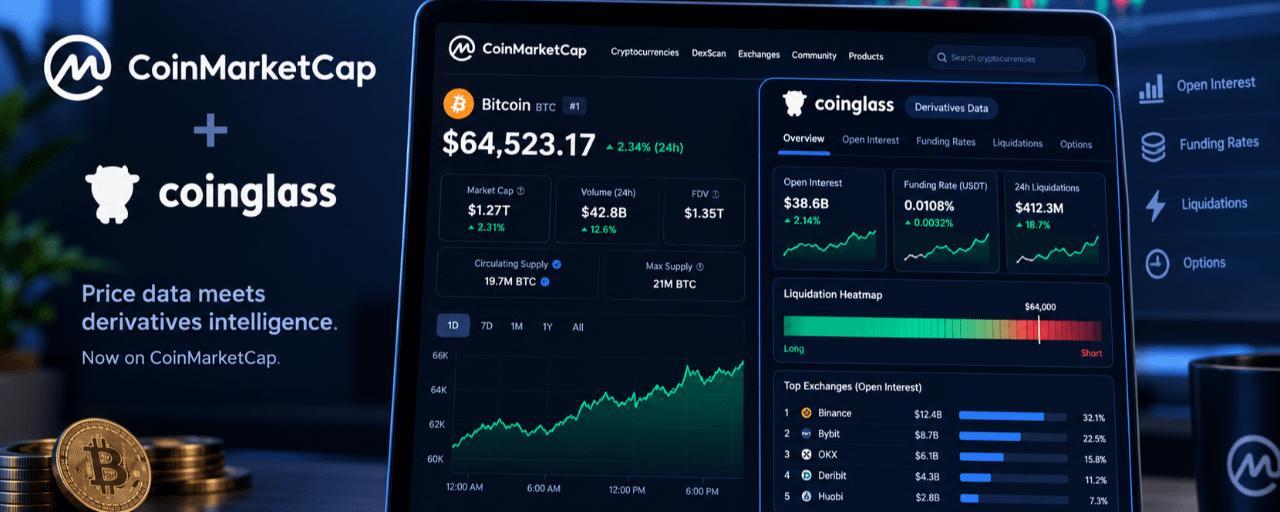
CoinMarketCap, the crypto industry's most-referenced price tracker, just completed an acquisition that pulls one of the market's most-watched analytics platforms directly onto its home turf.
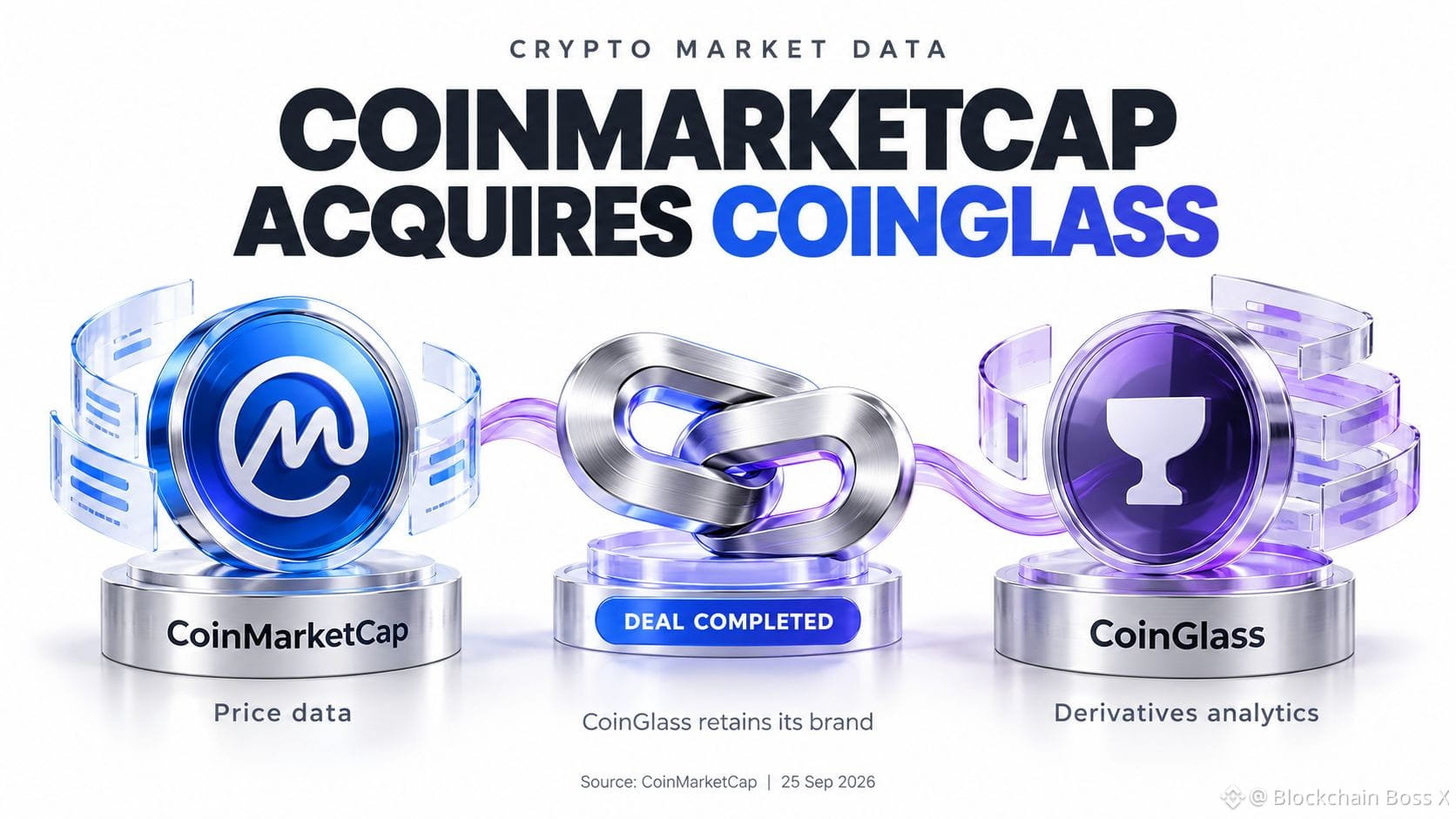
Here's what happened: on September 25, CoinMarketCap announced it had finalized its acquisition of Coinglass, the derivatives data platform widely used for tracking open interest, funding rates, liquidations, and options. Coinglass, founded in 2019, covers 28 exchanges and more than 2,500 trading instruments, serving over 5 million monthly users and more than 10,000 API clients. The deal's financial terms weren't disclosed. Notably, Coinglass will continue operating as an independent business under its own brand — its website, app, free tools, API, and pricing structure are staying unchanged, according to statements from both companies. The integration will bring Coinglass's derivatives data directly into CoinMarketCap's platform, giving its roughly 115 million monthly users a view of leveraged positioning, liquidation clustering, and funding-rate movement alongside the price data they already check. It's also worth noting CoinMarketCap has been owned by Binance since 2020, with the company stating it has no influence over platform rankings.
Why does this matter? Derivatives trading accounts for the majority of overall crypto trading volume, yet that side of the market has historically required visiting a specialized platform to actually see it. Folding that data into the world's most-used price tracker could meaningfully lower the barrier for everyday traders to understand leverage-driven dynamics — where risk is concentrated, how sentiment is shifting through funding rates — without needing multiple tabs open. For an industry increasingly focused on transparency and accessible market data, consolidating fragmented tools under more widely used platforms is a trend that's shown up across several parts of crypto infrastructure this year.
Whether this changes user behavior meaningfully, or simply adds a convenient feature most people scroll past, will likely depend on how visibly the data gets surfaced going forward.
Does having derivatives data built right into your price tracker change how casual traders actually use that information? 🤔
#CoinMarketCap #coinglass #CryptoData #DerivativesMarket
$PHA $ARK $MUBARAK
{future}(MUBARAKUSDT)
{future}(ARKUSDT)
{future}(PHAUSDT)
Your Price-Tracking App Just Got a Derivatives Upgrade
#coinmarketcapcompletescoinglassacquisition
CoinMarketCap, the crypto industry's most-referenced price tracker, just completed an acquisition that pulls one of the market's most-watched analytics platforms directly onto its home turf.
Here's what happened: on September 25, CoinMarketCap announced it had finalized its acquisition of Coinglass, the derivatives data platform widely used for tracking open interest, funding rates, liquidations, and options. Coinglass, founded in 2019, covers 28 exchanges and more than 2,500 trading instruments, serving over 5 million monthly users and more than 10,000 API clients. The deal's financial terms weren't disclosed. Notably, Coinglass will continue operating as an independent business under its own brand — its website, app, free tools, API, and pricing structure are staying unchanged, according to statements from both companies. The integration will bring Coinglass's derivatives data directly into CoinMarketCap's platform, giving its roughly 115 million monthly users a view of leveraged positioning, liquidation clustering, and funding-rate movement alongside the price data they already check. It's also worth noting CoinMarketCap has been owned by Binance since 2020, with the company stating it has no influence over platform rankings.
Why does this matter? Derivatives trading accounts for the majority of overall crypto trading volume, yet that side of the market has historically required visiting a specialized platform to actually see it. Folding that data into the world's most-used price tracker could meaningfully lower the barrier for everyday traders to understand leverage-driven dynamics — where risk is concentrated, how sentiment is shifting through funding rates — without needing multiple tabs open. For an industry increasingly focused on transparency and accessible market data, consolidating fragmented tools under more widely used platforms is a trend that's shown up across several parts of crypto infrastructure this year.
Whether this changes user behavior meaningfully, or simply adds a convenient feature most people scroll past, will likely depend on how visibly the data gets surfaced going forward.
Does having derivatives data built right into your price tracker change how casual traders actually use that information? 🤔
#CoinMarketCap #coinglass #CryptoData #DerivativesMarket
$PHA $ARK $MUBARAK
CoinMarketCap, the crypto industry's most-referenced price tracker, just completed an acquisition that pulls one of the market's most-watched analytics platforms directly onto its home turf.
Here's what happened: on September 25, CoinMarketCap announced it had finalized its acquisition of Coinglass, the derivatives data platform widely used for tracking open interest, funding rates, liquidations, and options. Coinglass, founded in 2019, covers 28 exchanges and more than 2,500 trading instruments, serving over 5 million monthly users and more than 10,000 API clients. The deal's financial terms weren't disclosed. Notably, Coinglass will continue operating as an independent business under its own brand — its website, app, free tools, API, and pricing structure are staying unchanged, according to statements from both companies. The integration will bring Coinglass's derivatives data directly into CoinMarketCap's platform, giving its roughly 115 million monthly users a view of leveraged positioning, liquidation clustering, and funding-rate movement alongside the price data they already check. It's also worth noting CoinMarketCap has been owned by Binance since 2020, with the company stating it has no influence over platform rankings.
Why does this matter? Derivatives trading accounts for the majority of overall crypto trading volume, yet that side of the market has historically required visiting a specialized platform to actually see it. Folding that data into the world's most-used price tracker could meaningfully lower the barrier for everyday traders to understand leverage-driven dynamics — where risk is concentrated, how sentiment is shifting through funding rates — without needing multiple tabs open. For an industry increasingly focused on transparency and accessible market data, consolidating fragmented tools under more widely used platforms is a trend that's shown up across several parts of crypto infrastructure this year.
Whether this changes user behavior meaningfully, or simply adds a convenient feature most people scroll past, will likely depend on how visibly the data gets surfaced going forward.
Does having derivatives data built right into your price tracker change how casual traders actually use that information? 🤔
#CoinMarketCap #coinglass #CryptoData #DerivativesMarket
$PHA $ARK $MUBARAK
شرف الدين فضل الله الفادني:
😂
1
5
5.6k

·
--
Verified
#coinmarketcapcompletescoinglassacquisition
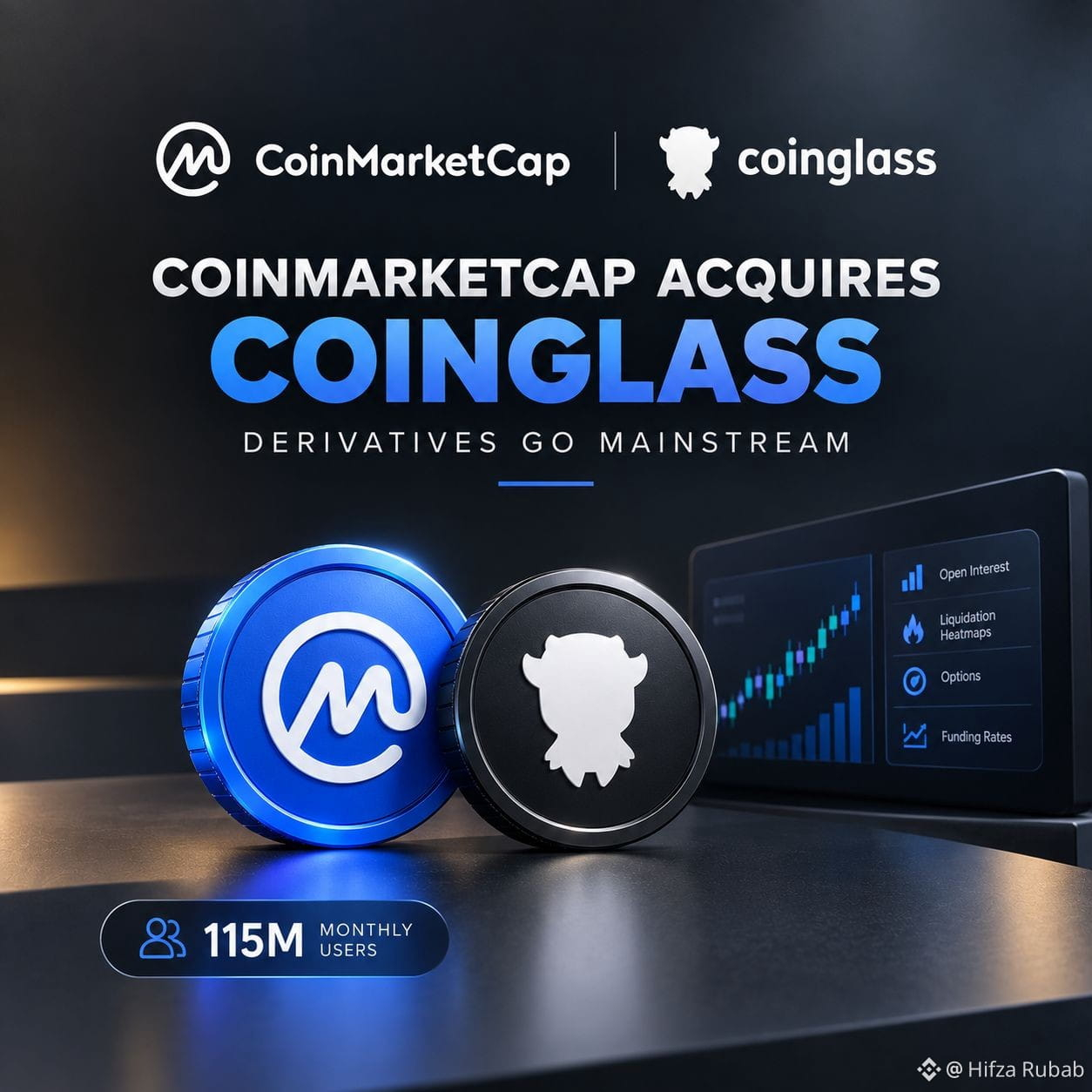
🚨 COINMARKETCAP ACQUIRES COINGLASS: DERIVATIVES GO MAINSTREAM! 📊⚡
CoinMarketCap has finalized its acquisition of Coinglass, bringing institutional-grade derivatives analytics directly to 115M monthly users! 🌐✨
💡 Key Acquisition Takeaways:
🔹 Data Integration: Open interest, liquidation heatmaps, options, and funding rates will now sit alongside spot price charts! 📈
🔹 Independent Operations: Coinglass continues operating as its own brand with unchanged free tools, app, and API pricing! 🛠️
🔹 Leveling the Playing Field: Gives everyday traders instant access to leveraged market dynamics without needing specialized multi-tab setups! 🚀
🎯 2 Key Tokens to Watch:
🛡️ $PHA — Privacy-preserving AI & compute layer bridging complex cross-chain analytics and decentralized data processing! 🔐⚡
⚡ $ARK — Interoperability network simplifying cross-chain communications and decentralized data infrastructure for Web3! 🌐📈
Will native derivatives data change your daily trading habits, or do you prefer simple spot charts? Drop your thoughts below! 👇✨
#CoinMarketCapCompletesCoinglassAcquisition
#CircleMints500MUSDCOnSolana
#BlackRockBuildsTokenizedPortfoliosForOndo
#SECCommissionerPeirceToLeaveOct2
{spot}(ARKUSDT)
{spot}(PHAUSDT)
#coinmarketcapcompletescoinglassacquisition
🚨 COINMARKETCAP ACQUIRES COINGLASS: DERIVATIVES GO MAINSTREAM! 📊⚡
CoinMarketCap has finalized its acquisition of Coinglass, bringing institutional-grade derivatives analytics directly to 115M monthly users! 🌐✨
💡 Key Acquisition Takeaways:
🔹 Data Integration: Open interest, liquidation heatmaps, options, and funding rates will now sit alongside spot price charts! 📈
🔹 Independent Operations: Coinglass continues operating as its own brand with unchanged free tools, app, and API pricing! 🛠️
🔹 Leveling the Playing Field: Gives everyday traders instant access to leveraged market dynamics without needing specialized multi-tab setups! 🚀
🎯 2 Key Tokens to Watch:
🛡️ $PHA — Privacy-preserving AI & compute layer bridging complex cross-chain analytics and decentralized data processing! 🔐⚡
⚡ $ARK — Interoperability network simplifying cross-chain communications and decentralized data infrastructure for Web3! 🌐📈
Will native derivatives data change your daily trading habits, or do you prefer simple spot charts? Drop your thoughts below! 👇✨
#CoinMarketCapCompletesCoinglassAcquisition
#CircleMints500MUSDCOnSolana
#BlackRockBuildsTokenizedPortfoliosForOndo
#SECCommissionerPeirceToLeaveOct2
🚨 COINMARKETCAP ACQUIRES COINGLASS: DERIVATIVES GO MAINSTREAM! 📊⚡
CoinMarketCap has finalized its acquisition of Coinglass, bringing institutional-grade derivatives analytics directly to 115M monthly users! 🌐✨
💡 Key Acquisition Takeaways:
🔹 Data Integration: Open interest, liquidation heatmaps, options, and funding rates will now sit alongside spot price charts! 📈
🔹 Independent Operations: Coinglass continues operating as its own brand with unchanged free tools, app, and API pricing! 🛠️
🔹 Leveling the Playing Field: Gives everyday traders instant access to leveraged market dynamics without needing specialized multi-tab setups! 🚀
🎯 2 Key Tokens to Watch:
🛡️ $PHA — Privacy-preserving AI & compute layer bridging complex cross-chain analytics and decentralized data processing! 🔐⚡
⚡ $ARK — Interoperability network simplifying cross-chain communications and decentralized data infrastructure for Web3! 🌐📈
Will native derivatives data change your daily trading habits, or do you prefer simple spot charts? Drop your thoughts below! 👇✨
#CoinMarketCapCompletesCoinglassAcquisition
#CircleMints500MUSDCOnSolana
#BlackRockBuildsTokenizedPortfoliosForOndo
#SECCommissionerPeirceToLeaveOct2
M REHAN7:
CMC + Coinglass = Game changer for traders! 115M users getting access to pro derivatives analytics. This will bring more retail into futures trading. Are you bullish on this for overall crypto adoption? I think this is big for $BTC and $ETH volume 👇
4
2
1.1k

#coinmarketcapcompletescoinglassacquisition#CoinMarketCapCompletesCoinglassAcquisition exchange coverage, refresh times and whether useful tools remain accessible. The acquisition is complete; the practical benefits still need to be demonstrated through the product.
For traders, the real win would be clearer explanations of what the numbers measure and where their limitations begin.
Which matters most to you: deeper integration, data accuracy or keeping free tools available?exchange coverage, refresh times and whether useful tools remain accessible. The acquisition is complete; the practical benefits still need to be demonstrated through the product.
For traders, the real win would be clearer explanations of what the numbers measure and where their limitations begin.
Which matters most to you: deeper integration, data accuracy or keeping free tools available?exchange coverage, refresh times and whether useful tools remain accessible. The acquisition is complete; the practical benefits still need to be demonstrated through the product.
For traders, the real win would be clearer explanations of what the numbers measure and where their limitations begin.
Which matters most to you: deeper integration, data accuracy or keeping free tools available?
CoinMarketCap Acquires CoinGlass: What Changes for Crypto Traders?
Crypto price charts only show part of the story. To truly understand market movements and positioning, derivatives data provides essential context.
On September 25, CoinMarketCap (CMC) confirmed its acquisition of crypto derivatives data platform CoinGlass. The purchase price was not disclosed. CoinGlass is widely known for tracking open interest, funding rates, liquidations, and options data across major exchanges.
What Changes for Users?
According to the announcement, CoinGlass will continue operating independently under its existing brand:
Its website, mobile app, free tools, API, and pricing structure will remain completely unchanged.
The original CoinGlass team will continue developing and improving the product.
My Take:
The biggest opportunity here is easier access to market context. Bringing price tracking and derivatives analytics closer together can help traders ask better questions before treating every sharp market move as a lasting trend.
However, a bigger distribution network doesn’t automatically mean better data. I would judge this acquisition's success based on:
Transparent methodology
Exchange coverage
Data refresh times
Continued accessibility of useful tools
For traders, the real win will be clearer explanations of what these numbers actually measure and where their limitations begin.
💬 Which matters most to you?
Deeper integration
Data accuracy, or
Keeping free tools available?
Drop your thoughts in the comments below! 👇
#CoinMarketCapCompletesCoinglassAcquisition #CoinMarketCap #coinglass
$PHA $QI $ARK
#coinmarketcapcompletescoinglassacquisition
#CoinMarketCapCompletesCoinglassAcquisition exchange coverage, refresh times and whether useful tools remain accessible. The acquisition is complete; the practical benefits still need to be demonstrated through the product.
For traders, the real win would be clearer explanations of what the numbers measure and where their limitations begin.
Which matters most to you: deeper integration, data accuracy or keeping free tools available?exchange coverage, refresh times and whether useful tools remain accessible. The acquisition is complete; the practical benefits still need to be demonstrated through the product.
For traders, the real win would be clearer explanations of what the numbers measure and where their limitations begin.
Which matters most to you: deeper integration, data accuracy or keeping free tools available?exchange coverage, refresh times and whether useful tools remain accessible. The acquisition is complete; the practical benefits still need to be demonstrated through the product.
For traders, the real win would be clearer explanations of what the numbers measure and where their limitations begin.
Which matters most to you: deeper integration, data accuracy or keeping free tools available?
CoinMarketCap Acquires CoinGlass: What Changes for Crypto Traders?
Crypto price charts only show part of the story. To truly understand market movements and positioning, derivatives data provides essential context.
On September 25, CoinMarketCap (CMC) confirmed its acquisition of crypto derivatives data platform CoinGlass. The purchase price was not disclosed. CoinGlass is widely known for tracking open interest, funding rates, liquidations, and options data across major exchanges.
What Changes for Users?
According to the announcement, CoinGlass will continue operating independently under its existing brand:
Its website, mobile app, free tools, API, and pricing structure will remain completely unchanged.
The original CoinGlass team will continue developing and improving the product.
My Take:
The biggest opportunity here is easier access to market context. Bringing price tracking and derivatives analytics closer together can help traders ask better questions before treating every sharp market move as a lasting trend.
However, a bigger distribution network doesn’t automatically mean better data. I would judge this acquisition's success based on:
Transparent methodology
Exchange coverage
Data refresh times
Continued accessibility of useful tools
For traders, the real win will be clearer explanations of what these numbers actually measure and where their limitations begin.
💬 Which matters most to you?
Deeper integration
Data accuracy, or
Keeping free tools available?
Drop your thoughts in the comments below! 👇
#CoinMarketCapCompletesCoinglassAcquisition #CoinMarketCap #coinglass
$PHA $QI $ARK
For traders, the real win would be clearer explanations of what the numbers measure and where their limitations begin.
Which matters most to you: deeper integration, data accuracy or keeping free tools available?exchange coverage, refresh times and whether useful tools remain accessible. The acquisition is complete; the practical benefits still need to be demonstrated through the product.
For traders, the real win would be clearer explanations of what the numbers measure and where their limitations begin.
Which matters most to you: deeper integration, data accuracy or keeping free tools available?exchange coverage, refresh times and whether useful tools remain accessible. The acquisition is complete; the practical benefits still need to be demonstrated through the product.
For traders, the real win would be clearer explanations of what the numbers measure and where their limitations begin.
Which matters most to you: deeper integration, data accuracy or keeping free tools available?
CoinMarketCap Acquires CoinGlass: What Changes for Crypto Traders?
Crypto price charts only show part of the story. To truly understand market movements and positioning, derivatives data provides essential context.
On September 25, CoinMarketCap (CMC) confirmed its acquisition of crypto derivatives data platform CoinGlass. The purchase price was not disclosed. CoinGlass is widely known for tracking open interest, funding rates, liquidations, and options data across major exchanges.
What Changes for Users?
According to the announcement, CoinGlass will continue operating independently under its existing brand:
Its website, mobile app, free tools, API, and pricing structure will remain completely unchanged.
The original CoinGlass team will continue developing and improving the product.
My Take:
The biggest opportunity here is easier access to market context. Bringing price tracking and derivatives analytics closer together can help traders ask better questions before treating every sharp market move as a lasting trend.
However, a bigger distribution network doesn’t automatically mean better data. I would judge this acquisition's success based on:
Transparent methodology
Exchange coverage
Data refresh times
Continued accessibility of useful tools
For traders, the real win will be clearer explanations of what these numbers actually measure and where their limitations begin.
💬 Which matters most to you?
Deeper integration
Data accuracy, or
Keeping free tools available?
Drop your thoughts in the comments below! 👇
#CoinMarketCapCompletesCoinglassAcquisition #CoinMarketCap #coinglass
$PHA $QI $ARK
1
406

·
--
Bearish
Verified
#coinmarketcapcompletescoinglassacquisition 📊 CoinMarketCap Completes Acquisition of CoinGlass A New Era for Crypto Derivatives Data
The world’s most-referenced crypto price tracker just took a major step forward in derivatives analytics. CoinMarketCap has officially acquired CoinGlass, bringing advanced market data tools under one roof.
📰 Core News
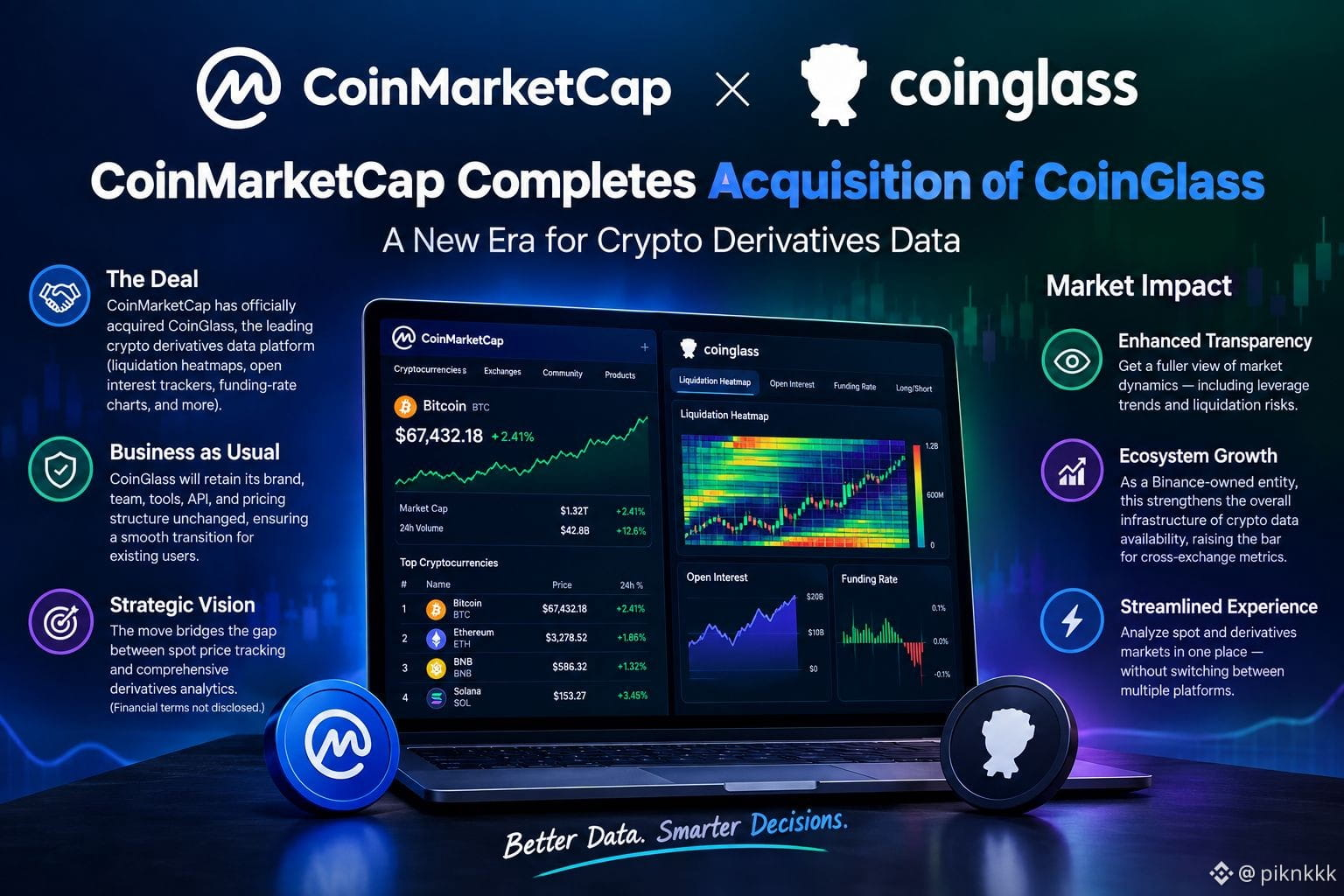
• 🤝 The Deal CoinMarketCap has completed its acquisition of CoinGlass, the leading crypto derivatives data platform known for its liquidation heatmaps, open interest trackers, and funding-rate charts [[2]].
• 🔒 Business as Usual CoinGlass will retain its brand, team, tools, API, and pricing structure unchanged, ensuring a smooth transition for existing users [[5]].
• 📈 Strategic Vision While financial terms were not disclosed, the move strategically bridges the gap between spot price tracking and comprehensive derivatives analytics [[4]].
🌍 Market Impact
• 🔍 Enhanced Transparency Integrating CoinGlass’s robust derivatives data into CoinMarketCap’s ecosystem provides traders with a more holistic view of market dynamics, including leverage trends and liquidation risks.
• 🌐 Ecosystem Growth As a Binance-owned entity, this acquisition strengthens the overall infrastructure of crypto data availability, setting a higher standard for how users access cross-exchange derivatives metrics.
• 📊 Streamlined Experience Traders can expect a more seamless workflow when analyzing both spot and derivatives markets without needing to switch between multiple platforms.
💬 Join the Discussion
How do you think this integration will change the way you track market trends? Will having derivatives data directly alongside spot prices improve your analytical workflow? Let’s discuss below! 👇
#CoinMarketCap #CoinGlass #CryptoData #Derivatives #MarketAnalysis
This is for educational purposes only. Not Financial Advice (NFA). Always Do Your Own Research (DYOR).
$SAGA $COTI $YB
{future}(YBUSDT)
{future}(COTIUSDT)
{future}(SAGAUSDT)
#coinmarketcapcompletescoinglassacquisition 📊 CoinMarketCap Completes Acquisition of CoinGlass A New Era for Crypto Derivatives Data
The world’s most-referenced crypto price tracker just took a major step forward in derivatives analytics. CoinMarketCap has officially acquired CoinGlass, bringing advanced market data tools under one roof.
📰 Core News
• 🤝 The Deal CoinMarketCap has completed its acquisition of CoinGlass, the leading crypto derivatives data platform known for its liquidation heatmaps, open interest trackers, and funding-rate charts [[2]].
• 🔒 Business as Usual CoinGlass will retain its brand, team, tools, API, and pricing structure unchanged, ensuring a smooth transition for existing users [[5]].
• 📈 Strategic Vision While financial terms were not disclosed, the move strategically bridges the gap between spot price tracking and comprehensive derivatives analytics [[4]].
🌍 Market Impact
• 🔍 Enhanced Transparency Integrating CoinGlass’s robust derivatives data into CoinMarketCap’s ecosystem provides traders with a more holistic view of market dynamics, including leverage trends and liquidation risks.
• 🌐 Ecosystem Growth As a Binance-owned entity, this acquisition strengthens the overall infrastructure of crypto data availability, setting a higher standard for how users access cross-exchange derivatives metrics.
• 📊 Streamlined Experience Traders can expect a more seamless workflow when analyzing both spot and derivatives markets without needing to switch between multiple platforms.
💬 Join the Discussion
How do you think this integration will change the way you track market trends? Will having derivatives data directly alongside spot prices improve your analytical workflow? Let’s discuss below! 👇
#CoinMarketCap #CoinGlass #CryptoData #Derivatives #MarketAnalysis
This is for educational purposes only. Not Financial Advice (NFA). Always Do Your Own Research (DYOR).
$SAGA $COTI $YB
The world’s most-referenced crypto price tracker just took a major step forward in derivatives analytics. CoinMarketCap has officially acquired CoinGlass, bringing advanced market data tools under one roof.
📰 Core News
• 🤝 The Deal CoinMarketCap has completed its acquisition of CoinGlass, the leading crypto derivatives data platform known for its liquidation heatmaps, open interest trackers, and funding-rate charts [[2]].
• 🔒 Business as Usual CoinGlass will retain its brand, team, tools, API, and pricing structure unchanged, ensuring a smooth transition for existing users [[5]].
• 📈 Strategic Vision While financial terms were not disclosed, the move strategically bridges the gap between spot price tracking and comprehensive derivatives analytics [[4]].
🌍 Market Impact
• 🔍 Enhanced Transparency Integrating CoinGlass’s robust derivatives data into CoinMarketCap’s ecosystem provides traders with a more holistic view of market dynamics, including leverage trends and liquidation risks.
• 🌐 Ecosystem Growth As a Binance-owned entity, this acquisition strengthens the overall infrastructure of crypto data availability, setting a higher standard for how users access cross-exchange derivatives metrics.
• 📊 Streamlined Experience Traders can expect a more seamless workflow when analyzing both spot and derivatives markets without needing to switch between multiple platforms.
💬 Join the Discussion
How do you think this integration will change the way you track market trends? Will having derivatives data directly alongside spot prices improve your analytical workflow? Let’s discuss below! 👇
#CoinMarketCap #CoinGlass #CryptoData #Derivatives #MarketAnalysis
This is for educational purposes only. Not Financial Advice (NFA). Always Do Your Own Research (DYOR).
$SAGA $COTI $YB
1
2.2k

·
--
Verified
#coinmarketcapcompletescoinglassacquisition 🚨 COINMARKETCAP HAS JUST RECEIVED A DERIVATIVES UPGRADE
This could change the way traders watch the crypto market. 👀
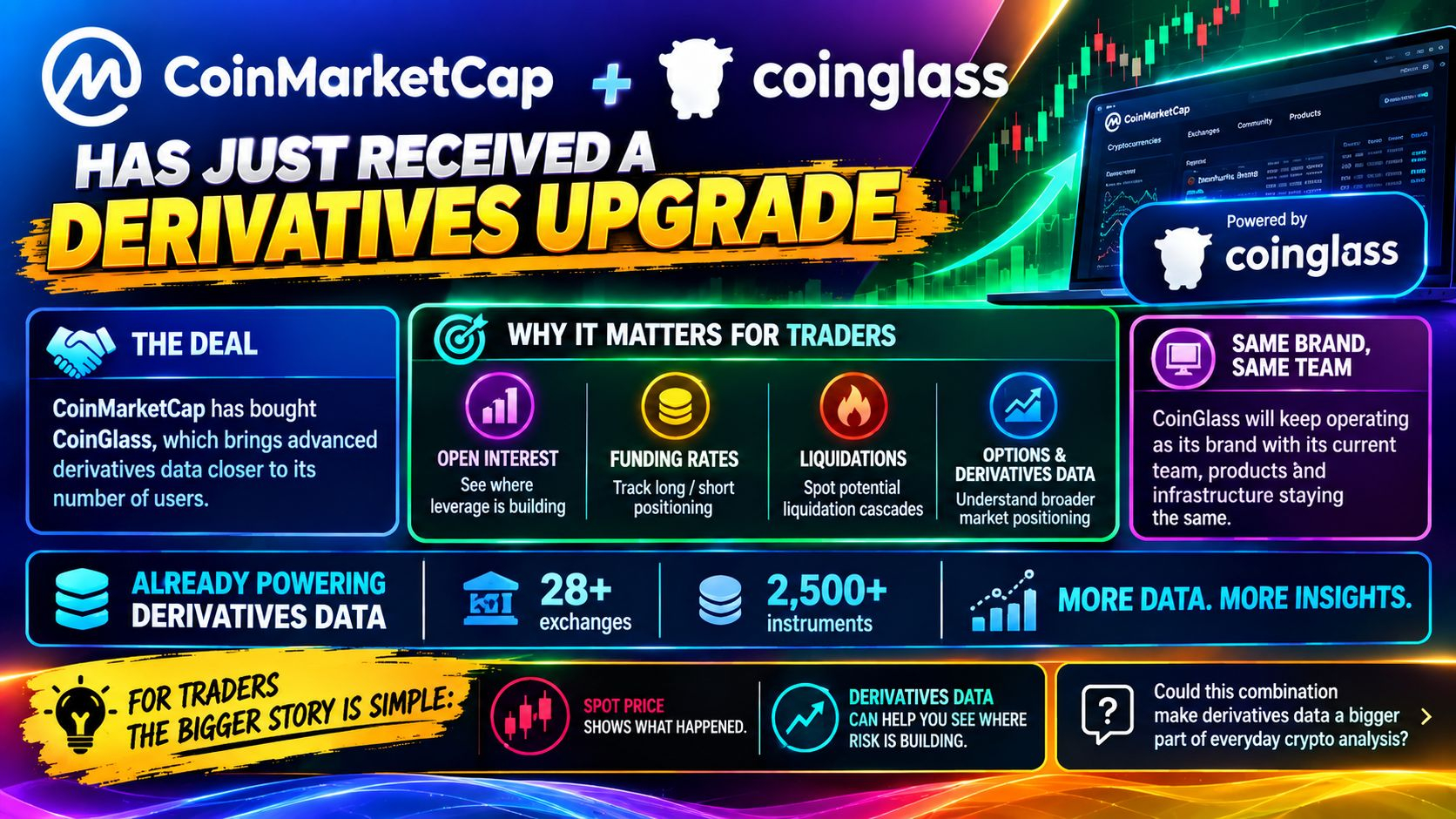
CoinMarketCap has bought CoinGlass, which brings advanced derivatives data closer to its number of users.
Why does this matter for traders?
📊 Open Interest. See where leverage is building
💰 Funding Rates. Track /short positioning
🔥 Liquidations. Spot potential liquidation cascades
📈 Options & derivatives data. Understand broader market positioning
The interesting part is that CoinGlass will keep operating as its brand with its current team, products and infrastructure staying the same.
CoinGlass already gathers derivatives data from 28 exchanges and more, than 2,500 instruments.
For traders the bigger story is simple:
Spot price shows what happened. Derivatives data can help you see where risk is building.
Could this combination make derivatives data a bigger part of everyday crypto analysis? 👇
#Khan62 #bitcoin #TradingSignals #CoinMarketCap #CoinGlass
{future}(BNBUSDT)
$BNB $CAKE $UNI
{future}(UNIUSDT)
{future}(CAKEUSDT)
#coinmarketcapcompletescoinglassacquisition 🚨 COINMARKETCAP HAS JUST RECEIVED A DERIVATIVES UPGRADE
This could change the way traders watch the crypto market. 👀
CoinMarketCap has bought CoinGlass, which brings advanced derivatives data closer to its number of users.
Why does this matter for traders?
📊 Open Interest. See where leverage is building
💰 Funding Rates. Track /short positioning
🔥 Liquidations. Spot potential liquidation cascades
📈 Options & derivatives data. Understand broader market positioning
The interesting part is that CoinGlass will keep operating as its brand with its current team, products and infrastructure staying the same.
CoinGlass already gathers derivatives data from 28 exchanges and more, than 2,500 instruments.
For traders the bigger story is simple:
Spot price shows what happened. Derivatives data can help you see where risk is building.
Could this combination make derivatives data a bigger part of everyday crypto analysis? 👇
#Khan62 #bitcoin #TradingSignals #CoinMarketCap #CoinGlass
$BNB $CAKE $UNI
This could change the way traders watch the crypto market. 👀
CoinMarketCap has bought CoinGlass, which brings advanced derivatives data closer to its number of users.
Why does this matter for traders?
📊 Open Interest. See where leverage is building
💰 Funding Rates. Track /short positioning
🔥 Liquidations. Spot potential liquidation cascades
📈 Options & derivatives data. Understand broader market positioning
The interesting part is that CoinGlass will keep operating as its brand with its current team, products and infrastructure staying the same.
CoinGlass already gathers derivatives data from 28 exchanges and more, than 2,500 instruments.
For traders the bigger story is simple:
Spot price shows what happened. Derivatives data can help you see where risk is building.
Could this combination make derivatives data a bigger part of everyday crypto analysis? 👇
#Khan62 #bitcoin #TradingSignals #CoinMarketCap #CoinGlass
$BNB $CAKE $UNI
1
1.9k


·
--
Bullish
Verified
#coinmarketcapcompletescoinglassacquisition
CoinMarketCap Acquires CoinGlass: What Changes for Crypto Traders?
Crypto prices show the move. Derivatives data can add context about the positioning around it.
On September 25, CoinMarketCap confirmed it had completed its acquisition of CoinGlass. The purchase price was not disclosed. CoinGlass tracks open interest, funding rates, liquidations and options across major exchanges.
What changes for users? According to the announcement, CoinGlass will continue operating independently under its existing brand. Its website, app, free tools, API and pricing remain unchanged, and its team will continue developing the product.
My take: The opportunity is easier access to market context. Bringing price tracking and derivatives analytics closer together could help users ask better questions before treating every sharp move as a lasting trend.
A bigger distribution network does not automatically mean better data. I would judge this deal by transparent methodology, exchange coverage, refresh times and whether useful tools remain accessible. The acquisition is complete; the practical benefits still need to be demonstrated through the product.
For traders, the real win would be clearer explanations of what the numbers measure and where their limitations begin.
Which matters most to you: deeper integration, data accuracy or keeping free tools available?
#CoinMarketCapCompletesCoinglassAcquisition #CoinMarketCap #coinglass
$PHA $QI $ARK
{future}(ARKUSDT)
{spot}(QIUSDT)
{future}(PHAUSDT)
#coinmarketcapcompletescoinglassacquisition
CoinMarketCap Acquires CoinGlass: What Changes for Crypto Traders?
Crypto prices show the move. Derivatives data can add context about the positioning around it.
On September 25, CoinMarketCap confirmed it had completed its acquisition of CoinGlass. The purchase price was not disclosed. CoinGlass tracks open interest, funding rates, liquidations and options across major exchanges.
What changes for users? According to the announcement, CoinGlass will continue operating independently under its existing brand. Its website, app, free tools, API and pricing remain unchanged, and its team will continue developing the product.
My take: The opportunity is easier access to market context. Bringing price tracking and derivatives analytics closer together could help users ask better questions before treating every sharp move as a lasting trend.
A bigger distribution network does not automatically mean better data. I would judge this deal by transparent methodology, exchange coverage, refresh times and whether useful tools remain accessible. The acquisition is complete; the practical benefits still need to be demonstrated through the product.
For traders, the real win would be clearer explanations of what the numbers measure and where their limitations begin.
Which matters most to you: deeper integration, data accuracy or keeping free tools available?
#CoinMarketCapCompletesCoinglassAcquisition #CoinMarketCap #coinglass
$PHA $QI $ARK
CoinMarketCap Acquires CoinGlass: What Changes for Crypto Traders?
Crypto prices show the move. Derivatives data can add context about the positioning around it.
On September 25, CoinMarketCap confirmed it had completed its acquisition of CoinGlass. The purchase price was not disclosed. CoinGlass tracks open interest, funding rates, liquidations and options across major exchanges.
What changes for users? According to the announcement, CoinGlass will continue operating independently under its existing brand. Its website, app, free tools, API and pricing remain unchanged, and its team will continue developing the product.
My take: The opportunity is easier access to market context. Bringing price tracking and derivatives analytics closer together could help users ask better questions before treating every sharp move as a lasting trend.
A bigger distribution network does not automatically mean better data. I would judge this deal by transparent methodology, exchange coverage, refresh times and whether useful tools remain accessible. The acquisition is complete; the practical benefits still need to be demonstrated through the product.
For traders, the real win would be clearer explanations of what the numbers measure and where their limitations begin.
Which matters most to you: deeper integration, data accuracy or keeping free tools available?
#CoinMarketCapCompletesCoinglassAcquisition #CoinMarketCap #coinglass
$PHA $QI $ARK
ritkkkkkk:
Liquidation maps are one of CoinGlass's most watched tools.
Wonder if CMC will show them next to price data, so more traders see where forced exits sit before they size a trade.
1
4
5.1k

·
--
Verified
CoinMarketCap Just Got a Lot More Powerful 👀
CoinMarketCap has completed its acquisition of CoinGlass, bringing open interest, funding rates, liquidations and options data into its crypto market-data ecosystem. Financial terms weren't disclosed.
CoinGlass covers 28 exchanges and more than 2,500 instruments, while CoinMarketCap says its platform reaches 115 million users monthly. That means derivatives positioning could become much easier to access alongside the spot prices traders already track. 📊
CoinGlass will keep its brand, team, website, app, API and pricing unchanged. The deal is essentially putting spot and derivatives data much closer together.
#CoinMarketCapCompletesCoinglassAcquisition
CoinMarketCap Just Got a Lot More Powerful 👀
CoinMarketCap has completed its acquisition of CoinGlass, bringing open interest, funding rates, liquidations and options data into its crypto market-data ecosystem. Financial terms weren't disclosed.
CoinGlass covers 28 exchanges and more than 2,500 instruments, while CoinMarketCap says its platform reaches 115 million users monthly. That means derivatives positioning could become much easier to access alongside the spot prices traders already track. 📊
CoinGlass will keep its brand, team, website, app, API and pricing unchanged. The deal is essentially putting spot and derivatives data much closer together.
#CoinMarketCapCompletesCoinglassAcquisition
CoinMarketCap has completed its acquisition of CoinGlass, bringing open interest, funding rates, liquidations and options data into its crypto market-data ecosystem. Financial terms weren't disclosed.
CoinGlass covers 28 exchanges and more than 2,500 instruments, while CoinMarketCap says its platform reaches 115 million users monthly. That means derivatives positioning could become much easier to access alongside the spot prices traders already track. 📊
CoinGlass will keep its brand, team, website, app, API and pricing unchanged. The deal is essentially putting spot and derivatives data much closer together.
#CoinMarketCapCompletesCoinglassAcquisition
ritkkkkkk:
Liquidation data sitting next to price on CMC means way more traders will see where the big forced exits cluster.
Do you think that makes those levels even more crowded?
1
1
753

CoinMarketCap Just Got More PowerfulCoinMarketCap has officially completed its acquisition of CoinGlass. 👀
The interesting part for traders:
📊 Open interest
💰 Funding rates
🔥 Liquidations
📈 Options data
CoinGlass covers 28 exchanges and 2,500+ trading products, while its website, app, free tools, API and pricing remain unchanged.
For me, the real value is simple:
Price tells you what happened.
Derivatives data helps show what traders are positioned for.
Having both closer together could make market moves easier to understand — especially when leverage and liquidations are driving volatility.
I’ll be watching how this develops for $PHA $QI $ARK and the broader market.
#CoinMarketCapCompletesCoinglassAcquisition #CoinMarketCap #coinglass #PHA #QI #ARK #Crypto #CryptoTrading #Derivatives #BinanceSquare
{spot}(ARKUSDT)
{spot}(QIUSDT)
{spot}(PHAUSDT)
CoinMarketCap Just Got More Powerful
CoinMarketCap has officially completed its acquisition of CoinGlass. 👀
The interesting part for traders:
📊 Open interest
💰 Funding rates
🔥 Liquidations
📈 Options data
CoinGlass covers 28 exchanges and 2,500+ trading products, while its website, app, free tools, API and pricing remain unchanged.
For me, the real value is simple:
Price tells you what happened.
Derivatives data helps show what traders are positioned for.
Having both closer together could make market moves easier to understand — especially when leverage and liquidations are driving volatility.
I’ll be watching how this develops for $PHA $QI $ARK and the broader market.
#CoinMarketCapCompletesCoinglassAcquisition #CoinMarketCap #coinglass #PHA #QI #ARK #Crypto #CryptoTrading #Derivatives #BinanceSquare
The interesting part for traders:
📊 Open interest
💰 Funding rates
🔥 Liquidations
📈 Options data
CoinGlass covers 28 exchanges and 2,500+ trading products, while its website, app, free tools, API and pricing remain unchanged.
For me, the real value is simple:
Price tells you what happened.
Derivatives data helps show what traders are positioned for.
Having both closer together could make market moves easier to understand — especially when leverage and liquidations are driving volatility.
I’ll be watching how this develops for $PHA $QI $ARK and the broader market.
#CoinMarketCapCompletesCoinglassAcquisition #CoinMarketCap #coinglass #PHA #QI #ARK #Crypto #CryptoTrading #Derivatives #BinanceSquare
367

#CoinMarketCapCompletesCoinglassAcquisition CoinMarketCap has completed its acquisition of CoinGlass, expanding its crypto-market data coverage with derivatives metrics including open interest, funding rates, liquidations and options. The financial terms were not disclosed.
CoinGlass will continue operating under its existing brand, with its website, app, free tools, API, pricing and team remaining unchanged. The integration gives CoinMarketCap users deeper insight into leveraged market positioning alongside crypto prices.
#CoinMarketCap #CoinGlass #Crypto #CryptoNews $BTC
{spot}(BTCUSDT)
$ETH
{spot}(ETHUSDT)
$BNB
{spot}(BNBUSDT)
#CoinMarketCapCompletesCoinglassAcquisition CoinMarketCap has completed its acquisition of CoinGlass, expanding its crypto-market data coverage with derivatives metrics including open interest, funding rates, liquidations and options. The financial terms were not disclosed.
CoinGlass will continue operating under its existing brand, with its website, app, free tools, API, pricing and team remaining unchanged. The integration gives CoinMarketCap users deeper insight into leveraged market positioning alongside crypto prices.
#CoinMarketCap #CoinGlass #Crypto #CryptoNews $BTC
$ETH
$BNB
CoinGlass will continue operating under its existing brand, with its website, app, free tools, API, pricing and team remaining unchanged. The integration gives CoinMarketCap users deeper insight into leveraged market positioning alongside crypto prices.
#CoinMarketCap #CoinGlass #Crypto #CryptoNews $BTC
$ETH
$BNB
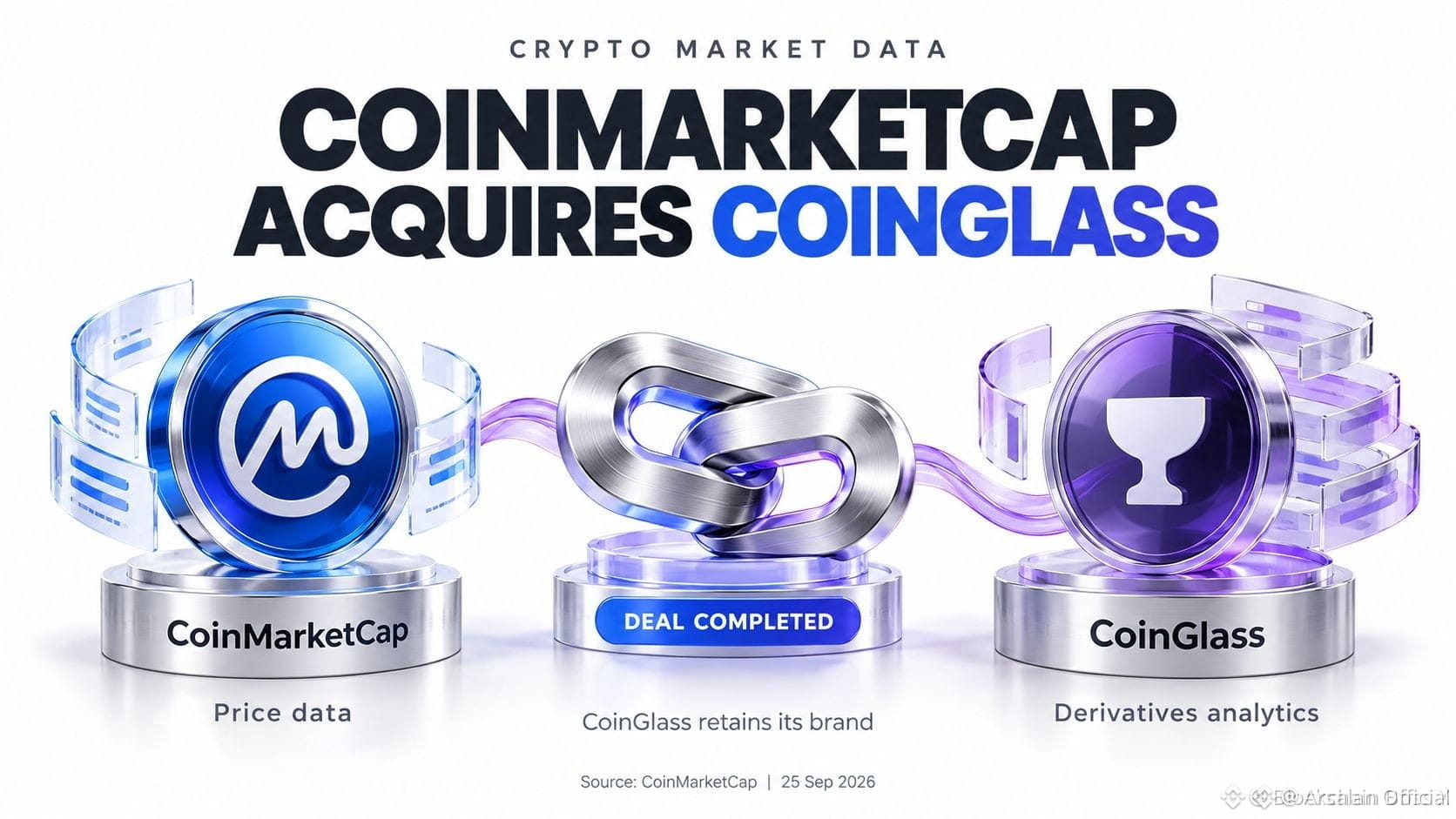
1
8

·
--
Verified
#coinmarketcapcompletescoinglassacquisition
#CoinMarketCapCompletesCoinglassAcquisition
Liquidation maps are becoming part of how traders plan.
In June, CryptoSlate described traders using CoinGlass liquidation maps and public address pages to watch a whale's forced-exit zones, and treating those levels as reference points for stops and hedges.
When liquidation levels are visible, they become part of everyone else's plan.
Do you check liquidation maps before opening a position? And would you want your own level on one?
#coinmarketcapcompletescoinglassacquisition
#CoinMarketCapCompletesCoinglassAcquisition
Liquidation maps are becoming part of how traders plan.
In June, CryptoSlate described traders using CoinGlass liquidation maps and public address pages to watch a whale's forced-exit zones, and treating those levels as reference points for stops and hedges.
When liquidation levels are visible, they become part of everyone else's plan.
Do you check liquidation maps before opening a position? And would you want your own level on one?
#CoinMarketCapCompletesCoinglassAcquisition
Liquidation maps are becoming part of how traders plan.
In June, CryptoSlate described traders using CoinGlass liquidation maps and public address pages to watch a whale's forced-exit zones, and treating those levels as reference points for stops and hedges.
When liquidation levels are visible, they become part of everyone else's plan.
Do you check liquidation maps before opening a position? And would you want your own level on one?
206 Atlas:
Visible liquidity invites stop hunts. I use them to gauge risk, not as blind entry signals.
1
1
1.1k

·
--
Bullish
Verified
#coinmarketcapcompletescoinglassacquisition
CoinMarketCap just swallowed Coinglass! Is this a mega monopoly or what? 🐋🍔
So, CoinMarketCap has officially completed the acquisition of derivatives data powerhouse Coinglass. Don't panic just yet! Coinglass will still operate as an independent brand, keeping its apps, free tools, and APIs untouched.
But let's be real: they are slowly buying up the whole crypto playground! 🎢
What should traders do? 🛠️
Keep calm & track Your favorite liquidations and open interest charts aren't going anywhere.Stay sharp: Centralized data means we need to double-check other independent sources. Don't put all your analytical eggs in one basket!
Disclaimer: This is personal opinion, not financial advice.
👇 Click and trade below to support me:
💰 $BNB
{future}(BNBUSDT)
| 💰 $BTC
{future}(BTCUSDT)
| 💰 $ETH
{future}(ETHUSDT)
📌 Referral Code: VINHTOCDO
🔗 Join Binance: [https://www.binance.com/register?ref=VINHTOCDO](https://www.binance.com/register?ref=VINHTOCDO)
#CoinMarketCap #coinglass #CryptoNews #CryptoAcquisition #VINHTOCDO #TradingData
#coinmarketcapcompletescoinglassacquisition
CoinMarketCap just swallowed Coinglass! Is this a mega monopoly or what? 🐋🍔
So, CoinMarketCap has officially completed the acquisition of derivatives data powerhouse Coinglass. Don't panic just yet! Coinglass will still operate as an independent brand, keeping its apps, free tools, and APIs untouched.
But let's be real: they are slowly buying up the whole crypto playground! 🎢
What should traders do? 🛠️
Keep calm & track Your favorite liquidations and open interest charts aren't going anywhere.Stay sharp: Centralized data means we need to double-check other independent sources. Don't put all your analytical eggs in one basket!
Disclaimer: This is personal opinion, not financial advice.
👇 Click and trade below to support me:
💰 $BNB
| 💰 $BTC
| 💰 $ETH
📌 Referral Code: VINHTOCDO
🔗 Join Binance: https://www.binance.com/register?ref=VINHTOCDO
#CoinMarketCap #coinglass #CryptoNews #CryptoAcquisition #VINHTOCDO #TradingData
CoinMarketCap just swallowed Coinglass! Is this a mega monopoly or what? 🐋🍔
So, CoinMarketCap has officially completed the acquisition of derivatives data powerhouse Coinglass. Don't panic just yet! Coinglass will still operate as an independent brand, keeping its apps, free tools, and APIs untouched.
But let's be real: they are slowly buying up the whole crypto playground! 🎢
What should traders do? 🛠️
Keep calm & track Your favorite liquidations and open interest charts aren't going anywhere.Stay sharp: Centralized data means we need to double-check other independent sources. Don't put all your analytical eggs in one basket!
Disclaimer: This is personal opinion, not financial advice.
👇 Click and trade below to support me:
💰 $BNB
| 💰 $BTC
| 💰 $ETH
📌 Referral Code: VINHTOCDO
🔗 Join Binance: https://www.binance.com/register?ref=VINHTOCDO
#CoinMarketCap #coinglass #CryptoNews #CryptoAcquisition #VINHTOCDO #TradingData

1
139

·
--
CoinMarketCap completes acquisition of CoinGlass|Leverage data is easier to see, not necessarily more reliable|When BTC hits 84,000, I’ll wait
My attitude is cautious observation—I won’t chase more BTC just because a data platform was acquired. On September 25, CoinMarketCap’s official announcement: it has completed the acquisition of derivatives data platform CoinGlass; the deal value was not disclosed. The latter covers 28 exchanges and more than 2,500 trading instruments, providing open interest, funding rates, liquidation and options data. The announcement also quotes CoinGlass as saying its brand, website, app, free tools, API, and pricing remain unchanged. Here, “acquisition completed” can be verified via official documents; claims like “after data integration it must be more accurate” and “funds will flow into Bitcoin as a result” are just speculation and can’t be written as facts.
Why do I put this within the BTC trading framework? Spot quotes tell me where trades are actually happening. Open interest and funding rates can add context about whether derivative positions are crowded. Putting them together makes it easier to view risk—but convenience doesn’t equal neutrality or certainty. Liquidation conventions across different exchanges, contract notional values, timestamp updates, and how outliers are handled are not consistent. A liquidation heatmap is also not a queue of orders that already got filled, nor is it a “magnet” that prices must inevitably hit. My independent view is that this acquisition changes information distribution, not BTC supply, ETF creations/redemptions, or on-chain settlement. The real effect needs to wait until product integration, methodology documentation, and cross-platform consistency can withstand verification before reassessing.
The market hasn’t given this acquisition headline an identifiable BTC rally of its own. As of the time of writing, Kraken’s BTC/USD is around $84,031, with a 24-hour high of about $84,315 and a low of about $83,352—still caught in a tight range. Attributing any single green candle to this acquisition lacks evidence. My key levels are the intraday high near 84,315 and the low near 83,350: only if it breaks above the former and holds there can we talk about a repair; if it breaks below the latter, it means my “defense while waiting” assessment must be re-evaluated. If trading volume keeps expanding, and spot plus derivatives contract data from different exchanges move in the same direction and pull back while holding, my reasons for staying on the sidelines will be weakened; if only the liquidation chart colors brighten while spot fails to follow through, I won’t take the trade.
If this were my own trading, I wouldn’t participate. Directionally, I’d only consider a small-spot long with a position limit of 0.3% of total capital, with no leverage. The entry trigger: two consecutive complete 15-minute candlesticks closing above $84,320; then a retest into the $84,150–$84,320 area without breaking it, and confirmation of trading volume and open interest using at least two independent data sources. If any element is missing, I’ll continue staying in cash. If triggered, I’d cut the position in half at $85,200 and close the remainder at $86,000. After entry, if a 15-minute close returns below $83,900, I’d cut in half first; if it touches $83,600, I’d stop out entirely. If it breaks below $83,350 before the trigger, I cancel this plan—I will never write a plan as though it has already been filled. #CoinMarketCapCompletesCoinglassAcquisition #BTC
The above is only my personal market observation and does not constitute investment advice.
CoinMarketCap completes acquisition of CoinGlass|Leverage data is easier to see, not necessarily more reliable|When BTC hits 84,000, I’ll wait
My attitude is cautious observation—I won’t chase more BTC just because a data platform was acquired. On September 25, CoinMarketCap’s official announcement: it has completed the acquisition of derivatives data platform CoinGlass; the deal value was not disclosed. The latter covers 28 exchanges and more than 2,500 trading instruments, providing open interest, funding rates, liquidation and options data. The announcement also quotes CoinGlass as saying its brand, website, app, free tools, API, and pricing remain unchanged. Here, “acquisition completed” can be verified via official documents; claims like “after data integration it must be more accurate” and “funds will flow into Bitcoin as a result” are just speculation and can’t be written as facts.
Why do I put this within the BTC trading framework? Spot quotes tell me where trades are actually happening. Open interest and funding rates can add context about whether derivative positions are crowded. Putting them together makes it easier to view risk—but convenience doesn’t equal neutrality or certainty. Liquidation conventions across different exchanges, contract notional values, timestamp updates, and how outliers are handled are not consistent. A liquidation heatmap is also not a queue of orders that already got filled, nor is it a “magnet” that prices must inevitably hit. My independent view is that this acquisition changes information distribution, not BTC supply, ETF creations/redemptions, or on-chain settlement. The real effect needs to wait until product integration, methodology documentation, and cross-platform consistency can withstand verification before reassessing.
The market hasn’t given this acquisition headline an identifiable BTC rally of its own. As of the time of writing, Kraken’s BTC/USD is around $84,031, with a 24-hour high of about $84,315 and a low of about $83,352—still caught in a tight range. Attributing any single green candle to this acquisition lacks evidence. My key levels are the intraday high near 84,315 and the low near 83,350: only if it breaks above the former and holds there can we talk about a repair; if it breaks below the latter, it means my “defense while waiting” assessment must be re-evaluated. If trading volume keeps expanding, and spot plus derivatives contract data from different exchanges move in the same direction and pull back while holding, my reasons for staying on the sidelines will be weakened; if only the liquidation chart colors brighten while spot fails to follow through, I won’t take the trade.
If this were my own trading, I wouldn’t participate. Directionally, I’d only consider a small-spot long with a position limit of 0.3% of total capital, with no leverage. The entry trigger: two consecutive complete 15-minute candlesticks closing above $84,320; then a retest into the $84,150–$84,320 area without breaking it, and confirmation of trading volume and open interest using at least two independent data sources. If any element is missing, I’ll continue staying in cash. If triggered, I’d cut the position in half at $85,200 and close the remainder at $86,000. After entry, if a 15-minute close returns below $83,900, I’d cut in half first; if it touches $83,600, I’d stop out entirely. If it breaks below $83,350 before the trigger, I cancel this plan—I will never write a plan as though it has already been filled. #CoinMarketCapCompletesCoinglassAcquisition #BTC
The above is only my personal market observation and does not constitute investment advice.
My attitude is cautious observation—I won’t chase more BTC just because a data platform was acquired. On September 25, CoinMarketCap’s official announcement: it has completed the acquisition of derivatives data platform CoinGlass; the deal value was not disclosed. The latter covers 28 exchanges and more than 2,500 trading instruments, providing open interest, funding rates, liquidation and options data. The announcement also quotes CoinGlass as saying its brand, website, app, free tools, API, and pricing remain unchanged. Here, “acquisition completed” can be verified via official documents; claims like “after data integration it must be more accurate” and “funds will flow into Bitcoin as a result” are just speculation and can’t be written as facts.
Why do I put this within the BTC trading framework? Spot quotes tell me where trades are actually happening. Open interest and funding rates can add context about whether derivative positions are crowded. Putting them together makes it easier to view risk—but convenience doesn’t equal neutrality or certainty. Liquidation conventions across different exchanges, contract notional values, timestamp updates, and how outliers are handled are not consistent. A liquidation heatmap is also not a queue of orders that already got filled, nor is it a “magnet” that prices must inevitably hit. My independent view is that this acquisition changes information distribution, not BTC supply, ETF creations/redemptions, or on-chain settlement. The real effect needs to wait until product integration, methodology documentation, and cross-platform consistency can withstand verification before reassessing.
The market hasn’t given this acquisition headline an identifiable BTC rally of its own. As of the time of writing, Kraken’s BTC/USD is around $84,031, with a 24-hour high of about $84,315 and a low of about $83,352—still caught in a tight range. Attributing any single green candle to this acquisition lacks evidence. My key levels are the intraday high near 84,315 and the low near 83,350: only if it breaks above the former and holds there can we talk about a repair; if it breaks below the latter, it means my “defense while waiting” assessment must be re-evaluated. If trading volume keeps expanding, and spot plus derivatives contract data from different exchanges move in the same direction and pull back while holding, my reasons for staying on the sidelines will be weakened; if only the liquidation chart colors brighten while spot fails to follow through, I won’t take the trade.
If this were my own trading, I wouldn’t participate. Directionally, I’d only consider a small-spot long with a position limit of 0.3% of total capital, with no leverage. The entry trigger: two consecutive complete 15-minute candlesticks closing above $84,320; then a retest into the $84,150–$84,320 area without breaking it, and confirmation of trading volume and open interest using at least two independent data sources. If any element is missing, I’ll continue staying in cash. If triggered, I’d cut the position in half at $85,200 and close the remainder at $86,000. After entry, if a 15-minute close returns below $83,900, I’d cut in half first; if it touches $83,600, I’d stop out entirely. If it breaks below $83,350 before the trigger, I cancel this plan—I will never write a plan as though it has already been filled. #CoinMarketCapCompletesCoinglassAcquisition #BTC
The above is only my personal market observation and does not constitute investment advice.

60
·
--
#CoinMarketCapCompletesCoinglassAcquisition
This news is not just an acquisition between two platforms, but an important step in the evolution of market analysis tools.
CoinMarketCap is known for price data, market cap, and trading volume, while CoinGlass provides crucial information about the derivatives market such as Open Interest, Funding Rates, and liquidations.
When these data sets come together, it becomes easier to understand what lies behind price movement: is the rise supported by actual Spot trading? Or is leverage and the futures market driving the market?
For traders, this data helps them read the market more deeply rather than relying on price alone.
📊 Price tells you what happened,
📈 Trading volume helps you understand activity,
⚡ OI, Funding, and liquidations help you understand what’s happening within the derivatives market.
Most importantly, CoinGlass will continue working with its current products, while the acquisition may open the door in the future to broader integration between market and derivatives data.
#CoinMarketCapCompletesCoinglassAcquisition
This news is not just an acquisition between two platforms, but an important step in the evolution of market analysis tools.
CoinMarketCap is known for price data, market cap, and trading volume, while CoinGlass provides crucial information about the derivatives market such as Open Interest, Funding Rates, and liquidations.
When these data sets come together, it becomes easier to understand what lies behind price movement: is the rise supported by actual Spot trading? Or is leverage and the futures market driving the market?
For traders, this data helps them read the market more deeply rather than relying on price alone.
📊 Price tells you what happened,
📈 Trading volume helps you understand activity,
⚡ OI, Funding, and liquidations help you understand what’s happening within the derivatives market.
Most importantly, CoinGlass will continue working with its current products, while the acquisition may open the door in the future to broader integration between market and derivatives data.
This news is not just an acquisition between two platforms, but an important step in the evolution of market analysis tools.
CoinMarketCap is known for price data, market cap, and trading volume, while CoinGlass provides crucial information about the derivatives market such as Open Interest, Funding Rates, and liquidations.
When these data sets come together, it becomes easier to understand what lies behind price movement: is the rise supported by actual Spot trading? Or is leverage and the futures market driving the market?
For traders, this data helps them read the market more deeply rather than relying on price alone.
📊 Price tells you what happened,
📈 Trading volume helps you understand activity,
⚡ OI, Funding, and liquidations help you understand what’s happening within the derivatives market.
Most importantly, CoinGlass will continue working with its current products, while the acquisition may open the door in the future to broader integration between market and derivatives data.
80

·
--
CoinMarketCap announced the completion of its acquisition of Coinglass, with the deal amount reaching $5 million. The acquisition will integrate both parties’ data platforms and enhance the company’s market data service capabilities. Coinglass provides real-time cryptocurrency market data and analytical tools, with a daily active user base of 100,000. Following the merger, CoinMarketCap will have more comprehensive market insights, further strengthening its leading position in the industry. #CoinMarketCapCompletesCoinglassAcquisition
CoinMarketCap announced the completion of its acquisition of Coinglass, with the deal amount reaching $5 million. The acquisition will integrate both parties’ data platforms and enhance the company’s market data service capabilities. Coinglass provides real-time cryptocurrency market data and analytical tools, with a daily active user base of 100,000. Following the merger, CoinMarketCap will have more comprehensive market insights, further strengthening its leading position in the industry. #CoinMarketCapCompletesCoinglassAcquisition
12
·
--
Verified
JUST IN :
🔥🔥🔥🔥🔥🔥🔥
CoinMarketCap Acquires Derivatives Data Platform CoinGlass for Undisclosed Amount.
#CoinMarketCapCompletesCoinglassAcquisition
$BNB
{spot}(BNBUSDT)
JUST IN :
🔥🔥🔥🔥🔥🔥🔥
CoinMarketCap Acquires Derivatives Data Platform CoinGlass for Undisclosed Amount.
#CoinMarketCapCompletesCoinglassAcquisition
$BNB
🔥🔥🔥🔥🔥🔥🔥
CoinMarketCap Acquires Derivatives Data Platform CoinGlass for Undisclosed Amount.
#CoinMarketCapCompletesCoinglassAcquisition
$BNB
Dacia Trinh BHFi:
bnb
2
6
589

🚨 $LINK /USDT — LONG SIGNAL 🟢📈
Today’s Entry Setup:
💰 Current: ~$14.05
🟢 Entry Zone: $13.55 – $13.85
🎯 TP1: $14.30
🎯 TP2: $14.70
🎯 TP3: $15.20
🛑 Stop Loss: $13.20
Strategy: Wait for a pullback/retest into the entry zone rather than chasing the breakout. $LINK recently pushed above the ~$13.70 area, with the latest data showing price around $13.9–$14.0.
⚠️ Risk: If $LINK loses $13.20 with confirmation, invalidate the long setup. Use proper position sizing and DYOR.
#LINK #CoinMarketCapCompletesCoinglassAcquisition #PolymarketBankFailureBetsDrawFDICConcern #Write2Earn #Write2Earn!
🚨 $LINK /USDT — LONG SIGNAL 🟢📈
Today’s Entry Setup:
💰 Current: ~$14.05
🟢 Entry Zone: $13.55 – $13.85
🎯 TP1: $14.30
🎯 TP2: $14.70
🎯 TP3: $15.20
🛑 Stop Loss: $13.20
Strategy: Wait for a pullback/retest into the entry zone rather than chasing the breakout. $LINK recently pushed above the ~$13.70 area, with the latest data showing price around $13.9–$14.0.
⚠️ Risk: If $LINK loses $13.20 with confirmation, invalidate the long setup. Use proper position sizing and DYOR.
#LINK #CoinMarketCapCompletesCoinglassAcquisition #PolymarketBankFailureBetsDrawFDICConcern #Write2Earn #Write2Earn!
Today’s Entry Setup:
💰 Current: ~$14.05
🟢 Entry Zone: $13.55 – $13.85
🎯 TP1: $14.30
🎯 TP2: $14.70
🎯 TP3: $15.20
🛑 Stop Loss: $13.20
Strategy: Wait for a pullback/retest into the entry zone rather than chasing the breakout. $LINK recently pushed above the ~$13.70 area, with the latest data showing price around $13.9–$14.0.
⚠️ Risk: If $LINK loses $13.20 with confirmation, invalidate the long setup. Use proper position sizing and DYOR.
#LINK #CoinMarketCapCompletesCoinglassAcquisition #PolymarketBankFailureBetsDrawFDICConcern #Write2Earn #Write2Earn!

AngelOfCrypto_-:
good
4
1
9
1.4k

·
--
Partly True
⚡CZ announced that CoinGlass has joined Binance, with the platform continuing to operate independently under its existing brand and product lineup.
Market Intelligence Boost 🚀🚀
CoinGlass is a leading crypto derivatives data platform. The acquisition strengthens Binance's ecosystem with deeper market analytics, reinforcing its position as the dominant force in crypto trading infrastructure.@CZ
#CoinMarketCapCompletesCoinglassAcquisition
$RARE $ARK $PROM
⚡CZ announced that CoinGlass has joined Binance, with the platform continuing to operate independently under its existing brand and product lineup.
Market Intelligence Boost 🚀🚀
CoinGlass is a leading crypto derivatives data platform. The acquisition strengthens Binance's ecosystem with deeper market analytics, reinforcing its position as the dominant force in crypto trading infrastructure.@CZ
#CoinMarketCapCompletesCoinglassAcquisition
$RARE $ARK $PROM
Market Intelligence Boost 🚀🚀
CoinGlass is a leading crypto derivatives data platform. The acquisition strengthens Binance's ecosystem with deeper market analytics, reinforcing its position as the dominant force in crypto trading infrastructure.@CZ
#CoinMarketCapCompletesCoinglassAcquisition
$RARE $ARK $PROM

206 Atlas:
Binance acquiring data isn't a market catalyst. Price action is driven by liquidity and macro flows, not corporate press releases.
1
4
3.1k

·
--
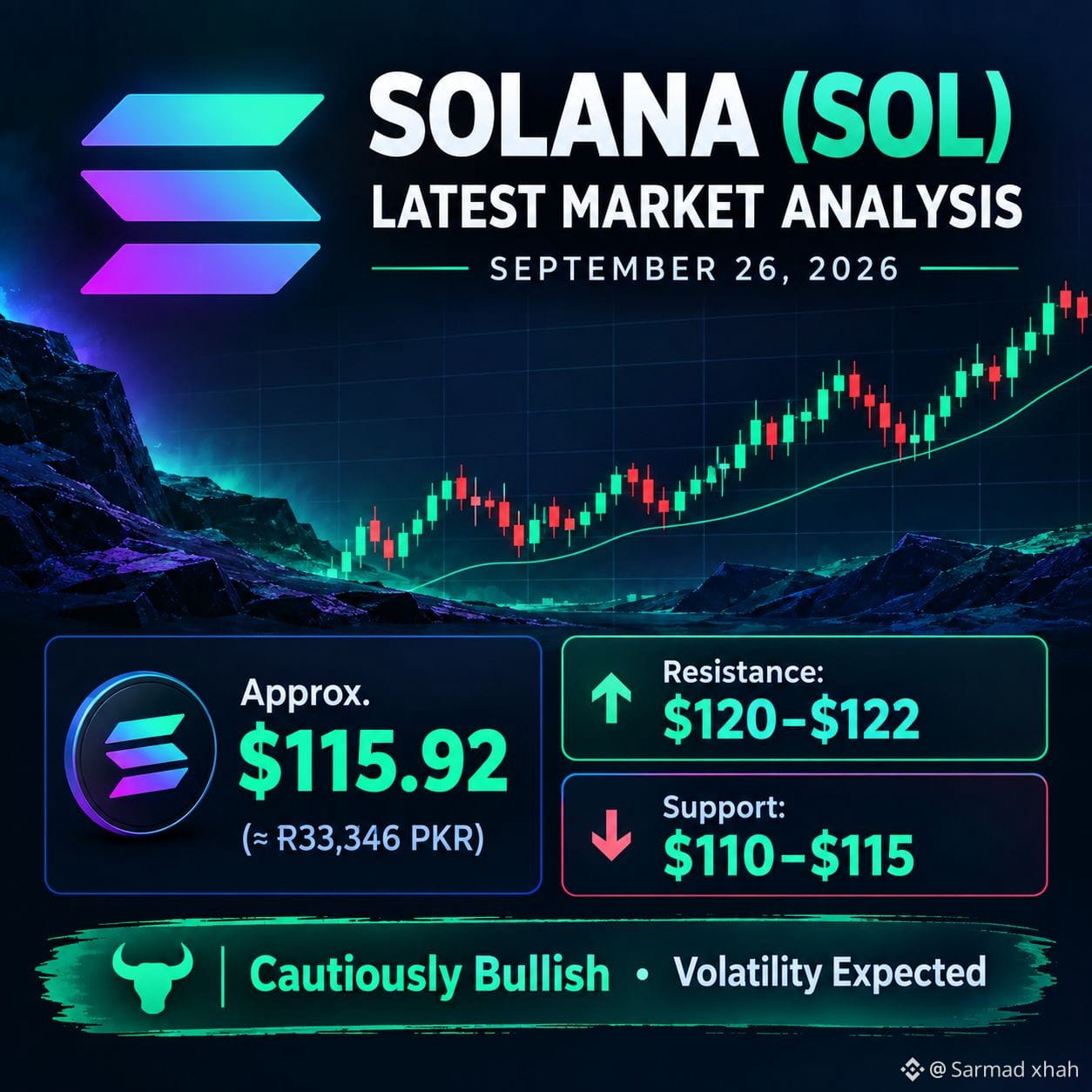
Trend: Bullish momentum, with $SOL recently testing key resistance levels.
Resistance: $120–$122. A sustained breakout could support further gains.
Support: $110–$115. A drop below this zone may increase selling pressure.
Outlook: Cautiously bullish, but volatility and short-term pullbacks remain possible. Watch the $120–$122 resistance zone before interpreting the next move.
Educational market commentary, not financial advice.
{spot}(SOLUSDT)
#SECCommissionerPeirceToLeaveOct2 #SECSaysBuybacksUpgradesDontMakeTokenSecurity #StrategyProposesDailyDividendsForPreferreds #CoinMarketCapCompletesCoinglassAcquisition
Trend: Bullish momentum, with $SOL recently testing key resistance levels.
Resistance: $120–$122. A sustained breakout could support further gains.
Support: $110–$115. A drop below this zone may increase selling pressure.
Outlook: Cautiously bullish, but volatility and short-term pullbacks remain possible. Watch the $120–$122 resistance zone before interpreting the next move.
Educational market commentary, not financial advice.
#SECCommissionerPeirceToLeaveOct2 #SECSaysBuybacksUpgradesDontMakeTokenSecurity #StrategyProposesDailyDividendsForPreferreds #CoinMarketCapCompletesCoinglassAcquisition
Resistance: $120–$122. A sustained breakout could support further gains.
Support: $110–$115. A drop below this zone may increase selling pressure.
Outlook: Cautiously bullish, but volatility and short-term pullbacks remain possible. Watch the $120–$122 resistance zone before interpreting the next move.
Educational market commentary, not financial advice.
#SECCommissionerPeirceToLeaveOct2 #SECSaysBuybacksUpgradesDontMakeTokenSecurity #StrategyProposesDailyDividendsForPreferreds #CoinMarketCapCompletesCoinglassAcquisition
206 Atlas:
Testing $120 resistance is standard, but without volume confirmation, a fakeout here is more likely than a breakout.
1
1
241

·
--
Bearish
in 24hrs, 85% longs have been liquidated on this scam coin called $INJ and more will be soon take the opportunity and short before it rugpulls.
once a dead coin always dead coins.
#DeadCryptos #İNJ #CoinMarketCapCompletesCoinglassAcquisition
in 24hrs, 85% longs have been liquidated on this scam coin called $INJ and more will be soon take the opportunity and short before it rugpulls.
once a dead coin always dead coins.
#DeadCryptos #İNJ #CoinMarketCapCompletesCoinglassAcquisition
once a dead coin always dead coins.
#DeadCryptos #İNJ #CoinMarketCapCompletesCoinglassAcquisition
2
161

·
--
$SUI
{spot}(SUIUSDT)
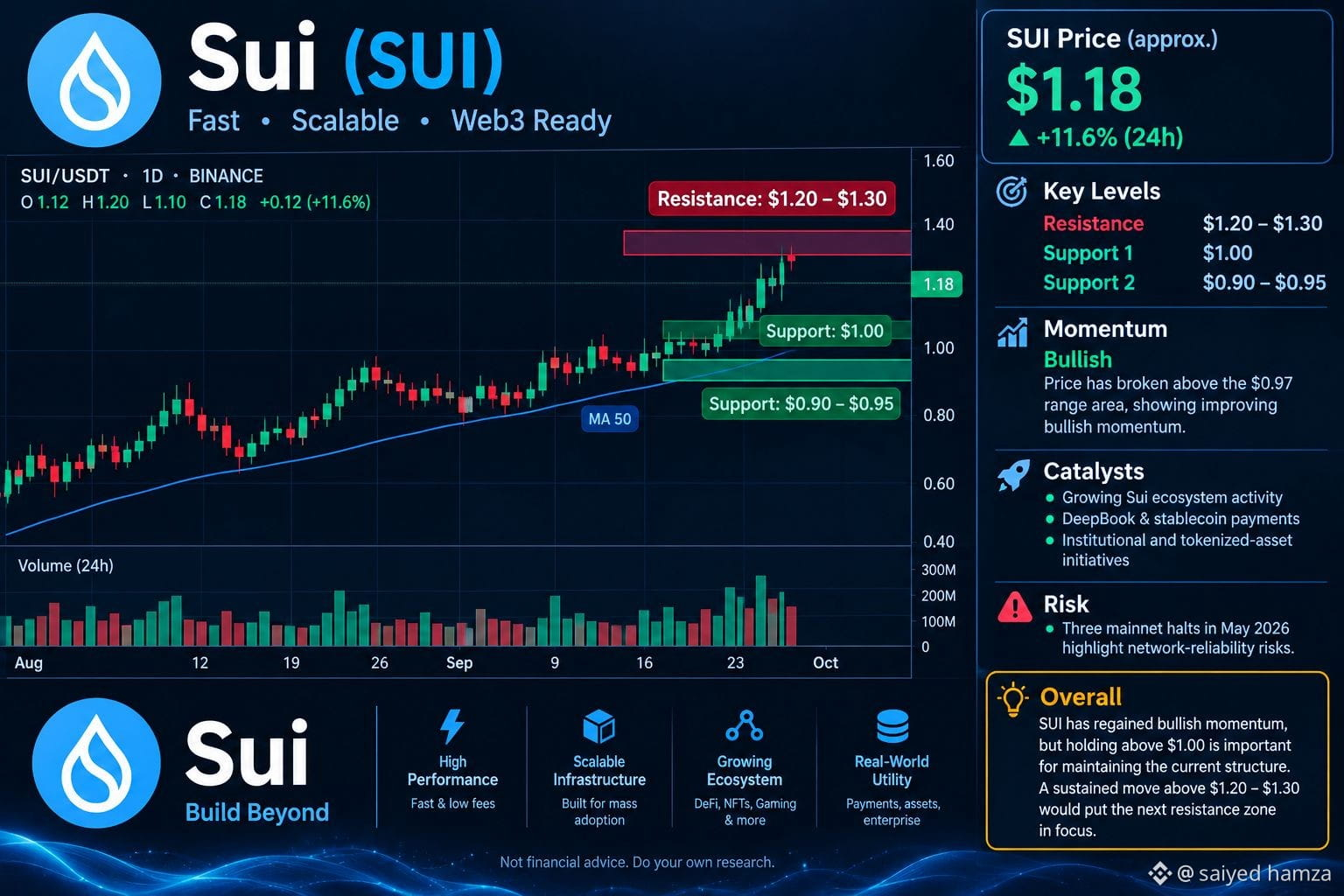
SUI is showing strong short-term momentum, trading around $1.18 and up about 11.6% in 24 hours. Recent price action has pushed above the ~$0.97 range area, suggesting improving bullish momentum.
Resistance: $1.20–$1.30
Support: $1.00, then $0.90–$0.95
Momentum: Bullish in the short term
Catalysts: Growing Sui ecosystem activity, DeepBook, stablecoin payments, and institutional/tokenized-asset initiatives.
Risk: Sui experienced three mainnet halts in May 2026, highlighting network-reliability risks.
Overall: SUI has regained bullish momentum, but holding above $1.00 would be important for maintaining the current structure. A sustained move above $1.20–$1.30 would put the next resistance zone in focus.
#CoinMarketCapCompletesCoinglassAcquisition #CircleTetherFreezeBitgetHackerWallet #CircleMints500MUSDCOnSolana #PolymarketBankFailureBetsDrawFDICConcern #QNTRises39%
$SUI
SUI is showing strong short-term momentum, trading around $1.18 and up about 11.6% in 24 hours. Recent price action has pushed above the ~$0.97 range area, suggesting improving bullish momentum.
Resistance: $1.20–$1.30
Support: $1.00, then $0.90–$0.95
Momentum: Bullish in the short term
Catalysts: Growing Sui ecosystem activity, DeepBook, stablecoin payments, and institutional/tokenized-asset initiatives.
Risk: Sui experienced three mainnet halts in May 2026, highlighting network-reliability risks.
Overall: SUI has regained bullish momentum, but holding above $1.00 would be important for maintaining the current structure. A sustained move above $1.20–$1.30 would put the next resistance zone in focus.
#CoinMarketCapCompletesCoinglassAcquisition #CircleTetherFreezeBitgetHackerWallet #CircleMints500MUSDCOnSolana #PolymarketBankFailureBetsDrawFDICConcern #QNTRises39%
SUI is showing strong short-term momentum, trading around $1.18 and up about 11.6% in 24 hours. Recent price action has pushed above the ~$0.97 range area, suggesting improving bullish momentum.
Resistance: $1.20–$1.30
Support: $1.00, then $0.90–$0.95
Momentum: Bullish in the short term
Catalysts: Growing Sui ecosystem activity, DeepBook, stablecoin payments, and institutional/tokenized-asset initiatives.
Risk: Sui experienced three mainnet halts in May 2026, highlighting network-reliability risks.
Overall: SUI has regained bullish momentum, but holding above $1.00 would be important for maintaining the current structure. A sustained move above $1.20–$1.30 would put the next resistance zone in focus.
#CoinMarketCapCompletesCoinglassAcquisition #CircleTetherFreezeBitgetHackerWallet #CircleMints500MUSDCOnSolana #PolymarketBankFailureBetsDrawFDICConcern #QNTRises39%
1
138
Log in to explore more content
Join global crypto users on Binance Square
⚡️ Get latest and useful information about crypto.
💬 Trusted by the world’s largest crypto exchange.
👍 Discover real insights from verified creators.
Email / Phone number
Trending Topics
1
#CircleMints500MUSDCOnSolana
58,368 views
1,462 Discussing
2
#PolymarketBankFailureBetsDrawFDICConcern
71,560 views
1,466 Discussing
3
#BlackRockBuildsTokenizedPortfoliosForOndo
57,826 views
1,022 Discussing
4
#BitwiseFilesToListNEARETFOnNYSEArca
54,675 views
882 Discussing
5
#SECCommissionerPeirceToLeaveOct2
50,501 views
712 Discussing
6
#SECSaysBuybacksUpgradesDontMakeTokenSecurity
43,604 views
553 Discussing
7
#StrategyProposesDailyDividendsForPreferreds
8,774 views
197 Discussing
8
#CircleTetherFreezeBitgetHackerWallet
8,534 views
112 Discussing
9
#CoinMarketCapCompletesCoinglassAcquisition
10,602 views
147 Discussing
10
#QNTRises39%
104,627 views
1,612 Discussing