

#circle
circle
1.1M views
3,065 Discussing
Hot
Latest

·
--
🥶 Circle has frozen 823,000,000 $USDC.
This comes right after Tether’s reported freeze of 971,000,000 $USDT. Likely related to the alleged Binance hack, but unconfirmed — wait for official statements.
#Circle #USDC #Binance #crypto #BinanceSquare
🥶 Circle has frozen 823,000,000 $USDC.
This comes right after Tether’s reported freeze of 971,000,000 $USDT. Likely related to the alleged Binance hack, but unconfirmed — wait for official statements.
#Circle #USDC #Binance #crypto #BinanceSquare
This comes right after Tether’s reported freeze of 971,000,000 $USDT. Likely related to the alleged Binance hack, but unconfirmed — wait for official statements.
#Circle #USDC #Binance #crypto #BinanceSquare
81


$CRCLB (tokenized Circle, the big dollar stablecoin issuer) is the 3rd most traded stock token on Binance today. And Cathie Wood just made an interesting move 👀
The news:
• Ark Invest bought 65,615 Circle shares (about 5.2M dollars) for its ARKW fund on Monday
• On the same day, Ark sold about 15.9M dollars of its own Bitcoin ETF shares
• Read: Ark is rotating part of its crypto exposure from the coin itself into crypto infrastructure stocks
The chart (4H):
• Price 80.9, down 6.2% on the week
• Lower lows: 83.0 → 79.0 → 78.6
• Below EMA 20 (82.3) and EMA 50 (83.6)
• RSI 39. Weak, but approaching the 75 to 80 zone where it bounced earlier in October
Levels for $CRCLB :
🟢 Reclaim 83.6 (EMA 50) → 85.8 next
🔴 Lose 78.6 → 75 (October low) in play
Would you follow Ark into $CRCLB ? 👇
NFA
#Circle #StockTokens #CryptoNews
No Binance account yet? Get 20% of your trading fees back 👉 [Sign up on Binance](https://www.binance.com/register?ref=TGCSTKKM)
$CRCLB (tokenized Circle, the big dollar stablecoin issuer) is the 3rd most traded stock token on Binance today. And Cathie Wood just made an interesting move 👀
The news:
• Ark Invest bought 65,615 Circle shares (about 5.2M dollars) for its ARKW fund on Monday
• On the same day, Ark sold about 15.9M dollars of its own Bitcoin ETF shares
• Read: Ark is rotating part of its crypto exposure from the coin itself into crypto infrastructure stocks
The chart (4H):
• Price 80.9, down 6.2% on the week
• Lower lows: 83.0 → 79.0 → 78.6
• Below EMA 20 (82.3) and EMA 50 (83.6)
• RSI 39. Weak, but approaching the 75 to 80 zone where it bounced earlier in October
Levels for $CRCLB :
🟢 Reclaim 83.6 (EMA 50) → 85.8 next
🔴 Lose 78.6 → 75 (October low) in play
Would you follow Ark into $CRCLB ? 👇
NFA
#Circle #StockTokens #CryptoNews
No Binance account yet? Get 20% of your trading fees back 👉 Sign up on Binance
171

·
--
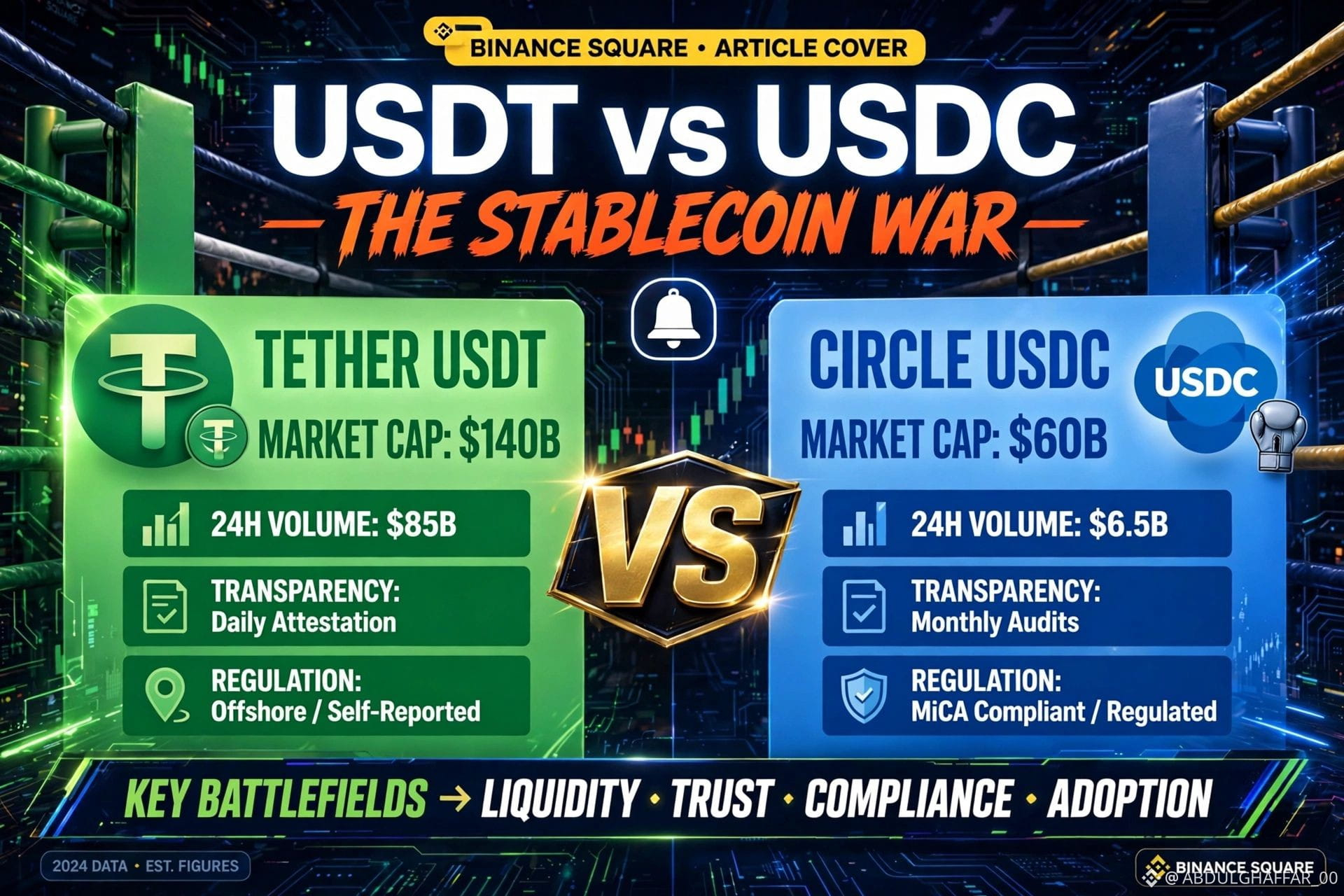
USDT vs USDC — The $200B Stablecoin War Explained! 💥
Two giants, one market.
🔹 TETHER USDT - The King
Market Cap: $140B
24H Volume: $85B (HIGHEST in crypto!)
Transparency: Daily attestation
Regulation: Offshore / Self-reported
Use: Trading, liquidity, Binance #1 pair
🔹 CIRCLE USDC - The Regulated Challenger
Market Cap: $60B
24H Volume: $6.5B
Transparency: Monthly audits by Deloitte
Regulation: MiCA Compliant, US Regulated
Use: DeFi, institutions, Coinbase favorite
KEY BATTLEFIELDS:
✓ LIQUIDITY: USDT wins — 13x more volume
✓ TRUST: USDC wins — fully audited & regulated
✓ COMPLIANCE: USDC wins — banks trust it
✓ ADOPTION: USDT wins — every exchange uses it
MY TAKE:
If you trade — USDT is king for liquidity.
If you hold long-term / DeFi — USDC is safer for regulation.
Both are $1, but trust model is totally different!
Which one do YOU hold? USDT or USDC? Comment below! 👇
#USDT #USDC #Stablecoin #Circle #Binance
$USDT $USDC
2
3
10


·
--
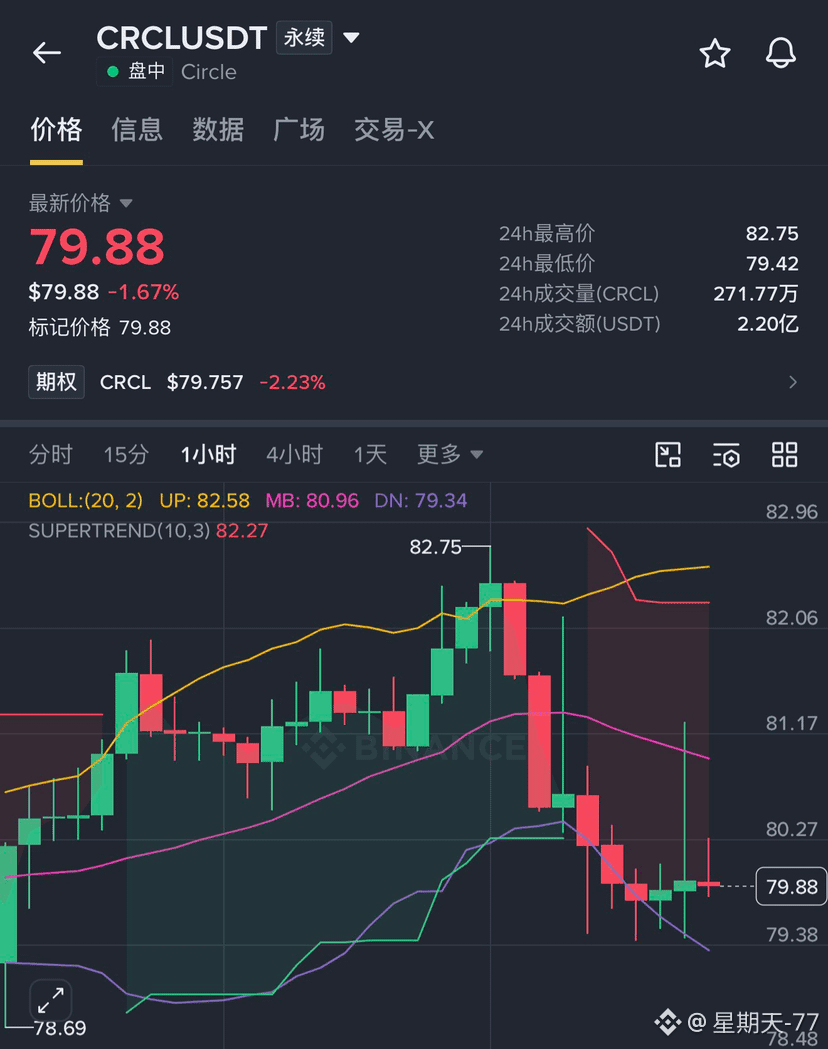
$CRCL L This week, I’ve been waiting for it to turn around, but it just won’t.
Last weekend, it was still at 85, 86. I watched the chart, thinking: if it can hold here, this could become a base.
Then on Sunday night, a huge bearish candle smashed straight through 85, and it dropped all the way to around 79.
I thought it would rebound after that sell-off. On Tuesday night, it dipped to 78.60, formed a long lower wick, then climbed back to 82.6. I’d just started to breathe a sigh of relief.
Then Wednesday night, another bearish candle wiped out all that relief.
Now it’s 3 a.m. Price is at 80.00, stuck in limbo.
From 85.95, it’s down about 7% this week. The worst part isn’t the drop—it’s that every rebound stalls just above 82, and it can’t get any higher.
Stocks like this are the most frustrating: you can say it’s weak, but it keeps holding above 78.6; you can say it’s strong, but it can’t even break 82.
Did you buy in around 78.6, or are you stuck holding from 82?
#Circle #CRCL #FOMC会议 #比特币突破8.1万美元
{future}(CRCLUSDT)
$CRCL L This week, I’ve been waiting for it to turn around, but it just won’t.
Last weekend, it was still at 85, 86. I watched the chart, thinking: if it can hold here, this could become a base.
Then on Sunday night, a huge bearish candle smashed straight through 85, and it dropped all the way to around 79.
I thought it would rebound after that sell-off. On Tuesday night, it dipped to 78.60, formed a long lower wick, then climbed back to 82.6. I’d just started to breathe a sigh of relief.
Then Wednesday night, another bearish candle wiped out all that relief.
Now it’s 3 a.m. Price is at 80.00, stuck in limbo.
From 85.95, it’s down about 7% this week. The worst part isn’t the drop—it’s that every rebound stalls just above 82, and it can’t get any higher.
Stocks like this are the most frustrating: you can say it’s weak, but it keeps holding above 78.6; you can say it’s strong, but it can’t even break 82.
Did you buy in around 78.6, or are you stuck holding from 82?
#Circle #CRCL #FOMC会议 #比特币突破8.1万美元
1
2.5k

I listened to this entire interview (Circle CEO Allaire × Chris Dixon, 49 minutes) and picked out a few things I found most useful:
1. Arc takes a “middle path”: the chain is public, permissionless, and open source, so anyone can deploy on it; but its validator nodes are real-name institutions selected to participate (a little over 10 now, capped at 40). In return, it offers sub-second settlement finality, giving real money the confidence to come in.
2. The moat isn’t the chain itself, but USDC: about $150 billion is minted and redeemed each quarter, and CCTP accounts for roughly half of cross-chain transfer value (up to 70% at its peak). Assets issued on Arc can also use CCTP.
3. He admitted himself that no one has a moat right now. He compared it to the mobile internet: it took 15 years of tinkering before the iPhone, and most apps were unusable for ordinary people.
4. The main users will be machines. He vibe-coded a small Arc app himself, and a week later it was getting 15,000 visits a day—all from bots scanning for environment variables, SSH private keys, and coins.
I’m still holding a few coins from the Arc ecosystem: I sold ARGUS and TOLLY early enough to get my principal back, so what’s left is all profit; I’m still bagholding COOL. I also got burned once trying to redeem on Ellipse.
So I see Arc in two layers: regulated validators don’t mean the applications on top have been vetted. “Permissionless deployment” means all the risks at the application layer are yours to bear. Arc is a long-term bet for Circle; the coins on Arc are a different story~
#Circle #USDC #Stablecoins
124

·
--
Circle's comment letter to the SEC on October 20th had its most practical point not in classifying compliant payment stablecoins as cash, but in asking for the 2% haircut on broker-dealers' holdings of such stablecoins to be reduced to zero. The former is a classification issue; the latter is about money.
Under proposed Section 302(b) of the 'Crypto Asset Regulatory Framework,' Circle wants payment stablecoins that comply with the GENIUS Act to be denominated in U.S. dollars and treated accordingly for accounting and customer reserve purposes. If the haircut remains at 2%, broker-dealers must hold an extra two cents of capital for every dollar of stablecoin they hold, making stablecoins more expensive than cash on their books.
The letter also asks the SEC to make clear that technical services such as maintaining a known validator set after network launch do not count as 'necessary managerial efforts,' and to establish a safe harbor. That is a separate issue from valuation. A comment letter is not a rule; what Section 302(b) ultimately says, and whether that 2% remains, is what will affect broker-dealer models.
#稳定币 #SEC监管 #Circle
67

·
--
Bearish
Circle and ACI want to hook USDC up to Bre-B. For now, it’s a paper pilot.
Bre-B is Colombia’s instant payment system, run by the central bank. In its first five months, it processed more than 500 million transactions, according to ACI. In other words, they want to plug the stablecoin into an already-running government rail, rather than build a new one. Smart move: no need to get people to switch over.
On October 27, ACI Worldwide, which built Bre-B, and Circle announced a pilot. ACI says the conversation around stablecoins is moving “from possible to practical.”
But there’s no practical detail yet: no bank names, timelines, transaction volumes, or regulator mentioned in the announcement.
Who knows how many of these “pilots” will make it to their first real payment. I hold USDC, but I’m waiting for specifics here.
I’m watching to see if they name even one bank: until they do, those 500 million Bre-B transactions are someone else’s stats. Follow me—I’ll break it down when they do.
#Circle #Stablecoins
1
13

·
--
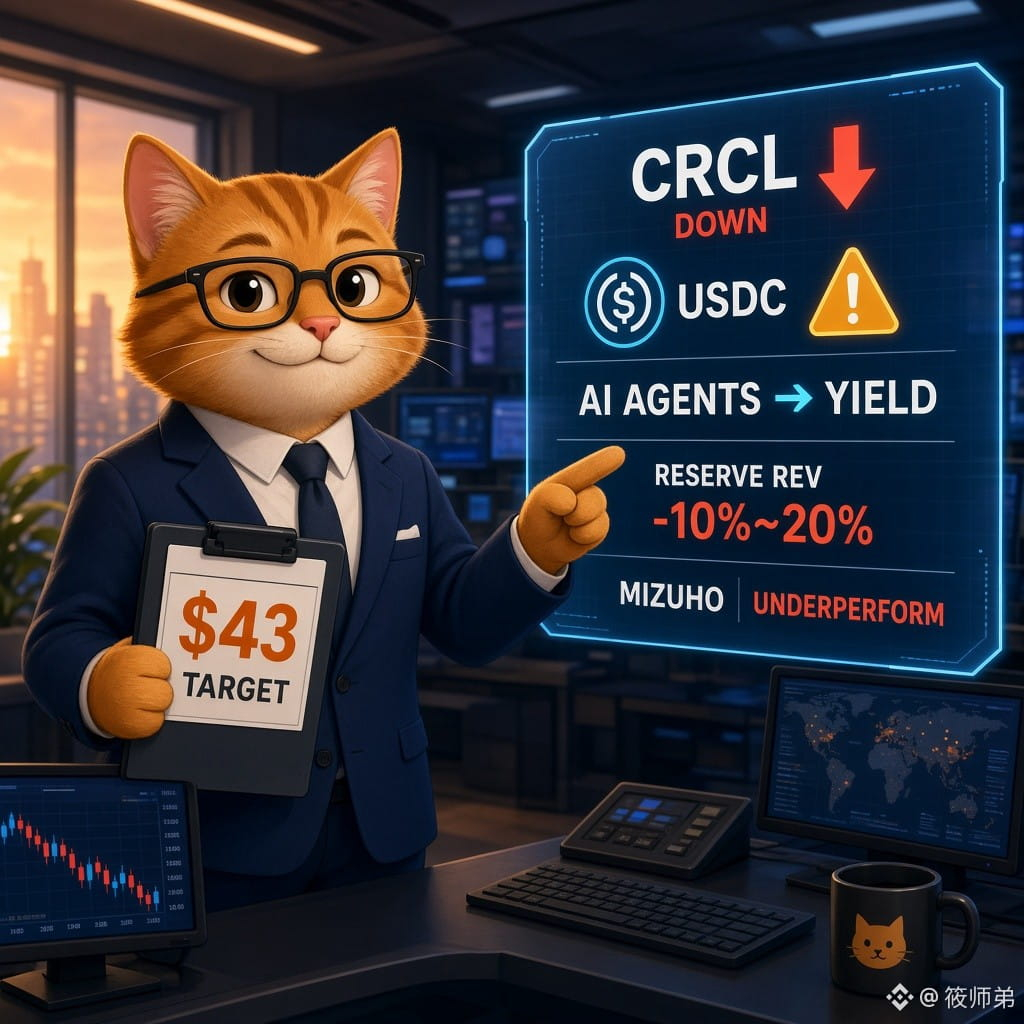
Mizuho cuts Circle price target to $43: AI assistants could become a “pressure valve” for stablecoins
The Block/Unchained: Mizuho cut its price target for CRCL from $45 to $43 and maintained its Underperform rating. Simulations suggest AI assistants such as Muse are more likely to recommend high-yield FDIC-insured savings accounts at firms like SoFi than to hold USDC. In the medium term, this could shrink USDC’s market cap by $4–9 billion and put pressure on reserve interest income, potentially reducing it by about 10%–20%. CRCL closed down about 7% on Monday at around $79.84.
【View】Stablecoins earn income from interest on U.S. Treasuries. If AI agents start “shopping around and switching” on users’ behalf, the stock of zero-yield USDC is most vulnerable. This is not short-term speculation, but a structural risk arising from changes to the distribution layer.
【Opportunity/Risk】Watch Circle’s earnings report and USDC circulation on 11/4; compare adoption of yield-bearing stablecoins and on-chain yield products; cross-check risk appetite for $BTC against the FOMC on the same day. Mizuho’s target still implies about 40% downside from the current price, highlighting the wide disagreement.
If AI helps manage your money, would you let an assistant swap your stablecoins for a high-yield savings account?
#稳定币 #AI #Circle #Crypto Markets
$BTC $ETH
For informational purposes only; not investment advice.
288


·
--
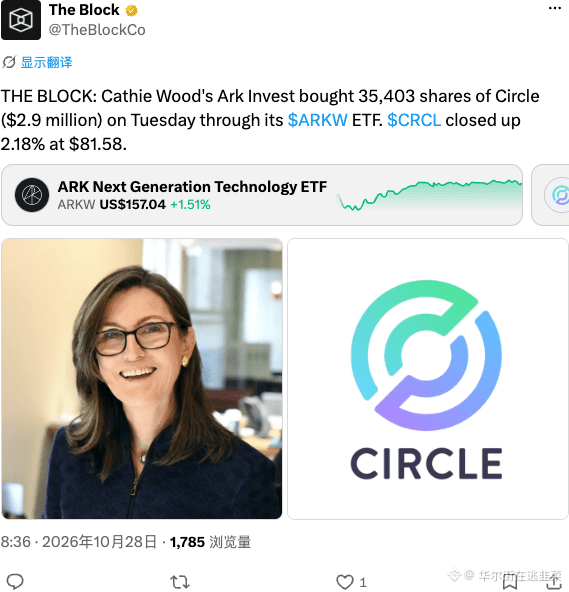
Cathie Wood’s ARK Invest disclosed that on Oct. 26, U.S. Eastern Time, ARKW bought approximately 65,615 shares of Circle (CRCL), worth about $5.2 million at that day’s closing price. On the same day, ARKW and ARKF together sold approximately 601,028 shares of their own spot Bitcoin ETF, ARKB, worth about $15.9 million at the close. Circle is the issuer of $USDC . Public reports interpreted this as fund-weight rebalancing, rather than a one-way bet. $BTC #Circle #BitcoinETF #InstitutionalMoves
Cathie Wood’s ARK Invest disclosed that on Oct. 26, U.S. Eastern Time, ARKW bought approximately 65,615 shares of Circle (CRCL), worth about $5.2 million at that day’s closing price. On the same day, ARKW and ARKF together sold approximately 601,028 shares of their own spot Bitcoin ETF, ARKB, worth about $15.9 million at the close. Circle is the issuer of $USDC . Public reports interpreted this as fund-weight rebalancing, rather than a one-way bet. $BTC #Circle #BitcoinETF #InstitutionalMoves
176

·
--
Stablecoins entering local instant-payment systems is more tangible than going around the block with another cross-border narrative.
According to reports from Decrypt, good.box, and others, Circle and ACI Worldwide have partnered to launch a USDC settlement pilot in Colombia based on ACI’s Bre-B instant payment system. The pilot demonstrates how stablecoin settlement can operate alongside traditional payments, and marks another step in Circle’s efforts to build USDC infrastructure across Latin America.
How to read this: It’s a payment-rail pilot. It doesn’t mean retail users can already convert seamlessly, nor does it mean local regulators have given blanket approval for all stablecoin use cases. What’s worth watching more closely is the scope of participating merchants, settlement times and failed-payment reversals, and whether fiat on- and off-ramps are still bottlenecked by banks. For ordinary users, the practical takeaway is to first understand the settlement counterparties and the boundaries of local compliance—don’t mistake “integrated with instant payments” for “cash out anytime, anywhere.”
#Circle #USDC #稳定币支付 #LatinAmerica
5

·
--
📰 Why has USDC suddenly overtaken USDT in the eurozone? What is the real significance of the new MiCA rules?
The EU’s new MiCA rules are starting to bite! Circle’s USDC has recently surpassed Tether’s USDT in trading volume in Europe. This is the first wave of market differentiation driven by regulatory compliance, with major implications for the stablecoin industry. It means projects that meet EU standards are starting to gain favor.
Why is this news important?
The fundamental reason is that this time the EU isn’t just making promises—it’s putting real enforcement behind them. MiCA (the Markets in Crypto-Assets Regulation) explicitly requires stablecoin issuers to register, undergo regular audits, and make the custody of funds transparent. As one of the first projects to complete registration, USDC is naturally benefiting from the policy. USDT, meanwhile, is the largest by market cap, but has long operated on the margins of regulatory compliance. The eurozone is the world’s second-largest crypto market, and this shift means compliance is starting to become a valuable asset. This is consistent with the approach the US CFTC previously took toward USDC, except the EU has stronger enforcement capabilities.
Impact on the market
In the short term, USDC’s win is driven more by sentiment. Investors in the eurozone are beginning to pay a premium for “compliance,” and this could spread to other markets. The long-term impact is greater: the stablecoin industry is shifting from “moving fast is enough” to “you have to operate reliably to survive.” The effect on ETH is indirect but far-reaching: as a core DeFi asset, ETH’s ecosystem stability will increasingly depend on the reliability of its supporting tools. If stablecoins suffer a major crisis of confidence, the foundations of the entire value internet could be shaken. There are few comparable events in history, but the process by which the US dollar cemented its dominant position could offer a useful analogy.
Strategy
This shift in the eurozone is a neutral signal, but it looks more like the beginning of an industry shake-up. It means compliance costs will rise significantly over the next two years, and projects that fail to meet the standards will gradually be marginalized. Investors need not chase USDC too aggressively, but should keep an eye on how regulatory policies are implemented in North America and Asia. If an exchange suddenly raises its USDT listing requirements substantially, that would be a genuine bearish signal for USDT. If the US also introduces a registration system similar to the EU’s, this trend could accelerate.
This article was not sponsored by any project, and the author does not hold any of the assets mentioned.
⚠️ This is not investment advice. Predictions are for reference only.
#Circle’sUSDCovertakesTether’sUSDTineurotradingasMiCArulesreshapemarket
$ETH #Macroeconomics


202

·
--
Verified
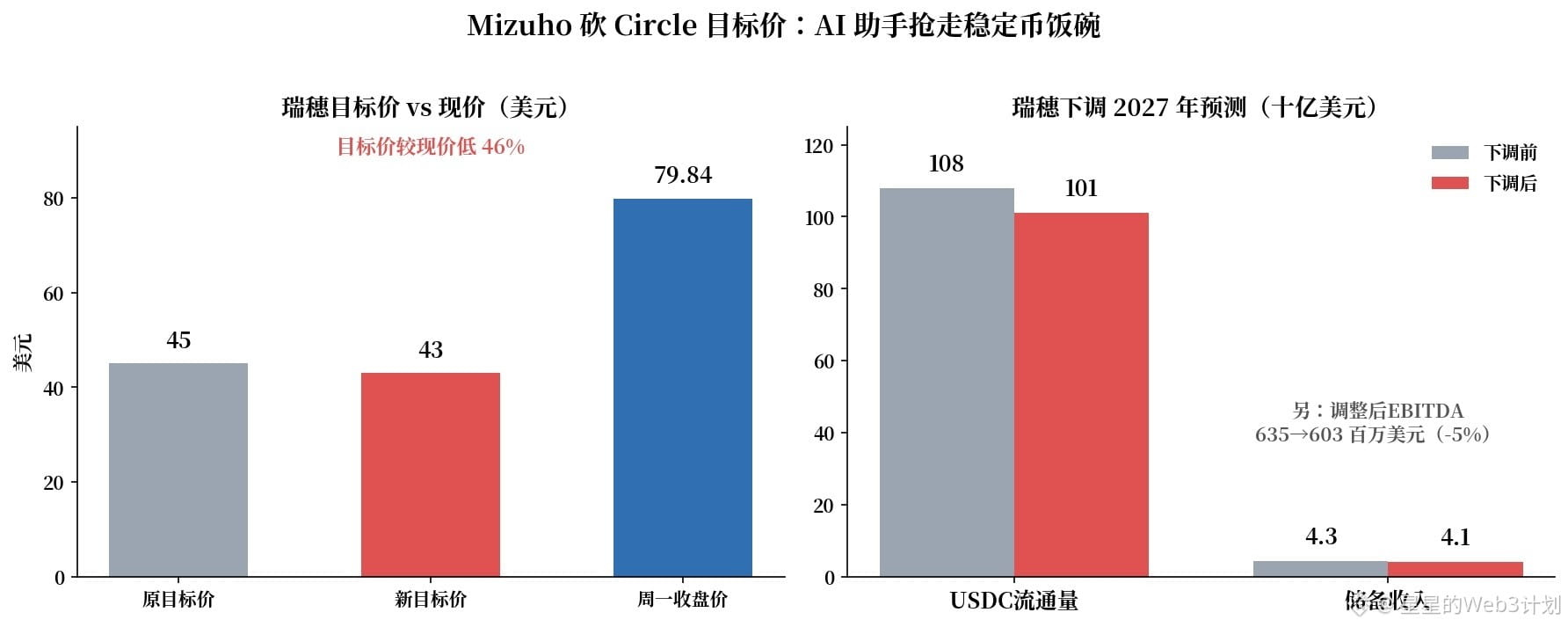
Price target: $43; current price: $79.84
Mizuho cut Circle’s price target to $43 on Monday, maintaining its Underperform rating
The stock initially fell 7% that day, with the price target implying another 46% downside from the current price
The reason is a new one: it’s not that stablecoins are failing—it’s that AI assistants are coming for their business
Mizuho’s simulations found that AI assistants steer users asking “Where should I put my money?”
away from USDC and toward bank accounts with deposit insurance and higher yields
Even if users insist on staying in crypto, assistants are more likely to recommend other platforms
The numbers aren’t small: USDC’s market cap could shrink by $4–9 billion
Reserve income could fall 10%–20% over the medium term, or by as much as 18% in a faster scenario
The 2027 forecast for USDC in circulation was cut from $108 billion to $101 billion
The contrast: USDC settled more than $36 trillion on-chain in the first half of this year
accounting for 77% of global stablecoin transaction volume, up from just 60% a year ago
JPMorgan just said the stablecoin market is up 42% this year, while USDC rose from $61.5 billion to $73.7 billion in the third quarter
My take: the threat isn’t a competitor—it’s that the gateway has changed
Users ask AI, not exchanges. Circle sells “trust”; AI sells “answers”
What could invalidate this view: USDC in circulation climbing back above $108 billion, or Circle announcing a partnership with an AI assistant that gets implemented
Which side are you on: will AI assistants take stablecoins’ business, or is this just Wall Street’s latest story?
$CRCL $USDC $COIN
#Circle #Stablecoins
This is not investment advice. DYOR; trading involves risk.
678

·
--
Asked AI Where to Put Idle Cash, It Didn’t Pick $USDC: Mizuho Cuts Circle Price TargetThe latest reason to be bearish on Circle is a new one: it’s not rate cuts or competitors, but AI assistants.
According to The Block, Mizuho lowered its price target for Circle ($CRCL) from $45 to $43 on Monday, October 26, while maintaining its “Underperform” rating. CRCL closed down 7% that day at $79.84.
Mizuho’s approach was straightforward: ask an AI financial assistant (the report specifically named Muse), “Where should I put my cash?” The result: AI is more inclined to recommend bank savings products with FDIC deposit insurance and higher yields, such as SoFi. Even if users insist on staying in crypto, AI tends to favor other platforms rather than putting USDC in Circle’s own ecosystem.
Asked AI Where to Put Idle Cash, It Didn’t Pick $USDC: Mizuho Cuts Circle Price Target
The latest reason to be bearish on Circle is a new one: it’s not rate cuts or competitors, but AI assistants.
According to The Block, Mizuho lowered its price target for Circle ($CRCL ) from $45 to $43 on Monday, October 26, while maintaining its “Underperform” rating. CRCL closed down 7% that day at $79.84.
Mizuho’s approach was straightforward: ask an AI financial assistant (the report specifically named Muse), “Where should I put my cash?” The result: AI is more inclined to recommend bank savings products with FDIC deposit insurance and higher yields, such as SoFi. Even if users insist on staying in crypto, AI tends to favor other platforms rather than putting USDC in Circle’s own ecosystem.
55

·
--
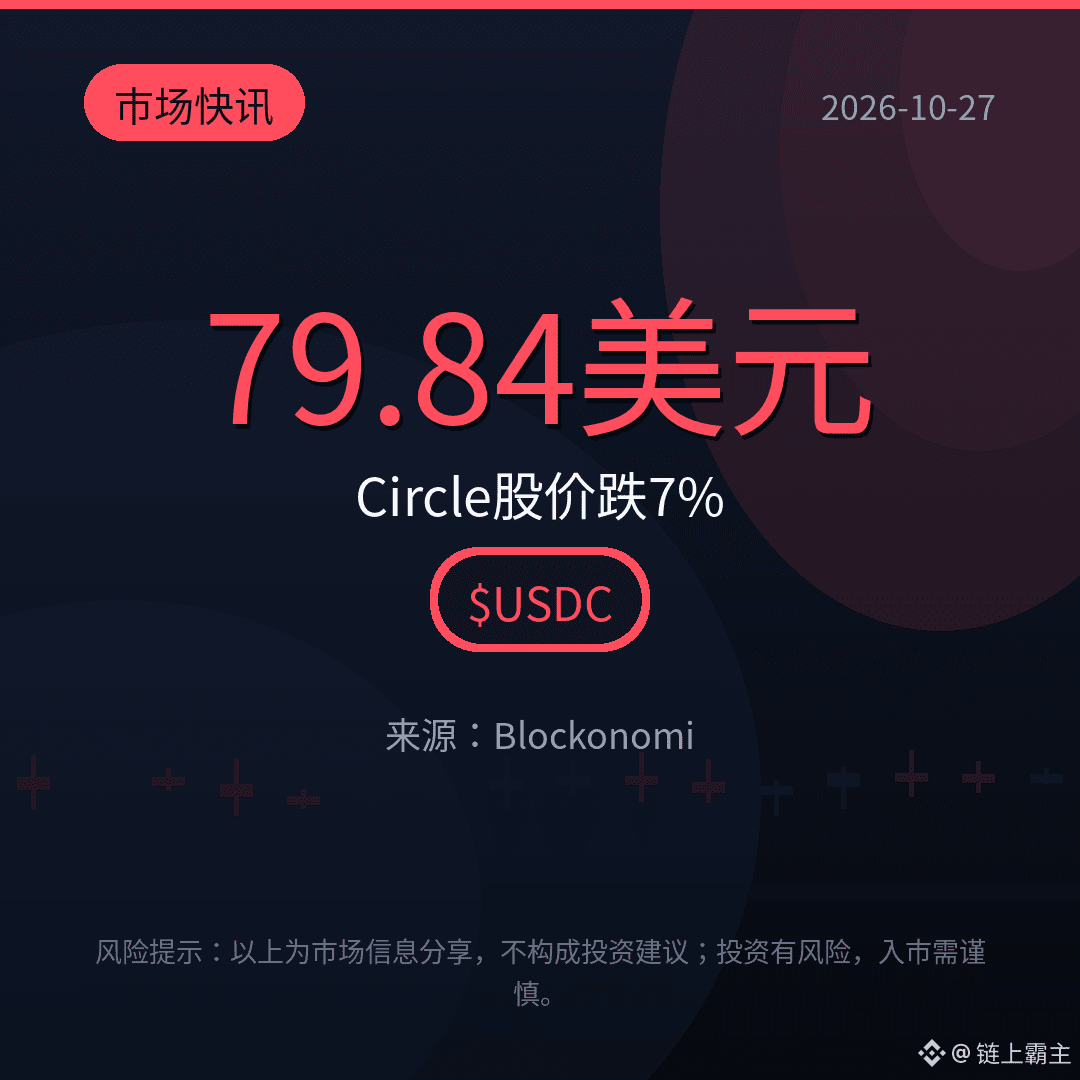
【Market Update】Circle shares closed down 7% at $79.84. Mizuho cut its price target from $45 to $43, maintaining its Underperform rating.
The key factor is AI assistants: Mizuho found that AI assistants may steer users toward products or platforms that offer rewards. As adoption accelerates, USDC’s market cap could shrink by $9 billion, and reserve income could fall by 18%.
Is this good or bad news for $USDC ? Let’s discuss in the comments.
$USDC $USDT $DAI
#稳定币 #Circle #AI assistant
(Source: Blockonomi)
⚠️Risk Disclaimer: The above is shared for informational purposes only and does not constitute investment advice. Investing involves risks; please exercise caution.
52

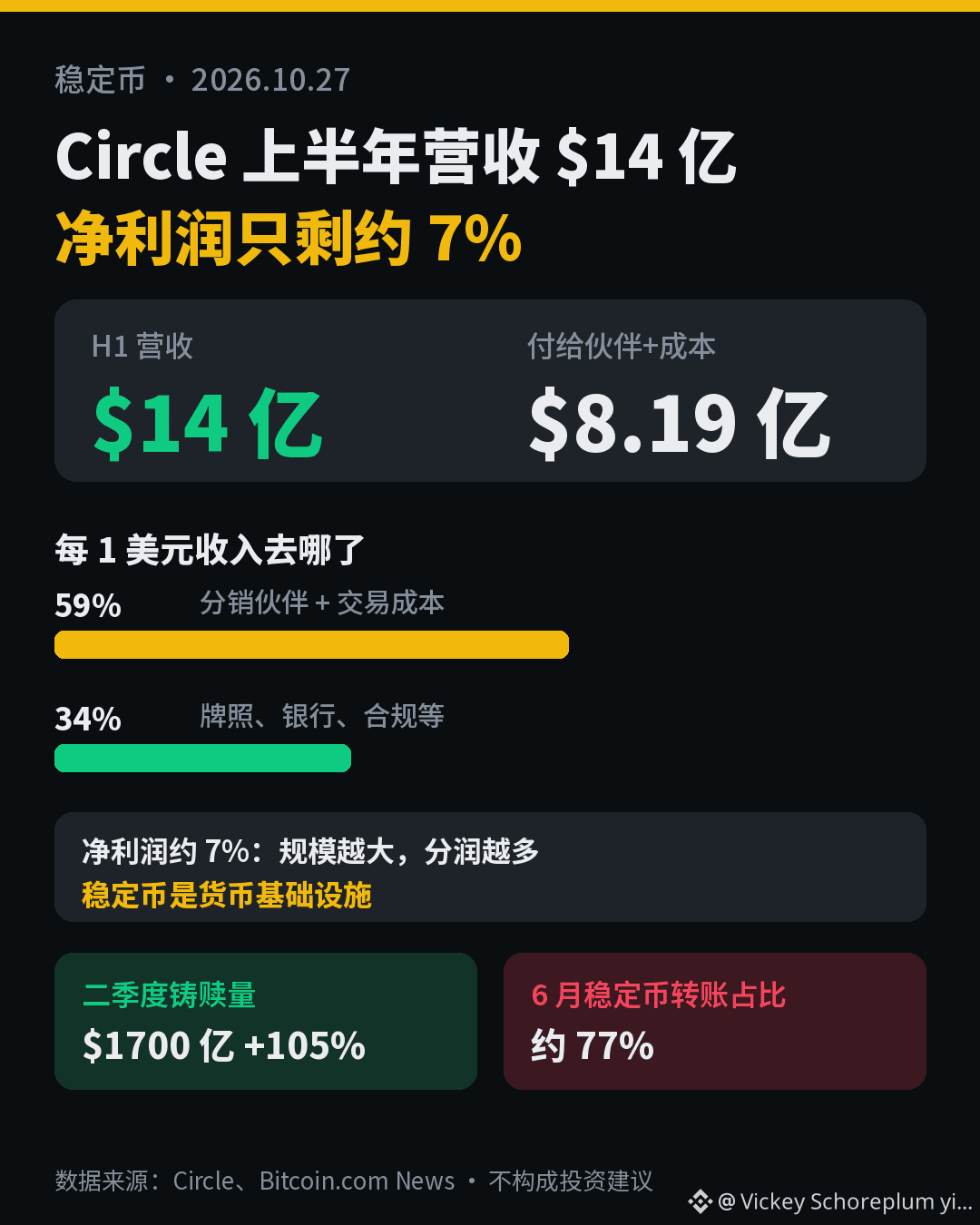
💵 Circle made $1.4 billion in the first half of the year—so why did it keep only 7 cents? The USDC business isn’t as profitable as you might think
Circle revealed the revenue breakdown for USDC: revenue in the first half of 2026 was about $1.4 billion, of which about $819 million (59%) went to USDC distribution partners and transaction costs.
📋 Where did the money go?
• 59% (about $819 million): distribution partners + transaction costs
• 34% (about $473 million): licenses, banking relationships, liquidity, compliance, products, and multichain integrations
• About 7%: net profit
• How broad is its reach? 55+ licenses/registrations, 25+ partner banks, and native deployment on 35+ chains
📊 By the numbers
• More than $315 billion in USDC minted and redeemed in the first half, averaging about $1.7 billion per day
• $170 billion in minting and redemption volume in Q2, up 105% year over year
• More than $36 trillion in on-chain transfer volume; in June, USDC accounted for about 77% of global stablecoin transfer volume (versus about 60% in the same period last year)
• Some customers can access free, near-instant redemptions 24/7
💡 My take
Stablecoins aren’t software products; they’re “monetary infrastructure.” The larger they get, the more revenue they have to share with distribution channels. For issuers, the real test is whether they can protect their profits when interest rates fall and competitors fight for distribution. For users, USDC’s on-chain usage is still growing rapidly.
💬 Who do you think will win in stablecoins: the one with the most distribution channels, or the one that shares profits most generously? Let’s talk in the comments.
👉 Trade BTC: https://www.binance.com/zh-CN/trade/BTC_USDT
#Circle上半年营收约14亿美元 #USDC #稳定币 #Circle
⚠️ This is not investment advice. Please be aware of the risks.
1
291
·
--
Circle’s USDC minting on Solana is already nearing twice last year’s total.
According to on-chain monitoring figures cited by PANews, good.box, and others, Circle has minted roughly $112 billion worth of USDC on Solana so far in 2026—nearly twice the full-year total for last year. There have also been recent mints of around 250 million tokens in a single transaction. These figures represent “cumulative minting,” not the amount currently in circulation on-chain—redemptions, burns, and cross-chain transfers can all reduce the balance.
How to read this: The signal points more to throughput and activity on the demand side than to “over $100 billion in spot USDC sitting on Solana right now.” For trading and payments, more native minting can mean fewer detours through bridges and faster settlement. But it’s important to distinguish the pace of minting from actual retained liquidity. Watching subsequent redemptions and net cross-chain flows is more useful than focusing only on a single day’s minting headline.
#Circle #USDC #Solana #Stablecoins
202

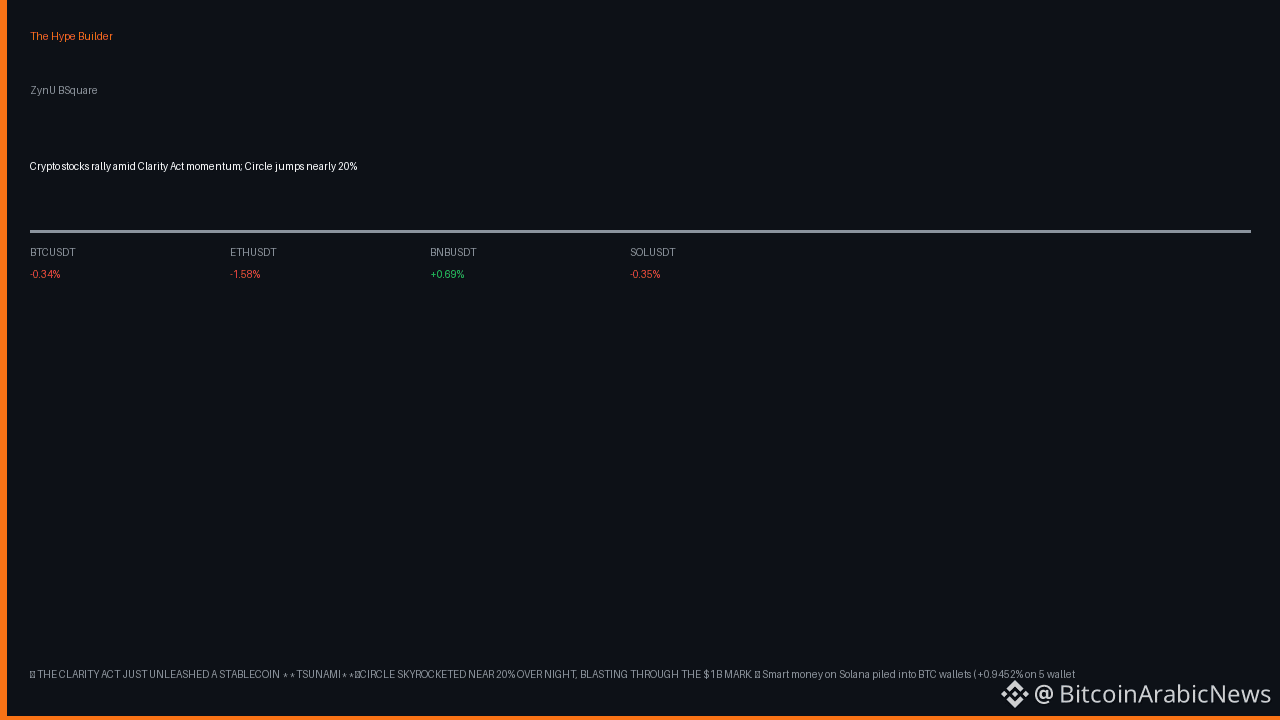
🔥 THE CLARITY ACT JUST UNLEASHED A STABLECOIN **TSUNAMI**—CIRCLE SKYROCKETED NEAR 20% OVER NIGHT, BLASTING THROUGH THE $1B MARK.
📊 Smart money on Solana piled into BTC wallets (+0.9452% on 5 wallets) just as Circle’s USDC surged, while BTC sits at $80,331 with $777M volume and a bearish RSI 38.2, yet futures OI holds at $7.49B and funding flips bullish at +0.0069%—longs are getting paid. ETH slides to $2,329, volume $476M, and the L/S ratio spikes to 3.07, showing heavy long bias despite the dip. #BTC #ETH #Circle
💡 If the Clarity Act clears the path for higher stablecoin yields, expect a flood of capital into #Stablecoins and a rally across crypto equities, potentially igniting the next altseason wave. #DeFi
❓ Who’s ready to ride this wave and lock in gains before the market flips?
44

·
--
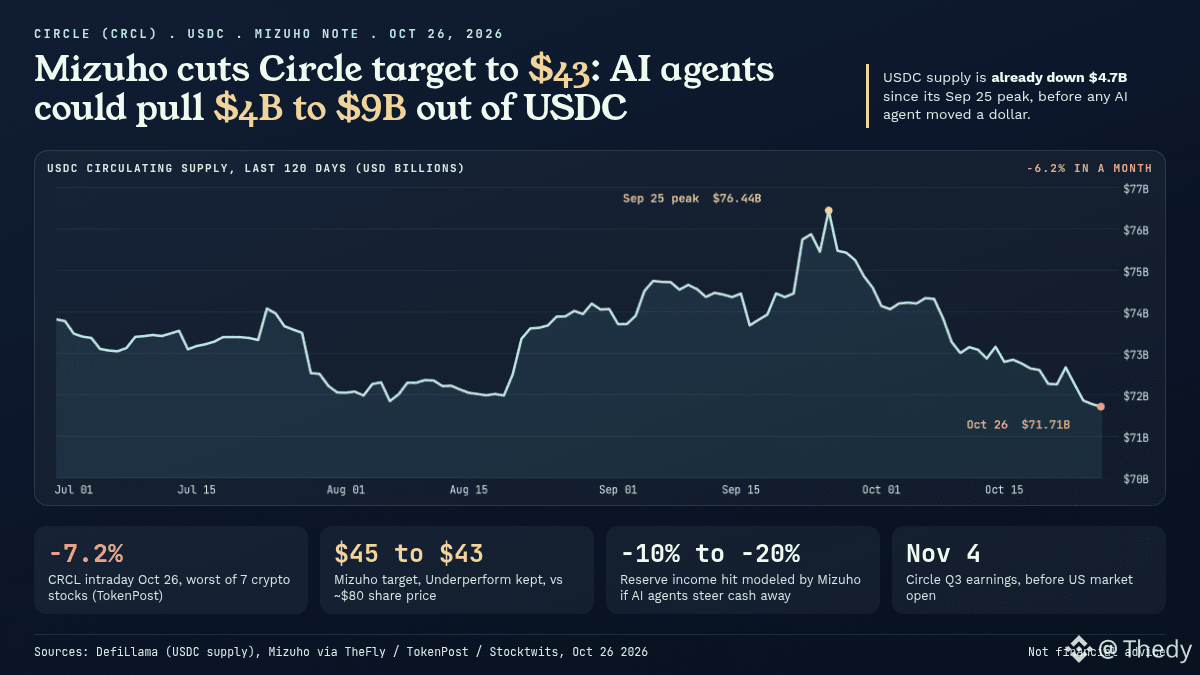
Circle (CRCL) is down about 7% this Monday, 10/26, following a note from Mizuho: the bank maintains its “Underperform” rating, cuts its price target from $45 to $43, and says AI assistants could divert $4B to $9B from $USDC.
The chart tells a different story. According to DefiLlama, the USDC supply stood at $76.44B on 9/25. Today, it is $71.71B, down $4.7B (-6.2%) in a month. Mizuho’s low-end estimate has already been reached, without a single AI agent moving a dollar. Over the same period, $USDT has remained virtually flat at around $182B.
Mizuho’s reasoning (as reported by TheFly and Stocktwits): the bank asked AI agents where they would keep cash. The most common answer: FDIC-insured accounts that pay more, and even within crypto, platforms other than Circle. Modeled impact: a 10% to 20% decline in reserve income, Circle’s main source of profit. TokenPost notes that CRCL is having the worst session among the 7 crypto stocks it tracks (MSTR -5.2%, COIN -2.8%).
My take: the drop in USDC supply is mainly due to a market reducing risk ahead of Wednesday’s Fed meeting, not AI—at least not yet. But the note touches on a real weakness: USDC doesn’t pay holders any yield, and an agent comparing rates will spot that right away.
What could happen between now and the Q3 results on 11/4:
If supply climbs back above $74B, the Mizuho thesis loses some of its near-term strength.
If it slips below $70B and Circle lowers its reserve income outlook, the market will take the note seriously.
Would you let an AI agent choose where your cash sits: a non-yielding stablecoin or an interest-bearing bank account?
#Circle #Stablecoins
Circle (CRCL) is down about 7% this Monday, 10/26, following a note from Mizuho: the bank maintains its “Underperform” rating, cuts its price target from $45 to $43, and says AI assistants could divert $4B to $9B from $USDC .
The chart tells a different story. According to DefiLlama, the USDC supply stood at $76.44B on 9/25. Today, it is $71.71B, down $4.7B (-6.2%) in a month. Mizuho’s low-end estimate has already been reached, without a single AI agent moving a dollar. Over the same period, $USDT has remained virtually flat at around $182B.
Mizuho’s reasoning (as reported by TheFly and Stocktwits): the bank asked AI agents where they would keep cash. The most common answer: FDIC-insured accounts that pay more, and even within crypto, platforms other than Circle. Modeled impact: a 10% to 20% decline in reserve income, Circle’s main source of profit. TokenPost notes that CRCL is having the worst session among the 7 crypto stocks it tracks (MSTR -5.2%, COIN -2.8%).
My take: the drop in USDC supply is mainly due to a market reducing risk ahead of Wednesday’s Fed meeting, not AI—at least not yet. But the note touches on a real weakness: USDC doesn’t pay holders any yield, and an agent comparing rates will spot that right away.
What could happen between now and the Q3 results on 11/4:
If supply climbs back above $74B, the Mizuho thesis loses some of its near-term strength.
If it slips below $70B and Circle lowers its reserve income outlook, the market will take the note seriously.
Would you let an AI agent choose where your cash sits: a non-yielding stablecoin or an interest-bearing bank account?
#Circle #Stablecoins
38
Log in to explore more content
Join global crypto users on Binance Square
⚡️ Get latest and useful information about crypto.
💬 Trusted by the world’s largest crypto exchange.
👍 Discover real insights from verified creators.
Email / Phone number
Trending Topics
1
#FedWatch
16.3M views
39,289 Discussing
2
#EarningsSeason
6.4M views
31,998 Discussing
3
#USMidtermElections
33,592 views
563 Discussing
4
#BitcoinDropsBelow$80K
22,240 views
99 Discussing
5
#BoEOpensConsultationOnTokenizedCollateralForClearing
370 views
20 Discussing
6
#BrazilCryptoExchangesMustApplyForLicensesByFriday
26,790 views
470 Discussing
7
#ICEPartnersWithTradeXYZToBringPerpetualContractsToUS
676 views
15 Discussing
8
#SolidusLabsReportsSuspected$170MSpoofingOnHyperliquidOilContracts
1,499 views
25 Discussing
9
#StanDruckenmillerBecomesInvestorInTradeXYZ
21,091 views
423 Discussing
10
#RussiaProposedNonCustodialWalletLimitsExcludeIntlSettlements
1,913 views
39 Discussing