

#fedproposespaymentstablecoinrules
fedproposespaymentstablecoinrules
104,178 views
856 Discussing
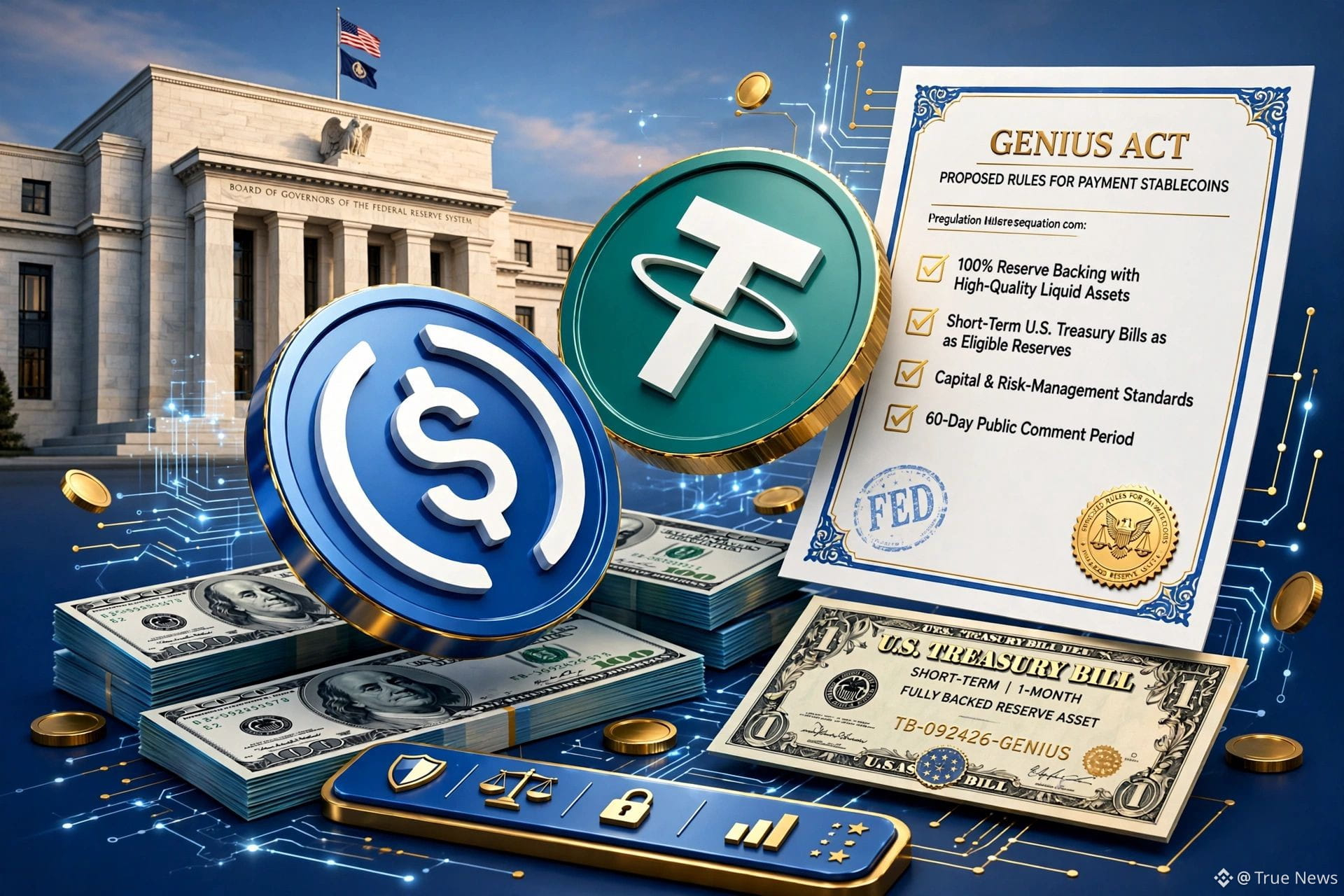
US Federal Reserve has released two proposed rules for payment stablecoins to implement the regulatory authority granted under the GENIUS Act. The proposals would move stablecoin issuance and bank-related crypto activities under formal rulemaking rather than prior enforcement guidance.
ရေပန်းစားသော
နောက်ဆုံး


·
--
တက်ရိပ်ရှိသည်
$WLD
{spot}(WLDUSDT)
Stablecoin Rules Will Impact Long-Term Structure Far More Than Meme Coin Bans
Banning politicians from issuing tokens is merely political theatre; the Federal Reserve laying down reserve requirements and capital buffers is actually rewriting the plumbing
The dollar-backed stablecoins that manage to survive will need to behave increasingly like money market funds
$MELANIA
{future}(MELANIAUSDT)
Yields will thin out, and running off with the funds will become far more difficult. For any yield-bearing stablecoins you're holding right now, it's time to ask: is that yield coming from short-dated treasuries, or is it just high-risk strategies wrapped up in a tidy package? The slicker the wrapper, the steeper the drop when liquidity gets pulled
$TRUMP
{spot}(TRUMPUSDT)
#FedProposesPaymentStablecoinRules
$WLD
Stablecoin Rules Will Impact Long-Term Structure Far More Than Meme Coin Bans
Banning politicians from issuing tokens is merely political theatre; the Federal Reserve laying down reserve requirements and capital buffers is actually rewriting the plumbing
The dollar-backed stablecoins that manage to survive will need to behave increasingly like money market funds
$MELANIA
Yields will thin out, and running off with the funds will become far more difficult. For any yield-bearing stablecoins you're holding right now, it's time to ask: is that yield coming from short-dated treasuries, or is it just high-risk strategies wrapped up in a tidy package? The slicker the wrapper, the steeper the drop when liquidity gets pulled
$TRUMP
#FedProposesPaymentStablecoinRules
Stablecoin Rules Will Impact Long-Term Structure Far More Than Meme Coin Bans
Banning politicians from issuing tokens is merely political theatre; the Federal Reserve laying down reserve requirements and capital buffers is actually rewriting the plumbing
The dollar-backed stablecoins that manage to survive will need to behave increasingly like money market funds
$MELANIA
Yields will thin out, and running off with the funds will become far more difficult. For any yield-bearing stablecoins you're holding right now, it's time to ask: is that yield coming from short-dated treasuries, or is it just high-risk strategies wrapped up in a tidy package? The slicker the wrapper, the steeper the drop when liquidity gets pulled
$TRUMP
#FedProposesPaymentStablecoinRules

2k

·
--
BREAKING: Federal Reserve Proposes Payment Stablecoin Rules! 🏦💵
On Sep 24, 2026, the Fed proposed 2 new rules to implement the GENIUS Act.
Key Highlights:
✅ 1:1 Backing Mandatory: Issuers must hold $1 in permitted reserves for every $1 stablecoin. Allowed reserves: cash, Fed balances, short-term T-Bills (≤93 days).
✅ 2-Day Redemption: Issuers must redeem tokens within two business days.
✅ Capital Rules: 2% on first $20B, 1% on amounts over $50B. If shortfall persists, forced liquidation & redemption.
✅ Bank Approval: 120-day Fed decision window, auto-approved if Fed is silent.
60-day public comment period is now open. This is the first concrete prudential framework for stablecoins in the US! Regulation = Mass Adoption?
What do you think, bullish for $USDT & $USDC?
#Stablecoin #Fed #GENIUSAct #CryptoRegulation #BinanceSquare #fedproposespaymentstablecoinrules
BREAKING: Federal Reserve Proposes Payment Stablecoin Rules! 🏦💵
On Sep 24, 2026, the Fed proposed 2 new rules to implement the GENIUS Act.
Key Highlights:
✅ 1:1 Backing Mandatory: Issuers must hold $1 in permitted reserves for every $1 stablecoin. Allowed reserves: cash, Fed balances, short-term T-Bills (≤93 days).
✅ 2-Day Redemption: Issuers must redeem tokens within two business days.
✅ Capital Rules: 2% on first $20B, 1% on amounts over $50B. If shortfall persists, forced liquidation & redemption.
✅ Bank Approval: 120-day Fed decision window, auto-approved if Fed is silent.
60-day public comment period is now open. This is the first concrete prudential framework for stablecoins in the US! Regulation = Mass Adoption?
What do you think, bullish for $USDT & $USDC?
#Stablecoin #Fed #GENIUSAct #CryptoRegulation #BinanceSquare #fedproposespaymentstablecoinrules
On Sep 24, 2026, the Fed proposed 2 new rules to implement the GENIUS Act.
Key Highlights:
✅ 1:1 Backing Mandatory: Issuers must hold $1 in permitted reserves for every $1 stablecoin. Allowed reserves: cash, Fed balances, short-term T-Bills (≤93 days).
✅ 2-Day Redemption: Issuers must redeem tokens within two business days.
✅ Capital Rules: 2% on first $20B, 1% on amounts over $50B. If shortfall persists, forced liquidation & redemption.
✅ Bank Approval: 120-day Fed decision window, auto-approved if Fed is silent.
60-day public comment period is now open. This is the first concrete prudential framework for stablecoins in the US! Regulation = Mass Adoption?
What do you think, bullish for $USDT & $USDC?
#Stablecoin #Fed #GENIUSAct #CryptoRegulation #BinanceSquare #fedproposespaymentstablecoinrules
2xnmore:
Crypto will get rules one way or another.
5
2
18
12.6k

·
--
တက်ရိပ်ရှိသည်
🚨 THE FED AND SEC ARE QUIETLY BUILDING THE RULEBOOK CRYPTO HAS BEEN WAITING FOR.
The Fed just proposed a formal framework for payment stablecoin issuers under the GENIUS Act, including 1:1 backing with high-quality liquid reserves such as short-term Treasuries, capital requirements, risk-management standards, custody rules, and a dedicated approval process for banks that want to issue stablecoins.
At almost the same time, SEC staff clarified that for functional crypto networks, things like token buybacks do not automatically create a securities contract by themselves. The SEC also stressed that this is staff guidance, not a binding new rule.
That combination matters.
Fed → clearer rules for digital dollars.
SEC → more clarity for functional crypto assets.
This is not deregulation.
It is something potentially more important:
Crypto is being pulled deeper into the regulated financial system instead of being pushed outside it.
For stablecoins, the direction is obvious: more reserves, more oversight, more bank participation.
And if that framework survives the comment process, the next phase of adoption may look less like “crypto vs banks”…
and more like banks issuing crypto-native money themselves. 👀
$USDC $CRCL $COIN $ETH
{future}(USDCUSDT)
{future}(CRCLUSDT)
{future}(COINUSDT)
#fedproposespaymentstablecoinrules #ChinaMayLetAlibabaByteDanceBuyNvidiaChips #USChinaRelease$30BTariffCutProductLists #SKoreaFSCConsidersVirtualAssetMarketMaker #ChinaIndustrialProfitGrowthSlowsFourthMonth
🚨 THE FED AND SEC ARE QUIETLY BUILDING THE RULEBOOK CRYPTO HAS BEEN WAITING FOR.
The Fed just proposed a formal framework for payment stablecoin issuers under the GENIUS Act, including 1:1 backing with high-quality liquid reserves such as short-term Treasuries, capital requirements, risk-management standards, custody rules, and a dedicated approval process for banks that want to issue stablecoins.
At almost the same time, SEC staff clarified that for functional crypto networks, things like token buybacks do not automatically create a securities contract by themselves. The SEC also stressed that this is staff guidance, not a binding new rule.
That combination matters.
Fed → clearer rules for digital dollars.
SEC → more clarity for functional crypto assets.
This is not deregulation.
It is something potentially more important:
Crypto is being pulled deeper into the regulated financial system instead of being pushed outside it.
For stablecoins, the direction is obvious: more reserves, more oversight, more bank participation.
And if that framework survives the comment process, the next phase of adoption may look less like “crypto vs banks”…
and more like banks issuing crypto-native money themselves. 👀
$USDC $CRCL $COIN $ETH
#fedproposespaymentstablecoinrules #ChinaMayLetAlibabaByteDanceBuyNvidiaChips #USChinaRelease$30BTariffCutProductLists #SKoreaFSCConsidersVirtualAssetMarketMaker #ChinaIndustrialProfitGrowthSlowsFourthMonth
The Fed just proposed a formal framework for payment stablecoin issuers under the GENIUS Act, including 1:1 backing with high-quality liquid reserves such as short-term Treasuries, capital requirements, risk-management standards, custody rules, and a dedicated approval process for banks that want to issue stablecoins.
At almost the same time, SEC staff clarified that for functional crypto networks, things like token buybacks do not automatically create a securities contract by themselves. The SEC also stressed that this is staff guidance, not a binding new rule.
That combination matters.
Fed → clearer rules for digital dollars.
SEC → more clarity for functional crypto assets.
This is not deregulation.
It is something potentially more important:
Crypto is being pulled deeper into the regulated financial system instead of being pushed outside it.
For stablecoins, the direction is obvious: more reserves, more oversight, more bank participation.
And if that framework survives the comment process, the next phase of adoption may look less like “crypto vs banks”…
and more like banks issuing crypto-native money themselves. 👀
$USDC $CRCL $COIN $ETH
#fedproposespaymentstablecoinrules #ChinaMayLetAlibabaByteDanceBuyNvidiaChips #USChinaRelease$30BTariffCutProductLists #SKoreaFSCConsidersVirtualAssetMarketMaker #ChinaIndustrialProfitGrowthSlowsFourthMonth
Bega1911:
https://app.binance.com/uni-qr/request-to-pay?billOrderId=456225039178694656&billType=request_a_payment
2
4
4.7k

#fedproposespaymentstablecoinrules 🏛️ تكشف الاحتياطي الفيدرالي الأمريكي عن إطار تنظيمي جديد لعملات الستابلكوين المدفوعة
يتجه المشهد التنظيمي للأصول الرقمية خطوة كبيرة إلى الأمام. فقد قدّم الاحتياطي الفيدرالي الأمريكي مقترحات لتوحيد طريقة إصدار عملات الستابلكوين الخاصة بالمدفوعات وإدارتها.
📰 ملخص الأخبار الأساسية
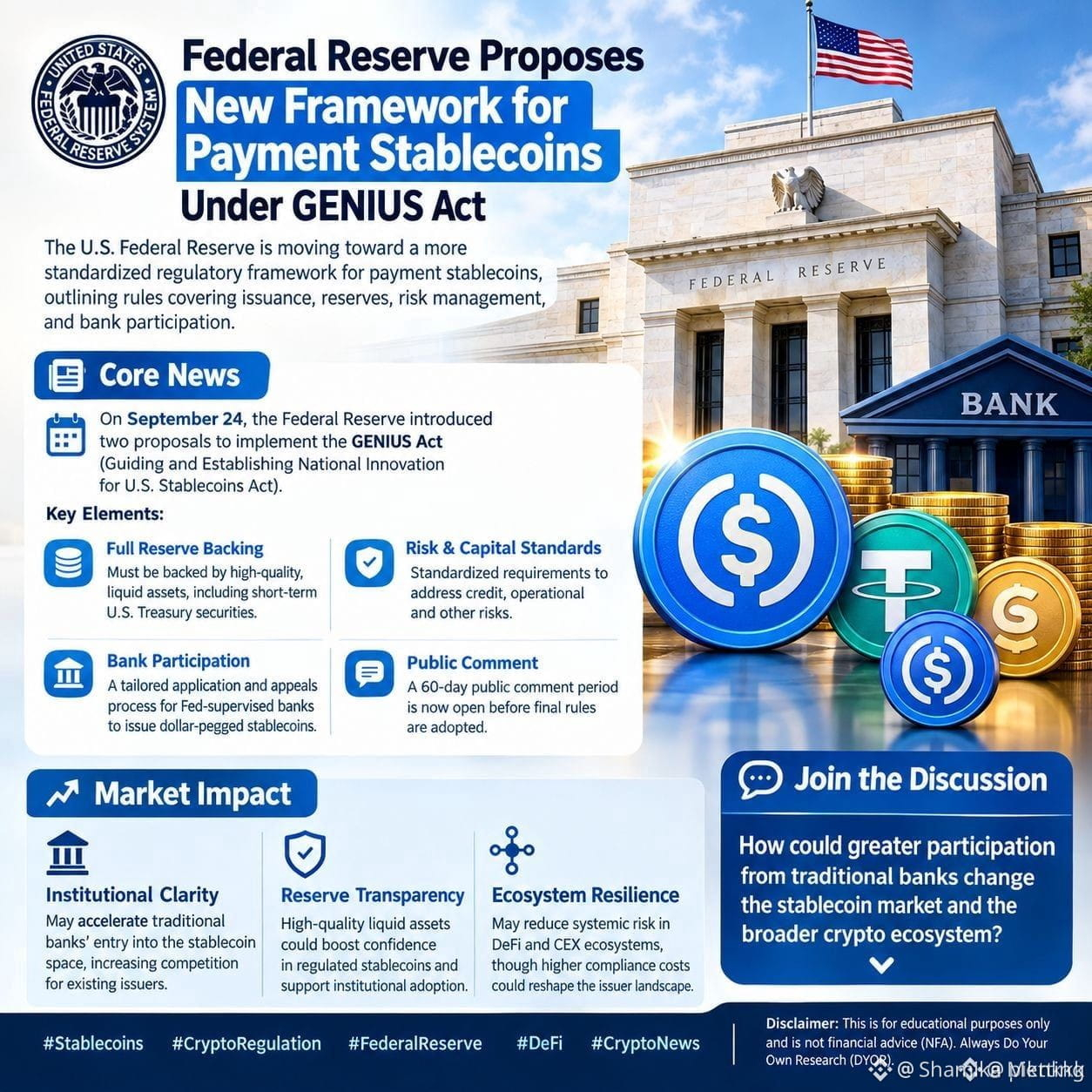
في 24 سبتمبر، أصدر الاحتياطي الفيدرالي قواعد لتطبيق قانون GENIUS. تشمل ركائز رئيسية:
• تغطية احتياطية كاملة: يجب على المُصدِرين الحفاظ على دعم 1:1 للرموز بأصول سائلة وعالية الجودة مثل أذون الخزانة الأمريكية قصيرة الأجل.
• معايير رأسمالية صارمة: يواجه المُصدِرون متطلبات رأسمالية موحّدة وأطر قوية لإدارة المخاطر للتخفيف من المخاطر التشغيلية.
• تكامل البنوك: يتم وضع عملية تقديم طلبات مخصصة للبنوك الخاضعة لرقابة الاحتياطي الفيدرالي لإصدار بشكل قانوني عملات ستابلكوين مربوطة بالدولار.
• فترة تعليقات عامة مدتها 60 يومًا متاحة الآن قبل اعتماد النسخة النهائية.
📊 تحليل أثر السوق
• وضوح مؤسسي: ستؤدي المسارات الواضحة إلى تسريع دخول البنوك التقليدية إلى قطاع الستابلكوين، وتعزيز المنافسة الصحية.
#Stablecoins #CryptoRegulation #FederalReserve #DeFi #CryptoNews
هذا المحتوى لأغراض تعليمية فقط. ليس نصيحة مالية (NFA). قم دائمًا بإجراء بحثك الخاص (DYOR).
متابعة من فضلكم
$GRT $SEI $PUMP
#fedproposespaymentstablecoinrules 🏛️ تكشف الاحتياطي الفيدرالي الأمريكي عن إطار تنظيمي جديد لعملات الستابلكوين المدفوعة
يتجه المشهد التنظيمي للأصول الرقمية خطوة كبيرة إلى الأمام. فقد قدّم الاحتياطي الفيدرالي الأمريكي مقترحات لتوحيد طريقة إصدار عملات الستابلكوين الخاصة بالمدفوعات وإدارتها.
📰 ملخص الأخبار الأساسية
في 24 سبتمبر، أصدر الاحتياطي الفيدرالي قواعد لتطبيق قانون GENIUS. تشمل ركائز رئيسية:
• تغطية احتياطية كاملة: يجب على المُصدِرين الحفاظ على دعم 1:1 للرموز بأصول سائلة وعالية الجودة مثل أذون الخزانة الأمريكية قصيرة الأجل.
• معايير رأسمالية صارمة: يواجه المُصدِرون متطلبات رأسمالية موحّدة وأطر قوية لإدارة المخاطر للتخفيف من المخاطر التشغيلية.
• تكامل البنوك: يتم وضع عملية تقديم طلبات مخصصة للبنوك الخاضعة لرقابة الاحتياطي الفيدرالي لإصدار بشكل قانوني عملات ستابلكوين مربوطة بالدولار.
• فترة تعليقات عامة مدتها 60 يومًا متاحة الآن قبل اعتماد النسخة النهائية.
📊 تحليل أثر السوق
• وضوح مؤسسي: ستؤدي المسارات الواضحة إلى تسريع دخول البنوك التقليدية إلى قطاع الستابلكوين، وتعزيز المنافسة الصحية.
#Stablecoins #CryptoRegulation #FederalReserve #DeFi #CryptoNews
هذا المحتوى لأغراض تعليمية فقط. ليس نصيحة مالية (NFA). قم دائمًا بإجراء بحثك الخاص (DYOR).
متابعة من فضلكم
$GRT $SEI $PUMP
يتجه المشهد التنظيمي للأصول الرقمية خطوة كبيرة إلى الأمام. فقد قدّم الاحتياطي الفيدرالي الأمريكي مقترحات لتوحيد طريقة إصدار عملات الستابلكوين الخاصة بالمدفوعات وإدارتها.
📰 ملخص الأخبار الأساسية
في 24 سبتمبر، أصدر الاحتياطي الفيدرالي قواعد لتطبيق قانون GENIUS. تشمل ركائز رئيسية:
• تغطية احتياطية كاملة: يجب على المُصدِرين الحفاظ على دعم 1:1 للرموز بأصول سائلة وعالية الجودة مثل أذون الخزانة الأمريكية قصيرة الأجل.
• معايير رأسمالية صارمة: يواجه المُصدِرون متطلبات رأسمالية موحّدة وأطر قوية لإدارة المخاطر للتخفيف من المخاطر التشغيلية.
• تكامل البنوك: يتم وضع عملية تقديم طلبات مخصصة للبنوك الخاضعة لرقابة الاحتياطي الفيدرالي لإصدار بشكل قانوني عملات ستابلكوين مربوطة بالدولار.
• فترة تعليقات عامة مدتها 60 يومًا متاحة الآن قبل اعتماد النسخة النهائية.
📊 تحليل أثر السوق
• وضوح مؤسسي: ستؤدي المسارات الواضحة إلى تسريع دخول البنوك التقليدية إلى قطاع الستابلكوين، وتعزيز المنافسة الصحية.
#Stablecoins #CryptoRegulation #FederalReserve #DeFi #CryptoNews
هذا المحتوى لأغراض تعليمية فقط. ليس نصيحة مالية (NFA). قم دائمًا بإجراء بحثك الخاص (DYOR).
متابعة من فضلكم
$GRT $SEI $PUMP
1
3.9k

·
--
#fedproposespaymentstablecoinrules JUST IN: Fed proposes new capital, redemption rules for stablecoin issuers, including capital requirements, a two-day redemption window, and enhanced reserve disclosures under GENIUS Act. This would raise issuer compliance pressure and potentially affect stablecoin liquidity d...$ARIA $TST $OM
#fedproposespaymentstablecoinrules JUST IN: Fed proposes new capital, redemption rules for stablecoin issuers, including capital requirements, a two-day redemption window, and enhanced reserve disclosures under GENIUS Act. This would raise issuer compliance pressure and potentially affect stablecoin liquidity d...$ARIA $TST $OM

362

·
--
#FedProposesPaymentStablecoinRules
La Reserva Federal de Estados Unidos ha propuesto normas para los emisores de stablecoins de pago bajo su supervisión, tal como lo exige la Ley GENIUS.
La propuesta establece normas para los emisores de criptomonedas respaldadas por dólares estadounidenses, conocidas como stablecoins. Sigue los requisitos de la Ley GENIUS, aprobada en 2025, que estableció un marco regulatorio federal para dichas criptomonedas.
Las medidas abarcan el respaldo de reservas, el capital, los acuerdos de custodia y el abanico de actividades relacionadas con las stablecoins que los bancos supervisados por la Reserva Federal pueden llevar a cabo.
Según la propuesta, los emisores de stablecoins de pago supervisados por la Reserva Federal estarían obligados a respaldar completamente sus tokens con ciertos activos de reserva, como letras del Tesoro a corto plazo.
Este requisito vincula los tokens en circulación con los activos mantenidos en reserva, y la propuesta cita la deuda pública a corto plazo como ejemplo de respaldo admisible. Según la propuesta, las normas de capital buscan abordar ciertos riesgos crediticios y operativos vinculados a la emisión de stablecoins.
$USDC
{spot}(USDCUSDT)
$QNT
{spot}(QNTUSDT)
$NVDAB
{spot}(NVDABUSDT)
#FedProposesPaymentStablecoinRules
La Reserva Federal de Estados Unidos ha propuesto normas para los emisores de stablecoins de pago bajo su supervisión, tal como lo exige la Ley GENIUS.
La propuesta establece normas para los emisores de criptomonedas respaldadas por dólares estadounidenses, conocidas como stablecoins. Sigue los requisitos de la Ley GENIUS, aprobada en 2025, que estableció un marco regulatorio federal para dichas criptomonedas.
Las medidas abarcan el respaldo de reservas, el capital, los acuerdos de custodia y el abanico de actividades relacionadas con las stablecoins que los bancos supervisados por la Reserva Federal pueden llevar a cabo.
Según la propuesta, los emisores de stablecoins de pago supervisados por la Reserva Federal estarían obligados a respaldar completamente sus tokens con ciertos activos de reserva, como letras del Tesoro a corto plazo.
Este requisito vincula los tokens en circulación con los activos mantenidos en reserva, y la propuesta cita la deuda pública a corto plazo como ejemplo de respaldo admisible. Según la propuesta, las normas de capital buscan abordar ciertos riesgos crediticios y operativos vinculados a la emisión de stablecoins.
$USDC
$QNT
$NVDAB
La Reserva Federal de Estados Unidos ha propuesto normas para los emisores de stablecoins de pago bajo su supervisión, tal como lo exige la Ley GENIUS.
La propuesta establece normas para los emisores de criptomonedas respaldadas por dólares estadounidenses, conocidas como stablecoins. Sigue los requisitos de la Ley GENIUS, aprobada en 2025, que estableció un marco regulatorio federal para dichas criptomonedas.
Las medidas abarcan el respaldo de reservas, el capital, los acuerdos de custodia y el abanico de actividades relacionadas con las stablecoins que los bancos supervisados por la Reserva Federal pueden llevar a cabo.
Según la propuesta, los emisores de stablecoins de pago supervisados por la Reserva Federal estarían obligados a respaldar completamente sus tokens con ciertos activos de reserva, como letras del Tesoro a corto plazo.
Este requisito vincula los tokens en circulación con los activos mantenidos en reserva, y la propuesta cita la deuda pública a corto plazo como ejemplo de respaldo admisible. Según la propuesta, las normas de capital buscan abordar ciertos riesgos crediticios y operativos vinculados a la emisión de stablecoins.
$USDC
$QNT
$NVDAB
1
3
672
·
--
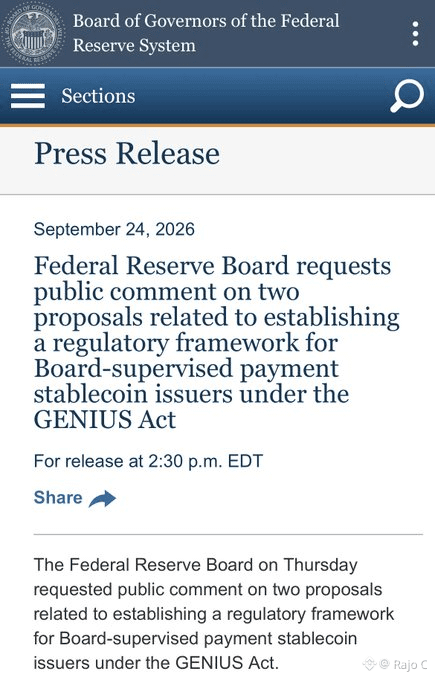
#fedproposespaymentstablecoinrules 🇺🇸
MASSIVE NEWS: THE FED HAST JUST PROPOSED RULES THAT WOULD ALLOW BANKS TO ISSUE THEIR OWN CRYPTO STABLECOINS!
🏦
IT‘S FINALLY HAPPENING!!!
💥🚀$BROCCOLI714 $SKUU $CSOPSKHYNIX2L
#fedproposespaymentstablecoinrules 🇺🇸
MASSIVE NEWS: THE FED HAST JUST PROPOSED RULES THAT WOULD ALLOW BANKS TO ISSUE THEIR OWN CRYPTO STABLECOINS!
🏦
IT‘S FINALLY HAPPENING!!!
💥🚀$BROCCOLI714 $SKUU $CSOPSKHYNIX2L
MASSIVE NEWS: THE FED HAST JUST PROPOSED RULES THAT WOULD ALLOW BANKS TO ISSUE THEIR OWN CRYPTO STABLECOINS!
🏦
IT‘S FINALLY HAPPENING!!!
💥🚀$BROCCOLI714 $SKUU $CSOPSKHYNIX2L
398
·
--
#fedproposespaymentstablecoinrules The Fed's two proposals would require full reserve backing for payment stablecoins and create an application process for banks issuing them through subsidiaries.$OG $RAM $BILL
#fedproposespaymentstablecoinrules The Fed's two proposals would require full reserve backing for payment stablecoins and create an application process for banks issuing them through subsidiaries.$OG $RAM $BILL

1
661
·
--
#fedproposespaymentstablecoinrules 💥
BOOM!
🚨
It's official:
🇺🇸
The Federal Reserve is proposing a new regulatory framework for stablecoin
issuers under the GENIUS Act.
The U.S. Senate has passed the GENIUS Act, which President Trump has signed into law!
🔥$SKY $Q $MDB
#fedproposespaymentstablecoinrules 💥
BOOM!
🚨
It's official:
🇺🇸
The Federal Reserve is proposing a new regulatory framework for stablecoin
issuers under the GENIUS Act.
The U.S. Senate has passed the GENIUS Act, which President Trump has signed into law!
🔥$SKY $Q $MDB
BOOM!
🚨
It's official:
🇺🇸
The Federal Reserve is proposing a new regulatory framework for stablecoin
issuers under the GENIUS Act.
The U.S. Senate has passed the GENIUS Act, which President Trump has signed into law!
🔥$SKY $Q $MDB
661
·
--
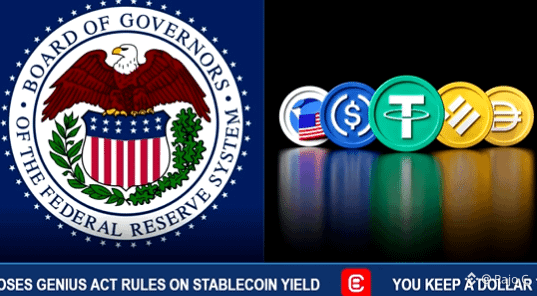
#fedproposespaymentstablecoinrules 🚨
FED PROPOSES GENIUS ACT RULES ON STABLECOIN
YIELD!
The Federal Reserve put out draft
rules for payment stablecoin
issuers it supervises.
Tokens would have to stay fully backed by allowed reserves such as short-term Treasuries.
The draft also bans paying yield just for holding the stablecoin, and treats some third-party reward setups as off-limits.
That means you keep a dollar token, the issuer keeps the Treasury interest.
$FARTCOIN $AR $RAVE
#fedproposespaymentstablecoinrules 🚨
FED PROPOSES GENIUS ACT RULES ON STABLECOIN
YIELD!
The Federal Reserve put out draft
rules for payment stablecoin
issuers it supervises.
Tokens would have to stay fully backed by allowed reserves such as short-term Treasuries.
The draft also bans paying yield just for holding the stablecoin, and treats some third-party reward setups as off-limits.
That means you keep a dollar token, the issuer keeps the Treasury interest.
$FARTCOIN $AR $RAVE
FED PROPOSES GENIUS ACT RULES ON STABLECOIN
YIELD!
The Federal Reserve put out draft
rules for payment stablecoin
issuers it supervises.
Tokens would have to stay fully backed by allowed reserves such as short-term Treasuries.
The draft also bans paying yield just for holding the stablecoin, and treats some third-party reward setups as off-limits.
That means you keep a dollar token, the issuer keeps the Treasury interest.
$FARTCOIN $AR $RAVE
1
1k
·
--
#fedproposespaymentstablecoinrules 🇺🇸🚨
FED PROPOSES GENIUS ACT IMPLEMENTATION RULES FOR PAYMENT STABLECOIN
ISSUERS!
THE PROPOSALS COVER RESERVE ASSET REQUIREMENTS, CAPITAL AND RISK MANAGEMENT STANDARDS, CUSTODY OF RESERVE ASSETS, AND ISSUER APPLICATION PROCEDURES.$PHA $USELESS $CSOPSAMSUNG2L
#fedproposespaymentstablecoinrules 🇺🇸🚨
FED PROPOSES GENIUS ACT IMPLEMENTATION RULES FOR PAYMENT STABLECOIN
ISSUERS!
THE PROPOSALS COVER RESERVE ASSET REQUIREMENTS, CAPITAL AND RISK MANAGEMENT STANDARDS, CUSTODY OF RESERVE ASSETS, AND ISSUER APPLICATION PROCEDURES.$PHA $USELESS $CSOPSAMSUNG2L
FED PROPOSES GENIUS ACT IMPLEMENTATION RULES FOR PAYMENT STABLECOIN
ISSUERS!
THE PROPOSALS COVER RESERVE ASSET REQUIREMENTS, CAPITAL AND RISK MANAGEMENT STANDARDS, CUSTODY OF RESERVE ASSETS, AND ISSUER APPLICATION PROCEDURES.$PHA $USELESS $CSOPSAMSUNG2L
657

#FedProposesPaymentStablecoinRules
The Federal Reserve’s payment-stablecoin proposal, the key announcement was on September 24, 2026, not today (Sept. 28). The Fed proposed two rules under the GENIUS Act for payment stablecoin issuers.
Federal Reserve
What the Fed proposed
1:1 reserve backing with permitted assets, including short-term U.S. Treasuries and other high-quality liquid assets.
Capital requirements and risk-management standards for supervised stablecoin issuers.
Rules for firms that custody the reserves backing stablecoins.
A framework allowing certain Fed-supervised banks to apply to issue payment stablecoins.
60-day public comment period after Federal Register publication.
Federal Reserve +1
🟢 Why crypto markets care
This is potentially significant for USDC/USDT and the broader stablecoin/payment infrastructure because it moves stablecoins further into the regulated U.S. financial system.
For altcoins, the direct effect is not automatically bullish. The important potential positive is that clearer regulation could facilitate institutional/stablecoin payment adoption; the proposed reserve and capital rules could also increase compliance costs for issuers.
If you're asking because of today's crypto move, I can check BTC + ETH + XRP + SOL + QNT + stablecoin flows and explain whether this Fed news is likely contributing to the move.
#FedProposesPaymentStablecoinRules
The Federal Reserve’s payment-stablecoin proposal, the key announcement was on September 24, 2026, not today (Sept. 28). The Fed proposed two rules under the GENIUS Act for payment stablecoin issuers.
Federal Reserve
What the Fed proposed
1:1 reserve backing with permitted assets, including short-term U.S. Treasuries and other high-quality liquid assets.
Capital requirements and risk-management standards for supervised stablecoin issuers.
Rules for firms that custody the reserves backing stablecoins.
A framework allowing certain Fed-supervised banks to apply to issue payment stablecoins.
60-day public comment period after Federal Register publication.
Federal Reserve +1
🟢 Why crypto markets care
This is potentially significant for USDC/USDT and the broader stablecoin/payment infrastructure because it moves stablecoins further into the regulated U.S. financial system.
For altcoins, the direct effect is not automatically bullish. The important potential positive is that clearer regulation could facilitate institutional/stablecoin payment adoption; the proposed reserve and capital rules could also increase compliance costs for issuers.
If you're asking because of today's crypto move, I can check BTC + ETH + XRP + SOL + QNT + stablecoin flows and explain whether this Fed news is likely contributing to the move.
The Federal Reserve’s payment-stablecoin proposal, the key announcement was on September 24, 2026, not today (Sept. 28). The Fed proposed two rules under the GENIUS Act for payment stablecoin issuers.
Federal Reserve
What the Fed proposed
1:1 reserve backing with permitted assets, including short-term U.S. Treasuries and other high-quality liquid assets.
Capital requirements and risk-management standards for supervised stablecoin issuers.
Rules for firms that custody the reserves backing stablecoins.
A framework allowing certain Fed-supervised banks to apply to issue payment stablecoins.
60-day public comment period after Federal Register publication.
Federal Reserve +1
🟢 Why crypto markets care
This is potentially significant for USDC/USDT and the broader stablecoin/payment infrastructure because it moves stablecoins further into the regulated U.S. financial system.
For altcoins, the direct effect is not automatically bullish. The important potential positive is that clearer regulation could facilitate institutional/stablecoin payment adoption; the proposed reserve and capital rules could also increase compliance costs for issuers.
If you're asking because of today's crypto move, I can check BTC + ETH + XRP + SOL + QNT + stablecoin flows and explain whether this Fed news is likely contributing to the move.
1
60

·
--
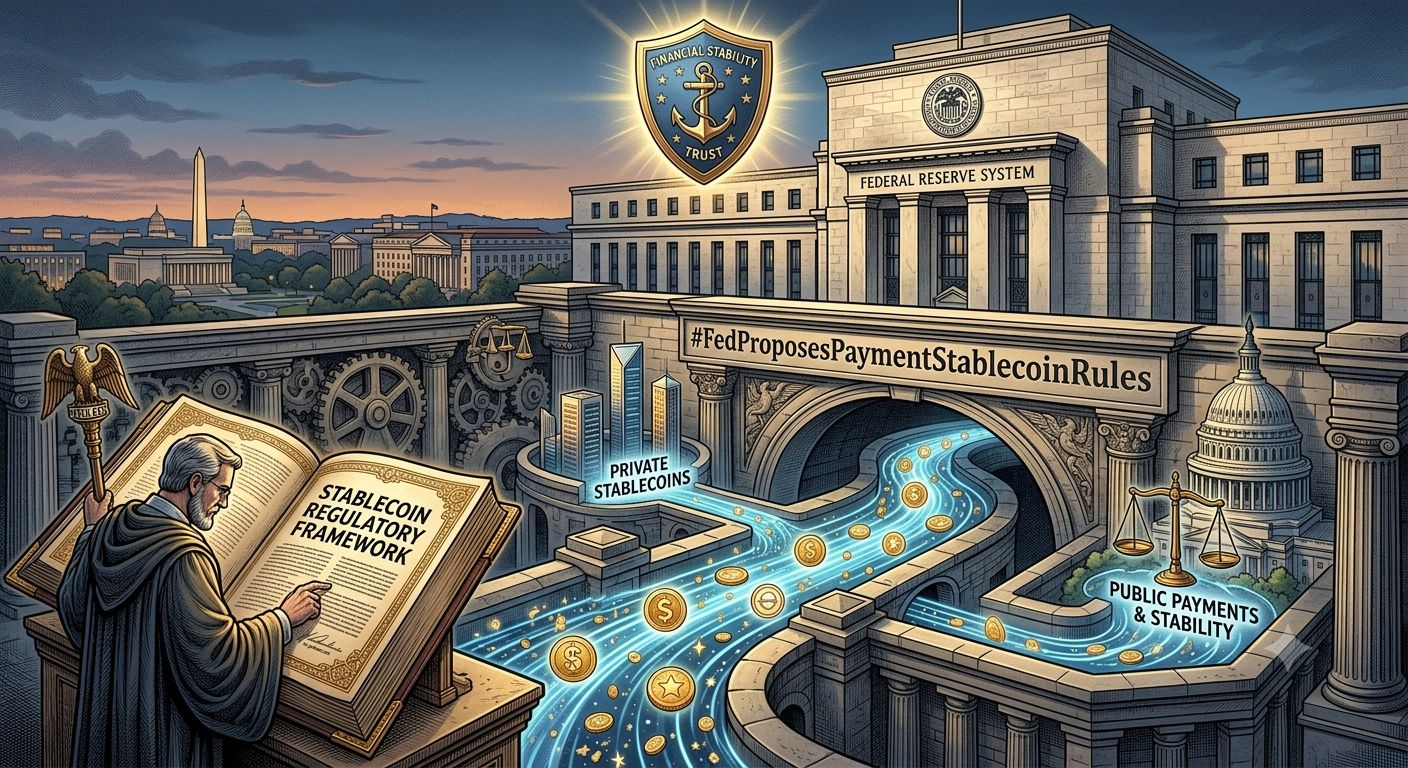
#FedProposesPaymentStablecoinRules
The Fed just dropped proposed rules for Payment Stablecoins, and it’s a game-changer. 🚨
Here is what you need to know:
TradFi Integration: Regulators are officially trying to bring stablecoins into the mainstream banking framework.
Bullish or Bearish? Clear rules bring massive institutional capital, but heavier compliance could squeeze yield and privacy.
Market Impact: DeFi vs. Centralized Stablecoins ($USDT / $USDC)—who wins the long game?
What’s your take? Is this the regulatory clarity crypto needs to go parabolic, or too much government control?
Let us know your thoughts in the comments! 👇
$HBAR
{future}(HBARUSDT)
$QNT
{future}(QNTUSDT)
$AIOT
{future}(AIOTUSDT)
#Fed #StablecoinNews #CryptoMarkets #BinanceSquare
#FedProposesPaymentStablecoinRules
The Fed just dropped proposed rules for Payment Stablecoins, and it’s a game-changer. 🚨
Here is what you need to know:
TradFi Integration: Regulators are officially trying to bring stablecoins into the mainstream banking framework.
Bullish or Bearish? Clear rules bring massive institutional capital, but heavier compliance could squeeze yield and privacy.
Market Impact: DeFi vs. Centralized Stablecoins ($USDT / $USDC)—who wins the long game?
What’s your take? Is this the regulatory clarity crypto needs to go parabolic, or too much government control?
Let us know your thoughts in the comments! 👇
$HBAR
$QNT
$AIOT
#Fed #StablecoinNews #CryptoMarkets #BinanceSquare
The Fed just dropped proposed rules for Payment Stablecoins, and it’s a game-changer. 🚨
Here is what you need to know:
TradFi Integration: Regulators are officially trying to bring stablecoins into the mainstream banking framework.
Bullish or Bearish? Clear rules bring massive institutional capital, but heavier compliance could squeeze yield and privacy.
Market Impact: DeFi vs. Centralized Stablecoins ($USDT / $USDC)—who wins the long game?
What’s your take? Is this the regulatory clarity crypto needs to go parabolic, or too much government control?
Let us know your thoughts in the comments! 👇
$HBAR
$QNT
$AIOT
#Fed #StablecoinNews #CryptoMarkets #BinanceSquare
1
323

·
--
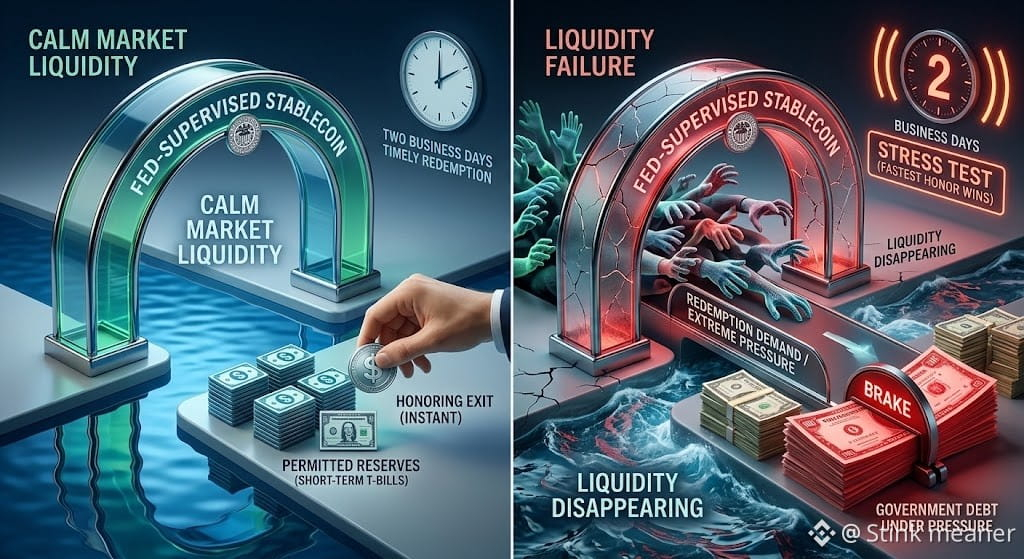
💵 The Fed's new stablecoin rules are really a stress test disguised as a rulebook...
#fedproposespaymentstablecoinrules
The Federal Reserve has proposed rules under the GENIUS Act requiring Board-supervised payment-stablecoin issuers to fully back tokens with permitted reserves such as short-term Treasury bills, alongside capital and risk-management requirements. It also proposes a process for supervised banks seeking approval to issue payment stablecoins.
But the most revealing line came from Governor Michael Barr:
A stablecoin is only genuinely stable if it can be redeemed at par promptly under stress — including when even normally liquid government debt is under pressure.
That's a much harder test than “does it stay at $1 today?”
Because the real system looks like:
stablecoin → reserve assets → redemption demand → liquidity
In calm markets, the structure can look almost boring.
The real test arrives when redemptions surge and everyone wants liquidity simultaneously.
The Fed's own research notes that its proposal defines timely redemption at two business days, while other GENIUS implementation proposals contemplate longer timing under extreme redemption pressure.
That's the fascinating part:
The future stablecoin race may be decided less by who can issue the most tokens — and more by who can honor the exit fastest when liquidity disappears.
DYOR: These are proposed rules, not final requirements, and they apply specifically to the issuers/entities within the relevant federal regulatory perimeter.
$USDC $ONE $QNT
{future}(QNTUSDT)
{future}(ONEUSDT)
{future}(USDCUSDT)
#FedProposesPaymentStablecoinRules #Stablecoins #USDC #CryptoRegulation
💵 The Fed's new stablecoin rules are really a stress test disguised as a rulebook...
#fedproposespaymentstablecoinrules
The Federal Reserve has proposed rules under the GENIUS Act requiring Board-supervised payment-stablecoin issuers to fully back tokens with permitted reserves such as short-term Treasury bills, alongside capital and risk-management requirements. It also proposes a process for supervised banks seeking approval to issue payment stablecoins.
But the most revealing line came from Governor Michael Barr:
A stablecoin is only genuinely stable if it can be redeemed at par promptly under stress — including when even normally liquid government debt is under pressure.
That's a much harder test than “does it stay at $1 today?”
Because the real system looks like:
stablecoin → reserve assets → redemption demand → liquidity
In calm markets, the structure can look almost boring.
The real test arrives when redemptions surge and everyone wants liquidity simultaneously.
The Fed's own research notes that its proposal defines timely redemption at two business days, while other GENIUS implementation proposals contemplate longer timing under extreme redemption pressure.
That's the fascinating part:
The future stablecoin race may be decided less by who can issue the most tokens — and more by who can honor the exit fastest when liquidity disappears.
DYOR: These are proposed rules, not final requirements, and they apply specifically to the issuers/entities within the relevant federal regulatory perimeter.
$USDC $ONE $QNT
#FedProposesPaymentStablecoinRules #Stablecoins #USDC #CryptoRegulation
#fedproposespaymentstablecoinrules
The Federal Reserve has proposed rules under the GENIUS Act requiring Board-supervised payment-stablecoin issuers to fully back tokens with permitted reserves such as short-term Treasury bills, alongside capital and risk-management requirements. It also proposes a process for supervised banks seeking approval to issue payment stablecoins.
But the most revealing line came from Governor Michael Barr:
A stablecoin is only genuinely stable if it can be redeemed at par promptly under stress — including when even normally liquid government debt is under pressure.
That's a much harder test than “does it stay at $1 today?”
Because the real system looks like:
stablecoin → reserve assets → redemption demand → liquidity
In calm markets, the structure can look almost boring.
The real test arrives when redemptions surge and everyone wants liquidity simultaneously.
The Fed's own research notes that its proposal defines timely redemption at two business days, while other GENIUS implementation proposals contemplate longer timing under extreme redemption pressure.
That's the fascinating part:
The future stablecoin race may be decided less by who can issue the most tokens — and more by who can honor the exit fastest when liquidity disappears.
DYOR: These are proposed rules, not final requirements, and they apply specifically to the issuers/entities within the relevant federal regulatory perimeter.
$USDC $ONE $QNT
#FedProposesPaymentStablecoinRules #Stablecoins #USDC #CryptoRegulation
phu chanhluu 98:
follow me
2
6
10.9k

#FedProposesPaymentStablecoinRules
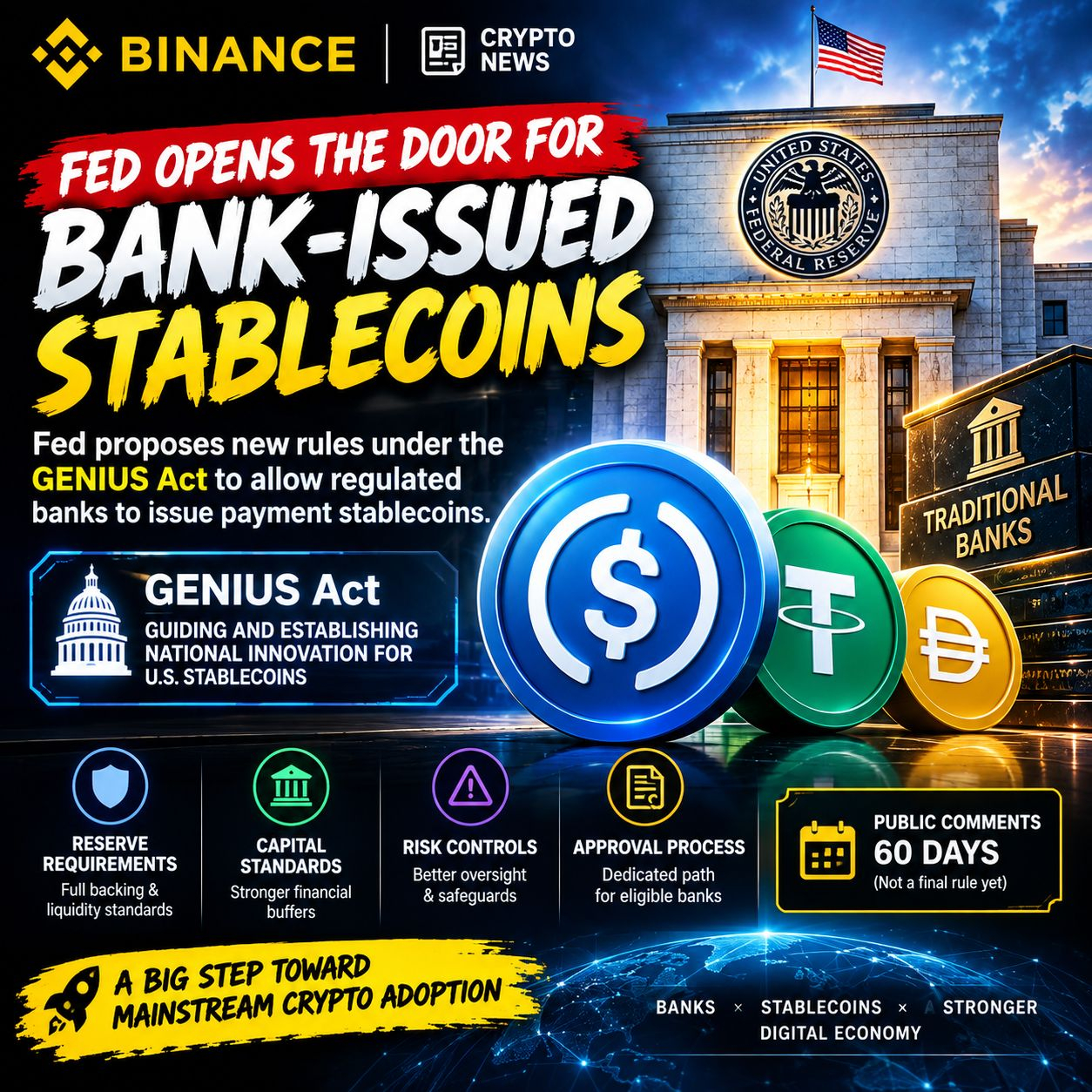
🚨 FED OPENS THE DOOR FOR BANK-ISSUED STABLECOINS
The Federal Reserve has proposed new rules under the GENIUS Act that would allow Fed-supervised banks to apply to issue payment stablecoins.
The proposal includes reserve requirements, capital standards, risk controls, and a dedicated approval process for banks entering the stablecoin market.
This could mark another major step toward bringing traditional banking deeper into the digital-asset ecosystem. 🏦💵
#Stablecoins #Crypto #Bitcoin #Ethereum #GENIUSAct #FederalReserve #Blockchain #CryptoNews
#FedProposesPaymentStablecoinRules
🚨 FED OPENS THE DOOR FOR BANK-ISSUED STABLECOINS
The Federal Reserve has proposed new rules under the GENIUS Act that would allow Fed-supervised banks to apply to issue payment stablecoins.
The proposal includes reserve requirements, capital standards, risk controls, and a dedicated approval process for banks entering the stablecoin market.
This could mark another major step toward bringing traditional banking deeper into the digital-asset ecosystem. 🏦💵
#Stablecoins #Crypto #Bitcoin #Ethereum #GENIUSAct #FederalReserve #Blockchain #CryptoNews
🚨 FED OPENS THE DOOR FOR BANK-ISSUED STABLECOINS
The Federal Reserve has proposed new rules under the GENIUS Act that would allow Fed-supervised banks to apply to issue payment stablecoins.
The proposal includes reserve requirements, capital standards, risk controls, and a dedicated approval process for banks entering the stablecoin market.
This could mark another major step toward bringing traditional banking deeper into the digital-asset ecosystem. 🏦💵
#Stablecoins #Crypto #Bitcoin #Ethereum #GENIUSAct #FederalReserve #Blockchain #CryptoNews
12

#FedProposesPaymentStablecoinRules
On September 24, 2026, the U.S. Federal Reserve issued two comprehensive rulemaking proposals under the Guiding and Establishing National Innovation for U.S. Stablecoins (GENIUS) Act to establish a federal regulatory framework for payment stablecoins. The proposals transition stablecoin oversight from standard enforcement guidance to formal, structured rulemaking for all Board-supervised issuers.
#FedProposesPaymentStablecoinRules
On September 24, 2026, the U.S. Federal Reserve issued two comprehensive rulemaking proposals under the Guiding and Establishing National Innovation for U.S. Stablecoins (GENIUS) Act to establish a federal regulatory framework for payment stablecoins. The proposals transition stablecoin oversight from standard enforcement guidance to formal, structured rulemaking for all Board-supervised issuers.
On September 24, 2026, the U.S. Federal Reserve issued two comprehensive rulemaking proposals under the Guiding and Establishing National Innovation for U.S. Stablecoins (GENIUS) Act to establish a federal regulatory framework for payment stablecoins. The proposals transition stablecoin oversight from standard enforcement guidance to formal, structured rulemaking for all Board-supervised issuers.
1
33

·
--
တက်ရိပ်ရှိသည်
#fedproposespaymentstablecoinrules
Fed Proposes Payment Stablecoin Rules: What Would Change for Issuers?
Stablecoin adoption depends partly on confidence in the assets and systems behind each token.
On September 24, 2026, the Federal Reserve requested public feedback on two proposals under the GENIUS Act, addressing payment stablecoin issuers under its supervision and related banking activities.
The first would require full backing with eligible reserve assets, including short-term Treasury bills. It also addresses capital requirements, risk management and the safekeeping of assets backing stablecoins.
The second would establish an application process for Fed-supervised banks seeking approval for stablecoin issuance, requiring business plans, financial information and supporting documents.
These remain proposals. The comment period closes 60 days after publication in the Federal Register, and the final requirements may change.
My take: Clearer reserve and operating requirements could help banks and businesses assess stablecoin issuers more consistently. Compliance also costs money, so the final design could influence which firms can compete and how services are priced.
For users, the practical questions remain straightforward: how accessible is redemption, who safeguards the reserves, and how reliably do operations function during stress?
I would watch whether the final framework combines stronger protections with workable entry requirements. That balance could shape competition and the usefulness of payment stablecoins.
Which matters most to you: reserve transparency, reliable redemption or greater issuer competition?
#FedProposesPaymentStablecoinRules #Stablecoins #GENIUSAct
$QNT $BTW $ONE
{future}(ONEUSDT)
{future}(BTWUSDT)
{future}(QNTUSDT)
#fedproposespaymentstablecoinrules
Fed Proposes Payment Stablecoin Rules: What Would Change for Issuers?
Stablecoin adoption depends partly on confidence in the assets and systems behind each token.
On September 24, 2026, the Federal Reserve requested public feedback on two proposals under the GENIUS Act, addressing payment stablecoin issuers under its supervision and related banking activities.
The first would require full backing with eligible reserve assets, including short-term Treasury bills. It also addresses capital requirements, risk management and the safekeeping of assets backing stablecoins.
The second would establish an application process for Fed-supervised banks seeking approval for stablecoin issuance, requiring business plans, financial information and supporting documents.
These remain proposals. The comment period closes 60 days after publication in the Federal Register, and the final requirements may change.
My take: Clearer reserve and operating requirements could help banks and businesses assess stablecoin issuers more consistently. Compliance also costs money, so the final design could influence which firms can compete and how services are priced.
For users, the practical questions remain straightforward: how accessible is redemption, who safeguards the reserves, and how reliably do operations function during stress?
I would watch whether the final framework combines stronger protections with workable entry requirements. That balance could shape competition and the usefulness of payment stablecoins.
Which matters most to you: reserve transparency, reliable redemption or greater issuer competition?
#FedProposesPaymentStablecoinRules #Stablecoins #GENIUSAct
$QNT $BTW $ONE
Fed Proposes Payment Stablecoin Rules: What Would Change for Issuers?
Stablecoin adoption depends partly on confidence in the assets and systems behind each token.
On September 24, 2026, the Federal Reserve requested public feedback on two proposals under the GENIUS Act, addressing payment stablecoin issuers under its supervision and related banking activities.
The first would require full backing with eligible reserve assets, including short-term Treasury bills. It also addresses capital requirements, risk management and the safekeeping of assets backing stablecoins.
The second would establish an application process for Fed-supervised banks seeking approval for stablecoin issuance, requiring business plans, financial information and supporting documents.
These remain proposals. The comment period closes 60 days after publication in the Federal Register, and the final requirements may change.
My take: Clearer reserve and operating requirements could help banks and businesses assess stablecoin issuers more consistently. Compliance also costs money, so the final design could influence which firms can compete and how services are priced.
For users, the practical questions remain straightforward: how accessible is redemption, who safeguards the reserves, and how reliably do operations function during stress?
I would watch whether the final framework combines stronger protections with workable entry requirements. That balance could shape competition and the usefulness of payment stablecoins.
Which matters most to you: reserve transparency, reliable redemption or greater issuer competition?
#FedProposesPaymentStablecoinRules #Stablecoins #GENIUSAct
$QNT $BTW $ONE
2
1.9k

·
--
တက်ရိပ်ရှိသည်
#FedProposesPaymentStablecoinRules
The Fed Just Told Stablecoin Issuers They Can Earn Interest on Treasuries but You Cannot Earn Interest on Their Tokens 🏛️😂
September 24. The Federal Reserve Board asked the public to weigh in on two draft rules implementing the GENIUS Act. The first says stablecoin issuers under Fed supervision must back every token at all times with permitted reserves, mainly short term Treasury bills and other high quality liquid assets, plus standardized capital and risk management rules. The second sets an application path for banks that want to issue stablecoins through a subsidiary. Comments stay open for 60 days after Federal Register publication. 📊
Here is the line that quietly matters most 🧠
Issuers are barred from paying interest or yield solely for holding a payment stablecoin. Read that twice. The reserves behind the token can sit in Treasuries earning real interest, while the person holding the token gets nothing for it. That is the exact fight the Bank Policy Institute has been waging, the same banks that built their own tokenized deposits. CoinDesk notes the GENIUS Act is now the main law on stablecoin rewards because the CLARITY Act revision failed. 😂
The scoreboard nobody wanted 🎯
The law's deadline for rules was July 18. Agencies missed it. The OCC now targets November, and full enforcement is still planned for January 18, 2027. US Bank tested its Stellar stablecoin inside its own walls in the meantime. Regulators are writing the rulebook while banks are already playing. 💡
Governor Barr put it plainly, further work will undoubtedly be required if stablecoins are to be reliable payment instruments. 🚀
$USDC
{spot}(USDCUSDT)
#FedProposesPaymentStablecoinRules
The Fed Just Told Stablecoin Issuers They Can Earn Interest on Treasuries but You Cannot Earn Interest on Their Tokens 🏛️😂
September 24. The Federal Reserve Board asked the public to weigh in on two draft rules implementing the GENIUS Act. The first says stablecoin issuers under Fed supervision must back every token at all times with permitted reserves, mainly short term Treasury bills and other high quality liquid assets, plus standardized capital and risk management rules. The second sets an application path for banks that want to issue stablecoins through a subsidiary. Comments stay open for 60 days after Federal Register publication. 📊
Here is the line that quietly matters most 🧠
Issuers are barred from paying interest or yield solely for holding a payment stablecoin. Read that twice. The reserves behind the token can sit in Treasuries earning real interest, while the person holding the token gets nothing for it. That is the exact fight the Bank Policy Institute has been waging, the same banks that built their own tokenized deposits. CoinDesk notes the GENIUS Act is now the main law on stablecoin rewards because the CLARITY Act revision failed. 😂
The scoreboard nobody wanted 🎯
The law's deadline for rules was July 18. Agencies missed it. The OCC now targets November, and full enforcement is still planned for January 18, 2027. US Bank tested its Stellar stablecoin inside its own walls in the meantime. Regulators are writing the rulebook while banks are already playing. 💡
Governor Barr put it plainly, further work will undoubtedly be required if stablecoins are to be reliable payment instruments. 🚀
$USDC
The Fed Just Told Stablecoin Issuers They Can Earn Interest on Treasuries but You Cannot Earn Interest on Their Tokens 🏛️😂
September 24. The Federal Reserve Board asked the public to weigh in on two draft rules implementing the GENIUS Act. The first says stablecoin issuers under Fed supervision must back every token at all times with permitted reserves, mainly short term Treasury bills and other high quality liquid assets, plus standardized capital and risk management rules. The second sets an application path for banks that want to issue stablecoins through a subsidiary. Comments stay open for 60 days after Federal Register publication. 📊
Here is the line that quietly matters most 🧠
Issuers are barred from paying interest or yield solely for holding a payment stablecoin. Read that twice. The reserves behind the token can sit in Treasuries earning real interest, while the person holding the token gets nothing for it. That is the exact fight the Bank Policy Institute has been waging, the same banks that built their own tokenized deposits. CoinDesk notes the GENIUS Act is now the main law on stablecoin rewards because the CLARITY Act revision failed. 😂
The scoreboard nobody wanted 🎯
The law's deadline for rules was July 18. Agencies missed it. The OCC now targets November, and full enforcement is still planned for January 18, 2027. US Bank tested its Stellar stablecoin inside its own walls in the meantime. Regulators are writing the rulebook while banks are already playing. 💡
Governor Barr put it plainly, further work will undoubtedly be required if stablecoins are to be reliable payment instruments. 🚀
$USDC

76

·
--
稳定币提案热度继续上升|服务外包仍需尽调与监控|SOL在118美元我先等
我的态度:先看谁控制密钥、谁维护代码、谁能处理故障,再看支付叙事;SOL暂不参与。币安广场本轮稳定币规则话题显示363人讨论,较上一轮258增加,这是可核对的关注变化,不是买盘证明。SOL未出现在本轮六小时搜索名单,我不把其他币种的搜索上升写成SOL热度。
这次看一个容易被忽略的事实:美联储9月24日规则提案第247.13(a)(5),拟要求其监管范围内的支付稳定币发行人对第三方关系开展适当尽调,通过合同要求服务商实施满足适用要求的措施,并按需要持续监控,包括查看审计、测试结果摘要等材料。说明部分举例涵盖智能合约代码、私钥托管与链上合规监测。GENIUS正式法案则授权制定运营、合规和信息技术风险管理标准;具体服务商条款来自提案,不能混写成已经最终生效,更不是今天新发生的安全事故。
为什么与SOL有关?稳定币支付应用可以使用公链,却仍依赖合约开发商、托管商和服务接口。我的机制判断是:第三方控制质量会影响机构愿不愿意把业务放上链、能否连续提供服务。网络运行正常,不保证每个应用的密钥管理或业务后台同样正常;有合作公告也不等于控制已经验收。潜在合规投入可能提高接入门槛,也可能改善业务可靠性,两边都要看实际执行,不能只选利好的一面。
我会核对的是服务商权限、测试与应急安排,而不是用“外包给专业团队”代替风险检查。这不意味着某家Solana应用已经失控,也没有证据证明提案已经让机构加仓SOL。稳定币本金留在链上,与SOL费用需求、持币敞口是不同口径;要看到真实业务留存和费用使用,才能进一步讨论价值捕获。
市场状态也要独立写清:本轮Kraken美元现货先为118.36,发布前复核118.29,二十四小时区间117.64至124.75,价格仍在区间低端,没有站回我的120确认位。该报价不能证明下跌由服务商监管导致,也不能说明全市场资金都在撤出。117.64只是滚动窗口低点,不是一定守住的承诺。
如果是我自己交易,目前仓位为零,只考虑无杠杆现货试多,不追空。小时收盘站上120,回踩119.5至120守住,报价与充提正常,才用总资金最多0.3%参与;122减半,124平掉余仓。入场后118.5硬止损,或连续两根小时收盘低于119.5全部退出。入场前跌破116.5、渠道异常或回踩没有承接,取消计划,不摊平。有效收复120会推翻我暂不参与的判断;无法守住确认区或运营控制信息恶化,则撤回试多前提。这些均为条件计划,不是成交与盈利复盘。
来源:美联储9月24日提案第247.13条;Public Law 119–27第4条;Kraken SOL/USD;币安广场首页。
#FedProposesPaymentStablecoinRules #SOL
以上仅为个人市场观察,不构成投资建议。
稳定币提案热度继续上升|服务外包仍需尽调与监控|SOL在118美元我先等
我的态度:先看谁控制密钥、谁维护代码、谁能处理故障,再看支付叙事;SOL暂不参与。币安广场本轮稳定币规则话题显示363人讨论,较上一轮258增加,这是可核对的关注变化,不是买盘证明。SOL未出现在本轮六小时搜索名单,我不把其他币种的搜索上升写成SOL热度。
这次看一个容易被忽略的事实:美联储9月24日规则提案第247.13(a)(5),拟要求其监管范围内的支付稳定币发行人对第三方关系开展适当尽调,通过合同要求服务商实施满足适用要求的措施,并按需要持续监控,包括查看审计、测试结果摘要等材料。说明部分举例涵盖智能合约代码、私钥托管与链上合规监测。GENIUS正式法案则授权制定运营、合规和信息技术风险管理标准;具体服务商条款来自提案,不能混写成已经最终生效,更不是今天新发生的安全事故。
为什么与SOL有关?稳定币支付应用可以使用公链,却仍依赖合约开发商、托管商和服务接口。我的机制判断是:第三方控制质量会影响机构愿不愿意把业务放上链、能否连续提供服务。网络运行正常,不保证每个应用的密钥管理或业务后台同样正常;有合作公告也不等于控制已经验收。潜在合规投入可能提高接入门槛,也可能改善业务可靠性,两边都要看实际执行,不能只选利好的一面。
我会核对的是服务商权限、测试与应急安排,而不是用“外包给专业团队”代替风险检查。这不意味着某家Solana应用已经失控,也没有证据证明提案已经让机构加仓SOL。稳定币本金留在链上,与SOL费用需求、持币敞口是不同口径;要看到真实业务留存和费用使用,才能进一步讨论价值捕获。
市场状态也要独立写清:本轮Kraken美元现货先为118.36,发布前复核118.29,二十四小时区间117.64至124.75,价格仍在区间低端,没有站回我的120确认位。该报价不能证明下跌由服务商监管导致,也不能说明全市场资金都在撤出。117.64只是滚动窗口低点,不是一定守住的承诺。
如果是我自己交易,目前仓位为零,只考虑无杠杆现货试多,不追空。小时收盘站上120,回踩119.5至120守住,报价与充提正常,才用总资金最多0.3%参与;122减半,124平掉余仓。入场后118.5硬止损,或连续两根小时收盘低于119.5全部退出。入场前跌破116.5、渠道异常或回踩没有承接,取消计划,不摊平。有效收复120会推翻我暂不参与的判断;无法守住确认区或运营控制信息恶化,则撤回试多前提。这些均为条件计划,不是成交与盈利复盘。
来源:美联储9月24日提案第247.13条;Public Law 119–27第4条;Kraken SOL/USD;币安广场首页。
#FedProposesPaymentStablecoinRules #SOL
以上仅为个人市场观察,不构成投资建议。
我的态度:先看谁控制密钥、谁维护代码、谁能处理故障,再看支付叙事;SOL暂不参与。币安广场本轮稳定币规则话题显示363人讨论,较上一轮258增加,这是可核对的关注变化,不是买盘证明。SOL未出现在本轮六小时搜索名单,我不把其他币种的搜索上升写成SOL热度。
这次看一个容易被忽略的事实:美联储9月24日规则提案第247.13(a)(5),拟要求其监管范围内的支付稳定币发行人对第三方关系开展适当尽调,通过合同要求服务商实施满足适用要求的措施,并按需要持续监控,包括查看审计、测试结果摘要等材料。说明部分举例涵盖智能合约代码、私钥托管与链上合规监测。GENIUS正式法案则授权制定运营、合规和信息技术风险管理标准;具体服务商条款来自提案,不能混写成已经最终生效,更不是今天新发生的安全事故。
为什么与SOL有关?稳定币支付应用可以使用公链,却仍依赖合约开发商、托管商和服务接口。我的机制判断是:第三方控制质量会影响机构愿不愿意把业务放上链、能否连续提供服务。网络运行正常,不保证每个应用的密钥管理或业务后台同样正常;有合作公告也不等于控制已经验收。潜在合规投入可能提高接入门槛,也可能改善业务可靠性,两边都要看实际执行,不能只选利好的一面。
我会核对的是服务商权限、测试与应急安排,而不是用“外包给专业团队”代替风险检查。这不意味着某家Solana应用已经失控,也没有证据证明提案已经让机构加仓SOL。稳定币本金留在链上,与SOL费用需求、持币敞口是不同口径;要看到真实业务留存和费用使用,才能进一步讨论价值捕获。
市场状态也要独立写清:本轮Kraken美元现货先为118.36,发布前复核118.29,二十四小时区间117.64至124.75,价格仍在区间低端,没有站回我的120确认位。该报价不能证明下跌由服务商监管导致,也不能说明全市场资金都在撤出。117.64只是滚动窗口低点,不是一定守住的承诺。
如果是我自己交易,目前仓位为零,只考虑无杠杆现货试多,不追空。小时收盘站上120,回踩119.5至120守住,报价与充提正常,才用总资金最多0.3%参与;122减半,124平掉余仓。入场后118.5硬止损,或连续两根小时收盘低于119.5全部退出。入场前跌破116.5、渠道异常或回踩没有承接,取消计划,不摊平。有效收复120会推翻我暂不参与的判断;无法守住确认区或运营控制信息恶化,则撤回试多前提。这些均为条件计划,不是成交与盈利复盘。
来源:美联储9月24日提案第247.13条;Public Law 119–27第4条;Kraken SOL/USD;币安广场首页。
#FedProposesPaymentStablecoinRules #SOL
以上仅为个人市场观察,不构成投资建议。

96

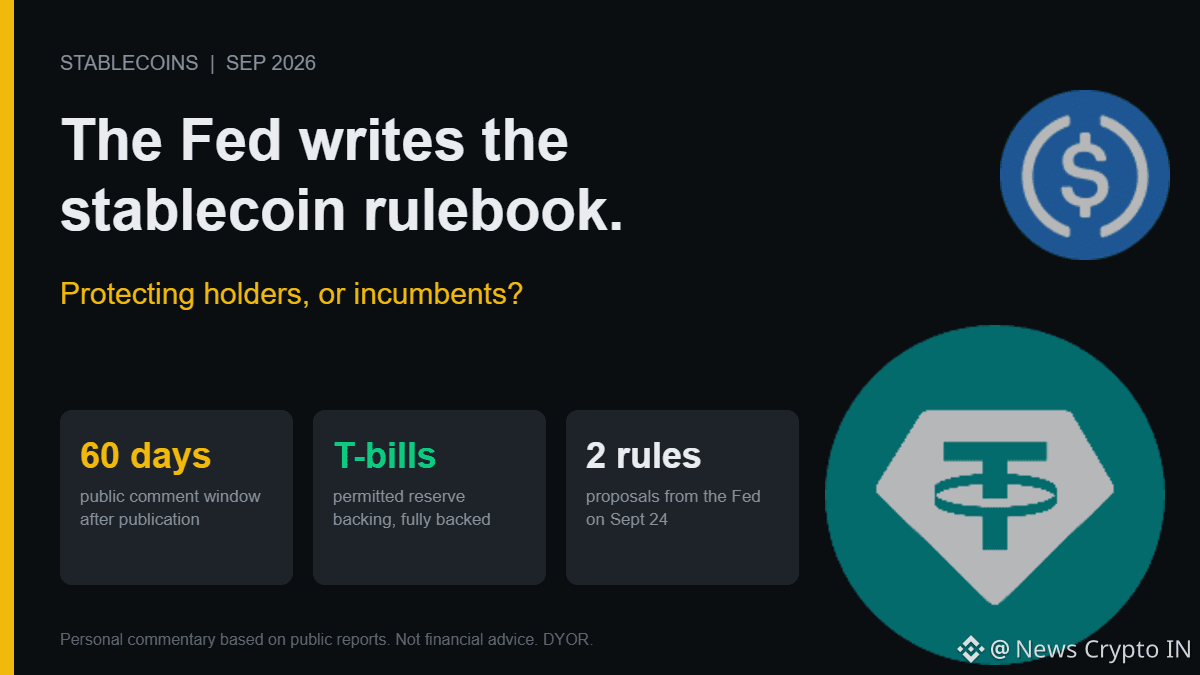
The Fed just put the first real GENIUS Act rule text on the table for stablecoin issuers, and it reads like a banking rulebook, not a crypto one.
Two proposals, announced Sept 24:
1. Reserves and capital: issuers must fully back tokens with permitted assets like short-term Treasury bills and other high-quality liquid assets, plus standardized capital requirements for credit and operational risk.
2. Applications: banks that want to issue must submit a business plan and financial information, with a formal process for appeals, hearings and final determinations.
The FDIC issued its own proposal for the institutions it supervises. Comments are open for 60 days after Federal Register publication.
Why this matters: yesterday I wrote about how fixed compliance costs favor big issuers. These proposals are what turns that forecast into rule text. Capital buffers and application dossiers are cheap for a bank with a compliance department and expensive for a crypto-native startup.
The upside is real: full T-bill backing and capital buffers make a stablecoin run less likely, and that's good for anyone parking money in one.
The open question is who ends up issuing the dollars. If the winners are bank-affiliated, "permissionless dollars" become "permitted dollars."
Are these rules protecting holders, or protecting incumbents? Both can be true.
#FedProposesPaymentStablecoinRules #GENIUSAct
The Fed just put the first real GENIUS Act rule text on the table for stablecoin issuers, and it reads like a banking rulebook, not a crypto one.
Two proposals, announced Sept 24:
1. Reserves and capital: issuers must fully back tokens with permitted assets like short-term Treasury bills and other high-quality liquid assets, plus standardized capital requirements for credit and operational risk.
2. Applications: banks that want to issue must submit a business plan and financial information, with a formal process for appeals, hearings and final determinations.
The FDIC issued its own proposal for the institutions it supervises. Comments are open for 60 days after Federal Register publication.
Why this matters: yesterday I wrote about how fixed compliance costs favor big issuers. These proposals are what turns that forecast into rule text. Capital buffers and application dossiers are cheap for a bank with a compliance department and expensive for a crypto-native startup.
The upside is real: full T-bill backing and capital buffers make a stablecoin run less likely, and that's good for anyone parking money in one.
The open question is who ends up issuing the dollars. If the winners are bank-affiliated, "permissionless dollars" become "permitted dollars."
Are these rules protecting holders, or protecting incumbents? Both can be true.
#FedProposesPaymentStablecoinRules #GENIUSAct
Two proposals, announced Sept 24:
1. Reserves and capital: issuers must fully back tokens with permitted assets like short-term Treasury bills and other high-quality liquid assets, plus standardized capital requirements for credit and operational risk.
2. Applications: banks that want to issue must submit a business plan and financial information, with a formal process for appeals, hearings and final determinations.
The FDIC issued its own proposal for the institutions it supervises. Comments are open for 60 days after Federal Register publication.
Why this matters: yesterday I wrote about how fixed compliance costs favor big issuers. These proposals are what turns that forecast into rule text. Capital buffers and application dossiers are cheap for a bank with a compliance department and expensive for a crypto-native startup.
The upside is real: full T-bill backing and capital buffers make a stablecoin run less likely, and that's good for anyone parking money in one.
The open question is who ends up issuing the dollars. If the winners are bank-affiliated, "permissionless dollars" become "permitted dollars."
Are these rules protecting holders, or protecting incumbents? Both can be true.
#FedProposesPaymentStablecoinRules #GENIUSAct
1
82
Log in to explore more content
Join global crypto users on Binance Square
⚡️ Get latest and useful information about crypto.
💬 Trusted by the world’s largest crypto exchange.
👍 Discover real insights from verified creators.
အီးမေးလ် / ဖုန်းနံပါတ်
ရေပန်းစားနေသော ခေါင်းစဉ်များ
1
#QNTRises287%
771 views
75 Discussing
2
#TrumpRejectsAIRulesForVoluntaryAudits
4,486 views
233 Discussing
3
#BitgetHotWalletBreachTiedToThirdPartySecurityFlaw
2,253 views
176 Discussing
4
#OpenAIUnveilsAlwaysOnAgentDots
3,343 views
215 Discussing
5
#ChainlinkLaunchesBankSWIFTLedgerFramework
4,684 views
185 Discussing
6
#EarningsSeason
461,295 views
3,492 Discussing
7
#SECChairWantsStockMarketsOnChain
8,854 views
205 Discussing
8
#MulticoinInvestsInGrass
5,422 views
143 Discussing
9
#CEARenamesToBNBStandardUnderBNC
6,136 views
144 Discussing
10
#BitwiseLaunchesFirstSpotNEARETF
63,344 views
780 Discussing