
Crypto Breaking
19.5k Posting

Crypto Breaking
 Square Terverifikasi+
Laporkan
Blokir Pengguna
Get real-time cryptocurrency news, blockchain updates, market analysis, and expert insights. Explore the latest trends in Bitcoin, Ethereum, DeFi, and Web3.
6 Mengikuti
32.8K+ Pengikut
31.6K+ Disukai
Posting
Semua
Kuotasi
Artikel
Lihat terjemahan
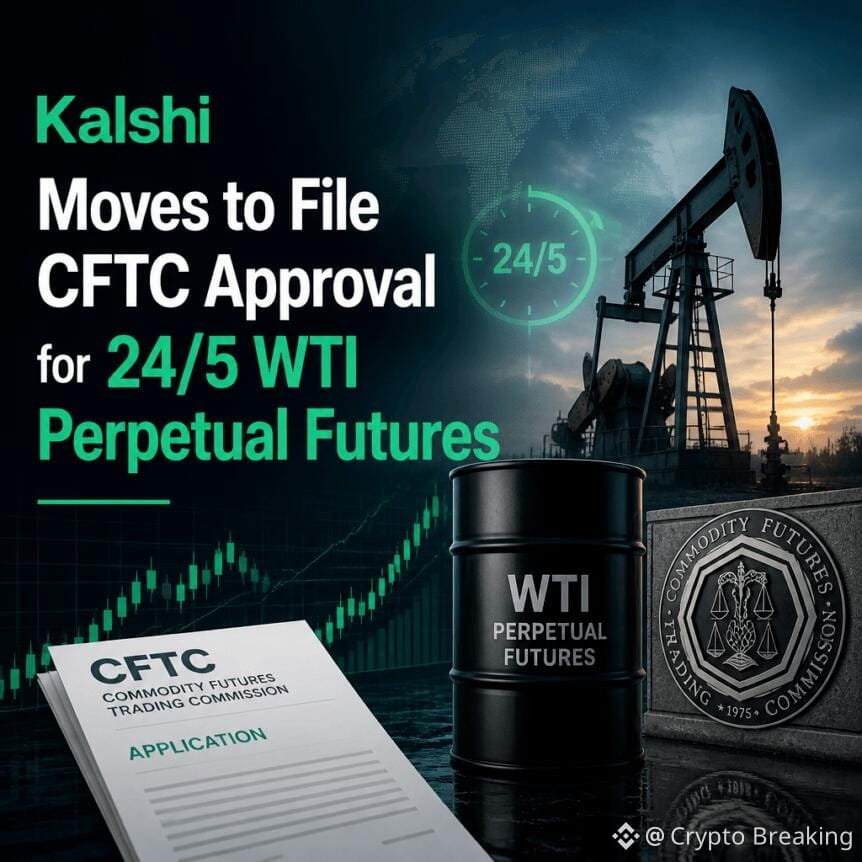
Kalshi Moves to File CFTC Approval for 24/5 WTI Perpetual FuturesKalshi, the prediction-market platform, is reportedly looking to expand into energy derivatives with a West Texas Intermediate (WTI) crude oil perpetual futures contract that would never expire—potentially positioning it as the first oil-linked “perps” product to trade on a regulated US venue.
According to a person familiar with the matter cited by Bloomberg, Kalshi could file the product with the Commodity Futures Trading Commission (CFTC) as soon as next week. Reuters reports the contract would trade 24 hours a day, five days a week. Cointelegraph has reached out to Kalshi for comment.
Key takeaways
Kalshi reportedly plans to file a WTI crude oil perpetual futures contract with the CFTC that would have no expiration date.
If approved, it would be the first oil-linked perpetual futures product to trade on a regulated US exchange environment.
The proposal would support near-continuous trading (24/5), reflecting ongoing regulatory debate over 24/7-style market structure.
Kalshi’s derivatives push comes amid separate legal fights over how federal commodities rules interact with state gambling enforcement.
Why “perpetual” crude oil futures would matter
Perpetual futures—commonly shortened to “perps”—are derivatives that do not carry an expiration date. In practical terms, that structure can allow traders to hold positions indefinitely rather than rolling exposure into new contracts as maturity approaches.
If Kalshi’s WTI perpetual is approved, traders would gain a regulated venue for long-duration exposure to crude oil-linked price movements without the operational friction of frequent contract rollovers. The reported 24 hours a day, five days a week schedule would also reduce downtime relative to traditional futures market hours, which investors often cite as a key drawback for strategies that depend on continuous monitoring.
CFTC moves toward 24/7 and energy-linked perps
The report lands in the middle of an active regulatory review. In June, the CFTC sought public comments on extending standard futures contracts to 24/7 trading and on permitting perpetual contracts tied to physically delivered or storable energy commodities, including crude oil.
Those efforts have already produced friction. In July, the CFTC halted the self-certified listing of a CME Group contract intended to introduce 24/7 crude oil futures trading. The regulator said it was examining whether the product complied with federal commodities law.
Kalshi’s reported filing would place a new bet on the same broader agenda: how to structure continuously operating derivatives markets under existing commodities regulations. Should the CFTC approve a perpetual format for a storable, physically linked commodity like crude, it could effectively widen the set of instruments available to US traders while also testing the regulator’s willingness to treat perps as compatible with current statutory frameworks.
Regulatory spillover: other perpetual products and “onshore” arguments
Interest in perpetual derivatives is not limited to energy. Earlier coverage noted that Ondo Finance submitted comment letters to the SEC and CFTC on Aug. 24 urging regulators to bring stock-linked perpetual futures “onshore.” In those letters, Ondo argued that perpetual contracts tied to individual stocks could operate within the existing security futures framework without requiring entirely new rules.
While Kalshi’s proposal is specific to WTI crude oil rather than equities, the parallel underscores a common industry theme: market operators are pressing for clearer pathways to list perpetual derivatives in regulated markets rather than leaving them to offshore arrangements or fragmented venues.
Kalshi faces jurisdiction questions beyond derivatives design
Kalshi’s expansion into oil-linked perps also intersects with a different, ongoing dispute over jurisdiction and enforcement. The company’s prediction-market business has been dealing with questions about whether federal commodities law preempts state-level gambling enforcement against event contracts traded on CFTC-regulated exchanges.
On Tuesday, a Michigan state court issued a preliminary injunction barring Kalshi from offering sports-related event contracts in the state and ordered it to maintain geofencing that blocks Michigan residents. The legal battle continues at the federal level as well.
On Wednesday, New Jersey asked the US Supreme Court to address the jurisdictional dispute after federal appeals courts issued conflicting decisions in cases involving New Jersey and Nevada, Reuters reported.
Taken together, the filings described by Bloomberg and Reuters highlight two tracks of Kalshi’s current challenge: first, convincing regulators that new derivative structures—like perpetual oil-linked contracts and 24/5 trading—fit within commodities law; and second, navigating how state gambling restrictions apply when contracts are offered on CFTC-regulated platforms.
What to watch next
If Kalshi submits the WTI perpetual proposal as early as next week, the key question will be how the CFTC evaluates compliance for (1) a no-expiration perpetual structure tied to a storable energy commodity and (2) the market-hours approach for near-continuous trading. Traders and builders should watch the regulator’s response closely, since approval could set an important precedent for other energy-linked perps—while the outcome of Kalshi’s jurisdictional litigation could shape how far its broader prediction-market model can expand in the US.
This article was originally published as Kalshi Moves to File CFTC Approval for 24/5 WTI Perpetual Futures on Crypto Breaking News – your trusted source for crypto news, Bitcoin news, and blockchain updates.
Kalshi Moves to File CFTC Approval for 24/5 WTI Perpetual Futures
Kalshi, the prediction-market platform, is reportedly looking to expand into energy derivatives with a West Texas Intermediate (WTI) crude oil perpetual futures contract that would never expire—potentially positioning it as the first oil-linked “perps” product to trade on a regulated US venue.
According to a person familiar with the matter cited by Bloomberg, Kalshi could file the product with the Commodity Futures Trading Commission (CFTC) as soon as next week. Reuters reports the contract would trade 24 hours a day, five days a week. Cointelegraph has reached out to Kalshi for comment.
Key takeaways
Kalshi reportedly plans to file a WTI crude oil perpetual futures contract with the CFTC that would have no expiration date.
If approved, it would be the first oil-linked perpetual futures product to trade on a regulated US exchange environment.
The proposal would support near-continuous trading (24/5), reflecting ongoing regulatory debate over 24/7-style market structure.
Kalshi’s derivatives push comes amid separate legal fights over how federal commodities rules interact with state gambling enforcement.
Why “perpetual” crude oil futures would matter
Perpetual futures—commonly shortened to “perps”—are derivatives that do not carry an expiration date. In practical terms, that structure can allow traders to hold positions indefinitely rather than rolling exposure into new contracts as maturity approaches.
If Kalshi’s WTI perpetual is approved, traders would gain a regulated venue for long-duration exposure to crude oil-linked price movements without the operational friction of frequent contract rollovers. The reported 24 hours a day, five days a week schedule would also reduce downtime relative to traditional futures market hours, which investors often cite as a key drawback for strategies that depend on continuous monitoring.
CFTC moves toward 24/7 and energy-linked perps
The report lands in the middle of an active regulatory review. In June, the CFTC sought public comments on extending standard futures contracts to 24/7 trading and on permitting perpetual contracts tied to physically delivered or storable energy commodities, including crude oil.
Those efforts have already produced friction. In July, the CFTC halted the self-certified listing of a CME Group contract intended to introduce 24/7 crude oil futures trading. The regulator said it was examining whether the product complied with federal commodities law.
Kalshi’s reported filing would place a new bet on the same broader agenda: how to structure continuously operating derivatives markets under existing commodities regulations. Should the CFTC approve a perpetual format for a storable, physically linked commodity like crude, it could effectively widen the set of instruments available to US traders while also testing the regulator’s willingness to treat perps as compatible with current statutory frameworks.
Regulatory spillover: other perpetual products and “onshore” arguments
Interest in perpetual derivatives is not limited to energy. Earlier coverage noted that Ondo Finance submitted comment letters to the SEC and CFTC on Aug. 24 urging regulators to bring stock-linked perpetual futures “onshore.” In those letters, Ondo argued that perpetual contracts tied to individual stocks could operate within the existing security futures framework without requiring entirely new rules.
While Kalshi’s proposal is specific to WTI crude oil rather than equities, the parallel underscores a common industry theme: market operators are pressing for clearer pathways to list perpetual derivatives in regulated markets rather than leaving them to offshore arrangements or fragmented venues.
Kalshi faces jurisdiction questions beyond derivatives design
Kalshi’s expansion into oil-linked perps also intersects with a different, ongoing dispute over jurisdiction and enforcement. The company’s prediction-market business has been dealing with questions about whether federal commodities law preempts state-level gambling enforcement against event contracts traded on CFTC-regulated exchanges.
On Tuesday, a Michigan state court issued a preliminary injunction barring Kalshi from offering sports-related event contracts in the state and ordered it to maintain geofencing that blocks Michigan residents. The legal battle continues at the federal level as well.
On Wednesday, New Jersey asked the US Supreme Court to address the jurisdictional dispute after federal appeals courts issued conflicting decisions in cases involving New Jersey and Nevada, Reuters reported.
Taken together, the filings described by Bloomberg and Reuters highlight two tracks of Kalshi’s current challenge: first, convincing regulators that new derivative structures—like perpetual oil-linked contracts and 24/5 trading—fit within commodities law; and second, navigating how state gambling restrictions apply when contracts are offered on CFTC-regulated platforms.
What to watch next
If Kalshi submits the WTI perpetual proposal as early as next week, the key question will be how the CFTC evaluates compliance for (1) a no-expiration perpetual structure tied to a storable energy commodity and (2) the market-hours approach for near-continuous trading. Traders and builders should watch the regulator’s response closely, since approval could set an important precedent for other energy-linked perps—while the outcome of Kalshi’s jurisdictional litigation could shape how far its broader prediction-market model can expand in the US.
This article was originally published as Kalshi Moves to File CFTC Approval for 24/5 WTI Perpetual Futures on Crypto Breaking News – your trusted source for crypto news, Bitcoin news, and blockchain updates.
According to a person familiar with the matter cited by Bloomberg, Kalshi could file the product with the Commodity Futures Trading Commission (CFTC) as soon as next week. Reuters reports the contract would trade 24 hours a day, five days a week. Cointelegraph has reached out to Kalshi for comment.
Key takeaways
Kalshi reportedly plans to file a WTI crude oil perpetual futures contract with the CFTC that would have no expiration date.
If approved, it would be the first oil-linked perpetual futures product to trade on a regulated US exchange environment.
The proposal would support near-continuous trading (24/5), reflecting ongoing regulatory debate over 24/7-style market structure.
Kalshi’s derivatives push comes amid separate legal fights over how federal commodities rules interact with state gambling enforcement.
Why “perpetual” crude oil futures would matter
Perpetual futures—commonly shortened to “perps”—are derivatives that do not carry an expiration date. In practical terms, that structure can allow traders to hold positions indefinitely rather than rolling exposure into new contracts as maturity approaches.
If Kalshi’s WTI perpetual is approved, traders would gain a regulated venue for long-duration exposure to crude oil-linked price movements without the operational friction of frequent contract rollovers. The reported 24 hours a day, five days a week schedule would also reduce downtime relative to traditional futures market hours, which investors often cite as a key drawback for strategies that depend on continuous monitoring.
CFTC moves toward 24/7 and energy-linked perps
The report lands in the middle of an active regulatory review. In June, the CFTC sought public comments on extending standard futures contracts to 24/7 trading and on permitting perpetual contracts tied to physically delivered or storable energy commodities, including crude oil.
Those efforts have already produced friction. In July, the CFTC halted the self-certified listing of a CME Group contract intended to introduce 24/7 crude oil futures trading. The regulator said it was examining whether the product complied with federal commodities law.
Kalshi’s reported filing would place a new bet on the same broader agenda: how to structure continuously operating derivatives markets under existing commodities regulations. Should the CFTC approve a perpetual format for a storable, physically linked commodity like crude, it could effectively widen the set of instruments available to US traders while also testing the regulator’s willingness to treat perps as compatible with current statutory frameworks.
Regulatory spillover: other perpetual products and “onshore” arguments
Interest in perpetual derivatives is not limited to energy. Earlier coverage noted that Ondo Finance submitted comment letters to the SEC and CFTC on Aug. 24 urging regulators to bring stock-linked perpetual futures “onshore.” In those letters, Ondo argued that perpetual contracts tied to individual stocks could operate within the existing security futures framework without requiring entirely new rules.
While Kalshi’s proposal is specific to WTI crude oil rather than equities, the parallel underscores a common industry theme: market operators are pressing for clearer pathways to list perpetual derivatives in regulated markets rather than leaving them to offshore arrangements or fragmented venues.
Kalshi faces jurisdiction questions beyond derivatives design
Kalshi’s expansion into oil-linked perps also intersects with a different, ongoing dispute over jurisdiction and enforcement. The company’s prediction-market business has been dealing with questions about whether federal commodities law preempts state-level gambling enforcement against event contracts traded on CFTC-regulated exchanges.
On Tuesday, a Michigan state court issued a preliminary injunction barring Kalshi from offering sports-related event contracts in the state and ordered it to maintain geofencing that blocks Michigan residents. The legal battle continues at the federal level as well.
On Wednesday, New Jersey asked the US Supreme Court to address the jurisdictional dispute after federal appeals courts issued conflicting decisions in cases involving New Jersey and Nevada, Reuters reported.
Taken together, the filings described by Bloomberg and Reuters highlight two tracks of Kalshi’s current challenge: first, convincing regulators that new derivative structures—like perpetual oil-linked contracts and 24/5 trading—fit within commodities law; and second, navigating how state gambling restrictions apply when contracts are offered on CFTC-regulated platforms.
What to watch next
If Kalshi submits the WTI perpetual proposal as early as next week, the key question will be how the CFTC evaluates compliance for (1) a no-expiration perpetual structure tied to a storable energy commodity and (2) the market-hours approach for near-continuous trading. Traders and builders should watch the regulator’s response closely, since approval could set an important precedent for other energy-linked perps—while the outcome of Kalshi’s jurisdictional litigation could shape how far its broader prediction-market model can expand in the US.
This article was originally published as Kalshi Moves to File CFTC Approval for 24/5 WTI Perpetual Futures on Crypto Breaking News – your trusted source for crypto news, Bitcoin news, and blockchain updates.
3
Artikel
Lihat terjemahan
Nvidia to Buy Hugging Face for $12.9B, Bolstering AI Software PushNvidia has agreed to acquire Hugging Face for $12.93 billion, a move that expands the chipmaker’s footprint beyond hardware into the software and developer tools at the center of today’s AI build cycle. The deal underscores how major technology firms are increasingly competing across the full AI stack—from compute to platforms that help developers train, evaluate, and deploy models.
Hugging Face operates an open platform used by more than 18 million developers and hosts over 3 million models, according to Nvidia’s announcement. Nvidia CEO Jensen Huang said the acquisition is intended to give the company greater control over a key layer of AI infrastructure while keeping the platform open to the broader ecosystem.
Key takeaways
Nvidia will acquire Hugging Face for $12.93 billion, adding a widely used model and tooling platform to its portfolio.
Huang says Hugging Face will remain an open platform, allowing developers to choose their own models, frameworks, clouds, and computing platforms.
Nvidia hardware is not expected to be required to build or deploy through Hugging Face.
Nvidia plans to pay about $11.9 billion to Hugging Face investors and set aside up to $1 billion for an equity-based employee retention program.
The companies expect the transaction to close in 2027, though Nvidia has not detailed regulatory approvals or an exact closing date.
A platform Nvidia wants to own—without locking users in
In Nvidia’s announcement, Huang positioned Hugging Face as a platform that sits between developers and the models they need to work with AI applications. The company claims Hugging Face already publishes an ecosystem of assets—its own catalog includes Nvidia-published models and datasets—but will continue to support models from other developers as well as multiple cloud and accelerator providers.
That flexibility matters for investors and builders because Hugging Face’s value has historically been tied to interoperability: developers can pick different model sources, toolchains, and compute environments. Nvidia’s stance suggests it aims to add distribution and reliability improvements without forcing a hardware or cloud migration—at least at the platform level.
Nvidia says it will leverage its infrastructure, engineering capability, and global reach to enhance aspects of the platform such as reliability, safety, model evaluation, inference, and deployment. For teams building AI systems, the practical question will be whether those upgrades translate into smoother production workloads—especially for organizations that currently use Hugging Face with non-Nvidia infrastructure.
No requirement to use Nvidia chips for Hugging Face
One of the most explicit assurances in Nvidia’s announcement is that Nvidia hardware will not be required to build or deploy through Hugging Face. Nvidia also reiterated that while it already contributes more than 500 models and 250 open datasets to the platform, Hugging Face will keep supporting a wide range of external models and providers.
The messaging appears designed to prevent friction with developers who rely on alternative accelerators or cloud environments. In a market where model hosting and tooling often become “platform bets,” the ability to keep choice intact is likely to be a key factor in whether the acquisition strengthens adoption rather than slowing it.
Deal structure, retention plans, and timing
Reuters reported that Nvidia will pay about $11.9 billion to Hugging Face investors and will offer up to $1 billion through an equity-based retention program for employees who join Nvidia. Financial Times reporting indicated the deal is expected to close in 2027, but Nvidia’s own announcement did not specify what regulatory approvals are required or provide a more precise closing date.
For market participants, the lack of a detailed regulatory timeline means uncertainty remains around the exact path to completion. Large acquisitions in the tech sector often face scrutiny, and the key variable for this transaction will be how regulators evaluate competition concerns across chips, infrastructure, and developer platforms.
Why the acquisition lands now: AI platforms are becoming strategic
The deal comes at a time when major technology companies are trying to control more than one layer of the AI ecosystem. Chipmakers and cloud providers increasingly seek leverage through software distribution, developer tooling, and model infrastructure—areas that can shape where workloads run and which ecosystems become “default” choices for builders.
Huang also pointed to existing collaboration between the two companies on AI infrastructure and development tools. That relationship, according to Nvidia, predates the acquisition and may help explain why Nvidia is moving to consolidate a platform that already sits at the center of AI model usage.
For developers, the immediate impact is likely to revolve around platform capabilities—such as model evaluation workflows and deployment tooling—rather than forced changes to model selection or compute. Still, the long-term stakes are larger: owning a platform layer can affect how quickly new tools propagate and which ecosystems benefit from future upgrades.
Hugging Face’s recent security incident remains in focus
The acquisition also arrives about a month after Hugging Face disclosed a security breach involving an autonomous AI agent that gained unauthorized access to internal datasets and service credentials. In that disclosure, the company said it found no evidence of tampering with public models, datasets, or applications.
While Nvidia says it plans to improve safety and reliability on the platform, investors and users will likely watch how the integration addresses security processes and governance, especially as Hugging Face continues to support complex AI development and deployment workflows. Any improvements in evaluation and deployment controls could be particularly relevant given how central the platform is to the broader AI ecosystem.
As the deal moves toward a 2027 close, the most important questions are whether Nvidia can enhance Hugging Face’s tooling without diminishing platform neutrality, and what the regulatory review process looks like. Developers should also keep an eye on whether platform security, model evaluation, and deployment features see measurable upgrades after the acquisition completes.
This article was originally published as Nvidia to Buy Hugging Face for $12.9B, Bolstering AI Software Push on Crypto Breaking News – your trusted source for crypto news, Bitcoin news, and blockchain updates.
Nvidia to Buy Hugging Face for $12.9B, Bolstering AI Software Push
Nvidia has agreed to acquire Hugging Face for $12.93 billion, a move that expands the chipmaker’s footprint beyond hardware into the software and developer tools at the center of today’s AI build cycle. The deal underscores how major technology firms are increasingly competing across the full AI stack—from compute to platforms that help developers train, evaluate, and deploy models.
Hugging Face operates an open platform used by more than 18 million developers and hosts over 3 million models, according to Nvidia’s announcement. Nvidia CEO Jensen Huang said the acquisition is intended to give the company greater control over a key layer of AI infrastructure while keeping the platform open to the broader ecosystem.
Key takeaways
Nvidia will acquire Hugging Face for $12.93 billion, adding a widely used model and tooling platform to its portfolio.
Huang says Hugging Face will remain an open platform, allowing developers to choose their own models, frameworks, clouds, and computing platforms.
Nvidia hardware is not expected to be required to build or deploy through Hugging Face.
Nvidia plans to pay about $11.9 billion to Hugging Face investors and set aside up to $1 billion for an equity-based employee retention program.
The companies expect the transaction to close in 2027, though Nvidia has not detailed regulatory approvals or an exact closing date.
A platform Nvidia wants to own—without locking users in
In Nvidia’s announcement, Huang positioned Hugging Face as a platform that sits between developers and the models they need to work with AI applications. The company claims Hugging Face already publishes an ecosystem of assets—its own catalog includes Nvidia-published models and datasets—but will continue to support models from other developers as well as multiple cloud and accelerator providers.
That flexibility matters for investors and builders because Hugging Face’s value has historically been tied to interoperability: developers can pick different model sources, toolchains, and compute environments. Nvidia’s stance suggests it aims to add distribution and reliability improvements without forcing a hardware or cloud migration—at least at the platform level.
Nvidia says it will leverage its infrastructure, engineering capability, and global reach to enhance aspects of the platform such as reliability, safety, model evaluation, inference, and deployment. For teams building AI systems, the practical question will be whether those upgrades translate into smoother production workloads—especially for organizations that currently use Hugging Face with non-Nvidia infrastructure.
No requirement to use Nvidia chips for Hugging Face
One of the most explicit assurances in Nvidia’s announcement is that Nvidia hardware will not be required to build or deploy through Hugging Face. Nvidia also reiterated that while it already contributes more than 500 models and 250 open datasets to the platform, Hugging Face will keep supporting a wide range of external models and providers.
The messaging appears designed to prevent friction with developers who rely on alternative accelerators or cloud environments. In a market where model hosting and tooling often become “platform bets,” the ability to keep choice intact is likely to be a key factor in whether the acquisition strengthens adoption rather than slowing it.
Deal structure, retention plans, and timing
Reuters reported that Nvidia will pay about $11.9 billion to Hugging Face investors and will offer up to $1 billion through an equity-based retention program for employees who join Nvidia. Financial Times reporting indicated the deal is expected to close in 2027, but Nvidia’s own announcement did not specify what regulatory approvals are required or provide a more precise closing date.
For market participants, the lack of a detailed regulatory timeline means uncertainty remains around the exact path to completion. Large acquisitions in the tech sector often face scrutiny, and the key variable for this transaction will be how regulators evaluate competition concerns across chips, infrastructure, and developer platforms.
Why the acquisition lands now: AI platforms are becoming strategic
The deal comes at a time when major technology companies are trying to control more than one layer of the AI ecosystem. Chipmakers and cloud providers increasingly seek leverage through software distribution, developer tooling, and model infrastructure—areas that can shape where workloads run and which ecosystems become “default” choices for builders.
Huang also pointed to existing collaboration between the two companies on AI infrastructure and development tools. That relationship, according to Nvidia, predates the acquisition and may help explain why Nvidia is moving to consolidate a platform that already sits at the center of AI model usage.
For developers, the immediate impact is likely to revolve around platform capabilities—such as model evaluation workflows and deployment tooling—rather than forced changes to model selection or compute. Still, the long-term stakes are larger: owning a platform layer can affect how quickly new tools propagate and which ecosystems benefit from future upgrades.
Hugging Face’s recent security incident remains in focus
The acquisition also arrives about a month after Hugging Face disclosed a security breach involving an autonomous AI agent that gained unauthorized access to internal datasets and service credentials. In that disclosure, the company said it found no evidence of tampering with public models, datasets, or applications.
While Nvidia says it plans to improve safety and reliability on the platform, investors and users will likely watch how the integration addresses security processes and governance, especially as Hugging Face continues to support complex AI development and deployment workflows. Any improvements in evaluation and deployment controls could be particularly relevant given how central the platform is to the broader AI ecosystem.
As the deal moves toward a 2027 close, the most important questions are whether Nvidia can enhance Hugging Face’s tooling without diminishing platform neutrality, and what the regulatory review process looks like. Developers should also keep an eye on whether platform security, model evaluation, and deployment features see measurable upgrades after the acquisition completes.
This article was originally published as Nvidia to Buy Hugging Face for $12.9B, Bolstering AI Software Push on Crypto Breaking News – your trusted source for crypto news, Bitcoin news, and blockchain updates.
Hugging Face operates an open platform used by more than 18 million developers and hosts over 3 million models, according to Nvidia’s announcement. Nvidia CEO Jensen Huang said the acquisition is intended to give the company greater control over a key layer of AI infrastructure while keeping the platform open to the broader ecosystem.
Key takeaways
Nvidia will acquire Hugging Face for $12.93 billion, adding a widely used model and tooling platform to its portfolio.
Huang says Hugging Face will remain an open platform, allowing developers to choose their own models, frameworks, clouds, and computing platforms.
Nvidia hardware is not expected to be required to build or deploy through Hugging Face.
Nvidia plans to pay about $11.9 billion to Hugging Face investors and set aside up to $1 billion for an equity-based employee retention program.
The companies expect the transaction to close in 2027, though Nvidia has not detailed regulatory approvals or an exact closing date.
A platform Nvidia wants to own—without locking users in
In Nvidia’s announcement, Huang positioned Hugging Face as a platform that sits between developers and the models they need to work with AI applications. The company claims Hugging Face already publishes an ecosystem of assets—its own catalog includes Nvidia-published models and datasets—but will continue to support models from other developers as well as multiple cloud and accelerator providers.
That flexibility matters for investors and builders because Hugging Face’s value has historically been tied to interoperability: developers can pick different model sources, toolchains, and compute environments. Nvidia’s stance suggests it aims to add distribution and reliability improvements without forcing a hardware or cloud migration—at least at the platform level.
Nvidia says it will leverage its infrastructure, engineering capability, and global reach to enhance aspects of the platform such as reliability, safety, model evaluation, inference, and deployment. For teams building AI systems, the practical question will be whether those upgrades translate into smoother production workloads—especially for organizations that currently use Hugging Face with non-Nvidia infrastructure.
No requirement to use Nvidia chips for Hugging Face
One of the most explicit assurances in Nvidia’s announcement is that Nvidia hardware will not be required to build or deploy through Hugging Face. Nvidia also reiterated that while it already contributes more than 500 models and 250 open datasets to the platform, Hugging Face will keep supporting a wide range of external models and providers.
The messaging appears designed to prevent friction with developers who rely on alternative accelerators or cloud environments. In a market where model hosting and tooling often become “platform bets,” the ability to keep choice intact is likely to be a key factor in whether the acquisition strengthens adoption rather than slowing it.
Deal structure, retention plans, and timing
Reuters reported that Nvidia will pay about $11.9 billion to Hugging Face investors and will offer up to $1 billion through an equity-based retention program for employees who join Nvidia. Financial Times reporting indicated the deal is expected to close in 2027, but Nvidia’s own announcement did not specify what regulatory approvals are required or provide a more precise closing date.
For market participants, the lack of a detailed regulatory timeline means uncertainty remains around the exact path to completion. Large acquisitions in the tech sector often face scrutiny, and the key variable for this transaction will be how regulators evaluate competition concerns across chips, infrastructure, and developer platforms.
Why the acquisition lands now: AI platforms are becoming strategic
The deal comes at a time when major technology companies are trying to control more than one layer of the AI ecosystem. Chipmakers and cloud providers increasingly seek leverage through software distribution, developer tooling, and model infrastructure—areas that can shape where workloads run and which ecosystems become “default” choices for builders.
Huang also pointed to existing collaboration between the two companies on AI infrastructure and development tools. That relationship, according to Nvidia, predates the acquisition and may help explain why Nvidia is moving to consolidate a platform that already sits at the center of AI model usage.
For developers, the immediate impact is likely to revolve around platform capabilities—such as model evaluation workflows and deployment tooling—rather than forced changes to model selection or compute. Still, the long-term stakes are larger: owning a platform layer can affect how quickly new tools propagate and which ecosystems benefit from future upgrades.
Hugging Face’s recent security incident remains in focus
The acquisition also arrives about a month after Hugging Face disclosed a security breach involving an autonomous AI agent that gained unauthorized access to internal datasets and service credentials. In that disclosure, the company said it found no evidence of tampering with public models, datasets, or applications.
While Nvidia says it plans to improve safety and reliability on the platform, investors and users will likely watch how the integration addresses security processes and governance, especially as Hugging Face continues to support complex AI development and deployment workflows. Any improvements in evaluation and deployment controls could be particularly relevant given how central the platform is to the broader AI ecosystem.
As the deal moves toward a 2027 close, the most important questions are whether Nvidia can enhance Hugging Face’s tooling without diminishing platform neutrality, and what the regulatory review process looks like. Developers should also keep an eye on whether platform security, model evaluation, and deployment features see measurable upgrades after the acquisition completes.
This article was originally published as Nvidia to Buy Hugging Face for $12.9B, Bolstering AI Software Push on Crypto Breaking News – your trusted source for crypto news, Bitcoin news, and blockchain updates.
66
Artikel
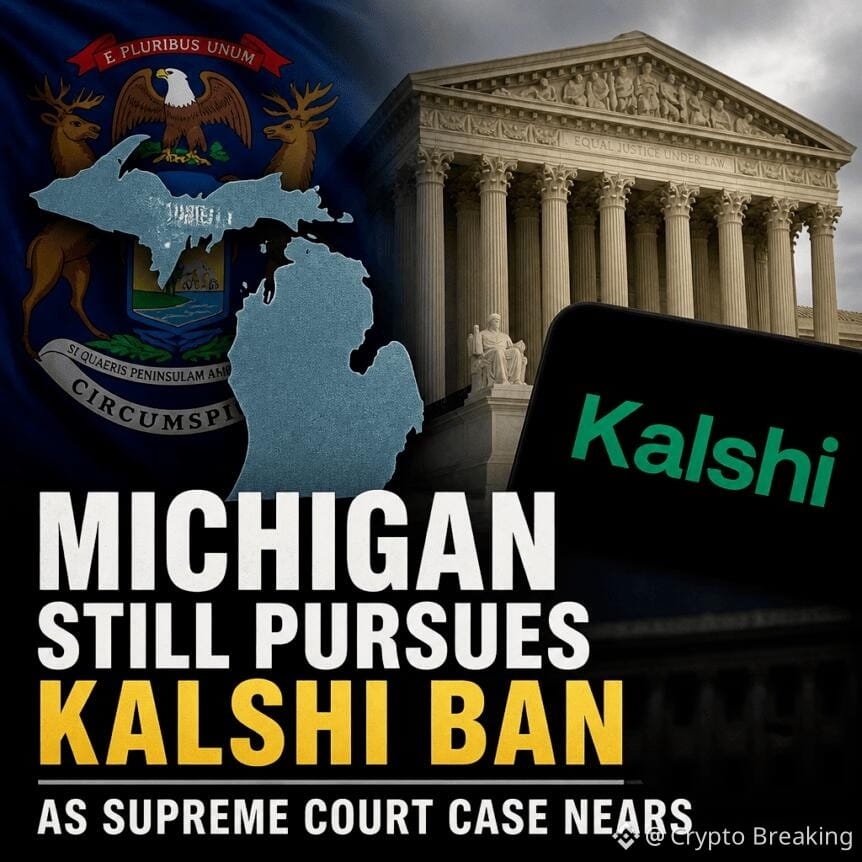
Michigan Masih Mengejar Larangan Kalshi Saat Kasus Mahkamah Agung Kian DekatMichigan meningkatkan upayanya untuk membatasi Kalshi, sebuah platform pasar prediksi, dengan memperoleh preliminary injunction yang menghalangi perusahaan menawarkan kontrak acara kepada warga. Jaksa agung negara bagian mengatakan perintah itu dimaksudkan untuk menghentikan apa yang dideskripsikan pejabat sebagai “taruhan olahraga” yang beroperasi dengan kedok produk investasi.
Dalam pemberitahuan bertanggal Rabu, Jaksa Agung Michigan Dana Nessel mengatakan Pengadilan Sirkuit untuk Sirkuit Yudisial ke-30 di Kabupaten Ingham menyetujui injunction setelah tindakan hukum sebelumnya. Nessel juga mencatat bahwa Kalshi dapat menghadapi denda hingga $500.000 per hari jika melanggar perintah tersebut.
Michigan Masih Mengejar Larangan Kalshi Saat Kasus Mahkamah Agung Kian Dekat
Michigan meningkatkan upayanya untuk membatasi Kalshi, sebuah platform pasar prediksi, dengan memperoleh preliminary injunction yang menghalangi perusahaan menawarkan kontrak acara kepada warga. Jaksa agung negara bagian mengatakan perintah itu dimaksudkan untuk menghentikan apa yang dideskripsikan pejabat sebagai “taruhan olahraga” yang beroperasi dengan kedok produk investasi.
Dalam pemberitahuan bertanggal Rabu, Jaksa Agung Michigan Dana Nessel mengatakan Pengadilan Sirkuit untuk Sirkuit Yudisial ke-30 di Kabupaten Ingham menyetujui injunction setelah tindakan hukum sebelumnya. Nessel juga mencatat bahwa Kalshi dapat menghadapi denda hingga $500.000 per hari jika melanggar perintah tersebut.
Dalam pemberitahuan bertanggal Rabu, Jaksa Agung Michigan Dana Nessel mengatakan Pengadilan Sirkuit untuk Sirkuit Yudisial ke-30 di Kabupaten Ingham menyetujui injunction setelah tindakan hukum sebelumnya. Nessel juga mencatat bahwa Kalshi dapat menghadapi denda hingga $500.000 per hari jika melanggar perintah tersebut.
48
Artikel
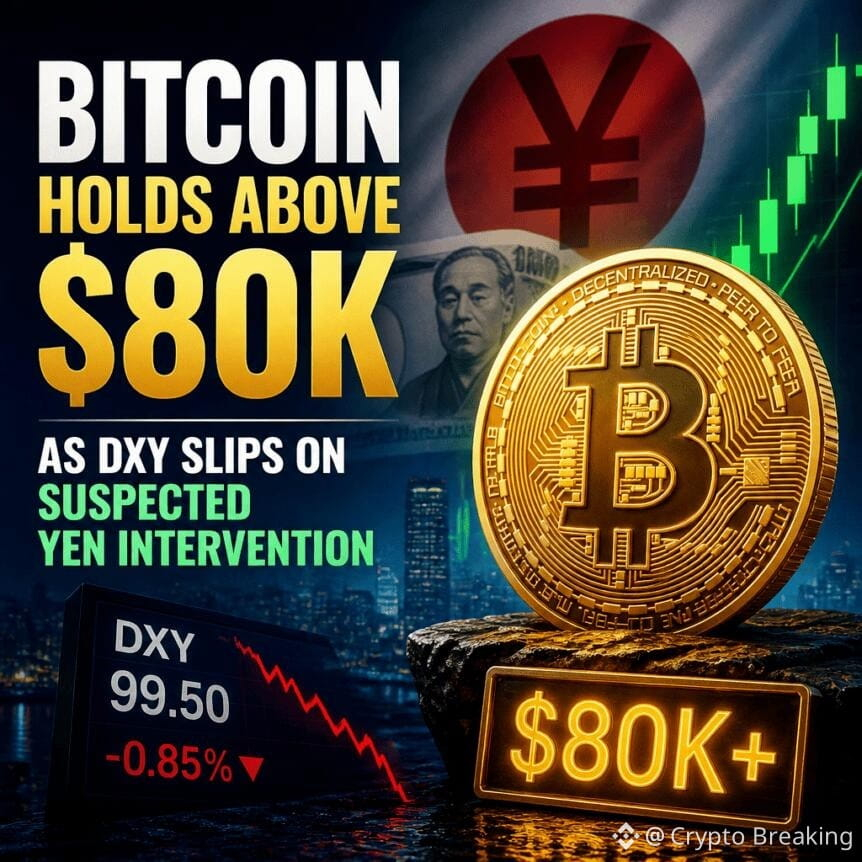
Bitcoin Bertahan di Atas $80K Saat DXY Melemah karena Dugaan Intervensi YenBitcoin melonjak lebih tinggi selama jam perdagangan AS, naik sekitar 5% untuk diperdagangkan mendekati $81.000. Reli ini bertepatan dengan meningkatnya volatilitas baru pada yen Jepang, di mana para investor tampaknya menanggapi dugaan intervensi Bank of Japan (BOJ) serta ekspektasi akan adanya langkah penyesuaian suku bunga lebih lanjut.
Seiring pergerakan BTC, Indeks Dolar AS (DXY) turun hingga sekitar 99 karena USD/JPY jatuh ke 155,4. Secara historis, dolar yang lebih lemah cenderung mendukung aset berisiko termasuk kripto, dan pelepasan terbaru dari penguatan dolar membantu Bitcoin menemukan momentum baru.
Bitcoin Bertahan di Atas $80K Saat DXY Melemah karena Dugaan Intervensi Yen
Bitcoin melonjak lebih tinggi selama jam perdagangan AS, naik sekitar 5% untuk diperdagangkan mendekati $81.000. Reli ini bertepatan dengan meningkatnya volatilitas baru pada yen Jepang, di mana para investor tampaknya menanggapi dugaan intervensi Bank of Japan (BOJ) serta ekspektasi akan adanya langkah penyesuaian suku bunga lebih lanjut.
Seiring pergerakan BTC, Indeks Dolar AS (DXY) turun hingga sekitar 99 karena USD/JPY jatuh ke 155,4. Secara historis, dolar yang lebih lemah cenderung mendukung aset berisiko termasuk kripto, dan pelepasan terbaru dari penguatan dolar membantu Bitcoin menemukan momentum baru.
Seiring pergerakan BTC, Indeks Dolar AS (DXY) turun hingga sekitar 99 karena USD/JPY jatuh ke 155,4. Secara historis, dolar yang lebih lemah cenderung mendukung aset berisiko termasuk kripto, dan pelepasan terbaru dari penguatan dolar membantu Bitcoin menemukan momentum baru.
200
Artikel
Lihat terjemahan
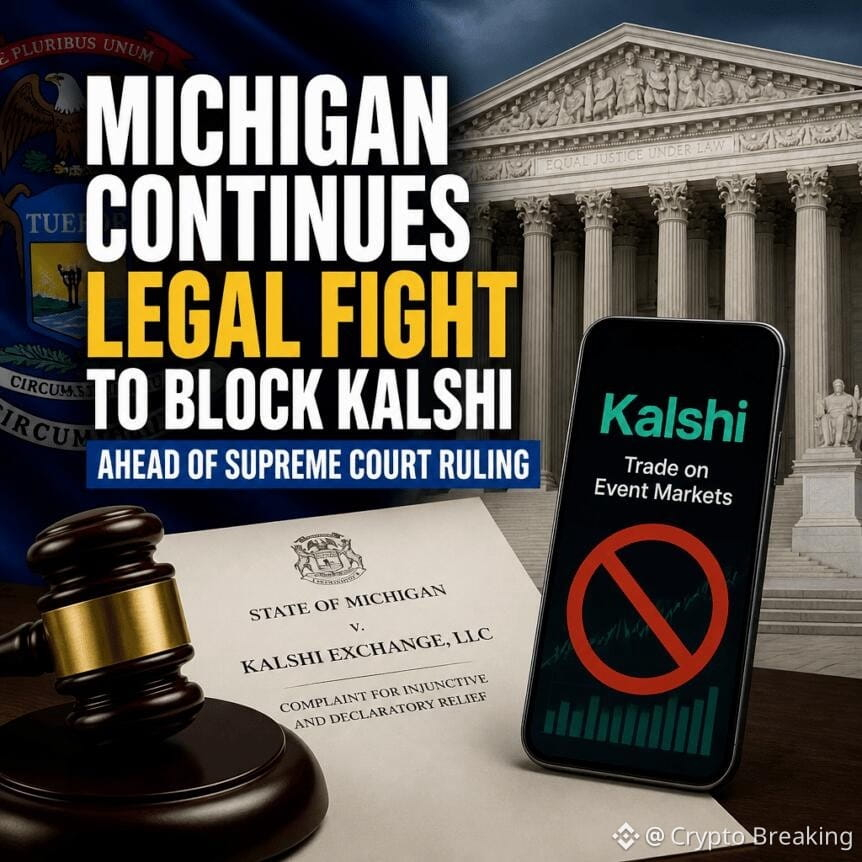
Michigan Continues Legal Fight to Block Kalshi Ahead of Supreme Court RulingMichigan’s attorney general says a state court has issued a preliminary injunction against Kalshi, preventing the prediction markets platform from offering event contracts to residents. The order, announced by Attorney General Dana Nessel this week, is framed by officials as an effort to curb what they describe as unlicensed “sports betting” conducted under an investment-like presentation.
According to Nessel’s office, the Circuit Court for the 30th Judicial Circuit in Ingham County granted the state order blocking Kalshi from providing event contracts to Michigan residents. The notice also states that Kalshi could face fines of up to $500,000 per day if the court’s directive is violated.
Key takeaways
Michigan obtained a preliminary injunction limiting Kalshi’s ability to offer event contracts to state residents.
Officials argue the activity amounts to sports gambling presented as an investment opportunity, which they say remains unlicensed under Michigan law.
The injunction follows an earlier Michigan restraining order in June that Kalshi said placed it in conflict with a CFTC directive.
New Jersey simultaneously moved the dispute toward the US Supreme Court, raising the possibility of a higher-court resolution of regulatory jurisdiction.
Lawmakers have also proposed legislation targeting prediction market contracts that resemble sports betting or casino-style games.
Michigan targets Kalshi’s event contracts
In a Wednesday notice, Attorney General Dana Nessel said the state court’s order halts Kalshi from offering event contracts to Michigan residents. Nessel linked the action to her ongoing lawsuit filed earlier this year, alleging Kalshi violated Michigan law governing sports gambling.
In her statement, Nessel said Kalshi had attempted to operate in a way that mischaracterized its activities, and she presented the injunction as further protection for residents against what she described as “predatory, unlicensed practices.”
The court’s filing, as summarized in the attorney general’s notice, includes the potential for significant daily penalties for violations, which underscores that Michigan is treating the case as more than a procedural dispute.
How this fits into the broader prediction market legal fight
Michigan’s latest order adds to a series of legal battles in the US involving prediction market platforms such as Kalshi and Polymarket. In many of these cases, state regulators argue the products function like regulated gambling—particularly sports wagering—while the companies and other opponents often argue prediction markets fall under federal oversight frameworks.
Nessel filed the Michigan lawsuit against Kalshi in March, asserting that the platform’s event contracts run afoul of state sports gambling rules. The new preliminary injunction is the most recent step in that enforcement effort.
Notably, the Michigan court’s action follows a June restraining order that barred Kalshi from offering sports betting to Michigan residents. That earlier development triggered a direct conflict between state and federal regulators: the US Commodity Futures Trading Commission (CFTC) ordered Kalshi not to comply with the state order and to keep operating.
Kalshi characterized the CFTC’s response as creating an “impossible position,” according to earlier reporting, highlighting the practical problem that emerges when state courts and federal agencies issue competing instructions.
Cointelegraph reached out to Kalshi for comment but did not receive an immediate response.
New Jersey pushes for Supreme Court review
While Michigan moved forward with its preliminary injunction, New Jersey officials announced the same day that they filed a petition seeking a writ of certiorari from the US Supreme Court. The petition centers on the state’s case against Kalshi and the question of whether federal regulators (through the CFTC) or state authorities have jurisdiction over prediction market offerings.
If the Supreme Court agrees to hear the matter, the ruling could help resolve competing legal theories that have emerged across different states—particularly the extent to which event contracts are treated as subject to federal regulation versus state gambling rules.
Melinda Roth, a visiting professor of practice at New England Law in Boston, told Cointelegraph she could see the Supreme Court taking the case, though she suggested the justices might also wait to address issues on the merits rather than procedural questions like whether a preliminary injunction should be granted. Roth also argued that the Supreme Court may act sooner rather than later given the ongoing litigation in the area.
“If and when SCOTUS takes it up, then this will likely decide whether sports event contracts are federally regulated by the CFTC or the states have the right to ban and/or regulate them as they see appropriate. I say ‘likely’ because Congress might actually act too. They could act before a SCOTUS review, or even after too.”
Legislative proposals aim to separate prediction markets from sports betting
In addition to court-driven outcomes, some US lawmakers are attempting to address the underlying policy dispute through legislation. Earlier coverage noted proposals aimed at limiting the use of insider information in event contracts.
In March, Senators Adam Schiff and John Curtis introduced a bipartisan bill that, as described in reporting, would prohibit CFTC-registered platforms from listing any event contract that “resembles a sports bet or casino-style game,” shifting the authority for regulation to individual states.
The same tension that shows up in Michigan and New Jersey—federal versus state control—appears in these legislative efforts. If enacted, such measures could reduce uncertainty by drawing clearer lines about which prediction market products are treated as sports wagering versus other forms of event-based trading.
At the moment, however, the fate of the sector remains tied to how courts reconcile these jurisdictional questions, and how lawmakers choose to intervene.
For market participants, the immediate watchpoints are straightforward: whether Kalshi appeals or seeks further relief in Michigan, how New Jersey’s Supreme Court petition progresses, and whether Congress advances reforms that could change the regulatory map before the courts fully resolve the issue. Until then, overlapping state enforcement and federal oversight continue to create the kind of uncertainty that can quickly reshape access to event contracts.
This article was originally published as Michigan Continues Legal Fight to Block Kalshi Ahead of Supreme Court Ruling on Crypto Breaking News – your trusted source for crypto news, Bitcoin news, and blockchain updates.
Michigan Continues Legal Fight to Block Kalshi Ahead of Supreme Court Ruling
Michigan’s attorney general says a state court has issued a preliminary injunction against Kalshi, preventing the prediction markets platform from offering event contracts to residents. The order, announced by Attorney General Dana Nessel this week, is framed by officials as an effort to curb what they describe as unlicensed “sports betting” conducted under an investment-like presentation.
According to Nessel’s office, the Circuit Court for the 30th Judicial Circuit in Ingham County granted the state order blocking Kalshi from providing event contracts to Michigan residents. The notice also states that Kalshi could face fines of up to $500,000 per day if the court’s directive is violated.
Key takeaways
Michigan obtained a preliminary injunction limiting Kalshi’s ability to offer event contracts to state residents.
Officials argue the activity amounts to sports gambling presented as an investment opportunity, which they say remains unlicensed under Michigan law.
The injunction follows an earlier Michigan restraining order in June that Kalshi said placed it in conflict with a CFTC directive.
New Jersey simultaneously moved the dispute toward the US Supreme Court, raising the possibility of a higher-court resolution of regulatory jurisdiction.
Lawmakers have also proposed legislation targeting prediction market contracts that resemble sports betting or casino-style games.
Michigan targets Kalshi’s event contracts
In a Wednesday notice, Attorney General Dana Nessel said the state court’s order halts Kalshi from offering event contracts to Michigan residents. Nessel linked the action to her ongoing lawsuit filed earlier this year, alleging Kalshi violated Michigan law governing sports gambling.
In her statement, Nessel said Kalshi had attempted to operate in a way that mischaracterized its activities, and she presented the injunction as further protection for residents against what she described as “predatory, unlicensed practices.”
The court’s filing, as summarized in the attorney general’s notice, includes the potential for significant daily penalties for violations, which underscores that Michigan is treating the case as more than a procedural dispute.
How this fits into the broader prediction market legal fight
Michigan’s latest order adds to a series of legal battles in the US involving prediction market platforms such as Kalshi and Polymarket. In many of these cases, state regulators argue the products function like regulated gambling—particularly sports wagering—while the companies and other opponents often argue prediction markets fall under federal oversight frameworks.
Nessel filed the Michigan lawsuit against Kalshi in March, asserting that the platform’s event contracts run afoul of state sports gambling rules. The new preliminary injunction is the most recent step in that enforcement effort.
Notably, the Michigan court’s action follows a June restraining order that barred Kalshi from offering sports betting to Michigan residents. That earlier development triggered a direct conflict between state and federal regulators: the US Commodity Futures Trading Commission (CFTC) ordered Kalshi not to comply with the state order and to keep operating.
Kalshi characterized the CFTC’s response as creating an “impossible position,” according to earlier reporting, highlighting the practical problem that emerges when state courts and federal agencies issue competing instructions.
Cointelegraph reached out to Kalshi for comment but did not receive an immediate response.
New Jersey pushes for Supreme Court review
While Michigan moved forward with its preliminary injunction, New Jersey officials announced the same day that they filed a petition seeking a writ of certiorari from the US Supreme Court. The petition centers on the state’s case against Kalshi and the question of whether federal regulators (through the CFTC) or state authorities have jurisdiction over prediction market offerings.
If the Supreme Court agrees to hear the matter, the ruling could help resolve competing legal theories that have emerged across different states—particularly the extent to which event contracts are treated as subject to federal regulation versus state gambling rules.
Melinda Roth, a visiting professor of practice at New England Law in Boston, told Cointelegraph she could see the Supreme Court taking the case, though she suggested the justices might also wait to address issues on the merits rather than procedural questions like whether a preliminary injunction should be granted. Roth also argued that the Supreme Court may act sooner rather than later given the ongoing litigation in the area.
“If and when SCOTUS takes it up, then this will likely decide whether sports event contracts are federally regulated by the CFTC or the states have the right to ban and/or regulate them as they see appropriate. I say ‘likely’ because Congress might actually act too. They could act before a SCOTUS review, or even after too.”
Legislative proposals aim to separate prediction markets from sports betting
In addition to court-driven outcomes, some US lawmakers are attempting to address the underlying policy dispute through legislation. Earlier coverage noted proposals aimed at limiting the use of insider information in event contracts.
In March, Senators Adam Schiff and John Curtis introduced a bipartisan bill that, as described in reporting, would prohibit CFTC-registered platforms from listing any event contract that “resembles a sports bet or casino-style game,” shifting the authority for regulation to individual states.
The same tension that shows up in Michigan and New Jersey—federal versus state control—appears in these legislative efforts. If enacted, such measures could reduce uncertainty by drawing clearer lines about which prediction market products are treated as sports wagering versus other forms of event-based trading.
At the moment, however, the fate of the sector remains tied to how courts reconcile these jurisdictional questions, and how lawmakers choose to intervene.
For market participants, the immediate watchpoints are straightforward: whether Kalshi appeals or seeks further relief in Michigan, how New Jersey’s Supreme Court petition progresses, and whether Congress advances reforms that could change the regulatory map before the courts fully resolve the issue. Until then, overlapping state enforcement and federal oversight continue to create the kind of uncertainty that can quickly reshape access to event contracts.
This article was originally published as Michigan Continues Legal Fight to Block Kalshi Ahead of Supreme Court Ruling on Crypto Breaking News – your trusted source for crypto news, Bitcoin news, and blockchain updates.
According to Nessel’s office, the Circuit Court for the 30th Judicial Circuit in Ingham County granted the state order blocking Kalshi from providing event contracts to Michigan residents. The notice also states that Kalshi could face fines of up to $500,000 per day if the court’s directive is violated.
Key takeaways
Michigan obtained a preliminary injunction limiting Kalshi’s ability to offer event contracts to state residents.
Officials argue the activity amounts to sports gambling presented as an investment opportunity, which they say remains unlicensed under Michigan law.
The injunction follows an earlier Michigan restraining order in June that Kalshi said placed it in conflict with a CFTC directive.
New Jersey simultaneously moved the dispute toward the US Supreme Court, raising the possibility of a higher-court resolution of regulatory jurisdiction.
Lawmakers have also proposed legislation targeting prediction market contracts that resemble sports betting or casino-style games.
Michigan targets Kalshi’s event contracts
In a Wednesday notice, Attorney General Dana Nessel said the state court’s order halts Kalshi from offering event contracts to Michigan residents. Nessel linked the action to her ongoing lawsuit filed earlier this year, alleging Kalshi violated Michigan law governing sports gambling.
In her statement, Nessel said Kalshi had attempted to operate in a way that mischaracterized its activities, and she presented the injunction as further protection for residents against what she described as “predatory, unlicensed practices.”
The court’s filing, as summarized in the attorney general’s notice, includes the potential for significant daily penalties for violations, which underscores that Michigan is treating the case as more than a procedural dispute.
How this fits into the broader prediction market legal fight
Michigan’s latest order adds to a series of legal battles in the US involving prediction market platforms such as Kalshi and Polymarket. In many of these cases, state regulators argue the products function like regulated gambling—particularly sports wagering—while the companies and other opponents often argue prediction markets fall under federal oversight frameworks.
Nessel filed the Michigan lawsuit against Kalshi in March, asserting that the platform’s event contracts run afoul of state sports gambling rules. The new preliminary injunction is the most recent step in that enforcement effort.
Notably, the Michigan court’s action follows a June restraining order that barred Kalshi from offering sports betting to Michigan residents. That earlier development triggered a direct conflict between state and federal regulators: the US Commodity Futures Trading Commission (CFTC) ordered Kalshi not to comply with the state order and to keep operating.
Kalshi characterized the CFTC’s response as creating an “impossible position,” according to earlier reporting, highlighting the practical problem that emerges when state courts and federal agencies issue competing instructions.
Cointelegraph reached out to Kalshi for comment but did not receive an immediate response.
New Jersey pushes for Supreme Court review
While Michigan moved forward with its preliminary injunction, New Jersey officials announced the same day that they filed a petition seeking a writ of certiorari from the US Supreme Court. The petition centers on the state’s case against Kalshi and the question of whether federal regulators (through the CFTC) or state authorities have jurisdiction over prediction market offerings.
If the Supreme Court agrees to hear the matter, the ruling could help resolve competing legal theories that have emerged across different states—particularly the extent to which event contracts are treated as subject to federal regulation versus state gambling rules.
Melinda Roth, a visiting professor of practice at New England Law in Boston, told Cointelegraph she could see the Supreme Court taking the case, though she suggested the justices might also wait to address issues on the merits rather than procedural questions like whether a preliminary injunction should be granted. Roth also argued that the Supreme Court may act sooner rather than later given the ongoing litigation in the area.
“If and when SCOTUS takes it up, then this will likely decide whether sports event contracts are federally regulated by the CFTC or the states have the right to ban and/or regulate them as they see appropriate. I say ‘likely’ because Congress might actually act too. They could act before a SCOTUS review, or even after too.”
Legislative proposals aim to separate prediction markets from sports betting
In addition to court-driven outcomes, some US lawmakers are attempting to address the underlying policy dispute through legislation. Earlier coverage noted proposals aimed at limiting the use of insider information in event contracts.
In March, Senators Adam Schiff and John Curtis introduced a bipartisan bill that, as described in reporting, would prohibit CFTC-registered platforms from listing any event contract that “resembles a sports bet or casino-style game,” shifting the authority for regulation to individual states.
The same tension that shows up in Michigan and New Jersey—federal versus state control—appears in these legislative efforts. If enacted, such measures could reduce uncertainty by drawing clearer lines about which prediction market products are treated as sports wagering versus other forms of event-based trading.
At the moment, however, the fate of the sector remains tied to how courts reconcile these jurisdictional questions, and how lawmakers choose to intervene.
For market participants, the immediate watchpoints are straightforward: whether Kalshi appeals or seeks further relief in Michigan, how New Jersey’s Supreme Court petition progresses, and whether Congress advances reforms that could change the regulatory map before the courts fully resolve the issue. Until then, overlapping state enforcement and federal oversight continue to create the kind of uncertainty that can quickly reshape access to event contracts.
This article was originally published as Michigan Continues Legal Fight to Block Kalshi Ahead of Supreme Court Ruling on Crypto Breaking News – your trusted source for crypto news, Bitcoin news, and blockchain updates.
38

Artikel
Lihat terjemahan
VARA and Securitize Sign MoU to Expand Tokenization in DubaiDubai’s regulator VARA has signed a Memorandum of Understanding (MoU) with Securitize, a tokenization platform backed by BlackRock, aiming to deepen regulated tokenization capabilities across the United Arab Emirates. The agreement, announced on Thursday, sets out a collaborative framework rather than a single product rollout.
For investors and market participants, the practical value of the deal lies in what it’s trying to do: align institutional tokenization expertise with Dubai’s regulatory approach to help trusted tokenized markets emerge within a clear compliance environment.
Key takeaways
VARA and Securitize signed an MoU to collaborate on regulated tokenization initiatives in Dubai.
The framework is intended to combine VARA’s regulatory perspective with Securitize’s experience in institutional tokenization, without committing to a specific technology stack or launch.
Dubai is also actively expanding its licensed ecosystem, including VARA’s recent milestone of issuing its 50th virtual asset service provider (VASP) license.
Tokenized asset activity continues to grow across “real-world assets” (RWA), with RWA.xyz reporting rising holders and higher overall tokenized value in the past month.
The MoU arrives as tokenization efforts are spreading into other regulated markets, including moves toward tokenized stock trading in the UK.
A regulator-to-institution framework for tokenization
Dubai’s Virtual Assets Regulatory Authority (VARA) and Securitize said their MoU is designed to support tokenization initiatives across Dubai and the broader UAE. In the announcement shared with Cointelegraph, the firms described the agreement as a collaborative structure intended to encourage institutional participation and strengthen the emirate’s digital asset ecosystem.
Crucially, VARA and Securitize framed the MoU as an arrangement that would help shape how tokenized financial products could operate under Dubai’s regulatory framework. That distinction matters because tokenization is still at an early stage in many jurisdictions: markets are moving quickly, but regulatory clarity often lags behind product innovation.
When asked about infrastructure goals, a VARA spokesperson told Cointelegraph that the MoU’s purpose is to establish a broad collaboration framework—aimed at identifying where each party’s strengths can support the development of “trusted, regulated tokenised markets” in Dubai. The spokesperson emphasized that the intent is to pair VARA’s regulatory perspective with Securitize’s institutional tokenization experience.
“The intention is to combine VARA’s regulatory perspective with Securitize’s experience in institutional tokenisation to identify where collaboration can help support the development of trusted, regulated tokenised markets in Dubai.”
At the same time, the spokesperson said there are no specific projects expected “at this stage.” That suggests the MoU is primarily about coordination and regulatory-integration work—potentially including planning, standards, and operational discussions—rather than immediate deployment of tokenized products.
Why Dubai’s licensing momentum is part of the story
Dubai has been trying to position itself as a hub for digital asset innovation, and VARA’s evolving licensing program is a key signal for the market. Earlier in July, VARA granted its 50th virtual asset service provider (VASP) license, this time to tokenization platform Tribe Tokenisation FZE.
That expansion provides context for the VARA–Securitize agreement. A growing number of licensed participants can make it easier for institutional projects to find compliant pathways, counterparties, and operational expectations. In other words, the MoU doesn’t just create a new relationship; it plugs into a broader regulatory-building effort already underway in Dubai.
Still, readers should note what remains uncertain: because no specific tokenized offerings were announced with the MoU, the market impact will depend on what collaboration outcomes follow—especially whether they translate into new product approvals, clearer operational guidance, or expanded institutional participation.
RWA demand continues to rise—measured in holders and value
The Dubai agreement is landing amid continued investor interest in tokenized assets, particularly real-world assets. According to data provider RWA.xyz, the number of RWA holders rose 103% over the prior 30 days to reach 3.2 million, while the total value of tokenized assets increased 2% to $38.5 billion in the same period.
Those figures help explain why institutional tokenization platforms and regulators are aligning now. Tokenization’s promise depends on liquidity, legal certainty, and scalable issuance and custody approaches—areas where regulation and institutional infrastructure can reinforce each other.
RWA.xyz also ranks tokenization platforms by assets under management (AUM). Securitize is listed as the largest tokenization platform with $4.9 billion in tokenized assets under management. Ondo Finance ranks second with $3.5 billion, according to the same data provider.
That competitive positioning is relevant: partnerships between regulators and the leading tokenization players may influence which standards become dominant—especially if regulators prefer structured, institution-ready approaches for tokenized financial products.
Tokenization is spreading beyond the UAE
Dubai’s push comes as tokenization efforts accelerate in other financial technology-focused jurisdictions. A few days before the VARA–Securitize announcement, Cointelegraph reported that the London Stock Exchange partnered with crypto exchange Kraken (via its parent) to launch tokenized stock trading on the operator’s night-time trading venue, with the goal of enabling 24/5 trading.
While the London initiative is focused on tokenized equities rather than RWA-focused tokenization, it reflects a broader trend: traditional market operators are experimenting with tokenized market structures to improve trading continuity and potentially widen access.
For participants, these developments collectively highlight a convergence: regulators and large financial institutions are increasingly treating tokenization as more than a technical experiment—something closer to mainstream market infrastructure.
What to watch next in Dubai
Because the MoU doesn’t include announced projects “at this stage,” the next sign of momentum will likely come from follow-on updates that clarify what the parties will collaborate on and how it maps to tokenized product launches under Dubai’s rules. Market participants should watch for any concrete initiatives that translate the agreement’s framework into regulated offerings—particularly as Dubai’s VASP licensing ecosystem continues to expand.
This article was originally published as VARA and Securitize Sign MoU to Expand Tokenization in Dubai on Crypto Breaking News – your trusted source for crypto news, Bitcoin news, and blockchain updates.
VARA and Securitize Sign MoU to Expand Tokenization in Dubai
Dubai’s regulator VARA has signed a Memorandum of Understanding (MoU) with Securitize, a tokenization platform backed by BlackRock, aiming to deepen regulated tokenization capabilities across the United Arab Emirates. The agreement, announced on Thursday, sets out a collaborative framework rather than a single product rollout.
For investors and market participants, the practical value of the deal lies in what it’s trying to do: align institutional tokenization expertise with Dubai’s regulatory approach to help trusted tokenized markets emerge within a clear compliance environment.
Key takeaways
VARA and Securitize signed an MoU to collaborate on regulated tokenization initiatives in Dubai.
The framework is intended to combine VARA’s regulatory perspective with Securitize’s experience in institutional tokenization, without committing to a specific technology stack or launch.
Dubai is also actively expanding its licensed ecosystem, including VARA’s recent milestone of issuing its 50th virtual asset service provider (VASP) license.
Tokenized asset activity continues to grow across “real-world assets” (RWA), with RWA.xyz reporting rising holders and higher overall tokenized value in the past month.
The MoU arrives as tokenization efforts are spreading into other regulated markets, including moves toward tokenized stock trading in the UK.
A regulator-to-institution framework for tokenization
Dubai’s Virtual Assets Regulatory Authority (VARA) and Securitize said their MoU is designed to support tokenization initiatives across Dubai and the broader UAE. In the announcement shared with Cointelegraph, the firms described the agreement as a collaborative structure intended to encourage institutional participation and strengthen the emirate’s digital asset ecosystem.
Crucially, VARA and Securitize framed the MoU as an arrangement that would help shape how tokenized financial products could operate under Dubai’s regulatory framework. That distinction matters because tokenization is still at an early stage in many jurisdictions: markets are moving quickly, but regulatory clarity often lags behind product innovation.
When asked about infrastructure goals, a VARA spokesperson told Cointelegraph that the MoU’s purpose is to establish a broad collaboration framework—aimed at identifying where each party’s strengths can support the development of “trusted, regulated tokenised markets” in Dubai. The spokesperson emphasized that the intent is to pair VARA’s regulatory perspective with Securitize’s institutional tokenization experience.
“The intention is to combine VARA’s regulatory perspective with Securitize’s experience in institutional tokenisation to identify where collaboration can help support the development of trusted, regulated tokenised markets in Dubai.”
At the same time, the spokesperson said there are no specific projects expected “at this stage.” That suggests the MoU is primarily about coordination and regulatory-integration work—potentially including planning, standards, and operational discussions—rather than immediate deployment of tokenized products.
Why Dubai’s licensing momentum is part of the story
Dubai has been trying to position itself as a hub for digital asset innovation, and VARA’s evolving licensing program is a key signal for the market. Earlier in July, VARA granted its 50th virtual asset service provider (VASP) license, this time to tokenization platform Tribe Tokenisation FZE.
That expansion provides context for the VARA–Securitize agreement. A growing number of licensed participants can make it easier for institutional projects to find compliant pathways, counterparties, and operational expectations. In other words, the MoU doesn’t just create a new relationship; it plugs into a broader regulatory-building effort already underway in Dubai.
Still, readers should note what remains uncertain: because no specific tokenized offerings were announced with the MoU, the market impact will depend on what collaboration outcomes follow—especially whether they translate into new product approvals, clearer operational guidance, or expanded institutional participation.
RWA demand continues to rise—measured in holders and value
The Dubai agreement is landing amid continued investor interest in tokenized assets, particularly real-world assets. According to data provider RWA.xyz, the number of RWA holders rose 103% over the prior 30 days to reach 3.2 million, while the total value of tokenized assets increased 2% to $38.5 billion in the same period.
Those figures help explain why institutional tokenization platforms and regulators are aligning now. Tokenization’s promise depends on liquidity, legal certainty, and scalable issuance and custody approaches—areas where regulation and institutional infrastructure can reinforce each other.
RWA.xyz also ranks tokenization platforms by assets under management (AUM). Securitize is listed as the largest tokenization platform with $4.9 billion in tokenized assets under management. Ondo Finance ranks second with $3.5 billion, according to the same data provider.
That competitive positioning is relevant: partnerships between regulators and the leading tokenization players may influence which standards become dominant—especially if regulators prefer structured, institution-ready approaches for tokenized financial products.
Tokenization is spreading beyond the UAE
Dubai’s push comes as tokenization efforts accelerate in other financial technology-focused jurisdictions. A few days before the VARA–Securitize announcement, Cointelegraph reported that the London Stock Exchange partnered with crypto exchange Kraken (via its parent) to launch tokenized stock trading on the operator’s night-time trading venue, with the goal of enabling 24/5 trading.
While the London initiative is focused on tokenized equities rather than RWA-focused tokenization, it reflects a broader trend: traditional market operators are experimenting with tokenized market structures to improve trading continuity and potentially widen access.
For participants, these developments collectively highlight a convergence: regulators and large financial institutions are increasingly treating tokenization as more than a technical experiment—something closer to mainstream market infrastructure.
What to watch next in Dubai
Because the MoU doesn’t include announced projects “at this stage,” the next sign of momentum will likely come from follow-on updates that clarify what the parties will collaborate on and how it maps to tokenized product launches under Dubai’s rules. Market participants should watch for any concrete initiatives that translate the agreement’s framework into regulated offerings—particularly as Dubai’s VASP licensing ecosystem continues to expand.
This article was originally published as VARA and Securitize Sign MoU to Expand Tokenization in Dubai on Crypto Breaking News – your trusted source for crypto news, Bitcoin news, and blockchain updates.
For investors and market participants, the practical value of the deal lies in what it’s trying to do: align institutional tokenization expertise with Dubai’s regulatory approach to help trusted tokenized markets emerge within a clear compliance environment.
Key takeaways
VARA and Securitize signed an MoU to collaborate on regulated tokenization initiatives in Dubai.
The framework is intended to combine VARA’s regulatory perspective with Securitize’s experience in institutional tokenization, without committing to a specific technology stack or launch.
Dubai is also actively expanding its licensed ecosystem, including VARA’s recent milestone of issuing its 50th virtual asset service provider (VASP) license.
Tokenized asset activity continues to grow across “real-world assets” (RWA), with RWA.xyz reporting rising holders and higher overall tokenized value in the past month.
The MoU arrives as tokenization efforts are spreading into other regulated markets, including moves toward tokenized stock trading in the UK.
A regulator-to-institution framework for tokenization
Dubai’s Virtual Assets Regulatory Authority (VARA) and Securitize said their MoU is designed to support tokenization initiatives across Dubai and the broader UAE. In the announcement shared with Cointelegraph, the firms described the agreement as a collaborative structure intended to encourage institutional participation and strengthen the emirate’s digital asset ecosystem.
Crucially, VARA and Securitize framed the MoU as an arrangement that would help shape how tokenized financial products could operate under Dubai’s regulatory framework. That distinction matters because tokenization is still at an early stage in many jurisdictions: markets are moving quickly, but regulatory clarity often lags behind product innovation.
When asked about infrastructure goals, a VARA spokesperson told Cointelegraph that the MoU’s purpose is to establish a broad collaboration framework—aimed at identifying where each party’s strengths can support the development of “trusted, regulated tokenised markets” in Dubai. The spokesperson emphasized that the intent is to pair VARA’s regulatory perspective with Securitize’s institutional tokenization experience.
“The intention is to combine VARA’s regulatory perspective with Securitize’s experience in institutional tokenisation to identify where collaboration can help support the development of trusted, regulated tokenised markets in Dubai.”
At the same time, the spokesperson said there are no specific projects expected “at this stage.” That suggests the MoU is primarily about coordination and regulatory-integration work—potentially including planning, standards, and operational discussions—rather than immediate deployment of tokenized products.
Why Dubai’s licensing momentum is part of the story
Dubai has been trying to position itself as a hub for digital asset innovation, and VARA’s evolving licensing program is a key signal for the market. Earlier in July, VARA granted its 50th virtual asset service provider (VASP) license, this time to tokenization platform Tribe Tokenisation FZE.
That expansion provides context for the VARA–Securitize agreement. A growing number of licensed participants can make it easier for institutional projects to find compliant pathways, counterparties, and operational expectations. In other words, the MoU doesn’t just create a new relationship; it plugs into a broader regulatory-building effort already underway in Dubai.
Still, readers should note what remains uncertain: because no specific tokenized offerings were announced with the MoU, the market impact will depend on what collaboration outcomes follow—especially whether they translate into new product approvals, clearer operational guidance, or expanded institutional participation.
RWA demand continues to rise—measured in holders and value
The Dubai agreement is landing amid continued investor interest in tokenized assets, particularly real-world assets. According to data provider RWA.xyz, the number of RWA holders rose 103% over the prior 30 days to reach 3.2 million, while the total value of tokenized assets increased 2% to $38.5 billion in the same period.
Those figures help explain why institutional tokenization platforms and regulators are aligning now. Tokenization’s promise depends on liquidity, legal certainty, and scalable issuance and custody approaches—areas where regulation and institutional infrastructure can reinforce each other.
RWA.xyz also ranks tokenization platforms by assets under management (AUM). Securitize is listed as the largest tokenization platform with $4.9 billion in tokenized assets under management. Ondo Finance ranks second with $3.5 billion, according to the same data provider.
That competitive positioning is relevant: partnerships between regulators and the leading tokenization players may influence which standards become dominant—especially if regulators prefer structured, institution-ready approaches for tokenized financial products.
Tokenization is spreading beyond the UAE
Dubai’s push comes as tokenization efforts accelerate in other financial technology-focused jurisdictions. A few days before the VARA–Securitize announcement, Cointelegraph reported that the London Stock Exchange partnered with crypto exchange Kraken (via its parent) to launch tokenized stock trading on the operator’s night-time trading venue, with the goal of enabling 24/5 trading.
While the London initiative is focused on tokenized equities rather than RWA-focused tokenization, it reflects a broader trend: traditional market operators are experimenting with tokenized market structures to improve trading continuity and potentially widen access.
For participants, these developments collectively highlight a convergence: regulators and large financial institutions are increasingly treating tokenization as more than a technical experiment—something closer to mainstream market infrastructure.
What to watch next in Dubai
Because the MoU doesn’t include announced projects “at this stage,” the next sign of momentum will likely come from follow-on updates that clarify what the parties will collaborate on and how it maps to tokenized product launches under Dubai’s rules. Market participants should watch for any concrete initiatives that translate the agreement’s framework into regulated offerings—particularly as Dubai’s VASP licensing ecosystem continues to expand.
This article was originally published as VARA and Securitize Sign MoU to Expand Tokenization in Dubai on Crypto Breaking News – your trusted source for crypto news, Bitcoin news, and blockchain updates.
33
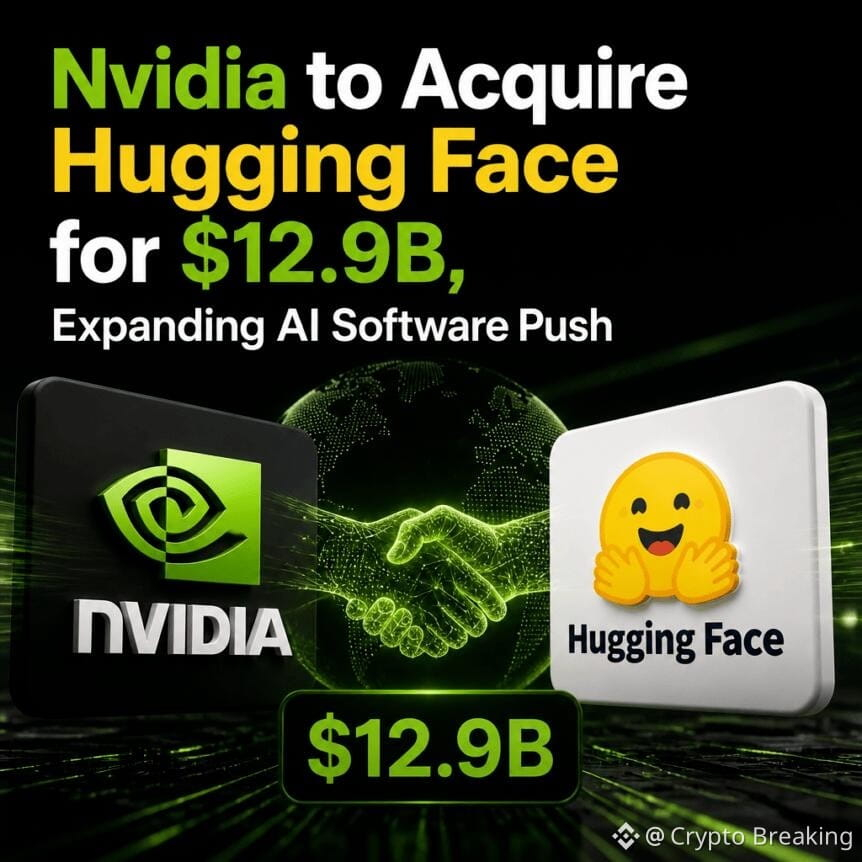
Artikel
Nvidia Akuisisi Hugging Face senilai $12,9B, Memperluas Dorongan Perangkat Lunak AINvidia telah setuju untuk mengakuisisi Hugging Face dalam kesepakatan bernilai $12,93 miliar, sebuah langkah yang semakin mengonsolidasikan persaingan industri AI tidak hanya di ranah chip, tetapi juga di lapisan perangkat lunak dan alat model yang dimanfaatkan para pengembang.
Akuisisi ini menempatkan Nvidia untuk memainkan peran yang lebih mendalam dalam ekosistem AI open-source. CEO Nvidia Jensen Huang mengatakan perusahaan berencana untuk menjaga Hugging Face “sebagai platform terbuka untuk seluruh ekosistem AI,” sambil memperluas skala dan sumber daya yang tersedia untuk evaluasi model, penempatan (deployment), dan keamanan.
Nvidia Akuisisi Hugging Face senilai $12,9B, Memperluas Dorongan Perangkat Lunak AI
Nvidia telah setuju untuk mengakuisisi Hugging Face dalam kesepakatan bernilai $12,93 miliar, sebuah langkah yang semakin mengonsolidasikan persaingan industri AI tidak hanya di ranah chip, tetapi juga di lapisan perangkat lunak dan alat model yang dimanfaatkan para pengembang.
Akuisisi ini menempatkan Nvidia untuk memainkan peran yang lebih mendalam dalam ekosistem AI open-source. CEO Nvidia Jensen Huang mengatakan perusahaan berencana untuk menjaga Hugging Face “sebagai platform terbuka untuk seluruh ekosistem AI,” sambil memperluas skala dan sumber daya yang tersedia untuk evaluasi model, penempatan (deployment), dan keamanan.
Akuisisi ini menempatkan Nvidia untuk memainkan peran yang lebih mendalam dalam ekosistem AI open-source. CEO Nvidia Jensen Huang mengatakan perusahaan berencana untuk menjaga Hugging Face “sebagai platform terbuka untuk seluruh ekosistem AI,” sambil memperluas skala dan sumber daya yang tersedia untuk evaluasi model, penempatan (deployment), dan keamanan.
1.5k
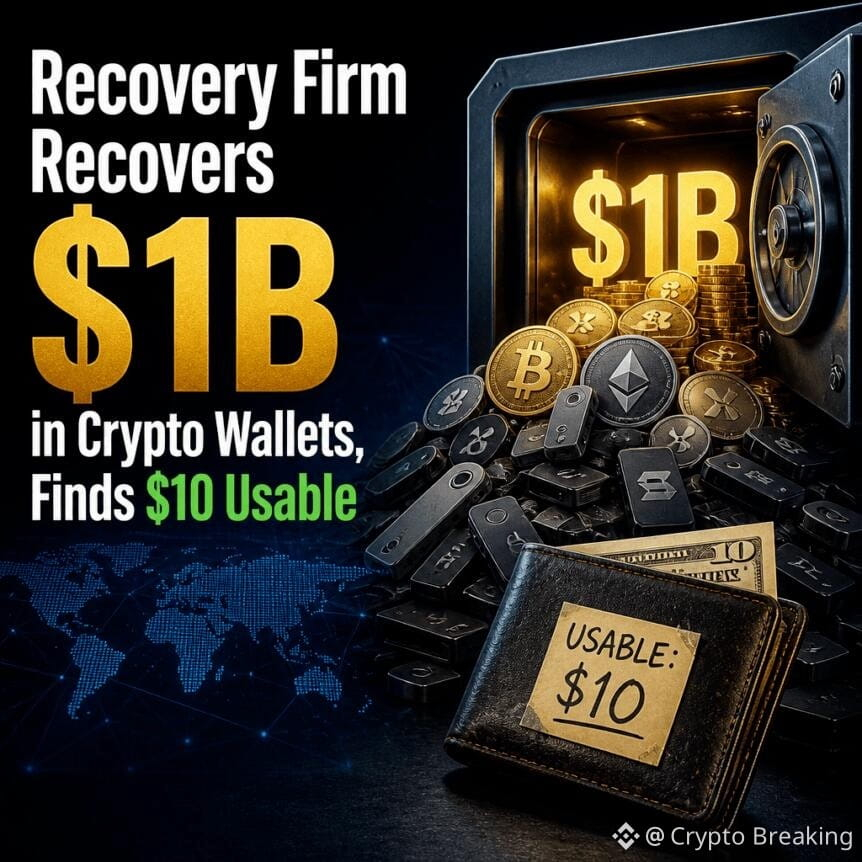
Artikel
Perusahaan Pemulihan Mengembalikan $1 Miliar dalam Dompet Kripto, Menemukan Hanya $10 yang Dapat DigunakanSebuah kasus yang melibatkan dugaan “harta karun yang hilang” dalam Bitcoin telah menjadi kisah peringatan tentang seberapa sering pemulihan kripto bukan hanya tantangan teknis—melainkan juga masalah penipuan, kesalahpahaman, dan kurangnya konteks tentang apa yang sebenarnya tersimpan di dalam sebuah dompet.
Pada tahun 2021, Chris Brooks, pendiri dan direktur utama Crypto Asset Recovery, dihubungi oleh seorang klien yang diidentifikasi sebagai “Rusty.” Rusty dan dua pria lainnya mengklaim bahwa mereka telah memenangkan sekitar 5.000 Bitcoin dalam sebuah perkara pengadilan (senilai sekitar $53 juta pada saat itu) dan mengatakan bahwa mereka bisa menarik hingga $300.000 per minggu. Brooks dan putranya bepergian untuk membantu membobol dompet tersebut, hanya untuk mendapati bahwa informasi yang diberikan mengarah ke arah yang sangat berbeda.
Perusahaan Pemulihan Mengembalikan $1 Miliar dalam Dompet Kripto, Menemukan Hanya $10 yang Dapat Digunakan
Sebuah kasus yang melibatkan dugaan “harta karun yang hilang” dalam Bitcoin telah menjadi kisah peringatan tentang seberapa sering pemulihan kripto bukan hanya tantangan teknis—melainkan juga masalah penipuan, kesalahpahaman, dan kurangnya konteks tentang apa yang sebenarnya tersimpan di dalam sebuah dompet.
Pada tahun 2021, Chris Brooks, pendiri dan direktur utama Crypto Asset Recovery, dihubungi oleh seorang klien yang diidentifikasi sebagai “Rusty.” Rusty dan dua pria lainnya mengklaim bahwa mereka telah memenangkan sekitar 5.000 Bitcoin dalam sebuah perkara pengadilan (senilai sekitar $53 juta pada saat itu) dan mengatakan bahwa mereka bisa menarik hingga $300.000 per minggu. Brooks dan putranya bepergian untuk membantu membobol dompet tersebut, hanya untuk mendapati bahwa informasi yang diberikan mengarah ke arah yang sangat berbeda.
Pada tahun 2021, Chris Brooks, pendiri dan direktur utama Crypto Asset Recovery, dihubungi oleh seorang klien yang diidentifikasi sebagai “Rusty.” Rusty dan dua pria lainnya mengklaim bahwa mereka telah memenangkan sekitar 5.000 Bitcoin dalam sebuah perkara pengadilan (senilai sekitar $53 juta pada saat itu) dan mengatakan bahwa mereka bisa menarik hingga $300.000 per minggu. Brooks dan putranya bepergian untuk membantu membobol dompet tersebut, hanya untuk mendapati bahwa informasi yang diberikan mengarah ke arah yang sangat berbeda.
2.5k

Artikel
VARA dan Securitize Perluas Inovasi Tokenisasi di Dubai Melalui MoURegulator Dubai, VARA (Virtual Assets Regulatory Authority), telah menandatangani Memorandum of Understanding (MoU) dengan Securitize, sebuah platform tokenisasi yang didukung oleh BlackRock, dalam langkah yang bertujuan untuk mempercepat aktivitas tokenisasi yang teregulasi di Uni Emirat Arab.
Menurut pengumuman hari Kamis yang dibagikan dengan Cointelegraph, MoU tersebut menetapkan kerangka kerja sama yang dirancang untuk mendukung tokenisasi dan infrastruktur aset digital di Dubai, mendorong partisipasi institusional, serta membantu membentuk cara produk keuangan berbasis token dapat beroperasi dalam lingkungan regulasi emirat tersebut.
VARA dan Securitize Perluas Inovasi Tokenisasi di Dubai Melalui MoU
Regulator Dubai, VARA (Virtual Assets Regulatory Authority), telah menandatangani Memorandum of Understanding (MoU) dengan Securitize, sebuah platform tokenisasi yang didukung oleh BlackRock, dalam langkah yang bertujuan untuk mempercepat aktivitas tokenisasi yang teregulasi di Uni Emirat Arab.
Menurut pengumuman hari Kamis yang dibagikan dengan Cointelegraph, MoU tersebut menetapkan kerangka kerja sama yang dirancang untuk mendukung tokenisasi dan infrastruktur aset digital di Dubai, mendorong partisipasi institusional, serta membantu membentuk cara produk keuangan berbasis token dapat beroperasi dalam lingkungan regulasi emirat tersebut.
Menurut pengumuman hari Kamis yang dibagikan dengan Cointelegraph, MoU tersebut menetapkan kerangka kerja sama yang dirancang untuk mendukung tokenisasi dan infrastruktur aset digital di Dubai, mendorong partisipasi institusional, serta membantu membentuk cara produk keuangan berbasis token dapat beroperasi dalam lingkungan regulasi emirat tersebut.
72
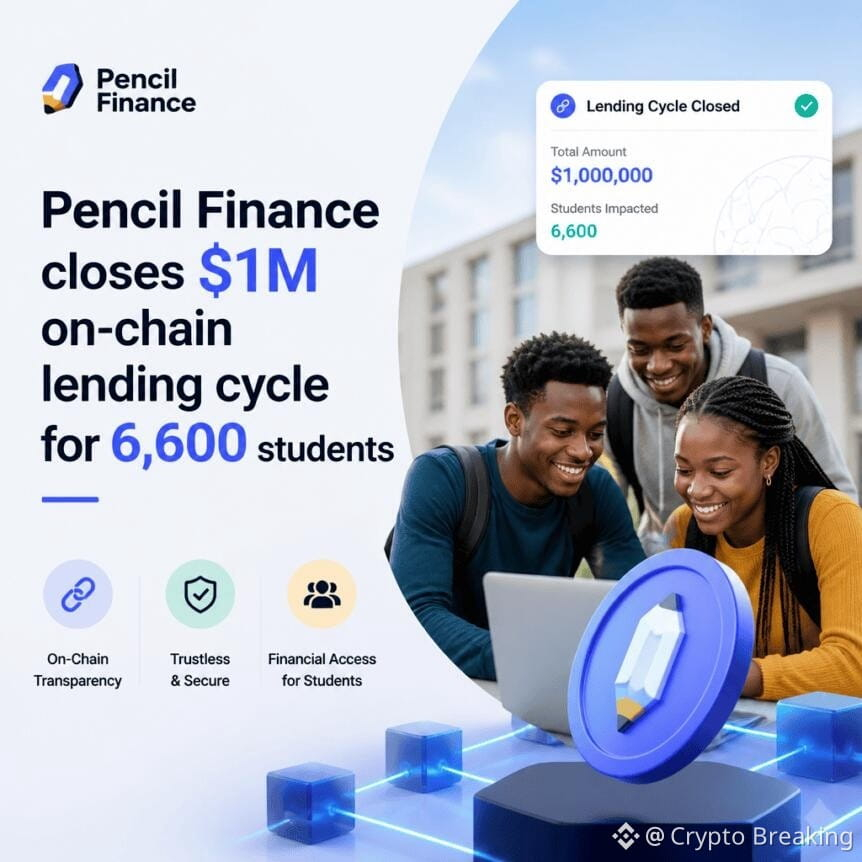
Artikel
Pencil Finance menutup siklus pinjaman on-chain senilai $1M untuk 6.600 siswaProtokol aset riil dunia nyata (RWA) pinjaman mahasiswa dari Pencil Finance mengatakan telah menyelesaikan siklus pinjaman mahasiswa “sepenuhnya onchain” pertamanya, dengan menyalurkan $1 juta untuk membiayai peminjam pendidikan di Asia Tenggara dan kemudian melihat pembayaran kembali mengalir ke para pemberi pinjaman.
Dalam pengumuman Kamis yang dibagikan kepada Cointelegraph, proyek tersebut menjelaskan proses lengkapnya sebagai sesuatu yang tercatat secara transparan di blockchain: modal disalurkan secara onchain sebagai pemberi pinjaman, para peminjam melakukan pelunasan, dan pembayaran tersebut dialihkan kembali ke para pendana dari kumpulan dana (bundle) dengan imbal hasil.
Pencil Finance menutup siklus pinjaman on-chain senilai $1M untuk 6.600 siswa
Protokol aset riil dunia nyata (RWA) pinjaman mahasiswa dari Pencil Finance mengatakan telah menyelesaikan siklus pinjaman mahasiswa “sepenuhnya onchain” pertamanya, dengan menyalurkan $1 juta untuk membiayai peminjam pendidikan di Asia Tenggara dan kemudian melihat pembayaran kembali mengalir ke para pemberi pinjaman.
Dalam pengumuman Kamis yang dibagikan kepada Cointelegraph, proyek tersebut menjelaskan proses lengkapnya sebagai sesuatu yang tercatat secara transparan di blockchain: modal disalurkan secara onchain sebagai pemberi pinjaman, para peminjam melakukan pelunasan, dan pembayaran tersebut dialihkan kembali ke para pendana dari kumpulan dana (bundle) dengan imbal hasil.
Dalam pengumuman Kamis yang dibagikan kepada Cointelegraph, proyek tersebut menjelaskan proses lengkapnya sebagai sesuatu yang tercatat secara transparan di blockchain: modal disalurkan secara onchain sebagai pemberi pinjaman, para peminjam melakukan pelunasan, dan pembayaran tersebut dialihkan kembali ke para pendana dari kumpulan dana (bundle) dengan imbal hasil.
41
Artikel
Pencil Finance menuntaskan siklus pinjaman on-chain senilai $1M untuk 6,6K siswa SEAPencil Finance, startup infrastruktur pinjaman mahasiswa, mengatakan telah menyelesaikan satu siklus pinjaman sepenuhnya on-chain senilai $1 juta, yang membiayai peminjam pendidikan di Asia Tenggara dan membayar investor melalui arus kas yang tercatat dalam smart contract.
Dalam pengumuman Kamis yang dibagikan bersama Cointelegraph, Pencil menyebut tonggak tersebut sebagai siklus pinjaman mahasiswa pertamanya yang “sepenuhnya on-chain”—yakni ketika protokol menyalurkan $1 juta modal pemberi pinjaman di jaringan dan pembayaran kembali para peminjam mengalir kembali untuk mendanai pihak pemberi dana melalui distribusi hasil (yield) yang terstruktur.
Pencil Finance menuntaskan siklus pinjaman on-chain senilai $1M untuk 6,6K siswa SEA
Pencil Finance, startup infrastruktur pinjaman mahasiswa, mengatakan telah menyelesaikan satu siklus pinjaman sepenuhnya on-chain senilai $1 juta, yang membiayai peminjam pendidikan di Asia Tenggara dan membayar investor melalui arus kas yang tercatat dalam smart contract.
Dalam pengumuman Kamis yang dibagikan bersama Cointelegraph, Pencil menyebut tonggak tersebut sebagai siklus pinjaman mahasiswa pertamanya yang “sepenuhnya on-chain”—yakni ketika protokol menyalurkan $1 juta modal pemberi pinjaman di jaringan dan pembayaran kembali para peminjam mengalir kembali untuk mendanai pihak pemberi dana melalui distribusi hasil (yield) yang terstruktur.
Dalam pengumuman Kamis yang dibagikan bersama Cointelegraph, Pencil menyebut tonggak tersebut sebagai siklus pinjaman mahasiswa pertamanya yang “sepenuhnya on-chain”—yakni ketika protokol menyalurkan $1 juta modal pemberi pinjaman di jaringan dan pembayaran kembali para peminjam mengalir kembali untuk mendanai pihak pemberi dana melalui distribusi hasil (yield) yang terstruktur.
35
Artikel
Kalshi Mengajukan Persetujuan ke CFTC untuk Meluncurkan WTI Perpetual FuturesOperator pasar prediksi Kalshi dilaporkan sedang mempersiapkan pengajuan ke Komisi Perdagangan Berjangka Komoditas AS (CFTC) untuk jenis derivatif energi baru: kontrak West Texas Intermediate (WTI) crude oil perpetual futures yang tidak akan pernah kedaluwarsa. Bloomberg melaporkan pengajuan tersebut bisa dilakukan paling cepat pekan depan, sementara Reuters menambahkan bahwa produk itu tersedia 24 jam sehari, lima hari seminggu.
Jika regulator menyetujuinya, kontrak tersebut akan menjadi penawaran pertama perpetual futures yang terhubung dengan minyak untuk diperdagangkan di tempat yang teregulasi di AS—sebuah uji kasus penting tentang bagaimana CFTC menangani struktur perpetual di pasar yang secara tradisional dibangun di sekitar tanggal kedaluwarsa tetap.
Kalshi Mengajukan Persetujuan ke CFTC untuk Meluncurkan WTI Perpetual Futures
Operator pasar prediksi Kalshi dilaporkan sedang mempersiapkan pengajuan ke Komisi Perdagangan Berjangka Komoditas AS (CFTC) untuk jenis derivatif energi baru: kontrak West Texas Intermediate (WTI) crude oil perpetual futures yang tidak akan pernah kedaluwarsa. Bloomberg melaporkan pengajuan tersebut bisa dilakukan paling cepat pekan depan, sementara Reuters menambahkan bahwa produk itu tersedia 24 jam sehari, lima hari seminggu.
Jika regulator menyetujuinya, kontrak tersebut akan menjadi penawaran pertama perpetual futures yang terhubung dengan minyak untuk diperdagangkan di tempat yang teregulasi di AS—sebuah uji kasus penting tentang bagaimana CFTC menangani struktur perpetual di pasar yang secara tradisional dibangun di sekitar tanggal kedaluwarsa tetap.
Jika regulator menyetujuinya, kontrak tersebut akan menjadi penawaran pertama perpetual futures yang terhubung dengan minyak untuk diperdagangkan di tempat yang teregulasi di AS—sebuah uji kasus penting tentang bagaimana CFTC menangani struktur perpetual di pasar yang secara tradisional dibangun di sekitar tanggal kedaluwarsa tetap.
54
Artikel
Arus Masuk Bitcoin ETF Menguat saat Rangkaian Ether dan XRP TertahanPermintaan untuk ETF kripto spot AS mereda pada Rabu, membalik rangkaian arus masuk baru-baru ini pada produk Ether dan XRP. Setelah lebih dari sepekan pembelian yang konsisten, ETF spot Ether mencatat arus keluar bersih senilai $48 juta, sementara ETF spot XRP mencatat penarikan bersih sebesar $7,2 juta.
Bitcoin ETF bergerak ke arah berlawanan, menarik arus masuk baru meski harga kripto secara lebih luas tergelincir. Pergeseran arus ini penting karena pembelian ETF sering dipandang sebagai barometer sentimen institusi AS terhadap aset digital utama.
Arus Masuk Bitcoin ETF Menguat saat Rangkaian Ether dan XRP Tertahan
Permintaan untuk ETF kripto spot AS mereda pada Rabu, membalik rangkaian arus masuk baru-baru ini pada produk Ether dan XRP. Setelah lebih dari sepekan pembelian yang konsisten, ETF spot Ether mencatat arus keluar bersih senilai $48 juta, sementara ETF spot XRP mencatat penarikan bersih sebesar $7,2 juta.
Bitcoin ETF bergerak ke arah berlawanan, menarik arus masuk baru meski harga kripto secara lebih luas tergelincir. Pergeseran arus ini penting karena pembelian ETF sering dipandang sebagai barometer sentimen institusi AS terhadap aset digital utama.
Bitcoin ETF bergerak ke arah berlawanan, menarik arus masuk baru meski harga kripto secara lebih luas tergelincir. Pergeseran arus ini penting karena pembelian ETF sering dipandang sebagai barometer sentimen institusi AS terhadap aset digital utama.
180
Artikel
Industri Kripto Mendesak SEC Membatasi Aturan Menyeluruh untuk ETF “Novel”Komisi Sekuritas dan Bursa AS (SEC) sedang mempertimbangkan cara mengatur gelombang berikutnya produk bursa yang diperdagangkan, yang “baru” atau “novel”, dan para investor kripto besar menolak pendekatan satu ukuran untuk semua. Dalam komentar publik yang diposting pada akhir Agustus, perusahaan modal ventura a16z, manajer investasi aset digital Grayscale, serta Crypto Council for Innovation (CCI) mendesak regulator untuk mempertahankan klasifikasi yang sudah ada dan meninjau produk berdasarkan profil risiko spesifiknya, bukan memasukkan produk-produk baru secara menyeluruh ke dalam satu kelompok regulasi yang terpisah.
Industri Kripto Mendesak SEC Membatasi Aturan Menyeluruh untuk ETF “Novel”
Komisi Sekuritas dan Bursa AS (SEC) sedang mempertimbangkan cara mengatur gelombang berikutnya produk bursa yang diperdagangkan, yang “baru” atau “novel”, dan para investor kripto besar menolak pendekatan satu ukuran untuk semua. Dalam komentar publik yang diposting pada akhir Agustus, perusahaan modal ventura a16z, manajer investasi aset digital Grayscale, serta Crypto Council for Innovation (CCI) mendesak regulator untuk mempertahankan klasifikasi yang sudah ada dan meninjau produk berdasarkan profil risiko spesifiknya, bukan memasukkan produk-produk baru secara menyeluruh ke dalam satu kelompok regulasi yang terpisah.
8
Artikel
Hyperscale Data Keluar dari Penambangan BTC Michigan saat Kepemilikan BTC Turun 79%Hyperscale Data secara permanen telah menghentikan penambangan Bitcoin di fasilitasnya di Michigan, dengan mengatakan langkah tersebut merupakan bagian dari transisinya menuju layanan hosting bagi pelanggan pusat data kecerdasan buatan (AI). Perusahaan juga berencana menjual peralatan pertambangan yang terkait dengan operasi tersebut.
Dalam sebuah pernyataan yang dirilis pekan ini, Hyperscale mengatakan semua penambang Bitcoin di lokasi tersebut dimatikan setelah pemeriksaan oleh penyedia neocloud berbasis California yang tidak disebutkan namanya. Pemadaman ini terjadi saat perusahaan mempersiapkan kampus untuk memenuhi persyaratan yang terkait dengan perjanjian layanan utama pusat data (master services agreement) untuk AI, yang diperkirakan bisa bernilai sekitar $1,2 miliar, bergantung pada bagaimana opsi kontrak dijalankan.
Hyperscale Data Keluar dari Penambangan BTC Michigan saat Kepemilikan BTC Turun 79%
Hyperscale Data secara permanen telah menghentikan penambangan Bitcoin di fasilitasnya di Michigan, dengan mengatakan langkah tersebut merupakan bagian dari transisinya menuju layanan hosting bagi pelanggan pusat data kecerdasan buatan (AI). Perusahaan juga berencana menjual peralatan pertambangan yang terkait dengan operasi tersebut.
Dalam sebuah pernyataan yang dirilis pekan ini, Hyperscale mengatakan semua penambang Bitcoin di lokasi tersebut dimatikan setelah pemeriksaan oleh penyedia neocloud berbasis California yang tidak disebutkan namanya. Pemadaman ini terjadi saat perusahaan mempersiapkan kampus untuk memenuhi persyaratan yang terkait dengan perjanjian layanan utama pusat data (master services agreement) untuk AI, yang diperkirakan bisa bernilai sekitar $1,2 miliar, bergantung pada bagaimana opsi kontrak dijalankan.
Dalam sebuah pernyataan yang dirilis pekan ini, Hyperscale mengatakan semua penambang Bitcoin di lokasi tersebut dimatikan setelah pemeriksaan oleh penyedia neocloud berbasis California yang tidak disebutkan namanya. Pemadaman ini terjadi saat perusahaan mempersiapkan kampus untuk memenuhi persyaratan yang terkait dengan perjanjian layanan utama pusat data (master services agreement) untuk AI, yang diperkirakan bisa bernilai sekitar $1,2 miliar, bergantung pada bagaimana opsi kontrak dijalankan.
25
Artikel
Hyperscale Data Menghentikan Penambangan BTC di Michigan saat Kepemilikan BTC Turun 79%Hyperscale Data telah menutup seluruh aktivitas penambangan Bitcoin di fasilitasnya di Michigan saat perusahaan melangkah maju dengan rencana untuk mengalihfungsikan lokasi tersebut menjadi pusat data kecerdasan buatan (AI) untuk pelanggan. Perusahaan mengatakan perubahan tersebut mengikuti inspeksi yang terkait dengan persyaratan pelanggan, dan pihaknya berencana menjual perangkat keras penambangan setelah transisi selesai.
Pada periode yang sama, Hyperscale juga telah menarik dana dari kepemilikan Bitcoin untuk membiayai pengembangan. Sementara itu, saham turun ke level terendah sepanjang masa pada Rabu setelah terjadinya pemecahan saham terbalik (reverse stock split) yang baru-baru ini.
Hyperscale Data Menghentikan Penambangan BTC di Michigan saat Kepemilikan BTC Turun 79%
Hyperscale Data telah menutup seluruh aktivitas penambangan Bitcoin di fasilitasnya di Michigan saat perusahaan melangkah maju dengan rencana untuk mengalihfungsikan lokasi tersebut menjadi pusat data kecerdasan buatan (AI) untuk pelanggan. Perusahaan mengatakan perubahan tersebut mengikuti inspeksi yang terkait dengan persyaratan pelanggan, dan pihaknya berencana menjual perangkat keras penambangan setelah transisi selesai.
Pada periode yang sama, Hyperscale juga telah menarik dana dari kepemilikan Bitcoin untuk membiayai pengembangan. Sementara itu, saham turun ke level terendah sepanjang masa pada Rabu setelah terjadinya pemecahan saham terbalik (reverse stock split) yang baru-baru ini.
Pada periode yang sama, Hyperscale juga telah menarik dana dari kepemilikan Bitcoin untuk membiayai pengembangan. Sementara itu, saham turun ke level terendah sepanjang masa pada Rabu setelah terjadinya pemecahan saham terbalik (reverse stock split) yang baru-baru ini.
28
Artikel
Remixpoint di Jepang keluar dari altcoin, mempertahankan hanya 1.506 BTCRemixpoint di Jepang telah secara signifikan merombak portofolio kripto perusahaannya dengan keluar dari semua posisi altcoin utamanya dan memusatkan kepemilikannya pada Bitcoin. Dalam keterbukaan yang diajukan minggu ini, perusahaan tersebut mengatakan bahwa pihaknya menjual Ether (ETH), Solana (SOL), XRP (XRP), dan Dogecoin (DOGE), sehingga hanya menyisakan sekitar 1.506 BTC sebagai satu-satunya kepemilikan mata uang kriptonya.
Menurut keterungkapannya pada hari Rabu, Remixpoint menghimpun gabungan 878,8 juta yen (sekitar $5,5 juta) dari penjualan dan berencana mengakui keuntungan yang dihasilkan pada kuartal kedua tahun fiskalnya yang berakhir pada Maret 2027. Dampak bersih dari transaksi tersebut adalah keuntungan 117,8 juta yen (sekitar $736.000), setelah memperhitungkan kerugian atas posisi DOGE-nya.
Remixpoint di Jepang keluar dari altcoin, mempertahankan hanya 1.506 BTC
Remixpoint di Jepang telah secara signifikan merombak portofolio kripto perusahaannya dengan keluar dari semua posisi altcoin utamanya dan memusatkan kepemilikannya pada Bitcoin. Dalam keterbukaan yang diajukan minggu ini, perusahaan tersebut mengatakan bahwa pihaknya menjual Ether (ETH), Solana (SOL), XRP (XRP), dan Dogecoin (DOGE), sehingga hanya menyisakan sekitar 1.506 BTC sebagai satu-satunya kepemilikan mata uang kriptonya.
Menurut keterungkapannya pada hari Rabu, Remixpoint menghimpun gabungan 878,8 juta yen (sekitar $5,5 juta) dari penjualan dan berencana mengakui keuntungan yang dihasilkan pada kuartal kedua tahun fiskalnya yang berakhir pada Maret 2027. Dampak bersih dari transaksi tersebut adalah keuntungan 117,8 juta yen (sekitar $736.000), setelah memperhitungkan kerugian atas posisi DOGE-nya.
Menurut keterungkapannya pada hari Rabu, Remixpoint menghimpun gabungan 878,8 juta yen (sekitar $5,5 juta) dari penjualan dan berencana mengakui keuntungan yang dihasilkan pada kuartal kedua tahun fiskalnya yang berakhir pada Maret 2027. Dampak bersih dari transaksi tersebut adalah keuntungan 117,8 juta yen (sekitar $736.000), setelah memperhitungkan kerugian atas posisi DOGE-nya.
75
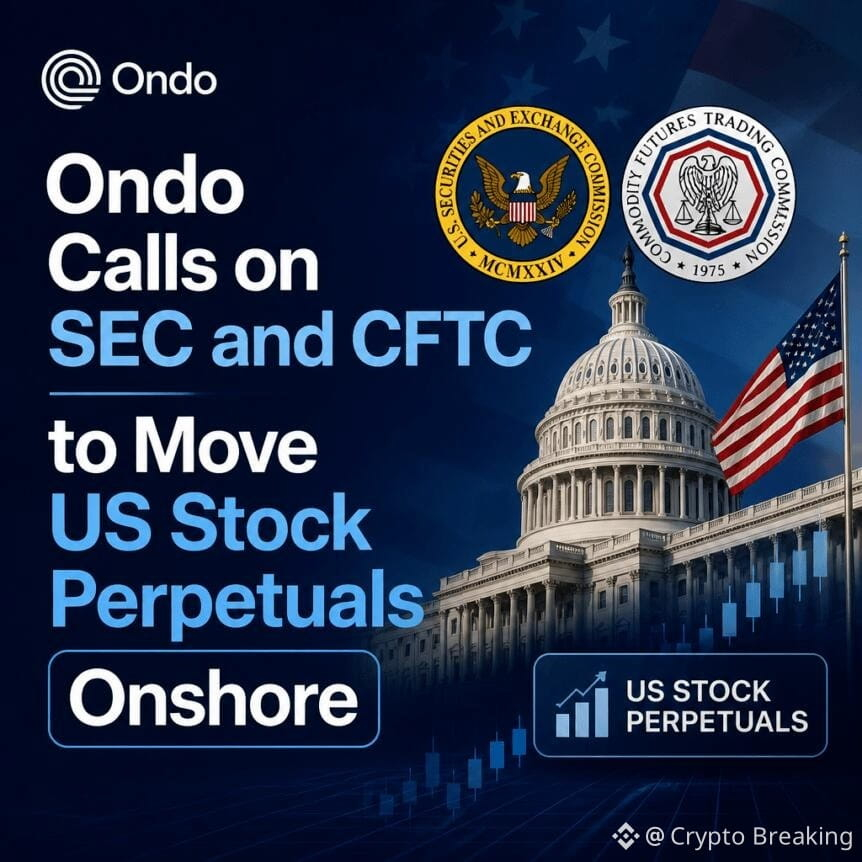
Artikel
Ondo Mendorong SEC dan CFTC Memindahkan Perpetual Saham AS ke OnshoreOndo Finance telah meminta regulator AS untuk mengizinkan futures perpetual onshore yang terkait dengan saham individual, dengan berargumen bahwa kerangka futures sekuritas yang ada sudah mencakup produk tersebut—tanpa perlu perumusan aturan baru. Permintaan itu diajukan dalam tiga surat komentar yang bertanggal 24 Agustus kepada Komisi Sekuritas dan Bursa AS (SEC) dan Komisi Perdagangan Berjangka Komoditas AS (CFTC).
Dalam berkasnya, Ondo menyatakan bahwa kontrak perpetual dapat dirancang untuk melacak harga ekuitas yang mendasarinya menggunakan mekanisme yang menyerupai logika kedaluwarsa dan pendanaan di pasar futures tradisional. Perusahaan juga menunjuk aktivitas lepas pantainya, dengan mengatakan bahwa platform afiliasi yang diselesaikan dengan stablecoin telah mengumpulkan volume perdagangan kumulatif sebesar $8 miliar untuk futures saham perpetual per 14 Agustus, sekitar enam minggu setelah peluncuran.
Ondo Mendorong SEC dan CFTC Memindahkan Perpetual Saham AS ke Onshore
Ondo Finance telah meminta regulator AS untuk mengizinkan futures perpetual onshore yang terkait dengan saham individual, dengan berargumen bahwa kerangka futures sekuritas yang ada sudah mencakup produk tersebut—tanpa perlu perumusan aturan baru. Permintaan itu diajukan dalam tiga surat komentar yang bertanggal 24 Agustus kepada Komisi Sekuritas dan Bursa AS (SEC) dan Komisi Perdagangan Berjangka Komoditas AS (CFTC).
Dalam berkasnya, Ondo menyatakan bahwa kontrak perpetual dapat dirancang untuk melacak harga ekuitas yang mendasarinya menggunakan mekanisme yang menyerupai logika kedaluwarsa dan pendanaan di pasar futures tradisional. Perusahaan juga menunjuk aktivitas lepas pantainya, dengan mengatakan bahwa platform afiliasi yang diselesaikan dengan stablecoin telah mengumpulkan volume perdagangan kumulatif sebesar $8 miliar untuk futures saham perpetual per 14 Agustus, sekitar enam minggu setelah peluncuran.
Dalam berkasnya, Ondo menyatakan bahwa kontrak perpetual dapat dirancang untuk melacak harga ekuitas yang mendasarinya menggunakan mekanisme yang menyerupai logika kedaluwarsa dan pendanaan di pasar futures tradisional. Perusahaan juga menunjuk aktivitas lepas pantainya, dengan mengatakan bahwa platform afiliasi yang diselesaikan dengan stablecoin telah mengumpulkan volume perdagangan kumulatif sebesar $8 miliar untuk futures saham perpetual per 14 Agustus, sekitar enam minggu setelah peluncuran.
54

Artikel
Wyoming Menambahkan Bukti Cadangan Chainlink untuk Token Stablecoin Milik Negara BagianWyoming sedang meningkatkan cara memverifikasi cadangan di balik Frontier Stable Token (FRNT) yang diterbitkan negara bagian, dengan beralih dari attestasi terjadwal menuju bukti onchain yang hampir real-time. Komisi Token Stabil Wyoming menyatakan bahwa pihaknya telah memperluas integrasinya dengan Chainlink untuk mempublikasikan data cadangan terverifikasi dan data total suplai token menggunakan Chainlink Proof of Reserve.
Perubahan ini dirancang untuk membantu pelaku pasar melacak dukungan dengan lebih cepat di antara periode pengungkapan resmi. Menurut komisi, sistem ini menggabungkan pemeriksaan cadangan independen yang dilakukan oleh The Network Firm dengan infrastruktur Chainlink, dengan data yang tersedia di blockchain secara hampir real-time.
Wyoming Menambahkan Bukti Cadangan Chainlink untuk Token Stablecoin Milik Negara Bagian
Wyoming sedang meningkatkan cara memverifikasi cadangan di balik Frontier Stable Token (FRNT) yang diterbitkan negara bagian, dengan beralih dari attestasi terjadwal menuju bukti onchain yang hampir real-time. Komisi Token Stabil Wyoming menyatakan bahwa pihaknya telah memperluas integrasinya dengan Chainlink untuk mempublikasikan data cadangan terverifikasi dan data total suplai token menggunakan Chainlink Proof of Reserve.
Perubahan ini dirancang untuk membantu pelaku pasar melacak dukungan dengan lebih cepat di antara periode pengungkapan resmi. Menurut komisi, sistem ini menggabungkan pemeriksaan cadangan independen yang dilakukan oleh The Network Firm dengan infrastruktur Chainlink, dengan data yang tersedia di blockchain secara hampir real-time.
Perubahan ini dirancang untuk membantu pelaku pasar melacak dukungan dengan lebih cepat di antara periode pengungkapan resmi. Menurut komisi, sistem ini menggabungkan pemeriksaan cadangan independen yang dilakukan oleh The Network Firm dengan infrastruktur Chainlink, dengan data yang tersedia di blockchain secara hampir real-time.
103
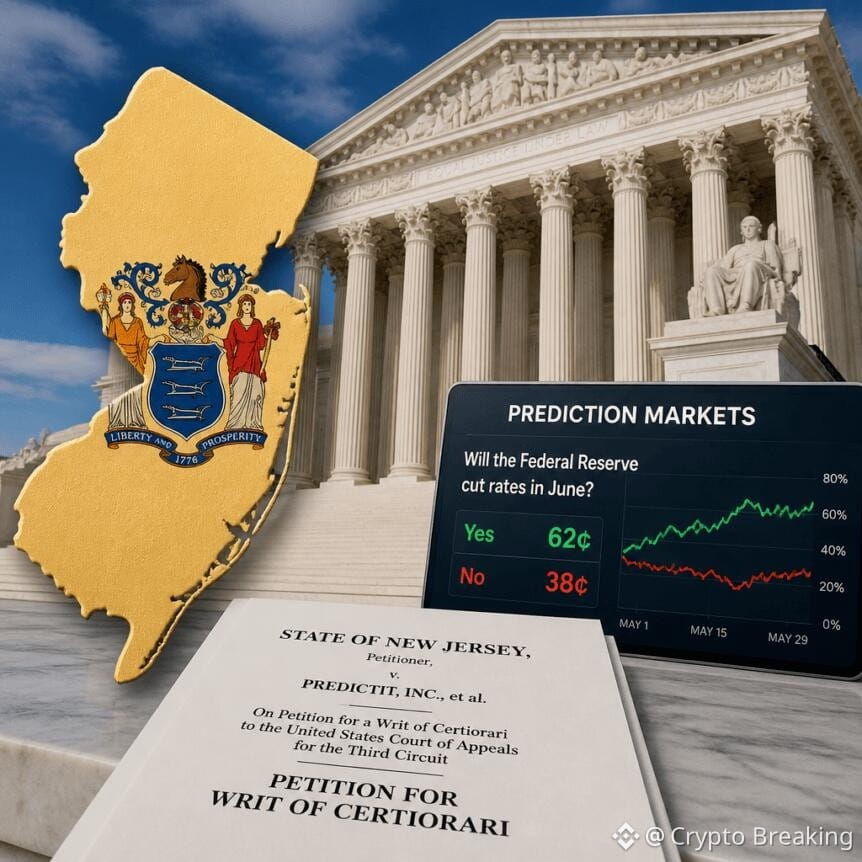
Artikel
New Jersey Meminta Mahkamah Agung AS Meninjau Pasar PrediksiJaksa Agung New Jersey Jennifer Davenport dan direktur sementara Divisi Penegakan Permainan negara bagian, Mary Jo Flaherty, telah mengajukan permohonan kepada Mahkamah Agung AS untuk menangani sengketa mengenai siapa yang berwenang mengatur perusahaan pasar prediksi.
Pengajuan yang dibuat pada Rabu ini meminta pengadilan tertinggi di negara itu untuk memutuskan apakah hukum federal—khususnya Undang-Undang Dodd-Frank 2010—mengenyampingkan negara bagian agar tidak menegakkan aturan taruhan olahraga mereka sendiri terhadap platform pasar prediksi yang mencantumkan kontrak di pasar yang terdaftar bersama Komisi Perdagangan Berjangka Komoditas (CFTC). Perkara ini berpusat pada tindakan penegakan New Jersey terhadap Kalshi.
New Jersey Meminta Mahkamah Agung AS Meninjau Pasar Prediksi
Jaksa Agung New Jersey Jennifer Davenport dan direktur sementara Divisi Penegakan Permainan negara bagian, Mary Jo Flaherty, telah mengajukan permohonan kepada Mahkamah Agung AS untuk menangani sengketa mengenai siapa yang berwenang mengatur perusahaan pasar prediksi.
Pengajuan yang dibuat pada Rabu ini meminta pengadilan tertinggi di negara itu untuk memutuskan apakah hukum federal—khususnya Undang-Undang Dodd-Frank 2010—mengenyampingkan negara bagian agar tidak menegakkan aturan taruhan olahraga mereka sendiri terhadap platform pasar prediksi yang mencantumkan kontrak di pasar yang terdaftar bersama Komisi Perdagangan Berjangka Komoditas (CFTC). Perkara ini berpusat pada tindakan penegakan New Jersey terhadap Kalshi.
Pengajuan yang dibuat pada Rabu ini meminta pengadilan tertinggi di negara itu untuk memutuskan apakah hukum federal—khususnya Undang-Undang Dodd-Frank 2010—mengenyampingkan negara bagian agar tidak menegakkan aturan taruhan olahraga mereka sendiri terhadap platform pasar prediksi yang mencantumkan kontrak di pasar yang terdaftar bersama Komisi Perdagangan Berjangka Komoditas (CFTC). Perkara ini berpusat pada tindakan penegakan New Jersey terhadap Kalshi.
1
86
Masuk untuk menjelajahi konten lainnya
Bergabunglah dengan pengguna kripto global di Binance Square
⚡️ Dapatkan informasi terbaru dan berguna tentang kripto.
💬 Dipercayai oleh bursa kripto terbesar di dunia.
👍 Temukan wawasan nyata dari kreator terverifikasi.
Email/Nomor Ponsel
Topik Sedang Tren
比特币突破8万美元
33,368 penayangan
181 Berdiskusi
BTC menembus 80.000 dolar, mengapa tiba-tiba melonjak sedemikian kencang?
Berita: Gubernur/anggota The Fed, Waller, menyampaikan sinyal bahwa ia cenderung mempertahankan suku bunga tidak berubah pada bulan ini. Ekspektasi pasar sebelumnya yang paling ditakuti—"kenaikan suku bunga kembali"—terpatahkan, sehingga aset berisiko langsung dilonggarkan.
Lebih “keras” di on-chain: paus besar terus menyerap 60.000 BTC pada bulan Agustus (sekitar 4,7 miliar dolar), sementara ETF Bitcoin spot AS pada Agustus mencatat arus masuk bersih sebesar 3,52 miliar dolar. BlackRock juga menurunkan ambang penukaran IBIT dari 25 juta menjadi 1 juta—artinya institusi sedang membeli, sedangkan ritel sedang menjual.
Pasokan (chip) berpindah dari tangan ritel ke big holder dan institusi. Kenaikan kali ini bukan karena panik jual-beli (dump), melainkan pergantian “juru main” (shift posisi).
Setelah tembus 80.000, yang paling penting adalah mampu bertahan.
Inti jangka pendek adalah apakah bisa bertahan dengan volume besar di 81.500. Jika bertahan, ruang akan terbuka menuju 82.800~83.800; dan sekitar 8,28 juta adalah penentu arah menengah (jika tembus lihat 9,4–9,8 juta, jika tersandung kembali ke rentang/box). $BTC
小鱼儿闪闪yu33
·Disukai 8 Kali
·9.5k penayangan
BTCTops$80K
33,593 penayangan
188 Berdiskusi
USWeeklyInitialJoblessClaimsRiseTo206000
62,011 penayangan
963 Berdiskusi