

Future Pulse
26.7k Publications

Future Pulse
 Compte Square Vérifié+
Signaler
Bloquer l’utilisateur
Hi, I'm passionate about crypto, technology, and innovation. I enjoy exploring ideas, sharing insights, and staying ahead of what's next.
Ouvert au trading
Trade fréquemment
2.7 an(s)
4.1K+ Suivis
34.3K+ Abonnés
54.1K+ J’aime
Publications
Portefeuille
Tous
Citations
Direct
·
--
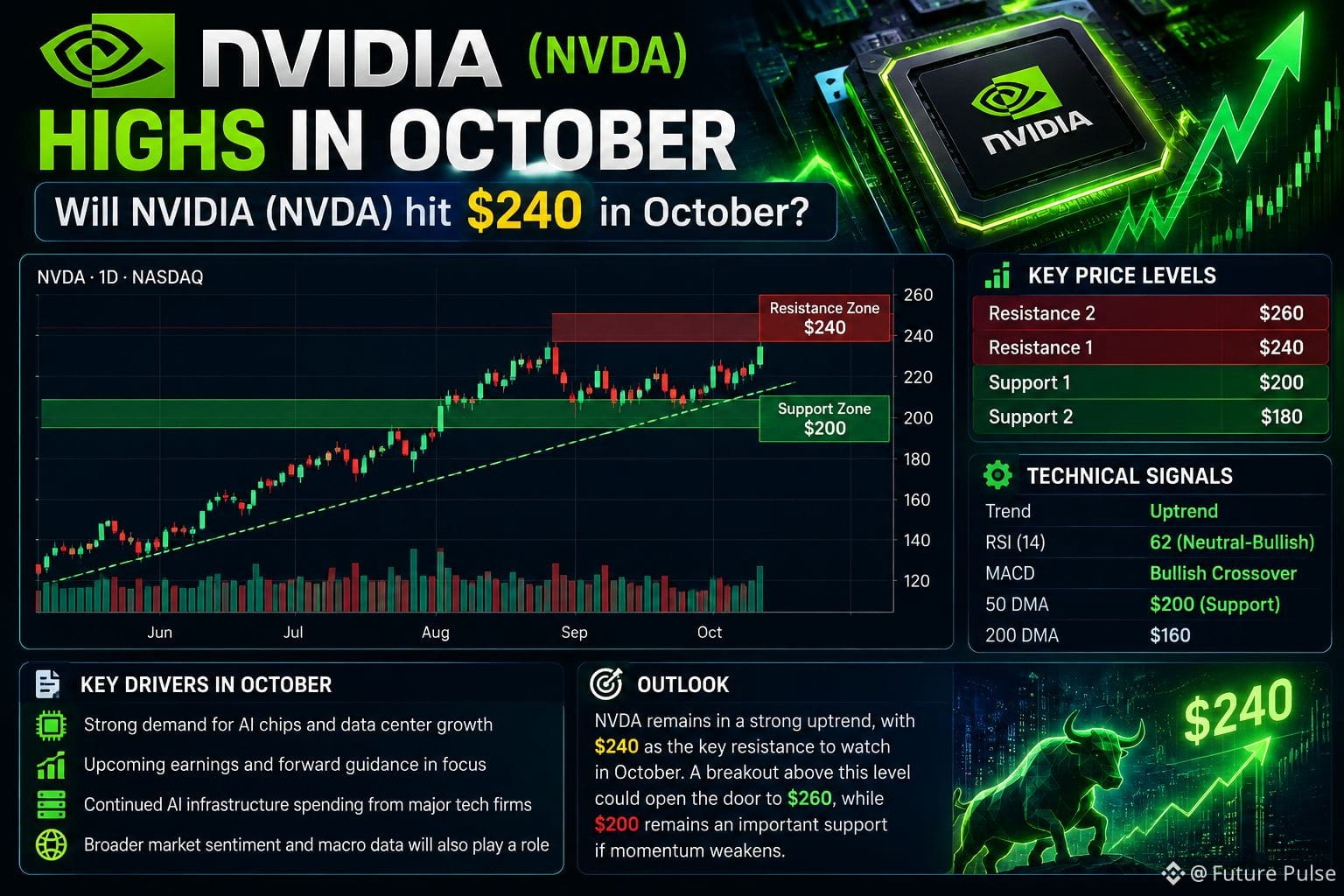
Will NVIDIA (NVDA) hit $240 in October?
NVIDIA is already pressing against that level. NVDA closed around $236.40 on Oct. 5, after reaching an intraday high near $237.85, putting $240 only about 1% higher.
The setup is increasingly bullish: NVDA has pushed into record territory, while Morgan Stanley recently reaffirmed an Overweight rating with a $300 target. Strong AI-related demand and positive signals from NVIDIA supplier Foxconn are also supporting momentum.
Technically, $237–$240 is the immediate breakout zone. A clean move above $240 could signal another leg higher, while rejection around this area could trigger a short-term consolidation.
My take: $240 looks like a realistic October test, but holding above it is the more important question.
$MU
{future}(MUUSDT)
$NVDAB
{spot}(NVDABUSDT)
$NVDA
{future}(NVDAUSDT)
Will NVIDIA (NVDA) hit $240 in October?
NVIDIA is already pressing against that level. NVDA closed around $236.40 on Oct. 5, after reaching an intraday high near $237.85, putting $240 only about 1% higher.
The setup is increasingly bullish: NVDA has pushed into record territory, while Morgan Stanley recently reaffirmed an Overweight rating with a $300 target. Strong AI-related demand and positive signals from NVIDIA supplier Foxconn are also supporting momentum.
Technically, $237–$240 is the immediate breakout zone. A clean move above $240 could signal another leg higher, while rejection around this area could trigger a short-term consolidation.
My take: $240 looks like a realistic October test, but holding above it is the more important question.
$MU
$NVDAB
$NVDA
NVIDIA is already pressing against that level. NVDA closed around $236.40 on Oct. 5, after reaching an intraday high near $237.85, putting $240 only about 1% higher.
The setup is increasingly bullish: NVDA has pushed into record territory, while Morgan Stanley recently reaffirmed an Overweight rating with a $300 target. Strong AI-related demand and positive signals from NVIDIA supplier Foxconn are also supporting momentum.
Technically, $237–$240 is the immediate breakout zone. A clean move above $240 could signal another leg higher, while rejection around this area could trigger a short-term consolidation.
My take: $240 looks like a realistic October test, but holding above it is the more important question.
$MU
$NVDAB
$NVDA
🚀 Yes, easily
📈 Yes, but after a pullback
⚖️ Stays below $240
🔻 Reverses lower
12 heure(s) restante(s)
602
·
--
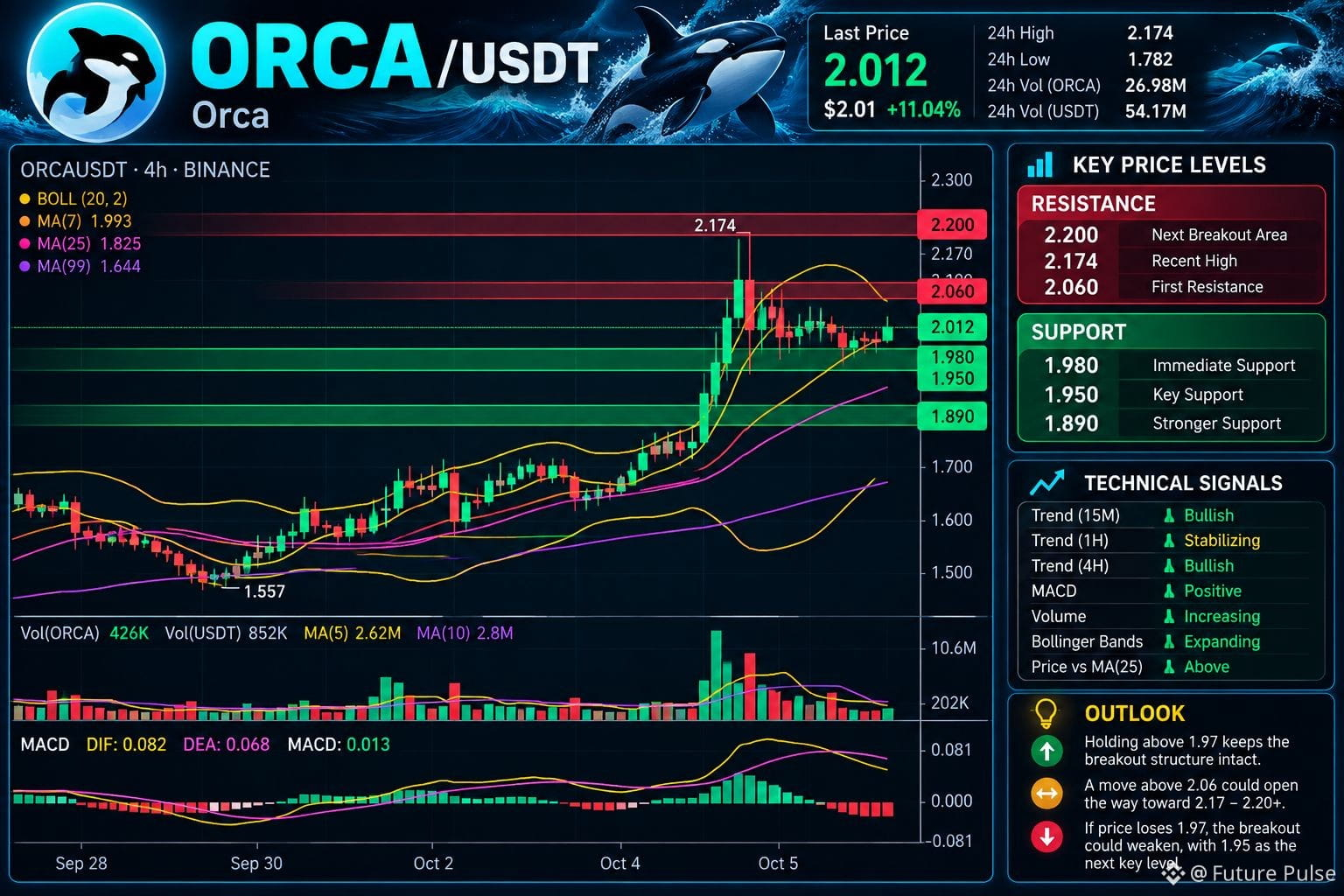
ORCA has pushed sharply from the $1.95 area toward $2.17, but the latest candles show a different phase: after the initial expansion, price is now consolidating around $2.00.
The important part is whether this consolidation becomes a launchpad or a rejection zone.
Are you ready for short?
🟢 Support
$1.98–$1.97 — immediate support$1.95 — key structural level$1.89 — deeper support
🔴 Resistance
$2.06 — first upside hurdle$2.17 — recent high$2.20+ — next breakout area
The 15M chart is showing renewed buying volume, while the 1H structure is trying to stabilize around the moving-average cluster.
For me, the key level is $1.97. Holding above it keeps the recent breakout structure alive; losing it would make the move considerably less convincing.
ORCA is no longer in the breakout phase—the next battle is about holding the breakout.
$ORCA
{future}(ORCAUSDT)
$SNDK
{future}(SNDKUSDT)
$BR
{future}(BRUSDT)
ORCA has pushed sharply from the $1.95 area toward $2.17, but the latest candles show a different phase: after the initial expansion, price is now consolidating around $2.00.
The important part is whether this consolidation becomes a launchpad or a rejection zone.
Are you ready for short?
🟢 Support
$1.98–$1.97 — immediate support$1.95 — key structural level$1.89 — deeper support
🔴 Resistance
$2.06 — first upside hurdle$2.17 — recent high$2.20+ — next breakout area
The 15M chart is showing renewed buying volume, while the 1H structure is trying to stabilize around the moving-average cluster.
For me, the key level is $1.97. Holding above it keeps the recent breakout structure alive; losing it would make the move considerably less convincing.
ORCA is no longer in the breakout phase—the next battle is about holding the breakout.
$ORCA
$SNDK
$BR
The important part is whether this consolidation becomes a launchpad or a rejection zone.
Are you ready for short?
🟢 Support
$1.98–$1.97 — immediate support$1.95 — key structural level$1.89 — deeper support
🔴 Resistance
$2.06 — first upside hurdle$2.17 — recent high$2.20+ — next breakout area
The 15M chart is showing renewed buying volume, while the 1H structure is trying to stabilize around the moving-average cluster.
For me, the key level is $1.97. Holding above it keeps the recent breakout structure alive; losing it would make the move considerably less convincing.
ORCA is no longer in the breakout phase—the next battle is about holding the breakout.
$ORCA
$SNDK
$BR
944
·
--
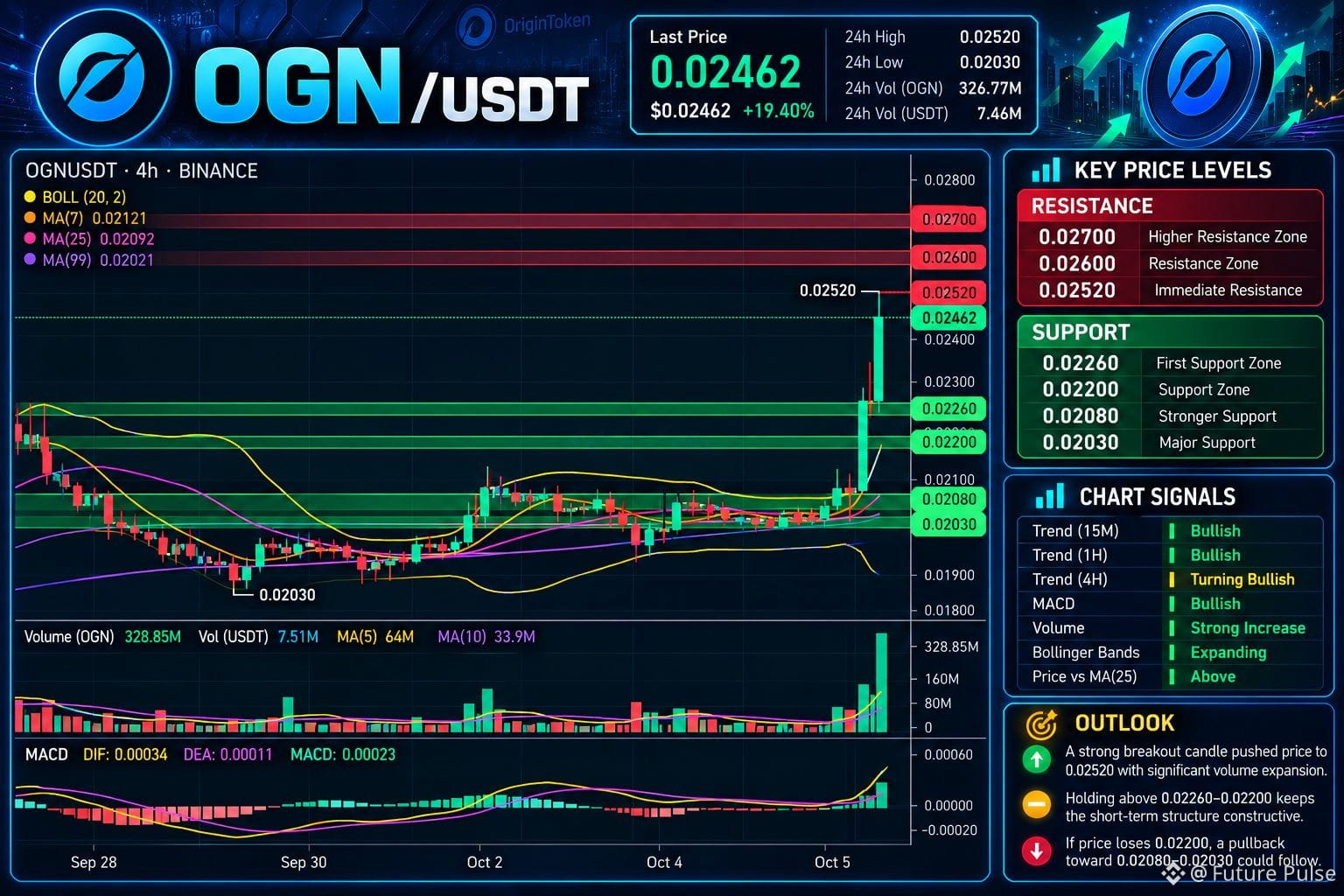
OGN has just made a decisive move out of its long consolidation zone. Price jumped toward $0.02520, accompanied by a major expansion in volume and a clear positive shift in MACD momentum.
What stands out to me is that the breakout didn't happen in isolation—the volume expansion gives the move more significance than a simple price spike.
🟢 Support
$0.02260–$0.02200 — first zone to watch$0.02080–$0.02030 — stronger support
🔴 Resistance
$0.02520 — immediate barrier$0.02600$0.02700 — higher resistance zone
The interesting question now isn't simply “how high can OGN go?” It's whether buyers can defend the breakout area after such a sharp expansion.
A hold above $0.02200–$0.02260 would keep the current structure constructive, while a move back below it could signal that the breakout needs more time to develop.
OGN has awakened—but confirmation matters more than excitement.
$OGN
{future}(OGNUSDT)
$MU
{future}(MUUSDT)
$SPCXB
{spot}(SPCXBUSDT)
OGN has just made a decisive move out of its long consolidation zone. Price jumped toward $0.02520, accompanied by a major expansion in volume and a clear positive shift in MACD momentum.
What stands out to me is that the breakout didn't happen in isolation—the volume expansion gives the move more significance than a simple price spike.
🟢 Support
$0.02260–$0.02200 — first zone to watch$0.02080–$0.02030 — stronger support
🔴 Resistance
$0.02520 — immediate barrier$0.02600$0.02700 — higher resistance zone
The interesting question now isn't simply “how high can OGN go?” It's whether buyers can defend the breakout area after such a sharp expansion.
A hold above $0.02200–$0.02260 would keep the current structure constructive, while a move back below it could signal that the breakout needs more time to develop.
OGN has awakened—but confirmation matters more than excitement.
$OGN
$MU
$SPCXB
What stands out to me is that the breakout didn't happen in isolation—the volume expansion gives the move more significance than a simple price spike.
🟢 Support
$0.02260–$0.02200 — first zone to watch$0.02080–$0.02030 — stronger support
🔴 Resistance
$0.02520 — immediate barrier$0.02600$0.02700 — higher resistance zone
The interesting question now isn't simply “how high can OGN go?” It's whether buyers can defend the breakout area after such a sharp expansion.
A hold above $0.02200–$0.02260 would keep the current structure constructive, while a move back below it could signal that the breakout needs more time to develop.
OGN has awakened—but confirmation matters more than excitement.
$OGN
$MU
$SPCXB
1
669
·
--
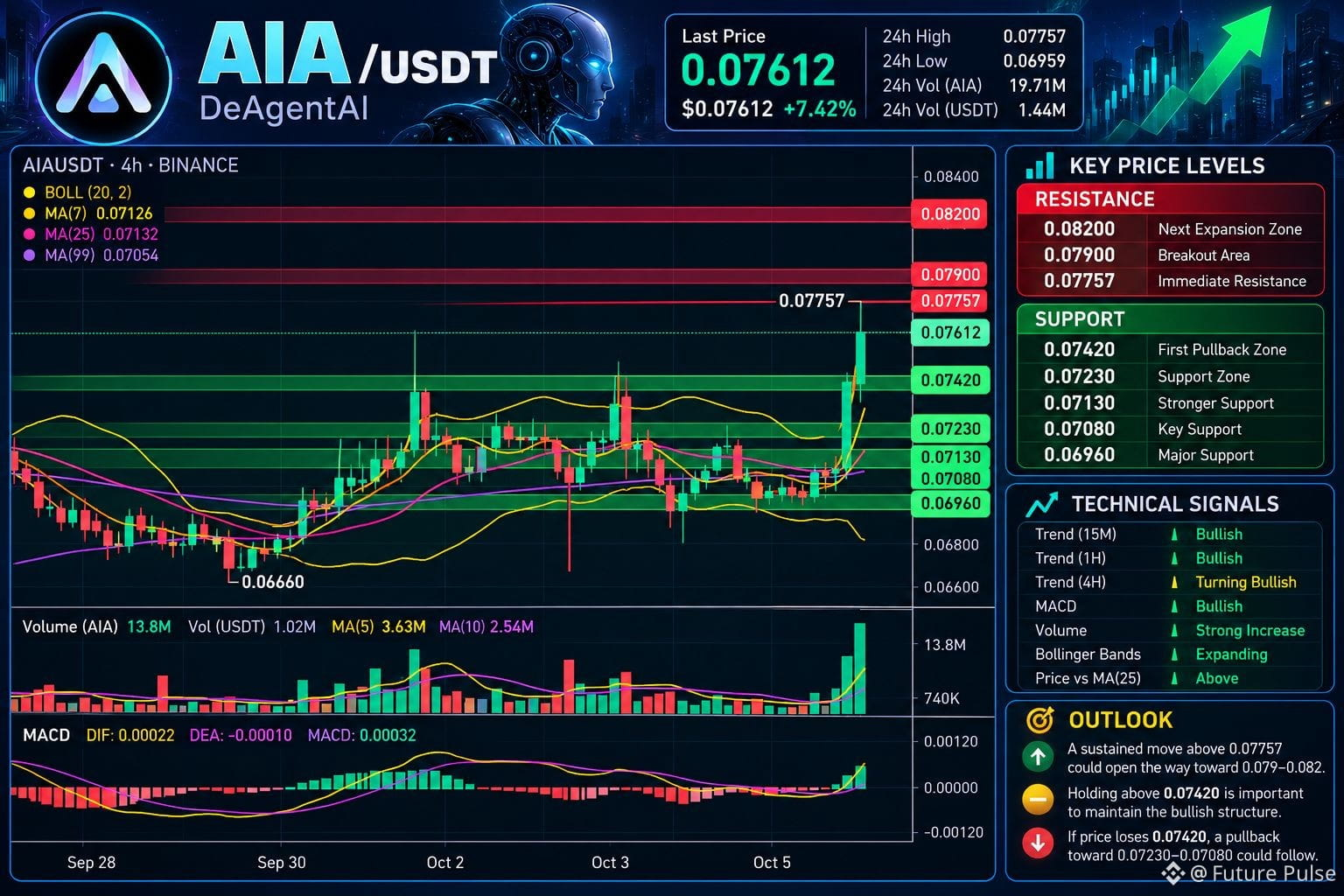
AIA has shifted from a tight 0.069–0.071 range into a sharp upside expansion. Price is now around 0.076, with the 15M and 1H charts showing strong volume expansion and positive MACD.
The move is clearly momentum-driven, but price is already pressing the recent 0.07757 high. That makes the next reaction more important than simply chasing the breakout.
🟢 Support
0.07420–0.07230 — first pullback zone
0.07130–0.07080 — stronger structural support
0.06960 — major base
🔴 Resistance
0.07757 — immediate high
0.07800–0.07900 — breakout area
0.08200+ — next expansion zone if momentum persists
A clean break and hold above 0.07757 could keep the momentum structure intact. If price falls back below 0.07420, I would watch whether buyers defend the lower support cluster.
The interesting part: volume expanded exactly as price broke out of the range. Now the market has to prove that this is a genuine continuation rather than a short-lived momentum spike.
$AIA
{future}(AIAUSDT)
$DOS
{future}(DOSUSDT)
$PONS
{future}(PONSUSDT)
#AIA
#DOS
#pons
AIA has shifted from a tight 0.069–0.071 range into a sharp upside expansion. Price is now around 0.076, with the 15M and 1H charts showing strong volume expansion and positive MACD.
The move is clearly momentum-driven, but price is already pressing the recent 0.07757 high. That makes the next reaction more important than simply chasing the breakout.
🟢 Support
0.07420–0.07230 — first pullback zone
0.07130–0.07080 — stronger structural support
0.06960 — major base
🔴 Resistance
0.07757 — immediate high
0.07800–0.07900 — breakout area
0.08200+ — next expansion zone if momentum persists
A clean break and hold above 0.07757 could keep the momentum structure intact. If price falls back below 0.07420, I would watch whether buyers defend the lower support cluster.
The interesting part: volume expanded exactly as price broke out of the range. Now the market has to prove that this is a genuine continuation rather than a short-lived momentum spike.
$AIA
$DOS
$PONS
#AIA
#DOS
#pons
The move is clearly momentum-driven, but price is already pressing the recent 0.07757 high. That makes the next reaction more important than simply chasing the breakout.
🟢 Support
0.07420–0.07230 — first pullback zone
0.07130–0.07080 — stronger structural support
0.06960 — major base
🔴 Resistance
0.07757 — immediate high
0.07800–0.07900 — breakout area
0.08200+ — next expansion zone if momentum persists
A clean break and hold above 0.07757 could keep the momentum structure intact. If price falls back below 0.07420, I would watch whether buyers defend the lower support cluster.
The interesting part: volume expanded exactly as price broke out of the range. Now the market has to prove that this is a genuine continuation rather than a short-lived momentum spike.
$AIA
$DOS
$PONS
#AIA
#DOS
#pons
899
·
--
You wanna go long or short? Comment below
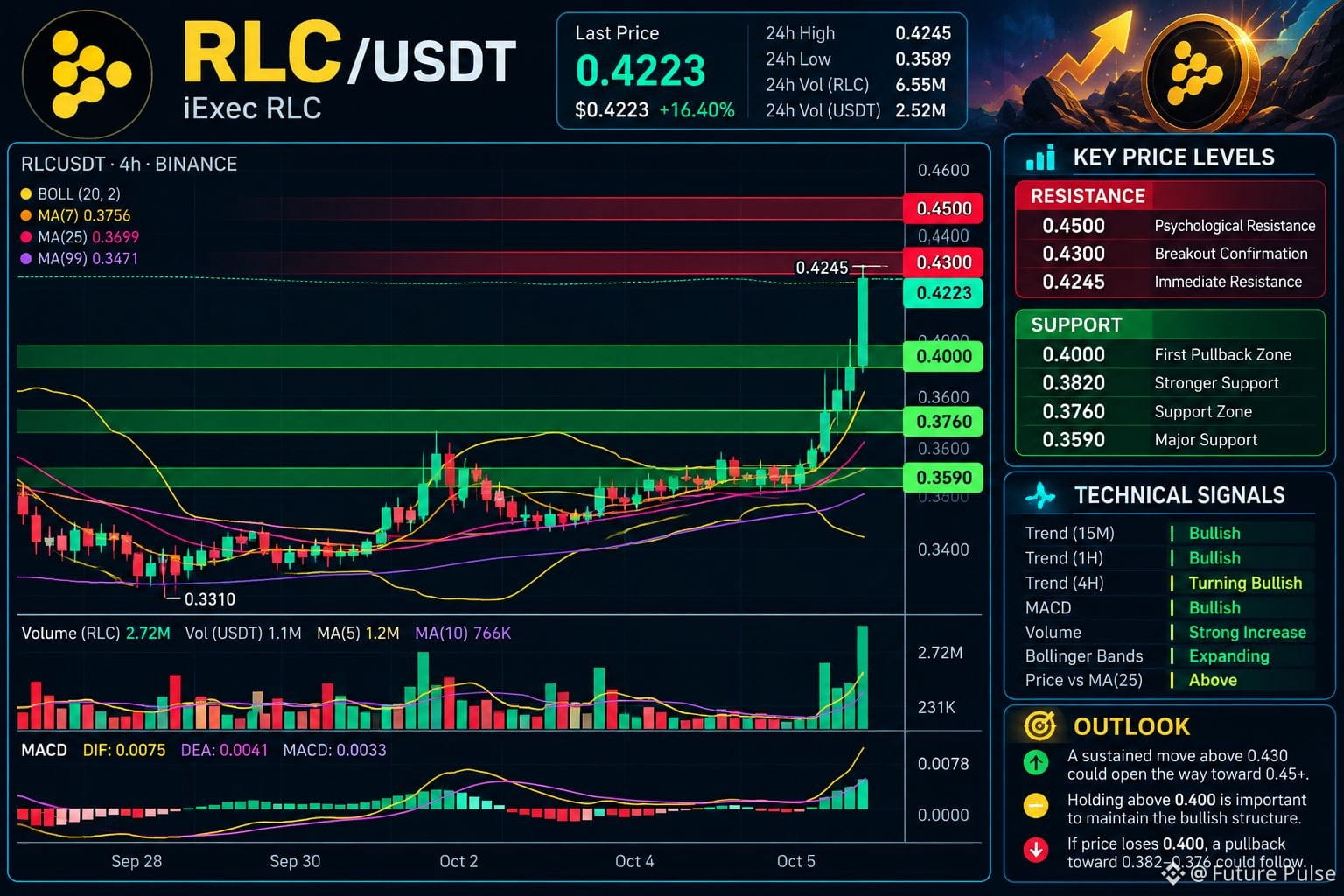
RLC is showing a strong breakout across the 15M, 1H and 4H charts. Price has pushed from the 0.36 area to above 0.42, while volume expanded sharply and MACD turned strongly positive.
The move is impressive, but the current price is also sitting close to the recent high, so chasing the candle carries more risk than waiting for the structure to prove itself.
🟢 Support
0.400–0.396 — first pullback zone
0.382–0.376 — stronger support
0.359 — major structural support
🔴 Resistance
0.4245 — immediate high
0.427–0.430 — breakout confirmation area
0.45+ — potential psychological extension zone
A clean hold above 0.400 would keep the breakout structure constructive. If RLC loses that level with rising selling volume, I would watch 0.382–0.376 for the next reaction.
The key observation: volume is confirming the move, but the next test is whether buyers can turn this sudden expansion into a sustainable trend rather than a one-candle spike.
$NVDAB
{spot}(NVDABUSDT)
$AAPLB
{spot}(AAPLBUSDT)
$RLC
{future}(RLCUSDT)
You wanna go long or short? Comment below
RLC is showing a strong breakout across the 15M, 1H and 4H charts. Price has pushed from the 0.36 area to above 0.42, while volume expanded sharply and MACD turned strongly positive.
The move is impressive, but the current price is also sitting close to the recent high, so chasing the candle carries more risk than waiting for the structure to prove itself.
🟢 Support
0.400–0.396 — first pullback zone
0.382–0.376 — stronger support
0.359 — major structural support
🔴 Resistance
0.4245 — immediate high
0.427–0.430 — breakout confirmation area
0.45+ — potential psychological extension zone
A clean hold above 0.400 would keep the breakout structure constructive. If RLC loses that level with rising selling volume, I would watch 0.382–0.376 for the next reaction.
The key observation: volume is confirming the move, but the next test is whether buyers can turn this sudden expansion into a sustainable trend rather than a one-candle spike.
$NVDAB
$AAPLB
$RLC
RLC is showing a strong breakout across the 15M, 1H and 4H charts. Price has pushed from the 0.36 area to above 0.42, while volume expanded sharply and MACD turned strongly positive.
The move is impressive, but the current price is also sitting close to the recent high, so chasing the candle carries more risk than waiting for the structure to prove itself.
🟢 Support
0.400–0.396 — first pullback zone
0.382–0.376 — stronger support
0.359 — major structural support
🔴 Resistance
0.4245 — immediate high
0.427–0.430 — breakout confirmation area
0.45+ — potential psychological extension zone
A clean hold above 0.400 would keep the breakout structure constructive. If RLC loses that level with rising selling volume, I would watch 0.382–0.376 for the next reaction.
The key observation: volume is confirming the move, but the next test is whether buyers can turn this sudden expansion into a sustainable trend rather than a one-candle spike.
$NVDAB
$AAPLB
$RLC
266
·
--
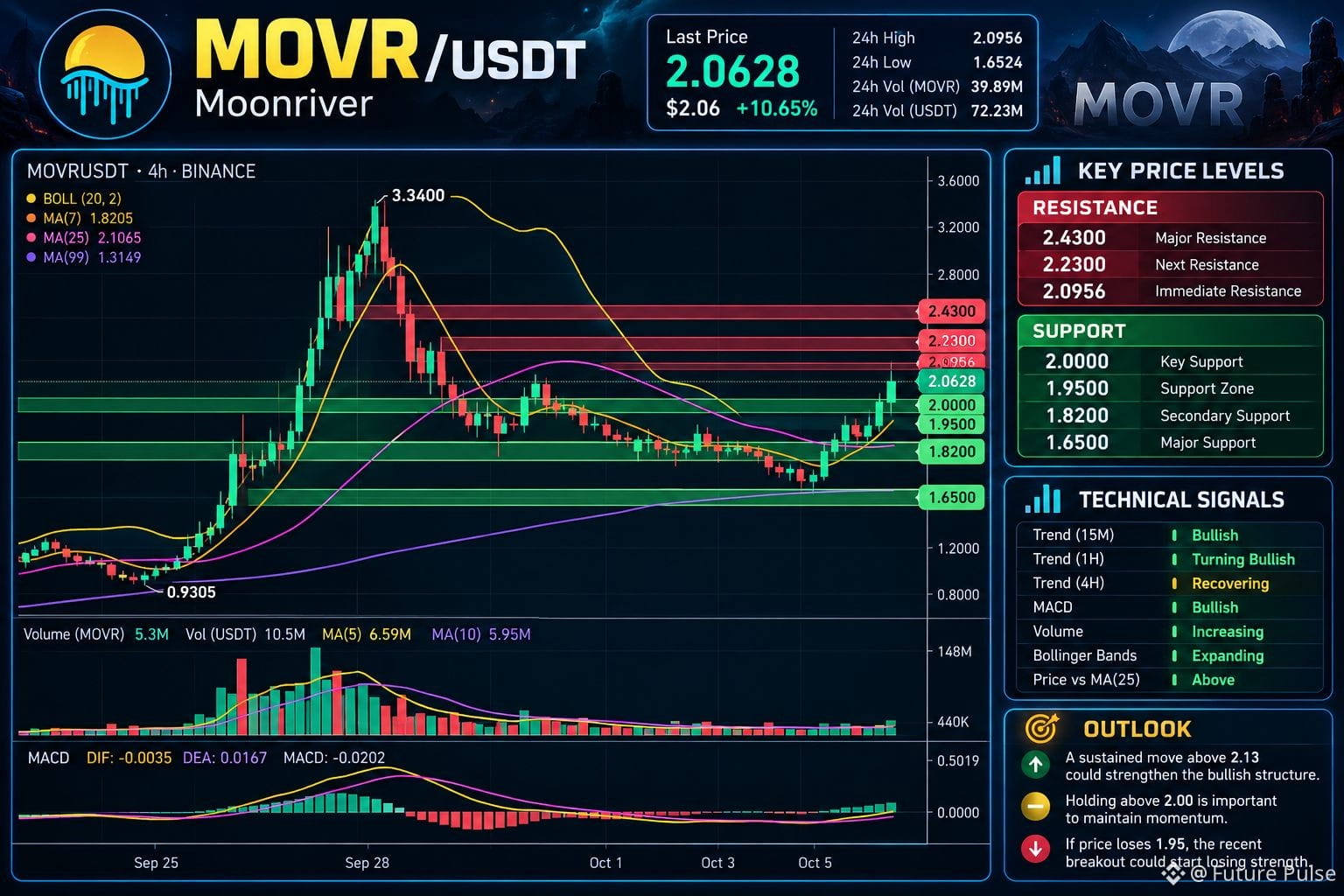
MOVR has shifted sharply from the 1.65 area, with buyers pushing price back above the 2.00 psychological level. The 15M chart shows strong upside momentum, rising volume and positive MACD, while the 1H structure is also turning higher.
The important question now is whether this move can hold above 2.00 rather than simply become another rejection.
🟢 Support
2.00–1.95 — first zone to defend
1.83–1.82 — secondary support
1.70–1.65 — major structural support
🔴 Resistance
2.095–2.13 — immediate hurdle
2.23 — next major resistance
2.43 — higher-timeframe MA resistance
A sustained move above 2.13 would strengthen the bullish structure. If price loses 1.95, however, the recent breakout could start losing momentum.
For me, 2.00 is the key line to watch now.
$MOVR
{future}(MOVRUSDT)
$GTC
{future}(GTCUSDT)
$FET
{future}(FETUSDT)
MOVR has shifted sharply from the 1.65 area, with buyers pushing price back above the 2.00 psychological level. The 15M chart shows strong upside momentum, rising volume and positive MACD, while the 1H structure is also turning higher.
The important question now is whether this move can hold above 2.00 rather than simply become another rejection.
🟢 Support
2.00–1.95 — first zone to defend
1.83–1.82 — secondary support
1.70–1.65 — major structural support
🔴 Resistance
2.095–2.13 — immediate hurdle
2.23 — next major resistance
2.43 — higher-timeframe MA resistance
A sustained move above 2.13 would strengthen the bullish structure. If price loses 1.95, however, the recent breakout could start losing momentum.
For me, 2.00 is the key line to watch now.
$MOVR
$GTC
$FET
The important question now is whether this move can hold above 2.00 rather than simply become another rejection.
🟢 Support
2.00–1.95 — first zone to defend
1.83–1.82 — secondary support
1.70–1.65 — major structural support
🔴 Resistance
2.095–2.13 — immediate hurdle
2.23 — next major resistance
2.43 — higher-timeframe MA resistance
A sustained move above 2.13 would strengthen the bullish structure. If price loses 1.95, however, the recent breakout could start losing momentum.
For me, 2.00 is the key line to watch now.
$MOVR
$GTC
$FET
730
·
--
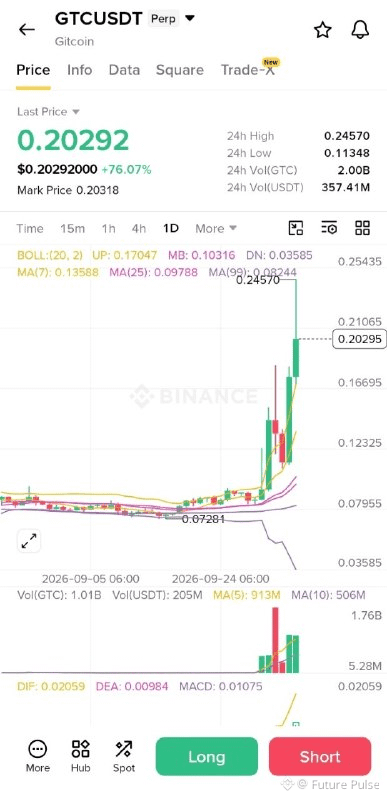
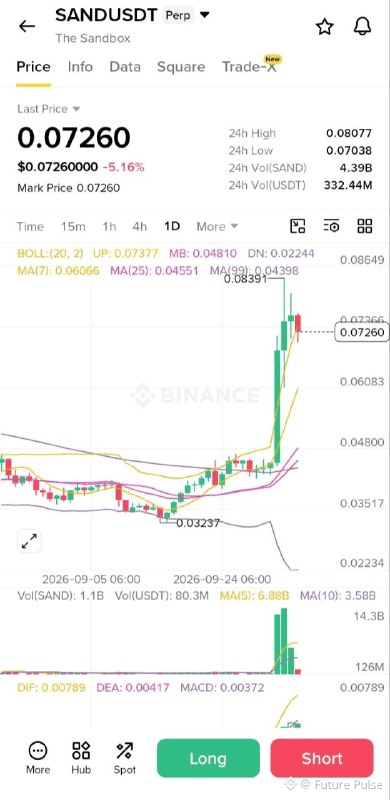
If you have to invest $1000 today which coin you select out of $AIN $SAND or $GTC
If you have to invest $1000 today which coin you select out of $AIN $SAND or $GTC
Ain
Sand
Gtc
Comment for others
3 heure(s) restante(s)
5.9k
·
--
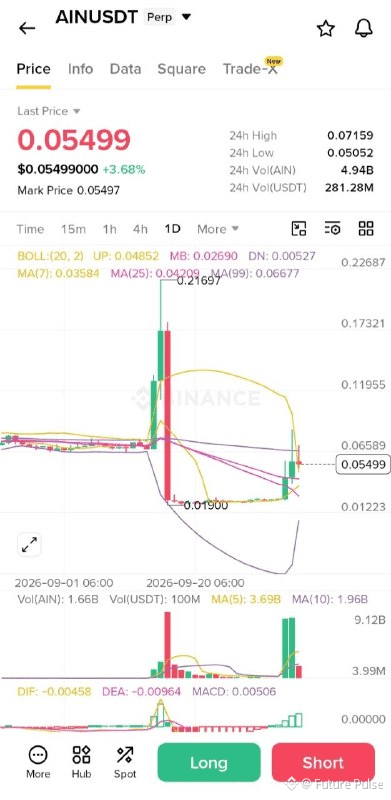
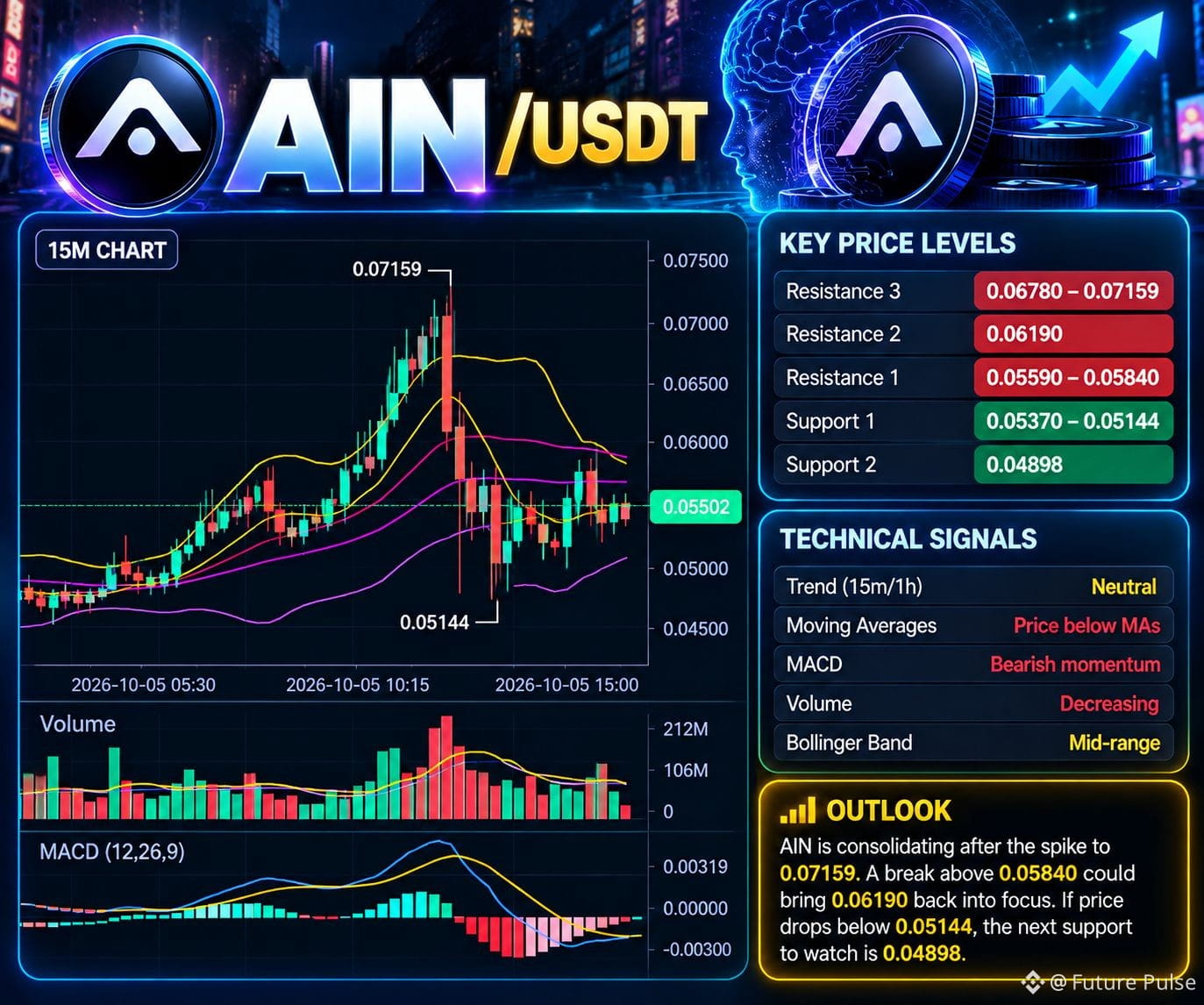
AIN has made a sharp expansion from the 0.023 area, but the charts show a clear shift from explosive momentum to consolidation. After the spike toward 0.07159, price is now holding around 0.055, while the 15M and 1H charts show buyers struggling to regain the short-term moving-average cluster.
🟢 Support 0.05370–0.05144
0.04898 — deeper support
🔴 Resistance 0.05590–0.05840
0.06190 — breakout zone
0.06780–0.07159 — major supply area
I would wait for confirmation rather than chase. A reclaim of 0.05840 with improving momentum could bring 0.06190 back into focus. Conversely, losing 0.05144 would weaken the structure and expose the lower support near 0.04898.
The interesting part here is not the size of the earlier pump—it’s whether AIN can build a new base above the post-breakout range.
$GTC
{future}(GTCUSDT)
$BR
{future}(BRUSDT)
$AIN
{future}(AINUSDT)
AIN has made a sharp expansion from the 0.023 area, but the charts show a clear shift from explosive momentum to consolidation. After the spike toward 0.07159, price is now holding around 0.055, while the 15M and 1H charts show buyers struggling to regain the short-term moving-average cluster.
🟢 Support 0.05370–0.05144
0.04898 — deeper support
🔴 Resistance 0.05590–0.05840
0.06190 — breakout zone
0.06780–0.07159 — major supply area
I would wait for confirmation rather than chase. A reclaim of 0.05840 with improving momentum could bring 0.06190 back into focus. Conversely, losing 0.05144 would weaken the structure and expose the lower support near 0.04898.
The interesting part here is not the size of the earlier pump—it’s whether AIN can build a new base above the post-breakout range.
$GTC
$BR
$AIN
🟢 Support 0.05370–0.05144
0.04898 — deeper support
🔴 Resistance 0.05590–0.05840
0.06190 — breakout zone
0.06780–0.07159 — major supply area
I would wait for confirmation rather than chase. A reclaim of 0.05840 with improving momentum could bring 0.06190 back into focus. Conversely, losing 0.05144 would weaken the structure and expose the lower support near 0.04898.
The interesting part here is not the size of the earlier pump—it’s whether AIN can build a new base above the post-breakout range.
$GTC
$BR
$AIN
1
1.2k
·
--
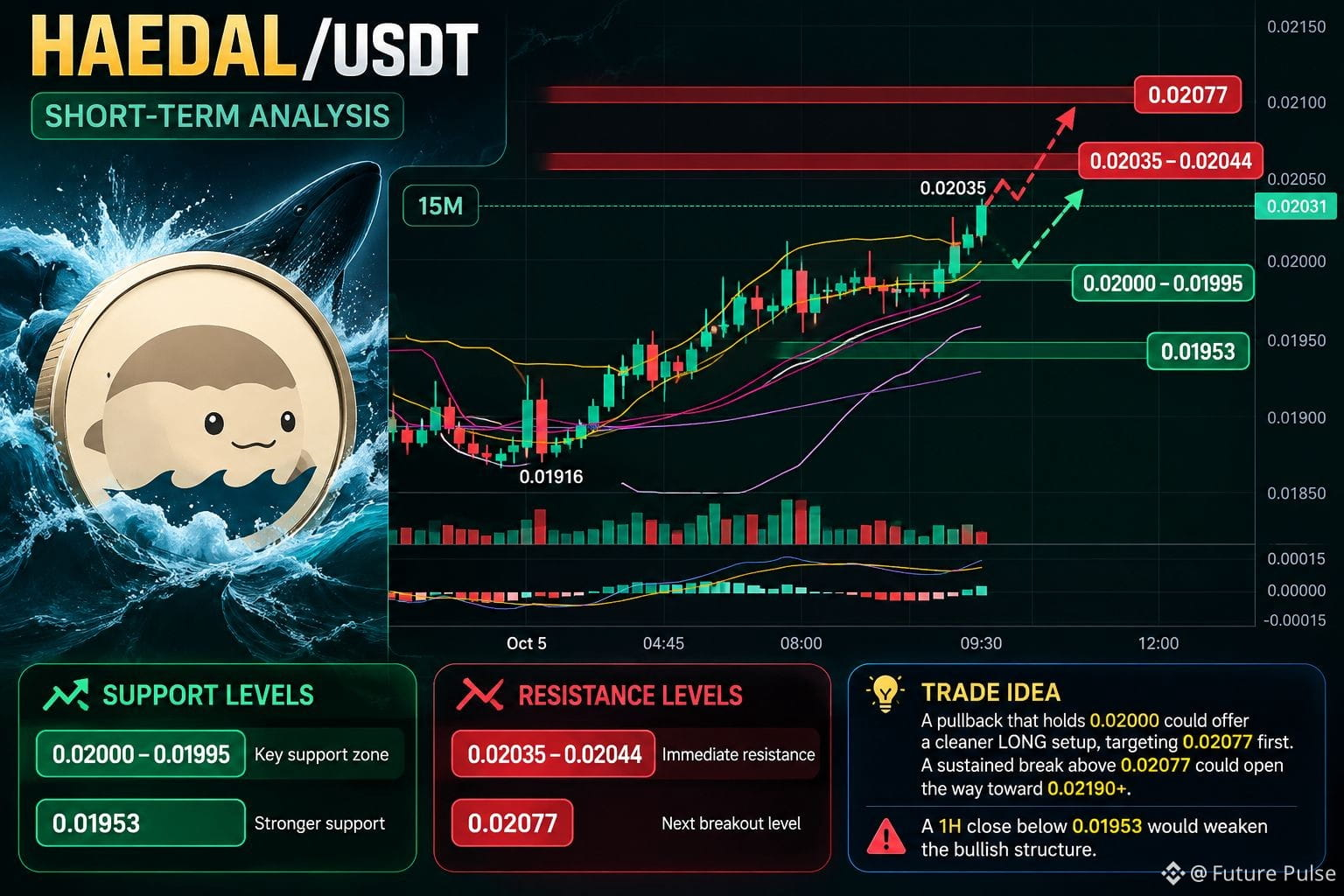
HAEDAL has shifted into a short-term bullish structure across the 15M and 1H charts, with price holding above the key moving averages. The important detail is that the current move is approaching the 0.02035–0.02044 area, where the 15M/1H upper Bollinger Bands suggest resistance.
🟢 Support 0.02000–0.01995
0.01953 — stronger support
🔴 Resistance 0.02035–0.02044
0.02077 — next breakout level
I would avoid chasing the current candle. A pullback that holds 0.02000 could offer a cleaner LONG setup, targeting 0.02077 first. A sustained break above 0.02077 could open the way toward 0.02190+.
$HAEDAL
{future}(HAEDALUSDT)
$PONS
{future}(PONSUSDT)
$TMX
{alpha}(560x3c2f61f2e27c865981d2e7aaf6b2cdf823030039)
HAEDAL has shifted into a short-term bullish structure across the 15M and 1H charts, with price holding above the key moving averages. The important detail is that the current move is approaching the 0.02035–0.02044 area, where the 15M/1H upper Bollinger Bands suggest resistance.
🟢 Support 0.02000–0.01995
0.01953 — stronger support
🔴 Resistance 0.02035–0.02044
0.02077 — next breakout level
I would avoid chasing the current candle. A pullback that holds 0.02000 could offer a cleaner LONG setup, targeting 0.02077 first. A sustained break above 0.02077 could open the way toward 0.02190+.
$HAEDAL
$PONS
$TMX
🟢 Support 0.02000–0.01995
0.01953 — stronger support
🔴 Resistance 0.02035–0.02044
0.02077 — next breakout level
I would avoid chasing the current candle. A pullback that holds 0.02000 could offer a cleaner LONG setup, targeting 0.02077 first. A sustained break above 0.02077 could open the way toward 0.02190+.
$HAEDAL
$PONS
$TMX
2
1.1k
·
--
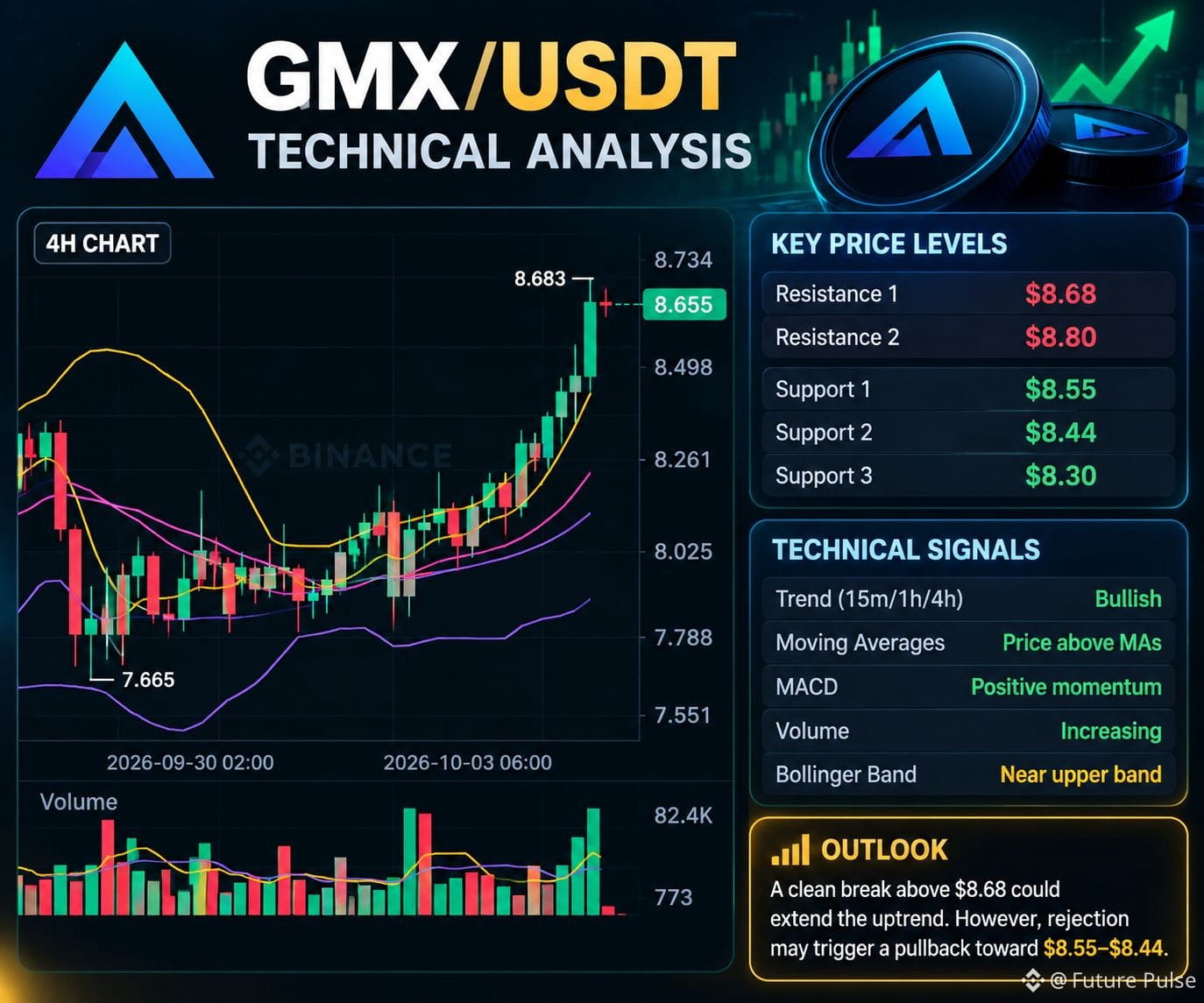
GMX remains bullish across 15m, 1h and 4h. Price holds above key MAs, while MACD and volume support momentum. Resistance sits near $8.68. A breakout could extend the move, but rejection may pull price toward $8.55–$8.44.
$GMX
{future}(GMXUSDT)
$SUI
{future}(SUIUSDT)
$BEAMX
{future}(BEAMXUSDT)
GMX remains bullish across 15m, 1h and 4h. Price holds above key MAs, while MACD and volume support momentum. Resistance sits near $8.68. A breakout could extend the move, but rejection may pull price toward $8.55–$8.44.
$GMX
$SUI
$BEAMX
$GMX
$SUI
$BEAMX
346
·
--
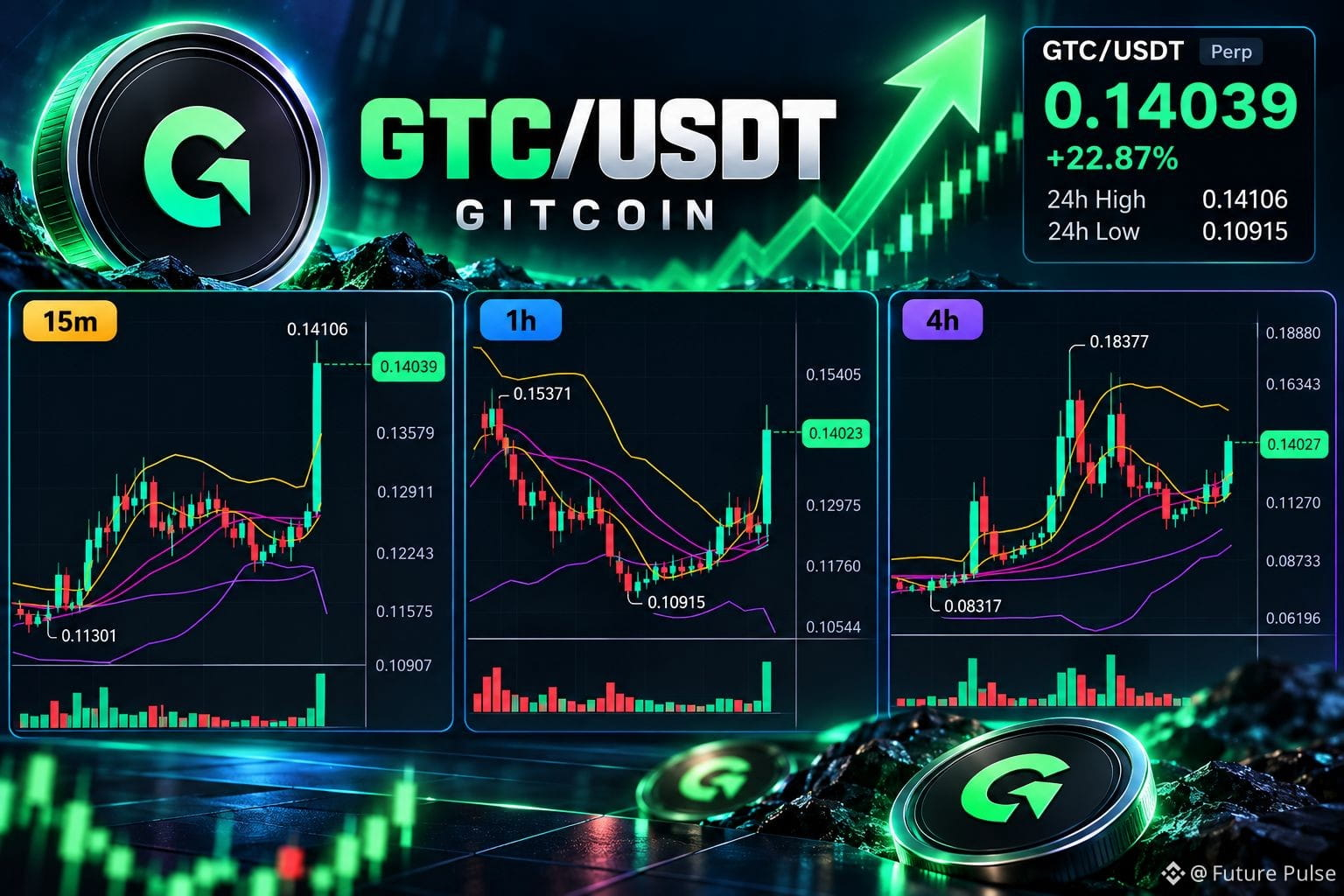
GTC is showing bullish momentum after breaking above its consolidation. On the 15m chart, price surged to $0.14106 with a volume spike, while the 1H chart confirms a breakout above the $0.129–$0.132 area.
The 1H MACD has turned positive, and price is above the 7/25/99 MAs, supporting the bullish structure. On 4H, $0.151–$0.152 is the next key resistance near the upper Bollinger Band.
A hold above $0.135 could keep buyers in control. If momentum fades, $0.129–$0.132 is the first support, followed by $0.120.
Volatility is elevated, so confirmation matters more than chasing the spike.
$TMX
{alpha}(560x3c2f61f2e27c865981d2e7aaf6b2cdf823030039)
$PONS
{future}(PONSUSDT)
$GTC
{future}(GTCUSDT)
GTC is showing bullish momentum after breaking above its consolidation. On the 15m chart, price surged to $0.14106 with a volume spike, while the 1H chart confirms a breakout above the $0.129–$0.132 area.
The 1H MACD has turned positive, and price is above the 7/25/99 MAs, supporting the bullish structure. On 4H, $0.151–$0.152 is the next key resistance near the upper Bollinger Band.
A hold above $0.135 could keep buyers in control. If momentum fades, $0.129–$0.132 is the first support, followed by $0.120.
Volatility is elevated, so confirmation matters more than chasing the spike.
$TMX
$PONS
$GTC
The 1H MACD has turned positive, and price is above the 7/25/99 MAs, supporting the bullish structure. On 4H, $0.151–$0.152 is the next key resistance near the upper Bollinger Band.
A hold above $0.135 could keep buyers in control. If momentum fades, $0.129–$0.132 is the first support, followed by $0.120.
Volatility is elevated, so confirmation matters more than chasing the spike.
$TMX
$PONS
$GTC
2
1.8k
·
--
Michael Saylor Hints at Another Major Bitcoin Purchase 🟠
Michael Saylor has sparked fresh speculation about another Bitcoin purchase after sharing a new accumulation chart on October 4. Strategy's last confirmed holdings stood at 847,666 BTC, reinforcing its position as one of the largest corporate Bitcoin holders.
The latest post has drawn attention, but no new purchase has been officially confirmed yet. The key question is whether Strategy is preparing to expand its holdings again or simply highlighting its long-term accumulation strategy.
Another confirmed purchase would further underline the company's continued commitment to Bitcoin as a core treasury asset.
$BTC
{future}(BTCUSDT)
$DOGE
{future}(DOGEUSDT)
$MUBARAK
{future}(MUBARAKUSDT)
Michael Saylor Hints at Another Major Bitcoin Purchase 🟠
Michael Saylor has sparked fresh speculation about another Bitcoin purchase after sharing a new accumulation chart on October 4. Strategy's last confirmed holdings stood at 847,666 BTC, reinforcing its position as one of the largest corporate Bitcoin holders.
The latest post has drawn attention, but no new purchase has been officially confirmed yet. The key question is whether Strategy is preparing to expand its holdings again or simply highlighting its long-term accumulation strategy.
Another confirmed purchase would further underline the company's continued commitment to Bitcoin as a core treasury asset.
$BTC
$DOGE
$MUBARAK
Michael Saylor has sparked fresh speculation about another Bitcoin purchase after sharing a new accumulation chart on October 4. Strategy's last confirmed holdings stood at 847,666 BTC, reinforcing its position as one of the largest corporate Bitcoin holders.
The latest post has drawn attention, but no new purchase has been officially confirmed yet. The key question is whether Strategy is preparing to expand its holdings again or simply highlighting its long-term accumulation strategy.
Another confirmed purchase would further underline the company's continued commitment to Bitcoin as a core treasury asset.
$BTC
$DOGE
$MUBARAK

211
·
--
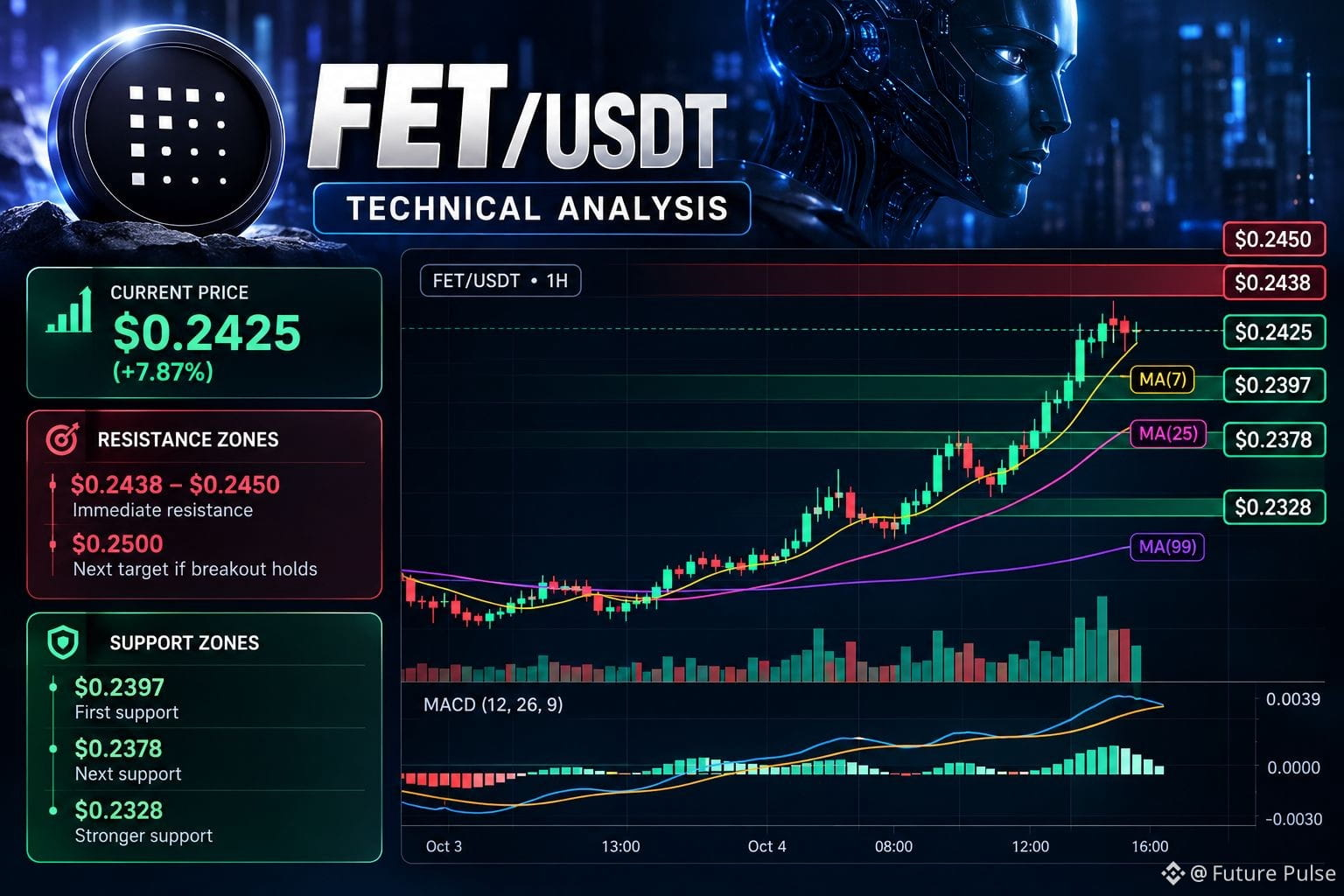
FET is showing strong bullish momentum across the 15M, 1H and 4H charts, trading around $0.2425 after a sharp volume-backed breakout. On the 1H timeframe, price is above MA(7), MA(25) and MA(99), while MACD remains positive, confirming buyers are in control.
The immediate resistance is $0.2438–$0.2450. A clean breakout above this zone could open the way toward $0.2500. On the downside, $0.2397 is the first support, followed by $0.2378 and $0.2328.
The key signal now is whether FET can hold above $0.2397 after the breakout. A rejection near $0.2440 could trigger a short-term pullback before another attempt higher.
$MOVR
{future}(MOVRUSDT)
$BR
{future}(BRUSDT)
$FET
{future}(FETUSDT)
FET is showing strong bullish momentum across the 15M, 1H and 4H charts, trading around $0.2425 after a sharp volume-backed breakout. On the 1H timeframe, price is above MA(7), MA(25) and MA(99), while MACD remains positive, confirming buyers are in control.
The immediate resistance is $0.2438–$0.2450. A clean breakout above this zone could open the way toward $0.2500. On the downside, $0.2397 is the first support, followed by $0.2378 and $0.2328.
The key signal now is whether FET can hold above $0.2397 after the breakout. A rejection near $0.2440 could trigger a short-term pullback before another attempt higher.
$MOVR
$BR
$FET
The immediate resistance is $0.2438–$0.2450. A clean breakout above this zone could open the way toward $0.2500. On the downside, $0.2397 is the first support, followed by $0.2378 and $0.2328.
The key signal now is whether FET can hold above $0.2397 after the breakout. A rejection near $0.2440 could trigger a short-term pullback before another attempt higher.
$MOVR
$BR
$FET
822
·
--
BNB Price Prediction: Can the 37th Burn Fuel an October Rally? 🚀
BNB enters October with positive momentum, trading near $788 after gaining roughly 11% in September. Attention is now shifting to the 37th quarterly token burn and the critical $800–$807 resistance zone.
The upcoming burn could reinforce BNB's scarcity narrative by reducing its circulating supply. However, a sustained rally will likely depend on buying pressure and broader market sentiment rather than the burn alone.
A decisive breakout above $807 could strengthen bullish momentum and open the door to further upside. On the other hand, rejection at this resistance may trigger consolidation and renewed selling pressure.
October's key question is whether reduced supply expectations can align with strong demand to push BNB beyond resistance.
$BEAMX
{future}(BEAMXUSDT)
$STRK
{future}(STRKUSDT)
$BNB
{future}(BNBUSDT)
What is the most likely BNB scenario for October?
BNB Price Prediction: Can the 37th Burn Fuel an October Rally? 🚀
BNB enters October with positive momentum, trading near $788 after gaining roughly 11% in September. Attention is now shifting to the 37th quarterly token burn and the critical $800–$807 resistance zone.
The upcoming burn could reinforce BNB's scarcity narrative by reducing its circulating supply. However, a sustained rally will likely depend on buying pressure and broader market sentiment rather than the burn alone.
A decisive breakout above $807 could strengthen bullish momentum and open the door to further upside. On the other hand, rejection at this resistance may trigger consolidation and renewed selling pressure.
October's key question is whether reduced supply expectations can align with strong demand to push BNB beyond resistance.
$BEAMX
$STRK
$BNB
What is the most likely BNB scenario for October?
BNB enters October with positive momentum, trading near $788 after gaining roughly 11% in September. Attention is now shifting to the 37th quarterly token burn and the critical $800–$807 resistance zone.
The upcoming burn could reinforce BNB's scarcity narrative by reducing its circulating supply. However, a sustained rally will likely depend on buying pressure and broader market sentiment rather than the burn alone.
A decisive breakout above $807 could strengthen bullish momentum and open the door to further upside. On the other hand, rejection at this resistance may trigger consolidation and renewed selling pressure.
October's key question is whether reduced supply expectations can align with strong demand to push BNB beyond resistance.
$BEAMX
$STRK
$BNB
What is the most likely BNB scenario for October?

🔥 Burn fuels a breakout
50%
📈 Buyers push BNB higher
0%
↔️ BNB consolidates below $807
25%
📉 Rejection triggers pullback
25%
4 Votes • Vote fermé
1
461
·
--
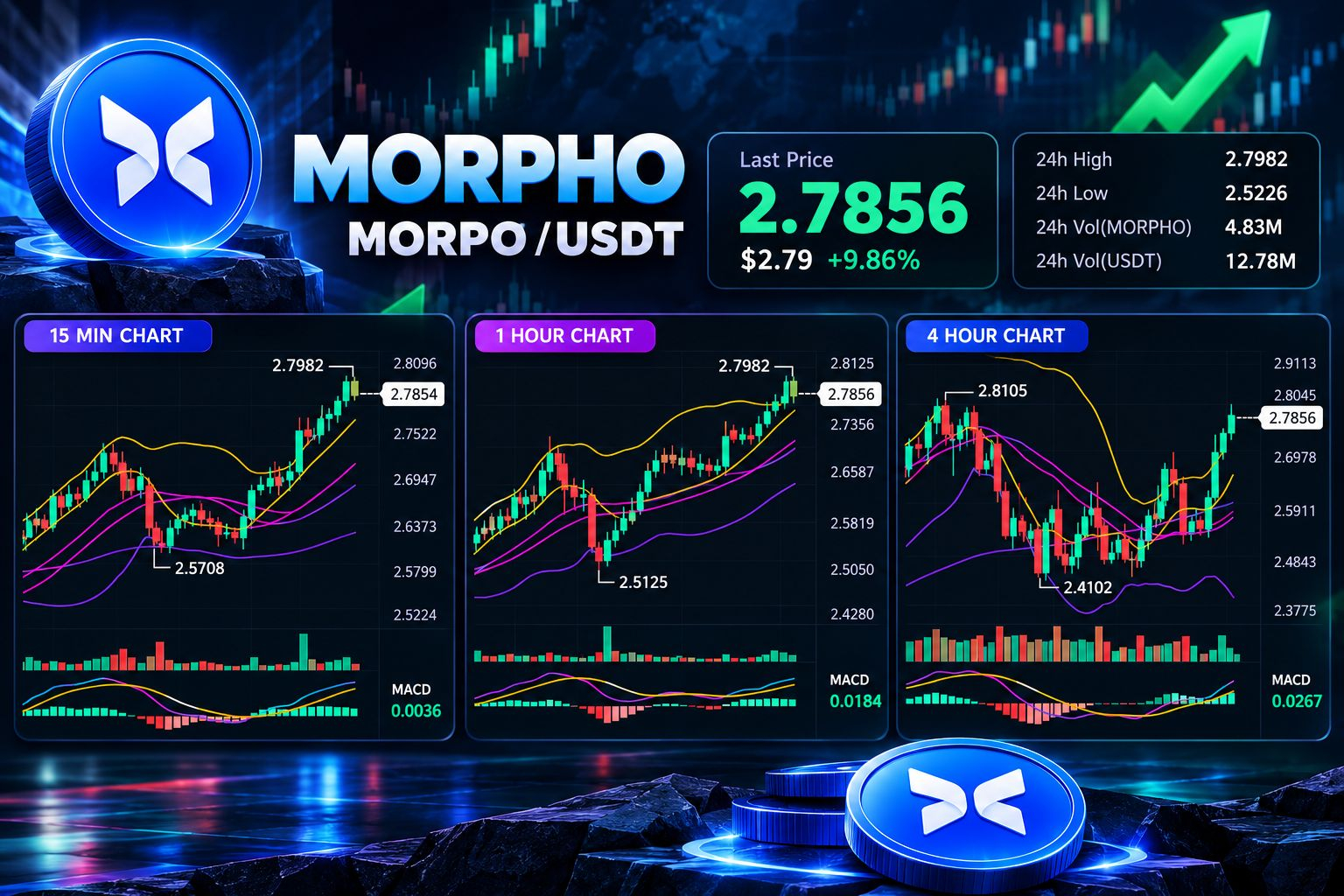
MORPHO is showing strong bullish momentum across the 15m, 1H and 4H charts. Price is around $2.785, trading above the key moving averages, while MACD remains positive across all three timeframes.
On the 1H, price is pressing the $2.7982 resistance, with the upper Bollinger Band near $2.7778, suggesting the move is already extended. A clean breakout above $2.80 could open room toward $2.85–$2.90.
Key supports: $2.73, then $2.63–$2.61. On the 4H, holding above $2.65–$2.60 keeps the bullish structure intact.
Momentum is strong, but chasing near resistance carries higher pullback risk.
$WLD
{future}(WLDUSDT)
$ZEC
{future}(ZECUSDT)
$MORPHO
{future}(MORPHOUSDT)
MORPHO is showing strong bullish momentum across the 15m, 1H and 4H charts. Price is around $2.785, trading above the key moving averages, while MACD remains positive across all three timeframes.
On the 1H, price is pressing the $2.7982 resistance, with the upper Bollinger Band near $2.7778, suggesting the move is already extended. A clean breakout above $2.80 could open room toward $2.85–$2.90.
Key supports: $2.73, then $2.63–$2.61. On the 4H, holding above $2.65–$2.60 keeps the bullish structure intact.
Momentum is strong, but chasing near resistance carries higher pullback risk.
$WLD
$ZEC
$MORPHO
On the 1H, price is pressing the $2.7982 resistance, with the upper Bollinger Band near $2.7778, suggesting the move is already extended. A clean breakout above $2.80 could open room toward $2.85–$2.90.
Key supports: $2.73, then $2.63–$2.61. On the 4H, holding above $2.65–$2.60 keeps the bullish structure intact.
Momentum is strong, but chasing near resistance carries higher pullback risk.
$WLD
$ZEC
$MORPHO
1
689
·
--
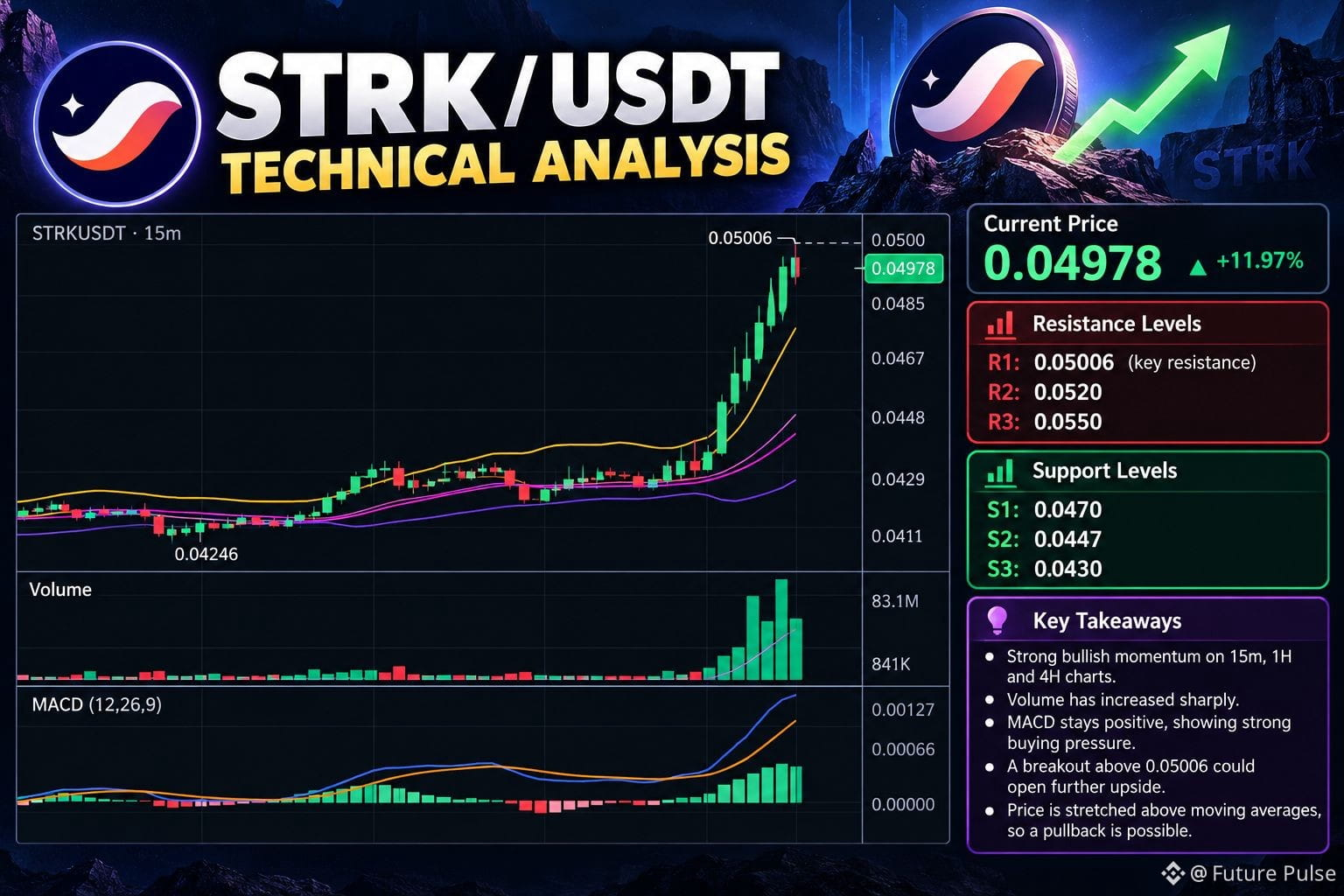
STRK is showing strong bullish momentum across the 15m, 1H and 4H charts. Price has surged to around $0.0498, approaching the recent $0.05006 resistance. Volume has expanded sharply, while MACD remains positive, confirming strong buying pressure.
A clean breakout above $0.05006 could open room for further upside. However, price is stretched well above the moving averages and upper Bollinger Band, so a pullback is also possible. Key support zones sit around $0.0470–$0.0447, with deeper support near $0.0430.
The next reaction around $0.0500 is technically important.
$CT
{future}(CTUSDT)
$MOVR
{future}(MOVRUSDT)
$STRK
{future}(STRKUSDT)
STRK is showing strong bullish momentum across the 15m, 1H and 4H charts. Price has surged to around $0.0498, approaching the recent $0.05006 resistance. Volume has expanded sharply, while MACD remains positive, confirming strong buying pressure.
A clean breakout above $0.05006 could open room for further upside. However, price is stretched well above the moving averages and upper Bollinger Band, so a pullback is also possible. Key support zones sit around $0.0470–$0.0447, with deeper support near $0.0430.
The next reaction around $0.0500 is technically important.
$CT
$MOVR
$STRK
A clean breakout above $0.05006 could open room for further upside. However, price is stretched well above the moving averages and upper Bollinger Band, so a pullback is also possible. Key support zones sit around $0.0470–$0.0447, with deeper support near $0.0430.
The next reaction around $0.0500 is technically important.
$CT
$MOVR
$STRK
1.3k
·
--
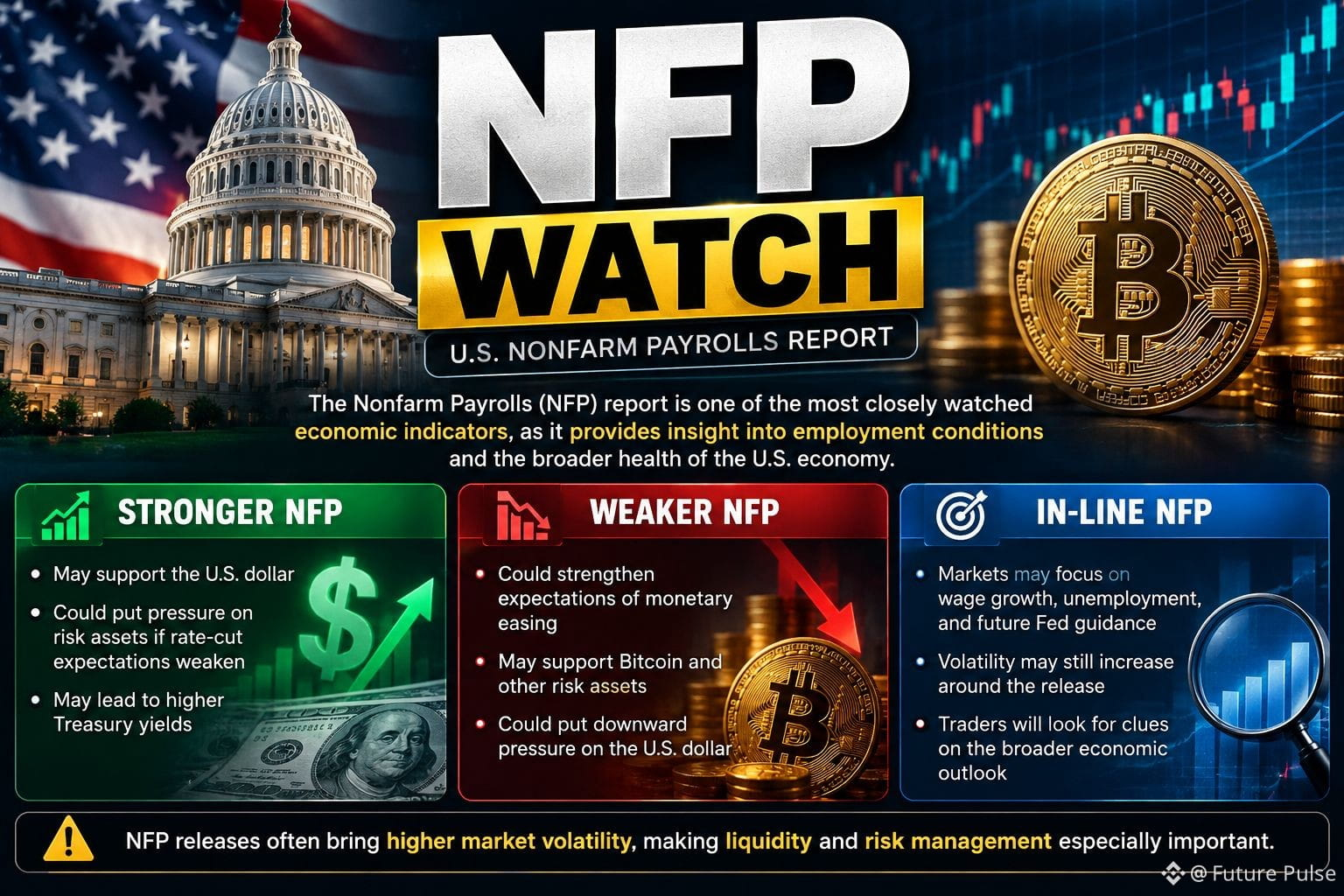
📊 NFP WATCH: A Key Test for the Crypto Market
The US Nonfarm Payrolls (NFP) report is one of the most closely watched economic indicators, as it provides insight into employment conditions and the broader health of the US economy.
For crypto traders, the upcoming NFP data could influence expectations around Federal Reserve policy, Treasury yields, and the US dollar.
🔹 Stronger NFP: May support the dollar and put pressure on risk assets if rate-cut expectations weaken.
🔹 Weaker NFP: Could strengthen expectations of monetary easing, potentially supporting Bitcoin and other risk assets.
🔹 In-line NFP: Markets may shift their focus to wage growth, unemployment, and future Fed guidance.
Volatility may increase around the release, making liquidity and risk management especially important.
$MU
{future}(MUUSDT)
$MUB
{spot}(MUBUSDT)
$GOOGL.US
{stock_us}(GOOGL.US)
#NFPWatch
#MU
#mub
📊 NFP WATCH: A Key Test for the Crypto Market
The US Nonfarm Payrolls (NFP) report is one of the most closely watched economic indicators, as it provides insight into employment conditions and the broader health of the US economy.
For crypto traders, the upcoming NFP data could influence expectations around Federal Reserve policy, Treasury yields, and the US dollar.
🔹 Stronger NFP: May support the dollar and put pressure on risk assets if rate-cut expectations weaken.
🔹 Weaker NFP: Could strengthen expectations of monetary easing, potentially supporting Bitcoin and other risk assets.
🔹 In-line NFP: Markets may shift their focus to wage growth, unemployment, and future Fed guidance.
Volatility may increase around the release, making liquidity and risk management especially important.
$MU
$MUB
$GOOGL.US
#NFPWatch
#MU
#mub
The US Nonfarm Payrolls (NFP) report is one of the most closely watched economic indicators, as it provides insight into employment conditions and the broader health of the US economy.
For crypto traders, the upcoming NFP data could influence expectations around Federal Reserve policy, Treasury yields, and the US dollar.
🔹 Stronger NFP: May support the dollar and put pressure on risk assets if rate-cut expectations weaken.
🔹 Weaker NFP: Could strengthen expectations of monetary easing, potentially supporting Bitcoin and other risk assets.
🔹 In-line NFP: Markets may shift their focus to wage growth, unemployment, and future Fed guidance.
Volatility may increase around the release, making liquidity and risk management especially important.
$MU
$MUB
$GOOGL.US
#NFPWatch
#MU
#mub
MUB-1,91%
GOOGLUS+0,29%
213
·
--
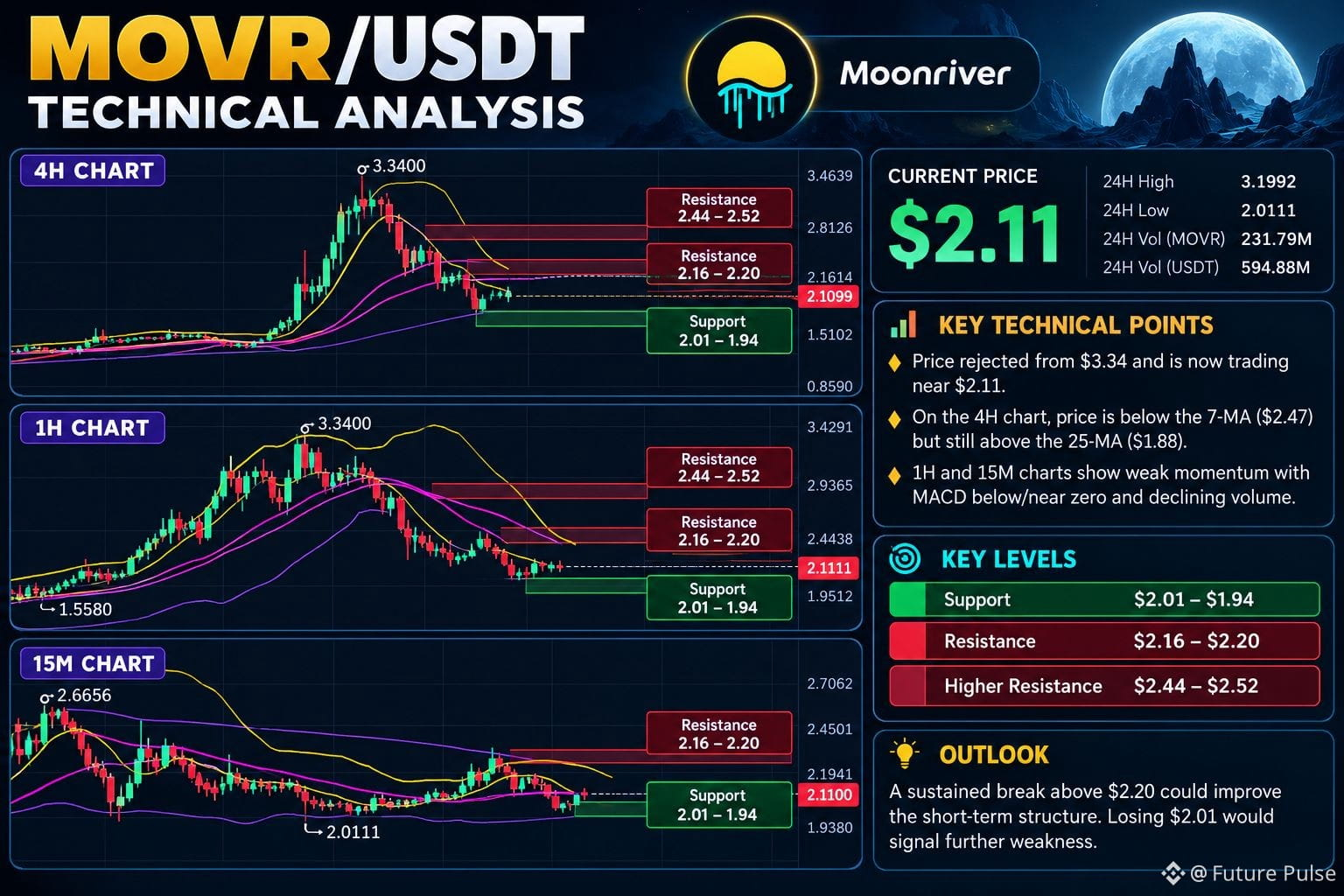
MOVR is trading near $2.11 after a sharp rejection from the $3.34 area. On the 4H chart, price has fallen below the 7-MA ($2.47) but remains above the 25-MA ($1.88), showing that the broader recovery structure is not fully broken yet. The 1H and 15M charts show weak momentum, with MACD below/near the zero line and declining volume.
🔹 Support: $2.01–$1.94
🔹 Resistance: $2.16–$2.20
🔹 Higher resistance: $2.44–$2.52
A sustained break above $2.20 could improve short-term structure, while losing $2.01 would signal further weakness.
$2Z
{future}(2ZUSDT)
$ARK
{future}(ARKUSDT)
$MOVR
{future}(MOVRUSDT)
#moonriver
#WLD
MOVR is trading near $2.11 after a sharp rejection from the $3.34 area. On the 4H chart, price has fallen below the 7-MA ($2.47) but remains above the 25-MA ($1.88), showing that the broader recovery structure is not fully broken yet. The 1H and 15M charts show weak momentum, with MACD below/near the zero line and declining volume.
🔹 Support: $2.01–$1.94
🔹 Resistance: $2.16–$2.20
🔹 Higher resistance: $2.44–$2.52
A sustained break above $2.20 could improve short-term structure, while losing $2.01 would signal further weakness.
$2Z
$ARK
$MOVR
#moonriver
#WLD
🔹 Support: $2.01–$1.94
🔹 Resistance: $2.16–$2.20
🔹 Higher resistance: $2.44–$2.52
A sustained break above $2.20 could improve short-term structure, while losing $2.01 would signal further weakness.
$2Z
$ARK
$MOVR
#moonriver
#WLD
358
·
--
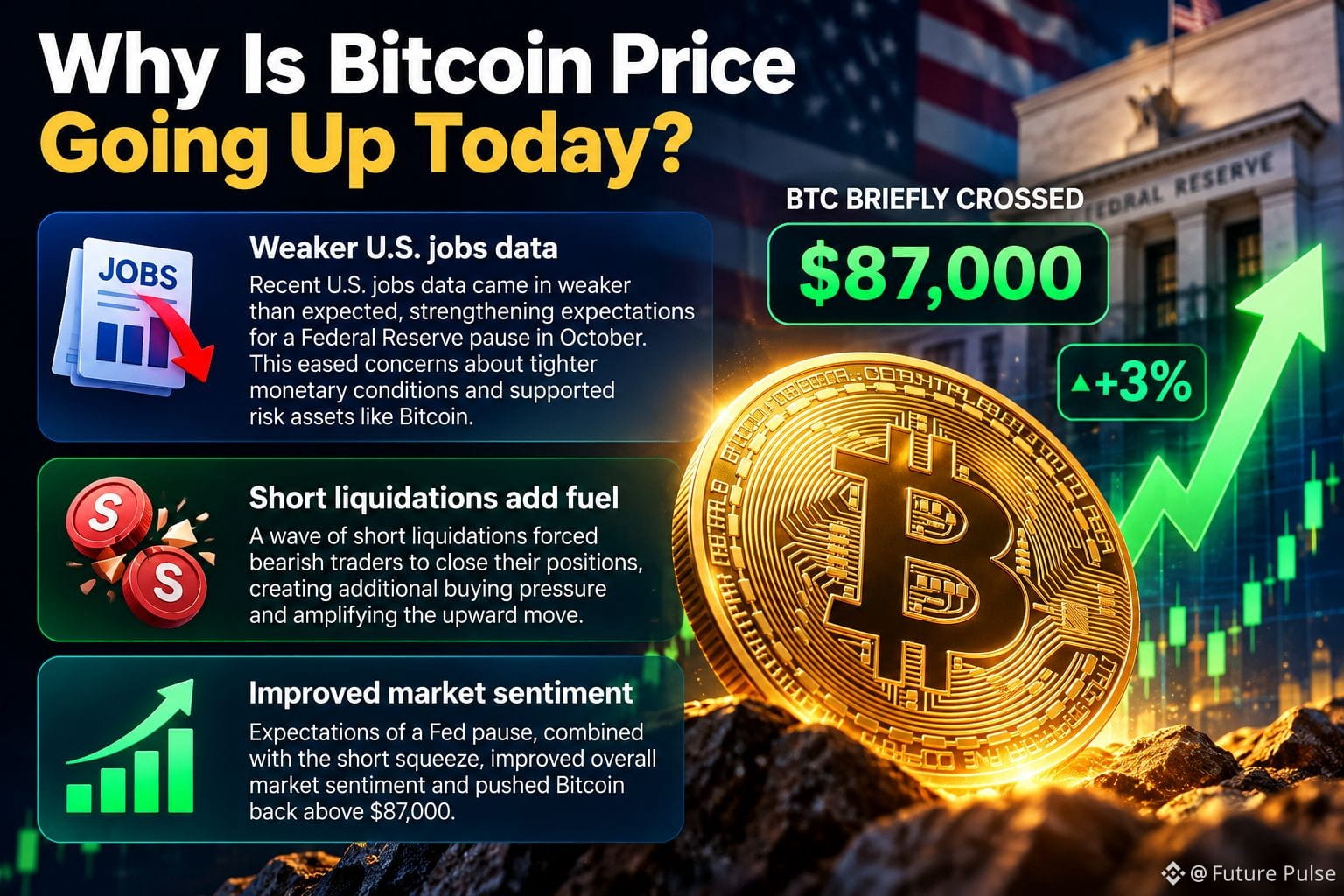
Why Is Bitcoin Price Going Up Today? 🚀
Bitcoin climbed roughly 3% on October 2, briefly breaking above $87,000 as macroeconomic expectations and market positioning fueled the rally.
Weak U.S. jobs data strengthened expectations of a Federal Reserve pause in October, easing concerns about tighter monetary conditions. Meanwhile, a wave of short liquidations added momentum as bearish traders were forced to close their positions, creating additional buying pressure.
However, the sustainability of this rally depends on whether buyers can maintain momentum beyond the initial short squeeze. Traders are now watching Fed signals, market liquidity and Bitcoin's ability to hold its recent gains.
The key question is whether this move reflects sustained demand or mainly a temporary derivatives-driven rally.
$WLD
{future}(WLDUSDT)
$SUPER
{future}(SUPERUSDT)
$BTC
{future}(BTCUSDT)
Why Is Bitcoin Price Going Up Today? 🚀
Bitcoin climbed roughly 3% on October 2, briefly breaking above $87,000 as macroeconomic expectations and market positioning fueled the rally.
Weak U.S. jobs data strengthened expectations of a Federal Reserve pause in October, easing concerns about tighter monetary conditions. Meanwhile, a wave of short liquidations added momentum as bearish traders were forced to close their positions, creating additional buying pressure.
However, the sustainability of this rally depends on whether buyers can maintain momentum beyond the initial short squeeze. Traders are now watching Fed signals, market liquidity and Bitcoin's ability to hold its recent gains.
The key question is whether this move reflects sustained demand or mainly a temporary derivatives-driven rally.
$WLD
$SUPER
$BTC
Bitcoin climbed roughly 3% on October 2, briefly breaking above $87,000 as macroeconomic expectations and market positioning fueled the rally.
Weak U.S. jobs data strengthened expectations of a Federal Reserve pause in October, easing concerns about tighter monetary conditions. Meanwhile, a wave of short liquidations added momentum as bearish traders were forced to close their positions, creating additional buying pressure.
However, the sustainability of this rally depends on whether buyers can maintain momentum beyond the initial short squeeze. Traders are now watching Fed signals, market liquidity and Bitcoin's ability to hold its recent gains.
The key question is whether this move reflects sustained demand or mainly a temporary derivatives-driven rally.
$WLD
$SUPER
$BTC
1
344
·
--
Vérifié
What stands out to me about TermMax is its focus on making borrowing costs more predictable in DeFi. Its fixed-rate borrowing model offers an alternative to the constantly changing interest rates found in many lending protocols.
Features such as one-click leverage and the planned Smart Unwind functionality also highlight an effort to simplify complex DeFi strategies. However, the redemption pool mechanics deserve attention, particularly how underlying assets and leftover collateral may affect FT holders when liquidations fail to recover the full loan.
From a research perspective, TermMax's long-term potential depends on risk management, liquidity, smart contract security and how effectively its features work under volatile market conditions.
$ENJ
{future}(ENJUSDT)
$INJ
{future}(INJUSDT)
$TMX
{alpha}(560x3c2f61f2e27c865981d2e7aaf6b2cdf823030039)
#TermMax
#TMX
#ENJ
#INJ
#NFPWatch
What do you think comes next?
What stands out to me about TermMax is its focus on making borrowing costs more predictable in DeFi. Its fixed-rate borrowing model offers an alternative to the constantly changing interest rates found in many lending protocols.
Features such as one-click leverage and the planned Smart Unwind functionality also highlight an effort to simplify complex DeFi strategies. However, the redemption pool mechanics deserve attention, particularly how underlying assets and leftover collateral may affect FT holders when liquidations fail to recover the full loan.
From a research perspective, TermMax's long-term potential depends on risk management, liquidity, smart contract security and how effectively its features work under volatile market conditions.
$ENJ
$INJ
$TMX
#TermMax
#TMX
#ENJ
#INJ
#NFPWatch
What do you think comes next?
Features such as one-click leverage and the planned Smart Unwind functionality also highlight an effort to simplify complex DeFi strategies. However, the redemption pool mechanics deserve attention, particularly how underlying assets and leftover collateral may affect FT holders when liquidations fail to recover the full loan.
From a research perspective, TermMax's long-term potential depends on risk management, liquidity, smart contract security and how effectively its features work under volatile market conditions.
$ENJ
$INJ
$TMX
#TermMax
#TMX
#ENJ
#INJ
#NFPWatch
What do you think comes next?

🟢 Buyers defend $0.011
57%
🔴 Breakdown below $0.011
9%
⚖️ Sideways consolidation
5%
🚀 Rebound toward $0.013
29%
21 Votes • Vote fermé
1
4k
Connectez-vous pour découvrir plus de contenu
Rejoignez la communauté mondiale des adeptes de cryptomonnaies sur Binance Square
⚡️ Suviez les dernières informations importantes sur les cryptomonnaies.
💬 Jugé digne de confiance par la plus grande plateforme d’échange de cryptomonnaies au monde.
👍 Découvrez les connaissances que partagent les créateurs vérifiés.
Adresse e-mail/Nº de téléphone
Sujets d’actualité
BinanceLaunchesBinanceIntelligence
21,947 vues
287 mentions
🚨 BINANCE JUST PUT AI DIRECTLY INSIDE THE EXCHANGE — AND THIS COULD CHANGE HOW RETAIL TRADES.
Binance has officially launched Binance Intelligence, a new AI layer built into the Binance ecosystem. It combines three products:
Binance AI for everyday users,
Binance AI Pro for automated trading workflows,
and Agent OS for developers building financial agents.
The part traders should care about?
Binance AI can surface market briefs, smart alerts, PnL recaps and personalized information, while AI Pro is designed to turn a plain-English trading idea into a visual strategy workflow.
That means the next phase of exchange competition may not be:
lowest fees vs deepest liquidity.
It could be:
who gives traders the best AI execution layer.
If Binance Intelligence actually drives heavier user activity, automated strategies and higher trading frequency, watch $BNB first.
AI adoption ↑
→ Binance engagement ↑
→ trading activity ↑
→ ecosystem narrative strengthens.
The catalyst I’d watch now:
global rollout + AI Pro launch + measurable user adoption.
Because once AI stops just telling you what the market is doing…
…and starts helping build the trade itself?
That’s when this gets much bigger than another chatbot. 👀
#binancelaunchesbinanceintelligence #EvernorthXRPTreasuryCompletesSPACMerger #ADAGains10%Above$0.27 #ETHUp70%InQ3ButLiquidityFalls #EthStakingExitQueueHits2026High
KimHotbae
·19 mentions J’aime
·24.1k vues
EvernorthXRPTreasuryCompletesSPACMerger
21,824 vues
212 mentions
ADAGains10%Above$0.27
27,821 vues
196 mentions