
Deviiant
49 Publications

Deviiant
Crypto markets, narratives & research.
Breaking down trades, trends and opportunities.
Research first. Conviction second.
Follow X: https://x.com/CryptoKaiBai
Trade occasionnellement
3 an(s)
1 Suivis
4 Abonnés
57 J’aime
Publications
Tous
Citations
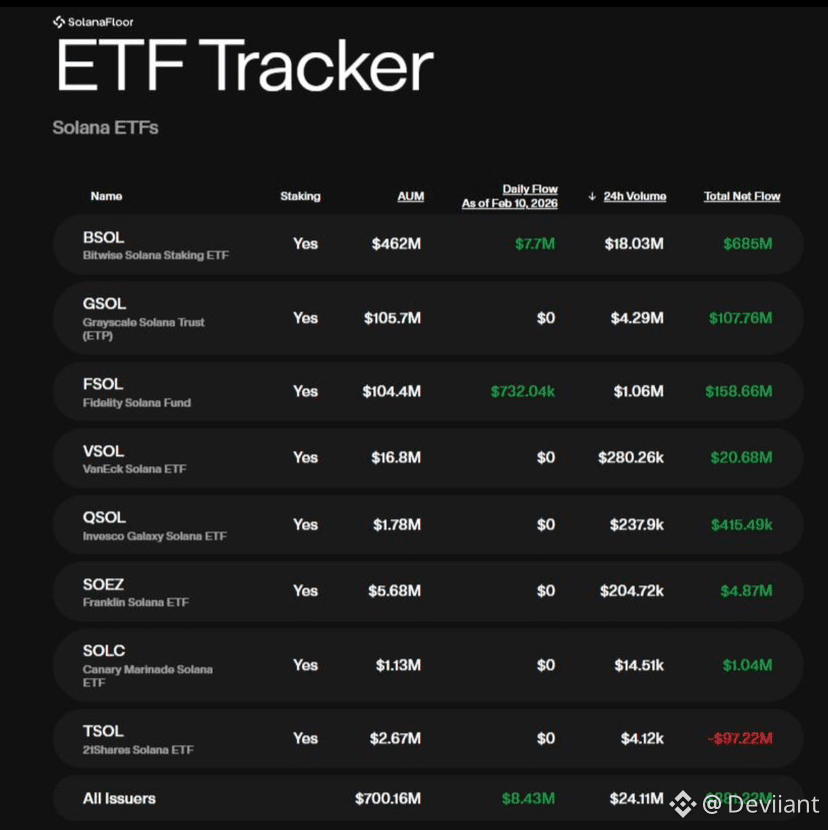
$SOL IS STARTING TO GET INSTITUTIONAL ATTENTION
Solana ETFs just recorded $33.5M in inflows on August 24 — their largest single-day inflow since December.
Cumulative net inflows have now reached roughly $1.22B.
At the same time, Solana has gained around 30% over the past week as capital continues rotating beyond Bitcoin.
The interesting part isn't the price move.
It's whether this level of institutional demand can continue.
If the flows persist, Solana's current rally could have a much stronger foundation than just momentum.
#Solana #SOL #crypto #Altcoins
Solana ETFs just recorded $33.5M in inflows on August 24 — their largest single-day inflow since December.
Cumulative net inflows have now reached roughly $1.22B.
At the same time, Solana has gained around 30% over the past week as capital continues rotating beyond Bitcoin.
The interesting part isn't the price move.
It's whether this level of institutional demand can continue.
If the flows persist, Solana's current rally could have a much stronger foundation than just momentum.
#Solana #SOL #crypto #Altcoins
🚨 THE NEXT AI × CRYPTO NARRATIVE?
Most people are watching the same AI tokens.
But one project is quietly building something different:
MyShell ($SHELL ) 🤖
MyShell is building an AI-native creator economy where users can build, share and monetize AI agents.
And this isn’t just a concept.
→ 200K+ AI agents on the platform
→ 5M+ users
→ 170K+ active creators
→ Open-source, no-code agent builder
→ AI Agent marketplace
→ $SHELL already listed on Binance
But here’s what caught my attention 👀
MyShell recently launched its Shell Launchpad, allowing creators to launch tokens for their AI agents.
That creates an interesting loop:
AI Agents → Users → Agent Tokens → Creator Economy
If AI agents become one of the major crypto narratives of the next cycle, projects building the infrastructure + economy around them could be worth watching closely.
Of course, $SHELL is still a relatively small/early project and carries significant risk.
But from a narrative perspective?
AI + Agents + On-chain economies is one sector I’m watching.
Would you keep $SHELL on your watchlist? 👀
#SHELLRally #MyShell #AI #AIAgents #Web3
Most people are watching the same AI tokens.
But one project is quietly building something different:
MyShell ($SHELL ) 🤖
MyShell is building an AI-native creator economy where users can build, share and monetize AI agents.
And this isn’t just a concept.
→ 200K+ AI agents on the platform
→ 5M+ users
→ 170K+ active creators
→ Open-source, no-code agent builder
→ AI Agent marketplace
→ $SHELL already listed on Binance
But here’s what caught my attention 👀
MyShell recently launched its Shell Launchpad, allowing creators to launch tokens for their AI agents.
That creates an interesting loop:
AI Agents → Users → Agent Tokens → Creator Economy
If AI agents become one of the major crypto narratives of the next cycle, projects building the infrastructure + economy around them could be worth watching closely.
Of course, $SHELL is still a relatively small/early project and carries significant risk.
But from a narrative perspective?
AI + Agents + On-chain economies is one sector I’m watching.
Would you keep $SHELL on your watchlist? 👀
#SHELLRally #MyShell #AI #AIAgents #Web3

CRYPTO HEADLINES — AUGUST 24
The market is still digesting last week’s explosive rally, but there’s plenty happening underneath.
• Bitcoin is holding around $77K after touching $79.5K.
• Bitcoin ETFs just recorded nearly $2B in inflows across five sessions.
• Ethereum is outperforming Bitcoin, up roughly 29% over the past week.
• Tom Lee’s Bitmine bought another 32,447 ETH, worth roughly $81M.
• Solana has a new proposal that could dramatically increase daily SOL burns and reduce new supply.
• Strategy raised $2B through MSTR sales and added $1.6B to its USD reserve.
• Strive acquired another 1,110 BTC, bringing its holdings to 21,356 BTC.
• The market is now watching Jackson Hole and upcoming U.S. inflation data for the next major catalyst.
The big story?
Capital is rotating beyond Bitcoin — and institutional activity is picking up across multiple parts of the market.
The next move could be very interesting.
$BTC $ETH $SOL
#Crypto #bitcoin #Ethereum #Solana #MarketUpdate
The market is still digesting last week’s explosive rally, but there’s plenty happening underneath.
• Bitcoin is holding around $77K after touching $79.5K.
• Bitcoin ETFs just recorded nearly $2B in inflows across five sessions.
• Ethereum is outperforming Bitcoin, up roughly 29% over the past week.
• Tom Lee’s Bitmine bought another 32,447 ETH, worth roughly $81M.
• Solana has a new proposal that could dramatically increase daily SOL burns and reduce new supply.
• Strategy raised $2B through MSTR sales and added $1.6B to its USD reserve.
• Strive acquired another 1,110 BTC, bringing its holdings to 21,356 BTC.
• The market is now watching Jackson Hole and upcoming U.S. inflation data for the next major catalyst.
The big story?
Capital is rotating beyond Bitcoin — and institutional activity is picking up across multiple parts of the market.
The next move could be very interesting.
$BTC $ETH $SOL
#Crypto #bitcoin #Ethereum #Solana #MarketUpdate

$BTC TRADE UPDATE
Our BTC long from $76,200 is moving exactly as planned.
TP1: $77,400 — HIT
TP2: $79,400 — HIT
TP3: $81,500 — STILL ACTIVE
BTC is holding above the $79K area and momentum remains strong.
We’re not chasing the move. The focus now is protecting the position while giving the final target room to play out.
Trade still active.
Follow For More Trades!!
#Bitcoin #BTC #TRADEupdate #Crypto
Our BTC long from $76,200 is moving exactly as planned.
TP1: $77,400 — HIT
TP2: $79,400 — HIT
TP3: $81,500 — STILL ACTIVE
BTC is holding above the $79K area and momentum remains strong.
We’re not chasing the move. The focus now is protecting the position while giving the final target room to play out.
Trade still active.
Follow For More Trades!!
#Bitcoin #BTC #TRADEupdate #Crypto
Deviiant
·
--
🚨🔄 BTC SETUP UPDATE🚨
Rethinking the original entry.
I’m not interested in chasing $BTC at current levels.
👀 New zone: $75.8K–$76.5K
🛑 SL: $73.9K
🎯 TP1: $77.4K
🎯 TP2: $79.4K
🎯 TP3: $81.5K
⚠️ Entry only if we get a pullback + bullish confirmation.
If $BTC runs without us, we let it run.
No FOMO. No forced trades. 🧠
#BTC #bitcoin #Binance #CryptoTrading
Rethinking the original entry.
I’m not interested in chasing $BTC at current levels.
👀 New zone: $75.8K–$76.5K
🛑 SL: $73.9K
🎯 TP1: $77.4K
🎯 TP2: $79.4K
🎯 TP3: $81.5K
⚠️ Entry only if we get a pullback + bullish confirmation.
If $BTC runs without us, we let it run.
No FOMO. No forced trades. 🧠
#BTC #bitcoin #Binance #CryptoTrading
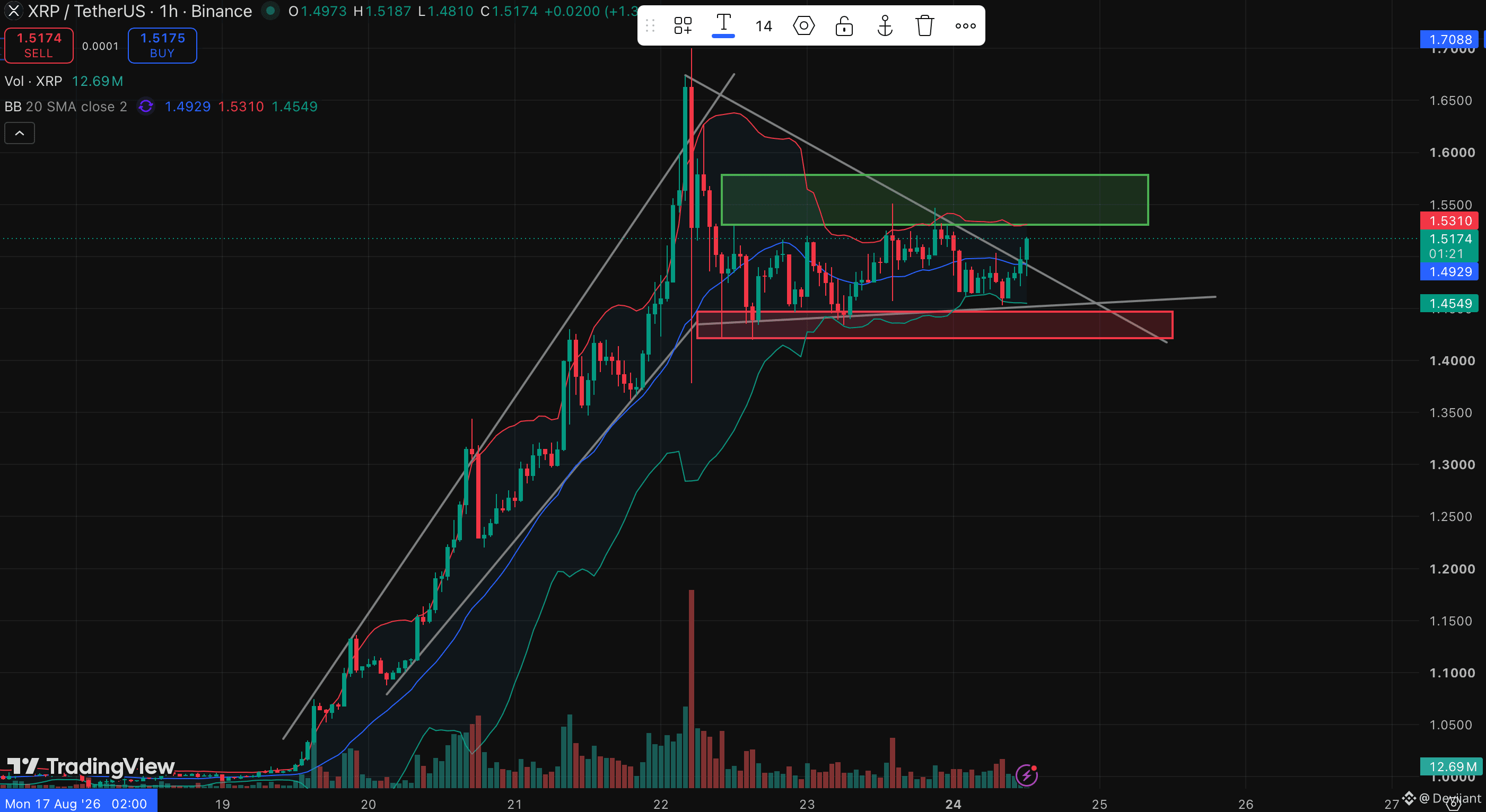
XRP — 1H CHART ANALYSIS
$XRP has made a strong move recently, but the 1H chart is now at an important point.
After the sharp upside momentum, price needs to prove that buyers can maintain control rather than turning the move into a liquidity sweep.
On the 1H timeframe, we’re watching the marked support and resistance zones closely.
A clean break and hold above resistance would strengthen the bullish continuation setup.
Failure to hold support could bring a deeper pullback before the next move.
For now, patience matters more than chasing the move.
#xrp #TechnicalAnalysis #crypto
$XRP has made a strong move recently, but the 1H chart is now at an important point.
After the sharp upside momentum, price needs to prove that buyers can maintain control rather than turning the move into a liquidity sweep.
On the 1H timeframe, we’re watching the marked support and resistance zones closely.
A clean break and hold above resistance would strengthen the bullish continuation setup.
Failure to hold support could bring a deeper pullback before the next move.
For now, patience matters more than chasing the move.
#xrp #TechnicalAnalysis #crypto
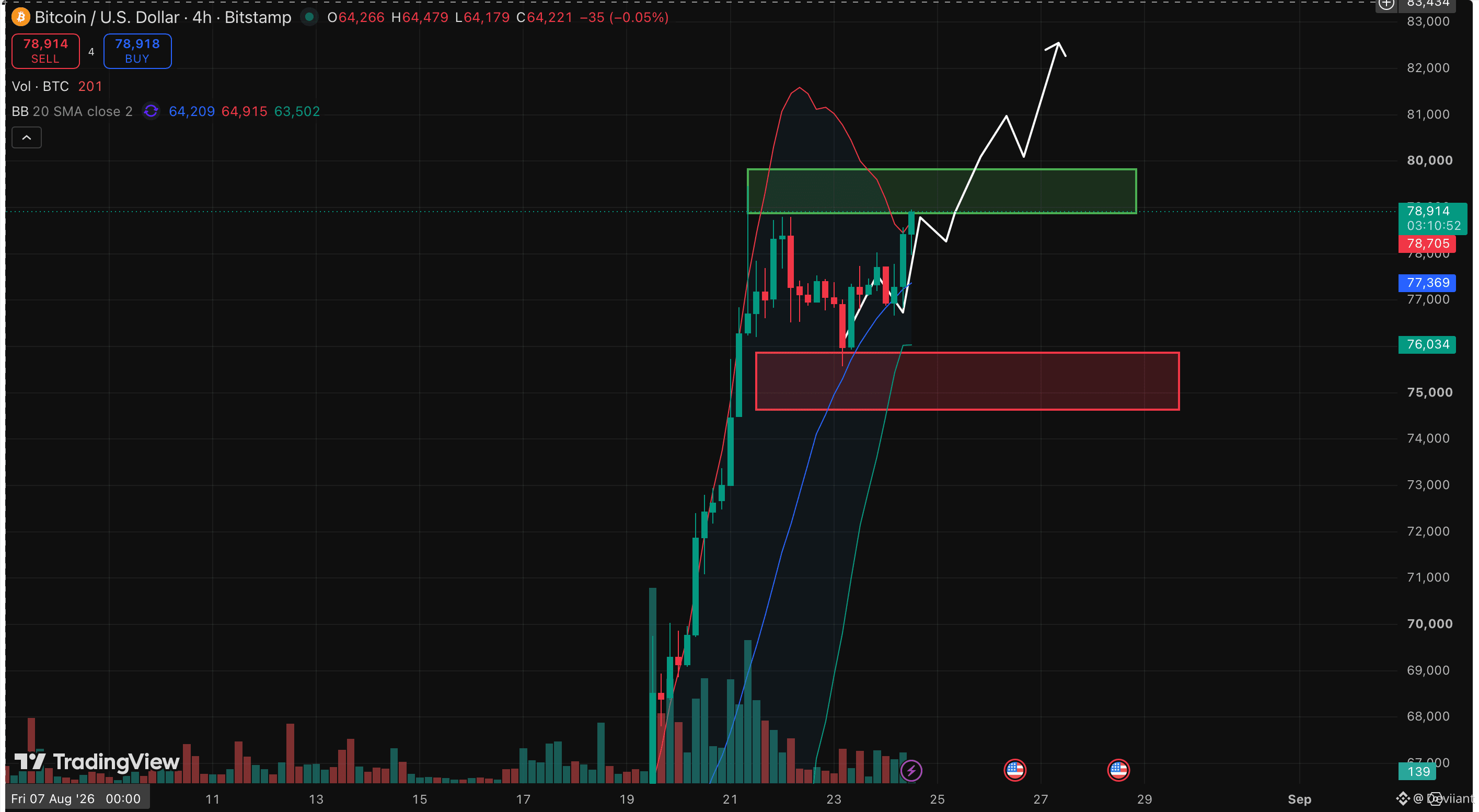
$BTC — THE BREAKOUT IS BEING TESTED?
Bitcoin is consolidating around $77K after pushing toward $80K last week.
The chart is now sitting between two important zones:
$74K–$76K — key support
$79.5K–$80K — major resistance
Holding the support zone keeps the bullish structure intact. A clean break above $80K could open the way toward the $81K–$83K area.
But losing $74K–$76K would make the recent breakout much less convincing.
For now, we're watching the reaction — not chasing the candle.
#bitcoin #TechnicalAnalysis #crypto
Bitcoin is consolidating around $77K after pushing toward $80K last week.
The chart is now sitting between two important zones:
$74K–$76K — key support
$79.5K–$80K — major resistance
Holding the support zone keeps the bullish structure intact. A clean break above $80K could open the way toward the $81K–$83K area.
But losing $74K–$76K would make the recent breakout much less convincing.
For now, we're watching the reaction — not chasing the candle.
#bitcoin #TechnicalAnalysis #crypto
Vérifié
$KAT is quietly building an interesting DeFi thesis.
Katana is an Ethereum Layer-2 built specifically for DeFi, designed to concentrate liquidity instead of spreading it across countless protocols. It was incubated by Polygon Labs and GSR.
The network is already live, with $240M+ in pre-deposits, while Katana Perps is approaching $1B in cumulative trading volume.
Its model is interesting: 100% of net sequencer fees are recycled into Chain-Owned Liquidity, aiming to deepen markets and improve execution over time.
Small cap. Real infrastructure. Growing activity.
$KAT is one to keep on the radar.
#kat
#katana #defi #crypto
Katana is an Ethereum Layer-2 built specifically for DeFi, designed to concentrate liquidity instead of spreading it across countless protocols. It was incubated by Polygon Labs and GSR.
The network is already live, with $240M+ in pre-deposits, while Katana Perps is approaching $1B in cumulative trading volume.
Its model is interesting: 100% of net sequencer fees are recycled into Chain-Owned Liquidity, aiming to deepen markets and improve execution over time.
Small cap. Real infrastructure. Growing activity.
$KAT is one to keep on the radar.
#kat
#katana #defi #crypto

$BTC TRADE UPDATE
Our BTC long from $76,200 has officially hit 💰💵
TP1: $77,400.
$BTC pushed as high as ~$79.4K before cooling off, keeping the remaining targets in play.
TP2: $79,400
TP3: $81,500
The key now is whether $BTC can hold the breakout and continue higher.
Trade still active.
#BTC #bitcoin #crypto
Our BTC long from $76,200 has officially hit 💰💵
TP1: $77,400.
$BTC pushed as high as ~$79.4K before cooling off, keeping the remaining targets in play.
TP2: $79,400
TP3: $81,500
The key now is whether $BTC can hold the breakout and continue higher.
Trade still active.
#BTC #bitcoin #crypto
Deviiant
·
--
🚨🔄 BTC SETUP UPDATE🚨
Rethinking the original entry.
I’m not interested in chasing $BTC at current levels.
👀 New zone: $75.8K–$76.5K
🛑 SL: $73.9K
🎯 TP1: $77.4K
🎯 TP2: $79.4K
🎯 TP3: $81.5K
⚠️ Entry only if we get a pullback + bullish confirmation.
If $BTC runs without us, we let it run.
No FOMO. No forced trades. 🧠
#BTC #bitcoin #Binance #CryptoTrading
Rethinking the original entry.
I’m not interested in chasing $BTC at current levels.
👀 New zone: $75.8K–$76.5K
🛑 SL: $73.9K
🎯 TP1: $77.4K
🎯 TP2: $79.4K
🎯 TP3: $81.5K
⚠️ Entry only if we get a pullback + bullish confirmation.
If $BTC runs without us, we let it run.
No FOMO. No forced trades. 🧠
#BTC #bitcoin #Binance #CryptoTrading
🚨CRYPTO MARKET UPDATE🚨
The market just had one of its biggest weeks of 2026.
• $BTC : +23% on the week, briefly near $80K
• $ETH : +28% on the week
• $XRP : +40% on the week
• SOL: holding around $94
• BTC + ETH ETFs: $2.6B combined weekly inflows
• $4B+ in shorts: liquidated during the rally
• Treasury: doubled planned long-term bond buybacks
• Regulation: 🇺🇸U.S. crypto market-structure efforts remain a major catalyst
• ZEC: pushed toward an 8-year high amid ETF speculation
• Solana: reduced target slot time from 400ms → 350ms, with 200ms the longer-term target
The market has clearly shifted from fear → risk-on.
But the real question remains:
Is this the beginning of a new cycle, or another liquidity-driven rally?
We’re watching the confirmation.
#BitcoinStrongestWeekSinceMarch2023 #Ethereum #solana #Altcoins
The market just had one of its biggest weeks of 2026.
• $BTC : +23% on the week, briefly near $80K
• $ETH : +28% on the week
• $XRP : +40% on the week
• SOL: holding around $94
• BTC + ETH ETFs: $2.6B combined weekly inflows
• $4B+ in shorts: liquidated during the rally
• Treasury: doubled planned long-term bond buybacks
• Regulation: 🇺🇸U.S. crypto market-structure efforts remain a major catalyst
• ZEC: pushed toward an 8-year high amid ETF speculation
• Solana: reduced target slot time from 400ms → 350ms, with 200ms the longer-term target
The market has clearly shifted from fear → risk-on.
But the real question remains:
Is this the beginning of a new cycle, or another liquidity-driven rally?
We’re watching the confirmation.
#BitcoinStrongestWeekSinceMarch2023 #Ethereum #solana #Altcoins
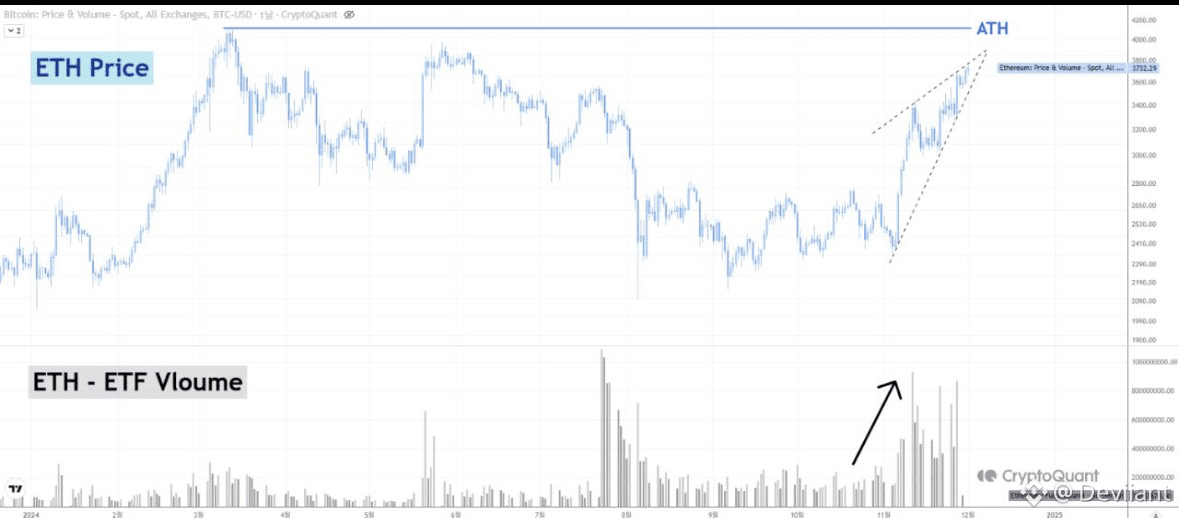
$ETH is quietly becoming interesting again.
$ETH has joined the broader crypto rebound, but the bigger story isn’t today’s candle.
ETF flows, institutional adoption and Ethereum’s role as the settlement layer are putting it back on the radar.
The question: can $ETH finally outperform BTC in this rotation?
#Ethereum #ETH #Crypto
$ETH has joined the broader crypto rebound, but the bigger story isn’t today’s candle.
ETF flows, institutional adoption and Ethereum’s role as the settlement layer are putting it back on the radar.
The question: can $ETH finally outperform BTC in this rotation?
#Ethereum #ETH #Crypto
Bull run or liquidity sweep?
$BTC just ripped toward $80K, ETF flows surged, shorts got wiped out, and altcoins woke up.
But the real question is simple:
Is this the start of the next cycle — or just another violent move inside the range?
We broke down the entire setup.
Read the full analysis!!!
#bitcoin #BTC #crypto
$BTC just ripped toward $80K, ETF flows surged, shorts got wiped out, and altcoins woke up.
But the real question is simple:
Is this the start of the next cycle — or just another violent move inside the range?
We broke down the entire setup.
Read the full analysis!!!
#bitcoin #BTC #crypto
Deviiant
·
--
Bitcoin’s 2026 Breakout: New Bull Run or Another Liquidity Sweep?
A research-driven look at the move toward $80,000, the forces behind it, the bull and bear cases, and what the market needs to prove next
Bitcoin just reminded everyone why crypto markets are different.
After spending weeks trapped in a relatively narrow range, $BTC exploded higher, briefly reaching $79,463 on August 21, 2026. The weekly gain was more than 23%, its strongest weekly performance in roughly two years. By August 23, $BTC was trading around $76,900, meaning the market had already begun testing whether the breakout could hold.
That immediately created the obvious question:
Are we witnessing the beginning of another Bitcoin bull run — or did the market just engineer another massive liquidity sweep?
The answer is not obvious. And that is precisely why this move matters.
The move was too large to dismiss
Bitcoin had spent much of August around the mid-$60,000s. Then the market changed character almost overnight.
$BTC broke through $70,000, accelerated through $75,000 and eventually approached $80,000.
The move added hundreds of billions of dollars to crypto's total market capitalization and pulled a broad group of altcoins higher with it. Ethereum gained roughly 24–28% over the week, XRP nearly 40%, while HYPE, ZEC and LINK all posted gains above 30%.
That breadth is important.
A rally where only Bitcoin rises can easily be dismissed as defensive or idiosyncratic.
A rally where Bitcoin, Ethereum and a wide range of altcoins rise together is much harder to ignore.
But breadth alone does not prove a new bull market. To understand what happened, we need to look underneath the candles.
1. The First Catalyst Was Liquidity
One of the biggest catalysts came from the U.S. Treasury.
The Treasury announced that it would increase buybacks of longer-dated Treasuries from roughly $2 billion to at least $4 billion per operation, beginning September 9.
The announcement was interpreted by markets as a liquidity-supportive signal. Treasury yields and the dollar moved lower initially, while Bitcoin and gold moved sharply higher. Reuters reported that Bitcoin jumped above $70,000 after the announcement, with crypto-related equities also rallying.
Bernstein analysts described the move as a potential liquidity-driven shift in Bitcoin's momentum, arguing that easier liquidity conditions and lower long-term rates could support crypto.
There is, however, an important nuance.
Treasury buybacks are not the same thing as Federal Reserve quantitative easing.
The Treasury is managing its debt portfolio and market functioning; it is not simply creating money and injecting it into the economy in the same way as a conventional QE program. Some analysts have also questioned how powerful or persistent the liquidity effect will ultimately be.
So the correct conclusion is not:
“The U.S. just restarted QE.”
The more defensible conclusion is:
Markets interpreted the Treasury announcement as a more favorable liquidity signal, and risk assets immediately responded.
That distinction matters.
2. Then The Shorts Became Fuel
Once Bitcoin broke higher, the market's positioning became the accelerator.
More than $4.3 billion in short positions were liquidated from Wednesday onward, according to reporting around the move. Earlier in the week, Bitcoin's breakout also triggered more than $1 billion in short liquidations in roughly an hour.
This creates one of the most powerful mechanisms in leveraged markets:
Price rises → shorts are liquidated → liquidated shorts must buy → buying pushes price higher → more shorts are liquidated.
It is a feedback loop.
This means part of Bitcoin's move was not discretionary investment demand at all.
It was forced buying. That is why the speed of the rally became so extreme. And this is the strongest argument for the liquidity-sweep thesis.
If the market's explosive move was primarily driven by short covering, then the most important question becomes:
What happens after the shorts are gone?
That is the test we are entering now.
3. But This Was Not Purely A Short Squeeze
This is where the bear argument becomes more complicated.
If this were nothing more than a leveraged squeeze, we would expect to see little evidence of genuine spot demand.
Instead, U.S. spot Bitcoin ETFs recorded approximately $1.9 billion of net inflows last week, while spot Ether ETFs attracted about $697.2 million. Combined Bitcoin and Ether ETF trading volume rose to roughly $29 billion, more than tripling from the previous week.
That is significant. Institutions were not simply watching the short squeeze from the sidelines.
Capital was actually entering regulated spot products.
There was also a particularly strong Bitcoin ETF session on Thursday, with roughly $606 million of net inflows, according to reporting at the time.
So the market appears to have had two simultaneous engines:
Real spot demand provided the foundation.
Short covering amplified the move. That is much more bullish than a pure liquidation wick.
4. The Rally Is Broadening
Perhaps the strongest evidence that this move deserves attention is what happened outside Bitcoin.
During the rally:
XRP gained nearly 40%HYPE gained around 37% and reached a new all-time highZEC and LINK gained more than 30%ETH gained roughly 24–28%BTC gained more than 23% for the week
The Block described the move as genuinely broad-based rather than concentrated in a few isolated names. One analyst quoted by the publication argued that broad participation itself is a positive signal because narrow rallies are generally less durable.
This is important because crypto cycles often move through stages.
Bitcoin leads.
Large-cap assets catch up.
Then higher-beta altcoins begin outperforming.
That does not mean we can declare “altseason.”
But it does suggest the market is becoming more risk-seeking.
And risk appetite is exactly what we want to see if the market is transitioning into a new expansion phase.
5. The Regulatory Backdrop Is Also Changing
Macro liquidity is only one side of the story.
The U.S. regulatory environment has also become more supportive.
President Trump has pushed Congress to advance the CLARITY Act, while the Commodity Futures Trading Commission has been working on a more defined framework for digital-asset markets. The administration has continued presenting the United States as a potential global centre for crypto activity.
The immediate price impact of regulation is difficult to quantify.
But the structural implication is easier to understand.
Clearer rules can reduce uncertainty for:
banks, asset managers, corporations, exchanges and institutional investors.
That potentially creates a larger pool of capital capable of participating in crypto markets.
So the current rally is occurring against a backdrop of:
better liquidity expectations + strong ETF demand + broader market participation + improving regulatory sentiment.
That combination is much more interesting than a random technical breakout.
The Bull Case
There is now a serious argument that the market could be moving into a new bullish regime.
The bull thesis is straightforward.
Liquidity is improving
The Treasury buyback announcement created a more favorable liquidity narrative, and the dollar weakened as risk appetite returned.
Institutional demand is returning
Bitcoin and Ether ETFs experienced their strongest combined week of 2026, with $2.6 billion of total net inflows.
Market breadth is improving
The rally has spread beyond Bitcoin into Ethereum and major altcoins.
Regulation is becoming more supportive
U.S. policymakers are actively working toward clearer digital-asset rules.
The market has reclaimed major levels
Bitcoin moved decisively back above $70,000 and approached $80,000.
Put all five together and the bull argument becomes:
The 2026 drawdown may have been a prolonged correction, and this week's move could be the first major leg of a new expansion cycle.
That possibility should not be ignored.
The Bear Case
But there is an equally important reason not to celebrate too early.
Bitcoin's move has been extremely fast.
A market that rises more than 20% in a week after being positioned heavily short can become extremely fragile.
The bear thesis looks like this:
Liquidity catalyst → resistance breakout → massive short squeeze → FOMO → crowded longs → retracement → range resumes.
This is not a theoretical possibility.
We have already seen the market start to behave this way.
Bitcoin touched around $79,500 on August 21, but by August 23 it had pulled back toward $76,900. During the pullback, hundreds of millions of leveraged positions were liquidated, with long positions taking the majority of the losses.
That is exactly what happens after leverage becomes one-sided again.
The first squeeze removed the shorts.
The next squeeze can remove the longs.
The Biggest Mistake Right Now
The easiest mistake is to look at a 20%+ weekly rally and immediately conclude:
“The bull market is back.”
We don't have enough evidence to say that yet.
Bitcoin's previous all-time high remains approximately $126,198, reached on October 6, 2025. At around $76,900, BTC is still roughly 39% below that record.
That means the market is nowhere near confirmed price discovery.
We have a breakout from a lower range.
We do not yet have a confirmed breakout into new ATHs.
Those are very different things.
The Halving Argument
There is another popular thesis circulating:
Bitcoin will simply consolidate until the next halving in 2028, and that will create the next major bull cycle.
There is historical logic behind this idea. Bitcoin's reward is programmed to halve approximately every four years. The next halving is currently estimated for April 2028, when the block subsidy falls from 3.125 BTC to 1.5625 BTC.
But we should be careful here.
The halving is not a countdown timer for price.
Bitcoin doesn't have to stay sideways until April 2028.
Macro liquidity can change.
ETF demand can change. Institutional adoption can accelerate. Regulation can change. Global risk appetite can change. The halving is an important supply event, but it does not prevent a major bull market from occurring before it.
So I would not build the entire 2026–2028 thesis around “nothing happens until the next halving.”
What Would Confirm a New Bull Market?
This is the part that matters most.
We don't need predictions.
We need confirmation.
1. Bitcoin holds the breakout
If the $70,000–$75,000 region turns into support instead of resistance, the structure becomes substantially more bullish.
2. ETF inflows stay strong
One strong week is encouraging.
Several consecutive weeks would be far more meaningful.
3. Leverage normalizes
A healthy bull market can rise without needing constant short liquidations to power every leg higher.
4. Altcoin breadth remains strong
If capital continues rotating into ETH and other major assets after BTC consolidates, that's a positive sign.
5. Bitcoin starts making higher highs and higher lows
This sounds obvious, but it is the most important confirmation of all.
6. Eventually, the $126K ATH becomes resistance
Only when BTC starts approaching and breaking its previous all-time high do we enter true price discovery.
That is the point where the conversation changes from:
“Is this a recovery?”
to:
“How far can this cycle run?”
What Would Invalidate the Bull Thesis?
The opposite is equally important.
The bull thesis becomes weaker if:
BTC falls decisively back below the breakout regionETF inflows reverse for multiple weeksOpen interest grows faster than spot demandAltcoins give back their gains rapidlyLiquidity expectations deteriorateEvery rally becomes dependent on another short squeeze
That would strengthen the argument that the August rally was a liquidity event inside a larger range, rather than the beginning of a new secular expansion.
So What Is Actually Happening?
After putting the evidence together, the most defensible interpretation is not:
“Bitcoin is definitely starting another bull run.”
And it is not:
“This was definitely just a fake pump.”
The evidence currently points to something more nuanced:
Bitcoin has entered a major regime test.
The market received a liquidity catalyst.
Institutional flows returned.
Short sellers were trapped. Bitcoin broke major resistance. Altcoins joined the move. Then leverage began to unwind again. That is exactly what a market at an important turning point looks like. The question is no longer whether Bitcoin can pump.
We already know it can.
The real question is whether the market can absorb the pump and build a new base above the old range.
That is what separates a liquidity sweep from a bull-market transition.
Our View
At this stage, we would not declare a new bull market confirmed.
We would call the current environment bullish but unproven.
The strongest signal in favor of the bulls is the combination of ETF demand and broad market participation.
The strongest signal in favor of the bears is the extraordinary amount of leverage and forced buying involved in the initial breakout.
That leaves us with one simple framework:
If BTC holds the breakout and capital keeps arriving, the bull thesis strengthens.
If BTC loses the breakout and the ETF bid disappears, the liquidity-sweep thesis strengthens.
The next few weeks may therefore be more important than the last few days.
Because the $79,500 move was impressive.
But what Bitcoin does after $79,500 will tell us whether it was the beginning of something much bigger — or simply another violent move inside a market that has not yet chosen its direction.
**The pump was the signal.
Now comes the confirmation.**
This article is market analysis and educational commentary, not financial advice.
Sources
CoinMarketCap market data; Reuters; The Wall Street Journal; The Block; Associated Press; MarketWatch; Bernstein commentary; CoinGecko halving data.
Bitcoin just reminded everyone why crypto markets are different.
After spending weeks trapped in a relatively narrow range, $BTC exploded higher, briefly reaching $79,463 on August 21, 2026. The weekly gain was more than 23%, its strongest weekly performance in roughly two years. By August 23, $BTC was trading around $76,900, meaning the market had already begun testing whether the breakout could hold.
That immediately created the obvious question:
Are we witnessing the beginning of another Bitcoin bull run — or did the market just engineer another massive liquidity sweep?
The answer is not obvious. And that is precisely why this move matters.
The move was too large to dismiss
Bitcoin had spent much of August around the mid-$60,000s. Then the market changed character almost overnight.
$BTC broke through $70,000, accelerated through $75,000 and eventually approached $80,000.
The move added hundreds of billions of dollars to crypto's total market capitalization and pulled a broad group of altcoins higher with it. Ethereum gained roughly 24–28% over the week, XRP nearly 40%, while HYPE, ZEC and LINK all posted gains above 30%.
That breadth is important.
A rally where only Bitcoin rises can easily be dismissed as defensive or idiosyncratic.
A rally where Bitcoin, Ethereum and a wide range of altcoins rise together is much harder to ignore.
But breadth alone does not prove a new bull market. To understand what happened, we need to look underneath the candles.
1. The First Catalyst Was Liquidity
One of the biggest catalysts came from the U.S. Treasury.
The Treasury announced that it would increase buybacks of longer-dated Treasuries from roughly $2 billion to at least $4 billion per operation, beginning September 9.
The announcement was interpreted by markets as a liquidity-supportive signal. Treasury yields and the dollar moved lower initially, while Bitcoin and gold moved sharply higher. Reuters reported that Bitcoin jumped above $70,000 after the announcement, with crypto-related equities also rallying.
Bernstein analysts described the move as a potential liquidity-driven shift in Bitcoin's momentum, arguing that easier liquidity conditions and lower long-term rates could support crypto.
There is, however, an important nuance.
Treasury buybacks are not the same thing as Federal Reserve quantitative easing.
The Treasury is managing its debt portfolio and market functioning; it is not simply creating money and injecting it into the economy in the same way as a conventional QE program. Some analysts have also questioned how powerful or persistent the liquidity effect will ultimately be.
So the correct conclusion is not:
“The U.S. just restarted QE.”
The more defensible conclusion is:
Markets interpreted the Treasury announcement as a more favorable liquidity signal, and risk assets immediately responded.
That distinction matters.
2. Then The Shorts Became Fuel
Once Bitcoin broke higher, the market's positioning became the accelerator.
More than $4.3 billion in short positions were liquidated from Wednesday onward, according to reporting around the move. Earlier in the week, Bitcoin's breakout also triggered more than $1 billion in short liquidations in roughly an hour.
This creates one of the most powerful mechanisms in leveraged markets:
Price rises → shorts are liquidated → liquidated shorts must buy → buying pushes price higher → more shorts are liquidated.
It is a feedback loop.
This means part of Bitcoin's move was not discretionary investment demand at all.
It was forced buying. That is why the speed of the rally became so extreme. And this is the strongest argument for the liquidity-sweep thesis.
If the market's explosive move was primarily driven by short covering, then the most important question becomes:
What happens after the shorts are gone?
That is the test we are entering now.
3. But This Was Not Purely A Short Squeeze
This is where the bear argument becomes more complicated.
If this were nothing more than a leveraged squeeze, we would expect to see little evidence of genuine spot demand.
Instead, U.S. spot Bitcoin ETFs recorded approximately $1.9 billion of net inflows last week, while spot Ether ETFs attracted about $697.2 million. Combined Bitcoin and Ether ETF trading volume rose to roughly $29 billion, more than tripling from the previous week.
That is significant. Institutions were not simply watching the short squeeze from the sidelines.
Capital was actually entering regulated spot products.
There was also a particularly strong Bitcoin ETF session on Thursday, with roughly $606 million of net inflows, according to reporting at the time.
So the market appears to have had two simultaneous engines:
Real spot demand provided the foundation.
Short covering amplified the move. That is much more bullish than a pure liquidation wick.
4. The Rally Is Broadening
Perhaps the strongest evidence that this move deserves attention is what happened outside Bitcoin.
During the rally:
XRP gained nearly 40%HYPE gained around 37% and reached a new all-time highZEC and LINK gained more than 30%ETH gained roughly 24–28%BTC gained more than 23% for the week
The Block described the move as genuinely broad-based rather than concentrated in a few isolated names. One analyst quoted by the publication argued that broad participation itself is a positive signal because narrow rallies are generally less durable.
This is important because crypto cycles often move through stages.
Bitcoin leads.
Large-cap assets catch up.
Then higher-beta altcoins begin outperforming.
That does not mean we can declare “altseason.”
But it does suggest the market is becoming more risk-seeking.
And risk appetite is exactly what we want to see if the market is transitioning into a new expansion phase.
5. The Regulatory Backdrop Is Also Changing
Macro liquidity is only one side of the story.
The U.S. regulatory environment has also become more supportive.
President Trump has pushed Congress to advance the CLARITY Act, while the Commodity Futures Trading Commission has been working on a more defined framework for digital-asset markets. The administration has continued presenting the United States as a potential global centre for crypto activity.
The immediate price impact of regulation is difficult to quantify.
But the structural implication is easier to understand.
Clearer rules can reduce uncertainty for:
banks, asset managers, corporations, exchanges and institutional investors.
That potentially creates a larger pool of capital capable of participating in crypto markets.
So the current rally is occurring against a backdrop of:
better liquidity expectations + strong ETF demand + broader market participation + improving regulatory sentiment.
That combination is much more interesting than a random technical breakout.
The Bull Case
There is now a serious argument that the market could be moving into a new bullish regime.
The bull thesis is straightforward.
Liquidity is improving
The Treasury buyback announcement created a more favorable liquidity narrative, and the dollar weakened as risk appetite returned.
Institutional demand is returning
Bitcoin and Ether ETFs experienced their strongest combined week of 2026, with $2.6 billion of total net inflows.
Market breadth is improving
The rally has spread beyond Bitcoin into Ethereum and major altcoins.
Regulation is becoming more supportive
U.S. policymakers are actively working toward clearer digital-asset rules.
The market has reclaimed major levels
Bitcoin moved decisively back above $70,000 and approached $80,000.
Put all five together and the bull argument becomes:
The 2026 drawdown may have been a prolonged correction, and this week's move could be the first major leg of a new expansion cycle.
That possibility should not be ignored.
The Bear Case
But there is an equally important reason not to celebrate too early.
Bitcoin's move has been extremely fast.
A market that rises more than 20% in a week after being positioned heavily short can become extremely fragile.
The bear thesis looks like this:
Liquidity catalyst → resistance breakout → massive short squeeze → FOMO → crowded longs → retracement → range resumes.
This is not a theoretical possibility.
We have already seen the market start to behave this way.
Bitcoin touched around $79,500 on August 21, but by August 23 it had pulled back toward $76,900. During the pullback, hundreds of millions of leveraged positions were liquidated, with long positions taking the majority of the losses.
That is exactly what happens after leverage becomes one-sided again.
The first squeeze removed the shorts.
The next squeeze can remove the longs.
The Biggest Mistake Right Now
The easiest mistake is to look at a 20%+ weekly rally and immediately conclude:
“The bull market is back.”
We don't have enough evidence to say that yet.
Bitcoin's previous all-time high remains approximately $126,198, reached on October 6, 2025. At around $76,900, BTC is still roughly 39% below that record.
That means the market is nowhere near confirmed price discovery.
We have a breakout from a lower range.
We do not yet have a confirmed breakout into new ATHs.
Those are very different things.
The Halving Argument
There is another popular thesis circulating:
Bitcoin will simply consolidate until the next halving in 2028, and that will create the next major bull cycle.
There is historical logic behind this idea. Bitcoin's reward is programmed to halve approximately every four years. The next halving is currently estimated for April 2028, when the block subsidy falls from 3.125 BTC to 1.5625 BTC.
But we should be careful here.
The halving is not a countdown timer for price.
Bitcoin doesn't have to stay sideways until April 2028.
Macro liquidity can change.
ETF demand can change. Institutional adoption can accelerate. Regulation can change. Global risk appetite can change. The halving is an important supply event, but it does not prevent a major bull market from occurring before it.
So I would not build the entire 2026–2028 thesis around “nothing happens until the next halving.”
What Would Confirm a New Bull Market?
This is the part that matters most.
We don't need predictions.
We need confirmation.
1. Bitcoin holds the breakout
If the $70,000–$75,000 region turns into support instead of resistance, the structure becomes substantially more bullish.
2. ETF inflows stay strong
One strong week is encouraging.
Several consecutive weeks would be far more meaningful.
3. Leverage normalizes
A healthy bull market can rise without needing constant short liquidations to power every leg higher.
4. Altcoin breadth remains strong
If capital continues rotating into ETH and other major assets after BTC consolidates, that's a positive sign.
5. Bitcoin starts making higher highs and higher lows
This sounds obvious, but it is the most important confirmation of all.
6. Eventually, the $126K ATH becomes resistance
Only when BTC starts approaching and breaking its previous all-time high do we enter true price discovery.
That is the point where the conversation changes from:
“Is this a recovery?”
to:
“How far can this cycle run?”
What Would Invalidate the Bull Thesis?
The opposite is equally important.
The bull thesis becomes weaker if:
BTC falls decisively back below the breakout regionETF inflows reverse for multiple weeksOpen interest grows faster than spot demandAltcoins give back their gains rapidlyLiquidity expectations deteriorateEvery rally becomes dependent on another short squeeze
That would strengthen the argument that the August rally was a liquidity event inside a larger range, rather than the beginning of a new secular expansion.
So What Is Actually Happening?
After putting the evidence together, the most defensible interpretation is not:
“Bitcoin is definitely starting another bull run.”
And it is not:
“This was definitely just a fake pump.”
The evidence currently points to something more nuanced:
Bitcoin has entered a major regime test.
The market received a liquidity catalyst.
Institutional flows returned.
Short sellers were trapped. Bitcoin broke major resistance. Altcoins joined the move. Then leverage began to unwind again. That is exactly what a market at an important turning point looks like. The question is no longer whether Bitcoin can pump.
We already know it can.
The real question is whether the market can absorb the pump and build a new base above the old range.
That is what separates a liquidity sweep from a bull-market transition.
Our View
At this stage, we would not declare a new bull market confirmed.
We would call the current environment bullish but unproven.
The strongest signal in favor of the bulls is the combination of ETF demand and broad market participation.
The strongest signal in favor of the bears is the extraordinary amount of leverage and forced buying involved in the initial breakout.
That leaves us with one simple framework:
If BTC holds the breakout and capital keeps arriving, the bull thesis strengthens.
If BTC loses the breakout and the ETF bid disappears, the liquidity-sweep thesis strengthens.
The next few weeks may therefore be more important than the last few days.
Because the $79,500 move was impressive.
But what Bitcoin does after $79,500 will tell us whether it was the beginning of something much bigger — or simply another violent move inside a market that has not yet chosen its direction.
**The pump was the signal.
Now comes the confirmation.**
This article is market analysis and educational commentary, not financial advice.
Sources
CoinMarketCap market data; Reuters; The Wall Street Journal; The Block; Associated Press; MarketWatch; Bernstein commentary; CoinGecko halving data.
$TRUMP Breaks Above $3.40 — Highest Since March 21
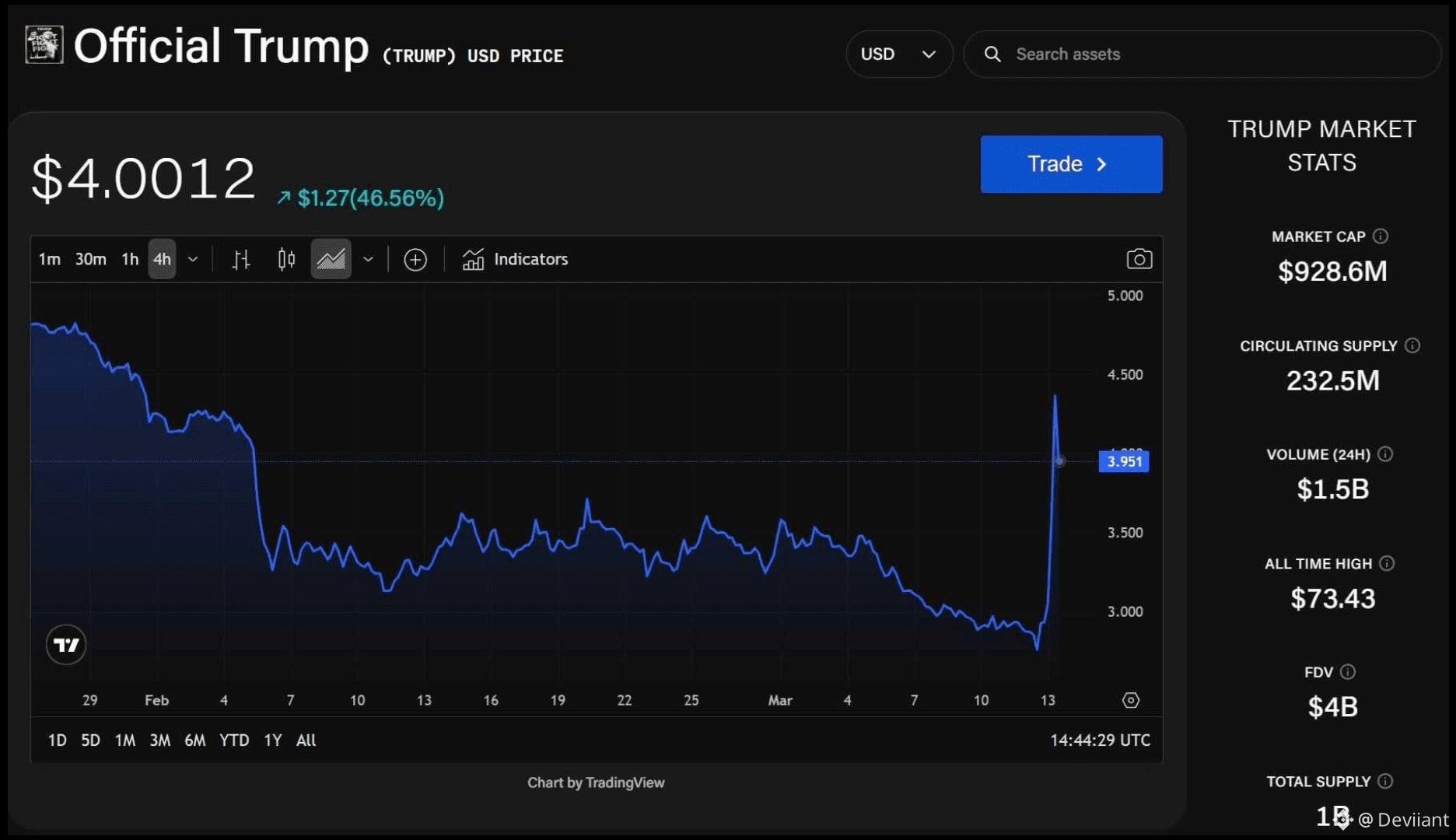
Official TRUMP ( $TRUMP ) has made a major move, breaking above $3.40 and reaching its highest level since March 21.
The bigger story is the momentum behind the move.
$TRUMP has gone from being largely overlooked to becoming one of the market's strongest high-beta performers in a very short period.
Now the key question is whether this breakout can hold.
Above $3.40: the breakout remains structurally interesting and could attract further momentum.
Below $3.40: yesterday's move risks becoming a liquidity-driven spike rather than a sustained trend.
After a move this aggressive, the next few sessions matter more than the candle itself.
We're watching volume, the $3.40 breakout level, and whether buyers continue to defend the move.
Market commentary. Not financial advice.
#TRUMPBreaksAbove$3.4HighestSinceMarch21
Official TRUMP ( $TRUMP ) has made a major move, breaking above $3.40 and reaching its highest level since March 21.
The bigger story is the momentum behind the move.
$TRUMP has gone from being largely overlooked to becoming one of the market's strongest high-beta performers in a very short period.
Now the key question is whether this breakout can hold.
Above $3.40: the breakout remains structurally interesting and could attract further momentum.
Below $3.40: yesterday's move risks becoming a liquidity-driven spike rather than a sustained trend.
After a move this aggressive, the next few sessions matter more than the candle itself.
We're watching volume, the $3.40 breakout level, and whether buyers continue to defend the move.
Market commentary. Not financial advice.
#TRUMPBreaksAbove$3.4HighestSinceMarch21
Vérifié
$GENIUS : Is on-chain trading finally getting a real terminal?
DeFi has never really lacked liquidity.
It has lacked a good trading experience.
Genius Terminal is trying to close that gap by bringing 10+ blockchains and 150+ DEXs into one non-custodial trading interface.
The interesting part isn't just the multi-chain access.
GENIUS is also building tools for active traders, including:
→ Spot and perpetual markets
→ Portfolio management
→ Funding-rate and liquidity data
→ Holder analytics
→ Pre-launch token access
→ “Ghost Order” execution using MPC
The $GENIUS token is positioned as the ecosystem's utility token, with uses tied to governance, premium platform features and rewards. Its maximum supply is around 1B tokens.
GENIUS was listed on Binance Spot on May 22, 2026, with the Seed Tag.
But here's what matters:
A better interface doesn't automatically create token demand.
The bullish thesis depends on GENIUS becoming a genuine destination for on-chain traders — not just another terminal competing for attention.
The key metric I'd watch:
Trading activity → user retention → actual token utility.
If those three start moving together, GENIUS gets interesting.
If they don't, the narrative alone won't be enough.
Research-based analysis. Not financial advice.
$GENIUS
DeFi has never really lacked liquidity.
It has lacked a good trading experience.
Genius Terminal is trying to close that gap by bringing 10+ blockchains and 150+ DEXs into one non-custodial trading interface.
The interesting part isn't just the multi-chain access.
GENIUS is also building tools for active traders, including:
→ Spot and perpetual markets
→ Portfolio management
→ Funding-rate and liquidity data
→ Holder analytics
→ Pre-launch token access
→ “Ghost Order” execution using MPC
The $GENIUS token is positioned as the ecosystem's utility token, with uses tied to governance, premium platform features and rewards. Its maximum supply is around 1B tokens.
GENIUS was listed on Binance Spot on May 22, 2026, with the Seed Tag.
But here's what matters:
A better interface doesn't automatically create token demand.
The bullish thesis depends on GENIUS becoming a genuine destination for on-chain traders — not just another terminal competing for attention.
The key metric I'd watch:
Trading activity → user retention → actual token utility.
If those three start moving together, GENIUS gets interesting.
If they don't, the narrative alone won't be enough.
Research-based analysis. Not financial advice.
$GENIUS

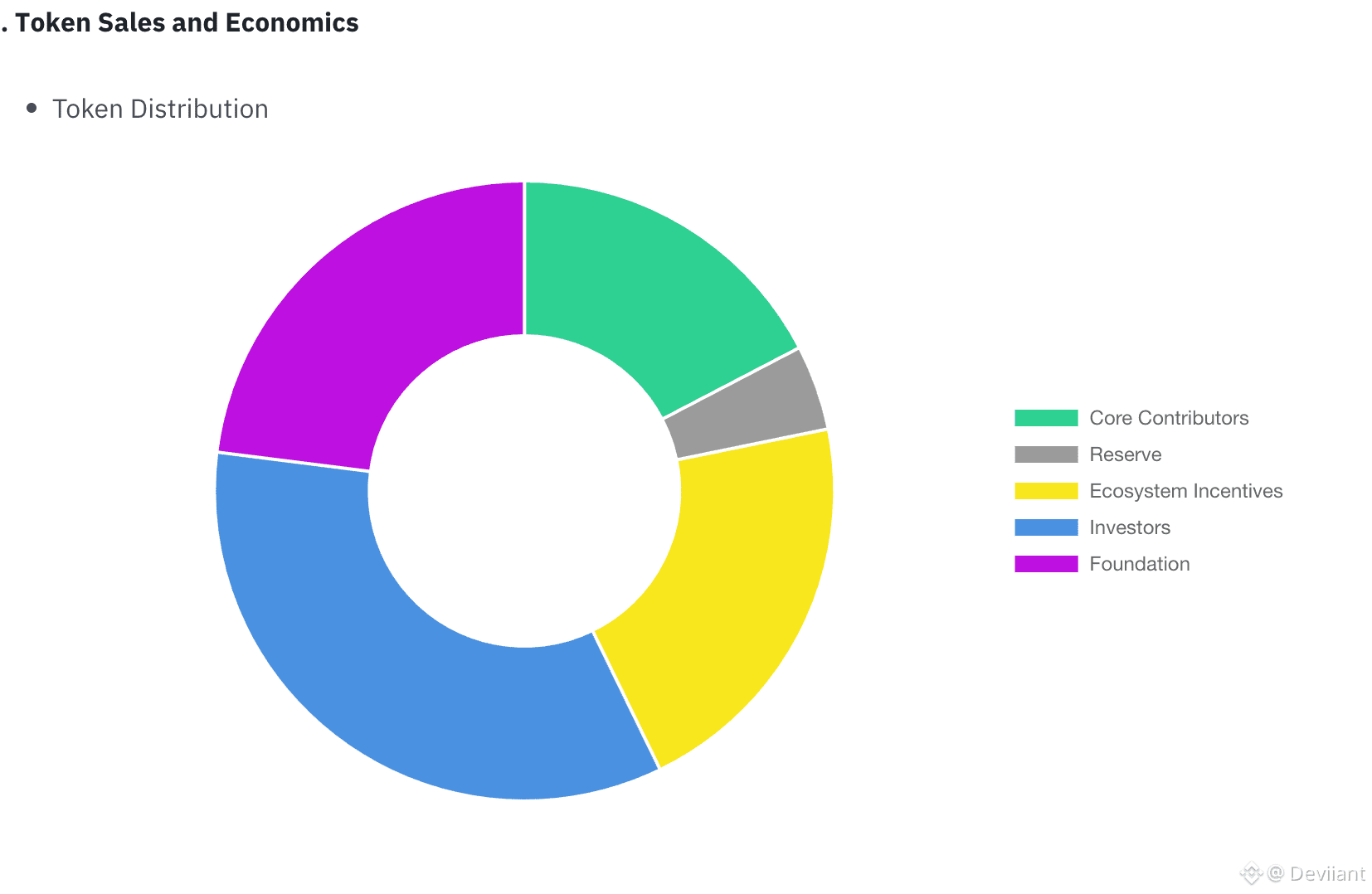
OpenGradient (OPG): AI infrastructure most people aren't watching yet
AI is getting smarter.
But there’s still a major problem:
How do you verify that an AI output is genuine — and keep sensitive prompts private?
That’s what OpenGradient is trying to solve.
Instead of being another AI app, OpenGradient is building decentralized infrastructure where applications and on-chain protocols can outsource AI inference to GPU and TEE nodes, while the network can verify the results.
A few numbers caught my attention:
• 4,500+ AI models on Model Hub
• 100+ model developers
• 263K+ unique wallets
• 1.9M+ network transactions
• $9.5M raised from investors including a16z crypto and Coinbase Ventures
• 1B OPG max supply
And OPG actually has network utility:
→ Gas and AI inference settlement
→ Validator and delegator staking
→ Model Hub payments
→ x402 payments
→ Governance
The bull case: AI becomes an on-chain primitive and verifiable, private inference becomes a real infrastructure category.
The risk: only ~19.76% of supply was circulating as of July 1, 2026, meaning future token unlocks and supply expansion need to be watched closely.
So the real question isn't:
“Is OPG an AI coin?”
It's:
Can OpenGradient turn verifiable AI compute into infrastructure people actually use?
That's the thesis I'm watching.
Based on Binance Research data. Not financial advice.
$OPG
AI is getting smarter.
But there’s still a major problem:
How do you verify that an AI output is genuine — and keep sensitive prompts private?
That’s what OpenGradient is trying to solve.
Instead of being another AI app, OpenGradient is building decentralized infrastructure where applications and on-chain protocols can outsource AI inference to GPU and TEE nodes, while the network can verify the results.
A few numbers caught my attention:
• 4,500+ AI models on Model Hub
• 100+ model developers
• 263K+ unique wallets
• 1.9M+ network transactions
• $9.5M raised from investors including a16z crypto and Coinbase Ventures
• 1B OPG max supply
And OPG actually has network utility:
→ Gas and AI inference settlement
→ Validator and delegator staking
→ Model Hub payments
→ x402 payments
→ Governance
The bull case: AI becomes an on-chain primitive and verifiable, private inference becomes a real infrastructure category.
The risk: only ~19.76% of supply was circulating as of July 1, 2026, meaning future token unlocks and supply expansion need to be watched closely.
So the real question isn't:
“Is OPG an AI coin?”
It's:
Can OpenGradient turn verifiable AI compute into infrastructure people actually use?
That's the thesis I'm watching.
Based on Binance Research data. Not financial advice.
$OPG
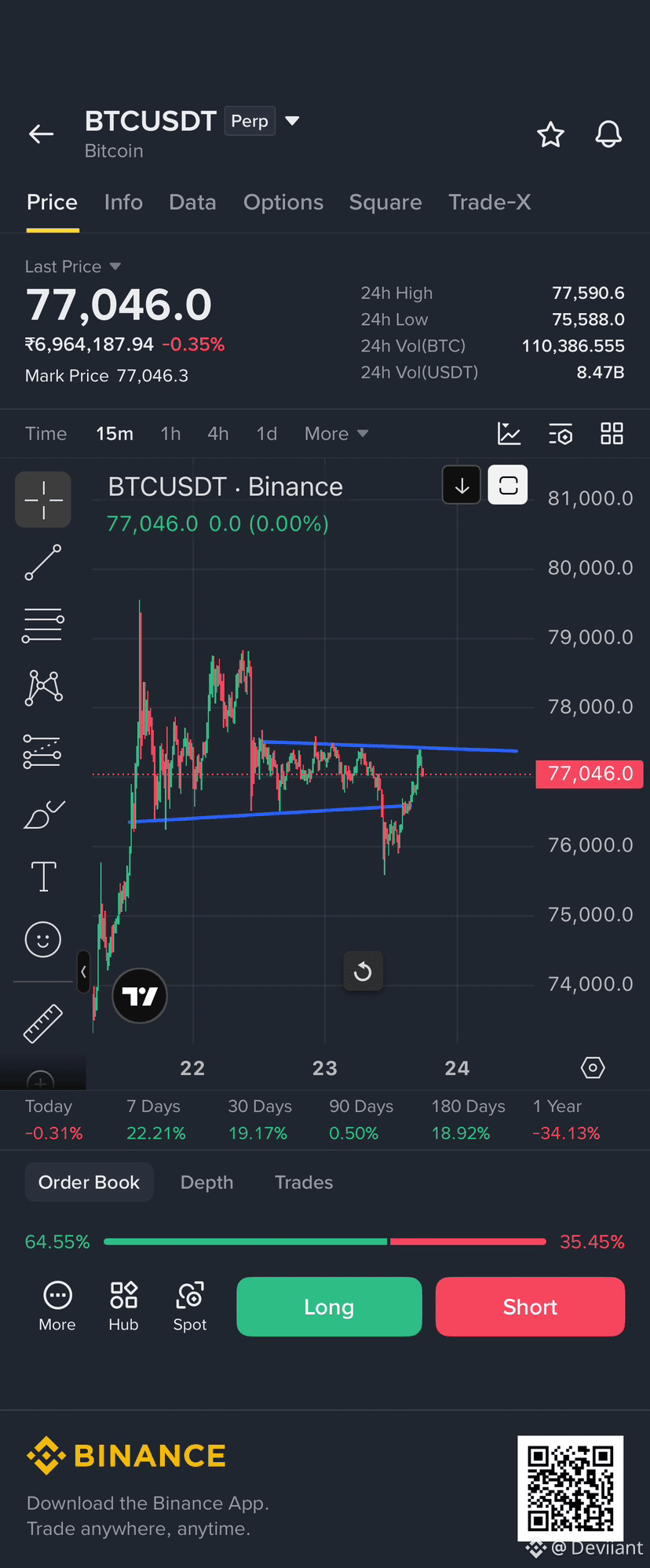
🚨 BTC LONG SETUP 🚨
We’re taking the trade. 🎯
$BTC is holding around the $75.5K–$76K support zone after the rejection from $79.5K.
📍 Entry: $76,200
🛑 SL: $74,900
🎯 TP1: $77,400
🎯 TP2: $79,400
🚀 TP3: $81,500
The idea is simple:
Hold the current support → reclaim $77.4K → retest the highs → continuation. 📈
⚠️ BTC is heavily extended after a huge weekly move, so risk stays controlled.
No revenge. No FOMO. Just the setup. 🧠🔥
#BTC #Bitcoin #Binance #BTCUSDT
#Trading
We’re taking the trade. 🎯
$BTC is holding around the $75.5K–$76K support zone after the rejection from $79.5K.
📍 Entry: $76,200
🛑 SL: $74,900
🎯 TP1: $77,400
🎯 TP2: $79,400
🚀 TP3: $81,500
The idea is simple:
Hold the current support → reclaim $77.4K → retest the highs → continuation. 📈
⚠️ BTC is heavily extended after a huge weekly move, so risk stays controlled.
No revenge. No FOMO. Just the setup. 🧠🔥
#BTC #Bitcoin #Binance #BTCUSDT
#Trading
Deviiant
·
--
🚨🔄 BTC SETUP UPDATE🚨
Rethinking the original entry.
I’m not interested in chasing $BTC at current levels.
👀 New zone: $75.8K–$76.5K
🛑 SL: $73.9K
🎯 TP1: $77.4K
🎯 TP2: $79.4K
🎯 TP3: $81.5K
⚠️ Entry only if we get a pullback + bullish confirmation.
If $BTC runs without us, we let it run.
No FOMO. No forced trades. 🧠
#BTC #bitcoin #Binance #CryptoTrading
Rethinking the original entry.
I’m not interested in chasing $BTC at current levels.
👀 New zone: $75.8K–$76.5K
🛑 SL: $73.9K
🎯 TP1: $77.4K
🎯 TP2: $79.4K
🎯 TP3: $81.5K
⚠️ Entry only if we get a pullback + bullish confirmation.
If $BTC runs without us, we let it run.
No FOMO. No forced trades. 🧠
#BTC #bitcoin #Binance #CryptoTrading
🌐 CRYPTO MARKET CHECK 🚨
The market just had a massive week… but now we’re seeing the first signs of cooling off. 👀
📈 $BTC : +20%+ this week
🔥 $ETH : strong recovery
⚡ $SOL : holding up well
💥 XRP: one of the biggest movers
But here’s the interesting part:
💰 Institutional flows are still strong
📊 Altcoins are starting to participate
⚠️ Leverage is getting flushed after the rally
So what’s next?
I’m bullish on the broader market, but I don’t think this is the time to blindly chase green candles.
The next move matters more than the last one. 🧠
If support holds → continuation becomes interesting.
If leverage keeps unwinding → we could get a much healthier pullback.
Let the market show us. Don’t force it. 🎯
#crypto #Ethereum #solana #xrp #Altcoins
The market just had a massive week… but now we’re seeing the first signs of cooling off. 👀
📈 $BTC : +20%+ this week
🔥 $ETH : strong recovery
⚡ $SOL : holding up well
💥 XRP: one of the biggest movers
But here’s the interesting part:
💰 Institutional flows are still strong
📊 Altcoins are starting to participate
⚠️ Leverage is getting flushed after the rally
So what’s next?
I’m bullish on the broader market, but I don’t think this is the time to blindly chase green candles.
The next move matters more than the last one. 🧠
If support holds → continuation becomes interesting.
If leverage keeps unwinding → we could get a much healthier pullback.
Let the market show us. Don’t force it. 🎯
#crypto #Ethereum #solana #xrp #Altcoins
👀 Ever wondered why $BTC suddenly wicks down… then instantly pumps back up?
Sometimes, it’s not random.
It’s liquidity. 💧
Big players need buyers and sellers to fill large positions.
So price can move into areas where lots of stops are sitting… trigger them… and then reverse. ⚡️
That nasty wick you thought was “BTC being crazy”?
It can be the market searching for liquidity. 🧠
📌 Lesson: Don’t judge a breakout by the wick alone.
Watch what price does after the liquidity is taken.
#Bitcoin #BTC #crypto #Binance #CryptoTrading
Sometimes, it’s not random.
It’s liquidity. 💧
Big players need buyers and sellers to fill large positions.
So price can move into areas where lots of stops are sitting… trigger them… and then reverse. ⚡️
That nasty wick you thought was “BTC being crazy”?
It can be the market searching for liquidity. 🧠
📌 Lesson: Don’t judge a breakout by the wick alone.
Watch what price does after the liquidity is taken.
#Bitcoin #BTC #crypto #Binance #CryptoTrading
🚨 TODAY’S LESSON: You don’t need to trade every move.
One of the biggest mistakes in crypto is thinking:
“BTC is moving… I NEED to be in this trade.” 👀
No.
The market gives you opportunities every single day. You don’t need to catch all of them. 🎯
A good trader knows when to:
📊 Wait for confirmation
🧠 Control FOMO
💰 Protect capital
⏳ Let the setup come to them
Missing a 10% move hurts your ego.
Taking a bad trade can hurt your account. 💀
Remember:
Capital first. Profits second.
That’s today’s lesson. 🫡🔥
$SOL $BTC $ETH
#Crypto #bitcoin #trading #cryptotrading #BTC
One of the biggest mistakes in crypto is thinking:
“BTC is moving… I NEED to be in this trade.” 👀
No.
The market gives you opportunities every single day. You don’t need to catch all of them. 🎯
A good trader knows when to:
📊 Wait for confirmation
🧠 Control FOMO
💰 Protect capital
⏳ Let the setup come to them
Missing a 10% move hurts your ego.
Taking a bad trade can hurt your account. 💀
Remember:
Capital first. Profits second.
That’s today’s lesson. 🫡🔥
$SOL $BTC $ETH
#Crypto #bitcoin #trading #cryptotrading #BTC
Connectez-vous pour découvrir plus de contenu