
NAJAF_加密 143
2.1k Publications

NAJAF_加密 143
 Compte Square Vérifié+
Crypto trading and learning more Crypto skills. My X account is @Najafhaider9999
Ouvert au trading
Trade régulièrement
8.2 mois
1.9K+ Suivis
33.1K+ Abonnés
7.9K+ J’aime
Publications
Portefeuille
Tous
Citations
PINNED
Vérifié
#dusk $DUSK @Dusk
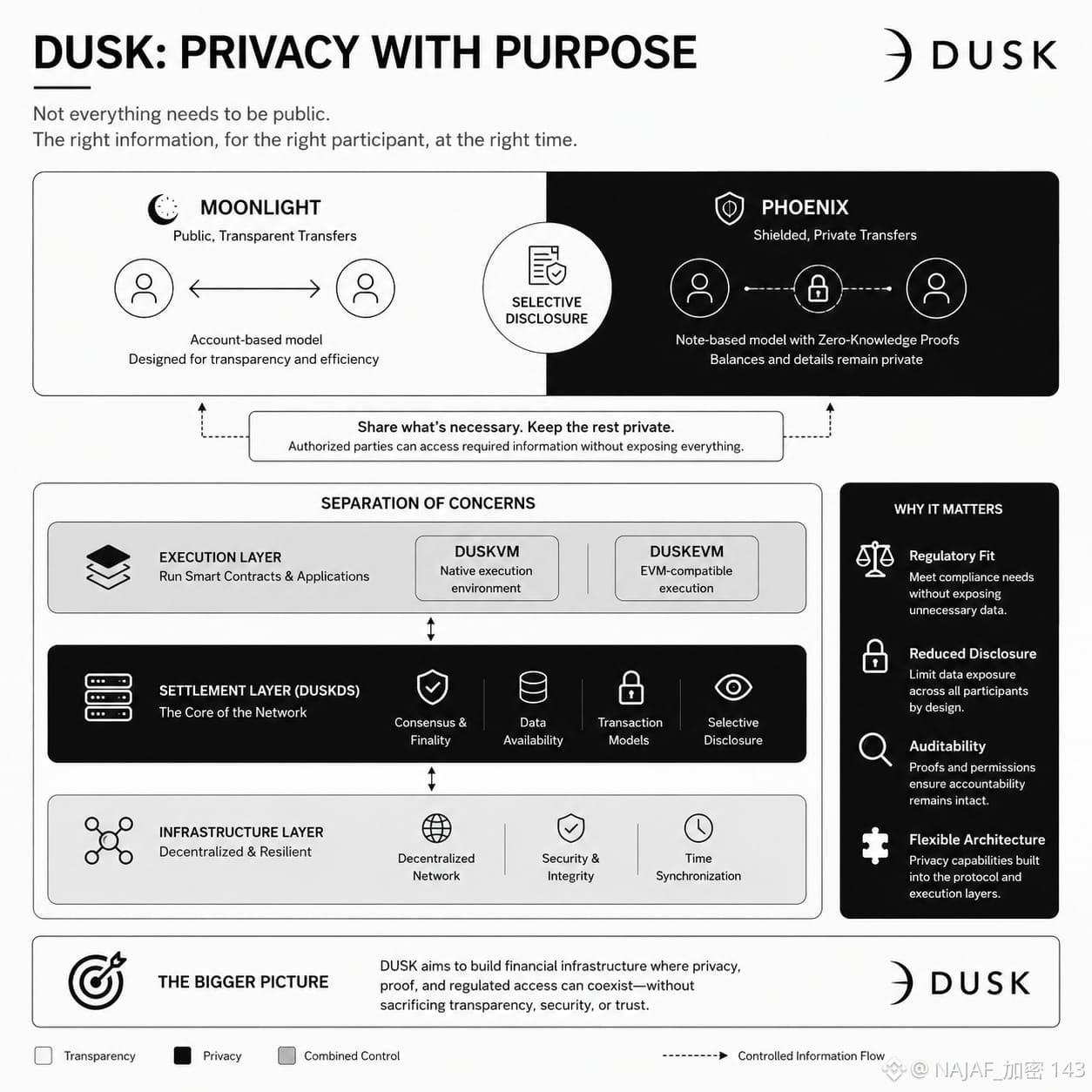
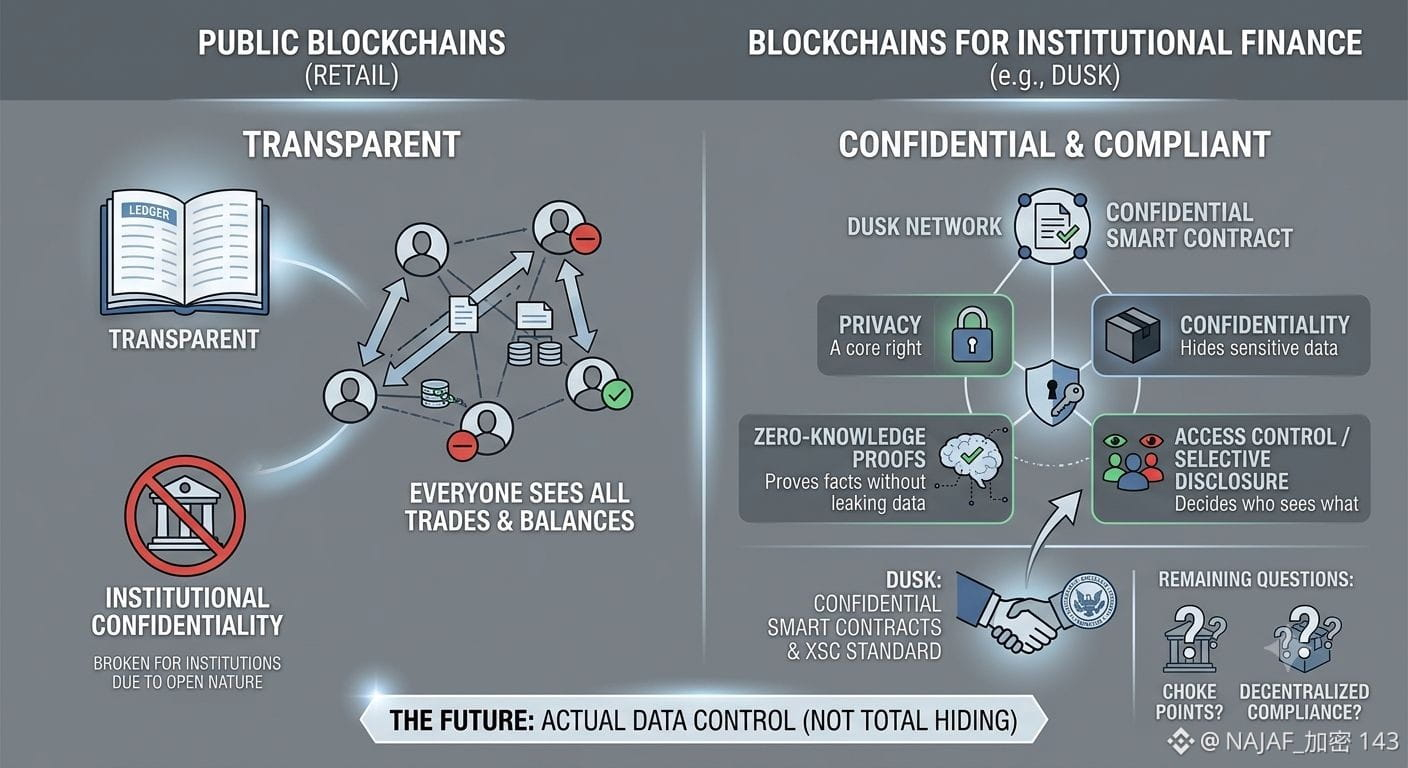
One overlooked design choice in DUSK is that privacy is not treated as a single switch. The network separates public and shielded transaction models, which creates a more practical foundation for regulated finance.
Moonlight uses public, account-based transfers. Phoenix was designed for shielded, note-based transfers using zero-knowledge proofs. Dusk’s documentation also describes selective disclosure, where authorized parties can receive the evidence they need without exposing unrelated information.
Why does that matter?
A financial market rarely needs everything to be secret. It needs the right information to reach the right participant at the right time. An investor may need to prove eligibility, while another market participant should not automatically see that investor’s full balance or transaction history.
That distinction changes how privacy can fit into compliance. Instead of choosing between a completely transparent ledger and a completely opaque system, applications can design different visibility levels around the workflow.
There is also an important architectural detail: Dusk separates settlement from execution. DuskDS handles consensus, finality, data availability, and transaction models, while DuskVM and DuskEVM provide different execution paths. This means privacy-related capabilities can sit closer to the protocol and execution layer rather than being bolted onto every application independently.
That design could reduce unnecessary disclosure while preserving accountability across markets.
For me, this is the more interesting part of @Dusk. The technical question is not simply whether blockchain data can be private. It is whether privacy, proof, and regulated access can coexist without destroying the auditability that financial infrastructure requires.
That is a harder problem, and DUSK is building around it directly.
@Dusk #dusk
One overlooked design choice in DUSK is that privacy is not treated as a single switch. The network separates public and shielded transaction models, which creates a more practical foundation for regulated finance.
Moonlight uses public, account-based transfers. Phoenix was designed for shielded, note-based transfers using zero-knowledge proofs. Dusk’s documentation also describes selective disclosure, where authorized parties can receive the evidence they need without exposing unrelated information.
Why does that matter?
A financial market rarely needs everything to be secret. It needs the right information to reach the right participant at the right time. An investor may need to prove eligibility, while another market participant should not automatically see that investor’s full balance or transaction history.
That distinction changes how privacy can fit into compliance. Instead of choosing between a completely transparent ledger and a completely opaque system, applications can design different visibility levels around the workflow.
There is also an important architectural detail: Dusk separates settlement from execution. DuskDS handles consensus, finality, data availability, and transaction models, while DuskVM and DuskEVM provide different execution paths. This means privacy-related capabilities can sit closer to the protocol and execution layer rather than being bolted onto every application independently.
That design could reduce unnecessary disclosure while preserving accountability across markets.
For me, this is the more interesting part of @Dusk. The technical question is not simply whether blockchain data can be private. It is whether privacy, proof, and regulated access can coexist without destroying the auditability that financial infrastructure requires.
That is a harder problem, and DUSK is building around it directly.
@Dusk #dusk

Sonu7856
·
--
Solana is bringing speed, scalability, and innovation to the blockchain world. ⚡️ With low fees, fast transactions, and a growing ecosystem, $SOL continues to attract builders and users globally. Keep an eye on Solana as Web3 evolves. 🚀🌐 #Solana #SOL #Binance #Web3 #Crypto

生蚝哥Oyster
·
--
Haussier重磅突破!时隔101天,比特币再度站上80000美元关口,逼空行情全线爆发
8月24日,比特币时隔101天再度触碰80000美元,24小时涨幅3.62%,单周涨幅逼近30%,反弹力度超市场预期。
本轮上涨属于多重力量共振:首先是拥挤的空头仓位遭遇大规模清算,价格上行触发止损单,被动买盘进一步加速拉升行情,短期逼空效应十分明显;其次美国财政部加码长债回购,长端美债收益率回落,美元走弱,宏观流动性预期改善,给加密资产提供上涨土壤;再加美国加密监管传出积极信号,现货ETF资金持续回流,机构资金重新进场托底价格。
短评:短期暴涨很大一部分来自空头回补,属于杠杆资金推动的快速反弹,并非单边无回调牛市。80000美元是重要心理与技术关口,能否站稳还要看后续ETF持续性资金流入、美债走势以及监管落地进度,高位波动会急剧放大,务必警惕冲高之后的获利回吐风险。
⚠️资讯仅供参考,不构成任何投资建议
#BTC触及80000美元
8月24日,比特币时隔101天再度触碰80000美元,24小时涨幅3.62%,单周涨幅逼近30%,反弹力度超市场预期。
本轮上涨属于多重力量共振:首先是拥挤的空头仓位遭遇大规模清算,价格上行触发止损单,被动买盘进一步加速拉升行情,短期逼空效应十分明显;其次美国财政部加码长债回购,长端美债收益率回落,美元走弱,宏观流动性预期改善,给加密资产提供上涨土壤;再加美国加密监管传出积极信号,现货ETF资金持续回流,机构资金重新进场托底价格。
短评:短期暴涨很大一部分来自空头回补,属于杠杆资金推动的快速反弹,并非单边无回调牛市。80000美元是重要心理与技术关口,能否站稳还要看后续ETF持续性资金流入、美债走势以及监管落地进度,高位波动会急剧放大,务必警惕冲高之后的获利回吐风险。
⚠️资讯仅供参考,不构成任何投资建议
#BTC触及80000美元





Bilverse
·
--
🔥 BNB BIG REWARDS GIVEAWAY! 🎁
Want to claim your reward? 👀💰
It’s super simple:
1️⃣ Follow BILVERSE
2️⃣ Comment “999” 👇
That’s it! 🎉
🔥 Big rewards, stronger community!
Click here to DOUBLE your Rewards! 🧧🚀
Join the BILVERSE Army and let’s grow together. 🚀🌎
#BNB #RedPacketMission #Bilverse #CryptoCommunity
Want to claim your reward? 👀💰
It’s super simple:
1️⃣ Follow BILVERSE
2️⃣ Comment “999” 👇
That’s it! 🎉
🔥 Big rewards, stronger community!
Click here to DOUBLE your Rewards! 🧧🚀
Join the BILVERSE Army and let’s grow together. 🚀🌎
#BNB #RedPacketMission #Bilverse #CryptoCommunity




燕寶Melissa
·
--
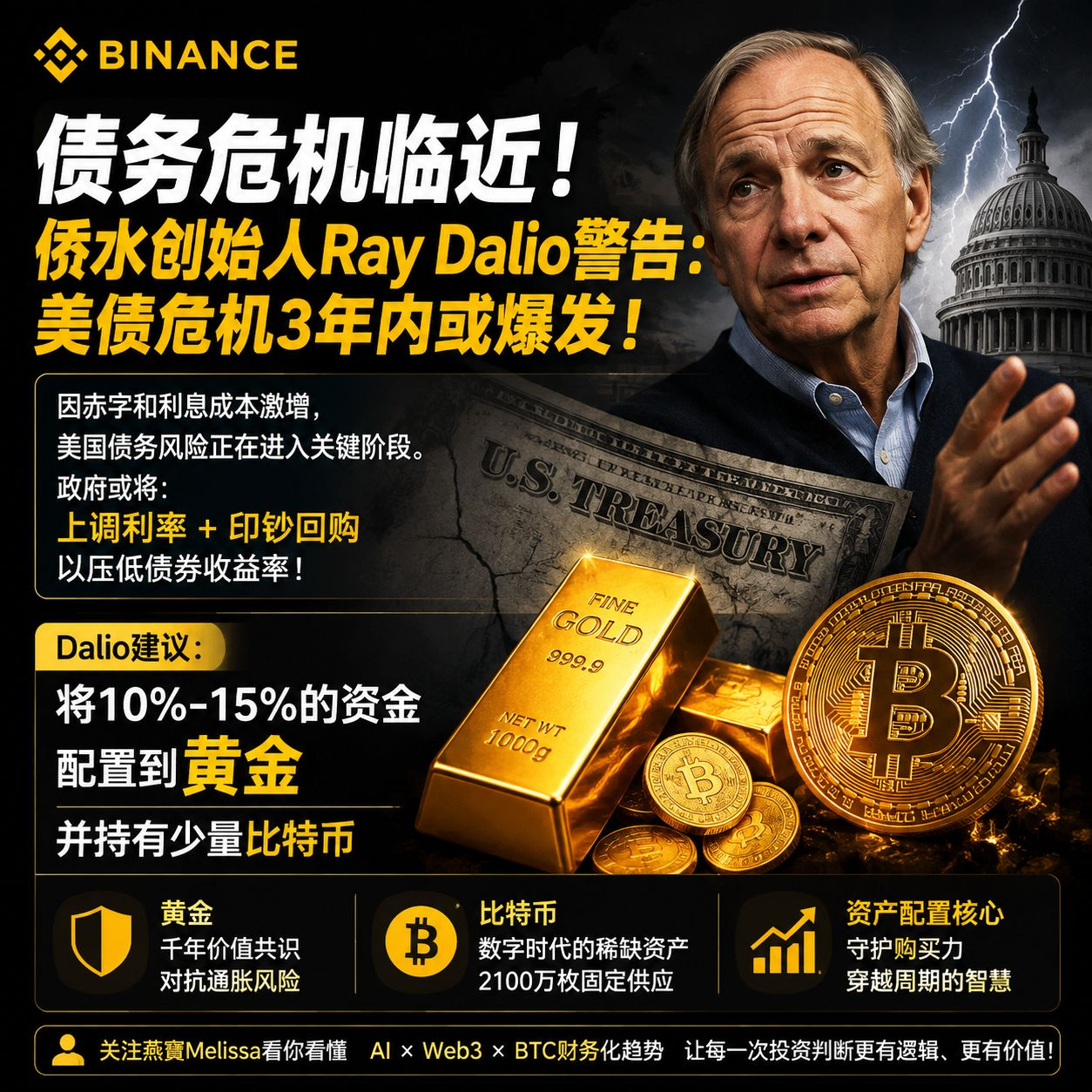
Haussier【债务危机倒计时?Ray Dalio:未来3年或迎来美债大考】
全球最大的债务风险,正在被越来越多投资者关注。
桥水创始人 最新观点指出:
美国财政赤字持续扩大,利息支出不断攀升,债务压力正在进入关键阶段。如果债务问题进一步恶化,未来几年市场可能面临更大的金融波动。
当政府需要降低债券收益率时,可能会通过货币政策调整、增加流动性等方式缓解压力。
这意味着:
📌 现金购买力可能继续受到挑战
📌 传统资产波动风险提升
📌 稀缺资产的重要性正在上升
Dalio建议投资者考虑:
🟡 10%-15%的资产配置黄金
同时持有一定比例比特币,作为数字时代的价值储存资产
为什么越来越多机构开始关注 BTC?
因为比特币具备:
✅ 2100万枚固定供应
✅ 全球流动性市场
✅ 不依赖单一国家信用体系
未来的资产配置逻辑,正在从“追求收益”转向“守护购买力”。
黄金代表千年的价值共识, 比特币代表新时代的数字稀缺。
真正的风险,不是市场波动, 而是不理解时代变化
#比特币周涨23.6%
$BTC
$ETH
$BNB
全球最大的债务风险,正在被越来越多投资者关注。
桥水创始人 最新观点指出:
美国财政赤字持续扩大,利息支出不断攀升,债务压力正在进入关键阶段。如果债务问题进一步恶化,未来几年市场可能面临更大的金融波动。
当政府需要降低债券收益率时,可能会通过货币政策调整、增加流动性等方式缓解压力。
这意味着:
📌 现金购买力可能继续受到挑战
📌 传统资产波动风险提升
📌 稀缺资产的重要性正在上升
Dalio建议投资者考虑:
🟡 10%-15%的资产配置黄金
同时持有一定比例比特币,作为数字时代的价值储存资产
为什么越来越多机构开始关注 BTC?
因为比特币具备:
✅ 2100万枚固定供应
✅ 全球流动性市场
✅ 不依赖单一国家信用体系
未来的资产配置逻辑,正在从“追求收益”转向“守护购买力”。
黄金代表千年的价值共识, 比特币代表新时代的数字稀缺。
真正的风险,不是市场波动, 而是不理解时代变化
#比特币周涨23.6%
$BTC
$ETH
$BNB

Evie埃维利里什
·
--
HaussierToday, we’re not chasing charts just good vibes!
Crypto is more than profits and losses. It’s the people, friendships, and memories we make along the way. 🤝
Wishing you good health, good luck, and plenty of green candles!
RED PACKET DROP!
Follow
Like
Comment
$PROM
#BTC80K $UAI
Crypto is more than profits and losses. It’s the people, friendships, and memories we make along the way. 🤝
Wishing you good health, good luck, and plenty of green candles!
RED PACKET DROP!
Follow
Like
Comment
$PROM
#BTC80K $UAI

$BTC The US-Canada trade war has officially begun!
The US 50% tariffs are now in effect, hitting roughly $20 billion worth of Canadian goods!
Canada is firing back directly with retaliatory measures on September 8.
This time, both sides flipped the table before even staying at the negotiation board!
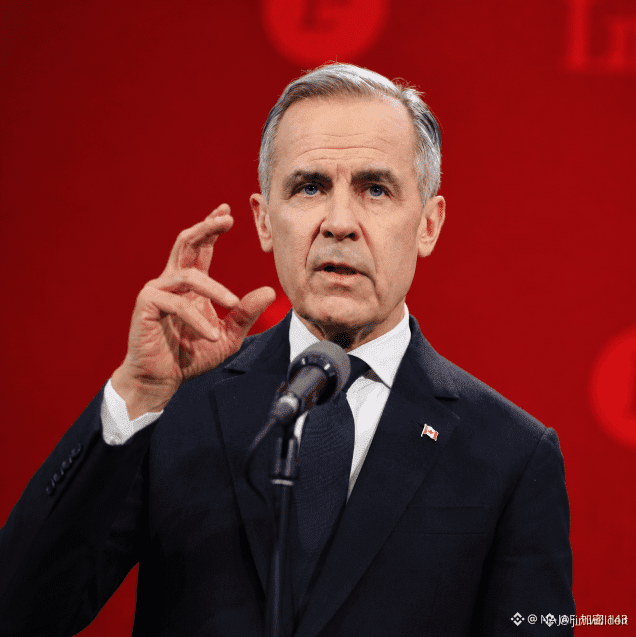
The new round of 50% US tariffs targeting approximately $20 billion in Canadian imports has officially gone into effect, covering a wide range of sectors including wine, furniture, dairy products, cement, and clothing. Canadian Prime Minister Mark Carney subsequently announced that starting September 8, Canada will launch a "dollar-for-dollar" retaliatory response, targeting US steel, dairy, household appliances, agricultural equipment, pulp and paper, and electronic products.
To make matters worse, three consecutive days of bilateral negotiations completely broke down, and no new talks are currently scheduled. With total US-Canada annual trade in goods and services approaching $880 billion, throwing tariffs back and forth like this could easily reignite inflation and drive up supply chain costs, forcing markets to recalculate the path for interest rates.
Now that the tariffs are actually landing, risk assets just gained another macroeconomic wildcard.
Once the panic subsides, whether BTC can hold its ground will be the real show to watch! ETHSOL
#USCanadaTradeTalksCollapse : Canada Vows Retaliation
Click the card below to jump straight into action! 👇
The US 50% tariffs are now in effect, hitting roughly $20 billion worth of Canadian goods!
Canada is firing back directly with retaliatory measures on September 8.
This time, both sides flipped the table before even staying at the negotiation board!
The new round of 50% US tariffs targeting approximately $20 billion in Canadian imports has officially gone into effect, covering a wide range of sectors including wine, furniture, dairy products, cement, and clothing. Canadian Prime Minister Mark Carney subsequently announced that starting September 8, Canada will launch a "dollar-for-dollar" retaliatory response, targeting US steel, dairy, household appliances, agricultural equipment, pulp and paper, and electronic products.
To make matters worse, three consecutive days of bilateral negotiations completely broke down, and no new talks are currently scheduled. With total US-Canada annual trade in goods and services approaching $880 billion, throwing tariffs back and forth like this could easily reignite inflation and drive up supply chain costs, forcing markets to recalculate the path for interest rates.
Now that the tariffs are actually landing, risk assets just gained another macroeconomic wildcard.
Once the panic subsides, whether BTC can hold its ground will be the real show to watch! ETHSOL
#USCanadaTradeTalksCollapse : Canada Vows Retaliation
Click the card below to jump straight into action! 👇
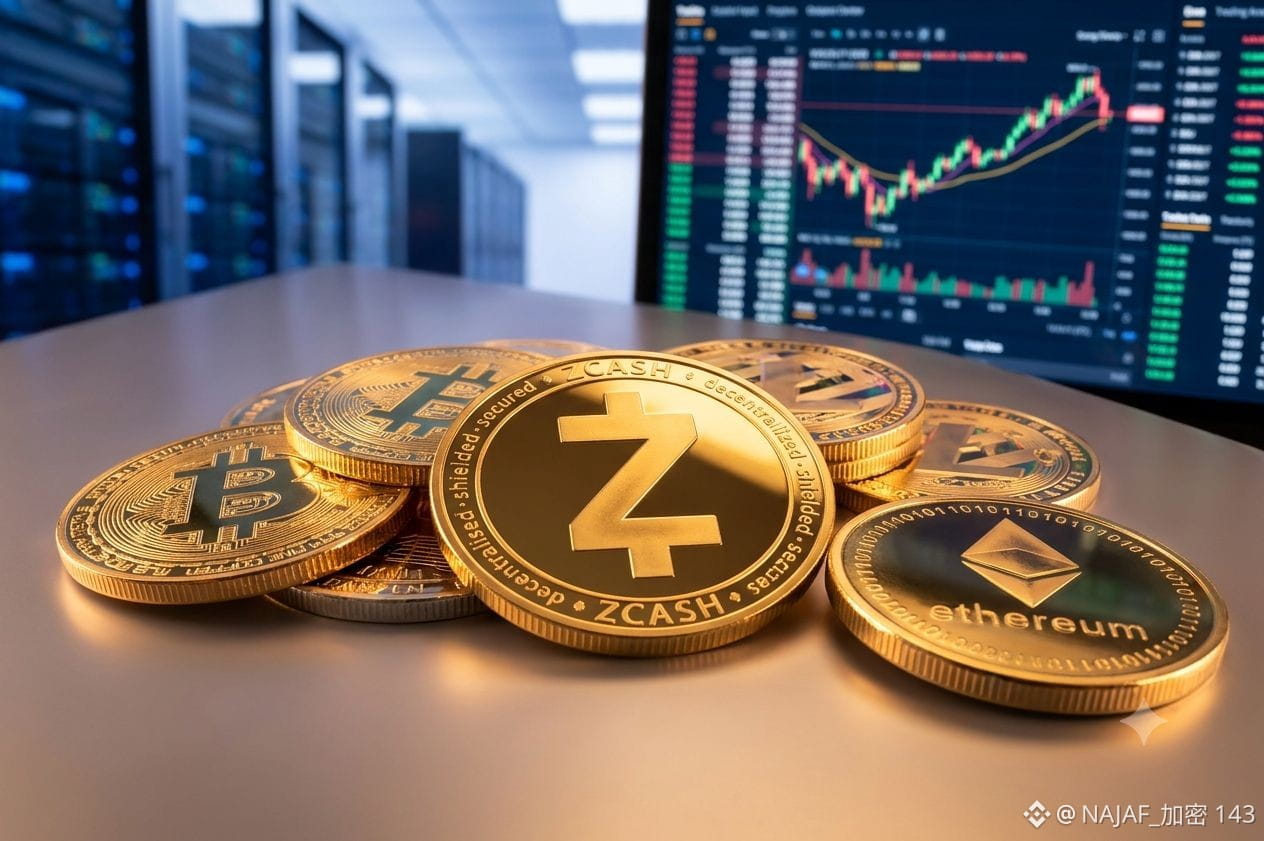
🔒 Zcash ($ZEC ): Importance, Market Position & Future Analysis
Importance in Crypto:
Zcash ($ZEC ) is a pioneer in blockchain privacy, utilizing zero-knowledge cryptography (zk-SNARKs). It gives users optional confidentiality, allowing selective disclosure of sender, receiver, and transaction amounts. This makes ZEC a key baseline for institutional-grade financial privacy and sovereign digital cash.
Current Market Position:
$ZEC is experiencing strong momentum, trading near $800–$850 with a market capitalization exceeding $13 Billion (ranking around #11 globally). Institutional tailwinds, such as venture backing and ETF developments, have reignited accumulation, though short-term indicators show overbought technical signals.
Future Outlook & Analysis:
Bull Case: Strong adoption of shielded pools, a planned transition to Proof-of-Stake, and institutional interest present long-term structural upside.
Bear Case: Regulatory headwinds targeting private accounts (e.g., EU exchange rules) pose persistent delisting risks.
Verdict: High long-term utility, but watch key support levels for short-term corrections.
#zec $ZEC @ZEC #ZECUSDT #Binance
Importance in Crypto:
Zcash ($ZEC ) is a pioneer in blockchain privacy, utilizing zero-knowledge cryptography (zk-SNARKs). It gives users optional confidentiality, allowing selective disclosure of sender, receiver, and transaction amounts. This makes ZEC a key baseline for institutional-grade financial privacy and sovereign digital cash.
Current Market Position:
$ZEC is experiencing strong momentum, trading near $800–$850 with a market capitalization exceeding $13 Billion (ranking around #11 globally). Institutional tailwinds, such as venture backing and ETF developments, have reignited accumulation, though short-term indicators show overbought technical signals.
Future Outlook & Analysis:
Bull Case: Strong adoption of shielded pools, a planned transition to Proof-of-Stake, and institutional interest present long-term structural upside.
Bear Case: Regulatory headwinds targeting private accounts (e.g., EU exchange rules) pose persistent delisting risks.
Verdict: High long-term utility, but watch key support levels for short-term corrections.
#zec $ZEC @ZEC #ZECUSDT #Binance
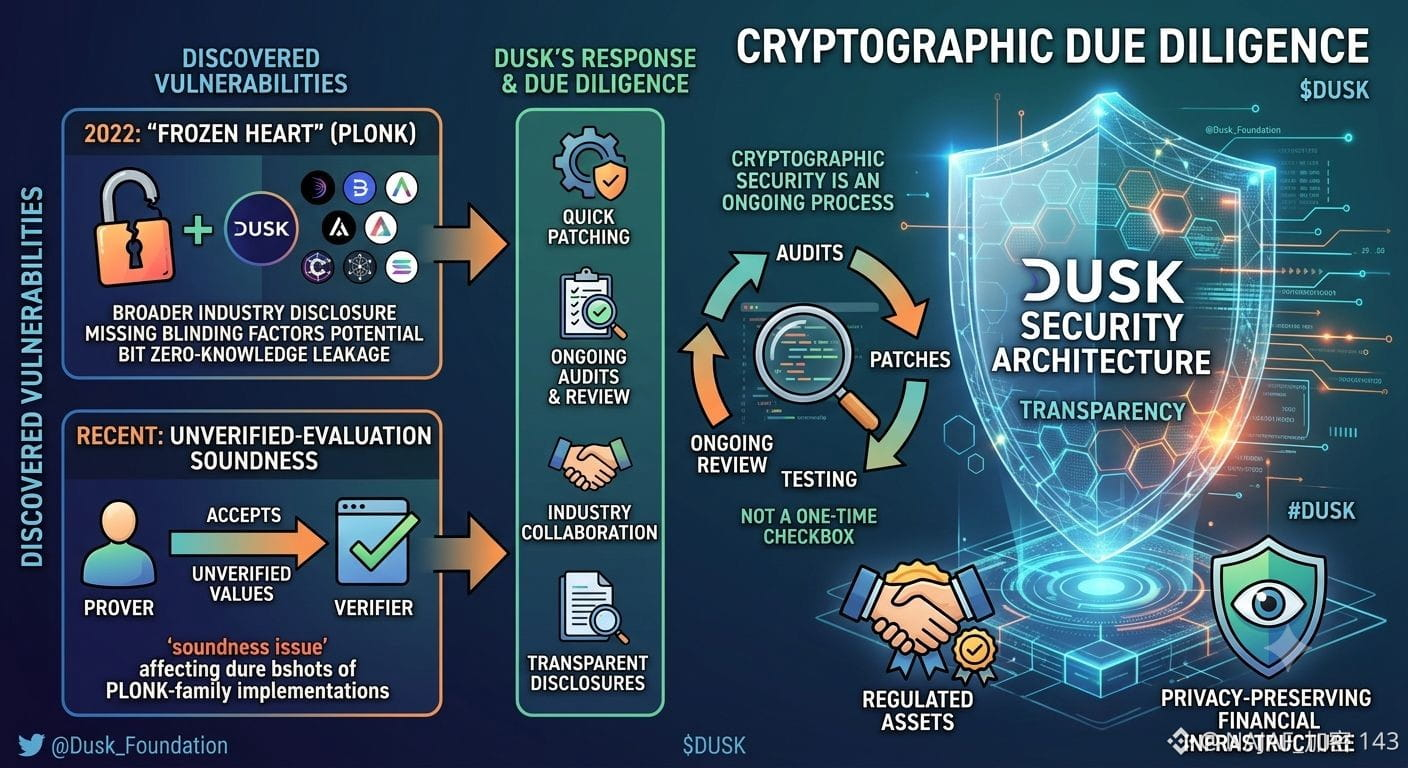
Doing due diligence on @Dusk means looking honestly at its security track record, not just the pitch.
In 2022, Trail of Bits disclosed the “Frozen Heart” class vulnerability affecting several PLONK implementations, including Dusk’s. The issue involved missing blinding factors in prover polynomials, which could theoretically weaken the zero-knowledge property and expose information about private inputs.
Dusk patched the issue quickly, and importantly, this was part of a broader disclosure affecting multiple projects rather than a vulnerability unique to Dusk.
More recently, researchers have highlighted unverified-evaluation soundness issues affecting PLONK-family implementations across the industry, including Dusk’s implementation. This is a subtler class of problem where a verifier may accept prover-supplied values that should instead be independently computed.
The bigger takeaway for me is that cryptographic security is not a one-time checkbox. Audits, disclosures, patches, testing, and ongoing review all matter.
Dusk’s response to these issues is therefore just as important as the existence of the bugs themselves. For a network targeting regulated assets and privacy-preserving financial infrastructure, transparency around security is essential.
@Dusk $DUSK #dusk
In 2022, Trail of Bits disclosed the “Frozen Heart” class vulnerability affecting several PLONK implementations, including Dusk’s. The issue involved missing blinding factors in prover polynomials, which could theoretically weaken the zero-knowledge property and expose information about private inputs.
Dusk patched the issue quickly, and importantly, this was part of a broader disclosure affecting multiple projects rather than a vulnerability unique to Dusk.
More recently, researchers have highlighted unverified-evaluation soundness issues affecting PLONK-family implementations across the industry, including Dusk’s implementation. This is a subtler class of problem where a verifier may accept prover-supplied values that should instead be independently computed.
The bigger takeaway for me is that cryptographic security is not a one-time checkbox. Audits, disclosures, patches, testing, and ongoing review all matter.
Dusk’s response to these issues is therefore just as important as the existence of the bugs themselves. For a network targeting regulated assets and privacy-preserving financial infrastructure, transparency around security is essential.
@Dusk $DUSK #dusk
#dusk $DUSK @Dusk
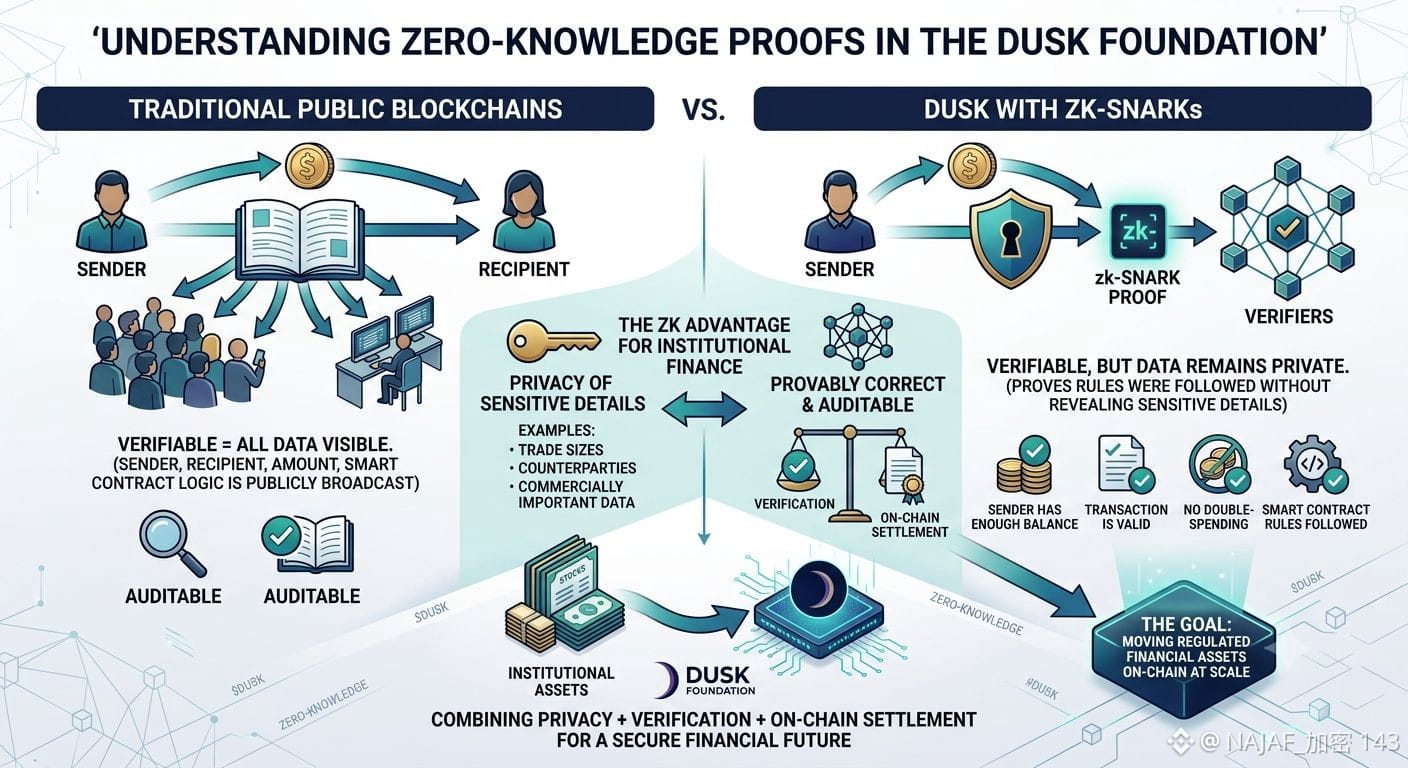
The zero-knowledge part of @Dusk took me some time to fully understand, so here’s how I see it now.
On most public blockchains, being “verifiable” usually means the transaction data is visible to everyone. Dusk is trying to separate these two ideas using zero-knowledge proofs, including zk-SNARKs.
A zk-SNARK can prove that a transaction follows the rules without exposing all the private information behind it.
For example, the network can verify that:
• the sender has enough balance
• the transaction is valid
• there is no double-spending
• the smart contract rules were followed
But the sensitive details don’t necessarily need to be publicly revealed.
Think of it like proving you passed an exam without showing everyone your entire answer sheet. The verifier only needs proof that the result is correct.
My perspective: this is where Dusk becomes particularly interesting to me. I don’t think institutional finance needs “complete secrecy.” It needs the right information to remain private while still making the system provably correct and auditable.
Trade sizes, counterparties, and other sensitive financial details can be commercially important. Broadcasting everything on a public ledger can create unnecessary exposure.
So, for me, the real value of zero-knowledge isn’t simply “privacy.” It’s the ability to combine privacy + verification + on-chain settlement.
That could be an important piece of infrastructure if regulated financial assets are going to move on-chain at scale.
$DUSK #DUSK
The zero-knowledge part of @Dusk took me some time to fully understand, so here’s how I see it now.
On most public blockchains, being “verifiable” usually means the transaction data is visible to everyone. Dusk is trying to separate these two ideas using zero-knowledge proofs, including zk-SNARKs.
A zk-SNARK can prove that a transaction follows the rules without exposing all the private information behind it.
For example, the network can verify that:
• the sender has enough balance
• the transaction is valid
• there is no double-spending
• the smart contract rules were followed
But the sensitive details don’t necessarily need to be publicly revealed.
Think of it like proving you passed an exam without showing everyone your entire answer sheet. The verifier only needs proof that the result is correct.
My perspective: this is where Dusk becomes particularly interesting to me. I don’t think institutional finance needs “complete secrecy.” It needs the right information to remain private while still making the system provably correct and auditable.
Trade sizes, counterparties, and other sensitive financial details can be commercially important. Broadcasting everything on a public ledger can create unnecessary exposure.
So, for me, the real value of zero-knowledge isn’t simply “privacy.” It’s the ability to combine privacy + verification + on-chain settlement.
That could be an important piece of infrastructure if regulated financial assets are going to move on-chain at scale.
$DUSK #DUSK
Vérifié
#Gold $XAU @Gold
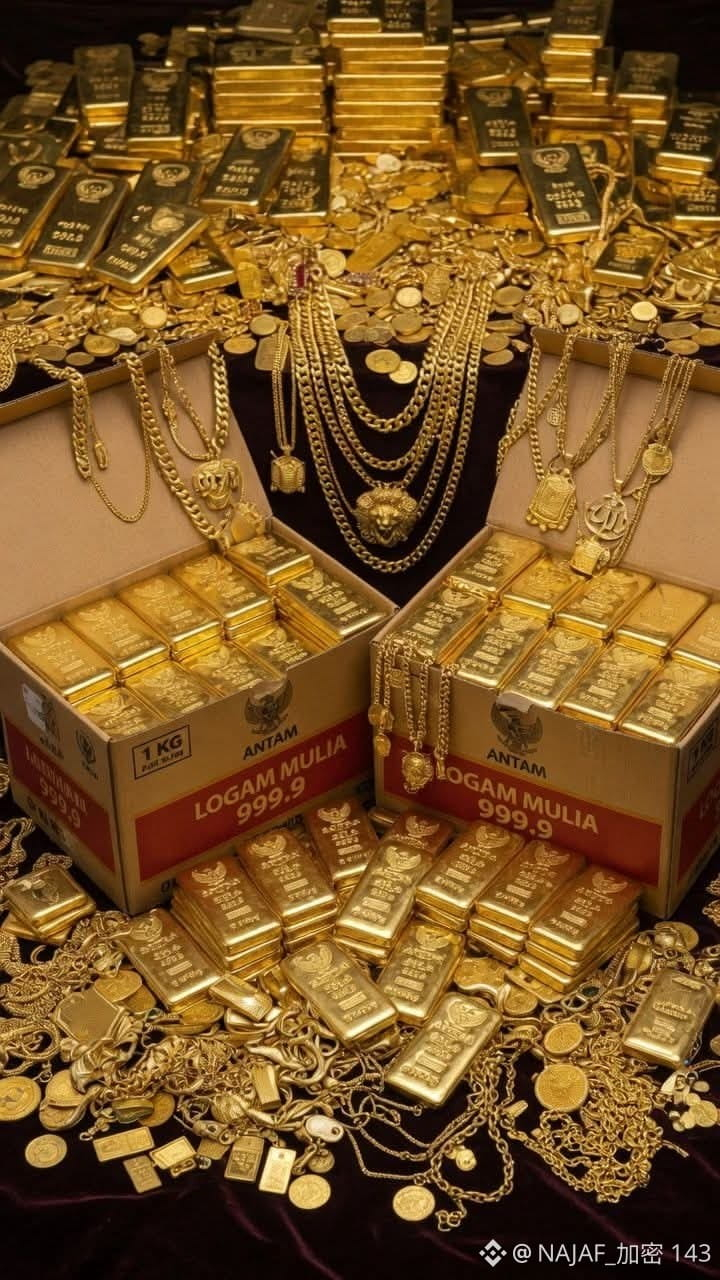
Gold’s Current Position in the Crypto Era — And What Comes Next :
Gold is no longer just a traditional safe-haven asset. In today’s digital financial landscape, it is increasingly being viewed alongside Bitcoin and other crypto assets as a hedge against inflation, currency weakness and economic uncertainty.
As of August 2026, gold is trading around $4,600 per ounce, after a highly volatile year. It reached a record near $5,595 earlier in 2026 before correcting sharply and then recovering. Recent strength has been supported by a weaker U.S. dollar, concerns over government debt, geopolitical risks and expectations around monetary policy.
Gold’s connection with crypto is also becoming more interesting. Tokenized gold allows investors to gain digital exposure to physical gold while benefiting from blockchain-based settlement and 24/7 trading. This creates a bridge between traditional finance and the crypto economy.
Looking ahead, the long-term picture remains constructive. The World Gold Council reports that central-bank demand remains strong, while 89% of surveyed reserve managers expect global central-bank gold holdings to increase over the next 12 months.
Major market forecasts are also bullish, although they vary significantly. J.P. Morgan expects gold could reach around $6,000 by the end of 2026 and potentially $6,300 in 2027, while a Reuters analyst survey is more conservative.
My view: gold’s future is not about replacing crypto—it is about becoming an increasingly important part of the same global diversification story. If geopolitical tensions, debt concerns and currency uncertainty persist, gold could remain one of the strongest long-term stores of value.
(Its my own opinion i will not recommend to anyone .)
$XAU #gold
Gold’s Current Position in the Crypto Era — And What Comes Next :
Gold is no longer just a traditional safe-haven asset. In today’s digital financial landscape, it is increasingly being viewed alongside Bitcoin and other crypto assets as a hedge against inflation, currency weakness and economic uncertainty.
As of August 2026, gold is trading around $4,600 per ounce, after a highly volatile year. It reached a record near $5,595 earlier in 2026 before correcting sharply and then recovering. Recent strength has been supported by a weaker U.S. dollar, concerns over government debt, geopolitical risks and expectations around monetary policy.
Gold’s connection with crypto is also becoming more interesting. Tokenized gold allows investors to gain digital exposure to physical gold while benefiting from blockchain-based settlement and 24/7 trading. This creates a bridge between traditional finance and the crypto economy.
Looking ahead, the long-term picture remains constructive. The World Gold Council reports that central-bank demand remains strong, while 89% of surveyed reserve managers expect global central-bank gold holdings to increase over the next 12 months.
Major market forecasts are also bullish, although they vary significantly. J.P. Morgan expects gold could reach around $6,000 by the end of 2026 and potentially $6,300 in 2027, while a Reuters analyst survey is more conservative.
My view: gold’s future is not about replacing crypto—it is about becoming an increasingly important part of the same global diversification story. If geopolitical tensions, debt concerns and currency uncertainty persist, gold could remain one of the strongest long-term stores of value.
(Its my own opinion i will not recommend to anyone .)
$XAU #gold

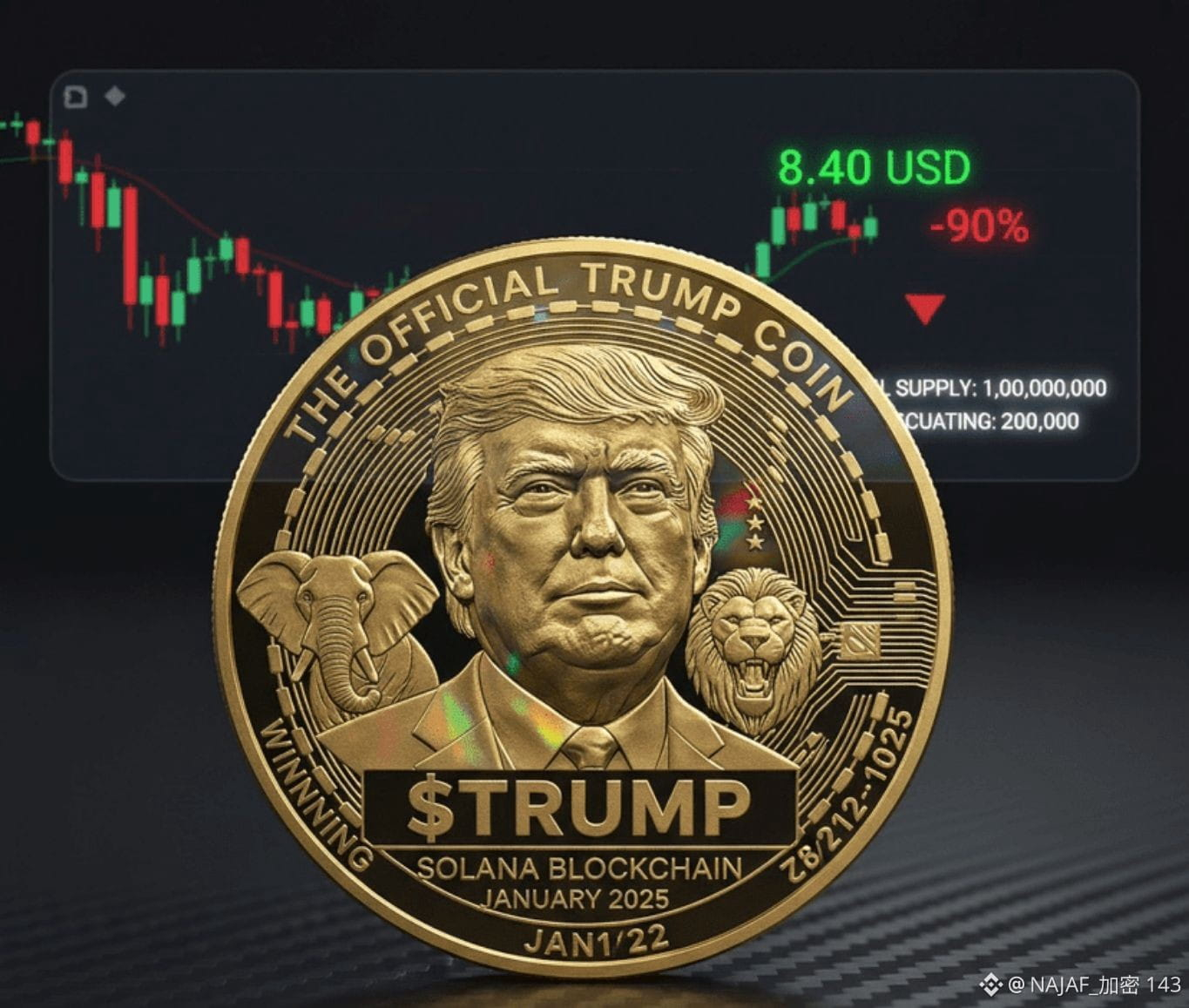
$TRUMP is back on traders’ radar
The Official Trump token has been moving with the wider crypto market, but its story is still very different from Bitcoin or major altcoins.
Recent data shows TRUMP jumped from around $1.41 to as high as $1.82 on August 19, with daily trading volume reaching roughly $149M.
The move came as attention returned to Trump’s crypto agenda. Trump has been pushing Congress to advance the Clarity Act, while the broader market also rallied strongly, with Bitcoin moving above $70K.
But here’s the important part: $TRUMP remains a highly speculative memecoin. Regulatory scrutiny is still hanging over it, including calls from U.S. senators for an SEC investigation.
For me, the interesting thing isn’t just the price pump. It’s how quickly political headlines, social attention and crypto sentiment can move this token.
If momentum continues, $1.80 becomes an important area to watch. But if hype fades, volatility can work both ways.
High attention, high risk that’s $TRUMP right now.
The Official Trump token has been moving with the wider crypto market, but its story is still very different from Bitcoin or major altcoins.
Recent data shows TRUMP jumped from around $1.41 to as high as $1.82 on August 19, with daily trading volume reaching roughly $149M.
The move came as attention returned to Trump’s crypto agenda. Trump has been pushing Congress to advance the Clarity Act, while the broader market also rallied strongly, with Bitcoin moving above $70K.
But here’s the important part: $TRUMP remains a highly speculative memecoin. Regulatory scrutiny is still hanging over it, including calls from U.S. senators for an SEC investigation.
For me, the interesting thing isn’t just the price pump. It’s how quickly political headlines, social attention and crypto sentiment can move this token.
If momentum continues, $1.80 becomes an important area to watch. But if hype fades, volatility can work both ways.
High attention, high risk that’s $TRUMP right now.
BNB is showing strong momentum as the broader crypto market turns bullish. BNB recently climbed to around $670, gaining more than 10% over just a few days. Bitcoin’s strong weekly rally and improving market sentiment are also supporting altcoins. BNB’s utility across the Binance ecosystem remains a key fundamental strength. The market still carries volatility, so traders should watch resistance near recent highs and manage risk carefully.
#BNB #Binance #Crypto #BNBChain #Bitcoin
#BNB #Binance #Crypto #BNBChain #Bitcoin

Vérifié
#dusk $DUSK @Dusk
One detail about @Dusk_Foundation’s XSC design that I think deserves more attention is what happens when a shareholder loses their private key.
In a typical crypto wallet, losing your private key can mean permanently losing access to your assets. That model works for self-custody, where the wallet itself is the final authority.
But regulated securities are different.
If you own shares in a company and lose access to your brokerage account, you don’t suddenly stop being the legal owner of those shares. Your ownership is still recognized through the proper legal and administrative system.
That’s where XSC takes an interesting approach. Its design considers mechanisms for handling situations where an investor loses access to their on-chain key, allowing ownership rights to potentially be recovered or reassigned through the appropriate legal process.
This is an important difference between tokenized securities and ordinary crypto assets.
The goal isn’t simply to make securities “blockchain tokens.” The infrastructure also needs to account for real-world requirements such as compliance, ownership records, transfers, and recovery procedures.
At the same time, one question remains interesting: how much trust, governance, or centralization is involved in the recovery process?
For regulated finance, some level of controlled intervention may actually be necessary. The challenge is finding the right balance between blockchain-based ownership, investor protection, and decentralization.
That’s one reason I find Dusk’s approach worth watching.
$DUSK #Dusk @Dusk
One detail about @Dusk_Foundation’s XSC design that I think deserves more attention is what happens when a shareholder loses their private key.
In a typical crypto wallet, losing your private key can mean permanently losing access to your assets. That model works for self-custody, where the wallet itself is the final authority.
But regulated securities are different.
If you own shares in a company and lose access to your brokerage account, you don’t suddenly stop being the legal owner of those shares. Your ownership is still recognized through the proper legal and administrative system.
That’s where XSC takes an interesting approach. Its design considers mechanisms for handling situations where an investor loses access to their on-chain key, allowing ownership rights to potentially be recovered or reassigned through the appropriate legal process.
This is an important difference between tokenized securities and ordinary crypto assets.
The goal isn’t simply to make securities “blockchain tokens.” The infrastructure also needs to account for real-world requirements such as compliance, ownership records, transfers, and recovery procedures.
At the same time, one question remains interesting: how much trust, governance, or centralization is involved in the recovery process?
For regulated finance, some level of controlled intervention may actually be necessary. The challenge is finding the right balance between blockchain-based ownership, investor protection, and decentralization.
That’s one reason I find Dusk’s approach worth watching.
$DUSK #Dusk @Dusk
Vérifié
#dusk $DUSK @Dusk
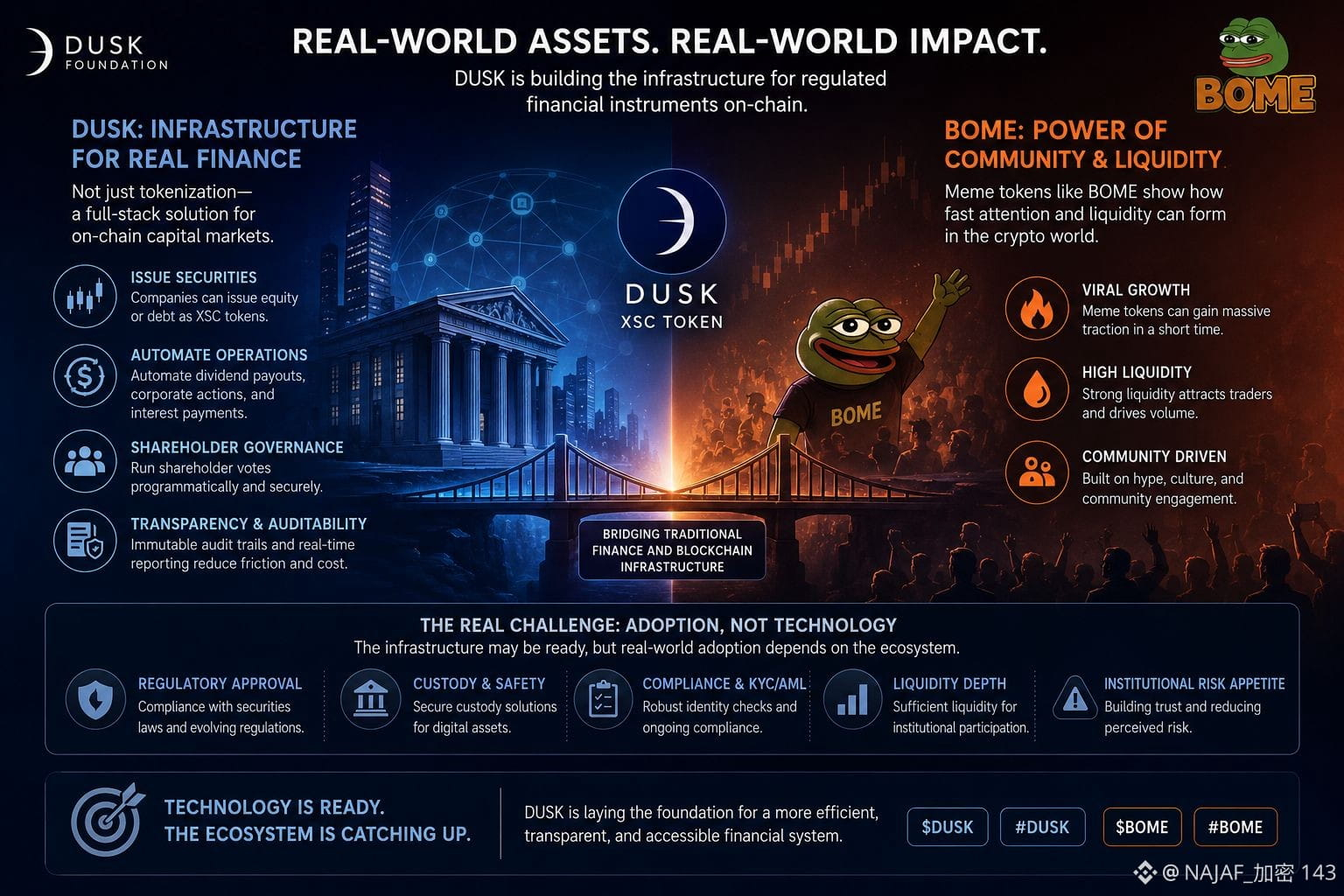
Something I hadn’t fully appreciated about @Dusk until I dug deeper into their materials: the pitch isn’t simply “tokenize things.” It’s specifically about giving companies a way to raise capital and manage cap tables through on-chain financial instruments.
In theory, a company could issue equity or debt as an XSC token, automate dividend distributions, run shareholder votes programmatically, and create transparent audit trails without relying so heavily on manual reconciliation. That’s a meaningful efficiency argument because traditional securities administration can be expensive largely due to paperwork, intermediaries, and coordination between multiple parties.
There’s also an interesting contrast with meme-driven assets like BOME. BOME shows how quickly attention and liquidity can form around a token, while Dusk is targeting a much more structured use case: bringing regulated financial instruments onto blockchain infrastructure.
But I think it’s important to separate what the technology can do from what companies will adopt at scale. Regulatory approval, custody requirements, compliance, liquidity, and institutional risk appetite are likely to be much bigger bottlenecks than the underlying technology.
The infrastructure may be ready, but real-world adoption depends on the broader financial ecosystem being ready too.
That’s the part I’m watching most closely.
$DUSK $BOME #DUSK #BOME
Something I hadn’t fully appreciated about @Dusk until I dug deeper into their materials: the pitch isn’t simply “tokenize things.” It’s specifically about giving companies a way to raise capital and manage cap tables through on-chain financial instruments.
In theory, a company could issue equity or debt as an XSC token, automate dividend distributions, run shareholder votes programmatically, and create transparent audit trails without relying so heavily on manual reconciliation. That’s a meaningful efficiency argument because traditional securities administration can be expensive largely due to paperwork, intermediaries, and coordination between multiple parties.
There’s also an interesting contrast with meme-driven assets like BOME. BOME shows how quickly attention and liquidity can form around a token, while Dusk is targeting a much more structured use case: bringing regulated financial instruments onto blockchain infrastructure.
But I think it’s important to separate what the technology can do from what companies will adopt at scale. Regulatory approval, custody requirements, compliance, liquidity, and institutional risk appetite are likely to be much bigger bottlenecks than the underlying technology.
The infrastructure may be ready, but real-world adoption depends on the broader financial ecosystem being ready too.
That’s the part I’m watching most closely.
$DUSK $BOME #DUSK #BOME
Solana (SOL): The High-Speed Crypto Engine 🚀
Solana is one of the top cryptocurrencies, currently trading around $85 with a massive market cap placing it firmly among the top layer-1 networks.
Why It Matters:
⚡ Blazing Speed: Processes thousands of transactions per second via its unique Proof-of-History mechanism.
💸 Micro Fees: Average transactions cost fractions of a cent, making micro-payments practical.
🌐 Ecosystem Hub: Powers DeFi, NFTs, and Web3 apps at scale.
Solana solves crypto’s scaling problem, combining speed, affordability, and utility.
#Solana #Crypto #SOL
#ClaimNow #BinanceSquareFamily
Solana is one of the top cryptocurrencies, currently trading around $85 with a massive market cap placing it firmly among the top layer-1 networks.
Why It Matters:
⚡ Blazing Speed: Processes thousands of transactions per second via its unique Proof-of-History mechanism.
💸 Micro Fees: Average transactions cost fractions of a cent, making micro-payments practical.
🌐 Ecosystem Hub: Powers DeFi, NFTs, and Web3 apps at scale.
Solana solves crypto’s scaling problem, combining speed, affordability, and utility.
#Solana #Crypto #SOL
#ClaimNow #BinanceSquareFamily

Vérifié
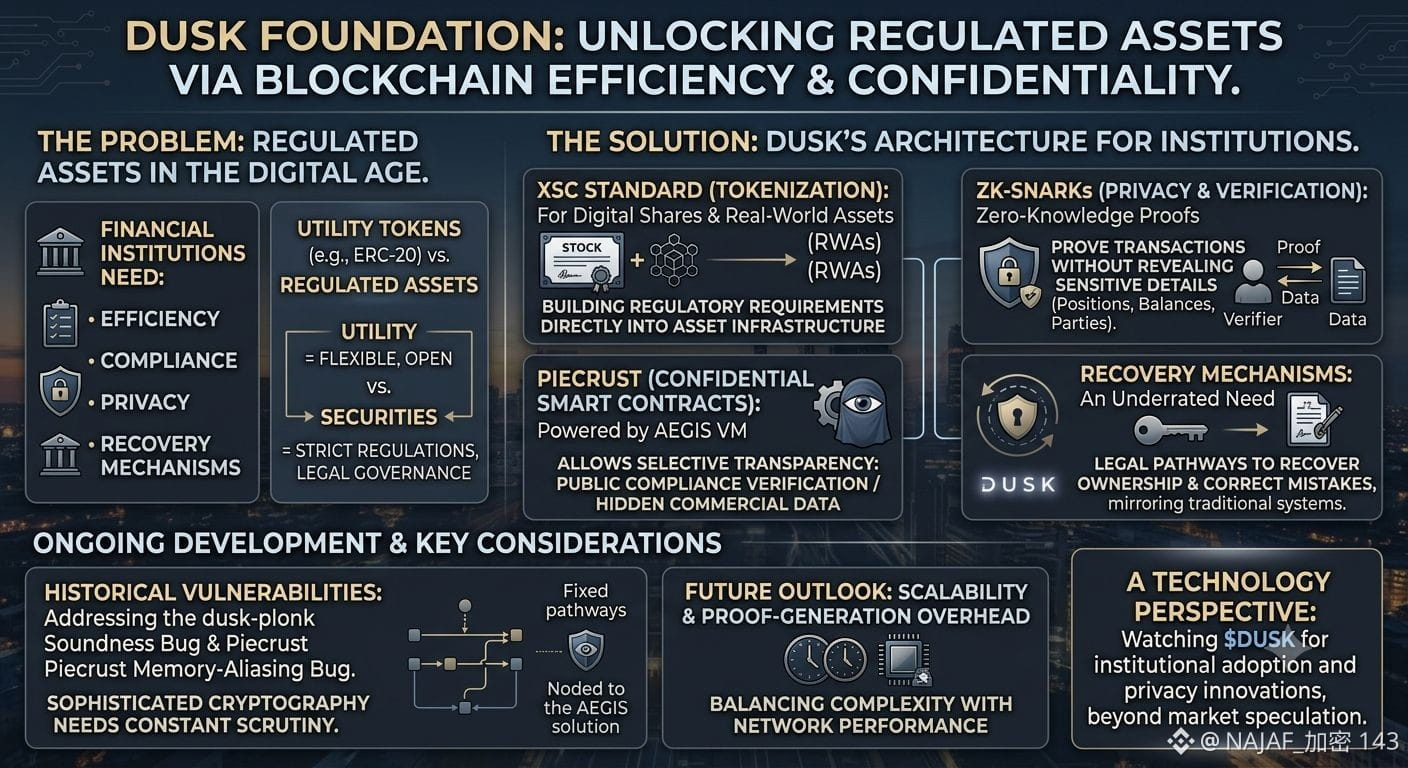
The more I research @Dusk_Foundation, the more I think the interesting part of Dusk is the problem it is trying to solve: regulated assets need blockchain efficiency, but financial institutions also need privacy, compliance and recovery mechanisms.
Dusk’s XSC Standard is one piece of that puzzle. It can be loosely compared with ERC-20 because both provide a framework for tokenized assets, but XSC is aimed specifically at securities and regulated assets. That distinction matters because a digital share isn’t necessarily governed by the same rules as a normal utility token.
This could make it possible for companies to represent securities or RWAs on-chain while building regulatory requirements into the asset infrastructure itself.
But I think recovery is an underrated issue. If a shareholder loses a private key, should their legal ownership disappear forever? Traditional securities systems have mechanisms for correcting mistakes and recovering ownership. Tokenized securities may need comparable legal pathways.
Privacy is another major part of Dusk’s design. zk-SNARKs can prove that a transaction satisfies certain conditions without exposing all the sensitive information behind it. For financial markets, that could mean verification without broadcasting every position, balance or transaction detail.
Piecrust confidential smart contracts push the concept further. Imagine compliance information being verifiable publicly while commercially sensitive financial data remains hidden.
That’s where selective transparency becomes interesting.
Still, I wouldn’t treat Dusk as a finished solution. The historical dusk-plonk soundness bug and Piecrust memory-aliasing bug are reminders that sophisticated cryptography and confidential execution need constant scrutiny. The memory-aliasing issue was addressed in AEGIS, but proof-generation overhead and scalability remain important questions.
I’m watching $DUSK from a technology perspective, not just a market perspective.
@Dusk $DUSK #dusk
Dusk’s XSC Standard is one piece of that puzzle. It can be loosely compared with ERC-20 because both provide a framework for tokenized assets, but XSC is aimed specifically at securities and regulated assets. That distinction matters because a digital share isn’t necessarily governed by the same rules as a normal utility token.
This could make it possible for companies to represent securities or RWAs on-chain while building regulatory requirements into the asset infrastructure itself.
But I think recovery is an underrated issue. If a shareholder loses a private key, should their legal ownership disappear forever? Traditional securities systems have mechanisms for correcting mistakes and recovering ownership. Tokenized securities may need comparable legal pathways.
Privacy is another major part of Dusk’s design. zk-SNARKs can prove that a transaction satisfies certain conditions without exposing all the sensitive information behind it. For financial markets, that could mean verification without broadcasting every position, balance or transaction detail.
Piecrust confidential smart contracts push the concept further. Imagine compliance information being verifiable publicly while commercially sensitive financial data remains hidden.
That’s where selective transparency becomes interesting.
Still, I wouldn’t treat Dusk as a finished solution. The historical dusk-plonk soundness bug and Piecrust memory-aliasing bug are reminders that sophisticated cryptography and confidential execution need constant scrutiny. The memory-aliasing issue was addressed in AEGIS, but proof-generation overhead and scalability remain important questions.
I’m watching $DUSK from a technology perspective, not just a market perspective.
@Dusk $DUSK #dusk
Connectez-vous pour découvrir plus de contenu